Homebrewed Christianity
1,005 episodes — Page 11 of 21

Diana Butler Bass: Evangelical Decline, the Supreme Court, and the Horizon of Possibility
Dr. Bass is an award-winning author, popular speaker, inspiring preacher, and one of America’s most trusted commentators on religion and contemporary spirituality. Diana’s passion is sharing great ideas to change lives and the world – a passion that ranges from informing the public about spiritual trends, challenging conventional narratives about religious practice, entering the fray of social media with spiritual wisdom and smart theology, and writing books to help readers see themselves, their place in history, and God differently. Don’t miss out on Diana’s excellent and regular newsletter – The Cottage. Follow the podcast, drop a review, send feedback/questions or become a member of the HBC Community. Learn more about your ad choices. Visit megaphone.fm/adchoices

Reggie Williams & Diana Butler Bass: Debating, Praying, and Living with Tyrants
Dr. Reggie Williams is the Associate Professor of Christian Ethics at McCormick Theological Seminary and author of Bonhoeffer’s Black Jesus:Harlem Renaissance Theology and an Ethic of Resistance. Here's Reggie's previous visit to the podcast: Reggie Williams: Bonhoeffer’s Black Jesus Dr. Bass is an award-winning author, popular speaker, inspiring preacher, and one of America’s most trusted commentators on religion and contemporary spirituality. Diana’s passion is sharing great ideas to change lives and the world – a passion that ranges from informing the public about spiritual trends, challenging conventional narratives about religious practice, entering the fray of social media with spiritual wisdom and smart theology, and writing books to help readers see themselves, their place in history, and God differently. Don’t miss out on Diana’s excellent and regular newsletter – The Cottage. Follow the podcast, drop a review, send feedback/questions or become a member of the HBC Community. Learn more about your ad choices. Visit megaphone.fm/adchoices

Keith Ward: Sharing in the Divine Nature
Keith Ward is a British philosopher, theologian, priest and scholar. He is a fellow of the British Academy and a priest of the Church of England. He was a canon of Christ Church, Oxford until 2003. Comparative theology and the relationship between science and religion are two of his main topics of interest. He was Regius Professor of Divinity at the University of Oxford from 1991 to 2004. Don’t forget to check out some amazing free lectures of Keith. Literally quality, zesty, nerdy, and free lectures. Here’s his previous podcast visits: Religion in the Modern World An Oxford Philosopher’s Journey from Atheism to Idealism with Keith Ward Keith Ward talks about the Bible The Christian Idea of God with Keith Ward Keith Ward’s Guide to Thinking God What do theologians really think? This episode is sponsored by Interfaith Power and Light. Follow the podcast, drop a review, send feedback/questions or become a member of the HBC Community. Learn more about your ad choices. Visit megaphone.fm/adchoices

Diana Butler Bass: Religion, Politics, & the Elephant in the Room
Who is ready for some religion, politics, history, inspiration and a few pretty intense questions? I hope you are because Diana Butler Bass is here. This is the kick-off of our newest online pop-up community - Ruining Dinner. When the headlines bleed and your relatives are screaming at each other online, who knows what this election season will bring. For many of us, some of our closest relationships are strained and fracturing at thought of 4 more years of this. Well, as we approach election day (or month?!!) let's do it together. You don't have to ruin ever dinner alone - let us help! Weekly Live Streams: Diana & Tripp will gather online to share timely insights as scholars of religion about the present moment, introduce you to some other progressive Christian scholars/activists, and tackle questions/topics from the community. Private Community Facebook Group: We will have a private FB group so you can have a MAGA-free space in your feed & a community of people to ride with. Moments of Gratitude & Reflection: In these anxious times we will work to cultivate a deeper spiritual center amidst our crazy times. Email Updates: Info on all the streams, resources, and opportunities will be shared so no one is out of the loop. A Community Archive: All the content will be archived and available to each member online. You do NOT have to join live to get everything. Dr. Bass is an award-winning author, popular speaker, inspiring preacher, and one of America’s most trusted commentators on religion and contemporary spirituality. Diana’s passion is sharing great ideas to change lives and the world – a passion that ranges from informing the public about spiritual trends, challenging conventional narratives about religious practice, entering the fray of social media with spiritual wisdom and smart theology, and writing books to help readers see themselves, their place in history, and God differently. Don't miss out on Diana's excellent and regular newsletter - The Cottage. In the episode we get a visit from Rev. Ryan Eller, Executive Director of New Moral Majority, and hear about his work organizing people of faith this election year. Follow the podcast, drop a review, send feedback/questions or become a member of the HBC Community. Learn more about your ad choices. Visit megaphone.fm/adchoices

Coming Out of (White) Evangelicalism with Dr. Daniel White Hodge
Dr. Daniel White Hodge is an associate professor of intercultural communications and the chair of the communication arts department at North Park University. Go check out his website here. Don't forget to check out his podcast that all the cool kids are already listening to - Profane Faith. Check Out His Books Homeland Insecurity: A Hip Hop Missiology for the Post–Civil Rights Context Baptized in Dirty Water: Reimagining the Gospel according to Tupac Amaru Shakur The Soul of Hip Hop: Rims, Timbs and a Cultural Theology Hip Hop's Hostile Gospel: A Post-Soul Theological Exploration Hip Hops Hostile Gospel Learn more about your ad choices. Visit megaphone.fm/adchoices

Hosea: a film
This week I had a great conversation with the filmmakers behind the new feature film Hosea – a modern-day retelling of the ancient biblical story through the eyes of its forgotten female character. The film comes out today on iTunes, Amazon, etc. and I definitely recommend you check it out. You can WATCH THE TRAILER HERE and RENT THE FILM HERE For so long, the ancient story of Hosea has been told from the male perspective as a metaphor for love and forgiveness. It has also and unfortunately been used throughout history to subjugate women, justify spousal abuse, and blame victims of violence and sex trafficking as though their painful experiences were their own fault. There’s so much good stuff to explore, consider, and discuss in this film. The Hosea team is making it easy for the Homebrewed community to host small group film screenings and discussions. You can visit this page to learn more! You can even email [email protected] to access an online screener to see if it’s a good fit! *Before you watch: In addition to dealing with themes of love, redemption, and identity, Hosea also covers sensitive – sometimes triggering – topics such as sexual abuse and self-harm. Given the film's dynamic themes, we want to make sure anyone watching the film is able to do so safely and in a way that welcomes meaningful reflection and dialogue. Follow the podcast, drop a review, send feedback/questions or become a member of the HBC Community. Learn more about your ad choices. Visit megaphone.fm/adchoices

Ryan Newson: Confederate Monuments and Theological Disruption
Today my friend and theological ethicist Ryan Newson is back the podcast. He has a brand new book out on Confederate monuments titled Cut in Stone and you don't want to miss it. Dr. Ryan Newson is Assistant Professor of Theology and Ethics at Campbell University in Buies Creek, NC. Their mascot is a really cool Camel. Have you got my new book? You should. If you would like to hear me read the book, then consider joining the Hombrewed Community where I am sharing each chapter, along with a 5 minute summary of the chapter's main points. Ryan's Previous Podcast Visits A Bunch of Baptists at a Brewery Getting Nerdy Radical Friendship in the Age of Trump with Ryan Andrew Newson Follow the podcast, drop a review, send feedback/questions or become a member of the HBC Community. Learn more about your ad choices. Visit megaphone.fm/adchoices

David Gushee: After Evangelicalism
David Gushee returns to the podcast for a book launch party! His brand new book After Evangelicalism is out and we had a live stream book launch. It was a bunch of fun to reconnect with David and celebrate my new favorite book of his. Dr. David P. Gushee is Distinguished University Professor of Christian Ethics and Director of the Center for Theology and Public Life at Mercer University. Dr. Gushee is the elected Past-President of both the American Academy of Religion and Society of Christian Ethics. Book Details... A building crescendo of developments, culminating in evangelical support for the Trump presidency, has led many evangelicals to question the faith they inherited. If being Christian means rejecting LGBTQ persons and supporting systemic racism, perhaps their Christian journey is over. David Gushee offers a new way forward for disillusioned post-evangelicals by first analyzing what went wrong with U.S. white evangelicalism in areas such as evangelical identity, biblical interpretation, church life, sexuality, politics, and race. Gushee then proposes new ways of Christian believing, belonging, and behaving, helping post-evangelicals from where they are to a living relationship with Christ and an intellectually cogent and morally robust post-evangelical faith. After Evangelicalism shows that it is possible to follow Jesus out of evangelical Christianity, and more than that, it's necessary. Gushee's Previous Visits to the podcast LIVE from McAfee School of Theology: Kingdom Ethics and Moral Leadership in a Divided Age Live! from Atlanta #McAfeeTheology Theology, Politics, and Anxiety with David Gushee Follow the podcast, drop a review, send feedback/questions or become a member of the HBC Community. Learn more about your ad choices. Visit megaphone.fm/adchoices

From Lebron James to the Black Panther: Black Theology QnA w/ Adam Clark
We had a bunch of questions and we attempted to answer them! The questions came from all the cool people in our Black Theology reading group. If you want to join and get access to the readings, deep dive lectures, and more than head over here. Here's the books we recommended: Making a Way Out of No Way: a Womanist Theology The Claim to Christianity: Responding to the Far Right Jon Sobrino: Spiritual Writings The Christian Imagination: Theology and the Origins of Race Race: A Theological Account Religion of the Field Negro: On Black Secularism and Black Theology For the Life of the World: Theology That Makes a Difference Dr. Adam Clark is Associate Professor of Theology at Xavier University. He is committed to the idea that theological education in the twenty first century must function as a counter-story. One that equips us to read against the grain of the dominant culture and inspires one to live into the Ignatian dictum of going forth "to set the world on fire." To this end, Dr. Clark is intentional about pedagogical practices that raise critical consciousness by going beneath surface meanings, unmasking conventional wisdoms and reimagining the good. He currently serves as co-chair of Black Theology Group at the American Academy of Religion, actively publishes in the area of black theology and black religion and participates in social justice groups at Xavier and in the Cincinnati area. He earned his PhD at Union Theological Seminary in New York where he was mentored by James Cone. Follow the podcast, drop a review, send feedback/questions or become a member of the HBC Community. Learn more about your ad choices. Visit megaphone.fm/adchoices

Monica A. Coleman: Process Womanist Theology
Dr. Monica A. Coleman is back on the podcast and it is fun ride! Adam Clark and I were thrilled to welcome her as a special guest in the Black Theology Reading Group. Monica A. Coleman is committed to connecting faith and social justice. She is a widely sought speaker and preacher on the topics of mental health and faith, sexual violence and church responses, liberation theologies, and religious pluralism. An ordained elder in the African Methodist Episcopal Church and priestess of Obatala and Osun in traditional Yoruba religion, Coleman has earned degrees at Harvard University, Vanderbilt University and Claremont Graduate University. Coleman is Professor of Africana Studies at the University of Delaware. Check out all her books here. Previous Podcast Visits from Dr. Coleman Spiritual Terrorism and Liberation with Monica Coleman 5 Reasons to Go Process, theologically speaking w/ Monica Coleman Christian Feminist Theology with Elizabeth Johnson, Monica Coleman, and Cindy Rigby Special Bonus Episode: Cynthia Rigsby, Monica A. Coleman, and Scott MacDougall Womanist Theology Goes Process with Monica Coleman BONUS TRACK: Process Theology Q&A with Monica Colemann, Doug Pagitt, & Julie Clawson What is Process Theology? Let Monica A. Coleman Tell You! Follow the podcast, drop a review, send feedback/questions or become a member of the HBC Community. Learn more about your ad choices. Visit megaphone.fm/adchoices
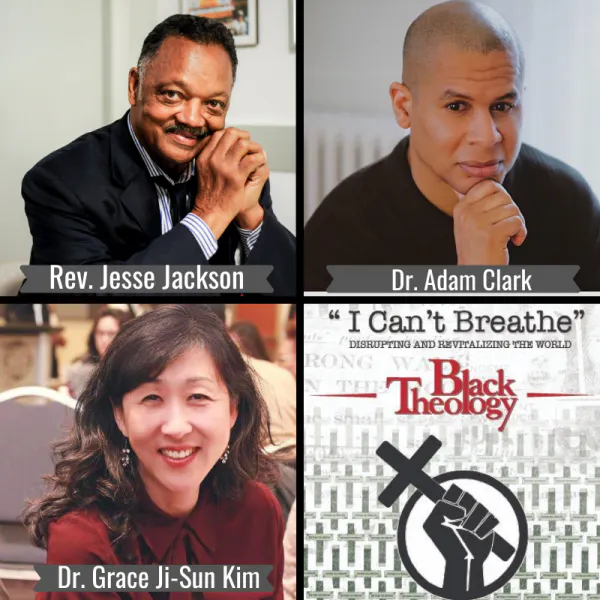
JesseJacksonPodCOMP.mp3
The one and only Rev. Jesse Jackson is on the podcast!! I cannot exaggerate the respect I have for Rev. Jackson. When I found out that Dr. Adam Clark and I were going to be visited by Rev. Jackson and Dr. Grace Ji-Sun Kim I was beyond thrilled. The brand new book, Keeping Hope Alive is out now in PRINT and in AUDIO. Since the book is a collection of sermons and speeches, I found the audiobook extremely compelling. I don't think I have teared up and been so full of hope washing dishes with Rev. Jackson in my ear. PS MY NEW BOOK IS OUT AND I REALLY REALLY WANT TO TELL YOU ABOUT IT!!! This episode is sponsored by the brand new book from Upper Room Books... Rally: Communal Prayers for Lovers of Jesus and Justice. Both a cry for action and a comfort for our anxious souls, Rally addresses issues of social justice through lament and celebration. Using a call-and-response format, the litanies in this resource were created to unite us in prayer and common mission. Rally provides words for concerned Christians who yearn to lift their voices to God with their community to confront injustice in its many forms: racial and gender inequality • economic disparity • white privilege • abuse of power • violence • mistreatment of migrants and refugees • people pushed to the margins of society The selections in this resource evoke hope and connection, guiding us as we sift through the headlines, lament the destruction of the earth, and ask for the grace to love alike though we don’t think alike. God commands us to love one another in a way that values each member of the human family. Without exception. Follow the podcast, drop a review, send feedback/questions or become a member of the HBC Community. Learn more about your ad choices. Visit megaphone.fm/adchoices

Trump is (NOT) a Process Theologian & Other Questions w/ Thomas Jay Oord
Has Trump become a Process theologian? What doctrine from church history would you get rid of? How does Open and Relational thought frame how you handle strong disagreement? These are a few of the questions Thomas Jay Oord and I answered in a pretty fun live stream. Tom's new book God Can't Q&A is now available and if you want a taste HERE is a sample. Enjoy We are both evangelists for Open and Relational Theology and now that it has a center you should check it out. Tom mentioned the launch of a new doctoral program in Open and Relational Theology. You can check it out here. Thomas Jay Oord is a theologian, philosopher, and scholar of multi-disciplinary studies. Oord is an award-winning author, and he has written or edited more than twenty books. A twelve-time Faculty Award winning professor, Oord teaches at institutions around the globe. A gifted speaker, Oord is known for his contributions to research on love, open and relational theology, science and religion, and the implications of freedom and relationships for transformation. Here's the Book Recommendations Keith Ward's Sharing in the Divine Nature: A Personalist Metaphysic James Cone's For My People William Temple's Nature, Man, and God Kathryn Yusoff, a Billion Black Anthropocenes or None Andre Rabe, Creative Chaos: The Surprising Mystery of Time, Self, and Meaning PLUS Tom mentioned reading my next book. Previous Visits of Tom to the Podcast Thomas Jay Oord wants you to know “God Can’t” Open and Relational Q&A with Thomas Jay Oord Why Go Wesleyan? with Thomas Jay Oord Evil, Providence and the Love of God with Tom Oord Thomas Jay Oord really loves talking about Love [Barrel Aged] Follow the podcast, drop a review, send feedback/questions or become a member of the HBC Community. Learn more about your ad choices. Visit megaphone.fm/adchoices

Daniel Joslyn-Siemiatkosk: a Christian Reading the Mishnah Avot & Weird Anglican Twitter
In this episode you get to hear the story of historian, Episcopalian gone Rev., the nature of comparative theology, and the glories of weird Anglican twitter. Very happy to introduce you all to Dan and let you in on a fun conversation. The Rev. Daniel Joslyn-Siemiatkoski, PhD, is the Duncalf-Villavoso Professor of Church History at the Seminary of the Southwest. His teaching focuses on integrating Anglican and Episcopal identity with the broader sweep of Christian history and Jewish-Christian relations. His research interests include Anglican and Episcopal history, Jewish-Christian relations ancient and modern, the development of Anglican ecclesiology, and comparative theology. He is the author of The More Torah, The More Light: A Christian Commentary on Mishnah Avot and Christian Memories of the Maccabean Martyrs and has authored chapters in various edited volumes and articles in Anglican Theological Review and Anglican and Episcopal History. Professor Joslyn-Siemiatkoski is a representative for The Episcopal Church in the Anglican-Roman Catholic U.S.A. dialogue group and a member of the board of trustees for the Episcopal Evangelism Society and the Historical Society of the Episcopal Church. He serves as an assisting priest at St. David's Episcopal Church in Austin. This Episode is Sponsored by the Historical Society of the Episcopal Church. The Historical Society of the Episcopal Church was organized in 1910 to promote the preservation of the particular heritage of the Episcopal Church and its antecedents. Since 1932 it’s published a scholarly, peer-reviewed journal with original research, book reviews and church reviews. The Society works in cooperation with other organizations to publishing a newsletter of articles and information for the person in the pews. The Society leads the planning of a historically themed conference every three years. If you have any interest in religious history, you’ll want to check out the Historical Society of the Episcopal Church. Follow the podcast, drop a review, send feedback/questions or become a member of the HBC Community. Learn more about your ad choices. Visit megaphone.fm/adchoices

Fiona Ellis: Expansive Naturalism & the Desire for More
I had an inappropriate amount of fun talking with Dr. Fiona Ellis in this episode. If your inner-nerd doesn't get pumped by the end, then it is hibernating. There's a high likelihood you will end up getting her book God, Value, and Nature. Plus my son Elgin (12) joins for the intro and while he wasn't impressed by 3.5 million downloads of the podcast last year, he is thrilled I now have 1,000 YouTube subscribers. In this episode we discuss... the space between reductive naturalism and supernaturalism expansive naturalism the relationship between science, philosophy, and religion prejudice against religion and value in the academy Iris Murdoch's platonic idealism the relationship of transcendence and immanence how the question of value is connected to religion Honest to God by John AT Robinson Paul Tillich's ecstatic naturalism why Spinoza is a theistic expansive naturalist expanding naturalism on behalf of affirming our humanity argument for the existence of God from desire Sartre, Levinas, Nietzche & the lack the generative nature of the lack Fiona likes to teach Schopenhauer's the world as will and representation....Berkeley, Spinoza The cultural universality of love in contrast to God Divine action in expansive naturalism Dr. Fiona Ellis is Professor of Philosophy at University of Roehampton and Director of the Centre for Philosophy of Religion. She worked at Heythrop College for 12 years, and has been Director of the Centre for Philosophy of Religion since 2010. Before Heythrop she had lectureships at Wadham College, Oxford, and Queen's College, Oxford, and did her graduate work (BPhil and DPhil) at Oxford University under the supervision of Professor David Wiggins and Professor Paul Snowdon. Her research interests are in philosophy of religion (broadly construed), the relation between philosophy and theology, philosophical idealism, naturalism, the philosophy of love and desire, and the meaning of life. Follow the podcast, drop a review, send feedback/questions or become a member of the HBC Community. Learn more about your ad choices. Visit megaphone.fm/adchoices

Adam Clark: What is Black Theology?
Dr. Adam Clark is here as we kick off the Black Theology Reading Group. This episode is not just a description and invitation to join the reading but, an outline of the centering questions of the class. If you don't want to miss out on some amazing reading, lectures, conversation, and community then join up now. Dr. Adam Clark is Associate Professor of Theology at Xavier University. He is committed to the idea that theological education in the twenty first century must function as a counter-story. One that equips us to read against the grain of the dominant culture and inspires one to live into the Ignatian dictum of going forth "to set the world on fire." To this end, Dr. Clark is intentional about pedagogical practices that raise critical consciousness by going beneath surface meanings, unmasking conventional wisdoms and reimagining the good. He currently serves as co-chair of Black Theology Group at the American Academy of Religion, actively publishes in the area of black theology and black religion and participates in social justice groups at Xavier and in the Cincinnati area. He earned his PhD at Union Theological Seminary in New York where he was mentored by James Cone. Follow the podcast, drop a review, send feedback/questions or become a member of the HBC Community. Learn more about your ad choices. Visit megaphone.fm/adchoices

Matthew Stanley: Science & Religion Beyond the Conflict Model
Are you ready for a super fun and nerdy podcast? Dr. Stanely has been an important thinker for my current research project. His book on renowned Quaker physicist Arthur Eddington was one I kept on telling friends about. When his new book Einstein's War came out I knew it would make for a good reason to have him on the podcast. My high expectations for the conversation were not just met but exceeded. As a historian of science who works in the conversation between religion and science, there were a bunch of different topics that came up we both love talking about. Hopefully this will not be his last visit on the podcast. In the conversation we discuss: how bad the conflict model of religion and science is the life of Arthur Eddington is Buddhism a religion? the emergence of scientific naturalism and why it isn't necessary the relationship of Einstein and Eddington how Einstein changed the scientific picture of the world how scientists got arrested for being spies the connection between physics, pacifism, and internationalism why Einstein's War should be a movie the limits and nature of science shout out to how the hippies saved physics the nature of truth within cultural/religious traditions PS: Einstein's War: How Relativity Triumphed Amid the Vicious Nationalism of World War I, just came out in paperback. As you will hear in the interview, it is too good to miss. Matthew Stanley is professor of the history of science at New York University's Gallatin School of Individualized Study. He has published two academic books and has written for Physics Today, Physics World and the Los Angeles Review of Books. He has a podcast, What the If?!?, and has appeared on documentaries on the History Channel, BBC and NPR. Check Out his books! Einstein's War: How Relativity Triumphed Amid the Vicious Nationalism of World War I, Practical Mystic: Religion, Science, and A. S. Eddington, and Huxley's Church and Maxwell's Demon: From Theistic Science to Naturalistic Science. Follow the podcast, drop a review, send feedback/questions or become a member of the HBC Community. Learn more about your ad choices. Visit megaphone.fm/adchoices

Adam Clark: James Cone was right
This August we kick off the next Homebrewed reading group on James Cone and Black Theology. We will be joined by our lead theological facilitator, Dr. Adam Clark, Associate Professor of Theology at Xavier University. In this episode Adam and I discuss (the Father of Black Theology) James Cone, Black theology, and the present moment. Follow the podcast, drop a review, send feedback/questions or become a member of the HBC Community. Learn more about your ad choices. Visit megaphone.fm/adchoices

Jason Aaron: He is Worthy, but is God? Thor, Star Wars, and Southern Bastards
When people ask me about my favorite authors they aren't surprised to hear me say Alfred North Whitehead, Elizabeth Johnson, or Origen, but when I say Jason Aaron I get a look of confusion. Then I explain how much I love comics and that Jason Aaron is my absolute favorite author. When I found out that I might be able to get him on the podcast with my bestie Will Rose, we went a bit crazy with glee. (For the theology nerd, Jason Aaron is like the Moltmann of comics!) Our goal was to lure you into checking out the wonderful world of comics. We talk about Jason's personal story, the craft of story telling, hermeneutics, wrestling with life's big questions, sons with daddy issues, the problem of evil, and a bunch of comics. Did I mention Marvel is going to be following Jason's lead and make Jane Foster Thor in the next film Love & Thunder. JASON AARON is an award-winning comic book writer best known for his work with Marvel Comics, including a landmark seven-year run on THOR that will serve as the basis for the upcoming Marvel Studios film THOR: LOVE AND THUNDER. He’s also had celebrated stints writing WOLVERINE, DOCTOR STRANGE, GHOST RIDER, PUNISHER and the 2015 Marvel relaunch of STAR WARS that was the best-selling American comic book in more than 20 years. Aaron is the current writer on Marvel's flagship AVENGERS series and the recently relaunched CONAN THE BARBARIAN. His critically acclaimed creator-owned work includes the Eisner and Harvey Award-winning SOUTHERN BASTARDS from Image Comics and the New York Times best-selling crime series SCALPED from Vertigo Comics. Aaron was born and raised in Alabama and currently resides in Kansas City. You can follow Jason's work here on his personal webpage/newsletter and on social media (twitter/instagram) New to comics? The best move (lockdown willing) is to find a local comic book store. In the meantime you can check out Jason's stuff digitally through Amazon. If you are smart you will use the free 60 day trial of ComiXology or try out Marvel Unlimited and turn your iPad or computer into Jason Aaron gateway. For Jason's independent releases you can go to his store. Here's a guide to reading Jason's Thor run. WILL ROSE is a Lutheran pastor at the Holy Trinity in Chapel Hill and guru of all things pop culture. He has returned to the podcast for the interview. You can check out some of his writing at the Pop Culture and Theology. He is also a part of a new web series Theocon Thursdays that you should check out. For real... the session on zombies is zesty. Follow the podcast, drop a review, send feedback/questions or become a member of the HBC Community. Learn more about your ad choices. Visit megaphone.fm/adchoices

Stephen Haynes: the Battle for Bonhoeffer
Dr. Stephen Haynes is the Albert Bruce Curry Professor of Religious Studies at Rhodes College and theologian-in-residence at Idlewild Presbyterian Church in Memphis, Tennessee. He joined the Rise of Bonhoeffer reading group and we decided it best to share with you. Enjoy! The figure of Dietrich Bonhoeffer (1906-1945) has become a clay puppet in modern American politics. Secular, radical, liberal, and evangelical interpreters variously shape and mold the martyr’s legacy to suit their own pet agendas. Stephen Haynes offers an incisive and clarifying perspective. A recognized Bonhoeffer expert, Haynes examines “populist” readings of Bonhoeffer, including the acclaimed biography by Eric Metaxas, Bonhoeffer: Pastor, Martyr, Prophet, Spy. In his analysis Haynes treats, among other things, the November 2016 election of Donald Trump and the “Bonhoeffer moment” announced by evangelicals in response to the US Supreme Court’s 2015 decision to legalize same-sex marriage. The Battle for Bonhoeffer includes an open letter from Haynes pointedly addressing Christians who still support Trump. Bonhoeffer’s legacy matters. Haynes redeems the life and the man. Follow the podcast, drop a review, send feedback/questions or become a member of the HBC Community. Learn more about your ad choices. Visit megaphone.fm/adchoices
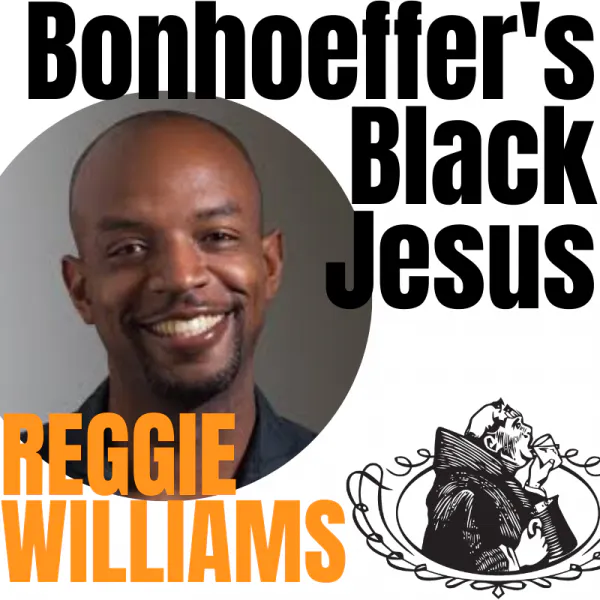
Reggie Williams: Bonhoeffer's Black Jesus
Dr. Reggie Williams is the Associate Professor of Christian Ethics at McCormick Theological Seminary and author of Bonhoeffer's Black Jesus:Harlem Renaissance Theology and an Ethic of Resistance. The book is an analysis of exposure to Harlem Renaissance intellectuals, and worship at Harlem’s Abyssinian Baptist on the German pastor and theologian Dietrich Bonhoeffer, during his year of post-doctoral study at Union Seminary in New York, 1930-31. Dr. Williams’ research interests include Christological ethics, theological anthropology, Christian social ethics, the Harlem Renaissance, race, politics and black church life. His current book project includes a religious critique of whiteness in the Harlem Renaissance. In addition, he is working on a book analyzing the reception of Bonhoeffer by liberation activists in apartheid South Africa. Dr. Williams received his Ph.D. in Christian ethics at Fuller Theological Seminary in 2011. He earned a Master’s degree in Theology from Fuller in 2006 and a Bachelor’s degree in Religious Studies from Westmont College in 1995. He is a member of the board of directors for the Society for Christian Ethics, as well as the International Dietrich Bonhoeffer Society. He is also a member of the American Academy of Religion and Society for the Study of Black Religion. Follow the podcast, drop a review, send feedback/questions or become a member of the HBC Community. Learn more about your ad choices. Visit megaphone.fm/adchoices
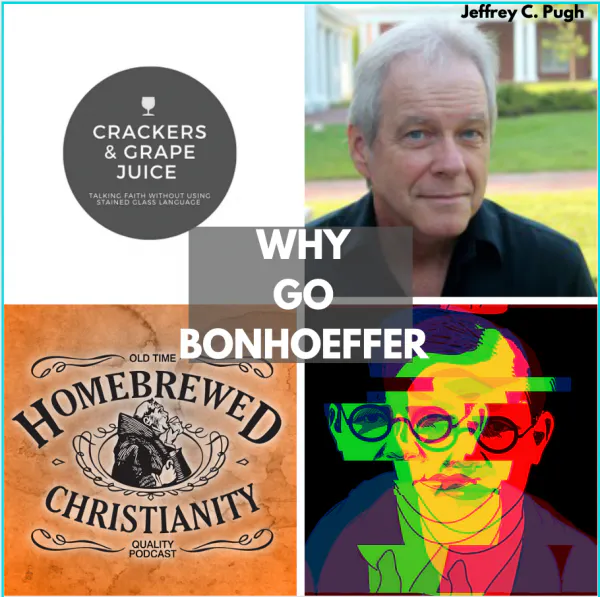
Jeffrey C. Pugh: Why Go Bonhoeffer?
Dr. Jeffrey C Pugh joined the podcast tag-team of Crackers & Grape Juice + Homebrewed Christianity for a special live streaming Happy Hour. Dr. Pugh kicks things off by giving us 5 reasons to go Bonhoeffer... theologically speaking and then all sorts of things Qs find their As. It was a blast. If you want some more Bonhoeffer then come join the HBC Community or our newest reading group The Rise of Bonhoeffer. Dr. Jeffrey C. Pugh recently retired as Maude Sharpe Powell Professor of Religious Studies and Distinguished University Professor from Elon University in North Carolina. The author of six books ranging from Barth, religion and science, and the apocalyptic imagination to Bonhoeffer, Pugh’s work has focused on Christian complicity in the Holocaust and the lessons that can be applied to instruct future generations. His latest work, a chapter on his reflections while he was participating in the clergy resistance at the Unite the Right rally in Charlottesville is found in Dietrich Bonhoeffer, Theology, and Resistance. He and his wife Jan, a retired United Methodist minister, make their home in Charlottesville, Virginia. Follow the podcast, drop a review, send feedback/questions or become a member of the HBC Community. Learn more about your ad choices. Visit megaphone.fm/adchoices

Christof Koch: why you can't squeeze consciousness out of a brain
This is a really fun conversation with one of the most influential living scientist. Dr. Christof Koch is neuroscientist pioneering th the neural bases of consciousness. He is the president and chief scientist of the Allen Institute for Brain Science in Seattle. In this conversation we discuss... Christof's journey into the brain sciences and work with Francis Crick what is the 'integrated information theory' of consciousness russellian monism and the panpsychist revival contrasting consciousness and intelligence can a machine become conscious the possibility of artificial intelligence the love of dogs and becoming a vegetarian how practices open up different worlds defending the depths for human existence Iain Banks' novels adversarial experimentation and the problem of conscious beginning with phenomenology in the explanation of consciousness Check out his two most recent books: The Feeling of Life Itself: Why Consciousness Is Widespread but Can't Be Computed Consciousness: Confessions of a Romantic Reductionist Follow the podcast, drop a review, send feedback/questions or become a member of the HBC Community. Learn more about your ad choices. Visit megaphone.fm/adchoices

Mark Wallace: Faith After Religion
I had a blast talking with Dr. Mark Wallace. We ended up having so much fun we've decided to do it again. Be on the lookout for details about a Homebrewed Happy Hour in which we will discuss Christian Animism and the questions/topics you send in. After you hear his account of Jesus as a Shaman or the incantatory nature of faith, I am sure you will have a few questions. I would suggest checking out When God was a Bird if you are already excited :) In this conversation we discuss... Mark's Billy Graham conversion experience and religious life growing up in SoCal His intellectual journey and the influence of his advisor Paul Ricouer The philosophical hermeneutics of Ricouer and its application to religion Why Pascal's wager isn't nearly as cool as the wager of faith in Ricouer The predicament of belief in post-religious context The power and possibility within confessional traditions Modernity's problematic politic of life The need to nest our understanding of salvation(s) within an account of creation How Jesus is a Shaman Why every good Biblical literalist knows that God is a bird If you are interested in the work of Ricouer and its relation to religion, then check out this text that Mark Wallace edited of his mentor - Figuring the Sacred:Religion, Narrative, and Imagination. I doubt I could exaggerate how influential that book has been for my own self-reflection. Mark I. Wallace is Professor of Religion and Environmental Studies at Swarthmore College and core faculty for the U.S. State Department’s Institutes on Religious Pluralism at Temple University. His books include When God was a Bird, Green Christianity: Five Ways to a Sustainable Future and Finding God in the Singing River: Christianity, Spirit, Nature. Follow the podcast, drop a review, send feedback/questions or become a member of the HBC Community. Learn more about your ad choices. Visit megaphone.fm/adchoices

Susan Shaw: the story of a Process Southern Baptist Feminist
I have new nerd crush and it is Dr. Susan M. Shaw. This episode was one of the most fun conversations I have had in a while. It may be because we are both members of an endangered theological species... cradle southern baptists who went process, but none the less it was so fun it went for three hours and I had to edit it down! Susan M. Shaw is professor of Women, Gender, and Sexuality Studies at Oregon State University. She is author of God Speaks to Us, Too: Southern Baptist Women on Church, Home, and Society and Intersectional Theology: An Introductory Guide. In this conversation we discuss... growing up Southern Baptist and becoming a Baptist in exile Susan shares her experience in the conservative take over of the SBC the peculiar nature of being a progressive Baptist religious formation and the predicament of raising a spiritual free agent how the movement of 'social justice' functions as a meta-narrative the predicament of becoming human what happens when white evangelical men start loosing cultural power power over is NOT the gospel, but power to and power with are fundamentalist and progressive Christians in the same religion why moderates saying nothing is so frustrating what if we are still in the early church divine presence and sexual abuse how process helps one reengage with a tradition thinking simultaneity and both/and with intersectional thought "God loves me and I can live like it" it's not if we come together, but how Follow the podcast, drop a review, send feedback/questions or become a member of the HBC Community. Learn more about your ad choices. Visit megaphone.fm/adchoices

Jacob Erickson: a Theopoetics of the Earth
Jacob J. Erickson is Assistant Professor of Theological Ethics at Trinity College Dublin. He previously taught Religion and Environmental Studies at St. Olaf College in Northfield, Minnesota, USA. There is no good reason not to follow him on twitter. This conversation came after a Jacob gave a lecture in the Theology and Ethics seminar at New College, University of Edinburgh and then we got lost trying to find Brew Dog & their super legit cauliflower buffalo wings. Things that came up... a theopoetics of the earth relearning religion and spirituality in light of the planetary crisis coming to process thought through a theology of the cross the problems of logocentrism "salvation is not carbon neutral" the gospel without eternal conscious torment grief and the ecological crisis we both loved this book by Thomas Attig, How We Grieve: Relearning the World the practical relativism of climate denial Marjorie Suchocki is awesome and we both dig this text - A Fall to Violence youth ministry and the anxiety of climate change is it ethical to have children? is that even the best way to ask the question? Follow the podcast, drop a review, send feedback/questions or become a member of the HBC Community. Learn more about your ad choices. Visit megaphone.fm/adchoices

Violence, Nationalism, and other things that ruin Christianity
In this episode I am joined by Kevin Miller and Robyn Henderson-Espinoza to discuss the documentary film J.E.S.U.S.A. J.E.S.U.S.A. is an in-depth exploration of the relationship between Christianity and American nationalism and the violence that can often emerge from it. Far from a new phenomenon, this documentary traces the co-opting of Christianity by the state all the way back to when the Christian faith became the official religion of the Roman Empire. Through interviews with a diverse group of scholars, pastors, historians, and activists, this film shows how specific readings of the Bible have led many Christians to confuse their devotion to Jesus with their dedication to the state. The film helps viewers rediscover and restore long-held Christian beliefs regarding nonviolence, inspiring Christians to become purveyors of peace rather than enablers of conflict and violence. If you wish to help organize a showing for your church or organization, please contact the production team here. The film includes some amazing people like David Bentley Hart, Suzanne Ross, Brian Zahnd, Osheta Moore, Diana Butler Bass, Greg Boyd, and many more. Follow the podcast, drop a review, send feedback/questions or become a member of the HBC Community. Learn more about your ad choices. Visit megaphone.fm/adchoices

Trilogies, Atonement Power Rankings, & Sex Work at Happy Hour
This is a Homebrewed Happy Hour in which I am joined by my friends Dan Koch & Dr. Sarah Lane Ritchie. This is an adult conversation with friends. Don't listen with kids. Don't listen if you don't like potty language and bad jokes. Ohh and I said the phrase "5 shart Barthian." To get invites to future happy hours check the HBC FB page. To get the second half of the conversation in your private podcast feed join the Homebrewed Community. Follow the podcast, drop a review, send feedback/questions or become a member of the HBC Community. Learn more about your ad choices. Visit megaphone.fm/adchoices

Godehard Brüntrup: Emergent Panpsychism & Process Theology
Dr. Godehard Brüntrup is a German philosopher, Jesuit, and professor of philosophy at the Munich University of Philosophy with a focus on metaphysics , philosophy of mind and philosophy of language. I was beyond thrilled to talk with Dr. Brüntrup. He is not only a leading philosopher in Germany, but our shared interest in philosophy of mind and Alfred North Whitehead how the characters of Socrates and Jesus inspired his vocation ontic shock and the question of meaning moving beyond the computer metaphor for the mind & the functionalist approach dualism and the variety of monisms (materialism / idealism) why Christianity does not require dualism the success and challenge of science fallacy of misplaced concreteness in science the trouble of dual-aspect monism Whitehead's theory of mind and concept of experience emergent panpsychism process philosophy of religion the problem with a Post-Kantian rejection of metaphysics the spirituality of panpsychism Follow the podcast, drop a review, send feedback/questions or become a member of the HBC Community. Learn more about your ad choices. Visit megaphone.fm/adchoices

Leah Schade: Preaching in a time of Crisis from Corona to Climate
Dr. Leah Schade is Assistant Professor of Preaching and Worship at Lexington Theological Seminary, A graduate of the Lutheran Theological Seminary at Philadelphia, her research and experience cover the fields of homiletics and ecological theology. As an ordained minister in the Evangelical Lutheran Church of America (ELCA), Schade has served in suburban, urban, and rural settings and has worked with parishioners from a variety of cultural, racial, and economic backgrounds. Formerly the pastor of United in Christ Lutheran Church in Lewisburg, PA, Schade s ministry is marked by her experience in and passion for ecological and social justice advocacy and activism. In our conversation we talk about... the tradition to teaching online empowering women within the church the theological task of preaching the sermon in a time of crisis corona and community what goes into the crafting of a sermon why you don't need to make the sermon practical, but make it strange Dr. Schade's Books Preaching in the Purple Zone: Ministry in the Red-Blue Divide Rooted and Rising: Voices of Courage in a Time of Climate Crisis Creation-Crisis Preaching: Ecology, Theology, and the Pulpit This Episode is Sponsored by Lexington Theological Seminary See what their unique accredited online seminary program can do for you. Whether you want to broaden your knowledge in one area, brush up on your preaching skills, or earn a degree, now in our 150th year, Lexington Theological Seminary offers the serious academic study you’ve come to expect, packaged in the newest model of theological education. Find out how you can be part of the growing, supportive community of LTS students, where you live, on your schedule. Follow the podcast, drop a review, send feedback/questions or become a member of the HBC Community. Learn more about your ad choices. Visit megaphone.fm/adchoices

Bill Walker: Globalization, Violence, and Salvation in the Drug War
The most important thing I can tell you about Bill Walker is that he simultaneously a brilliant scholar, a wonderful human, and a dear friend. We became friends while doing our PhDs and he currently serves as the Director of Vocation at Christ Church of Austin. He also teaches Christians ethics in the Business School at Baylor and theology as an adjunct professor at Truett Seminary. A Theology of the Drug War is a political and theological reflection on the violence and injustice that has taken place in Mexico and Central America since 2006 as a result of the drug war. In order to understand and respond to this conflict in the age of globalization, William A. Walker III combines the work of philosopher Enrique Dussel and theologian Hans Urs von Balthasar to develop a theology of the drug war that transcends both a Eurocentric conception of the world and a merely political account of salvation. Walker also highlights examples of Christian and church-based approaches to practicing neighborliness and resistance to drug trade-related violence, challenging both Christians and non-Christians to participate in the creation of a more just and merciful society. Publisher info here. Bill mentioned a number of organizations in the podcast. Below are some links to check them out. http://Semillascommunity.org http://Fianzafund.org https://ciudadnueva.org https://www.abarafrontiers.org Follow the podcast, drop a review, send feedback/questions or become a member of the HBC Community. Learn more about your ad choices. Visit megaphone.fm/adchoices

John Cobb: Secularizing Christianity
It is getting near the most epic of the HBC online classes. As part of the celebration - and the emails I got saying MORE PODCASTS BECAUSE I AM SELF-DISTANCING - I combined two of my favorite previous visits into this episode. First you hear John Cobb give a theo-philosophical sermon on the materializing trajectory of Christianity. Then liberal Reformed Theologian, Paul Capetz, joins me for the conversation in which we discuss the trinity, Religious Pluralism, The importance of the Incarnation, Discuss fall of the Mainline Churches, Liberalism? Progressive?, and the Mission of the Church. Enjoy this episode? Then checkout this book. Don’t forget to check out Cobb’s recent visit to answer the question “Why Whitehead?” John Cobb taught theology at the Claremont School of Theology from 1958 to 1990. In 2014 he became the first theologian elected to the prestigious American Academy of Arts and Sciences for his interdisciplinary work in ecology, economics, and biology. He has published over 30 books including the first full length text in eco-philosophy. In 1973, with David Griffin, he established the Center for Process Studies. In retirement he lives at Pilgrim Place in Claremont, California. Throughout his career he has contributed to Whitehead scholarship and promoted process-relational programs and organizations. Most recently, he helped found the Claremont Institute for Process Studies, and has been heavily involved in supporting work toward the goal of China becoming an ecological civilization. Follow the podcast, drop a review, send feedback/questions or become a member of the HBC Community. Learn more about your ad choices. Visit megaphone.fm/adchoices

Elgin Frank Tupper: a Scandalous Providence (in Memoriam)
I lost a very dear mentor and friend - Elgin Frank Tupper. I tried recording the intro over 10 times and just started crying, so I decided to save my thoughts for later and share this gem of an episode. This also happens to be the most downloaded episode in HBC history. Frank was a legendary Baptist theologian and the first American student of Wolfhart Pannenberg. He was a founding faculty member of the Wake Forest University School of Divinity where he retired in 2016 as Distinguished Professor of Divinity Emeritus. You can read Frank's Obituary here. A Scandalous Providence is framed in a type of narrative theology, but not just the narrative of Jesus, or his own personal narrative, but the narratives of other people. It was born out of a desire to develop an understanding of providence on the basis of the key and crucial narratives in the synoptic portrayals of the story of Jesus – not just for seminarians or scholars, but for the problems of providence in the life of everyone in the church. Follow the podcast, drop a review, send feedback/questions or become a member of the HBC Community. Learn more about your ad choices. Visit megaphone.fm/adchoices
Ingolf Dalferth: Hermeneutics and the Predicament of Faith #BarrelAged
A number of Homebrewed Community Members asked for this episode to come out of the Barrel and back into the world, so here it is. In this episode I am joined by one of my dissertation advisors for a fun conversation. Ingolf U. Dalferth (DrTheol, University of Tübingen) is Danforth Professor of Philosophy of Religion at Claremont Graduate University in Claremont, California. He is also professor emeritus in the faculty of theology at the University of Zurich, where he served as director of the Institute of Hermeneutics and Philosophy of Religion for many years. He has held academic positions at the universities of Durham, Tübingen, Frankfurt, Fribourg, and Copenhagen. Dalferth is the author or editor of over forty books Dr. Dalferth's Recent Books Transcendence and the Secular World: Life in Orientation to Ultimate Presence Creatures of Possibility: The Theological Basis of Human Freedom Radical Theology: An Essay on Faith and Theology in the Twenty-First Century Crucified and Resurrected: Restructuring the Grammar of Christology Follow the podcast, drop a review, send feedback/questions or become a member of the HBC Community. Learn more about your ad choices. Visit megaphone.fm/adchoices
JC on JC: a conversation with John Cobb and Tom Oord on Jesus #BarrelAged
This is a super special conversation between two preeminent scholars and dear friends. Two friends of the podcast gathered in Claremont a few years back as part of the Emergent Village Theological Conversation on Process Theology and this gem of a conversation happened! John Cobb and Tom Oord discuss Jesus and a number of other goodies. This barrel aged edition of the podcast is here so I can share episodes from the last 12 years no longer available in the podcast feed for your nerdy listening pleasure. Also if you enjoy the conversation then you should totally come join the upcoming reading group with John Cobb on Alfred North Whitehead's Process and Reality. In this series of lectures John Cobb will provide an introduction to one of the most compelling and challenging philosophical texts of the Twentieth Century. Process and Reality is a notoriously difficult text, but the goal of this course is to enable students to not only skim the surface but probe its deeper dimensions. With his decades of experience as a scholar and teacher of Whitehead, Cobb will elucidate the major themes and illuminate the major concepts in a way that is accessible to anyone. Follow the podcast, drop a review, send feedback/questions or become a member of the HBC Community. Learn more about your ad choices. Visit megaphone.fm/adchoices

Wilson Dickinson: Faith After a Neo-liberal Compliant Church
Dr. Wilson Dickinson is a writer, pastor, and organizer who lives in his hometown of Georgetown, Kentucky. He teaches theology and directs the Doctor of Ministry and Continuing Education Programs at Lexington Theological Seminary. He is the director of the Green Good News, an organization that works with churches and schools to integrate sustainability, justice, and discipleship. At Lexington Theological Seminary the Dmin is focused on cultural hermeneutics and community organizing. What is the purpose of Dmin and who is it for? Why Gary Dorrien tells the coolest story of liberal Mainline Protestantism (read here) Is the initial deal for Mainline Protestantism in America worth it? the problem of the 'identified patient' and neo-liberal compliant justice issues church at the crossroads of Earth and Empire Zacchaues and the middle-management of Empire God isn't cool with economies of extraction and exploitation Kierkegaard & his critique of social Christianity how power hides in pain sight creating Pharisees an exit strategy from the imperial banquet the power of giving permission for others to lead parenting in the face climate change Check out Wilson's books The Green Good News and Exercises in New Creation. This Episode is Sponsored by Lexington Theological Seminary See what their unique accredited online seminary program can do for you. Whether you want to broaden your knowledge in one area, brush up on your preaching skills, or earn a degree, now in our 150th year, Lexington Theological Seminary offers the serious academic study you’ve come to expect, packaged in the newest model of theological education. Find out how you can be part of the growing, supportive community of LTS students, where you live, on your schedule. Follow the podcast, drop a review, send feedback/questions or become a member of the HBC Community. Learn more about your ad choices. Visit megaphone.fm/adchoices

Michael Northcott: God, Gaia, and the Working Class
Michael Northcott is Professor of Religion and Ecology, Indonesian Consortium of Religious Studies, Universitas Gadjah Mada, Indonesia and Professor Emeritus at the University of Edinburgh. While he was in town between semesters in Indonesia we got to connect in his home office for energizing and nerdy conversation that covers quite a bit of ground including... how a factory job ruined systematic theology class consciousness and Christian socialism Schleiermacher, Barth, Tillich, and the socialist decision the Protestant problem with preaching scripture the birth of Radical Orthodoxy the religious predicament of modernity the task of being a member of a living tradition "Do Angels exist?" "the original sin is plant selection... the only life that is good on the planet is life we control, for we are the only beings with mentality and deserve the honor." "the biggest problem in systematic theology is its obsession with first cause and the inability to acknowledge multiple agencies" the connection between reductive accounts of agency and the political craziness in the US and UK why the bread at the Eucharist matters contemporary alienation from nature and community encountering nature anew and Jane Goodall the role of faith in ecological activism Michael mentions Saving Paradise: How Christianity Traded Love of This World for Crucifixion and Empire If you are on twitter then you should follow Dr. Northcott. Want to read Northcott's work? Check it out. Follow the podcast, drop a review, send feedback/questions or become a member of the HBC Community. Learn more about your ad choices. Visit megaphone.fm/adchoices

John Cobb: Christology and Process Theology
I am beyond excited about the upcoming class with our guest in this episode - John Cobb. This is the very first interview I ever recorded with Cobb and in it we discuss a process account of the incarnation, Kin-dom of God, and other Christological goodies. You will likely notice how my accent has changed in the last 12 years of podcasting and moves from North Carolina to Los Angeles and then to Edinburgh. Don't forget to check out Cobb's recent visit to answer the question "Why Whitehead?" John Cobb taught theology at the Claremont School of Theology from 1958 to 1990. In 2014 he became the first theologian elected to the prestigious American Academy of Arts and Sciences for his interdisciplinary work in ecology, economics, and biology. He has published over 30 books including the first full length text in eco-philosophy. In 1973, with David Griffin, he established the Center for Process Studies. In retirement he lives at Pilgrim Place in Claremont, California. Throughout his career he has contributed to Whitehead scholarship and promoted process-relational programs and organizations. Most recently, he helped found the Claremont Institute for Process Studies, and has been heavily involved in supporting work toward the goal of China becoming an ecological civilization. Follow the podcast, drop a review, send feedback/questions or become a member of the HBC Community. Learn more about your ad choices. Visit megaphone.fm/adchoices

Jonathan Jong & Sarah Lane Ritchie: Can Scientists study gods, souls, and rituals?
Behind many Science and Religion conversations are a number of shaping, but often ignored questions. In this episode Jonathan and Sarah join me for a seriously nerdy and revealing dialogue about the nature and limits of science, the character of religious phenomena, the role of philosophy, naturalism(s), theology's place at the table, and much more. On top of all being friends, we each occupy a different network of answers to the questions we tackle. If you enjoy this half as much as I did you will have a wonderful time. Dr. Jonathan Jong is a Research Fellow at Coventry University, and Deputy Director of the Brain, Belief and Behaviour group there. He is also a Senior Researcher at the Institute for Cognitive and Evolutionary Anthropology, University of Oxford. Most of his current research is on the psychology of religion and the philosophical issues associated with the scientific study of religion. The Doctor is also a Reverend and Associate Priest at the parish church of St Mary Magdalen, Oxford and the Web Editor for the St Mary Magdalen School of Theology Check out Jong's last visit to the podcast: Religion, Culture, and Your Impending Death Dr. Sarah Lane Ritchie is Lecturer in Theology and Science at the University of Edinburgh. She has a PhD in Science and Religion from the University of Edinburgh, where her doctoral work focused on the question of divine action in the human mind. A Michigander by birth, Sarah also holds a BA in Philosophy and Religion from Spring Arbor University, an MDiv from Princeton Theological Seminary, and an MSc in Science and Religion from the University of Edinburgh. Her published work focuses on questions arising from the intersection of theology, philosophy, and the various brain-related sciences. Sarah’s research interests include divine action, philosophy of mind, naturalism, cognitive science of religion, and the psychology of belief formation. Follow the podcast, drop a review, send feedback/questions or become a member of the HBC Community. Learn more about your ad choices. Visit megaphone.fm/adchoices

A SPECIAL INVITATION from John Cobb: Why Whitehead?
Dr. John B. Cobb Jr. is the greatest living interpreter of Alfred North Whitehead and he is here to tell you Why Whitehead! In this special episode you will heard a powerful invitation from JC himself to join our upcoming online extravaganza - Probing PROCESS & REALITY. This 6 week online pop-up learning community is going to be zesty. You can find out more about it and register HERE or listen to the new podcast. Cobb taught theology at the Claremont School of Theology from 1958 to 1990. In 2014 he became the first theologian elected to the prestigious American Academy of Arts and Sciences for his interdisciplinary work in ecology, economics, and biology. He has published over 30 books including the first full length text in eco-philosophy. In 1973, with David Griffin, he established the Center for Process Studies. In retirement he lives at Pilgrim Place in Claremont, California. Throughout his career he has contributed to Whitehead scholarship and promoted process-relational programs and organizations. Most recently, he helped found the Claremont Institute for Process Studies, and has been heavily involved in supporting work toward the goal of China becoming an ecological civilization. Follow the podcast, drop a review, send feedback/questions or become a member of the HBC Community. Learn more about your ad choices. Visit megaphone.fm/adchoices

Peter Hill: Psychological Science and Religion
I am thrilled to introduce many of you to a wonderful scholar and new friend. Pete and I met this past summer in SoCal at the TheoPsych seminar put on by my friends in the STAR office at Fuller Seminary. (STAR=Science, Theology and Religion). Whenever someone comes on the podcast from a more conservative part of the church I am always honored, because I get lots of rejection emails - even from people who listen! Any way, most of our conversation is about his work as a psychological scientist where he is respected apart from a particular religious identity. I hope you enjoy the conversation and if you run into Pete tell him thank you for joining. Peter C. Hill, Ph.D., is Professor of Psychology at Rosemead School of Psychology at Biola University. Before coming to Rosemead in 2002, he served for 17 years as Professor of Psychology at Grove City College in Pennsylvania. In 2006 he was honored with a faculty appointment at the University of Cambridge as a Visiting Research Fellow at the Center for Advanced Religious and Theological Studies of the Faculty of Divinity. Hill is an active researcher in social psychology and the psychology of religion where he has authored approximately 100 articles in peer-reviewed journals and book chapters. In the conversation we discuss: Why the harder the science the greater % of scientists who believe in God? What are the psychological sciences? How is it an empirical science? The origin story of psychology and the current move towards positive psychology How do you define religion? The search for the sacred? Virtue and character formation What do psychologist think of theologians? Are humans naturally religious? How humans 'think' and make judgements What's going on when we argue and act a fool about religion and politics? Where polarization comes from the nature of religious trauma and paths to healing religious identity in adolescence advice on passing on the beautiful elements of your faith This Episode is Sponsored By: THE GHOST RANCH Renowned for its natural beauty spanning 21,000 acres, Ghost Ranch is located in the high desert of northern New Mexico, 70 miles north of Santa Fe. Owned by the Presbyterian Church, the ranch is welcoming to everyone. Breathtaking views of red and yellow cliffs, Abiquiu Lake and Pedernal Mesa have inspired countless musicians, theologians, and generations of artists, most famously Georgia O'Keeffe. Day visitors and overnight guests are welcome. Rooms are rustic yet comfortable and many are historic buildings from the ranch’s earliest days as a dude ranch. Several tiers of lodging, including campsites, offer something for every budget and adventure type. Several hiking trails, year-round O’Keeffe Landscape Tours and Trail Rides, two museums, seasonal swimming pool, dining hall and trading post make this a perfect retreat destination. Over 200 workshop packages in the arts, spirituality, religion, wellness, archaeology, outdoor and family activities are offered annually. Of special interest is Wild Christ, Wild Earth, Wild Self: A Nature Based Introduction to Seminary of the Wild, which is actually a two year training program for pastors, for spiritual leaders who are already embedded in communities. These are the sorts of folks that are standing on the edge of change and want to respond faithfully by reimagining what it means to be church, by reimaging church in the wild, a way of engaging in ecological and social justice issues in a deep and transformative way. Offered in June and October of 2020. Visit GhostRanch.org for a catalog of these and other workshops. Learn more about your ad choices. Visit megaphone.fm/adchoices

Douglas John Hall: What Christianity is Not & a Theology of the Cross
Douglas John Hall is Canada’s greatest living theologian & emeritus professor of theology at McGill University in Montreal, Quebec. He is a theologian of the cross, a contextual theologian, and a wonderfully articulate one as well. In this conversation we discuss his latest two books What Christianity is Not & Waiting for the Gospel, his love of music, personal interactions with Moltmann, Billy Graham, Tillich & company, and a number of intense theological topics. It was a complete joy to chat with him. I hope you enjoy it as much as I did… and of course share the brew! Follow the podcast, drop a review, send feedback/questions or become a member of the HBC Community. Learn more about your ad choices. Visit megaphone.fm/adchoices

Ian McFarland: Creation Out of Nothing #BarrelAged
Ian McFarland has recently returned to Candler School of Theology after a few years at Cambridge. Since Candler sponsored the podcast this week I figured it was a good time to bring Ian's first visit to the podcast out of the barrel for your listening pleasure. Dr. McFarland is the Robert W. Woodruff Professor of Theology and author of a number of books. In this interview we discuss From Nothing: A Theology of Creation and recently he just released The Word Made Flesh: A Theology of the Incarnation. This episode is sponsored by Candler School of Theology at Emory University. Candler offers 16 graduate degrees, including a Master of Divinity with a focus on Justice, Peacebuilding, and Conflict Transformation, plus a new program in Chaplaincy Ministries. 100% of Mdiv students get a 50% scholarship and all certified candidates for ordination in the United Methodist Church get their full tuition covered. So go check it out. Follow the podcast, drop a review, send feedback/questions or become a member of the HBC Community. Learn more about your ad choices. Visit megaphone.fm/adchoices

Oliver Crisp: Analyzing Anthropology & the Systematic Turn #KeepItCrispy
Oliver Crisp is back on the podcast and bringing more of his Analytic Reformed excitement to you. I know some of you dear listeners love Calvin and analytic theology, so while I may be less interested in general with those theological trajectories I always enjoy getting to talk with Oliver. That is why, after some serious prayer and reflection, I have decided to institute a new HBC rule. IF you are gonna go Calvinist, #KeepItCrispy. That is about as robust an affirmation I can give to Oliver. We recorded this conversation while we were in SoCal at the TheoPsych seminar put on by my friends in the STAR office at Fuller Seminary. (STAR=Science, Theology and Religion). Over the course of the week we had a bunch of conversations in which we got to know each other more, share stories about our life, faith, family, moving to Scotland and such. I may not have decided to embrace my Calvinist past, but I definitely decided having a friend like Oliver is a treat. Since his return to Scotland you can find him at the University of St. Andrews where he is the Professor of Analytic Theology. Check out his previous visit to the podcast where we discuss his Christology. In this conversation we begin looking at the role of science in constructive anthropology and then discuss his newest book Analyzing Doctrine: Toward a Systematic Theology. Follow the podcast, drop a review, send feedback/questions or become a member of the HBC Community. Learn more about your ad choices. Visit megaphone.fm/adchoices

Everyone You Ever Loved Will Die, so Merry Christmas!
The holidays are here and you know what that means? Awkward conversations about religion and politics with family, friends, and coworkers. Today on the podcast I am bringing you some wisdom... rules even... from two friends who work at the intersection of religion and the psychological sciences. Sarah Lane Ritchie and Kutter Callaway were part of the live podcast last week in San Diego and after hearing these 'rules' for the holidays, I knew I needed to share them ASAP. The live event included a bunch of other segments that engaged an upcoming film J.E.S.U.A. The rest of the podcast will come out near the release of the film. I moved the rules from the end of the conversation to the beginning, so after that segment you will go back in time to the beginning of my chat with Sarah and Kutter. Here are the 7 rules. You are NOT your ideas Prioritize Sleep Make Yourself Start (or keep) Meditating (here's the Examen app I mentioned) Be a Documentarian - talk by listening Acknowledge Their Trauma... including being in a family with you and your deconstructive path Remember Everyone You See and Love Will Die Criticism is a Form of Pursuit This episode was sponsored by the upcoming documentary film J.E.S.U.S.A. J.E.S.U.S.A. is an in-depth exploration of the relationship between Christianity and American nationalism and the violence that can often emerge from it. Far from a new phenomenon, this documentary traces the co-opting of Christianity by the state all the way back to when the Christian faith became the official religion of the Roman Empire. Through interviews with a diverse group of scholars, pastors, historians, and activists, this film shows how specific readings of the Bible have led many Christians to confuse their devotion to Jesus with their dedication to the state. The film helps viewers rediscover and restore long-held Christian beliefs regarding nonviolence, inspiring Christians to become purveyors of peace rather than enablers of conflict and violence. The documentary will be released for general viewing on February 25, 2020, and will be available on many streaming platforms for rental or purchase. If you wish to help organize a showing for your church or organization, please contact the production team here. The film includes some amazing people like David Bentley Hart, Suzanne Ross, Brian Zahnd, Osheta Moore, Diana Butler Bass, Greg Boyd, and many more. Follow the podcast, drop a review, send feedback/questions or become a member of the HBC Community. Learn more about your ad choices. Visit megaphone.fm/adchoices

Christopher Southgate: Suffering, Trauma, and the Glory of God
Dr. Christopher Southgate is a biochemist turned influential theologian...who just happens to be a well published poet. (Read this powerful one... when it is safe to cry). Southgate is a Professor at Exeter University in the UK and part of the 'God and the Book of Nature' project I am working on. Since recording this interview I have had the chance to spend time with him and am enthusiastic to introduce him to many of you. In this conversation we discuss... The changing shape of the religion and science conversation how has the scientific study of religion itself shaped a scientifically engaged theology from a particular tradition the problem of evil and suffering in nature the free will defense in the face of natural evil the "lazy default in Christian thinking" Irenaeus wasn't Irenaean? the Christian need to recover immanence what is divine glory? the Biblical protest of God and the need for its presence in worship "humankind cannot bear much of reality" theologizing with Charles Sanders Peirce's semiotics trauma and the community of faith Follow the podcast, drop a review, send feedback/questions or become a member of the HBC Community. Learn more about your ad choices. Visit megaphone.fm/adchoices

Sallie McFague on Loving God and the World: in Memoriam
Dr. Sallie McFague is a theological legend, a pioneer feminist theologian, and one of the most powerful thinkers in my own theological development. We learned that she passed away this weekend. Over the course of the podcast I have had the honor of interviewing her twice and since hearing the news of her passing I have received a bunch of messages asking for the interviews themselves. After I found them I started listening and remembering how powerful they were. I knew that if anyone was interested in hearing the voice of this powerful theologian for themselves it should be as easy as possible. That is the main reason I started HBC years ago!! While going back through the two episodes I decided to edit them together to make access easy. The biggest surprise I found was this amazing selection in which Dr. McFague reads the end of her last text. It is was moving then, but even more so now. I knew it needed to be shared on its own, so Elgin (11 year old son) created this little video. Dr. McFague was the Distinguished Theologian in Residence at the Vancouver School of Theology in British Columbia, Canada. Prior she taught for thirty years at Vanderbilt University Divinity School. In the podcast we cover a lot of ground, including how Sallie became a theologian (which includes a kindergarten revelation), her focus on religious language, radical love, kenosis, panentheism, and even some member submitted questions, including: How does her concept of wild spaces address privilege In the revival of radical theology recently, how do you understand the reality of God? Where should one start with feminist theology? What do you think about the increased usage of the term Anthropocene? And don’t forget to check out Sallie’s books, Blessed Are The Consumers and Models Of God. These two texts changed my mind in significant ways. Follow the podcast, drop a review, send feedback/questions or become a member of the HBC Community. Learn more about your ad choices. Visit megaphone.fm/adchoices

Kombucha, Meditation, Tarot, and Stink Bombs
It is time to NERD OUT with your GEEK OUT! In this episode I am joined by my colleague and friend Dr. Sarah lane Ritchie. She was on the podcast this past summer and since moving to Edinburgh we've been planning to record again, so here it is. At the beginning of the episode Sarah answers a question a number of you sent in about the different Religion and Science degrees offered here at the University of Edinburgh. Here's info for the online Philosophy, Science and Religion Masters, the on campus taught Masters, and research based Masters and PhD Degrees. Dr. Sarah Lane Ritchie is Lecturer in Theology and Science at the University of Edinburgh. She has a PhD in Science and Religion from the University of Edinburgh, where her doctoral work focused on the question of divine action in the human mind. A Michigander by birth, Sarah also holds a BA in Philosophy and Religion from Spring Arbor University, an MDiv from Princeton Theological Seminary, and an MSc in Science and Religion from the University of Edinburgh. Her published work focuses on questions arising from the intersection of theology, philosophy, and the various brain-related sciences. Sarah’s research interests include divine action, philosophy of mind, naturalism, cognitive science of religion, and the psychology of belief formation. Follow the podcast, drop a review, send feedback/questions or become a member of the HBC Community. Learn more about your ad choices. Visit megaphone.fm/adchoices

Philip Goff: From Panpsychism to Religious Fictionalism
I am super pumped to have Philip Goff on the podcast and give a gigantic endorsement of his new book Galileo's Error: foundations for a new science of consciousness - now available in print, digital, and AUDIO. Goff is a leading philosopher of mind and advocate for a panpsychist account of mind. This new book is successfully written for a wider audience and should not be missed. If you want the super dense philosophical argument check out his text Consciousness and Fundamental Reality. It was a complete blast to finally get to talk to someone I have enjoyed reading and I hope you all enjoy it half as much as I did. In the conversation we discuss... the hard problem of consciousness what is a Russellian monist? the failures of materialism and dualism what exactly is Galileo's error here's the article where Goff discusses religious fictionalism what neuroscience can and can't tell us about consciousness the power of a panpsychist argument Tripp mentions Alfred North Whitehead's Modes of Thought and the chapters Nature Lifeless and Nature Alive. what is consciousness? how is does it vary across reality? why electrons DO NOT have existential angst contrasting micro and macro panpsychism does panpsychism move towards a religious or spiritual worldview? here's talk Goff gave about the anthropic principle Tripp brings up you can tell Tripp is having fun when he decides to bring up more Process connections what is religious fictionalism? Here's the article in which Goff discusses it. Goff's symbolic affirmations that leads to his embrace of the Christian (fictional) faith - Crucifixion: 1)inversion of worldly powers & 2)inevitability of the bad guys winning / Easter: the hope against all odds, that the corrupt powers don't ultimately get the last word. what is the problem of 'Cosmic Alienation'? what would it mean to 'make rigorous' Make sure you check out Philip Goff's very excellent website with tons of resources. Dr. Goff is an excellent twitter follow. This episode is sponsored by our friends at The Pilgrim Press. For everyone asking deep questions and chasing after God’s beauty in the world, The Pilgrim Press is a spiritual companion and resource. Those who love justice can turn to "Courageous Faith" by Emily Heath to nurture their spirits for the work of resistance. Those who love a bit of saucy biblical wisdom can learn from "Jesus and Those Bodacious Women" by the late great Linda Hollies. And those with the heartbreaking task of explaining death to children can lean on "Water Bugs and Dragonflies" by Doris Stickney, an all-time bestseller from The Pilgrim Press. These titles and many more are available through thepilgrimpress.com. The Homebrewed Christianity community can save 10% on orders by using the code HOMEBREWED at checkout. Follow the podcast, drop a review, send feedback/questions or become a member of the HBC Community. Learn more about your ad choices. Visit megaphone.fm/adchoices

Michael Welker and a Contemporary Constructive Christology
Who is Jesus Christ for us today? Is there a way to even attempt to answer the question with intellectual credibility? One of Germany’s greatest theologians, Michael Welker, is on the podcast discussing his new book God the Revealed: Christology. In the book and on the podcast we discuss the quest for the historical, theological engagement with the natural sciences, the cultural shifts in the church, atonement theories, our shared love of Whitehead, and a bunch of other nerdy bits of goodness. Professor Michael Welker is a Senior Professor at the University of Heidelberg (since 2013) and Director of the Research Center International and Interdisciplinary Theology (FIIT, since 2005) and an Honorary Professor at Seoul Theological University. He is a member of the Heidelberg Academy and Corresponding Member of the Finnish Academy of Science and Letters and received the Medal of the University of Heidelberg. Karl-Barth-Preis award in 2016. For lots of info on Dr. Welker check out his website HERE. Want to check out Dr. Welker's Gifford Lectures? Head over here and you can find the videos, audio, and written responses. Follow the podcast, drop a review, send feedback/questions or become a member of the HBC Community. Learn more about your ad choices. Visit megaphone.fm/adchoices

Called to be Prophets: Erin Law, Robyn Henderson-Espinoza, Steed Davidson, and Brian McLaren
In this podcast Erin Law joins Tripp and Robyn to talk about her work in Somatics. They discuss... Why Erin Law is awesome. "Gender Trouble" as the Sermon on the Mount for humanity degrees... also Judith Butler is sometimes called J Buts. the nature of gender and sexuality what's the deal with Christianity and bodies? how friendship can become the place of resistance the oppressive technology of separation you should get Activist Theology -there is now an AUDIO version. Then Steed Davidson and Brian McLaren join the fun as we discuss... Dr. Steed Davidson is a post-colonial scholar of the Hebrew Bible at McCormick Theological Seminary. Tripp takes advice from a Homebrewed Community Member and gets Brian to talk to Steed about the role of post-colonial thought for the future of the church. the role of politics and empire in the Reformation translations of scripture King James... of the authorized version KJV Bible translation was gay the language of 'slavery' is used in expanding Protestantism as a spiritualized metaphor for everything but actual slavery "if what you are saying is true... the next thing you are gonna tell me is that Jesus didn't preach the Roman Road." the prophetic persona is a political persona the forgotten prophetic power and possibility within the church what's up with the word 'God' and does it have a future? God is like the world's greatest tee-ball coach the problematic nature of our culture of anxiety creation and management If you are wise you will get inspired to check out Robyn’s new book. If you do… we got a bunch of goodies from Robyn to send you when you pre-order their new book Activist Theology. That’s right, when you pre-order the book just forward the receipt to goactivistheology [at] gmail [dot] com and we will send you our class Theologies of Resistance and Robyn’s lecture from Theology Beer Camp. This episode is sponsored by the #1 selling study Bible - The New Life Application Study Bible. Whether you’re new to the Bible or a lifelong reader, this study Bible includes clarifications that help you understand the language, advice on how to apply the Bible’s teaching to everyday life, descriptions of the context and setting, profiles of key Bible people, guides for finding what you’re looking for and more. That’s what makes it a Bible for all times and the bestselling study Bible in the world. Follow the podcast, drop a review, send feedback/questions or become a member of the HBC Community. Learn more about your ad choices. Visit megaphone.fm/adchoices