Homebrewed Christianity
1,005 episodes — Page 12 of 21
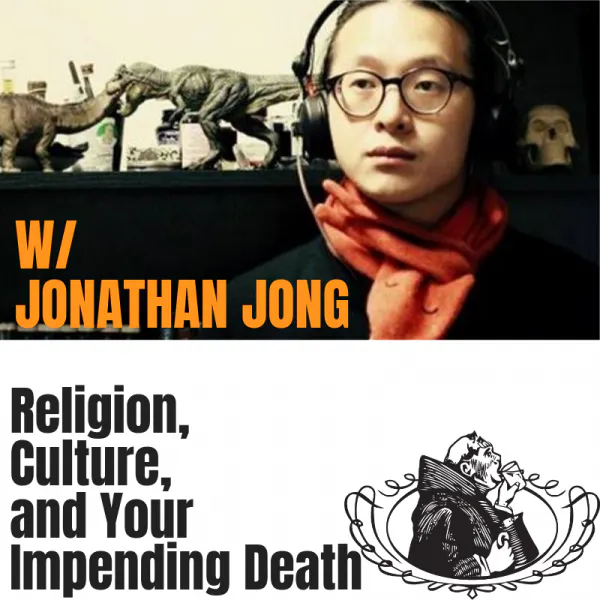
Jonathan Jong: Religion, Culture, and Your Impending Death
Dr. Jonathan Jong is a Research Fellow at Coventry University, and Deputy Director of the Brain, Belief and Behaviour group there. He is also a Senior Researcher at the Institute for Cognitive and Evolutionary Anthropology, University of Oxford. Most of his current research is on the psychology of religion and the philosophical issues associated with the scientific study of religion. The Doctor is also a Reverend and Associate Priest at the parish church of St Mary Magdalen, Oxford and the Web Editor for the St Mary Magdalen School of Theology. In this conversation we talked about... what is the scientific study of religion? what of religion is available to science? the role of humility in theological speculation how does cognitive science describe the origin of religion? what are the two big approaches to understanding the evolutionary origin of religion? how the relationship of our cognitive mechanisms and culture work together the role and function of culture in shaping humanity's religious disposition the problem of assessing a Christian account of theism with cognitive science how does a historically situated account of revelation impact the way you understand revelation? we discuss the role of reading and ritual experience in shaping the content of faith how the manner in which you engage the scripture changes the text itself what does cognitive psychology teach us about passing on the faith? is God real? "I think the church leadership has not woken up to the fact we don't live in the Middle Ages anymore." what are the ethical challenges raised by the cultural appropriation of mindfulness meditation? what is terror management theory? what is a death cafe? Follow the podcast, drop a review, send feedback/questions or become a member of the HBC Community. Learn more about your ad choices. Visit megaphone.fm/adchoices

LIVE from McAfee School of Theology: Kingdom Ethics and Moral Leadership in a Divided Age
This is a special live podcast episode. It was recorded at Wild Heaven Brewing in Atlanta Georgia with a bunch of our friends from McAfee School of Theology. During this zesty episode we discuss... what is a 'wet baptist'? Dean Greg DeLoach gives beer style intros to Profs on the Mics the nature of missionary dating and how it is absolutely not connected to the missionary posititon the nature of Baptist life and American Evangelicalism why David Gushee is sticking it to Stan... at least in podcasting. Tripp discusses Carmen. He is sorry. we meet Colin. he managed to publish a very zesty text as a student at McAfee with Dr. Gushee... Moral Leadership for a Divided Age: Fourteen People Who Dared to Change Our World why Ghandi might not be included in the second edition the inspiring life of Oscar Romero what question would you ask a Presidential Candidate to get at their moral leadership? "we are remembering faith, not an ideological faith" how comic books help you learn how to read the Bible what's going on theologically in the cultural rise of the comic? why everyone should read Sandman by Neil Gaiman the unique shape, power, and creativity of nerd culture Things to check out: David Gushee's super high-quality podcast that I hope you are already listening to. Kingdom Ethics Podcast Upcoming Events at McAfee School of Theology The Mercer Preaching Consultation in Chattanooga on October 6-8 with Dr. Brent Strawn (Professor of Hebrew Bible, Duke Div.) The Self Preaching Lectures on March 9-10 at Mercer in Atlanta with Dr. Miroslav Volf (Professor of Theology and Director of the Yale Center for Faith and Culture, Yale Univ.). Contact Nikki Hardeman for more information ([email protected], 678.547.6357) McAfee School of Theology Dr. David P. Gushee is Distinguished University Professor of Christian Ethics and Director of the Center for Theology and Public Life at Mercer University. Dr. Gushee is the elected Past-President of both the American Academy of Religion and Society of Christian Ethics. He is the author and/or editor of 24 books and approximately 150 book chapters, journal articles, and reviews. His most notable books include: Righteous Gentiles of the Holocaust, Kingdom Ethics, The Sacredness of Human Life, Changing our Mind, and Moral Leadership for a Divided Age. A devoted teacher, Professor Gushee offers courses to seminarians and college students. Over a busy 25-year career, he has written hundreds of opinion pieces, given interviews to scores of media outlets, and has led several significant social-ethical activist efforts. David G. Garber, Jr. is the Associate Professor of Old Testament and Hebrew at McAfee. He received his B.A. in Religion from Baylor University (1995), his M.Div. and Th.M. from Princeton Theological Seminary (1998-99), and his Ph.D. in Hebrew Bible from Emory University (2005). Before this position, Dr. Garber served as an adjunct professor at McAfee for three years while finishing his dissertation on "Trauma, History, and Survival in Ezekiel 1-24." He teaches courses in Old Testament, Hebrew Exegesis, Social Justice in the Old Testament, The Theology of Ezekiel, The Bible and Popular Culture, and The Book of the Twelve. In his research, Dr. Garber explores the usefulness of trauma theory as an interpretive lens for biblical study. He was the co-editor for a volume of Review and Expositor titled Faith Facing Trauma and contributed to the introduction and an expository article on Nahum 3 for the volume. Stemming from his work with trauma theory, Dr. Garber is currently composing an essay on “A Philology of Trauma in the Exilic Writings” to be published in a volume on the interpretation of exile ancient Israel by the Society of Biblical Literature. Follow the podcast, drop a review, send feedback/questions or become a member of the HBC Community. Learn more about your ad choices. Visit megaphone.fm/adchoices

From Southern Religion to Activist Theology: Stan Mitchell + Dr. Robyn Henderson-Espinoza
This is a zesty LIVE episode, recorded live in Nashville. I am joined by two friends, Stan Mitchell and Dr. Robyn Henderson-Espinoza. I get to ask them each 5 questions before we take questions from the people gathered for the fun. If you are wise you will get inspired to check out Robyn's new book. If you do... we got a bunch of goodies from Robyn to send you when you pre-order their new book Activist Theology. That's right, when you pre-order the book just forward the receipt to goactivistheology [at] gmail [dot] com and we will send you our class Theologies of Resistance and Robyn's lecture from Theology Beer Camp. SEPTEMBER 27-28 - Cary, NC - Called to Be Prophets I can't wait for this event. It is not only going to be my last in the USA before my family's move to the UK, but so many of my friends will be there. If you want to come to use the discount code TRIPP for 15% off. Follow the podcast, drop a review, send feedback/questions or become a member of the HBC Community. Learn more about your ad choices. Visit megaphone.fm/adchoices
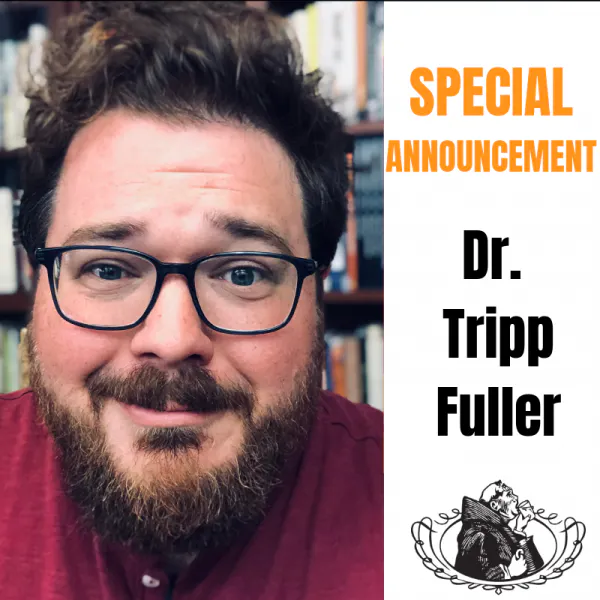
SPECIAL ANNOUNCEMENT!
Guess what theology nerds? This is a special announcement. I have just accepted a position as Postdoctoral Fellow at the University of Edinburgh. There I will be part of a John Templeton Foundation project, God and the Book of Nature: Building a Science-Engaged Theology of Nature. It is hard to exaggerate how excited I am about this position and the opportunity to work in theological education. On top of that I will be able to interact and connect with a host of new voices for the podcast, across the pond. It really is a dream come true for this theology nerd. Here's where I would absolutely love your help. Taking an entry level academic position at a prestigious university will open doors in the long run, so we want to take the venture as a family. The transition over seas will have a pretty significant hit in our monthly income, but being frugal isn't the biggest concern, it is the rather daunting costs of moving over seas. That's why we setup a GoFundMe where you can make a tax-deductible donation to the process. For over 11 years Homebrewed Christianity has been bringing you online theological resources. With 70k regular listeners and having crossed over 3 million downloads already this year, I know many of you enjoy it almost as much as I do. Your support not only makes the podcast possible, but has enabled me to continue to pursue my dream. Follow the podcast, drop a review, send feedback/questions or become a member of the HBC Community. Learn more about your ad choices. Visit megaphone.fm/adchoices

Michael Reiss: Evolutionary Ethics and the role of Religion
Michael Reiss is a British bioethicist, educator, and journalist. He is also an Anglican priest. Reiss is professor of science education at the Institute of Education, University College London, where he is assistant director, research and development. We had a fun conversation about his recent Boyle lecture (you can watch it here). We discuss a number of topics: how is ethics framed and formed by our evolutionary heritage? Dawkins and the genes eye view the role of language and rituals in the formation of the self reflection how human fictions shape our living the emergence of religion within humanity and the social brain how religious practice preceded ethics and belief how ethics evolved among our species the nature of humanity's expanding in-group a shout out to Peter Singer You can find out more about the Religion and the Social Brian project here. He also has a number of articles available for download here. Follow the podcast, drop a review, send feedback/questions or become a member of the HBC Community. Learn more about your ad choices. Visit megaphone.fm/adchoices

Michael J. Murray: The Scientific Challenge for Faith
Dr. Michael J. Murray is the President of the Arthur Vining Davis Foundations and former Arthur and Katherine Shadek Chair in Philosophy and the Humanities at Franklin & Marshall College and Senior Vice President of Programs at the John Templeton Foundation. He received his BA from Franklin and Marshall and his MA and Ph.D from the University of Notre Dame. His research focuses on two primary areas. The first is seventeenth century history of philosophy and theology, with a particular focus on the work of Gottfried Leibniz. The second is contemporary philosophy of religion. His most recent work focuses on the problem of evil and animal suffering, and cognitive and evolutionary accounts of the origin and persistence of religious belief and practice. In our wide-ranging conversation we discuss... fine-tuning gene-editing climate change the theological significance of science cognitive science of religion evolutionary psychology cultivating vocations in science among the church the origins of religion (thorough and clear description of the different options) revelation's relationship to history and religions situated knowledge and contextual for religious truth the historical Adam the pain and suffering within nature Extraterrestrial and Artificial Intelligence Follow the podcast, drop a review, send feedback/questions or become a member of the HBC Community. Learn more about your ad choices. Visit megaphone.fm/adchoices

John Caputo: Tillich and a Radical Theology of Culture
John D. Caputo is a hybrid philosopher/theologian who works in the area of radical theology. Prof. Caputo has spearheaded a notion he calls “weak theology,” by which he means a “poetics” of the “event” that is harbored in the name (of) God, or that “insists” in the name (of) “God,” a notion that depends upon a reworking of the notions of event in Derrida to theological ends. Follow the podcast, drop a review, send feedback/questions or become a member of the HBC Community. Learn more about your ad choices. Visit megaphone.fm/adchoices

John Haught: the New Cosmic Story
For a long time I have been a fan of John Haught's work. He is a Catholic theologian, invested in the conversation between religion and science, who brings together two of my favorite thinkers - Pierre Teilhard de Chardin and Alfred North Whitehead. His recent award winning book, The New Cosmic Story: Inside Our Awakening Universe, Haught's mature theological voice is at work in a serious way. There he argues that an adequate understanding of cosmic history requires attention to the emergence of interiority, including religious aspiration. We discuss that and a number of other topics in this conversation including... Big History and its inside story the relationship of religion and science Layered Explanations of reality and meaning 3-fold pattern of growth: Divergence, Convergence, and Emergence the cosmological literalism of the New Atheists - a modernist form of fundamentalism the narrative shape of the cosmos Teilhard, Lonergan, Whitehead, Polyani the nature of religion in the evolution of homo sapiens ethical predicaments from the ecological crisis to abortion the role of beauty in the cosmos His article, Trashing Teilhard: How Not to Read a Great Religious Thinker John F. Haught is Senior Fellow, Science & Religion, Woodstock Theological Center, Georgetown University. He was formerly Professor in the Department of Theology at Georgetown University (1970-2005) and Chair (1990-95). His area of specialization is systematic theology, with a particular interest in issues pertaining to science, cosmology, evolution, ecology, and religion. Follow the podcast, drop a review, send feedback/questions or become a member of the HBC Community. Learn more about your ad choices. Visit megaphone.fm/adchoices

Kenneth R. Miller: How we Evolved to have Reason, Consciousness, and Free Will
I am pumped to share this episode with you. For a long time I have enjoyed the work of biologist Kenneth R. Miller and over the course of this conversation we cover a number of topics which include... How the poetry of Thomas Merton help bring Ken back to faith His role in the debates between Creation Science, Intelligence Design, and Evolution "if Augustine and Aquinas were around today, they would be evolutionists" on the craft of being a baseball umpire the nature of Biblical truth and scientific discovery stories from the legal battles over Intelligent Design the overwhelming evidence for a common ancestor how humans are unique among the natural world the failure of Sam Harris' argument on free will a sweet E.O. Wilson story on free will and its necessity for science his friendship and disagreement with Stephen Jay Gould about NOMA Ken's theory of mind and consciousness he argues against Nagel about the nature of consciousness we discuss emergence via complexity Kenneth R. Miller is Professor of Biology. He did his undergraduate work at Brown, and earned a Ph D in 1974 at the University of Colorado. He spent six years as Assistant Professor at Harvard University before returning to Brown University in 1980. His research work on cell membrane structure and function has produced more than 60 scientific papers and reviews in leading journals, including CELL, Nature, and Scientific American. You should definitely follow him on twitter and check out his visit to the Colbert Report. Follow the podcast, drop a review, send feedback/questions or become a member of the HBC Community. Learn more about your ad choices. Visit megaphone.fm/adchoices
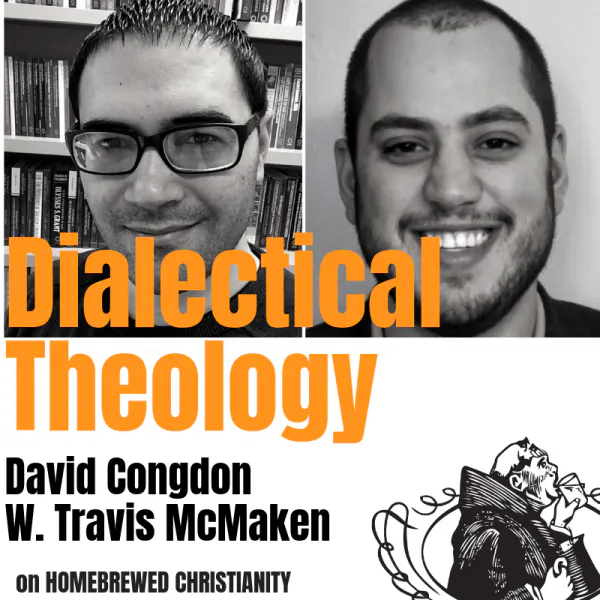
David Congdon + Travis McMaken: Dialectical Theology
The dynamic duo of dialectical theology - David Congdon & Travis McMaken - are on the podcast. These two scholars, friends, and theological provocateurs are here to bring you some dialectical theology. This conversation was recorded in their hotel room at the American Academy of Religion. Their room may or may not have had a bunch of crystals surrounding a giant collection of analytic theology texts. Travis was on the podcast in the past talking about Why God loves Justice and Why Go Barthian?. David joined the podcast to talk Bultmann’s Mission of Demythologizing. If you are inspired you should go join the Society for Dialectical Theology In this podcast we discuss.... - the day David convinced Travis the bodily resurrection wasn't necessary - dialectical theology's relationship to theological tradition - what does the term "event" mean for DT? - humans are messed up and are not the solution of our problem - the kenosis of the patriarchy - theology for the religiously unaffiliated - sadly Travis has no inner-life - how Badiou should relate to Theology... a theology of the trace - what makes an event christian - the contrast between dialectical theology and salvation history - tripp gets upset about theology without existential register - David is not happy about St. Andrews, analytical theology, or NT Wright's historical confidence - analytical investigations of Kierkegaard aren't cool - doing historical investigations doesn't lead to the existential encounter of faith - the need to embrace the secularity of faith Follow the podcast, drop a review, send feedback/questions or become a member of the HBC Community. Learn more about your ad choices. Visit megaphone.fm/adchoices
Reza Aslan: the birth of god, the problem of identity, and Pete Buttigieg
Reza Aslan is back on the podcast with the release of God: A Human History in paperback. Reza Aslan is a best-selling author (Zealot, No god But God), commentator, professor, and producer for The Leftovers (HBO), Of Kings and Prophets (ABC), Rough Draft (Ovation), and Believer (CNN). In our conversation we discuss a bunch of topics... the birth of God in human history cognitive science of religion evolutionary account of religion Reza resists scientific reductionism what comes first, myth or rituals? what is going on in religion? why religion is not primarily about beliefs, but identity the ignorance of ignoring religion a prophetic voice in a multi-traditioned culture Reza's enthusiastic endorsement of Pete Buttigieg for President why Donald Trump is personified evil a minister who will not stand against racism is failing parenting in a multi-faith family Follow the podcast, drop a review, send feedback/questions or become a member of the HBC Community. Learn more about your ad choices. Visit megaphone.fm/adchoices

Anthony Le Donne: Learning Religion in the Game of Thrones
Earlier this week we were joined by A. Ron from the Bald Move podcast. His co-author for Gods of Thrones and historical Jesus scholar, Dr. Anthony Le Donne, is on the podcast talking comparative religion in the Game of Thrones. We have too much fun and get to a bunch of topics... Game of Thrones as a secular apocalypse narrative GOT and LOTR (Lord of the Rings) eucatastrophe in LOTR the end of ethical theories how Martin sees the nature of religion the influence of Catholicism and Roman religion the cultural phenomenon of GOT and its growing tribe anxiety, agency, and our global crises White Walkers and the Ecological Crisis blood and incest introduction to comparative religion in Westeros why fan theory is awesome from canonical texts to post-canonical TV how GOT tackles changing norms the historical Jesus had warts GOT and the emergence of a promo-democracy how to finish the books if Martin can't an aside on the politics of historical Jesus research Anthony Le Donne is Assistant Professor of New Testament at United Theological Seminary. He is the author/editor of seven books and serves as an editor of the Journal for the Study of the Historical Jesus. Follow the podcast, drop a review, send feedback/questions or become a member of the HBC Community. Learn more about your ad choices. Visit megaphone.fm/adchoices

A. Ron of Bald Move: Game of Thrones and Professional Podcasting
WINTER IS COMING! A. Ron of the Bald Move is on the podcast talking podcasting, online community, and Game of Thrones (GOT). It is fun. Not only is A. Ron host of my favorite GOT podcast, but he recently put out a two volume exploration of the religions of GOT. George R.R. Martin, author of GOT, recognized that many fantasy works (like LOTR) may explore religious themes, but they rarely have a rich tapestry of religious life. That is not a problem in Westeros. I hope you enjoy the episode and get prepared for part two late this week with Dr. Anthony Le Donne. In our conversation we cover a bunch of ground, including: How A. Ron fell in love with science fiction and fantasy forming community online and the Bald Move the Game of Thrones (GOT) experience what explains the cultural phenomenon that is GOT what is Martin getting at in the end game of GOT thinking through the redemptive arcs in GOT what are the motivations of the white walkers the Wall as the DMZ zone of the ancient war who is going to end on the iron throne... will there be a proto-democracy why we need more dire wolves Cleganebowl!!! Follow the podcast, drop a review, send feedback/questions or become a member of the HBC Community. Learn more about your ad choices. Visit megaphone.fm/adchoices

Michael Ruse: Darwinian Existentialism
Michael Ruse was a complete treat as a guest. He is an insightful, energetic, and humorous conversation partner. On top of that, as a philosopher of science, Dr. Ruse brings a career's worth of insights into the present state of the religion and science conversation. I have quite a bit of gratitude that Dr. Ruse took his time to join the podcast. During the podcast we discuss: the changing shape of the relationship between Religion - Science the battle over Creationism is there a purpose? the meaning of life the problem of holism evil, violence, and the problem of war the New Atheism as a Secular Religion moving beyond original sin growing up Quaker during war Michael Ruse is Lucyle T. Werkmeister Professor of Philosophy and Director of the Program in the History and Philosophy of Science at Florida State University. He's a British-born Canadian philosopher of science who specializes in the philosophy of biology and works on the relationship between science and religion, the creation–evolution controversy, and the demarcation problem within science. Follow the podcast, drop a review, send feedback/questions or become a member of the HBC Community. Learn more about your ad choices. Visit megaphone.fm/adchoices

Robert Wright: From Mindful Resistance to the New Agnosticism
I am super duper pumped to share my conversation with Robert Wright. For a long time I have enjoyed Bob's podcast, books, and his new post-Trump newsletter. His return to the podcast follows my visit this past week on his own, which was a bunch of fun. Here's a number of topics we tackle: Why Buddhism is True The problem with getting rid of prayers of confession from worship Why everyone could use a class in evolutionary psychology Western love of secular buddhism Robert asks Tripp about confirmation and facilitating experiments in truth What is a "wet baptist"? The role and desire of religious rituals Can religions leave competition behind? Can Christianity become a wisdom tradition? The New Agnosticism The hard problem of consciousness "purpose" in the story of evolution the possibility of moral progress how a simple theist may end up being more accurate than the New Atheists how Process theology's multiple ultimates gives a different way to connect eastern and western religious traditions the problem of religious pluralism and how to do solve it why I hope Bob talks with Simon Conway Morris Want to check out more of Robert's work? Here's a few places to go. The video/podcasting network he started, BloggingHeads.TV The Mindful Resistance Newsletter (it is so good) His class on Buddhism and Modern Science Here's his lecture from Union Theological Seminary on the New Agnosticism Here's Robert's previous visit to the podcast from 2009 Here's the conversation I had with Robert the day before on his podcast Follow the podcast, drop a review, send feedback/questions or become a member of the HBC Community. Learn more about your ad choices. Visit megaphone.fm/adchoices

Dr. Robert Kurzban: Spotting Hypocrisy and Becoming Virtuous
What is morality for? Where did 'the good' come from? Is the human even a trustworthy partner for asking these questions? In this episode I am joined by Dr. Robert Kurzban, an evolutionary psychologist, who has spent his life studying human behavior through an evolutionary framework. Robert was a complete blast to converse with and I grateful he took the time to talk to me off a cold email through the digital-space. Over the course of our time you will get to know a bit about his own life and research, including.... What is Evolutionary Psychology? A Modular Brain? The evolutionary origins and functions of morality and virtue How we hide our agendas from ourselves Climate Change and the public good problem How people of faith can endorse policies counter to the basic tenants of their faith Religion and the abortion debate The coercive force of spotting hypocrisy The role of wisdom in overcoming our biological hardware Robert Kurzban is an evolutionary psychologist and author of two very readable and enjoyable texts - Why Everyone (Else) Is a Hypocrite: Evolution and the Modular Mind and The Hidden Agenda of the Political Mind: How Self-Interest Shapes Our Opinions and Why We Won't Admit It. His research focuses on the nature of evolved cognitive adaptations for social life. These include processes involved with cooperative decision making, punishment, morality, close relationships, and mate choice. He uses methods drawn from experimental economics and cognitive psychology to study these processes. Robert is proud to have served as both the editor-in-chief of the journal Evolution & Human Behavior and President of the Human Behavior and Evolution Society. Follow the podcast, drop a review, send feedback/questions or become a member of the HBC Community. Learn more about your ad choices. Visit megaphone.fm/adchoices

Karl Giberson: Physics, Cosmology, and Faith after Evangelicalism
Physicist and regular contributor to the religion & science conversation, Dr. Karl Giberson is on the podcast. You will get to hear the inside story of this ex-evangelical scientist's changing relationship to science and the church he first knew. Ultimately Dr. Giberson couldn't see a way for the American evangelical community to reconcile with science and today, while still a Christian, works in a Catholic context. The topics we cover are wide-ranging and include: Physics & Cosmology the Multiverse (and his skepticism) the fine-tuning of the universe chance, randomness, and divine action (the lack of a) literal Adam and Eve life after evangelicalism LGBTQ equality in the church evangelical anti-intellectualism Dr. Giberson holds a PhD in Physics from Rice University. Dr. Giberson has lectured on science-and-religion at the Vatican, Oxford University, London’s Thomas Moore Institute, and at many prestigious American venues including MIT, Brigham Young University and Xavier University. Dr. Giberson has published more than 200 reviews and essays, both technical and popular, in outlets that include NY Times, CNN.com, the Guardian, USA Today, LA Times, Salon.com, Discover, Weekly Standard, Quarterly Review of Biology, Perspectives on Science & Faith, The Edge.org, and Books & Culture. He has written or co-authored 10 books, and contributed to many edited volumes. Currently, Dr. Giberson is a faculty member at Stonehill College where he serves as the Scholar-in-Residence in science and religion. Here's Karl's critical review of Lawrence Krauss' account of Creation out of Nothing that gets mentioned. Follow the podcast, drop a review, send feedback/questions or become a member of the HBC Community. Learn more about your ad choices. Visit megaphone.fm/adchoices

Rolf Jacobson: Israel's In-Your-Face, Holy God
You don't have to be an Old Testament hater. I know it seems popular and pretty easy to dismiss the Hebrew scriptures, BUT it is a heresy and almost all the reasons you will think of apply to the New Testament as well. Here's the deal - the reason we are easily attracted to ditching the Hebrew scriptures may be we really don't want to read, hear, and listen as they intend to be heard. For that very reason I was pumped to Rolf Jacobson write the Homebrewed Christianity Guide to the Old Testament. The book is awesome. We talk about the book and a bunch of other things in this podcast. I also hadn't preached in 2 weeks when we recorded it, so there's a small sermonette in the middle of it. [You can avoid a sermonette in the middle of a podcast by inviting me to speak :)] Follow the podcast, drop a review, send feedback/questions or become a member of the HBC Community. Learn more about your ad choices. Visit megaphone.fm/adchoices

Ted Peters: God, Cosmic History, and Extraterrestrial Life
In this episode we are going to talk about a bunch of different topics in the larger science and religion conversation. Topics include cosmic history, divine action, the history of religions, astrotheology, and even extraterrestrial life. We are joined by a living legend in the field, Ted Peters. Ted is a Research Professor at the Center for Theology and the Natural Sciences. He is Research Professor Emeritus in Systematic Theology and Ethics at Pacific Lutheran Theological Seminary. You can check out his personal website for an overview of all his different work. The Center for Theology and the Natural Sciences has a bunch of resources. Below are links to a few articles of Dr. Peters that touch our conversation: "From Big History to Cosmic History" , "Introducing Astrotheology", "Science and Religion: Ten Models of War, Truce, and Partnership", "Should CRISPR Scientists Play God?", "Transhumanism and the Posthuman Future: Will Technological Progress Get Us There?" Follow the podcast, drop a review, send feedback/questions or become a member of the HBC Community. Learn more about your ad choices. Visit megaphone.fm/adchoices

Greg Jarrell and a Riff on Love
Greg Jarrell is a friend and hero of mine. It was a real honor to not only have him on the podcast, but help host a little party to celebrate the release of his new book A Riff of Love. Greg is a founder of QC Family Tree, a community of hospitality in Charlotte, NC, where he shares life with his wife, Helms, their two kids, and a host of other neighbors who have become kin. In our conversation we talk about his story and just how a southern baptist church boy ended up on a search for community, justice, and belonging. It was a blast and I am sure you will enjoy it. Follow the podcast, drop a review, send feedback/questions or become a member of the HBC Community. Learn more about your ad choices. Visit megaphone.fm/adchoices

Brian McLaren - A New Kind of Road Trip
It's time for the great reversal!! Brain McLaren takes the roll of the interviewer and turns to me for the A's to the Q's. It was a blast. Personally I am extremely honored that Brian not only watched (and enjoyed) my film, The Road to Edmond, but that he took the time to plan a fun conversation about it. You will learn a bit about the movie production, writing, acting and such, but also hear us wrestle with the topics the film itself tackles. Hopefully the conversation inspires you to go watch the film this month (Feb 2019), while it is available for your streaming pleasure at jesuslovesourmovie.com. Brian D. McLaren is an author, speaker, activist, and public theologian. A former college English teacher and pastor, he is a passionate advocate for “a new kind of Christianity” – just, generous, and working with people of all faiths for the common good. He is an Auburn Senior Fellow and a leader in the Convergence Network, through which he is developing an innovative training/mentoring program for pastors, church planters, and lay leaders called Convergence Leadership Project. He works closely with the Center for Progressive Renewal/Convergence, the Wild Goose Festival and the Fair Food Program‘s Faith Working Group. Follow the podcast, drop a review, send feedback/questions or become a member of the HBC Community. Learn more about your ad choices. Visit megaphone.fm/adchoices

Thomas Jay Oord wants you to know "God Can't"
I love Tom Oord. It is rare someone as intelligent as Tom is simultaneously committed to the life of the church, sensitive to people's lived experience, and advancing the intellectual quest in multiple areas. In this episode I talk with Tom about his newest book, God Can't: how to believe in God and Love after Tragedy, Abuse, and other Evils. During this conversation we both share a number of personal stories. Some of them may be a bit intense if you are listening with kids or the expectation of just nerdiness. For more academic conversations with Tom check out the previous episodes below. Thomas Jay Oord is a theologian, philosopher, and scholar of multi-disciplinary studies. Oord is an award-winning author, and he has written or edited more than twenty books. A twelve-time Faculty Award winning professor, Oord teaches at institutions around the globe. A gifted speaker, Oord is known for his contributions to research on love, open and relational theology, science and religion, and the implications of freedom and relationships for transformation. Previous Visits of Tom to the Podcast Open and Relational Q&A with Thomas Jay Oord Why Go Wesleyan? with Thomas Jay Oord Evil, Providence and the Love of God with Tom Oord Thomas Jay Oord really loves talking about Love [Barrel Aged] Follow the podcast, drop a review, send feedback/questions or become a member of the HBC Community. Learn more about your ad choices. Visit megaphone.fm/adchoices

An Oxford Philosopher's Journey from Atheism to Idealism with Keith Ward
This most zesty episode was part of the Cosmic Campfire reading group. I joined Science Mike, Mike Morrell, and a couple thousand nerds as we read through a new collection of spiritual memoirs - How I Found God in Everyone and Everywhere. Keith Ward was one of the contributors and he jumped on video chat to talk with Mike and I for the group. It was an energetic and fun conversation that covered a number of topics from science, physics, materialism, idealism, the Cosmic Christ, spiritual experiences, religious pluralism, divine action, and more. Ohhh and you hear how this Oxford Philosopher went from being an atheist to an idealist and then converted to Christianity in India. Keith Ward is a British philosopher, theologian, priest and scholar. He is a fellow of the British Academy and a priest of the Church of England. He was a canon of Christ Church, Oxford until 2003. Comparative theologyand the relationship between science and religion are two of his main topics of interest. He was Regius Professor of Divinity at the University of Oxford from 1991 to 2004. Don’t forget to check out some amazing free lectures of Keith. Literally quality, zesty, nerdy, and free lectures. Here's his previous podcast visits: Keith Ward talks about the Bible The Christian Idea of God with Keith Ward Keith Ward’s Guide to Thinking God What do theologians really think? Follow the podcast, drop a review, send feedback/questions or become a member of the HBC Community. Learn more about your ad choices. Visit megaphone.fm/adchoices
Open and Relational Theology Throwdown with Thomas Jay Oord
I am super excited to share this conversation with my dear friend and brilliant scholar Tom Oord. In this episode we discuss a couple different topics from an Open and Relational perspective in the hope it lures you to join our Open and Relational Theology reading group!! That's right. Tom and I are gonna facilitate an exploration of ORT and we would love for you to join the fun. Did you know Tom just released a new book? It's called "God Can't: How to Believe in God and Love after Tragedy, Abuse, and Other Evils." It is the single best introduction to the open and relational perspective on evil for the non-specialist. I have already recommended it to a bunch of people, so if you are asking questions about God's power, presence, and relationship to suffering - read this book. Thomas Jay Oord is a theologian, philosopher, and scholar of multi-disciplinary studies. Oord is an award-winning author, and he has written or edited more than twenty books. A twelve-time Faculty Award winning professor, Oord teaches at institutions around the globe. A gifted speaker, Oord is known for his contributions to research on love, open and relational theology, science and religion, and the implications of freedom and relationships for transformation. Previous Visits of Tom to the Podcast Open and Relational Q&A with Thomas Jay Oord Why Go Wesleyan? with Thomas Jay Oord Evil, Providence and the Love of God with Tom Oord Thomas Jay Oord really loves talking about Love [Barrel Aged] Follow the podcast, drop a review, send feedback/questions or become a member of the HBC Community. Learn more about your ad choices. Visit megaphone.fm/adchoices

You Have Permission to be Awesome with Dan Koch
My friend and fellow podcast nerd, Dan Koch, is back on the podcast. Dan is here so I can tell you all about his brand new podcast - YOU HAVE PERMISSION. You Have Permission (hosted by Dan Koch -- Depolarize! Podcast, Reconstruct) is a podcast for anyone asking those deep and timeless questions that humans can't seem to stop asking. So many of us have been given bad answers to these good questions, often by people with pure intentions. What this podcasts claims is that you have permission to take both Christianity and the modern world very seriously. The series launched January 14th with 4 full length episodes on Christian Inclusivism, Theistic Evolution, Extraterrestrial Theology, and Predestination. Dan is also the co-host the Depolarize! and Reconstruct podcasts, plays guitar in Sherwood, and lives in Seattle.We have a large amount of fun talking to each other. Personally I love saying things I know he will disagree with, in just a snarky enough way, to get him going. As you will hear that happens. Plus I pitch Dan a vision of Christianity as a Wisdom tradition at the end. Although Dan is not as cool as Josh Patterson... he is still pretty cool and I was happy to have him on. Follow the podcast, drop a review, send feedback/questions or become a member of the HBC Community. Learn more about your ad choices. Visit megaphone.fm/adchoices

A Jewish Integration of Science and Spirit with Rabbi Brad Artson
I absolutely love Rabbi Artson. His previous visit to the podcast has remained one of the most powerful and popular episodes, where he talks about his Jewish understanding of Process theology. This fresh episode is from our Cosmic Campfire reading group. It was so zesty that I thought I would share it as a means to lure you to Chapel Hill, North Carolina for the COSMIC CAMPFIRE event this February 1-2. Rabbi Artson is the author of Renewing the Process of Creation and God of Becoming and Relationship: The Dynamic Nature of Process Theology and they are straight up awesome. If you are looking for introductory level texts about Process theology then you really need to check them out. Most importantly there are ZERO reasons not to subscribe to his podcast. LITERALLY ZERO REASONS. Bradley Shavit “Brad” Artson is an American rabbi, author, speaker, and the occupant of the Abner and Roslyn Goldstine Dean’s Chair of the Ziegler School of Rabbinic Studies at the American Jewish University in Los Angeles, California, where he is Vice-President. He supervises the Louis and Judith Miller Introduction to Judaism Program and provides educational and religious oversight for Camp Ramah of California. He is Dean of the Zecharias Frankel College at the University of Potsdam in Germany, ordaining Conservative/Masorti Rabbis for the European Union. You can check out a bunch of Rabbi Bradley Shavit Artson's book here. Follow the podcast, drop a review, send feedback/questions or become a member of the HBC Community. Learn more about your ad choices. Visit megaphone.fm/adchoices

Behold the Earth! a conversation with David G. Conover
My guest in this episode is the director and ecological activist behind the new film Behold the Earth - David Conover. It's a music-filled documentary with some of the most beautiful footage the screen can manage. I was moved by the emptive power of the film's imagery and music and I was inspired by the stories of ecological activism emerging in religious communities. About the Film: Behold the Earth is a music-rich documentary film that explores America’s divorce from the outdoors through conversations with legendary scientists E.O. Wilson, Cal DeWitt, and Theo Colborn, as well as a new generation of creation-care activists within America’s Christian communities. Katharine Hayhoe, Ben Lowe, and Corina Newsome are close observers of nature bearing witness to creation, asking tough questions about church engagement with environmental issues. About the Director: Film Director and Conservationist David Conover boldly began this highly original film 12 years ago, as an inquiry into America’s divorce from the outdoors, before-and-after the arrival of those known as the digital natives. He is neither scientist nor Christian. He draws upon some of the same talented field staff behind the spectacular natural sequences in his series Sunrise Earth and Big Picture Earth. Four time Grammy-award winning musician Dirk Powell leads the arrangements of traditional American tunes and hymns, with Rhiannon Giddens and Tim Eriksen. Follow the podcast, drop a review, send feedback/questions or become a member of the HBC Community. Learn more about your ad choices. Visit megaphone.fm/adchoices
Parenting for the Common Good w/ Brian McLaren, Micky, and Daneen
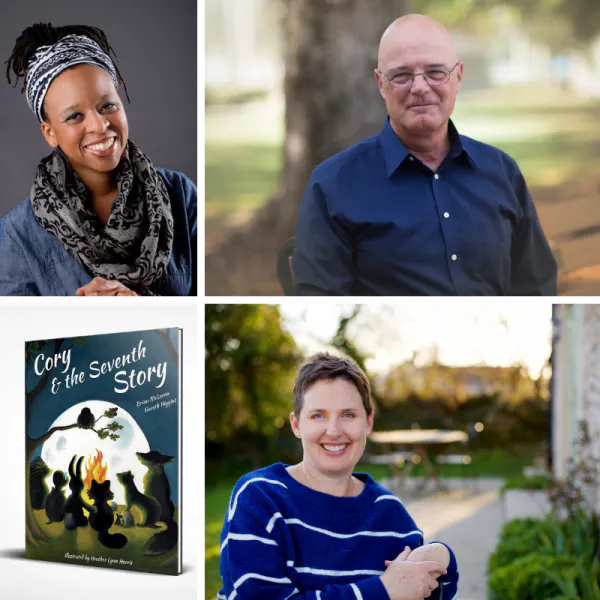
What a fun podcast episode! Brian McLaren, Micky ScottBey Jones, and Daneen Akers all joined for a conversation about parenting for the common good. Many of us know the faith we do not want to pass on to our children, but what does being a faithful parent look like after our childhood faith is gone? That's the topic for this session...plus we answer some questions you sent in. Brian McLaren wrote a new children's book with Gareth Higgins. It is called Cory and the Seventh Story and should be required reading for parents and grand parents with the children in their life. Don’t worry adults, they didn’t forget about you. They also wrote a version for you that explores the same themes. That’s right, you can also get The Seventh Story: Us, Them, and the End of Violence. Micky ScottBey Jones - the Justice Doula - accompanies people as they birth more love, justice and shalom into our world. As a womanist, faith rooted, contemplative activist, healer, and nonviolence practitioner, Micky supports students, clergy, activists and everyday leaders in a variety of roles - speaker, writer, facilitator, pilgrimage guide and teacher. She is the Director of Resilience and Healing Initiatives with the Faith Matters Network and is a core team member with The People’s Supper who has gathered more than 4,000 people around tables since the 2016 U.S. election for bridging and healing conversations. Micky's educational background includes a B.S. in Consumer and Family Sciences with an emphasis in Child Development and Family Studies, numerous mother-baby certifications for doulas and lactation consultants, a M.A. in Intercultural Studies from NAIITS/Portland Seminary, and she is currently pursuing advanced studies in the Enneagram while completing several writing projects to be released in 2019. Named one of the Black Christian leaders changing the world in Huffington Post, Micky travels the world exploring peacemaking and relationships in different contexts, spreading revolutionary love, engaging in authentic conversations, participating in transformative experiences - and most importantly - she never passes up a dance floor.She has been a contributor at Evangelicals For Social Action, The Porch Magazine, Sojourners, and Red Letter Christians. You can interact with her work and collaborations at Faithmattersnetwork.org and Mickyscottbeyjones.com and catch her social media on Facebook: facebook.com/MSJSpeaks/ and Twitter: @iammickyjones. Daneen Akers is a filmmaker, writer, and parent who believes deeply in the power of stories. She is currently writing an illustrated children’s book called Holy Troublemakers & Unconventional Saints, which will feature 50 original portraits and profiles of people of faith who worked for love and justice, even if that rocked the religious boat. Daneen found that most of the books she’d read as a child that had anything to do about faith were not compatible with the type of faith she now has as an adult. She knew she needed better stories for her own children, stories that help us transcend fears, connect with each other, engage in justice, and model an expansive and fully inclusive view of any Divine. Given the enthusiastic response to the Holy Troublemakers project, she realized she wasn’t alone. There are is a growing movement of parents and others looking to do better with the stories we tell ourselves and our children. You can find her current project at www.holytroublemakers.com. Follow the podcast, drop a review, send feedback/questions or become a member of the HBC Community. Learn more about your ad choices. Visit megaphone.fm/adchoices

Elgin goes to Mars
Elgin, my oldest son, just turned 11 and he has managed to talk himself into a podcast appearance. Personally I had a blast. It may be a completely new parenting tactic - get your 11 year old Son to record a podcast and they will talk to you about something other than Fortnite for 30 minutes!! Elgin is a pretty big fan of the National Geographic show MARS and we are currently rocking the second season. It is about an international team of scientists who go on a mission to colonize the red planet. The cool thing about the show is they go back and forth with a not-too-far-ahead future narrative of the first Mars team and cut-ins with info from contemporary scientists or current research connected to the mission. This leads to Elgin asking all sorts of fun questions...some of which we attempt to discuss in the episode. If you haven't seen Mars and have a science or Sci-Fi nerd in the house check it out. For those that are going to watch with a very inquisitive offspring, just DVR it so you can pause and discuss as you go through the episode. For more Mars excitement you can also check out the book the show is based on, How We'll Live on Mars. It's extremely readable and quite fun. There is a certain individual in our house who may or may not find the book in a stocking this Christmas. Follow the podcast, drop a review, send feedback/questions or become a member of the HBC Community. Learn more about your ad choices. Visit megaphone.fm/adchoices

We need a new story! Avoiding spiritual and planetary collapse with Brian McLaren and Gareth Higgins
Two of my favorite humans on planet earth are named Gareth and Brian. They aren't my favorites because they are brilliant, creative, wise, or even lots of fun. Gareth and Brain are genuinely kind and passionately invested in the well-being of our planet. That is why I am super pumped that they have written a CHILDREN'S BOOK that is absolutely wonderful. It is called Cory and the Seventh Story and should be required reading for parents and grand parents with the children in their life. Don't worry adults, they didn't forget about you. They also wrote a version for you that explores the same themes. That's right, you can also get The Seventh Story: Us, Them, and the End of Violence. You can also check out my first film and the only one I know of in the "progressive Christian buddy road-trip comedy you could get in trouble for showing at church, but if you watch the entire thing you might cry and not think it is just inappropriate humor" category. It is called The Road to Edmond and this holiday season you can stream it by heading to jesuslovesourmovie.com. Gareth Higgins was born in Belfast in 1975, grew up during the northern Ireland Troubles, and now lives in North Carolina. He writes and speaks about connection to the earth, cinema and the power of dreams, peace and making justice, and how to take life seriously without believing your own propaganda. He co-founded the Wild Goose Festival, Movies & Meaning, The Porch Magazine, and the New Story Festival. He has experienced violence, and been involved in peace-building; he lives in the US and sees beauty amidst challenge; his greatest hope is that you would find some healing and inspiration in a better story, to find a better life, for you, your community, the world, and everyone else. He's looking for that too, and he's happy to be a work in progress. If you'd like to connect with his work, www.garethhiggins.net is the place to go. Brian D. McLaren is an author, speaker, activist, and public theologian. A former college English teacher and pastor, he is a passionate advocate for “a new kind of Christianity” – just, generous, and working with people of all faiths for the common good. He is an Auburn Senior Fellow and a leader in the Convergence Network, through which he is developing an innovative training/mentoring program for pastors, church planters, and lay leaders called Convergence Leadership Project. He works closely with the Center for Progressive Renewal/Convergence, the Wild Goose Festival and the Fair Food Program‘s Faith Working Group. Follow the podcast, drop a review, send feedback/questions or become a member of the HBC Community. Learn more about your ad choices. Visit megaphone.fm/adchoices

Keep Christianity Weird w/ Michael Frost
On this episode I am joined by Michael Frost and we talk about his newest book Keep Christianity Weird: Embracing the Discipline of Being Different. Michael is an internationally recognized missiologist and one of the leading voices in the missional church movement. On top of that he's is the Vice Principal of Morling College and the founding Director of the Tinsley Institute, a mission study centre located at Morling College in Sydney, Australia. You can check out his website, follow him on twitter, and even on Facebook. Follow the podcast, drop a review, send feedback/questions or become a member of the HBC Community. Learn more about your ad choices. Visit megaphone.fm/adchoices
Selfies and the Image of God with Craig Detweiler
Selfies are ubiquitous. They can be silly or serious, casual or curated. Within moments, smart phone users can capture their image and post it across multiple social media platforms to a global audience. But do we truly understand the power of image in our image-saturated age? How can we seek God and care for each other in digital spaces? Well this week on the podcast we will tackle these questions with my friend, scholar, and guru of the cinema Craig Detweiler. Since the last time he was on the podcast he became President of The Seattle School of Theology and Psychology. Craig Detweiler is a U.S. author, filmmaker, theologian, and cultural commentator who is the third president of The Seattle School of Theology & Psychology in Seattle, Washington. Toward the end of the podcast I mention my recent film The Road to Edmond and now you can watch it online. So do it. Follow the podcast, drop a review, send feedback/questions or become a member of the HBC Community. Learn more about your ad choices. Visit megaphone.fm/adchoices

From the Science Delusion to Psychedelic Religion with Rupert Sheldrake
Get ready for a mind expanding and assumption challenging episode with the one and only Rupert Sheldrake. When a guest comes to the podcast on recommendation from John Cobb you have to get pumped. Prior to the interview I read two of Sheldrakes books that I would definitely recommend to you. In this wide-ranging conversation we end discussing the dogmatism of scientific materialists, the nature of consciousness, parapsychology, pets, psychedelics, ritual, pilgrimage, neo-darwinism, the changing shape of religion, epigenetic, creativity in evolution, Bergson, Whitehead, and why Rupert loves the doctrine of the Trinity. Rupert Sheldrake, PhD, is a biologist and author best known for his hypothesis of morphic resonance. At Cambridge University he worked in developmental biology as a Fellow of Clare College. He was Principal Plant Physiologist at the International Crops Research Institute for the Semi-Arid Tropics and From 2005 to 2010 was Director of the Perrott-Warrick project, Cambridge. Rupert Sheldrake was not only kind enough to join the podcast, but is coming back for a live session with all the members of the Cosmic Campfire Online Book Group. If you want to join the fun and ask Rupert your own questions then head on over and sign up! If you want to hear more from Sheldrake here's a few places to go. Clearly you want to watch his BANNED TED TALK. Check out his books Science and Spiritual Practices: Transformative Experiences and Their Effects on Our Bodies, Brains, and Health and Science Set Free: 10 Paths to New Discovery. Both are available in physical, digital, and audio versions. Sheldrake also has a very informative and resource rich website. There you can find links to all the different podcasts that he has released. For a fun introduction to Rupert's work check out his visit to Russell Brand's podcast and his conversation with Joe Rogan. Follow the podcast, drop a review, send feedback/questions or become a member of the HBC Community. Learn more about your ad choices. Visit megaphone.fm/adchoices

the Entangled God of My Heart with Ilia Delio #CosmicCampfire
Ilia Delio, OSF, is the Josephine C. Connelly Endowed Chair in Theology at Villanova University, a wide read author, popular speaker, and down right passionate communicator at the intersection of religion, science, and our evolving universe. I had a complete blast talking to her and we covered a bunch of different facets of her work including her journey from molecular biology to the monastery to the academic study of theology. We also tackle: the role of mystery in theology Artificial Intelligence Cyborgs cosmic evolution reconciling God with the scientific world the ecological crisis At the end of the interview Ilia suggested two places to begin reading her work, The Unbearable Wholeness of Being: God, Evolution, and the Power of Love and Hunger for Wholeness, A: Soul, Space, and Transcendence. When asked what three books she would recommend to dig deeper into the topics we tackled in our conversation she said... Deeper Than Darwin: The Prospect For Religion In The Age Of Evolution and God After Darwin: A Theology of Evolution by John Haught Christianity and Evolution, by Pierre Teilhard de Chardin Bonaventure's Soul's Journey to God which can be found in this most excellent collection of his writings. Follow the podcast, drop a review, send feedback/questions or become a member of the HBC Community. Learn more about your ad choices. Visit megaphone.fm/adchoices

Do Progressive Christians Want to Make Disciples?
Do Progressive Christians Want to Make Disciples? We got a call from Deacon Luke Allison and he has a topic that makes the progressive Christian wiggle - discipleship. Jesus called them and told us to do it, but has that time passed? What does disciple-making look like in our pluralistic world? How does the relationship of Jesus to his disciples in the New Testament impact our contemporary vision? Can the call to make disciples ultimately be divorced from the imperial legacy of the church? I am sure you are thinking of more questions this one topic brings up. Well once I heard the question I knew we needed to talk about it. Here's my contribution to the conversation. Let me know what you think and any other questions that pop up. You can be cool like Luke and submit your question via the SpeakPipe RIGHT HERE. Follow the podcast, drop a review, send feedback/questions or become a member of the HBC Community. Learn more about your ad choices. Visit megaphone.fm/adchoices
A Bunch of Baptists at a Brewery Getting Nerdy
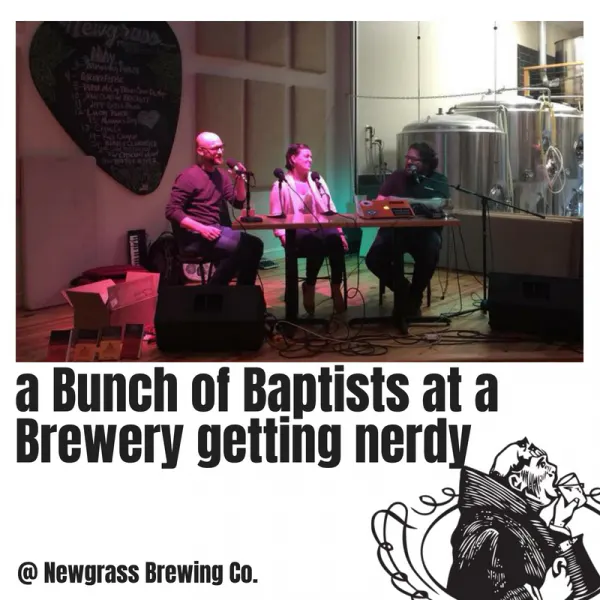
This is a very live and rowdy collection of Baptist Professors of Religion. In the first segment I am joined by my high school friend and Theology Professor Ryan Newson & gifted homebrewer and Claremont buddy Seth Clark. We talk about Baptist identity in and out of the South. Then Ryan introduces his friend, colleague at Campbell University, and scholar of the New Testament, Alicia Myers. Our conversation is way too awesome. If you don't enjoy it you aren't listening. We talk about... Where did babies come from (in the Bible)? How Aristotle understood bodily fluids. Biblical interpretation in 2nd Temple Period Judaism How Angels had sex just for fun. How the character of Mary the Mother of Jesus is understood in the early church. The changing nature of family and church in the New Testament The experience of women in the life and leadership of the church. Breastfeeding during a worship service The consequences of our hyper-sexualized culture How can we change the place of bodies in spiritual formation Alicia D. Myers is Assistant Professor of New Testament and Greek at Campbell University Divinity School. Her previous publications include Characterizing Jesus: A Rhetorical Analysis on the Fourth Gospel's Use of Scripture in Its Presentation of Jesus (2012) and Abiding Words: The Use of Scripture in the Gospel of John (co-editor, 2015). I am very grateful that our friends at Newgrass Brewing Co. welcomed the podcast and all the Baptist Professors of Religion to the brewery for the evening. The beer was delicious, so if you are near Shelby, NC then you definitely want to stop by for a pint. Follow the podcast, drop a review, send feedback/questions or become a member of the HBC Community. Learn more about your ad choices. Visit megaphone.fm/adchoices

Why Should the Devil have all the Good Music? On Larry Norman with Gregory Alan Thornbury
Larry Norman is the Father of Christian Rock, integral to the Jesus People movement, an American Kierkegaard with a guitar, and the perfect figure to wrestle with the tangled shape of evangelicalism. Plus Larry Norman remains one of the most influential figures in my own faith journey. First, I encountered him through my Dad's records, discovering a unique prophetic voice set against the country and church's neglect of the poor, lust for war, and desire for more. Then I came to know Larry talking to him after his shows. I saw him 17 times before he passed. He learned my name, remembered my story, encouraged my intellectual quest, gave me song writing tips, and let me sing a verse of The Rock that Doesn't Roll with his band at a show in Florence, South Carolina (that was on my bucket list). PS I deleted 1200 words of love about Larry... the point being, what's the chance I would actually LOVE a book about him? It is rare that I love a book, the topic, and the guest this much! Not only that, this book isn't even by John Cobb, about process theology, or involve a visit from Catherine Keller. There is no exaggeration needed when I say that Gregory Thornbury wrote a fascinating, stimulating, and intoxicating biography of one of my heroes - Larry Norman. His newest book, Why Should the Devil have all the Good Music: Larry Norman and the Perils of Christian Rock, is so good I have read it twice. The first time I couldn't slow down to savor the book, because I wanted to know all the details about Larry I didn't know and the second time I only read a chapter a day and was sad when it ended. I hope you enjoy this conversation with Gregory 1/4th as much as me. Then you will want to get yourself the book and check out some old school Jesus rock for yourself. I even posted a cover of his tune The Great American Novel almost 8 years ago on YouTube. The New Yorker has a great piece up featuring Gregory titled The Unlikely Endurance of Christian Rock that the interested should definitely check out. Gregory Alan Thornbury has been a college professor, dean, and president of The King’s College in New York City. A popular writer and speaker on philosophy, religion, and contemporary culture, he currently serves at the New York Academy of Art. Once you decide to be wise and purchase Why Should the Devil have all the Good Music: Larry Norman and the Perils of Christian Rock you can head over the book's webpage for resources, info, and whatever extra praise you need to put you over the line! Follow the podcast, drop a review, send feedback/questions or become a member of the HBC Community. Learn more about your ad choices. Visit megaphone.fm/adchoices

Diana Bass + Brian McLaren = #zesty
Prepare yourself for some seriously zesty podcasting with my friends Diana Bass and Brian McLaren at the Wild Goose Festival. During the episode we will attempt to answer a number of different questions and topics listeners like yourself sent in. It is always a treat to get to talk to Diana and Brian and this time was no exception. Find out who Diana and Brian respond to a bunch of different questions like... Who are your heroes of the faith? How can we cultivate gratitude in the craziness of today? Can you be sane and use Facebook? How should the church see our current political crisis? Is democracy worth saving? Can the planet handle another 500 years of Christian leadership? What's a post-NationState-Capitalist-Techno-Society do for spirituality? This Episode is sponsored by... Lutheran World Relief Famers Market Coffee is providing good coffee that makes a difference. You should try it. Follow the podcast, drop a review, send feedback/questions or become a member of the HBC Community. Learn more about your ad choices. Visit megaphone.fm/adchoices
Finding God in Everyone and Everywhere w/ Philip Clayton and Andrew Davis
The number of people with doubts, questions, and experiences that send them out from the religious tradition of their birth is growing. For many religion is left behind completely, opting for an untraditioned spirituality, and others find the idea of God, Ultimate Reality, or any other substitute for the transcendent as intellectually incompatible with our scientific age. In Philip Clayton and Andrew Davis' new book you get to hear a collection of personal narratives from some of the most brilliant contemporary thinkers about their return to God. In How I Found God in Everyone and Everywhere you will see a variety of starting points, twists, turns, and conundrums, but a broad network of conclusions that testify to an emerging picture of a deeper spiritual realit In this conversation I get to talk to my dear friend and mentor, Philip Clayton, and one of his lucky current students and scholar, Andrew Davis. We tackle a host of topics from mysticism, panentheism, the viability of theism, the relationship between historic religious traditions and philosophical affirmation of the divine, and some other exciting goodies. The book itself includes chapters from Deepak Chopra, Richard Rohr, Matthew Fox, Rubert Sheldrake, Cynthia Bourgault, Ilia Delio, John Cobb, Loriliai Biernacki, Marjorie Suchocki, and Rabbi Bradley Shavit Artson. This episode is sponsored by the brand new book Keep Christianity Weird by Michael Frost. Check it out and get ready for Michael's visit to the podcast. Follow the podcast, drop a review, send feedback/questions or become a member of the HBC Community. Learn more about your ad choices. Visit megaphone.fm/adchoices

Theology Beer Camp Preview with Nathan Gilmour
Nathan Gilmour, from the Christian Humanist podcast, joins Tripp for a taste of what to expect at Theology Beer Camp in Asheville, NC this August 16-18. There, you'll get to see the East Coast premiere of The Road to Edmond. If for some reason you can't come to the entire Theology Beer Camp, you can still come see the movie premiere on August 17th from 7-10pm at Habitat Brewing Co. Get Tickets here. In this episode, Tripp and Nathan talk about all sorts of things, including the role of scripture in issues surrounding sexuality, the church as ecosystem, how we respond to difference, cultural moralism post #metoo, free speech on college campuses and the role of educators, game theory and politics, and more. What questions will the church be wrestling with in 100 years? Why do we cultivate anxiety over things we have no control over? What does it mean to call Christ Lord in a pluralistic context? Plus, they spend quite a bit of time talking about Jonathan Haidt's book The Righteous Mind, Plato, Heidegger, and Tripp finally answers Nathan's question from their last chat. Make sure to enter The Road to Edmond iPad Giveaway! Who doesn’t want a new iPad loaded with the 1st private copy of the film The Road to Edmond? On top of getting the iPad with the film you will be in the credits of the final film as an Associate Producer, scoring a credit on your IMDB page. You will also get the VIP Access to the film, behind the scenes goodies, and a brand new video small group curriculum How far is too far? The Bible & Sexuality, PLUS, a set of the Bibliotheca Bible, and the first 6 Homebrewed Christianity Guide ebooks. Follow the podcast, drop a review, send feedback/questions or become a member of the HBC Community. Learn more about your ad choices. Visit megaphone.fm/adchoices

Close Encounters of the Theological Kind with Scott Paeth
Welcome to a special bonus episode of the Theology Nerd Podcast with the Dr. Tripp Fuller. This is a shorter Q&A episode, where your friendly, local internet theologian answers questions submitted by you. Today Tripp is joined by Scott Paeth, professor and ethicist at DePaul University, to help answer your questions, including: how would your theological picture of the world change if there was a verified encounter with a sentient extraterrestrial? Scott and Tripp discuss what that would mean for Christian theology, if God created life on other planets, how we should relate to that other life, and how this would change cosmological arguments. Plus, could it change our treatment of non-human minds on this planet? what obligations do we have to other sentient creatures? There are lots of ways you can submit a question for Tripp to answer: go to trippfuller.com and click the “send voicemail” button on the right (near the scroll bar); you can also leave us a 5-star review on iTunes with your question as the review; you can tweet @trippfuller; or you can send an email with your question to [email protected] Follow the podcast, drop a review, send feedback/questions or become a member of the HBC Community. Learn more about your ad choices. Visit megaphone.fm/adchoices

The Affinities Between Marxism and Christianity with Scott Paeth
Welcome to a special bonus episode of the Theology Nerd Podcast with the Dr. Tripp Fuller. This is a shorter Q&A episode, where your friendly, local internet theologian answers questions submitted by you. Today Tripp is joined by Scott Paeth, professor and ethicist at DePaul University, to help answer your questions, including: what is gained by engaging with Karl Marx if you're a Christian? Scott and Tripp discuss the affinities between Marxism and Christianity, how capitalism is contrary to Christian values, how Marxism and Christianity draw upon each other, how money and possessions determine a lot about our relationships, and the Marxist critique of religion. Plus, how our unquestioned ideology sustains our economic systems, and what Marx really has to say about religion. There are lots of ways you can submit a question for Tripp to answer: go to trippfuller.com and click the “send voicemail” button on the right (near the scroll bar); you can also leave us a 5-star review on iTunes with your question as the review; you can tweet @trippfuller; or you can send an email with your question to [email protected] Follow the podcast, drop a review, send feedback/questions or become a member of the HBC Community. Learn more about your ad choices. Visit megaphone.fm/adchoices

The Prophetic Life of the Spirit with Grace Ji-Sun Kim
Grace Ji-Sun Kim is on the podcast to talk about her new book, The Homebrewed Christianity Guide to the Holy Spirit: Hand-Raisers, Han, and the Holy Ghost. Grace and Tripp talk about why we need a book about the Holy Spirit, how it is an often neglected aspect of God, her work not just in academia, but as an activist, the need for more professors to get out of the classroom, and the role of the Spirit in activism. Grace explains a little about the foundations of the doctrine of the Holy Spirit, how the early church struggled to understand the Spirit, the presence of the Spirit in the Hebrew Bible and early Judaism, the role of the Spirit in the New Testament, the fear mainline denominations have concerning the Spirit, the experience of the Spirit in our current multicultural context, the limits of language in describing the Spirit, and embodied experiences of the Spirit. Plus, non-eurocentric ways of understanding the Spirit, the Asian concept of qi, and indigenous ways of conceiving of the Spirit. Follow the podcast, drop a review, send feedback/questions or become a member of the HBC Community. Learn more about your ad choices. Visit megaphone.fm/adchoices

Are We in the Midst of a Cold Civil War? with Scott Paeth
Welcome to a special bonus episode of the Theology Nerd Podcast with the Dr. Tripp Fuller. This is a shorter Q&A episode, where your friendly, local internet theologian answers questions submitted by you. Today Tripp is joined by Scott Paeth, professor and ethicist at DePaul University, to help answer your questions, including: how would you make the best possible case, as a Christian, for supporting Donald Trump? Scott explains under what circumstances it is preferable to support Trump, discusses how an ethicist look at questions about truth, goodness, justice in our divided religious and political landscape, and why political norms are important. Tripp shares some of the reasons some people on the extreme Left gave for voting for Trump, and Scott explains why he thinks they are problematic. Plus, Scott and Tripp make a case for continued investment and engagement in the democratic process. There are lots of ways you can submit a question for Tripp to answer: go to trippfuller.com and click the “send voicemail” button on the right (near the scroll bar); you can also leave us a 5-star review on iTunes with your question as the review; you can tweet @trippfuller; or you can send an email with your question to [email protected] Follow the podcast, drop a review, send feedback/questions or become a member of the HBC Community. Learn more about your ad choices. Visit megaphone.fm/adchoices

Jesus Rode A Dinosaur LIVE with Science Mike
This is a live podcast from the Jesus Rode a Dinosaur: Talking to Youth about Faith in a Scientific Age conference with Science Mike. Science Mike cuts right to the chase and asks Tripp some important questions about theology: How is theology even a thing? How does one know what is a right or good theological framework? Then they chat about the ways in which the Enlightenment ruined theology, why valuing beauty is the most appropriate place to begin doing theology, the two biggest tasks of the church today, and why atheist philosophers have begun to use Christian theology. Later, Astrophysicist Paul Wallace joins Science Mike and Tripp to talk about doing good science while also believing in a creator, feeling connected to a quasar, his relationship to other scientists, and why physicists are more prone to be idealists and believe in a transcendent reality, and Paul talks a little about his upcoming book about the relationship between and faith and science. Kenda Dean also joins to talk about parenting, helps figure out what we tell our children about God (especially when we don't know what we think about God), the new questions kids are asking, and what we can do as parents of faith to make sure that our children know they are loved. Plus, David Hume and miracles, the industry of ministry, and a Q&A with questions about morality, mystical experiences and psychedelics, youth ministry and anxiety, depression and medication, and a lot more. Follow the podcast, drop a review, send feedback/questions or become a member of the HBC Community. Learn more about your ad choices. Visit megaphone.fm/adchoices
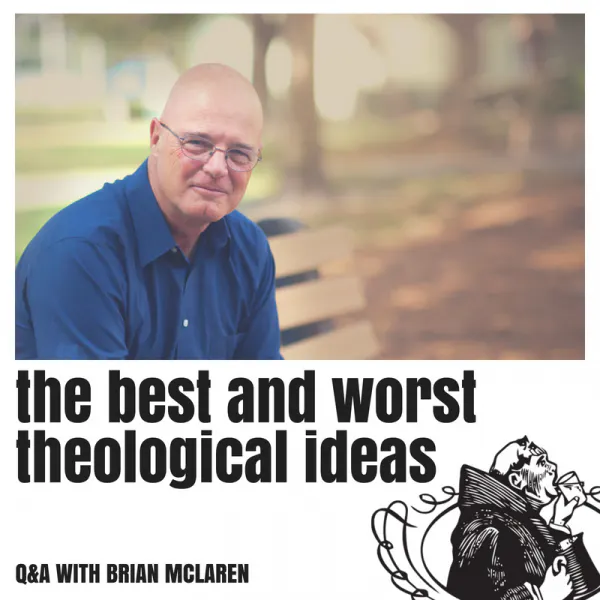
The 3 Best (and Worst) Theological Ideas with Brian McLaren
Welcome to a special bonus episode of the Theology Nerd Podcast with the Dr. Tripp Fuller. This is a shorter Q&A episode, where your friendly, local internet theologian answers questions submitted by you. Today, Tripp is joined by Brian McLaren to help answer your questions, including: what are the 3 best and worst theological ideas you're thinking about today? Brian shares his three (total depravity/original sin; literal/inerrant interpretations of scripture; that humans are separate from creation) and asks Tripp an important question. Plus, Tripp rants about the importance of a constructive, articulate description of the Christian faith, and how the church has internalized Kant. There are lots of ways you can submit a question for Tripp to answer: go to trippfuller.com and click the “send voicemail” button on the right (near the scroll bar); you can also leave us a 5-star review on iTunes with your question as the review; you can tweet @trippfuller; or you can send an email with your question to [email protected] Follow the podcast, drop a review, send feedback/questions or become a member of the HBC Community. Learn more about your ad choices. Visit megaphone.fm/adchoices

Getting Flexible in Faith and Politics with Bonnie Kristian
Political and theological writer Bonnie Kristian is on to talk about her new book, A Flexible Faith: Rethinking What it Means to Follow Jesus Today. This book is an easy intro to lots of different topics and expressions of the Christian faith today, and an invitation for the American church to see beyond its borders to the spectrum and diversity of the tradition. A Flexible Faith is organized like a reference manual, and written at a level that is accessible and engaging, no matter your background or expertise. There are theological sections, answering questions from a variety of positions, and a more personal element with interviews and personal profiles. Bonnie and Tripp talk about the importance of naming your biases when writing, the process of thinking theologically, how we come to believe new positions, the differences between our collective political and theological discourse, and the influence your religion has on your politics. Plus, our current political situation, and how the church is handling the Trump moment, her minority opinion on nonviolence, and hyper-partisanship in the church. Follow the podcast, drop a review, send feedback/questions or become a member of the HBC Community. Learn more about your ad choices. Visit megaphone.fm/adchoices

Christian Parenting without Baggage? with Brian McLaren
Welcome to a special bonus episode of the Theology Nerd Podcast with the Dr. Tripp Fuller. This is a shorter Q&A episode, where your friendly, local internet theologian answers questions submitted by you. Today, Tripp is joined by Brian McLaren to help answer your questions, including: How do you share your faith with your children with less baggage then you had? What is the role of the community and extended family in this process? Brian and Tripp talk about figuring out a curriculum of love, the opportunities and challenges that comes with being a parent who wants to share their faith, and the problematic assumptions about Christian formation. Brain also mentions his recent book, The Great Spiritual Migration. There are lots of ways you can submit a question for Tripp to answer: go to trippfuller.com and click the “send voicemail” button on the right (near the scroll bar); you can also leave us a 5-star review on iTunes with your question as the review; you can tweet @trippfuller; or you can send an email with your question to [email protected] Follow the podcast, drop a review, send feedback/questions or become a member of the HBC Community. Learn more about your ad choices. Visit megaphone.fm/adchoices

What's the Point of Christianity? w/ Brian McLaren
Welcome to a special bonus episode of the Theology Nerd Podcast with the Dr. Tripp Fuller. This is a shorter Q&A episode, where your friendly, local internet theologian answers questions submitted by you. Today, Tripp is joined by Brian McLaren to help answer your questions, including: In the past 3 years I've become more committed as a christian and more progressive politically. I just don't understand the outrage cultural online among progressive Christians where we eat our own. How can we do better? and What is the point of Christianity (assuming you don't really believe people go to hell)? Brian and Tripp discuss politics, social science, what issues are ok to be pushy on, the disease of the internet and how the desire for retweets can be destructive, salvation and how we've twisted it's meaning, rediscovering the Jewish meaning of salvation, the challenge for people to move past their inherited relationship to Christianity, and the truth at the heart of the gospel. There are lots of ways you can submit a question for Tripp to answer: go to trippfuller.com and click the “send voicemail” button on the right (near the scroll bar); you can also leave us a 5-star review on iTunes with your question as the review; you can tweet @trippfuller; or you can send an email with your question to [email protected] Follow the podcast, drop a review, send feedback/questions or become a member of the HBC Community. Learn more about your ad choices. Visit megaphone.fm/adchoices

Re-imagining the Prophetic Norm with Robyn Henderson-Espinoza
Tripp and activist theologian Robyn Henderson-Espinoza are getting ready for Wild Goose Festival, and #TheologyBeerCamp and luring your to come to both in this episode. Click here to learn more about the Justice camp pre-event for Wild Goose that Robyn is hosting. In this episode, Robyn shares their take on the Wild Goose Festival, some updates about the Activist Theology book a preview on what they've been writing, the heresy of slaveholder Christianity, and re-imagining the prophetic norm for Christianity. How do we live in those Holy Saturday moments of hopelessness and despair, not knowing if the Resurrection is coming? Where do we locate God when we talk about God? How do we understand evil and salvation in light of events like Charlottesville? Plus, Robyn answers your questions about activist theology: how can we speak of God in our contemporary context without being associated with the oppressors? what do I do with the colorblind model of discipleship I've been handed? how do you learn how to have conversations where a different world is possible? Follow the podcast, drop a review, send feedback/questions or become a member of the HBC Community. Learn more about your ad choices. Visit megaphone.fm/adchoices