High Theory
215 episodes — Page 1 of 5
Rugged Individualism
Generic
Decolonizing the Novum
Emotions of LGBT Rights
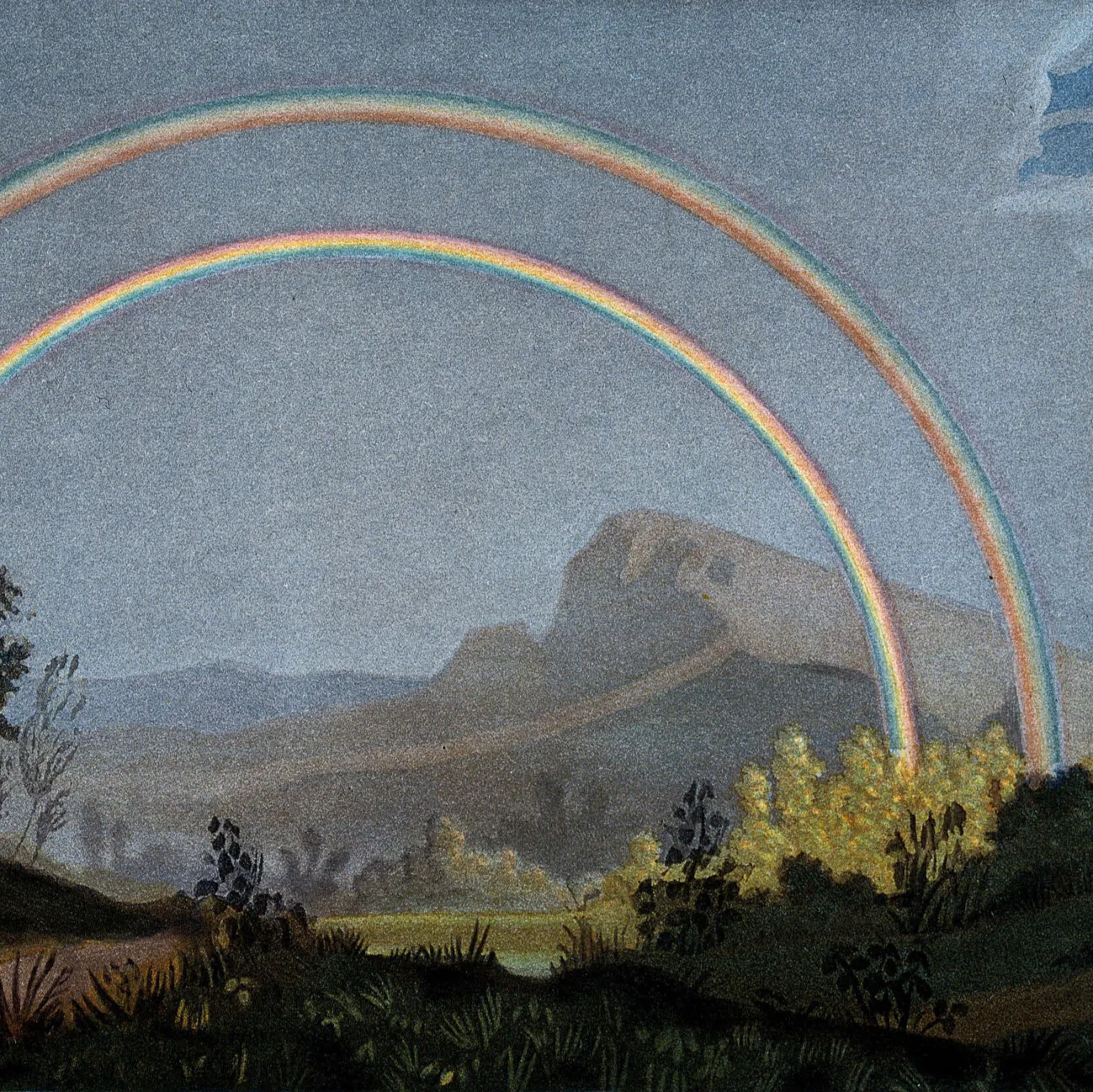
In this episode of High Theory, Saronik talks to Senthorun Raj about the Emotions of LGBT Rights. Emotions from disgust and fear to love and joy shape the legal frameworks that attempt to govern human sexual behavior around the world. Sen cautions against dividing emotions into good and bad, but instead asks us to take a critical stance on all emotions, to understand how they shape our policies. In the episode, we talk about Sara Ahmed, the Stonewall Riots, conversion therapy, and efforts to mandate for and against inclusive sex education. The transcript lives here as a WordDoc and here as a PDF. Sen’s book, The Emotions of LGBT Rights and Reforms: Repairing Law (Edinburgh University Press 2025) uses emotion as a novel analytic lens to understand, analyse, and critique the relationship between individual, interpersonal, and institutional conflicts over LGBT rights. Emotions are central to the pursuit, organisation, and contestation of lesbian, gay, bisexual, and transgender (LGBT) rights in law. Drawing from critical legal theories, this book cultivates the concept of “emotional grammar” to show how emotions structure law reform pursuits by threading together Hansard, legislation, case law, law reform consultations, and statutory guidance. By doing so, it explains why addressing this emotional grammar is important for scholars, lawyers, judges, legislators, and activists seeking to navigate conflicts over LGBT rights and reforms that aim to repair the inequalities faced by LGBT people. Senthorun Raj is an academic human rights lawyer with expertise in issues of race, gender, sexuality, and culture. He works as a Reader in Human Rights Law at Manchester Metropolitan University. Sen’s research and teaching interests include LGBTIQ+ rights, emotion, culture, equalities and human rights law, legal education, and critical legal theory. His latest monograph, builds on his previous book, Feeling Queer Jurisprudence: Injury, Intimacy, Identity (Routledge, 2020), which explored the ways emotions shape legal judgments that enable progress for LGBT people. He is also the co-editor of The Queer Outside in Law: Recognising LGBTIQ People in the United Kingdom (Palgrave, 2020) and Queer Judgments (Counterpress, 2025). The image for this episode is a coloured lithograph, from 1868, depicting a double rainbow, by René Henri Digeon after Étienne Antoine Eugène Ronjat. It was sourced by Lili Epstein for High Theory from the Wellcome Collection. Learn more about your ad choices. Visit megaphone.fm/adchoices

Pre-Reading
In this episode of High Theory, Milan Terlunen talks to Kim about Pre-Reading. There are many books we will never read and films we will never watch, but it turns out we know quite a bit about them in advance. A concept developed in his work on the plot twist, pre-reading names the epistemic practices by which we approach a text before we read it (if we ever do). The pre-reading environment is shared, social knowledge that shapes our expectations long before we open the cover or hit play. This podcast episode forms part of the pre-reading environment for Milan’s article, "What We Can(’t) Know Before We Read: Towards a Theory of the Pre-Reading Environment" (Book History 27, no. 2 (2024): 346-374). The article proposes the Pre-Reading Environment as a new object of study for understanding how texts relate to communal knowledge. While easily overlooked by scholars, equipped with fuller knowledge derived from their own reading, Pre-Reading Environments are among the most widespread epistemic objects in book history. Turning to two literary texts, Agatha Christie’s The Murder of Roger Ackroyd (1926) and Hanya Yanagihara’s A Little Life (2015), the article examines how their respective Pre-Reading Environments, in newspapers and on Twitter, strategically concealed key plot points that might pre-emptively spoil the experience of potential readers. The transcript of this episode lives here as a WordDoc and here as a PDF. Milan Terlunen is a scholar of literature, with a focus on narrative and the history of reading practices. He works as a Researcher in Digital Humanities at the University of Sussex. While a PhD student at Columbia University he co-created and hosted two podcasts – How To Read and In Sacred Spaces – and co-founded the Humanities Podcast Network in 2021, where he met Kim and Saronik. He is also an editor of the Palgrave Handbook of Humanities Podcasting, a huge project that he ran along with Kim, Saronik, and Beth Kramer. A book about podcasting would not be complete without its own podcast. Keep your ears peeled for Podcasting the Humanities later this year. The image for this episode is an illustration from Jean de Bosschère’s Weird Islands (1921), titled “Read Books on Practical Navigation.” It is a line drawing showing a reader swamped by piles of books. The image was found for High Theory by Lili Epstein on the Public Domain Image Archive. Learn more about your ad choices. Visit megaphone.fm/adchoices
Prolepsis
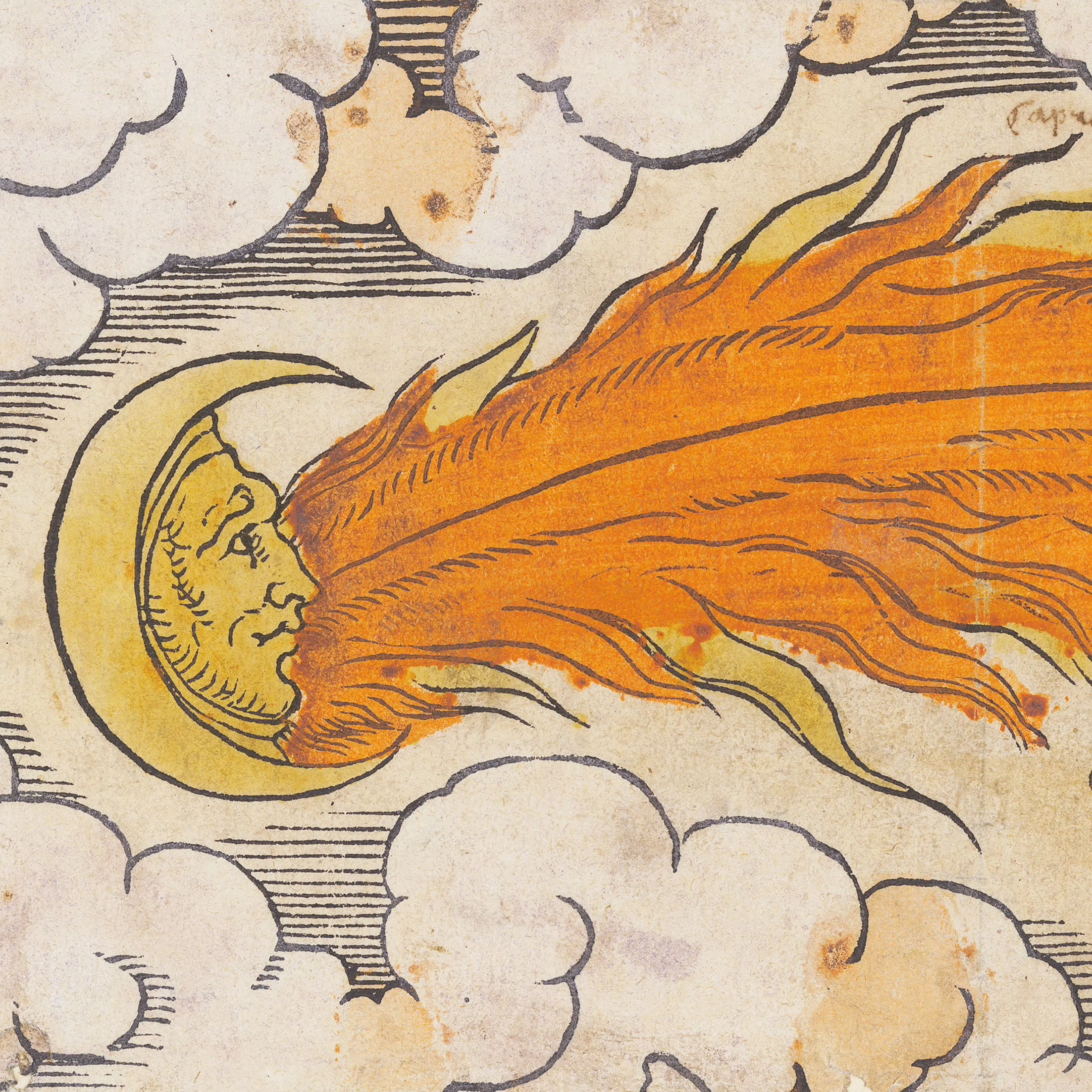
In this episode of High Theory, Gloria Fisk talks to Kim about Prolepsis. Defined by Gerard Genette in the 1970s, prolepsis is a flash forward, the opposite of analepsis, a flash back. Initially the province of high modernism, this rhetorical device has become a well-worn trope with a surprising aptitude for representing violence in our current moment. Fisk shows us how prolepsis dramatizes the workings of structural violence in narrative form. In the episode, Gloria references Stokely Carmichael and Charles Hamilton’s Black Power: The Politics of Liberation (Random House 1967) and Michael Dango's Crisis Style: The Aesthetics of Repair (Stanford UP 2021). The transcript lives here as a WordDoc and here as a PDF. Gloria Fisk writes about contemporary literature in a global context, with a particular interest in the novel. She works as an associate professor of English at Queens College, CUNY. Her areas of interest include the critical debates surrounding world literature in the U.S. as well as novel theory, postcolonial studies, translation theory, and critical writing. In her first book, Orhan Pamuk and the Good of World Literature (Columbia UP 2018), Gloria reads the Turkish novelist Orhan Pamuk as a case study in the unevenness of Western canons’ expansion across the eastern border of Europe. She theorizes the ways the Turkish novelist arrives among his readers in the U.S. and Europe, where he meets a standard for literary value that that emerges in tandem with him. In this episode, we discuss her current book project, in which Gloria theorizes the ethics and politics of prolepsis in contemporary world literature. Her project asks why so many novels that reach Anglophone readers today begin with a scene of terrible violence — a chemical spill, maybe, or untimely death at sea; incarceration, or a terrorist attack — to narrate in retrospect the paths that converge to create it? This use of prolepsis is historically specific to the contemporary period, so Gloria sets out to explain why. She shows that proleptic representations of violence were rare in Western literary traditions until the turn of the twenty-first century, but they have become ubiquitous now, because they work well to express new anxieties and hopes about the limits of our political communities, within and beyond the nation. The working title of her book is We Know How This Will End: Prolepsis, Tragedy, and the Representation of Structural Violence on a Global Scale. Look forward to seeing it in print! The image for this episode is an anonymous illustration from a 1554 broadsheet depicting celestial phenomenon over Salon-de-Provence. It was found for High Theory by Lily Epstein on the Public Domain Image Archive. Learn more about your ad choices. Visit megaphone.fm/adchoices

Entrepreneurial Work Ethic
In this episode of High Theory, Saronik talks with Erik Baker about the Entrepreneurial Work Ethic. The dominant work ethic of our current moment, it asks us to constantly create new work for ourselves. Eric contrasts the entrepreneurial work ethic with the industrious work ethic, which valued hard work and drudgery in one’s allotted task. Over the course of the 20th century industriousness was replaced by entrepreneurship in the American economic imaginary. The ultimate villain of the entrepreneurial mode is the bureaucrat, the ultimate failing is complacency. This toxic, exhausting ethos in which the standard of all labor is changing the world, paradoxically stabilizes our economic system, by trapping us in unachievable dreams. We should note that High Theory as an academic side hustle is exemplary of the entrepreneurial work ethic, even if we have no ethics. That’s why we made a Patreon. The transcript of this episode lives here as a WordDoc and here as a PDF. Erik’s new book, Make Your Own Job: How the Entrepreneurial Work Ethic Exhausted America (Harvard UP 2025) explains how this entrepreneurial work ethic took hold, from its origins in late nineteenth-century success literature to the gig economy of today, sweeping in strange bedfellows: Marcus Garvey and Henry Ford, Avon ladies and New Age hippies. Business schools and consultants exhorted managers to cultivate the entrepreneurial spirit in their subordinates, while an industry of self-help authors synthesized new ideas from psychology into a vision of work as “self-realization.” Baker argues that the entrepreneurial work ethic has given meaning to work in a world where employment is ever more precarious––and in doing so, has helped legitimize a society of mounting economic insecurity and inequality. Where work is hard to find and older nostrums about diligent effort fall flat, the advice to “make your own job” keeps hope alive. Erik Baker is a lecturer in the History of Science Department and the director of the senior thesis program for the History & Science concentration. He received his PhD from Harvard and his BA from Northwestern University. He has published on the history of social science and American capitalism in Modern Intellectual History, History of the Human Sciences, and Studies in History and Philosophy of Science. He also writes widely for magazines such as n+1, The Baffler, and The Drift, where he is an associate editor. Image for this episode is an unidentified book illustration from the British Library Commons. It shows a group of people kneeling in front of a dollar sign. It was found for High Theory by Lili Epstein on the Public Domain Image Archive. Learn more about your ad choices. Visit megaphone.fm/adchoices

Ep 158Nothingism
In this episode of High Theory, Jason Schneiderman talks about Nothingism. A term of his own coinage, a tongue-in-cheek manifesto, nothingism is an invitation to refuse the values of digital culture in favor of the values of print. You can read more about poetry at the end of print culture in Jason’s new book, entitled Nothingism (Michigan UP, 2025). In the episode Jaason refers to M.B. Parkes’s book Pause and Effect An Introduction to the History of Punctuation in the West and the poetry of his teacher Agha Shahid Ali. Jason Schneiderman is a poet and teacher. He is the author of five poetry collections, most recently Self Portrait of Icarus as a Country on Fire (Red Hen, 2024). He also edited an anthology of queer theory for first year writing courses called Queer: A Reader for Writers (Oxford, 2016). He works as a Professor of English at CUNY’s BMCC and in the MFA Program for Writers at Warren Wilson College. The image for this episode was made by Saronik Bosu. It shows a blue blur on a pink floral print background. Learn more about your ad choices. Visit megaphone.fm/adchoices
Ep 157Brutalism
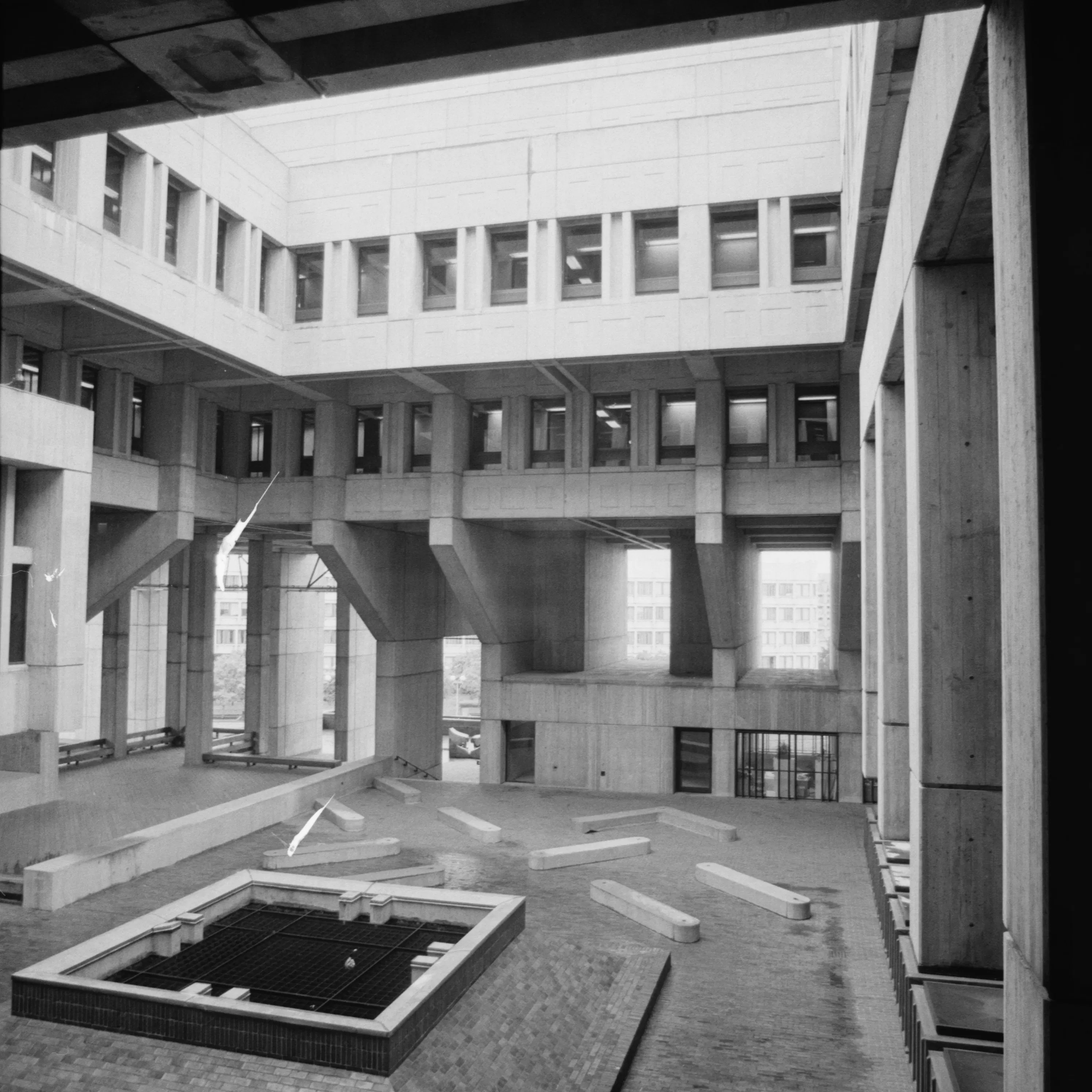
In this episode of High Theory Nasser Mufti talks with us about Brutalism. A twentieth century architectural style featuring imposing structures made of a lot of concrete, brutalist structures tend to provoke strong reactions. People either love it or they hate it – you never get a middling conversation about brutalism. Often used for government buildings, university libraries, and hospitals, Nasser suggests it represents the architecture of the state itself, massive bureaucratic structures in which we get lost, but also perhaps, nostalgia for a state that actually takes care of its citizens. Before we recorded the episode, Nasser sent me this article about the Brutalist campus at the University of Illinois where he works, which is full of beautiful black and white images. In the episode he refers to a line in Charles Dickens’s Bleak House (1853), which describes Chesney Wold as “seamed by time.” And he reminds us that verb form “decolonizing” is quite new, even Ngũgĩ Wa Thiong’o Decolonizing the Mind: The Politics of Language in African Literature (1986) only uses the gerund in the title. The neologism “decolonizing” is distinct from the world historical project of decolonization and the historiographic method of decolonial analysis that comes from Latin American studies. Nasser Mufti is an associate professor of English at the University of Illinois, Chicago, where his research and teaching focuses on nineteenth century British and postcolonial literature and theory. He is especially interested in literary approaches to the study of nationalism. His first book, Civilizing War: Imperial Politics and the Poetics of National Rupture (Northwestern University Press, 2018) argues that narratives of civil war energized and animated nineteenth-century British imperialism and decolonization in the twentieth century. You can read it online, open access, which is pretty damn cool! He is working on two new projects, the first, tentatively titled Britain’s Nineteenth Century, 1963-4, looks at how anticolonial and postcolonial thinkers from the Anglophone world turned to nineteenth century British literature and culture as a way to think decolonization. The second, titled “Colonia Moralia,” examines the dialectics of postcolonial Enlightenment through comparative readings of T.W. Adorno and V.S. Naipaul. The image for this episode is a photograph of Boston City Hall, a Brutalist building mentioned in the episode. The black and white photograph shows an interior courtyard of the building, a large concrete structure with many windows, located at One City Hall Square, Boston, Suffolk County, MA. It comes from the US Library of Congress Prints and Photographs Online Collections. Learn more about your ad choices. Visit megaphone.fm/adchoices
Ep 156Action Without Hope
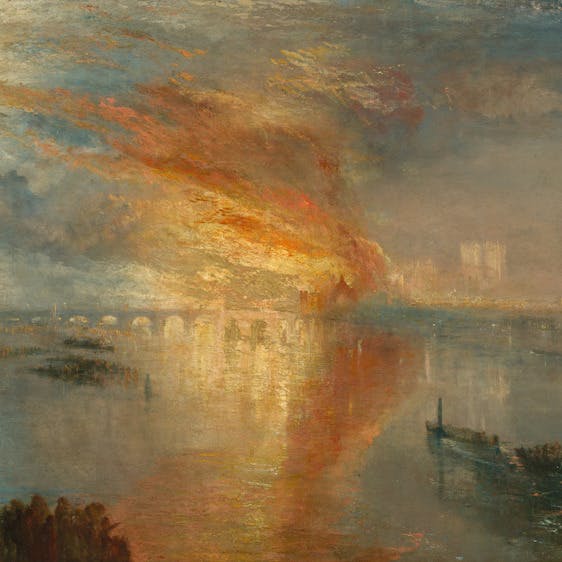
In his new book, Nathan K. Hensley describes a mood or a vibe or an intuitive response to the contemporary moment when one feels powerless in the face of collapsing societal systems. Given the entrenched nature of the present crisis, with compulsory happiness being marketed by the culture industry, how does one work within systems from which no true escape is possible? In order to uncover a prehistory of this feeling, he goes back to the nineteenth century - to artists like J.M.W. Turner and writers like Emily Bronte and Christina Rossetti who were thinking about what it means to inhabit a world omnivorously captured by capital. Nathan K. Hensley is the author of Forms of Empire: The Poetics of Victorian Sovereignty (Oxford, 2016), and co-editor, with Philip Steer, of Ecological Form: System and Aesthetics in the Age of Empire (Fordham, 2018). With Devin Garofalo, he is currently coediting a collection of essays that's forthcoming from Northwestern UP, The Barbara Johnson Collective. His new book is Action without Hope: Victorian Literature after Climate Collapse, forthcoming from Chicago UP in April 2025. He was born in Fresno, California and lives in Silver Spring, Maryland. Image: J.M.W. Turner, The Burning of the Houses of Lords and Commons, 1834-35. Public Domain. Original at the Philadelphia Museum of Art. Learn more about your ad choices. Visit megaphone.fm/adchoices

Ep 155Alcohol
In this episode of High Theory, Nina Studer tells us about alcohol. The restrictions and prohibitions, medical and moral discourses surrounding alcohol reveal a great deal about a given society in a particular historical moment. Nina uses alcohol as a lens to analyze the history of French colonization in North Africa. Who consumed alcohol, in what places, how much, and what kinds, what was viewed as healthy and what was viewed as dangerous, even criminal, can help us approach larger questions of gender, class, and nation. If you want to learn more, check out her new book, Hour of Absinthe: A Cultural History of France's Most Notorious Drink (McGill-Queens University Press, 2024). The book explores how the mythologizing of one distilled alcohol led to the creation and fabrication of a vast modern folklore. Mystique and moralizing both arose from the spirit’s relationship with empire. Some claim that French soldiers were given daily absinthe rations during France’s military conquest of Algeria to protect them against heat, diseases, and contaminated water. In fact, the overenthusiastic adoption of the drink by these soldiers, and subsequently by French settlers, was perceived as a threat to France’s colonial ambitions - an anxiety that migrated into French medicine. At the height of its popularity in the late nineteenth century, absinthe reigned in the bars, cafés, and restaurants of France and its colonial empire. Yet by the time it was banned in 1915, the famous green fairy had become the green peril, feared for its connection with declining birth rates and its apparent capacity to induce degeneration, madness, and murderous rage in its consumers. Dr. Nina Studer is a historian working on the 19th and 20th century history of French colonies in North Africa and the Middle East. Her work focuses on the history of drinks, in particular tea, coffee, Fanta/Coca-Cola, Orangina, wine and absinthe. Her doctorate, published as The Hidden Patients: North African Women in French Colonial Psychiatry (Böhlau, 2015) is available via Open Access. Currently she works as an associate researcher at the Institut Éthique Histoire Humanités at the University of Geneva, part of Dr. Francesca Arena’s team looking into the medical history of wet dreams between the 18th and the 20th century. The SNSF-project has the title: “Nuits polluantes: masculinité et médecine en Suisse et en France (XVIII – XX siècles)”. The image for this episode is an advertisement for the Algerian wine "Sénéclauze" from 1933, from the personal collection of Nina S. Studer. Many thanks to Nina for sharing it with us. Learn more about your ad choices. Visit megaphone.fm/adchoices

Ep 154Poetry
In this episode of High Theory, Ryan Ruby talks to us about Poetry. Our standard definition of poetry today is an institutional one, much like contemporary art: if art is what artists and museums and collectors call art, poetry is what poets and professors and publishers say is poetry. Ruby argues that this indefinable thing humans have been doing well nigh forever is better understood as a medium than a form. Poetry is a way of storing and transmitting information, a mechanism of entertainment and authority, and a speech act that attends to changes of state. In the episode, Ryan references Eric Havelock, author of The Muse Learns to Write (Yale UP, 1986), who described the Homeric poems as the encyclopedia of Bronze age Greece. He also cites Marcel Detienne’s book The Masters of Truth in Archaic Greece (trans. Janet Lloyd, Zone Books, 1996) who describes poetry as a form of “magico-religious speech.” Ryan Ruby is a writer, most recently of the book length poem Context Collapse: A Poem Containing the History of Poetry (Seven Stories Press, 2024). It got reviewed in The New York Times. He has also written a novel, titled The Zero and the One (Twelve Books, 2017), and book reviews and essays for all the fancy places: The New Yorker, Harper’s, The New York Review of Books, The New York Times, Bookforum, New Left Review, etc. He is currently at work on a nonfiction narrative book about Berlin called Ringbahn for Farrar Straus, and Giroux. The image for this episode is a still from an animation of a supercomputer simulation of a pair of neutron stars colliding, merging and forming a black hole, created at the NASA Goddard Space Flight Center. Image courtesy of the NASA Goddard Photo and Video Flickr account. This image is in the public domain. Learn more about your ad choices. Visit megaphone.fm/adchoices

Ep 153Failed Passing
Ian Fleishman develops the concept of failed passing in his new book Flamboyant Fictions, which reimagines free will in queer lives as an accidental affirmation of identity despite efforts towards adherence to standards and norms. In this, he works with his predecessors in queer theory like Judith Butler, José Muñoz, Leo Barsani, Lee Edelman and others. In our conversation, Ian also gives us a glimpse of his readings of failed passing in widely varying texts such as the works of André Gide and Jean Genet and the films of Luchino Visconti, Rainer Werner Fassbinder, Werner Schroeter, Todd Haynes, François Ozon, and Xavier Dolan, to the music and public persona of Shawn Mendes and Troye Sivan. Ian Fleishman is the inaugural Chair of the Department of Cinema & Media Studies at the University of Pennsylvania and the author of Flamboyant Fictions: The Failed Art of Passing (Northwestern 2024). His previous books are An Aesthetics of Injury: The Narrative Wound from Baudelaire to Tarantino (Northwestern 2018) and Performative Opacity in the Work of Isabelle Hupert (Edinburgh 2023), co-edited with Iggy Cortez. Image: From the cover of Flamboyant Fictions, by Monograph / Matt Avery Learn more about your ad choices. Visit megaphone.fm/adchoices

Ep 152Chandigarh
Chandigarh is the shared capital city of the Indian states of Punjab and Haryana, built under the leadership of modernist and brutalist architect Le Corbusier, as an emblem of the postcolonial Indian nation state as visualized by the first Indian prime minister Jawaharlal Nehru. It was a repudiation of the imperialist architectural style, and for Le Corbusier a personal revenge project after his dissatisfactions with how he was treated during his planning for the United Nations building in New York. Vikramaditya Parakash says that it is a misconception that Chandigarh was built as a blueprint for a future utopia, when in fact it was built as a city where multiple ideas of futurity are put into play. Dr. Vikramaditya Prakash (B.Arch, MA, Phd) works on modernism, postcoloniality and global history. Recent books include One Continuous Line: Art, Architecture and Urbanism of Aditya Prakash and Le Corbusier’s Chandigarh Revisited: Preservation as Future Modernism. An ACSA Distinguished Professor, Vikram teaches at University of Washington, Seattle, is host of the ArchitectureTalk podcast, and co-design lead of O(U)R: Office of (Un)certainty Research. Image: © 2025 Saronik Bosu. An interpretation of the Gandhi Bhawan at Punjab University, Chandigarh. Learn more about your ad choices. Visit megaphone.fm/adchoices
Negative Life
Steven Swarbrick and Jean-Thomas Tremblay talk about negative life, which names the misalignment of individual and species survival, as a condition of thought and film. In developing this concept, they shed light on the gaps within the rhetoric of entanglement, and push against ethics and politics that insist on the values of human and nonhuman relations. Negative life already inheres in existing social relationships because the world is already broken. Steven and Jean-Thomas critique much of ecocriticism’s romantic attachment to contingencies and solutions that would have us ignore this truth. Steven Swarbrick is Associate Professor of English at Baruch College, City University of New York. He is the author of two books: The Environmental Unconscious: Ecological Poetics from Spenser to Milton (University of Minnesota Press, 2023) and The Earth Is Evil (forthcoming from the University of Nebraska Press, “Provocations” series, 2025). He is a coauthor, with Jean-Thomas Tremblay, of Negative Life: The Cinema of Extinction (Northwestern University Press, 2024). He has been a guest at High Theory in the past, and his previous episode on ‘The Environmental Unconscious’ can be found here. Jean-Thomas Tremblay is Associate Professor of Environmental Humanities and Director of the Graduate Program in Social and Political Thought at York University, in Toronto. He is the author of Breathing Aesthetics (Duke University Press, 2022) and, with Steven Swarbrick, a coauthor of Negative Life: The Cinema of Extinction (Northwestern University Press, 2024). Excerpts from a book-in-progress on climate action, liberal sensemaking, and the "world" concept have appeared in Critical Inquiry and are forthcoming in Representations. Image: © 2025 Saronik Bosu. The silhouette of a forest and that of a cow floating above it, against an orange sky, and a general atmosphere of smoke and haze. Learn more about your ad choices. Visit megaphone.fm/adchoices
Ep 151Loneliness
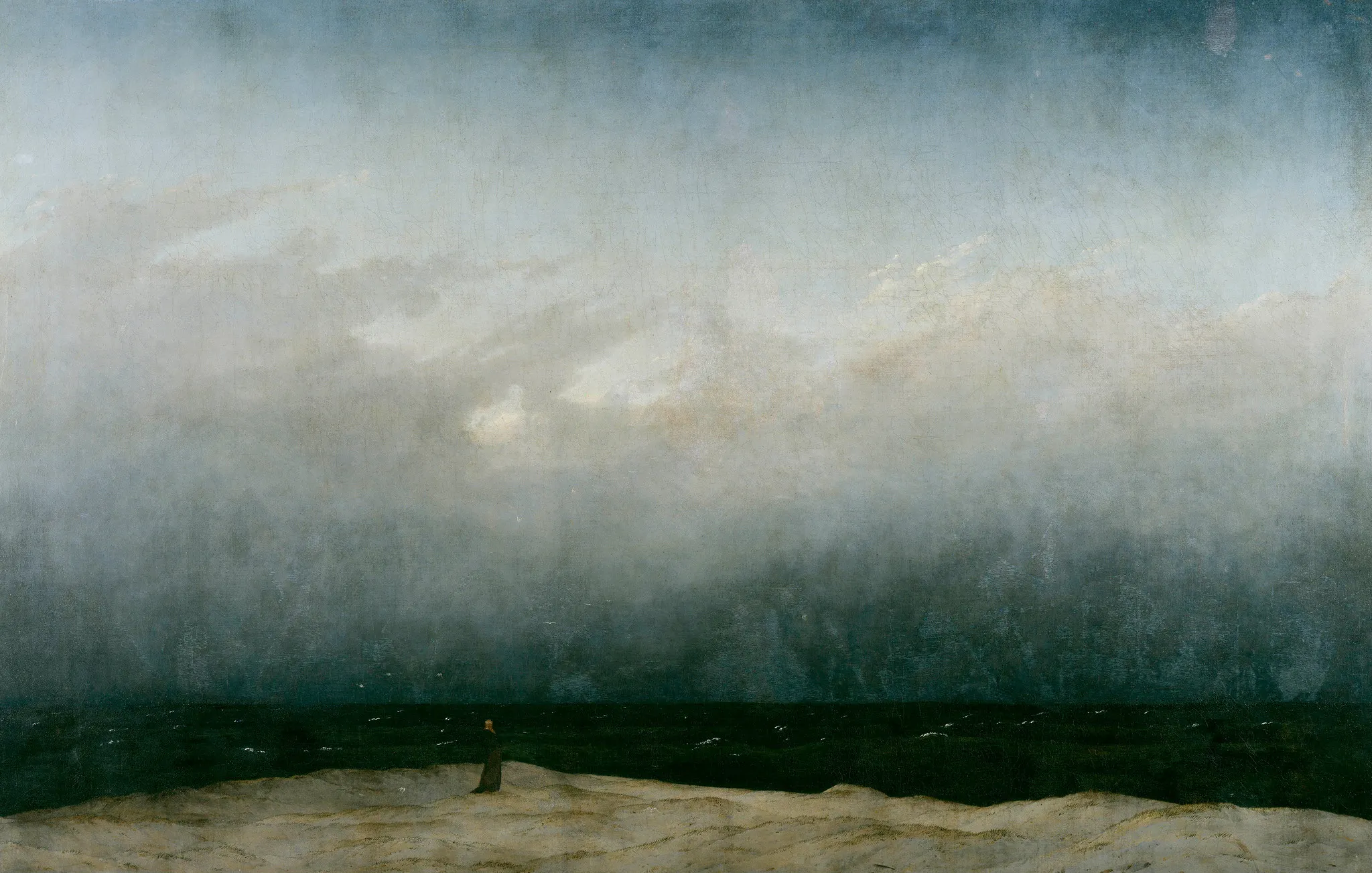
Loneliness is what results when a person is cut off from the living world. Ecological loneliness, in particular, is reciprocal - what we mete out always comes back to trouble us. However, as Laura Marris demonstrates, loneliness can entail the shadow work for understanding how a society based on capital and on growth, can create profound isolation. She suggests that this work can look like ground truthing a place that has changed over time, that was once familiar to us, either as individuals or as collectives, but now appears alien. Laura Marris is an essayist, poet, and translator. Her writing has appeared or is forthcoming in The Believer, Harper’s, The New York Times, The Paris Review Daily, The Yale Review, Words Without Borders and elsewhere. She has received fellowships from MacDowell, a Katharine Bakeless Fellowship from the Bread Loaf Writer’s Conference, and a grant from the Robert B. Silvers Foundation. Her first solo-authored book, The Age of Loneliness, was published by Graywolf in August, 2024. She lives in Buffalo. Image: “The Monk by the Sea” by Caspar David Friedrich, now housed at the Alte Nationalgalerie in Berlin. The image is in the public domain. Learn more about your ad choices. Visit megaphone.fm/adchoices

Ep 150Aesthetic Conversions
Paloma Checa-Gismero talks about the many processes of re-evaluation, re-contextualization, and re-animation that designates an object as art. To illustrate this point, she calls our attention to the work of artists like Mierle Laderman Ukeles in the 1970s, or the 1989 exhibition titled Magiciens de la terre at the Centre Georges Pompidou in Paris. She develops the concept of aesthetic conversions in her new book about the histories and geographies of art biennials, which, in the post cold war world, converted subaltern aesthetic genealogies into forms that were legible to a nascent cosmopolitan global elite. Paloma Checa-Gismero is a historian of global contemporary art. She is Assistant Professor of Art History at Swarthmore College. Originally trained as an artist, she has been an active art critic since 2009. Her scholarship and criticism have been published in Afterall, FIELD, Third Text, The Journal of Modern Craft, among others. She is the author of Biennial Boom: Making Contemporary Art Global (Duke University Press, 2024). Image: © 2023 Saronik Bosu. It is a tilted and warped version of the capital letter B that spills out of the frame, its three parts in maroon, violet, and deep green, against a yellow ochre background. Learn more about your ad choices. Visit megaphone.fm/adchoices
Ep 149Bug
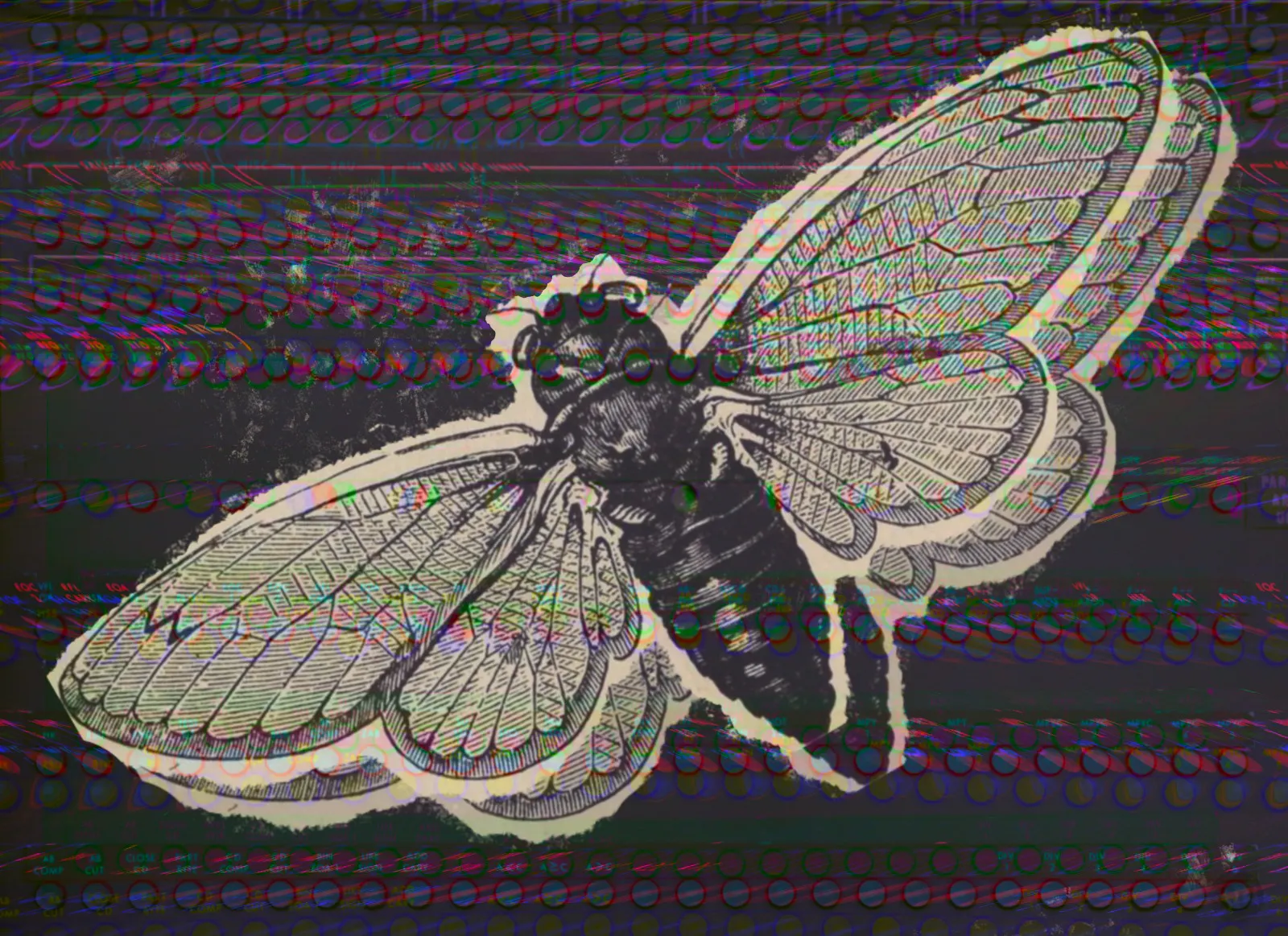
In this episode of High Theory, Marcello Vitali-Rosati tells us about bugs! A bug can be a small insect, an illness, a spy device, or a digital malfunction. The computer bug, the ghost in the machine, derives from an older engineering use of bug as mechanical failure, and the insect, in turn, derives from an earlier sense of bug as specter, an invisible and frightening ghost. Like philosophy itself, the computer bug stops our ordinary workflow and causes us to think, to question the very task we had set out to undertake. Marcello’s new book, Éloge du bug: être libre à l’époque du numérique (Zones, La Découverte, Paris 2024), sings the praises of computer bugs. By stopping things from working as expected, the bug is a veritable Socratic demon: it enables the emergence of critical thinking and allows the multiplicity of thinking paradigms that characterizes philosophy. Instead of letting ourselves be seduced by a discourse which, promising to free us from all the material tasks of our lives, ends up enslaving us completely to a handful of companies, this book, with its praise of the bug, shows how to bring about a true critical spirit and a literacy capable of setting us free in our digital age. You can read the book online here! Marcello Vitali-Rosati is a philosopher and specialist in digital publishing. He works as a professor in the Department of French Literatures at the University of Montreal, and holds the Canada Research Chair in Digital Textualities and the Chair of excellence in digital publishing at the Université de Rouen (France). Through the study and practice of code, he analyzes how algorithms, formats, software, and platforms redefine the notions of human, identity, knowledge, and literature. An active contributor to the theory of editorialization, he works on designing new forms of knowledge production and dissemination as well as innovative editorial workflows. He also works as an editor, publishes widely, and leads several digital humanities projects. You can read more about his work on his website, in English, French, or Italian. The image for this episode shows a drawing of a moth on a purple and black patterned background. It was created by Saronik Bosu by manipulating public domain photograph of the circuitry of IBM 7030 and a drawing from a nineteenth century entomology textbook, also in public domain. Learn more about your ad choices. Visit megaphone.fm/adchoices
Ep 148Biopic
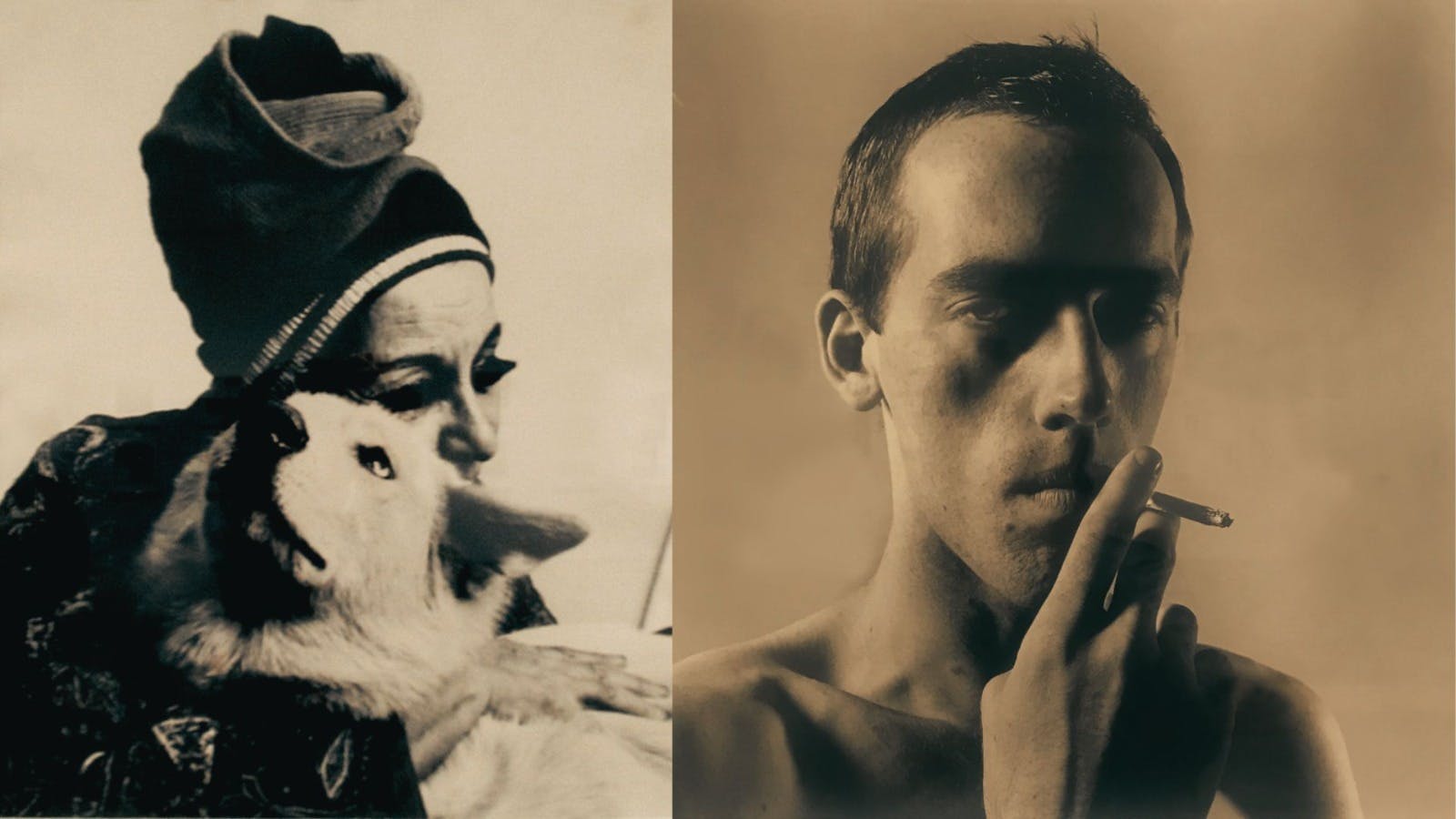
In this episode of High Theory, Laura Stamm talks about the biopic. One of the oldest forms of narrative cinema, biographical pictures are a mainstay of the medium today. Early biopics played an important role in public health discourse, representing the discoveries of science and the lives of scientists, which in turn led queer artists to adopt the genre in response to the AIDS crisis. Laura’s book, The Queer Biopic in the AIDS Era (Oxford UP, 2022), asks why queer filmmakers repeatedly produced biographical films of queer individuals living and dead throughout the years surrounding the AIDS crisis. These films evoke the genre's history building up lives worthy of admiration and emulation and the parallel history of representing lives damaged. By portraying lives damaged by inconceivable loss, queer filmmakers challenge the illusion of a coherent self presumably reinforced by the biopic genre and in doing so, their films open the potential for new means of connection and relationality. In the episode Laura references many films, including the Greta Garbo film Queen Christina (1933); Freud: The Secret Passion (1962); The Story of Louis Pasteur (1936); Dr. Ehrlich's Magic Bullet (1940); John Greyson’s musical Zero Patience (1993); and the Amy Winehouse biopic Back to Black (2024). Her research extends beyond the 1980s moment of crisis, and in the episode she gives a good explainer pre-code Hollywood and (briefly) the New Queer Cinema of the 1990s. If you were interested in this episode and want to learn more about queer representation in US popular culture, check out Margaret Galvan’s episode on Visibility. Laura Stamm is Assistant Professor of Health Humanities and Bioethics and Director of Diversity, Equity, and Inclusion for Department of Medicine at University of Rochester. She completed her PhD in Film and Media Studies and Gender, Sexuality, and Women's Studies at the University of Pittsburgh. Dr. Stamm's research interests broadly focuses on LGBTQ+ health, transgender studies, and medicine in visual culture. Beyond the book discussed here, her work has recently appeared in the edited collection New Queer Television: From Marginalization to Mainstream (Intellect Press, 2024) and Synapsis on “From the Clinic to the Talk Show: Narratives of Trans History in Framing Agnes.” The image for this episode shows photographs by Rob Corder of photographs by Peter Hujar of two queer artists, the sculptor Louise Nevelson and the writer, photographer, film maker, etc., David Wojnarowicz. Left: Peter Hujar, "Louise Nevelson (II), 1969". Gelatin silver print (1934-1987) Morgan Library. BAM Right: Peter Hujar, "David Wojnarowicz", 1981. Gelatin silver print (1934-1987) Menschel Collection. BAM Photos by Rob Corder. We do not own these images, but we do like them. Learn more about your ad choices. Visit megaphone.fm/adchoices
Ep 147Required Reading
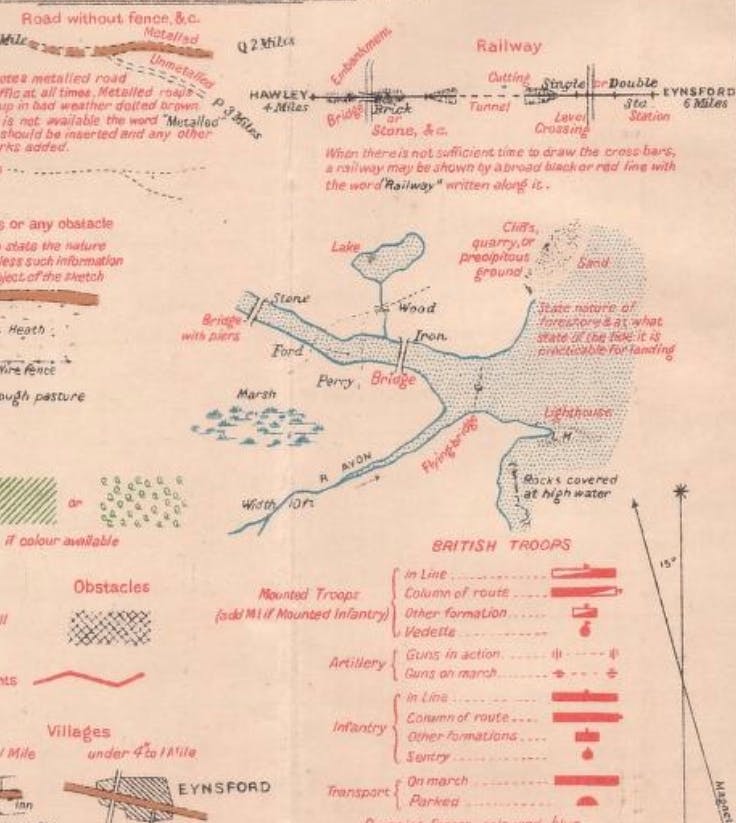
Priyasha Mukhopadhyay develops the concept of the functional archive of empire, consisting of texts ranging from licenses and other bureaucratic documents to manuals and almanacs. She describes how historical readers in colonial South Asia made sense of them, and what this can tell us about their experiences living in the shadow of a vast imperial power. She illustrates this with the example of a manual used by soldiers which despite being widely used, also created complex relationships with its users - soldiers in the field - which often entailed in their not actually reading the book and complaining about being required to read them. Priyasha Mukhopadhyay is an Assistant Professor of English at Yale University. Her first book, Required Reading: The Life of Everyday Texts in the British Empire, was published by Princeton University Press in August 2024. Image: “Plate XII”, Field Service Pocket Book Part II - India, Calcutta: Government of India Central Publication Branch, 1928 Learn more about your ad choices. Visit megaphone.fm/adchoices
Ep 146Risk
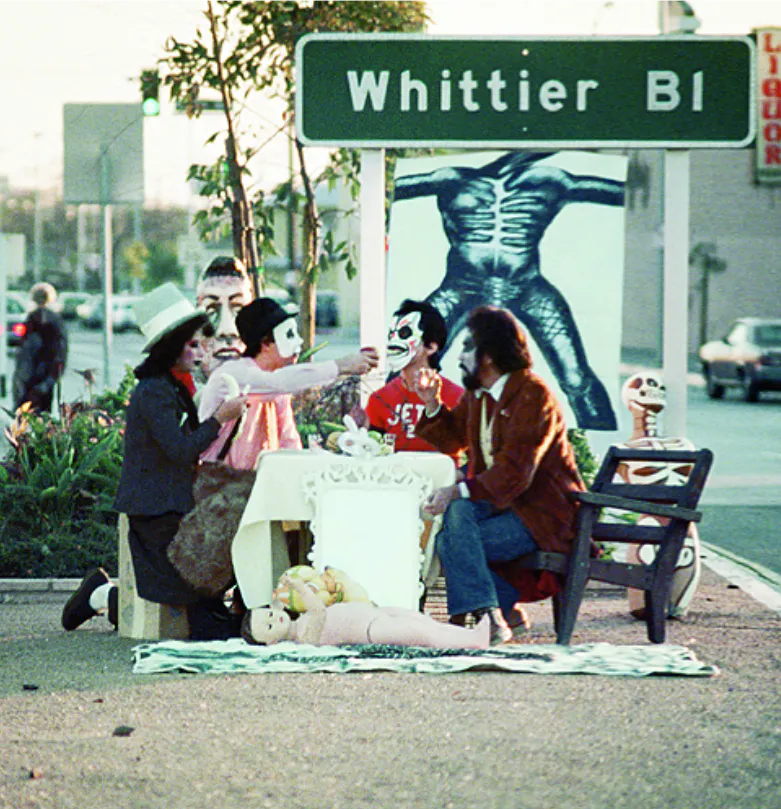
In this episode of High Theory, Faye Raquel Gleisser tells us about Risk. A calculable danger in economics, athletics, sociology, or healthcare, risk has become a socially constructed danger that changes who we are and how we move through the world. Faye asks us to think about how risk management and risk literacy shaped the conceptual and performance work of American artists in the late twentieth century. Who is at risk? Who is safe? And how do we know? Faye’s book, Risk Work: Making Art and Guerrilla Tactics in Punitive America, 1967–1987 (U Chicago Press, 2023) studies how artists in the US starting in the 1960s came to use guerrilla tactics in performance and conceptual art, maneuvering policing, racism, and surveillance. As US news covered anticolonialist resistance abroad and urban rebellions at home, and as politicians mobilized the perceived threat of “guerrilla warfare” to justify increased police presence nationwide, artists across the country began adopting guerrilla tactics in performance and conceptual art. Risk Work tells the story of how artists’ experimentation with physical and psychological interference from the late 1960s through the late 1980s reveals the complex and enduring relationship between contemporary art, state power, and policing. Drawing on art history and sociology as well as performance, prison, and Black studies, Gleisser argues that artists’ anticipation of state-sanctioned violence invokes the concept of “punitive literacy,” a collectively formed understanding of how to protect oneself and others in a carceral society. Faye Raquel Gleisser is an associate professor of art history at Indiana University and curator, whose work focuses on three main subject areas: art and tactical intervention; the racial logics of archives; and curatorial ethics and canon formation. By bridging curation, art history, and performance studies, she investigates histories of art that challenge intertwined anti-Black societal structures and patriarchal, white-centering notions of value that have long limited the canon of “American art.” She approaches art as a material manifestation of sociopolitical conditions and artists as theorists of power and social encounter. In the episode Faye names several artists including Asco, Chris Burden, the Guerrilla Girls, Tehching Hsieh, and Adrian Piper. This image for this episode is a photograph by Harry Gambota Jr. titled First Supper (After a Major Riot), 1974 that documents a performance by the Chicano art group Asco in Los Angeles. See the Artsy page about the photograph for more about the art and the artist. Learn more about your ad choices. Visit megaphone.fm/adchoices

Ep 145Non-literary Fiction
In this episode of High Theory, Esther Gabara talks with us about Non-Literary Fiction, that is, works of fiction that belong to the world of contemporary art, rather than the world of contemporary literature. She focuses on literary and narrative strategies used by Latin American and Indigenous American artists to make “non-objective” forms of visual art under the pressures of neoliberalism. To learn more, check out her book, Non-Literary Fiction: Art of the Americas under Neoliberalism (Chicago University Press, 2022). In our conversation, Esther gave us a theoretical bibliography of thinkers from Latin America who have shaped her work on non-literary fiction. Prominent among these figures are Ferreira Gullar in Brazil and Juan Acha in Mexico, who were the founding thinkers of the term “Non-Objectualism”-- a term that informs the fiction making practices Esther studies. We found this cool piece on Juan Acha that might be worth reading. She also named the philosopher Rodolfo Kusch and his work with indigenous storytellers. Kusch’s book on Indigenous and Popular Thinking in América was translated into English and published by Duke in 2010. And finally she named the indigenous artist and activist Manuel Quintín Lame, who collaborated with the Columbia artist Antonio Caro. Each of these figures features in her book as a theorist in their own right, in a context where art is a critical practice. Esther Gabara is a professor of Romance Studies at Duke University, where she works with modern and contemporary art, literature, and critical theory from the Americas. Her teaching in the departments of Romance Studies and Art, Art History & Visual Studies at Duke University covers visual studies, modernism, photography, Pop Art and popular culture, feminism, public art, and coloniality in contemporary art. Her prior publications include the bilingual exhibition catalogue, Pop América, 1965-1975 (Nasher Museum of Art/Duke University Press, 2018), for an exhibition she curated at the Nasher Museum of Art, and Errant Modernism: The Ethos of Photography in Mexico and Brazil (Duke University Press, 2008). Learn more about your ad choices. Visit megaphone.fm/adchoices
Ep 144Ghosts In Our Fields
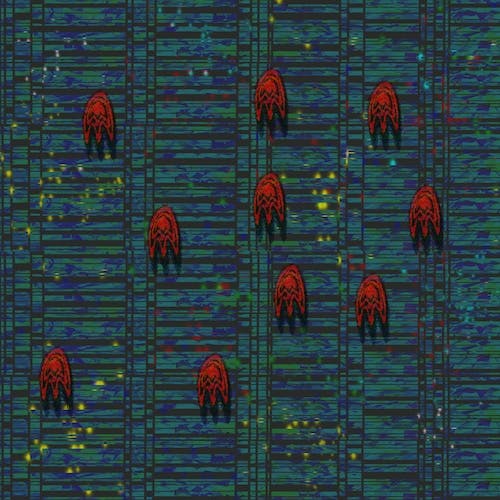
High Theory returns with a series of haunting concepts, places, and figures from our former guests. We asked folks to call in with something spookworthy (neologism!) from their fields – real or imagined specters, scary ideas, anything that could haunt, disorient, unsettle, horrify. And we got a full seance worth of ghosts. Listen if you dare! This episode features (in order of appearance) Abhishek Avtans on the Churail. He kindly gave us a transcript (we hope to have more transcripts soon!). You can hear more from Abhishek in his episode on Apabhraṃśa. Angelina Eimannsberger on the Reader. You can hear more from Angelina in her episode on JVN. Travis Chi Wing Lau on Mad Studies. You can hear more from Travis in his episode on Experimental Life. Mackenzie Cooley on the Scientific Revolution. You can hear more from Mackenzie in her episode on the Animal. Farah Bakaari on the Nation State. You can hear more from Farah in her episode on the Trace. Emma Heany on Communism and Empire. You can hear more from Emma in her episode on Sexual Difference. Sheila Liming on Nowhere and Forever. Sheila reads an excerpt from her article in progress on the contemporary gothic, under the working title, "Out of Time: Anti-Immediacy in Mark Jenkin's Enys Men.” You can hear more from Sheila in her episode on the Party. Sritama Chatterjee on Nature and Wilderness. You can hear more from Sritama in her episode on Off-Shore Aesthetics. John Linstrom on Liberty Hyde Bailey’s Haunted Houses. You can hear more from John in his episodes on Nature Study and Ecosphere. The image for this episode features creepy red creatures on a dark green field. It was made by Saronik Bosu. Boo! Learn more about your ad choices. Visit megaphone.fm/adchoices

Ep 143Inhuman
In this episode of High Theory, Rasheed Tazudeen tells us about the inhuman. The inhuman offers a way of moving beyond the legacies of humanism and across categories and scales of being. Thinking with the inhuman world, from spools of thread to microplastics, helps us try and think otherwise about the complex assemblages that shape our lives. If you want to learn more, check out Rasheed’s new book, Modernism’s Inhuman Worlds (Cornell UP, 2024). The book explores the centrality of ecological precarity, species indeterminacy, planetary change, and the specter of extinction to modernist and contemporary metamodernist literatures. Modernist ecologies emerge in response to the enigma of how to imagine inhuman being—including soils, forests, oceans, and the earth itself—through languages and epistemologies that have only ever been humanist. Rasheed asks how (meta)modernist aesthetics might help us to imagine (with) inhuman worlds, including the worlds still to be made on the other side of mass extinction. Rasheed Tazudeen is a lecturer in English at Yale University. His work is focused broadly on the intersections between ecology, race, and sound in 19th- and 20th-century literature and music. He is currently at work on a second project tentatively titled The Musicked Earth: Towards a Decolonial Sound Ecology, focused on the resonances between Black/Afro-Caribbean and Indigenous theories of sound, music, festival, and ecology through the work of Sylvia Wynter, Édouard Glissant, Leanne Simpson, and Alice Coltrane. This week’s image was made by Saronik Bosu in 2024. It represents a humanoid creature in fetal position, merging with the inhuman world. Learn more about your ad choices. Visit megaphone.fm/adchoices

Ep 142Animals
In this episode of High Theory, Mackenzie Cooley talks about animals. The animal lies at the center of science and the human, from imperial conquest and Enlightenment thought to the creatures on our dinner plates and beside us at the table. The practices of animal breeding and the politics of making life are, in Mackenzie’s account, key to understanding the history of race as a concept and term that emerged in the Early Modern World. For more animal encounters, check out her book The Perfection of Nature: Animals, Breeding, and Race in the Renaissance (Chicago UP, 2022). In it, Italian horses and Mexican dogs provide examples of controlled breeding before eugenics, helping us see how human difference was understood in the colonial encounter, and illuminate undertheorized notions of generation and its discontents in the more-than-human world. Tag dog and Bartolomé the cat sometimes participate in the making of High Theory, but the podcast is not necessarily pitched to non-human ears. If you want radio for animals, listen to Bad Animals on WFMU. Mackenzie Cooley is Assistant Professor of History, Director of Latin American Studies at Hamilton College. She is an intellectual historian who studies the uses, abuses, and understandings of the natural world in early modern science and medicine. And she has two Newfoundland dogs. The image accompanying this episode is a painting of a Newfoundland Dog by Charles Henry Schwanfelder (1812), from the collection of Temple Newsam House, Leeds Museums and Galleries. Learn more about your ad choices. Visit megaphone.fm/adchoices

Ep 141Melodrama
We often misuse the word melodrama with abandon, especially to characterize other people’s behaviors, but Greg Vargo defines it for us once and for all. Emerging in the eighteenth and nineteenth centuries as the predominant Western theatrical form, it is a genre of crisis. To that end, it employed hyperbolic language, extreme situations, extraordinary coincidences, stark oppositions and so on. Greg talks about his own ongoing work on melodramas about race, their histories of performance, and the storied career of the African American actor Ira Aldridge. Greg Vargo is Associate Professor at the Department of English, New York University. His research focuses on the literary and cultural milieu of nineteenth-century British protest movements and the interplay between politics, periodical culture, the novel and theater. His first book, An Underground History of Early Victorian Fiction: Chartism, Radical Print Culture, and the Social Problem Novel (Cambridge UP, 2018), won the 2019 North American Victorian Studies Association’s award for best book of the year in Victorian Studies. He has recently edited Chartist Drama (Manchester UP, 2020), a collection of four plays written or performed by members of the working-class movement for social and political rights known as Chartism. A new project focuses on anti-imperialism in nineteenth-century popular culture (across such media as penny novels and stage melodrama) as well as in radical politics. Image: © 2024 Saronik Bosu Learn more about your ad choices. Visit megaphone.fm/adchoices
Ep 140Close Reading
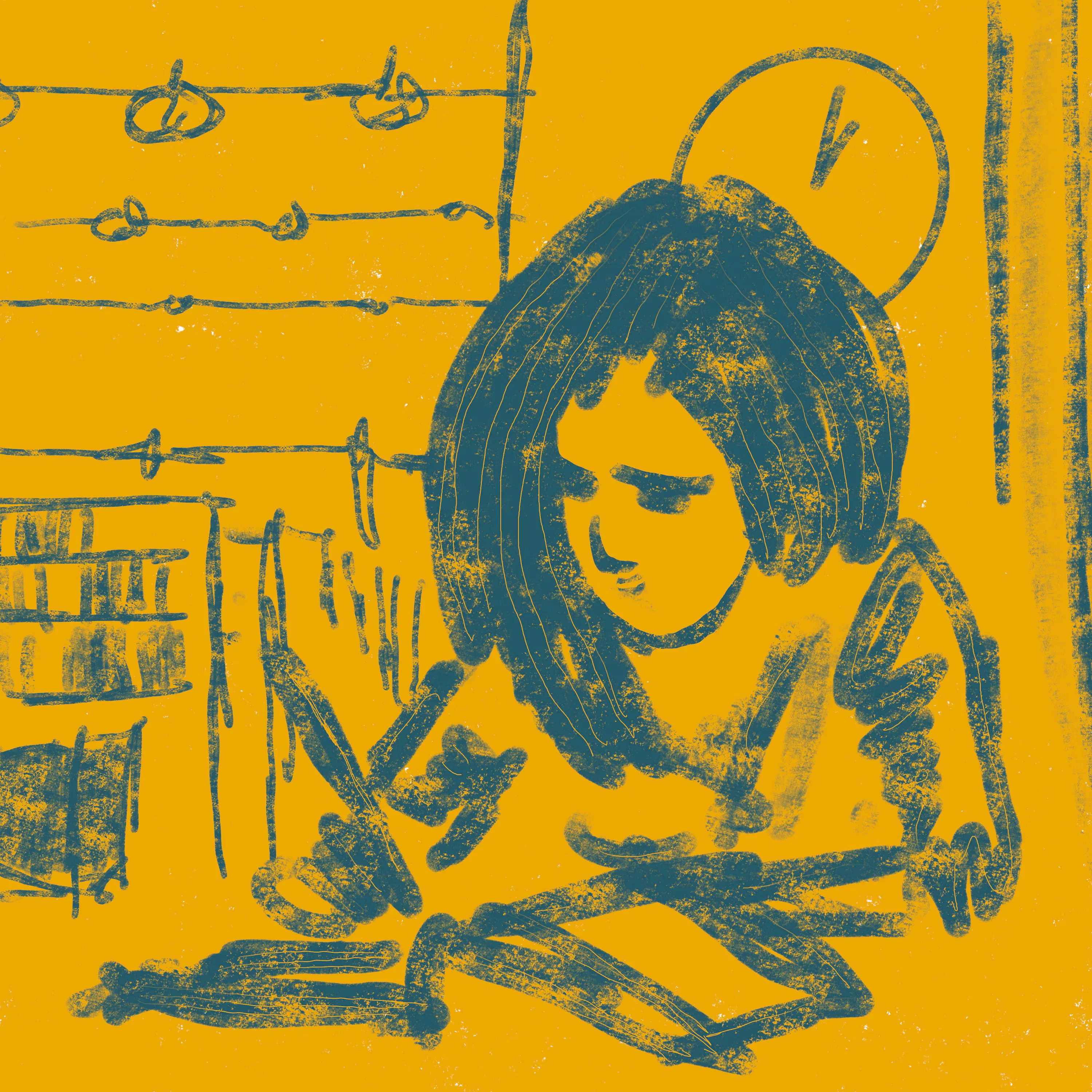
In this episode of High Theory, Jonathan Kramnick talks about Close Reading. Contrary to the name, it is less a form of slow or focused reading than an immersive practice of writing. The classic methodology of New Criticism has become, in Kramnick’s estimation, the shared foundation of literary studies in the university. Our conversation was inspired by Jonathan’s new book, Criticism and Truth: On Method in Literary Studies (Chicago, 2023). In the book he aims to “present a view of literary criticism as it is practiced across the academy in order to defend its standing as a contribution to knowledge” (vii). His defense of this foundational critical method joins a slate of recent metacritical books on the discipline of literary study, and the state of the humanities today. Jonathan Kramnick is the Maynard Mack Professor of English at Yale University. His research and teaching are in eighteenth-century literature and philosophy, foundations of literary theory and criticism, and interdisciplinary approaches to the arts. His prior publications include Paper Minds: Literature and the Ecology of Consciousness (Chicago, 2018), Actions and Objects from Hobbes to Richardson (Stanford, 2010), and Making the English Canon: Print Capitalism and the Cultural Past, 1700-1770 (Cambridge, 1999). His current book project on Alexander Pope, William Cowper, and the poetics of designed environments is titled Earthworks: Two Before Romanticism. He is also director of the Lewis Walpole Library and the editor (with Steven Pincus) of the Lewis Walpole Series in Eighteenth-Century Culture and History for Yale University Press. The image accompanying this episode was drawn by Saronik Bosu in 2024. Learn more about your ad choices. Visit megaphone.fm/adchoices

Ep 139Criticism
In this episode of High Theory, Matt Seybold tells us about Criticism, the glue that holds the bricks of culture together. Cultural critics are a necessary component of the intellectual ecosystem, who have the power to analyze both the material conditions and the myths that make up our world. Matt is the host of the American Vandal Podcast at the Center for Mark Twain Studies at Elmira College. In his recent podcast series, Criticism, LTD, Matt investigated the state of criticism in the academy and the public sphere. There is a nifty substack newsletter with the transcripts from Criticism, LTD, if you’re keen. Kim and Saronik were among the many podcasters, public intellectuals, and critics that Matt interviewed for the series, and we’re excited to have him back on High Theory to tell us about his investigations. In the episode he offers a recuperative reading of Mark Twain’s acerbic take on critics in his late notebooks: “The critic’s symbol should be the tumble-bug; he deposits his egg in somebody else’s dung, otherwise he could not hatch it.” (see p. 392 of this Harper & Brothers, 1935 edition of Twain’s Collected Works, on archive.org). He references Jacques Derrida’s book, Limited Inc (Northwestern UP, 1988), which contains the *famous* essay “Signature, Event, Context” and a critical debate about Apartheid. And he also discusses Jed Esty’s Future of Decline: Anglo-American Culture at Its Limits (Stanford UP, 2022) and our episode with Jed on the Rhetoric of Decline. You can also take a listen back to Matt’s earlier episode with us on Economics. Matt Seybold is Associate Professor of American Literature & Mark Twain Studies at Elmira College, as well as Resident Scholar at the Center For Mark Twain Studies. He is the executive producer and host of the American Vandal Podcast, and founding editor of MarkTwainStudies.org. He is co-editor (with Michelle Chihara) of of the Routledge Companion to Literature & Economics (2018)and (with Gordon Hutner) a 2019 special issue of American Literary History on “Economics & Literary Studies in The New Gilded Age.” Recent articles can be found in the Mark Twain Annual, American Studies, Reception, and Los Angeles Review of Books. He tweets (or exes?) @MEASeybold. The image for this episode was made by Saronik Bosu in 2024. Learn more about your ad choices. Visit megaphone.fm/adchoices

Ep 138Teaching
In this special episode of High Theory, Ramsés Martínez Barquero and Abigail Cowan interview their graduate student colleagues about teaching. They turn our attention to graduate study as one of the foundational aspects in building academic knowledge, and show us graduate instructors encountering the classroom as a learning environment for teachers and students. Abigail and Ramses recorded interviews with eight fellow graduate students in a story circle they held at the PennState Humanities Institute as part of their Public Humanities Fellowship program. The episode weaves together stories of anxiety and humor, pushing against self doubt, and finding community while pursuing graduate studies. Ramsés Martínez Barquero is a M.A/PhD student in the Department of Spanish, Italian and Portuguese. Abigail Cowan is a graduate student for the Department of English and a teaching assistant for English and Comparative Literature. Kristina Bowers is a PhD student at Penn State University studying Rhetoric and Composition and Women's, Gender, and Sexuality Studies. Vani Gupta is a doctoral student in the HDFS Department at Penn State University. Ash Mayes is a master's student in the English department. Ana Sofía Semo is a second-year graduate student in the Department of Spanish, Italian and Portuguese, and now she teaches Spanish 2 in the Spanish Basic Language Program. María José Andrade Gabiño is a Ph.D. student in the Spanish, Italian, and Portuguese Department. Alex Mika is a second-year PhD student in the Penn State English Department studying Shakespeare's cultural legacy via literary, cinematic, and dramatic adaptations of his works. The image for this episode was made by Saronik Bosu in 2024. Learn more about your ad choices. Visit megaphone.fm/adchoices

Ep 137Plot
In this episode of High Theory, Pardis Dabashi tells us about plot. A plot consists of a change with stakes that establish norms. This seemingly simple structure shapes novels, films, politics, and our world, from easy seductions of comfort to difficult promises of liberation. In the episode, Pardis references Thomas Edison’s 1903 film, Electrocuting an Elephant, which is super sad, and kind of terrifying, but an economical explanation of plot. She also discusses Max Ophüls’s 1953 film, The Earrings of Madame de... as an example of a film with a potentially liberatory plot. We recommend you watch the latter, not the former. Other texts referenced in this episode include Mary Anne Doane’s The Emergence of Cinematic Time (Harvard, 2002) and Lauren Berlant’s Cruel Optimism (Duke, 2011) and Female Complaint (Duke, 2008). The occasion for our conversation was Pardis’s new book, Losing the Plot: Film and Feeling in the Modern Novel (U Chicago Press, 2023). If you’d like to get yourself a copy there’s a 30% discount on the University of Chicago Press website with the promo code UCPNEW. It’s a book about film and literary modernism, including the work of Nella Larsen, Djuna Barnes, and William Faulkner. The cover is really beautiful, and it’s definitely worth a read if you’re interested in either of the genres it addresses. Pardis Dabashi is an Assistant Professor of Literatures in English and Film Studies at Bryn Mawr College, where she is also Affiliated Faculty in the Middle Eastern, Central Asian, and North African Studies Program (MECANA). She has published everywhere, and is friends with everyone! She teaches courses in twentieth-century literature, film studies, Middle East studies, and theory. She was also one of the first guests on High Theory! You can listen to her 2020 episode on The Autonomous Work of Art if you’re feeling a flashback. The image for this episode is a publicity still from George Cukor’s 1936 MGM film Camille, showing Greta Garbo and Robert Taylor in a tense embrace. Digital image from Wikimedia Commons. Learn more about your ad choices. Visit megaphone.fm/adchoices

Ep 136Nature-Study
In this episode, John Linstrom tells us about Nature-Study, an educational movement that began in the rural classrooms of American Progressive Era. It takes students and learners of all kinds out of the classroom, away from the textbook, and into the world, to observe and learn. It offers us a mode of attunement to the world that we might use to heal the divide between rural and urban, and kindle the kind of social change we need to get the world off fossil fuels. Our conversation is centered around the new scholarly edition John edited of Liberty Hyde Bailey’s The Nature-Study Idea (Cornell University Press, 2023), which just came out. It’s the first book in the new The Liberty Hyde Bailey Library, a series for Cornell University Press reintroducing the ecological and critical-agrarian writings of L. H. Bailey (1858-1954). John was one of our first guests on High Theory back in 2020 – so if you want to listen back, you can check out the episode on Ecosphere. John told me when were were preparing to record that there was some debate about the dash in “Nature-Study” back in the day, but that he was on the side of the dashers, because the women teachers who led the movement favored the dash. John is a Mellon Foundation Postdoctoral Fellow in Climate and Inequality at the Climate Museum in NYC. He is also the author of a book of poems called To Leave for Our Own Country coming out with Black Lawrence Press in April 2024. He believes in poetry's power to foster communities for change, human and more-than-human stories and visions of climate justice He received his PhD in Literature from New York University and his MFA in Creative Writing and Environment from Iowa State University. John, Kim, and Saronik spent a lot of time together as grad students at 244 Greene St. in NYC. John and Kim used to run a working group on agriculture and literature, called Farm to Text. John lives in Queens, where gleans deep joy from holding his baby daughter, singing choral music, and eating large quantities of pesto. The image for this episode was made by Saronik Bosu, especially for his friend John, in 2023. Learn more about your ad choices. Visit megaphone.fm/adchoices

Ep 135Sisterhood
In this episode of High Theory, Katherine Turk tells us about Sisterhood, a familial metaphor used to evoke gendered solidarity in women’s movement of the mid-sixties and seventies, and a utopian ideal of equality within the human family. It’s a universalizing but aspirational concept that helped feminists build a political coalition. Our conversation is based upon Katherine’s new book about the National Organization of Women: The Women of NOW: How Feminists Built an Organization That Transformed America (FSG, 2023). This mainstream feminist organization is often neglected in histories of the period, dismissed as a liberal organization dedicated to incremental change. But NOW was an expansive organization that changed over time, shifted the conversation and legal structures in the US, and left an important historical record that we can learn from in social justice work today. Katherine Turk is an associate professor of History and an adjunct associate professor of Women’s and Gender Studies at UNC Chapel Hill. Her research and teaching focus on women, sex, gender, law, labor, and modern social movements. Her first book Equality on Trial: Gender and Rights in the Modern American Workplace (Politics and Culture in Modern America Series, University of Pennsylvania Press, 2016) studies the history of Title VII of the 1964 US Civil Rights Act, which outlawed workplace discrimination on the basis of such personal attributes as sex, race, and religion. The image for this week was made by Saronik Bosu. It shows Aileen Hernandez, Mary Jean Collins, and Patricia Hill Burnett, leaders of NOW who are the primary subjects of Katherine’s book. Learn more about your ad choices. Visit megaphone.fm/adchoices
Ep 134Self Help
In this episode of High Theory, Angela Hume tells us about Self Help, not the neoliberal strategy of self-actualization through consumer choices, but the radical political movement of gynecological self-help, that flourished in the late twentieth century and created a set of portable political tactics based in anarchist feminist philosophy. In the episode, she references Alondra Nelson’s book Body and Soul: The Black Panther Party and the Fight against Medical Discrimination (Minnesota UP, 2013); Michelle Murphy’s Seizing the Means of Reproduction: Entanglements of Feminism, Health, and Technoscience (Duke UP, 2012); and several health activist organizations, including the Women’s Choice Clinic in Oakland, CA; AidAccess which provides mail order medication assisted abortion; and MYA Network, a group of clinicians seeking to expand abortion access in primary care settings. Angela suggested we include three links that everyone should have at their fingertips, PlanC (plancpills.org) which helps people access abortion pills, AidAccess (aidaccess.org) the pill fulfillment service described above, and I Need an A (ineedana.com), a clinic locator. In our longer conversation, she also named the Keep Our Clinics campaign, a fundraising effort to support independent abortion clinics, to which pre-sales of her book contributed. We’re sorry we didn’t get this up early enough for you to participate in the pre-sale! But now the book is out in the world, you can even read a review of it in The Guardian. Our conversation is based Angela’s new book, Deep Care: The Radical Activists Who Provided Abortions, Defied the Law, and Fought to Keep Clinics Open(link is external) (AK Press, 2023). A work of public scholarship and a history of medicine, the book tells a story of Bay Area abortion defense—from feminist clinical practice, to underground abortion provision, to street politics and clinic defense—from the 1970s to 2000s. You can read an excerpt from the book in the Post45 contemporaries collection “Abortion Now, Abortion Forever,” which was the starting point for our conversation on High Theory. Angela Hume is a feminist historian, critic, and poet, who teaches at UC Berkeley. Her creative and expository writing classes address environmental and health justice, working-class and multiethnic American literatures, feminist and queer storytelling, and more. Beyond Deep Care, Angela is co-editor of Ecopoetics: Essays in the Field(link is external) (U of Iowa P, 2018). Her full-length books of poetry include Middle Time(link is external) (Omnidawn, 2016) and Interventions for Women (Omnidawn, 2021). Learn more about your ad choices. Visit megaphone.fm/adchoices

Ep 133Plagiarism
In this episode of High Theory, Geoffrey Sanborn tells us about Plagiarism. A concept emerged with the idea of originality, plagiarism challenges some of our most deeply held notions of individualism and status. Hatred of plagiarism is so baked into our culture that it evokes a gut response of disgust, which prevents us from actually analyzing it as a form of social behavior. In the episode, Geoff talks about websites that promise to “humanize” chatGPT content, like the AI Text Converter and the Plagiarism Remover. He talks about postcolonial theory, as a tool that might help us analyze plagiarism, and invokes Homi Bhabha’s idea of “colonial mimicry,” which appears in his 1984 article “Of Mimicry and Man: The Ambivalence of Colonial Discourse.” He also talks about the actress and playwright Anna Deavere Smith, and references David Graeber’s book Debt, which we ran an episode on way back in 2020. It was in the early days of High Theory, so apologies for the audio quality, but we think you’ll like it. Geoff is a Samuel Williston Professor of English and department chair at Amherst College. He has published many books about nineteenth century American literature, most recently Plagiarama! William Wells Brown and the Aesthetics of Attractions (New York: Columbia University Press, 2016), which was the inspiration for this conversation. It’s a really great book! You should read it. The image for this episode was made by Saronik Bosu in 2023. Learn more about your ad choices. Visit megaphone.fm/adchoices

Ep 131Economic Enchantments
Anat Rosenberg, Kristof Smeyers, and Astrid Van den Bossche discuss the fresh historiographies of capitalism offered by studies of enchantment and magical thinking. They talk about their research network for scholars interested in the historical role of enchantment as a tool, structure, or foundation for the organization and the development of modern markets, economic institutions, and economic relationships. Anat Rosenberg is a senior lecturer at the Harry Radzyner Law School, Reichman University, Israel. Her work concerns the cultural legal history of capitalism, liberalism and consumption in Britain, and methodologies of law and the humanities. She is author of Liberalizing Contracts: Nineteenth Century Promises Through Literature, Law and History (Routledge, 2017), and The Rise of Mass Advertising: Law, Enchantment and the Cultural Boundaries of British Modernity (Oxford UP, 2022). Kristof Smeyers is a Postdoctoral Fellow at the Ruusbroec Institute, University of Antwerp. His research interests are magic, the supernatural and the occult, and their connections to the histories of religion, science and folklore, as well as their historiography and their archive history. Astrid Van den Bossche is Lecturer in Digital Marketing and Communications at the Department of Digital Humanities, King’s College London. She is particularly interested in scepticism and humour as forms of engagement with promotional culture, and the application of computational methods in historical studies. Image: Public Domain Image of Great Market Hall, Budapest Learn more about your ad choices. Visit megaphone.fm/adchoices

Ep 132Plantationocene
In this episode of High Theory, Neil Safier talks with us about the Plantationocene, a geological epoch that traces the effects of climate change to the historical systems of human and nonhuman environmental exploitation known as plantation agriculture. It is another name for the world we currently inhabit. In the episode, Neil describes how Donna Harraway and Anna Tsing invented the term Plantationocene in response to another recent term Anthropocene. Sources to check out include Donna Haraway’s essay, “Anthropocene, Capitalocene, Plantationcene, Chthulucene: Making Kin” Environmental Humanities 6 no. 1 (2015): 159-165. doi: 10.1215/22011919-3615934, and Paul Crutzen, “The ‘Anthropocene’” Earth Systems Science in the Anthropocene ed. Eckhart Ehlers and Thomas Krafft (Springer, 2006) pp. 13-18. He references B.F. Skinner’s novel Walden Two (MacMillan, 1962) at the end of our conversation. Neil Safier is Associate Professor in the Department of History at Brown University where he currently serves as Director of the Center for Latin American and Caribbean Studies of the Watson Institute for International Affairs. He studies the history of science, agriculture, and other forms of knowledge-making in the late-eighteenth-century Atlantic world, focusing on the plantation cultures of the Caribbean and Brazil. He was recently the director of the John Carter Brown Library, at Brown University, and many years ago, when he was more optimistic about the current global epoch, he managed grants for the Sierra Club Foundation in San Francisco, California. He is the author of Measuring the New World: Enlightenment Science and South America (U Chicago, 2008) and is cooking up two new projects, on the historical connections between natural science and plantation agriculture in the Amazon River basin and the global history of collecting. The image for this week comes from Neil’s research on the history of plantation agriculture. This drawing of a plantation from Hispaniola (Saint-Domingue) was reproduced in José Mariano da Conceição Velozo's Fazendeiro do Brazil Tome III Part II (Lisbon, 1799), in the volume dedicated to coffee production. Learn more about your ad choices. Visit megaphone.fm/adchoices

Ep 130Decolonizing Praxis
In this episode of High Theory, Erin Pineda talks about decolonizing praxis. Black American activists in the 1950s and 1960s used strategies of civil disobedience and nonviolent direct action as part of a broader anticolonial movement, and reading their story in an international context can help us rethink the narrative of the US civil rights movement enshrined in American political theory. In the episode Erin references Jack Halberstam’s concept of “low theory” which derives from the work of Stuart Hall, and appears in the book, The Queer Art of Failure (Duke UP 2011). She also references several mainstream liberal political philosophers who set the terms of the debate about “civil disobedience” in the US academy in the 1970s, John Rawls Theory of Justice (Harvard UP, 1971), Hugo Bedau, “On Civil Disobedience” (Journal of Philosophy 58, no. 21 (1961): 653-665) and Carl Cohen, Civil Disobedience: Conscience, Tactics, and the Law (Columbia University Press, 1971). Pineda writes against this tradition. The American activists she studies developed a different set of theoretical commitments to civil disobedience that are a bit less polite, and have a bit more potential for actual revolution. Erin Pineda is the Phyllis Cohen Rappaport ’68 New Century Term Professor of Government at Smith College. She teaches courses in the history of political thought, democratic theory, race and politics, social movements and American political thought. Her research interests include the politics of protest and social movements, Black political thought, race and politics, radical democracy and 20th-century American political development. If you want to learn more about the topics she discusses in this episode, read her book! It’s called Seeing Like an Activist: Civil Disobedience and the Civil Rights Movement (Oxford UP, 2021). The image for this episode is a famous photograph of Black student Elizabeth Eckford being jeered by white student Hazel Bryan as she attempts to enter Little Rock Central High School, taken by Will Counts on 4 September 1957, one of the more famous images of school desegregation from the US Civil Rights Movement. This digital version came from wikimedia commons. Learn more about your ad choices. Visit megaphone.fm/adchoices

Ep 129Txt
In this episode of High Theory, Matthew Kirschenbaum talks about txt, or text. Not texting, or textbooks, but text as a form of data that is feeding large language models. Will the world end in fire, flood, or text? In the full interview, Matthew recommended Tim Maughan’s novel Infinite Detail (Macmillan, 2019) as an excellent example of writing about the end of the internet, and Emily St. John Mandel’s Station Eleven (Knopf, 2014) as a positive example of a post-internet apocalypse. In the episode he references a paper by Beder et al., “On the Dangers of Stochastic Parrots: Can Language Models Be Too Big?” FAccT '21: Proceedings of the 2021 ACM Conference on Fairness, Accountability, and Transparency (March 2021): 610–623. And several apocalyptic scenarios, including the dead internet theory and the gray goo hypothesis. Matthew Kirschenbaum is Distinguished University Professor of English and Digital Studies at the University of Maryland and Director of the Graduate Certificate in Digital Studies. His books include Track Changes: A Literary History of Word Processing (Harvard UP 2016) and Mechanisms: New Media and the Forensic Imagination (MIT Press, 2008). With Kari Kraus, he co-founded and co-directs BookLab, a makerspace, studio, library, and press devoted to what is surely our discipline's most iconic artifact, the codex book. See mkirschenbaum.net or follow him on Twitter (or X?) as @mkirschenbaum for more. Because we are hoping to encourage the text apocalypse, we made today’s image using generative AI. Specifically Saronik made it using the prompt “Text” in Canva’s AI interface. Learn more about your ad choices. Visit megaphone.fm/adchoices

Ep 128Visibility
In this episode of High Theory, Margaret Galvan talks about the queer politics of Visibility. In her work the activist practices of representation take concrete form in comic books, photographs, and even drawings on lecture slides! In the episode, she discusses the photography of Nan Goldin and queer comic books in the 1980s. She quotes Adrienne Rich’s 1980 essay “Compulsory Heterosexuality and Lesbian Existence.” She also references This Bridge Called My Back: Writings By Radical Women of Color, and Gloria Anzaldúa’s Borderlands/La Frontera. At the end of the episode she references the Lesbian Avengers, who have amazing images. Margaret Galvan is an assistant professor of English at the University of Florida. Her research examines how visual culture operates within the print media of feminist and queer social movements of the 1970s-1990s. Her brand new book In Visible Archives: Queer and Feminist Visual Culture in the 1980s, is out this fall from University of Minnesota Press‘s Manifold Scholarship Series. You should go check it out! Because the amazing images Margaret talks about were drawn recently, they’re still in copyright. Our image this week is from Gladys Parker’s comic Mopsy which ran from 1937 to 1966. Parker was a successful female artist in a world of mainstream US comic books dominated by men. Learn more about your ad choices. Visit megaphone.fm/adchoices

Ep 127Polyphony
In this episode of High Theory, Brian Fairley tells us about Polyphony, a concept from music that describes multiple melodic lines sounding at once. The many voices of polyphony have an ancient and colonial history, which has reappeared in some key reverberations in twentieth century criticism and theory. In the conversation, we discuss several texts, including Mikhail Bakhtin, Problems of Dostoevsky's Poetics (1929); James Clifford and George Marcus, Writing Culture The Poetics and Politics of Ethnography (UC Press, 1986); Edward Said, Culture and Imperialism (Knopf, 1993); and one of Kim’s favorite scholarly books, Anna Tsing, The Mushroom at the End of the World (Princeton, 2021). Brian also discusses Denise Ferreira da Silva’s work “On Difference Without Separability.” Brian Fairley received his PhD in Ethnomusicology from New York University in 2023; he is currently a Visiting Scholar in the Department of Music at Amherst College.His manuscript in progress, Dissected Listening: Race, Nation, and Polyphony in the South Caucasus, excavates a series of experimental sound recordings from 1916 to 1966 to show how the concept of musical polyphony emerged in tandem with techniques of multichannel sound and imperial discourses of racial, national, and religious difference. His work has appeared in the journal Ethnomusicology and is forthcoming in Theoria: Historical Aspects of Music Theory, as well as an edited volume titled Key Terms in Music Theory for Antiracist Scholars. The image for this episode is Paul Klee’s 1932 painting “Polyphony,” which is in the public domain in the US and Europe. Digital image sourced from Wikimedia Commons. Learn more about your ad choices. Visit megaphone.fm/adchoices

Ep 126Sillies: Horses
In our new summer series of “Sillies,” Saronik and Kim ask each other how simple things will achieve the grandiose task of saving the world. In this episode, Kim asks Saronik about how horses will save the world. The texts we mention (or meant to mention) in the episode are (in some vague order): Peter Shaffer, Equus, 1973 Girish Karnad, Hayavadana, 1971 Sharon Patricia Holland, an other: a black feminist consideration of animal life (Duke UP, 2023) Mackenzie Cooley, The Perfection of Nature: Animals, Breeding, and Race in the Renaissance (Chicago UP, 2022) Raymond Malewitz, “On the Origin of ‘Oops!’: The Language and Literature of Animal Disease” Critical Inquiry 45 (Summer 2019). In this episode we used sound effects from freesound.org. To make the episode we downloaded sounds created by the following users: BUNCHA SOUNDS BOI!; InspectorJ; felix.blume. Click the link to hear the sound. This episode’s silly image was created by Saronik Bosu. It is a distortion of “Whistlejacket” (1762) by George Stubbs. Learn more about your ad choices. Visit megaphone.fm/adchoices

Ep 124Bombay Talkies
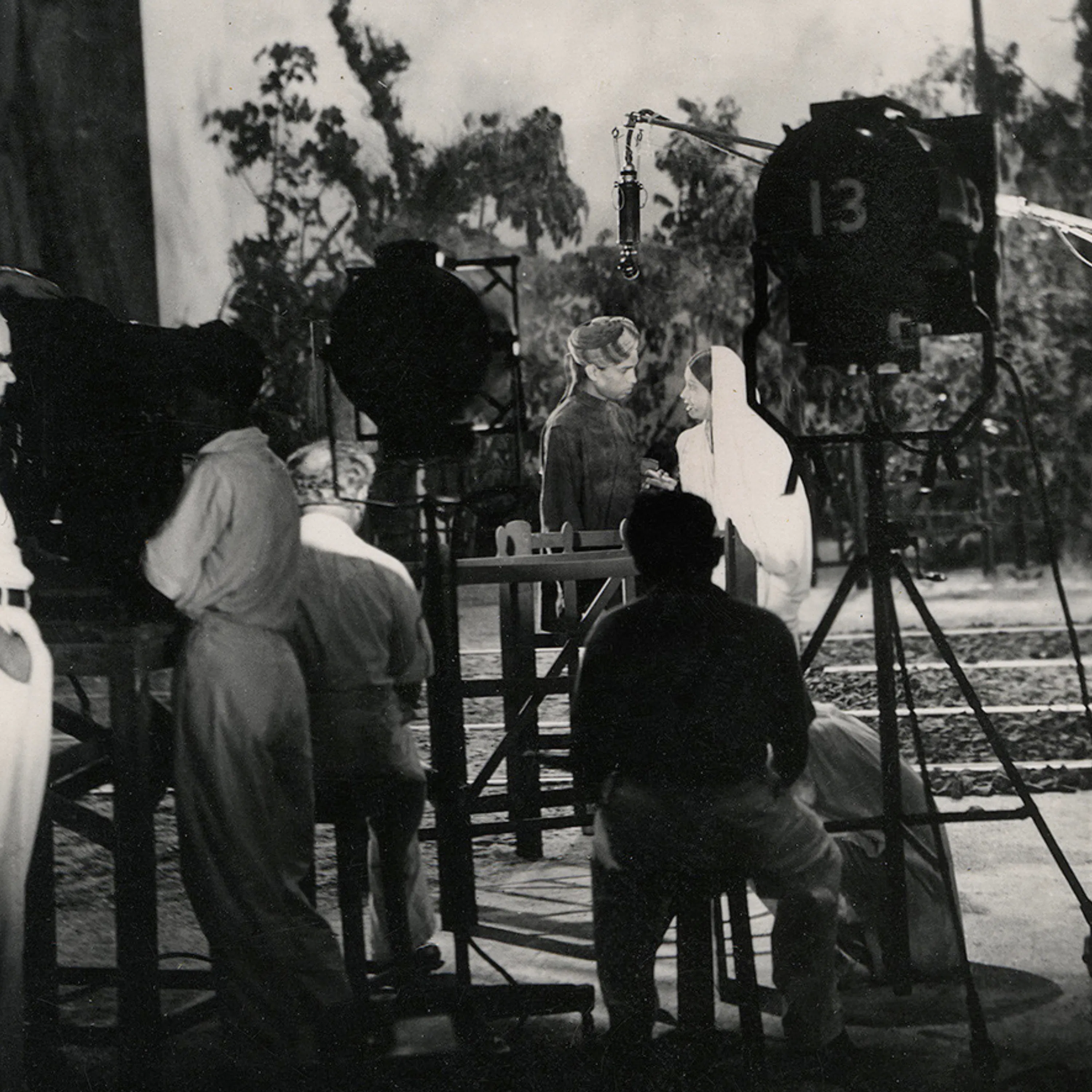
Debashree Mukherjee talks about the pioneering film studio founded in 1934 in the city of Bombay (now Mumbai) by Himansu Rai and Devika Rani. Its cast and crew of diverse global origins and training, offer new ways of writing the history of labor in Indian Cinema. In the accompanying B-Side episode, she focuses on her new book Bombay Talkies: An Unseen History of Indian Cinema, which features rare behind-the-scenes photographs from the personal archive of cinematographer Josef Wirsching. Wirsching brought the influence of German Expressionism to Indian cinema, and was responsible for the cinematic stylings of groundbreaking films like Achhyut Kanya (1936), Mahal (1949), and Pakeezah (1972). Debashree Mukherjee is Associate Professor of film and media in the Department of Middle Eastern, South Asian, and African Studies (MESAAS) at Columbia University. Her first book, Bombay Hustle: Making Movies in a Colonial City (2020), approaches film history as an ecology of material practices and practitioners. Her second book project, Camera Obscura: Media at the Dawn of Planetary Extraction, develops a media history of oceanic migrations and plantation capitalism. Debashree edits the peer-reviewed journal BioScope: South Asian Screen Studies and in a previous life she worked in Mumbai’s film and TV industries as an assistant director, writer, and cameraperson. Image: Sourced from Bombay Talkies: An Unseen History of Indian Cinema with permission. Learn more about your ad choices. Visit megaphone.fm/adchoices
Ep 125Wirsching: Bombay Talkies B-Side
In this episode of High Theory, we continue our conversation with Debashree Mukherjee about the pioneering film studio Bombay Talkies, founded in 1934 in the city of Bombay (now Mumbai) by Himansu Rai and Devika Rani. Here, she focuses on cinematographer Josef Wirsching, whose rare behind-the-scenes photographs of life and work at the studio appear in her new book Bombay Talkies: An Unseen History of Indian Cinema. Wirsching fled fascism in Europe, and brought the influence of German Expressionism to Indian cinema, and was responsible for the cinematic stylings of groundbreaking films like Achhyut Kanya (1936), Mahal (1949), and Pakeezah (1972). His experiences teach us about the stifling effects of fascism on art and the peculiarity of national cinema as an analytic category. The diverse global origins and training of the cast and crew his photographs document offer new ways of writing the history of labor in Indian Cinema. If you want to learn more about Debashree’s research, and her new book, listen back to our earlier episode called “Bombay Talkies.” Debashree Mukherjee is Associate Professor of film and media in the Department of Middle Eastern, South Asian, and African Studies (MESAAS) at Columbia University. Her first book, Bombay Hustle: Making Movies in a Colonial City (2020), approaches film history as an ecology of material practices and practitioners. Her second book project, Camera Obscura: Media at the Dawn of Planetary Extraction, develops a media history of oceanic migrations and plantation capitalism. Debashree edits the peer-reviewed journal BioScope: South Asian Screen Studies and in a previous life she worked in Mumbai’s film and TV industries as an assistant director, writer, and cameraperson. Image: Sourced from Bombay Talkies: An Unseen History of Indian Cinema with permission. Learn more about your ad choices. Visit megaphone.fm/adchoices

Ep 123Shortage
In this episode of High Theory, Eram Alam talks with us about shortage. A political tool, rather than a natural lack, the concept of a shortage changes the flows of goods and people across borders and space. The concept of a doctor shortage was used in the US immigration reform of the 1960s to recruit discount elite labor from newly postcolonial nations, creating the downstream effect of shortages in their countries of origin. These recruiting practices remain in effect, with a US physician workforce that is approximately 25% international medical graduates, while domestic and international doctor shortages abound. Eram Alam is an assistant professor of the History of Science at Harvard University. Her book The Care of Foreigners studies the enduring consequences of post-colonial migration from Asia to the US. We’re so excited to read it when it comes out! In the meantime, you can read her article “Cold War Crises: Foreign Medical Graduates Respond to US Doctor Shortages, 1965–1975” Social History of Medicine 33 no. 1 (Feb 2020). This week’s image of a hospital corridor was uploaded to the image sharing site Pixbay by a user named Mitrey. Learn more about your ad choices. Visit megaphone.fm/adchoices

Ep 122Queer Mysticism
We close Pride Month of 2023 with Jamie Staples talking about queer mysticism. This includes instances in medieval Christianity where an embodied and erotic experience of life, within and between persons, became the basis for an apprehension of divinity. The conversation particularly focuses on the poem “Dark Night of the Soul” by 16th century Spanish poet St. John of the Cross and the work of 14th-15th century English mystic Margery Kempe. Jamie shares his own story to show how queer mysticism can offer resources from within Christianity to build a personal and communitarian politics against fundamentalist discrimination and hatred. Starting this fall, Jamie Staples will be Visiting Assistant Professor of Medieval English literature at Trinity College in Hartford. His research takes seriously the productive intersection of mystical theology and poetry in the development of alternative modes of critical thinking in the late Middle Ages. He's recently written two articles focused more specifically on the queer mysticism that he will be discussing today, one on the fifteenth-century Book of Margery Kempe, published in Romanic Review, and the other on the fourteenth-century poem Cleanness, published in Exemplaria. Image: © 2023 Saronik Bosu Learn more about your ad choices. Visit megaphone.fm/adchoices

Ep 121The Environmental Unconscious
Steven Swarbrick talks about poetic engagement with nature in the work of early modern poets Edmund Spenser, Walter Ralegh, Andrew Marvell, and John Milton. Here language is influenced not by the manifest and the conscious, but the unconscious or void, as understood in Freudian and Lacanian psychoanalytic theory. This work is the basis for his hope for a reorganization of thought in contemporary ecocriticism around a politics of degrowth instead of additive policies that serve to greenwash capitalist economies. Steven Swarbrick is an assistant professor of English at Baruch College, City University of New York. His research interests include early modern literature, contemporary continental philosophy, psychoanalysis, the environmental humanities, and sexuality and film studies. He is the author of The Environmental Unconscious: Ecological Poetics from Spenser to Milton (University of Minnesota Press, 2023) and co-author, with Jean-Thomas Tremblay, of Negative Life: The Cinema of Extinction (Northwestern University Press, under contract). He is currently working on two books: Unknowing Sex: Shakespeare against the Historicists and Destituent Ecology: Libidinal Politics for the Environmental Left. Image: © 2023 Saronik Bosu Learn more about your ad choices. Visit megaphone.fm/adchoices
Ep 120The Rhetoric of Decline
In this episode of High Theory, Jed Esty talks about the Rhetoric of Decline. Declinism names the contradictory political narrative that America will always be the greatest country in the world, yet is in constant danger of losing its place in the global pecking order. Studying this rhetorical log-jam reveals its prominence on both the left and the right, and its toxic effects on our national discourse. But comparing the end of America’s empire to Britain's imperial decline in the twentieth century can help us muddle out of this mess. The basis of our conversation is Jed’s recent book The Future of Decline: Anglo-American Culture at Its Limits (Stanford UP, 2022). It’s a cool short book with an x-ray spaceman on the cover. You should read it, even if this isn’t usually your cup of tea. Jed Esty is the Vartan Gregorian Professor of English at the University of Pennsylvania, where he teaches and writes about Anglophone literature after 1850, with special interests in modernism, critical theory, history and theory of the novel, colonial and postcolonial studies, the Victorian novel, and post-45 U.S. culture. He is the author of Unseasonable Youth: Modernism, Colonialism, and the Fiction of Development (Oxford 2012) and A Shrinking Island: Modernism and National Culture in England (Princeton 2004). Learn more about your ad choices. Visit megaphone.fm/adchoices

Ep 119Jeans
Warning: this episode of High Theory is very silly. In our new summer series of “Sillies,” Saronik and Kim ask each other how simple things will achieve the grandiose task of saving the world. In this episode, Saronik asks Kim how jeans will save the world. Yes, we mean denim, not genes. Some reading that might help assuage the silliness, and support our absurd arguments is listed below: Raymond Malewitz, The Practice of Misuse: Rugged Consumerism in Contemporary American Culture (Stanford UP 2014). Sam Binkley, Getting Loose: Lifestyle Consumption in the 1970s (Duke UP 2007). Fred Turner, From Counterculture to Cyberculture: Stewart Brand, the Whole Earth Network, and the Rise of Digital Utopianism (Chicago UP 2006). Herbert Schiller, “Communication and Cultural Domination,” International Journal of Politics 5 no. 4 (Winter 1975/1976). {apparently the source of the term “cultural imperialism”} In this episode we used sound effects from freesound.org. To make the episode we downloaded sounds created by the following users: MATRIXX, aj_heels, deleted_user_5959249, LittleRobotSoundFactory, TarynMichelle101, Yellowbear, voxlab, NikiPlaymostories, TasmanianPower, trader_one, milkywaysurroundsme, josefpres, BugInTheSYS, paulnorthyorks. Click the link to hear the sound. This episode’s silly image was created by Saronik Bosu. Learn more about your ad choices. Visit megaphone.fm/adchoices
Ep 118Party
Sheila Liming talks about the party, social gatherings that occasion joy and dread and various emotions in between. The party is both a pause and an acceleration in the life-work continuum, it can deaden political motivation and engender fresh politics. We discuss the horrible parties in The Office and the wonderful parties in Small Axe, among other things. Sheila Liming is Associate Professor at Champlain College in Burlington, VT, where she teaches classes in American literature, writing, and media. She is the author, most recently, of Hanging Out: The Radical Power of Killing Time (Melville House, 2023), and also of the books Office (Bloomsbury, 2020) and What a Library Means to a Woman (Minnesota UP, 2020). Her writing has appeared in publications like the The New York Review of Books, The Atlantic, Lapham's Quarterly, LitHub, The Globe and Mail, and The Los Angeles Review of Books, and elsewhere. Image: © 2023 Saronik Bosu Learn more about your ad choices. Visit megaphone.fm/adchoices

Ep 117Global Asia
Cheryl Narumi Naruse talks about the transformation of Singapore over the past decades into a site of postcolonial promise, with economic prosperity and cultural soft power. She discusses a range of texts ranging from official state documents to the immensely popular book and movie adaptation of Crazy Rich Asians, which bear witness to and contribute to this change. Cheryl Narumi Naruse (nah-roo-seh) is Assistant Professor of English and the Andrew W. Mellon Assistant Professor of the Humanities at Tulane University. Her research and teaching interests include contemporary Anglophone literatures and cultures (particularly those from Southeast Asia and the Pacific Islands), diasporic Asian and Asian American literature, postcolonial theory, cultures of capitalism, and genre studies. Her first book, Becoming Global Asia: Contemporary Genres of Postcolonial Capitalism in Singapore is forthcoming from University of California Press in 2023. She is also working on a second monograph which explores the illegibility of Singapore/Malaysia—as the comparatively “cold” Southeast nations in the context of the Vietnam War—in Asian American and postcolonial studies. Image: © 2023 Saronik Bosu Learn more about your ad choices. Visit megaphone.fm/adchoices