
High Theory
215 episodes — Page 3 of 5
Negro Literature
Apabhraṃśa
Ep 76Apabhraṃśa
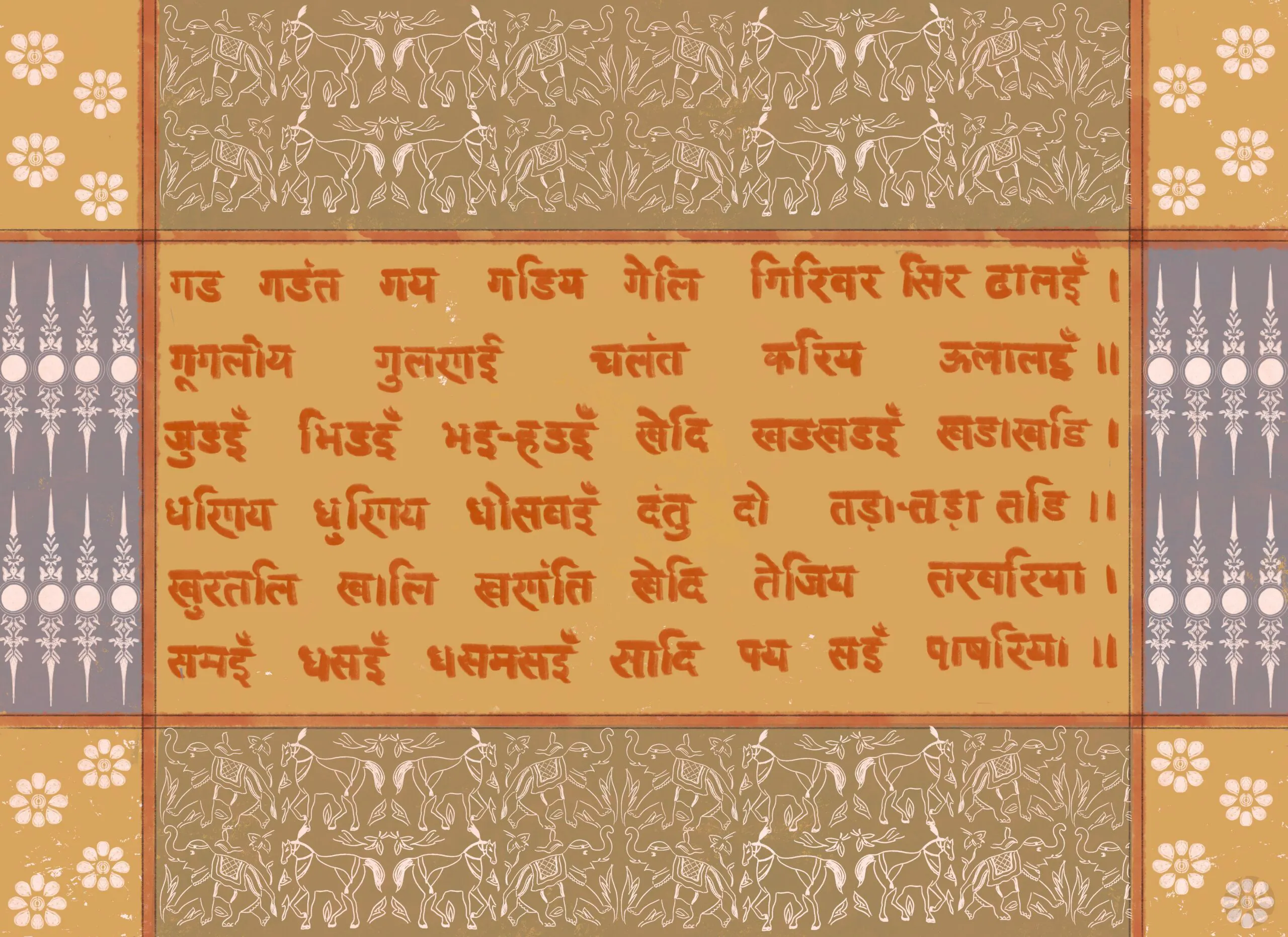
Abhishek Avtans talks about the apabhraṃśa, a word that refers to the middle stage of the Indo-Aryan languages, crucial links between ancient languages like Sanskrit, and modern South Asian languages such as Hindi, Bangla, Bhojpuri, Punjabi, Marathi, Nepali, and others. The first mention of apabhraṃśas is in Mahabhasya, a 2nd century BCE text by Patanjali, where the author refers to languages considered deviations from Sanskrit. However, research into apabhraṃśas, for the same reason, has become crucial in dispelling notions of linguistic purity and politics that is dependent on these notions. Abhishek Avtans is a lecturer of Indic language/s at Leiden University in the Netherlands. He loves to work on literature and linguistics of languages spoken in south Asia. He has contributed in making dictionaries of Great Andamanese, Bhojpuri and Brajbhasha. He writes a column Dialectical for the Himal SouthAsian Magazine. He tweets at @avtansa. Image: © 2021 Saronik Bosu (the stanza of verse in the image comes from the text of Bāhubalī rāsa by 13th Century AD Jain poet Shalibhadra Suri, it is an onomatopoeic stanza that describes the activities done by elephants, soldiers and horses.) Music used in promotional material: “Rajasthani Folk Instrumental Music” by Rupayan Sansthan, Jodhpur, from the collection of Shri Komal Kothari Learn more about your ad choices. Visit megaphone.fm/adchoices
Book Proposal

Ep 75Book Proposal
Laura Portwood-Stacer talks with Kim about book proposals. Laura is a consultant for academic authors. Her book, titled, appropriately, The Book Proposal Book (Princeton UP, 2021), is a how-to-guide for writing an outstanding book proposal. Through her business, Manuscript Works, Laura runs courses, workshops, and provides editorial assistance, to help academics navigate the world of publishing. Enrollment for her next “Book Proposal Accelerator Course” opens on Jan. 3, at 9am PST. Here’s the link: courses.manuscriptworks.com Image of several books from Wikimedia Commons. Music used in promotional material: Mozart Piano Concerto K.467 2mvt. by Cheong Lin Learn more about your ad choices. Visit megaphone.fm/adchoices
Ep 74Squid Game
Kyung Hyun Kim talks about the Netflix series Squid Game, its economic and political contexts, and its cultural potential. He also talks about his new book, Hegemonic Mimicry, out from Duke University Press. Prof. Kyung Hyun Kim is a creative writer, a scholar, and a film producer, who is currently a professor in the Department of East Asian Studies, UC Irvine. He has worked with internationally renowned directors such as Hong Sang-soo, Lee Chang-dong and Marty Scorsese, and also with American film producers Jason Blum and Steven Schneider. Prof. Kim is author of Virtual Hallyu: Korean Cinema of the Global Era, The Remasculinization of Korean Cinema, Hegemonic Mimicry: Korean Popular Culture of 21st Century, all of them published by Duke University Press, and a Korean-language novel entitled In Search of Lost G (Ireo beorin G-reul chajaso, 2014) about a Korean mother combing through the US in search of her missing son during his junior year in a Massachusetts prep school. He has coproduced and co-scripted two award-winning feature films Never Forever (2007, Sundance Film Festival’s U.S. Main Competition) and The Housemaid (2010, Cannes Film Festival Main Competition). He has recently written The Mask Debate, his first theatre screenplay, which premiered in February 2021 through UCI’s Illuminations: Chancellor’s Initiative in Arts and Drama YouTube channel. Image: © 2021 Saronik Bosu Music used in promotional material: ‘Horizon Mine’ by krackatoa Learn more about your ad choices. Visit megaphone.fm/adchoices
Squid Game
Legal Regulation of Drugs

Ep 73Legal Regulation of Drugs
Carl Hart speaks with Kim about America’s punitive drug laws, and how we might change them for the better. He argues that we should legalize and regulate the sale of all drugs, in the same way we regulate the sale of alcohol, to improve the health, equity, and liberty of our society. Dr. Hart is a professor of behavioral neuroscience in the Department of Psychology at Columbia University. You can learn how his scientific research in Neuropsychopharmacology relates to the politics of human experience in his new book Drug Use for Grown-Ups: Chasing Liberty in the Land of Fear (Penguin Random House 2021). Image: Creative Commons Music used for promotional material: ‘A Better Tomorrow’ by astrofreq Learn more about your ad choices. Visit megaphone.fm/adchoices

Ep 72Biscuit Art
Ella Hawkins talks about the biscuits she makes, inspired by her research on Elizabethan dress, and on everything from William Morris wallpapers to TV shows like Outlander and Game of Thrones. She also talks about her upcoming monograph, titled Shakespeare in Elizabethan Costume: ‘Period Dress’ in Twenty-First-Century Performance (forthcomin from Bloomsbury), which examines how early modern garments are recycled and reimagined in contemporary costume design for Shakespeare. (You’ll hear Saronik trying, and failing, to recall something Oscar Wilde said. Turns out he was slightly misremembering the exact quote; it’s in “The Soul of Man Under Socialism” and the passage begins with the sentence: “Now, I have said that the community by means of organisation of machinery will supply the useful things, and that the beautiful things will be made by the individual.”) Ella is a design historian and artist based in Birmingham, England. She has a PhD in Shakespeare Studies and specializes in the study of stage and costume design, dress history, and material culture. Drawing on her academic work, Ella creates edible art inspired by museum collections, art history, and costumes designed for the stage and screen. She uses a range of decorative techniques to make iced biscuit sets that celebrate the material culture of the past and present.Ella has previously worked with the Victoria & Albert Museum, the Shakespeare Birthplace Trust, and the Royal Shakespeare Company on various projects relating to design and theatre history. (For our American listeners, ‘biscuit’ in this case means ‘cookie’.) Image: Assortment of Ella’s biscuits Music used in promotional material: ‘pastorale’ by Dee Yan-Key Learn more about your ad choices. Visit megaphone.fm/adchoices
Biscuit Art

Ep 71Trace
Farah Bakaari talks about Trace, a core concept in deconstruction, that denotes an absent presence, a mark of something that is no longer there. She talks about how in her own work she has used the concept of trace to write about legacies of colonialism and slave trade in the Atlantic and Indian oceans, for which there is no archive that is conventionally legible. In the episode Farah mentions the work of Parisa Vaziri on Iranian cinema and music as an example of work that interrogates an historical trace. You can listen to Parisa discuss forthcoming book here. Farah Bakaari is a doctoral student in the Department of Literatures in English at Cornell University. Her research focuses on twentieth-century African literature, in particular the politics of time in anti-colonial and postcolonial works of art. She also works in memory studies and trauma theory. She holds a BA in English and Political Science from Grinnell College. Image: © 2021 Saronik Bosu Music used in promotional material: ‘The Lost and Forgotten’ by Hellenica Learn more about your ad choices. Visit megaphone.fm/adchoices
Trace

Ep 70Teletherapy
Hannah Zeavin talks about teletherapy, from Freud’s letters to suicide hotlines to therapy apps. If therapy is always mediated, teletherapy is any form of therapy in which that mediation is more clearly legible. This mediated practice is the topic of her new book The Distance Cure: A History of Teletherapy (MIT Press, 2021). Hannah is a Lecturer in the departments of English and History at UC Berkeley, where she is affiliated with the Berkeley Center for Science, Technology, Medicine, and Society, and she is a visiting fellow at Columbia University Center for the Study of Social Difference. She is currently at work on a second book project, about technology in the American family, called Mother’s Little Helpers, also with MIT Press. You can learn more about Hannah’s research and teaching on her website: zeavin.org Image: adapted from a 1912 advertisement of the Illinois Telephone and Telegraph Co. Music used in promotional material: ‘A Better Normal’ by Ian Sutherland Learn more about your ad choices. Visit megaphone.fm/adchoices
Teletherapy

Ep 69Sextuality
Stephen Guy-Bray talks about sexuality, a concept that brings together the the use of sexual metaphors in the description of textual production and the erotics that inhere in reading praxes. Among other things, this concept is a critique of the use of popular heteronormative metaphors of reproduction to describe the creation of literature. Stephen Guy-Bray is professor of English at the University of British Columbia. He specializes in Renaissance poetry, queer theory, and poetics. He has just finished a monograph on line endings in Renaissance poetry. Image: © 2021 Saronik Bosu Music used in promotional material: ‘The Gold Lining’ by Broke For Free Learn more about your ad choices. Visit megaphone.fm/adchoices
Sextuality

Ep 68Cognitive Cultural Studies
Torsa Ghosal talks about Cognitive Cultural Studies, a field that entails methodologies that situate the human mind in historical and cultural contexts, sometimes working against models of the mind proceeding from the Cognitive Sciences. This includes inquiries into how narratives mediate knowledge about cognition, the subject of her new book Out of Mind: Mode, Mediation, and Cognition in Twenty-First Century Narrative, from The Ohio State University Press. Torsa Ghosal is an assistant professor of English and creative writing at the California State University, Sacramento. Her experimental novella, Open Couplets, was published by Yoda Press, India. Her shorter works of fiction as well as essays on literature and culture appear in magazines like Literary Hub, Michigan Quarterly Review Online, Necessary Fiction, Catapult, and elsewhere. She co-hosts the Narrative for Social Justice podcast. You can find more details about her work at her website and follow her on Twitter @TorsaG. Image: © 2021 Saronik Bosu Music used in promotional material: ‘Waves’ by Michael Korbin Learn more about your ad choices. Visit megaphone.fm/adchoices
Cognitive Cultural Studies
WikiVictorian

Ep 67WikiVictorian
Helena DiGiusti talks about @WikiVictorian, the Twitter account that she runs. More than a traditional wiki, it embodies the randomness and miscellaneous nature of so much of Victorian cultures. She talks about the origins of the account in her interest in Victorian fashion, art, and history, and how the account has been embraced by enthusiasts across the professional spectrum and around the world. Like William Morris, she favors the simple criteria of interest and beauty. Per Morris, “If you want a golden rule that will fit everything, this is it: Have nothing in your houses that you do not know to be useful or believe to be beautiful.” Perhaps more Twitter accounts ought to be like Kelmscott Manor. Behind WikiVictorian hides someone deeply fascinated by art, history, photography, old things… and specially, everything about the Victorian era and the 19th century. Her name is Helena, and she is a 23 year old anthropologist from Granada, in the south of Spain. Image: Fall and Winter Catalogue, H. O’Neill and Co. Music used in promotional material: ‘winter smoke’ by The Owl Learn more about your ad choices. Visit megaphone.fm/adchoices
Archives
Ep 66Archives
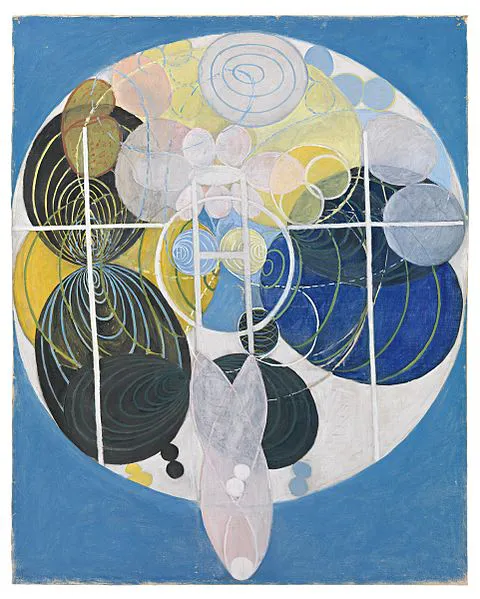
Matt Poland talks about the meaning of archives, the nature of their construction, the physical environments that archives engender, and their emancipatory possibilities. Besides his own work on the archives of George Eliot, he talks about The Baltimore Uprising Archive Project, The Teaching Archive by Rachel Buurma and Laura Hefferman, Stirrings in the Archives by Wolfgang Ernst, No Archive Will Restore You by Julietta Singh, and Ann Laura Stoler’s Along the Archival Grain. Matt is finishing his PhD in English at the University of Washington. His dissertation is titled “The Global Remediation of George Eliot and Charles Dickens: Books, Newspapers, Archives.” Matt’s recent publications include “Uncovering the Contingencies of Archives” in the Journal of Victorian Culture Online. His article “Middlemarch in Melbourne” is forthcoming in the Middlemarch 150th anniversaryissue of George Eliot-George Henry Lewes Studies. Image: Hilma af Klint, Grupp III, nr 5. De storafigurmålningarna, Nyckeln tillhittillsvarande arbete, 1907Olja på duk150 × 118 cmHAK042© Stiftelsen hilma af Klints Verk Music used in promotional material: ‘Lighthouse’ by King Capisce Learn more about your ad choices. Visit megaphone.fm/adchoices
Lust
Ep 65Lust
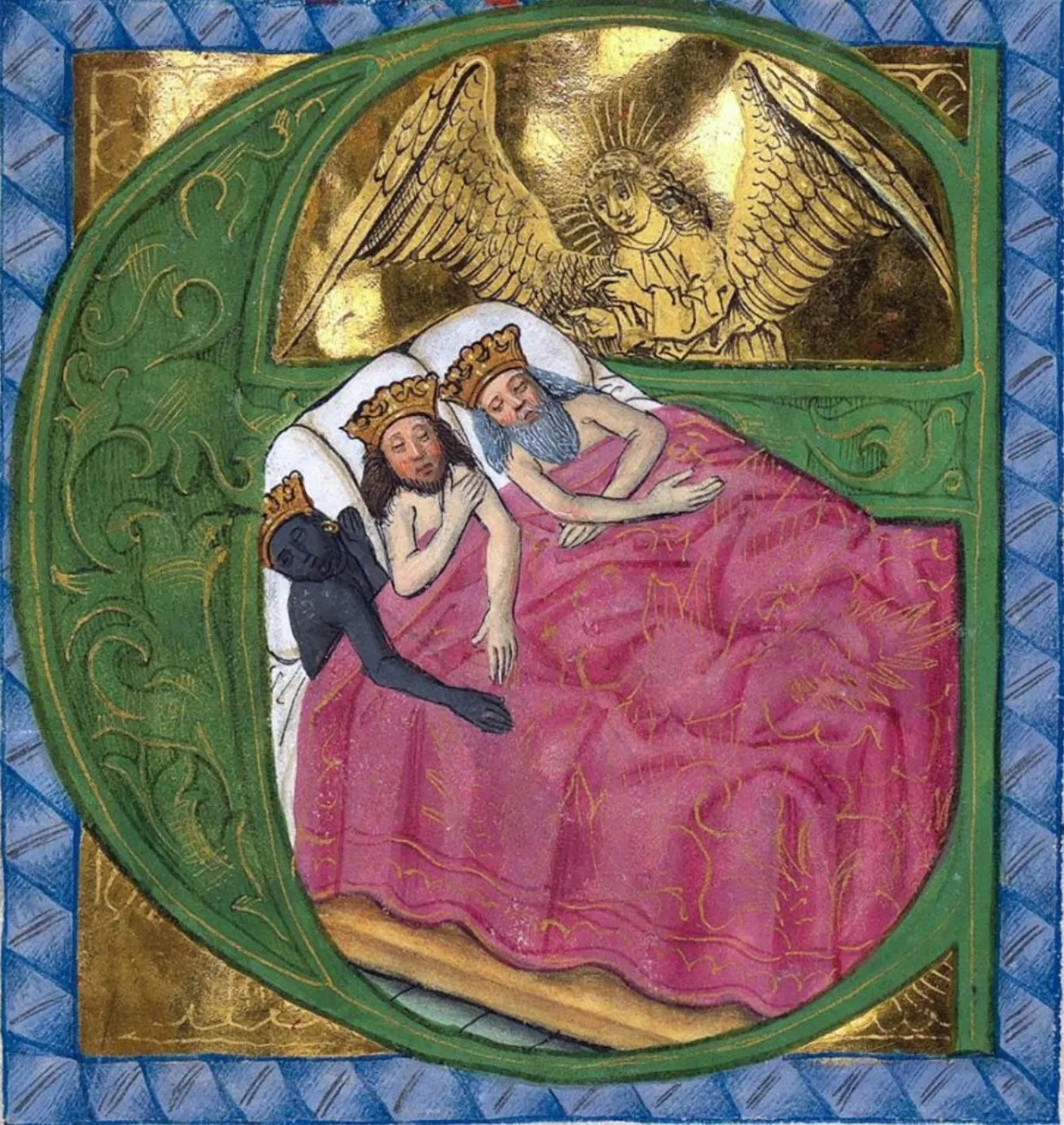
Eric Wade speaks with Saronik about lust. They discuss how depictions of sexuality in medieval literature have persisted through literary traditions and shaped modern ideas of Orientalism and the sexual other. In the episode, Eric mentions a number of modern theorists, including Edward Said, Joseph Boone, Ghassan Moussawi, and Joseph Massad. Dr. Erik Wade—a visiting lecturer at the Universität-Bonn—researches the global origins of early medieval English ideas of sexuality and race. He is co-writing a book with Dr. Mary Rambaran-Olm, titled Race in Early Medieval England, out next year from Cambridge University Press. This week’s image is a medieval illumination of the Dream of the Magi, showing the three kings hanging out naked in bed, in the Salzburg Missal, Regensburg ca. 1478-1489 [München, Bayerische Staatsbibliothek, Clm 15708 I, fol. 63r]. Music used in promotional material: ‘Streets of Sant’lvo’ by Mid-Air Machine Learn more about your ad choices. Visit megaphone.fm/adchoices

Ep 64Drone Life
Amy Gaeta uses the relationship between humans and technology, non-military use of drones being a prime example, to rethink concepts of passivity and how it can bring about change. She makes an intervention in science and technology studies from her position in feminist and disability studies, drawing from diverse theoretical sources like the work of Eve Kosofsky Sedgwick, Saidiya Hartman, Alexander Weheliye, and Mark Fisher. Amy Gaeta is not utopian; she is a student of understanding how we survive a world that is killing us on a dying planet, a feminist disability activist and scholar, poet, punk, and PhD candidate in the English Department at the University of Wisconsin-Madison. Her academic work specializes in the psychological aspects of human-technology relations under the surveillance state. In poetry, she explores mental illness, desire, and the impossibility of being human. Image: “‘Little Planet’ style edit of a 180-degree panorama of my daughter’s little league game this summer” by Tim Bish. Music used in promotional material: ‘Unsunny Sundays’ by Chris Herb. Learn more about your ad choices. Visit megaphone.fm/adchoices
Drone Life

Ep 62Care Ethics
Merel Visse and Inge van Nistelrooij talk with Kim about Care Ethics. Over the course of the episode, we discuss works by many care ethicists and other philosophically inclined thinkers. Prominent among these is Joan Tronto, whose book Caring Democracy: Markets, Equality, and Justice (NYU Press, 2013) offers a political approach to the practice of care. Also discussed are Carol Gilligan’s In a Different Voice: Psychological Theory and Women’s Development (Harvard UP, 1982; useful excerpt available here) and Francois Jullien’s The Silent Transformations (trans. Krysztof Fijalkowski and Michael Richardson, Seagull Books / Chicago UP, 2011). Several of Merel and Inge’s publications are discussed in the episode as well. You can read their co-authored article, “Me? The invisible call of responsibility and its promise for care ethics: a phenomenological view” in Medicine, Health Care and Philosophy (2019) 22: 275–285. Full lists of publications are available for Inge here and Merel here. Both our guests are members of the Care Ethics Group at the University of Humanistic Studies in Utrecht, the Netherlands. Inge van Nistelrooij is an Associate Professor of Care Ethics at the University of Humanistic Studies and an endowed professor of Dialogical Self Theory (DST) at Radboud University in Nijmegen, the Netherlands. Merel Visse is the Director of the Medical and Health Humanities Program at Drew University in Madison, New Jersey and an associate professor in Care Ethics at the University of Humanistic Studies. This week’s image is an undated painting titled “Resting” by Amrita Sher-Gil (1913-1941). Music used in promotional material: ‘Peace of the Night’ by Crowander Learn more about your ad choices. Visit megaphone.fm/adchoices
Care Ethics

Ep 63The Hyperlocal
Nicholas Birns talks about ‘the hyperlocal’, a modality of American journalism in the early 1990s that he adapts to characterize a flexible and transposable concept of the local used in eighteenth and nineteenth century British and American literatures. Nicholas Birns teaches at the Center for Applied Liberal Arts at New York University. He is the author of The Hyperlocal in Eighteenth and Nineteenth Century Literary Space (Lexington, 2019). With Louis Klee, he is currently coexisting a companion to the Australian novel to be published by Cambridge University Press. Image: “The Hyperlocal” © 2021 Saronik Bosu Music used in promotional material: ‘It All Begins Here’ by Borrtex Learn more about your ad choices. Visit megaphone.fm/adchoices
The Hyperlocal

Ep 61Fandom
andré carrington talks about the origins of contemporary fandoms, race and gender as its determinants, and its emancipatory potential in the face of cooption by big media conglomerates. Besides andrés book Speculative Blackness, references are made, among other things, to the work of Carolyn Dinshaw, and the popular fandoms of Doctor Who, Star Wars, and Star Trek. andré carrington is a scholar of race, gender, and genre in Black and American cultural production, and author of Speculative Blackness: The Future of Race in Science Fiction. He is Associate Professor of English at the University of California-Riverside. carrington’s writing appears in journals (American Literature, Souls, and Lateral), books (After Queer Studies: Literature, Theory, and Sexuality in the 21st Century, The Blacker the Ink), and blogs (Black Perspectives). With Abigail De Kosnik, he co-edited a special issue of Transformative Works & Cultures journal on Fans of Color/Fandoms of Color. Image: “Girl Reading Mickey Mouse and the Submarine Pirates Comic Book” by Charles “Teenie” Harris, in Pittsburgh, 1947 Music used in promotional material: ‘Funky Garden’ by Ketsa Learn more about your ad choices. Visit megaphone.fm/adchoices
Fandom

Ep 60Economics
Matt Seybold talks about the development of economics as a discourse inside and outside the academy, its success in making itself felt to be the only discourse that can talk about resource management and distribution, and its many complicities with capitalism. The conversation ranges from the origins of economics in the concept of household management, to the possibilities of a utopian economics in the novels of Kim Stanley Robinson. Matt Seybold is Associate Professor of American Literature & Mark Twain Studies at Elmira College, where he is also resident scholar at the Center For Mark Twain Studies, editor of MarkTwainStudies.org, and host of The American Vandal Podcast. He is co-editor, with Michelle Chihara, of The Routledge Companion to Literature & Economics (2018) and, with Gordon Hutner, of a 2019 special issue of American Literary History on “Economics & American Literary Studies in the New Gilded Age.” Other recent publications can be found in Aeon, American Studies, Henry James Review, Leviathan, Los Angeles Review of Books, and Mark Twain Annual. Image: “New York Harbor from Brooklyn Bridge” The New York Public Library Digital Collections. 1850 – 1945. Music used in promotional material: ‘Technical Difficulty Lullaby (Pigeon Song)’ by Monplaisir Learn more about your ad choices. Visit megaphone.fm/adchoices
Economics

Ep 59Theory from the South with Borderlines
Olga Verlato and Antara Chakrabarti, contributing editors at Borderlines, talk about the concept of theory from the south, which critiques the notion that theory originating from the global north exhausts the possibilities of critical theoretical understanding. Olga Verlato is a PhD candidate at New York University in History and Middle Eastern and Islamic studies, and a Contributing Editor for the Middle East at Borderlines. She works on the modern history of Egypt and the Mediterranean, focusing on the impact of multilingual practices and language ideologies on politics, society, and culture. Antara Chakrabarti is a Doctoral Student in the Sociocultural track of the Dept. of Anthropology in Columbia University. Her research strives to ethnographically and historically understand the intersections of environment, mobilities, and infrastructures in contemporary South Asia. She is a Contributing Editor for South Asia at Borderlines. Borderlines is a student-run, open-access site mentored by the editors of Comparative Studies of South Asia, Africa and the Middle East (CSSAAME). It seeks to rethink ideas of region and area studies by exploring different categories and histories within and across borderlines that have constructed areas of Africa, the Middle East and South Asia. Antara and Olga also interview Saronik about High Theory in this episode, about its origins and the work that it does. Find the full transcript of the episode at Borderlines. Image: “Binoculars” © 2021 Saronik Bosu Music used in promotional material: ‘Early Rising’ by Dlay Learn more about your ad choices. Visit megaphone.fm/adchoices
Theory from the South with Borderlines
Ghazal
Ep 58Ghazal
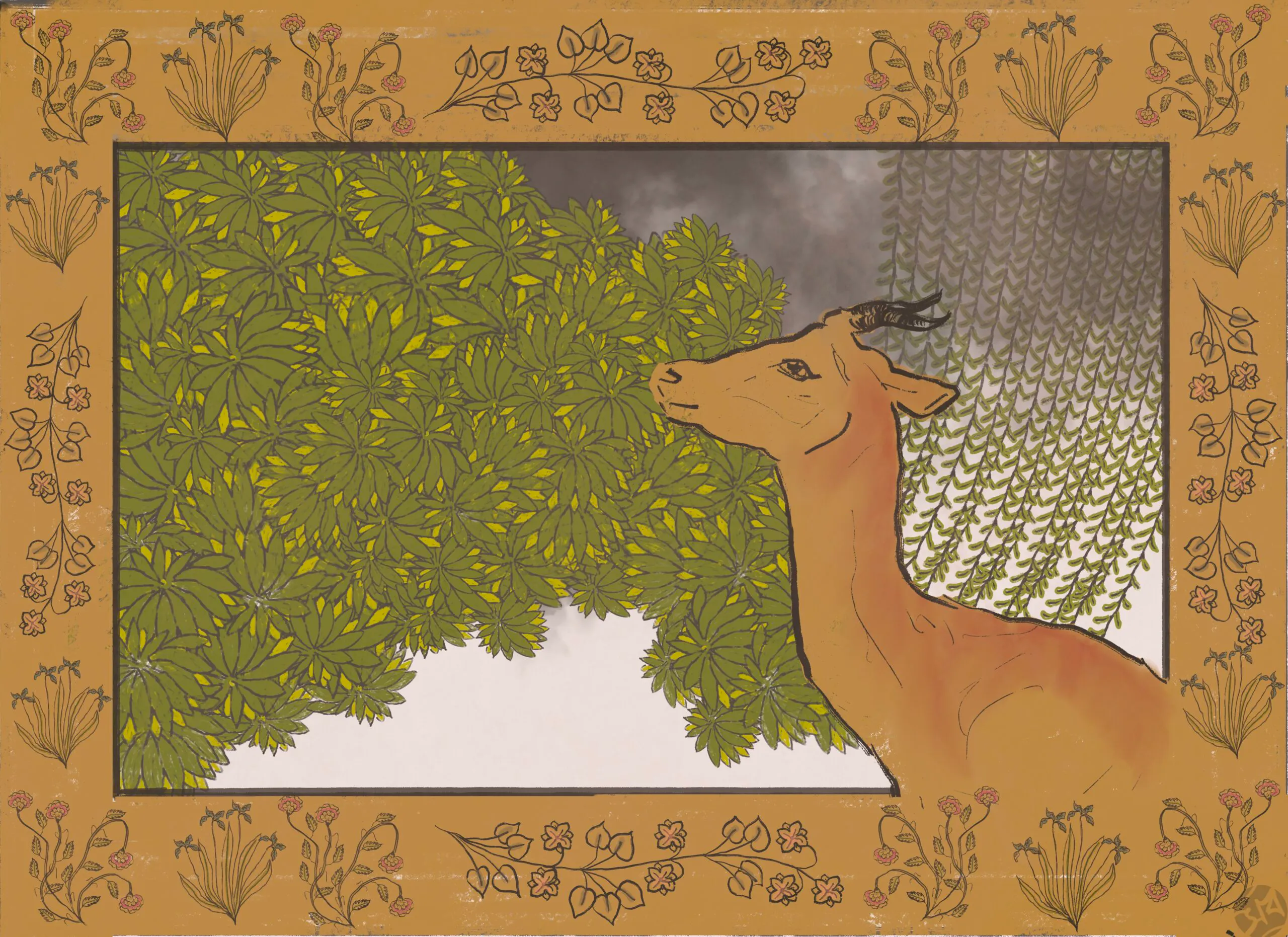
Manan Kapoor talks about the Ghazal, the medieval Arabic poetic form which travelled to the Indian subcontinent in the 12th century and flourished there ever since. He focuses on the work of Agha Shahid Ali, the Kashmiri-American poet who perfected the art of the ghazal in the English language. Kapoor’s biography of Shahid, A Map of Longings, was published earlier this year. Particular references are made to the poem “In Arabic” from Shahid’s collection Call me Ishmael Tonight, the ghazals sung by Begum Akhtar which greatly influenced Shahid’s work, and English ghazals written by poets like Adrienne Rich which he critiqued. Manan Kapoor is an Indian writer and translator. A Map of Longings: The Life and Works of Agha Shahid Ali (Vintage, Penguin Random House India) is his latest work. His debut novel The Lamentations of a Sombre Sky was shortlisted for Sahitya Akademi’s Yuva Puruskar 2017. In 2019, he was a writer-in-residence at Sangam House Writers’ Residency. His writings have appeared in The Caravan Magazine, Boston Review, The Hindu, Stockholm Review of Literature, Scroll, The Wire, and Firstpost among others. He lives in Chandigarh. Image: “Gazelle” © 2021 Saronik Bosu (The word ‘ghazal’ and ‘gazelle’ share a root in Arabic, the poetic form compared originally to the lament of a wounded gazelle). Music used for promotional material: “Raga Kirwani” on the Sarod by Ustad Ali Akbar Khan Learn more about your ad choices. Visit megaphone.fm/adchoices
Deindustrialization

Ep 57Deindustrialization
Gabriel Winant talks with Kim about the decline of the industrial working class and the rise of the health care industry. Gabriel is an assistant professor of History at the University of Chicago. His book, The Next Shift: The Fall of Industry and the Rise of Health Care in Rust Belt America, is recently out from Harvard University Press. You can read his recent article on the subject in The New York Times. The Next Shift focuses on the working class in the American context and Pittsburgh in particular. In the full version of our conversation, Gabriel recommended Aaron Benanav’s book Automation and the Future of Work (Verso 2020), for an argument about the larger global economic structures of deindustrialization. He also talks a bit about James Boggs, as someone who was well positioned to notice the effects of deindustrialization. We found this article about Boggs worth reading. The image for this episode is a photograph of the abandoned Detroit Public Schools Book Depository, taken by Thomas Hawk on 13 June 2010. The image is posted of Flickr under a creative commons attribution non-commercial license. Lauren Berlant describes gives this photograph as a bad image of neoliberalism, which allows our social theory to derive “its urgency and its reparative imaginary from spaces of catastrophe and risk where the exemplum represents structural failure” (“The Commons: Infrastructures for Troubling Times” Society and Space 34 no. 3 (2016) p.395). But I like it. Saronik modified the original image. Music used in promotional material: ‘Shadow of a Coal Mine’ by Linda Draper Learn more about your ad choices. Visit megaphone.fm/adchoices

Ep 56Decolonial Queerness
Sandeep Bakshi (@sandeepbak on Twitter) talks to Saronik about understanding queerness and its emancipatory politics through transnational solidarity building, the persistent inclusion of trans and queer epistemological frames in social justice movements, especially in the work done by the Decolonizing Sexualities Network. Sandeep explains this concept and the DSN’s objective by referring to the works of Maria Lugones, Sylvia Tamale and the Fallist movement, and Karma Chávez and Against Equality. Sandeep Bakshi researches on transnational queer and decolonial enunciation of knowledges. He received his PhD from the School of English, University of Leicester, UK, and is currently employed as an Associate Professor of Postcolonial and Queer Literatures at the University of Paris. He heads the “Gender and Sexuality Studies” research group and coordinates two research seminars, “Peripheral Knowledges” and “Empires, Souths, Sexualities,”. Co-editor of Decolonizing Sexualities: Transnational Perspectives, Critical Interventions (Oxford: Counterpress, 2016) and Decolonial Trajectories, special issue of Interventions (2020), he has published on queer and race problematics in postcolonial literatures and cultures. He is the founder and serves on the board of the Decolonizing Sexualities Network. Image: Cover of the book Decolonizing Sexualities: Transnational Perspectives, Critical Interventions Music used in promotional material: “Hear Me Out” by Ketsa Learn more about your ad choices. Visit megaphone.fm/adchoices
Decolonial Queerness
Racial Affect

Ep 55Racial Affect
Oishani Sengupta talks about the felt experiences of racism, especially as they are represented in Victorian literature and its contemporary readership, which is the subject of her research. The conversation ranges from the novels of H. Rider Haggard and Charles Dickens to the felt experience of caste, as analyzed in the work of scholars like Junaid Shaikh. Oishani Sengupta (@oishani on Twitter) is a PhD candidate at the University of Rochester exploring histories of racial affect and visual print culture in the nineteenth century British empire. Also the project coordinator of the William Blake Archive, she looks closely at racist illustration practices and their central role in colonial politics. Image: Cover of the first French edition of H. Rider Haggard’s King Solomon’s Mines Music used in promotional material: ‘Last Sigh’ by Holy Pain Learn more about your ad choices. Visit megaphone.fm/adchoices

Ep 54Modernization
Varsha Venkatasubramanian discusses the many trajectories of modernization as a theoretical concept. She focuses mainly on the history of development in the US and in India, through the cold war years and continuing to the present day. Varsha (@varsha_venkat_ on Twitter) is a graduate student focusing on the history of dams in the US and the World as it relates to foreign policy, policy history, environmental movements, and legal history. She is particularly interested in US-India relations and infrastrcuture projects during the 1950s to the 1980s. Image: Sardar Sarovar Dam, Gujarat, India. Music used in promotional material: ‘Warm is Near’ by Post Human Era Learn more about your ad choices. Visit megaphone.fm/adchoices
Modernization
Sexual Difference

Ep 53Sexual Difference
Emma Heaney talks about the social organization of the supposedly biologically derived terms of the sex binary into a hierarchy of persons and qualities. She speaks widely about the work that she and her colleagues are doing, drawing on a tradition of scholarship that includes the work of Luce Irigaray, Hortense Spillers, Cathy J. Cohen and others. Emma Heaney is a teacher, researcher, and writer living in Queens. Her first book, a study of the medicalization of trans femininity and the uptake of the diagnostic figure in works of twentieth-century literature and philosophy, is The New Woman: Literary Modernism, Queer Theory, and the Trans Feminine Allegory (Northwestern, 2017). Her forthcoming second book, Feminism Against Cisness, is an edited collection of essays by Trans Studies scholars who use anti-colonial, Black, and Marxist feminist methods to address the many legacies of the historical emergence of the idea that assigned sex determines sexed experience. Her introduction for that collection, entitled “Sexual Difference Without Cisness” provides the basis for this interview. Image: © 2021 Saronik Bosu Music used in promotional material: “Flow” by dustmotes Learn more about your ad choices. Visit megaphone.fm/adchoices

Ep 52Resonance
Kim speaks with Julie Beth Napolin about Resonance. Julie Beth’s book The Fact of Resonance: Modernist Acoustics and Narrative Form (Fordham UP, 2020) explores resonance and sound in modern literature. In the episode she references Jean-Luc Nancy’s book Listening (Fordham UP, 2007), Inayat Khan’s The Mysticism of Sound and Music (Shambala Publications, 1996), the music of Toru Takemitsu, and Damo Suzuki´s “sound carriers.” In our longer conversation she talked about Naomi Waltham-Smith’s new book, Shattering Biopolitics: Militant Listening and the Sound of Life (Fordham UP, 2021) Julie Beth is an Associate Professor of Digital Humanities at The New School. She also makes music under the name Meridians. You can listen on Sound Cloud! This week’s image is a simulation of interference between two sound waves in two-dimensions made by Ibrahim S. Souki, used under a Creative Commons Attribution Share Alike License, from Wikimedia Commons. Learn more about your ad choices. Visit megaphone.fm/adchoices