High Theory
215 episodes — Page 2 of 5

Ep 116Computer Graphics
In this episode of High Theory, Bernard Dionysius Geoghegan talks with us about computer graphics. Emerging from tools for sailing and warmaking, like sea charts and radar, modern computer graphics are technologies of mapping and managing risk. They seem intent on absorbing the human sensorium into the machine. In the episode Bernard refers to computer graphics as “techniques of addressing,” a term he attributes to Ranjodh Singh Dhaliwal. He also uses the term “operational images” which comes from the work of Harun Farocki, and talks about SAGE, the US Government’s Cold War era Semi-Automatic Ground Environment Air Defense System. Bernard references Paul Edward’s book A Vast Machine: Computer Models, Climate Data, and the Politics of Global Warming (MIT Press, 2013). He also mentions the German scholar Christoph Borbach who has written on auditory computer interfaces, and American disability studies scholar Mara Mills, who has written on the Deaf history of computing. He was kind enough to give us an extensive bibliography on this topic, which is posted below. Bernard Dionysius Geoghegan is a reader in the History and Theory of Digital Media at King’s College London. He has a brand new book out on the cybernetic history of French theory, called Code: From Information Theory to French Theory (Duke UP, 2023). Kim met him when he came to give a talk at the Stanford Humanities Center in January 2023. He wore denim and had a slightly manic affect. People came all the way from Berkeley to hear what he had to say, which is quite impressive in the Bay Area. This week’s image is a radar loop of the December 16 2007 Eastern North America winter storm, found on Wikimedia Commons. The loop runs from Saturday Morning at 7 AM (Dec 15) to Sunday Night at 7 PM (Dec 16). The image is in the public domain because it was made by someone who works for the National Weather Service. Learn more about your ad choices. Visit megaphone.fm/adchoices
Ep 115Reading
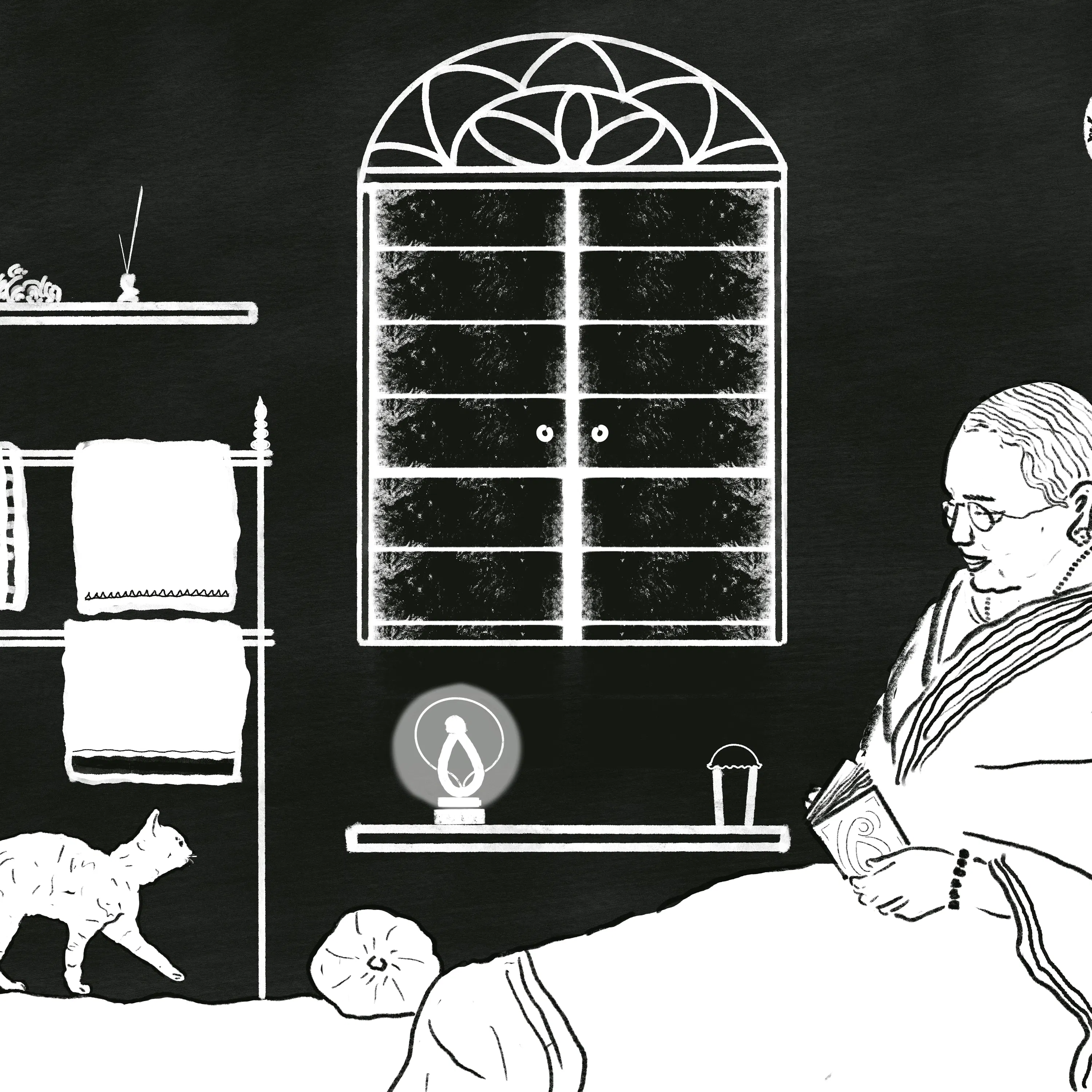
Swati Moitra explains how reading can be a subversive and even revolutionary act in certain socio-historical contexts. She draws especially from her own work in the history of women’s reading practices in nineteenth and early twentieth century India, in particular the region of Bengal. She talks about the dual indices of literacy and pleasure in her work, and its affiliations to fields like book history and print cultural studies. Swati Moitra (M.Phil., Ph.D.) is Assistant Professor at the Department of English at Gurudas College, University of Calcutta. Her areas of interest include book history and histories of readership. She is the recipient of the SHARP Research Development Grant for BIPOC Scholars 2022. Image: © 2023 Saronik Bosu Learn more about your ad choices. Visit megaphone.fm/adchoices

Ep 114The Cooperative Extension System
In this episode of High Theory, Karl Dudman tells us about the Cooperative Extension System. Formed in 1914 as an extension of the Land Grant University system in the United States, the Cooperative Extension System is an extraordinarily public model of scientific communication. There is an extension officer in every county of the US. The original goal was to transmit academic scientific knowledge on agriculture to America’s farmers, but the program’s remit has expanded over the past hundred years. And it varies widely from place to place. You might go to an extension office to test the soil of your rose bed, to find a food pantry, or attend a kids exercise class. You might also have a conversation about climate change. In the full version of our conversation, Karl discussed the National Extension Climate Initiative which aims to unite climate change education and research across the cooperative extension system and Christopher Henke’s book, Cultivating Science, Harvesting Power: Science and Industrial Agriculture in California (MIT Press, 2008). Karl Dudman is doctoral candidate at the University of Oxford’s Institute for Science, Innovation and Society and a fellow at the Harvard Kennedy School’s Program on Science Technology and Society. He does qualitative research on climate science in the US. His ongoing fieldwork, hosted by the North Carolina State Climate Office, examines how actors within climate science, coastal management and local politics navigate accelerating sea level rise in the context of widespread ambivalence towards the mainstream climate change narrative. Karl is also a photographer, and through his work explores the politics of competing cultural relationships with landscapes, and their subsequent representation. This week’s image is a photograph of two men in a field of tall grass taken November 11, 2008 by Dennis Pennington, Bioenergy Educator, Michigan State University Extension. Learn more about your ad choices. Visit megaphone.fm/adchoices
Ep 113ACLA 2023
This episode of High Theory is based upon a conference paper Saronik and Kim wrote for the American Comparative Literature Association Conference in 2023. It departs from our usual conversational style, in that we take turns reading sections of the paper aloud. But we could all do with a dose of formality, right? The paper we read is titled, “How Will Critique Save the World?: Popular Theory and Public Humanities” and it talks about the method wars on Twitter, the cameo appearance of Baudrillard’s Simulacra and Simulation in The Matrix, alt-right conspiracy theory, and the academic job market. For a full transcript of the episode, with references, see our website: hightheory.net/2023/03/19/acla2023/ The image accompanying this episode was made by Saronik Bosu. Don’t use it without asking him. Learn more about your ad choices. Visit megaphone.fm/adchoices
Ep 112Choice Architecture
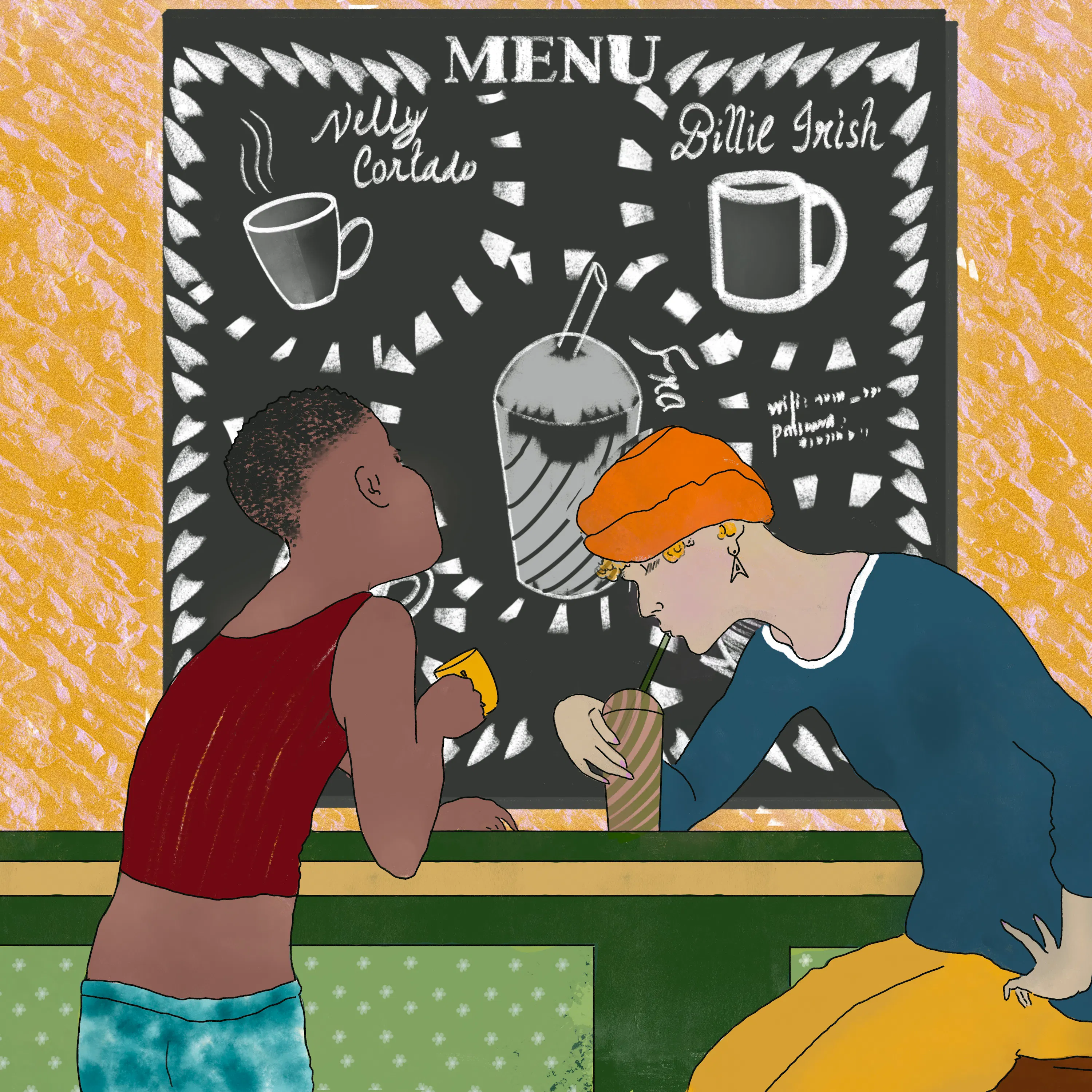
In this episode of High Theory, Eli Cook tells us about choice architecture. The term was invented by behavioral economists in 2008 who proposed it as a soft-power model of “libertarian paternalism” to influence consumer choice. Eli traces their concept through a twentieth-century history of structured choices, from personality tests and the five-star rating to the swipes and likes of platform capitalism. He shifts our attention from the rhetoric of consumer choice as freedom to the power of “choice architects” who determine the options for us. Eli takes the term “choice architecture” from Richard Thaler and Cass Sunstein’s book Nudge: Improving Decisions About Health, Wealth, and Happiness (Yale UP, 2008). He mentions the industrial psychologist Walter Dill Scott and the inventors of behavioral economics, Amos Tversky and Daniel Kahneman. Amusingly, there is a New Yorker article about Tversky and Kahneman written by Thaler and Sunstein, called “The Two Friends Who Changed How We Think About How We Think.” (New Yorker 7 Dec 2016). In the full version of our conversation, Eli referenced the work of Sophia Rosenfeld on the longue durée history of choice. Eli Cook is a historian of American capitalism. He works as a Senior Lecturer in History and as head of the American Studies Program at the University of Haifa in Israel. His first book The Pricing of Progress: Economic Indicators and the Capitalization of American Life was published by Harvard University Press in 2017. Last year, he was a fellow at the Stanford Humanities Center where he worked on his new book about choice architecture. Image: © 2023 Saronik Bosu Learn more about your ad choices. Visit megaphone.fm/adchoices

Ep 110Affective Masculinities
Amrita De talks about affective masculinities, aspirational linkages with dominant scripts of masculinities, socially organized. As she expands her work beyond her study of South Asian masculinities, she talks about how understanding and loosening these linkages entails crucial feminist work. She also talks about Shah Rukh Khan. Amrita De is a Postdoctoral fellow in the Center of Humanities and Information at Penn State University. Her research focuses on global south masculinity studies and affect theory. Her works have been published in NORMA, Boyhood Studies, Global Humanities and are forthcoming in other edited collections. She is also working her way through her first novel centered around contemporary Indian Masculinities. Image: © 2023 Saronik Bosu Learn more about your ad choices. Visit megaphone.fm/adchoices

Ep 110Index
In this episode of High Theory, Dennis Duncan tells us about the history of the index. At it’s simplest, an index is a table with columns that allow you to match sets of terms, most often topics and page numbers. Google is an index, as was the first bible concordance, completed in 1230 under the direction of a French Dominican scholar named Hugo de Saint-Cher. In the episode, Dennis quotes a line from Alexander Pope’s Dunciad: How index-learning turns no student pale. Yet holds the eel of science by the tail (book 1, lines 279-80) He also references Nicholas Carr’s article, “Is Google Making Us Stupid?” (The Atlantic, July/Aug 2008), and the book based upon it, The Shallows: What the Internet is Doing to Our Brains (Norton, 2011), both of which make an argument against shallow reading that Dennis argues goes all the way back to medieval critiques of the index. In the longer version of our conversation, we talked about Italo Calvino’s If On A Winter’s Night a Traveler. Dennis Duncan is a scholar of book history, translation, and avant-garde literature at the University College London. His book about the history of the index, Index: A Bookish Adventure from Medieval Manuscripts to the Digital Age was published in the US by Norton in 2022. The book includes two indices, once made by indexing software, and the other by Paula Clarke Bain. This week’s image is a portrait of Hugo de Saint-Cher, made by Tommaso da Modena. Image source: Wikimedia Commons. Full citation: Hugues de Saint-Cher († 1263), bibliste et théologien, Paris, Centre d’études du Saulchoir, Actes du colloque 13-15 mars 2000, Brepols, coll. « Bibliothèque d’histoire culturelle du Moyen Âge », n°1, Turnhout, 2004, 524 p., ISBN : 2-503-51721-8 Learn more about your ad choices. Visit megaphone.fm/adchoices

Ep 109Queer Space
In this episode of High Theory, Jack Jen Gieseking tells us about queer space. Queer geographies matter alongside queer temporalities. And it turns out that lesbian life in the 1950s cannot be generalized from the specific history of Buffalo, New York. In the episode they reference a number of scholarly books including J. Jack Halberstam, In a Queer Time and Place: Transgender Bodies, Subcultural Lives (NYU Press, 2005); Elizabeth Freeman, Time Binds: Queer Temporalities, Queer Histories (Duke UP, 2010); Elizabeth Lapovsky Kennedy and Madeline D. Davis, Boots of Leather, Slippers of Gold: The History of a Lesbian Community (Routledge, 1993); Mairead Sullivan, Lesbian Death: Desire and Danger between Feminist and Queer (Minnesota UP, 2022); Henri Lefebre, The Production of Space (La production de l'espace, Editions Anthropos, 1974, trans. Donald Nicholson-Smith, Blackwell, 1919). He also names a number of scholars, including the geographer Gill Valentine, the historian David Harvey, and cultural anthropologist Gayle Rubin, and the 1982 Barnard Conference on Sexuality. Jack Jen Gieseking is a Research Fellow at the Five College Women’s Studies Research Center. Their book A Queer New York: Geographies of Lesbians, Dykes, and Queers was published by NYU Press in 2020, and has a companion website called An Everyday Queer New York. They are working on a new book called Dyke Bars*: Queer Spaces for the End Times that uses the trans asterisk to invite consideration of queer spaces not historically claimed as dyke bars. Image: “Last Lesbian Bars in New York City” © 2023 Saronik Bosu Learn more about your ad choices. Visit megaphone.fm/adchoices

Ep 108Near Death Experience
In this episode of High Theory, Laura Wittman tells us about near death experiences. The central feature of these experiences is a vision and a story, which it turns out are a lot stranger than the “best seller” version. These narrative encounters with death often inspire people to make dramatic moves in search of a more meaningful life, from newfound religious faith or activist commitments to career changes and divorce. In the episode, she talks about the changes in what makes a good death, from the nineteenth to the twentieth centuries, and how the narratives of near death experiences reflect our desires for older forms of sociality around life’s passing. She references Oliver Sacks’s book Hallucinations (Random House, 2012) in regards to the visions patients experience in hospitals, and their desire for a witness in the moments of lucidity that often occur before death. Laura Wittman is an associate professor of French and Italian at Stanford University. She teaches nineteenth and twentieth century literature, and her research focuses on what happens to religious experience in the so-called secular modern age. Her book, The Tomb of the Unknown Soldier, Modern Mourning, and the Reinvention of the Mystical Body (Toronto UP, 2011) has recently been translated into Italian as Il Milite ignoto. Storia e Mito. (LEG, 2021) She also coordinates the Medical Humanities Working Group at the Stanford Humanities Center. This week’s image is a photograph of the Ellen Browning Scripps Memorial Pier in La Jolla, California, taken by Kim Adams in November 2022. On the top of the pier is a research site for the Scripps Institution of Oceanography, UC San Diego. Learn more about your ad choices. Visit megaphone.fm/adchoices
Ep 107Criticism Amplified: New Media and the Podcast Form
This episode is a recording of a short paper presented by Kim and Saronik in the panel “Literary Criticism: New Platforms” organized by Anna Kornbluh at the 2023 Convention of the Modern Language Association. In the paper, they reflect on the nature of the voice in the humanities and the role of the humanities podcast inside and outside institutions. Image: © 2023 Saronik Bosu Learn more about your ad choices. Visit megaphone.fm/adchoices
Ep 106Ethical AI
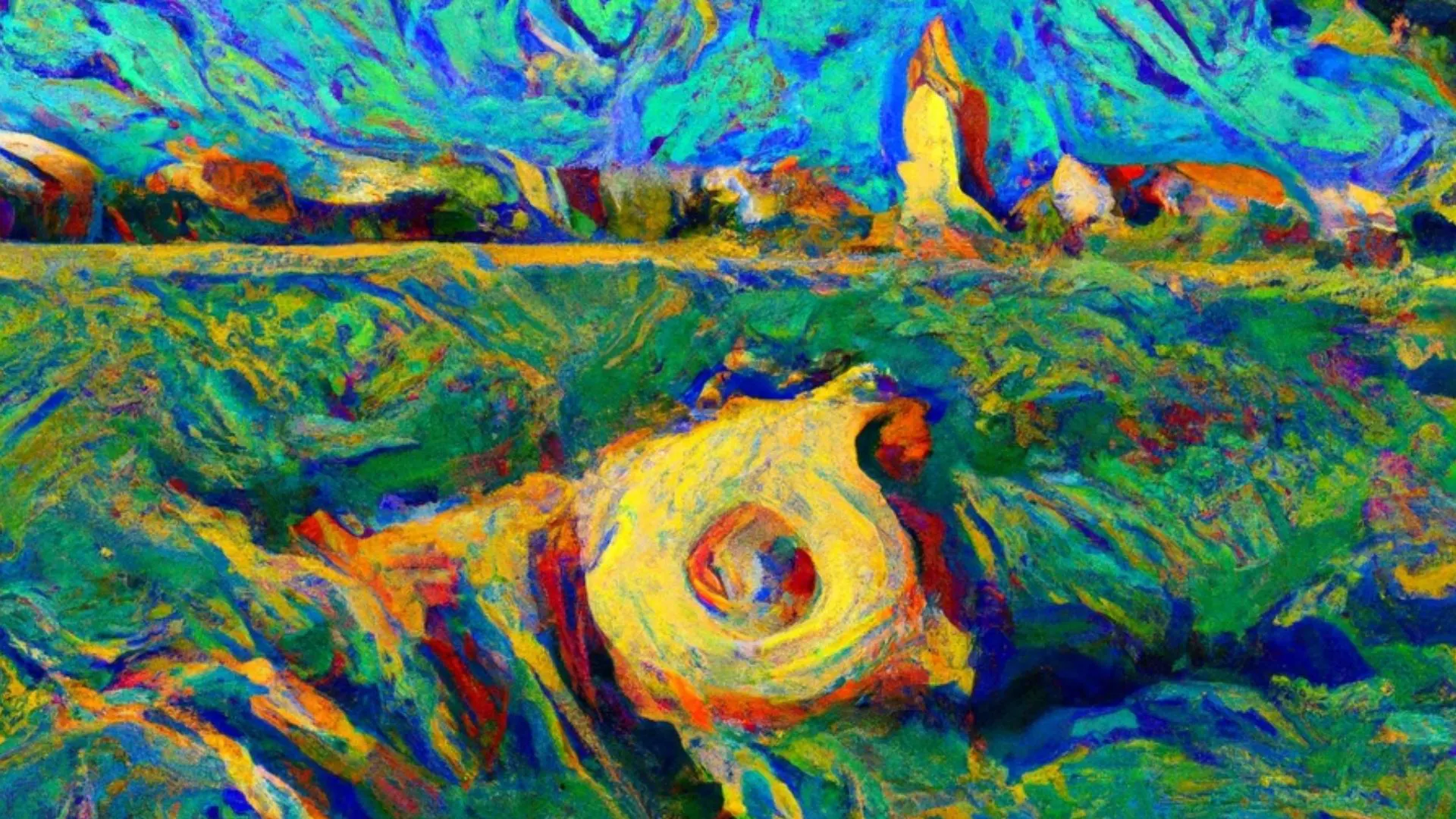
In this episode of High Theory, Alex Hanna talks with Nathan Kim about Ethical AI. Their conversation is part of our High Theory in STEM series, which tackles topics in science, technology, engineering, and medicine from a highly theoretical perspective. In this episode, Alex helps us think about the complicated recipes we call “artificial intelligence” and what we mean when we ask our technologies to be ethical. In the episode Alex references an article by Emily Tucker, called “Artifice and Intelligence,” (Tech Policy Press, 17 March 2022) which suggests we should stop using terms like “artificial intelligence” and an opinion piece in the Washington Post, on a similar theme, by Timnit Gebru and Margaret Mitchell, “We warned Google that people might believe AI was sentient. Now it’s happening” (17 June 2022). She also mentions a claim by Blake Lemoine that Google’s LaMDA (Language Model for Dialogue Applications) is sentient. We’ll leave that one to your googling, if not your judgment. Dr. Alex Hanna is Director of Research at the Distributed AI Research Institute (DAIR). A sociologist by training, her work centers on the data used in new computational technologies, and the ways in which these data exacerbate racial, gender, and class inequality. You can read her recent article, “AI Ethics Are in Danger. Funding Independent Research Could Help,” co-authored with Dylan Baker in the Stanford Social Innovation Review, and learn more about her work on her website. This week’s image was produced by DALL-E 2 responding to the prompt: "generate the image of an artificial intelligence entity, deciding to protect shareholder interests over public good, in the style of Van Gogh." Learn more about your ad choices. Visit megaphone.fm/adchoices
Ep 105Neurasthenia
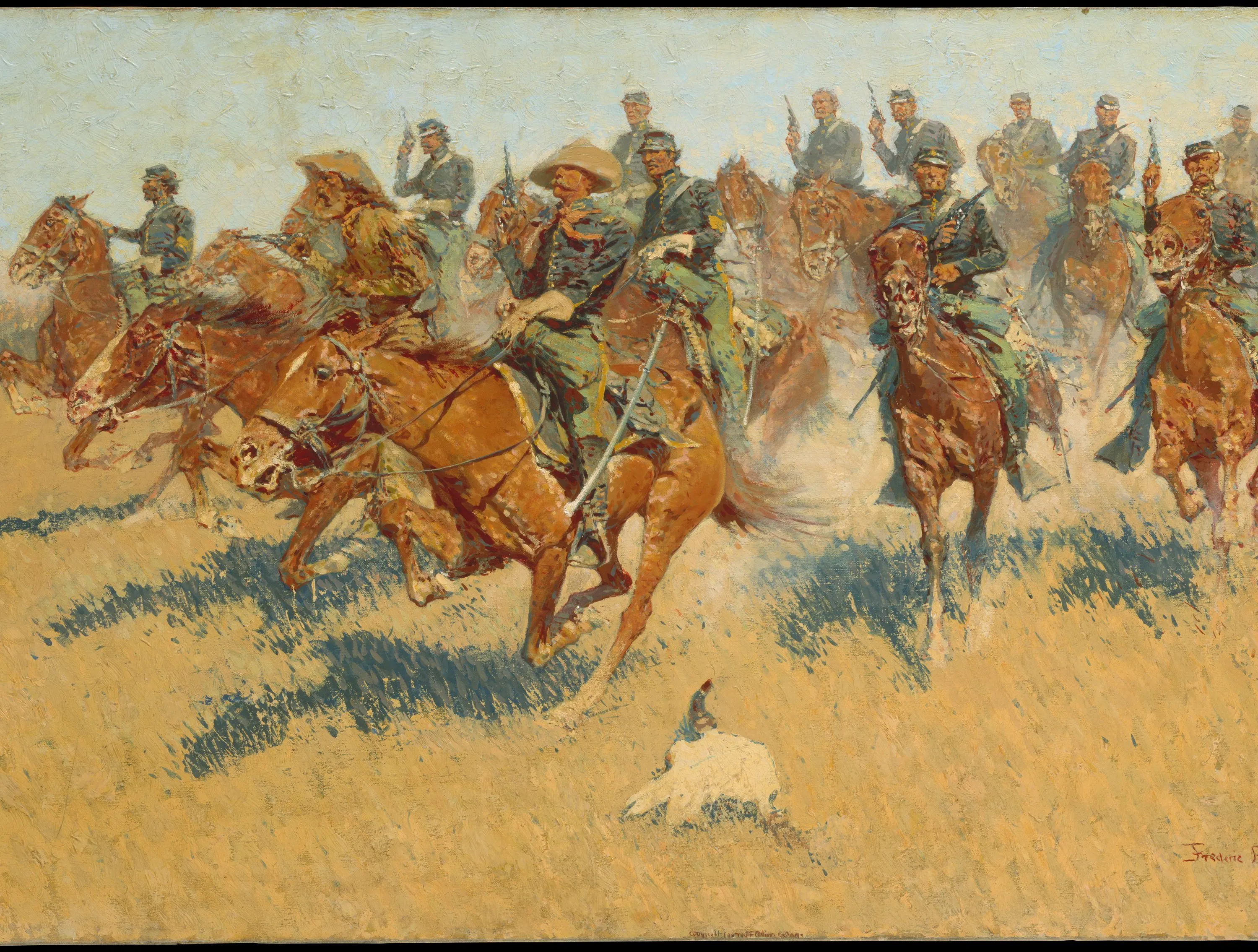
In this episode of High Theory, Kim talks with Saronik about neurasthenia. A disease that no longer exists, neurasthenia was a nineteenth century American epidemic of energy depletion. Thinking about this diagnosis can help us understand the social functions of medical knowledge, and how that knowledge changes over time. In the episode Kim discusses two nineteenth-century medical texts: American Nervousness: It’s Causes and Consequences (New York: Putnam, 1881) by George Miller Beard, which popularized the diagnosis, and Fat and Blood: And How to Make Them (Philadelphia: J.B. Lippincott & Co., 1877), by S. Weir Mitchell, which popularized the “rest cure” treatment. She also references three scholarly texts: Tom Lutz’s American Nervousness, 1903: An Anecdotal History (Cornell UP, 1992); Carolyn Tomas de la Pena’s The Body Electric: How Strange Machines Built the Modern American (NYU Press, 2003); and Anson Rabinbach’s The Human Motor: Energy, Fatigue, and the Origins of Modernity (UC Press, 1992). Kim Adams is one of the co-hosts of High Theory. She works as a postdoctoral fellow at the Pennsylvania State University Humanities Institute, where she is writing a book about electricity and the body in American medicine and literature. She also runs a working group on pain management as a cultural process, called Politics of the Prescription Pad. She lives in Rhode Island and has a very large dog named Tag. This week’s image is a 1907 painting titled “On the Southern Plain” by Frederic Remington. The painting shows soldiers on horseback in the American West. Remington was diagnosed with neurasthenia and treated with the “west cure” (discussed in the episode) by S. Weir Mitchell himself. Learn more about your ad choices. Visit megaphone.fm/adchoices

Ep 104Off-Shore Aesthetics
Sritama Chatterjee talks about a model of literary criticism that she developed in the process of writing her new essay on shipbreaking in Bangladesh. It is a form of materialist understanding for texts, places, and geographies together, taking into account particular signifiers of a place and looking at correspondent literary responses. Sritama is a literary and cultural theorist of the Indian Ocean World, in the Literature program at the Dietrich School of Arts and sciences, University of Pittsburgh. Her dissertation project titled, “Ordinary Environments and Aesthetics in Contemporary Indian Ocean Archipelagic Writing” has been awarded an Andrew Mellon Pre-Doctoral Fellowship from her graduate school for outstanding research and scholarly excellence. Her work on the Indian Ocean archipelagos also takes the shape of a collaborative public-facing, community project Delta Lives, which platforms communities in Sundarbans telling their stories. As part of her commitment to rethinking environmental humanities pedagogy, she has edited a cluster on “Water Pedagogies: From the Academy and Beyond” published by NICHE Canada which brings together a set of eleven articles from scholars and activists reflecting on water pedagogy. Learn more about your ad choices. Visit megaphone.fm/adchoices

Ep 103Civil Disobedience
Eraldo Souza dos Santos talks about the invention of civil disobedience as a form of political action around the world, and the need for its redefinition to describe activism present and future. In the episode, he references John Rawls’s classic definition from A Theory of Justice (Harvard UP, 1971) and Erin Pineda’s new book, Seeing Like an Activist: Civil Disobedience and the Civil Rights Movement (Oxford UP, 2021). Eraldo Souza dos Santos is a philosopher and historian of political thought whose research explores how political concepts have come to shape political discourse and political practice, and how political actors have come to contest the meaning of these concepts in turn. In his current project, he traces the global history of the idea of civil disobedience. He is currently a Ph.D. candidate in Philosophy at Panthéon-Sorbonne University. He has been the recipient of grants and fellowships from the Académie française, the Maison française d'Oxford, the Leuven Institute for Advanced Studies, the Munich Centre for Global History, the Friedrich Nietzsche College of the Klassik Stiftung Weimar, the French-Dutch Network for Higher Education and Research, and the Coordination for the Improvement of Higher Education Personnel, among others. Image: Bas-Relief of the Salt March led by M.K. Gandhi in March-April 1930, photograph by Nevil Zaveri, available here under Creative Commons. Learn more about your ad choices. Visit megaphone.fm/adchoices

Ep 102Probability
In this episode of High Theory, Justin Joque talks with Júlia Irion Martins about Probability. This conversation is part of our High Theory in STEM series, which tackles topics in science, technology, engineering, and medicine from a highly theoretical perspective. If you want to learn more about the philosophical, technical, and economic implications of probability, check out Justin’s new book, Revolutionary Mathematics: Artificial Intelligence, Statistics, and the Logic of Capitalism (Verso, 2022). Justin Joque is a visualization librarian at the University of Michigan, Ann Arbor. Justin’s research focuses on philosophy, media, and technology and he is also the author of Deconstruction Machines: Writing in the Age of Cyberwar (University of Minnesota Press, 2018). Image: © 2022 Saronik Bosu Learn more about your ad choices. Visit megaphone.fm/adchoices

Ep 102Melancholy
In this episode of High Theory, Laura Stokes talks about melancholy. One of the four humors in ancient humoral medicine, melancholy, or black bile, is a fluid substance and spiritual principle that was thought to move within the human body. A proper quantity of black bile allows one to be calm and contemplative, thoughtful and withdrawn. A superabundance produces sadness, indigestion, and a host of other evils. Research is a melancholy practice; scholars are prone to melancholic dispositions. Throughout the episode Laura refers to Robert Burton’s Anatomy of Melancholy, an early modern text that describes the sources, symptoms, and treatments for a surplus of melancholy, in a rather meandering way, with an entire separate disquisition on love melancholy. It was published in multiple versions over Burton’s lifetime – people usually cite the 1638 edition. Laura Stokes is an associate professor of history at Stanford University where they study Early Modern Europe. Their first book Demons of Urban Reform: Early European Witch Trials and Criminal Justice, 1430-1530 (Palgrave Macmillan, 2011) examines the origins of witchcraft prosecution in fifteenth-century Europe against the backdrop of a general rise in the prosecution of crime and other measures of social control. They are currently working on a microhistory of a murder conspiracy within the Basel butchers’ guild at the turn of the sixteenth century, which is really about Early Modern economic cultures. And they run pretty amazing summer reading groups. Image: © 2022 Saronik Bosu Learn more about your ad choices. Visit megaphone.fm/adchoices
Ep 101100th Episode: Public Humanities
Saronik Bosu talks about humanities work engaging diverse communities and publics, misconceptions about what the ‘public’ in public humanities might mean as well as the recent attention paid to it by academic departments. In a longer version of the conversation, some individual instances of various digital humanities and archival projects are discussed. Here he speaks mainly from the perspective of his own work as a humanities podcaster and creator of humanities programming. Saronik Bosu is a doctoral candidate at the Department of English, New York University. He researches literary rhetoric and economic thought in contexts of decolonization. He is co-host of this podcast and the 2022-23 NYU-Mellon Public Humanities Doctoral Fellow. His work has appeared on journals like Interventions and Movable Type, as well as Avidly and Post45. He also makes art and works together its integration with scholarship. Image: © 2022 Saronik Bosu Learn more about your ad choices. Visit megaphone.fm/adchoices
Ep 100Red Cat
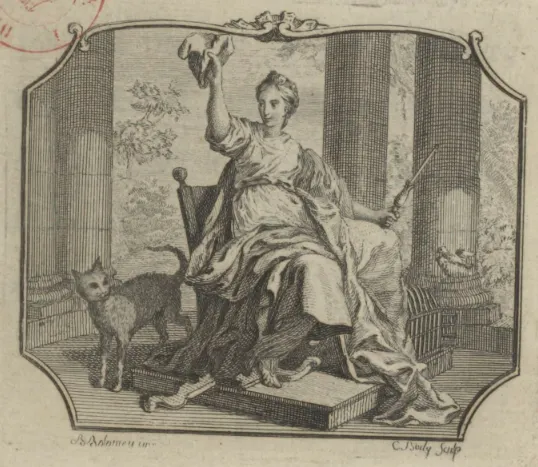
In this episode of High Theory, Leigh Claire La Berge talks about red cats: communist cats, revolutionary tigers, radical felines of all stripes. The red cat is a provocation, and an invitation to think differently about economic history. Leigh Claire continues our spooky theory of cat concepts for Halloween 2022. Her book Marx for Cats: A Radical Bestiary will be published by Duke University Press this coming summer. It takes seriously the premise that you can tell the history of capitalism through the figure of the cat. As a bestiary, it has a hundred pictures of cats, from a vast archive that spans the ninth century to the present. It began as a series of filmed conversations with cats on Marxist theory. You can watch them at marxforcats.com In the episode she references The Social Contract by Jean Jacques Rousseau. Each of the two cover images from the initial publication depict cats. One of them forms the cover image for this episode. In the longer conversation, she referenced Kate Evans’s Red Rosa: A Graphic Biography of Rosa Luxemburg (Verso 2015) and Drew Pendergrass and Troy Vettese’s Half-Earth Socialism: A Plan to Save the Future from Extinction, Climate Change and Pandemics (Verso, 2022). Leigh Claire La Berge is an Associate Professor of English at BMCC CUNY, where she studies the intersection of contemporary cultural production and economic forms. Her prior books include Scandals and Abstraction: Financial Fiction of the Long 1980s (Oxford, 2014) and Wages Against Artwork: Decommodified Labor and the Claims of Socially Engaged Art (Duke, 2019). Learn more about your ad choices. Visit megaphone.fm/adchoices
Ep 21Halloween Special: Alice Walker’s Cat
Saronik tells Kim about Alice Walker’s book Anything We Love Can Be Saved, where she talks about her many cats over the years, and how they represented her connection with the cosmos. Image: “Rescued from the rough streets of Prospect Lefferts Gardens, Princess Marmalade earned her PhD in Meowological Studies in 2019, with an advanced certificate in acritical napping.” Learn more about your ad choices. Visit megaphone.fm/adchoices
Ep 20Halloween Special: Jacques Derrida’s Cat
Saronik talks with Kim about Jacques Derrida’s cat. Derrida writes about his cat, who makes him rather anxious, in “The Animal That Therefore I Am (More to Follow)” trans. David Wills, Critical Inquiry 28, no. 2 (Winter 2002): 369-418. https://www.jstor.org/stable/1344276 Image: “Beatrix or Bea or BeaBea is a tiny cat living her tiny cat life.” Learn more about your ad choices. Visit megaphone.fm/adchoices
Ep 19Halloween Special: Schrodinger’s Cat Redux
Kim talks with Gina Dominick about Ursula Le Guin’s short story “Schrödinger’s Cat” and the philosophical stakes of Schrödinger’s thought experiment. Le Guin’s story was published in her collection, The Compass Rose (Harper Collins, 1982). There are many PDFs of it scattered across the internet. Gina mentions Jacques Derrida’s writing on “Plato’s Pharmacy” in Dissemination, trans. Barbara Johnson (Chicago UP, 1981). Much the same is true of the PDF scattering here. Gina Dominick is a medievalist, anti-capitalist rebel, and co-conspirator in the original high theory. She is a PhD candidate in the Department of English at NYU, who teaches high school philosophy and spent Halloween afternoon re-caulking her tub. She knows way more about Adorno than Kim does. By far. Image: “Leo was rescued off the streets of Harlem 3.5 years ago and has lived comfortably in a town house with two humans ever since.” Learn more about your ad choices. Visit megaphone.fm/adchoices
Ep 18Halloween Special: Schrodinger’s Cat
Kim talks with George Gibson about Schrödinger’s cat. This cat is a thought experiment proposed by Erwin Schrödinger, and taken up in correspondence with Albert Einstein, in the 1930s. Schrödinger’s original paper on the subject, “Die gegenwärtige Situation in der Quantenmechanik” (Naturwissenschaften 23 no. 48 (November 1935): 807–812) doi: 10.1007/BF01491891 was translated by John D. Trimmer and published as “The Present Situation in Quantum Mechanics: A Translation of Schrödinger’s ‘Cat Paradox’ Paper.” (Proceedings of the American Philosophical Society 124, No. 5 (Oct. 1980): 323-338) <https://www.jstor.org/stable/986572>. Schrödinger presents the cat as something of a joke. George Gibson is a professor of physics at the University of Connecticut and an excellent pianist. Image: “Leo was rescued off the streets of Harlem 3.5 years ago and has lived comfortably in a town house with two humans ever since.” Learn more about your ad choices. Visit megaphone.fm/adchoices
Ep 17Halloween Special: Michel de Montaigne’s Cat
In part one of our Halloween Special on Cats, Kim talks with John Guilliory about Montaigne’s essay “An Apology for Raymond Sebond.” Montaigne asks us: “When I play with my cat, how do I know that she is not passing time with me rather than I with her?” John Guillory is a professor of English at New York University. He is a scholar of Renaissance literature, who is known for his work on why we read what we read, in Cultural Capital: The Problem of Literary Canon Formation (University of Chicago Press: 1993). Image: “Lyra is half-seductress, half-glutton, all puss.” Learn more about your ad choices. Visit megaphone.fm/adchoices

Ep 99On Not Knowing
This episode of High Theory is an edited recording of a book launch event with Emily Ogden for her new book On Not Knowing: How to Love and Other Essays (U Chicago Press, 2022). The online event took place on Thursday 7/14/22 at 1pm ET. On Not Knowing is a suite of personal essays on the value of not knowing. Each begins with the phrase “How to” – “How to Catch a Minnow”; “How to Give Birth”; “How to Elude Your Captors.” Rather than the defensiveness of willful ignorance, this collection celebrates the defenselessness of not knowing yet—possibly of not knowing ever. Ultimately, this book shows how resisting the temptation of knowingness and embracing the position of not knowing becomes a form of love. In the episode she talks about the psychoanalyst D.W. Winnicott, David Russell’s book Tact: Aesthetic Liberalism and the Essay Form in Nineteenth-Century Britain (Princeton UP, 2019), Elizabeth Hardwick’s Sleepless Nights, Brian Blanchfield’s Proxies (Nightboat Books, 2016), and the biblical Book of Revelations. The image for this episode was made by Saronik Bosu. Learn more about your ad choices. Visit megaphone.fm/adchoices

Ep 98Standpoint Theory
Soham Sen talks about standpoint theory, a method of understanding the ways in which individual and collective experience influence public discourses. He begins from its origins in the civil rights movement and in the innovations of feminist thought, and follows it up with a discussion of its efficacy in understanding contemporary media. Soham Sen is pursuing his Masters in the Department of Communication Studies and is the Assistant Course Director of Public Speaking at the College of Media & Communication. His area of research includes border rhetoric and negotiation of immigrant identity , postcolonialism, and performance studies. Image: © 2022 Saronik Bosu Learn more about your ad choices. Visit megaphone.fm/adchoices

Ep 97Digital Lethargy
In this episode of High Theory, Tung-Hui Hu talks with Júlia Irion Martins about Digital Lethargy, as part of our High Theory in STEM series. As a modern ailment, digital lethargy is a societal pathology, like earlier forms of acedia, otium, and neurasthenia, but also a disease of performing selfhood within the disposable identities of contemporary, digital service work. In this episode, Tung-Hui Hu makes the argument that digital lethargy helps us turn away from the demand to constantly “be ourselves” and see the potential of quieter, more ordinary forms of survival in the digital age such as collective inaction. In the episode he discusses Heike Geissler’s Seasonal Associate (Semiotexte/Native Agents, 2018, trans. Katy Derbyshire). He also references the film Sleeping Beauty (dir. Julia Leigh, 2011), Douglas A. Blackmon’s Slavery by Another Name: The Re-Enslavement of Black Americans from the Civil War to World War II (Anchor, 2008), Heike Geissler’s Seasonal Associate (Semiotexte/Native Agents, 2018, trans. Katy Derbyshire), and Cathy Park Hong’s Minor Feelings: An Asian American Reckoning (Penguin Random House, 2020). Other mentions include the artist Aria Dean and scholar Achille Mbembe. Tung-Hui Hu is a poet and scholar. His new website has the best domain ending: tunghui.hu He is a 2022-23 Rome Prize Fellow in Literature at the American Academy in Rome and an associate professor of English at the University of Michigan. His book on this topic, Digital Lethargy: Dispatches from an Age of Disconnection (MIT Press, 2022), will be published on October 4 This week’s image was made by Saronik Bosu. Learn more about your ad choices. Visit megaphone.fm/adchoices

Ep 96Echo
In this episode of High Theory, Amit Pinchevski tells us about echoes. An echo is a sonic reflection of an emission bouncing back to its origin, which if delayed long enough sounds like a response. The echo of one's voice is constitutively not one's voice, and therefore gives an uncanny impression. Amit talks about the myths, metaphors, and materialities of echoes, the subject of his recent book. Amit Pinchevski is Associate Professor in the Department of Communication and Journalism at the Hebrew University of Jerusalem. He is the author of By Way of Interruption: Levinas and the Ethics of Communication (Duquesne University Press, 2005) and Transmitted Wounds: Media and the Mediation of Trauma (Oxford University Press, 2019), and Echo (MIT Press, 2022). Image: Echo Wall, Temple of Heaven, Beijing, 1987 by Nathan Hughes Hamilton, the original available here. Learn more about your ad choices. Visit megaphone.fm/adchoices

Ep 95Finding Your Purpose
This episode is the edited version of a live event held on June 17 2022 to celebrate the launch of Finding Your Purpose: a Higher Calling Workbook for Justice-Oriented Scholars in an Unjust World. Higher Calling is a project for everyone who decided to become a scholar because they believed in the mission of higher education, and specifically, for everyone who saw participating in and working for higher education as a way to turn the pursuit of justice into a career. It aims to help you understand how to better align a career in academia with your sense of purpose; how to recognize when your purposes are no longer served by academia; how to pursue scholarly purpose outside of an academic career; and when and how to fight back against the broken system which is higher education in the United States. At times, one may wonder if the compromises are too great, the labor conditions untenable, or the barriers to doing meaningful work too high. This project aims to help you navigate these moments alone and in community through essays, exercises, and rituals. You can download the workbook here. Speakers: Hannah Alpert-Abrams organizes the Visionary Futures Collective, and writes about labor, technology, and higher education. Matt Cohen is a professor of English and scholar of Early American literature at the University of Nebraska, Lincoln. Sonya Donaldson is a professor of English and scholar of Africana studies at New Jersey City University. Quinn Dombrowski is an academic technology specialist and digital humanist at Stanford University. Carter Hogan is a writer and new trans folk musician based in Austin, Texas. Image: © 2022 Saronik Bosu Learn more about your ad choices. Visit megaphone.fm/adchoices

Ep 94Neoliberalism
In this episode, Troy Vettese talks with us about neoliberalism. It turns out the neoliberals aren’t actually a secret cabal of dastardly villains, but a group of right wing public intellectuals who want to be taken seriously by the academic establishment, and who have been remarkably successful in reshaping the world in their image. In the episode, Troy references the work of Quinn Slobodian, Philip Mirowski, and Dieter Plehwe on the history of neoliberalism. They have written a book together on the Nine Lives of Neoliberalism (Verso, 2020). He also points out that the Mont Pelerin Society, the “secret society” of the neoliberals, which isn’t so secret at all, has a website: www.montpelerin.org Troy recently co-authored a book with Drew Pendergrass called Half-Earth Socialism: A Plan to Save the Future from Extinction, Climate Change and Pandemics (Verso, 2022). They also made a game, in collaboration with some super cool game designers, where you can make your own plan to avoid ecological catastrophe. You can find it at play.half.earth. Eco-Marxists are a rare breed. Troy Vettese is an environmental historian, who writes about animal studies and energy history in addition to penning proposals to save the world. He received his PhD in 2019 from NYU and is currently a Max Weber Postdoctoral Fellow at the European University Institute. He also has very curly hair. This episode’s image is a diagram in ISOTYPE, a picture language popularized by a socialist planner named Otto Neurath, who appears in the book and the episode. It is taken from a statistical world atlas made by Neurath, held by the David Rumsey Map Collection, David Rumsey Map Center, Stanford Libraries, and available in a digital form through archive.org. Learn more about your ad choices. Visit megaphone.fm/adchoices

Ep 93Property Technology
In this episode of High Theory, Erin McElroy talks with Nathan Kim about Property Technology. This is the first episode in the High Theory in STEM series, that tackles topics in science, technology, engineering, and medicine from a highly theoretical perspective. Not only is “property technology” a term for digital tools and other methods used by landlords to track and dispossess tenants, but property itself is a technology. In the episode, Nathan references Erin’s article “Property as Technology,” in which they write that "property itself has long served as a technology of racial dispossession, constituting a palimpsest for the contemporary gentrifying moment." You can read the whole article here: McElroy, Erin. "Property as technology: temporal entanglements of race, space, and displacement." City 24, no. 1-2 (2020): 112-129. <https://www.tandfonline.com/doi/abs/10.1080/13604813.2020.1739910> Erin McElroy is an assistant professor in American Studies at UT Austin, a co-founder of the Anti-Eviction Mapping Project, and an editor of the Radical Housing Journal. They are fighting the good fight. We hope you do too. This week’s image was made by Saronik Bosu for this episode. Learn more about your ad choices. Visit megaphone.fm/adchoices

Ep 92Reality TV
In this episode of High Theory, Olivia Stowell speaks with Saronik about Reality TV. In the episode she talks about the genesis of the genre in Candid Camera, An American Family, COPS and America’s Most Wanted, before the watershed moment of The Real World in the 1990s. She references the work of June Deery, and Pier Dominguez on the commercial realism and affective economies of reality tv, and Susan Douglass’s article “Jersey Shore: Ironic Viewing.” She reminds us that Reality TV dramatizes the life of the neoliberal subject under surveillance, and explicates our “trashy” desires. Olivia Stowell is a Ph.D. student in the Department of Communication at the University of Michigan, where she studies the intersections of race, genre & narrative, food, and temporality in contemporary popular culture. Her scholarship has appeared or is forthcoming in Television & New Media and New Review of Film & Television, and her public writing has appeared in Post45 Contemporaries, Novel Dialogue, Avidly: A Channel of the L.A. Review of Books, and elsewhere. The image for this episode was made by Saronik Bosu. Learn more about your ad choices. Visit megaphone.fm/adchoices

Ep 91Normalization
In this episode of High Theory, Gëzim Visoka and Nicolas Lemay-Hebert tell us about normalization in international relations. Their research applies Foucault’s social theories of the normal and abnormal to the objects of political science: states, international organizations, and practices of intervention. In the episode (and in their book) Gëzim and Nicolas reference Foucault’s Lectures at the College de France on the Abnormal (printed in English by Verso and Macmillan). They discuss three exemplary figures from Foucault’s work on the abnormal: the monster, the incorrigible, and the onanist. Each one has a corresponding figure in international politics. Their new book Normalization in World Politics is available as an open access text from Michigan University Press. That means you can read it for free! Check it out, and learn all about the ways we produce, impose, and maintain normal and abnormal affairs in the international order. Gëzim Visoka is an Associate Professor of Peace and Conflict Studies at Dublin City University, whose research focuses on peacebuilding and statebuilding, transitional justice, global governance, foreign policy, and diplomatic recognition. Nicolas Lemay-Hébert is an Associate Professor of International Relations at the Australian National University. He works on interventions: local resistance to political interventions, the political economy of interventions, and mapping political interventions. This week’s image is a 1689 world map, Nova totius terrarum orbis tabula Amstelodami, ex officina G. a Schagen (1682), t'Amsterdam Gedruckt by G. van Schagen, by de Nieuwe Haerlemmer Sluys. It was originally made in using copper engraving, then much later digitized and made available to the public on Wikimedia Commons. Learn more about your ad choices. Visit megaphone.fm/adchoices

Ep 90Environmental Catastrophe
In this episode John Yargo speaks with Kim about Environmental Catastrophe. In the episode John quotes Hannah Arendt and N.K. Jemisin, discusses a Shakespeare play and a 17th century Peruvian painting, and optimistically suggests that environmental catastrophe will save us. He references the work of many scholars in the field of environmental humanities, including Geoffrey Parker and Dagomar Degroot on the Little Ice Age in Early Modern Europe, Gerard Passannante’s work on Catastrophizing, and Gavin Bailey on the Andean Baroque. He also talks about Amitav Ghosh’s recent work The Great Derangement: Climate Change and the Unthinkable (UChicago Press, 2016) and Rebecca Solnit’s A Paradise Built in Hell (Penguin Random House, 2010). In the longer version of the conversation, John told Kim about how he teaches the literature of catastrophe in reverse, starting with the present and working backward, to upset teleological readings of cultural history. John Yargo is Visiting Assistant Professor of English at Boston College, having recently received his Ph.D. degree in English literature at the University of Massachusetts Amherst. He researches literary representations of environmental catastrophe, the subject of his dissertation titled Saturnine Ecologies: Environmental Catastrophe in the Early Modern World, 1542-1688. He is also a host for the New Books in Literary Studies, where he discusses recent scholarship in early modern studies, ecocriticism, and critical race studies. The image for this week’s episode is Leonardo DaVinci’s drawing “A deluge” c. 1517-18, held by the Royal Collection Trust. You can read more about the painting in an “Anatomy of an Artwork” feature written by Skye Sherwin on 8 Feb 2019 in The Guardian. Learn more about your ad choices. Visit megaphone.fm/adchoices
Ep 89Birthdays
We return after our four-month relaunch with an episode on Birthdays, variously interpreted. The reason? It’s the second birthday of High Theory Podcast! (And it’s also the shared birthday of its two hosts). Joining us are our brilliant collaborators, Julia and Nathan. The four of us talk about our birthdays, what they actually celebrate, their relationship with the stars, and what they have to do with the fetish for newness and the good and the bad of that relationship. Help us ring in a new year of High Theory Podcast with the messy conversation we were born for! Júlia Irion Martins is a doctoral candidate in Comparative Literature and Digital Studies at the University of Michigan. She writes about posts: post-feminism, post-internet, post-truth, and posting itself. Despite studying the online, Júlia has not paid for wifi since 2019. Nathan Kim is in his final semester at Yale College, where is double majoring in Statistics & Data Science as well as Ethnicity, Race, & Migration. When not fretting about how to least confusingly declare he studies what may appear as five majors, he also enjoys Korean R&B, the Nintendo Switch game "Hades," and messing around with his home server. He is an active member of the Anti-Eviction Mapping Project. Kim Adams is an ACLS Emerging Voices Fellow at Stanford University. She writes about medicine, race, and technology in American culture, from the Civil War to the Civil Rights era. She also grows her own garlic, drives inordinate distances at very late hours, and is contemplating how to best sell out. Maybe founding a biotech startup? She co-hosts the podcast High Theory and is a founding member of the Humanities Podcast Network. Saronik Bosu is a doctoral candidate in the NYU English Department. He is writing his dissertation on economic thought and literary rhetoric, and co-organizing the Postcolonial Anthropocene Research Network. His work in public humanities entails this podcast, co-organizing the Humanities Podcast Network, and the 2022-23 NYU Public Humanities Fellowship. He also procrastinates. Learn more about your ad choices. Visit megaphone.fm/adchoices
Ep 88Presentism
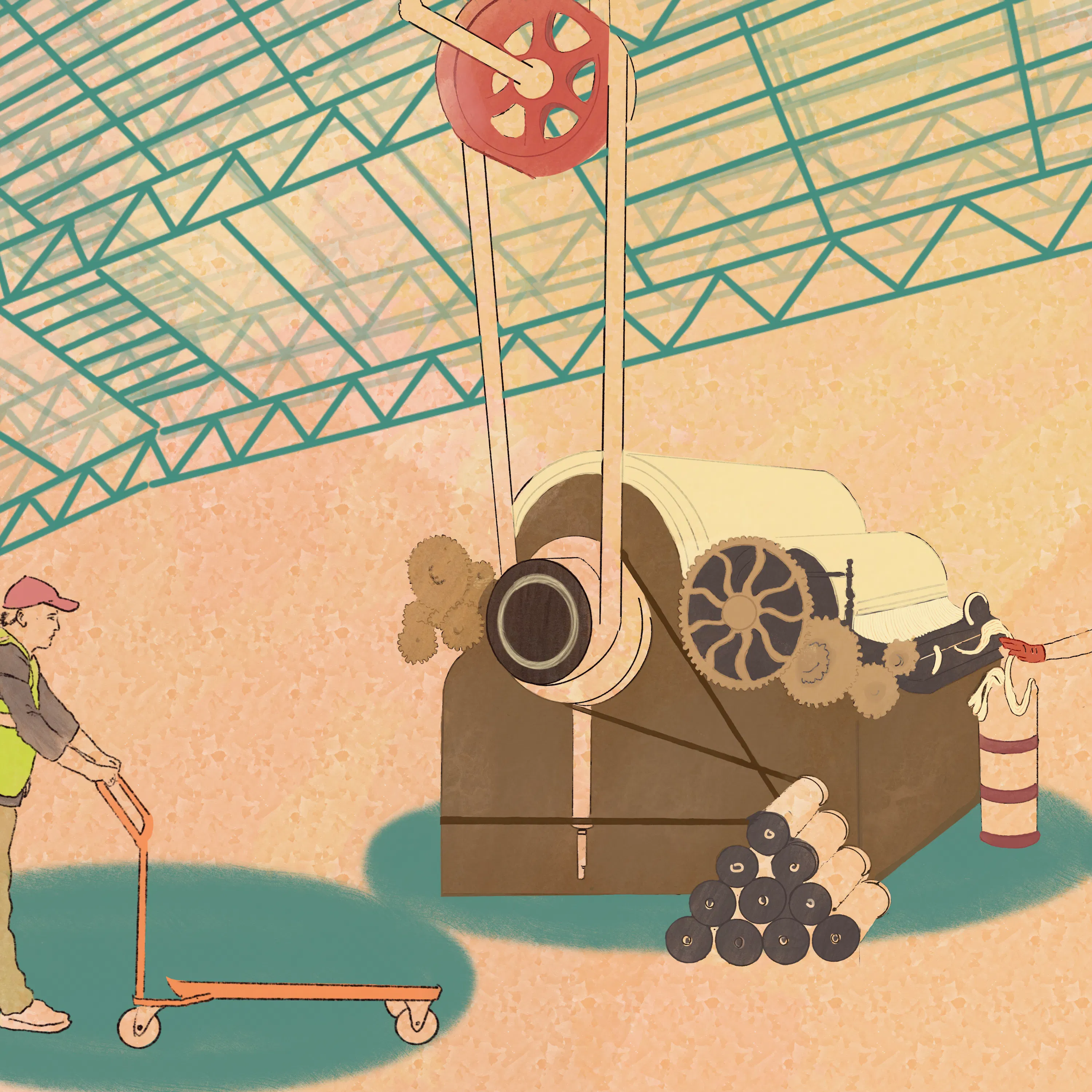
Anna Kornbluh talks about presentism, the anachronistic historical practice of studying the past with contemporary frames of understanding. While some orthodoxies might consider it to be tantamount to historical heresy, presentism can be a powerful tool in building histories of anti-establishment struggles, such as women’s and workers’ rights movements. The conversation also focuses on the work of the V21 Collective, a research collective that Anna organizes, which applies presentist methods to Victorianist scholarship. Anna Kornbluh is Professor of English and Director of Graduate Studies at University of Illinois, Chicago. Her research and teaching focus on the novel, film, and critical theory, especially marxism, psychoanalysis, structuralism, and formalism. She is the author of The Order of Forms: Realism, Formalism, and Social Space (University of Chicago 2019), Marxist Film Theory and Fight Club (Bloomsbury “Film Theory in Practice” series, 2019), and Realizing Capital: Financial and Psychic Economies in Victorian Form (Fordham UP 2014). Her current research concerns impersonality, objectivity, mediation, and abstraction as residual faculties of the literary in privatized urgent times. She is the founding facilitator of two scholarly cooperatives: V21 Collective and InterCcECT. Image: © 2022 Saronik Bosu Music used in promotional material: ‘Past has not Passed’ by James Blackshaw. Learn more about your ad choices. Visit megaphone.fm/adchoices
Ep 87University Press
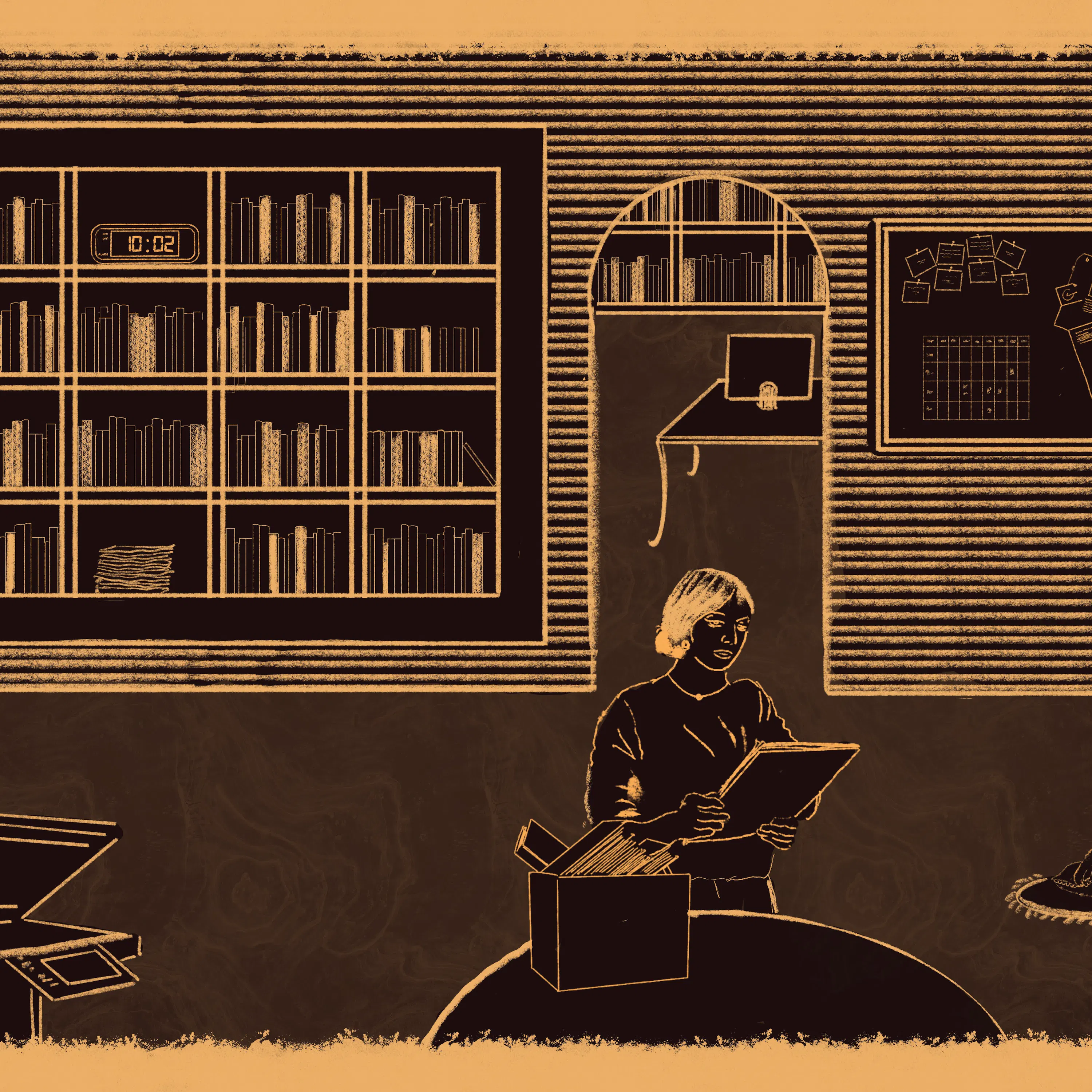
Rebecca Colesworthy talks about the university press and how its workings should be demystified, what authors should keep in mind when they pitch their books, and what university presses do for the state of academic labor. Rebecca Colesworthy (she/her) is senior acquisitions editor at SUNY Press. Her areas of acquisition include literary studies, women’s and gender studies, queer studies, Latin American and Iberian studies, Latinx studies, African American studies, Indigenous studies, and education. She is the author of Returning the Gift: Modernism and the Thought of Exchange (Oxford UP, 2018) and co-editor with Peter Nicholls of How Abstract Is It? Thinking Capital Now (Routledge, 2016). She is on the editorial board of MAUSS International; has taught at New York University, University at Albany, SUNY, and Skidmore College; worked for a handful of years in the nonprofit sector; and holds a PhD in English from Cornell. Image: © 2022 Saronik Bosu Music used in promotional material: ‘Nerys & Leo’ by Bloom K Trio Learn more about your ad choices. Visit megaphone.fm/adchoices
Ep 86Social Psychoanalysis
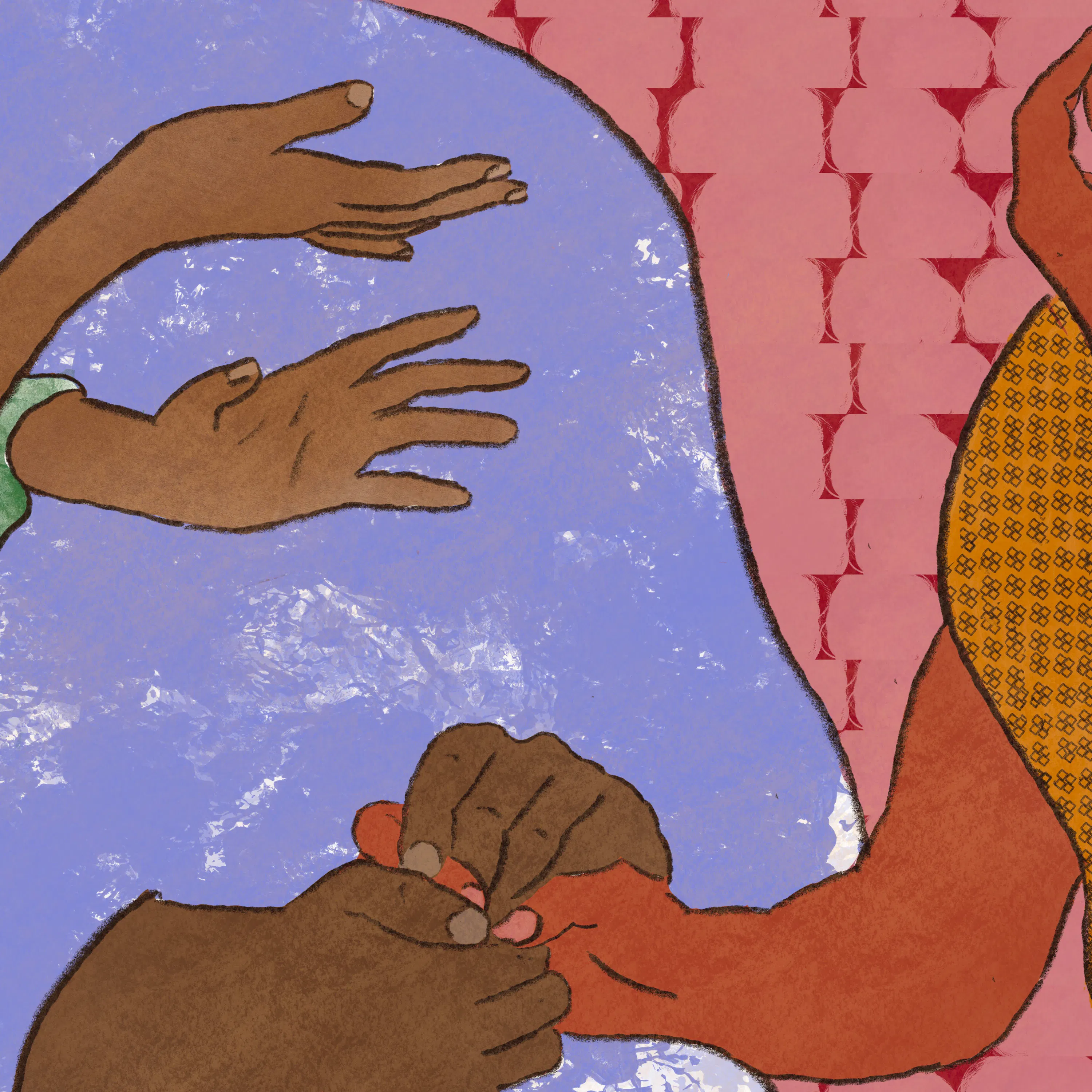
Ankhi Mukherjee talks about that looks at the subject of psychoanalysis as a product of social and cultural processes, and thereby reorients concepts of parental and familial bonds, trauma, coping mechanisms and so on. The conversation focuses on her recent book on the subject, Unseen City: The Psychic Lives of the Urban Poor, which studies community-based psychiatry and how it serves the working classes in three global cities. Ankhi Mukherjee is Professor of English and World Literatures at the University of Oxford and a Fellow in English at Wadham College. Her most recent book is Unseen City: The Psychic Lives of the Urban Poor, published by Cambridge University Press in December 2021. Her second monograph, What Is a Classic? Postcolonial Rewriting and Invention of the Canon (Stanford, 2014) won the British Academy prize in English Literature in 2015. Mukherjee’s other publications include Aesthetic Hysteria: The Great Neurosis in Victorian Melodrama and Contemporary Fiction (Routledge, 2007) and the collections of essays she has edited, namely A Concise Companion to Psychoanalysis, Literature, and Culture (with Laura Marcus, Wiley-Blackwell, 2015) and After Lacan (Cambridge UP, 2018). Mukherjee has published in competitive peer-reviewed journals, including PMLA, MLQ, Contemporary Literature, Parallax, and the Cambridge Journal of Postcolonial Literary Inquiry, and sits on the editorial boards of several international journals. At present, Mukherjee has two books under contract. She is writing A Very Short Introduction to Postcolonial Literature in the widely circulated VSI series (Oxford UP, 2023) and co-editing (with Ato Quayson) a collaborative volume titled Decolonizing the English Literary Curriculum (Cambridge UP, 2022). Image: © 2022 Saronik Bosu Music used in promotional material: ‘Avec Toi’ by Dana Boulé. Learn more about your ad choices. Visit megaphone.fm/adchoices

Ep 85World Literature
Roanne Kantor tells us about World Literature, in the ideas and practices of readers, writers, and scholars. Spatial metaphors like libraries, closets, and airport bookshops, help her imagine the “world” in world literature. In the episode Roanne references work by many scholars in the field, including David Damrosch’s What is World Literature (Princeton UP, 2003); Debjani Ganguly’s This Thing Called the World (Duke UP, 2016), and Gloria Fisk’s Orhan Pamuk and the Good of World Literature (Columbia UP, 2018). In the longer version of our conversation, we talked about how little magazines from the 1970s New York literary scene, like Ed Sanders’ Fuck You: A Magazine of the Arts, circulated in South Asia, inspiring avant-garde magazines like Arvind Krishna Mehrotra’s damn you/a magazine of the arts. Roanne is an assistant professor of English and Comparative Literature at Stanford University. She has a brand new book, South Asian Writers, Latin American Literature, and the Rise of Global English, (Cambridge UP, 2022). If you want to learn more about the world of world lit, check it out. This week’s image of an airport bookshop at the Incheon International Airport in South Korea, was photographed by Adli Wahid and made publicly available on Wikimedia Commons under a Creative Commons License. Music used in promotional material: ‘Six More Weeks’ by Evening Fires Learn more about your ad choices. Visit megaphone.fm/adchoices
Ep 84Epic
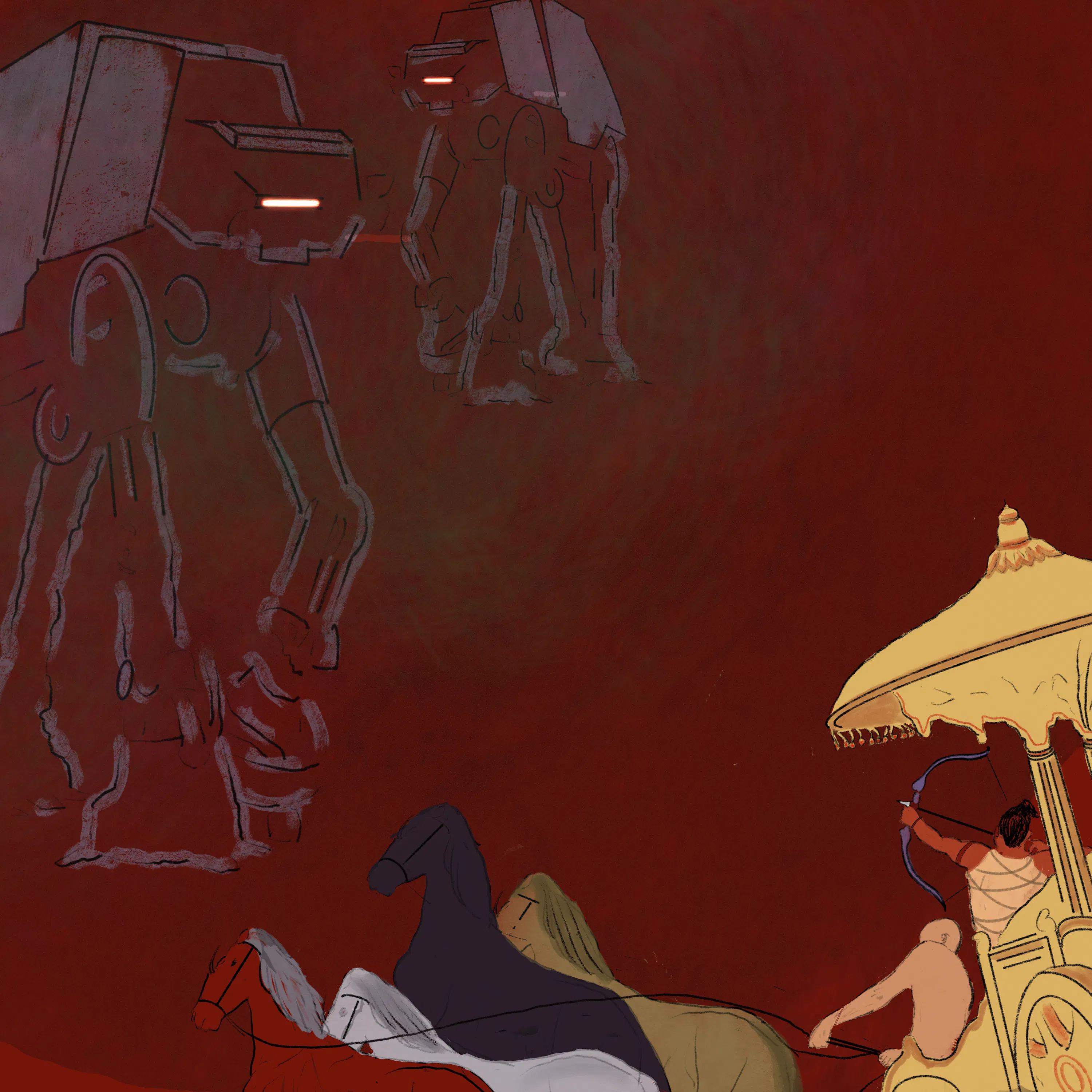
Sohini Sarah Pillai talks about epics, long narrative poems about heroic events – whether all such poems can be called epics, and how they continue to generate cultural and political material. The conversation covers epic poems ranging from the Iliad to Jack Mitchell’s The Odyssey of Star Wars. Sohini Pillai is Assistant Professor of Religion at Kalamazoo College where she teaches courses on religious traditions in South Asia. She is a comparatist of South Asian religious literature and her area of specialization is the Mahabharata and Ramayana narrative traditions with a particular focus on retellings created in Hindi and Tamil. She is also the co-editor with Nell Shapiro Hawley of Many Mahabharatas (State University of New York Press, 2021). Image by Saronik Bosu (This image is a work of fan art that adapts characters from the Star Wars franchise owned by Lucasfilm ltd.) Music used in promotional material: ‘Yoliyoli’ by 33nano Learn more about your ad choices. Visit megaphone.fm/adchoices

Ep 83Black Trans Feminism
Marquis Bey talks about the radical and abolitionist project of Black Trans Feminism. Rather than an identity formation, it is a politics and modality of being that vitiates the limits of subjectivity. Black Trans Feminism finds joy in irreverence, just like we try to do on High Theory. You can recalibrate your understanding of the subject by reading Marquis’s forthcoming book Black Trans Feminism, published by Duke University Press. Released next week! On February 25th. In the episode Marquis references a wonderful quote from Saidiya Hartman, that “A Black revolution makes everyone freer than they actually want to be.” It’s a hard quote to find, but it appears in Frank Wilderson’s interview with C.S. Soong, “Blacks and the Master/Slave Relation” in Afropessimism: An Introduction (Racked & Dispatched, 2017). Marquis is Assistant Professor of African American Studies and English at Northwestern University. They also serve as Faculty Affiliate and Advisory Board Member in Gender & Sexuality Studies and Advisory Board Faculty Member in Critical Theory. This week’s image was provided by Marquis. Music used in promotional material: ‘Semiacoustic’ by Pk Jazz Collective Learn more about your ad choices. Visit megaphone.fm/adchoices

Ep 82Aunties
Kareem Khubchandani talks about aunties, figure across culture that stand for inquiry and succor, at limits of, or outside of traditional family structures. The conversation spans across genres and contexts, mainly focusing on work in the new field of Critical Aunty Studies. Kareem Khubchandani is the Mellon Bridge assistant professor in theater, dance, and performance studies, and women’s, gender, and sexuality studies at Tufts University. He is the author of Ishtyle: Accenting Gay Indian Nightlife (University of Michigan Press, 2020), which received the 2021 Association for Theatre in Higher Education Outstanding Book award, 2021 Dance Studies Association de la Torre Bueno book award, 2021 MLA/ASA Alan Bray Memorial Prize honorable mention, and the 2019 CLAGS: Center for LGBTQ Studies Fellowship. Kareem is also co-editor of Queer Nightlife (University of Michigan Press, 2021) and curator of criticalauntystudies.com. Image: © 2022 Saronik Bosu Music used in promotional material: ‘Like Swimming’ by Broke for Free Learn more about your ad choices. Visit megaphone.fm/adchoices
Monuments

Ep 81Monuments
Erin L. Thompson talks about monuments, and their role in American public life. Public art intervenes in directly in politics, shaping social behavior in the present. Monuments, in her account, are a bid for immortality that says “this is how things are” but often means “this is how things should be.” In the episode she talks about The Houston Museum of African American Culture. They are engaged in a super exciting project reinterpreting the cultural memory of the US Civil War, as the first Black cultural institution that has re-housed a Confederate monument. If you’re keen on the history and politics of monuments, check out her brand new book: Smashing Statues: The Rise and Fall of America’s Public Monuments. It’s coming out from Norton this Tuesday (Feb 8)! You learn more about the book, and her upcoming talks on her website: artcrimeprof.com Erin L. Thompson is an associate professor of Art Crime at the John Jay College of Criminal Justice of the City University of New York. Her first book Possession (Yale UP, 2016) studied the history of theft at the heart of private art collections from the Ancient World to the present. Image: Statue of a man on a horse, part of the the Ulysses S. Grant Memorial at the US Capital, described in this article from the Architect of the Capital, US government website. Music used in promotional material: ‘Morrisson’s jig – Leslie’s march’ by Aislinn Learn more about your ad choices. Visit megaphone.fm/adchoices

Ep 79Disintermediation
Mark McGurl talks about disintermediation, a key term for internet commerce, and his new book about fiction in the age of digital self-publication. The fantasy of disintermediation lies at the heart of utopian dreams of the internet, but it turns out that not only is the internet actually a medium, and a vast economic engine, but self-publishing is a lot of work! Mark McGurl is a professor of English at Stanford University. If you want to learn more about the effects of Amazon’s self-publishing mechanism on literature, check out his new book, Everything and Less: The Novel in the Age of Amazon (Verso, 2021). His earlier book The Program Era: Postwar Fiction and the Rise of Creative Writing (Harvard UP, 2011) takes a similarly materialist perspective on literary production, and it was sort of a thing. His first book The Novel Art: Elevations of American Fiction after Henry James (Princeton UP, 2001), blames Henry James for making American novels into art. In a good way of course. This week’s image is a photograph of a printing press held in the collections of the Fort Nonquai Eshowe museum in South Africa, posted on Wikimedia commons. Music used in promotional material: ‘Internet, the day when all humans will disappear’ by Monplaisir Learn more about your ad choices. Visit megaphone.fm/adchoices
Disintermediation

Ep 80Flatness
Noreen Masud talks about the unnamed feelings and ambiguous modes of relationship occasioned by flat landscapes, and the act of looking at them, in twentieth century fiction, especially the novels of D.H. Lawrence, Willa Cather, and Gertrude Stein. Noreen Masud is a Lecturer at the University of Bristol, UK, currently working on flat landscapes in twentieth century literature. Her first academic book, Hard Language: Stevie Smith and the Aphorism, is out with OUP in 2022, and her first trade book, A Flat Place, will be released by Hamish Hamilton in the UK and Melville House Press in the US in 2023. Image: © 2022 Saronik Bosu Music used in promotional material: ‘In Your Hollow’ by Allysen Callery Learn more about your ad choices. Visit megaphone.fm/adchoices
Flatness

Ep 78Autofictionalization
Claus Elholm Andersen talks about autofictionalization, a mode of narration that characterizes autotfiction, where the narrative consciousness or voice is placed with the experiencing character and not the narrator. Of particular interest here are texts produced after the financial crisis of 2008 which exemplify this mode, most importantly Karl Ove Knausgård’s series My Struggle (2009-2011). Claus Elholm Andersen is the Paul and Renate Madsen Assistant Professor of Scandinavian Studies at the University of Wisconsin-Madison. In his research, he is interested in the novel and in questions of fiction and fictionality: What it is, how it works, and what it implies. He is currently finishing up a book project on Karl Ove Knausgård and autofiction, titled The Very Edge of Fiction: Karl Ove Knausgård and the Autofictional Novel, in which he argues that Knausgård consciously engages with, and undermines, a long critical history of equating novels with fiction. He recently co-edited a special issue of Scandinavian Studies, with Dean Krouk, on Karl Ove Knausgård’s My Struggle and edited the first scholarly anthology on Knausgård, published in Scandinavia in 2017. His latest publications are an article on Danish novelist Helle Helle in Edda in 2019 and an article on Henrik Pontoppidan’s novel Lucky-Per in Scandinavian Studies. Image: © 2021 Saronik Bosu Music used in promotional material: ‘North’ by Sergey Cheremisinov Learn more about your ad choices. Visit megaphone.fm/adchoices
Autofictionalization

Ep 77Negro Literature
Elizabeth McHenry talks about the moment in the history of African American literature in the decade following the 1896 legalization of segregation, the subject of her new book To Make Negro Literature: Writing, Literary Practice, and African American Authorship. She redirects attention to overlooked archives of unpublished and unsuccessful literary production and thereby offers a radically alternative genealogy of Black literature. Elizabeth McHenry is Professor of English at New York University and author of Forgotten Readers: Recovering the Lost History of African American Literary Societies, also published by Duke University Press. The book relies on a number of theoretical and disciplinary lenses to understand the epistemological and social conditions of print culture and literary community for African Americans between 1830 and 1940. It expands our definition of literacy and urges of us think about literature as broadly as it was conceived of in the nineteenth and into the twentieth centuries. Image: The Louisville Western Branch Library in Louisville, Kentucky Music used in promotional material: ‘Afro-American Symphony: II – Adagio’, William Grants Still Learn more about your ad choices. Visit megaphone.fm/adchoices