
Heredity Podcast
182 episodes — Page 3 of 4
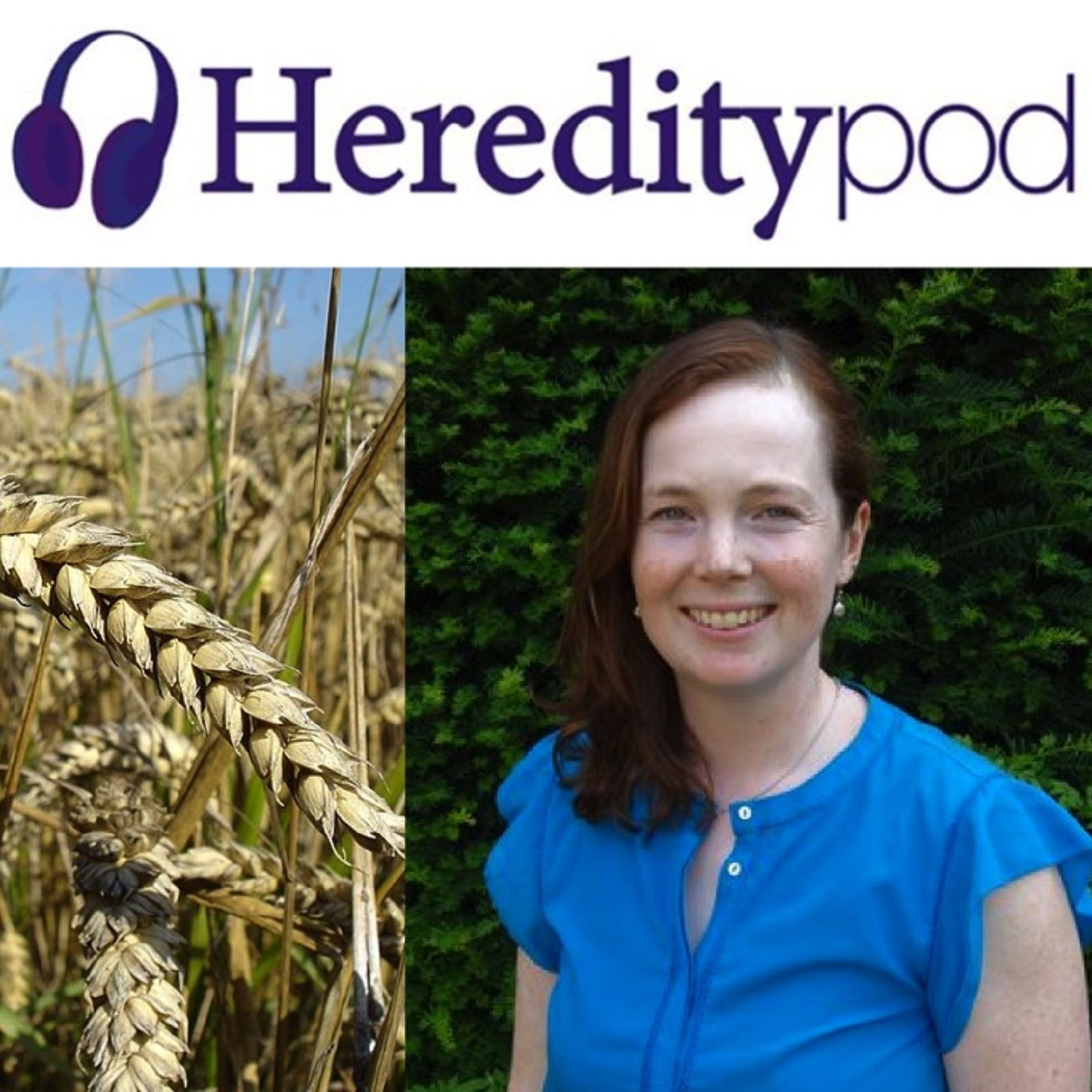
The crop specialist: an interview with Dr Alison Bently
Behind the pages of Heredity there lies a group of incredibly dedicated, brilliant scientists—our editors! Who are they? What do they actually do? What kinds of research are they passionate about? What are they looking for in a good manuscript? These are the kinds of questions we are going to explore in a new series of episodes dedicated to these unsung heroes of scientific publishing. First up, we have Dr Alison Bentley, a crop specialist who leads a +40 group of researchers as Head of Genetics and Breeding at NIAB (National Institute of Agricultural Botany). Hosted on Acast. See acast.com/privacy for more information.
Good dog, bad dog – is it all in the genes?
In this episode we explore the nature vs. nurture debate in one of humanities closest companions – Dogs! Why do they do the things they do? Are their behaviours hardwired into their DNA? Tune in and listen to Dr Juliane Friedrich, Dr Pamela Wiener and Dr Marie Haskell as they discuss complex genetic behaviour traits in German shepherd dogs, collaborating with the Swedish Armed Forces, and how their research has shaped the way they view their own pets behaviour. Hosted on Acast. See acast.com/privacy for more information.
PopGroup Conference Special
The annual Population Genetics Group Forum is an important, and much beloved, conference in the fields of genetics and evolution. As registration opens for the 53 meeting of PopGroup (to be held at the University of Leicester, 5th – 8th January 2020), we hear what's in-store from three of the people organising it: Dr Rob Hammond, Dr Richard Badge and PhD student Max John. We then delve into the history of this wonderfully unique conference with three of its longest serving delegates: Prof. John Turner, Prof. Laurence Cook and Prof. John Brookfield. Hosted on Acast. See acast.com/privacy for more information.
Unravelling disease survival in farmed carp
Fish farming, or aquaculture, is an important source of animal protein, particularly in developing nations. Unfortunately, aquaculture is highly susceptible to outbreaks of infectious disease. In this episode, Lior David and Roni Tadmor-Levi (The Hebrew University of Jerusalem) discuss their work trying to identify the genetic basis of disease survival in the common carp (Cyprinus carpio) when challenged with the koi herpes virus (Cyprinid herpesvirus 3). Hosted on Acast. See acast.com/privacy for more information.
The hybrid origins of asexual species
An essential aspect of life is reproduction, and an essential aspect of reproduction is sex... except when it isn't. While common in invertebrates, asexual reproduction is only seen in around 90 vertebrate species. And in this episode, Dr Susana Freitas (University of Lausanne, Switzerland) explains her work looking at the hybrid origin of parthenogenesis in what may be the best-studied asexual vertebrate—Darevskia lizards. Hosted on Acast. See acast.com/privacy for more information.
When species hybridise
Species are often thought of as discreet and separate from one another. However, hybrid zones often form between closely related species, providing the opportunity to test many evolutionary hypotheses. In this episode, we talk to Dr Henrique Batalha-Filho (Universidade Federal da Bahia, Brazil) and Dr Marcos Maldonado-Coelho (Lund University, Sweden) about their work characterising a hybrid zone between two spinetail bird species in the Atlantic rainforests of Brazil... we also hear from the birds themselves. Hosted on Acast. See acast.com/privacy for more information.
How rats invaded the Faroes (3 times)
The Faroe Islands are a North Atlantic archipelago, famed for being a Viking stronghold. However, for the past few centuries the islands have themselves been besieged by one of the world's greatest invaders: the brown rat. In this episode, Dr Emily Puckett (University of Memphis) and Dr Eyðfinn Magnussen (University of the Faroe Islands) discuss their recent paper looking at the current and historical population genetics of the brown rat. It's a story that takes us from 18th century shipwrecks right into the modern genomic era. Hosted on Acast. See acast.com/privacy for more information.
How to breed a climate resilient cow
How do you breed a high-production cow fit for a changing world? It's rare that we discuss the impact of climate change on cattle agriculture, yet it's important to consider how rising temperatures will impact this important part of the global food chain. In today's episode, Prof. Ismo Strandén, Prof. Juha Kantanen and Prof. Michael Bruford discuss a simulation-based approach for identifying optimal breeding strategies. It's an approach that may help produce a productive yet temperature resilient dairy cow by identifying the best way to mix the desirable genomic traits of both commercial and rare breed stocks. Hosted on Acast. See acast.com/privacy for more information.
Tips on collaborations and range expansions
Collaboration is an essential aspect of modern science, and the authors featured in today's episode epitomise this relationship. In our most ambitions interview to date, all four first authors of a recent Heredity paper come together to discuss their work looking at range expansions in the blacktip reef shark (Carcharhinus melanopterus). Their results provide a cautionary tale for researchers interpreting population genetic data, especially when dealing with potential meta-populations. Hosted on Acast. See acast.com/privacy for more information.
Hot and cold hardiness across complex life cycles
Some like it hot. Some like it cold. But whatever an organism's preference, our changing climate is likely going to force them to adapt to new temperature regimes. This raises a particularly interesting question for those species with complex life-cycles: do different life stages respond to thermal pressures in a similar way? Or do they display distinct evolutionary trends? In this episode we speak to Dr Philip Freda and Zainab Ali about their work looking at stage-specific genotype-by-environment interactions for cold and heat hardiness in Drosophila melanogaster. And beyond the science, Zainab tells us what it feels like to have an undergraduate research experience lead to your first scientific publication. Hosted on Acast. See acast.com/privacy for more information.
Scientific storytelling: an interview with Prof. Enrico Coen
Storytelling facilitated both the emergence of the scientific discipline and the evolution of human intelligence. At least, that's what Prof. Enrico Coen argues. A former President of the genetics society, Prof. Coen, from the John Innes Centre, has two articles in the recent Heredity Special issue commemorating 100 years of The Genetics Society. In the first, he creatively recounts the rise of Homo geneticus, and in the second he delves into the history and importance of human storytelling. Tune in to hear a grand tale of genetics and discover how your research could benefit from a little more storytelling. Hosted on Acast. See acast.com/privacy for more information.
Genetics and evolution, a century of bias: an interview with Laurence Hurst
We tend to think of science as objective, but as with any human endeavour it is fraught with biases: cognitive, technical, personal and cultural. Interestingly, it turns out that inheritance can also be biased, with the transmission of genes often displaying anything but 'fair' segregation. As the Genetics Society celebrates its centenary, join president Prof. Laurence Hurst as he discusses 100 years of bias in genetics and evolution, how he fell in love with the field (despite poor first impressions), his thoughts on science education, and his hopes for a playful future in the study of genetics and evolution. Hosted on Acast. See acast.com/privacy for more information.
Is evolution faster in the tropics?
Why do the tropics contain such a diversity of life? In this episode, we explore this question with Matt Orton and Prof. Sarah Adamowicz from the University of Guelph. Listen to them discuss their recent research paper – Is molecular evolution faster in the tropics? – and hear about the challenge it poses to the long standing Evolutionary Speed Hypothesis. Hosted on Acast. See acast.com/privacy for more information.
Orchids in the cloud
In this episode we explore the genetic structuring of orchids in the cloud rainforests of Ecuador. While we mainly think of orchids as ornamental houseplants, many wild species are vulnerable to poaching or deforestation. In a recent Heredity paper, Professor José Iriondo (King Juan Carlos University, Madrid) and colleagues investigated the fine-scale genetic structure of an unassuming orchid in a regenerating patch of Ecuadorian rainforest—working in a landscape unlike any other, they have discovered a mysterious population dynamic that so far eludes explanation, but does highlight vital conservation considerations for this iconic family of flowering plants. Hosted on Acast. See acast.com/privacy for more information.
Snails, supergenes and a question of colour (Special Episode)
From the days of Darwin and Mendel, studies on colouration have played a vital role in deciphering the mechanisms of natural selection and genetic heredity. While this work has encompassed many species from all branches of the tree of life, a particularly noteworthy one is the incredibly colour diverse grove snail, Cepaea nemoralis. In this special double-whammy episode, we discuss two recent Heredity papers on this unassuming, yet beautiful, little mollusc by Dr Angus Davison (University of Nottingham) and colleagues. The first takes a quantitative approach to determining the colour phenotypes of over 1000 grove snails, while the second investigates the underlying genetics of this colour polymorphism. The insights gleaned from these studies have important implications for how we conduct studies on animal colouration, and also challenge long held assumptions about the evolution and role of supergenes. Hosted on Acast. See acast.com/privacy for more information.
Patterns in the Wing
Animal colouration is fascinating! Conspicuously affected by natural selection, an animal's colour pattern can impact many aspects of its life: from how well it can attract a mate to its success at avoiding predation. Of course, they can also be incredibly beautiful. In this episode, we hear from Dr Jake Morris (University College London – UCL) about his recent research investigating the genetic basis of wing patterns in the postman butterfly (Heliconius melpomene): a delicate, visually striking, toxic mimic found across South and Central America. Hosted on Acast. See acast.com/privacy for more information.
Parallel flight paths
How repeatable is evolution? This is one of the biggest questions in modern day biology, and until recently it seemed unanswerable. However, the growing number of known cases of parallel evolution—where two closely related organisms adapt to an environment in the same way—is revealing just how predictable evolution can be. In this episode, Dr Allie Graham (Oregon State University) and Dr Kevin McCracken (University of Miami) share their recent work looking at the convergent molecular adaptation of three species of South American ducks to low oxygen, high altitude environments. Hosted on Acast. See acast.com/privacy for more information.
A mussel mosaic
A fascinating mosaic has recently been discovered in the Mediterranean, and we're not talking about the famous tiled art. Here, we're talking about a genetic mosaic in the Mediterranean mussel (Mytilus galloprovincialis), which stretches for over 600 km along the North African coast. What led to this incredibly large hybrid zone? Dr Nicolas Bierne from the University of Montpellier explains all in this episode of the Heredity Podcast. Hosted on Acast. See acast.com/privacy for more information.
The master gland of domestication?
When we think of Charles Darwin and his theory of natural selection, the mind conjures images of exotic voyages to distant lands. However, in reality, Darwin's theory was more heavily influenced by his observations on the process of domestication, which he made in his own backyard. The evolution of domestic animals still fascinates biologists, and in this episode of the Heredity Podcast Dr Amir Fallahshahroudi discusses his recent research on the genetic basis of domestication in the chicken. This work has focused in on the pattern of gene expression in the pituitary gland, a small organ that lies between the brain and the rest of the body: could this 'master gland' of hormone production also be controlling the development of the 'domestic phenotype'? Tune in and find out. Hosted on Acast. See acast.com/privacy for more information.
A mixing of wolves
While there is little doubt that the grey wolf is one of the world's most iconic species, it is equally true that it is one of the world's most reviled. This later sentiment has seen them extirpated from much of their former habitat. However, in a few places, wolves are making a comeback. In this episode, Sarah Hendricks, Dr Rena M. Schweizer and Prof. Robert Wayne discuss their recent research exploring the genetic history of naturally re-established wolf populations in the US states of Oregon and Washington: their discovery that some of these populations represent a genetic mixing of two distinct ecotypes presents challenges for current conservation policy in the country, and raises the question: what wolf belongs where? Hosted on Acast. See acast.com/privacy for more information.
PopGroup 52 special!
Every winter, geneticists from around the world brave the unpredictable weather to gather for the annual Population Genetics Group Conference. This year, Oxford Brookes University played host to the 52nd such meeting, and with a delegate list of almost 250 researchers, a programme of 106 talks, and around 41 posters, it proved to be a three day celebration of the latest and greatest research in the field of population genetics. In this episode, we hear from the conference organisers, the renowned plenary speakers, and the student prize winners. So settle in and listen to this Heredity Podcast special on PopGroup 52! Link to conference website: populationgeneticsgroup.org.uk Hosted on Acast. See acast.com/privacy for more information.
Disentangling the connectivity of an invasive weed
With their delicate, trumpet shaped flowers that open to greet the rising sun, the morning glory has long been a horticultural favourite. Unfortunately, the quick growth and hardy nature of these plants has made them a noxious invasive weed in many parts of the world, with particularly damaging impacts on crop agriculture. Here, Dr Diego Alvarado Serrano, from the University of Michigan, discusses his recently published research on the genetic connectivity of the tall morning glory in the Eastern United States, which he and his collaborators hope will help to curtail the spread of both the plant itself and herbicide resistant genes. Hosted on Acast. See acast.com/privacy for more information.
The demographic history of southern right whales (December)
Southern right whales have had a rough few centuries, being brought to the brink of oblivion more than once by the whaling industry. Before that, climatic shifts likely played havoc with their coastal breeding grounds. What impact did these events have on their population genetics and connectivity? These are the questions being tackled by Dr Emma Carroll and Prof. Oscar Gaggiotti. Join them as they discuss their recent attempt to unravel the demographic history of this enigmatic migratory species. (Dr Carroll is currently in the South Atlantic Ocean collecting more data on southern right whales; why not check out their field blog at whalednalab.auckland.ac.nz) Hosted on Acast. See acast.com/privacy for more information.
Colour genetics of the tortoise beetle (November)
What makes a beetle red? Or metallic? Or striped? And why display such a diversity of colour patterns within one species? These are the questions being asked by Lynette Strickland, a PhD candidate at the University of Illinois at Urbana-Champaign and a Pre-doctoral fellow at the Smithsonian Tropical Research Institute. Join us as we discuss her recent research on the genetic and ecological basis of colour polymorphisms in the tortoise beetle, Chelymorpha alternans. Hosted on Acast. See acast.com/privacy for more information.
A genetic history of cats in Europe (November)
Europe's 102 million domestic cats were spread across the continent by the Roman Empire. At least, that was the consensus. However, new genetic, archaeological, and archaeozoological evidence suggests that our feline friends were present in Central Europe thousands of years earlier than previously thought. How did they get there? And what does this mean for our understanding of cat domestication? Join us as we talk to three of the authors behind this new fascinating research. Hosted on Acast. See acast.com/privacy for more information.
The long and the short of MHC genotyping (October 2018)
In this episode we explore a hybrid approach for genotyping one of the most variable parts of the vertebrate genome: the major histocompatibility complex (MHC). Join Dr Silvia Fuselli (University of Ferrara) and Dr Rodrigo Baptista (University of Georgia) as they explain their work combining the best aspects of both next and third generation sequencing platforms—an approach that is bringing us ever closer to solving the genome puzzle. Hosted on Acast. See acast.com/privacy for more information.
Koala population genetics (October 2018)
PhD candidate Shannon Kjeldsen, from James Cook University, discusses the ecology, history, population genomics and conservation of an iconic Australian species: the koala! Exciting things are also happening at Heredity Podcast HQ—the way we bring you the latest and greatest genetics research is about to get a whole lot better! Hosted on Acast. See acast.com/privacy for more information.
September 2018 podcast
This episode is a celebration of the Heredity Special Issue: Evolutionary Consequences of Epigenetic Inheritance. Join us as we talk about the motivation behind the Special Issue with Editor Dr Foteini Spagopoulou. Then, PhD student Erin Macartney discusses the role of paternal epigenetic inheritance—a particular focus of the issue—and Dr Yuan-Ye Zhang explains her experiential work on the evolutionary potential of epigenetic variation. Importantly, this episode also celebrates the achievements of ambitious students. Tune in and find out what we mean! Hosted on Acast. See acast.com/privacy for more information.
August 2018 podcast
This episode of the Heredity Podcast is all about applying new genetics methods to understudied organisms! Join us as we explore a novel metric for evolutionary and conservation genetics with salp expert Dr William Goodall-Copestake (British Antarctic Survey). Then stick around to hear Prof. Brad Shafer and Dr Evan McCartney-Melstad (University of California, Los Angeles) discuss their recent application of genomics tools when revisiting the population genetics of a Californian frog. Hosted on Acast. See acast.com/privacy for more information.
July 2018 podcast
In this month's episode of the Heredity Podcast we are all about the mouth! First, we discuss the genetics underlying molar teeth development and inhibition with French morphometrician Dr Nicolas Navarro. Following this, Brazilian researcher Dr Maria Marta Pastina explains all about an emerging plant breeding method called genomic selection, and how her team is using it to develop more drought tolerate maize crops. Finally, make sure to stick around to the end of the episode to hear a short message directed at you, the listener, and discover how you can be featured on the podcast. Hosted on Acast. See acast.com/privacy for more information.
June 2018 podcast
Welcome to the first episode of the newly revamped Heredity podcast! What is the journal Heredity? How conserved is the molecular basis of spider silk? And what effect does the creation of human-made river barriers have on the genetic diversity of low-mobility fish populations? Tune in to hear discussions with the editors behind the journal and the people behind the research in June's edition of Heredity. Hosted on Acast. See acast.com/privacy for more information.
March 2017 podcast
This month, genetic connectivity in sea fans and chatty fungi Hosted on Acast. See acast.com/privacy for more information.
February 2017 podcast
This month, genetically diverse newts and Bt toxin resistant moths Hosted on Acast. See acast.com/privacy for more information.
January 2017 podcast
This month, how fruit fly genes can influence their social experiences and how birch trees might be taking a leaf out of the bacterial book to fight off toxic metals Hosted on Acast. See acast.com/privacy for more information.
November 2015 podcast
This month, signatures of selection in desert goats and sheep and a new method for monitoring Wolbachia invasion dynamics in mosquitos Hosted on Acast. See acast.com/privacy for more information.
October 2016 podcast
This month, reproduction induced mortality in fruit flies and mapping the gene flow of Singaporean trees Hosted on Acast. See acast.com/privacy for more information.
October 2015 podcast
This month, whole-genome duplication in the last common ancestor of the horseshoe crabs and two exciting new roles for microRNAs Hosted on Acast. See acast.com/privacy for more information.
September 2016 podcast
This month, seafaring pigs and sex changing fish Hosted on Acast. See acast.com/privacy for more information.
September 2015 podcast
This month, there is more than one way to skin a newt, and protein expression changes through speciation in a diving beetle species complex Hosted on Acast. See acast.com/privacy for more information.
July 2016 podcast
This month, domestication before and after – we take a look at how wild boar are reeking havoc across the world, and the origins of starch digestion in domestic dogs Hosted on Acast. See acast.com/privacy for more information.
June 2016 podcast
This month, Asian tiger mosquitos and Dutch house sparrows Hosted on Acast. See acast.com/privacy for more information.
May 2016 podcast
This month, getting to grips with limpet populations and sex determination in Swedish frogs Hosted on Acast. See acast.com/privacy for more information.
March 2016 podcast
This month, the reproductive habits of a fungal disease decimating the chocolate industry, and the genetic constraints on the size of quail eggs Hosted on Acast. See acast.com/privacy for more information.
February 2016 podcast
This month, how genetics are helping scientists piece together the history of Alaskan cattle, and the impacts of bear predation on wild salmon Hosted on Acast. See acast.com/privacy for more information.
January 2016 podcast
This month, the genetic diversity of hatchery-reared sea urchins and the mysterious link between face colour and reproductive incompatibility in finches Hosted on Acast. See acast.com/privacy for more information.
August 2015 podcast
This month, landscape genetics of the American Badger and polygamy uncovered in the mountain pine beetle. Hosted on Acast. See acast.com/privacy for more information.
July 2015 podcast
This month, what aquatic snails can teach us about phenotypic plasticity, and a recent colonisation of the two-banded seabream to the Azores. Hosted on Acast. See acast.com/privacy for more information.
June 2015 podcast
This month, the survival time of copulatory plugs in mice, and population paleogenetics of the extinct New Zealand giant moa. Hosted on Acast. See acast.com/privacy for more information.
May 2015 podcast
This month, the effect of clonality on ageing in a starfish species and how commensalism effects population genetics in rats. Hosted on Acast. See acast.com/privacy for more information.
April 2015 podcast
This month, assessing the risk of bat rabies in the UK and Y-chromosome diversity at the dawn of the surname in Flanders. Hosted on Acast. See acast.com/privacy for more information.