Hardcore Software by Steven Sinofsky (Audio Edition)
109 episodes — Page 3 of 3

008. Competing With Steve Jobs (the First Time) [Ch. II]
Welcome to Chapter II. In short order I learn that Microsoft is way behind in the products I work on. BillG is really concerned about Steve Jobs NeXT computer. I move offices and find out I was part of a reorg. This is a quick setup for a chapter about the creation of Microsoft Visual C++ 1.0.Back to 007. Windows 3.0 Buzz1990 to 1992: The big bet on Windows begins to pay off, but Microsoft struggles to win over developers who were enamored with object-oriented programming and C++ to more easily build GUI programs. Within Microsoft, differing cultures emerge between groups, and eventually define the company.Microsoft was starting to lose its edge, even with Windows taking off.The company got its start with languages and developer tools, but by the early 1990s tech enthusiasts and hobbyists were moving away from BASIC toward more advanced or professional languages and tools. Developers were being wooed by an exciting upstart, Borland International. Led by an energetic Frenchman, Philippe Kahn, Borland captured the hearts and minds of enthusiasts with a line of TurboTools that integrated a compiler, code editor, and debugger into one slick package. It was fast, really fast—fast the way that got under the skin of BillG. With support for both Pascal and C, and priced favorably, the products and the company became a favorite among independent developers. It also didn’t hurt that Borland expanded its product base to include a killer spreadsheet in Quattro Pro (get it, it came after Lotus 1-2-3) and Paradox, an industrial-strength database for MS-DOS.Microsoft secured the professional end, particularly with Microsoft C 5.1, the product we were using for our ET++ experiments. The successor product, Microsoft C 6, re-upped the professional standard but was late (as everything was) and lacked the pizzazz of Borland. Microsoft responded to Borland with Quick C, a similarly integrated all-in-one product for MS-DOS. With C 6 a Windows version was added. Quick C was viewed as a defensive move. It was. We were focused on the high-end commercial developers, not the hobbyists or solo developers.Being squeezed from the low end was one thing, but the high end was becoming problematic for Microsoft. Not only was the C 6 product late, but it was C and neither C++ nor object-oriented. This challenged Microsoft’s perceived leadership. In addition, Borland’s products performed better than the anticipated C 6. Internally, the teams, particularly Excel, began testing whether they could move to the Borland tools. This was especially noteworthy because it was coupled with a move away from Microsoft’s proprietary C-like language CSL. As if this wasn’t enough, the growing importance of the graphical user interface would soon require a wholesale reinvention of tooling. Microsoft was way behind. Windows was our platform, but we lacked convincing and competitive tools. Squarely between Windows and OS/2, the Tools teams all but sat out developing new tools for GUI programming and focused simply on the programming language. The additional tools for developing the interface of menus and dialogs, as well as the complexities of making a GUI program, were left to the respective platform teams. These teams shipped tools in a software development kit (SDK), which was complete but not as polished a product as Borland sold.This was my first experience with disruption, though that word was years away from business vocabulary. In 1990, we just called it competition. And losing.While our marketing team talked all about revenue and market share, like any good business, in reality Tools was not really a business. An important lesson about Tools and platforms that I was learning in real-time was that a robust platform company invests (that is spends money on) Tools at an irrational level to support the platform. The reason Borland could have a Tools business was because it was spending much less than Microsoft, and so could be profitable. Microsoft was spending more money and making a worse product. In other words, I was part of an irrational investment that wasn’t paying off. We were a poor business, and we were failing at building tools professionals wanted to use. Losing control of the Tools was akin to losing control of the platform.Apple invested heavily in tools for the Macintosh, just like a winning platform should. There was also a vibrant market for many different languages and tools for creating apps for the unique graphical platform. This was well known within Microsoft because so many of the Apps engineers got their start writing Mac software in college, including me. There was always a sense of envy regarding the elegance of building GUI applications with a GUI toolset on Macintosh—bootstrapping was when programming tools created themselves. Historically, programmers viewed bootstrapping as an important, if mostly symbolic, step in developing a platform. Microsoft was far from bootstrapped, as it was still using Xenix and OS/2 to develop for M
007. Windows 3.0 Buzz
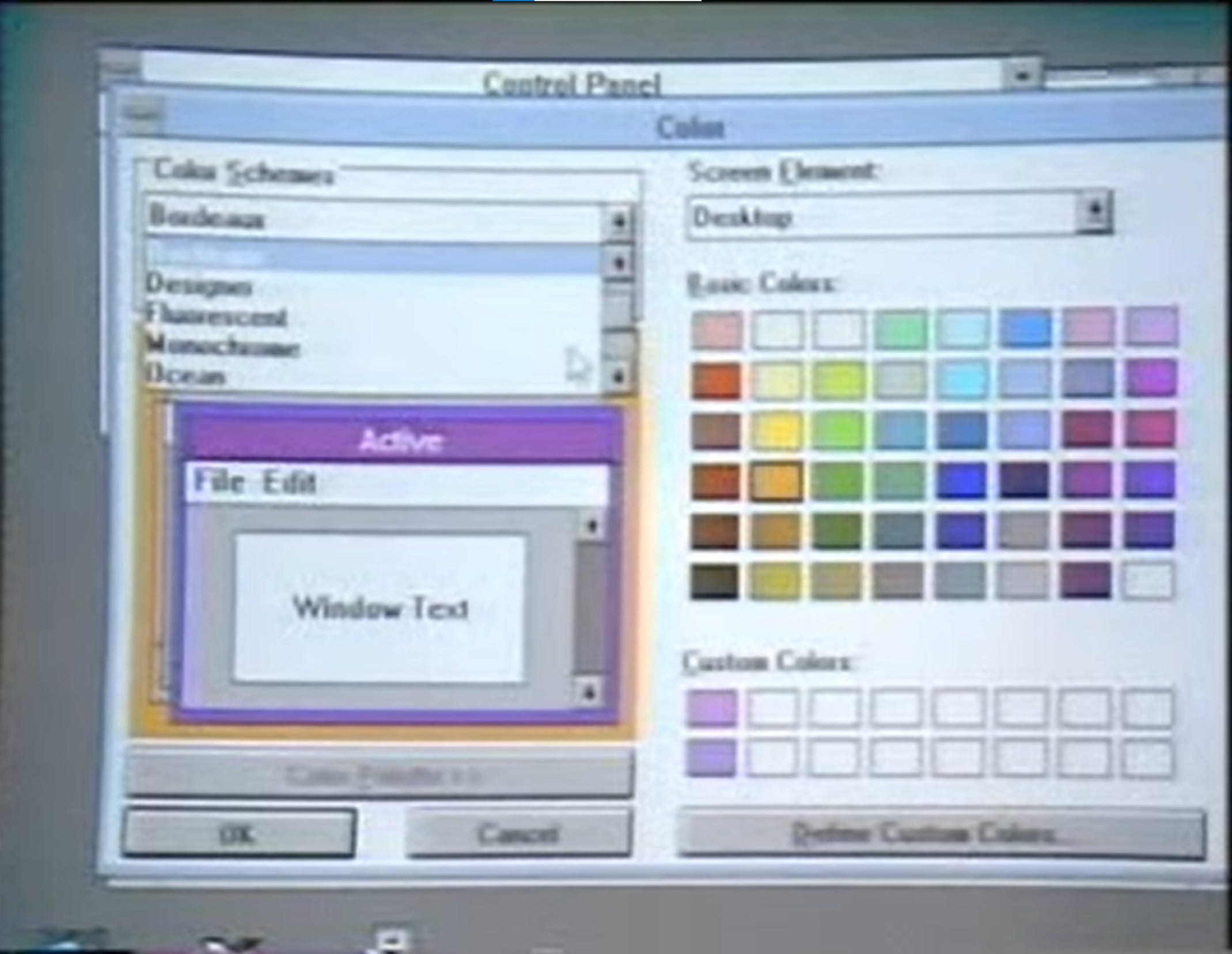
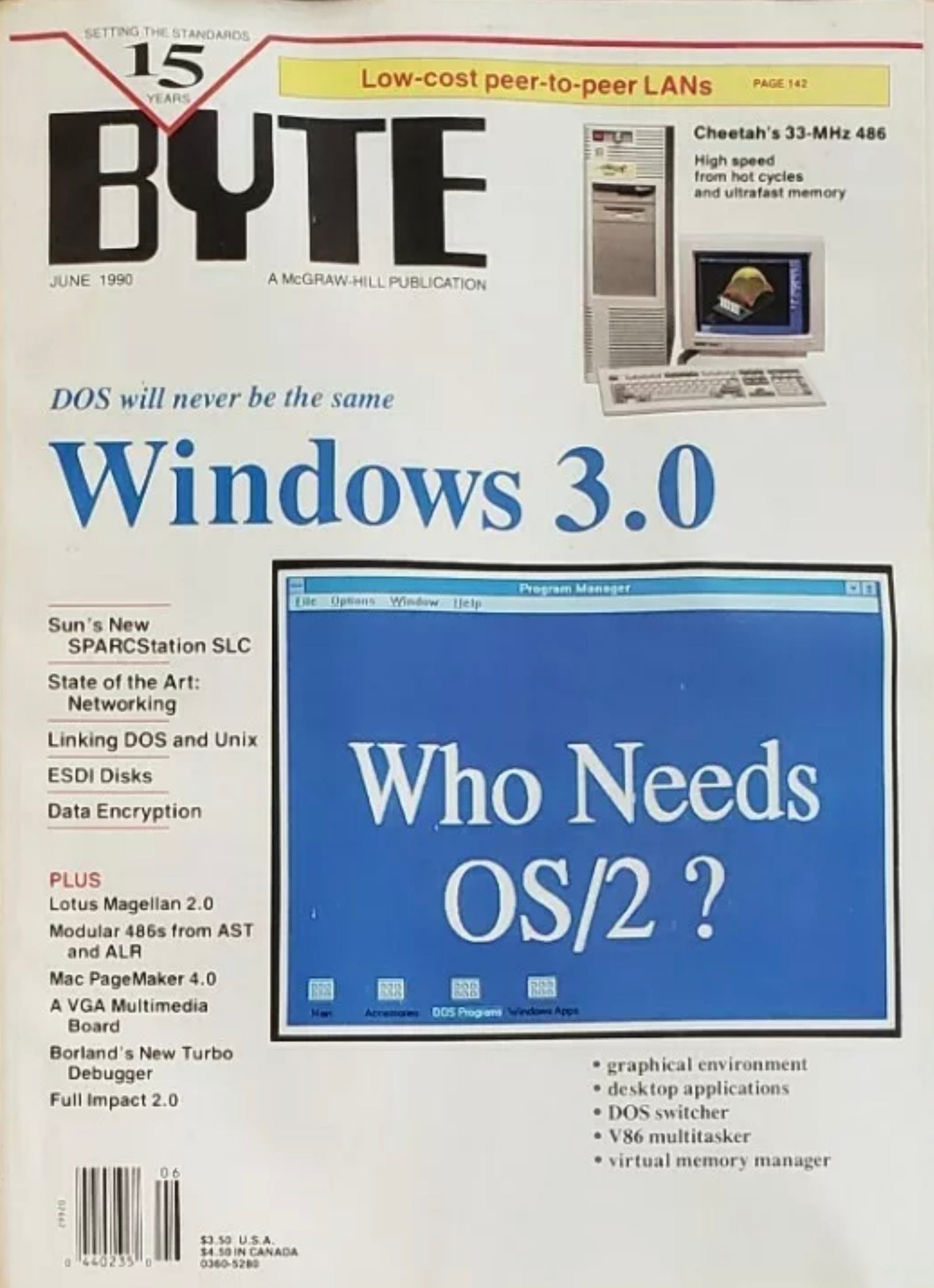
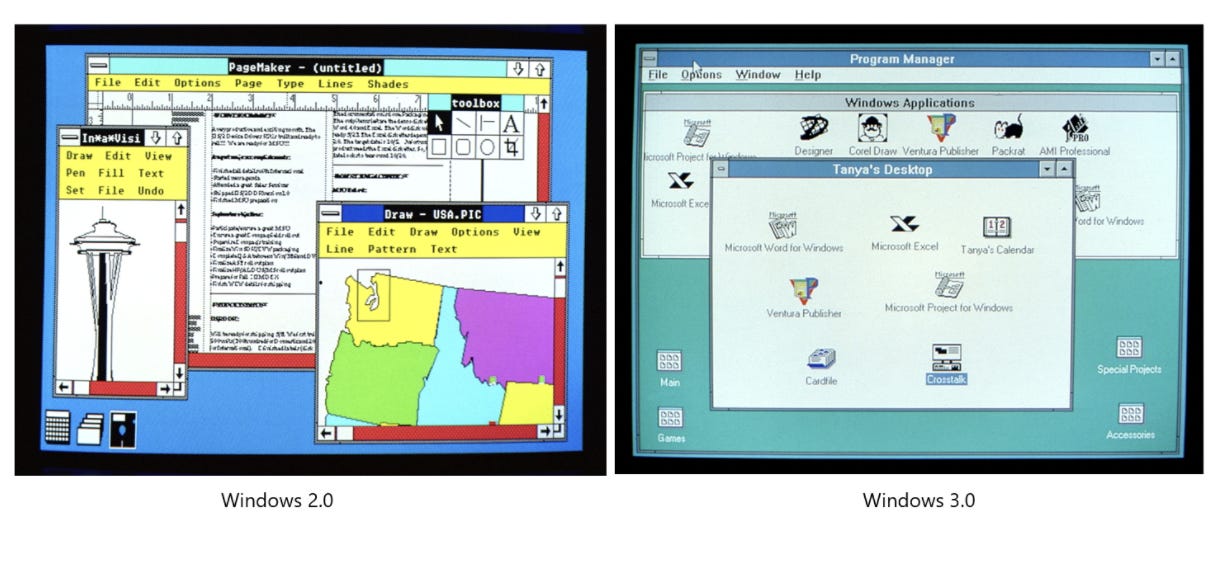
A continued thank you to subscribers for the comments and discussion we’re having. It is an amazing part of writing a book this way that we can share in additional memories and reflect on experiences we have all had. This section marks the end of “Chapter I” and so please feel free to drop me a line with feedback or thoughts on how things are going. By all means share this with friends as we’re about to start diving into product development—and I’ll be writing code finally. Back to 006. Zero DefectsWith spring 1990 approaching, the buzz for Windows 3.0 was becoming deafening within the halls of Microsoft. One of the most exciting things was seeing the visual appearance of the product. Windows 1.0 and 2.0 were, to put it kindly, garish, or at best excessively blocky and utilitarian. Much of this was out of necessity as computer monitors only displayed about the equivalent number of pixels of one app icon on today’s iPhone and only had access to 16 colors (or no colors at all). Windows 3.0 also added overlapping windows like on Macintosh which made a huge difference in how the product felt. Windows 3.0 was the first integrated release of Windows, meaning sold along with MS-DOS on a new PC. The notion that Windows was an “operating environment” added on to MS-DOS was giving way to Windows the operating system. While seemingly arcane technical jargon, the change in vocabulary was also a change in how the product was sold to computer makers and how software developers should think about Windows. Windows coming with a new PC meant it was no longer a question developers would need to ponder when deciding how to write software. The landscape was changing from IBM-compatible PCs to Windows-compatible PCs. This was huge.To emphasize this point, the company scheduled a major (for Microsoft) press event in New York in May 1990. What was months earlier a side project was now front and center for the whole industry. While Microsoft had previously held launch events at trade shows, this was one of the earliest examples (and certainly the most expensive) of a major event for a single Microsoft product.This event was going to be monumental for the entire company, except perhaps for the people working on OS/2. We were all using OS/2 every day as a main development machine, and many people were working hard but struggling to get Word and Excel working on it. But it was also viewed with a good deal of skepticism internally. Much of this was because of the stories that made their way over to Apps from Systems about working with IBM and the disconnect between engineering cultures, but also our own experience in the poor quality and difficulty in using the product.There were many stories of IBM’s dysfunction that were common knowledge. IBM used to measure their programmers on lines of code produced; more lines meant higher productivity. Except Microsoft believed fewer lines of code to create the same feature was better. IBM thought Microsoft engineers were less productive while Microsoft thought IBM engineers produced bloated code. Microsoft was young and confident. IBM was…experienced. While IBM was a few decades into writing software, their experience was rooted in making highly custom and highly reliable mainframe software, over very long periods of time. The reality was Microsoft was at peak productivity for new lines of code being written for PCs, but we were still very early in figuring out a reproducible process for releasing products and of course we continued to have quality problems and scheduling missteps. BillG even noted our challenges in releasing software on time as he walked on stage at the event, saying that today Microsoft is announcing the completion of Windows 3.0 and had the product not been done hosting such a big event would have been a bit of an “extravagant way to announce a delay in the schedule.”The deep tension between Microsoft and IBM was hardly visible to us and, frankly, the industry was geared toward a world with many competing computing platforms. Nearly every article about Windows viewed the product as a stepping stone to the more modern OS/2 that would shed its connection to 8-bit MS-DOS. No one was anticipating Windows 3.0 becoming a de facto standard, certainly no one at our daily lunch table. We increasingly knew Windows 3.0 was an exciting product, but we also knew that Microsoft had committed to a joint development project with IBM, a company perhaps 100 times the size of Microsoft. None of us really had a clue just how tense the relationship between Microsoft and IBM was becoming while we continued to find ways to absorb the complexities of OS/2, Macintosh, and now Windows 3.0.Along with Windows 3.0, Microsoft demonstrated a new release of Excel for Windows, Excel 3.0, an updated Word version 1.1, and the first version of PowerPoint for Windows version 2.0. The PC software industry was a version number machine—literally everything was a 1.0 or a 5.0, or debating whether a product was a .1
006. Zero Defects
Go back to 005. Keeping Busy with Cross-Platform OOP Thank you for reading along and the great comments! This post tells the story of my first memo, Zero Defects, and the impact it had on me and all of Apps. Microsoft was a company that wrote code but we also wrote memos, especially in Apps. Memos were often 20 or more pages long and printed for circulation via interoffice mail—we were building those tools after all! Also, this is my first performance review.When it came time to write my first performance review, it simply read “attended ADC” and looking forward my only goal was to “make ET++ work.”Still, I was nervous about writing mine. So, I shot off an email to Melissa Birch (MelissaB) asking for some tips. She was on the Word team, which was in the very final stages of shipping the original version of Word for Windows 1.0, code name Opus and another long and late project. She graduated from Brown University in 1987 (the same year I graduated Cornell). Melissa was tall, polite, and formal. We shared the East Coast rhythm and sensibilities. MelissaB was an astute engineer, tuned into the challenges of making projects work. I knew she could help.Thanks to fellow Apps Tools developer Kirk Glerum (KirkG), I’d made my way through the gauntlet of a seemingly cliquey lunchroom of regular tables, seated at a table with MelissaB, KirkG, DuaneC, Jodi Green (JodiG), and many others on the Word dev team.Kirk was a hacker’s hacker. He spelled his name Glærum (which wasn’t spelled that way by the facilities name-changers and was quite a trick to type on US English keyboards in MS-DOS) in reference to his family’s Nordic heritage. KirkG was as Northwest as one could get—he was the first to inform me that I was no longer allowed to use an umbrella. He grew up in Oregon. He attended the University of Washington and was a die-hard Husky fan right down to his purple Converse (when meeting people, where someone went to college was often the first fact Softies revealed since so many of us were straight from college). Most interesting was how he ordered a sandwich at the cafeteria. When asked what he would like, he always said, “Surprise me.” I could never have ordered like that. I later learned his business card listed his title as “Software Alchemist”—back then you could make up your job title and mine said “Computer Scientist” since I was convinced I would eventually go back to graduate school. A New Yorker, JodiG joined Microsoft early on. It was immediately apparent that she was a manager because at lunch she was always asking other members of the team about their bugs and progress. She was another graduate of Brown. It was common for graduates of the same school to find each other at Microsoft, even if they weren’t classmates, because alma mater recruiting was something developers did, mostly because they knew the department, classes, and professors. I would soon be making recruiting trips to Cornell.To help me with my review, MelissaB, over lunch, talked about the new mantra at Microsoft called Zero Defects. We would continue this discussion over a long email thread, as was all too common.Zero Defects was a memo that was circulated by the leading development managers (the most senior engineering managers) in Apps and Languages. It was an effort to attempt to get a handle on product death marches and ever-increasing bug counts that were contributing to a broadening view of inevitability as products became more complex.A key underlying argument put forth was that we were rewarding developers for checking in new code and declaring a feature done, even if it was not. Testers then found a lot of basic bugs. That meant they were preventing more interesting testing from taking place and that more code to fix those bugs was quickly written, delaying the new work, and testers would continue find even more bugs.In any software project, adding or changing code had a good chance of introducing a bug approximately 10 percent of the time (a number floating around in academic circles for decades), whether it was fixing one line of code or adding whole new capabilities. The cycle of trying to complete a feature by finding bugs could never really end—this was called infinite bugs and was plaguing the development of Omega, Microsoft’s first Windows database, and to some degree Opus, Microsoft’s first Windows word processor, which began in 1984 but did not RTM until 1989.RTM, release to manufacturing, was a phrase heard constantly. Everything was about getting to RTM. RTM was the ultimate goal. RTM was shipping. For the first decade or so of Microsoft, RTM literally meant to a factory, a Canyon Park facility about 10 miles north of Redmond where there was a shrink-wrap assembly line of boxes, manuals, and floppy disks. At the end of every product, at RTM, teams took a trip to Canyon Park and watched the first boxes roll off the line. We might have made software but we shipped it in boxes to retail stores.The specification for Opus from
005. Keeping Busy with Cross-Platform OOP
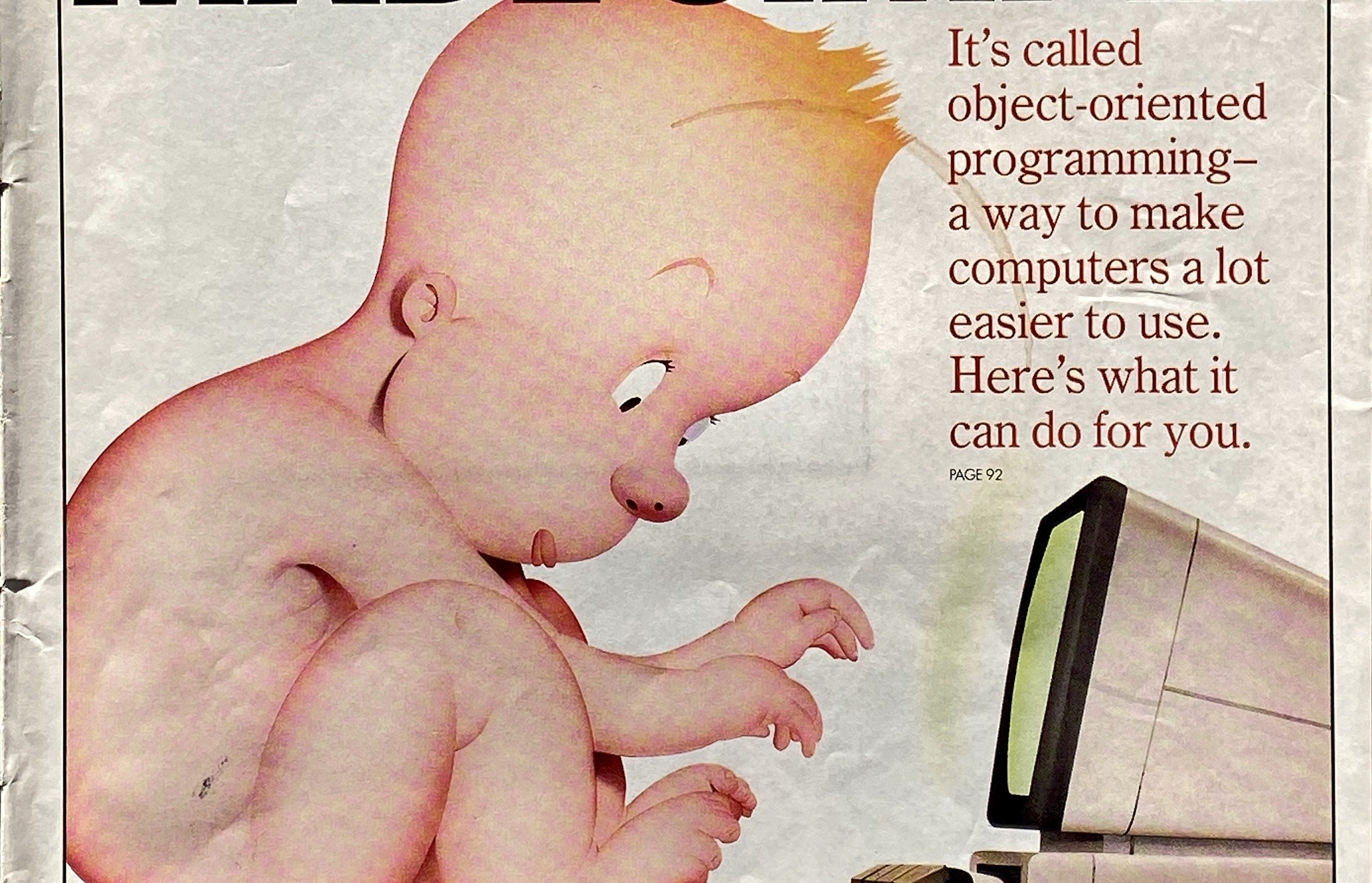
Back to 004. Everything is BuggyI finally have a project to work on. Unfortunately it feels a bit like make-work and I have no idea how it fits into the big picture of Microsoft. Actually, I’m not even sure what the big picture is as we’re all in the middle of the strategic shift to GUI and Microsoft has multiple operating systems we’re supposed to be supporting. As part of the Apps Tools group, we were set up to provide the tools to make it easy to build apps that worked on any platform, regardless of the differences or details of each platform. Isolating app developers from platforms was our job. The industry called this cross-platform development.Historically, such an approach was at the core of Microsoft from the beginning, simply because computing had always been heterogeneous. The makers of computer hardware customized the operating system, which in turn meant that apps needed to be modified to run on each different computer system. This was not any sort of evil plot, as some believed, but simply something that was in place because the hard part of making a computer system was the hardware. Hardware engineers, naturally, chose to modify the software if it meant making the hardware easy. In Microsoft’s earliest days, PaulA and BillG made the BASIC language for many different computers. Microsoft early apps, like the Multiplan spreadsheet, ran on many different personal computer systems at the time, a variety of 8-bit microprocessors and operating systems. Developers like JonDe and DuaneC were experts in the underlying technologies used to get Microsoft apps running on systems from DEC, Tandy, Zenith, Data General, and a host of other names from a bygone era, as well as IBM and then Hewlett-Packard, Compaq, and Dell. PCode and the virtual machine that DougK talked so poetically about in my summer training were in part about making it easier to run software on multiple platforms. It was natural, therefore, that with Microsoft looking to grow the graphical interface apps business while also itself building multiple operating systems, there was a need for cross-platform tools that were more sophisticated than the 8-bit character mode tools that were already in place. Microsoft needed cross-platform tools just to be able to develop its own applications for its own operating systems. Let that sink in. It was common practice in the industry at the time for every major independent software vendor to also develop their own cross-platform toolset, designed to optimize for their own app and their own view of the platform landscape. Microsoft was unique in creating its own need for cross-platform tools, with multiple operating systems and its own applications.Cross-platform product development was the elusive brass ring of development that accompanied each generation when there was no clear platform winner. From mainframes to minis to the increasingly popular Unix variants to microcomputers, and now the rising graphical interface. Each new platform promised to be the one to end all platforms, and it might have been, until the cycle repeated. Cross-platform tools are one of those developer problems that everyone believes they have an answer to, certainly early in software lifecycle. This did not stop even Microsoft from getting caught up in building cross-platform tools. As platforms and applications mature, cross-platform becomes increasingly difficult and the customer experience decreasingly good. Microsoft was still in the early days of cross-platform so it was looking workable. Given the early success with BASIC and 8-bit character mode, it was no surprise that BillG thought the next generation of such work was trivial, a term he loved to toss around. The difficulty—the lack of a trivial solution—was that more and more work was shifting to operating systems away from apps. In other words, as Microsoft (with IBM, and Apple) invested more into making the operating system feature-rich, it made building cross-platform applications more difficult. In fact, that was the strategy, even if it pertained to its own operating system products. Still, the industry believed the key to making cross-platform trivial was a programming technique, one that wasn’t too new dating back to the 1970s Xerox Palo Alto Research Center (PARC), called object-oriented programming, or OOP (sounds like oops). OOP was everywhere. A trip to the Tower Books on NE 8th Street in Bellevue, something I routinely did on Friday nights because it featured a necessarily deep section of programming and technology books, yielded new books every week with OO in the title. OOP promised to make programming an order of magnitude easier (another common phrase, meaning 10 times better or more, but with no specific units or ability to measure). OOP was also deep in my own bones. My lab in graduate school was the Object-oriented Systems Lab. We spent the better part of a year recreating the original OOP platform from Xerox PARC, Smalltalk-80, so we could build ou
004. Everything Is Buggy
Go back to 003. Klunder CollegeSubscribers, thank you so much for the kind words and most of all participation in the discussions. My heart warms each time someone shares their own story or memories from these times. In this section, I am transitioning out of Apps Development College to my full time role. Along the way I am learning the realities of PC software today—it is usually late, and usually buggy. I’m also starting to learn a bit about the two cultures at Microsoft, Apps and Systems. There will be a couple of short posts after this and then we’re off building products! As the summer of 1989 turned to fall, the shipment of Windows 3.0 was looming. When not working on a Mac product or trying to get OS/2 stable for daily use, most of us in Apps were dealing with getting something to work on Windows and reporting bugs back to the Windows team.Far away in Systems, Windows, what started as a side project was now a full team of people grinding away on a death march to get Windows 3.0 done. Typically, in those days, this period of heightened work hours and intense cycles of bug fixing marked the last months of any project. The cafeterias were not usually open for dinner ushering in a (mostly) Systems tradition of ship meals, featuring a buffet much fancier than the cafeteria offered. The idea of serving dinner as part of routine death marches became a decidedly Systems approach that was so formalized it became a budgeted line item (as I would later learn when I joined Windows). Windows 3 was still months from shipping, but the activity was going on around the clock.Windows was in Systems, which was the big dog half of Microsoft. While the history of the company was in Languages where BASIC and other tools were made, the center, and at the time the economic engine of the company, was Systems where MS-DOS was made. MS-DOS was the brilliant product born out of a commitment to IBM to deliver a product that didn’t exist and wasn’t yet under development. It was subsequently acquired and modified to meet the deadline, with the twist that Microsoft was free to license the product to other computer companies.In other words, while IBM was the first contract for MS-DOS it was not exclusive.Out of that, the entire PC industry was created. And not for one second was that lost on the Systems people.From those early first days, Microsoft felt like two different companies: Apps and Systems. A buzzword in modern business, these two cultures could not have been more different, at least that’s what I was led to believe by listening to stories at lunch. Even though the company was made up of only about 3,500 people, with half in Redmond, I had not yet met anyone in Systems. While I could have easily walked a few hundred feet over to one of the buildings they occupied, that wasn’t something that people did. Apps and Systems didn’t exactly intermingle.The one thing we knew about Systems, despite the anonymity, was that as buggy and late as Apps products were, the Systems products, I was informed, were buggier and later. Windows 3.0 was coming down to the wire. There were no real secrets—many people had builds and were installing the product, and the weekly industry tabloids, InfoWorld and PC Week, were tracking the latest rumors, test releases, and gossip. The actual delivery date was not well known, not by the team or anyone else until very close to the announcement of that date.From the time I arrived at Microsoft and installed that first build in ADC in the summer, the launch of Windows 3.0 was always real soon now, often abbreviated RSN in snarky email. That had no impact at all on the enthusiasm as the buzz that Windows 3.0 would be a breakthrough was pervasive through the hallways. The industry was equally anxious for what appeared to be a showdown across a plethora of operating systems including MS-DOS, Windows, OS/2, and Macintosh. In hindsight, it was easy to make fun of the fact that everything seemed late and hardly worked. The entire industry was like that. From the earliest days of PCs none of us knew anything else. The expression vaporware was commonly used to refer to software that was well known and frequently discussed but not yet shipping. The phrase was used first as far back as 1983 by Esther Dyson in the industry thought-leading newsletter Release 1.0. In some sense, most everything was vapor. I remember sitting in my ADC office having just received a Goldman Sachs analyst report on Microsoft from the library. In the report was a table of all our company’s products under development and estimated ship dates. The dates were far in the future and all wrong by many months or even years.In fairness, it was challenging to simply get a non-trivial product built, have it work on the wide variety of PC configurations that existed, and then ship it in dozens of languages. That’s because there was no internet, no diagnostics, or telemetry, and anything that went wrong simply crashed the whole computer, requiring a pow
003. Klunder College
Go back to 002. SteveSiADC, Apps Developer College, was more a curriculum than a college, run by Dan Newell (DanN) and Doug Klunder (DougK). It was called Klunder College because Doug created it. ADC was basically a couple of three-ring binders of assorted documentation and memos and a bunch of self-paced coding exercises that constituted a new and unique approach to on-boarding at Microsoft at a time when most everyone who programmed was self-taught. The idea of a programming orientation or bootcamp seemed unnecessary, perhaps even insulting. I would take away much more than I could really understand at such an early juncture in my career as I immersed myself in my first lessons in culture.Most teaching was done during a meeting with Dan, and usually by stopping by or hovering at his office. Even though we had offices, there was a constant roaming of the hallways and stopping by unscheduled to see people. This, I would soon learn, was the Microsoft management and learning culture—self-sufficient, informal, and interrupt-driven (a specific computer term that became one of my first Microsoft-isms—“What’s the best way to meet them? … Oh, they are interrupt-driven.”) It was a big change from the structure of universities but also consistent with how most everyone there had learned PC programming in the early days.DanN’s office was filled with vinyl records, a stacked stereo system, and a few early ’80s music posters. He was an experienced Microsoft SDE and was half the leadership of ADC. A few doors down was DougK. In contrast to Dan’s office, Doug’s office was completely spartan, as though he had only recently moved in. Doug looked like a member of the Doobie Brothers, with a long beard, flannel shirt, cords, and no shoes. He was exactly what my mother had warned me about.Doug was a programming legend at Microsoft. After graduation from MIT he joined Microsoft as the first college hire and subsequently an informal leader in the quest to hire directly from college, especially in Apps. He was one of the earliest Apps SDEs and had written much of the code in an early spreadsheet for MS-DOS that Microsoft released as Multiplan but called Electronic Paper, or EP, while under development.Dan told me that BillG decided the company’s future was on graphical user interface (GUI) like OS/2 and Macintosh so the company chose not to bring an updated MS-DOS (CUI, or character user interface) spreadsheet to market. Doug was so frustrated by this decision that he quit Microsoft and went off to work on a farm in California. Doug’s innovative work was critical to Mac Excel 1.0, which ultimately shipped for the original Macintosh. Later, he returned to help finish Mac Excel 1.0 and contribute broadly to Apps in the transition to GUI. Doug was the ideal person to indoctrinate us into the ways of Microsoft Apps.My first day had been a success, or at least not a failure.After a few weeks of ADC, I finally received an email from ScottRa. He suggested we meet the next day first thing. “How about 11 a.m.?”Microsoft SDEs bordered on nocturnal in those days. This was consistent with how college programmers coped with the scarcity of computers. It was always best to work late at night when fewer people were trying to get to terminals and, if on a shared mainframe, slowing it down. Everyone was working nights at the office back then. There was no way to even do email from home and certainly not any coding. The old Xenix email system made it easy to see if a person was logged on, and rumor was that BillG was always checking in on key people to see if they were connected. These were all traits of the original hacker ethos that had worried my mother.When asked if Microsoft had “flex time” (an ’80s buzzword) by prospective college hires, we always said, “Yes. You can choose to work whichever 80 hours of the week you want to work.” That was, essentially, true for the ’90s. Our views later matured as did the company, much to the chagrin of new old-timers like me. Mostly we were in our 20s and loved what we were doing.Scott explained what was in store for me for the next few months. Before programming anything I needed to learn the unique dialect Microsoft used. While I knew the programming language, Microsoft had a unique style called Hungarian, named for Charles Simonyi (CharlesS), one of the rarified level 14 architects in the company and the only one in Apps. CharlesS was recruited by BillG from Xerox PARC where he had built the first GUI word processor. Hungarian was the secret handshake used between programmers at Microsoft and it was unlike anything I’d ever seen. In college programming or in books, one might use a name in code such as FormatLine. In Hungarian, we used names like FFormatLineFspec, which were chosen to make code more manageable for large teams. I also needed to learn the tools used to build Excel and Word. There was a proprietary programming language called CSL, also named after CharlesS. This language, based on C, had a
002. SteveSi
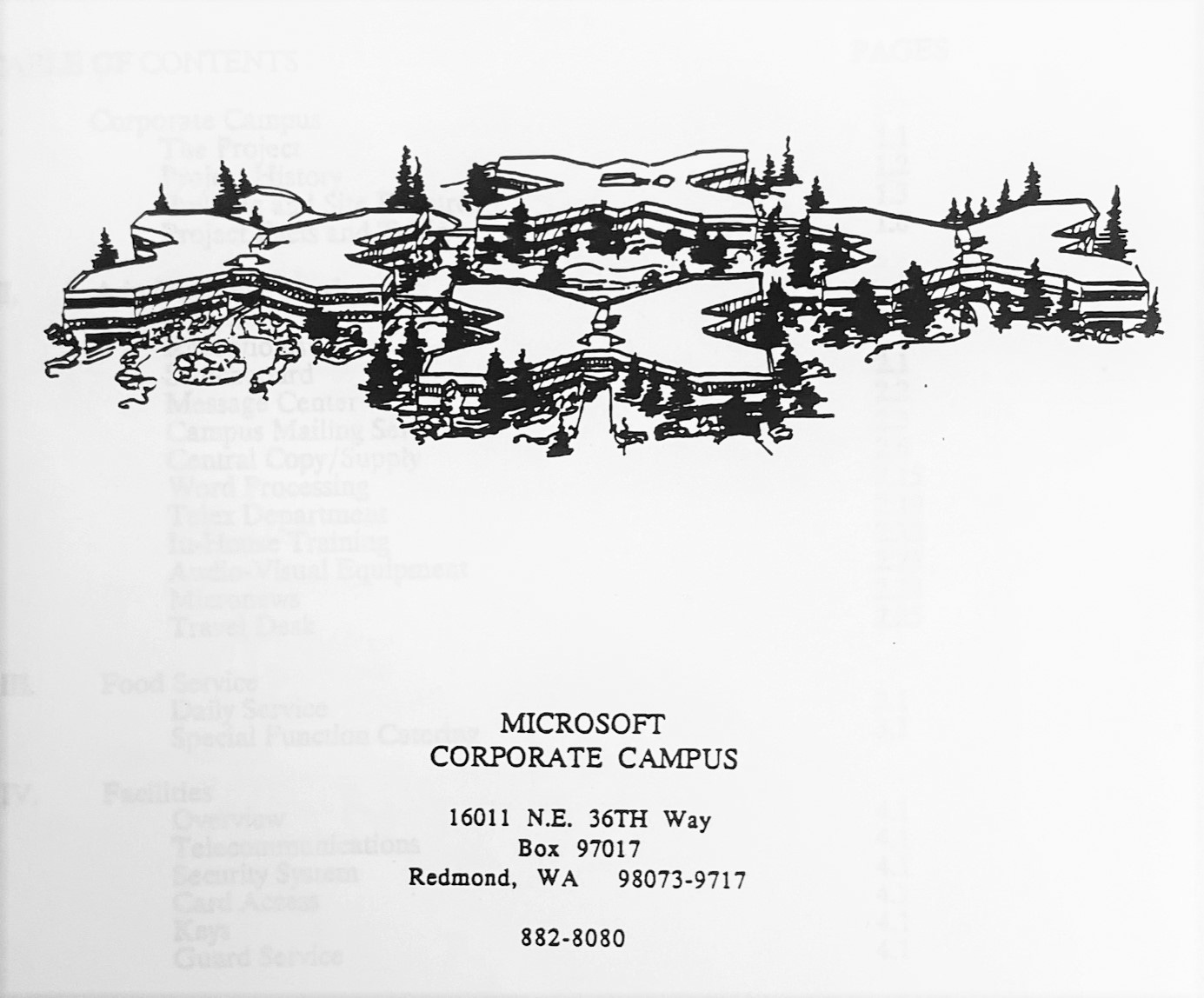
If you missed the first post, start with 001. Becoming a Microsoftie (Chapter I). A Prologue has been added offering just a bit about my own history with computing. There is also a Roadmap/Table of Contents. If you need an overview and guide to subscriptions with discount codes, see Introducing "Hardcore Software".Back to 001. Becoming a Microsoftie [Chapter I]When I first arrived in Redmond, I lived about three blocks from campus, in company-provided temporary housing at an apartment complex called Bellevue Meadows, a block from the Residence Inn I had almost burned down during my interview. It was still light out at 9 p.m. on my first night (welcome to the Northwest), so I walked over to campus to check it out.Microsoft’s three-year-old campus was made up of the original X-wing buildings, 1 through 6, and the recently completed double X-wing 8 and and 9. There was no building 7. Nobody knew exactly why, though there were a bunch of theories tossed around over the years. Sending a new person to meet up at building 7 was an ongoing prank. The real buildings surrounded a fountain and the small-but-infamous Lake Bill (which, looking back, is much smaller than I recalled from that first night). There was a basketball court near the lake, which always seemed to be in use. The buildings, connected by tree-lined sidewalks, were known for their design, which was meant to maximize the number of private offices with windows.In a nod to Microsoft’s culture of self-reliance, the next day, my first day, after a two-hour orientation session (that felt like forever), I and about 20 other college hires were left to fend for ourselves. While I had been told how to set up direct deposit (paychecks were still hand delivered for many) and learned some details about my healthcare plan, I literally had no idea where to go. Fortunately, a more studious fellow new hire noticed, buried in the paperwork, that there was a map and an old-style printout with name (Steve Sinofsky), telephone extension (x67768), manager (Scott Randell, listed as SCOTTRA), and an email ID and password (yes, printed). The floor plan and numbering system made MIT’s infinite corridor look understandable.As I flipped through the paperwork, I noticed my assigned email name was STEVESI on the printout, which immediately irked me as I was steven in all my previous systems (all lower case because of Unix). Obviously, I was not going to complain.As I came to understand it, SteveSi was officially, and forever, my new name. Email names were how people wrote and spoke about others. Where a previous generation might have used only a last name out of casual respect or mister in person, Microsoft used email from BillG to SteveB on down. Aside from the free drinks, private offices, and khakis with button-downs, email names remained one of the iconic cultural identifiers of those days (and still used among alumni.) Given names no longer mattered at Microsoft. I was SteveSi. Cris Wittress was CrisWit—I finally got what she meant.Before I started, Steven Schwartz had landed the name StevenS, a fact for which I was always jealous. After he left I even tried to secure the name, but there was a no-recycle policy. A coworker named Bill Gallagher was given BillGa, and for years he got crazy mail intended for (the real) BillG. As the company grew, it began to wrestle with the complexities of people getting married (or divorced) and how to deal with email name changes—much trickier than they’d imagine. Ultimately, in the late 1990s with the move to Microsoft’s email product, we finally moved to friendly names like [email protected] was a list of email aliases (an early Unix-ism) to get help, like benefits, sickday, vacation, supply (office supplies), recept1 (recept2, recept3, etc. for the receptionists), stock (stock option sales), espp (employee stock purchase plan), payroll (for help with direct deposit), and, best of all, pcrepair, which could help with computer hardware. Perhaps that was second best, as I soon discovered library, which mailed the Microsoft librarians any topic to research or a request to send copies of articles or locate any book needed for work. There was an actual library filling most of one arm of an X in building 4, where I spent a lot of time as well. Everything was an email away.Microsoft made about 35 different products back then, and I had personal experience with almost none of them. Importantly, by the mid-1980s, Microsoft moved beyond being a single-product company. It had substantial businesses in each of the major categories of the day: languages, operating systems, and applications. No single product represented more than half the company revenue. This early diversity was critical to Microsoft’s growth. In many ways, early software companies emulated record or book publishing by having many licensed titles for sale, and while early Microsoft followed this model it was now building most software in house.The Systems group was t

001. Becoming a Microsoftie [Ch. I]
Welcome. This is the first serialized section (yay!) The book is broken into 15 chapters and an epilogue. Each chapter has a number of sections, which are the posts you’ll receive in email. Occasionally I will add some context or an update at the top of a post like this. The Roadmap will maintain links to posts and will be an easy way to track the whole work. There will be additional posts and ask-me-anything threads (a Substack feature) which will also be mailed out and listed in the roadmap. The first posts are about what it was like starting as a new hire and a bit of an introduction to me.PCs and software barely work, but the ascent of the IBM PC powered by Intel processors and Windows is underway. It is the start of the modern PC era as PC sales (from all manufacturers for the year) exceeded 20 million units worldwide, which is about half the worldwide sales of all personal computers to date including those from Apple, Tandy, Atari, and more. Looming, however, is platform competitor NeXT, the new computer company started by Steve Jobs. The dramatic extent to which that company will alter the technology landscape is decades from revealing itself. While Apple’s Macintosh is a competitor, it is also the foundation for Microsoft’s Applications business. The group I was hired into was squarely in the middle of both the new and old Steve Jobs platforms.The whiteboard in my graduate school lab read, “Steven, Bill Gates called. Call him back.”It was super weird to see that written because Microsoft wasn’t on our collective academic radar and most people didn’t know who Bill Gates was. Someone was clearly playing a joke on me. My college friend Brent grew up in the Seattle area and I had mentioned to him that I was interviewing at Microsoft, so it was probably him.Later that day, I got home to find my PhoneMate microcassette answering machine flashing. There were two messages recorded. The first one was left earlier that morning as I started walking to the Lederle Graduate Research Center at UMass-Amherst where I was a second-year PhD student in computer science. A somewhat squeaky and distracted voice said, “Steven, um, this is Bill Gates calling. Can you call me back at . . . um . . . 206-882-8080?” The second message had been recorded later in the day. “Steven, yeah, this is Bill Gates calling again. I guess I called you at your lab like your message said, but you weren’t there either. When you get a chance call me back.” My outgoing message at home gave the number of the lab since that was the only other place, basically, that I spent time.Brent’s ploy seemed rather elaborate. He kept it going for a couple of days as I kept getting voicemail messages claiming to be Gates. I did nothing.As an undergrad I had written a program called MacMendeleev (after the father of the periodic table). I had been dying to write a Mac program after the incredible Super Bowl launch advertisement. MacMendeleev was the result of landing in an encouraging chemistry lab (thanks, Professor Clardy). As much as computer science classes made me finally feel like I was in the right place in life (thanks, Professor Teitelbaum), my chemistry classes were the exact opposite (B+ fall of freshman year was the highest grade I’d receive in chemistry in four years). The Mac was not a business computer, especially according to the advertisements by IBM, and they weren’t used in my classes. There wasn’t dBase II yet, as I had used earlier on my Osborne, and I wasn’t going to use Microsoft BASIC to write something from scratch. The Mac was, however, focused on education. The one thing I loved in chemistry was the periodic table. I dreamed up the idea of an interactive periodic table that could chart or graph the elements according to different properties to see what exhibited periodicity. I got some help from my lab mate, Tom Ball (a future Microsoftie), to help me with the graphics.Surprisingly, MacMendeleev achieved a small amount of success. We signed up with the ever-present photocopy store Kinko’s that maintained an in-store kiosk that made copies of library programs. It was a software vending machine. The program was used in a few classes, and we made enough money on it to fund a cruise on Cayuga Lake.The program also scored me an invitation to the 1988 Association of Computing Machinery regional gathering on Computers in Education. The conference loaned me a Mac to use, instead of the luggable PC I started using that I had acquired from my summers at Martin Marietta. The PC ran MS-DOS (Microsoft Disk Operating System), the software required for a PC to run and provide capabilities for other companies to write programs. It was the defining product for Microsoft in the 1980s and became the business engine that powered the company prior to Windows and Office. I had never been to a conference and was not sure why I was there or what was going on, but I found myself sitting at a table talking about the periodic table, doing my first demos and
Prologue. Becoming a Hacker
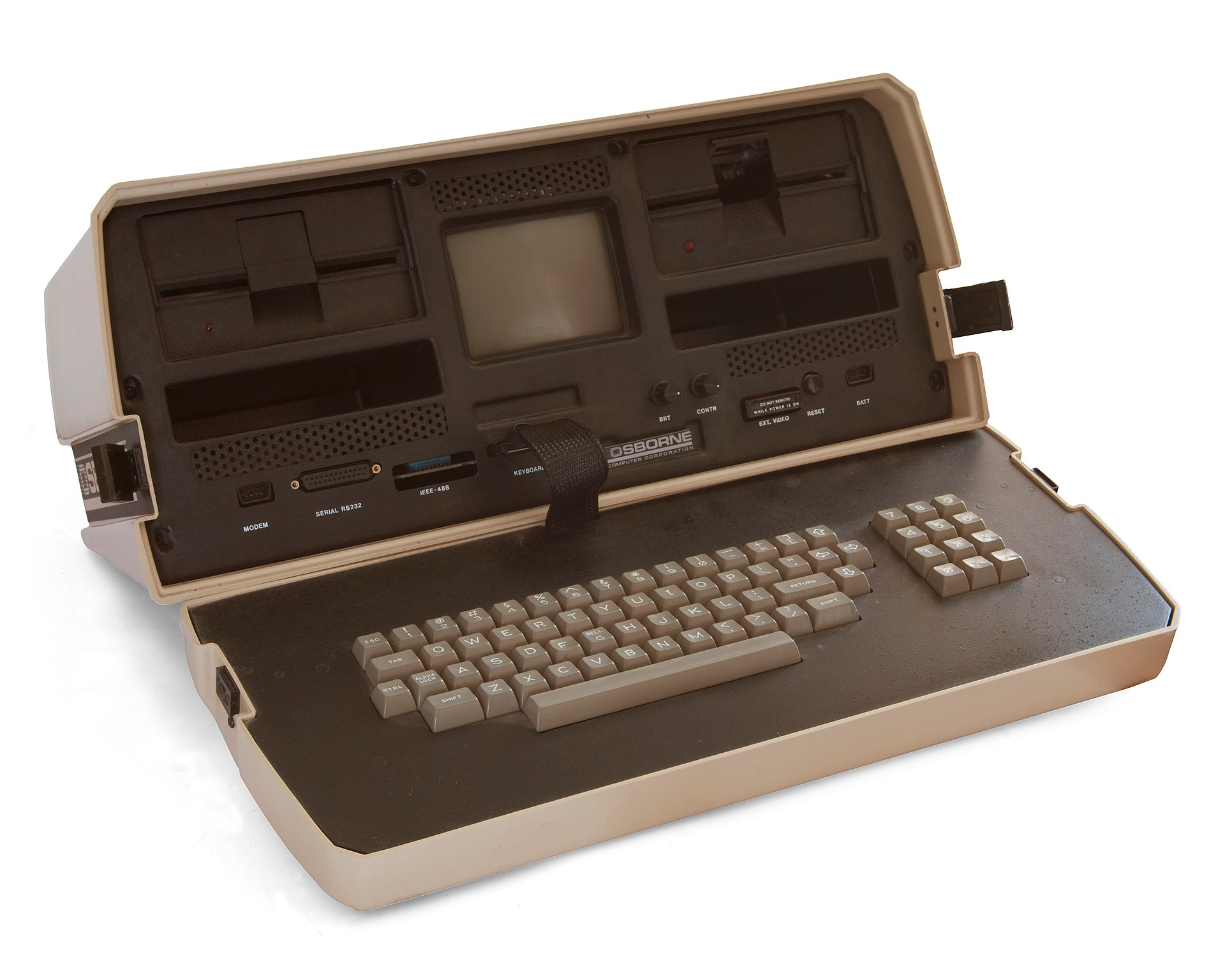
In 1982, Time magazine named the personal computer Machine of the Year, marking the first time a non-human was awarded Man of the Year. It was a fascinating read, but like many nerdy kids across the country at the time, I’d already become captivated by computers.My best friend Dave Crotty and our other best friend, Neal Fordham (collectively, the three of us were known as the boys), spent the previous year making mixtapes of ’80s punk and new wave on Dave’s father’s Bang & Olufsen component system.When Dave’s brother Kevin got an Atari 800 computer, my curiosity piqued. I was mesmerized by this new machine—not by the video games I could play on it but by the presence of BASIC, the first programming language experienced by most everyone in the early days of personal computing. BASIC was thanks in no small part to Bill Gates and Paul Allen and their start-up originally known as Micro-Soft.I gave up Space Invaders for rows of numbered lines. The timing turned out to be great.Our family business was a retail store in Orlando, Florida. My Saturdays were spent calculating sales tax, doing inventory, and making change while chatting with customers.Dave’s Atari gave me an opportunity to create my first program:10 PRINT "Amount of sale?”20 INPUT sale30 LET tax = sale*.0440 PRINT "Merchandise: ", sale50 PRINT "Tax: ", tax60 PRINT "Total: ", sale+tax70 GOTO 10As the family business evolved, my father, David, realized that turning it into a wholesaler was a great opportunity for the family. He decided to buy a computer to run it. I have no idea where the motivation for this came from and certainly knew the expense was significant ($1,800 then or about $5,000 in 2020 dollars). While our family had been early adopters (to some degree) of many modern household items—we had a fancy 35mm camera, a microwave, a Betamax, and even a big-screen TV—a computer, however, was puzzling. It was also an enormous privilege. Rather than a “toy” computer, of which the Apple ][, Atari, and the new Commodore 64K (64K!) were viewed at the time by those who claimed to know, my father invested in a business computer. He went to a computer store, staffed by people in suits and ties, and bought one of the earliest Osborne I computers.The Osborne was a remarkable machine at the time and in the history of the personal computer. A nearly 30-pound “portable” (it didn’t even have a battery as portable meant you could relocate it) described as “the size of a sewing machine,” it had a 5-inch CRT screen that wasn’t large enough for a full 80 characters across, so using the CTRL key and arrows that panned the screen would allow someone to see the rest of it. It came with two 90K 5.25-inch floppy drives and 64K of memory. It ran the CP/M operating system (Control Program/Monitor), which at the time was vying to become the de facto standard.It came with a bundle of “free” business software, including the WordStar word processor, the SuperCalc spreadsheet, a copy of the remarkable VisiCalc on the Apple ][, and two (!) different BASIC languages, MBASIC, which I later learned was Microsoft BASIC, and a faster variant, CBASIC. Notably, a “database” called dBase II was promised but did not arrive until later (“real soon,” the dealer told us).Magazines were the early fountain of knowledge about the new computer because computers were not connected to anything else or any other computers. The monthly Portable Companion, the first issue, free with the computer, was filled with tips and tricks for using the Osborne and the bundled software. I dutifully filled out reader response cards and soon had a library of code samples I could type in and printer configuration codes. I read Dr. Dobb’s and BYTE at B. Dalton Bookseller in the mall instead of playing games.I set up the computer in the tiny extra room that served as the TV room for my sister and me, much to her chagrin. The noise created by the combination of typing on the full travel keyboard and the constant grinding and clacking of the floppy disk drives, not to mention the loud beep at power-on and whirring fan, took a toll on my younger sister, Jill. Through our lightly constructed 1970s Florida ranch house, I heard her repeatedly whine, “Stop clicking . . . stop beeping.”I was undeterred.My father and I spoke twice about the computer. The first time was when we bought the computer for the business and I was left to figure out how to “put it to work,” whatever that meant in 1981. Second, after a few months, when I was not making enough progress, he basically said he was firing me and he was going to hire a professional, whatever that meant. But that second conversation lit a fire under me.I spent a month or two using CBASIC to build an inventory program for the wholesaler. I had no idea how a database worked, what a database table was, or anything like that. There were enough example programs for managing “lists” in CBASIC for me to figure out how to modify them.Probably just in time for my father’s loss of p