Hardcore Software by Steven Sinofsky (Audio Edition)
109 episodes — Page 1 of 3

108. The End of the PC Revolution [Epilogue]
Welcome to the final installment of Hardcore Software. It has been an amazing journey in the 115 or so sections including bonus posts. I owe a huge debt of gratitude to those of you that have followed along the journey of the PC and my own growth and lessons. Thank you very very much.I have a few more bonuses planned, including a compendium of Microspeak and a bibliography of books and magazines that I collected. For paid subscribers I will be sending out an update on how billing will end and for “True Blue” subscribers please expect an email on receiving your compiled version of the work. It’s not too late to order that and also have access to all the old posts. I will also be filling in audio for the first 70 posts in early 2023.Hardcore Software describes a personal journey. It is also one that happened to coincide with the PC revolution—the early days all the way through the final days of the revolution. The PC still marches on, but it is different. The PC remains essential though is no longer central to the agenda of computing as it was. That is what I mean by the end of the revolution.This post is free and comments are turned on for all Substack users.Back to 107. Click In With SurfaceWindows 8 was a failure.Hubris. Arrogance. Lunacy. Egomaniacal. Pick any word to describe the product; it was likely used somewhere. No one knew, or felt, the weight of the product failure more than I did.Nearly every successful Microsoft product had survived our it takes three versions to get it right modus operandi. Esther Dyson, a technology investor and journalist, writing for Forbes in an article “Microsoft’s spreadsheet, on its third try, excels” said “It’s something of an industry joke in the software business that it takes Microsoft three tries to get it right. There’s Windows 3.0, Word 3.0, and now Excel 3.0.” She wrote that in 1991, reviewing the third version of Excel.No Windows leader made it through the odd-even curse of releases, certainly not three major releases of Windows from start to finish.My hope had been for a credible Windows 8 knowing we weren’t finished, which was standard operating procedure for new Microsoft products. We knew where we wanted to take the product over time—the hardware, the software, and the apps. But none of that happened. For reasons I still do not fully understand, for the first time I could remember Microsoft quickly and completely withdrew and actively erased Windows 8 in an almost Orwellian way—even Clippy preserved its dignity. I try to imagine what would have happened had Microsoft given up on Windows the first time, or Windows Server, Exchange, Word, Excel, or PowerPoint. All of those took multiple iterations to find product-market fit, to win both hearts and minds.Requiring three versions was not a Microsoft thing. It is a product development thing. Even in a big company you must ship the first version—shipping a “V 1.0” (v for version) is always a miracle. Then you need to fix it and that was version 2.0. Then by version 3.0 not only does the product work, the sales, marketing, positioning, pricing, and more work. Product development is always a journey. Always.With years of hindsight including the new mobile market, the PC market, and Apple, many of the initial problems with Windows 8 were not nearly as egregious as much of the commentary made them out to be. Or maybe the commentary was right and what was egregious was not that we made a product that did what it did, but that we made Windows do those things? Or perhaps we simply did it all too soon? Or that we, surprisingly, lacked patience to get it right?There was commentary on me as a leader, as a person. I knew that was borne of immediate frustration and not enduring. That’s why I remained quiet and did not speak out in 2012 as I moved on to a new experience in Silicon Valley and working with entrepreneurs. I understood and even respected the emotion from where it came and the forces that produced it. Over time individuals who facilitated that commentary have since apologized directly. I was proud to be part of more than two decades of building products, processes, teams, leaders, and people—a culture—that were the highest quality, best equipped, and most talented at Microsoft in the PC era.The problems we needed to solve with Windows 8 and Surface were readily apparent, as I strongly believed the moment we shipped. Nothing anyone wrote about either was surprising or news to those of us who had lived with the products. The commentary on the severity of the problems, and how and what to fix, was debatable.Microsoft had become synonymous with the PC, but could it also reinvent the PC? That was what we set out to do. The problem was that the people who loved PCs the most weren’t interested in a new kind of PC. They wanted the PC to get better, but in the same way it had for decades—primarily, more features for tech enthusiasts and more management and control features for enterprise IT managers. They simply wanted an

107. Click In With Surface
Happy Holiday to those in the US. This is a special double issue covering the creation and launch of Microsoft Surface, an integral part of the reimagining of Windows from the chipset to the experience. To celebrate such a radical departure from Microsoft’s historic Windows and software-only strategy this post is unlocked, so please enjoy, and feel free to share. I’ve also included a good many artifacts including the plans for what would happen after Windows 8 released that were put in place. The post following this is the very last in Hardcore Software. More on what comes next after the Epilogue.As a thank you to email subscribers of all levels, this post is unlocked for all readers. Please share. Please subscribe for updates and news.Back to 106. The Missing Start MenuIn 2010, operating in complete secrecy on the newest part of Microsoft’s campus, the Studios, was a team called WDS. WDS didn’t stand for anything, but that was the point. The security protocols for the Studio B building were strengthened relative to any other in the entire engineering campus. Housed in this building was a team working on one of the only projects that, if leaked, would be a material event for Microsoft.WDS was creating the last part of the story to reimagine Windows from the chipset to the experience.When we began the project, it was the icing on the cake. After the Consumer Preview, it had become the one thing that might potentially change the trajectory of Windows 8.As Windows 7 finished and I began to consider where we stood with hardware partners, Intel, the health of the ecosystem, and competing with Apple, I reached the same conclusion the previous leader of Windows had—Windows required great hardware to meet customer needs and to compete, but there were structural constraints on the OEM business model that seemed to preclude great hardware from emerging.At the same time, the dependence on the that channel meant there was no desire at Microsoft to compete with OEMs. In 2010, the Windows business represented 54% of Microsoft’s fiscal year operating income and Office was 49%—yes you read that correctly. BillG used to talk about that amount of revenue in terms of the small percentage of it that could easily fund a competitor or alternative to Windows. The “Year of Linux” was not just a fantasy of techies but a desired alternative for the OEMs as well. So far the OEMs had not chosen to invest materially in Linux, but that could change especially with an incentive created by Microsoft’s actions.Like my predecessors, I believed Microsoft needed to build a PC.Building PCs was something BillG was always happy to leave to other people. In an interview in 1992, Bill said, “There’s a reason I’m the second-biggest computer company in the world…. The reason is, I write software, and that’s where the profit is in this business right now.” On the other hand, the legendary computer scientist and arguably father of the tablet concept, Alan Kay, once said, “People who are really serious about software should make their own hardware.”Microsoft was founded on the core belief that hardware should best be left to others. In the 1970s hardware was capital intensive, required different engineering skills, had horrible margins, and carried with it all the risks and downsides that pure software businesses, like the one BillG and PaulA had pioneered, did not worry about. With a standardized operating system, the hardware business would quickly consolidate and commoditize around IBM-compatible PCs in what was first a high-margin business that soon became something of a race to the bottom in terms of margins.Microsoft’s fantastic success was built precisely on the idea of not building hardware.BillG was always more nuanced. He and PaulA believed strongly in building hardware that created opportunities for new software. Microsoft built a hardware device, the Z-80 SoftCard, to enable its software to run on the Apple ][. Early on, Microsoft created add-in cards to play sound. PaulA personally drove the creation of the PC mouse, the famous green-eyed monster. Modern Microsoft built Xbox, but also Zune and the Kin phone.Apple built great hardware and together with great software made some insanely great products.To build hardware in this context meant to build the device that customers interacted with and to build all the software and deliver it in one complete package or, in economist’s parlance, vertical integration.Mike Angiulo (MikeAng) and the ecosystem had the job of bringing diversity to the PC ecosystem, a diversity that Apple did not have. This diversity was both an enormous strength and the source of a structural weakness of the industry. PCs in any screen size or configuration one might need could always be found or even custom built covering any required performance and capacity. If you wanted something like a portable server or a ruggedized PC for a squad car or a PC to embed in 2 Tesla MRI, Windows had something for you. Apple with its ca
106. The Missing Start Menu
This section was the most difficult to write. At least people look back favorably on Clippy. The Windows 8 Start screen lacks any kitsch or sentimental value. It was the wrong design for the product at the wrong time and ultimately my responsibility. This is not the story of the design. There are better people to write about the specifics. This is not a story of ignoring feedback or failing to heed the market, but a story of just what happens when you’re out of degrees of freedom. This is the story of the constraints and the rationale for how we managed a situation that we saw as a quagmire. The good thing about the Start screen was everyone had an opinion. The bad thing was most of those opinions were not favorable.Subscribers, only two more scheduled posts remaining. This is a public episode. If you would like to discuss this with other subscribers or get access to bonus episodes, visit hardcoresoftware.learningbyshipping.com
105. New Ultrabooks, Old Office, and the Big Consumer Preview
The previous section detailed the release of the Windows 8 platform, WinRT, for building Metro-style apps. In the reimagining of Windows from the chipset to the experience, we’ve covered all the major efforts. In this section, we will describe the latest in PCs that will contribute to Windows 8, which Intel called Ultrabook™ PCs We will also introduce the Windows Store where developers could distribute apps. The really big news will be the Consumer Preview or beta test for Windows 8 where millions will experience the product for the first time. It might surprise readers, just as with the Developer Preview, that the reaction to the product across many audiences was quite positive. Just how positive? And what in the world could the professional press and reviewers actually liked? And what did Apple’s Tim Cook have to say about all this?Back to 104. //build It and They Will Come (Hopefully)Following the //build conference we were feeling quite good. Not to belabor the point, but I recognize how challenging it is to take such feelings at face value given where the product ended up. In writing this and helping people experience the steps we went through at the time in sequence, my hope is that what comes to light is that we were not bonkers and in fact much of the industry was excited by Windows 8 as it emerged. Of course, there were skeptics and doubters, even haters, but as veterans of dozens of major products we’d seen this before and the volume for Windows 8 was not disproportionate. If anything, the excitement and optimism were higher. So where did things take a decidedly different direction? It was when after product emerged from the Developer Preview and a series of events including the widely distributed Consumer Preview, or beta, when millions of people would experience the product. The leadup to the Consumer Preview in March 2012 included some important steps in the process as well.New UltrabooksOn the heels of the //build conference in September 2011 Intel began kicking off an effort to reenergize the PC industry with a response to Apple, finally. Intel developed a series of specifications, financial incentives in the form of marketing and pricing actions, as well as supply chain activation to deliver on a new class of laptop. Intel called these Ultrabooks. We called them a blessing.Intel was best positioned to drive this type of advance. It was always difficult for Microsoft simply providing the operating system to dramatically alter the hardware platform, even though many thought by virtue of building Windows we held significant sway. We certainly had influence, but ultimately Windows was a wide-open platform which meant hardware to support any scenario was under PC maker control. The few times we had tried to tightly control hardware specifications, such as with Tablet PC and Media Center PC, did not go well at all. Worse, such controls angered not just PC makers but our fans as well who always wanted to build PCs on their own and experiment with hardware components.Unlike Microsoft, Intel had a unique ability to influence hardware specifications and their influence increased over time compared to Microsoft’s which waned over the years. Intel rallied the industry around Netbooks. While that was a failure, it provided a playbook that Intel could later follow. Before the Netbook, Intel almost single-handedly drove a consistent level of support for Wi-Fi with the Centrino line of chips, which bought both lower-power consumption and Wi-Fi to the standard business laptop. In these cases, and many others such as USB, SATA storage, integrated graphics, and more, Intel took on a broader role in determining components and building software drivers for Windows (and Linux) while making it easier for OEMs to adopt a complete platform.The efforts were not pure altruism. Intel would use these complete component platforms to steer OEMs to specific price points for chips as well as unit volume commitments. With those in hand, Intel could broadly advertise the platform using their massive Intel Inside advertising budget. These financial incentives were eagerly embraced by OEMs and a key part of their margin. Intel maximized its own margins as well by careful choice of CPUs in these platforms and enabling OEMs to upsell to even higher margin chips as appropriate.This dynamic is why competing with the new Apple MacBook Air starting in 2008 followed by subsequent models and then Intel-based MacBook Pros proved elusive. Conspiracy theorists would believe that Intel was slow-rolling competitive PCs just to keep Apple and Steve Jobs happy. I never saw any indication of such a dynamic. Rather, it just seemed like PC makers were basically fat and happy in their share battle with each other. They had little worry about the 3-5% of share Apple had especially because they viewed Apple laptops and their customers as high-end, expensive, and premium. The PC business was all about good price and great volume. Being a pound heavi

104. //build It and They Will Come (Hopefully)
Imagine building a computing platform that powers a generation. Now imagine taking the big step of building the replacement for that platform while the original needs to keep going for another decade or more. This is the story of unveiling the new Windows 8 platform for building modern apps, WinRT, at the first //build conference. The difficulty in telling this story is how everyone knows how the world came to view Windows 8. The developer conference of 2011 was a different story entirely. We still had to work through the big issue within the world of .NET developers and their extreme displeasure with the little we said about the Windows 8 developer story a few months earlier at the preview of the user experience. We had so much to share and were very excited as we made our way to Los Angeles.Back to 103. The End of Windows SoftwareThe iPad was out there and still had skeptics. Pundits continued to assert that tablets were not good devices for content creation. Techies saw it as a consumer toy for lightweight computing. This same thing had once been said of PCs, right up until they overtook computing. It was said of server PCs, right up until they overtook business workloads and cloud computing.Steve Jobs, at the 2010 All Things Digital D8 conference, reminded the audience that the iPad was just getting started and added, “I think we’re just scratching the surface on the kind of apps we can build for it. I think one can create a lot of content on the tablet.” By 2011, Apple was demonstrating increasing confidence in the path they had created with iPad. The iPad was already the preferred tool for the road warrior, the boardroom, and the back seat. The iPad and iPhone combined with the developer platform had become the most formidable competition Microsoft ever faced. As much as Android unit volumes concerned the Windows Phone team, there was no ignoring Apple. Some were deeply concerned about the tsunami of small Android tablets. Given what we went through with Netbooks, low quality devices, even in high volumes, concerned me less.The PC was moribund. The situation in Redmond became increasingly worrisome. This was despite our solid progress on Windows 8 and the interim Windows Phone release, Windows Phone 7.5.The chicken and egg challenge of platforms is well known. How does a platform gain traction from a standing start? Every platform faces this, but it is unusual for the established world leader to be wrestling with this problem. When I think of how the computer world had literally revolved around every utterance about Windows, it was downright depressing if not scary.The challenge the company faced was the dramatic loss of developer mindshare. Between web browsers, iPhone/iPad, and then Android, there was no room left for Microsoft. Win32 was legacy, a solid legacy, but a legacy. The latest efforts for Windows Phone seemed to have stalled at best. While there was a rhythm of press releases about app momentum for Windows Phone, the app numbers were tiny relative to Apple and Google and the app quality was low. Phone units were small too, meaning attracting developers was becoming more difficult not less.Every leadership team meeting provided another opportunity to debate the merits of using financial incentives to lure developers to the platform. And at each meeting I raised the reality of adverse selection that every competitor to Windows had learned over the past two decades. The Xbox team loved to talk about how much they spent on exclusives, but that was a walled garden world of intellectual property. In an open platform, once you’re spending money to win over developers, the least motivated developers show up with the wrong apps creating an awful cycle where paying developers attracts more of the less desirable developers building even more of the wrong apps. But not spending money seems guaranteed to lose if there’s no organic interest. This debate would become front and center with Windows 8 as we faced the same challenge.The concerns over the specifics of competing with iPad and Android tablets and how Microsoft and partners would respond occupied an increasingly concerned board. We had our plans for Windows 8, but the obvious question was could Microsoft do something sooner? In the summer of 2011, we were a couple of months from our developer conference in September and certainly less than 18 months from general availability of Windows 8. I assumed we could wait that long and knew we could not finish sooner. I also assumed there was no emergency product development that could finish something useful before then. That didn’t stop us from having a classic Microsoft hand-wringing series of meetings to attempt to cons up a plan. Time for yet another Gedankenexperiment as part of a series of meetings with some members of the board and others.We were not yet certain of the how or who of delivering ARM devices, particularly tablets, though by this point we had test hardware running and we were deep in

103. The End of Windows Software
A reasonable question to ask is “Why did Windows 8 need to create a new platform?” Not only did Microsoft have Win32, the tried-and-true real and compatible Windows platform, but the company had pioneered the .NET platform and with Windows Phone 7 extended that platform to phones with Silverlight. This post is my take on the history and how we ended up at this point. It takes us way back and shows how sometimes what emerges as a major strategic problem can trace its origins back much earlier than one might think. In the next section we will unveil the platform to developers at the //build conference.Back to 102. The ExperienceThe Windows platform and associated app ecosystem were sick. Across product executives we had a very tough time coming to grips with the abysmal situation. We definitely could not agree on when the situation turned dire or why or if it had. That meant doing something about it was going to be challenging.Some were so desperate for good news that they grabbed on to any shred of optimism. At one of the infamous Mid-Year Review (MYR) meetings during the development of Windows 7, a country general manager proudly presented their results of the annual developer survey designed to show what platform developers are coding for and the tools they use. The head of the developer segment for India said they were seeing Windows rise to the top of the chart for the most interesting and targeted platform. Windows! Immediately the room woke up from its MYR-induced stupor. Questions and comments were flying, “What outreach did you do?” “Did you start in University comp sci programs?” “How did you use financial incentives?”The optimism was misplaced. The realty was even more bleak than a benign survey outlier, a common occurrence when compensation and corporate metrics were attached to surveys. There was no surge in Windows development. Nope, it was the opposite. India had become a favorite location for companies to outsource their legacy Windows software development. We weren’t measuring an uptick. We were literally measuring the final blow to the Windows development ecosystem as companies everywhere looked to place development out of sight and out of mind. I hate to say so, but it was obvious that’s what the data showed. Microsoft itself had incented teams to transition projects to India, and not often the most strategic ones as I had learned when we had to reconstitute the Windows sustaining engineering team.Through the 1990s and the rise of Windows, BillG hosted an annual dinner for the largest and most important Windows ISVs, the CEOs and founders of leading tech companies of the era. The dinner was always a star-studded affair featuring the legends of the industry including Philippe Kahn, Jim Manzi, Ray Ozzie, Paul and George Grayson, David Fulton, Fred Gibbons, Scott Cook and perhaps 50 more. These were the leaders of the new industry each presiding over companies with hundreds of millions or billions of dollars of revenue. The companies built the tools from my earliest PC days: Borland Turbo Pascal, Lotus 1-2-3, Lotus Notes, Micrografix, FoxPro, Harvard Graphics, Quicken, and more.As Windows won, ironically the health of these companies declined. There was a natural consolidation. Many were acquired, and their products slowly faded. Microsoft had its competitive products and the rise of Office, Visual C++, Outlook, and others certainly contributed. Microsoft’s singular bet on Windows and early success on Macintosh were factors as well.It was, however, the internet and the web browser that really changed everything. The above ISVs started their companies in the 1980s on MS-DOS or in the early 1990s on Windows. Anyone starting a company, particularly in Silicon Valley, in the late 1990s started as a web company. Many startups created enterprise software, though we tend to remember the rise of Yahoo, Google, and later Facebook.A look at the top software companies in 2010 read like a list of industrial giants more than pure play software. PwC published a list, Global 100 Software Leaders, that illustrated how the industry had changed. Among the top 100, there were only three that made tools or productivity software primarily aimed at Windows or Mac: Adobe, Autodesk, and Intuit. There were even more companies that built safety, security, or management tools addressing shortcomings of the PC: McAfee, Symantec, TrendMicro, Citrix, etc. Most of the companies were either transitioning or transitioned completely to web-based interfaces running against datacenter software.The real end of the ISV dinner happened for me in 1999. The Microsoft Business Productivity Group (BPG) led by Microsoft senior vice president Bob Muglia (BobMu) announced a deal to acquire Visio Corporation for approximately $1.5 billion, Microsoft’s largest acquisition at the time. Visio was a profitable company approaching $200 million per year in revenue and nearly $30 million in net income. Bob was my manager though I didn’t know anyt
102. The Experience
A challenge that comes with writing down experiences occurs when writing about events that readers lived through, have strong opinions about, and feel they know the full story. My purpose here is to share what we were thinking and doing at the time, how a broad set of people reacted, and then to offer my views of the reasons leading to the results. That is a way of saying this section is going to start with what we set out to do, not where we ended.Back to 101. Reimagining Windows from the Chipset to the Experience: The Chipset [Ch. XV]We set out to reimagine Windows, but it is interesting to ask what exactly the product is to most people. This helps us to understand the thoughts behind making a major change. We saw this in the changes to Office—we recognized the value of Office was not as many might have thought, the file formats or the old File|Edit|View|Tools|Window|Help menu structure, but rather the inherent capabilities and implementation of those capabilities. In that spirit, we looked at Windows and saw much more than the specifics of the Start menu or any particular expression of a user interface. Windows at its core proved to be a remarkably resilient operating system and our goal was to tap that resiliency to bring it new capabilities for a new world of customers.Fundamentally an operating system can be thought of as the software that allocates hardware resources, manages connectivity and devices, and defines the human to device interaction model. Beyond these technology distinctions Windows is also a culture of openness to developers and an ecosystem of partners that itself has proven resilient over time. Windows is no more one of those than a single feature or attribute above others.As both a participant in and later a contributor to the evolution of Windows, I find the transitions that the Windows product has gone through to be a case study in the “soft” part of software and in the flexibility of the product team to engineer transitions from one evolutionary stage to another. Consider just some of the transitions the Windows OS kernel or core operating system have undergone:* GUI transition. Windows itself was the product of a transition that many doubted could be made. Could an entire OS be built upon the "shaky" underpinnings of MS-DOS in the face of Macintosh? A remarkable amount of work went into the technology across the ecosystem, such support for 32-bit microprocessors, that made Windows 3.0 such a watershed product. Yet underlying that, customers could still bring forward investments in all those applications and peripherals from MS-DOS.* 32-bit transition. The transition to 32-bits was one that required a vast amount of change and brought with it the introduction of "plug and play" and the ability to run more sophisticated graphical applications and games of unrivaled qualities. The introduction of Windows 95 was a watershed moment for the whole industry. While in hindsight it looks as though it was a sure thing, many at the time proclaimed it would be technically impossible.* Internet transition. Immediately after the release of Windows 95, the conventional wisdom quickly became that Windows would be replaced by a browser. Yet few would have argued with the fact that the presence of Windows—the support for networking, the introduction of graphical web browsers on Windows, as well as the openness of the platform all contributed to the transformation of the world of information technology. In 2010 we were just starting to see how the powerful graphics of Windows could bring standards based HTML5 to life in unprecedented ways. As we will see in the next section, the programming model and API of Windows was indeed still struggling.* Server Scale. As we continued to evolve the client (workstation) OS we were using this same OS foundation to power the datacenter. With Windows Server we scaled the OS to support hundreds of computing cores and terabytes of storage. And along the way we created this OS for multiple CPU architectures driven by the demands of server computing (Alpha, MIPS, Itanium, and 64-bit). At each step most people believed that such flexibility was neither prudent nor possible.* Security and Reliability. Through the above transitions, there was an undercurrent that Windows was "aging" and that it could not transition to modern computing needs of much larger memory architectures, multi-core OS support, improved reliability, and much better security. The introduction of Windows XP was a milestone in bringing our enterprise server and workstation OS to mainstream consumers. Ironically, at the introduction of Windows XP many thought we had reached too far, and that the OS was more than people would need or could even afford to power. Throughout this transition the introduction of Windows Update enabled the OS to stay connected to customers, provide code updates, and distribute software on behalf of the ecosystem.These transitions were supported by consistently strong engineeri

101. Reimagining Windows from the Chipset to the Experience: The Chipset [Ch. XV]
Welcome to Chapter XV! This is the final chapter of Hardcore Software. In this chapter, we are going to build and release Windows 8—reimagining Windows from the chipset to the experience. First up, the chipset. Then there will be sections on the platform and the experience. Following that, we’ll release Windows to developers and then the public. Then a surprise release of…Surface. There is a ton to cover. Many readers have lived through this. I’m definitely including a lot of detail but chose not to break things up into small posts. There are subsection breaks though.This first section covers the chipset work—moving Windows to the ARM SoC. Before diving right in, I will quickly describe the team structure and calendar of events that we will follow, both of which provide the structure to this final chapter while illustrating the scope of the effort.Back to 100. A Daring and Bold Vision This is a public episode. If you would like to discuss this with other subscribers or get access to bonus episodes, visit hardcoresoftware.learningbyshipping.com

100. A Daring and Bold Vision
Hardcore Software has shared the vision planning process for five releases of Office and Windows 7. Though not detailed we followed the same process for two waves of Windows Live Services as well as Internet Explorer 8 and 9. Windows 8 went through this same process, though by now as a team we had become pretty good at it. This section details the resulting Windows 8 plan, The Vision for Windows 8. As part of that, I wanted to take a bit of a journey into the alignment between Windows Phone and Windows 8 and the challenges we saw there. In doing so, I will describe things from the Windows perspective and not delve into the specifics of running the Windows Phone project, which wasn’t my responsibility. Rather, I wanted to cover the challenges of two large projects within the context of Microsoft each trying to figure out what they needed to do. Since 2010-2011 when this took place, it is the strength of Apple’s approach of starting from a reinvented desktop operating system for the iPhone and building out from there that makes the events of this time strategically interesting. As I frame events, the key questions to ask would be “Should Microsoft have waited?” and “Would it have been ok to not be in market with any phone after Windows Mobile 6.5 until 2012 or even 2013?” At least that’s how I reflect on these times. The answers are not complete as the next chapter will also cover some important aspects of this in more detail, particularly the hardware and platform elements.This section could really be a chapter and isn’t for the faint of heart. Dig in and have fun because it covers a lot of ground that took place in a relatively short time.Back to 099. The Magical iPadWe never lacked clarity in what we intended to do—reinvent Windows for a new era. That meant a new experience, a new platform for developers, a new connection to services, and, yes, new hardware. Books about reinvention (or disruption) don’t tell you that you can’t just announce such intentions to the world. It turns there is the intention to reinvent and then a plan to build it, though when you decide to share a strategy is an entirely different matter.I was old enough to have personally lived through the creation of the term Osborne effect as it pertains to pre-announcing products. In high school I programmed my father’s Osborne he bought to keep the books for the family business. We’d been using the Osborne daily since it launched and thought about buying an upgrade for the business. Then Osborne founder and CEO, Adam Osborne, pre-announced the Executive, a fancier model with more memory and a bigger screen. The only problem was it was far from being done. The prototype product was shown in 1983. Customers held off buying the original Osborne long enough that the company went bankrupt before delivering the new computer.Apple faced a similar dilemma when it first transitioned from Motorola chips to PowerPC chips. The transition was announced in 1994. While it is difficult to tease out the impact of Windows 95 from the chip transition, Apple’s share of the Mac/PC market would steadily shrink for another decade, and decline significantly in absolute unit sales, until the next chip transition to Intel.Microsoft had long been relatively immune from pre-announcing products because the overall growth of the PC market combined with the breadth of the product line dampened any pullback in a single product. The PC needed an OS even if the next one was delayed. As we saw with Longhorn/Vista, businesses still continued to buy PCs in droves. That’s why many Microsoft products seemed to be talked about long before they were released. There was an added benefit to this early sharing, or as we called it openness, which was used to generate platform momentum. With nothing to lose, Windows itself benefitted from a solid 5 years of momentum building in the early days before Windows 3.0. Back then it was all just an industry norm.In our world, the Windows business had just survived the Longhorn mess and recovered with Windows 7. We now faced an entirely new market situation. Windows itself faced structural challenges—actual alternatives in the market in the form of phones, tablets, browsers, Intel-based Macs, and soon ChromeOS. At the very least, people could just stick with Windows 7, which was fine by us, except given new alternatives most customers would not even consider buying a new or additional PC, which was very bad for us.Every bone in the Microsoft body would cry out to begin evangelizing Windows 8 as soon as we had plans. We were going to build a new platform and evangelists wanted time to articulate the strategy so developers could weigh their alternatives. But doing so would also run up against Windows Phone 7 and the platform they were evangelizing. The lack of strategic connection between Windows and Windows Phone was obvious but at the time was fraught with difficult choices, especially in the context of competing with Apple.Then there was the b
099. The Magical iPad
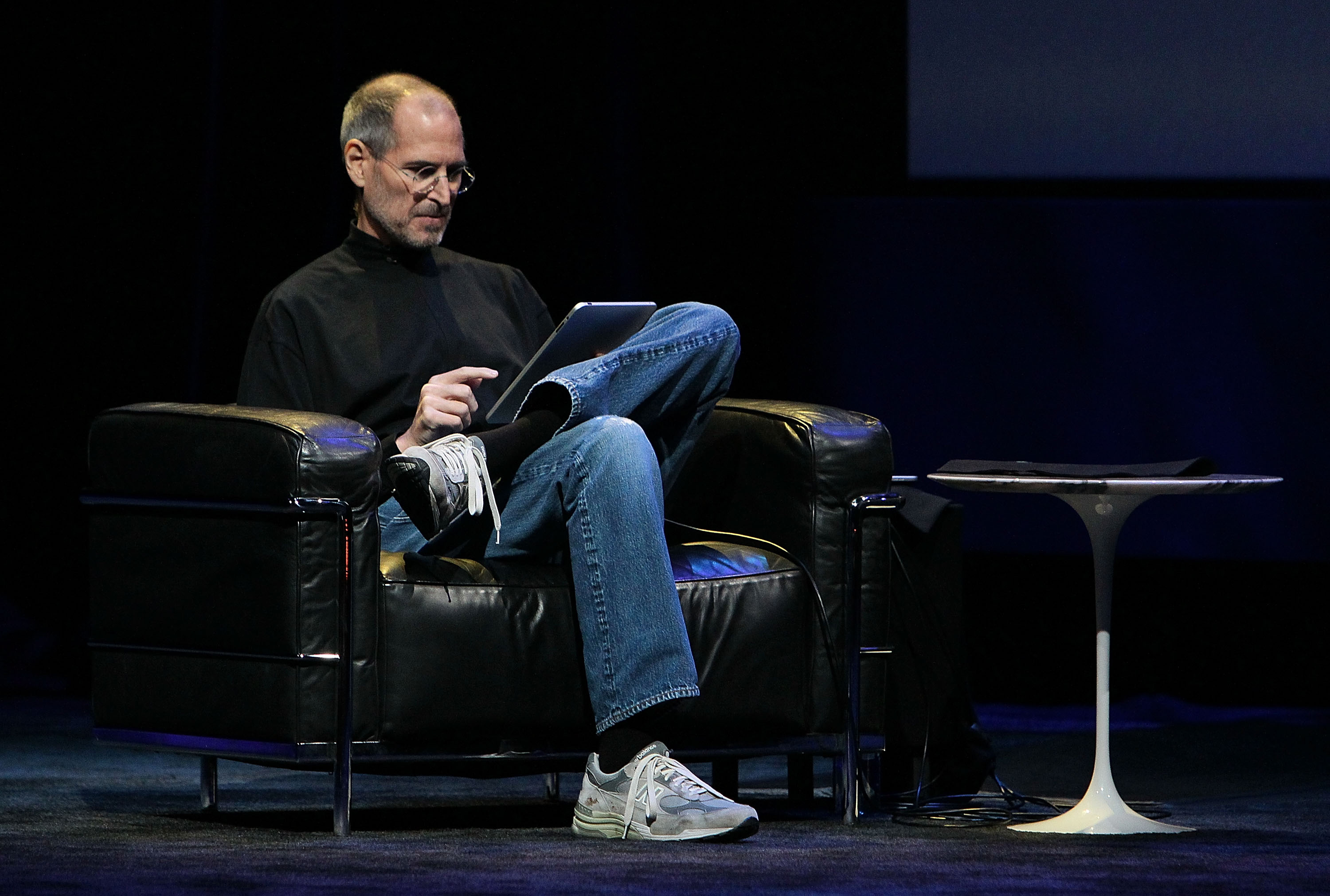
The launch of an innovative new product is always exciting. The launch of an innovate new product from a competitor is even more exciting. But what is it like when your main competitor launches an innovative new product at a moment of your own fundamental strategic weakness? That’s what it was like when the iPad launched on January 27, 2010. On the heels of the successful Windows 7 launch during a time when Microsoft was behind on mobile and all things internet and in the midst of planning Windows 8, Apple launched the iPad. Many would view the iPad (and slates and tablets) as “consumption devices.” Steve Jobs and the glowing press that followed the launch viewed the iPad as a fundamental improvement in computing. Whatever your view, it was a huge deal.This post is free for all email subscribers. Please consider signing up so you don’t miss the remaining posts on Windows 8 and for access to all the back issues. Back to 098. A Sea of Worry at the Consumer Electronics ShowFor months, BillG and a small group of Microsoft executives believed Apple was going to release a tablet computer. It had been rumored for more than a decade. Originally, tablet shaped computers traced their roots to legendary Alan Kay’s 1960’s Dynabook, plus there was that one on Star Trek. There’s a long-held belief among Trekkers that all Star Trek tech will eventually be realized. By 2010, Microsoft had a decade plus of Tablet PC experience, mixed as it was. With Windows 7 we brought all the tablet features into the main product instead of a special SKU, so every version of Windows could run effectively on any PC with tablet hardware, such as a pen and touch screen. What was different about the Apple rumors in 2010? What made us more nervous? Why, this time, did we believe these rumors about a company for which predictions had always been wrong? No one had predicted the iPhone with any specificity.Microsoft and partners had invested a huge amount of time, energy, and innovation capital in the Tablet PC, but it was not breaking through the way many hoped, such as how we visualized it in the Office Center for Information Work. The devices for sale were expensive, heavy, underpowered, had relatively poor battery life, and inconsistent quality. Beyond the built-in applications, OneNote from Office, and a few industry-specific applications pushed through by Microsoft’s evangelism efforts, there was little software that leveraged the pen and tablet. Many, myself included, were decreasingly enthused. BillG, however, was tireless in his advocacy of the device—and the fact that Apple might make one, and whatever magic Steve Jobs could bestow upon it, only served to juice the competition between companies and founder/CEOs. BillG remained hardcore and optimistic about the pen for productivity and a keyboard-less device for on-screen reading and annotation.To BillG a PC running Windows that was shaped like a slate or tablet seemed inevitable. For many of the boomer computer science era, the fascination of handwriting and computing on a slate had been a part of the narrative from the start. Over the past 30 years, few of the technical problems had been solved, particularly handwriting but also battery life and weight. Then came the iPhone and multitouch.That Apple would build such a PC was more credible than ever because of their phone, though by Microsoft measures the iPhone still lacked a stylus for pen input, something Steve Jobs openly mocked on several occasions. The possibility made us nervous and anxious, especially knowing Windows 8 was underway.Collectively, and without hesitation, many believed Apple would turn the Mac into a tablet. Apple would add pen and touch support to the Mac software, creating a business computer with all the capabilities of Office and other third-party software, and the power of tablet computing. The thinking was that a convertible device made a ton of sense since that allowed for productivity and consumption in one device. Plus, techies love convertible devices of all kinds.There were senior executives at Microsoft with very close ties to Apple who were certain of Apple’s plans and relayed those to Bill. Bill would almost gleefully share what he “knew” to be the case, using such G-2 to prod groups into seeing the opportunity for his much-loved tablet strategy.There were debates consuming online forums—rumors rooted in the Asian supply chain as to what sort of screens and chips Apple might be purchasing for the rumored product. Some thought there would be a “big iPod” and still others thought Apple would develop a product tailored to books, like the two-year-old Amazon Kindle. In other words, no one had a clue and people were making stuff up. Some were even calling it the iPad, not because there was a leak or anything but because it made more sense than iTablet or iSlate, and because at one point (in the late 1990s!) Microsoft had something in R&D called WinPad. The industry had not even settled on the nomenclature

098. A Sea of Worry at the Consumer Electronics Show
The planning for Windows 8 was moving right along. But something wasn’t right as we wrapped up Windows 7 activities at CES 2010. It was looking more and more like the plans and the way the ecosystem might rally around them would yield a watered-down result—it would be Windows and a bunch of features, or perhaps irreconcilable bloat. The way the ecosystem responded to touch support in Windows 7 concerned me. How do we avoid the risk of a plan that did too much yet not enough? Oh, and Apple scheduled a “Special Event” for January 27, 2010, just weeks after a concerning CES.Back to 097. A Plan for a Changing World [Ch. XIV]In early January 2010, I was walking around the show floor at CES the evening before opening day as I had routinely done over the years. CES 2010 was a mad rush to build a giant city of 2,500 booths only to be torn down in 4 days. This walk-through gave me a good feel for the booths and placement of demonstrations. It was just two months after the launch of Windows 7. Walking around I made a list of the key OEM booths to scope out first thing in the morning. It wasn’t scientific but visiting a booth had always been an interesting barometer and sanity check for me compared to in-person executive briefings. Later in the week I would systematically walk most of the show and write a detailed report. The next morning, along with the giant crowds, I made my way through a few dozen booths with the latest Designed for Windows 7 PCs mixed in among the onslaught of 3D-television controlled by waving your hands which garnered much of the show’s buzz.The introduction of touch screens was a major push for Windows 7 and there was genuine excitement among the OEMs to offer touch as an option, though few, okay none, thought it would be a broadly accepted choice. Touch added significantly to the price. With two relatively small suppliers for the hardware, OEMs were not anxious to make a bet across their product line. TReller, the new CMO and CFO for Windows, made a good decision to provide strategic capital to one component maker to ensure Dell would make such a bet.There were touch models from most every PC maker, but they were expensive—most were more than $2,500 when the typical laptop was sub-$1,000. For the OEMs this was by design. If a buyer wanted touch there was an opportunity to sell a high-end, high-margin, low-volume device. OEMs had been telling us for months that this was going to be the case, but it was still disappointing.Taking advantage of Windows 7, and wholeheartedly, were a sea of Windows 7 “slates” all based on the same design from the combination of Intel and Pegatron, an ODM. These slates were essentially netbooks without keyboards. They fit the new Intel definition previously described—MID or mobile internet device. They were theoretically built as consumption-oriented companions to a PC. They were shown reading online books, listening to music, and watching movies, though not particularly high resolution or streaming given the meager hardware capabilities. All of them were relatively small and low-resolution screens. To further emphasize the Intel perspective, they also launched AppUp for Windows XP and Windows 7, a developer program and early content store designed to support rights management and in-app purchase as one might use for books and games.The buzziest slate was from Lenovo, not a product announcement, but a prototype model kept behind glass at the private Lenovo booth located in a Venetian Hotel restaurant. The “hybrid slate” Lenovo U1 was a 11” notebook that could also be separated from the keyboard and used as both a laptop and a slate. As a laptop, the Windows 7 PC used a low-power Intel chipset, a notch slightly above a netbook. Detached as a slate, the device ran a custom operating system they named Lenovo Skylight based on Linux running on a Qualcomm Snapdragon chipset. The combination weighed almost 4lbs. The Linux tablet separated from the Windows-based keyboard PC somewhat like the saucer section of the Starship Enterprise separated from the main ship. Lenovo built software to sync some small amount of activity between the two built-in computers, such as synchronizing bookmarks and some files. Economically, two complete computers would not be the ideal way to go, bringing the cost to $1000. Strategically for Microsoft this was irritating.Nvidia, primarily known for its graphics cards used by gamers, was always an interesting booth. Nvidia was really struggling through the recession and would finish 2010 with revenue of $3.3 billion and a loss of $60 million. As it would turn out it was also a transformative year for the company, and for one of the most legendary founders in all of the PC era, Jensen Huang. To put Nvidia in context, my very first meeting with Intel when I joined the Windows team in 2006 was about graphics, because of the Vista Capable fiasco. Intel was digging their heels in favoring integrated graphics and was not at all worried about how their c

097. A Plan for a Changing World [Ch. XIV]
Welcome to Chapter XIV. This is the first of two chapters and about a dozen remaining posts that cover the context, development, and release of Windows 8. Many reading this will bring their own vivid recollections and perspectives to this “memorable” product cycle. As with the previous 13 chapters and 96 posts about 9 major multi-year projects, my goal remains to share the story as I experienced it. I suspect with this product there will be even more debate in comments and on twitter about the experiences with Windows 8. I look forward to that. This chapter is the work and context leading up to the plan. Even the planning process was exciting.Back to 096. Ultraseven (Launching Windows 7)In the summer of 2012, I was sitting across from BillG at the tiny table in the anteroom of his private office on the water in Kirkland. The sun was beaming into my eyes. In front of me was one of the first boxes of Microsoft Surface RT, the first end-to-end personal computer, general-purpose operating system, and set of applications and services designed, engineered, and built by Microsoft. In that box sat the culmination of work that had begun in 2009—three years of sweat and angst. After opening it and demonstrating, I looked at him and said with the deepest sincerity that this was the greatest effort and most amazing accomplishment Microsoft had ever pulled off.Later that same week, I had a chance to visit with Microsoft’s co-founder, Paul Allen (PaulA), at his offices at the Vulcan Technology headquarters across from what was then Safeco field. I showed him Surface RT. I previously showed him Windows 8 running on desktop using an external touch monitor. At that 2011 meeting he gave me a copy of his book Idea Man: A Memoir by the Cofounder of Microsoft and signed it. Paul was always the more hardware savvy co-founder, having championed the first mouse and Z80 softcard, and had been pushing me the whole release of Windows 8 on how difficult it would be to get performance using an ARM chipset and on the challenges of hitting a low-cost price point. Years earlier, Vulcan built a remarkably fun PC called FlipStart, which was a full PC the size of a paperback novel. Surface RT with its estimated price of $499, $599 with a keyboard cover, and a fast and fluid experience, resulted in the meeting ending on a high note. I cherished those meetings with Paul. I also shared with Paul, proudly, my view of just how much we should all value the amazing work of the team.What I showed them both was the biggest of all bets. While not “stick a fork in it” done, by mid-2012 Microsoft seemed to have missed the mobile revolution that it was among the first to enter 15 years ago. In many ways Surface RT set out to make a new kind of bet for Microsoft—a fresh look at the assumptions that by all accounts were directly responsible for the success of the company. Rethinking each of those pillars—compatibility, partnerships, first-party hardware, client-computing, Windows user-interface, and even Intel—would make this bet far bigger and more uncomfortable than even betting the company on the graphical interface in the early 1980s. Why? Because now Microsoft had everything to lose, even though it also had much to gain.With Windows 7, we knew we had a traditional release of Windows that could easily thrive through the full 10-year support lifecycle as we had seen with Windows XP. Windows 7 would offer a way to sustain the platform as it continued to decline in relevance to developers and consumers, while extracting value from business customers with little incentive to change.Microsoft needed a new platform and a new business model for PC makers, developers, and consumers. The only rub? Any solution we might propose wasn’t something we could A/B test or release pieces at a time experimentally. Windows was the standard and wildly successful. It wasn’t something to experiment on.While the company was 100 percent (or more) focused on Windows 7, we had started (drumroll for the codename please) Windows 8 planning five months earlier. We had the next step, a framing memo from me first. Then we had a planning memo from JulieLar, ready to go as soon as we all caught our collective breath after the release—no real time to celebrate more, and certainly no downtime.Technology disruption is often thought of at a high level along a single dimension, but it is far more complex. Consider Kodak’s encounter with digital photography, Blockbuster’s battle with DVD-by-mail, or the news business’s struggle with the web. Great memes, sure, but one layer down each is a story of a company facing challenges in every attribute of their business, and that is what is interesting and so challenging.Digital photos were more convenient for consumers, that was true. But also, the whole of Kodak was based on a virtuous cycle of innovation developed by chemical and mechanical engineers, products sold through a tightly controlled channel, and an experience relying on a 100-year-old t

096. Ultraseven (Launching Windows 7)
In the era of “boxed” software release to manufacturing was a super special moment. The software is done, and the bits permanently pressed onto a DVD disc. That disc, the golden master, is then shipped off physically to duplicators around the world and then combined with another artifact of the era, a box or in the case of Windows 7 a plastic anti-theft DVD contraption. While Windows 95, the excitement of computing and the newness of internet set a high-water mark for launch events, the completion and launch of Windows 7 was a major worldwide business event. The industry was looking for optimism as we emerged from the Global Financial Crisis and the ensuing slump in PC sales. Windows 7 was just the ticket and the launch would prove to be part of a massive uptick in PC sales or as some hoped a return to ongoing up and to the right curves. But could that really be the case?Back to 095. Welcome to Windows 7, EveryoneThe months after the PDC were extremely intense. We had set out to promise and deliver, but the success of the PDC had managed to inflate expectations. These were not false expectations—the use of the product was widespread and broadly satisfactory. That success is what raised expectations. PC makers, Wall Street, OEMs, and enterprise customers knew the product to deliver and were not just impatient.We made a significant number of changes from M3 to beta. With our improved engineering system changes were made in a controlled though collaborative manner. Each change was discussed by many people and then the code change reviewed—no holes punched in the wall. With each passing day it was more difficult to make changes while we aimed for stability of the beta. The most important thing about shipping a beta is not that it is perfect but that it ships in a known state. If something isn’t right that’s okay, as long as it’s known. In the case of Windows 7, we knew work and bugs remained but were highly confident that millions of people would try out the beta and have a great experience.That methodical crawl to beta went on for weeks, each day making fewer changes and calmly making it to sign-off. Then it was time to ship the beta.On January 8, 2009, at the Consumer Electronics Show in Las Vegas, SteveB announced the availability of Windows 7 Beta. The venue and the announcement from the CEO made this a significant worldwide event. It was covered on CNN, BBC, and more. That was exciting and even felt a bit like old times for a moment.I watched from back in the green room because we were getting ready to turn on the web site for download and had no idea what to expect. While the internet was old news, downloading a gigabyte DVD image was hardly routine, especially from home and not something the internet was yet equipped to handle reliably.To have some sense of control, we set a limit of 2.5 million downloads. Back then, before everyone had gigabit internet at home, a massive gigabyte download was something that would stress out the internet. As the keynote was going on we watched downloads begin. They quickly reached our limit while the keynote continued. A few calls to Redmond and we removed the throttle and began to rewrite our press releases with ever-increasing numbers. We extended the beta downloads through the end of January and had many more millions of installs than downloads as the download made it to all sorts of alternate and backup sites. We also learned a lesson in distributed computing that day.For the beta we issued unique product registration keys which became the scarce resource. We soon removed the limits on activating those keys as well. While the download site was structured to choose 32- or 64-bit along with locale to then generate a key, many figured out the URL that went directly to the 2.5GB download and passed that along. We just didn’t want to be overwhelmed with Watson and SQM data so capped the release at 2.5 million. That was silly but at least we received an indication of the excitement. There was a lot!Every day we tracked bugs with Watson and observed usage with SQM. Hardware vendors were providing updated device drivers that were anxiously downloaded by millions of testers, many seeing new drivers arrive automatically by Windows Update. More new PCs would arrive to be qualified. More legacy hardware would be retested. More of the over 100,000 apps in the wild would be checked for compatibility. More enterprise customers would tell us that they were anxious to deploy Windows 7.Many reviewers chose to review the Beta as though it was final or at least something regular people might care about. It would be easy to gloss over this but for me it was an important part of promise and deliver. It had been a very long time, perhaps never, when a first beta for Windows was considered broadly usable and also had customers asking if it was okay to deploy even more broadly. Promise and deliver.David Pogue, hardly a fan of Windows, practically filled an entire page of The New York Times w

095. Welcome to Windows 7, Everyone
While it is incredibly fun to do a first demo of a big product as described in the previous section, there is something that tops that and even tops the actual release to manufacturing. That is providing the release, actual running code, to a product’s biggest fans. It was time to welcome everyone to Windows 7 and put the code that the team had been working on since the summer of 2007 out for the world (of techies) to experience.Back to 094. First Public Windows 7 DemoSeattle summers are notoriously difficult on product development. After a long spell of clouds and rains, the beauty and long days of Pacific Northwest summers arrive, neither are particularly conducive to coding.Summer wasn’t why I ended up here, but it certainly had an impact on me. On my first visit in 1989 during a dismal February, I saw the outdoor Marymoor Velodrome down the street from Microsoft and thought, this is going to be great. On TV it didn’t look as difficult to ride as I eventually learned it was. I sort of rode it exactly one time and that was the day my bicycle arrived from Massachusetts.But alas, product development demands don’t end even with 15 hours of daylight.It was going to get busy for the Windows 7 team. Our planned schedule called for the third development milestone to be complete by the end of summer 2008.We were making progress, but the schedule was slipping. The code was getting better every week, but the overall game of schedule chicken that often plagued a large project was an historical concern. This was our first time as a new team going through this part of a product cycle. While we had a good deal of positive progress building a team culture, Windows was notorious for groups betting against each other’s schedules and being less than forthright with their own.When HeikkiK was running the Office 95 ship room, he declared that everyone should be working to finish first, not simply to finish second to last. We needed to get to the end of the milestone as a team working together without looking for one group to blame, since it is never one group. JonDe and I had this same concern.Everyone spent the summer installing daily builds on every PC we could. At one point, I must have had eight different PCs between home and office and was installing on all of them nearly every day. Every night I was installing a new build at home while doing email and other routine tasks. Even though my home “service level agreement” called for no beta software, an exception was made for Windows 7.I was working at two performance extremes. I went to Fry’s Electronics and built my own “gamer” PC from the best components. I spent big bucks on a newfangled solid-state desktop drive (not common at the time), a crazy graphics card, fast memory, and the most ridiculous Intel chip available. I installed Windows 7. I was blown away by the speed (as well as the noise and wind emanating from the mini-tower). Starting Word or Excel seemed instantaneous. Boot took low single-digit seconds. It reminded me of the first time I used a hard drive on my father’s Osborne computer and how much faster it was compared to floppy disks. I used this PC when I sat at my desk at work, which wasn’t often as I was always walking around the halls.At the other end of the spectrum were Netbooks. To the degree I could, I had taken a fancy to the Lenovo Netbook, the IdeaPad S10, and carried it with me everywhere especially at my favorite breakfast place (Planet Java) or lunch place (Kidd Valley) where I did a lot of Windows 7 blogging. Every Netbook was close to identical on the inside, but the Lenovo had a good screen and a rugged exterior. I modified mine, replacing the spinning hard drive with a then non-economic solid-state drive to better emulate future laptops like the MacBook Air. It was my primary PC for writing blogs posts, email, spreadsheets, and browsing, and the like, which was most of what I was doing. When we finally got to the Professional Developers Conference, this was the PC I held up with a bright yellow “I’m a PC” sticker on it, stickers marketing created in a jiu-jitsu move embracing the blowback from the Apple TV commercials.I was constantly on the lookout for memory consumption and the number of running processes, the signs of bloat in Vista—fewer processes and less memory were better. Each process was a critical part of Windows. The number of processes had soared with Vista, and each had overhead in complexity and performance (in contrast to Linux, Windows processes were much more substantial and important to track.) Windows 7 was making impressive strides in reducing memory usage and process complexity. It served to make me feel connected to the engineering of Windows 7 and reminded me of counting bytes and seconds back in the day. I snapped screen shots of the Windows Task Manager and would bug JonDe and AlesH every couple of days.Each day booting into a new build and seeing the progress was a great day. Each day revealed a crisis or challeng

094. First Public Windows 7 Demo
In an era of huge software projects with a zillion new features in every release, there’s little more exciting than the first public demos. Such demos are also incredibly stressful to pull off. In addition to all the work to just get the code to demo-ready condition, there’s a lead-up to public disclosure, briefing reporters, and aligning partners. The first demo of Windows 7 was all those things and more, because we’d (or just I) had been so quiet for so long. This is the story of unveiling at least one small part of Windows 7 along with my own personal screw up along the way.Back to 093: Netbook ManiaThe second of three development milestones for Windows 7 was originally scheduled to end on March 26, 2008 which was eight months after the project start, Vision Day. We ended up finishing on May 9, which was a slip of 44 days. For any massive software project, this was fantastic. For Windows, it was doubly so.It was even better than that. The new organization was starting to take hold. The product was emerging. The team was executing. We were building what we committed to build, and it was working. The “daily builds” were happening and by and large the team was running Windows 7 every day.After two years in this role leading Windows, I finally felt like it would be OK to emerge and talk about what comes next. It is difficult to put into words the constant gnawing, sick-to-my-stomach feeling up until now wondering if we would deliver. We had definitely promised but for nearly 20 years I had seen leaders across the company say “the team is feeling good” or “we’re making good progress” or “the milestone is complete” only to see the project unravel or simply recognize it was never actually raveled.For months I had been under immense pressure from OEM partners, our OEM account managers, enterprise account managers, investor relations, Intel, retailers, not to mention SteveB, and many more to just articulate a ship date or some plan. Hardly a week went by without receiving a forwarded email detailing the costs of not disclosing what we were up to.Yet I was perhaps irrationally concerned that I would put something out there only to have to recant or adjust what was said. Many told me I was being overly cautious. Many said that it is better to open up communication and worry about having to correct it later. I just couldn’t shake the concerns. I felt Microsoft had one chance to make up for the issues with Vista.Many perceived the Windows team was trying to become more like Apple and close off all discussion of a product until the moment it was announced. This was not the case at all. Windows is a different product, as described previously, and to bring it to market requires a huge ecosystem of support and that invests time and money. There’s no way to surprise the market with Windows because an entire industry needs to know about it, prepare, and execute to bring new PCs, peripherals, and applications to market.For months, Roanne Sones (RSones) and Bernardo Caldas (BCaldas) on the Ecosystem team had been in deep technical discussions with partners about what would come next but had not yet committed to a timeframe. Any hints of a specific schedule (or business terms such as SKUs or pricing) would immediately make it back to the business side of the house and then to SteveB’s inbox. Even topics such as if there would be a 32-bit release (versus moving the ecosystem to 64-bit only) would have had broad implications for PC makers (and Intel). We had to walk a fine line between being excellent partners and creating an external news cycle that impacted partners as much as us. We knew that release dates were the most likely to be leaked, and the most damaging. Finishing a product with a giant, hovering countdown clock had dogged many past Windows releases. Yet, the partners needed time to prepare, and we were closer to finishing than starting. Windows 7 would soon be fully disclosed with the OEMs.When asked in any forum, we said our goal was to release Windows 7 “within three years of Vista.” We were intentionally vague as to whether that meant release to manufacturing, available for enterprise download, first PCs in the United States, or some other market. Effectively, this gave us a buffer of about three months. And yes, that was sneaky, but it was the one concession I made to disclosure. I really hated that all people cared about was a date when a product was so much more than that. I understood, but still.Then, in April 2008, BillG gave a speech, and inadvertently in one small part some believed he implied that Windows would finish in the following year. The press, who were there to hear about international finance at the Inter-American Development Bank meeting, ran with it and suggested Windows 7 would be ready much sooner than the previously planned three years from Vista. In fact, a year from April 2008 was sooner than our published schedule. That was not going to happen. Explaining that inaccuracy without stating

093. Netbook Mania
The Windows team was plugging away on Windows 7. The outside world was still mired in the Vista doldrums. Then in the summer of 2007 there was a wakeup call in the announcement and shipment of a new type of computer from upstart Asus, called a Netbook, a tiny laptop running Linux and a new chip from Intel. Would that combination prove to be a competitive threat or a huge opportunity for a PC world fresh off the launch of the iPhone?Back to 092. Platform Disruption…While Building Windows 7When a project like Longhorn drags on, the business is going to miss important trends. The biggest trend in computing in 2005-06 was expanding the PC to the rest of the world, something Microsoft and others called “the next billion” as the existing computing model reached approximately one billion of the world’s 6.5 billion people.To outfit the next billion, many believed a new type of computer was needed. They were right. Many places where we would have liked to bring computers to the next billion lacked reliable electricity, air conditioning or heating, constant high-speed internet connectivity, and often had dusty environments as in Africa and much of Asia where I happened to have some of experience.At the MIT Media Lab, Nicholas Negroponte, the lab’s founder, spearheaded a project called One Laptop Per Child, OLPC, that launched at the Davos forum in 2005. The rest of the world would come to know this as the “$100 laptop” at a time when most laptops cost about $1000 or more.The price of $100 seemed absurd given that was less than an Intel processor and only marginally more than Windows, and that was before the rest of the hardware. Therefore, the initial designs of the OLPC would ship without commercial software from Microsoft or hardware from Intel. Instead, partners from anyone but Wintel lined up to help figure out how to build the OLPC. Almost immediately, Microsoft and Intel were blocked out of the next billion.The resulting device, a product of some extremely fancy, perhaps fanciful, industrial design was a key part of drawing attention to what became known as the OLPC XO-1. The device featured several technical features that were aimed at solving computing needs for children in remote areas while also addressing the goal of ultra-low cost. The software was open source with a great deal of influence from historic MIT projects aimed at learning computing and programming. The effort even created a non-profit where people could go to a web site and donate the price of a device to have one distributed. The OLPC XO-1 was so cool looking that many people wanted one for their own use, right here in the US. The rollout and communications were exactly what you’d expect from the Media Lab—exciting and broadly picked up.Microsoft through the Microsoft Research team and Craig Mundie (CraigMu) leading advanced technology spent a great deal of effort attempting to insert Windows into this effort. The company made progress but at the expense of causing some well-known members of the OLPC project to resign once it became clear that proprietary software was involved. Microsoft for its part would embark on the creation of a version of Windows that was ultra-low cost and stripped of many features as well, called Windows Starter Edition.If there’s a theme in this work, both from Microsoft and MIT, it is that the core idea was that to bring computing to the next billion, products would need to cost less out of necessity and therefore they would need to do less and be less powerful. Often in the process of doing this the products would also go through transformation to make them easier to use, because apparently that is something required too. This is a fundamental mistake made time and again when addressing what the financial and economic world call emerging markets. Individuals in emerging markets do not want cheap, under-powered, or worse products. They certainly do not need products that are dumbed down. In technology, there is really no reason for that as products do get less expensive over time. Yet in the immediate term companies get stuck with their existing price structures and economics. And people in emerging markets are not less smart, they simply do not have access to the money for expensive products. I saw this dozens of times visiting the internet cafes in the most rural and economically disadvantaged parts of the world where students had no problems at all using a PC connected to the internet.Microsoft would really get stuck in China where the limiting factor wasn’t hardware. People were buying huge numbers of PC components and simply assembling their own desktops that were on par with anything available from Dell or HP. They weren’t running Linux or Open Office, they were just pirating Windows and Office. The Windows team (I was still in Office) created a whole group to strip down Windows XP and add a shell to make it “easier” for emerging markets, again a dumbed down product. These changes to software were as much as

092. Platform Disruption…While Building Windows 7 [Ch. XIII]
Welcome to Chapter XIII! In this chapter we build Windows 7 and bring it to market. We start with all the forces that were shaping up to “disrupt” Microsoft (in the now classic sense) including the launch of the iPhone, cloud computing, consumer internet services, and even the perception of bloat (in Windows this time.) Each of these on their own would be significant, but they were happening all at once, while we were rehabilitating the team, hoping to ship on time for once. To add to the chaos of the moment, these forces appeared during the largest runup of PC sales, breaking 300 million units, followed by the biggest risk to PC sales growth driven by the Global Financial Crisis. A lot was going on competitively, setting the context in which Windows 7 would be built and launched. I thought about competition a great deal, so there is a great deal in this section.Back to 091. Cleaning Up Longhorn and VistaThe days of competing head-to-head with our own past releases or with vaguely similar products were over. Windows faced outright substitutes, and they seemed to be working.The Windows 7 team was progressing through engineering milestones M1, M2, and M3 with the energy and momentum increasing along the way, all while computing underwent radical changes at the hardware, platform, and user-experience layers. Everything appeared to be changing at once, just as we were getting our mojo back.Microsoft’s products and strategy were being disrupted. We just hadn’t, or perhaps couldn’t, come to grips with the reality.These disruptive forces appeared over the course of developing Windows 7, each one taking a toll on Microsoft’s platform value proposition. Each contributing to a small but growing chorus of changing times that started with the iPhone.The iPhone was announced in January 2007, six months before Windows 7 Vision Day. The phone didn’t yet have an app store, an app SDK, didn’t run a full desktop browser, lacked push email for Exchange like a Blackberry, and even omitted basic copy and paste. Nobody at the time thought this phone was relevant in a competitive sense to personal computers. Heck, it even required a personal computer for some tasks.Nobody except Steve Jobs.We didn’t know the extent the competitive dynamic would shift a year later, creating a true and unforeseen competitive situation, an existential threat, for all of Microsoft.I attended the iPhone launch event (rushing to it as it was the same week as CES that year) and walked away with a lot to think about for sure. It was easily one of the most spectacular launch events in the history of computing in my lifetime (after Windows 95 and the 1984 Mac launch and its toaster-size computer with a bitmap display that talked). Steve Jobs said one thing that proved to be incredibly important, with long-term implications overlooked by many [emphasis added, my transcription]:We have been very lucky to have brought a few revolutionary user interfaces to the market in our time. First was the mouse. The second was the click wheel. And now, we’re going to bring multitouch to the market. And each of these revolutionary user interfaces has made possible a revolutionary product—the Mac, the iPod, and now the iPhone. A revolutionary user interface.We’re going to build on top of that with software. Now, software on mobile phones is like baby software. It’s not so powerful, and today we are going to show you a software breakthrough. Software that’s at least five years ahead of what is on any other phone. Now, how do we do this? Well, we start with a strong foundation.iPhone runs OS X. [applause]Now, why, why would we want to run such a sophisticated operating system on a mobile device? Well, because it’s got everything we need. It’s got multitasking. It’s got the best networking. It already knows how to power manage. We’ve been doing this on mobile computers for years. It’s got awesome security. And the right apps.It’s got everything from Cocoa and graphics and it’s got core animation built in and it’s got audio and video that OS X is famous for. It’s got all the stuff we want. And it’s built right into iPhone. And that has let us create desktop-class applications and networking, right.Not the crippled stuff that you find on most phones.This is real, desktop-class applications.Most reviews mentioned it, but it did not take up nearly as much airtime as the touch screen. In fact, the absence of support for Adobe Flash in the iPhone browser seemed to even undermine this important fact for most. This important fact was the technology underlying the iPhone—the use of the full operating system was a massively strategic, risky, and difficult choice. Using OS X enabled Apple to gradually enable many Mac features over iterative development cycles, knowing that the code already worked. Apple could do this because it had bigger ideas for how it would break compatibility with the Mac and a bold new model for supporting developers to build third-party software. From the very st
091. Cleaning Up Longhorn and Vista
Whenever you take on a new role you hope that you can just move forward and start work on what comes next without looking back. No job transition is really like that. In my case, even though I had spent six months “transitioning” while Windows Vista went from beta to release, and then even went to Brazil to launch Windows Vista, my brain was firmly in Windows 7. I wanted to spend little, really no, time on Windows Vista. That wasn’t entirely possible because parts of our team would be producing security and bug fixes at a high rate and continuing to work with OEMs on getting Vista to market. Then, as was inevitable, I was forced to confront the ghosts of Windows Vista and even Longhorn. In particular, there was a key aspect of Windows Vista that was heavily marketed but had no product plan and there was a tail of Longhorn technologies that needed to be brought to resolution.Back to 090. I’m a MacEarly in my tenure, I received an escalation (!) to “fund” Windows Ultimate Extras. I had never funded anything before via a request to fund so this itself was new, and as for the escalation. . . I had only a vague idea what Ultimate Extras were, even though I had recently returned from the Windows launch event in Brazil where I was tasked with emphasizing them as part of the rollout. The request was deemed urgent by marketing, so I met with the team, even though in my head Vista was in the rearview mirror and I had transitioned to making sure servicing the release was on track, not finishing the product.The Windows Vista Ultimate SKU was the highest priced version of Windows, aimed primarily at Windows enthusiasts and hobbyists because it had all the features of Vista, those for consumers, business, and enterprise. The idea of Ultimate Extras was to “deliver additional features for Vista via downloadable updates over time.” At launch, these were explained to customers as “cutting-edge features” and “innovative services.” The tech enthusiasts who opted for Ultimate, for a bunch of features that they probably wouldn’t need as individuals, would be rewarded with these extra features over time. The idea was like the Windows 95 Plus! product, but that was an add-on product available at retail with Windows 95.There was a problem, though, as I would learn. There was no product plan and no development team. The Extras didn’t exist. There was an Ultimate Extras PUM, but the efforts were to be funded by using cash or somehow finding or conjuring code. This team had gotten ahead of itself. No one seemed to be aware of this and the Extras PUM didn’t seem to think this was an issue.As the new person, this problem terrified me. We shipped and charged for the product. To my eyes the promise, or obligation if one prefers, seemed unbounded. These were in theory our favorite customers.The team presented what amounted to a brainstorm of what they could potentially do. There were ideas for games, utilities, and so on. None of them sounded bad, but none of them sounded particularly Ultimate, and worse: None existed.We had our first crisis. Even though this was a Vista problem, once the product released everything became my problem.The challenge with simply finding code from somewhere, such as a vendor, licensing from a third party, or something laying around Microsoft (like from Microsoft Research), was that the journey from that code to something shippable to the tens of millions of customers running on a million different PC configurations, in 100 languages around the world, and also accessible, safe, and secure, was months of work. The more content rich the product was, in graphics or words, the longer and more difficult the process would be. I don’t know how many times this lesson needed to be learned at Microsoft but suffice it to say small teams trying to make a big difference learned it almost constantly.And then there was the issue of doing it well. Not much of what was brainstormed at the earliest stages of this process was overly compelling.With nothing particularly ultimate in the wings, we were poised for failure. It was a disaster.We set out to minimize the damage to the Windows reputation and preserve the software experience on PCs. Over the following months we worked to define what would meet a reasonable bar for completing the obligation, unfortunately I mean this legally as that was clearly the best we could do. It was painful, but the prospect of spinning up new product development meant there was no chance of delivering for at least another year. The press and the big Windows fans were unrelenting in reminding me of the Extras at every encounter. If Twitter was a thing back then, every tweet of mine would have had a reply “and…now do Ultimate Extras.”Ultimately (ha), we delivered some games, video desktops, sound schemes, and, importantly, the enterprise features of Bitlocker and language packs (the ability to run Vista in more than one language, which was a typical business feature). It was very messy. It became a s

090. I’m a Mac
Advertising is much more difficult than just about everyone believes to be the case. In fact, one of the most challenging tasks for any executive at any company is to step back and not get involved in advertising. It is so easy to have opinions on ads and really randomize the process. It is easy to see why. Most of us buy stuff and therefore consume advertising. So it logically follows, we all have informed opinions, which is not really the case at all. Just like product people hate everyone having opinions on features, marketing people are loathe to deal with a cacophony of anecdotes from those on the sidelines. Nothing would test this more for all of Microsoft than Apple’s latest campaign that started in 2006. I’d already gone through enough of watching advertising people get conflicting and unreconcilable feedback to know not to stick my nose in the process.Back to 089. Rebooting the PC EcosystemHardcore Software by Steven Sinofsky is a reader-supported publication. To receive new posts and support my work, consider becoming a free or paid subscriber.“I’m a Mac.”“And, I’m a PC.”The “Get a Mac” commercials, starting in 2006, changed the competitive narrative overnight and were a painful gut punch welcoming me to Windows.They were edgy, brutal in execution, and they skewered Windows with facts. They were well done. (Though it always bothered me that PC Guy had a vague similarity to the late and much-loved Paul Allen, Microsoft’s cofounder long focused on science and philanthropy.) Things that drove Windows fans crazy like “no viruses” on Mac were not technically true, but true in practice because, mostly, why bother writing viruses for Macs with their 6 percent share? That’s what we told ourselves. In short, these commercials were devastating.They probably bumped right up against a line, but they effectively tapped into much of the angst and many of the realities of PC ownership and management. Our COO and others were quite frustrated by them and believed the commercials not only to be untrue, but perhaps in violation of FTC rules.They were great advertising. Great advertising is something Apple seemed to routinely accomplish, while Microsoft found it to be an elusive skill.For its first twenty years, Microsoft resisted broad advertising. The company routinely placed print ads in trade publications and enthusiast magazines, with an occasional national newspaper buy for launches. These ads were about software features, power, and capabilities. Rarely, if ever, did Microsoft appeal to emotions of buyers. When Microsoft appeared in the national press, it was Bill Gates as the successful technology “whiz kid” along with commentary on the growing influence and scale of the company.With that growing influence in the early 1990s and a business need to move beyond BillG, a huge decision was made to go big in advertising. Microsoft retained Wieden+Kennedy, the Portland-based advertising agency responsible for the “Just Do It” campaign from Nike, among many era-defining successes. After much consternation about spending heavily on television advertising, Microsoft launched the “Where do you want to go today?” campaign in November 1994.Almost immediately we learned the challenges of advertising. The subsidiaries were not enamored with the tagline. The head of Microsoft Brazil famously pushed back on the tagline, saying the translation amounted to saying, “do you want to go to the beach today?” because the answer to the question “Where do you want to go?” in Brazil was always “the beach.” The feedback poured in before we even started. It was as much about the execution as the newness of television advertising. Everyone had an opinion.I remember vividly the many pitches and discussions about the ads. I can see the result of those meetings today as I rewatch the flagship commercial. Microsoft kept pushing “more product” and “show features” and the team from W+K would push back, describing emotions and themes. The client always wins, and it was a valuable lesson for me. Another a valuable lesson, Mike Maples (MikeMap) who had seen it all at IBM pointed out just before the formal go ahead saying something like “just remember, once you start advertising spend you can never stop. . .with the amount of money we are proposing we could hire people in every computer store to sell Windows 95 with much more emotion and information. . .” These were such wise words, as was routine for Mike. He was right. You can never stop. TV advertising spend for a big company, once started, becomes part of the baseline P&L like a tax on earnings.The commercials were meant to show people around the world using PCs, but instead came across almost cold, dark, and ominous as many were starting to perceive Microsoft. That was version 1.0. Over the next few years, the campaign would get updates with more colors, more whimsy, and often more screenshots and pixels.What followed was the most successful campaign the company would arguably execute, the Win

089. Rebooting the PC Ecosystem
The word ecosystem is often used when describing Windows and the universe of companies that come together to deliver Windows PCs and software. Providing a platform is a much trickier business than most might believe. Bringing together a large number of partners, along with their competitors, who might share one large goal but differ significantly in the tactics to use to achieve it is fraught with conflict. The Windows ecosystem had been dealt a series of painful blows over the years resulting in a loss of trust and collective capability. Where partnerships were required, the ecosystem had become a collection of…adversaries…or direct competitors…or conflicting distribution channels.Back to 088. Planning the Most Important Windows EverIn the summer of 2007 six-months after Windows Vista availability as we rolled out the Windows 7 product vision to the entire team, the press coverage for Vista began to get brutal. I say the coverage, but this is really about the customer reaction to the product and the press simply reflected that.Then the OEMs, large public companies with shareholders and quarterly earnings, started to do something almost unimaginable. They began to speak out about the problems with Vista. In a widely covered interview in the Financial Times discussing quarterly results, Acer president Gianfranco Lanci lashed out at Vista, saying the “whole industry is disappointed with Windows Vista" and stated that Vista had stability problems and he doubted that Microsoft would remedy the issues within the next six months. He went on to suggest that customers really wanted Windows XP knowing that in just a few months XP would be discontinued. Much of what he said in public, the OEMs had been telling us in private.I had been in my role for more than a year and still did not have much to say about what was coming next. How could I? We just didn’t know and all my experience with customers told me that claiming I didn’t know would not be acceptable or even credible. Still, pressure was mounting to show progress.The Windows (or PC) ecosystem is made up Intel, PC makers (the OEMs), and creators hardware components and peripherals known as Independent Hardware Vendors (IHVs). OEMs accounted for the vast majority of Microsoft’s extremely lucrative Windows business. IHVs were the key ingredients the OEMs counted on for innovation. Intel, provider of CPUs and an increasing portion of the main componentry, was the most central in the hardware ecosystem as half of the legendary Wintel partnership.Suffice it to say ecosystem was in an unhappy and untrusting state after years of product delays along with a series of feature, product, and pricing miscues. The delays had been extremely painful to OEMs and Intel, who counted on a new release of Windows to show off new PCs and drive growth in PC sales. IHVs had critical work to do enabling new PCs. They had to build software drivers that enabled new hardware that was compatible with the new features of Windows (such as 64-bit Windows or new security features). They also faced the increasing complexity of maintaining drivers for old versions of Windows as the time between releases increased and customers demanded new hardware support on both old and new platforms. The rise of Linux was spreading the Windows ecosystem further as demand for Linux support increased. Fractures were everywhere.Intel contributed an increasingly larger portion of the PC, much as Microsoft continued to add features to Windows. With Centrino® for example, Intel added WiFi support directly to the components they provided to PC makers. This greatly expanded and standardized the use of WiFi in laptops. Intel was in the process of broadening their support for graphics as well, continuing to improve the integrated graphics chips they provided to PC makers (this was a particularly sore spot with Vista.) Intel was able to better control pricing of their components, encourage specific PC designs, and shift PC makers to various CPU choices using a combination of pricing actions and co-marketing arrangements. Originally these “Intel Inside” advertising efforts were a huge part of how PC makers selected and marketed different models and lines of computers and was enormously profitable for Intel.Microsoft’s relationship with Intel had not been particularly happy, going way back to the 1990s when Intel began to embrace Java and other cross-platform technologies. Recently, however, the rise of Linux was viewed by Intel as a large opportunity, while Microsoft perceived it as a competitive threat. What Microsoft used to perceive as a moat, device driver support for Windows, was rapidly fading due to active efforts by Intel to support Linux to the same degree. The specter of desktop Linux seemed to be held back by just a few device drivers should Intel support them, or so we worried.There was also a complex relationship between enterprise customers and Microsoft when it came to Windows. From a product and feature per

088. Planning the Most Important Windows Ever
One of the main challenges in leading a big team is that nothing ever seems to finish—there’s always more to building a team. Even at milestones, one looks ahead and sees more work to do. In the first few months I had been working on Windows so far, we re-organized the team in a huge way and shipped Windows Vista, only to then have to figure out how to plan a product release with this entirely new organization, while building an improved engineering culture. The planning work began in earnest in December 2006 and concluded July 2007. This is the story of those months and what it was like and what management tools we used to develop a product plan for what would become Windows 7.Back to 087. Reorg! Why Are We Together, Exactly?SteveB loved to talk about his discussions with engineers as he tried to better understand the company’s execution and culture challenges. He would say “I talked to this engineer on the team, and they told me ‘Look, everything is completely screwed up and everybody telling you how to fix it is wrong.’” Steve would continue to listen to a litany of problems and why everyone was being “dumb” wondering what he could possibly do. Then the engineer would look up and say to Steve, “But I [emphasis on “I”] know exactly what to do and how to fix it.”My problem was I was also that engineer. I saw the problems and “knew” what to do. Except it was my job and I had to lead the team to fix the problems.Fortunately, early on there was a set of like-minded engineers who were willing to sign up and take on the challenge of building a culture and now a plan for what comes next. From the very start it was not just me driving the cultural changes, but the set of leaders put in place from our big re-org.Change across thousands of people, each of whom knows exactly what should be changed, is not a one-time event. Change takes repetition. It takes calendar time. It takes making some mistakes and using those as learning or teaching moments. While everyone was anxious for change, thousands of engineers must be given time to think and reach the point—on their own—of agreeing to a certain kind of change.Every step over the next few months, from the time of putting an organization in place to starting the real building of products, we (the leaders) would be confronted with two realities. First, we had to remind everyone on the team consistently and repeatedly of the process we were using and how we aimed to work together. Every. Single. Communication. At times it felt like we were reading the inside of the box of a board game at every meeting. Second, every time we made a mistake and didn’t ourselves follow that process, expect someone to point that out and for that to become a moment of humility.It was a constant push-pull with so many wanting to know what we were telling people to build while we were busy pushing back and saying how we needed them to figure that out. At the same time what we wanted to do would look radically different from the past. It wasn’t a top-down plan. It wasn’t a disconnected set of innovations. It was not about consensus of design as in design-by-committee, but a coherence of a plan. The investments (as we would say) were going to fit together into a holistic product plan across our new organization: WEX, LEX, IE, and COSD. After every step in the process, we regrouped as a leadership team and not only talked about what parts of the process we needed to improve, but we turned that into coaching and more outbound communication such as my Office Hours blog. At the same time, we were continuously adapting to what was understood, misunderstood, and especially challenged when it came to process.An example of cultural change that was front and center was a desire to match the old Windows team in terms of scorecards or KPIs by automating or operationalizing key requirements. I would be out there talking about vision and scenarios and collaboration—abstract concepts that need to be made concrete by the team—only to find out some people were trying to make a vision scorecard or building an automated testing tool to check if scenarios were complete or tools to red/yellow/green dependencies between different teams. We’d come across this and then would need to course correct and talk about how accountability works without constant monitoring by others nor overwhelming bureaucracy.Every email and memo, every team meeting, every 1:1 was a not just an opportunity to reinforce the new cultural norms, but a requirement for us to do so. The first and most important test was developing a product plan for the next release following Vista. For us to get to the finish line with a coherent product all at the same time and all on time we would need to get to the starting line at the same time.First, we needed a product name. By now you know I was never a fan of codenames.Windows had always had somewhat clever (too clever) code names with layers of meaning. As a consumer of these code names, they neither made

087. Reorg! Why Are We Together, Exactly?
After thinking and writing to provide context to BillG, SteveB, and KevinJo, I had to begin the real work of changing the team. As much as I would have liked to avoid the second step of the “Three Envelopes” (having skipped the first) I found myself planning a reorganization. Not just a reorg though—Microsoft was by many accounts in a perennial state of “reorg hell”—I was planning an organizational change and cultural transformation that would have an effect on every member of the team, almost immediately. That meant more writing. More communicating. A lot more. Back to 086. The Memo (Part 2)Most big company reorgs are fairly routine affairs that nevertheless cause teams to drop everything, stress out over the weekend (because reorgs always happen on Fridays) and contemplate what might change. But then returning to work on Monday, little changes immediately except for somewhere up the org chain there’s a new boss who will in a matter of time introduce some changes. Most reorgs are not nearly as big a deal as all the time and energy that goes into talking about them.This was especially true at Microsoft which, at least to many, felt like it was in a constant state of reorg hell. In my early days at the company, I experienced several reorgs in the most senior (other than BillG) executive structure from having a president to not having one, to adding a COO to removing a COO, three-in-a-box (the BOOP, Bill and the Office of the President), back to a president, then a president and COO, then SteveB as CEO and BillG as Chief Software Architect, and so on. Office itself bounced between a few executives over the years as well. In fact, just as I was in the middle of planning this June 2006 announcement, BillG announced he began transitioning from Microsoft to spend more time at the Foundation. Ray Ozzie (ROzzie) would be appointed Chief Software Architect (CSA).The thing about reorgs is that most people are trained, best case, to scan the reorg mail and see if their team is directly affected by the change. Specifically, how far away is the new boss. If there’s no immediate impact, then just go on doing what they were doing. In practice, most reorgs at scale don’t affect most people directly or immediately.The Windows and Windows Live changes were not like those reorgs. This was not a change at the top. This was a change for literally everyone in the organization. More than half the team would get new managers soon after Vista shipped, and everyone would have a new manager no more than three hops up the chain.It was even more than just that. Jobs were changing and with that many mental models of career paths were being upended. Everyone who thought they had plans for what would be next would wake up to something different. Aspirational jobs as a PUM or an architect with no direct reports (or code) were no longer going to be available. We were an engineering organization, and everyone was going to be asked to focus their trajectory on building products. Even becoming a manager was deemphasized as we asked managers to take on more directs while we reduced the percentage of the team that were managers by one-third.Then beyond that we had every intention of radically changing the way we would work. Everything from the planning process to daily builds to milestones. Even meetings with execs would decidedly change (or mostly go away).I spent May and June 2006 on two things.I was mostly meeting more people on the team and figuring out who would be filling in the organization I am about to describe. These meetings were a constant reminder of the desire for change. They were also opportunities for ongoing reminders that Windows and Services are different and more difficult than Office. I probably wrote 500 long emails replying to questions about everything from the future of specific technologies (most of which I knew nothing about: USB, DirectX, virtualization, and more) or to suggestions for how we could improve. I received quite a few questions asking “how do you want us to…?” on everything from hiring to signing purchase orders. There were many questions that were very specific to situations and people that I knew nothing about. The questions always seemed to boil down to process and culture challenges, never about domain expertise. It was 7x24 from the end of March to the end of June.To remain sane, I was also installing daily builds of Vista and Office 2007 which were both winding down. Not being in the daily triage meetings for Office was kind of sad for me. I vividly remember sneaking over to the ship-room meeting one time, which proved to be silly and indulgent on my part and a distraction to the team. It was, for me, a moment of sanity just to see the team working, and by that I mean not taking any code changes.Mostly, however, I was genuinely scared. I had absolutely no doubts about what we needed to do, including how to structure the team and what to ask of them. I had a lot of doubt that I’d be able to pull it o

086. The Memo (Part 2)
The previous section detailed the raw observations on Windows and Services culture I saw after weeks of hearing about the situation from as many people as I could. I could not just put that out there without specifics of what I thought could improve. I had to put some structure on what I learned and to offer optimism and aspirations.Back to 085. The Memo (Part 1)Reflecting on this moment of both optimism and fear, today I look at the candor I expressed with a bit of amazement. I wrote with detail and assertiveness yet seemed to forget that I was writing about one of the most successful businesses ever created. I was writing about hundreds of billions of dollars of market capitalization. I was writing about many friends. At the same time, there was so much that needed to be improved or more specifically to be repaired. I think what really motivated me were all those 1:1s I did and hearing all the different people expressing their pain and troubles, knowing things could be better. This was not a team that was dug in ready to resist change. It was a team waiting for change. It just needed to be the right kind of change.That reality made this much easier. I felt if I could document what was going wrong and the broad population agreed then I was on a path to addressing challenges. If I could articulate reasonable aspirational goals, then what remained was to build a product plan on that rebuilt foundation of trust in management.I was quite worried that both the problems described and the aspirations I would document would seem cliché. With BillG in particular, over the years he had shown little patience for the broad topic of management. His world view was always that the business would be best served by taking on the most difficult technical problems and developers would be anxious to tackle such challenges. That recipe propelled Microsoft for twenty years of Windows but was failing us now. SteveB was never one for patience and while he would be receptive to these management challenges, he was far more anxious about a plan and the timeline for the next product to address the concerns that were mounting about Vista—the company hung in the balance. KevinJo had just orchestrated a massive restructuring of the global sales force before taking over most of product development. He was deeply in sync with the idea of identifying organizational problems then directly addressing those.The memo, Observations, Aspirations, and Directions for Windows and Windows Live, proposed three main areas to address: decision-making, agile execution, and discipline excellence. Each was presented in a section with both observations and aspirations.* Decision-Making* Agile execution* Discipline ExcellenceThese points will sound like random musings from any generic book on management, both at the time I wrote them and reflecting on them today. The lesson learned, using the phrase from the previous section, is to demonstrate that these are more than clichés by citing specific examples that resonate with the employees who are being asked to operate differently and specifics on exactly how we will achieve aspirations.Decision-MakingAcross all of Microsoft, “decision-making” had been a constant and nagging issue. We discussed it after every MS Poll (the yearly survey of employee attitude and feedback), and each year I was left puzzled. It had never been an issue for our team (in the MS Poll and other feedback channels). I didn’t understand what was so difficult about decisions. We made decisions all the time in Office, so many it wasn’t even clear to me what decisions were so difficult.Then I arrived in the Windows hallway.There, it was an endless discussion of who “owned” a decision or who was “accountable” and, worse, people were asking me what “model” I used to make decisions. This was a reference to classic models of business function (or more aptly dysfunction) that use tools known as a responsibility assignment matrix (RAM, one such tool) for decision-making. One labels participants as: Responsible, Accountable, Consulted, and Informed (or RACI). Another such tool, OARP, stands for Owner, Approval, Responsible, Participant. These tools consistently proved frustrating and there was little evidence that decisions were made with less effort or more importantly, more staying power or higher quality.The use of these tools arose as a defense mechanism against executives and managers who were prone to swoop and poop, a metaphor I learned as I assimilated into the team. As with birds, many managers seemed to show up at inopportune times, issue a quick opinion or edict, and not stick around for the mess they left behind. How much of this was actually a mess or simply a reaction to executive authority or inability to influence decision-making would take time to untangle. The expectation for me as a new Windows executive was that I had a tendency to employ this technique, no matter my own personal history or approach.What I knew already to be the

085. The Memo (Part 1)
Everyone in their career should have one memo that they think of as the most consequential. For me, it is a memo I wrote after a about six weeks on the Windows team. Under intense time pressure to figure out what comes next with Vista rapidly approaching final release (not formally, but it was going to soon be all but impossible for code changes to make their way into the product) I had to come up with next steps. Over the next four posts, I want to share not just the memo but more about what it is like to live through a major organizational crisis and work to set things up for building a new engineering culture and new team structure, all in a couple of months.Back to 084. How Many On the Team, Exactly?The history of Windows releases was cursed when it came to product and leadership. Like Star Trek movies, Windows releases alternated between good and bad, odd and even. Line up the OEM products by availability date, and you’ll see this is basically true—starting at Windows 3.0 and changing to the NT kernel with XP (3.0, 3.1, 95, 98, 98 SE, Me, XP, Vista.) Compounding this, the curse says, no leader seemed to last more than two major releases of Windows.My neighbor, a successful biotech entrepreneur, asked me about the curse the day he read the org announcement in The Wall Street Journal story saying that I was moving to Windows. He wished me luck.After 140 scheduled 1:1s, 20 team Q&A sessions, over 30 hours of office hours, and countless hallway conversations in a dozen different buildings I had to do some thinking and organize what I observed, heard, and learned. That meant writing.A dose of reality was needed with BillG, KevinJo, SteveB, and to some degree even the Board.I did that with a 20-page memo titled Observations, Aspirations, and Directions for Windows and Windows Live. For me writing is thinking and I really had a lot to think about, hoping others would join in. I felt alone for long enough and I was certain SteveB was growing increasingly anxious for what would come next. I had been talking to KevinJo constantly over the past few weeks as he was doing a huge amount assuaging those that essentially rejected the idea of an Office person leading Windows.The 20 pages were the most difficult I wrote in my entire career—to literally put these words down—I knew they would be impossibly difficult to read. I was deeply concerned that what I wrote would be viewed through the simple lens of setting expectations or painting as bleak a picture as possible so that I could be a hero later.It seemed that everyone, especially SteveB, wanted the plan for getting things back on track and a product roadmap. He also wanted to be able to communicate to the field and bring comfort to customers, while continuing to support Vista when it shipped. Bill was especially keen to restart discussions over product investments that had been cut since the Longhorn reset. Kevin was getting his footing across wildly disparate businesses including the massive money-losing online services.I couldn’t kid myself, however, as I too needed a plan. The team was still frantically fixing bugs, but in order to ship by October that would soon end. The bar for fixing bugs would rise dramatically by summer. Idle hands will make trouble for sure. Projects will start, code will be opened up to changes, and worse presumptive commitments to outside customers and partners would be made, and so on (all business as usual for Windows.) For there to be a release that addresses any challenges I would need to orchestrate that every team at a project arrive at the starting line at the same time in order to finish at the same time. In other words, I had only about four months and one shot to get all this figured out.Adding to the stress, the OEMs were extremely anxious as they were reeling from Vista missing both back to school and holiday selling seasons. They were used to hearing plans, or at least slide decks, about future releases so they too could plan, as much as that was worth. A January launch was painful for PC makers as it meant they had to stock up retail outlets with PCs unsure if the buzz over a new OS release would dampen Holiday sales or not, and then deal with upgrades new customers demanded on those PCs. It was messy.In round numbers, fiscal year 2005 had revenue of about $40 billion and net income of about $15 billion. The Windows OEM business on its own was $12.2 billion (about 30% of Microsoft—incidentally it is not possible using public data to compare these to today’s Microsoft, much as people claim to) and $9.4B in net income (about 63% of all of Microsoft). OEM revenue was highly concentrated in six major and global PC makers, each CEO with a direct line to SteveB and KevinJo.My memo solved for none of these immediate issues. Instead, it was a lot of bad news and, in contrast to conventional wisdom or expectations, was less about strategy as it was about execution and culture. It diagnosed, without blame, the situation as I saw it.

084. How Many On the Team, Exactly?
Much of what Hardcore Software has been about was what we were building (and why). This chapter is about how. Specifically, I wanted to delve into the management structure and what we worked through to restore efficacy and build a new kind of Windows team. Over the next few posts, we will journey through understanding of the cultural challenges the team faced, figuring out a plan to lay the foundation to address those, and then putting that plan into action. This first post gets to the core of understanding what precisely the team is building by figuring out how many people work on what projects. That should be simple, no?Back to 083. Living the Odd-Even Curse [Ch. XII]When you move into a new job there are a lot of things that need to come first, too many. You want to touch base with the most critical individuals, but don’t want to minimize the importance of those less so. You want to focus on the high priority areas of work, but it is times like this that the lower priority work hardly needs to be reminded of that fact. You’re dying to ask a lot of questions, but people are dying to tell you things. Then there’s the political reality that the many things pushed to you or that arrive in your inbox are often those least needing your attention, but most likely to notice a lack of attention.I had all this to think about while both being reminded of Windows Vista every day and needing to let the team in place finish the project without interference, inadvertent or otherwise.It was extremely weird to commit myself to learning about Windows and the Windows team. I had, after all, essentially grown up around it, just not in it. I knew the Windows product. I knew the Windows people. I just had no idea how the people made the product. I knew the organization at a super granular level from Windows 3.x and Windows 95 working on toolbars and app compat and the shell from C++ and Office. I knew things at a strategic and executive level.I had a high-altitude view of the organization, and I knew a lot of individuals, but between a few feet off the ground and 50,000 feet above the ground I had a lot to learn.Little was as it seemed, however, when it came to the details.There’s a well-known military principle on knowing the difference between lessons and lessons learned, between reading about something and having learned that same thing through the experience of changing how one operates. Any management book will tell you to know the budget and resources on a team and that’s a good lesson. In the Microsoft culture filled with cookie licking, shiny objects, and side projects my most important lesson learned is to actively track how many developers there are and what code are they writing. Every time I was uncertain of what a team was actually building or if a project was real, understanding the number of developers assigned to which code was the most valuable information to have and the most critical to keeping a project on track. I learned that with NetDocs, the Tablet PC, and so many 1990s internet projects long since passed. Everything other than actual working developers is just talk.Therefore, the first thing I chose to do was to get a handle on the composition of the team. With the help of Kristen Roby Dimlow (KristenD) from HR, one thing became clear: I was in a new world. KristenD was previously our finance partner in Office, coincidentally, and brought with her a refreshing analytical view of the structural challenges I (now we) faced. Kristen began immediately trying to collect the data on who was doing what.In Office, headcount, resource allocation, and org structure were readily visible and, for the most part, easy to figure out by looking at the company’s online system headtrax. Windows was a different apparatus. While there was a headcount number, what they were working on, for whom they were working, and even their actual physical location, were all less clear, or fuzzy.In keeping with Windows tradition of reorgs that “split the baby,” or product organizations that were structured such that accountability and ownership were muddled, the job I was given was not as much the “Windows job” as most would at first perceive. This wasn’t a surprise at all to me—I knew what I was getting into. This was the Windows Client team previously described. COSD remained separate as it was already.To KevinJo and SteveB, accountability was clear, even if the organization structure and people were not. This was typical Microsoft accountability in the 2000s. I was their Windows “guy” and decidedly on the hook to figure out what comes next. Kevin had a huge amount to figure out. He was clear just how much he was hoping I could wrap my brain around with respect to “what comes after Vista?”Along with the Windows client, there was Internet Explorer and the user facing side of Live services—the split of everything down the middle was alarming when it came to accountability, but just how alarming required more investigation.The Live ser

083. Living the Odd-Even Curse [Ch. XII]
Welcome to Chapter XII, where Hardcore Software turns from Office and enterprise customers to Windows and consumers (and PC makers). For many readers, this will also be a bit more of their own lived experience. As such it is worth a reminder that I am sharing my experience and observations, not any sort of omniscient history (if such a thing even existed). Importantly, by waiting a decade to write, the history becomes much clearer and less influenced by the emotions or immediate reactions. That’s certainly been my experience so far in writing HCSW. These next four chapters (about 25 sections) will cover Windows 7 and Windows 8, with a decidedly different approach than the previous 11 chapters. We will see much more focus on organization, strategy, culture, real competition and disruption, and the challenges and opportunities seen in a big giant company.Back to 082. Defying Conventional Wisdom to Finish Office2006: The year was marked by cultural shifts. BillG announced he would step down as chief software architect, a transition that would take two years. I was given a new role and faced multiple corporate and culture challenges, and outside of Microsoft the tech landscape was changing too. And fast. “To google” was added to the dictionary.By the start of March 2006 the Longhorn product cycle had been a chaotic five-plus years that included the security work for Windows XP, the release of Windows Tablet PC, Windows Media Center, Windows 64-bit, Server releases, and importantly, a major project change called the Longhorn Reset, essentially defining a new scaled-back product mid-flight based on the original Longhorn. The Windows team had been through a lot and was not finished. Longhorn had been receiving a lukewarm reception from users of a big Community Technology Preview release since the fall of 2005. The team, however, had started updating the product more frequently and momentum was indeed shifting by early 2006.Windows Vista, as it was officially named, was still an unpredictable amount of time away from shipping. While not public at the time, a couple of weeks down the road, Microsoft would announce a final and just-decided delay to ship Vista for availability in January 2007. The team could not commit to making the release available in time for PCs to be sold for back-to-school or holidays 2006. Vista would eventually release to manufacturing in November.Windows was still on fire with PC sales breaking through 200 million units in a single year for the first time, demonstrating extreme product-market fit. Both Servers and Tools were doing well, extremely well, except there was a nagging problem emerging from across Lake Washington called AWS, Amazon Web Services, a shift from companies buying Windows to run on their own server computers to renting storage and compute in the (or a) cloud. There was a good deal of tension between Windows team and the Server team. The Server org required the Windows org to contribute to shipping a new Server. This delayed a new Server product, slowing their release based on Longhorn until the next Windows release. The .NET framework and Visual Studio had become leaders for IT development within corporations, but the onslaught of Linux, Apache, MySQL, and PHP (later Perl/Python) continued to dominate the public internet and the university programs in computer science.On the RedWest campus the investments in online services faced a myriad of revenue, cost, product, and usage problems that were not nearly as visible as the Windows challenges. Wall Street, however, was growing increasingly impatient with financial results, which seemed to punish SteveB for his transparency. There were dozens of Microsoft online services, some branded as MSN and others using a new umbrella name Windows Live, in every conceivable category from selling cars (MSN CarPoint) to chat (MSN Messenger) to finding Wi-Fi hotspots (MSN Wi-Fi Hotspots.) Microsoft seemed to be searching for a big win against Yahoo and a rapidly dominant Google in the world of internet advertising and consumer services.Google was top of mind for many, not because so many groups across Microsoft competed with Google products but because of the aura the 2006 Google culture achieved. Google was fast. They were innovative. They were empowering. They had “20 percent time” when engineers could work on whatever they wanted one day a week. They had free gourmet food and a chef, all day long, compared to our grungy filtered water dispensers and subsidized airport food with limited availability. They had snacks and we still had noodles and one type of V8®. They had massages, while we had a multi-purpose sports field, but no towels (note, towels returned in the summer 2006.) We had individual offices and they had collaborative open plan cubicles (you read that correctly, Microsofties complained about having offices.) They had a modern, flat organization with 50 reports to a manager (yes you read that right too.) In the blink of an ey
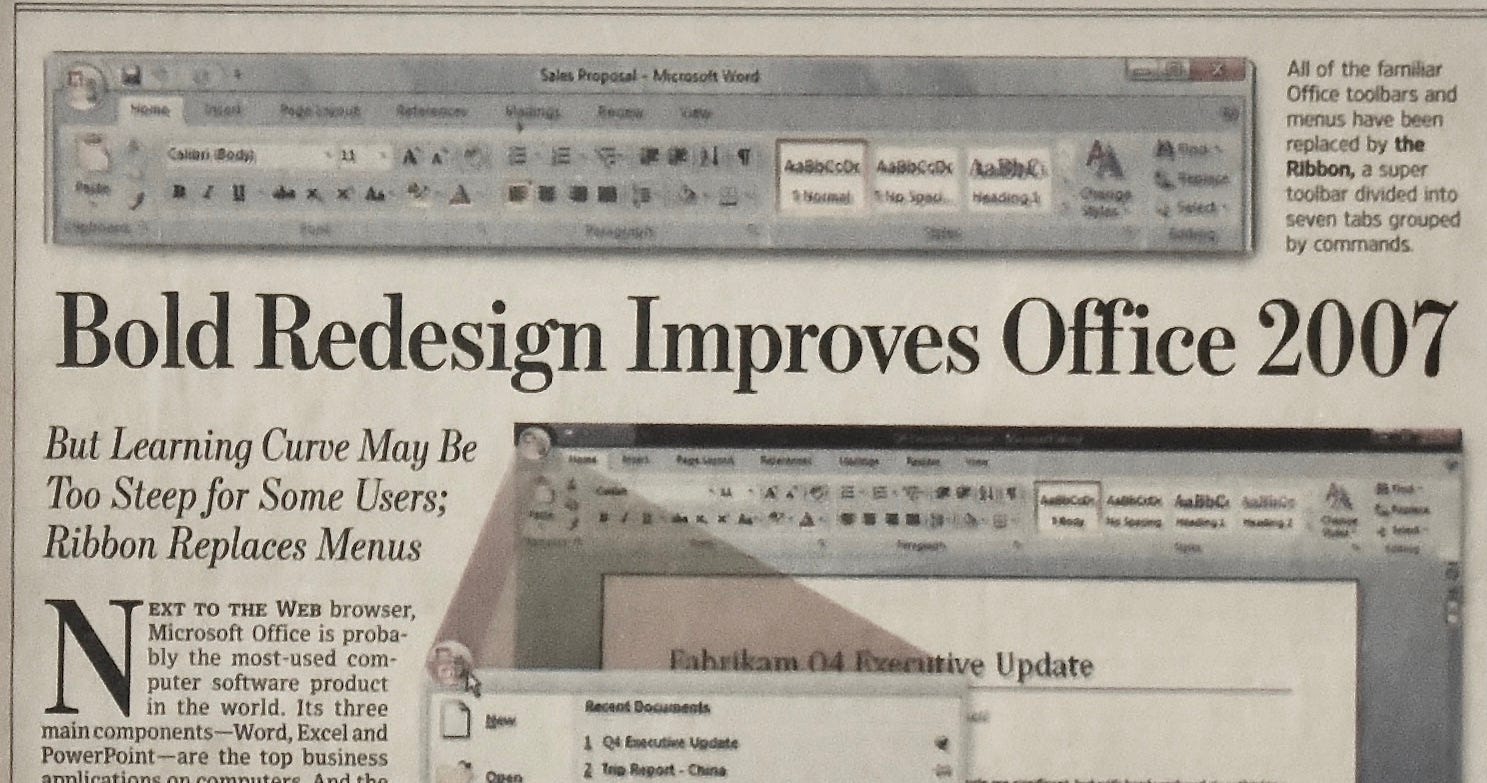
082. Defying Conventional Wisdom to Finish Office
As we conclude the story of Office12 and the major redesign of the product, Microsoft of late 2005 to early 2006 is in a bit of a lull which for better or worse is good for the launch of Office. Longhorn continues to stretch out and the lack of clarity continues, which is putting a drag on everyone. There’s something very special, yet bittersweet, about this release of Office.With the conclusion of this chapter, Hardcore Software, will start to get into Windows. I have about 30 stories planned. As my roles have changed so too have the stories. With Windows, we will see a lot more detail on organization, change management, strategy, and direct competition. If you are not a subscriber, please consider signing up. Audio will continue to be free and posts with all the graphics, artifacts, PDFs, and videos will be available to subscribers.Back to 081. First Feedback and a SurpriseNearly every country’s “Feedback to Corp” slide at the grueling field sales multiweek Mid-Year Reviews (MYRs) in January 2006 published the same bullet point:🚩 Office “12” – Needs Classic ModeWhat was this big, and clearly coordinated push for something called classic mode, and why now? We, of course, knew what it was but we did not know why this was happening now. It was very late in the schedule, post-beta testing. We were just months from scheduled completion as we just went through the final validation of the product—when the team is changing as few things as possible for the last few months, certainly not making any design changes.A broad public beta went out to most enterprise customers as well as the technical press. More people enrolled in the beta than we expected or could even imagine. There was a great deal of interest in such a bold direction for Office.As with the technical beta, the reactions came swiftly and clearly, often based on little more than the first few minutes with the product. Reactions from the press arrived in three waves—straightforward news of the release, first looks or reactions based on first experiences, and then, after a week or so, deeper dives into the product.The first looks wrote themselves as we expected. Office12 was a sweeping change, and the obvious commentary or controversy questioned whether customers or the market were ready for it. Would it work? How difficult would it be to learn? Almost always the point of view of why the change was made was reflected, but the tone was skeptical. That was kind of annoying, but entirely expected.For example, CNET’s Ina Fried who is always fair and balanced, said, “The radical revamp could help the company as it seeks to stave off competition from OpenOffice and others, but it also risks alienating those who like things the way they are.”Computer Reseller News, the trade publication focused on small and medium business, went to great lengths to express concern. “While most users will welcome the additional features, Microsoft’s decision to teach its customers a new user interface for accessing commands and functions could be a risky proposition. Once the beta testers (and the bloggers) have registered their opinions, some Office 12 design points could be in for a course correction.”A more detailed expression of concern came from CNET’s editors. “In the past, Microsoft has sabotaged itself by unrolling too many new features to Office too fast. We’re keeping a lookout for problems; after all, Office 12 was in its storyboard stages just a few months ago. If you’ve spent the past two years mastering Office 2003, prepare for a steep learning curve.”These articles generated the MYR feedback. The enterprise account managers, essentially all our revenue except for Japan, were on the verge of freaking out. They saw the Ribbon as pure friction in the way of revenue and nothing less. They cited doubts expressed in the articles, reprinted in every language around the world, as evidence of deep concerns over the direction Office was taking. They did not want to spend energy selling Office where the assumption was we’d already won. They wanted to focus on selling the big server strategy, where we were losing to open source Linux and a host of smaller competitors. So why put up a barrier, they asked.As if to highlight these enterprise customer concerns even more, in the spring of 2005 Office marketing rolled out worldwide a series of advertisements as a follow-on to the “Great Moments” campaign previously described. Attempting to inject humor into the extremely enterprise Office 2003 wave and to encourage customers to digitally enable knowledge workers, marketing developed a new advertising campaign affectionately called “Dinosaurs” though formally called “Evolve.” These ads featured humans in the office but with oversized, cartoonish dinosaur heads, implying those who have not yet embraced a digital workstyle including running Office 2003 were dinosaurs. In other words, we called nearly all our customers dinosaurs. At least the ads were popular in Japan, a market known

081. First Feedback and a Surprise
We’d been working on Office12 for almost two years and the product had made enormous progress. The team was buzzing, and everyone was very excited. This product was different. We were building something we could all feel. It was a product that was good for individuals, not just organizations. Still, no one outside the company had seen it or knew of the monumental changes we were making. The user interface in Office was not just a user interface for the PC, for many many people for the past 15 years it had been the interface for the PC. We were quite confident. JulieLar was confident and prepared. This was a big moment, the first public showing and then the first feedback.Back to 080. Progress from Vision to BetaThe first lesson of interface redesign: Do not unveil the design with static pictures.The second lesson of interface redesign: Do not unveil the design with static pictures.At the 2005 Professional Developers Conference (PDC), Chris Capossela (ChrisCap), Corporate VP of Information Worker Marketing, joined BillG on stage for a sweeping demonstration of Windows Longhorn along with the first public reveal of Office “12” (the quotes with a space became the official way of writing the name). ChrisCap and the marketing team zeroed in on the positioning of “Better results, faster,” while also pointing out that Office was “New, but feels familiar.” The demonstration zipped across Excel, Word, and PowerPoint, showing all the elements of the redesign and dozens of new features, along with many others previously undiscoverable. I was sitting anxiously in the very back of the room gauging how people reacted. I did not have to listen too carefully as during the demo someone shouted out to the stage, letting everyone know how they felt.“Ship it!” they yelled.We were still two months away from the first public beta, but this felt good. Only afterwards watching the tape did I realize we were being made fun of. Chris inadvertently missed a beat in the demo. His words describing what should happen did not match what was happening on screen. It looked like a bug and “ship it” was a classic Microsoft reference to shipping something with bugs. Nevertheless, the reception for the demo was quite positive.The excitement spread through the industry.Technorati, a tech news site that measured the important or high impact blogs on what was then called the blogosphere, was the place to be seen in the press. Our redesign made that home page, a first for plain old Office.Despite the excitement of the moment, we learned a good lesson.The video of the keynote was posted, but in 2005 not everyone was hip to consuming video. That meant that the still images (from Treo phones and the like), screenshots from the event, and JensenH’s later session made their way around the blogosphere. That proved to be a mistake. The spread of simple static screenshots for such a major change in user interface was not the way to communicate the redesign.Almost immediately we were confronted with a wave of comments proclaiming the Ribbon to be too big and that it took up too much of the screen—assertions made by comparing screenshots to the current version of Office and making snap judgments. Attendees at the developer conference were counting pixels but not considering the full scope of the design or the experience. Besides, there really was the same amount of room for content—that was a key point of the design.We did not anticipate this level of dissection, and that was a mistake. This immediately reminded us, especially JensenH, of his redesign of Outlook and the furor over the layout. Recall from the previous chapter that we had a spirited debate among early testers over whether the layout displayed fewer or more email messages. The question being asked was whether the ribbon took up more space than the toolbars and menus previously there.We had some work to do.Lost in all the comments about how big the Ribbon seemed to appear was the fact that we eliminated the row of menus entirely. Some comments and blogs slowly absorbed that reality over the course of the day as the magnitude of the design began to sink in. The Ribbon was not, as people thought by looking at a static screenshot, a big, fat, tabbed toolbar. It was so much more.Also missing from this discussion were the differences between tech enthusiast or developer use of the product and typical users. We knew the typical user interface experience from instrumentation. Most users ended up with two rows of toolbars, the main menu, plus toolbars floating around the screen, and the side pane (that innovation from Office XP) each obscuring the document or squeezing in on the user’s work. By contrast, a very small number of tech enthusiasts prided themselves on purposely designing and maintaining a very select set of commands, often in a single floating tool palette (itself a very poor choice unless you have a giant screen, which many developers did). This was not the real world or even the base cas

080. Progress From Vision to Beta
This section tells the story of a plan coming together and the breadth of the release. We did have a bit of a speed bump early on. I was told to align schedules with Windows Longhorn (the next Windows release). The difficult reality of Longhorn had not yet sunk in. The new user interface for Office12 had surprising upsides. While we were confident, we did not know at the time just how positive the changes in Office12 would prove to be.Back to 079. Competing Designs, Better DesignOrganizationally, we had become a (relatively) well-oiled machine. Procedurally we knew how to work. We also knew what was required at the high level and individual teams knew how to fill in the details with plans. Writing this all down and communicating to the organization a product vision—the vision for Office12—was the next step.Transitioning from Office 2003 to Office12 was happening across more than 2,500 engineers. In every respect we were building a coherent and collaborative plan with little dirt flying and no injuries, as the old MikeMap description of Office went.By spring 2004 we had a complete product plan in addition to the user experience redesign described previously. Even with excellence of execution, this was not a lather, rinse, repeat release. Collectively, we learned some lessons from the previous releases. We learned more is not better, and that it was time to rethink, or, as we said in the vision, redefine the user experience. We learned that blindly following the enterprise path could lead to stasis, and in technology failing to innovate or standing still was equivalent to going backwards even when the best customers were telling us of the high costs of change. And finally, we had a firm grasp of how the product was going to evolve beyond document creation—the role of servers, services, email, and more were all important parts of Office12.The question was not whether we had a good plan or even if we could execute, but would the results live up to our goals. . .finally. There was also a huge risk to making a big bet on changing the user interface of the product—an incalculable risk. It is the kind of risk you either accept and go for or don’t try at all. Many people inside the company, and even on the team, immediately saw the risk of such a big bet and absolutely wanted to know the risk mitigation plan. There wasn’t one. Any risk mitigation plan would only result in a compromise design, because at every step someone would be saying not to worry, we always have a fallback. Backup plans on big bets have a way of permeating the whole product development process and ultimately deny the resources required to achieve the goals, reduce the appetite for risk, and simultaneously dilute the efforts to achieve the bet itself.From my perspective Office12 was all about that opening sentence of the vision document and a single slide shown at the team meeting for the vision. It read, “No More Good Enough,” with a big red circle slash. Surrounding that PowerPoint SmartArt on the slide were reviewer quotes about bloatware and competing with Sun’s free OpenOffice, along with some juicy analyst quotes about technologies that still weren’t going to pan out. It was not that we set out to compete with a free product that had yet to make inroads, but we needed to reset the narrative that Office was complete, old, boring, and, worst of all, bloated. We had to show that there was deep thinking in the product and the paradigm of document creation was ripe for innovation, and by doing that we could demonstrate to the market that productivity tools were not commodities.In the conventional wisdom of the day, Office was ripe for disruption. There was a less capable product claiming to be a substitute for less money. We took the initiative, intent on doing the disrupting ourselves and not letting something like OpenOffice, or our old products, do it to us. Not to race ahead, but one thing they don’t tell you about in disruptive theory is that losing to a head-on competitor is almost never what happens. Head-on competitors end up, well, running head-on into the entrenched product and that is exactly what happened with OpenOffice. Google’s future suite would initially make this same mistake, but we were at least a decade before they would begin to address that false start, and three years before even their first release.The redesign of the user experience was more than one part of the product or strategy. It was so visible and so potentially disruptive that we knew no other aspects of the release would rise above it, certainly in the initial product reception from beta through release. Managing the team and project knowing this reality was JulieLar’s mission.The overarching importance and the inherent risk of the redesign was not lost on the team. We had become accustomed to working together and collaborating. This was the sixth major release of the product and we’d been executing as a single team, not siloes of app teams, for a decade. The t

079. Competing Designs, Better Design
A common belief in big companies with resources to spare is that innovation works better when there is a competition between multiple efforts with the same goal. It is a luxury most companies don’t have. If you’ve lived through competing designs, then you also know this is a horrible way to innovate and it is odd that such a process persists. When we began work on the redesign of Office, we wanted to iterate over designs quickly while also making sure we had multiple perspectives. It was not competing designs per se, but it had many of the same tensions. It was only through careful management that we ended up with a better design because we had multiple efforts early on.Back to 078. A Tour of “Ye Olde Museum Of Office Past”Microsoft always maintained a competitive culture. It started at the top and flowed down from there. Any doubts, ask one of the early morning basketball leaguers who played against SteveB.Generally, one place we did not compete was on products. That was wasteful. To be sure, cookie-licking had a way of making it seem like there was competition, but those involved knew the reality. We’d seen IBM intentionally set groups after each other and it was ugly. Back when I was technical assistant, I had a call with an IBM technical assistant (a very different job it turns out) who asked me about how the company managed competing groups “so effectively” he said, and I thought he was speaking a foreign language (later I would realize from his view he thought of OS/2 and Windows as competitive, but we didn’t quite see it that way).While competition rarely occurred across groups by building the products that were addressing the same goal, at times it happened accidentally, such as when C# and .NET evolved to bump up against Visual Basic, or even NetDocs taking on email after starting from a word processor. There were also technology transitions resulting in a current and forward-looking product, such as Windows 95 and Windows NT, which was not resolved until Windows XP. Originally Windows NT was a server operating system, but over time it became abundantly clear it was the future general-purpose operating system.The Windows competition was painful. It was not particularly secret, but once NT went from a side project to a real product and then to the strategy it is fair to say the competition was difficult on all involved. No one who went through that would ever think about having competitive groups on purpose. At least if we did, we gained lessons in how we might go about it. The resolution of this situation was painful for everyone.Microsoft’s culture was to avoid being wasteful of resources or internal energy, and to focus on one solution, getting to market, and iterating to get something right (in three versions or so). As we’ve seen when confronted with intentional redundancy, we typically dealt with it before products got to market. If there was a competition, shipping first was one way to fix it.Many companies, like IBM, famously maintained cultures of competition. Often these companies sent two or more groups off to build solutions to a specified problem, frequently unbeknownst to each other, hoping a clearly superior solution emerged. For an engineer, that was an immensely frustrating approach and rarely resulted in a clean win. Executives had a way of looking at competing projects and determining that the best path forward was to remove the negative attributes from both choices and use the good from each. That forced merger of two formerly competing groups usually marked the start of a long, friction-filled journey to market. Worse, tell me the boss of the new merged effort and I could tell you the winning technology. Such was another reason to dislike that approach (incidentally, one thing we got right with the Windows 9x/Windows NT era was in moving code from one to the other).The task of redesigning Office to address the challenges described was so high risk and difficult that it seemed sensible to try a few different approaches despite the difficulties of doing so. The questions were how to quickly try multiple designs and if one team could sincerely experiment in an unbiased manner.The user interface was one part of Office12. The next section will outline the full scope of the release.Julie Larson-Green (JulieLar), leading the UEX (User EXperience) program management team reporting to Antoine Leblond (Antoine), settled on investigating two approaches in parallel. Julie knew she wanted to experiment but was acutely aware we did not have a year to wallow in design alternatives. We shipped Office 2003 at the end of the summer 2003. We needed a couple of months on the engineering side to release worldwide products, refit the engineering process with improvements, and to plan on the next release. The rough schedule called to start coding for Office12 in early spring 2004. Less than six months to have a firm feature list, a robust engineering plan, and above all a new cross-Office design frame

078. A Tour of “Ye Olde Museum Of Office Past”
Welcome to “Ye Olde Museum Of Office Past.” This section is one of the more deeply product-focused of Hardcore Software. I hope to make it fun. In this section, I will go through the history and evolution of the Office user interface. While there were numerous innovative user interface systems and approaches across the industry, what we developed in Office by virtue of the breadth of usage and position of influence was viewed by many as a standard to be followed. Many readers have experienced the innovations discussed here. By stepping through over 20 years of user interface designs for Microsoft’s word processing applications, we can see the dedication to solving problems. We can also see the creeping introduction of bloat.Back to 077. What Is Software Bloat, Really?How did we get to Office 2003 with a menu bar, toolbars, context menus, keyboard shortcuts, task panes, dialog boxes (with tabs), widgets, buttons, and pop-up commands?We got here by solving customer problems. We got here by making the product easier to use. We got here by listening to the market. We got here by winning reviews. It was that simple.Or was it?It is easy to see what happened in hindsight. We added new features, one after another. To make features easier to discover and use, we added additional user interface. Layer after layer, or solution after solution, we built up an array of user interface elements that when looked at in totality created bloat. But it is just so easy to say that in hindsight.One simple observation was that to win in the market when Microsoft started making applications, we had to win reviews. These reviews meant everything in a world with many competitors, retail distribution, and little word of mouth (and no internet). Reviews were giant checklists of features. For example, Software Digest compiled yearly reviews of all products in market. The 1984/5 edition of their 200-page book on just word processors had a 4-page fold-out checklist of 50 features and a dozen abstract criteria. Fail any of those and the overall score sank. A losing score meant no ability to advertise winning, no recommendations from salespeople, and then the next release and review started in a hole. So, for a decade we made sure to always have those features. There was no choice other than to win reviews. And we did.When should we have stopped and taken a first principles approach? When would the upside have exceeded the potential downside? When would the market and reviews have tolerated a big change? What if the market rejected a solution we tried? We would have reverted to the old way and delayed addressing bloat for how long, another decade? It drove me bonkers when people thought bloat was obviously caused by too many features. It also drove me bonkers when those that should know better would so quickly conclude that we were making things worse by winning reviews.There is no easy answer to asking when the right time is to make a wholesale change in approach. Anyone in product development saying it is obvious hasn’t really lived through the risk of making a bad choice or is simply applying hindsight.Innovator’s dilemma and disruption make it seem so easy to identify and act at the right moment. They also make it so easy to make fun of the leaders who are terrified, I mean literally shaking scared, to make a dramatic change to a product. No one ever gets fired right away for not making a big change. Many people get fired right away for making a big change at the wrong time. The worst part? So many big changes are eventually proven correct over time.In the case of evolving Office, we were going so fast cranking out releases no one stopped to ask anything big. Customers were buying our product as fast as we could press new CDROMs, so to speak. We were winning reviews. Our biggest competitor was ourselves. We were so ubiquitous that we were punchlines on everything from David Letterman to Saturday Night Live to Dilbert.Then suddenly, we were boring, bloated, and not particularly interesting. So much so that a buggy, poorly implemented, sort-of clone became a symbol of everything we had apparently done wrong. The world was saying that StarOffice was good enough. Ugh. Our sales, however, were not dented even the slightest. But could they be? We did lose that deal in one city in Germany. StarOffice was a German company so maybe it wasn’t so bad. Then there was a medium-sized US government agency loss. When do you panic when something like this happens? There’s no playbook.Hemingway wrote in The Sun Also Rises: "How did you go bankrupt?" Bill asked. "Two ways," Mike said. "Gradually and then suddenly."We became bloated gradually, and then suddenly it was too much. The product was collapsing under its own weight.It was time to revisit from first principles everything we’d done and ask why. And to come up with a better approach, a wholesale reinvention.The aim of this section is to briefly cover the history of those innovations that got us here

077. What Is Software Bloat, Really?
In this and the next five sections, the story of Office12 (Office 2007) unfolds. This is really the story of the development of the new user interface for Office, which became known as the Ribbon. To many readers, this will seem much smaller today than it was at the time, and that is understandable. I hope to put this work in the context of the day so readers can see just how big a deal this was. The graphical interface was the paradigm of computing. The menu bar was the manifestation of that. The addition of graphical buttons or toolbars was a significant advance and clearly the biggest addition to the WIMP paradigm. One of the realities about a common toolset is that over time all applications get commoditized or at least appear the same. Everything looked like a big collection of buttons. That means two tools in the same category (two spreadsheets) will converge in how they look, and to the market they will be perceived as interchangeable. This perceived commoditization is one half of the story of Office12. The other half is figuring out how to make our extremely sophisticated products usable to hundreds of millions of people, something without precedent. A car typically has a dozen controls one needs to know to use it. Microwaves, televisions, thermostats, and so on are usually less than that. Regardless of the reason, Office has thousands of commands. Making sense of those is an impossible customer task. So, what did we do? This section is an overview of the specifics of bloat. The next section presents some history, and then the design over the remaining sections. Back to 076. Chasing The Low-End Product [Ch. XI. Betting Big to Fend Off Commoditization]In 2001, Jon Stewart, the legendary host of The Daily Show on Comedy Central, performed a hilarious and brutal takedown of a redesign of CNN’s Headline News show. In the segment, he took to task the departure from the traditional talking head, as epitomized by Walter Cronkite and the evening news (and Jon Stewart). He mocked Generation Y (eventually called Millennials) for favoring a seeming onslaught of disparate information at once rather than one camera and a single story at a time. Stewart referred to a new look that “ . . . offers a great way to find out everything without the pressure of retaining anything.”The punchline, almost 20 years later, is that the redesign Stewart mocked became standard across every medium, web, broadcast, cable, Bloomberg, YouTube, and today’s phone apps. We can bemoan such a change or accept the fact that people prefer consuming information differently than they did a generation earlier. The reality back in 2001 was that people were leaving TV news in droves in favor of on-demand, concise, and always available internet-based news displayed on crowded home pages.Around the same time, the TV show 24 was considered both a breakthrough and critically panned for a similar departure from the tradition. The show was fast paced, had a complex narrative, and featured dozens of characters moving in and out of each other’s story lines. Critics said the narrative was overly complex. The same generational change was afoot, and the MTV Generation was raised on fast-paced video, clipped dialog, and rapid cutting between scenes. To this new audience, 24 seemed entirely consumable. The single-camera sitcom was in its twilight.Design, whether functional or aesthetic, is a product of the context of the times. When contexts change—meaning the people and their needs and the available tools and technologies—designs need to change as well.File, Edit, View, Insert, Tools, Window, Help.Like the catchy lyrics to a well-worn pop song, in Office we knew the top-level menus appearing consistently in each of the applications. We spent almost 10 years convincing, cajoling, and aligning each other around these words as though they were carved in stone. In fact, these words were the product of compromise—first a compromise between Microsoft and Apple on the original Macintosh applications and then a compromise between our new Windows applications and Macintosh versions. Finally, there was a compromise across Office to reach consistency. As with many compromises, no one was particularly happy with the result and there were plenty of exceptions, but nobody was all that unhappy either.It wasn’t perfect, but it was our menu structure and our customers liked it. So much so, it was widely emulated across the industry. That made it carved in stone. It was like so many arbitrary design choices that somehow develop a lore of great design, like QWERTY keyboards or P-R-N-D in a car.While rather adaptable creatures, humans tend to react poorly to change imposed upon them—a new stoplight, a new layout for a website, or the most heinous of all modern changes, a new software user interface for an existing product. Unexpected or imposed changes are viewed at best as arbitrary and at worst as bad (incredibly bad). It is exceedingly rare in the world of software to see

076. Chasing The Low-End Product [Ch. XI. Betting Big to Fend Off Commoditization]
Welcome to a new chapter. As we approached the launch of the massive Microsoft Office System 2003, it was time to plan a new release and that started by drawing a proverbial line, at least I felt so. We pivoted way too much to enterprise and clearly lost the “personal” in “personal productivity.” It was not that we needed to go back to just building features for individual users editing documents, but our entire product was just too enterprise focused. While the product group owns responsibility, the whole company focus on enterprise meant that no matter what we did, as the product filtered through marketing to global sales to subsidiaries it became even more enterprise (as we saw with XML rising to the top of the release positioning, for example).As I later told a Microsoft Board Director, betting on enterprise customers is a Faustian bargain—done right and the business is fantastic, but when you do it right products become rigid, complex, and diverge from the end-user. This next release of Office, Office “12” or Office12, was a chance to rethink the complexity and refocus on end-users.This necessitated a new approach based on riskier innovation, not more disconnected features in the apps, or a design refresh. Our plan was to combat the notion that productivity tools were “bloated” and “commoditized” with an innovative complete rethink of how users interacted with the product. This was going to be much more than user-experience tweaks or “skinning” as it was called. We set out to invent a new paradigm that built on the classical WIMP (Windows, Icons, Menu, Pointer) taking it to a new level of abstraction more appropriate for modern computing—the use of “modern” would become a big part of everything we did.As part of Office12, we introduced browser-based versions of many core components of Office in addition to Outlook, added many new features, and dramatically improve the quality and security of the product. As amazing as those would be, the new innovative experience was a “bet the farm” innovation that would dominate all the other features, whether we got it right or not. It wasn’t enough to invent, design, and build the product, but customers had to accept it. Fresh off the success of Outlook’s redesign we were emboldened and confident.Back to 075. Scaling and TransitionsIn 1999, Steve Wildstrom, a widely respected BusinessWeek technology journalist, wrote a series of columns postulating a product called “Office Lite.” The first appeared June 13, 1999 “Office Lite: Less Would Be More.” He wrote one brief column based on a discussion I had with him that spawned a second column and a bit of a letter-writing campaign from readers. It was a classic populist move in the world of tech to solicit readers for their wishes, though usually reserved for the annual “what would be the perfect laptop” column most writers did at the year end.BusinessWeek printed a few letters but took advantage of the relatively new web site and shared dozens more online. In just about every way the letters showed passion for the concept of a smaller, lighter-weight, more tailored version of Office. What could be better than an Office that was easier to use, consumed fewer system resources, and performed better. . .and cost less?Readers of the column in addition to Wildstrom chimed in with what features of Office to remove. Word has no need to support complex page layouts. No need to support embedding spreadsheets in word processor or videos in a presentation. Remove Visual Basic from the apps as that is really for corporates and even if it isn’t used it adds complexity no one needs.One reader provided details on the product in the form of a specification “(1) creating, formatting, saving, and printing a document (2) Creating, formatting, saving, and printing a worksheet and a graph (3) Inserting a graph and an image within a document (4) Creating tables within a document using a worksheet and/or a database (5) Creating and updating a database, and generating a report.”Also important were what features to keep. There should be a full suite of a word processor, spreadsheet, and PowerPoint (much to Wildstrom’s surprise). Each of those were deemed essential. The file formats should be compatible with “big” Office. One reader insisted Lite include “free spell/grammar checkers in multiple languages for those of us in Europe who still write occasionally in French, Spanish, and German.” And another pointed out “why did you leave Access out of you [sic] suggested suite? I think Access is equally as important to a home user as PowerPoint or Excel.”Also, it should be cheaper. Wildstrom suggested it cost less than $499, though noted the availability of less expensive Office suites.A common point expressed was who would benefit from Office Lite. Sometimes readers pointed out they would not use it, but they thought it would be better for their kids or retired people, or just non-technical users. We previously discussed the challenge of feedback whe

075. Scaling and Transitions
Wrapping up the development of Office 2003 was an enormously challenging time for me personally, while the team continued to do well finishing a release with an unprecedented breadth and depth. At the executive level the company was under enormous strain, not because of a lack of business results (quite the opposite), but from what the NY Times called a "popularity problem". The core business was less dependent on Windows than ever before and in fact the percentage of Microsoft revenue or profits from Windows likely peaked. In addition, the Server business and Office were doing extremely well. Few companies have more than a single tier 1 business, let alone nearly a dozen billion-dollar products. Wall Street, however, was no more happy with Microsoft than it was with most every other company. In 2010, the "lost decade" was used to describe the lack of broad stock market returns over the past decade (2000-2010). Some began to apply that to Microsoft specifically with the rise of Google, then Facebook, and Apple’s resurgence in consumer devices. This post details the start of that period and I will leave it to readers to judge if this was truly such a start, or if indeed, we simply had a popularity problem, or something altogether different.Back to 074. Outlook Pride, FinallyOver the course of building Office 11, Microsoft began to see cultural transformations that in hindsight were the product of trying to mature as an organization while not taking on the risk of changing as an organization. It was as though we wanted to add all the benefits of a coordinated, multi-dimensional-thinking, well-executing, mature company while at the same time not taking away the hardcore, code-centric, engineering-driven culture that got us to where we were. The goal was laudable. How could it not be? The only surprise was how long it took us to get to this point.Around the company we were not executing well, not even a little bit. To some, however, it felt like we were executing. That was only because we had so many activities going on. Everyone was very busy (just try scheduling a meeting with someone) with launches, pre-releases, community gatherings, partner events, PR outreach, ecosystems, big reorgs, offsites, slide decks, spreadsheets, reporting systems, and more. The airmiles were accumulating at a phenomenal rate. A big company has an ability to show a great deal of activity even with little progress. What wasn’t happening was new product innovation, except financially. That distinction is important. The money was coming in but that was for all the products we had already built, in some cases several years earlier.Microsoft saw less than stellar success across most of our new initiatives. If the primary goal was to gain market share, then we were losing. SteveB used to say “share is air.” Whether it was phones, consoles, web sites, advertising, and so on, the first few years of the millennium looked like the dot com startups we had ridiculed. To clarify our new initiatives, Microsoft began to report earnings across seven operating segments: Client (Windows), Server and Tools (Windows Server, SQL Server, Exchange, Visual Studio), Information Worker (Office), Microsoft Business Solutions (Great Plains/Dynamics), MSN (all the “consumer online” properties), Mobile and Embedded Devices (Windows Mobile), and Home and Entertainment (Xbox, consumer hardware). Every earnings call and cover story about Microsoft asked when these new businesses would become “profitable”. The calls for “when will you win” were deafening.Such a question was a naïve approach to how business worked, but that’s how bringing visibility to a product under development is talked about (anyone who has run a business knows that new products are not profitable at the outset and take years for a full P&L view to look profitable, but that’s not how people comment on earnings). At company meetings or routine team meetings, SteveB had a great series of slides where he emphasized the long-term nature of Microsoft’s approach and what it means to invest in the future—“investing” Steve would always emphasize. As a reminder, Windows took at least six years and three major versions for it to become a significant product. Had Windows been reported separately from MS-DOS it is not clear Wall Street would have been forgiving.The new businesses were still much newer and were part of a vastly larger landscape than Windows or Office were years earlier. Combined, the four investment-mode new businesses (MSN, Mobile and Embedded, Home and Entertainment, Business Solutions) had a (FY 2003) negative operating income of $1.6 billion. Windows, Server and Tools, and Information Worker had an operating income of $17.9 billion, on total revenue of $32.2 billion. In other words, there was no material risk to the company due to these investments, nevertheless losing money or failing to pay off began to permeate the whole of the company’s operating model and external narrative. Cultura

074. Outlook Pride, Finally
Each module of Office deserves a shot at being the hero of a release. That’s how a healthy product bundle should move forward, rather than relying on a single anchor. Excel 5.0, Word 97, PowerPoint 2000, Access 2.0 anchored Office Professional. While Outlook was top of mind for IT infrastructure managers, it remained complicated and frustrating for regular end-users. Embarking on a radical redesign of a major product is a career opportunity and also a big bet for a critical business that continued to be half of Microsoft. That would be difficult enough, but nothing is that straightforward. Outlook would still face internal pressures of strategy and alignment that have made building a breakthrough release so difficult previously. Would this be the moment for Outlook to shine?Back to 073. **DO NOT FORWARD**Outlook barely worked. Still.Such was the product-market fit of Outlook that enterprise customers owning the latest in all the Office tools were routinely deploying the newest Outlook while leaving old versions of the core Office apps on the PC.Five years and three releases from the debut of the product, Outlook remained fragile, bloated, and too difficult to use. It wasn’t as though the team hadn’t executed, releasing Outlook 97, Outlook 98, and Outlook 2000 in the span of just over three years. Rather the team, through little fault of their own at least after Office 97, whipsawed through strategic initiatives. First, they had to split the product into internet and corporate modes. Then they had to merge the product back together while attempting to integrate with Office and the deployment tools of Office 2000. Then they had to charge up the hill of unified storage for the second time, only to cut the feature again at the tail end of the project. As if this wasn’t enough, the past couple of years saw the rise and unveiling of NetDocs which pivoted to a potential Outlook replacement, only to see that vision meet reality.Marc Andreessen, founder of Netscape, wrote in 2007, years and a generation after the release of Outlook and long after the demise of Netscape, “The Only Thing That Matters”. This short piece codified product-market fit. Essentially, he said that the market pulls a successful product out of the company, “[t]he market needs to be fulfilled and the market will be fulfilled, by the first viable product that comes along.” Outlook was such a product. Coupled with Exchange the market simply needed the combination to exist and to be provided by Microsoft. No matter what, the market was going to make the offering successful. It simply didn’t matter what Microsoft did or did not do, Exchange and Outlook were going to be successful. Once customers saw enterprise-grade email running on Windows Server with a single integrated mail and calendaring solution, all from Microsoft, everything else was set aside: bugs, bad user-interface, poor performance, and missing features. The combination clobbered IBM Lotus Notes. The rest is history.We (or I) could not overcome the internal forces driving Outlook’s strategy in order to give the team space to focus on building the product it needed to be. It was weird to achieve so much success with such a challenging product. That really throws one off balance. Product people, so to speak, like to think that being a great product is what matters in the market. This belief drove so much of the dialog internally and across teams it is hard to think of any other factors that were ever discussed—the battles were over what makes for a great product. We battled features, architecture, performance, competition, and more. We never really debated the other aspects of the 4 P’s of the marketing mix beyond product: price, place, and promotion. Outlook was the right price, available through the right channel, meeting an articulated need exactly the right way. Oh, and Outlook email and calendaring kind-of-sort-of worked.Still as a product development organization and leader, I really wanted to make Outlook work. We really wanted a release of Outlook we could be proud of in a product sense. It was a mission.Standing in the way, more strategy.The stars were aligning to allow us to focus—Exchange 2000 shipped and was stable, and Windows simply moved on from Outlook Express to aim for a grander and more unified Longhorn plan, the successor to Windows XP in the early stages as of this time. Yet, we found ourselves in the middle of a Hailstorm.Hailstorm was the code name for a set of services announced shortly after Forum 2000 that built on the announced .NET strategy. Hailstorm would provide email, messaging, notifications, storage, and more, aiming to be the foundation for a broad set of consumer internet services.That hardly stopped the corporate strategy motions. No sooner had Office XP shipped than the Hailstorm juggernaut took aim at Outlook. Once again, the classic Microsoft platform play entered the picture—a platform needed apps, and apps needed to demonstrate the value of the pl
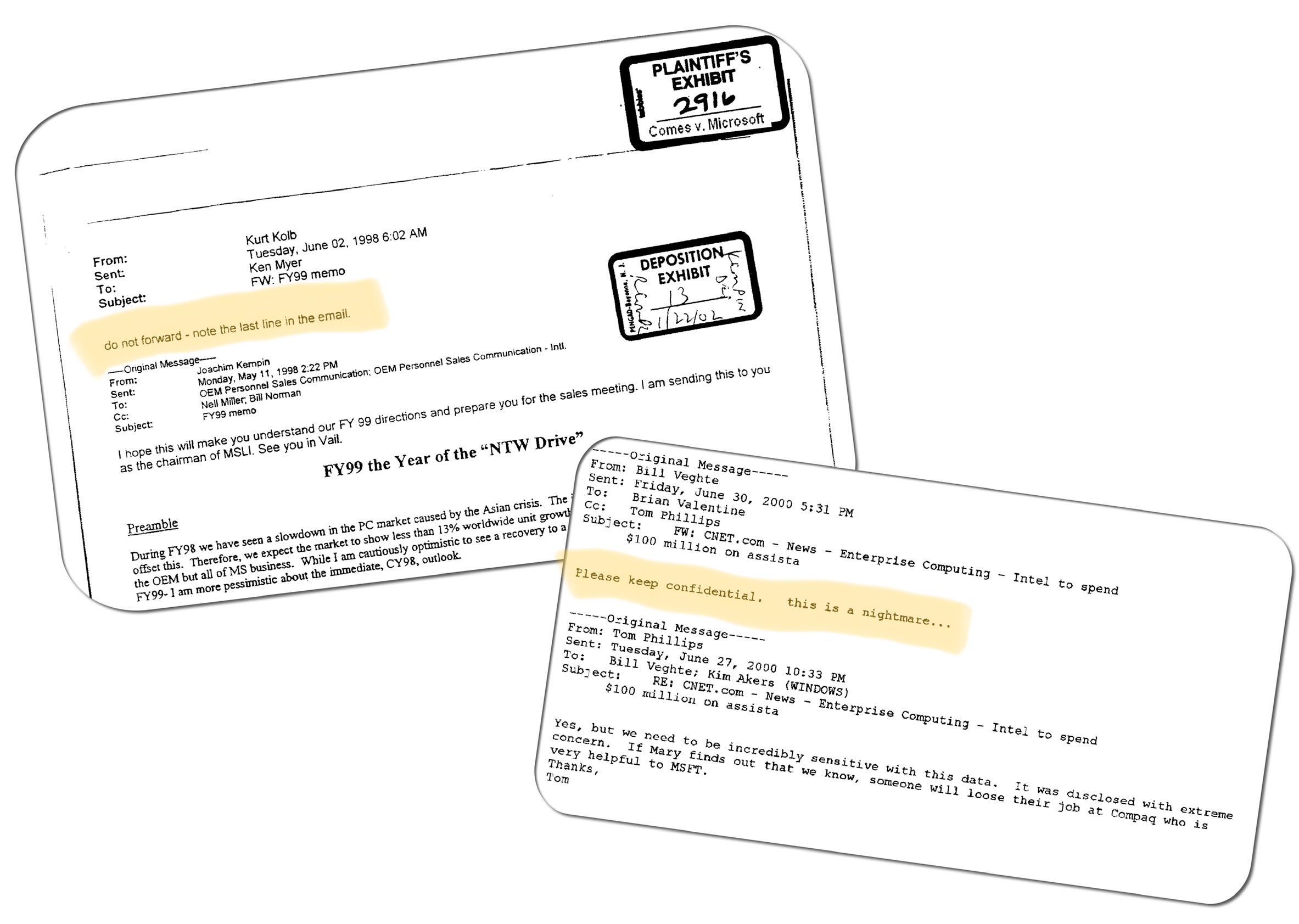
073. **DO NOT FORWARD**
As readers of this chapter have seen, the theme of Office11 continues to be enterprise, though now it is turned up to 11 so to speak. Despite my concerns about end-users and reviewers, the unstoppable force at Microsoft remained enterprise customers and meeting their needs or the needs of our growing sales force serving them—whether those needs were technology, positioning, or strategy, as expressed by customers or the field sales teams. A key attribute of enterprise software strategy is connecting the dots and making sure one part of the full enterprise stack uses (or leverages) another part. A cynical view of this is that it encourages a form of lock-in relative to the Microsoft stack of software. A practical view is that customers appreciate this interconnectedness because they are buying everything in a bundle and broader usage of what is already owned offers a high return on that investment. A charitable view of such a strategy is how it makes for more elegant implementations where the various parts simply work together. Perhaps the story of Windows Rights Management (also called Information Rights Management within Office) generated a seemingly unachievable level of complexity while simultaneously facing an unrelenting technical buzzsaw of customer feedback.This lesson from this section is not a one-off. Instead it is prototypical of the era but also what happens when a product pivots to enterprise customers and the enterprise relationship dynamic defines how products are built. It is a tale of caution.Back to 072. Notes on Tablet PC Innovation“I’d like to present to the witness Exhibit 6508, Bates number 0017811. Mr. Sinofsky, do you recognize this email that lists you as the sender?”To anyone involved in modern litigation, especially being deposed, there’s a sinking feeling that comes with being presented an old email. A similar feeling arises when receiving a call from a reporter starting with, “I was just anonymously forwarded an email about . . .”Email became ubiquitous across the corporate world by the early 2000s. With the rise of companies moving ever faster came “business at the speed of thought” (that was the name of Bill Gates’s second book from 1999) or “flattening organizational hierarchy,” to name two of the many touted benefits of email. In the early days, while senior managers at non-tech companies were still having email printed out for them and assistants transcribing email replies, not much thought was given to the permanence of email or the instant impact of an employee innocently (or not) forwarding email outside the company.Every company that deployed email and embraced an email culture eventually wound up with a company policy on the use of email, likely explaining the ramifications if one were to be less than scrupulous in his or her use of email.Born out of this were automatic disclaimers placed at the bottom of email, “THIS INFORMATION IS CONFIDENTIAL,” or my favorite, simply writing in red letters across the top of a message (perhaps the first use of rich email formatting) “CONFIDENTIAL.” We should not forget putting “**DO NOT FORWARD**” before the subject line of the email. We all knew that those emails were the important ones, and these warnings weren’t even worth the bytes they took up—copy/paste and printers still worked. Just in case there was a button on every keyboard since the first PC “Print Screen”.Outlook featured commands that implied “Confidential” and “Do Not Forward,” though these did little more than offer a fancy version of red text and, worse, were invisible to recipients reading the mail on systems other than Outlook.Maintaining the corporate confidentiality of email became the Achilles heel of the platform, except that email found such incredible product-market fit that there was no putting the toothpaste back in the tube. Customers wanted a solution that protected email misuse, or more clearly made Outlook enforce a company email policy or intent of the sender.Over the previous several releases of Office, we steadily improved the ability to encrypt Office documents. Office always had the ability to add a password to documents, and for years a top call to customers calling PSS was trying to retrieve a lost password (Microsoft provided no help, but a search on the internet quickly led to a variety of tools that worked with trivial effort up until about Office 97, and incidentally those search results were a common way to spread malware). We eventually added true encryption that made it increasingly difficult to read a document that was not yours to read. This level of security eventually became minimal as the ability to break encryption techniques had steadily improved.A peak effort and an early test of our platform capabilities for encryption was working to win approval for Outlook and Exchange to be used in the Defense Messaging System in the Department of Defense in the United States. Implementing the required encryption was useful only to the Defense D

072. Notes on Tablet PC Innovation
Few products have captured as much attention as Microsoft’s Tablet PC (except perhaps Xbox, which coincidently launched the same year). The company’s history working to deliver the form factor goes back to the earliest days of Windows. BillG’s intense focus on handwriting recognition led to one of the first extensions to Windows, Windows for Pen Computing (1992), and a bitter lawsuit with then perceived leader, GO Corp. Subsequently, handwriting recognition was among the very first groups chartered in the new Microsoft Research organization. The small Windows-derived handheld devices, PocketPC, were pen-centric. Then finally in the early 2000s Microsoft began in earnest (meaning in Windows proper) the technology for pen and handwriting that made it into a special edition of Windows XP for Tablet PC and a new type of computer. This arc took place a decade before the iPad was released (purists do love to point out the Newton from Apple came and went in the 1990s). Famously, Steve Jobs tells the story of the iPhone as one that began with a tablet form factor, but that was abandoned in favor of the phone. With such a long story, one could easily write a book on just the evolution of the tablet and the Wikipedia history page represents the industry search for a paradigm-defining product. In this section, we’ll start with the launch of the modern Tablet PC from Microsoft and detail the much more difficult (in my view) challenges of building software for the form factor in the context of Windows.Back to 071. Resolving NetDocs v. OfficeI should have been prepared for what transpired following the unveiling of our Tablet PC. I was not.The line to enter Bill Gates’s keynote at the November 2001 COMDEX snaked through the hotel and required metal detectors and body searches following the events of September 11, 2001. Themed Digital Decade 2001-2010, it was set to be a highlight of the week—discussing bringing digital innovations across industries and emphasizing increases in productivity, richness of business infrastructure, and significant changes in home entertainment.Previously at Fall COMDEX 2000, Microsoft unveiled the Tablet PC, showing a prototype tablet created by Microsoft, highlighting BillG’s personal favorites of pen-based handwriting capabilities and online document reading. At the time printing was still the standard for sharing business information. The prototype was how we hoped to convince OEMs to build similar PCs. A recurring theme for the Windows business was to use big tradeshows to demonstrate exciting new PCs across the PC ecosystem. JeffR joined BillG on stage to show off multiple innovative PCs running the new Windows XP Tablet OS, many of which were to be available later in 2002 with the tablet-capable version of Windows XP. As with all things Windows, the strength in bringing the product to market was emphasized by a broad array of hardware of different sizes, shapes, and price points. Building off the first party prototype demonstrated the previous year, the keynote brought the full strength of the PC ecosystem to this new form factor with support in new variant of Windows XP.Alan Kay, a pioneer in visualizing and prototyping the concept of a tablet while at Xerox PARC, conceived of the DynaBook, perhaps the original tablet. The DynaBook was envisioned as a “personal and portable information manipulator" described in his amazing paper, A Personal Computer for Children of All Ages (1972). Of the launch of Microsoft’s Tablet PC in 2001, he told Newsweek’s Steven Levy, "Microsoft's Tablet PC [is] the first Dynabook-like computer good enough to criticize." In PARC-speak, that was a high form of praise, not a back-handed compliment.The quest for a PC tablet was not new and perhaps dates back in our memories to Captain Kirk on the bridge of the starship Enterprise with his tablet and pen. In the 1980s and 90s the PC industry was buzzing with innovative large screen computers based on tablets and pens from the likes of IBM, GRiD, Momenta, NCR, Compaq, and Asian companies like NEC, Samsung, and Toshiba. Small screen computers arrived (and departed) as well. Palm had a breakthrough with its Pilot, while Apple failed with its Newton. Windows CE devices were blessed with a stylus as well.What Microsoft envisioned to do differently was to build a new class of computer. The Tablet PC would be a full notebook sized computer, but better. It was a notebook PC in power with the convenience of an actual notebook and pen. It was also fully capable of running the latest Windows and Windows software. This was not only the core of the Tablet PC strategy but the core of everything Microsoft was doing with the “scalable Windows architecture”, or “one Windows, with many implementations”.Microsoft’s new Tablet PC group, led by Alex Loeb (AlexLoeb), reported to JeffR’s division (rather than Windows) to streamline delivery of a killer productivity solution. As the original manager of the pen computing effort a decade o

071. Resolving NetDocs v. Office
With the announcement of .NET, Microsoft was overflowing with projects, many not yet products, destined to become the next big thing in one area or another. Everything had a “Net” somewhere in the name and everything was in the press or in an enterprise strategy deck. There was plenty of optimism, but collectively the company was well ahead of itself. There was simply too much going on to have a coherent strategy or roadmap, even though BillG was 100% focused on that, having assumed the role of Chief Software Architect. The push-pull of “be more innovative” and “ship real soon” meant that many of these efforts were at the ends of the spectrum of “architecturally suboptimal in order to finish” or “architecturally correct but can’t possibly finish”. The unwinding of projects like this is incredibly painful for everyone involved, especially when what really happened is so different than perceptions.If you have not seen part 1, check out 064. The Start of Office v. NetDocsBack to 070. Office.NOTHardcore Software is a reader-supported publication. To receive new posts and support the work, consider becoming a free or paid subscriber.I was still working through the stages of grief over a product getting killed or at least wounded, considering what happened to Office.NET quickly renamed Office11 at the last minute. Karma was about to come back around and bite me for, ostensibly, doing the same. Since Forum 2000 in June, the NetDocs product continued development. The team expanded, absorbing products, and broadening the mission. BrianMac used the same approach and much of the team that created Outlook.The team was fired up but going in several different directions. Depending on who you asked on the team, NetDocs might be something different. What originally started as a new style of document creation tool, blending aspects of word processing, spreadsheets, and databases, expanded into a full-blown email program to replace Outlook, a photo editor, and even a web browser. It was also using the latest (unfinished) and most strategic technologies. Sensing the excitement over XML, the product also found itself deep in that strategy and brand new code. NetDocs was also using the latest reusable code from Internet Explorer, which was great for the IE platform but also meant it was not exactly what most customers thought about as a browser-based implementation. Along the way, it created some of its own technologies such as the ability to install updates easily over the internet. There was a lot of excitement over a product that does. . .everything. How could there not be?On paper, this was quite something. During the early days of MS-DOS, these all-in-one products always struck a chord with techies and regular people alike. The idea of using only one tool to get everything done, including email, was insanely appealing. In demos, everyone, especially BillG, got excited. The idea Microsoft could finally crack the all-in-one category with a professional tool would be huge. ChrisP had a name for a design demo that incorporated “all the best of everything in one easy-to-use app.” It was called Uniprog Deluxe. That’s what we came to call this expansive vision. It wasn’t meant to be cynical as much as it was meant to imply an unachievability.Importantly, NetDocs was also a key part in the nascent strategy to use XML everywhere. XML was being pushed heavily by BillG. Despite being a simple text file format, Bill had let XML take on the role of providing a proprietary advantage to Microsoft in some way. This was a difficult topic to discuss because it conflated several aspects of implementation (such as where the actual intellectual property or code was) and appeared to assign proprietary value to a simple text file. Much of the excitement around XML (and thus NetDocs) was because of the concerns over the now ubiquitous HTML format and lack of proprietary control Microsoft had over a format. In short, XML was the way to regain a proprietary control over an internet technology. Whereas HTML was viewed as a display format, XML was viewed as a structured data format. I had a difficult time with the magic attributed to XML, especially because Office was already invested in HTML. I was holding on to the notion that HTML would remain human-readable at some level, whereas XML was brand new but already super complex (advocates would say it was never meant to be human readable). We planned on a significant amount of XML work, but viewed it as interoperability more than proprietary advantage. For example, Excel would be able to import XML data files such as those from the Securities Exchange Commission or SQL databases.There was one big problem. And a lot of little ones. The big problem was creating yet another email program—while NetDocs did try to do a lot of things, everything emanated from being an email and scheduling product. Microsoft went through several years of a comical email client strategy that was confusing and frustrating to c

070. Office.NOT
Welcome to the only project I worked on that had the plans upended at the last minute after one executive meeting. This is a journey that starts back at the 1999 Company Meeting and the unveiling of “Software As A Service” bet the company strategy. With many excerpts and artifacts, we will go through planning Office.NET where you’ll really get to experience the product planning process in Office. Followed by a last minute change putting all that work at risk.Back to 069. Mega-Scale, Mega-ComplexityIn the fall of 1999 Microsoft held its annual Company Meeting at the old Kingdome (a stage was set up over second base). While most of the world was fixated on the rise of internet sites or more likely the looming Y2K crisis, both SteveB and BillG used their time to begin a transformation of Microsoft—the transformation to a software services company (this would later be called cloud computing). Few even in the industry knew what this meant. Pioneer Salesforce.com was just months old and the original cloud infrastructure company Loudcloud started by web browser pioneer Marc Andreessen and former Netscape executive Ben Horowitz was incorporated just a week before the Company Meeting. This was very early, but it was also very big. Even though Microsoft was at the peak of success and the most valuable company in the world, the company was going to be reinvented. It was powerful.BillG spoke first. His opening was dramatic—a reinvention of the core mission statement for Microsoft—the title slide was “Changing the World of Software”. From the meeting transcript:The vision statement that many of you have heard, year after year after year, we actually decided to change. That statement, a PC on every desk and in every home, running Microsoft software, is still true. It’s a great vision. It really drove the company for the twenty-four years that we’ve been in business. But in some ways it’s outdated. Not outdated because it’s wrong. But outdated because it’s not revolutionary. When you hear that statement today, you say yeah, of course, what else is new. PC’s are in sixty percent of U.S. homes already. The prices are coming down to a point where increased penetration is very, very easy to predict.But Microsoft is a change agent. We’re not just about taking the software we’ve done and making it a little bit better. We’re about changing the platform. Taking the kind of risks we took when we bet the company on graphical interface or bet on a Windows NT. We’re embarking now as big a bet, or I would say, a bigger bet than any of those. It’s captured in this new vision statement. Empower people through great Microsoft, internally we say Microsoft, externally we just leave that as implicit thought, great Microsoft software, any time, any place and on any device.Now when some people in the company heard that they thought is that all really that much different? Is it something completely new? And just in the last month, Steve and I with a lot of help, from other people, have come up with a way of taking this vision and explaining what it means to our software in a way that is quite revolutionary. And that is by saying that from 1975 to 1998 the whole vision centered around the PC. It said the PC is getting more powerful, there is more and more things people are doing with it, just get the applications on to that PC and we’ll continue to lead.Well, now we’re saying that although the PC will continue to be important that it’s actually the capabilities that are delivered through the internet, the services across the Internet that people will be thinking about.. They won’t be thinking about managing their files on an individual machine. They’ll want all their information stored in the network in such ways that any device that they pick up, a PC, a phone, a TV, a small screen device, they have access to the information they care about. That takes storage of file system that was purely PC-centric and makes it much more internet-centric.This was classic Bill. There was a bold statement. An assumption that the company was willing to take on huge risk. Embracing the success while saying we could do much better. Then pivoting to a very specific technical scenario, and no surprise it was data storage. He did this exact pivot when celebrating the Office XP launch with the team—great job, now about unified storage. There were demonstrations of web scalability on Windows, the new collaboration features in Exchange (including the Web Store discussed in previous sections). In something unusual for Bill, he ended his keynote by going through the newly created Microsoft Values, talking to Innovation, The Customer, Partners, Integrity, Diversity, Community, Entrepreneurial Culture, and People. A memo was authored describing these values, distributed to the company, and leaked to the local press (who often hung outside the Kingdome listening to the meeting anyway).These ideas did not spring up for the meeting. A couple of years earlier Bill wrote a mem
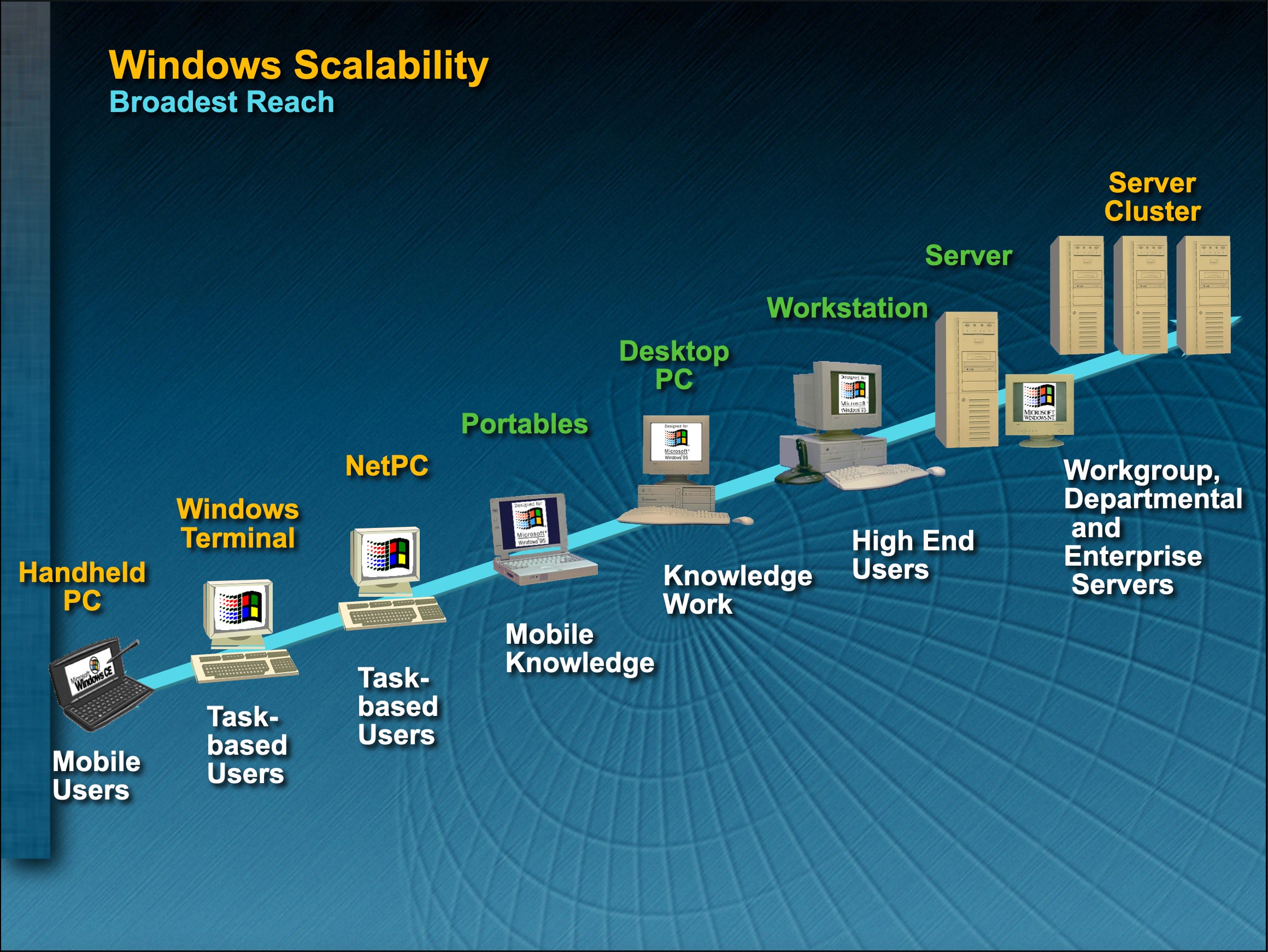
069. Mega-Scale, Mega-Complexity [Ch. X]
Welcome to Chapter X! The turn of a new century and survival of “Y2K” begins a massive expansion of the Office product line, a dramatic change in the products we built, and a reinvention of how we market Office, while simultaneously tripling and quadrupling down on enterprise customers. The result of this transformation sets the stage for the most formative years culturally for the Microsoft that takes us to today’s products (365, Azure), but unknowingly constrained us going forward. Back to 068. The XP eXPerienceOne early company meeting as the CFO Mike Brown (MikeBro) was going over the numbers he had a chart of the Fortune 500 showing that Microsoft finally made it into the rankings. He showed the top 5 companies or so, which dwarfed Microsoft then just barely in the top half. Sitting next to my first Microsoft friend KirkG, I recall asking him if he thought there would ever be a software company the size of AT&T or General Motors. His answer, “hell yes.”Though Microsoft was number 84 by sales, it had achieved the unimaginable as the largest company by market capitalization. Thinking about that even today is still difficult to fathom—bigger than the oil companies, bigger than the entire auto industry, bigger than the phone company. It was obviously more than humbling. It was terrifying.There was, nevertheless, a swagger across the company. Sure, the trial and settlement were still going on but the worst seemed over. There was such an incredible wave of success from the new enterprise business, both the licensing of enterprise agreements and the product offerings on the Windows/Office 2000 platform, along with Exchange and several other key products. For product people these were the magical product releases. There were “investments” as SteveB called them across every imaginable product category. The combination of Microsoft pivoting to internet technologies, the dot com crash, and simply winning against competitors is what I believe really caused a change in how we thought about ourselves, by rising to the moment and vanquishing competitors: Netscape, Sun, and Novel on servers, Apple on desktops, Borland on tools, Lotus on email, and so many other smaller companies. We saw success in everything we were doing. It became difficult even to find competitive products to get the team sincerely fired up. The biggest competitor was no one company but alliances such as anyone using Java or open source, but these were diffused and fragmented battles. Microsoft’s oxygen came from competing and winning and we’d sucked all the oxygen out of the market by winning so soundly. The market capitalization was a realization of that.It would be a mistake to think success would not change how we built products. When you chase a competitor, even if you’ve got better ideas for how to express, implement, or sell a product as we did for Excel versus 1-2-3, the idea for the product in the first place came from the competitor. Microsoft didn’t invent from whole cloth many products. Most every product has a lineage of some form, so this is never an entirely fair way to judge. Most every successful product could be traced to a direct competitor with scale. On the other hand, many of our biggest failures were products that lacked a competitor where we would often get lost on a meandering journey trying to figure out what to even build. The Blackbird internet authoring tool previously described was a good example of this.We had competitors of course, and some were spectacularly good. Oracle would forever remain the top SQL database company. Linux and open source were clearly a huge issue, but as should have been anticipated they would not win head-to-head but would only win when a paradigm shift—cloud and mobile—enabled them to flourish in business software. SAP and the whole space of software that ran the back office of enterprise and CRM software escaped us even with their deep connections to Office and email.Increasingly Microsoft’s strategies became so daunting and all-encompassing it was nearly impossible to imagine a single competitor that could offer anything close to our strategy slides, and equally impossible for any single person to track. We were in a constant state of tuning the message and product line. Platforms lurched from Distributed interNet Architecture (DNA), to Next Generation Windows Services (NGWS), to .NET to .NET MyServices (aka Hailstorm), with stops along the way such as putting “+” on the name of every new endeavor, for example COM+, or adding XML to expand an existing strategy. At each iteration, everything was rebranded, expanded, and re-factored. An area like accessing data stored in a database cycled through acronyms representing increased capability and complexity, and varying compatibility and tools support: ODBC, OLEDB, DAO, ADO, ADO.NET, RDO, and more. The complexity of naming was only matched by the increasing complexity of software. The original Windows 3.0 APIs numbering about 350 had expanded to

068. The XP eXPerience
The last months of a product development cycle the scale and length of Office10 are moments of calm punctuated by moments of terror. The calm comes from the lack of code changes as thousands of people test the product while hoping not to find anything requiring code changes. The terror comes from issues that arise when you have little time to change them because we’re still dealing with the physical world. Something that seems so trivial like a product name requires a month of more of work to get right, then rolled out around the world. Office10 did not have a name just three months before we would finish. Office10 was also one of the first product releases for Microsoft where when the product made it into customer’s hands there also needed to be live and working web sites that extended the product, for over one hundred million people on day one. Other moments of terror come just after the product ships and those first reviews—it is not just if they are good or bad, but will there be a recall class issue, be it a design choice or product defect. Such an issue could tarnish the entire product cycle. What if our marquee feature—the one in all the printed brochures and print ads—ends up part of a scandal rapidly spreading to Windows XP?This post brings you inside the last months of a project that was the first Office product to ever finish on time, and perhaps one of the first Microsoft products ever to do so. As it would turn out 2001 might be viewed as peak execution for the middle-age of the PC journey. The Windows release under development which would become Windows XP would also ship on time, a first for Windows. It makes sense that the major products would learn to ship on time just as the world was moving on to the internet.Back to 067: MYR-CDG: Product Meets SalesIn early 2000, branding and naming the next release of Windows was all gummed up and that slowed down Office, which needed a name in order to release on time in March. Whistler, the code name for Windows, was scheduled to ship about six months after Office10. An August ship date for Windows was achievable, and no one wanted to mess that up. The name, perhaps to the surprise of many readers today, was a long pole in the release as it touched code in many places and could impact localization, manufacturing, printing, and packaging. We needed a name. How hard could that be?Windows trying to settle on some variant of “experience” because the main thrust of the release was to finally bring the Windows 95 experience of peripherals and consumer software to the enterprise-focused NT code base of Windows 2000. In addition, we collectively concluded the year names were not working (hence Windows Me) because of the difficulty of keeping ship schedules and customer confusion over what products worked with each other, both issues were entirely predictable and frequently discussed at the time. The branding team was thinking of something like Windows EXP or Windows XPR, and finally Windows XP. My concern in an endless email chain was not this product but the next one. Would the next name have a roman numeral, go back to adding version numbers, a superscript, or add descriptor Edition branding? At one point, someone mocked up Windows XP ² which made me wonder if I was being made fun of, especially in the Spanish release.The corporate teams settled on and cleared the name Windows XP, and what immediately followed was the question as to whether Office10 should be named be Office XP. The corporate branding team and sales teams were in favor. The Windows team, however, did not intend for other products to add an XP suffix. This seemed to be another .NET in the making, which was still nowhere close to being resolved. The branding powers demanded evidence in the product that supported co-branding.We held many meetings during development about aligning the releases of Whistler and Office10, but the products were on wildly different schedules. From our perspective, Whistler was about finishing Windows 2000 without much new for Office. Besides, Office was going to run perfectly well on the new corporate desktop of Windows 2000 anyway. Windows 2000 had been years late, so it was not unreasonable early in the process to doubt the next Windows schedule. Whistler was making a ton of progress and we were self-hosted, so any worst thoughts were not going to happen. This was a first for Windows! Still, there was no significant release synergy. Office ran on Windows XP, and realistically not even as well as it ran on Windows 2000 PCs with the same amount of memory.At one of these meetings the topic of naming them the same became heated, if not awkward. BillG wanted to know what was interesting in Office10 and what was unique when it ran on Whistler. Baked into this assault was the belief that Office was not exciting on its own and more importantly that Office failed at exploiting the latest Windows release. This was the view that came from the perspective that innovation from

067. MYR-CDG: Product Meets Sales
Microsoft was often viewed as a Borg-like structure though we’ve already seen when it came to product development it was decidedly of two cultures. The huge and growing global sales force so dominated by SteveB (now CEO) represented a third, one completely defined by the unique combination of massive global scale and local empowerment and respect for culture. What happens when a Redmond-based software engineer-turned product group executive meets this culture head-on? What about when that happens in front of his new boss who previously ran the field and created the process we’re about to see unfold? This is a story of culture. It is also a story of growing and maturing as an exec. Most of all it is a story of how a product leader is not really complete until they’ve lived and breathed the efforts of the sales people that connect with customers and bring in the money. Below is an early experience. A few years later I would pack up and live in China to experience firsthand on a daily basis what it was like to sell every day.Back to 066. Killing a Killer Feature (In Outlook, Again)In the classic book Flow: The Psychology of Optimal Experience, Mihaly Csikszentmihalyi demonstrates that a genuinely satisfying experience takes place in a state of consciousness called flow. During flow, people typically experience deep enjoyment, creativity, and a total involvement with life. While the book uses many examples, the concept of getting in a groove resonated with me. Flow is how programmers spend hours writing code and how our best customers spend hours creating satisfying documents with Office.Reading Flow helped me, but my job was changing. . .a lot. The demands to be present in the newly added building 34 executive suite overwhelmed me at times. The pressure to spend so much time ruminating with other executives ran counter to what I came to believe and what I experienced as flow. It didn’t used to be like that. I know because I used to see the execs I worked for most every day, casually.Flow was how I felt writing a vision or the interactions I had as I walked the halls. This was especially important at Microsoft where everyone had a door. The criticism of private offices was that people get shut out of collaboration and spontaneous discussions (in favor of concentration and quiet focused work, apparently). I never believed that to be the case, because we had a culture of door open/door closed that implied a willingness to chat spontaneously or a need to focus. Since my first days at work, the richness of hallway and drive-by discussions were most useful and memorable.The idea of connecting spontaneously and learning what was on the mind of a member of the team was something I viewed as my job—so much more than sitting in a conference room with other executives or reading slides presented by managers but prepared by people not even in the room. Making eye contact, not in a hurry, discussing someone’s work and seeing if I could put it either into context or simply offer perspective on something going on in a bigger picture—that was flow for me. Everyone was always wrestling with something—bugs, recruiting, implementation choices, and more—and while I didn’t want to walk around fixing things, I could support, learn, and connect. Most importantly, this was a way to connect with less senior members of the team 1:1. Even today, I can recount some of my favorite moments and best connections coming from people I was able to learn from by walking the halls, a phrase made famous at least in the tech world by Intel’s Andy Grove.Doing so was not the norm for many execs, especially outside Apps or the product groups. The vast majority kept to a Microsoft exec workflow of a reserved conference room across from their office and a steady stream of meetings all day. Even 1:1s were often held in bigger conference rooms.The 8 a.m. meetings, the meetings to prep for meetings, the emails written by staff to communicate the meetings, the rescheduling of the same, were all starting to pile up. I felt I was becoming detached from the team—I was losing flow. I was uncertain of whether I was a poor fit for the role or if my role was defined wrong. I struggled trying to understand what changed in the landscape that required such a change in how to manage. We weren’t facing new problems or new concerns—there were no new competitors or competing technologies. We had ideas to grow to new areas and were executing, and the enterprise sales process was yielding absurdly good numbers. What was I missing? Or, how could I convince people that managing 2,500 people was an investment in time that might be different from how a huge subsidiary GM or marketing VP ran things? Others in similar positions felt differently. They seemed to gravitate towards this new Microsoft culture. Perhaps I was wrong or underestimated what was needed to operate at scale and that was the driving force behind this perceived shift.The field’s annual Mid-Year Reviews (MYR),

066. Killing a Killer Feature In Outlook, Again
Enterprise software customers learn about roadmaps and plans long before the development team has robust execution plans. That’s part of the business. No matter how much these discussions with customers and partners are caveated, a failure to deliver is a big deal. Customers, partners, and salespeople all have a vested interest in those slides (promises!) coming to life when we said they would. When a project is spread across two separate and large development teams, failing to deliver or “cutting a feature” as we called it as if to minimize accountability, the cross-team dynamic is brutal. When BillG gets involved, the temperature rises even more.Thank you again subscribers. For many readers, you will be receiving a renewal notice about a week before your subscription is automatically renewed. I am incredibly appreciative of your support this past year and look forward to another year of amazing stories: Office user interface, Windows 7, Windows 8, internet services, Surface, and more. So much to dive into. Again, thank you for your ongoing support. It means the world.Back to 065. SharePoint: Office Builds Our Own ServerJeffR, my new manager and executive vice president, send me a note “LIS: Wow, the story just gets worse and worse. . .Let’s kill it.” He pushed to resolve this festering issue and suggested a meeting with BillG. This would be the second time we cut this feature, having shipped Office 2000 without it.It was December 2000. In a hastily arranged lunchtime meeting (a BillG must was to always have hot lunch at noon), we sat in the Board Room where we normally met with him. It was a deeply technical meeting, the kind he liked. There were senior people from Exchange, Outlook, and the company experts on data storage that have been meeting as part of Bill’s project to improve storage. The meeting was to decide whether or not to abandon the work on LIS, or the Local Information Store, feature of Outlook and Exchange. The meeting was very tense. The broad view was that this feature was absolutely key to competing with IBM/Lotus Notes. The Exchange Platinum release was late with an uncertain ship date. Office10 was less than three months from being complete, and the code was essentially frozen.After a tense hour that ran over, BillG said he would think about it, leaving everyone in a state of limbo. It was unusual for him to not reach a conclusion immediately. That meant he was either going to take an unpopular stance, perhaps try to keep the feature alive, or he knew it was a pretty grim situation and was going to avoid confrontation in the room. Counter to what many might have believed, Bill did not like to get involved in binary decisions that leave little room for optionality or win-win outcomes.An hour later he sent mail saying it was a difficult decision but “I am for killing it because less than 5% of customers would end up using it.” That conclusion was based on the state of the feature as presented.What followed was the rollout of a brutal cut, which included drafting mails for another month, communication with the field sales group, and removing dependencies on the code.This recounting made the process seem straight forward, but in fact it was one of the most challenging last-minute product changes I experienced. Going through this surfaced many of the most difficult product strategy and cross-company execution challenges Microsoft exhibited.During the meeting with Bill, I was not worried or concerned. I was frustrated (and it almost certainly showed). There was no need to have this meeting. The feature basically cut itself. There were no options other than delaying products for perhaps a year to complete this feature. This was the “physics of shipping software”.Even though the classic by Frederick P. Brooks, Jr., Mythical Man-Month, was over 25 years old and found on every Microsoft engineer’s bookshelf, when decisions made it to the executive ranks, especially when they involved cross-group and strategic initiatives, the lessons from the book were forgotten. BillG would ask if we could allocate more resources from either team to speed things up. We all knew that there was neither the expertise nor the available resources to do that. Plus, we all knew what the mythical man-month said about that, “The bearing of a child takes nine months, no matter how many women are assigned.”BillG would offer suggestions on how we could scale back on some of the features or scenarios in order to require less work. We had been doing that for months. The feature had been scaled back so far that even if we shipped what we discussed at the meeting, it would not have moved the needle on competing with Notes. Quite the contrary, it would have disappointed.BillG would say it would be acceptable to simply add some more time to the schedule, perhaps three months. Physics of shipping this amount of software meant that three months was hardly any time at all. Given all the work to test, stabilize, and for servers gett

065. SharePoint: Office Builds Our Own Server
I admit up front this will be one of my favorite sections to offer. SharePoint was a remarkable point in the history of Office as we expanded the product line from desktop Win32 applications to include servers, a prelude to services. Within Microsoft this was by many accounts not only heretical, but also impossible. How could a team made up of “UI programmers” develop a server? Strategically, the inherent conflict between a server tuned for information workers and the actual server business was intense and fraught with difficulties. I would learn another lesson in bundling versus stand-alone product, and endless lessons in just how much the analyst world struggled to make sense of Microsoft’s product line, even when it just didn’t matter.While I could spend many pages on the features and my love of SharePoint as a product, the transition Microsoft was going through while we developed SharePoint is equally important to the overall story being told. We will start there.Back to 064. The Start of Office v. NetDocs“We need an ‘Office’ server” was another one of those driveway lunchroom conversations with SteveB before he became CEO. It was a concrete expression of an abstraction. What he was really saying was that Office needed to think broadly about how to solve the problems information workers were having. That business card he used to make a note of “find me all the stuff about France” was now looking like a product issue for Office. We were all-in on the opportunity and were well ahead of Steve, having been thinking about this from the moment we saw FrontPage. We made it through the 97 and 2000 product cycles and FrontPage had established itself as a favorite tool of Internet Service Providers. We were ready to build on that foundation and expand the little web server we had been using to share product documents on the team. An Office server was a key part of the Office10 vision. The path from vision to RTM was not going to be a straight line.The first half of the year 2000 was nothing short of eventful:* Microsoft and customers survived the looming Y2K apocalypse. Despite dystopian fears, except for a few trivial and humorous problems, nothing went wrong at midnight.* Windows 2000 shipped.* Microsoft rose to an astronomical $500 billion market cap.* Then the NASDAQ dropped more than 2,000 points with the Dot Com Bubble becoming a defining event of the rise of the internet.* Judge Jackson declared Microsoft a monopoly that violated the Sherman Act (causing a 15 percent post-bubble stock price drop), and then later ordered the split of Microsoft.* Office was attacked by a massive virus, resulting in the disabling of core product features.* Capping this off, Forum 2000 was a landmark event in the evolution of Windows Server and introduction of what would become Hailstorm in an effort to rebuild Microsoft as an innovator in the internet era.* PaulMa retired from Microsoft after having had an incredible influence on the company’s operating systems, platforms, and enterprise transformation.It was also the start of SteveB’s tenure as CEO. Many believed this would mean little or no change given how SteveB was known widely as the “third founder.” SteveB would lead sales and marketing leadership and overall company execution. BillG would lead on technology vision and strategy. This seemed a formalization of what we always felt was the case. On the other hand, how could someone so different keep doing things the same way? Earlier in the Spring of 1999, there was a BusinessWeek cover story about the remaking of Microsoft. It featured a photo of Bill and Steve together and the subheading “While Bill Gates plots strategy. . .Steve Ballmer shakes up the culture.”With so much going on, Steve’s first reorganization as CEO seemed relatively minor even expected given how the sales force he created reorganized almost yearly. It didn’t seem like much of a “remaking of Microsoft” as the headlines touted months ago. There were some new people, but the big changes were in financial reporting.Jeff Raikes (JeffR) returned to Office in the role of group vice president of the soon-to-be-renamed Productivity and Business Services (PBS) division. It was noteworthy that the name included services as per the end of 1999 strategy mail from BillG. JeffR was among the most tenured executives and led the original “Office” organization, the Office Business Unit, OBU, home to Word and Mail. Jeff joined Microsoft in 1981 when the company was 100 or so people, recruited from Apple by SteveB for a product role in Apps, where he led marketing for the original wave of Macintosh applications (and also shared a house with Steve for several months). On his PocketPC he used to keep a “days at Microsoft” Pocket Excel sheet he would open up when talking about how long he’d been at the company. Jeff was frequently mistaken for BillG, as both sported the requisite Microsoft uniform of loafers, khakis, and collared shirts, but it was the ’80s plastic-rimmed
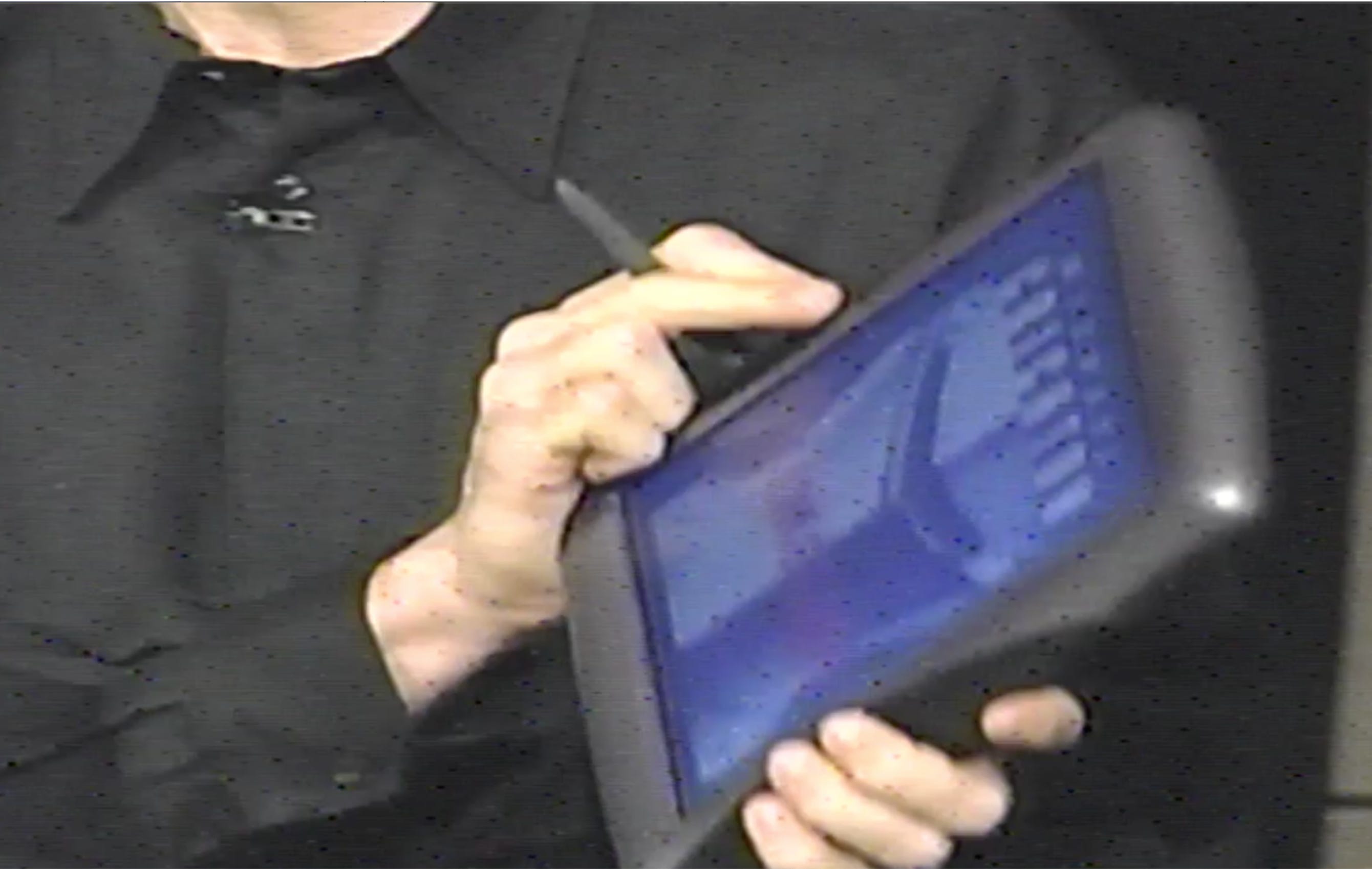
064. The Start of Office v. NetDocs
Microsoft went through so much in the first year of the millennium. It began with SteveB taking on the role of CEO and BillG taking on a new role as Chief Software Architect. Over the first months of the year a new set of technical leaders convened under the direction of Paul Maritz leading all of the product groups to define essentially the next Windows. The group was producing the plans for NGWS, next generation Windows services as outlined in memos from BillG and SteveB. The DOJ trial was complete, and we awaited the verdict, but everything we did was looked at through the lens of the implications of the trial. At every step we were asked if what was going on was a result of the trial, anticipating an outcome, or designed to work around what comes next. Personally, I was just getting my footing as an executive and the leader of Office and just figuring out what it means to be leading such a big part of Microsoft. I still had so much to figure out and was definitely worried about leading the train off the tracks.NOTE: I really want to offer a big “Thank You” to all the paid subscribers. It takes a lot to take the time to support the work materially and while the proceeds of this work go to registered non-profits in the US, it still means a great deal that you’re paying for the work. Many subscribers are about to hit their one-year renewal and I wish to thank you in advance (and welcome new subscribers). As planned, there is almost exactly another year of posts planned—and for many this is the extra-exciting stuff including what’s coming with SharePoint, Outlook, the Ribbon, Windows 7, Windows 8, Surface, and many controversial (at the time) topics like Courier, including today’s section on NetDocs. THANK YOU!To celebrate the anniversary, please consider sharing this link for a discount on the yearly subscription. https://hardcoresoftware.learningbyshipping.com/anniversary Back to 062. Antitrust: Split up Microsoft and 063. Managing a VerdictThe demonstration within the multi-hour series of keynotes was billed as a “sneak preview of something that hadn’t been demoed before. . .technology that embodied the dot net user experience. . .this is real code. . .this technology will apply very broadly in the future across Microsoft products such as Windows.NET [pronounced Windows dot net], Office.NET as well as the consumer subscription service.” What followed was a 15-minute demonstration of word processing, spreadsheet, email, calendaring that looked like Office. The demonstration was easier to use, sleeker, and more connected. It featured enthralling technologies like “universal canvas” and “XML”. What’s not to like?Within a news cycle the technology demonstration had ballooned to Office.NET and was the future of Office. Within Microsoft, especially in Systems, nothing was higher praise than being the future project and conversely nothing was worse than being the past. The world of dueling code names had been brought to Office, except now it was Office.NET and whatever I was working on, aka Office10. What had been shown was being built by a separate team, an organizational peer of the newly christened old Office.What was this and where did it come from? Was anyone building a product called Office.NET? Was this planned? I certainly knew the code being demonstrated, but the idea that it was presumed to be the future of Office was newsworthy, even though we did not say that directly and had not intended to leave that impression as far as I knew. Nobody wants to Osborne the most profitable part of Microsoft (a reference to a well-known microcomputer company that went bankrupt preannouncing a next generation product). Weird.Starting in early January of 2000 coinciding with SteveB’s promotion to CEO and BillG assuming his new role of Chief Software Architect, BillG and PaulMa began working on a series of strategy offsites, meetings, brainstorms, memos, and more called Next Generation Windows Services, or NGWS. There was even a new leadership team formed called the TLT, Technology Leadership Team. Everything was kicked off with memos from both BillG and SteveB highlighting NGWS. BillG explained in a memo Opportunities in the “Software Decade” that NGWS was a bet on par with the graphical interface in both the transformation and opportunity. By now, I was seeing this as a familiar playbook. If you want to say something is big, then compare it to the graphical interface. SteveB also had a memo, Changes and Opportunities.These memos, Bill’s detailing the technology at a very high level and Steve’s articulating a customer and business focus put forward an innovation agenda for the company. The goal was to let Microsofties know the company was committed to innovation, especially with the rise of “dot com” companies and the huge valuation of anything internet in the public markets. It would be a few months until the market corrected itself, but Microsoft at this juncture was generally in a defensive posture. A broad re-bran

063. Managing the Antitrust Verdict
Back to 062. Split Up MicrosoftWe received little guidance regarding how to talk about legal matters. I was never under orders to avoid speaking about the trial, though that seemed like common sense. Once the verdict came down, teammates were starting to ask questions, wondering what the case meant for Office. I knew enough to know that absent anything official, people made up their own reality. I was worried that this could become a local press issue, with people talking to friends and friends talking to friends, ending up in the Seattle Times.I organized an impromptu all-hands in the atrium of building 17. Anyone who wanted could attend. This was the largest space we had without going off campus (also where we presented the Office10 vision). Using a single speaker audio system, I spoke into a handheld corded microphone like a lounge singer. I walked the team through the trial and what had happened, not adding anything that was not already available to the press and public, but simply tried to casually explain the facts. What was Microsoft accused of? What was a monopoly? What does a breakup order mean? The trial team was so focused on the external press that we did not have an internal process, so I did the best I could.I had little to offer by way of details. I took a lesson from a former test leader on the Windows team—a management lesson that permeated Microsoft, perhaps to the point of becoming apocryphal. David Maritz (DavidMa) was formerly an Israeli tank commander during his army service. His unit of tanks out in the desert would sit there in a defensive posture in the dark of night. If the radio was silent for too long, each of the tanks started to worry something was wrong with the other. Panic might sweep across the unit. David said the way they avoided this was for him to check in with the other tanks and periodically let them know that everything was okay—even though he didn’t know himself. He taught us with that anecdote that even when leaders have no information, communicating something was better than nothing.In between describing the intricacies of the legal process that would play out over years, people were worried that we were being immediately broken up, as in over the course of the coming weeks a spouse, partner, or roommate might work at “the other Microsoft.” I reiterated that there were still many things that could happen before this order could become a reality, and that much was still unclear.At least there was humor in the situation. No one in the atrium was clear on the legal goal of splitting up Microsoft between Windows and Office. As engineers and employees on the ground, it seemed kind of nuts. Presumably, the issue was that Windows and Office were working too closely, even illegally, together and that needed to stop.In reality Office and Windows could barely get anything done together. That situation was literally the topic of every meeting across the executive team. Different schedules, different customers, different system requirements, and more reinforced how far-fetched this idea was. More than crazy, by some measures this could have the potential to be a huge relief. Office might finally be treated as a vendor, like Lotus, which we always believed received better placement at Windows developer conferences!For a decade there were rumors that the Office team accessed secret Windows source code that no one outside of Microsoft could see and that somehow that was an advantage. There were rumors of APIs in Windows that were secretly used by Microsoft to make Office better than competitors. There was no proof of any of this, though it made for a conspiracy theory. Back in the earliest days of a tiny Microsoft, with just tens of developers on big projects, we didn’t even have the technology to secure code from each other even if we wanted to. Ironically, many on the Office team remember diving in and trying to make Windows products work, not the other way around; whether it was Windows graphics for charts in Excel or printing in OS/2, it seemed that the advantage flowed to Windows. In the atrium, people were asking about this topic, and it brought a sense of levity to an otherwise unique situation because most were not around for the early days of Windows 2 and 3, or even Windows 95.After a brutal series of motions, briefs, and other legal warfare, a year later on June 28, 2001, a federal appeals court reversed the breakup order, reprimanding and removing Judge Jackson and appointing a new judge. As often happens in these complex cases, the judge, Colleen Kollar-Kotelly, pushed to have the parties resolve their differences outside the court. By September 2001, the plaintiffs withdrew their effort to seek the breakup of Microsoft. By November, the case worked out a settlement, which Judge Kollar-Kotelly ruled served the public interest. There were no issues in the settlement regarding Office directly, though later when I moved to Windows in early 2006 some of my immediate res

062. Split Up Microsoft
Writing about the antitrust court case and the final judgement can be difficult. The topic has been covered extensively and by my own count, of the dozen or so books about Microsoft almost all of them are primarily focused on the trial years and Microsoft achieving monopoly status. If you’re interested in the legal details or stories from competitors those sources are all better. These two sections are about the most dramatic years from the time of the initial Findings of Fact to the resolution. In all the years Microsoft was involved in litigation, before and after, this time was the most challenging. The uncertainty was high and the external forces pushing for the most dramatic outcome—splitting Microsoft—were intense. I wanted to write about the way I felt and the impact to the team.Note: This mailing delivers two sections at once, 062. and 063.Back to 061. BSoD to Watson: The Reliability JourneyOn June 7, 2000, the verdict, known as the Final Judgment, was delivered. I read the PDF (itself a scanned copy of a fax from the legal team) on my Blackberry flying back from a Windows conference. In-flight connectivity didn’t exist, but the Blackberry magically worked over the pager network, downloading a few sentences at a time while I avoided looking like I was using prohibited electronics in the air.The Plan shall provide for the completion, within 12 months of the expiration of the stay pending appeal set forth in section 6.a., of the following steps: The separation of the Operating Systems Business from the Applications Business, and the transfer of the assets of one of them (the “Separated Business”) to a separate entity along with (a) all personnel, systems, and other tangible and intangible assets (including Intellectual Property) used to develop, produce, distribute, market, promote, sell, license and support the products and services of the Separated Business, and (b) such other assets as are necessary to operate the Separated Business as an independent and economically viable entity (Final Judgement June 7, 2000)Judge Thomas Penfield Jackson ordered the breakup of Microsoft into two companies, though there was a debate over whether it should be two or three companies, after listing all the federal and state laws Microsoft violated. The punditry (and press) all but declared victory. The dragon had been slayed. Magazine covers across mainstream and industry press featured all varieties of busted and gotcha.The litigation began way back in July 1994 when I was working for BillG as his technical assistant with a lawsuit by the Department of Justice, DOJ. Microsoft and DOJ entered a consent decree to resolve the case, but then in 1998 the DOJ sued Microsoft in civil court for violating the terms of that agreement as it pertained to how Microsoft licensed Windows to PC makers. Microsoft initially lost the case, but on appeal it was ruled that Windows 95 bundling Internet Explorer did not violate the agreement. There was a catch though. The resolution of this case did not preclude further action for violating antitrust law.Filed May 18, 1998, the US Justice Department and 20 state attorneys general sued Microsoft for violations of the Sherman Antitrust Act. The suit charged the company with abusing its market power to impede competition, especially Netscape. Running over fifty pages, the initial complaint read like a greatest hits of emails, comments, and things we probably should not have said. All the classics were there from "We are going to cut off their air supply. Everything they're selling, we're going to give away for free” to “You see browser share as job 1 . . . . I do not feel we are going to win on our current path. We are not leveraging Windows from a marketing perspective” to “Integrate with Windows [to] increase IE share”.The trial and subsequent rulings were low points for Microsoft. While the Office team was not part of the offending acts it was very much part of remedy being tossed about. From BillG’s deposition performance to the botched courtroom exhibits to the lack of voices of support from so many that benefitted from Windows, there were plenty of moments to feel awful about. The industry tracked the trial, but the pace of coverage was nothing like we see today with instant commentary and analysis at the speed of Twitter. By and large most employees did not follow the trial day to day and even the daily summaries that went out to some execs were not the most important thing. Even with all these negatives, the team of people at the trial were working incredibly difficult and long hours with a strong sense of purpose and pride. At an exec staff meeting, a Windows executive returning from the trial said to me they genuinely believed it was Microsoft’s “best people doing some of their best work”. There was optimism throughout the trial, until we lost.Some aspects of the case stuck with me more than others. One in particular was the finding about bundling Internet Explorer with Windows. Th

061. BSoD to Watson: The Reliability Journey
Happy New Year! I want to offer a short but sincere thank you to all the subscribers, readers, and sharers who have made the past eleven months of Hardcore Software an incredible experience in sharing, learning, and remembering. It is an honor to continue to share the stories and more importantly the lessons of the PC revolution as experienced in the early days.This is a free post for the new year as a thank you but also because so many have struggled with the topic over the years. Sometimes when talking about PC crashes, I feel like offering an apology on behalf of all the engineers out there who really were doing their best.Note: This post is best read via the link due to length and images.Back to 060. ILOVEYOUPCs used to crash a lot, a whole lot. PCs routinely crashing, freezing, hanging (various ways to describe a computer that has ceased to function) and losing work were the norm. Over about twenty years of engineering and iteration, the PC experience changed dramatically for the better, with vastly more reliability and higher quality. Now I recognize even typing that should make for a protracted thread on Hacker News or Reddit where everyone shared the crashes that just happened today or happen “constantly”. This is the story of going from a world of nearly universal quality and reliability problems to a literal world-changing innovation that dramatically altered the path of PC quality.My first semester in college staffing the shared computer facilities where nearly everyone used minis, mainframes, terminals, and card readers. If there were problems, it was almost never something IBM did and almost always some form of “error between the chair and keyboard” as we used to say. When I returned to the Spring semester, Macintosh invaded the terminal rooms. My job dramatically changed. Now I was full time on Friday nights helping people to recover corrupt files from floppy disks after the new Apple MacWrite crashed and “ate” their work. After a few weeks, our team of operators started to share best practices: save your work every hour or so, save to a new file, keep papers under about 10 pages, print drafts if possible, don’t use too many fonts and sizes, and finally if you’re doing a big restructuring then save those deleted sections to another file to reuse. Using MacWrite to write a term paper at the end of a semester was, quite honestly, a risky proposition. I dealt with more than a few classmates who lost their 10-page papers hours before deadline. Lost. Gone. Evaporated. The only thing to show for the work was a useless file and an error message on the screen “Sorry, a system error occurred” with a little cartoon bomb as if humor was appropriate.That was state of the art. Windows wasn’t far behind. By 1990 with the release of Windows 3.0, Microsoft would introduce its own brand of crashes to the world. Given the rapid rise of PC sales, it was the PC that assumed the mantle of king of crashes. Frustration with PCs crashing, losing work, or just being hard to use was entirely the norm. As we learned from the Stanford researchers who provided the inspiration for Clippy, the precision and exactness of the PC led PC users to assume when something went wrong it was their fault. The PC itself was not the problem.It was certainly our fault. We were making the software, but we were also making crashes seemingly as fast as we were making features.Any visit to watch someone use Microsoft Office illuminated the nail-biting, edge-of-seat, stress-inducing experience of using a PC. Our difficult to understand user-interface and faulty-software engrained a generation with defensive usage patterns: save, copy, backup, print, and so on. Even the most basic operations such as reorganizing a long memo or rearranging slides came with a preamble that involved saving the file “94MEMO2.ORI” or some other equally obscure name. Using a command that you weren’t sure of, then of course save your work first because you had no idea what might happen.A series of changes in how we designed interface and engineered products led to a markedly improved experience and a step-function improvement in product quality.The journey starts with the most simple and obvious command: Undo.Most software in the ’90s only worked in one direction, making changes, or destructive changes as we called them. To revert back to what was there previously, an opposite command had to be applied. Clicking again un-bolded a word and it went back to normal, for example. Same with text pasted in one spot: delete and paste again. As programs became increasingly complex, operations were becoming more destructive. Importantly, reversing an operation could be entirely unintuitive, such as changing a chart, a notoriously complicated task or simply moving text with the mouse instead of copy and paste.People developed ways to cope with this complexity. Prime among them was the use of saving a copy of a file before embarking on big changes and learning how to hit save of

060. ILOVEYOU
Viruses were nothing new in the late twentieth century, but we were about to cross a line where they were far more than annoyances. This is the story leading up to and crossing that line and the very difficult decisions we had to make relative to the value propositions in our products and that customers appreciated. It sounds easy today, but at the time it was enormously difficult. Breaking your own code is never a trivial matter. This story is also a bit of a sleuthing adventure as tracking down this virus is an important part of understanding the dynamics and context of making difficult changes—there’s always a conspiracy theory. We will follow the story through John Markoff’s excellent NY Times reporting, which was rather frustrating to me at the time.It is somewhat odd to be writing about viruses for computers when we face such a tragic biological virus. At the same time, we are still unwinding from an incredible zero-day exploit so the lessons herein seem quite relevant as well.This post, slightly edited, appeared as an excerpt in Fast Company in May 2020, on the 20th anniversary of ILOVEYOU with a related Q&A Steven Sinofsky lived Microsoft history. Now he’s writing it. Many thanks to Harry McCracken (@harrymccracken), global technology editor at Fast Company.Back to 059. Scaling…EverythingOne morning during the first week of May of the new millennium, I received a call at my apartment while I was getting ready for work. I heard a reporter tell me their name, and then listened to hyperventilating and (apparently) proclaiming their love for me repeatedly, “I love you. I love you.”That’s what I heard, anyway. The call. A reporter. Early morning. It was all weird.Unfortunately, LOVE broke out all over the internet. Over the span of a weekend, inboxes around the world of Outlook and Exchange email users were inundated with dozens of copies of email messages with the subject line, “ILOVEYOU.”I learned from the reporter that the LOVE email incident was deemed so serious that the PR lead gave them my home number and simultaneously sent me a briefing via email. In the era of dial-up, I could not read the email and talk on the phone because I only had one analog phone line at home. I had no idea what was going on, so I agreed to return the call after I dialed up and downloaded my email.That’s when I realized the magnitude of the issue.For all the positives of the PC in business, IT professionals still wrestled with the freedom of PCs, not only the freedom to create presentations and spreadsheets but the freedom to potentially wreak havoc on networks of connected PCs because of computer viruses. Viruses were hardly new, part of PCs from the earliest days. As a new hire in the Apps Development College training, I completed a unit on early MS-DOS viruses. The combination of many more PCs in the workplace, networking, and then email created a new opportunity for those wishing to do harm with viruses. By their nature, and by analogy to the word virus, most viruses are not fatal to a PC, but they could cause significant damage, loss of time, and take a good deal of effort to clean up.By the late 1990s even amongst government and academia, the risk posed by viruses to the nation’s infrastructure were front and center. Fred B. Schneider, a Cornell faculty member (and former sponsor of our chapter of Association of Computer Science Undergraduates), chaired a working committee going back to 1996 on the topic of trustworthy information systems (the word trustworthy will make an appearance in much of Microsoft’s reaction to the stories shared here). The committee included faculty from many universities and representatives from across industry, including Microsoft’s George Spix (GSpix). The work was convened by Computer Science and Technical Communications Board of the National Research Council whose members included Butler Lampson (BLampson), Jim Gray (Gray) and Ray Ozzie. The effort resulted in a 300-page report that was widely influential, once the commercial world caught up with these challenges. Enterprise IT was increasingly uneasy about viruses and had the expectation that Microsoft must do something. The openness of the PC platform was a hallmark feature responsible for the utility and breadth of the PC ecosystem, even if some bad actors (as they were called) might exploit that openness. Microsoft took a laissez-faire approach to this annoyance.Office shared this permissive attitude until the mid-1990s and the rise of networks when sharing files became common. With everyone connected, an annoyance morphed into a virus that shared itself automatically between computers. A virus infected Microsoft Word 6.0 called WM/Concept.A—viruses often had cryptic names. In this case the WM stood for Word Macro, and presumably Concept referred to the fact that this was testing a new concept for viruses.This was a new type of virus. It did not exploit bugs or programming mistakes in Word. Concept used Word macros as they were desi

059. Scaling…Everything
It is one thing to change a product in order to meet market needs, but entirely another to change the culture. Scaling the teams and processes to meet the needs of our high-paying enterprise customers was another effort, and one that came right when most external indicators made it seem like we were doing everything right, thus making change more difficult. In practice, we had significant challenges meeting the needs of enterprise customers—product, support, quality, and overall enterprise-ness. We needed to bring not just our software to enterprise readiness, but our organizations. The best way to do that is to live through a few crisis moments, whether self-inflicted or not. Microsoft never met a crisis it didn’t enjoy to some degree.Back to 058. That Dreaded Word: UnificationNote: This post is trying out the new free preview feature. Increasingly, our newly minted enterprise customers grew frustrated with Microsoft’s readiness as an enterprise partner. When an enterprise customer is frustrated, they describe the company as a vendor rather than a partner. A vendor is what we used to be, or so we thought. We had to up our game.Customers were sitting on a mismatched pile of software from Microsoft, some of which was by all accounts being ignored by us in the product groups. There were ATMs running OS/2, which we long ago turned over to IBM. Banks in Europe were running Word and Excel on OS/2, which we made as essentially a one-off. One of the leading business magazines had a publishing system that used Word 2.0 and Windows 3.0, from the early 1990s. That was 8 years ago, an infinity in software years. We had moved on from those products. Our customers had not.Business is business and Microsoft needed to change. While it took us more than a year of meetings, in 2002 we finally announced a Support Lifecycle Policy. To much press and customer outreach we announced that Microsoft products would now have a minimum of five years of product support. In the Microsoft blog post describing the new policy, the CVP Product Support Services, Lori Moore (LoriM), explained that we “worked closely with customers, business and industry partners, leading analysts, and research firms”. Noticeably absent from that were the product groups that would be on the hook to deliver bug fixes and updates to customers covered by Software Assurance as part of this new policy.It should be no surprise then that Microsoft’s fully distributed and empowered product groups interpreted this policy with differing levels of enthusiasm. Did it apply retroactively? What about products designed for consumers? What if we have multiple releases over five years? What if product releases took more than five years? What if Exchange has one interpretation and Outlook another? The intended effect of this effort was to do good by enterprise customers.Instead, it was just an early step in making the transition to a new operating model. Customers interpreted the Lifecycle as a license to deploy what they could or would and then freeze the infrastructure for at least five years. Imagine in our fast-changing technology world, just freezing a company’s information infrastructure. Five years was the minimum. Customers could even buy longer support contracts and they did so in droves. It meant that even five years from now, product groups were on the hook to support products that no one was actively working on.That said, in Office we created a team that grew significantly over the years of full-time engineers dedicated to what we termed Sustaining Engineering. The team, Microsoft Office Sustaining Engineering (MOSE), originally envisioned by Excel test manager Carl Tastevin (CarlT) and then led for many years by former Word test manager Jeanne Sheldon (JeanneS), prided itself on being a direct connection to customers. They would spend the time to understand the context and customer environment driving problems and were reliably the best source of information anywhere for how the product was performing in market with customers. The team was not an outsource model for quality and fixes because the product team developers that created the problems were accountable for fixes. It was a fantastic model for us and one we would later replicate in Windows which had gone full outsourcing after Windows XP shipped, which turned out to be less than ideal.It would not take long, not even eighteen months, and the policy would again be updated. The feedback was less than positive on the first policy, mostly because it was uneven across the company and hardly long enough compared to traditional enterprise partners. This time the product groups were deeply involved in the process, in what grew to a major corporate undertaking. Since the first announcement, most teams released major new products, and all had built out engineering teams that were able to handle the new volume of support issues from enterprise customers. I attended many of the meetings of the product leaders who were