
Grit
295 episodes — Page 3 of 6
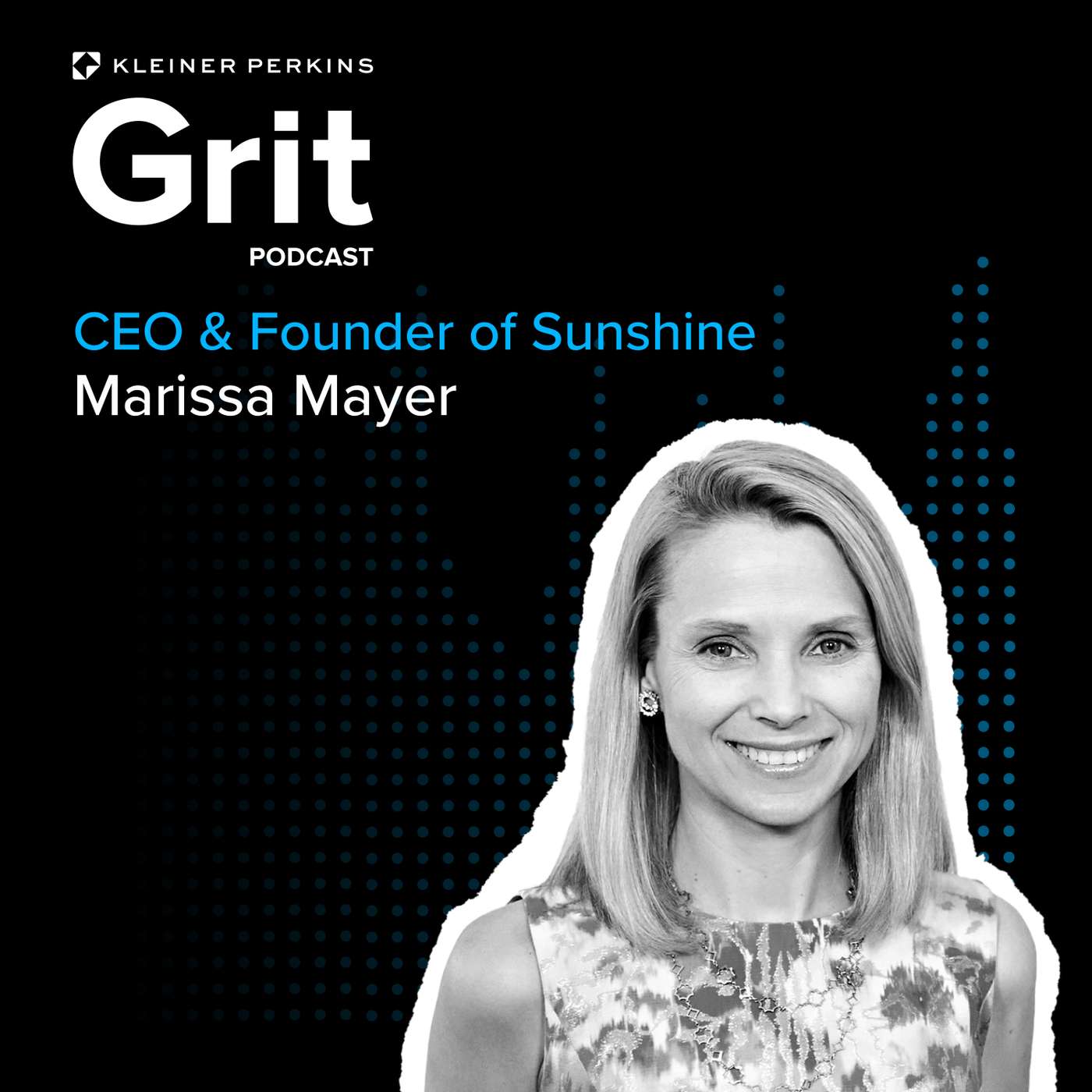
Ep 194#194 CEO & Founder Sunshine, Marissa Mayer: Innovative Instincts
Guest: Marissa Mayer, CEO and Founder of Sunshine and former CEO of YahooWhen Marissa Mayer was first hired as the CEO of Yahoo, the company had lost nearly a quarter of its workforce in the preceding six months. Early on, she was chatting with employees in the cafeteria and one of them got her attention by smacking her tray. “Is it go time?” he asked. He was asking if the board and C-suite were ready to lead the company forward, but Marissa thought he had one foot out the door. “I had just come out of this meeting where they were like, ‘Everyone’s leaving!’” she recalled. “And I was like, ‘Oh no, please don’t go, I’ve only been here for four days!’”In this episode, Marissa and Joubin discuss the number 12, contacts and photo sharing, fear of AI, soccer moms, maternity as a “disability,” mothers’ rooms, Jim Citrin, Project Cardinal, HTML5 vs. native apps, Ross Levinsohn, Lori Puccinelli Stern, Joe Montana, David Karp, Mark Zuckerberg, Taylor Swift, hiring at Google, Amit Patel, Hamilton, John Doerr, and the Google APM program.Chapters:(00:52) - Reading your own press (04:55) - Marissa’s lucky number (07:19) - Her latest startup, Sunshine (15:03) - Burnout, resentment, and rhythm (21:46) - The opportunity to become CEO of Yahoo (27:00) - Inverting maternity leave (31:14) - The big interview (36:44) - An epic dinner party (42:51) - The voicemail (47:18) - Farzad “Zod” Nazem and David Philo (50:25) - Last day at Google (53:52) - “Is it go time?” (59:03) - Buying Tumblr (01:04:46) - Alibaba and Verizon (01:06:24) - Larry and Sergey bucks (01:11:05) - Eric Schmidt’s advice (01:12:59) - In the room at Google (01:18:36) - Teaching and identifying talent (01:24:32) - Who Sunshine is hiring Links:Connect with MarissaTwitterLinkedInConnect with JoubinTwitterLinkedInEmail: [email protected] Learn more about Kleiner PerkinsThis episode was edited by Eric Johnson from LightningPod.fm
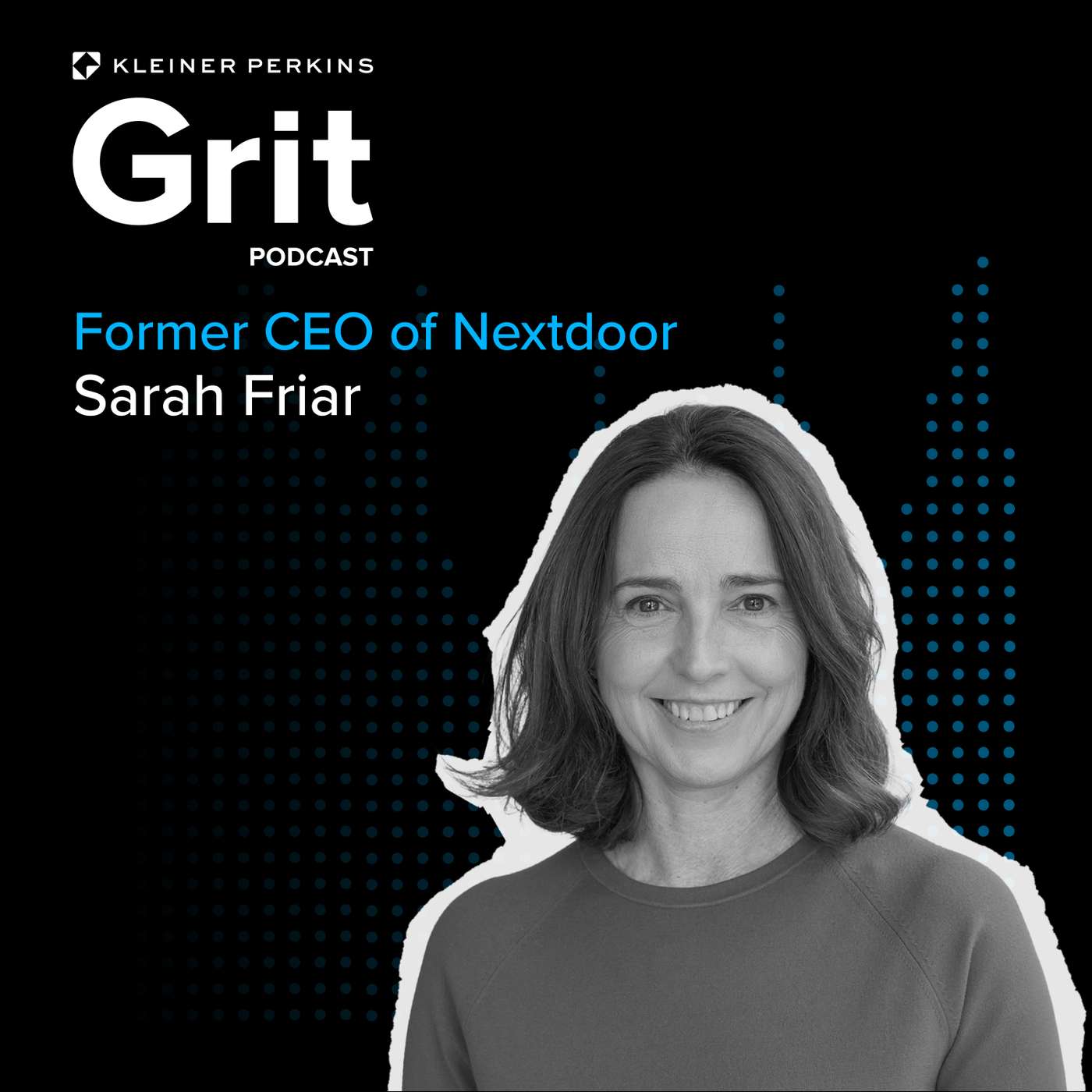
Ep 193#193 Former CEO Nextdoor, Sarah Friar: Four Circles
Guest: Sarah Friar, former CEO of NextdoorSarah Friar has worked with some of the top leaders in Silicon Valley, including Salesforce CEO Marc Benioff, Walmart CEO Doug McMillon, Block CEO Jack Dorsey, and most recently Nextdoor founder Nirav Tolia, who just replaced her as CEO in May. And one of the things that sets top performers apart from the rest, she argues, is their compassion and their responsiveness. When her former EA’s husband was diagnosed with cancer, Sarah texted Benioff — who she had just left behind to work at Square — for help. Within seconds, she recalls, he arranged an appointment at UCSF. “That is an amazing moment of compassion,” she says, “where he did not need to take that time.” In this episode, Sarah and Joubin discuss public markets vs. VC, George Floyd, working with the board, singular focus, Goldman Sachs, being in “flow,” the freedom of not getting the thing you want, Walmart, Steph Curry, Graham Smith, Charlie Rose and Donald Trump, ugly babies, Elon Musk, Ladies Who Lunch, CNBC, commuting from home, white noise, “frequent Friars,” @TechEmails on Twitter, and the “zone of gratefulness.”Chapters:(02:04) - Why Sarah left Nextdoor (08:18) - The stock market and success (10:21) - Going through hell (14:48) - Life is not an A/B test (16:09) - Multiple tours of duty (19:21) - Ikigai (22:02) - Perfectionism and drive (25:54) - Sarah’s next operating role (28:35) - Big transitions (30:35) - Personal burn rate (35:34) - “Are people gonna take my call?” (38:40) - Leaving Salesforce for Square (41:27) - Loyalty (45:33) - Leaving the right way (47:44) - Square and Swiss cheese companies (50:03) - Growth companies (52:38) - Apolitical workplaces (53:42) - Leaving Square (55:38) - Loneliness (57:18) - Daily routines (01:05:03) - Working on weekends (01:08:30) - Hyper-responsiveness (01:11:47) - Resumé virtues and eulogy virtues (01:15:33) - What “grit” means to Sarah Links:Connect with SarahTwitterLinkedInConnect with JoubinTwitterLinkedInEmail: [email protected] Learn more about Kleiner PerkinsThis episode was edited by Eric Johnson from LightningPod.fm
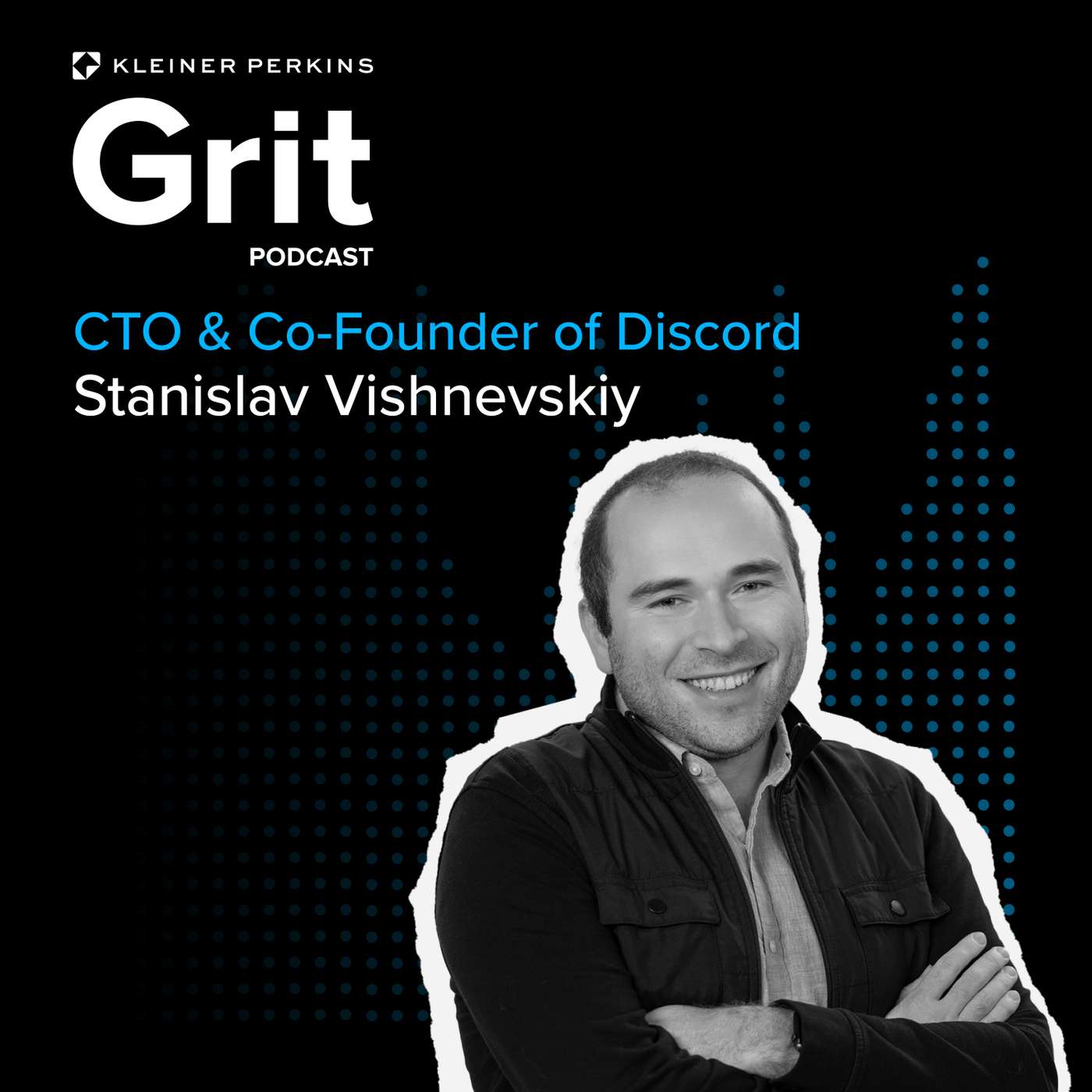
Ep 192#192 CTO & Co-Founder Discord, Stanislav Vishnevskiy: Ship It
Guest: Stanislav Vishnevskiy, CTO and co-founder of DiscordFor many years, the conventional wisdom was the gaming was not social because it was something you usually did at home. “But people who play games are often the most social,” says Discord CTO Stanislav Vishnevskiy. “They’re spending 10, 20 hours with other people online, hanging out.” As a teenager, Stanislav logged more than 1,000 days playing his favorite video game and socializing with friends around the world, but with 200 million monthly active users, the social platform is appealing to a lot more than hardcore gamers. “People online who need to get together and collaborate ... [want] tp have control and create a place,” he says. “That’s not just a gaming need, right? That’s pretty much any community.”In this episode, Stanislav and Joubin discuss “Discord moments,” hanging out online, IRC and AIM, Fates Forever, good and bad stress, leadership coaches, Claire Hughes Johnson, socializing online, heart surgery, Slack, Jason Citron, in-browser voice chat, Reddit, authentic CX, hiring slowly, Mitch Lasky, “playing moneyball,” React, content moderation, deprecation plans, and collaborative projects.Chapters:(02:09) - Discord’s scale and importance (07:35) - What is Discord? (09:43) - Hammer and Chisel (13:18) - How Stanislav’s role has changed (15:17) - Imposter syndrome (17:47) - Doing stuff for the first time (21:22) - Final Fantasy XI and Stanislav’s parents (25:12) - YOLO (27:02) - Games as social networks (30:49) - The evolution of Discord (35:58) - Inherent virality (39:04) - Building the company (41:39) - The COVID effect (43:08) - Hiring for slope (46:43) - Pivoting back to gaming (51:27) - The Discord Store and Nitro (54:30) - Emotional stakes (56:09) - Midjourney and AI art (59:58) - Virtual worlds (01:01:30) - Who Discord is hiring and what “grit” means to Stanislav Links:Connect with StanislavLinkedInConnect with JoubinTwitterLinkedInEmail: [email protected] Learn more about Kleiner PerkinsThis episode was edited by Eric Johnson from LightningPod.fm
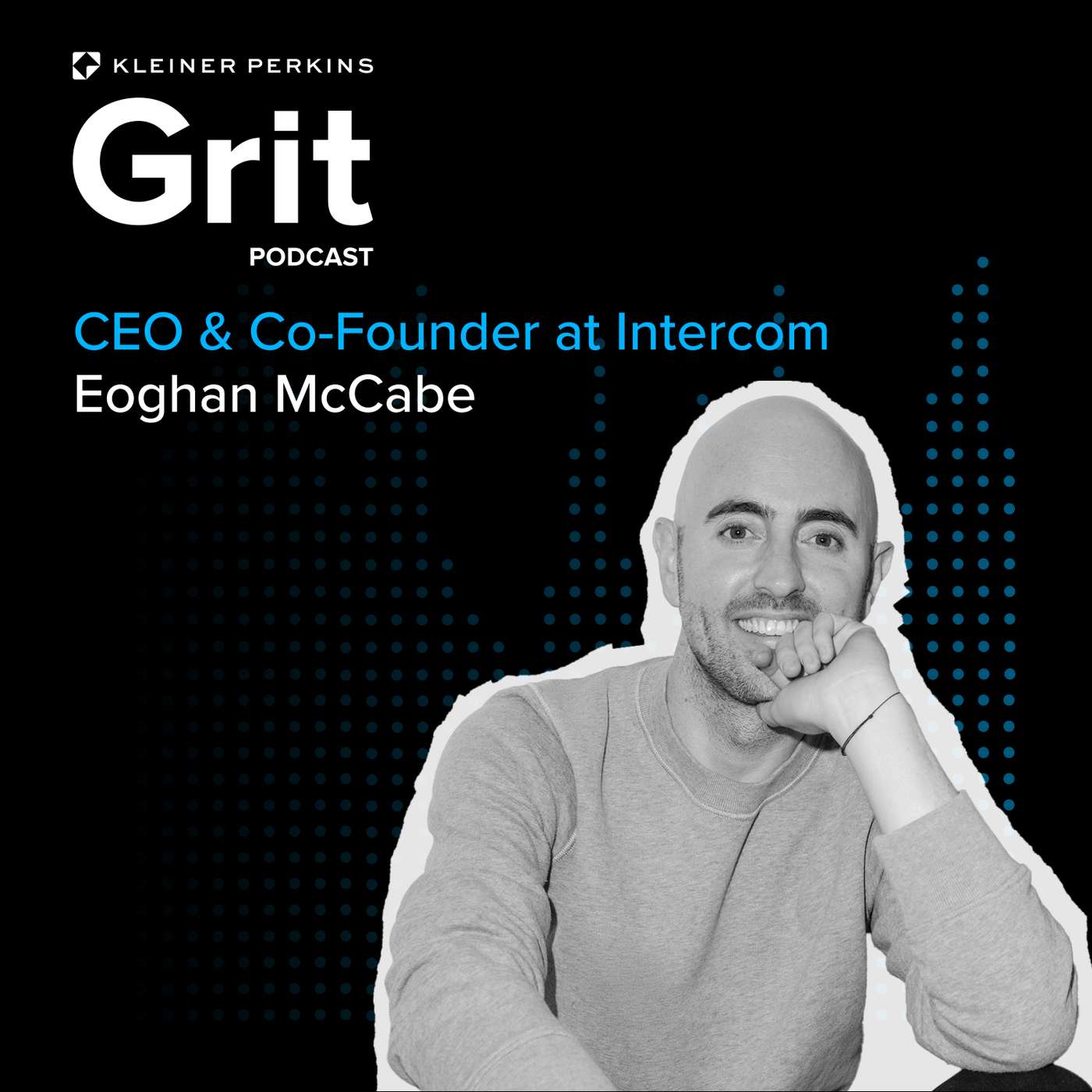
Ep 191#191 CEO & Co-Founder Intercom, Eoghan McCabe: Second Beginning
Guest: Eoghan McCabe, CEO, Chairman, and Co-Founder of Intercom“We are not ready for the degree to which our world is going to change,” says Intercom CEO Eoghan McCabe, “in insane and incredible ways.” When he co-founded the company in 2011, the Irish-born entrepreneur was making it easier for companies to offer human customer service to their customers. But Eoghan believes “every single type of knowledge work” will soon be done by AI, and Intercom is well on its way to that destination: 45 percent of all tickets are being answered by bots now, and he expects that number to climb to 70 percent by 2026. “The agents no longer have to do the repetitive, painful, boring work,” Eoghan says. “They can focus on the more human, creative, interesting work that requires their empathy and creativity.”In this episode, Eoghan and Joubin discuss fitting in, Archana Agrawal, authentic comms, taking risks, returning to the company you founded, politics at work, celebrating innovation, therapy for founders, and Ram Dass.Chapters:(01:04) - Insecurity and success (06:16) - What Intercom does (08:20) - Reinvention and “big company values” (15:50) - Becoming an AI company (16:53) - 2011 vs. 2024 in San Francisco (21:03) - AI for customer service — and more (25:07) - “The shitty gift that being attacked brings” (30:25) - Expectations vs. reality, part one (33:16) - What success means now (36:08) - Running away (39:56) - Coming back (41:58) - Being busy is BS (44:10) - Expectations vs. reality, part two (45:44) - Self-mastery (50:38) - Sanding off the rough edges (55:08) - Who Intercom is hiring and what “grit” means to Eoghan Links:Connect with EoghanTwitterLinkedInConnect with JoubinTwitterLinkedInEmail: [email protected] Learn more about Kleiner PerkinsThis episode was edited by Eric Johnson from LightningPod.fm
Ep 190#190 Co-Founder Cost Plus Drugs, Mark Cuban: Mavs to Meds
Guest: Mark Cuban, co-founder of Cost Plus Drugs and costar, Shark Tank“I just love to compete,” says Mark Cuban. “And the day I stop is the day I’m dead.” Previously the co-founder of MicroSolutions and Broadcast.com, Cuban is probably best known to the public today for competing with the likes of Daymond John and Barbara Corcoran on the reality TV show Shark Tank. But his real focus — and his real enemy — these days is the pharmaceutical industry. His latest company, Cost Plus Drugs, aims to be far more transparent than established PBMs, or Pharmacy Benefit Managers, and Mark clearly relishes eating their margin. “Everybody talks about disrupting healthcare,” he says. “This is the easiest motherf**king industry I've ever tried to disrupt because it is so opaque, and everybody is so captured by the scale of these big companies.”In this episode, Mark and Joubin discuss Luka Dončić, Synthesia, the Sony hack, the American Dream, TikTok propaganda, MicroSolutions, throwing away watches, keeping kids grounded, Black Mirror, keeping up, Ali Ghodsi, the NBA, MGM, gambling in Dallas, the Adelson family, CES, transparency, and Alex Oshmyansky.Chapters:(00:55) - Game day and superstitions (03:08) - Email responsiveness (05:48) - Shark Tank (09:21) - Retiring young (10:57) - American Airlines’ lifetime pass (12:55) - Sports and blue-collar work (16:02) - Compete or die (17:43) - Why Mark hates meetings (19:57) - Immortality through AI (23:05) - The new AI wave (25:07) - Startup founders and low-hanging fruit (29:24) - Selling Broadcast.com to Yahoo (31:35) - The Dallas Mavericks (34:52) - Selling his majority stake (37:08) - The missing link in pharma (41:27) - Disrupting a huge industry (43:57) - The problem with debt (44:59) - What “grit” means to Mark Links:Connect with MarkTwitterLinkedInConnect with JoubinTwitterLinkedInEmail: [email protected] Learn more about Kleiner PerkinsThis episode was edited by Eric Johnson from LightningPod.fm
Ep 189#189 Co-Founder Watershed, Taylor Francis: Worthy Missions
Guest: Taylor Francis, co-founder of WatershedOne day when he was 13, Taylor Francis walked out of the movie theater, and he was pissed off. He had just seen Al Gore’s documentary An Inconvenient Truth and internalized a “generational call to arms, that my parents had screwed our generation” by causing the climate crisis, he says. 14 years later, he was working at Stripe and felt another call to arms: The 2020s would be a crucial decade for slashing carbon emissions and combating global warming. So, he and his co-founders Avi Itskovich and Christian Anderson all left Stripe to start Watershed, which helps companies measure and reduce their emissions.In this episode, Taylor and Joubin discuss Patrick Collison, Dan Miller-Smith, hiring challenges, Jonathan Neman, “golden age syndrome,” John Doerr and Mike Moritz, the Climate Reality Project, steady partnerships, DRI cultures, shared context, social distancing, information sprawl, and the founders’ “woe is me” narrative.Chapters:(01:02) - Magnetic missions (06:40) - How enterprise sustainability works (08:40) - Watershed’s first client, Sweetgreen (11:04) - Reflecting on the early days (16:36) - Al Gore and An Inconvenient Truth (18:53) - Mobilizing teenagers (22:16) - The origins of Watershed (27:04) - Leaving Stripe and raising money (31:41) - Interchangeable co-founders (33:06) - The ground truth (35:25) - The Dunbar Number (38:22) - Watershed’s operating principles (41:56) - Intensity, priorities, and sacrifice (47:37) - Moving faster (50:26) - Sustainability is a part of business (52:21) - The topology of emissions (58:08) - Who Watershed is hiring Links:Connect with TaylorTwitterLinkedInConnect with JoubinTwitterLinkedInEmail: [email protected] Learn more about Kleiner PerkinsThis episode was edited by Eric Johnson from LightningPod.fm
Ep 188#188 CEO & Co-Founder Synthesia, Victor Riparbelli w/ Josh Coyne: Gorilla in the Room
Guests: Victor Riparbelli, CEO and co-founder of Synthesia; and Josh Coyne, partner at Kleiner PerkinsWhen Victor Riparbelli wants to learn something, he’ll start with a YouTube video or a podcast: “I maybe buy the book on Amazon as like the fifth step,” the Synthesia CEO says. His company is trying to change the text-first (or text-only) way information is conveyed at work, making AI avatar-narrated videos to replace documents like customer profiles and HR manuals. Victor says that as the technology improves over many years, it could replace text entirely. “I think for most people, if they had a choice, they would probably prefer to watch video and listen to audio.”In this episode, Victor, Josh, and Joubin discuss Seedcamp, Annie Case, Rubik’s Cubes, AI video dubbing, Instagram filters, emotive avatars, Ilya Fushman, Atlassian, Grammarly, the Gutenberg Parenthesis, European startups, email responsiveness, acqui-hires, and being “lonely at the top.”Chapters:(01:33) - Loose screws (02:45) - How Victor and Josh met (04:35) - AI hype cycles (06:57) - What Synthesia does (08:22) - Copycats and competition (14:34) - Winner take all (16:38) - Synthesia’s origin story (21:36) - Category creation (23:41) - The next era of AI video (28:51) - The uncanny valley (30:07) - Watching videos at work (33:17) - Scaling video and audio content (37:45) - Emailing with Mark Cuban (45:15) - Battle scars (48:47) - Customer obsession (50:54) - Pressure to succeed (54:41) - Deep passion (57:16) - Who Synthesia is hiring Links:Connect with VictorTwitterLinkedInConnect with JoshTwitterLinkedInConnect with JoubinTwitterLinkedInEmail: [email protected] Learn more about Kleiner PerkinsThis episode was edited by Eric Johnson from LightningPod.fm
Ep 187#187 President & COO of AG1, Kat Cole: Wings to Supplements
Guest: Kat Cole, COO of Athletic GreensYou can’t make smart decisions if you don’t know the truth — the “true truth,” as Athletic Greens COO Kat Cole puts it. “As you get bigger and you have success, innovator’s dilemma, you end up talking to yourself instead of really being rooted in what’s going on.” That’s why she has embraced the anxiety of the unknown, channeling what she doesn’t know about the market into productive questions for her team and her customers. Anxiety can be harmful, she concedes, but “there’s a healthy version of believing you never really know what’s going on, and you never really know the true truth, because things change so quickly.”In this episode, Kat and Joubin discuss Huberman Lab, ultra-endurance athletes, Chris Ashenden, founder-owned businesses, “fancy jobs,” international trips, unplanned succession, private equity, the Atkins diet, inheriting a bad situation, omni-channel marketing, working with franchisees, fully remote companies, “if not for...,” and why Athletic Greens has only one SKU.Chapters:(01:04) - Podcast superfans (06:54) - AG1 and Kat’s professional journey (11:14) - Her “Jerry Springer childhood” (14:31) - Learning, moving, thriving (16:18) - The Hooters business school (24:05) - Leaving Hooters and joining Rourke Capital (28:46) - Cinnabon’s dark years (35:55) - The three questions (41:11) - MiniBons (45:37) - Anxiety and uncertainty (48:40) - The wad of paper story (50:26) - Favorite interview questions (54:49) - The temptation to do more Links:Connect with KatTwitterLinkedInConnect with JoubinTwitterLinkedInEmail: [email protected] Learn more about Kleiner PerkinsThis episode was edited by Eric Johnson from LightningPod.fm
Ep 186#186 COO Asana, Anne Raimondi: Recovering Perfectionist
Guest: Anne Raimondi, COO and Head of Business at AsanaAsana COO Anne Raimondi feels pressure to perform in her job “every day, all the time.” But that pressure doesn’t come from her fellow executives; she imposes it on herself, trying to think carefully about how much each of her decisions will impact her team. “I have a lot of privilege and choice,” Anne says, “of how I spend my time, the resources available to me, and am I doing enough? ... Am I doing the most with the opportunities I have, and making as positive an impact as I can?”In this episode, Anne and Joubin discuss returning to the office, Scott McNealy, the dotcom bust, Myers-Briggs, Star Trek: The Next Generation, empowering leaders, Blue Nile, Robert, Chatwani, tech leaders with children, Bain Capital, time management, being “in the moment,” Dave Goldberg, Dustin Moskovitz, staying curious, and being prescriptive.Chapters:(01:05) - Hybrid remote policies (05:34) - Employees’ emotional journey (09:39) - Thoughtful answers and betazoids (13:17) - Anne’s immigrant parents (14:50) - Regrettable feedback (17:46) - Leaders who cast a shadow (19:36) - Company-hopping (24:14) - Startups and stability (28:42) - Pressure to perform (31:08) - Insecurity and parenthood (37:12) - Allocating your time (39:43) - Co-founding One Jackson (45:36) - Amanda Kleha (47:01) - Great founders (52:18) - “It is not glamorous” (54:03) - From board to operating at Asana (57:10) - Feedback for founders (01:00:25) - Recurring meetings (01:03:07) - Who Asana is hiring Links:Connect with AnneLinkedInConnect with JoubinTwitterLinkedInEmail: [email protected] Learn more about Kleiner PerkinsThis episode was edited by Eric Johnson from LightningPod.fm
Ep 185#185 CEO & Founder Netskope, Sanjay Beri: The Trenches
Guest: Sanjay Beri, CEO and Founder of Netskope“You can be waiting your whole life to do something, and then your life’s over,” says Sanjay Beri. After nine years at Juniper Networks, he left his comfortable job, moved his family to a house with a pricier mortgage, and launched the cloud security firm Netskope. His entrepreneurial story would make anyone stressed, he acknowledges, but “at some level, you have to be wired to enjoy it… that's why I tell everybody who joins, ‘It's not for the faint of heart.’”In this episode, Sanjay and Joubin discuss Reddit, banker friends, professional legacies, the wrong way to raise capital, authenticity, Ponzi schemes, “fool’s gold,” high-risk hiring, hitting pause, your “other family,” and changing roles.Chapters:(00:54) - 2024 IPOs (05:43) - Long on cybersecurity (07:59) - Netskope’s mission (10:22) - Sanjay’s first company, Ingrian (12:07) - The writing on the wall (15:02) - Mamoon Hamid (20:21) - Stress and perspective (24:53) - Sanjay’s mother (28:41) - The trenches vs. the clouds (30:53) - Guts, Resolve, Integrity, Tenacity (32:10) - Hiring for grit (38:06) - The lowest point (41:18) - “Always on” (43:49) - The hot desk office (46:13) - Scaling people (49:30) - Politics and integrity (53:03) - Who Netskope is hiring Links:Connect with SanjayLinkedInConnect with JoubinTwitterLinkedInEmail: [email protected] Learn more about Kleiner PerkinsThis episode was edited by Eric Johnson from LightningPod.fm
Ep 184#184 Former CEO & Co-Founder Sun, Scott McNealy: In the Piñata
Guest: Scott McNealy, former CEO and co-founder of Sun Microsystems & co-founder of CurrikiScott McNealy never wanted to be CEO of Sun, and in his 22-year tenure before selling to Oracle, he knows there were times he failed to execute, or to rein in the once-iconic Silicon Valley firm’s worst impulses. But like his pro golfer son, Maverick, Scott doesn’t like to look back: “Golfers will always look back and blame the wind, a divot that wasn't repaired, a bad rake job, a mower cut that wasn't done properly, a gust of wind,” he explains. “If you blame yourself for all of the mistakes you make. You will hate yourself ... I look forward.”In this episode, Scott and Joubin discuss Scott Cook, Maverick McNealy, why big companies are riskier than startups, Al Gore, Marc Andreessen, Mark Zuckerberg, Kodak, Dick Kleinhans, Harvard University, “bozo invasions,” Myers-Briggs, making an example, Motorola car phones, the Moscone Center, Elon Musk, Jeff Bezos, NVIDIA’s valuation, farewell letters, “you have no privacy,” open-source education, and toothpaste.com.In this episode, we cover:(01:00) - John Doerr (02:47) - Fathers, sons, and sports (07:29) - Living in the piñata (10:48) - Why Scott left Sun (13:49) - The heyday of Sun Microsystems (18:24) - Vinod Khosla and founding Sun (21:24) - How Scott became CEO (27:21) - Profitable in three months (30:02) - Inferiority complex (32:20) - Executive exits and fun at work (35:49) - Managers and recognition (38:18) - “HR hero” Crawford Beveridge (40:35) - How Carol Bartz became VP of marketing (43:07) - Sharing in success (45:25) - Scott’s love life & meeting Susan (50:54) - The dotcom boom and crash (53:45) - Unicorn CEOs and IBM’s offer (55:49) - Competitors and hindsight (58:20) - “The planet system” (01:00:13) - Too many employees (01:04:06) - Larry Ellison and selling to Oracle (01:07:01) - Blaming yourself and looking forward (01:10:11) - Curriki (01:12:12) - The AI boom (01:14:42) - “Grit” and insecurity Links:Connect with ScottTwitterLinkedInConnect with JoubinTwitterLinkedInEmail: [email protected] Learn more about Kleiner PerkinsThis episode was edited by Eric Johnson from LightningPod.fm
Ep 183#183 CEO & Co-Founder Harness, Jyoti Bansal: Three-Layered Cake
Guest: Jyoti Bansal, CEO and co-founder of HarnessCisco bought Jyoti Bansal’s first company AppDynamics for $3.7 billion, making him a very wealthy man. But after two African safaris, a week of Michelin-starred meals in Tokyo, and more adventures all around the world, he realized that spending his money didn’t truly make him happy. After some soul-searching, he realized what he really enjoyed: “I liked to build companies. That is my craft ... If someone enjoys playing gold for six hours, I would enjoy working on a startup for six hours.”In this episode, Jyoti and Joubin discuss the evolution of Grit, Carlos Delatorre, Tom Mendoza, Glean, growing up in India, traveling the world, three-star restaurants, soul-searching, automating gruntwork, paying for nice hotels, red-eye flights, product-market fit, Jeff Bezos, the “three-layered cake,” Frank Slootman, raising the bar for distribution, technical debt, structural efficiency, and taking pride in your work. In this episode, we cover:(00:59) - Top-tier CROs (04:18) - The video game levels of startups (07:24) - Selling AppDynamics to Cisco (09:16) - Keeping up with high-growth companies (12:10) - The chip on Jyoti’s shoulder (16:15) - How he thinks about money (18:02) - Do what you enjoy every day (22:32) - “What would make me happy?” (24:56) - Starting BIG Labs and Harness (29:16) - Adjusting to a new reality (34:13) - Work-life balance (36:30) - What gets easier — and harder — over time (41:44) - Product vs. distribution (46:46) - Paying it forward (48:29) - The next level (50:24) - The four lists (53:45) - Assigning clear responsibilities (56:06) - Jyoti’s favorite interview question (57:41) - Who Harness is hiring Links:Connect with JyotiLinkedInConnect with JoubinTwitterLinkedInEmail: [email protected] Learn more about Kleiner PerkinsThis episode was edited by Eric Johnson from LightningPod.fm
Ep 182#182 CEO & Co-Founder Cribl, Clint Sharp: Finding Traction
Guest: Clint Sharp, CEO and co-founder of CriblNew employees are joining the remote data platform Cribl every week, and as the staff grows, CEO Clint Sharp has noticed a problem: He can’t file a bug report without a lot of caveats. When there were a handful of users, no one would bat an eye at the CEO posting a bug on Slack, but now he has had to learn how to phrase things because people assume he’s “irate and we should change everything we’re doing,” Clint says. “I’ll post something and there’s a flurry of DMs that are happening in the background, like ‘Oh my God.’” Unless the tone of his bug report is clear, workers with more experience at Cribl then have to reassure the newbies: “Calm down. When he does this, he’s not upset. He’s one of the power users of the product.” In this episode, Clint and Joubin discuss being on the road, niche audiences, top-of-funnel problems, “come to Jesus” meetings, moving the goalposts, building for building’s sake, “down and to the right,” mediating re-orgs, flat organizations, filing bugs as the CEO, setting the example, Henry Schuck, Baldur’s Gate III, legal narratives, Hacker News, Cisco, Doug Merritt, Gary Steele, Rippling, and dead trends.In this episode, we cover:(01:08) - Running a remote company (02:57) - Cribl’s management meetings (05:56) - Looking back and recognition (08:08) - Growing quickly and what Cribl does (11:21) - Traction (14:53) - Solving a new problem (17:56) - Friends and family funding (21:45) - Why not shut it all down? (24:36) - Healthy arrogance and control (31:02) - Serial entrepreneurs and founder-CEOs (33:38) - What Clint loves about the job (35:31) - The hardest parts (38:41) - Core values (41:43) - Favorite interview questions (44:26) - Drawing boundaries (47:18) - Vacation and work-life balance (52:53) - Splunk’s lawsuit against Clint (56:26) - “Their brand is synonymous with expensive” (58:41) - Who owns the data? (01:01:59) - Building platforms (01:07:35) - “I’m so sick of AI” (01:11:25) - Who Cribl is hiring Links:Connect with ClintTwitterLinkedInConnect with JoubinTwitterLinkedInEmail: [email protected] Learn more about Kleiner PerkinsThis episode was edited by Eric Johnson from LightningPod.fm
Ep 181#181 CEO Transcarent, Glen Tullman: Problem Solving
Guest: Glen Tullman, CEO of TranscarentBefore he was CEO of Transcarent, Glen Tullman presided over the biggest digital health merger of all time: His previous company Livongo was acquired in 2020 by Teledoc for $18.5 billion. Over his decades of experience in health tech, he has developed saying: Hire low, fire high. When one of his friends was offered a job and said he wanted to consider another offer, Glen withdrew Transcarent’s offer because he didn’t want to be the highest bidder — in other words, hire low. But whenever he has to let someone go, he sees it as his responsibility to “help them go off and do something else that’s great, and be successful.” Firing and replacing executives, he said, is “just part of growing ... it doesn’t have to be ugly.”In this episode, Glen and Joubin discuss conservative values, John Doerr, Teledoc, failures of leadership, Steve Case, Bill Gates, changing expectations, Travis Kalanick, incentive bonuses, Bucknell University, massive layoffs, criticizing in public, anonymous charity, cycling events, Michael Jordan, Bill McDermott, Barack Obama, private jets, and hiring without titles.In this episode, we cover:(01:11) - How Glen splits his time (03:55) - Looking back and leaving Livongo (09:03) - Would he do it again differently? (13:42) - Energy at work (18:00) - Failure and starting over (21:16) - What Transcarent does (25:29) - Taking on the system and stress (30:33) - Turning Allscripts around (33:48) - “We educated you to make a difference” (38:06) - The birth of electronic prescriptions (42:52) - Hire low, fire high (47:47) - Radical honesty (53:04) - Charitable efforts (57:55) - Glen’s competitive childhood (01:00:55) - His family and priorities (01:08:24) - Would Glen go into politics? (01:12:32) - “I hate to sleep” (01:15:06) - Peloton meetings (01:17:32) - Trading money for time (01:24:11) - Sharing credit (01:25:54) - Who Transcarent is hiring (01:28:05) - What “grit” means to Glen Links:Connect with GlenLinkedInConnect with JoubinTwitterLinkedInEmail: [email protected] Learn more about Kleiner PerkinsThis episode was edited by Eric Johnson from LightningPod.fm
Ep 180#180 CEO & Co-Founder Verkada, Filip Kaliszan: Outlier
Guest: Filip Kaliszan, CEO and co-founder of VerkadaGreat founders try to grow personally at least as fast as their companies do — but sometimes, says Verkada CEO Filip Kaliszan, that’s just not possible. By the time the company had about 200 employees, he says, “the scale of the business and the rate of the growth of the business ... outpaced my rate of learning, or my ability to consult the right people.” But over time, he has worked to fix past errors and earn everyone’s trust: “I can be only as good as the rate at which I fix my mistakes,” Filip says.In this episode, Filip and Joubin discuss “the good old days,” first principle thinking, the business impact of the COVID-19 pandemic, the Bay Area bubble, going public, Aaron Levie, going down rabbit holes, power dynamics, idea validation, Brian Long, Hans Robertson, DIY entrepreneurship, commercial kitchens, cash efficiency, VR headsets, zeitgeist-y platform shifts, Mark Zuckerberg, and John Doerr.In this episode, we cover:(00:50) - Verkada’s office culture (04:37) - The loss of community (10:37) - Not going remote during COVID (16:37) - Palo Alto Networks (22:15) - Does Filip like being CEO? (26:02) - Time management and flow state (29:47) - The problem with huge meetings (31:59) - Fundraising for Verkada (34:02) - Building a “camera company” (37:29) - Zero to one (41:17) - The first 10 people (42:48) - Allocating capital wisely (46:19) - Hiring in-house (51:17) - Biggest screw-ups (54:00) - The feeling of failure (55:05) - Customer therapy (56:39) - Divide and conquer (01:00:47) - The Apple Vision Pro (01:05:05) - Mark Zuckerberg’s response (01:09:25) - Who Verkada is hiring and what “grit” means to Filip Links:Connect with FilipLinkedInConnect with JoubinTwitterLinkedInEmail: [email protected] Learn more about Kleiner PerkinsThis episode was edited by Eric Johnson from LightningPod.fm
Ep 179#179 CEO & Co-Founder Zapier, Wade Foster: Missouri’s Connector
Guest: Wade Foster, CEO and co-founder of ZapierWhen Wade Foster and his co-founders launched Zapier, he was 24, and doubted himself constantly. He consulted mentors like Paul Graham and Jay Simons, studied entrepreneurs like Jeff Bezos and Steve Jobs, and also took inspiration from an unlikely source: Actor and martial artist Bruce Lee. “[He] had this fighting style, ‘The Way of No Way,’” Wade says. “He would study all the different fighting styles, and he would say, ‘None of them is the best or the worst ... My job was to take the best of each and then discard the rest, and make it my own.’”In this episode, Wade and Joubin discuss fully remote companies, long-term thinking, hyperscaling, product-market fit, broken products, secondary offerings, “delocation packages,” interview questions, mind-breaking growth, doubting yourself, LLMs, hackathons, and adding a sales team (eventually).In this episode, we cover:(01:10) - Living in central Missouri (04:15) - Will Wade do this forever? (10:23) - Startup envy (13:09) - “Do people actually want this?” (18:44) - What Zapier does (20:15) - Taking outside capital (22:43) - Why Zapier is fully remote (28:01) - The pace of hiring (30:35) - Why résumés can be a trap (37:09) - When to promote from within (41:06) - Scaling problems (43:47) - Self-confidence and mentors (47:37) - Reacting to ChatGPT (53:43) - How Zapier’s team uses AI (58:12) - Who Zapier is hiring Links:Connect with WadeTwitterLinkedInConnect with JoubinTwitterLinkedInEmail: [email protected] Learn more about Kleiner PerkinsThis episode was edited by Eric Johnson from LightningPod.fm
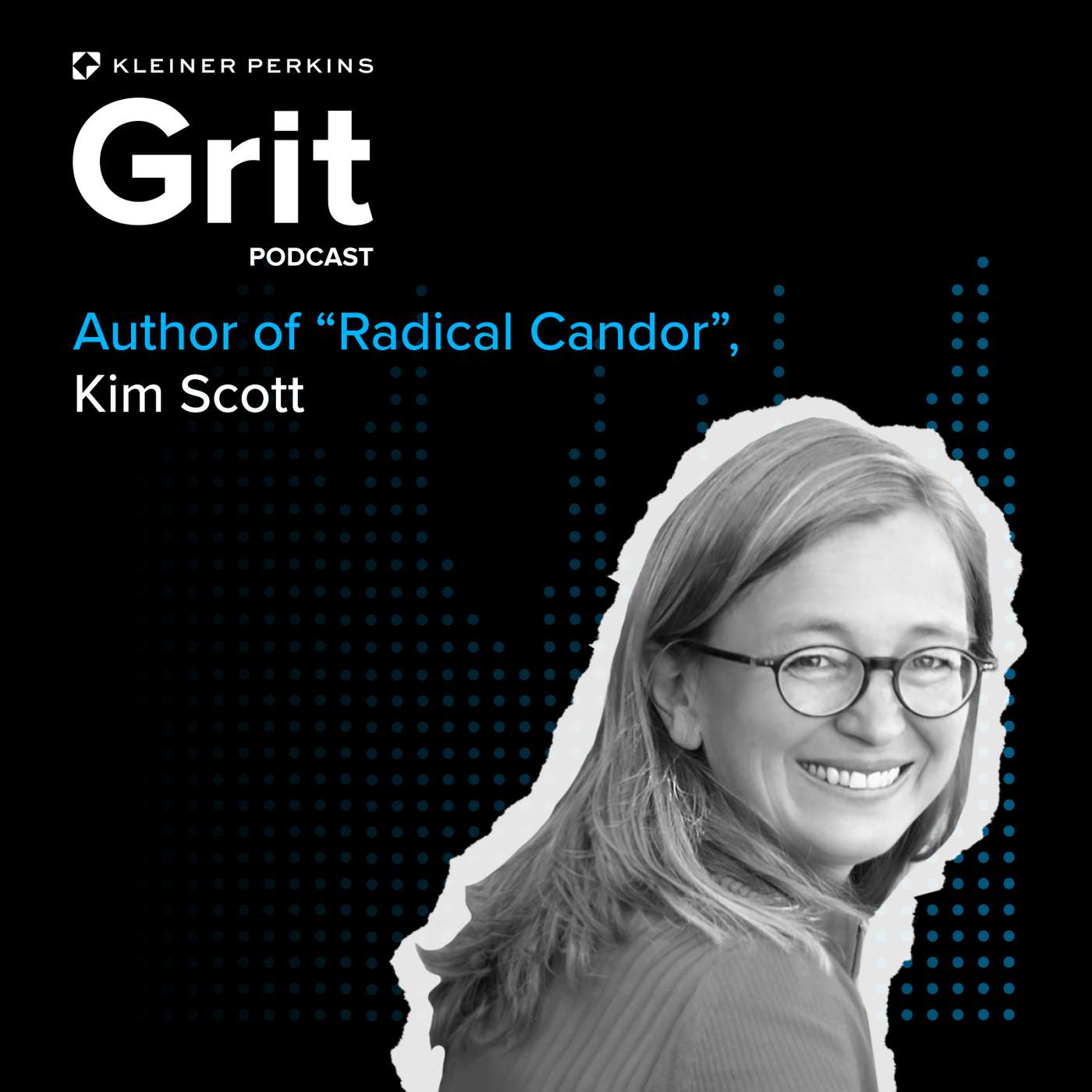
Ep 178#178 Author of “Radical Candor,” Kim Scott: Uncommon Sense
Guest: Kim Scott, author of Radical Candor: Be a Kickass Boss Without Losing Your Humanity and Radical Respect: How To Work Together BetterAfter her first management book Radical Candor became a worldwide bestseller, Kim Scott found herself giving talks to all kinds of companies about how they could apply her advice and build a stronger, kinder culture. But then, after one such talk, the CEO — a longtime friend and former coworker — came up to Kim with an asterisk. As a Black woman, she explained, “as soon as I offer anyone even the most compassionate, gentle criticism, I get assigned the ‘angry Black woman’ stereotype.” Kim realized in that moment that her book needed a prequel of sorts, explaining what you need to have before you can create radical candor: “You're not going to care about people who you don't respect,” she says.In this episode, Kim and Joubin discuss regret minimization, Juice Software, Sheryl Sandberg, saying “um,” moments of connection, Dick Costolo, negative truths, James March, snobbery, Charles Ferguson, Shona Brown, Fred Kofman, Christa Quarles, Jason Rosoff, Andy Grove, founders as outliers, Jack Dorsey, Steve Jobs, glows and grows, the Post Ranch Inn, failing your colleagues, sexual harassment, DEI, and intellectual honesty.In this episode, we cover:(01:04) - Loud voices (03:59) - Writing a bestseller (07:48) - Why Kim wrote Radical Candor (14:21) - How to show you care (18:04) - Coaching tech CEOs (21:24) - Ruinous empathy and obnoxious aggression (25:40) - Leaving things unsaid (30:30) - Not an academic (35:21) - Learning from failed startups (38:55) - Performance reviews (42:30) - Why feedback feels risky (49:21) - How to reject feedback (53:11) - Creating space for feedback at home (56:08) - Running and sleeping (59:45) - Radical Respect and Kim’s other books (01:04:27) - The hardest story to share (01:06:44) - Optimism about the future Links:Connect with KimBuy Radical Candor: Be a Kickass Boss Without Losing Your HumanityPre-order Radical Respect: How To Work Together BetterTwitterLinkedInConnect with JoubinTwitterLinkedInEmail: [email protected] Learn more about Kleiner PerkinsThis episode was edited by Eric Johnson from LightningPod.fm
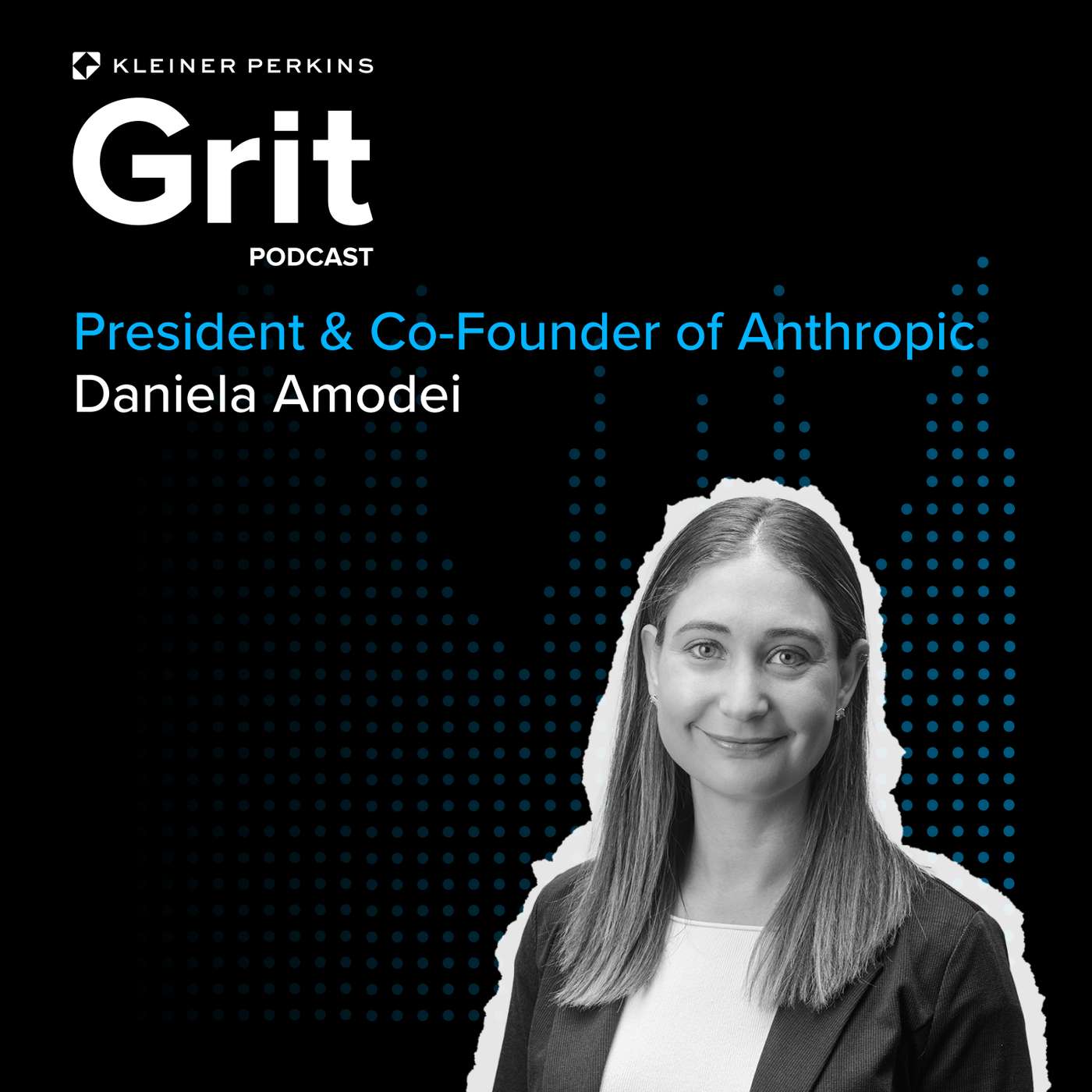
Ep 177#177 President & Co-Founder Anthropic, Daniela Amodei: AI Hurricane
Guest: Daniela Amodei, President and co-founder of AnthropicWith a reported valuation of as much as $18 billion, Anthropic has the resources to be one of the dominant AI companies in Silicon Valley; however, it was conceived as a public benefit corporation and always tries to strike a balance between hypergrowth and responsibility. Anthropic’s flagship LLM, Claude, must adhere to a “constitution” of values that prioritize the good of humanity. And even though every company wants to “do AI” right now, President Daniela Amodei says some of them should slow down. “I keep coming back to this idea of, ‘How much are you buying the hype?’” she says. “’How grounded are you in the reality of what's actually happening?’ And sometimes in business conversations, we tell a potential customer, ‘We don't think we're right for you.’”In this episode, Daniela and Joubin discuss her brother Dario, staying grounded, hypergrowth startups, Claire Hughes Johnson, mechanistic interpretability, Paul Graham, AI training, what AI companies can learn from social media, Stripe, the pool of venture capital in the Bay Area, leading people, giving feedback to all your coworkers, interview questions, and Sheryl Sandberg.In this episode, we cover:Holidays with the Amodei family (01:15)The tech industry bubble (05:35)Inside the AI hurricane (09:53)Scaling as a superpower (14:39)Complementary abilities (16:39)Claude 2 and constitutional AI (20:05)Making AI trustworthy, safe, and powerful (28:58)Generative AI’s high cost (31:03)Anthropic and OpenAI’s massive responsibility (37:50)The impact of new technology (42:32)Public benefit companies (46:55)Extremely lean go to market (53:36)AI as a business-led industry (01:00:37)Customer obsession (01:06:58)Where do you want to use your innovation? (01:11:31)Who shouldn’t use AI? (01:14:33)“Everything to everyone” (01:18:15)Working with Daniela (01:22:26)Interviews at Anthropic (01:25:38)Intense performance reviews (01:29:47)Middle managers are underrated (01:35:46)“Tell me about yourself” (01:39:47)Who Anthropic is hiring (01:42:33)Links:Connect with DanielaLinkedInConnect with JoubinTwitterLinkedInEmail: [email protected] Learn more about Kleiner PerkinsThis episode was edited by Eric Johnson from LightningPod.fm
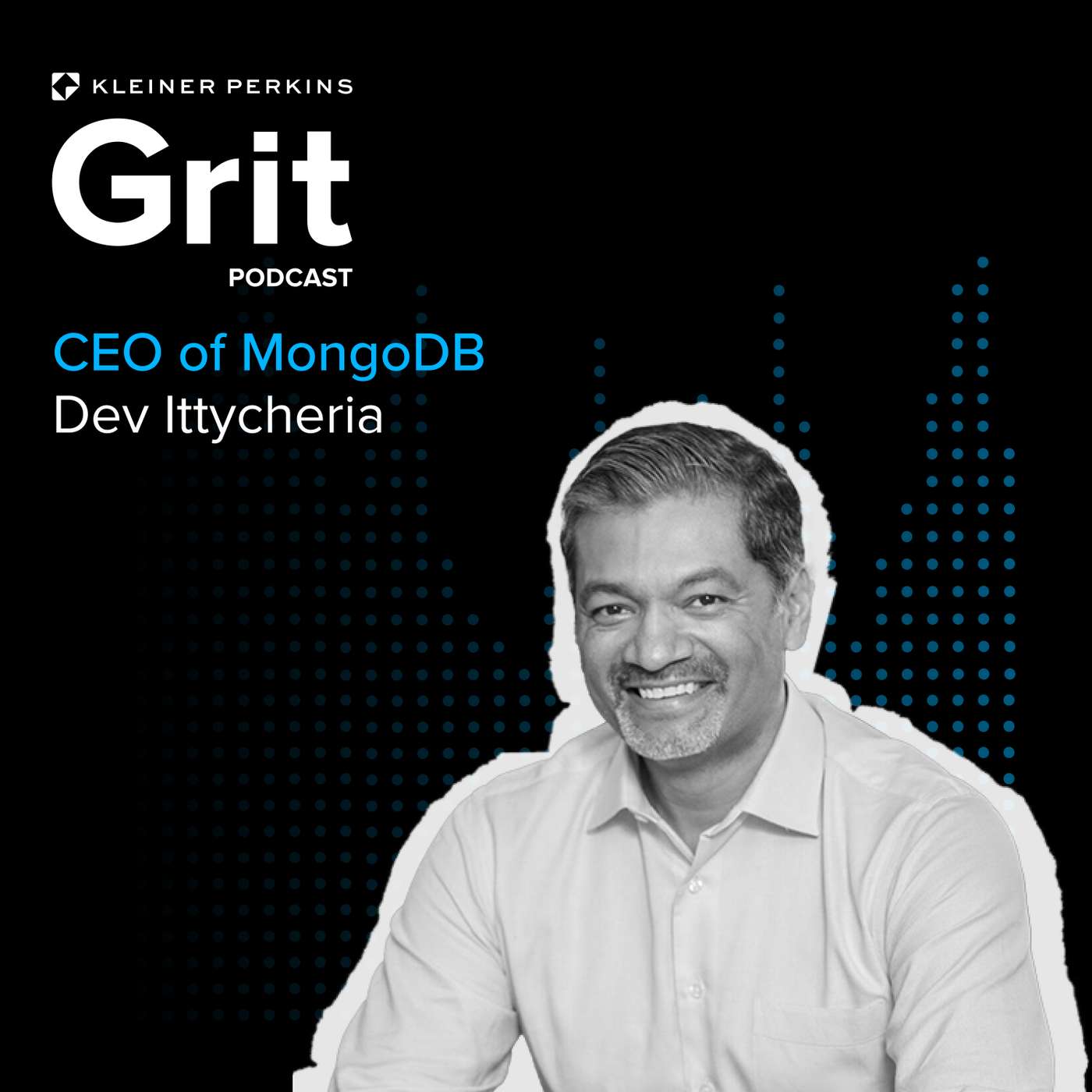
Ep 176#176 CEO MongoDB, Dev Ittycheria: Edge
Guest: Dev Ittycheria, CEO and President of MongoDBWhen you think about who you were and the decisions you made two, or four, or eight years ago ... how do you feel? Dev Ittycheria, the President and CEO of MongoDB, says he’s embarrassed about certain things he did — and that’s a good thing. “If you’re not [embarrassed], that means you’re not really growing that fast,” he says. He recalled one of his mentors, former BladeLogic chairman Steve Walske, explaining that everyone has an overinflated opinion of themselves, and the great leaders keep the gap between that opinion and reality narrow. One of the hallmarks of such a leader, Dev says, is that they have the intellectually honesty to recognize their own strengths and weaknesses, which others perceive.In this episode, Dev and Joubin discuss looking for bad news, chips on your shoulder, Ivy League schools, being an outsider, highly educated parents, “aging out,” Bruce Springsteen, Chief People Officers, Frank Slootman and John McMahon, passive aggression, vulnerability as strength, imposter syndrome, open-source licenses, introverts, and time management.In this episode, we cover:Shlomo Kramer and the “burden of persona” (00:59)Why BladeLogic started in Boston (04:30)The psychological edge (07:08)Dev’s family and education (08:56)“Am I good enough?” (13:11)“Do not squander this opportunity” (16:22)Dev’s wife (19:32)Fear of irrelevance (21:23)Relevance after retirement (26:06)Why CEO is a lonely job (28:14)Trusting your team (31:43)The meaning of life (35:16)Judgment and introspection (38:16)Taking people to the woodshed (40:54)What matters to other people (44:39)Taking risks at MongoDB (51:08)Founder-led businesses (53:26)What type of company is MongoDB? (57:39)Work-life harmony (01:00:20)Who MongoDB is hiring (01:03:17)Links:Connect with DevTwitterLinkedInConnect with JoubinTwitterLinkedInEmail: [email protected] Learn more about Kleiner PerkinsThis episode was edited by Eric Johnson from LightningPod.fm
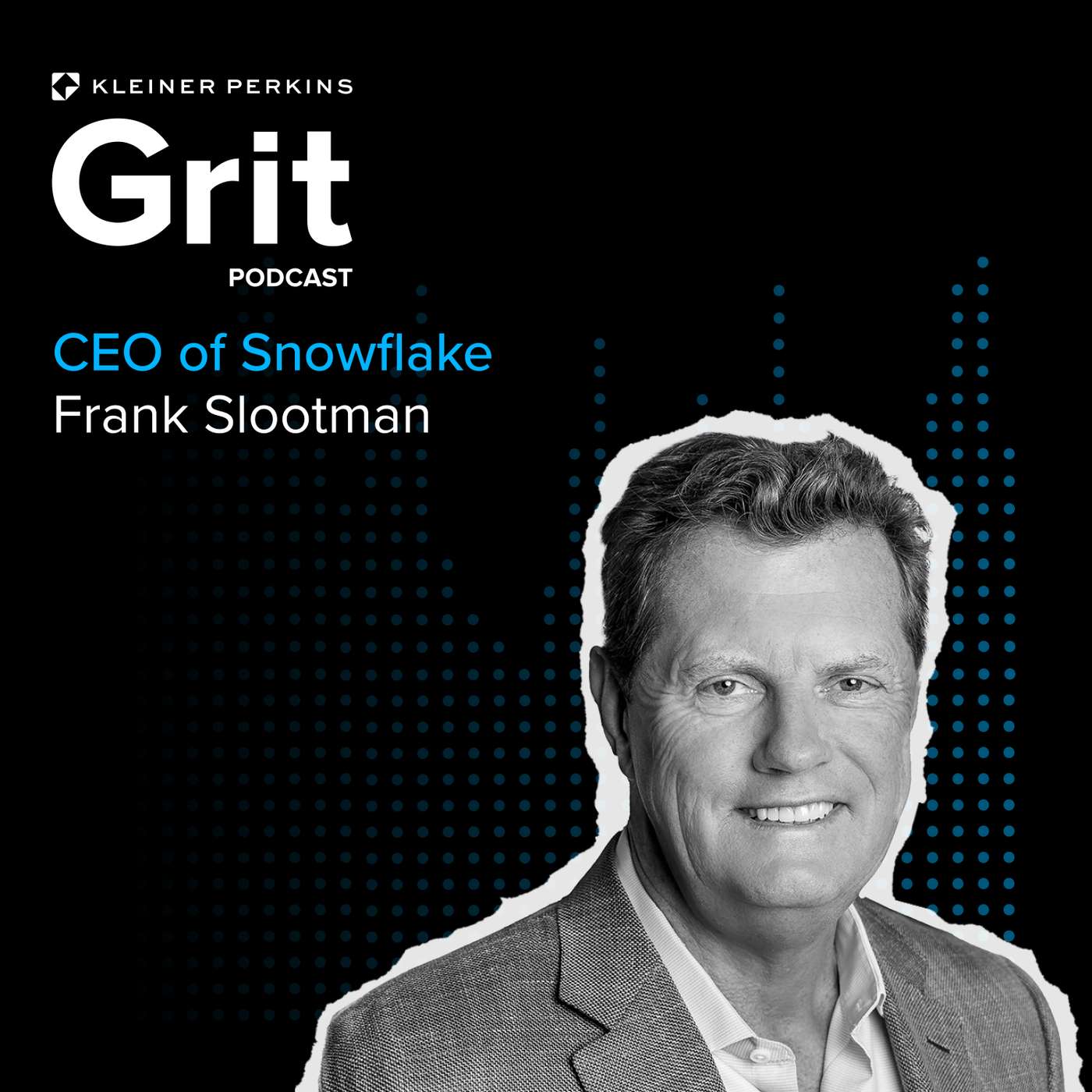
Ep 175#175 CEO Snowflake, Frank Slootman: Amped
Guest: Frank Slootman, CEO and Chairman of Snowflake and author of Amp It UpSnowflake CEO Frank Slootman doesn’t recall a time in his childhood where new achievements were celebrated — because, according to his father, putting everything into your work and “leaving it all on the field” was the only choice. “The problem with it,” Frank says, is that “it becomes a ‘never enough’ dynamic, because when is it enough?” To this day, he comes home on Friday night and asks himself, “Did it mater that I was there? ... If I’m just a passenger on the ship, that’s my nightmare.”In this episode, Frank and Joubin discuss acting with urgency, Shlomo Kramer, negative role models, Elon Musk, Teddy Roosevelt’s “Man in the Arena” speech, aptitudes and weaknesses, ServiceNow, and the life spark of business.In this episode, we cover:Being tough on yourself (00:59)Sailing and inner peace (03:00)Confronting your demons (09:07)Scaling Data Domain (11:15)Judging talent (15:20)That gnawing feeling (18:16)Daring greatly and rejecting pride (21:04)“Did it matter that I was there?” (25:02)How you play the game (27:59)The best version of yourself (29:59)Learning from the best (34:06)Sales as inspiration (37:52)Retirement and Tom Brady (39:09)The fog of war (41:16)Snowflake vs. Data Domain (44:31)Respect for luck (48:48)Who Snowflake is hiring (50:42)Links:Connect with FrankLinkedInBuy Frank’s book, Amp It Up: Leading for Hypergrowth by Raising Expectations, Increasing Urgency, and Elevating IntensityConnect with JoubinTwitterLinkedInEmail: [email protected] Learn more about Kleiner PerkinsThis episode was edited by Eric Johnson from LightningPod.fm
Ep 174#174 CEO & Co-Founder Ginkgo Bioworks, Jason Kelly: Life Finds a Way
Guest: Jason Kelly, CEO and co-founder of Ginkgo BioworksAlmost everyone in the second generation of biotechnology entrepreneurs, says Ginkgo Bioworks CEO Jason Kelly, works in that field because of one thing: Jurassic Park. The Michael Crichton novel-turned-Steven Spielberg movie captured both the wonder and beauty of bioengineering, and the challenges of bending DNA to your own ends. “You didn’t invent biology,” Jason says. “You need to have humility in the face of it ... because life will find a way. It will do things you don’t expect. It’s not a computer.” In this episode, Jason and Joubin discuss the Wall Street rollercoaster, designer cells, the history of biotech, Herbert Boyer and Genentech, ChatGPT, extinct flowers, Sam Altman and YCombinator, first principles thinking, compounding risk, Patrick Collison, super-voting shares, capital intensive businesses, Pets.com, and why biology is like “freakishly powerful alien technology.”In this episode, we cover:Being private vs. being public (00:58)How bioengineering works (04:27)Jurassic Park (08:51)Biotech breakthroughs (12:15)Why this field is not well-known yet (16:57)“The ChatGPT moment for biotech” (22:05)Meaningful stuff takes forever (26:23)Ginkgo’s first five years (29:02)Why the company went public (36:20)Short sellers, Warren Buffett, and Elon Musk (42:08)Applying AI to DNA engineering (47:57)The long-term future (55:57)Who Ginkgo is hiring (58:39)Links:Connect with JasonTwitterLinkedInConnect with JoubinTwitterLinkedInEmail: [email protected] Learn more about Kleiner PerkinsThis episode was edited by Eric Johnson from LightningPod.fm
Ep 173#173 Author of “The Qualified Sales Leader,” John McMahon: The Five-Time CRO
Guest: John McMahon, author of The Qualified Sales Leader: Proven Lessons from a Five Time CROA hell of a lot of people work in sales. But until recently, says five-time CRO and The Qualified Sales Leader author John McMahon, it was rare for colleges and universities to offer a sales degree. Salespeople had to learn on the job from experienced coaches, and adapt. And their bosses, John explains, had to themselves as agents of transformation. “If somebody’s really smart, they’re going to pick up the knowledge,” he says. “If they have what I call a PHD — persistence, heart, and desire — they’re going to learn the skills ... You’re going to have to do thousands and thousands of repetitions before you’re going to get good.”In this episode, John and Joubin discuss lazy LinkedIn cold calls, Tom Brady’s retirement, being “married to your job,” Carl Eschenbach, crying, sales as a calling, corporate culture vs. coaching culture, adaptable workers, opportunity vs. title, Bob Muglia, transactional leaders, sad rich people, cookie-cutter advice, handshake evaluations, and David Cancel.In this episode, we cover:CRO to CEO? (02:21)Ego and relevance (04:25)Escaping the 90-day grind (06:25)Persistence and physical discipline (09:05)Daily habits and positive energy (14:12)Why John quit BMC (17:09)Poor communication (21:17)Was there another way? (24:37)Identifying sales talent (28:36)Showing that you care (32:58)Sales leaders as hockey coaches (39:46)Firing people (44:25)Interviewing the right type of salesperson (49:14)Snowflake and Chris Degnan (51:22)“What’s the book on you?” (56:03)Managing from a position of power (58:01)The three “whys” (01:00:31)Why John never went VC (01:04:33)Is he really done? (01:07:17)Shlomo Kramer (01:10:20)Having impact (01:13:11)Bad advice (01:16:19)Working with marketing (01:19:32)Sizing people up (01:21:26)Can CEOs give up? (01:26:51)Coaching sales “artists” (01:28:29)What “grit” means to John (01:30:48)Links:Connect with JohnLinkedInBuy The Qualified Sales Leader: Proven Lessons from a Five Time CROConnect with JoubinTwitterLinkedInEmail: [email protected] Learn more about Kleiner PerkinsThis episode was edited by Eric Johnson from LightningPod.fm
Ep 172#172 Professor at UPenn & Author, Angela Duckworth: Grit
Guest: Angela Duckworth, professor at the University of Pennsylvania and author of Grit: The Power of Passion and Perseverance“There’s got to be a cost” when you pursue your passions, says University of Pennsylvania professor Angela Duckworth; in fact, the word “passion” comes from the Latin word for “suffering.” But that doesn’t mean that gritty people are unhappy. After the time needed for sleep, daily exercise, friends, and family, Dr. Duckworth explains, “what’s left is more than 40 hours.” Informed by her research and her own happiness, she tries to discourage her students from settling for a 9 to 5 life: “There’s so many people that exemplify a life of dedication, and hard work, and of happiness, and humor, and friends, and family, that I think we should tell young people, ‘Look, don't assume that's not possible.’”In this episode, Angela and Joubin discuss being punctual, Danny Kahneman, AP Calculus, moving the finish line, teaching grit to children, Arthur Ashe, Diana Nyad, passion and sacrifice, hiring gritty people, “change your situation,” Marc Leder and Rodger Krouse, Invictus, ChatGPT, neural autopilot, and Steve Jobs.In this episode, we cover:“I have a thing with time” (01:36)Being the GOAT (06:37)Mr. Yom (09:27)Chef Marc Vetri (14:15)The Devil Wears Prada (16:03)Talking about grit (18:12)Satisfaction, loneliness, and happiness (20:24)Success as a journey (28:23)The cost of hard work (32:52)Angela’s 70-hour work week (36:31)Charisma and loving what you do (40:55)Why high achievers have supportive partners (47:07)The next book (55:25)Pick the right market (57:45)Therapy questions (59:53)The Incredible Hulk vs. James Bond (01:02:45)Automating decisions (01:05:43)What “grit” means to Angela (01:09:39)Links:Connect with AngelaTwitterLinkedInAdditional reading:Redefining Success: Adopt the Journey Mindset to Move ForwardBuy Grit: The Power of Passion and PerseveranceConnect with JoubinTwitterLinkedInEmail: [email protected] Learn more about Kleiner PerkinsThis episode was edited by Eric Johnson from LightningPod.fm
Ep 171#171 Founder & Former CEO Drift, David Cancel: Never Trapped
Guest: David Cancel, founder and former CEO of Drift; founder of ReyAfter HubSpot acquired his company Performable in 2011, David Cancel became his acquirer’s Chief Product Officer — and didn’t give any thought to how long he’d be in that role. When he started eyeing the exit a few years later, he was told that wasn’t an option: HubSpot had already filed to go public, and an officer of the company leaving in the first 18 months would raise major red flags. “Maybe this is what’s led me to be an entrepreneur,” David recalls. “I can never feel trapped … Someone telling me, ‘you can’t leave,’ I was like, boom. Switch went off in my head … and I was like, ‘I’m out.’” The filing was ultimately delayed and David was able to quit just before the IPO; one day later, he started his next company, Drift.In this episode, David and Joubin discuss the accountability of doing something, creating constraints, the Whitney Museum, imposter syndrome, Tony Hawk, John Romero, wandering without a map, conservative spending, Brian Halligan and Dharmesh Shah, Phil Jackson, the voices in your head, Shlomo Kramer, righteous independence, cancel culture and diversity, gut vs. data, and killing ideas with discipline.In this episode, we cover:Action and distractions (00:50)Observer and outsider (05:36)Advising entrepreneurs (11:18)“It has to be bigger” (13:23)David’s new company, Rey (16:38)Remote vs. in-person work (21:24)Who David will hire first (25:39)Fundraising and bootstrapping (27:39)The timeline for Rey (31:48)Rebuilding Hubspot’s code base (33:36)Leaving HubSpot at the IPO (42:54)“You’re not done” (48:19)HubSpot’s infamous exec meetings (54:44)David’s hardest year and selling Drift (59:26)The upmarket mistake (01:03:13)Saying no to good ideas (01:08:12)What “grit” means to David (01:11:52)Links:Connect with DavidTwitterLinkedInConnect with JoubinTwitterLinkedInEmail: [email protected] Learn more about Kleiner PerkinsThis episode was edited by Eric Johnson from LightningPod.fm
Ep 170#170 Chairman of Kleiner Perkins, John Doerr: Getting Into Trouble with Disruptors (Encore)
Guest: John Doerr, chairman of Kleiner PerkinsAfter Kleiner Perkins chairman John Doerr first invested in Google — $12.8 million for 13 percent of the company — he told co-founders Larry Page and Sergey Brin that they needed to hire a CEO to help them build the business. After they took meetings with a variety of successful tech execs, they came back to Doerr and told him “We’ve got some good news and some bad news.” The good news was that they agreed on the need for a CEO; the bad news, Doerr recalls, is that they believed there was only one person qualified for the role: The then-CEO of Pixar and interim CEO of Apple, Steve Jobs. In this encore presentation of the 100th episode of Grit, John and Joubin discuss the urgent need to act on the climate crisis, getting turned down by Kleiner Perkins, CEOs as sales leaders, the microprocessor revolution, balancing between work and family, the opportunity of AI and sustainability, what makes Jeff Bezos special, Bing Gordon and the invention of Amazon Prime, the Google CEO search, how the iPhone nearly killed Apple, Steve Jobs’ greatest gift, Bill Gates’ philanthropy, and how Doerr divides his time.In this episode, we cover:John’s two books — Measure What Matters and Speed & Scale — and applying OKRs to the climate crisis (02:39)How John got to Silicon Valley and what he learned from his entrepreneurial father, Lou (08:55)“I didn’t want to be in venture capital” (16:27)Joining Kleiner Perkins at the dawn of personal computing (20:03)The internet, cloud computing, smartphones, and the next big tech wave: AI (24:41)How John met Amazon founder Jeff Bezos (29:46)Google co-founders Larry Page and Sergey Brin, and teaming up with Mike Moritz from Sequoia (38:26)John’s friendship with Steve Jobs and the creation of the $100 million iFund for iPhone apps (45:12)“Family first” and setting personal OKRs (50:10)Working with Bill Gates outside of Kleiner Perkins (52:51)Brian Roberts, Comcast, and hustling to make at-home broadband nationwide (59:28)Links:Connect with JohnTwitterLinkedInConnect with JoubinTwitterLinkedInEmail: [email protected] Learn more about Kleiner PerkinsThis episode was edited by Eric Johnson from LightningPod.fm
Ep 169#169 CEO & Founder Cato Networks, Shlomo Kramer: The Burden of Persona
Guest: Shlomo Kramer, founder and CEO of Cato NetworksShlomo Kramer has founded three companies to date — Check Point, Imperva, and most recently Cato Networks — and taken the first two public, with plans to do the same with Cato. By any measure, he is a successful entrepreneur, but he defines “success” as “a burden you need to shake off every day.” And the easiest way to do that he’s found is to keep moving, keep failing, and keep creating. The material wealth he’s created, he explains, was never the goal: “It was never about things. It was about ideas and making them real.”In this episode, Shlomo and Joubin discuss the contexts of our actions, the IDF, taking three companies public, ideas vs. things, kibbutzes, Gong, Sumo Logic, serial entrepreneurs, leading by example, consumer cybersecurity, trusting others, Albert Einstein, “making it to the pass before winter,” and Israeli directness.In this episode, we cover:The delta between micro and macro (00:54)Working in wartime Israel (03:18)The burden of persona (06:37)Shlomo’s family (13:19)The time between startups (16:30)Self-fulfillment (18:31)“What am I going to do next?” (21:14)Rebelliousness (24:58)Palo Alto Networks (29:42)Loyalty and competition (31:32)Building trust relationships (35:02)“The last one” (37:41)Shaq, Tom Brady, and Carl Eschenbach (42:15)Tough feedback (46:50)Shlomo’s friends (48:18)Intellectual honesty (50:14)What Cato does (52:37)Hiring and work culture (55:23)Ignoring startup advice (58:15)Ideation and being present (59:22)Links:Connect with ShlomoLinkedInConnect with JoubinTwitterLinkedInEmail: [email protected] Learn more about Kleiner PerkinsThis episode was edited by Eric Johnson from LightningPod.fm
Ep 168#168 CEO & Founder Glean, Arvind Jain w/ Mamoon Hamid: New Playbook
Guest: Arvind Jain, Founder and CEO of Glean, and Mamoon Hamid, partner at Kleiner Perkins“I’m an engineer, so I have doubts about everything,” says Glean founder and CEO Arvind Jain. Well ... almost everything. Since launching Glean in 2019, he has held to the belief that “all of us are going to have really powerful AI assistants” in the future. With a several-year lead on generative AI tools like ChatGPT, Glean has built a growing club of CIO fans. With the broad acceptance of AI over the past year, Arvind says, “the level of confidence is higher than ever before.”In this episode, Arvind, Mamoon, and Joubin discuss golfer hats, ideas vs. execution, X1, energy audits, small towns in India, IIT, proving yourself, Rubrik, rejecting product-led growth, “workplace assistants,” CIO fans, internet ’94, Parker Conrad, and work as a hobby.In this episode, we cover:Arvind’s newfound fame (01:08)The state of the AI business (03:42)“Why now?” (06:05)Building great products (09:16)Company-building (11:27)Arvind’s childhood (14:37)Competition and hard work (16:44)Leaving Google (18:46)Glean vs. Rubrik (20:53)The future of work (27:22)“Holy shit” moments (29:25)Finding positivity (32:51)AI hype (34:31)How to pick a venture capitalist (38:55)Turning off (42:24)Hiring and the meaning of “grit” (44:41)Links:Connect with ArvindLinkedInConnect with MamoonTwitterLinkedInConnect with JoubinTwitterLinkedInEmail: [email protected] Learn more about Kleiner PerkinsThis episode was edited by Eric Johnson from LightningPod.fm
Ep 167#167 CEO StockX, Scott Cutler: Detroit’s First Unicorn
Guest: Scott Cutler, CEO of StockXWhat’s the point of climbing a mountain, or heli-skiing in the Swiss Alps, or biking in the Tour de France? StockX CEO Scott Cutler has done all three, and for him, the answer is momentary perspective. “When you’re descending, you don’t see, but you know what is above,” he says. “You have experienced and have seen what you saw at the peak and you take that with you into the next experience.” He stressed that the pleasure of being at the top is a fleeting incentive to do it again, not the destination; in life, and in our careers, he argues, the journey is about continually facing new challenges and getting brief glimpses from the top.In this episode, Scott and Joubin discuss out-of-touch VCs, the challenges of marketplaces, Josh Luber, Dan Gilbert, almost missing flights, gaining perspective, scary blackberry bushes, work-family balance, daily workouts, sleeping on planes, e-commerce in the U.S. vs. China, and digital ownership.In this episode, we cover:Special shoes (01:07)Scott’s past jobs at the NYSE, StubHub, and eBay (05:47)Detroit and frequent flying (10:02)Over-optimizing your time (15:25)Why do you climb a mountain? (18:00)Scott’s childhood and his own kids (22:39)Routines and energy (30:15)StockX and the future of e-commerce (36:52)Going public (43:24)SPACs and NFTs (46:21)What’s next? (50:11)Persistence (52:06)Who StockX is hiring (54:34)Links:Connect with ScottTwitterLinkedInConnect with JoubinTwitterLinkedInEmail: [email protected] Learn more about Kleiner PerkinsThis episode was edited by Eric Johnson from LightningPod.fm
Ep 166#166 Executive Chairman & Former CEO Attentive, Brian Long: Problem Hunting
Guest: Brian Long, former CEO of Attentive and author of Problem Hunting: The Tech Startup TextbookBrian Long’s most recent company, Attentive, was originally designed to help clients communicate with their distributed workforce — but about six months in, he and his co-founder realized that that business would not grow as quickly as they had hoped. So, they decided to pivot to SMS marketing, at the cost of a few dubious employees and a well-known Fortune 500 client. The successful pivot confirmed Brian’s belief that it’s possible to over-commit to one solution, when in fact there may be bigger and better problems to solve. “I’ve just seen so many entrepreneurs spend years of their life building something being stuck with it,” he says, “and then trying to figure out how to fit it into something that doesn’t work.” In this episode, Brian and Joubin discuss zero to one building, the problem with how entrepreneurs solve problems, How to Win Friends and Influence People, Matt Mochary, Tom Mendoza, transactional relationships, the dangers of ego, optimists and realists, best man speeches, defining a unique culture, reverse selling, Lunar Holdings, Peter Reinhardt, marketing conservatively, and business book sales.In this episode, we cover:New York vs LA (00:54)How Brian feels, six months after stepping away from the CEO role (02:37)Product-market fit and TAM modeling (06:07)Build last (09:05)The qualities of great entrepreneurs (13:24)Tap Commerce and starting in sales (15:49)Listening and remembering names (20:40)The day after selling Tap Commerce (23:32)Starting another company, Attentive (25:07)Resilience and optimism (29:21)Fear, doubt, and the worst-case outcome (32:50)What Brian would tell his 29 year old self (37:13)Hiring and pivoting at Attentive (41:17)Text message marketing (45:49)How Brian interviews people (50:12)His new holding company, Lunar and its first startup (51:52)Don’t go social (55:21)What Brian is personally excited about and what “grit” means to him (01:01:57)Links:Connect with BrianLinkedInBuy Brian’s book, Problem Hunting: The Tech Startup TextbookConnect with JoubinTwitterLinkedInEmail: [email protected] Learn more about Kleiner PerkinsThis episode was edited by Eric Johnson from LightningPod.fm
Ep 165#165 Former CEO & Co-Founder of Zillow, Spencer Rascoff: Real Estate Voyeurism
Guest: Spencer Rascoff, co-founder and former CEO of Zillow + co-founder and general partner at 75 & Sunny When terrorists attacked the US on 9/11, Hotwire co-founder Spencer Rascoff and his colleagues had to put their own trauma aside and “spring into action” — the travel site had sold tens of millions of dollars’ worth of non-refundable flights and hotel rooms and customers who wouldn’t be traveling wanted their money back. Now a visiting professor at Harvard Business School, Spencer teaches this case to his students because this dilemma was not unique to 2001: “What the hell do you do when you’re running a company ... and all of a sudden, a pandemic happens? Or SVB shuts down?”In this episode, Spencer and Joubin discuss Zestimates, context switching, Tom Brady, reinvention, Shaq, the live music business, beating pain, personal connection to tragedies, the structure of rounds, Juul, the qualities of success, Stewart Butterfield, Travis Kalanick, second homes, two-way doors, overstating risk, “Dad, I Have a Question,” management by walking around, and Carl Eschenbach.In this episode, we cover:Spencer’s post-Zillow life (00:57)From player to coach (03:47)“The Forrest Gump of technology” (08:21)Joseph Rascoff and the Rolling Stones (10:56)Teaching grit to kids (14:43)Spencer’s brother (18:55)Channeling pain into achievement (21:35)Co-founding Hotwire (24:37)The impact of 9/11 (27:51)Re-capitalization and selling to Expedia (35:17)“Let’s build a real estate website” (38:05)Office Hours and founder-product fit (45:12)How Pacaso works (53:22)Career mirrors and leaving big companies (57:01)Staying organized (01:04:20)Dinner with the family (01:07:43)What “grit” means to him (01:09:14)Links:Connect with SpencerTwitterLinkedInConnect with JoubinTwitterLinkedInEmail: [email protected] Learn more about Kleiner PerkinsThis episode was edited by Eric Johnson from LightningPod.fm
Ep 164#164 CEO & Co-Founder Duolingo, Luis von Ahn: "The Pitch Was Never Pittsburgh"
Guest: Luis von Ahn, CEO and co-founder of DuolingoWhen Luis von Ahn wanted to go to college in the United States, he had to take a standardized test called the TOEFL, or Test of English as a Foreign Language. But there was nowhere in his home country of Guatemala that could accommodate another test-taker, so he flew to war-torn El Salvador, just to take the TOEFL. Many years later, as the co-founder and CEO of Duolingo, Luis and his team “decided this type of thing, we could do a lot better.” Today, more than 4,500 universities accept the results of the online Duolingo English Test — a boon for the estimated 2 billion people currently learning English around the world.In this episode, Luis and Joubin discuss returning to the office, Carnegie Mellon, identifying strivers, the “Luis dashboard,” ignoring Reddit, pre-meetings, the hardest part of learning, sounding dumb, private security, the job of a professor, digitizing books, working out every day, April Fools’ campaigns, Duo the owl, and hiring nice people.In this episode, we cover:Working in Pittsburgh, in-person (00:57)How Duolingo hires (06:48)Growing up in Guatemala (10:29)Luis’ parents, intelligence, and drive (12:09)His morning routine (16:56)Ground truth (19:39)“The smaller the team, the better” (22:29)Language education and human behavior (24:32)Learning English (28:53)Back to Guatemala (32:03)CAPTCHA and reCAPTCHA (36:10)Money vs. impact (41:26)Luis’ TEDx Talk and public speaking tips (44:46)Love Language and nontraditional marketing (48:46)Doubling down on what works (53:27)Slow hiring (56:44)Would Luis ever start something new? (59:28)Who Duolingo is hiring and what “grit” means to Luis (01:01:46)Links:Connect with LuisTwitterLinkedInConnect with JoubinTwitterLinkedInEmail: [email protected] Learn more about Kleiner PerkinsThis episode was edited by Eric Johnson from LightningPod.fm
Ep 163#163 CEO Bill, René Lacerte: Hourglass Leadership
Guest: René Lacerte, CEO of BillRené Lacerte co-founded the online payroll firm PayCycle in 1999, and led it for six years until he was asked by the board to step down. Today, with 17 years as the CEO of Bill under his belt, he’s able to look back on that time with clearer eyes. “The title on my card is ‘CEO and Founder,’” he says. “At Paycycle, it was ‘Co-Founder and CEO.’” The order matters, because once you’ve become a founder or co-founder, you are one no matter what — and in hindsight, René believes he failed to keep up with how PayCycle was changing. “My job as a CEO, it changes every freaking day,” he says of Bill. “We’ve 10x’d in four years. My job today has far more responsibilities and requirements than it had four years ago. So how do you get ready for that?”In this episode, René and Joubin discuss Silicon Valley OGs, the office environment, taking care of yourself, memorizing acronyms, Christmas presents, 11-finger jazz, intentionality and spontaneity, ordering your job titles, problem-solving at night, understanding insecurities, and measuring success.In this episode, we cover:Why René did not want a corner office (02:22)The weight of being CEO (04:40)Dinner with the kids (08:50)Prioritizing, energy, and fitness (11:05)Music and René’s parents (17:31)His father and pride (23:13)Empathy for small businesses (28:00)Family values (32:46)“Legacy, I don’t care about that” (36:15)Stepping down from PayCycle (41:16) Starting Bill (46:58)Leading in hyper-growth (50:10)The early years (53:07)Conventional wisdom (56:08)Who Bill is hiring and what “grit” means to René (01:01:02)Links:Connect with RenéLinkedInConnect with JoubinTwitterLinkedInEmail: [email protected] Learn more about Kleiner PerkinsThis episode was edited by Eric Johnson from LightningPod.fm
Ep 162#162 CEO & Co-Founder Rippling, Parker Conrad w/ Mamoon Hamid: Compounding
Guests: Parker Conrad, CEO of Rippling, and Mamoon Hamid, partner at Kleiner PerkinsHow long did it take for Parker Conrad to stop wanting revenge? “I’ll let you know when it switches over,” the Rippling CEO and co-founder jokes. He resigned from his last company, the buzzy HR unicorn Zenefits, in 2016 and then quickly realized that the company’s new leaders would never return it to its former glory. He still loved the problems he had been trying to solve, and launched Rippling because “there was an opportunity there, [and] if it works ... it’s going to be fundamentally and foundationally better as a product.” It worked. As of March, Rippling has been valued at more than $11 billion, more than double Zenefits’ peak.In this episode, Parker, Mamoon, and Joubin discuss what happened at Zenefits, avoiding press coverage, FOMO and expectations, Paul Graham, fixing corporate insurance, Ryan Peterson’s “revenge portfolio,” CEO coaches, Mike Vernal, approving expenses, anecdata, and the Costco of SaaS. In this episode, we cover:How Parker and Mamoon met (00:56)The Zenefits Series B (06:29) “Stuck in a nightmare” (09:20) Entrepreneurship is “soul-destroying” (12:46) Parker’s first company, SigFig (17:17) Starting a company for the right reasons (21:02) Starting over after Zenefits (27:06) Avenging Zenefits (31:57) Rippling’s unusual Series A (38:40) What it does well (43:13) “Go and see” (46:35) The compound startup (51:44)Who Rippling is hiring and what “grit” means to Parker (01:00:39) Links:Connect with ParkerTwitterLinkedInConnect with JoubinTwitterLinkedInEmail: [email protected] Learn more about Kleiner PerkinsThis episode was edited by Eric Johnson from LightningPod.fm
Ep 161#161 Founder & EVP of Oracle NetSuite, Evan Goldberg: Endless Possibilities
Guest: Evan Goldberg, founder and EVP of Oracle NetsuiteIn the late 1980s and early 1990s, Evan Goldberg working at Oracle, helping to bring its database software to the Mac. He left in 1995 because “I always wanted to do my own thing” and — with Larry Ellison’s support — launched his first startup, Embed. When it failed, he told Larry that he wanted another bite of the apple. “It’s the most exciting, it’s the most satisfying,” Evan said of startups. “It’s the highest risk, but ... even though I did just get married and we were going to have a kid, I still had this real appetite for risk.” The gamble paid off: In 2016, Oracle bought Netsuite for $9.3 billion, and he’s been back “home” ever since.In this episode, Evan and Joubin discuss overestimating and underestimating, rose-colored glasses, collaborative partnerships, Marc Benioff, Larry Ellison’s superpowers, AI skepticism, Rise of the Resistance, energy vs. focus, supportive partners, Zach Nelson and Jim McGeever, and building the cloud.In this episode, we cover:Eighteen years to $9.3 billion (00:47)Startups and failure (03:36)CEO vs. CTO vs. technical founder (06:38)Growing up and moving to California (10:08)Eight years at Oracle (12:30)Introversion (16:12)AI is the new internet (17:38)The incumbents’ advantage in AI (23:30)Inspiration to start something new (25:30)Leaving Oracle in 1995 & starting Embed (28:17)When to cut and run (32:16)Evan’s wife, Cindy (36:05)Starting NetSuite (40:18)Going public and the stock rollercoaster (43:46)OneWorld and fighter jets (47:17)Oracle’s acquisition of NetSuite (50:48)Co-founder and family cohesion (56:58)Do-overs (59:25)What would Evan do if not Netsuite? (01:02:29)Who Netsuite is hiring and what “grit” means to him (01:03:41)Links:Connect with EvanLinkedInConnect with JoubinTwitterLinkedInEmail: [email protected] Learn more about Kleiner PerkinsThis episode was edited by Eric Johnson from LightningPod.fm
Ep 160#160 CEO Grammarly, Rahul Roy-Chowdhury: Better, Not More
Guest: Rahul Roy-Chowdhury, CEO of GrammarlyDriven by generative tools like ChatGPT, artificial intelligence is hot — but Grammarly CEO Rahul Roy-Chowdhury wishes that “AI” stood for something else: “Augmented Intelligence.” A longtime Googler and lifelong believer in using technology to make peoples’ lives better at scale, Roy-Chowdhury now leads a company well-positioned to do exactly that. “In the early days, Grammarly was all about the rules of language,” he says. “Now, with generative AI, we can actually help people across a much broader swath of communication tasks.”In this episode, Rahul and Joubin discuss digital distraction, responsible AI, John Oliver, Ali Ghodsi, the hype cycle, fragmentation, being kind to yourself, Amp It Up, intentional strategy, candid dialogue, Google Chrome, and Dancing with the Butterfly.In this episode, we cover:Growing up in India (01:05)Meaningful, impactful work (07:12)The potential of AI (13:09)Invisible AI (19:53)Would Grammarly go public? (23:51)What drives the business (28:19)Too many emails (31:05)Being an introvert CEO (35:11)How Rahul got the top job (37:36)Insecurity (39:48)Snowflake CEO Frank Slootman (41:57)Rahul’s decision-making framework (45:40)“I deprecated the thing I built” (54:12)The dino game (56:28)The book on Rahul’s desk (59:49)Who Grammarly is hiring and what “grit” means to Rahul (01:01:06)Links:Connect with RahulLinkedInConnect with JoubinTwitterLinkedInEmail: [email protected] Learn more about Kleiner PerkinsThis episode was edited by Eric Johnson from LightningPod.fm
Ep 159#159 CEO 1Password, Jeff Shiner: Chief Eliminator of Obstacles
Guest: Jeff Shiner, CEO of 1PasswordFar from the Silicon Valley bubble, in Waterloo, Ontario, they try to do things a bit differently, says 1Password CEO Jeff Shiner. “Our mantra has been, build a good product, support the heck out of your customers,” he says. Some businesses and VCs in the Valley, he argues, don’t draw enough of a distinction between customers and users, spending all their time chasing the latter. For many years, the whole team at 1Password — including the co-founders — would try to empty out the customer support queue every day. If the company hadn’t waited 14 years to raise outside funding, Jeff says, it would have been a lot harder to listen to them and build the best product.In this episode, Jeff and Joubin discuss PowerPoint slides, LEGO sorting, early computers, artificial general intelligence, e-commerce, users vs. customers, loss of control, outsourcing, managers and team leads, OKRs, password schemes, Polish food, Ryan Reynolds, and live TV hits.In this episode, we cover:Abnormal sleeping patterns (02:39) “Playing farmer” (05:00)Running and competition (07:05)Fear of failure & the speed of technology (10:14)Jeff’s pre-1Password jobs (14:46)The Silicon Valley bubble (17:05)Raising $920 million (19:47)Hiring after the signals (23:44)Chief Eliminator of Obstacles (30:52)“We need to do less” (33:32)Could 1Password have grown differently? (38:22)1Password vs. the competition (41:43)Customer Support Monday (43:57)Hiring by doubling (46:23)Thinking about exits (49:16)Imposter syndrome (54:29)“Do I have any real skills left?” (57:04)Speed and confidence (59:26)Who 1Password is hiring and what “grit” means to Jeff (01:03:02)Links:Connect with JeffLinkedInConnect with JoubinTwitterLinkedInEmail: [email protected] Learn more about Kleiner PerkinsThis episode was edited by Eric Johnson from LightningPod.fm
Ep 158#158 CRO Anduril Industries, Matt Steckman: On Defense
Guest: Matt Steckman, CRO of Anduril IndustriesWalk into one of Anduril Industries’ offices and it might take a minute for you to realize: This is a defense contractor. “It feels like a tech company, stylistically,” says CRO Matt Steckman, “because we know we have to recruit the best software talent in the world.” Matt says the executive team spends a “comical” amount of time on recruiting, one of his personal passions, and especially works to minimize the number of people who turn down offers. “That’s something that a lot of companies, both tech and non-tech, miss ... Are you losing candidates at the very end, where you spent a tremendous amount of time and resources getting to that decision?”In this episode, Matt and Joubin discuss security clearance, Lockheed Martin and Boeing, politics vs. technology, Palantir, consensus building, border security, command and control technology, the qualities of great defense tech workers, and long-term thinking. In this episode, we cover:The importance of defense tech (02:37)What Anduril does (04:33)Barriers to entry (07:58)How the government picks winners (11:56)Matt’s path to the defense industry (17:04)Why he left Palantir (19:57)Low moments and self-awareness (22:17)What you can control (27:36)Joining Anduril (30:14)Surveillance towers (33:26)Dive Technologies (37:30)Risk mitigation (39:24)Kinetic warfare (42:43)Recruiting top talent (45:26)Performance against expectations (48:34)Caring and empathy (51:25)Hitting revenue goals (52:31)How Matt manages his calendar (54:38)The economics of defense (56:26)Who Anduril is hiring and what “grit” means to Matt (58:11)Links:Connect with MattLinkedInConnect with JoubinTwitterLinkedInEmail: [email protected] Learn more about Kleiner PerkinsThis episode was edited by Eric Johnson from LightningPod.fm
Ep 157#157 CEO Udemy, Greg Brown: The Plunge
Guest: Greg Brown, CEO of UdemyEvery night before he goes to bed, Greg Brown makes a to-do list. He has to because, as the CEO of the online learning platform Udemy, setting his priorities helps ensure that he makes the most of the scarce time on his calendar. “If I’m meeting with employees, what’s the message I want them to walk away with?” he asks. He also wants to make sure his team isn’t getting distracted by Udemy’s stock price. “Where it be sports, or life, or in business, you’ve got to be able to block out the noise,” Greg says. “Focus on what you can control and maniacally execute against those objectives.”In this episode, Greg and Joubin discuss fitness routines, VO₂ max, multi-athletes, Webex, the dotcom bust, Gregg Coccari, streamlining, setting priorities, listening to analysts, and being intentional with family.In this episode, we cover:Cold plunges and healthspan (00:42)Finding time for fitness (07:48)Greg’s father (10:04)From sports to business (15:55)Two-year investments in companies (18:15)Achievers and motivation data (22:57)Becoming CEO of Reflektive (26:07)Why Greg joined Udemy and what it does (28:40)The distraction of a stock price (34:54)Daily to-do lists (39:20)Back to growth (41:45)Go to market CEOs (48:25)Coachability (50:49)Applying AI to customer solutions (52:16)At-home office hours (56:09)Who Udemy is hiring and what “grit” means to Greg (58:12)Links:Connect with GregLinkedInConnect with JoubinTwitterLinkedInEmail: [email protected] Learn more about Kleiner PerkinsThis episode was edited by Eric Johnson from LightningPod.fm
Ep 156#156 CRO Snowflake, Chris Degnan: Part 2
Guest: Chris Degnan, CRO of SnowflakeChris Degnan was a teenager when his world got turned upside-down: His stockbroker father was revealed to be a serial liar & fraudster and was sent to prison; the wealth he thought his family had evaporated; and their house was foreclosed on by the IRS. The traumatic experience gave him both an “insane drive” and a slew of anxieties, which shaped the person he became as an adult ... and led him, eventually, to the C-Suite of Snowflake. “Those things have built character,” Chris says. “I’m super proud of the person I am… That’s what matters to me.” In this episode, Chris and Joubin discuss adjusting to tech fame, holding onto perspective, detecting lies, being the monster, paranoia, talking about anxiety, fear of flying, living your values, Mike Scarpelli, trimming down meeting sizes, sales calls, being abrasive, Mike Speiser, succession plans, and Mark McLaughlin.In this episode, we cover:Defining yourself by your job (01:04)The origin of Chris’ insecurities (06:25)Passion for the sport (11:11)Dinner-table conversation (15:41)“If I stop working, I’m going to die” (17:22)Changing history (20:34)Snowflake and its competitors (24:29)Bob Muglia and hiring big-company people (27:10)Snowflake CEO Frank Slootman (31:53)Getting the truth (37:42)Denise Persson (41:58)Therapy and support systems (48:37)Bringing your friends (51:52)Links:Connect with ChrisLinkedInConnect with JoubinTwitterLinkedInEmail: [email protected] Learn more about Kleiner PerkinsThis episode was edited by Eric Johnson from LightningPod.fm
Ep 155#155 CEO Yahoo, Jim Lanzone: Brand Rejuvenation
Guest: Jim Lanzone, CEO of YahooJim Lanzone doesn’t waste time thinking about what other people think of him ... or the companies he has run. After helping to rejuvenate Ask.com in the early 2000s, he has more recently served as CEO of Tinder, and now Yahoo. As an expert in brand turnarounds, he says, “don’t worry about what the world thinks ... worry about your growth versus yourself.” With a focus on people and product, Jim believes, “not only can you accomplish a lot, you’re going to make a lot of money at doing it.”In this episode, Jim and Joubin discuss being bicoastal, downtown San Francisco, supportive partners, Garret Camp and StumbleUpon, “co-opetition,” Walt Mossberg, Redpoint Ventures, Dave Goldberg, Clicker, taking punches, Apollo Global Management, loyalty to the cause, high-EQ people, and user goals vs. company goals.In this episode, we cover:Growing up in Silicon Valley (00:53)Long-lasting marriages (07:26)Jim’s first company, eTour (13:18)The Web 1.0 boom (17:33)Joining Ask.com & partnering with Google (20:40)Rejuvenating a brand (24:11)Back in the mud with Clicker (28:05)CBS All Access (34:02)14 months at Tinder (37:25)What people get wrong about Jim (39:05)Becoming the CEO of Yahoo (42:45)How Jim hires great teams (49:54)Top priorities and Yahoo’s verticals (55:10)First principles & making decisions (01:02:26)Hiring & what “grit” means to Jim (01:05:02)Links:Connect with JimLinkedInConnect with JoubinTwitterLinkedInEmail: [email protected] Learn more about Kleiner PerkinsThis episode was edited by Eric Johnson from LightningPod.fm
Ep 154#154 Remix: Tornadoes, Unicorn Meat, and Hypergrowth Sales
In this special episode of Grit, Joubin looks back at what five past guests had to say about building a sales operation inside rapidly-growing companies:Intro (00:30)Stripe’s Mike Clayville on first principles & “tornado companies” (01:02)Former Paypal VP Marcy Campbell on establishing a successful sales motion (11:37)LinkedIn COO Dan Shapero on effective sales leadership during hypergrowth (20:16) Herbold Consulting CEO Jim Herbold on “unicorn meat” (32:32)CRO Chris Degnan on the pivotal moments in Snowflake’s history (50:02)Links:Connect with the guestsMike’s LinkedInMarcy’s LinkedInDan’s LinkedInJim’s LinkedInChris’ LinkedInConnect with JoubinTwitterLinkedInEmail: [email protected] Learn more about Kleiner PerkinsThis episode was edited by Eric Johnson from LightningPod.fm
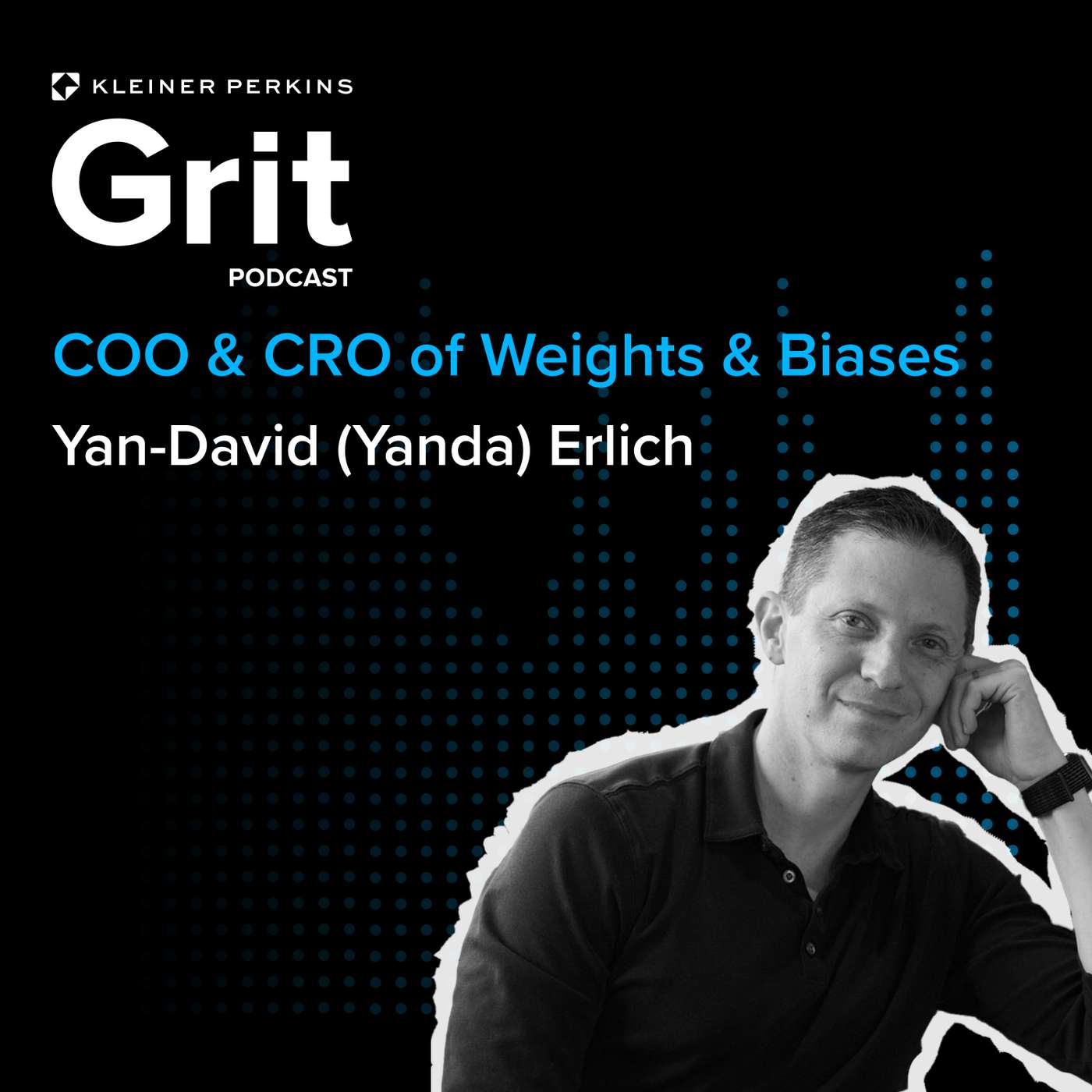
Ep 153#153 COO & CRO Weights & Biases, Yan-David Erlich: ML’s Moment
Guest: Yan-David Erlich, COO and CRO of Weights & BiasesAfter starting four companies, Yan-David Erlich had found happiness and success as a GP in Coatue’s venture fund — but then, after investing in the AI developer platform Weights & Biases, he realized the time was right to get back into operating. That was not a decision he made lightly, consulting with his wife before he became the startup’s COO. The challenges of entrepreneurship get easier, he explains, when you have a supportive partner in your corner. That’s why he believes he could roll with the loss of his home or his job or his money — but not her. In this episode, Yan-David and Joubin discuss Snowflake vs. Amazon, Slack vs. Microsoft Teams, Donald Trump, charting your own destiny, regret minimization, alternate selves, Michael Dearing, chips on your shoulder, Google Glass, industrial sales, the AI & ML window, hairball problems, fixing giant messes, and fighting a bear.In this episode, we cover:The advantage of speed (01:06)Competing against a massive business (05:24)Idiocy and secrets (09:45)Yan-David’s past companies (12:34)His philosophy on life (17:17)Leaving LinkedIn (22:14)Anxiety and regret (26:27)The failure of Happiness Engines (34:43)Why Yan-David left Parsable after five years (38:05)Coatue’s venture fund (46:13)Weights & Biases and the ML moment (48:08)Why AI is still underhyped (51:05)From investor to board member to COO to CRO (55:20)Being a good lieutenant (58:51)The hidden costs of operating (01:01:33)Successful entrepreneurs and happy relationships (01:05:55)Who Weights & Biases is hiring & what “grit” means to Yan-David (01:10:26)Links:Connect with Yan-DavidLinkedInConnect with JoubinTwitterLinkedInEmail: [email protected] Learn more about Kleiner PerkinsThis episode was edited by Eric Johnson from LightningPod.fm

Ep 152#152 CEO Gainsight, Nick Mehta: Human-First
Guest: Nick Mehta, CEO of GainsightGainsight CEO Nick Mehta describes himself as “the person who goes all in, on whatever.” So when he had a personally difficult year, he didn’t just go to therapy — he also talked to a professional coach, and read about religion, and experimented with (legal) ketamine therapy. All of that led to him “better understanding the inner self ... [and] helping to find ways to suppress the exterior.” In other words, even though Gainsight’s culture is suffused with Nick’s values, he is consciously trying to unpack a “new version of myself” that is greater than his company: “There’s a lot more to me than I realized,” he says.In this episode, Nick and Joubin discuss Mike Moritz, golf clubs, Don Valentine, eclectic fashion, loneliness, Enneagram types, setting the tone, moments of vulnerability, Vista Equity Partners, talking to customers, Jack Dorsey, building others’ brands, startups as kids, Marc Benioff, and the ship of Theseus.In this episode, we cover:The mystique of Sand Hill Road (00:58)Un-measurable marketing (05:07) Launching Chipshot.com (09:17)I-banking culture and fitting in (13:14)Getting help after a rough year (19:48)Immigrant achievers and the meaning of work (21:32)Fueling success and belief in institutions (24:44)Winning while being human-first (30:19)Founder-defined values and culture (3 5:41)What happened to Chipshot? (40:46)Empathy for all entrepreneurs (44:11)Growing & selling LiveOffice (46:03)The new Nick (48:53)Selling Gainsight for $1.1 billion (51:56)Coda and time management (55:20)Ghost notes (59:01)When the spotlight goes away (01:02:17)Philosophy and science books (01:05:45)Deleting work apps every weekend (01:09:23)Who Gainsight is hiring and what “grit” means to Nick (01:10:26)Links:Connect with NickTwitterLinkedInCodaConnect with JoubinTwitterLinkedInEmail: [email protected] Learn more about Kleiner PerkinsThis episode was edited by Eric Johnson from LightningPod.fm
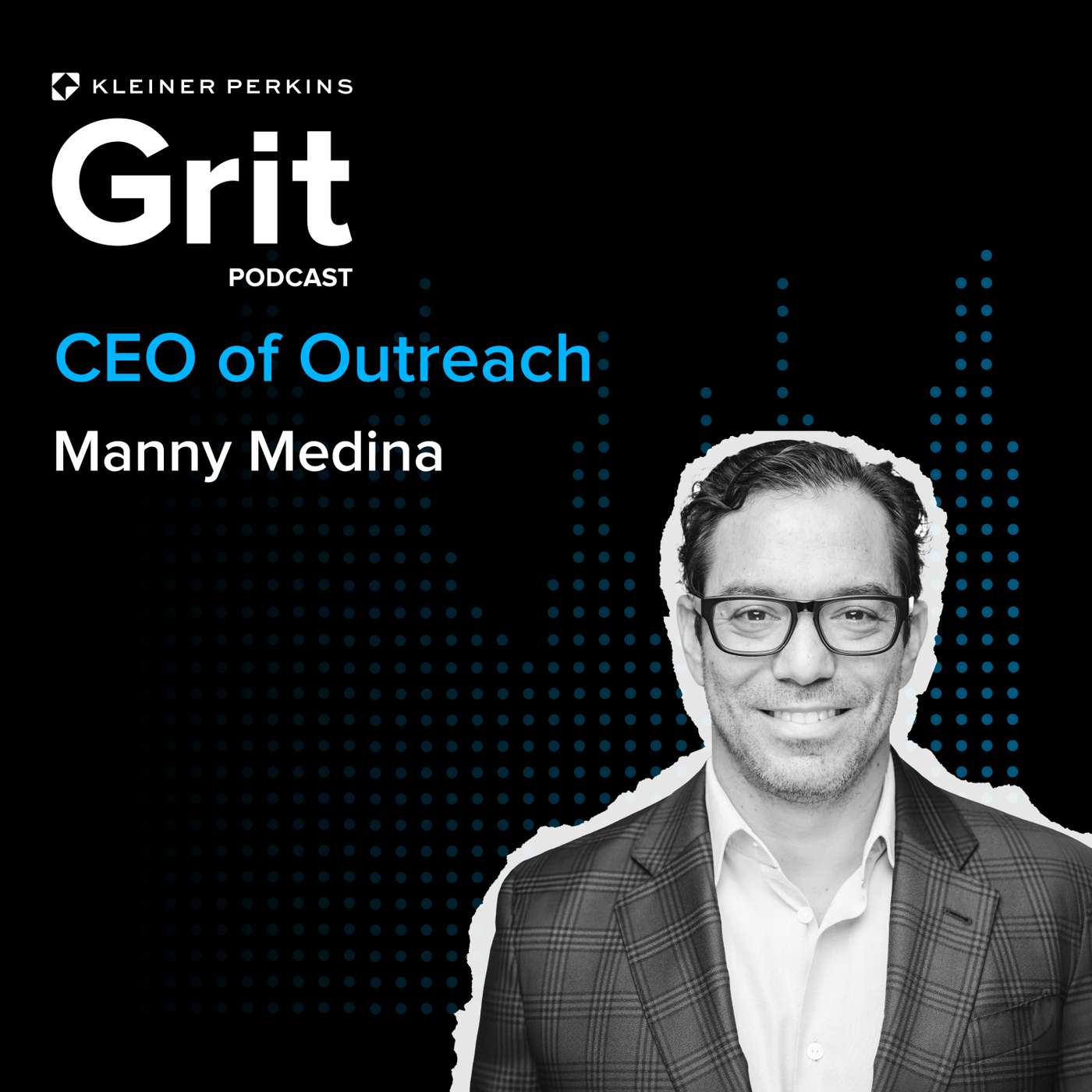
Ep 151#151 CEO Outreach, Manny Medina: 10M or Die
Guest: Manny Medina, CEO of OutreachIn its Seattle headquarters, the sales execution platform Outreach has at least one wall covered in AI diagrams and architectural flows. CEO Manny Medina says that’s because he believes “there’s no world in which reps don’t have an assistant the way that coders do.” The AI revolution has also given Manny — who got his M.A. in computer science at Penn — a chance to be more hands-on than your average CEO of a $4 billion company. “I try not to think myself as a CEO,” he says. “I try to think myself as a team member that is doing something useful.”In this episode, Manny and Joubin discuss northern New Jersey, American opportunity, going to the future, crossing the chasm, jujitsu, Tony Robbins, winning on your own terms, shifting motivations, inspiration through transparency, Moonwalking with Einstein, Lululemon, hands-on CEOs, and “been there, done that.”In this episode, we cover:Leaving Ecuador for the US (02:21)Would Manny do it all again? (07:45)Finding product-market fit (10:09) Scaling, scarcity, and stability (14:41)AI-assisted sales reps (18:59)Winner takes most (24:20)Placing long-term bets (26:42)Imposter syndrome and chips on your shoulder (32:59)“Ten million or die” (35:15)Irrational forces (42:33)Manny’s weekly internal emails (44:17)Memorizing names and making sacrifices (48:00)Personal and professional goals (52:23)“All the other jobs were taken” (56:53)Do-overs (01:00:18)Bad and good startup advice (01:03:24)Who Outreach is hiring and what “grit” means to Manny (01:05:58)Links:Connect with MannyLinkedInConnect with JoubinTwitterLinkedInEmail: [email protected] Learn more about Kleiner PerkinsThis episode was edited by Eric Johnson from LightningPod.fm
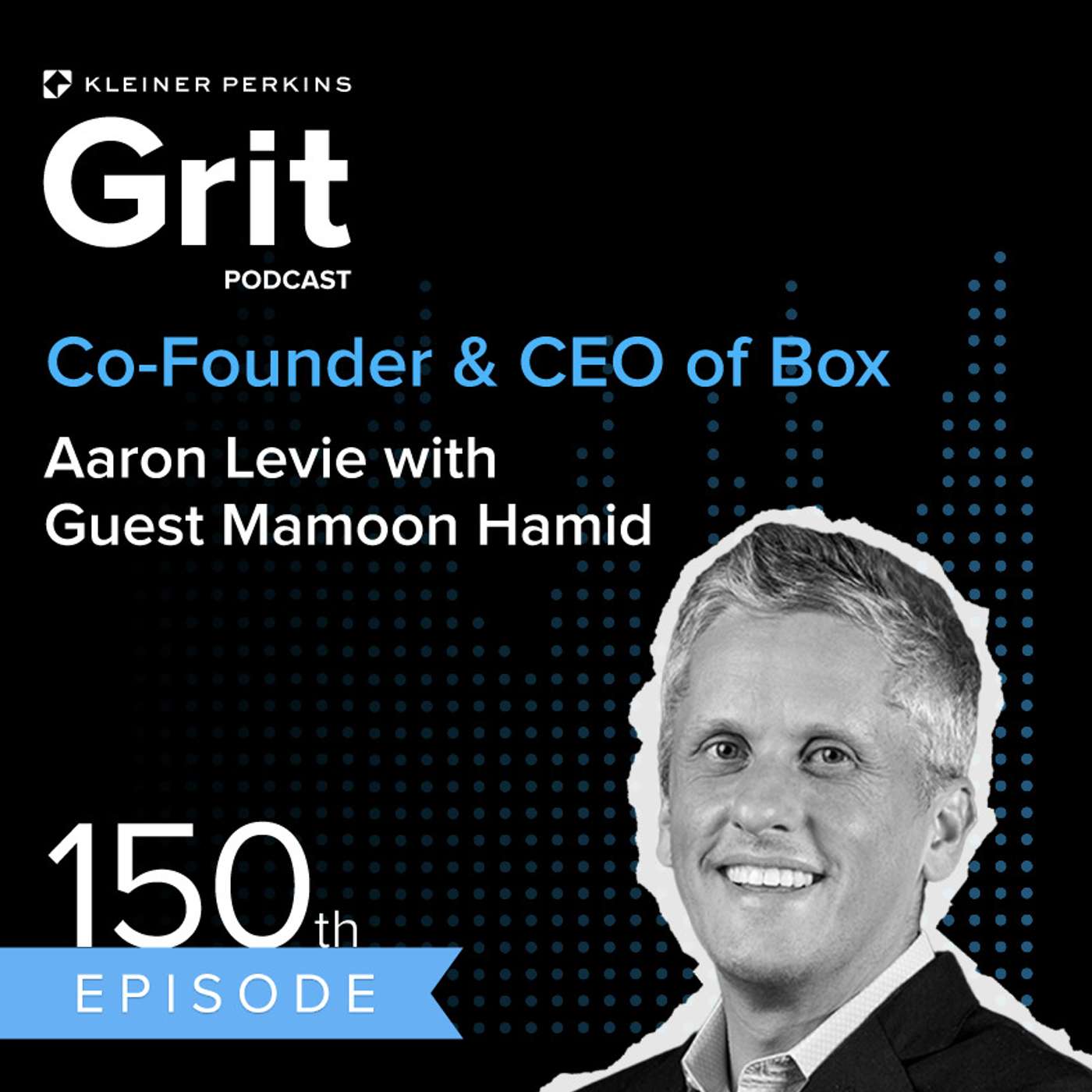
Ep 150#150 CEO Box, Aaron Levie w/ Mamoon Hamid: Open For Business
Guest: Aaron Levie, CEO of Box, and Mamoon Hamid, partner at Kleiner PerkinsWhen he was a newly minted venture capitalist at USVP, Mamoon Hamid got a tip that he should meet a young entrepreneur named Aaron Levie, and fought for the right to invest in his cloud storage startup, Box. For years after that initial investment, the two men say, Box’s fate was precarious: “We could have died any day,” Mamoon says, and Aaron recalled several times he had to be talked “down from a ledge.” Today, they tell us how Box established itself as “open for business” — a concept Mamoon hounded Aaron with in the early years — and grew into success.In this episode, Aaron, Mamoon, and Joubin discuss Box socks, authenticity at work, Josh Stein, living in the office, over-diligence, Google Platypus, the 2008 crash, nostalgia, everything is personal, the ten-person test, burnout, Dan Levin, ChatGPT, Parker Conrad, and Silicon Valley as “technology town.” In this episode, we cover:“Make mom proud, unless she’s evil” (01:59)How Mamoon and Aaron met (04:38)Mamoon’s first investment in Box (11:15) Pausing the term sheet (16:08)“We could have died any day” (19:01)What is company-building? (23:23)Open For Business (25:27)Getting to cash flow positive (27:52) Slow growth with no burn vs. fast growth, high burn (31:15)Tough feedback (34:31)Overcoming challenges around the Box IPO (36:31) Growing as CEO (38:35) The Apple Vision Pro and AI (44:15)Investing in cutting-edge companies (49:15)Using AI to re-juice growth (51:48)How Aaron educates himself (54:22)Business as a sport (57:14)Who Box is hiring and what “grit” means to Aaron (01:00:44)Links:Connect with AaronTwitterLinkedInConnect with MamoonTwitterLinkedInConnect with JoubinTwitterLinkedInEmail: [email protected] Learn more about Kleiner PerkinsThis episode was edited by Eric Johnson from LightningPod.fm
Ep 149#149 Co-CEO Workday, Carl Eschenbach: A Life of Significance
Guest: Carl Eschenbach, co-CEO of WorkdayWhen Carl Eschenbach decided to leave VMWare after more than 14 years as COO, no one believed it: Not chairman Joe Tucci, not CEO Pat Gelsinger, and maybe not Carl himself. But he needed a more predictable work-life balance to help raise his teenage children. For the next seven years, he served as a partner at Sequoia Capital. And every day, he thought — and to his wife’s chagrin, talked — about going back: “It was always on the back of my mind,” he says. After the kids were out of the house, in late 2022, he jumped back into operating and became co-CEO of Workday. “It’s what I love to do,” he says. “I feel like I’ve been called to do it.”In this episode, Carl and Joubin discuss jumping rope, Mike Clayville, the Flowbee, focusing on the family, wrestling, commuting cross-country, servant leadership, Sequoia Capital, Aneel Bhusri, co-CEOs, and Palo Alto Networks.In this episode, we cover:Working on Sand Hill Road (00:55)Carl’s workout routine (03:15)Staying humble and grounded (08:04)Carl’s family and dinner table conversation (11:41)Drive and ambition (16:08)College vs. trade school (19:53)3Com, Inktomi, and EMC (24:33)Deciding to join VMware (28:02)Virtualizing the data center (31:48)The pressure of an incredible ride (35:54)The infamous CFO story (40:14)Eyeing the CEO job (46:00)Carl’s one “big regret” (47:40)Refocusing after a tragedy (52:05)A left turn into venture (55:37)The “itch” to go back to operating (01:00:17)Joining the Workday board (01:04:37)Building an enduring business (01:07:15)“End[ing] my career in an operating role” (01:09:09)Transitioning out of venture (01:15:56)Who Workday is hiring and what “grit” means to Carl (01:18:01)Links:Connect with CarlLinkedInConnect with JoubinTwitterLinkedInEmail: [email protected] Learn more about Kleiner PerkinsThis episode was edited by Eric Johnson from LightningPod.fm
Ep 148#148 Former Snowflake CEO, Bob Muglia: The Datapreneurs
Guest: Bob Muglia, “The Datapreneurs” Co-Author and Former Snowflake CEOLongtime Microsoft executive and former Snowflake CEO Bob Muglia was done with his book about using data to drive the digital economy — and then ChatGPT came out. “The timeline for artificial intelligence moved in by 50 years in my head,” he recalls. Bob then told his co-author Steve Hamm that they needed to update “The Datapreneurs” to focus more on AI. “For the first time, we have intelligence in a computer,” he says. “English has become the primary programming interface of 2023!”In this episode, Bob and Joubin discuss weekly meetings, Amazon’s values, the tech industry’s Yoda, antitrust lawsuits, the media and Bill Gates, tangling with Andy Jassy, gold rush times, FoundationDB, executive coaches, firing people faster, leaders vs. managers, deepfakes, and the zeroth law of robotics.In this episode, we cover:Bob’s post-Snowflake career (00:57) How he advises startup CEOs (04:12) Getting fired by Steve Ballmer, twice (09:36) Why didn’t he quit? (14:09)Satya Nadella (16:09)Immigrant families and early jobs (17:21)United States v. Microsoft Corp. (21:14)“It may be shit, but it’s compliant shit” (25:26) Antitrust is not about the law (29:18) Rose-colored memories (33:01)Competing with Microsoft and Amazon (34:41)Two years at Juniper (37:45)Transitioning into Snowflake (39:38)Earning credibility (42:32)Chris Degnan, Snowflake’s first sales rep (45:07)Near-death experiences (50:05)Finding traction & taking off (55:33)Surprising challenges (01:00:55)Fired, again (01:02:16)Tough feedback (01:07:01)“The Datapreneurs” and the AI acceleration (01:09:19)Optimism about the future (01:13:36)The Terminator and Isaac Asimov (01:17:48)Links:Connect with BobTwitterLinkedInBuy “The Datapreneurs”Connect with JoubinTwitterLinkedInEmail: [email protected] Learn more about Kleiner PerkinsThis episode was edited by Eric Johnson from LightningPod.fm
Ep 147#147 Ex-Waze CEO & Founder of Post News, Noam Bardin: Hockey Sticks and Plateaus
Guest: Noam Bardin, founder of Post NewsOne of the “aha” moments that could sway a dubious Waze user, recalls former CEO Noam Bardin, was navigating around “all those idiots sitting in traffic... and you’re like, ‘I’m a genius.’” Now, at the social news app Post, Noam says the “aha” is avoiding partisan gridlock and paywalls. Social incumbents boost engagement by making users angry, while Post just wants you to read. “If we can remove friction and give you the right articles at the right time, so you feel smarter when you walk away,” he says, “that’s the aha moment.”In this episode, Noam and Joubin discuss stories vs. execution, ROFRs, culture clash, timing an acquisition, corporate tags, fear of going bigger, joining big companies, mobile app retention, big tech monopolies, competing against Foursquare, and not optimizing for “culture warriors.”In this episode, we cover:Putting your opinions out there (01:15)Waze almost sold to Facebook (06:10)Getting in the room with Google (13:04)How the first Google deal fell apart (15:10)Back to Facebook — briefly (17:15)The news begins to leak, and Google returns (20:26)Grinding for five years at a startup (23:57)“Hockey sticks” are never smooth (28:32)The personal impact of volatility (31:37)“Everything is a mess in startups” (34:38)The worst day of Noam’s life (38:22)How Waze started, and how Noam joined (42:22)The failure of Intercast Networks (45:07)Brave faces and “corp-speak” (48:33)Integrating into Google’s culture (53:13)No constraints and too much money (01:01:08)Defining metrics that matter (01:04:11)Maps and social (01:06:46)Silicon Valley’s worst invention: “Pivoting” (01:09:56)The social news problem Post solves (01:14:51)Misinformation and authoritarianism (01:18:42)Post’s microtransactions (01:21:08)Being misunderstood and the “aha” moment (01:23:58)Who Post is hiring and what “grit” means to Noam (01:27:09)Links:Connect with NoamTwitterPostLinkedInConnect with JoubinTwitterLinkedInEmail: [email protected] Learn more about Kleiner PerkinsThis episode was edited by Eric Johnson from LightningPod.fm
Ep 146#146 Co-founder & CEO Rubrik, Bipul Sinha: Authenticity Reigns
Guest: Bipul Sinha, co-founder and CEO of RubrikWhen Bipul Sinha graduated from the Indian Insitute of Technology and came to America to work in tech, his mother told him: Don’t start a company. His ambitious father was a failed pharma entrepreneur, and Bipul was content for most of a decade to hold a steady job at Oracle. But in his early 30s, he began to shed his risk aversion, pursuing a part-time MBA and more difficult jobs, and by the time he co-founded the data security firm Rubrik in 2014, he had gone through an epiphany: “Only make decisions that you truly believe is the right thing to do,” he says. “If you are here, at the moment of truth, you want to succeed or lose based on your own terms, not what others feel.”In this episode, Bipul and Joubin discuss how debate moves business forward, companies as living systems, growing up poor, refusing to compromise, risk aversion, finding your own potential, paying tuition, context matters, psychological safety, and smelling the roses.In this episode, we cover:Joubin’s interview with Ali Ghodsi (00:51)The importance of authenticity (02:33)Extreme voices (05:10)Being yourself at work (08:14)Reducing blind spots (11:08)Tough feedback (13:09)Learning entrepreneurship through osmosis (14:41)IIT or bust (19:40)Setbacks and reorienting (23:35)Leaving India for America (26:53)From Oracle to Blumberg Capital (30:21)Prioritizing his own happiness (34:36)“This is a career” (37:08)Dissatisfaction and the next thing (40:37)Creating an enduring institution (45:02)No one knows what they’re doing (49:32)Open board meetings (53:39)Hiring and firing (55:37)Good and bad startup advice (57:58)Working forever (01:01:16)Positive feedback and empathy (01:04:19)Who Rubrik is hiring and what “grit” means to Bipul (01:08:55)Links:Connect with BipulTwitterLinkedInConnect with JoubinTwitterLinkedInEmail: [email protected] Learn more about Kleiner PerkinsThis episode was edited by Eric Johnson from LightningPod.fm

Ep 145#145 CRO Tealium, Ted Purcell: Snap Into It
Guest: Ted Purcell, CRO of TealiumThe biggest difference between small companies and big companies, says Tealium CRO Ted Purcell, is that at untested early-stage firms, you have to convince workers “to truly believe in what they believe... It’s not just ‘do this’ or ‘do that.’” To unlock high performers, Ted explains, you need to give them a “religious level” of belief in the company and the value it delivers to customers, which will carry over into every aspect of their jobs. And this is even more important in a market downturn: “That becomes the main job because the winning is not as evenly spread,” he says. In this episode, Ted and Joubin discuss empty-nesters, resisting leadership, liking to win vs. hating to lose, complete commitment, commitment to culture, hardcore accountability, Israeli conversations, Day-Timers, and endurance battles.In this episode, we cover:Growing up and raising kids in Silicon Valley (00:56)From individual contributor to management (05:03)The appreciation for the grind (08:45)Ted’s father and his sudden passing (10:33)Stepping up to take care of the family (14:40)The Purcell family dinner table conversation (18:22)Working with Bill McDermott at SAP (20:50)Ted’s favorite Bill story (26:00)Getting comfortable as a leader (28:35)(Over-) Optimizing for lifestyle (34:02)How to spot greatness in interviews (37:25)A startup guy at big companies (39:48)Clarizen and corporate culture in Israel (42:10)Tealium and the “pressure cooker” environment (47:36)Believing in the “why” (51:13)Tough feedback and misconceptions (53:47)Recording ideas and daily habits (55:33)Pushing to achieve your potential (57:38)Gaining perspective (01:02:05)Who Tealium is hiring and what “grit” means to Ted (01:05:55)Links:Connect with TedLinkedInConnect with JoubinTwitterLinkedInEmail: [email protected] Learn more about Kleiner PerkinsThis episode was edited by Eric Johnson from LightningPod.fm