Grit
295 episodes — Page 4 of 6
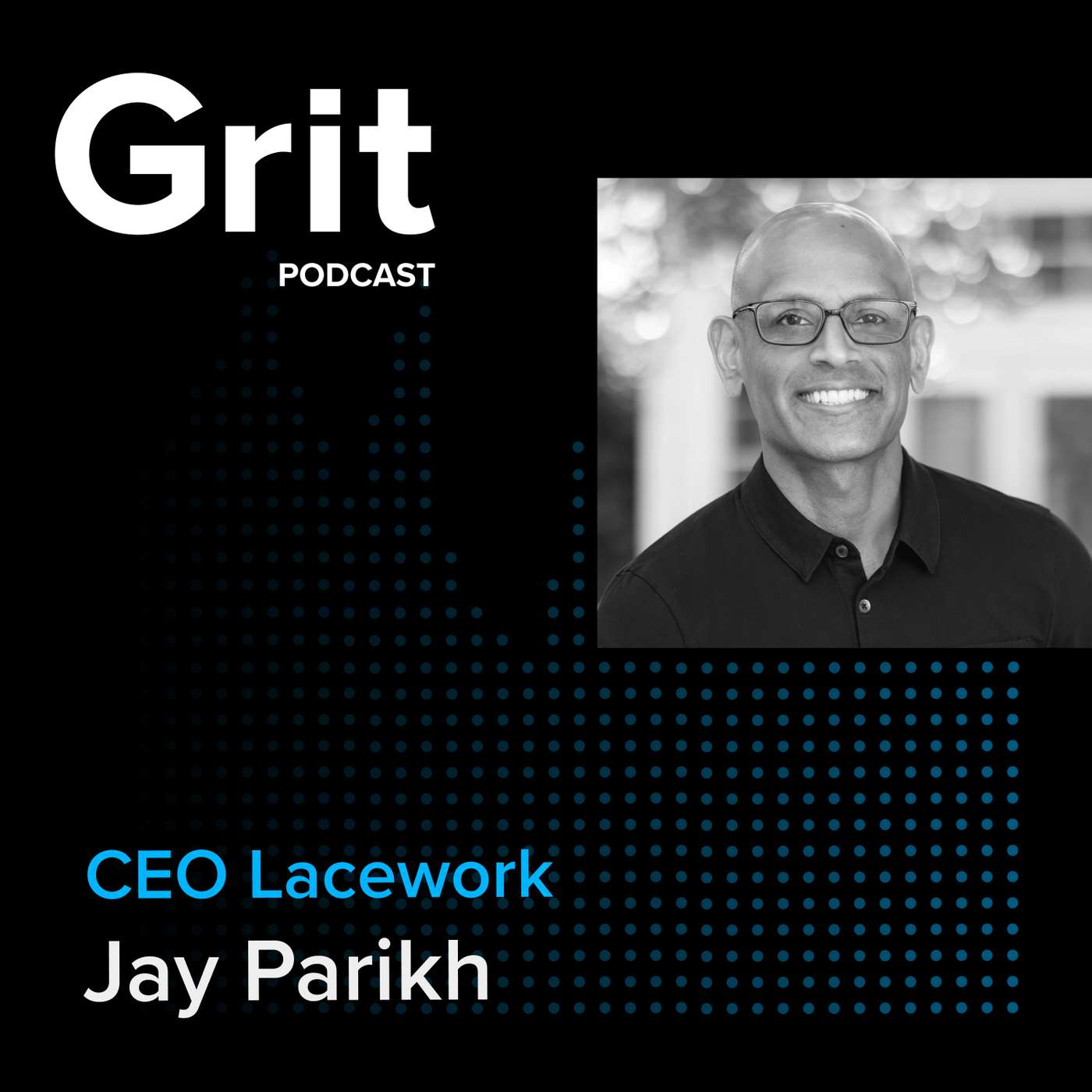
Ep 144#144 CEO Lacework, Jay Parikh: Quiet Intensity
Guest: Jay Parikh, CEO of LaceworkJay Parikh describes himself as a “stickler” for meetings that start and end on time, and holds himself to the same expectations as his workers. “It’s just really important as a leader to set the standard for how everybody else should be respected,” the Lacework CEO says. “Too often in our industry, executives think that they can show up late, hold a meeting late, and everybody will adjust.” No one will complain, he says, to the person on top of the org chart when they are 10 minutes late, but they should: “I’m like, no, I disrespected 10 minutes of your time. So I take that really seriously.”In this episode, Jay and Joubin discuss non-traditional CEOs, surviving Facebook’s early days, disrupting yourself, Akamai co-founder Danny Lewin, cultivating culture, applying restless energy, the loneliness of leaders, brushing your teeth, the love of the game, and being approachable.In this episode, we cover:The “S-curve of learning” (01:04)Finding new challenges (05:10)“Is this too big of a job?” (07:33)Intensity and zen (11:00)Jay’s first jobs (15:07)Akamai’s post-IPO pop and crash (16:31)9/11 and Danny Lewin’s legacy (19:56)Facebook’s pivot to mobile (24:58)Managing morale when the share price drops (27:16)Learning from Mark Zuckerberg (30:13)Being on time (34:44)Security in the cloud (37:58)Leaving Facebook (40:01)What has surprised Jay about becoming a CEO (45:00)Hiring, onboarding, and unlocking people (49:34)Jay’s favorite interview questions (54:34)Refusing to compromise on greatness (01:00:44)Balancing work and family (01:07:02)Who Lacework is hiring and what “grit” means to Jay (01:09:06)Links:Connect with JayTwitterLinkedInConnect with JoubinTwitterLinkedInEmail: [email protected] Learn more about Kleiner PerkinsThis episode was edited by Eric Johnson from LightningPod.fm
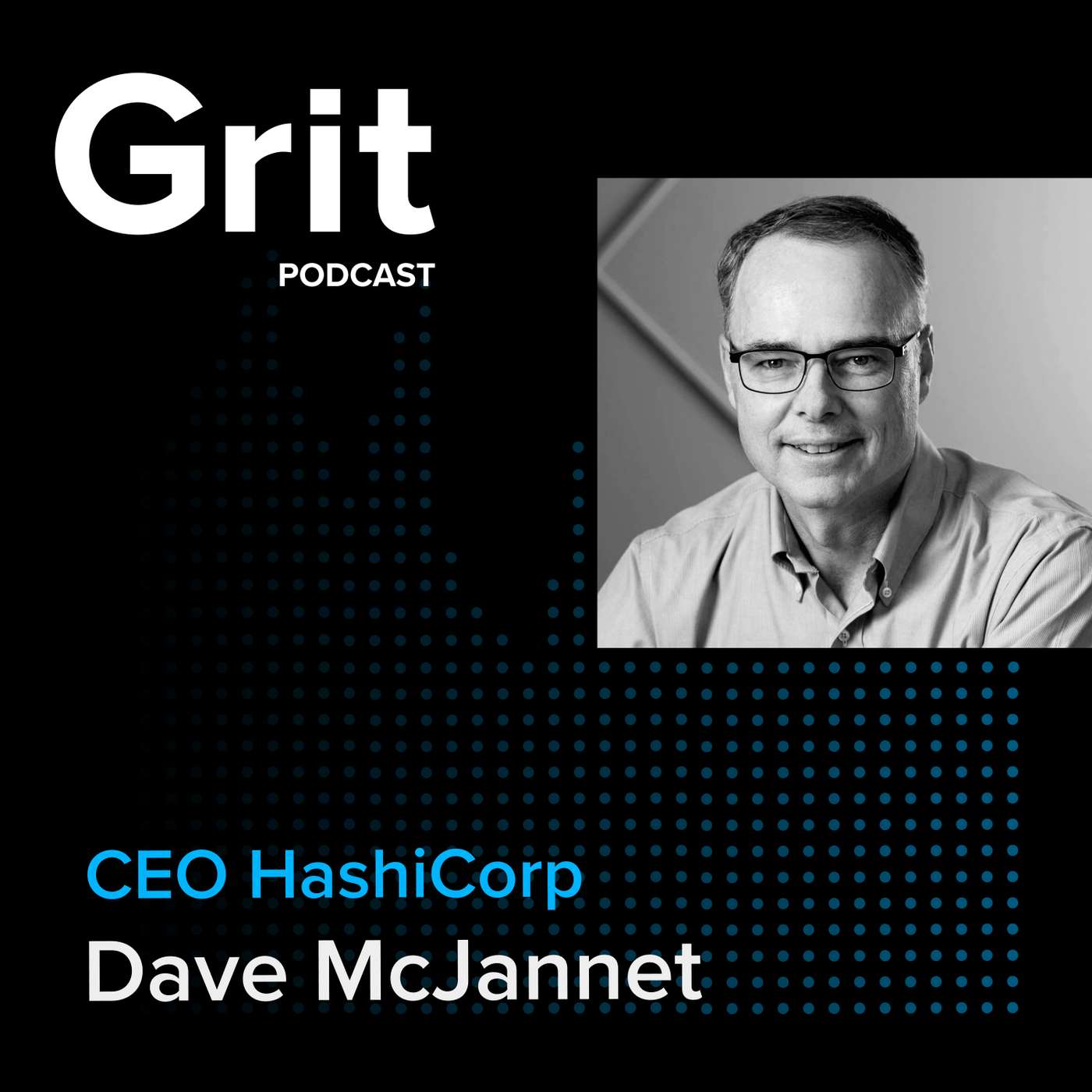
Ep 143#143 CEO HashiCorp, Dave McJannet: Phase Shifts
Guest: Dave McJannet, CEO of HashiCorpTo scale a company effectively, says HashiCorp CEO Dave McJannet, you will have to make something like 10 decisions every single day. “There’s generally one that really needs to be right, but there are eight that if you get them wrong, you will cause real damage to yourself,” he says. “It won’t be fatal, and a lot of times, it’s cultural damage.” Sometimes, he adds, these decisions can seem innocuous, like deciding how to run internal town halls with workers. But even small choices can create a “cultural crater” that you’ll have to dig yourself out of three months later.In this episode, Dave and Joubin discuss returning to the office, the sales data flow, unstructured problem-solving, why companies grow like trees, anonymous town halls entrepreneurs-in-residence, go to market vs. product, committing to the job, the executive “CPU tax,” and the 30-to-100 phase shift. In this episode, we cover:In-person vs. remote collaboration (00:43)How to build any kind of business (05:26)The value of being in the sales motion (07:30)Thinking like a venture capitalist (11:51)Commiserating with other CEOs (13:28)Systems-based thinking (17:37)Administrators vs. builders (20:25)The daily 10 decisions (22:29)Staving off decision fatigue (24:17)Dave’s past jobs and the path to CEO (26:01)The reluctant CEO (28:46)Rapid change vs. high-profile maintenance (32:20)The pressure of being at the top (35:12)The state of HashiCorp when Dave arrived (37:39)How he got the CEO job (40:38)Product-building POV (45:50)The first “oh shit” moment (48:48)Being motivated by competition (50:47)Laddered time horizons (53:47)Paul Moritz and empathy (55:17)Misconceptions about CEOs (57:10)Deciding to go public (59:45)Time and energy management (01:03:10)Anticipating phase shifts (01:06:12)Fierce independence (01:08:12)Getting the right feedback (01:09:13)Who HashiCorp is hiring and what “grit” means to Dave (01:12:30)Links:Connect with DaveTwitterLinkedInConnect with JoubinTwitterLinkedInEmail: [email protected] Learn more about Kleiner PerkinsThis episode was edited by Eric Johnson from LightningPod.fm
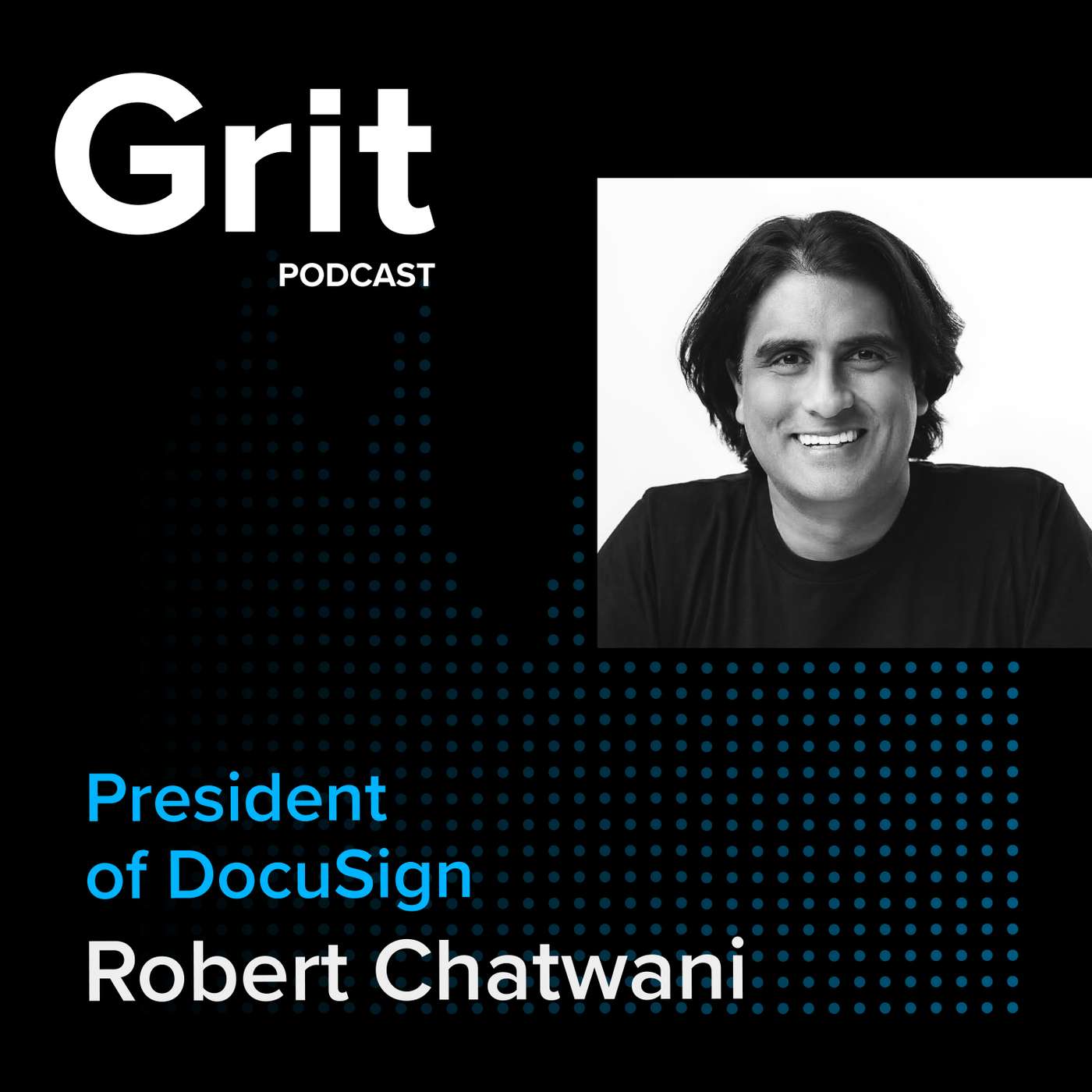
Ep 142#142 President of DocuSign, Robert Chatwani: Get Uncomfortable
Guest: Robert Chatwani, President and General Manager of Growth at DocuSignRobert Chatwani’s first reinvention was in his early 20s, when he left McKinsey & Company to start a people-powered commerce startup called MonkeyBin. And in the ensuing decades, his entrepreneurial energy hasn’t slowed down, with hops to eBay, Spring, Atlassian, and now DocuSign, where he is the President and General Manager of Growth. He cites a “healthy anxiety” that comes from getting too comfortable in any role, where he finds himself solving the same problems over and over again; but when you’re in a little bit over your head, Robert explains, “that’s a good place to be, because that’s where the best learning comes from.”In this episode, Robert and Joubin discuss trusting your intuition, reinventing yourself, personal boards of advisors, people-powered commerce, betting on people, career coaching, taking time for family, being the same person in every room, bone marrow donors, energy takers vs. creators, and leading with empathy.In this episode, we cover:Networking through venture capitalists (02:18)Leaving high-profile jobs (04:29)How to know when it’s time to leave (07:55)12 years at eBay (11:05)The seeds of doubt (15:10)Finding purpose in company-building (17:51)Robert’s personal mission statement (21:01)Growing up in Chicago and his parents (24:40)Losing a parent (27:16)True North by Bill George (29:35)Finding ways to be human (32:45)What accomplishment Robert is most proud of (34:35)MonkeyBin and meeting eBay (36:08)Sameer Bhatia’s battle with leukemia (38:30)Building a global bone marrow campaign (42:38)“You can’t control every outcome” (48:07)Unexpected side effects (52:56)Business is a force for good (56:26)Working at Spring, and then Atlassian (01:00:01)Self-doubt and leaving Atlassian (01:06:29)Making tough calls with IQ & EQ (01:10:24)Who DocuSign is hiring, and what “grit” means to Robert (01:13:48)Links:Connect with RobertLinkedInConnect with JoubinTwitterLinkedInEmail: [email protected] Learn more about Kleiner PerkinsThis episode was edited by Eric Johnson from LightningPod.fm
Ep 141#141 CEO Navan, Ariel Cohen: Be Naive!
Guest: Ariel Cohen, CEO and co-founder of NavanAs a business travel-focused startup, Navan (previously known as TripActions) was heavily impacted by the coronavirus pandemic in 2020; after laying off 24% of the staff, CEO Ariel Cohen says he became a “wartime CEO,” spending three months in “complete denial and just executing.” By June, employees were leaving and he was depressed — but he still believed that business travel would come back. “You cannot just look at a moment and say that it will change everything,” he says. “... I disconnected from the news and from some of our investors and from ... negativity and started to lead the company again.” In a way, he explains, it was like a reset to the earliest days of the business, because the only people left were long-term believers like him.In this episode, Ariel and Joubin discuss “tier one” VCs, developing goodwill, company money vs. employee money, wartime CEOs, putting handcuffs on founders, staying dynamic, returning to the office, scuba diving, shared values, Macallan whisky, believing in startups, losing employees, in-person connections, secondary liquidity, and “deposits and withdrawals.”In this episode, we cover:Picking the right investors (01:22)Connecting to the Matrix (04:04)Obsessing over failure (10:29)Reflecting on an eight-year journey (14:56)The benefits of naïveté (17:50)Ariel’s entrepreneur father and early jobs (20:45)Older startup founders (23:03)Getting out of large companies (25:35)Personal burn rate (28:03)Becoming the big company (30:11)Pivoting into AI (32:44)Project Reset and personally resetting (34:12)Making controversial decisions (39:55)“What could I have done better?” (45:43)Ariel’s co-founder Ilan Twig (47:04)What makes a co-founder relationship work? (48:50)Running out of cash (51:18)Being a travel startup during COVID (55:53)The depression quarter (01:00:12)Long-term believers (01:02:54)Why Navan would go public (01:07:55)Startup advice and hard-charging CEOs (01:11:27)What “grit” means to Ariel and who Navan is hiring (01:15:24)Links:Connect with ArielLinkedInEmail: [email protected] with JoubinTwitterLinkedInEmail: [email protected] Learn more about Kleiner PerkinsThis episode was edited by Eric Johnson from LightningPod.fm
Ep 140#140 CRO Walmart, Seth Dallaire: How You Show Up
Guest: Seth Dallaire, CRO at WalmartWhen Seth Dallaire was approached by Walmart about joining their team as CRO, he had one question: Are they serious? Seth knew that Walmart wanted him for his digital experience, having worked at Instacart and Amazon, but he also knew that building alternative revenue streams at a traditional retailer could be an uphill battle. “I knew I was gonna have to [fight the fight], it was just whether I’d have the air cover from up top to say, ‘This is strategic,’” Seth recalls. “And they obviously convinced me of that and we’re making really good progress.”In this episode, Seth and Joubin discuss startup success, advertising attribution, “maintenance mode,” online grocery shopping, “the ultimate tailwind,” over-buying, digital vs. traditional retail, founder-led businesses, John Furner and Doug McMillon, sentiment vs. data, getting told “no,” the theory of constraints, and why you should visit Bentonville.In this episode, we cover:Seth’s unique career path (00:59)Amazon’s elite team in 2000 (05:24)Growing up & dinner table conversations (08:25)Work-life balance (10:53)Ambition and achievement (12:08)Investing in yourself (16:04)Recommitting to a role (17:38)Leaving Amazon for Instacart (20:14)Grocery stores are underrated (23:56)Transitioning to a much smaller company (25:33)How COVID accelerated Instacart’s business (27:54)Advertising is a full-contact industry (32:03)Getting recruited by Walmart (34:06)Visiting Walmart stores with other execs (40:08)A leadership lesson from Doug McMillon (43:10)Product orientation (45:40)Compounding knowledge capital (47:57)Tough feedback (50:19)Leaving a team behind (54:34)Hand-written notes (56:04)The Goal and On the Shortness of Life (57:35)Relocating and refueling (01:00:40)Who Seth is hiring and what “grit” means to him (01:02:25)Links:Connect with SethLinkedInConnect with JoubinTwitterLinkedInEmail: [email protected] Learn more about Kleiner PerkinsThis episode was edited by Eric Johnson from LightningPod.fm
Ep 139#139 CEO Coach, Matt Mochary: Coaching Greatness
Guest: Matt Mochary, CEO of Mochary MethodMatt Mochary was only 31 when he sold the company he co-founded, Totality, to Verizon, “and I made enough money that that was it,” he recalls. “I didn’t have to make more money anymore.” Instead, he decided to pursue projects that in one way or another would help other people, including a documentary about the slums of Rio de Janeiro and a program to train ex-convicts in the skills of legitimate work. Today, he coaches tech and finance leaders such as Brian Armstrong (CEO Coinbase), Bastian Lehmann (CEO Postmates), Sam Altman (CEO OpenAI), and Steve Huffman (CEO Reddit). All the money earned from that work, he says, bypasses his bank account and is funding the development of software that will teach tech workers the “Mochary Method.”In this episode, Matt and Joubin discuss information asymmetry, GPT-4, focusing on fun, coaching software, saving people, the slums of Rio and the South Bronx, surfing vs. friends, the merits of crappy solutions, why companies fail, shadowing the CEO, feedback and resentment, pissing people off, the danger of “excellence,” and energy audits.In this episode, we cover:Putting in effort, finding value (01:11)OpenAI CEO Sam Altman (05:43)Immediate responsiveness (09:48)“Mount Rushmore” referrals (11:54)When Matt’s coaching was free (15:08)His Hungarian grandfather and World War II (19:56)The hero complex (25:12)Stepping away from the game (31:30)Billionaires and inner peace (38:45)The phases of company-building (40:54)The problems Matt helps leaders solve (47:48)“It’s fun to be a founder!” (54:35)Craving feedback (56:48)The zones of excellence and genius (01:02:19)“Today, what went right?” (01:09:12)Growing too early (01:12:32)Who Matt is hiring and what “grit” means to him (01:15:00)Links:Connect with MattTwitterLinkedInConnect with JoubinTwitterLinkedInEmail: [email protected] Learn more about Kleiner PerkinsThis episode was edited by Eric Johnson from LightningPod.fm
Ep 138#138 CEO Motive, Shoaib Makani w/ Ilya Fushman: Powering the Physical Economy
Guest: Shoaib Makani, CEO of Motive“When we fail,” says Shoaib Makani, “it is because we have not understood the customer problem deeply and allowed them to guide us.” This wisdom is hard-won: Motive’s first product, an app for fleet management of trucks, idled for four years before becoming a runaway success story. Emboldened by this, the CEO tried to make an orthogonal push into all kinds of freight, “guns blazing,” only to realize six months in that he had way overestimated Motive’s competitive advantage. Retreating from freight was “painful,” Shoaib recalls, but helped the company extend its existing lead in trucking — and may have saved the whole business. In this episode — joined by special guest Ilya Fushman from Kleiner Perkins — Shoaib and Joubin discuss curiosity for the world, first impressions, reorienting yourself, electronic logging devices, directly connecting with customers, growing up as a CEO, waiting for the market, having a “low discount rate on the future,” the physical economy TAM, AI dash cams, and pricing in risk, and running out of runway.In this episode, we cover:Shoaib’s Pakistani parents and doing extra homework (01:17)Explaining and experiencing startups (04:26)“High standards are infectious” (08:15)What Motive does (10:08)How Shoaib and Ilya met (10:54)The origins of Motive as “Keep Truckin’” (14:06)Working with friends (17:27)First-time founders (21:56)Deep empathy for users (24:01)Monetization and second-guessing (25:48)Sudden success and scale (29:12)Recruiting top talent (31:04)Shoaib and Ilya’s personal-professional relationship (32:07)“I knew the board I wanted” (34:32)Motive’s failed expansion into freight (36:21)Realizing and correcting the error (39:26)How to make smarter future bets (44:09)Second and third products (47:29)Back to the core mission (50:36)Autonomous driving vs. AI assistants (52:17)Thinking about competition (55:05)A tough conversation about runway (58:52)Sticking your neck out for your partner (01:04:09)Losing Ilya as a board member (01:06:23)Who Motive is hiring (01:08:32)What “grit” means to Shoaib (01:09:32)Links:Connect with ShoaibTwitterLinkedInConnect with IlyaTwitterLinkedInConnect with JoubinTwitterLinkedInEmail: [email protected] Learn more about Kleiner PerkinsThis episode was edited by Eric Johnson from LightningPod.fm
Ep 137#137 CEO Oura, Tom Hale: Business & Backgammon
Guest: Tom Hale, CEO of OuraWhen he was growing up, Tom Hale’s family had pretty ordinary dinner-table conversations: What happened today, how was school, etc. But every day after dinner, Tom and his father would play backgammon, an experience that indirectly taught him a lot about business. Now the CEO of wearable health company Oura, he recalls that the game helped him understand risk-taking, strategy, pattern recognition, and more. Tom’s father also insisted they play for money: “If I could win 20 bucks, I could go down to the store and get something. But when I lost, I felt the sting of it. That’s the best teacher, because you’re learning the preciousness of the decisions you make.”In this episode, Tom and Joubin discuss Tom’s radio voice, games of chance and skill, vacation rentals pre- and post-Airbnb, “irritant” service fees, health tracking, the psychology of rebranding, the consumerization of healthcare, personalized medicine, the myth of the founder-hero, rowing machines, and the meaning of work.In this episode, we cover:Returning to the office (00:50)John Doerr and Macromedia (05:15)Post-dinner backgammon (08:01)Tom’s past jobs and HomeAway (11:31)Competing against private startups (16:09)How Airbnb captured demand (18:55)Being acquired by Expedia (24:26)What Oura’s smart rings do (26:13)Rebranding SurveyMonkey to Momentive (29:55)Leaving Momentive for Oura (31:54)Making the case for himself (34:59)The future of public health, data, and wearables (37:10)“Sleep is strategic” (42:32)Why Oura is an AI company (44:48)The health impact of a taxing job (47:16)Being a non-founder CEO (49:39)Working with people (53:38)What would be in a “working with Tom” doc? (54:52)Managing the psychology of a 10-year-old startup (56:48)Being there for family & colleagues (59:18)Who Oura is hiring, and what “grit” means to Tom (01:02:54)Links:Connect with TomTwitterLinkedInConnect with JoubinTwitterLinkedInEmail: [email protected] Learn more about Kleiner PerkinsThis episode was edited by Eric Johnson from LightningPod.fm
Ep 136#136 COO Modern Treasury, Rachel Pike: Golden Ticket
Guest: Rachel Pike, COO at Modern TreasuryPayment operations startup Modern Treasury is not afraid to do things in “our own weird way,” says COO Rachel Pike. Its values statement is a 150 word essay, it has gone viral by writing about nerdy ACH payments minutiae, and it has an unusual rule for quarterly internal reviews: No slides. Instead, departments have to write one to two page essay, which are packaged together and then shared company-wide, and with the board. In previous jobs, Rachel laments, she and her coworkers would waste time “pushing pixels” around 50-slide decks. “It [the essay] actually takes more thinking and less hours to put together a summary of, ‘where have we been?’” she says.In this episode, Rachel and Joubin discuss the state of San Francisco, the value of tradition, hunger to learn, the Draper Fisher Jurvetson split, the opportunity cost of staying put, HIPAA and startups, two-entrepreneur households, career transition coaching, “try before you buy” hiring, learning to be remote, the downside of grasping, and fixing inequalities in compensation.In this episode, we cover:Why Rachel doesn’t like talking about herself (01:20)Job-hopping and the Bay Area (02:38)Early adopters vs. brilliant innovators (05:16)Why Rachel left academia (07:44)“I got a phD in startups” (10:24)The “nights and weekends” gig at AngelList (14:05)Describing startups to aliens (16:50)Four years at Grand Rounds (18:28)What makes Modern Treasury “modern” (21:51)How she got hired as employee #1 (24:16)Advice for wannabe early-stage startup workers (30:18)“Wonder is contagious” (32:00)“Do it right the first time” (35:09)Hacker News and other growth levers (38:20)The excitement of scaling (40:49)Advisors and quarterly planning essays (44:02)Forced prioritization (49:20)Hard feedback (51:50)The working with Rachel doc (54:19)How Modern Treasury does comp and bonuses (57:21)What’s past is prologue (59:43)Who Modern Treasury is hiring and what “Grit” means to Rachel (01:02:00)Links:Connect with RachelTwitterLinkedInConnect with JoubinTwitterLinkedInEmail: [email protected] Learn more about Kleiner PerkinsThis episode was edited by Eric Johnson from LightningPod.fm
Ep 135#135 CMO & CSO GitLab, Ashley Kramer: The Three Ps
Guest: Ashley Kramer, CMO & CSO of GitLabOne day, when Ashley Kramer was an SVP at Alteryx, one of her direct reports hit her with a dose of reality: “She said, ‘I think you are trying to put me on a path to be you, and to have your job. I don’t want any of that.’” Now the CMO and CSO of GitLab, Kramer — who has been a perfectionist since childhood — used to hold her team to the same high bar. But as she’s learned over time, “Not everybody’s gonna have your same ambition. Not everybody’s gonna work as hard as you. It doesn’t mean they’re not good at their job. It just means different things are important to them.”In this episode, Ashley and Joubin discuss what companies get wrong in CEO interviews, “the three P’s” of company values, loosely held disasters, thinking about the future, “everybody does not want to be like me”, how GitLab does meetings, pre-speech nervousness, context switching, skip-level meetings, credibility with the customer, setting the bar too high, and Naval Ravikant.In this episode, we cover:People, Passion, and Product (04:36)Joining companies right after they IPO (07:16)Scaling questions (10:28)Job-hoppers and ambition (12:06)Parents and dinner-table conversations (16:35)Coping with perfectionism (19:17)Coaching and demotivators (21:36)Confident public speaking (26:21)How Ashley got out of engineering (32:08)Being CPO and CMO of Sisense at the same time (35:49)Representing “two constituencies” (38:54)Why Ashley has two titles again (44:59)The radical transparency of GitLab (47:20)Growing pains and becoming interim CTO (51:28)Working with founder-CEOs (56:08)Tough feedback (58:20)Personal and professional OKRs (01:01:15)Work-life balance (01:03:33)How to network (01:06:10)Who GitLab is hiring and the meaning of “Grit” (01:08:58)Links:Connect with AshleyTwitterLinkedInConnect with JoubinTwitterLinkedInEmail: [email protected] Learn more about Kleiner PerkinsThis episode was edited by Eric Johnson from LightningPod.fm
Ep 134#134 Chief Bizdev Officer at Uber, Jen Vescio: Buy, Build, or Partner
Guest: Jen Vescio, Chief Business Development Officer at Uber and founder of Awestruck VenturesIf you were to look at Jen Vescio’s calendar, it might look like a pack of Skittles: Every single one of her meetings is color-coded according to the Insights Color Focus system, which assigns the colors red, blue, yellow, and green based on what methods they emphasize in their work. As the chief business development officer of Uber, Jen has to work with people across that spectrum, and preps for each meeting accordingly.In this episode, Jen and Joubin discuss the pros and cons of media training, Malcolm Gladwell’s Outliers, “semi-pro” soccer, how to ruin your Uber rating, the “fluorescent light” journey, working at “it” companies before they were disrupted, the art and science of business development, self-awareness vs. understanding others, Sean Bratches, what is your motive?, side letter PTSD, “speed and silence are your two worst enemies,” forced time off, getting buy-in, and why “Uber is wired for trauma.”In this episode, we cover:“Dancing in the moment” (00:54)The Olympic Development Program (03:22)Jen’s parents (08:15)DJing and music in Ubers (10:40)Talking to Uber drivers (12:48)Retiring from soccer (15:04)“The big transition” (17:22)The dotcom boom and Jen’s first jobs (20:04)Innovation and disruption (22:15)Buy, build, or partner (27:24)Understanding the “color” of others (35:27)How to talk to a “double red” (38:38)Insights Color Focus and the color of companies (41:16)The Trust Quotient (46:45)The biggest deal Jen has brokered (50:17)The pressure of big deals (51:46)The $350 million deal she botched (55:14)Getting burned out on corporate jobs (58:22)Big, shiny brands like Uber (01:00:38)Mental contracts and taking time off (01:05:07)Tough feedback (01:08:24)Developing trust internally vs. externally (01:09:48)How COVID impacted Uber (01:13:08)Where Uber is hiring and what Jen thinks of when she hears the word “Grit” (01:18:16) Links:Connect with JenTwitterLinkedInConnect with JoubinTwitterLinkedInEmail: [email protected] Learn more about Kleiner PerkinsThis episode was edited by Eric Johnson from LightningPod.fm
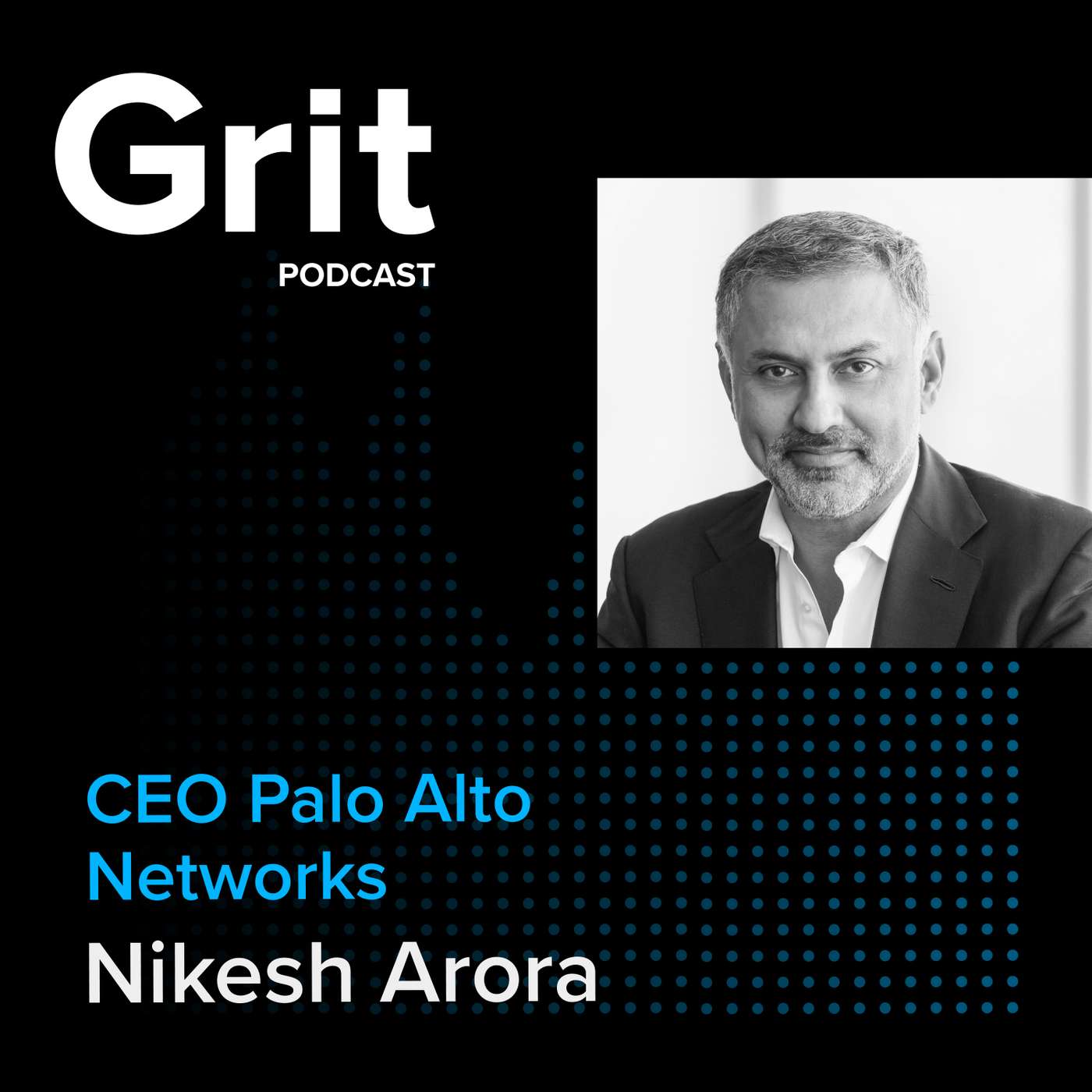
Ep 133#133 CEO Palo Alto Networks, Nikesh Arora: Create Certainty
Guest: Nikesh Arora, CEO and Chairman of Palo Alto NetworksNikesh Arora has been in the C-Suite for more than two decades, including a 10-year stint as Google’s chief business officer and — most recently — five years as Palo Alto Networks’ CEO. But the COVID-19 pandemic made him radically reconsider the gap between the executive floor and the rest of the company. “There was a tremendous amount of anxiety and fear and uncertainty,” he says, “and this person I was talking to says, ‘Listen, your job as a leader is to create certainty.’ [...] It’s simple: Tell your employees you have their back.” That’s why, for the past 30 months, Nikesh has been making time to virtually meet thousands of Palo Alto Networks employees on Zoom; he gets candid feedback, communicates company goals, and provides a safe space for everyone to bond.In this episode, Nikesh and Joubin discuss honest CEOs, not having a career plan, process vs. outcomes, remaining independent inside Google, organizational superpowers, understanding your competitors, “evergreen companies,” the ChatGPT disruption, integrating product and sales, blindfolded communication, Evian water, cloud vs. on-prem security, and problem solvers vs. problem representers.In this episode, we cover:Amazing people at Google (02:15)T-Motion and T-Mobile (04:05)“You cannot control the outcome” (07:36)Growing up in India (11:12)400+ rejection letters (14:38)Loving what you do (18:26)Joining Google (19:55)Sergey Brin and Eric Schmidt (24:16)Relocating to “the mothership” (27:01)“He’s not Googly enough” (28:26)Profit, innovation, and paranoia (31:12)Cybersecurity and AI (34:04)SoftBank CEO Masa Son (38:54)Joining Palo Alto Networks (43:04)Hiring as home-building (47:04)“Nobody comes to work to screw up” (50:25)Product and the power of marketing (53:28)Cybersecurity “swim lanes” (56:36)M&A strategy (01:01:14)The two schools of due diligence (01:05:05)Moving past problems (01:07:42)Creating certainty for employees (01:10:59)Links:Connect with NikeshTwitterLinkedInConnect with JoubinTwitterLinkedInEmail: [email protected] Learn more about Kleiner PerkinsThis episode was edited by Eric Johnson from LightningPod.fm
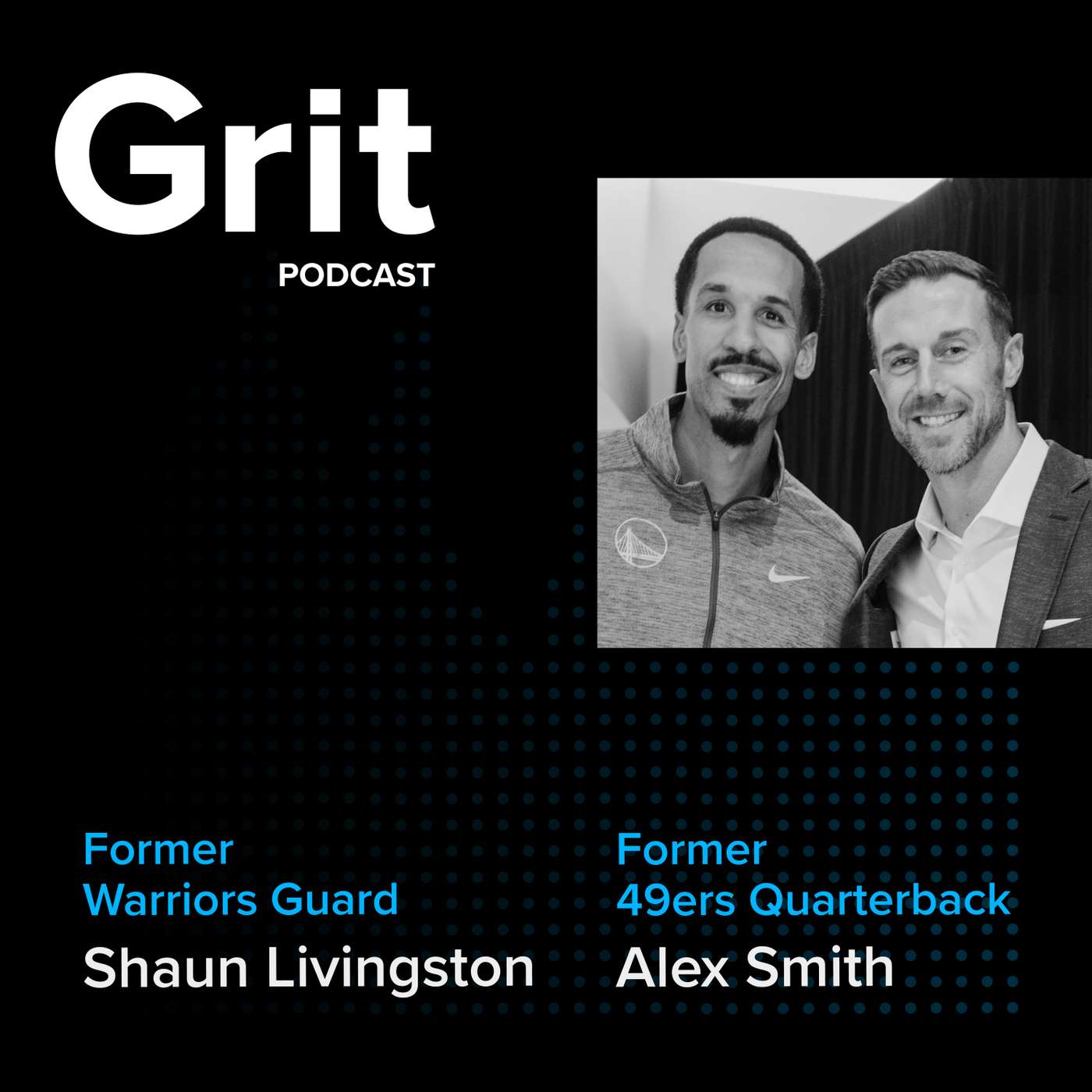
Ep 132#132 Former 49ers Quarterback Alex Smith and Former Warriors Guard Shaun Livingston: Hard Steps
Guests: Alex Smith and Shaun Livingston, former players for the San Francisco 49ers and Golden State Warriors“I just thought, the best of my life is behind me.” That’s what former NFL quarterback Alex Smith recalls of a devastating leg fracture in 2018 that threatened to end his football career forever. Former NBA guard Shaun Livingston suffered a similar injury early in his career, and both men were told the only way forward might be leg amputation & retirement. They endured through depression, surgeries, and painful physical therapy, and both of them found their way back to pro sports. “I hopped on a bike,” Shaun says. “’Oh, I can do this!’ All right, I hopped on a treadmill. ‘Okay, I can do this.’ You give yourself these small victories that, over time, end up adding up.”In this episode, Alex, Shaun, and Joubin discuss going pro out of high school, the pressure of expectations, talking about emotions, Joe Namath, gratitude for life, military medical care and “group suck”, the D-League, competing against yourself, losing well, “rah-rah guys,” no-look slants, Tom Brady, Kevin Garnett, and the difference between winning and losing.In this episode, we cover:Alex Smith’s background (01:15)Shaun Livingston’s background (02:07)Alex on the fear of failure (03:23)Shaun on “the opportunity of a lifetime” (07:03)Imposter syndrome and burying emotions (10:44)Anxiety as motivation (13:41)Dysfunctional early seasons (16:10)Alex and Shaun’s leg injuries (18:57)Depression vs. “small victories” (23:51)Alex’s recovery process (25:45)Shaun’s stint in the NBA Development League (29:51)Teaching yourself to walk (31:58)Steph Curry and great leadership (36:19)Pat Mahomes and the “final shot” (41:05)Tough feedback (44:32)Recharging in the off-season (47:09)Daily consistency (49:41)Who Alex and Shaun think of when they hear the word “grit” (54:05)Links:Connect with ShaunTwitterLinkedInConnect with JoubinTwitterLinkedInEmail: [email protected] Learn more about Kleiner PerkinsThis episode was edited by Eric Johnson from LightningPod.fm
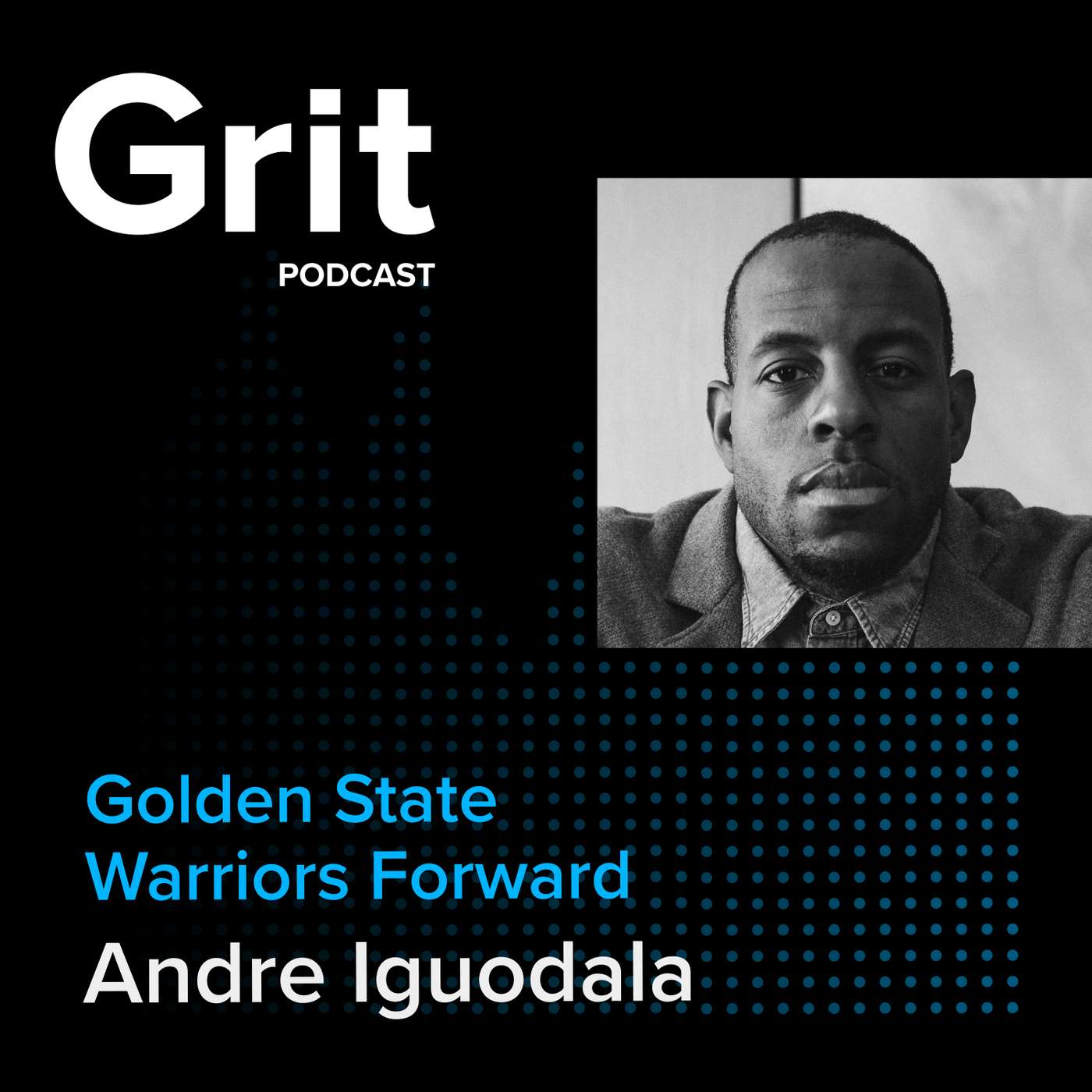
Ep 131#131 Golden State Warriors Forward Andre Iguodala: The Sixth Man
Guest: Andre Iguodala, forward for the Golden State WarriorsThe average professional basketball career lasts around four years. By the first time Andre Iguodala came to play for the Golden State Warriors, in 2013, he was already on year 10 in the NBA. “All I wanted to do was get somewhere where I just truly enjoy going to work every day,” he says. And on his podcast with Evan Turner, Point Forward, he doesn’t shy away from the fact that being a famous and successful player comes with trade-offs. “When you make it ... you’re lifted up, like ‘you’re here to save us all,’” he explains. “There's so many things that go on with us as athletes that people don't get a opportunity to truly understand because there's two sides.”In this episode, Andre and Joubin discuss the law of attraction, daily practice, former head coach Mark Jackson, Allen Iverson, the value of sports media, Mahmoud Abdul-Rauf’s Tourette Syndrome, Michael Jordan and Scottie Pippen, the lowest point in Andre’s career, and pivoting to stay alive.In this episode, we cover:What goes through Andre’s head when the game rests on his shoulders (01:17)Enjoying work every day and playing under head coach Steve Kerr (05:31)Avoiding the newspaper, and why he started a podcast (09:59)The trauma of success and basketball as a sanctuary (14:07)Playing against LeBron James and with Steph Curry (17:59)Being addicted to success and finding joy on the court (21:24)Kevin Durant’s work ethic (25:41)Are the wins or losses more memorable? (28:30)Being a student of the game (32:02)Why Andre’s memoir is called The Sixth Man, and what changes in the playoffs (35:34)His final season in the NBA, and being a part of the tech ecosystem (42:04)The qualities of great players, and the most memorable game of his career (45:50)Links:Connect with AndreTwitterLinkedInHis podcast, Point ForwardConnect with JoubinTwitterLinkedInEmail: [email protected] Learn more about Kleiner PerkinsThis episode was edited by Eric Johnson from LightningPod.fm
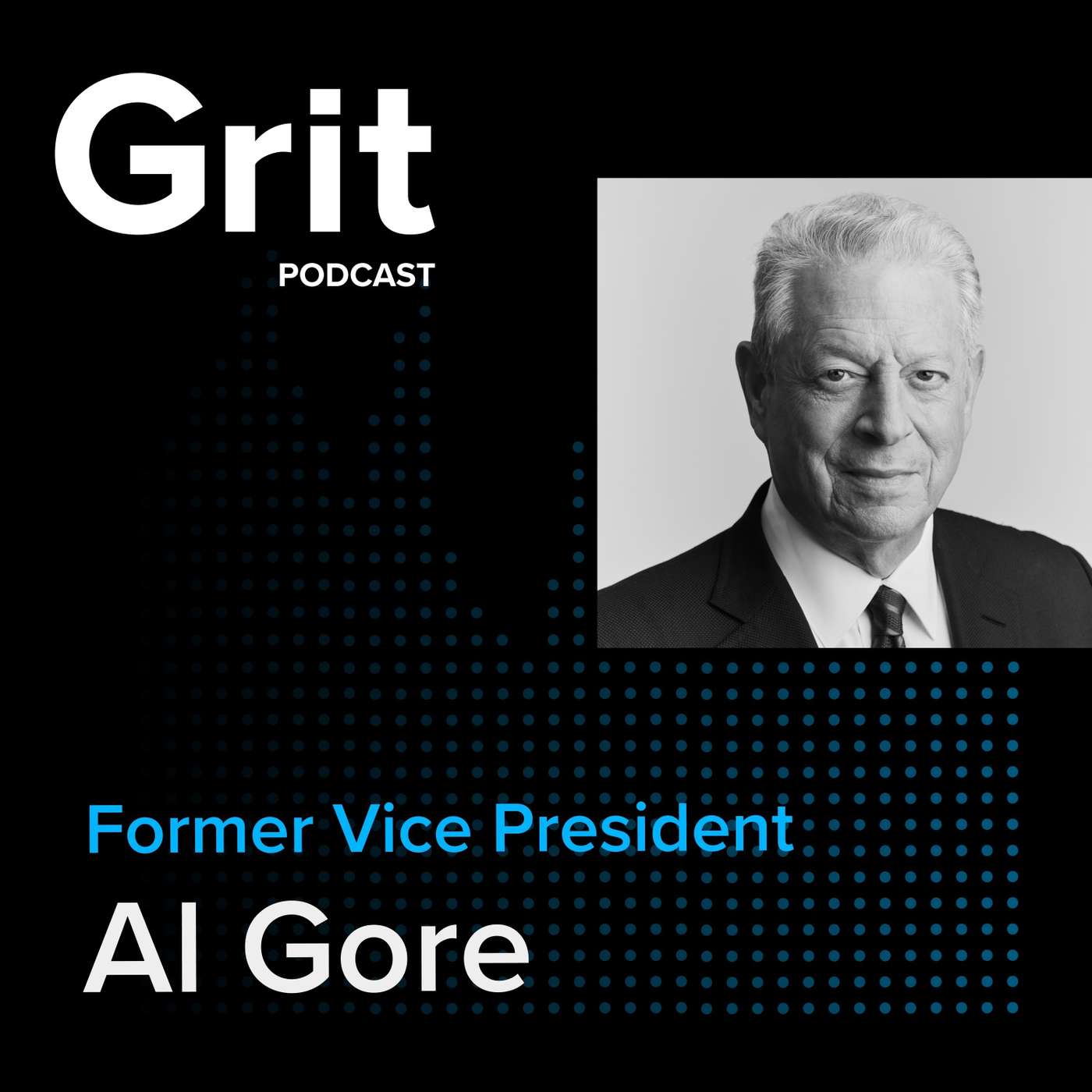
Ep 130#130 Former Vice President Al Gore: Relentless
Guest: Al Gore, Former Vice President and chairman of The Climate Reality ProjectAl Gore has been talking about all kinds of renewable energy for decades. The former U.S. Vice President, Nobel Peace Prize winner, and star of An Inconvenient Truth says it’s “thrilling” to see things like wind power and sustainable forestry becoming the norm. But as humanity continues its struggle against the climate crisis, he says, it’s worth remembering that political will is also a renewable resource. Effective storytellers and political organizers can overcome the entrenched political power of the oil and gas industry, and young people are flocking to work for climate-conscious companies that share their values. In this episode, Al and Joubin discuss Abraham Lincoln, Silent Spring, “father of the United Nations” Cordell Hull, downhill skiing, “pursuing a grail,” Watershed, An Inconvenient Truth, the Inflation Reduction Act, trolling Newt Gingrich, former CIA director Bob Gates, “let the glory out,” and Greta Thunberg.In this episode, we cover:Which of Al’s many accomplishments is he proudest of? (01:52)What he learned from his parents, a pioneering lawyer and a U.S. Senator — and why he decided to get into politics (05:32)Being an underdog and finding the energy to fight injustice (16:15)The distinction between work and play, and commitments of the heart (19:28)The “hidden truth about human endeavors” (28:05)Becoming a great storyteller and getting instant, actionable feedback (31:25)Al’s “close as brothers” partnership with President Bill Clinton (36:44)Accepting hardship and renewing political will (48:08)How does Al renew his own energy? (53:57)Links:Connect with AlTwitterConnect with JoubinTwitterLinkedInEmail: [email protected] Learn more about Kleiner PerkinsThis episode was edited by Eric Johnson from LightningPod.fm
Ep 129#129 CRO Zapier, Giancarlo “GC” Lionetti: Recheck, Rebalance
Guest: Giancarlo “GC” Lionetti, CRO of Zapier“I live in a constant state of paranoia,” says Zapier CRO Giancarlo “GC” Lionetti, “which I guess is healthy and unhealthy.” A lifelong hard worker who shows up early and stays late, GC could have kept his job at team collaboration company Atlassian, which he joined before the company even offered stock options to employees. But his hunger for new experiences — and desire to learn things about new disciplines, like sales — took him away to unexpected new roles at Dropbox, Confluent and now Zapier. “If you asked me in every single experience what my next experience was gonna be ... I wouldn’t have guessed the one that I ended up doing,” he says.In this episode, GC and Joubin discuss in-person retreats, the problem with “hybrid” cultures, in-office perks, dyslexia and ChatGPT, Atlassian as a “mini-MBA,” re-directing energy to find happiness, self-service businesses, “fitting the mold,” the space for meetings, and dinner at home with the kids.In this episode, we cover:The Grit tip jar and being an “anti-remote” person at a fully remote company (00:47)How GC compensates for not being able to walk & talk around the office (06:13)The dying art of being early, and GC’s brand of hard work (09:03)His father’s exhausting work life, and his first summer job (16:18)Is GC a “pusher” or a “puller,” and some crucial advice from Atlassian CEO Scott Farquhar (21:15)What he thought in the early days of Atlassian’s ride to the top (27:48)What Zapier does and how it has helped GC and his wife as parents (31:29)“It was hard to take advice, because nobody understood this world” (34:25)Why did GC leave Atlassian for Dropbox? (38:04)Passing on paranoia, and is balance required for happiness? (41:16)Marketing vs. sales, and the danger of re-running the same playbook in different companies (48:46)Fitting into a box, and learning from people with different backgrounds (56:28)Why GC doesn’t like traveling very much, and the place of meetings in Zapier’s GTM organization (01:01:09)Separating the “church and state” of work and personal life (01:07:38)Links:Connect with GCTwitterLinkedInConnect with JoubinTwitterLinkedInEmail: [email protected] Learn more about Kleiner PerkinsThis episode was edited by Eric Johnson from LightningPod.fm
Ep 128#128 Former COO & Corporate Officer at Stripe, Claire Hughes Johnson: Scaling People
Guest: Claire Hughes Johnson, author of Scaling People and Corporate Officer at StripeFormer Stripe COO Claire Hughes Johnson’s new book, Scaling People, is not your typical business book: Informed by her experience scaling one of the most valuable private companies in the world, it’s a tactical reference manual, “almost like a textbook,” aimed at helping managers wrestling with a variety of problems. And one of the big uniting themes is that, to solve anything, they’re going to have to look inwards. “Leadership does not start with the other people in the room,” she says. “It starts with you ... if you don’t know yourself, you are not gonna be very successful, because you have to understand your work style preferences, your habits, your blind spots.”In this episode, Claire and Joubin discuss in-demand books, Google pre-IPO, headcount as a proxy for success, paranoid mentality, self-driving cars, honoring commitments, the illusion of time, customer insights, “act like a founder,” asking for feedback, prioritizing and saying no, “steady Eddies,” imposter syndrome, fruit on the counter, layering titles, and making time for family.In this episode, we cover:Who should read Claire’s new book, Scaling People, and how she expects them to read it (00:57)The challenges of building Stripe in its early days: “It was just consumed by it” (04:51)Why she left Google to become Stripe’s COO, and what she did for them as the business was starting to take off (12:34)How Stripe hired the best people — including Claire — and how they could have done it even better (17:25)Leadership starts with self-awareness (26:05)Honest criticism that rocks your world, and taking feedback well (29:43)The “unauthorized guide” to working with Claire (36:18)Getting hired at Google by Sheryl Sandberg, and why Claire didn’t follow her to Facebook (40:26)“Pushers and pullers,” a framework for working with top talent (46:43)What entrepreneurs can learn from Condoleezza Rice about impact, passion, and ability (58:33)Putting your (imperfect) expertise out into the world (01:02:03)Implementing Stripe’s first performance feedback process, and why it still doesn’t “do” titles (01:07:06)Having a life outside of work, and the “clarifying moment” of a surprise birthday party (01:15:26)Links:Buy Scaling People: Tactics for Management and Company BuildingConnect with ClaireTwitterLinkedInConnect with JoubinTwitterLinkedInEmail: [email protected] Learn more about Kleiner PerkinsThis episode was edited by Eric Johnson from LightningPod.fm
Ep 127#127 CEO Intuit Mailchimp, Rania Succar: Consistent Inner Equilibrium
Guest: Rania Succar, CEO of Intuit MailchimpTen years out of college, and with two advanced degrees under her belt, Rania Succar knew she wanted to be an operator. Taking a job at Google taught her a lot, but she chafed under the limitations imposed on her control and personal impact. At Intuit, she finally found what she had been searching for: “We really do have a structure that's set up to give you massive amounts of accountability and responsibility.” For seven years, Rania worked across the Quickbooks team before becoming the CEO of Mailchimp in August 2022. And along the way, she also discovered the “beauty” in jointly owning some functions with her teammates: “It can actually be brilliant.”In this episode, Rania and Joubin discuss immigrant culture, boundless energy, the search for meaning, the illusion of control, getting back to equilibrium, registering your ambition, “Mailkimp,” prioritizing family, sleep experiments, passing the baton, finding problem-solvers, and meetings that give you energy.In this episode, we cover:The importance of family to Syrians, Persians, and immigrants (00:43)Navigating two cultures at the dinner table, and Rania’s entrepreneurial father (04:48)The arc of her career, and figuring out where she wanted to put her energy (08:59)What motivates & energizes her, and what takes energy away (14:28)The need to own things end to end, and the beauty of sharing the controls (18:32)What Rania has learned over seven years at Intuit, and how she pushes to do more (24:32)Mailchimp’s “genius” sponsorship of Serial, and preserving its scrappy culture (30:46)How Rania allocates her time every week, and finding “30% more efficiency” (34:13)Learning about the importance of sleep “the hard way” (38:45)Getting through the early months of COVID and being authentic with her team (43:30)Learning from leaders like Intuit’s Bill Campbell and Scott Cook, and defining the “next chapter of exceptional” (46:51)How a visual impairment became a source of strength (52:54)Setting priorities and being a prisoner of one’s calendar (57:16)Links:Connect with RaniaTwitterLinkedInConnect with JoubinTwitterLinkedInEmail: [email protected] Learn more about Kleiner PerkinsThis episode was edited by Eric Johnson from LightningPod.fm
Ep 126#126 CRO Gem, Lesley Young: Hard Yards
Guest: Lesley Young, CRO of GemLesley Young’s favorite book is “The Obstacle Is The Way,” in which Ryan Holiday argues that the process of working hard to achieve something is more important than the achievement itself. When you find yourself in a position of leadership, the Gem CRO says, “you realize there’s a lot of wisdom that you’ve gained in those experiences that you’ve had.” One of her passions is helping other people develop in the careers, which includes convincing them that “that hard yards are going to be the ones that are gonna grow them the most.”In this episode, Lesley and Joubin discuss speaking vs. observing, meeting your heroes, the Great Depression mindset, developing people, Workplace by Facebook, the power of discontent, choosing to show up, controlling the controllable, repeatable success, being “open for business,” getting fired up, remote work, “only the paranoid survive,” and hard feedback.In this episode, we cover:Prepping for public presentations (00:59)Meeting Salesforce CEO Marc Benioff and working with Snowflake CRO Chris Degnan (04:44)Fear of everything evaporating, and becoming resourceful (09:28)The “purpose statement” Lesley wrote for her career, and why she loves to learn (14:16)Choosing to not be *the* leader all the time, and taking a risk on Facebook (20:35)Her relationship with her parents and being motivated by unfinished work (25:45)Ryan Holiday’s “The Obstacle Is The Way” and the journey to the achievement (29:32)How to work with founders such as Box CEO Aaron Levie (35:58)Former Segment CEO Peter Reinhardt and asking the right question (41:03)Why Lesley joined Gem on the eve of a hiring downturn: The long-term play (47:26)Why Gem CEO Steve Bartel is an “amazing recruiter,” and the return of in-person collaboration (52:14)The toughest feedback Lesley has ever gotten about herself (59:42)Why delivering tough feedback is harder than receiving it (01:03:49)Links:Connect with LesleyLinkedInConnect with JoubinTwitterLinkedInEmail: [email protected] Learn more about Kleiner PerkinsThis episode was edited by Eric Johnson from LightningPod.fm
Ep 125#125 CRO Starburst, Javier Molina: Reading Cues
Guest: Javier Molina, CRO of StarburstStarburst CRO Javier Molina’s peers, former colleagues, and even his wife often tell him the same thing: He’s difficult to read. That doesn’t mean he’s not listening, though. In fact, he’s focusing on many different things such as speech patterns, the words being used, and the priority of those words while simultaneously keeping a pulse on social cues as well. This uncontrolled habit he describes as both a superpower and his achilles heel. “It allows me to interview really well and assess talent,” says Javier, who describes himself as a social introvert. “It allows me to read situations … understand room dynamics… It helps me understand my customers [but] I think a lot of people like extroverts because of how they’re so expressive and flashy ... and that’s not me.”In this episode, Javier and Joubin discuss Austin culture, making eye contact, social introverts, living in the future, self-awareness, betting on yourself, workhorse culture, reverse job interviews, short-term wins, in-car WiFi, great partners, and world-class interviewing.In this episode, we cover:San Francisco vs. Austin and the flood of techies moving to Texas (01:08)The “movie that you can’t turn off” and assessing people quickly (05:49)Patience, focus, and being present (14:10)“What is a common misconception of you?” (19:53)Self-awareness as a proxy for potential, and feeling different from the crowd (25:04)Buying houses, and betting on yourself (32:00)Being hired as an executive, and the culture of teams at bootstrapped companies (39:00)What Starburst does and turning the tables on CEO Justin Borgman (45:44)Being intentional, celebrating wins, and “enjoying the climb” (50:31)Getting away from work, and the strength of entrepreneurs’ relationships (57:22)The little things in interviews, and why “a problem well stated is half solved” (01:02:50)How to screen for grit (01:07:41)Links:Connect with JavierTwitterLinkedInConnect with JoubinTwitterLinkedInEmail: [email protected] Learn more about Kleiner PerkinsThis episode was edited by Eric Johnson from LightningPod.fm
Ep 124#124 Founding CRO at Procore, Dennis Lyandres: Defining "Winning"
All of Dennis Lyandres’ mentors — and even his parents — thought he was making a mistake when he joined Procore in 2014. At the time, he was working at the “it” company in Silicon Valley, Cloudera, and the startup was more than 10 years old without any major wins under its belt. But he knew someone “was gonna build a massive company” in construction software, and he found out that Procore’s team was uniquely obsessive about making its customers successful: “It felt like a culture that wouldn’t lose,” he says. In this episode, Dennis and Joubin discuss the power of food, being a “prep maniac,” finding satisfaction, the potential for greatness, the tickle of urgency, imposter syndrome, construction software, magical CEOs, internal pep talks, learning from failure, the wisdom of others, strong relationships, the Procore IPO, and life partners.In this episode, we cover:The Procore campus and employee experience (01:03) How Dennis prepped for this podcast and lifelong learning (05:00)“Have I plateaued? Is this it?” (11:31)Channeling energy into your work, and knowing what you can change (17:42)Dennis’ parents and how he thought about work for most of his career (22:30)His first jobs and why he left Cloudera for Procore (27:11)The first “oh shit” moment and the 10-year success story (34:25)The winning culture and what Dennis would do with a second chance (39:47)Scaling to nine-figure revenue and personal growth through failure (43:20)Great vs. terrible leadership and finding the right mentors (48:21)Procore CEO Tooey Courtemanche and relationships built on trust (55:08)Fixing the technology in construction (58:19)Powerful advice about ethics and interpersonal relationships (01:02:49)Thoughtful gifts and making space for another person in your life (01:08:58)Links:Connect with DennisTwitterLinkedInConnect with JoubinTwitterLinkedInEmail: [email protected] Learn more about Kleiner PerkinsThis episode was edited by Eric Johnson from LightningPod.fm
Ep 123#123 CEO GitHub, Thomas Dohmke: Open-Source Values
In the middle of the Great Recession, Thomas Dohmke quit a stable job at a good company because “I wanted to build stuff again.” Specifically, he was inspired by the release of the first software development kit for iOS, and wanted to be part of the mobile revolution. Two companies later and halfway around the world, he is the CEO of software development powerhouse Github and on the precipice of another revolution — that of AI tools such as Github Copilot. Up to 40 percent of Copilot users’ code is already being autocompleted by AI, and Thomas predicts that number could get to 80 percent in the next five years. “We are heading into a world where developers are much more architecture and system designers,” he says.In this episode, Thomas and Joubin discuss staying excited, A/B tests for life, triggering emails, “the toys you can’t have,” self-driving car sensors, the first iPhone SDK, app testing, US work visas, life-changing money, Xamarin, is Github a social network?, being ultra-transparent, ghost text, ChatGPT and Midjourney, generating passion, rehearsing forever, Mittelstand companies, and the zen of LEGO.In this episode, we cover:Titles at Microsoft and working with CEO Satya Nadella (00:58)Being “85% happy” and the temptation to leave big companies for a startup (05:33)How Thomas went from early user to CEO of GitHub (09:22)Growing up in East Germany and the fall of the Berlin Wall (13:19)Why Thomas quit his job at the height of the financial crisis: “I wanna build stuff again” (22:28)Being acquired by Microsoft and coming to America (27:26)The startup mindset and “open-source” values (34:09)How Github’s “AI programmer,” Copilot, will change everything for developers (40:32)When will generative AI have its “iPhone moment?” (45:44)Exponential change and preparing your kids for the unknown future (50:57)Communicating in English, and whether Thomas’ family would ever go back to Germany (57:21)Tech culture in Europe vs. Silicon Valley and the pressure of “more” (01:01:19) The “LEGO room” in Thomas’ house (01:07:18)Links:Connect with ThomasTwitterLinkedInConnect with JoubinTwitterLinkedInEmail: [email protected] Learn more about Kleiner PerkinsThis episode was edited by Eric Johnson from LightningPod.fm
Ep 122#122 President & Board Member at Freshworks, Dennis Woodside: What If This Goes Really Well?
Freshworks president Dennis Woodside copes with stress by running as often as he can, a habit that began when he was CEO of Motorola Mobility. So far, he has run “16 to 17” Ironman triathlons. He’s also continually challenging himself in his professional life, leaving Motorola in 2014 to advise the founder-CEOs: Dropbox’s Drew Houston, Impossible Foods’ Pat Brown, and now Freshworks’ Girish Mathrubootham. Dennis’ advice for anyone working with founders is to “have empathy” for what they’re going through, and to understand what motivates them. Without that understanding, he says, you won’t be able to arrive at a shared vision for the company.In this episode, Dennis and Joubin discuss mega-acquisitions, the smartphone paradigm shift, triathlons and competitiveness, winning every category, “softening up,” global cities, Google interview questions, spreading Silicon Valley culture, the “chrome panda moment,” hiring the right people, “Where do you want to be in five years?”, evaluating new opportunities, and building trust with founders.In this episode, we cover:Google’s acquisition of Motorola and how Dennis went from ad exec to first-time CEO (02:00)Did Dennis like being the CEO of Motorola? (08:04)The stress of the new job and dealing with it through exercise (13:02)Dennis’ impressive résumé and what dinner conversation was like growing up (18:37)Going to Korea and choosing the harder path (23:00)Joining Google in 2003 as a general problem-solver (26:23)Hiring “scouts” all around the world to better understand the internet (30:41)Leaving Motorola to mentor Dropbox CEO Drew Houston (39:12)Checking your ego and the listening tour that wasn’t (42:20)Dropbox’s IPO and why the stock has been relatively flat (48:38)Changing jobs without breaks, and spotting new opportunities like Freshworks (52:19)Tips for working with founders and interrogating the status quo (58:02)Dennis’ most unique OKR at Dropbox (01:02:39)Links:Connect with DennisLinkedInConnect with JoubinTwitterLinkedInEmail: [email protected] Learn more about Kleiner PerkinsThis episode was edited by Eric Johnson from LightningPod.fm
Ep 121#121 Founder & Co-CEO Brex, Henrique Dubugras: Pivot or Else
The best advice Brex founder and co-CEO Henrique Dubugras ever received came from Snap CEO Evan Spiegel: The best CEOs, Spiegel told him, are “extremely authentic to themselves ... If you try to emulate being Elon Musk and you’re not like that, you’re just gonna fail.” This wisdom has empowered Dubugras and his co-founder, Pedro Franceschi, to focus on the places where they can be most effective at Brex, and to be more authentic with their coworkers. In this episode, Henrique and Joubin discuss coaches vs. therapy, mutual crushes, “hacker famous,” big egos, why missions are overrated, dropping out of college, CEO’s identities, the “Silicon Valley mold,” trojan-horsing Max Levchin, pivoting after two years, going to the ground, compensation and hiring myths, core customers, fixing expense report policies, and joining the Expedia board.In this episode, we cover:Growing up in Brazil and Henrique’s relationship with his mom (01:07)The first company he sold, Pagar.me, and his co-founder Pedro Franceschi (07:11)Becoming “successful” and why it’s fine to have a “f**ked up motivation” (10:35)ADHD, dueling superpowers, and focusing on the right things (15:56)Being an authentic CEO and not reading books (19:51)The radical changes Brex has experienced in the past three years (24:40)Brex’s new spend management product and landing initial customers (30:30)The messages sent by how Brex structures its employee compensation (34:07)How Henrique and Pedro recruited top talent when they were just getting started (38:57)Pivoting a $12 billion company: “We can’t do all these things” (43:33)The challenges of becoming more of an enterprise company than a Fintech one (50:34)Links:Connect with HenriqueTwitterLinkedInConnect with JoubinTwitterLinkedInEmail: [email protected] Learn more about Kleiner PerkinsThis episode was edited by Eric Johnson from LightningPod.fm
Ep 120#120 Chairman & CEO ServiceNow, Bill McDermott: Full Speed Ahead
“When you create something,” says ServiceNow CEO Bill McDermott, “that gives you the ability to help and do good and achieve for the most people possible.” Bill left his first corporate job at Xerox for a short stint at Gartner, then served as CEO of SAP for nearly a decade. He made one more transition three years ago because he saw a great opportunity to help make ServiceNow a defining enterprise software company. “I knew it could happen,” he says. “What I didn’t know is just how unbelievably right I was.”In this episode, Bill and Joubin discuss fist-pumps, shoplifting teens, Bill’s superpowers, needing to be needed, marriage as a partnership, why every relationship matters, difficult relocations, breast cancer, the FDNY’s chaplain, and the Medal of Honor. In this episode, we cover:Why Bill bought a deli when he was in high school — and how he competed against 7-Eleven (04:00)Interviewing at Xerox and wanting it more than anyone else (08:17)Unwavering optimism and being a source of strength for others (12:34)How a love of work has shaped Bill as a person (16:44)Facing challenges and keeping a promise to his father (22:00)Enjoying the present and keeping an eye on the future (30:01)Leaving Xerox for Gartner and learning from a tough experience (33:29)Sloan Kettering and Father Michael Judge (39:22)Following the “original dream” vs. building something new at ServiceNow (44:59)Losing an eye and getting a pep talk from two Medal of Honor winners (51:15)Why Bill started and ended his book with quotes from two Kennedys (01:01:21)Links:Connect with BillTwitterLinkedInConnect with JoubinTwitterLinkedInEmail: [email protected] Learn more about Kleiner PerkinsThis episode was edited by Eric Johnson from LightningPod.fm
Ep 119#119 Co-founder & CEO Gong, Amit Bendov: No Royalty
With more than 1,200 employees, it isn’t easy for Gong co-founder and CEO Amit Bendov to stay in touch with everyone. So, his team has established a series of regular programs to communicate the company’s priorities and give workers a chance to ask questions. And despite the revenue intelligence company’s scale, they’ve established a core value called No Royalty: “You’re supposed to be able to communicate with anybody in the company,” Amit says. “You’re no better than anybody.”In this episode, Amit and Joubin discuss name pronunciation, education and culture, communicating in English, family as pseudo-co-founders, remote work, AI customer management, missing the quarter, “Google for enterprise,” drinking your Kool-Aid, “win as a team,” GPTChat and other AI breakthroughs, and solving problems vs. pursuing opportunities.In this episode, we cover:The “captain’s table” and spreading company priorities (02:12)Amit’s first jobs and splitting his time between the US and Israel (06:47)The differences in work culture between the two countries, and returning to the office (14:19)Amit’s pre-gong jobs at Click Software, Panaya, and Sisense, and how he got the idea for Gong (18:40)Starting a new company in your 50s and why “nobody wanted to invest in us” (24:58)Gong’s brand, its culture, and the lines before personal and professional (32:15)The art of company-building and enjoying the ride (34:59)Professional struggles and two embarrassing stories about cars (39:57)Being on autopilot, and the pros & cons of letting your mind wander (45:05)Automation vs. personal human relationships, and what AI can do that humans can’t (48:04)If Amit were starting Gong over from scratch, what would he do differently? (55:08)Links:Connect with AmitTwitterLinkedinConnect with JoubinTwitterLinkedInEmail: [email protected] Learn more about Kleiner PerkinsThis episode was edited by Eric Johnson from LightningPod.fm
Ep 118#118 Dean of Stanford GSB, Jonathan Levin: Innovation Engines
Jon Levin has been teaching at Stanford for more than 20 years, and has been the dean of the famous Graduate School of Business since 2016. Although teaching at Stanford puts him in contact with some of the most promising future entrepreneurs in tech, he says he hasn’t yet been tempted to leave academia for a startup because “I actually love being part of an institution that’s gonna be around for hundreds of years.” As public trust in institutions has eroded in recent years, Jon and his colleagues have had to make changes. For example: Proactively challenging GSB students to think about “What does it mean to be a leader of an organization in today’s world?”In this episode, Jon and Joubin discuss honorific names, applying research in the real world, matching med school students, the “endless frontier,” the globalization of innovation, the entrepreneurial “itch,” the erosion of trust in institutions, US-China relations, students from Ukraine and Russia, what the GSB admissions staff looks for, self-awareness, the “Touchy Feely” class, and the serendipity of in-person classes. In this episode, we cover:The John Bates Clark Medal, and researching economic topics like auction design (01:56)Nobel Prize winners at the Stanford GSB and the uniqueness of the US university system (10:15)Teaching entrepreneurial students and the value of institutions (16:30)Being affirmative vs. reactive and how Jon measures success (23:07)International MBA students and the importance of geographic diversity (27:27)Growing up in an academic family and how Jon’s theory of teaching (34:47)The qualities that “great” GSB alumni have in common, and the gradual changes to business school cohorts (39:12) The qualities of “great” faculty and what was lost when classes moved to Zoom during COVID (47:06)Links:Connect with JonLinkedInConnect with JoubinTwitterLinkedInEmail: [email protected] Learn more about Kleiner PerkinsThis episode was edited by Eric Johnson from LightningPod.fm
Ep 117#117 Co-founder & COO Cloudflare, Michelle Zatlyn: A Better Internet
“Think about the pandemic without the internet,” says Cloudflare co-founder and COO Michelle Zatlyn. The world’s sudden shift to doing almost everything online only worked because network engineers, IT administrators, and internet infrastructure companies like Cloudflare had done the work. Michelle says that, both personally and professionally, she’s fine being under the radar because she doesn’t need to be publicly reminded of the importance of her job: “It's like all the roads, the tunnels, the bridges ... when it works, it's magic. Really, you don't even know we exist.”In this episode, Michelle and Joubin discuss the pressure of success, advice for founders, low-drama startups, the power of the Cloudflare blog, internet security, the cross-country U-Haul trip, sweating the details, San Francisco as a “power center,” helping the next generation of founders, “the airplane effect,” injecting tension, why learning is a superpower, and choosing to feel the bumps in the road.In this episode, we cover:Carrying the torch for women in infrastructure and “just getting started” (01:15)Being under the radar and the over-glamorization of founders (07:19)Why it’s so hard to hire & empower a great team (15:35)How Cloudflare is building a better internet (22:08)How Michelle, Matthew Prince, and Lee Holloway met and why they started Cloudflare (28:23)“Losing” at TechCrunch Disrupt’s Startup Battlefield — and turning it into a win (34:10)Building remote vs. choosing to be in the SF Bay Area (40:54)“I don’t understand why anyone starts companies” (46:28)How to run the best board meeting ever (55:31)Why Michelle brought her kids to the New York Stock Exchange for “Mom’s Special Day” (01:00:51)The skill that sets good founders apart from great ones (01:02:34)How a back injury took away a year of Michelle’s life (01:10:16)Links:Connect with MichelleTwitterLinkedInConnect with JoubinTwitterLinkedInEmail: [email protected] Learn more about Kleiner PerkinsThis episode was edited by Eric Johnson from LightningPod.fm
Ep 116#116 Grit Recap: 9 Intersections of Personal and Professional
Grit has never been just about business, and success is not a vaccine against stress, anxiety, or depression. On today’s special episode, Joubin looks back at nine past interviews and the advice shared by guests who have been through difficult personal challenges. You can find links to the full interviews these clips came from below.In this episode: CCO Forter, Ozge Ozcan on burning out like a phoenix and the “dark side” of grit (01:05)CMO Samsara, Sarah Patterson on the value of being vulnerable — and specific — with your employees (06:14)Co-Founder & CEO Clari, Andy Byrne on his “dark year” and reframing big problems as moments in time (11:00)Former CRO at Notion, Olivia Nottebohm on accountability, empathy, and what people will remember when you’re dead (21:28)Former CRO at HubSpot, Mark Roberge on crippling anxiety attacks and the importance of finding time for your own health (28:25)Founder & CEO Thrive, Arianna Huffington on the growing cultural acceptance of talking about burnout, stress, and sleep (37:13)Co-founder of Intuit, Scott Cook on spending time with family and recording your memories (44:11)Former President at NetApp, Tom Mendoza on how to find out who your real friends are (49:15)CRO Snowflake, Chris Degnan on the motivating power of fear (55:53)Links:Connect with JoubinTwitterLinkedInEmail: [email protected] Learn more about Kleiner PerkinsThis episode was edited by Eric Johnson from LightningPod.fm
Ep 115#115 Executive Board Member at SAP, Scott Russell: Chief Optimist Officer
SAP Executive Board Member Scott Russell used to avoid talking about his personal life with coworkers. But “we want to understand and relate to each other,” he says, and being more open has made people more willing to trust and follow him. “Authenticity, you cannot manufacture that,” Scott says. “When you’re only showing a part of who you are to your team, you’re not showing your true, authentic self.” In this episode, Scott and Joubin discuss European business structures, three-year contracts, creating a positive impact, informed feedback loops, maintaining a good emotional quotient, too much optimism, tough phone calls, playing the movie forward, helping your community, life balance, implicit trust and authenticity, finding new opportunities, considering other points of view, and speedboats vs. load-bearers.In this episode, we cover:Living around the world and away from HQ (01:05)Signing a three-year contract with yourself (08:09)The responsibility of delivering $1 billion in revenue every week (11:55)Getting to the truth when you’re near the top of a huge organization (14:07)The unintended consequences of optimism (17:11)Missing earnings and “what’s the worst thing that could happen?” (20:11)Scott’s childhood in Australia and his lifelong passion for basketball (26:21)Why the “work version” of Scott isn’t the best version (30:15)Being authentic with coworkers and how to drive outcomes in your personal life (33:53)The one place Scott’s family hasn’t been able to relocate happily (38:47)Loyalty to your work and your family (42:42)How competition drives better performance and keeps you honest (47:45)Finding discipline in your schedule and forcing yourself to relax (54:46)Where SAP is hiring, and Scott’s view of potential M&A or strategic partnerships (57:08)Links:Connect with ScottTwitterLinkedInConnect with JoubinTwitterLinkedInEmail: [email protected] Learn more about Kleiner PerkinsThis episode was edited by Eric Johnson from LightningPod.fm
Ep 114#114 CMO GE, Linda Boff: Play ‘Til the Whistle
In Silicon Valley when business is good, it's normal for top talent to hop from company to company to company. But GE's Linda Boff, described by at least one of her peers as the "Beyoncé of CMOs," has stayed at the 130-year-old conglomerate for nearly 20 years, through radical changes to the business structure, and with plans to split into three public companies on the horizon. She attributes her longevity to the fact that four out of five days of any week, she's excited to come in: "I believe in this company," Linda says. "I would have the hardest time if that went away, and it never has."In this episode, Linda and Joubin discuss helping young people succeed, finding your passion, the 1980 Winter Olympics, Thomas Edison, Twitter advertising, sticktoitiveness, being excited for work, being impatient, trying to please everybody, and calendar time management.In this episode, we cover:How a chance encounter with Video Monitoring Systems founder Robert Cohen changed Linda's life (03:17) Where Linda's work ethic came from, and her serial internships (06:21)Elon Musk and brand safety on Twitter (12:47) Why Linda has worked at GE for almost 20 years, and how it became an "industrial powerhouse" (15:22) Choosing to stay and giving a shit (21:40) How much should you love your job? (25:57) If she were starting over, what would Linda do differently? (32:09) Getting the truth & what other people think (34:38) Linda's calendar and writing thank-you notes to coworkers (38:55)Links:Connect with LindaTwitterLinkedInConnect with JoubinTwitterLinkedInEmail: [email protected] Learn more about Kleiner PerkinsThis episode was edited by Eric Johnson from LightningPod.fm
Ep 113#113 CEO PagerDuty, Jennifer Tejada: The Re-Finder
PagerDuty CEO Jennifer Tejada has mixed feelings about how she is often portrayed in the press, as a “badass woman CEO.” The scarcity of female executives in enterprise means that it’s often the first thing anyone wants to talk about — not her performance leading a $2 billion company, or her team. She has specifically designed that team to include more under-represented people like her, so that she is not “the only one in the room” — but one executive team isn’t enough. “In my peer group, there’s still not enough Hayden Browns, there’s not enough Yamini Rangans, there’s not enough Safra Katzes,” Jennifer says. “And that is a failing of the industry.”In this episode, Jennifer and Joubin discuss IPO chasers, the P&G Mafia, reward-centered leadership, participation trophies, serving others in a crisis, working women, plate spinning, perfect girl syndrome, unconscious bias, competitive offshore yacht racing, disconnecting from work, “re-finders,” interrupt work, consistent high standards, beginner’s mind, talent identification, weird but beloved brand names, and dealing with grief.In this episode, we cover:The good side of market corrections, and investing in people (00:58)Learning how to fail and where Jennifer’s work ethic came from (05:28)Her father’s death and how she adjusts “when shit hits the fan” (13:03)Recognizing your own limits and working for your family (17:43)The double-edged sword of being a visible female CEO (23:13)Taking a break from your career to work on yourself (28:42)Identity in Silicon Valley and getting put in a box (35:09)How Jennifer got to PagerDuty and delivering value to customers (40:17)PagerDuty’s IPO in the middle of a major pivot (45:23)Responsibility overload and self-criticism (49:36)Founder-led companies and the advantages of being a “re-finder” (52:55)PagerDuty’s transition from one product to many (57:56)The “unfathomable loss” of Phylicia “PJ” Jones and being vulnerable with coworkers (1:00:36)Why grit is a requirement for success (01:06:52)Links:Connect with JenniferTwitterLinkedInEmail: [email protected] with JoubinTwitterLinkedInEmail: [email protected] Learn more about Kleiner PerkinsThis episode was edited by Eric Johnson from LightningPod.fm
Ep 112#112 Former President at Tesla / CEO of DVx Ventures, Jon McNeill: First-Principles
When DVx Ventures co-founder Jon McNeill joined Tesla in 2015, he told his new boss Elon Musk: “You won’t see me at least a day a week.” That’s because Jon believes the job of any leader is to make time to talk to front-line workers who know things executives don’t. While he was at Tesla he spent 20% of his time in service centers, support centers, or in retail stores, asking the people who worked there the same question: “If you had had my job for a day, what are the two things you would do to make this place better?”In this episode, Jon and Joubin discuss serial entrepreneurship, growing up without money, road trips, horizontal and vertical mentors, “our generation’s Da Vinci,” first-principles thinking, sleeping in the factory, solving problems together, accelerometers, sharing bad news, the similarities between Lululemon and Tesla, “perfect product,” cash-incinerating businesses, transitioning legacy companies, and the Sutter Hill method.In this episode, we cover:Why Elon Musk bought Twitter and how he’s running it, two weeks in (03:46)How Jon’s father nudged him into an entrepreneurial mindset (06:12)Building an intentional, present relationship with your family (10:15)What Jon learned from Intuit co-founder Scott Cook (15:55)How he got to Tesla, and learned how to work with Elon (18:55)The east Asia trip that birthed Neuralink and The Boring Company (24:56)Ramping up demand for the Tesla Model S and the “manufacturing hell” of the Model X (29:54)Solving problems under pressure and Jon’s hack for staying sane (35:57)Recruiting world-class talent (41:05)What Jon asked Elon before joining Tesla (45:37)“Make them talk about you at dinner” (50:47)Simplifying things is an unfair advantage (54:27)What frontline workers know, and Jon’s 20% rule (57:08)Lyft’s “arms race” with Uber and what DVx’s companies do differently (1:00:36)How Jon got to be on the board of GM (1:08:00)Links:Connect with JonTwitterLinkedInConnect with JoubinTwitterLinkedInEmail: [email protected] Learn more about Kleiner PerkinsThis episode was edited by Eric Johnson from LightningPod.fm
Ep 111#111 Founder and CEO Whoop, Will Ahmed: Unlocking Optimal Human Performance
Health monitoring company Whoop, founded and led by CEO Will Ahmed, hid a secret message on the circuitboard of its latest wearable device. “It says, ‘Don’t bother copying us, we will win,’” Will says. “And it also has every engineer who worked on Whoop 4.0’s initials.” For more than 10 years, Whoop has attracted fans from world-famous athletes to everyday consumers, and its deep-pocketed rivals have noticed. After financing talks with Amazon fell apart, “they just directly ripped us off” and made a copycat product called the Amazon Halo. “We were energized by it and we were kinda like, ‘OK, bring it on,’” Will says.In this episode, Will and Joubin discuss sounding relatable, only children, Persian taarof, Michael Jordan’s birthday party, why measuring sleep is more important than measuring steps, overcoming doubt, understanding sleep, 24/7 wearables, the sleep leaderboard, LeBron James, Will’s wearable “hit list,” getting ripped off by Amazon, detecting COVID-19, cold showers, disassociating yourself from your business, and the misguided “Zoom craze."In this episode, we cover: Simple, clear communication (04:31)What Will has learned from his unique parents, and his Persian wife (08:35) Checking people’s wrists and why Joubin doesn’t have a Whoop yet (15:28)Hanging out with sports idols (20:08)How Whoop got started (23:07)Staying confident in the face of doubters (27:59)How Whoop decided what to measure, and why it’s not a smartwatch (31:44)The $100 sleep bonus and “red recoveries" (38:07)Competing against Nike, Under Armour, Apple, and more (42:21)Pivoting to a subscription model and the impact of COVID (45:04)Getting ripped off by Amazon (49:11)How Whoop got started on COVID research early (51:29)Will’s everyday habits, including cold showers and meditation (57:21)What Whoop is hiring for, and why they are largely in-office (01:01:16)Links:Connect with WillTwitterLinkedInConnect with JoubinTwitterLinkedInEmail: [email protected] Learn more about Kleiner PerkinsThis episode was edited by Eric Johnson from LightningPod.fm
Ep 110#110 Former CRO / Advisor at Notion, Olivia Nottebohm: Grow Fast or Die Slow
As a veteran of several high-powered organizations — including McKinsey, Google, Dropbox — Notion advisor Olivia Nottebohm has learned the importance of respecting her teams’ personal journeys. She believes none of the 10 most important milestones in any person’s life will be career-related, and it’s important for leaders like her to strike a balance between accountability and empathy. “Before I need to have a tough conversation,” she says, “I try to put myself in their situation and think, ‘OK, how would I best receive something? ... [And] how is this person different from me?’”In this episode, Olivia and Joubin discuss immigrant assimilation, the joy of learning, college vs. startups, stepping away from work, growth vs. profits vs. product, steep learning curves, working through a restructuring, collaborative creativity, what CEOs care about, community-led growth, screening for Grit, finding focus, and the only things people will remember about us when we’re gone.In this episode, we cover:Olivia’s parents and how she became a grammar stickler (01:00)Small-town ice hockey and playing with the boys (03:54)Why her parents didn’t want Olivia to go to Harvard, and what she wants for her own kids (08:49)Choosing to go into business instead of science (15:32)What changed for Olivia when her brother passed away unexpectedly (18:42)“Grow Fast or Die Slow” (24:29)Who doesn’t believe in growth in 2022? (31:37)Leaving McKinsey after making partner (35:32)Six years at Google and one year at Dropbox — starting right before COVID (39:34)How Olivia got to Notion, the crowded “all-in-one” space, and its enormous addressable market (42:36)The evolution of go-to-market strategies (49:43)Accountability, empathy, and the biggest milestones in everyone’s life (58:36)Links:Connect with OliviaTwitterLinkedInConnect with JoubinTwitterLinkedInEmail: [email protected] Learn more about Kleiner PerkinsThis episode was edited by Eric Johnson from LightningPod.fm
Ep 109#109 Co-founder & CEO, Databricks Ali Ghodsi: The Difference Between Truth and Data
“I literally thought to myself, I probably made the biggest mistake of my life taking this job.” That’s what Ali Ghodsi recalls about his decision step up the CEO role at Databricks, which would mean leaving a desirable post at UC Berkeley. He wasn’t sure if the company would make it, and some of Databricks’ board agreed that as an academic, he wasn’t right for the job. But they all wound up being wrong: Ali has led the company from $3 million ARR to $800 million, and the data-analytics company was valued at $38 billion after raising $2.5 billion last year.In this episode, Ali and Joubin discuss fleeing Iran in the 1980s, immigrating to Sweden, coding as an escape, order out of chaos, learning how to value work, right place right time, Ben Horowitz, whole genome sequencing, Turing Tests, academics as CEOs, leveling up executives, what great leaders look like, the communication needed to raise, and the problem with “data-driven” cultures. In this episode, we cover:What Ali remembers from before his family left Iran (01:00)Moving to Sweden and Ali’s first jobs (04:00)What if your wealth and privilege suddenly disappeared? (10:01)Finding time for family and oneself while working insane hours (14:04)Over-working, panic attacks, and PTSD (18:08)Researching cloud computing at UC Berkeley, and the start of Databricks (26:06)What Databricks does for companies with lots of data (31:22)The anxiety of competing against an incumbent as a 10-person team (36:03)The concerns of the Databricks board — and Ali himself — about him becoming the CEO (42:42)Learning from more experienced CEOs and other executives (48:27)Approving new hires and what Ali looks for when grilling job candidates (52:02)Deposits, withdrawals and how much time he spends on hiring (56:08)What it means to have a culture of “truth-seeking” (01:00:03)Links:Connect with AliTwitterLinkedInConnect with JoubinTwitterLinkedInEmail: [email protected] Learn more about Kleiner PerkinsThis episode was edited by Eric Johnson from LightningPod.fm
Ep 108#108 COO Zscaler, Dali Rajic: If You’re Not Always Learning, You’ll Get Wiped Out
Before Zscaler’s Dali Rajic arrived at his current company, he helped grow AppDynamics from $7 million in annual recurring revenue to nearly $1 billion — and for his next move, he knew he had to do something even bigger. That’s why he was excited to transition to Zscaler’s COO in February after more than two years as its CRO: “It was a job worth taking because it stretched me and it made me uncomfortable.”In this episode, Dali and Joubin discuss the state of tech M&A, the meaning of wealth and comfort, the value of hard work, being perceived as intense, going into business instead of science, inspiring your kids, bucketing how your spend your time, integrity and self-awareness, how to recognize your teammates’ contributions, injecting tension, cutting through the noise, demanding excellence of yourself, celebrating the moment, and allowing yourself to unwind.In this episode, we cover:Adobe’s $20 billion acquisition of Figma, compared to Cisco’s 2017 acquisition of AppDynamics (01:18)What AppDynamics could have become if it hadn’t sold (08:17)Remembering your roots when you get a life-changing amount of money (12:26)Growing up in Germany, and why Dali came to the US when he was 16 (18:56) Living to work and finding fulfillment (23:16)The old-school sales style vs. the new generation’s (26:10) The unusual way Dali got hired at AppDynamics, and how he thinks about the arc of his career (30:15)Asking for the things you want and prioritizing your responsibilities (35:59)Hiring mistakes and what traits Dali looks for in candidates (45:36)How to turn big wins into learning moments (50:28)The benefits of making people “uncomfortable” in their jobs (55:23)Maximizing yield for individuals vs. organizations (01:01:39)Why Dali schedules his time off as strictly as his time on (01:08:35)Links:Connect with DaliLinkedInConnect with JoubinTwitterLinkedInEmail: [email protected] Learn more about Kleiner PerkinsThis episode was edited by Eric Johnson from LightningPod.fm
Ep 107#107 Founding CRO at Flexport, Ben Braverman: The Power of Genuine Curiosity
“Everyone excellent at their craft starts from a place of deep insecurity,” says Flexport’s founding CRO Ben Braverman. People are “slow-burning fireworks,” he explains, and we need time to learn how to do anything well. If you lie to yourself, you won’t ever improve; but if you admit the truth and approach people who know more with genuine curiosity and enthusiasm, Ben says, you’ll be able to level up faster and do things you never could before.In this episode, Ben and Joubin discuss giving speeches without prep, soliciting negative feedback, genuine curiosity, dropping out of college, valuing your experience, embracing Buddhism, outside dogs vs. inside dogs, hiring with enthusiasm, “Goldilocks companies,” the secondary sales paradox, the value of exercise, building an outbound sales machine, “natural” sellers vs. fast learners, and the warning signs that 2021 venture funding was “off.”In this episode, we cover:Being yourself and the pressure to be someone else in business (08:23)What Flexport does and how it cracked a low-tech industry (15:36)The advice Ben would give to his younger self: Enjoy the ride (21:09)How he became the founding CRO of Flexport (26:43)Turning on sales and hiring Justin Schafer (31:25)Growing from thousands in revenue to $3.3 billion (36:59)The trade-offs of always being on the road (40:41)Personal growth in the face of exponential product growth (45:30)Product-led growth and the magic of list construction (50:36)The unique way Flexport sales managers earn equity (53:29)How to spot the next Ben Braverman (57:26)The connection between excellence and insecurity (01:03:00)Going from operating to investing and the long window of venture (01:05:43)How and why both Ben and Flexport’s founding CEO Ryan Petersen stepped aside and passed the baton (01:12:08)Links:Connect with BenTwitterLinkedInConnect with JoubinTwitterLinkedInEmail: [email protected] Learn more about Kleiner PerkinsThis episode was edited by Eric Johnson from LightningPod.fm
Ep 106#106 Co-founder & CEO Sweetgreen, Jonathan Neman: The Restaurant Company of the Future
When Sweetgreen CEO Jonathan Neman and his co-founders opened their second-ever store, it was a “complete mess.” Located in Washington D.C.’s Dupont Circle and opening in the middle of the Great Recession, it was clearing less than $1000 per day at first. But Neman & co turned that crisis into opportunity the only way three 23-year-olds knew how: They bought a big speaker, started blasting music in the park, and turned their sleepy storefront into a party. That desperate play underscored one of Sweetgreen’s core values that they still work towards today: Healthy living can be fun.In this episode, Jonathan and Joubin discuss Sweetgreen’s new office, its new tofu, avocado volatility, frozen yogurt, Persian families, the power of capitalism, the “House of Equilibrium,” the problem with franchising, healthy music festivals, scalable brands, people-driven companies, giving workers equity, “Behind the Greens,” overachievers, building a better McDonalds, and “conscious achievers.”In this episode, we cover:Where the name Sweetgreen came from (05:42)Online ordering and the “second line” (08:34)Jonathan’s family and post-COVID attitudes about work (11:30)Returning to the office (17:20)Jonathan’s brief detour to Bain & Company, and the difference between entrepreneurs and consultants (20:58)The unusual way Sweetgreen raised its first several rounds, and scaling sustainably (27:00)Turning crisis into opportunity, and the Sweetlife Festival (33:10)Winning your category vs. becoming a lifestyle brand (37:40)Why Sweetgreen calls the general managers of its stores “head coaches,” and gives them equity (44:20)The health journeys of Sweetgreen’s staff, and the importance of the fundamentals (47:24)Shifting Sweetgreen’s strategic focus to build the restaurant company of the future (53:09)COVID-19 and “getting your ass kicked” (55:05)Letting go as a founder (59:51)Links:Connect with JonathanLinkedInConnect with JoubinTwitterLinkedInEmail: [email protected] Learn more about Kleiner PerkinsThis episode was edited by Eric Johnson from LightningPod.fm
Ep 105#105 AOL Founder & CEO Revolution, Steve Case: The Rise of the Rest
For more than 10 years, AOL co-founder and Revolution Chairman Steve Case has been investing in startups in all corners of the US — and urging others to do the same. His new book about this movement, The Rise of the Rest, explains why: The next wave of the tech industry, he argues, is not going to be anchored to physical offices in Silicon Valley alone. “The pandemic has created more attention on that,” he says. “That dispersion that started a decade ago accelerated over the last couple years ... people will be intrigued by the level of innovation happening in these cities.”In this episode, Steve and Joubin discuss changing attitudes toward young CEOs, the future of entrepreneurship across the US, the benefits of not being headquartered in Silicon Valley, investing in startups around the world, integrating technology into other systems, revolutions as evolutions, delegating paranoia, shifting one’s mindset as CEO, the missing killer app for blockchain, the commercialization of the internet, the 50th anniversary of communism in China, “the worst merger of all time,” and how AOL almost bought eBay.In this episode, we cover:Why Steve got demoted as CEO of AOL before it went public (04:55)His new book, The Rise of the Rest, and his previous book, The Third Wave (11:08)Democratizing capital for startups across America — and flying on Air Force One (18:43)America’s entrepreneurial success “didn’t happen by accident” (22:36)AOL’s early market motions and the resurgence of the “business person” in tech (25:16)The earliest days of online computer services pre-AOL (29:13)Steve’s entrepreneurial origins and believing in the potential of the internet (35:20)A short-lived Apple partnership in the 1980s, and the invention of “America Online” (39:49)Being a shock absorber for the rest of the company (44:28)The difficulty of scaling AOL and betting big on community over content (48:54)AOL and Time Warner’s notorious merger, and Steve’s tactical decision to step down as CEO (56:08)The aftermath of his resignation: “It was frustrating to go from leading to watching” (01:03:25)Managing a family in tandem with a fast-scaling startup (01:07:54)Links:Connect with SteveTwitterLinkedInBuy The Rise of the RestConnect with JoubinTwitterLinkedInEmail: [email protected] Learn more about Kleiner PerkinsThis episode was edited by Eric Johnson from LightningPod.fm
Ep 104#104 Co-founder of Intuit, Scott Cook: The Power of Paradigms
Intuit co-founder Scott Cook still remembers the first line of an email he received in 1994 from [email protected]: “This really is Bill Gates.” Intuit’s personal finance product Quicken had survived being crushed by Microsoft Money, and its new accounting software Quickbooks was thriving as well; instead of competing, Gates wanted to buy Intuit for $1.5 billion and take it worldwide. A deal was struck, hands were shook, but there was just one problem: The U.S. Department of Justice.In this episode, Scott and Joubin discuss finding happiness in your career, who Scott aspired to emulate when he was a young CEO, recruiting for excellence, the radical decision to make Quicken easy to use, the power of paradigms, pulling out of the death spiral, the “oncoming train” of Microsoft, United States v. Microsoft Corp., stepping back from a leadership role, what Scott learned from his successor Bill Campbell, and investing in Snapchat.In this episode, we cover:Allocating your time for both family and work (07:05)Working with Meg Whitman, Steve Ballmer, and other future stars (11:11)How Scott recruited his co-founder Tom Proulx, and other key figures at Intuit (15:32)Why more than two dozen venture capital firms refused to invest in Intuit (24:03)How Wells Fargo kept Intuit alive at its most desperate hour (33:00)The impact of Intuit’s struggle on Scott’s personal life, and going direct to consumers (37:45)Scott’s history with Kleiner Perkins chairman John Doerr (42:34)Quicken vs. Microsoft Money in an era when Microsoft crushed every competitor (45:31)Microsoft’s attempt to buy Intuit, and the antitrust lawsuit that sunk it all (54:32)Stepping down as CEO of Intuit and recruiting the “trillion-dollar coach,” Bill Campbell (01:02:00)How Scott met Snapchat founder Evan Spiegel and became one of his first investors (01:12:30)Links:Connect with JoubinTwitterLinkedInEmail: [email protected] Learn more about Kleiner PerkinsThis episode was edited by Eric Johnson from LightningPod.fm
Ep 103#103 Founder & CEO Productboard, Hubert Palan w/ Ilya Fushman: Chasing Perfection
Productboard founder and CEO Hubert Palan has made a point of studying the communication style of other leaders, from Martin Luther King Jr. to Elon Musk. But as the boss of a hot and growing tech startup, he’s realizing just how exceptional those people are. “You’re interviewing some of the top execs from companies are the Silicon Valley darling brands,” he says. “You leave the interview like, ‘This person has no idea what they’re doing. They just happen to be in the right spot at the right time.’” But that’s the necessary price, he explains, of doing something innovative instead of iterating on old ideas.In this episode, Hubert and Joubin are joined by Kleiner Perkins partner and Productboard investor Ilya Fushman to discuss Christmas carp, entrepreneurial soft skills, extreme frugality, VCs-as-bosses, the unique reason Hubert went vegetarian, studying famous speeches, being self-critical, the truth about “killing it” in tech, mis-hiring, selling outside your target customer segment, and why Hubert schedules everything.In this episode, we cover:How Hubert and Ilya conducted due diligence on each other (08:49)How Productboard drives revenue generation for modern companies (14:12)The wild fluctuations of the “founder mood meter” (20:00)The value of knowing how hard being a founder will be (28:25)Tough quarters and being transparent with your board (34:35)Holding oneself accountable vs. “showing what’s possible” (38:30)The risk of losing the mission as companies scale (43:15)Going upmarket is like running a new business (51:08)Hubert’s economic survey of Productboard’s board (57:39)Making time for your personal life (59:29)Links:Connect with HubertTwitterLinkedInConnect with IlyaTwitterLinkedInConnect with JoubinTwitterLinkedInEmail: [email protected] Learn more about Kleiner PerkinsThis episode was edited by Eric Johnson from LightningPod.fm
Ep 102#102 CEO Qualcomm, Cristiano Amon: We’re In a Hurry to Get to the Future
Qualcomm CEO Cristiano Amon believes his company is perfectly positioned for the world economy of the future, connecting everything from phones to exercise bikes to cars. And he predicts we’re about to see AI-assisted cars deployed at a “mass scale.” Fully autonomous vehicles, he concedes, will take longer — perhaps 5 or 10 years — but he says it’s in everyone’s interest to make an intermediate level of assisted driving available in every vehicle on the highway, not just premium cars like Teslas.In this episode, Cristiano and Joubin discuss Cristiano’s brief diversion away from Qualcomm in venture capital, connecting smart devices, endurance and reinvention, growing up in Brazil, work-life balance, self-driving cars and vintage sports cars, making the “Star Wars hologram” real, digital twins, and introversion vs. extroversion.In this episode, we cover:The semiconductor supply chain, and manufacturing chips in the US & EU (10:00)Why Qualcomm is in the “gladiator business” (14:30)Making time for your family and your health (18:57)Measuring Qualcomm in two-year and ten-year cycles (21:28)The incremental steps from today’s assisted driving to fully autonomous cars (24:41)Virtual reality, augmented reality, smart glasses, and the metaverse (30:31)Cristiano’s time demands and the difference between impatience and being in a hurry (36:41)Loving your job and making space for everything else (40:38)Links:Connect with CristianoTwitterLinkedInConnect with JoubinTwitterLinkedInEmail: [email protected] Learn more about Kleiner PerkinsThis episode was edited by Eric Johnson from LightningPod.fm
Ep 101#101 CEO Google Cloud, Thomas Kurian: Competitor-Aware and Customer-Obsessed
“When I grew up in Bangalore, I’d never seen a computer,” says Thomas Kurian. The former president of Oracle, now the CEO of Google Cloud, remembers learning how to write while sitting outside his childhood home, and doing homework by candlelight during power blackouts. He credits his “trailblazer” mother, who instilled curiosity and discipline in all her children, with helping them understand the value of education beyond doing well on the next test. Something must have stuck, because Thomas is not the only Kurian in a major leadership position in Silicon Valley; his twin brother, George, is the CEO of NetApp. In this episode, Thomas and Joubin discuss how he accidentally got into computer programming, giving children the freedom to be curious, how to order a sandwich, leading 60 software acquisitions, knowing your own value-add, innovation through experimentation, investing in the future, and being competitor-aware and customer-obsessed.In this episode, we cover:Thomas’ childhood in India (03:45)His twin brother George — the CEO of NetApp — and their trailblazing mother (07:40)Nostalgia for simpler times without responsibilities (14:03)Working up the ranks at Oracle, from product manager to president (21:40)The Google Cloud opportunity (30:12)How to succeed inside a huge organization (32:38)The big difference between Oracle and Google Cloud in 2019 (39:35)The “mother of God” opportunity of the cloud (42:35)The advice Thomas gives to other CEOs (48:25)Links:Connect with ThomasTwitterLinkedInConnect with JoubinTwitterLinkedInEmail: [email protected] Learn more about Kleiner PerkinsThis episode was edited by Eric Johnson from LightningPod.fm
Ep 100#100 Chairman of Kleiner Perkins, John Doerr: Getting Into Trouble with Disruptors
After Kleiner Perkins chairman John Doerr first invested in Google — $12.8 million for 13 percent of the company — he told co-founders Larry Page and Sergey Brin that they needed to hire a CEO to help them build the business. After they took meetings with a variety of successful tech execs, they came back to Doerr and told him “We’ve got some good news and some bad news.” The good news was that they agreed on the need for a CEO; the bad news, Doerr recalls, is that they believed there was only one person qualified for the role: The then-CEO of Pixar and interim CEO of Apple, Steve Jobs. In the 100th episode of Grit, John and Joubin discuss the urgent need to act on the climate crisis, getting turned down by Kleiner Perkins, CEOs as sales leaders, the microprocessor revolution, balancing between work and family, the opportunity of AI and sustainability, what makes Jeff Bezos special, Bing Gordon and the invention of Amazon Prime, the Google CEO search, how the iPhone nearly killed Apple, Steve Jobs’ greatest gift, Bill Gates’ philanthropy, and how Doerr divides his time.In this episode, we cover:John’s two books — Measure What Matters and Speed & Scale — and applying OKRs to the climate crisis (02:45)How John got to Silicon Valley and what he learned from his entrepreneurial father, Lou (09:00)“I didn’t want to be in venture capital” (16:28)Joining Kleiner Perkins at the dawn of personal computing (20:05)The internet, cloud computing, smartphones, and the next big tech wave: AI (24:53)How John met Amazon founder Jeff Bezos (29:48)Google co-founders Larry Page and Sergey Brin, and teaming up with Mike Moritz from Sequoia (38:29)John’s friendship with Steve Jobs and the creation of the $100 million iFund for iPhone apps (45:20)“Family first” and setting personal OKRs (50:14)Working with Bill Gates outside of Kleiner Perkins (52:53)Brian Roberts, Comcast, and hustling to make at-home broadband nationwide (59:30)Links:Connect with JohnTwitterLinkedInConnect with JoubinTwitterLinkedInEmail: [email protected] Learn more about Kleiner PerkinsThis episode was edited by Eric Johnson from LightningPod.fm
Ep 99CEO Touch the Top, Erik Weihenmayer: Climbing Everest Blind
Touch The Top CEO Erik Weihenmayer, the first blind person to summit Mount Everest, climbs hundreds of mountains every year. And he’s learned over the years that sometimes, the smartest thing to do in the face of adversity is stop, turn around, and go home; but in other situations, like an unexpectedly icy day climbing Mount Kenya, one only has to change their approach. “The mountain doesn’t care, the mountain’s not gonna change,” he says. “We could still maybe get to the summit, even though the mountain gave us absolute, unforeseen challenges.”In this episode, Erik and Joubin discuss climbing Mount Everest, kayaking the Grand Canyon, how Erik went blind, the “seven summits,” his relationship with his father, turning back vs. changing your approach, continually growing and scaring yourself, the Khumbu Icefall, what’s different about ice climbing, how to be OK with the small things, and what Erik learned from watching Canadian athlete Terry Fox.In this episode, we cover:Are blind people’s other senses heightened? (05:56)The different types of blindness and how Erik perceives the world — and dreams (09:17)The “double-knockout blow” of going blind and losing his mother (19:07)“No-mistakes moments” and pushing yourself to your limit (24:49)Erik’s relationship with death, and with the calm times between accomplishments (30:18)Needing to stand on the summit (36:31)Learning how to be miserable and training yourself to suffer (47:55)The importance of having a team you can trust with your life (52:05)The personal toll of climbing, and the terror of kayaking blind (55:20)Erik’s story’s resonance with the business community (01:00:46)Not letting yourself be imprisoned by fear, and realizing your full potential (01:04:06)Links:Connect with ErikTwitterLinkedInConnect with JoubinTwitterLinkedInEmail: [email protected] Learn more about Kleiner PerkinsThis episode was edited by Eric Johnson from LightningPod.fm
Ep 98Co-founder and CEO G2, Godard Abel: Finding Opportunity in Challenging Times
After rescuing his first startup BigMachines from the brink of bankruptcy and building it to positive cash flow, Godard Abel thought the express lane of life was opening up to him. But after the board replaced him as CEO, Godard — now the CEO of B2B tech buying firm G2 — found himself on a rocky road for 10 years. He had all the money he could want, but also overwhelming fear, anxiety, and depression. To break out of this funk, Godard says he had to embrace presence and reckon with why entrepreneurship called him.In this episode, Godard and Joubin discuss the mental benefits of running, Silicon Valley during the dotcom boom, ex-Apple CEO John Sculley and “scale at all costs,” turning around a failing startup, a young founder’s “FU mentality,” Jim Dethmer and conscious leadership, the importance of “wallowing in the muck,” the best part about entrepreneurship, WFIO moments, and the advantage of getting older.In this episode, we cover:The first company Godard co-founded, BigMachines (09:00)The race to IPO as soon as possible, and the “dot bomb” bubble (18:41)Rock bottom for BigMachines: “I felt like a massive failure every day” (23:20)How Godard lost the CEO job: A “Trojan horse” swap (26:55)Financial success and debilitating anxiety (32:30)Conscious leadership, being present, and embracing one’s emotions (36:12)Godard’s redemption: Joining, building, and selling SteelBrick (42:55)How often are you happy? (51:05)The humbling moments of starting G2, and staying an entrepreneur (53:35)Links:Connect with GodardTwitterLinkedInEmail: [email protected] with JoubinTwitterLinkedInEmail: [email protected] Learn more about Kleiner PerkinsThis episode was edited by Eric Johnson from LightningPod.fm
Ep 97Founding CRO @HubSpot / Prof @HBS / CoFounder @Stage 2 Capital Mark Roberge: The Science and Psychology of Scaling
Mark Roberge’s first anxiety attack hit him six months after 9/11, and his second hit him in the middle of a big speech while he was an executive at HubSpot. And Roberge, who now lectures at Harvard Business School and co-founded the venture firm Stage 2 Capital, says it’s important to include that anxiety in his entrepreneurial story. “I talk about it because there is a stigma associated with it,” he says. “Society values some of the things I’ve accomplished, but when I admit to everyone that I have severe anxiety, it gives other people comfort.” In this episode, Mark and Joubin discuss the connections between HBS and KPCB, taking the long way around to get to MIT, Mark’s first company PawSpot, the meteoric rise of HubSpot, why it decided to zag when all the competition was moving upstream, being pigeonholed inside of big companies, what to say to reps who are trying to leave, extreme anxiety attacks, escaping to the gym, whether Mark would encourage his sons to work in tech, why customer retention matters more than revenue growth, becoming a VC, and why the best plan can be not having a plan.In this episode, we cover:Mark’s first sales job — selling $2000 vacuum cleaners — and what he learned from his sales coach father (06:45)How he met and started working with HubSpot co-founder Dharmesh Shah (10:24)Should you hire more sales reps, or incentivize existing reps to work harder? (19:40)Why established players can’t embrace product-led growth as quickly as smaller competitors (27:19)The stress of chasing a number and why “it’s always a grind” (36:03)Struggling with — and talking about — anxiety (41:01)Making time exercise and family dinners during the HubSpot journey (46:29)The reasons why someone might not want to join a startup (50:25)Ex-Shopify exec Loren Padelford’s big question for Mark (55:28)Do MBA programs “get” what’s happening in the tech sector? (59:54)Why Mark decided to get into venture capital with Stage 2 Capital (01:02:40)Links:Connect with MarkTwitterLinkedInConnect with JoubinTwitterLinkedInEmail: [email protected] Learn more about Kleiner PerkinsThis episode was edited by Eric Johnson from LightningPod.fm
Ep 96CMO Canva, Zach Kitschke: From Employee Number 5 To $40 Billion Valuation
Canva CMO Zach Kitschke was the company’s fifth employee, joining right before the product launched to the public — or, that was the plan anyway. Emerging technologies like HTML5 and negative feedback from early testers delayed the debut of the design startup, but in the 10 years since its launch Canva has become one of the most successful companies to ever come out of Australia. “One of our values is to set crazy big goals and make them happen,” Zach says.In this episode, Zach and Joubin discuss Zach’s first job in small-town bureaucracy, how he got introduced to Canva before the company was hiring anyone, helping teammates achieve their potential, “culture carriers,” the pressure of comparing your companies to others, Canva’s “underwhelming” launch night and finding product-market fit, the four pillars of success in Canva’s culture, localization as a growth strategy, predictable anxiety, the hypergrowth gap, and “the two-step plan.”In this episode, we cover:What Canva does, and where the idea came from (08:08)Zach’s first impressions of Canva co-founders Mel Perkins and Cliff Obrecht (12:49)Making bets on unproven people in an organization (16:41)Setting “crazy big goals” and readying Canva v1 for launch (21:17)The pre-launch inferiority complex (27:30)An important cold email from the Huffington Post (33:59)Wearing many hats in a startup and building company culture (36:17)Learning on the job and managing a hypergrowth company (45:23)How does Canva’s growth compare to what Zach expected? (51:09)Canva’s unique approach to work-life balance, and Mel and Cliff’s philanthropic “two-step plan” (59:23)Links:Connect with ZachTwitterLinkedInConnect with JoubinTwitterLinkedInEmail: [email protected] Learn more about Kleiner PerkinsThis episode was edited by Eric Johnson from LightningPod.fm
Ep 95Founder & CEO Freshworks, Girish Mathrubootham: Success Is In the Big Things, Happiness Is In the Small Things
Girish Mathrubootham is the founder and CEO of Freshworks, the first Indian SaaS company to be listed in NASDAQ — and when he’s in his home country, he gets the celebrity treatment. Freshworks’ 2021 IPO was a milestone for the country’s tech sector, and Mathrubootham has also attracted a “take a selfie with me!” level of fame for trying to change the conversation about entrepreneurship there. “You can be successful in business without doing bad things,” he says. “Being a good person and winning is not mutually exclusive.”In this episode, Girish and Joubin discuss the silver lining of COVID lockdown; learning how to make mistakes and fight for what you want; why Girish started Freshworks after finding success at Zoho; the challenges of starting a small business in Chennai in the early 2010s; the “modern jail” of being a CEO; immediate job offers; “Indian cowboys”; why multi-product startups should hire in India; why moving to the US was like competing in the Olympics; and why the IPO is not the endgame.In this episode, we cover:Growing up in a “tier-two town” and social norms in India (06:03)Why entrepreneurial people don’t always fit in at big companies (13:00)Being a celebrity businessman in India, breaking up biases, and the pressure of being an idol (20:49)500 crorepatis and generating wealth for employees (24:27)Why Girish started Freshworks, originally known as Freshdesk (28:09)Keeping up morale & being scrappy when Freshworks didn’t have much funding (36:35)Nostalgia for the early days and the luxury of time (39:44)“Ripoff or not” and doing battle with a respected analyst (45:29)Growing from one product to many, and the support needed to do that (49:58)Deciding to build a billion-dollar company, and moving from India to the US (58:43)Why Girish has re-committed himself to Freshworks for at least seven more years (01:04:24)Finding happiness in small things and not letting others control your feelings (01:07:57)Links:Connect with GirishTwitterLinkedInConnect with JoubinTwitterLinkedInEmail: [email protected] Learn more about Kleiner PerkinsThis episode was edited by Eric Johnson from LightningPod.fm