
Grief Out Loud
373 episodes — Page 2 of 8

Ep 318When Grief Comes Home - Parenting & Grief
Grief often arrives without warning and changes everything we thought we knew about ourselves, our families, and the world around us. In this episode, we talk with Erin Nelson and Colleen Montague about their new book, When Grief Comes Home, a resource created from years of both personal loss and professional experience supporting families who are grieving. Erin, founding Executive Director of Jessica's House in Central California, and Colleen, Program Director, discuss how they came to write this book that blends memoir, practical tools, and reflective questions. We discuss: Erin's personal experience with grief including the death of her husband when their children were just 3 and 5 years old, her mother from suicide, and her son Carter, who died in an accident The unique impact of sudden loss The power of rituals and expressive activities What teens really need when they are grieving Strategies for returning to school and work Activites and discussion starters parents and caregivers can use to connect with their kids Learning to trust yourself in grief Making space for the dark parts of grief while also staying open to moments of light and joy Resources & Mentions: When Grief Comes Home: A Guide For Living Through Loss While Supporting Your Child, by Erin and Colleen – [available wherever you get your books] Jessica's House: https://jessicashouse.org/ Dougy Center: https://www.dougy.org/ 💬 Connect with us: [email protected] 🎧 If you find this episode meaningful, consider leaving us a rating or review to help more people find Grief Out Loud. Grief Out Loud is produced by Dougy Center: The National Grief Center for Children & Families.

Ep 317When You Lose Your Anchor People: Renée Watson & Making Space For Grief
What does it mean to lose your anchor people? In a short period of time, Renée Watson experienced the death of her mother, her mentor Nikki Giovanni, and her childhood friend, Charnetta. Renée shares how these experiences influenced her latest novel for young readers, All the Blues in the Sky, which follows 13-year-old Sage as she navigates grief after the death of her best friend. Renée Watson is a #1 New York Times bestselling author whose recent book All the Blues in the Sky explores grief through the eyes of a young person. Her young adult novel, Piecing Me Together, received a Coretta Scott King Award and Newbery Honor. Her children's picture books and novels for teens have received several awards and international recognition. Many of her books are inspired by her experiences growing up as a Black girl in the Pacific Northwest. We Discuss Experiencing multiple significant losses in a short period of time The impact of losing "anchor people" in one's life How Renée's mentor and friend, Nikki Giovanni, supported her as she grieved for her mother The spectrum of emotions that come with grief Why it's important to acknowledge grief rather than avoid it What Renée learned about grief from writing her main character, Sage. The comparison of sudden loss versus anticipated loss Finding tangible reminders of love after someone dies Connect with Renée Watson Website: RenéeWatson.net About Dougy Center Grief Out Loud is a production of Dougy Center, the National Grief Center for Children and Families in Portland, Oregon. For more resources, visit dougy.org or email [email protected].
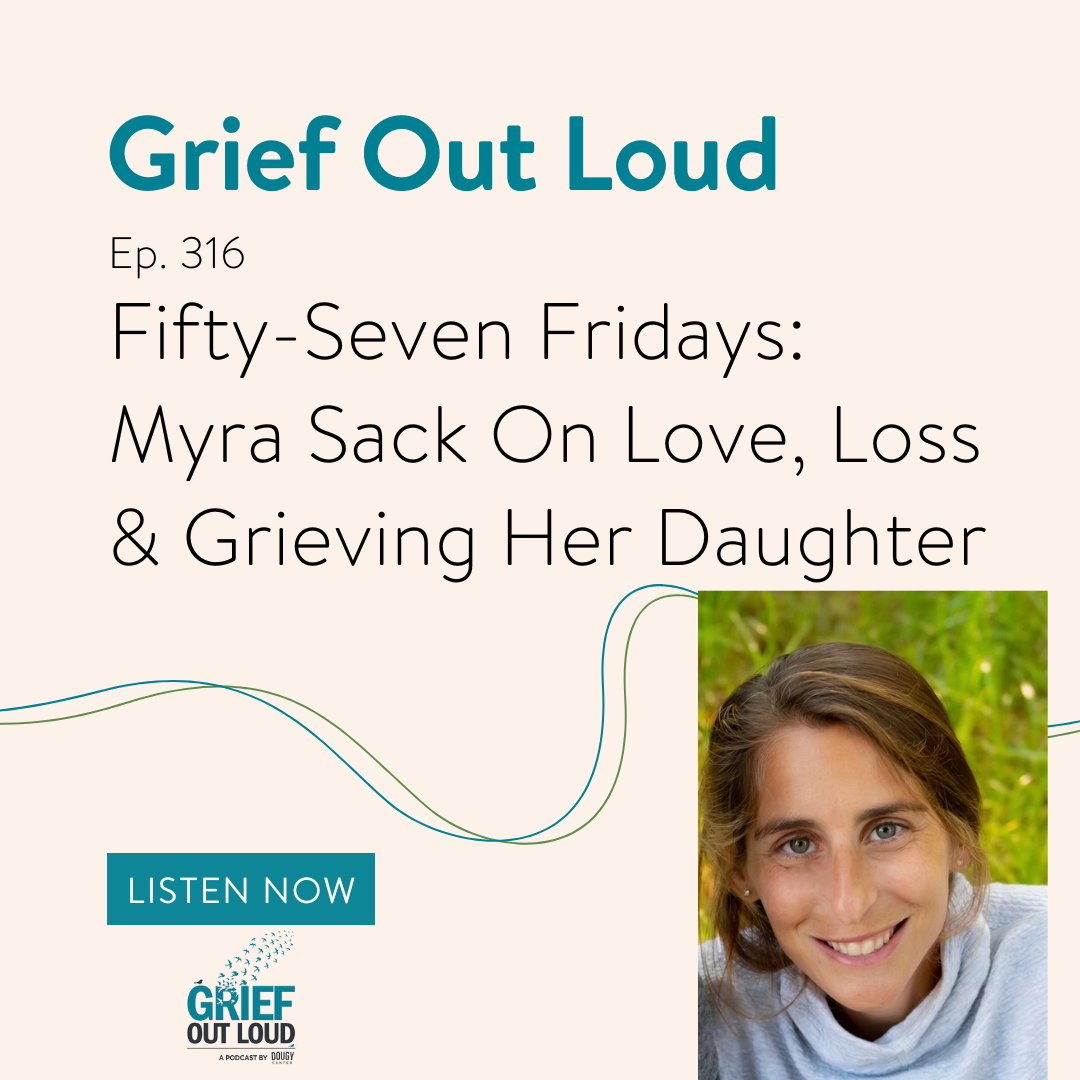
Ep 316Fifty-Seven Fridays: Myra Sack On Love, Loss & Grieving Her Daughter
In this deeply moving episode we talked with Myra Sack about the love, loss, and legacy of her daughter, Havi. Diagnosed with Tay-Sachs disease at just 15 months old, Havi's life was brief but profoundly impactful. Myra shares how she and her family navigated the unbearable reality of their daughter's illness and death, including transforming their Shabbat ritual into "Shabbirthdays" held every Friday to celebrate Havi's life. Myra reflects on the arduous medical rollercoaster that led to Havi's Tay-Sachs diagnosis, the challenges of navigating a world that struggles to support the bereaved, and how she and her family find solace in sharing Havi's legacy with others. She also discusses her memoir, Fifty-Seven Fridays, and how she started E-Motion, Inc. an organization that harnesses movement, community, and ritual to support those who are grieving. We discuss: The ongoing presence of grief, particularly during milestone moments and everyday life. How Myra and her husband Matt created the Shabbirthday ritual to honor Havi each week. How Havi continues to teach others even after her death. The impact of isolation for grieving families and the struggle of navigating social norms post-diagnosis. Finding ways to stay connected to Havi through rituals, storytelling, and shared memories. Myra's journey into grief education and the founding of E-Motion, which supports people who are grieving through movement and community. The need for more grief-informed communities. Resources & Links: Fifty-Seven Fridays by Myra Sack E-Motion What Happened to You? By Bruce D. Perry & Oprah Winfrey Connect With Us: Have thoughts on this episode? We'd love to hear from you! Email us at [email protected] or visit our website for more resources and past episodes.
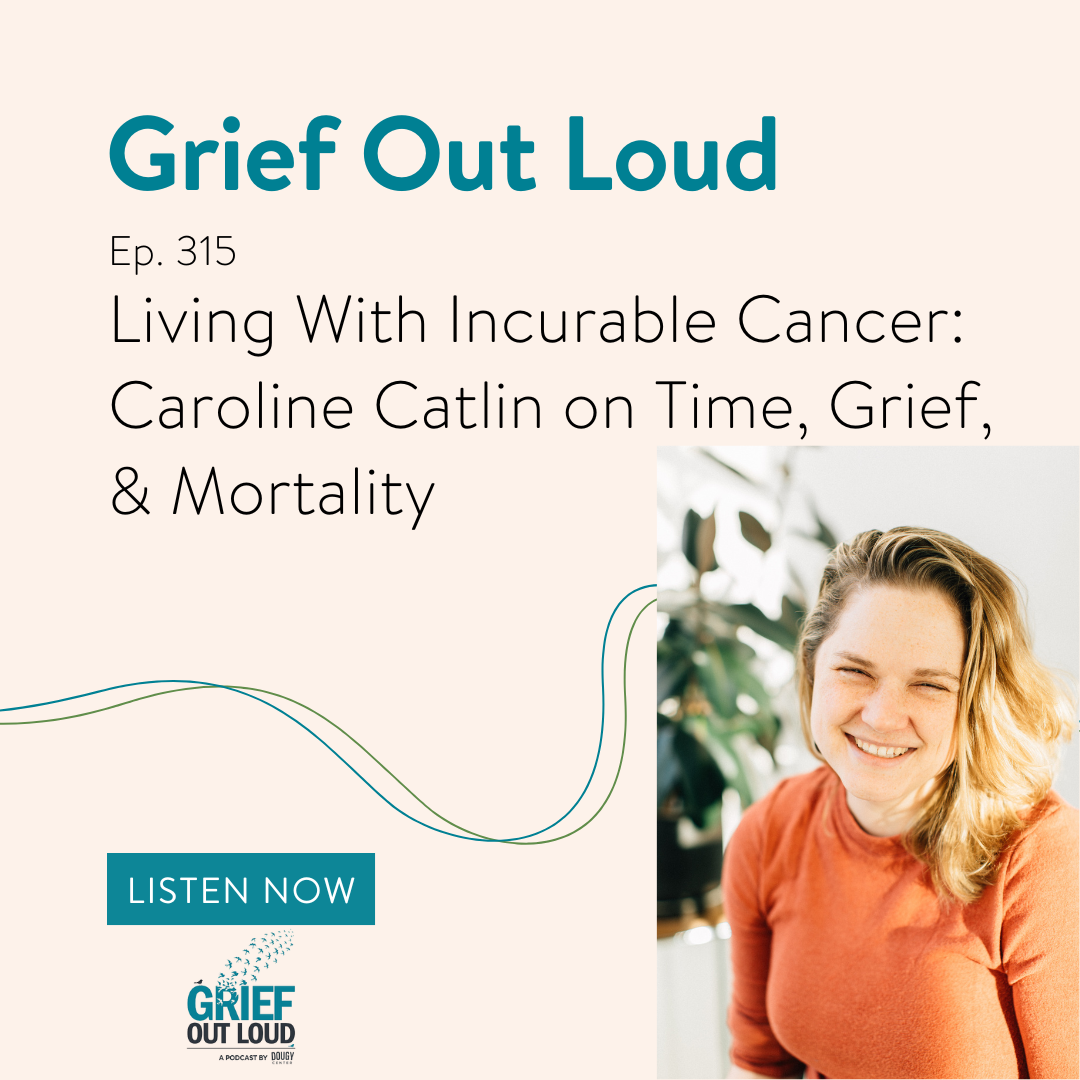
Ep 315Living With Incurable Cancer: Caroline Catlin On Time, Grief, & Mortality
What does it mean to live with an incurable illness while navigating grief, time, and the complexity of human connection? In this episode of Grief Out Loud, we sit down with Caroline Catlin—writer, artist, and grief care worker—to explore her experience of living with an incurable brain cancer diagnosis. Caroline shares how her relationship with cancer has evolved over the past six years, from the early days of fighting for a diagnosis to the ongoing reality of regular scans and the uncertainty of what's next. She speaks candidly about anticipatory grief, the way mortality shapes her daily life, and how her work in end-of-life photography and peer grief support informs her perspective on loss. We also discuss: The impact of a life-altering diagnosis on friendships and relationships How people can better support those living with illness The intersection of living with illness and supporting grieving children The unique grief of knowing time is limited—and learning to live within it Caroline also shares about her grief writing workshops, her creative process, and how gardening has become a grounding practice for her. Connect with Caroline: Website: carolinecatlin.com Instagram: @mybodyofwater Grief writing workshops: Sliding scale, open to all For more resources and to connect with Grief Out Loud, visit Dougy Center.

Ep 314What Now? Carla Fernandez & Renegade Grief
In this episode of Grief Out Loud, we welcome back Carla Fernandez, co-founder of The Dinner Party, to talk about her new book, Renegade Grief, in which she explores the question: "Now what? What are we supposed to do after someone dies?" Carla reflects on the death of her father, the unconventional paths she's taken to process her grief, and how The Dinner Party came together from a desire to create non-traditional spaces for young adults navigating loss. In this conversation we delve into the dominant narratives around grief — and how the few that do exist may not fit for most of us. From potluck meals to altar building, Carla shares creative ways people can honor their grief and build community at the same time. We discuss: The inspiration behind Renegade Grief and why Carla wished this book existed when her dad died. How traditional grief support spaces often don't work for young adults. The origin story of The Dinner Party, and how one dinner with friends who "get it" can change everything. Why food, memory, and grief are so deeply intertwined. The myth that grief gets "easier after the first year" — and why year two can be even harder. Grief rituals and care practices for both early grief and the long haul. Creating identity-based grief spaces, like LGBTQ+ and BIPOC tables, and why specificity matters in grief support. Finding joy, creativity, and unexpected connection through grief (without forced positivity). Carla Fernandez is the co-founder of The Dinner Party, a community-driven organization that brings together grieving young adults for potluck dinners and meaningful conversations about life after loss. Her new book, Renegade Grief, is a practical and heartfelt guide to building personal rituals and support networks that meet you where you are — not where society says you should be. Resources Mentioned: Renegade Grief (out March 11, 2025) The Dinner Party - Peer grief support for 20 to 45 year-olds The Grieving Brain by Mary-Frances O'Connor The Smell of Rain on Dust by Martín Prechtel The Death of My Two Fathers - Documentary by Sol Guy Connect With Us: Dougy Center Website: dougy.org Email the Show: [email protected] Listen to All Episodes: Grief Out Loud Podcast Follow us on Instagram and Facebook
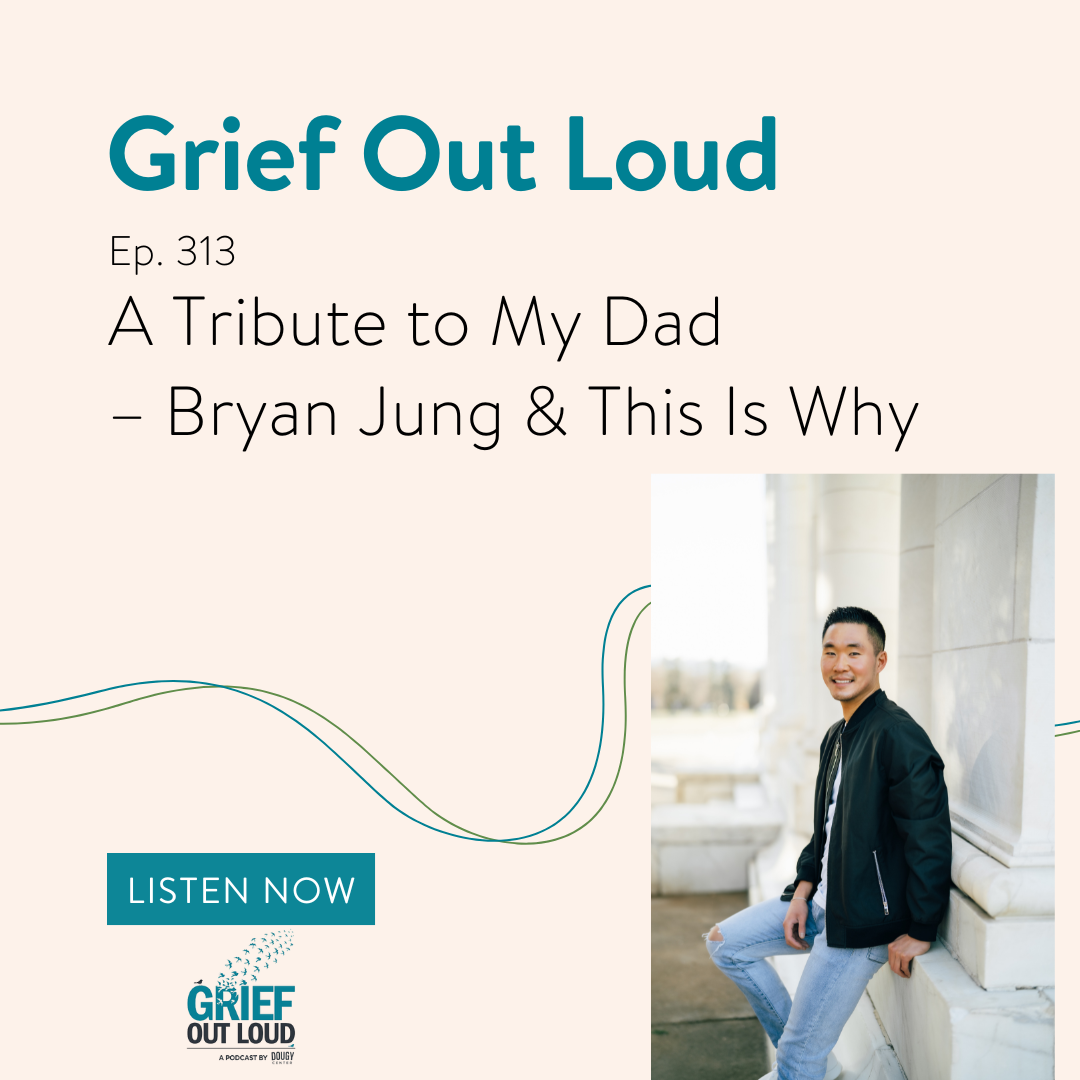
Ep 313A Tribute To My Dad - Bryan Jung & This Is Why
In this episode Bryan Jung talks about the experience of being only nine years old when his father, a prominent lawyer in the Korean community, was tragically shot by another lawyer. Fifteen months later and just nine days before Bryan's 11th birthday, his father died. Bryan reflects on the impact of his father's death, the strength of his family, and how he continues to honor his dad's legacy. He shares how his grief evolved over time, the role of community support, and the lessons he's carried into his own life. Bryan also discusses founding This Is Why, an online platform that provides space for individuals who lost a parent as a child or teen to share their stories and find connection. We Discuss: Bryan's memories of his father and the impact of his death on their family Navigating life after his father's shooting and the challenges of childhood grief The role of community support and the strength of his mother in keeping the family together How volunteering at Camp Erin deepened his understanding of grief and inspired him to create This Is Why The power of storytelling in grief and his commitment to continuing his father's legacy Forgiveness and personal growth in the aftermath of tragedy How grief anniversaries and milestones continue to shape his journey Resources & Links: Learn more about This Is Why: thisiswhy.life Connect with This Is Why on social media Information on Camp Erin: elunanetwork.org Dougy Center: dougy.org Join the Conversation: We'd love to hear from you! If you have thoughts on this episode or want to share your own grief journey, email us at [email protected].

Ep 312How Many Siblings Do You Have? Navigating Sibling Loss with Judy Lipson
In this episode, we talk with Judy Lipson, author of A Celebration of Sisters. Judy shares her journey of sibling loss, reflecting on the deaths of her sisters—Margie, who died of anorexia, and Jane, who died in a car crash—and how their absence shaped her identity. She opens up about the complexities of sibling grief, the impact of Margie's long battle with an eating disorder, and the moment when the grief she had pushed aside for so long finally caught up with her. Through writing, ice skating, and organizing a fundraiser in their honor, Judy found ways to reconnect with her sisters and keep their memory alive. She also discusses the evolving landscape of sibling grief support and how sharing her story has helped others navigate their own losses. We Discuss: Growing up as the middle of three sisters The shock of losing Jane when Judy was 25, and then Margie nine years later The challenges of grieving while balancing responsibilities How ice skating and philanthropy became outlets for her grief The changing landscape of sibling grief support What she's most proud of in her grief process Resources & Links: Judy Lipson's Website: judylipson.org Subscribe to Judy's Substack: judylipson.com Book: A Celebration of Sisters – Available on Amazon and local bookstores Dougy Center Resources: dougy.org

Ep 311When Grief & Betrayal Collide: Jessica Waite's Story
When Jessica Waite's husband, Sean, died suddenly, she knew him as a dedicated father to their young son and a loving, engaged spouse. In her book, The Widow's Guide to Dead Bastards, Jessica reveals the shock and heartbreak of discovering Sean's double life. What began as a devastating loss quickly became even more complex as she uncovered the many secrets he had kept—hidden debt, drug use, and infidelity. Jessica talks about the rage, confusion, and emotional turmoil of grieving someone you love while simultaneously reckoning with the truth of who they really were. She reflects on anger as a catalyst for change, what she learned about parenting her son through his grief, and how ultimately she found a way back to herself. We disuss: The shock of uncovering a Sean's secrets after his death The role of anger in grief Navigating single parenthood while managing the weight of betrayal The complexity of holding both love and hurt for Sean The social pressures to maintain the image of someone who has died How humor and writing helped Jessica process her experience Resources & Links: Connect with Jessica Waite on Substack: The Widow's Guide To Purchase The Widow's Guide to Dead Bastards online Learn more about grief support at Dougy Center Support Grief Out Loud: Grief Out Loud is produced by the Dougy Center, the National Grief Center for Children and Families. This podcast is sponsored in part by the Chester Stephan Endowment Fund. For more grief resources, visit dougy.org. Join the Conversation: Have thoughts on this episode? Email us at [email protected]. Thank you for being part of our community!

Ep 310Were You Close? Always A Sibling With Annie Sklaver Orenstein
EIn this episode we talk with Annie Sklaver Orenstein, author of Always A Sibling: The Forgotten Mourners. Annie talks about her older brother, Ben, who died when he was deployed in Afghanistan, and how his sudden death reshaped her understanding of grief and loss. They discuss the unique challenges of sibling loss and how Annie ultimately decided to write the book she wished she had when Ben died. We Discuss: Annie's relationship with her brother Ben and his role in her life The day Annie learned of Ben's death and the immediate aftermath How grief intersected with anxiety The unique and often overlooked experience of grieving a sibling Writing Always A Sibling and the need for more grief resources for siblings The complexities of sibling grief in complicated relationships The impact of signs from Ben and how Annie learned to find comfort in them Navigating the question, "Were you close?" Coping with grief while navigating major life milestones, such as becoming a parent Resources Mentioned: Annie Sklaver Orenstein's book: Always A Sibling: The Forgotten Mourners (Available on Amazon, Bookshop.org, and local bookstores) Dougy Center's grief resources and support programs (www.dougy.org) Connect with Annie Sklaver Orenstein: Instagram: @anniesklaverorenstein Get in Touch with Us: Email: [email protected] Website: www.dougy.org Want to Support the Show? Follow us on Apple Podcasts, Spotify, or wherever you listen Leave us a rating & review

Ep 309What Remains: Rupert Callender on Grief, Rituals, and Redefining Funerals
In this episode, we talk with Ru Callender, author of What Remains: Life, Death, and the Human Art of Undertaking. Ru shares his personal experience with profound childhood loss to becoming a self-proclaimed radical undertaker. We also discuss the impact of grief at different life stages, how participation in funerals can be helpful for children, and reimagining rituals to accurately reflect the life of the person who died. Main topics: Parental Loss and Early Grief: Ru reflects on the loss of his father at age 7 and his mother in his 20s, sharing how these defining losses shaped his perspective on death and grief. Boarding School and Emotional Austerity: The impact of being sent away shortly after his father's death. Becoming a Radical Undertaker: After a chance encounter with a TV program, Ru was inspired to challenge conventional funeral practices and embrace more personal, inclusive rituals. Children and Grief: Why including children in funerals can be helpful, offering them tangible ways to process and revisit their grief. Radical Funeral Planning: Ru's vision for end-of-life ceremonies, including his own desire for a midsummer funeral pyre, and how he helps families create ceremonies that resonate deeply. The Role of Grief in Life: How grief manifests and resurfaces, and the creative ways Ru has processed his own grief through rituals and art. Resources Mentioned: What Remains: Life, Death, and the Human Art of Undertaking by Ru Callender Dougy Center's grief support resources: www.dougy.org Join the Conversation: Have thoughts about this episode? Email Jana at [email protected] or connect with Dougy Center on social media. Don't forget to rate and review the show on Apple Podcasts or Spotify to share what it means to you.
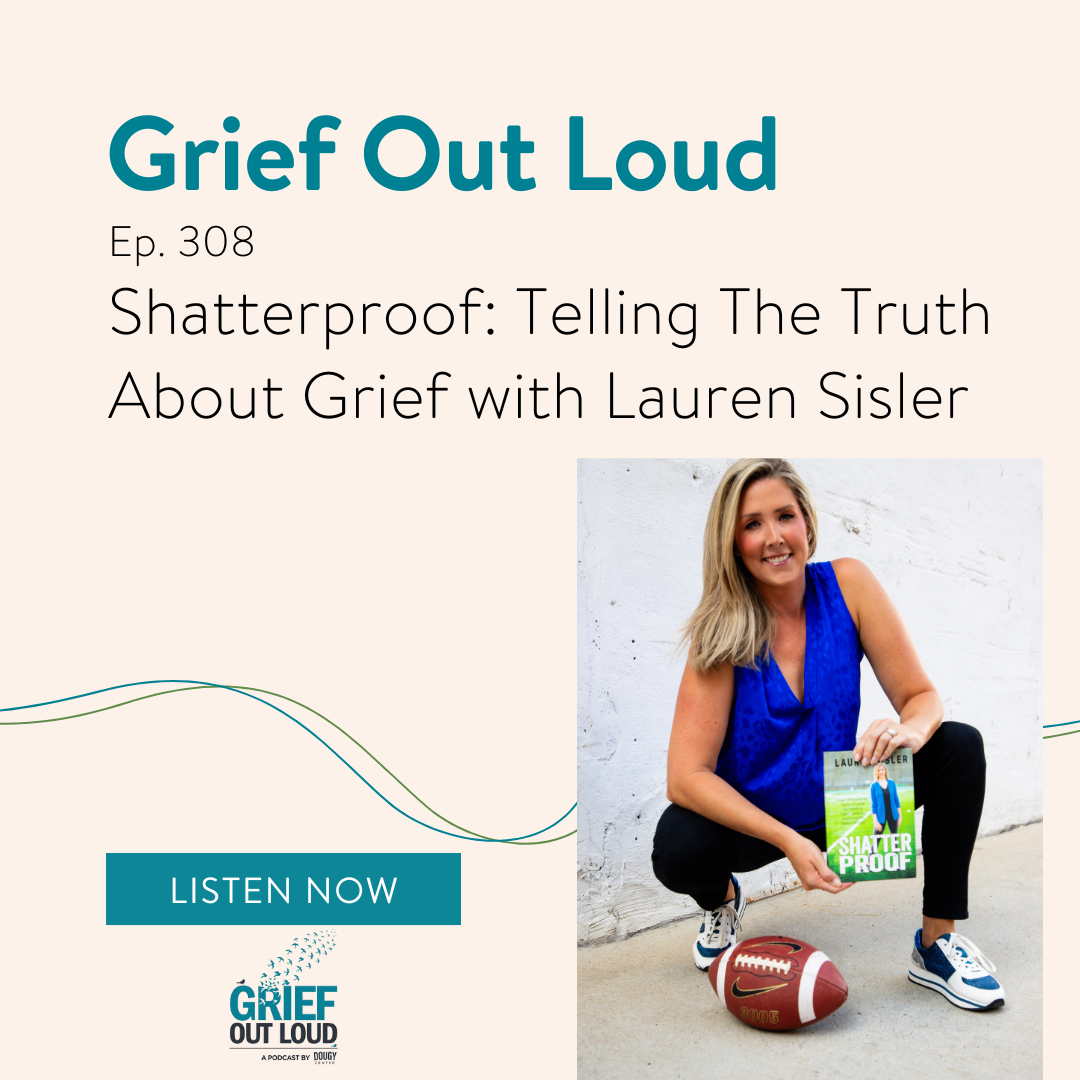
Ep 308Shatterproof: Telling The Truth About Grief with Lauren Sisler
Grief can be shattering - and it can also reveal unexpected strength and resilience. In this episode, we're joined by Lauren Sisler, award-winning sports broadcaster, ESPN Sideline reporter, and author of Shatterproof: How I Overcame the Shame of Losing My Parents to Opioid Addiction (and Found my Sideline Shimmy). Lauren shares her powerful story of losing her parents, who died within hours of each other during her freshman year of college, and how grief, fear, and shame, kept her from telling her story. Lauren discusses: The initial shock of loss. How grief evolved for her over the years and the tools that helped. The power of sharing her story and connecting with others who've experienced loss. Insights from her book Shatterproof, including ways she's found to stay connected to her parents. Follow Lauren on IG. Thanks for Listening! If you found this episode meaningful, consider leaving a review or sharing it with someone who might benefit from it. Let's keep the conversation about grief going.
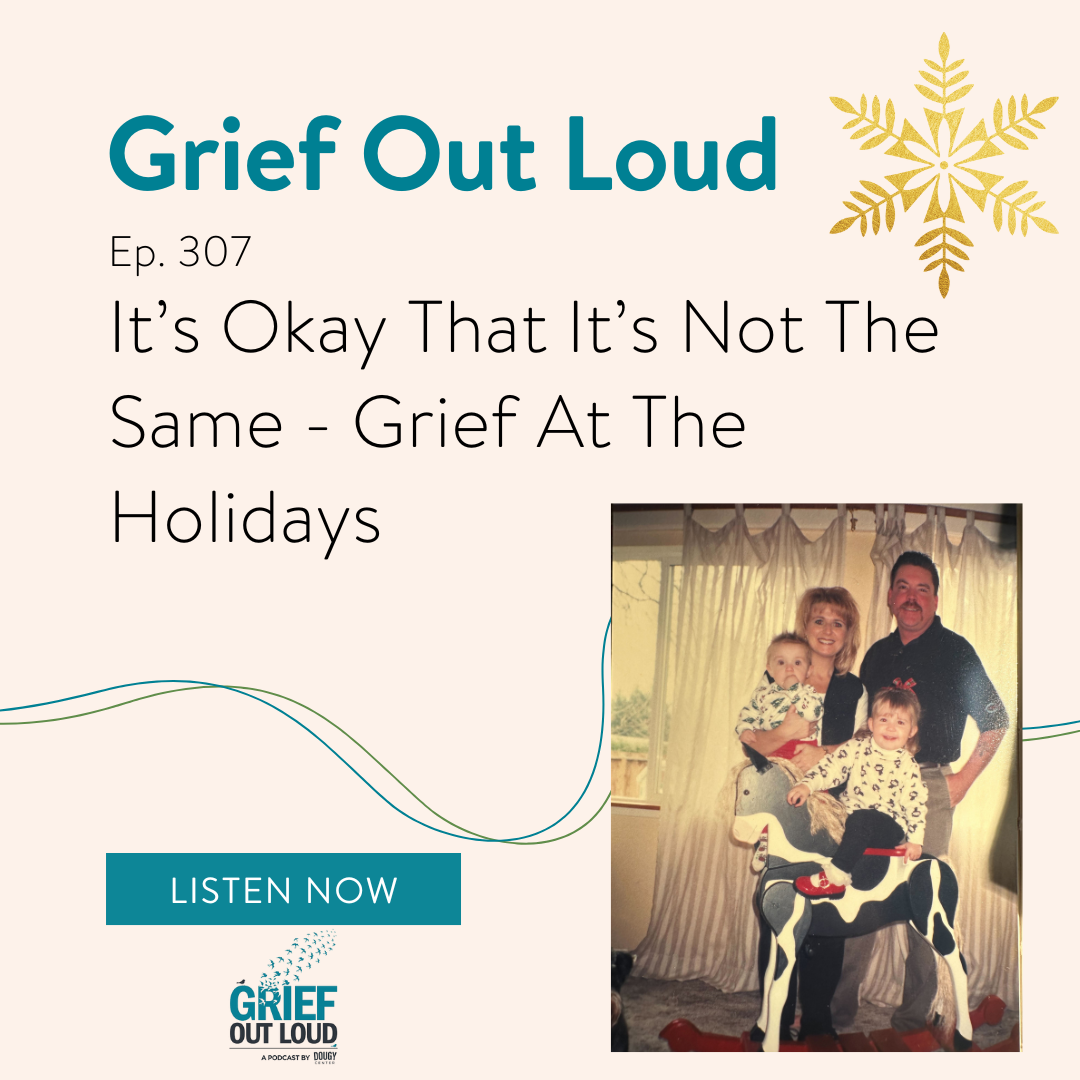
Ep 307It's Okay That It's Not The Same - Grief At The Holidays
[This episode originally aired December, 2023] This time of year can be grueling for anyone, but particularly for those who are grieving. So, each year we put out an episode to help you feel less alone and hopefully more equipped to traverse the next few weeks. Today's guest, Melissa Peede Thompson, M.S., is a Grief Services Coordinator at Dougy Center. While she has lots of professional knowledge in this realm, we asked her to talk about her personal experience of grieving during the holidays. Melissa was six when her sister died of gun violence. She was 13 when her father died in a motorcycle accident. And she was a young adult when her grandparents died. Each loss shaped - and continues to shape - how Melissa and her family approach this time of year. We discuss: How her sister's death impacted her parents at the holidays What she remembers about the first Christmas after her dad died Grieving for her her grandparents before they died How the holidays can feel empty, even when the house is full Melissa's realization that grief has left her a little bit "Grinchy" What she's doing to shift how she thinks and feels about the holidays Learning to appreciate being able to spend time with the people who are still alive Why St. Patrick's Day became her favorite holiday Taking the pressure off trying to make the holidays feel the same after someone dies If you missed our past Holidays & Grief episodes, be sure to listen to Ep. 27, 98, 174, 240. And our latest one, 306. Tips For Getting Through the Holidays & Holiday Plan Worksheet.
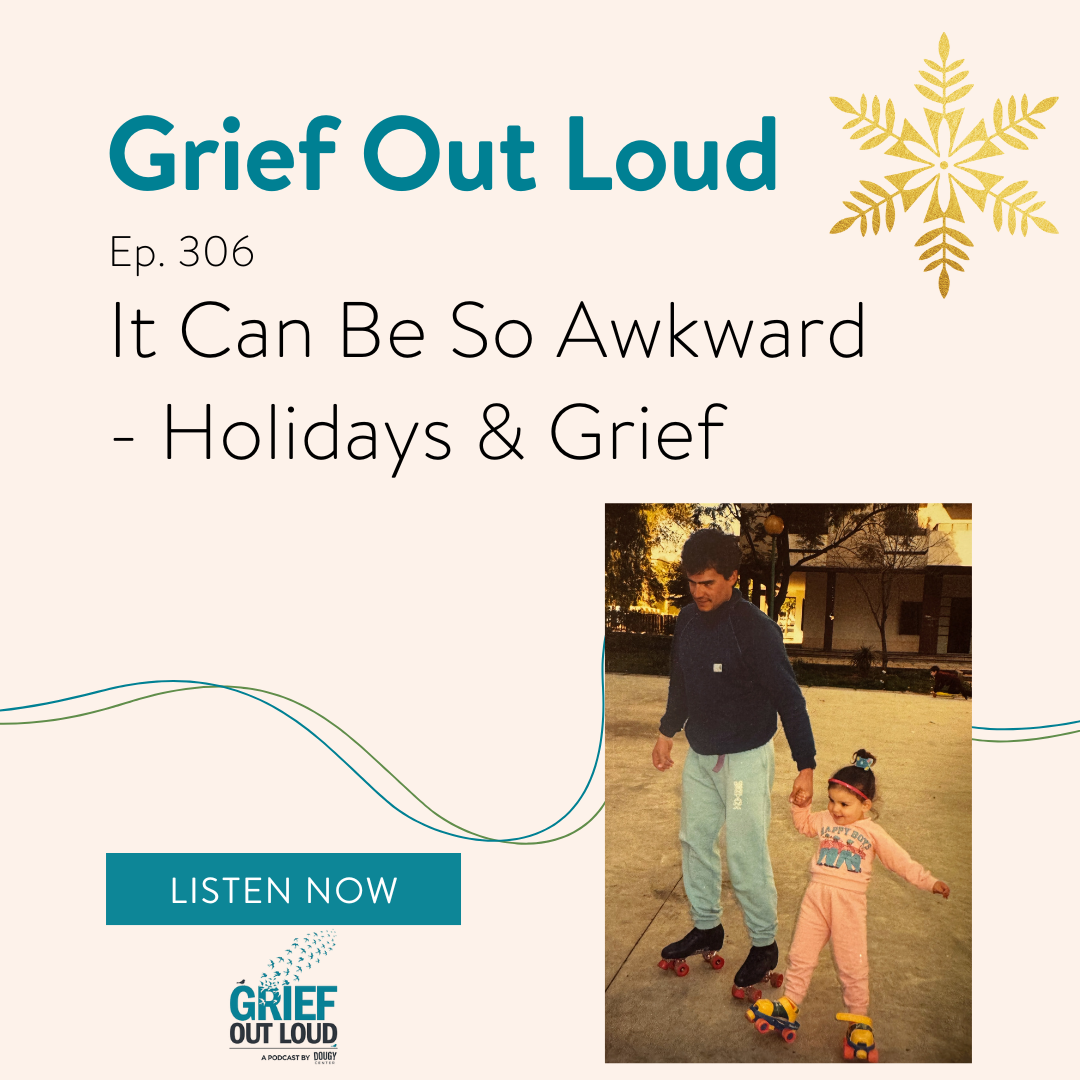
Ep 306It Can Be So Awkward - Holidays & Grief
It's our annual holidays and grief episode! In the past we've focused on more tangible tips and suggestions for supporting kids, teens, and adults during this time of year. This year we decided to focus on one person's lived experience with how the holidays can get really awkward when grief is involved. Ana Salazar-Walsh was just nineteen when her father died in a mountain climbing accident. A few months later, it was the first holiday season after his death, but it was actually the third Christmas in a row shadowed by grief. Two years earlier, her father left their family to start a new one with a woman he had fallen in love with. All of this, combined with moving from Spain to the United States for college, made for three very uncomfortable and awkward holiday seasons. Now that Ana is married with her own children, she's finding ways to bring her father's memory into their holiday celebrations. Looking for our past episodes about the holidays & grief? Check out: Ep. 272 It's Okay That It's Not The Same – Grief At The Holidays Ep. 240 The [Not] Most Wonderful Time Of The Year – Holidays & Grief Mini-Episode Ep. 98 Under Pressure – Grief & December Holidays
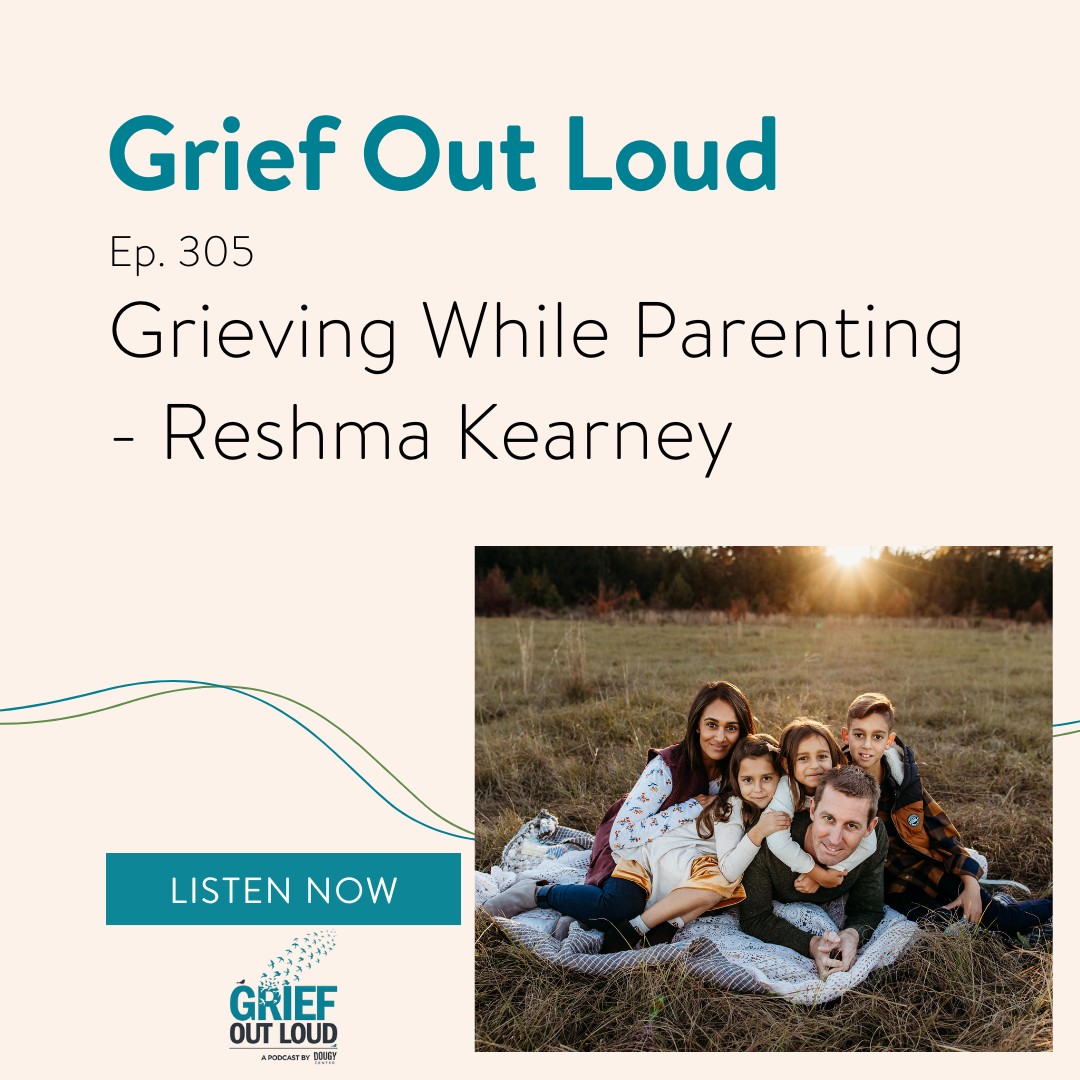
Ep 305Grieving While Parenting - Reshma Kearney
When Reshma Kearney's husband Sean died of suicide, her immediate concern was their three young children. She needed to figure out how to talk to them about his death - and his life - all while meeting their emotional and physical needs. Pretty quickly she realized her needs also had to be met so she could keep showing up for them. Reshma and her kids had an established mindfulness practice before Sean's death and those practices became integral for tending to their grief and finding ways to keep engaging with life. Note: this episode discusses suicide. If you or someone you know is struggling, please reach out. You can call 988 or text HELLO to 741-741. Connect with Reshma on IG. Listen to her kids on Ep. 303: Let's Hear It For The Kids - Grief In Their Own Words.
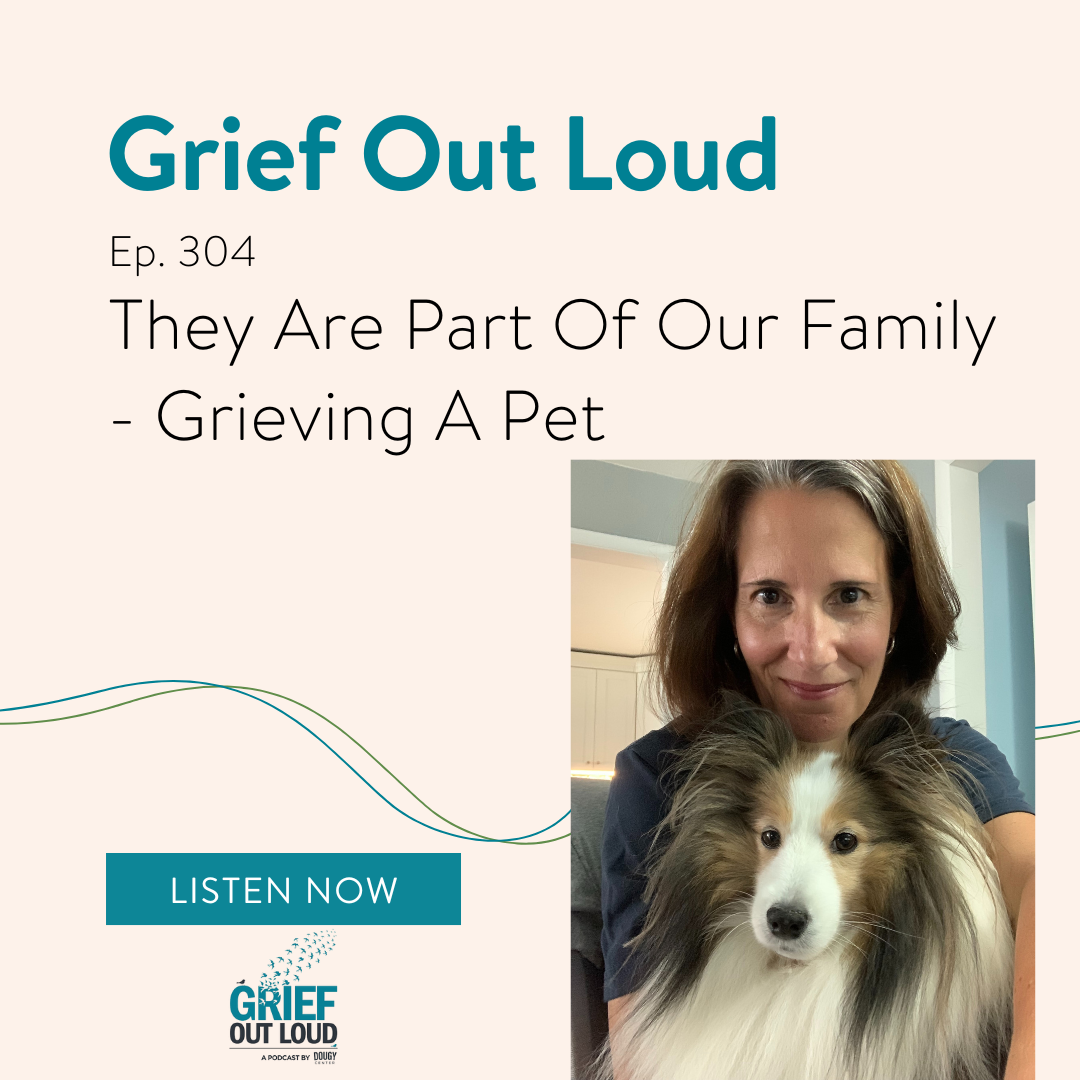
Ep 304They Are Part Of Our Family - Grieving A Pet
In May of 2024, Christine Passo's beloved dog, Maya Ray, took her last breath in Christine's arms. This wasn't the first time Christine experienced loss or trauma, but the grief she felt and continues to feel for Maya Ray caught her off guard with its intensity and depth. We talk about Maya Ray's last day, how Christine's other dog, Zoe, grieved, and how Christine and her partner are finding ways to continue honoring Maya Ray's life and her place in their family. Christine Passo is a coach who specializes in supporting women through life changes, many of which come with grief. She is also the co-author of My Fur Baby Wrote This Book and host of the Unconscious Evolution podcast. Be sure to check out our previous episode on grieving for a pet - Ep. 238 "These Relationships Matter."

Ep 303Let's Hear It For The Kids - Grief In Their Own Words
In honor of Children's Grief Awareness month, we asked kids and teens to talk about grief in their own words. This compilation episode includes clips from children and teens reflecting on their people who died, their varied responses to loss, and what they hope grief will feel like in future. Thank you to all the children and teens who contributed to this episode - and to their parents and caregivers for facilitating the recording process. Want to learn more? Register now for Too Young To Grieve? Dougy Center's Children's Grief Awareness Day webinar. Thursday, November 21st, 2024 - 10 - 11:30 am PST Be part of our #UnderstandGrief campaign Follow November's Flip The Script posts on social media
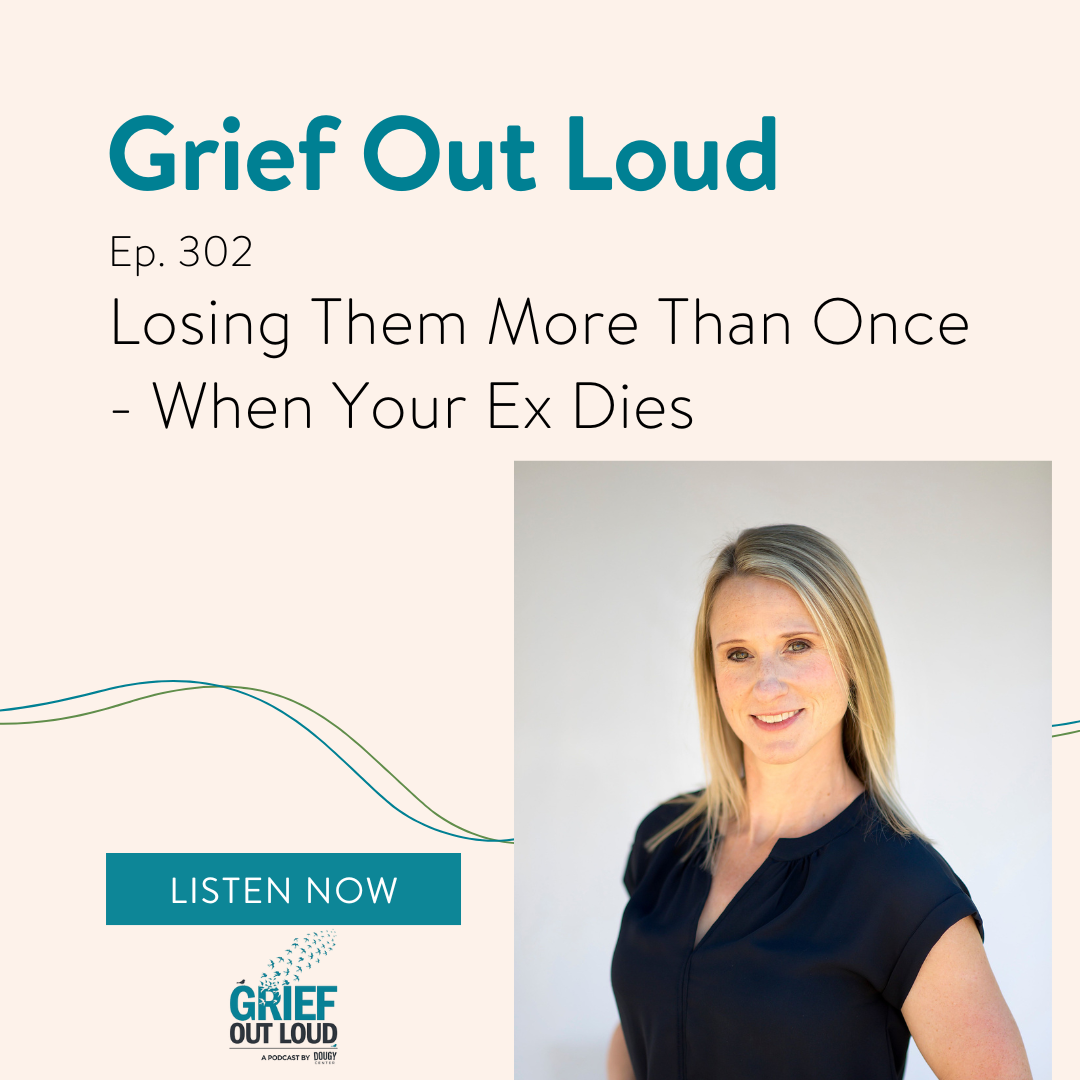
Ep 302Losing Them More Than Once - When Your Ex Dies
ENo one is perfect and no one is just one story, but how do you grieve when the person who died was so different than the person you fell in love with? When Jenn met and fell in love with Jesse, she never imagined their relationship would unravel due to his struggles with mental health and alcohol use disorder. Jesse died in 2020 and Jenn's been left to reconcile the man she loved with the one she eventually had to leave. His death also left her unsure where her grief fits in the world of bereavement and how to support their son, whose grief is complicated by the impact his father's illness had on their relationship. Dr. Jennifer Vriend is a Licensed Clinical Child & Adolescent Psychologist and co-host of The Coping Toolbox podcast.

Ep 301"We Never Talked About Her Again" - Susan Lieu & The Manicurist's Daughter
Susan Lieu, is a Vietnamese-American author, playwright, and performer. When Susan was 11 years old, her mother died from a routine plastic surgery. After she died, Susan's family stopped talking about her mother, leaving Susan on her own to figure out what happened and how to feel. Susan's debut memoir, The Manicurist's Daughter, recounts her quest to get to know her mother, avenge her death, and try with all her might to get her family to open up about it all. Susan is a compelling and accomplished storyteller, co-hosting The Model Minority Moms podcast and speaking at TEDx, the Smithsonian, and at universities and companies across the country. Her memoir is an Apple Book of the Month, most anticipated 2024 book by Elle Magazine and Goodreads, and has been featured on The New York Times, NPR Books, and The Washington Post. Read her press here. Follow Susan on IG @susanlieu

Ep 300Grieving The Relationship We Didn't Get To Have - Maegan Parker Brooks, PhD
It's our 300th episode and this conversation with Maegan Parker Brooks, PhD, is the perfect one to honor that milestone. Maegan is an Associate Professor at Willamette University and a volunteer at Dougy Center where she facilitates a peer grief support group for adult caregivers of teens who are grieving. Maegan is also a daughter and sister, grieving the deaths of her father, her sister Emily, and her mother. In this conversation we talk about grief and estranged relationships, relationships impacted by substance use, non-death losses, memorialization during the pandemic, and all the ways we talk to one another - and ourselves - about that grief. Maegan Parker Brooks, PhD is an Associate Professor and Chair of the Civic Communication & Media Department at Willamette University. At Willamette, Maegan teaches courses in Death and Grief Communication and facilitates the Diversity of Loss grief support group. Beyond Willamette, Maegan co-facilitates a group for adult caregivers of grieving teens at The Dougy Center and she recently earned a certificate in Arts-Assisted Grief Therapy at the Portland Institute for Loss & Transition. Related Articles: Brooks, Maegan P. "Listening to Grief." Willamette., 1 Feb. 2024, pp. 20-21. Brooks, Maegan P. "Listening to Layers of Loss." Journal of Autoethnography, 4, 2 (2023): 174-192. Want to help us celebrate our 300th episode? Be sure to follow the show and give us a rating/review on whatever platform you use to listen! Grief Out Loud® is a production of Dougy Center, The National Grief Center for Children & Families.

Ep 299Is This Normal? Getting To Know Grief With Kendra Rinaldi
Kendra Rinaldi knows a lot about grief. When she was just 21, her sister died in a car accident. Ten years later she had a miscarriage. Ten years after that, her mother died of cancer. Professionally, she is a grief guide and host of the Grief, Gratitude, and the Gray In Between podcast. But she didn't always get grief. When she was 21, she didn't realize that everything she was thinking, feeling, and experiencing after her sister's death counted as grief. In the years since, Kendra's gotten to know her grief well and uses that knowledge to support others. We discuss: The spectrum of losses Kendra's experienced Grieving her sister's death in a car accident Grieving a miscarriage Grieving her mother's death from pancreatic cancer What can be different between a sudden death vs. one from a long-term illness Discerning grief from depression Writing as a tool for navigating grief and staying connected to her sister How Kendra's sister's death shifted family dynamics Tri-lingual grieving - and why Spanglish is her favorite language for grief How grief is approached differently in the U.S. and Kendra's home country, Colombia The origin of the Grief, Gratitude, and the Gray In Between podcast The hardest aspect of doing a podcast about grief Kendra's recent sneaky grief attack Follow Kendra on IG @griefgratitudepodcast Want to help with our special Children's Grief Awareness Month episode? If you have a child or teen in your world who is grieving a death who would like to participate, you can record a voice memo of them responding to one or more of the following prompts and email it to [email protected] When my ____ died, I felt... When I'm missing them, ____ helps the most Today, my grief feels like... In the future, I hope my grief feels... Thank you for considering!
Ep 298Building A World Worth Living In - Trends In Suicide Prevention & Postvention
It might be better to ask Canada Taylor what she doesn't do in the realm of suicide prevention, postvention, and grief support rather than what she does because she seems to do just about everything and anything. This is part two of our conversation with her, so if you missed the first, Ep. 297: Honoring A Great Love, be sure to listen. In this episode, we talk about the holistic approach she takes to suicide prevention, intervention, and postvention. An approach that focuses on building a world worth living in. A world where youth - and people of any age - have their basic needs met and can access safety, community, and true belonging. We discuss: Some of the professional roles Canada holds What is different for grief professionals and educators when the topic of suicide arises The changing landscape of suicide prevention & postvention How systems and institutions can create barriers to more humane and effective interventions What we still don't know when it comes to suicide How stigma, shame, and isolation contribute to suicide - and the harm they cause for those left behind Risk factors for youth suicide, especially for BIPOC and LGBTQIA+ youth Protective factors like belonging, safety, and community Why cultural & community specific prevention & intervention strategies are necessary What the headlines get wrong about youth suicide The pockets of hope Canada's come across in the field Since 2005 Canada Taylor has worked in behavioral health care serving youth and adults, with a focus in deathcare and helping families navigate grief, loss, and trauma amidst crisis. Relational, restorative, and transformative approaches are key underpinnings to Canada's holistic, integrative philosophy to creating change and healing for all. Currently she is the Suicide Prevention Coordinator and Postvention Response Lead for the Multnomah County Health Department. Canada was honored with the Trillium Health Mental Health Hero award in 2021 and Multnomah County's Committee Choice Award in 2024 for her work in grief and suicide prevention. Grounding spaces in humor, authenticity, and vulnerability are essential to Canada's professional and personal life, and especially her work in suicide prevention. Organizations we reference: School Crisis Recovery & Renewal Network (SCRR) SAMSHA Black Youth Suicide Prevention Coalition National Suicide Prevention Month If you are someone you know is struggling, please reach out Suicide & Crisis Lifeline: 988 Trans Lifeline: 877.565.8860 YouthLine: 877.968.8491 BlackLine: 800.604.5841 LGBTQ National Hotline: 888.843.4564 The Trevor Project: 866.488.7386
Ep 297Honoring A Great Love - Canada Taylor
Twelve years ago today - August 30th - Canada Taylor was having an amazing night. She and her husband Rick were sitting outside, talking about life and work and dreams for the future - their future. Then everything changed. Rick had a medical event, and Canada became his first responder. Hours later, she became his widow. In the twelve years since, things continued to change. Canada's two sons grew up and grew into their grief. She changed the course of her career - moving from behavioral health to suicide prevention and grief justice. Throughout all these changes, Canada has found ways to honor who Rick was in this world and the love they share. We discuss: What Canada's husband saw in her that no one else did The last day they spent together Being a first responder for Rick & the trauma that brought Supporting her two children The challenge of finding culturally relevant grief support for her kids How difficult it was to find skilled support for herself A preview of how grief informs the work Canada does in the realm of suicide prevention & postvention How Canada plans to honor the anniversary of Rick's death this year Connect with Canada on IG @canadalauren and Linkedin
Ep 296My Long-Term Relationship With Grief - Barri Leiner Grant & The Memory Circle
When Barri Leiner Grant was 28, her mother Ellen died suddenly. Barri was hit with intense grief, but back then the expectation was to hurry up and get back to work and life. She didn't have the time, space, or tools to acknowledge and attend to grief. Over the past 31 years, Barri and her grief have gotten to know each other on a deep level. In this long-term relationship, she's learned that her grief gets louder each time she reaches a new milestone or faces a transition. Even with that knowing, the grief can still find ways to catch her off-guard. Recently, one of those times was watching her daughter turn the same age Barri was when her mother died. We discuss: How Barri's mom, Ellen, was a woman before her time The day her mother died and the last sounds she heard What the early days of grief felt like The untenable expectation to get back to "normal" Finding Hope Edelman's book, Motherless Daughters The grief tending tools Barri turned to over the past 31 years Her daughter turning the age Barri was when her mother died The newer grief of being a caregiver for her father who has dementia How The Memory Circle came to be and Barri's work as a grief coach One of Barri's favorite ways to engage with grief - writing Barri Leiner Grant is the founder and Chief Grief Officer™, of The Memory Circle for grief support--a place and space she created in 2019, for those learning to live with loss. She left a longtime career as a journalist and motherloss peer guide, to pursue full-time work and training as a Certified Grief Coach and Educator. Connect with Barri on Instagram and Substack.
Ep 294108 Ways To Survive Grief - Sweta Vikram
In May of 2023, Sweta Vikram was overwhelmed with grief. In the span of three days, her father died, her father-in-law died, and it was the 9-year anniversary of her mother's death. When she looked for information on how to survive the maelstrom of emotions, she found reassurances that she would eventually get to the other side, but nothing that showed her how to do that. So, Sweta set out to create the resource she was looking for and recently published, The Loss That Binds Us, a manual with 108 practical tips to survive and navigate grief. We discuss: The overwhelm of multiple losses Turning to writing for solace and support Lessons she learned from each of her parents The impact of sudden vs. expected death Becoming a protector & caregiver for her dad - and the comfort that brought after he died How grief shaped Sweta's values The meaning behind the number 108 across multiple cultures How she managed to finish her PhD in Ayurvedic Medicine so early in her grief Which of Sweta's tips are the easiest and hardest for her to follow Her relationship to forgiveness in the context of grief How she approaches the anniversary season Sweta's self-care practices Sweta Srivastava Vikram is an international speaker, author, and Ayurvedic Doctor who also teaches yoga and meditation.
Ep 293Embodied Practices For Tending Grief - Camille Sapara Barton
Camille Sapara Barton is a social imagineer who is reimagining how we define and relate to grief. As a writer, artist, and somatic practitioner, Camille is looking to create a new grief narrative expansive enough to include multiple forms of individual and collective grief, especially for queer, trans, and BIPOC communities. In Camille's book, Tending Grief, they offer rituals and embodied practices for feeling into and metabolizing grief. Camille's lived experience with grieving death & non-death losses Support for grief that falls outside the traditional box Grief as a generative process Camille's learning from Dagara spiritual traditions and Sobonfu Somé Collective grief that comes out of displacement, colonization, and threats to queer & trans people around the world How we numb our grief and the cost of doing so The narrative Camille is hoping to create around grief Examples of embodied practices to tend grief Be sure to check out Camille's new book, Tending Grief - Embodied Rituals for Holding Our Sorrow and Growing Cultures of Care in Community.
Ep 292Is There A Cure For Grief? - Cody Delistraty
Cody Delistraty is a journalist and he's also a son whose mother died of cancer. These two identities intersect in his new book, The Grief Cure, which chronicles his quest to find a way to eliminate the pain of grief. After exploring Laughter Therapy, silent meditation, Breakup Bootcamp, and other avenues for grief expression, Cody landed where so many others do: realizing the "cure" for grief is allowing it to exist, while still engaging with life. We discuss: Who Cody was when his mom died How he used to define "successful" grief The secondary losses connected to his mother's death How his relationship to the 5 Stages of Grief evolved over time The quest to "cure" grief and the options he explored Which grief memory Cody most wished he could erase How important community can be Learning to embrace both grief and an ongoing connection with his mother Cody Delistraty is a journalist and speechwriter in New York City. As a journalist, he has written stories, profiles and essays for The New York Times, The New Yorker and The Atlantic, among many others. He has served as culture editor at The Wall Street Journal's magazine and as features editor of the Paris-based magazine Mastermind.
Ep 291The Ripple Effect Of Loss In Portland's Black Community - Sharice Burnett, LCSW
It's impossible to speak for an entire community, especially when it comes to grief, but Sharice Burnett, LCSW, knows a lot about the ripple effect of loss in the Black and African American community in Portland, OR. Born and raised in the community, Sharice is a clinical mental health therapist and consultant dedicated to naming and dismantling the larger systemic barriers that stand in the way of Black children and families having access to culturally relevant support, particularly mental health and grief support. We discuss: Grieving the loss of an entire generation of elders during the Covid-19 pandemic The grief and displacement from the Vanport Flood of 1948 The cultural nuances of grief Historic, intergenerational, and collective grief The unacknowledged grief of racism How each death & loss ripples out to the larger Black/African American Portland community How safety from racial harm is critical to accessing grief support services Sharice's hopes and dreams for creating more culturally relevant grief support Creative grief support & healing spaces for Portland's Black community (Black Rose Wellness) This episode is the third and final in our 2024 three-part series highlighting the voices of communities who have historically been underrepresented in the grief world. The series is part of an ongoing collaboration between Dougy Center and The New York Life Foundation. We are deeply grateful for New York Life Foundation's tireless support and advocacy for children and teens who are grieving.

Ep 290How To Stop Shoulding Yourself - Lisa Keefauver & Grief Is A Sneaky Bitch
ELisa Keefauver is a lot of things - she's a writer, speaker, educator, social worker, podcast host, mother, widow, and grief activist. She came to the last two titles when her personal experience of grieving for her husband Eric, who died of a brain tumor in 2011, intersected with her professional life as a clinician. At this intersection, Lisa realized just how grief illiterate the world is and how that illiteracy creates unnecessary suffering for those who are grieving. Lisa hosts the acclaimed podcast, Grief is a Sneaky Bitch and recently published her book, Grief is a Sneaky Bitch: An Uncensored Guide to Navigating Loss. We discuss: The gift of love from her husband Eric Living in the both/and of grief and life Being a mental health professional while grieving Navigating a breast cancer diagnosis in a medical system that failed her husband How we bring our full history into each new loss The "shoulds" that hassled Lisa The grief time warp Grief thieves - including the one in the mirror Lisa's go-to skill in her own grief The power of observation & being with grief as it is Lisa Keefauver is a grief activist, speaker and author. She began her career as a social worker and narrative therapist in 2004. She expanded her activism in a variety of roles: clinical director, non-profit co-founder, clinical supervisor, facilitator of personal and professional growth and healing, and mentor. Lisa's wisdom and insights on grief are also embodied from her personal losses, including the death of her husband Eric in 2011.
Ep 289Autism & Grief
The Autism & Grief Project is a new online platform designed to help adults with autism navigate and cope with the complexities of grief arising from both death and non-death losses. Alex LaMorie, A.A.S is a member of the project's Advisory Board and brings his lived experience with both autism and grief to this work. Dr. Kenneth J. Doka, PhD, MDiv, brings years of both professional and personal grief knowledge to his role on the project's Development Team. The Autism & Grief Project is unique - just as grief and autism are unique - and the site provides information not only for adults with autism who are grieving, but also the people who are supporting them. We discuss: Parallels between the uniqueness of grief and the individual experience of autism What Alex found to be helpul and unhelpful in his grief Being open to different forms of communication and emotional expression Learning to ask for help The goals for the Autism & Grief Project What Alex and Dr. Doka learned from being part of the project Alex D. LaMorie, A.A.S is an undergraduate student at the University of Maryland Global Campus and autism advocate. Alex's expressive grief artwork was recently featured in the textbook Superhero Grief: The Transformative Power of Loss (2021, Routledge). He serves as an advisor on the Hospice Foundation of America's Autism & Grief Project. In his spare time, he loves movies and TV shows as well as traveling to Comic Con and Anime conventions with his older sister. Alex also loves creative writing and spending time with his New York family so he can eat the world's best pizza and bagels! Kenneth J. Doka, PhD, MDiv, is Senior Vice President of Grief Programs at Hospice Foundation of America (HFA) and recipient of the 2019 Lifetime Achievement Award from the Association for Death Education and Counseling. He serves as editor of HFA's Living with Grief® book series and its Journeys bereavement newsletter. He is a prolific author, editor, and lecturer; past president of the Association for Death Education and Counseling (ADEC); and a member and past chair of the International Work Group on Death, Dying, and Bereavement (IWG). In 2018, the IWG presented Doka with the Herman Feifel Award for outstanding achievement in thanatology. He received an award for Outstanding Contributions in the Field of Death Education from ADEC in 1998. Doka is an ordained Lutheran minister and a licensed mental health counselor in the state of New York. This episode is the second in our 2024 three-part series highlighting the voices of communities who have historically been underrepresented in the grief world. The series is part of an ongoing collaboration between Dougy Center and The New York Life Foundation. We are deeply grateful for New York Life Foundation's tireless support and advocacy for children and teens who are grieving.
Ep 288The Intimacy Of Friendship - Lissa Soep & Other People's Words
Have you ever heard someone's voice in your head and suddenly you're transported to a time and place when you were with them? This phenomenon is what Lissa Soep explores in Other People's Words: Friendship, Loss, and the Conversations That Never End, her book about the intimacy of friendship and how words and language keep people with us, even after they die. After the deaths of her friends, Jonnie and Christine, Lissa found comfort in this idea of them living on through their words. We discuss: Lissa's friendships with Jonnie & Christine Grieving a sudden death vs one from a long-term illness The unique nature of friendships formed in our 20's How Jonnie & Christine's come back to Lissa through their words The Russian critic Mikhail Bahktain's concept of double voicing What Lissa's learned about how to support others who are grieving Lissa Soep is a senior editor for audio at Vox Media and special projects producer and senior scholar-in-residence at YR Media. She has a PhD from Stanford, where she first started writing about Bakhtin.

Ep 287Changing The Landscape Of Grief Support For Latino Families
Cristina Chipriano, LCSW, Dougy Center's Director of Equity & Community Outreach and Melinda Avila, MSW, CEO of OYEN Emotional Wellness Center, are committed to changing the landscape of grief support for Latino families. They bring personal and professional grief experiences to the work of ensuring that every Latino family has access to dual language grief support that honors their cultural values. We discuss: Cristina & Melinda's personal connection to this work Why it's important now, in 2024, to have this conversation What is unique about grief & grief support in the Latino community The concept of family in the Latino community How grief challenges our sense of self and identity The ways people have been taught to suffer in silence How culture informs grief and grief informs culture Why it's critical for services to be truly bilingual The barriers to accessing services The first thing service providers should be thinking about when meeting with a Latino family Cristina & Melinda's hopes for the future of grief support for Latino families This episode is the first in our 2024 three-part series highlighting the voices of communities who have historically been underrepresented in the grief world. The series is part of an ongoing collaboration between Dougy Center and The New York Life Foundation. We are deeply grateful for New York Life Foundation's tireless support and advocacy for children and teens who are grieving.
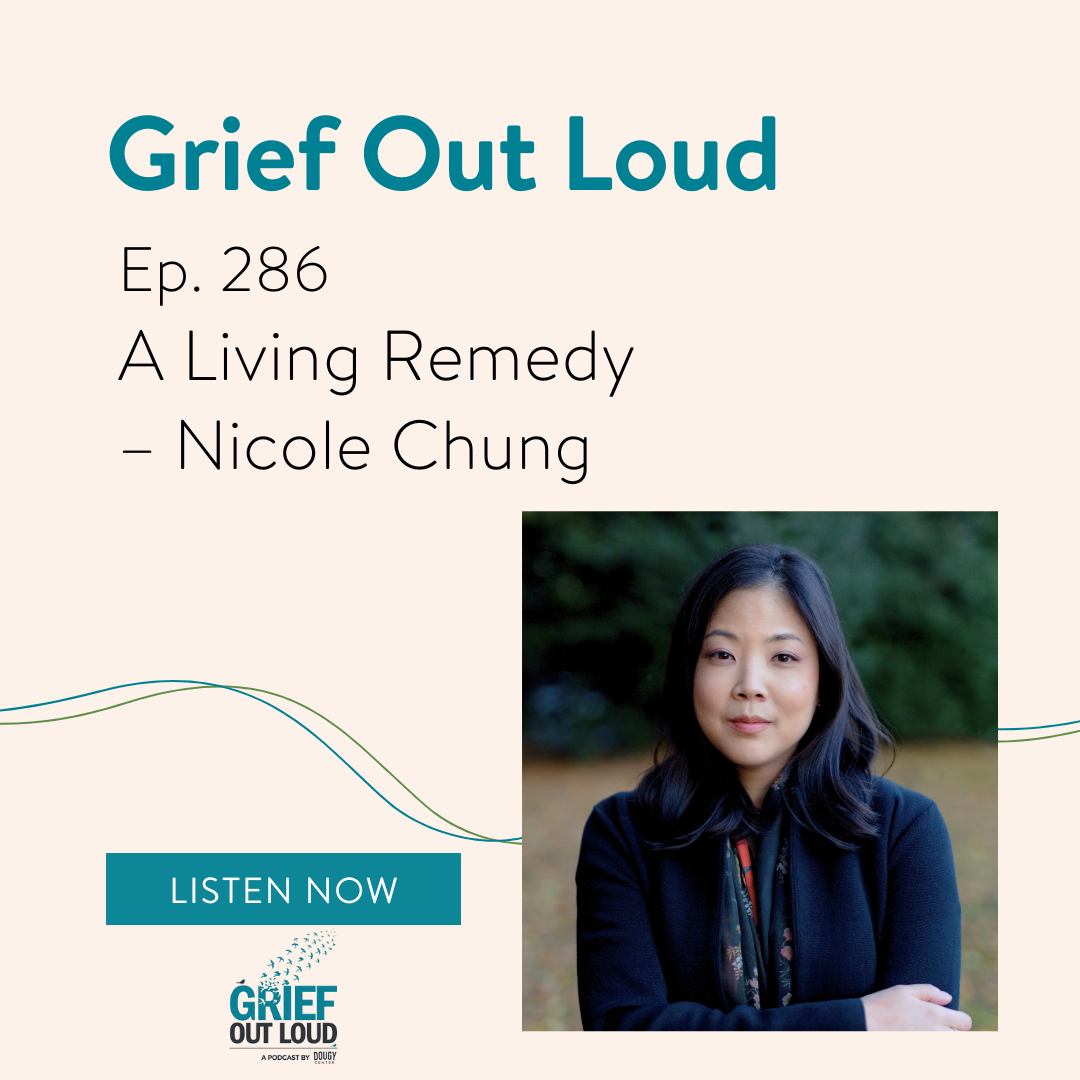
Ep 286A Living Remedy - Nicole Chung
We cannot separate grief from the context in which it occurs. This is true for Nicole Chung whose adopted parents died just two years apart in 2018 and 2020. The world of 2018 was very different than that of 2020. In 2018, Nicole and her mother could grieve for her father, together and in person. In 2020, Nicole was on the other side of the country, grieving for her mother in isolation during the early days of the pandemic. The other context that played a role in her parents' lives and their deaths is the structural inequality that exists in the U.S. economy and end of life care. Nicole chronicles all of this in her new memoir, A Living Remedy. We discuss: How hard it is to describe people and what they mean to us What it was like to be cut off from more traditional grief rituals during the pandemic Grieving an unexpected vs (more) expected death Learning to distinguish between guilt and regret How grounding her parents' deaths in a larger context helped alleviate some of her guilt The pressures Nicole felt to care for her parents as an only child in a working class family What it costs to die and grieve in the U.S. The unacknowledged grief of being a transracial adoptee Approaching the 4-year anniversary of her mother's death Nicole Chung's A Living Remedy was named a Notable Book of 2023 by The New York Times and a Best Book of the Year by over a dozen outlets, including Time, USA Today, Harper's Bazaar, Esquire, Electric Literature, and TODAY. Her 2018 debut, the national bestseller All You Can Ever Know, was a finalist for the National Book Critics Circle Award, a semifinalist for the PEN Open Book Award, a Barnes & Noble Discover Great New Writers selection, and an Indies Choice Honor Book. Chung's writing has appeared in The New York Times Magazine, The Atlantic, Time, The Guardian, GQ, Slate, Vulture, and many other publications. Previously, she was digital editorial director at the independent publisher Catapult, where she helped lead its magazine to two National Magazine Awards; before that, she was the managing editor of The Toast and an editor at Hyphen magazine. In 2021, she was named to the Good Morning America AAPI Inspiration List honoring those "making Asian American history right now." Born and raised in the Pacific Northwest, she now lives in the Washington, DC area.
Ep 285Conscious Grieving - Claire Bidwell Smith, LCPC
Maybe you're familiar with the phrase, "You can't go around grief, you have to go through it." Or, "You have to feel your feelings." If you're like a lot of people, you might cringe and also wonder, "What does that actually mean?" Grief isn't linear, and it's not something to get through - and yet, a lot of people appreciate having some sense of what to expect and what to do with it all. That's where Claire Bidwell Smith's new book, Conscious Grieving, comes in. Offered as a framework, not a formula, Claire suggests four ways to orient towards grief: entering, engaging, surrendering, and transforming. Claire comes to this work with her lived experience of losing both of her parents to cancer by the time she was twenty-five. She's a licensed therapist, international speaker, and the author of five books. We discuss: What Claire's parents would think of her work How she stays connected to them The rise of anxiety in grief The pressure to "move on" from grief How those who are grieving carry the burden of educating others What Claire does to manage health anxiety The four orientations of Conscious Grieving How important community can be when it comes to grief Where Claire currently is with her grief Both sides of the compassion coin Listen to our previous conversation with Claire, Ep. 109 - Grief & Anxiety.
Ep 284Caring For Young Widows In Nigeria - Diane Kalu
In 2015, Diane Kalu was living in Nigeria with her husband and their three young children. One day, about eight weeks after the birth of their third child, Diane's husband went to work and never returned. A few days later she got the news that he dad died. She was suddenly a widow, responsible for raising three children under the age of five, in a country with several widowhood customs and traditions that are harmful to women. Thankfully, Diane had her mother to help her survive those early days of widowhood. Then, about five years after her husband's death, Diane's mother also died. Through both of these losses, Diane discovered a lot about herself, including a passion for helping others. That led her to start the WiCare Lekota Foundation, an organization dedicated to supporting widows in Nigeria through social, emotional, financial, and educational support programs. We discuss: Grieving for her mother Telling her children their grandmother died How her mother supported her after her husband died Grief brain fog and how Diane recovered her memory with singing & sticky notes Widowhood customs & traditions that are harmful for women The ways Diane broke with community expectations for widows Pity vs. compassion The mindset that helped Diane survive What Diane's husband would think of who she is now Starting the WiCare Lekota Foundation to support other widows WiCare on Facebook
Ep 283It's A Loss That's Hard To Talk About - Grieving A Friend
ERead Transcript Whenever Annette & Mel connect, there's always a third person in the mix. That third person is Amy, their friend and chosen family member who died in 2012 of pulmonary fibrosis. While they each had a unique friendship with her, both connections were formative and deep. When Amy died, Annette and Mel's friendship grew stronger, because of their shared grief. This episode is part of a series focused on grieving the death of a friend. As much as we decry there being a hierarchy of grief, most people still assume the death of a family member is harder than the death of a friend. In reality though, the death of a friend or chosen family member can be absolutely devastating, in ways that catch us, and others, off guard. We discuss: Amy's magnetic personality - and what she meant to each of them What they both learned from being friends with her The different friendships Mel & Annette had with Amy, while still being part of the same circle How Annette & Mel got closer through Amy's illness and death Witnessing Amy's rapid deterioration How she tried to have end of life conversations with both of them When they each realized that Amy was going to die What grief has been like for both of them Annette being diagnosed with the same illness that Amy had The "Amy objects" they keep close Navigating new relationships with people who never met Amy Learn more about Annette Leonard and listen to her podcast, Chronic Wellness.
Ep 282Creating A Home For Grief - Laura Green
What if there was a place you could go in your grief and be both perfect and broken? That's the kind of place Laura Green dreamed up with her friend and co-founder, Sascha Demerjian. Together they created The Grief House, a community space for people to explore grief through movement, conversation, creativity, and care. Since she was very young, Laura can remember being afraid of death. Afraid of losing everyone and everything she cared about, especially her mother. Three years after starting The Grief House, Laura had to face that biggest fear when her mother, Grace, died in the summer of 2023. We discuss: Laura's current grief expression - clay Why she feels so lucky to be her mother's daughter The fear of death she's had as long as she can remember How her mother's death story has influenced Laura's grief story Why it was so important for Laura to spend time with her mother's body The physicality of death and grief The Grief House's origin story What Laura and her co-founder are dreaming up next for The Grief House Listen to Laura and co-founder Sascha on their podcast, Portals. Follow The Grief House on IG.

Ep 281"I Felt Like Half A Person" – On Becoming A Widow
In an instant, Leslie went from sharing every aspect of life with her husband Ryan to feeling like half a person. Leslie, Ryan, their two young children, and their extended family were on vacation in California when Ryan told Leslie that something didn't feel right. He was rushed to the hospital where he died of a stroke and an aneurysym, leaving Leslie to figure out how to live their life without him. The people Leslie most wanted to talk to in her grief were other widows. This inspired her to start Vids for Wids - a project to capture the stories of widows in the hopes of helping others feel less alone. We discuss: How Leslie and Ryan met as co-workers The day Ryan died while they were on vacation Suddenly feeling like half a person without Ryan Telling her very young children about his death The early days and weeks of widowhood How her kids' grief is changing over time The power of talking to other widows What Leslie learned about grief from Ryan Dating and becoming a remarried widow Leslie's Vids for Wids project to support other widows
Ep 280Putting Grief On Hold - Channing Frye
EWhat happens when you put your grief on hold? In the summer of 2016, Channing Frye was riding high. After over a decade in the NBA, his team, the Cleveland Cavaliers, had won the Championship. Then, in the fall, he hit one of the lowest lows. His mother Karen died of cancer. Just a month later his father, Thomas, also died. Channing put his grief on hold to deal with the logistics of planning two funerals, supporting his family, and going back to work as a professional athlete. Eventually, with the help of his wife, his friends, and a therapist, Channing started to talk about and explore grief in ways that worked better for him. Doing this allowed him to get more present in his life and explore new passions like podcasting and starting a wine label, Chosen Family Wines. We discuss: Channing's parents and how they supported him in his basketball career What it was like when his parents died Being with his mom as she was dying Putting his grief on hold to take care of business How his grief intensified after his dad's death Going back to the NBA soon after his parents' deaths The role alcohol played in his early grief How he got into therapy and started working with his grief Reclaiming significant days like birthdays, Father's Day, and other holidays How he stays grounded & connected to his parents The connection between grief and the name of his wine label, Chosen Family Follow Channing on IG Listen to his podcast, Road Trippin'
Ep 279The Dangers Of Pathologizing Grief - Dr. Donna Schuurman, EdD, FT
Dr. Donna Schuurman is back - this time talking about the dangers of pathologizing grief. While the term "complicated grief" has been used in various grief settings for years, it wasn't until March of 2022 that Prolonged Grief Disorder made it into the DSM-5-TR - the Diagnostical & Statistical Manual of Mental Disorders - as an official diagnosis. This conversation explores the concerns Donna and others in the field share about the move to pathologize grief. We discuss: What Donna's learned about grief working in the field for over 30 years How that work experience shapes her personal grief Why she is so passionate about this topic The history of how Prolonged Grief Disorder came to be in the DSM How diagnoses are social constructs - and who often gets left out of the studies behind these constructs The dangers of pathologizing grief as a mental disorder The (short list) of positives of Prolonged Grief Disorder being available as a diagnosis Other trends in the field to pathologize or "do away" with grief What Donna is optimistic about in the field of bereavement Register for Donna's upcoming webinar: Flawed Foundations, Deconstructing Three Contemporary Grief Constructs Thursday, February 8, 2024. Donna L. Schuurman, EdD, FT, is the Senior Director of Advocacy & Education at Dougy Center. Dr. Schuurman was the Executive Director of Dougy Center from 1991–2015. Dr. Schuurman is an internationally recognized authority on grief and bereaved children, teens, and families, and the author of Never the Same: Coming to Terms with the Death of a Parent (St. Martin's Press, 2003), among other publications.

Ep 278Can They Even Understand? - Preschoolers & Grief
When Sat Kaur Khalsa, MSW, was three, her older brother died in a drowning accident. After his death, he continued to disappear - his photos were taken down and no one talked about him. As she grew up, she learned the implicit lesson to be a good kid because her parents were already dealing with enough. She also learned that grief wasn't something you talked about or shared with others. Now, as an adult, she's working to make sure kids her age get to have a different experience. Sat Kaur is the Family Services Coordinator at Dougy Center where she supports children of all ages and their families after a death. In that role she has a special love for working the youngest kids - those who are 3-5 years old - and helping them have the chance to do what she didn't: talk about their people, express their emotions, and be with others who get what they are going through. We discuss: Sat Kaur's role at Dougy Center & personal connection to the work What she remembers about being three when her older brother died How his death changed her family and their dynamic Learning the implicit lesson to be a good kid to not make things harder for her parents Her commitment to being more open about grief with her own child Why she loves working with preschoolers who are grieving How preschoolers grieve similarly and differently to older kids and teens Suggestions for age appropriate ways to talk about grief and loss What adults can do to support preschoolers who are grieving a death Be sure to check out our Youngest Grievers Toolkit for books, Tip Sheets, activities, and more.

Ep 277Becoming Grief-Informed- Dr. Donna Schuurman & Dr. Monique Mitchell
What does it mean to be grief-informed? In 2020, Dr. Donna Schuurman, EdD, FT, and Dr. Monique Mitchell, PhD, FT, authored the paper, "Becoming Grief-Informed: A Call to Action," which outlines: what it means to be grief-informed, why it's so important, and Dougy Center's 10 Core Principles and Tenets of Grief-Informed Practice. This paper is based on the foundational understanding of grief as a natural and normal response to loss that is interwoven into a sociocultural context. It recognizes grief not as an experience that needs to be fixed, treated, or pathologized, but one that deserves understanding, support, and community. Donna L. Schuurman, EdD, FT, is the Senior Director of Advocacy & Education at Dougy Center. Dr. Schuurman was the Executive Director of Dougy Center from 1991–2015. Dr. Schuurman is an internationally recognized authority on grief and bereaved children, teens, and families, and the author of Never the Same: Coming to Terms with the Death of a Parent (St. Martin's Press, 2003), among other publications. Monique B. Mitchell, PhD, FT is the Director of Training and Translational Research at Dougy Center. Dr. Mitchell is a nationally recognized authority on children, teens, and families who are grieving in foster care, and the author of The Neglected Transition: Building a Relational Home for Children Entering Foster Care (Oxford University Press, 2016) and Living in an Inspired World: Voices and Visions of Youth in Foster Care (Child Welfare League of America Press, 2017), among other publications. We discuss: Donna and Monique's connection to this work What it means to be grief-informed Why it's necessary to be grief-informed Examples of responses that are grief-informed and not grief-informed Seven core principles that describe what grief is and is not Three core principles that address how to provide grief-informed support Suggestions for how we can all work to be more grief-informed - for ourselves and others Sign up for our Grief Education Webinar - Becoming Grief-Informed: Foundations of Grief Education. Thursday, January 18th, 2024, 10 - 11:30 am PST.

Ep 276The Realities of Black Grief – Doneila McIntosh, M.Div., M.A.
The reality for Black individuals and families living in the U.S. is that death happens more often and earlier on than for their white counterparts. In the last two decades, these higher rates of mortality resulted in 1.63 million excess deaths for Black Americans compared to white Americans. Doneila McIntosh brings her personal and professional experiences with this reality to her work as a researcher studying the intersections of disenfranchised grief among African American families. Disenfranchised grief occurs when a loss isn't recognized or seen as valid, often the result of stigma. The disenfranchisement of Black grief is rooted in racism, which influences both the disproportionate rates of mortality and the lack of support for grief and grief expression. Doneila McIntosh is a doctoral student at the University of Minnesota in Family Social Science with an emphasis in Marriage and Family Therapy. Doneila has a Master of Divinity (M.Div.) in Theological Studies and a Master of Arts in Counseling Psychology (M.A.). Prior to becoming a psychotherapist, she worked as a chaplain for nearly 10 years. We discuss: Doneila's current research on understanding the impact of disproportionate rates of death and grief in the African American community. Her personal and professional motivation to do this work. The desecration of sacred Black grief spaces. How structural racism leads to Doneila and other researchers having to "prove" the reality of disproportionate rates of death for Black people living in the U.S. The disenfranchisement of African American grief. How the language we use to talk about grief is rooted in culture and how that can be a strength. The gap in the research literature about Black and African American grief. Culturally specific interventions to support grief. How culture shapes grief expression. Doneila's work to become literate in the historical & current context of Black grief and the cultural strengths she uncovered along the way. How her family honors her grandfather's legacy. Follow Doneila on IG @doneila_mcintosh

Ep 275You Have A Life Worth Rebuilding - Melissa Pierce & The Widow Squad
What started out as an average winter morning ended up being one that would change everything in Melissa Pierce's life. She went to wake up her husband Dave for their son's basketball game and found him unresponsive. Dave had died during the night and the cause of death was never determined. Melissa jumped into figuring out logistics - planning a memorial, getting her sons to school, moving their family, working a full-time job - but eventually she had to figure out herself. It meant focusing on what she was thinking, feeling, and needing in her grief. That shift to prioritizing self-care ended up changing everything, again. We discuss How Melissa and Dave met and fell in love The process of adopting their two sons How the shock of Dave's sudden death led to what Melissa calls "Zombie mode" Being the person who found Dave when he died and how that impacted her grief Grieving when the cause of death is undetermined The financial, logistical, and emotional reality of being a solo parent Having to tell her sons that their dad died When Melissa started to feel her feelings in grief The physical toll of grief Where Melissa turned for support How prioritizing self-care changed everything The origin story of the Widow Squad community Melissa is the author of Filled With Gold: A Widow's Story, co-founder of The Widow Squad community, and co-host of The Widow Squad podcast. Listen to The Widow Squad podcast Episode 41- Holidays and Grief: Strategies to Get Through the Holidays After Your Spouse Dies.

Ep 274"So Sorry For Your Loss" - Dina Gachman
EDina Gachman's mother died of cancer in 2018 and less than three years later her sister died of alcoholism. A career journalist, Dina turned to writing as one way to make sense of these world altering losses. She recently published, "So Sorry for Your Loss," a series of essays that combine personal reflections with information she gathered from professionals working in the world of grief. In this conversation we discuss: How recalling memories of her mom and sister has become less painful Parenting a young child while grieving How she realized she needed additional support Finding comfort in the Continuing Bonds theory When grief feels like agitation Approaching the five-year anniversary of her mother's death How her mom continued to care for her even as she was dying The expectation vs. reality of hospice care Using humor as a way to cope - and carry on her mom's legacy Grieving two losses in such close succession Recognizing that grief started when her mom was diagnosed, years before her death The gift of growing up in an emotionally expressive family GIEAs - Grief Induced Emotional Avalanches Dina Gachman is an award-winning journalist, Pulitzer Center Grantee, and a frequent contributor to the New York Times, Vox, Texas Monthly and more. She's a New York Times bestselling ghostwriter, and the author of Brokenomics: 50 Ways to Live the Dream on a Dime.

Ep 273How To Talk About What Happened - Adam Sawyer
EIn January of 2022, Adam Sawyer had everything he dreamed of and more. His partner Kara was the love of his life. Their cat Lela was his all-time favorite animal. Their off the grid house, Whiskey Jane, was the best place he had ever lived. By the end of February, 2022, Adam lost all three of them. Kara and Lela died when Whiskey Jane was destroyed in a fire. We discuss Getting "the call" about the fire Being fully immersed in grief with no responsibilities Nature's role in Adam's healing process Examining the ways he tells people about his losses The parallels between grief and his recovery from heroin addiction Adam's first glimmers of hope Finding a new home, a new purpose, and a new romantic connection What it's been like to go public with his story through writing and presentations How Adam stays connected to his grief Find Adam on Substack and Facebook

Ep 272It's Okay That It's Not The Same - Grief At The Holidays
It's our fifth annual holidays & grief episode! This time of year can be grueling for anyone, but particularly for those who are grieving. So, each year we put out an episode to help you feel less alone and hopefully more equipped to traverse the next few weeks. Today's guest, Melissa Peede Thompson, M.S., is a Grief Services Coordinator at Dougy Center. While she has lots of professional knowledge in this realm, we asked her to talk about her personal experience of grieving during the holidays. Melissa was six when her sister died of gun violence. She was 13 when her father died in a motorcycle accident. And she was a young adult when her grandparents died. Each loss shaped - and continues to shape - how Melissa and her family approach this time of year. We discuss: How her sister's death impacted her parents at the holidays What she remembers about the first Christmas after her dad died Grieving for her her grandparents before they died How the holidays can feel empty, even when the house is full Melissa's realization that grief has left her a little bit "Grinchy" What she's doing to shift how she thinks and feels about the holidays Learning to appreciate being able to spend time with the people who are still alive Why St. Patrick's Day became her favorite holiday Taking the pressure off trying to make the holidays feel the same after someone dies If you missed our past Holidays & Grief episodes, be sure to listen to Ep. 27, 98, 174, 240. Tips For Getting Through the Holidays & Holiday Plan Worksheet. Register for our "Navigating Grief During the Holidays" webinar happening on Thursday, 12.7.23, 10 am - 11:30 am PST.
Ep 271Tending To Trauma In Grief - Meghan Riordan Jarvis
When Meghan Riordan Jarvis's mother died suddenly, just two years after her father died of cancer, she watched herself grieving from two perspectives. One as a daughter and the other as a trauma-informed therapist. As a daughter she was devastated and deeply impacted on all levels. As a therapist, she recognized in her grief signs of PTSD, post-traumatic stress disorder. The therapist part of her also realized she wasn't getting better on her own and needed the next level of care. Meghan's new book, End of the Hour, A Therapist's Memoir, chronicles the unresolved trauma of her early life, how it resurfaced after her parents died, and how she tended to both her grief and trauma. We discuss: Meghan's relationship to memories of her parents How she grieved differently for her father and mother - and why Her childhood experience of grief and how that led to her developing PTSD The signs that let her know she needed the next level of care How she came to write her new memoir The various trauma interventions she tried - and which ones helped Grief is My Side Hustle website Grief is My Side Hustle podcast @meghan.riordan.jarvis on IG @griefismysidehustle on Fbook

Ep 270I've Missed Him At Every Milestone - Bridget
Bridget was in high school when her dad died of a heart attack in 2020. Their relationship was complicated. She loved the way her more creative side came out when they spent time together, but she also struggled with how he kept a lot of his history from her. In grieving for him, Bridget's had to reckon with two things being true at the same time. The first is that in some ways Bridget's life became easier and more stable after he died. The second is the reality that she still loves him, misses him, and wishes he could be there for all the milestones unfolding in her life. This series is a part of an ongoing collaboration between Dougy Center and the New York Life Foundation. We are deeply grateful for New York Life Foundation's tireless support and advocacy on behalf of children and teens who are grieving. Download a copy of the New York Life Foundation's newest resource for teens who are grieving - Lost in the Middle.

Ep 269It Was Such A Shock - John
When John's father died of suicide in 2021 it came as a complete shock. John couldn't square the dad he knew as cool and levelheaded with the reality that he took his life. He tried to figure it out - what was going on for his dad that led him to this? Over time, John began to better understand some of the factors that contributed to his dad's death. Throughout it all, he turned to his family, friends, and himself for support in navigating this new world without his dad. This series is a part of an ongoing collaboration between Dougy Center and the New York Life Foundation. We are deeply grateful for New York Life Foundation's tireless support and advocacy on behalf of children and teens who are grieving. Download a copy of the New York Life Foundation's newest resource for teens who are grieving - Lost in the Middle. If you or someone you know is struggling with thoughts of suicide, please reach out. You can call the Suicide & Crisis Lifeline at 988 or text HELLO to 741741.

Ep 268I Think He'd Be Proud Of Me - Sonja
Sonja was 15 when we recorded in the summer of 2023, but was just 10 when her father, Matt, died in September 2018 from injuries due to a car accident. Sonja, her mom, and two younger siblings lived in NYC at the time of his death. They eventually moved across the country to Portland, Oregon where they attended peer grief support groups at Dougy Center. Sonja shares what she remembers about hearing that her dad was in an accident, how their community showed up while he was in the hospital, and how they kept showing up after he died. We also talk about her dad and what it's like to be the oldest sibling who had the most time and memories with him. This series is a part of an ongoing collaboration between Dougy Center and the New York Life Foundation. We are deeply grateful for New York Life Foundation's tireless support and advocacy on behalf of children and teens who are grieving. Download a copy of the New York Life Foundation's newest resource for teens who are grieving - Lost in the Middle.