
Good Beer Hunting
743 episodes — Page 15 of 15

EP-116 Kai Leszkowicz of Aslin Beer Company
ELike so many other breweries, the team at Aslin Beer Company is new to the industry, part of roughly 500 breweries that opened in 2015 and more than 3,000 that have appeared in the last five years. Alongside many contemporaries, the rise of Aslin can be seen through the lens of what online beer enthusiast communities can do for a small business. In less than two years, Aslin has become a hot commodity on the trading circuit and an unsurprising presence on top beer lists among some of the most popular rating websites. It should come as no surprise, really, when that attention is spurred by creating one beloved New England IPA brand after another. The rotating collection of hazy, hoppy beers coming from Aslin has helped push the brewery to its production limits. Of all places to have met co-founder Kai Leszkowicz, in a strange way, it felt fitting we crossed paths in another country. I met him while visiting Reykjavik, Iceland, when both of us were in town as part of the annual Icelandic Beer Festival. As a former homebrewer who has quickly made a name for himself and his brewery, it oddly didn't feel too out of place to first meet him a world away from our home region of the Mid-Atlantic. If there was any time in the history of the beer industry, now would be it when a brewery making 2,000 barrels of beer a year would be on the radar of Scandinavian beer lovers. That's the power of the internet. Which is why I found Kai's perspective as the part-owner of a young business so interesting. The excitement and hardships, the new ideas and challenges he faces, are ones taken on by so many other breweries who have to learn to balance growth with word of mouth fame.
MU-001 — Score: Victory Brewing Company's Prima Pils
Our resident composer for the podcast and our commercial video work, Andrew Thiboldeaux, is writing original scores devoted to beers he finds fascinating. These are interpretations of the experience of drinking them. But they're also just great tunes. This first episode is devoted to Victory Brewing Company's Prima Pils.
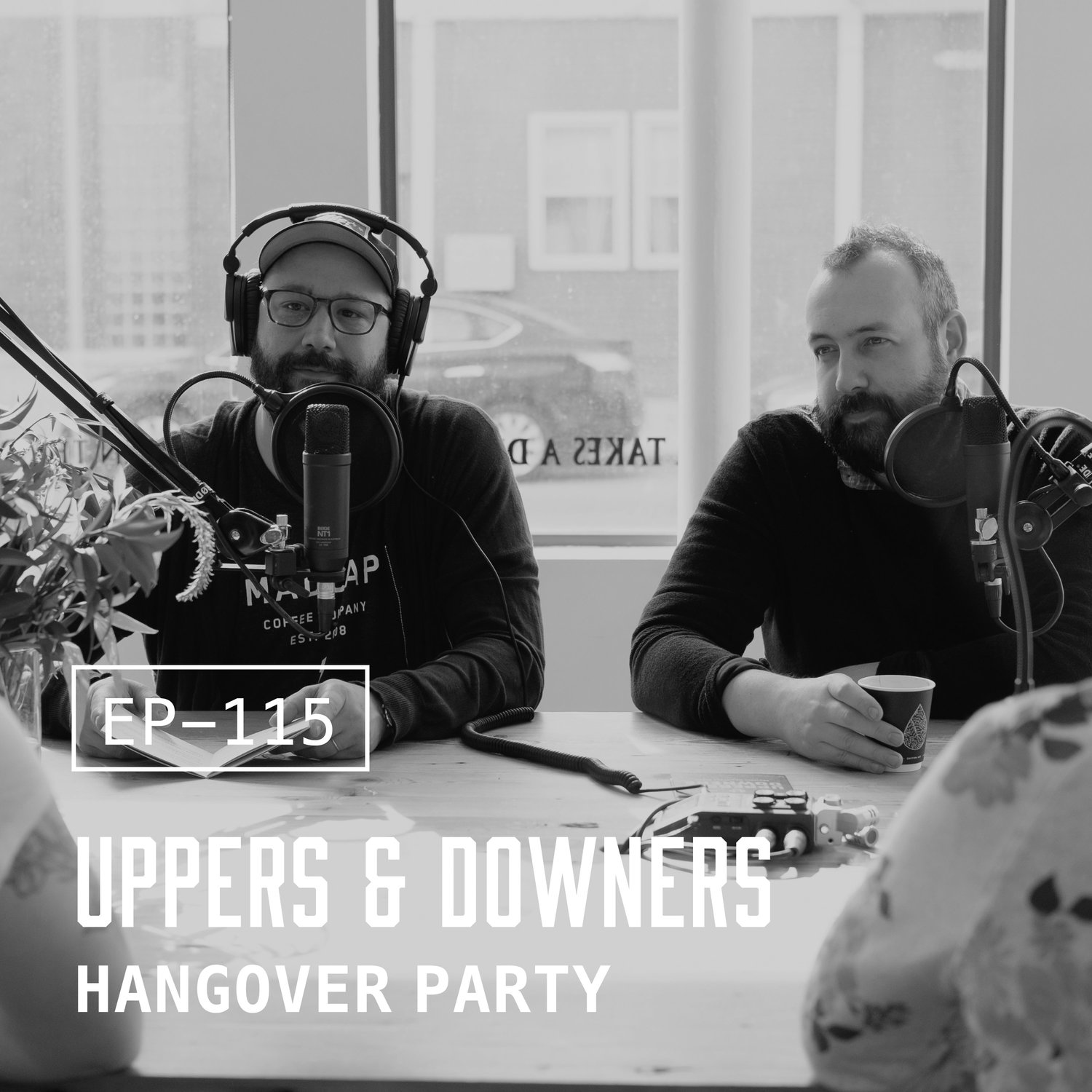
EP-115 Uppers & Downers Hangover Party
EToday's episode is our annual hangover party podcast, an event we host here at the studio in the wake of Upper & Downers, our coffee beer festival. People have started traveling from all over the world—in some cases, as far away as Japan!—to attend this insane mashup of coffee and beer culture we put together with our friend Stephen Morrissey (a world barista champion and works at the Specialty Coffee Association). And this hangover party, which we stupidly (brilliantly?) throw the morning after the big event, has become a bit like a brunch after a wedding. We get to sit down with the out-of-towners, drink even more coffee and beer, and for those brewers who want to celebrate coffee beers with us, but can't make the fest, they send us bottles and cans of their latest experiments just for the party. We get some biscuits from Bang Bang, while some friends and roasters operate the La Marzocco espresso machine—in some cases getting a personal training session from people on the Acaia scales. Beyond that, we lounge. We also use that time as a chance to revisit the festival, talk about our favorite things, and interview some of the brewers and roasters that participated. We invited Jordan Michelman of Sprudge.com to sit in with us again, which is always super fun for me because I get to hear from someone who sort of does what GBH does, but for coffee. Plus, he's been at it a lot longer than I have, and it shows. This is a long one with a lot of different, shorter interviews just stacked end-to-end. So settle in, go for a drive, get in a run, whatever you gotta do. Hope you enjoy it. Photo by Nick Kohout of Acaia

CL-001 GBH Collective — Iceland, Highland Brewing, Berlin, Copenhagen, Suarez, Chemistry of Mouthfeel, and Vietnam
EI've got something a little new for you this time around. This is an episode devoted to the GBH Collective, thats the writers and photographers we have around the world who bring you the amazing stories and interviews you see on Good Beer Hunting. As our network has grown, it's occurred to me that like you, so much of what I experience in beer world comes through the eyes and ears of these fantastic people, and in addition to their compelling stories on the site, there's so much more to talk about behind the scenes. So periodically, I'm going to be Skyping them in to the studio here in Chicago, and having a chat with them to learn more about a recent story they filed, or a trip they just got back from, and paint an even broader picture of what's happening with the GBH team out in the world. With well over a dozen storytellers, there's a lot of action. So today, you're going to hear from Bryan Roth who just got back from Iceland, Kyle Kastranec on his recent travels to Berlin and Copenhagen, Blake Tyers, who's actually a brewer at Creature Comforts in addition to writing and shooting for GBH, and Mark Spence who's local to Chicago, who's been pretty active in our b-Roll section of the site after filing his first GBH story of a trip through Vietnam.
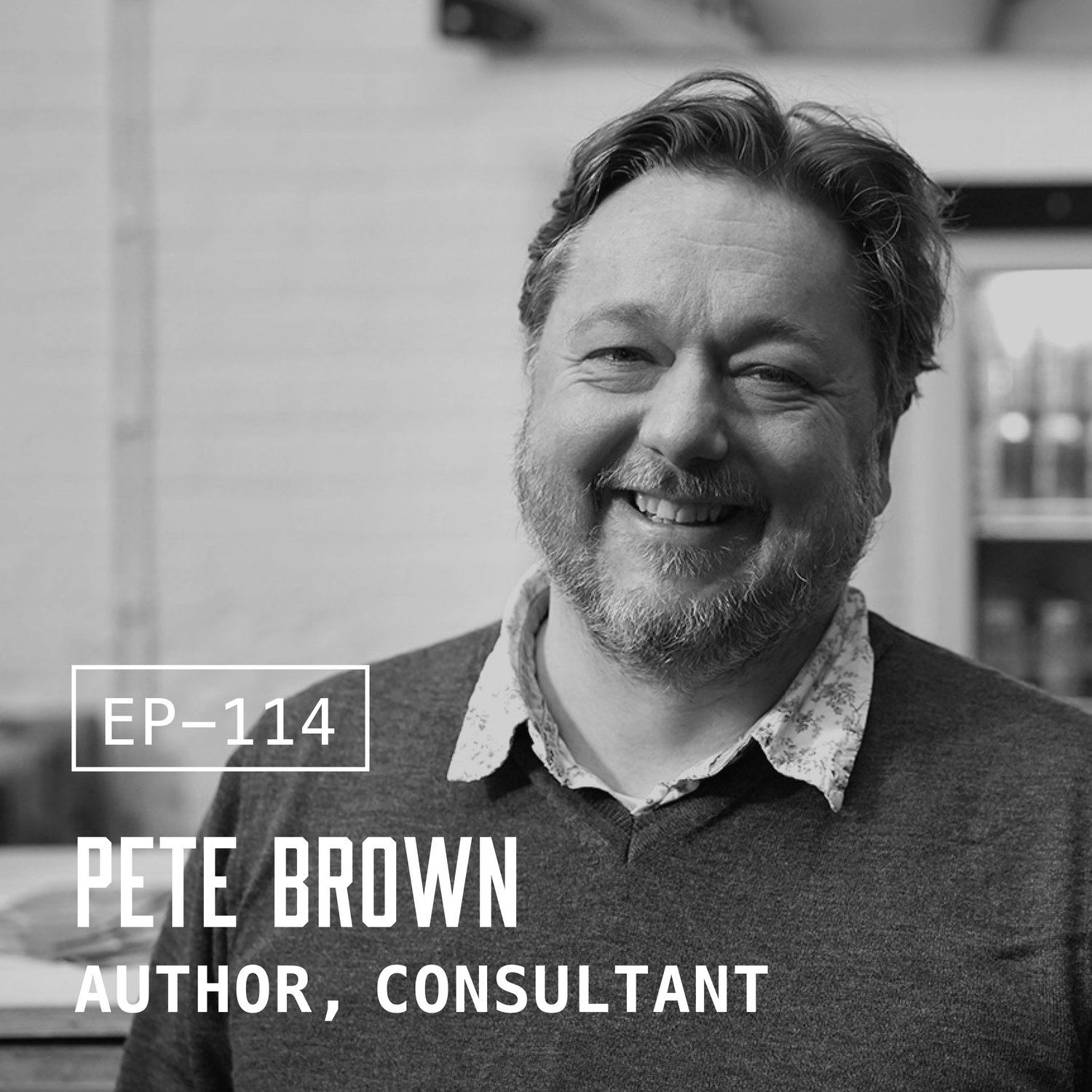
EP-114 Pete Brown, author and consultant
EToday's guest is one of those serendipitous run-ins I sometimes have with a fellow writer, in this case someone I've followed for some time, but never had the chance to meet in person. Pete Brown, who lives in London, has written numerous books over the years, including Three Sheets To The Wind: One Man's Quest For The Meaning Of Beer. And lately his writing has taken him into both the history and contemporary culture of cider making in the UK. And that's what brought him to Chicago, which was the host of CiderCon this year. I met up with Pete at the Map Room over some Alpha Kings where he quickly got sucked into some roiling debate about cask ales with the locals (at their behest, not his) and after calling it a night, we met up at GBH Studio the next morning to record a conversation about English craft beer, cider, and Pete's larger realm of work, which much like mine stretches across beer writing as well as consulting with breweries, as he stitches together a career using the skills he has as a former advertising writer and a beer expert. He's chock full of insight and a joy to chat with. Thanks to Matthew Curtis for the portrait.

EP-113 Logan Plant and Paul Jones at Rate Beer Best
EAt Rate Beer Best, it became clear that this was the year the British breweries would assert themselves among the best in the world. Many of the best British breweries have followed in the footsteps of their American counterparts and are now evolving at a similar pace — but what really made this the year of the Brits was the shift in Rate Beer's own audience. According to Joe Tucker, founder of RateBeer.com, London is now the largest metropolitan market for Rate Beer's user base. Two of the more prominent breweries in the U.K. scene are Beavertown in London and Cloudwater in Manchester, both taking home multiple awards from the festival this year. While it's a welcome recognition for Beavertown who were early-in in 2011, for Cloudwater, now in their second year, it's nearly a coup won with hazy IPAs. Both gentlemen were happy to sit down together and discuss some of the factors at work in the UK market, and how their generations of craft brewing are playing out relative to the US zeitgeist.

EP-112 Chase Healey of American Solera
EIn the tradition of American Wild Ales, a name like American Solera might sound fundamental—but it's a relative newcomer for brewer/founder Chase Healey. In Tulsa, Oklahoma, far from the hotspots and critical masses of drinkers for such delicacies, Healey has carved out a life and a living that's far different than the way he entered brewing. His first venture, Prairie Artisan Ales, in which he still plays a small supporting role, is quickly growing from one state to the next. And it was his come-to-Jesus moment with the vast potential for Prairie that helped him understand his more personal goals as a brewer. Through that shift in focus, and his curiosity surrounding Wild Ales, an entirely new, unproven chapter of his life opened. But for all the anxiety of venturing into unknown territory, it's his obsession with simplicity that seems to keep him keeled. I caught up with Healey at RateBeer Best in Santa Rosa this year, fresh off his second place win for best new brewery in the world with American Solera, in addition to his legacy wins for top beer and top brewer in Oklahoma for Prairie in 2017.
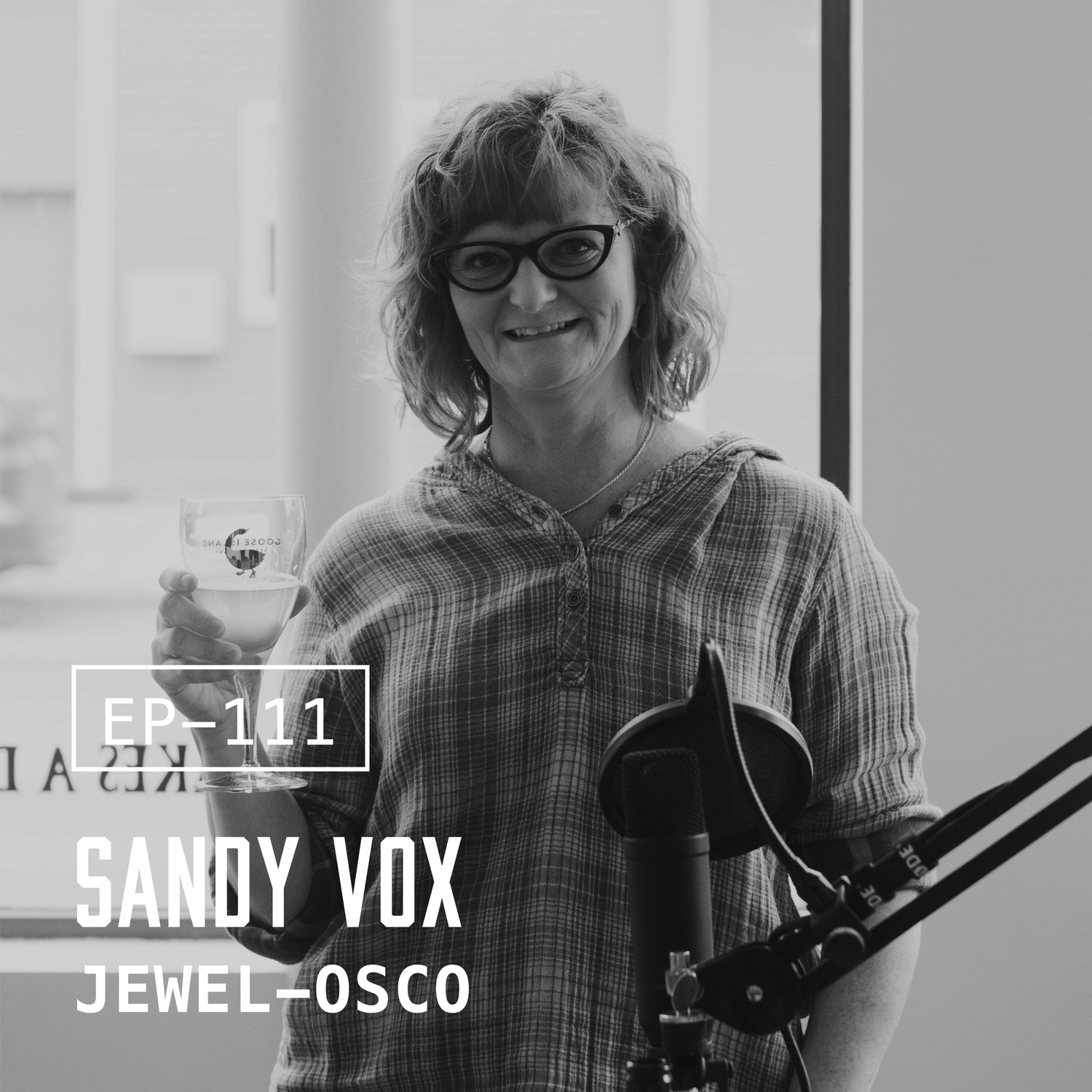
EP-111 Sandy Vox of Jewel-Osco
ECraft beer drinkers are finding better and better beers available in more places than ever before. And a big reason for that is large-format stores like Target, Costco, and, here in Chicago, Jewel-Osco. These big stores are looking for ways to connect with their customers on premium and locally-sourced products. The whole food and beverage industry is shifting local, not just craft beer. But for some longtime craft beer fans, that's an uncomfortable development. I've heard smaller retailers lamenting the competition and criticizing these larger stores as greedy opportunists. I've seen drinkers describe the craft beer they see at the grocery store as corporate sellouts, boldly claiming they won't support breweries they see on those shelves. But let's not kid ourselves: every culture has its self-inflicted know-nothings. For the rest of us, being able to grab a six pack of a super-fresh local beer when we're swinging through for milk and eggs is a godsend. More importantly, the people behind the decisions of who does—and does not—get on those shelves have their own perspective on what's exciting in beer. In this case, it's Sandy Vox, who's been at it for 15 years. And she'd never trade in the current chaos of craft beer proliferation for anything.
EP-110 Pete Brissenden of The Bottle Shop in London
EThis week's conversation is potentially one of the most enjoyable and insightful conversations I've had since I started working in beer. I spend a lot of my time chatting to brewers and bar owners, but never have I taken the time to pose questions to someone who works in the world of beer distribution. I've known Pete Brissenden from back when he worked for London's Meantime brewery, way before SAB Miller and subsequently Asahi bought it out. Pete's worked for a range of breweries over the years, from the very traditional Hopdaemon in Kent to Camden Town Brewery in its formative years. These days he works for The Bottle Shop, a London based distributor and retailer that specializes in wholesaling craft beer. What differentiates The Bottle Shop from other British beer distributors is that 50% of its business is based on imports. In the UK The Bottle Shop is working with cutting edge breweries such as Beavertown and Cloudwater. While at the same time bringing in beers to the UK from the likes of Green Flash, Crooked Stave, Alpine and many more. During this discussion Pete and I cover topics ranging from pricing, to the viability of imports in a post-Brexit UK economy to the health of the cask ale market here in the UK. We also dig into his history at Camden and Meantime a little, including Pete's reaction to the latters sale to SAB Miller while he was still working there.
EP-109 BJ Pichman of Forbidden Root
EBJ Pichman is the head brewer at Forbidden Root brewpub, Chicago's "botanic beer" producer. As a homebrewer, he found a niche brewing pilot batches for recipe development consultants, and that eventually that got him a gig brewing the earliest batches of Forbidden Root's first trials for their namesake root beer-inspired concoction designed by Randy Mosher and Robert Finkel. Eventually that concept would develop into a full-fledged craft beer brand and brewpub, and while botanics are still at the heart of the operation, BJ has also developed a strong portfolio of hoppy beers, most recently of the New England variety. And they're really good. This week, he also launched his collaboration with Fernet-Branca, a bitter, herbal liquor that posed a perfect challenge for the team. The result, called Frenetic, might be the beer that finally puts this crew on the national map.
EP-108 Dan Grzeca of Ground Up Press
EThis week's guest is an artist and commercial screenprinter here in Chicago. We've worked with him numerous times through GBH making posters and hosting workshop events. He's well-known but depending on how you discovered his work, you know him for very different reasons. Myself, I knew him as the guy who did the Dark Lord Day posters, and Apocalypse Cow from Three Floyds. For others, he's an artist working with bands like the Alabama Shakes. And most recently he took his first gig with a brewery making illustrations for the new cans coming out of Chicago's Hop Butcher for the World. He's also a small business entrepreneur, a dad of two great kids, and he works to balance all that with his creative ambitions, which are so similar to my own. So it was a great conversation, and I'm glad to share it with you all.

EP-107 New Holland Brewing Co.
EI spent the break up in Michigan, with my wife's family in Grand Rapids like we do every year. But this year the city felt completely different. So many new things are opening, major new projects underway in beer and otherwise. We visited Sovengaard, Rick Muschiana's new nordic-inspired restaurant and beer garden. Rick used to work at Brewery Vivant, one of our favorites. And he took what he learned there in terms of sustainability and hospitably and applied it to a new concept that really brightens up the Grand Rapids scene for me. He's got an amazing beer list—one of the most adventurous in the city by far. But also great wines, and a unique menus far away form the pub food that GR so often does. This spring the beer garden portion will open up, and I can't wait to see it. Across the street from Sovengaard is one of GR's most ambitious projects, the New Holland brewpub. It towers over the neighborhood, a complex with the brewpub on the ground floors, a set of private event rooms and a cocktail bar on the second, and above that new condo residences. Compared to their original brewpub back in Holland, Michigan, the contrast is stark. It's a long way from home, maybe not geographically, but spiritually, from how I perceived the New Holland brand so many years ago on my first visit when Mad Hatter was a stand-out hoppy beer for the region, and Dragon's Milk was something I could barely wrap my head around. As you'll hear in this series of interviews, that's going to change forever—maybe for the entire country. To paint a full picture of the evolution of New Holland, I decided to talk to a few people in the organization. So this is going to be a unique one. We're going to hear from the new Grand Rapids brewpub brewer, the VP of marketing, the executive chef who overseas both locations, and the national sales manager who is taking on the challenge of taking New Holland, well, national.

EP-106 Paul Vander Heide of Vandermill Cider
EWe're sitting down with Paul Vander-Heide of Vandermill Cider out of Michigan. I first met Paul back when he was a tiny little cider mill in Spring Lake, personally loading a few kegs into his van and driving them to Chicago. He's always been one step ahead of the cider wave that took off like a shot—and is currently hitting a bit of a plateau—in the U.S., depending on what kind of producer you are. But the reason he's succeeding is because of his foresight, willingness to adapt, opportunistic approach and, frankly, his ability to give the people what they want even as he sets his sights on a brighter future for the category. In the Midwest, I don't think there's a cider company that has opened more doors than Vandermill. And the growth of his company is an indication that his days ahead are even more ambitious. He's moved production from Spring Lake to Grand Rapids in a beautiful new facility with a tasting room and a kitchen. And there's a ton of room in there to grow. So I'm finally sitting down with Paul on what seems like the precipice of his success, but being the pragmatist that he is, he knows that his competition is getting fierce, and the entire category needs room to grow before cider makers start turning on each other. He's a great ambassador for cider, and I'm excited to share this conversation with you. Even if I was a little hungover from a bawdy evening at Sovengaard the night before. (I think it was that last Orval or maybe the Rosé that got me.) So pardon any sluggishness in my brain on this one.
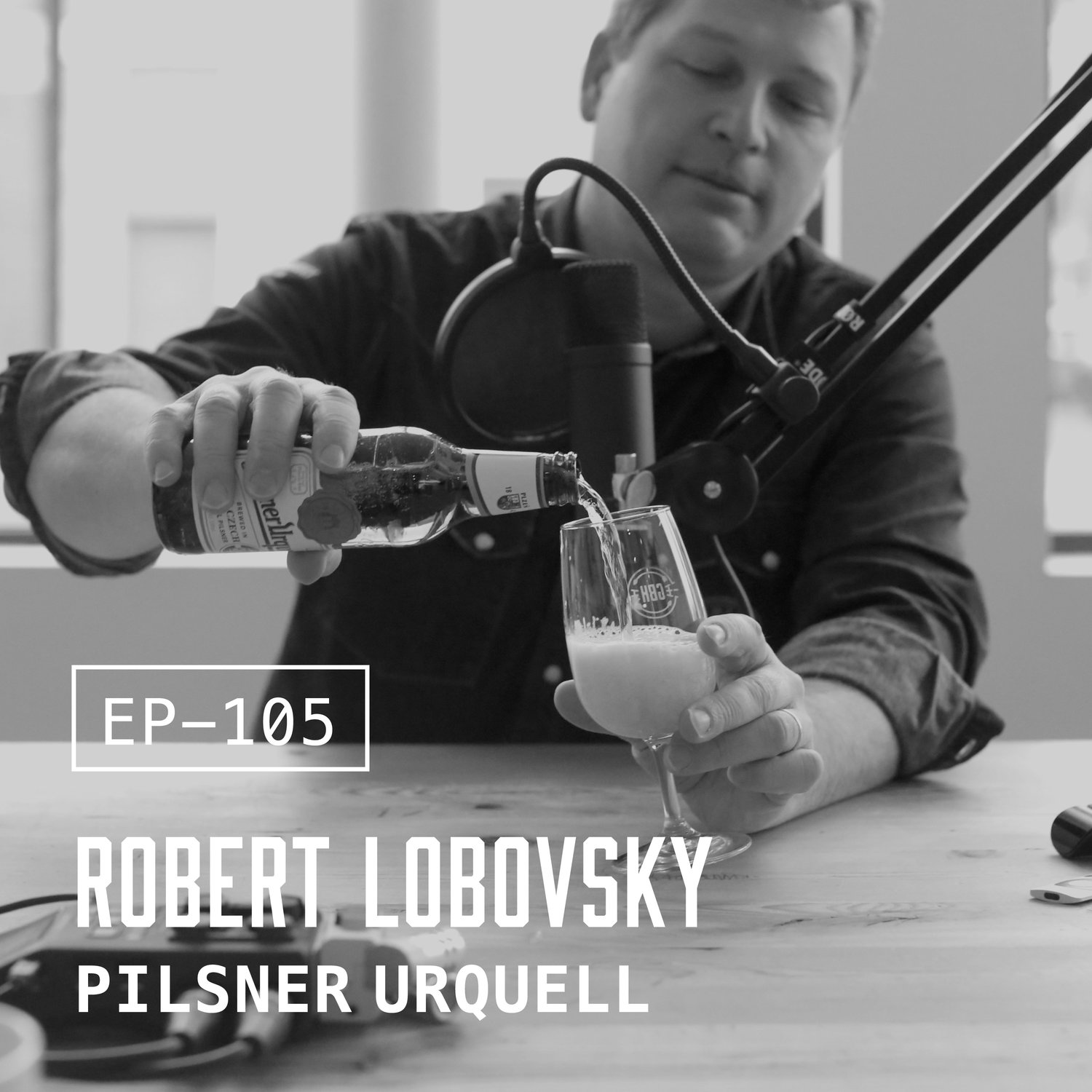
EP-105 Robert Lobovsky of Pilsner Urquell
EToday's episode is a really interesting discussion with one of the most influential people in international beer—Robert Lobovsky of Pilsner Urquell. I say "most influential" because he's the face and ambassador for one of the world's most famous beers, which has only gone on to embolden its reputation over the years as its shifted from a European gem to an international icon for the Pilsner style. I had my first chat with Robert a few years ago in the Czech Republic walking around the campus and the caves of Pilsner Urquell. I found him to be a delightful conversationalist and a but of a history nut, both for Pilsner Urquell but also for his country. So getting the chance to sit down with him in the studio in Chicago was a real treat for me. We dig in to everything from the history of Pilsner, to Robert's personal journey, to the state of world affairs that make a brewery like Pilsner Urquell such an interesting acquisition for the likes of SABMiller who, in the days following this conversation, actually sold off the brewery to Asahi as part of the monster deal between AB InBev and SABMiIller. One thing to note: in this interview we try to relate world events like the formation of NATO to the timing of the original SABMiller sale, and honestly, we struggle a bit to paint that picture. Following the interview, we discussed a bit more and came to the conclusion that SABMiller wanted to buy Pilsner Urquell because it was a bit of a pride piece for the South African conglomerate to own such a critical piece of European brewing history, but of course the signing of NATO certainly helped that investment pay off a lot faster than it otherwise would have. In fact, it helped bring companies like Pilsner Urquell to the world stage.

EP-104 Stu McKinlay of Yeastie Boys
EToday's guest hails from Wellington, New Zealand. Stu McKinlay—along his business partner, Sam Possenniskie—founded Yeastie Boys in 2008. Stu had also been running a homebrew supply company called Liberty Brewing, but eventually sold it and put all of his energy into brewing. Instead of building their own brewery, the Yeastie Boys decided to focus on their brand. After developing their recipes, they had them brewed under contract at the Invercargill brewery on New Zealand's South Island. In 2015, they sold equity in the brewery through crowdfunding, raising half a million dollars in just half an hour, with investors from all over the world. New Zealand has a population of four and a half million people. That's almost half the population of London alone. So in order to make full use of this new found investment, McKinlay relocated his entire family to the UK and began the process of turning Yeastie Boys into an internationally recognized brand. As well as managing exports from New Zealand, Yeastie Boys also began contract brewing their core range in the UK, forming a partnership with BrewDog along the way. Relocating to the other side of the world to grow your business is a huge deal, so I was keen to speak to Stu about the motivations behind this and how he thinks his brand can find relevance in a foreign marketplace.
EP-103 Central State Brewing with Jake Koeneman, Josh Hambright, and Chris Bly
EBack in April of 2014, I got an email from Jake Koeneman, Josh Hambright, and Chris Bly about a concept they were starting up in Indianapolis called Central State Brewing. They had their collective mind set on being a 100% Brett brewery, they had a plan in place, they wanted help with the branding side of things, and before long GBH was working alongside them to bring the concept to life. Now it's 2016 and, like most brewery plans, things have shifted dramatically from some of that early planning. They're still a Brett brewery, but after some real estate issues early on, they decided to go gypsy for awhile, which changed the model entirely. Subsequently we helped them open a bar called the Koelschip that serves their beers as well as those brewed by friends or people they admire, and it's since been named one of 100 best bars in america by DRAFT Magazine after only a few months of being open. These days, they're on the precipice of getting their own production space and opening a second bar devoted to german lagers. So needless to say, these guys are opportunistic, and some of the most adaptable people I've ever had the pleasure of working with. And through all of that, we've been able to build a brand that captures their humor, their seriousness, and their desire to fuck with just about any system that we put in place. So with so much crazy history behind them already, and with them about to take some major new steps into even more unknowns, it seemed like a perfect time to capture their story. These are some of the best people you will ever meet making beer. They're funny, honest, and not afraid to tackle some of the more challenging questions around brewing beer, being a small business owner, and managing relationships under serious financial pressures to perform. That might sound like a bummer, and they'll be the first to tell you it can be at times. But what I admire most about these guys is their openness, their ability to article complexities, and a crazy resilience to becoming jaded. I can't wait for the year ahead.

EP-102 Thomas Larsen of Ska Brewing + Stephen Mance of Half Acre Beer Co.
EThis week's episode is devoted to an entirely different collaboration. This one is between Thomas Larsen of Ska Brewing from Durango Colorado, and Stephan Mance from Half Acre right here in Chicago. This collaboration, like most, is largely for fun and a trip to Chicago, which Ska founder Dave Thiboldeaux is fond of making. But there's a special reason that these two breweries are tied together and that's through the little-known history of some hardware. You'll often hear people talk about lineage and pedigree in brewing, the influence that a single brewer can have as he or she makes their way through the world working at a variety of breweries all over the country. It'd be one helluva genealogy protect to map out. But long before people were forced to buy new steel to open a brewery, there was a healthy secondary market for used equipment — and many of those brewhouses have lived a journeyman's life of their own. So with that in mind, we got together at the studio to chat about the collaboration, but also some of the experiences that have shaped each brewery, and how they're adapting to the future, each according to their own evolution.
EP-101 Michael Salvatore of Heritage Bicycles
EToday's guest is Michael Salvatore of Heritage Bicycles in Chicago. He's an entrepreneur with a sort of gutsy, intuitive, creative approach to creating things like bike shops, cafes, and other community-oriented places in the city that I've grown to love as a customer, and admire as a small business owner. He's one of those people that you start chatting with over coffee and walk away with some new insight into your own life and work without even realizing it. At least, that's what happens to me when I talk to him. And I finally realized how valuable that was — so I decided to bring him in to the studio and record just such a conversation to share with you all. While his focus is on bikes and coffee, he's quite connected to the craft beer world here in Chicago. We have a ton of friends in common and he's always pitching new ideas that are relevant to the beer world too. So I think you'll take a lot away from this. And if not, well, you'll at least know a lot about one of Chicago's up-and-coming business people, and you'll probably be inspired to pay them a visit.
EP-100 Ria Neri of Four letter Word Coffee + Whiner Beer Co.
EToday's guest has been working in Chicago beer for a long time now, but her journey is anything but typical, and it doesn't follow a straight line at all. Yes, she's a home brewer who now has her own brewery. But here's how the dots actually connect. She started as a homebrewer, and was certainly thinking about opening a brewery some day. But her next step was the role of a beer buyer for Bangers & Lace, and Trenchermen, both favorite bars of mine in the city with great lists. Then she started her own coffee roaster and cafe, called 4 Letter Word…in Istanbul. As in, Turkey, bringing third wave origin coffees to a city with it's own unique history in coffee. Then she returned to Chicago part-time to start a Chicago-based version of the coffee brand. And during all that, she was working on a brewery concept. Like, the whole time. And just this past week, the taproom for that brewery opened to the public, following her first cans getting on to the shelf. The brewery is called Whiner Beer Co. ad it's a partnership between herself and brewer Brian Taylor on Chicago's southside. Their first beers, six pack of 12oz cans, are called Le Tub - a mixed fermentation, barrel-aged and blended sour saison for about twelve bucks. It's a brave new world folks. So between her coffee roaster and now getting Whiner off the ground, we wanted to catch up with Ria before she left for Kenya this week for a coffee sourcing trip. We have a great relationship with Whiner — we helped them workshop some things with the team back when the brewery was just a sparkle in her eye — some brand strategy elements that helped focus the concept. But more importantly, their first beer served was a coffee saison for Uppers & Downers this past February, which you can hear more about from our hangover party recording, episode number 72. And at the SCAA expo in Atlanta this past spring, her and I already started talking about this year's Uppers & Downers as we tasted through some lactic fermentation coffees. Wacky stuff.
EP-099 James Rylance of Redchurch Brewery in London
EWe're only a couple of episodes in to exploring the UK's craft beer culture on this podcast, but already stories are beginning to emerge that I wouldn't have heard if we'd never started. Not long after speaking to Beavertown's Creative Director, Nick Dwyer, I was approached by his good friend, James Rylance of East London's Redchurch Brewery. Rylance started telling me about his new brewing project at Redchurch. Redchurch just expanded out of its home in East London to a brand new production facility in Essex, just outside of the city. Making them the first of London's new wave brewers to do so. Redchurch's owner, Gary Ward, has handed over the previous facility to Rylance so he can devote time to creating interesting mixed fermentations and using herbs and fruit in some truly experimental beers. He's dubbed the project "Urban Farmhouse." Rylance himself has come a long way since he got into brewing while he was studying fine art. He cut his teeth at The Kernel before spending two years at Beavertown as they got up and running, which is where our story begins. I didn't expect this conversation to take the twists and turns that it does. Rylance went on to tell me about how, after leaving Beavertown, he spent two months making wine in Burgundy. We also talk about the six acres of land where Redchurch will be growing their own fruit and herbs, and discuss the relevance that the term "farmhouse" has for a brewery underneath a railway arch in East London.
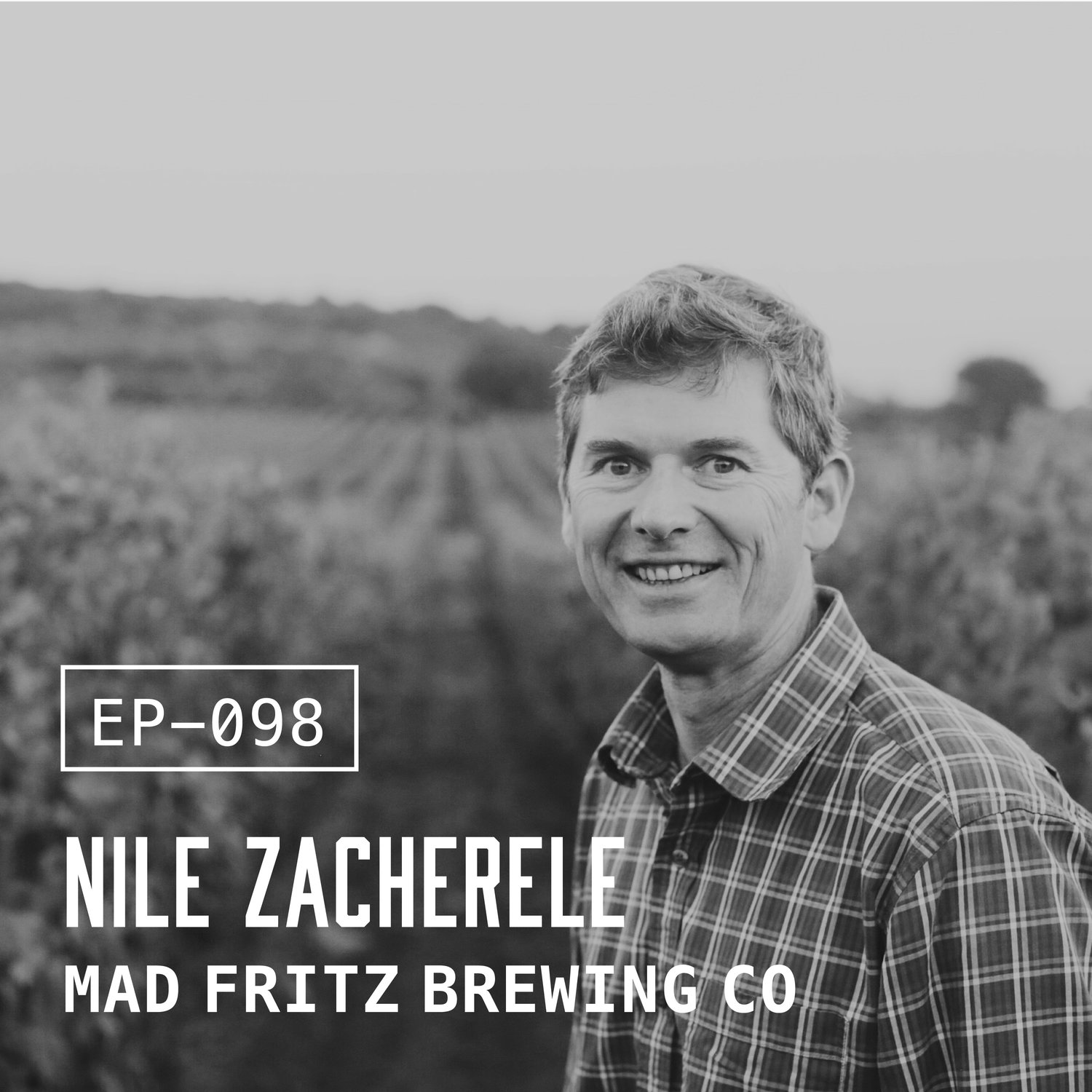
EP-098 Nile Zacherele of Mad Fritz Brewing Co. and David Arthur Vineyards
EToday we're going to talk about origin beers. There's increasing discussion in niche beer circles about the accuracy of some of our beer vernacular. What constitutes farmhouse ales, for example? Most leading farmhouse beer producers don't operate a farm at all. Rather, they hold close to some of the prevailing traditions of those styles largely lost to history. And increasingly, farmhouse producers are located in urban environments, pulling extremely far away from their inspiration, but perhaps staying connected to methodology or year profiles that give them a way to talk about a different approach to brewing regardless of the disassociation. But today we talk to someone who's working hard to take another part of beer making back to an extreme niche tradition, and that's Mad Fritz Brewing in Napa Valley. Owned and operated by Nile Zacherele, a professional vintner at David Arthur Vineyards on Pritchard Hill, Mad Fritz is an attempt to take the ingredients of beer back to an origin status, not unlike winemaking where the location, the soil, and the cultivation of the ingredients is both present—and local—to the production of the beverage. To that end, Nile has convinced some locals farmers to grow barley for him, which he intends to floor-malt himself. He even sources water from local wells and reservoirs. He also barrel-ages or barrel-ferments all his beers, many of them on the paler side, which means they pick up wood character quickly. I first learned of Nile's beers when he sent a care-package some months back and I tasted through them with some good friends and colleagues here at the studio. We were curious—and sometimes downright perplexed—by what was happening in the bottle. These were very unusual beers in both concept and execution. Not to mention the details where were we found ourselves becoming engaged—a shift in water profile, a lingering grain quality, wood character that skewed our expectations. So when I had the chance to visit recently on a short trip around the North Bay, I wasted little time in asking Nile a hundred different questions. Then we went up the hill to the vineyard to taste the grapes, the fermenting juice, and the finished wines that have serviced as a sort of inspiration point for brewing origin beers. And I'm happy to say I'm still curious and perplexed.
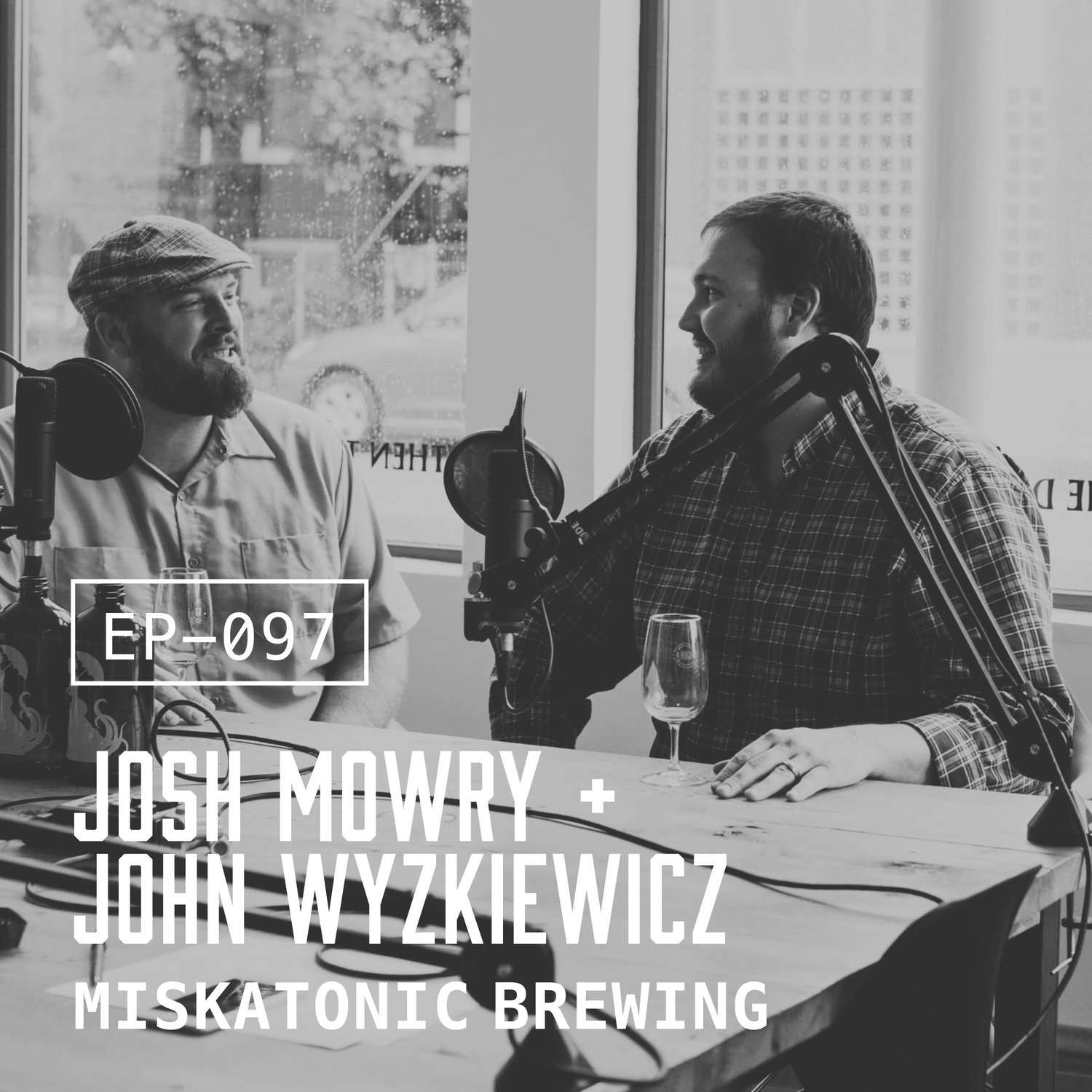
EP-097 Josh Mowry + John Wyzkiewicz of Miskatonic Brewing
EThis week's episode features one of Chicagoland's newest production breweries—Miskatonic in Darien, Illinois. My first memory of these guys was sitting at Owen & Engine, an English-inspired bar on Western Avenue that routinely puts together a great list. Scanning down through it, I noticed a name I'd didn't recognize, and next to it, a simple, refreshing style designator—"Mild." Now, I fully admit that, as someone who drinks for a living, I'm in a bit of a bubble at times. But I was thrilled to see that word. You may recall from way back in episode 4, Mark Spence and I complained that there were no English Milds being made in Chicago. And making a beer like that close to home is critical—it's not going to export across the Atlantic all that well. So when I saw a start-up in Chicago brewing a Mild out of the gate, I was all over it. And it was great. Delicate, slightly toasty, a tad bitter, balanced by a malt character that finished dry. It's a perfect beer. A perfect style, really. But that Mild, as memorable as it was for me, was less about a style that Miskatonic was keen on, and more of an approach to every style they brew. Subtle, balance, delicacy—this is what I've come to know them as. And this past year, GBH was lucky enough to work with them as well, helping them get their story straight and their message ready for market as they entered with cans for the first time, introducing themselves to thousands of new customers. So here we are, two months into packaged product on the shelves. It's a perfect time to ask them how it's going—and how they got here.
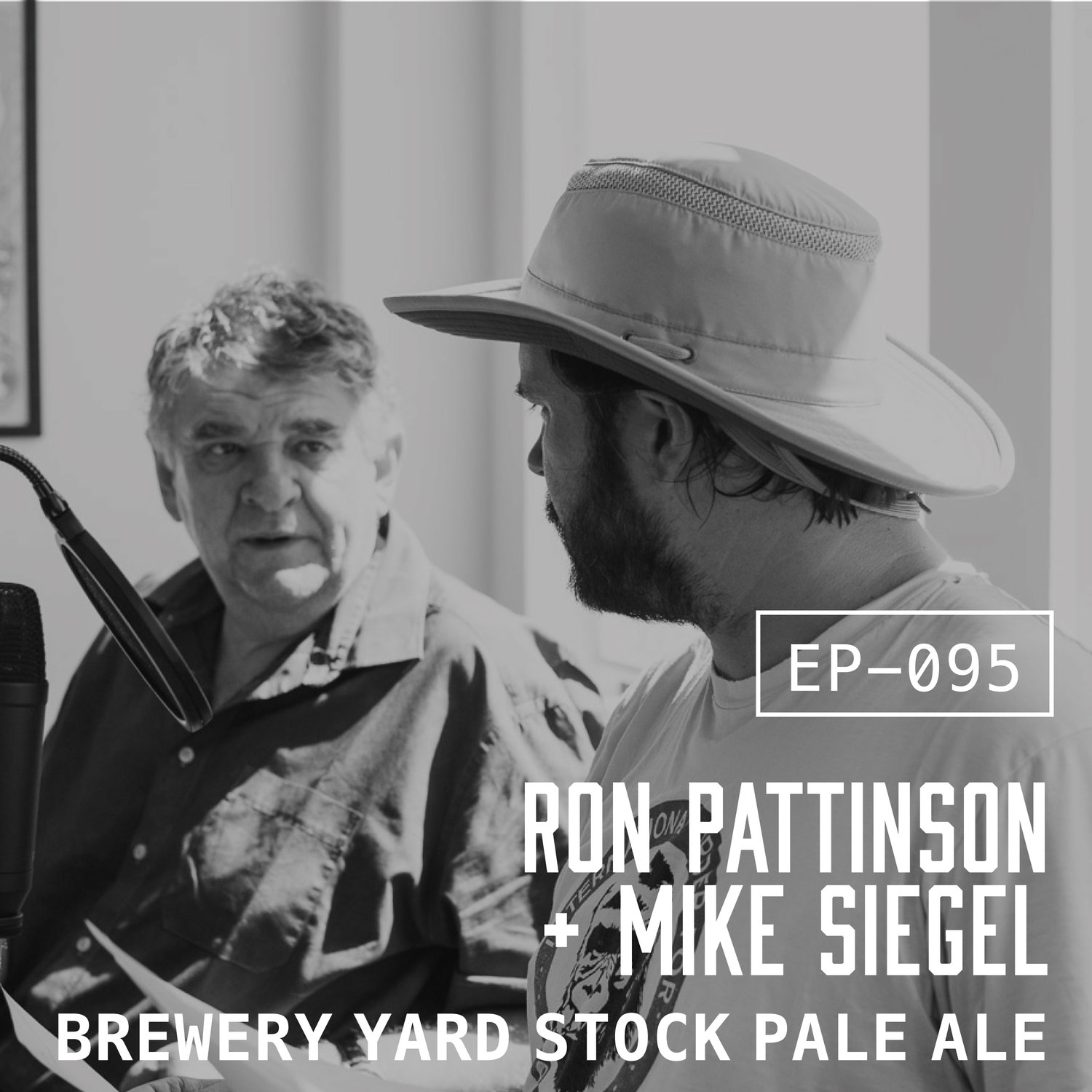
EP-096 Ron Pattinson + Mike Siegel with Brewery Yard Stock Pale Ale
EA while back, when we were shooting Grit & Grain in the Goose Island barrel warehouse, there were a series of barrels set aside for a special project lead by Innovation Manager, Mike Siegel. All I knew at the time was that it was a Brett Pale Ale of sorts. Other details were kept close. Today, I got to taste the final results of that experimental beer. But more importantly, I got the back story on the collaboration between Goose Island and beer historian Ron Pattinson—who, over the years, has worked with a number of breweries to re-create ancient recipes down to the tiniest of details. Ron is a prolific writer. He's got a number of books and magazine articles under his belt, and a website that's about as old as ours is going on 10 years now. Mike Siegel, who you may recall from episode 28 of the GBH podcast, leads innovation at Goose Island's Fulton Street brewery in Chicago. Between them, I got a couple of words in. But mostly, I tried to clear the way for some of their deeper insight into the challenges—and the fun—of bringing a recipe like English Stock Yard Ale to life.
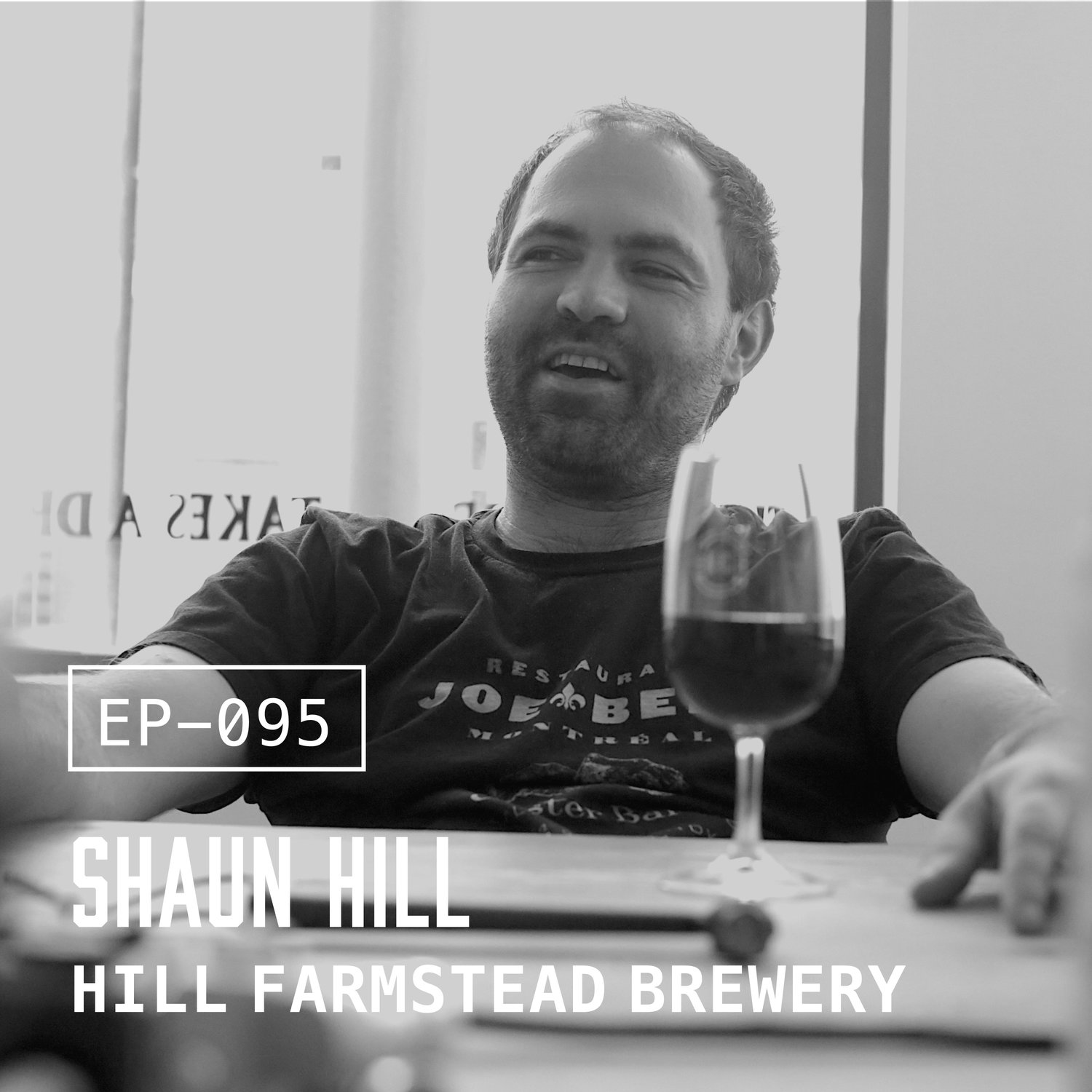
EP-095 Shaun Hill of Hill Farmstead
ELongtime GBH readers may recall the article I wrote about Hill Farmstead back in January 2014. For GBH, and myself as a beer writer, it was a bit of a turning point. That article remains our most-read brewery profile ever. And now that it has two years running on it, I doubt that'll ever change. The reach it's created for GBH opened a lot of doors for me and the team, and it was shortly after that that I first began bringing other writers into the fold. The entire reason many of those writers sought me out was because of that article. It changed something for them. It gave them a reason to think about beer writing very differently—and that was their words, not mine. But I can attest that even for me, it changed things. I've written about many many breweries over the years—almost a decade now. And most breweries have a sense of place and personality. But until that visit to Hill Farmstead, no brewery I'd visited had that sense of place. Or that kind of personality. Indeed, it took me almost a year to gather my feelings on the subject, and to share that story with my readers. It's a bit ironic for me that so much of my thesis was focused on the story beyond the hype for Hill Farmstead at the time. Don't get me wrong, Shaun Hill's reputation was warranted, and the beautiful setting of the place certainly told an accurate story. But it was ironic because my experience actually made me value Hill Farmstead even more, but for very different reasons. I was attracted to Shaun's focus, the simple-but-expressive beers being made at a time when there was no real vocabulary for a mixed fermentation Saison in our typical craft parlance. The beers harkened back to my first and enduring loves, like Saison Dupont, for which I'd not found anything comparable in the states. And something about the place reminded me so much of the upbringing I had in rural Pennsylvania. The terrain, the isolation, the struggle to produce something valuable so far away from where those things are typically valued. After reading the article himself, Shaun admitted to not remembering my visit much that day. In fact, he reluctantly gave me about 10 minutes of his time and went back to work. And most of the piece came not from the things that Shaun said, but the things that he did. I witnessed not just the beauty and rare quality of it, but the work, frustration, and anxiety of it all—and it stuck with me. It was mostly a portrait built on observation, and a bit of self-reflection for my own life experience. That article tied Shaun and I together. Years later, and we've become friends of a sort. I've gone back to visit a couple times a year, like many of you have. And I've been lucky enough to steal away some time on each of those trips to listen and learn from his experiences up on that hill in Greensboro, Vermont. Some of it has been trying and frustrating. And some of it has been revelatory and edifying. That's just a way of living in that part of the world. The weekend we recorded this episode, he was in town for our friend Ryan Burk's wedding in Chicago. Ryan is the cider maker at Angry Orchard's Walden project. You may have listened to his episode a few weeks back. You'll find a lot of parallels here in my conversation with Shaun. The three of us learn a lot from each other these days, but of course, so much of it will be unique to his experience as the creator of Hill Farmstead—which, to my mind, is still one of the most singular things in the world.
EP-094 Doreen Joy Barber of The Five Points Brewing Company.
EToday's guest is perhaps someone who could be described as the "hardest working person in London's beer industry." As well as heading up Marketing, Events & Comms for The Five Points Brewing Company in Hackney, East London, Doreen Joy Barber also co-runs the quarterly London Brewers Market, is an active member of all-female beer group, the Crafty Beer Girls and even finds the time to pull a few shifts behind the bar at The Chesham Arms, also in East London. What's surprising is that back when she lived in her native Florida, apart from a little bar work, Doreen wasn't an active part of the beer scene, even though it feels like she's been working in beer all of her life. After taking a chance on applying to study a master's in anthropology here in London, Doreen moved overseas, even writing her dissertation on CAMRA, the Campaign for Real Ale. I asked Doreen to come on the podcast in part because of the way she kinda just "fell into beer" and became such an integral part of it. But also because of how some people describe the brewery she works for as, how Doreen puts it: "normcore" for concentrating on a tight core offering, instead of just throwing out an increasingly myriad selection of specials, like so many of their peers. If you're ever in London, it's very difficult not to bump into Doreen if you visit one of her many favourite pubs, of which there are just too many to mention. And in her own words, if there's a drink in her hand, then she's working.
EP-093 Charles Adler of Lost Arts + Kickstarter
EMy guess is you didn't see this one coming. Neither did I, honestly. Today we talk with Charles Adler, co-founder of Kickstarter and, most recently, the founder of Lost Arts in Chicago. I'm going to let him tell you all about that. But first, I wanted to explain the connective thread I see between Charles and the beer world. First, both are incredibly entrepreneurial. And in many ways, entrepreneurialism has come to define what craft beer is. The things that Charles has created, and what craft beer values, are things like transparency, innovation, and community connections. But in my conversation with him, I think you'll also hear some other familiar things. A heads-down approach to building something. A desire to grow, but also remain steadfast in your values and goals. The need to be a generalist, but also value specialization. It's the constant need to balance a hundred different things that are all in tension with each other, in order to get from point A to point B. There are also a lot of parallels between my personal background and Charles' that make for some pretty quick and interesting learning—even insights into what GBH is at its core, and how it came to be. I'm thankful for that. I hope you take away as many insights as I did about how you can think about your own business differently. Charles has that affect on people. Oh, and we talk about how a brewery might just be relevant to his new project, too.
EP-092 Ryan Burk of Angry Orchard Cider
EToday's guest is someone I've been waiting to interview for a couple years now. Since I first started the podcast, he was high on my list, but for one reason after another, it always seemed like we should wait. We just didn't know what we were waiting for, exactly. Ryan Burk is the cidermaker for Angry Orchard, specifically running their new innovation cider house in Walden, NY. He was the former cidermaker at Virtue Cider in Fennville, Michigan. And before that, he was a homebrewer in Chicago. I met him just as he was transitioning from brewer to cidermaker, pouring some of Virtue's earliest batches. You may have seen GBH, and me in particular, take a keen interest in cider over the past couple years. We've written about E.Z. Orchards in Salem, Oregon, Rack and Cloth in Mosier, Oregon, and Virtue, among others—and visited many more. Ryan is the reason for all that. He held the door open for me. And in many ways, he still does. Thanks to Ryan, I was able to translate the many things I love about the most exquisite beers in the word, like Saison Dupont and Hill Farmstead, into an equally beautiful and delicious world of cider making. From there, I've ventured into natural and low-interventionist wine making as well. And it all started with Ryan. He's become one of my best friends in the world. In fact, the day this podcast episode was published, I was officiating his wedding to Eva Deitch—another name you might be familiar with, as she's one of the many photographers GBH has collaborated with over the years. I was honored to be asked. As part of Angry Orchard, Ryan also honored our business by asking us to design the labels for his personal collaborations with cidermakers all over the world that will start releasing in the coming months and years. So it's safe to say that my relationship with Ryan is one of the more profound I've had in my life. I'm forever thankful for the impact he's had on me as a person, as a drinker, and the influence we've had on each other professionally. That's what this whole business of GBH is about for me, and nowhere does it come true more than right here.

EP-091 Tomme Arthur of The Lost Abbey, Port Brewing, and Hop Concept
EThis week's guest is the stuff of legend—Tomme Arthur, the founder and brewmaster of Lost Abbey. He's a brewer associated with both San Diego's hop-forward dominance in craft beer, but also the world of barrel-aged Saison and Belgian-inspired farmhouse beers that continue to carve out a niche amongst the geekiest of beer drinkers in the U.S. And Tomme continues to impress both of these highly critical audiences. But Tomme's also a big part of the future. His voice carries weight. His opinions matter to the next generation. And his expectations only seem to get higher for others, not to mention himself. I first met Tomme when we helped judge the Brewbound Start-up Brewery Challenge in San Diego. Later, we'd meet up again, this time in Belgium at Brasserie Dupont when GBH was there filming our mini-documentary about Saison Dupont. We also were lucky enough to document the historic collaboration between Tomme and Olivier Dedeycker, Dupont's fourth-generation owner, that occurred that day. On the site, we described that collaboration as "punching a hole in time." As hyperbolic as that might seem, to the people involved that day, it barely served to capture the feeling. So when Tomme came to town for the Windy City Expo, an annual showcase with his distributor parter here, we decided to get together at the Hopleaf, a place that's supported Lost Abbey from its early days, and have a conversation with a small group of fans in the upstairs bar. We also had some bottles from the cellar that Michael Roper was kind enough to share —and drink—with us. Here, we dig into Tomme's origin story, San Diego then and now, brand, portfolio, and barrel-management, and at least a dozen other things. Plus, we had a great Q+A at the end with the folks in the room.

EP-090 Drew Larson of Leaders Beverage
EDrew Larson is one of those people that's everyone's favorite person. He's funny, smart, affable, and, other than brewers themselves, I don't think there's a guy in Chicago that works harder behind the scenes to bring you great beer. Drew has an interesting road to beer. He was in the military, went to culinary school, became a sommelier, then a cicerone, then studied draft technology while he was managing the beverage program at the Hopleaf. He's also an incredible hobbyist, and we get to that right at the start here. Eventually, all that obsession and curiosity lead him to start a company called Leaders Beverage. He now handles the design, installation, and maintenance of draft systems in a growing number of bars, breweries, and restaurants in Chicago. And he does it all with a singular approach to quality and businesse sense that you won't find in most people who just want to clean your lines. This guy cares about the health of the industry overall, and his clients' businesses specifically. In fact, his company maintains the six lines we have here at GBH studio. He's the reason I'm confident in having six stainless steel flow control taps pouring some of the best beer in the city on any given day. I know it's going to taste right. So let's get into it with Drew and learn a lot more about draft maintenance, how it affects the beer you drink and the business that's selling it. And of course, all the other fun stuff he does.

EP-089 Sara Hagerty of Malteurop North America
EThis is going to be another deep dive into the world of brewing malts. We previously chatted with a micro maltster, Troubadour, in Fort Collins. That gave us some insight into the niche world of specialty craft malts. But today's guest covers a much wider spread. She's Sara Hagerty of Malteurop's U.S. division. She has an incredible technical background in biology, chemistry, yeast, and now, malt sales. It's an interesting role, working across so many different kinds of breweries in a large region of the U.S., trying to meet their needs with barley malt. And in her time with Malteurop, she's seen the company adapt to fit the rapidly changing needs of craft brewers after so many years of providing for the largest brewers in the world. It's quite a different beast. I met Sara at the Hopleaf recently, and within minutes of talking about her job, I knew, or at least hoped, that we'd get her in to the studio for a podcast interview so that I could share her insight and experience with you all. Thankfully, her insane travel schedule lined up with my own, and we found an hour to dig in.
EP-088 Nick Dwyer of Beavertown Brewery
EThe landscape of the British beer industry has seen a seismic shift over the last few years as the influence of American craft beer culture has become ever more pervasive. But what we're seeing now is breweries that were influenced by U.S. beer culture when they were young are now shaping this to form their own ideal. A new, brighter, and more energetic British beer community. One of these breweries is Beavertown, of Tottenham, North London, which was founded by Logan Plant—son of none other than Led Zeppelin frontman Robert—in 2012. After finding inspiration in the beer and food culture he discovered in Brooklyn, Plant returned to London and opened a restaurant called Duke's Brew and Que in a little pocket of East London called De Beauvoir town—"Beavertown" to the locals. In less than four years, Plant has gone from brewing by himself on a six-barrel kit in the kitchen of his restaurant, to employing a 40-strong team at a state of the art 30-barrel facility. In part, this has been thanks to the great beer his brewery produces, but much of Beavertown's success is also due to the strength of its brand and its great design. Creative director Nick Dwyer joined Beavertown part time shortly after they opened, even pulling a few shifts at Duke's Brew and Que while the brewery got on its feet. His unique design work, featuring signature skulls and spacemen, has rapidly ensured that Beavertown has become one of the most instantly recognizable beer brands in the UK. And the brewery is already gaining traction in the U.S.—they were the only UK brewery invited to pour at the Firestone Walker invitational last month. Nick's story of how he accidentally found his way into the beer industry after graduating from art school is a fascinating one. Working in beer might never have been his intention, but now, through his artwork, he's helping to drive and inspire the UK's new breed of craft brewers.

EP-087 Dave Kahle of Breaktrhu Beverage
EOne of the amazing things about the beer industry diversifying like it has is that there are so many unique roles that simply didn't exist before. And today's guest has one of them. Dave Kahle, one of the rare Master Cicerones in the world is a specialist at Breakthru Beverage, formerly Wirtz beverage, in Chicago. A few years back, they decided to branch out from wine and spirits, and take on a role as a craft beer distributor. To do that, they knew their sales force needed a serious education, and when they went looking for someone to lead that effort, Dave answered the call. He works on the sales side, but his primary role is helping his salesforce understand the ingredients, processes, and context of beer. He does this in a variety of ways, both big and small, which you'll hear about. But he's also one of the first people you'll meet at Breakthru if you're a new brewery looking for a distribution partner. And that's where Dave puts both his palate and his former life as the owner of a popular bar to work. He has a broad vision, and deep skepticism of many things he sees in the beer industry today. And he tries his best to put that to work to benefit the many partners he interacts with. I like to remind listeners that when you're talking to someone from the distribution tier, they often can seem a bit vague sometimes — there's good reason for that. They answer to many different people. And it's not easy for them to keep everyone happy when there's so many perspectives at work in the industry. So don't be too hard on him — rather, try to glean something from the insights he's so generously laying out there for us. There's plenty to go around.
EP-086 Craig Perman of Perman Wine Selections
EFor anyone who's been following GBH since the very beginning, today's guest will seem like a blast from the past. One of the first interviews I ever transcribe wasn't with a beer guysat all — it was with the owner of a wine shop. Perman Wine Selections in Chicago's West Loop is one of the city's gems. It's an unassuming storefront with a well-edited selection. But the real story of the place and its impact on Chicago food and beverage is its owner, Craig Perman. He conducts a lot of his business over email, through his newsletter, and he travels the world looking for niche producers that he can bring in to the US, and sometimes only to his own store as an exclusive retailer. He works with many Chicago restaurants to build their lists and supply great wines. And he's long been an interesting follow for me given his proclivity for the written word. His newsletters are fantastic. So he's in a bit of a hustle, like so many of us who work in the beverage industry, piecing together his skills in a variety of ways. But the real reason I like following Craig, and occasionally picking his brain, is because so much of what's happening for wine geeks right now indicates a possible future for some of the country's best beer makers. Resources, agriculture, fermentation, and limited intervention (essentially wild wines). But also market factors like pricing, distribution, and trends. There's a lot more I want to get in to with Craig, and I'll likely have to have him back again soon to do it. But this chat got us off to a great start.
EP-085 John Barley of Solemn Oath Brewery
ESometimes it feels like every small craft brewery is in constant expansion—and the numbers back up that general sentiment. More capacity, bigger brewhouses, contracting out, and bringing canning lines in—there's an endless number of dependencies when you're building out an expanded space in the hopes of meeting demand or chasing a growing market. And on the surface, these expansions seem obvious, almost simple. Afterthoughts in a market where success still seems inevitable for many. But behind those expansions are a thousand tiny decisions, and a few really big ones, that add up to hope and anxiety, victories and defeats, self-doubt and over-confidence. But somehow, through all those ups and downs that any small business owner is all too familiar with, you have to have the unwavering faith that it'll all work out. Today's guest is John Barley of Solemn Oath. I was there when they first fired up the brewhouse in 2012. I've been there alongside their many phases of growth over the subsequent few years. And today, I want to bring you a story about the project that pushed them, the entire team really, to their limits. Over the past year, they've replaced the brewhouse, their cold storage, brought in a canning line, and even mundane things like the boiler, condenser, all the behind-the-scenes infrastructure that makes the expansion possible—an expansion that, for a while, looked like it might be too much. But here he is, on the other side. Not unscathed, but perhaps appropriately scathed. And better off for it.
EP-084 Gary Gulley of Alarmist Brewing Co., Revisited
EWe're 84 episodes in, and that means that some of the breweries we profiled when we first started this thing are a year or two old by now. And that's a year or two of hindsight and lessons learned that anyone in the industry would benefit from. Why kind of problems has a two-year-old brewery had to solve? What kind of assumptions did they make that were completely off-base? And how did they adapt to the always-evolving nature of the market for beer? Today, I'm going to bring you the perspective of Gary Gulley of Alarmist Brewing in Chicago [from Episode 35]. It's a small operation that hasn't found its stride yet, though they've certainly found a way to solve some unique problems. And despite the hardships of running your own start-up manufacturing business, all the stress and long-term doubts and insane cash flow issues, the effect it can have on an individual and their family is still a net positive. The power of entrepreneurialism lies in that counterintuitive result—with all the incredible burden you take on, you also gain all that reward.
EP-083 — Chris Hall of Brew By Numbers
EHosted by our London Contributor, Matthew Curtis—For my first episode, I invited one of my best friends in the UK beer industry up to my apartment, here in North London, to record an interview. These days, Chris Hall works for a cool little brewery in South London called Brew By Numbers as their sales and media guy. I'll be bringing the full story of Brew by Numbers to GBH soon, but before then I wanted to talk to Chris about how he worked his way into the beer industry His job encompasses everything from running the brewery's Twitter account to writing artful blog posts about forthcoming beer releases as well as developing and hosting events. On top of this he'll often be out visiting accounts and selling beer, and on really busy days you might even see him on the back of a forklift truck moving pallets around the warehouse. Such is the way of a small business. But Chris' journey into the brewing industry was an unconventional one. Like me, he started out as a beer blogger, which is how we met and became friends. From there he became a professional beer writer, which eventually led to his position at Brew By Numbers. This is something we're seeing more and more of in the beer industry, people starting out as enthusiasts who are eventually turning pro. And like Chris, they're not just succeeding—they're thriving.

EP-082 Bill Covaleski of Victory Brewing Co.
ESo I'm just going to start by saying this might have been my favorite interview ever. Maybe it's the Pennsylvania connection, or maybe it's just Bill's way of giving zero fucks while also being a strong competitor in the market, or maybe it's just the lame-duck ease with which he's handling himself after the sale and partnership with a private equity group and Southern Tier Brewing, but yeah, I think this is the one. It summarizes everything I love about doing the podcast. People sit in that chair across from me, either ready to do battle, or ready to dance, and I have the utmost appreciation for how open they are about their lives and business with me for an hour. And then letting me share it with you all. I've said many times that this podcast isn't an issues-driven show — and by that I mean that I'm not looking for a hot take or new trend thinkpiece fart, or recent acquisition gossip. I'm trying to document an oral history for an industry that's changing faster than I could possibly record. It's guaranteed to fail in the sense that I'll always miss more opportunities than I get. But if I thought about that, I'd probably have a panic attack. Instead, I just get what I can and hope for the best. Bill was in town for an event at the Hopleaf alongside Sam Calagione of Dogfishead and Greg Koch of Stone Brewing when this recording took place. And while I was about to hit the road, the only timeslot I had was late on a Sunday night after putting the kids to bed and Bill was happy to oblige. I'm thankful for that. Victory Brewing, man, I don't think there's a brewery that better defines that first wave resilience of craft beer, but still adapts and riffs on its own success to remain relevant and pioneering here in 2016. And I think you'l understand why after hearing this conversation.

EP-081 Andrew Nations of Great Raft Brewing
EToday's guest is one of those chance encounters in the beer world where an online voice becomes a smile and and a handshake in person. Andrew Nations of Great Raft Brewing in Shreveport, Louisiana is a guy on Twitter to some. One of those lone rational voices in a literal wilderness of craft beer zealously run amok. And not long ago, he ventured to Chicago, and subsequently to the GBH Studio for a live podcast taping. That's when he and his wife stepped out of the virtual and into the physical realm for me. And we had a great time. A few months later, and a dozen or so DMs, we realized we'd both be hanging out at the Craft Brewers Conference this year. I was keen to hear a lot more detail on Andrew's backstory, the beers he was making, and certainly about his market, which I know almost nothing about. The south is a weird place for craft beer in terms of sales, legal issues, and styles. And this was a great opportunity to dig in to the details with a guy who seems to have his head wrapped around it all. He also brought a case of Prima Pils for no reason other than Pennsylvania won't let you buy beer in more convenient ways.

EP-080 Tom Korder + Eric Hobbs of Penrose Brewing
Ralph Waldo Emerson, the American transcendentalist, has an interesting way of describing what progress looks like — he paints a picture of a boat, tacking back and forth with the wind, as it makes its way across the ocean. From a distance, it appears to go in a straight arching line towards its pre-determined destination. But of course, up close, it's a thousand little zigs and zags, working with the momentum of the wind in order to propel itself forward. The final destination may be determined — but it's place on the horizon is only ever approximate until those final moments when it comes closer and closer upon hitting the far shore. For me, this is the metaphor of the emergent business strategy. And for today's small brewers, it represents a way to plot a vision for the future, while also admitting that the prevailing winds of change will be something you have to grapple with, as elegantly as possible, on your way across the sea. And he summarizes all this, all these little decisions that composite big decisions by saying, "The force of character is cumulative." Today's guests are a pair that have done a good job of doing just that. Eric Hobbs and Tom Korder of Penrose Brewing Company in Geneva, Illinois, about an hour west of the city of Chicago along the metro train line, set out on the Belgian-inspired journey that began in their days together at Anheuser-Busch and Goose Island, and went forward into a future all their own. They learned some lessons early on that they adapted to quickly and with grace. Such as hitting the market early with a Belgian single and hearing "where's your IPA" a hundred times a week. And running a bottling line for the first time, and having some yeast management issues. And hosting bottle releases for their sours, and realizing just how intense that kind of crowd can be when they don't get what they want, how they want it. Through all of this — these two have tacked back and forth on their way to the brewery they always imagined. And in my opinion, they're loosening up the sails, and picking up speed.

HYPE-002 Bourbon County Stout - The Science is (Mostly) In
EWelcome to the second GBHypecast, an episode devoted to helping a brewery share an important story that deserves to be told. This episode is about Goose Island's ongoing research into the off flavors in Bourbon County Stout this year, something that's been on a lot of people's minds since January. It's an ongoing situation, but the good news is that the science is in—and there's a lot of detailed insight to share. Sometimes when we're working with our clients in a creative or strategic capacity, we have access to situations that no journalist ever would. For example, we creative directed the Goose Island BCS documentary, Grit & Grain, this year, which brings this issue a little close to our hearts. And when we witness something that we think is unique or unprecedented in our work, we often encourage our clients to consider sharing a story that, on its face, doesn't seem like something a brewery would typically share. Maybe it's complicated, or really far off in the weeds and hard to articulate, or maybe the media tends to chew things up and spit out clickbait headlines at a business' expense. So many of those stories, regardless of how badly our audience would want to hear them, or how important they might be for others in the industry to hear, never see the light of day. And that's just not good enough for me. So we conceived of GBHype as a way to solve that problem. We work with the brewery to outline what we think is the real story, figure out what a real beer audience wants and should understand, and then help them bring it to life in a post on GBHype, or here—a special GBHypecast. It's a way of creating unprecedented transparency between a brewery and its fans. And we're proud to offer our platform and expertise to serve that need. GBHype is not unbiased. Like I said, these are our clients. I care deeply about their business, and I work with them in a strategic and creative capacity from time to time. Having said that, this interview is unscripted. My only goal is to get an important story straight and into the hands of the GBH audience as directly and truthfully as possible.
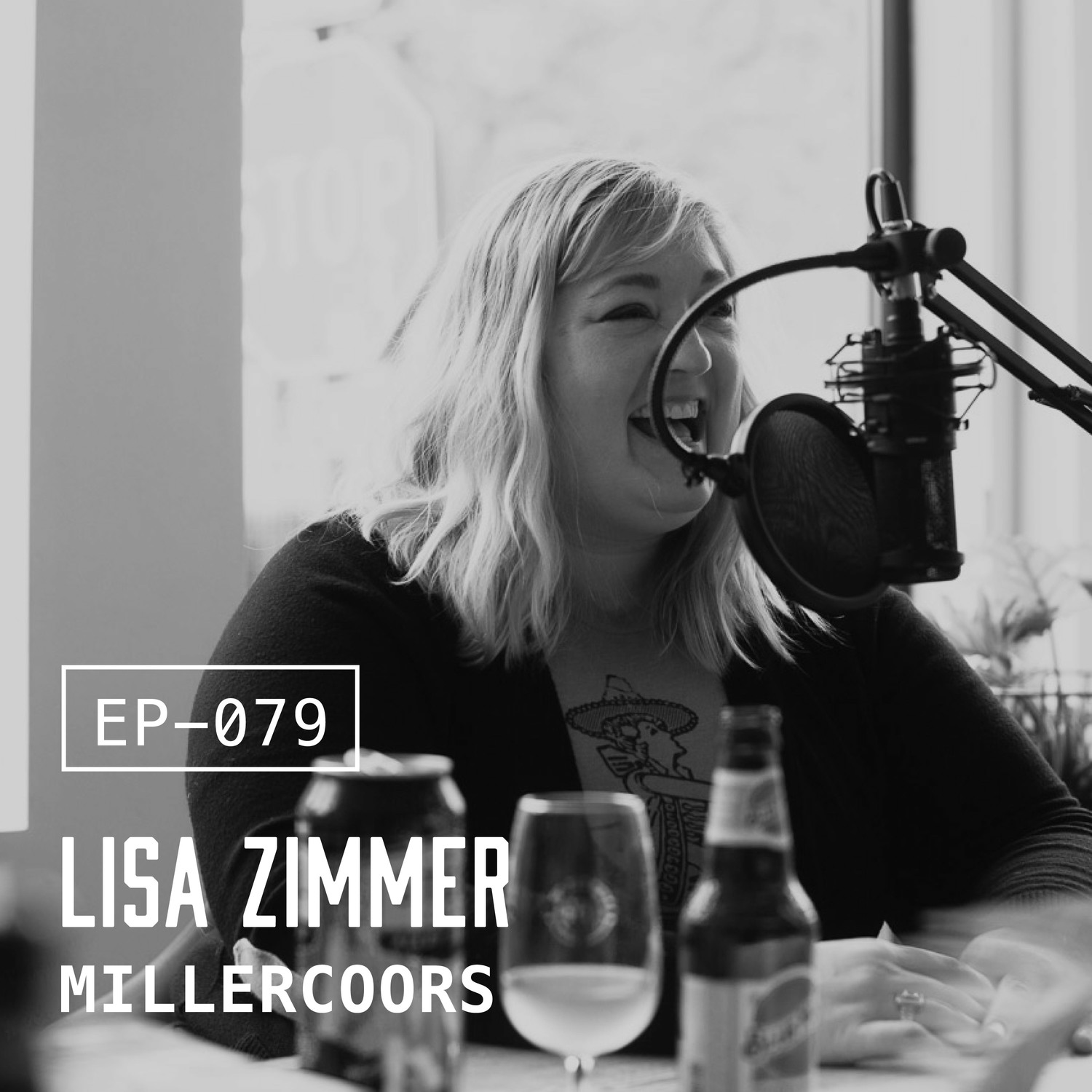
EP-079 Lisa Zimmer of MillerCoors
EToday's guest is one of those people that many industry folks know and love. As for the drinkers, well, depending on who you rub elbows with online, it's quite possible you've encountered Lisa Zimmer on Twitter from time to time. She has a beer job that only exists at a large brewery. At one time, it was called "digital and consumer outreach specialist." But her influence is so much broader than the title implies. In Chicago, she's known as the woman who started the Brewers Unleashed series where brewers from across the MillerCoors family come together downtown to share some of their latest and most interesting beers. She's used that event as a way to bring together beer geeks, brewers, and other professionals for a good time. She's known as one of the most visible personalities on "beer twitter," where she converses with colleagues and competitors, makes fun of the more absurd parts of beer culture, and generally tries to keep everybody looking up in a place where it's just so damn easy to get down. In larger industry circles, she's known as an innovator for the unique ways she's helped shape the culture at Tenth & Blake, MillerCoors import and craft division. She has a key role there, helping the team stay connected and engaged in beer through education, hands-on home brewing challenges, and ensuring they get out into the world and experience the ruckus of craft beer first hand. I've had the pleasure of getting to know a number of folks that Lisa has brought in to the beer-loving fold. Finally, in 2014 Lisa was named one of 26 innovators making a difference in beer by All About Beer magazine, alongside people like Ray Daniels of Cicerone, Mariah Calagione of Dogfishhead, and Bob Pease, who is now President of the Brewers Association. So while Lisa has been a friend for some time now, we had yet to dig in and record an interview. As she transitions from her current role at Tenth & Blake to a new one at MillerCoors, this seemed like the perfect time to look back on a greta start in a new industry for her, and what she'll be up to next.

EP-078 Jim Koch of Boston Beer Company
EI feel like the past 18 months have been a sort of reconciliation for craft beer drinkers and brewers, with a lot of folks focusing on beers that are highly drinkable, or sessionable, but still quite flavorful, exciting, and ultimately easy to find. There's been a surge in the market of craft Lagers, Pilsners, Session IPAs and Sours, along with some renewed appreciation for beers like Sierra Nevada Pale Ale. And in about a month we'll be seeing an ode to Fat Tire in a collaboration 12-pack from New Belgium. So even as some craft brewers and their fans are finding more and more obscure, niche areas to explore, a lot of folks in craft beer are backing up a bit and asking themselves, "What's good?" And, "Can we get more of that, please?" So with that kind of a swing back toward the middle, you'd expect a classic craft beer like Sam Adam's Boston Lager to be in a bit of a resurgence. But as the nation's largest craft brewer (right behind the recently re-defined-as-craft brewer, Yuengling), Boston Beer Company hasn't been seeing the love—at least when you look at the numbers. The numbers for Sam Adams mimics the glacial decline of macro lagers more than it does the consistent double-digit growth of smaller craft brewers. Is it just that Boston Beer has gotten so big that it simply isn't part of the consideration set anymore? Maybe. Is the profile of Boston Lager outdated? Maybe. But I'd like to offer a different view—one that sets aside this specific beer for a second, and takes a look at the entirely of the Boston Beer business. Boston Beer is so much more than Sam Adams. And its future seems geared toward diversity—not just a single beer they've been making since the 1980s. In the past few years, they've taken a run at IPA with Rebel, and it instantly became one of the biggest launches in craft beer history. They followed that with a spread of different IPAs all playing off that success. They've recently introduce a series of nitro beers that are sure to get the word "nitro" on the minds of consumers in a big way for the first time since Guinness. Boston Beer is also the owner of Angry Orchard, a cider company they started from scratch, and now owns about 60% of the cider market in just three years. And now makes more than a million barrels and growing. Even before that, they launched Twisted Tea, a brand that sells 640,000 barrels' worth of booze a year. That's nearly the volume of Lagunitas, and it's still growing by double digits. Through their Coney Island Brand, part of their Alchemy & Science wing, they entered the FMB space with a line of hard sodas. They've also recently launched a line of alcoholic sparkling waters called Truly. All this to say, it'd be foolish to talk about Boston Beer as Sam Adams anymore. Boston Beer is a mature, well-diversified company that's placing big bets on the next thing in alcohol that it feels it has the opportunity and expertise to pursue. Through that lens, they're not the slow-moving, classic craft beer that we should all take pity on as it slowly loses share. Rather, they're one of the leading companies in the U.S. when it comes to new alcoholic beverage entries. And by that account, they're killing it. Now, that might take some of the sheen off an idol for you—especially if you were holding up Jim Koch as some sort of purist in craft beer. Although I think he's also that. But the larger view of Koch should certainly take an honest look at the things this guy—and his company, of which he still holds all the controlling shares—puts in to the world on a regular basis. So yeah, when it comes to something like Boston Lager, this guy is as pure as they come. And when it comes to new opportunities, new ventures, new ideas—this guy is as cunning as it gets. And you don't really have to worry about reconciling all that, of course, because Koch is nothing is not indifferent to other people's opinions. And I kind of love him for it.

EP-077 Les Stewart and Chris Powers of Trophy Brewing Co.
EI was in North Carolina for a quick minute helping launch a start-up, and I had about a 2-hour window on my last night in Raleigh to record a podcast episode with one of the city's best known breweries — Trophy. I visited both their locations — known as little Trophy and big Trophy — and we really hit it off. From as far away as Chicago, I could tell Trophy had something special. Sometimes you can just see it. And my first visit didn't disappoint. Clean, well-fermented beers with character. A great vibe in the pub. And their early, hard-earned success off the back of a 3bbl system is about to get some relief with a new production facility on the other side of the city. So later that night the boys came by the hotel to record. It was the end of a long day of working and drinking, so this one's a bit on-the-fly, but it's such a great conversation with two of the most charming people you'll ever meet.