
Geeks, Geezers, and Googlization Show
430 episodes — Page 9 of 9

S1 Ep 6009 Helping HR and Recruiters Become Marketers
Today we're talking with Phil Strazzulla, CEO and Founder of the recruitment marketing company, Next Wave Hire, and creator of the YouTube series "Whiteboard Wednesdays". Firstly, if you haven't watched Whiteboard Wednesdays, you should. Whiteboard Wednesdays started as a New Year's Resolution and became a hit for viewers with over 252,475 watches. Stemming from conversations that Phil has had with recruiters, HR departments, and other business minds, he spends 2 minutes in front of a whiteboard each week to talk about recruitment concepts in relation to marketing. Covering topics such as using Facebook ads for marketing, HR chatbots, SEO and its relation to talent acquisition, and the myriad of other subjects that recruiters and HR are currently struggling with, Phill dissects these topics and offers solutions. Phil noted the need for a company like Next Wave when he saw how top talent was getting continuously bombarded by recruiters with generic or lifeless emails and cold calls. By using these archaic methods, recruiters were turning off more candidates than they were actually recruiting. So, he set out to teach recruitment departments how to give talent something useful that will cause them to notice you and be turned from a passive seeker to a new hire. Whether this something is an open source project, career advice, or an invitation to a workplace mixer, you have to think of recruitment in the same way that you would marketing. Show potential candidates the culture of your company, what you have to offer them, and why they should notice you. Phil explains Inbound Recruiting with this example, "If Nike wants you to buy their new sneakers, they're not going to send someone to your door. They're going to put out interesting content regarding the sneakers, content such as ads with Usain Bolt that make you feel aspirational while explaining the value proposition of the shoe are what consumers are sold on." For Inbound Recruiting, you're marketing the company as a place to work. Your product is your company and you need to show the value proposition of its workplace. Next Wave teaches recruiters and HR departments how to do this by showing them how to build relationships with potential top talent and establish a culture and buzz for their workplace. Starting with establishing a talent community on a business's website, Next Wave then encourages employees to drive the company brand and talent to the community by sharing news about the company, its events, and culture on social media platforms. Over time, candidates that started as passive job-seekers come to a place where they are ready to transition to a new company and career. With Next Wave, the foundation and relationship has already been set for these talented individuals to seamlessly move into the recruitment process. Keith also added this great point, "Recruitment is just like sales, treat your potential new hires like your sales team treats potential new clients." Of course, there are CEO's who object to the idea of their recruiters using work time for social media and company related engagement. Phil deals with these objections by showing them data and hard facts. If you don't think that potential candidates are looking through Facebook or Linkedin and that traditional methods of recruitment are still the best way to go, then you're going to miss out on top talent opportunities. To connect with Phil and Next Wave visit: https://nextwavehire.com/

S1 Ep 5008 Hire Veterans For The Right Reasons
Today, we're talking with a man who was pronounced dead at birth, diagnosed as retarded by his guidance counselor, and never spoke a word until he was 6 years old. Additionally, he had a documentary made about him in in 2007 called "Music Within". Our guest this week, Richard Pimentel, has overcome tremendous odds and Keith and I are honored to have him on our show. A disability rights advocate and public speaker, Richard was born and raised in Portland, Oregon. Pronounced dead at birth, his mother, who had gone through several miscarriages, struggled to cope with raising him. Shortly after he was born, she released him to the care of an orphanage where he stayed until his Grandmother found him. However, by the time she was able to locate him, he had adapted to the culture of the orphanage. This culture was one in which children were expected to be neither seen nor heard. It was partially due to this, and the rest Richard credits to stubbornness, that he remained voluntarily mute until he was six years old. While he was sent to a special needs classroom because of this , Richard reiterates that remaining non-verbal wasn't a disability but a choice. It was because of his experience in this situation that he grew close to the students. They were his friends, and he was able to see how they were treated. When people give their sympathy regarding Richard's backstory, he's quick to point out that it was all, in fact, a blessing. "Hard things in life give you keys to open doors, and it gives these keys because they're doors you'll absolutely need to open at some point." Out of this, he grew up to become and advocate for this disabled. It wasn't until later in life that Richard himself faced disability. Unable to afford to go to college, he went to Vietnam so that he could use the GI bill to finish his education. While there, his 5 man special team and another troop found themselves in enemy territory and trapped for months. Finally, they received the call that it was their chance to get to an extraction point. Relief turned to dismay when this news was followed by the order that 5 would have to stay behind to distract the enemy. The 5 chosen were, of course, his team. A defining moment in his life, his troop leader told them what he said was the real definition of responsibility- "It's not what you owe the country, or your teammates. It's your ability. Given the ability we have to slow the enemy down, what then is our response? Tell me, what's your response to this ability?" Moving on in our conversation towards the meaning of leadership, responsibility, and attitude, Keith, posed the question - "When I first heard your story about the real definition of responsibility, that is, your ability to respond to a situation, how is it that you see your responsibility or how you're helping employers take on their responsibility as it applies to taking in qualified veterans into the workforce?" Richard's response comes, of course, from his experience. Coming back from Vietnam, Richard had severe hearing loss and a traumatic brain injury. Knowing that his fellow veterans were also coping with these disabilities, he became involved with the movement to get the Veterans With Disabilities Act passed. Richard's passion was fueled by the training ingrained into him…"You never leave a fallen comrade behind. Ever." It occurred to him that he was seeing more fallen soldiers on Main Street than in Vietnam. "If I wouldn't leave them behind in 'nam, why would I leave them behind now?" With this thought in his mind, he then went on to develop programs to help bring veterans back into the workforce. In his development of these programs, he realized that employers don't hate the disabled, they just don't understand them. "I didn't need to change employers minds about people with disabilities, I needed to change their minds about themselves." If it's an issue with PTSD, the second most common issue versus a traumatic brain injury, the average employer is skittish because they don't understand these issues. So, Richard has taken on the mantle of teaching them what they need to do to accommodate workers with these issues. After giving them materials and training, he leaves them feeling more confident in their own ability to work with the disabled. Richard points out that accommodating workers with these types of injuries can be as simple as being available to talk, letting them know that you want them to talk to you about what they're going through, and that it's a safe space. Something as simple as a worker being able to tell you that they have an anniversary coming up where they lost men and don't necessarily work well during that week, and then being able to work something out, can make all the difference. Richard leaves us with this thought- the disability community has been more fearful about an economy like the one we have today than one where there weren't any jobs. What they want everyone to know is that they want you to be as pick

S1 Ep 4005 Can AI Help Hire Talent Who Have Jobs?
Is AI something that could be utilized in the recruitment process without eliminating the need for the human element in HR? This week, Keith and I cover this topic during a great conversation with our guest, Robby Gulri, CMO of Engage Talent, an AI-assisted recruitment support company. With the recruitment process going through a technology metamorphosis, AI has found its place in the echelon of the biggest players and change makers in business tech. Robby describes Engage Talent as "Recruitment Science", in which they "map the relationships between people, roles, companies, and dynamic markets using purely external data." When working with clients, the Engage Talent process is positioned on what Robbie calls the "Legs to the Stool". Talent identification: There needs to be the realization that sometimes a person and a company are just not a good fit. Now, this isn't necessarily the individual or the company's fault. Engage Talent believes that this improper pairing can be avoided by identifying potential candidates' personal and professional interests to see how these interests and skills align with the open position. In short, Engage seeks to pair recruiters with candidates that have the statistical possibility of becoming long-term, effective, and content employees. After providing the recruiter with candidates who meet the above criteria, the Engage team shows their client how to use this information to pique the interest of said potential candidates. With this information, they create custom, personalized messages catered to the individuals, instead of just sending them those cookie cutter emails that we all receive and usually discard without a moment's glance. All of this information is married through the system that is Engage Talent's AI algorithm. Now, for our listeners wary of AI and are currently picturing a robot apocalypse or the augmentation of human activity, Robby takes the time to stress how the human element in HR is essential, and it can not and should not be replaced. "AI is simply a way to gain a 'leg up' in the recruitment process by narrowing down the funnel that potential hires come through". With the insights that Engage Talent's AI algorithm provides, recruiters are able to focus their energy on the 100 or so people that would, or do actually care about the opportunity. So, instead of spreading their net out over the masses and holding their breath to see what they pull in, they are able to target specific candidates whom they already know are right for the job and have a keen interest in the possibility of acquiring it. Keith, Robby, and I also go on to reiterate that far too often, recruitment and HR departments are left behind when it comes to new tech. It seems that the cause of this problem usually lies at the top of the company pyramid with the "check writers"... aka senior management. This is a fact I find quite surprising considering that in a recent poll, 50% of senior management execs say that talent is their #1 issue and finding the right people to react with the dynamic nature of their business is a struggle. Yet, those are the same leaders resistant to making tech changes (such as the use of AI). Why is there such a resistance to tech upgrades that significantly help recruiters and HR departments in their mission to essentially keep the "lifeblood" of a corporate entity warm? There are a few reasons for this resistance. Reasons such as a sole focus on profit generation and the market, coupled with the non-realization of the tech that is currently available or how to use it. So, how exactly does Engage's AI work? To put it simply, Engage focuses not just on today, but on what's going to happen tomorrow. For example, news of a merger, an acquisition, or leadership change runs through Engage Talent's AI. This information is then paired with potential candidates who are suddenly reeling from the business "shock" that comes with the above changes. These previously content employees are all of the sudden curious as to what else is out there for them and are now open to a recruitment conversation. Engage's AI captures data from available public information, such as the New York Times, public domain data, and individuals' public profiles and records. It then runs this data through their algorithm, which gives them the information needed to give prediction models to recruiters. This explaining of Engage Talent's data collection, of course, led me to ask what the feedback has been on the use of this tech. Well, Robby states, "At first, there is usually this 'deer in the headlights' look, but after we explain how we aggregate the data to not only find the right candidates, but also show how their competition's processes are working, their reception grows." Overall, it seems that once the time has been taken to explain to CFO's and CEO's how Engage Talent's algorithm is a science-based tool and not a human replacement, they realize how useful, essential, and ultimately profit-gen

S1 Ep 3004 The Future of Talent Acquisition
This week's podcast features our guest Janine Woodworth, Director of Strategic Services at Jobvite. Janine, Keith, and I had a fast-paced conversation about the current state of talent acquisition, why corporations are failing at it, and how to ensure that you don't. With unemployment rates at their lowest since 1969, a staggering 3.7% (2% if you're a college graduate), competition between companies to hire the best talent is extremely high, and the time of candidates begging for jobs (aka the recession) is long gone. If corporate recruiters know these facts, then why are they still using the same recruitment process from ages past? Janine points out how she hears rather often, "We posted on the various job sites, so why aren't we seeing the right candidates coming through?" Well, in this technological age, you might as well ask why the "help wanted" sign in your store window wasn't effective for pulling in top talent! If you're waiting for candidates to come to you and you're not out there aggressively marketing your company, then you're simply going to fail. Every company needs to sell the benefits of WHY your company is a better place to work than where the candidate is currently employed. Janine is passionate when she says,"Market your business with the thought that you're asking a potential employee to purchase, not a product, but a place to work every day." Here are a couple key points to consider - What's your candidate experience looking like? How lengthy and unnecessary are the questions on your application? What does the mobile application experience look like? Just recently, a new client was frustrated they weren't getting enough applicants to interview. Well, we installed an Applicant Tracking System and after just a few weeks discovered that the problem had nothing to do with the applicants or marketing. A quick look at the application report revealed several well-qualified applicants. The problem was the recruiter. She wasn't responding to these applicants for two weeks! By the time she contacted them, they already had new positions. That is the absolute wrong way to play the game in today's race for talent. To grab the talent you need, your recruitment process must be smart, efficient and fast Does your current application use lengthy and unnecessary questions? Think about what you need to know now at THIS point in the process. If you don't know, then Janine has a great suggestion - fill out your own application! Think about it, how long has it been since you applied to work at your current place of employment? Better yet, take the application of competitors and see what they're asking, how their process flow works, and what you see being done right or wrong. Additionally, have you tested your mobile platform? With the majority of candidates applying from their phones, how is your process performing? It's incredible the number of mobile applications that don't work on both Android and iPhones, or don't even work on mobile at all. This archaic model that companies have been using to recruit needs to change. The model the recruitment process has been built on is flawed and must change with the times. However, we can't forget the human element that is still very necessary. No, we're not talking about cold calling, BUT it's still important to reach out to potential talent in some way that's not automated. Be it a text or a phone call, extend the hand that shows interest in their specific talents beyond a generic email.

S1 Ep 2003 HR's Role in the Era of #MeToo
This week on The Geeks Geezers and Googlization Show we're talking about the #MeToo movement and its effects on the culture of HR as we know it. Rebecca Weaver and Nickolett Hocking from HR Uprise lead us in an eye-opening discussion regarding "disruptive HR", the #MeToo movement, and how Human Resource departments wield so much more power than they realize. In the wake of #MeToo and the conversations it has stirred up within the past year, Rebecca and Nickolett wondered why they were seeing so many powerful leaders in the entertainment industry being held accountable, but when it came to leaders in business, no one was being called out. It was these discussions that led the two to start HR Uprise. Knowing that business leaders and HR departments are a huge proponent in driving the culture of the business workplace forward, Rebecca and Nickolett established HR Uprise as a channel through which sexism and racism in the workplace may be eradicated. Curious, I asked Nickolett what, initially, the reception of this idea looked like. She responded, "When we first put out this idea of 'disruptive HR', it was encouraging to see other 'black sheep' HR workers step out in agreement and support of what we were doing." Additionally, both Rebecca and Nickolett thought it incredibly revealing to see the sparked interest of non-HR employees desperate for change, reaching out and asking them to come and speak to their own workplaces' HR departments. I agreed with both of the ladies in saying that if the public response for help witnessed by them doesn't show a problem within the current climate of our workplaces, then what does? Nickolett also added, "We hear over and over NOT to go to HR for harassment issues, that HR exists to protect the company, not the employees." But HR really does have more control and power than is being recognized... and it's the power to change this perception of what HR is and does that needs to be realized. Another highlight during my discussion with Rebecca and Nickolett was on the point that HR departments need to realize that they aren't limited to only taking action on harassment when held to its legal definition alone. A core principle of HR Uprise (and an important one), stands on the fact that if, as an HR team, all you're focusing on is resolving legal level harassment issues, then you're doing the bare minimum for your company and your employees. All too often, perfectly legal but completely inappropriate conversations and actions happen between employees that can and should still be handled and resolved by HR. In fact, better than resolving these issues after the fact, HR Uprise seeks to provide employees and their respective HR departments with an entirely new workplace climate and culture so that these unnecessary moments don't happen in the first place. So, what does HR Uprise say is the first step toward propelling companies in the right direction when it comes to the topics that the #MeToo movement has surfaced? Rebecca reflects on the time she's spent with clients directing what she prefers to call "Allied Training". Allied Training is a method where employees meet in a room together, and while HR Uprise is there to lead the discussion and answer questions, the majority of the time is spent with the employees having an open and honest discussion with each other. Initially, the conversation usually starts with plenty of "what if" questions. What if something happens outside of work, on the weekend, between a supervisor and an employee, etc.? Rebecca counters these types of questions with a question to the group, "What do you think should happen?" or "What behavior do you want from your fellow employees?" The end result of these Allied Training discussions is a productive and thoughtful time where in the end, the employees leave the room in agreement and on the same page as to what is and what is not acceptable in their workplace. When employees know not just the legal standard for workplace behavior, but also their co-worker's personal standards, the "culture" of the workplace changes and becomes an open, respectful, and comfortable one. In short, it's time to open up the dialogue between employees, their co-workers, and HR. Cultivating the right culture in a workplace starts with conversations that establish the right climate and alter archaic perceptions between employees, their peers, and HR. Follow HR UP on Instagram: @hruprise Connect with Rebecca Weaver on Linkedin Connect with Nickolett Hocking on Linkedin

S1 Ep 1002 Why Do Older People Bash Millennials?
On this episode of The Geeks Geezers and Googlization Show, we're talking with the Editor-in-Chief of Entrepreneur Magazine, Jason Feifer. Keith, Jason, and I dive deep into the resentment that each generation seems to have for the next. If you're curious to hear Jason's thoughts on this topic, you'll love this episode. We get down to brass tacks quickly. First, Jason invited us to take a look at the history of innovation and how each new thing introduced through the generations was met with resistance. He starts with the bicycle (Yes the bicycle was going to ruin civilization!), recorded music, the radio, and so much more. But eventually, the adoption of these inventions became so commonplace that the resistance dissipated and the disruptions went mainstream. Fast forward a generation or two down the line, and you'd be hard-pressed to find a single soul who can still recall or explain the resistance in the first place. You've probably heard the saying that history repeats itself. Then it's no surprise that each older generation tends to morph into similar attitudes and judgments toward their successors. If you disagree, just take a look at what Seneca was saying all the way back in First Century A.D. "Our young men have grown slothful. Their talents are left idle, and there is not a single honorable occupation for which they will toil night and day." Sound familiar? If that's not enough, how about the Life Magazine cover from 1968 that describes the up and coming generation as promiscuous, lazy, rebellious, and idealistic (aka the Baby Boomer Generation!)? This was repeated again in 1985 when Newsweek's over displayed an image of 3 Generation X distracted by video games. Or the seemingly endless headlines and media covers covers bashing Millennials beginning in the 1990s. Case in point - Generations Gaps are nothing new and older generations have demeaned young people from the beginning of time. So, why does the older generation seem to keep forgetting that at one time they were the change makers, the rebellious, and the idealists? This memory lapse would be a fair one if each generation was getting progressively worse, but they're not. Instead, we're finding them growing kinder, more empathetic, developed, and advanced. One could even argue that with the current state of technology, the younger are catching up to the older at a faster pace than any of the previous generations. Jason brings up a great point as to the actual reason why the older generation is consistently bashing the younger… "The older generation is aware that the new generation is their replacement." This may sound harsh, but it's true. "And, by admitting this truth, you're admitting your own mortality and replaceability." Tough words, but is that not exactly why baby boomers look down on the Millenials? We, as the proven and established generation, don't want to see them as equal or as a replacement because then, what does that make us? Now, in case our conversation was starting to make you feel either vindicated as a Millenial or like a puff of dust as a Baby Boomer, Keith, Jason, and I also took the time to highlight the less morbid side of this discussion. First of all, just because the older generation is preparing to either retire from the workplace or pass over the mantle of their experiences, doesn't mean that they're not needed. In actuality, they are still, and will continue to be, absolutely necessary- a fact, that most Millenials know and appreciate. The Millennial leaders of the next generation are intelligent enough to take advantage of the fact that their elders are carriers of wisdom. They do have more experience, and they can provide valuable advice from their life experiences, whether this advice is career, life-based, or both. Listen to the full episode here.

S1 Ep 14BeTheTalk147: Make Change Work for You with Ira Wolfe
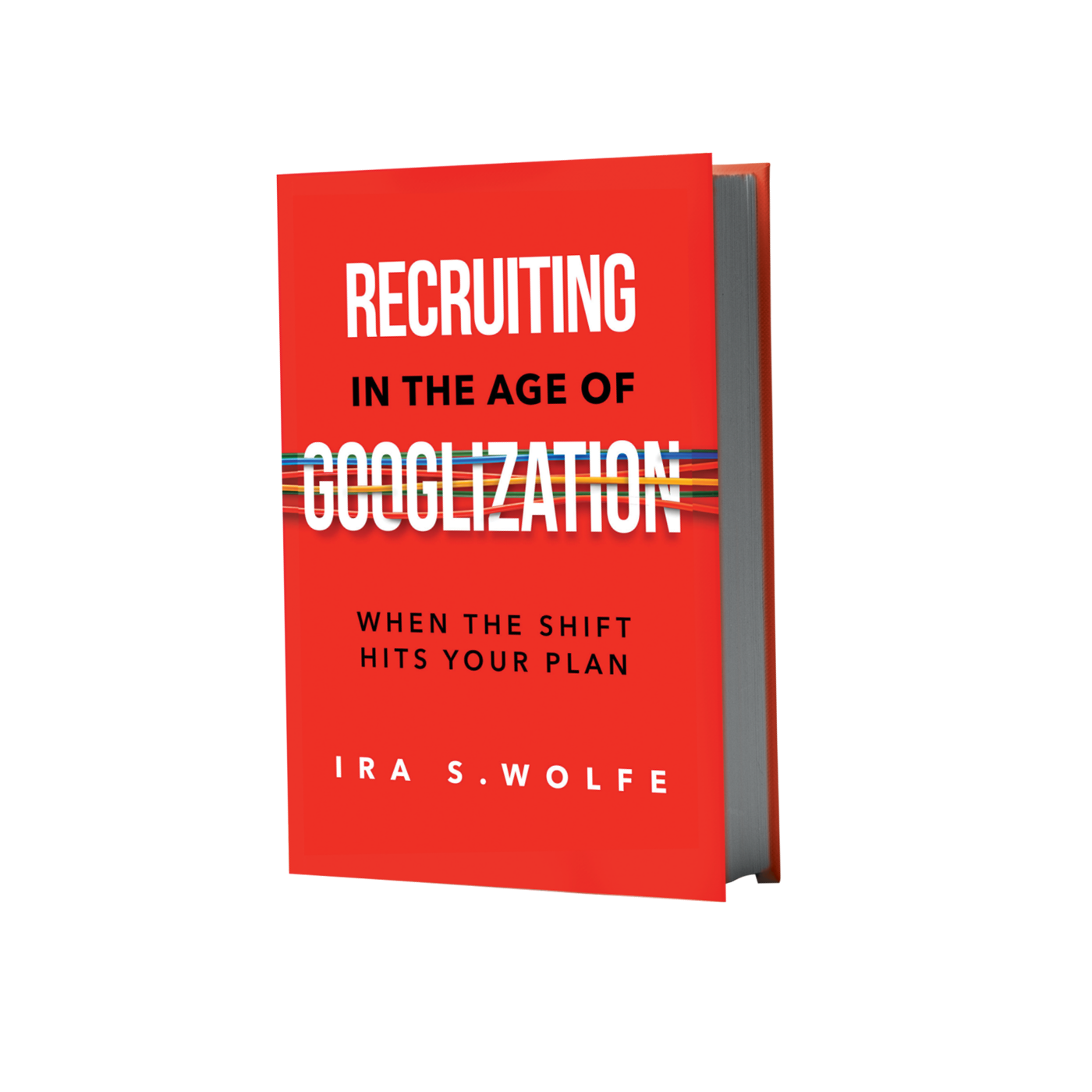
Join me on BeTheTalk, a 7 day a week podcast, where Nathan Eckel chats with me about my journey to and from my TEDx talk, living in a VUCA world. Ira S Wolfe is a "Millennial trapped in a Baby Boomer body." He's known for his fierce passion for embracing exponential change and his commitment to understanding its impact on people, jobs, and work. Ira is an accomplished speaker/author and President of Success Performance Solutions. His latest book is Recruiting in the Age of Googlization: When the Shift Hits Your Plan. Connect with Ira HERE LISTEN to Ira's TEDx talk BeTheTalk is a 7 day a week podcast where Nathan Eckel chats with talkers from TEDx & other branded events. Tips tools and techniques that can help you give the talk to change the world at BeTheTalk.com! If you've given a TED or TEDx Talk and want to be interviewed by Nathan, click here.
S1 Ep 23Is HR on the Fast Track to Irrelevance?
Is HR on the fast track to irrelevance or what will it take for HR to finally get a "seat at the table?" Those are just a few of the critical questions discussed in this episode of Geeks, Geezers, and Googlization. My guest is Ed Krow, partner and co-founder of TurboExecs and 25 year "veteran" of HR. This episode was prompted by two separate but almost simultaneous experiences shared by me (Ira S Wolfe) and Ed. When presenting my keynote at a regional SHRM meeting, I noticed something odd. I was the only male in the room of over 3 dozen participating members. Not that all the women weren't professional and competent but I couldn't help to wonder why no men felt the need to attend a presentation about talent acquisition, one of the biggest challenges organizations face. Was it me? Is recruitment considered a "woman's job?" Was there any significance behind this or were all the men just too busy too attend? I don't know the answer but the experience was a bit troubling. My concern was soon deepened when one of the members introduced herself to the group. She stood up and said "how good it was to be back in 'HR'? The quotes around HR are intentional because as she spoke the words HR, she raised both hands and motioned air quotes. Why did she feel the need to air quote HR? Is it a secret society? A department or profession that is not officially recognized as legit? Again I don't have the answers but can tell you that I was beginning to feel that HR might be on the fast track to irrelevance. After leaving the meeting, I checked my email. My friend and colleague Ed shared a similar experience. While presenting at a SHRM conference, a participant stood up and told the group why she chose a career in HR: "to show other that all HR weren't mean." What??? Was she the white knight riding in to save all the workers from "mean HR?" Even HR professionals seem to demean the Human Resources profession, even if unintentional. Those incidents led me to ask Ed to join me on this episode to explore the future of HR. During our conversation, we discuss these topics and more during podcast: What keeps us (and CEOs) awake at night about HR? What skills does HR need to have to become strategic and relevant? Why management must raise the expectations of HR and hold them accountable. Will the COO and CTO take over workforce management if HR doesn't step up?

S1 Ep 22Future of Work: Meet Generation R(obot)
True or False? There is a brewing technological storm threatening to eliminate hundreds of jobs and leave millions of workers without a paycheck. Listen to this podcast when futurists John McElligott and Ira S Wolfe discuss why robots, artificial intelligence, Internet of Things (IoT), and other advanced technologies probably won't destroy occupations and jobs as quickly as many experts forecast. But exponential technologies will certainly disrupt and change how work gets done. You might find this optimistic forecast odd coming from the guy whose company just created Robo-Rista to serve up coffees and lattes and Vincent van Gogh-Bot to draw sketches of customers. But York Exponential CEO John McElligott believes the immediate future features a collaborative interface between technology and human workers. "We don't automate," he insists. "We augment. We want to make sure that our robots are not taking people's jobs; they're saving jobs." While many companies are focused on recruiting and hiring Millennials and Generation Z to fill traditional jobs, Generation R(obots) will likely be the real story. "We're creating the 1st generation of humans and robots working together," McElligott shared during my podcast. But unlike the computer revolution that helped make humans more productive, humans will now be expected to return the favor and help advance the productivity of technology. That's good news for workers as the jobs they do won't be 100% automated but augmented. But for those expecting to sit back and pick up a paycheck while Mr. Robot does all the work, you're kidding yourself. Augmentation means new and better skills will be required. McElligott has got that covered too by launching what he calls "the 1st generation of responsible disruptors." As companies begin to integrate co-bots full time or hire robots as a service, a whole new workforce of robot mechanics will be needed. "Right now installation is handled by engineers," he says. But shortages in the current workforce and for the foreseeable future are staggering. These shortages imperil the competitiveness of individual companies and our nation. "We need a workforce of regular, every day middle class workers do the the work of engineers" and that's why he created Fortress Academy to educate a legion of robot mechanics. "We believe it's time everyone comes along for the ride." In this fast-pace, conversation filled 25 minutes, we also talked about how education has not embraced technology and how history may be primed to repeat itself. Click below to learn more about: York Exponential Fortress Academy When the SHIFT Hits Your Plan!
S1 Ep 216 Ways to Make Your Job Posts Stand Out
This podcast is the second in a 2-part series. You can listen to the 1st podcast here. For decades, posting a job opening was a relatively simple task. All a recruiter had to do was share the job description across the appropriate channels and candidates came pouring in. Today, the competition for talent is fierce and writing content to advertise a job opening requires a lot more finesse. An effective job post attracts a high volume of high caliber candidates that actually click to apply to the position. Achieving this goal requires a content formula that creates love at first sight, and making the right first impression begins with proper job title keywords. (Learn how to craft the right job title in the first part of this two-post series.) But a job posting is more than just a click-worthy headline. Here's how to build an entire post with SEO (search engine optimization) and SEM (search engine marketing) in mind. Listen to this article here written and read by author Ira S Wolfe and posted on ReWork.
S1 Ep 20Business Builders Show Interview with Ira S Wolfe
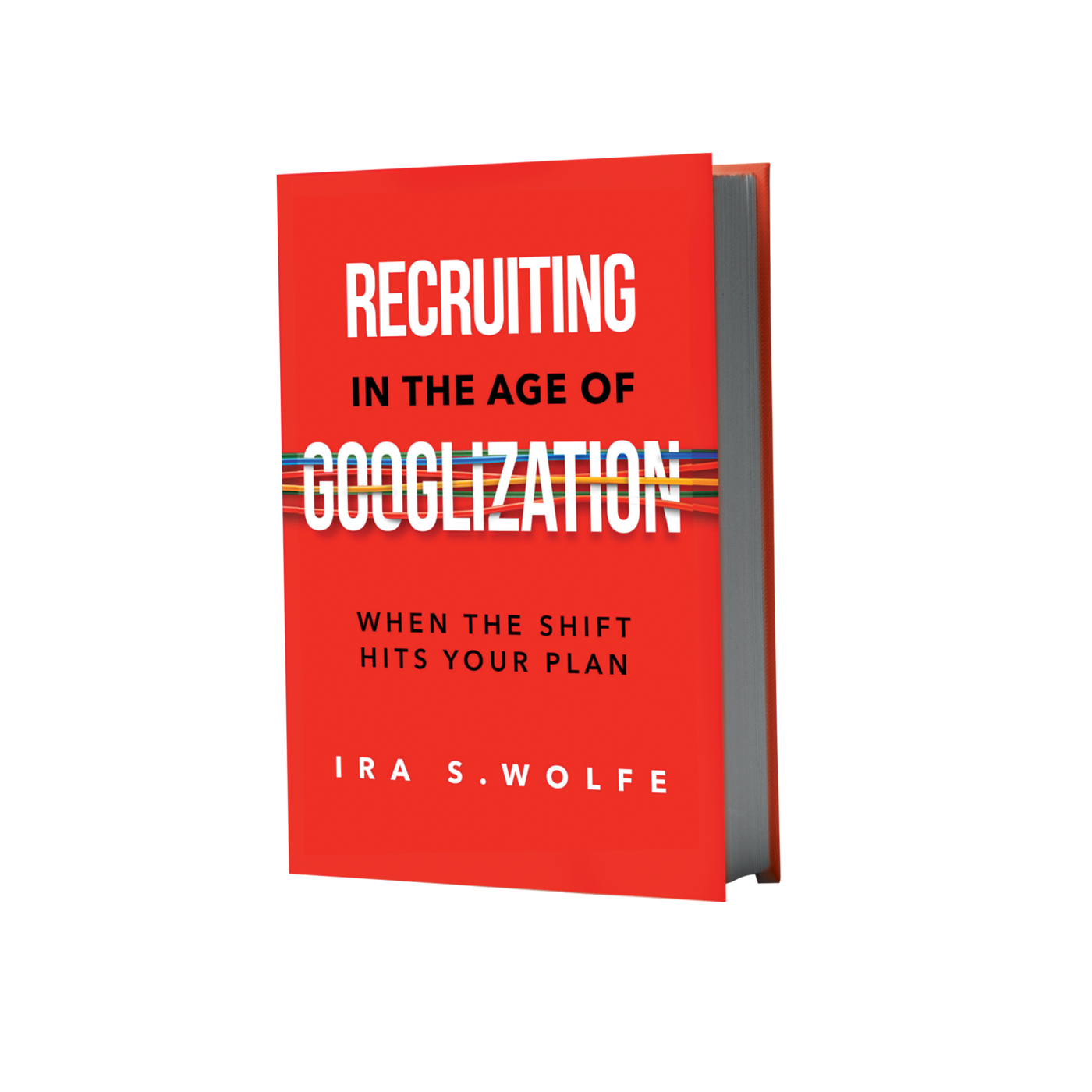
Business Builders Show host Marty Wolff interviews Ira S. Wolfe, author of this great new book Recruiting in the Age of Googlization: When The Shift Hits Your Plan. The Business Builders Show with Marty Wolff is proud to bring you this interview on www.c-suiteradio.com Ira was one of the FIRST and most outspoken leaders to talk about job and skill changes nearly twenty years ago. And he remains an expert in this field as you will hear in the interview and see in his book. To schedule more interviews like this with Ira, call 800-803-4303 or visit www.irawolfe.com.
S1 Ep 19Simple SEM and SEO Hacks for Recruiters in 2018
Google receives 300 million job-related search requests each month, which makes up nearly 30 percent of all Google searches. Unfortunately, for many organizations, there's often a significant disconnect between how job seekers search for opportunities and how recruiters post jobs. Consequently, it's all too easy for a job posting to evaporate into cyberspace and become an invisible blip in a sea of information, even with seven out of every 10 (or more) job searches starting online. Using SEM and SEO strategies can boost recruiters' chances of getting a job opening noticed. Here are a few simple recruiting hacks that can help your next job posting find its way to the right candidates. Listen to this article written and read by author Ira S Wolfe and posted on ReWork. Resources: Google Keyword Planner (FREE) Paid Keyword Tools: Moz, SEMRush, Wordstream
S1 Ep 18Introduction Chapter | Recruiting in the Age of Googlizations
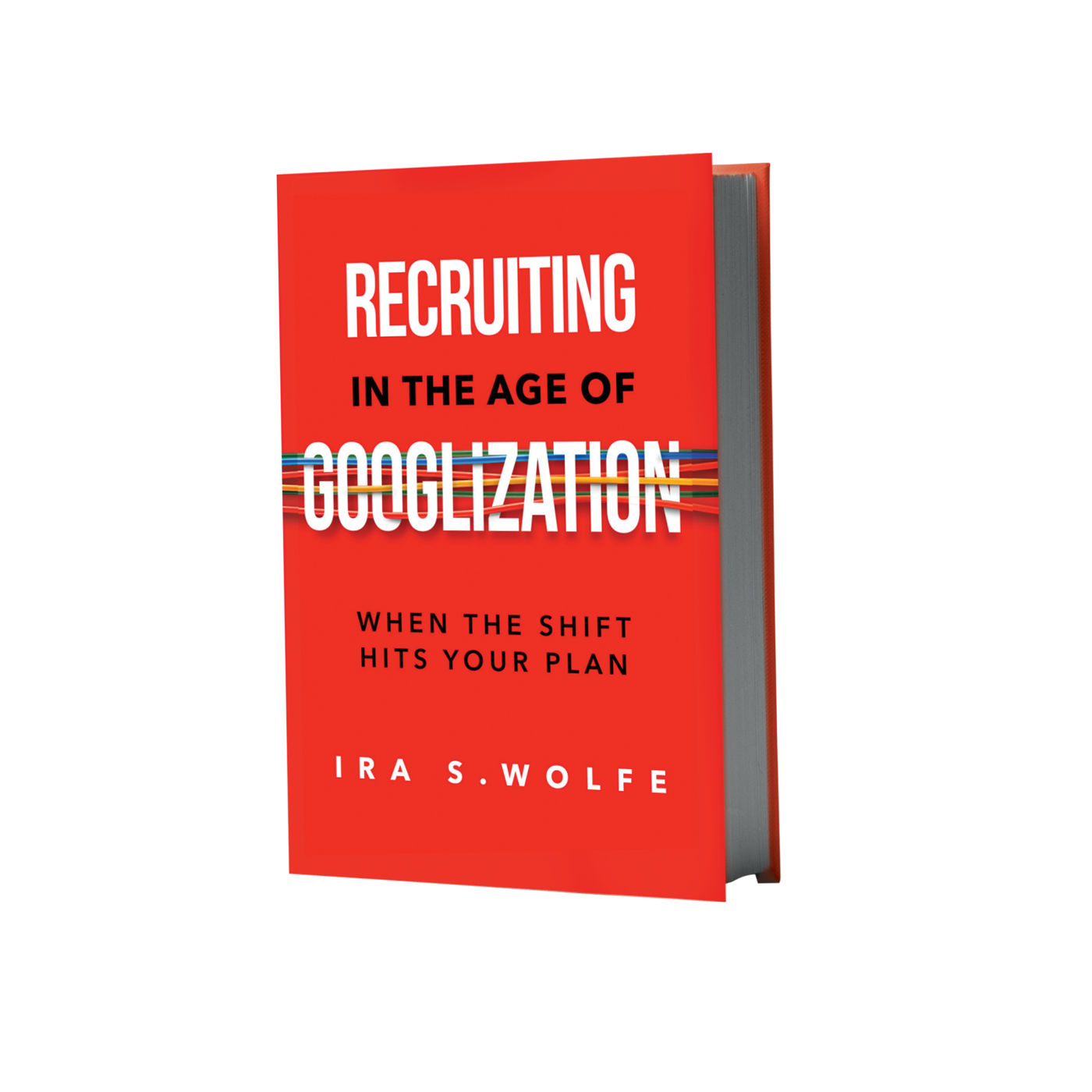
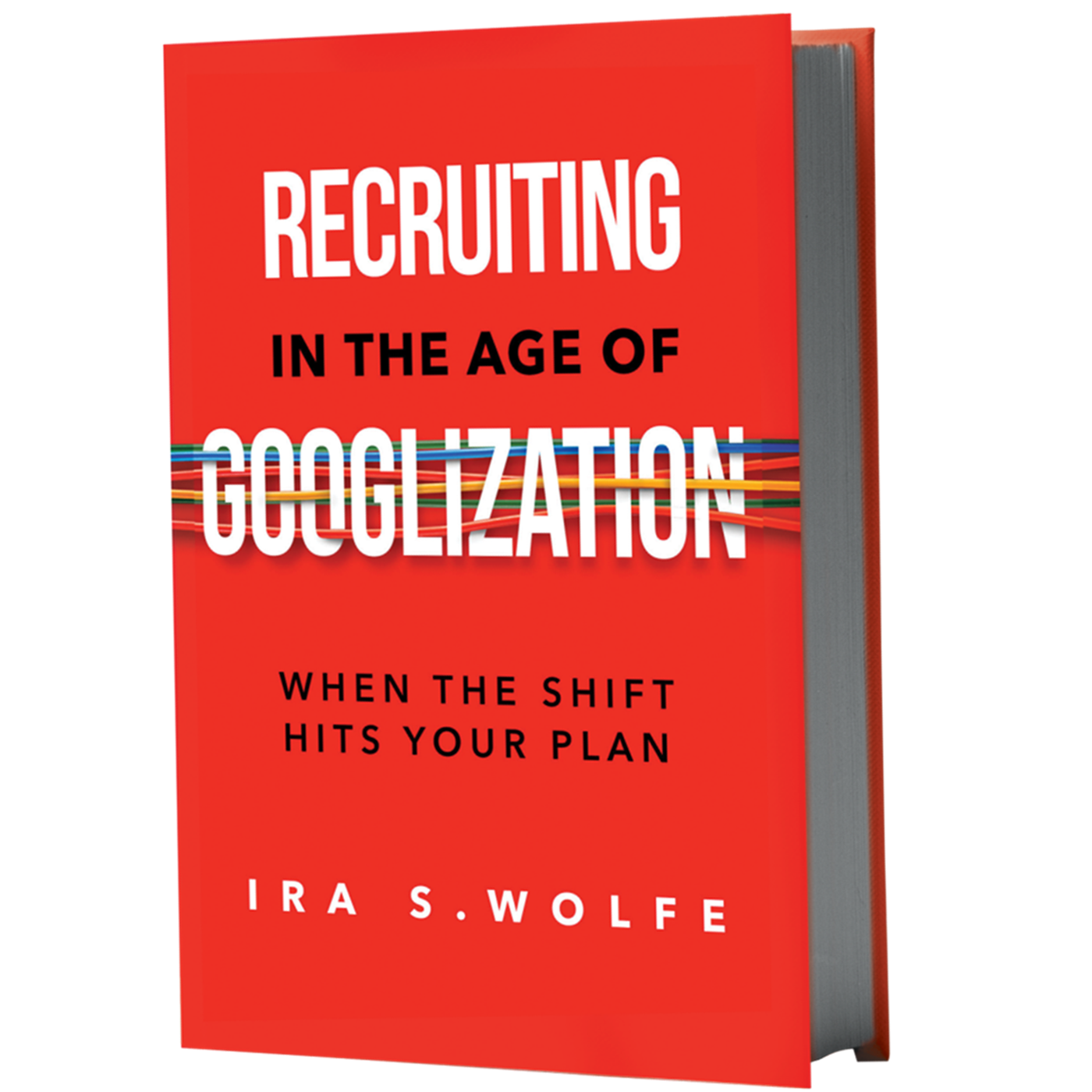
"Shift or die. It's that simple." These are the opening words of the new best seller Recruiting in the Age of Googlization. Author Ira S Wolfe explains how most people don't think big enough and how many executives, business owners, and individuals tune out what's happening and underestimate the disruption that exponential change causes. He even cites how legendary American business magnate and investor Warren Buffet admitted he was caught flat-footed by the transformative powers of Amazon. While this episode is focused on why companies and individuals must SHIFT, the book lays out the beginning of a recruiting blueprint for recruiting in the age of Googlization. The book is available on Amazon, Barnes & Noble, and independent bookstore. You can also call 800-803-4303 to order a signed copy. A download of a free chapter is available here. (It's a different chapter! To schedule Ira S Wolfe for an interview or speaking event, click here.

S1 Ep 17Talent Acquisition: 2018 is the Year of the Video
"Is this year going to be more challenged than last year" when it comes to talent acquisition. "Yes" is the nearly unanimous answer! Consequently, recruiters and HR are scrambling to chase top talent. Unfortunately traditional recruitment practices that just aren't working anymore. One underutilized but massively successful solution is video which might explain its explosion of popularity in every marketing strategy except … you guessed it: HR! My guest for this episode is Abby Cheesman, co-founder of Skill Scout. In this podcast we explore: Why companies should be using video for talent acquisition How companies should be using video for talent acquisition What are some of the pitfalls to avoid when using video for talent acquisition Let's start with what was one of my favorite quotes from Abby:" Job descriptions are lame. They are the last thing candidates want to read but they're often the first touch point. The job description is a legal document; a list of requirements that doesn't tell anything about the look-and-feel of the job or company culture." Using video to post a job tells a story. It helps differentiate your company from your competitors. "It serves as a purposeful piece of the recruiting puzzle," Abby told me. She offered an amazing statistic that tells it all: "When you use a text- based job description, people recall 16% of what they read …and that's being generous. With video people recall 65% of what they see and hear on a video. On top of that, visibility skyrockets with video. Search engine marketing explodes because video is 50X more likely to be shared than text. Everyone wants to be #1 on Google but many recruiters don't realize that the 2nd largest search engine in the world is YouTube! And since YouTube is owned by Google, video helps Google rankings too. And here's one more twist. Skill Scout's research has shown that candidates are not just going direct to job boards or company career sites to search for jobs. They are first going to YouTube to find jobs and learn about your company before searching on job boards like Indeed and Careerbuilder. Video opens up a whole new channel and source for talent acquisition. What I shared so far is just the tip of the iceberg. Now that I whet your appetite for why and how you should be using video for recruitment, it's time to download or hit play! As an added bonus, Abby shared this "Skill Scout Video Recipe," a free checklist with questions to ask and clips to capture. Click here to download. In addition, here's the link to a 1-minute video about how to set your shot with a smartphone. And here's the link to Abby's article 5 Ways to Introduce Video into Your Candidate Experience.
S1 Ep 16How to Use Video to Attract and Engage Top Talent with Guest Lou Bortone
Recruiting top talent in 2018 - from the production floor to the C-Suite - will be more competitive than ever. To reach and engage qualified candidates, organizations must stand out. And no matter how creative the text-based job posting, text is still text and it pales in comparison to the power of video. For example, video is watched and shared 1200% more than text and images. The impact of video in search engine rankings is 50X greater than text and video. How can recruiters and HR take advantage of the power of video. Join Ira S Wolfe and his guest The Video Godfather Lou Bortone, author the new book Video Marketing Rules. In this podcast you will learn what it takes to convert your cold-and-corporate job postings to warm-and-engaging. It's much easier than most people think and the ROI can be spectacular. Don't forget to check out Lou's website at www.loubortone.com and grab a copy of his book Video Marketing Rules. And while you're shopping don't forget to pick up a copy of my new bestseller Recruiting in the Age of Googlization.

S1 Ep 15Millennials: Bad Attitudes or Low Emotional Intelligence?
Sociology professor Tony Campolo said, "I am convinced we don't live in a generation of bad kids. We live in a generation of kids who know too much too soon." From an intellectual perspective, Millennials today have been exposed to so much more than Gen X and Baby Boomers at the same age. They've consumed information on everything from cyberspace to sexual techniques before they graduate from middle school. Everything is coming at them sooner.[1] On the other hand, many believe that emotional maturity is lacking. Some blame the "helicopters parents." It's like the butterfly grew up but couldn't live outside the cocoon (or the parents' basements!) But there might be another reason for the immature attitudes - a lack of emotional intelligence. Listen to host Ira S Wolfe with guest Jennifer Zamecki discuss Emotional Intelligence and how it may be impacting Millennials as well as employers. [1] https://www.psychologytoday.com/blog/artificial-maturity/201211/the-marks-maturity

S1 Ep 14It's Not a Misprint: Millennials on the Same Page as Baby Boomers
A Baby Boomer walks into a room and finds 3 smart, hard-working Millennials sitting at a table. That's it. There is no joke. Sparks didn't fly. Attitudes didn't clash. The Millennials didn't ask to be CEO tomorrow. Ironically, these 3 twenty-something start-up entrepreneurs "hired" Baby Boomer Jon Carson, more than 3 ½ decades older and 2 generations removed, to be CollegeVine's first chief executive officer. Scenes like this - Baby Boomers and Millennials getting along - happen every day and are repeated thousands of times. We just don't read much about collaboration and cooperation between generations because as they used to say in the newspaper business, "if it bleeds, it reads." Millennial bashing makes a much better headline. So how does it work? What does CEO Jon Carson do differently that so many other managers and executives don't? What does it take to get Millennials and Baby Boomers (as well as other generations) to work side-by-side as partners, colleagues, and co-workers? Listen and learn!

S1 Ep 13Leadership Needs a New Game Plan with Dr. Liz Alexander and Dr. Ira Wolfe
In these VUCA (Volatile-Uncertain-Complex-Ambiguous) times, what's next seems to be top of everyone's mind these days from the coffee shop to the board room. So it seemed pretty obvious that when Dr. Liz Alexander and Geeks Geezers and Googlization host and TEDx Speaker Ira S Wolfe got together to discuss the future of work that what's next in leadership would kick off the conversation. Here are 3 take-aways from this podcast. The Ambiguity of Leadership Did you ever wonder why most descriptions of leadership begin with an adjective – authentic, visionary, transformational, or spiritual? Dr. Liz shared a recent situation where someone on LinkedIn posted a question to describe leadership in one word…and over 20,000 responses were recorded! The diversity of answers amplified the ambiguity of leadership. Therefore any discussion of what's next must start with a universal agreement about what leadership means to individuals and organization. She paraphrases Joel Barker's definition of leadership as one example – someone that you might choose to follow to reach a desired future you may not reach by yourself. The Future Demands a Different Resume Too often people conflate a title of leadership with the role. Many people with the title of let's say Vice-President may fill the box on an organizational chart but lack the ability to lead the business function. The problem with leadership today, says Dr. Liz, is that too many people are bound up by past notions of who is next in line rather than who is best qualified to lead. One example she offered was past leadership focused on the ability to solve problems. Today leadership requires the ability to decode dilemmas where there are no clear cut choices. Solving problems requires speed, analysis, and elimination of uncertainty. Dilemmas demand patience, sense-making, and an engagement with uncertainty. Leadership in the vision requires more than a mission to correct the wrongs of the past. It requires a vision of the future. 21st Century Critical Skills off Leadership Because a dilemma reached beyond the capability of any one individual or group, solutions require collaboration between co-workers, colleagues, and even the competition. That is just one of 6 leadership skills required to excel in a VUCA world. Jeff Hoffman, co-founder of Priceline, shared another which he calls info-sponging, a habit borne from curiosity. Other essential leadership skills for the 21st century include conscientiousness, creativity, critical thinking, and agility. What's the single most important single "nugget" you will learn? Listen now.

S1 Ep 12What's the Purpose of Business if It Isn't Money?
Purpose, vision, and mission often get bantered about in board rooms as if the words held magical powers. They don't. It's the passion and action behind those words that matter. During this podcast, my friend and colleague John Dame didn't waste any time tackling one of the biggest concerns we hear from executives and small business owners when we ask "what is the purpose of your business." The reaction we get suggests we are asking some sort of trick question like who's buried in Grant's tomb? Of course the purpose of business is to make money. Isn't it? Unfortunately for companies today that philosophy doesn't help attract enthusiastic customers or acquire and retain talent. "Few if any employees," John explained, "want to come to work for you to help you make money." When studying many of the most successful and sustainable companies, the one thing they have in common is that making a lot of money is the outcome of a great vision, purpose, focus, and clarity for what the future looks like. "If you just want people to come to work to make money," it will be more difficult to grow your business and attract and retain talent going forward. Has it always been this way? Does purpose seem to be more important today than it was just a few years ago? Are the Millennials responsible for this greater emphasis on purpose? For those answers you'll just have to listen! And to learn more about why finding and living your purpose will be more important than ever in an Age of Acceleration, download my free book preview and white paper When the Shift Hits Your Plan: What Happens When the Wired, Tired, and Technology Converge.

S1 Ep 11What Does the Future of Work Look Like Now?
What does the future of work look like was the focus of a recent interview I had with Rick Anthony on his Entrepreneurs Network Radio show. Like most of our conversations, we started off with a discussion about the multi-generational workforce. And like we do so often it led off with a discussion of the Baby Boomers and Millennials. Rick started with, "What is the major shift you see occurring right now and where is it headed?" I'm not sure Rick got the answer he was expecting. Here's an edited version of my response: We typically classify generations by date of birth. I wrote a book about it and you and I have talked about it. So have a lot of other people. And whether it's the Baby Boomer, Generation X, or Millennial Generation, these cohorts span 15 or 20 years before another cohort is defined. During each time span trends change and events happen. Each generation is indelibly stamped by them. When I wrote Geeks, Geezers and Googlization and even more so after it was published, I started to see a shift in how we describe generations. It wasn't so much an age dependent demographic as much as it was maybe a technology dependent demographic. I've begun to look across those generational time spans and talk about more about the Wired and the Tired. For more, click here. We then moved onto to other related topics such as: Why do we have such a shortage of skilled workers if the Millennials and Gen Z are so wired.? What effect will robots, automation, and artificial intelligence (AI) have on the work, jobs, and future generations of workers/ How career planning is becoming an activity filled with disappointment….but a better approach is available. And what one recommendation did I have for entrepreneurs and start-ups? More Resources: Video Accelerate Work: Why Human Need Not Apply TEDs Talk: Make Change Work for You White Paper/Book Preview: When the Shift Hits Your Plan

S1 Ep 10It's Extraordinary: Millennials, Gen Z, and Technology Converge
Whether you believe that change is going to impact your business 2 years, 5 years, or 10 years from now, Ira S Wolfe has some breaking news. There is something extraordinary happening. And many of us haven't noticed. We go about our business as usual while the environment in which we operate is volatile, uncertain, complex, and ambiguous. Whatever time frame you believe you have to adapt… cut reduce it by half. The future is happening much faster on a greater scale than ever before. That was his message during an interview with Curt Tueffert, VP of Sales Development at DXP Enterprises. As an example of how quickly things are changing, he mentioned that he wrote and published Geeks, Geezers, and Googlization in 2009, just 7 years ago. The oldest Millennials were under 30 and the youngest just became teenagers. And Steve Jobs hadn't yet unveiled the iPad yet while smartphones were in still their infancy. Today the oldest Millennials are 36 years old and the youngest are eligible to vote. There are 2,638 smartphones are sold, 24,733 apps are downloaded from the Apple store, and 3, 437,500 videos are viewed on YouTube…every 60 seconds! Watch this short video (https://vimeo.com/179740436) about other events that happen every minute! That's just the tip of the iceberg. While many organizations are still trying to figure out how to recruit, manage, and market to Millennials, Generation Z has entered in the workforce and college. Things are changing so fast and on such as scale, the U.S. military about 25 years ago realized it needed a new game plan. It came up with a pretty funny acronym to deal with it. They called it VUCA which stands for Volatile, Uncertain, Complex, and Ambiguous. It's a brilliant assessment of the how unpredictable and fragile our world can be at times. Apparently I'm not alone in feeling that way because many organizations and businesses have adopted VUCA as their baseline of a new normal too. So how can management as well as individuals silence all the noise and get a clear direction and understanding of the immediate and not-so-distant future? First listen to this interview and then download When The SHIFT Hits Your Plan. (http://wp.me/P4nyWz-Sz) It's free!

S1 Ep 9"Code Red" for Talent Management?
Talent management is in a "state of confusion." Those were the words of Mike Haberman, a long term friend and colleague of mine. I respect Mike a lot and scheduled him for a very long overdue interview. One reason organizations struggle to attract and retain talent is that no one seems to be able to agree on the definition of talent. And if you can't identify it, how can you manage it? During this brief interview we covered a lot of territory from the current state of talent management to the biggest challenges facing HR. We probably raised more questions than answers but we did agree upon this: organizations hinge their growth and future success on talent management as the solution and yet the definition of talent is ambiguous and rarely agreed upon. Management, HR, recruiters and even employees have different descriptions and therefore different expectations. What's next for HR? What are the biggest challenges facing HR in the months and years to come? Listen now to HR expert Mike Haberman and workforce and hiring thought leader Ira S Wolfe the current state and future role of HR and talent management. You can follow Mike on Twitter @MikeHaberman and Ira Wolfe @hireauthority
S1 Ep 8Setting the Record Straight about DISC
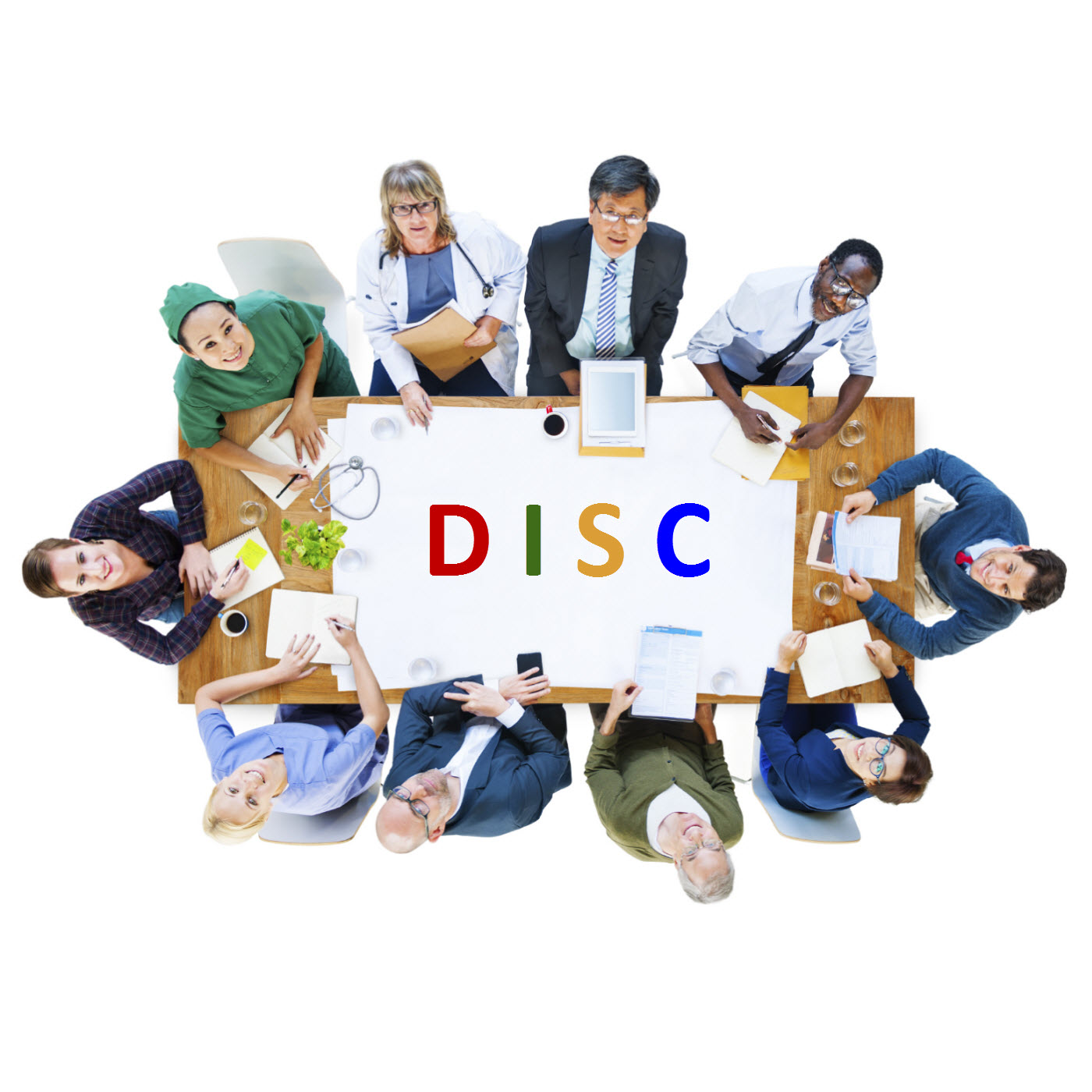
DISC is one of the most popular assessment tools on the planet. Millions of people complete the assessment each year. And still it's often misunderstood and misused. Many participants in training and coaching describe their experience as "fun" and "informative" but then fail to apply its diverse and universal approach toward communicating with others. During this podcast DISC experts Ira S Wolfe and Jennifer Zamecki discuss "what is DISC" and how it can be used to build better teams, increase emotional intelligence, enhance customer service and even increase sales. A few of the topics that Ira and Jennifer discuss are: How the DISC Profile can be used to detect what "energizes" and "de-energizes" us How we can use DISC to build trust with others (or misuse it and lose credibility) Why it is one of the very best team building tools How DISC can identify people under stress and on the verge of job burnout Why DISC is not an emotional skill test but it is an essential tool to help increase emotional intelligence And much more. Don't forget to download the bonus slides about DISC and follow along as Ira and Jennifer discuss the ABC's of DISC.

S1 Ep 7What Happens When The Tired, Wired, and Technology Converge
Bashing Millennials has become a national pastime. Older generations watch and wonder who invaded the souls of nearly 80 million American youth...along with hundreds of millions worldwide. As Rick Anthony from The Anthony Group shares in this podcast, "{management seems to fear] the Millennials, almost like they are aliens who have come from another planet." Millennial James Goodnow, an attorney with Fennemore Craig and the youngest partner to ever be selected for its management team, takes a slightly different view…and offers some advice to managers: "There's nothing about the DNA of a Millennial that is different from a Gen Xer or Baby Boomer." Chavaz Kingman from AYF Consulting shares his opinions that resonate loud and clear with many Baby Boomers. He feels that too many Millennials expect to be rewarded for doing their job "when it's really just as basic as brushing your teeth." What may surprise you about Chavaz … well you'll just have to listen to what he has to say. So what happens when aging Baby Boomers and up-and-coming Millennials are immersed into a sea of rapidly changing technology? Well, it's time to click "play" and start listening. Enjoy! A special thank you goes out to all our special guests: Rick Anthony, The Anthony Group James Goodnow, Fennemore Craig Chavaz Kingman, AYF Consulting Steve Schulz, Business2Business Magazine Jim Shaffer from The Shaffer Group It is our hope that you'll share this podcast with your colleagues, clients, and friends as well as post your comments and experiences about living and working in a converging world of the Tired, Wired, and Technology.

S1 Ep 6Recruiting is Changing Faster Than You Think
Most everyone recognizes that technology is changing the way we work and the pace of change is accelerating ...except when it comes to how companies recruit and hire employees. It seems that many companies are sitting back and expecting change to stand still until they have the time and feel the urge to react. Unfortunately that's never happened...and likely never will. Many businesses are getting trampled when it comes to recruiting, especially Millennials. The disconnect between new technology and adaptation within the recruiting and HR fields is widening. In this 3 minute excerpt from an interview on Rob McKay's Tips for Hiring Podcast, Millennial Generation and hiring expert Ira S Wolfe explains how the pace of change is leaving many companies scrambling for workers. You can also watch this video, recorded during a recent presentation.

S1 Ep 5Recruiters to Millennials: Can you hear me now?
85 percent of Americans ages 18-29 (Millennials) are smartphone owners. For many of them, the recruiting pitch lobbed to Millennials is so far outside the strike zone, the candidates just step back and vanish. If your company wants to be reach Millennials, it's essential that you walk in the shoes of a young job candidate. In recruiting speak…If you want to attract young top talent, it's crucial to optimize your career site and join the Millennial world of mobile. This podcast is a 3 1/2 minute excerpt of an interview Ira S Wolfe had with Rob McKay on Tips for Hiring (New Zealand). You can also read more about recruiting and hiring Millennials here.

S1 Ep 4Confessions of a Millennial Basher
Bashing Millennials has become a national pastime. Described as narcissistic, immature, trophy kid slackers, this generation (born between 1980 and 1996) has become the "alien" generation. Other generations watch and wonder who snatched the life and soul out of nearly 80 million American youth...and hundreds of millions worldwide. If only these labels were true. For sure, the stereotypes stick for many Millennials. But as this podcast of an article published by Millennial and hiring expert Ira S Wolfe reveals, the Millennials are really not much that different than older generations when they too were passing through their late teens and early 20s. Listen as blogger Ira Wolfe reads his article, Confessions of a Recovering Millennial Basher. You can also read the article on Cornerstone's ReWork Blog.

S1 Ep 3High Cost of a Bad Hire
Truth be told, the cost of a bad hire induces widespread collateral damage — like spending $100 bills to earn pennies. When you consider that a toxic employee has a negative impact on both coworkers and customers, the costs skyrocket. According to a recent Cornerstone report, bad hires make their teammates 54 percent more likely to quit and can cost organizations up to three times more in hiring fees. Instead of leading, managing and delivering excellent customer service, bad hires force managers into damage control. The cost-to-hire is just one ingredient in a more complex formula that should be used when evaluating a poor hire. Additional variables include unemployment compensation, missed business opportunities, loss of team productivity, poor customer service, outplacement, weakened employer brand, litigation fees... just to name a few. So, what can a company do to reduce the risk of a bad hire and mitigate financial and other collateral damage? Listen to this interview with hiring expert Ira S Wolfe.

S1 Ep 2Recrooglization: Recruiting in the Age of Googlization
"This [interview] is a clinic for small business owners and HR." Those were the words used by Business Builder Show hosts Marty Wolff and Kerry Kearney to describe this interview with Success Performance Solutions President and author Ira S Wolfe. zyou might be asking what is Recrooglization? The word was coined by Ira Wolfe to describe the current state of recruiting. It's simple – it's the practice of blending the art of recruiting with the science of Google. What does Google have to do with recruiting you might be asking? Google has disrupted and transformed the way people operate, communicate and interact online. The digital age offers many ways for companies to engage job seekers, especially those companies struggling to hire enough qualified workers. Listen now to Recrooglization and learn how to attract and acquire top talent in 2016 and beyond. And don't forget to download our white paper.

S1 Ep 1The ABCs of Emotional Intelligence
Until recently emotional intelligence was largely ignored or dismissed. But with volatility, uncertainty, complexity,and ambiguity confronting us on a daily basis, past experience and education is often not enough to achieve and thrive in today's hyper-competitive business environment. Many studies have confirmed that the difference between top performers (especially at the executive and management level) and mediocre ones is emotional intelligence. During this podcast, Ira S Wolfe interviews emotional intelligence expert and executive coach Jennifer Zamecki from Well-Run Consulting. They discuss what emotional intelligence is, how to test for EQ, and how individuals can develop it. Ira and Jennifer even venture into the emotional intelligence of presidential candidates Donald Trump and Hillary Clinton as that of the Millennial Generation.