Future Tense
244 episodes — Page 3 of 5
Conversing with aliens and 'decentering' the human
Cambridge University has a new institute dedicated to understanding extraterrestrial languages. It's about being prepared for the possibility that intelligent life exists beyond our galaxy. Also, the dangers of being overly dramatic when talking about climate change; the link between indigenous language and health; and the researchers who say it's time for human being to wake up to the fact that it's not all about us.
Does AI show we overestimate our human creativity? And what does creativity mean anyway?
Among the angst over the creative potential of Artificial Intelligence, some researchers and academics are now turning the spotlight back onto humans. If AI can be as imaginative as your average human being, they ask, what does that say about traditional notions of human creativity? Have we long overestimated our own smarts? It's also prompted a discussion about what "creativity" actually means and why the term only came into common usage during the second half of the last century.
Growing houses and running computers with help from bacteria — the future of synthetic biology
Scientists are changing the genetics of cells so that they can be used for a whole range of purposes never before imagined. Think building a biocomputer with a processor powered by bacteria or re-engineering microbes to make environmentally-friendly concrete. The potential is enormous, but there are warnings from within the field, not to let the hype get ahead of reality.
Building a new social contract
There’s a growing public sense that the current model of the social contract is broken, due in large part to rising inequality and the pursuit of profit over social progress. The “social contract” defines the relationship between citizens, their government and business. Its modern form emerged after WWII and, in western democracies, was largely structured around the principles of the welfare state. It’s about equity, order and trust. So, does the essence of the social contract still have value? And if so, how can it make fit for purpose in the 21st century?
The Great Regression and the "kidification" of adulthood
Many commentators bemoan the adolescent nature of modern society. Adults, they suggest, are acting like juveniles and thereby eroding our culture and destroying our politics. We hear two arguments to the contrary. Also, philosopher William MacAskill on his new book “What We Owe The Future”.
Research productivity and innovation is declining
Our modern understanding of innovation isn't modern at all, it turns out. Historian, Iwan Rhys Morus, says we're being held back by Victorian-era notions of the future as a land to be conquered; and the lone-genius inventor as the standard bearer of technological advance. Which might explain why research productivity is now sharply declining, despite a substantial rise in research investment..
Managerialism ... and what it means for work
Exploring new ideas, new approaches, new technologies — the edge of change.
Turning our back on alcohol
Are attitudes towards drinking changing as we learn more about the impact alcohol can have on our bodies? Drinking has been part of our social and cultural activities for centuries. But cultural norms appear to be shifting. So, could alcohol go the way of cigarettes and become socially unacceptable?
Who are the beneficiaries of climate change?
It might be an uncomfortable idea for many, but in the short term climate change will produce "winners" as well as losers. Some countries, companies, communities and species will actually benefit from a warming world. But in what ways and for how long?
The Great Plunder – curbing human creativity through mass theft
Technology companies aren’t just stealing your intellectual property – your creative content - they’re making vast profits out of selling it back to you. AI-powered apps like ChatGPT are trained on vast amounts of stolen data. What’s worse, it’s all justified as a public good. They call it “efficient infringement”. So, why are they allowed to get away with it? And what can be done about it? Also, the Living Building Challenge – it’s about building better construction and healthier communities; and a call for greater focus on prevention in dealing with domestic violence.
Sweltering Cities – the cost of exponential urbanisation
It's estimated that by 2050 more than 70 per cent of the world's population will live in cities. Urbanisation carries many benefits, but it also threatens to intensify the climate crisis. So, how do we better design our cities to minimise the "urban heat island" effect? The solutions are out there, but do we have the will to put them into practice?
Technology churn versus digital Inclusion
The constant upgrading of technology is wearing people down — one in five Australians now saying they feel "overwhelmed" by technological change, according to a recent report. Those at greatest risk of falling further behind include the elderly, the indigenous and migrant and refugee communities. In both health and education there's a push underway to improve access to vital technologies and create a more inclusive digital environment
How ancient trees could help in the fight against climate change
Unlike animals, trees don't have a biological clock, under ideal conditions they can live for thousands of years. Scientists say understanding how ancient trees have survived could help us protect forests from the ravages of climate change. But working out how to propagate them is the tricky part.
Why knowing when to finish is as important as getting started
In this episode of Future Tense – why charities should have a limited future… getting academics and researchers to think about the end of their research, not just the beginning… and a thoughtful take on the outsourcing of our intelligence –what do we lose when we let machines think for us?
The great scan — mapping below Earth's surface
Austrian archaeologist, Immo Trinks, has a grand ambition – to map the entire landscape of Europe, below ground! The 3D scanning technology he's using won't just uncover hidden archaeological treasures, it can also be used to check below our cities and major transportation routes for geological faults. Also, why mucking about with subatomic particles could help scientists develop a form of underground GPS.
Giving old technology a future-focussed twist
The hydrofoil looks set for a second coming – as a ferry. The boats, which are fitted with skis and electric batteries, literally plane across the top of the water. They're fast, less polluting than traditional passenger craft and could be the perfect marriage between climate-friendly technology and rapid transit needs. Authorities in Sweden and the UK are just about to begin trials. Also, turning trucks into trams – why are Swedish researchers looking to electrify their roads? And the floating, solar vegie-patch – could it boost food production for remote or disadvantaged communities.
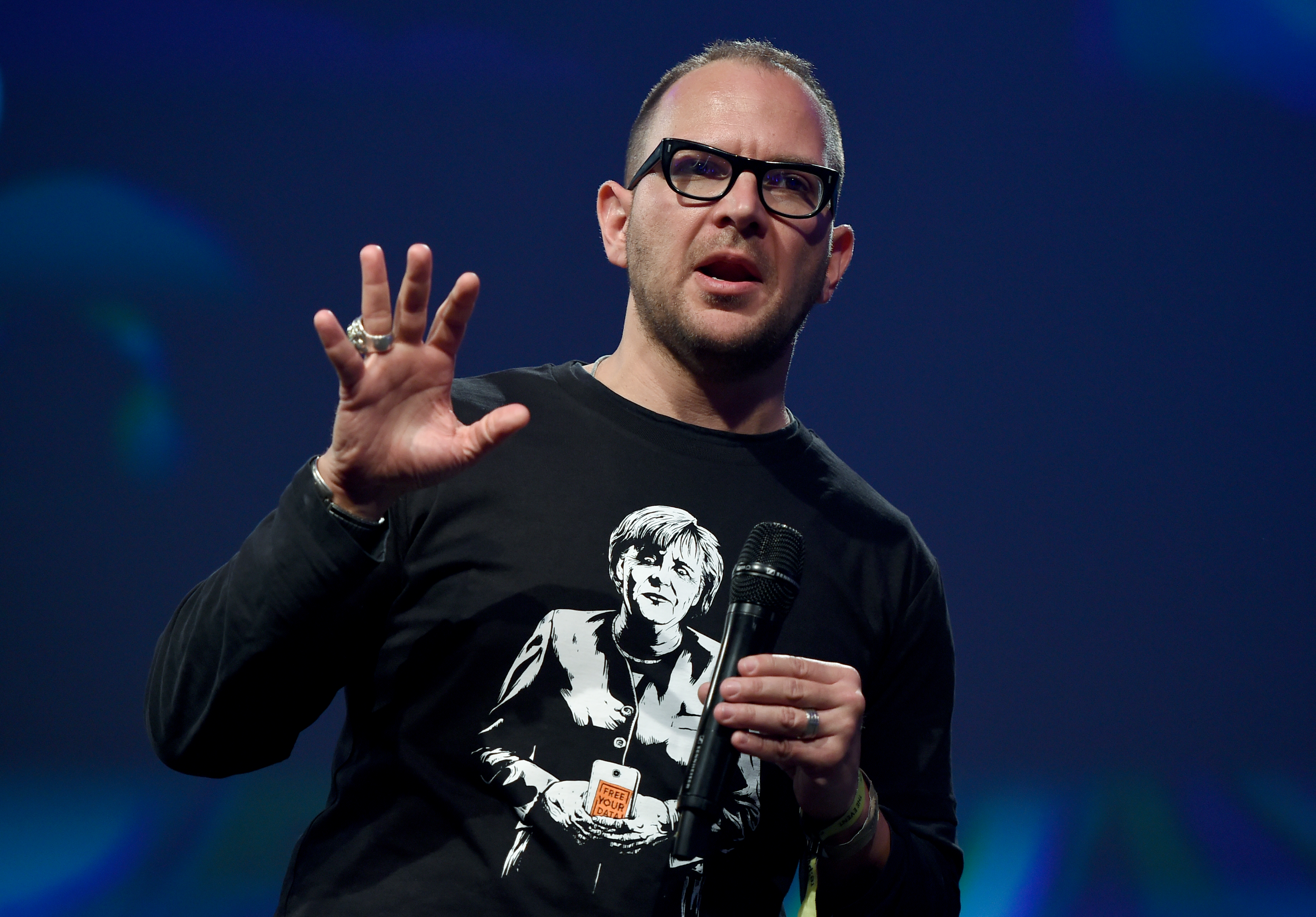
Cory Doctorow: Platform capitalism and the curse of "enshittification"
Amazon now feels more like a racket than an open shopping platform; you can't find posts from your friends on Facebook because it's clogged with unsolicited advertising; and Uber no longer seems like a cool, efficient taxi service, it's morphed instead into a global machine for turning gig workers into the new underclass – it's all part of a process Cory Doctorow has dubbed "enshittification". In this feature interview, the Canadian sci-fi author, journalist and digital rights activist explains why the digital world seems so exploitative and tawdry. But he has optimism for how things might be improved in the future.
Architecture's AI crossroads
Advanced Artificial Intelligence and new digital technologies are revolutionising the architectural industry. Architects in Brisbane, for example, have mapped every millimetre of historic Lamb House using a 3D scanner – inside and out – and the speed and accuracy of their modelling saves money and prevents error. The opportunities for creativity are enormous, particularly where AI is concerned. But is the industry inadvertently making itself redundant?
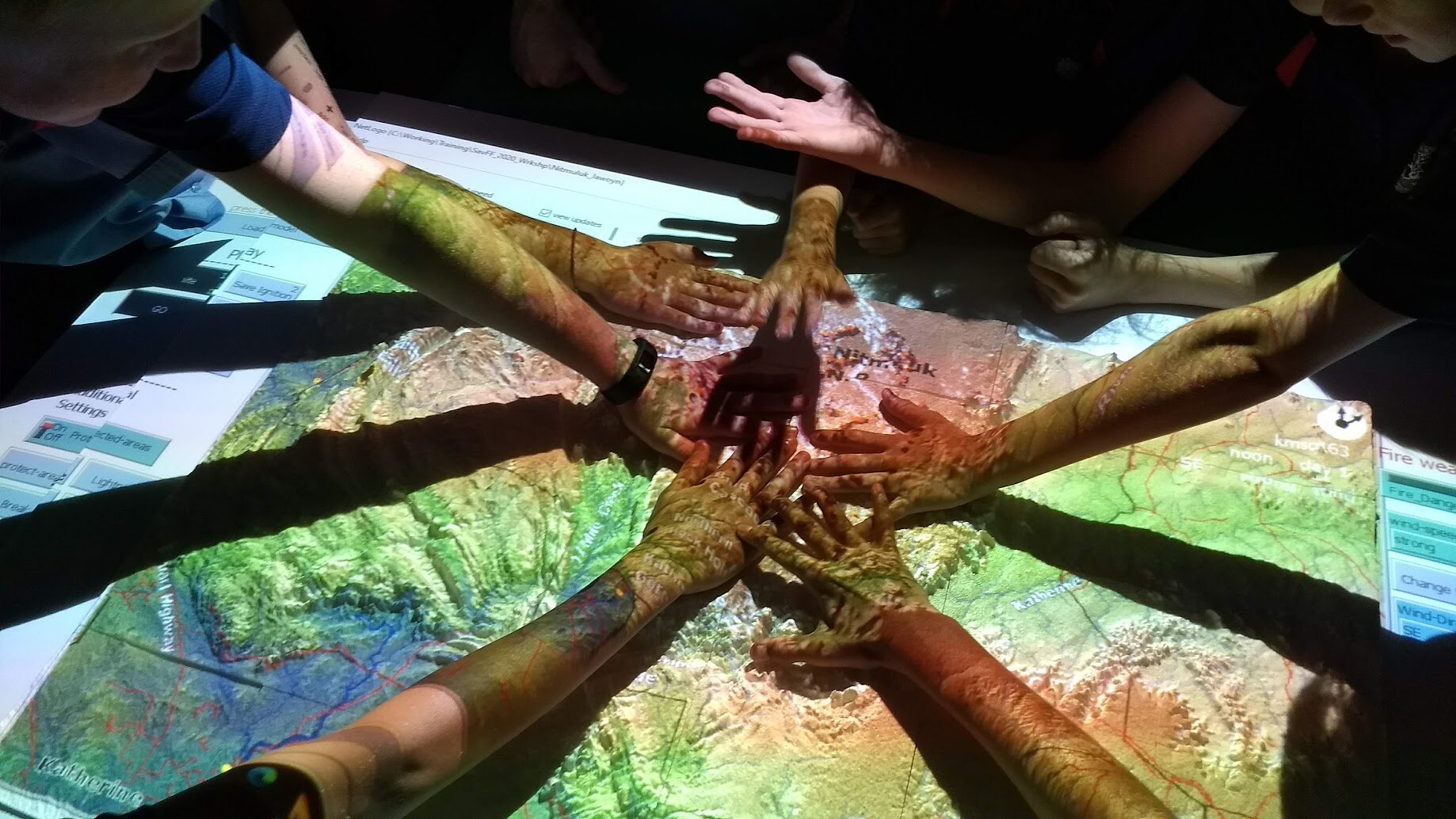
People have to solve the climate crisis — technology alone is not the answer
Science and technology cannot solve our most challenging and complex environmental problems. At least not on their own, not without a greater emphasis on person-to-person engagement — people working together across knowledge systems. ABC Top 5 Science Media Resident, Dr Rohan Fisher, says sci-tech too often avoids the difficult, social-political and cultural dimensions. Human-generated problems require human-centric solutions, he argues. In this episode we explore how to utilise tech and science communication in ways that support local knowledge.
China's plan for a digital currency will have global implications
The Chinese Government, and its Central Bank, are currently experimenting with a digital currency. The hope is that it will make financial transactions faster, more efficient and cheaper for government, business and ordinary citizens. Some speculate it's about giving China's currency an edge over the PRC's major economic competitor, the United States. But whether Beijing's experiment succeeds or not will depend on matters of trust, surveillance and international appeal.
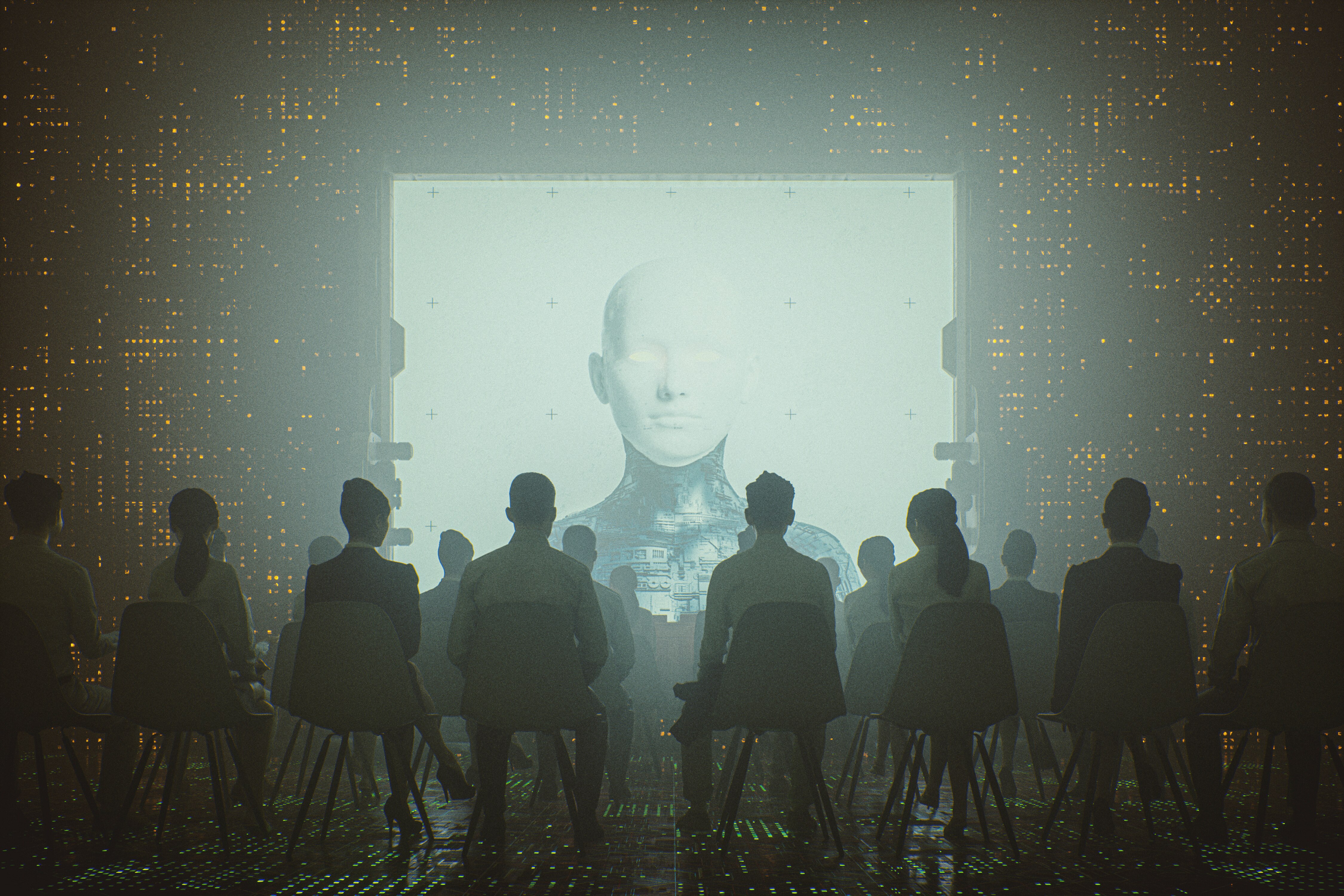
Worshipping a divine AI and turning outer space into an art gallery
It's only a matter of time before people start worshipping Artificial Intelligence as a religion, that's what Philosopher and ethicist, Neil McArthur, believes. And he says while the emergence of AI-based religion would carry risks, there's no basis for discriminating between AI-based religions and more established ones. Also, why artists are sending their creations into the heavens and what makes for good "space art".
The normalisation of economic warfare
"Geoeconomic confrontation" ranks as one of the most severe risks facing the world, according to a recent World Economic Forum report. Trade is increasingly becoming a weapon of warfare, and the future consequences for world co-operation could be significant. So, should the use of sanctions be regulated by an international body? And if a global regulator was established would it have teeth?
Considering unintended consequences is the new crucial skill for the 21th century
In our uber-connected world, the development and management of really anything is becoming increasingly complex. Planning for the future has to involve more than just grand ambitions, it also needs to be alert to unintended consequences. Otherwise things you didn't even dream about will go wrong and that can prove enormously costly. Part of the solution is to think past the immediate and adopt a systematic approach to thinking.
The complexities of oversimplification
Have technologists lost the art of keeping it simple? Do the devices they design actually make our lives more complicated, not less? Striving for simplicity could positively impact many aspects of modern life. But oversimplification risks stereotyping individuals and confusing our sense of historical perspective.
The Circular Economy approach – thinking systemically about the environment
Much of the way we think about the economy and our environment is based on a linear model – a system of extraction, consumption and waste. But advocates for a "circular economy" approach argue it's time to start mimicking the cycles of nature that keep the planet healthy. It's about seeing waste as a resource and thinking about the future impact of today's decisions. It's a noble idea, but is it realistic?
Should you pay to drive into your city centre — for the sake of the climate?
Authorities in New York city are planning to introduce a congestion pricing scheme. Vehicles entering certain parts of Manhattan will soon have to pay for the right to do so. Proponents of such schemes say they help reduce traffic, improve air quality, and can boost public transport patronage and funding. But from the experience of other cities around the world, vested interests and partisan politics can prove a stumbling block. So, what measures work best and how do you ensure social and economic equity?
Rethinking productivity and the pushback to shareholder capitalism
It's time to rethink what we mean by productivity, says work futurist, Dominic Price. What's important isn't output, but outcomes. And confusing the two, he says, is simply counter-productive! Also, benefit corporations — why many businesses are moving away from an obsession with profit at all cost; And why a compulsory savings model could help control inflation without raising interest rates.
Acoustic restoration of ecosystems — how the sound of love helps animals return to old habitats
Scientists are experimenting with sound to try and lure seabirds back to depleted environments. But not just any sounds – we're talking about the coos and calls associated with breeding. It's all part of an ecological approach called Acoustic Restoration and its already having an impact on Palmyra Atoll – a remote island halfway between Hawaii and American Samoa. It's hoped the acoustic approach can revive many different kinds of ecosystems, even after natural disasters — when nothing is left. Also, why machine learning is causing a reproducibility crisis in Science; and ongoing research into 3D-printing food.

Air conditioning: keeping us cool but making the planet hotter
Around two billion air conditioners are currently in use across the globe but the amount of electricity they use is not sustainable, so what are some alternatives?
Algorithmic Intimacy – self-love, liability and babies as click bait
Chatbots and other forms of interactive AI aren't just shaping our online preferences, they're gradually redefining the contours of what we mean by love, sexuality and intimacy. Sociologist Anthony Elliott warns the impacts will be society-wide, not just personal. Also, do we need a set of general principles for managing chatbot liability in the absence of regulation? And how the rights of children are being overlooked in the hyper-contructed world of the "momfluencer".
Self-destructive behaviour — the enemy within
Why do otherwise sensible people continue to do things that are bad for them, that impact negatively on their personal future? Also, what happens in the brain when you're trying to make or break a habit? Temptation, addiction and habit formation – mapping the pathways to self-destruction and how to navigate a better course.
The first ever drop in global energy sector emissions; and the battle for our brains
2023 could be the year we finally reach a tipping point in the fight against climate change. The energy think-tank Ember predicts global greenhouse gas emissions in the energy sector (which accounts for 30% of global emissions) are finally on the way down. Also, a tipping point of a very different kind – experimentation in neuro-technology is now so advanced that ethicist Nita Farahany believes companies and governments will soon be trawling our thoughts the way they currently trawl our digital communications. She's talking of a new human right – a right to cognitive liberty.
Should individuals bear the largest burden for climate action?
Exploring new ideas, new approaches, new technologies — the edge of change.
Cory Doctorow: Platform capitalism and the curse of "enshittification"
Amazon now feels more like a racket than an open shopping platform; you can't find posts from your friends on Facebook because it's clogged with unsolicited advertising; and Uber no longer seems like a cool, efficient taxi service, it's morphed instead into a global machine for turning gig workers into the new underclass – it's all part of a process Cory Doctorow has dubbed "enshittification". In this feature interview, the Canadian sci-fi author, journalist and digital rights activist explains why the digital world seems so exploitative and tawdry. But he has optimism for how things might be improved in the future.
A new lifeline for local news
Exploring new ideas, new approaches, new technologies — the edge of change.
How Japan is redefining its military defence
Japan has long prided itself on its pacifist constitution. The country's future after WW II was defined by Article 9 which famously denounced aggression. But, in recent years security has become a paramount concern with increasing tensions around the status of nearby Taiwan and challenges from neighbouring countries. The Japanese are now renegotiating how best to defend themselves and their interests, while holding true to constitutional restraint. What that could mean for the future of Japan and its allies is of global interest and concern.
Can mining the ocean floor go ahead without regulations?
Global permission to mine the ocean floor — the International Seabed Authority will soon meet and decide whether or not to allow seabed exploitation, and in what circumstances. We'll hear the arguments both for and against and get some background on this little known, but hugely consequential, international regulatory body. Also, will advanced technology one day make the oceans transparent? And if so, what will that mean for the future of submarines – a technology that relies on stealth and secrecy? And why studying ancient tsunamis could help protect us from future disasters.
Designing buildings for disasters
How best to build our homes so they can better withstand natural disasters? It's not just about designing for floods or fire, for example, but creating structures to withstand multiple threats. And to cope with any change of temperature on top of that? Many countries are facing an increase in climate-related threats, and they're struggling to cope and adapt. In Australia, a review of the National Construction Code is underway and there are calls for higher minimum standards. Should such a crisis design be made mandatory?
Robots + bees = pollination
Robobees and building more hives – there's no easy solution to the global decline in bee population numbers and associated problems with pollination. Scientists around the world are seeking a better understanding of bee behaviour and how it can be modified. Their efforts involve using micro robotics to pamper the Queen bee and to improve the insect environment. A mix of the sophisticated and the very simple.
Advanced AI – are we repeating the mistakes of the past?
Toby Walsh is an expert on Artificial Intelligence. He recently declined an offer to sign an open letter calling for a moratorium on the technology's further development, but he's no techno-utopian. In this feature interview, recorded at the Brisbane Writers Festival, he explains his position and warns the world risks repeating the mistakes made through the unregulated release of social media at the beginning of the century.
Falling in love with an app! When Anthropomorphism, making things too human like, goes wrong
22-year old Effy lost her best friend and romantic pen pal unexpectedly. Liam was the victim of a change of algorithms — and he wasn't the only human-like chatbot to suddenly disappear. A timely reminder about the dangers of anthropomorphising technology. And what's lost when researchers take an anthropomorphic approach to the study of animals.
How the world could end – take two
More than a decade ago scientist Dirk Schulze-Makuch plotted nine plausible ways by which humanity would cease to exist. Now he's revised his list and he joins us to share his updated predictions. Also, why some philosophers argue the planet would be enhanced by human extinction. And how doomsday scenarios from the Cold War still influence environmental thinking.
We're all responsible for plastic pollution ─ and for cleaning it up
Citizen scientists across the world have joined forces to map the microplastic crisis in our oceans. It comes as a UN agency moves to create a global treaty to end plastic pollution. Also, the idea that trees can communicate via extensive networks of underground fungi is increasingly popular, but is it correct? New research casts doubt on the extent of the claim. And, replacing cargo planes with drones – the dream of a European drone cargo airline
Correcting the record on China's economy
Beijing likes to trumpet its economic clout. And as the second largest economy in the world there's no denying its power and influence. But the Chinese economy is a "black box" according to noted historian, Frank Dikötter, which even senior Chinese officials don't fully understand. It's an economic cauldron powered by massive debt, political spin and ideological dogma – a unique fusion of ersatz capitalism and rigid central planning. And unless we in the West get a better understanding of its complexity, global future prosperity is far from assured.
The sound of the stars
Understanding the universe isn't just about visually mapping celestial bodies, it's also about listening to the heavens. Data sonification takes astronomical data and turns it into sound. It could help find new patterns in the huge amount of digital information. And it's a way of enhancing astronomy by promoting greater engagement and accessibility — a musical mix of science, art and cold, hard data.
Food security in a precarious world
As food security issues increase across the world, expenditure on agri-food research and development is going the other way – in fact, funding in some western countries is now back at 1980s levels. We also hear about a refrigeration initiative in Rwanda that could help increase food nutrition levels in the developing world and significantly cut food wastage.
Will future generations turn away from alcohol?
Are attitudes towards drinking changing as we learn more about the impact alcohol can have on our bodies? Drinking has been part of our social and cultural activities for centuries. But cultural norms appear to be shifting. So, could alcohol go the way of cigarettes and become socially unacceptable?
The future threat from ancient viruses
The Arctic permafrost is melting, and ancient viruses and bacteria are gradually being freed from the ice. The risks are significant, and it's only one of several possible sources for the next pandemic. But scientists and researchers are working to identify potential threats and better prepare the world for future pandemics.
Introducing "brubery" — bribery's other half
Bribery involves using money to try and buy a person's favour, but what do you call it when someone uses their resources not to win someone over, but to destroy their political career? Until now, it's had no name. But James D'Angelo, from the Congressional Research Institute in the US, has just invented one . He calls it "brubery" – and it's threatening the very future of Western politics, he says. Also, high tech largess or digital colonialism ? Seeing global tech's expansion from a very different set of eyes.
Some home truths about declining research productivity, innovation and disruption
Our modern understanding of innovation isn't modern at all, it turns out. Historian, Iwan Rhys Morus, says we're being held back by Victorian-era notions of the future as a land to be conquered; and the lone-genius inventor as the standard bearer of technological advance. Which might explain why research productivity is now sharply declining, despite a substantial rise in research investment.