FRDH Podcast with Michael Goldfarb
245 episodes — Page 4 of 5
Brexit Britain Breaking Up? Are You Sure?
Conventional wisdom in the UK says Brexit will cause Britain to break-up. Scotland and Northern Ireland both voted to remain in the EU. Both will now seek to leave the United Kingdom. But are the conventional wisdom mongers right about the break-up of Brexit Britain? In this FRDH podcast, Michael Goldfarb challenges the conventional wisdom about Northern Ireland, specifically.
Trump, Pelosi, the Squad and a Great American Novel
The infighting and race baiting surrounding Donald Trump, Nancy Pelosi and the Squad is symptomatic of a political system dominated by truths learned 50 years ago. In this FRDH podcast, Michael Goldfarb looks at what happens to people who cling to hard to the "truth", a lesson he learned from one the great American novels: Winesburg, Ohio.
Brexit and the British Ambassador
Brexit has cost the British Ambassador in Washington DC his job. In this FRDH podcast Michael Goldfarb talks to Bronwen Maddox about the effect British Ambassador Kim Darroch's resignation will have on the people who administer Britain's government: the civil service and what it means for Anglo-American relations and Brexit.
Iran War Fever: a 40-year History
For the last 40 years there has been Iran War Fever in Washington DC. With the latest bout exhausting talking heads on 24-hour news channels, Michael Goldfarb, who has reported from Iran and around the Middle East, explains why in the 40 year history of Iran War Fever, there hasn't actually been a war with Iran.
Republic or Empire: Pax Americana?
Pax Americana is a documentary essay about Republics vs empires and what it means to be a citizen of both. It is about America’s long argument with itself about what it should be: empire or republic. In the age of Donald Trump, republican values seem to be disappearing at an accelerated pace. Oligarchy has replaced republican democracy. Is it just repeating a process that went on 2000 years ago in in Rome at the time of Augustus and Tiberius, a republic that had become a global power changing inevitably into something far from its founding ethos? FRDH host Michael Goldfarb looks for an answer.

Remembering the Forgotten: Gabriel Riesser
Remembrance lies at the heart of Judaism and Christianity. Every spring Jews and Christians remember the great events that shaped their faiths and cultures: the Passover and the Crucifixion. But in the millennia that have passed since those events there have been other great moments in the development of those faiths that have fallen out of historical memories. IN this FRDH, First Rough Draft of History, podcast Michael Goldfarb remembers Gabriel Riesser, a very important and interesting person

Brexit: a Ghost Story
If you've been having a hard time understanding Brexit maybe it's because you don't get that it is a ghost story. Brexit is about how the ghost of Margaret Thatcher has come to haunt Britain's Conservative Party. In this FRDH podcast, Michael Goldfarb looks back at the nearly 30 year story of how the Tory Party has tried to appease her ghost and atone for the sin of forcing her to resign by carrying forward what they think she would have wanted: Britain out of the EU ... Brexit.
The Very, Very First Rough Draft of HIstory: What Assyria Can Teach Us
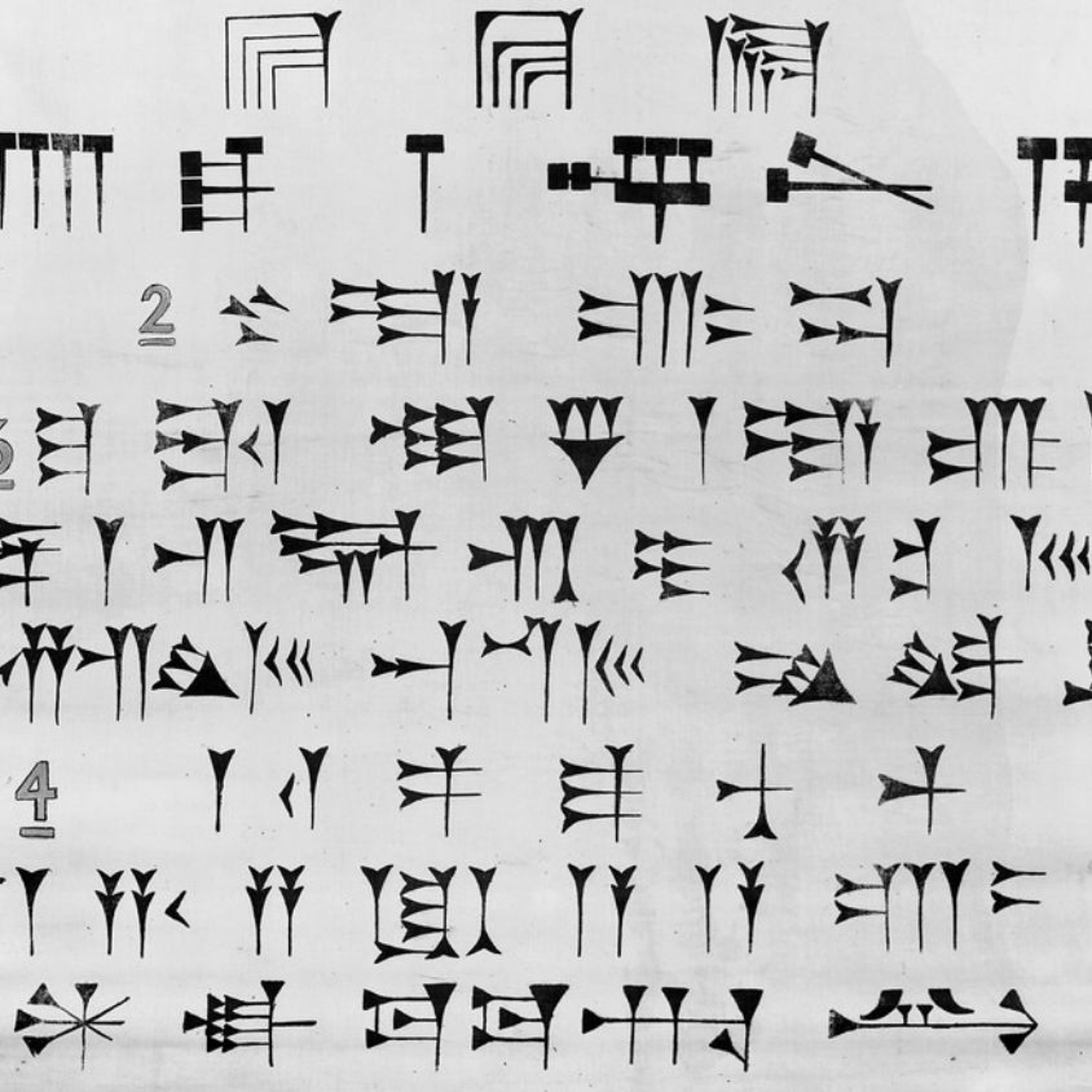
FRDH stands for First Rough Draft of History and the very first drafts of history were written in cuneiform in the Akkadian language at the time of the Assyrian Empire, around 1,000 BCE. In this podcast, Michael Goldfarb talks to Assyriologist Dr. Moudhy al-Rashid, about the world described in the cuneiform covered fragments she works with. Her specialization is in medical texts. You think depression is a modern malady? It isn't. Listen to Dr. al-Rashid describe how the ancient people of Assyria and Babylon dealt with it.
America's Decades Long Incivil War
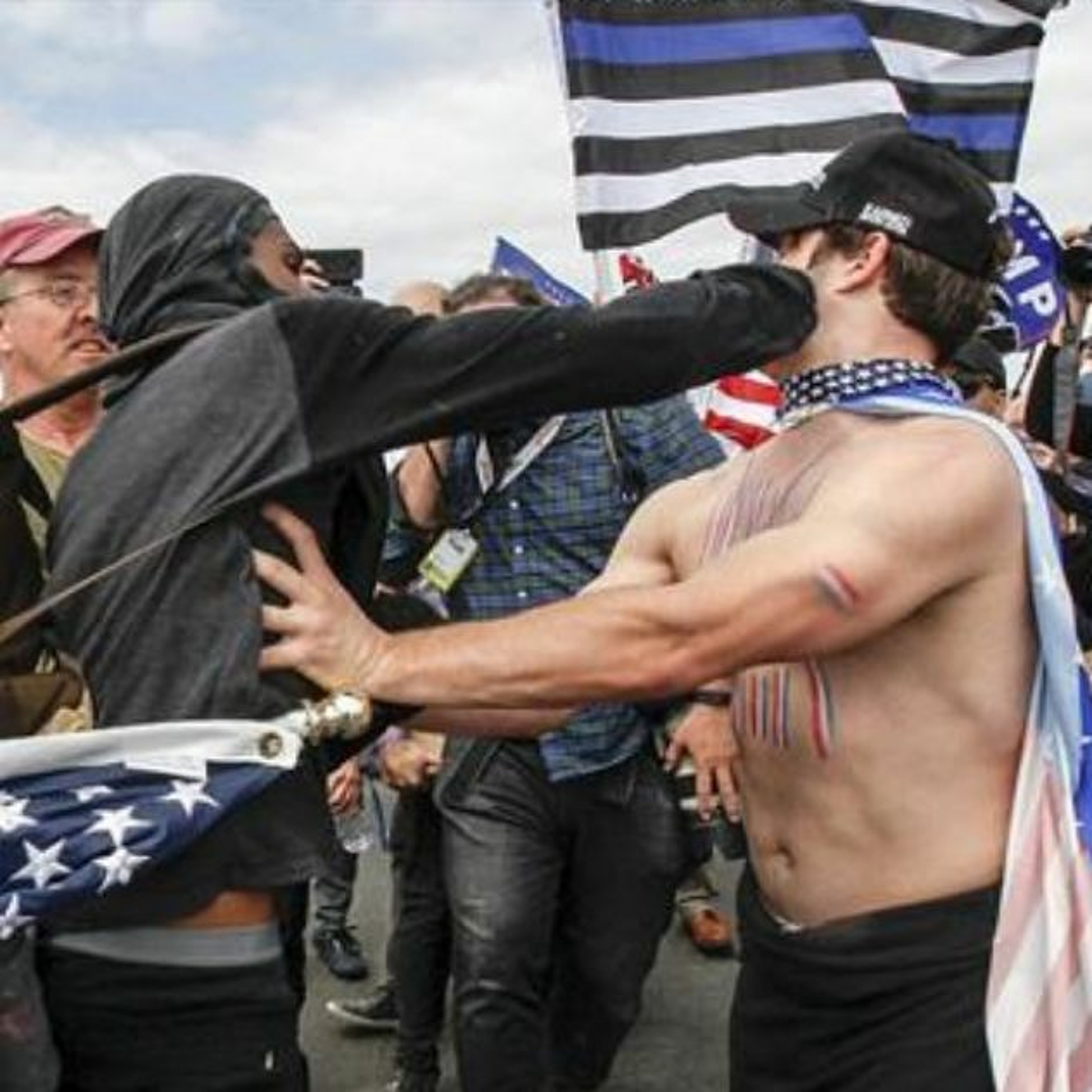
Since at least 1994 America has been in the grip of an incivil war. That year, led by Newt Gingrich, the Republicans regained control of the House of Representatives for the frst time in 40 years. Incivil war may sound like a figure of speech, something in the realm of the metaphorical - but it is not. The weapons may be words but the they are deployed in support of a radical reordering of American society. This documentary originally aired on BBC Radio 4. If you want to understand how America got to Trump you must understand this history recounted with great detail by Michael Goldfarb. Please share this documentary widely, urgently.
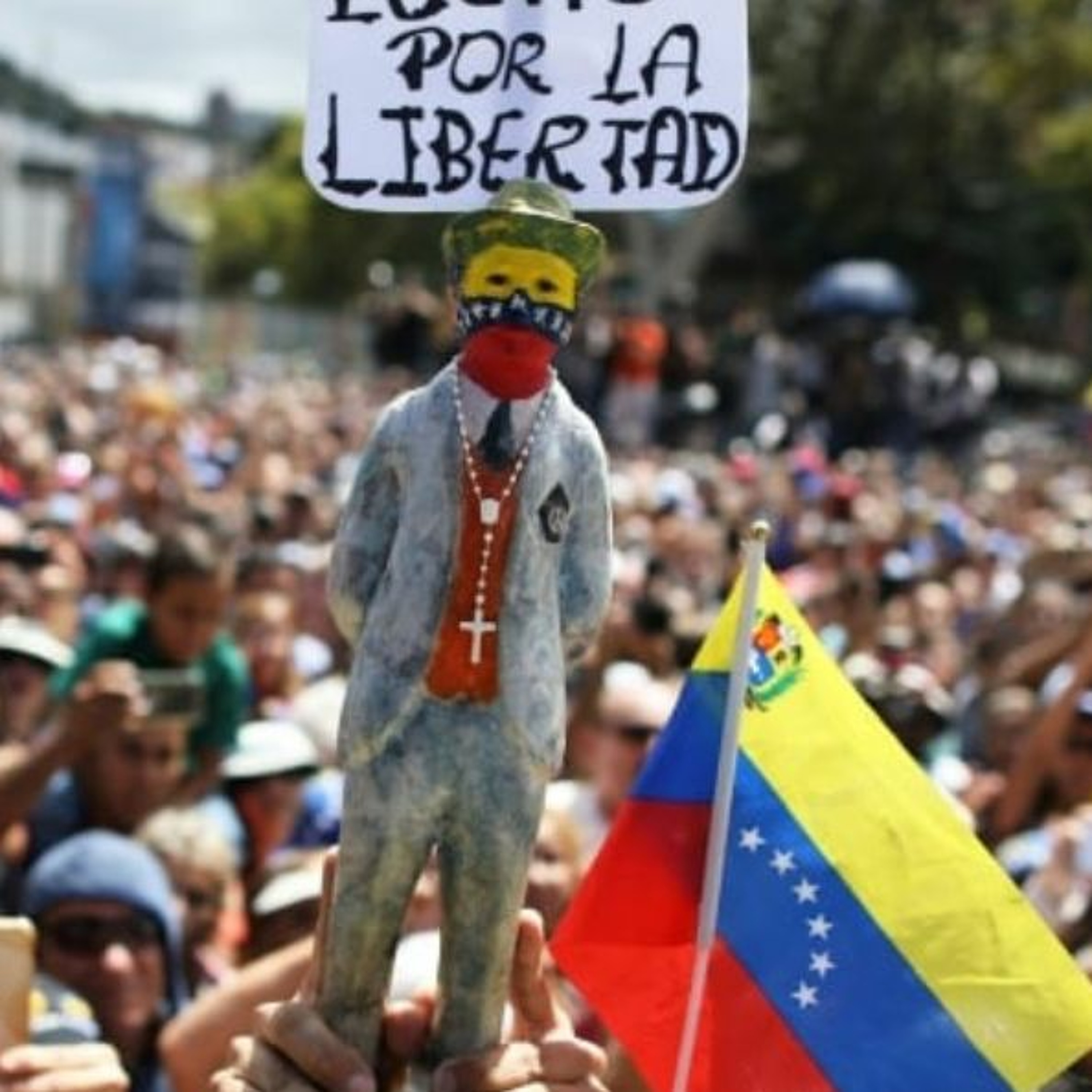
Venezuela & the US: Everything Must Change
Venezuela is back in the news along with its relationship to the US. Venezuelans have taken to the street to demand a change of government from the dictatorship of Nicolas Maduro but do they want US intervention? In this FRDH podcast, drawn from Michael Goldfarb's archive he looks back at a reporting trip to Caracas made in 2007 shortly after protests against Maduro's predecessor, Hugo Chavez had been put down. What possibility for positive change is there in Venezuela so long as the US looms over the country.

The Brexit Vote: A Report from Very English Scene
On the day of the Brexit Vote: a report from the scene outside Parliament as Brexiteers and Remainers demonstrate as MPs prepare to vote on the Withdrawal Agreement from the EU. FRDH stands for First Rough Draft of History and host Michael Goldfarb took his sound recorder down to the demonstration to write this very immediate draft of the historic Brexit Vote.
The Many Meanings of Treason
Treason has many meanings. Treason is a fighting word and a legal term and it is very likely to be one of the words of 2019. Right wing demagogues throw charges of treason around easily, liberals tend to prefer not to use it except in its narrowest legal sense. In this First Rough Draft of History podcast, Michael Goldfarb looks at some different definitions of the word and wonders if they apply to America in the age of Trump.
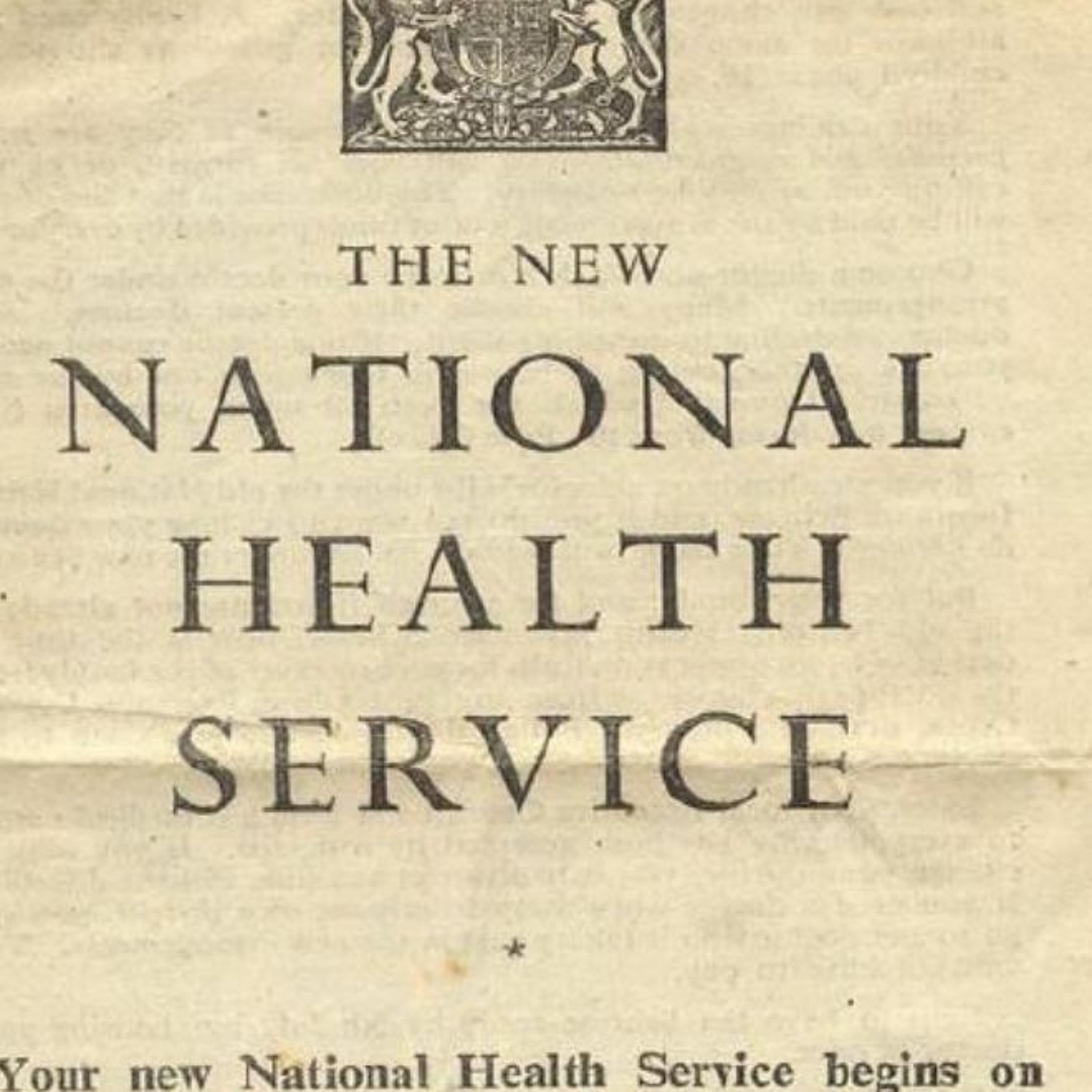
The NHS at 70: Born From Crisis, Enduring Stil
On the 70th anniversary of Britain’s NHS, this FRDH podcast looks at a personal level at how the NHS born out of crisis compares to the American health care system. Host Michael Goldfarb has experienced both systems intimately and explains the origins of the NHS and the challenges it faces today.
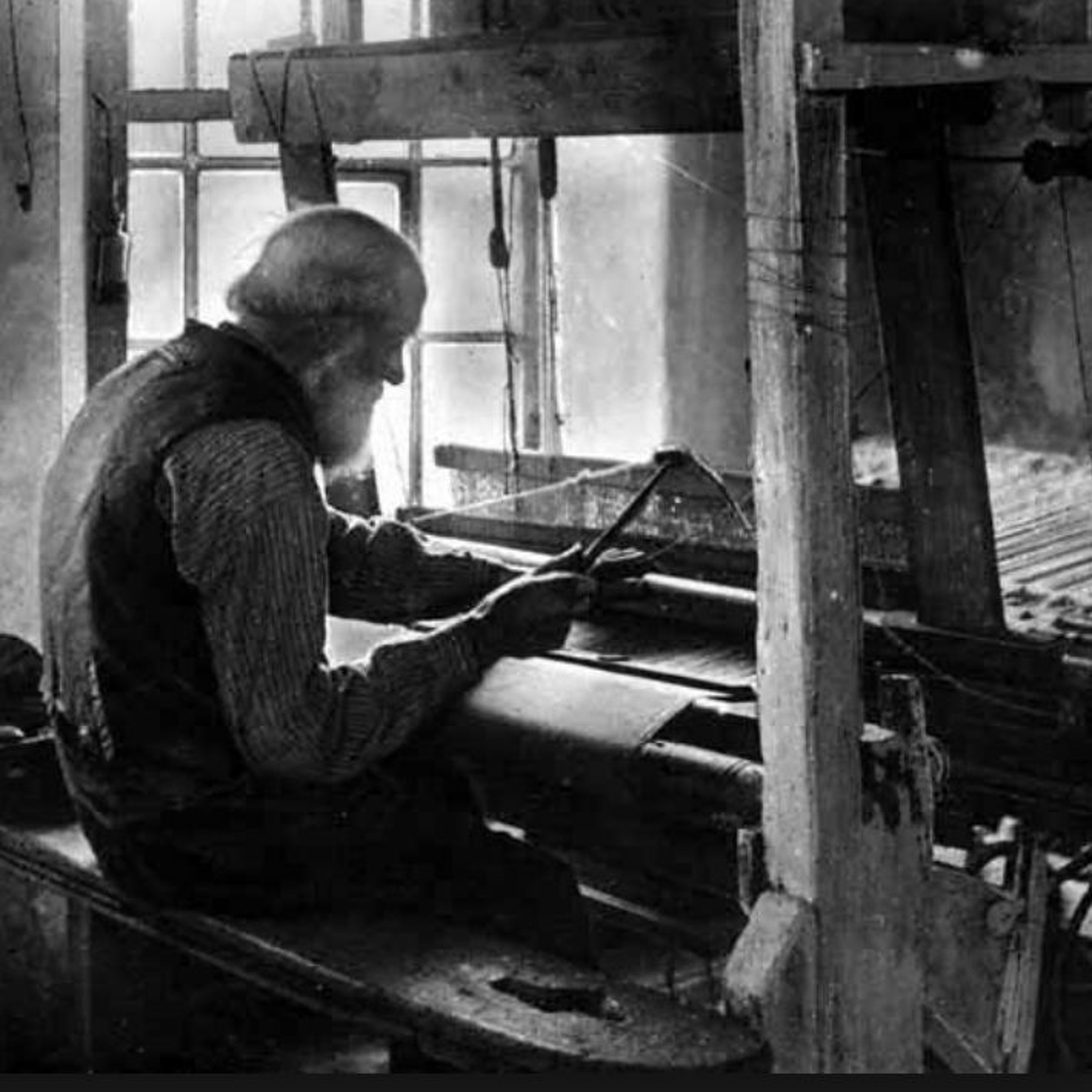
Work: a Matter of Life and Death
The world of work is changing and it's become a matter of life and death. Life expectancy in America is declining especially among those whose work and prospects have disappeared. Michael Goldfarb speaks with Princeton University economics professors Anne Case and Angus Deaton about their research into the causes of declining life expectancy and the prospects for the future as technology makes many forms of work obsolete. Hand loom weavers disappeared at the start of the industrial revolution, what forms of work will disappear in the 21st century?
The Midterms and the Democrats' Dilemma
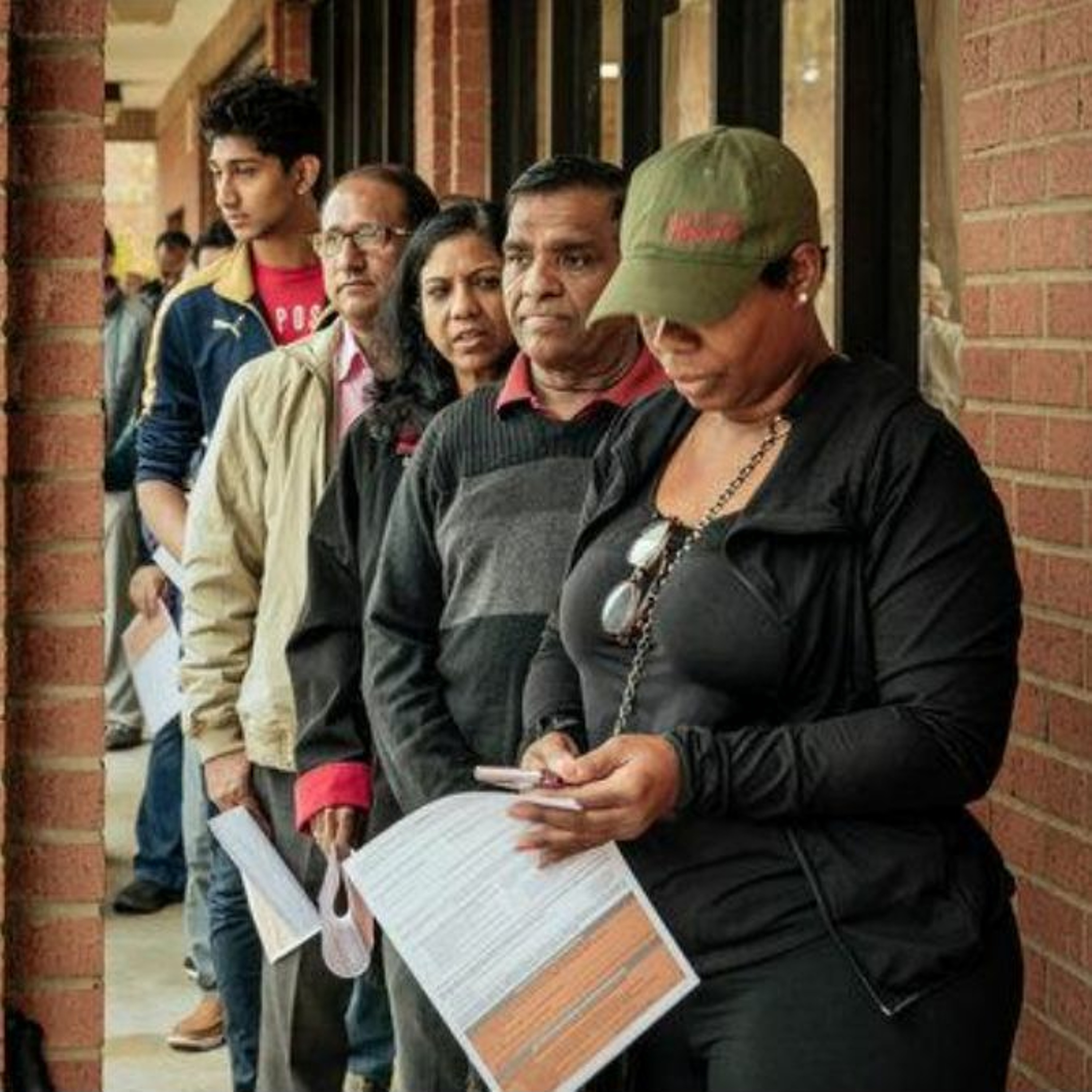
The American midterm elections are over but the Democrats' Dilemma remains. How to harness its progressive grassroots energy and the real hatred of Donald Trump into a deeper political program that can be built on for 2020 and beyond. This podcast is based on reporting FRDH presenter Michael Goldfarb did for a BBC radio 4 documentary. He traveled for three weeks in October to Georgia, Texas and the Northeast making a documentary to report on the Democrats Dilemma. This is a true First Rough Draft of History. Listen and decide whether you think it will stand the test of time.
Pipe Bombs and How Societies FallApart: A Talk with Author Aleksandar Hemon
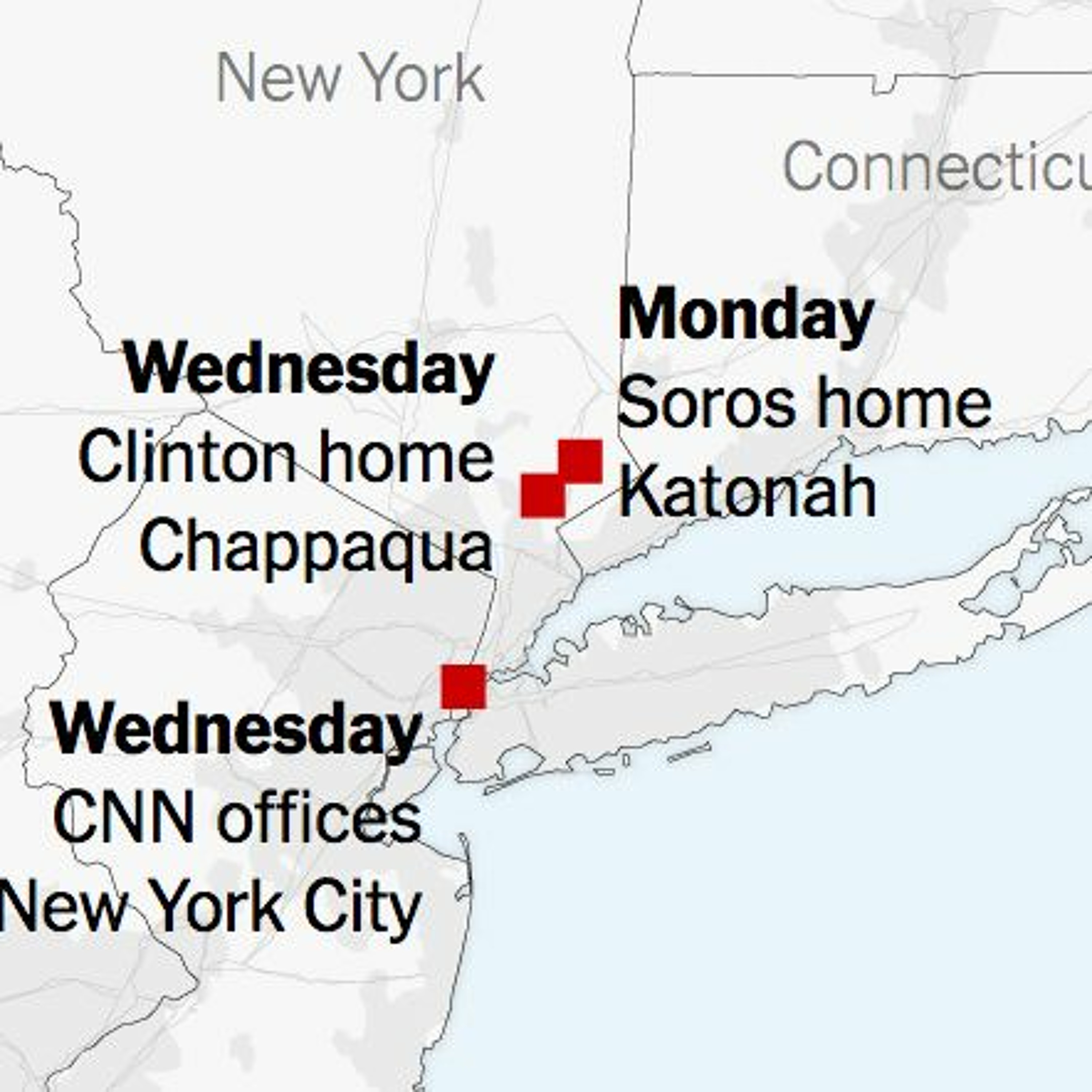
Aleksandar Hemon is one of America's foremost writers but he was born in Bosnia and saw his country disintegrate. Actually Hemon watched the disintegration from America. He was in the US when the war started that destroyed his hometown Sarajevo. Stranded in Chicago and didn't speak much English. Yet within a few years he had graduated from Northwestern and was working on his first book. What happened in Bosnia has formed his world view and in this FRDH podcast Hemon speaks about the small steps that lead societies to disintegrate into civil war.
FRDH on the BBC: Journey To Ashkenaz
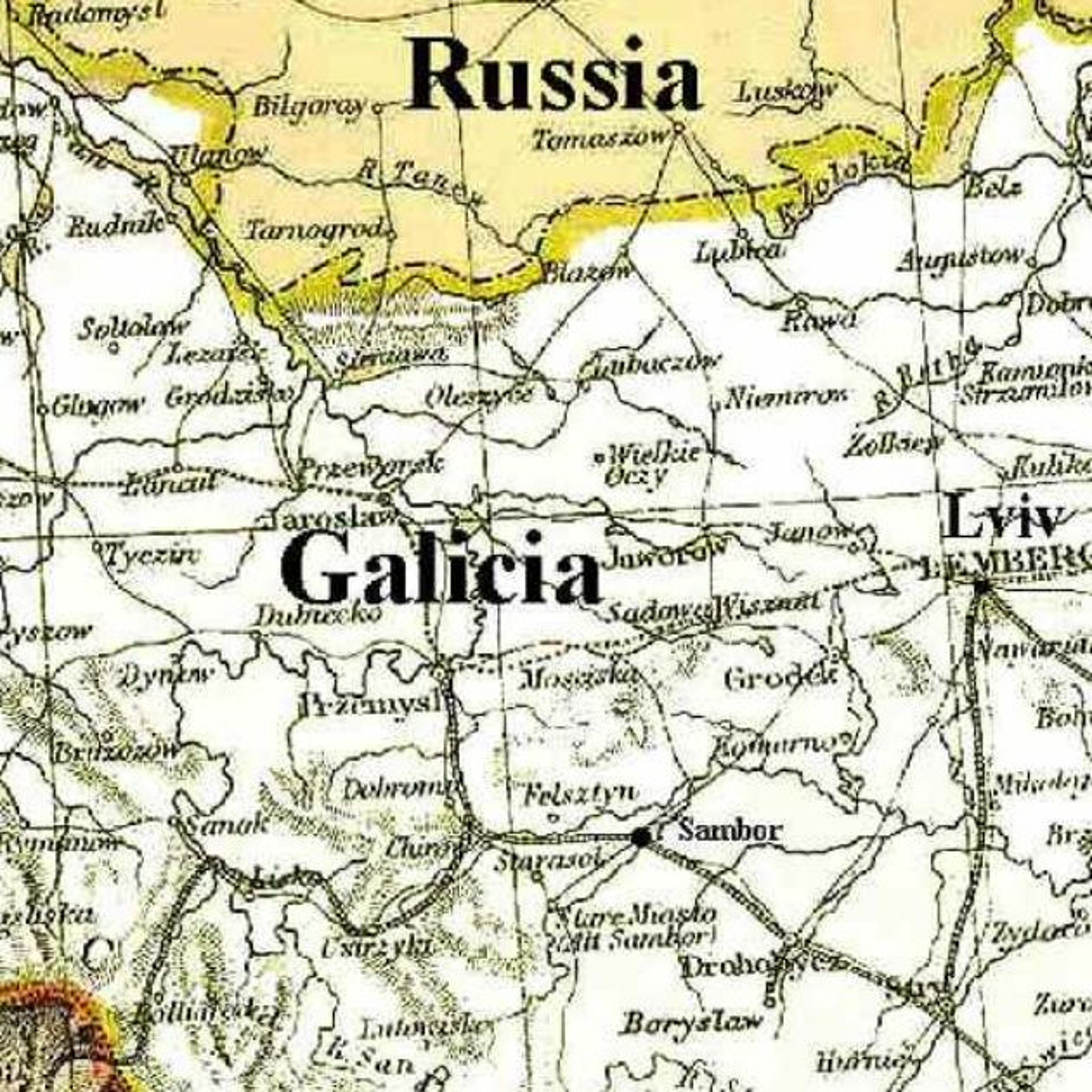
In this BBC documentary, FRDH podcast host Michael Goldfarb, goes on a Journey to Ashkenaz. He visits what is today Ukraine which was once the heartland of Ashkenazic Jewry. It is where his father's family comes from. Excellent sound and music in this piece.
The Democrats in the Midterms: with Brian Klaas
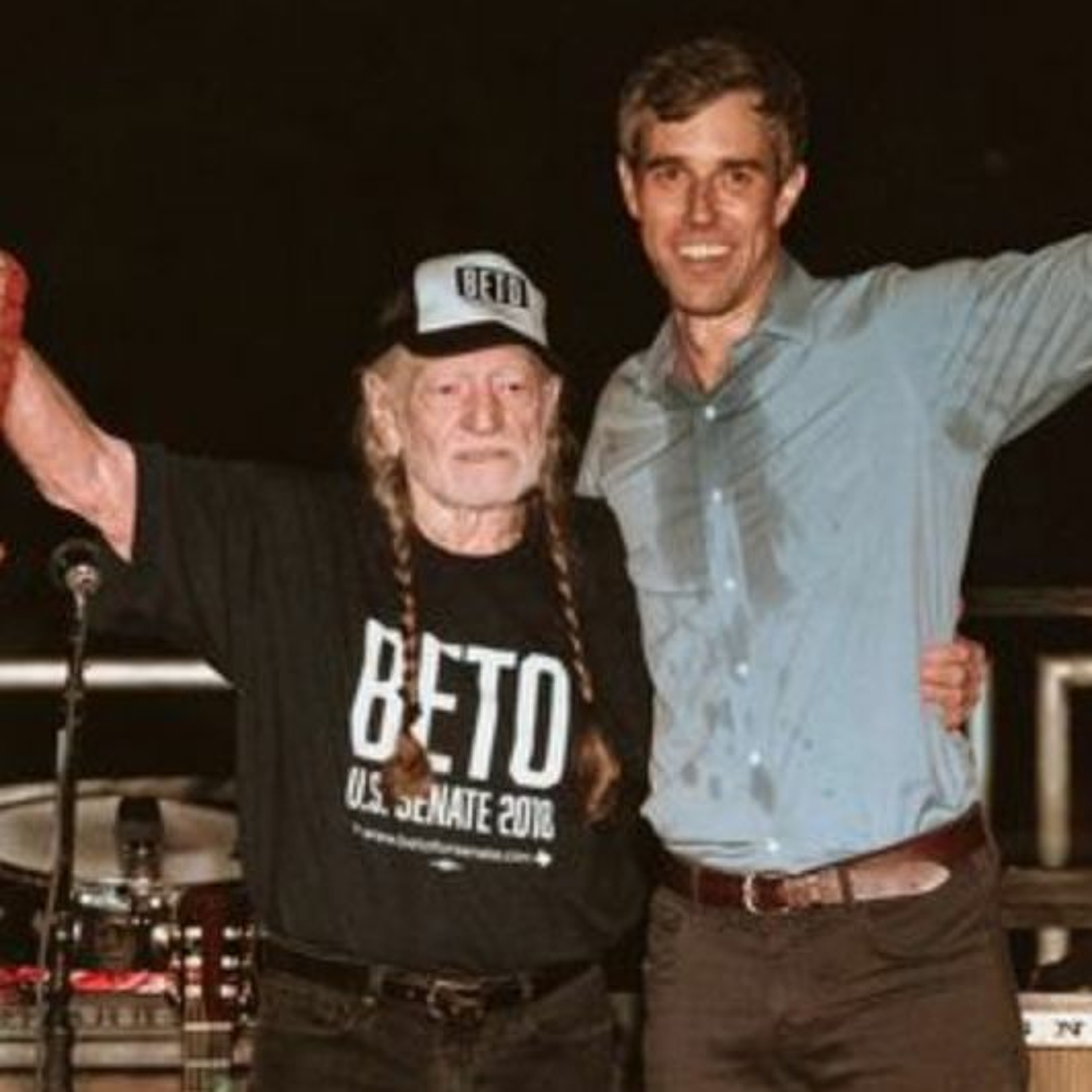
The Democrats in the upcoming Midterm elections face a dilemma. Beyond not being the party of Trump who are they? What does the party stand for? How do Democratic leaders square the circle between its urban base and the rural voters it still needs to win power. In a far ranging conversation with Washington Post columnist and political science professor Brian Klaas, FRDH podcast host Michael Goldfarb explores answers to the Democrats' Dilemma at the Midterms.
On Being Cut Off From History
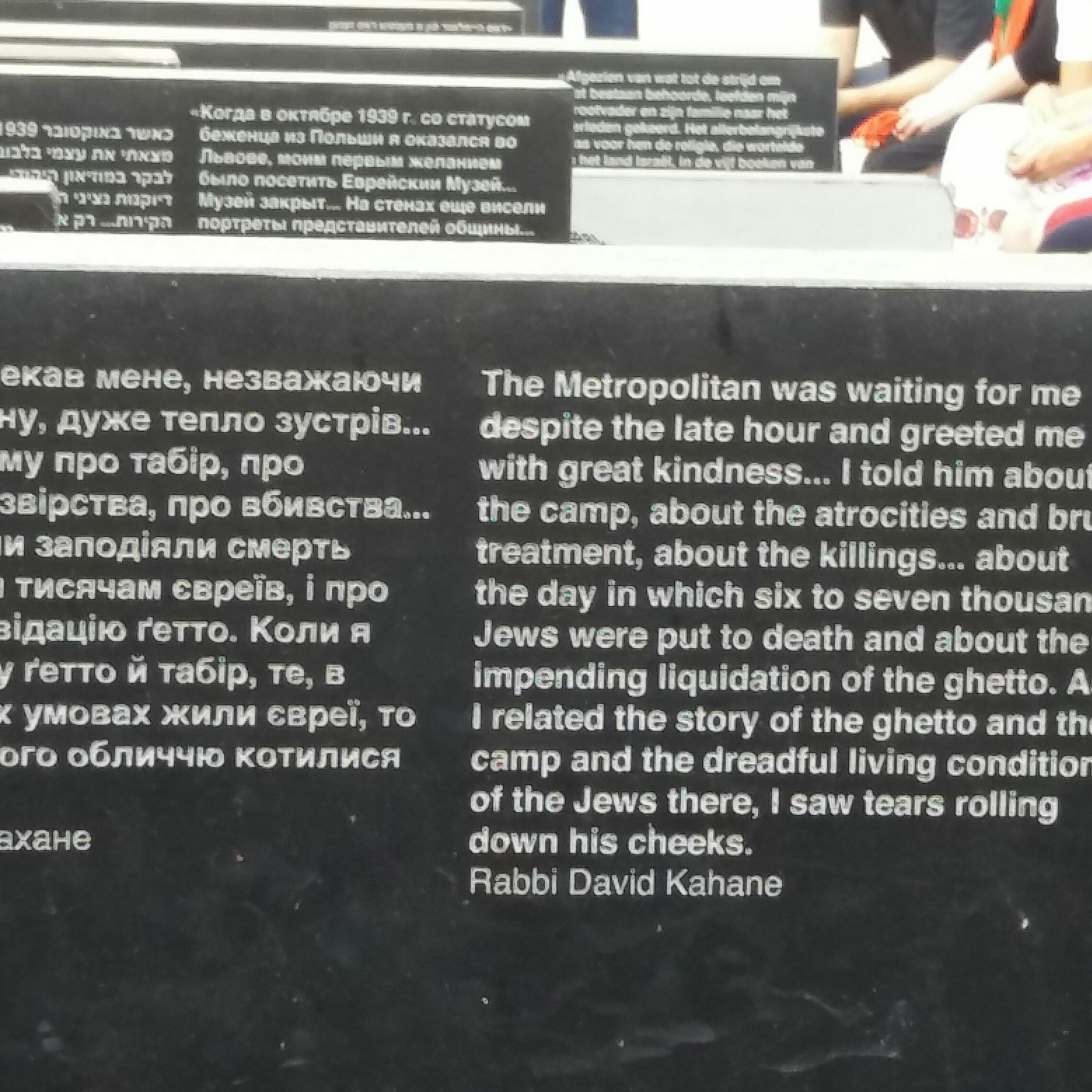
What happens when a group of people are cut off from their history? More specifically their family history. In this FRDH podcast, Michael Goldfarb reflects on how children become aware of history and how the Holocaust has cut most of the world's Jews off from their family stories and so cut them off from the main channel of history.
50 Years After the Soviet Invasion: Czech Cinema Lives On
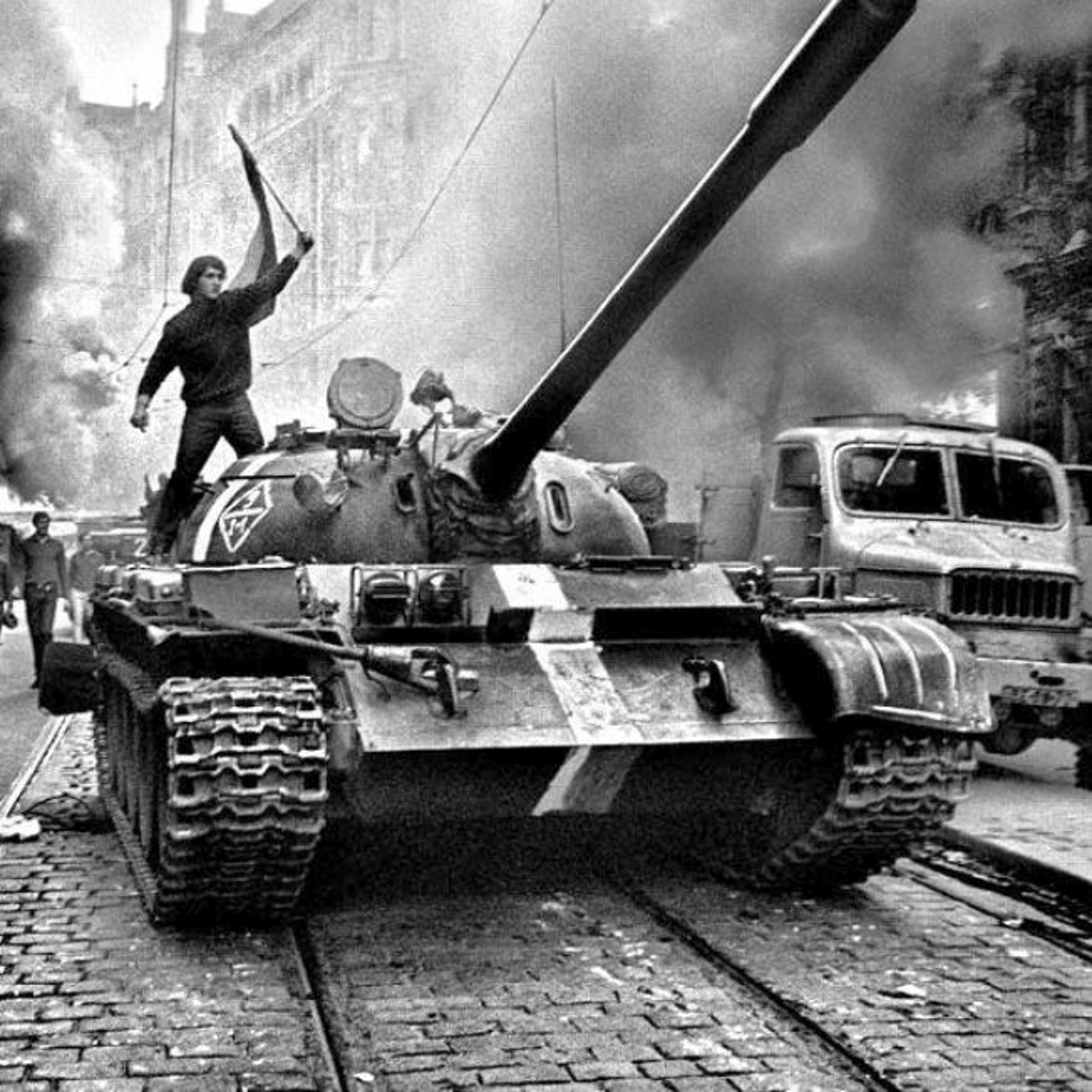
On the 50th anniversary of the Soviet invasion of Czechoslovakia, a look back at Czech Cinema. In a decade of tumultuous change in the arts and cultural expression this tiny country's filmmakers were as important to the youth revolution as artists in the West. In this podcast, originally broadcast on BBC Radio 3, FRDH host Michael Goldfarb tells the story of how a unique set of circumstances made Czechoslovakia in the 1960s one of the powerhouses of world cinema. These were films made by people who had the first rough draft of history burned onto them in childhood and were not broken by all that they endured: Hitler/Stalin ... they laughed at the worst and in sharing that mockery with audiences gave them courage to stand up to totalitarianism. Of course, there was a price. But the Czech cinema of that time lives on.
Ireland: Borders, Brexit & Omagh
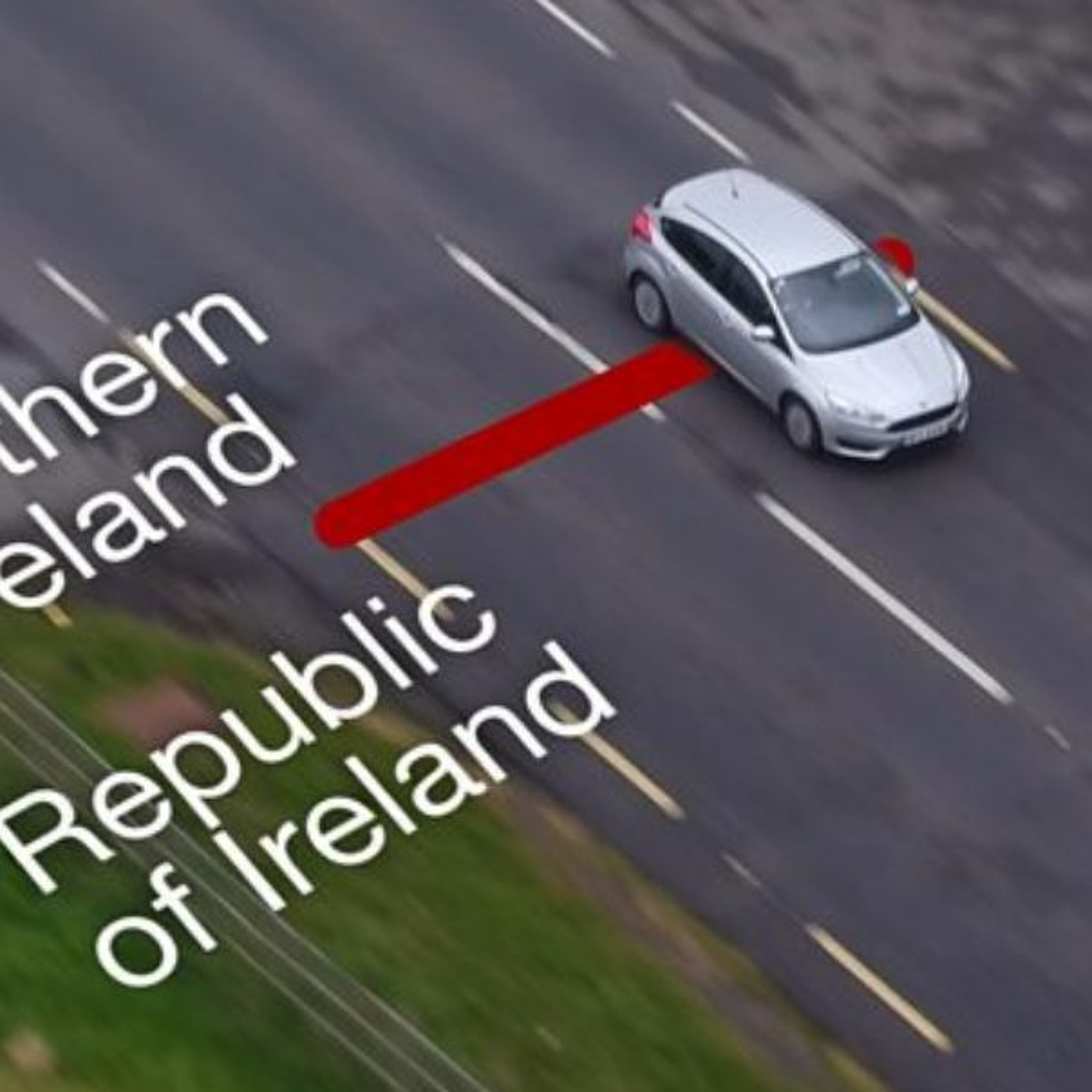
On the twentieth anniversary of the Omagh bombing an FRDH meditation on Ireland, borders and how Brexit promises to undo the achievement of the Good Friday Agreement. For five years in the 1990s FRDH host Michael Goldfarb covered the political process that led to the Good Friday Agreement. He recalls the politicians struggle to make the partition border on the island of Ireland meaningless, he also remembers how at the moment of success there was one final tragedy to mark the end of the Troubles: the Omagh bombing.
Death, Taxes and Donald Trump
A conversation with investigative journalist David Cay Johnston on death, taxes and Donald Trump. "Nothing is certain but death and taxes" wrote Benjamin Franklin. Another certainty is that Donald Trump is afraid to let the people he governs see his taxes. Johnston explains the history of taxes and how from the beginning of civilization it has been used to organize economics and politics. Then we talk about what Donald Trump's taxes tell us about the man. Johnston knows some stuff: he has been reporting on Trump's taxes and business affairs for 30 years.
Civility And the Paradox of Tolerance
America is undergoing a crisis of civility - don't just take FRDH podcast's word for it - and this civility crisis is an example of the Paradox of Tolerance. In this FRDH, Michael Goldfarb traces the origins of the civility crisis thirty years to Newt Gingrich's declaration of a second Civil War using words instead of guns to conquer all those who disagree with the Republican party. He looks at how three decades of Republican unwillingness to tolerate other views of America has brought America face to face with philosopher Karl Popper's concept of the Paradox of Tolerance. Do you think politely asking Sarah Sanders to leave a restaurant was uncivil? or perfectly reasonable? Share this podcast widely.
Reality in the age of trump
What is Reality in the Age of Trump? In this FRDH podcast, Michael Goldfarb speaks with Luke Harding, former Moscow correspondent of the Guardian newspaper, and author of Collusion: Secret Meetings, Dirty Money, and How Russia Helped Donald Trump Win, about the long, long history of official lying in Russia, how people in that country sort out reality from the propaganda, and how Putin's expertise in creating alternative "reality" influenced the 2016 US elections. Is reality an objective form of truth, or is it just relative. What did Lenin say about it? Do governments impose their version of reality, or do people collude in their own propagandisation?
Bible Study for Atheists: Jewish Quarrels
This edition of Bible Study for Atheists looks at today's Jewish quarrels and asks whether the arguments among Jews today over whether to move the American Embassy to Jerusalem and the expansion of Israeli settlements into the West Bank is an echo of the quarrels of Biblical times. Is the story of the 12 tribes of Israel separating into two kingdoms true? How deep is the historical continuity between the Israelites whose story we read in the Old Testament and that of modern Jewry?
Iran: Ignorance Is Not Bliss
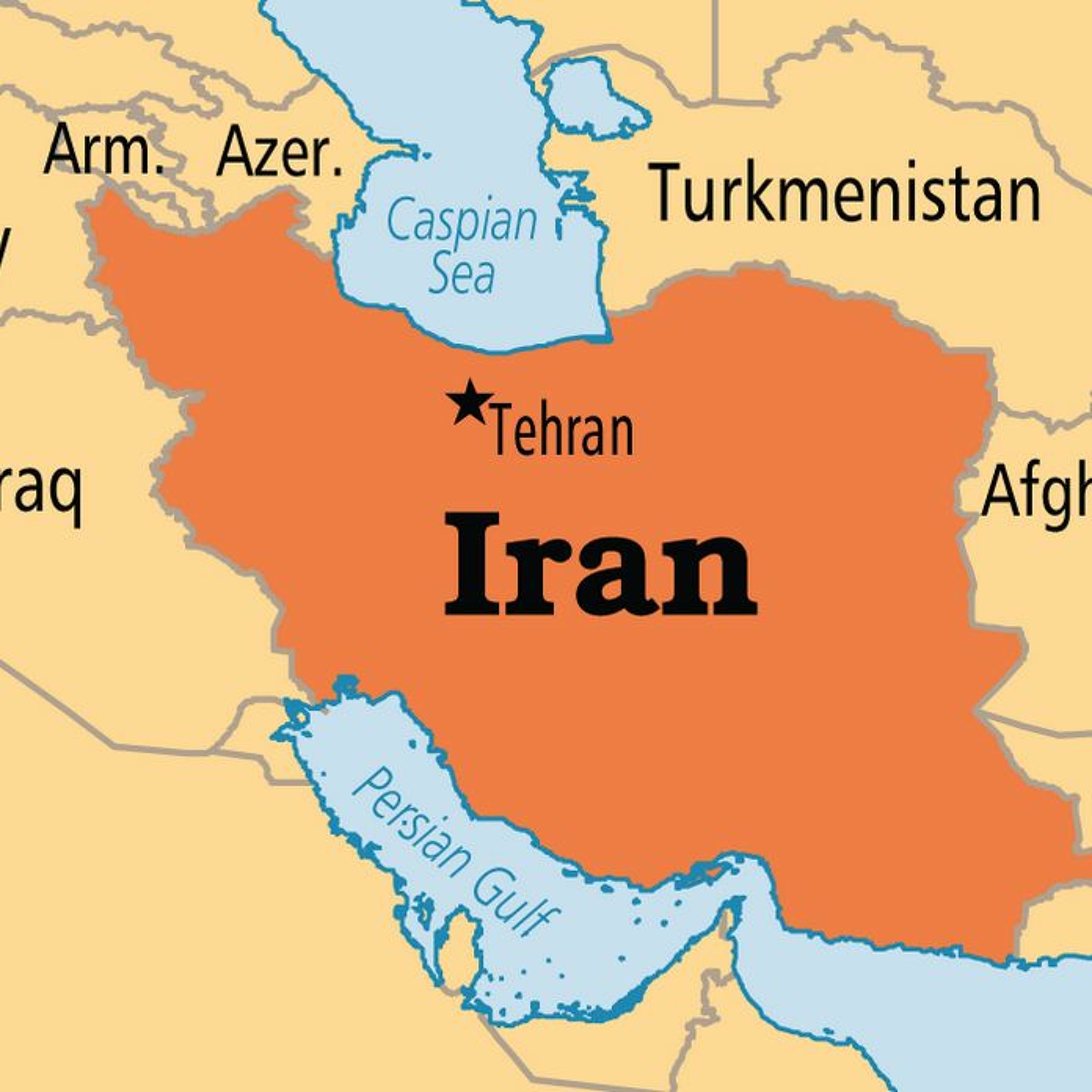
When it comes to Iran, ignorance is not bliss. For the last 40 years, American policy makers have displayed astonishing ignorance about the day to day reality of life in Iran. This has led to one blunder after another in how the US deals with the country, most recently President Trump's withdrawing the US from the JCPOA or Iran nuclear deal. What makes this ignorance astonishing is just how much contact there is between ordinary Iranians and Iranian Americans. In this FRDH podcast Michael Goldfarb speaks with Iranian-American journalist and author Azadeh Moaveni who has reported from Iran and written two highly regarded books about the country about Trump's withdrawing the US from the nuclear deal, what it means to the many Iranians who do not support the regime and whether it brings the prospect of war closer. Ignorance may be a problem of American policy makers, but it is not a problem in this fascinating 15 minute long conversation.
Reality of Torture With No Euphemisms
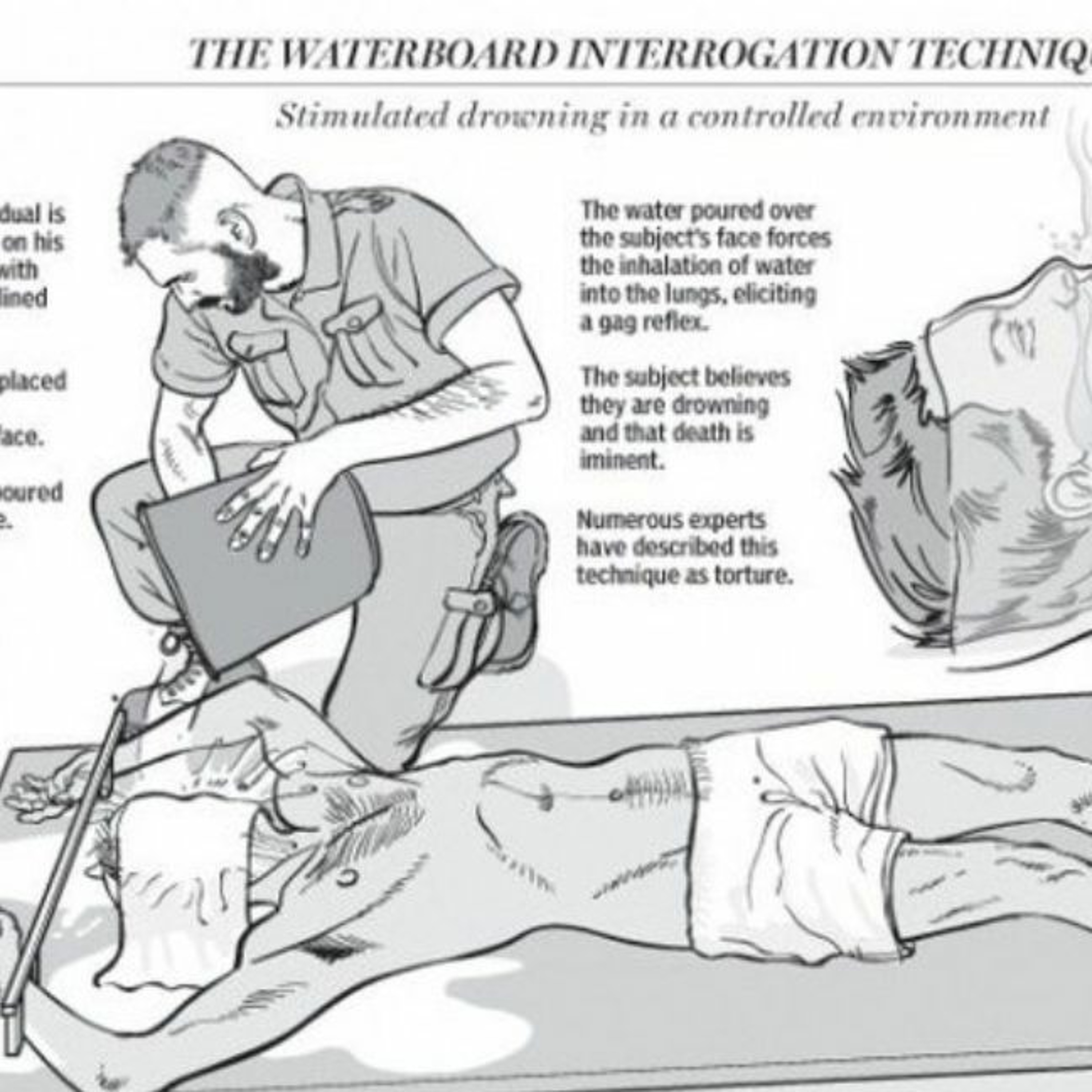
The reality of torture is usually smothered in euphemism when it is discussed in Washington as it has been during the Senate hearings on Gina Haspel, Trump's nominee to run the CIA. It shouldn't be. In this FRDH podcast, Michael Goldfarb, who has interviewed torture victims and torturers, and made the DuPont award winning documentary, "Surviving Torture: Inside Out" cuts through the euphemisms surrounding this barbaric practice. He explains why the official version of what happens in CIA blacksites is wrong. Torture is for punishment not to extract information.
Warsaw Ghetto Anniversary Meditation: What Would You Have Done?
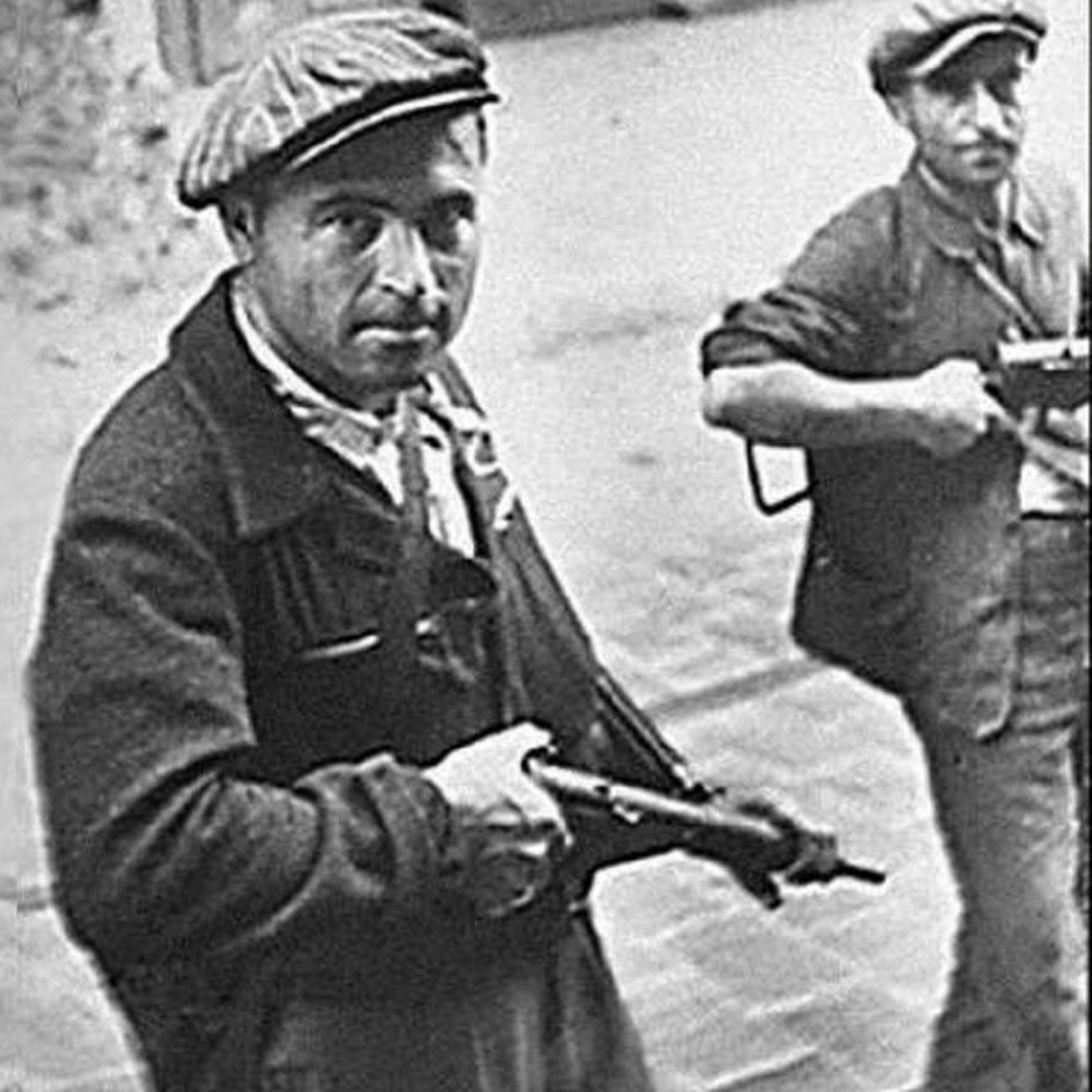
On the 75th anniversary of the Warsaw Ghetto Uprising, FRDH host Michael Goldfarb has a meditation on the uprising's meaning today. He tells the story of how the Jews of Warsaw, one-third of the population of the city were herded into a Ghetto and how slowly and then rapidly the Nazis tried to kill them all until, eventually, a group of fighters decided to die with a gun in their hands on teh street of the Warsaw Ghetto rather than to walk meekly into a gas chamber. He explains what effect this story continues to have on himself and his fellow Jews, wherever they live and he asks profound questions about finding the courage to respond to the worst violence.
King and Kennedy Assassinations: America's Repressed Trauma
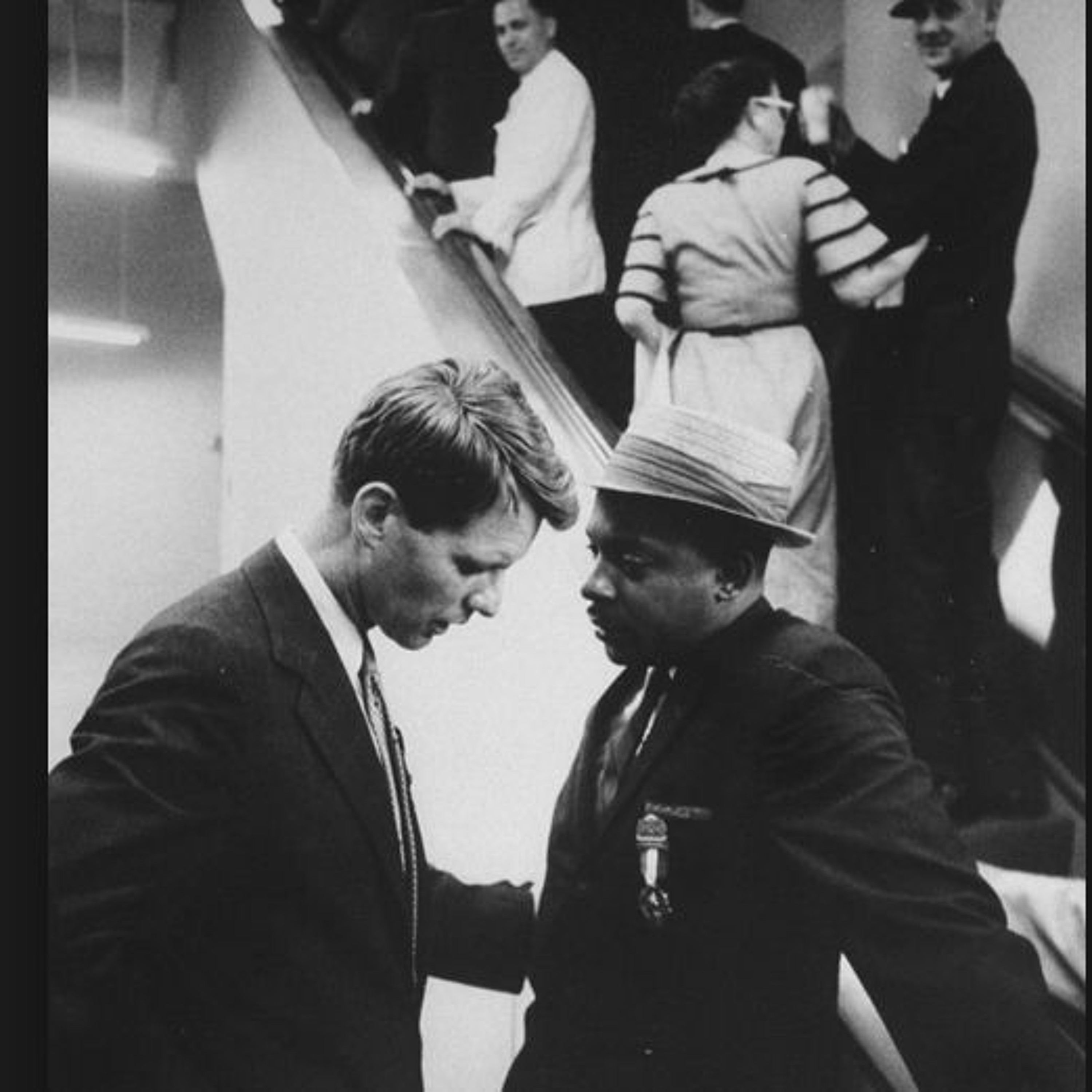
The assassinations of Martin Luther King and Robert F. Kennedy in the spring of 1968 was a national trauma. Like most traumas people have repressed their memories of the event. Yet, half a century later, the twin decapitation of America's progressive leadership still has an effect on the country. In this FRDH podcast, Michael Goldfarb traces the decline of broadcast journalism and political discourse to the murders. No politician today speaks as honestly to the American people as King and Kennedy. He also recalls what it was like to be young and hear the news that another American leader had been murdered.

Iraq War 15 Years On: What Might Have Been
The Iraq War began 15 years ago. Seems like ancient history given where America is now. This FRDH podcast, made at the start of the war, shines a light on what might have been and foreshadows the disaster the Occupation became, a disaster Iraqis are still trying to crawl out from under. Was the failure of the Iraq War the American unipolar moment begin to unravel? Was the day Saddam Hussein’s regime disintegrated in Mosul, the day when the seeds were sown for the city to be overrun by ISIS? Did the Bush administration’s catastrophic lack of planning for the day after, the moment when Syria’s fate was sealed? This deeply mixed sound documentary will take you to the battlefront of the Iraq War, experience it with FRDH host Michael Goldfarb and the extraordinary Iraqis he met. Was there a possibility it all might have worked? You can also read my book about it. Ahmad's War, Ahmad's Peace. It was a New York Times Notable Book of 2005. Out of print now, but still available for download into your e-reader at Amazon
Liberal, Conservative: Can We Decide What These Words Mean?
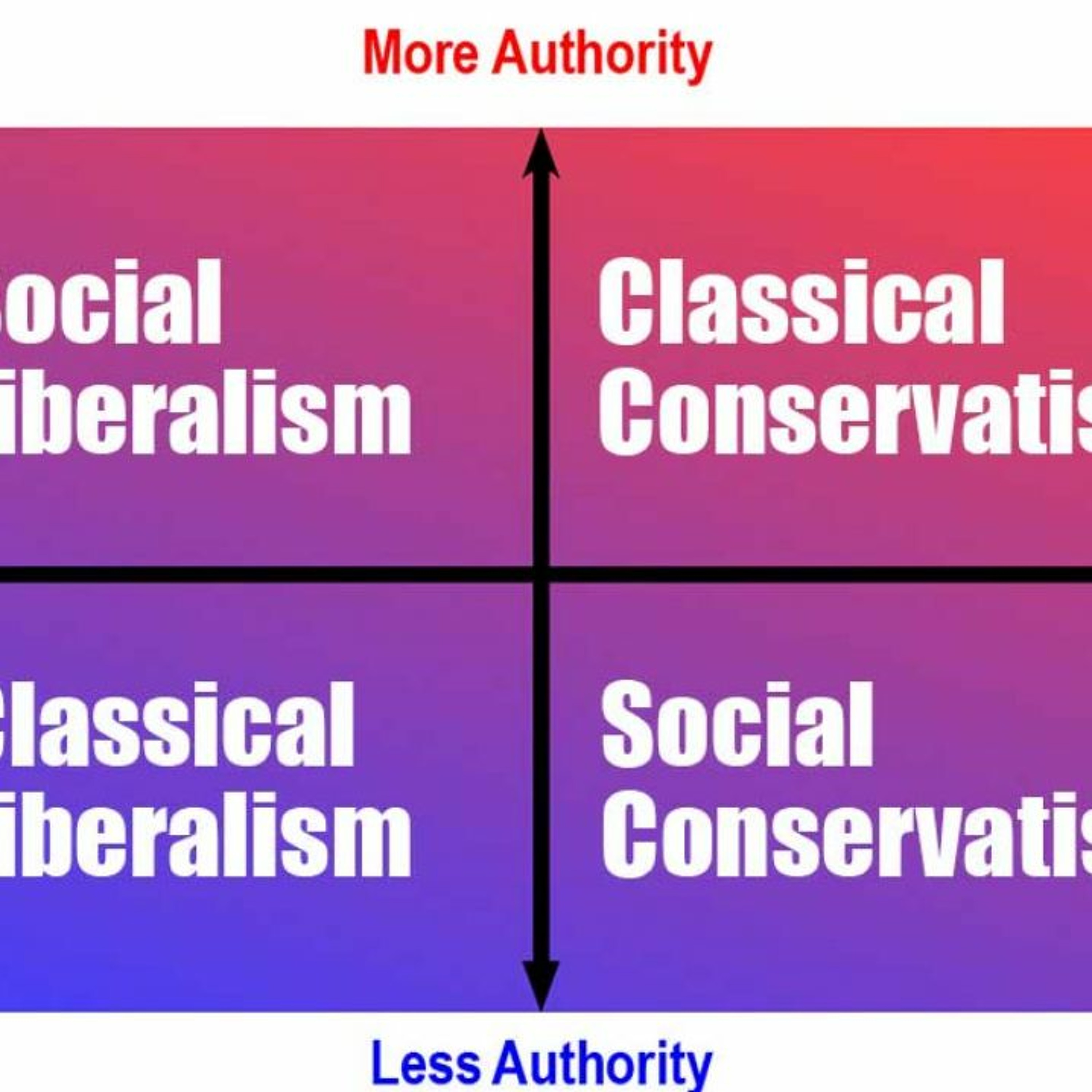
What do the words liberal and conservative mean any more? What about left and right? No one is sure. Certainly not the news media who throw the terms around without a thought to definitions that make sense. Conservatives in America are neo-liberals when it comes to the economy. Neo-conservatives call for liberal intervention. In this FRDH podcast, Michael Goldfarb gives a potted history of the word liberal and calls for clarity and uniformity of usage by the mainstream news media. It's a confusing world, imprecise language doesn't make it easier to understand. Let's have a classification clarification conference so we can all know what we're talking about when we say, You are a Liberal. (or a Conservative.)
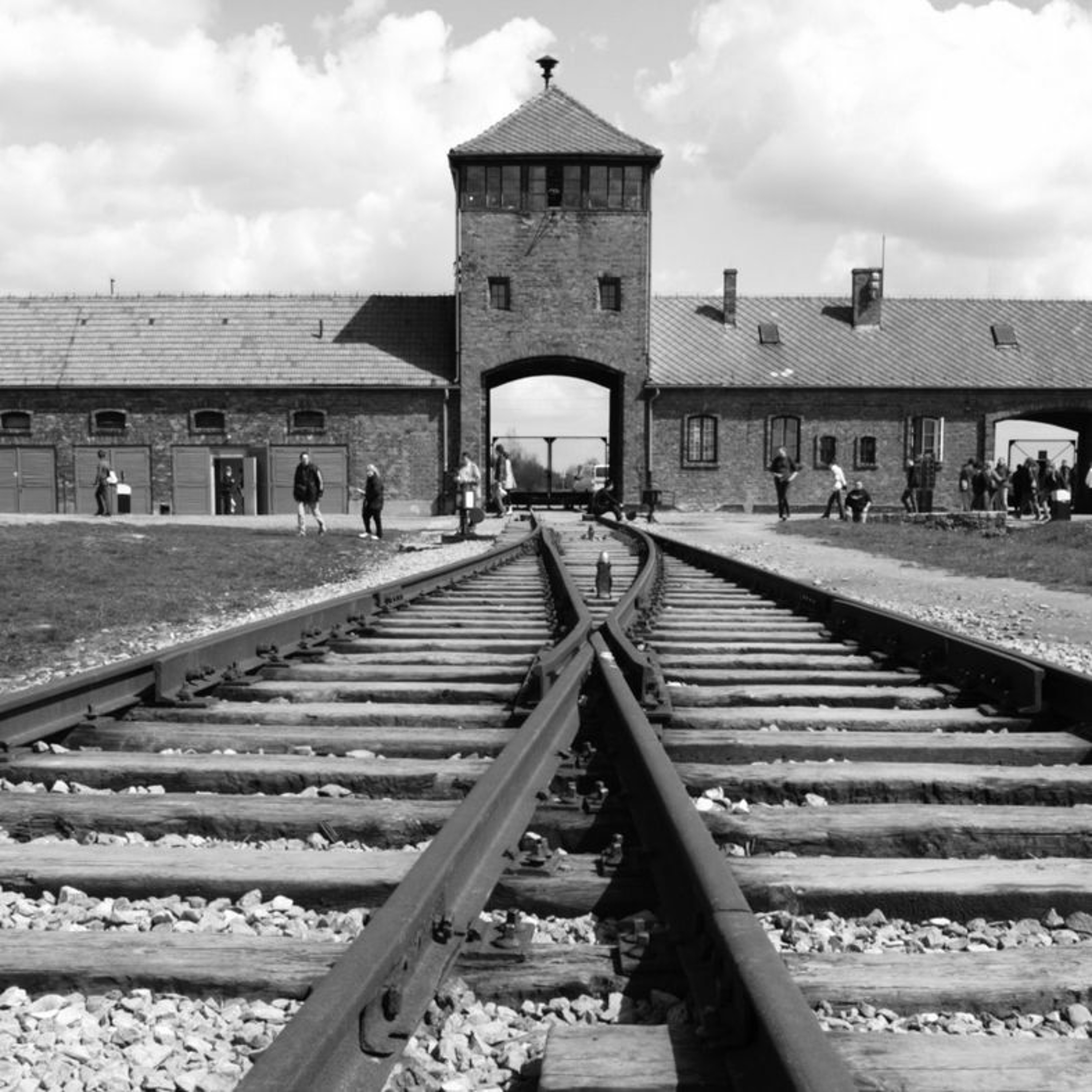
Remembrance, Ritual, the Sacred and Auschwitz
What is the historical process by which something becomes sacred? Is Auschwitz a sacred place? In this FRDH podcast, Michael Goldfarb asks what is the historical process that leads to the creation of a religion, or changes in the practice of one that already exists. Is it possible that events of modern history will someday take on religious significance, or are people today intellectually and emotionally incapable of understanding their experience as “awesome” in the sense that the great religions mean the term? Using sound from his personal archive Goldfarb builds a case that the catastrophe of the Holocaust, like the catastrophe of the destructions of the First and Second Temples in Jerusalem, should and will be incorporated into Jewish religious observance.

Year 1 Trump report: Crazy or a member of the Club?
The big question at the end of Donald Trump's first year in office is: Is he crazy or just typical of his social class? Anti-Trump forces constantly question his mental state in the hopes of provoking his cabinet into forcing him out via the 25th Amendment. In this FRDH podcast, host Michael Goldfarb looks at whether Trump is crazy or is he just a typical country club kind of person. Are his words about shithole countries and immigrants any different than you would hear most Sundays at the country club? Among people of a similar social caste and with the unwritten rules of any club - you can say what you like and it will not be repeated outside the four walls of the clubhouse - when the talk turns to politics men and women, can vent their opinions on matters of politics and foreign affairs and race and immigration. The language used, will frequently be exactly the same as Trump uses. The solutions for political, economic and international problems will be as simplistic, although perhaps not expressed as crudely as Trump expresses his views. But they will be expressed with the absolute certainty of people who have money. IN this FRDH Trump Year 1 anniversary podcast the focus is on understanding the President as a product of his class ... not a madman.
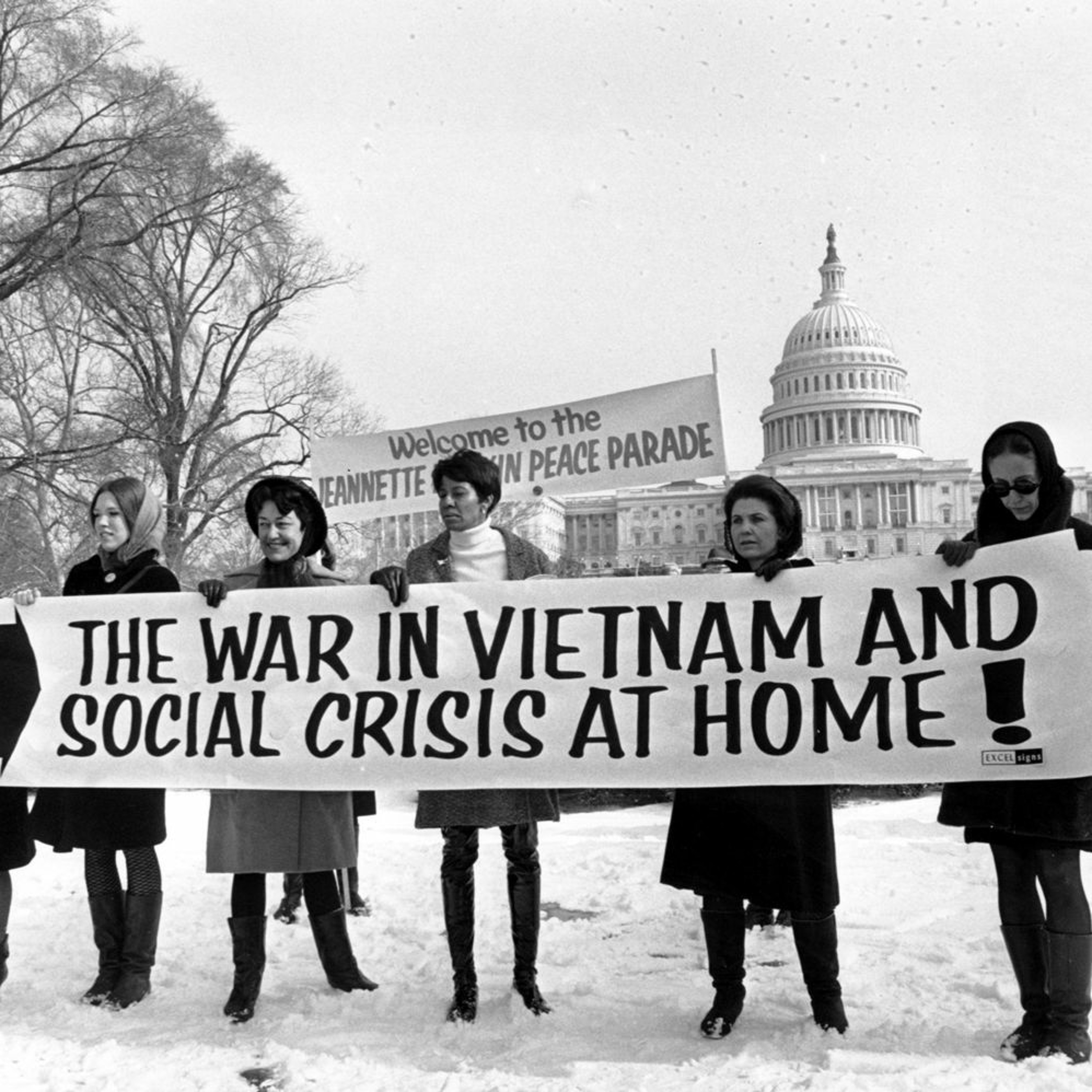
1968>2018: 50 Years On Time to Change the Paradigm
In 2018 There will be many stories marking the 50th anniversary of events from 1968. 1968 year of defeat, assassination, riots and treason in America. There were near revolutions in France and Czechoslovakia. An early demonstration of the violence which would consume much of Latin America over the next quarter century in Mexico City. We still live with the cosmic echo of those events. It is good to remember 1968 via news media but what lessons people who didn’t live through these cataclysms will learn. In this FRDH podcast, Michael Goldfarb looks back at one of the most dramatic years since the end of World War 2. He describes living through a paradigm shift and asks if it's time to find a new one. The paradigm has shifted on the economy, and, God knows, on standards of mainstream political leadership in the Anglo-American world. But has the paradigm shifted on modes of political activism? Are people to tied up with the past?

America 2017: Magical Thinking vs Reality
America in 2017: was the story of Magical Thinking vs Reality. For Trump voters it was a confirmation of everything their "unbiased" news told them. For the anti-Trump brigade it was believing too many of the rumors they saw on twitter. Reality was the victim in this car crash. 2017 challenged the very notion of a fact-based, mutually acknowledged reality that is essential for creating a stable society. Finding facts on social media like twitter became impossible. Twitter is about Outrage Outrage Outrage. It was like outrage had become a form eroticism. Makes me feel so good to feel so outraged. Back in pre-history, when the second President Bush was prematurely swaggering about victory in Iraq, his dark angel, Karl Rove told the New York Times, “we create our own reality.” Liberals - here defined as all those who didn’t vote for Bush and a lot of people who did - shook their heads at Rove’s arrogance. This group proclaimed it was part of the reality based community. And as nemesis followed hubris and Iraq and then the economy disintegrated on Bush’s watch this group congratulated itself for sticking with reality. But this same group was now ignoring facts and indulging in magical thinking. Trump wasn’t going anywhere, no matter what was proclaimed on twitter and in the opinion columns of the mainstream media. Wishful thinking or magical thinking is not reality-based thinking … that is how Trump had changed his opponents. And it’s one of the most important aspects of 2017 in America.
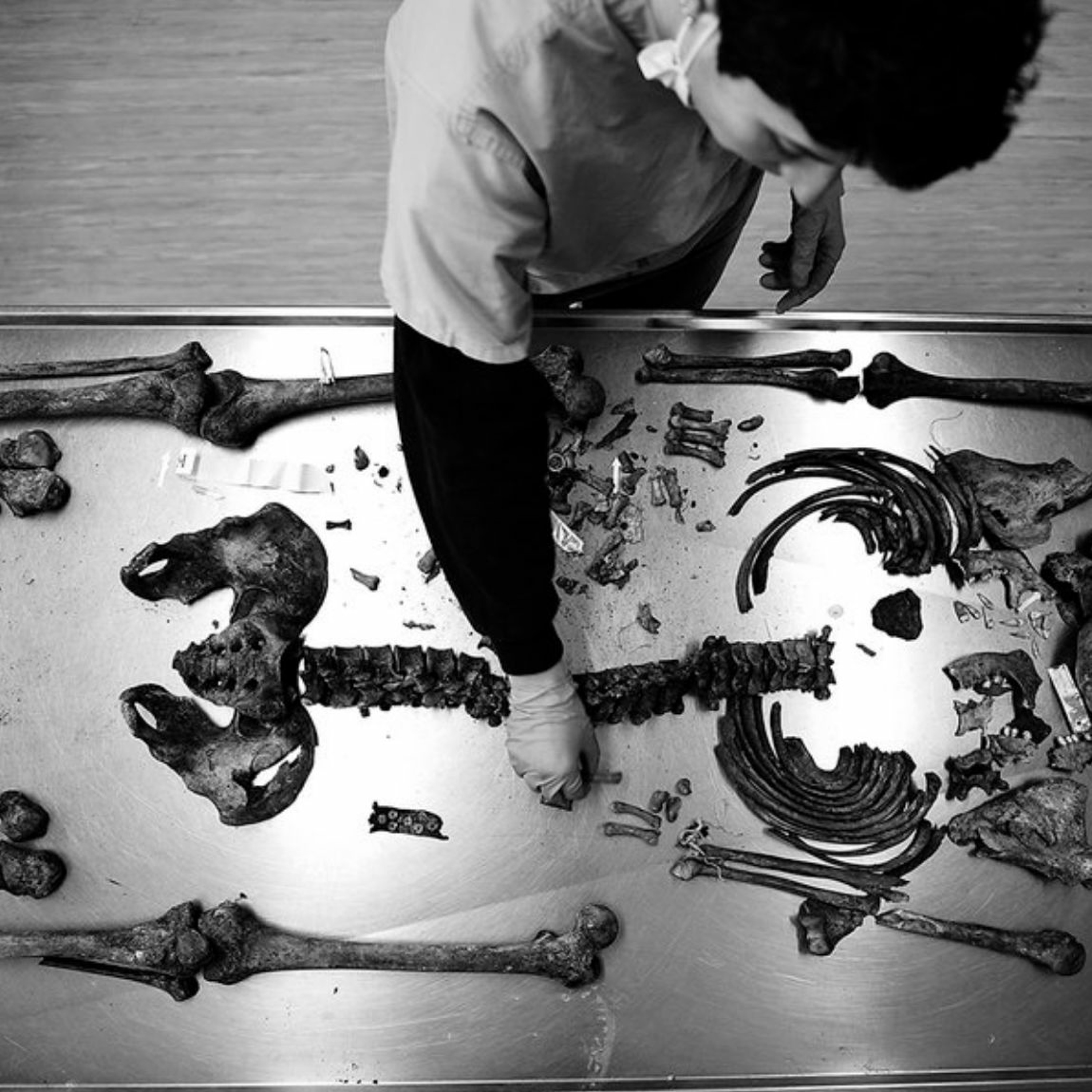
Bosnia, Mladic: the Price of Justice
The fact that we are in a new historical epoch was underscored recently in the response to the news that Robert Mugabe and Ratko Mladic, two men who ruined their countries and caused the deaths of thousands, got their comeuppance. 20 years ago this would have been enormous, front page a-segment news. it would have been the topic of gleeful conversation among the well-informed and politically aware. But In this era of Trump and harassment and Brexit, hardly a ripple. It's ancient history. The Bosnian War, was a fascist temper tantrum that destroyed one of the most beautiful countries in Europe. FRDH podcast host Michael Goldfarb, covered that conflict and returned to Sarajevo on the fifth anniversary of the Dayton Agreement to make a radio documentary on how the country was recovering. In this FRDH podcast he uses archive tape from that documentary to illustrate the difficulty of bringing justice to the families of the dead. Mladic's conviction 22 years after ordering the genocide at Srebrenica is not quite justice in full measure.
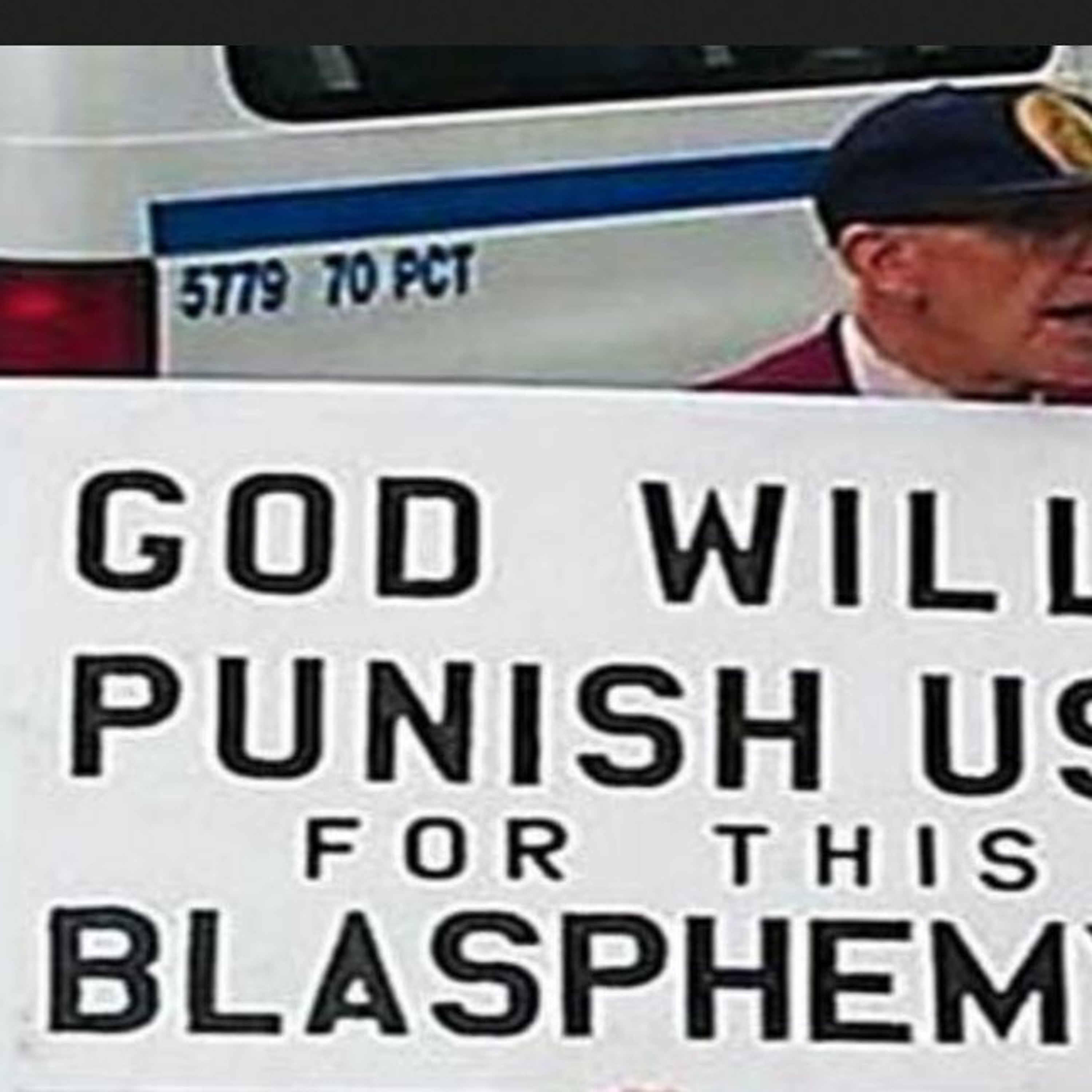
Bible Study for Atheists 3: Judging Roy Moore a Blasphemer
Share this Bible Study for Atheists, in which FRDH podcast host Michael Goldfarb looks at the controversy over Alabama Republican Senate candidate Roy Moore. A self-proclaimed man of God whose behavior seems like blasphemy. How is it that the most religious part of America is also home to the most blasphemers? And Alabama really is the most religious state in the country, According to a 2016 survey by Pew research Alabama ranked first in the nation for religiosity. 82% of its people say they believe with “absolute certainty” in God, nearly tHree quarters of Alabamans say they pray to him every day. Yet, many in that state are still lining up to support a man who acknowledges preying on underage girls, and just generally falling short of all moral precepts contained in the Bible. The Southern mindset is very religious. It imposes itself on visitors, even an atheist needs a modicum of biblical knowledge and language to have conversation with Southerners. So this Bible Study for Atheists tries to figure this out in Biblical terms. When you think of Moore, and all the other public or political Christians who have been caught out in scandals think of blasphemy. Isn’t it blasphemy to present yourself to the world as a Godly person while behaving in ways that depart from all moral teaching? And isn’t blasphemy a terrible sin. St. Thomas Aquinas thought it a worse sin than murder.
FRDH: No Place of Greater Safety
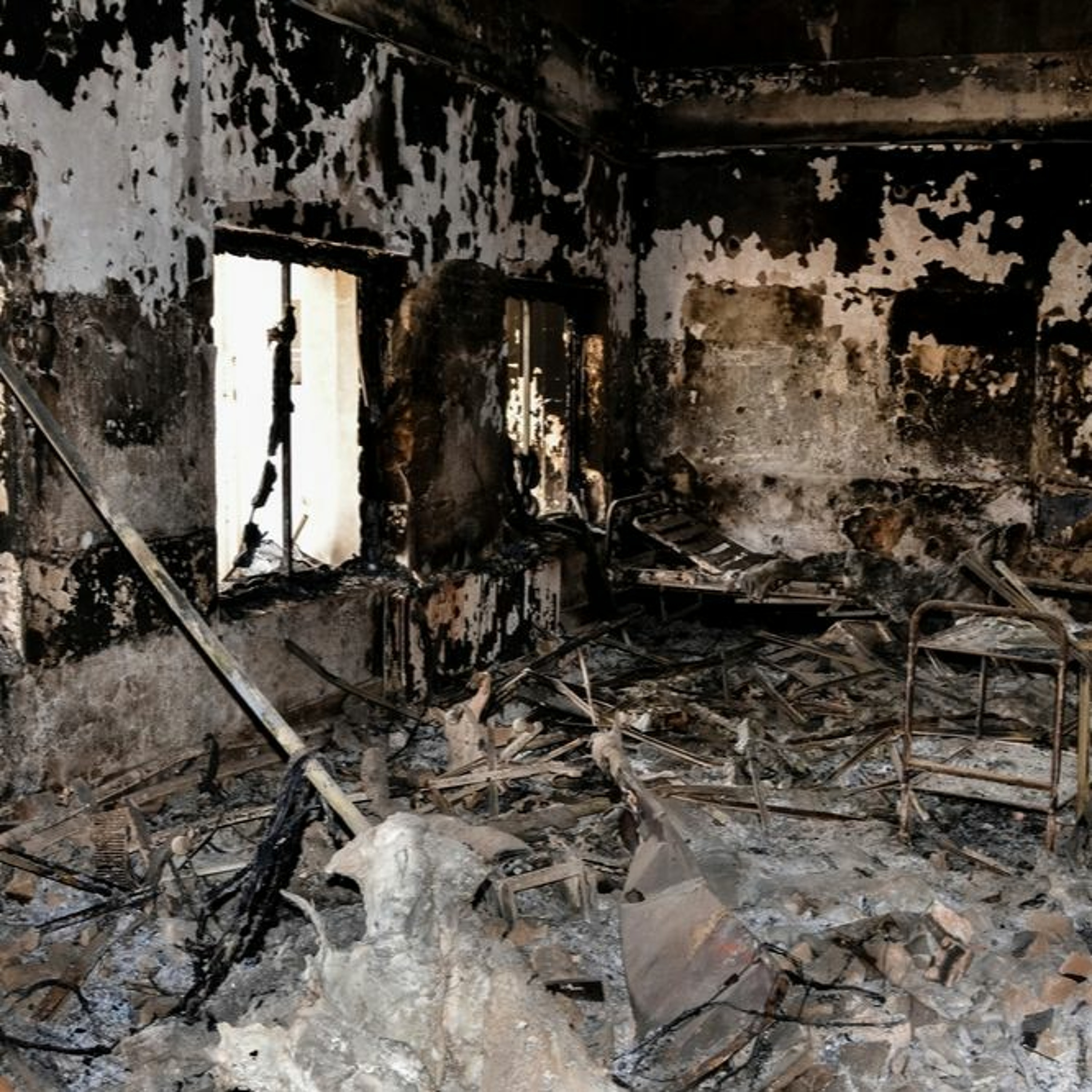
There is no place of greater safety for civilians and soldiers wounded in today's wars. In 2016 alone there was nearly one attack every day on a hospital in a conflict zone. The most infamous attack came in 2015, when the United States bombed an MSF hospital in Kunduz, Afghanistan. Why? Are we seeing the end of the rules that governed warfare and provision of safe spaces for those caught in the crossfire? The origins of the Red Cross and humanitarian law go back to the middle of the 19th Century, to the battle of Solferino in 1859. The French Army under Napoleon III faced off against the Austrian Army led by Emperor Franz Joseph 1st. The politics behind the battle related to Italian independence but the battle is famous for much more. 300,000 men met on the field of battle near Solferino a small town between Milan and Verona. After nine hours of combat nearly five thousand were dead and more than 22,000 were wounded, many lying where they fell receiving no medical treatment. A Swiss observer of the carnage, Henri Dunant, organized local people to bring some kind of relief to the stricken soldiers. Dunant, a man of private wealth, self-published a book about his experiences, it was the first step in the lobbying that would create the Red Cross in 1863 and the First Geneva Convention or the Amelioration of the Condition of the Wounded in Armies in the Field, the following year. War today is different. Emperors no longer command armies into battle in great open spaces. Conflict is everywhere and involves everyone unlucky enough to be nearby. In WW1 for every 10 soldiers killed 1 civilian died. Today that is reversed. For every soldier killed 10 civilians die.
FRDH Bolshevik Revolution 100th Anniversary Thoughts
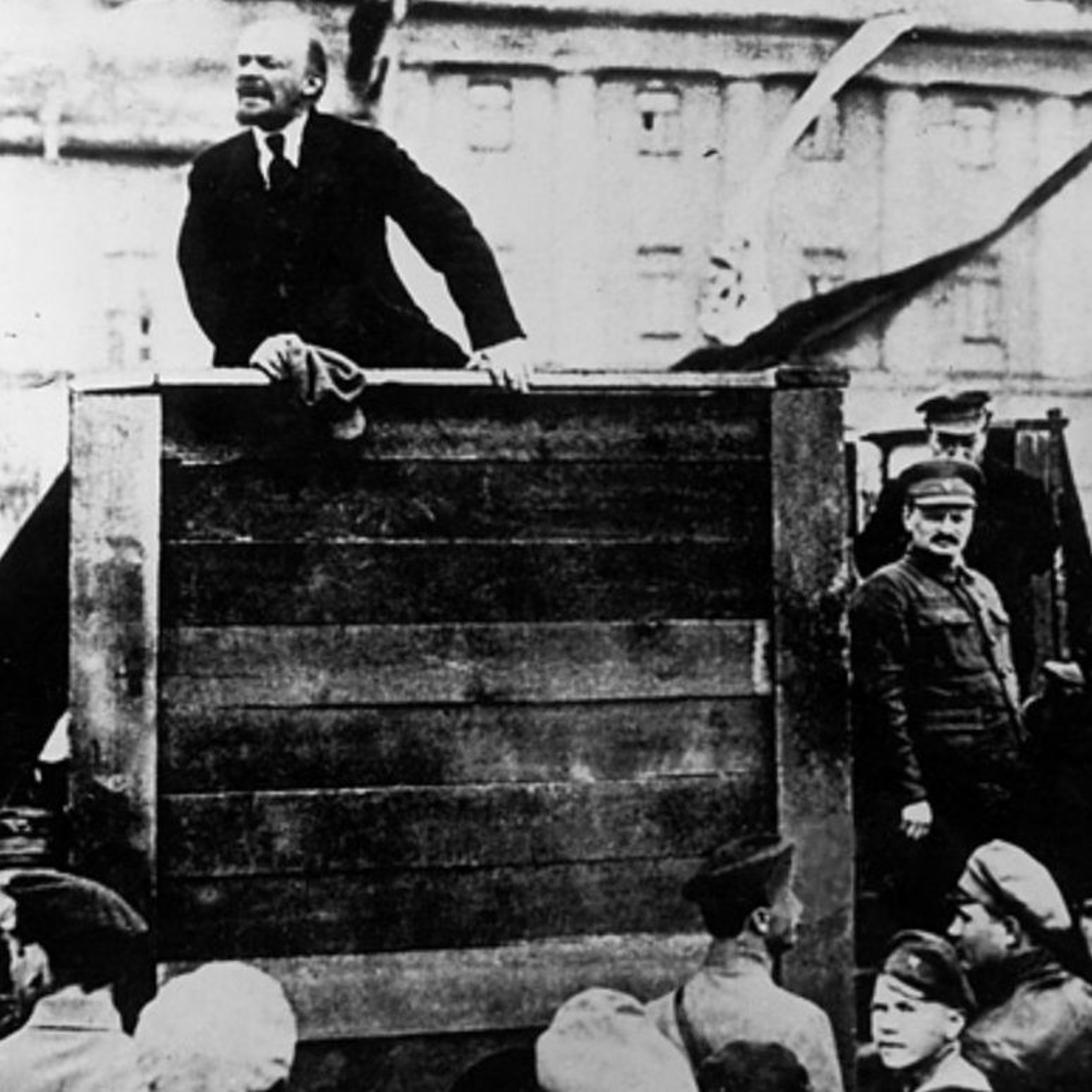
The Bolshevik Revolution is to political change, what nuclear weapons are to warfare: the ultimate deterrent. The question on this 100th anniversary of the Bolshevik Revolution is what happens to a society when you take violent overthrow of the government by the governed as a last resort out of the equation. How does it affect a society’s ability to respond to the inevitable changes wrought by the passage of time? Economic, political, social pressure’s build up as decades pass. These pressures weaken and deform the political system, certainly it deforms the politicians who work in that system. What happens then? To paraphrase Langston Hughes, do Generations of dreams deferred, dry up like raisins in the Sun, or fester like sores … or do they explode? Is it even possible to hold off the explosion? The overwhelming violence in which the Soviet Union was born and its ultimate failure, has obscured our ability to think about revolution clearly. It is wrong to judge revolutions by whether they succeed or fail. Virtually all revolutions fail. Either they fail literally and are reversed by forces of reaction or they fail metaphorically by compromising their lofty goals. The fairest way to assess the impact of a revolution is by the fact that it happened at all. Revolutions represent tectonic shifts in society, terrible rupturings that create decisive breaks with the past. Michael Goldfarb asks Does the Bolshevik Revolution mean there will never be another revolution in a major country like the US?
FRDH How Media Obscures Our Understanding of History
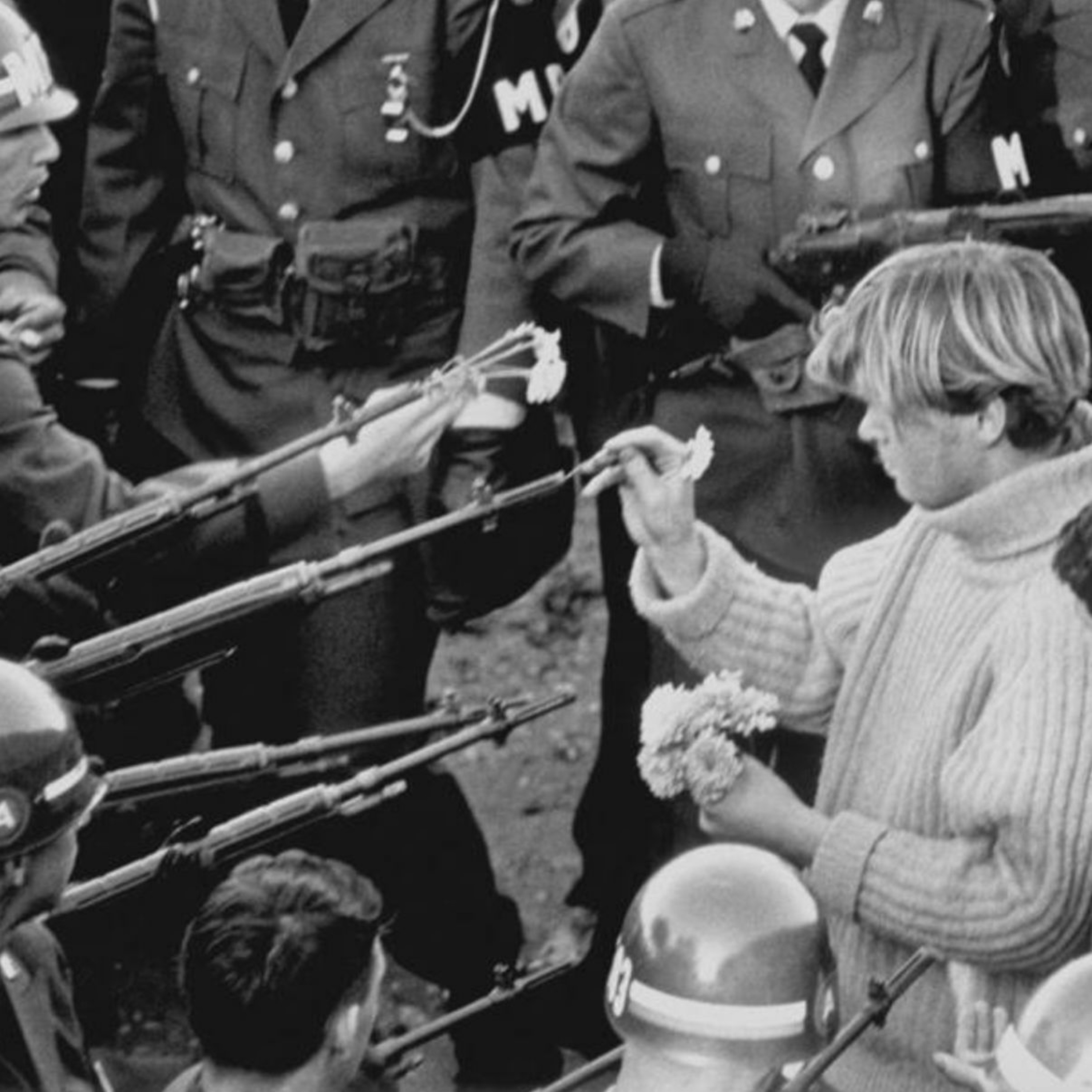
Media obscures history. Not intentionally, but the effect of looking at images without a deeper understanding of the context in which the images were created will keep the viewer from knowledge of an historical event. In this FRDH podcast, host Michael Goldfarb looks at how this lack of full understanding is hampering efforts to create a coherent political strategy to oppose President Trump. He explores the seminal research into how media obscures not just history but also other aspects of life by thinkers like: George Gerbner: http://web.asc.upenn.edu/gerbner/Asset.aspx?assetID=2597 https://www.theatlantic.com/magazine/archive/1997/05/the-man-who-counts-the-killings/376850/ & Neil Postman: https://quote.ucsd.edu/childhood/files/2013/05/postman-amusing.pdf He also writes about the television programs that shaped the Vietnam generation, like Beulah: https://www.youtube.com/watch?v=sQ2l_KTDcHU This essay on how media obscures our undertanding of history is inspired by Ken Burns series "The Vietnam War." Goldfarb asks, Why American society today feels like it is coming apart at the seams because when watching Burns documentary you realize there is no comparison between the objective reality of the Vietnam era and now. The reality then: half a million troops in combat deployment, riots in American cities every summer with hundreds killed, major political assassinations as a regular feature of national life. Reality today: a sense of panic that is comparable to the Vietnam era but not based in anything like the same scale of trauma.
Catalonia, Kurdistan: What Is A Nation
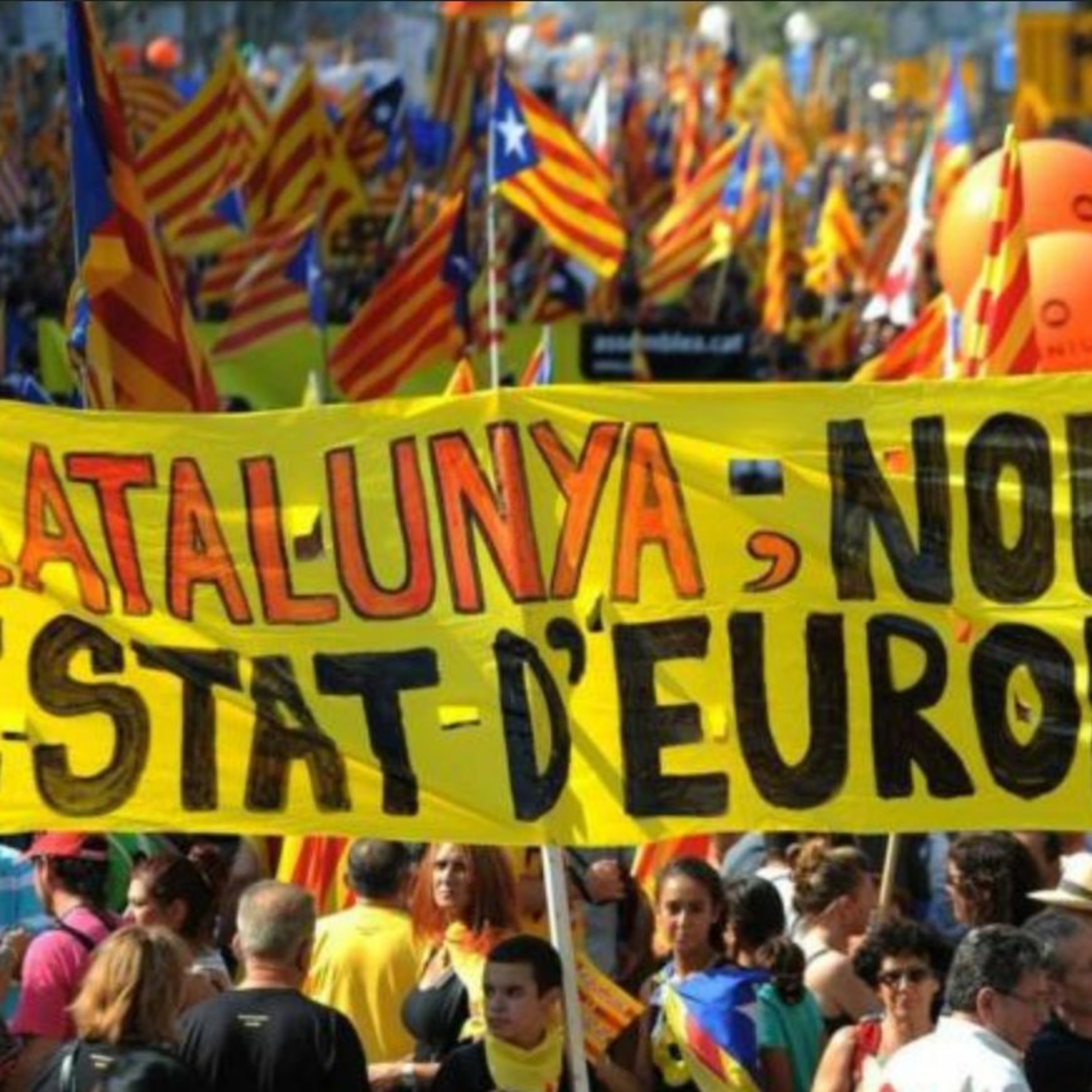
Referendums in Iraqi Kurdistan and Catalonia raise the quesiton "What Is a Nation?" What is a nation? What is a nation-state? Is it the same as a country? Are a people, or a tribe, the same thing as a nation? What does national sovereignty really mean? These are the key questions for our globalized 21st century. What is a nation? Is it something you die for? Get murdered for? Is it something that can make you clinically insane, incapable of seeing reality? Is a nation something that can be created by treaty or politics? What does the birth of a nation look like? What does it smell like when it dies? Michael Goldfarb draws on his decades covering conclficts rooted in frustrated attempts to express national feelings to look for an answer and comes up with more questions: Can the dozens of nations that make up western Europe hope to preserve their wealth and high living standards in a globalized economy without pooling their nation-hood into something greater? What is the importance of a nation-state in a world whose economy is no longer organized on national lines, In an era where the loyalties of global elites are to each other and not the lands of their birth? Will the 21st century see the creation of a United States of Europe and witness the splitting apart of the United States of America?
FRDH Without Memory There is No History, Here’s why
If an event happens and there is no one to witness and remember it, does it become part of history? If memory is eliminated is it possible to write or understand history? When FRDH host Michael Goldfarb researched his book Emancipation, about Europe’s Jews in the century and a half between being liberated from the ghetto and the Holocaust he came across stories of many interesting people in obscure places, completely forgotten because the community that might have remembered them had been eradicated. They were no longer part of history. Restoring them to the record became his obligation. In this archive recording, originally made for the BBC, he tells the story of Gabriel Riesser. It is particularly relevant to what’s happening in America today. This is about the ephemeral nature of civil rights laws, the tarnished promise of integration, how racial hatred is never dead and buried, and finally the foundation of all history writing: memory.
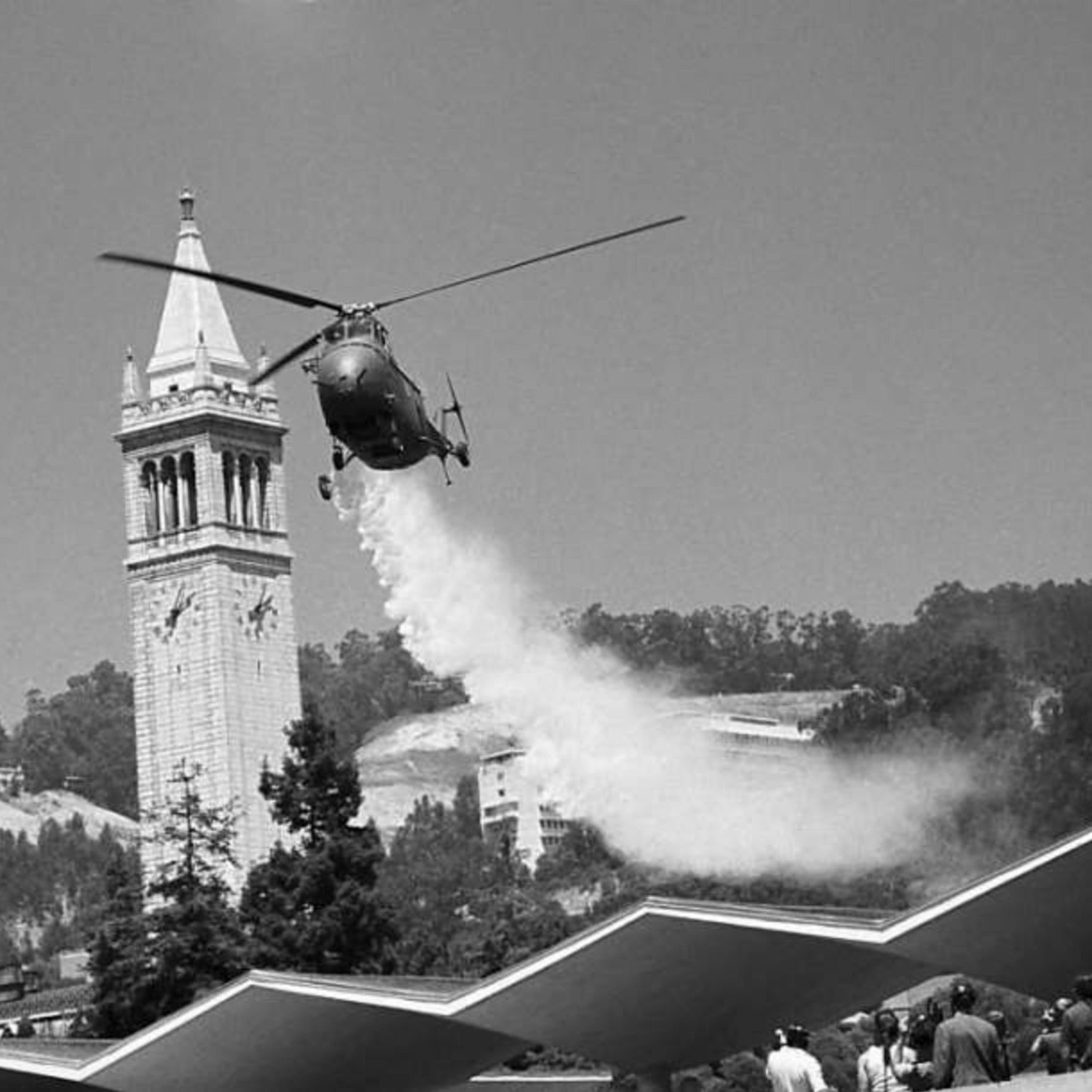
FRDH Berkeley High Point Of The Revolution
This episode of FRDH is about Berkeley and the high point of the revolution of the 1960's as host Michael Goldfarb remembers it. Revolution is a romantic word and a bloody practice. This autumn "revolution" will be discussed a lot, as we mark the centenary of the Russian Revolution. The word will also come into use as we move towards the 50th anniversary remembrances of 1968, the year of student revolution. The University of California Berkeley, is where student revolution was effectively born in the US, during the Free Speech Movement. That was a movement of the left. Free Speech Week which may well spark a riot, is a movement of the right and it providing pundits the opportunity to note the irony that Berkeley, home of the Free Speech Movement, has become anti-Free Speech. In this FRDH podcast Goldfarb recounts the story of the Free Speech Movement, the fight over People's Park and recalls a memorable rally on Berkeley campus addressed by Herbert Marcuse and Angela Davis. He then describes a moment of calm in the intensity of the Sixties, a calm that he calls the High Point of the Revolution.
Three Things I learned about America on Vacation
Three things I learned or was reminded of on my first American vacation in more than 15 years. First thing I learned: America is clearly in crisis but not yet at crisis point. I watched television news just once - for a very few minutes. It is hysterical, condescending to its viewers and in the way it contextualizes reporting - frequently wrong. Some other podcast I will back that assertion … the history of how TV news got that way requires several essays … but trust me on this, the presentational style so overwhelms the factual content, that Americans - even the most intelligent - are operating in a news vacuum. Much of the crisis in which American society is immersed, and which has been building for decades, has been framed by a news media that doesn’t inform but survives commercially by creating this hysteria as well as outrage … It was inevitable that an hysterical and outrageous person would legitimately gain political power democratically in my native land. Second thing I learned: In a tweet the Crimson, Harvard's student newspaper, acknowledged, “We made a mistake: 30.3% of surveyed Harvard freshmen are legacies, not 41.8%.” It being Harvard, I’m sure the irony in the sentence, “We made a Mistake” was intentional. very nearly a third of the students who are beginning their Harvard educations this year were admitted because a relative went to Harvard. Why does this matter? Well, for one reason, as the Crimson noted, nearly half of those legacies came from families with average incomes of more than $500 thousand a year. Another 23% came from families earning a quarter of a million to 499 thousand dollars, only 4% of legacy families were on incomes under 80 grand. The situation at Harvard is one of the best pieces of anecdotal evidence of just how calcified America’s class system has become. And a lot of the feelings expressed in polls about the American dream disintegrating proceeds from that calcification. Third things I learned about, "Sex at Wesleyan, what’s changed, what hasn’t," That was the headline on an op-ed at the New York Times. "“Adults may make fun of trigger warnings, but most kids support them because they’re about extending a hand to others, undergirding an ethic of caring and decency. Calling out “micro-aggressions” among classmates and policing tone on social media appeal to them in much the same way ... Political radicalism at college is now more vocation than avocation, and anyone who displays a trace of racism, misogyny or sexual predation is suspect.” This made me remember something I read 37 years ago at the times. Here are links to all the things I learned on vacation: http://features.thecrimson.com/2017/freshman-survey/makeup/ https://www.nytimes.com/2017/08/25/style/wesleyan-sex-rules.html http://query.nytimes.com/mem/archive-free/pdf?res=9901EFDB1E3BE732A25752C0A96F9C94619FD6CF
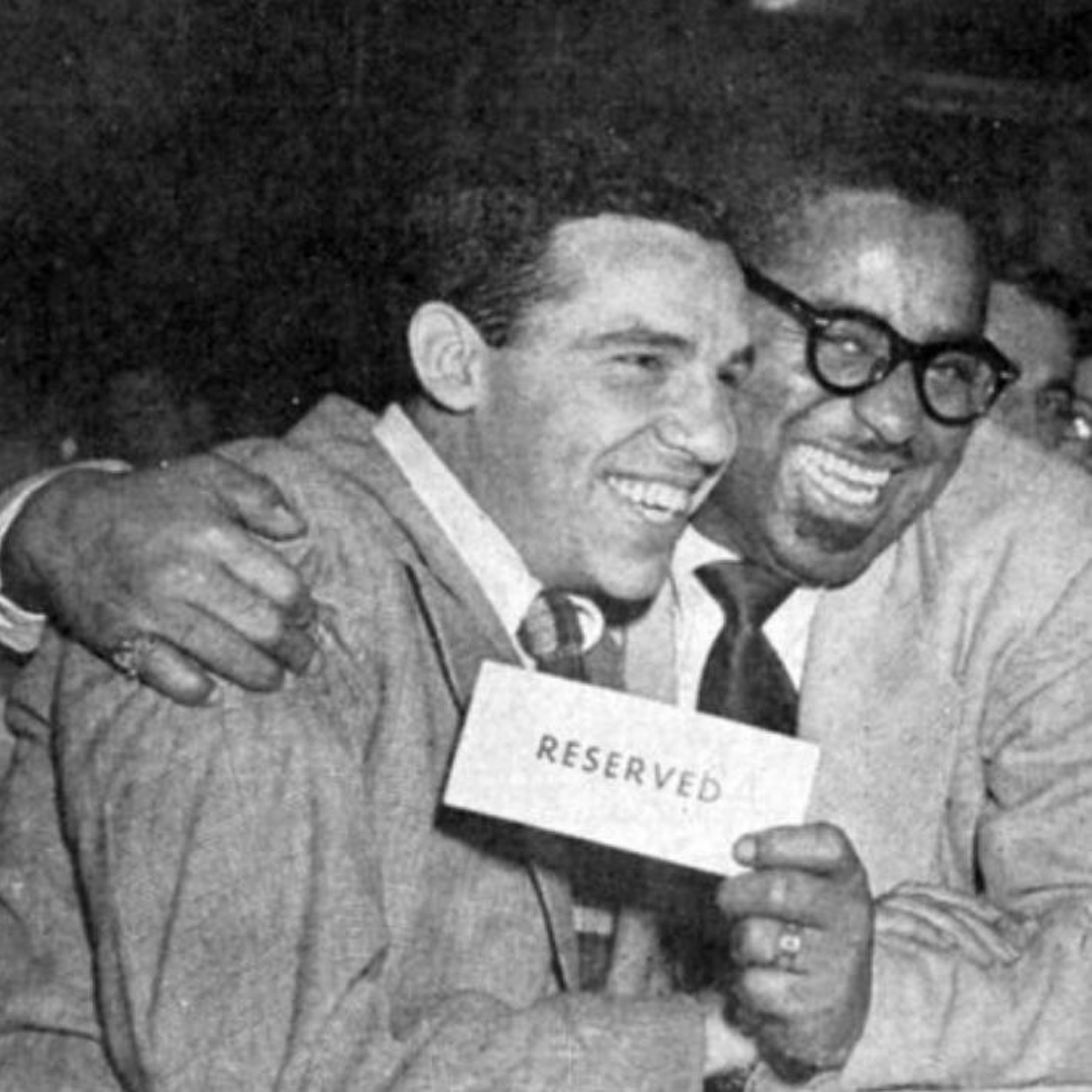
When Jews Met the Blues
When Jews met African-Americans in the early part of the 20th century the collision created American popular music. Both groups were immigrants to the great cities of America's north - Jews came from Eastern Europe and Blacks from the American South. But their desire to get away from oppression to economic opportunity wasn't the only thing they had in common. Their cultures were deeply rooted in music and music of a particular kind: crying out and soulful and syncopated. In this cultural history from the FRDH archive, Michael Goldfarb traces out how talented people in both communities met, borrowed, occasionally stole musical ideas and along the way created the American songbook, as well as rock and roll and and rhythm and blues. He also tells the story of the coming together and then fracturing of the great alliance for political progress in 20th century America ... the alliance between African-Americans and Jews. It is an alliance that can be traced at least as far back as Harlem in the 1920's and disintegrated after the Civil Rights successes of the mid 1960's amid acrimonious accusations of exploitation and appropriation. An argument that continues. This FRDH podcast is a cultural history with lots of music and thoughtful interviews.
Mind of the South
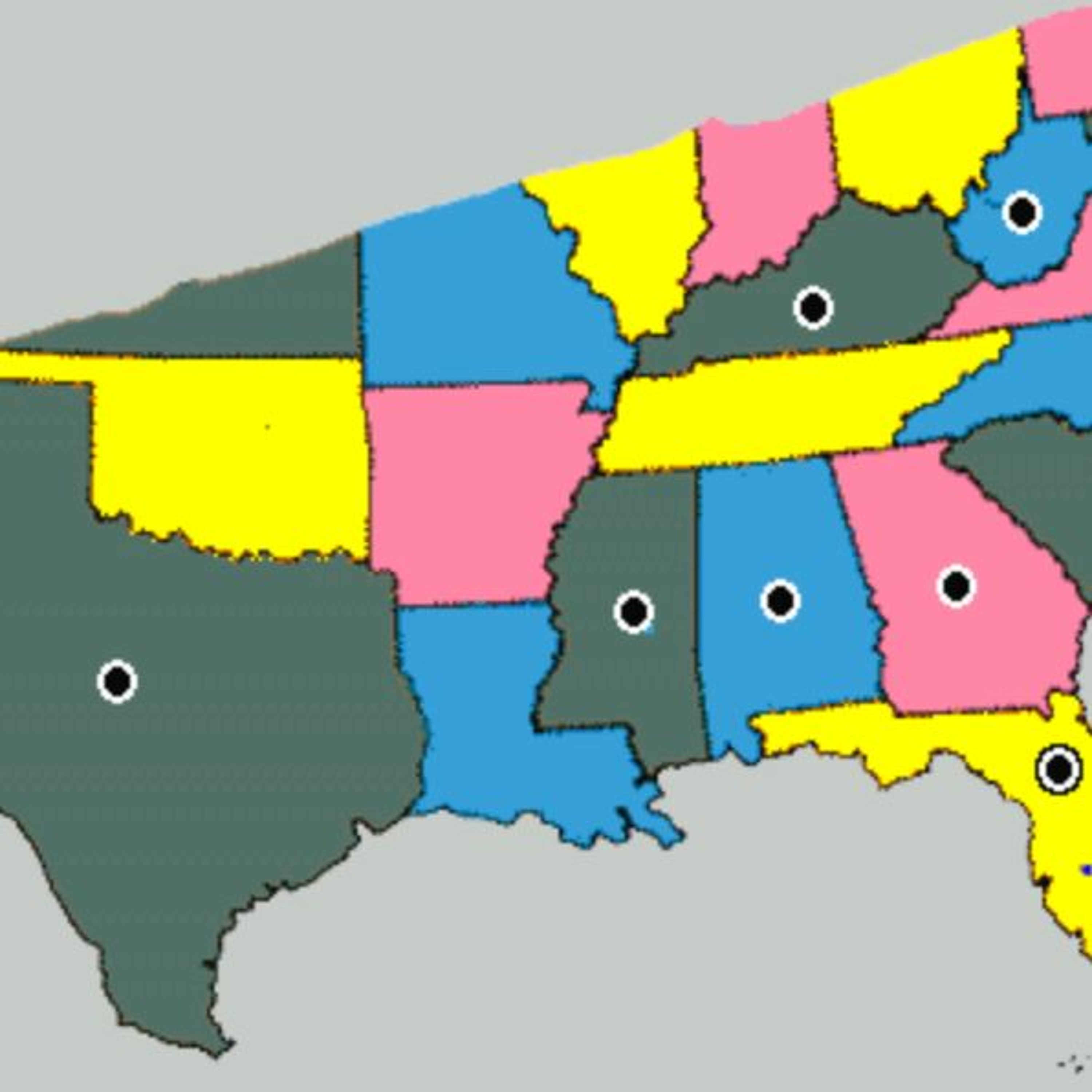
If you want to know America, you have to understand the Mind of the South. If you want to understand the dynamics that drove events towards the Charlottesville Outrage, you have to understand the mind of the south, or specifically the "white" Southern mind. That mindset did not just pop up, the day Donald Trump took office. It has been the driving force in American politics … all the way back to the foundation of the Republic. White Southerners are a powerful force in American politics. Not a majority - but the largest single political bloc - in the country. In the century after the Civil War this bloc was attached to the Democrats - Lincoln was a Republican - and it acted as a drag anchor on the progressive forces that shaped the modern Democratic party. In response to the civil rights movement white Southerners shifted to the Republican party. Superiority is a key part of the white southern mindset, not just racial, but religious, as well. In the 18th and early 19th centuries the region saw a heavy influx of protestant immigrants from what is today Northern Ireland, Ulster. In this FRDH podcast, Michael Goldfarb talks with Southern historians about the region and the mind of the South and traces the origins of recent events to well before Donald Trump entered politics. And through the medium of the Republican party the mindset is spreading all over the country.
FRDH Crash Anniversary Thought: Work ≠ Employment:
On the tenth anniversary of the start of the Financial Crash, MIchael Goldfarb looks at work and employment. Are they the same thing? We are told we will have to work longer - in Britain last week it was announced that the age at which Britons in their 40’s could collect their state pensions - social security - would be going up to 68. Work longer, but will we be employed longer? It is all well and good if people are living longer that they stay in the work force longer but it would be jolly nice if the government told that to employers, almost all of whom seem keen on getting rid of their employees once they get past 55. When you add in all the stories about robots doing most forms of work by the time those in their 40s are eligible for their pensions, there seems to be some contradictions that need to be resolved. The unemployment rate today - midsummer 2017 - is 4.3% in the US (4.5% in the uk) In the 1960’s the golden era of the American economy, 4.3% was full employment and economic contentment. Numbers are pure in their value but data is not. 4.3% unemployment today is not the same as 4.3% unemployment back then. Today you are counted as employed if you work one hour or 40 during a week. Back then 40 hours was the standard. A quarter of the jobs added in the most recent monthly report in the US were in restaurants and bars. Hospitality is not an industry for building a career, Waiting table, tending bar are good gigs for people on the way to something else or for folks who need a little cash infusion every day - I’ve worked for tips and I urge everyone who hears this to be generous - But you wouldn’t want to build a society in which more people work for tips than work at a steady job, manufacturing something or developing specialist knowledge that can be exported. And yet that seems to be the direction in which the Anglo-American economies are headed. Robots are doing the heavy lifting in manufacturing and as we keep being told in the technology press, they are coming for the jobs of paper pushers next. Since the Crash we live in an era of pre-emptive downsizing. Within four months of Lehman’s going bust 1.9 million people were laid off in America. Most did not work in financial services. Employers in enterprises of all sizes in many different areas of the economy took advantage of the event to cut payrolls, “reduce headcount,” etc. Many of the new jobs created since that nadir have been in part-time work. We have entered a new epoch in which you will, if you are lucky, have a 20 year window of full-time employment and can lay the foundations for the stability that comes with it: buy a house, set aside for retirement, educate your children. Michael Goldfarb answers his own question. Listen to FRDH podcast and find out the answer
Bible Study for Atheists: America, One Nation Under Whose God?
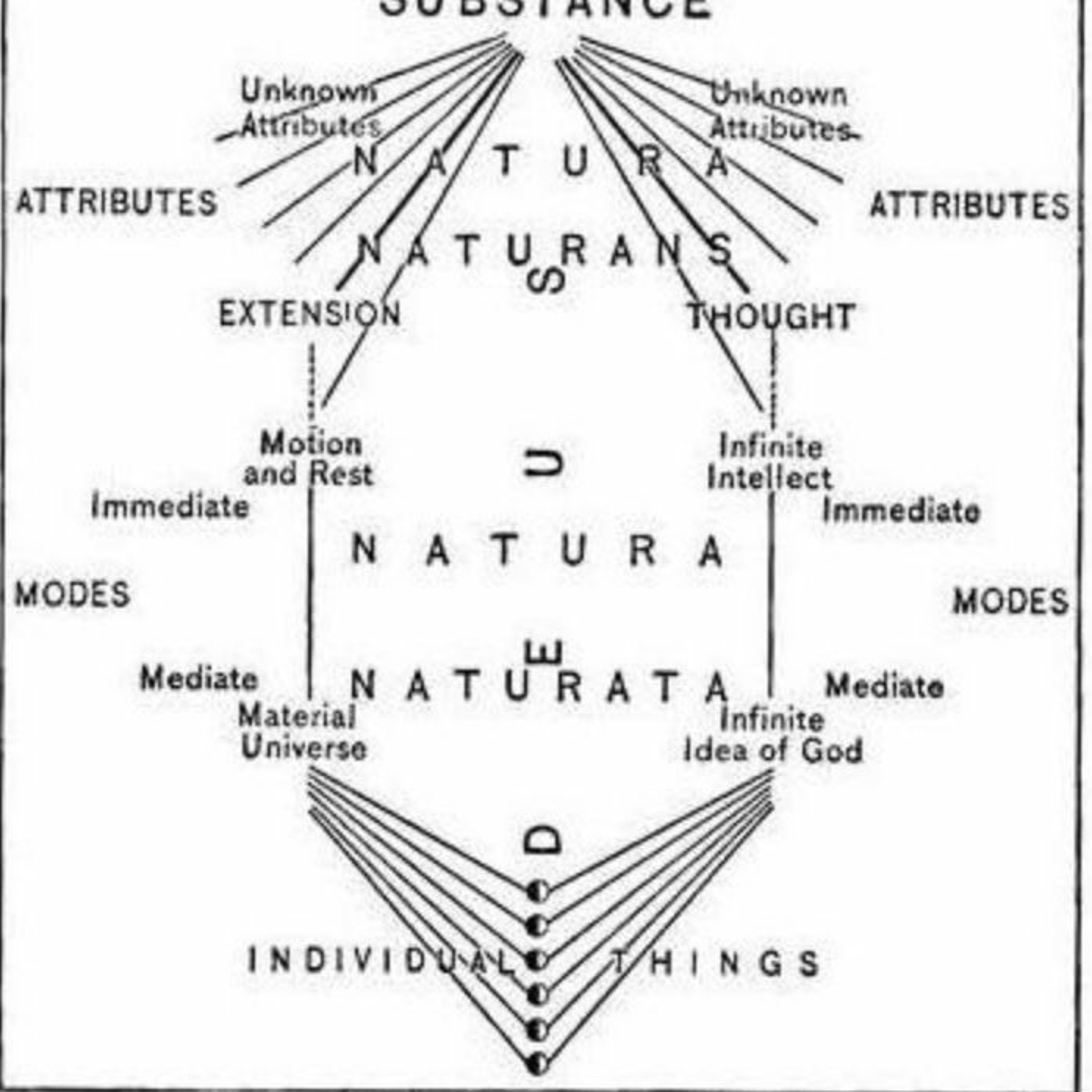
This Bible study for atheists looks at what Thomas Jefferson meant when he wrote about God in the Declaration of Independence. Many evangelical or political Christians argue that the US is a "Christian" country because Jefferson used the word. Michael Goldfarb challenges that idea which explores the Enlightenment use of God as Nature. Far from the scriptural understanding of the Judeo-Christian divinity. He traces Jefferson's ideas back to those of Enlightenment philosopher Benedict Spinoza. He uses Spinoza's own bible study as a way of explaining what the founding father's intentions were. Spinoza, who wrote in Latin, coined the phrase Deus sive natura, God or Nature. Nature for Spinoza is is all there is. YOu can call it God if you like but it does not cause itself, or create itself. It is not the creator God of the Bible, anthropomorphized, and directing the fate of human beings and particularly the Israelites, his chosen people. This was pretty revolutionary theory, for the late 17th century. By the late 18th century Jefferson and the Founders were moving it out of the realm of speculation and putting it into practice in the Bill of Rights, the First Amendment to the Constitution. This is the second Bible Study for Atheists, a semi-regular feature of the FRDH podcast. Response to the first Bible Study for Atheists was overwhelmingly positive and is still regularly listened to at the FRDH podcast website. This edition of Bible Study for Atheists will provide background for those who wish to keep religion out of government in America and need to argue with evangelical friends and neighbors about why.
FRDH: Republican Party Is Now a Faction How it Happened
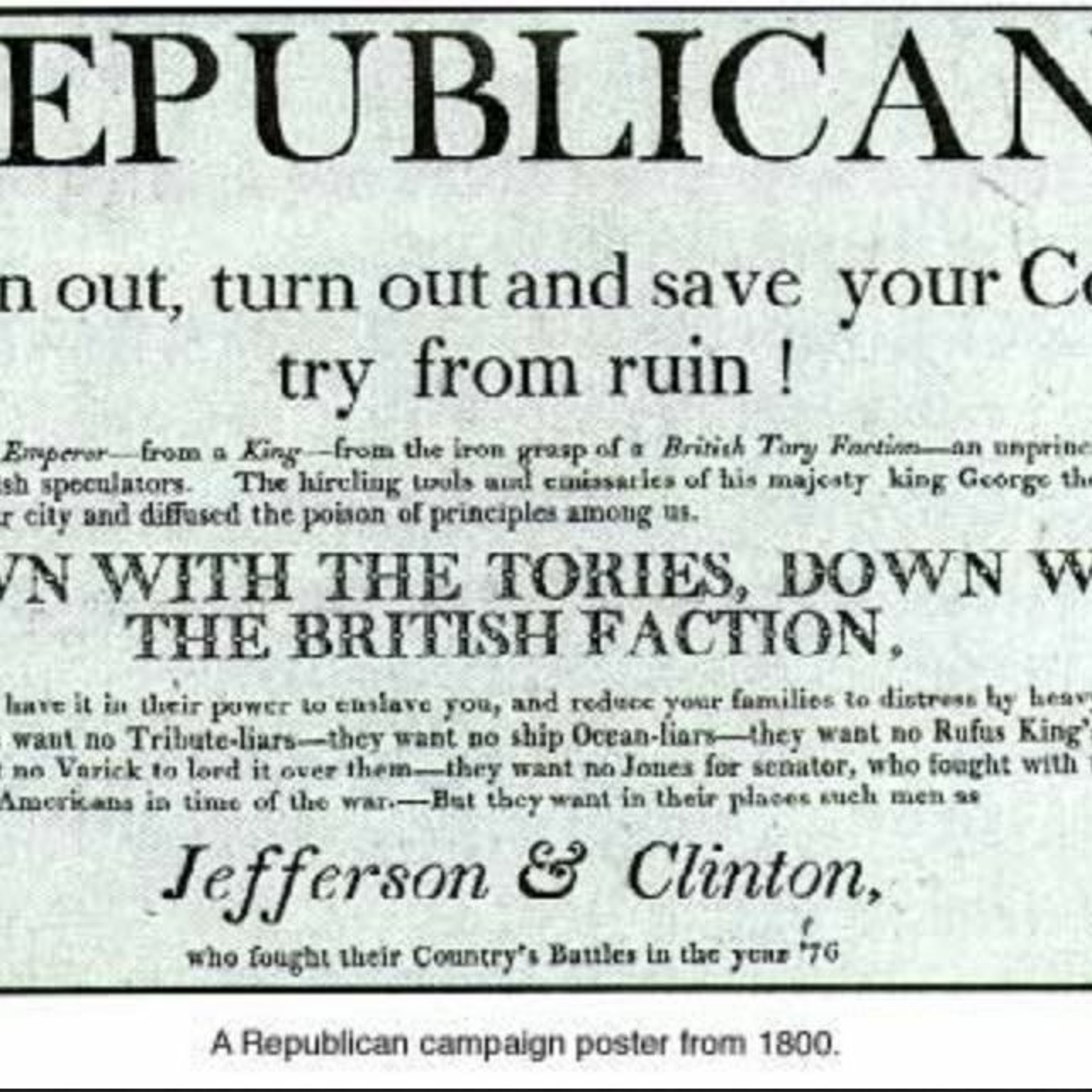
The Republican Party has become the people James Madison warned us against: a Faction. In any country, the most dangerous thing that can happen is for a group and its political representatives to act as if their view alone represents the nation. That thinking leads to the view that they alone “are” the nation and that those who disagree with them are not of the nation - even if they are fellow citizens, born on the country’s soil. When this happens in a democratic republic, like the US, and the view takes over a political party, then the threat to the national fabric is mortal. And that is the heart of the crisis in America today: The Republicans are no longer a political party but a faction. The danger of factions was noted at the foundation of the United States. In Federalist paper #10 https://en.wikisource.org/wiki/The_Federalist_(Dawson)/10 James Madison defined faction as, "a number of citizens, whether amounting to a minority or majority of the whole, who are united and actuated by some common impulse of passion, or of interest, adverse to the rights of other citizens, or to the permanent and aggregate interests of the community.” The Republican Party has been slowly morphing into a faction for almost 70 years. In this FRDH podcast the history of this change is told through applying the words of the Declaration of Independence to current Republican behavior. The Declaration of Independence is really a bill of divorcement, a declaration before the community of nations of the causes leading the states to separate from Britain. As I read through the list this past holiday it was amazing how many could be applied to the Republican faction today. Republican factionalism leads their elected representatives to upend existing Constitutional customs and norms and defamed the design of Madison, Jefferson and the other Founding Fathers by refusing to cooperate with anyone not of their group The design of the founders was a constitutional order that provided a mechanism for balancing the inevitable competing points of view that would grow in a society where people were free to follow different religions and debate ideas freely. Without respect for these rules the system cannot work. The result is the United States has, over the last quarter of a century, become ungovernable and now, more than at any moment in my lifetime is on the edge of some kind of catastrophic disintegration.
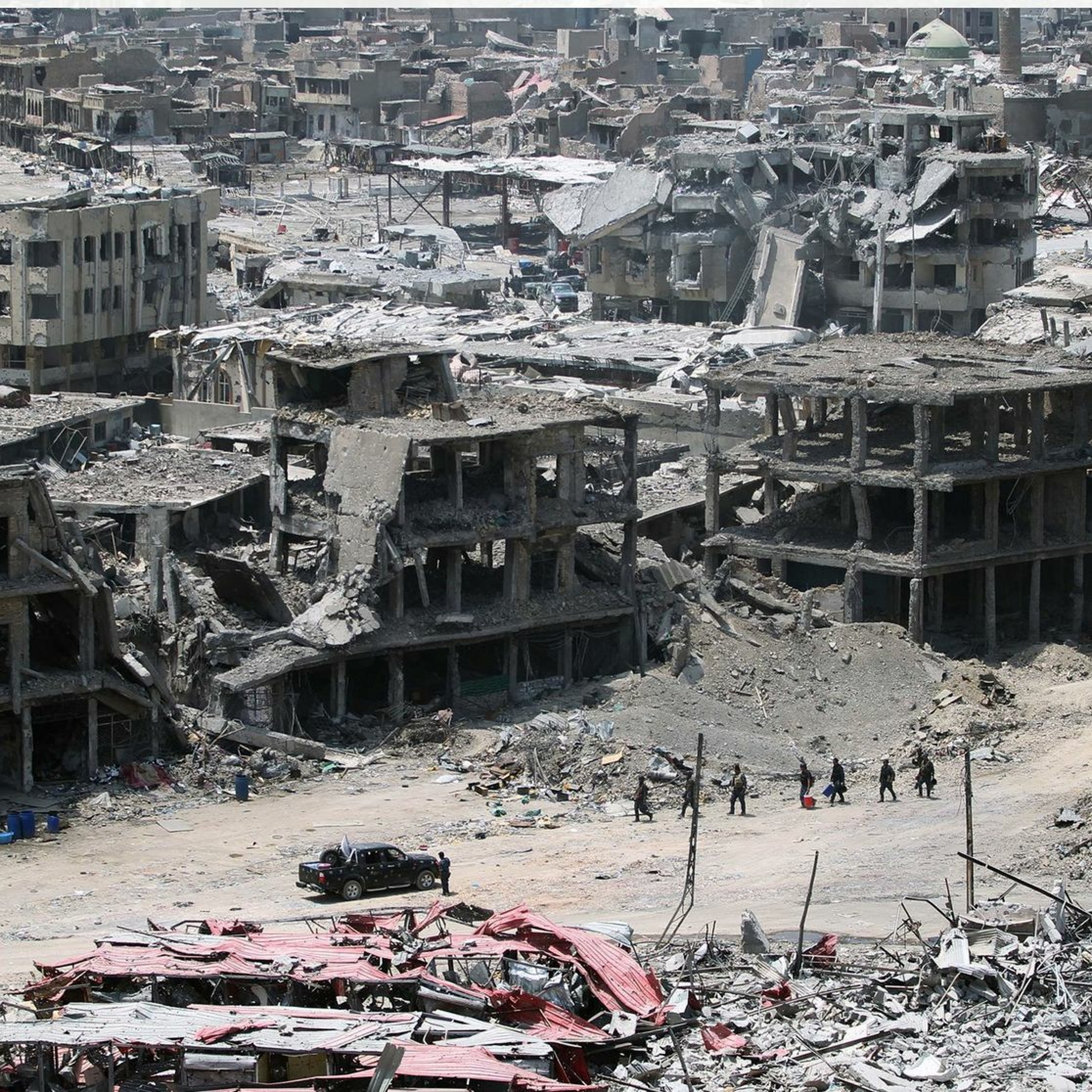
FRDHMosul: ISIS Defeated But Is It Victory?
In Mosul ISIS has been defeated but does it count as victory? America’s misadventure in Iraq show that defeating your enemy on the battlefield is not the same as victory. ISIS defeated in MOsul but that won’t mean victory in Iraq’s second city, any more than the overthrow of Saddam Hussein meant victory there, or the killing of his sons in Mosul a few months later, or the frequent attempts by the US to buy off the networks funding insurgents of various stripes that are headquarted there. How can you measure victory in Iraq? This FRDH podcast offers a personal definition of victory. Mosul is a city that is well-known even if you are not aware of it. The opening sequence of the, The Exorcist, was filmed there. Mosul was called the Pearl of the North, in the old days. It was the envy of all Iraq. With sounds of battle recorded on site this podcast traces Mosul's history since George W. Bush declared victory in 2003. This city was never pacified and now that ISIS has been defeated can it ever enjoy the blessings of victory. Listen to the podcast to find out how you will know when victory has been secured.