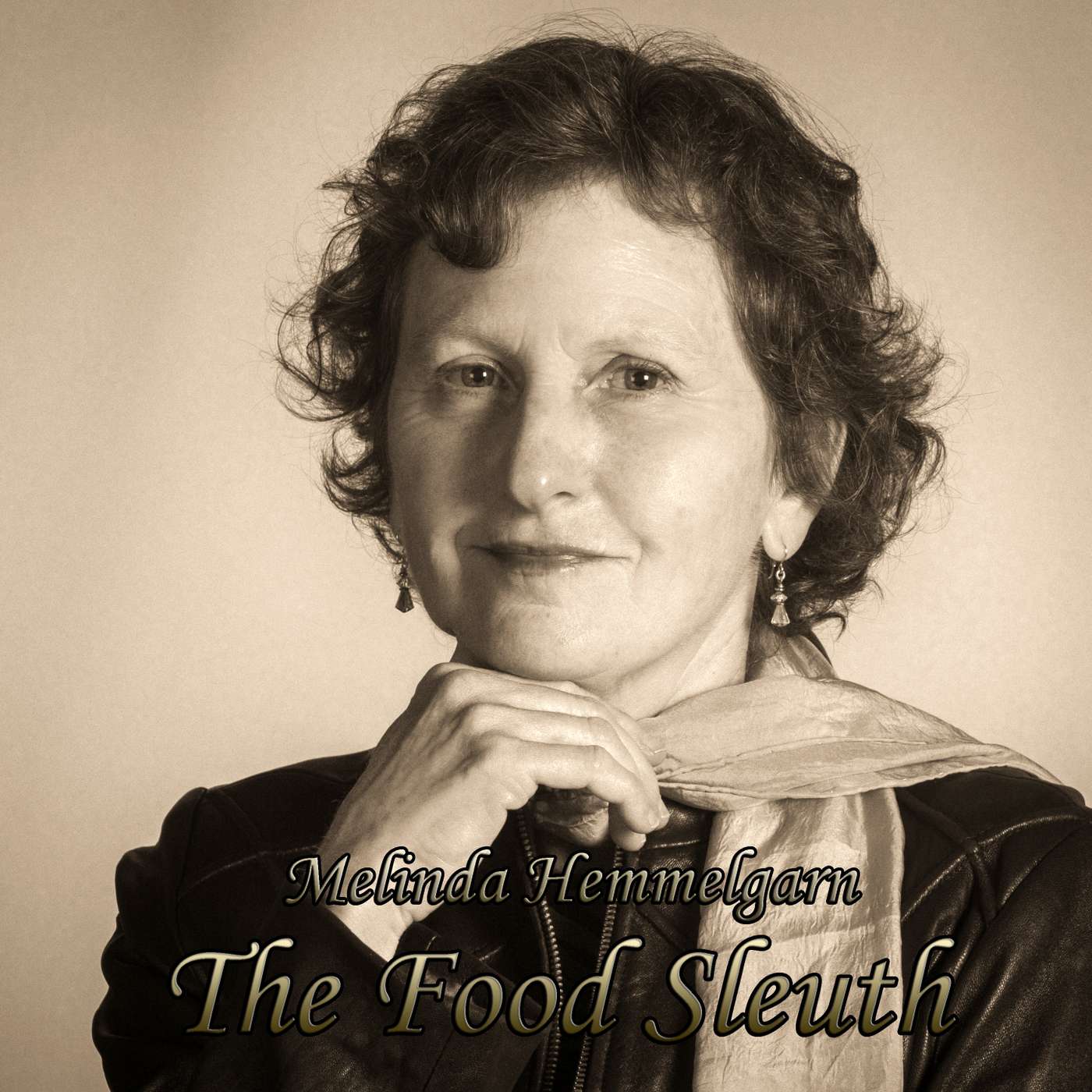
Food Sleuth Radio
894 episodes — Page 7 of 18
Ep 594Dan Scheiman, Bird Conservation Director at Audubon Arkansas
Did you know that our food and farming choices impact bird populations? Join Food Sleuth Radio host and registered dietitian, Melinda Hemmelgarn, for her interview with Dan Scheiman, Bird Conservation Director at Audubon Arkansas. He'll discuss the damaging effects of widely used agricultural and lawn-based pesticides (dicamba, neonicotinoids) on trees, insects and birds, as well as the benefits of citizen science and policy advocacy. For parents with children at home Audubon offers educational resources: https://www.audubon.org/conservation/audubon-adventures Related website: https://ar.audubon.org/conservation/dicamba-danger
Ep 593Anne Ross, attorney with an advanced degree in Agriculture & Food Law discusses organic integrity and new bioengineered food labels.
Did you know that the new “GMO” food labels required in January 2022 will not say “GMO,” but instead say “bioengineered”? Join Food Sleuth Radio host and registered dietitian, Melinda Hemmelgarn, for her interview with Anne Ross:, attorney with an advanced degree in Agriculture & Food Law from the University of Arkansas. As policy advisor for the Cornucopia Institute, Ross investigated organic import fraud. She shares her expertise in analyzing food labeling, including “natural” and “non-GMO” labels, and discusses overall organic integrity. Related website: www.cornucopia.org
Ep 592Dina Gilio-Whitaker, author of As Long As Grass Grows: The Indigenous Fight for Environmental Justice from Colonization to Standing Rock.
Did you know that Native Americans understand that food systems are ecological systems? Join Food Sleuth Radio host and Dina Gilio-Whitaker, adjunct professor of American Indian studies at California State University at San Marcos, and Policy Director and Senior Research Associate at the Center for World Indigenous Studies. She'll discuss her informative new book, As Long As Grass Grows: The Indigenous Fight for Environmental Justice from Colonization to Standing Rock (Beacon Press, 2019). Ms. Gilio-Whitaker compares European relationship to land, vs. the holistic perspectives of Native Americans. She asks us to question our own relationship to the land, and the indigenous people who lived here before us. Related website: https://dgwconsulting.org/ ; www.dinagwhitaker.wordpress.com
Ep 591Terry Fuller, farmer and chair, Arkansas Plant Board discusses dicamba crop damage, and vandalism.
Did you know that farmers plant dicamba-resistant crops is defense of neighbors’ use of this herbicide? Join Food Sleuth Radio host and registered dietitian, Melinda Hemmelgarn, for her interview with Terry Fuller, farmer and chair of the Arkansas Plant Board. Fuller discusses why farmers use dicamba, the resulting crop damage, and the vandalism he’s experienced on his farm simply for speaking out about dicamba risks and calling for stronger regulation on the poison’s use. Dicamba, is manufactured by Bayer (formerly Monsanto) and has been linked to widespread damage to trees, native plants, specialty crops and soybeans that are not genetically engineered to resist it. Widespread risks to our ecosystem have been reported by the Xerces Society, in their publication, “Drifting Toward Disaster: How Dicamba Herbicides are Harming Cultivated and Wild Landscapes.” https://xerces.org/sites/default/files/publications/20-021.pdf. There have also been multiple reports on NPR: https://www.npr.org/sections/thesalt/2018/02/14/584647903/these-citizen-regulators-in-arkansas-defied-monsanto-now-theyre-under-attack https://www.npr.org/sections/thesalt/2017/10/26/559733837/monsanto-and-the-weed-scientists-not-a-love-story Related website: https://www.arkansasonline.com/news/2020/sep/25/state-official-victim-of-vandals/
Ep 590Gladis Zinati, Ph.D., Director of the Rodale Institute’s Vegetable Systems Trial
Did you know that soil health predicts plant health and nutritional quality? Join Food Sleuth Radio host and registered dietitian, Melinda Hemmelgarn, for her interview with Gladis Zinati, Ph.D., Director of the Rodale Institute’s Vegetable Systems Trial. Zinati describes how organic farming methods influence soil microbial health, and nutrient uptakes improve the nutritional value of our food. Watch Zinati’s webinar here: https://www.youtube.com/watch?v=VximNfpTOoA Related websitehttps://rodaleinstitute.org/science/vegetable-systems-trial/
Ep 589Leah Douglas, staff writer and associate editor at the Food and Environment Reporting Network on COVID-19 at meatpacking plants and racism in the FFA.
Did you know that meat-packing plants have been centers for Covid-19 outbreaks? Join Food Sleuth Radio host and registered dietitian, Melinda Hemmelgarn, for her interview with Leah Douglas, staff writer and associate editor at the Food and Environment Reporting Network. Douglas discusses her ongoing investigations into COVID-19 outbreaks in meat packing and processing plants, as well as her story on racism within the FFA. Douglas’ Covid-19 mapping project can be found here: https://thefern.org/2020/04/mapping-covid-19-in-meat-and-food-processing-plants/ Her report on racism in FFA here: https://thefern.org/2020/09/at-the-nations-largest-student-farm-organization-a-reckoning-on-race/ Related website: https://thefern.org/ag_insider/few-states-release-data-about-covid-19-in-the-food-system/
Ep 588Benjamin Cohen, Ph.D., author of Pure Adulteration: Cheating on Nature in the Age of Manufactured Food.
Did you know that food manufacturing brought into question a food’s purity? Join Food Sleuth Radio host and registered dietitian, Melinda Hemmelgarn, for her interview with Benjamin Cohen, Ph.D., environmental historian, Chair of Engineering Studies and Associate professor at Lafayette College in Easton, Pa, and author of Pure Adulteration: Cheating on Nature in the Age of Manufactured Food. Cohen discusses the history of adulterated food, the nature of trust, and argues that food labels are less important than knowing how food is produced. Cohen’s maps of adulterated foods can be found here: https://purefood.lafayette.edu/ Related website: http://www.brcohen.net/
Ep 587Kendra Klein, Ph.D., Senior Scientist at Friends of the Earth.
Did you know that children are more vulnerable to the effects of pesticides in our food supply and that switching to an organic diet can significantly reduce their exposure to these toxins? Join Food Sleuth Radio host and registered dietitian, Melinda Hemmelgarn, for her interview with Kendra Klein, Ph.D., Senior Scientist at Friends of the Earth and co-author of new research showing the value of organic food and farming in protecting public health. More data on this research can be found here: www.organicforall.org Related website: https://foe.org/issues/food-and-technology/
Ep 586Keri Blakinger, formerly incarcerated staff writer for the Marshall Project.
Did you know that food served in jails and prisons does not promote mental and physical health? Join Food Sleuth Radio host and registered dietitian, Melinda Hemmelgarn, for her interview with Keri Blakinger, staff writer for the Marshall Project who was formerly incarcerated in upstate New York. Blakinger describes the food and other hidden living conditions in prison, as well as the impact of Covid lockdowns on food quality. See Blakinger’s reporting at the Marshall Project website, including this story on what some prison food looks like: https://www.themarshallproject.org/.../ewwwww-what-is-thatRelated website: https://www.themarshallproject.org
Ep 585Monica White, Ph.D. author of Freedom Farmers: Agricultural Resistance and the Black Freedom Movement.
Did you know that “urban agriculture” is not new? Join Food Sleuth Radio host and registered dietitian, Melinda Hemmelgarn, for her interview with Monica M. White, Ph.D., Associate Professor of Environmental Justice at the Gaylord Nelson Institute for Environmental Studies, in the Department of Community and Environmental Sociology at the University of Wisconsin-Madison. White is the author of the award-winning book, Freedom Farmers: Agricultural Resistance and the Black Freedom Movement. White reflects on African American farmers’ long connection to the soil - a tool for resilience and resistance. White discusses the power of cooperatives, and heroes in African American food and agriculture, including Fannie Lou Hamer, and George Washington Carver, who said: “there is probably no subject more important than the study of food.” White also describes her critical role as “scholar activist.” White’s presentation at the University of Michigan can be viewed here: https://www.youtube.com/watch?v=HzhbIeutIjI&list=PLY-HA3-cbCGdC2dqjlZAv8cfOU6B-Noqw&index=9Related website: www.monicamariewhite.com
Ep 584Kate Mendenhall, Executive Director of the Organic Farmers Association
Did you know that organic farms provide beneficial ecological services to rural communities and the planet? Join Food Sleuth Radio host and registered dietitian, Melinda Hemmelgarn, for her interview with Kate Mendenhall, organic farmer and Executive Director of the Organic Farmers Association. Mendenhall witnessed the negative impact of industrial agriculture in her rural IA community and chose organic farming to help feed and preserve the health of her community members. She describes the organic certification process and explains how certification helps farmers better steward their land. Unfortunately, USDA’s Farm Service Agency recently reduced the “cost share” for organic farmers, and unfairly distributed more stimulus funds to support industrial food and farming systems. Mendenhall offers a call to action.Related website: https://organicfarmersassociation.org/
Ep 583Leone Jose Bicchieri, Founder and Executive Director of Working Family Solidarity.
Did you know that workers in meat packing plants are at increased risk for Covid-19, and other work-related injuries due to increasing line speeds (such as 175 birds to handle per minute)? Join Food Sleuth Radio host and registered dietitian, Melinda Hemmelgarn, for her interview with Leone Jose Bicchieri, Founder and Executive Director of Working Family Solidarity, based in Chicago, IL. Bicchieri describes exploitative working conditions in meat packing plants, how trade policies (NAFTA) led to increased migration, and strategies for labor justice. This interview is especially important in honor of Labor Day. Bicchieri will host a free Racial Justice Unity Teach-In Series beginning Sept. 16th. To join: https://www.eventbrite.com/e/civil-rights-past-present-future-tickets-118184237235Related website: https://www.workingfamilysolidarity.org/
Ep 582Carmen Fernholz, organic grain farmer
Did you know it’s possible to “feed the world” without the use of harmful chemicals? Join Food Sleuth Radio host and registered dietitian, Melinda Hemmelgarn, for her interview with Carmen Fernholz, award-winning organic grain farmer based in Madison, Minnesota. Fernholz discusses his farming philosophy, an organic farmer’s audit trail and the ecosystem services/benefits associated with biodiverse organic farming systems and perennial crops. “Food production must be an egalitarian process,” says Fernholz. He was recently featured in the Real Organic Project’s Know Your Farmer Video series: https://www.realorganicproject.org/know-your-farmer-a-frame-farm/Related website: https://mrbdc.mnsu.edu/carmen-fernholz
Ep 581Darrie Ganzhorn, Executive Director, Homeless Garden Project, Santa Cruz, CA
Did you know a community garden and social support can help end homelessness? Join Food Sleuth Radio host and registered dietitian, Melinda Hemmelgarn, for her interview with Darrie Ganzhorn, Executive Director of the Homeless Garden Project based in Santa Cruz, CA. Ganzhorn describes the therapeutic value and empowering impact of social support and holistic community gardening. The project’s success rate – over 90 percent of those completing the program find jobs and housing – promises to be a national model.Related website: https://homelessgardenproject.org
Ep 580Everett Murphy, M.D., discusses CAFOs, racism and Covid-19.
Did you know that factory farms (CAFOs), racism and Covid-19 are connected? Join Food Sleuth Radio host and registered dietitian, Melinda Hemmelgarn, for her interview with Everett Murphy, M.D., retired pulmonologist from K.C., MO who has been instrumental in working to defeat the expansion of CAFOs - concentrated animal feeding operations. People who live closest to CAFOs are more likely to suffer with asthma, antibiotic resistant infections, and other illnesses. Murphy discusses exploited labor, propaganda, public health impacts, and economic declines associated with CAFOs. The American Public Health Association called for a moratorium on CAFOs in 2019.Related website: https://www.naturalawakenings.com/2020/06/30/317717/beyond-factory-farms-big-meat-comes-at-high-cost
Ep 579Susan Carlson, Ph.D., Associate Dean for Research at the U. of Kansas (KU) School of Health Professions, discusses DHA to reduce preterm birth.
Did you know that that the long-chain fatty acid, DHA, can significantly reduce preterm birth, and that African American women are more prone to preterm births? Join Food Sleuth Radio host and registered dietitian, Melinda Hemmelgarn, for her interview with Susan Carlson, Ph.D., Associate Dean for Research at the U. of Kansas (KU) School of Health Professions, and Distinguished AJ Rice Professor of Nutrition in the KU Department of Dietetics and Nutrition at KU Medical Center. Carlson discusses her research which focuses on the protective effects of docosahexanoic acid (DHA), an omega-3 fatty acid, for preventing preterm birth and enhancing infant brain, visual and behavioral development. Tune in to learn how to get DHA in your diet, recommended supplement dose for pregnant and breastfeeding women, and which popular infant formula comes up short on DHA.This interview is featured for World Breastfeeding Week: https://www.who.int/news-room/detail/31-07-2020-world-breastfeeding-week-2020-message?fbclid=IwAR2CwJK1VOTfw-HhnMP90Dvaey3aS2O7h-OXNtLcd0rSIj_Is9lqviQoMnI Related website: http://www.kumc.edu/school-of-health-professions/dietetics-and-nutrition/our-people/carlson.html
Ep 578Donna Battle Pierce, journalist, editor, food historian, and director of the nonprofit Skillet Project.
Did you know that African Americans were purposely left out of recorded history, resulting in lost wisdom and dignity? Join Food Sleuth Radio host, and registered dietitian, Melinda Hemmelgarn, for her interview with Donna Battle Pierce, former food editor and test kitchen director at the Chicago Tribune, and director of the non-profit Skillet Project which creates meaningful connections among generations through food and journalism. Pierce discusses African American food culture, her experience with recipe development, plus history, race and justice through a food lens.Related website: www.blackamericacooks.com/, Maya Angelou, “Family Affairs” https://genius.com/Maya-angelou-family-affairs-annotated
Ep 577Cindy Leung, ScD, MPH, nutritional epidemiologist whose research focuses on diet and health disparities in vulnerable populations.
Did you know that the stress and trauma from food insecurity puts children’s mental and physical health at risk? Join Food Sleuth Radio host and registered dietitian, Melinda Hemmelgarn, for her interview with Cindy Leung, ScD, MPH, Assistant Professor in the Department of Nutritional Sciences at the University of Michigan School of Public Health. Leung is a nutritional epidemiologist whose research focuses on diet and health disparities in vulnerable populations. She discusses the psychological distress associated with childhood food insecurity, which has risen exponentially due to COVID-19. (See: https://www.brookings.edu/blog/up-front/2020/05/06/the-covid-19-crisis-has-already-left-too-many-children-hungry-in-america/ ). She is the lead author of a paper in the March 2020 issue of the Journal of the Academy of Nutrition and Dietetics, titled: “Understanding the Psychological Distress of Food Insecurity: A Qualitative Study of Children’s Experiences and Related Coping Strategies.” Related website: https://jandonline.org/article/S2212-2672(19)31547-3/pdf
Ep 576Aly Cohen, M.D., co author of Non-Toxic: Guide to Living Healthy in a Chemical World. Part 2/2
Did you know that water is our most important nutrient, and it is often contaminated with a variety of common contaminants? Join Food Sleuth Radio host and registered dietitian, Melinda Hemmelgarn, for her interview with Aly Cohen, board certified rheumatologist, integrative medicine, and environmental health expert. Cohen discusses the importance of water quality, common contaminants, filters, national regulation and health. (Part 2 of 2) Related website: https://www.alycohenmd.com/welcome.html
Ep 575Aly Cohen, M.D., co author of Non-Toxic: Guide to Living Healthy in a Chemical World. Part 1/2
Did you know that environmental chemical exposures impact our immune system, inflammatory response, and risk for COVID-19? Join Food Sleuth Radio host and registered dietitian, Melinda Hemmelgarn, for her interview with Aly Cohen, board certified rheumatologist, integrative medicine, and environmental health expert. Cohen discusses key points from the book she co-authored, Non-Toxic: Guide to Living Healthy in a Chemical World, and her TEDx talk titled: "How to Protect Your Kids from Toxic Chemicals". (Part 1 of 2) Related website: https://thesmarthuman.com/ https://www.alycohenmd.com/environmental-health.html
Ep 574Craig Willingham, MPH, Deputy Director of the City University of NY Urban Food Policy Institute.
Did you know that food is a driver of economic and community development? Join Food Sleuth Radio host and registered dietitian, Melinda Hemmelgarn, for her interview with Craig Willingham, MPH, Deputy Director of the City University of NY Urban Food Policy Institute. Willingham discusses food insecurity, food access, food justice, policy, and the multiple community benefits of urban gardens in NY City during and beyond COVID-19. He also discusses “food metrics.” Related website: https://www.cunyurbanfoodpolicy.org/
Ep 573Dina Falconi, herbalist and author of Foraging & Feasting: A Field Guide and Wild Food Cookbook.
Did you know that wild plants offer a variety of nutritional, medicinal and ecosystem benefits? Join Food Sleuth Radio host and registered dietitian, Melinda Hemmelgarn, for her interview with Dina Falconi, clinical herbalist, wildcrafter, and author of Foraging & Feasting: A Field Guide and Wild Food Cookbook. Falconi describes her personal journey into the joys of foraging, and benefits of appreciating nature’s therapeutic and beautiful plants. Related website: www.foragingandfeasting.com
Ep 572Judy Juanita, MFA, former Black Panther
Did you know that women were the core of the Black Panther Party? Join Food Sleuth Radio host and registered dietitian, Melinda Hemmelgarn, for her interview with Judy Juanita, MFA, novelist, poet, playwright and former Black Panther member. Juanita describes the Panthers’ work, including the free breakfast program for poor children, the historical struggles of Black people in the U.S., and the role of food in social justice. Related website: https://www.youtube.com/watch?v=cuxGFNnXSbU&list=PLOyuQaVrp4qqys-SpZYfxSMD9I
Ep 571Jackie Bowen, M.S., MPH, Executive Director of the Clean Label Project
Did you know that the foundation of food safety in America is primarily focused on pathogen and microbiological contaminants? Join Food Sleuth Radio host and registered dietitian, Melinda Hemmelgarn, for her interview with Jackie Bowen, M.S., MPH, Executive Director of the Clean Label Project, a national non-profit with the mission to bring truth and transparency to food and consumer product labeling. Bowen discusses common contaminants, in foods, including heavy metals, processing and packaging chemicals. Related website: www.cleanlabelproject.organd www.puremarket.com
Ep 570Lisa McDowell, Registered Dietitian speaks about nutrition, immunity and Covid-19.
Did you know that good nutrition is key to a strong immune system? Join Food Sleuth Radio host and registered dietitian, Melinda Hemmelgarn, for her interview with Lisa McDowell, M.S., R.D., Registered Dietitian and Director of Nutrition at St Joseph Mercy Health System, based in Ann Arbor, MI where she started a 25-acre organic farm to ensure fresh produce for patients and employees. In 2011, McDowell began working with the Detroit Red Wings professional ice hockey team, and is now their official team dietitian. McDowell tells her story of being infected with Covid-19, and provides nutritional tips for preventing and surviving the illness. Related website: https://soundcloud.com/officialredwings/the-red-and-white-authority-episode-145-lisa-mcdowell-red-wings-team-dietitian
Ep 569Kim E. Richman, Founding Partner at Richman Law Group discusses litigation and deceptive food marketing
Did you know that litigation can help drive legislation? Join Food Sleuth Radio host and registered dietitian, Melinda Hemmelgarn, for her interview with Kim E. Richman, Founding Partner at Richman Law Group which specializes in consumer protection and civil rights litigation with the goal of protecting public health and our environment. The Richman Law Group investigates corporations that may be engaging in deceptive marketing; they verify the accuracy of claims, and hold companies accountable if such claims turn out to be false or deceptive. For example, Richman discusses legal actions taken against food manufacturers who label their products as "natural" but contain GMOs, herbicide residues, and more. A summary of his firm’s work on food labeling and transparency can be found here: https://richmanlawgroup.com/what-we-do-3/consumer-protection/food-labeling-and-transparency/#generalmillsnaturevalley. Related website: https://richmanlawgroup.com/
Ep 568Axel Fuentes, Executive Director, Rural Community Workers Alliance
Did you know that the Smithfield pork processing plant in Milan, Missouri processes 10,500 hogs per day? Join Food Sleuth Radio host and registered dietitian, Melinda Hemmelgarn, for her interview with Axel Fuentes, Executive Director, Rural Community Workers Alliance, and labor organizer. Fuentes shares real life experiences of Smithfield meat processing plant workers including: line speed, repetitive injuries and lack of bathroom breaks. Now, workers face dire risk from COVID-19 infection because of unsafe working conditions. Related website: http://foodchainworkers.org/portfolio/rural-community-workers-alliance/
Ep 567Karen Ehrens, Registered Dietitian discusses her trip to the U.S./Mexican border.
Did you know that Article 14 of the United Nations Declaration on Human Rights declares that “Everyone has the right to seek and to enjoy in other countries asylum from persecution”?Join Food Sleuth Radio host and registered dietitian, Melinda Hemmelgarn, for her interview with Karen Ehrens, Registered Dietitian based in Bismarck, North Dakota. Ehrens discusses her recent trip to the U.S./Mexican border where she witnessed the living conditions of sheltered immigrants and farm workers, and shares the stories of vulnerable populations, including mothers fleeing violence with their children. Ehrens shares her diary notes here: www.openingborders.com/february-2020.html Related website: https://www.bread.org/sites/default/files/downloads/briefing-paper-undocumented-immigrants-face-higher-poverty-rates-june-2017.pdf
Ep 566Don Schaffner, Ph.D., Rutgers University food safety specialist discusses food safety during the pandemic.
Did you know that there is no evidence to date that people can contract COVID-19 from food? Join Food Sleuth Radio host and registered dietitian, Melinda Hemmelgarn, for her interview with Don Schaffner, Ph.D., food safety specialist and Distinguished Professor at Rutgers University, and podcast host (http://foodsafetytalk.com ). Schaffner describes best practices for safe food handling during the corona virus pandemic. He outlines key steps for good handwashing, assesses risk from take-out foods, and discusses how to safely handle groceries and fresh produce. For more information on Food Safety and Covid-19, see the JAMA Patient Page: https://jamanetwork.com/journals/jama/fullarticle/2764560 Related website: http://riskyornot.co
Ep 565Sarah Reinhardt, MPH, RD, Lead Food Systems & Health Analyst, Food & Environment Program, Union of Concerned Scientists
Did you know that the U.S. Dietary Guidelines are updated every five years, but have thus far not taken sustainability into consideration? Join Food Sleuth Radio host and registered dietitian, Melinda Hemmelgarn, for her interview with Sarah Reinhardt, MPH, RD, Lead Food Systems & Health Analyst, with the Food & Environment Program, at the Union of Concerned Scientists. Reinhardt discusses key findings from her recent research paper titled: “Systematic Review of Dietary Patterns and Sustainability in the United States.” https://academic.oup.com/advances/advance-article/doi/10.1093/advances/nmaa026/5804823 To submit a comment to the Dietary Guidelines Committee: https://www.dietaryguidelines.gov/work-under-way/get-involved/submit-comment-advisory-committee-reviews-science Related website: www.ucsusa.org
Ep 564Megan Lott, MPH, RD, Deputy Director of Healthy Eating Research
Did you know that 40 million fellow Americans, or at least one in nine households experience food insecurity? (These numbers are before the impact of the Corona virus on our nation’s economy. ) Join Food Sleuth Radio host and registered dietitian, Melinda Hemmelgarn, for her interview with Megan Lott, MPH, RD, Deputy Director of Healthy Eating Research, based at Duke University. Lott discusses nutrition guidelines for the charitable food system, food policy, and the grave impact of proposed cuts to federal nutrition programs. Related website: www.healthyeatingresearch.org
Ep 563Chris Smith founder and Executive Director of the Utopian Seed Project and author of The Whole Okra: A Seed to Stem Celebration.
Did you know that okra doesn’t have to be slimy? Join Food Sleuth Radio host and registered dietitian, Melinda Hemmelgarn, for her interview with Chris Smith, founder and Executive Director of the Utopian Seed Project and author of The Whole Okra: A Seed to Stem Celebration. The grand champion of okra, Smith describes his okra seed trial research, celebrates okra’s many uses, teaches us how to remove the “slime,” and explains why okra might play a key role in food security during climate change. Smith also emphasizes the need to preserve regional, diverse and heritage seeds. Related website: www.utopianseed.org
Ep 562Ann Bikle, M.S., biologist, co-author, The Hidden Half of Nature.
Did you know that microorganisms in the soil impact plant health, just as gut microorganisms impact human health? Join Food Sleuth Radio host and registered dietitian, Melinda Hemmelgarn, for her interview with Ann Bikle, M.S., biologist, and co-author, The Hidden Half of Nature. Bikle discusses the community of soil microorganisms, and their role in plant and human health, and identifies the role home gardens could play in carbon sequestration and mitigating climate change. Link to Bikle’s 2019 Real Organic Project lecture: https://www.youtube.com/watch?v=_CWQ1i7Byi0 Related website: www.dig2grow.com
Ep 561Paul Lesko, attorney representing farmers damaged by Monsanto’s dicamba herbicide.
Did you know that a Missouri peach farmer lost 30,000 trees and his peach business due to drift from Monsanto’s dicamba herbicide? Join Food Sleuth Radio host and registered dietitian, Melinda Hemmelgarn, for her interview with Paul Lesko, attorney based in St. Louis who is a litigator representing farmers, nurseries, and individuals damaged by Monsanto’s dicamba herbicide. Lesko describes the Bader peach farm case in which the jury awarded Bader over 250 million dollars due to the loss of his peach trees from Monsanto’s highly volatile herbicide, dicamba. The story has been covered by the Midwest Center for Investigative Reporting and U.S. Right to Know. Anyone who has suffered crop or personal loss due to Monsanto’s (now Bayer) herbicides is advised to contact a lawyer. Related website: http://prwlegal.com
Ep 560Timothy Wise, M.A., Director of the Land and Food Rights Program at the Small Planet Institute, and author of Eating Tomorrow: Agribusiness, Family Farmers, and the Battle for the Future of Food.
Did you know that producing more food with exported Western technologies will not “feed the world? “Join Food Sleuth Radio host and registered dietitian, Melinda Hemmelgarn, for her interview with Timothy Wise, M.A., Director of the Land and Food Rights Program at the Small Planet Institute, Senior Research Fellow at Tufts University’s Global Development and Environment Institute, and the author of Eating Tomorrow: Agribusiness, Family Farmers, and the Battle for the Future of Food. Wise exposes agribusiness strategies, questions the “Green Revolution,” and describes key features of climate-resilient agriculture.Related website: https://www.smallplanet.org/eating-tomorrow
Ep 559Rebecca Katz, M.S., chef, educator, artist and author of The Cancer Fighting Kitchen: Nourishing Big Flavor Recipes for Cancer and Treatment and Beyond.
Did you know that eating is a full sensory experience? Join Food Sleuth Radio host and registered dietitian, Melinda Hemmelgarn, for her interview with Rebecca Katz, M.S, chef, educator, artist and author of The Cancer Fighting Kitchen: Nourishing Big Flavor Recipes for Cancer Treatment and Beyond. Katz describes her artful culinary pharmacy, and the importance of food’s texture, flavor and color in cancer healing, prevention, and more enjoyable eating. Tune in and learn what it means to feel “well-nourished.”Related website: www.rebeccakatz.com
Ep 558Tod Cooperman, MD, President and Founder of Consumerlab.com.
Did you know that you don’t have to spend a fortune to get high quality dietary supplements? Join Food Sleuth Radio host and registered dietitian, Melinda Hemmelgarn, for her interview with Tod Cooperman, MD., President and Founder of Consumerlab.com, an independent evaluator and reviewer of dietary products and supplements. Cooperman discusses his recent research on flavanol content and heavy-metal contamination of chocolate, plus reviews the most critical nutrients for protecting bone health and cognitive function.Related website: www.consumerlab.com
Ep 557Melissa Abbott, Vice President of Culinary Insights for the Harman Group, a consumer culture research firm.
Did you know that stress and anxiety have replaced weight as the leading consumer health concern? Join Food Sleuth Radio host and registered dietitian, Melinda Hemmelgarn, for her interview with Melissa Abbott, Vice President of Culinary Insights for the Harman Group, a consumer culture research firm, based in Belleview, WA. Abbott discusses changes in consumer food trends, trend-tracking techniques, and shifts in consumer thinking about food value, health and sustainability.Related website: www.hartman-group.com
Ep 556Judith D. Schwartz, author of Water in Plain Sight: Hope for a Thirsty World.
Did you know that working with the water cycle can help mitigate climate change? Join Food Sleuth Radio host and registered dietitian, Melinda Hemmelgarn, for her interview with Judith D. Schwartz, author of Water in Plain Sight: Hope for a Thirsty World - Building Soil, Restoring Land, and Working with the Water Cycle for a cooler, Wetter Planet. Schwartz describes the importance of healthy ecosystems for climate restoration, and specifically how working with permaculture and the water cycle can affect weather, lower temperatures and bring moisture to desert landscapes around the world.Related website: https://judithdschwartz.com/
Ep 555Turner Wyatt, Chief Executive Officer, Upcycled Food Association
Did you know that reducing food waste is among the leading ways to mitigate climate change? According to the Natural Resources Defense Council Up to 40 percent of food in the United States is wasted, contributing to extensive environmental, economic, and societal impacts. Join Food Sleuth Radio host and registered dietitian, Melinda Hemmelgarn, for her interview with Turner Wyatt, Chief Executive Officer of the Upcycled Food Association. Wyatt describes hopeful and powerful solutions to food waste, including rescuing and repurposing surplus food and by-products of food production. Upcycled food is good business, and good for the planet. Tune in to learn more.Related website: www.upcycledfood.org
Ep 554Nsedu Witherspoon, Executive Director, Children’s Environmental Health Network
Did you know that children are not “little adults?” Join Food Sleuth Radio host and registered dietitian, Melinda Hemmelgarn, for her interview with Nsedu Witherspoon, Executive Director of the Children’s Environmental Health Network, who describes why and how children are more vulnerable to environmental toxins. Witherspoon describes some of the resources, programs and actions available to parents and childcare providers to keep children safe, including the Eco-Healthy Childcare Guide, Blueprint for Protecting Children’s Environmental Health, Children’s Environmental Health Day (October 8th, 2020), the Cancer Free Economy Network, and Project TENDR to reduce neuro-developmental risks.Related website: https://cehn.org/
Ep 553Robert Martin, Director of the Food System Policy Program at Johns Hopkins University, Center for a Livable Future
registered dietitian, Melinda Hemmelgarn, for her interview with Robert Martin, director of the Food System Policy Program at Johns Hopkins University’ Center for a Livable Future who takes a deep dive into agriculture research, practices, and policies impacting farm communities and quality of life. Martin discusses findings from his work with the PEW Commission, investigating the negative impact of concentrated animal feeding operations on air, and water quality and antibiotic resistance "Putting Meat on the Table: Industrial Farm Animal Production in America." He also describes policy and funding changes, as well as personal actions to improve our food system and public health.Related website: https://clf.jhsph.edu/about-us/staff/bob-martin
Ep 552Kevin Walker, Ph.D., author of The Grand Food Bargain and the Mindless Drive for More.
Did you know that there’s a price to pay for increasing food production without regard to planetary impact? Join Food Sleuth Radio host and registered dietitian, Melinda Hemmelgarn, for her interview with Kevin Walker, Ph.D., author of The Grand Food Bargain and the Mindless Drive for More. Walker discusses the myths and consequences of our industrial food system, and names animal agriculture (CAFOs) as particularly detrimental to our environment and public health. Walker explains the risk of taking food for granted. We’ve equated abundance to food security, but the loss of biodiversity, and focus on selling more calories, has reduced nutritional quality and increased our risk for food scarcity. Nature ranked Walker’s book as one of their top ten books of 2019.Related website: https://islandpress.org/books/grand-food-bargain
Ep 551Andrew Scrivani, author of That Photo Makes Me Hungry: Photographing Food for Fun and Profit.
Did you know that photographers use special techniques to create mouth-watering food images? Join Food Sleuth Radio host and registered dietitian, Melinda Hemmelgarn, for her interview with Andrew Scrivani, NY Times food photographer, and author of That Photo Makes Me Hungry: Photographing Food for Fun & Profit. Scrivani will discuss his career, and describe the techniques he uses to create enticing images of real food. Scrivani’s book not only reveals the photographer’s inside tips, but provides a “self-help” element to encourage other food photographers to create their best work yet.Related website: www.andrewscrivani.com
Ep 550Terry Spence, livestock farmer in northeast Missouri, and Executive Director of the Socially Responsible Agricultural Project.
Did you know that the American Public Health Association has called for a moratorium on Concentrated Animal Feeding Operations (CAFOs) because of risk to public health and the environment? See: https://www.apha.org/policies-and-advocacy/public-health-policy-statements/policy-database/2020/01/13/precautionary-moratorium-on-new-and-expanding-concentrated-animal-feeding-operations Join Food Sleuth Radio host and registered dietitian, Melinda Hemmelgarn, for her interview with Terry Spence, livestock farmer based in northeast Missouri, and Executive Director of the Socially Responsible Agricultural Project. Spence describes how his life changed after 80,000 hogs moved in next door to his family farm. He now works nationally on policies to protect the environment, quality of life, and human health. Spence discusses environmental regulations, citizen rights, and farm practices and policy. Spence frequently speaks on panels following screenings of the new documentary film, “Right to Harm:” https://righttoharm.film/Related website: https://sraproject.org/
Ep 549Laurel Schaider, Ph.D., Research Scientist at the Silent Spring Institute discusses PFAS.
Did you know that there are at least 4,700 highly fluorinated chemicals, often called “PFAS” in many everyday consumer products, and that these chemicals pose harm to human health? Join Food Sleuth Radio host and registered dietitian, Melinda Hemmelgarn, for her interview with Laurel Schaider, Ph.D., Research Scientist at the Silent Spring Institute. Schaider discusses water contamination from PFAS chemicals, and the consumer products that contain them, including: non-stick cookware, grease-proof food packaging, and even dental floss. For a map of the U.S. with identified PFAS contamination see: https://www.ewg.org/interactive-maps/2019_pfas_contamination/map/Related website: https://silentspring.org/project/everyday-exposures-pfas-chemicals
Ep 548James Greenblatt, M.D., author of “Integrative Medicine for Binge Eating.”
Did you know that dieting can lead to disordered eating? Join Food Sleuth Radio host and registered dietitian, Melinda Hemmelgarn, for her interview with James Greenblatt, M.D., author of “Integrative Medicine for Binge Eating.” Greenblatt discusses how dieting and food deprivation can lead to disordered eating, and the role of media, sleep, stress and exercise on appetite and binge eating disorders. He describes the benefits of mindfulness, exercise and cognitive behavioral therapy in treatment.Related website: https://www.jamesgreenblattmd.com/
Ep 547Mary Donkersloot, R.D., host of Mary’s Smart Eating Show.
Did you know that eating well is one of the most important ways we can feel and look our best? However, navigating popular diets and food and nutrition media messages can be confusing. Join Food Sleuth Radio host and registered dietitian, Melinda Hemmelgarn, for her light-hearted but practical interview with Mary Donkersloot, R.D., host of Mary’s Smart Eating Show. Donkersloot discusses some of the most popular eating trends and recommendations from the past year including red meat warnings, keto diets, gut health, and more. If you want to start the next decade on the road to better health, tune in.Related website: http://marydonkersloot.com/smart-eating-show/
Ep 546Jill Kanaley, Ph.D., Exercise Physiologist, University of Missouri, discusses the effects of exercise timing on blood sugar and body weight..
Did you know that the time of day when we exercise can help better control blood sugar levels? Join Food Sleuth Radio host and registered dietitian, Melinda Hemmelgarn, for her interview with Jill Kanaley, Ph.D., Exercise Physiologist and Professor in the Department of Nutrition and Exercise Physiology at the University of Missouri. She’ll discuss her research on the effects of diet composition and exercise/physical activity on blood sugar and body fat. She recommends the American College of Sports Medicine to stay abreast of exercise research: www.acsm.orgRelated website: http://nep.missouri.edu/faculty_kanaley.html
Ep 545Bettina Elias Siegel, author of Kid Food: The Challenge of Feeding Children in a Highly Processed World.
Did you know that highly processed “junk” food harms children’s health beyond obesity? Join Food Sleuth Radio host and registered dietitian, Melinda Hemmelgarn, for her interview with Bettina Elias Siegel, attorney, advocate, and author of Kid Food: The Challenge of Feeding Children in a Highly Processed World. Siegel discusses multiple ways highly processed foods harm children’s health, and most important: she describes how we can help protect children from exploitation by junk food marketing and promotion. Siegel’s book provides critical reading for anyone who cares about kids and wants strategies to protect their well-being.Related website: https://www.bettinasiegel.com/