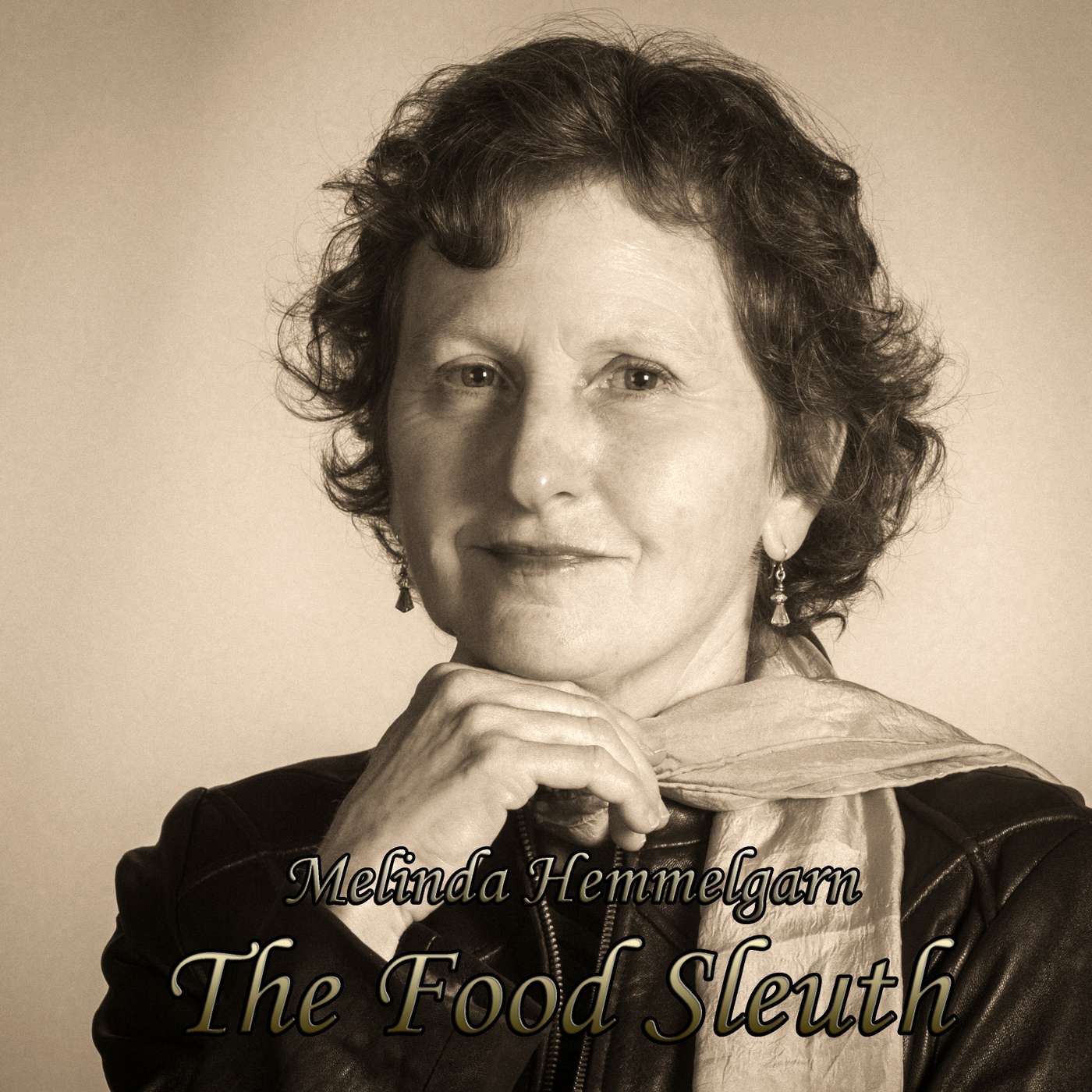
Food Sleuth Radio
906 episodes — Page 5 of 19
Ep 706Nigel Brockton, Ph.D., Director of Research at The American Institute for Cancer Research.
Did you know that alcohol consumption increases our risk for cancer? Join Food Sleuth Radio host and Registered Dietitian, Melinda Hemmelgarn, for her interview with Nigel Brockton, Ph.D., Director of Research at The American Institute for Cancer Research. Brockton dives into the research explaining how and why specific nutrients impact cancer risk, with an emphasis on the role of inflammation, and alcohol. Tune in for supporting information for “dry January” and to find out if you are practicing cancer prevention.Related website: https://www.aicr.org/cancer-health-check/
Ep 705Thomas Galligan, Ph.D., Principal Scientist for Food Additives and Supplements at the Center for Science in the Public Interest.
Did you know that many food additives allowed in the U.S. have been banned in the EU? Join Food Sleuth Radio host and Registered Dietitian, Melinda Hemmelgarn, for her interview with Thomas Galligan, Ph.D., Principal Scientist for Food Additives and Supplements at the Center for Science in the Public Interest (CSPI). Galligan explains that more than 1800 brand name food products contain titanium dioxide, yet in 2021, the European Food Safety Authority concluded that the cosmetic additive is no longer safe in foods. Galligan describes CSPI’s “Chemical Cuisine Guide,” which ranks food additives from “safe” to “avoid.”Related website: https://www.cspinet.org/page/chemical-cuisine-ratings
Ep 704Alison Cohen, Advocate and Coordinator of the National Right to Food Community of Practice.
Did you know that food is a key intersectional point for health, labor, human rights, agriculture, environment, and climate change? Join Food Sleuth Radio host and Registered Dietitian, Melinda Hemmelgarn, for her interview with Alison Cohen, Advocate and Coordinator of the National Right to Food Community of Practice. Cohen exposes false narratives around poverty and hunger, and advocates for a legal framework to protect the right to food.Related website: file:///C:/Users/Dan/AppData/Local/Microsoft/Windows/INetCache/Content.Outlook/1QPWI2U5/OP-ED%20White%20House%20Conference%20on%20Hunger%202022%20(1).pdf
Ep 703Jill Nussinow, M.S., R.D., a.k.a. “The Veggie Queen,” culinary educator and author.
Did you know that fiber-rich, plant-based diets are key to wellness? Join Food Sleuth Radio host and Registered Dietitian, Melinda Hemmelgarn, for her interview with Jill Nussinow, M.S., R.D., a.k.a. “The Veggie Queen,” culinary educator and author of multiple cookbooks. Nussinow describes the health benefits of organic, seasonal, high-fiber, whole food plant-based eating, the ease of speedy pressure cooking, and how adopting a breathing practice can enhance digestion and improve health and energy in the New Year. Hint: put mushrooms, beans and fermented foods on your food resolution list, and try the simple breathing exercise Nussinow describes.Related website: https://www.theveggiequeen.com/
Ep 702Matt Simon, author of A Poison Like No Other: How Microplastics Corrupted Our Planet and Our Bodies.
Did you know that microplastics have infested every corner of Earth, from the highest mountains to the deepest seas? Join Food Sleuth Radio host and Registered Dietitian, Melinda Hemmelgarn, for her interview with Matt Simon, journalist, staff writer at Wired, and author of A Poison Like No Other: How Microplastics Corrupted Our Planet and Our Bodies (https://islandpress.org/author/matt-simon ). Simon describes the “unbearable burden” of this insidious pollutant on our personal and planetary health, and ways we can work to curtail its production.Related website: http://www.mattsimon.net/
Ep 701Theresa Stahl, R.D., Registered Dietitian certified in mind body medicine, and author of I’m Full: Remindful Eating Tips to Feel Great and Make Peace with Your Plate.
Did you know that the most popular New Year’s resolutions include losing weight and exercising more? Join Food Sleuth Radio host and Registered Dietitian, Melinda Hemmelgarn, for her interview with Theresa Stahl, Registered Dietitian certified in mind body medicine, and author of I’m Full: Remindful Eating Tips to Feel Great and Make Peace with Your Plate. Stahl describes her personal struggles with eating, explains how to embrace mindfulness, and shares insights from her decades of working with patients to help us reach our New Year goals, and enjoy safe and nourishing holidays.Related website: https://www.remindfuleating.com/
Ep 700Teofilo Reyes, Ph.D., Restaurant Workers Bill of Rights
Did you know that restaurant workers have united to correct unfair labor practices in the workplace? Join Food Sleuth Radio host and Registered Dietitian, Melinda Hemmelgarn, for her interview with Teofilo Reyes, Ph.D., Chief Program Officer for Restaurant Opportunities Centers United. Reyes describes the major unfair labor practices among restaurant and food service workers, including wage theft, poverty wages, and lack of access to health care and time-off for rest and recovery. He discusses the stress of Covid, the basic tenets of the Restaurant Workers Bill of Rights. and how we can offer support.Related website: https://rocunited.org/bill-of-rights/
Ep 699Martin Bourque, Executive Director, the Ecology Center, Berkeley, CA https://ecologycenter.org/ discusses the myths of plastic recycling.
Did you know that most plastic packaging is not recyclable? Join Food Sleuth Radio host and Registered Dietitian, Melinda Hemmelgarn, for her interview with Martin Bourque, Executive Director, the Ecology Center, based in Berkeley, CA with international reach. Bourque pulls back the curtain on plastic recycling myths and describes meaningful policy action we can take to reduce plastic’s toxic footprint on our planet.Related website: https://ecologycenter.org/https://upstreamsolutions.org/ https://www.breakfreefromplastic.org/
Ep 698Jill Lindsey Harrison, Ph.D., author of Pesticide Drift and the Pursuit of Environmental Justice
Did you know that pesticide drift is a widespread, largely invisible problem that disproportionately harms racially marginalized, Indigenous, and working-class communities? Join Food Sleuth Radio host and Registered Dietitian, Melinda Hemmelgarn, for her interview with Jill Lindsey Harrison, Ph.D., Associate Professor of Geography at the University of Colorado – Boulder, and author of Pesticide Drift and the Pursuit of Environmental Justice (MIT Press). Harrison discusses the plight of poor agricultural workers, and the pesticide industries’ marketing strategies, and influence on educational institutions and regulatory agencies.Related website: https://www.colorado.edu/geography/jill-lindsey-harrison
Ep 697Mark Winne, community food activist, writer, and Senior Advisor to the Food Policy Networks Project at the Johns Hopkins Center for a Livable Future
Did you know that all the feeding assistance programs in the world won’t solve the root cause of hunger, which is poverty? Join Food Sleuth Radio host and Registered Dietitian, Melinda Hemmelgarn, for her interview with Mark Winne, community food activist, writer, and Senior Advisor to the Food Policy Networks Project at the Johns Hopkins Center for a Livable Future, for his discussion of the recent White House Conference on Hunger, Nutrition and Health, and his recent blog post on the conference: https://www.markwinne.com/the-white-house-hunger-conference-dispatch-from-a-man-who-wasnt-there/ Winne shares his expertise in hunger and food insecurity, describes food systems, and explains what was missing from the recent White House Conference. He addresses the benefits and pitfalls of SNAP – the Supplementary Nutrition Assistance Program, and steps we can take to improve our food system, food security and health. His most recent book, Food Town USA (Island Press, 2019), explores communities in which food has been at the heart of healthy economic growth.Related website: www.markwinne.com
Ep 696Adam Alexander, author of The Seed Detective: Uncovering the secret histories of remarkable vegetables.
Did you know that home gardeners have a critical role in helping to conserve the biodiversity of crops, which is crucial in combatting climate change? Join Food Sleuth Radio host and Registered Dietitian, Melinda Hemmelgarn, for her interview with Adam Alexander, award-winning film and television producer, and author of The Seed Detective: Uncovering the Secret Histories of Remarkable Vegetables (Chelsea Green 2022). Alexander discusses his true passion: collecting rare, endangered, but above all, delicious vegetables from around the world. He explores the social and cultural relationships we have with what we grow, and explains why and how vegetables have become lost or extinct. You can watch Alexander’s entertaining videos here: The adventures of a seed detective: https://www.youtube.com/watch?v=jHbaJ80X_Jk Related website: https://theseeddetective.co.uk/
Ep 695Andrianna Natsoulas, Campaign Director, Don’t Cage Our Oceans
Did you know that large-scale off-shore marine finfish aquaculture operations pose a risk to our ocean commons? Join Food Sleuth Radio host and Registered Dietitian, Melinda Hemmelgarn, for her interview with Andrianna Natsoulas, Campaign Director, Don’t Cage Our Oceans, a national coalition working to protect our ocean commons from the risks of off-shore marine finfish aquaculture operations. Natsoulas describes industrial off-shore aquaculture operations, who profits from them, and the feed and medications that impact both fish quality and our natural ocean environment. Natsoulas also provides tips on choosing sustainable, wild-caught (vs. farmed) fish.Related website: https://dontcageouroceans.org/
Ep 694Aaron Johnson, Program Manager for Challenging Corporate Power at Rural Advancement Foundational International – USA (RAFI-USA.)
Did you know that most poultry sold in supermarkets is produced by an unjust “tournament system” that pits farmer against farmer? Join Food Sleuth Radio host and Registered Dietitian, Melinda Hemmelgarn, for her interview with Aaron Johnson, Program Manager for Challenging Corporate Power at Rural Advancement Foundational International – USA (RAFI-USA), a non-profit organization based in North Carolina that challenges the root causes of unjust food systems, and supports and advocates for economically, racially, and ecologically just farm communities. Johnson describes vertical integration within the poultry industry, how “tournament systems” exploit poultry farmers, and how banks and taxpayers support this unjust system. Importantly, Johnson helps us rethink cultural narratives on regulation. The film, “Under Contract,” takes us behind the scenes to understand the lives of contract poultry farmers: https://rafiusa.org/undercontractfilm/Related website: https://www.rafiusa.org/programs/challenging-corporate-power/
Ep 693Lauren Swann, MS, RD, food labeling expert
Did you know that most food labels are tightly regulated by FDA? Join Food Sleuth Radio host and Registered Dietitian, Melinda Hemmelgarn, for her interview with Lauren Swann, Registered Dietitian and food label regulation expert. The two will discuss areas of confusion, trends, and the finer points of evolving food labels and their role in consumer education, marketing, and protecting public health. For FDA labeling information see: https://www.fda.gov/food/food-labeling-nutrition.Related website: Food & Nutrition Label; Dietary Supplement & Menu Labeling & Advertising: https://www.linkedin.com/groups/158141/
Ep 692Taylor Brorby, essayist, poet, environmentalist, and author of Boys and Oil: Growing up Gay in a Fractured Land.
Did you know that fracking, and other methods of fossil fuel extraction and production puts farm land, water quality and public health at risk? Join Food Sleuth Radio host and Registered Dietitian, Melinda Hemmelgarn, for her interview with Taylor Brorby, author, poet, essayist, environmentalist and author of Boys and Oil: Growing up Gay in a Fractured Land. Brorby discusses the impact of the expansion of the fossil fuel industry into his home state of North Dakota, the calculated pitting of pipeline supporters against environmentalists, and his essay in Orion Magazine https://orionmagazine.org/article/diabetes-disability-fossil-fuels/ which brings into focus the relationship between personal and planetary health.Related website: www.taylorbrorby.com
Ep 691Manny Teodoro, Ph.D., lead author of The Profits of Distrust: Citizen-Consumers, Drinking Water, and the Crisis of Confidence in American Government.
Did you know that bottled water purchases can predict political involvement? Join Food Sleuth Radio host and Registered Dietitian, Melinda Hemmelgarn, for her interview with Manny Teodoro, Ph.D., Associate Professor of Public Affairs at the University of Wisconsin-Madison and lead author of The Profits of Distrust: Citizen-Consumers, Drinking Water, and the Crisis of Confidence in American Government. Teodoro discusses the connections between the rise of the commercial drinking water industry, distrust in and failure of government, and broader withdrawal from civic life. Teodoro has served on expert advisory panels to state governments, UNICEF/World Health Organization, the American Water Works Association, and dozens of local governments. He works directly with government, community, and industry leaders to improve water affordability, equity, and regulatory implementation. He is a member of the Water and Health Advisory Council: https://wateradvisory.org/ and addressed the Third Coast Water Conference (3/31/21), speaking on “Confidence in American institutions and the Rise of Bottled Water”: https://www.youtube.com/watch?v=9OL8R0082OsRelated website: www.mannyteodoro.com
Ep 690Ramon Velazquez, Ph.D., researcher at the Neurodegenerative Disease Research Center at Arizona State University, discusses brain health and the herbicide glyphosate’s ability to increase neuroinflammatory compounds.
Did you know that the herbicide glyphosate can cross the blood-brain barrier, resulting in an increase of neuro-inflammation? Join Food Sleuth Radio host and Registered Dietitian, Melinda Hemmelgarn, for her interview with Ramon Velazquez, Ph.D., Assistant Professor in the School of Life Sciences, and Neurodegenerative Disease Research Center at the Biodesign Institute, Arizona State University. Velaquez discusses his new published research on the effects of glyphosate on the brains of mice, showing that it may increase the risk of neurodegenerative disorders. “Glyphosate infiltrates the brain and increases pro-inflammatory cytokine TNFα: implications for neurodegenerative disorders.” https://pubmed.ncbi.nlm.nih.gov/35897073/ He also discusses the role of choline in cognitive health and how it may reduce the risk of Alzheimer’s Disease.Related website: https://velazquezlab-asu.github.io/index.html
Ep 689Bart Elmore, Ph.D., environmental historian at the Ohio State University and author of Seed Money: Monsanto’s Past and Our Food Future.
Did you know that Monsanto knew PCBs were harmful to public health, but continued to profit from their sale? Join Food Sleuth Radio host and Registered Dietitian, Melinda Hemmelgarn, for her interview with Bart Elmore, Ph.D., Associate Professor of Environmental History, core faculty member of the Sustainability Institute at the Ohio State University, and award-winning author of Citizen Coke: The Making of Coca-Cola Capitalism (W. W. Norton, 2015) and Seed Money: Monsanto’s Past and Our Food Future(W. W. Norton, 2021). Elmore describes how he gained access to archival documents showing how Monsanto (now owned by Bayer) profited by exploiting labor and natural resources, and continues to do so today with GMO crops designed to sell an increasing number of damaging herbicides. Related website: https://www.bartelmore.com/
Ep 688Jenn Wheeling, holistic rancher, regenerative farmer
Did you know that pasture-based animal agriculture differs vastly from industrial feedlots? Join Food Sleuth Radio host and Registered Dietitian, Melinda Hemmelgarn, for her interview with Jenn Wheeling, holistic rancher and regenerative farmer. Wheeling is one of several siblings who live and operate agricultural enterprises on James Ranch in Durango, CO. She describes a resilient regional food system that feeds her community and contributes to the region’s environmental and economic well-being.Related website: https://jamesranch.net/
Ep 687Barry Boyd, MD, MS, integrative oncologist
Did you know that insulin resistance increases risk for chronic diseases? Join Food Sleuth Radio host and Registered Dietitian, Melinda Hemmelgarn, for her interview with Barry Boyd, MD, MS, integrative oncologist and Assistant Professor of Medicine at the Yale Cancer Center. Boyd discusses his focus on nutritional support in cancer prevention and treatment, insulin resistance and glyphosate-related cancers.Related website: https://journals.sagepub.com/doi/pdf/10.1177/1534735403259152
Ep 686Joshua David Stein, author of “Lunch from Home.”
Did you know that children who bring non-traditional foods in their lunch boxes can face bullying at school? Join Food Sleuth Radio host and Registered Dietitian, Melinda Hemmelgarn, for her interview with Joshua David Stein, food writer, restaurant critic, and children’s book author. Stein describes his work writing and performing children’s books. Lunch From Home, his most recent title, describes “lunch box moments” as faced by the lead characters (real professional chefs) when they were children. Stein explores the sensitive topics of cultural foods and how children react to “strange” food. A perfect back-to-school read to help children navigate their school cafeterias, embrace cultural differences and explore ethnic foods.Related website: https://www.thebandbooks.com/; www.joshuadavidstein.com
Ep 685Joshua Sbicca, Ph.D., Director of the Prison Agriculture Lab at Colorado State University
Did you know that over 600 U.S. prisons include agricultural activities of some kind? Join Food Sleuth Radio host and registered dietitian, Melinda Hemmelgarn, for her interview with Joshua Sbicca, Ph.D., Associate Professor of Sociology and Director of the Prison Agriculture Lab at Colorado State University. He is also co-author with Ashante Reese of “Food and carcerality: From confinement to abolition.” (https://www.researchgate.net/publication/358186429_Food_and_carcerality_From_confinement_to_abolition) Sbicca explains that plantation labor has never really gone away, and dives into the forms of unseen agriculture as it exists today in the “criminal punishment” system, and discusses who stands to profit from the agri-carceral industrial complex. He also describes his unique and collaborative Prison Agriculture Lab project which includes maps, stories and more.Related website: https://prisonagriculture.com/
Ep 684Sarah King, M.S., Head of Greenpeace Canada's Oceans and Plastics campaign.
Did you know that the United Nations has declared plastic pollution a global crisis? Join Food Sleuth Radio host and registered dietitian, Melinda Hemmelgarn, for her interview with Sarah King, M.S., Head of Greenpeace Canada's Oceans and Plastics campaign. King exposes the fossil fuel industry’s dependence on plastic for profit, its connection to our global climate crisis, and the myth of plastic recycling. She also discusses the potential impact of Canada’s commitment to ban single-use plastics (See: https://www.greenpeace.org/canada/en/press-release/52311/global-plastics-treaty-mandate-pivotal-step-to-end-plastic-pollution/ ) and how we can grow the reuse – refill, zero-waste movement.Related website: https://www.unep.org/news-and-stories/story/what-you-need-know-about-plastic-pollution-resolution
Ep 683Danielle Dreilinger, author of The Secret History of Home Economics: How Trailblazing Women Harnessed the Power of Home and Changed the Way We Live
Did you know that early home economists were advocates for justice and revolutionary scientists? Join Food Sleuth Radio host and registered dietitian, Melinda Hemmelgarn, for her interview with Danielle Dreilinger, award winning journalist and author of The Secret History of Home Economics: How Trailblazing Women Harnessed the Power of Home and Changed the Way We Live (W. W. Norton). Dreilinger discusses the origins of home economics, the broad scope of the profession, its name changes, and why this area of study and work remains critically important in benefiting society today.Related website: https://wwnorton.com/books/9781324004493
Ep 682Brad Lancaster, rainwater harvester, permaculturist, regenerative design consultant and author of Rainwater Harvesting for Drylands and Beyond.
Did you know that harvested rainwater can be used in arid regions of the world to support food-bearing shade trees, abundant gardens, and a thriving landscape that provides wildlife habitat, beauty, medicinal plants, and more? Join Food Sleuth Radio host and Registered Dietitian, Melinda Hemmelgarn, for her interview with Brad Lancaster, rainwater harvester, permaculturist, regenerative design consultant and award-winning author of Rainwater Harvesting for Drylands and Beyond. Lancaster describes how he captures rain and grey water, and thereby transformed his community, reduced temperatures, and improved health.Related website: https://www.harvestingrainwater.com/
Ep 681Kari Hamerschlag, Deputy Director of Friends of the Earth’s Food and Agriculture Program and the Climate-Friendly Food Program. (Part 2 of 2)
Did you know that our food and agricultural practices can have either a beneficial or detrimental impact on the global climate crisis? Join Food Sleuth Radio host and registered dietitian, Melinda Hemmelgarn, for her interview with Kari Hamerschlag, Deputy Director of Friends of the Earth’s Food and Agriculture Program and the Climate-Friendly Food Program. Hamerschlag discusses findings from the “Farming for the Future” Report which explains the connections between food, agriculture and climate change, and agroecological solutions. (See: https://1bps6437gg8c169i0y1drtgz-wpengine.netdna-ssl.com/wp-content/uploads/2017/legacy/FOE_Farming_for_the_Future_Final.pdf ). She also describes the multiple benefits of climate-friendly schools meals, including cost-savings to school districts. (Part 2 of 2)Related website: “Shrinking the Carbon and Water Foot Print of School Food: A Recipe for Combating Climate Change:” https://foe.org/wp-content/uploads/2017/webiva_fs_2/FOE_FoodPrintExecSumm_7.pdf
Ep 680Kari Hamerschlag, Deputy Director of Friends of the Earth’s Food and Agriculture Program and the Climate-Friendly Food Program.
Did you know that The UN Secretary-General has called the climate crisis a “code red” warning for humanity, yet multinational development banks (MDBs) continue to pump public money into climate-unfriendly industrial animal agriculture? Join Food Sleuth Radio host and registered dietitian, Melinda Hemmelgarn, for her interview with Kari Hamerschlag, Deputy Director of Friends of the Earth’s Food and Agriculture Program and the Climate-Friendly Food Program. Hamerschlag discusses her research on multinational development banks, and their role in funding industrial livestock operations (CAFOs), thereby ignoring warnings from the International Panel on Climate Change (IPCC) and the U.N. Convention to Combat Desertification. Both the IPCC and the U.N. advise transforming and scaling back greenhouse gas (GHG) emissions from CAFOs in order to build resiliency and reach Paris climate goals. (Part 1)Related website: https://foodtank.com/news/2022/06/public-banks-are-breaking-their-climate-pledges/
Ep 679David Wiss, Ph.D., Registered Dietitian, founder of Nutrition in Recovery and Wise Mind Nutrition.
Did you know that mental health is influenced by what and how we eat? Join Food Sleuth Radio host and registered dietitian, Melinda Hemmelgarn, for her interview with David Wiss, Ph.D., Registered Dietitian, and founder of Nutrition in Recovery and Wise Mind Nutrition. Wiss discusses his career path and practice. He developed Wise Mind Nutrition to provide information on adverse childhood experiences, disordered eating, food addiction, depression, trauma-informed care, resilience in recovery, and more. As Wiss explains, whole, fiber-rich foods help nourish gut bacteria, which influence both physical and mental health.Related website: https://wisemindnutrition.com/
Ep 678Faith Rogow, Ph.D., media literacy educator, founding President of the National Association for Media Literacy Education, and author of Media Literacy for Young Children: Teaching Beyond the Screen Time Debates
Did you know that media literacy is essential for a healthy democracy and planet? Join Food Sleuth Radio host and registered dietitian, Melinda Hemmelgarn, for her interview with Faith Rogow, Ph.D., media literacy educator, founder of Insighters Education, and author of Media Literacy for Young Children: Teaching Beyond the Screen Time Debates. Rogow is an expert in helping us navigate media images and messages, tease out mis- and dis-information, and understand media’s power to influence how we think and feel. In an uncertain world, Rogow helps us respond with imagination rather than fear.Related website: https://insighterseducation.com/
Ep 677John Wargo, Ph.D., discusses “Pesticide Risks: From our Farms to our Homes.”
Did you know that the Environmental Protection Agency, our government agency that reviews and licenses pesticides relies almost exclusively on manufacturers’ safety data, which is rife with self-interest? Join Food Sleuth Radio host and registered dietitian, Melinda Hemmelgarn, for her interview with John P. Wargo, Ph.D., Professor of Environmental Health and Politics at Yale University’s School of the Environment and author of the award winning book, Our Children’s Toxic Legacy: How Science and Law Fail to Protect us from Pesticides. Wargo discusses his latest report, “Pesticide Risks: From Our Farms to Our Homes,” (Environment & Human Health, Inc.), and asks: “Why in the world would you want to expose your family to a mixture of chemicals?” Wargo describes how we’ve been sold a lawn “narrative,” but that common lawn chemicals put our water supply and health at risk.Related website: https://www.ehhi.org/Pesticide_Risks_web_new.pdf
Ep 676Alan Graham, founder, President and CEO of Mobile Loaves and Fishes, and Community First! Village
Did you know that there’s a 51-acre planned development in northeast Austin, TX, that provides affordable, permanent housing, an organic garden, microenterprise opportunities, and a supportive community for people coming out of chronic homelessness? Join Food Sleuth Radio host and registered dietitian, Melinda Hemmelgarn, for her interview with Alan Graham, founder, President and CEO of Mobile Loaves and Fishes, and “lead visionary” behind MLF’s Community First! Village. Graham discusses his perspective on the cause of homelessness, and the solutions, starting with food and family. Community First! Village offers a national model for preventing homelessness with dignity.Related website: https://mlf.org/
Ep 675Alexis Temkin, Ph.D. toxicologist and lead author of the Environmental Working Group’s “Shopper’s Guide to Pesticides in Produce.”
Did you know that just because a pesticide is registered with the EPA doesn’t mean it’s safe? Join Food Sleuth Radio host and registered dietitian, Melinda Hemmelgarn, for her interview with Alexis Temkin, Ph.D. toxicologist and lead author of the Environmental Working Group’s “Shopper’s Guide to Pesticides in Produce,” including the “Dirty Dozen” and “Clean Fifteen.” Temkin describes the process of pesticide testing and regulation, and how the EWG’s guide was developed to help consumers enjoy a variety of fruits and vegetables while protecting their family’s health, as well as farm worker health and our environment. The Environmental Working Group, as well as Beyond Pesticides: www.beyondpesticides.org provides information on produce safety and the benefits of organic food and farming.Related website: https://www.ewg.org/foodnews/about.php
Ep 674Bill Marler, personal injury lawyer discusses Abbott’s infant formula contamination.
Did you know that Abbott’s infant formula contamination resulted in the death of two children? Join Food Sleuth Radio host and registered dietitian, Melinda Hemmelgarn, for her interview with Bill Marler, personal injury lawyer and internationally recognized expert in foodborne illness litigation. Marler discusses the Abbott infant formula contamination fiasco, formula shortage, inadequate regulation and unintended consequences of industry consolidation. Marler’s Food Safety News has covered this issue extensively, as well as food recalls, foodborne illness outbreaks and investigations.Related website: www.foodsafetynews.com
Ep 673Rhonda Sherman, M.S., Extension Specialist on composting, recycling and solid waste reduction.
Did you know that the Environmental Protection Agency estimates that one third of all food in the U.S. goes uneaten and in 2018, about 81 percent, or 20.3 tons of households' wasted food ended up in landfills or combustion facilities? Join Food Sleuth Radio host and registered dietitian, Melinda Hemmelgarn, for her interview with Rhonda Sherman, M.S, Extension Specialist on composting, recycling and solid waste reduction at North Carolina State University, Raleigh. Affectionately known as “the worm queen,” Sherman explains that preventing food from going to waste is one of the easiest and most powerful actions we can take to save money and lower our climate change footprint by reducing greenhouse gas (GHG) emissions and conserving natural resources. Related website: https://content.ces.ncsu.edu/show_ep3_pdf/1649787791/22094/
Ep 672Henry Rowlands, Director of the Detox Project, discusses his latest report: “Glyphosate Contamination: The Poison in Our Daily Bread.”
Did you know that the American food supply is increasingly contaminated with the herbicide glyphosate? Join Food Sleuth Radio host and registered dietitian, Melinda Hemmelgarn, for her interview with Henry Rowlands, journalist and Founder/Director of Sustainable Pulse and the Detox Project. Rowland dives into his latest report: “Glyphosate Contamination: The Poison in Our Daily Bread,” which reveals the glyphosate levels found in commonly purchased grocery store foods, and explains why such foods as bread, oats, barley, beans, peas and lentils are contaminated. See the report here: https://detoxproject.org/wp-content/uploads/2022/02/Glyphosate_Contamination_Report_Final1.pdf Related website: www.detoxproject.org
Ep 671Tom Pelton, discusses the Environmental Integrity Project’s report, “The Clean Water Act at 50: Promises Half Kept at the Half Century Mark.”
Did you know that almost four decades after the Clean Water Act’s deadline for all waters across the U.S. to be “fishable and swimmable,” 50 percent of assessed river and stream miles in the U.S. are so polluted they are classified as “impaired”? Join Food Sleuth Radio host and registered dietitian, Melinda Hemmelgarn, for her interview with Tom Pelton, Communications Director for the Environmental Integrity Project and lead author of EIP’s report, “The Clean Water Act at 50: Promises Half Kept at the Half Century Mark.” Learn if your elected officials vote in favor of environmental protection here: League of Conservation Voters: https://lcv.org/mission/ and listen to Pelton’s “Environment in Focus” interviews here: https://www.wypr.org/people/tom-pelton Related website: https://environmentalintegrity.org/wp-content/uploads/2022/03/CWA-report-3.23.22-FINAL.pdf
Ep 670Alan Lewis, V.P. for Government Affairs, Stakeholder Relations, and Organic Compliance for Natural Grocers by Vitamin Cottage discusses food labels and marketing.
Did you know that many “plant-based” foods are highly processed and not necessarily good for our health or the planet? Join Food Sleuth Radio host and registered dietitian, Melinda Hemmelgarn, for her interview with Alan Lewis, Vice President for Government Affairs, Stakeholder Relations and Organic Compliance for Natural Grocers by Vitamin Cottage. Lewis discusses the impact of industrial agriculture on our environment and health, pulls back the curtain on plant-based, yet highly processed foods, and helps us understand often confusing food labels, including: “bioengineered,” “natural,” and “non-GMO.” Follow Lewis’ astute observations of the food system on LinkedIn: https://www.linkedin.com/in/alanplewis/Related website: TED Talk: “Food Betrayal – Don’t swallow the lies:” https://www.youtube.com/watch?v=Y81rCiw1LPY
Ep 669Mick McDowell, grape grower/wine producer discusses herbicide damage to his crop.
Did you know that herbicide drift challenges the wine industry, especially in states largely dominated by chemical intensive industrial agriculture? Join Food Sleuth Radio host and registered dietitian, Melinda Hemmelgarn, for her interview with Mick McDowell, award-winning wine producer based in St. Paul, Nebraska. McDowell describes the land he loves, corn and livestock economics, and the challenges of growing grapes in a state dominated by crops that are routinely sprayed with a growing number of herbicides. Each year, McDowell explains, a significant percentage of his grapes are lost due to herbicide drift, with no significant means of compensation. Related website: www.milettavistawinery.com
Ep 668Liz Carlisle, Ph.D, author of Healing Grounds: Climate, Justice, and the Deep Roots of Regenerative Farming
Did you know that regenerative farming methods are not “new,” but have been practiced by indigenous farmers for centuries? Join Food Sleuth Radio host and Registered Dietitian, Melinda Hemmelgarn, for her interview with Liz Carlisle, Ph.D., Assistant Professor in the Environmental Studies Program at the University of California, Santa Barbara, and author of Healing Grounds: Climate, Justice, and the Deep Roots of Regenerative Farming. Carlisle discusses the powerful movement that’s happening in farming today, that reconnects farmers with their roots to fight climate change. Carlisle amplifies the voices of Indigenous, Black, Latinx, and Asian American farmers who are reviving their ancestors’ methods of growing food—techniques long suppressed by the industrial food system. Listen to Dr. Carlisle’s Island Press webinar here: Island Press webinar: https://www.youtube.com/watch?v=KV7FFn3-IiA Related website: https://www.lizcarlisle.com/
Ep 667Shana Klein, Ph.D., author of The Fruits of Empire: Art, Food, and the Politics of Race in the Age of American Expansion
Did you know that images are powerful influencers on how we think about food, people and national policies? Join Food Sleuth Radio host and Registered Dietitian, Melinda Hemmelgarn, for her interview with Shana Klein, Ph.D., art historian, assistant professor of art history at Kent State U. and author of The Fruits of Empire: Art, Food, and the Politics of Race in the Age of American Expansion. Klein discusses the role of visual imagery in the acceptance and promotion of fruit, national expansion, and racism focusing on five key fruits: grapes, oranges, bananas, watermelon and pineapple. Sales of her book are generously contributed to the Coalition of Immokalee Workers. To see more of Klein’s deconstructed images of food: @thefruitsofempire Related website: https://sites.bu.edu/gastronomyblog/2022/01/25/spring-2022-pepin-lecture-series-in-food-studies-gastronomy/
Ep 666Michael O’Donnell, farmer, discusses pesticide drift.
Did you know that pesticide drift interferes with the ability of rural farmers to feed their communities? Join Food Sleuth Radio host and Registered Dietitian, Melinda Hemmelgarn, for her interview with Michael O’Donnell, mechanical engineer, Indiana farmer, and sustainable agriculture educator. O’Donnell discusses the myth of biofuels, and describes his experience living in the path of pesticide drift, resulting in crop damage, reduced quality of life, and the inability to feed his community farm fresh, nourishing food. To learn more about biofuels, see: https://pubmed.ncbi.nlm.nih.gov/35165202/ For research on herbicide drift, see: https://www.researchgate.net/publication/337288375_Investigations_of_the_Sensitivity_of_Ornamental_Fruit_and_Nut_Plant_Species_to_Driftable_Rates_of_24-D_and_Dicamba Related website: “Options for Dealing with a Pesticide Drift Incident:” https://edustore.purdue.edu/item.asp?Item_Number=PPP-110
Ep 665Danielle Reed, Ph.D. Associate Director, Monell Chemical Senses Center, Philadelphia, PA, discusses smell and taste loss.
Did you know that smell and taste loss can affect our personal safety, mental and physical health, and overall quality of life? Join Food Sleuth Radio host and Registered Dietitian, Melinda Hemmelgarn, for her interview with Danielle Reed, Ph.D. Associate Director of the Monell Chemical Senses Center, based in Philadelphia, PA. Reed shares insights from her research investigating differences in the loss of taste and smell as a result of COVID-19 infections and other conditions. Reed is a member of the Global Consortium for Chemosensory Research. Related website: https://monell.org/smell-taste-loss/
Ep 664Frank Baker, journalist and Media Education Consultant discusses media literacy education.
Did you know that the diet industry depends on a “media illiterate” audience? Join Food Sleuth Radio host and Registered Dietitian, Melinda Hemmelgarn, for her interview with Frank Baker, journalist and media education consultant. Baker has been recognized by UNESCO’s Global Alliance partnership for Media & Information Literacy. Baker pulls back the curtain on diet industry ads, discusses media literacy education in K-12 schools, and shares critical questions we can pose to navigate all media messages. https://namle.net/wp-content/uploads/2021/06/Key-Questions.pdf Baker explains that propaganda is widely used in our society https://www.frankwbaker.com/mlc/propaganda/ and https://propaganda.mediaeducationlab.com/, but students are not taught to recognize persuasive techniques. He provides examples of carefully constructed media messages in the diet industry, and the power of testimonials and celebrity in selling products. Related website: www.frankwbaker.com
Ep 663Jed Fahey, Ph.D., nutritional biochemist discusses the benefits of “phytochemicals.
Did you know that phytochemicals in plants deserve more of our attention for their role in protecting our healthspan? https://onlinelibrary.wiley.com/doi/epdf/10.1002/fft2.81 Join Food Sleuth Radio host and Registered Dietitian, Melinda Hemmelgarn, for her interview with Jed Fahey, Ph.D., nutritional biochemist and former Assistant Professor at Johns Hopkins Medical School where he directed the Cullman Chemoprotection Center. Fahey shares his expertise of plant physiology and human nutrition, discusses the many benefits of “phytochemicals” in general and specifically sulforaphane found in broccoli and broccoli sprouts. He also explains how and why we get a greater phytochemical load from organically grown fruits and vegetables, and laments the loss of biodiversity in vegetable seeds, as depicted by National Geographic: https://www.nationalgeographic.org/media/infographic-design/ Related website: www.jedfahey.com
Ep 662Dorothy Sears, Ph.D., professor of Nutrition at Arizona State U.’s College of Health Solutions discusses intermittent fasting and research on standing/sitting.
Did you know that intermittent fasting can reduce breast cancer recurrence and improve overall metabolic health? Join Food Sleuth Radio host and Registered Dietitian, Melinda Hemmelgarn, for her interview with Dorothy Sears, Ph.D., professor of Nutrition at Arizona State U.’s College of Health Solutions, and adjunct professor of medicine at the U. of CA – San Diego. Sears discusses her research on meal timing (intermittent fasting and circadian rhythm) and the benefits of standing during bouts of sitting to improve overall health. Related website: https://chs.asu.edu/dorothy-sears
Ep 661Kristin Schafer, Former Executive Director, Pesticide Action Network of North America.
Did you know that pesticides are not necessary to “feed the world,” and that American taxpayers pay for pesticide-related harm to our environment and health? Join Food Sleuth Radio host and Registered Dietitian, Melinda Hemmelgarn, for her interview with Kristin Schafer, Former Executive Director of the Pesticide Action Network of North America. Schafer discusses highlights of her 25-year career with PAN, summarizes the best farming methods for resilient agriculture; and, explains how policy must help protect children from pesticide harm. Read more about Schafer’s work experiences in her reflection series: https://www.panna.org/blogs/kristin-schafer, and learn about how the pesticide industry influences EPA in this Catalyst article: https://www.panna.org/sites/default/files/PANnews2021n03.pdf Learn about SB 3283 Protect America’s children from toxic pesticides act: https://www.congress.gov/bill/117th-congress/senate-bill/3283 Related website: www.panna.org
Ep 660Nancy Alderman, founder and President of Environment and Human Health, Inc.
Did you know that if pesticides are used anywhere in a community, those pesticides can end up in ground water shared by that community? Join Food Sleuth Radio host and Registered Dietitian, Melinda Hemmelgarn, for her interview with Nancy Alderman, Founder and President of Environment and Human Health, Inc. (EHHI), a non-profit organization dedicated to the protection of human health from environmental harms through research, education and the promotion of sound public policy. Alderman describes how well-meaning individuals can be fooled by pesticide and lawn care marketing. Tune in to find out how to best protect your family from a number of harmful environmental chemicals, and ask to receive EHHI’s daily education updates at: [email protected] Related website: http://www.ehhi.org
Ep 659Jeff Tkach, Chief Impact Officer at the Rodale Institute
Did you know that U.S. consumers spend more on health care than they do on food? Join Food Sleuth Radio host and Registered Dietitian, Melinda Hemmelgarn, for her interview with Jeff Tkach, Chief Impact Officer at the non-profit Rodale Institute. Tkach describes the Rodale Institute’s new free, on-demand consumer course on regenerative organic food and farming. He defines “regenerative organic agriculture,” and explains the multiple health benefits of organic food and farming for our environment and health. He also discusses hurdles or barriers to the adoption of organic practices, and the power of consumers in the marketplace. Related website: https://courses.rodaleinstitute.org/p/being-a-regenerative-consumer
Ep 658Gaboury Benoit, Ph.D., Environmental Chemist, Yale University, author of “Plastics and Microplastics: A Threat to the Environment and Health”
Did you know that plastic breaks down in our environment and enters our water, air, food chain and bodies? Join Food Sleuth Radio host and Registered Dietitian, Melinda Hemmelgarn, for her interview with Gaboury Benoit, Ph.D., Environmental Chemist at Yale University, and author of “Plastics and Microplastics: A Threat to the Environment and Health.” Benoit discusses the fate of microplastics, potential adverse effects on soil and human health, and why it is critical to choose anything but plastic whenever possible. Related website: https://www.ehhi.org/plastics.php
Ep 657Sherri Dugger, Executive Director of the Socially Responsible Agriculture Project
Did you know that industrial agriculture and factory farms negatively impact rural communities’ water, air and quality of life? Join Food Sleuth Radio host and Registered Dietitian, Melinda Hemmelgarn, for her interview with Sherri Dugger, Executive Director of the Socially Responsible Agriculture Project. Dugger defines “socially responsible agriculture,” discusses industrial farming myths, and describes how SRAP works in partnership with rural communities to oppose concentrated animal feeding operations. To watch SRAP’s 2021 conference, “Building a Socially Responsible Food Future,” See: https://www.youtube.com/playlist?list=PLQ1v-GDXiO6jmll0RNj7MkrbsE_EJKnFZ For community assistance in opposing CAFOs, call: 844-367-7727. Related website: https://sraproject.org/