Food Matters Live Podcast
525 episodes — Page 8 of 11

Ep 280280: How does what you eat affect brain function?
What’s the link between the food we eat and brain function?We’ve spoken on the Food Matters Live Podcast recently about nutrition and healthy ageing, but the link with cognitive function warrants an episode all of its own.There’s a lot of current research into whether diet can slow down cognitive ageing and even reduce your risk of dementia.The notion of ‘brain food’ is nothing new, but how much of what we’re told stands up to scrutiny? What does the research tell us? And what should we be eating to keep our brains healthy?The brain makes up just two per cent of our bodyweight, but uses 20 per cent of our oxygen intake, 20 per cent of the glucose we consume, and needs more than 1,000 litres of blood every day.It would seem to follow that the nutrients we consume through the food we eat will have a big impact on our brain function.But we're interested in looking at the facts, the science, and the research that either supports or contradicts that assumption.In recent years it’s been suggested there are particular foods which protect cognitive health, does Omega-3 have as big an impact as some would have us believe? And does it matter how it's consumed?What role do the food and supplements industries have to play in ensuring we're all getting the right nutrients to maintain cognitive function?We also look at the impact nutrition can have on Dementia, how what we eat can affect short-term cognitive function, and ask how you go about getting people to change their diets. Anne-Marie Minihane, Professor of Nutrigenetics and Head of Nutrition and Preventive Medicine in the Norwich Medical School, University of East AngliaAnne-Marie and her team’s research programme investigates the impact of dietary components (marine omega-3- fatty acids and a Mediterranean-style dietary pattern) and APOE genotype on cardiovascular and cognitive health. A particular focus is the molecular and physiological basis for the interactive impact of menopause and an APOE4 genotype (25% of the UK population) on neuropathology and overall brain health, and examining the ability of the omega-3 fatty acid DHA to mitigate the accelerated brain ageing in APOE4 females. Norwich Institute of Healthy Ageing (NIHA) is focussed on providing agency, and the capability, opportunity and motivation to us as individuals and communities, to adopt heathier behaviours (eating, physical activity, socialisation, sleep etc.) aligned with recommendationsIn addition, at UEA, Anne Marie contributes to the teaching of the Medical and Bioscience students, in the area of nutrition and disease prevention and therapeutics. She is academic advisor to ILSI Europe (a tripartite consortium of Industry, Academia and Policy organisations) and Deputy Editor of Frontiers in Nutrition.

Ep 279279: Career Conversations: The secret to becoming a flavourist
What's the secret to having a successful career as a flavourist? Marie Wright, Chief Global Flavourist at food processing corporation ADM, says it's all about passion.In this episode of the Career Conversations series, she reveals all to Elisa Roche about how she rose through the ranks to become one of the best flavourists in the world.And, although she says there are many elements to forging a successful career, passion, grit, and a desire to keep learning will get you a long way: "It's important that you don't ever get to a position where you say I'm there now, I don't need to learn anymore."Marie's job involves helping brands to create new flavours from scratch, or recreating complicated flavours that excite the senses. But how do you go about doing that? She says a good analogy for her job is a perfumer, creating tastes and flavours for food.She grew up in the UK, now lives in America, and was influenced by her Turkish father and Italian mother's cooking. All of which stood her in good stead for the career she chose."I didn't grow up in a traditional way from a food perspective," she says. "I feel very lucky."And being a flavourist isn't the sort of thing you can pick up overnight. In fact, you can't really study to become a flavourist in the conventional way, you need to go through years of training on the job.ADM runs a mentoring programme and it takes seven years to complete. Luckily for us, Marie founded the programme and gives us some top tips on what she looks for in potential candidates.Listen to the full episode to find out what Marie thinks makes a good leader, why you don't need to choose between the arts and sciences, and why a good sense of humour is a must for anyone starting out. Marie Wright, President, Creation, Design & Development and Chief Global Flavourist, ADMMarie manages a team of over 500 people, including 400 scientists, 70 flavourists and 12 chefs. As a transformational leader with extensive technical marketing and global technical management experience, Marie drives creative ingenuity with her team to deliver ground-breaking flavour solutions that satisfy tastes all over the world.Among the industry’s most prolific flavour creators, Marie has developed well over 2,500 flavours for the world’s leading CPG, private label and quick serve food companies for products ranging from plant-based burgers, to candy, snack bars, hard seltzers and more. Whereas most flavourists specialize in one of sweet or savoury, Marie is a cross-category flavourist capable of making any type of flavour – sweet, fruit or savoury – across all market segments in foods and beverages alike. She also formulates flavours for the nutraceutical space, creating taste-pleasing products with functional health and wellness benefits.Marie studied Food Science and Chemistry at King’s College London, graduating with Honours First Class. Her commitment to sharing knowledge is highlighted in the chapter ‘Creating elegant flavors’ of John Wright’s world-renowned book, Flavor Creation.

Ep 278278: Is collaboration the key to the future of food?
How can the food industry innovate to meet the demands and challenges it's facing, and do so in an efficient way? The answer, according to Tetra Pak: Partnerships, partnerships, and more partnerships.There are all kinds of issues that need to be tackled, not least the question of sustainability.In this episode of the Food Matters Live Podcast, we shine a light on a small company that says it's found a solution to a big problem, and how it's working with a big company to get that solution out into the world. EnginZyme takes waste materials from food processing and uses enzymes to transform that material into useful, sustainable, and natural added-value products.The company says its method requires less energy and leads to far less waste than conventional methods. Join our complimentary webinar: Climate optimism – shifting the narrative on climate change Featuring Anne Therese Gennari in partnership with Tetra PakBut it is expensive work and EnginZyme isn't primarily a food company.That's where Tetra Pak comes in. It too is concerned with increasing sustainability and reducing waste in food processing.By working together and combining EnginZyme's biomanufacturing innovation together with Tetra Pak's food expertise, could we be on the cusp of a transformation in the way food is processed?Listen to the full episode to find out more about the science behind EnginZyme's work, the challenges smaller companies face when trying to up-scale their big ideas, and how working with external partners is helping.We also delve into Tetra Pak's partnership programme, how it chooses which projects to support, and the innovations it thinks are going to take off in the years to come. Dr Karim Engelmark Cassimjee, CEO, EnginZymeDr Karim Engelmark Cassimjee co-founded EnginZyme in 2014 to make the chemical industry green by unlocking the potential in enzymes. Dr Engelmark Cassimjee has a PhD in biotechnology from KTH and conducted postdoctoral studies at Stockholm University. In 2021, Karim was selected as the KTH Alumnus of the Year, and EnginZyme as a Technology Pioneer by the World Economic Forum. Lidia GarciaPou, Head of Project Management and External Innovation, Tetra PakLidia has worked at Tetra Pak for 12 years and she believes that innovation is a powerful tool to drive the transformative changes needed by today’s society in the food system.Responsible for the external partnerships at Tetra Pak Processing, she is committed to deliver and contribute to the field of sustainable food processing by creating and fostering innovative thinking, engaging internal resources in open innovation, and advocating for new disruptive technologies.She has 20 years of international business experience within business development, product management, project management, sales and R&D in different large organisations around Europe. Lidia likes getting people excited about the things she is passionate about which is creating strategic partnerships with startups and small companies whose technologies and skills will help Tetra Pak in expanding its own capabilities.

Ep 277277: Exploring the link between nutrition and health in later life
Studies have shown that around 20-30 per cent of how we age is down to our genetics, so how big a factor is what we eat in the remaining 70 per cent?In this episode of the Food Matters Live Podcast, we explore the relationship between our diets and our health in later life.Life expectancy has fallen in the UK very recently, largely down to the Coronavirus pandemic, but it had been rising consistently since the end of the Second World War.And an ageing population can throw up a number of problems… The UK Government’s Foresight report into the future of an ageing population points out that without significant improvements, ill-health, chronic conditions, and cognitive impairments will become more common.The question for us is: can our diet help prevent these things? And what can we learn from the food culture in places where people live the longest, healthiest lives?As we grow older, our nutritional requirements change, so should our eating habits change too?At what age do we need to start making changes? And when we're thinking about the foods we eat, should we be considering our healthspan as well as our lifespan?Listen to the full episode to find out more about the nine hallmarks of ageing on a molecular level, how healthy ageing is defined, and the simple changes we could all be making to give us a chance of living a longer, healthier life.We also ask if the food industry could be doing more to help an ageing population, and do it whilst still making a profit. Rosie Martin, Registered Dietician and Founder of Rosemary Nutrition and DieteticsRosie is a UK registered dietitian working as Employee Health & Wellness Dietitian for her local NHS trust and as a plant-based specialist through her business Rosemary Nutrition & Dietetics.She has worked with a wide variety of patients within NHS acute and community settings and has specialised in both gastroenterology and oncology. With a diagnosis of coeliac disease in her first year of life, Rosie has lived experience of the dramatic impact of food choices on health and wellbeing.Having studied and experienced the benefits of plant-based nutrition, Rosie now works to support patients and clients to embrace a plant-based diet for disease management and prevention. Rosie is an advisory board member for Plant Based Health Professionals UK, and provides nutrition support for a range of clients, and businesses through her dietetic clinic, talks, workshops and article writing.

Ep 276276: Will new HFSS rules change our eating habits?
The UK Government is planning to introduce a raft of restrictions on the promotion of foods that are high in fat, salt and sugar (HFSS) - but will they actually make any difference?The idea behind the proposals is to improve public health. But will we actually develop new, healthy shopping habits once the regulations come in?In this episode of the Food Matters Live podcast, we look at the evidence to see how shopping and eating habits might change.What does the research show? How will impulse purchasing be affected? In short, what happens when our favourite foods are no longer quite so visible?The Government recently announced that it was delaying some of the restrictions.That has caused lots of controversy and no doubt we will revisit the topic in the weeks ahead.But here's how things stand as of June 2022: A ban on buy-one-get-one free deals on food and drink that is high in fat, salt and sugar, as well as free refills for soft drinks, has been postponed by 12 months and won’t be introduced before October 2023.Plans to restrict TV advertising of HFSS products before the nine o’clock watershed have also been delayed by a year, until January 2024.But restrictions on where HFSS products can be placed in shops will still go ahead in October 2022. Malcolm Clark, Senior Prevent Policy Manager, Cancer Research UKMalcolm oversees Cancer Research UK’s policy work on tobacco, obesity and other cancer prevention risk factors. He has been at the forefront of obesity policy and advocacy for the past decade – first with Children’s Food Campaign (part of Sustain: the alliance for better food and farming) and since 2018 at Cancer Research UK. He sat on Public Health England’s review of the Nutrient Profile Model, and was part of the team which implemented the HFSS ad ban across Transport for London sites. Malcolm sits on the steering groups of the Obesity Health Alliance and the Alcohol Health Alliance. Hannah Skeggs, Health and Sustainable Diets Manager, IGDHannah is a nutritionist (ANutr), passionate about aligning commercial interest with health and sustainability. Working in industry for Danone and Unilever, she successfully led reformulation projects to reduce sugar, fat, energy and salt whilst maintaining taste and ensuring product growth. Now as Health and Sustainable Diets Manager at IGD, she works collaboratively with industry to understand how store environments and product formulation can help consumers to eat healthier and more sustainably in the future.

Ep 275275: Career Conversations: Meeting cookbook writer Dominique Woolf
Practice, practice, practice. It's good advice whatever food career you're hoping to embark on, and according to Dominique Woolf it is particularly good advice if you want to get into writing cookery books.In this edition of the Career Conversations podcast series, Dominique tells Elisa Roche there simply is no substitute for getting as much experience as possible.She recently won the TV show "The Great Cookbook Challenge with Jamie Oliver" and is releasing her first cookbook "Dominique's Kitchen" this month.But, she says, success didn't come overnight. In fact she says she spent years going to events to learn about cookbooks, meeting her favourite writers and reading as much as she could."It was something that had been bubbling away for years and years and years," says Dominique. "Winning the show was the ultimate validation."Her advice to anyone hoping to one day become a cookery book writer is to get work experience, read as much as you can, and keep practising: "Writing is essential."Dominique started life as a singer-songwriter, but gave up that dream to start and family.Then she re-discovered her other passion; food. She went to Leith's Cookery School in London, where she says she learned all the basics, emersed herself in the industry, and gained lots of new skills.As well as all her success as a writer, she also runs a successful business called The Woolf's Kitchen. Dominique Woolf, cookbook writer and entrepreneurDominique Woolf is a half-Thai mum of three, entrepreneur and keen home cook. Having been a singer-songwriter and recruitment consultant in a previous life, Dominique decided to change careers and focus on her first love - food - after realizing just how much she enjoyed getting creative in the kitchen. She trained at Leith’s School of Food and Wine to immerse herself in the industry and hone her skills, then became a food writer, before starting her own business, The Woolf 's Kitchen, in the middle of lockdown 2020. Initially selling a range of sauces inspired by those her Thai auntie used to make, she has now expanded into chilli oils, pastes and nuts, too. She won a cookbook deal after appearing on The Great Cookbook Challenge with Jamie Oliver and her first book Dominique’s Kitchen publishes on 9th June.

Ep 274274: How can the UK food sector solve its labour shortage?
What can be done to solve the growing problem of labour shortages in the UK food sector?The Government's Environment, Food and Rural Affairs Committee says chronic shortages could lead to further price rises and the UK becoming more dependent on food imports.In fact, it says if nothing is done to address the issue, labour shortages will shrink the sector permanently.It is a stark warning and we are already seeing the effects.In recent months we have seen crops left to rot in the fields, tens-of-thousands of pigs incinerated or rendered due to a lack of workers at meat processing plants, and disruption to the food supply chain.In this episode of the Food Matters Live podcast, we delve into the causes of the crisis, as well as looking at what some of the solutions may be.How big a role are Brexit and Covid playing? Will higher salaries help to alleviate the problems? Is the Government doing enough to help the industry?And what does the current situation mean for workers? There are more job opportunities available and more bargaining power when it comes to negotiating pay, but other questions remain.If more people within the industry are moving on to better-paid jobs, who is filling the roles they leave behind? What is to be done about staff wellbeing as they work more hours to cover gaps in the rota? One trade body quoted is quoted in the committee's report as saying: "I have never known morale in the industry so low."Listen to the full episode for some views on what can be done to relieve some of the pressure in the short, medium, and long term.Meet the guests David Camp, Chief Executive, the Association of Labour ProvidersThe Association of Labour Providers is a not-for-profit trade association promoting responsible recruitment and good practice for organisations that supply the workforce to the consumer goods supply chain across the food processing, horticultural and wider manufacturing, industrial, warehousing and distribution sectors. The ALP’s 375 labour provider members supply approximately 70% of the temporary contingent workforce into the food growing and manufacturing supply chain. Jonathan Kittow, Director, Simply Supply ChainJonathan is a consumer-focused management consultant and collaborator with over 25 years’ experience in Consumer Goods and Retail sectors – Director of Simply Supply Chain and Chairman of the FMCG focused supply chain networking groups: Customer Supply Group and Drop and Drive Supply Group.Jonathan’s expertise lies in managing the relationships between sales, marketing and supply chain within blue chip manufacturing and retail clients to improve on-shelf availability and eliminate waste to reduce the end-to-end cost.

Ep 271271: What's next in the evolution of plant-based dairy?
There's no doubt that plant-based dairy alternatives are booming. In 2021, a Bloomberg Intelligence report estimated that the global market for dairy-alternative milk could grow to more than $60bn by 2030. But this isn’t just about milk, there is dairy-free cheese, ice cream, just about everything, and the market is constantly evolving. Where plant-based dairy was once the preserve of people who identified as vegan, we've long-since moved on to flexitarians. Now sustainability is one of the key factors affecting the products people buy, meaning ever more innovative ways of making alternative dairy products. In this episode of the Food Matters Live podcast, made in partnership with Edlong, we look at where the market is heading, the challenges of making new products that taste and feel like dairy, and the crucial role consumer messaging has to play in the sector's future. With new innovations in cultured, fermented and hybrid products helping meet the demand for sustainable alternatives, how do you develop new products? How do you ensure the flavour and texture are just right? And how do you market these products on a mass scale? Listen to the full episode to learn about some of the challenges Edlong helps its customers overcome, why price-point is becoming increasingly important for the alternative dairy sector, and how supply chain issues are being successfully navigated. Edlong Flavors Edlong was founded over 100 years ago. Now it is a global leader in dairy and dairy-free flavours, committed to helping food and beverage manufacturers innovate faster, for authentic-tasting, consumer-pleasing products. With an industry-leading library of hundreds of plant-based dairy-free flavours applied in thousands of combinations, coupled with over four decades of dairy-free and plant-based formulation success, Edlong brings an unmatched depth of experience and expertise to deliver authentic dairy taste and texture to dairy-free applications. Jessa Friedrich, Digital Marketing Manager Jessa Friedrich is the Digital Marketing Manager at Edlong, with over 10 years of experience in developing and implementing integrated strategic marketing plans in the dynamic world of digital marketing. Jessa has a degree in Marketing and Business Administration and an MBA in Marketing from Lewis University. Julie Drainville, Sensory Manager Julie Drainville leads all sensory functions for Edlong globally, maintaining a trained employee panel for sensory testing, and also collaborating with applications scientists and customers to run testing to meet project needs. Julie has an extensive background in food science including over 14 years in the sensory field, a degree from Purdue University in Foods, Nutrition and Business/Dietetics, a Master of Science in Nutrition Education from Rosalind Franklin University, and completion of the UC Davis Applied Sensory and Consumer Science Certificate Program. Ashley Sabo, R&D Senior Food Scientist Ashley Sabo is an R&D Senior Food Scientist at Edlong, working in the applications lab on customer projects ranging from plant-based products to categories from bakery to snacks. Ashley has a degree in Agriculture Economics from the University of Kentucky, a degree in Culinary Arts and Baking and Pastry from the College of DuPage and is currently working toward a Master’s in Food Science from Washington State University. While attending the College of DuPage, Ashely was part of the culinary team that won the American Culinary Federation IL State Competition for two consecutive years. She is also a member of the RCA.

Ep 273273: Career Conversations: 'Why I'm glad I fought for a career in food'
Liz Littlewood says she struggled at first to convince her parents and her teachers that a career in food was a good choice: "I had to fight quite hard to continue doing it at school and then university."But she did persevere and now, as Co-op's Lead Technical Manager for Ambient Foods, Non-Food, Beers, Wines and Spirits, she says she's so pleased she stuck with it."I'm really glad I got a job that I really enjoy and I've had a varied career," she tells Elisa Roche in this episode of the Career Conversations podcast series.Liz's journey so far has seen her get a degree in Food Technology at Manchester Met University, work for M&S, Morrisons, and now the Co-op.Her current role comes with a fair bit of power, she and her team have the ability to stop a product going into stores at pretty much any stage of the development process.It also requires a bit of knowledge about a lot of things, from the manufacturing process, to packaging, transport and distribution, and legal and legislative requirements."You end up maybe not being an expert on everything, but having a wide range of knowledge across lots of things," she says. "And you certainly know the right person to ask!"Listen to the full episode to find out exactly what a Lead Technical Manager does, the parts Liz enjoys most about her job, and the product she has worked on that has apparently caught the eye of Kate Moss. Liz Littlewood, Lead Technical Manager for Ambient Foods, Non-Food, Beers, Wines and Spirits, Co-opLiz joined the Co-op in 2016 as Head of NPD across Fresh and Chilled. In 2019, Liz moved back to Technical, to become Lead Technical Manager of the Dairy & Protein team. In October 2021, Liz moved to lead the Ambient Foods, BWS & Non-Food Technical team.Prior to Co-op, Liz held various NPD positions within Morrisons and Northern Foods covering a vast range of categories during this time. Liz began her career with Marks & Spencer in Food Technical having undertaken an undergraduate placement within the business. Liz enjoys all things food and has a passion for collaborative working and solving challenges.Get to know Liz - 5 quick questions What’s your career highlight so far?"For me it's all about people. When I see somebody developing in their role, or when somebody who's come as a undergraduate placement, and comes back to the business as a graduate, that makes me really proud." What would you like to see the industry at large doing more of?"Informing customers more about what we do within the food industry. We work really, really hard and often we get a bad press. I also think the industry should promote careers more. There are lots of reasons why it's a great career." What’s the most useful mistake you’ve made in your career?"A long time ago I was on a train to London to go and have an interview for an undergraduate placement with M&S. I'd mis-read a letter and thought that the other interview I should have been at was the day after, and it wasn't. So by default I'd chosen one of the interviews over another. I got the M&S job, but it could have gone a very different way, as my lecturer reminded me the next day." What do you wish you could tell your younger self?"Worry less about your career. It will evolve, it will take twists and turns but that's ok. It's ok not to know everything right at the beginning because it will happen." What’s your favourite meal?"I'm going to slightly cheat. I'm going to say it's a type of meze or platter because I can't pick one thing. When I think about the experiences I've had where I've really enjoyed the food, it's where there's been lots of different variety. Give me a table full of lots of different things and let me go and pick amongst it and I'm really, really happy."

Ep 272272: The foods born out of British Royal celebrations - and those that never took off
2022 marks 70 years since Queen Elizabeth II ascended to the throne, making Her Majesty the first British Monarch to celebrate a Platinum Jubilee. Royal celebrations have often been associated with food, banquets and street parties, with this year following the script. In May 2022, Jemma Melvin created a lemon and Swiss roll amaretti trifle which beat around 5,000 other entries to be named the official pudding for the Jubilee. In this episode of the Food Matters Live podcast, we're looking at the traditions and recipes of British Royal celebrations of the past. We ask why some dishes capture the public's imagination, while others don't. We look at the parallels between the Platinum Jubilee celebrations and those that took place at the Queen's coronation in 1953. Today, like then, the celebrations are taking place at a time of hardship for many. Food prices are rising today as the cost of living crisis deepens. In 1953, we were still a year away from the end of rationing after the Second World War. And in today’s society, where you’re more likely to get your cooking inspiration from Heston Blumenthal than Her Majesty, we ask: Just how central is food to a modern day Royal celebration? Listen to the full episode to learn the true story of Coronation Chicken, why the Victoria Sponge is so reflective of the time it was created, and find out what treats our guests would rustle up if they were tasked with designing a new Royal dish. Meet the guests Mary Gwynn, Food writer Mary Gwynn was the founding editor of BBC Vegetarian Good Food and subsequently editor of M&S magazine. She has worked as a consultant editor and trainer for Waitrose for 12 years, and has written three vegetarian cookbooks. She has appeared on the sofa with Richard and Judy, cooked at the NEC with chefs such as Rick Stein, Brian Turner and Gary Rhodes, and is the perfect face for the working mum's model. Dr Sue Bailey, Food Historian and Author Writing and researching about food has always been Sue's passion. She is the monthly food columnist for The Lady magazine, and writes culinary history and local food features for Cambridge Edition magazine. She is an experienced panel member, presenter and chair for lectures, workshops and webinars. In the past, she has led national and European research programmes in workplace learning, consumer health education and food skills. Sue's hidden secret is that she has a quirky alter ego. She appears as the first famous female celebrity chef Fabulous Fanny Cradock. She recreates signature dishes from her 1950s, 1960s and 1970s books and TV shows at food fairs and history festivals.

Ep 270270: George Monbiot: 'Protein production must move from farm to factory'
“Monbiot has that most aggravating of gifts, the ability lucidly to point out things that people desperately do not want to be true."That's a quote from Henry Dimbleby, the man who proposed the UK's new national food strategy. He is, of course, talking about journalist, author and activist George Monbiot.In this episode of the Food Matters Live podcast, George joins Stefan Gates to discuss the future of food production both in the UK and around the world."We are looking at the possibility of systemic environmental collapse," George says. "We tell ourselves we put our survival above everything else. I see no evidence of that at all."He raises many concerns about the current food system in his new book “Regenesis: feeding the world without devouring the planet”.But the most pressing concerns centre around soil and the use of land for agriculture.He says the book came about through his newfound "obsession with soil", something he describes as being "the most complex ecosystem on Earth.Soil, he says, is home to as diverse and abundant an ecosystem as a coral reef or rainforest. But it is being destroyed.He says farming is "by far the greatest cause of the destruction" of ecosystems, habitats, climate breakdown, pollution of rivers and seas, loss of wildlife and extinction: "We are eating the planet."So, what is the solution? George Monbiot believes a number of things need to change, and he believes they can change.Listen to the full episode to hear his views on why agricultural subsidies are getting in the way of progress, why he thinks we should move the production of protein and fat away from the farm and into the factory, and how bacteria could help to solve many of the issues he raises. George Monbiot, journalist, author, activistGeorge Monbiot is an author, Guardian columnist and environmental activist. His best-selling books include Feral: Rewilding the land, sea and human life, Heat: how to stop the planet burning, and Out of the Wreckage: a new politics for an age of crisis. George cowrote the concept album Breaking the Spell of Loneliness with musician Ewan McLennan, and has made a number of viral videos. One of them, adapted from his 2013 TED Talk, How Wolves Change Rivers, has been viewed on YouTube over 40m times. Another, on Natural Climate Solutions, that he co-presented with Greta Thunberg, has been watched over 60m times. George’s latest book, Regenesis: Feeding the World without Devouring the Planet, is out now.

Ep 269269: The war in Ukraine - what next for the global food system?
The images of suffering in Ukraine as Russia's invasion continues are some of the most horrifying seen in Europe for decades. The war has already led to the deaths of thousands, caused to the destruction of homes, and completely destroyed many people's way of life. Among the terrible scenes in Ukraine, we see a country which is a linchpin of the global food system, undergoing catastrophic change. The ripples will be felt across the world. The World Bank has warned it will cause the "largest commodity shock" since the 1970s and, of course, the impact will be felt acutely in Ukraine for decades to come. The global response has been to impose punishing sanctions on Russia, that too will have consequences for the food sector. So how is the global food system adjusting? And just what will be the effect on global food insecurity? In this edition of the Table Talk podcast, Stefan Gates is joined by Professor Tony Heron and PhD researcher Paulina Flores Martinez, from the University of York, to discuss the impacts of the war on the food system, how the rest of the world might respond, and the repercussions of that response. Around a quarter of all adults in Ukraine are employed in the agricultural sector and the country is often referred to as the breadbasket of Europe. But the destruction caused by the war, as well as the redeployment of resources and land for the war effort, mean supplies of wheat, sunflower and barley are badly affected. Countries which rely heavily on these commodities from Ukraine are already facing shortages and globally prices are rising fast. Within Ukraine, people who rely on the land to make a living are suffering not only from the devastation of the war, but also from a lack of income. The West has levied punishing sanctions on Russia, which has responded by banning the trade of some commodities. That too is pushing prices up. So how will nations react to shortages and price rises in a globalised system? How will people react to the rising cost of living? And what will the global food system look like in years to come? Tony Heron, Professor of International Political Economy, the University of York Tony Heron is currently serving as a Parliamentary Academic Fellow to the House of Commons International Trade Committee. He is the author of three books and numerous articles and book chapters with many of the world’s leading academic journals and publishers. Tony’s current work is centred on interdisciplinary global food systems research, sustainability governance in global value chains, the political economy of the UK’s independent trade policy and the politics of agricultural reform in the context of Brexit. Tony is co-editor of the journal New Political Economy. Paulina Flores Martinez, PhD student, University of York Prior to re-joining academia, Paulina worked as policy analyst and consultant in the agricultural and environmental ministries in Mexico. Her PhD project explores the environmental governance of key agri-food commodities in Latin America. Paulina’s research interests around food systems include the politics of private and non-state governance of broader environmental issues, and the intersection between international food trade and environment global change.

Ep 268268: Career Conversations: The musical prodigy who became Quorn's Executive Chef
Stu Henshall has cooking in his bones, but it didn't always look as though he would end up being Executive Chef at two of the world's biggest meat-free brands.His early years were spent helping out his mum and dad, who owned a farm and a restaurant.He tells Elisa Roche in this episode of the Career Conversations podcast series, that he learned a lot in those early days, as much about front-of-house and pot washing as anything else.Alongside his love of food, he also had a passion for music and launched a successful career, working with The Prodigy, touring Europe, and gaining a gold disc for making a number one album.But he says he started to find that whilst on tour, he was more excited about the restaurants they were visiting than the gigs they were playing: "I realised something wasn't quite right."Then came a new moment in the limelight, and the start of the journey which has led to him becoming Executive Chef at Quorn and Cauldron - he appeared on the Great British Bake Off in 2015."It's not a natural way to start a culinary career," he says. "There are a lot more eyes on what you're doing as opposed to starting as a 'pot wash' and working your way up from there."His appearance on GBBO, and his plant-based bakes, raised a few eyebrows at the time. But now he has proved the doubters wrong.Listen to the full episode to find out how Stu made the transition from TV show contestant to respected executive chef, what his job involves on a day-to-day basis, and how he sees his job as making a positive difference to the world. Stu Henshall, Executive Chef, Quorn and CauldronStu worked for 15 years as an international gold disc-awarded touring musician, producer and songwriter for acts such as The Prodigy. That all changed when he beat tens of thousands of applicants to feature on the UK’s most watched program of 2015, The Great British Bake Off. While Stu’s plant-forward approach may not have floated Mary Berry’s boat, Stu set off on a career devoted to pushing the power of plants and studying how delicious we can make food that is good for the people and the planet. His food consultancy was responsible for writing and food styling for a variety of publications, providing catering solutions from festival to silver service, teaching at culinary schools up and down the country, training corporate catering teams, filming his own series and consulting on numerous successful restaurant start-ups.Stu is now the Executive Chef for the Culinary Team for Quorn, the number one meat-free company in the world. Whether it’s developing new products to enriching food culture within and externally to the business, Stu’s varied culinary background serves as an example that passion and determination are key to success in the food and beverage industry.

Ep 267267: The history of english wine - and its sparkling future
The history of English wine has been a bumpy one, and it starts much further back than many people would believe.There is evidence that the Romans grew grapes for wine in English soil some 2,000 years ago.For many hundreds of years after that there have been numerous attempts to make English wine the preferred choice amongst drinkers, with varying degrees of success.In fact, its fair to say that until relatively recently, English wine had a bad reputation both at home and elsewhere in the world.But today, the white and sparkling wines produced in England are often rated among the best.So how did we get here? In this episode of the Table Talk podcast, Stefan Gates is joined by wine writer, Liz Sagues, to find out exactly that.It's easy to dismiss early attempts at making English wine as being blighted by cold weather and too much rain, but there's more to it than that.Easy access to European wines, a lack of expertise, and a love of beer have also played their part.But if it was so difficult to get wine-growing to take off in this country, why did so many people persevere?Liz introduces us to some of the trailblazers. She talks about the Honourable Charles Hamilton, who planted a vineyard at Painshill Park in Surry, and accidentally made early English sparkling wine. The Carr Taylor vineyard, near Hastings, which made the first commercial quantities of wine in 1986.Sandy and Stewart Moss who made sparkling wine at Nyetimber in Sussex and won a blind tasting in Paris in 1992.The owners of Ridgeview are cited as having played an important role in the story of English wine by sharing expertise with other growers.As well as looking to the past, Liz looks at the present and the future.The expertise is now there, thanks to agricultural colleges such as Plumpton, and excellent wines are being made by the Bolney Estate, and Camel Valley in Cornwall, to name a couple.Listen to the full episode to find out what Liz believes makes an English wine special, how climate change could mean we'll see more bottles of it in future, and why the rest of the UK could have a booming wine industry in the years to come. Liz Sagues, Wine Writer and AuthorAuthor of two books on English wine, wine columnist for the Ham&High Series of weekly newspapers circulating in north and north west London. Member (and committee member), Circle of Wine Writers.Liz came to wine writing via general journalism, where before going freelance she was assistant editor of the Ham & High, a respected London weekly newspaper with many readers who are well-informed wine consumers. She continues to write a monthly wine page for the Ham & High and its sister papers, and she has twice won one of the 'Oscars' of wine writing, the Louis Roederer Regional Wine Writer of the Year award (2005 and 2011).Her first wine book, A Celebration of English Wine (Robert Hale, 2018), ended a 10-year gap in publication of books for consumers on English wine -– a decade in which so much had changed! It covers the development of wine in England through 2,000 years, with much emphasis on how and why the present product is so good, how to enjoy it and what the future might hold. She wanted to continue telling this fascinating story, hence a second book, Sussex by the Glass (Tanwood Press, 2021), the first regional book on English wine. It takes an innovative approach in weaving past and present through the stories of two pioneering family estates, Bolney and Ridgeview, now headed by the daughters of their founders.Wine subjects apart, she has also had feature articles published in The Independent, Sunday Times and Country Life and in 2013 her first book Chichester Harbour: England’s Coastal Gem was published by Robert Hale.Her wine columns can be seen at www.hamhigh.co.uk as well as in the printed editions of the Ham & High Series. She also hosts wine events and run tastings for consumers.

Ep 265265: The intoxicating history of whisky - with the man behind World Whisky Day
Blair Bowman thinks there is something magic about whisky, and when you look into its history, it's hard to argue with him."A single cask, single malt whisky, is totally unique," he tells Stefan Gates in this episode of the Table Talk podcast."The fact that a cask is organic, means every cask is different. If you try one that you like and there's only going to be 200 bottles from that cask, once they're drunk it's extinct. "You can't recreat that. That's the magic of whisky."There's no doubting that Blair knows his stuff. He is the founder of World Whisky Day, author of the bestselling "Pocket Guide to Whisky: featuring the WhiskyTubeMap", and he holds the world record for the most distilleries visited in one day.Whisky is booming at the moment, with production surging into new territories including Japan, India, and even the Arctic Circle!But how did we get to this point? What were the key events that shaped the drink we have today? And where might the whisky market be heading?Blair takes us on an historical tour from the very earliest distilleries on record (and those before proper records began), through illicit trade, and changes in technology.We also ask if the Scottish whisky industry is helped or hindered by the strict regulations that it's governed by.Listen to the full episode to find out why whiskies made with the same ingredients and the same process can taste so wildly different, how problems in France led to whisky taking off as a globally popular drink, and how the escapades of two Scottish brothers brought the industry to its knees it the 19th Century.We also get some tips on how to get the most out of tasting different whiskies. And Stefan gets a treat, taking part in a taste test. Blair Bowman, Founder, World Whisky DayBlair loves introducing whisky to the world. He’s the founder of World Whisky Day and has hosted hundreds of private and public events and tastings around the world (complete with his own innovative twists). He shares his expertise and passion as a whisky industry commentator for TV and radio, on screen in documentary films and TEDx talks, and in print, with a monthly column in Scottish Field Magazine and as the author of the bestselling Pocket Guide to Whisky: featuring the WhiskyTubeMap.Blair is also a whisky consultant and broker - and a Scotland Food and Drink, Food Tourism Ambassador.He is a proud Scotsman living in Edinburgh. He has visited countless distilleries and holds the world record for the most visited in one day (a whopping sixty!), served drams to thousands of people all over the world, including Ambassadors and Royals, and sourced rare casks for private clients, high net worth individuals, family estates, and even Academy Award winners. Wherever he goes, he loves to show people that there’s more to whisky than they might think!

Ep 266266: Career Conversations: How to get ahead as a food technologist
"I really love to see a client that's satisfied," says Tessa Anderson. "That they're in a much better position than when I first met them."Tessa is a qualified food technologist and is Managing Director of Pack Copy Sent Consultancy.She knows just about everything there is to know about food regulations and labelling, and helps companies get their consumable products safely approved for sale.Tessa says relationships are critical to the work she does, and says networking is a big part of her job."I love helping people and I love meeting people," she tells Elisa Roche in this episode of the Career Conversations podcast series.Reading up on the latest legislation also takes up a lot of her time.It's crucial that she stays on top of any new rules around food packaging, wherever in the world they might be introduced.But it's not all "reaching out" and reading up, Tessa says there's no such thing as a typical day for her.Her journey began at Manchester Metropolitan University, where she studied Food Technology, a course she says set her up "really well" for work, so well that she still refers back to her lecture notes.She says she has always been interested in the forensic side of food "possibly linked to watching CSI: Miami and Poirot" growing up.After years of working in-house, she decided to make the jump to consultancy work, something she describes as a "steep learning curve", but one she doesn't regret.The first decade saw her working with companies such as Morrisons, Greencore, and Kerry.Now she has an even bigger mix and does just as much work with small businesses as larger ones.Listen to the full episode to get some top tips for where to find food technologist jobs, how she keeps on top of all the latest law changes, and why she places so much store in being an ethical businesswoman. Tessa Anderson, Managing Director, Pack Copy SentTessa is a qualified Food Technologist, co- founder and Managing Director of Pack Copy Sent Consultancy.Over the past 20 years, Tessa has worked with Food Manufacturers, Retailers and Technical Service Providers helping businesses manage their food product information in the form of data migration projects, training, specification management and artwork checks.Tessa also provides training for individuals and teams.Tessa loves making and eating vegan and plant-based food, the outdoors, walking in nature, meeting new people and exploring new cultures.

Ep 264264: Foodvalley: 'The global food system has to change'
For years, the Netherlands has had a particularly important role to play in the global food system - but how is that role changing as sustainability becomes an ever more pressing issue? The Dutch food production system has historically been the envy of the world, a small country but a big exporter. That has usually meant some pretty intensive farming practices, but now the Netherlands is becoming a global exporter of sustainable ideas. It's in no small part down to some of the work being done at Foodvalley, an independent international organisation, working to accelerate the transition to a sustainable food system. In this episode of the Table Talk podcast, Stefan Gates is joined by Foodvalley Managing Director, Marjolein Brasz. She explains what the organisation does, why it exists, and some of the challenges it hopes to overcome. The crux of it, is that Foodvalley identifies problems in the food system that can only be solved by bringing people together from across different sectors. The organisation focusses on innovation around sustainability and supports start-ups, corporates, and investors - anyone who falls under its umbrella term "game changers". But it's not just about the health of the planet, Foodvalley also wants to transform our diets to be healthier too. Listen to the full episode to find out more about the projects Foodvalley is supporting, why the Netherlands was the perfect environment for the organisation to flourish in, and how it is trying to overcome what Marjolein says is one the biggest blocks to change - vested interests. Marjolein Brasz, Managing Director at Foodvalley Marjolein Brasz has been active in the field of ecosystem innovation since 2015. The transition from a linear to a circular economy was central when she was involved with the Economic Board Amsterdam from 2015 to 2019. Since 2020, she has been directing Foodvalley. Breakthrough innovations are essential for the food system transition. But the current system often fails to offer the right conditions and incentives necessary to cultivate and scale necessary innovations. Therefore the challenges facing the food system are too complex to be tackled alone. Foodvalley helps partners in and beyond the food chain to break the barriers and accelerate the transition together. Foodvalley is the independent party that steers organisations on direction, process, content and speed. “Shaping the future of food, together.

Ep 263263: How Israel became a world leader in food tech innovation
Whenever there's a conversation taking place about the cutting edge of the food industry, the name of one country keeps cropping up - Israel.Whether it's discussing plant-based innovations, start-ups and investment, or lab-grown meat, we’re always drawn back to Israel.For a long time, home to a sparkling array of hi-tech industry, and now a global centre of food and agri-tech. But why is Israel so central in helping to shape the future of our global food system, and how did it obtain this position?In this episode of the Table Talk podcast, we try to answer that question with the help of the Israel Innovation Authority.The Israel Innovation Authority is a government agency designed to foster the development of industrial R&D.Listen to the full episode to find out how they go about it, why it has been so successful to date, and what others countries might be able to learn.And take a peak at what's on the horizon, the projects that are getting people really excited about the future. Dr Ami Appelbaum, Chief Scientist and Chairman of the Board of Israel Innovation AuthorityDr Appelbaum has more than 36 years experience in research, development and senior level management in the field of the Semiconductor. Prior to the current job as Chief Scientist, Dr Appelbaum served for 22 years at numerous executive positions at KLA Tencor, $15.6B Market Cap and world leader in the business of capital equipment for the semiconductor industry based in the Silicon Valley, CA. His most recent job was Corporate Senior Vice President and president of KLA Tencor Israel.Dr Appelbaum holds a Doctorate and Master degrees from the Technion, Israel Institute of Technology in Haifa and an Engineering degree from Ben Gurion University in Beer Sheba, all in the field of materials engineering. Dr Appelbaum is the author and co-author of more than 50 scientific and technical publications, and holds seven patents in the field of semiconductor equipment and processing.
Ep 262262: Career Conversations: Creating content for Tony's Chocolonely
"I feel privileged to be occupying a role... where you get to be emersed in all the brand love," says Micah Douglas, Content and Community Manager at Tony's Chocolonely.Micah has only be in the role for two-and-a-half years but he can't speak highly enough of the place.In this episode of the Career Conversations podcast series, he reveals all about how he ended up working for at the chocolate company.He says he didn't initially see himself working in the food industry: "It's been a pretty winding path, food never seemed like the obvious choice to me." Tony's Chocolonely is going on tour - find out where and whenIn fact, Micah initially got into events marketing, something he studied at Bournemouth University.But after doing a work placement at Mr Lee's Pure Foods, he realised it was the sector for him.He was eventually drawn to the lights of London and, despite still being relatively inexperienced, he took a huge gamble. He quit his jobs, "probably a bit too prematurely," he says, and he didn't even have another one lined up.Eventually, a recruiter pointed him in the direction of Tony's Chocolonely and the rest is history. Listen to the full episode to find out how he makes sure everything he posts about is accurate and fair, the specific skills you need for a Content and Community Manager role, and get some advice on how to make your CV stand out. Micah Douglas, Content and Community Manager, Tony's ChocolonelyMicah Douglas ‘The Choctopus’ is the UK Content & Community Manager for Tony’s Chocolonely, the chocolate makers on a mission to end slavery in the chocolate industry.Previously at Mr Lee’s Pure Foods, Micah uses his role diversity to share Tony’s social impact, whilst representing a need for POC and disability representation in food marketing.Get to know Micah - 5 quick questions What’s your career highlight so far?"That first day when I joined Tony's. Being flown out to Amsterdam having been part of a team of maybe 10 people, to suddenly being with 120 people, raising our arms in the air with some chocolate bars. It very much felt like all of that hard work building up to this new job had paid off." What would you like to see the industry at large doing more of?"Definitely more social impact. To deliver more impactful things to the world. Being less about just the product and maximising profits, and being more about delivering something really meaningful back to the world." What’s the most useful mistake you’ve made in your career?"Becoming a bit impatient and being a bit too big for my boots when I handed in my notice a bit too early at my first company. I think that was the biggest mistake I've ever made in terms of it being an incredibly useful thing in terms of driving me to my next role. I definitely wouldn't encourage anyone to do it!" What do you wish you could tell your younger self?"Feel less pressure, be more confident about your ability, your natural strengths. Ask lots of questions, don't ever assume and be less judgemental." What’s your favourite meal?"I'm making lots of jerk-spiced lentils, and combinations of rice or something that's mashed with jerk lentils, coriander, all spice. I'm just loving that flavour profile at the moment."
Ep 261261: Post-pandemic - how shifting relationships are influencing consumer trends
After two years of a pandemic, and the massive behaviour change it forced on all of us, how do companies in the food industry look to the future and identify opportunities for positive innovation?In this episode of the Table Talk podcast, made in partnership with Accenture, we talk to the people behind the influential Fjord Trends report to find out. Fjord Trends 2022 might be the most fascinating to date, coming at a moment when huge sections of society are emerging from a period when we were forced to pause, reflect, and re-evaluate many of our relationships.That has affected the way we think about all sorts of things, self-care and the environment among them. It has also affected the way many of us think about the brands we engage with.So much has changed for so many people, but this episode isn't just about spotting the latest trends, it also looks closely at how the information compiled in Fjord Trends 2022 can be used by companies to make real-world decisions.This year's report has five main headlines, all sitting under the banner "The New Fabric of Life". Come As You Are - Most people don't want to be pigeon-holed into a category - so how do companies cater for different consumer needs? The End of Abundance Thinking - Less waste, more environmental concerns - but what does that mean for new product development and innovation? The Next Frontier - The blurring between digital and physical is going to become more significant - but what are the implications and opportunities for the food industry? This Much Is True - How do you earn and maintain consumer trust in an era of misinformation? Handle With Care - We're more focussed than ever on self-care and caring for others - but how can companies align themselves with that? Tatiana Penaloza, Managing Director, AccentureTatiana has over 15 years consulting experience working at large client organisations, driving value through business transformation programmes for CPG and Retail companies.Bridging business and technology teams to support clients to drive their strategic agendas and maximise enterprise value. Alex Jones, Managing Director in Consumer Goods, Accenture SongExperienced leader of large design, human-centred strategy and innovation teams. Alex leads Fjord London - a specialist service and experience design practice part of Accenture Song.Alex works with ambitious organisations to imagine new customer strategies and experiences, creatively driving business growth and transforming operations and cultures as a result.

Ep 260260: Food poverty - the teenagers fighting to be heard
The right to food is recognised in the Universal Declaration of Human Rights, but in 2019 in the UK 5m people were living in food poverty.Many of those affected are children, and in this episode of the Table Talk podcast, we meet two extraordinary teenagers who are campaigning to make the food system fairer for everyone.Yumna Hussen and Saffron Stedall are both Young Food Ambassadors for the Food Foundation, campaigning for Children’s Right2Food.They believe that young people are not being heard when it comes to food poverty, and are working to implement real change.Their campaigning has taken them to COP26 and Downing Street. They have also met and worked alongside Labour leader, Sir Keir Starmer, Henry Dimbleby, and England footballer Marcus Rashford.As part of their work, they have produced The Children's Right2Food Charter, which sets out a roadmap for tackling food poverty.A big part of the charter is a call for the expansion of free school meals, which Yumna and Saffron point out could be the only meal some children are getting each day.Listen to the full episode to find out what motivated both teenagers to get involved with the Food Foundation, what they believe a more equal food system would actually look like, and the role they believe better education could play in making the system fairer.They also call for healthy food options to be made cheaper, and discuss the links between food poverty and obesity. The Food FoundationThe Food Foundation mission is to change food policy and business practice and to ensure everyone across the UK can afford and have access to a healthy and sustainable diet.They aim to use surprising and inventive ideas to catalyse and deliver fundamental change in the food system, synthesising strong evidence, shaping power coalitions, harnessing citizen’s voices and driving progress with impactful communications. They identify new opportunities for action and trial new levers for change. The Children’s Right2Food and Young Food AmbassadorsChildren’s Right2Food is a nationwide initiative to ensure every child in the UK can access and afford good food. Led by a team of Young Food Ambassadors across the UK, the campaign calls for government action to tackle children’s food insecurity and childhood obesity caused by inequalities.It all began when the Young Food Ambassadors came together to launch their own Right2Food Charter, calling on Government to listen to their stories and those of millions of other young people across the UK who were living with increased levels of hunger and food poverty. They undertook a range of impactful activities including panels, media interviews, school assemblies, speaking at the Food Insecurity Summit, meeting MPs, taking part in youth boards as well as short films and podcasts.Listen to the Children's Right2Food podcast

Ep 259259: The baker turning young people's lives around
Max Tobias is co-founder of The Dusty Knuckle, a social enterprise bakery in London."It's not for the feint-heart," he tells Elisa Roche in this episode of the Career Conversations podcast series.Max says the jobs is "very demanding" and really is a 24/7 endeavour: "People need their daily bread."It's fair to say Max has been slogging his guts out along with his two best friends to set up a community bakery that helps young people with difficult backgrounds to get back their confidence and learn new skills.Max now has a cookbook on sale, but he's very clear about how hard it has been to reach the stage he has.So, with all that hard work, is he a millionaire? "I haven't made any millions yet, and neither have my business partners." Listen to the full episode to find out how the bakery came into being, and why they decided to call it The Dusty Knuckle. Max Tobias, Managing Director, The Dusty Knuckle BakeryMax Tobias is the Managing Director of The Dusty Knuckle Bakery. Prior to co-founding TDK, Max worked for ten years in the field of youth intervention, covering fields such as conflict mediation, youth violence, gang prevention and challenging behaviour management. He holds an MSc in Child Development. The Dusty Knuckle: Seriously Good Bread, Knockout Sandwiches and Everything In Between is his first book, published by Quadrille in April 2022.Dusty Knuckle founders – ran a bakery from a shipping container that they won in a competition(!) through to stocking the likes of Fortnums and Ottolenghi with their bread. Their whole ethos came from wanting to help young people navigating dangerous lifestyles, and the bakery was their solution - The Dusty Knuckle helps young people to find meaningful employment.

Ep 258258: Gunhild Stordalen: 'The food system is killing us, but we can fix it'
There are fewer challenges bigger than trying to transform the global food system to make people and the planet healthier, but for Dr Gunhild Stordalen it's a challenge worth taking on.In this episode of the Table Talk podcast, Stefan Gates meets the founder of non-profit organisation EAT to discuss what motivates her, and how she stays driven to achieve her goals in the face of stiff opposition and vested interests.Gunhild started her career with a PhD in pathology/orthopaedic surgery - so what took her from being a doctor to taking such a keen interest in making the global food system sustainable?She says that whilst she was on the board of one of Scandinavia's biggest hotel companies, she tried to change the menu to be good for people and good for the planet.But her research turned up very little in the way of research and, crucially, no forum where all key stakeholders could meet.That led to her forming EAT, the non-profit platform for food system transformation.It held its first forum in 2014, with Bill Clinton taking to the stage, and has continued to grow since.But there have been, and continue to be, great challenges. Not least the war in Ukraine, which Dr Stordalen says has shifted national food policies to self-sufficiency over sustainability - to the detriment of climate change targets.Listen to the full episode to find out the actions Dr Stordalen would like to see governments taking, her ambitions for COP27, and learn more about EAT's Planetary Health Diet. Dr Gunhild Stordalen, Founder and Executive Chair, EATDr Gunhild A Stordalen, a physician who holds a PhD in pathology/orthopaedic surgery, and is the Founder and Executive Chair of EAT, a global, non-profit platform for food system transformation. She sits on several boards and advises on councils including the United Nations Scaling Up Nutrition (SUN) Movement Lead Group, the World Economic Forum (WEF) Stewardship Board on Food Systems, and the UNICEF Advisory Group. In addition, Gunhild is an ambassador for Friends of Ocean Action, a member of the High-Level Panel for a Sustainable Ocean Economy (HLP) for the Blue Economy, and part of the International Leadership Committee for a Net Zero NHS. In 2019 she was the recipient of the UN Foundations’ Global Leadership Award, and was the Chair of the 2021 UN Food System Summit’s Action Track 2: Shifting to Healthy and Sustainable Consumption Patterns.

Ep 257257: Career Conversations: Shaping the next generation of sustainable chefs
When Ben Christopherson was travelling, shortly after going to catering college, he knew he wanted to work in pastry - but nobody would let him have a go."On the continent they just would not let you in the pastry kitchen if you didn't have experience or a qualification. I didn't have either of those," he tells Elisa Roche in this episode of the Career Conversations podcast series, made in association with the University of West London (UWL).But Ben says that experience is what drove him to get some qualifications in patisserie and go on to have a hugely successful career as a Head Pastry Chef.He ended up working at places like the luxury Goring Hotel, Harrods, and eventually launching his own business.All of that experience feeds into the work he does now as a lecturer in Food Studies and Hospitality at UWL.Ben describes the role as being a mix of teaching, competition training, creating new modules, liaising with industry, and of course, some admin.He says the variety is what he loves abut the job: "There aren't two or three days that are the same."Ben is also leading a brand new course at UWL that puts sustainability at the heart of cooking and eating. Future Food and Culinary Management covers all sorts, including how to create plant-based menus, learning how to source food responsibly, and following new eating trends that won’t harm the planet.Ben says one module focusses solely on pastry, but using only plant-based ingredients: "Patisserie and bakery lend themselves really well to using plant-based alternatives."And the course is not just aimed at people who want to become traditional kitchen chefs. Students go on to do all sorts of jobs from teacher to chocolatier, and development chef to entrepreneur. Listen to the full episode to find out more about Ben's varied past, why he ensures his course takes a holistic approach to learning, and how the UWL can help students with work placements. Ben Christopherson, Course Leader and former Pastry Chef, University of West LondonBen is a lecturer in Food Studies and Hospitality, and Course leader in Future Food and Culinary Management at the University of West London. During this period he has co-authored on Practical Cookery, travelled as a guest lecturer to Malaysia, led international culinary competitions to Paris and been invited on a culinary tour of Spain, by the Spanish Institute of Foreign Trade. His research investigates customer acceptance of plant-based alternative ingredients, focusing on their chemical and physical properties. Prior to his academic work he had a successful career as an international pastry, chef culminating in running his own company with products being sold in Harrods, Harvey Nichols, Selfridges and developing items for Cadburys Cocoa House. His current academic focus concentrates on the practical application of sustainability within culinary education. BSc (Hons) Future Food and Culinary Management at UWL - what you need to know Study Options: Full-time, Full-time with placement, Part-time Duration: 3 years, 4 years, or 4.5 years Location: West London Entry Requirements: 112 UCAS points from level 3 qualifications (can include A-levels, BTEC Extended Diploma, HE Diploma) Mature Students: If you don't have the above qualifications but do have work experience, you can still apply Fees: £9,250 per year for UK students. £13,250 for international students. Start date: September 2022 Find out everything you need to know about the course and apply on the University of West London website.Get to know Ben - 5 Quick Questions What’s your career highlight so far?"Probably when I ran my own business and got my products into Selfridges. I was quite pleased with myself then. It was around the Royal wedding and I made a mini white chocolate wedding cake. It was featured in Vogue magazine as well." What would you like to see the industry at large doing more of?"It would be really nice to see more promotion of the careers of young chefs. We always hear all about the Executive Chef and the Head Chef, you never hear about the young commis chef. It would be really great if we heard more about them, their story, their progress, where they came from, and where they're going. That would be really good." What’s the most useful mistake you’ve made in your career?"I think the most useful mistakes I've made in my career are when I've been on the phone and I've been weighing up, which we do loads of in patisserie, and somehow along the way I've managed to weigh-up things wrong, because I'm not concentrating. And then the product I've made has been slightly different but in a really good way. Sugar is a big one. I've weighed up the wrong amount of sugar and started to realise you never actually need that amount of sugar. That's been a really happy accident." What do you wish you could tell your younger self?"Stop over-complicating everything! Particularly in patisserie dishes. Don't try to make dishes so complicated, just relax a bit, don't try to put ever

Ep 256256: Ramadan - is the UK food industry missing an opportunity?
Millions of Muslims around the world have been marking the holy month of Ramadan, with celebrations reaching a crescendo with Eid al-Fitr.Food is central to Ramadan, and in this episode of the Table Talk podcast, we look at some of the history and tradition, but also the vital role of nutrition.We also pose some questions: Is the food industry in the UK doing enough to cater for people observing Ramadan? And is it missing an opportunity?Ramadan contributes more than £200m to the UK economy - but is enough being done to cater for specific needs?Listen to the full episodes to find out about the many different ways Ramadan is celebrated around the world, and why dates play such a central role in the breaking of the fast.We also look at the types of foods that are helpful when fasting during daylight hours, how some traditional dishes are being given a modern twist, and get some tips on how to make the traditional Turkish dessert Gullac. Mursal Saiq, Director and Co-Founder, Cue PointMursal was born in Kabul, Afghanistan to middle-class, educated parents. A few weeks into her birth, her family were forced to evacuate their home and give it up to members of the Taliban during the 1990s civil war. They fled their home and made their way to India, before being separated, with Mursal moving to London as a child refugee. Mursal went on to study political history at university, then straight to internships. She couldn’t afford to do them solely as she had to pay bills so she started to work @streeteastldn in the evening after her advertising internship, where she met Josh (the other co founder of Cue Point) and the rest is history. Cue Point is a British-Afghan smoked BBQ company, with an ethos of inclusive catering, designed to be accessible to people from a wide range of backgrounds. Mary Isin, Food HistorianHailing from Nottingham, England, Mary Işın met her Turkish husband Yavuz while she was studying philosophy at York University and moved to Ankara as soon as she graduated in 1973. In 1980, they moved to Istanbul, where she has lived ever since, writing up a storm of wonderful non-fiction books on Turkish and Ottoman culinary history and becoming a specialist on the topic in Turkey and abroad.Mary Işın has published three books in English and eight in Turkish, with her most recent being "Bountiful Empire: A History of Ottoman Cuisine". It examines how the culinary traditions evolved in the over five centuries of Ottoman rule and explores culinary aspects such as etiquette, cooks, restaurants and food regulations.Her book "Sherbet and Spice: The Complete Story of Turkish Sweets and Desserts" was released in 2013 and is the English version of "Gülbeşeker," which won the Dünya Kitap Gastronomic Book of the Year prize in 2009.

Ep 255255: Is the history of beer at the heart of human civilisation?
Just how important is the history of beer when it comes to looking at the history of human civilisation?It might seem like a flippant question, but there's evidence that beer-making has played a crucial role in our species' past.The art of beer making is thought to go back as much as 12,000 years, with different cultures and societies all around the world brewing their own varieties.In this episode of the Table Talk podcast, we delve into the history of one of the world's most popular drinks and look to what the future of beer might look like.Listen to the full episode to learn about different methods for making beer in far-flung parts of the world, find out the proper way to taste beer (and why an early start can be useful!), and why prohibition never took off in the UK.We also look at the history of the British pub, why they've played such a central role in our culture, and what their future prospects look like. Pete Brown, Author, Broadcaster, Consultant, Beer LoverPete Brown is a British author, journalist, broadcaster and consultant specialising in food and drink, especially the fun parts like beer, pubs, cider, bacon rolls and fish and chips. Across twelve books, his broad, fresh approach takes in social history, cultural commentary, travel writing, personal discovery and natural history, and his words are always delivered with the warmth and wit you’d expect from a great night down the pub. He was named British Beer Writer of the Year in 2009, 2012, 2016 and 2021, has won three Fortnum & Mason Food and Drink Awards, been shortlisted twice for the Andre Simon Awards, and in 2020 was named an “Industry Legend” at the Imbibe Hospitality Awards. After looking for a book that explained the British love for beer but not being able to find it, Pete wrote Man Walks Into A Pub: A Sociable History of Beer (2003, revised 2010). Its follow up, Three Sheets to the Wind (2006) and then Hops & Glory (2009, ) Shakespeare’s Local (2012), The Pub: A Cultural Institution (2016) and Miracle Brew (2017) have all been critically well received.

Ep 254254: Career Conversations: 'How I became Head of Sustainability at Nestlé'
What's it like to be Head of Sustainability at a huge company like Nestlé UK and Ireland?To mark Earth Day 2022, we've been speaking to the woman who holds that role, Dr Emma Keller.Emma started out doing a biology degree at Imperial College London but, by her own admission, "was useless in a laboratory".She says that's when she realised she was "much more interested in the bigger picture, the systems-change piece".After doing a Masters in Environmental Technology, she went on to get a PhD in Environmental Strategy and Sustainable Systems at the University of Surrey.So, is studying an environmental subject the key to landing a job like Head of Sustainability at a multinational conglomerate such as Nestlé?Not so, says Emma: "We need a whole wealth of different talents and skills. There are lots of ways to get into this space."Listen to the full episode to find out how Emma rose to the top of her profession - including successful stints at Unilever and the WWF - what she loves most about her role, and how she once got to work alongside Sir David Attenborough.We also reveal where you can go to learn and what you can expect to earn if you would like to follow in Dr Emma Keller's footsteps. Dr Emma Keller, Head of Sustainability, Nestlé UK & IrelandEmma is Head of Sustainability for Nestlé UK&I, focussing on delivering the ambitious net-zero climate commitment and driving the business to be a force for good. Prior to joining Nestlé, Emma led a team at WWF on food system transformation and before that was in Unilever’s sustainability team working on bringing the Unilever Sustainable Living Plan to life. She also holds a doctorate in supply chain sustainability. Useful links The Nestlé Academy - apprenticeship scheme Nestlé Graduate Programme The Open University Course - Enterprise and the Environment The International Institute for Environment and Development - jobs and placements Hubbub.org.uk - information about sustainability, including jobs and paid work placements

Ep 253253: Could switching to a climatarian diet really save the planet?
Could adopting a climatarian diet be the biggest single change each of us could make to reduce global warming?It's a big question, and possibly a big change for many of us, but James Hand, Co-Founder of Giki Zero, thinks it could have the biggest impact.In this episode of the Table Talk podcast, James sets out why and attempts to bust some myths around climatarian diets.He says that the average person in the UK has a carbon footprint of nine tonnes per year, and in order to meet CO2 reduction targets, that needs to come down to two tonnes.Our diet is one of the areas we have a lot of control of, and when you consider that food makes up around 25 per cent of the average person's carbon footprint, it's clear that making a positive change would have a big impact.But how easy and how realistic is it to expect everyone to make such a change? What are the main challenges for the average consumer? And can those challenges really be overcome?When thinking about the carbon footprint of the food we eat, there are so many things to consider; farming practices, processing, packaging, delivery. So is it all just too difficult?And what are the worst foods when it comes to impacting the environment? Would simply removing meat and dairy from your diet make a big enough difference? Would switching your pet food to insect protein help? James tries to answer all these questions and more. Listen to the full episodes to find out what a climatarian diet might look like, how market forces are both helping and hindering moves towards more sustainable eating, and why James believes it's vitally important not to take the fun out of food. James Hand, Co-Founder, Giki ZeroJames Hand is a data scientist and carbon footprint specialist who co-founded Giki with his wife Jo in 2017. Before setting up Giki, James worked for 20 years in fund management at Ninety One where he was co-CIO, co-head of the 4Factor equity team and built the ESG team. James has worked with various academics, including Dr Richard Carmichael, on the role that individuals can play in achieving Net Zero and lectured on behavioural finance and personal carbon footprints About Giki ZeroGiki offers a step by step guide to reduce an individual’s footprint on the planet. It calculates, tracks and reduces environmental foodprints.

Ep 252252: Palm Oil - why banning it might not be the answer
The destruction of tropical rainforests to make way for palm oil plantations is a growing environmental crisis.It's forecast that by 2050, worldwide production of palm oil will triple, leading to the continued large-scale loss of habitat and rising CO2 emissions.So if it is so damaging to the environment, why is it so widely used and isn't the answer simply to ban it?In this episodes of the Table Talk podcast, we look at the reasons why palm oil has gained such a foothold, not just in the food industry but in other industries too, and investigate why banning its use might not be the panacea it's sometimes put forward as.Palm oil is in a huge number of products, with estimates suggesting it is in around 50% of all processed food.It is used as a primary cooking ingredient, an ingredient to increase viscosity, and it's also used in some biofuels.Part of the reason it is so popular, is because it is a very high-yielding crop - it produces five-times more oil per hectare than rapeseed, and is ten-times more productive than soya bean.Our guest on the podcast, Professor Chris Chuck, says palm oil itself isn't the problem, it is the scale of production that is of most concern.Listen to the full episode to find out more about why the growth in palm oil production in particular is bad news for the tropical rainforests, how palm oil underpins the livelihoods of many poorer rural communities, and why it's so difficult to find sustainable alternatives. Professor Chris Chuck, University of BathChris is a Professor of Bioprocess Engineering at the University of Bath, where he explores the production of novel foods and materials from sustainable resources. He completed his PhD in biofuel development at the University of Bath in 2008, before joining the Department of Chemical Engineering in 2011 as a Whorrod Research Fellow. He was promoted to full Professor in 2019. While he has published over 90 scientific journal papers in this area, he is also very active in bringing these discoveries to market. To achieve this, Chris is the co-founder of two start-ups, including the Clean Food Group to develop cellular agriculture in the UK, such as yeast-based alternatives to palm oil and with Kelpi, to commercialise biopolymers from seaweed.
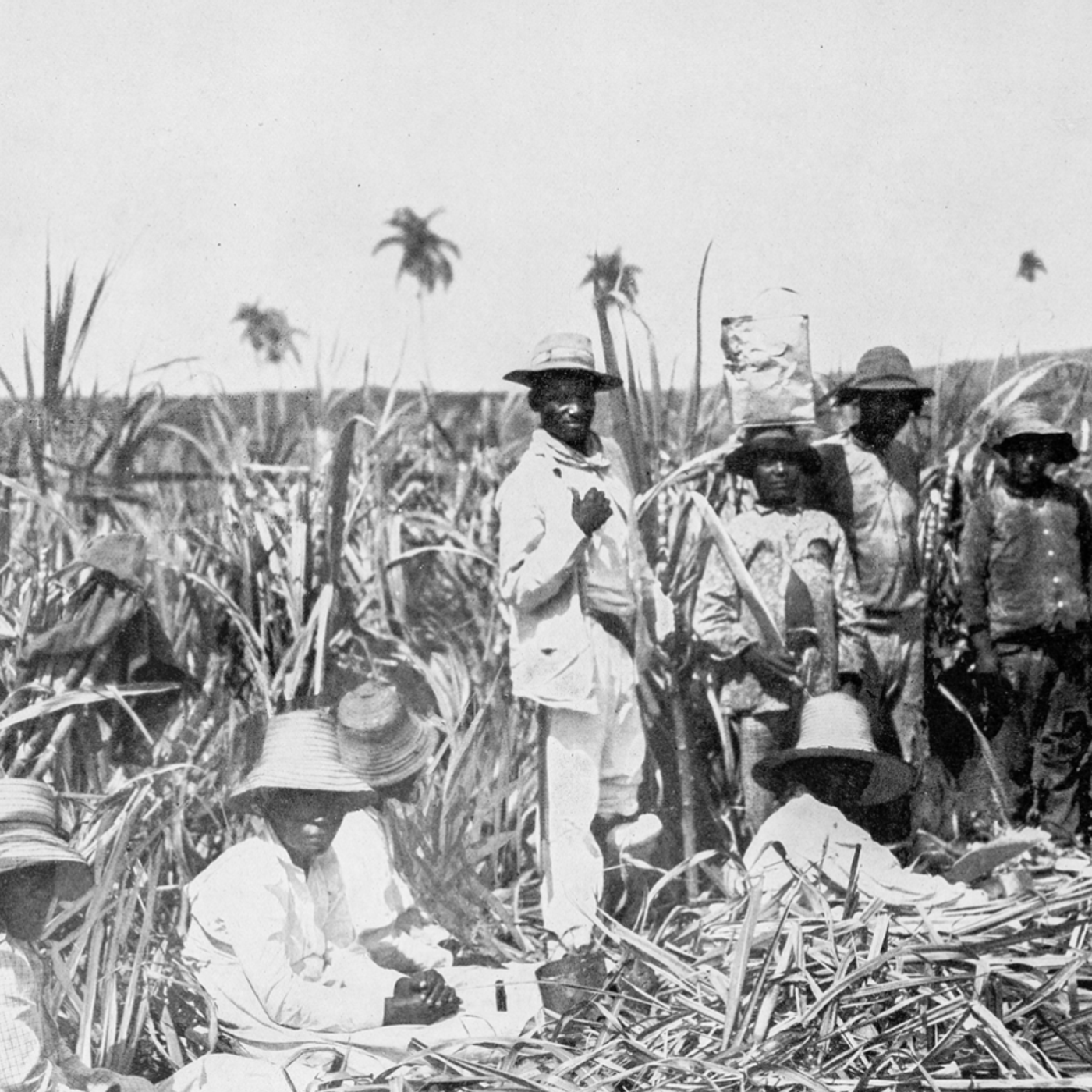
Ep 251251: The dark history of sugar
The history of sugar is inextricably linked to the horrors of the slave trade.In this episode of the Table Talk podcast, Stefan Gates is joined by evolutionary biologist and food historian, Neil Buttery, to reflect on that history.Sugarcane originated as a crop in New Guinea around 8,000 BC, but quickly spread through Asia.It played a role in the economy of the Persian Empire and was eventually cultivated by Europeans during the Crusades.This is when the story takes a dark turn, with plantations spreading across the continent, and the first African slaves used in sugar production on Madeira and the Canary Islands.When Europeans moved into the Americas, the sugar trade grew, and so too did the slave trade.Listen to the full episode to hear discussion on how much modern Britain benefits from the sugar and slave trades of the past.Neil also talks about why humans have evolved to crave sugar, and the impact the cultivation of sugarcane has had on the environment. Neil Buttery, Evolutionary Biologist and Food HistorianNeil Buttery is a food historian, chef, author, blogger, podcaster and scientist, who has been obsessed with historical and traditional British food since he began writing his food blogs in 2007 in an effort to improve his writing for his PhD in ecology & evolutionary biology. Ecology lost out in the end, eventually leaving science to pursue a career in food, first holding regular pop-up restaurant events, then a real restaurant. These days, however, he is kept busy writing about and studying (and eating!) food history for his books, and popular blogs and podcast. He has a particular love of offal and puddings.

Ep 250250: Career Conversations: "The food industry is a fantastic place to work"
"The food industry is a fantastic place to work. It can be challenging, but it can be so much fun. You will always be learning."So says Rachel Auty, New Product Development Controller at Greencore.Greencore make all sorts of food products that end up being sold in supermarkets, from soups, to sushi, and salads to sauces.Rachel works in the prepared meals sector and in this episode of the Career Conversations series, she reveals all about the process of getting a new product to market - from brief to shelf.It could all have been very different though. Rachel says a chance meeting on a bus when she was a teenager set her on her career path.She says that day "when the stars aligned" is the reason she is so passionate about sharing information with young people at the start of their food careers: "So they don't have to meet a certain person, on a certain bus, on a certain day to find out what they want to do."Rachel went on to study Food Marketing Management at Sheffield Hallam University and later became Marks and Spencer's first ever Product Development Graduate.Listen on to find out about all the different product categories you can work in, how asking the right questions is key to success, and how Rachel stays on top of the all the latest food and drink trends. Rachel Auty, NPD Controller, Prepared Meals, GreencoreRachel has more than 17 years of product development experience working in the food industry, across multiple different sectors. This journey has led her through some amazing adventures, she has worked in development within premium retail, food service and manufacturing, working for businesses both small and large. It is all this varied experience, combined with a huge passion for food and customer-focused development that she takes to work with her every day. Additional information and useful links Areas of Study:• Sheffield Hallam University run a range of food centred courses, both undergrad and post-grad• Cardiff Metropolitan University• University of Reading• Harper Adams University• University of Leeds• Bath Spa University Work placements:For industrial placement schemes of food internships, most good universities with placement degrees have a good network of contacts for this, but if you want to do your own research, try big brands such as Co-op, Pepsico, McCain & Bakkavor. Who to follow on Instagram:@mobkitchen@5oclockapron@poppycooks@salihacooks@sabrinaghayour@HotDinners@clerkenwellboyec1@rachelaliceroddy@georgiepuddingnpie@felicitycloake@aprilprestonandcoFollow Rachel too: @hungrytff_ Rachel also recommends... Flourish in Food is an excellent new mentoring scheme for people starting out with their career in food.

Ep 249249: Quick Commerce - is super-fast delivery here to stay?
Quick Commerce, online services that deliver products to your door in minutes, appear to be booming at the moment.Boosted by a huge shift in consumer habits during the pandemic, new companies have been sprouting up all over the place. In some parts of the UK, it's possible to get groceries delivered to your home in just 10 minutes.But is a model where pickers, drivers and processing staff have to rush orders to customers in the time it takes to make a decent cup of tea financially sustainable?In this episode of the Table Talk podcast, made in partnership with Accenture, we delve into the world of Quick Commerce and look at where the evidence suggests the sector might be heading.Who is the target customer? Which markets are proving most fruitful? And is anyone making a profit?Promotional pricing and super-fast delivery times might attract new customers, but how long can they be sustained?Will the gig economy continue to be the staffing model of choice, or, as in some parts of China, will there be a shift to employing fully-trained staff in a bid to improve the customer experience?We discuss all of this and more, with the over-arching question: Is Quick Commerce here to stay and what might it look like in future? Matt Jeffers, Managing Director of Retail Strategy, AccentureMatt has led projects covering omni-channel strategy and e-commerce performance improvement for multiple retailers across grocery, DIY/building materials, apparel and luxury goods sectors. Prior to this, Matt led Tesco.com’s international development, launched it in China and oversaw the internal strategic growth plan for the Group. He also planned Tesco.com’s strategic development in Central and Eastern Europe and across Asia-Pacific.

Ep 248248: How food shapes our Easter celebrations
Easter is an important time of year for the food industry, and is one of the pillars of the calendar for any company working in the sector.But the role of food goes way beyond planning stock or staffing restaurants, it has always played a key role in how Easter is celebrated.Easter symbolism is laced with food at almost every turn, from Shrove Tuesday, to Lent, Easter Eggs and the Holy Communion.In this episode of the Table Talk podcast, we explore the food-related traditions that go hand-in-hand with Easter.Why do we eat pancakes on Shrove Tuesday? Why is lamb the meat of choice on Easter Sunday? And when did chocolate Easter Eggs come to prominence?We also learn how the hot cross bun rose in popularity in the UK, was banned, and then returned.And we look further afield at the traditional Easter dishes being served up around the world. Emma Wells, Historian and Archaeologist, University of YorkDr Emma J. Wells is an historian and archaeologist of the medieval Church based at the University of York. She is the author of Pilgrim Routes of the British Isles (Hale, 2016), and the imminent, Heaven on Earth: The Lives & Legacies of the World’s Greatest Cathedrals (Head of Zeus, 2022). Her next book, currently in the works, is on relic merchants of the Middle Ages.

Ep 247247: The turbulent history of gin - and where it's heading
The history of gin has seen the drink rise and fall in popularity, and rise and fall in social status.Initially developed in the Netherlands as a medicine, it was drunk by soldiers there, giving birth to the phrase "Dutch courage".It quickly became popular in the UK, and a quirk of the tax system meant it was soon a hugely popular, very alcoholic, extremely cheap drink.At one point it would cost more to buy a pint of beer than it would to buy a pint of gin.But that all soon changed and, having once been so abundant that some people received their wages in gin rations, it was eventually taxed so heavily that it was forced underground and a black market for the drink emerged.In this episode of the Table Talk podcast, we look at the turbulent history of gin and gaze into the future to see what might be in store for the, once again, en vogue tipple.Find out what defines a gin, how tonic water ended up being so closely associated with it, and why, to this day, you still see images of cats on certain styles of gin.Discover what is meant by dry gin and how Navy strength gin got its name.And we try to answer the question: has the gin market peaked?Johan Wester, Head Distiller, Hernö Gin DistilleryJohan has been working at Hernö Gin Distillery, Sweden’s first dedicated gin distillery, since 2015.He is currently the company's Head Distiller.Besides distilling and product development, Johan has worked with market activities and communication.He is a father of two daughters aged 2 and 4.Hernö was founded in 2011 by Jon Hilligren. Jon had previously been a bartender in England in the 1990s and developed a special interest and passion for the craft. He came back to the UK and started a distillery and later that year the gin was bought by the government for the municipal stores. In 2013, Jon decided to enter the gin for an award so he could get a benchmark of how they were doing, they became the most awarded gin in Europe and have been expanding ever since.

Ep 246246: Career Conversations: The architect turned food illustrator
"When I knew I was dyslexic.. and I read about it, everything made sense. Every condition that we have makes us unique and special."Rocio Egio, food illustrator and artist, has an infectious energy and attitude to life.She signs off all her emails "delightfully dyslexic" and tells Elisa Roche in this episode of the Career Conversations series: "All the capacity that I have now is because I have dyslexia. It's not something negative."Rocio's career started out on a very different path. She describes herself as "a super nerd" at school.Although she always wanted to be an artist, she says "everyone was telling me I had to study for a proper career, so I did architecture."Those years were happy ones, and she says, training to be an architect has had an effect on the work she produces today: "It was a different path to arrive at the same place."After a stint as a graphic designer, she moved into food illustration and has won big commissions with the likes of the New York Times and the Washington Post.In this episode, Rocio reveals how she goes about pricing her work, why she enjoys the flexibility of being a freelancer, and sets out the process she goes through from commission through to delivery.And she has some tips on how to smooth over the less creative side of a being a food illustrator. Rocio Egio, Food IllustratorOriginally from the Mediterranean coast of Alicante, Rocío Egío is a curious architect who speaks through illustration and design.Dyslexia is her superpower, she transforms the complexity of the common place in exhilarating visual simplicity.Rocío’s creations are filled with positive messages that inspire joy and are recognisable by their geometry compositions and vibrant colours.Living and working between Alicante and Lausanne, she uses visual language to burst life into projects, brands, ideas and stories.Among her most recent clients are The New York Times,Chronicle Books, The Washington Post and The United Nations.

Ep 245245: A new frontier - how tech is changing grocery retail
The Coronavirus pandemic caused a shock to the grocery retail sector like none we've seen before. But with great challenges, often come great innovations. Technology now plays a bigger role in the average consumer's shopping experience than ever before and the changes we were all forced to make have opened the doors to even more innovation in the future. In this episode of the Table Talk podcast, Stefan Gates is joined by two experts to look at how technology has altered the grocery shopping landscape, and how it could shape its future too. They look at the biggest technological successes in the sector, as well as the biggest failures - the big winners and losers of the past few years. Will QR codes still play a key role a decade from now? How can mobile apps transform the shopping experience? Will automation become the norm? And what could all of the above mean for employment, data protection, and the price of food? Will blockchain develop to become the backbone of the grocery retail sector? Or will it be left looking like little more than a broken promise? Will the Metaverse become the new digital hypermarket? Or will it be consigned to the trash can? And which technological advances will we and won't we still be talking about in 10 years' time? Mike Watkins, Head of Retailer and Business Insight, Nielsen IQ Mike is Head of Retailer and Business and Insight for Nielsen IQ in the UK and is responsible for commercial development with food, non-food and e-commerce retailers. With over 30 year’s retail experience, he is a lead contributor of thought leadership and regularly shares his viewpoints on the `State of the Nation' with the media and at Conferences. As a member of the Nielsen IQ Thought Leadership team, he supports retailer, manufacturer and financial services clients with retail, business and shopper insight for Europe. Mike is also a member of the KPMG/Ipsos Retail Think Tank. Will Broome, CEO & Founder, Ubamarket Will started his career marketing Musical Theatre Productions in the USA. On his return to the UK, he joined one of the world’s leading PR Agencies, Ketchum Inc, where he managed the PR and live events for London Fashion Week, Wonderbra and Wrangler Jeans. He broke out on his own to set up one of the live event industry’s original ‘dot com’ tech successes and became one of the youngest UK Presidents of the International Live events association (ILEA). His passion for pioneering tech solutions led him to the retail industry where, for the last six years, Will has been immersed in research and development. The result is the launch of Ubamarket.

Ep 244244: Career Conversations: The Black Farmer – ‘Audacity is key to success’
Wilfred Emmanuel-Jones, AKA, The Black Farmer, is a force to be reckoned with. A child of the Windrush generation, he left Jamaica and moved to Birmingham where he lived with 10 family members in a two-up two-down. Nobody would have believed then that he would go on to become a wildly successful farmer and entrepreneur – nobody except him, perhaps. Key to his success has been his attitude, “you have to be audacious”, he tells Elisa Roche in this episode of the Career Conversations podcast series. Even as a young boy, growing up in an area he describes as “the pits”, Wilfred Emmanuel-Jones was driven to do better for himself. Roped in to help his dad on his allotment, bought to supplement the family’s income, he soon found his calling: “I absolutely loved being on our allotment as a child because it was an oasis away from the misery I was surrounded by. “At the age of 11, I made myself a promise, that one day I would like to own my own farm.” But before he could achieve his dream, he had an equally successful career working in the media. “I could hardly read or write,” he says. But he worked for free opening the gates for the security guards at the BBC studios in Birmingham, before moving up the ranks and eventually helping to launch the TV careers of the likes of Gordon Ramsey and Raymond Blanc. Listen to the full episode to find out how Wilfred decided to call his farm foods brand The Black Farmer, learn more about his passion for linking rural and urban communities, and why his motto is “never ask for permission, just ask for forgiveness.” Wilfred Emmanuel-Jones MBE, AKA, The Black Farmer Wilfred is an entrepreneur, businessman, author and founder of The Black Farmer brand. He recently launched his online shop The Black Farmer Experience, which has been a long-held ambition. Here visitors can shop everything from the brand’s famous gluten free sausages; grass fed, free-range meat and poultry, and sustainably caught fish, Caribbean specialities, deli and unusual gifts. Wilfred is, in his own words, ‘a poor boy, done good’. He was born in Jamaica and then, after his parents came to the UK in the 50s as part of the Windrush generation, was raised in inner city Birmingham. A classic entrepreneur, Wilfred has vision; passion; enthusiasm; determination; the ability to inspire and motivate others; he never accepts the status quo; never takes no for an answer; never shies away from hard work.

Ep 243243: Do labels and packaging really affect what we taste?
How much do labels and packaging affect what we taste when we eat food?It's a question that Christopher T Simons, Associate Professor in Sensory Science at The Ohio State University, has given a lot of thought to.In his latest study, he presented people with three plates of identical biscuits, one labelled "customer complaint", one labelled "factory typical", and another labelled "new and improved"."People perceived them totally differently" he tells Stefan Gates in this episode of the Table Talk podcast.But why is that? And how can the food industry use studies like this to make their products more attractive to consumers?Professor Simons says there are important lessons to be learned, and many ways the findings can be applied, not least in new product development and marketing.And if labels and packaging, descriptions and pre-conceived ideas are so important, could they be used to help people switch to a healthier, more sustainable diet? Christopher T Simons, Associate Professor in Sensory Science, CFAES Department of Food Science & Technology, The Ohio State UniversityChristopher Simons earned his undergraduate degree in Biology from the University of Oregon, his M.S. degree in Physiology from Portland State University, and his Ph.D. in Sensory Science from the University of California, Davis. Subsequently, Chris completed post-doctoral fellowships in the Laboratoire de Neurobiologie Sensorielle [Sensory Neurobiology Laboratory] at the Ecole Pratiques des Hautes Etudes in Massy, France and the Unités de Formation et Recherche de la Odontologie [Dental School] at the Universite Paris 7. From 2004 through 2012 Chris led the Sensory Research function at Givaudan Flavors Corp. and joined the faculty in the Department of Food Science and Technology at the Ohio State University in 2013. Chris’ research interests use a multidisciplinary approach to understand the perception of foods and how they are processed to influence reward and ultimately behaviour. One outcome of this research is to identify the neural and physiological correlates associated with perception, liking, and food choice through the use of a variety of methodologies including human sensory testing or psychophysics, electrophysiology and behavioural measurements. Another outcome is to leverage the knowledge gained from these types of investigations into the development of new methodologies that assist in the creation of better foods.

Ep 242242: Career Conversations: The woman behind Mamamade
"I've learned to welcome (people saying) no. Each 'no' brings you a little closer to the next yes."It takes a lot to launch a successful food brand, but Sophie Baron, founder of Mamamade, says she couldn't have done it alone.She says she was lucky to have mentorship from women within the business world, particularly as she admits to being scared it wasn't all going to work out when she first started.In this episode of the Career Conversations podcast series, Sophie Baron reveals all about what she calls her "non-linear" path to launching an organic baby food brand.Things could have been very different for Sophie. She started out studying Russian and French at university in New York, before working as an editorial assistant at Vogue.It was when she had her first child that she found her true calling: "My inspiration was wanting better food than I could find on the shelf."She launched Mamamade from the spare room of her home and the business has gone from success to success.Listen to find out how she did it, why she thinks the social media age makes it such an exciting time to launch a business, and how she dreams of one day selling up and moving onto the next chapter in her life. Sophie Baron, Founder and Chief Brand Officer, MamamadeSophie Baron is the Founder of UK based parent/baby digital start-up Mamamade; a fast growing direct-to-consumer business supporting parents with modern childcare products and services that improve health outcomes, normalise taboos, and increase happiness. Originally from New York, Sophie ventured to the UK to undertake a PhD before becoming Head of Operations at a fast-track tech company. In 2017, she gave birth to her first daughter and after six months, began to juggle the return to work with caring for her baby. By 2019 Mamamade had progressed beyond being a ‘side-hustle’ and is now the fastest-growing baby food subscription company in the UK.

Ep 241241: Creating a sustainable food system - why all eyes are on the Netherlands
How do you go about making a sustainable food system that is net positive when it comes to carbon emissions?How much comes down to changing consumer behaviour versus manufacturing practices?And if you are to change the entire food system, how do you go about getting all stakeholders onboard?None of these are easy questions to answer, but that's where a project in the Netherlands comes in.The Dutch Research Agenda is looking at these issues and trying to come up with solutions to some of the biggest environmental problems the food system faces.Their work in the Netherlands is important, as the country has a long history of trying to tackle sustainability issues, whilst also being known as "the tiny country that feeds the world."It has the highest density of livestock in Europe - more than four times that of the UK or France - with more than 100 million cattle, chickens and pigs.Having a wildly successful agricultural sector comes with it’s own unique set of problems.In this episode of the Table Talk podcast, we look at how the Dutch are leading the way on sustainability, what makes the Netherlands unique - societally - and the different roles consumers, manufacturers and politicians have to play in bringing about change.We also take a look at what the rest of the world learn from the Dutch approach. Frederike Praasterink, Professor Sustainable Food Systems & system innovation in agriculture and food, HAS University of Applied SciencesFrederike Praasterink is member of the Executive Board of HAS University of Applied Sciences. Her responsibilities include knowledge development, innovation & applied research and internationalisation. She has extensive international experience in the field of food and nutrition as a consultant and lecturer. She is also appointed as member of CTA's Executive Board for a term of three years and four months ending on 29 February 2020. Frederike is also the lead for the Transition to a Sustainable Food System project. Brian Dermody, Interdisciplinary Assistant Professor, Copernicus Institute of Sustainable Development, Utrecht University I hold an interdisciplinary Assistant Professor position at the Copernicus Institute of Sustainable Development, Utrecht University. I am positioned within the Innovation Studies Department and work to build interdisciplinary collaboration among the 4 departments within the Copernicus Institute.

Ep 240240: Career Conversations: Meet the self-taught vegan chef
"The early part of my career was in food marketing roles, which I absolutely loved. But I really felt like I wanted to work for myself." And so began a hugely successful career as a vegan food blogger, author and podcast host for Niki Webster. Perhaps just as well known as the woman behind Rebel Recipes, Niki's rise to fame would have been difficult to predict when she was a student. "I did a degree in Sociology and Criminology," she tells Elisa Roche in the latest episode of Career Conversations. Her move into the world of food was something of a happy accident: "I just started applying for all sorts of graduate roles." Niki ended up working at a breakfast cereal manufacturer, then moved into marketing and social media, where she learned many of the skills that would stand her in good stead in the future. In this episode, Niki reveals all when it comes to what goes into writing a cook book, and offers some top tips on how to get the most of your Instagram food photos. Join our Smartphone food photography masterclass with Georgia Glynn-Smith She has advice on how to start out in food photography, food styling, and recipe development. And she answers the big question: "Have we hit peak vegan chef?" Niki Webster, Food Blogger, Author, Podcast Host Niki Webster is an award-winning blogger, a four-times cookbook author and podcast host. Niki started her journey due to her love of celebrating the wholesome simplicity, vibrancy, flavours and colours of vegetables. She launched her blog Rebel Recipes in 2015, which has held its own at the forefront of the plant-based sector for more than six years and continues to do so, as the online platform now reaches an army of food-based fans across the globe and transcends into four incredible plant-based cookbooks - Rebel Recipes, Be More Vegan, My Vegan Year and Rainbow Bowls. Follow Niki on Instagram @rebelrecipes or via her website www.rebelrecipes.com

Ep 239239: The challenge of increasing shelf-life without additives
In the battle against food waste, increasing the shelf-life of products is one weapon we have at our disposal. The latest figures suggest we still produce around 143kg of waste per person per year in the UK. But many traditional methods of increasing shelf-life don’t fit with consumer concerns about healthy eating – additives, salt, sugar and fat just aren’t on trend. And those manufacturers keen to have as clean a label as possible aren’t generally shouting from the rooftops about the presence of Nisin or Trisodium Phosphate. Join the Millbo Masterclass: How to deliver product longevity in the clean label way In this episode of the Table Talk podcast, made in partnership with Millbo, we look at one potential solution to the conundrum. Millbo says X-tra Guard can increase shelf-life by around six days and, crucially, it is made entirely from Rowan berries. That means it ticks the box when it comes to having a clean label. Find out how the company found the solution, how they negotiate the regulatory landscape, and why consumers are leading the clean label charge. Arpit Wason, Vice President- Enzymes & Shelf-life Solutions, Millbo Arpit joined Millbo in June 2021 as Vice President Enzymes and shelf-life solutions. Arpit holds a Masters’ degree in Molecular Biotechnology from Bonn university and worked as Research scientist in Biochemistry at Cologne, Germany. Arpit has worked with different enzyme manufacturers and uses his knowledge to support the development of enzymes and shelf-life solutions. Janet Maidment, Area Manager, Millbo Janet Maidment has many years’ experience in the food industry, primarily bakery ingredient sales, mostly in exports. This has included cake ingredients, and bakery flour and bread products. She has worked for Millbo for over 15 years and is currently Senior Business Development Manager, with responsibility for the UK and Ireland, plus a number of other countries, including Australia and New Zealand

Ep 238238: Salt reduction - could nature hold the answer?
The amount of salt, or specifically sodium, we consume is a global health problem. The World Health Organization says most people around the world consume double the recommended amount every day - and it's leading to high blood pressure, cardiovascular disease, and heart attacks.But, we seem to be addicted to the stuff and, despite high-profile health campaigns, we're not really seeing much in the way of salt reduction in our overall diets.This episode of the Table Talk podcast is made in partnership with Saltwell, a company that may have found a solution.Saltwell has found a type of salt mineral in the South American desert that contains both sodium and potassium.Potassium can counteract the negative effects of sodium, so this salt contains less of the bad stuff - 35 per cent less.Crucially, Saltwell says the natural product behaves exactly like standard salt and tastes exactly the same.Listen to the full podcast to discover why humans crave salt, why salt is so prevalent in processed foods, and get a brief history of salt reduction in the UK. Fredrik Enander, Managing Director, SaltwellFredrik has been working with Saltwell since 2018.During this time we have gone from mainly selling the product in US to today having a global coverage and distributor network.He is an experienced manager within business development, sales and project management.His other areas of expertise are strategy building and implementation, business model development and product/offer roadmaps.

Ep 237237: Career Conversations: Why going it alone doesn't mean doing it all
Does being an entrepreneur in the food sector mean doing everything yourself?Not according to Ayesah Grover, CEO and founder of strp'd, a company that makes flour, milk and flakes out of tigernuts.In the episode of the Career Conversations series, Ayesha tells Elisa Roche that collaboration and outsourcing are hugely important: "I don't think anyone can do absolutely everything."She says, although she is a one-woman team, she outsources some of her social media content, product development and package design.That doesn't mean being hands-off though: "I'm very involved in every process."In this episode, Ayesha reveals what tigernuts actually are, and how she came to find them and turn them into a number of successful products.She also tells us how she benefited from joining the Amazon Launchpad programme, and how disaster turned to success when the first Covid lockdown hit just as she was about to launch her brand new product. Ayesha Grover, CEO and Founder, strp'dAfter a number of years working in London, graduating with an MBA in NYC and launching a fitness business in Mumbai, Ayesha finally returned to the city where she grew up - Lagos, Nigeria.Whilst working in Nigeria, she discovered an incredible super-ingredient: tigernuts! Don’t be fooled by the name, tigernuts are NOT nuts, nor do they come from tigers but in fact are nutrient-dense tubers. Ayesha was intrigued by this allergen-friendly superfood that tasted delicious and proved to be a powerhouse of plant-based nutrition. She launched tigernut-based brand, strp’d in 2020 for everyone to enjoy delicious foods, regardless of dietary restrictions.

Ep 236236: Keto Diet: Exploring the science and busting the myths
The ketogenic diet is everywhere you look, promoted as a quick way to lose weight.It seems to tap into something within many of us and comes with the added attraction of appearing to be based in some scientific theory.There is also the fact that there is evidence that, under proper medical supervision, the low-carb diet can be effective for children with drug-resistant epilepsy.But is it all it's cracked up to be when it comes to weight loss and could there be some damaging effects?Keto certainly has a number of high-profile supporters, but there are just as many people warning of the dangers.In this episode of the Table Talk podcast, Stefan Gates is joined by the London Chair of the British Dietetic Association, Sophie Medlin, to explore the science and bust the myths.She sets out what a typical keto diet meal plan might look like, how ketosis works, and why the diet is proving so popular.She also discusses potential risks to gut health, the impact the diet can have on our relationship to food, and concerns about the lack of evidence around its long-term effects.Sophie also offers some advice on how to establish a sustainably healthy diet. Sophie Medlin, Consultant Dietitian, Director of City Dieticians, and Chair of the British Dietetic Association for LondonSophie worked for many years in hospitals before moving to a career in academia where she was a lecturer in Nutrition and Dietetics at King’s College London before leaving to run City Dietitians and work as a consultant. In her clinical work, Sophie specialised in managing the nutritional needs of people with intestinal problems. She is considered a leading specialist in the dietary management of bowel conditions such as Crohn’s disease, ulcerative colitis, diverticular disease and the nutritional management of colostomies and ileostomies. Sophie carried this through to her research which focuses on the nutritional consequences of bowel surgery. Her experience in complex nutrition support sees her overseeing the nutritional management of patients with complex feeding needs such as tube feeding and intravenous nutrition support.

Ep 235235: What rising inflation means for the food industry
Rising inflation is hanging over every household and business in the country. In January 2022, overall prices were rising at around 5 per cent, with food a key contributor.So how will rising prices affect the food industry?In this episode of the Table Talk podcast, Stefan Gates is joined by two experts in this field.Tim Lloyd is Professor of Economics at Bournemouth University, Fraser McKevitt, is Head of Retail and Consumer Insight at Kantar.They look at how today's rate of inflation compares to recent - and not so recent - history, the factors that are driving prices up around the world, and they discuss who is likely to be worst-affected.Will supermarkets keep prices down to protect their market share? Will that lead to even more pressure on suppliers? And what can companies and individuals do to mitigate against the worst effects? Tim Lloyd, Professor of Economics, Bournemouth UniversityTim Lloyd is Professor of Economics in the Business School. He was appointed in July 2015 having previously been Associate Professor in the School of Economics at the University of Nottingham. Professor Lloyd’s research interests lie in the fields of agricultural and food economics, particularly pricing, diet and health and competition in the food industry. Recent work, funded by both the European Commission and the UK’s Department of Environment, Food and Rural Affairs (DEFRA) has focused on the transmission of prices through the food chain and food price inflation in the UK and EU Member States. Fraser McKevitt, Head of Retail and Consumer Insight, KantarIn over a decade at Kantar, Fraser has helped advise some of the UK's biggest FMCG brands and supermarkets. All of this advice has been powered by real observed behaviours from Kantar’s purchase and consumption panels, widely used throughout the grocery industry. He keeps a close eye on changing consumer and shopping behaviours, explaining how and why these trends influence and impact both manufacturers and retailers. He describes, analyses and comments as the grocers battle competitively for market share each month, through the Kantar ‘Grocery Market Share’ release.

Ep 234234: Career Conversations: Working for 'the biggest company you've never heard of'
When Mark Whalley was doing his degree in English Literature and Creative Writing, he had no idea that he would end up happily working as Consumer Insights Controller for a major food company."I didn't know what consumer insights was," he tells Elisa Roche in the latest Career Conversations episode. "I thought I would be a primary school teacher."But it was when he saw a job advertised that he thought it was worth a shot. He says he didn't apply because he had a particular interest in the sector, he just thought he would be good at it.And, it turns out, he was. He now works for Greencore, a major food manufacturer, supplying lots of different types of convenience foods.Greencore make just about everything, from ready meals, to soups, sushi, and quiche.Mark describes it as "the biggest company you've never heard of".He says that after a couple of years working in the sector, he discovered a real passion for working out what shoppers want.Although he studied English, he says anyone who is curious about people can excel in the role. And people with a psychology or sociology background are often well-suited.Listen on to find out what an average day looks like for a Consumer Insights Controller, why you will often find Mike hanging around supermarket aisles, and how his job has taken him all around the world. Mark Whalley, Consumer Insights Controller, GreencoreMark has spent more than a decade working in consumer insight, starting on the “agency-side” with business intelligence company Datamonitor, where he wrote on a diverse range of topics from fibre, to skincare, to trends in incontinence products. This saw him work with some of the biggest brands in the world, including Unilever, Pepsi, and Heineken.He is now the Insight Controller for Greencore – one of the largest manufacturers of convenience foods in the UK. He is responsible for commissioning all market research within the company’s “Food-For-Later” division, which includes categories such as prepared meals, cooking sauces, and salads.He works closely with both the Commercial and Product Development teams, where his experience in consumer trends and shopper behaviour help guide the company’s innovation agenda and product category strategy.

Ep 233233: Career Conversations: 'How I turned my baking hobby into a job'
Benjamina Ebuehi says for a long time, she never saw baking as a career. "I didn't want to work in a restaurant kitchen or run a bakery," she says. "And I didn't really know what else I could do with it."So she carried on with her degree in Economics at the University of Leicester, and kept baking for friends at the weekends.But that all changed, when she appeared on The Great British Bake Off in 2016.In this episode of the Career Conversations series, Benjamina tells us all about her time on the show: "As a watcher, it does look like a lot of fun.. but being in the show is definitely more intense than I was expecting."You're practicing at home all the time, every single day... it was tough but really enjoyable."And being on Bake Off wasn't her only career-defining moment. Benjamina says one day she was making a cake for a food video, when she met a food stylist - and that sparked something in her. Sign up for our Food Photography Masterclass with world-renownd food photographer Georgia Gylnn-SmithFind out how she was turned on to being a food stylist, how hard she had to work to get her foot in the door, and how her economics degree still stands her in good stead to this day. Benjamina Ebuehi, Food Stylist, Recipe Writer, BakerBenjamina is a baker, food stylist and recipe writer. Born and raised in south London, she has always had a love for food and being creative in the kitchen, and quickly became the person who made all the birthday cakes and desserts for friends and family. Benjamina was a contestant on The Great British Bake Off in 2016, finishing as a quarter finalist. Since then, she has gone on to work full time within food, publishing her first cookbook, The New Way to Cake, in 2019, writing a bi-weekly baking column in Guardian Feast magazine, food styling and developing recipes and social media content for numerous brands.She is an ambassador for Luminary Bakery and is co-founder of The Sister Table.

Ep 232232: The changing face of plant-based food in 2022
The market for plant-based food and drink is undoubtedly growing, but what does that mean for the types of products we might see on the shelves in 2022?This year's Veganuary was the biggest ever, and Marks and Spencer alone has added 175 new plant-based products to its range this year.But with a seemingly every-expanding customer base, how do producers understand what it is they want? How do you target what used to be niche products, when your customers have so many varied needs and desires?And if more and more people are looking to buy plant-based, what does that do to the types of products that are being produced? Join one of our plant-based Masterclasses March 9th 2022 - Latest retail and consumer trends in a growth category: plant-based foods March 30th 2022 - Launching a Plant-Based Brand: from niche to opportunity In this episode of the Table Talk podcast, Stefan Gates is joined by two experts in the market to discuss who will be buying plant-based food and drink in 2022.Rohini Alam is Global Brand Manager for Plant Based at Nestle Professional, and Philip Linardos, Co-founder and CEO at ShelfNow offer their insights into what could be a standout year for the sector.They look at the role big brands are playing in making plant-based more mainstream, how the pandemic accelerated changing eating habits, and they look at how consumer demographics are shifting. Rohini Alam, Global Brand Manager for Plant Based, Nestle Professional SBURohini has many years of experience in the FMCG industry and is transitioning from her current role as Category Manager for Food at Nestle Professional to Global Brand Manager for plant-based brands working across multiple markets. She successfully launched the company’s plant-based brand in the UK Food Service Industry where the Garden Gourmet brand is going from strength to strength. Rohini is passionate about innovation and has experience in establishing new categories, developing communication campaigns, and creating and executing long term business and brand strategies that deliver value to the consumers. Philip Linardos, Co-founder and CEO, ShelfNowPhilip brings his experience in technology to ShelfNow to shape and develop the direction of the business. Previously, he led operations at Bizzby to transform the first on-demand marketplace for home professionals in Europe. Furthermore, he spearheaded the sales team at DynaRisk, a cybersecurity SaaS company to scale the company within 18 months. He also brings experience in venture capital at CyLon, Europe’s first cybersecurity startup accelerator, to ShelfNow. At ShelfNow, he heads business operations, market development and the shaping of the company’s vision, aiming to establish ShelfNow as the leading marketplace for small and medium-sized brands and retailers in Europe.
Ep 231231: Are we teaching kids enough about food?
How do we inspire young people to become fascinated by food? It's a question food teachers up and down the country are answering every day - but is their work being valued?In England, there has been a big decline in children taking a GCSE in food and nutrition, and it is the only national curriculum subject that doesn't have an A-level.That's despite the crucial role learning about food and nutrition can play in our efforts to tackle the obesity crisis.In this episode of the Table Talk podcast, Stefan Gates is joined by Louise T Davies, Founder of the Food Teachers Centre.They discuss the shortage of food teachers in our schools, the importance of giving children hands-on experience in the kitchen, and the disconnect between what is being taught in lessons and what is being served up in the school dinner hall.Louise also gives some top tips on the best way to get your children fascinated by food. Louise T Davies, Founder, The Food Teachers CentreLouise has been in food education for more than 30 years as an experienced teacher and subject leader. She recently worked for the United Nations School Food and Nutrition Education programme and is the OFQUAL subject adviser for exams in Food Preparation and Nutrition and Home Economics. She was adviser to Department for Education for the new 2016 Food Preparation and Nutrition GCSE.After senior positions at Qualifications and Curriculum Authority (QCA) and as Deputy Chief Executive at the D&T Association (creating Food in Schools, Licence to Cook, Active Kids Get Cooking and the School Food Champions), she founded the Food Teachers Centre. She is recognised for leading one of 131 most impactful on-line communities in the world through the Facebook Community Accelerator Award. The Food Teachers Centre offers national innovation in curriculum and professional development to over 12,000 members, with over 500 training events and 16 unique on-line learning platforms, as well as delivering Kitchen Angels, Fish Hero, Schools Game Changer, Chefs Back to School and Teach Food programmes.