Food Matters Live Podcast
525 episodes — Page 9 of 11

Ep 230230: Career Conversations: The "euphoric moments" of working in NPD
As work placements go, it's fair to say Laura Bradshaw wasn't too impressed when she was sent to a chicken producer in her third year of university."All my peers were going off to well-known brands like Cadbury's, Nestle and M&S," she tells Elisa Roche in this episode of Career Conversations, "and I was going off to a chicken factory."But, Laura now says it was a pivotal moment in her career: "It was the best grounding I could have hoped for."She describes how she got to work on product trials in France: "I was totally thrown in at the deep end. I had a great experience."Fast-forward to today, and Laura is a New Product Developer (NPD) at Pilgrim's, the UK's biggest pig producer and manufacturer.Her job is to develop new food products, which means spotting the very latest trends, and developing meals and snacks around that theme to appear on supermarket shelves.She says it's a mixture of glamour - eating in fancy restaurants to see what's titillating the trendiest tastebuds - and very hard work - sometimes she finds herself on the factory line at 2am.But all-in-all, Laura says it's a job she really enjoys: "I live for the euphoric moments when you get a product over the line."Find out what a typical day is like for a New Product Developer, how she manages to keep up with the very latest food trends, and we tackle some of the acronyms new starters might be coming across for the first time. Laura Bradshaw, Innovation and NPD Controller, Pilgrim'sA food product development professional with over 15 years’ experience within the chilled and ambient food sectors. Working with all of the top retailers within the UK to develop great tasting, commercially viable products. Passionate about product innovation, food trends and creating great relationships. A parent outside of work with a young family, quickly learning how to juggle the career and home life. Enjoys cooking, visiting new restaurants, travelling, reading (mostly recipe books!) and walks with the family.

Ep 228228: What role can probiotics play in sport performance?
What role can probiotics play in helping all of us, whether we're casual runners or elite athletes, achieve our fitness goals?The link between diet and sports performance is a fascinating area. At its heart is the gut microbiome - that colony of microbes that digests our food and regulates our metabolism - it can also affect our behaviour, our emotions, and our overall health.In this episode of the Table Talk podcast, in partnership with Lonza, Stefan Gates asks: What is the relationship between the gut microbiome and sports performance?And what role can probiotics play in that relationship? Shane Durkee, VP platform Innovation, Capsules and Health ingredients, Lonza Shane Durkee is the vice president of platform innovation, ingredients, and dosage form solutions at Lonza. An internationally trained R&D executive with more than 25 years of experience in the consumer healthcare industry, Shane has a background of developing new and innovative products, platform capabilities and technologies. Shane leads the Global Platform Innovation Team responsible for all R&D activity on the ingredients and dosage form solutions businesses. He is passionate about improving people’s lives through the latest in technology, nutrition and clinical research. Lindsey Toth, Director, Global Product Management for Nutrition Products and Services At Lonza, Lindsey is responsible for overseeing global product management for the nutrition portfolio, including value messaging, go-to-market strategies, and product innovation and life-cycle management.

Ep 229229: Insects for dinner: Do we have a duty of care?
It's well known that insects are a good, and abundant, source of protein.But just because we can eat them, should we be considering whether we should? And if we should eat them, do we need to start thinking seriously about how we farm them?In this episode of the Table Talk podcast, Stefan Gates is joined by Adam Hart, Professor of Science Communication at the University of Gloucestershire.They discuss some of the ethical issues around using insects as a source of protein.Professor Hart explain what an insect is (clue: it's about more than just having six legs), and tells us how scientists try to go about measuring what an insect is feeling.And he tries to answer the biggest question: Is it morally better to feed many people with one large cow, or kill thousands of worms to feed the same number of people? Adam Hart, Professor of Science Communication at the University of Gloucestershire, Fellow of the Royal Entomological SocietyA biologist, broadcaster and author, Adam works on a range of topics including African ecology and conservation, insects and citizen science. He has made more than 30 documentaries for BBC Radio and World Service, most recently the series Tooth and Claw, eight programmes examining our complex relationships with predators. His last book, Unfit for Purpose, discussed how our evolution has made us a bad fit for the modern world we've made. Coming out in 2022, his new book Eaten explores our difficult interactions with the world's greatest predators, and how we can balance conservation with development to create a world where predators and people can thrive.

Ep 227227: Career Conversations: 'How I launched a drinks brand'
It's not every day you get a phone call that changes the course of your life, for Ellie Webb it left her "half over the moon, half terrified". Sainsbury's were calling to say they wanted to stock her new non-alcoholic drink, Caleño. At this point, Ellie was working alone, making the drink in her kitchen - Sainsbury's wanted to stock it in each of their 500 stores. "I thought to myself, I either go for this or I don't," Ellie tells Eliśa Roche in this episode of Career Conversations. She did go for it and it worked out really rather well. Caleño is now a huge success, stocked in Sainsbury's, Waitrose and M&S. It all came about when Ellie had a brainwave on a night out. She wasn't drinking alcohol, but she didn't see why that meant she had to drink sugary drinks all night. Find out how she turned her dream of creating an adult-tasting, sophisticated, non-alcoholic drink into a reality. Ellie reveals what she thinks makes the differences between dreamers and doers, how she overcame a certain amount of boardroom sexism to get to where she is today, and how she once ended up with 1,000 ruined bottle labels. Ellie Webb, Founder, Caleño Before starting Caleño, Ellie gained experience working in the drinks industry, which she came to love, and soon she became keen to find her own place within it. The lightbulb moment came when Ellie was doing Dry January and out dancing with friends. She was disappointed by the lack of choice on offer when it came to grown-up non-alcoholic drinks and realised there wasn’t anything accessible, that suited her lifestyle or reflected her sense of adventure when it came to drinks. Born in Kent to a Colombian mother, Ellie has always had an entrepreneurial streak, and even when she was young she would make ‘jugos’, Colombian fruit juices, and sell them to her family. So it felt natural for Ellie to take matters into her own hands and create something that she wanted to see on the shop shelves. Ellie worked on her idea for a new non-alcoholic spirit for two years before quitting her day job, during which time she explored and experimented with different botanicals in her kitchen and took a trip back to Colombia for more inspiration and research.

Ep 226226: Food labelling - how much information is too much?
Is the amount of information on food labels helping or hindering us when it comes to making choices about what we purchase?Consumers are said to be demanding transparency regarding the foods they eat – from animal welfare to sustainability and health and nutrition information, they want to know it all. Surely a better-informed consumer can make better choices for their health, right? This may not be the case with some research suggesting labelling could even be contributing to the obesity crisis.So, are the regulations surrounding food labelling a failure? Or are consumers simply ignoring the signs?A product might boast that it is low in fat, but are shoppers interested enough to read beyond the headline and find out that it is high in sugar?In this episode of the Table Talk podcast, in partnership with Ashbury – The Product Information People, Stefan Gates delves into the fascinating world of food labelling.He is joined by Ashbury's Regulatory Affairs Director, Pete Martin, as they look at the psychology, regulations and language that is at play as businesses try to make a profit while following the law and protecting the health of consumers.They investigate labelling’s worst offenders that appear to lead to some consumer confusion and discuss how best to get the most useful information in front of consumers' eyes. We also learn how companies like Ashbury work with brands to ensure they get the most from their labelling and delve into the possible impact Brexit will have on food labels. Pete Martin, Regulatory Affairs Director, AshburyWith a 30-year career working in technical law for grocery and retail providers, Pete Martin brings a wealth of industry knowledge and expertise to his role as Regulatory Director at product information specialist, Ashbury. From providing practical support and advice to clients, through to carrying out in-depth audits, delivering compliance information, and ensuring complete due diligence, Pete is not only hugely experienced in working with both food and non-food products, but is passionate about protecting brands and end consumers.At Ashbury, Pete specialises in helping clients innovate within the lines of the food regulation law - ultimately helping them to grow their brand, maximise existing markets, and develop best practice labelling compliance management.

Ep 225225: Transforming the desert into fertile land
What do you do about food security if your country is mostly surrounded by desert? It's a growing problem, particularly for the United Arab Emirates. It's estimated that around 120,000 square kilometres of land is lost to the desert each year. Countries like the UAE rely heavily on imported food, but efforts are being made to turn desert land, into fertile land. In fact, it's already happening - there are melons being grown in the desert around Dubai right now. But the challenge is to increase the diversity of crops being grown, as well as the size of the crops themselves. Two companies, recognised as one of the food related Expo Live global innovators at Expo 2020 hosted in Dubai, are working on some solutions. In this episode of the Table Talk podcast we find out how they are going about making the desert fertile and the cost of failing to act. Dr Dionysia Angeliki Lyra, Halophyte Agronomist, International Center for Biosaline Agriculture Dr Dionysia Angeliki Lyra has been working as a Halophyte Agronomist at the International Center for Biosaline Agriculture (ICBA) in Dubai United Arab Emirates since 2013. She has been evaluating halophytic germplasm like Salicornia in inland and coastal desert areas exploring multiple uses (food, feed, biofuel production, etc.). After running a successful project funded by USAID in 2016, Dr. Lyra was announced as one of the 29 global innovators for EXPO2020 of the 1st phase of the EXPO Live program in 2017 and received a grant for the project “Inland and coastal modular farms for climate change adaptation in desert environments”. The successful implementation of the project led to a 2nd granting phase from EXPO LIVE program focusing on the value chain development for innovative halophyte-based food products in collaboration with UAE and international partners. Atle Idland, Co-founder, GM and Managing Director, Desert Control Atle is the Co-founder, GM and Managing Director at Desert Control ME LLC, co-leading the company’s Climate Smart Agri-technology – first of its kind - Liquid Natural Clay (LNC) growth and advancement here in UAE and MENA region. Desert Control's Liquid Natural Clay (LNC) restores and protects soil, reducing water usage for agriculture, forests, and green landscapes. LNC enables sand and degraded soil to keep water and nutrients. Atle has in the past, been part of the Oil & Offshore Industry in Norway, where he was pivotal in leading and driving accelerated business growth internationally and globally in ABB Oil & Gas and was awarded Innovator of “Joint Value Creation “business tactic instrument for his partner collaboration and motivation. Atle is also a Blue Ocean Strategy practitioner.

Ep 224224: Career Conversations: The man elite athletes turn to for nutrition advice
"I used to struggle at university," Dr James Morehen says. "I really had to put the effort in if I wanted to get a good grade."James says that struggle remained part of his studies through his undergraduate degree, his Masters and his PhD."I had to re-sit a module during my Masters," he tells Elisa Roche in the latest in our Career Conversations series. But he says that was when he knew he had to show some resilience and prove himself.He certainly has done that.As well as completing his PhD, James has worked with some of the world's top athletes, including the England Women's football team and West Ham United.He is currently working as the Performance Nutritionist at the rugby union side, the Bristol Bears.And those early struggles during his studies must seem like a distant memory now, as he has recently released a book "The Performance Nutritionist".In this episode, James sets out the main differences between what he does for a living and what other nutritionists do, as well as giving advice on the best way to follow his career path.Listen on to find out how James set about embarking on his incredible career, the importance he places on a "no d*ckhead" policy, and how something called the Dunning-Kruger effect left him standing in an empty room instead of a sold-out seminar. Dr James Morehen, Performance NutritionistJames currently works with professional, elite-level athletes and global organisations. Alongside this, he is passionate about supporting individual athletes and clients with their own nutrition, exercise and performance goals.James has spent 9 years in higher education obtaining a BSc in Sport Science, MSc in Sports Physiology and PhD in Sports Nutrition all from the very well-respected Research Institute of Sport and Exercise Sciences from Liverpool John Moores University.

Ep 223223: The refugee chefs taking Malaysia by storm
An innovative company in Malaysia is aiming to transform the lives of refugees in the country, through food delivery. PichaEats, based in Kuala Lumpur, helps refugees who can cook to sell their food and make an income. Suzanne Ling is the company's co-founder and she puts it simply: "They can cook but don't have access to the market. We have access to the market, but we can't cook." And she is clear that this isn't charity work. The chefs are paid more than they spend on ingredients, and PichaEats makes a profit too - after paying marketing and distribution costs - by charging customers even more. "The chefs are partners," says Suzanne. "They're not employed by us." PichaEats is one of the food related Expo Live global innovators at Expo 2020 hosted in Dubai. In this episode of the Table Talk podcast, Suzanne tells Stefan Gates about how she came up with the idea for the business whilst still a student, why making a profit is seen as an important driver for what they're trying to achieve, and how the pandemic almost completely destroyed the business model. Suzanne Ling, Co-Founder, PichaEats Suzanne is the co-founder for PichaEats, an impact-driven business that aims to serve delicious meals and enable change among communities through food. Founded in 2016, PichaEats partners with chefs from displaced communities, sharing their delicious cuisines from their home countries, including Palestine, Syria, Pakistan and Afghanistan to conferences, events, homes and more.

Ep 222222: Tackling food poverty in Japan without handouts
There is an organisation in Japan which is taking a different approach to helping people living in food poverty.Second Harvest's Marugohan initiative doesn't simply deal in handouts, it asks for something back in return.That could be a good deed, or even, paradoxically, a small donation of food.The idea is to give people in need, some agency, a sense that they are not merely the receivers of help, but also the givers.It was started by Charles McJilton, who says he doesn't define what Second Harvest does as "helping" but more like providing a service. He compares it to a public library or hospital.In this edition of the Table Talk podcast, we focus on one of the food related Expo Live global innovators at Expo 2020 hosted in Dubai.Stefan Gates talks to Charles about how cultural factors often prevent people seeking help with food poverty in Japan, how trust of charities is low, and how Covid has affected Second Harvest's work.And they try to answer the question: 'Could this model be copied around the world?' Charles E. McJilton, Founder, Second Harvest JapanCharles first went to Asia in 1984 with the US military, and returned to Japan in 1991 to conduct research at Sophia University. At that time he lived in a religious community in one of the poorest sections of Tokyo (Sanya) where day-laborers and homeless lived. It was this experience that set him on his current trajectory. In 1995 he founded “Let’s Build,” a self-help centre dedicated to providing tools for those living on the streets to either help themselves or die with dignity. While he felt he understood many of the issues of those in his community, he felt something lacking. So from January 1997 to April 1998 he lived in a cardboard house among the homeless along the Sumida River in Tokyo. This experience radically changed his worldview and deeply influences his approach to providing aid and developing organisations. He has founded four organisations in Asia that deal with food security. In 2002 he incorporated the first food bank in Japan (Second Harvest Japan). In 2010 he created a 501(c)3, Second Harvest Asia, to promote food banking in Asia. In 2012 he incorporated the first food bank in the Philippines (Salu-Salo: Food Bank Philippines). And in 2013 he established a public-interest foundation, registered at the Japanese Cabinet Office, Alliance of Japan Foodbanks (formerly Second Harvest Japan Alliance) to develop a national network of food banks in Japan. He has taught NGO Management at Sophia University since 2009. He is married with four children.

Ep 221221: The dark history of chocolate
Millions of people will be giving and receiving chocolate on Valentine's Day, and even more will be doing so around Easter. But do we really understand the true history of it? In this episode of the Table Talk podcast, Stefan Gates is joined by food historian, Emma Kay, to reveal the often very dark history of chocolate. The slave trade was used to exploit millions of people, who were forced to work on plantations. It may sound like something that could never happen today, but accusations of slavery in the cocoa industry persist in parts of Africa. Not only that, but land is often destroyed as part of the farming process, and that can lead to the deaths of many. So how did it come to be that such value was put on chocolate? In this episode we venture back more than 4,000 years to the very first communities known to have experimented with cocoa beans. How the Mayans saw it as a powerful aphrodisiac, how it ended up in Europe, and the changes that led to the type of chocolate we eat today - very different from what was being consumed in 2,000 BC. Emma Kay, Food Historian Emma is a food historian, author, and prolific collector of Kitchenalia. She lives in the Cotswolds with her husband and young son. Her articles have appeared in publications including BBC History Magazine, The Daily Express, Daily Mail, Times Literary Supplement, and the Victorian Review (Johns Hopkins University) . She has contributed historic food research for a number of television production companies and featured several times on Talk Radio Europe, and multiple BBC radio stations.

Ep 220220: Career Conversations: 'The food sector needs people'
"I was worried at the time. I didn't know what I wanted to do."Kate Halliwell was in her twenties and, despite studying biochemistry at Oxford, she wasn't sure which career path to follow.So she upped sticks and went travelling for two years. "I refer to it as my quarter-life crisis," she tells Elisa Roche in this episode of the Career Conversations series.It wasn't long before Kate was back in academia, gaining a Masters in nutrition, which led to civil servant roles and eventually, to joining the Food and Drink Federation (FDF).In this episode, Kate talks about National Apprenticeship Week, something the FDF is keenly involved in. "The food sector as a whole needs new people to join," Kate says, adding that there's work to be done to educate people about the diversity of roles on offer.She also points out that many of the jobs that exist are high-skilled as food manufacturing is "becoming effectively high technology".Listen on to find out all about what the FDF does, learn more about Kate's role, and be inspired to keep plugging away until you find the career that's right for you. Kate Halliwell, Chief Scientific Officer, Food and Drink FederationKate is accountable for the FDF’s food safety, food law and labelling, and diet and health policy briefs. The role involves extensive liaison with food and drink manufacturing companies to develop cross-industry policy positions and responding to scientific consultations. Previously Kate led the FDF’s diet and health policy work, and before that worked for the Department of Health and the Food Standards Agency on a range of nutrition and legislation policies. Kate is a member of the Institute of Food Science and Technology and is a registered nutritionist.

Ep 219219: What does the future look like for CBD?
It's clear that the use of CBD in food and drink products in the UK is rising rapidly, but just how big can the market become?In this second Table Talk episode focussing on CBD, Stefan Gates is joined by two experts on how the supplement can be put to use.Lauren Lovatt is Founder of Plant Academy, and Dave Gibson is Founder of Gibsons Goodology.Both have extensive experience in the opportunities and challenges of producing CBD products in western markets.In this episode, they discuss why the UK has become such a big market for CBD products already, why there's still some uncertainty among consumers about how to use the supplement, and how regulation and limits on online advertising are affecting sales.Listen to our previous episode, where we looked in more detail at the facts around the CBD, and asked the question: Is the regulatory system working? Lauren Lovatt, Founder of Plant AcademyLauren is a plant-based chef and entrepreneur. She is the founder of the Plant Academy in London and the woman behind MIND FOOD, a project dedicated to delicious food specifically designed to feed your mind.Lauren has openly shared her journey with mental health over the years, which led her to discover a burning passion to inspire others through food. Early on in her career, Lauren set up an aspirational vegan restaurant – Asparagasm – which led her to host her own plant-based pop-up nights for some years; from these experiences, she has a wealth of experience developing recipes, writing menus and creating events. Dave Gibson, Founder of Gibsons GoodologyDave says he's been on his CBD journey for the last 7 years, having invested in a THC dispensary in Canada years ago, it growing to 28 stores, then setting up another cannabis company in London, before starting up Gibson's Goodology, with the likes of Blair, one of the leads for Start Ups at Google HQ, marketers from the Pharma space, engineers and lawyers who specialise in cannabis.
Ep 218218: CBD: Is the regulatory system working?
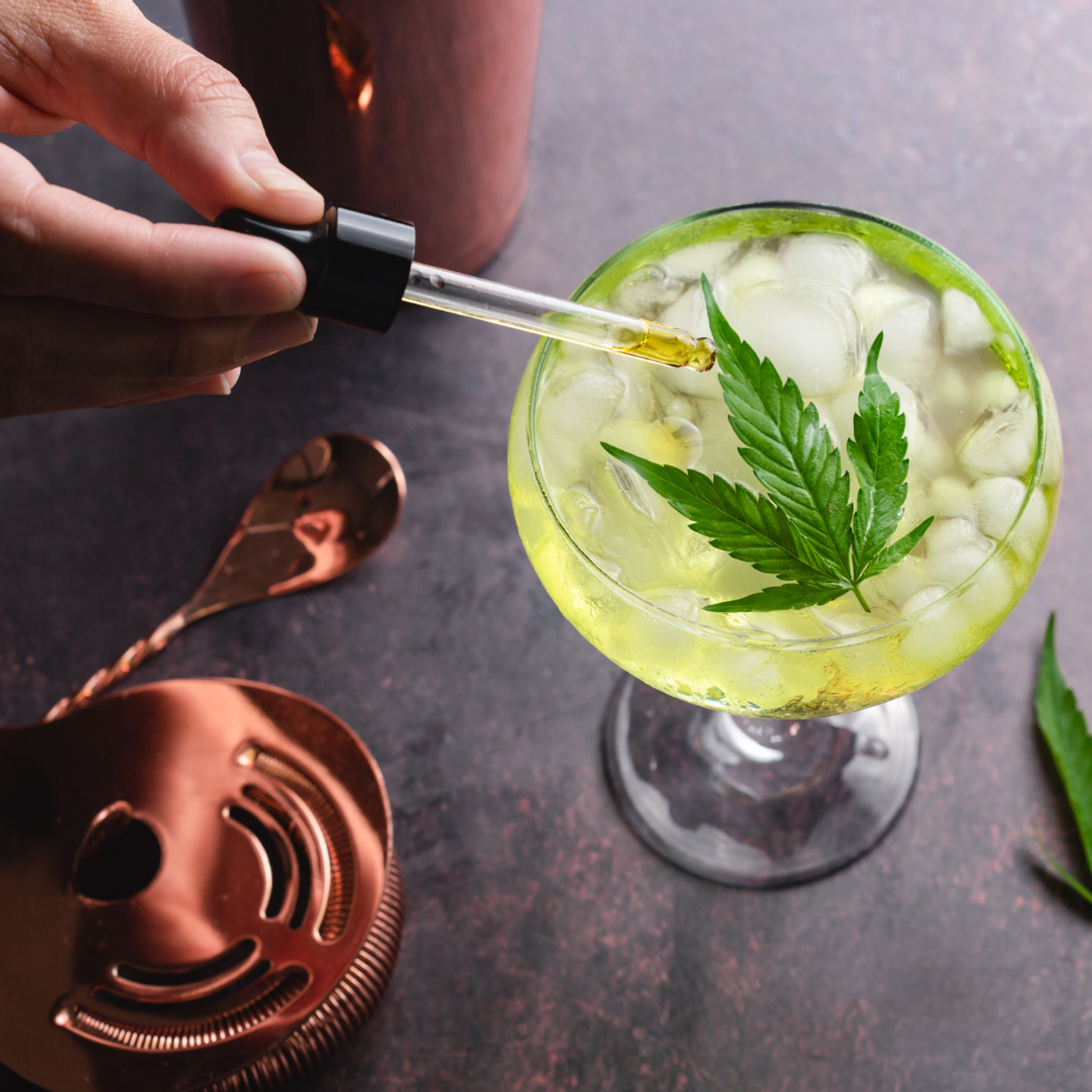
The use of cannabidiol, or CBD, in food and drink is booming in the UK. CBD-infused drinks, ice cream, functional snack bars - you name it - have helped the sector to astronomical growth in recent years. In 2021, the sector saw sales worth £690m. But with that growth have come some questions. In this episode of the Table Talk podcast, Stefan Gates is joined by two experts who can tackle some of the most pressing issues around CBD. Clinical lecturer, Dr Mikael Sodergren, explains how the supplement works, and addresses some of the "mystique" and "anecdotal claims" that surround it.Lawyer, Sarah Ellson, sets out the dos and don'ts when making claims about products containing CBD, and addresses the surprisingly complicated question of whether or not it's legal to produce it in the UK.Sarah also raises significant questions about whether the regulatory system is working. Dr Mikael Sodergren, Imperial College, LondonMikael Sodergren MBChB, DIC, PhD, FRCS is a Senior Clinical Lecturer at Imperial College London and Consultant Hepatobiliary & Pancreatic Surgeon at Imperial College Healthcare NHS Trust. He leads the Medical Cannabis Research Group - a research programme which evaluates and develops novel therapies targeting the endocannabinoid system through a framework of in vitro, in vivo and clinical translational activities. Sarah Ellson, Partner, Field FisherSarah is a partner at law firm Fieldfisher where she co-leads the firm’s regulatory group and specialises in healthcare and life sciences regulation. She acts for numerous regulators but also for a diverse range of private providers in the cannabis, pharmaceutical, optical, pharmacy and wider healthcare sectors and particularly supports new clients looking to enter or expand in the English/UK market. She has worked with many businesses involved with cannabis products, on supply chain and transactional due diligence as well as licensing and compliance.

Ep 217217: Career Conversations: From studying politics to world-leading drinks expert
Sometimes in life, you just know you need to make a change. For Lauren Mote, that realisation came as she approached the end of her international politics degree."I was opening my Russian politics book and thinking 'I'm not interested in this," she tells Elisa Roche."And then (I was) picking up Harold McGee's 'On Food and Cooking: The Science and Lore of the Kitchen'."Lauren says it wasn't that she'd lost interest in academia, just that the subject matter had changed.Fast forward 24 years and she's been named one of the best bartenders in the world, became Diageo's first ever Reserve Global Cocktailian, and has launched a number of successful businesses.Her career in hospitality didn't start with quite so much glamour, although she does say she got "gratification" from her job as a singing hamburger dresser when she was 16.Listen on to hear about the strong female figures who inspired Lauren to succeed, how she sees herself as still very much on a career journey, and get her top tip for avoiding a hangover. Lauren Mote, Drink Consultant and EntrepreneurLauren Mote is a sought-after consultant and expert in the global spirits industry. Lauren is a Founding Partner of Bittered Sling Bitters, Chard & Laver Agency, Nightcap Media and Kale & Nori Culinary Arts. She's also the co-founder of Women Celebrate, a social media initiative to highlight women and fem folx in the drink industry and their achievements.An active member and educator within the global spirits industry, Lauren has led seminars at Bar Convent Berlin and Sao Paulo, TED, Vancouver, Barometer and presented at World's 50 Best Bars Awards. Lauren is a part of the Tales of the Cocktail’s Culture, Education and Spirited Award committees. She was recognised by her industry peers as one of the top 4 "International Brand Ambassadors of the Year 2019", top 4 "Best Bar Mentor 2020" at the annual Spirited Awards and the first Canadian woman inducted into the “Dame Hall of Fame” by Tales of the Cocktail. Lauren is often included in the industry's best lists, including the Bar World 100 by Drinks International, celebrating the very best of the global drinks industry.
Ep 216216: What will a plant-based diet look like years from now?
Where is the plant-based food sector heading? It's a simple question that formed the basis of a Food Matters Live event held in 2021. Hosted by Mandy Saven from Stylus Media Group, our panel of experts gave their views on what plant-based diets might look like in future. They tackle issues like how to make plant-based meat alternatives an attractive colour, how farmers are being persuaded to move from growing crops for feed to growing crops for food, and the increasing importance of clean labels. And some new questions were raised too… Is mimicking meat the right approach for younger generations? How healthy are some of the plant-based products we see on our shelves? And - is fish the new frontier in plant-based innovation? Mandy Saven, Director of Consumer Lifestyle, Stylus Media Group With over 15 years’ experience in trends, consulting and journalism, Mandy is an expert at distilling food culture and consumption, flavour and ingredient innovation, and the future of food. She also holds a strong commercial understanding of the travel and hospitality spaces, as well as the drivers propelling them forward. Prior to joining Stylus, experts in trends intelligence, Mandy was executive editor at GDR Creative Intelligence, where she worked with clients such as Marks & Spencer, Coca-Cola, LVMH and Starwood Hotels. Mark Driscoll, Founder and Director, Tasting the Future Mark is Founder and Director of Tasting the Future, a purpose and values driven sustainable food systems consultancy. He is a global expert in and a passionate advocate for the need for food systems change. He has over years 30 experience of working with businesses, governments and civil society organisations on solutions that address some of the key social and environmental challenges confronting our global food system. He has developed and led large sustainable food programmes with organisations including WWF and Forum for the Future, focussing on policy and practice which supports sustainable nutrition – the intersection of health, nutrition and sustainability. Carole Bingley, Sr. Associate Principal Scientist Product and Ingredient Innovation, RSSL Carole is a Technical Specialist working in RSSL’s Product and Ingredient Innovation Team. During her time with RSSL, Carole has undertaken ingredient evaluation and product development projects on a contract basis for clients in different food industry sectors. A Food Science graduate from Reading University, with a Master’s degree in Nutritional Medicine from Surrey University, Carole has over 25 years’ experience in the food industry. Maija Itkonen, Co-Founder and Chief Innovation Officer, Gold & Green Foods Maija is an industrial designer, brand builder, tech lover, and entrepreneur. She is Co-founder and Chief Innovation Officer at Gold & Green Foods, a food tech start-up born out of Helsinki that develops plant protein products using Nordic oats and legumes. Henrik Lund, CEO, Naturli Foods Henrik has a long career working as Sales Manager for companies like Beavais, Danæg, Royal Greenland and Dragsbæk before starting Naturli’ Foods in 2016. “At Naturli’ Foods, we are known as first movers within plant-based foods for consumers, offering a cross category assortment from dairy to meat, targeting mainstream consumers – Naturli’ is present in 19 markets around the World." Naturli’ says it challenges conventional thinking to stop climate change through what we eat and drink….without sacrificing anything.

Ep 215215: Plant-based foods within healthy sustainable diets
How do you persuade people to move to a more sustainable diet? And how do we ensure that we're making choices that are good for our health as well as the planet?In this episode of the Table Talk podcast, brought to you in partnership with Kellogg's Europe Wellbeing Team, we delve into the world of sustainable diets, and look at the role plant-based foods have to play.Stefan Gates is joined by two world-leading voices on the topic. Dr Giles Yeo, programme leader at the MRC Metabolic Diseases Unit at the University of Cambridge, and Dr Hazel Wallace, Doctor and Founder of The Food Medic.They look at some of the psychology behind the food choices we make, and why changing people's diets is often more about persuading than dictating.They discuss how cereals are often under appreciated for the role they can play in a healthy plant-based diet.And they highlight three factors; price, time and knowledge, which they say affect the food choices many of us make. Dr Giles Yeo, programme leader at the MRC Metabolic Diseases Unit at the University of Cambridge, and Honorary President of the British Dietetic AssociationGiles Yeo got his PhD from the University of Cambridge in 1998, after which he joined the lab of Prof Sir Stephen O’Rahilly, working on the genetics of severe human obesity. Giles Yeo is now a programme leader at the MRC Metabolic Diseases Unit in Cambridge and his research currently focuses on the influence of genes on feeding behaviour & body-weight.In addition, he is a graduate tutor and fellow of Wolfson College, and Honorary President of the British Dietetic Association. Giles was appointed an MBE in the Queen’s 2020 birthday honours for services to ‘Research, Communication and Engagement’. Dr Hazel Wallace, Doctor and Registered Associate Nutritionist, and Founder of The Food MedicDr Hazel Wallace, founder of The Food Medic, is an NHS medical doctor, registered nutritionist (ANutR), and best-selling author.She started ‘the food medic’ blog in 2012, as a medical student, in a bid to bridge the gap between conventional medical advice and the latest thoughts and developments in nutrition and other areas of lifestyle. She is currently working as a COVID doctor during this pandemic.Dr Wallace hosts her own podcast “ The Food Medic” interviewing leading experts in their field and sharing actionable advice on how we can live healthier lives and features on James Martin Saturday Morning Kitchen as their resident doctor.

Ep 214214: Career Conversations: 'Be consistent about what you offer'
When Graeme Tomlinson started posting graphics on Instagram, it was just a side-hustle."I was a personal trainer who was doing this in their spare time," he tells Elisa Roche in the second episode of the Career Conversations podcast series.Over the course of a few years, he'd built his Instagram following to around 30,000, then all of a sudden, things took off."I think I'd done about 2,000 posts at that point," he says. Today he's only done about 800 more but he has over one million followers.Graeme's posts, under the name The Fitness Chef, are quite simple at first glance, but they are extremely effective.Often he posts photos of two bits of food, maybe toast with avocado next to toast with chocolate spread, and highlights the surprising difference in calories.So how did he become a social media superstar? How does he cope with being bombarded with requests for advice online? And why did he once lose his rag in a health food store?Listen now to find out all of that, as well as Graeme's top tip for building your personal brand online; be consistent about your identity and what it is you're offering people. Graeme Tomlinson - Nutrition CoachGraeme is a Scottish nutrition coach and personal trainer. In March 2018, Graeme began posting on Instagram about the ironies, myths and pitfalls of diet plans.With his trademark graphics and microblogs, he brought food facts to life, amassing hundreds of thousands of followers around the globe.With their support, he continues his mission to show that quick-fix diet plans and food guilt are neither necessary nor effective, and a calorie deficit through adjustments to your existing diet is the only sustainable way to lose weight.Graeme has released a new book in 2022 called Lose Weight Without Losing Your Mind.

Ep 213213: Low and no alcohol: The art and science of flavour
There's no doubt about it, flavour is a key factor in the success of any alcohol-free drink, but it's also one of the most difficult areas to master.How do you match the flavour of a single malt whisky, the taste of a session IPA, or the burn of a shot of tequila?Is it even about trying to replicate the taste of alcohol or should efforts be focused on different aspects?In this episode of Table Talk, brought to you in partnership with Kerry, we delve into these questions, as well as the science and the art of flavouring low and no alcohol drinks.We find out just how much work goes into getting the right flavour, including the sniff, taste and session tests.It's no surprise that good quality ingredients are seen as a major factor, but our experts say provenance is becoming increasingly important too, as is sustainability.And find out the one alcoholic drink each of our panel would really love to replicate but without the booze. Michel Aubanel, Flavour Ingredients Global Development Director, KerryMichel Aubanel, MSc is the Global Flavour Ingredients Director linking teams in various regions, including China, North America, Brazil, and Europe. Michel’s job is to explore new raw materials all over the world and find ways to improve not just the health of people, but also the planet. Michel holds a PhD in Chemical Engineering and Organic Chemistry from University Marseille in France.He has 35+ years’ experience in the flavour industry, has worked with companies like Mane, Sanofi/Degussa, Cargill and Kerry Taste & Nutrition. This year he celebrates 10 years with Kerry.His knowledge and expertise have been captured on 8 scientific publications. He also holds 3 patents and a great number of scientific publications. He specialises on Natural Extracts, Chemistry, biochemistry, liquid flavours and powder flavours. John Kelly, Senior Strategic Marketing Manager – Beverages, KerryWorking in Kerry Taste & Nutrition as the Senior Strategic Marketing Manager for the beverage category, leading the beverages marketing strategies across Europe & Russia. Over 20 years’ experience in the global beverages industry working across all sectors of the industry, driving brand and business growth. Extensive consumer FMCG and B2B marketing expertise and wider business leadership gained through working in a broad portfolio of leading beverages companies including Diageo, Molson Coors, Glanbia Consumer Foods, and Almarai across the Middle East and currently Kerry Taste & Nutrition. Danielle Bekker, Co-Founder, Good Living BrewDanielle Bekker, founder of Good Living Brewing Co, is a supply chain professional with over 20 years’ experience in the brewing industry including Global Brewing Innovation Director for SABMiller. A qualified chemical engineer with an MBA and an MSc in Malting & Brewing she loves beer, innovation and food – all of which Binary encompasses. Craig Hutchinson, Founder of a portfolio of no-alcoholic spiritsCraig is the founder and former CEO of CEDER’S which he developed and grew to be sold in over 20 countries before the successful sale to Pernod Ricard in 2020.He has since launched CELTIC SOUL Non-Alcoholic Dark Spirit and M&C’s CBD Botanical Spirit.

Ep 212212: HFSS: How brands can still make an impact
How can you build a brand when you can't advertise or launch promotions, and there are restrictions on where you can position your products in shops? It's a dilemma many food companies are facing ahead of new legislation due to be enforced in England from October 2022. It means there will be restrictions on how foods that are high in fat, salt and sugar - collectively known as HFSS - can be promoted. The new rules will see the end of deals like buy-one-get-one-free, a ban on free soft drink refills, and restrictions on where HFSS products can be placed in a store – think sweets at the till. So what can affected brands do to make sure consumers are still aware of their products? In this episode of Table Talk, Stefan Gates is joined by three experts in this field who discuss the challenges and opportunities on the horizon. They discuss how marketing teams are going to be forced to think more creatively, why 2022 is going to be key for building up a customer database, and why premium HFSS brands are hoping to actually see an increase in sales. Rob White, Co-Founder at ZEAL Creative After 18 years in advertising, Rob set up ZEAL Creative with his partner Stewart Hilton. Together they have built a multi-award winning marketing agency which is currently the most effective brand activation agency in the UK and their team are The Drum’s most recommended for client service. As an expert in marketing, Rob plays a key role in advising multi-national brands such as Kellogg’s & Nestlé on brand strategy, understanding shopper behaviour and winning with retailers. As well as being a director for the for the Institute of Promotional Marketing, Rob also acts as a mentor with new business start-ups for Tech Manchester. Jeremy Stern, CEO of PromoVeritas Jeremy founded PromoVeritas after a successful career as a senior marketer with Kraft, BT and Tesco. It was when he was the European Promotions Director at Coca-Cola that he identified the need for a service that provided independent promotional compliance advice. Someone to bridge the gap between agencies with amazing ideas and lawyers with a preference for caution. PromoVeritas is now a team of 40+, with its own legal team, hundreds of clients and they ‘run it right’ for thousands of promotions every year in the UK, Europe & globally – writing terms, picking winners of draws, judging competitions and hiding those instant win golden tickets. Ben Greensmith, Lord Chocolonely iii, aka Country Manager at Tony’s Chocolonely Tony’s Chocolonely has a mission is to make chocolate free of child-labour and slavery; not just its chocolate but all chocolate worldwide. Ben has been working for Tony’s since September 2018 as employee number 1 setting up the UK operation. Prior to this, he spent 3.5 years at Propercorn, most recently as Chief Operating Officer taking the business from a start-up to an SME and into national distribution. Before joining Propercorn Ben was UK Commercial Director at innocent drinks having joined in 2007. He joined innocent after 5 years at Unilever in a mix of sales and category roles.

Ep 211211: Career Conversations: 'Why everyone needs a mentor'
Rhiannon Lambert's path to becoming one of the UK's leading nutritionists hasn't always been a straight forward one.Years before she opened her own clinic on Harley Street, she was a successful singer, jetting off to perform around the world.But it was what she saw whilst singing at some of the world's biggest fashion shows, that encouraged her to pursue the career she has.Some of the models were swallowing cotton wool to feel full, without putting on weight."It repulsed me," Rhiannon tells Elisa Roche in this first episode of the Career Conversations series. "I didn't feel comfortable there."Rhiannon says later, her own unhealthy relationship with eating pushed her to "learn more about food" and go to university. Fast-forward a few years and she finds herself in another uncomfortable situation, this time after she was mis-quoted in some national newspapers.She describes it as a "really tough period" in her life, and says it made her realise the value in having a mentor.Rhiannon Lambert is the opitome of hard work; as well as running a hugely successful clinic, she is a best-selling author (her third book, The Science of Nutrition, was published in 2021), a chart-topping podcast host, and a new mother.And it's clear from her conversation with Elisa that success has not come overnight.Listen as Rhiannon busts the myth that being a social media star is "easy work", find out what she studied to reach the top, and get her top tips for starting out in the world of nutrition. Rhiannon Lambert, Registered NutritionistRhiannon founded Rhitrition, a renowned Harley Street clinic, which specialises in weight management, sports nutrition, eating disorders, and pre- and post-natal nutrition in 2016. As an evidence-based practitioner, Rhiannon is committed to the benefits of a scientific approach to nutrition. In 2017, she published her first book, the best-selling Re-Nourish: A Simple Way To Eat Well.Rhiannon hosts the top-rated ‘Food for Thought' podcast, which gives listeners practical, evidence- based advice on how to achieve a healthier lifestyle. Follow Rhiannon on Instagram, Twitter, Facebook, and YouTube.

Ep 210210: The history of tea - from ancient China to kombucha
The history of tea is as interesting and varied as the drink itself.In this episode we delve into that history to see what the past can offer present day tea makers.Stefan Gates is joined by Will Battle, Managing Director at Fine Tea Merchants, and author of the World Tea Encyclopaedia.They look back at the role tea has played in the economy of the world, in the past and today.The history of tea includes its use as a currency and how smuggling brought it to the masses in the UK.We also learn why one tiny parcel of tea was once worth more than a limousine. Will Battle, Managing Director, Fine Tea MerchantsWill Battle is Managing Director of Fine Tea Merchants Ltd, a business-to-business tea importing, trading and wholesale company. Will’s critically-acclaimed book The World Tea Encyclopaedia is in its second edition and won a ‘Best in the World’ award at The Gourmand World Cookbook awards.

Ep 209209: How do brands predict what we'll be eating years from now?
Food brands need to work out what consumers will be eating in future, but how do they go about it, and what happens if they get it wrong?In this edition of the Table Talk podcast, we look at the business of predicting people's eating habits.How do companies work out what we'll all be reaching for in the supermarket in five years' time? What is the cost to them if they get it wrong? And how often do they get it right?Stefan Gates is joined by Sophie Davies, Senior Buyer at Planet Organic, and Mike Hughes, Head of Insight and Research at FMCG Gurus to try to answer those questions.They offer their insights into how the industry works, as well as setting out their predictions for 2022.Sophie Davies, Senior Buyer, Planet OrganicSophie has been at Planet Organic since March 2015 and is the Senior Buyer for the Fresh Food & Drink department, spanning across Grab&Go, Fresh Groceries including Fruit&Veg, Bakery and Chilled take home. Planet Organic has 14 stores in Central London and an online store, which distributes fresh products nationwide. Planet Organic prides itself on being at the forefront of innovation and leading on product trends within natural food and wellness. Sophie and her team are always on the hunt for exciting, innovative and delicious products to revolutionise the food and wellness scene.Mike Hughes, Head of Insight and Research, FMCG Gurus Mike Hughes has more than 13 years’ experience analysing consumer trends, attitudes and behaviours, and currently heads up the research and insight division at FMCG Gurus. Mike has a particular interest in highlighting how consumer attitudes and behaviours can often differ and what the true meaning of trends are for the industry.

Ep 208208: Low and no alcohol: The "spirit" market and functional ingredients
In this edition of the Table Talk podcast, we're looking at the role of functional ingredients in low and no alcohol drinks. Stefan Gates is joined by Dash Lilley, co-founder of Three Spirits, and David Begg, co-founder of Real Kombucha. They discuss ingredients which lift the mood, as well as providing health benefits on the side.Functional ingredients have been one of the stories of the last few years, but the question is – can they also provide the beguiling and beautiful tastes to match the best in the sector? In this episode, Stefan, Dash and David explain what we mean by functional ingredients, debate what needs to happen to move the sector forward, and answer the question: Does the lo and no alcohol sector still have an innovative, entrepreneurial feel - or is it just big business now?

Ep 207207: HFSS: Why retailers want new law postponed
From October 2022, new rules are set to be enforced around the sale of foods that are high in fat, salt and sugar (HFSS).The HFSS promotion ban has been controversial since it was first devised and now retailers are calling for a further delay to its enforcement.The new rules will see the end of deals like buy-one-get-one-free, a ban on free soft drink refills, and restrictions on where HFSS products can be placed in a store - think sweets at the till.Enforcement of the law has already been delayed once, so would another postponement actually make a difference?In this episode of the Table Talk podcast, Stefan Gates is joined by three experts to talk through the issues retailers have.They discuss what they see as ambiguity in the legislation, the challenges some stores face when it comes to complying in a small space, and how some retailers are already adapting to the new laws.Andrea Martinez-Inchowsti, Deputy Director, British Retail ConsortiumAndrea is Deputy Director responsible for food policy at the BRC. This includes labelling and consumer communication, allergen management, compositional standards and diet and nutrition policy. She has worked with the retailers’ nutritionists for over 14 years discussing and implementing provisions such as nutrition and health claims, food information regulation, PARNUTS legislation, reformulation initiatives and Natasha's law on allergens. She also led the joint project, with DH, to deliver the front of pack nutrition labelling scheme. Joe Harriman, Strategic Consultant – covering HFSS at data analytics and market research company IRIJoe joined IRI in 2021 to lead its Health and Wellness practice area with an immediate focus on supporting Brand and Retail clients to respond and plan for the upcoming HFSS restrictions. Joe has more than 10 years experience in retail consulting, working across various consulting areas, from analytics to client engagement and more recently solution design and implementation. This blend of experience makes Joe ideally placed to identify the best solutions to commercial challenges and opportunities as well as to support the strategic or tactical deployment of these solutions. Chris Noice, Communications Director, Association of Convenience Stores Chris joined ACS in October 2009 having graduated from York University with a degree in English and Linguistics. As Communications Director, Chris is responsible for all ACS external and internal communications, media relations and a growing research portfolio which includes the industry leading Local Shop Report.Chris is an official spokesperson for ACS, appearing frequently on national and regional radio and television including BBC News, Sky News, BBC Breakfast and the Daily Politics show. Chris completed the Chartered Institute of Public Relations Diploma in 2013 and the CIM Strategic Marketing Masterclass in 2017.

Ep 206206: Low and no alcohol: What next for the sector?
Globally, alcohol consumption is thought to have declined by 6% in 2020.And between 2020 and 2024 the “low and no” market is expected to balloon by 31%. But what's next for the sector? What will we all be drinking in ten years' time? And how can "low and no" overcome some of the challenges it faces?In this episode of the Table Talk podcast, Stefan Gates is joined by three experts to help answer some of those questions.They discuss why developments in alcohol-free wine have been slower than in alcohol-free beer, why a trace amount of alcohol means a drink is less likely to go to waste, and they tackle the big question: What should the low and no alcohol sector actually be called?They also try to predict what the alcohol-free trends will be in 2022 and beyond. Future-gazing is a fool's game - but let's do it anyway!Laura Willoughby MBE, Founder of Club Soda and the Mindful Drinking FestivalThe inspiration for Club Soda comes from Laura’s experience of giving up drinking ten years ago. A campaigner at heart with a background in movement building and politics, she realised that one of the big sticking points was a way to support people to take a self-guided journey to change their drinking.Club Soda has over 70,000 individual members and nearly 80 brand members who they support through research and collaborative projects. They have built a drinks guide and they run the UK’s only Mindful Drinking Festival which is now in its 8th edition. Rob Fink, Co Founder, Big Drop BrewIn 2016 Rob Fink founded the world’s first company to focus entirely on brewing alcohol-free beer – Big Drop Brewing Co. As a lawyer with zero brewing experience, he teamed-up with an experimental brewer (Johnny Clayton from Wild Beer) and the creative mind of school-friend and entrepreneur James Kindred. Together they applied left-field fermenting techniques that meant no alcohol needed to be extracted from the end product to meet the required maximum 0.5% ABV. Five years later he is selling over 4 million bottles of 0.5% ABV beer annually around the world and his beers have won over 85 international beer awards Between them, including 7 times ‘World’s Best’ at the World Beer Awards and beating full-strength rivals in blind-tastings. Thorsten Hartmann, Head of Custom Analytics, IWSR Thorsten leads the IWSR’s custom analytics team, providing clients with data, insights and strategic advice to help them define, refine and build their global business strategies. Thorsten has an extensive background in FMCG consultancy and beverage industry market research. Previous roles include director of consulting for GlobalData (formerly Canadean), as well as consulting roles at IMES Consulting/ManSci.

Ep 205205: Green Jobs: 'Aim to work somewhere that is setting tomorrow's agenda'
You might already know that you want to work in the green sector, but how do you go about finding the right job for you?It's a question we've been asking on Table Talk throughout our Green Jobs series and in this episode, we get more fantastic advice from someone who can not only talk the talk, but is already walking the walk.Marc Zornes is CEO and Winnow Solutions - a company that helps commercial kitchens reduce food waste.He tells Stefan Gates that people entering the green jobs market at the moment should be looking at companies that are "setting tomorrow's agenda".Find out why he thinks people shouldn't be looking for sustainability roles anymore, how he experienced self-doubt when starting his own company, and his three tips for landing your dream green job. Marc Zornes, CEO and Founder, Winnow SolutionsMarc Zornes was a former top-rated McKinsey Engagement Manager where he was a leader in the consumer and sustainability practices. While at McKinsey, Marc co-authored the McKinsey Global Institute report on Resource Revolution. In developing this report, his team highlighted food waste as one of the biggest issues globally and yet very little was being done about it. Marc then left McKinsey to found Winnow. Marc founded Winnow to help the hospitality sector cut food waste using technology. Winnow builds artificial intelligence tools to help chefs run their kitchens more efficiently focusing on helping them understand and prevent food waste. Since launch, Winnow has been deployed in 45 countries and has saved its customers over $40m by reducing food waste. Clients include global brands like IKEA, Compass Group and AccorHotels.

Ep 204204: From the archive: The future of protein
The Table Talk podcast is on a festive break, but that doesn't mean we stop providing top content. We've delved into our archive and pulled out some of the best interviews from 2021. In this episode, Stefan Gates met Josh Tetrick, CEO of Eat Just. Eat Just made history in 2021, following a regulatory approval decision in Singapore for lab-grown meat to be sold in a restaurant. System change needs to start somewhere, and this approval offers the potential to be the catalyst for changing the future of meat production and consumption and for cutting down on greenhouse gases, thus being more environmentally friendly. The 1880 restaurant in Singapore is the first restaurant in the world to have lab grown meat on their menu. The restaurant sells a trio of taster dishes using Eat Just cultured chicken: bao bun with crispy sesame cultured chicken and spring onion; filo puff pastry with cultured chicken and black bean puree; and a crispy maple waffle with cultured chicken with spices and hot sauce. In this episode, Stefan Gates is joined by visionary Josh Tetrick, Founder and CEO of Eat Just as they discuss what impact this approval process will have on the future of meat without animal slaughter, the challenges of moving at scale, and why environment and health conscious Gen Z are key to taking cellular meat to the mainstream. Josh Tetrick is CEO & Co-Founder of Eat Just, Inc. Josh Tetrick is CEO & Co-Founder of Eat Just, Inc., a food technology company with a mission to build a healthier, safer and more sustainable food system in our lifetimes. The company’s expertise, from functionalising plant proteins to culturing animal cells, is powered by a world-class team of scientists and chefs spanning more than a dozen research disciplines. Eat Just created America’s fastest-growing egg brand, which is made entirely of plants, and the world’s first-to-market meat made from animal cells instead of slaughtered livestock. Prior to founding Eat Just, Tetrick led a United Nations business initiative in Kenya and worked for both former President Bill Clinton and Liberian President Ellen Johnson Sirleaf. As Fulbright Scholar, Tetrick taught schoolchildren in Nigeria and South Africa and is a graduate of Cornell University and the University of Michigan Law School. Tetrick has been named one of Fast Company’s “Most Creative People in Business,” Inc.’s “35 Under 35” and Fortune’s “40 Under 40". Eat Just has been recognised as one of Fast Company’s “Most Innovative Companies,” Entrepreneur’s “100 Brilliant Companies,” CNBC’s “Disruptor 50” and a World Economic Forum Technology Pioneer.

Ep 203203: 200th Edition, Derek Sarno, co-founder of Wicked Healthy
This episode is part of a special series we’re running to celebrate the fact we’ve now made more than 200 editions of Table Talk.We would like to thank everyone who has joined us on the podcast since it launched and we are so grateful to you for helping us to reach this milestone.To mark the occasion, we’ve invited some friends of the podcast to make their own mini-episodes, looking back at 2021.It’s been another year that’ll stick in the mind, but we’re doing our best to avoid the C-word (that's Covid) as we get our guests to reflect on the good, the bad and the ugly of the last 12 months.In this episode, we hear from Derek Sarno, co-founder of Wicked Healthy, LLC, and Executive Chef & Director of Plant-Based Innovation for Tesco PLC Derek SarnoPrior to co-founding Wicked Healthy and partnering with Tesco, Derek served as the Senior Global Executive Chef for Whole Foods Market, where he oversaw global research and development for the company’s prepared foods department, worked with suppliers and leadership to develop and promote plant-based foods across the organisation, and served as Culinary Director for the WFM Academy for Conscious Leadership.Derek is a serial entrepreneur, founding several award-winning restaurants and food service companies in the United States, including the One Hundred Club, Mahalo’s Catering, and Mizuna’s. Derek also served as the resident Chef & Gardener at Padma Samye Ling, a Tibetan Buddhist monastery and retreat center in upstate New York.

Ep 201201: 200th Edition - Anna Taylor, The Food Foundation
This episode is part of a special series we’re running to celebrate the fact we’ve now made more than 200 editions of Table Talk.We would like to thank everyone who has joined us on the podcast since it launched and we are so grateful to you for helping us reach this milestone. To mark the occasion, we’ve invited some friends of the podcast to make their own mini-episodes, looking back at 2021. It’s been another year that’ll stick in the mind, but we’re doing our best to avoid the C-word (that's Covid) as we get our guests to reflect on the good, the bad and the ugly of the last 12 months.In this episode, we hear from Anna Taylor, Executive Director of The Food Foundation. Anna TaylorAnna joined The Food Foundation as its first Executive Director at the beginning of June 2015 after 5 years at the Department for International Development. At DFID, Anna led the policy team on nutrition and supported the delivery of the UK’s global commitments to tackle undernutrition.

Ep 202202: 200th Edition - Barry Smith, Founding Director, Centre for the Study of Senses
This episode is part of a special series we’re running to celebrate the fact we’ve now made more than 200 editions of Table Talk.We would like to thank everyone who has joined us on the podcast since it launched and we are so grateful to you for helping us to reach this milestone.To mark the occasion, we’ve invited some friends of the podcast to make their own mini-episodes, looking back at 2021.It’s been another year that’ll stick in the mind, but we’re doing our best to avoid the C-word (that's Covid) as we get our guests to reflect on the good, the bad and the ugly of the last 12 months.In this episode, we hear from Barry Smith, Founding Director of the Centre for the Study of SensesBarry SmithBarry C Smith is a professor of philosophy and director of the Institute of Philosophy at the University of London’s School of Advanced Study. He is also the founding director of the Centre for the Study of the Senses, which pioneers collaborative research between philosophers, psychologists and neuroscientists.

Ep 203203: 200th Edition - Ria Rehberg, Veganuary
In this episode, we hear from Derek Sarno, co-founder of Wicked Healthy, LLC, and Executive Chef & Director of Plant-Based Innovation for Tesco PLCThis episode is part of a special series we’re running to celebrate the fact we’ve now made more than 200 editions of Table Talk.We would like to thank everyone who has joined us on the podcast since it launched and we are so grateful to you for helping us to reach this milestone.To mark the occasion, we’ve invited some friends of the podcast to make their own mini-episodes, looking back at 2021.It’s been another year that’ll stick in the mind, but we’re doing our best to avoid the C-word (that's Covid) as we get our guests to reflect on the good, the bad and the ugly of the last 12 months.In this episode, we hear from Ria Rehberg, CEO of Veganuary.Ria RehbergRia Rehberg is the CEO of Veganuary, a UK based charity that encourages people worldwide to try going vegan in January and beyond. Since 2014, Veganuary has inspired and supported more than one million people in 192 countries to try a vegan diet. Additionally, Veganuary works with hundreds of businesses to drive up vegan food provision in shops and restaurants, and have made veganism more visible and accessible through their work with national and international media.

Ep 200200: 200th Edition - Andrew Ive, Big Idea Ventures
This episode is part of a special series we’re running to celebrate the fact we’ve now made more than 200 editions of Table Talk. We would like to thank everyone who has joined us on the podcast since it launched and we are so grateful to you for helping us to reach this milestone. To mark the occasion, we’ve invited some friends of the podcast to make their own mini-episodes, looking back at 2021. It’s been another year that’ll stick in the mind, but we’re doing our best to avoid the C-word (that's Covid) as we get our guests to reflect on the good, the bad and the ugly of the last 12 months. In this episode, we hear from Andrew Ive, Founder and Managing General Partner at Big Idea Ventures. Andrew Ive Andrew founded Big Idea Ventures and invests and builds companies in the alternative protein and plant based sectors as part of their first fund – the New Protein Fund. Andrew has invested in more early stage / pre-seed food companies than most other investor worldwide. Andrew is focused on innovation, developing high-growth businesses opportunities and as a business advisor in multiple verticals. Andrew serves on the Tufts Nutrition Council advisory board, is a Friedman School Entrepreneurship Advisor. A Harvard Business School graduate and Procter & Gamble brand management trained.

Ep 199199: From the archive: The race car driver who founded a drinks brand
The Table Talk podcast is on a festive break, but that doesn't mean we stop providing top content.We've delved into our archive and pulled out some of the best interviews from 2021.In this episode, Stefan Gates met Oliver Bennett; a British race car driver, turned energy drink entrepreneur.Oliver made his debut in the British Rallycross Championship in 2016 and fought for the title the following season. He is also the co-founder of Xite Energy, a brand bringing nootropic energy drinks to the mass market. Popular among Gen Z and E-sports athletes, nootropics support healthy brain function and mental ability.This podcast looks at the growing world of nootropics, as we chat to Oliver about why Xite entered the market and how the sector has developed, and will continue to grow. Why are so many E-sports athletes and Gen Z consumers embracing nootropics for cognitive health, and what can we expect from brands like Xite in the future? J Oliver BennettOliver Bennett is a 28-year-old British driver with experience in rallycross competitions. In 2016 he made his debut in the British Rallycross Championship and the following season he fought for the title. He also made his debut in the FIA World Rallycross Championship, where he has competed in recent seasons. Bennett has also participated in a number of Americas Rallycross events and the Gymkhana GRID in Cape Town in 2018, where he put on a great performance. XiteXITE Energy, which was born in Bristol UK, is only two years old but has already made huge waves in the highly competitive energy drinks market. The brainchild of university graduate and rally driver Oliver Bennett – who is racing in Extreme E for the Hispano Suiza XITE Energy Team – and co-founder Megan Jones.The product is designed to resonate with fellow Gen Z’ers by using nootropics (Cognitive amino acids that aid concentration and focus) natural caffeine (green coffee bean), natural flavours, pansax ginseng, L-tyrosine and L-carnitine – all designed to keep energy levels constant without the ‘highs and lows’ associated with most other energy drinks. The brand is also proud that 1p for every can sold goes to mental health charities.

Ep 198198: The history behind your Christmas dinner
Turkey, roast potatoes, Christmas pudding, Brussels sprouts - Christmas dinner hasn't always been this way.And there is certainly no reason to think it will stay that way in the future.In this episode of the Table Talk podcast, Stefan Gates delves into the history of the Christmas dinner with food historian Seren Charrington-Hollins.Seren reveals why Victorian Christmas traditions have endured the longest, how plant-based foods have always played a role in the main festive meal, and she re-visits the once ubiquitous 'Christmas Kissing Ball'.And she tries to answer a key question; are current Christmas dinner traditions sustainable in the long-term? Seren Charrington-HollinsAs a food historian, Seren has been bringing food history to life since 2007. She has written countless articles on food and domestic history, has given countless local and national radio interviews, as well as having appeared in a variety of TV programmes and productions. Already the published author of "A Dark History of Tea", she is currently working on her new book 'A Century of Eating: How our tastes have changed", which focuses on what has happened to the way we shop and eat in the past century.

Ep 197197: The science behind hangovers, with Prof David Nutt
Professor David Nutt, on the science behind hangovers and how new trends in the drinks market could help eradicate them for good.Alcohol is very much on the agenda as we approach the end of the year and look forward to a new one.Typically, in December we drink too much and in January, many of us think about cutting back.In this episode of the Table Talk podcast, Stefan Gates is joined by a very special guest who can offer some real insights into our relationship with alcohol, and specifically hangovers.Professor David Nutt is a former UK Government adviser and is currently employed at Imperial College London.He reveals the cost to the economy of people being hungover, why he thinks hangovers should be considered a form of illness, and how he believes synthetic alternatives to alcohol could eradicate some of its least desirable effects. David Nutt, DM, FRCP, FRCPsych, FBPhS FMedSci DLaws David Nutt is currently the Edmund J Safra Professor of Neuropsychopharmacology, Head of the Centre for Neuropsychopharmacology, and Director of the Centre for Psychedelic Research in the Division of Brain Science at Imperial College London. He is also visiting professor at the Open University in the UK and Maastricht University in the Netherlands.Professor Nutt was the UK Government’s drug adviser in the late 2000s. He was removed from the position in 2009 for claiming that alcohol is more dangerous than ecstasy or LSD. The following year, he published a study that showed that alcohol is more harmful to society than heroin or crack cocaine.Professor Nutt has held a number of significant scientific leadership positions including Presidencies of the European Brain Council, the British Neuroscience Association, the British Association of Psychopharmacology and the European College of Neuropsychopharmacology as well as Chair of the UK Advisory Council on the Misuse of Drugs. He has published over 500 original research papers, a similar number of reviews and books chapters, eight government reports on drugs and 35 books, including one for the general public; ‘Drugs Without the Hot Air’, which won the Transmission book prize in 2014 for Communication of Ideas. The second edition of this has just been released as has his autobiography ‘Nutt Uncut’.

Ep 196196: Green Jobs: 'My journey from the arts to science'
If you are kicking yourself for taking an arts degree when really you want to be working in the green economy - this podcast is for you.As part of the Table Talk podcast's Green Jobs series, Stefan Gates meets India Langley, Communications Manager for the innovative indoor farming company LettUs Grow.She reveals the secret to switching from the arts to science, the surprising opportunities that have arisen as a result of her own journey, and why she thinks not having a scientific background has helped her to be better at her job.India Langley, Communications Manager, LettUs GrowIndia Langley is a Sustainability Communicator who specialises in food and farming. India heads up the communications and marketing team at LettUs Grow, an innovative indoor farming company that provides technology for vertical farms and greenhouses that take account of plants, people and the planet. Their combination of farm management software and aeroponic technology maximises growth rates while minimising environmental impacts to help make sustainable farming a sustainable business.

Ep 195195: Flavour - is it all in the mind?
Most of us know that experiencing flavour doesn’t just involve our tastebuds, but what other factors are influencing us when we eat and why is it so important?In this episode of the Table Talk podcast, Stefan Gates is joined by Betina Piqueras Fiszman, Associate Professor at Wageningen University. They discuss the history of taste and flavour, and the important role they have played in human evolution.From bitterness helping us avoid poisons, to making foods more palatable for hospital patients, taste and flavour have played, and continue to play, a key role in keeping us alive.But what tricks can be used to enhance flavour? What role do emotions play in the eating experience? And what can be done for people who have lost their sense of taste as a result of Covid?Oh, and we find out if Stefan is a "supertaster". Betina Piqueras Fiszman, Associate Professor, Wageningen UniversityBetina's research focuses on the exploration of new ways to understand consumer food preferences and motivations. She investigates these processes by looking into relationships between the sensory characteristics of the product, consumer traits, cognitive and contextual factors, and their combined effect on perception, behaviour, and memorability.She has published more than 70 scientific peer-reviewed papers and book chapters. She actively contributes to various international academic symposiums, courses, and other public events, lectures and podcasts. Betina is co-author of the book “The Perfect Meal” (2015 Prose Award) and co-edited the book “Multisensory Flavor Perception”. She currently sits on the editorial boards of the scientific journals Food Quality and Preference and Appetite.

Ep 194194: Green Jobs: 'Investors and customers want more action on sustainability'
Carlsberg is one of the biggest beer companies in the world, so working as its Sustainability Manager can mean making small changes that have a big impact.For the last three years, Pete Statham has been doing just that. In this episode of Table Talk, he tells Stefan Gates about how a switch to more sustainable packaging was a commercial success for the firm, and how it worked with competitors to develop the lowest carbon beer bottle in the world.He reveals that companies are now coming under pressure to be more sustainable, not just from customers, but also from investors. He talks about people in roles like his being able to balance activism with a business brain. And he sets out why he thinks collaboration is the key to tackling climate change. Pete Statham, Sustainability Manager, Carlsberg Marston’s Brewing Company & Carlsberg GroupPete has 10 years’ experience working in corporate sustainability, supporting some of the world’s biggest brands to become more sustainable and transparent.Building on an MSc in Sustainable Development from the University of Exeter, Pete started his career in consultancy, advising brands across a range of industries including FMCG, home furnishings, pharmaceuticals, banking and telecoms, to set ambitious sustainability targets and communicate transparently on their performance.In 2019 he joined Carlsberg to create a new role leading the integration of the Together Towards ZERO sustainability plan across the UK business, while also being responsible for sustainability communications and reporting for the global organisation.In 2020, Pete was named in Edie’s 30 under 30 Sustainability Leaders, and accepted as a Fellow of the Institute of Corporate Responsibility & Sustainability.

Ep 193193: Turning the tide on obesity: Are we too obsessed with targets?
When the UK Government published its Obesity Strategy in 2020, many critics argued it didn't go far enough. Now, an alliance of organisations, ranging from doctors to dentists and charities to campaign groups, have come together to set out their vision for change.In this episode of the Table Talk Podcast, Caroline Cerny, Alliance Lead at the Obesity Health Alliance, joins Stefan Gates to set out why she believes their strategy could change the course of the UK's obesity epidemic.She talks about the impact of lockdown on our weight, why we need to move away from obesessing about obesity targets, and why she would like to see the end of cake sales at schools.Caroline CernyCaroline Cerny is Alliance Lead at the Obesity Health Alliance, a coalition of over 40 health charities, medical royal colleges and campaign groups. She coordinates policy development, public affairs and communications across the membership, representing their views to policy makers and the media. Prior to this role, Caroline worked at Cancer Research UK for eight years developing public health campaigns on prevention and early diagnosis. She spent six months seconded into the Department of Health’s policy communication team working on childhood obesity and public health issues.

Ep 192192: Revealed: The secrets behind great food photography
Ever wondered how Waitrose creates its compelling food images and unique photography style? Or how Tesco’s food photos perfectly reflect their brand? Well wonder no more as Stefan is joined by award-winning food photographer to the stars, Georgia Glynn Smith. Georgia has worked with some of the nation’s most famous and much-loved cooks from Nigella to Nigel, along with many well-known food and drink brands and retailers. Georgia shares her passion for ‘the art of noticing’ and spills the secrets behind great food photography, as she shares hints and tips on what it takes to create the perfect photo to immortalise your product. From understanding your brand, your voice and your audience, she takes listeners on a journey to explore how all these elements should influence the aesthetic and reflect your brand values to create the perfect picture.
Ep 191191: Green Jobs: Why we might be moving beyond sustainability roles
Dorothy Shaver is Global Marketing Sustainability Lead at Unilever – but how did a self-confessed “hippie at heart” end up working for one of the world’s biggest companies? And how does she go about getting it to think and act in a more sustainable way?As part of our Green Jobs series, Dorothy joins Stefan Gates to talk about her journey. She reveals how she helped Unilever play a proactive role in creating a more sustainable food supply chain – through its Future 50 Foods initiative. She also offers her top advice for making it in the industry – and why she thinks we need to stop talking about sustainability and start talking about restoration and regeneration.About our panelDorothy Shaver, Global Marketing Sustainability Lead, UnileverDorothy is a Registered Dietitian working in food sustainability with unique experience in, and passion for, driving behaviour change for positive health and environmental outcomes. Over the past fifteen years she has worked across media, retail, health care, and the fitness industry, championing food choices to enable personal and planetary health. Dorothy has helped to spearhead a lot of Unilever’s work on regenerative agriculture projects, including the Future 50 Foods initiative. The joint campaign between WWF and Unilever-owned Knorr, launched in 2019. It lists 50 plant-based foods which purport to have a lower impact on the environment than animal products and most other plants. The idea is to encourage consumers to make more sustainable choices by telling them what they should eat, rather than what they shouldn’t.Dorothy is a guest blogger, podcast speaker, expert contributor and food writer spreading her positive passion and drive to get the masses to fall in love with food that is good for people and the planet. She currently lives in a canal house in Amsterdam, the Netherlands.

Ep 190190: How Veg Power is winning the war on veg and changing the way kids eat
Trying to get kids to eat their 5 a day can be a losing battle, but a battle that one man is brave to enough to take on. Dan Power, Chief Executive of Veg Power, and mastermind behind the Eat Them to Defeat Them campaign, joins Stefan Gates to talk about how a campaign to overpower veg has helped to increase vegetable sales by 500 million children’s portions. Dan shares his passion and ambition to transform every family’s dinner table into a place of joy, discussing the importance of looking at life through the lens of a child to help children change their bias towards fruit and veg, and his new seasonal veg campaign which will help a different generation of parents bring up their kids in a more sustainable and healthy way.

Ep 189189: The truth about protein
This episode delves further into our exploration of food science and nutrition and continues to explore just how food affects our bodies. Protein is often see as the magic ingredient in our diets, the key to unlocking our fitness and strength – but are these spurious health claims or does protein provide genuine health benefits? Richard MacKenzie, Director for Sport & Exercise Science Research Group, Roehampton University joins Stefan to explore what protein is, why we really need it in our diet and how much we should be consuming. From the role of protein shakes to the benefits to bicep muscles, listen to some fascinating facts and advance your understanding of this complex and often misunderstood area of nutrition science.

Ep 188188: Sustainability and the secret ingredients to Denmark's success
The food industry in Denmark is renowned for ambitious sustainable goals. This episode gathers a top panel of Danish experts who describe how the sector is working collaboratively with government, business, academics along with some non-conventional partnerships to continue to raise the bar on sustainability.Green technologies, resource efficiency, food waste, innovative business models, mainstreaming circular thinking, embedding sustainability across education and supporting consumer behaviour change are just some of the themes they tackle.Join the discussion with Camilla Lercke Odgaard, Director, Head of Sustainability & ESG at Chr. Hansen; Rubin Dollerup Nielsen, Business Development Manager at Food at Food & Bio Cluster Denmark and Berit Chavez Azeri, Investment Manager, UK & Ireland at Invest in Denmark to explore the secret ingredients to Denmark’s sustainability success, the benefits to the local economy and what other countries can learn from the Danish approach.

Ep 187187: Career conversations: inside the world of food science
Continuing our conversations about careers, this episode's focus is on food science. What does it take to be a food scientist? Must you be a geek in a lab coat or have a Frankenstein-like interest in food? Stefan Gates lifts the lid on food science – what is it and what does it involve? What are the different roles in the profession, and what are the range of skills, and interests, you need to excel? He is joined by Jo Tivers, Head of Food and Quality at KFC, voted most likely to design ready meals for out of space when she left school, and Carole Bingley, Senior Associate Principal Scientist for Product and Ingredient Innovation at Reading Scientific Services. Sharing their passion for all things food and science related, our guests discuss the opportunities within industry, their own unique careers paths, and the secret behind developing a product that tastes truly amazing.

Ep 186186: Healthy ageing: the lifelong task of getting the right micronutrients
This episode continues our series of conversations taking us inside food science and it centres on the role of micronutrients as we age. For decades, medical scientists and the food industry have studied this microscopic world of vitamins, trace elements, amino acids, essential fatty acids and more in a bid to understand the true extent of the role they play in nutrition and health. Dr Christina Mesch, a nutrition scientist and product manager at SternVitamin GmbH & Co. talks to Stefan about how we should approach the lifelong task of getting the right micronutrients in our diet and how they can benefit immune health and the prevention of chronic disease. Join them for an exploration into this fascinating area of nutrition science and find out how food innovation is helping to fortify key food and drinks to support the healthy ageing process.

Ep 185185: Towards 2 million green jobs by 2030
This episode is all about green jobs. David Reay, Professor of Carbon Management and Education at the University of Edinburgh, and member of the UK Government's Green Jobs Taskforce speaks to Stefan from COP 26 in Glasgow, where the future of green jobs have been central to the discussions.The UK government has an ambition to create 2 million more green jobs over the next 9 years - part of the plan for an economy with zero fossil fuel emission. But, are we really ready for green jobs? Join the conversation to explore what we actually mean by a green job and why all jobs in every sector will soon be seen through a ‘green lens.’ Hear how universities are moving to embed sustainability, net zero and climate change across their entire curriculum to benefit student learning outcomes and skills. Plus, find out what types of green jobs are on offer across the food industry and why green skills and understanding sustainability are fundamental for a sustainable food future.

Ep 184184: How FrieslandCampina Ingredients is setting a new standard for protein snacks
In Europe alone there are hundreds of protein brands and products, and millions of Euros-worth of sales of protein bars. With this buoyant market growth, there’s a dilemma for every business entering this space - how do you cut through in such a crowded market? And, from the consumer side, how do you find a bar which is actually as delicious as the marketing?In this episode, Ivan Anton, Senior Development Specialist, and Floris Daamen, Marketing Manager for Performance and Active Nutrition from FrieslandCampina share their insights into the drivers behind the growth of protein, and how consumer attitudes are changing post COVID-19.With expertise ranging from low-protein to protein-plus solutions, they also explain why active nutrition, healthy ageing, digestive and immune health are major consumer trends influencing innovation in this dynamic category. The future is bright for high quality protein solutions at FrieslandCampina. Join them to hear how they are setting a new standard in innovative protein snacks.

Ep 183183: How Mondelez International is achieving growth through innovation with Sopheon
In this episode, Stefan meets Norberto Chaclin, who is currently leading the Global Bakery Research, Development and Quality team at Mondelez International. Mondelez International are behind some of the most well-known brands in snacks. Oreo, Belvita, Ritz and Cadbury’s just to name a few. The business has a significant growth aspiration to bring their brands to new markets and to new consumers and they do this through global innovation. In the global bakery research and development part of the business, Norberto and his team find themselves dealing with hundreds of innovation projects across the globe at any one time. Tracking and measuring the success and impact of these projects is fundamental to the business being able to achieve the growth plans and the management of this on a global scale is a complex, demanding, diverse and fast-paced challenge.Norberto describes how Mondelez International has transitioned to create and implement a powerful data infrastructure that enables Mondelez International to track, analyse, measure and react to the success of global innovation projects - all through a collaborative, successful partnership with Sopheon.

Ep 182182: From linguist graduate to communication specialist: intriguing pathways to rewarding careers in food
The latest in the Careers Conversations series from Table Talk explores some of the secrets behind building a career in food communications and brand strategy.Sophie Caplan is a Flavours Communication Specialist at global flavour and fragrance manufacturer Givaudan. She studied English Language and Linguistics at university, during which time she started a personal food blog. She describes how this personal interest spurred her on to find a company that aligned with her personal values - ultimately leading her to Givaudan. She shares her journey to her dream job which now involves working with consumer insight experts and food technology teams all the way through to planning social media campaigns, photo shoots, video productions, podcasts and managing media.She is joined by Alex Ririe, Director at The Collaborators - a specialist food and drink branding agency. Alex studied advertising management at university and went on to work in financial advertising. But, it was her passion for wine and spirits that has led her to be a successful specialist in food and drink brand strategy and storytelling. She is now a leading brand strategist and recognised industry speaker working with some of the most exciting food and drink brands in the sector.Hear their stories about what drew them to the food industry; how their personal values have shaped their career paths; why being a people person matters in food communications and how to stand out when applying for that first job.