
Flight Safety Detectives
348 episodes — Page 4 of 7

Ep 197ATSB Report Offers Aviation Safety Details and Insight – Episode 197
Todd Curtis and John Goglia analyze an accident that was investigated by the Australian Transportation Safety Bureau, Australia's version of the NTSB. The ATSB report offers comprehensive aviation safety details and insight. John and Todd review the level of detail and compare it to what they find in NTSB reports from similar general aviation accidents.The Australian accident involved a Cessna 172 aircraft that crashed due to pilot decision making. This was the pilot’s first solo flight using the autopilot system. His confusion led to the fatal plane crash.John compares the pilot’s decisions in the Australian accident with those of the pilots in the 2000 crash of Alaska Airlines Flight 261. In that aviation disaster, the crew decided to keep flying rather than make a precautionary landing.Todd discusses the steps he takes to avoid making autopilot-related errors in flight. He uses both a laptop-based flight simulator at home and a more sophisticated fixed based simulator to complement his flight training.Related documents are available at the Flight Safety Detectives website.Don’t miss what’s to come from the Flight Safety Detectives - subscribe to the Flight Safety Detectives YouTube channel, listen at your favorite podcast service and visit the Flight Safety Detectives website.Music: “Inspirational Sports” license ASLC-22B89B29-052322DDB8 Don’t miss what’s to come from the Flight Safety Detectives - subscribe to the Flight Safety Detectives YouTube channel, listen at your favorite podcast service and visit the Flight Safety Detectives website. Want to go deeper with the Flight Safety Detectives? Join our YouTube Membership program for exclusive perks like members-only live streams and Q&As and early access to episodes. Your membership support directly helps John, Greg and Todd to deliver expert insights into aviation safety.Interested in partnering with us? Sponsorship opportunities are available—brand mentions, episode integrations, and dedicated segments are just a few of the options. Flight Safety Detectives offers a direct connection with an engaged audience passionate about aviation and safety. Reach out to [email protected]. Music: “Inspirational Sports” license ASLC-22B89B29-052322DDB8 Hosted by Simplecast, an AdsWizz company. See pcm.adswizz.com for information about our collection and use of personal data for advertising.

Ep 196Examining General Aviation Safety Issues – Episode 196
Greg Feith and John Goglia review recent general aviation safety issues. Lack of operation discipline is leading to avoidable plane damage insurance claims. Because the claims increase insurance rates, all general aviation pilots are paying a price.Multiple incidents are shared as examples: planes running over taxi lights, ground collisions with aircraft and other objects, engines started with tow bars attached. John and Greg see a lack operational discipline by general aviation and professional pilots as a root cause of these avoidable incidents.The issues are not limited to smaller general aviation aircraft. John mentions 2014 fatal accident involving a Gulfstream aircraft where the aircraft operator exhibited operational discipline issues. John and Greg also use as an example the Piaggio elevator separation event mentioned in Episode 196.Aviation safety depends on pilots having a high level of operational discipline at all times when the plane is moving.Don’t miss what’s to come from the Flight Safety Detectives - subscribe to the Flight Safety Detectives YouTube channel, listen at your favorite podcast service and visit the Flight Safety Detectives website.Music: “Inspirational Sports” license ASLC-22B89B29-052322DDB8 Don’t miss what’s to come from the Flight Safety Detectives - subscribe to the Flight Safety Detectives YouTube channel, listen at your favorite podcast service and visit the Flight Safety Detectives website. Want to go deeper with the Flight Safety Detectives? Join our YouTube Membership program for exclusive perks like members-only live streams and Q&As and early access to episodes. Your membership support directly helps John, Greg and Todd to deliver expert insights into aviation safety.Interested in partnering with us? Sponsorship opportunities are available—brand mentions, episode integrations, and dedicated segments are just a few of the options. Flight Safety Detectives offers a direct connection with an engaged audience passionate about aviation and safety. Reach out to [email protected]. Music: “Inspirational Sports” license ASLC-22B89B29-052322DDB8 Hosted by Simplecast, an AdsWizz company. See pcm.adswizz.com for information about our collection and use of personal data for advertising.

Ep 195Pilot and Maintenance Failures Create Dramatic Turboprop Incident – Episode 195
Pilot and maintenance failures combined to create a dramatic turboprop incident that became a criminal case. John Goglia and Greg Feith explore the incident with a Piaggio aircraft that lost an elevator on the first flight of the day and continued with operations.The air taxi flight crew landed and flew to next airport without performing a preflight inspection. John and Greg talk about the indications the pilots could have detected to recognize problems even if they could not visually inspect the elevators.John cites the NTSB investigation of the 2000 crash of an Emery Worldwide Airlines DC-8 as an example of how a pilot may be able to feel the difference in the control response when a flight control surface fails.The investigation found that maintenance done in response to mandatory AD 28 days before this incident had not been done properly. The nuts holding the elevators in pace were not torqued properly. The plane flew 128 hours with loose hardware.Adding to this incident, the head of maintenance of the charter company operating the plane took steps to hide evidence from the NTSB and FAA. A criminal investigation led to a fine that put the company out of business and a conviction for the head of maintenance.Related documents are available at the Flight Safety Detectives website.Don’t miss what’s to come from the Flight Safety Detectives - subscribe to the Flight Safety Detectives YouTube channel, listen at your favorite podcast service and visit the Flight Safety Detectives website.Music: “Inspirational Sports” license ASLC-22B89B29-052322DDB8 Don’t miss what’s to come from the Flight Safety Detectives - subscribe to the Flight Safety Detectives YouTube channel, listen at your favorite podcast service and visit the Flight Safety Detectives website. Want to go deeper with the Flight Safety Detectives? Join our YouTube Membership program for exclusive perks like members-only live streams and Q&As and early access to episodes. Your membership support directly helps John, Greg and Todd to deliver expert insights into aviation safety.Interested in partnering with us? Sponsorship opportunities are available—brand mentions, episode integrations, and dedicated segments are just a few of the options. Flight Safety Detectives offers a direct connection with an engaged audience passionate about aviation and safety. Reach out to [email protected]. Music: “Inspirational Sports” license ASLC-22B89B29-052322DDB8 Hosted by Simplecast, an AdsWizz company. See pcm.adswizz.com for information about our collection and use of personal data for advertising.

Ep 194Poor Aeronautical Decision Making and Operational Negligence Kills 7 – Episode 194
More money than brains? Todd, Greg, and John examine a fatal Bahamas helicopter crash where the pilots’ focus on what their billionaire boss wanted overrode operational discipline.The 2019 Agusta AW139 helicopter crash at sea killed both pilots and all five passengers. While the crew had flown the route on at least 10 previous occasions, this was their first night flight.Greg, Todd, and John raise many issues beyond the probable causes listed in the NTSB report:· Inadequate flight planning· Lack of a formal safety management system in the company that operated the helicopter· The long duty day of the flight crew“There were no mechanical issues. This is all about a lack of planning and poor decision making by the pilots,” John says.The helicopter CVR does not indicate that the pilots did any of the proper checks for IFR at night. They also were not monitoring their gauges, and seemed to misread the instruments. Fatigue may have been a factor, since the pilots were awakened to make the 2AM flight.John ends the show by encouraging pilots and aircraft operators to use flight risk assessment tools (FRAT) from the FAA and the NBAA to help prevent accidents.Related documents are available at the Flight Safety Detectives website.Don’t miss what’s to come from the Flight Safety Detectives - subscribe to the Flight Safety Detectives YouTube channel, listen at your favorite podcast service and visit the Flight Safety Detectives website.Music: “Inspirational Sports” license ASLC-22B89B29-052322DDB8 Don’t miss what’s to come from the Flight Safety Detectives - subscribe to the Flight Safety Detectives YouTube channel, listen at your favorite podcast service and visit the Flight Safety Detectives website. Want to go deeper with the Flight Safety Detectives? Join our YouTube Membership program for exclusive perks like members-only live streams and Q&As and early access to episodes. Your membership support directly helps John, Greg and Todd to deliver expert insights into aviation safety.Interested in partnering with us? Sponsorship opportunities are available—brand mentions, episode integrations, and dedicated segments are just a few of the options. Flight Safety Detectives offers a direct connection with an engaged audience passionate about aviation and safety. Reach out to [email protected]. Music: “Inspirational Sports” license ASLC-22B89B29-052322DDB8 Hosted by Simplecast, an AdsWizz company. See pcm.adswizz.com for information about our collection and use of personal data for advertising.

Ep 193High-Flying Drama: Drone and Helicopter Collide in Mid-Air – Episode 193
A drone and helicopter collide in midair as they cover a desert road race. The crash caused minor damage to the helicopter and major damage to the drone. Todd Curtis and John Goglia dissect the video and NTSB report of the incident involving a Aerospatiale AS350BA helicopter and a DJI Mavic 2 Zoom drone.John and Todd focus on key safety issues that the NTSB did not raise as they examined the 2020 collision in Johnson Valley, California. Operating helicopters and drones in the same low altitude airspace created significant safety risks that neither pilot appeared to take into account.A video from the drone documents the midair collision. John and Todd share expert analysis of the safety issues revealed in the video. They find that both pilots made hazardous moves that were outside regulations.Related documents are available at the Flight Safety Detectives website. Don’t miss what’s to come from the Flight Safety Detectives - subscribe to the Flight Safety Detectives YouTube channel, listen at your favorite podcast service and visit the Flight Safety Detectives website.Music: “Inspirational Sports” license ASLC-22B89B29-052322DDB8 Don’t miss what’s to come from the Flight Safety Detectives - subscribe to the Flight Safety Detectives YouTube channel, listen at your favorite podcast service and visit the Flight Safety Detectives website. Want to go deeper with the Flight Safety Detectives? Join our YouTube Membership program for exclusive perks like members-only live streams and Q&As and early access to episodes. Your membership support directly helps John, Greg and Todd to deliver expert insights into aviation safety.Interested in partnering with us? Sponsorship opportunities are available—brand mentions, episode integrations, and dedicated segments are just a few of the options. Flight Safety Detectives offers a direct connection with an engaged audience passionate about aviation and safety. Reach out to [email protected]. Music: “Inspirational Sports” license ASLC-22B89B29-052322DDB8 Hosted by Simplecast, an AdsWizz company. See pcm.adswizz.com for information about our collection and use of personal data for advertising.

Ep 192Bad Decisions Lead to Cessna Engine Failure and Crash – Episode 192
Oil leaks don’t just happen. When they do, they should trigger a close look at the engine. John Goglia and Todd Curtis share this advice after digging into the fatal crash of a Cessna Centurion after the owner and his passenger made unscheduled repairs on the oil system.The experienced pilot and passenger lost oil in fight and landed to add more. Surprisingly, there is no evidence that they did any kind of inspection of the engine. Witnesses present when they took off again say they did not do an engine runup. They also reported hearing odd engine noises as the plane took off.Todd and John discuss how the decisions made by the pilot were the primary cause of this plane crash. Secondary to that was the in-flight engine failure experienced shortly after takeoff.Related documents are available at the Flight Safety Detectives website.Don’t miss what’s to come from the Flight Safety Detectives - subscribe to the Flight Safety Detectives YouTube channel, listen at your favorite podcast service and visit the Flight Safety Detectives website.Music: “Inspirational Sports” license ASLC-22B89B29-052322DDB8 Don’t miss what’s to come from the Flight Safety Detectives - subscribe to the Flight Safety Detectives YouTube channel, listen at your favorite podcast service and visit the Flight Safety Detectives website. Want to go deeper with the Flight Safety Detectives? Join our YouTube Membership program for exclusive perks like members-only live streams and Q&As and early access to episodes. Your membership support directly helps John, Greg and Todd to deliver expert insights into aviation safety.Interested in partnering with us? Sponsorship opportunities are available—brand mentions, episode integrations, and dedicated segments are just a few of the options. Flight Safety Detectives offers a direct connection with an engaged audience passionate about aviation and safety. Reach out to [email protected]. Music: “Inspirational Sports” license ASLC-22B89B29-052322DDB8 Hosted by Simplecast, an AdsWizz company. See pcm.adswizz.com for information about our collection and use of personal data for advertising.

Ep 191Devastating Banner Tow Plane Crash – Episode 191
A pilot doing his first banner tow with a Piper PA25 crashed and died. Todd and John examine this devastating banner tow plane crash. They urge pilots to educate themselves about all types of flight operations.NTSB reports are a good resource, but more data is often available online. Images and videos taken by other pilots and the public and websites like FlightAware can help the effort to understand what is needed for aviation safety in all types of flight operations.The 2019 plane crash in Fort Lauderdale, Florida at the center of the episode happened to a new tow pilot who had less than an hour's worth of flight time towing a banner. Inexperience and a lack of training led to this aviation disaster.Banner towing has long been an attractive job for pilots looking to build flight hours. Unfortunately, accidents are common in towing operations. Todd and John offer options for new pilots to increase their understanding of the risks that come with banner towing and other types of commercial flight operation.Related documents are available at the Flight Safety Detectives website.Don’t miss what’s to come from the Flight Safety Detectives - subscribe to the Flight Safety Detectives YouTube channel, listen at your favorite podcast service and visit the Flight Safety Detectives website. Don’t miss what’s to come from the Flight Safety Detectives - subscribe to the Flight Safety Detectives YouTube channel, listen at your favorite podcast service and visit the Flight Safety Detectives website. Want to go deeper with the Flight Safety Detectives? Join our YouTube Membership program for exclusive perks like members-only live streams and Q&As and early access to episodes. Your membership support directly helps John, Greg and Todd to deliver expert insights into aviation safety.Interested in partnering with us? Sponsorship opportunities are available—brand mentions, episode integrations, and dedicated segments are just a few of the options. Flight Safety Detectives offers a direct connection with an engaged audience passionate about aviation and safety. Reach out to [email protected]. Music: “Inspirational Sports” license ASLC-22B89B29-052322DDB8 Hosted by Simplecast, an AdsWizz company. See pcm.adswizz.com for information about our collection and use of personal data for advertising.

Ep 190Major League Pitcher Halladay's Flight Stunts Lead to Death – Episode 190
A former major league pitcher who had a Hall of Fame career died when doing stunt-type maneuvers in his plane. Todd Curtis and John Goglia discuss Roy "Doc" Halladay’s risk-taking behavior that led to the November 2017 crash of the Icon A5 light sport aircraft he was piloting.The plane crash occurred when Halladay was executing aggressive maneuvers at low altitudes over the waters near Clearwater, Florida. The NTSB investigation showed that Halladay had drugs in his system that would have likely impaired his decision-making ability.John sums up Halladay’s actions as “absolutely crazy.” Todd notes that the bad decision making started long before he got into the cockpit that day.Pilots, mechanics, and others in the aviation community have a responsibility to act when others are making decisions or taking actions that put themselves and others at risk in the air. These actions may save lives and avoid aviation disasters.Related documents are available at https://flightsafetydetectives.com/major-league-pitcher-halladays-flight-stunts-lead-to-death-episode-190Don’t miss what’s to come from the Flight Safety Detectives - subscribe to the Flight Safety Detectives YouTube channel, listen at your favorite podcast service and visit the Flight Safety Detectives website. Don’t miss what’s to come from the Flight Safety Detectives - subscribe to the Flight Safety Detectives YouTube channel, listen at your favorite podcast service and visit the Flight Safety Detectives website. Want to go deeper with the Flight Safety Detectives? Join our YouTube Membership program for exclusive perks like members-only live streams and Q&As and early access to episodes. Your membership support directly helps John, Greg and Todd to deliver expert insights into aviation safety.Interested in partnering with us? Sponsorship opportunities are available—brand mentions, episode integrations, and dedicated segments are just a few of the options. Flight Safety Detectives offers a direct connection with an engaged audience passionate about aviation and safety. Reach out to [email protected]. Music: “Inspirational Sports” license ASLC-22B89B29-052322DDB8 Hosted by Simplecast, an AdsWizz company. See pcm.adswizz.com for information about our collection and use of personal data for advertising.

Ep 189Pilot Attempts to Crash Plane, Lockerbie Bomb and More Crimes in Flight – Episode 189
The recent event where an off-duty airline pilot who was flying in an airplane jump seat allegedly tried to shut off the engines leads to a discussion of crimes in the air. John and Todd talk about several examples of criminal aviation disasters.In the October 2023 event, a Horizon Air Embraer E175 airliner carrying dozens of passengers from Everett, Washington, to San Francisco was endangered. An off-duty Alaska Airlines pilot reported he had taken “magic mushrooms” 48 hours before the incident where he tried to disable the engines in flight.Todd and John compare this event to other events where pilots deliberately crashed aircraft. They contrast the U.S. policy of publishing official reports of criminal aviation events with the policies of other countries. They also discuss how practices and policies related to jump seat use have changed over time.Contributing to these disasters may be medical privacy laws. The pilot certification process now relies on self-reporting of medical issues. Since many conditions would disqualify an individual from flying, there is incentive to not report all issues. John argues that changes are needed that would both protect the flying public and the privacy and careers of pilots who may have medical issues. Related Documents are available at the Flight Safety Detectives website. Don’t miss what’s to come from the Flight Safety Detectives - subscribe to the Flight Safety Detectives YouTube channel, listen at your favorite podcast service and visit the Flight Safety Detectives website. Want to go deeper with the Flight Safety Detectives? Join our YouTube Membership program for exclusive perks like members-only live streams and Q&As and early access to episodes. Your membership support directly helps John, Greg and Todd to deliver expert insights into aviation safety.Interested in partnering with us? Sponsorship opportunities are available—brand mentions, episode integrations, and dedicated segments are just a few of the options. Flight Safety Detectives offers a direct connection with an engaged audience passionate about aviation and safety. Reach out to [email protected]. Music: “Inspirational Sports” license ASLC-22B89B29-052322DDB8 Hosted by Simplecast, an AdsWizz company. See pcm.adswizz.com for information about our collection and use of personal data for advertising.

Ep 188High Risk Choices Lead to Plane Crash that Kills 2 – Episode 188
An experienced pilot and mechanic made risky decisions, causing a plane crash that killed himself and a passenger. Todd Curtis and John Goglia discuss the 2021 crash and the many decisions made that compromised aviation safety.The pilot was flying a recently purchased Piper PA24 Comanche that had been grounded for the previous 15 years. The accident pilot was an experienced and certified FAA mechanic. He had extensive experience flying Piper aircraft, but no significant experience flying the model of the accident aircraft.Todd and John question the decision-making process of the accident pilot. Although the engine was sputtering, he took off. Although he was an experienced mechanic, he apparently did not do a full inspection of the engine. He attempted the “impossible turn,” a u-turn back to the airport that almost always results in stalling the plane.John and Todd review the information in the NTSB report of the accident. They highlight the aviation safety practices that could have avoided this crash.Don’t miss what’s to come from the Flight Safety Detectives - subscribe to the Flight Safety Detectives YouTube channel, listen at your favorite podcast service and visit the Flight Safety Detectives website.Music: “Inspirational Sports” license ASLC-22B89B29-052322DDB8 Don’t miss what’s to come from the Flight Safety Detectives - subscribe to the Flight Safety Detectives YouTube channel, listen at your favorite podcast service and visit the Flight Safety Detectives website. Want to go deeper with the Flight Safety Detectives? Join our YouTube Membership program for exclusive perks like members-only live streams and Q&As and early access to episodes. Your membership support directly helps John, Greg and Todd to deliver expert insights into aviation safety.Interested in partnering with us? Sponsorship opportunities are available—brand mentions, episode integrations, and dedicated segments are just a few of the options. Flight Safety Detectives offers a direct connection with an engaged audience passionate about aviation and safety. Reach out to [email protected]. Music: “Inspirational Sports” license ASLC-22B89B29-052322DDB8 Hosted by Simplecast, an AdsWizz company. See pcm.adswizz.com for information about our collection and use of personal data for advertising.

Ep 190Getting Serious About UAP Sightings – Episode 187
Not too long ago, anyone who reported a UFO, or UAP as they are called today, was deemed crazy. The most likely follow up was a psychiatric exam. John Goglia and Todd Curtis report on the growing effort to systematically record and analyze these events. A September 2023 NASA report from an independent study team recommended that NASA use the Aviation Safety Reporting System (ASRS) to support U.S. government efforts to understand unidentified anomalous phenomena (UAP) and the effect on aviation safety. John and Todd offer detail on why the ASRS is an ideal tool for the job. “Something is going on,” John says. “It is time we get a handle on it.” John and Todd also review previous Flight Safety Detectives episodes that discuss UAP events and the U.S. government's evolving efforts to understand UAPs. Don’t miss what’s to come from the Flight Safety Detectives - subscribe to the Flight Safety Detectives YouTube channel, listen at your favorite podcast service and visit the Flight Safety Detectives website. Music: “Inspirational Sports” license ASLC-22B89B29-052322DDB8 Don’t miss what’s to come from the Flight Safety Detectives - subscribe to the Flight Safety Detectives YouTube channel, listen at your favorite podcast service and visit the Flight Safety Detectives website. Want to go deeper with the Flight Safety Detectives? Join our YouTube Membership program for exclusive perks like members-only live streams and Q&As and early access to episodes. Your membership support directly helps John, Greg and Todd to deliver expert insights into aviation safety.Interested in partnering with us? Sponsorship opportunities are available—brand mentions, episode integrations, and dedicated segments are just a few of the options. Flight Safety Detectives offers a direct connection with an engaged audience passionate about aviation and safety. Reach out to [email protected]. Music: “Inspirational Sports” license ASLC-22B89B29-052322DDB8 Hosted by Simplecast, an AdsWizz company. See pcm.adswizz.com for information about our collection and use of personal data for advertising.

Ep 189Too Many Plane Crashes Caused by Flight Instructor Error – Episode 186
Special guest former NTSB Board Member Richard Healing and Greg Feith and John Goglia cover the recent fatal crash involving Richard McSpadden. McSpadden was executive director of the AOPA Air Safety Institute and a true champion of aviation safety. “Richard contributed a lot to aviation safety, especially on the general aviation side,” Feith shares. The number of accidents involving flight instruction is sky high right now. Healy discusses his ongoing work in researching aviation safety issues involving training flights. Among the findings – an alarming number of accidents caused by flight instructor error. The discussion focuses on issues of operational discipline. From their days at the NTSB to current investigations, John, Greg and Dick have all found that neglecting the rules is a leading cause of flight issues. They make the case for some form of flight data recording in flight instruction aircraft. The investment could help instructors learn and provide better aviation safety data. Don’t miss what’s to come from the Flight Safety Detectives - subscribe to the Flight Safety Detectives YouTube channel, listen at your favorite podcast service and visit the Flight Safety Detectives website. Music: “Inspirational Sports” license ASLC-22B89B29-052322DDB8 Don’t miss what’s to come from the Flight Safety Detectives - subscribe to the Flight Safety Detectives YouTube channel, listen at your favorite podcast service and visit the Flight Safety Detectives website. Want to go deeper with the Flight Safety Detectives? Join our YouTube Membership program for exclusive perks like members-only live streams and Q&As and early access to episodes. Your membership support directly helps John, Greg and Todd to deliver expert insights into aviation safety.Interested in partnering with us? Sponsorship opportunities are available—brand mentions, episode integrations, and dedicated segments are just a few of the options. Flight Safety Detectives offers a direct connection with an engaged audience passionate about aviation and safety. Reach out to [email protected]. Music: “Inspirational Sports” license ASLC-22B89B29-052322DDB8 Hosted by Simplecast, an AdsWizz company. See pcm.adswizz.com for information about our collection and use of personal data for advertising.

Ep 188UAPs Pose Flight Safety Threats – Episode 181
People have seen unexplained objects in the skies for decades. The US Government and other entities are finally discussing these events publicly, an important development for aviation safety. “These events have an impact on flight crews and systems and are important to look at,” says Todd Curtis. Now falling under the classification, unidentified anomalous phenomena (UAP), these events have been cited by the US Government as impacting national security and public safety. Todd and John discuss how these events impact aviation safety. The episode looks at the July 2023 hearing in the US House of Representatives that included testimony from three military veterans who either witnessed or investigated UAP events. John and Todd share their perspectives on the aviation safety aspect of UAP issues, including the difficulty of understanding what may be behind these phenomena when there are few trustworthy sources of information. Related documents are available at flightsafetydetectives.com Don’t miss what’s to come from the Flight Safety Detectives - subscribe to the Flight Safety Detectives YouTube channel, listen at your favorite podcast service and visit the Flight Safety Detectives website. Want to go deeper with the Flight Safety Detectives? Join our YouTube Membership program for exclusive perks like members-only live streams and Q&As and early access to episodes. Your membership support directly helps John, Greg and Todd to deliver expert insights into aviation safety.Interested in partnering with us? Sponsorship opportunities are available—brand mentions, episode integrations, and dedicated segments are just a few of the options. Flight Safety Detectives offers a direct connection with an engaged audience passionate about aviation and safety. Reach out to [email protected]. Music: “Inspirational Sports” license ASLC-22B89B29-052322DDB8 Hosted by Simplecast, an AdsWizz company. See pcm.adswizz.com for information about our collection and use of personal data for advertising.

Ep 187Medical Helicopter Crashes Show Aviation Safety Risks – Episode 185
The sheer number of helicopter accidents in the last six months is raising safety alarms. Todd Curtis and John Goglia focus on the conditions that helicopter pilots, and specifically medical helicopter operations, experience. John and Todd examine the relatively frequent accidents around the U.S. involving medical helicopters. The show starts with a deep analysis of events around the August 28 crash of a medical helicopter in Pompano Beach, Florida. A video of the crash was shared online shortly after the crash. They compare the ongoing investigation of the Pompano Beach crash with another medical helicopter crash from 2017. Maintenance issues, flight conditions, and operating in areas with obstacles all play a role. In the case of ambulance operations, a sense or urgency also comes into play. NTSB investigations and resulting reports often leave questions unanswered. Todd and John make the case that more thorough reports can help improve safety of helicopter operations. Related documents are available at the Flight Safety Detectives website. Don’t miss what’s to come from the Flight Safety Detectives - subscribe to the Flight Safety Detectives YouTube channel, listen at your favorite podcast service and visit the Flight Safety Detectives website. Music: “Inspirational Sports” license ASLC-22B89B29-052322DDB8 Don’t miss what’s to come from the Flight Safety Detectives - subscribe to the Flight Safety Detectives YouTube channel, listen at your favorite podcast service and visit the Flight Safety Detectives website. Want to go deeper with the Flight Safety Detectives? Join our YouTube Membership program for exclusive perks like members-only live streams and Q&As and early access to episodes. Your membership support directly helps John, Greg and Todd to deliver expert insights into aviation safety.Interested in partnering with us? Sponsorship opportunities are available—brand mentions, episode integrations, and dedicated segments are just a few of the options. Flight Safety Detectives offers a direct connection with an engaged audience passionate about aviation and safety. Reach out to [email protected]. Music: “Inspirational Sports” license ASLC-22B89B29-052322DDB8 Hosted by Simplecast, an AdsWizz company. See pcm.adswizz.com for information about our collection and use of personal data for advertising.

Ep 186Accident Kills Entire Reba McEntire Band – Episode 184
Here’s a true aviation stinker ripped from the headlines! Todd and John discuss a recent event where a Delta A350 traveling from Atlanta to Barcelona had to return to Atlanta due to an uncontained diarrhea event involving a passenger. On to more serious aviation safety topics, they discuss in detail the March 1991 crash that killed the backup band for country and western music legend Reba McEntire. The pilots were flying out of an unfamiliar airport at night over mountainous terrain when the aircraft hit a mountain. All on board were killed. This accident is a great illustration of the importance of preflight planning and preparation. Todd shares the sequence of a recent flight where he altered course based on information he had about mountainous terrain ahead. John stresses the need for pilots to take time to make themselves aware of the flight path from begging to end so they can make smart decisions in flight. Don’t miss what’s to come from the Flight Safety Detectives - subscribe to the Flight Safety Detectives YouTube channel, listen at your favorite podcast service and visit the Flight Safety Detectives website. Music: “Inspirational Sports” license ASLC-22B89B29-052322DDB8 Don’t miss what’s to come from the Flight Safety Detectives - subscribe to the Flight Safety Detectives YouTube channel, listen at your favorite podcast service and visit the Flight Safety Detectives website. Want to go deeper with the Flight Safety Detectives? Join our YouTube Membership program for exclusive perks like members-only live streams and Q&As and early access to episodes. Your membership support directly helps John, Greg and Todd to deliver expert insights into aviation safety.Interested in partnering with us? Sponsorship opportunities are available—brand mentions, episode integrations, and dedicated segments are just a few of the options. Flight Safety Detectives offers a direct connection with an engaged audience passionate about aviation and safety. Reach out to [email protected]. Music: “Inspirational Sports” license ASLC-22B89B29-052322DDB8 Hosted by Simplecast, an AdsWizz company. See pcm.adswizz.com for information about our collection and use of personal data for advertising.

Ep 185Gender Reveal Plane Crash Kills One, Bad Parts Back in Circulation – Episode 183
A recent gender reveal party turned tragic when the Piper ag plane used crashed and killed the pilot. John, Greg and Todd observe that the plane appeared to be poorly maintained. They share insight into the reasons why these types of commercial planes need special maintenance attention. The flight safety detectives focus on a recent report from the European aviation authority about bogus airplane parts. The report highlights efforts to track down suspected unapproved parts that could have been installed on CFM56 engines on popular airline models including the 737 and A320. Greg shares the details of a 1985 helicopter crash that killed five people and was caused by the use of unapproved parts. John shares stories from his experience, including work on a FAA suspected unapproved parts working group. They conclude that the issue of fraudulent and bogus parts will continue to crop up periodically, requiring ongoing training on proper documentation and paperwork related to parts. They note that the risk is particularly high in places where governmental authorities don’t have strong oversight programs. This episode also includes appreciation for Jimmy Buffet, an avid general aviation pilot. Buffet survived two plane crashes and was an advocate for aviation issues. Related documents are available at the Flight Safety Detectives website. Don’t miss what’s to come from the Flight Safety Detectives - subscribe to the Flight Safety Detectives YouTube channel, listen at your favorite podcast service and visit the Flight Safety Detectives website. Music: “Inspirational Sports” license ASLC-22B89B29-052322DDB8 Don’t miss what’s to come from the Flight Safety Detectives - subscribe to the Flight Safety Detectives YouTube channel, listen at your favorite podcast service and visit the Flight Safety Detectives website. Want to go deeper with the Flight Safety Detectives? Join our YouTube Membership program for exclusive perks like members-only live streams and Q&As and early access to episodes. Your membership support directly helps John, Greg and Todd to deliver expert insights into aviation safety.Interested in partnering with us? Sponsorship opportunities are available—brand mentions, episode integrations, and dedicated segments are just a few of the options. Flight Safety Detectives offers a direct connection with an engaged audience passionate about aviation and safety. Reach out to [email protected]. Music: “Inspirational Sports” license ASLC-22B89B29-052322DDB8 Hosted by Simplecast, an AdsWizz company. See pcm.adswizz.com for information about our collection and use of personal data for advertising.

Ep 184A Model for Investigating UAP Events – Episode 182
The discussion of unidentified anomalous phenomena – UAP – continues as Todd and John look at the record of JAL Flight 1628. The 1986 UAP event was investigated in detail by the FAA. The investigation could serve as a model for how the U.S. government could systematically examine current UAP events. The event involved a large unknown craft that was seen by the flight crew and tracked by radar. It was larger than anything that was known to be able to fly at the height and speed that was documented. The FAA documented and shared findings with government officials. No public information was shared on any further analysis or conclusions. Todd and John also answer a viewer’s question about how to become an NTSB investigator. They share a range of opportunities, including building a career in air accident investigation within the FAA, other U.S. government agencies, the military, private industry, and academia. Related documents are available at the Flight Safety Detectives website. Don’t miss what’s to come from the Flight Safety Detectives - subscribe to the Flight Safety Detectives YouTube channel, listen at your favorite podcast service and visit the Flight Safety Detectives website. Music: “Inspirational Sports” license ASLC-22B89B29-052322DDB8 Don’t miss what’s to come from the Flight Safety Detectives - subscribe to the Flight Safety Detectives YouTube channel, listen at your favorite podcast service and visit the Flight Safety Detectives website. Want to go deeper with the Flight Safety Detectives? Join our YouTube Membership program for exclusive perks like members-only live streams and Q&As and early access to episodes. Your membership support directly helps John, Greg and Todd to deliver expert insights into aviation safety.Interested in partnering with us? Sponsorship opportunities are available—brand mentions, episode integrations, and dedicated segments are just a few of the options. Flight Safety Detectives offers a direct connection with an engaged audience passionate about aviation and safety. Reach out to [email protected]. Music: “Inspirational Sports” license ASLC-22B89B29-052322DDB8 Hosted by Simplecast, an AdsWizz company. See pcm.adswizz.com for information about our collection and use of personal data for advertising.

Ep 183Fun Leads to Tragedy for Famous Composer James Horner – Episode 180
Aerobatic fun led to tragedy in the fatal plane crash that killed composer James Horner. His aerobatic maneuvers in a high performance Tucano aircraft ended with a high speed crash in the canyons of California. Horner wrote music for dozens of movies, including Titanic, Star Trek II: The Wrath of Khan, and Avatar. Horner was the sole occupant of a high-performance Tucano turboprop aircraft. He crashed while performing a number of low-level maneuvers. John and Todd discuss the findings of the accident report. They ask key questions about the accident that were not answered by the NTSB. The report does not indicate whether Horner, who had nearly 900 hours of flight experience and nearly 80 hours in the make and model of the accident aircraft, had experience performing the kinds of maneuvers performed during the accident flight. Take a closer look at this tragic accident to learn how to bring aviation safety into your flight plan! Don’t miss what’s to come from the Flight Safety Detectives - subscribe to the Flight Safety Detectives YouTube channel, listen at your favorite podcast service and visit the Flight Safety Detectives website. Music: “Inspirational Sports” license ASLC-22B89B29-052322DDB8 Don’t miss what’s to come from the Flight Safety Detectives - subscribe to the Flight Safety Detectives YouTube channel, listen at your favorite podcast service and visit the Flight Safety Detectives website. Want to go deeper with the Flight Safety Detectives? Join our YouTube Membership program for exclusive perks like members-only live streams and Q&As and early access to episodes. Your membership support directly helps John, Greg and Todd to deliver expert insights into aviation safety.Interested in partnering with us? Sponsorship opportunities are available—brand mentions, episode integrations, and dedicated segments are just a few of the options. Flight Safety Detectives offers a direct connection with an engaged audience passionate about aviation and safety. Reach out to [email protected]. Music: “Inspirational Sports” license ASLC-22B89B29-052322DDB8 Hosted by Simplecast, an AdsWizz company. See pcm.adswizz.com for information about our collection and use of personal data for advertising.

Ep 182Aviation Thrill Seekers Beware – Episode 179
Todd Curtis, Greg Feith, and John Goglia discuss the risks of aviation thrill-seeking. They look at aviation disasters from the NTSB database that involve experiences outside of standard FAA regulations. The FAA allows certain commercial operators to offer voluntary high-risk experiences to the general public. “Top Gun” aerobatic rides, balloon flights, and sight-seeing flights are some examples. Existing rules allow for a wide range of leeway in FAA approval for these types of flights. Oversight may be minimal. They evaluate a plane crash where a thrill ride resulted in the loss of the aircraft and crew. The high-impact collision occurred in Four Corners, California. Anyone considering one of these experiences needs to consider the aviation safety risks involved. Thrill seeking can be a deadly experience. John and Greg also share insights from AirVenture 2023, including new safety products from various manufacturers and concerns about the insurance needs of older pilots. Related documents are available at the Flight Safety Detectives website. Don’t miss what’s to come from the Flight Safety Detectives - subscribe to the Flight Safety Detectives YouTube channel, listen at your favorite podcast service and visit the Flight Safety Detectives website. Music: “Inspirational Sports” license ASLC-22B89B29-052322DDB8 Don’t miss what’s to come from the Flight Safety Detectives - subscribe to the Flight Safety Detectives YouTube channel, listen at your favorite podcast service and visit the Flight Safety Detectives website. Want to go deeper with the Flight Safety Detectives? Join our YouTube Membership program for exclusive perks like members-only live streams and Q&As and early access to episodes. Your membership support directly helps John, Greg and Todd to deliver expert insights into aviation safety.Interested in partnering with us? Sponsorship opportunities are available—brand mentions, episode integrations, and dedicated segments are just a few of the options. Flight Safety Detectives offers a direct connection with an engaged audience passionate about aviation and safety. Reach out to [email protected]. Music: “Inspirational Sports” license ASLC-22B89B29-052322DDB8 Hosted by Simplecast, an AdsWizz company. See pcm.adswizz.com for information about our collection and use of personal data for advertising.

Ep 181The Aviation Disaster that Ended an Empire – Episode 178
Todd Curtis, Greg Feith, and John Goglia interview historian and author S.C. "Sam" Gwynne, about his latest book, "His Majesty's Airship." The book tells the story of the crash of the British R101 in France in 1930. The book discusses how the airship R101 was a key part of the British government's plan to cut by more than half the time it took to travel to distant parts of its empire such as Australia and India. The R101 crashed during its first commercial flight. The aviation disaster killed 48 people. Among those lost was the commander of the airship, who 11 years before had also been the first person to command an airship on a round trip journey across the Atlantic. While the Hindenburg disaster is better known, this tale has many intriguing impacts on the evolution of rigid airships and aviation safety. Don’t miss what’s to come from the Flight Safety Detectives - subscribe to the Flight Safety Detectives YouTube channel, listen at your favorite podcast service and visit the Flight Safety Detectives website. Music: “Inspirational Sports” license ASLC-22B89B29-052322DDB8 Don’t miss what’s to come from the Flight Safety Detectives - subscribe to the Flight Safety Detectives YouTube channel, listen at your favorite podcast service and visit the Flight Safety Detectives website. Want to go deeper with the Flight Safety Detectives? Join our YouTube Membership program for exclusive perks like members-only live streams and Q&As and early access to episodes. Your membership support directly helps John, Greg and Todd to deliver expert insights into aviation safety.Interested in partnering with us? Sponsorship opportunities are available—brand mentions, episode integrations, and dedicated segments are just a few of the options. Flight Safety Detectives offers a direct connection with an engaged audience passionate about aviation and safety. Reach out to [email protected]. Music: “Inspirational Sports” license ASLC-22B89B29-052322DDB8 Hosted by Simplecast, an AdsWizz company. See pcm.adswizz.com for information about our collection and use of personal data for advertising.

Ep 180Carbon Fiber in the Air and Under the Sea – Episode 177
Todd Curtis and John Goglia discuss the use of carbon fiber in the Boeing 787 airplane and the Titan submersible. Prompted by listener questions, they explain why the carbon fiber is subjected to completely different – and riskier - conditions in the case of the sub that got international attention when it imploded on June 18, 2023. The Titan accident is under investigation by American and Canadian authorities. The submersible used a novel design that included using carbon fiber to construct a major portion of the hull. Todd and John compare the use of carbon fiber in a submersible compared to the use in aircraft, specifically the 787. They explain the radically different effects that a rapid decompression would have on an airliner at cruising altitude versus a catastrophic implosion in the depths of the ocean. They also compare the unique design of the Titan with more traditional submersible designs. Two aspects that get the attention of these safety experts: Lack of a way to get in our out without removing bolts The vessel was not built in compliance with existing standards Don’t miss what’s to come from the Flight Safety Detectives - subscribe to the Flight Safety Detectives YouTube channel, listen at your favorite podcast service and visit the Flight Safety Detectives website. Music: “Inspirational Sports” license ASLC-22B89B29-052322DDB8 Don’t miss what’s to come from the Flight Safety Detectives - subscribe to the Flight Safety Detectives YouTube channel, listen at your favorite podcast service and visit the Flight Safety Detectives website. Want to go deeper with the Flight Safety Detectives? Join our YouTube Membership program for exclusive perks like members-only live streams and Q&As and early access to episodes. Your membership support directly helps John, Greg and Todd to deliver expert insights into aviation safety.Interested in partnering with us? Sponsorship opportunities are available—brand mentions, episode integrations, and dedicated segments are just a few of the options. Flight Safety Detectives offers a direct connection with an engaged audience passionate about aviation and safety. Reach out to [email protected]. Music: “Inspirational Sports” license ASLC-22B89B29-052322DDB8 Hosted by Simplecast, an AdsWizz company. See pcm.adswizz.com for information about our collection and use of personal data for advertising.

Ep 179NYC Air Crash Shows Danger of Wing Contamination – Episode 176
A F28 airliner crashed shortly after takeoff from LaGuardia Airport due to icing that degraded the lift on the wings. Just 3% leading edge wing contamination would have been enough to cause this aviation disaster. Todd Curtis, Greg Feith, and John Goglia highlight the safety findings related to the 1992 plane crash of USAir Flight 405. The aircraft had no devices to keep the leading edge of the wing clear in the cold and snowy weather conditions. The crash caused 27 fatalities. John shares firsthand knowledge of the deicing procedures in place in 1992. Those procedures have have changed, in part because of this accident. Greg, Todd, and John compare this plane crash with similar events to provide insights related to this aviation disaster. The result is valuable aviation safety insight for pilots, mechanics and anyone involved in aviation today. Find related documents and more at the Flight Safety Detectives website. Music: “Inspirational Sports” license ASLC-22B89B29-052322DDB8 Don’t miss what’s to come from the Flight Safety Detectives - subscribe to the Flight Safety Detectives YouTube channel, listen at your favorite podcast service and visit the Flight Safety Detectives website. Want to go deeper with the Flight Safety Detectives? Join our YouTube Membership program for exclusive perks like members-only live streams and Q&As and early access to episodes. Your membership support directly helps John, Greg and Todd to deliver expert insights into aviation safety.Interested in partnering with us? Sponsorship opportunities are available—brand mentions, episode integrations, and dedicated segments are just a few of the options. Flight Safety Detectives offers a direct connection with an engaged audience passionate about aviation and safety. Reach out to [email protected]. Music: “Inspirational Sports” license ASLC-22B89B29-052322DDB8 Hosted by Simplecast, an AdsWizz company. See pcm.adswizz.com for information about our collection and use of personal data for advertising.

Ep 178Charter Flight Safety Boosted with Part 135 Certification Rules – Episode 175
Dollars over lives? Greg Feith and John Goglia discuss Part 135 and “Part 134 ½” charter operations. They offer numerous aviation safety benefits of being (and using) a properly certificated charter company. It costs more but leads to safer operations. John and Greg cover the plane crash of Lear 25A in Teterboro, New Jersey to illustrate the value of proper charter operations. They review key findings of the NTSB report, including the lack of planning for a short repositioning flight and lax enforcement of Part 135 rules. The first officer was only cleared to act as second in command of this flight, but the captain allowed the first officer to fly all but the last 15 seconds of the flight. At that point of the flight, the aircraft was in an unstable approach, and crew actions allowed the aircraft to stall and crash short of the runway. Hear how increased use of flight data recorders with quick access recorder capabilities can help Part 135 operators as well as safety investigators improve the aviation safety of charter flights. John and Greg argue the equipment can help avoid aviation disasters. Related documents available at the Flight Safety Detectives website: NTSB Accident Report 2017 Lear 25A crash in Teterboro, NJ NTSB Accident Report 2001 King Air OSU basketball team NTSB Accident Report 2004 Dick Ebersol fatal crash Public Docket Don’t miss what’s to come from the Flight Safety Detectives - subscribe to the Flight Safety Detectives YouTube channel, listen at your favorite podcast service and visit the Flight Safety Detectives website. Music: “Inspirational Sports” license ASLC-22B89B29-052322DDB8 Don’t miss what’s to come from the Flight Safety Detectives - subscribe to the Flight Safety Detectives YouTube channel, listen at your favorite podcast service and visit the Flight Safety Detectives website. Want to go deeper with the Flight Safety Detectives? Join our YouTube Membership program for exclusive perks like members-only live streams and Q&As and early access to episodes. Your membership support directly helps John, Greg and Todd to deliver expert insights into aviation safety.Interested in partnering with us? Sponsorship opportunities are available—brand mentions, episode integrations, and dedicated segments are just a few of the options. Flight Safety Detectives offers a direct connection with an engaged audience passionate about aviation and safety. Reach out to [email protected]. Music: “Inspirational Sports” license ASLC-22B89B29-052322DDB8 Hosted by Simplecast, an AdsWizz company. See pcm.adswizz.com for information about our collection and use of personal data for advertising.

Ep 177Aviation Safety Lessons from First Flight into a Special Use Airport – Episode 174
A flight instructor chose to have a pilot take his first flight in an airplane into a special use airport and the result was a different learning experience than planned. The aircraft experienced a hard landing that led to a fracture of the right wing spar. Todd Curtis, Greg Feith, and John Goglia discuss this accident in Puerto Rico that involved a Britten-Norman Islander aircraft. The instructor pilot chose to take a new pilot on his very first flight with the airline to a small airport that had a very challenging approach. The new pilot was a highly experienced 737 pilot who had no recent experience flying this aircraft model. The instructor allowed the new pilot to continue the approach even though the aircraft was about 100 feet above approach altitude shortly before landing. The Flight Safety Detectives question the instructor pilot's decision to choose this challenging approach for the transitioning pilot's first flight with the operator as well as the decision to allow the landing to continue. Also discussed is the NTSB's decision to not investigate or nor report key issues about events leading up to the crash, including the aircraft operator's training and procedures. Related documents at the flight safety detectives website: NTSB Aviation Investigation Final Report pdf NTSB Airworthiness Factual Report pdf NTSB Form 6120 Accident or Incident Report pdf NTSB Docket Culebra pilot interview pdf Operator Training Manual pdf Aircraft operator CPX Airport Training Materials pdf NTSB Public Docket Don’t miss what’s to come from the Flight Safety Detectives - subscribe to the Flight Safety Detectives YouTube channel, listen at your favorite podcast service and visit the Flight Safety Detectives website. Music: “Inspirational Sports” license ASLC-22B89B29-052322DDB8 Don’t miss what’s to come from the Flight Safety Detectives - subscribe to the Flight Safety Detectives YouTube channel, listen at your favorite podcast service and visit the Flight Safety Detectives website. Want to go deeper with the Flight Safety Detectives? Join our YouTube Membership program for exclusive perks like members-only live streams and Q&As and early access to episodes. Your membership support directly helps John, Greg and Todd to deliver expert insights into aviation safety.Interested in partnering with us? Sponsorship opportunities are available—brand mentions, episode integrations, and dedicated segments are just a few of the options. Flight Safety Detectives offers a direct connection with an engaged audience passionate about aviation and safety. Reach out to [email protected]. Music: “Inspirational Sports” license ASLC-22B89B29-052322DDB8 Hosted by Simplecast, an AdsWizz company. See pcm.adswizz.com for information about our collection and use of personal data for advertising.

Ep 176Aircraft Cargo Door Headaches – Episode 173
This episode dives into the design and maintenance of aircraft cargo doors. Many aviation safety incidents with cargo doors are documented as maintenance issues, but some have caused notable air crashes. Todd Curtis and John Goglia focus on the 1989 plane crash of an Evergreen International Airlines DC9. The first officer did not properly close the main deck cargo door. The door came open shortly after takeoff, which led to a loss of control and a crash. John shares his long history dealing with cargo door issues. He shares how door engineering has evolved over time. He also explains the rush to convert passenger aircraft to cargo aircraft that came about in the 1980s due to many airlines getting into the air cargo business. Todd and John discuss several aviation disasters involving cargo doors, including one involving a United Airlines plane near Honolulu. Related documents at the Flight Safety Detectives website: NTSB Accident Report Evergreen International Airlines Flight 17 NTSB Accident Report United Airlines Flight 811 UK Accident Report THY Flight Don’t miss what’s to come from the Flight Safety Detectives - subscribe to the Flight Safety Detectives YouTube channel, listen at your favorite podcast service and visit the Flight Safety Detectives website. Don’t miss what’s to come from the Flight Safety Detectives - subscribe to the Flight Safety Detectives YouTube channel, listen at your favorite podcast service and visit the Flight Safety Detectives website. Want to go deeper with the Flight Safety Detectives? Join our YouTube Membership program for exclusive perks like members-only live streams and Q&As and early access to episodes. Your membership support directly helps John, Greg and Todd to deliver expert insights into aviation safety.Interested in partnering with us? Sponsorship opportunities are available—brand mentions, episode integrations, and dedicated segments are just a few of the options. Flight Safety Detectives offers a direct connection with an engaged audience passionate about aviation and safety. Reach out to [email protected]. Music: “Inspirational Sports” license ASLC-22B89B29-052322DDB8 Hosted by Simplecast, an AdsWizz company. See pcm.adswizz.com for information about our collection and use of personal data for advertising.

Ep 175Flight Plan Creates Aviation Safety Risks – Episode 172
Some flight plans have aviation safety risks baked in. Todd Curtis and John Goglia discuss a runway excursion accident involving a student pilot who in the same flight was attempting to satisfy both a night currency requirement and a 250 nautical mile training flight requirement for an instrument certification. The plan literally went off track during the attempted takeoff at the fourth stage of the flight plan. “They bent some metal, no one was injured, but there is a lot to learn from this incident,” John says. The original plan involved a flight of well over 400 nautical miles of night flying, well exceeding the training requirement. The plan also involved landing and takeoff at two busy airports. Due to traffic, weather, and fueling station issues, two unplanned fuel stops were added. Todd and John talk about the decisions made before this flight began that created unnecessary safety risks. Among the takeaways was the need to make better flight plans and to change those plans as circumstances unfold. Don’t miss what’s to come from the Flight Safety Detectives - subscribe to the Flight Safety Detectives YouTube channel, listen at your favorite podcast service and visit the Flight Safety Detectives website. Music: “Inspirational Sports” license ASLC-22B89B29-052322DDB8 Don’t miss what’s to come from the Flight Safety Detectives - subscribe to the Flight Safety Detectives YouTube channel, listen at your favorite podcast service and visit the Flight Safety Detectives website. Want to go deeper with the Flight Safety Detectives? Join our YouTube Membership program for exclusive perks like members-only live streams and Q&As and early access to episodes. Your membership support directly helps John, Greg and Todd to deliver expert insights into aviation safety.Interested in partnering with us? Sponsorship opportunities are available—brand mentions, episode integrations, and dedicated segments are just a few of the options. Flight Safety Detectives offers a direct connection with an engaged audience passionate about aviation and safety. Reach out to [email protected]. Music: “Inspirational Sports” license ASLC-22B89B29-052322DDB8 Hosted by Simplecast, an AdsWizz company. See pcm.adswizz.com for information about our collection and use of personal data for advertising.

Ep 174John Goglia's Unique Insight into USAir Plane Crash – Episode 171
You had to be there to know the full story of the plane crash of USAir Flight 5050. John Goglia was, and he shares the experience. Todd Curtis and John discuss the fatal 1989 crash of USAir Flight 5050 at La Guardia Airport in New York. John directly participated in the accident investigation as a mechanic with USAir. He shares accident investigation details well beyond the official report. The extraordinary amount of media attention around the accident and the flight crew impacted the sequence of events. The reported “missing pilots” were only missing to the media, having been moved away from the scene by investigators to protect them from the frenzy. John also reveals how the media got recordings of investigation team status meetings. Hear details behind key findings: Taking off with an improperly trimmed rudder Misuse of the autobraking and auto throttle systems Crew fatigue and other human factors John developed an ongoing relationship with the first officer on the flight, who became a fierce advocate for aviation safety. He notes that aviation disasters have a profound impact on the people involved. Don’t miss what’s to come from the Flight Safety Detectives - subscribe to the Flight Safety Detectives YouTube channel, listen at your favorite podcast service and visit the Flight Safety Detectives website. Music: “Inspirational Sports” license ASLC-22B89B29-052322DDB8 Don’t miss what’s to come from the Flight Safety Detectives - subscribe to the Flight Safety Detectives YouTube channel, listen at your favorite podcast service and visit the Flight Safety Detectives website. Want to go deeper with the Flight Safety Detectives? Join our YouTube Membership program for exclusive perks like members-only live streams and Q&As and early access to episodes. Your membership support directly helps John, Greg and Todd to deliver expert insights into aviation safety.Interested in partnering with us? Sponsorship opportunities are available—brand mentions, episode integrations, and dedicated segments are just a few of the options. Flight Safety Detectives offers a direct connection with an engaged audience passionate about aviation and safety. Reach out to [email protected]. Music: “Inspirational Sports” license ASLC-22B89B29-052322DDB8 Hosted by Simplecast, an AdsWizz company. See pcm.adswizz.com for information about our collection and use of personal data for advertising.

Ep 173Keith Green Plane Crash Shows Value of Accident Investigation – Episode 170
The fiery plane crash that killed Christian music star Keith Green and 11 others resulted in safety lessons for every pilot. The NTSB accident report also has safety takeaways for anyone who rents or uses aircraft and pilots that are not their own. Greg Feith, Todd Curtis, and John Goglia talk about the circumstances of the fatal 1982 air crash. The thorough NTSB accident investigation (NTSB_FTW82AA299_Keith_Green.pdf) documents the roles that the overloaded and unbalanced aircraft and the pilot’s experience played in the tragedy. Greg and John compare the detailed findings in this report with the more superficial summaries that are the norm for today’s NTSB accident reports. This report contains valuable aviation safety findings that can help pilots avoid similar mistakes. Importance of preflight planning and inspection Need to check and verify loaded aircraft weight and balance Understanding aircraft performance data Don’t miss what’s to come from the Flight Safety Detectives - subscribe to the Flight Safety Detectives YouTube channel, listen at your favorite podcast service and visit the Flight Safety Detectives website. Music: “Inspirational Sports” license ASLC-22B89B29-052322DDB8 Don’t miss what’s to come from the Flight Safety Detectives - subscribe to the Flight Safety Detectives YouTube channel, listen at your favorite podcast service and visit the Flight Safety Detectives website. Want to go deeper with the Flight Safety Detectives? Join our YouTube Membership program for exclusive perks like members-only live streams and Q&As and early access to episodes. Your membership support directly helps John, Greg and Todd to deliver expert insights into aviation safety.Interested in partnering with us? Sponsorship opportunities are available—brand mentions, episode integrations, and dedicated segments are just a few of the options. Flight Safety Detectives offers a direct connection with an engaged audience passionate about aviation and safety. Reach out to [email protected]. Music: “Inspirational Sports” license ASLC-22B89B29-052322DDB8 Hosted by Simplecast, an AdsWizz company. See pcm.adswizz.com for information about our collection and use of personal data for advertising.

Ep 172Small Hardware Causes Big Aviation Safety Problems – Episode 169
The NTSB has a message for mechanics – pay attention to B-nuts! Todd Curtis, Greg Feith, and John Goglia dig into NTSB Safety Alert 086, which highlights four accidents that were caused in part by improperly tightened b-nuts. Small parts led to big problems. Two of the accidents were fatal. They focus on one accident that involves a very experienced pilot who also performed maintenance on the accident aircraft. The Bell 206 helicopter crashed following a fuel leak. The NTSB found that when he did maintenance on the aircraft, he failed to properly torque the nut. Failure to follow defined procedures in the maintenance hangar and in the cockpit is the leading cause of aviation accidents. The pilot in this accident was fortunately able to walk away from the accident caused by not following the engine repair steps outlined by Rolls Royce. The Flight Safety Detectives offer advice and details not found in the NTSB report and safety bulletin to help every pilot and mechanic avoid similar issues. Of the “dirty dozen” workplace mistakes, John believes complacency is the most prevalent and dangerous. Related documents at the Flight Safety Detectives website: NTSB Incident Report, NTSB_Incident_Report_ERA21LA023_102161 NTSB Aviation Investigation Final Report, NTSB_Final_Report_ERA21LA023.pdf NTSB Safety Alert 086 FAA Avoid the Dirty Dozen Workplace Mistakes, FAA_Avoid_the_Dirty_Dozen.pdf Rolls-Royce Maintenance Manual Excerpts, Rolls-Royce_maintenance_manual_excerpts.pdf NTSB Public Docket for Accident ERA21LA023 Don’t miss what’s to come from the Flight Safety Detectives - subscribe to the Flight Safety Detectives YouTube channel, listen at your favorite podcast service and visit the Flight Safety Detectives website. Music: “Inspirational Sports” license ASLC-22B89B29-052322DDB8 Don’t miss what’s to come from the Flight Safety Detectives - subscribe to the Flight Safety Detectives YouTube channel, listen at your favorite podcast service and visit the Flight Safety Detectives website. Want to go deeper with the Flight Safety Detectives? Join our YouTube Membership program for exclusive perks like members-only live streams and Q&As and early access to episodes. Your membership support directly helps John, Greg and Todd to deliver expert insights into aviation safety.Interested in partnering with us? Sponsorship opportunities are available—brand mentions, episode integrations, and dedicated segments are just a few of the options. Flight Safety Detectives offers a direct connection with an engaged audience passionate about aviation and safety. Reach out to [email protected]. Music: “Inspirational Sports” license ASLC-22B89B29-052322DDB8 Hosted by Simplecast, an AdsWizz company. See pcm.adswizz.com for information about our collection and use of personal data for advertising.

Ep 171Aviation Maintenance & Real-World Safety – Episode 168
Aviation maintenance professionals are critical to safety. John Goglia helped put the spotlight on aviation maintenance and safety programs at Embry Riddle Aeronautical University recently. John did a presentation on Aviation Maintenance Technician (AMT) Day and witnessed first-hand some safety operations in place at the university. Greg Feith also reviews lessons learned from the fatal June 1999 crash of American Airlines Flight 1420 in Little Rock, Arkansas. The NTSB investigation showed the role that being in a rush played in the crash that involved 9 fatalities. A rush to beat 2 converging thunderstorms A rush to finish within duty hour limits A rush to maintain the flight schedule Greg shares important research that provides insight into why the pilot may have made the decisions that led to this air crash. NTSB Final Report Don’t miss what’s to come from the Flight Safety Detectives - subscribe to the Flight Safety Detectives YouTube channel, listen at your favorite podcast service and visit the Flight Safety Detectives website. Music: “Inspirational Sports” license ASLC-22B89B29-052322DDB8 Don’t miss what’s to come from the Flight Safety Detectives - subscribe to the Flight Safety Detectives YouTube channel, listen at your favorite podcast service and visit the Flight Safety Detectives website. Want to go deeper with the Flight Safety Detectives? Join our YouTube Membership program for exclusive perks like members-only live streams and Q&As and early access to episodes. Your membership support directly helps John, Greg and Todd to deliver expert insights into aviation safety.Interested in partnering with us? Sponsorship opportunities are available—brand mentions, episode integrations, and dedicated segments are just a few of the options. Flight Safety Detectives offers a direct connection with an engaged audience passionate about aviation and safety. Reach out to [email protected]. Music: “Inspirational Sports” license ASLC-22B89B29-052322DDB8 Hosted by Simplecast, an AdsWizz company. See pcm.adswizz.com for information about our collection and use of personal data for advertising.

Ep 17040 Percent Power in a Cessna 150? – Episode 167
A pilot’s report of 40% engine power is just one of many unexplained facts in the NTSB report of a crash involving a modified Cessna 150. The banner-towing flight crashed while attempting to land in Riverside, California. Todd Curtis, Greg Feith, and John Goglia discuss a Cessna 150 banner tow plane accident where the pilot had engine issues shortly before landing and made an emergency landing near the airport. They discuss unusual decisions made by the pilot, including taking off in challenging weather conditions and trying to restart the engine while in the airport traffic pattern. The NTSB left out key details and findings in the accident report. The probable cause does not explain why the plane crashed. Fuel starvation is cited, yet there was fuel on board. Related document: NTSB Accident Report Don’t miss what’s to come from the Flight Safety Detectives - subscribe to the Flight Safety Detectives YouTube channel, listen at your favorite podcast service and visit the Flight Safety Detectives website. Music: “Inspirational Sports” license ASLC-22B89B29-052322DDB8 Don’t miss what’s to come from the Flight Safety Detectives - subscribe to the Flight Safety Detectives YouTube channel, listen at your favorite podcast service and visit the Flight Safety Detectives website. Want to go deeper with the Flight Safety Detectives? Join our YouTube Membership program for exclusive perks like members-only live streams and Q&As and early access to episodes. Your membership support directly helps John, Greg and Todd to deliver expert insights into aviation safety.Interested in partnering with us? Sponsorship opportunities are available—brand mentions, episode integrations, and dedicated segments are just a few of the options. Flight Safety Detectives offers a direct connection with an engaged audience passionate about aviation and safety. Reach out to [email protected]. Music: “Inspirational Sports” license ASLC-22B89B29-052322DDB8 Hosted by Simplecast, an AdsWizz company. See pcm.adswizz.com for information about our collection and use of personal data for advertising.

Ep 169Pilot Gets Lost During Night Flight – Episode 166
Todd Curtis, Greg Feith, and John Goglia discuss the role of pilot decision making in a crash of a Cessna 152 in Florida. The pilot decided to do some practice flying at night and under low visibility conditions with deadly results. The NTSB investigation of the 2015 fatal crash did not seriously investigate several apparent issues, including the quality of the accident pilot's training and English language proficiency. Hear the recording with Air Traffic Control to get a sense of the severe communication issues that occurred. Like many accidents, the trajectory of this accident was set before the pilot took off. John, Todd and Greg talk about a series of poor decisions and inappropriate actions. The Flight Safety Detectives find that the NTSB didn’t ask the right questions as they investigated this accident. The result is a report that lacks important safety findings. Related documents can be found at the Fligth Safety Detectives website. Don’t miss what’s to come from the Flight Safety Detectives - subscribe to the Flight Safety Detectives YouTube channel, listen at your favorite podcast service and visit the Flight Safety Detectives website. Music: “Inspirational Sports” license ASLC-22B89B29-052322DDB8 Don’t miss what’s to come from the Flight Safety Detectives - subscribe to the Flight Safety Detectives YouTube channel, listen at your favorite podcast service and visit the Flight Safety Detectives website. Want to go deeper with the Flight Safety Detectives? Join our YouTube Membership program for exclusive perks like members-only live streams and Q&As and early access to episodes. Your membership support directly helps John, Greg and Todd to deliver expert insights into aviation safety.Interested in partnering with us? Sponsorship opportunities are available—brand mentions, episode integrations, and dedicated segments are just a few of the options. Flight Safety Detectives offers a direct connection with an engaged audience passionate about aviation and safety. Reach out to [email protected]. Music: “Inspirational Sports” license ASLC-22B89B29-052322DDB8 Hosted by Simplecast, an AdsWizz company. See pcm.adswizz.com for information about our collection and use of personal data for advertising.

Ep 168Commercial Space Safety: Human Factors – Episode 165
Commercial space operations pose significant aviation safety challenges. Safety systems and processes need to evolve to meet the demands of new technologies and approaches. John Goglia and Todd Curtis discuss human factors issues with experimental aircraft. They examine the single commercial space accident in the NTSB database. The investigation looked at the 2014 inflight breaking of Scaled Composite's SpaceShip Tow spacecraft over the Mojave Desert. A disconnect between how engineers expected the aircraft to be operated and pilot behavior in the cockpit appears to be at the root of this accident. They look particularly at assumptions made about how the flight crew would manage critical spacecraft systems. John shares takeaways from his review of other accidents involving test and experimental aircraft. A common thread is that during the development of these aircraft, assumptions are generally made about the crew that will fly them. They talk about how innovations in commercial space challenge the FAA to set proper guidelines for testing. And, how the persistent need to consider human factors in aviation is a thread that traces back to the earliest days of flight. Related document at the Flight Safety Detectives website: NTSB Accident Report Don’t miss what’s to come from the Flight Safety Detectives - subscribe to the Flight Safety Detectives YouTube channel, listen at your favorite podcast service and visit the Flight Safety Detectives website. Don’t miss what’s to come from the Flight Safety Detectives - subscribe to the Flight Safety Detectives YouTube channel, listen at your favorite podcast service and visit the Flight Safety Detectives website. Want to go deeper with the Flight Safety Detectives? Join our YouTube Membership program for exclusive perks like members-only live streams and Q&As and early access to episodes. Your membership support directly helps John, Greg and Todd to deliver expert insights into aviation safety.Interested in partnering with us? Sponsorship opportunities are available—brand mentions, episode integrations, and dedicated segments are just a few of the options. Flight Safety Detectives offers a direct connection with an engaged audience passionate about aviation and safety. Reach out to [email protected]. Music: “Inspirational Sports” license ASLC-22B89B29-052322DDB8 Hosted by Simplecast, an AdsWizz company. See pcm.adswizz.com for information about our collection and use of personal data for advertising.

Ep 167A Terrible Year for Aviation Accidents – Episode 164
John Goglia, Greg Feith, and Todd Curtis discuss the 1985 crash of an Eastern Airlines 727 in the mountains of Bolivia. Greg was an on-site NTSB investigator for the crash that was the start of one of the worst commercial aviation accident years in history. Greg led an expedition to the Andes Mountains to attempt to retrieve the cockpit voice recorder and flight data recorder. He offers a preview of a two-hour documentary that will focus on the accident. They also discuss a variety of ground incidents that have led to injuries and fatalities on the ramp. One in Washington DC involved a baggage handler who walked into a propeller. In another, another ground crew was killed by an airplane engine. Greg and John worked an accident in El Paso, Texas where a mechanic working on an engine cowling was killed. His hat came loose and he was sucked into the engine. They share lessons that everyone who works around airplanes should follow. Ground equipment, jetways and ramps all present situations that demand safety awareness. Related documents can be found at the Flight Safety Detectives website. Don’t miss what’s to come from the Flight Safety Detectives - subscribe to the Flight Safety Detectives YouTube channel, listen at your favorite podcast service and visit the Flight Safety Detectives website. Don’t miss what’s to come from the Flight Safety Detectives - subscribe to the Flight Safety Detectives YouTube channel, listen at your favorite podcast service and visit the Flight Safety Detectives website. Want to go deeper with the Flight Safety Detectives? Join our YouTube Membership program for exclusive perks like members-only live streams and Q&As and early access to episodes. Your membership support directly helps John, Greg and Todd to deliver expert insights into aviation safety.Interested in partnering with us? Sponsorship opportunities are available—brand mentions, episode integrations, and dedicated segments are just a few of the options. Flight Safety Detectives offers a direct connection with an engaged audience passionate about aviation and safety. Reach out to [email protected]. Music: “Inspirational Sports” license ASLC-22B89B29-052322DDB8 Hosted by Simplecast, an AdsWizz company. See pcm.adswizz.com for information about our collection and use of personal data for advertising.

Ep 166Live! from the 2023 Aerospace Maintenance Competition – Episode 163
John Goglia, Greg Feith, and Todd Curtis share news from the 2023 Aerospace Maintenance Competition held during MRO Americas in Atlanta. More than 80 maintenance teams from around the world participated in this year’s competition. John is a long-time organizer of the event, and Todd is involved in human factors aspects of the competition. Competitors tackled 26 testing areas. Also on hand were some big names in commercial aviation. Many job offers were made onsite. Competitors demonstrate the skills airlines need to support quality maintenance programs. The Flight Safety Detectives discuss all the opportunities that the competitors have at the event, particularly students in aviation maintenance technician training programs. Hear why this year featured a special energy that made it the best competition yet. Don’t miss what’s to come from the Flight Safety Detectives - subscribe to the Flight Safety Detectives YouTube channel, listen at your favorite podcast service and visit the Flight Safety Detectives website. Music: “Inspirational Sports” license ASLC-22B89B29-052322DDB8 Don’t miss what’s to come from the Flight Safety Detectives - subscribe to the Flight Safety Detectives YouTube channel, listen at your favorite podcast service and visit the Flight Safety Detectives website. Want to go deeper with the Flight Safety Detectives? Join our YouTube Membership program for exclusive perks like members-only live streams and Q&As and early access to episodes. Your membership support directly helps John, Greg and Todd to deliver expert insights into aviation safety.Interested in partnering with us? Sponsorship opportunities are available—brand mentions, episode integrations, and dedicated segments are just a few of the options. Flight Safety Detectives offers a direct connection with an engaged audience passionate about aviation and safety. Reach out to [email protected]. Music: “Inspirational Sports” license ASLC-22B89B29-052322DDB8 Hosted by Simplecast, an AdsWizz company. See pcm.adswizz.com for information about our collection and use of personal data for advertising.

Ep 165Wake Turbulence Can Be Dangerous – Episode 162
Important reminder - wake turbulence can be dangerous. It moves with the wind and can be hard to avoid without great care. John Goglia and Todd Curtis look at two aviation safety events that illustrate what happens when pilots experience wake turbulence. Both incidents under discussion involve certified flight instructors (CFIs). They illustrate issues with decision making and the skill needed to avert major disaster. One incident is from a NASA Aviation Safety Reporting System (ASRS) report. The second is from an NTSB incident report. Neither resulted in damage or injury, but both had the potential to be serious or catastrophic accidents. Listen as they focus on the aviation decision-making challenges posed by wake turbulence. Sometimes, unanticipated events unfold in flight that require quick decisions to avoid high-risk situations. John and Todd drive the point home with their personal experiences. Related resources can be found at the Flight Safety Detectives website. Don’t miss what’s to come from the Flight Safety Detectives - subscribe to the Flight Safety Detectives YouTube channel, listen at your favorite podcast service and visit the Flight Safety Detectives website. Music: “Inspirational Sports” license ASLC-22B89B29-052322DDB8 Don’t miss what’s to come from the Flight Safety Detectives - subscribe to the Flight Safety Detectives YouTube channel, listen at your favorite podcast service and visit the Flight Safety Detectives website. Want to go deeper with the Flight Safety Detectives? Join our YouTube Membership program for exclusive perks like members-only live streams and Q&As and early access to episodes. Your membership support directly helps John, Greg and Todd to deliver expert insights into aviation safety.Interested in partnering with us? Sponsorship opportunities are available—brand mentions, episode integrations, and dedicated segments are just a few of the options. Flight Safety Detectives offers a direct connection with an engaged audience passionate about aviation and safety. Reach out to [email protected]. Music: “Inspirational Sports” license ASLC-22B89B29-052322DDB8 Hosted by Simplecast, an AdsWizz company. See pcm.adswizz.com for information about our collection and use of personal data for advertising.

Ep 164Famed R&B Singer Killed in Air Crash Caused by Safety Errors – Episode 161
The air crash that killed R&B singer Aaliyah had more safety holes than swiss cheese. John Goglia and Todd Curtis examine at the Bahamian authority report of the 2001 event. Eight passengers and a pilot were onboard the Cessna 402B charter flight. John and Todd discuss the details of the accident report and the multiple organizational issues of the aircraft operator. They find that shoddy airline operations are at the center of the cause of this event. They talk about the specific shortcomings that involve everything from pilot verification, to aircraft maintenance to illegal operations. John and Todd talk about the management oversight and systems needed to safely operate a charter airline. They also cover the responsibility of people booking these flights to check out who they are working with. Related resource at the Flight Safety Detectives website: AIRCRAFT ACCIDENT REPORT FSI FILE # A0619836 (PDF) Don’t miss what’s to come from the Flight Safety Detectives - subscribe to the Flight Safety Detectives YouTube channel, listen at your favorite podcast service and visit the Flight Safety Detectives website. Don’t miss what’s to come from the Flight Safety Detectives - subscribe to the Flight Safety Detectives YouTube channel, listen at your favorite podcast service and visit the Flight Safety Detectives website. Want to go deeper with the Flight Safety Detectives? Join our YouTube Membership program for exclusive perks like members-only live streams and Q&As and early access to episodes. Your membership support directly helps John, Greg and Todd to deliver expert insights into aviation safety.Interested in partnering with us? Sponsorship opportunities are available—brand mentions, episode integrations, and dedicated segments are just a few of the options. Flight Safety Detectives offers a direct connection with an engaged audience passionate about aviation and safety. Reach out to [email protected]. Music: “Inspirational Sports” license ASLC-22B89B29-052322DDB8 Hosted by Simplecast, an AdsWizz company. See pcm.adswizz.com for information about our collection and use of personal data for advertising.

Ep 163Captain Kirk, SXSW and Listener Questions - Episode 160
Todd Curtis is just back from exploring the future of air transportation on display at SXSW in Austin, Texas. He and John Goglia talk about newcomers Jove and EVE, electric and hydrogen engines and more. Plus, they answer listener questions. They highlight aviation safety issues brought by new technology and aviation innovations. They cover everything from cockpit design to countering perceptions created by the Hindenburg crash. Pilot training, maintenance capabilities, and regulations will all need to evolve as we move toward a time of advanced air mobility. “New technology will need to meet old rules,” John observes. Innovators will have to work with regulators in addition to solving technical challenges. Listener questions include flying into clouds, FOIA requests, airport access and more. Related resources at the Flight Safety Detectives website: Logbook mentioned in the section on FOIA report findings for NTSB accident NTSB accident report related to FOIA request FOIA-2022-00453 The Hindenburg crash video featured in the episode Don’t miss what’s to come from the Flight Safety Detectives - subscribe to the Flight Safety Detectives YouTube channel, listen at your favorite podcast service and visit the Flight Safety Detectives website. Music License Codes: ASLC-2042A62C-B9C4CBFFD, ASLC-1F1B3E23-E378DB5384 Don’t miss what’s to come from the Flight Safety Detectives - subscribe to the Flight Safety Detectives YouTube channel, listen at your favorite podcast service and visit the Flight Safety Detectives website. Want to go deeper with the Flight Safety Detectives? Join our YouTube Membership program for exclusive perks like members-only live streams and Q&As and early access to episodes. Your membership support directly helps John, Greg and Todd to deliver expert insights into aviation safety.Interested in partnering with us? Sponsorship opportunities are available—brand mentions, episode integrations, and dedicated segments are just a few of the options. Flight Safety Detectives offers a direct connection with an engaged audience passionate about aviation and safety. Reach out to [email protected]. Music: “Inspirational Sports” license ASLC-22B89B29-052322DDB8 Hosted by Simplecast, an AdsWizz company. See pcm.adswizz.com for information about our collection and use of personal data for advertising.

Ep 162Loss of Control or Structural Inflight Breakup? - Episode 159
The crash of a Pilatus PC-12 this February 24 killed all five aboard. John Goglia and Greg Feith use their investigation prowess to examine whether the air crash was caused by pilot loss of control or structural inflight breakup that led to loss of control. Greg and John discuss the preliminary NTSB accident report and analyze ADS-B data from the flight. They review the facts that show why this accident is likely more than a case of spatial disorientation. The crash was the third fatal accident for air ambulance provider Guardian Flight. Investigators will need to get a true picture of the event through data and weather analysis, examination of the wreckage, and detailing the sequence of events starting well before takeoff. Greg walks through ADS-B data that indicates the initial climb initially appeared normal. At about 18,000 feet, the speeds and heading diverge from normal. Soon after, the plane goes into a spiraling pattern. The data will need to be correlated with the physical evidence collected to create an accurate scenario. “Looking at the data threw up red flags for me. We need the facts, conditions and circumstances to properly analyze what happened,” Greg says. Related resources at the Flight Safety Detectives website: NTSB Flickr album of still photos of investigation NTSB video of on-scene investigation ADS-B data from adsbexchange.com Don’t miss what’s to come from the Flight Safety Detectives - subscribe to the Flight Safety Detectives YouTube channel, listen at your favorite podcast service and visit the Flight Safety Detectives website. Don’t miss what’s to come from the Flight Safety Detectives - subscribe to the Flight Safety Detectives YouTube channel, listen at your favorite podcast service and visit the Flight Safety Detectives website. Want to go deeper with the Flight Safety Detectives? Join our YouTube Membership program for exclusive perks like members-only live streams and Q&As and early access to episodes. Your membership support directly helps John, Greg and Todd to deliver expert insights into aviation safety.Interested in partnering with us? Sponsorship opportunities are available—brand mentions, episode integrations, and dedicated segments are just a few of the options. Flight Safety Detectives offers a direct connection with an engaged audience passionate about aviation and safety. Reach out to [email protected]. Music: “Inspirational Sports” license ASLC-22B89B29-052322DDB8 Hosted by Simplecast, an AdsWizz company. See pcm.adswizz.com for information about our collection and use of personal data for advertising.
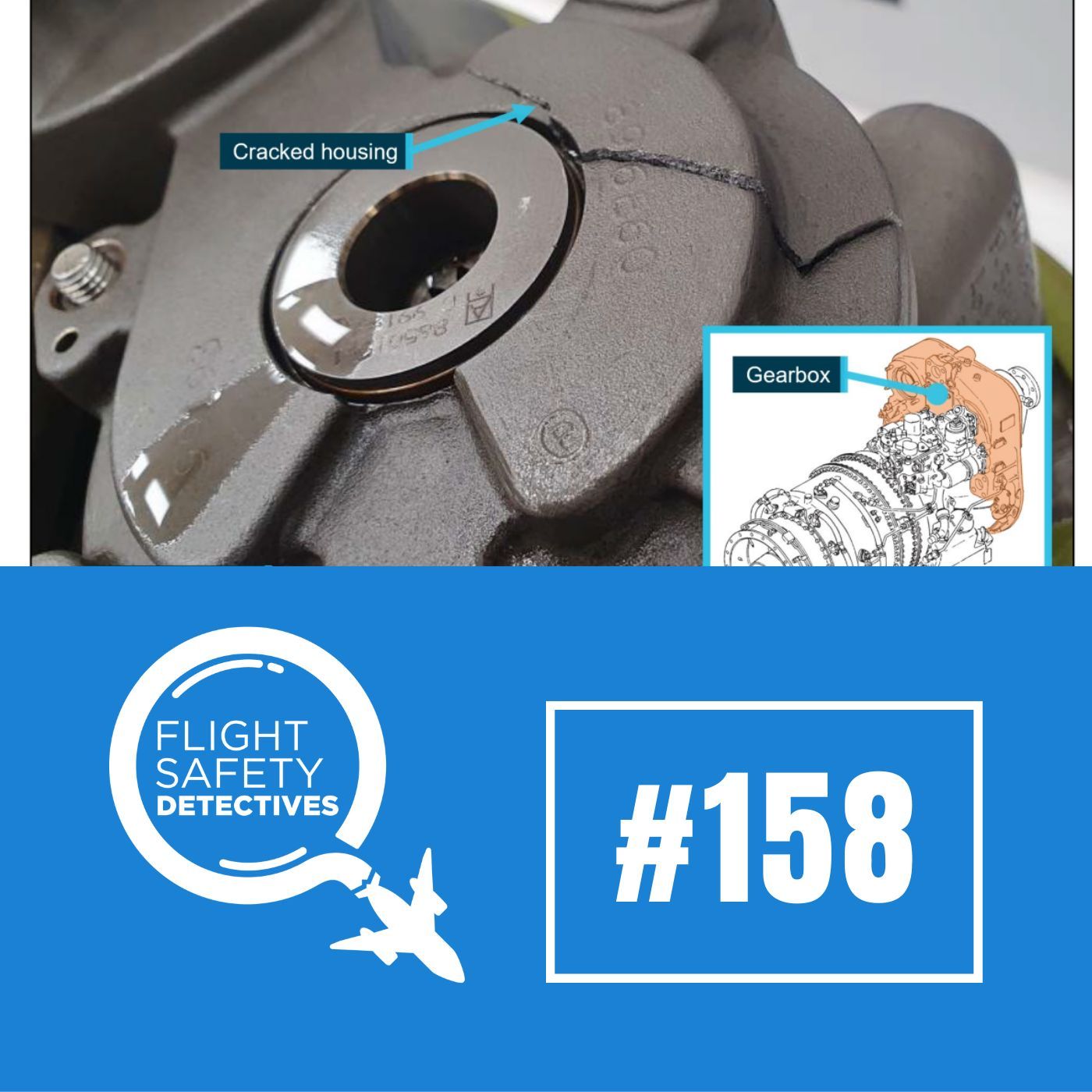
Ep 161Cessna 441 Engine Issue Traced to Maintenance Mistakes - Episode 158
A Cessna 441 Conquest had an engine issue and landed without incident. A fix was made, but that’s not the end of the story. A second incident occurred that revealed damage not initially discovered. The Flight Safety Detectives share major safety takeaways from this sequence of events. The focus is on an Australian investigation of a 2021 incident. During some engine maintenance, two adjacent oil lines were transposed. The error was discovered when the engine did not operate properly in flight. A field repair was done, but a short time later there was another engine problem. The transposed lines led to damage to the oil pump. Fortunately, neither engine incident caused an accident. This incident would not have met the NTSB criteria for investigation, but the Australian ATSB did gather information and generate a report. That report highlights how seemingly small maintenance errors can cause larger problems. John Goglia, Todd Curtis, and Greg Feith review the findings. They go beyond the general recommendations made by the ATSB and discuss specific maintenance procedure changes that could improve aviation safety. Related document: ATSB Aviation Occurrence Report: ATSB Report AO-2021-039 Cessna Conquest.pdf Don’t miss what’s to come from the Flight Safety Detectives - subscribe to the Flight Safety Detectives YouTube channel, listen at your favorite podcast service and visit the Flight Safety Detectives website. Don’t miss what’s to come from the Flight Safety Detectives - subscribe to the Flight Safety Detectives YouTube channel, listen at your favorite podcast service and visit the Flight Safety Detectives website. Want to go deeper with the Flight Safety Detectives? Join our YouTube Membership program for exclusive perks like members-only live streams and Q&As and early access to episodes. Your membership support directly helps John, Greg and Todd to deliver expert insights into aviation safety.Interested in partnering with us? Sponsorship opportunities are available—brand mentions, episode integrations, and dedicated segments are just a few of the options. Flight Safety Detectives offers a direct connection with an engaged audience passionate about aviation and safety. Reach out to [email protected]. Music: “Inspirational Sports” license ASLC-22B89B29-052322DDB8 Hosted by Simplecast, an AdsWizz company. See pcm.adswizz.com for information about our collection and use of personal data for advertising.

Ep 160Yeti Air Crash Preliminary Report - Episode 157
The Flight Safety Detectives examine the preliminary accident report from the fatal January 2023 crash of a Yeti Airlines ATR 72. They discuss professionalism and crew resource management as the central cause. “Pilots needs to execute with purpose,” Greg Feith says. “That means that before you do or touch anything in the cockpit you have to be clear about your purpose.” Greg, Todd Curtis, and John Goglia share possible reasons why the flight crew made fundamental errors that allowed the aircraft to stall and crash shortly before landing. For them, the crash may become a great case study for the importance of paying attention and professionalism. The flight crew was a captain getting familiarization training with a new airport and a training captain. John highlights the many tasks being covered by the training captain and makes a case for the need for a third crew member in the cockpit. The preliminary report shows that the training captain grabbed the wrong levers during approach. Neither pilot reacted well to the resulting flight issues. Human factors and poor communication are large contributors to the resulting crash. Related documents at the Flight Safety Detectives website: Yeti Airlines Preliminary Report: Yeti-Airlines-15-Jan-2023-Preliminary-Report.pdf NTSB Accident report KAL flight 801: KAL_flight_801.pdf This episode also includes discussion of the acting FAA administrator’s effort to put together a panel to study aviation safety. John, Greg and Todd talk about the types of people who need to participate to get an accurate picture of what is happening with aviation safety. Don’t miss what’s to come from the Flight Safety Detectives - subscribe to the Flight Safety Detectives YouTube channel, listen at your favorite podcast service and visit the Flight Safety Detectives website. Don’t miss what’s to come from the Flight Safety Detectives - subscribe to the Flight Safety Detectives YouTube channel, listen at your favorite podcast service and visit the Flight Safety Detectives website. Want to go deeper with the Flight Safety Detectives? Join our YouTube Membership program for exclusive perks like members-only live streams and Q&As and early access to episodes. Your membership support directly helps John, Greg and Todd to deliver expert insights into aviation safety.Interested in partnering with us? Sponsorship opportunities are available—brand mentions, episode integrations, and dedicated segments are just a few of the options. Flight Safety Detectives offers a direct connection with an engaged audience passionate about aviation and safety. Reach out to [email protected]. Music: “Inspirational Sports” license ASLC-22B89B29-052322DDB8 Hosted by Simplecast, an AdsWizz company. See pcm.adswizz.com for information about our collection and use of personal data for advertising.

Ep 159Deadly Cory Lidle Crash Caused by Failure to Plan- Episode 156
Major League Baseball player Cory Lidle was killed when he flew his Cirrus SR20 into a building alongside the East River in New York. The accident shows the consequences of failure to do preflight planning and poor aeronautical decision making. Todd Curtis, Greg Feith, and John Goglia discuss the circumstances around the October 11, 2006 crash. The aircraft was on a VFR flight beneath the Class B airspace around Manhattan Island. Lidle and his passenger, who was a certificated instructor pilot, were unable to negotiate a turn over the East River, and were killed after striking a building. They talk about the need for flight planning to deal with the challenging circumstances presented by wind, tall buildings and restricted air space. Calling the conditions challenging but not impossible, they focus on many options to avoid the fatal crash. This NTSB report on this accident is full of detail. Investigators, along with the Flight Safety Detectives, were left puzzled by why the pilot did not take advantage of options available to avoid the crash. Related documents: NTSB Accident Brief: Lidle_SR20_2006_brief.pdf FAA AC 60-22 Aeronautical Decision Making: FAA-AC 60-22 - Aeronautical Decision Making 1991-12-31 PUBLIC DOCKET: https://data.ntsb.gov/Docket?ProjectID=64679 Don’t miss what’s to come from the Flight Safety Detectives - subscribe to the Flight Safety Detectives YouTube channel, listen at your favorite podcast service and visit the Flight Safety Detectives website. Music License Codes: ASLC-2042A62C-B9C4CBFFD, ASLC-1F1B3E23-E378DB5384 Don’t miss what’s to come from the Flight Safety Detectives - subscribe to the Flight Safety Detectives YouTube channel, listen at your favorite podcast service and visit the Flight Safety Detectives website. Want to go deeper with the Flight Safety Detectives? Join our YouTube Membership program for exclusive perks like members-only live streams and Q&As and early access to episodes. Your membership support directly helps John, Greg and Todd to deliver expert insights into aviation safety.Interested in partnering with us? Sponsorship opportunities are available—brand mentions, episode integrations, and dedicated segments are just a few of the options. Flight Safety Detectives offers a direct connection with an engaged audience passionate about aviation and safety. Reach out to [email protected]. Music: “Inspirational Sports” license ASLC-22B89B29-052322DDB8 Hosted by Simplecast, an AdsWizz company. See pcm.adswizz.com for information about our collection and use of personal data for advertising.

Ep 158Vintage Aircraft Creating Safety Concerns - Episode 155
Vintage airframes are creating modern-day safety issues. Todd Curtis and John Goglia discuss the recent P63 -B17 crash at a Texas air show as one example. They also examine a 2020 crash of a Vietnam era UH-1H helicopter that crashed during fire suppression operations. The Flight safety Detectives talk about the challenges of keeping older airframes safe. Metal ages and fatigues. Maintenance records are less clear. The people with in-depth experience with these aircraft become scarce. They talk about the many facets the FAA will need to consider as the agency reassesses the proper use of old war birds and other vintage airframes for non-commercial uses. They also discuss the acceptability of risks associated with airshow aircraft and firefighting aircraft. Related document: NTSB Accident Number WPR20LA211 Report (PDF) Don’t miss what’s to come from the Flight Safety Detectives - subscribe to the Flight Safety Detectives YouTube channel, listen at your favorite podcast service and visit the Flight Safety Detectives website. Music License Codes: ASLC-2042A62C-B9C4CBFFD, ASLC-1F1B3E23-E378DB5384 Don’t miss what’s to come from the Flight Safety Detectives - subscribe to the Flight Safety Detectives YouTube channel, listen at your favorite podcast service and visit the Flight Safety Detectives website. Want to go deeper with the Flight Safety Detectives? Join our YouTube Membership program for exclusive perks like members-only live streams and Q&As and early access to episodes. Your membership support directly helps John, Greg and Todd to deliver expert insights into aviation safety.Interested in partnering with us? Sponsorship opportunities are available—brand mentions, episode integrations, and dedicated segments are just a few of the options. Flight Safety Detectives offers a direct connection with an engaged audience passionate about aviation and safety. Reach out to [email protected]. Music: “Inspirational Sports” license ASLC-22B89B29-052322DDB8 Hosted by Simplecast, an AdsWizz company. See pcm.adswizz.com for information about our collection and use of personal data for advertising.

Ep 157Phraseology and Aviation Safety - Episode 154
Words matter. Todd Curtis, Greg Feith, and John Goglia discuss several aviation incidents with a common thread of communication issues. They cover two runway incursions that were dangerously close to becoming runway collisions. One was at JFK Airport in January 2023, and the second in Austin in February 2023. These air carrier events are an opportunity to look phraseology and communication as factors in aviation safety. The Flight Safety Detectives talk about the importance of investigators looking at cockpit communication issues and human factors issues in these incidents. In both, they suspect that little things like the words used and distractions could have caused major safety issues. They also discuss the February 2023 shootdowns of a balloon and three as yet unidentified aerospace vehicles. Join John, Greg and Todd for this roundup of several recent aviation safety issues that highlight the role that words – the right words, the wrong words, and misunderstood words – play in keeping people and planes safe. Don’t miss what’s to come from the Flight Safety Detectives - subscribe to the Flight Safety Detectives YouTube channel, listen at your favorite podcast service and visit the Flight Safety Detectives website. Don’t miss what’s to come from the Flight Safety Detectives - subscribe to the Flight Safety Detectives YouTube channel, listen at your favorite podcast service and visit the Flight Safety Detectives website. Want to go deeper with the Flight Safety Detectives? Join our YouTube Membership program for exclusive perks like members-only live streams and Q&As and early access to episodes. Your membership support directly helps John, Greg and Todd to deliver expert insights into aviation safety.Interested in partnering with us? Sponsorship opportunities are available—brand mentions, episode integrations, and dedicated segments are just a few of the options. Flight Safety Detectives offers a direct connection with an engaged audience passionate about aviation and safety. Reach out to [email protected]. Music: “Inspirational Sports” license ASLC-22B89B29-052322DDB8 Hosted by Simplecast, an AdsWizz company. See pcm.adswizz.com for information about our collection and use of personal data for advertising.
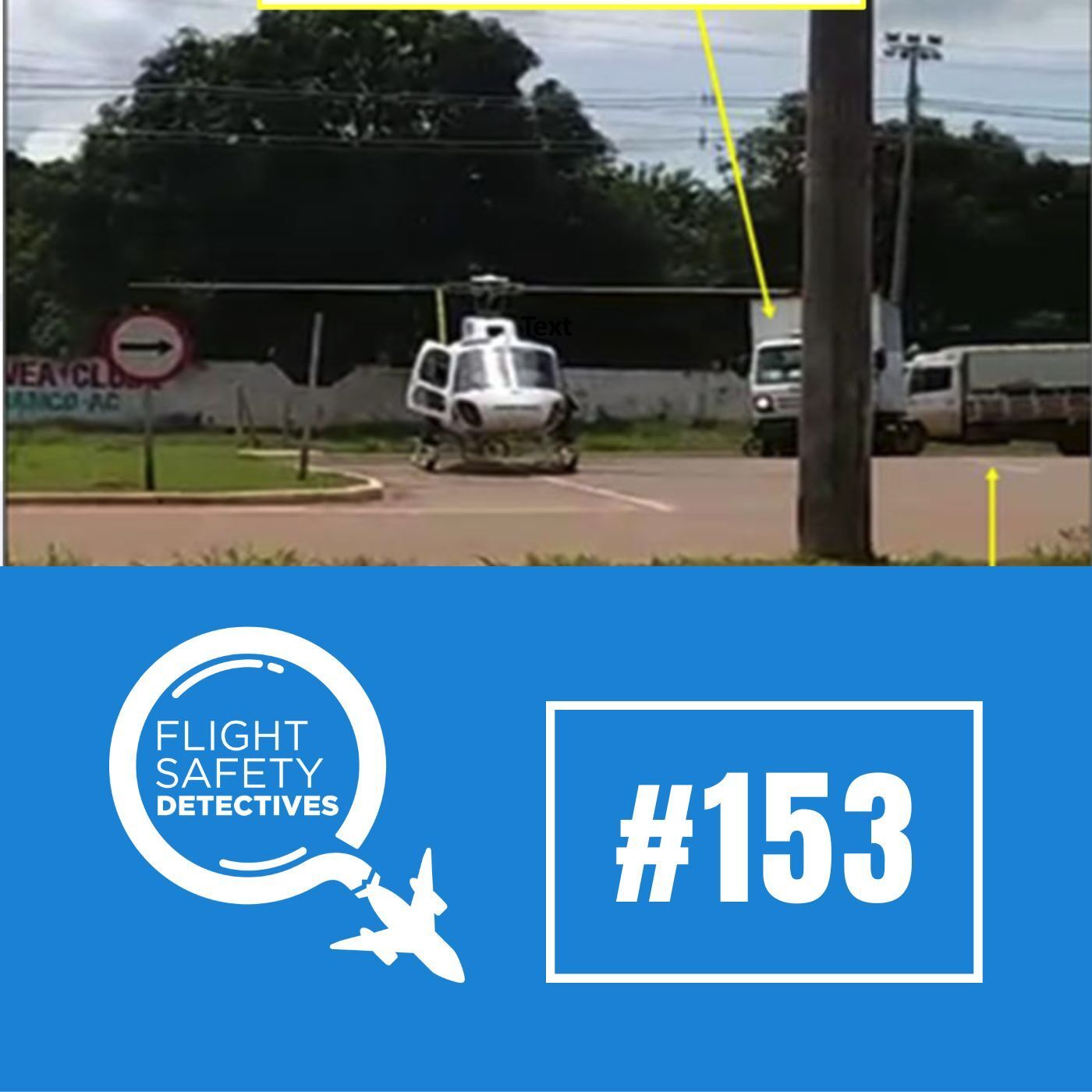
Ep 15619 Operational Mistakes and 1 Ruined Helicopter - Episode 153
“A sloppy operation all around.” That’s John Goglia’s summary of a helicopter and truck accident that’s the subject of this episode. John counts 19 operational errors listed in the accident report that all contributed to the crash that destroyed a police helicopter. John and Todd Curtis share insight and amateur video that provide a close look at the 2020 ground collision in Brazil. The helicopter was operating on a public road while traffic was passing both in front of and behind the aircraft. Many operational procedures were in place to avoid such an accident. Unfortunately, they were not followed. John and Todd cover the many ways that this accident could have been avoided. They talk about the value of following procedures to eliminate or reduce unnecessary risks. Don’t miss what’s to come from the Flight Safety Detectives - subscribe to the Flight Safety Detectives YouTube channel, listen at your favorite podcast service and visit the Flight Safety Detectives website. Don’t miss what’s to come from the Flight Safety Detectives - subscribe to the Flight Safety Detectives YouTube channel, listen at your favorite podcast service and visit the Flight Safety Detectives website. Want to go deeper with the Flight Safety Detectives? Join our YouTube Membership program for exclusive perks like members-only live streams and Q&As and early access to episodes. Your membership support directly helps John, Greg and Todd to deliver expert insights into aviation safety.Interested in partnering with us? Sponsorship opportunities are available—brand mentions, episode integrations, and dedicated segments are just a few of the options. Flight Safety Detectives offers a direct connection with an engaged audience passionate about aviation and safety. Reach out to [email protected]. Music: “Inspirational Sports” license ASLC-22B89B29-052322DDB8 Hosted by Simplecast, an AdsWizz company. See pcm.adswizz.com for information about our collection and use of personal data for advertising.

Ep 155A320 Elevator Damage Impacts Flight - Episode 152
John Goglia and Todd Curtis discuss a recent event where an A320 lost part of its left elevator during takeoff in the Democratic Republic of the Congo. The focus is on the differences in aviation safety systems around the globe, the challenges of tracking service bulletins on aircraft, and pilot decision making. In this Jan. 29 flight, the flight control system was damaged and the aircraft was unable to make left turns. The aircraft continued to its destination and landed safely. John and Todd discuss the crew's decision to continue the flight, the ability of the civil aviation authorities to investigate the incident, and the role that the manufacturer may play in understanding what led to the elevator separation. An investigation into the incident may or may not happen. Further, results of any information gathered may not be released to the public or aviation community. Don’t miss what’s to come from the Flight Safety Detectives - subscribe to the Flight Safety Detectives YouTube channel, listen at your favorite podcast service and visit the Flight Safety Detectives website. Want to go deeper with the Flight Safety Detectives? Join our YouTube Membership program for exclusive perks like members-only live streams and Q&As and early access to episodes. Your membership support directly helps John, Greg and Todd to deliver expert insights into aviation safety.Interested in partnering with us? Sponsorship opportunities are available—brand mentions, episode integrations, and dedicated segments are just a few of the options. Flight Safety Detectives offers a direct connection with an engaged audience passionate about aviation and safety. Reach out to [email protected]. Music: “Inspirational Sports” license ASLC-22B89B29-052322DDB8 Hosted by Simplecast, an AdsWizz company. See pcm.adswizz.com for information about our collection and use of personal data for advertising.

Ep 154Experienced Test Pilot Doomed by Severe Weather- Episode 151
Even highly experienced pilots can be overcome by severe weather. Todd Curtis and John Goglia discuss the fatal crash that took the life of famed test pilot Scott Crossfield. A thunderstorm boxed him in, leading to loss of control of his Cessna 210A. John and Todd examine the weather information available to the pilot and to air traffic controllers. Failure to pay attention and communicate about the weather played a key factor in this air crash. Crossfield was a famous test pilot with more than 11,000 flight hours. He was the first person to break Mach 2 in an airplane. John and Todd discuss the need to reconsider flying when severe weather is predicted. They note that planes of all sizes can be affected, and a flight delay is often the safer alternative. Related documents at the Flight safety Detectives website: NTSB ACCIDENT REPORT ADVISORY CIRCULARS: FAA AC 00-24B FAA AC 00-24C Don’t miss what’s to come from the Flight Safety Detectives - subscribe to the Flight Safety Detectives YouTube channel, listen at your favorite podcast service and visit the Flight Safety Detectives website. All music used by permission: Upbeat Inspiration by Paul Werner licensed by Jamendo Licensing and Upbeat Technology Corporate by Forest Music licensed by Jamendo Licensing. Don’t miss what’s to come from the Flight Safety Detectives - subscribe to the Flight Safety Detectives YouTube channel, listen at your favorite podcast service and visit the Flight Safety Detectives website. Want to go deeper with the Flight Safety Detectives? Join our YouTube Membership program for exclusive perks like members-only live streams and Q&As and early access to episodes. Your membership support directly helps John, Greg and Todd to deliver expert insights into aviation safety.Interested in partnering with us? Sponsorship opportunities are available—brand mentions, episode integrations, and dedicated segments are just a few of the options. Flight Safety Detectives offers a direct connection with an engaged audience passionate about aviation and safety. Reach out to [email protected]. Music: “Inspirational Sports” license ASLC-22B89B29-052322DDB8 Hosted by Simplecast, an AdsWizz company. See pcm.adswizz.com for information about our collection and use of personal data for advertising.

Ep 153Flight Instructors Can Be Dead Wrong - Episode 150
A pilot in training paid with her life when a flight instructor chose a poor location to practice engine failure maneuvers. John and Todd review the evidence collected following the air crash in California to offer flight safety advice. Being a pilot is not easy. Pay attention to everything. Anticipate what could go wrong and have a plan. In the 2017 accident reviewed in this episode, a flight instructor chose a mountainous area to teach simulated engine failures. Two students were aboard, one actively participating in the lesson and a second observing. The poor choice of location created a real issue that led to a crash into the terrain. While the aircraft was largely intact, the rear passenger was killed. John and Todd talk about the decisions that led to this air crash. It’s not easy, but students should always be willing to fire their CFI or flight school when they encounter unsafe practices. Don’t miss what’s to come from the Flight Safety Detectives - subscribe to the Flight Safety Detectives YouTube channel, listen at your favorite podcast service and visit the Flight Safety Detectives website. Don’t miss what’s to come from the Flight Safety Detectives - subscribe to the Flight Safety Detectives YouTube channel, listen at your favorite podcast service and visit the Flight Safety Detectives website. Want to go deeper with the Flight Safety Detectives? Join our YouTube Membership program for exclusive perks like members-only live streams and Q&As and early access to episodes. Your membership support directly helps John, Greg and Todd to deliver expert insights into aviation safety.Interested in partnering with us? Sponsorship opportunities are available—brand mentions, episode integrations, and dedicated segments are just a few of the options. Flight Safety Detectives offers a direct connection with an engaged audience passionate about aviation and safety. Reach out to [email protected]. Music: “Inspirational Sports” license ASLC-22B89B29-052322DDB8 Hosted by Simplecast, an AdsWizz company. See pcm.adswizz.com for information about our collection and use of personal data for advertising.

Ep 152Spatial Disorientation Kills – Episode 149
Spatial disorientation can happen to any pilot. It led to the fatal crashes that killed John F Kennedy Jr and Kobe Bryant. John, Greg and Todd are joined by expert Andy Watson to talk about ways pilots can avoid a deadly air crash. Andy Watson is a professional air traffic controller, pilot, and author of the book, The Pilot’s Guide to Air Traffic Control. He describes the FAA accident briefing that led him to research spatial disorientation and develop practical recommendations to help avoid it. Spatial disorientation can happen when a pilot is in IFR conditions, banking left or right, and moving their head. This phenomenon is especially challenging for single pilots. Spatial disorientation is the contributing factor in many air crashes. Hear practical advice for all pilots. The discussion covers how to avoid spatial disorientation and how to work with air traffic control to get help when needed. Learn why the responses “standby” or “unable” are acceptable and could save your life. Related documents at the Flight Safety Detectives website: FAA Spatial Disorientation brochure (PDF) 2017 Pilatus PC12 accident report (PDF) Public Docket for the Pilatus PC12 accident Don’t miss what’s to come from the Flight Safety Detectives - subscribe to the Flight Safety Detectives YouTube channel, listen at your favorite podcast service and visit the Flight Safety Detectives website. All music used by permission: Upbeat Inspiration by Paul Werner licensed by Jamendo Licensing and Upbeat Technology Corporate by Forest Music licensed by Jamendo Licensing. Don’t miss what’s to come from the Flight Safety Detectives - subscribe to the Flight Safety Detectives YouTube channel, listen at your favorite podcast service and visit the Flight Safety Detectives website. Want to go deeper with the Flight Safety Detectives? Join our YouTube Membership program for exclusive perks like members-only live streams and Q&As and early access to episodes. Your membership support directly helps John, Greg and Todd to deliver expert insights into aviation safety.Interested in partnering with us? Sponsorship opportunities are available—brand mentions, episode integrations, and dedicated segments are just a few of the options. Flight Safety Detectives offers a direct connection with an engaged audience passionate about aviation and safety. Reach out to [email protected]. Music: “Inspirational Sports” license ASLC-22B89B29-052322DDB8 Hosted by Simplecast, an AdsWizz company. See pcm.adswizz.com for information about our collection and use of personal data for advertising.

Ep 151Troy Gentry Crash Caused by Maintenance Error – Episode 148
The helicopter crash that killed musician Troy Gentry of Montgomery Gentry was primarily caused by improper maintenance. The Flight Safety Detectives share why they find fault with the NTSB assigning the primary cause to the pilot. “It is clear that the basic cause of this accident occurred in the hangar,” says John Goglia. John and Todd review the information in the NTSB report. They applaud the excellent work done by the NTSB lab that showed how improper installation of engine tie rod nuts led to engine failure of the Schweizer 269C. While there are pages of analysis of the pilot and his actions in the NTSB final report, the clear maintenance deficiencies are covered minimally. The mechanic did not follow the manual or specifications. While at the NTSB, John pushed for more investment in exploring human factors in the maintenance hangar. This accident shows a continued lack of commitment to defining corrective actions for maintenance personnel. Related documents on the Flight safety Detectives website: NTSB final report Public Docket Don’t miss what’s to come from the Flight Safety Detectives - subscribe to the Flight Safety Detectives YouTube channel, listen at your favorite podcast service and visit the Flight Safety Detectives website. All music used by permission: Upbeat Inspiration by Paul Werner licensed by Jamendo Licensing and Upbeat Technology Corporate by Forest Music licensed by Jamendo Licensing. Don’t miss what’s to come from the Flight Safety Detectives - subscribe to the Flight Safety Detectives YouTube channel, listen at your favorite podcast service and visit the Flight Safety Detectives website. Want to go deeper with the Flight Safety Detectives? Join our YouTube Membership program for exclusive perks like members-only live streams and Q&As and early access to episodes. Your membership support directly helps John, Greg and Todd to deliver expert insights into aviation safety.Interested in partnering with us? Sponsorship opportunities are available—brand mentions, episode integrations, and dedicated segments are just a few of the options. Flight Safety Detectives offers a direct connection with an engaged audience passionate about aviation and safety. Reach out to [email protected]. Music: “Inspirational Sports” license ASLC-22B89B29-052322DDB8 Hosted by Simplecast, an AdsWizz company. See pcm.adswizz.com for information about our collection and use of personal data for advertising.