
Flight Safety Detectives
348 episodes — Page 3 of 7

Ep 247First Fatality Involving HondaJet - Episode 247
The first fatal HondaJet accident just occurred. Greg Feith and John Goglia go over the known facts of the air crash in Mesa, Arizona on November 5. The jet ran off the runway and struck a car on a nearby road, killing the driver and four of the five people on board the jet. They draw similarities with a 2014 takeoff accident involving a Gulfstream jet near Boston. Poor preflight preparation may be the biggest contributor to this deadly event. Greg and John share the simple tests and steps that can be the difference between a successful and a fatal flight. Greg and John also discuss Greg's recent recognition from the National Aeronautic Association. Greg was named a 2023 Distinguished Statesmen of Aviation.Greg and John finished the episode with a discussion of the show's newest advertiser, Piston Power, and how their various options for managing routine and non-routine repairs may benefit an aircraft owner.They also welcome a new sponsor - PistonPower™. The company offers general aviation’s first and only Unscheduled and Power-by-the-Hour programs for piston aircraft. Designed by aviation pros who’ve designed and built similar programs for turbine engines, PistonPower™ brings stability to your maintenance budget and peace of mind to your business and personal flying. No Risk. No Surprises. Stabilize Your Maintenance Budget! Don’t miss what’s to come from the Flight Safety Detectives - subscribe to the Flight Safety Detectives YouTube channel, listen at your favorite podcast service and visit the Flight Safety Detectives website. Want to go deeper with the Flight Safety Detectives? Join our YouTube Membership program for exclusive perks like members-only live streams and Q&As and early access to episodes. Your membership support directly helps John, Greg and Todd to deliver expert insights into aviation safety.Interested in partnering with us? Sponsorship opportunities are available—brand mentions, episode integrations, and dedicated segments are just a few of the options. Flight Safety Detectives offers a direct connection with an engaged audience passionate about aviation and safety. Reach out to [email protected]. Music: “Inspirational Sports” license ASLC-22B89B29-052322DDB8 Hosted by Simplecast, an AdsWizz company. See pcm.adswizz.com for information about our collection and use of personal data for advertising.

Ep 246U.S. Army UH-1 Huey Helicopter Crash Kills 6- Episode 246
A U.S. Army UH-1 Huey helicopter survived the perils of Vietnam but came to a disastrous end in West Virginia. The 1962 helicopter crashed after its engine failed, killing the pilot and five passengers.The 2022 crash happened during an annual event that offers visitors an opportunity to fly either as passengers or as a second pilot. This helicopter was a warbird--a former military aircraft operating as a civil aircraft. It was operated under a special airworthiness certificate in the experimental category.Although the pilot in command had flown this same helicopter at the annual event in the previous two years, he had logged only 21 hours of flying experience in that helicopter. One of the five passengers was a helicopter pilot who had paid to operate the helicopter during the flight. About 15 minutes into the flight, the engine failed. The helicopter struck power lines and a rock face before crashing and catching fire. The NTSB could not determine if the pilot in command or the helicopter-rated passenger attempted the emergency landing.Despite the number of people killed in warbird crashes, it is unlikely the FAA will make major changes in how it oversees operators of these types of flights because of the relatively small number of operators. John and Todd share thoughts on what these operators can do to ensure safety. Don’t miss what’s to come from the Flight Safety Detectives - subscribe to the Flight Safety Detectives YouTube channel, listen at your favorite podcast service and visit the Flight Safety Detectives website. Want to go deeper with the Flight Safety Detectives? Join our YouTube Membership program for exclusive perks like members-only live streams and Q&As and early access to episodes. Your membership support directly helps John, Greg and Todd to deliver expert insights into aviation safety.Interested in partnering with us? Sponsorship opportunities are available—brand mentions, episode integrations, and dedicated segments are just a few of the options. Flight Safety Detectives offers a direct connection with an engaged audience passionate about aviation and safety. Reach out to [email protected]. Music: “Inspirational Sports” license ASLC-22B89B29-052322DDB8 Hosted by Simplecast, an AdsWizz company. See pcm.adswizz.com for information about our collection and use of personal data for advertising.

Ep 245Drone Accident and A First for the National Aviation Hall of Fame- Episode 245
Flight Safety Detectives host John Goglia will be inducted into the National Aviation Hall of Fame, a rare accomplishment in aviation. John is the first person whose career was focused on aviation maintenance to be selected. John Goglia and Todd Curtis talk about the honor before diving into a recent drone accident in Boston that injured two people. The drone crash occurred in downtown Boston during the taping of the TNT show "Inside the NBA." The drone crashed into a pole and fell, injuring people in the crowd. The drone flight would likely have had a FAA exemption to allow a flight both near crowds of people and close to Boston's Logan Airport.Todd and John also discuss John's recent visit to the NBAA (National Business Aviation Association) exhibition in Las Vegas. John saw many of the companies and technologies behind the vertical takeoff and landing aircraft associated with advanced air mobility (AAM) companies like Joby. The FAA has just released regulations related to the commercial use of such aircraft.Todd and John talk about the potential for AAM operations in the U.S. They discuss several possible issues might slow adoption. Don’t miss what’s to come from the Flight Safety Detectives - subscribe to the Flight Safety Detectives YouTube channel, listen at your favorite podcast service and visit the Flight Safety Detectives website. Want to go deeper with the Flight Safety Detectives? Join our YouTube Membership program for exclusive perks like members-only live streams and Q&As and early access to episodes. Your membership support directly helps John, Greg and Todd to deliver expert insights into aviation safety.Interested in partnering with us? Sponsorship opportunities are available—brand mentions, episode integrations, and dedicated segments are just a few of the options. Flight Safety Detectives offers a direct connection with an engaged audience passionate about aviation and safety. Reach out to [email protected]. Music: “Inspirational Sports” license ASLC-22B89B29-052322DDB8 Hosted by Simplecast, an AdsWizz company. See pcm.adswizz.com for information about our collection and use of personal data for advertising.
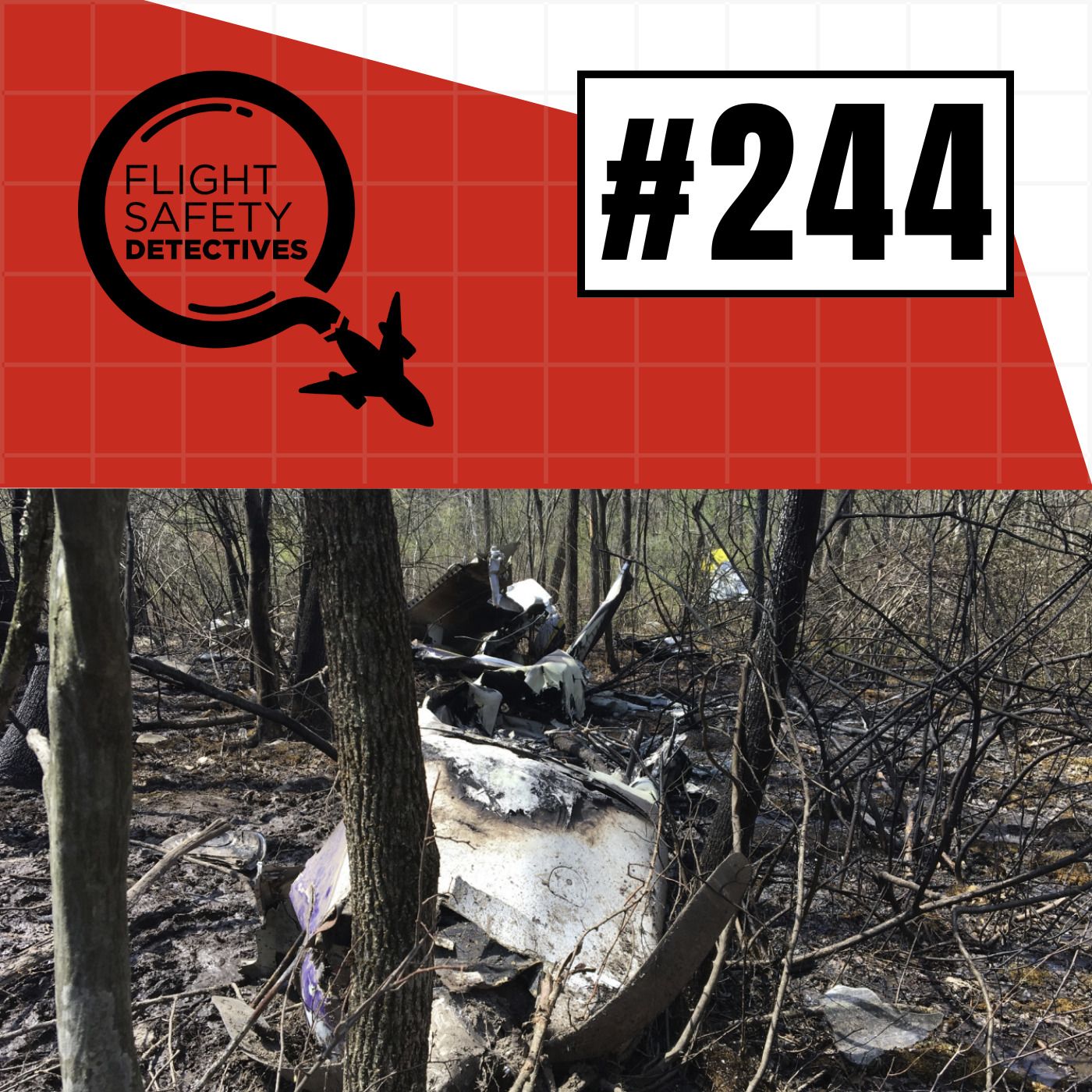
Ep 244Bad Fuel Line Causes Engine Fire & Crash - Episode 244
A fatal Piper PA-28-300 plane crash was caused by a loose fuel line that should never have been installed on the aircraft. The NTSB investigation of the fatal May 2018 crash shows that a fuel line that was not approved for use on that aircraft led to an engine fire. Todd Curtis and John Goglia examine the details. Although the fuel line used was an approved aviation part, it was not approved for use in this aircraft. The NTSB could not determine who installed the part or when it was installed.Approved parts used in unapproved ways is an ongoing issue in aviation. Some individuals in the general aviation community even promote the use of auto parts instead of more expensive approved aviation parts.John, who worked on FAA committees on the issue of unapproved parts in the 1980s, has seen many unapproved part issues with several major airlines. The FAA began requiring more documentation for aircraft parts in the 1990s, but the problem persists.The accident pilot was aware that the engine had issues. Before the flight, the pilot told a CFI that he would perform an engine runup and take off only if the runup was successful. This accident involved pilot decision-making under uncertainty concerning whether to take off with an engine problem. This kind of issue happens at all levels of aviation. The fatal crash of an Alaska Airlines MD83 in 2000 is just another example. Don’t miss what’s to come from the Flight Safety Detectives - subscribe to the Flight Safety Detectives YouTube channel, listen at your favorite podcast service and visit the Flight Safety Detectives website. Want to go deeper with the Flight Safety Detectives? Join our YouTube Membership program for exclusive perks like members-only live streams and Q&As and early access to episodes. Your membership support directly helps John, Greg and Todd to deliver expert insights into aviation safety.Interested in partnering with us? Sponsorship opportunities are available—brand mentions, episode integrations, and dedicated segments are just a few of the options. Flight Safety Detectives offers a direct connection with an engaged audience passionate about aviation and safety. Reach out to [email protected]. Music: “Inspirational Sports” license ASLC-22B89B29-052322DDB8 Hosted by Simplecast, an AdsWizz company. See pcm.adswizz.com for information about our collection and use of personal data for advertising.
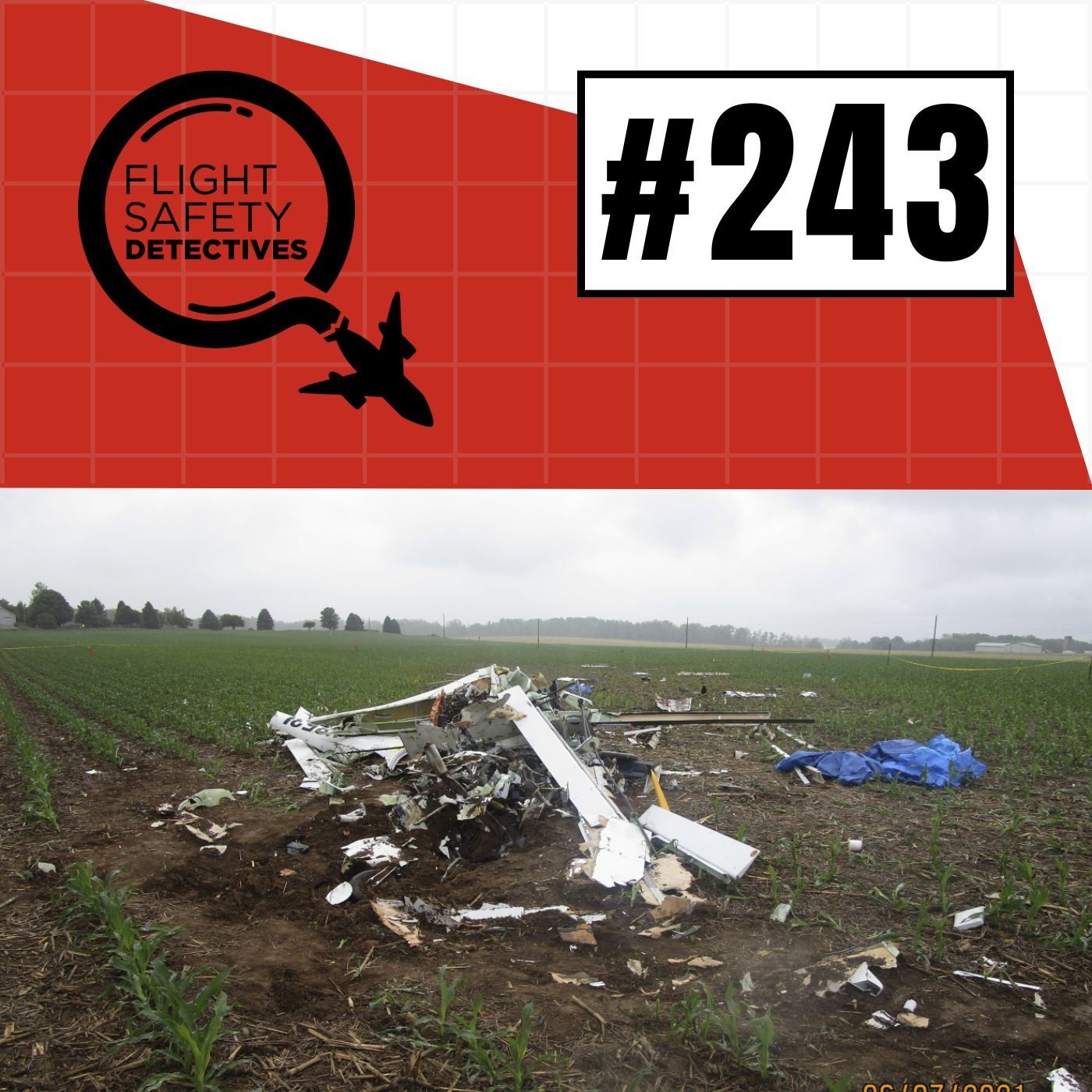
Ep 243Another Disappointing Training Accident Report - Episode 243
Another flight training accident, another lacking NTSB report. Todd Curtis, Greg Feith, and John Goglia discuss the NTSB report of a fatal June 2021 flight training accident near Indianapolis that lacks useful details or analysis.The accident aircraft was Diamond DA40 with an instructor and student on board. The instructor had received a CFI certification about nine weeks before the accident. Most of the instructor's 329 hours of flight experience were with the same make and model of aircraft.The accident sequence began with a stall that turned into a spin. A certified CFI must demonstrate the ability to recover from a spin. The airplane flight manual included specific instructions for spin recovery.The NTSB recreated the accident sequence using a data card from the airplane and it showed that proper spin recovery techniques were not used. What was much less clear was how the CFI reacted in the situation.The NTSB did not investigate the training of the CFI, the procedures used by the flight training organization, or the experience other students had with the CFI. There are not enough facts or insights in the report to make it useful to the aviation community. Don’t miss what’s to come from the Flight Safety Detectives - subscribe to the Flight Safety Detectives YouTube channel, listen at your favorite podcast service and visit the Flight Safety Detectives website. Want to go deeper with the Flight Safety Detectives? Join our YouTube Membership program for exclusive perks like members-only live streams and Q&As and early access to episodes. Your membership support directly helps John, Greg and Todd to deliver expert insights into aviation safety.Interested in partnering with us? Sponsorship opportunities are available—brand mentions, episode integrations, and dedicated segments are just a few of the options. Flight Safety Detectives offers a direct connection with an engaged audience passionate about aviation and safety. Reach out to [email protected]. Music: “Inspirational Sports” license ASLC-22B89B29-052322DDB8 Hosted by Simplecast, an AdsWizz company. See pcm.adswizz.com for information about our collection and use of personal data for advertising.

Ep 242Aircraft Cabin Materials Cause Deadly Gases - Episode 242
Aviation around the world changed as a result of the fatal accident involving Air Canada Flight 797. The investigation led to massive changes to the materials inside the cabins of commercial aircraft.On June 2, 1983, the DC9-32 on a routine flight from Dallas to Toronto had an inflight smoke event that led to an emergency landing in Cincinnati. As the passengers and crew began evacuating the aircraft, a flash fire in the cabin created heat and toxic smoke that killed 23 of the 46 occupants.The NTSB investigation revealed that the fire caused the release of dangerous levels of toxic chemicals and gases from the materials used inside the cabin. This finding led to a systematic transition to new fire-blocking materials. John Goglia shares his role in replacing materials on aircraft he maintained.This accident also led to the requirement for smoke detectors in lavatories. It also led to the use of air-driven flush motors in lavatories, rather than electrical flush motors.Related documents are available at the Flight Safety Detectives website. Don’t miss what’s to come from the Flight Safety Detectives - subscribe to the Flight Safety Detectives YouTube channel, listen at your favorite podcast service and visit the Flight Safety Detectives website. Want to go deeper with the Flight Safety Detectives? Join our YouTube Membership program for exclusive perks like members-only live streams and Q&As and early access to episodes. Your membership support directly helps John, Greg and Todd to deliver expert insights into aviation safety.Interested in partnering with us? Sponsorship opportunities are available—brand mentions, episode integrations, and dedicated segments are just a few of the options. Flight Safety Detectives offers a direct connection with an engaged audience passionate about aviation and safety. Reach out to [email protected]. Music: “Inspirational Sports” license ASLC-22B89B29-052322DDB8 Hosted by Simplecast, an AdsWizz company. See pcm.adswizz.com for information about our collection and use of personal data for advertising.

Ep 241Fatal Crashes Traced to Cirrus Pilots - Episode 241
Two recent Cirrus accidents killed a total of seven people. Greg Feith, John Goglia and Todd Curtis have some advice for Cirrus pilots to avoid similar tragedies. They caution newer technology supports, but is not a replacement for, good planning and pilot decision-making.One accident at Kill Devil Hills airport in North Carolina, killed four adults and one child. Another, in Provo, Utah airport killed both occupants.The Kill Devil Hills aircraft apparently had the maximum possible number of occupants. Todd shares his experiences flying with a heavily loaded aircraft and how weight impacts safe flight practices. Kill Devil Hills Airport has a relatively short runway. Planning and maintaining a stabilized approach, making adjustments for trees and towers, and factoring in weather conditions all need consideration when planning to take off and land there.Accident investigators are urged to look into the specific training the pilot had for this Cirrus model.In the Utah flight, the aircraft may have entered an accelerated stall and crashed during a second approach shortly after turning from the downwind leg to the base leg.Like the first accident, ADS-B data indicated that the accident aircraft did not recently land at the accident airport. The pilot’s lack of familiarity and planning may be key factors in the crash. Don’t miss what’s to come from the Flight Safety Detectives - subscribe to the Flight Safety Detectives YouTube channel, listen at your favorite podcast service and visit the Flight Safety Detectives website. Want to go deeper with the Flight Safety Detectives? Join our YouTube Membership program for exclusive perks like members-only live streams and Q&As and early access to episodes. Your membership support directly helps John, Greg and Todd to deliver expert insights into aviation safety.Interested in partnering with us? Sponsorship opportunities are available—brand mentions, episode integrations, and dedicated segments are just a few of the options. Flight Safety Detectives offers a direct connection with an engaged audience passionate about aviation and safety. Reach out to [email protected]. Music: “Inspirational Sports” license ASLC-22B89B29-052322DDB8 Hosted by Simplecast, an AdsWizz company. See pcm.adswizz.com for information about our collection and use of personal data for advertising.

Ep 240Report on Fatal Air Crash Leaves Cause a Mystery - Episode 240
Fight instructor-related accidents and check ride failures at all levels of certificates and ratings are on the rise. Why? Insights are hard to come by. The report on a February 24, 2024 fatal training flight in South Africa that killed the student pilot and the instructor does nothing to help that issue. The Flight Safety Detectives’ analysis of the document finds a lack of any insightful analysis of the factors that led to the fatal crash. There are no useful insights or lessons that could benefit aviation safety. Any accident investigation has to provide some kind of aviation safety benefit, and this investigation did not meet that standard.The flight involved a pre-solo student. The training manual may have included things not normally taught to a pre-solo student. Based on eyewitness testimony, the aircraft had a low and fast approach, followed by a wingover maneuver. The report does not answer the basic question of whether it was the student or instructor at the controls.Greg Feith points out key factual evidence not analyzed or explained in the report. Todd Curtis calls for more details about the flight instructor and the flight school. John Goglia surmises that the report was written by someone without an aviation operations background. Greg, who sits on the National Association of Flight Instructors (NAFI) board of directors, encourages the audience to attend the upcoming NAFI national safety summit, https://nafisummit.org/. The summit will address concerns over the quality of flight training. Don’t miss what’s to come from the Flight Safety Detectives - subscribe to the Flight Safety Detectives YouTube channel, listen at your favorite podcast service and visit the Flight Safety Detectives website. Want to go deeper with the Flight Safety Detectives? Join our YouTube Membership program for exclusive perks like members-only live streams and Q&As and early access to episodes. Your membership support directly helps John, Greg and Todd to deliver expert insights into aviation safety.Interested in partnering with us? Sponsorship opportunities are available—brand mentions, episode integrations, and dedicated segments are just a few of the options. Flight Safety Detectives offers a direct connection with an engaged audience passionate about aviation and safety. Reach out to [email protected]. Music: “Inspirational Sports” license ASLC-22B89B29-052322DDB8 Hosted by Simplecast, an AdsWizz company. See pcm.adswizz.com for information about our collection and use of personal data for advertising.

Ep 239Anxiety in Flight Turns Deadly - Episode 239
A second-in-command pilot left the cockpit and either jumped or fell out of an open rear cargo door of a CASA 212 aircraft flying over North Carolina. Digging into the details reveals he was self-medicating for anxiety and he may have been overcome by agitation during flight.In this 2022 event, the main landing gear was damaged when the plane that was supporting sky diving tried to land. The crew diverted to a larger airport for a second landing attempt. During that diversion, the second in command was visibly upset. He left the cockpit and either intentionally or accidentally left the aircraft, falling to his death.During the investigation, the NTSB found that this pilot was known to be a perfectionist who was hard on himself regarding his performance as a pilot. The toxicological tests indicated that the pilot who died has mitragynine in his system, which is associated with the drug Kratom. The Food and Drug Administration has not approved Kratom for any use, and the Drug Enforcement Agency has identified Kratom as a drug of concern. Internal FAA policy considers its use disqualifying for pilots. The probable cause for this event does not say anything about the role of Kratom or mental health issues. Addressing mental health in aviation is part of a larger societal problem that should be addressed. Aviation professionals don't have the incentive to get treatment for mental health issues because coming forward could end their career.Related documents are available at the Flight Safety Detectives website. Don’t miss what’s to come from the Flight Safety Detectives - subscribe to the Flight Safety Detectives YouTube channel, listen at your favorite podcast service and visit the Flight Safety Detectives website. Want to go deeper with the Flight Safety Detectives? Join our YouTube Membership program for exclusive perks like members-only live streams and Q&As and early access to episodes. Your membership support directly helps John, Greg and Todd to deliver expert insights into aviation safety.Interested in partnering with us? Sponsorship opportunities are available—brand mentions, episode integrations, and dedicated segments are just a few of the options. Flight Safety Detectives offers a direct connection with an engaged audience passionate about aviation and safety. Reach out to [email protected]. Music: “Inspirational Sports” license ASLC-22B89B29-052322DDB8 Hosted by Simplecast, an AdsWizz company. See pcm.adswizz.com for information about our collection and use of personal data for advertising.

Ep 238Critical Aviation Safety Issues Emerge from Voepass ATR72 Accident - Episode 238
The preliminary accident report on the August 9, 2024 crash of a Voepass ATR72 near Sao Paolo, Brazil has just been issued. John Goglia, Todd Curtis and Greg Feith apply their expertise to examine the findings and critical aviation safety issues.The report has detailed facts, including a summary of the flight, but several key pieces of information are missing. One big issue – no detailed transcript of what was said in the cockpit during the flight.The report focuses on the aircraft's deicing and anti-icing systems, including its apparent malfunctions. This system was first activated after the crew received an alert from the aircraft's ice detection system, and was turned off less than a minute later. The crew did not react appropriately after turning off the deicing system warning. Rather than leaving the altitude where the icing was occurring or disengaging the autopilot, the crew did neither.Based on the portions of the crew's conversation during the flight in the report, John concludes that the crew was not paying enough attention to flying the airplane. They did not address warnings from the aircraft.There is a potential conflict of interest that may impede getting all the details of this accident. The Brazilian Air Force runs CENIPA, the aviation accident investigative authority, and the Brazilian air traffic control organization. Greg and John share their firsthand experiences with investigators dealing with outside influences using the example of the 1994 Roselawn, Indiana ATR72 accident.Key takeaway here: pilots, especially professional pilots, need to educate themselves about how icing affects their aircraft.Related documents are available at the Flight Safety Detectives website. Don’t miss what’s to come from the Flight Safety Detectives - subscribe to the Flight Safety Detectives YouTube channel, listen at your favorite podcast service and visit the Flight Safety Detectives website. Want to go deeper with the Flight Safety Detectives? Join our YouTube Membership program for exclusive perks like members-only live streams and Q&As and early access to episodes. Your membership support directly helps John, Greg and Todd to deliver expert insights into aviation safety.Interested in partnering with us? Sponsorship opportunities are available—brand mentions, episode integrations, and dedicated segments are just a few of the options. Flight Safety Detectives offers a direct connection with an engaged audience passionate about aviation and safety. Reach out to [email protected]. Music: “Inspirational Sports” license ASLC-22B89B29-052322DDB8 Hosted by Simplecast, an AdsWizz company. See pcm.adswizz.com for information about our collection and use of personal data for advertising.

Ep 237When Mooney Airplane Doors Open in Flight - Episode 237
In March, a Mooney airplane door opened in flight, causing a loss of control and two fatalities. Todd and John examine this incident and three other Mooney events. Instead of a fault with Mooney aircraft, they find a pattern of very experienced pilots having issues and crashing when a passenger or baggage door opens in flight.Doors open in flight often. The outcome depends on pilot action.The pilot in the most recent crash had commercial and instrument ratings and nearly 800 hours of experience. Besides the door opening in flight, the NTSB found no other issues with the aircraft. The door alone should not have caused the plane crash.In the earlier cases they discuss, all the pilots had at least a hundred hours of flight experience and there were no issues with the aircraft other than the doors opening in flight. One of those accidents had an instructor pilot on board, and between the student and instructor, they had over 9,000 hours of flight experience. Todd shares an early similar flight experience when an oil access door came open during the takeoff roll. He aborted the takeoff. His current process during his flight training focuses on flying the aircraft and assessing the situation before taking any other action.Related documents are available at the Flight Safety Detectives website.Don’t miss what’s to come from the Flight Safety Detectives - subscribe to the Flight Safety Detectives YouTube channel, listen at your favorite podcast service and visit the Flight Safety Detectives website.Music: “Inspirational Sports” license ASLC-22B89B29-052322DDB8 Don’t miss what’s to come from the Flight Safety Detectives - subscribe to the Flight Safety Detectives YouTube channel, listen at your favorite podcast service and visit the Flight Safety Detectives website. Want to go deeper with the Flight Safety Detectives? Join our YouTube Membership program for exclusive perks like members-only live streams and Q&As and early access to episodes. Your membership support directly helps John, Greg and Todd to deliver expert insights into aviation safety.Interested in partnering with us? Sponsorship opportunities are available—brand mentions, episode integrations, and dedicated segments are just a few of the options. Flight Safety Detectives offers a direct connection with an engaged audience passionate about aviation and safety. Reach out to [email protected]. Music: “Inspirational Sports” license ASLC-22B89B29-052322DDB8 Hosted by Simplecast, an AdsWizz company. See pcm.adswizz.com for information about our collection and use of personal data for advertising.

Ep 236Takeaways from AirVenture 2024 - Episode 236
Get the highlights of the Experimental Aircraft Association's AirVenture 2024 in Oshkosh, Wisconsin! Hundreds of thousands of attendees attended the multi-day event. All sectors of aviation were represented, from the military to general aviation, from exotic and experimental aircraft to flight demonstrations by military and civilian aircraft. John Goglia attended once again this year and chatted with pilots, mechanics, elected officials, and aviation enthusiasts of every age. He met several people who regularly listen to the podcast, including some who offered ideas for future shows. AirVenture is a unique airshow experience, but there are opportunities to visit other airshows around the country. Many local airports also offer opportunities for the general public, to see airplanes up close and speak to local pilots, flight schools, and others involved in aviation. Don’t miss what’s to come from the Flight Safety Detectives - subscribe to the Flight Safety Detectives YouTube channel, listen at your favorite podcast service and visit the Flight Safety Detectives website. Want to go deeper with the Flight Safety Detectives? Join our YouTube Membership program for exclusive perks like members-only live streams and Q&As and early access to episodes. Your membership support directly helps John, Greg and Todd to deliver expert insights into aviation safety.Interested in partnering with us? Sponsorship opportunities are available—brand mentions, episode integrations, and dedicated segments are just a few of the options. Flight Safety Detectives offers a direct connection with an engaged audience passionate about aviation and safety. Reach out to [email protected]. Music: “Inspirational Sports” license ASLC-22B89B29-052322DDB8 Hosted by Simplecast, an AdsWizz company. See pcm.adswizz.com for information about our collection and use of personal data for advertising.

Ep 235Brazilian Aviation Woes: VoePass Deadly Crash & ATC Comms Issues - Episode 235
What led to the deadly crash of a Voepass Linhas Aereas in August? Video of the flight's final moments show the aircraft rapidly descending in a flat spin. Early reports on the accident mention that icing conditions were present in the area at the time of the crash.Recovering from a spin in a large airliner is a significant challenge for pilots. Understanding how to avoid situations that lead to stalls and spins is the best way to avoid these tragedies.Flight training typically does not require pilots to experience actual spins. Even full-motion simulators do not provide the full range of physical experience on an actual airplane. Pilots need to understand their aircraft's stall and spin characteristics and the situations that make an aircraft's wings more prone to stalling.John Goglia shares his experience as an NTSB Board member investigating a 1994 icing-related crash of an ATR72. That investigation included an FAA test involving another ATR72 in controlled icing conditions, which revealed that certain icing conditions could result in icing that the ATR72's deicing system could not control.Todd Curtis and John also delve into an incident at Boston Logan Airport where the pilot of a Brazil-registered Embraer Phenom 300E who had difficulties communicating with an air traffic controller. The pilot could not follow several ATC requests, resulting in altitude and speed deviations during a landing approach. English is the language used by ATC at international airports, but pilots from countries where English is not the language used to communicate can have difficulties. The English used for air traffic control is not the same English used in normal conversations. Even native English speakers have challenges when communicating with ATC, particularly those performing a single-pilot IFR flight. Related documents are available at the Fight Safety Detectives website.Don’t miss what’s to come from the Flight Safety Detectives - subscribe to the Flight Safety Detectives YouTube channel, listen at your favorite podcast service and visit the Flight Safety Detectives website.Music: “Inspirational Sports” license ASLC-22B89B29-052322DDB8 Don’t miss what’s to come from the Flight Safety Detectives - subscribe to the Flight Safety Detectives YouTube channel, listen at your favorite podcast service and visit the Flight Safety Detectives website. Want to go deeper with the Flight Safety Detectives? Join our YouTube Membership program for exclusive perks like members-only live streams and Q&As and early access to episodes. Your membership support directly helps John, Greg and Todd to deliver expert insights into aviation safety.Interested in partnering with us? Sponsorship opportunities are available—brand mentions, episode integrations, and dedicated segments are just a few of the options. Flight Safety Detectives offers a direct connection with an engaged audience passionate about aviation and safety. Reach out to [email protected]. Music: “Inspirational Sports” license ASLC-22B89B29-052322DDB8 Hosted by Simplecast, an AdsWizz company. See pcm.adswizz.com for information about our collection and use of personal data for advertising.

Ep 234Use ASRS to Report UAP and UFO Encounters - Episode 234
NASA's Aviation Safety Reporting System (ASRS) can be used by pilots, mechanics, flight attendants, and others in the aviation safety community to report UAP or UFO encounters without revealing their identity or the identity of their employers. Todd Curtis discussed this in a June 2024 presentation at the Contact in the Desert Conference in Palm Springs, California. In this episode, he and John Goglia dig deeper into the issue of reporting of these encounters in the aviation community. While neither of them has seen an incident report that mentioned a UFO or UAP, that it does not mean that they have never happened.Based on his experience in both industry and academia, Curtis believes that if he had come across this kind of information, he would not have included that fact in any report because it would not have been well received by his colleagues. UAP and UFOs are legitimate risk concerns, but civilian organizations like the FAA have not formally started to collect this kind of data. Todd and John share the factors that they think are barriers to such data collection.NASA's ASRS database already has at least 13 UAP events, each involving an unidentified phenomenon, an aerospace vehicle with unconventional capabilities, or a conventional aerospace vehicle in an unconventional location or situation. Todd and John discuss the most unusual report, involving an aerospace vehicle that was too small to carry a pilot and that exhibited extraordinary speed and maneuverability.Anyone with an aviation-related UAP encounter should submit a report to the ASRS to help the aviation community better understand UAP risks.Don’t miss what’s to come from the Flight Safety Detectives - subscribe to the Flight Safety Detectives YouTube channel, listen at your favorite podcast service and visit the Flight Safety Detectives website. Don’t miss what’s to come from the Flight Safety Detectives - subscribe to the Flight Safety Detectives YouTube channel, listen at your favorite podcast service and visit the Flight Safety Detectives website. Want to go deeper with the Flight Safety Detectives? Join our YouTube Membership program for exclusive perks like members-only live streams and Q&As and early access to episodes. Your membership support directly helps John, Greg and Todd to deliver expert insights into aviation safety.Interested in partnering with us? Sponsorship opportunities are available—brand mentions, episode integrations, and dedicated segments are just a few of the options. Flight Safety Detectives offers a direct connection with an engaged audience passionate about aviation and safety. Reach out to [email protected]. Music: “Inspirational Sports” license ASLC-22B89B29-052322DDB8 Hosted by Simplecast, an AdsWizz company. See pcm.adswizz.com for information about our collection and use of personal data for advertising.

Ep 233NTSB Party System Scrutinized - Episode 233
Issues from the NTSB investigation of a 2023 railroad accident are used to discuss the voluntary party system. The system is designed to encourage cooperative efforts in an investigation, which does not always work.In the party system, an organization or an individual with relevant expertise or information is invited to participate directly in an NTSB investigation. These parties are required to follow basic rules. They are expected to provide the NTSB information or expertise that helps the investigation and limit discussing details with the media and others not involved in the investigation.In the NTSB investigation of a 2023 rail accident involving a Norfolk Southern train in Ohio, Norfolk Southern was a designated party. Late in the investigation, Norfolk Southern submitted information that the NTSB rejected because of how and when it was submitted. Based on statements in the final report and in the public docket, Norfolk Southern did not operate properly as a party to the investigation. They conducted an independent investigation and held information that should have been given to the NTSB.Should inappropriately late submissions be included in an NTSB investigation? The NTSB did not state if this late submission had critical information. Greg Feith and John Goglia favor analyzing all information to determine whether it helps the investigation.Related documents are available at the Flight Safety Detectives website. Don’t miss what’s to come from the Flight Safety Detectives - subscribe to the Flight Safety Detectives YouTube channel, listen at your favorite podcast service and visit the Flight Safety Detectives website. Want to go deeper with the Flight Safety Detectives? Join our YouTube Membership program for exclusive perks like members-only live streams and Q&As and early access to episodes. Your membership support directly helps John, Greg and Todd to deliver expert insights into aviation safety.Interested in partnering with us? Sponsorship opportunities are available—brand mentions, episode integrations, and dedicated segments are just a few of the options. Flight Safety Detectives offers a direct connection with an engaged audience passionate about aviation and safety. Reach out to [email protected]. Music: “Inspirational Sports” license ASLC-22B89B29-052322DDB8 Hosted by Simplecast, an AdsWizz company. See pcm.adswizz.com for information about our collection and use of personal data for advertising.

Ep 232Fireworks on a Helicopter Lead to Federal Charges- Episode 232
A YouTube video showing fireworks fired from a low-flying helicopter at a speeding Lamborghini has led to federal charges for the creator. Suk Min Choi was charged in June by the U.S. Department of Justice with one count of causing the placement of an explosive or incendiary device on an aircraft. At least four other people were involved, including two or three people in an apparent Robinson R44 helicopter and the drivers of two vehicles. Replicating a sequence from a video game, Choi presses a “fire missiles” button while people in the helicopter shoot fireworks at the Lamborghini. In the video posted to YouTube, it appeared that there were cameras in the helicopter, the Lamborghini, and a second vehicle on the ground. In addition to law-breaking activities, this event has scary aviation safety risks. The helicopter pilot may have violated one or more FAA regulations concerning flying for commercial purposes. And, the helicopter was clearly flown in a hazardous manner. The pilot may have problems finding employment if their involvement becomes public.Even stunts in the air need to follow appropriate laws, regulations, and safety procedures and should be done after consulting with partners like insurance providers, the FAA, and other appropriate authorities.Don’t miss what’s to come from the Flight Safety Detectives - subscribe to the Flight Safety Detectives YouTube channel, listen at your favorite podcast service and visit the Flight Safety Detectives website.Music: “Inspirational Sports” license ASLC-22B89B29-052322DDB8 Don’t miss what’s to come from the Flight Safety Detectives - subscribe to the Flight Safety Detectives YouTube channel, listen at your favorite podcast service and visit the Flight Safety Detectives website. Want to go deeper with the Flight Safety Detectives? Join our YouTube Membership program for exclusive perks like members-only live streams and Q&As and early access to episodes. Your membership support directly helps John, Greg and Todd to deliver expert insights into aviation safety.Interested in partnering with us? Sponsorship opportunities are available—brand mentions, episode integrations, and dedicated segments are just a few of the options. Flight Safety Detectives offers a direct connection with an engaged audience passionate about aviation and safety. Reach out to [email protected]. Music: “Inspirational Sports” license ASLC-22B89B29-052322DDB8 Hosted by Simplecast, an AdsWizz company. See pcm.adswizz.com for information about our collection and use of personal data for advertising.

Ep 231Midair Collision Between Cessna 172 and Dash 8 Highlights Aviation Safety Concerns in Mixed-Use Airports- Episode 231
A fatal midair collision involving a Cessna 172 illustrates several aviation safety concerns related to pilot training in and around airports with commercial operations. The incident involved a student and instructor on board performing touch-and-go landings and a Dash 8 departing on a passenger flight.While the event happened in Kenya, the circumstances that led to this accident could happen in any location where airliners and small training aircraft operate out of the same airport. In this case, the midair collision occurred only about 500 feet above the ground and 1500 feet below a broken cloud layer in an area with over 10 km of visibility.The Cessna 172 was performing touch-and-go landings on from one of the airport's runways. Shortly after the Dash 8 departed from an intersecting runway, the stabilizer of the airliner collided with the Cessna. The Cessna crashed, killing both on board. Todd Curtis and John Goglia analyze the preliminary report, which came out three months after the accident. They examine the transcript of ATC communications around the time of the accident. Anyone who operates aircraft in similar circumstances could learn something useful from studying this event.Immediately after the collision, the transcript of the ATC communications stated that during 97 seconds, there was "unrelated transmission from other traffic." Any transmissions to or from aircraft near the collision could provide useful clues into what was known or not known by ATC and aircraft crews in the vicinity. Related document is available at the Flight Safety Detectives website.Don’t miss what’s to come from the Flight Safety Detectives - subscribe to the Flight Safety Detectives YouTube channel, listen at your favorite podcast service and visit the Flight Safety Detectives website.Music: “Inspirational Sports” license ASLC-22B89B29-052322DDB8 Don’t miss what’s to come from the Flight Safety Detectives - subscribe to the Flight Safety Detectives YouTube channel, listen at your favorite podcast service and visit the Flight Safety Detectives website. Want to go deeper with the Flight Safety Detectives? Join our YouTube Membership program for exclusive perks like members-only live streams and Q&As and early access to episodes. Your membership support directly helps John, Greg and Todd to deliver expert insights into aviation safety.Interested in partnering with us? Sponsorship opportunities are available—brand mentions, episode integrations, and dedicated segments are just a few of the options. Flight Safety Detectives offers a direct connection with an engaged audience passionate about aviation and safety. Reach out to [email protected]. Music: “Inspirational Sports” license ASLC-22B89B29-052322DDB8 Hosted by Simplecast, an AdsWizz company. See pcm.adswizz.com for information about our collection and use of personal data for advertising.

Ep 230How to Fix Quality Issues at Boeing - Episode 230
Boeing should use a third-party organization that would act on behalf of the FAA to monitor the design and production of its aircraft. That’s the proposal of special guest and Kilroy Aviation CEO Mike Borfitz published in a June 28, 2024 editorial in Aviation Daily.This kind of oversight had been provided in the past by Boeing employees who acted as the eyes and ears of the FAA. The process is based on FAA regulations created in 2005 that allowed manufacturers to create Organization Designation Authorizations (ODAs), groups of employees who were paid by the manufacturer and who worked for the FAA. The effectiveness of this organizational setup for Boeing was questioned in the wake of the 737 MAX crashes in 2018 and 2019. Borfitz's proposal would address the weaknesses of the previous setup by having a third-party organization outside of Boeing's control act as Boeing's ODA. This would make it more likely that concerning issues would be brought to the attention of the FAA.This episode includes a wide-ranging discussion of how aircraft are certified to FAA standards. Todd Curtis and Borfitz, both of whom worked for Boeing when the company merged with McDonnell Douglas, relate that the merger led high-level Boeing managers to focus more on shareholder value.Borfitz expresses his belief that the current Department of Justice sanctions against Boeing that require an independent monitor to oversee compliance and safety for three years would be ineffective because it allows Boeing to return to its previous management policies in three years. Don’t miss what’s to come from the Flight Safety Detectives - subscribe to the Flight Safety Detectives YouTube channel, listen at your favorite podcast service and visit the Flight Safety Detectives website. Want to go deeper with the Flight Safety Detectives? Join our YouTube Membership program for exclusive perks like members-only live streams and Q&As and early access to episodes. Your membership support directly helps John, Greg and Todd to deliver expert insights into aviation safety.Interested in partnering with us? Sponsorship opportunities are available—brand mentions, episode integrations, and dedicated segments are just a few of the options. Flight Safety Detectives offers a direct connection with an engaged audience passionate about aviation and safety. Reach out to [email protected]. Music: “Inspirational Sports” license ASLC-22B89B29-052322DDB8 Hosted by Simplecast, an AdsWizz company. See pcm.adswizz.com for information about our collection and use of personal data for advertising.

Ep 229The Insidious Passenger and Pilot Killer - Episode 229
Hypoxia is a significant danger in aviation and an insidious killer of passengers and pilots. Special guest Miles O'Brien hosts a discussion with aviation experts Todd Curtis, Greg Feith, and John Goglia that covers how hypoxia impacts all forms of aviation. They discuss personal experiences with hypoxia and share insights from several hypoxia-related accidents.Hypoxia is a condition where the human body is deprived of oxygen which can reduce mental function. Hypoxia can be particularly hazardous for pilots because someone experiencing hypoxia may not be aware of its symptoms or its effects on their performance.One high-profile incident in 1999 took the life to golfer Payne Stewart. He was a passenger in a Learjet 35 that took off from Orlando Executive Airport and became non-responsive to air traffic control. Fighter jets intercepted the plane and determined the crew was unconscious. After 1500 miles the jet ran out of fuel and crashed over South Dakota. Greg, Todd, Miles, and John have all experienced hypoxia in controlled altitude chambers. They share their experiences, which include feelings of euphoria, reduced mental capacity, reduced physical performance, and even a case of high-altitude bends. Key to understanding hypoxia is the concept of time of useful consciousness, which is the amount of time a person can spend at altitude without feeling the effects of hypoxia. That period of time gets smaller as altitude increases. Age, stress, and other factors may shorten those times.Related documents are at the Flight Safety Detectives website. Don’t miss what’s to come from the Flight Safety Detectives - subscribe to the Flight Safety Detectives YouTube channel, listen at your favorite podcast service and visit the Flight Safety Detectives website. Want to go deeper with the Flight Safety Detectives? Join our YouTube Membership program for exclusive perks like members-only live streams and Q&As and early access to episodes. Your membership support directly helps John, Greg and Todd to deliver expert insights into aviation safety.Interested in partnering with us? Sponsorship opportunities are available—brand mentions, episode integrations, and dedicated segments are just a few of the options. Flight Safety Detectives offers a direct connection with an engaged audience passionate about aviation and safety. Reach out to [email protected]. Music: “Inspirational Sports” license ASLC-22B89B29-052322DDB8 Hosted by Simplecast, an AdsWizz company. See pcm.adswizz.com for information about our collection and use of personal data for advertising.

Ep 228Dangers of Turbulence - Episode 228
Planes that experience turbulence in flight are getting a lot of headline attention lately. During one widely covered incident of turbulence in May 2024 a passenger aboard a Singapore Airlines flight was killed.Serious turbulence leading to injuries is not uncommon. Todd Curtis and John Goglia discuss several notable in-flight turbulence events, including the death of 1950s era test pilot Scott Crossfield.Specific and useful information about turbulence conditions is often not readily available. However, pilots can avoid turbulence, either by adjusting the planned flight to miss major areas of turbulence or by deciding not to take off if the risks are high.Airline passengers also have a role in dealing with turbulence dangers. Seatbelts and keeping items stowed in flight minimize the risks in bumpy conditions. Don’t miss what’s to come from the Flight Safety Detectives - subscribe to the Flight Safety Detectives YouTube channel, listen at your favorite podcast service and visit the Flight Safety Detectives website. Want to go deeper with the Flight Safety Detectives? Join our YouTube Membership program for exclusive perks like members-only live streams and Q&As and early access to episodes. Your membership support directly helps John, Greg and Todd to deliver expert insights into aviation safety.Interested in partnering with us? Sponsorship opportunities are available—brand mentions, episode integrations, and dedicated segments are just a few of the options. Flight Safety Detectives offers a direct connection with an engaged audience passionate about aviation and safety. Reach out to [email protected]. Music: “Inspirational Sports” license ASLC-22B89B29-052322DDB8 Hosted by Simplecast, an AdsWizz company. See pcm.adswizz.com for information about our collection and use of personal data for advertising.

Ep 227Criminalization Threatens Aviation Safety - Episode 227
As Boeing continues to be the subject of investigations and congressional hearings the concept of criminalization has come to the forefront. This could have a devastating impact on aviation safety in the U.S. Special guest and aviation attorney Mark Dombroff focuses on efforts to criminalize the investigation of aviation accidents and incidents. The effort to use criminal prosecutions to address aviation safety issues in the U.S. would dramatically impact the process of getting to the facts, including making witnesses more reluctant to come forward with details. Criminalizing will make the safety investigation process more difficult and less effective.While some in the legal community favor criminalization, it is not the approach used in most of the world. Aviation accident investigation focuses on understanding what happened and how to prevent similar events in the future. A criminal investigation would shift the goals to assigning blame and handing out punishment. Several notable past investigations came up during the discussion, including a fatal 2006 midair collision in Brazil involving a 737 and a corporate jet. The corporate jet pilots were detained in Brazil for several months and threatened with prosecution for almost 18 years. When TWA Flight 800 crashed, there was tension over whether the FBI or the NTSB would conduct the investigation. Don’t miss what’s to come from the Flight Safety Detectives - subscribe to the Flight Safety Detectives YouTube channel, listen at your favorite podcast service and visit the Flight Safety Detectives website. Want to go deeper with the Flight Safety Detectives? Join our YouTube Membership program for exclusive perks like members-only live streams and Q&As and early access to episodes. Your membership support directly helps John, Greg and Todd to deliver expert insights into aviation safety.Interested in partnering with us? Sponsorship opportunities are available—brand mentions, episode integrations, and dedicated segments are just a few of the options. Flight Safety Detectives offers a direct connection with an engaged audience passionate about aviation and safety. Reach out to [email protected]. Music: “Inspirational Sports” license ASLC-22B89B29-052322DDB8 Hosted by Simplecast, an AdsWizz company. See pcm.adswizz.com for information about our collection and use of personal data for advertising.

Ep 226Missing Equipment and Inexperience Lead to Plane Crash - Episode 226
Missing equipment and inexperience led to a plane crash that killed 3. Precipitation, turbulence, and icing were factors in the crash of a Piper PA-30 Comanche in Oklahoma. The pilot did not have an instrument certification and was not able to handle the conditions.The pilot had a private pilot and multiengine rating but did not have instrument training. Todd Curtis, Miles O’Brien, and John Goglia discuss what may have driven the pilot to fly into deteriorating weather. “Getting there” seems to have been the focus rather than planning and preparation.The pilot was cruising at about 8,500 feet and climbed to as high as 16,500 feet. While the aircraft could provide supplemental oxygen, the equipment to use that system was not on board.The pilot likely climbed to escape a storm. He flew to an altitude where supplemental oxygen was required. The plane crashed and all 3 people on board were killed.Related Documents are available at the Flight Safety Detectives website. Don’t miss what’s to come from the Flight Safety Detectives - subscribe to the Flight Safety Detectives YouTube channel, listen at your favorite podcast service and visit the Flight Safety Detectives website. Want to go deeper with the Flight Safety Detectives? Join our YouTube Membership program for exclusive perks like members-only live streams and Q&As and early access to episodes. Your membership support directly helps John, Greg and Todd to deliver expert insights into aviation safety.Interested in partnering with us? Sponsorship opportunities are available—brand mentions, episode integrations, and dedicated segments are just a few of the options. Flight Safety Detectives offers a direct connection with an engaged audience passionate about aviation and safety. Reach out to [email protected]. Music: “Inspirational Sports” license ASLC-22B89B29-052322DDB8 Hosted by Simplecast, an AdsWizz company. See pcm.adswizz.com for information about our collection and use of personal data for advertising.

Ep 225Fourth Incident for Hughes 369 Helicopter Proves Fatal - Episode 225
The fatal crash of Hughes 369 helicopter being used to trim trees has a backstory that gives insight into what went wrong. This workhorse of a helicopter apparently had damage from previous incidents.The NTSB investigation found cracks in an engine mount that were likely present before the crash. John Goglia and Todd Curtis look beyond the fatal accident and share three previous investigations involving this helicopter. Two involved a crash with serious structural damage or a hard landing. These events may have stressed the engine mounts. The fatal crash happened when the helicopter was in use for an operation that used a large 10-bladed saw to trim trees close to power lines. The helicopter went into a spin and low altitude and crashed, killing the pilot. This episode highlights the importance of knowing an aircraft's history. Studying previous events involving a particular aircraft could reveal issues that should be inspected more closely or more frequently. The required 100-hour and 300-hour inspections were completed for the helicopter at the center of this discussion. However, additional inspections would have been smart given the previous accident history of the helicopter.Related documents are found at the Flight Safety Detectives website. Don’t miss what’s to come from the Flight Safety Detectives - subscribe to the Flight Safety Detectives YouTube channel, listen at your favorite podcast service and visit the Flight Safety Detectives website. Want to go deeper with the Flight Safety Detectives? Join our YouTube Membership program for exclusive perks like members-only live streams and Q&As and early access to episodes. Your membership support directly helps John, Greg and Todd to deliver expert insights into aviation safety.Interested in partnering with us? Sponsorship opportunities are available—brand mentions, episode integrations, and dedicated segments are just a few of the options. Flight Safety Detectives offers a direct connection with an engaged audience passionate about aviation and safety. Reach out to [email protected]. Music: “Inspirational Sports” license ASLC-22B89B29-052322DDB8 Hosted by Simplecast, an AdsWizz company. See pcm.adswizz.com for information about our collection and use of personal data for advertising.

Ep 224Training Flight Disaster - Episode 224
Training flight gone wrong! An examination of a February 2024 accident that involved an unstable approach, a tail strike, and a near collision with an airplane hanger.Both the instructor and student involved in the Cessna 172 accident survived. Their account of the event provides insights into how a routine training flight turned into a near disaster. The instructor's decision-making created a dangerous situation.Shortly before landing, ATC redirected the aircraft to a much shorter runway, and the instructor allowed the student to bring in the aircraft too high and too fast. The instructor then allowed the student to land instead executing a missed approach.After the student put the aircraft on the runway and braked hard enough to lock the brakes, the instructor took control of the aircraft, continued to apply brakes and pulled back on the control column hard enough to cause a tail strike.The instructor turned onto a taxiway near the end of the runway and took off again, barely missing a nearby hanger. Fortunately, the instructor was able to land the damaged aircraft.The Australian authorities reference FAA criteria for a stabilized approach in the accident report. The detectives share anecdotes that reinforce the importance of judging whether an approach is stable and being consistent with landing procedures. Don’t miss what’s to come from the Flight Safety Detectives - subscribe to the Flight Safety Detectives YouTube channel, listen at your favorite podcast service and visit the Flight Safety Detectives website. Want to go deeper with the Flight Safety Detectives? Join our YouTube Membership program for exclusive perks like members-only live streams and Q&As and early access to episodes. Your membership support directly helps John, Greg and Todd to deliver expert insights into aviation safety.Interested in partnering with us? Sponsorship opportunities are available—brand mentions, episode integrations, and dedicated segments are just a few of the options. Flight Safety Detectives offers a direct connection with an engaged audience passionate about aviation and safety. Reach out to [email protected]. Music: “Inspirational Sports” license ASLC-22B89B29-052322DDB8 Hosted by Simplecast, an AdsWizz company. See pcm.adswizz.com for information about our collection and use of personal data for advertising.
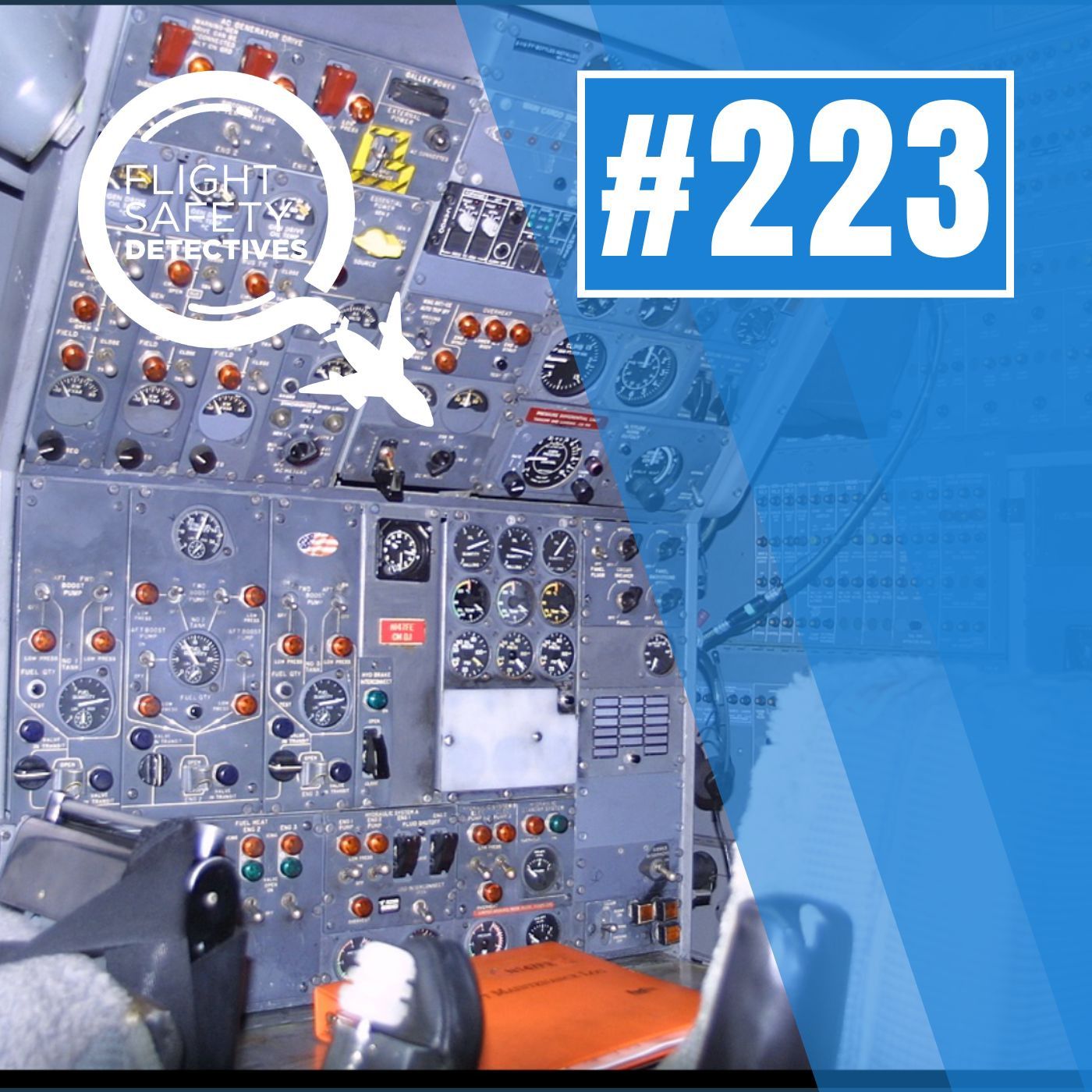
Ep 223Electrical Failure Leads to 727 Crash in Pacific Ocean - Episode 223
The crew of a United Airlines 727 tried to turn back shortly after takeoff from Los Angeles, but did not make it back to the airport. The plane crashed into the Pacific Ocean.Greg Feith, Todd Curtis, and John Goglia discuss the crash of the 727-22QC in 1969. Electrical failures and electrical system design contributed to the plane crash. The accident happened on a night with limited visibility due to the weather.The aircraft had three electrical generators, but only two were working. Shortly after takeoff, the crew shut down one engine due to a fire warning. That move shut down one of the two working generators.John discusses the complexities of 727 electrical systems and other aircraft of the era. The NTSB found that total power loss occurred after all the electrical loads were placed on the one remaining generator. Don’t miss what’s to come from the Flight Safety Detectives - subscribe to the Flight Safety Detectives YouTube channel, listen at your favorite podcast service and visit the Flight Safety Detectives website. Want to go deeper with the Flight Safety Detectives? Join our YouTube Membership program for exclusive perks like members-only live streams and Q&As and early access to episodes. Your membership support directly helps John, Greg and Todd to deliver expert insights into aviation safety.Interested in partnering with us? Sponsorship opportunities are available—brand mentions, episode integrations, and dedicated segments are just a few of the options. Flight Safety Detectives offers a direct connection with an engaged audience passionate about aviation and safety. Reach out to [email protected]. Music: “Inspirational Sports” license ASLC-22B89B29-052322DDB8 Hosted by Simplecast, an AdsWizz company. See pcm.adswizz.com for information about our collection and use of personal data for advertising.
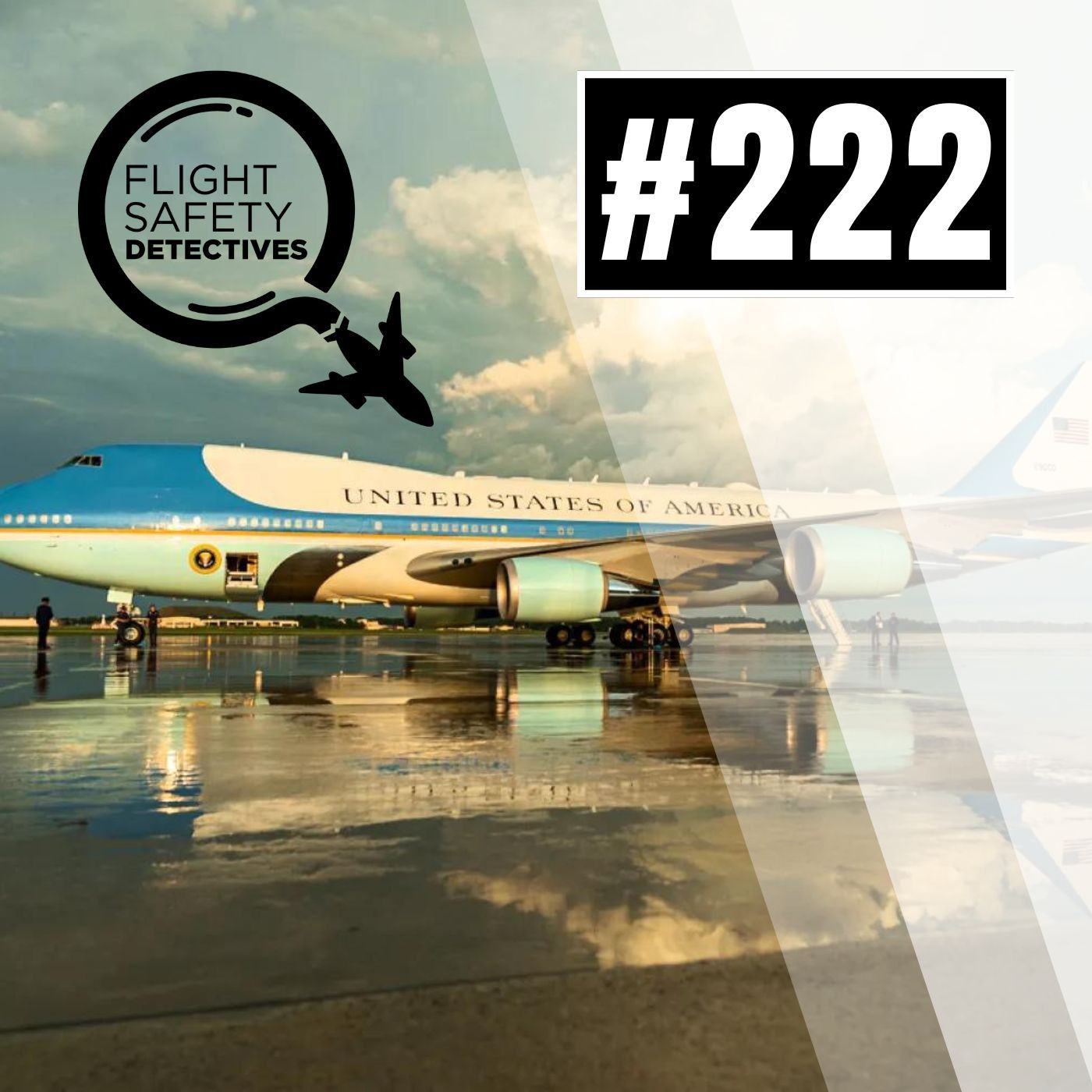
Ep 222$4 Million Mistake on Air Force One - Episode 222
Oil and oxygen don’t mix on airplanes. A crew doing maintenance on the Air Force One oxygen system ignored safety procedures resulting in $4 million dollars of damage the plane.The damage was caused by maintenance activity on the oxygen system of a U.S. Air Force VC-25A, a 747 aircraft that regularly flies the President of the United States. This event occurred in 2016.John Goglia and Todd Curtis share evidence that crew did not follow the VC-25A's aircraft maintenance manual procedures for cleaning the tools, parts, and components before performing leak checks on the oxygen system. This is perhaps the highest profile incident of an aircraft damaged due to improper oxygen system maintenance procedures. John notes that failure to follow procedures is the FAA's top cause for maintenance problems in commercial aviation. Don’t miss what’s to come from the Flight Safety Detectives - subscribe to the Flight Safety Detectives YouTube channel, listen at your favorite podcast service and visit the Flight Safety Detectives website. Want to go deeper with the Flight Safety Detectives? Join our YouTube Membership program for exclusive perks like members-only live streams and Q&As and early access to episodes. Your membership support directly helps John, Greg and Todd to deliver expert insights into aviation safety.Interested in partnering with us? Sponsorship opportunities are available—brand mentions, episode integrations, and dedicated segments are just a few of the options. Flight Safety Detectives offers a direct connection with an engaged audience passionate about aviation and safety. Reach out to [email protected]. Music: “Inspirational Sports” license ASLC-22B89B29-052322DDB8 Hosted by Simplecast, an AdsWizz company. See pcm.adswizz.com for information about our collection and use of personal data for advertising.
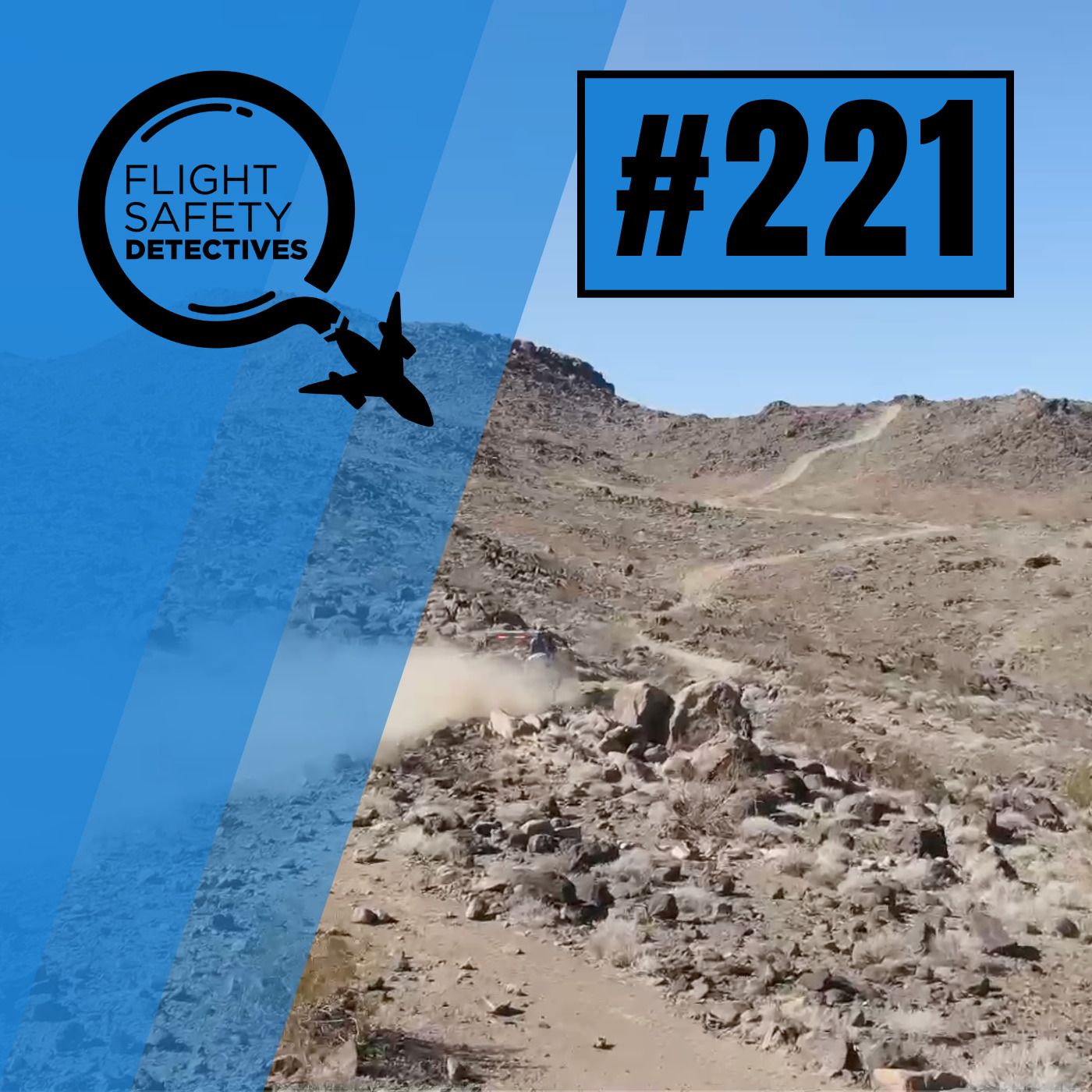
Ep 2212020 Midair Collision Revisited- Episode 221
New evidence calls into question the NTSB's conclusions – and our reporting in Episode 193 - about a 2020 midair collision. Video and other information shows that there were two helicopters in the area before the midair collision.Miles O'Brien, Todd Curtis, and John Goglia revisit the 2020 midair collision of a drone and a helicopter. The NTSB used a video shot by the drone to conclude that a helicopter seen at the beginning of the video later collided with the drone. When Todd recently used the video as part of a class he was teaching, he noticed a shadow that he could not explain. That led to lots of sleuthing and the realization of the involvement of a second helicopter. Safety concerns arise when one or more helicopters operate around a drone. In addition to this 2020 collision, a midair between two news-gathering helicopters in 2007 that killed everyone on both helicopters.Miles shares his experiences flying in situations where multiple helicopters are covering a breaking news story. Pilots of manned and unmanned aircraft need to coordinate closely to maintain safe operations.The NTSB should consider taking a second look and revising its report to address the aviation safety issues uncovered. John shares his experience on the NTSB Board and what it took to reopen an investigation when new information was available.Don’t miss what’s to come from the Flight Safety Detectives - subscribe to the Flight Safety Detectives YouTube channel, listen at your favorite podcast service and visit the Flight Safety Detectives website.https://flightsafetydetectives.com/2020-midair-collision-revisited-episode-221 Don’t miss what’s to come from the Flight Safety Detectives - subscribe to the Flight Safety Detectives YouTube channel, listen at your favorite podcast service and visit the Flight Safety Detectives website. Want to go deeper with the Flight Safety Detectives? Join our YouTube Membership program for exclusive perks like members-only live streams and Q&As and early access to episodes. Your membership support directly helps John, Greg and Todd to deliver expert insights into aviation safety.Interested in partnering with us? Sponsorship opportunities are available—brand mentions, episode integrations, and dedicated segments are just a few of the options. Flight Safety Detectives offers a direct connection with an engaged audience passionate about aviation and safety. Reach out to [email protected]. Music: “Inspirational Sports” license ASLC-22B89B29-052322DDB8 Hosted by Simplecast, an AdsWizz company. See pcm.adswizz.com for information about our collection and use of personal data for advertising.
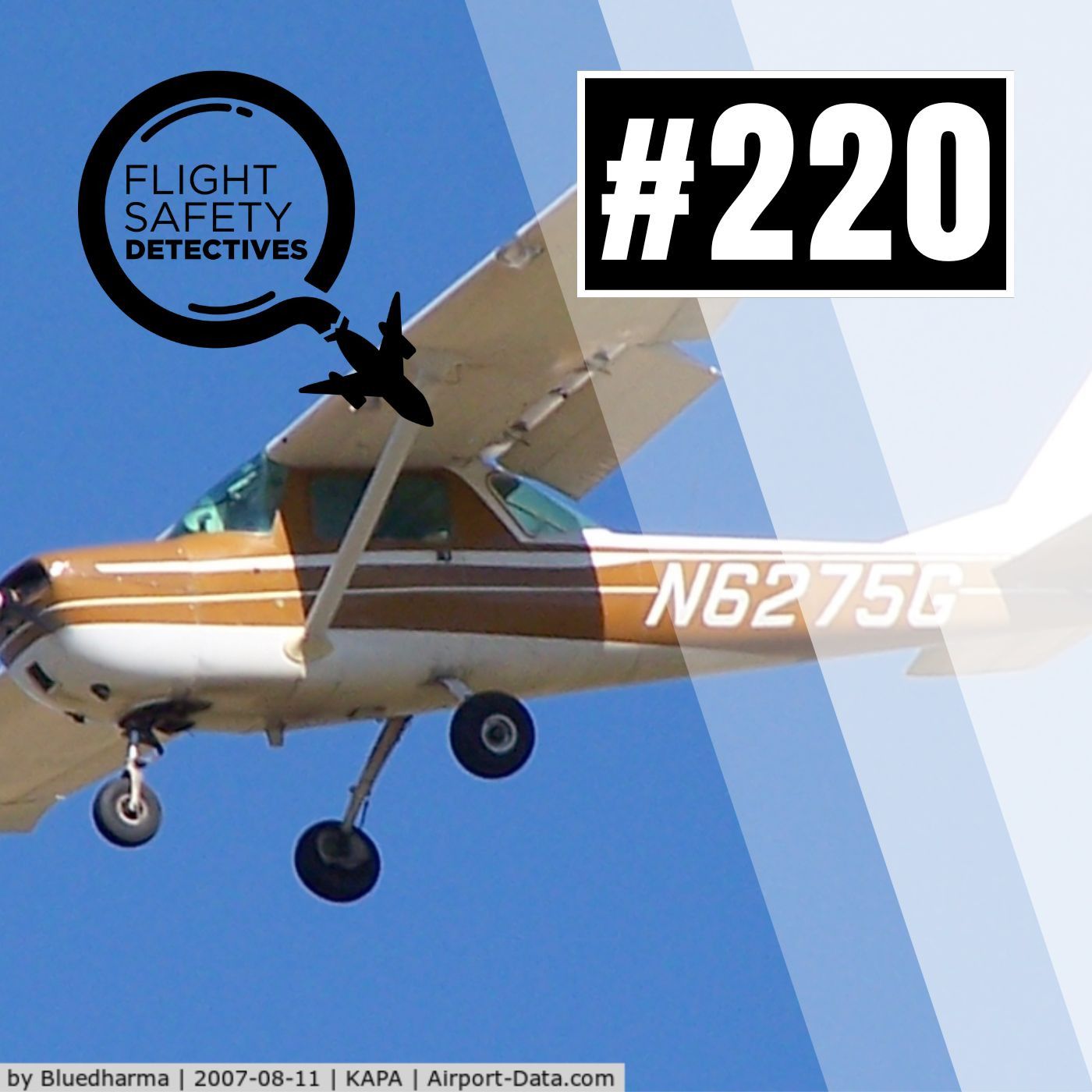
Ep 220Bad Pilot Decisions Kill - Episode 220
Two Piper airplane crashes show that pilots’ bad decisions can have devastating results. This episode covers two avoidable fatal crashes. A 1991 accident involves a Piper Seneca in Florida. The NTSB found that the two occupants were partially disrobed and no evidence that either were wearing seat belts or shoulder harnesses. The report makes clear that the two occupants were attempting to join the Mile High Club.In the second event, a Cessna 150 crashed in 2014 after the pilot took off at night with a very low ceiling. He was taking flash pictures. He crashed shortly after takeoff due to spatial disorientation. The pilot’s decision to fly in deteriorating conditions is similar to errors made by the pilot in the Kobe Bryant Crash.The pilot had a commercial and an instrument rating but was not current to fly at night or in instrument conditions, a classic case of a VFR pilot taking off in IFR conditions. The visibility conditions were so low that the pilot may not have any chance of landing at the departure airport.Pilots can be tempted to bend the rules in order to have some fun in the air. These lessons show that the results can be deadly.Related Documents are available at the Flight Safety Detectives website. Don’t miss what’s to come from the Flight Safety Detectives - subscribe to the Flight Safety Detectives YouTube channel, listen at your favorite podcast service and visit the Flight Safety Detectives website. Want to go deeper with the Flight Safety Detectives? Join our YouTube Membership program for exclusive perks like members-only live streams and Q&As and early access to episodes. Your membership support directly helps John, Greg and Todd to deliver expert insights into aviation safety.Interested in partnering with us? Sponsorship opportunities are available—brand mentions, episode integrations, and dedicated segments are just a few of the options. Flight Safety Detectives offers a direct connection with an engaged audience passionate about aviation and safety. Reach out to [email protected]. Music: “Inspirational Sports” license ASLC-22B89B29-052322DDB8 Hosted by Simplecast, an AdsWizz company. See pcm.adswizz.com for information about our collection and use of personal data for advertising.

Ep 219Witnessing Excellence at the 2024 AMC Competition in Chicago - Episode 219
Coming to you from the 2024 AMC Competition in Chicago! Miles O'Brien, Todd Curtis, John Goglia, Greg Feith, and aircraft mechanic and accident investigator Jason Lukasik share the experience of the competition. Every aspect of aviation maintenance and repair was on display as competitors worked to beat the clock.This year more than 400 competitors from nearly 90 teams from maintenance schools, airlines, and the military tackled 27 aviation maintenance skills challenges. Hear about the displays of excellence and comradery witnessed at the event.The high-energy event highlights the critical role of aviation maintenance professionals and gives the participants insights into opportunities in the industry. The event showcases the skill level of the participants. For some, it is a direct path to finding employment in the field.John, who is one of the founders of the competition a decade ago, shares AMC's plans to expand the competition to more aviation industry conferences. More maintenance teams will be able to take part.Don’t miss what’s to come from the Flight Safety Detectives - subscribe to the Flight Safety Detectives YouTube channel, listen at your favorite podcast service and visit the Flight Safety Detectives website.Music: “Inspirational Sports” license ASLC-22B89B29-052322DDB8 Don’t miss what’s to come from the Flight Safety Detectives - subscribe to the Flight Safety Detectives YouTube channel, listen at your favorite podcast service and visit the Flight Safety Detectives website. Want to go deeper with the Flight Safety Detectives? Join our YouTube Membership program for exclusive perks like members-only live streams and Q&As and early access to episodes. Your membership support directly helps John, Greg and Todd to deliver expert insights into aviation safety.Interested in partnering with us? Sponsorship opportunities are available—brand mentions, episode integrations, and dedicated segments are just a few of the options. Flight Safety Detectives offers a direct connection with an engaged audience passionate about aviation and safety. Reach out to [email protected]. Music: “Inspirational Sports” license ASLC-22B89B29-052322DDB8 Hosted by Simplecast, an AdsWizz company. See pcm.adswizz.com for information about our collection and use of personal data for advertising.

Ep 218The Laura Taber Barbour Foundation Legacy in Aviation Safety - Episode 218
Special guest Henry Gourdji shares the work of the Laura Taber Barbour Foundation, which presents the Laura Taber Barbour Air Safety Award. The air safety award has been given in recognition of aviation safety leadership since 1956. Recipients include John Goglia in 2020. The award grew out of the 1945 crash of a DC3 that killed all 20 crew and passengers, including Laura Taber Barbour. Her family created the award to recognize significant air safety achievements. Henry highlights the ongoing dedicated work of air safety professionals.John and Henry discuss the international scope of the Laura Taber Barbour Foundation. In addition to the annual awards, the foundation provides scholarships to encourage students to pursue aviation safety careers. Todd Curtis and Greg Feith share John’s continued contributions to aviation safety, including the recent AMC Competition in Chicago and a recent U.S. Senate hearing that mentioned his role in preventing accidents like the structural failure of an Aloha Airlines 737 in 1988.The detectives share their experiences working with younger aviation professionals who have the drive, passion, and capabilities to continue to improve aviation safety. Don’t miss what’s to come from the Flight Safety Detectives - subscribe to the Flight Safety Detectives YouTube channel, listen at your favorite podcast service and visit the Flight Safety Detectives website. Want to go deeper with the Flight Safety Detectives? Join our YouTube Membership program for exclusive perks like members-only live streams and Q&As and early access to episodes. Your membership support directly helps John, Greg and Todd to deliver expert insights into aviation safety.Interested in partnering with us? Sponsorship opportunities are available—brand mentions, episode integrations, and dedicated segments are just a few of the options. Flight Safety Detectives offers a direct connection with an engaged audience passionate about aviation and safety. Reach out to [email protected]. Music: “Inspirational Sports” license ASLC-22B89B29-052322DDB8 Hosted by Simplecast, an AdsWizz company. See pcm.adswizz.com for information about our collection and use of personal data for advertising.

Ep 217Navigating the Risks of Post-Maintenance Flights - Episode 217
Miles O'Brien joins Todd Curtis and John Goglia to discuss two fatal general aviation accidents that involved aircraft that were just out of maintenance. In focus are the decisions and actions pilots and maintenance personnel could have taken to avoid the crashes or make them survivable.One crash involves a Piper Cherokee on its second flight after an oil pressure line was replaced. The pilot did not do a basic preflight check or notice a five-foot diameter oil stain under the aircraft. The engine failed shortly after takeoff, and the pilot crashed while attempting to make a 180° turn back to the airport. The pilot and a passenger were killed.In a similar accident, a Piper Arrow on its first flight after maintenance had multiple issues, one involving one of the aircraft's navigation systems and the other involving an oil leak. The pilot contacted ATC about wanting to return because of navigation problems, but soon after, the engine failed. Two people were killed in the crash. The NTSB found that when part of the avionics was replaced, a required gasket was not included. That caused the oil leak that led to the engine failure. These disasters could have been avoided with better preflights. The detectives share their experiences and observations of overly casual preflight inspections. Pilots should focus on preflight planning for any non-routine flight and review in detail any work done on an aircraft on its first flight after maintenance.Don’t miss what’s to come from the Flight Safety Detectives - subscribe to the Flight Safety Detectives YouTube channel, listen at your favorite podcast service and visit the Flight Safety Detectives website.Music: “Inspirational Sports” license ASLC-22B89B29-052322DDB8 https://flightsafetydetectives.com/navigating-the-risks-of-post-maintenance-flights-episode-217 Don’t miss what’s to come from the Flight Safety Detectives - subscribe to the Flight Safety Detectives YouTube channel, listen at your favorite podcast service and visit the Flight Safety Detectives website. Want to go deeper with the Flight Safety Detectives? Join our YouTube Membership program for exclusive perks like members-only live streams and Q&As and early access to episodes. Your membership support directly helps John, Greg and Todd to deliver expert insights into aviation safety.Interested in partnering with us? Sponsorship opportunities are available—brand mentions, episode integrations, and dedicated segments are just a few of the options. Flight Safety Detectives offers a direct connection with an engaged audience passionate about aviation and safety. Reach out to [email protected]. Music: “Inspirational Sports” license ASLC-22B89B29-052322DDB8 Hosted by Simplecast, an AdsWizz company. See pcm.adswizz.com for information about our collection and use of personal data for advertising.
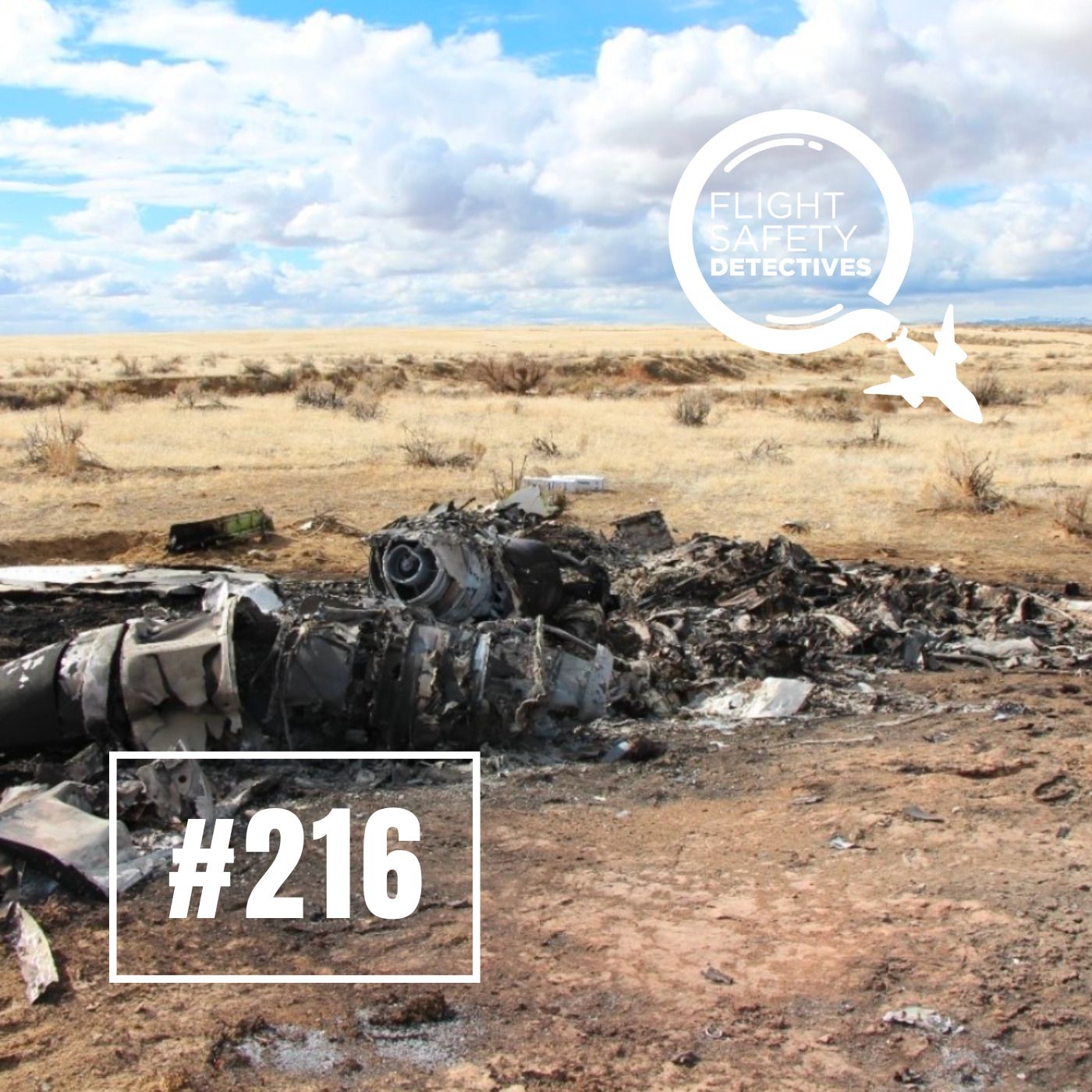
Ep 216Stall Warning Flight Test Turns Disastrous - Episode 216
A Beech Hawker 900XP jet crashed while doing a flight test of a stall warning system. Special guest Miles O'Brien joins Todd Curtis and John Goglia deconstruct the February 2024 aviation incident. The accident occurred during a positioning flight that happened after completion of maintenance of the anti-icing component on the leading edge of the wing. The flight crew was performing a required test of the stall warning system. The aircraft lost control and crashed about 11 minutes after takeoff.Stall tests are often done early in a flight so the crew can easily return to the maintenance facility if an issue is found. However, this crew did not follow standard procedures.The crew took risks during the flight test, including flying over high terrain with limited visibility due to overcast conditions. The stall characteristics were more intense than what most pilots would experience in a small training aircraft.This accident is compared to two earlier events. In 1979, a 727 crew had a loss of effectiveness of the flight control system and were barely able to recover the aircraft after a spiral dive and rapid loss of altitude. In the other event, a DC8 crew crashed while conducting a stall test after the aircraft had completed an extensive overhaul and modifications.Related documents are available at the Flight Safety Detectives website. Don’t miss what’s to come from the Flight Safety Detectives - subscribe to the Flight Safety Detectives YouTube channel, listen at your favorite podcast service and visit the Flight Safety Detectives website. Want to go deeper with the Flight Safety Detectives? Join our YouTube Membership program for exclusive perks like members-only live streams and Q&As and early access to episodes. Your membership support directly helps John, Greg and Todd to deliver expert insights into aviation safety.Interested in partnering with us? Sponsorship opportunities are available—brand mentions, episode integrations, and dedicated segments are just a few of the options. Flight Safety Detectives offers a direct connection with an engaged audience passionate about aviation and safety. Reach out to [email protected]. Music: “Inspirational Sports” license ASLC-22B89B29-052322DDB8 Hosted by Simplecast, an AdsWizz company. See pcm.adswizz.com for information about our collection and use of personal data for advertising.

Ep 215Photo Shoot Model Struck by Aircraft Wing - Episode 215
A photo shoot in a dry Nevada lakebed went horribly wrong when the wing of an airplane hit the model in the head. Miles O’Brien, Todd Curtis, and John Goglia discuss the June 2023 accident that involved an Aviate Husky plane.The pilot, photographer and his wife, who was the model for the photo session, met early on the morning of the accident. On the fly, they planned a complex photo session involving the aircraft flying close to the model. The pilot misjudged his approach and the wingtip of the aircraft struck the back of model's head and caused a serious injury. John compares this event to the 1982 fatal accident where actor Vic Morrow and two child actors were killed in a helicopter crash on the set of the Twilight Zone movie. Todd shares the pilot's prior experience with similar photo sessions, and compares his approach to the much more structured approach that occurs in professional film and television productions.Miles and John share personal experiences with risky decision making. For Miles, it was his decision to continue flying with low fuel and landing with little left in his tanks. For John, he recalled a flight over the Atlantic where he had concerns that aircraft would not make it to land, and how he had a sudden interest in the operation of the life raft! Don’t miss what’s to come from the Flight Safety Detectives - subscribe to the Flight Safety Detectives YouTube channel, listen at your favorite podcast service and visit the Flight Safety Detectives website. Want to go deeper with the Flight Safety Detectives? Join our YouTube Membership program for exclusive perks like members-only live streams and Q&As and early access to episodes. Your membership support directly helps John, Greg and Todd to deliver expert insights into aviation safety.Interested in partnering with us? Sponsorship opportunities are available—brand mentions, episode integrations, and dedicated segments are just a few of the options. Flight Safety Detectives offers a direct connection with an engaged audience passionate about aviation and safety. Reach out to [email protected]. Music: “Inspirational Sports” license ASLC-22B89B29-052322DDB8 Hosted by Simplecast, an AdsWizz company. See pcm.adswizz.com for information about our collection and use of personal data for advertising.

Ep 214Crash Shows Dangers of Home Built Aircraft - Episode 214
Home-built aircraft are dangerous. Special guest Miles O'Brien joins Todd Curtis and John Goglia to discuss an August 2023 crash of a Kit Fox Model 3 aircraft that seriously injured the pilot.The FAA's approach to home-built aircraft allows owners to build their aircraft with little or no direct oversight. The accident rate is more than two times higher than general aviation aircraft.The pilot did not have a current FAA medical certification or a current endorsement to operate an aircraft as a single pilot. According to the maintenance documentation, in the eight years prior to the accident, the pilot had fewer than three hours of flight time.Home-built aircraft have advantages such as lower cost of ownership. Kit built aircraft have grown in popularity as more manufacturers enter the market. There are even high schools that build kit aircraft for resale as part of their educational programs.The safety risks are high. Kit aircraft are certified as experimental aircraft by the FAA. Some have modifications that would not be allowed on other kinds of general aviation aircraft. Little more than a driver’s license is needed to pilot one of these aircraft.Related documents are available at the Flight Safety Detectives website. Don’t miss what’s to come from the Flight Safety Detectives - subscribe to the Flight Safety Detectives YouTube channel, listen at your favorite podcast service and visit the Flight Safety Detectives website. Want to go deeper with the Flight Safety Detectives? Join our YouTube Membership program for exclusive perks like members-only live streams and Q&As and early access to episodes. Your membership support directly helps John, Greg and Todd to deliver expert insights into aviation safety.Interested in partnering with us? Sponsorship opportunities are available—brand mentions, episode integrations, and dedicated segments are just a few of the options. Flight Safety Detectives offers a direct connection with an engaged audience passionate about aviation and safety. Reach out to [email protected]. Music: “Inspirational Sports” license ASLC-22B89B29-052322DDB8 Hosted by Simplecast, an AdsWizz company. See pcm.adswizz.com for information about our collection and use of personal data for advertising.

Ep 213Stall and Spin Maneuvers Lead to Fatal Cessna 172 Crash - Episode 213
An experienced flight instructor and student were killed when stall and spin practice in a Cessna 172 went horribly wrong. Flight data recorded by the aircraft and other evidence shows that the aircraft entered a very steep spiral turn nearly 6,000 above the ground and did not recover.“They set themselves up for the right conditions. This accident just doesn’t make sense,” John Goglia says.Todd Curtis and John dig into the November 11, 2021 fatal plane crash. The flight instructor had nearly 15,000 hours of experience in the Cessna 172 and the student pilot had nearly 370 hours in the same make and model. No mechanical fault was found with the plane involved.Based on information in the student's logbook and the Cessna 172 operating handbook, the student pilot and instructor may have been performing a maneuver associated with obtaining a commercial pilot certificate. Todd, who is also considering the same certification, discusses the requirement that the pilot be familiar with spiral turns. Students pursuing a private pilot certificate are not required to perform a spin maneuver, but it is still often part of flight instruction. They advise aspiring pilots to decline optional maneuvers that they think are too risky.Related documents are available at the Flight Safety Detectives website. Don’t miss what’s to come from the Flight Safety Detectives - subscribe to the Flight Safety Detectives YouTube channel, listen at your favorite podcast service and visit the Flight Safety Detectives website. Want to go deeper with the Flight Safety Detectives? Join our YouTube Membership program for exclusive perks like members-only live streams and Q&As and early access to episodes. Your membership support directly helps John, Greg and Todd to deliver expert insights into aviation safety.Interested in partnering with us? Sponsorship opportunities are available—brand mentions, episode integrations, and dedicated segments are just a few of the options. Flight Safety Detectives offers a direct connection with an engaged audience passionate about aviation and safety. Reach out to [email protected]. Music: “Inspirational Sports” license ASLC-22B89B29-052322DDB8 Hosted by Simplecast, an AdsWizz company. See pcm.adswizz.com for information about our collection and use of personal data for advertising.
Ep 212Two New Aviation Safety Incidents Involving Boeing Planes - Episode 212
More than 50 people were injured on March 11 when a Boeing 787 flying from Australia to New Zealand experienced a precipitous drop. John Goglia shares inside information that indicates one of the pilot seats was accidentally moved forward, jamming the pilot up against the control column and causing the sudden drop.Special guest Miles O'Brien joins Todd Curtis and John Goglia to discuss this and another aviation incident from early March 2024. The second incident occurred on March 7, when a planespotter recorded a video of a wheel falling off of a 777 shortly after takeoff from San Francisco.The location of the cockpit seat switch in the 787 airplane is examined in detail. John shares first-hand experiences that demonstrate why the information about the March 11 flight is plausible. The event investigation by the Chilean authorities is expected to provide full details.Todd shares his experiences as a Boeing engineer working on the 777 development program. He and his colleagues identified design changes to deal with potential safety issues, but most of those changes never happened.John shares his experiences with wheel separation events. He has an informed opinion on how the recent 777 wheel separation event may have happened. The NTSB needs to get to the root cause and provide the public with detailed information about what happened.The media, including social media, plays a significant role in bringing attention to aviation safety events that were often ignored in the past. Are there more aviation safety issues than in years past? John points out issues such as experienced professionals leaving aviation. Todd looks at the impact of increased availability of aviation data. Don’t miss what’s to come from the Flight Safety Detectives - subscribe to the Flight Safety Detectives YouTube channel, listen at your favorite podcast service and visit the Flight Safety Detectives website. Want to go deeper with the Flight Safety Detectives? Join our YouTube Membership program for exclusive perks like members-only live streams and Q&As and early access to episodes. Your membership support directly helps John, Greg and Todd to deliver expert insights into aviation safety.Interested in partnering with us? Sponsorship opportunities are available—brand mentions, episode integrations, and dedicated segments are just a few of the options. Flight Safety Detectives offers a direct connection with an engaged audience passionate about aviation and safety. Reach out to [email protected]. Music: “Inspirational Sports” license ASLC-22B89B29-052322DDB8 Hosted by Simplecast, an AdsWizz company. See pcm.adswizz.com for information about our collection and use of personal data for advertising.

Ep 211eVTOL Safety – Episode 211
Todd Curtis, Greg Feith, and John Goglia discuss the crash of a Joby JAS4 eVTOL aircraft to highlight safety concerns and regulatory challenges. Propulsion units used in eVTOLs pose significant safety risks.The eVTOL in this crash was being remotely flown during a test flight. The aircraft is powered by six electric motors and is designed to take off and land vertically like a helicopter and cruise like an airplane. John, Greg, and Todd examine how the design of the aircraft, with a unique configuration of six propulsion units, creates several failure modes that don't exist for currently certified passenger-carrying aircraft. While no one was injured or killed in this crash, Greg, Todd, and John explore risks evident in the accident. They call on the FAA to consider these risks during the certification process. Several eVTOL manufacturers, as well as some manufactures of large jet transports, are designing their aircraft for either single pilot or autonomous operation. These designs make it difficult to respond to unforeseen emergencies. Greg and John note the crew responses to several past aviation accidents and how a single pilot or an autonomous system may not be able to deal with those situations. Related documents are at the Flight Safety Detectives website. Don’t miss what’s to come from the Flight Safety Detectives - subscribe to the Flight Safety Detectives YouTube channel, listen at your favorite podcast service and visit the Flight Safety Detectives website. Want to go deeper with the Flight Safety Detectives? Join our YouTube Membership program for exclusive perks like members-only live streams and Q&As and early access to episodes. Your membership support directly helps John, Greg and Todd to deliver expert insights into aviation safety.Interested in partnering with us? Sponsorship opportunities are available—brand mentions, episode integrations, and dedicated segments are just a few of the options. Flight Safety Detectives offers a direct connection with an engaged audience passionate about aviation and safety. Reach out to [email protected]. Music: “Inspirational Sports” license ASLC-22B89B29-052322DDB8 Hosted by Simplecast, an AdsWizz company. See pcm.adswizz.com for information about our collection and use of personal data for advertising.

Ep 210Challenger 604 Roadway Emergency Landing Mistakes – Episode 210
Todd Curtis and John Goglia discuss the February 9, 2024 crash of a Challenger 604 jet on I75 in Florida. The plane landed on the road, but then crashed into a wall, killing the pilot and copilot. John and Todd discuss why a better outcome was possible.The jet, which had three crew members and two passengers, was nearing the end of a flight from Columbus, Ohio, when the flight crew declared an emergency to air traffic control. They lost their engines and could not make it to the airport.Little official information was available at the time of the recording. It was not known whether the aircraft was equipped with a cockpit voice recorder or flight data recorder. The engines appear to be intact, which will help with the investigation.John and Todd compare this accident to a 1997 Southern Airways DC9 crash in New Hope, Georgia. In that accident the crew was able to land on a road, and the aircraft caught fire after running into obstructions near the road.In both accidents there were survivors among the cabin crew and passengers. Todd and John encourage pilots to assess their options for making an emergency landing so they are prepared to take action if an emergency occurs. Don’t miss what’s to come from the Flight Safety Detectives - subscribe to the Flight Safety Detectives YouTube channel, listen at your favorite podcast service and visit the Flight Safety Detectives website. Want to go deeper with the Flight Safety Detectives? Join our YouTube Membership program for exclusive perks like members-only live streams and Q&As and early access to episodes. Your membership support directly helps John, Greg and Todd to deliver expert insights into aviation safety.Interested in partnering with us? Sponsorship opportunities are available—brand mentions, episode integrations, and dedicated segments are just a few of the options. Flight Safety Detectives offers a direct connection with an engaged audience passionate about aviation and safety. Reach out to [email protected]. Music: “Inspirational Sports” license ASLC-22B89B29-052322DDB8 Hosted by Simplecast, an AdsWizz company. See pcm.adswizz.com for information about our collection and use of personal data for advertising.

Ep 209Pilots in Helicopter Crash Repeat Errors in Kobe Bryant Crash - Episode 209
The helicopter crash that killed the CEO of a major Nigerian bank and his family appears to be the result of similar pilot errors that caused the Kobe Bryant crash and other high-profile accidents. Greg Feith and John Goglia cite several recent accidents that show that poor decisions among pilots who fly for Part 135 operators may be the common contributing factor.The Flight Safety Detectives explore the known facts surrounding the fatal flight. The forecast called for wintry mix along the flight path and witnesses reported precipitation at the time of the accident. The helicopter may not have been equipped for the conditions. The pilots were following roads, which can cause disorientation issues during night flying.Greg calls for a new look at regulations that allow Part 135 operators of smaller helicopters to fly without either a cockpit voice recorder or a flight data recorder. The lack of recorders limits information available to accident investigators.John and Greg discuss their experiences consulting for companies and high net worth individuals who use executive air transportation services. They have found an overall lack of due diligence to ensure the safety of these operations.Related documents are available at the Flight safety Detectives website. Don’t miss what’s to come from the Flight Safety Detectives - subscribe to the Flight Safety Detectives YouTube channel, listen at your favorite podcast service and visit the Flight Safety Detectives website. Want to go deeper with the Flight Safety Detectives? Join our YouTube Membership program for exclusive perks like members-only live streams and Q&As and early access to episodes. Your membership support directly helps John, Greg and Todd to deliver expert insights into aviation safety.Interested in partnering with us? Sponsorship opportunities are available—brand mentions, episode integrations, and dedicated segments are just a few of the options. Flight Safety Detectives offers a direct connection with an engaged audience passionate about aviation and safety. Reach out to [email protected]. Music: “Inspirational Sports” license ASLC-22B89B29-052322DDB8 Hosted by Simplecast, an AdsWizz company. See pcm.adswizz.com for information about our collection and use of personal data for advertising.
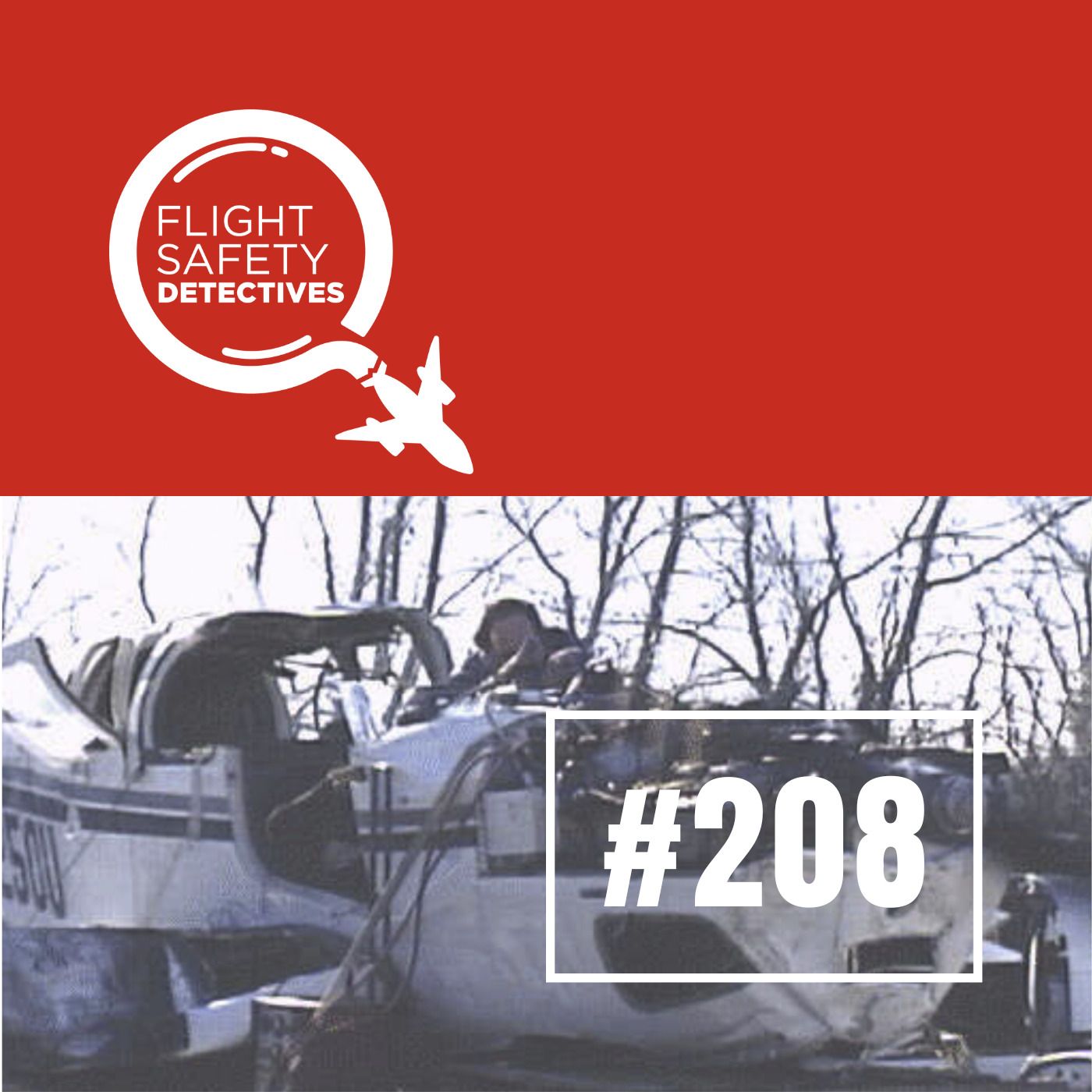
Ep 208Declaring an In-Flight Emergency Can Save Your Life – Episode 208
Most general aviation pilots hesitate to declare an inflight emergency fearing negative consequences. Greg Feith, John Goglia and Todd Curtis use a Beechcraft Bonanza plane crash to illustrate how declaring an emergency can be the safest move.The fatal Beechcraft Bonanza accident in the spotlight of this episode is featured in the book, "Single-Pilot IFR Pro Tips" written by 2019 National CFI of the Year Gary "GPS" Reeves. Known as The Guy in the Pink Shirt, Reeves uses examples from several incidents to illustrate good general aviation pilot habits. Reeves uses the Beechcaft Bonanza event to highlight the advantages of not waiting to declare an emergency. The Flight Safety Detectives find that this crash is also a classic example of how oversights and bad habits by the pilot in command can lead to an avoidable accident.They offer life-saving insights into this aviation disaster. The NTSB found that the cause was an improperly positioned fuel selector lever. Greg shares his own experience dealing with an improperly positioned lever. John recounts accidents involving fuel selector levers, including the crash that killed John Denver. Amazingly, John’s experience is that many general aviation pilots have problems with the fuel sector due to not using them at all and never getting a feel for how they operate.“It’s not like jumping in the car to go to the grocery store,” John says. “Flying is not that simple. You need to do a thorough preflght, every time.”If the accident pilot had followed Gary Reeves advice to declare an emergency when problems first develop, the pilot would have been able to land safely at an airport. The FAA would have looked at the scenario as prudent decision making and would likely not have taken any action against the pilot. Don’t miss what’s to come from the Flight Safety Detectives - subscribe to the Flight Safety Detectives YouTube channel, listen at your favorite podcast service and visit the Flight Safety Detectives website. Want to go deeper with the Flight Safety Detectives? Join our YouTube Membership program for exclusive perks like members-only live streams and Q&As and early access to episodes. Your membership support directly helps John, Greg and Todd to deliver expert insights into aviation safety.Interested in partnering with us? Sponsorship opportunities are available—brand mentions, episode integrations, and dedicated segments are just a few of the options. Flight Safety Detectives offers a direct connection with an engaged audience passionate about aviation and safety. Reach out to [email protected]. Music: “Inspirational Sports” license ASLC-22B89B29-052322DDB8 Hosted by Simplecast, an AdsWizz company. See pcm.adswizz.com for information about our collection and use of personal data for advertising.

Ep 207Conspiracy Theories Surrounding Jenni Rivera Plane Crash– Episode 207
Singer Jenni Rivera’s tragic plane crash was a tragic accident and not the result of a conspiracy. This special episode of the Flight Safety Detectives features the January 24 interview Todd Curtis gave on the KIQI radio show “Hecho en California,” about the 2012 crash that killed Jenni Rivera. Todd shares with hosts Isabel and Marcos Gutierrez the conclusions shared by the Flight Safety Detectives team after they analyzed the formal accident report that was released by the Mexican government. Todd, Marcos, and Isabel discuss several conspiracy theories about the death of Jenni Rivera, and how the facts of the accident report don't support those theories. They also cover the Alaska Airlines 737 MAX 9 plug door loss, an event that happened a few weeks prior to the interview.Related documents are available at the Flight Safety Detectives website. Don’t miss what’s to come from the Flight Safety Detectives - subscribe to the Flight Safety Detectives YouTube channel, listen at your favorite podcast service and visit the Flight Safety Detectives website. Want to go deeper with the Flight Safety Detectives? Join our YouTube Membership program for exclusive perks like members-only live streams and Q&As and early access to episodes. Your membership support directly helps John, Greg and Todd to deliver expert insights into aviation safety.Interested in partnering with us? Sponsorship opportunities are available—brand mentions, episode integrations, and dedicated segments are just a few of the options. Flight Safety Detectives offers a direct connection with an engaged audience passionate about aviation and safety. Reach out to [email protected]. Music: “Inspirational Sports” license ASLC-22B89B29-052322DDB8 Hosted by Simplecast, an AdsWizz company. See pcm.adswizz.com for information about our collection and use of personal data for advertising.

Ep 206Plane Crash Caused by Pilot's Poor Decisions and Lack of Aircraft Understanding – Episode 206
The pilot of a Beech Bonanza F33A made an off-field landing when the engine lost power shortly after takeoff. John Goglia, Greg Feith and Todd Curtis dig into the information gathered by the NTSB and find this crash was caused by poor decisions made by the pilot.Greg, Todd, and John analyze the information from the Public Docket of the crash investigation. They find that the pilot's lack of understanding about the aircraft and its systems contributed a series of decisions that led to the plane crash. The pilot took off with the fuel pump on to deal with an overheating problem in two of the six cylinders of the engine. He did this despite a placard advising that the aux pump should not be on during takeoff. In the Continental IO-520 engine in this plane, as in many piston engines, airflow cools the cylinders. Common and overlooked, baffles are critical for proper engine cooling. John details his experiences seeing damaged, cracked and improperly installed baffles on engines. Greg contrasts the good decision the pilot made top not attempt a return the airport with the bad decisions he regularly encounters when pilots make the hazardous and often fatal decision to make an impossible turn back to the runway.Related documents are available at the Flight Safety Detectives website. Don’t miss what’s to come from the Flight Safety Detectives - subscribe to the Flight Safety Detectives YouTube channel, listen at your favorite podcast service and visit the Flight Safety Detectives website. Want to go deeper with the Flight Safety Detectives? Join our YouTube Membership program for exclusive perks like members-only live streams and Q&As and early access to episodes. Your membership support directly helps John, Greg and Todd to deliver expert insights into aviation safety.Interested in partnering with us? Sponsorship opportunities are available—brand mentions, episode integrations, and dedicated segments are just a few of the options. Flight Safety Detectives offers a direct connection with an engaged audience passionate about aviation and safety. Reach out to [email protected]. Music: “Inspirational Sports” license ASLC-22B89B29-052322DDB8 Hosted by Simplecast, an AdsWizz company. See pcm.adswizz.com for information about our collection and use of personal data for advertising.

Ep 205Bad Decisions Take Airplanes Out of the Sky – Episode 205
The events that led up to the crash of a MD82 in Detroit are used to illustrate the critical role of operational discipline. Greg, Todd and John give insight into the issues that led to Northwest Airlines Flight 255 crashing and disintegrating. This is just one example of bad decisions taking an airplane out of the sky.This aviation disaster killed two people on the ground and nearly everyone on board. The sole survivor was a four-year-old girl who was seriously injured. Hear the experts dissect the chain of events that led to the crash, including multiple distractions and delays and the crew neglecting to complete the taxi checklist.The report from the accident does not discuss crew resource management (CRM) practices of the accident flight crew. John discusses how CRM practices were adopted in the 1980s to reduce aviation safety risks by having flight crews become more consistent in managing aircraft operations.Greg and John showcase other noteworthy accident investigations that are examples of behaviors that had to be changed in the cockpit and how not following basic CRM practices leads to accidents.Checklist discipline is important in all types of aviation operations, including general aviation. Complex flight management systems that are now common even in single engine general aviation aircraft.Hear also what passengers can do to improve their safety in flight.Related documents are available at the Flight Safety Detectives website. Don’t miss what’s to come from the Flight Safety Detectives - subscribe to the Flight Safety Detectives YouTube channel, listen at your favorite podcast service and visit the Flight Safety Detectives website. Want to go deeper with the Flight Safety Detectives? Join our YouTube Membership program for exclusive perks like members-only live streams and Q&As and early access to episodes. Your membership support directly helps John, Greg and Todd to deliver expert insights into aviation safety.Interested in partnering with us? Sponsorship opportunities are available—brand mentions, episode integrations, and dedicated segments are just a few of the options. Flight Safety Detectives offers a direct connection with an engaged audience passionate about aviation and safety. Reach out to [email protected]. Music: “Inspirational Sports” license ASLC-22B89B29-052322DDB8 Hosted by Simplecast, an AdsWizz company. See pcm.adswizz.com for information about our collection and use of personal data for advertising.

Ep 204Accident or Conspiracy? Singer Jenni Rivera Lear 25 Accident Examined – Episode 204
Jenni Rivera was a huge celebrity at the time of her death. Was the plane crash that killed her an accident or do the conspiracy theories point to the real cause? In a continuation of the examination of this aviation incident that started in Episode 203, Greg Feith joins John Goglia and Todd Curtis to discuss why the conspiracy theories related to the crash are unlikely to be true. They use the evidence uncovered during the official investigation combined with their knowledge of the accident aircraft to get to the facts.John, Greg, and Todd compare the Jenni Rivera accident to other accidents that have widely believed conspiracy theories. TWA flight 800 and Malaysia Airlines flight MH17 are two examples. They cover other plane crashes involving celebrities, including the crash that killed Ricky Nelson. Maintenance and operational issues were a factor in the Jenni Rivera crash. The same is true for other high-profile aviation disasters including the crash that killed singer Aaliyah. These events have common contributing factors including the involvement of less than reputable charter organizations and issues around bogus aircraft parts. Some charter flight operators ignore or violate aviation safety regulations and practices. Proposed safety improvements like better data recorders have been opposed by aircraft operators and manufacturers.Related documents are available at the Flight Safety Detectives website. Don’t miss what’s to come from the Flight Safety Detectives - subscribe to the Flight Safety Detectives YouTube channel, listen at your favorite podcast service and visit the Flight Safety Detectives website. Want to go deeper with the Flight Safety Detectives? Join our YouTube Membership program for exclusive perks like members-only live streams and Q&As and early access to episodes. Your membership support directly helps John, Greg and Todd to deliver expert insights into aviation safety.Interested in partnering with us? Sponsorship opportunities are available—brand mentions, episode integrations, and dedicated segments are just a few of the options. Flight Safety Detectives offers a direct connection with an engaged audience passionate about aviation and safety. Reach out to [email protected]. Music: “Inspirational Sports” license ASLC-22B89B29-052322DDB8 Hosted by Simplecast, an AdsWizz company. See pcm.adswizz.com for information about our collection and use of personal data for advertising.

Ep 203Singer Jenni Rivera’s Fatal Plane Crash Examined – Episode 203
Todd and John analyze the plane crash that killed singer Jenni Rivera. The report from the Mexican accident investigation found that the Learjet 25 aircraft lost control during climb for reasons that could not be determined. Key items are missing from the report that concluded that the crash was a loss of control event:No analysis results of the flight controlsNo flight data recorder recoveredNo cockpit voice recorder foundNo formal analysis of the pilots The In the wake of Rivera's death, there have been ongoing rumors that this event was not an accident, a belief that has been supported by a number of television productions. Todd and John examine the facts, data, and analyses contained in the official report. John adds insight into the lax aviation maintenance and compliance common in Mexico.The wreckage shows no evidence of an explosion or other deliberate action. The level of oversight that the US and Mexican governments typically have over aircraft that are registered in the US and operate in Mexico adds complexity to understanding exactly what happened. The Detectives plan a future episode that will focus on the conspiracy theories involving Jenni Rivera's death. They will look at how much, or how little, the facts of the investigation support those theories.Related documents can be found at the Flight Safety Detectives website. Don’t miss what’s to come from the Flight Safety Detectives - subscribe to the Flight Safety Detectives YouTube channel, listen at your favorite podcast service and visit the Flight Safety Detectives website. Want to go deeper with the Flight Safety Detectives? Join our YouTube Membership program for exclusive perks like members-only live streams and Q&As and early access to episodes. Your membership support directly helps John, Greg and Todd to deliver expert insights into aviation safety.Interested in partnering with us? Sponsorship opportunities are available—brand mentions, episode integrations, and dedicated segments are just a few of the options. Flight Safety Detectives offers a direct connection with an engaged audience passionate about aviation and safety. Reach out to [email protected]. Music: “Inspirational Sports” license ASLC-22B89B29-052322DDB8 Hosted by Simplecast, an AdsWizz company. See pcm.adswizz.com for information about our collection and use of personal data for advertising.

Ep 202Alaska Airlines Alaska Airlines Flight 1282 737 MAX 9 Update – Episode 202
Latest on the Alaska Airlines Alaska Airlines Flight 1282 737 MAX 9 aircraft plug door separation and rapid decompression. Todd, Greg, and John discuss recent developments, including the recovery of the plug door.They talk about the value of having the plug door for inspection. They share the sequence of events that led to the door separation based on factual evidence.The spotlight is now turning to Boeing. Will the company’s future actions keep the CEO’s promise that Boeing will be transparent about what happened?Hear their insider take on the challenges Boeing may face when it comes to earning confidence that company will correct problems with the 737 MAX. The approach that Boeing has taken in the past may not be adequate to address the quality issues of the 737 MAX. Don’t miss what’s to come from the Flight Safety Detectives - subscribe to the Flight Safety Detectives YouTube channel, listen at your favorite podcast service and visit the Flight Safety Detectives website. Want to go deeper with the Flight Safety Detectives? Join our YouTube Membership program for exclusive perks like members-only live streams and Q&As and early access to episodes. Your membership support directly helps John, Greg and Todd to deliver expert insights into aviation safety.Interested in partnering with us? Sponsorship opportunities are available—brand mentions, episode integrations, and dedicated segments are just a few of the options. Flight Safety Detectives offers a direct connection with an engaged audience passionate about aviation and safety. Reach out to [email protected]. Music: “Inspirational Sports” license ASLC-22B89B29-052322DDB8 Hosted by Simplecast, an AdsWizz company. See pcm.adswizz.com for information about our collection and use of personal data for advertising.
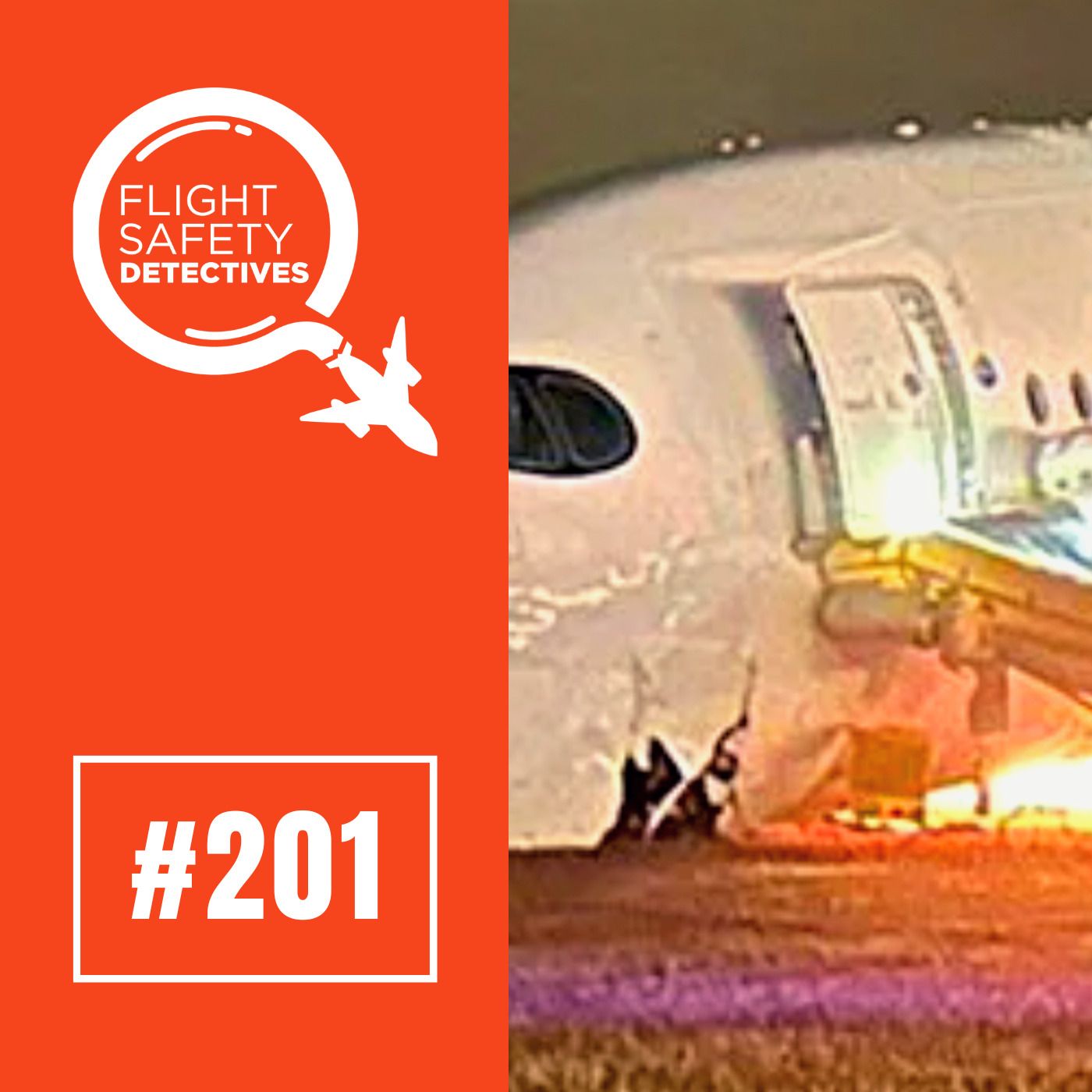
Ep 201JAL Flight 516 Crash Factors Emerge– Episode 201
Runway images show that the Coast Guard Dash 8 involved in the collision with Japan Airlines Flight 516 was in the wrong place. The crew was to hold on the taxiway, but were actually on the runway. The plane standing still on the center line would have been virtually invisible to the pilots of the JAL Airbus A350. The scenario is similar to a runway collision involving US Air Flight 1493 that John investigated as an NTSB Board member. That investigation made midfield takeoffs illegal in the United States.John, Greg and Todd walk through the known details and the human factors that led to the plane crash. Misunderstanding between the tower controller and the crew of the Dash 8Lightning conditions at the runwayDash 8 pilot not monitoring the Air Traffic Control radio frequencyHuman errors and communication issues contributed to the crash. The episode also covers the role of aviation technology, including the heads-up display in the A350, surface radar/ASDI, and traffic collision avoidance systems (TCAS).This is a follow up to Episode 198, Expert Insights into the Japan Airlines A350 Aviation Disaster, where noted airport rescue and firefighting expert Jack Kreckie discussed the firefighting response. Related documents are available at the Flight Safety Detectives website. Don’t miss what’s to come from the Flight Safety Detectives - subscribe to the Flight Safety Detectives YouTube channel, listen at your favorite podcast service and visit the Flight Safety Detectives website. Want to go deeper with the Flight Safety Detectives? Join our YouTube Membership program for exclusive perks like members-only live streams and Q&As and early access to episodes. Your membership support directly helps John, Greg and Todd to deliver expert insights into aviation safety.Interested in partnering with us? Sponsorship opportunities are available—brand mentions, episode integrations, and dedicated segments are just a few of the options. Flight Safety Detectives offers a direct connection with an engaged audience passionate about aviation and safety. Reach out to [email protected]. Music: “Inspirational Sports” license ASLC-22B89B29-052322DDB8 Hosted by Simplecast, an AdsWizz company. See pcm.adswizz.com for information about our collection and use of personal data for advertising.

Ep 200United Airlines Finds Loose Bolts on 737 MAX 9 Aircraft – Episode 200
United Airlines has reported loose bolts on five of their 737 MAX 9 aircraft plug doors. This is the latest in the unfolding look at what happened in the incident involving Alaska Airlines Flight 1282.John and Greg use insights from their decades of experience inside NTSB and other aviation safety incident investigations to explain the latest developments. They cover the information that has been released so far and what is to come. John goes through the steps that aircraft mechanics would have used to address earlier reports of pressurization warnings on this specific aircraft. Mechanics likely would have checked the pressurization system and focused on the hardware. “It wasn’t quite there yet” to escalate to pressurizing the plane to check for leaks.John and Greg return to earlier discussions of the status of quality inspections at Boeing. The internal safety review that has been reported isn’t the right step to fix safety and quality issues. This latest black eye makes it clear that is time to address manufacturing process issues and “get some good planes out the door.” Don’t miss what’s to come from the Flight Safety Detectives - subscribe to the Flight Safety Detectives YouTube channel, listen at your favorite podcast service and visit the Flight Safety Detectives website. Want to go deeper with the Flight Safety Detectives? Join our YouTube Membership program for exclusive perks like members-only live streams and Q&As and early access to episodes. Your membership support directly helps John, Greg and Todd to deliver expert insights into aviation safety.Interested in partnering with us? Sponsorship opportunities are available—brand mentions, episode integrations, and dedicated segments are just a few of the options. Flight Safety Detectives offers a direct connection with an engaged audience passionate about aviation and safety. Reach out to [email protected]. Music: “Inspirational Sports” license ASLC-22B89B29-052322DDB8 Hosted by Simplecast, an AdsWizz company. See pcm.adswizz.com for information about our collection and use of personal data for advertising.
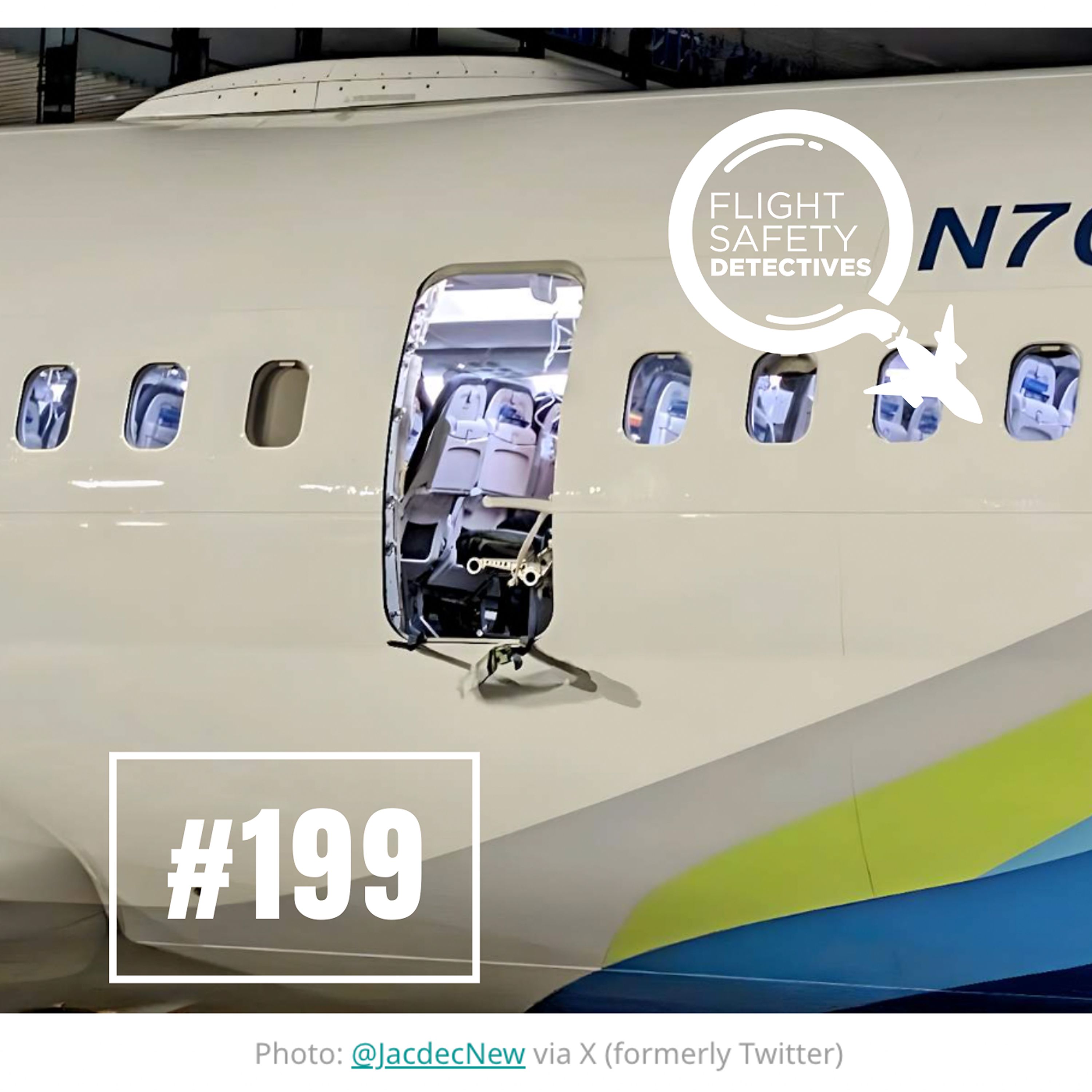
Ep 199737-9 Max Exit Door Panel Failure – Episode 199
What happened to Alaska Airlines Flight 1282? What is going on at Boeing? In this special episode, Greg and John provide expert insight into the rapid decompression and inflight separation of an exit door panel on a Boeing 737-9 Max airplane.The Flight Safety Detectives dissect issues surrounding this incident and the regulatory response that is already happening. They discuss similar incidents, including United Airlines Flight 811 747 near Honolulu where a Boeing 747-122 lost a cargo door.John and Greg share details that aren’t being discussed in media coverage. They explain the mandatory AD that has been issued by the FAA.All US-registered 737 MAX 9 aircraft with this type of exit door must be grounded and inspected. The Max fuselage is made by Spirit and provided to Boeing. All the steps in the manufacturing process will be scrutinized as the NTSB investigation proceeds.This is the latest high profile aviation safety issue involving the 737 MAX. John talks about the inadequate number of quality inspectors and quality safeguards in the Boeing manufacturing process as a potential shortcoming that has led to the issues with the Max. Greg points to some fundamental organizational issues that need to be addressed.Don’t miss what’s to come from the Flight Safety Detectives - subscribe to the Flight Safety Detectives YouTube channel, listen at your favorite podcast service and visit the Flight Safety Detectives website. Don’t miss what’s to come from the Flight Safety Detectives - subscribe to the Flight Safety Detectives YouTube channel, listen at your favorite podcast service and visit the Flight Safety Detectives website. Want to go deeper with the Flight Safety Detectives? Join our YouTube Membership program for exclusive perks like members-only live streams and Q&As and early access to episodes. Your membership support directly helps John, Greg and Todd to deliver expert insights into aviation safety.Interested in partnering with us? Sponsorship opportunities are available—brand mentions, episode integrations, and dedicated segments are just a few of the options. Flight Safety Detectives offers a direct connection with an engaged audience passionate about aviation and safety. Reach out to [email protected]. Music: “Inspirational Sports” license ASLC-22B89B29-052322DDB8 Hosted by Simplecast, an AdsWizz company. See pcm.adswizz.com for information about our collection and use of personal data for advertising.

Ep 198Expert Insights into the Japan Airlines A350 Aviation Disaster – Episode 198
Airport rescue and firefighting expert Jack Kreckie and the Flight Safety Detectives discuss the January 2, 2024 runway collision between a Japan Airlines A350 and a Japan Coast Guard Dash 8 in Tokyo.Kreckie shares his inside knowledge of aircraft firefighting techniques and the systems in place to save lives and manage fires. He shares how modern composite materials used on aircraft impact the job of firefighters.This event is compared with other notable accidents, including the ground collision between a USAir 737 and a Fairchild Metroliner in Los Angeles in 1991 and the crash of an Asiana 777 in San Francisco in 2013.Hear about the training and safety systems in place that aided firefighters and the flight crew and likely were key factors in the safe evacuation of the aircraft.See images and related documents at the Flight Safety Detectives website. Don’t miss what’s to come from the Flight Safety Detectives - subscribe to the Flight Safety Detectives YouTube channel, listen at your favorite podcast service and visit the Flight Safety Detectives website. Want to go deeper with the Flight Safety Detectives? Join our YouTube Membership program for exclusive perks like members-only live streams and Q&As and early access to episodes. Your membership support directly helps John, Greg and Todd to deliver expert insights into aviation safety.Interested in partnering with us? Sponsorship opportunities are available—brand mentions, episode integrations, and dedicated segments are just a few of the options. Flight Safety Detectives offers a direct connection with an engaged audience passionate about aviation and safety. Reach out to [email protected]. Music: “Inspirational Sports” license ASLC-22B89B29-052322DDB8 Hosted by Simplecast, an AdsWizz company. See pcm.adswizz.com for information about our collection and use of personal data for advertising.