
Farm To Table Talk
316 episodes — Page 7 of 7
Tomato\’s Endless Season – Greg Pruett
  Seasons are the rhythm of nature, naturally restricting the availability of fruits and vegetables. That is except when it\’s with a food such as tomatoes that are freshly preserved in diced, peeled or paste form to be part of the worlds most popular dishes. Although some food products are just processed when quality is declining, processing tomato varieties, production and processing practices have been especially developed for prime preservation and use in popular canned and jarred products. As a nutritional bonus, a powerful antioxidant, Lycopene, is even more bio-available in processed tomatoes than in fresh. This magic happens between the tomato fields and the end product. Greg Pruett leads us through tomatoes\’ stop on the way to our table. Greg is a tomato grower and CEO of one of the leading tomato processors, Ingomar Food Processing in Los Banos, California that enables consumers to enjoy the taste of summer all year long. www.ingomarpacking.com www.tomatowellness.com
Care for Coffee? –Jay Ruskey
In every region farmers are finding ways to pivot from producing the same commodities that have always been produced on their land. New farmers are also finding new ways to get started that includes trying different crops. In southern California coffee is being successfully grown on land formerly growing avocados and lemons. Jay Ruskey planted a trial crop of coffee at his family-owned and operated farm in the hills of Santa Barbara, California called Good Land Organics, and is proving that coffee could be grown successfully outside of tropical regions –putting California coffee on the map! Farmer Jay is also the CEO of FRINJ Coffee a company set out to provide farmers an opportunity to diversify their farm portfolios. Today, FRINJ Coffee supports 65 farms in the coastal climates of Central and Southern California as it leads the California Coffee Movement. While you can\’t grow coffee everywhere, Jay Ruskey shares a journey to innovative and regenerative farming practices that meets producer\’s needs for a better share of the food dollar and the discerning expectations of today\’s consumers. www.frinjcoffee.com
Bridging Food Streams – Troy Rice
There is a growing need for informational bridges between farmers markets, farm workers, shoppers, and farmers of every size shape and situation. Troy Rice established Farm Brigge to fill that need and create local food ecosystems. Shoppers can go on line to find local farmers and farmers markets that have the food products they seek and the story behind the stories. Farmers can find farm workers and training to establish \”lean farming\” practices. And everyone can find themselves to the virtual bridge that enables sustainable production, employment, marketing and food literacy. The story that Troy shares with Farm To Table Talk begins with his own family and fans out to bridging food streams from coast to coast. www.farmbrigge.com
Kiss The Ground podcast – Josh Tickell, Author, Filmmaker
If you’re not yet a believer that we can create a climate stable future, you probably will be a believer after listening to Josh Tickell. He and his wife Rebecca wrote the book and produced the most uplifting film to date about regenerative agriculture and what it means for farmers and consumers. Over a year ago I read his book “Kiss the Ground”, listened to the audio version that he narrates, viewed the website, talked with several of the farmers he features and now after a long wait just viewed the film, “Kiss the Ground” that is now available on Netflix. I recommend that you see the film and here you can listen to the filmmaker as we explore the road to Kissing the Ground in a podcast we published last year when we thought the film release was just around the corner. Getting around the corner takes longer in 2020. www.kisstheground.com
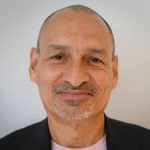
Fix What\’s Broken – Ricardo Salvador
For too many it is basically a no win situation if you\’re a farmer and so they ask \”How can I get off this treadmill?\” The dream of farming can become a nightmare in a broken system explains Ricardo Salvador, the Director of Food and Environment for the Union of Concerned Scientists. Farm choice has traditionally been either playing the low value, high volume commodity game or high value crops where farm families can make a living on small acreage. Ricardo shares the fact that very few farmers make enough money that they can live off of faming alone. The majority subsidize their income from an off farm job. Of the 2 million \”farms\” identified by the USDA, about 300,000 are attempting to make a living from faming. Just 70,000 farmers are turning out 75% of Agriculture\’s output. The mechanized industrialization of the food system increases output but has led to \”de-skilling\” and other issues from farm to tables. Ricardo Salvador explains the problems and the solutions. www.ucsusa.org
Packing Plant-demic – Ricardo Salvador
The fact that the food system lacks resilience is apparent from the devastating effects of COVID on meat packing plant employees. In a system that inspired Henry Ford\’s assembly plant, these dis-assembly plants have proven to be extremely dangerous for workers. First plants closed, farmers euthanized hogs, workers were home sick or laid off, then politics intervened. This is where we pick up the story with Ricardo Salvador, the Director of Food and Environment with the Union of Concerned Scientists who had just visited with us about our broken food system. Sadly in 2020 the situation in meat packing plants is a case in point. www.ucsusa.org
Small Is The New Big – Zack Smith
For many it would be a dream come true if their family could be supported from an 80 acre farm instead of the more typical 2,000 acres commodity farm. In a recent article, Ricardo Salvador of the Union of Concerned Scientists says that dream may be becoming a reality: \”We all could use some good news. Here is some. This is a story about breaking free. There’s more than corn, beans and hogs growing in north central Iowa this summer. It turns out that the future may be taking shape just outside Buffalo Center. That’s where farmer Zack Smith has set aside one of his 305 acres of corn/soy to experiment with a system that he calls the Stock Cropper. As the name tells you, both livestock and plants are involved. In the same field. ….The setup involves alternating strips of 12 rows of corn and 20 feet of annual pasture. simultaneously allowing them to range in the open while not damaging the crop. The mobile barns move 11 feet daily through each pasture strip, permitting the livestock to methodically convert forage and soil insects into meat and fertility for the soil by just being themselves.\” Ricardo kindly introduced us to Zack Smith who explains how a better future could come from smaller farms.
New Pivot, Ancient Grain – Claire Smith
  Can traditional MidWest commodity farms pivot to a more diverse system than just corn and soybeans? It\’s an important question as farmers and their customers pursue sustainable farming systems; and even more important when it is not possible to earn enough from the typical dependance on corn and soybean. Seven generations of Smith\’s have farmed about 2,000 acres (1,200 tillable) in South Central Michigan. They decided to pivot from the tried and true corn-belt farming approach to the ancient grain, Teff. Now that they\’ve made the pivot to Teff and other alternative grains such as Buckwheat and Millet, they are processing grains and seeds for other farmers seeking their own pivots. Claire Smith joins Farm To Table Talk to share how her journey from pivot to vertical has led to producing and marketing a granola made from the Teff they are growing \”Teffola\”. www.eatteffola.com

Your Time Picks You – Mayor Darrel Steinberg
We didn\’t pick 2020 as our time to step up, but 2020 picked us. Community leaders, restaurants and local farmers are stepping up to tackle the existential health, safety and economic crises of 2020. People are hungry, farmers marketing channels have been disrupted, restaurants were brought to the brink and government resources depleted yet communities are finding ways to cope. Sacramento, the self proclaimed Farm to Fork capital, is a prime example of a resilient community. When all restaurants were forced to close for Covid, five restaurants (Mulvaney\’s B&L, Canon, Binchoyaki, Allora and Camden Spit and Larder) started making \”Family Meals\” to distribute to those in need. City and State leadership moved quickly to support these efforts and transition to a state wide Great Plates program that is delivering meals to millions. Sacramento Mayor Darrell Steinberg and Senior Policy Advisor Julia Burrows share the story of what a community, from farm to fork, can do when it sets its mind to providing for the needs of a population with shrinking nutritional and financial resources.
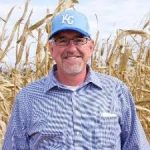
Farming Towns and Cities – Richard Fordyce USDA Administrator/Farmer
Farming in Cities and Towns is not where you usually expect to run across the US Department of Agriculture. Well that’s beginning to change as the USDA’s Farm Service Agency is launching county committees to focus exclusively on urban agriculture. Richard Fordyce is enthusiastic about this new direction. He is a farmer from Missouri where he also was the Director of Agriculture and now is the Administrator of FSA where this year due to special trade, Covid and natural disaster programs over $40 Billion dollars are being spent to support US farmers. Richard believes that growing food, whether in traditional farms or full or part time in cities and towns is as noble a calling as there is. To find out more about the Urban Agriculture initiatives contact the FSA county office at the local USDA Service Center. General questions about these FSA county committees can be sent to [email protected]. For webinars discussing the work of the Office of Urban Agriculture and Innovative Production – including these FSA county committees see farmers.gov/urban.
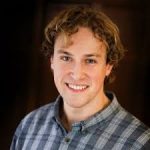
Online Markets For All – Cole Jones
Covid has hastened the shift to online markets for every size and shape of farmers to connect with wholesale, retail or consumers around the corner or around the world. Local farmers who have been selling to farmers markets, CSA\’s, local stores or restaurants can now add their own online outlet. Even large scale commodity farmers can now branch out from a mono crop system to add some specialty crops or livestock that they can market wholesale or retail from their own personal online stores. Cole Jones, the founder of Local Line, is convinced that online commerce is the new commerce from farms to tables. Local line is helping over 7,000 farmers from every Canadian Province and 49 States get to market \”better, faster, cheaper!\” When much of agriculture has suffered from the concentration of fewer and fewer buyers, farmers can hang their shingle on their personal virtual store that cuts out superfluous middlemen. It is a key part of North America\’s future food system and it\’s the Talk of Farm to Table. www.localine.ca
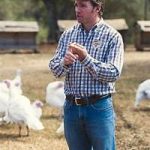
Let\’s Talk Turkey – Jason Diestel
Some independent growers and processors have removed the need for the middle man. From raising and butchering their animals to processing and shipping the finished product to stores, they have control over their product quality and supply chain and embody the essence of the farm-to-plate movement. For over 70 years and four generations, the Diestel family has been on that track, pursuing innovation in turkey farming and processing while maintaining old-fashioned values.Jason Diestel has loved food and farming since growing up working alongside his dad, Tim Diestel, and his grandpa, Jack Diestel, on the ranch he now helps run. Jason turned his attention to sustainable farming in college, where he led a humus composting project—the first of many excuses to nerd out on carbon farming and creating more nutrient-dense food, and what ultimately led to his role on the farm today. As a turkey farmer who understands the role of healthy soil in the greater food web, he knows that caring for the land is one of the most important contributions of Diestel Family Ranch can make. Jason also leads Diestel’s gargantuan compost program, helping CSA farmers, Master Gardeners, and school gardens to be more productive and more responsible. Farm to Table Talk visits with Jason Diestel on this family\’s journey from producing turkeys, to processing and marketing a successful family brand and creating an earth friendly composting program. www.diestelturkey.com
Celebrating A Life – Jack Woolf
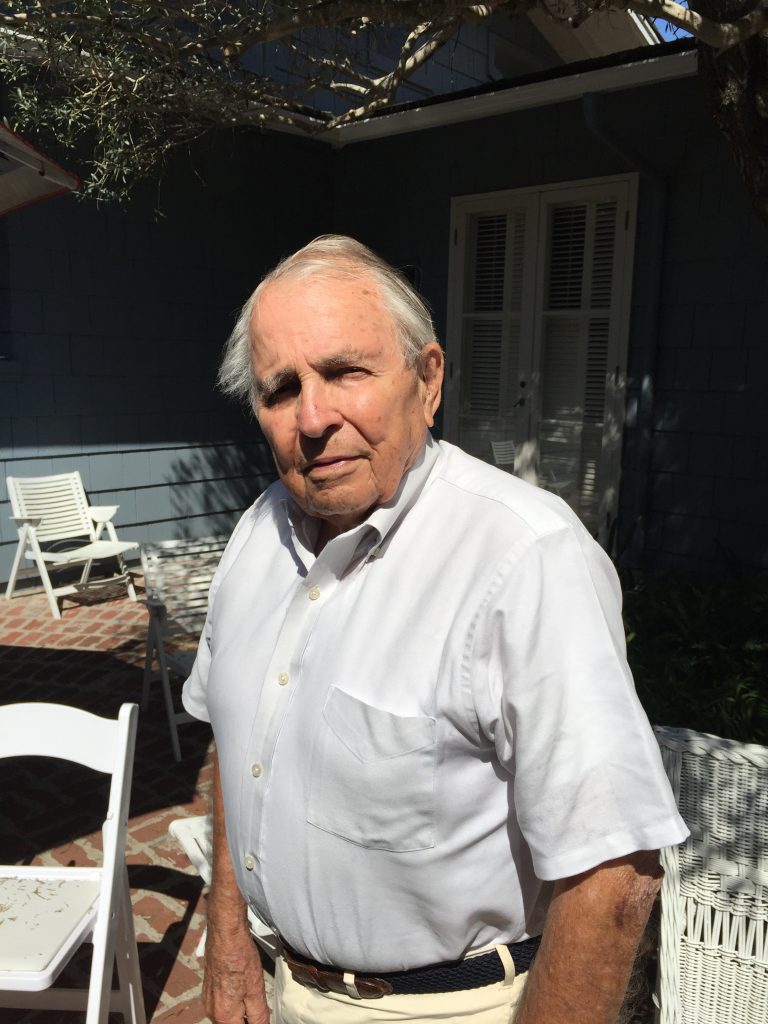
When a living legend passes after over a hundred years on Earth, it can truly be right to celebrate that life. That has never been truer than when that legend is Jack Woolf and his particular part of the Earth was the Central Valley of California.Jack Woolf started farming for others on the west side of the San Joaquin Valley after returning from WWII. When he and his family founded Woolf Farming in 1974, he sought to move away from the region’s traditional crop rotation of grains, cotton & melons to higher valued specialty crops and processing tomatoes and almonds. About three years ago I sat down with Jack on the occasion of his 100th birthday. It was an incredible conversation with a man I liked and admired for who he was as a Farmer, Father, Grandfather, Friend, Husband of Bernice and a true champion for Agriculture in the Central Valley of California. Jack passed away, a few weeks shy of his one hundred and third birthday. Jack\’s telling of his own story is an inspiration that we share again in this podcast conversation, the first podcast with a 100 year old farming legend. In the spirit of true celebration of a remarkable life, we now turn the clock back for this visit with Jack Woolf. www.woolffarming.com
Well-Raised Meat – Diana Rodgers
  \”At our grocery stores and dinner tables, even the most thoughtful consumers are overwhelmed by the number of considerations to weigh when choosing what to eat—especially when it comes to meat. Guided by the noble principle of least harm, many responsible citizens resolve the ethical, environmental and nutritional conundrum by quitting meat entirely. But can a healthy, sustainable and conscientious food system exist without animals?\” That\’s one of many critical questions answered by Diana Rodgers: Mom, organic farmer, registered dietitian, author and film-maker. Cows get a raw deal and Diana sets the record straight in her blogs, books, film and podcasts. In our Farm To Table Talk and the new book and film, aptly titled Sacred Cow, Diana explains why well-raised meat is good for you and good for the planet. www.sustainable dish.com www.sacredcow.info  
Honey Do Biz – Matt Kollmorgen
What if you could build an online retail business around your favorite food. Matt Kollmorgen had that idea when, as many are experiencing today, his former employment ended. Since he loved honey from when he was a kid growing up and as a grown up it became important to provide his family with a healthy, nutrient rich alternative to sugar, he found a way to turn his love into a business, \”Bee K\’onscious Artisinal Honey\”. A business plan was drafted and beekeeper partners were found who use ethical sustainable practices so pure, blockchain traceable, raw honey could be sourced, bottled, posted on line and shipped to discerning families all over. Career changes are on the horizon for many today, so opening an online store featuring a favorite artisanal food can be a solution for new entrepreneurs and consumers who love the expanding choices, from farm to table. www.bkshoney.com    
Community, \”Heal Thyself\” – Cathryn Couch, Ceres Project
There is good news for people who want to help people: To make a difference you don\’t have to fly to a challenged part of the country or the world; just roll up your sleeves and go to work in your community. That\’s what Cathryn Couch does through the Ceres Community Project that she started in the basement of her Church with some volunteer teens. Today they energisze communities by linking what we eat and how we care for each other with the health of people and planet. From their humble beginnings they have grown to provide thousands of meals that connect locally grown food with people in need. CNN recognized their founder and CEO, Cathryn Couch as one of America\’s \”Community Heroes\”. Beyond their local community role today they are helping train community leaders across the country and are working on regional \”food as medicine\” projects that recognize good nutrition trumps the costs of drugs and hospitals. www.cerespoject.org