
Farm To Table Talk
316 episodes — Page 6 of 7
UN Food System Summit – Paul Newnham
  World leaders have committed to tackling global hunger, climate change and biodiversity loss at an historic UN Food Systems Summit. More than 150 countries made commitments to transform their food systems, while championing greater participation and equity, especially amongst farmers, women, youth and indigenous groups. What is this global food system and why does it matter? After a full day of hearing Presidents, Prime Ministers and UN officials express their vision, Farm To Table Talk visits with an experienced hand at global diplomacy engaged from farm to table all over the world. Paul Newnham is the Director of the Sustainable Development Goal (SDG) 2 Advocacy Hub, a secretariat catalyzing, convening, and connecting NGOs, advocacy groups, civil society, the private sector and UN agencies to coordinate global campaigning and advocacy to achieve food systems transformation. The 2021 UN Food System Summit has concluded but the journey continues. https://www.un.org/foodsystemssummit
Legally Resilient – Rachel Armstrong
Everything is changing down on the farm, except for the laws. How do farmers and ranchers keep up while they diversify in to direct to consumer sales, wedding sites, field dinners, local meat processing, pesticide drift, agri-tourism, cottage food, food safety liability, NIMBY neighbors, run off, carbon credits, etc? The trusty local lawyer may not have all the answers. That\’s why Rachel Armstrong created Farm Commons.
Feeding Earth\’s Future – Adegbola Adesogan
Call it what you will, the climate is weird and getting more dangerous. Still reactive blanket prescriptions for changing the world\’s diets must take in to account that over 800,000 people are subsisting on incomes of $2 per day. In these areas the most serious threat is physical and cognitive stunting of up to 30% of the children due to poor diets; however, global regenerative agriculture can reduce Green House Gases and still improve diets with better utilization of nutrient dense animal sourced foods. Dr. Adegbola Adesogan is the Director of the Feed the Future Innovation Lab for Livestock Systems and the Professor of Ruminant Nutrition at the University of Florida. https://livestocklab.ifas.ufl.edu/. https://foodsystems.ifas.ufl.edu/

Rescuing Mother Earth – Tim LaSalle
The world can draw down all of our Carbon emissions if agriculture fully embraced regenerative agriculture. Soils must be regularly monitored by probing carbon levels because the more that is in the soil the less is in the atmosphere. These themes are promoted by the Chico Center for Regenerative Agriculture and Resilient Systems to reduce greenhouse gasses, restore soil resiliency, increase the sustainability of farms and ranches, and address food and water insecurity. The co founder of the Center, Dr. Tim Tim LaSalle was the first CEO of Rodale Institute, Executive Director of the Allan Savory Center for Holistic Management and researcher/adviser with the Howard Buffett Foundation in Africa on soils and food security for smallholder farmers. Tim is Professor Emeritus of Cal Poly and former President/CEO of the California Ag Leadership Program. https://www.csuchico.edu/regenerativeagriculture/index.shtml
Holistic Abundance – Abbey Smith, Savory Institute
Global regenerative abundance is the goal and holistic management is the way to get there. It\’s an abstract perspective at first, but when coached to this vision by the Savory Institute\’s Global Network Coordinator, Abbey Smith we get the picture. The Savory Institute sets out to regenerate the world\’s grasslands and in that journey regenerates farms, ranches, regions, communities and individuals who are committed to protecting the Earth and its population from predicted climate and food disasters. Abbey Smith explains how Savory Institute\’s work is global in scope, grassroots in execution and holistic.
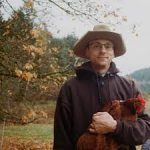
Take That First Step – Ben Glassen
To cook, farm or eat in a different way requires taking that first step. On Vancouver Island in British Columbia, Ben Glassen has taken first steps in regeneratively raising animals and providing them to consumers who are taking their own first steps, reaping the benefits of regenerative livestock production. Ben\’s approach includes leasing (or borrowing) land, mobile infrastructure and direct marketing. Customers choose to purchase meat raised regeneratively for the health value, ethics of the way the animals are raised, support of local production and the environmental impact. The next first step for Ben will be establishing an abattoir to process locally raised livestock. In addition to listening to Ben Glassen on the Farm To Table Talk podcast, he can be visited with directly on Clubhouse in the Farm To Talk Club. www.glassenfarms.com
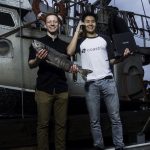
Creating Links in the Food Chain – Joseph Lee
COVID-19 forced thousands of farmers, fishermen, butchers, and food suppliers to make incredible changes that they had never imagined. Fortunately, in the emerging food chain, suppliers of all sizes can compete in the digital world at the intersection of technology and food. Joseph Lee, Co-Founder and CPO of Freshline shares the story of how new ventures like theirs have stepped up to create these links that are revolutionizing the way food efficiently gets from boats and farms to tables all over North America. www.freshline.io  
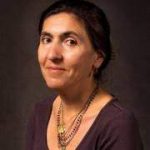
Social Science and Special Interests – Silvia Secchi
What does Social Science have to do with our food system? Professor Silvia Secchi a Social Scientist at the Public Policy Center at the University of Iowa believes it has a key role to play as is clear by her favorite quote from T. W Shultz, \”It is especially the social sciences -economics, sociology and political science -which, if prosecuted with vigor reveal answers which are unpalatable to special interests.\” Today that vigorous prosecution can address issues facing women farmers, polluted waters, barriers to entry and misdirected carbon credits strategies. Professor Secchi highlights the issues and ways to constructively engage in the dialogues that can lead to positive change. [email protected] https://link.springer.com/content/pdf/10.1007/s10460-020-10077-x.pdf https://www2.iihr.uiowa.edu/cjones/crap-and-trade
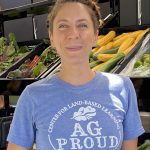
Farmers Market On Wheels – Sara Bernal
If food insecure populations can\’t make it to food markets, bring it to them. With this idea and a grant from the California Department of Agriculture for a Farmers Market Food Truck, this is a dream come true in West Sacramento. Sara Bernal is the program manager for the West Sacramento Urban Farm Program and now with a vehicle the size of a traditional U Haul moving truck low income communities are able to shop for farm fresh foods in their own neighborhoods. “With the seniors particularly but also these affordable housing complexes with families, it can be exceedingly hard if you don’t have a car to get groceries,” Bernal said. “So the whole purpose of the truck is to get produce to people where they live in the easiest way possible and then to make it affordable.” Sarah Bernal and Rodger Wasson visit in the parking lot of a low income housing community while customers bring their Cal Fresh/SNAP EBT cards for discounted purchases of healthy foods. www.landbasedlearning.org
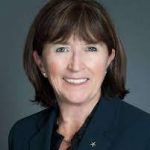
Hunger and Food Waste Solutions -Carol Shatuck
Food waste presents its own serious crisis. As awareness has risen about the impact of climate change on our environment, we are learning the significant role that food waste plays. In America, 40% of the food supply, from farm to table, is wasted. This excess food ends up in landfills where it creates methane gas, a major contributor to the warming of our planet. Vegetables, fruit, milk, and other nutritious foods fill our landfills. At a time when there is so much hunger in our country, we are throwing away the very food that could feed the food insecure and help save our planet.The bottom line is that hunger and food waste are unacceptable in America where there is a wealth of resources and enough food being produced to feed everyone. The knowledge that these crises can be solved drives the mission and work of Food Rescue USA whose CEO Carol Shatuck visited the Farm To Table Talk Clubhouse room (now open to all) and this episode of Farm To Table Talk. www.foodrescue.us    
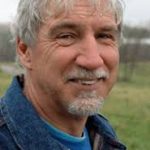
Nonpassive Farmers & Eaters – Francis Thicke & Dave Chapman
  Before he became the third President of the United States, Thomas Jefferson envisioned a country of \’citizen farmers\’ who would be engaged in government. Jefferson would have been pleased with citizens like Iowa farmer Francis Thicke and Vermont farmer Dave Chapman who climb off their tractors to Zoom with the Secretary of Agriculture about needed policy infrastructure repairs to the USDA Organic program. A thousand farmer have already joined with them to give consumers assurance of Real Organic production practices and to rescue the reputation and trust in Certified Organic. It\’s wrong when farmers are passive about what they grow and it\’s wrong when consumers are passive about what they eat. Jefferson could see farmers and eaters saying \”we the people are going to do it on our own.\” www.realorganicproject.org

Pledging Head, Heart, Hands and Health – Lynn Schmitt-McQuitty
If more of us pledged our head to clearer thinking, our heart to greater loyalty, our hands to larger service and our health to better living it would be better for us, our clubs, our community, our country and our world. That\’s been the 4-H pledge for generations, although our \”world\” is a welcome additional beneficiary. 4-H is not just for farm kids with animals. In many states the vast majority of young people in 4-H Clubs are in cities with a wide range of projects that often have more in common with computer labs than barnyards. Lynn Schmitt-McQuitty is the California 4 -H Director for University of California Agriculture and Natural Resources. Lynn tells the story of today\’s 4-H and how we can help our kids and ourselves. Caring parents, neighbors or grandparents should look in to 4-H for youngsters or to volunteer their own time for \”better living in better communities\”. http://4h.ucanr.edu  
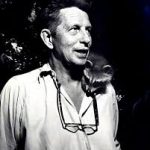
Louis Bromfield Now – Rich Collins, Anneliese Abbott, John Jamison & Sukey Jamison
Louis Bromfield planted seeds of the food revolution and reminds us to \”Never forget that agriculture is the oldest of the honorable professions and that always the good farmer is the fundamental citizen of any community, state or nation.\” We are reintroduced to the wisdom and vision of Louis Bromfield in the recently published book, \”The Planter of Modern Life\” by the author Stephen Heyman. He was introduced to the Bromfield books of nearly 75 years ago by Pennsylvania grass farmers, John and Sukey Jamison who had themselves been inspired by Bromfield\’s Malabar Farm. John and Sukey share how Bromfields vision helped them get started when neither had any farming experience. Regenerative farming leader, Rich Collins, has been a self described Bromfield \’Groupie\’ for years and has visited Bromfields place outside of Paris and Malabar Farms in Ohio. He also has shared Bromfield books and introduced us to the author of the next Bromfield book, Annaliese Abbott. Rich, Annaliese and the Jamison\’s join the table to discuss the life and lessons of Louis Bromfield. In addition to recommending The Planter of Modern Life, Rich Collins shared the following. \”Most all of these folks focused on the important role of soil as a key element of the water cycle. As Hugh Bennet wrote back in the mid 30\’s \”Keep the raindrop where it falls.\” So simple!! Pleasant Valley (1943) and Malabar Farm (1947) by Louis Bromfield Water and the Cycle of Life (1958) by Joseph A. Cocannouer Plowman\’s Folly (1943) and A Second Look (1947) by Edward H. Faulkner Deserts on the March (1935) by Paul B. Sears Big Dam Foolishness (1954) by Elmer T. Peterson
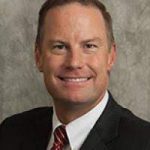
Labor Supremes – Michael Droke
On-farm agriculture operations have been excluded from federal labor law since 1935. California filled this gap by creating its own law in 1975, the California Agricultural Labor Relations Act (“ALRA”) that gave union organizers the right to physically access the farm property in order to solicit support for unionization. Growers challenged this regulation as a state-sponsored “taking” of their property rights, without the just compensation guaranteed by the Fifth and Fourteenth Amendments to the United States Constitution. In a 6-3 decision, the U.S. Supreme Court has agreed with the growers, holding that the ALRA’s access regulations were a per se violation because they allowed “physical invasion” of the land without compensation. Michael Droke explains the significance of the decision and implications for property rights protection for agriculture. Michael is a senior partner at the international law firm Dorsey & Whitney in its Food and Agriculture group. www.scotus.com www.dorsey.com  
Climate: Cows or Cars? – Frank Mitloehner, UCDavis
Will eating less meat save the planet? Some say so but science says no. of course if you\’re looking for a reason to eat less meat and tell others to do the same, climate change seems to add to your case. However, if you\’re looking to make real impact on the climate, transportation and construction are still much more important than agriculture. Dr. Frank Moetloehner, Director of the Clear Center at UC Davis is the most quoted expert on these issues in the world. He shares with us the true story of the effects of livestock production, including that some countries are doing a better job than others. With the adaptation of new technologies, California dairy farmers have reduced methane emissions by 25%.. On You Tube videos and in Frank\’s presentations you we see him hold up an 8.5 X 11 inch sheet of paper to represent the entire surface of the Earth; then a business card that represents the area where agriculture is possible with 2/3 of that card only fit for grazing livestock. It is an important story that Frank tells us. www.clear.ucdavis.edu
Water Matters Most – Randy Record
Except for the air we breathe, nothing is more important to life on earth than water. Humans can live up to 60 days without food but only a few days without water. So water is life and the worsening climate is severely impacting life as we know it. In California alone it is estimated that nearly a million acres of previously productive farmland will be fallowed in 2021. Inevitably the food supply and food costs will be impacted. Randy Record farms and invests his time in seeking water solutions. He has a vineyard and is on the Metropolitan Water District (LA) Board where he has served as Chairman. Randy has a clear eyed perspective on the water challenges we face and faith that building trusting relationships between cities, agriculture and environmental publics is a key for progress. www.farmwater.org

Millennials Farm and Ranch – Paige Dulaney and Bryon Moes
  Not all farmers are old.. Millennials are coming back to family farms and ranches in impressive numbers. After college and trying other adventures many are deciding that their passion and what seems best for their families is to be back in rural areas where they bring enthusiasm and a renewed commitment to grow livestock and crops in a way that is good for their family, community and the climate. Brian Moes, his wife and five young boys, dry land farm and feed cattle in North East South Dakota. Paige Dulaney, her husband and two young boys, farm and ranch in North East Colorado. Bryon and Paige share a path with thousands of new generation farmers who want consumers to understand that their food is being produced by young families liker theirs who are proud of how they farm or ranch and hope to see their kids come back some day to continue the tradition.

Bush to Table
  Connecting small farmers to new markets is a universal goal. In Fiji and Australia that is being accomplished due to the efforts of twin sisters, Lisa and Zoe Paisley who have co-founded Aggie Global. They moved to Fiji to start a business and address poverty in rural communities. Farmers struggled with selling their produce while the tourism sector imported 70% of their food so Aggie Global was built to connect either end of the food supply chain in a more transparent and equitable way. Zoe and Lisa came back to Sydney when the pandemic hit and launched an Australian arm to support indigenous farmers by focusing on \’Bushfoods\’. It\’s another great journey of connecting farms and consumers that can be translated to local and global regeneration. Aggie Global\’s crowdfunding and subscription program will help make positive social change every month. Their campaign helps support Fijian farmers and build healthy communities by providing boxes of locally grown, fruit and vegetables to families in need every month. Check out their campaign on Start Some Goods website today! https://startsomegood.com/support-local-to-build-healthy-communities-aggie-global/ https://www.aggieglobal.com/
Farmlink Project- James Kanoff
Billions of pounds of produce are going to waste while millions of Americans are going hungry. Seeing food lines develop all over, some University students decided to do something to change that. They created the Farmlink Project to connect farmers to food banks, delivering millions of pounds of farm fresh produce that would otherwise be wasted to feed families in need. The founder and CEO of Farmlink, James Kanoff explains how this idea has led to up to a million pounds of food per week that might otherwise been wasted, make its way from farms to food banks to hungry people. www.farmlinkproject.org

Smart People, Bad Choices – Jack Bobo
Consumers have never known more about nutrition and yet, have never been more overweight. For most Americans, maintaining a balanced diet is more difficult than doing their taxes. What are we doing wrong? Jack Bobo has been engaged with the food system from farm to table and is the author of a new book \”Why Smart People Make Bad Food Choices\”. He is a food psychology expert with over 20 years advising four U. S. Secretaries of State on food and agriculture. In his book and here on Farm to Table Talk he guides us to smarter food choices and improving our quality of life. https://futurityfood.com/  
Biodynamic Insights – Chris Daugherty
Nutrient density, biodynamic and regenerative are terms of relevance to the health of our planet, our soil, our food and ourselves. It\’s tricky learning the connections but Dr. Christopher Daugherty ties it all together. \”Biodynamic is the art and aspect\” of the essential principles of food. Nutrient density is the \”level of nutrients per unit\” of calorie. Dr. Chris is a regenerative entrepreneur in \’Ortho-molecular\’ Nutrition & Biological Medicine. Focusing on biological nutrients, product development and farmer direct supply chains provides biodynamic insights for the future of earth to farm to table. organicconnectmag.com/wp/2008/11/dr-christopher-daugherty-the-quest-for-sustainability/  

New Normal It\’s Not – Suzy Badaracco
  Now is not the new normal. Consumers were forced to change their shopping and dining food practices by the pandemic. As they return to stores and restaurants, they need to be the Hero of their lives. From farmers to restaurants and food markets, helping consumers realize their need to be the Hero from these troubled times, is job One. Suzy Badaracco is the President of Culinary Tides Inc., a Trends consultancy with a focus on what\’s going to happen next. It\’s not just studying the data to see trends taking shape; but rather identifying the \”parents\” of the trends. Food marketers from farm to table, especially need to take note and act accordingly to help their customers become HEROS. www.culinarytides.com
Becoming Farmers – Mary Kimball
  Many people wish they could farm and new farmers are needed. Sounds like a match. It is a well established fact that the average age of farmers is around the age that people are thinking of retirement. So who will be farming in the future, beyond just those who are fortunate enough to be born in to a sustainable family farm? The Center for Land Based Learning is trying to answer that question with programs reaching out to an audience from High School, to early career and to mid-life career changers. Mary Kimball the CEO of the Center For Land Based Learning joins Farm To Table Talk in a Clubhouse room to explain and answer questions from a live global audience on the future for those who want to be farmers. www.landbasedlearning.org
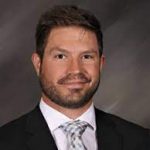
Better Life Rural – Johnathan Hladk
Families are spending more time cooking at home and local meat provides a better and more affordable alternative. According to Johnathan Hladk the Policy Director for the Center for Rural Affairs, local meat lockers simply do not have the space or equipment to keep up, leaving family farms in the growing direct sales industry without a crucial partner.State and Federal government should support small meat processors looking to improve and expand their infrastructure, which is vital in addressing bottlenecks in local processing and encouraging the growth of rural economies. Funds should be made more available to entrepreneurs seeking to open a new small meat processing facility. With voluntary support coming from coast to coast, the Center for Rural Affairs addresses issues to improve the quality of rural life. www.cfra.org
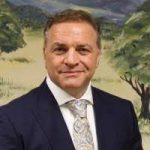
Good Vibes Farming – Francesco Arlia
New technologies will play an important role in the future of farming for every size, shape, climate and geographic location. The ideas are popping up fast and increasingly affordable for the full spectrum of global farming systems. Francesco Arlia is the founder and CEO of one of these emerging pioneers, Harvest Harmonics. With dime-sized micro-transmitters the natural vibrations and optimum frequency of photosynthesis is changed for the better. Frank talks of the birth of new, non-chemical technologies that could represent the next green revolution. www.harvestharmonics.com
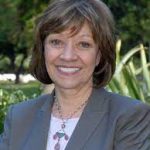
Climate Smart Agriculture – Secretary Karen Ross
Climate smart agriculture will make a difference to farmers, citizens and life on earth. Karen Ross, the Secretary of Food And Agriculture for the California Department of Agriculture is on the front line of meeting the climate challenge as chief administrator of food and agriculture programs for the 5th largest economy in the World. Secretary Ross has a perspective beyond California boundaries having hailed from a western Nebraska farm, managed farm organizations and served as the Chief of Staff at the US Department of Agriculture under then Secretary Tom Vilsack. Secretary Vilsack is now back at USDA with a fresh charge to lead Agriculture to Climate Smart Agriculture and Karen Ross will promote the synergies that come from state, federal, local and farm/rancher initiatives that lead to climate smart solutions for a warming planet. www.cdfa.ca.org  
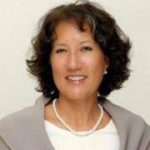
Food System Clubhouse – Paula Daniels
  Clubhouse is a drop-in audio chat network that now includes conversations about the food system, on Farm To Table Talk. The Center for Good Food Purchasing uses the power of procurement to create a transparent and equitable food system that prioritizes the health and well-being of people, animals, and the environment. Paula Daniels is the Co-founder and chair of the Center, developing nationally-networked adoption and implementation of the Good Food Purchasing Program by major institutions. The result is good news for local farmers and communities across the country from the direct connections with sustainable and regenerative food sources for their schools, hospitals and public administrations. The conversation with Paula Daniels begins in a podcast that wanders in to the Farm To Table Talk Clubhouse to be joined by other food system pioneers. www.goodfoodpurchasing.org #Clubhouse

Give Livestock A Break – Illias Kyriazakis
It\’s become popular to bash livestock production and meat consumption for extreme green house gas emissions. What if the data is wrong? In the UK where carbon neutral agriculture is to be accomplished by 2050, new research has found that the \’carbon\’ case against pig farming is not right. The study conducted by the Institute for Global Food Security found that the carbon footprint has been overstated by 40% over the last 20 years. Professor Illias Kyriazakis of Queen\’s University in Belfast, Northern Ireland is the author of the study. Professor Kyriazakis also explains that there was very little carbon foot print differences in the type of pig production, indoors or outdoors. Genetic improvements deserve much of the credit for the progress, however when soy protein for pig feed is imported from somewhere that destroys rain forests to grow soybeans, the Climate suffers. All livestock systems deserve a closer look before broadly promoting meatless diets to protect the climate. https://www.qub.ac.uk/Research/GRI/TheInstituteforGlobalFoodSecurity/

Warm and CRISPR Climate – Andrew Porterfield
The Nobel Prize Committee has just recognized the scientists who discovered CRISPR—genetic scissors that are a tool for rewriting the code of life and potentially a tool in limiting global warming. New science, technology and a range of farming systems from conventional to agroecology, regenerative and organic have roles to play. Science writer Andrew Porterfield is investigating and writing about the avenues that are being considered by farmers to slow global warming. In a feature article that caught our eye, he answers the question of whether one farming method can help slow global warming. In our conversation we consider that there needs to be broader acceptance that climate change is a real threat and that farming methods can be part of the solution.
Omnivore\’s Dilemma, Delusion or Delight — Blake Hurst
Do omnivores face a dilemma as Michael Pollan famously proposed in his popular book over a decade ago or is the dilemma a delusion? Farmer Blake Hurst who just completed 10 years as President of the Missouri Farm Bureau has practiced what he’s preached about farmer\’s need to communicate. A dozen years ago when the Omnivore’s Dilemma brought global attention to modern farming methods, Blake responded with an article titled the Omnivore’s Delusion. https://www.aei.org/articles/the-omnivores-delusion-against-the-agri-intellectuals/ This led to the farmer from Missouri appearing with Michael Pollan on NPR’s Face of the Nation where they respectfully engaged in a too seldom heard consequential conversation. https://www.npr.org/templates/story/story.php?storyId=113619474 Now a dozen years later Blake Hurst visits with us on why it is still important for farmers to resist their nature and instead speak up about what they do and why they do it. On Wednesdays at noon Pacific Time Farm To Table Talk will host conversations, including guests such as Blake in the new on-line audio chat for iPhone, Clubhouse. You can find us there and also find more information at our website FarmToTableTalk.com where you can also subscribe to receive our weekly podcasts. Thanks, Rodger Wasson
Tools To End Hunger – Katie Martin
COVID-19 has exacerbated food insecurity and laid bare systemic inequalities that contribute to hunger. One in six Americans—54 million—are food insecure, with the largest increases seen in communities of color. For a country that wastes 30-40 percent of its food supply, how can we understand this rate of food insecurity? Katie Martin is Executive Director of the Foodshare Institute for Hunger Research & Solutions and author of Reinventing Food Banks and Pantries: New Tools to End Hunger. On Farm To Table Talk Katie distills over 25 years of expertise developing creative solutions to hunger for tackling food insecurity. Pervasive food insecurity is not due to a lack of food: it is a matter of access and power. Reinventing Food Banks and Pantries: New Tools to End Hunger shares a new vision of food banks and pantries as empowering community hubs where clients receive more than food, including job training and connection to community resources.    

Linking The Food Chain- Rob Neenan
It might be appealing to imagine all food going straight from \’Old McDonald\’s Farm\” to our tables, but it\’s not realistic. Because of seasons, climates, soils, water (quality and availabilty) research and grower education, most harvested crops need to be cleaned, cooked, canned, frozen or dried to move on up the food chain to tables around the world. In California alone, the companies that do these essential tasks employ over 750,000 workers with several million family members and thousands of dependent local businesses–directly adding $25.2 billion to the economy. This link in the chain is represented by the California Food Producers. As CEO and President of the association, Rob Neenan with staff and committees is engaged in promoting and defending policy and public opinion that effects processing food distribution and sales. Those policies today extend from new issues like the pandemic to long term issues related to water–where new groundwater regulations may result in millions of acres being fallowed and less food produced. www.clfp.com
Changing Farm Ways – Emily Newman, Rodale Institute
A lot of people want to farm and some farmers want to change the way they farm. Emily Newman is helping those folks in her role as Program Manager for Rodale Institute\’s Organic Crop Consulting Service. They provide one-on-one mentorship and assistance to farmers looking to transition to organic. Consultants meet farmers where they are—each plan is individualized for best outcome for that particular farmer, no agenda or pressure.In under two years of operation, they already have over 150 farmer clients and over 50,000 acres in transition.A lot of people want to farm and some farmers want to change the way they farm. Emily Newman is helping those folks in her role as Program Manager for Rodale Institute\’s Organic Crop Consulting Service. They provide one-on-one mentorship and assistance to farmers looking to transition to organic. Consultants meet farmers where they are—each plan is individualized for best outcome for that particular farmer, no agenda or pressure.In under two years of operation, they already have over 150 farmer clients and over 50,000 acres in transition. Emily holds a B.S. in Environmental Resource Management, focusing in Soil Science, from Pennsylvania State University and is currently pursuing an M.B.A. in Food and Agribusiness. www.rodaleinstitute.org

Sustainability Is A Happy Family – JoBeth Evans and Maggie Davidson
  Sisters JoBeth Evans and Maggie Davidson have been farming since they were old enough to feed the cows but just recently (officially) went in business with their parents to form Williams Angus Beef. The girls grew up, graduated from college, got jobs, married farmers, had two kids each and are now reconnecting with their parents. They are practicing a basic premise of sustainability: keeping farming a live for generations to come. JoBeth and Maggie explain why this is important, how they are doing it and how other farmers can make this possible for their children and grandchildren. www.WilliamsAngusBeef.com

Smart Label Down Under – Paul Ryan and Rob Mackenzie
Food fraud and political tensions have heavily impacted Australian farmers exporting products to international markets. Traceability and provenance are essential to fighting food fraud and opening new export markets for farmers, producers, processors and consumers who deserve to know they’re getting exactly what they purchased. Fourth generation Black Angus beef farmer, Rob Mackenzie, has been getting his hands dirty, working to strengthen Australia’s supply-chain visibility by implementing Aglive’s paddock-to-plate platform. Paul Ryan the Managing Director of AgLive and Rob Mackenzie join Farm To Table Talk to explain how new technology fights food fraud with stories in smart labels that traces provenance and production practices from the table back to the farm. www.australianangusbeef.com.au www.aglive.com
Which Came First – Josh Balk
  Consumers, Restaurants, Supermarkets and Farmers are finding common ground on animal production and marketing animal products. Here it can be argued that \”the egg came first.\” Josh Balk leads the Humane Society of the United States’ work in shifting the egg industry from predominantly cage production to cage-free housing instead. He’s successfully worked with virtually every major food company—including McDonald’s, IHOP, Denny’s, Kroger, Nestle, etc.—to enact a policy to switch to exclusively using cage-free eggs. He’s also waged successful ballot measures and legislative campaigns passing numerous state laws to ban the confinement of laying hens in cages and ensuring that all eggs sold in the state would be cage-free. When this work began, less than 5% of laying hens were cage-free. Now it’s up to ~30% cage-free representing nearly 90 million hens. Lessons being learned about this shift have implications for the future, up and down the food chain. @joshbalk www.humanesociety.org
Science and Solutions – Diego Angelo
  Scientific advances are credited (or blamed) for food system progress (or problems) depending on food philosophies and perspectives. Yet new knowledge that comes from new scientific findings can lead to more sustainable systems that reduce waste, limit production of green house gases and feed more hungry people world wide. Some of the necessary research for these advances will come from government agencies and most of it will come from companies who seek to profit, and to do the right thing. The Chief Business Officer with Biotalis, Diego Angelo is adamant that nature provides the key to solving the food waste (30%) problem. www.biotalys.com    
Healing Earth Heals Us – Rupa Marya, MD
  From farms to citizens of the world of the world inflammation causes disease and makes health impossible. Global transformation will need recognition that farming is medicine for the health of all life and of earth itself. That\’s a theme for a KeyNote presentation at EcoFarm by Dr. Rupa Marya: physician, writer, musician, mother, farmer\’s wife and Associate Professor of Medicine at UC San Francisco. Her forthcoming book, authored with Raj Patel, is \”Inflamed: Deep Medicine and the anatomy of Injustice.\” In addition to her extensive engagement in support of indigenous communities, she is the lead singer and composer of a globe circling band, Rupa and the April Fishes. [email protected]
Dietary Guidelines – Barbara Schneeman, DGC Chair
Every five years the US Government develops and publishes \”Dietary Guidelines For Americans\”. The Guidelines for 2020 – 20225 have now been released by the two responsible agencies, USDA and HHS. New approaches have been taken to identify diet patterns for various life stages. The report follows the recommendations of the Dietary Guidelines Committee of experts, except for two areas. The Committee recommended that \”added sugar\” limits should be reduced from 10% to 6% and that if men drink alcohol it should be limited to no more than one drink per day as it is currently for women and not two drinks as has been the guidance for men. Chair of the Committee, Dr. Barbara Schneeman (UC Davis, USDA, FDA) explains the process, the findings and significance of the new guidelines. MyPlate.org
Loving Our World — Wendell Berry & Bill Moyers
\”To make a living is not to make a killing. It\’s to have enough.\” says Wendell Berry in many ways, in scores of books over the years. As we consider the future of the world we need to reflect on the counsel of Wendell Berry who reminds us that the world will take care of us if we take care of it; knowing and loving it. If there was a poet laureate for agriculture, it should be Wendell Berry. A few years ago the renowned Bill Moyers was successful in interviewing Wendell and he agreed we could share that conversation as a Farm To Table Talk podcast. As a capstone to a challenging year and a message that fits the holidays, we bring back this conversation of Wendell Berry and Bill Moyers that originally aired on October 4, 2014 as a production of the Schumann Media Center and Mannes production. www.BerryCenter.org. The people who produced the original show are acknowledged here. Produced & Directed by ELENA MANNES; Editor DONNA MARINO; Director of Photography PETER NELSON; Art Direction DALE ROBBINS; Sound ROGER PHENIX; Coordinating Producer KRISTIN LOVEJOY; Associate Producers JESSICA BARI, RENIQUA ALLEN; Additional Camera JAY McCAIN, CHIP SWETNAM; Lighting Director DAN CUNNINGHAM; Grips MIKE DICKMAN, JAMES WISE; Make-up TAMARA LEE; Data Management LUKE STALEY; Production Assistant DAVID ZACHERY; Assistant Editor SCOTT GREENHAW. Special Thanks: MARY BERRY. TANYA BERRY, BONNIE CECIL, DWIGHT COTTON, ADOLFO DORING, TONY MORENO, LEAH BAYENS, CONNIE KAYS, MICHAEL KELEM, AMANDA ZACKEM Footage and Stills: Appalachian Voices, AP Images, Wendell Berry Family, Shay Boyd, Dan Carraco, Center for Ecoliteracy, Ben Evans, Getty Images, ilovemountains.org, James Baker Hall Archive, Kentuckians for the Commonwealth, Guy Mendes, Oleg Ignatovich/Pond5, Twistah/Pond5, Kbuntu/Shutterstock, Spotmatik/Shutterstock, Suliman Razvan/Shutterstock, Suwit Gaewsee/Shutterstock, Chad A. Stevens, Wallace Global FundMusic: Courtesy of APM Music:, Abandoned Ruin, Josh Clark, Leon Hunt, Anthill A, Kurt Hummel, Ballad of Willie – Underscore, Ken Anderson, Rebecca Ruth Hall, Ein Takt Für Gitarre, Shih, Gaya-gaya, Hwa Chae Kyung, Completely Calm C, Klaus Stuehlen, Jesse James, Richard Gilks, Unknown, Madonna’s March, Susi Gott, Pianissimo, Bob Bradley, Matthew Sanchez, Quiet Garden, Pascal Bournet, Silent Movements A, John Epping, Jeff Newmann, Skydancer A, Klaus Stuehlen, Skydancer B, Klaus Stuehlen Senior Executive Producer JUDY DOCTOROFF O’NEILL Production Executives KAREN KIMBALL, YUKA NISHINO. A production of the Schumann Media Center, Inc. and Mannes Productions, Inc.© 2013  

Revitalize Rural USA – Marion Nestle
  Covid pandemic demonstrated enormous problems in the food system with food being destroyed while people were going hungry. If we want to revitalize the food system and rural America we have to bring people back. And to do that we need to have work that people can do. @MarionNestle says it can be done and the new team taking shape at the USDA must take the lead in making it happen.

Farmer Protests – Deep Singh
  Some of the world\’s largest protests are taking place in support of farmers in India. Whether in Delhi, San Francisco or Paris people have gone to the streets to show solidarity with the small farmers in India who are losing essential government support. To generate global awareness of the farmers\’ fate, Sikhs in California have brought tractors, trucks, friends and their voices to public rallies that have filled the Bay Bridge and circled government buildings. The Executive Director of the Jakara Movement, Deep Singh shares the reasons and methods being used to enlist the public to the cause. Deep\’s family is from Punjab and he was raised in the Central Valley of California. Educated at UCLA and Johns Hopkins University, Deep\’s commitment and passion to social, racial, and class justice has helped shape his view of the world. #Farmer Protests will find news and events from all over the world. www.jakara.org

Bounty, Peril & Politics – Tom Philpott
  When once again safe to travel through farm country, the bounty of the food system will be evident. So are the perils resulting from misdirected political power. Tom Philpott, author, podcaster and Mother Jones reporter wrote Perilous Bounty to draw attention to the promise and the peril of farm policy and practices that are often not good for farms or consumers. However an encouraging sign appeared just after the podcast conversation when Rep. David Scott became the first black Chairman of the House Agriculture Committee who (as Tom has reported) recognizes the urgencies of addressing climate change: “With each wildfire, hurricane, or flood more devastating than the last, it is incumbent upon us to ensure food security for future generations…The threat of climate change is a present and growing danger, and we must promote sustainable agriculture solutions that are economically viable, ecologically just, and support the social fabric of our rural communities.” David Scott hope.https://www.motherjones.com/author/tom-philpott/
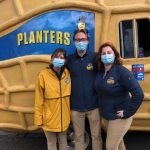
Working for Peanuts – Erin Sastre & Tyler Towne
  Masked or not, face to face marketing can\’t be beat; because wherever you are in the food chain it is best to have direct contact with customers. Erin Sastre and Tyler Towne are literally doing that for Planters Peanuts as they drive a giant peanut thousands of miles back and forth across the country. On a bright Fall morning we find them in front of the Zoo where families come to see them and their Peanut Mobile. They find the \”Peanutters\” , safely masked, and offering nut packs, information and friendliness to everyone who accidentally found them or had heard they were in town from local media or their website, PlantersNUTmobile.com. Although 2020 has been beyond challenging for direct contact between farmers, manufacturers, distributors, retailers, restaurants and consumers. Safely done, it is important and these Peanutters share that magic with Farm To Table Talk. @PlantersNutmobile.com
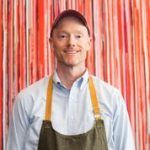
Half Story Half Food All Good – Chef Rob Connoley
  The story of a place has to include the story of it\’s food: what was grown and what they ate. Taking that to heart, the owner Chef of Bulrush Restaurant in St. Louis, Rob Connoly, is finding a delicious way to share the story of a special place with special food traditions from the Ozarks. Rob is establishing the Ozark foodway by resurrecting ingredients, practices and recipes of the past. He’s doing so through foraging, hunting, farming and creating extensive partnerships with organizations including the Seed Savers Exchange, Danforth Plant Science Center, St. Louis Archivist Association, and the Osage Nation Historic Preservation Office. Guests dining at his restaurant have an opportunity to try unique cuisine often from before the Civil War with ingredients such as paw paws, cattails and acorns. New technologies accompany the old ingredients with video stories of each course provided to guests before dinner through QR code links. Dinner with Chef Rob Connoly is half story, half food and all good! www.bulrushstl.com
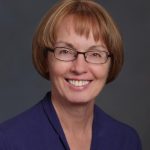
Poor Air Poor Nutrition Poor Us – Dr. Kristie Ebi
  Climate change effects will go way beyond receding coasts and shrinking farm regions to to include the quality of air that plants need to produce nutritious foods. When carbon levels in the air increase, the nutrition from foods will decline by up to 30%, severely impacting human health. Dr. Kristie Ebi is the Founding Director of CHanGe, the Center for Health and The Global Environment at the University of Washington. She works to highlight the role of health and wellbeing in climate action and to facilitate climate resilience in the health sector. So far the public worries about \”carbon\” have been it\’s effect on creating a green house around the earth but the increased levels of carbon in the air that we and our crops breathe matters too. Our table talk leads us to understand that \”feeding the world\” is much more than just sufficient calories when nutrient content is depleted. http://fgobalchange.uw.edu
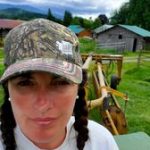
Women Farming and Leading— Kristyn Mensonides and Lynne Wheeler
  Well educated young women who could do anything are choosing to farm, and to lead. Equal gender opportunities do abound in agriculture, including the opportunity to give leadership to controversial issues like climate change. Krysten Mensonides and Lynne Wheeler both graduated from universities and had career choices before they decided farming was their future. Now that future includes joining with their fellow dairy farmers in Washington state to achieve carbon neutrality (or better) on their farms by 2050. The dairy industry currently accounts for 2% of total Green House Gas emissions in the US. They share their journey back to the farm and on to the front lines of farmers addressing climate change. #mensonidesdairy #coldstreamfarm www.wadairy.org  
GMO Deregulation — Greg Jaffe
For better or worse there has been substantial deregulation happening in the US Capitol, now including genetic engineering (GMO/GE). Greg Jaffe is the Biotech Director for the Center for Science in the Public Interest (CSPI). They believe that GE products deemed safe through an independent science-based assessment have a place in our food system and have long advocated for USDA to revise its regulations to establish a streamlined and efficient regulatory process. However, they have also called for such a system to remain science-based and to address real potential risks posed by GE plants (such as preventing the development of resistant weeds or pests). A new USDA Rule falls far short as it \”eliminates any independent, science-based regulatory review by allowing developers to self-determine their products to be exempt from oversight\”. CSPI and others are calling on USDA to revisit these provisions and, until they do, \”calling on all GE plant developers to commit to requesting USDA confirm any self-determinations they make\”. cspinet.org    
Ag\’s New World – Kristine MacRae, Deborah Wilson
      Agriculture may be 10,000 years old but it\’s a new world. Farmers and Ranchers are facing the new challenges with new technologies and new philosophies, enpowering the big and the small. This comes at a time when consumer interest in how their food is produced has never been higher–a fact not missed by food manufacturers, retailers and chefs. Deborah Wilson and Kristine MacRae join Farm To Table Talk host Rodger Wasson to explore that new world. In addition to being a rancher, Deborah Wilson of TrustBix leads a Canadian verification program supporting Cow Calf, feedlot/backgrounder, packer/processor, Retail (McDonalds) and certified Canadian sustainable grain fed beef for sale in China, utilizing Block chain. Kristine MacRae of West Sky Technology helps ranchers track cattle life cycle, monetize public land grazing practices, work with small meat processors and engages customers and sales partners through a virtual hub. www.ncba.org/https://grsbeef.org/; www.beefitswhatsfordinner.com/raising-beef/beef-sustainability www.farmcredit.com/community/young-beginning-farmers www.cdp.net/enhttps://www.indigoag.co ; www.crsb.ca; www.crsbcertified.ca; www.sustainablecrops.ca; www.virescosolutions.com; www.trustbix.com ; www.caain.ca

North American Food Strategy – Emily Broad Lieb, Harvard Law
The North American food system has succeeded in producing an abundance of commodities at relatively low cost, but it is failing in other ways that matter. Showing how law and policy should make needed changes is the purpose of \”the Blueprint for a National Food Strategy\”. This work in progress is a collaborative project between the Center for Agriculture and Food Systems at Vermont Law School and Harvard Law School Food Law and Policy Clinic. Some of the project\’s recommendations have already been accepted in Canada and will be considered in the next US Farm Bill. Harvard Law Professor Emily M. Broad Lieb, Director of the Food Law and Policy Clinic, focuses her scholarship, teaching, and practice on finding solutions to some of today’s biggest food law issues, aiming to increase access to healthy foods, eliminate food waste, and support sustainable food production and local and regional food systems.Professor Broad Lieb shares her journey from Harvard Law to rural Mississippi and back as food system success, shortcomings and solutions are addressed. www.foodstrategyblueprint.org