
Farm To Table Talk
316 episodes — Page 5 of 7
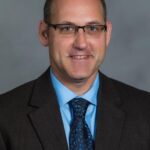
Pigs In Space – Pete Lammers
When most consumers buy pork chops or bacon, it seldom occurs to them to wonder how much space does a pig need? That question is increasingly coming up to supermarkets, restaurants, curious consumers and their legislators. The pig space question focuses on the stage between a female hog (sow or gilt) being bred and giving birth to a littler of pigs 3 months, 3 weeks and 3 days later. In that time many are confined in individual stalls about 7 feet long and a couple feet wide. California is one of the states that have banned this part of the pork production system after voters supported Proposition 12. The California law goes further, even banning the sales of pork products when ‘gestation crates’ were used, whether produced in California or other states. The US Supreme Court gets the last word on this issue. Dr. Pet Lammers is Associate Professor of Animal Scienc in the UW-Platteville School of Agriculture. Pete was raised near Johnsburg, MN on a farrow-to-finish pig farm. He earned a B.S. from UW-River Falls and a M.S. and Ph.D. from Iowa State University with majors in Animal Science and Sustainable Agriculture. He has researched pork production systems and teaches an upper level course in livestock production for niche markets.
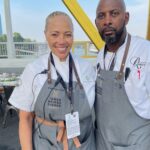
Farm To Bridge – Chef Nina Curtis
“Food to live for” could be the theme of Sacramento’s annual harvest celebration of the regions pride in being America’s Farm To Fork Capitol. Talented chefs and local farmers are joined by the whole region including over 300,000 food appreciative consumers at a weekend street festival with music and food for all tastes. One of the most coveted tickets in town gets you dinner with 850 fellow farm to fork fans on the historic Tower Bridge provided by a team of celebrated local chefs, including: Nina Curtis of Plant’ish & Co, Tyler Bond of Lemon Grass, Patrick Prager, Q Bennett of Q1227 and Greg Desmangles of Urban Roots and Brad Cecchi of Canon. www.visitsacramento.com
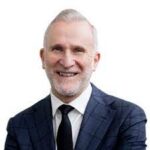
Growing Water – Greg Pruett & Terry Paule
Some of the most productive farmland in the world has been knocked out of production by an historic drought. And in California alone over a million citizens lack access to clean drinking water and according to the California Dry Well Reporting System, communities have reported that 966 wells have gone dry this year. If this isn’t a crisis what is? When we look for solutions we may need to look for clues on our plates. Tomatoes are over 95% water, much of which can be removed before the production of ketchup, sauce, soups, salsa and the other products that are how most tomatoes are consumed. . Greg Pruett, President of Ingomar Packing and Terry Paule,Co-founder and CEO of Botanical Water (BWT) explain that their new venture is producing potable water (safe to drink) from tomatoes during the tomato harvesting season. The technology has been proven in applications in Australia over the last few years, but the BWT partnership with Ingomar marks the first offering in the United States. Plans are to expand to other Californian regions, other States in the US, Mexico, and India, to provide water harvested from plant-based processors, such as sugar mills, fruit and vegetable concentrators, to scarce and high risk regions. There are over 10,000 food processor sites globally with a combined ability to harvest 264 billion gallons of water per year. Every drop is needed. www.wegrowwater.com www.ingomarpacking.com
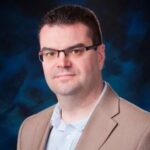
Global to Local Fertilizer – Matt Simpson
1 in 3 people worldwide didn’t have access to adequate food in 2021, up 350 million from pre pandemic levels. How can agriculture address this widening gulf in the global food supply– becoming more sustainable and efficient? Potash is one of the most prominent minerals used in agricultural fertilization and is sourced and transported in great quantities from far off countries like Russia and Belarus. New locally-sourced mining operations are being developed, such as in the Autazes region of Brazil. Brazil is the second largest potash consumer in the world and 96% of it is imported although it could be an important global supplier. Matt Simpson, the CEO of Brazil Potash, explains the venture that will. help feed millions all over the world, while also helping to reduce the carbon footprint. www.brazilpotash.com

More Than The Dough – Drew Levich
When you’ve had it with the corporate track, why not take a step towards changing the world? Drew Levich took that step because he believes that each of us can make a difference. He created “Drew’s Cookies” with the underlying purpose to demonstrate that it is simple to be a change maker. In addition to marketing cookies and popcorn, they are donating a share of profits to environmental charities, planting trees, using earth friendly packaging and other steps that can make you proud to be enjoying cookies and popcorn. From farm to table, food can taste good and do good. drewscookies.com
Safe and Sustainable – Julie Henderson
If pesticide residues are discovered in California, it is more likely from imports than state grown. Controlling pests any where must be a priority to be done safely and sustainably. That’s a key part of the job for Julie Henderson, the Director of the California Department of Pesticide Regulation. Formerly the Deputy Secretary for Public Policy at the California EPA, her vision is for collaboration, equity and sustainability that supports a thriving agricultural sector while elevating public health and the environment. Whether in California or other states and countries, it’s an impossible task without government engagement. www.cdpr.ca.gov
Logical Bio – Adrian Ferrero
Diverse soil biology affects the farm and our evolving food system. It starts with decoding soil biology using a global data base of millions of microorganisms to both analyze which microbes are currently present and exactly what role they are playing. Adrian Ferrero, a co-founder of Biome Makers, joins Farm To Table Talk to explain the logic of a biological future with implications for the whole food chain, from farm to table. www.biomemakers.com

Farm Food Focused System – Corwin Heatwole
More than just good yields, successful farming increasingly needs to function in a system that connects the farm with customers looking for food that meets their desires, beyond just taste and price. Corwin Heatwole, the founder and CEO of Farmer Focus has created a system for chicken farmers that is an alternative too being large “integrator” dependent or too small to be financially viable. Farmer Focus is the #1 exclusively organic chicken company in the US, partnering with over 70 independent farmers who continue to improve the standards on raising chickens organically and humanely. www.farmerfocus.com

Know More Grow More – Dr.Thelma Velez
  The road to regenerative resilience will require knowledge gained from research and then implemented by farmers committed to continuous improvement. That necessary research will have to cost governments and organizations in the short term and pay society in the long term. This was part of the message of Dr. Thelma Velez, the Research and Education Program Manager of the Organic Farming Research Foundation that she presented to the US House Agriculture Committee and now shares with Farm To Table Talk. www.ofrf.org
Eyes In The Sky – Vera Petryk
Mitigating Climate Change will require implementing a data driven approach on every level of the business of agriculture. An agriculture-oriented satellite constellation will provide a critical perspective on the size and condition of nearly everything we grow to eat, nearly every where in the world. EOS SAT provides eyes in the sky to enable each food sector to introduce smart er sustainable agriculture practices to ensure the security of the food supply on Earth. From Kiev, Ukraine Vera Petryk , the Chief Marketing Officer shares the vision and journey of space pioneers to effect food production in a climate challenged future on Earth. www.eossat.com

Farm In A Box – Jake Felser
Effective climate change actions can be on a spectrum from ‘mitigation’ that reduces emissions to ‘adaptation’ — recognition that the the crisis may no longer be avoidable but humans will figure out new ways to live in a hotter world. The necessary adaptations will include new ways and new places to farm, such as shipping containers that allow food to be produced year round adjacent to restaurants or stores and by farmers who may not be able to afford traditional farm acreage or no longer have a suitable climate. Jake Felser is the Chief Tech Officer of Freight Farms, a Boston-based company using shipping containers to create hydroponic farms – on their mission to make fresh food accessible to anyone, anywhere, any time. www.FreightFarms.com
Good Food For All – Asma Lateef
Farmers grow enough food, yet with extreme weather events, war, pandemic, inflation and more, there are hundreds of millions of people in danger of hunger and famine. Sustainable development goals are being pursued to get the world back on track to end hunger and poverty. Asma Lateef, the Policy Lead for the SDG2 Advocacy Hub is bringing together NGOs, agricultural networks, nutritionists, campaigners, civil society, the private sector and UN agencies to co-ordinate advocacy efforts and achieve Good Food For All by 2030. www.SDG2.org
Tesla-ish Cows – Frank Mietloehner
For the good of the climate let’s just stop driving cars. That sounds ridiculous when you can obtain more efficient cars or hybrids, plug-ins and EV’s . Why shouldn’t the same logic apply for the critics of beef consumption? It turns out that some cows are the Teslas and others are gas guzzlers. Just like efficient climate friendly cars there are climate friendly cows producing more milk and/or meat per unit of Green House Gases than the inefficient models. Just make the right choices in transportation and in what you eat. You don’t have to give up cars and you don’t have to give up beef, but you should encourage the car makers and the ranchers who are taking the right steps. This is logical if you think about it but it still isn’t sinking in so Farm To Table Talk is bringing back this conversation with Dr. Frank Mitloener the Director the Clear Center at UC Davis. He explains that most of the arable land in the world cannot be used to produce crops but can be used for forages and grazing. Four stomached ruminants like elk, deer, bison, cattle, goats and sheep are masters of conversion.
Mother Earth’s Pulse – Tony Roelofs
Mother Earth is under the weather, but don’t take her “pulse” just yet. In the common usage “pulse” is a vital sign, however another usage is a vital food. Food shortages, impacted by soaring gas prices and inflation, are affecting people in need and their ability to access staple foods. Food banks are busier than ever before. In this environment pulses such as beans, lentils and peas sustainably fill an important need for affordable nutrition. Tony Roelofs, the Vice President of the Pulse Division of Columbia Grain International explains how thousands of farms in the nation’s ‘pulse’ belt are stepping up to produce supplies for the new Balanced Bushel for programs for expanded Section 32 programs. www.columbiagrain.com
Amish Ways – Adam Rick
Wendell Berry’s writings favorably compare the ways of Amish farming to the high stress modern conventional farming by “the English”. In surprising ways Amish farms offer regenerative leadership that are a modern contrast in a horse and buggy society. Through his own Modern Frontier Farm and an Amish Cooperative, Adam Rick finds that Amish farms are especially well-suited to these times when consumers want to know how their food is grown. As the average age of American farmers is pushing in to six decades plus, more young Amish farmers are stepping up to grow their business in ways that meet the future head on. Adam Rick shares his journey and what he is learning on social media, Clubhouse app and Farm To Table Talk. www. Amodernfrontier.com
Fabulous Food Celebration – Baconfest Chefs
Festivals celebrate our favorite foods and since bacon is a favorite for many it deserves a delicious festival. Across the country, chefs, consumers and farmers have come together in celebration of bacon in events known as BaconFests. In the acclaimed Farm to Fork Capitol, Sacramento California, Farm to Table Talk joins the Bacon Fest festivities in conversation with talented and enthusiastic chefs, including: Patrick Mulvaney, Mulvaney’s B&L; Dennis Sydnor, Renegade Dining, Bucky Bray, Canon; Brian Guido, Baconfest founder; Chris Barnum-Dann, Localis; Gregory Desmargles, Urban Roots Brewery and Smokehouse; Ravine Patel, Hyatt Centric Sacramento; Lauren Petri and Ryan Visker, Nixtaco; Elena Winks, Franquette; and Scott Williams, Moksa Brewing Company. The winner of the 11th Guido Cup for top entry went to Juan and Kristin Barajas, Woodland’s Savory Cafe.
Plans, Plants and Planet – Tim Crews
Food can have a positive impact on the land and our communities. “But our planet is in danger and it’s time for us to think even bigger.” These words of wisdom are surprisingly to be found on a climate smart Kernza Grain cereal by Cascadian Farm. Thanks to the research and development at the Land Institute in Salina Kansas, the deep rooted, soil healthy perennial grain will store more carbon, prevent soil erosion and preserve clean water. Plus it makes nutritious tasty cereal and soon other food products. Tim Crews is the Chief Scientist at the Land Institute and a believer in what perennial plants like Kernza can offer the planet. www.landinstitute.org  
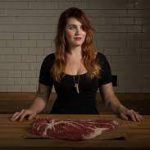
Mind, Body and SOIL Connection – Kate Kavanaugh
The health of land and the health of bodies are connected. Or as Kate Kavanaugh explains it\’s about mind, body and soil. Kate is a butcher, a farmer, a newly podcast host and more — all existing within the regenerative ag space. As a butcher, she founded Western Daughters Butcher shop in Denver featuring local grass fed beef, pork and chicken from local regenerative farms. As a farmer, she raises low-PUFA (polyunsaturated fatty acids) pork and poultry (chicken, duck, and goose) focusing on feed and frequent rotation to optimize omega-3 content for the meat it becomes. As a podcast host the focus is on the interconnected themes of Mind, Body, and Soil. www.groundwork.com
More Sheep, Better – Rick Stott
  Sheep may be today’s most popular animal for a new breed of sustainable farmers and ranchers with new consumers who are discovering a taste for lamb, raised right. To meet this opportunity lamb processor Superior Farms and sheep producers from six states have launched a state-of-the-art sheep facility, in Nephi, Utah. Superior Farms CEO, Rick Stott explains that the venture will converge the farming methods of traditional lamb production with advanced sheep industry technologies, production practices and genetics, resulting in a more consistent and sustainable lamb production model that will benefit the entire American lamb industry, from farm to table. www.superiorfarms.com

Seeds Save Us – Dylan Bruce
Seeds are the source of all food. Will seeds save us? The FAO reports that only nine crop species now account for the majority of the world’s food supply. There has been a 90% decrease in plant breeding diversity since the early 1900’s. Farmers are not able to save seeds for future planting that are protected by intellectual property laws and 4 corporations control 70% of the current $90+ billion seed system. As Co-Founder of Seed Linked, Dylan Bruce thinks of that future, focusing on no-till vegetable production, seed breeding and seed production for organic and reduced-tillage systems. Global food security begins and ends with seeds. www.seedlinked.com
Earthwhile Endeavor – Sally Calhoun
Worthwhile endeavors that are to protect and regenerate the Earth, must be \”Earthwhile\”. Nestled in the heart of California\’s San Benito County among sweeping oak-studded hillsides, Paicines Ranch is habitat for a diversity of wildlife including animals, birds, insects, trees, plants, grasses, springs, rivers, and more. Ranch owner,Sally Callhoun says their mission is to work with the dynamic natural world at the ranch to regenerate the health of the ecosystem from the soil up while growing delicious, nourishing food for their community: 100% grassfed beef, lamb, pork, and turkeys. They also host a variety of weddings, corporate events and workshops. This earthwhile endeavor becoming a place where people convene and ecosystems are regenerated. www.paicinesranch.com

Healing Grounds Heals Us – Liz Carlisle
Regenerative agriculture can significantly curb climate change, but only if it’s coupled with racial and land justice. UC Santa Barbara professor and writer Liz Carlisle\’s book, Healing Grounds: Climate, Justice, and the Deep Roots of Regenerative Farming explores how we got here and how we heal the earth and the food system. Along the way she shares the stories of female farmers of color who are reviving ancestral methods of growing food, reclaiming their communities’ relationship to land, and tackling climate change. Truly implementing regenerative ag will require reckoning with agricultural history and dismantling power structures that discriminate against farmers of color. ·
Better Farming – Jonathan Lundgren
A food system revolution is under way that begins with farming better. From his Blue Dasher Farm in South Dakota and the non-profit Ecdysis Foundation, Jonathan Lundgren professes that \”we can grow food and conserve biodiversity and environmental health\” by making innovative practices scalable and transferable to as many farms as possible . Nothing less than a paradigm shift is anticipated as soon as farmers are ready to farm in nature’s image. www.ecdysis.bio.hub www.bluedasher.farm  
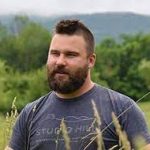
Powers of Regeneration – Jesse McDougal
Caroline and Jesse McDougall work everyday to build abundance, diversity, and resilience on their farm in rural southern Shaftbury Vermont. Studio Hill Farm transitioned from conventional chemical management to organic holistic management in 2012. To rehabilitate 250+ acres of degraded land, they raise sheep, pigs and poultry on pasture and use regenerative management to foster healthy, biologically-active soils—something they’ve mastered to become a Savory Influencer Hub. In order to help pay the bills and ensure that their family farm thrives for generations to come, they have added partnership in a meat processing plant, including tanning capabilities and agri-tourism as an auxiliary source of income. They have accessed the capitol needed for expansion through a partnership with Steward—a private commercial lender offering business loans to regenerative farms and ranches. studiohill.farm

Farm Days for Farm Daze – Senator Jim Patterson
Almost 50 years ago the Agriculture Council of America started National Ag Day. Since then across America, agriculture has been recognized and celebrated on a day or all week in March of every year. It is based on the belief that everyone should:understand how food and fiber products are produced; appreciate the role agriculture plays in providing safe, abundant and affordable products; value the essential role of agriculture in maintaining a strong economy; and acknowledge and consider career opportunities in the agriculture, food and fiber industry.In this episode of Farm to Table Talk we’re at Farm Day on the steps of the Capitol building in Sacramento, California where government officials, FFA, Farm organizations and the public are gathering to listen and join in conversations about agriculture in California., where many are still surprised to learn that this state of 40 million people ranks # 1 in Agriculture. Most of the Fruits and Vegetables grown in the US come from California, including over 99 % of figs, almonds, garlic, artichoke, honeydew, sweet rice, plums, raisins, walnuts, peaches, olives, nectarines, pistachios, clover, kiwis, onions, flowers, apricots and pomegranates. However the story is more than the food produced, it’s also the \’culture\’ in agriculture. As he stepped from the Capitol stage at Ag Day, CA Senator Jim Patterson explains to us and the live audience from around the world on Clubhouse why that matters.
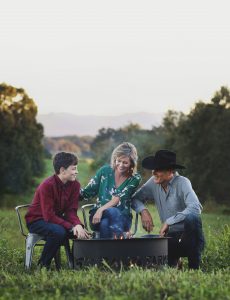
Country Music Country Farming – Barry and Aliceson Bales
Country music legends and livestock on a farm in East Tennessee surprisingly have something in common. Aliceson and Barry Bales own a family farm in East Tennessee where they raise grass fed and finished beef, pastured pork and chicken and their CEO (Chief Egg Officer) son has a pastured egg operation. Aliceson has published a cook book and Barry is a long time musician with Alison Krauss and Union Station (along with a few other folks) and a songwriter. How do you top winning 15 Grammies as well as other awards with CMAs, ACMs and IBMAs., including song of the year at the ACMs for “Nobody to Blame” (co-wrote with Chris Stapleton and Ronnie Bowman) By farming with your family in Greene County Tennessee. www.balesfarmstn.com  
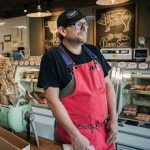
Local Craft Butcher Shops – Eric V Miller
Local Butcher Shops are coming back as more consumers want to experience the craft, knowledge and quality assurance of old. The new version of an old tradition provides local, humanely treated, pasture raised beef, lamb, pork and poultry. Expert butchers not only know how to cut meat, they can answer questions on production practices, menu ideas and cooking instructions. One of the leaders in this butcher shop movement is Eric Veldman Miller and his Butcher Shop in East Sacramento, \”V Miller Meats.\” vmillermeats.com
Your Consumer Segment – Jayson Lusk
Food insecurity is a reality for 16% of the public and 32% are waiting for their next pay check before they can buy food. Trends like this matter and are now being discovered by the Center for Food Demand Analysis and Sustainability at Purdue University. The Head of the Center and Head of the Purdue Ag Econ. Department, Dr. Jayson Lusk believes that to be successful in the food business you must understand your consumer segment and what it is that they are caring about. To fill that need Purdue has launched a monthly Sustainable Food Purchasing Index. What matters in your segment? www.purdue.ag/cfdas
Make It App \’N – Peggy Meyer
The most hated chore on most farms is paperwork. From her family farm in Nebraska Peggy Meyer thought there had to be a better way, so she created an app to help farmers manage their paperwork more efficiently. She felt the pains of time management and record keeping and wanted to build something to help! Somehow between raising 6 kids and farming, she created \”Field Pocket\”. Peggy believed she could make it App \’N and farms across the MidWest are glad she did. The app is called Field Pocket.
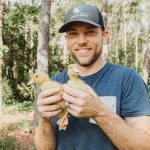
Quacks In The Field – Farmer Jeff Siewicki
When we think of pasture sounds, it\’s moo, baaa, or whinnies. So why not quacks, clucks and honks.? Well poultry in the pasture is the gateway to farming since the aspiring farmers can start with just a few acres, as did Jeff Siewicki in South Carolina. He had to figure out how to start with low investment and no experience but with passion to spare. Ducks have become the poultry preference in his pasture . With a profitable pasture poultry base he now shares how to farm without buying land, without a tractor, without piling up debt and with getting Chefs to feature his duck. www.instagram.com/farmerjeffs https://www.youtube.com/channel/UCMbDQeaks1AGr6zZRpQ_fPQ https://farmingtribe.com/tabletalk
Bioengineered Now Disclosed – Greg Jaffe
Some are concerned about whether or not the foods they buy contain GMO, genetically modified organisms, or what USDA refers to as Bioengineered. As a result of a 2016 Bill passed by Congress and signed into Law by President Obama, USDA regulations have just gone in to effect that specifies that foods that are bioengineered or contain bioengineered ingredients must disclose that information to consumers with text, symbol, QR code or telephone. Greg Jaffe, the Project Director for Center for Science in the Public Interest shares the the history, major components of the requirement and first impressions of in-store implementation. https://cspinet.org/news/blog/whos-labeling-what-examining-how-companies-are-disclosing-bioengineered-ingredients

Animals Need Tech Too – Paulo Loureiro, DVM
Technology in smart phones and watches help people identify current and emerging issues that Doctors can address. Do animals deserve any less? Rapidly improving technology helps ranchers, farmers and their veterinarians know everything they need to about an animal\’s current condition and anticipate problems that are likely to occur. Beyond monitoring, DNA technology allows all of the information a chef or an end consumer may want to know about the history of their dinner. Dr. Paulo Loureiro, is Lead for Global Marketing at Allflex Livestock Intelligence for Merck Animal Health. He explains the ramifications of these developments including the implications of healthier animals to the Climate.
BUYodynamic SOS – Mark Rathbone
Regenerative? Organic? Real Organic? Non GMO? Sustainable? Biodynamic? Consumers understandably get confused by the terms when they just want to buy the best food for themselves and their families. \”Best\” can mean everything from climate to nutrition but always includes taste. On his \”Save Our Soil\” (SOS) farm in Australia, Mark Rathbone is a firm believer in Biodynamic and his customers believe he is right especially when they taste what he grows on his farm about 3 hours north of Melbourne. Mark shares his passion and purpose with other farmers around the world and with all of us who want to eat the best and save our soils. www.saveoursoil.com.au
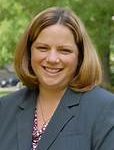
Fair Competition & Resilience in Meat Supply – Jenny Lester Moffitt, USDA UnderSecretary
President Biden has launched a well-funded action plan for a \”Fairer, More Competitive and More Resilient Meat and Poultry Supply Chain. Jenny Lester Moffitt, the Under Secretary for Marketing and Regulatory Programs says that the new program will effect the entire meat supply chain from farm to table by: expansion of independent processing capacity; jump starting independent processing projects; strengthening finacing systems; and backing private lenders that back these new or expanding independent meat processors. Country of origin is also a part of the venture. www.usda.gov/meat
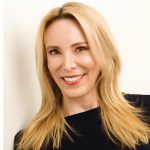
Food Chained, Human Trafficking – Anne Ross
There have been major, well-documented problems with child labor overseas in production of various food imports. These foods make their way into the US market–another reason consumers want to know who produced their food. Anne Ross with Charleston Pro Bono Legal Services emphasizes that it isn\’t fair for ethical farmers to have to compete with those who are using forced labor for profit. It\’s even worse that these practices are a direct impact on the liberty of people in addition to the devastating impact on the livelihoods of all the ethical farmers. People often confuse \”human trafficking\” with \”human smuggling.\” but trafficking happens even when no borders are crossed. Unscrupulous recruiters have lured workers with false promises, only to coerce them to work by withholding immigration documents, threatening deportation, withholding pay, or creating a debt that can never be repaid by any amount of work. Consumers can engage in market place activism by knowing their farmer and knowing how to find information about supply chains. There are resources consumers can use to find out more about where their food came from.

Makin\’ Bacon Cost More – Dan Sumner
Bacon crisis? Or not? Since Californians voted to require more space for pigs, chickens and veal calves, consumers have started to worry about what it will mean for the price and availability of bacon. The effects will not only be felt in California but nationwide for pig farmers, meat packers, food distributors, restaurants, supermarkets and consumers. UC Davis AG Economists, Daniel Sumner and Rich Sexton have studied the situation and identified what to expect when consumers in one state want production practices followed that are not required in other states. Professor Sumner explains that the regulations dictate minimum space just for breeding sows. Fresh pork (not processed) ultimately sold in California can only be from California compliant pens that provide 24 square feet of space per sow instead of the industry standard 20 square feet–requiring farmers to build more space (higher cost) or cut production (lower income). That in turn will have a ripple effect through every state with likely implications to future production standards of other food products. ( But there will be bacon.) https://thehill.com/opinion/energy-environment/568762-californias-animal-welfare-law-caused-hysteria-on-both-sides-here
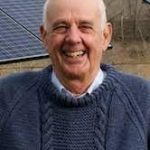
Make A Living, Not A Killing – Wendell Berry
“To make a living is not to make a killing. It’s to have enough.” says Wendell Berry in many ways, in scores of books over the years. As we consider the future of the world we need to reflect on the counsel of Wendell Berry who reminds us that the world will take care of us if we take care of it; knowing and loving it. If there was a poet laureate for agriculture, it should be Wendell Berry. A few years ago the renowned Bill Moyers was successful in interviewing Wendell and he agreed we could share that conversation as a Farm To Table Talk podcast. As a capstone to a challenging year and a message that inspires us for another New Year, we once again bring back this conversation of Wendell Berry and Bill Moyers that originally aired on October 4, 2014 as a production of the Schumann Media Center and Mannes production. www.BerryCenter.org. The people who produced the original show are acknowledged here. Produced & Directed by ELENA MANNES; Editor DONNA MARINO; Director of Photography PETER NELSON; Art Direction DALE ROBBINS; Sound ROGER PHENIX; Coordinating Producer KRISTIN LOVEJOY; Associate Producers JESSICA BARI, RENIQUA ALLEN; Additional Camera JAY McCAIN, CHIP SWETNAM; Lighting Director DAN CUNNINGHAM; Grips MIKE DICKMAN, JAMES WISE; Make-up TAMARA LEE; Data Management LUKE STALEY; Production Assistant DAVID ZACHERY; Assistant Editor SCOTT GREENHAW. Special Thanks: MARY BERRY. TANYA BERRY, BONNIE CECIL, DWIGHT COTTON, ADOLFO DORING, TONY MORENO, LEAH BAYENS, CONNIE KAYS, MICHAEL KELEM, AMANDA ZACKEM Footage and Stills: Appalachian Voices, AP Images, Wendell Berry Family, Shay Boyd, Dan Carraco, Center for Ecoliteracy, Ben Evans, Getty Images, ilovemountains.org, James Baker Hall Archive, Kentuckians for the Commonwealth, Guy Mendes, Oleg Ignatovich/Pond5, Twistah/Pond5, Kbuntu/Shutterstock, Spotmatik/Shutterstock, Suliman Razvan/Shutterstock, Suwit Gaewsee/Shutterstock, Chad A. Stevens, Wallace Global FundMusic: Courtesy of APM Music:, Abandoned Ruin, Josh Clark, Leon Hunt, Anthill A, Kurt Hummel, Ballad of Willie – Underscore, Ken Anderson, Rebecca Ruth Hall, Ein Takt Für Gitarre, Shih, Gaya-gaya, Hwa Chae Kyung, Completely Calm C, Klaus Stuehlen, Jesse James, Richard Gilks, Unknown, Madonna’s March, Susi Gott, Pianissimo, Bob Bradley, Matthew Sanchez, Quiet Garden, Pascal Bournet, Silent Movements A, John Epping, Jeff Newmann, Skydancer A, Klaus Stuehlen, Skydancer B, Klaus Stuehlen Senior Executive Producer JUDY DOCTOROFF O’NEILL Production Executives KAREN KIMBALL, YUKA NISHINO. A production of the Schumann Media Center, Inc. and Mannes Productions, Inc.© 2013      
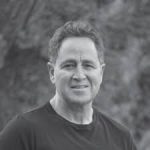
Water, Land and Power – Mark Arax
With climate change what is the future of agriculture? The author of The Dreamt Land, Mark Arax draws from his chronicles of California over the past three decades to consider where we\’ve been and where we\’re headed to address the future of agriculture in a time of climate change. No writer has devoted more pages to the story of California agriculture—small farmers and big farmers, conventional farmers and organic farmers, the migrants who work the crops—than Arax. A “culture of extraction” has leveled valleys and drained rivers and lakes. In defiance of drought, flood, wildfire and earthquake Agriculture has been invented and reinvented and it needs it again. The Dreamt Land is one of the best books ever written about farming and ranching in the West.    
Fighting for Food & Seed Sovereignty – Elizabeth Hoover
  Because ‘we are what we eat,’ the Native American food sovereignty movement is working to revitalize and perpetuate traditional food systems in order to promote good physical, cultural and spiritual health for Indigenous peoples. This is being done through the promotion of seed sovereignty and the reclamation and rematriation of Native heirloom seeds; through the work of Native chefs seeking to reclaim and define Indigenous cuisine; and in fighting for a clean environment in which to nurture these foods. Elizabeth Hoover, discusses nationwide Native American food and seed sovereignty efforts, and the inspiring community based projects and organizations that are changing the way the nation thinks about food. Elizabeth Hoover is a professor of Environmental Science, Policy and management at UC Berkeley.    
African Farms to Tables – Donald Madukwe & Akintunde Akinwande
Small holder farmer provide over 80 to 90 % of food production in Africa. However much more food is needed and farmers need to earn more money to lift them and their families beyond subsistence, just getting by. Larta Institute has introduced Farm to Table Talk to OCP a Moroccan based global plant nutrition company serving farmers on five continents. The potential for African farmers to improve their livelihood, food availability and eventually export is huge. Dr. Donald Madukwe, the Head of Agronomy Services & Farmer Centric Projects for OCP Africa and Akintunde Akinwande who has Business Development and Innovation responsibilities explain how this goal may be realized and the unique demands driving digital Agronomy in Africa. ocpafrica.com Agshowcase.com    
New Tech For A World Of Farms – Jennifer Fawkes
Successful agriculture requires a continuous supply of new ideas and technology for farmers of all types to meet the demands of global and local markets, profitably. Over 100,000 from the farm to table global supply chain are once again making their way to the Central Valley of California to experience the World\’s largest outdoor farm show, the World Ag Expo. Marketing Manager, Jennifer Fawkes, shares the what is to be found and learned from over 1,000 exhibits, food tents, seminars and more; including the \”Top-10 New Products\” 2020. https://www.worldagexpo.com/attendees/top-10-new-products/  
Humane Washing – Ben Goldsmith
  \”Green Washing\” is a better recognized term than \”Humane Washing\” but it\’s the same idea of claiming to be as good as your customers want to hear. Exaggerations or plain mistruths take liberty with the true facts of the matter. Farm Forward is one organization that is watching and calling out retailers and others in the food chains that they believe are making animal welfare claims that cannot be substantiated. Ben Goldsmith is the Co-founder and Chief Strategist of Farm Forward and organization that openly calls for the end of \”factory farms\” to be ultimately replaced with more equitable, sustainable and humane practices. www.farmforward.com
Metaverse Farm to Metaverse Table – Troy Hooper, Clubhouse
  Food is changing. How will we eat? That’s the question posed in the Farm To Table Talk Clubhouse room to Troy Hooper a multi- business entrepreneur in the hospitality space with a consulting practice to build and scale emerging brands. Troy and Rodger Wasson are joined live in the Clubhouse room by a large group of members. Joining the conversation “on stage” are Chef Dr. Mike, a cardiologist, professional chef and author; Regenerative Livestock Manager, Ben Glassen; farming entrepreneur Cindy Beuchert, Sara Calvosa, Indigenous Californian, Karuk Tribe food writer, author and others. Ideas can be farmed! The seeds of ideas can be planted, cultivated, harvested, distributed and consumed. For ideas about growing, marketing and consuming food, Idea Farming consultancy was created– helping organizations tell their stories and grow their brands And for conversations about ideas that will matter there is the Farm To Table Talk podcast. Hear about new ideas at www.farmtotabletalk.com. For help with authentic stories and strategic counsel go to www.idea-farming.com Join the drop in audio version of Farm to Table Talk on Clubhouse.
COP 26 Ag Focus – Karen Ross, Secretary of CA Ag.
Nothing less than the future of the world is the focus of the gathering in Glasgow Scotland, known as COP 26. The California Secretary of Agriculture, Karen Ross was there to share the progress and goals of agriculture in California and from there talks with Farm To Table Talk host, Rodger Wasson.  
Bet The Farm – Beth Hoffman
Beth Hoffman was living the good life: she had a successful career as a journalist and professor, a comfortable home in San Francisco, and plenty of close friends and family. Yet in her late 40s, she and her husband decided to leave the big city and move to his family ranch in Iowa—all for the dream of becoming a farmer, to put into practice everything she had learned over decades of reporting on food and agriculture. There was just one problem: money.Half of America\’s two million farms made less than $300 in 2019. Between rising land costs, ever-more expensive equipment, the growing uncertainty of the climate, and few options for health care, farming today is a risky business. For many, simply staying afloat is a constant struggle. Beth Hoffman shares the story of the struggles faced by farmers and paths to a more just and sustainable food system, that starts on the farm. https://island press.org/books/bet-farm  
Chefs\’ Manifesto – Paul Newnham
The Chefs’ Manifesto is a chef-led project that brings together 1000+ chefs from around the world to help deliver a sustainable food system. As chefs bridge the gap between farm and fork, the Chefs’ Manifesto empowers chefs with a framework tied to the United Nations Sustainable Development Goals. This framework consists of simple, practical actions chefs can take and are grouped in key areas. Paul Newnham, the Global Coordinator for Chef\’s Manifesto, sees Chefs as the Conduit between food producers and eaters with a powerful role to play in accomplishing worldwide sustainable development. www.chefsmanifesto.com
Meat Comes Back – Michael Dimock
COVID disruptions again showed that instead of dependence on a few global meat conglomerates, States and Provinces need more small-scale slaughter and cut-and-wrap facilities — creating skilled jobs throughout rural communities. The Biden Administration\’s commitment to increase fairness in livestock and poultry markets, and USDA’s new short-term funding for local meat processing, are a start. Coupling those with systemic solutions proposed in Congress and Legislatures will create Meat Processing Inspection programs “equal to” USDA inspection. Michael Dimock and Roots of Change are working to unleash more market opportunities for small- and mid-scale meat producers, increase local meat supply chain resilience, protect workers and aid rural communities. www.rootsofchange.org Read more at: https://www.sacbee.com/opinion/op-ed/article254243278.html#storylink=cpy  
Bucket List Dining – Chef Dneb Williams
In our ideal world the best farming finds its way to the best restaurants. One of those journeys leads to Allora in Sacramento where the best things in life belong together, food and wine. Allora is the dream of a sommelier and a chef; husband and wife. Two partners who love Sacramento and are infatuated with Italy. Featuring over 250 wines, fresh pasta made daily, and a commitment to sustainable seafood, Allora is the best of where they are from, of what they have experienced, and what is yet to come. Chef and Partner Dneb Williams describes Allora as a wine-centric gathering place that celebrates modern Italian food and the Sacramento areas bounty. Chef Dneb share the journey to source sustainable, artisanal food and wine locally and in Italy. www. allorasacramento.com
Food Wise Experience Is Everything – Gigi Berardi
\”Experience is everything,\” says Gigi Berardi, Ph.D., author of Food Wise: A Whole Systems Guide to Sustainable and Delicious Food Choices, “We all eat, but we make different choices about what to eat and how.” Improving how we make these choices can mean the difference between continued frustration with what we put in our bodies and a more healthful, meaningful relationship with food and nourishment. Food “Wise” stands for: whole, informed, sustainable and experienced-based thinking. She invites readers to think holistically about how we can procure and produce incredible meals, and draw deep nourishment from the foods we prepare and consume. In addition to being a food resilience professor at Huxley College in Bellingham Washington, the author is a sheep farmer, cheese maker and a slow food movement proponent. https://wp.wwu.edu/gigiberardi/  

Rewilding is Healing – Daniel Firth Griffith
ERewilding can regenerate our relationship with nature/soil, sequester carbon, increase biodiversity, nourish foods and heal our communities. Rewilding is happening in Nelson County, Virginia with 100% grass-fed and finished cattle, heritage & holistically foraged pigs, and 100% grass-fed sheep on the Timshel Wildland –a 400-acre regenerative, process-led, and emergent conservation wildland. The owner, Daniel Firth Griffith, is an author, emergent conservationist and director of the Rabinia Institute, a Savory Institute Hub. wildtimshel.com @timshel