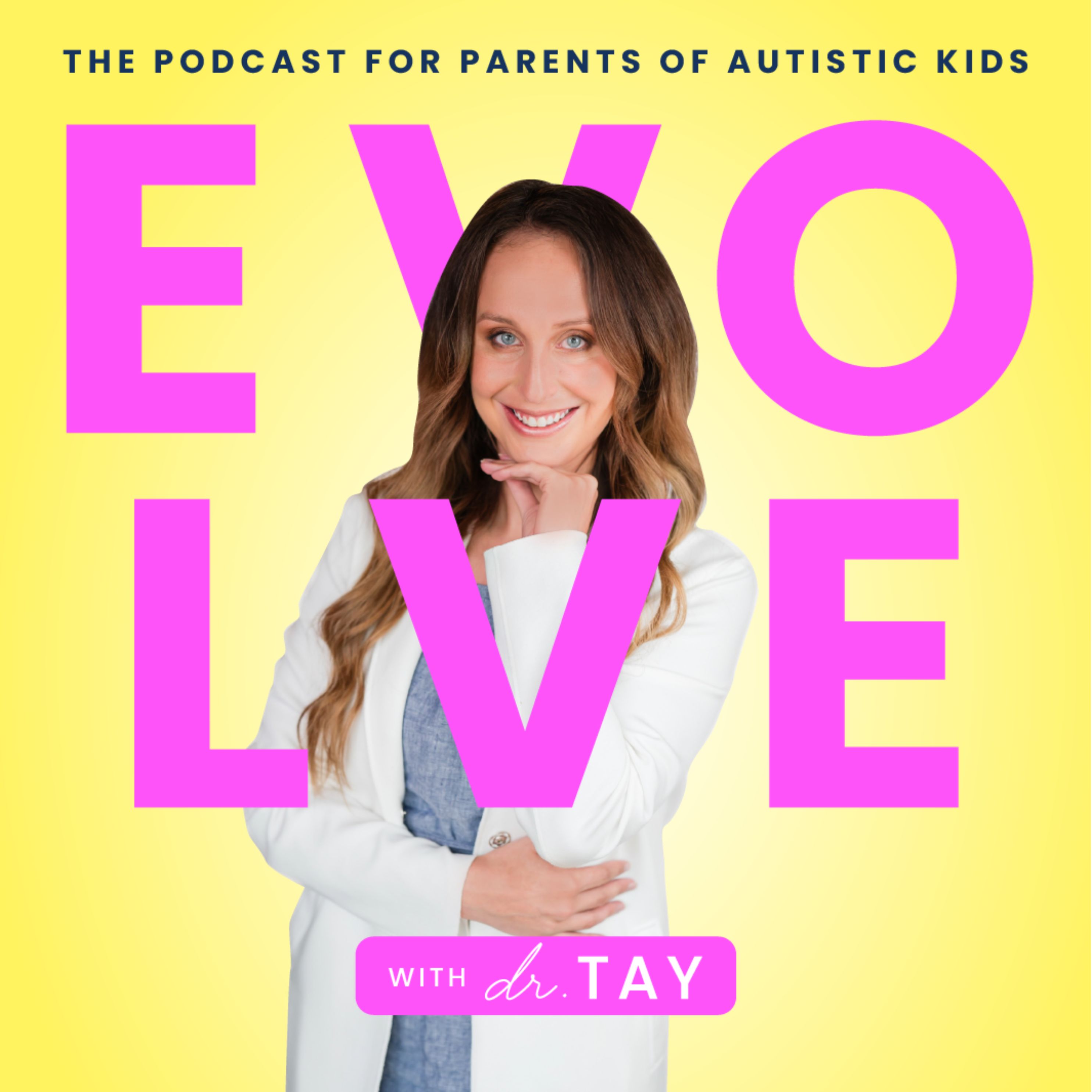
EVOLVE with Dr. Tay: the podcast for parents of autistic kids
233 episodes — Page 2 of 5
183 | holistic approaches to co-occurring health conditions in autistic individuals with Dr. Melissa Houser
ABOUT THIS EPISODE (+ scroll for resources) 👇In this episode, Dr. Tay is joined by Dr. Melissa Houser, founder and executive director of All Brains Belong, to discuss co-occurring medical conditions in autistic individuals. The conversation covers Dr. Houser's personal and professional journey, the interconnected nature of conditions like hypermobility, POTS, mast cell activation syndrome, and the importance of holistic and inclusive healthcare. Together, they emphasize the value of community and explore the diverse resources offered by All Brains Belong to support both children and adults. Dr. Houser provides practical advice for parents and professionals seeking to improve care for neurodivergent individuals and shares impactful stories from their work.00:00 Introduction to Co-Occurring Medical Conditions with Autism00:50 Meet Dr. Melissa Houser: An Autistic Physician's Journey01:21 Dr. Tay's Personal and Professional Background02:29 Dr. Mel's Medical Background and Autism Diagnosis04:04 The Founding of All Brains Belong05:19 Challenges in Healthcare for Neurodivergent Individuals05:40 The Importance of Self-Identification and Formal Evaluation07:20 Conflicting Access Needs in Neurodivergent Families07:59 Mission and Impact of All Brains Belong20:41 Common Co-Occurring Conditions in Autistic Individuals24:35 Understanding the Cluster of Conditions25:10 Challenges in Medical Collaboration25:59 Resources for Patients and Families27:46 Impact of Long COVID on Neurodivergent Individuals28:30 Cardiovascular Risks in Autistic Individuals30:34 Advocacy and Self-Acceptance37:32 Community Programs and Support42:55 Final Thoughts and Resources RESOURCES⚡️ resources from Dr. Melissa Houser>>Everything is Connected to Everything: Improving the Healthcare of Autistic & ADHD Patients - resources for patients & cliniciansKid & Teen Connections - free customized friend-matching program for ages 4-17 based on shared interestsBrain Club® - weekly virtual community education program for adults ⚡️ keep connecting with Dr. Houser on her website and Instagram @allbrainsbelongvt ⚡️ Zerbo et al. (2015) mentioned on the episode ⚡️ learn more about Dr. Tay's Whole Family Approach and current clinical services offered as well as her new educational membership? visit drtaylorday.com ⚡️ continue learning from me and submit any questions >>Instagram @the.dr.tayTikTok @the.dr.tay
182 | structure seeker, autonomy craver, or shape shifter? a sneak peek into EVOLVE the membership
ABOUT THIS EPISODE (+ scroll for resources) 👇Dr. Tay introduces the vision to provide deeper insights and support for families navigating the autism journey. Highlighting the benefits of her new membership offering, she explains how it differs from her free podcast and clinical services. Through personal reflections and practical examples, listeners learn about the types of content and community support available. Dr. Tay shares a sneak peek from one training about creating a schedule based on your child's need for structure, autonomy, or a mix of both, and offers strategies for creating a supportive environment. She finishes the episode sharing about the advantages of enhanced access to her expertise and the power of community within the membership.00:00 Introduction and Podcast Vision00:35 Balancing Clinical Services and Membership03:38 Membership Benefits and Differences06:48 Founding Member Launch and Community Building09:25 Masterclass and Custom GPT13:19 Summer Structure Strategies17:31 Parent and Child Needs Alignment22:44 Conclusion and Membership Invitation RESOURCES ⚡️ join EVOLVE the membership here ⚡️ LEARN more about Dr. Tay's Whole Family Approach and current clinical services offered as well as her new educational membership? visit drtaylorday.com ⚡️ continue learning from me and submit any questions [could be featured on a future episode] >>Instagram @the.dr.tayTikTok @the.dr.tay
181 | seeking support and decreasing stigma around your own medication use
ABOUT THIS EPISODE (+ scroll for resources) 👇Dr. Tay discusses the importance of parents of autistic children seeking support for themselves. She highlights the role of therapy and medication, addressing the stigma and misconceptions surrounding them. Dr. Tay also shares her journey in creating resources for parents. She encourages self-care, therapy, and medication as essential tools for enhancing parental wellbeing and, consequently, better supporting their children. Note: as with all episodes, this episode is for educational purposes only; please speak to a qualified medical professional.00:00 Introduction and Purpose of the Episode00:34 Personal Background and Experience01:03 Disclaimer and Therapy Normalization01:32 Focus on Medication Support03:06 The Whole Family Approach04:48 Starting a Business and Marketing Strategy06:50 The Importance of Seeking Support16:28 Medication Stigma and Benefits24:44 Exploring Medication Options27:58 Final Thoughts and Encouragement33:53 Conclusion and Additional Resources RESOURCES ⚡️ join EVOLVE the membership here ⚡️ LEARN more about Dr. Tay's Whole Family Approach and current clinical services offered as well as her new educational membership? visit drtaylorday.com ⚡️ continue learning from me and submit any questions [could be featured on a future episode] >>Instagram @the.dr.tayTikTok @the.dr.tay
180 | complex emotions in autism parenting: the path from grief to acceptance
ABOUT THIS EPISODE (+ scroll for resources) 👇In this episode, Dr. Tay dives into the concept of grief that parents may experience upon learning about their child's autism diagnosis. Dr. Tay discusses the various stages of grief—denial, anger, bargaining, depression, and acceptance—and how these emotions impact the parenting journey. She emphasizes that grieving in this context is not about mourning the child but rather a shift in expectations and the challenges of raising an autistic child in a predominantly neurotypical world. The episode includes real-life examples from Dr. Tay’s community, highlighting the diverse experiences of parents. Additionally, Dr. Tay shared about her educational membership and clinical services aimed at providing continuous support for parents processing grief and a sense of community for parents navigating similar journeys.00:00 Introduction and Episode Overview01:58 Understanding Grief in the Context of Autism04:49 Personal Experiences and Examples of Grief08:43 Navigating Grief and Acceptance13:51 Community Insights on Grief25:56 Navigating Different Parenting Perspectives26:19 Seeking Support and Resources28:05 Understanding the Stages of Grief28:48 Denial in the Grief Process30:12 Anger and Its Manifestations32:07 Bargaining and Desperate Measures33:47 Depression and Its Impact35:49 Acceptance and Psychological Flexibility40:59 Complicated Grief and Its Variations47:59 The Importance of Community and Support52:07 Final Thoughts and Resources RESOURCES ⚡️ join EVOLVE the membership here ⚡️ LEARN more about Dr. Tay's Whole Family Approach and current clinical services offered as well as her new educational membership? visit drtaylorday.com ⚡️ continue learning from me and submit any questions [could be featured on a future episode] >>Instagram @the.dr.tayTikTok @the.dr.tay
179 | navigating autism misdiagnosis with Dr. Marie Hooper
ABOUT THIS EPISODE (+ scroll for resources) 👇Dr. Tay is joined by Dr. Marie Hooper, a clinical psychologist (supervised practice) from Toronto, Canada. They dive into the nuances of autism diagnosis, discussing why autism is often misdiagnosed and the importance of differential diagnosis. Dr. Marie shares her personal journey of being diagnosed as autistic at 43 and talks about her clinic, Flourish Health Services, and her upcoming initiative, Autism Reframe. The conversation also touches on the impact of sensory differences, the significance of accurate diagnosis, and the benefits of understanding one's neurotype for identity and acceptance. 00:00 Introduction and Episode Overview00:28 Guest Introduction: Dr. Hooper01:45 Personal Stories and Professional Background04:00 Challenges in Autism Diagnosis09:52 Misdiagnosis and Clinical Practice11:45 Reevaluating Diagnoses and Identity22:41 Parental Guidance and Support25:37 Supportive Nudges and Clinical Care25:56 Listening to Autistic Adults26:20 Addressing Fear and Celebrating Diagnoses27:10 Misdiagnosis of OCD and Autism30:44 Understanding Sensory Differences31:46 Challenges with Diagnostic Tools36:54 Misdiagnosis of ODD and PDA38:42 Borderline Personality Disorder and Autism40:28 Final Thoughts and Resources43:02 Conclusion and Call to Action RESOURCES ⚡️learn more about Dr. Hooper's services in Canada flourishhealthservices.ca and her upcoming clinician trainings through autismreframe.com. ⚡️ LEARN more about Dr. Tay's Whole Family Approach and current clinical services offered as well as her new educational membership? visit drtaylorday.com ⚡️ continue learning from me and submit any questions [could be featured on a future episode] >>Instagram @the.dr.tayTikTok @the.dr.tay
178 | peeling back the layers: identity and self-discovery
ABOUT THIS EPISODE (+ scroll for resources) 👇In this candid and vulnerable episode, Dr. Tay dives deep into the theme of identity, sharing personal insights and challenges from her own journey. She discusses the importance of showing up as one's true, authentic self, especially for parents navigating life with autism. Dr. Tay touches on the struggles of balancing various roles in life and the discomfort that comes with self-disclosure and authenticity. Drawing inspiration from the 'Call Her Alex' documentary and addressing the need for self-integration, Dr. Tay encourages listeners to explore their true identity, model vulnerability, and seek support when needed. The episode is an invitation to embrace the journey of self-discovery and authenticity.00:00 Introduction and Today's Theme00:24 Navigating Identity and Authenticity01:54 The Power of Self-Disclosure03:32 Personal Reflections and Inspirations04:55 Embracing Vulnerability and Realness06:05 The Journey of Self-Discovery09:49 Integrating Parts and Internal Family Systems12:34 Balancing Personal and Professional Life20:27 Invitation to Join the Membership27:42 Concluding Thoughts and Future Episodes RESOURCES ⚡️ it is FINALLY officially open - join EVOLVE the membership here ⚡️ LEARN more about Dr. Tay's Whole Family Approach and current clinical services offered? visit drtaylorday.com ⚡️ continue learning from me and submit any questions [could be featured on a future episode] >>Instagram @the.dr.tayTikTok @the.dr.tay
177 | navigating medication conversations with your autistic child: insights from Dr. Stacy Greeter
ABOUT THIS EPISODE (+ scroll for resources) 👇Dr. Tay welcomes psychiatrist Dr. Stacy Greeter to discuss the complexities of explaining medication to autistic children. They emphasize the importance of maintaining a neurodiversity-affirming approach, focusing on informed consent, and fostering a healthy relationship with medication. Dr. Greeter shares personal experiences and tips on building trust, understanding unique responses to medications, and the critical role of autonomy in treatment. They also discuss the broader challenges within the medical profession and the importance of continual learning and flexibility for practitioners.00:00 Introduction and Episode Overview00:54 Guest Introduction: Dr. Stacy Greeter01:26 Host Background and Podcast Purpose02:40 Challenges in Psychiatry and Neurodiversity05:19 Dr. Greeter's Personal Journey12:27 Medication and Autism: Key Insights18:12 Guiding Parents on Medication Conversations23:34 The Role of Medicine in Treatment24:08 Balancing Medicine and Personal Responsibility25:11 Addressing Anxiety with Medication25:58 Using Metaphors to Explain Medication26:46 The Importance of Patient Ownership27:18 The Impact of Beliefs on Medication Efficacy28:18 Parental Concerns and Positive Expectations29:29 Navigating Medication with Autonomy31:35 Building a Therapeutic Alliance34:26 Understanding Reluctance to Take Medication39:49 Final Thoughts and Encouragement41:31 Resources and Closing Remarks *note: PDA is discussed in this episode. it is a theorized profile often seen in a subset of autistic individuals and not a clinical diagnosis. however, it has been a helpful conceptualization for many parents to learn about how their child's brain is wired. our knowledge of PDA is currently unfolding and I do my best to share up-to-date, balanced information. to learn more about PDA, please listen to episode 110 RESOURCES⚡️inquire about Dr. Greeter’s services in FL and CO and sign up for her newsletter at stacygreetermd.com ⚡️watch Dr. Greeter’s trainings on YouTube @stacygreetermd ⚡️ learn more about Dr. Tay's Whole Family Approach and current services offered? visit drtaylorday.com ⚡️ continue learning from me and submit any questions [could be featured on a future episode] >>Instagram @the.dr.tayTikTok @the.dr.tay
176 | understanding your inner authority: insights from human design with Rosy Crescitelli
ABOUT THIS EPISODE (+ scroll for resources) 👇In this episode, Dr. Tay dives into the concept of inner authority from human design and its significance in enhancing parental advocacy and personal growth. Joined by Rosy Crescitelli, a human design specialist and multisensory reading expert, they explore various types of inner authorities such as sacral, emotional, splenic, ego, self, sounding board, and lunar. They discuss how understanding and leveraging one's unique inner authority can facilitate better decision-making and create a more supportive environment for autistic children. Practical tips and insights are provided to help parents navigate this journey, emphasizing the importance of self-awareness, self-compassion, and nervous system regulation. Listen in to learn how human design can be a transformative tool for both personal and parental empowerment. 00:00 Introduction and Inner Authority Overview00:46 Guest Introduction: Rosy Crescitelli01:34 Dr. Tay's Background and Podcast Purpose02:43 Rosy's Journey into Human Design05:14 Understanding Human Design and Inner Authority12:25 Sacral Authority: Trusting Your Gut19:37 Emotional Authority: Riding the Emotional Wave27:19 Splenic Authority: Quiet Intuition31:21 Gratitude and Self-Trust31:50 Understanding Splenic Authority33:01 Ego Authority Explained35:38 Self Authority for Projectors39:30 Sounding Board Authority47:54 Lunar Authority for Reflectors52:53 Recap and Final Thoughts56:04 Advocating for Your Child's Human Design58:41 Connecting with Rosy01:03:10 Closing Remarks please note: in this episode, many terminologies and phrases are used to describe autism. Dr. Tay honors what each child and family prefers, and intentionally chooses to use affirming and identity-first language after listening to autistic adults and their preferences. various guests on the podcast are likely to use the language that they have been exposed to the most. RESOURCES⚡️ find out your human design (be sure to also listen to episode 38 to learn more about HD) ⚡️explore ways to learn more about your or your child's human design with Rosy here ⚡️connect with Rosy on Instagram @wholeheartedrosy ⚡️ learn more about Dr. Tay's Whole Family Approach and current services offered? visit drtaylorday.com ⚡️ continue learning from me and submit any questions [could be featured on a future episode] >>Instagram @the.dr.tayTikTok @the.dr.tay
175 | how questions propel progress (and an exciting announcement!)
ABOUT THIS EPISODE (+ scroll for resources) 👇Dr. Tay emphasizes the importance of asking questions as a tool for progress, especially for parents navigating the challenges of raising an autistic child. She discusses her own journey to launch a membership for parents seeking support, inspired by a serendipitous experience with a community she belongs to. Dr. Tay shares the story of how asking the right questions can lead to actionable outcomes and encourages parents to embrace their right to ask and advocate for their children. 00:00 Introduction to Asking for Help00:39 Personal Journey and Decision Making02:37 The Importance of Bite-Sized Information04:42 The Power of Asking Questions07:47 Launching the Membership10:44 Encouragement to Ask Questions15:10 Conclusion and Next Steps RESOURCES ⚡️ JOIN EVOLVE the membership waitlist here ⚡️ LEARN more about Dr. Tay's Whole Family Approach and current services offered? visit drtaylorday.com ⚡️ continue learning from me and submit any questions [could be featured on a future episode] >>Instagram @the.dr.tayTikTok @the.dr.tay
174 | masking, delayed diagnosis, and autism identification in females with Amanda Moses
In this episode, Dr. Tay is joined by guest Amanda Moses, a neurodivergent psychologist from Australia, who specializes in autism identification in those with complex and highly masked presentations. They discuss the differences in how autism presents in females versus males, the concept of masking, and the unique social challenges that often lead to delayed diagnoses. Amanda offers practical advice for parents and clinicians on how to better recognize and support autistic children and adults. The episode emphasizes the importance of specialized training for clinicians and the need for more self-compassion and understanding among those exploring their own neurodivergent traits.00:00 Introduction and Guest Introduction00:28 Autism Diagnostic Criteria and Episode Reference01:10 Amanda's Background and Passion for Autism01:38 Dr. Tay's Background and Podcast Purpose02:40 Amanda's Journey and PhD Focus04:07 Challenges in Autism Assessment Tools10:22 Importance of Self-Identification and Formal Diagnosis14:46 Challenges in Diagnosing Girls with Autism26:51 Key Transitional Points for Diagnosing Autism in Girls31:44 Recognizing Emotional Dysregulation in Children32:26 Perfectionism and Cognitive Rigidity33:10 The Role of Savvy Parents33:31 The Importance of Content Creation35:37 Exploring Masking in Autism38:16 Personal Experiences with Masking41:11 Helping Children Understand Their Energy Levels44:25 The Complexities of Masking and Mental Health46:40 Finding Safe Spaces for Authenticity53:49 Social Connections Among Neurodivergent Individuals56:35 Resources for Understanding Masking01:00:00 Final Thoughts and Encouragement RESOURCES ⚡️ continue learning from Amanda Moses on Instagram @amandamosespsychology and via her website ⚡️paid resource on masking mentioned in the episode ⚡️ want to learn more about Dr. Tay's Whole Family Approach and current services offered? visit drtaylorday.com ⚡️ continue learning from me and submit any questions [could be featured on a future episode] >>Instagram @the.dr.tayTikTok @the.dr.tay
173 | overthinking, fire ants, and big decisions
ABOUT THIS EPISODE (+ scroll for resources) 👇Dr. Tay shares personal experiences and insights about making significant life changes. She discusses the challenges and importance of trusting one's instincts, especially when overthinking sets in. Dr. Tay recounts a personal story involving a car accident and fire ants, which led her to a profound realization about her own business decisions, particularly the launch of the anticipated membership to support families navigating autism. She emphasizes the value of listening to your body, taking action despite fear, and leveraging gut feelings in both parenting and personal growth. This episode encourages parents, especially those of autistic children, to trust themselves and act on their intuitive nudges.00:00 Introduction and Welcome00:32 About Dr. Tay and the Podcast01:22 Disclaimer and Episode Topic Introduction01:58 Personal Story: The Fire Ant Incident03:27 Business Mastermind and Spiritual Meaning of Fire Ants05:20 Struggles with Launching the Membership08:40 The Importance of Trusting Your Gut09:17 Quality Over Quantity in Services11:29 Navigating Parenting Decisions15:38 Personal Reflections and Call to Action22:39 Final Thoughts and Farewell RESOURCES ⚡️ want to learn more about Dr. Tay's Whole Family Approach and current services offered? visit drtaylorday.com ⚡️ continue learning from me and submit any questions [could be featured on a future episode] >>Instagram @the.dr.tayTikTok @the.dr.tay
172 | shining light on high support needs with Jessie Mewshaw, MS, CCC-SLP
ABOUT THIS EPISODE (+ scroll for resources) 👇In this episode, Dr. Tay chats with Jessie Mewshaw, a speech language pathologist, to discuss the often overlooked topic of medium and high support needs in autism. They dive into why this conversation is vital, sharing personal experiences and professional insights. Jessie discusses her unique journey into the field and her current work with nonspeaking and minimally speaking autistic individuals. Key themes include the importance of neurodiversity-affirming care, better training and support for providers and caregivers, and the need for more accessible and financially supported resources. The episode also highlights the significance of listening to diverse autistic voices and fostering a community that supports all levels of need.00:00 Introduction and Episode Overview00:44 Meet Jessie Mewshaw: Speech Language Pathologist01:21 Welcome to the Podcast: Dr. Tay's Background06:01 Jesse's Journey into Speech Pathology07:46 Experiences in Australia: Life-Changing Lessons12:47 Challenges in the US: Lack of Support Programs17:18 Evaluation Barriers and Presuming Competence21:55 The Importance of Motor Systems in Autism27:44 Navigating the Journey Together28:24 The Importance of Medical Training30:11 Understanding Dysregulation34:08 Voices of Families38:01 Advocacy and Community43:46 Challenges in Neurodivergent Care50:21 Call to Action and Resources50:48 Remembering Victor Perez51:59 Final Thoughts and Connections RESOURCES ⚡️ example accounts of moderate and high support need autistic individuals:@aether.autistic@angry_autist@blackspectrumscholar@charliesvoice1@dannywithwords@getaway_autist_mobile@justkeepstimming@kaishawna_music@quirkthriveswithnoah@zebulontheplanet ⚡️ connect with Jessie on Instagram @ms_jessies_speech_world and explore her services here ⚡️ resource for non-speaking individuals >> When Models Aren't "Sticking": A One-Day Intensive for Supporting Minimally Speaking GLPs (use code JESSIE for 10% off) ⚡️ want to learn more about Dr. Tay's Whole Family Approach and current services offered? visit drtaylorday.com ⚡️ continue learning from me and submit any questions [could be featured on a future episode] >>Instagram @the.dr.tayTikTok @the.dr.tay
171 | embracing uncertainty in this season: personal reflections and parenting applications
ABOUT THIS EPISODE (+ scroll for resources) 👇In this episode, Dr. Tay addresses the current uncertainties of the autism space and how it applies to clinical practice, her personal business, and your parenting journey. She provides an honest reflection on the challenges of navigating unknowns, both personally and within the context of autism care. Dr. Tay emphasizes the importance of serving oneself, building resiliency, and creating community support. She offers practical tips and shares her experiences to help parents make decisions about evaluating and supporting their autistic children amidst the current political climate. Throughout the episode, she encourages listeners to adopt a balanced approach, integrating self-care and external support while fostering a sense of community.00:00 Introduction and Podcast Updates00:51 Navigating the Unknowns01:30 About Dr. Tay and the Podcast02:32 Current Issues in Autism and Evaluations09:47 Empowering Parents in Decision Making13:19 Personal Reflections and Business Adjustments22:15 Self-Care and Serving Your Family26:48 Addressing the Inner Critic27:09 Understanding the Marching Order Part27:45 The Fear of Stopping28:02 Balancing Helper Identity and Self-Care29:20 Integrating Internal Family Systems29:55 Practical Tips for Self-Understanding30:49 Navigating Financial Conversations with Kids32:33 Building a Support Network33:06 The Importance of Vulnerability33:57 Reevaluating and Pausing for Clarity36:06 The Tower Moment Analogy43:00 Creating Community and Connection47:15 Final Thoughts and Encouragement48:13 Ways to Get More ValueRESOURCES ⚡️Dive deeper with episodes mentioned: 38 on human design, 118 on sensory regulation supports (with Courtney English) and 164 on reasons to get evaluated now ⚡️ want to learn more about Dr. Tay's Whole Family Approach and current services offered? visit drtaylorday.com ⚡️ continue learning from me and submit any questions [could be featured on a future episode] >>Instagram @the.dr.tayTikTok @the.dr.tay
170 | let’s chat shame, language, and autism research
ABOUT THIS EPISODE (+ scroll for resources) 👇Think of this episode like sitting down with Dr. Tay to chat about a variety of topics, while she is getting ready for morning sessions. She shares her struggles with neck pain and ties it to stress and shame while discussing the application to your parenting journey. Dr. Tay then dives into the recent political climate, particularly RFK Jr.'s controversial remarks about autism and the proposed national registry. She discusses the ongoing robust research into the causes of autism, language use in the autism community, and the importance of supporting high support needs families. 00:00 Introduction and Podcast Setup01:06 Personal Updates and Daily Life01:25 Stress and Physical Health05:13 Therapy and Somatics07:46 Shame and Parenting09:34 Political Climate and Autism10:09 RFK Junior's Remarks on Autism11:14 Autism Research and Funding23:17 National Autism Registry Concerns26:04 Conclusion and Future Plans Like the format of this podcast? Let Dr. Tay know! She is exploring options for how to best serve you through this podcast! RESOURCES ⚡️Instagram posts referenced in this episode >>@autismoutloud’s post on autism research funding @fidget.and.fries post on high support needs and a false sense of hope ⚡️while the national autism registry was only briefly touched on (more to come here and/or on Dr. Tay’s social media), you can take action now and express your concerns to your representatives. thanks to @blackspectrumscholar, here are templates you can use ⚡️ want to learn more about Dr. Tay's Whole Family Approach and current services offered? visit drtaylorday.com ⚡️ continue learning from me and submit any questions [could be featured on a future episode] >>Instagram @the.dr.tayTikTok @the.dr.tay.
169 | from navigating a medical condition and developmental disabilities to advocacy with Camille Joy
ABOUT THIS EPISODE (+ scroll for resources) 👇Dr. Tay is joined by Camille Joy, an advocate and host of the Moments of Joy podcast. They discuss Camille's journey as a mother of five boys, including her youngest son Maison, who has a congenital heart defect, autism, and intellectual disability. They dive into the importance of early diagnosis, navigating the education system, and advocating for children's needs. Camille shares her experiences with challenging the status quo, particularly around getting Maison access to music and art classes. The conversation also touches on emotional processing, the significance of support systems, and Camille's initiatives including her podcast and children's book, The Adventures of Maison and Mr. Straw: Mac and Cheese Please.00:00 Introduction and Special Guest Announcement00:44 Dr. Tay's Background and Podcast Mission01:55 Camille Joy's Family and Advocacy Journey02:36 Maison's Diagnosis and Early Intervention03:26 Challenges and Realizations in Parenting05:28 Navigating Medical and Educational Systems10:29 Advocating for Mason's Education17:08 Using AI for Advocacy and Legal Rights21:17 Understanding the Importance of Data Collection22:15 Advocating for Your Child's Needs25:34 Navigating Emotional Challenges33:25 The Journey of Starting a Podcast35:46 Introducing Maison's Adventures39:25 Conclusion and ResourcesRESOURCES⚡️ purchase Camille and Maison’s book here (profits go directly to a savings account for Maison)⚡️ listen in to the Moments of Joy podcast here⚡️follow her on Instagram, TikTok, & Facebook ⚡️ want to learn more about Dr. Tay's Whole Family Approach and current services offered? visit drtaylorday.com ⚡️ continue learning from me and submit any questions [could be featured on a future episode] >>Instagram @the.dr.tayTikTok @the.dr.tay
168 | what therapies are families ACTUALLY doing?
ABOUT THIS EPISODE (+ scroll for resources) 👇In this mini episode, Dr. Tay shares what families with autistic children are ACTUALLY doing in terms of therapy and support services. Emphasizing the importance of quality over quantity, Dr. Tay discusses common therapies like ABA, speech therapy, occupational therapy, and mental health support. The episode also highlights the significance of individualized plans tailored to each family's needs and reminds parents that it's okay to prioritize their child's well-being and capacity over an overwhelming number of services. Real-life examples from listeners are included to illustrate the diverse approaches families take. Dr. Tay encourages parents to trust their intuition and focus on what truly benefits their child.00:00 Introduction and Episode Overview00:20 Understanding Therapy Options01:36 Balancing Therapy Demands02:57 Real-Life Family Experiences04:09 Diverse Therapy Approaches11:42 Concluding Thoughts and Encouragement RESOURCES ⚡️ additional episodes that may be helpful: "26 | why ABA therapy is controversial?", "31 | three "system issues" you may be facing with your child's autism care", and "110 | what is PDA?" ⚡️ want to learn more about Dr. Tay's Whole Family Approach and current services offered? visit drtaylorday.com ⚡️ continue learning from me and submit any questions [could be featured on a future episode] >>Instagram @the.dr.tayTikTok @the.dr.tay
167 | declarative language with Linda Murphy: from introduction to in-depth application
ABOUT THIS EPISODE (+ scroll for resources) 👇Dr. Tay explores the concept of declarative language and its benefits, especially for demand-avoidant children, with Linda Murphy—a speech therapist, RDI consultant, writer, and expert on the topic. They discuss the definition of declarative language and how it differs from demand-based phrases, emphasizing the importance of thoughtful communication that invites a collaboration. Linda shares insights from her book Declarative Language Handbook and provides practical strategies for parents to effectively use declarative language. They also cover topics such as building self-advocacy, fostering cognitive flexibility, and managing sibling conflicts through this approach. The importance of mindset shifts is emphasized as well as the continuous learning process in order to improve communication with autistic children.00:00 Introduction to Declarative Language00:30 Meet Linda Murphy: Expert in Declarative Language02:12 Understanding Declarative Language03:37 The Power of Declarative Language05:29 Practical Examples and Strategies08:47 Proactive Conversations and Mindset Shifts16:05 Dynamic Support and Scaffolding22:17 Direct vs. Indirect Declarative Language25:40 Introduction to PDA and Indirect Language26:18 Experimenting with Communication Strategies26:53 Building Transparent Communication28:23 Practical Examples and Techniques29:48 Using Declarative Language in Different Scenarios33:13 Modeling and Validating Emotions45:00 Declarative Language with Non-Speaking Individuals48:34 Final Thoughts and ResourcesRESOURCES⚡️ continue learning at declarativelanguage.com, including ordering Linda's books and checking out the resources referenced in the episode (types of DL and direct language for PDAers) ⚡️ want to learn more about Dr. Tay's Whole Family Approach and current services offered? visit drtaylorday.com⚡️ continue learning from me and submit any questions [could be featured on a future episode] >>Instagram @the.dr.tayTikTok @the.dr.tayNote: PDA is a theorized profile of autism and not a clinical diagnosis. however, it has been a helpful conceptualization for many parents to learn about how their child's brain is wired. our knowledge of PDA is currently unfolding and I do my best to share up-to-date, balanced information. to learn more about PDA, please listen to episode 110
166 | the power of noticing wins in autism parenting (without toxic positivity!)
ABOUT THIS EPISODE (+ scroll for resources) 👇In this mini-episode, Dr. Tay discusses the importance of noticing and reinforcing small wins in the autism parenting journey. Emphasizing the balance between avoiding toxic positivity and acknowledging positive moments, Dr. Tay explains how behaviorism done in a neurodiversity affirming way can play a role in promoting desired behaviors in autistic children. She shares practical tips on how parents can start recognizing subtle behavioral shifts and reinforce them to facilitate positive change. Through personal anecdotes and professional insights, Dr. Tay offers valuable strategies for improving parent-child interactions and fostering an environment where small steps are celebrated on the way to achieving bigger goals.00:00 Introduction and Episode Overview00:04 Understanding the Concept of Wins01:45 Behaviorism and Neurodiversity Affirming Approaches02:57 Practical Examples and Strategies07:57 The Importance of Interpretation09:04 Reinforcing Small Wins12:42 Conclusion and Final ThoughtsRESOURCES⚡️ want to learn more about Dr. Tay's Whole Family Approach and current services offered? visit drtaylorday.com⚡️ continue learning from me and submit any questions [could be featured on a future episode] >>Instagram @the.dr.tayTikTok @the.dr.tay
165 | the fight for equal opportunity and inclusion with Lo Farmer
ABOUT THIS EPISODE (+ scroll for resources) 👇Dr. Tay welcomes Lo Farmer to discuss the role of parental advocacy. Lo shares her journey from discovering her son's developmental delays to advocating for equitable access to services. Highlighted topics include the emotional and logistical challenges of getting a diagnosis, the broken support systems for special needs families, and Lo's significant efforts to change policies at the Fort Worth Zoo regarding 1:1 aides. Dr. Tay and Lo emphasize the importance of community support, the need for systemic change, and the value of giving parents grace during this demanding journey.00:00 Introduction and Episode Theme00:23 Inspiring Quote and Guest Introduction01:35 Welcome to the Parenting Space02:42 Guest's Background and Family Journey03:45 Challenges in Accessing Services05:07 The Broken System and Advocacy07:29 Navigating Diagnosis and Support10:54 The Emotional Toll and Parental Grief15:58 Public Advocacy and Viral Impact20:44 Facing Legal Challenges Without a Lawyer21:15 Empowering Special Needs Moms21:43 Strategic Advocacy for Change22:31 The Zoo Inclusion Controversy22:57 Navigating Support Systems24:10 The Importance of Familiarity in Care28:36 Advocacy Goals and Personal Challenges35:40 Parental Stress and Community Support39:40 Wrapping Up and Staying ConnectedRESOURCES⚡️ connect with Lo on Instagram @sipdinedesign and continue to hear her updates on inclusion⚡️ research article about parental stress discussed in episode linked here ⚡️ want to learn more about Dr. Tay's Whole Family Approach and current services offered? visit drtaylorday.com⚡️ continue learning from me and submit any questions [could be featured on a future episode] >>Instagram @the.dr.tayTikTok @the.dr.tay
164 | 5 key reasons to seek an autism evaluation NOW
ABOUT THIS EPISODE (+ scroll for resources) 👇Dr. Tay discusses five compelling reasons why parents should consider getting their child assessed for autism, despite the current political climate. This mini episode offers insights into the benefits of obtaining a tailored plan, gaining greater understanding and acceptance of your child, boosting parental confidence, and being proactive in mental health outcomes. Dr. Tay also addresses common concerns about sharing diagnoses and offers guidance on how to navigate the evaluation process, including the advantages of private pay options. 00:00 Introduction and Episode Overview00:25 Why Get an Autism Assessment?01:24 Tailored Plans from Evaluations03:04 Understanding Your Child Better05:24 Acceptance and Mental Health06:59 Boosting Parental Confidence08:23 The Importance of Being Proactive10:55 Navigating the Evaluation Process14:00 Conclusion and Final ThoughtsRESOURCES⚡️ Learn more about our approaches and services in episodes "46 | telehealth evaluations: a new era in autism diagnosis" and "48 | Q+A: a closer look into Dr. Tay's concierge private practice for autism support" ⚡️ want to learn more about Dr. Tay's Whole Family Approach and current services offered? visit drtaylorday.com⚡️ continue learning from me and submit any questions [could be featured on a future episode] >>Instagram @the.dr.tayTikTok @the.dr.tay
163 | "Autism Handbooks": understanding autism in today's world with Andi Putt @mrsspeechiep
ABOUT THIS EPISODE (+ scroll for resources) 👇Dr. Tay welcomes Andi Putt, better known on social media as @mrsspeechiep. Andi, a late identified autistic speech therapist, discusses her work doing autism evaluations and the resources she provides for the autism community. They explore topics including the nuances of autism diagnosis, the importance of neurodiversity-affirming care, and the development of Andi's popular Autism Handbooks. The conversation also dives into challenges within the clinical community, continuous learning, and advocacy for understanding and acceptance of autism. Andi shares how her personal experiences as an autistic individual influence her work and advocacy, with an invitation for all clinical providers and educators to make the perspective shift to neurodiversity-affirming care.00:00 Introduction and Guest Announcement02:08 Meet Andi Putt: The Journey to Speech Therapy04:10 Discovering Autism and Social Media Advocacy05:00 The Importance of Neurodiversity Affirming Care06:45 Challenges and Growth in Autism Evaluations12:14 Personal Diagnosis and Self-Discovery16:16 The Role of Speech Therapy in Autism Diagnosis23:33 Creating the Autism Handbook28:32 Connecting Through Autism29:19 Books for Autistic Children31:07 Simplifying Complex Information32:37 Understanding Autism Variability33:27 Challenges in Autism Diagnosis36:52 Autism Epidemic Misconceptions39:27 The Importance of Accurate Diagnosis46:17 Conclusion and ResourcesRESOURCES ⚡️ check out Andi's resourcesParent Autism HandbookThe Autism Handbook for KidsUnderstanding Autism TogetherStatistics post referenced on the episode⚡️ follow Andi on Instagram @mrsspeechiep and Facebook⚡️ want to learn more about Dr. Tay's Whole Family Approach and current services offered? visit drtaylorday.com⚡️ continue learning from me and submit any questions [could be featured on a future episode] >>Instagram @the.dr.tayTikTok @the.dr.tay
162 | preparing for Autism "Awareness" Month
ABOUT THIS EPISODE (+ scroll for resources) 👇In this mini episode, Dr. Tay discusses the challenges and debates surrounding Autism Awareness and Acceptance Month. She shares insights from conversations about the division within the autism community over terminologies, symbols, and approaches, emphasizing the importance of unity and empathy. Dr. Tay highlights the pressing issues like the spread of misinformation, the role of evidence-based practices, and the political landscape affecting autism support. She calls for collaboration and understanding to better support autistic individuals and their families while addressing societal and medical misperceptions.00:00 Introduction and Episode Overview00:32 Autism Awareness and Acceptance Month01:36 Debates and Divisions in the Autism Community03:37 Misinformation and Vaccine Controversies06:09 Call for Unity and Empathy09:44 Conclusion and Call to ActionRESOURCES⚡️ Check out episodes "152 | how US policy updates impact the neurodiversity movement" and "156 | education under siege: what it means for your autistic child" ⚡️ want to learn more about Dr. Tay's Whole Family Approach and current services offered? visit drtaylorday.com⚡️ continue learning from me and submit any questions [could be featured on a future episode] >>Instagram @the.dr.tayTikTok @the.dr.tay
161 | parenting, emotions, and cultural reflections with Lisa Jean-Francois
ABOUT THIS EPISODE (+ scroll for resources) 👇In this insightful episode, Dr. Tay welcomes Lisa Jean-Francois, known as @consciouslylisa_ on social media. Lisa shares her in-depth and personal journey of parenting two autistic children. The conversation covers her initial struggles and breakthroughs in understanding autism, the unexpected discovery of her husband's late diagnosis, and her introspective look at her possible neurodivergence. Lisa also discusses her adaptation of gentle and conscious parenting techniques to align with her family's unique cultural context and needs. The episode delves into the challenges and strategies for raising autistic children, including the importance of community support and the varying experiences across different neurodivergence spectrums. Crucially, this episode emphasizes the importance of not generalizing autism experiences and highlights the necessity of tailored approaches in both understanding and parenting.00:00 Introduction and Guest Introduction01:36 Lisa's Parenting Journey02:45 Early Signs and Diagnosis05:57 Navigating Misdiagnosis and Acceptance10:01 Impact on Family and Personal Reflections17:40 Husband's Realization and Family Dynamics22:33 Self-Identification and Broader Implications26:24 Navigating Parental Self-Diagnosis27:38 The Complexity of Diagnosing Neurodivergence31:00 Parenting Approaches and Cultural Adaptations35:01 Challenges and Strategies in Gentle Parenting43:53 The Importance of Individual Experiences46:15 Connecting and Learning from the Community49:40 Final Thoughts and ResourcesRESOURCES⚡️ follow Lisa on Instagram, TikTok, and Facebook⚡️ want to learn more about Dr. Tay's Whole Family Approach and current services offered? visit drtaylorday.com⚡️ continue learning from me and submit any questions [could be featured on a future episode] >>Instagram @the.dr.tayTikTok @the.dr.tay
160 | is there an intersection between evidence-based practice and neurodiversity affirming care?
ABOUT THIS EPISODE (+ scroll for resources) 👇In this mini episode, Dr. Tay explores the intersection between evidence-based practices and neurodiversity affirming care in autism treatment. Drawing from her extensive background in research and clinical practice, she discusses the challenges of integrating these approaches to provide tailored, effective support for autistic individuals. Emphasizing the importance of lived experiences and clinical impressions alongside research, Dr. Tay highlights the need for a flexible, patient-centered approach to care that focuses on quality of life. This episode aims to inform and inspire listeners about the evolving landscape of autism care.00:00 Introduction to Mini Episodes00:49 Purpose and Format of Mini Episodes01:33 Today's Topic: Evidence-Based Practice and Neurodiversity02:00 Background and Training in Research03:05 Challenges in Autism Research03:41 Neurodiversity Affirming Practices07:34 Intersection of Evidence-Based and Neurodiversity Practices11:20 Conclusion and Final Thoughts13:11 Subscribe and EngageRESOURCES ⚡️ want to learn more about Dr. Tay's Whole Family Approach and current services offered? visit drtaylorday.com⚡️ continue learning from me and submit any questions [could be featured on a future episode] >>Instagram @the.dr.tayTikTok @the.dr.tay
159 | understanding apraxia and its connections to autism with Jordan LeVan @fightingformyvoice
ABOUT THIS EPISODE (+ scroll for resources) 👇In this episode, Dr. Tay discusses apraxia with Jordan Levan, a disability advocate and founder of The Apraxia Foundation. They explore the differences between apraxia and dyspraxia, signs and symptoms, and the importance of early diagnosis. Jordan shares his personal journey with childhood apraxia of speech, the types of therapeutic approaches available, and how to integrate neurodiversity affirming approaches into therapeutic supports. They also talk about the resources and support provided by The Apraxia Foundation, specifically AAC devices and speech therapy services, emphasizing a comprehensive understanding of each child’s needs.00:00 Introduction and Episode Overview00:40 Meet Jordan LeVan: Disability Advocate02:59 Jordan's Personal Journey with Apraxia04:06 Challenges and Advocacy in Childhood07:10 Speech Therapy and Treatment Approaches15:29 Understanding Apraxia and Its Types23:11 Dyspraxia Explained31:56 Understanding Co-Occurring Conditions with Childhood Apraxia32:29 The Importance of Knowing Your Child's Full Disability Profile32:47 Personal Experiences with Late Diagnoses34:11 The Impact of Historical Treatment of Disabilities on Parents' Fears36:58 The Role of Comprehensive Evaluations in Diagnosing Childhood Apraxia41:54 Challenges in Diagnosing Childhood Apraxia in Autistic Children44:37 Therapeutic Approaches for Childhood Apraxia48:53 The Importance of Consent in Speech Therapy56:37 Introduction to the Apraxia Foundation01:00:50 Connecting with the Apraxia Foundation and Final ThoughtsRESOURCES⚡️ connect with Jordan on Instagram @fightingformyvoice and visit his website ⚡️ learn about his nonprofit @theapraxiafoundation and visit the website ⚡️ want to learn more about Dr. Tay's Whole Family Approach and current services offered? visit drtaylorday.com⚡️ continue learning from me and submit any questions [could be featured on a future episode] >>Instagram @the.dr.tayTikTok @the.dr.tay
158 | unshaming neurodivergence: a deep dive into parenting and self-discovery with Isabeau Korylak @neurofriendlybeau
ABOUT THIS EPISODE (+ scroll for resources) 👇In this episode, Dr. Tay connects with Neurofriendly Beau, a neurodivergent ADHD coach and parent of a neurodivergent child. They discuss the challenges and dynamics of parenting when the parent and child have different neurotypes. Beau shares insights on her late ADHD diagnosis and limitations of the diagnosis process as well as details her journey through parenthood, and the importance of adaptable and understanding approaches that go beyond traditional neurotypical standards. They also dive into the need for safety, individual accommodation, and the critical importance of modeling self-compassion and advocacy for children. Beau also presents her personal struggles and strategies for co-existing with Autism/ADHD (AuDHD) in an insightful and relatable manner, making this a deeply valuable episode for parents and guardians navigating similar journeys.00:00 Introduction and Guest Overview00:58 Host's Background and Podcast Purpose01:59 Guest's Introduction and Initial Conversation03:27 Guest's ADHD Diagnosis Journey09:49 Parenting and Neurodivergence17:34 Collaborative Parenting Approach18:06 Addressing Self-Sabotaging Thoughts18:59 Unique Solutions for Daily Challenges20:03 Navigating Screen Time Concerns22:01 Modeling Problem-Solving for Kids24:58 Embracing Neurodivergent Parenting25:57 The Importance of Self-Advocacy27:44 Shame and Neurodivergence31:25 Resources and Support for Parents32:39 Conclusion and Next StepsRESOURCES⚡️ follow Beau on Instagram @neurofriendlybeau and check out her website here, including to learn about her coaching services ⚡️ want to learn more about Dr. Tay's Whole Family Approach and current services offered? visit drtaylorday.com⚡️ continue learning from me and submit any questions [could be featured on a future episode] >>Instagram @the.dr.tayTikTok @the.dr.tay
157 | A Kid’s Book about Neurodiversity: celebrating the 2nd edition release with Laura Petix @theotbutterfly
ABOUT THIS EPISODE (+ scroll for resources) 👇Dr. Tay, a licensed child psychologist specializing in neurodiversity affirming care, interviews Laura Petix @theotbutterfly about her children's book on neurodiversity. They discuss how to help children understand their autistic brain and neurodivergent traits, Laura's inspiration for writing the book, and her background as a pediatric occupational therapist. The conversation covers Laura's journey as a neurodivergent parent, the importance of educating neurotypical children about neurodiversity, and how her book aims to normalize differences in behaviors and learning styles in classrooms and at home.00:00 Introduction and Podcast Overview01:55 Meet Laura Petix: The OT Butterfly02:20 Laura's Journey and Neurodivergent Parenting03:40 Understanding Neurodiversity and ADHD05:54 Challenges in Getting a Diagnosis15:01 Educating Neurotypical Kids About Neurodiversity21:17 Understanding Autism and Family Care21:48 Book Release and Publisher Transition22:35 Importance of Pre-orders for Authors24:21 Impact of the Book on Children and Classrooms26:36 Key Concepts and Messages in the Book30:42 Engaging Adults and Broader Audience34:43 Final Thoughts and ResourcesRESOURCES⚡️PRE-ORDER her book here before March 4, 2025 (same link works to purchase the book after that date)⚡️ FOLLOW Laura on Instagram and learn about her other resources ⚡️ want to learn more about Dr. Tay's Whole Family Approach and current services offered? visit drtaylorday.com⚡️ join the Evolve Facebook community to participate in the episode Q+As >> facebook.com/groups/evolveautism⚡️ learn from me and submit your questions [could be featured on a future episode] >>Instagram @the.dr.tayTikTok @the.dr.tayLinkedIn @the-dr-tay
156 | SPECIAL EPISODE education laws under siege: what it means for your autistic child
ABOUT THIS EPISODE (+ scroll for resources) 👇In this special episode, Dr. Tay welcomes back special education attorney Ashley Barlow to discuss critical updates impacting special education in the U.S. They delve into the Texas vs. Becerra case regarding the potential elimination of Section 504 protections, explore potential changes within the Department of Education, and highlight the significance of grassroots advocacy. Dr. Tay and Ashley provide valuable insights on how parents can proactively advocate for their children's educational rights, navigate current stresses, and use available resources effectively. The episode underscores the importance of building strong relationships with IEP teams and staying informed about legislative changes that may affect the neurodivergent community.00:00 Introduction and Episode Overview00:10 Meet Ashley Barlow: Special Education Attorney00:19 Understanding 504 IEP and Its Importance03:18 Concerns About Losing 504 Protections08:04 Impact of Losing 504 on Disability Community14:20 Advocacy and Grassroots Efforts30:21 Potential Changes in the Department of Education39:23 Government Efficiency and DEI Initiatives40:59 Impact on Education and Research42:23 State-Level Implications and Comparisons44:25 Project 2025 and Potential Changes45:47 Real-Life Impacts on Special Education54:48 Advocacy and Legislative Engagement01:02:51 Practical Advice for Parents01:08:17 Conclusion and Next StepsRESOURCES⚡️ CHECK OUT Ashley’s $9 training for building collaborative teams: https://ashleybarlowco.com/video-2-from-tension-to-teamwork-harnessing-conflict-for-iep-success⚡️FOLLOW Ashley on Instagram @thecollaborativeiep⚡️ TAKE ACTION and download the 5 calls app and start making calls⚡️ want to learn more about Dr. Tay's Whole Family Approach and current services offered? visit drtaylorday.com⚡️ join the Evolve Facebook community to participate in the episode Q+As >> facebook.com/groups/evolveautism⚡️ learn from me and submit your questions [could be featured on a future episode] >>Instagram @the.dr.tayTikTok @the.dr.tayLinkedIn @the-dr-tay
155 | autism, ARFID, and parental advocacy with Mercedes Palermo @autismoutloud
ABOUT THIS EPISODE (+ scroll for resources) 👇Dr. Tay welcomes Mercedes Palermo to discuss her experiences as a parent of an autistic daughter diagnosed with ARFID. Mercedes shares her journey, from the initial diagnosis to managing daily challenges, while highlighting her advocacy efforts in spreading awareness. The episode covers key issues like understanding avoidant/restrictive food intake disorder (ARFID), balancing the needs of siblings, and creating supportive environments. Mercedes also talks about her initiatives, including a nonprofit providing recreational programs for individuals with disabilities, emphasizing the importance of community support and neurodiversity.00:00 Introduction and Guest Announcement00:28 Meet Mercedes Palermo01:18 Dr. Tay's Background and Podcast Purpose02:28 Mercedes' Family and Autism Journey04:08 Diagnosis Process and Early Signs06:59 Challenges and Advocacy10:14 Understanding ARFID12:50 Navigating ARFID and Family Dynamics30:35 Community Building and Support36:13 Final Thoughts and Resources37:26 Closing Remarks and Next StepsRESOURCES⚡️ Follow Mercedes on Instagram @autismoutloud⚡️ want to learn more about Dr. Tay's Whole Family Approach and current services offered? visit drtaylorday.com⚡️ join the Evolve Facebook community to participate in the episode Q+As >> facebook.com/groups/evolveautism⚡️ learn from me and submit your questions [could be featured on a future episode] >>Instagram @the.dr.tayTikTok @the.dr.tayLinkedIn @the-dr-tay
154 | sex education for autistic youth with Dr. Michelle Fardella
ABOUT THIS EPISODE (+ scroll for resources) 👇Dr. Tay is joined by Dr. Michelle Fardella, a clinical and school psychologist from Canada, to discuss the critical topic of sex education for autistic youth. The conversation covers various aspects, including the importance of proactive sex education, teaching body autonomy, consent, and addressing misconceptions. They delve into barriers faced by autistic youth in accessing comprehensive sex education and emphasize safety and appropriate teaching methods. Additionally, the episode touches on gender identity, sexual orientation, and provides practical resources for parents and educators. Trigger warnings and the importance of seeking support are also highlighted to ensure a safe and informative discussion.00:00 Introduction and Episode Overview00:29 Meet Dr. Michelle Fardella02:43 Trigger Warning and Sensitive Topics03:57 Dr. Fardella's Background and Passion06:26 Challenges in Sex Education for Autistic Youth08:09 Importance of Tailored Sex Education10:27 Parental Mindset and Barriers18:03 Starting Early: Teaching Consent and Safety20:01 Navigating Discomfort and Finding Safe Persons23:43 The Accidental Exposure to Pornography23:58 Discussing Pornography with Young Children25:11 Proactive Conversations About Intercourse26:04 Addressing Misconceptions from Pornography28:13 Honesty in Answering Kids' Questions30:10 Resources for Teaching Sexual Health32:46 Masturbation: Education and Safety36:00 Gender Identity and Sexual Orientation41:04 Conclusion and Additional ResourcesRESOURCES⚡️ find resources for talking about these topics on Dr. Michelle’s blog >> https://www.wondertreepractice.ca/post/a-caregiver-s-guide-to-teaching-sex-education-to-neurodivergent-youth⚡️follow WonderTree Practice on Instagram and learn more about their services here if you’re in Ontario⚡️ want to learn more about Dr. Tay's Whole Family Approach and current services offered? visit drtaylorday.com⚡️ join the Evolve Facebook community to participate in the episode Q+As >> facebook.com/groups/evolveautism⚡️ learn from me and submit your questions [could be featured on a future episode] >>Instagram @the.dr.tayTikTok @the.dr.tayLinkedIn @the-dr-tay
153 | a new era of pediatric care with Dr. Mona Amin @pedsdoctalk
ABOUT THIS EPISODE (+ scroll for resources) 👇In this episode, Dr. Tay, a licensed child psychologist and parental coach, speaks with Dr. Mona Amin, a board-certified pediatrician known for her social media presence as PedsDocTalk. They discuss critical aspects of navigating the journey of raising an autistic child, including effective strategies for interacting with pediatricians, advocating for necessary accommodations, and understanding the nuances of autism diagnosis. Dr. Mona shares insights on the importance of continual learning for clinicians and collaboration between professionals and parents. The conversation also addresses handling common challenges such as anxiety, behavioral issues, and medical fears in autistic children. This episode is a valuable resource for parents and professionals alike, providing practical tips and underscoring the significance of empathy and communication in pediatric care.00:00 Introduction and Guest Introduction00:31 Meet Dr. Mona Amin02:50 Dr. Mona's Online Education Journey05:32 Navigating Autism Diagnosis07:44 State Differences in Autism Diagnosis10:58 Screening Tools and Challenges15:11 Parental Advocacy and Pediatrician Collaboration19:27 Collaborations and Resources25:38 Accommodations for Autistic Patients26:28 Understanding Accommodations for Autistic Children26:57 Creating a Low-Stim Environment27:50 Effective Communication with Autistic Children28:28 Handling Medical Procedures with Care31:47 Addressing Anxiety and Medical Fears32:18 Role-Playing and Preparation at Home33:04 Strategies for Reducing Stress in Medical Settings34:31 Training Medical Staff for Better Care40:08 Procedures and Special Considerations41:26 Addressing Sleep, Feeding, and Behavior Issues47:10 Final Thoughts and ResourcesRESOURCES⚡️ continue learning and connecting with Dr. Mona @pedsdoctalk on Instagram, TikTok, YouTube, podcast, and her website. ⚡️ watch Dr. Mona and Andi Putt @mrsspeechiep's YouTube video on autism characteristics and signs here. ⚡️ want to learn more about Dr. Tay's Whole Family Approach and current services offered? visit drtaylorday.com⚡️ join the Evolve Facebook community to participate in the episode Q+As >> facebook.com/groups/evolveautism⚡️ learn from me and submit your questions [could be featured on a future episode] >>Instagram @the.dr.tayTikTok @the.dr.tayLinkedIn @the-dr-tay
152 | how US policy updates impact the neurodiversity movement
ABOUT THIS EPISODE (+ scroll for resources) 👇Dr. Tay shares a real-time update on US policy changes and their impact for autistic individuals and neurodiversity affirming supports. This episode was recorded and published on Jan 29th, 2025 and addresses topics such as DEI, Medicaid, NIH, gender recognition, ICE, and Elon Musk. This episode is not intended to be a news source but instead encourages you to stay informed and presents the implications for the neurodiversity affirming movement. If you feel passionate about neurodiversity and autistic supports, this is a must-listen.RESOURCES⚡️ want to learn more about Dr. Tay's Whole Family Approach and current services offered? visit drtaylorday.com⚡️ join the Evolve Facebook community to participate in the episode Q+As >> facebook.com/groups/evolveautism⚡️ learn from me and submit your questions [could be featured on a future episode] >>Instagram @the.dr.tayTikTok @the.dr.tayLinkedIn @the-dr-tay
151 | school vs. clinical: autism diagnosis and eligibility differences with Briana Drimmer
ABOUT THIS EPISODE (+ scroll for resources) 👇In this episode, Dr. Tay is joined by school psychologist Briana Drimmer to explore the complexities of school eligibility criteria for autism. They discuss the differences between medical diagnoses and educational eligibility, the role of an IEP team, and how to advocate for your autistic child within the school system. The episode also covers the educational impact, specially designed instruction, and other common eligibility categories such as OHI and ED. Tune in to learn how to effectively navigate the school system and ensure your child receives the support they need.00:00 Introduction to School and Autism Eligibility00:36 Meet Briana Drimmer: School Psychologist01:34 Navigating School Systems vs. Clinical Diagnoses04:21 Understanding the IEP Team05:31 The Process of School Evaluation for Autism08:13 Challenges and Denials in the Evaluation Process14:52 Eligibility Criteria for Autism in Schools21:58 Differences Between DSM and IDEA Criteria30:58 Understanding Educational Impact Beyond Grades31:05 Communication and Social Challenges31:35 Emotional and Adaptive Skills31:59 Mobility and Academic Examples32:27 Curiosity and Broader Definitions32:59 Specially Designed Instruction35:10 Accommodations vs. Special Education36:27 The Role of 504 Plans38:21 Specialized Academic Instruction39:24 Behavioral and Counseling Services42:33 Navigating School Systems and Advocacy51:10 Co-Occurring Diagnoses and Eligibility57:32 Final Thoughts and ResourcesRESOURCES⚡️ Follow Briana on Instagram @educationallypsyched ⚡️ Check out her resources on Teachers Pay Teachers ⚡️ want to learn more about Dr. Tay's Whole Family Approach and current services offered? visit drtaylorday.com⚡️ join the Evolve Facebook community to participate in the episode Q+As >> facebook.com/groups/evolveautism⚡️ learn from me and submit your questions [could be featured on a future episode] >>Instagram @the.dr.tayTikTok @the.dr.tayLinkedIn @the-dr-tay
150 | unlocking the world of sign language with Marissa Ramos @riseandsigntherapies
ABOUT THIS EPISODE (+ scroll for resources) 👇In this episode, Dr. Tay hosts Marissa Ramos, a bilingual English/ASL speech therapist, to discuss the benefits of incorporating sign language into communication strategies for autistic and hard of hearing children. They dive into the overlapping needs of these children, the surprisingly low percentage of speech therapists who are fluent in ASL, and share insights on the importance of early language exposure. Marissa also discusses her personal journey with ASL and her advocacy for its broader use in therapy. The conversation highlights the significance of multimodal communication and introduces listeners to resources for learning and integrating ASL into everyday practice.00:00 Introduction and Guest Overview03:28 Marissa's Background and Journey into ASL05:36 Understanding Deaf Culture and Terminology09:26 The Power of ASL in Early Childhood13:13 Neurodiversity Affirming Approaches to ASL17:06 Sign Language as a Form of Communication20:20 Spoken Language vs AAC: Efficiency and Accessibility21:25 Understanding the Difference: ASL vs AAC22:34 The Benefits of Teaching Sign Language25:11 Statistics on Hearing Loss in Autistic Children28:15 The Importance of Multimodal Communication33:12 Language Deprivation Syndrome37:19 Resources for Learning ASL39:10 Conclusion and Next StepsRESOURCES⚡️ connect with Marissa on Instagram, TikTok, and Facebook⚡️ check out her resources, including the free 100 word checklist here ⚡️ want to learn more about Dr. Tay's Whole Family Approach and current services offered? visit drtaylorday.com⚡️ join the Evolve Facebook community to participate in the episode Q+As >> facebook.com/groups/evolveautism⚡️ learn from me and submit your questions [could be featured on a future episode] >>Instagram @the.dr.tayTikTok @the.dr.tayLinkedIn @the-dr-tay
149 | the EF toolkit: supporting autistic children with navigating life in a neuroaffirming way with Iris Wong
ABOUT THIS EPISODE (+ scroll for resources) 👇In this episode, Dr. Tay welcomes Iris Wong, a speech-language pathologist, executive functioning coach, and late diagnosed AuDHD mother with ND children to discuss the importance of executive functions. The conversation covers the definition of executive functions, how they manifest in daily life, and particularly how they impact autistic and ADHD children. They explore practical examples and strategies to support executive functioning skills, focusing on using special interests and leveraging AI tools. This episode emphasizes the importance of understanding individual brain patterns and provides resources for continued learning.00:00 Introduction to Executive Functions00:27 Meet Iris Wong: A Journey Through Neurodivergence01:11 Understanding Executive Functions in Daily Life01:29 Welcome to A Parenting Space Designed for You02:48 Iris Wong's Personal and Professional Background04:31 The Role of Executive Functions in Family Dynamics06:53 Challenges and Strategies for Parents08:45 Defining Executive Functions15:45 Executive Functions and PDA Profile18:33 Navigating Burnout and Executive Functions21:46 Real-Life Examples and Practical Advice23:25 Flexible Schooling and Self-Care Tasks25:26 Understanding Body Doubling in Schools25:51 Navigating Self-Care with EF Challenges26:43 Innovative Self-Care Strategies27:54 Supporting Neurodivergent Adults28:44 Accommodations for Executive Functioning29:43 Demand Avoidance and Overwhelm30:04 Personal Stories and EF Challenges31:55 Special Interests and EF Skills42:28 The Role of AI in Supporting EF45:14 Resources and Final ThoughtsRESOURCES⚡️ Follow Iris on Instagram⚡️ Learn about her resources >> www.eftoolkit.com⚡️ Check out her book all things EF >> https://akidsco.com/products/a-kids-book-about-executive-functioning⚡️ want to learn more about Dr. Tay's Whole Family Approach and current services offered? visit drtaylorday.com⚡️ join the Evolve Facebook community to participate in the episode Q+As >> facebook.com/groups/evolveautism⚡️ learn from me and submit your questions [could be featured on a future episode] >>Instagram @the.dr.tayTikTok @the.dr.tayLinkedIn @the-dr-tay*please note: PDA is referenced in this episode. it is a theorized profile of autism and not a clinical diagnosis. however, it has been a helpful conceptualization for many parents to learn about how their child's brain is wired. our knowledge of PDA is currently unfolding and I do my best to share up-to-date, balanced information. to learn more about PDA, please listen to episode 110
148 | Counting Down the Top 10 Episodes in Autism and Parenting for 2024
ABOUT THIS EPISODE (+ scroll for resources) 👇In this final episode of 2024, Dr. Tay recaps the top 10 most downloaded podcast episodes of the year, reflecting on the amazing growth and impact of the show. The podcast, focused on autism and parenting, has garnered significant attention with an average of 1,400 downloads per week recently, and a total of over 55,000 all-time downloads. Highlighted episodes include deep dives into PDA (Pathological Demand Avoidance), autism in females, low demand parenting, sensory regulation at home, and various therapeutic approaches. Dr. Tay also discusses future plans for monetization to enhance the podcast's reach and quality, including potential ads and sponsorships that align with the listeners' interests. Listeners are encouraged to provide feedback and topic suggestions for future episodes. Happy New Year and looking forward to the exciting developments in 2025!00:00 Welcome and Episode Recap Introduction00:51 Podcast Analytics and Listener Engagement02:32 Future Plans and Monetization03:58 Top Episode #1: What is PDA?05:18 Top Episodes #2-5: PDA and Beyond10:48 Top Episodes #6-10: Autism Insights and Alternatives19:26 Honorable Mentions and Listener Appreciation20:37 Closing Remarks and Future Outlook⚡️ want to learn more about Dr. Tay's Whole Family Approach and current services offered? visit drtaylorday.com⚡️ join the Evolve Facebook community to participate in the episode Q+As >> facebook.com/groups/evolveautism⚡️ learn from me and submit your questions [could be featured on a future episode] >>Instagram @the.dr.tayTikTok @the.dr.tayLinkedIn @the-dr-tay
147 | my epic fail and where to go from here
ABOUT THIS EPISODE (+ scroll for resources) 👇Dr. Tay discusses the pressures of modern life, the need for human connection, and the importance of being present. She reflects on her experiences from the past year, including her professional milestones and personal growth, emphasizing the importance of celebrating accomplishments instead of always striving for more. Dr. Tay also talks about her upcoming plans, including the highly-anticipated membership launch. As she recaps the year, Dr. Tay invites listeners to focus on their own growth and wins, and to remember that epic fails do not define them, but how they recover and move forward does.00:00 Introduction and Episode Overview00:22 Personal Reflections and Social Media Insights02:19 The Importance of Slowing Down03:27 Taylor Swift and Personal Growth07:13 Holiday Season Reflections10:41 Epic Fail and Business Update13:33 Neuro Affirming Care and Personal Growth14:10 Balancing Work and Personal Life15:00 The Membership Journey17:17 Reflecting on Achievements and Failures23:35 Parenting and Personal Development24:42 Wrapping Up and Looking Forward⚡️ want to learn more about Dr. Tay's Whole Family Approach and current services offered? visit drtaylorday.com⚡️ join the Evolve Facebook community to participate in the episode Q+As >> facebook.com/groups/evolveautism⚡️ learn from me and submit your questions [could be featured on a future episode] >>Instagram @the.dr.tayTikTok @the.dr.tayLinkedIn @the-dr-tay
146 | a mindset shift to presume competence in her autistic adult son with Betsy Hicks
ABOUT THIS EPISODE (+ scroll for resources) 👇Dr. Tay hosts Betsy Hicks (@betsyonthego) who discusses her journey parenting her 31-year-old non-speaking autistic son, Joey. The conversation delves into Betsy's experiences with autism awareness over the years, the impact of nutrition on Joey's behavior, and the significant breakthrough they experienced with Spelling to Communicate. Betsy shares the process and emotional experience of Joey moving out and gaining independence, emphasizing the importance of following one's intuition as a parent. Dr. Tay and Betsy also address the challenges and nuances of parenting within the autism community and the role of social media in providing support and spreading awareness.00:00 Introduction and Guest Overview02:23 Betsy's Journey Begins03:40 Discovering the Impact of Diet04:27 A New Chapter with John05:55 The Shift in Understanding Autism07:34 Spelling to Communicate09:14 Reflections and Insights15:25 Navigating Social Media and Advocacy29:27 Joey's Progress and Moving Out31:54 Realizing Children's Independence33:44 Joey's New Caregiver: Nick's Story35:29 The Apartment Community's Support42:03 Navigating Section 8 Housing45:39 Balancing Caregiving and Independence49:25 The Importance of Nutrition54:30 Wrapping Up and Final ThoughtsRESOURCES⚡️ Follow Betsy @betsyonthego on TikTok and Instagram and learn about her resources betsyonthego.com⚡️ want to learn more about Dr. Tay's Whole Family Approach and current services offered? visit drtaylorday.com⚡️ join the Evolve Facebook community to participate in the episode Q+As >> facebook.com/groups/evolveautism⚡️ learn from me and submit your questions [could be featured on a future episode] >>Instagram @the.dr.tayTikTok @the.dr.tayLinkedIn @the-dr-tay
145 | seclusion rooms exposed: the need for awareness and advocacy
In this heartfelt mini-episode, Dr. Tay sheds light on the disturbing practice of using seclusion rooms for dysregulated children, often presented under names like 'calm down rooms' or 'regulation rooms.' Highlighting the traumatic impact of these practices, Dr. Tay empowers parents with information on how to identify and advocate against the use of these rooms. The episode includes practical tips for parents on educating themselves about state laws, inquiring about school policies in IEP meetings, and proposing proactive, humane solutions. Dr. Tay calls for community unity in advocating for neurodiversity-affirming care and ensuring autistic children are treated with dignity and respect.00:00 Introduction to a Difficult Topic00:29 Understanding Seclusion Rooms01:42 Real-Life Stories and Impact02:56 Advocating for Change08:32 Proactive Strategies and Solutions15:35 Final Thoughts and Call to ActionRESOURCES⚡️ want to learn more about Dr. Tay's Whole Family Approach and current services offered? visit drtaylorday.com⚡️ join the Evolve Facebook community to participate in the episode Q+As >> facebook.com/groups/evolveautism⚡️ learn from me and submit your questions [could be featured on a future episode] >>Instagram @the.dr.tayTikTok @the.dr.tayLinkedIn @the-dr-tay
144 | REPLAY of “preparing for the holiday season: mindful approaches and tips for families with autistic children”
ABOUT THIS EPISODE (+ scroll for resources) 👇in this episode, Dr. Tay talks about helpful tips and strategies for autism families navigating the holiday season. we discuss the importance of preparing for potential disruptions to routines, setting realistic expectations, giving choices, and setting boundaries. Dr. Tay addresses several elements including helping your child anticipate upcoming events, being mindful of safe foods, empowering your child by involving them in the process, and handling comments from others. there is an emphasis on the importance of being present during these moments and cherishing the progress that your child has made since the last holiday season. RESOURCES⚡️ want to learn more about Dr. Tay's Whole Family Approachᵀᴹ and current services offered? schedule a free consult call here or email [email protected] if you have questions.⚡️ join the Evolve Facebook community to participate in the episode Q+As >> facebook.com/groups/evolveautism⚡️ learn from me and submit your questions [could be featured on a future episode] >>Instagram @the.dr.tayTikTok @the.dr.tayLinkedIn @the-dr-tay
143 | an episode for family + friends: supporting your autistic loved one this holiday season
In this special mini-episode Dr. Tay, a child psychologist specializing in autism, discusses how extended family members can better support parents of autistic children during the holiday season. Drawing on over a decade of experience and direct feedback from parents, Dr. Tay shares practical advice, such as understanding triggers, recognizing the effort parents put into preparing for events, and ways to offer meaningful help. This episode is what your loved one wants you to know! A special thank you to the parents who submitted their insights and are featured on this episode. 00:00 Introduction to the Podcast01:12 Understanding Autism and Neurodiversity02:21 Holiday Support for Autistic Children03:29 Parental Insights and Requests06:38 Common Misunderstandings and Challenges15:07 Sensory and Social Considerations18:38 Creating a Supportive Environment for Neurodivergent Children19:05 Offering Help and Dropping Judgment20:21 Understanding Meltdowns and Neurodivergence21:11 Challenges in Getting Diagnoses and Support21:51 Validating Parents' Efforts and Experiences23:23 Navigating Family Traditions and Accommodations27:18 Grief and Emotional Complexity in Parenting32:08 Final Thoughts and EncouragementRESOURCES⚡️ want to learn more about Dr. Tay's Whole Family Approach and current services offered? visit drtaylorday.com⚡️ join the Evolve Facebook community to participate in the episode Q+As >> facebook.com/groups/evolveautism⚡️ learn from me and submit your questions [could be featured on a future episode] >>Instagram @the.dr.tayTikTok @the.dr.tayLinkedIn @the-dr-tay
142 | navigating your autistic child’s educational rights (including due process) with special education attorney Ashley Barlow
In this episode, Dr. Tay welcomes back Ashley Barlow, a special education attorney and advocate, for her third appearance. The discussion dives into the complexities of special education disputes, specifically focusing on mediation, due process, and parental rights. They explore the challenges parents face with school systems, legal options available, and the importance of advocacy and negotiation. Essential resources and strategies for navigating these situations are also shared, providing parents with valuable insights to better support their children’s education.00:00 Introduction and Guest Reintroduction00:33 Overview of Today's Topic01:18 Host and Guest Backgrounds02:43 Challenges in Special Education03:59 Navigating Special Education Law05:21 Advocacy and Negotiation Strategies10:36 Understanding Due Process23:32 Legal Counteractions in School Disputes24:05 Understanding Independent Educational Evaluations (IEE)24:43 Financial Considerations and Attorney Fees26:24 The Role of Due Process in Special Education28:50 Navigating 504 Plans and Anti-Discrimination Laws36:44 Alternative Approaches to Due Process41:32 Final Thoughts and Resources for Parents44:08 Wrap-Up and Next StepsRESOURCES⚡️ listen to episodes 53 and 57 for more information about special education from Ashley as well as her podcast The Collaborative IEP⚡️ see all that Ashley has to offer here, including her newly launched IEP Guru Academy ⚡️ follow Ashley on Instagram @thecollaborativeiep⚡️ want to learn more about Dr. Tay's Whole Family Approach and current services offered? visit drtaylorday.com⚡️ join the Evolve Facebook community to participate in the episode Q+As >> facebook.com/groups/evolveautism⚡️ learn from me and submit your questions [could be featured on a future episode] >>Instagram @the.dr.tayTikTok @the.dr.tayLinkedIn @the-dr-tay*please note: PDA is referenced in this episode. it is a theorized profile of autism and not a clinical diagnosis. however, it has been a helpful conceptualization for many parents to learn about how their child's brain is wired. our knowledge of PDA is currently unfolding and I do my best to share up-to-date, balanced information. to learn more about PDA, please listen to episode 110
141 | building inclusive and sensory-friendly classrooms to promote regulation and learning
In this episode, Dr. Tay invites Alyssa Campbell of Seed & Sew to discuss the importance of supporting autistic students at a classroom-wide level, particularly focusing on their nervous system and sensory regulation. Alyssa, with her extensive background in early childhood education and emotional development, shares insights and practical strategies for creating sensory-friendly environments and understanding individual sensory profiles. They explore the benefits of proactive versus reactive strategies in educational settings, the vital role of teachers and parents in advocating for proper supports, and the importance of normalizing neurodiverse needs to foster inclusive learning spaces for all students. The episode is filled with actionable insights that are beneficial for educators, parents, and anyone involved in the care and development of autistic children.00:00 Introduction and Episode Overview00:48 Meet Alyssa Campbell: Expert in Emotional Development01:58 Dr. Tay's Background and Mission03:33 Alyssa's Journey and Collaborative Emotion Processing Method04:12 Understanding Sensory Regulation and Nervous System18:00 Practical Applications in the Classroom20:34 Supporting Sensory Needs in Education25:19 Parental and Teacher Collaboration25:58 Understanding Early Childhood Sensory Responses27:17 Proactive Strategies in Schools35:13 Supporting Teachers and Parents38:32 Managing Diverse Needs in the Classroom45:55 The Role of Occupational Therapy49:26 Resources and Final ThoughtsRESOURCES⚡️check out Alyssa and her parent-friendly resources, including the sensory quiz here: https://www.seedandsew.org/parents⚡️check out her resources for teachers and schools, including her certification here: https://www.seedandsew.org/seedcertificationteachers⚡️follow her on Instagram @seed.and.sew and listen to her podcast Voices of Your Village⚡️ want to learn more about Dr. Tay's Whole Family Approach and current services offered? visit drtaylorday.com⚡️ join the Evolve Facebook community to participate in the episode Q+As >> facebook.com/groups/evolveautism⚡️ learn from me and submit your questions [could be featured on a future episode] >>Instagram @the.dr.tayTikTok @the.dr.tayLinkedIn @the-dr-tay*please note: PDA is referenced in this episode. it is a theorized profile of autism and not a clinical diagnosis. however, it has been a helpful conceptualization for many parents to learn about how their child's brain is wired. our knowledge of PDA is currently unfolding and I do my best to share up-to-date, balanced information. to learn more about PDA, please listen to episode 110
140 | creating more than toys: Solobo Toys' mission to support every child
In this episode, Dr. Tay speaks with Courtney Peebles, co-founder of Solobo Toys, which designs educational toys with neurodivergent children in mind. Courtney shares personal stories about her diagnoses, launching the company, and navigating a neurodiverse household. Courtney designs toys for all ability levels. They discuss how parents can select toys that promote children's learning and interests. 00:00 Introduction and Guest Announcement01:23 Meet Dr. Tay: Your Host02:25 Courtney's Journey and Family Background03:09 The Diagnosis Journey09:41 Starting Solobo Toys13:36 Challenges and Triumphs in Business23:03 The Story Behind the Emotional Baggage Toy23:55 Changing the Narrative in Parenting24:52 Navigating Autism and Family Support25:32 Self-Advocacy and Permission26:58 Modeling Behavior for Kids27:43 Challenging Unrealistic Expectations28:22 Teaching Self-Advocacy Early29:31 Creating a Safe Space at Home32:50 Exploring and Setting Boundaries36:11 Designing Inclusive Toys41:53 Balancing Business and Accessibility46:07 Conclusion and Final ThoughtsRESOURCES⚡️ shop Solobo Toys and check out their sensory guide⚡️ follow @solobotoys on Instagram⚡️ want to learn more about Dr. Tay's Whole Family Approach and current services offered? visit drtaylorday.com⚡️ join the Evolve Facebook community to participate in the episode Q+As >> facebook.com/groups/evolveautism⚡️ learn from me and submit your questions [could be featured on a future episode] >>Instagram @the.dr.tayTikTok @the.dr.tayLinkedIn @the-dr-tay*please note: PDA is referenced in this episode. it is a theorized profile of autism and not a clinical diagnosis. however, it has been a helpful conceptualization for many parents to learn about how their child's brain is wired. our knowledge of PDA is currently unfolding and I do my best to share up-to-date, balanced information. to learn more about PDA, please listen to episode 110
139 | all things psychiatry: a follow-up Q+A with Dr. Arielle Rubin
ABOUT THIS EPISODE (+ scroll for resources) 👇In this podcast episode, Dr. Tay welcomes back Dr. Arielle Rubin, a triple board certified psychiatrist, to discuss the role of psychiatry for autistic children with co-occurring mental health conditions. This is a follow-up to episode 94, where Dr. Rubin answers parent-submitted questions. 00:00 Introduction and Episode Overview00:15 Recap of Episode 9400:53 Challenges in Psychiatry01:12 Disclaimer and Podcast Purpose02:25 Welcome Dr. Arielle Rubin02:38 Dr. Arielle Rubin's Background03:57 Breaking the Status Quo in Psychiatry04:22 Community Support for Families06:18 Diving into Parent Questions06:51 Stimulant Medication for ADHD11:11 Alternatives to Atypical Antipsychotics14:55 When to Consider Psychiatry20:08 Tips for Discussing PDA with Psychiatry23:24 Genesight Testing for Kids27:42 Considering Mental Health Programs29:09 Inpatient Psychiatry: When and Why30:53 Residential Treatment Centers32:04 Intensive Outpatient Programs and Partial Hospitalization35:19 Medications for Rumination and Aggression39:36 Medications to Avoid and Supplement Interactions42:53 Final Thoughts and ResourcesRESOURCES⚡️ listen to episode 94 on Apple or Spotify⚡️ follow Dr. Rubin on Instagram, join the Autism Roadmaps Community, and sign-up for her newsletter ⚡️ download the Supplement Guide for Autism and Mental Health referenced in the episode⚡️ want to learn more about Dr. Tay's Whole Family Approach and current services offered? visit drtaylorday.com⚡️ join the Evolve Facebook community to participate in the episode Q+As >> facebook.com/groups/evolveautism⚡️ learn from me and submit your questions [could be featured on a future episode] >>Instagram @the.dr.tayTikTok @the.dr.tayLinkedIn @the-dr-tay*please note: 1) in this episode, many terminologies and phrases are used to describe autism. Dr. Tay honors what each child and family prefers, and intentionally chooses to use affirming and identity-first language after listening to autistic adults and their preferences. various guests on the podcast are likely to use the language that they have been exposed to the most.2) PDA is referenced in this episode. it is a theorized profile of autism and not a clinical diagnosis. however, it has been a helpful conceptualization for many parents to learn about how their child's brain is wired. our knowledge of PDA is currently unfolding and I do my best to share up-to-date, balanced information. to learn more about PDA, please listen to episode 110
138 | 7 themes I’m seeing for autistic kids as a child psychologist
ABOUT THIS EPISODE (+ scroll for resources) 👇In this episode, Dr. Tay discusses the key themes she is seeing in clinical practice. Dr. Taylor Day is a licensed psychologist specializing in neurodiversity affirming care and shares insights regarding common referral questions as well as what many families in her group therapy program are navigating. 00:00 Introduction to Common Themes in Clinical Practice01:21 Understanding Pathological Demand Avoidance (PDA)03:19 Challenges Faced by Parents and Families04:41 The Role of Clinical Care vs. Social Media07:12 The Importance of Tailored Clinical Approaches16:23 Second Opinion Evaluations and Autism Diagnosis20:52 Navigating the Broken System21:27 Scholarships and Financial Aid21:50 Late Autism Diagnoses in Children23:02 Parents Exploring Their Own Neurodiversity24:54 Parents' Mental Health Matters29:46 Advocacy as a Skill32:43 Challenges in Schools with Neurodiversity Affirming Care36:41 Conclusion and Community SupportRESOURCES⚡️ want to learn more about Dr. Tay's Whole Family Approach and current services offered? visit drtaylorday.com⚡️ learn from me and submit your questions [could be featured on a future episode] >>Instagram @the.dr.tayTikTok @the.dr.tayLinkedIn @the-dr-tay*PDA is a theorized profile of autism and not a clinical diagnosis. however, it has been a helpful conceptualization for many parents to learn about how their child's brain is wired. our knowledge of PDA is currently unfolding and I do my best to share up-to-date, balanced information. to learn more about PDA, please listen to episode 110
137 | understanding trauma-informed care with Rachel Archambault @ptsd.slp
⚠️ DISCLAIMER >> this episode dives into trauma-informed care but highly sensitive topics are discussed, including Rachel’s personal experiences with a nationally publicized traumatic event while working at a school in 2018ABOUT THIS EPISODE (+ scroll for resources) 👇In this podcast episode, Dr. Tay hosts Rachel Archambault, a speech-language pathologist specializing in trauma informed practices. They delve into the definition of trauma informed care, its importance in neurodiversity affirming practices, and how trauma can impact autistic individuals and their families. Rachel shares her personal experience with trauma, highlighting how professionals and parents can proactively adopt trauma informed approaches. The episode also covers practical tips for discussing traumatic events with children and ensuring that care providers are sensitive to trauma. Resources like the NASP guidelines and social stories are recommended for further support.00:00 Introduction and Theme Overview02:41 Guest Introduction: Rachel Archambault03:41 Rachel's Traumatic Experience07:03 Impact and Aftermath of Trauma10:42 Trauma Informed Care in Schools14:17 Supporting Children Through Trauma16:48 Collaborative Efforts and Resources23:26 Drills and Trauma: A Delicate Balance31:00 Big T vs Little T Trauma32:17 Understanding PTSD and Trauma Symptoms33:31 Personal Experiences with Trauma33:54 Listening and Validating Trauma35:02 Trauma in Autism and Communication Challenges36:03 Bodily Autonomy and Abuse Risks38:54 Trauma Informed Care: Key Elements47:49 Recognizing and Preventing Trauma54:22 Proactive Trauma Informed Approaches57:04 Resources and Final ThoughtsRESOURCES⚡️ connect with RachelInstagram @ptsd.slp Facebook @ptsd.slp LinkedIn @rachel-archambault Website: www.ptsdslp.comEmail: [email protected]⚡️ want to learn more about Dr. Tay's Whole Family Approach and current services offered? visit drtaylorday.com⚡️ join the Evolve Facebook community to participate in the episode Q+As >> facebook.com/groups/evolveautism⚡️ learn from me and submit your questions [could be featured on a future episode] >>Instagram @the.dr.tayTikTok @the.dr.tayLinkedIn @the-dr-tay*please note: 1) in this episode, many terminologies and phrases are used to describe autism. Dr. Tay honors what each child and family prefers, and intentionally chooses to use affirming and identity-first language after listening to autistic adults and their preferences. various guests on the podcast are likely to use the language that they have been exposed to the most.2) PDA is referenced in this episode. it is a theorized profile of autism and not a clinical diagnosis. however, it has been a helpful conceptualization for many parents to learn about how their child's brain is wired. our knowledge of PDA is currently unfolding and I do my best to share up-to-date, balanced information. to learn more about PDA, please listen to episode 110
136 | understanding obsessive traits in autism
ABOUT THIS EPISODE (+ scroll for resources) 👇In this episode, Dr. Tay explores obsessive traits in autistic children, inspired by a conversation with Katherine @theneurodiversitymom. The discussion focuses on distinguishing between autism-related behaviors and potential co-occurring conditions like OCD. The episode highlights the need for diagnostic clarity and continuous reassessment of children's behaviors to identify effective support strategies. Dr. Tay also shares personal insights from a recent business retreat, emphasizing the importance of self-care for parents. Additionally, Dr. Tay discusses updates to her new educational membership platform aimed at empowering parents globally to advocate for their autistic children and providing tools for better support strategies. 00:00 Introduction to Obsessive Traits in Autistic Kids 00:07 Inspiration Behind the Episode 01:47 Personal Life Updates and Reflections 08:54 The Importance of Diagnostic Clarity 09:20 Understanding Obsessive Traits and OCD 12:11 Strategies for Supporting Kids with Obsessive Traits 16:58 The Role of Medication and Therapy 20:42 Final Thoughts and Encouragement 25:29 Conclusion and Upcoming EpisodesRESOURCES⚡️learn more about the membership: drtaylorday.com/membership⚡️learn more about group therapy: drtaylorday.com/therapy⚡️ learn from me and submit your questions [could be featured on a future episode] >>Instagram @the.dr.tayTikTok @the.dr.tayLinkedIn @the-dr-tay*PDA is a theorized profile of autism and not a clinical diagnosis. however, it has been a helpful conceptualization for many parents to learn about how their child's brain is wired. our knowledge of PDA is currently unfolding and I do my best to share up-to-date, balanced information. to learn more about PDA, please listen to episode 110
135 | discovering your neurodivergence: autism and ADHD diagnosis in adults with Dr. Salena Justice
ABOUT THIS EPISODE (+ scroll for resources) 👇In this episode, Dr. Tay explores the topic of neurodivergence in adults, particularly parents, with guest Dr. Salena Justice, a psychologist specializing in late diagnoses of autism and ADHD. They discuss the indicators of neurodivergence, the evaluation process, and the differences between self-diagnosis and formal diagnosis. The conversation also addresses common issues faced by neurodivergent adults, the therapy approaches that can be beneficial, and the importance of finding the right therapist.00:00 Introduction to Neurodivergence in Parenting00:37 Guest Introduction: Dr. Salena Justice00:50 Understanding Late Diagnoses in Adults01:35 Host's Background and Podcast Purpose02:44 Challenges in Diagnosing Autism in Adults07:35 Evaluation Process for Adults12:21 Common Presentations of Autism in Adults15:14 ADHD in Adults: Common Presentations and Challenges17:45 Discussing Autism Diagnoses and Common Misdiagnoses19:08 Evaluating Autism and ADHD in Women23:15 Therapy Approaches for Autism and ADHD26:52 Finding the Right Therapist28:40 Connecting with Dr. Salena Justice31:04 Conclusion and Next StepsRESOURCES⚡️ connect with Dr. Salena on Instagram @@psychologywithsalena and check out her website⚡️ want to learn more about Dr. Tay's Whole Family Approach and current services offered? visit drtaylorday.com⚡️ join the Evolve Facebook community to participate in the episode Q+As >> facebook.com/groups/evolveautism⚡️ learn from me and submit your questions [could be featured on a future episode] >>Instagram @the.dr.tayTikTok @the.dr.tayLinkedIn @the-dr-tay
134 | the real meaning behind child-led therapy with Nicole Casey @connectionsspeechpathology
ABOUT THIS EPISODE (+ scroll for resources) 👇In this episode, Dr. Tay discusses child-led therapy with Nicole Casey, a speech-language pathologist known for her work with gestalt language processing. The conversation delves into the importance of child-led approaches, how they differ from traditional methods, and what parents should look for in therapy sessions. They also touch on the misconceptions around play-based therapy, the challenges and benefits of truly child-led sessions, and the significance of honoring all forms of communication. Nicole shares her experience of growing her practice and social media presence, advocating for child-centered methods, and collaborating within the field to offer authentic support for neurodivergent children.00:00 Introduction and Today's Topic00:21 Meet Nicole Casey: Speech Therapist and Advocate01:59 Nicole's Journey and Social Media Impact09:03 Defining Child-Led Therapy11:18 Balancing Therapy Goals with Child-Led Approaches15:56 The Importance of Play in Therapy27:31 Communication Beyond Spoken Language32:11 Kids Taking Initiative32:29 Recognizing Progress in Therapy33:38 Mindset Shifts for Parents34:55 Child-Led Therapy in Practice38:05 Navigating Real-World Challenges40:07 Balancing Boundaries and Freedom45:34 Adapting Child-Led Approaches in Different Settings49:22 Conclusion and ResourcesRESOURCES⚡️ connect with Nicole Casey on Instagram @connectionsspeechpathology and her website www.greatlanguagepartner.com⚡️ want to learn more about Dr. Tay's Whole Family Approach and current services offered? visit drtaylorday.com⚡️ join the Evolve Facebook community to participate in the episode Q+As >> facebook.com/groups/evolveautism⚡️ learn from me and submit your questions [could be featured on a future episode] >>Instagram @the.dr.tayTikTok @the.dr.tayLinkedIn @the-dr-tay