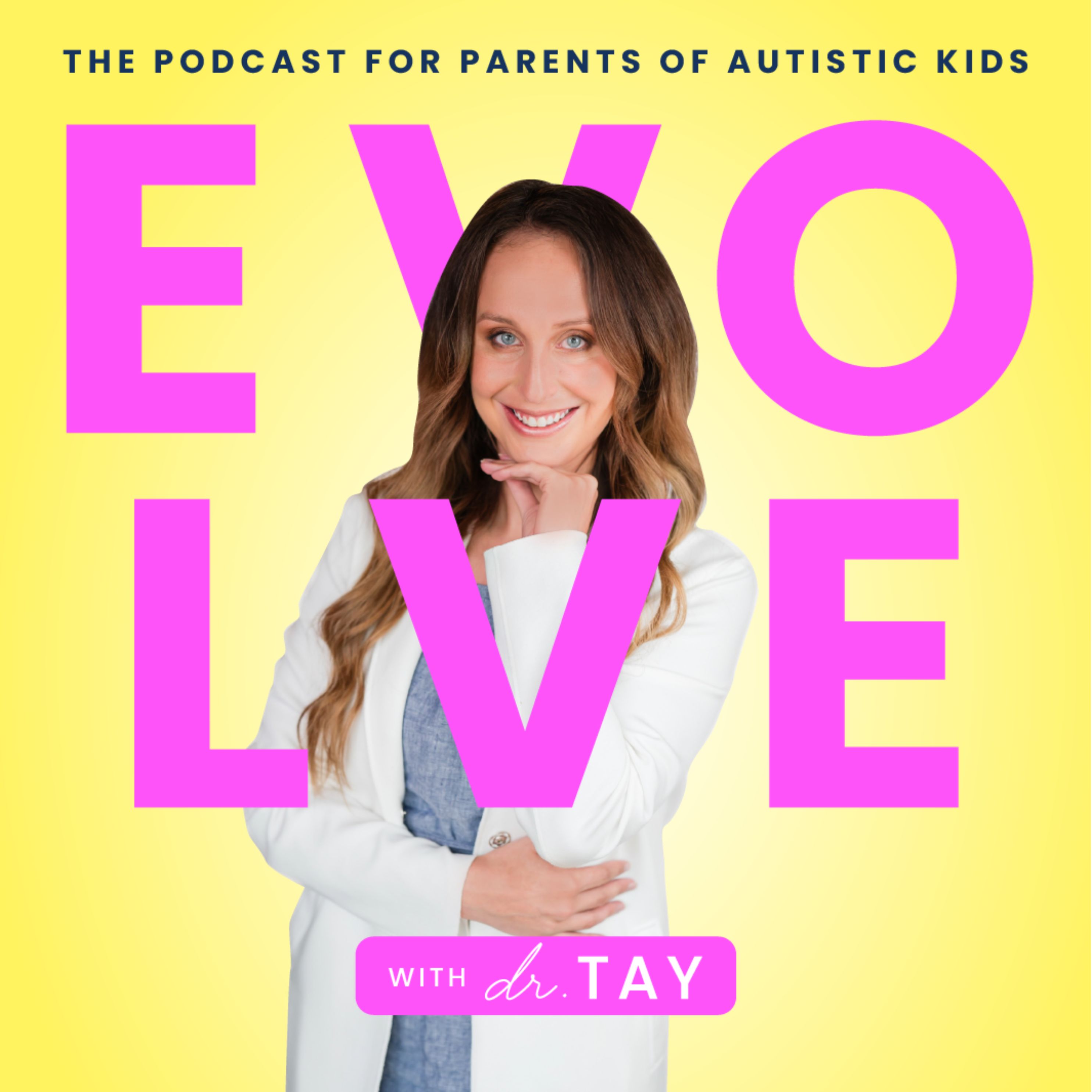
EVOLVE with Dr. Tay: the podcast for parents of autistic kids
autism education
Dr. Taylor Day
Show overview
EVOLVE with Dr. Tay: the podcast for parents of autistic kids has been publishing since 2022, and across the 4 years since has built a catalogue of 215 episodes. That works out to roughly 130 hours of audio in total. Releases follow a weekly cadence.
Episodes typically run thirty-five to sixty minutes — most land between 24 min and 48 min — though episode length varies meaningfully from one episode to the next. It is catalogued as a EN-language Kids & Family show.
The show is actively publishing — the most recent episode landed 6 days ago, with 16 episodes already out so far this year. The busiest year was 2023, with 87 episodes published. Published by Dr. Taylor Day.
From the publisher
welcome to a parenting space actually designed for YOU! where you can get answers about navigating a life that includes autism. I’m Dr. Tay, a licensed child psychologist specializing in autism and neuroaffirming care. I have supported 100s of autistic children and their families and have been in the autism field for over a decade. on this podcast, we focus on supporting your autistic child AND your whole family, including you! every topic is on the table, and your questions (which you can submit through my social media) inspire the episodes created. I share some of my personal stories growing up with a brother who was diagnosed at 23 months of age as well as feature other families' stories so you know you are not navigating this journey alone. this is a space for you to be SEEN. HEARD. SUPPORTED. and get reputable and reliable information about autism instead of searching Google endlessly for hours. I am so dang grateful that you are here. ***disclaimer: not clinical advice, for educational purposes only*** subscribe to this podcast by hitting the plus or follow button so you don't miss an episode.
Latest Episodes
View all 215 episodes215 | parent therapy beyond talking: EMDR, IFS, ketamine, and intensive therapy with Dr. Carolyn Solo
214 | what autism looks like in toddlers (and why it’s often missed)
213 | "could I be autistic too?" what many parents realize after their child’s diagnosis
212 | is this autism? 6 questions parents search (and what actually matters)
211 | does my child need supplements? how to support nutrition in autistic kids with Brittyn Coleman

210 | confusion isn't the problem in autism parenting. this is...
about this episode (+ scroll for resources) 👇feeling confused about what to do next with your child?most parents assume that means they need more information.more strategies.more answers.but what if that’s actually the thing keeping you stuck?in this episode, we’re talking about why confusion isn’t a problem to fix and how constantly searching for more information can actually create more overwhelm.if you’ve been overthinking, second-guessing, or feeling like you should “know more” by now… this episode will help you slow down, reconnect, and find clarity in a completely different way.in this episode, you’ll hear:why confusion doesn’t mean you’re failing and how it can actually guide your next stepshow overconsuming information can keep you stuck in a cycle of overwhelmwhat it looks like to “slow down to speed up” in your parenting decisionshow to ground yourself in what you already know to be true about your childwhy not all autism parenting content is relevant to you at every stagea simple “bucket” framework to help you organize what to focus on now vs laterwhy going deeper (not wider) is often the key to clarityhow to take your next step without needing to have everything figured outtimestamps00:00 embracing confusion in parenting03:44 finding your rhythm: the beat of parenting06:47 judgment and acceptance in parenting09:25 navigating information overload12:25 understanding different stages of parenting15:10 actionable takeaways for parents17:49 creating clarity amidst confusion20:33 building foundations for future growth24:02 the journey of self-discovery in parentingresources⚡️need support in finding your next best steps? join EVOLVE the membership and submit your questions for dr. tay to answer⚡️ learn more about dr. tay’s whole family approach + clinical services⚡️ share your insights from this episode with me >>instagram → @the.dr.tayemail → [email protected]

209 | what autism acceptance actually means (and why this month can feel like a lot)
about this episode (+ scroll for resources) 👇April is "autism month" and with it comes more conversations, more content, and more opinions.and while that can be incredibly valuable… it can also feel overwhelming.for many parents, this month brings up a mix of emotions: gratitude, frustration, confusion, and sometimes even pressure to feel a certain way about your child’s diagnosis.in this episode, Dr. Tay breaks down what autism acceptance actually means — beyond the surface-level messaging — and why this concept can feel harder than it sounds.you’ll also hear how to navigate the increased noise during this month, protect your own capacity, and begin to define what acceptance looks like in your real, day-to-day parenting.in this episode, you’ll hear:the difference between autism awareness and autism acceptance (and why both still matter)what “acceptance” actually means from a psychological perspective (not just the mainstream definition)why this month can feel overwhelming, overstimulating, or even frustrating for parentshow increased conversations can sometimes lead to conflict, misinformation, or pressurepermission to step back, disconnect, or set boundaries during this monthhow to balance gratitude for awareness with protecting your own nervous systemwhat it looks like to move toward acceptance while still holding space for griefwhy acceptance is not a one-time decision, but an ongoing process in your parenting journeyhow to define what acceptance looks like for you and your familytimestamps00:00 understanding autism month: awareness vs. acceptance09:02 the importance of acceptance in autism18:09 defining acceptance: beyond the surface26:51 navigating emotions: acceptance in parenting34:04 embracing the journey of acceptance resources⚡️ join EVOLVE the membership to have your questions answered and have more in-depth education like you heard in today's episode⚡️ learn more about dr. tay’s whole family approach + clinical services⚡️ follow me oninstagram → @the.dr.taytiktok → @the.dr.tay

208 | what does an autism evaluation look like as an adult? (and is it worth it?)
about this episode (+ scroll for resources) 👇you started this journey trying to understand your child…and somewhere along the way, you started to notice traits yourself in it too.for many parents, this moment is both clarifying and confusing.you recognize the patterns. but then the question becomes:what do I actually do?in this episode, dr. tay walks through what it looks like to explore your own neurodivergence as an adult, including when self-identification feels enough and when you might want more clarity.she also breaks down what an autism evaluation can actually look like for adults (and why it often doesn’t need to be the same long, overwhelming process many families go through with their children).in this episode, you’ll hear:why so many parents begin to question their own neurotype after their child’s diagnosiswhat self-identification can offer and when it may or may not feel sufficienthow masking, learned behaviors, and life experiences can make it harder to recognize autism in yourselfwhy adult autism is often missed or misidentified earlier in lifewhat a comprehensive autism evaluation is designed to assess and why that model doesn’t always fit adult needshow adult evaluations can be more streamlined, collaborative, and focused on lived experiencewhat clarity, validation, and outside perspective can offer beyond self-explorationhow an evaluation can support not just you but your parenting and your relationship with your childthe difference between needing “all the data” vs. needing confirmation and next stepshow to think about whether an evaluation is the right next step for youtimestamps00:00 Understanding Neurodivergence in Families10:04 The Importance of Self-Identification19:10 Navigating Evaluations and Diagnoses28:31 Finding Clarity and Supportingresources⚡️ learn more about dr. tay’s whole family approach + clinical services, including booking a free consult call for our adult evaluations⚡️ explore DSM-5-TR diagnostic criteria for autism (made accessible by @blackspectrumscholar as part of their free resource library)⚡️ join EVOLVE the membership to have you questions answered like mentioned in today's episode⚡️ follow me oninstagram → @the.dr.taytiktok → @the.dr.tay

207 | everything feels connected… where do I even start? untangling complex autism needs
Eabout this episode (+ scroll for resources) 👇do you ever feel like there are a million things going on with your child and no clear place to start? maybe you’re wondering if it’s autism.or anxiety.or adhd.or something else entirely. and every time you try to figure it out, it just feels more tangled. in this episode, dr. tay walks you through how to untangle the overwhelm, without needing all the answers first. using the analogy of a tangled ball of yarn, she breaks down how to find your starting point, build momentum, and take meaningful action (instead of staying stuck in overthinking).in this episode, you’ll hear:why autism (and co-occurring differences like anxiety or adhd) can feel like a “tangled web” and how to start making sense of ithow a comprehensive evaluation can bring clarity (and when it might not be the only next step)how to identify what’s actually driving your child’s challenges, even when everything feels connectedsimple ways to collect data and spot patterns in your child’s day-to-day experienceshow to collaborate with your child’s clinical team (even if you only have limited access to them)when learning more is helpful… and when it turns into overconsumption that keeps you stuckhow tools like AI can support pattern recognition (without replacing clinical judgment)the most important shift: why action creates clarity (not the other way around)timestamps00:00 navigating the overwhelm of “where do i start?”03:50 understanding autism evaluations and differential diagnosis07:01 why comprehensive evaluations can bring clarity09:45 identifying underlying factors (anxiety, adhd, and more)12:42 using data to recognize patterns16:34 collaboration, ai tools, and building insight19:19 taking action and finding your next step21:55 exploring therapy options and supports24:59 moving out of overconsumption and into momentum28:01 final reflections and next steps resources⚡️ join EVOLVE the membership to ask your burning questions and watch the masterclass on looping and cognitive inflexibility⚡️ learn more about dr. tay’s whole family approach + clinical services, including comprehensive evaluations and group therapy support⚡️ follow me oninstagram → @the.dr.taytiktok → @the.dr.tay

206 | will an autism diagnosis help or hurt my child?
is an autism diagnosis actually helpful for your child — or could it hurt them?many parents hesitate to pursue an evaluation because they worry about labels, stigma, or putting their child “in a box.” but avoiding the diagnosis doesn’t change whether your child is autistic. what it changes is how clearly you understand your child and how effectively you can support them.in this episode of EVOLVE with Dr. Tay, we break down both the logistical and emotional realities of autism diagnosis. Dr. Tay explains why a diagnosis can unlock support, provide language for self-understanding, and help families move toward greater acceptance and advocacy while also acknowledging the grief and stigma that can arise along the way.this episode is especially helpful if you’re in the pre-diagnosis stage or if your child was recently diagnosed and you’re still processing what that means for your family.in this episode, you’ll hear:why an autism diagnosis doesn’t change your child and instead gives clarity on how to support themthe logistical benefits of diagnosis, including access to services and support systemshow evaluations create a roadmap for understanding your child’s strengths and support needsthe emotional side of diagnosis, including grief and adjustment for parents and childrenwhy many autistic adults wish they had known their diagnosis earlierhow giving your child language to understand their brain can support self-acceptancehow stigma and ableism influence how families think about diagnosiswhy avoiding the label can unintentionally reinforce shame or confusionhow parents can help shape a neurodiversity-affirming narrative about autismtimestamps00:00 understanding autism diagnosis: a parent’s dilemma06:54 logistical benefits of an autism diagnosis13:36 emotional aspects of autism diagnosis19:06 navigating stigma and self-advocacyresources⚡️ learn more about autism evaluations through Dr. Tay Concierge Clinical Carehttps://drtaylorday.com⚡️ if your child already has a diagnosis and you’re wondering how to talk with them about it, check out the masterclass inside EVOLVE the membershiphttps://drtaylorday.com/membership⚡️ continue learning from me >>Instagram @the.dr.tayTikTok @the.dr.tay

205 | is medication the missing piece? what it can do for your autistic child
when should medication be part of your child’s support plan?for many parents of autistic kids, medication feels heavy. scary. final. like something you only consider when everything else has failed. but what if medication isn’t a cure-all or a last resort — what if it’s simply one tool in the toolkit?in this episode, Dr. Tay breaks down the nuanced role medication can play in supporting autistic children, especially when dysregulation, capacity, and mental health are limiting your child’s ability to access therapy, accommodations, or even their own joy.this isn’t about quick fixes. it’s about expanding capacity. in this episode, you’ll hear:00:00 introduction to medication support for autistic children00:27 common misconceptions about medication00:56 benefits and considerations for medication use01:23 medication alongside therapeutic approaches02:16 research insights on medication and behavioral support03:08 using medication for anxiety and emotional dysregulation03:33 recognizing when medication might be needed04:03 indicators of nervous system dysregulation in therapy05:06 medication as a tool06:14 understanding stimulant medications (e.g., adderall, ritalin)06:43 the “capacity cup” metaphor07:38 teaching internal regulation alongside medication09:28 anxiety management and exposure-based therapies10:39 environmental stressors and medication’s role12:29 medication optimization and careful dosing13:20 addressing fears about personality loss and side effects14:42 weighing risks and benefits to improve quality of life15:31 advocacy tips for working with prescribing providers16:42 invitation to medication consideration masterclass17:11 closing remarksresources⚡️ episodes referenced include 94 and 139 with Dr. Arielle Rubin and 177 with Dr. Stacy Greeter⚡️ medication consideration masterclass (inside EVOLVE the membership):join here >> https://drtaylorday.com/membership⚡️ learn more about Dr. Tay’s Whole Family Approach + clinical services:https://drtaylorday.com

204 | am I doing too much... or not enough?
are you constantly wondering if you’re doing too much… or not enough… for your autistic child?in autism parenting, it can feel like every decision is high stakes. you hear “lower demands.” you hear “do exposure.” you hear “presume competence.” you hear autistic voices sharing lived experience. and somehow, you’re still left wondering what actually applies to your child.this episode won’t give you a black-and-white formula. but it will help you understand how to think through this question in a grounded, regulated way — and how to navigate the tension between accommodation and over accommodation without swinging to extremes.in this episode, you’ll hear:why nothing in autism parenting is black and whitehow to filter research, professional advice, and autistic voiceswhat accommodation vs overaccommodation actually meanswhy overaccommodating anxiety can unintentionally reinforce ithow “low demand” can slide into eggshell parentingwhen to gently peel back support to presume competencehow to use trial and error without turning it into self-blametimestamps00:00 the importance of nuance in autism parenting03:05 navigating accommodation vs over accommodation11:29 understanding exposure therapy and its nuances16:08 balancing structure and flexibility in parenting23:08 empowering autonomy and self-advocacy in childrenresources⚡️ join EVOLVE the membership and be live for the upcoming masterclass on this topic (March 2026)⚡️ learn more about dr. tay’s whole family approach + clinical services⚡️ follow me oninstagram → @the.dr.taytiktok → @the.dr.tay

203 | from shame to strategy: rethinking screen time with Ash Brandin
ABOUT THIS EPISODE (+ scroll for resources) 👇screen time doesn’t have to be all or nothing.in this episode, Dr. Tay sits down with Ash Brandin, @thegamereducator and author of Power On, to talk about balancing technology in a way that feels realistic, empowering, and aligned with your child’s brain, especially in neurodivergent children.this conversation moves beyond fear-based messaging and into nuance — exploring regulation, accommodations, executive functioning, transitions, and digital safety through a neurodiversity-affirming lens.in this episode:why screen time is morally neutral and why that mattershow video games can support executive functioning and skill buildingusing screen time as data about how your child’s brain workswhy some content is more dysregulating than otherspractical strategies for transitions off screenshow to scaffold digital safety over timetimestamps00:00 introduction and today’s topic: screen time and technology00:37 meet Ash Brandin02:47 Ash’s journey to educating parents on technology04:50 the importance of neutrality in technology use06:10 balancing screen time: practical tips and insights18:18 teaching technology skills: a lifelong approach22:40 the benefits of screen time for autistic children25:15 video games as accommodating environments27:22 observing and learning from kids’ screen time27:44 addressing hesitancy in using accommodations29:58 engaging with kids through screen time30:40 the importance of digital safety31:48 exploring the book’s structure and key concepts32:13 understanding access, behavior, and content in screen time36:28 strategies for managing screen time transitions40:04 final thoughts and resources RESOURCES⚡️ follow Ash on Instagram and on Substack⚡️ order Power On: Managing Screen Time to Benefit the Whole Family⚡️ join EVOLVE: The Membership — a neurodiversity-affirming space for parents to find community, support, and ongoing learning. dive into the included masterclass to dive deeper into navigating screen time and its benefits for autistic kids⚡️ learn more about Dr. Tay’s Whole Family Approach + current services at drtaylorday.com⚡️ continue learning + submit questions for future episodes:Instagram → @the.dr.tayTikTok → @the.dr.tay

202 | a live coaching session on grief, acceptance, and trusting yourself as an autism parent
ABOUT THIS EPISODE (+ scroll for resources) 👇in this special episode, Dr. Tay shares a live coaching session with Winter, a mom of a 6-year-old autistic boy. listeners are invited inside a real, unscripted coaching conversation — one that mirrors the questions, emotions, and uncertainty so many parents carry quietly. together, Dr. Tay and Winter explore what it’s like to sit with grief and acceptance at the same time, to question whether current supports are actually helping, and to feel the pressure to “do enough” while also wanting space to breathe. Dr. Tay helps Winter slow things down, name what’s coming up beneath the urgency, and reflect on what alignment, confidence, and quality of life could look like for her family. this episode offers a window into how parent coaching can help you:feel less alone in the emotional weight of an autism diagnosisuntangle urgency from what truly matters right nowexperiment with supports without shame or fear of “getting it wrong”build confidence in your instincts as your child’s parentreconnect with yourself while still showing up for your childif you’ve ever wondered what parent coaching actually sounds like — or wished for a space to talk things through out loud with someone who truly gets it — this episode is for you. TIMESTAMPS00:00 introduction and episode overview00:06 meet winter and her journey02:52 navigating early diagnosis and initial support04:02 challenges, grief, and emotional struggles11:57 finding the right support and community20:30 navigating autism as a first-time parent20:43 the pressure of early intervention21:53 the impact of how diagnoses are delivered23:04 support systems and clinical care23:47 parenting with confidence and love27:09 concerns about the future33:33 advocating for disability needs in public spaces37:25 building community and self-advocacy39:54 closing reflections and resources RESOURCES⚡️ Connect with Winter @aspectrumfueledpurpose ⚡️ Join EVOLVE: The Membership — a neurodiversity-affirming space for parents to find community, support, and ongoing learning on this journey, with the option to add on a 1:1 coaching session like this⚡️ Learn more about Dr. Tay’s Whole Family Approach + other services at drtaylorday.com⚡️ Continue learning + submit questions for future episodes:Instagram → @the.dr.tayTikTok → @the.dr.tay

201 | when an autism diagnosis brings more questions than answers
ABOUT THIS EPISODE (+ scroll for resources) 👇 if you’ve recently received an autism diagnosis — or you’re pretty sure one is coming — this episode is for you. many parents expect to feel relief after a diagnosis. sometimes that happens briefly. but more often, things actually feel heavier, more confusing, and more urgent. in this episode, Dr. Tay breaks down why that happens, names the “trap of urgency” so many families fall into, and explains what actually helps in this early post-diagnosis phase. want more support? the You Got The Diagnosis. Now What? program was designed for you! a four-week, neurodiversity-affirming program designed to support families in the space between diagnosis and action — focused on clarity, self-trust, and sustainable next steps.LEARN MORE HERE: https://drtay.thrivecart.com/you-got-the-diagnosis-now-what CHAPTERS00:00 navigating the autism diagnosis journey02:26 understanding why diagnosis can create more questions12:41 clarity over urgency: slowing down without falling behind23:59 introducing support for families in the post-diagnosis phase RESOURCES⚡️ learn more about Dr. Tay’s Whole Family Approach and other serviceshttps://drtaylorday.com ⚡️ continue learning from me >>Instagram @the.dr.tayTikTok @the.dr.tay

200 | celebrating 200 episodes: values, visibility, and coming back after the pause
EABOUT THIS EPISODE (+ scroll for resources) 👇 this episode marks a big milestone — 200 episodes — and a very human return after an unplanned pause. Dr. Tay shares openly about what led to stepping back, including grief, perfectionism, and the pressure she felt to make the “right” episode for this moment. from there, the conversation widens into something deeper: how personal values, neurodiversity-affirming care, and what’s happening in our country are deeply intertwined. this is an episode about alignment — as a parent, as a clinician, and as a human — and why staying silent doesn’t feel like an option when your values are at stake. CHAPTERS00:00 return from hiatus and celebrating 200 episodes05:48 navigating personal challenges, caregiving, and grief12:19 the intersection of personal beliefs and professional practice20:37 the importance of human connection in parenting26:23 values, advocacy, and human rights33:05 core values in clinical practice36:38 affirming neurodivergence through collaboration40:15 integrity, repair, and whole-family healing44:00 living in alignment with your values49:43 reflecting on privilege and responsibility in advocacy RESOURCES⚡️ join EVOLVE the membership: a space for questions, community, and neurodiversity-affirming guidancehttps://drtaylorday.com/membership ⚡️ learn more about Dr. Tay’s Whole Family Approach and current serviceshttps://drtaylorday.com ⚡️ continue learning from me >>Instagram @the.dr.tayTikTok @the.dr.tay

199 | should my autistic child do a social skills group?
this week’s episode was inspired directly by a diagnostic feedback session inside dr. tay’s clinical practice. one parent asked a question that so many others wonder: “should i be teaching social skills to my autistic child… and if so, how?” in this episode, dr. tay breaks down why traditional social skills approaches often miss the mark, how they can unintentionally promote masking, and what a neurodiversity-affirming approach looks like instead. you’ll learn: why “social skills” often = neurotypical normswhat actually helps autistic kids build authentic connectionpractical ways to support social growth at home, without scripts or forcinghow to understand what your child needs based on their motivation, interests, and neurotype TIMESTAMPS00:00 introduction and episode inspiration00:21 diagnostic feedback and recommendations01:57 therapeutic approaches and parent coaching04:34 addressing social skills in autistic children05:52 neurodiversity affirming approaches08:00 practical strategies and role-playing12:04 real-life situations and empathy building16:16 parental involvement and social skills groups23:03 conclusion and next steps RESOURCES ⚡️need more support navigating this? Join EVOLVE the membership — a neurodiversity-affirming space to ask YOUR questions. ⚡️ learn more about Dr. Tay’s Whole Family Approach + current services, including her small group therapy model, at drtaylorday.com⚡️ keep learningInstagram → @the.dr.tayTikTok → @the.dr.tay

198 | the role of parents as co-regulators for autistic children with Lisa Candera
ABOUT THIS EPISODE (+ scroll for resources) 👇In this episode, Dr. Tay emphasizes the importance of supporting parents in the autistic journey. Joined by Lisa Candera, a single mom and coach for parents of autistic children, they discuss the role of parents as primary co-regulators for their children as well as strategies for staying regulated, building self-trust, and supporting their children's behaviors. They also explore systemic issues, coping mechanisms, and the need for a holistic approach that includes listening to autistic voices. Despite the focus on parents, the core message underscores the importance of a balanced support system for the entire family unit.00:00 Introduction and Guest Welcome00:28 Lisa Candera's Background and Passion00:45 The Role of Parents in Autism Support01:28 Podcast Introduction and Disclaimer02:30 Lisa's Journey as a Single Mom05:25 Challenges and Early Diagnosis06:48 Navigating Resources and Support Systems08:27 The Importance of Parental Education16:04 Understanding OCD and Autism22:59 Coaching and Self-Regulation28:21 Understanding the Distinctness of OCD28:30 The Complexity of Compulsions29:01 Parental Instincts and Fix-It Mode29:31 The Illogical Nature of OCD30:06 OCD and Autism: The Just Right Feeling31:22 Building Acceptance in Parenting32:22 The Psychological Definition of Acceptance33:46 Behavioral Issues and Parental Pressure35:05 Supporting Parents: Tips and Strategies37:24 Validating Experiences Before Problem Solving38:01 Common Challenges and Seeking Support39:21 Navigating Grief and Acceptance40:02 Ambiguous Grief and GOMO41:17 Being the Safe Person and Self-Advocacy44:31 Parental Regulation and Child's Behavior46:36 Building a Well-Rounded Support Team48:29 The Power of Tone and Voice52:12 Conclusion and Resources RESOURCES⚡️ Continue learning from Lisa Candera at theautismmomcoach.com/ and @theautismmomcoach on Instagram and Facebook⚡️ Download the Meltdown Action Plan⚡️ Join EVOLVE: The Membership — a neurodiversity-affirming space for parents to find community, support, and ongoing learning on this journey.⚡️ Learn more about Dr. Tay’s Whole Family Approach + current services at drtaylorday.com⚡️ Continue learning + submit questions for future episodes:Instagram → @the.dr.tayTikTok → @the.dr.tay

197 | developing impulse control in autistic children
ABOUT THIS EPISODE (+ scroll for resources) 👇In this mini episode, Dr. Tay discusses impulse control for autistic children and offers proactive strategies to develop this skill without inducing shame. Dr. Tay emphasizes the importance of a regulated state for teaching impulse control and using fun, engaging games like Red Light, Green Light and Simon Says. The episode also answers questions from parents, such as managing inappropriate comments and excessive affectionate behaviors. 00:00 Introduction and Episode Overview00:24 Inspiration Behind the Episode01:30 Understanding Impulse Control in Autistic Children03:02 Proactive Skill Building Strategies03:53 Engaging Activities to Teach Impulse Control06:29 Addressing Common Questions from Parents15:36 Impulse Control vs. Other Behavioral Issues17:15 Conclusion and Final Thoughts RESOURCES⚡️ Join EVOLVE: The Membership — a neurodiversity-affirming space for parents to find community, support, and ongoing learning on this journey.⚡️ Learn more about Dr. Tay’s Whole Family Approach + current services at drtaylorday.com⚡️ Continue learning + suggest topics for future episodes:Instagram → @the.dr.tayTikTok → @the.dr.tay

196 | understanding interoception and supporting body awareness in autistic kids with Kelly Mahler
ABOUT THIS EPISODE (+ scroll for resources) 👇In this episode, Dr. Tay discusses the often overlooked yet crucial concept of interoception and its importance in supporting autistic children. Joined by guest Kelly Mahler, an experienced occupational therapist specializing in this area, they dive into what interoception is, how it impacts autistic children, and actionable strategies to improve interoceptive awareness. The conversation also touches on the significance of adult modeling, school-based interventions, and a comprehensive approach to sensory regulation. Additionally, they explore the connection between interoception and autistic burnout, providing valuable insights and resources for parents and educators.00:00 Introduction and Episode Overview02:04 Guest Introduction: Kelly Mahler02:11 Kelly's Journey into Interoception04:17 Understanding Interoception08:57 Interoception in Autistic Individuals14:44 Building Interoceptive Awareness in Kids23:16 Challenges and Advocacy in Schools25:25 Understanding Interoception and Compliance26:01 Adult Modeling and Focus Area Experiments28:59 Sequential Process: Body, Emotion, Action32:18 Challenges in School-Based OT and Sensory Regulation38:47 Autistic Burnout and Interoception46:52 Resources and Final ThoughtsRESOURCES⚡️ check out all of Kelly’s resources → www.kelly-mahler.com ⚡️ Join EVOLVE: The Membership — a neurodiversity-affirming space for parents to find community, support, and ongoing learning on this journey.⚡️ Learn more about Dr. Tay’s Whole Family Approach + current services at drtaylorday.com⚡️ Continue learning + submit questions for future episodes:Instagram → @the.dr.tayTikTok → @the.dr.tay