Ecology Podcast
285 episodes — Page 6 of 6

JEC: Interview with Katie Becklin
*NB Originally posted on 30 November 2012

JEC: Interview with David Padilla
*NB Originally posted on 29 November 2012

JEC: EcoGist - interview with Justin Dohn
*NB Originally posted on 28 November 2012

JEC: EcoGist - interview with Maud Bernard-Verdier
*NB Originally posted on 27 November 2012

JEC: Interview with Marko Spasojevic
*NB Originally posted on 14 November 2012

JEC: Interview with Stefan Schnitzer
*NB Originally posted on 7 November 2012

JEC: The story behind COMPADRE - Population Demographics Database
*NB Originally posted on 25 October 2012

JEC: Interview with Lauren Urgenson
*NB Originally posted on 22 October 2012

JEC: Interview with Eric Lind
*NB Originally posted on 12 October 2012

JEC: Interview with Ian Pearse
*NB Originally posted on 8 October 2012

JEC: Interview with Jennifer Williams
*NB Originally posted on 24 September 2012.

JEC: Interview with Jens Kattge
*NB Originally posted on 21 September 2012

JEC: Interview with Jarrett Byrnes
*NB Originally posted on 20 September 2012
JEC: Interview with Sandra Lavorel
Sandra Lavorel's Special Feature on ecosystem services is available to access, for free, online via http://onlinelibrary.wiley.com/doi/10.1111/jec.2012.101.issue-1/issuetoc. Music credit: [Cirus Marcus](http://freemusicarchive.org/music/CIRCUSMARCUS/) - (http://freemusicarchive.org/music/CIRCUSMARCUS/Aux_puces/Circus_Marcus_-_Aux_puces_n5)
JEC: Interview with Irena Šímová
The paper by Šímová, Li & Storch can be accessed for free at http://onlinelibrary.wiley.com/doi/10.1111/1365-2745.12011/abstract.

JEC: Interview with Tom Ezard - University of Southampton
Music credit: [Plays Guitar](http://freemusicarchive.org/music/gillicuddy/Plays_Guitar/) to [Gillicuddy](http://www.gillicuddy.net/)
JEC: Interview with Frederic Barraquand of University of Tromso in Norway
Music credit: + artist: James Beaudreau + song: Parlor City + link: http://freemusicarchive.org/music/James_Beaudreau/Fresh_Twigs_WBR_02/9_Parlor_City
FE: Ecology of Stress - Robbie Wilson interviews Lanna Desantis
Coping with stress: some species survive by breaking the rules, as Lanna Desantis explains to Robbie Wilson as part of the Special Feature: The Ecology of Stress For more information, read the lay summary (http://bit.ly/VQU0Xx) and article (http://bit.ly/14qsdBq)
JEC: Interview with Peter Jørgensen of INNGE
In the latest Journal of Ecology podcast, Scott Chamberlain interviews Peter Jørgensen of INNGE (http://www.innge.net/). Music credit: Artist: Pajaro (https://soundcloud.com/budabeats/pajaro-santa-leone) Song: "Santa Leone" (http://freemusicarchive.org/music/Pajaro/Best_Of_Breitband_Vol4/06_pajaro_-_santa_leone_1357)
JEC: Scott Chamberlain interviews Mark Hahnel the founder of figshare
Music credit: "Instrumental" (http://freemusicarchive.org/music/Howie_Mitchell__Charlotte_Williams_1108/Howie__Charlotte_Williams_11-14-58/Track_5-InstrGuitarAndDulcDuet) by "Howie Mitchell and Charlotte Williams" (http://freemusicarchive.org/music/Howie_Mitchell__Charlotte_Williams_1108/)
FE: Robbie Wilson interviews David Wilkinson on why sauropod dinosaurs were so large
The long necked sauropod dinosaurs were the largest land animals ever to walk the Earth – but why were they so large? One possibility is that it somehow involved the nature of the plant food they eat, as David Wilkinson (co-author of the paper "High C:N ratio (not low-energy content) of vegetation may have driven gigantism in sauropod dinosaurs and perhaps omnivory and/or endothermy in their juveniles." David M Wilkinson & Graeme D Ruxton 2012) explains in this interview with Robbie Wilson. Wilkinson, D. M., Ruxton, G. D. (2012), High C/N ratio (not low-energy content) of vegetation may have driven gigantism in sauropod dinosaurs and perhaps omnivory and/or endothermy in their juveniles. Functional Ecology. doi: 10.1111/1365-2435.12033 http://www.functionalecology.org/view/0/summaries.html#wilkinson http://onlinelibrary.wiley.com/doi/10.1111/1365-2435.12033/abstract
FE: Brad Butterfield speaks with Alan Knapp about his paper on plant facilitation
Alan Knapp interviews Brad Butterfield about his paper "A functional-comparative approach to facilitation between and its context-dependence", part of an upcoming Special Feature on Mechanisms of Plant Competition, and the importance of taking a trait-based approach to plant facilitation. A great deal of research has been conducted on the mechanisms and outcomes of plant competition, what traits help plants compete, but less well understood is how such traits affect the outcome of positive interactions among plants. Butterfield, B. J., Callaway, R. M. (2012), A functional comparative approach to facilitation and its context dependence. Functional Ecology. doi: 10.1111/1365-2435.12019 http://onlinelibrary.wiley.com/doi/10.1111/1365-2435.12019/abstract
MEE: Regression dilution in species distribution models
Read the article: http://onlinelibrary.wiley.com/doi/10.1111/j.2041-210X.2010.00077.x/abstract
MEE: The pace and shape of ageing
Read the article: http://onlinelibrary.wiley.com/doi/10.1111/j.2041-210X.2010.00087.x/abstract
MEE: Fine-scale GIS niche estimates for fishes
Jason Knouft, from Saint Louis University, Missouri, talks to Elizabeth Horne about his recently published paper, "Using fine-scale GIS data to assess the relationship between intra-annual environmental niche variability and population density in a local stream fish assemblage". Jason establishes the need for broad-scale geographic considerations of ecological issues, and explains how the application of these methods on a finer scale can yield new and valuable insights into the exploitation of ecological niches by local populations, and such populations’ likely reactions to new seasonal and environmental stresses. Read the article: http://onlinelibrary.wiley.com/doi/10.1111/j.2041-210X.2010.00076.x/full
MEE: Getting started with meta-analysis
Freya Harrison, University of Oxford, UK talks with Graziella Iossa about her review on getting started with meta-analysis. Freya explains that meta-analysis is a statistically robust way of putting together results from different studies that test the same hypothesis. She provides in this review a 'road map' to the topic so that beginners can get a head start on meta-analysis. Meta-analysis hopefully will be more used as a result in the fields of ecology and evolution. Read the article: http://onlinelibrary.wiley.com/doi/10.1111/j.2041-210X.2010.00056.x/full
MEE: The art of modelling range-shifting species
Jane Elith and Michael Kearney, University of Melbourne, Australia and Steven Phillips, AT&T, USA talk with Graziella Iossa about their work: 'The art of modelling range-shifting species'. Jane explains that this is a method to predict species distributions, whose range are shifting, like invasive species or species responding to climate change. Mike Kearney then specifies why they used cane toads as a case study for their work. By taking characteristics of the animal and putting this information together they could ask from a physiological point of view, where cane toads could not live. They also asked how to bring together this mechanistic approach with more traditional approaches. This work advances methodology by combining information from physiological models to data in the correlation-based ones; by looking at details of how you can do the modelling; and by looking at tools for understanding models and data, something that a lot of people will find interesting. Then Steven explains about MaxEnt, a programme that models species distributions based on a machine-learning approach, developed with other colleagues and freely available on the web. For example a common use of the programme is predicting how climate change will affect species distributions. Finally, Mike reports that this method should be useful to anybody trying to predict species with unequal distributions. Jane also precises that students, managers, researchers could be potentially interested, especially given that MaxEnt is freely available. Read the article: http://onlinelibrary.wiley.com/doi/10.1111/j.2041-210X.2010.00036.x/full
MEE: Measuring relative data quality
Art Munson, Cornell University, USA, talks with Graziella Iossa about his work with colleagues in developing a method for measuring the relative information content of data from different monitoring protocols. Art presents a method to compare the information from two data sources. As often in ecology data are difficult to compare because they have been collected at different points in space and time, Art and colleagues propose using a model that summarises each of these data sources and allowing a direct comparison of the data. Their work advances methodology in ecology and evolution in two ways. At first they were analysing a citizen science project, the eBird dataset, which collects bird observations throughout the western hemisphere and there was a question of how much the biological information was being collected by this citizen science project. One outcome of their work found that eBird is collecting a lot of useful information. More generally, this method can be applied to verify data sources for lots of different purposes. Read the article: http://onlinelibrary.wiley.com/doi/10.1111/j.2041-210X.2010.00035.x/full
MEE: The Primate Life History Database
Karen Strier, University of Wisconsin-Madison, USA, and Susan Alberts, Duke University, USA and Institute of Primate Research, Kenya, talk with Graziella Iossa, MEE Journal Co-ordinator, about their work with co-authors: The Primate Life History Database. This online database is based on long-term datasets that researchers at several institutions in North America have created to make data comparable across studies. It will aid future comparative analyses of primate data and the creation of easily archivable output. The most important features of this database, as Susan points out, are its structure and the use of a common vocabulary. Karen and Susan hope that it will be applicable to studies of most vertabrates and certainly of mammals. Read the article: http://onlinelibrary.wiley.com/doi/10.1111/j.2041-210X.2010.00023.x/full
MEE: Phenological estimators using simulated data.
Graziella Iossa interviews Jean-Pierre Moussus, MNHN - EGB about his work with co-authors Romain Julliard and Frederic Jiguet on phenological estimators using simulated data. Read the article: http://onlinelibrary.wiley.com/doi/10.1111/j.2041-210X.2010.00020.x/full
MEE: Radio transmitters and bird ecology
Doug Barron answers what is the main idea behind his work with co-authors, "Meta-analysis of transmitter effects on avian behaviour and ecology". Further, he explains how their meta-analysis advances methodology in ecology and evolution and finally shows how the findings of their study could be applied by anyone using transmitters on birds. Read the article: http://onlinelibrary.wiley.com/doi/10.1111/j.2041-210X.2010.00013.x/full
MEE: TITAN
Matt Baker talks to Graziella about TITAN, their method for measuring ecological community thresholds that should be able to inform about conservation of rare and threatened species. Read the article: http://onlinelibrary.wiley.com/doi/10.1111/j.2041-210X.2009.00007.x/full
Alan Knapp interviews Ryan Sponseller for Functional Ecology
In this latest podcast, Alan Knapp, Editor of Functional Ecology, interviews Ryan Sponseller and his co-authors on their paper 'Variation in monsoon precipitation drives spatial and temporal patterns of Larrea tridentata growth in the Sonoran Desert'. Read the paper: Ryan A. Sponseller et al. (2012), Variation in monsoon precipitation drives spatial and temporal patterns of Larrea tridentata growth in the Sonoran Desert.: http://onlinelibrary.wiley.com/doi/10.1111/j.1365-2435.2012.01979.x/full
Alan Knapp interviews Amy Austin how a massive bamboo flowering event impacted an old-growth forest
Alan Knapp interviews Amy Austin about her paper co-authored with Victoria Marchesini where they examined how a massive bamboo flowering event, which occurred in 2001 over 200,000 hectares in Patagonia, Argentina , impacted carbon and nutrient cycling in a native old-growth forest. Read the paper on Functional Ecology: Austin, A. T. and Marchesini, V. A. (2011), Gregarious flowering and death of understorey bamboo slow litter decomposition and nitrogen turnover in a southern temperate forest in Patagonia, Argentina. http://onlinelibrary.wiley.com/doi/10.1111/j.1365-2435.2011.01910.x/abstract
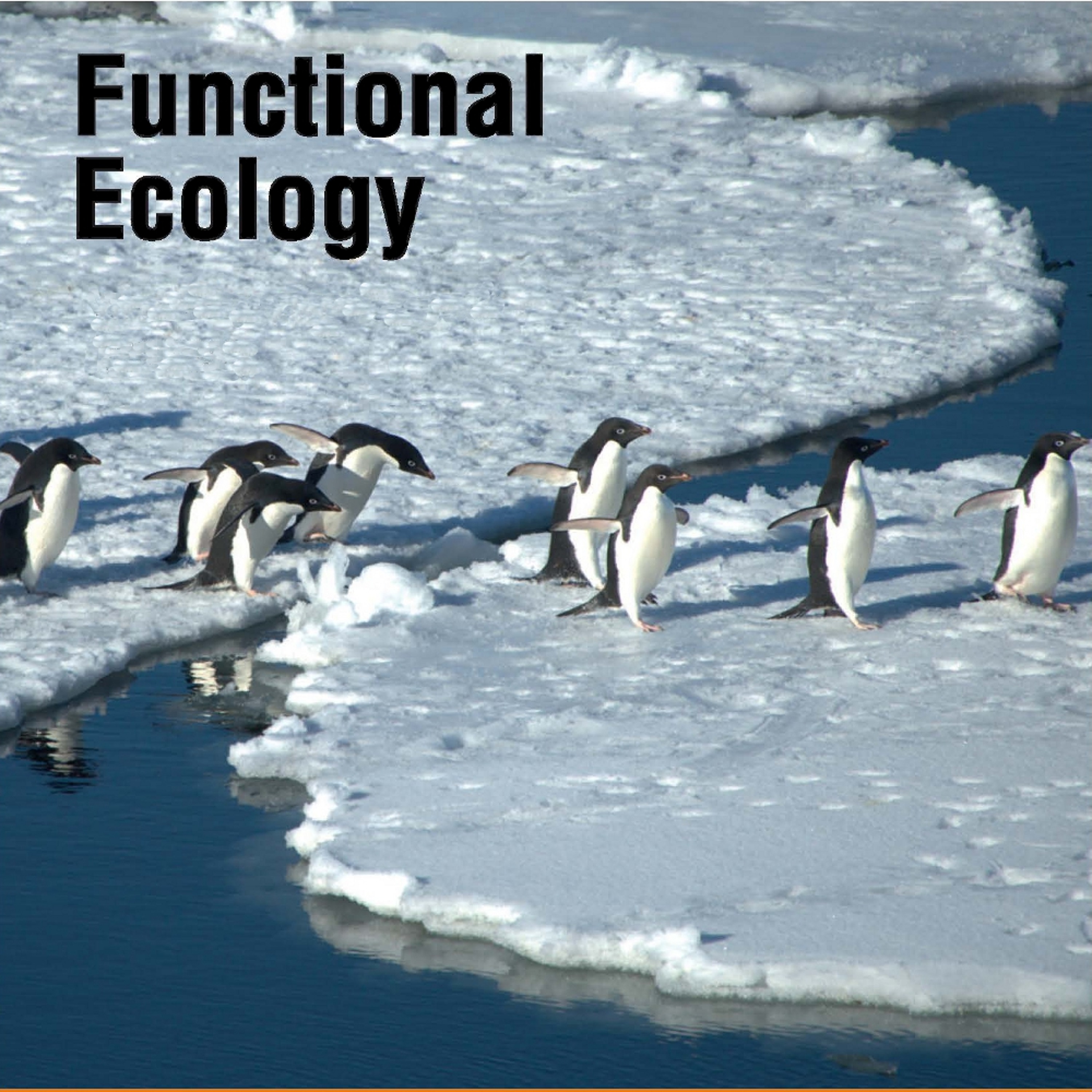
Functional Ecology: Phil Hulme talks to Alan Knapp
In Functional Ecology's first podcast, Phil Hulme talks to Alan Knapp, about his study which is the first comparison testing for consistency in flowering phenology of species established in the wild in both their native Europe and as introduced aliens in North America. Read the paper here: Hulme, P. E. (2011), Consistent flowering response to global warming by European plants introduced into North America. Functional Ecology, 25: 1189–1196. http://onlinelibrary.wiley.com/doi/10.1111/j.1365-2435.2011.01899.x/abstract