Ecology Podcast
285 episodes — Page 2 of 6

Black History Month 2024: Mthokozisi Moyo on Research in Africa, Funding, and Representation
For Black History Month UK 2024, the British Ecological Society is celebrating the work of Black ecologists around the world. In this episode, Mthokozisi Moyo shares his experience in ecology and academia. Mthokozisi previously shared a blog post on The Applied Ecologist in 2022 detailing his background in African Ecosystems, Seasonality, and Functional Traits, and his thoughts on Black History Month (see link below). We are pleased to have the opportunity to catch up with him! Blog post: https://appliedecologistsblog.com/2022/10/19/mthokozisi-moyo-accidental-ecologist-to-seasonality-expert/ Mthokozisi's contact details: Twitter: https://x.com/mtho_moyo Email: [email protected]

Black History Month 2024: Damilola Olanipon on Mycorrhiza, Opportunities and Reclaiming Narratives
For Black History Month 2024, the British Ecological Society is celebrating the work of Black ecologists around the world. In this episode, Dr Damilola Grace Olanipon speaks to Amelia Macho about her experiences in the field, working on plant-mycorrhizal relationships in forest ecosystems. Damilola discusses the importance of reclaiming narratives for Black ecologists in Africa, as well as the importance of equal opportunities. You can find Damilola on LinkedIn here: https://www.linkedin.com/in/damilola-olanipon-86b9ab76/ Check out all of the British Ecological Society's BHM 2024 blog posts and podcasts here: https://www.britishecologicalsociety.org/membership-community/black-history-month/

Patrick Finnerty: Plant odour enables patch choice by mammalian herbivores from afar
Amelia Macho chats to Functional Ecology author Patrick Finnerty about his recently published research article "Odour information enables patch choice by mammalian herbivores from afar, leading to predictable plant associational effects". The team demonstrated that elephants can make patch choice decisions from afar using plant odour cues alone, and that these decisions lead to predictable associational effects on the susceptibility of high-quality focal plants to be being eaten. They also used a new method to reduce an entire complex odour profile of a low-quality plant species and reproduce this odour information artificially. This simplified odour set was as effective as real low-quality neighbours in shaping elephant patch choice and subsequently providing associational refuge to the focal plant. This research could offer a new tool to influence herbivore foraging decisions, with implications for wildlife management and conservation, including plant protection. Read the full research article here: https://doi.org/10.1111/1365-2435.14665 Check out our YouTube channel for a video of an elephant walking through the giant Y-maze Patt and his team built: https://youtu.be/OBY_xsbU-0k

PhD student Nina Bosch on post-fire recovery in heathlands and her BES Annual Meeting experience
As part of our 'Community' series, we’re bringing together a global community of ecologists to discuss their experience and relation to ecology. In this episode, we chatted with Nina Bosch, a PhD student from the University of York and a valuable member of the BES. Nina’s research focuses on the recovery of landscapes after fire disturbance in alpine heathlands with an emphasis on the partnership between plants and fungi. Tune in to understand how attending the BES Annual Meeting has helped Nina to network and build friendships as a young ecologist.

Special Interest Groups | Rewilding
As part of our 'Community' series, we’re bringing together a global community of ecologists to discuss their experience and relation to ecology. In this episode, Lydia Groves is joined by eight committee members of the newly-launched Rewilding Special Interest Group. A range of topics are discussed, including what rewilding is, how it can be used effectively, and what the committee hopes to achieve through the SIG. You can find out more about the BES Rewilding SIG here: https://www.britishecologicalsociety.org/membership-community/special-interest-groups/rewilding-group/ And join their mailing list here: https://britishecologicalsociety.us17.list-manage.com/subscribe?u=b3fd69e742034d545c02c0932&id=e4ee09c0cb

Annual Meeting | In conversation with Dr. Rob Brooker
As part of our 'Community' series, we’re bringing together a global community of ecologists to discuss their experience and relation to ecology. In this episode, we are focusing on the most exciting event on the BES’s calendar – our Annual Meeting with renowned ecologist and a longstanding BES member Dr. Rob Brooker. Tune in to understand what makes this event such a special one for the ecological community.

Journal of Animal Ecology | Editor Expertise: Dr Nathan J Sanders
For our ‘Editor Expertise’ series, we will be meeting with each of our Senior Editors, who will share the reason they went into animal ecology, their current and future research focus, and experience of working as an editor for the Journal of Animal Ecology. Our aim is to spread awareness of their research area and give you a chance to get to know the editors behind the journal. Our first guest is Dr Nathan J Sanders, Executive Editor. (0:38) – Introduction (1:03) – Nate’s journey into animal ecology (10:15) – Nate’s current and future research focus (20:00) – Nate’s experience as Executive Editor for the Journal of Animal Ecology

2023 Haldane Prize Shortlist: André Luza
Amelia Macho speaks with André Luza, whose review article "Going across taxa in functional ecology: Review and perspectives of an emerging field" has been shortlisted for Functional Ecology's 2023 Haldane Prize for Early Career Researchers. André’s review mapped the limitations of current research in functional ecology involving multiple taxa, presented ecological questions to a functional cross-taxa research and showed directions to pushing the limits of this research field. It aimed to encourage researchers in the field of functional ecology to move beyond single taxa and traits, and to integrate more branches and dimensions of the Tree of Life in their research.
Southwood Prize 2023: Dominic McAfee on Oysters and Soundscapes
Lydia Groves, publishing assistant for Journal of Applied Ecology, sits down with Dominic McAfee to discuss the research article 'Soundscape enrichment enhances recruitment and habitat building on new oyster reef restorations'. Dominic is the author of one of the shortlisted research articles for the Southwood Prize 2023, celebrating early career ecologists. You can read Dominic's research article here: https://doi.org/10.1111/1365-2664.14307 You can find out more about the Southwood Prize here: https://www.britishecologicalsociety.org/publications/best-paper-by-an-early-career-researcher/southwood-prize/
2023 Haldane Prize Shortlist: Ximena Cibils
In this podcast, Amelia Macho sits down with Ximena Cibils to discuss her research "Silicon and Epichloë-endophyte defences in a model temperate grass reduce feeding efficiency and immunity of an insect folivore”. Ximena's research has been shortlisted for Functional Ecology's 2023 Haldane Prize for early career researchers. Ximena presented the first report of silicon defences and Epichloë-endophyte derived alkaloids compromising insect immunity via reduced melanisation response. Deploying both physical and chemical defences against multiple insect herbivore traits, including feeding efficiency, growth and immunity, may be a successful defence strategy in temperate grasses.

Black History Month 2023: Jeanelle Brisbane on Conservation, Education and Representation
For Black History Month 2023, the British Ecological Society is celebrating the work of Black ecologists around the world. In this episode, Jeanelle Brisbane joins Amelia Macho. Jeanelle is an Assistant Forest Officer at Dominica’s Forestry, Wildlife & Parks Division, and the founder of WildDominique, a conservation organization. Here, she speaks about her early experiences of nature growing up in Dominica, her international studies, and the impact of Hurricane Maria on both Dominica's ecology and her career. You can read Jeanelle's 2022 blog post here: https://functionalecologists.com/2022/10/28/jeanelle-brisbane-building-on-island-capacity-as-the-foundation-for-conservation-success/ Check out all of the British Ecological Society's BHM 2023 blog posts and podcasts here: https://www.britishecologicalsociety.org/membership-community/black-history-month-2023/
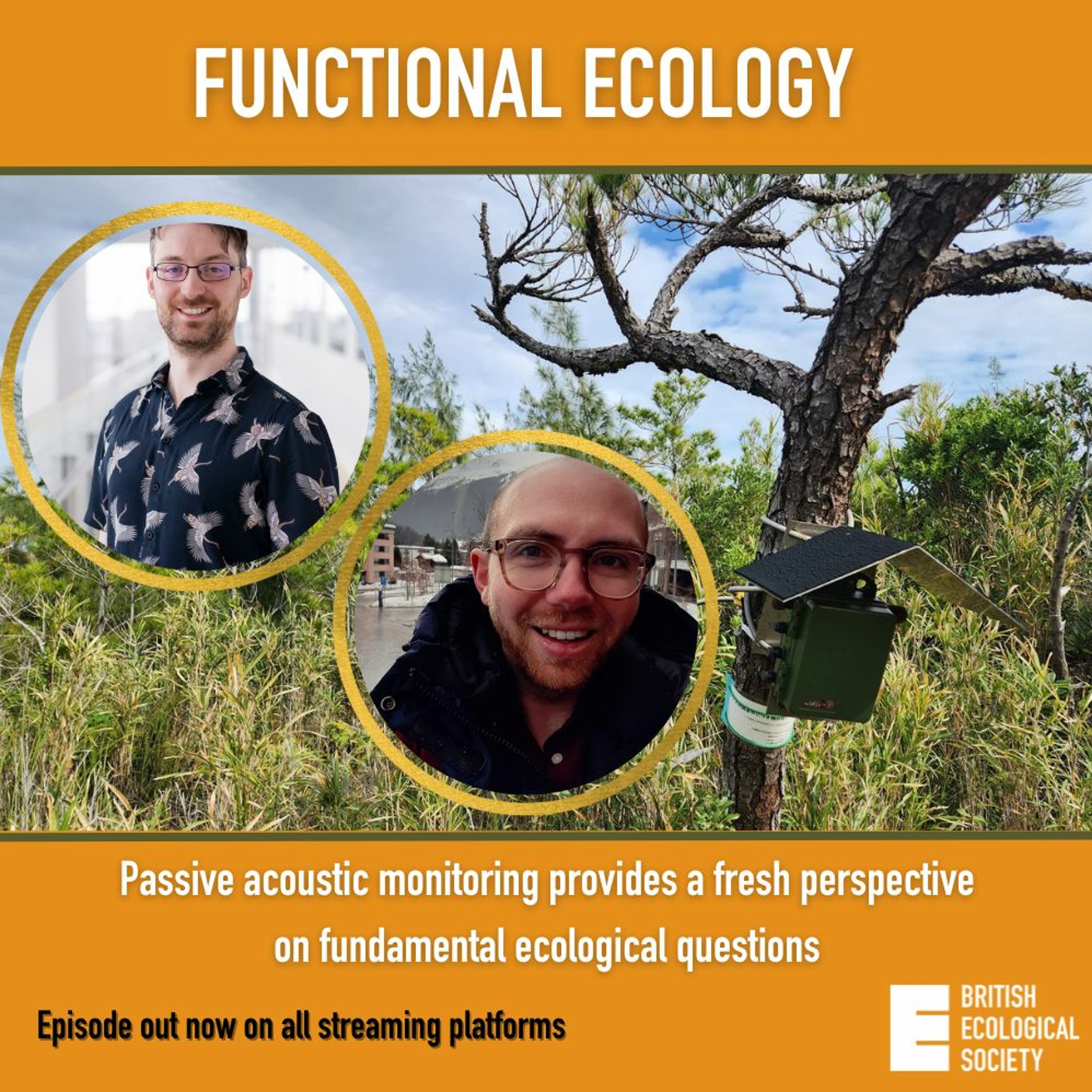
Passive acoustic monitoring provides a fresh perspective on fundamental ecological questions
In this podcast for Functional Ecology, Frank Harris sits down with Samuel Ross and Darren O’Connell to discuss their recently published review article in Functional Ecology—Passive acoustic monitoring provides a fresh perspective on fundamental ecological questions. Sam and Darren hope their review paper motivates the use of passive acoustic monitoring approaches to think about blue-skies research and the grand challenges affecting our planet, because much of what we can learn by recording and experiencing natural soundscapes is fundamental to our knowledge of life on earth. - Paper: https://besjournals.onlinelibrary.wiley.com/doi/full/10.1111/1365-2435.14275 - PLS: https://fesummaries.wordpress.com/2023/01/23/passive-acoustic-monitoring-provides-a-fresh-perspective-on-fundamental-ecological-questions/ - Sam's website: https://samuelrpjross.com/ - Darren's website: https://people.ucd.ie/darren.oconnell
Black History Month 2023: Jhan Salazar on The Wonder of Nature and Importance of Representation
For Black History Month 2023, the British Ecological Society is celebrating the work of Black ecologists around the world. In this episode, Jhan Salazar joins Frank Harris to discuss his early fascination with nature and the importance of representation in academia. Jhan is fifth-year graduate working on understanding patterns of evolution and adaptation of species to mountain environments in the Neotropics. Jhan is doing this research in Dr. Jonathan Losos' Lab in the Department of Biology and Biomedical Sciences at Washington University, St. Louis, USA. Check out all of the British Ecological Society's BHM 2023 blog posts and podcasts here: https://www.britishecologicalsociety.org/membership-community/black-history-month-2023/
Black History Month 2023: Gideon Deme on his Journey, Barriers to Ecology, and Inspirations
For Black History Month 2023, the British Ecological Society is celebrating the work of Black ecologists around the world. In this episode, Gideon Deme joins Frank Harris to discuss his journey towards becoming an ecologist, highlight barriers to accessing ecology for black ecologists, and inspiring figures that helped him along the way. Gideon is a Postdoctoral Scholar in the Department of Biology at Case Western Reserve University, Cleveland, USA. Gideon is also an Associate Editor for Ecological Solutions & Evidence Check out all of the British Ecological Society's BHM 2023 blog posts and podcasts here: www.britishecologicalsociety.org/membersh…th-2023/
Black History Month 2023: Reuben Fakoya-Brooks on Academia, Barrier-Breaking and Creativity
For Black History Month 2023, the British Ecological Society is celebrating the work of Black ecologists around the world. In this episode, Reuben Fakoya-Brooks joins Amelia Macho. Having studied Zoology, Reuben worked as researcher for the NHS before starting a PhD in Human Behavioural Ecology at University College London. He has worked closely with the BES, founding the Racial & Ethnic Equality & Diversity (REED) ecological network here, which he also chaired. Reuben talks about his journey navigating work and academia, as well as his passion for photography, and discusses the importance of representation and support for under-represented communities. Check out all of the British Ecological Society's BHM 2023 blog posts and podcasts here: www.britishecologicalsociety.org/membersh…th-2023/
Black History Month 2023: Perpetra Akite on Entomology, Representation and Collaboration
For Black History Month 2023, the British Ecological Society is celebrating the work of Black ecologists around the world. In this episode, Dr Perpetra Akite speaks to Amelia Macho about her experiences in academia, as a researcher and lecturer at the University of Makerere, Kampala, Uganda. Perpetra discusses the importance of representation and role models for Black ecologists, as well as the need for more effective collaboration. You can read Perpetra's blog post, referenced in the podcast, here: https://relationalthinkingblog.com/2020/10/13/perpetra-akite-my-ugandan-ecological-journey-against-all-odds/ Check out all of the British Ecological Society's BHM 2023 blog posts and podcasts here: https://www.britishecologicalsociety.org/membership-community/black-history-month-2023/
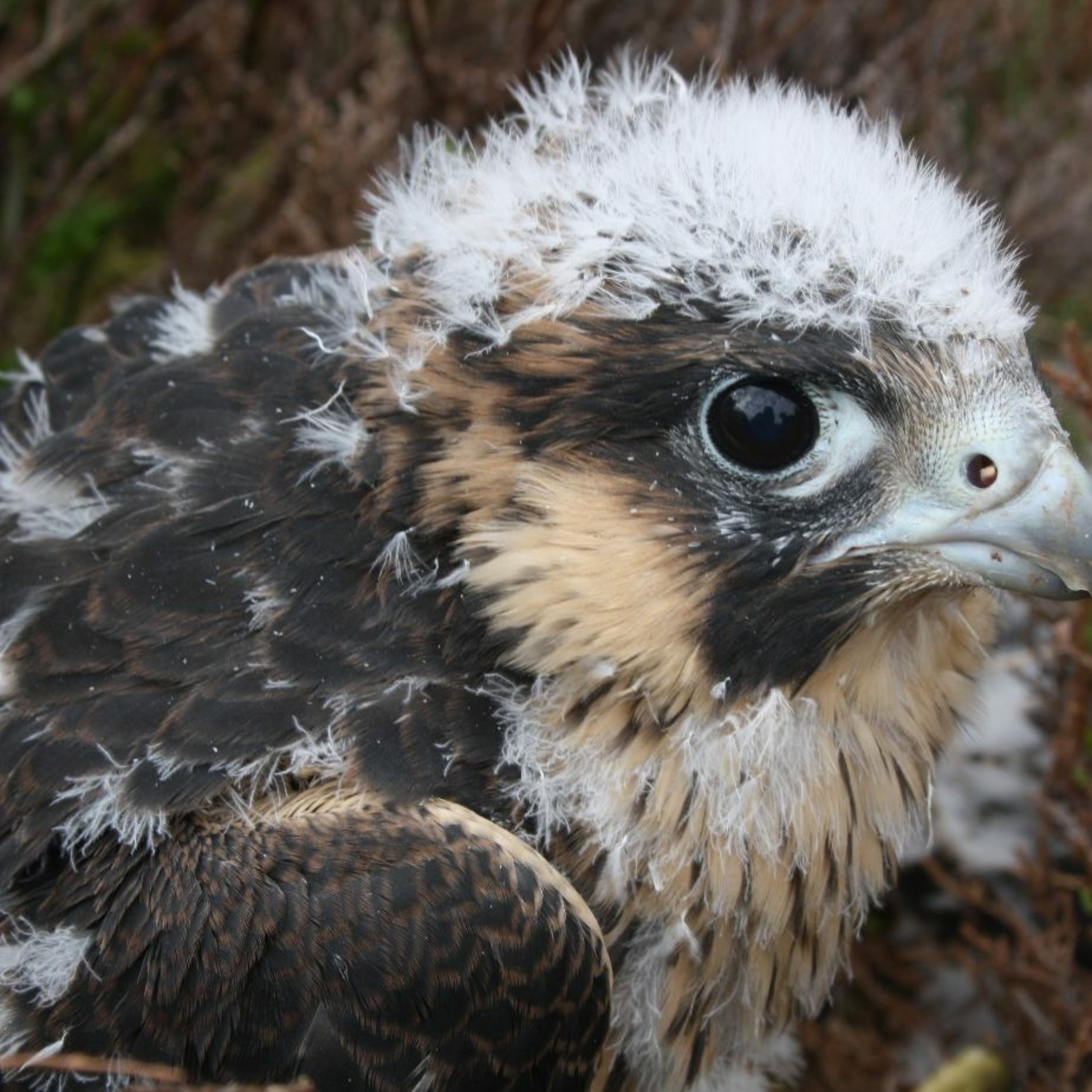
Reproductive Performance of Peregrine Falcons in southern Scotland
An analysis of 75 years of Peregrine Falcon monitoring data shows that performance increased substantially following the reduction in the use of organochlorine pesticides. Gradual recovery of the population occurred over four decades. Our results suggest that the temporal pattern of organochlorine pesticide use strongly influenced Peregrine reproductive parameters but that the pattern of influence differed regionally. Image Copyright M. McGrady

Black History Month 2023: Yoseph Araya on Nature, Role Models and Academia
For Black History Month 2023, the British Ecological Society is celebrating the work of Black ecologists around the world. In this first episode, Yoseph Araya joins Lydia Groves to discuss how we can encourage more people to experience nature, highlight role models and suggest what we can do to improve Black ecologists' experiences in academia. Yoseph is a Senior Lecturer at the Open University and Lydia is the Publishing Assistant for Journal of Applied Ecology. Check out all of the British Ecological Society's BHM 2023 blog posts and podcasts here: https://www.britishecologicalsociety.org/membership-community/black-history-month-2023/
A balanced spatial distribution of green areas creates healthier urban landscapes
Douglas Cirino, shortlisted for the Southwood Prize 2022, talks to Lydia Groves about his research article ‘Balanced spatial distribution of green areas creates healthier urban landscapes’ as well as what he's been up to since the prize nomination. Read the full article here: https://doi.org/10.1111/1365-2664.14195
The searchscape of fear: A global analysis of internet search trends for biophobias
In this podcast, Amelia Macho chats with Ricardo Correia - Assistant Professor at the Biodiversity Unit of the University of Turku - about his paper 'The searchscape of fear: A global analysis of internet search trends for biophobias'. This research was published in People and Nature in July 2023. It investigated Google search trends for biophobias between 2004 and 2022. Its findings, that 17 out of the 25 biophobias investigated increased in search prevalence worldwide, particularly in urban populations, suggest an increasing disconnectedness from nature, which has implications for perceptions towards biodiversity conservation. Read the article here: https://doi.org/10.1002/pan3.10497 Read the Plain Language Summary here: https://relationalthinkingblog.com/2023/06/14/plain-language-summary-internet-searches-reveal-the-prevalence-of-multiple-biophobias-across-the-world/ Hissing Cockroach sound clip from Pixabay
Sea-weeding: Manual removal of macroalgae facilitates rapid coral recovery
Hillary Smith joins Lydia Groves, publishing assistant for Journal of Applied Ecology, to discuss the research article ‘Sea-weeding: Manual removal of macroalgae facilitates rapid coral recovery’. Read the full article here: https://doi.org/10.1111/1365-2664.14502
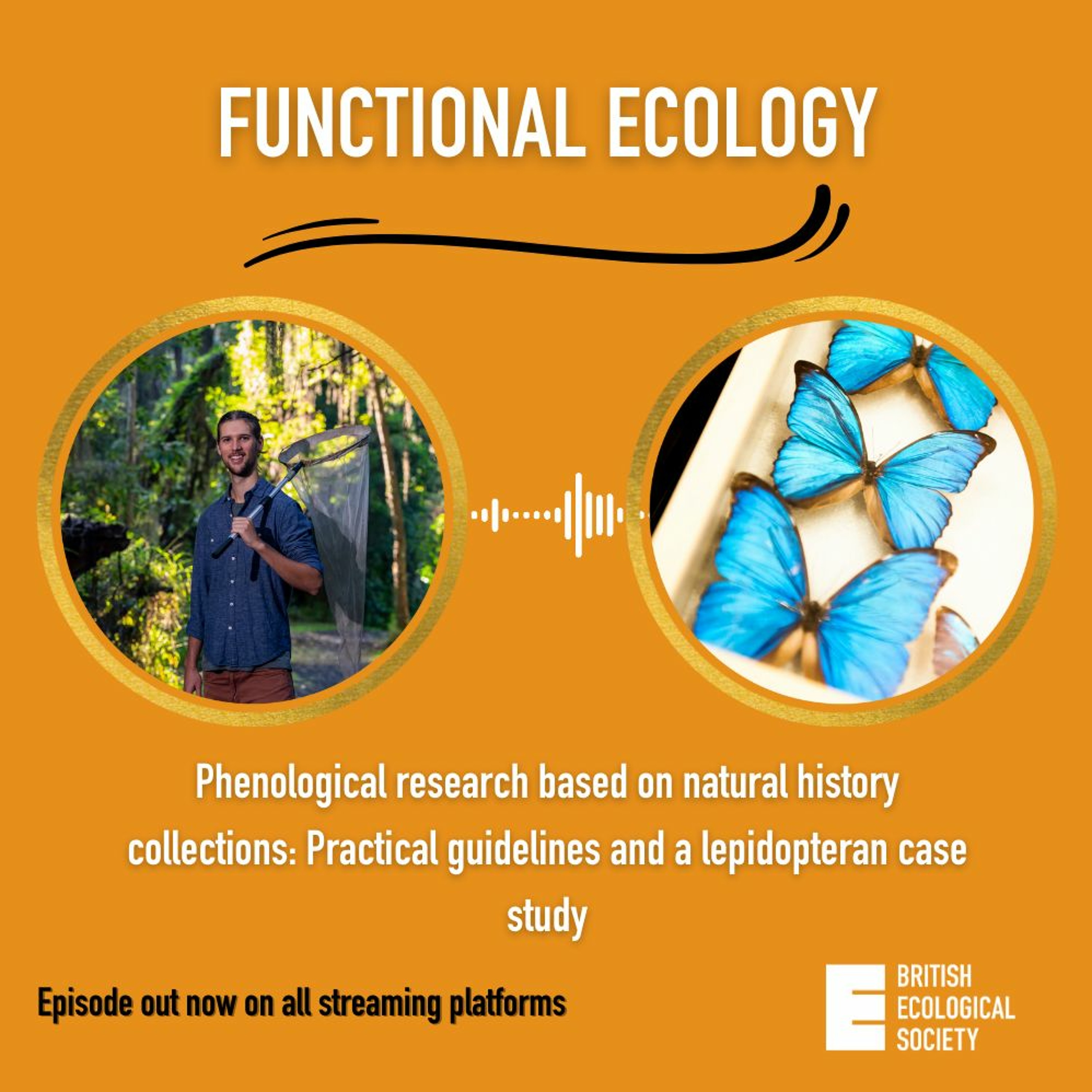
Guidelines for using NHCs to better understand how biological events are responding to global change
In this podcast, Frank Harris sits down with Michael Belitz—a Post-Doc at Michigan State University, USA—to discuss his recently published paper: Phenological research based on natural history collections: Practical guidelines and a lepidopteran case study. This paper featured in a Special Feature on Natural History Collections was published jointly in Functional Ecology, Journal of Animal Ecology, Journal of Ecology and Methods in Ecology and Evolution. Belitz et al. provide a set of best practice recommendations to utilize NHC data for phenology and showcase these practical guidelines through a case study that utilizes natural history collection data to test hypotheses about trends in when North American adult butterflies and moths are in flight. * Special Feature: https://besjournals.onlinelibrary.wiley.com/hub/leveraging_natural_history?= * Article: https://besjournals.onlinelibrary.wiley.com/doi/10.1111/1365-2435.14173 *PLS: https://fesummaries.wordpress.com/2022/09/06/guidelines-for-using-natural-history-collections-to-better-understand-how-seasonal-biological-events-are-responding-to-global-change/
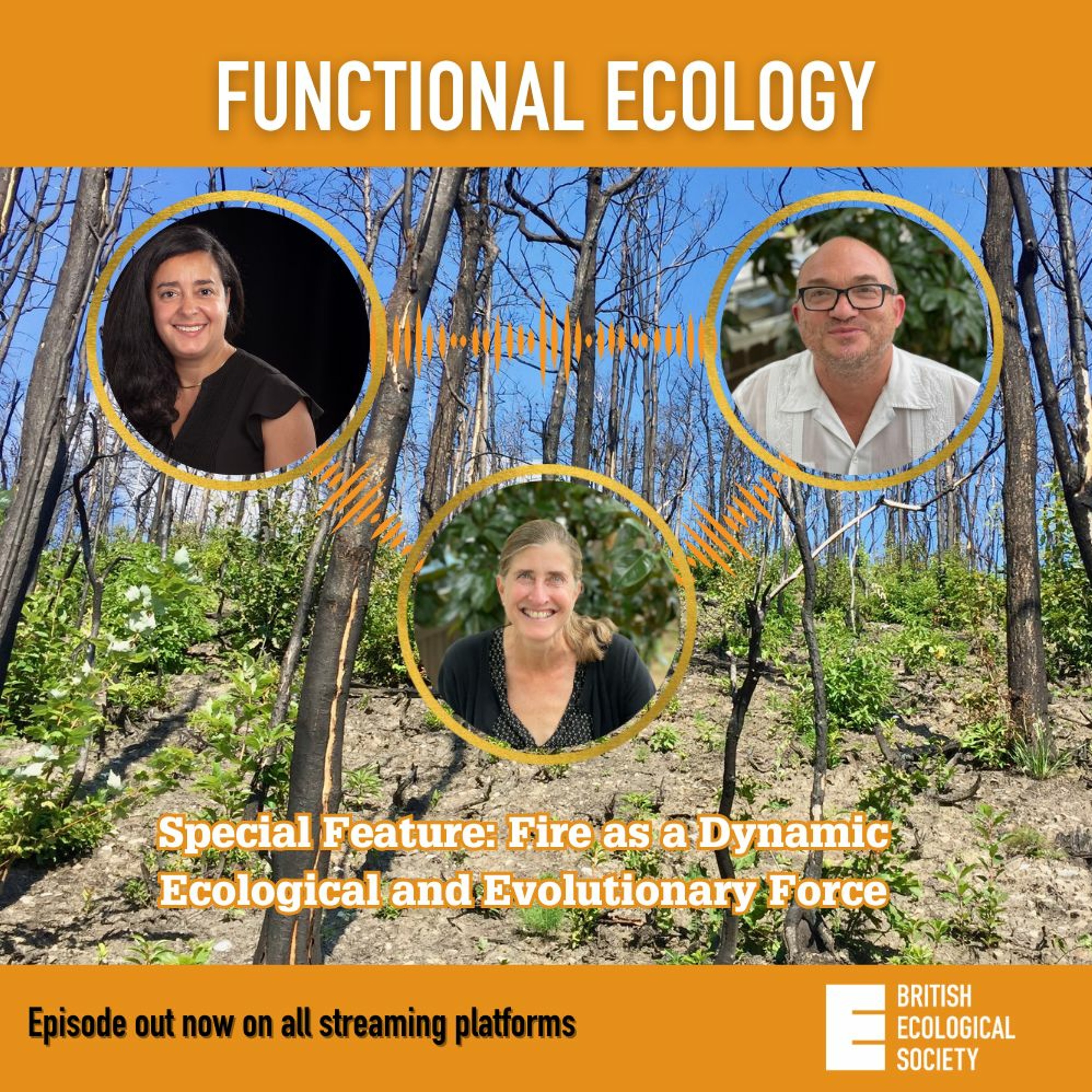
FE Special Feature: Fire as a dynamic ecological and evolutionary force
In this podcast for Functional Ecology, Assistant Editor, Frank Harris, sits down with Fernanda Santos, Joe Bailey, and Jen Schweitzer who guest edited the recently published Functional Ecology special feature titled "Fire as a dynamic ecological and evolutionary force." This collection of studies provide recommendations on how to: engage in developing ecological and evolutionary databases for fire ecology; integrate hierarchical genetic structure or phylogenetic structure; develop new experimental frameworks that limit context dependent outcomes,; increase sample size and availability of curated datasets; increase functional trait knowledge; and increase representation of ecological communities in the literature and context-dependency.
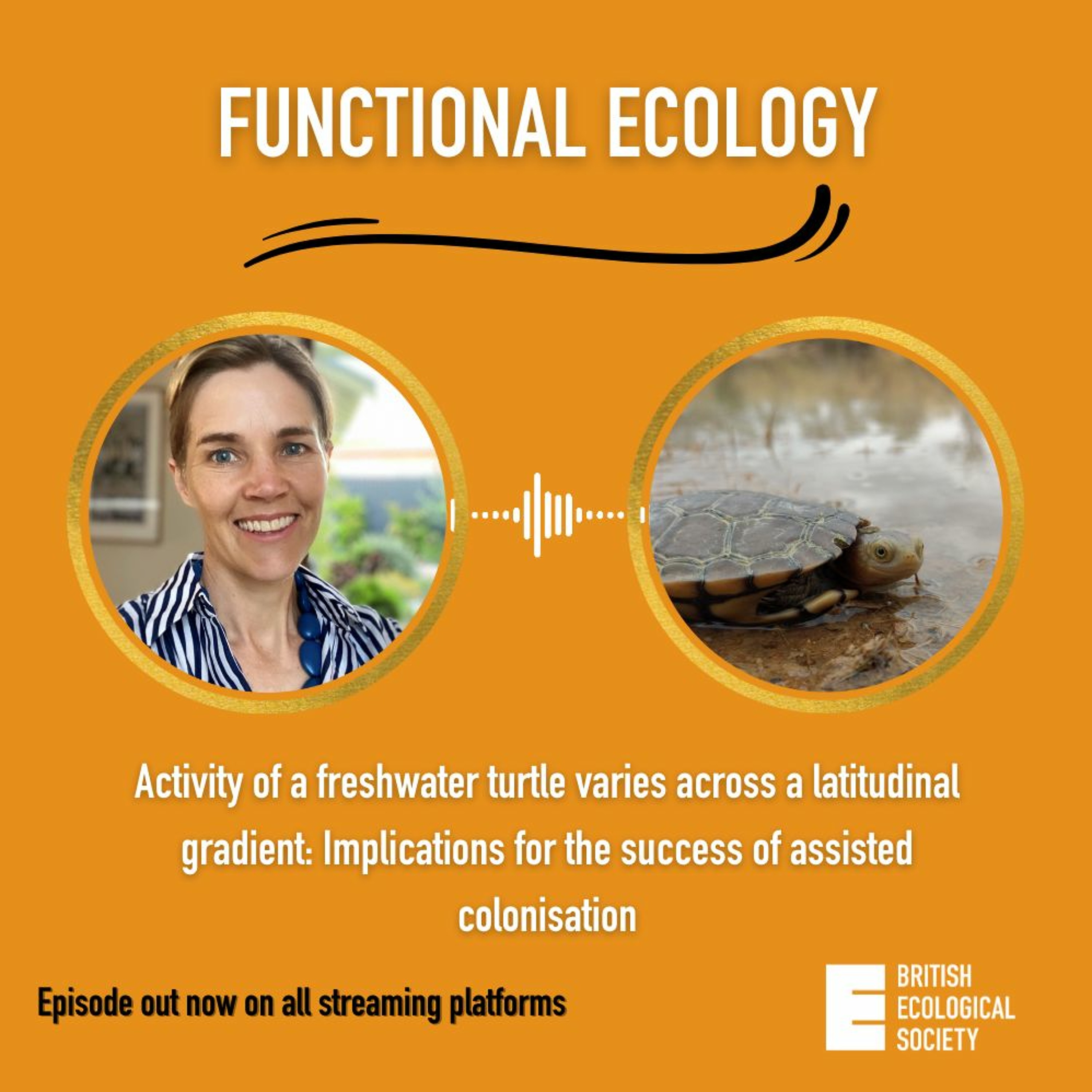
Seeking a ‘just right’ site for the Western Swamp Turtle
In this podcast, Frank Harris sits down with Nicki Mitchell—Associate Professor at the University of Western Australia, and Deputy Director at the UWA Oceans Institute—to discuss her recently published paper: Activity of a freshwater turtle varies across a latitudinal gradient: Implications for the success of assisted colonisation Nicki et al's results conclude that poor growth of turtles in the southern wetland was likely a result of lower body temperatures, stemming from a reduced ability to thermoregulate in water. Consequently, for assisted colonisation of juvenile P. umbrina to be successful, recipient wetlands must offer aquatic microclimates that are sufficiently warm to promote foraging activity that leads to growth, and ultimately to maturation. * Article: https://besjournals.onlinelibrary.wiley.com/doi/full/10.1111/1365-2435.14338 * PLS: https://fesummaries.wordpress.com/2023/05/15/seeking-a-just-right-site-for-the-western-swamp-turtle/
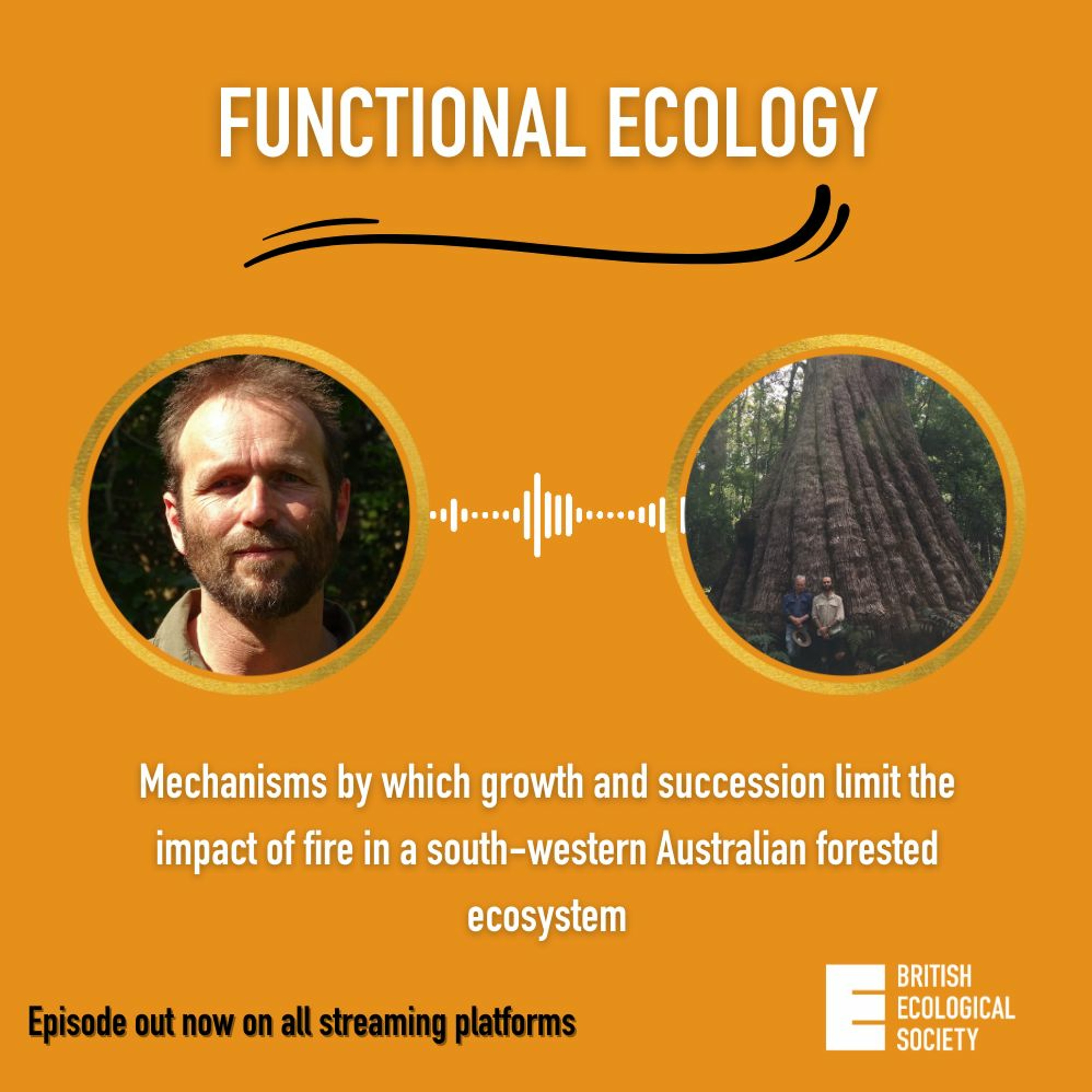
Forests that keep fires small, and how they do it
In this podcast for Functional Ecology, Assistant Editor, Frank Harris, sits down with Philip Zylstra—Adjunct Associate Professor at the School of Molecular and Life Sciences, Curtin University, Australia—to discuss his recently published paper: Mechanisms by which growth and succession limit the impact of fire in a south-western Australian forested ecosystem Philip’s paper shows that, left alone, Red Tingle forests burn with much smaller flames, store far more carbon, and provide safe habitat for the many species now threatened by frequent fire. Once we know such natural controls on fire, it is possible to work with and reinforce them. * Article: https://besjournals.onlinelibrary.wiley.com/doi/10.1111/1365-2435.14305 * Plain language summary: https://fesummaries.wordpress.com/2023/03/21/forests-that-keep-fires-small-and-how-they-do-it/
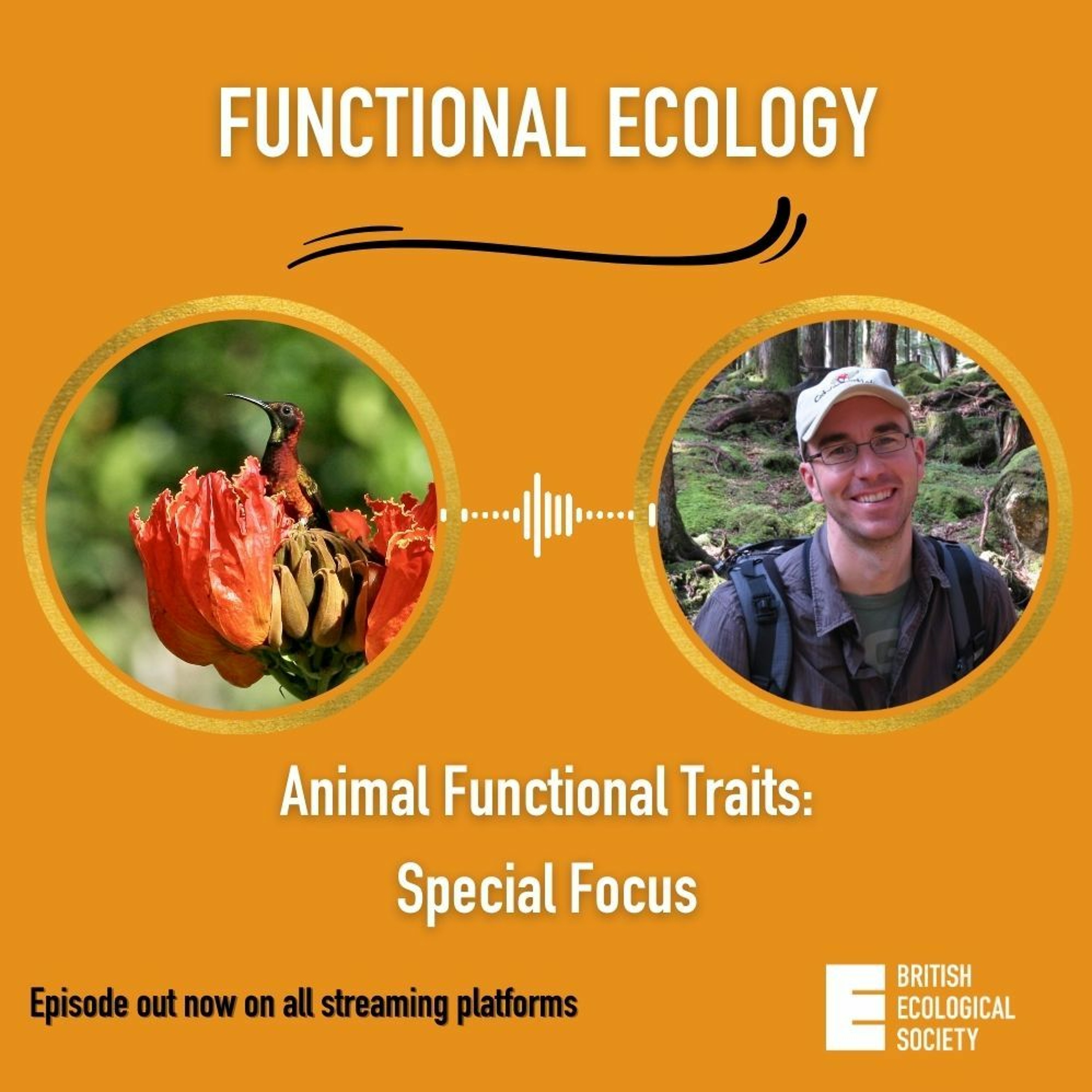
Animal Functional Traits: A Special Focus
In this podcast for Functional Ecology, Assistant Editor, Frank Harris, sits down with Matthias Schleuning—one of the three guest editors (also Joseph Tobias & Dani Garcia)—to discuss the recently published Special Focus titled, "Animal Functional Traits." This collection of studies shows how precise measurements of morphological or physiological traits can increase mechanistic understanding of community assembly across trophic levels, particularly of the mechanisms underpinning large-scale biodiversity patterns. Special Focus: https://besjournals.onlinelibrary.wiley.com/doi/toc/10.1111/(ISSN)1365-2435.animalfunctionaltraits Blogpost: https://functionalecologists.com/2023/01/05/animal-functional-traits-a-functional-ecology-special-focus/
Where to fish in the forest? Mangrove quality, fish and crustaceans
Mark Huxham joins Lydia Groves, publishing assistant for Journal of Applied Ecology, to discuss the research article 'Where to fish in the forest? Tree characteristics and contiguous seagrass features predict mangrove forest quality for fishes and crustaceans'. Read the full article here: https://doi.org/10.1111/1365-2664.14421
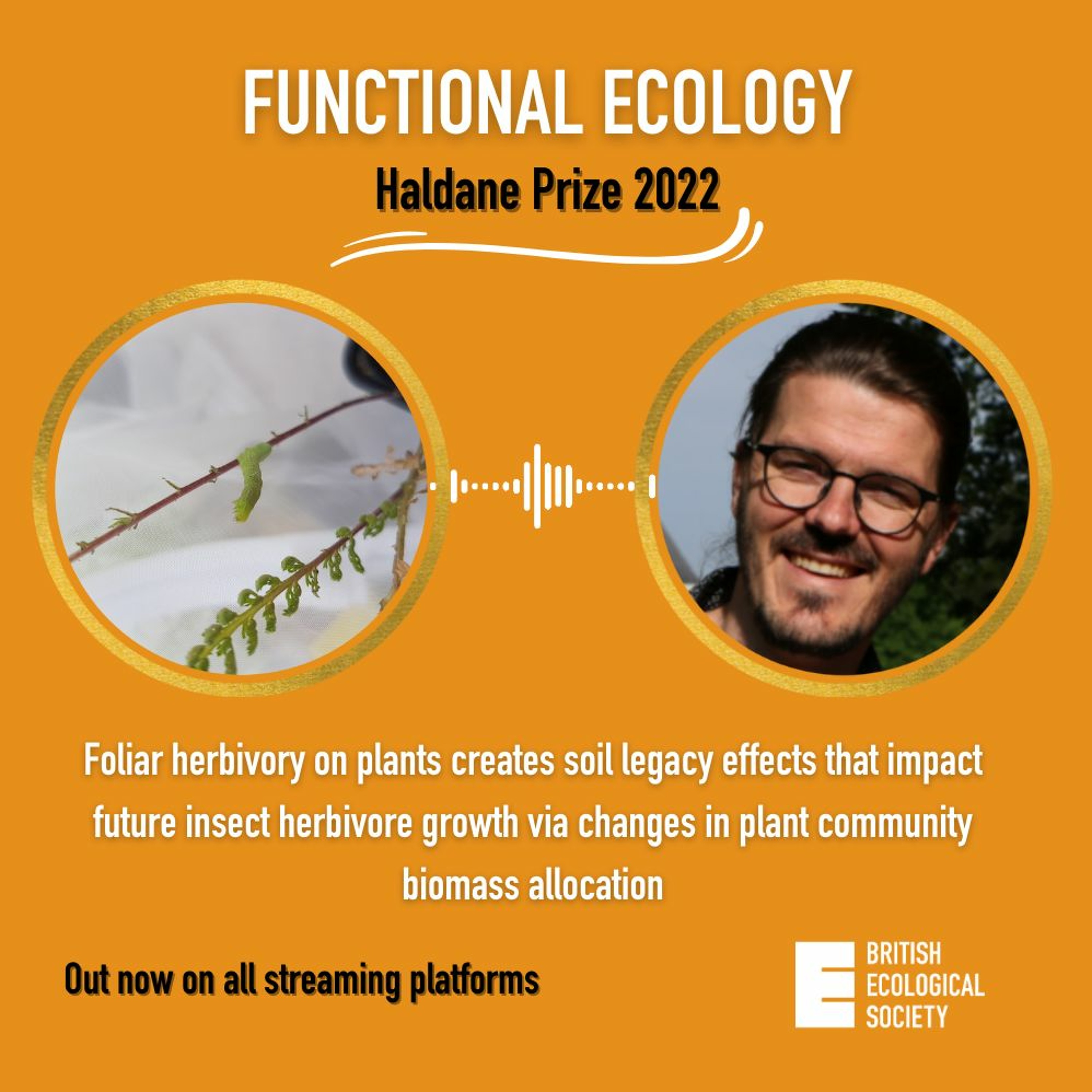
2022 nominee: Feeding from up to bottom—belowground herbivory impacts on plant-soil feedbacks
In this episode, Assistant Editor for Functional Ecology, Frank Harris, sits down with Robin Heinen who has been nominated for the 2022 Haldane Prize. This prize is awarded to the best research from an early career researcher. Robin has been nominated for her paper: Foliar herbivory on plants creates soil legacy effects that impact future insect herbivore growth via changes in plant community biomass allocation Paper: https://besjournals.onlinelibrary.wiley.com/doi/full/10.1111/1365-2435.14006 PLS: https://fesummaries.wordpress.com/2022/01/26/insect-feeding-leaves-a-detectable-footprint-in-the-soil-that-causes-plants-that-grow-in-it-to-hide-belowground/ Blogpost: https://functionalecologists.com/2022/03/01/robin-heinen-feeding-from-up-to-bottom-belowground-herbivory-impacts-on-plant-soil-feedbacks/
A conversation with Sarah Schwieger: Rewetting in peatlands
Sarah is the author of one of the shortlisted research articles for the Southwood Prize 2022, celebrating early career ecologists. Lydia Groves, publishing assistant for Journal of Applied Ecology, sits down with Sarah Schwieger to discuss the research article 'Rewetting prolongs root growing season in minerotrophic peatlands and mitigates negative drought effects'. Find the full article here: https://doi.org/10.1111/1365-2664.14222
A conversation with Paula Prist: Yellow fever virus dispersion
Paula is the author of one of the shortlisted research articles for the Southwood Prize 2022, celebrating early career ecologists. Lydia Groves, publishing assistant for Journal of Applied Ecology, sits down with Paula Prist to discuss the research article 'Roads and forest edges facilitate yellow fever virus dispersion'. Find the full article here: https://doi.org/10.1111/1365-2664.14031
2022 Haldane Prize nominee: Transgenerational behavioral plasticity in Chlamydomonas reinhardtii
In this episode, Assistant Editor for Functional Ecology, Frank Harris, sits down with Hannah Meier who has been nominated for the 2022 Haldane Prize. This prize is awarded to the best research from an early career researcher. Hannah has been nominated for her paper: Temperature-mediated transgenerational plasticity influences movement behaviour in the green algae Chlamydomonas reinhardtii Paper: https://besjournals.onlinelibrary.wiley.com/doi/full/10.1111/1365-2435.14214 Plain language Summary: https://fesummaries.wordpress.com/2022/11/07/the-effects-of-temperature-can-influence-the-movement-of-green-algae-individuals-across-multiple-generations/ English Blogpost: https://functionalecologists.com/2023/01/24/hannah-meier-transgenerational-behavioral-plasticity-in-chlamydomonas-reinhardtii/ German Blogpost: https://functionalecologists.com/2023/01/24/hannah-meier-transgenerational-behavioral-plasticity-in-chlamydomonas-reinhardtii-german-translation/
A conversation with Liz Koziol: Manipulating plant microbiomes in the field
Liz is the author of one of the shortlisted research articles for the Southwood Prize 2022, celebrating early career ecologists. Lydia Groves, publishing assistant for Journal of Applied Ecology, sits down with Liz Koziol to discuss the research article 'Manipulating plant microbiomes in the field: Native mycorrhizae advance plant succession and improve native plant restoration'. Find the full article here: https://doi.org/10.1111/1365-2664.14036
The Mechanisms and Consequences of Infection-Induced Phenotypes: cross-journal SF
In this podcast for Functional Ecology, Assistant Editor, Frank Harris, sits down with Lauren Nadler and Sandra Binning—two of the four guest editors (also Shelley Adamo & Dana Hawley)—to discuss the recently published cross-journal (with Journal of Animal Ecology) Special Feature titled, The Mechanisms and Consequences of Infection-Induced Phenotypes. This special feature highlights recent insights into the ways parasites alter host phenotypes across a range of systems. Here, we contextualize how each contribution expands our knowledge of the role of parasites in driving individual variation in animal phenotypes. Special Feature: https://besjournals.onlinelibrary.wiley.com/doi/toc/10.1111/(ISSN)1365-2435.infection-induced-phenotypes Editorial: https://besjournals.onlinelibrary.wiley.com/doi/10.1111/1365-2435.14309 Transcript: https://functionalecologists.com/2023/04/12/the-mechanisms-and-consequences-of-infection-induced-phenotypes-podcast-transcript/
Connections Matter: How Patterns of Habitat Connectivity Affect Population Dynamics
In conversation with Paulina Arancibia, one of our shortlisted candidates for the 2023 Elton Prize with Journal of Animal Ecology.
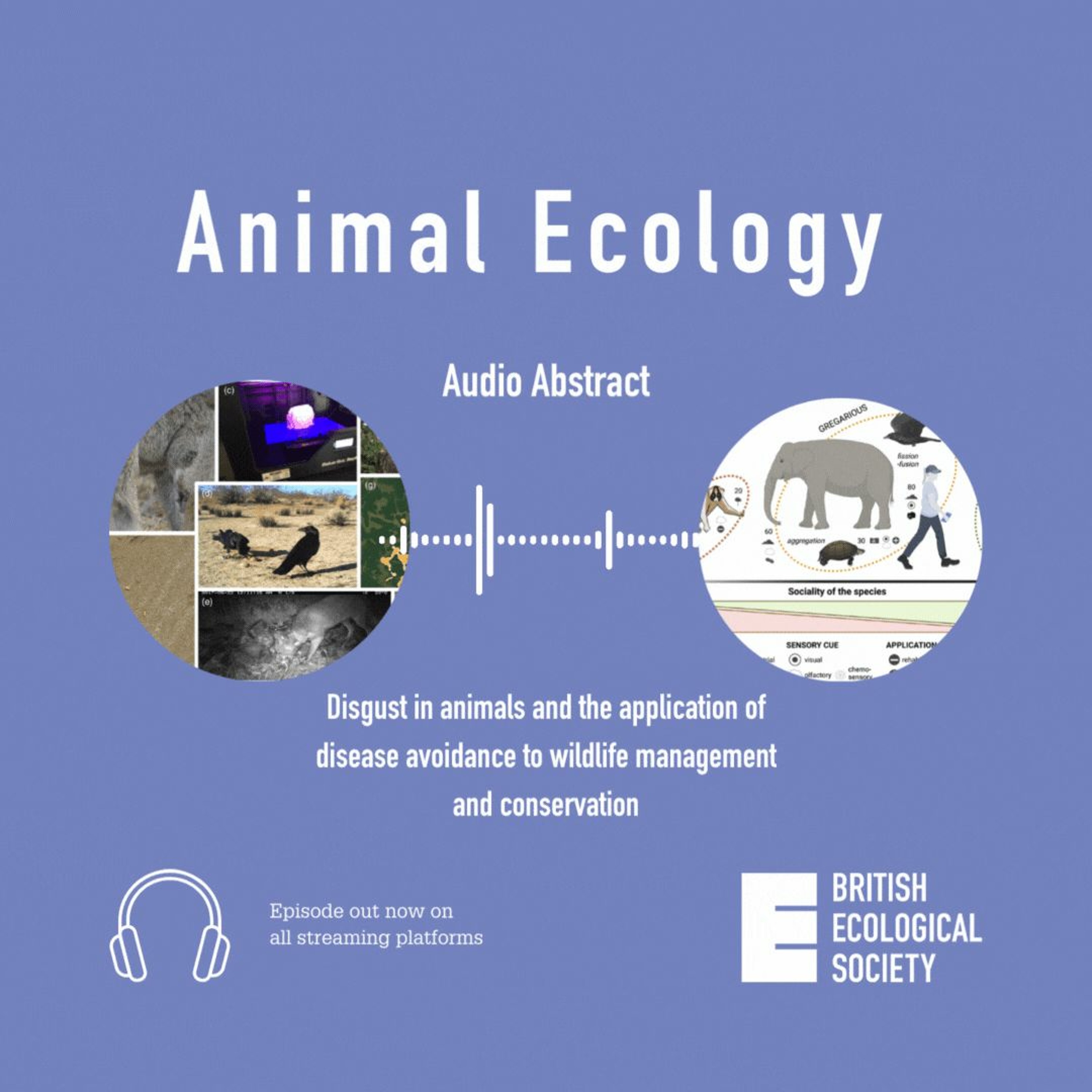
Disgust in animals and the application of disease avoidance to wildlife management and conservation
Audio Abstract for recently published research paper: Disgust in animals and the application of disease avoidance to wildlife management and conservation. Article: https://doi.org/10.1111/1365-2656.13903
French Translation - Disgust in animals audio abstract
Audio Abstract - French Translation for recently published research paper Disgust in animals and the application of disease avoidance to wildlife management and conservation. Article: https://doi.org/10.1111/1365-2656.13903
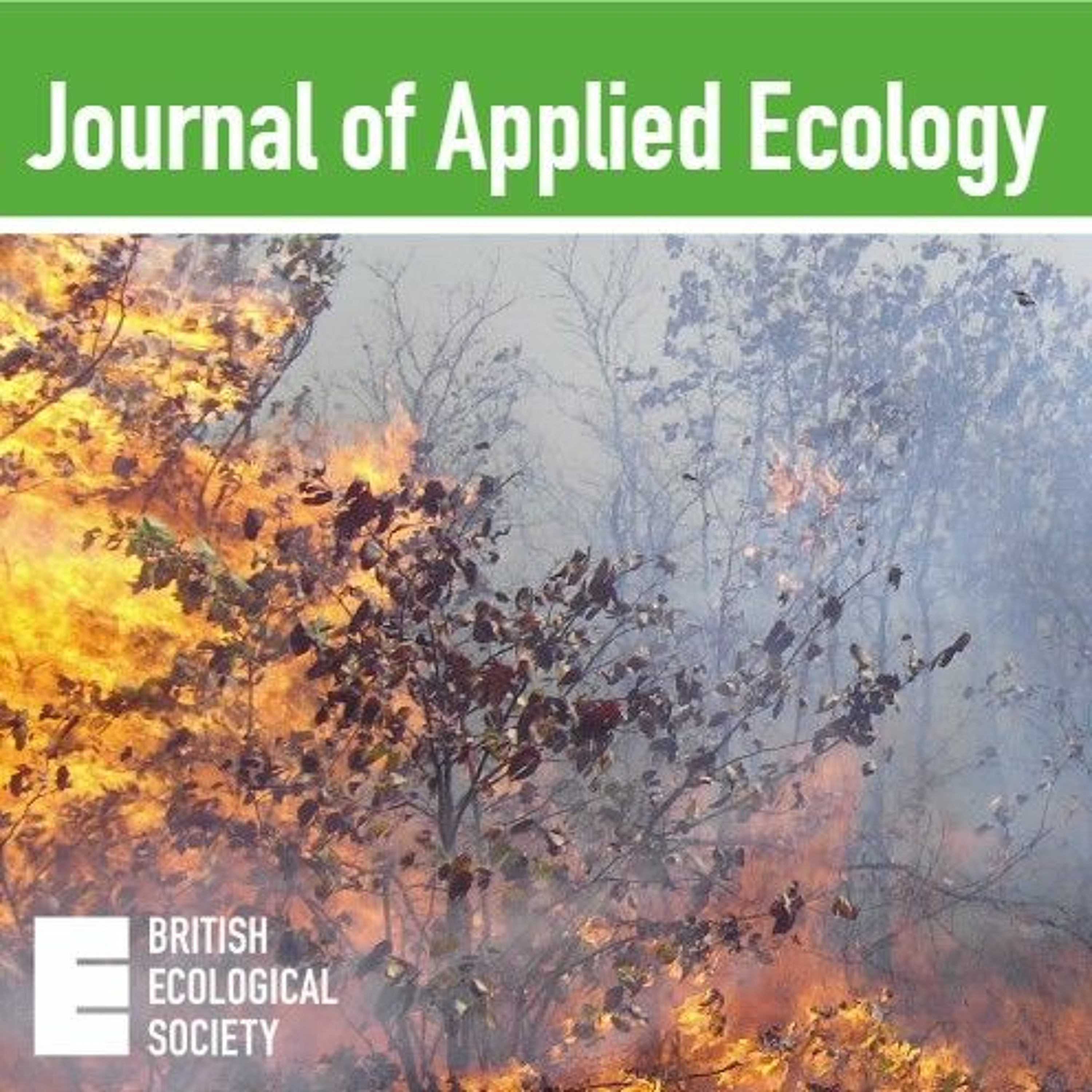
The effect of high-intensity fires on woody plant encroachment in an African savanna
In this podcast episode for Journal of Applied Ecology, Publishing Assistant Lydia Groves, is joined by Tercia Strydom, Izak Smit and Brian van Wilgen to discuss their newly published research article entitled 'High-intensity fires may have limited medium-term effectiveness for reversing woody plant encroachment in an African savanna'. Article: https://doi.org/10.1111/1365-2664.14362
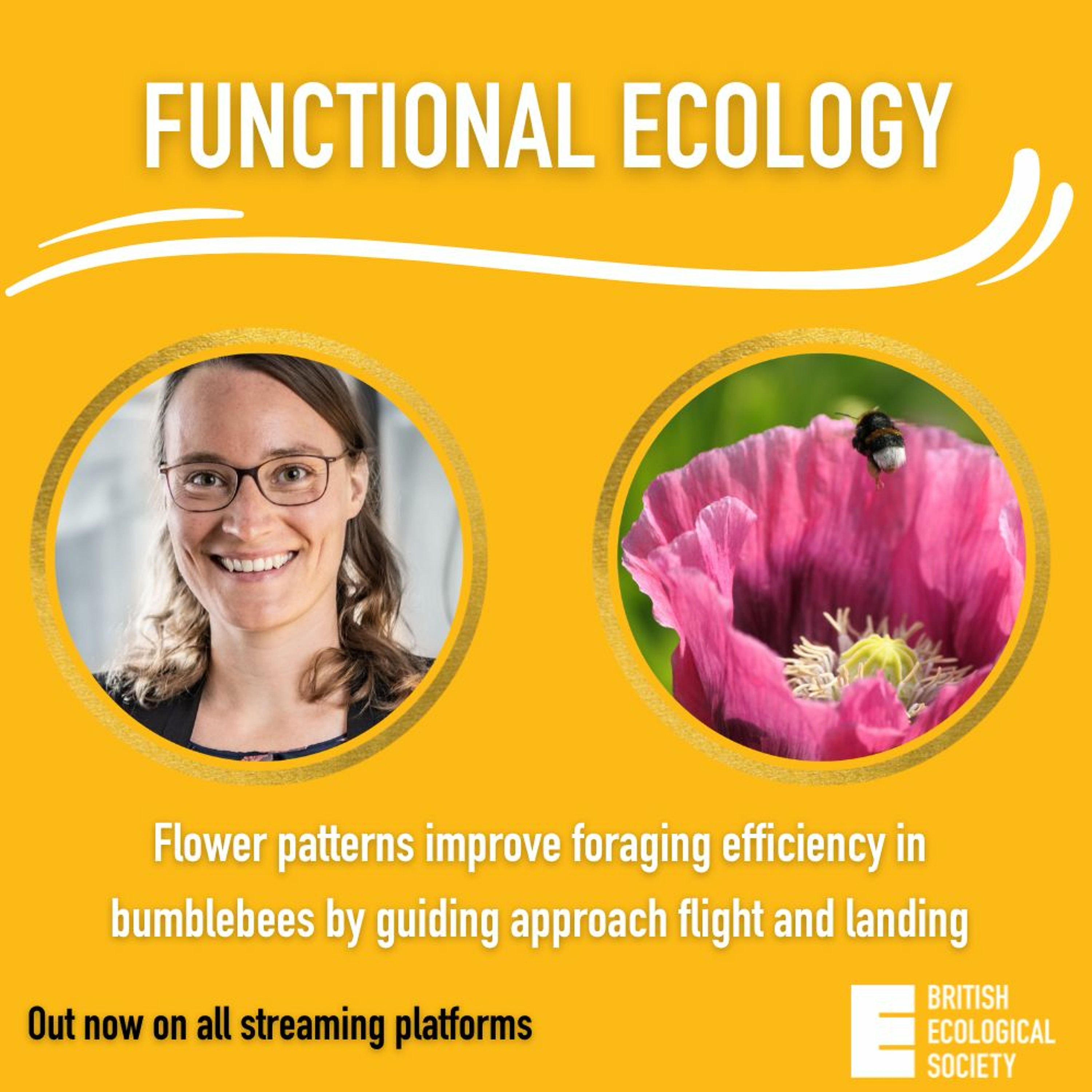
Flower patterns improve foraging efficiency in bumblebees by guiding approach flight and landing
In this podcast for Functional Ecology, Assistant Editor, Frank Harris, sits down with Anna Stöckl—a Group Leader at Konstanz University, Germany—to discuss her recently published paper: Flower patterns improve foraging efficiency in bumblebees by guiding approach flight and landing Anna’s paper shows that flower patterns reduced flower handling time by up to 30%, without a reduction in nectar discovery time. Instead, the patterns were involved in guiding approach flight, landing and departure decisions. Anna et al. revealed these effects on flower-experienced foragers. Since these represent the majority of active pollinators, the nectary-independent impact of flower patterns must be considered fundamental to plant–pollinator interactions under natural conditions. * Article: https://besjournals.onlinelibrary.wiley.com/doi/full/10.1111/1365-2435.14262 * Plain language summary: https://fesummaries.wordpress.com/2023/01/10/flower-patterns-improve-foraging-efficiency-in-bumblebees-by-guiding-approach-flight-and-landing/ * Transcript: https://functionalecologists.com/2023/03/30/flower-patterns-improve-foraging-efficiency-in-bumblebees-by-guiding-approach-flight-and-landing-podcast-transcript/
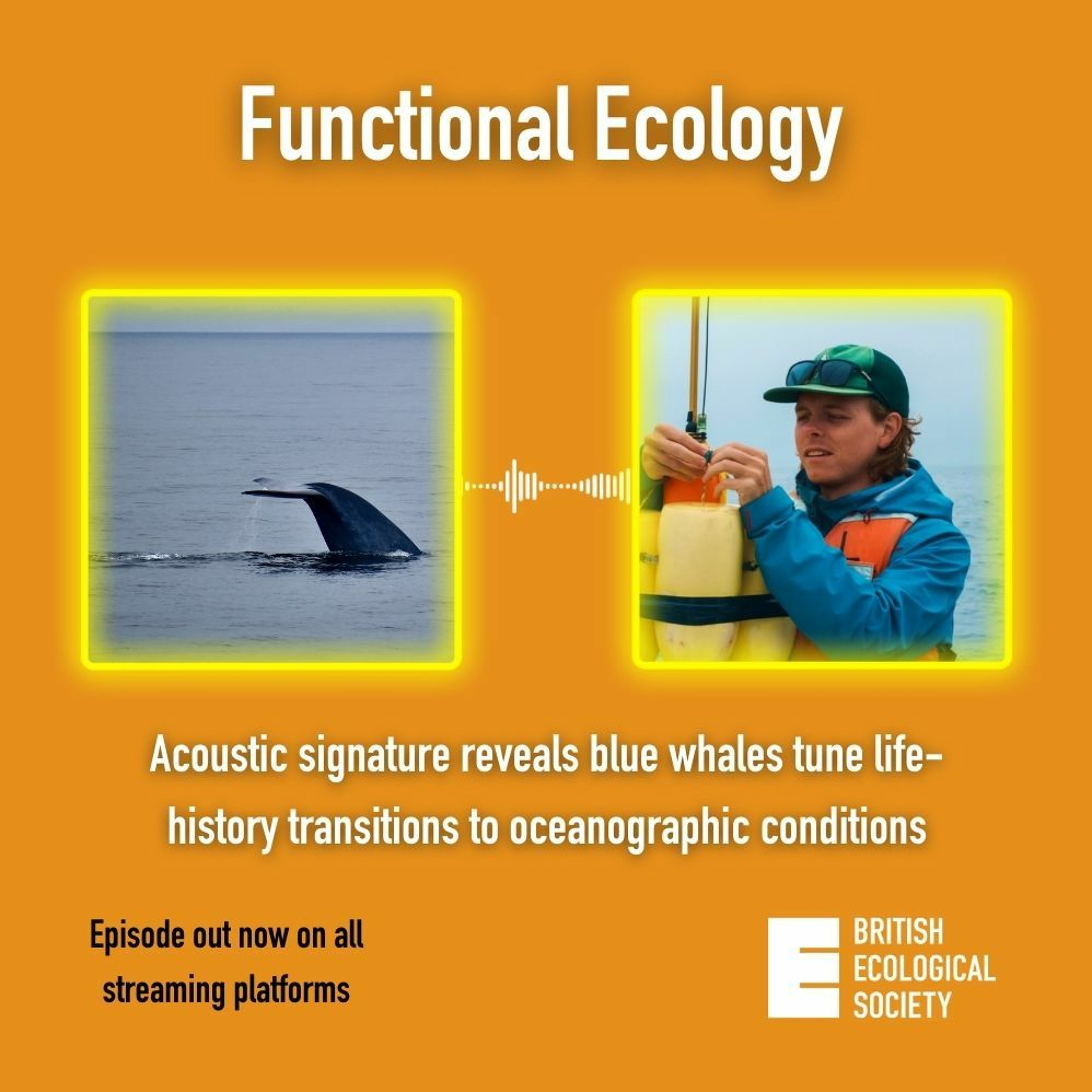
Acoustic signature reveals blue whales tune life-history transitions to oceanographic conditions
In this podcast for Functional Ecology, Assistant Editor, Frank Harris, sits down with William K. Oestreich—a postdoctoral fellow at Monterey Bay Aquarium Research Institute, USA—to discuss his recently published paper ‘Acoustic signature reveals blue whales tune life history transitions to oceanographic conditions’. Will’s paper suggests that blue whales use flexible cues, perhaps including individual sensing of food availability and social information from other individuals (blue whale songs are audible over hundreds of kilometres) to match timing of feeding and migration with ecosystem processes. This flexibility could be key to survival of this endangered population in an era of rapid global change Article: https://besjournals.onlinelibrary.wiley.com/doi/10.1111/1365-2435.14013 Plain language summary: https://fesummaries.wordpress.com/2022/02/02/blue-whales-flexibly-time-feeding-and-migration-to-match-ocean-conditions/ Transcript: https://functionalecologists.com/2023/03/15/acoustic-signature-reveals-blue-whales-tune-life-history-transitions-to-oceanographic-conditions-podcast-transcript/
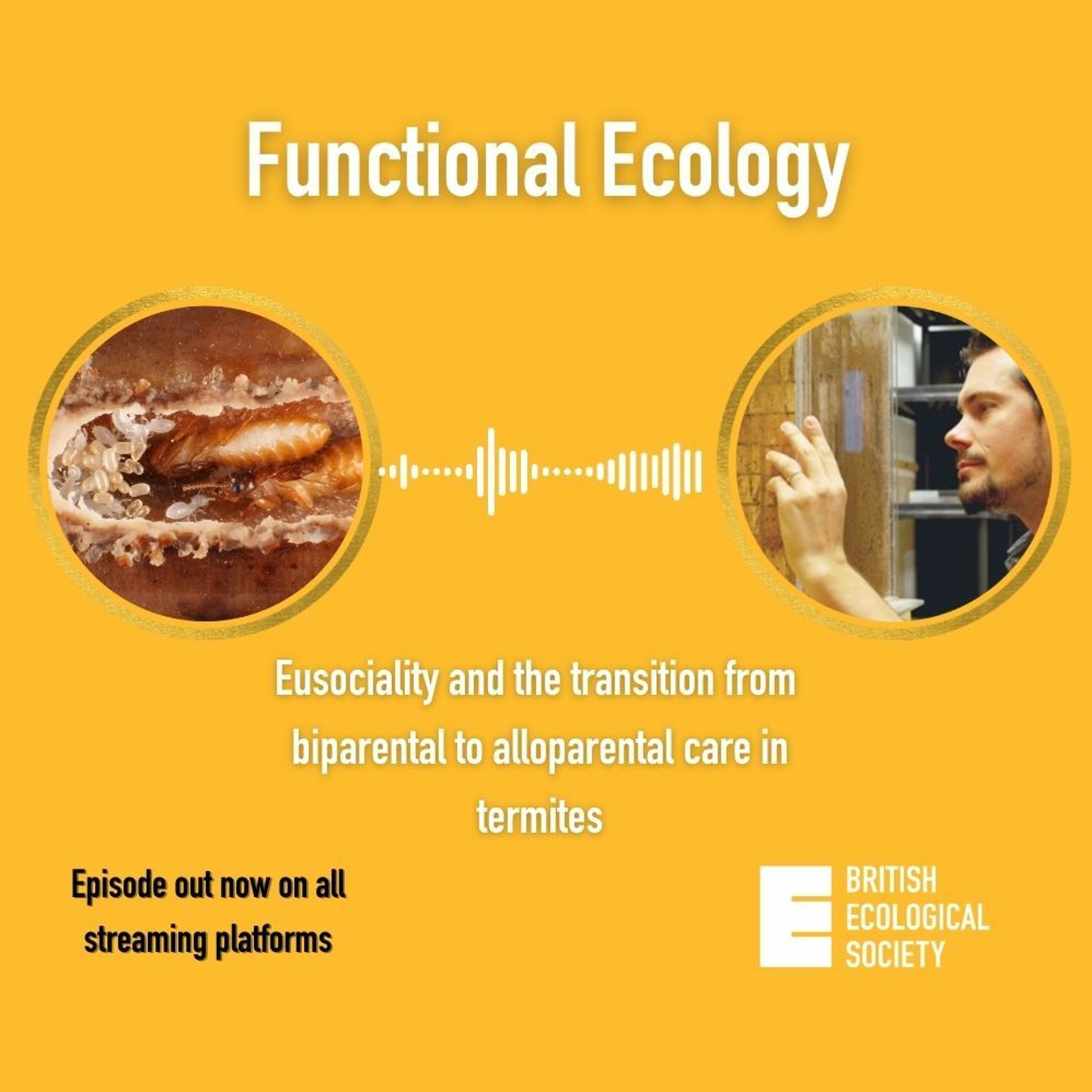
Eusociality and the transition from biparental to alloparental care in termites
In this podcast for Functional Ecology, Assistant Editor, Frank Harris, sits down with Thomas Chouvenc—Assistant Professor at the University of Florida—to discuss his recently published paper ‘Eusociality and the transition from biparental to alloparental care in termites.' Thomas’ paper shows that, in eusocial insects, colony foundation is a critical bottleneck, where the founding individuals must engage in a temporary (but obligatory) parental care phase that may ultimately reflect on the family unit conditions of their sub-social ancestors. Article: https://besjournals.onlinelibrary.wiley.com/doi/10.1111/1365-2435.14183 Podcast Transcript: https://functionalecologists.com/2023/03/01/eusociality-and-the-transition-from-biparental-to-alloparental-care-in-termites-podcast-transcript/ PLS: https://fesummaries.wordpress.com/2022/09/20/parental-care-behaviors-shifted-from-parents-to-offspring-in-social-insects/
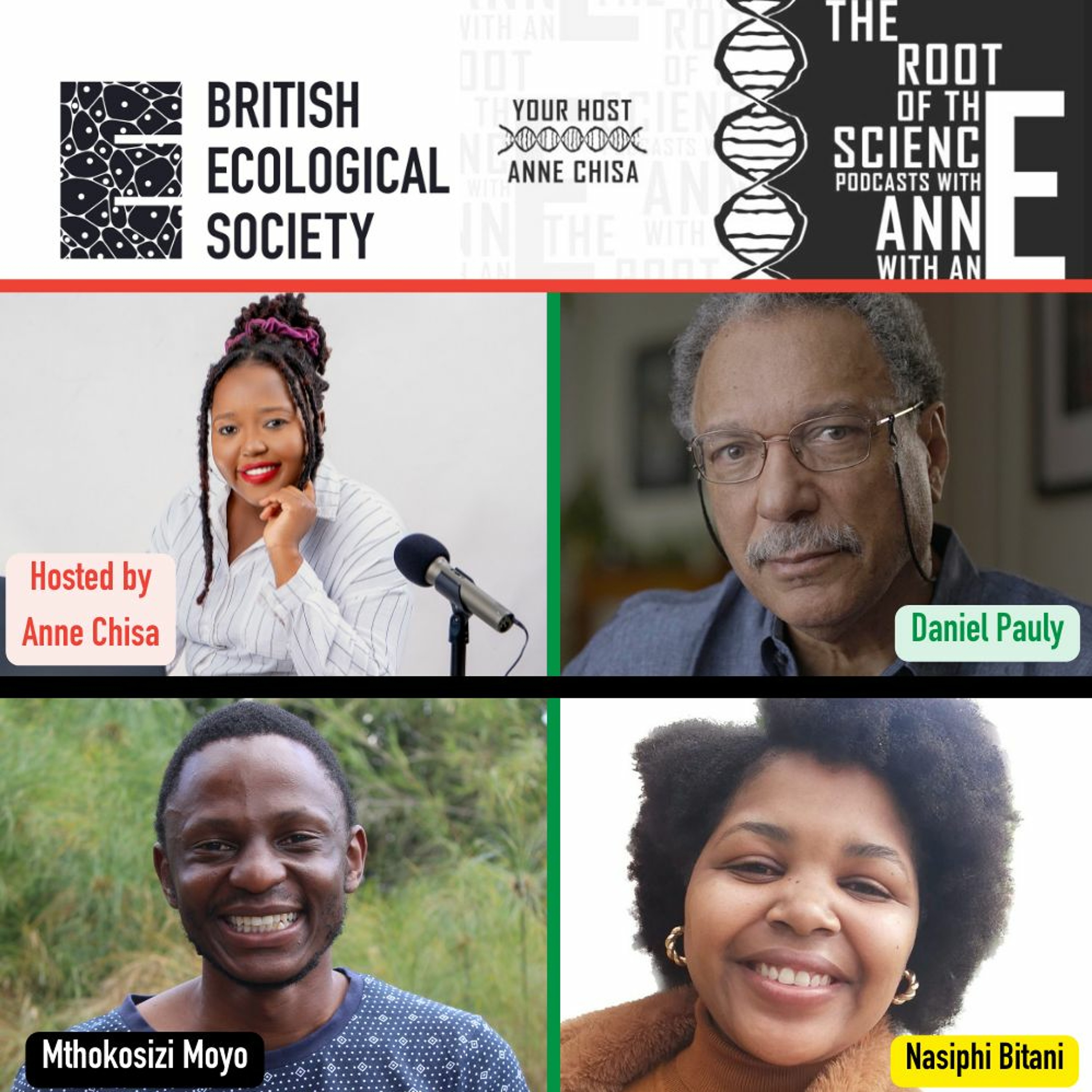
BES Collaborates with The Root Of The Science Podcast for a special BHM 2022 panel discussion
For Black History Month, the British Ecological Society (BES) journals are celebrating the work of Black ecologists from around the world and sharing their stories. The theme for UK Black History Month this year is Time for Change: Action Not Words. In this very special podcast episode, British Ecological Society Journals podcast is collaborating with Anne Chisa, host of The Root Of The Science Podcast, to produce a panel discussion for Black History Month 2022! Do follow their Twitter account and support Anne however you can! In this podcast, we discuss the journeys of our guests, talk through the challenges that black ecologists (and scientists) face, and look at actions that can be taken to foster a more diverse and inclusive academic landscape. A transcript of this podcast is available here: https://functionalecologists.com/2022/11/07/bes-collaborates-with-the-root-of-the-science-podcast-for-a-special-panel-discussion-with-daniel-pauly-nasiphi-bitani-and-mthokosizi-moyo-for-bhm-2022 Check out all of the British Ecological Society's BHM 2022 blogposts here: https://www.britishecologicalsociety.org/black-history-month-2022/
BHM 2022: Sandra Klemet-N'Guessan - How to cultivate a more equitable and diverse landscape
For Black History Month, the British Ecological Society (BES) journals are celebrating the work of Black ecologists from around the world and sharing their stories. The theme for UK Black History Month this year is Time for Change: Action Not Words. Sandra is a PhD candidate in the Xenopoulos Aquatic Ecology Lab, Canada. In this podcast, we sit down to discuss being an 'aFISHionado', growing up as a global citizen of the world, the need to explore and consider the great ecological research coming out of the African continent, and how to go about creating a fairer and more diverse ecosystem in ecology and academia. A transcript of this recording is available here: https://functionalecologists.com/2022/10/24/sandra-klemet-nguessan-discusses-how-to-cultivate-a-more-equitable-and-diverse-landscape-in-ecology-and-academia-with-frank-harris-podcast-transcript Check out Sandra's website to stay up-to-date with her journey and research: https://sandraklemetnguessan.wordpress.com/ Check out all of the British Ecological Society's BHM 2022 blogposts here: https://www.britishecologicalsociety.org/black-history-month-2022/
MEEin3: The Movebank system for studying global animal movement and demography
The latest Methods in Ecology and Evolution brought to you in 3 minutes… more or less! In this episode we interview Roland Kays about his recent publication 'The Movebank system for studying global animal movement and demography'. Read the full article here: https://besjournals.onlinelibrary.wiley.com/doi/full/10.1111/2041-210X.13767 You can also check out Roland's podcast 'Wild Animals' for crazy stories about animals by the people who study them. For more exclusive content check out the MEE blog and social media. Music: “You’re no help” by Silent Partner (CC BY-SA 3.0).
MEEin3: Identifying latent behavioral states in animal movement
The latest Methods in Ecology and Evolution brought to you in 3 minutes… more or less! In this episode we interview Dr Josh Cullen about their recent publication titled "Identifying latent behavioral states in animal movement with M4, a non-parametric Bayesian method". Read the full article here: https://besjournals.onlinelibrary.wiley.com/doi/full/10.1111/2041-210X.13745 For more exclusive content check out the MEE blog and social media. Music: “You’re no help” by Silent Partner (CC BY-SA 3.0).
MEEin3: Adapting a turkey fryer to manipulate water temperature
The latest Methods in Ecology and Evolution brought to you in 3 minutes… more or less! In this episode we interview Cassandra Konecny and Graham Brownlee about their recent publication titled “Adapting a propane turkey fryer to manipulate temperature in aquatic environments”. Read the full article here: https://besjournals.onlinelibrary.wiley.com/doi/full/10.1111/2041-210X.13662 For more exclusive content check out the MEE blog and social media. Music: “You’re no help” by Silent Partner (CC BY-SA 3.0).
MEEin3: A standardisation framework for bio-logging data
The latest Methods in Ecology and Evolution brought to you in 3 minutes… more or less! In this episode we interview Dr Ana Sequeira about their recent publication titled “A standardisation framework for bio-logging data to advance ecological research and conservation”. You can read the full article here: https://besjournals.onlinelibrary.wiley.com/doi/full/10.1111/2041-210X.13593 For more exclusive content check out the MEE blog and social media. Music: “You’re no help” by Silent Partner (CC BY-SA 3.0).
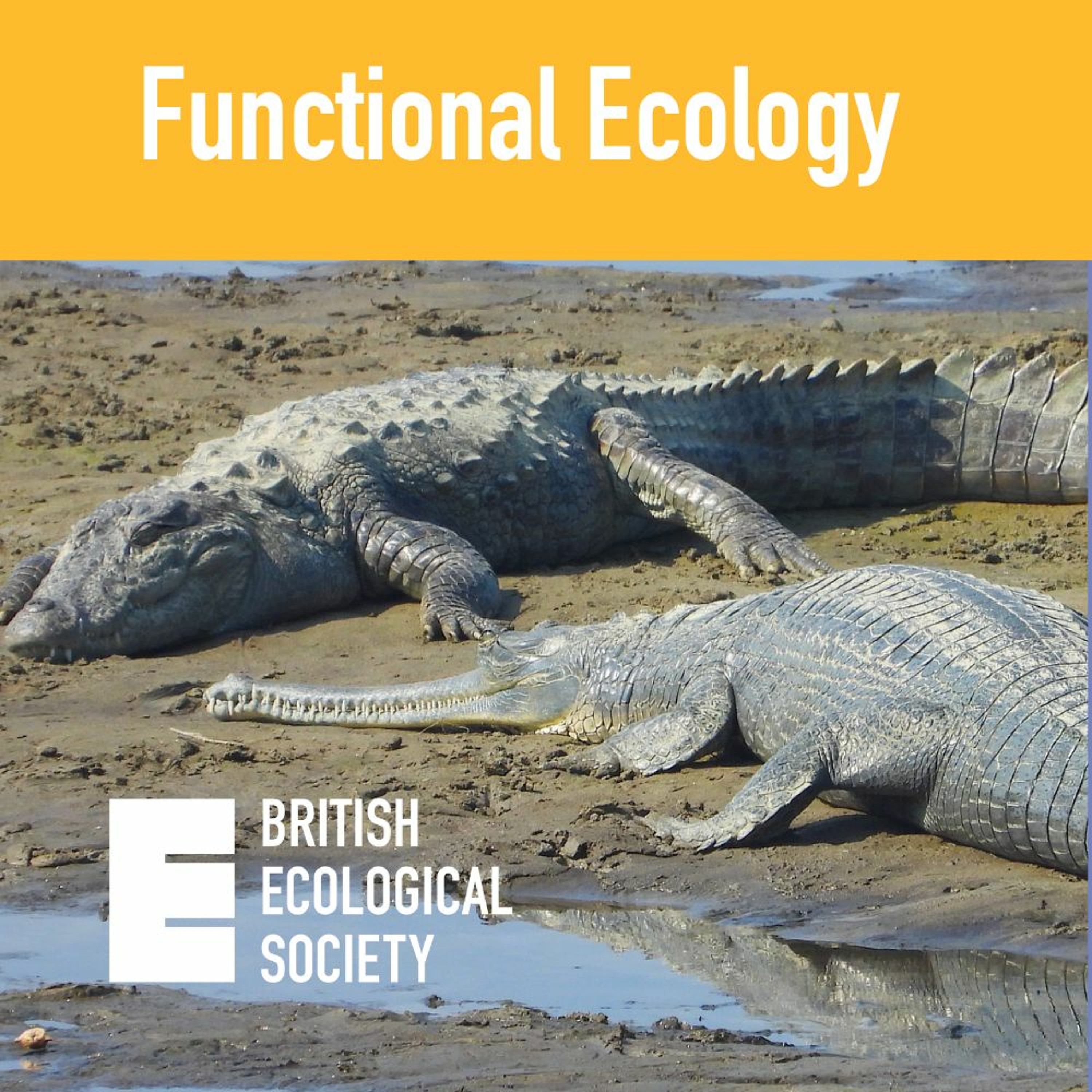
Using functional traits to identify conservation priorities for the world's crocodylians
In this podcast for Functional Ecology, Assistant Editor, Frank Harris, sits down with Phoebe Griffith—a researcher from the Institute of Zoology, London, and the Wildlife Conservation Research Unit, Oxford University—to discuss her recently published paper ‘Using functional traits to identify conservation priorities for the world's crocodylians.’ To understand better the functional diversity of crocodylians, Griffiths et al. collected a database of functional traits of all species of crocodylians. These traits are measurable qualities – such as skull shape or saltwater tolerance – that allow us to understand the different ecological role of species, and how similar and different species are from one another. Read the paper here: https://besjournals.onlinelibrary.wiley.com/doi/full/10.1111/1365-2435.14140 For those that are hard of hearing, a transcript of the interview is available here: https://fesummaries.wordpress.com/2022/08/05/conserving-the-ecological-diversity-of-crocodylians/ Check out Phoebe's Edge of Existence blogpost for some great pictures and content: https://www.edgeofexistence.org/blog/crying-crocodile-tears-the-disappearing-diversity-of-crocodilians-and-their-ecological-roles/ To find out about and support ongoing croc conservation efforts, please do check out the following links: 1. https://www.edgeofexistence.org/fellow/jailabdeen-a/ 2. https://www.edgeofexistence.org/fellow/emmanuel-amoah/ Crocodylians have surprisingly diverse ecological roles, from the huge, highly aquatic and mostly fish-eating gharial to the tiny African dwarf crocodiles which can catch prey on land below the rainforest canopy. Sadly, over half of all crocodylians are threatened with extinction. If these threatened species go extinct, we will lose the diversity of ecological roles that they represent. Functional diversity is an important aspect of biodiversity to understand and conserve.
MEEin3 Pilot: Preserving benthic arthropods for DNA metabarcoding
Listen to MEEin3 to hear the latest methods in ecology and evolution in just three minutes...more or less! In this episode, find out about Dr Chloe Robinson's method 'Propylene glycol-based antifreeze is an effective preservative for DNA metabarcoding of benthic arthropods' https://www.journals.uchicago.edu/doi/full/10.1086/712232
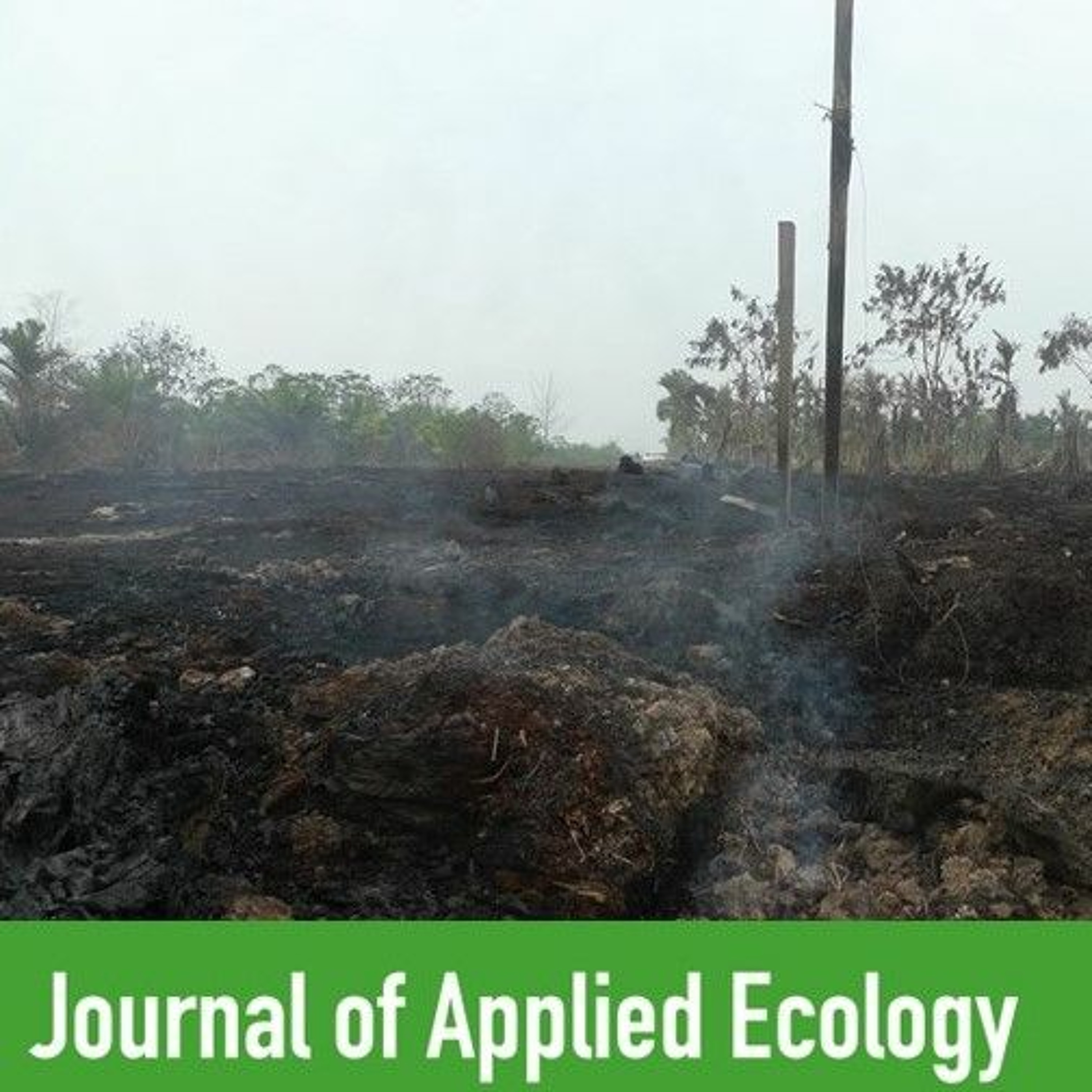
Tree species that live slow, die older enhance tropical peat swamp restoration
Associate Editor Sharif Mukul and Stuart W. Smith discuss this month's Editor’s Choice paper.
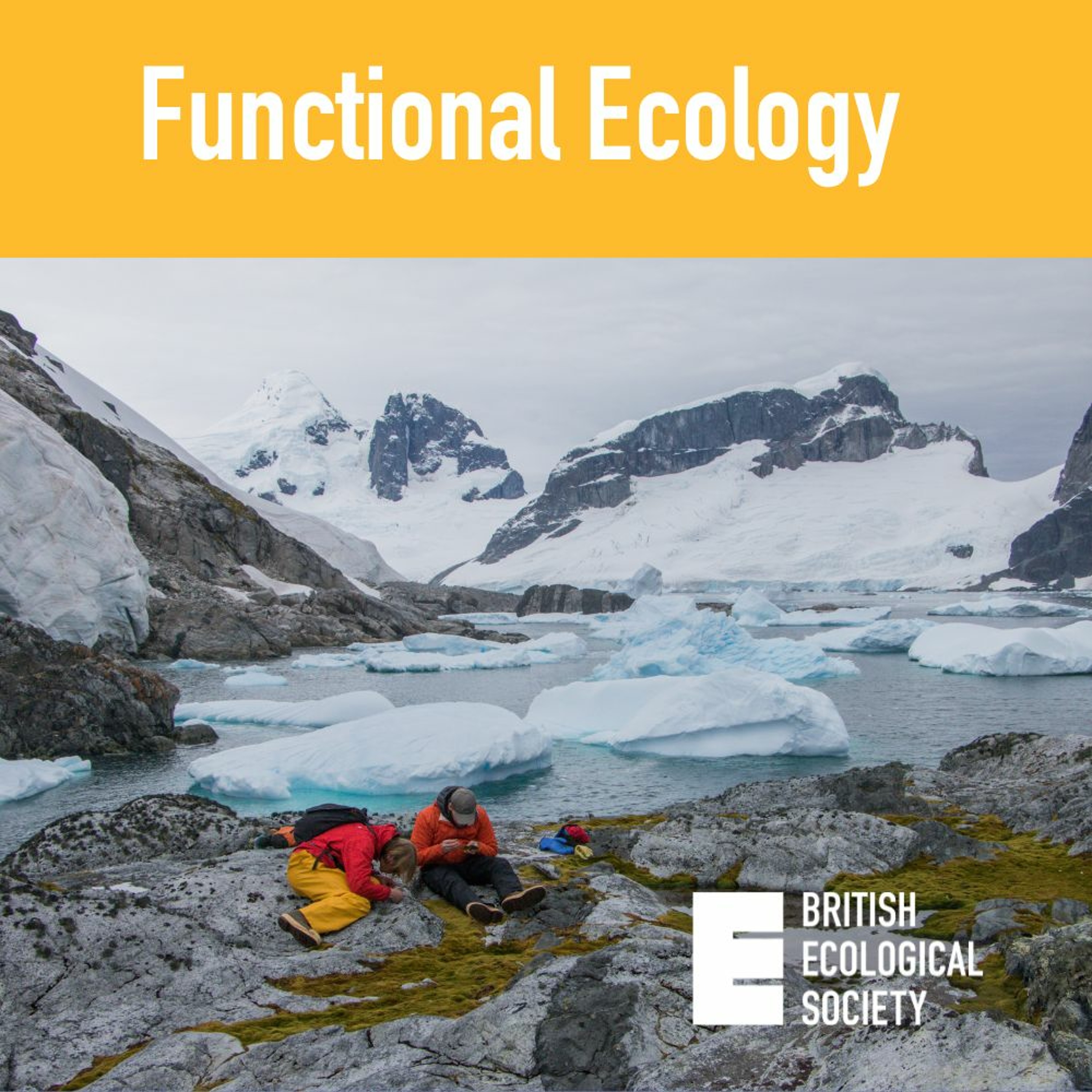
Simulated winter warming negatively impacts survival of Antarctica’s only endemic insect
In this podcast for Functional Ecology, Assistant Editor, Frank Harris, sits down with Jack J. Devlin—an early career researcher from the University of Kentucky—to discuss his recently published paper ‘Simulated winter warming negatively impacts survival of Antarctica's only endemic insect.’ Read the paper here: https://besjournals.onlinelibrary.wiley.com/doi/10.1111/1365-2435.14089 Read a transcript of this interview here: https://functionalecologists.com/2022/07/12/simulated-winter-warming-negatively-impacts-survival-of-antarcticas-only-endemic-insect-podcast-transcript/ A plain language summary of this study is available here: https://fesummaries.wordpress.com/2022/05/20/simulated-winter-warming-negatively-impacts-survival-of-antarcticas-only-endemic-insect/ Antarctic winters are challenging for terrestrial invertebrates, and species that live there have specialised adaptations to conserve energy and protect against cold injury in the winter. However, rapidly occurring climate change in these regions will increase the unpredictability of winter conditions, and there is currently a dearth of knowledge on how the highly adapted invertebrates of Antarctica will respond to changes in winter temperatures. With warmer winters expected to become more common with climate change, this study’s results indicate that winter warming could negatively impact cold-adapted insects like the Antarctic midge (Belgica antarctica). At the time of writing, this research is “in the top 5% of all research outputs ever tracked by Altmetric”.