Diverse Thinking Different Learning
270 episodes — Page 2 of 6

Ep. 219: Understanding Dysgraphia: Signs, Strategies, and Support for Struggling Writers with Natasha Gray
This week, we discuss the complexities of dysgraphia, a neurodevelopmental disorder that can greatly affect written expression. We are joined by Natasha Gray, founder of Spark Learning in the Caribbean. We unpack dysgraphia and what it is and highlight its varied types and how it often overlaps with other challenges such as ADHD and dyslexia. Natasha explains the different ways that dysgraphia can manifest and discusses some of the warning signs such as illegible handwriting, avoidance of writing tasks, and challenges with spelling and spacing. Natasha also shares her insights into the neurological and motor components behind these struggles, and she highlights why it's important to understand each child's individual needs. Our conversation offers strategies and advice for parents and educators to support children with dysgraphia, with Natasha discussing the role of occupational therapy in developing fine motor skills and classroom accommodations such as typing out assignments and providing extra time for written tasks. We tackle common challenges, such as how to address fatigue and pain caused by writing, and Natasha offers some ways to build on patience and understanding in educational environments. If you're a parent, teacher, or someone eager to learn about supporting neurodivergent children, this episode is filled with expert advice, actionable strategies, and a compassionate approach to navigating dysgraphia! Show Notes: [2:59] - Dysgraphia varies widely and affects writing speed, expression, and presentation differently in each child. [4:44] - Natasha addresses dyslexic dysgraphia which impacts spelling, handwriting, and articulation despite strong verbal skills. [7:11] - Lexical dysgraphia in older children and adults stems from weak mental visualization of words. [8:43] - Writing difficulties in dysgraphia include poor spacing and dexterity, requiring customized accommodations. [11:46] - Dysgraphia often co-occurs with dyslexia, sharing sound-symbol association and written expression challenges. [12:58] - Natasha explains how children with dysgraphia often avoid writing and require patience, support, and therapy from teachers and parents. [15:30] - Natasha highlights the importance of improving children's fine motor skills in order to improve their handwriting. [17:05] - Natasha uses techniques such as practicing letter formation, strengthening exercises, and spacing tools to improve writing skills. [19:46] - Older children and adults can benefit from functional handwriting tasks, multisensory techniques, and assistive technology. [22:17] - Assistive tools and accommodations can help individuals demonstrate knowledge despite writing challenges. [24:53] - Natasha asserts that writing simple notes or emails helps adults improve skills, confidence, and vocabulary. [26:38] - Practicing low-pressure writing builds important skills for students and supports struggling adults in workplaces. [29:05] - Natasha stresses the need for teachers to have empathy and to intervene with custom solutions. Links and Related Resources: Episode 39: Why Fine Motor Skills Matter with Jennifer Morgan Episode 175: How to Support Students Who Struggle with Writing with Shanna Trombetta Coping with Executive Function Deficits in the Context of Writing Connect with Us: Get on our Email List Book a Consultation Get Support and Connect with a ChildNEXUS Provider Register for Our Self-Paced Mini Courses: Support for Parents Who Have Children with ADHD, Anxiety, or Dyslexia Connect with Natasha: Spark Learning's Website Spark Learning's Instagram Page Natasha C. Gray M.Ed., B.Sc., Dip.Ed., Cert.(Dyslexia) Board Certified Cognitive Specialist BPS Test User No. 398326 Spark Learning Suite #3 Gertz Plaza Upper Collymore Rock St. Michael Barbados Phone:1-246-825-8697 Email: [email protected]

Ep. 218: Understanding IEPs and 504 Plans: Which One Is Right for Your Child? - Marisol Chianello
In this episode, we had a wonderful conversation with Marisol Chianello, TIGER Director at Learning Rights Law Center where she empowers parents of children in special education through the "Know Your Rights" program. With a legal career that began in 2005, Marisol has worked with many nonprofits advocating for marginalized groups, and she also currently serves as the President of the Rotary Club of Mental Health and Wellness. Marisol joins us for this episode to help us break down the differences between IEPs (Individualized Education Plans) and 504 plans, two essential tools that help children with disabilities receive the support they need in school. She explains how a 504 plan ensures students with disabilities receive necessary accommodations like providing Braille for blind students or access to elevators for those with mobility issues. An IEP, however, provides more specialized educational services, such as speech therapy or learning support, intended to help children make academic progress. Our conversation also explores how different disabilities (ranging from ADHD to learning disorders like dyslexia) might align with either plan and what steps parents should take if they believe that their child might need extra support. Marisol also delves into the legal safeguards that come with IEPs, empowering parents to advocate for their children's needs in IEP meetings. With practical advice on how to request an IEP, prepare for meetings, and ensure that children receive the required assessments, this episode is a must-listen for parents who want to navigate the educational system with confidence! Show Notes: [2:42] - Marisol explains the difference between a 504 plan and an IEP. [5:37] - It's common for parents to misunderstand the IEP and 504 plan, associating certain conditions with each. [8:35] - Marisol encourages parents to trust their instincts, communicate concerns with the school, and collaborate to determine the best action plan. [10:18] - A good starting point is to request an IEP in writing, outlining concerns, and carefully reviewing the assessment plan. [13:02] - Marisol reiterates that schools must assess students suspected of disabilities, while IEPs address all school-related challenges. [16:45] - An IEP or 504 plan is necessary when a child's ability to function in school is impacted. [17:51] - Marisol points out how IEPs offer more protections for parents, including consent and participation. [20:49] - It's common for parents to be unaware of their involvement in IEPs and the rights they have. [21:23] - Marisol argues that parents are equal team members in IEP meetings and should confidently speak up for their child. [23:05] - Marisol recommends reviewing records and assessments before the IEP meeting. [26:21] - IEPs should also highlight a child's strengths! [29:33] - Parents can request assessments in a child's second language, especially for bilingual or immersion students. [30:30] - Marisol adds that the assessment should be in the child's primary language as determined by an appropriate assessment. [32:17] - Don't allow fear or stigma to prevent you from seeking help; early intervention greatly benefits the child's progress! [34:42] - The TIGER program empowers parents through education and community. Links and Related Resources: Learning Rights Law Center Learning Rights Law Center - TIGER Program Learning Rights Law Center - Education Rights Clinic How to Initiate a Special Education Assessment Navigating Parent-Teacher Conferences with Neurodivergent Kids: Tips and Questions Episode 217: Assessing Learning Differences in Bilingual Students & Students in Dual Language Programs with Dr. Vindia Fernandez Connect with Us: Get on our Email List Book a Consultation Get Support and Connect with a ChildNEXUS Provider Register for Our Self-Paced Mini Courses: Support for Parents Who Have Children with ADHD, Anxiety, or Dyslexia
Ep. 217: Assessing Learning Differences in Bilingual Students & Students in Dual Language Programs with Dr. Vindia Fernandez
Joining us for this episode of the podcast is Dr. Vindia Fernandez, who has been on the show before back in episode 3. Dr. Fernandez earned her Ph.D. in clinical psychology from the University of Houston and completed her APA-accredited internship and fellowship at UCLA, specializing in neurodevelopmental issues like autism, ADHD, and learning disabilities. As founder of the Center for Pediatric Neuropsychology and director at UCLA's Cultural Neuropsychology Program, her focus is on culturally appropriate evaluations for Latino/a children and teaching social skills to neurodiverse youth. Dr. Fernandez discusses how bilingualism in children is often misunderstood and that it's usually good for cognitive development. She also elaborates upon some red flags when it comes to identifying possible learning disabilities such as dyslexia and how her procedures differ depending on whether or not the bilingual child is in an English-only classroom or if the child is in a dual language immersion program. She reflects on some of her frustrations around how bilingual children are assessed and what she hopes to see change in the future. While we have certainly seen great strides and progress in this area, there is still much work to do, such as honoring heritage languages, increasing integration, and identifying problems earlier. Dr. Fernandez is a wealth of knowledge on this topic, and her passion truly shines through. Show Notes: [2:40] - Assessing bilingual children is a true passion for Dr. Fernandez. [3:44] - She feels that bilingualism in children is often misunderstood. [5:22] - Learning another language is incredibly dynamic and complex and is different for every child. [7:06] - Vindia reflects on a recent change of more children engaged in dual language immersion programs. [9:55] - What red flags should be paid attention to that don't tend to be problems with monolingual children? [13:11] - Vindia explains why her procedures differ depending on whether the bilingual child is in a dual language immersion program. [15:46] - Vindia explains why assessments might need to be done in both of a child's languages. [18:07] - What role do language disorders play in bilingual children? [21:28] - We ultimately want these children to be confident and to reach milestones. [24:15] - "You teach to the skill that you want to see improvement in." [27:16] - Dr. Fernandez mentions that 50-75% of behavior therapy involves parents. [30:55] - She gives some helpful advice to parents. Links and Related Resources: Episode 3: Neuropsychological Evaluations Through a Cultural Lens with Dr. Vindia Fernandez Episode 214: Private Neuropsychological Evaluation vs. School Evaluation How to Initiate a Special Education Assessment Connect with Us: Get on our Email List Book a Consultation Get Support and Connect with a ChildNEXUS Provider Register for Our Self-Paced Mini Courses: Support for Parents Who Have Children with ADHD, Anxiety, or Dyslexia Connect with Dr. Vindia Fernandez: Dr. Vindia Fernandez's Website Dr. Fernandez's ChildNEXUS Page Email: [email protected] The Diverse Thinking Different Learning podcast is intended for informational purposes only and is not a substitute for medical or legal advice, diagnosis, or treatment. Additionally, the views and opinions expressed by the host and guests are not considered treatment and do not necessarily reflect those of ChildNEXUS, Inc. or the host, Dr. Karen Wilson.

Ep. 216: Teen Anxiety: Signs, Causes, and Effective Treatment Options with Dr. Ashley Smith
This week, we had an engaging and enlightening discussion with Dr. Ashley Smith about teen anxiety. Dr. Ashley Smith is an award-winning licensed psychologist and expert in anxiety, and we explore the critical differences between stress and anxiety, the various factors that are causing the surge in teen anxiety, and actionable strategies for parents and educators to support teens who are struggling. Dr. Ashley highlights the importance of distinguishing typical adolescent stress from pervasive anxiety that disrupts daily life, and she discusses the role of societal shifts like technology, social media, and recent global events in shaping teens' mental health, alongside challenges like academic pressure. She also offers some practical advice on recognizing hidden signs of anxiety, such as perfectionism, avoidance, and emotional dysregulation. Our conversation also uncovers how modern culture, including the "good vibes only" mindset and misinformation on social media, impacts teens' ability to process their emotions, with Dr. Ashley highlighting early intervention and equipping listeners with tools to help teens build resilience, from modeling healthy coping strategies to encouraging bravery in the face of adversity. Whether you're a parent, educator, or caregiver of teens who suffer from anxiety, this episode provides valuable insights into supporting teens through challenges while fostering their psychological strength. Show Notes: [2:23] - Anxiety, Dr. Ashley explains, acts as a warning system, but excessive anxiety can disrupt functioning and become a disorder. [5:45] - Dr. Ashley stresses the importance of early intervention for anxiety; it worsens over time and increases the risk of depression and suicide. [7:39] - Anxiety shows up in various ways, including aggression, perfectionism, and avoidance. [10:23] - Phones aren't inherently bad, but social media use can worsen anxiety through comparisons, cyberbullying, and sleep disruption. [12:17] - Dr. Ashley argues that technology and social media have amplified teen anxiety, with factors like COVID-19 and social inequality contributing. [15:14] - Anxiety and depression often exist in tandem, with societal pressures and heavy workloads increasing teens' stress. [18:00] - Anxiety should not be used as an excuse for inaction; building resilience and equipping teens with tools is very important. [19:26] - It's so important for parents to help kids manage anxiety, teach coping skills, and encourage being brave. [22:42] - Modeling anxiety strategies shows kids how to cope, but therapy can offer further support. [23:52] - Ashley points out that Cognitive Behavioral Therapy (CBT) and Acceptance and Commitment Therapy (ACT) are effective treatments for anxiety. [26:38] - Parents should approach therapy conversations gently, understanding that their teen may not recognize their anxiety. [27:24] - Treating teen anxiety can involve parents using strategies like SPACE, focusing on calm, non-judgmental conversations. [30:21] - Parents of teens with anxiety often feel isolated and judged, but Dr. Ashley encourages listeners that support groups can help. [32:57] - To manage social anxiety, parents should limit exposure to social media to prevent unnecessary stress. Links and Related Resources: Anxiety Mini-Course for Parents Episode 131: Cognitive Behavior Therapy for Kids and Teens with Dr. Shadab Jannati Episode 153: Understanding Obsessive-Compulsive Disorder (OCD) with Dr. Jesse Spiegel ADAA SPACE Treatment Dr. Ashley Smith - The Way I See It: A Psychologist's Guide to a Happier Life Jonathan Haidt - The Anxious Generation: How the Great Rewiring of Childhood Is Causing an Epidemic of Mental Illness Connect with Us: Get on our Email List Book a Consultation Get Support and Connect with a ChildNEXUS Provider Register for Our Self-Paced Mini Courses: Support for Parents Who Have Children with ADHD, Anxiety, or Dyslexia Connect with Dr. Ashley Smith: Ashley's Website Ashley's Instagram Profile Ashley's TikTok Profile Email: [email protected] The Diverse Thinking Different Learning podcast is intended for informational purposes only and is not a substitute for medical or legal advice, diagnosis, or treatment. Additionally, the views and opinions expressed by the host and guests are not considered treatment and do not necessarily reflect those of ChildNEXUS, Inc. or the host, Dr. Karen Wilson.
Ep. 215: How to Support Students Who Struggle with Reading Comprehension - with Dr. Emily Levy
This week we sit down with Dr. Emily Levy, founder and director of EBL Coaching, to explore the complexities of reading comprehension, a skill crucial for learners of all ages. While phonics and decoding often dominate discussions around reading challenges, Dr. Levy highlights the often-overlooked significance of comprehension, explaining that it's the very essence of why we read. Tune in to learn about common signs parents notice when their children struggle with comprehension and how these challenges often emerge as students transition from "learning to read" to "reading to learn." Dr. Levy shares actionable strategies, such as the tri-colored highlighting method, which helps students become active readers by identifying topics, main ideas, and key details. From auditory techniques for younger learners to practical interventions for high school students tackling complex subjects, Dr. Levy emphasizes the importance of tailored, research-based approaches. She also addresses how attention challenges like ADHD can compound comprehension issues and offers ways to adapt strategies accordingly. So whether you're a parent, educator, or simply curious about enhancing reading skills, this episode provides valuable insights into fostering a lifelong love of reading and learning. Show Notes: [1:52] - Many students struggle with reading comprehension, especially during the grade 3 to 4 transition. [4:25] - Research-based strategies like tri-colored highlighting help students actively engage and comprehend material. [6:30] - Dr. Levy discusses how younger students benefit from auditory-focused comprehension strategies, while older students apply strategies to coursework. [8:50] - Teaching students to form mental images while reading significantly enhances their comprehension skills. [10:21] - With the right methods, most students show reading progress within a month, aided by multimedia tools. [12:29] - Dr. Levy argues that active reading strategies improve focus and comprehension but are customized for each child's needs. [14:24] - Parents can enhance comprehension by reading together, asking questions, and encouraging discussions about content. [16:43] - Engaging struggling readers with topics they enjoy builds confidence and fosters a love for reading. [19:12] - Emily points out how encouraging regular reading and providing classroom accommodations supports comprehension and standardized test performance. [22:42] - One-on-one multisensory tutoring supports students who struggle with reading. Links and Related Resources: EBL Coaching - Website Book a Consultation Get Support and Connect with a ChildNEXUS Provider Connect with Us: Get on our Email List Register for Our Self-Paced Mini Courses: Support for Parents Who Have Children with ADHD, Anxiety, or Dyslexia The Diverse Thinking Different Learning podcast is intended for informational purposes only and is not a substitute for medical or legal advice, diagnosis, or treatment. Additionally, the views and opinions expressed by the host and guests are not considered treatment and do not necessarily reflect those of ChildNEXUS, Inc. or the host, Dr. Karen Wilson.
Ep. 214: Private Neuropsychological Evaluation vs. School Evaluation
Listen in to dive into a topic this week that often confuses parents, educators, and professionals alike: the differences between neuropsychological assessments, psychoeducational evaluations, and school-based assessments. Listen as Karen breaks down the purpose, scope, and key distinctions of these evaluations. We begin by exploring the reasons why families might seek assessments, from academic struggles to behavioral or emotional challenges, and even to identify giftedness. Learn how school-based evaluations focus on academic impact and eligibility for accommodations, while neuropsychological assessments offer a comprehensive view of a child's brain functioning, including cognitive abilities, emotional well-being, and social skills. You can also expect to hear how evaluations provide a middle ground, often focusing on learning profiles and classroom support. Whether you're a parent trying to understand your child's struggles, an educator seeking clarity, and/or a fellow professional navigating these assessments, this episode provides essential guidance to help determine the best path forward! Show Notes: [0:53] - Parents often seek evaluations to understand their child's academic or behavioral challenges. [3:08] - Assessments can explore emotional, social, cognitive, or processing factors impacting school performance and peer interactions. [6:02] - School-based evaluations determine eligibility for school-based support but do not provide medical diagnoses like ADHD. [8:38] - We learn how neuropsychological assessments offer a detailed analysis of cognitive, academic, behavioral, and emotional functioning. [11:38] - Children benefit from neuropsychological assessments to address unexplained struggles or track cognitive changes over time. [14:16] - Discover how neuropsychological assessments explore broader brain-behavior relationships. [16:55] - Psychoeducational assessments emphasize academic skills and learning profiles. [18:24] - In closing, parents can seek help from practitioners to determine the most suitable evaluation for their child. Links and Related Resources: How to Initiate a Special Education Assessment Episode 113: Demystifying the Assessment Process Episode 205: Understanding ADHD Assessments Connect with Us: Get on our Email List Book a Consultation Get Support and Connect with a ChildNEXUS Provider Register for Our Self-Paced Mini Courses: Support for Parents Who Have Children with ADHD, Anxiety, or Dyslexia The Diverse Thinking Different Learning podcast is intended for informational purposes only and is not a substitute for medical or legal advice, diagnosis, or treatment. Additionally, the views and opinions expressed by the host and guests are not considered treatment and do not necessarily reflect those of ChildNEXUS, Inc or the host, Dr. Karen Wilson.
Ep. 213: Top Interventions for Improving Executive Functioning Skills
Listen in as we discuss executive functioning and unpack its critical role in managing daily life and long-term success. There are the three core executive functions - inhibitory control, working memory, and cognitive flexibility – and they form the foundation for skills like organization, planning, and emotional regulation. Hear compelling research that highlights the lifelong impact of executive functioning, including studies linking early skill development to improved academic, social, and career outcomes. We also discuss interventions that can significantly enhance these skills, with surprising findings that reveal that practicing mindfulness with movement, such as Tai Chi produces the strongest results. Discover practical insights and evidence-based strategies for supporting neurodivergent individuals - and anyone looking to strengthen their executive functioning skills. Whether you're a parent, educator, or simply curious, this episode offers invaluable tools for fostering growth and resilience. Show Notes: [0:48] - Hear about a recent presentation on executive functioning interventions at a summit on neurodivergence in Los Angeles. [2:06] - Executive functioning involves applying problem-solving skills for goals, with core functions such as inhibitory control. [5:06] - Cognitive flexibility fosters perspective-shifting, enabling problem-solving, planning, and decision-making in daily life. [7:45] - Strengthening executive functions early enhances academic performance, societal opportunities, and long-term success. [10:18] - Research shows impulse control predicts better adulthood outcomes than IQ, gender, or social class. [13:52] - Movement-based mindfulness practices like Tai Chi and Taekwondo most effectively improve executive functioning skills. [16:54] - Non-computerized cognitive training excels due to in-person interaction, boosting executive functioning outcomes. [20:06] - Sports improve executive functioning through attention, self-regulation, and social bonding while fostering joy. [23:34] - Multimodal approaches to executive functioning training reduce inequality and enhance skills across diverse populations. Links and Related Resources: What Is Executive Functioning? Be the Executive-in-Charge Coping with Executive Function Deficits in the Context of Writing Episode 11: Executive Functioning 101 Episode 12: Executive Functioning Support for Struggling Learners with Hannah Ross Connect with Us: Get on our Email List Book a Consultation Get Support and Connect with a ChildNEXUS Provider Register for Our Self-Paced Mini Courses: Support for Parents Who Have Children with ADHD, Anxiety, or Dyslexia The Diverse Thinking Different Learning podcast is intended for informational purposes only and is not a substitute for medical or legal advice, diagnosis, or treatment. Additionally, the views and opinions expressed by the host and guests are not considered treatment and do not necessarily reflect those of ChildNEXUS, Inc or the host, Dr. Karen Wilson.

Ep. 212: How Dyslexia Impacts Mental Health
Today, we're exploring a crucial yet often overlooked topic: the impact of dyslexia on mental health. Dyslexia affects nearly 20% of people in the United States, yet its influence goes far beyond reading challenges. Many don't realize the deep connection between dyslexia and mental health issues like anxiety, depression, and self-esteem struggles. Misunderstandings and stigma can lead to feelings of isolation, particularly in children who face early reading difficulties. This episode explores how misconceptions contribute to mental health challenges and why addressing these issues is so important. We'll also discuss how co-occurring challenges like ADHD and anxiety can make individuals with dyslexia even more vulnerable. Proper interventions not only improve reading skills but also build resilience and boost self-esteem, creating a foundation for positive mental health outcomes. Show Notes: [1:20] - Research shows that up to 20% of people in the United States have dyslexia. [2:09] - For years, dyslexia has been misunderstood. There is no link between dyslexia and intelligence. [3:04] - Children who struggle early in reading are more prone to experience social anxiety and depression. [4:25] - Many children with dyslexia often have co-occurring challenges like ADHD and anxiety disorders. This makes them even more vulnerable. [5:50] - With proper interventions, not only can we improve reading skills, but we can boost self-esteem and resilience in children with dyslexia. [6:31] - Early intervention and diagnosis make a big difference, but common myths and misconceptions slow things down. [8:21] - Dyslexia is a part of a person's identity but it's not the whole story. Understanding dyslexia is important to understanding its impact on mental health. Links and Related Resources: What is Dyslexia? Episode 208: Overcoming Dyslexia and Addressing the Reading Crisis with Sally Shaywitz Episode 209: How the Science of Reading Can Close Literacy Gaps with Dr. Benjamin Powers Episode 115: A Family Approach to Dyslexia with Dr. Lauren Episode 183: Unlocking Potential - A Dyslexia Journey with Rosalin Abigail Kyere-Nartey Connect with Us: Get on our Email List Book a Consultation Get Support and Connect with a ChildNEXUS Provider Register for Our Self-Paced Mini Courses: Support for Parents Who Have Children with ADHD, Anxiety or Dyslexia The Diverse Thinking Different Learning podcast is intended for informational purposes only and is not a substitute for medical or legal advice, diagnosis, or treatment. Additionally, the views and opinions expressed by the host and guests are not considered treatment and do not necessarily reflect those of ChildNEXUS, Inc or the host, Dr. Karen Wilson.

Ep. 211: The Positive Impact of Music Therapy with Samantha Foote
Today, we're exploring the transformative power of music therapy with our guest, Samantha Foote, a board-certified Neurologic Music Therapy Fellow and Positive Discipline Parent Educator. Samantha brings her expertise to support neurodivergent individuals and their families by blending creativity with therapeutic intervention. With her approach, she uses music not just as a tool for expression but as a dynamic medium to accomplish non-musical goals such as enhancing social skills, emotional regulation, and fostering positive behavior. Samantha explains how music therapy intersects with occupational, speech, and behavioral therapies, providing an approach that encourages cognitive engagement in neurodivergent individuals of all ages. In this episode, Samantha shares her journey into music therapy, explaining how her passion for music and psychology led her to this unique field. She illustrates how music therapy can create opportunities for clients, and shares anecdotes of children and adults alike experiencing success. Whether it's helping clients develop confidence, manage anxiety, or learn calming strategies, Samantha's work demonstrates music's ability to stimulate multiple parts of the brain. We'll also hear about a typical session, from the range of music styles used to the ways her interventions adapt to each client's needs. Samantha even shares resources and programs for those who might not have access to formal music therapy. Show Notes: [2:32] - Samantha explains how she found herself in the unique field of music therapy, which for her was the perfect blend of music and psychology. [3:45] - Music therapy is using music to accomplish non-musical goals, like building social and emotional skills. Music accesses many parts of your brain. [5:40] - Especially for neurodivergent individuals, music is an excellent tool for stimulating cognitive function. [6:53] - Samantha describes an example of a non-verbal student who receives music therapy to supplement speech therapy and his successes. [8:46] - There are many ways that music has given students opportunities to do things they've never been able to do before. [10:02] - Music therapy supports emotional regulation and flexible thinking. [12:32] - Learning social skills through music is impactful, especially for neurodiverse individuals who struggle to understand social cues. [15:40] - Samantha describes a typical session with clients and small groups, including what kinds of music she uses. [17:32] - The interventions vary greatly per client and group. [18:53] - Samantha also works with adults. Music therapy has helped clients with confidence struggles and anxiety. [21:29] - There is a process for music therapists to follow to become board certified. [22:57] - Samantha shares some programs and resources for those who don't have access to music therapy. [26:21] - Music helps learn calming strategies. About Our Guest: Samantha is a board-certified Neurologic Music Therapy Fellow and leverages the power of music to support neurodivergent individuals. She is also a Positive, Discipline Parent Educator, providing parents and caregivers with positive, effective parenting strategies while raising their neurodivergent children. Connect with Samantha: Email: [email protected] Every Brain is Different Podcast Links and Related Resources: Episode 29: How Art and Music Can Improve Mood, Decrease Anxiety, and Empower Today's Youth with Dr. Brette Genzel-Derman Connect with Us: Get on our Email List Book a Consultation Get Support and Connect with a ChildNEXUS Provider Register for Our Self-Paced Mini Courses The Diverse Thinking Different Learning podcast is intended for informational purposes only and is not a substitute for medical or legal advice, diagnosis, or treatment. Additionally, the views and opinions expressed by the host and guests are not considered treatment and do not necessarily reflect those of ChildNEXUS, Inc or the host, Dr. Karen Wilson.

Ep. 210: Challenging Behaviors or Communication? How Parents Can Respond with Dr. Andrew Kahn
Welcome back! In this episode, we're diving into the world of managing challenging behaviors—a topic every parent can relate to. We often think of behavior as just an action, but today's guest, Dr. Andrew Kahn, highlights that behavior is a form of communication. By reframing how we understand what our children are trying to express through their actions, we can open up new possibilities for positive outcomes for both parents and children. This shift in perspective can be a powerful tool for responding to even the most challenging behaviors in ways that support growth and connection. Dr. Kahn also emphasizes the role of self-regulation, a skill that is valuable for both parents and children. Dr. Kahn describes how parents can model self-regulation by managing their own emotions first, taking a moment to pause before addressing a challenging behavior. Listen on for practical advice on adjusting expectations and being realistic about the consequences we set for our children. This episode is full of insights to empower you as a parent in handling challenging behaviors with empathy, patience, and in a way that allows your child the room to fall and learn. Show Notes: [1:56] - Understanding a child's behavior can lead to more positive outcomes for parents and children. Behavior is communication. [3:02] - As adults, it is hard for us to remember the frustration and other emotions associated with not being understood as children. [4:44] - When people are upset, especially children, they revert to the behavior of a younger child, which creates frustration for parents. [7:01] - Self-regulation can be a primary barrier to being able to think and problem solve. [8:54] - Taking a moment to regulate your emotions as a parent is a form of modeling, as long as you return to the moment and explain. [10:44] - There's no instruction manual, and parenting a child with learning differences certainly does not have a rule book. [13:26] - It is incredibly important to parents to understand their child's differences. [16:07] - As parents, we like to think we have a bag of tricks, but some of these tricks don't work every time. [18:00] - Social media is great in creating a sense of community. But the information there is not always vetted and can have a lot of misinformation. [20:58] - Resources at Understood.org are completely free and accessible. [23:51] - One strategy is to reflect on how realistic our expectations are regarding a child's behavior. [25:30] - Consequences for behaviors need to also be realistic based on the situation, the child, the behavior, and whether natural consequences take place. [26:37] - If you can't handle your child being in distress, as a parent, you will be in more distress. [28:06] - If a parent does not give their child moments of failure, they will feel invincible as they grow up. [30:16] - It is important for parents to care for themselves. This is also an important modeling opportunity for children. About Our Guest: Dr. Andrew Kahn is Understood's Associate Director of Behavior Change and Expertise, and is a licensed psychologist. He focuses on ADHD, learning differences, anxiety, autism spectrum disorder, behavior, executive function, and emotional regulation. For nearly 20 years, Dr. Kahn worked within the public school system providing training, evaluations, direct consultation, and therapeutic support to students, their families, and staff. Connect with Dr. Kahn: Understood Blog Dr. Andrew Kahn on LinkedIn Links and Related Resources: Understood.org Parenting Behavior with Dr. Andy Kahn: Your Guide to Getting Through the Hard Stuff Connect with Us: Get on our Email List Book a Consultation Get Support and Connect with a ChildNEXUS Provider Register for Our Self-Paced Mini Courses on ADHD, Dyslexia and Youth Anxiety The Diverse Thinking Different Learning podcast is intended for informational purposes only and is not a substitute for medical or legal advice, diagnosis, or treatment. Additionally, the views and opinions expressed by the host and guests are not considered treatment and do not necessarily reflect those of ChildNEXUS, Inc or the host, Dr. Karen Wilson.
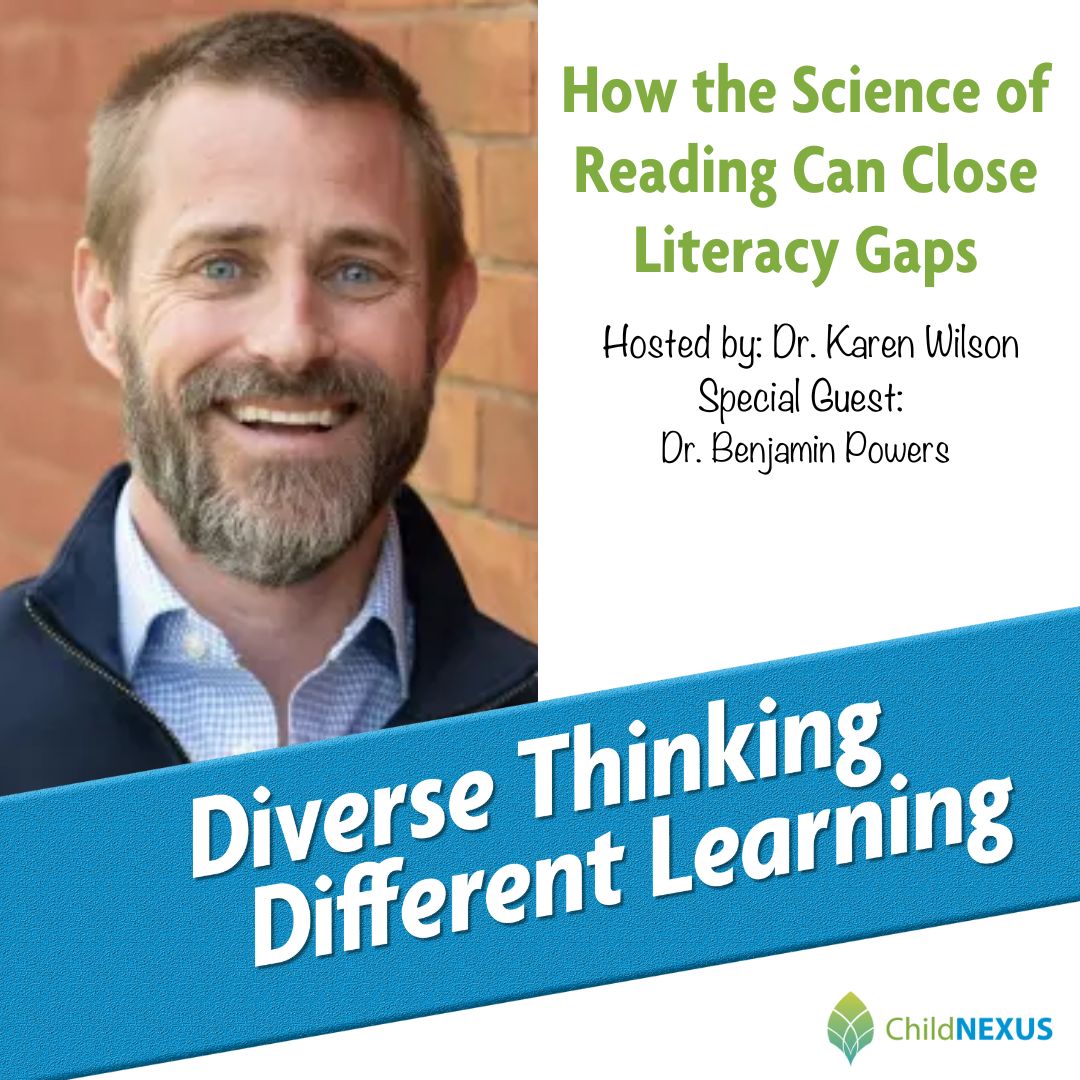
Ep. 209: How the Science of Reading Can Close Literacy Gaps with Dr. Benjamin Powers
Welcome to today's episode, where we'll be diving into the Science of Reading with our guest, Dr. Benjamin Powers. If you're a parent, educator, or simply curious about how students learn to read, this episode is packed with insights on evidence-based reading instruction and how it can transform classrooms. Dr. Benjamin Powers is an educator, researcher, and thought leader who believes that cerebrodiverse learners should be embraced for their strengths and potential. Throughout his career, he has championed evidence-based approaches that recognize individual strengths, promote independent thinking, develop self-esteem and self-advocacy, and fuel academic achievement. In this episode, you'll learn what the Science of Reading is and how decades of research can give teachers the tools that can truly empower them to improve outcomes for all students. One particularly eye-opening aspect of our conversation is how much researchers have learned about reading from studying individuals with reading and language-based learning disabilities. Dr. Powers also shares about the systemic challenges educators face, from curriculum selection to a need for comprehensive teacher training in the Science of Reading. He believes each of these barriers presents an opportunity for positive change and encourages educators and parents to take small steps that will lead to meaningful improvements. Show Notes: [2:02] - Dr. Powers explains what the Science of Reading is and how it differs from other approaches in education. It is a combination of decades of research. [4:10] - The research of the Science of Reading has come from college departments of psychology, and there is a delay in getting the research to educators. [6:44] - Part of how we know so much about the reading brain, is because of those with disabilities. [8:49] - By bringing in evidence-based reading practices, teachers feel empowered and reading instruction outcomes are improved. [11:12] - Dr. Powers compares early intervention to learning a second language. [13:59] - Many words that students encounter early in school differ greatly from those in later grade levels when the language shifts to textbook, multisyllabic words. [17:56] - It is important for parents to ask questions. Some parents hesitate to ask questions to better understand instruction and curriculum. [19:40] - There are things that we can do as parents to help support reading instruction. [21:40] - Sometimes administrators are put into a tricky position as they evaluate and vet curriculum. [23:59] - Each barrier is an opportunity for change. [26:24] - One huge opportunity is for teachers to be trained in the Science of Reading, no matter what subject they teach. In every class, students are reading. [29:58] - A student's ability is not a reflection on the teacher's intention. [32:16] - Taking the first step is what starts a crucial change. About Our Guest: Dr. Benjamin Powers holds a Doctorate in Business Administration from Grenoble Ecole de Management, an Executive MBA from Rochester Institute of Technology, and a Bachelor of Arts from La Salle University. He is a Certified Dyslexia Practitioner, a member of the International Dyslexia Association, and an associate member of the Academy of Orton-Gillingham Practitioners and Educators. He is Executive Director of The Southport School and CoLAB, Director of Yale's and UCONN Haskins' Global Literacy Hubs, and President of The Dyslexia Foundation. He holds appointments in the Yale School of Medicine's Child Study Center, and in the Departments of Psychology and Educational Psychology at UCONN. Connect with Dr. Powers: Email: [email protected] Southport Schools Website Links and Related Resources: Episode 111: Overcoming Dyslexia and Addressing the Reading Crisis with Sally Shaywitz Episode 37: Literacy, a Social Justice Issue with Resha Conroy Dyslexia Improving Literacy Dyslexia Foundation Connect with Us: Get on our Email List Book a Consultation Get Support and Connect with a ChildNEXUS Provider Register for Our Self-Paced Mini Courses for PARENTS on Dyslexia, ADHD or Childhood Anxiety Sessions The Diverse Thinking Different Learning podcast is intended for informational purposes only and is not a substitute for medical or legal advice, diagnosis, or treatment. Additionally, the views and opinions expressed by the host and guests are not considered treatment and do not necessarily reflect those of ChildNEXUS, Inc or the host, Dr. Karen Wilson.
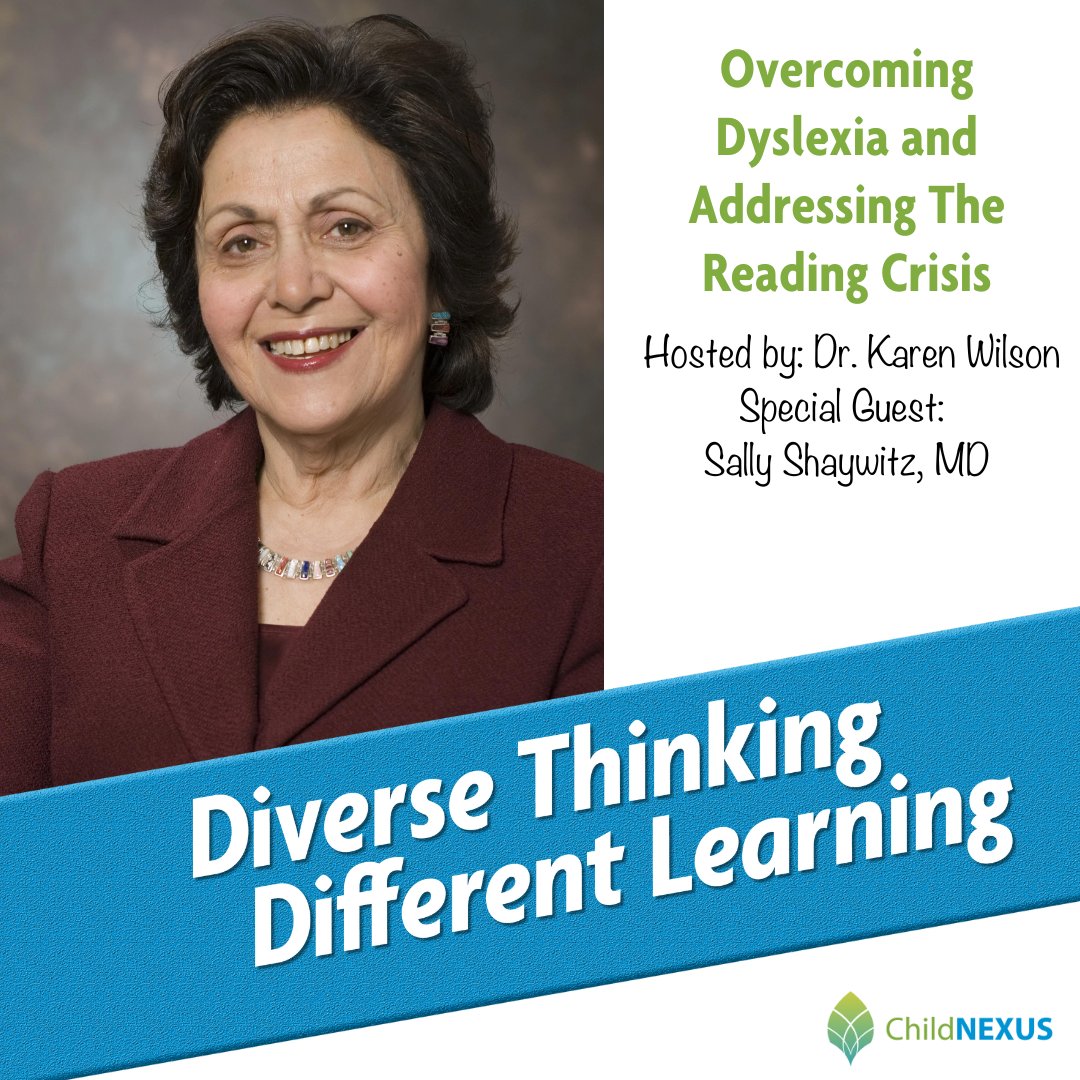
Ep. 208: Overcoming Dyslexia and Addressing The Reading Crisis with Sally Shaywitz, MD
It's not only ADHD Awareness Month, it is also Dyslexia Awareness Month! So today, let's revisit a conversation with Dr. Sally Shaywitz about overcoming dyslexia and addressing the reading crisis, which is still relevant and a huge concern. We are in the midst of a reading crisis in the United States. This problem has existed for a long time, but it was exacerbated by the COVID-19 pandemic. It has been said that the pandemic has caused the loss of 2 decades worth of progress made in reading. We have the knowledge, research, and science to address this issue, but we are lacking action. Today's guest is Dr. Sally Shaywitz, one of the world's preeminent experts on reading and dyslexia and author of Overcoming Dyslexia. Dyslexia is the most common learning disorder on the planet, affecting about one in five individuals, regardless of age or gender. In today's episode, Dr. Shaywitz shares what is known about dyslexia, the 40 years of data to show what works in overcoming dyslexia, and the sad reality that there is little action being taken to improve screening students and providing the appropriate interventions. There is so much we can do and it all starts with understanding. Show Notes: [3:31] - Regardless of decades of research, there are still a lot of misconceptions. [4:44] - Dyslexia is a very specific learning disability, but the term "learning disability" is very vague. [6:21] - Through brain imaging, Dr. Shaywitz was able to determine the neuro signature of dyslexia. [8:21] - Educators, parents, and the individual with dyslexia need to know that they are intelligent and have the intelligence to read, but dyslexia makes it a struggle. [9:58] - Dyslexia is common in all areas of the world. The consequences are similar in all cultures. [11:06] - Those with dyslexia can be good readers while still reading slowly. [12:02] - The most important step is for the student to be identified as dyslexic. [13:34] - Through her studies, Dr. Shaywitz has nearly 40 years worth of data for both typical readers and dyslexic readers from childhood to adulthood. [14:50] - Indicators of dyslexia can be seen as early as first grade. Identifying those at risk for developing dyslexia and intervening early can accelerate reading growth. [16:06] - Screening can take place later, but by then, the window of time for the most reading growth has passed. [18:03] - Currently, we are scoring worse in previous years in identifying dyslexia in young students. [19:09] - Dr. Shaywitz describes the screener used to determine the risk of dyslexia. [21:08] - A universal screener is a solution to this reading crisis. [22:13] - Given that we know a great deal about dyslexia, it is disgraceful that more isn't being done to support students. [23:14] - ADHD and anxiety often co-occur with dyslexia. [24:36] - We often hyperfocus on the struggles, but what are the common strengths for those with dyslexia? [25:42] - School policies and teacher training surrounding dyslexia need to be changed. [26:46] - There is also research on individuals incarcerated who are also dyslexic. [28:06] - Dr. Shaywitz offers a course on Coursera that can be found here. [30:36] - We need screening, intervention, and education for parents, teachers, and students. About Our Guest: Sally E. Shaywitz, M.D. is the Audrey G. Ratner Professor in Learning Development at Yale University and Co-Founder and Co-Director of the Yale Center for Dyslexia & Creativity. She is a world renowned scientist and dedicated, compassionate physician who is devoted to bringing ground-breaking scientific advances to benefit dyslexic children and adults. Connect with Dr. Shaywitz: Overcoming Dyslexia by Sally Shaywitz, MD Overcoming Dyslexia Online Course with Sally Shaywitz, MD Links and Related Resources: What is Dyslexia? 6 Quick Questions for Parents Concerned About Dyslexia ChildNEXUS Dyslexia Mini Course for Parents Join our email list so that you can receive information about upcoming webinars - ChildNEXUS.com The Diverse Thinking Different Learning podcast is intended for informational purposes only and is not a substitute for medical or legal advice, diagnosis, or treatment. Additionally, the views and opinions expressed by the host and guests are not considered treatment and do not necessarily reflect those of ChildNEXUS, Inc or the host, Dr. Karen Wilson.
Ep. 207: Straight Talk About ADHD in Girls with Dr. Stephen Hinshaw
It is ADHD Awareness Month, and we are revisiting an excellent conversation with Dr. Stephen Hinshaw about ADHD in girls. We've discussed ADHD on the podcast before and it continues to be an important topic. Dr. Stephen Hinshaw has conducted years of research including a longitudinal study on girls with ADHD and his findings are not only fascinating but important to consider especially if you are the parent of a daughter with ADHD. Dr. Hinshaw wrote a book called Straight Talk About ADHD in Girls: How to Help Your Daughter Thrive. Parenting a daughter with Attention-Deficit/Hyperactivity Disorder is no easy path, especially because of the myth that the disorder is rare or nonexistent in girls. In his book, Dr. Hinshaw provides vital information and advice to help you understand and meet your daughter's needs. And in this episode, he does the same. He delivers up-to-date facts on what ADHD is, why symptoms often appear differently in girls than in boys, why girls with ADHD behave the way they do, how to get an accurate diagnosis, and what treatments are most effective. There is so much pressure on girls to be perfect and for those with ADHD, it feels especially hard to measure up. The social stigmas and academic challenges ADHD presents to girls are often isolating and painful. So listen to Dr. Hinshaw explain the science behind it all and what we can do as parents and educators to help our girls with ADHD. Show Notes: [2:42] - ADHD is more prevalent in boys than girls, but why? [3:43] - Because of the difference in development, symptoms of ADHD in girls are often overlooked. [4:47] - Girls with ADHD tend to show their symptoms differently. Many don't get diagnosed until they are teenagers or even young adults. [5:48] - ADHD causes problems with the self-regulation of attention. [7:36] - Some girls may show their hyperactivity verbally instead of physically. [9:03] - Dr. Hinshaw conducted the largest longitudinal study on girls with ADHD. [9:57] - In childhood, girls with ADHD are just as impaired as boys. Socially, they tend to get rejected by their peers more so than boys. [11:46] - Dr. Hinshaw shares the differences in the larger consequences like delinquency, substance use, and mental health. [13:54] - ADHD increases the risk of self-harm and suicide. [15:28] - Low self-esteem, difficult peer relationships, and increasing academic struggles, make things challenging in young adulthood too. [17:21] - Across many studies and types of research, both males and females and the differences between them are not taken into consideration. [23:20] - Milder conditions or conditions that don't have as many outward indicators, result in more stigma. [26:53] - Motivation, regulation, and even medication are things to be considered. [27:48] - What are your daughter's strengths? [28:51] - One valued and strong friendship can offset the social complications they experience. [30:05] - Research has shown that parents of girls with ADHD tend to have much more parental stress. Parent management training is beneficial. About Our Guest: Stephen P. Hinshaw is Distinguished Professor of Psychology at UC Berkeley and Professor of Psychiatry and Behavioral Sciences at UC San Francisco. His work focuses on developmental psychopathology, child and adolescent mental health (particularly ADHD), and the use of clinical trials to understand underlying mechanisms. He also actively investigates mental illness stigma and interventions to reduce it. Hinshaw has authored over 400 articles, chapters, and commentaries plus 13 books. He has won numerous national and international research awards, including the James McKeen Cattell Fellow Award from the Association for Psychological Science, the Distinguished Scientific Contributions Award from the American Psychological Association, and the Sarnat International Prize in Mental Health from the National Academy of Medicine. He was inducted into the American Academy of Arts and Sciences in 2021. His extensive media coverage includes the New York Times, Washington Post, Wall Street Journal, Today Show, CBS Evening News, ABC World News Tonight, and many more. Connect with Dr. Stephen Hinshaw: Email: [email protected] Hinshaw Lab at The Institution of Human Development at Berkeley Dr. Stephen Hinshaw's Website Links and Related Resources: Getting Ahead of ADHD: What Next-Generation Science Says about Treatments that Work and How you can Make them Work for Your Child by Dr. Joel Nigg Is ADHD Overdiagnosed? What are the signs of ADHD? Understanding ADHD Assessments Join our email list so that you can receive information about upcoming webinars - ChildNEXUS.com The Diverse Thinking Different Learning podcast is intended for informational purposes only and is not a substitute for medical or legal advice, diagnosis, or treatment. Additionally, the views and opinions expressed by the host and guests are not considered treatment and do not necessarily reflect those of ChildNEXUS, Inc or the host, Dr. Kare

Ep. 206: Lifestyle Activities That Can Improve ADHD Symptoms with Dr. Joel Nigg
It is ADHD Awareness Month, and we are committed to providing resources and information that increase understanding about ADHD. Today, let's revisit an episode with Dr. Joel Nigg about lifestyle activities that can improve ADHD symptoms. Dr. Joel Nigg, Professor of Psychiatry and Behavioral Neuroscience at Oregon Health and Science University, is the author of the book Getting Ahead of ADHD. In this episode, he offers great insight, describes some ADHD research studies, and gives actionable steps to take now to help children thrive at school and in life. We discuss things to look for regarding ADHD symptoms and some simple changes in our daily routines as families that can make a huge impact. Dr. Nigg is doing fantastic work with the OHSU Center for ADHD Research and I am thrilled to revisit this podcast episode. Show Notes: [2:55] - There has been an increase in parents seeking evaluations for ADHD after seeing children learn from home. [3:47] - Dr. Nigg shares some data that shows the impact of distance learning during the COVID-19 pandemic across the world. [5:01] - For those already diagnosed with ADHD, services were challenging during the pandemic and school closures. [6:25] - You lose the advantage of a teacher's perspective when learning from home. Demands at home from a parent are much different than those in the classroom. [7:42] - Dr. Nigg recommends seeking services for the difficulties the child is experiencing [10:39] - A valuable goal is to think hard about structuring your day to fit self care in. [12:23] - Another factor that impacts mental health is sleep and the quality of rest. [15:00] - The key is to shift the thinking around sleep to be positive. Counselors can help with this transition. [19:52] - Family rules for a screen-free bedtime are hard to follow, but they are important. [20:54] - Dr. Nigg addresses the claim that high levels of screen time causes ADHD. [22:25] - Media content needs to be monitored for children and teens even though it is a part of their social experience. [25:16] - Children with ADHD are more inclined to experience depression and anxiety. [29:33] - Children need to be prepared for possible changes again as they go back to school. [32:27] - Medical centers around the world have websites with tons of resources. They will also have current and updated recommendations and guidelines. [33:36] - Dr. Nigg's book is a great resource for parents of children with ADHD. About Our Guest: Joel Nigg, Ph.D., is a Professor of Psychiatry and Behavioral Neuroscience, Vice Chair for Psychology, and Director of the Center for ADHD Research at Oregon Health & Science University in Portland, Oregon. He obtained his AB at Harvard College, MSW at The University of Michigan, and PhD in Clinical Psychology at the University of California at Berkeley. He is a licensed clinical psychologist with clinical experience in multiple settings. He is a leading researcher in the area of developmental psychopathology with a focus on ADHD. He is the author of 2 books on ADHD including a recent book written for parents: Getting Ahead of ADHD: What Next-Generation Science Says about Treatments that Work and How you can Make them Work for Your Child. His work has been funded continuously by NIMH for over 20 years. The recipient of several awards, Dr. Nigg has served on the editorial boards of several leading scientific journals. Connect with Dr. Joel Nigg: Joel Nigg, Ph.D Home Page Twitter | Facebook Links and Related Resources: Getting Ahead of ADHD: What Next-Generation Science Says about Treatments that Work and How you can Make them Work for Your Child by Dr. Joel Nigg Is ADHD Overdiagnosed? What are the signs of ADHD? Understanding ADHD Assessments Join our email list so that you can receive information about upcoming webinars - ChildNEXUS.com The Diverse Thinking Different Learning podcast is intended for informational purposes only and is not a substitute for medical or legal advice, diagnosis, or treatment. Additionally, the views and opinions expressed by the host and guests are not considered treatment and do not necessarily reflect those of ChildNEXUS, Inc or the host, Dr. Karen Wilson.
Ep. 205: Understanding ADHD Assessments
In today's episode, I'm focusing on a topic that impacts millions of children, teens, and adults: ADHD assessments. ADHD is a chronic condition that often persists throughout life, so understanding the assessment process is crucial for setting families up for long-term success. I'll be diving into various aspects of this process, exploring the multiple steps involved to ensure that the diagnosis is thorough and accurate. From clinical interviews to lifestyle assessments, there are several key factors that play a role in understanding ADHD and its impact on a person's daily life. Listen to learn the steps in an ADHD assessment, why each step is important, and how this evidence-based approach ensures that children and families receive the support they need. Show Notes: [1:36] - ADHD is often diagnosed in childhood. It is not something children grow out of. [2:29] - Assessments include multiple steps, beginning with a thorough clinical interview. [3:58] - A lifestyle assessment is important as well and includes looking into sleep habits, diet, and screen use. [5:59] - It is also a part of an ADHD assessment to review a child's functioning across multiple settings. [7:35] - ADHD is never diagnosed based on test scores alone. [8:24] - You do not need a neuropsychological assessment to diagnose ADHD. [9:28] - No ADHD assessment is complete without a feedback session. [11:33] - This evidence-based approach ensures that children and families receive an accurate diagnosis and the right support. Links and Related Resources: Episode 33: Attention Deficit Hyperactivity Disorder 101 with Dr. Nicholas Thaler Episode 148: How Sleep Affects Academic Performance and Mood Episode 160: The Sleep Deprived Teen with Lisa Lewis Navigating the Challenges of Social Media for Neurodivergent Youth Attention Deficit Hyperactivity Disorder Connect with Us: Get on our Email List Book a Consultation Get Support and Connect with a ChildNEXUS Provider Register for Our Self-Paced Mini Courses with LIVE AMA Sessions The Diverse Thinking Different Learning podcast is intended for informational purposes only and is not a substitute for medical or legal advice, diagnosis, or treatment. Additionally, the views and opinions expressed by the host and guests are not considered treatment and do not necessarily reflect those of ChildNEXUS, Inc or the host, Dr. Karen Wilson.
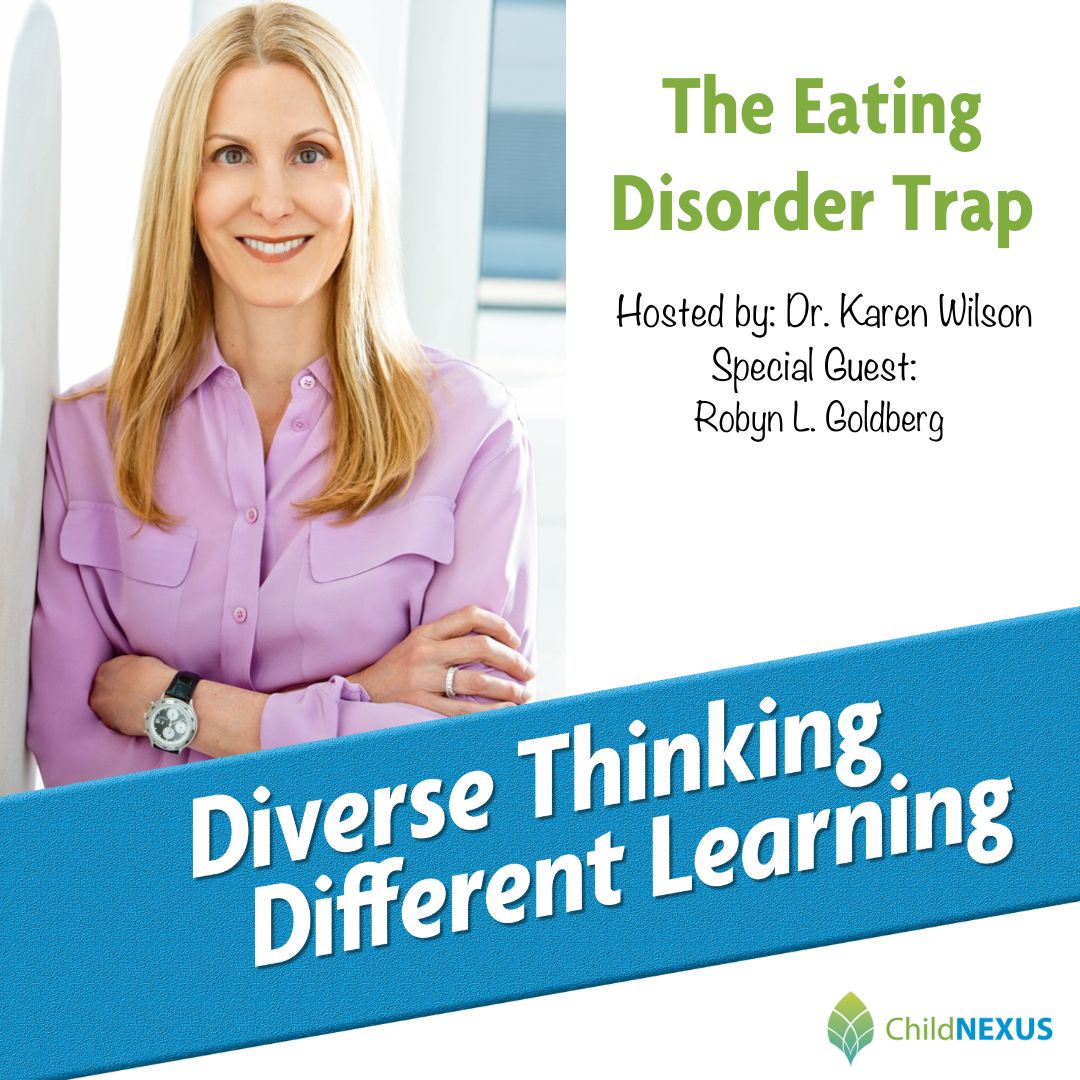
Ep. 204: The Eating Disorder Trap with Robyn L. Goldberg
In today's episode, we're diving into a subject we haven't yet explored on this podcast: eating disorders. This is an issue that affects millions of people worldwide, including many children and adolescents. For some, it's a deeply personal battle that often goes unnoticed by those around them. Research even suggests that certain groups, like girls with ADHD, might be at greater risk of developing eating disorders. In today's conversation, we're joined by Robyn Goldberg, author of The Eating Disorder Trap. Robyn is here to shed light on this complex mental health issue and help debunk some common misconceptions. Many people think eating disorders are solely about food, but as we'll discuss, they're far more intricate—often tied to deeper emotional and psychological concerns. Robyn covers red flags that parents and caregivers should be aware of and discusses the role that shame, depression, and anxiety play in these struggles. She also touches on the impact of diet culture and how it affects us all. Robyn offers practical advice for parents navigating this journey and even shares details about her free online course for caregivers. Show Notes: [1:58] - The number of people who struggle with an eating disorder is startling. [3:23] - Eating disorders are not about the food. It is a complex mental health concern. [4:28] - Robyn shares common misconceptions, starting with the stereotyped appearance of someone with an eating disorder. [5:41] - The most common eating disorder that is rarely talked about is binge eating. Robyn also discusses other disorders, like ARFID. [7:47] - Robyn wrote a book that was released right before Covid lockdowns and she describes how it is written for everyone. [9:57] - Doctors and clinicians can be very overwhelming to those struggling with answering questions about their eating disorders. [12:18] - There has been a significant rise in mental health problems, including eating disorders, since the pandemic. [15:03] - Robyn lists some of the frequently seen impacts on physical health that eating disorders have. [17:01] - Things get complicated and confusing when parents have not resolved their own issues with eating. [19:12] - Robyn describes some red flags that could be signs of an eating disorder. [21:05] - Depression and anxiety can be heightened when malnourished. [22:25] - Research shows that girls with ADHD are at greater risk for eating disorders. [24:40] - There is a free online course that Robyn offers for caregivers who are helping someone with an eating disorder. [27:52] - Oftentimes, there is a lot of shame around eating disorders. [29:44] - What does treatment typically look like? It depends on the type of eating disorder, but Robyn explains what parents should expect. [33:03] - There are things that parents and families can do to help support their child or teen. [34:04] - No one is immune to diet culture. It is everywhere and all-consuming. About Our Guest: Robyn L. Goldberg, RDN, CEDS-C is a registered dietitian nutritionist, certified eating disorder specialist and consultant (CEDS-C), certified intuitive eating counselor and a Health at Every Size® (HAES) clinician. Robyn began her career at Cedars-Sinai Medical Center in Los Angeles as the in-patient dietitian in the Department of Cardiology. For the last 26 years, she has had a private practice in Beverly Hills, CA, where she specializes in medical conditions, eating disorders, disordered eating, dual diagnosis, pre-pregnancy nutrition and women seeking fertility treatment. Connect with Robyn Goldberg: Your Recovery Resource Free Course (310) 273-0413 Facebook Instagram Links and Related Resources: Ask About Food Website The Eating Disorder Trap by Robyn L. Goldberg Connect with Us: Get on our Email List Book a Consultation Get Support and Connect with a ChildNEXUS Provider Register for Our Self-Paced Mini Courses with LIVE AMA Sessions The Diverse Thinking Different Learning podcast is intended for informational purposes only and is not a substitute for medical or legal advice, diagnosis, or treatment. Additionally, the views and opinions expressed by the host and guests are not considered treatment and do not necessarily reflect those of ChildNEXUS, Inc or the host, Dr. Karen Wilson.

Ep. 203: ADHD and the Gut-Brain Connection: Exploring Integrative Treatments with Sara Langley, MSN, PMHNP-BC
Welcome to this episode of Diverse Thinking Different Learning, where we dive into a topic that is of growing interest to parents and caregivers of children and adolescents with ADHD: integrative treatments for ADHD symptoms. Today's guest, Sara Langley, is an expert in Nutritional Psychiatry and will share valuable insights on how diet and integrative approaches can complement traditional ADHD treatments. ADHD is the most searched topic on ChildNEXUS, and our episodes on ADHD are among the most downloaded. It's clear that parents and caregivers are eager to learn about different options to support their children, and this episode is packed with useful information. Sara specializes in how diet can impact mood and behavior, and she offers practical advice on where to begin. She suggests some starting points, but acknowledges that making dietary changes can feel overwhelming, so she shares helpful tips for parents on how to start small and build from there. Throughout the episode, Sara discusses the common challenges faced by children with ADHD and the supplements that can help. While she emphasizes that nutrition isn't a "cure" for a problem, it is an important piece of the puzzle. Sara also highlights the strong connection between the gut and brain and how addressing this can benefit not only ADHD symptoms but overall well-being. If you're looking for new ways to support your child or simply curious about how integrative approaches can complement traditional treatments, you won't want to miss this episode! Show Notes: [3:16] - Sara specializes in Nutritional Psychiatry, which is about how diet can impact mood and behavior. [5:16] - One good starting place that Sara recommends is to start integrating probiotics. [6:28] - Supplements are commonly asked about by parents of children with ADHD and there are several that could benefit as an addition to a vitamin rich diet. [9:17] - A lot of time, we cannot get the full nutritional benefit from the food we eat due to different factors. [10:43] - It can be very overwhelming to parents to make dietary changes. Sara gives some tips on where to start. [12:30] - Generally, children with ADHD have trouble falling asleep. There are supplements that can help with this as well. [13:53] - Nutrition is part of a puzzle. It isn't a "cure". [17:18] - Working with a mental health professional or pediatrician can help guide a parent in choosing the right things for their child. [18:40] - There is a connection between the gut and the brain. [22:31] - It is tricky for many parents to make dietary changes due to the pickiness of their child as an eater and their need for quick dopamine through snacking. [23:47] - Some parents are seeking something different from medication. [25:59] - This integrative approach benefits more than ADHD symptoms. About Our Guest: Sara Langley is a dedicated Psychiatric Mental Health Nurse Practitioner who specializes in treating children and adolescents with brain-based medical conditions. She is double board-certified in both Primary Care and Psychiatry. A graduate of the Columbia University School of Nursing, class of 2014, she later earned her Post Master's certificate in Psychiatric Mental Health Nursing from UCSF and completed a Fellowship in Primary Care Psychiatry with UCI. Additionally, she holds a certification in Nutritional Psychiatry through the Integrative Psychiatry Institute. In her practice, Sara integrates Nutritional Psychiatry, focusing on how diet affects mood and behavior, and Functional Psychiatry, which aims to identify and treat the root causes of mental illness. This is combined with FDA-approved traditional medication management, providing families with care that is truly comprehensive and balanced. Connect with Sara Langley: ChildNEXUS Provider Profile Email: [email protected] Child Kind Psychiatry Website Links and Related Resources: ADHD for Parents: An Integrative Approach Episode 124: A Non-Medication Treatment for Children with ADHD with Dr. Sandra Loo Episode 40: Lifestyle Activities That Can Improve ADHD Symptoms with Dr. Joel Nigg Connect with Us: Get on our Email List Book a Consultation Get Support and Connect with a ChildNEXUS Provider Register for Our Self-Paced Mini Courses with LIVE AMA Sessions The Diverse Thinking Different Learning podcast is intended for informational purposes only and is not a substitute for medical or legal advice, diagnosis, or treatment. Additionally, the views and opinions expressed by the host and guests are not considered treatment and do not necessarily reflect those of ChildNEXUS, Inc or the host, Dr. Karen Wilson.

Ep. 202: How Low Demand Parenting Can Reduce Stress and Support Neurodivergent Youth with Dr. Roseann Capanna-Hodge
Parenting is filled with moments of stress and overwhelm, especially when raising children with different neurological wiring. Many of us have faced times when our child's behavior feels too much to handle, leaving us unsure of what to do next. That's where today's guest, Dr. Roseann Capanna-Hodge, comes in. Dr. Roseann is a trailblazer in mental health, media figure, and the founder of Neurotastic™ Brain Formulas and The Global Institute of Children's Mental Health. She is on a mission to "Change the way we view and treat children's mental health and is known for her teachings on promoting brain calmness using science-driven solutions. She is also the host of the It's Gonna Be OK podcast, a go-to resource for parents navigating their children's mental health challenges. In our conversation today, she introduces us to the concept of low-demand parenting, a style that has emerged alongside the increasing recognition of neurodivergent youth. Throughout the episode, Dr. Roseann explains how this approach can help parents reduce their own stress by lowering demands on both themselves and their children. This, in turn, allows kids with dysregulated nervous systems to feel more secure and capable of learning critical skills like flexibility and problem-solving. We'll discuss how low-demand parenting can reduce anxiety in children, how to implement co-regulation techniques, and the benefits of self-regulation in creating a happier, healthier home environment. Show Notes: [2:47] - Neurodivergence and brains that are wired differently are on the rise. [3:27] - Low-demand parenting is a style of parenting that has come with the rise of kids who are uniquely wired. It's a misunderstood style of parenting. [5:11] - When kids have dysregulated nervous systems, no matter where it's coming from, they're going to fall back on familiar behaviors. [6:47] - We need to teach kids flexibility, coping skills, and problem solving. That is a lot harder when you're coming in hot. [8:15] - This style of parenting can be started at any time. But you may get some pushback. [9:34] - One of the benefits of low demand parenting is reducing anxiety. [10:53] - We don't really think about our kids having activations in their nervous systems. [12:23] - This type of parenting is really helpful particularly in current times and with current generations, but specifically with neurodivergent youth. [13:35] - Self-regulation is key to leading a happy life. [14:54] - We learn our parenting from our own parents and the strategies are not always helpful. [16:32] - When you're overwhelmed, everything feels like a mountain. The one action you can start with is co-regulation. [18:51] - Dr. Roseann gives some starting points in learning co-regulation. [21:19] - The hardest part is reinforcement. It's not going to stick with just one time. [23:13] - A common misconception is that children are trying to overwhelm us on purpose. We can guide them to healthy ways to manage discomfort. [24:39] - The most common reason people leave college is due to their mental health. [26:58] - Give the other parent or caretaker the information as well. [28:42] - The more you are regulated, the more regulated your child will be. Dysregulation can negatively impact the parent-child relationship. [30:50] - Being regulated doesn't mean you don't feel stress. It means that you are activated by it. About Our Guest: Dr. Roseann stands as a mental health pioneer, media persona, and the architect of The Global Institute of Children's Mental Health, Neurotastic™ Brain Formulas and Dr. Roseann, LLC. She's committed to altering mental health perceptions and interventions, offering a message of hope through science-endorsed methods that promote a calm brain. Her BrainBehaviorReset® Program and It's Gonna be OK!™ Podcast has been a cornerstone for thousands facing daunting challenges such as PANS/PANDAS, OCD, anxiety, and ADHD/executive functioning, significantly bettering the lives of children and families. Connect with Dr. Capanna-Hodge: YouTube Instagram Facebook Group TikTok Website It's Gonna Be OK! Podcast Links and Related Resources: Coping Skills Download Episode 184: Could Pathological Demand Avoidance Clarify My Child's Challenges with Dr. Casey Ehrlich Connect with Us: Get on our Email List Book a Consultation Get Support and Connect with a ChildNEXUS Provider Register for Our Self-Paced Mini Courses with LIVE AMA Sessions The Diverse Thinking Different Learning podcast is intended for informational purposes only and is not a substitute for medical or legal advice, diagnosis, or treatment. Additionally, the views and opinions expressed by the host and guests are not considered treatment and do not necessarily reflect those of ChildNEXUS, Inc or the host, Dr. Karen Wilson.
Ep. 201: Why Loneliness Hurts and How to Help
Welcome to this episode of Diverse Thinking Different Learning, where we are diving into a topic that's becoming increasingly urgent: loneliness in children and adolescents. We've all experienced loneliness at some point in our lives. However, for many young people, especially those with learning and thinking differences, loneliness can become a persistent and deeply troubling issue. It's more than just a feeling; it's a state of distress that arises when there's a perceived gap between the social connections they crave and their actual experiences. Our brains are hardwired for connection, making social interaction a biological necessity. Yet, for neurodivergent children and teens, the lack of meaningful connections can have even more profound effects. As we explore in this episode, loneliness isn't just an emotional issue—it's a health crisis that requires our immediate attention. Ultimately, combating loneliness is about more than just addressing the symptoms; it's about creating environments where all students feel connected, supported, and valued. Show Notes: [1:49] - Loneliness is the state of distress or discomfort that results when someone perceives a gap between one's desires, social connection, and actual experiences. [3:45] - Our brains are wired for connection. We have a biological need for it. [4:35] - For neurodivergent children and teens, the lack of connection can have an even bigger impact. [5:52] - Social media is a double-edged sword. [6:51] - Students who are struggling with social connection and loneliness, may also feel the adverse effects on their academic progress. [7:32] - One way to battle loneliness is by building strong family bonds. [9:05] - Bullying is a significant contributor to loneliness. [12:20] - Combating loneliness is not only about reducing isolation. It's about creating environments where all students feel connected, valued, and supported. Links and Related Resources: Navigating the Challenges of Social Media for Neurodivergent Youth Episode 43: Building Social Competence and Enhancing Social Skills with Dr. Elizabeth Laugeson Episode 187: What is Social Learning? with Fran Kenton Episode 199: Fully Inclusive Education with Sharon Lowery Connect with Us: Get on our Email List Book a Consultation Get Support and Connect with a ChildNEXUS Provider Register for Our Self-Paced Mini Courses with LIVE AMA Sessions The Diverse Thinking Different Learning podcast is intended for informational purposes only and is not a substitute for medical or legal advice, diagnosis, or treatment. Additionally, the views and opinions expressed by the host and guests are not considered treatment and do not necessarily reflect those of ChildNEXUS, Inc or the host, Dr. Karen Wilson.

Ep. 200: The Ten Most Impactful Episodes: Celebrating 200 Episodes
Welcome to the 200th episode of the Diverse Thinking Different Learning Podcast! I am so excited to celebrate this milestone with you. This episode is a celebration and a look back on some of the most memorable and impactful episodes along this 200 episode journey. We've got some really great updates and surprises coming soon! Be sure to check out past episodes that highlight the expertise and support in our communities. Thank you for your constant support! Please consider leaving a review and rating wherever you listen to the podcast. Let's dive into some of our most downloaded episodes. Show Notes: [1:29] - Number 10: Unlocking Potential: A Dyslexia Journey with Rosalin Abigail Kyere-Nartey is an episode about the guest's personal experiences with dyslexia as a student in Ghana. [2:18] - Number 9: Slow Processing Speed with Dr. Ellen Braaten resonated with so many parents and educators about an often misunderstood issue. [3:04] - Number 8: Your Child's Anxiety: When to Worry with Dr. John Piacentini helps parents differentiate between typical worries and more serious anxiety issues. [4:03] - Number 7: How to Develop Social Thinking Skills with Michelle Garcie Winner highlights the guest's practical approach to social cognition. [4:52] - Number 6: Turning Kids' Passions and Enthusiasms Into Superpowers with Dr. Barry Prizant reminds us of every child's potential and superpowers. [5:40] - Number 5: Key Principles for Raising a Child with ADHD features Dr. Russell Barkley's expertise and a roadmap for parents. [6:23] - Number 4: Straight Talk About ADHD in Girls with Dr. Stephen Hinshaw has been a game-changer for parents. [7:15] - Number 3: Overcoming Dyslexia and Addressing the Reading Crisis with Dr. Sally Shaywitz is an episode with a pioneer whose work and dedication has inspired many to take action. [8:09] - Number 2: A Non-Medication Treatment for Children with ADHD with Dr. Sandra Loo gives parents hope and alternative support for their children. [9:13] - Number 1: Helping Kids Understand Their Amazing Brains with Dr. Liz Angoff has empowered many to embrace their differences and recognize their strengths. Connect with Us: Get on our Email List Book a Consultation Get Support and Connect with a ChildNEXUS Provider Register for Our Self-Paced Mini Courses with LIVE AMA Sessions The Diverse Thinking Different Learning podcast is intended for informational purposes only and is not a substitute for medical or legal advice, diagnosis, or treatment. Additionally, the views and opinions expressed by the host and guests are not considered treatment and do not necessarily reflect those of ChildNEXUS, Inc or the host, Dr. Karen Wilson.
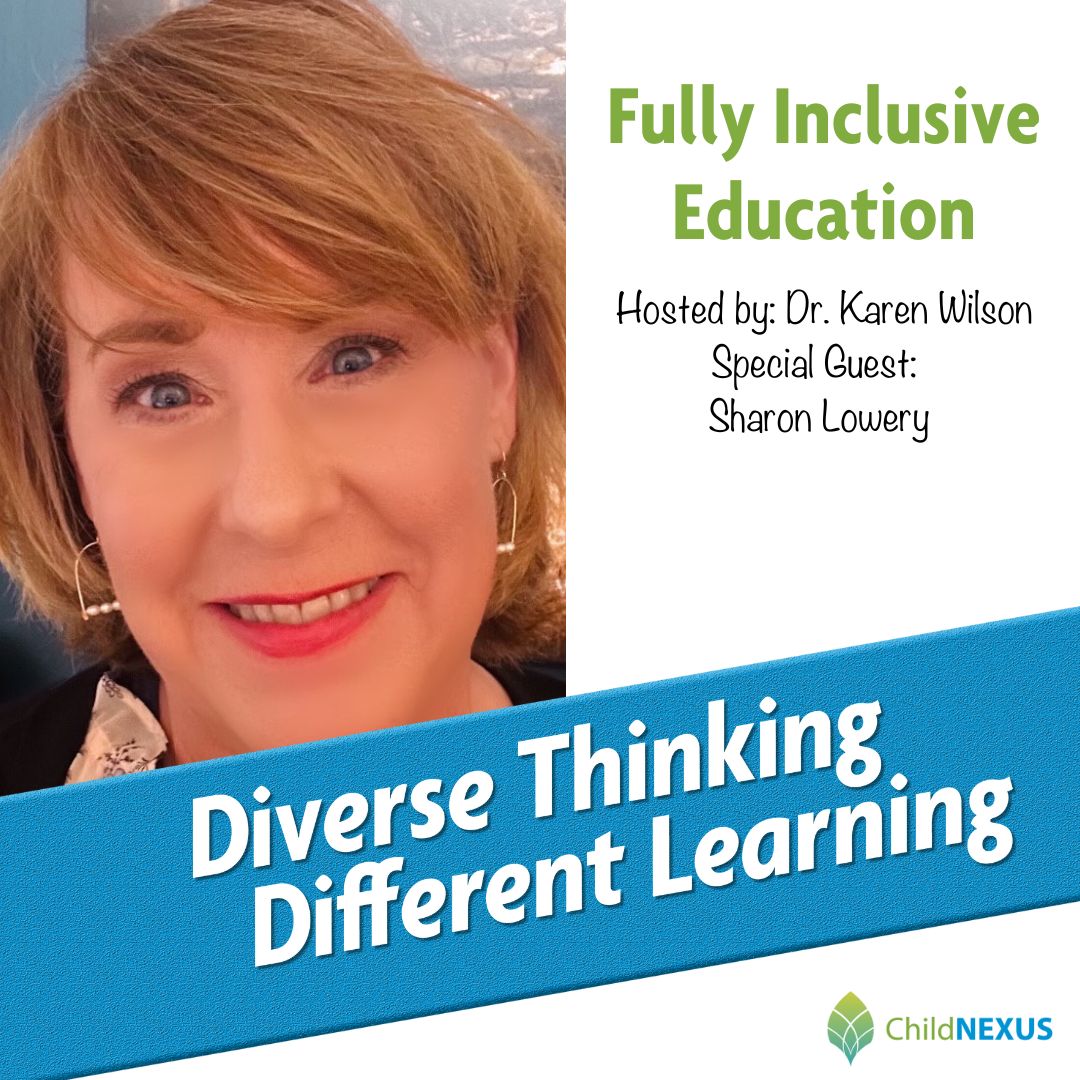
Ep. 199: Fully Inclusive Education with Sharon Lowery
Welcome to today's episode, where we're exploring the timely topic of inclusive education. As the new school year begins, many parents and educators are thinking about how to create learning environments that truly support all children, regardless of their abilities. Whether you've already made decisions for your child's education or are still weighing your options, this episode will provide valuable insights. Our guest, Sharon Lowery, is a pioneer in inclusive special education. She has developed a program that welcomes students of all abilities, with a focus on those who learn and think differently. Sharon's approach emphasizes the importance of meeting social-emotional needs and fostering an environment where every child can thrive. In this conversation, Sharon shares what an inclusive academic setting looks like, how typically developing students and neurodiverse students can benefit from learning together, and why developing emotional intelligence is crucial in a child's education. We'll also address some common concerns parents have about balancing the needs of all students in an inclusive classroom. Join us as we discuss how inclusive education can create a more supportive and enriching experience for every student. Show Notes: [2:30] - Sharon describes what a fully inclusive academic environment looks like. All children with all academic abilities are welcome. [3:23] - The program Sharon has developed does put a focus on children who learn and think differently, but all students are included. [4:46] - The program is a therapeutic program that meets the needs of all the children who participate. [6:03] - Initially, Sharon was trained in ABA practices and saw benefits, but then began working with Dr. Stanley Greenspan and the DIR/Floortime Model. [7:20] - By understanding the developmental milestones and social emotional development, we can be inclusive of students of all abilities and meet their needs. [8:14] - Sharon shares the differences between a traditional setting and an inclusive environment. [10:07] - Through this model, developing emotional intelligence is important. [12:38] - Children learn from each other. Typically developing students can model for neurodivergent students. [14:53] - We want to build an understanding of differences. As parents, we want our children to be kind and loving. [16:23] - The gifted population also really benefits from an inclusive environment. [19:01] - Sharon describes a scenario that proved the benefits of meeting social-emotional needs in an inclusive environment. [22:48] - A concern some parents have is that the attention needed for neurodiverse students will take away from the needs of the typically developing students. [26:31] - Being inclusive also means being intentional. [29:06] - Sharon describes the start of a school year and what a day might look like in the Smart Start program. [33:21] - Family tours really help ease the minds of parents of neurodiverse children. [35:24] - The small environment gives students an opportunity for a rich and focused learning experience. About Our Guest: Sharon Lowery holds a BA in Psychology from UCLA and an MA in Psychology from CSULA. She has advanced post-graduate certification as an Expert Trainer in DIR/Floortime and is a member of the ICDL Faculty, having been trained by Dr. Stanley Greenspan, the creator of the DIR/Floortime Model. In 1992, she founded the SmartStart Developmental Learning Center, where she has served as Executive Director ever since. Sharon is a recognized expert in Special Education, specializing in a Developmental Model, Inclusive Special Education, and Relationship-Based and Sensory-Based Education, all through 5th grade. Additionally, she is a Senior Level ABA Therapist, having been trained by Dr. Ivar Lovaas, the founder of Behavior Modification/ABA for use with ASD. Connect with Our Guest: Email: [email protected] Smart Start School Website Links and Related Resources: Episode 192: Reimagining Education for All Students with Sylvia Barreto Benites Episode 189: The Private School Option for Kids with Learning Differences with Collette Bowers Zinn Episode 164: 5 Keys to Productive IEPs with April Rehrig Connect with Us: Get on our Email List Book a Consultation Get Support and Connect with a ChildNEXUS Provider Register for Our Self-Paced Mini Courses with LIVE AMA Sessions The Diverse Thinking Different Learning podcast is intended for informational purposes only and is not a substitute for medical or legal advice, diagnosis, or treatment. Additionally, the views and opinions expressed by the host and guests are not considered treatment and do not necessarily reflect those of ChildNEXUS, Inc or the host, Dr. Karen Wilson.

Ep. 198: Strategies for a Smooth Back-to-School Transition with Gabrielle Hennings and Zoe Hemenway
Can you believe that it is almost time to go back to school? This time of year can be stressful for students and parents, especially when there's a history of challenges with learning and transitions. Today's guests, Gabrielle Hennings and Zoe Hemenway, bring their combined experience in education, specializing in supporting neurodiverse learners, to the conversation about preparing our students for this sometimes-exciting, sometimes-stressful transition. In this episode, Gabrielle and Zoe share practical strategies to ease into the first days of a new school year. They'll discuss the importance of starting routines now, rather than waiting until the first day of school. Key tips include establishing morning routines with visual reminders and setting predictable schedules to reduce anxiety. We'll also cover how to gradually adjust sleep schedules and find the right planners or checklists for your unique learner. Additionally, Gabrielle and Zoe will emphasize the importance of focusing on students' strengths and using the new school year as an opportunity for a fresh start. Whether you're a parent or educator, this episode offers valuable insights to help neurodiverse learners thrive in the upcoming school year. Show Notes: [2:54] - Start preparing now. Don't wait till the first day of school to start a routine. [4:29] - To help with a morning routine, Gabrielle and Zoe suggest using visual reminders. [6:04] - Starting the day with a sense of predictability helps set neurodiverse students up for a smoother day and can reduce stress and anxiety. [8:35] - Begin by setting alarms earlier every day until students are accustomed to waking up earlier. Place the visual reminders someplace they can see often. [9:45] - Not all planners and checklists work for everyone. Find one that works for you. [12:48] - Using a planner for fewer tasks in the summer is a great idea to maintain the responsibility and accountability before the stakes are higher during the school year. [14:05] - If students set a goal for themselves, it is always an important and meaningful goal. [16:24] - Consider previous school year's reports and grades and help set achievable goals. [17:51] - No matter the plan or goals, executive functioning needs to be a focus. [20:14] - Students need to be given the tools to realize their capabilities. [22:17] - We need to also be mindful of implementing an afternoon routine. [25:05] - Strategies that Gabrielle and Zoe have written are designed to be understandable and digestible by students. This is important for educators to remember. [27:20] - Although there are things that are difficult, we need to remind our students of their strengths. [28:53] - This is every student's opportunity for a brand new start. What do they want their fresh start to look like? [32:09] - Don't let the bumps in the road stop you from sticking with things. About Our Guests: Gabrielle Hennings and Zoe Hemenway bring a combined dedication of 14 years to the realm of education, shaping young minds for a brighter future. Their journey has been marked by a deep commitment to understanding and appreciating neurodiverse learners, valuing the richness that diverse learning styles bring to the educational landscape. In their extensive experience, Gabrielle and Zoe have cultivated a profound insight into the unique needs of neurodiverse learners. They firmly believe in the power of meeting each learner at their individual starting point, recognizing that true educational growth happens when tailored to individual potential. Together, Gabrielle and Zoe bring a wealth of experience and a shared passion for creating an inclusive and supportive learning environment. Their commitment to recognizing and nurturing the potential in every student defines the ethos of their educational approach. Join them as they embark on a journey of personalized learning, where diversity is celebrated, and every student has the opportunity to blossom. Connect with Our Guests: ChildNEXUS Provider Profile Email: [email protected] HH Learning Center Website Links and Related Resources: Downloadable Planner Episode 147: 5 Tips to Help Students Transition Back to School Connect with Us: Get on our Email List Book a Consultation Get Support and Connect with a ChildNEXUS Provider Register for Our Self-Paced Mini Courses with LIVE AMA Sessions The Diverse Thinking Different Learning podcast is intended for informational purposes only and is not a substitute for medical or legal advice, diagnosis, or treatment. Additionally, the views and opinions expressed by the host and guests are not considered treatment and do not necessarily reflect those of ChildNEXUS, Inc or the host, Dr. Karen Wilson.
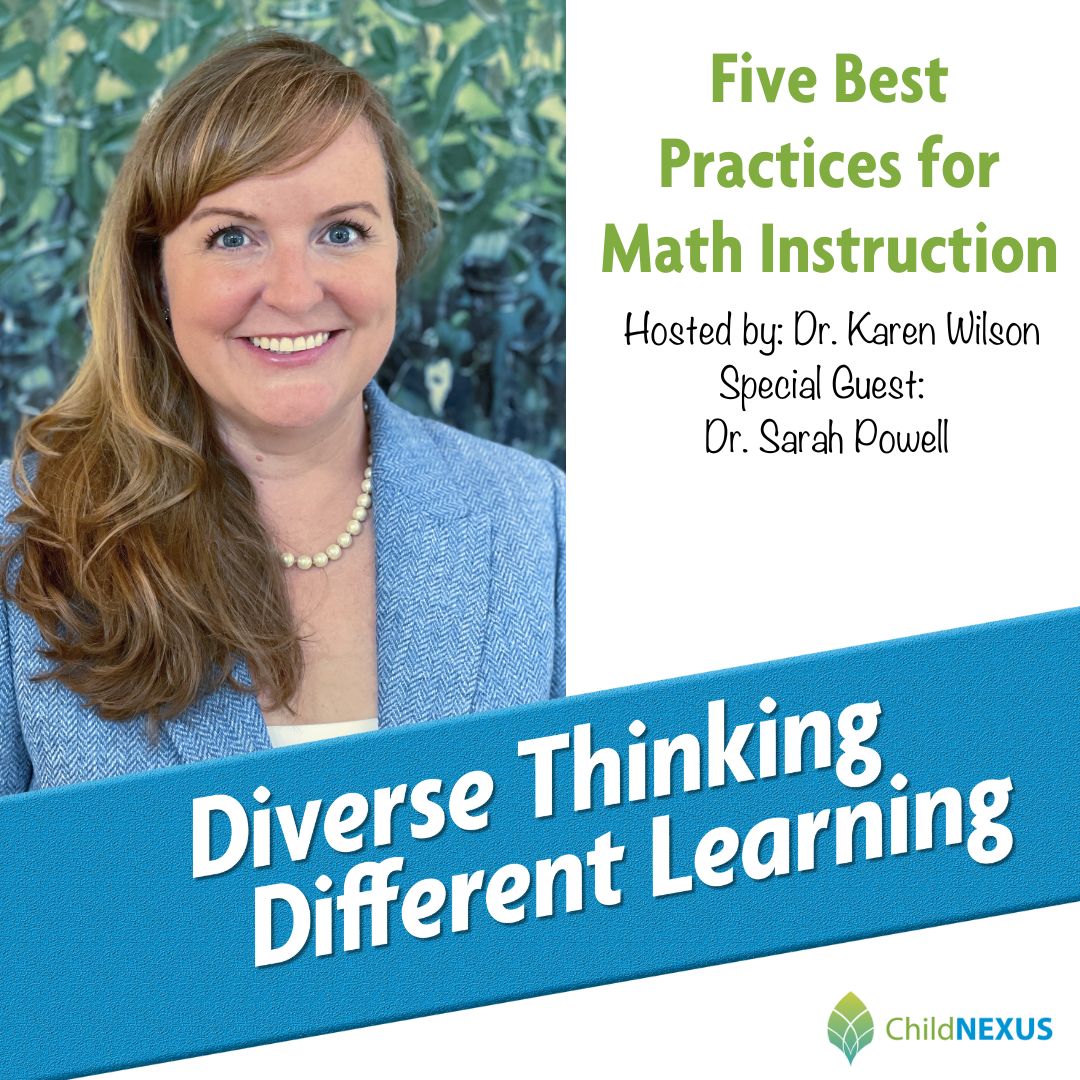
Ep. 197: Five Best Practices for Math Instruction - Dr. Sarah Powell
Welcome back, listeners, to Diverse Thinking Different Learning! In this episode, we're having a conversation with Dr. Sarah Powell, a distinguished professor at the University of Texas at Austin and Associate Director of the Meadows Center for Preventing Educational Risk. Dr. Powell's expertise in math education sheds light on effective strategies to support students who face challenges with math! The discussion explores the crucial role early math education plays in shaping a student's future academic success, emphasizing that early struggles can lead to long-term difficulties if not addressed properly. Dr. Powell elaborates on how cumulative math skills impact later learning, stressing the importance of early intervention and continuous support throughout a student's educational journey. Dr. Powell also highlights several best practices for math instruction, including the use of multiple representations to deepen understanding and systematic, explicit teaching methods to ensure mastery of concepts. She also addresses the role of math vocabulary and its significance in helping students grasp mathematical ideas more effectively. Tune in to gain valuable insights into how targeted interventions and effective teaching strategies can make a significant difference in students' math achievements. If you are an educator yourself seeking to enhance your math instruction or perhaps a parent looking to support your child's learning, this episode of the show is sure to offer practical advice and actionable strategies to help all students excel in math! Show Notes: [3:14] - Early math performance predicts future success, making early intervention important for long-term achievement. [6:06] - Dr. Powell points out how schools often prioritize reading over math, but early math interventions are just as important. [9:01] - Dr. Powell argues that teaching math vocabulary is essential for understanding concepts and participating effectively in the classroom. [11:59] - Difficulties in math may be linked to language issues, including reading, writing, and speaking. [13:04] - Using multiple representations, like manipulatives and drawings, can help students better understand math concepts. [15:24] - Dr. Powel feels that students should understand math deeply by using various representations, not just by memorizing symbols. [18:55] - Identifying common mistakes better helps target instruction than addressing isolated mistakes. [20:02] - Dr. Powell argues that effective math learning involves modeling, repeated practice, and building fluency through both speed and accuracy. [23:53] - Incorporating short fluency practices into the school day enhances math skills and helps reduce cognitive overload. [25:34] - Older students should develop fluency to avoid using basic strategies like tick marks, which can lead to mistakes. [26:55] - Effective strategies for solving word problems include the U.P.S. check method and recognizing common problem types. [31:16] - Dr. Powell explains how parents can help with word problems by discussing the problem and identifying consistent frameworks. [32:43] - Parents can also support math learning through discussions, games, and incorporating math into daily activities. [35:25] - Engaging in practical math activities, like measuring ingredients, makes math fun and relevant! [38:57] - For additional support, resources include emailing Dr. Powell as well as videos on representations, a free math course, and teacher-friendly materials! About Our Guest: Dr. Sarah R. Powell is a Professor in the College of Education at The University of Texas at Austin and Associate Director of the Meadows Center for Preventing Educational Risk. Her research, teaching, and service focus on mathematics, particularly for students who experience mathematics differently. Dr. Powell is currently Principal Investigator (PI) of an Institute of Education Sciences (IES) efficacy grant (RAAMPS) related to word-problem solving at Grade 4. Dr. Powell is also PI of SPIRAL, an IES grant which works collaboratively with Grade 4 and 5 teachers who provide mathematics instruction to students with mathematics difficulty. Dr. Powell is Co-PI of STAIR 2.0 (funded by IES) in which the team works with middle school special education math teachers and SCALE (funded by the US Department of Education) in which the team is replicating a fraction intervention in Grades 4-8. Dr. Powell collaborates on Math Words, an IES development grant about mathematics vocabulary. She also assists with a word-problem project funded as a Small Business Innovation Research (SBIR) grant to Querium. To help create the next generation of researchers focused on mathematics, Dr. Powell is PI of a doctoral leadership grant (LIME) funded by Office of Special Education Programs. Dr. Powell was awarded the Presidential Early Career Award for Scientists and Engineers (PECASE) in 2019. Dr. Powell understands all of these efforts are a team effort, and she thanks her project

Ep. 196: Gifted and/or Autistic with Megan Helmen, Psy.D., L.P.
When describing their kids, some parents might mention traits like a strong desire for accuracy, perfectionism, being highly attuned to their environment, experiencing very intense emotions, and having a strong sense of fairness and justice. Some may wonder, is my child autistic, gifted, or both? This episode is about exploring that question and providing insights into both giftedness and autism. Today's guest is Dr. Megan Helmen. Dr. Helmen has become passionate about educating parents and families in supporting gifted and autistic children and youth. In this episode, we'll highlight the importance of understanding neurodivergence, adjusting our approaches and expectations, and creating inclusive environments and communities. Our goal is to provide the support that individuals need to thrive, understand the complexities of how we present as humans, and help others navigate the world. These often misunderstood kids need our attention, empathy, and informed support. So, whether you're a parent wondering about your child's unique traits or an educator striving to better support your students, this episode is packed with insights that will help you understand and nurture gifted and/or autistic children. Show Notes: [3:13] - There's a misunderstanding that if a child is gifted that they can't have a disability. Sometimes a disability also causes a child's giftedness to be overlooked. [5:10] - There isn't an agreed upon definition or explanation of giftedness. Dr. Helmen describes some of the qualities of a gifted child. [6:55] - Giftedness is a form of neurodiversity, but it is not a diagnosis. [8:15] - There are modifications and accommodations that need to be made for gifted learners for them to reach their potential. [11:13] - Like other twice exceptional people, Dr. Helmen finds that many things are very easy and other things are very challenging. [14:05] - Dr. Helmen describes the different pieces of an autism diagnosis. [15:35] - If you've met one gifted person, you've met one gifted person. The same goes for autistic individuals. [17:11] - There are differences between giftedness and autism, even though there is an overlap. [20:09] - Identification can save a life. [23:42] - We want everyone to have social connections when they want it and when they need it. That might mean that someone may need some extra support. [26:03] - Support does not erase a person and who they are. [29:31] - Start from a place of curiosity. [30:49] - Dr. Helmen shares a resource of great accommodation ideas and websites that offer a lot of tools for parents, families, and educators. About Our Guest: Dr. Megan Helmen is a pediatric neuropsychologist who has been providing evaluations for 12+ years and has worked in the autism community for 20+ years. Early on, she heard disheartening stories from parents about how they received their child's autism diagnosis. She set out to be the person who could provide that service in a more supportive, educational manner. This led to a degree in Child Psychology and graduate degree in Clinical Psychology. She believes in balancing clinical expertise and research-based interventions with connection and a sense of humor. Her clinical process is neurodiversity-affirming and continually evolving. Connect with Dr. Helmen: For clinical practice, email [email protected] For speaking, email [email protected] Links and Related Resources: Episode 185: Late Diagnosis - Why Did I Get Missed? with Dr. Monica Blied Episode 119: Autistic Girls - Overlooked and Underrecognized with Megan Beardmore Episode 38: Understanding the Gifted and Twice Exceptional Child with Dr. Nicole Tetreault Connect with Us: Get on our Email List Book a Consultation Get Support and Connect with a ChildNEXUS Provider Register for Our Self-Paced Mini Courses with LIVE AMA Sessions The Diverse Thinking Different Learning podcast is intended for informational purposes only and is not a substitute for medical or legal advice, diagnosis, or treatment. Additionally, the views and opinions expressed by the host and guests are not considered treatment and do not necessarily reflect those of ChildNEXUS, Inc or the host, Dr. Karen Wilson.
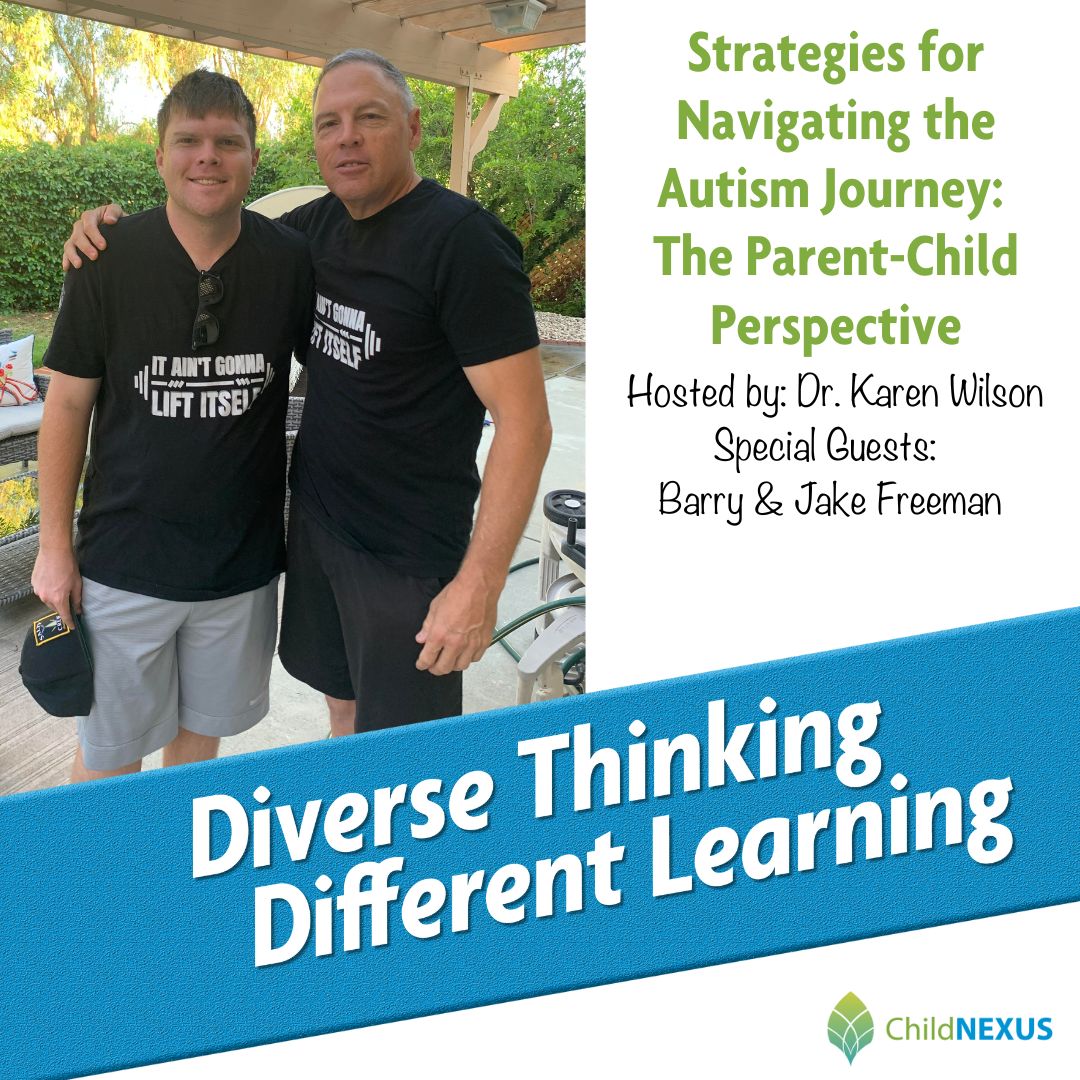
Ep. 195: Strategies for Navigating the Autism Journey: The Parent-Child Perspective with Barry and Jake Freeman
Today, we are diving into an important and deeply personal topic: navigating autism and the parent-child relationship when a child is on the spectrum. To help us explore this, we have the incredible father-son duo, Barry and Jake Freeman, joining us. Barry and Jake are here to share their unique perspective on living and thriving with autism as a family. Their journey is not only inspiring but also offers valuable insights and a refreshing outlook for those who are on a similar path. In this episode, you'll hear firsthand experiences from Barry and Jake. They'll discuss the challenges and triumphs they've encountered along the way - from switching schools and navigating new environments to advocating for services and celebrating small successes. Their story is one of resilience, growth, and unwavering support. Jake will share his experiences with different educational settings and offer advice to others who might be hesitant to try new things. His journey through college, where he learned crucial life skills and embraced independent living, is particularly inspiring. Barry will talk about the importance of networking, asking questions, and connecting with other parents. We'll also hear about the incredible bond between Barry and Jake, and how this relationship has helped them navigate the ups and downs of autism. Barry's touching reading of the poem "Welcome to Holland" serves as a powerful reminder to love the journey you're on, no matter how different it may be from what you expected. Show Notes: [2:20] - It is helpful to hear from people who are living similar experiences. [3:38] - Jake shares the differences he experienced when switching schools. [4:32] - Barry describes some of Jake's qualities and the challenges he experiences as someone on the autism spectrum. [6:47] - Jake offers his advice to those who struggle with trying new things that seem frightening at first. [8:44] - The college that Jake attended allowed him to learn life skills with an emphasis on independent living. [10:10] - Networking is crucial. Ask a lot of questions and connect with other parents. [11:35] - When asked about what he wishes he knew in the earlier days, Barry says he should have been more aggressive in advocating for services. [14:33] - Documentation is not only helpful but is crucial in advocating for services. [16:23] - Jake shares what his job and career goals are and what he is currently doing to volunteer and stay active in the community. [18:42] - No test or assessment will ever tell you what your child will be able to accomplish. [19:48] - Every child needs someone in their corner, advocating for their needs. [21:13] - Keeping the end goal in mind is great, we have to celebrate the little steps and successes along the way. [22:15] - Barry shares a powerful poem called Welcome to Holland that proves the importance of loving the journey you're on. About Our Guests: Jake Freeman: Jake Freeman embraces life without letting labels define him, despite being told at a young age that he is on the spectrum. He lives at home with his parents, and his younger sister, Julia. Jake enjoys reading a variety of books, watching horror, comedy, and action movies, and playing board games and card games with friends. He has participated in basketball, softball, and bowling through the Special Olympics, recently winning a basketball tournament and gearing up for a new bowling season. Jake's educational journey includes switching to Village Glen in the 6th grade, where he found a supportive environment with friends and teachers he connected with. He later attended a college near Bakersfield, CA, which focused on independent living skills such as budgeting, public transportation, and job skills. While Jake currently lives with his parents, he possesses the skills to live independently, having navigated various roommate situations in the past. His advice to younger individuals on the Spectrum is to not be afraid to put themselves out there and try new things. Barry Freeman: Barry Freeman and his wife Karen have two children, Jake and Julia. Barry works in the entertainment industry as a film ratings and broadcast standards consultant. He served on the Motion Picture Association's ratings board for a decade and has spent the past 12 years working independently with film producers to help them secure desired ratings (G, PG, PG-13, etc.). Barry has also contracted with companies such as Netflix, CBS, Sony Pictures, and the Game Show Network. In his personal life, Barry enjoys long-distance running, working out, following Boston sports teams, and spending time with his family and friends. He is also a foodie. Karen was the primary advocate for Jake during his younger years, a role Barry has taken on in recent years. Barry was Jake's soccer coach for the "VIP program" before Jake went to college, and he looks forward to volunteering again in the Autism community upon retirement. Connect with Barry and Jake: Email: [email protected] Links
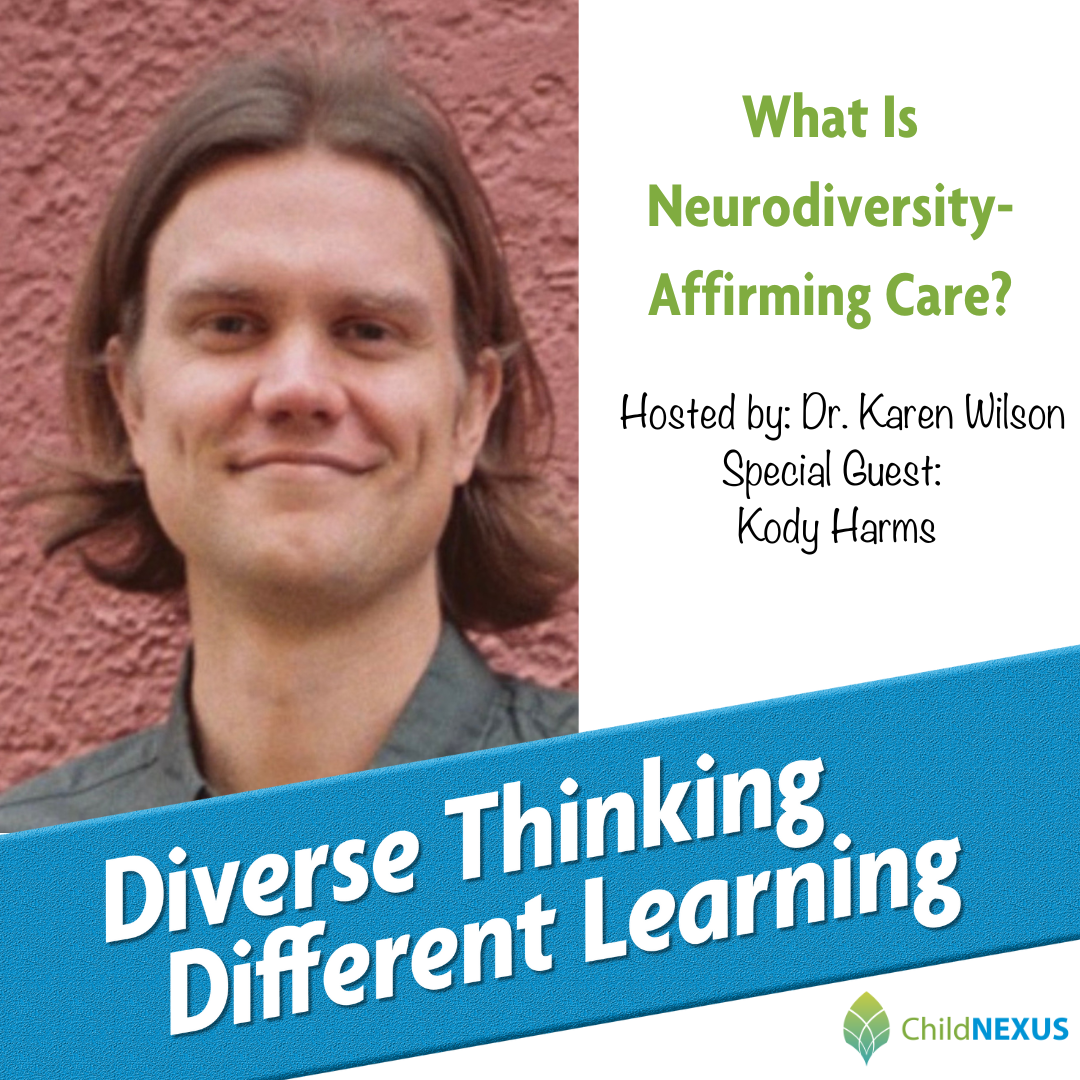
Ep. 194: What Is Neurodiversity-Affirming Care?
Awareness and understanding of neurodiversity have been expanding in our society along with the need and opportunity for neurodiversity-affirming care. I'm thrilled to have Kody Harms joining me this week. Kody is a neuro-affirming therapist, educator, and advocate with over 15 years of experience working with neurodiverse children, teens, and adults. As a board-certified behavior analyst and co-owner of Curated Family Therapeutics, Kody brings a wealth of knowledge and expertise to our discussion on neurodiversity. In today's episode, we'll explore what it means to give and receive neuro-affirming care. Neurodiversity impacts individuals differently, and it's crucial to recognize and celebrate these differences rather than viewing them as deficits. We'll discuss how society's understanding of neurodiversity has grown significantly, reflecting our expanding knowledge about the brain and the diverse ways it can function. With the rise of social media and ongoing research, we're hearing more diverse voices and gaining a deeper appreciation of the vastness of the neurodiversity spectrum. Teachers and administrators play a pivotal role in shaping opportunities for neurodivergent youth. By fostering inclusive environments and embracing the unique qualities everyone brings to the table, we can create a more understanding and accepting world. Kody is passionate about creating inclusive environments and offering individualized support based on the needs of each student, parent, or client. Tune in to learn more about understanding and accepting people for all the beautiful differences they bring. Show Notes: [02:12] - At Curated Family Therapeutics they have three modes of support: 1. One to one acceptance and commitment therapy for neurodiverse teams and adults. 2. Working with parents of neurodivergent children. 3. Applying the one to one therapy in the classroom. [04:07] - Their work extends from getting the diagnosis and supporting the family to high school and adulthood. [05:17] - For Kody, incorporating neuro-affirming ideas begins with questioning his own neurotypical norms and how he was raised. Each generation gets more empathetic and celebratory of neurodiversity. [06:30] - Kody doesn't want to change who anybody is, he just wants to help them find the best version of themselves. [07:03] - We want to change the environment so that it supports the differences in the way that our brains are wired. [07:50] - Educating parents is a large part of neuro-affirming support. Creating neuro-affirming care within education is also very important. [09:30] - Practices educators can adopt include creating opportunities for social and emotional learning within the whole classroom so as not to isolate the individual, and identify that everybody does this differently. [10:36] - It's important for everybody to have an opportunity to regulate. [11:37] - It's important to start understanding how everyone's brain works differently at an early age like kindergarten. [13:34] - Part of learning is just noticing things and bringing them to the attention of the students. [14:09] - A project they recently did is taking the social and emotional learning that they're doing at school and applying it at home. [16:24] - Schools have visual mediums but they don't always do a good job explicitly teaching them. Kody likes to make schedules for his neurodivergent students and teach it as a skill. [17:35] - Creating visuals and allowing students to have a say is a general universal strategy. [19:31] - Kody's goal is not to add things, but to adapt the day. [20:22] - Acceptance and commitment therapy is acknowledging that challenges are going to be presented. If you're working towards your values and the things that guide you, you can't go wrong. [22:12] - They begin with a values assessment. Kody wants to know what's important to the student, parent, or client. [23:41] - Acceptance is critical for the whole piece of providing neuro-affirming care. [24:41] - The values define the actions that you want to take towards the commitment. About Our Guest: Kody Harms, M.A., BCBA, is a neuro-affirming therapist, educator, and advocate with over 15 years of experience working with neurodiverse individuals. As a Board Certified Behavior Analyst with a master's in Special Education, he specializes in supporting the mental health of neurodiverse teens and adults, along with their families and teachers. Kody's therapeutic approach is grounded in Acceptance and Commitment Therapy, focusing on helping clients assess their identity, goals, and personal growth. As co-owner and clinical director at Curated Family Therapeutics, he tailors sessions to individual needs and actively supports the neurodiverse community. Outside of work, Kody enjoys yoga, concerts, and time with his family. Connect with Kody: 213-340-4662 [email protected] Curated Family Therapeutics Curated Family Therapeutics on Instagram Links and Related Resources: Ep. 168: 5 T
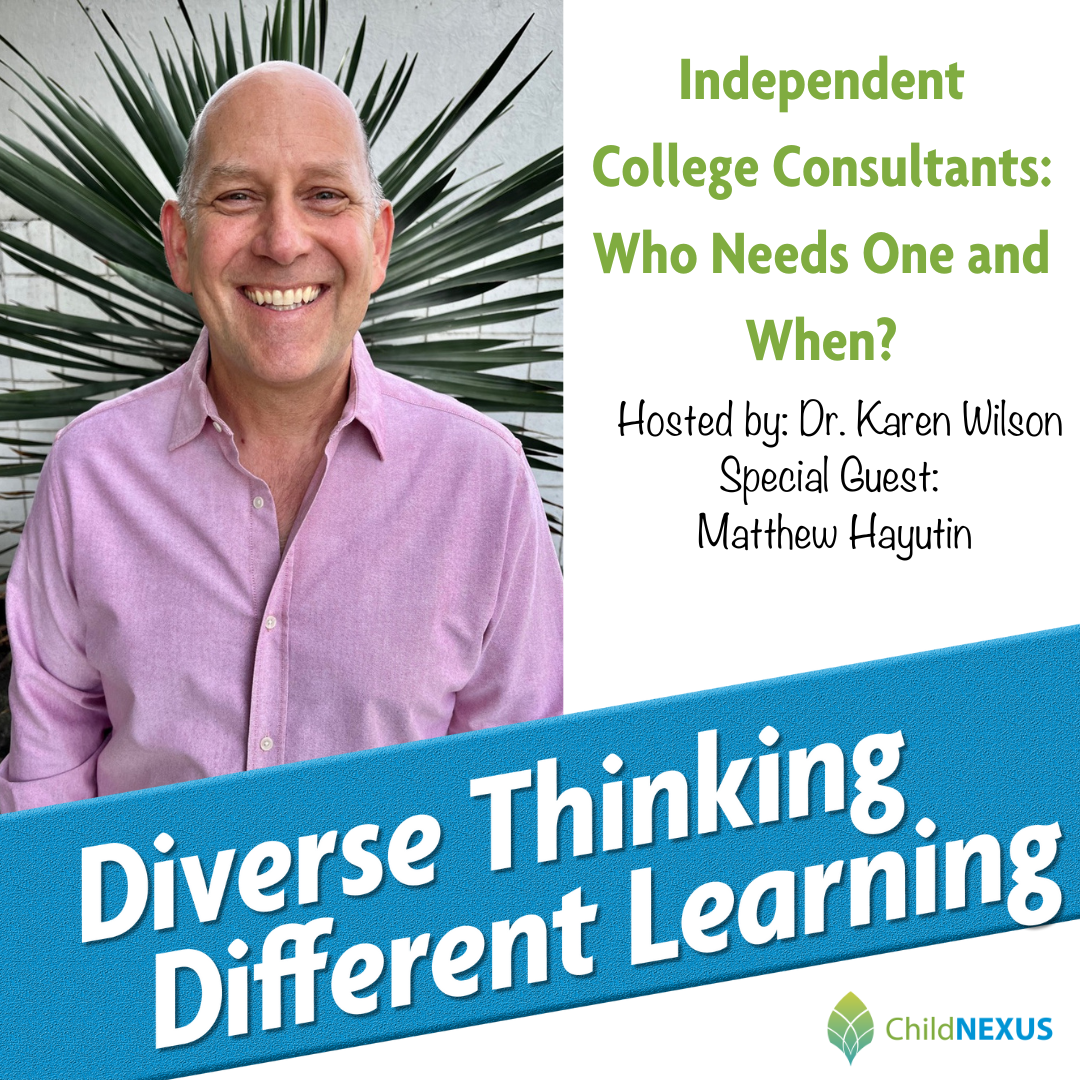
Ep. 193: Independent College Consultants: Who Needs One and When?
Summer is here, and many graduates are looking into the college application process. If you're not sure where to start, a college consultant can help make this stressful period much easier for students and parents alike. Today, we dive into everything about independent college consultants. What exactly are they? What is their role, and how do they help our students? We'll explore who might benefit from hiring an independent consultant and address the specific needs of students with learning and thinking differences, such as dyslexia and ADHD. I'm joined by independent college consultant Matthew Hayutin, Founder and Partner at Hayutin Education. Matthew began his career as a classroom teacher and private educational therapist, working with students of all ages and learning profiles. He has extensive experience as a college consultant and homeschool teacher. If you're not familiar with the role of a college consultant, Matthew breaks it down with insights into how the consultant's role can be customized to meet the individual needs of students and their families. College consultants can assist with researching and vetting schools and programs, helping to ensure students find the best fit, and navigating the application and admissions process. Matthew is passionate about his position and emphasizes the importance of helping students find ways to contribute and become active citizens. He discusses using targeted questions to understand students' needs and explore options that facilitate a smooth transition from high school to college. This episode is a must-listen for anyone navigating the complexities of college admissions. Tune in and discover why investing in an independent college consultant could be the game-changer your learner needs. Show Notes: [00:03] - Public School students may have a student counselor with 500 students, and the connection points are far and few between. Having someone who could work individually with the student and get to know them is very valuable. [05:19] - Another reason that a consultant could be helpful is that they are available in the summer when your counselor isn't. A lot of work can get done in the summer to build momentum and create a runway for the fall. [08:17] - Having someone who can really drill into what will help the student and assist with the process. [09:19] - Why would someone seek out an independent college consultant? There are multiple reasons including access and availability, especially over the summer, expertise, skill set, and bandwidth. [10:28] - The role of the college consultant. A strong consultant can help students create a list of schools that will accept them with open arms and ones that might be a bit of a stretch but worth the effort. [13:53] - They also help build executive functioning instead of doing everything for the student. [14:12] - The goal isn't just to get in. It's to find a place where the students thrive. A consultant can help find a good match for an environment where the student will thrive and ultimately graduate. [16:54] - Asking questions is part of the process of working with an independent consultant. [19:47] - What can we expect in terms of accommodation for students who have unique needs. [23:11] - One of the advantages of working with a college consultant is they spend time with the student and get to know their individual needs. [25:58] - Questions to ask when trying to determine if a consultant is a good fit is the amount of access, feedback, and timeline. [30:02] - Working with an independent college consultant can be a valuable investment for many families trying to work through the complexity of future college. About Our Guest: Matthew Hayutin is a Founder & Partner at Hayutin Education, a company that he founded with his sister, Amy Hayutin Contreras. Hayutin is your partner in education offering executive functioning, educational therapy, independent study, tutoring, test prep, and college consulting. They assist students and parents in making good choices in education and having a wide array of educational possibilities. Matthew earned his advanced B.A. from Occidental College in English and Comparative Literary Studies in 1992 and his Master of Education with high honors from Pepperdine University in 1997. He also pursued additional studies in English, film, and creative writing at the University of Pennsylvania, NYU and UCLA. Matthew began his career as a classroom teacher and private educational therapist in 1997, working with students of all ages and learning profiles. Matthew also has extensive experience as a college consultant and homeschool teacher. Connect with Matthew: Hayutin Education College Consulting (310) 829-7505 Matthew Hayutin LinkedIn Links and Related Resources: Episode 15: From High School to College: Steps to Success for Students with Disabilities with Elizabeth C. Hamblet Episode 126: Why Self-Awareness and Self-Determination are Important for College Success with Elizabeth Hamblet Episode

Ep. 192: Reimagining Education for All Students with Sylvia Barreto Benites
Today, we have a truly inspiring guest joining us from the heart of the jungle in Costa Rica. She's the director of the Renaissance Institute (iREN), a trailblazing educational program that is redefining how we approach learning for all students, especially those with learning differences. We're excited to dive deep into her insights and experiences on how she combines neuroscience, psychology, and pedagogy to create a transformative learning environment. Sylvia's journey began in 2020 when she established a small homeschool for teenagers to help them navigate distance learning during the pandemic. This initiative quickly grew into the Renaissance Institute, a unique educational environment in beautiful Costa Rica. Throughout our conversation, Sylvia will share her motivations and the personal experiences that drove her to build this unique program. She created the kind of educational environment she wished she had as a child, which resonates deeply with many parents today. We'll explore how differentiation and a sense of safety are crucial in education, yet often missing. Sylvia believes in creating spaces where students feel safe to make mistakes and learn from them, an essential component in fostering resilience. By the end of this episode, you'll have a new perspective on how education can be transformed to meet the needs of every child. Sylvia's story is a powerful reminder that with the right mindset and approach, we can create learning environments that not only educate but also heal and empower our students. Show Notes: [2:17] - It is a time of real opportunity for change in education right now. [3:18] - Sylvia describes the motivations she has had in building this unique learning environment in Costa Rica. [5:05] - In 2020, Sylvia established a small homeschool for teenagers in Costa Rica to help them navigate through distance learning. It grew into iREN. [8:01] - Students are highly involved in creating and establishing their own learning environment in a way that establishes trust. [10:12] - It is important for the attention to be given to the students who are doing the right thing. A lot of neurodivergent students are accustomed to being yelled at. [12:09] - Sylvia has created the program that she wished she had had as a child. Many parents feel the same way. [13:40] - Differentiation is important, but we can't differentiate so much that there is no normalcy. [15:11] - Another missing piece in education is love and a sense of safety. [17:57] - Create a space where students can make mistakes. [20:50] - Students want to learn impulse control but often feel like they can't. [23:47] - It is a reality that many parents are afraid of their child and fearful that they cannot support them. [26:33] - What brings a student happiness? Can we create a sense of acceptance and well-being where a child feels happy in their learning environment? [27:50] - Diagnoses are important, but many people focus on the negatives which creates a sense of hopelessness. [30:10] - Sylvia is confident that healing herself and changing her own mindset was the first step in creating iREN for students and families. [34:01] - Children are struggling, which is what it all boils down to. What can we do? [38:10] - Grades do not typically motivate a student. Parents care more about grades than students do. We need to help students find their intrinsic motivation. About Our Guest: Sylvia serves as the founder and director of the Renaissance Institute in Guanacaste, Costa Rica. Established in 2020, the Renaissance Institute (iREN) aims to engage children beyond screens by inviting them to explore a 33-acre forested campus. iREN integrates neuroscience, psychology, and pedagogy to unleash the potential of children facing challenges. The program prioritizes children's social-emotional requirements, cultivating resilience and hands-on learning tailored to each child's unique learning style. With small class sizes, the institute personalizes learning plans to cater to individual educational needs. Sylvia holds a Master's in Education from Dowling College in New York, specializing in neuroscience and teaching. Being a triple threat herself (dyslexic, ADHD, and defiant), she utilized her understanding of the brain to unlock her own potential, instigating a desire to assist others in achieving the same. Connect with Sylvia: iREN's Website Email: [email protected] iREN Fundraiser Links and Related Resources: Episode 28: Why We Need to Celebrate and Continue to Build Our Kids' Resilience Episode 112: Rethinking/Redefining Homeschooling with Mel Nichols Connect with Us: Get on our Email List Book a Consultation Get Support and Connect with a ChildNEXUS Provider Register for Our Self-Paced Mini Courses for Parents Who Want to Better Understand Their Child's Dyslexia, ADHD or Anxiety. The Diverse Thinking Different Learning podcast is intended for informational purposes only and is not a substitute for medical or legal advice, diagnosis, or tr
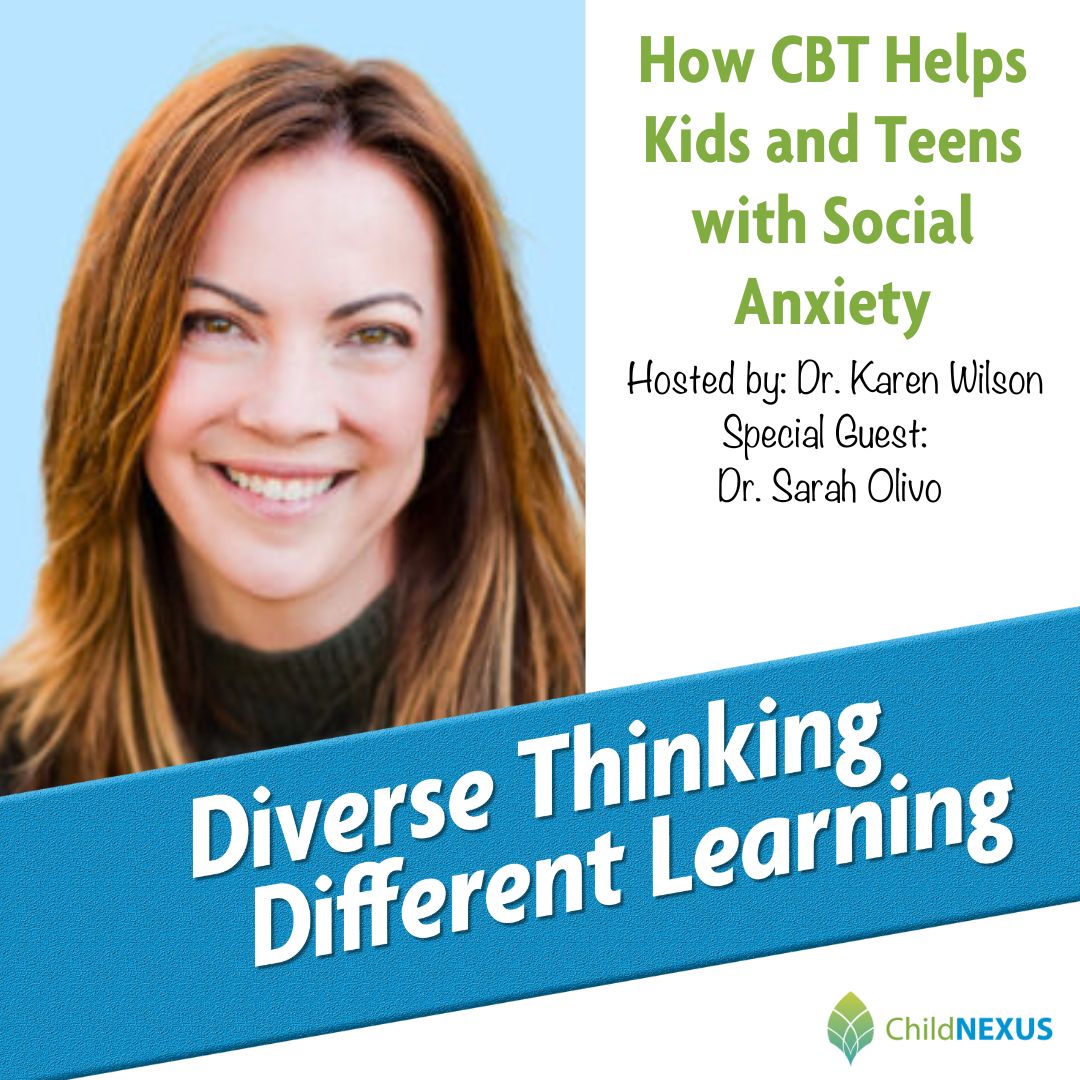
Ep. 191: How CBT Helps Kids and Teens with Social Anxiety with Dr. Sarah Olivo
Today, we're diving into a topic that affects many kids, teens, and adults: social anxiety. Social anxiety is more than just the usual nervousness or shyness; it can significantly impact daily life, making even the simplest social interactions panic-inducing. We're going to break down what social anxiety is, how it differs from normal social worries, and most importantly, how to spot it in children and teens. Our guest today is Sarah Olivo, Ph.D., a licensed clinical psychologist with over 20 years of experience. Sarah specializes in evidence-based treatments, particularly CBT, and is dedicated to helping children, teens, and young adults overcome anxiety and achieve meaningful change in their lives. As the Head of Lumate Academy, Sarah is passionate about spreading the benefits of CBT to those with limited access to these life-changing therapies. In this episode, we'll explore the various types of treatment options available, with a particular focus on Cognitive Behavioral Therapy (CBT). We'll also discuss practical ways parents and educators can support kids and teens struggling with social anxiety. Understanding the difference between typical developmental anxiety and social anxiety is crucial. While it's normal for kids to experience some level of anxiety as they grow, social anxiety is characterized by an intense fear of being judged or embarrassed in social situations, often leading to panic. With Sarah's guidance, by the end of this episode, you'll better understand social anxiety, its impact, and the powerful ways we can help our kids and teens manage and overcome it. Show Notes: [2:18] - Many kids and teens experience anxiety and a lot of times they are a normal part of growing up. [3:29] - Some of the questions asked are, "How frequently is anxiety happening?" and "Is it causing a lot of distress for the child or the family?" [4:57] - There are types of anxiety that are developmentally appropriate to experience at different stages of development. [6:00] - The core of social anxiety is the fear of being judged by others and embarrassed in some way. [7:01] - For many kids and teens with social anxiety, social situations are panic-inducing. [8:38] - There is also Generalized Anxiety Disorder which does differ from social anxiety. [11:28] - As parents, we can read our child's mind. There are times when we won't be able to tell the thoughts that lead to anxiety. [13:33] - For those with social anxiety, it's not that they don't know how to act in certain situations. [15:27] - There are ways to get help. One of the most effective treatments for social anxiety is Cognitive Behavioral Therapy (CBT) [18:04] - Social situations activate the threat center for those with social anxiety. [21:19] - For treating social anxiety, goals will be different for each individual. [23:25] - Social anxiety is far different from simply being an introvert. [26:23] - Individual programs are fine, but group programs are excellent for helping overcome social anxiety struggles and meet goals. [29:04] - Privacy is a concern for some group programs, but it is not something to worry about. [32:18] - Social anxiety that goes unmanaged can lead to chronic anxiety. [35:15] - If someone as a child or a teenager struggles with social anxiety, it is likely that a parent also does. [38:07] - At school, teachers tend to cater to a child or teen's social anxiety. [39:56] - Oftentimes we only notice the negatives. We need to notice when a child is working on their struggles and practicing the things they're learning. About Our Guest: Sarah Olivo, Ph.D., is a licensed clinical psychologist who believes that empathy, collaboration, and a sense of humor are the bases for any good therapy. Sarah is a staunch believer in evidenced-based psychology and has worked diligently to become fluent in many forms of cognitive behavior therapy (CBT). In short, Sarah's approach has rigorous research at its core, and she continually seeks out training opportunities so that she can be on the front lines of the most modern and effective treatments. Sarah brings over 20 years of clinical experience when helping her clients get the changes they want out of their lives, as quickly as possible. Her goal as the Head of Lumate Academy is to help spread CBT far and wide so that children, teens, and young adults with less access can start making these changes as well. Connect with Sarah: Lumate Health Website Links and Related Resources: Episode 131: Cognitive Behavior Therapy for Kids and Teens with Dr. Shadab Jannati How Social Anxiety Differs From Shyness and How to Help Your Child Episode 171: Is It Shyness or Social Anxiety? with Dr. Fran Walfish Episode 170: Understanding Selective Mutism with Dr. Danielle Cornacchio Connect with Us: Get on our Email List Book a Consultation Get Support and Connect with a ChildNEXUS Provider Register for Our Self-Paced Mini Courses with LIVE AMA Sessions The Diverse Thinking Different Learning podcast is intended for informationa

Ep. 190: Should Your Teen Take a Gap Year? with Julia Rogers
In this episode, we're exploring something that is often misunderstood and rarely talked about: gap years. Many parents and students don't really know exactly what a gap year is or how taking one could be the right choice for them. So today, we are exploring the benefits and considerations of gap years for teens and young adults with learning differences. I'm thrilled to introduce our guest, Julia Rogers, a professional gap year counselor and founder of EnRoute Counseling. Julia is an expert on this topic, and she's here to shed light on how gap years can be particularly beneficial for those who learn and think differently. A gap year is more than just a break from academics; it's an intentional period of personal growth supported by diverse learning opportunities. We have a lot of misconceptions about what gap years really are, so having Julia break it down will provide a lot to think about. Over the past 15 years, the reasons people choose to take a gap year have evolved, and Julia will share some common motivations behind this decision. She will also discuss the unique benefits that gap years can offer to different types of students, including the opportunity to develop social skills and catch up, especially in the post-pandemic world. The ultimate goal is to guide our young people into a life of fulfillment. Join us as we dive into the world of gap years with Julia Rogers, and discover if this might be the right path for your teen to thrive. Show Notes: [3:17] - A gap year is an intentional period of personal growth supported by learning opportunities. [4:35] - Over the last 15 years, the reasons people choose to take a gap year have shifted and changed. Julia shares a lot of common ones. [5:59] - The benefits are a lot different for different types of students. [7:23] - Benefits can also include "catching up" and developing social skills, especially now post-pandemic. [8:45] - When working with her students, Julia sets three types of goals with them: personal, practical, and professional. [11:01] - There are endless possibilities of what a gap year could look like. [12:04] - If a young adult knows they want to be college bound, it is possible to apply and defer, or they can wait till after their gap year to begin applying. [15:47] - The goal is to guide our young people into a life of fulfillment. [17:48] - Julia describes gap year programs and what they offer. [20:16] - What role should parents play in planning or supporting the plan for a gap year? [23:45] - Give yourself the permission to explore nontraditional plans and paths for success. [24:32] - There are some reasons that a gap year is not recommended, including certain scholarships or financial aid. [26:59] - Julia lists the different types of gap year programming opportunities that could benefit students with learning differences. [29:24] - A gap year is a great time for students to "get out of their bubble." That means different things for different students. About Our Guest: Julia Rogers is an internationally recognized speaker, entrepreneur, and expert in experiential education with over 14 years of experience as a professional gap year counselor. She is the founder of EnRoute Consulting, a socially responsible enterprise aimed at fueling the gap year movement and cultivating a generation of compassionate, driven, and resourceful global citizens. Julia partners with educators, service-learning organizations, non-profits, government entities and families around the world to develop creative educational pathways that result in young adults being better prepared to succeed in life and work. Julia is a TEDx speaker, a podcast host and President Emeritus of the Gap Year Association, a US-based nonprofit dedicated to the intentional growth of the gap year option through research, standards-setting and advocacy efforts. Connect with Julia: EnRoute Counseling Instagram LinkedIn Email: [email protected] Links and Related Resources: Gap Year Association Lilley Consulting Broad Futures Soar Management Episode 47: Helping Students Transition to Adulthood with Dr. Gwennyth Palafox Episode 15: From High School to College Steps to Success for Students with Disabilities with Elizabeth C. Hamblet Connect with Us: Get on our Email List Book a Consultation Get Support and Connect with a ChildNEXUS Provider Register for Our Self-Paced Mini Courses with LIVE AMA Sessions The Diverse Thinking Different Learning podcast is intended for informational purposes only and is not a substitute for medical or legal advice, diagnosis, or treatment. Additionally, the views and opinions expressed by the host and guests are not considered treatment and do not necessarily reflect those of ChildNEXUS, Inc or the host, Dr. Karen Wilson.

Ep. 189: The Private School Option for Kids with Learning Differences with Collette Bowers Zinn
Welcome to today's episode, where we are navigating the complex landscape of public and private school options for children with learning differences. While many families have had great experiences in both settings, others face challenges that necessitate exploring alternative educational environments. Today, we're diving into the independent school option for those with learning differences, with the expertise of our guest, Collette Bowers Zinn. Collette Bowers Zinn brings over 20 years of dedication to connecting children with the educational environment that is best for them. As a litigator, fourth-generation educator, and founder of multiple educational initiatives, Collette's unique background equips her with insights into the educational system. She founded Private School Axis and Zinn Education Management aiming to bridge the gap between families and schools while promoting diversity, equity, inclusion, and accountability. In this episode, we'll discuss why some parents are turning to independent schools, particularly when public schools fall short, especially for kids of color. Collette shares her personal journey with her children's education and provides her advice on finding the right match for your child's needs. We'll also address the misconceptions about private school affordability and accessibility, along with financial aid options. Collette emphasizes the importance of family and school partnerships, transparency, and thorough research to ensure the best educational fit for your child. Show Notes: [2:47] - The primary reason many parents are seeking independent school enrollment is because public schools have failed some of our kids, especially kids of color. [3:38] - There are a lot of things to consider - class size, case load for teachers, state testing, and government regulations. [5:15] - Private schools are more accessible and affordable than most people think. [6:46] - There are some cons that people need to consider about private education as well. No system is perfect. [8:23] - With current circumstances, Collette's children attend an independent school. You have to find the right match for your child. [9:32] - To properly support a child in their learning journey, the family has to be in partnership with whatever educational institution they choose. [10:52] - It is equally as important to interview the institution as it is for the institution to interview you. Ask all the questions needed to make a decision. [14:18] - The only way to develop a thriving partnership is through transparency. [15:38] - It is important to remember that independent schools are businesses. Do your research to find what is the right match for you. [18:12] - At the end of the day, the end goal for you, your child, and the institution is the same: finding the best place for your child. [20:17] - You can't be connected and in partnership without showing up. [21:10] - Collette discusses financial aid options for private school tuition. [24:32] - How do children navigate the socioeconomic differences between students in private schools? [28:12] - Prioritize gratitude over focusing on socioeconomic status. [29:56] - No matter what, everyone should be able to access a learning environment that will lead them to a lifetime of amazing experiences. [30:55] - Diversity within a learning environment leads to better outcomes for all learners. [32:19] - Collette has started a non-profit called Private School Axis to aid students in accessing the educational route that is best for them. [36:07] - Dream big and learn what you wish was different. Take that list and formulate the must-haves for your child's learning environment and start the research. About Our Guest: For more than 20 years, Collette Bowers Zinn has been dedicated to bringing impact and humanity to the work of connecting children with high caliber education. Her unique professional experiences, both as a litigator and fourth-generation educator, have deeply informed her mission to serve and guide students, families, teachers, and school leadership. Through her own innovative work as a school administrator and a diversity, equity, inclusion and accountability (DEIA) practitioner, Collette recognized the dynamic daily challenges within education and identified how the needs of students and classrooms could be most effectively met. She created Private School Axis, Zinn Education Management, and The Onyx Movement to connect families and schools across the nation with the counsel they need. With each of these endeavors, Collette is designing ways to help students reach their full potential while elevating the culture of independent schools towards meaningful diversity, equity, inclusion, and accountability. Collette holds an M.Ed. from Pepperdine University, a J.D. from the University of Southern California, and a B.A. from the University of Pennsylvania. Connect with Collette: Private School Axis Website Zinn Education Consulting Email: collette@privateschoola
Ep. 188: Enhancing Reading Skills Through Speech-Language Therapy with Stacy Payne MS, CCC-SLP
Today, I'm excited to discuss the profound impact of early language and speech experiences on cognitive and academic skills, specifically reading skills. Joining us is a seasoned expert in the field, Stacy Payne, a speech-language pathologist and the founder of Bright Beginnings Pediatric Services. Stacy shares her insights on the importance of creating a language-rich environment for children from an early age. She explains how these early interactions, much more than simple bedtime stories, are integral to cognitive development. Through everyday activities and conversations, parents and caregivers can significantly influence a child's language acquisition and communication skills. We also explore the complexity of the developing brain and how language and communication skills evolve throughout childhood. Stacy highlights the importance of repetition in creating new neural pathways and how incorporating language-building strategies into daily routines, like grocery shopping, can make a huge difference. For those concerned about missing critical language milestones in early childhood, Stacy offers reassurance that the brain can learn new skills and adapt at any age. She also shares exciting opportunities to maximize learning during the summer months, including intensive skill-building camps provided by Bright Beginnings Pediatric Services. This is definitely a conversation you don't want to miss! Show Notes: [2:33] - Speech and language therapy addresses more than just articulation. [3:47] - Stacy explains that speech and language pathology includes everything "above the waist." [5:01] - It is anything that can get in the way of a person communicating. [7:15] - Language doesn't just include verbal communication. The brain is very complex and we have a lot of modalities to communicate. [8:36] - Stacy explains how language and communication develop in an infant's developing brain. [12:17] - We need to be able to provide a language-rich environment for our developing children. [13:52] - There are so many opportunities in simple day-to-day interactions to integrate language development strategies. [15:12] - The brain requires repetition to develop a new skill and create a new neural pathway. [16:51] - Build language into your day. Think about the countless opportunities at the grocery store. [19:04] - Stacy describes some of the important considerations if a child is growing up in a household of multiple languages. [22:28] - It is important to continue these conversations throughout the child's life, not just in the early years. [24:39] - Talking through things is also a form of modeling. These are all teaching and learning moments. [26:39] - A lot of times, people don't have the words to express themselves. [28:08] - After articulation, pay attention to reading and writing. [31:30] - Sometimes we forget about the things that we can pull into language development as we work on goals and articulation. [33:35] - Stacy discusses cognitive training that speech-language pathologists go through that are typically unexpected by most people. [35:06] - If something is missed in childhood, it's not forever. The brain can still learn new things and how to do things in new ways. [41:26] - We can maximize the summer months to work intensively on these skills. Stacy shares the summer camps available. About Our Guest: Stacy St. Amant Payne is a licensed speech-language pathologist who holds the Certificate of Clinical Competency awarded by the American Speech Language and Hearing Association, a certified lactation educator, a certified ADHD-Rehabilitation Services Provider, and an extensively trained clinician and lecturer in the areas of dysphagia, motor speech disorders, reading disabilities, language-based learning disorders, and ADHD. She is the recipient of several ACE awards from ASHA for her ongoing commitment to continuing education. Stacy founded Bright Beginnings Pediatric Services over 10 years ago after 20 years in the field of medical speech pathology, with a mission to help children in the community who are experiencing feeding, speech, language, reading, and learning challenges. Connect with Stacy Payne: Bright Beginnings Pediatric Services Website BBPSLA on Instagram YouTube Channel Links and Related Resources: Top 5 Signs You Need a Speech and Language Pathologist Episode 102: Everyday Activities That Help Build Language Skills with Stefanie Trenholme Writing Disorders in Children: The Language Link Connect with Us: Get on our Email List Book a Consultation Get Support and Connect with a ChildNEXUS Provider Register for Our Self-Paced Mini Courses with LIVE AMA Sessions The Diverse Thinking Different Learning podcast is intended for informational purposes only and is not a substitute for medical or legal advice, diagnosis, or treatment. Additionally, the views and opinions expressed by the host and guests are not considered treatment and do not necessarily reflect those of ChildNEXUS, Inc. or the host, Dr. Ka
Ep. 187: What is Social Learning? with Fran Kenton
In today's episode, I'm thrilled to have Fran Kenton with us to discuss social emotional learning (SEL). Fran holds a Master's degree in Educational Psychology, along with credentials in General and Special Education, and is a Certified Health and Wellness Coach. She is the founder of Autonome, a dynamic and interactive SEL program designed for teens and young adults. In our conversation today, we'll explore how Fran's unique approach can cultivate crucial skills in kids and teens. She shares insights on what motivated her to focus on SEL, the importance of understanding what motivates a child, and how SEL encompasses a broad range of life skills. We'll discuss the proven benefits of SEL, its integration into curriculum, and why these skills are best taught in an educational setting where all children can be reached. Recognizing a critical gap in traditional education, Fran founded Autonome to integrate SEL and mindfulness practices into the learning experience. Her innovative approach equips young people with the necessary skills to manage life's complexities, fostering self-awareness, self-management, responsible decision-making, social awareness, and relationship skills. These competencies form the foundation of Autonome's program, reflecting a culmination of Fran's experiences. Join us as Fran Kenton shares her vision for empowering young people with the tools they need to navigate life successfully. Show Notes: [1:53] - Fran has culminated all her experiences as an educator and counselor. She shares what has inspired her to put her focus on social-emotional learning. [3:45] - In the early years of her career as an educator, Fran found herself drawn to helping students who struggled with social-emotional learning. [6:28] - We need to know what motivates a child to truly engage them in learning. [8:12] - Oftentimes when parents see their child struggling, there is a tendency to focus on academic performance. But that's not the only thing we should look at. [10:12] - Social-emotional learning is an umbrella that encompasses a series of skills and competencies to successfully navigate life in general. [11:44] - There are five broad interrelated SEL competencies: self-awareness, self-management, responsible decision-making, social awareness, and relationship skills. [14:44] - Research and data support social-emotional learning. [16:15] - It has been shown that school is the best place to learn these skills because more children can be reached. These skills don't necessarily come naturally. [17:59] - SAFE is an acronym for Sequence, Active, Focused, and Explicit. [21:26] - Parents and families need to learn these skills as well in order to reinforce them at home. [22:28] - Before we can manage any task and emotion, we have to stop and tune in to what we are sensing at that moment and understand our perception. [24:40] - Mindfulness is the beginning. Then we need to move forward with tools to manage emotions and tasks. [26:01] - Fran explains her motivation and inspiration in founding Autonome. [29:04] - Autonome's program can be integrated into a school's curriculum and teachers do not need any formal training to be able to use it. [31:24] - It is important for parents to understand that these skills are not natural. They need to be taught and modeled. About Our Guest: Fran Kenton, M.A. in Educational Psychology with credentials in general and special education, is the founder of Autonome, a social emotional learning (SEL) program for teens and young adults. With a background as a middle school teacher and counselor in the Lawndale School District, Fran has extensive experience working with at-risk youth. She later continued her career in the Las Virgenes Unified School District, focusing on special needs students and co-creating the Transition Curriculum to aid their post-high school transitions. Certified as a Health and Wellness Coach, she also provides life coaching services and works with The Robert and Susan Kozlowski L.I.F.T. Foundation. Fran's dedication to integrating SEL and mindfulness into education led to the creation of Autonome, aimed at equipping young people with essential life skills. Connect with Fran Kenton: Autonome101.com Email: [email protected] Links and Related Resources: What is Social Thinking? Episode 79: How to Develop Social Thinking Skills with Michelle Garcis Winner Connect with Us: Get on our Email List Book a Consultation Get Support and Connect with a ChildNEXUS Provider Register for Our Self-Paced Anxiety, ADHD and Youth Anxiety Mini Courses The Diverse Thinking Different Learning podcast is intended for informational purposes only and is not a substitute for medical or legal advice, diagnosis, or treatment. Additionally, the views and opinions expressed by the host and guests are not considered treatment and do not necessarily reflect those of ChildNEXUS, Inc or the host, Dr. Karen Wilson.

Ep. 186: Final Sprint: Tips for a Strong School Year Finish - Hunja Koimburi
Welcome back to another episode of Diverse Thinking Different Learning! Tune in this episode as Dr. Karen Wilson welcomes educational therapist Hunja Koimburi to the podcast to discuss end-of-year strategies for students with learning differences. As the school year winds down, students and parents alike face many challenges, including but not limited to completing final projects and managing increased stress levels. Hunja shares his expertise on how parents can support their children during this critical time, highlighting how important it is to understand the unique needs of students with learning differences. He reveals what initially drew him to this field and how his journey from studying economics and law to educational therapy has molded the ways that he helps students. He discusses the importance of using personalized strategies that are tailored to each individual student's unique learning challenge(s), focusing especially on time management and prioritizing tasks. Hunja also elaborates upon practical advice for parents to help their children finish the school year strong, discussing how breaking down large projects into manageable tasks and encouraging a balance between academic commitments and social activities can help relieve overwhelm and stress. Hunja also touches on the importance of helping students reflect on past experiences to improve future performance. As summer quickly approaches, Hunja offers practical ways that parents can effectively use this time to support their child's learning and development, suggesting that parents use the summer to focus on areas that need improvement, but he emphasizes the value of maintaining a balance between relaxation and productive activities to ensure students return to school feeling confident and prepared. Hunja's insights are a valuable resource for parents seeking to support their children through the end of the academic year and beyond, so tune in to gain practical strategies for helping your child navigate the end-of-year pressures and make the most of their summer break, setting them up for a successful start to the next school year. Show Notes: [2:10] - Hunja Koimburi is here to share his expertise on supporting students with learning differences as they transition to college. [3:01] - Inspired by his experience supporting students with learning differences, Hunja empowers educators and parents to specially tailor teaching and parenting strategies. [5:32] - Hunja emphasizes the importance of addressing learning differences to support students during busy school periods. [8:49] It's important to break down large projects and prioritize them to avoid overwhelm. [11:09] Hunja highlights the need for helping students with learning differences with time management and prioritization. [14:10] Executive functioning coaching can help tackle time blindness and enhance study techniques. [15:01] - Hunja values strategic planning over impulsive optimism to help students with learning differences manage their time. [17:32] - Hunja argues that supporting students with learning difficulties through compassion and practical time management strategies is most effective. [20:56] - Parents can relieve pressure on students by providing external support and temporarily reducing their chores during busy times. [22:43] - Some students experience a downward spiral of anxiety and self-doubt about their academic performance. [24:46] - Providing early deadlines can help students with learning differences manage workloads and reduce anxiety. [26:56] - Help students prepare for transitions and familiarize themselves with upcoming materials in order to reduce stress and overwhelm. [28:17] - Hunja reiterates the importance of early deadlines and long lead times. [31:19] - Short-term rewards motivate students, especially when they're exhausted from a long academic year. [34:51] - Hunja highlights self-paced online tools like IXL and ALEKS for learning differences, adding that there is a need for accountability and additional support. [36:59] - Hunja suggests that while summer is less ideal due to a lack of current work, it can still be useful for passion projects that require accountability. [38:39] - High schoolers can benefit from summer projects like getting a driver's license or applying for jobs. [39:59] - What are the best ways to get in touch with Hunja? About Our Guest: Hunja Koimburi is a Director at Hayutin Education, where he specializes in executive functioning support. He is passionate about the intersection of neurodivergence, executive functioning, and learning. He believes that developing a growing self-understanding of one's learning profile is key to building lasting executive functioning skills and effective study (and life) skills. This allows us to proactively anticipate challenges rather than always reacting to them. As one of the lead trainers at Hayutin, Hunja prepares educators at Hayutin to support neurodivergent students with appropriate strategies

Ep. 185: Late Diagnosis: Why Did I Get Missed? with Dr. Monica Blied
Hey there, welcome back to Diverse Thinking Different Learning! Today, we're diving into a topic that's often overlooked but incredibly important: late diagnoses of ADHD and autism, particularly in women, people of color, and LGBTQ individuals. It's a conversation that's long overdue, and we're so grateful to have Dr. Monica Blied joining us to shed some light on this crucial issue. As a clinical psychologist and founder of Faces of Health, Dr. Blied brings a wealth of knowledge and expertise to the table. In her private practice, she specializes in providing psychological assessments for adults and children who suspect they may have Autism, ADHD, or learning differences. With a keen focus on supporting adults living with chronic medical and mental illnesses, Dr. Blied has dedicated her career to helping individuals navigate the complex intersection of mental and physical health. Today, dive deep into the reasons why certain conditions like ADHD and autism are often diagnosed late, despite their significant impact on individuals' lives. From systemic biases to misconceptions and missed opportunities for support, Dr. Blied will be sharing invaluable insights and advice for anyone who suspects they may be struggling with an undiagnosed condition and what parents can look for in their children that could be signs of struggle. Show Notes: [2:13] - People are often overlooked and it seems that there are systemic biases. There are studies that show that particularly people of color are misdiagnosed. [3:42] - There are many misconceptions. Something important to remember is that most of the time, certain behaviors are not willful. [6:03] - One reason someone's diagnosis is missed is fewer outward symptoms or struggles, especially when compared to a sibling. [9:34] - Dr. Blied shares an experience in seeing the similarities and differences in siblings and the tendency to put more focus on one child over another. [11:24] - A late diagnosis could also be due to a family normalizing and nurturing certain behaviors. [13:38] - Externalized behaviors are obvious. The kids who internalize are often missed. [15:46] - Individuals who are born female are often misdiagnosed or completely overlooked as children. [17:44] - The average age of ADHD diagnosis in women is 37. By 18 years old, 80% of women who are autistic are still undiagnosed. [20:45] - Special interests can be misleading. [23:51] - Girls and women tend to be very good at masking, until the demands are more difficult to adjust to. [25:07] - In children, ADHD and autism are diagnosed in 4 boys to every 1 girl. But in adulthood, it is a 1 to 1 ratio. It is a misconception that it is more common in boys. [28:21] - There is the belief, even among medical professionals, that ADHD isn't a real struggle or problem. [29:12] - Dr. Blied describes what ADHD and autism might look like in a girl especially during childhood. [31:11] - There are higher rates of autism and ADHD in those with other types of medical issues and in LGBTQIA+ individuals. [33:36] - A late diagnosis leads to years of missed opportunities for support and intervention. [34:27] - Dr. Blied shares some first steps and advice if you suspect that you could need a diagnosis or are late diagnosed. About Our Guest: Dr. Monica Blied is a clinical psychologist, adjunct professor of psychology at Pepperdine, and the founder of Faces of Health in Claremont, California. In her private practice, Dr. Blied provides psychological assessments for adults and children who suspect they have Autism, ADHD, and/or learning differences. With a special interest in supporting adults who are living with chronic medical and mental illnesses, Dr. Blied has also developed expertise in the mind-body health connection. She currently serves as the Chair-Elect (and former Treasurer) of the California Psychological Association's Division of Education and Training, where she has been a member of the Executive Board for over 10 years. Since 2020, she has also served as a Medical Advisory Board member with Lupus LA, a role which allows her to continue giving back to her fellow Lupus Warriors. In 2022, Dr. Blied developed the Faces of Health app, which teaches mental health and stress management skills via brief, educational videos, all taught by women of color. In 2024, she added to her online educational suite a course on Adult ADHD and Autism, and another on Stress Management using Neuroscience. Links and Related Resources: Episode 99: Straight Talk About ADHD in Girls with Dr. Stephen Hinshaw Episode 118: Understanding the Intersection Between Autism and LGBTQIA with Dr. Laurie Stephens Episode 119: Autistic Girls – Overlooked and Underrecognized with Megan Beardmore, PhD, NCSP Episode 63: Supporting Youth with Autism and ADHD with Holly Blanc Moses Connect with Dr. Blied: Dr. Blied's Website Dr. Blied's Mental Health Blog YouTube Channel Email: [email protected] Connect with Us: Get on our Email List Book a Consultation Get Support an

Ep. 184: Could Pathological Demand Avoidance Clarify My Child's Challenges? with Dr. Casey Ehrlich
Some parents may describe their child as very strong-willed. That child may show an extreme avoidance of everyday demands, expectations, and requests. But what if the behaviors are not an indication of strong will, but rather occur because a child feels overwhelmed by demands and perceives them as threats to their autonomy and self-control? Are there specific strategies that would be helpful when raising a demand-avoidant child or teen? Today, we're going to be talking about Pathological Demand Avoidance with Dr. Casey Ehrlich. She is the CEO and founder of At Peace Parents where she specializes in teaching parents and therapists practical skills in the home or clinical setting to accommodate neuroception-driven demand avoidance and nervous system differences through creative techniques. Show Notes: [3:10] - Pathological Demand Avoidance (PDA) is considered a nervous system disability. Dr. Ehrlich explains why this is and shares alternative names for it. [5:41] - Many parents and clinicians have found that the strategies they have tried have not worked or made things worse. [7:39] - Dr. Ehrlich describes a recent situation with her son that demonstrates sudden nervous system activation in PDA. [9:33] - We need to understand the root cause of behaviors that are interfering with your ability to connect with your child. [10:57] - PDA may show up as a regression or can surround a primary need. [12:58] - PDA is often misunderstood. [15:04] - With a background as a social scientist, Dr. Ehrlich explains some of the research about PDA and why many children and teens are not correctly identified. [17:45] - Accommodations include autonomy, equality, trauma-informed play, nervous system signals of safety, communication, lowering demands, humor, novelty, and more. [21:38] - PDA is happening on a subconscious level. It isn't about emotions. [23:37] - It can be confusing as a child gets older because they do begin using social strategies and we may not see escalation as nervous system dysregulation. [27:46] - Pausing to de-escalate is crucial. [29:24] - Is PDA only seen in people with autism? [30:42] - Connections can only be made when PDAers feel a sense of safety. [33:21] - Awareness is the first step. [35:55] - Dr. Ehrlich learned more about PDA as a mother than a clinician. [40:41] - Dr. Ehrlich hosted a podcast called PDA Parents where she talks about her experiences across eight episodes. She also hosts the At Peace Parents Podcast. About Our Guest: Casey Ehrlich, Ph.D. (she/her) is a social scientist, parent coach, and educator, and the CEO and founder of At Peace Parents. Casey brings 15 years of work experience and expertise in social science methodology to help parents and therapists understand how to connect with and accommodate PDA Autistic children. She is currently working on empirical research with the University of Michigan Medical School on Pathological Demand Avoidance in children and teens. Connect with Dr. Ehrlich: At Peace Parents on Instagram Dr. Casey Ehrlich on YouTube Email: [email protected] Links and Related Resources: Free Clarity Masterclass Connect with Us: Get on our Email List Book a Consultation Get Support and Connect with a ChildNEXUS Provider Register for Our Self-Paced Mini Courses with LIVE AMA Sessions The Diverse Thinking Different Learning podcast is intended for informational purposes only and is not a substitute for medical or legal advice, diagnosis, or treatment. Additionally, the views and opinions expressed by the host and guests are not considered treatment and do not necessarily reflect those of ChildNEXUS, Inc. or the host, Dr. Karen Wilson.

Ep. 183: Unlocking Potential: A Dyslexia Journey with Rosalin Abigail Kyere-Nartey
Welcome to today's episode, where we turn the spotlight to dyslexia awareness and advocacy, featuring the remarkable journey of Rosalin Abigail Kyere-Nartey. Rosalin's story is nothing short of inspiring as she navigates her own experience with dyslexia to become an advocate for change for dyslexic individuals across Africa and beyond. From struggling in academics to finding her passion in culinary school, Rosalin's personal journey highlights the importance of understanding and embracing neurodiversity. Through her organization, the Africa Dyslexia Organization (ADO), Rosalin is making an impact on dyslexia awareness, advocacy, and support. However, there are many barriers, including societal beliefs in African countries and lack of teacher resources. In this episode, Rosalin shares her own struggles and triumphs with dyslexia, including the pivotal moments that brought dyslexia to her own awareness and understanding. Rosalin's dedication to raising awareness and providing essential tools for educators and parents is truly inspiring and much needed in a world where dyslexia continues to be misunderstood. Show Notes: [2:35] - Rosalin always struggled in academics and knew from a young age that she was different. She explains why she has dedicated her life to dyslexia advocacy. [5:27] - Due to her struggles, Rosalin was not permitted to take exams to move forward into high school in Ghana. [7:10] - Rosalin chose to go to culinary school and this was a turning point for her. It was the first time she was in an environment where she loved to learn. [9:12] - She describes the first time a school administrator told her something positive. This turned her life around. [11:58] - As an adult, Rosalin had an assessment done and discovered her dyslexia. [13:05] - In her travels across Africa, Rosalin has found that there is little to no understanding about dyslexia. [15:07] - Rosalin has dedicated her life to spreading awareness of dyslexia in African countries. [18:16] - Rosalin's organization is taking steps to prevent the wasting of valuable talents among dyslexic individuals. [21:12] - Inclusivity is crucial. Students with dyslexia need the same opportunities and support to thrive. [23:01] - Teacher training and resources for educators is a huge focus for the Africa Dyslexia Organization. [24:50] - Reaching out to the Ministries of Education in different locations in Africa is very difficult. Rosalin describes some of the barriers the organization faces. [26:39] - This is a global problem. There are people who are neurodivergent everywhere that need to understand the way they learn. [29:24] - Even with resources and awareness in the United States, students still fall behind and continue to face barriers to quality education and support. About Our Guest: Rosalin Abigail Kyere-Nartey Rosalin is an unwavering advocate for dyslexic individuals and the Founder and Executive Director of Africa Dyslexia Organization (ADO), non-profit organization is dedicated to raising awareness, advocacy, providing essential educational tools to teachers and parents, and offering support for individuals grappling with dyslexia and related learning disabilities. Rosalin holds an MSc in International Hospitality Management from Swiss Hotel Management School in Switzerland. She is Walt Disney Hospitality Leadership Fellow and currently a Lead Consultant at iQ Mundo and Country Rep for Swiss Education Group in Ghana, Liberia, and Sierra Leone. Her multifaceted expertise and her commitment to inclusive education position her as a beacon of hope, igniting positive change for dyslexic individuals across Africa. Connect with Rosalin: Email: [email protected] Africa Dyslexia Website Links and Related Resources: Register for Our Self-Paced Dyslexia Mini Course Dyslexia Episode 37: Literacy - A Social Justice Issue with Resha Conroy Episode 36: Empowering Professionals and Caregivers to Improve the Lives of Children Around the World with Sandy Dorsey Episode 111: Overcoming Dyslexia and Addressing the Reading Crisis with Sally Shaywitz Connect with Us: Get on our Email List Book a Consultation Get Support and Connect with a ChildNEXUS Provider The Diverse Thinking Different Learning podcast is intended for informational purposes only and is not a substitute for medical or legal advice, diagnosis, or treatment. Additionally, the views and opinions expressed by the host and guests are not considered treatment and do not necessarily reflect those of ChildNEXUS, Inc or the host, Dr. Karen Wilson.

Ep. 182: How to Support Emotionally Intense Children with Samantha Moe
Today, we're digging into the complex and often challenging world of parenting emotionally intense children. I'm thrilled to introduce our special guest, Samantha Moe, a certified parent coach and speaker who brings a wealth of knowledge and expertise to the table. Samantha's work is nothing short of amazing, providing invaluable support and guidance to parents navigating the complexities of raising emotionally intense children. In this episode, Samantha sheds light on the intricacies of parenting emotionally intense children and shares practical strategies to help parents navigate this often overwhelming journey. From understanding the underlying reasons behind behavioral dysregulation to fostering a supportive home environment, Samantha offers actionable advice, including exercises and reflection questions, that will resonate with parents facing similar challenges. So, if you're a parent seeking support and guidance in raising emotionally intense children, you won't want to miss this conversation. Get ready to gain a deeper understanding of your child's needs and discover effective strategies to support them on their journey towards emotional regulation and wellbeing. Show Notes: [2:41] - While there are a lot of resources out there to help parents and families, that doesn't make it easy. [3:48] - Samantha shares a bit about her background and how she realized that she had not been prepared to help emotionally intense children. [5:24] - Oftentimes when parents see behavioral deregulation, they want to make it stop. But we have to understand why children are behaving this way. [6:59] - Samantha takes a look at the parent-child relationship from the parent's side of things and the home environment. She demonstrates an exercise. [10:41] - We have mirror neurons that reflect the state another person is in. If a child is emotionally intense, we feel their stress. [12:16] - If you want to lower your child's stress, you have to also lower the fight and flight in your own brain. [14:51] - If you can label a child's emotion in the moment, it helps them feel seen and heard. [16:50] - There are variations in acknowledging an emotion based on the situation and the age of the child. [18:40] - Parents make mistakes, but there are some common mistakes with emotionally intense children. Samantha provides some reflection questions. [22:07] - Parents need to also practice changing their own behavior to help calm their children. [25:00] - Reflect back on your own upbringing. Were your emotions labeled and regulated? [27:10] - Emotional intensity is not exclusive to autistic children. [29:40] - Samantha describes the pillars she uses to teach and support parents. [31:41] - Parents need to feel supported. A parent's mental health and well-being impact that of their children. About Our Guest: Certified parent coach and speaker Samantha Moe has coached parents on how to help their children calm, connect, and cooperate since 2004. She now provides continuing education, advanced training, and parent coach certification for family service professionals who support intense kids and their families. Samantha is the creator of the Mad to Glad Blueprint, a revolutionary brain-and-nervous-system-based approach to positive communication and parenting that soothes and even prevents intense kids' most challenging behaviors. She holds a Master's degree in Communication Disorders from the University of Minnesota and has interdisciplinary training in sensory integration, play therapy, and emotional integration. Connect with Samantha Moe: Samantha Moe's Website Email: [email protected] Links and Related Resources: Episode 72: Prioritizing Co-Regulation and Self-Regulation in Communication with Danielle G. Kent Episode 45: How Sensory Processing Impacts Communication with Jessie L. Ginsburg Episode 140: 10 Ways Parents Can Support Their Child's Mental Health Over the Summer Connect with Us: Get on our Email List Book a Consultation Get Support and Connect with a ChildNEXUS Provider Register for Our Self-Paced Mini Courses for ADHD, Dyslexia, and Anxiety The Diverse Thinking Different Learning podcast is intended for informational purposes only and is not a substitute for medical or legal advice, diagnosis, or treatment. Additionally, the views and opinions expressed by the host and guests are not considered treatment and do not necessarily reflect those of ChildNEXUS, Inc or the host, Dr. Karen Wilson.

Ep. 181: Youth Anxiety: How Parents Can Help with Dr. Elizabeth Karp
Welcome back to the Diverse Thinking Different Learning Podcast. Today, we're diving into a crucial topic that affects families worldwide: childhood anxiety. Joining us is Dr. Elizabeth Karp, a licensed clinical child psychologist and adjunct lecturer at Stanford University School of Medicine. With her expertise in evidence-based interventions for ADHD, anxiety, and autism spectrum disorder, Dr. Karp provides invaluable insights into supporting children and families facing these challenges. In this episode, we're building on our previous discussions about childhood anxiety, delving deeper into its prevalence and impact. Dr. Karp highlights the importance of recognizing signs of anxiety in children, such as changes in behavior and social withdrawal. We'll explore how anxiety affects not only the child but also the entire family dynamic. Dr. Karp shares practical strategies for parents, including the SPACE program, which empowers families to navigate anxiety together. From understanding the role of parental involvement to implementing supportive techniques, this conversation offers valuable guidance for parents and families who want to help their children and might not know where to begin. Show Notes: [2:47] - Anxiety is incredibly common but is often not treated. [3:31] - How is your child's suspected anxiety getting in the way of them living the life they want to live? [4:37] - Is this a change for them? Are they holding back in areas they used to be engaged with? [5:18] - How is their anxiety affecting the entire family? [7:31] - The answers to these questions can guide a parent to understand that their child's anxiety needs more attention than general worry. [9:47] - It is recommended to have an initial consultation with a provider or begin with a pediatrician who can make a referral. [13:41] - There are so many things that anxiety impacts. Parents are experts on their child, but a psychologist can help as an expert on anxiety. [15:25] - Unfortunately, there are long wait lists for mental health support. [16:55] - Think about ways a child can participate in mastery experiences. Dr. Karp explains what this is and how it supports them. [18:57] - Seeing themselves improving a skill over time helps build confidence and resilience. [20:20] - SPACE is Supportive Parenting for Anxious Childhood Emotions and Dr. Karp describes how this program can help parents learn how to help their child. [22:56] - Dr. Karp demonstrates one of the strategies used in the SPACE Program called supportive statements. [26:08] - The strategies in SPACE are very "portable." [28:08] - Parental involvement is key in a child's treatment of anxiety. [30:58] - It is so powerful for children to hear how you, as an adult, manage your own anxiety. About Our Guest: Dr. Elizabeth Karp is a licensed clinical child psychologist and an adjunct lecturer at Stanford University in the school of medicine. She provides evidence-based interventions, including cognitive behavioral therapy, for children and families with concerns related to ADHD, anxiety, and autism spectrum disorder. She has a particular expertise in working with parents to support their children with these areas of concern. Connect with Dr. Elizabeth Karp: ChildNEXUS Provider Profile Email: [email protected] Dr. Elizabeth Karp's Website Links and Related Resources: Episode 67: Your Child's Anxiety: When to Worry with Dr. John Piacentini Episode 131: Cognitive Behavior Therapy for Kids and Teens with Dr. Shadab Jannati SPACE Treatment Website Connect with Us: Get on our Email List Book a Consultation Get Support and Connect with a ChildNEXUS Provider Register for Our Self-Paced Mini Courses on Youth Anxiety The Diverse Thinking Different Learning podcast is intended for informational purposes only and is not a substitute for medical or legal advice, diagnosis, or treatment. Additionally, the views and opinions expressed by the host and guests are not considered treatment and do not necessarily reflect those of ChildNEXUS, Inc or the host, Dr. Karen Wilson.

Ep. 180: 6 Fundamental Habits for Better Sleep with Dr. Funke Afolabi-Brown
Welcome back to another discussion about sleep! We've previously delved into why sleep is crucial for our well-being, and today, we're taking it a step further. In this episode, we'll explore practical strategies that you can implement at home to ensure that not only our children are getting good quality sleep, but the whole family. Joining me is Dr. Afolabi-Brown, a triple board-certified sleep medicine physician and pediatric pulmonologist, who will guide us through the science of sleep and offer invaluable tips to improve sleep quality for neurodivergent children and their families. To help families establish healthy sleep habits, Dr. Afolabi-Brown introduces the CREATE acronym, outlining six fundamental strategies for good sleep hygiene: Consistency, Routines, Environment, Assigned bed for sleep, Technology management, and Elimination of disruptions. You will also hear real-life success stories of families who have implemented these strategies and witnessed remarkable improvements in sleep quality. Whether you're a parent, caregiver, or simply interested in optimizing sleep for yourself or loved ones, this episode is a valuable resource to transform your sleep habits and promote overall well-being. Show Notes: [3:40] - Dr. Afolabi-Brown explains the amount of sleep that is recommended by age group. [5:08] - It's not enough to consider the quantity of sleep. There's a lot that could impact sleep quality. [8:03] - Neurodivergent children may exhibit daytime sleepiness. Dr. Afolabi-Brown describes some of the things you may notice. [10:31] - Insufficient and poor quality of sleep affects our physical health, our brain health, and could cause social-emotional issues. [12:06] - Sleep is healing and restorative. [13:18] - We can change our relationship with sleep by understanding its importance. [15:10] - CREATE is an acronym for the six fundamental habits for good sleep hygiene. [15:44] - C: Consistency [16:33] - R: Routines [17:10] - E: Environment [17:34] - A: Assigned bed for sleep [18:08] - T: Technology [18:23] - E: Eliminate [20:18] - Choose small things to change first and then add more as you get used to them. [22:38] - Neurodivergent children need even more structure than neurotypical children especially when it comes to sleep routines. [26:28] - Dr. Afolabi-Brown provides some strategies for calming a busy brain at night. [30:23] - Dr. Afolabi-Brown shares the story of a successful sleep intervention that changed the sleep quality of an entire family. About Our Guest: Dr. Funke Afolabi-Brown is a triple board-certified sleep medicine physician and pediatric pulmonologist. She founded RestfulSleepMD, where she helps high-achieving professionals and their children change their relationship with sleep so they can move from being drained and exhausted to thriving in their families, careers, and relationships. She achieves this through clinical practice (The Restful Sleep Place), coaching, speaking, and organization consultation. She is a best-selling author and has been featured on various media outlets, including ABC. She obtained her sleep medicine training at the University of Pennsylvania and is a Fellow of the American Academy of Sleep Medicine. Connect with Dr. Funke Afolabi-Brown: The Restful Sleep Place Website @restfulsleepmd on Instagram Dr. Funke Afolabi-Brown on LinkedIn Dr. Funke Brown on YouTube Links and Related Resources: Episode 148: How Sleep Affects Academic Performance and Mood 5 Reasons Sleep Matters for Children 8 Ways Teenagers Suffer When They Don't Get Enough Sleep Episode 160: The Sleep Deprived Teen with Lisa Lewis Connect with Us: Get on our Email List Book a Consultation Get Support and Connect with a ChildNEXUS Provider Register for Our Self-Paced Mini Courses for ADHD, Dyslexia and Youth Anxiety The Diverse Thinking Different Learning podcast is intended for informational purposes only and is not a substitute for medical or legal advice, diagnosis, or treatment. Additionally, the views and opinions expressed by the host and guests are not considered treatment and do not necessarily reflect those of ChildNEXUS, Inc or the host, Dr. Karen Wilson.

Ep. 179: How to Empower Black Neurodivergent Learners with Jason B. Allen
Welcome to today's episode where we are tackling the important topic of empowering black neurodivergent learners and connecting with their community. Our guest, Jason B. Allen, National Director of Partnerships for the National Parents Union, brings over 19 years of experience in education to the table. Through his work, Jason advocates for inclusive and supportive environments that uplift students, families, and communities. In our conversation, Jason sheds light on the stigma surrounding learning disabilities and shares his personal journey as both an educator and a student with exceptionalities. He emphasizes the importance of amplifying voices and fostering parent and family engagement in education. Jason highlights the need for dedicated educators who recognize issues and work towards practical solutions. We discuss the significance of community engagement and the role it plays in shaping school culture. Jason emphasizes the need for intentional partnerships and resources to support educators and empower students. Through his work with the National Parents Union, Jason advocates for informed decision-making and inclusive educational practices. Join us as we explore actionable strategies to create inclusive learning environments and empower black neurodivergent learners. From promoting family engagement to fostering community partnerships, this episode provides valuable insights to drive positive change in education. Show Notes: [2:26] - There is a stigma associated with learning disabilities. [3:31] - Jason describes his own experience as an educator and having his own exceptionalities as a student. [5:37] - Just because we don't acknowledge something, doesn't mean it doesn't exist. We need to use our voices. [7:20] - Parent and family engagement is crucial. Jason shares how even at pre-planning, he was able to connect with families and better understand them. [9:29] - It takes dedicated educators to see the issues and present solutions. [10:50] - Many schools and school districts send surveys and gather reports and feedback from families. But where does that data go? [12:01] - If we are not grounded in family and community engagement standards, then we will continue to believe that the social and emotional development of children does not impact academic outcomes. [13:19] - Learning does not stop or end at school. It is ongoing. [15:31] - School culture needs to change. When black students enter a school, what do they see and is it reflected in the curriculum? [17:40] - Make the data real. [19:22] - How are we being intentional about making sure that students are present and know they belong? [20:31] - Education is power. [21:37] - Get connected with the people in the community who are doing the work. Partnership is key. [23:20] - It is challenging, but it's not impossible. [24:39] - When our teachers are not well, we have to be realistic about how impactful they are. [27:04] - We can't ask educators to do more if they don't have the resources in order to do the thing we're asking them to do. [30:52] - Jason is the National Director of Partnerships for the National Parents Union. [32:08] - In many communities, parents don't have the information in order to make decisions for their children. [35:05] - A lot of times, we bring our beliefs into what we do, but we need to be intentional and inclusive. [37:10] - We cannot be gatekeepers that prevent black students from the best education they can receive. [38:20] - Jason explains how to get connected with the National Parents Union and the free resources they offer. About Our Guest: Jason B. Allen is the National Director of Partnerships for the National Parents Union. His work resides in the Organizing and Partnership Department where his focus is on elevating partnerships, programs and campaigns amplifying parent voices. He has worked in education for over 19 years as a teacher, administrator and leader serving students, families and communities. As a long time storyteller, Jason shares his experiences through his company, educational entities, llc and helps others develop their stories through digital storytelling including podcasting, blogging, advocacy and other public speaking platforms. His life work is centered on his family's foundation, Lillie's Foundation, supporting grandparents and seniors raising school aged children. He is a longtime advocate for male engagement helping found Black Males with Initiative in 2001 and continuing this work throughout his professional career. His first book, Suits, Swagg and Success shares his experiences, strategies and solutions to engaging Black males. Connect with Jason: National Parents Union Website Work with NPU Email: [email protected] Links and Related Resources: The Educator's Voice Blog Lillie's Foundation for Change Episode 132: Social Justice - A Framework for Equity in Education with Charles A. Barrett Fostering Social Justice in Our Youth Episode 37: Literacy - A Social Justice Issue with Resha Con

Ep. 178: Key Skills Kids Need to Thrive in Middle School and Beyond with Phyllis L. Fagell, LCPC
Welcome to a crucial conversation that strikes a chord with every parent of a middle schooler (myself included!), and even more so for those navigating the unique challenges of children who think and learn differently. Today, we're joined by the amazing Phyllis Fagell, whose focus and expertise are on guiding children through the tumultuous middle school years. Middle school isn't just a phase to endure; it's a pivotal time that sets the stage for future success. Phyllis shares invaluable insights into why middle school matters and how parents can empower their children not just to survive but to thrive during this critical period. From tackling homework struggles and managing distractions to understanding the complexities of social dynamics, this discussion with Phyllis in addition to her books, supports parents in setting their middle schooler up for success. So, whether you're a seasoned parent seeking new strategies or braving the middle school journey for the first time, this episode will help transform the way you navigate this transformative time with your child. Show Notes: [3:13] - Why does middle school matter? Phyllis discusses why this topic was important for her to write about in her books. [4:29] - Rather than looking to help kids survive this tumultuous time, we need to seek out ways to help them thrive. [5:53] - It is much harder to teach certain skills after middle school when the stakes are higher. [7:26] - One concern that parents have is when middle school students wait till the last minute to work on something they need to do. This is not willful. [8:58] - What could it look like to support a middle schooler with organizing their homework? [10:38] - Phyllis shares some research on distractions and anxiety created by phones and devices during homework time. [12:14] - Another important consideration is the difference between a teacher's role and a parent's role. [14:39] - Creating balance and reasonable expectations is so important. [15:40] - Phyllis describes some of the misconceptions kids in this age range have about themselves. [17:36] - Check in with the school if something is standing out that is getting in your child's way when it comes to homework. [18:36] - There are two main ways that we do kids a disservice. [21:09] - Listen carefully to why a child wants to quit something. [22:59] - Why are they struggling? The answer to this question is important. [24:37] - Feeling connected socially is crucial, but friendships can be hard to navigate during these years. [28:31] - The lessons learned and experiences during these years are not because there's something wrong with the child. [31:20] - Phyllis's book is a great guide for parents to help kids during these tough years. About Our Guest: Phyllis L. Fagell is a licensed mental health therapist and certified school counselor in Maryland. She's the author of Middle School Matters: The 10 Key Skills Kids Need to Thrive in Middle School and Beyond – and How Parents Can Help and Middle School Superpowers: Raising Resilient Tweens in Turbulent Times. Phyllis also is a frequent contributor to The Washington Post and other national publications, including CNN and U.S. News & World Report, and her ideas have been shared in outlets including The New York Times, The Atlantic, The New Yorker, The Chicago Tribune, and NPR. Phyllis lives in Bethesda, Maryland with her husband and three children. Connect with Phyllis: Phyllis L. Fagell's Website Middle School Matters: The 10 Key Skills Kids Need to Thrive in Middle School and Beyond – and How Parents Can Help by Phyllis L. Fagell Middle School Superpowers: Raising Resilient Tweens in Turbulent Times by Phyllis L. Fagell Links and Related Resources: 4 Ways Parents Can Reframe a Tween or Teen's Social Setbacks Episode 107: How to Motivate Kids Who Couldn't Care Less with Dr. Ellen Braaten Episode 56: The Disintegrating Student with Dr. Jeannine Jannot Congruence App (free trial): Congruence is a self-coaching tool to help teens thrive in academics, sports, and social situations. Email [email protected] and mention Diverse Thinking Different Learning in the subject line for access. Connect with Us: Get on our Email List Book a Consultation Get Support and Connect with a ChildNEXUS Provider Register for Our Self-Paced Mini Courses with LIVE AMA Sessions The Diverse Thinking Different Learning podcast is intended for informational purposes only and is not a substitute for medical or legal advice, diagnosis, or treatment. Additionally, the views and opinions expressed by the host and guests are not considered treatment and do not necessarily reflect those of ChildNEXUS, Inc or the host, Dr. Karen Wilson.

Ep. 177: How Understanding the Adolescent Brain Helps Us Better Support Teens
Adolescence is a pivotal time in a young person's life. The adolescent brain, while it has developed in size, is not done growing and changing. In this episode, I explore the complexities of neurodiversity between biology and experience in shaping the developmental journey of neurodivergent youth. It's time to challenge conventional narratives surrounding developmental conditions and embrace a more inclusive approach rooted in developmental diversity. Throughout this episode, we'll uncover strategies to empower young people who learn and think differently, shedding light on the unique challenges and vulnerabilities they face during adolescence. We can support teens through these years of big emotions, impulsiveness, and vulnerability on top of the increasing academic and societal pressures they face as they navigate their development into adulthood. Show Notes: [1:40] - The adolescent brain is not the same as an adult brain. [3:35] - What is pruning and why is it an important component of brain development? [4:43] - Many parents struggle to understand the emotions and impulsiveness of their teenagers. [6:05] - The developmental process is not uniform. [7:09] - Adolescence is also a time of vulnerabilities, particularly for neurodivergent youth. [8:06] - Due to brain development, teens will also respond to stress differently from adults. [9:11] - There are things that can help support brain development like exercise and prioritizing sleep. [11:02] - Everyone's brain works in different ways. Teens need to understand this as their own brain is developing. [12:27] - Continued support, particularly in areas such as executive functioning, is essential as teens transition into adulthood. Links and Related Resources: The Teen Brain: 6 Things to Know Anxiety and Depression in Adolescents Episode 160: The Sleep Deprived Teen with Lisa Lewis Connect with Us: Get on our Email List Book a Consultation Get Support and Connect with a ChildNEXUS Provider Register for Our Self-Paced Mini Courses with LIVE AMA Sessions The Diverse Thinking Different Learning podcast is intended for informational purposes only and is not a substitute for medical or legal advice, diagnosis, or treatment. Additionally, the views and opinions expressed by the host and guests are not considered treatment and do not necessarily reflect those of ChildNEXUS, Inc or the host, Dr. Karen Wilson.
Ep. 176: Does Your Child Need an Academic Success Playbook? with Jacqueline Olivier
Many families struggle knowing what to do when their child or teen suddenly starts failing school and academics or lacks motivation to learn. These challenges can be difficult to navigate as a parent, especially for a parent of a neurodivergent child. Today's guest has an incredible resource that turns this challenge into an opportunity for parents and families. Dr. Jacqueline Olivier is the founder of Blue Marble Learning Center and she has created an Academic Success Playbook. This isn't a one-size-fits-all guide. These are personalized and customized guides based on the learning needs of the student and what type of support the parents and families need. Not only that, but these playbooks are interactive and include referrals and even more resources to give parents the information and support they need to help their children thrive. In today's episode, Jacqueline explains how the playbook works, what she takes into account when customizing them for students, and how impactful they have been for neurodivergent children and their families. Show Notes: [2:34] - Jacqueline explains what she does in her role at Blue Marble Learning Center. [3:57] - We see the best outcomes when a team of people works together to help the student. [5:06] - The most impactful part of Jacqueline's work is helping students understand how they learn. [7:15] - Parents don't have a guide for parenting and helping their children. And for neurodivergent children, they have to help them navigate a world that was not built for them. [8:49] - Many times, parents see the results of an evaluation and they think the diagnosis is the golden ticket. Jacqueline explains this gap. [11:20] - What does a success playbook look like? Jacqueline designs these for parents after a diagnosis. It is an individualized and interactive document. [13:55] - Jacqueline describes a scenario with a student who benefited by having a playbook. [17:50] - Every parent's situation is different. Some will be able to dive into understanding their diagnosis and some will not be able to. The playbook is customized per family. [22:35] - The playbook also gives parents and families an awareness and understanding of what to expect in the school environment and personalized strategies. [26:06] - Jacqueline creates a personalized playbook and provides more resources and referrals for parents and families. [31:02] - When Jacqueline began offering academic playbooks, she learned just how needed this resource is. About Our Guest: Dr. Jacqueline Olivier is the founder of Blue Marble Learning Center. She has an extensive background in educational therapy, working with neurodivergent students, curriculum design, teaching, consulting, instructional leadership, and senior administration in independent and start-up schools. Jacqueline's areas of expertise include working with children and teens who have been diagnosed with dyslexia, ADHD, Asperger's, language-based learning disabilities, test-taking anxiety, academic anxiety, dyscalculia, processing disorders, and executive functioning challenges. She provides academic support in mathematics, writing, entrance exams (ISEE, SAT), college essays, and other subjects. Connect with Jacqueline Olivier: ChildNEXUS Provider Profile Blue Marble Learning and Consulting Email [email protected] Connect with Us: Get on our Email List Book a Consultation Get Support and Connect with a ChildNEXUS Provider Register for Our Self-Paced Mini Courses with LIVE AMA Sessions The Diverse Thinking Different Learning podcast is intended for informational purposes only and is not a substitute for medical or legal advice, diagnosis, or treatment. Additionally, the views and opinions expressed by the host and guests are not considered treatment and do not necessarily reflect those of ChildNEXUS, Inc or the host, Dr. Karen Wilson.

Ep. 175: How to Support Students Who Struggle with Writing with Shanna Trombetta
When it comes to writing, there is so much happening behind the scenes. It is so much more than sitting down, grabbing a pencil, and putting words on paper. In today's episode, we'll explore the challenges students face when it comes to writing. From motor skills to executive functioning, today's guest explains the complexities of the writing process. Shanna Trombetta is an Educational Therapist and she joins the Diverse Thinking Different Learning Podcast to help us better understand not only the writing process and the challenges students face, but also ways we can support struggling students at home and in the classroom. She shares practical strategies and insights to empower parents and educators in guiding children through the whirlwind of creativity, skill, and determination that is writing. Show Notes: [3:16] - A lot of learners who come into Shanna's practice struggle with writing. [4:24] - Shanna describes some of the things that are commonly a struggle when it comes to writing. There's so much happening at one time. [5:39] - It is common for students to have a lot of great ideas, but the mechanics of writing hold them up, and they wind up not writing anything. [7:32] - One way to support kids with writing is by providing them with a structure. [9:37] - People who don't struggle with executive functioning can typically create their own structure. But many kids need to be shown how to organize their information. [11:24] - When she works with students, Shanna helps them develop and use tools. [13:08] - What is background knowledge and why is it important for writing? [15:01] - Shanna describes writing around themes to help with structure. [16:57] - Chunking is a great strategy that helps students take one step at a time. [19:01] - Keeping a checklist as they write is another tool that can alleviate the stress of keeping track of things in their mind. [21:00] - Assessment data is really helpful for Shanna so she knows to target some of the spelling patterns that are a challenge for a student. [23:16] - So often students know what they want to write about. Strategies to get the information out are not "cheating." [26:22] - Writing is an area where many students experience stress. Make it fun. [28:30] - While struggling, it is hard to remain motivated. Shanna shares some ways to keep students positive while they're learning. About Our Guest: Shanna Trombetta is an Educational Therapist affiliated with the Association of Educational Therapists, dedicated to serving the community of Los Angeles. Shanna holds a Master's in Educational Psychology and a B.A. in Special Education/Psychology from Marist College. Additionally, she holds an Educational Therapy Certification from UC Riverside, a CLEAR credential from the California Commission of Teacher Credentialing (grades K-6), and CLAD certification. She serves on the International Dyslexia Association Chapter of Los Angeles Board and is a Child Nexus member. With a rich background spanning over two decades, Shanna has excelled as a classroom teacher, literacy coach, private homeschool educator, and currently, as an Educational Therapist, offering a depth of expertise in her private practice. Specializing in supporting neurodiverse children, addressing dyslexia, and navigating language-based disabilities, Shanna is unwavering in her dedication to creating inclusive and effective learning environments. In her free time, Shanna treasures moments spent with her two daughters, husband, and Australian labradoodle. A passionate book enthusiast, she often finds solace at the beach with a captivating read. Connect with Our Guest: ChildNEXUS Provider Profile Trombetta Therapy Website Email: [email protected] Links and Related Resources: Ready, Set, Write! Engaging Reluctant Students Writing Disorders in Children: The Language Link Coping with Executive Function Deficits in the Context of Writing Assistive Technology for Students with Learning Disabilities Connect with Us: Get on our Email List Book a Consultation Get Support and Connect with a ChildNEXUS Provider Register for Our Self-Paced Mini Courses with LIVE AMA Sessions The Diverse Thinking Different Learning podcast is intended for informational purposes only and is not a substitute for medical or legal advice, diagnosis, or treatment. Additionally, the views and opinions expressed by the host and guests are not considered treatment and do not necessarily reflect those of ChildNEXUS, Inc or the host, Dr. Karen Wilson.
Ep. 174: How to Empower Different Thinkers with Dr. Yael Rothman and Dr. Katia Fredriksen
Welcome back to the Diverse Thinking Different Learning podcast where we are diving into a topic that is especially important for families raising children and teens who learn and think differently. Today's episode is particularly special as we explore empowering children and teens with ADHD and other learning differences by helping them understand their brains and embrace their unique gifts. I am joined by Drs. Fredriksen and Rothman, pediatric neuropsychologists from Maryland, who bring a wealth of knowledge and insights into this often misunderstood area. They share their journey of writing their recent book Different Thinkers: ADHD, a resource designed specifically for elementary-aged children and their families. We learn about the motivation behind creating this resource and the importance of not keeping diagnoses a secret from children but rather empowering them with knowledge about their developing brains. Throughout our conversation, we discuss the misconceptions surrounding ADHD and other learning differences, and the need to focus on strengths and not limitations. Drs. Fredriksen and Rothman share the struggles that children face in a world not built for different thinkers and offer some strategies for families to celebrate differences. Show Notes: [1:50] - The book Different Thinkers: ADHD is unique as it is written for elementary-aged children. They didn't have a resource for families, so they made it themselves. [4:26] - Adults tend to underestimate children and how much they realize that they learn differently. Don't keep their diagnosis a secret. [6:51] - We need to take the more effective path of demonstrating how a learning difference can be a gift. [8:34] - There are a lot of misconceptions around diagnoses. [10:28] - Attention levels wax and wane for the average neurotypical person, but there is a difference between those experiences and those who have ADHD. [12:30] - Standardized tests and questionnaires are sometimes frowned upon, but they have a helpful purpose. [14:10] - Kids can and should learn that their brains are still developing and may develop differently than their peers. [17:20] - The world was not built for different thinkers. [22:51] - Research shows that children with ADHD receive more negative feedback than their peers. [24:55] - Different Thinkers: ADHD is intended to be a resource for families to talk to their child about a diagnosis. Drs. Rothman and Fredriksen suggest ways to use it. [27:21] - Children can read and listen about the characters in the book who are experiencing ADHD like they are. [30:06] - Celebrating differences is key. [31:31] - The work that neuropsychologists do is important, but it isn't always accessible to everyone. About Our Guests: Drs. Fredriksen and Rothman are both pediatric neuropsychologists in Maryland who specialize in comprehensive evaluations for children, adolescents, and young adults with a wide range of conditions that impact learning, behavior, and/or socioemotional functioning, providing families with a road map to support their children. They recently published their first book, Different Thinkers: ADHD, and share an Instagram account (@neuropsychmomdocs). Dr. Fredriksen trained at Princeton University and the University of Massachusetts Boston. She lives with her family in Arlington, Virginia. Dr. Rothman trained at the University of Michigan and Ferkauf Graduate School of Psychology. She lives with her family in Washington, D.C. Connect with Our Guests: Email Dr. Yael Rothman Email Dr. Katia Fredriksen Instagram @neuropsychomomdocs Links and Related Resources: Episode 25: Raising Differently Wired Kids with Joy and Confidence with Debbie Reber Episode 137: Helping Kids Understand Their Amazing Brains with Dr. Liz Angoff Episode 38: Understanding the Gifted and Twice Exceptional Child with Dr. Nicole Tetreault ALPS Children: A Steep Climb - But Well Worth It! Connect with Us: Get on our Email List Book a Consultation Get Support and Connect with a ChildNEXUS Provider Register for Our Self-Paced Mini Courses with LIVE AMA Sessions The Diverse Thinking Different Learning podcast is intended for informational purposes only and is not a substitute for medical or legal advice, diagnosis, or treatment. Additionally, the views and opinions expressed by the host and guests are not considered treatment and do not necessarily reflect those of ChildNEXUS, Inc or the host, Dr. Karen Wilson.
Ep. 173: Why Treating Symptoms Isn't Enough for Child Wellbeing with Hokehe Eko, MD MPH FAAP
Did you know that most children with ADHD are given medication, offered some counseling, and nothing else? Today's episode is a game-changer, especially for parents navigating the challenges of ADHD because today's guest wants to change this. Dr. Hokehe Eko joins us to discuss her unique approach, one that focuses on empowering children with ADHD without solely relying on medication. Dr. Eko believes it's time to shift our focus from merely treating symptoms to understanding the whole child. In our conversation, Dr. Eko shares her insights into how trauma and lifestyle factors impact a child's behavior and cognitive development. Instead of rushing to medication, Dr. Eko advocates for lifestyle and environmental changes that support a child's overall well-being. From nutrition to hydration, she discusses practical steps parents can take to empower their children and create a supportive environment for their growth. You may be surprised by the impact of small lifestyle changes and how they can positively influence a child's behavior and family dynamics. While there's no "quick fix," these small incremental changes not only benefit ADHD symptoms but the well-being of the whole family. Show Notes: [2:21] - Dr. Eko is a pediatrician and a big advocate for empowering our brains. She has a different approach to looking at the whole child. [3:55] - During some training, Dr. Eko had the realization of how things could change. She shares the story of what inspired her approach. [5:55] - Trauma makes changes in the way our brains work and our behavior. [8:30] - You can never just assess symptoms. [10:50] - Before jumping to medication, Dr. Eko looks at simple lifestyle and environmental changes. [13:03] - If we feed the brain what it needs and what it craves, we are healthier overall. [14:34] - Behaviors are difficult and there isn't necessarily a "quick fix." However, lifestyle changes could benefit the overall health of the child more than medication. [17:18] - Dr. Eko discusses the impact of nutrition on behavior. [20:29] - If your child is healthier, the whole family is better overall. [22:10] - Change one thing at a time. All the small changes build up. [23:26] - Dr. Eko shares some suggestions on how to increase the amount of water you and your family drink that also gets the child on board. [26:24] - It is a process. Take it one day at a time and do things as a family. [28:36] - Dr. Eko emphasizes the importance of executive functioning skills and what parents can do to support their children. [31:00] - Have a conversation with your child and explain what is going on. They need to understand as they form their identity. [32:36] - Dr. Eko offers a support group and community and the information can be found on her website. She also shares the details of her recent book. About Our Guest: Dr. Hokehe Eko is a Mom, Board Certified Pediatrician, TedX Speaker, and CEO of Glow Pediatrics PLLC. She partners with parents of children with ADHD/Autism to address the root causes of their children's behaviors so they GLOW with health from the inside out. She is also CEO of Kits of Hope, a 501 (3) organization, sharing love, hope, and dignity with children in foster care. Connect with Dr. Hokehe Eko: Brain Power with Dr. Eko Podcast LinkedIn Children's Love Letters: A Pediatrician's Guide to How Your Child Spells Love by Hokehe Eko MD, MPH Links and Related Resources: Episode 149: Supporting Children and Teens' Mental Health Via Nutrition Episode 169: The Science of Exercise and the Brain with Dr. John Ratey Episode 148: How Sleep Affects Academic Performance and Mood 8 Ways Teenagers Suffer When They Don't Get Enough Sleep Connect with Us: Get on our Email List Book a Consultation Get Support and Connect with a ChildNEXUS Provider Register for Our Self-Paced Mini Courses with LIVE AMA Sessions The Diverse Thinking Different Learning podcast is intended for informational purposes only and is not a substitute for medical or legal advice, diagnosis, or treatment. Additionally, the views and opinions expressed by the host and guests are not considered treatment and do not necessarily reflect those of ChildNEXUS, Inc or the host, Dr. Karen Wilson.

Ep. 172: How to Talk to Kids About Mistakes and Failure with Dr. Robyn Silverman
In this episode, we explore how children and teens who learn and think differently perceive mistakes and failure. Dr. Robyn Silverman, AKA the "Conversation Doc," renowned child and teen development specialist and best-selling author, guides us through the complexities of navigating tough conversations about failure with young people. Drawing from her book, How to Talk to Kids About Anything, Dr. Robyn underscores the importance of reframing failure as an opportunity for growth and learning. In a society driven by achievement, children with learning differences often struggle with fears of failure and making mistakes. Dr. Robyn emphasizes the need for parents and educators to foster an environment where children feel safe to take risks and embrace imperfection. From reframing academic setbacks to celebrating incremental progress, she offers practical strategies for instilling a growth mindset in children and teens. Throughout the episode, Dr. Robyn encourages parents to reflect on their own reactions to failure and perfection. Mistakes are an inevitable part of the learning process and that goes for parents, too. By de-emphasizing outcomes and focusing on the journey of growth, parents can empower their children to develop resilience and self-confidence. Show Notes: [2:50] - In her book, Dr. Robyn walks families through having tough conversations with kids and teens. [4:18] - Kids with learning differences often have worries about messing up. We need to have conversations about failure and mistakes. [5:30] - The only way we grow and learn is if we take risks and try even if we fail. [6:51] - We are in an achievement-focused culture and it makes it hard for kids to understand that mistakes are actually opportunities. [9:27] - When it comes to academics, seeing failure doesn't feel like an opportunity. [10:49] - It is crucial for kids to come to an understanding that their performance does not reflect who they are. [13:47] - A great example of mistakes as opportunities is learning how to play a musical instrument. [15:45] - Kids of certain ages rely on very concrete thinking. Take photos of accomplishments and even the mistakes for them to see how they have improved. [17:10] - The only person we can compare yourself to is yourself and this is challenging for kids and teens. [19:22] - Parents need to reflect on how they react to "perfect" and "imperfect" performance and behavior. [21:46] - Parents are also going to make a ton of mistakes and that's okay. [23:27] - See the value, even if the achievement hasn't been made. [24:45] - We don't want to convey the feeling that negative consequences are the result of failure. This leads to kids not trying. [27:46] - Show kids stories of amazing and successful people who have experienced failure before their fame. [29:13] - Deemphasize the outcome and focus on the process. [31:24] - What is your definition of bringing out the best in your child? It might need to be reframed. About Our Guest: Known as the "Conversation Doc," Dr. Robyn Silverman is a child and teen development specialist and author of the bestselling book, How to Talk to Kids About Anything, as well as the host of the popular podcast of the same name. She is a cofounder of the Powerful Words Character System, which gives educators the talking points they need to help children become kind, responsible citizens of the world. Dr. Robyn has appeared on The Today Show, Good Morning America, CBS Early Show and Nightline and has been quoted in the New York Times, Washington Post, Chicago Tribune, CNN.com, and many other publications. She lives with her husband, two kids and a fuzzy rescue dog who loves sunning himself on their front steps, even in the summer heat of North Carolina. Find out all about the book at DrRobynSilverman.com. Connect with Dr. Robyn Silverman: DrRobynSilverman.com Dr. Silverman on Instagram Links and Related Resources: How to Talk to Kids About Anything by Dr. Robyn Silverman How to Talk to Kids About Anything Podcast How to Talk to Kids About Learning Disabilities with Dr. Karen Wilson Connect with Us: Get on our Email List Book a Consultation Get Support and Connect with a ChildNEXUS Provider Register for Our Self-Paced Mini Courses with LIVE AMA Sessions The Diverse Thinking Different Learning podcast is intended for informational purposes only and is not a substitute for medical or legal advice, diagnosis, or treatment. Additionally, the views and opinions expressed by the host and guests are not considered treatment and do not necessarily reflect those of ChildNEXUS, Inc or the host, Dr. Karen Wilson.

Ep. 171: Is it Shyness or Social Anxiety? with Dr. Fran Walfish
Would you describe your child as passive, quiet around others, uncomfortable in social situations, a child that avoids eye contact, and maybe hesitates to try new things? Does your child excessively rehearse what they want to say or how they want to behave? Some parents may wonder if this is shyness or something more. Is it social anxiety? Today, we're digging into the topic of both. Is it shyness or social anxiety and how do you know? And what can we do to help? Dr. Fran Walfish is an absolute expert in this field and in our conversation today, she not only offers some clarification on the differences between shyness and social anxiety, but also shares things we can do to support these children better and when to seek professional help and guidance. She is a wealth of knowledge and I am thrilled for you to hear our conversation. Show Notes: [3:21] - First, shyness is an innate trait. It's something human beings are born with. A child comes into the world already predisposed with a particular temperament. [4:42] - Shyness can sometimes look like anxiety. There are so many ingredients that shape a person's personality and behavior. [6:36] - The child should be the one to dictate the comfort level, rather than it being driven by the parent's fear of embarrassment or shame due to the child's shyness. [8:31] - Certain things can lead to social anxiety. [10:20] - Not all shy people have social anxiety. [12:11] - Well-meaning parents may feel embarrassed or exceedingly worried about a child's shyness. [14:37] - Selective mutism is a confusing presentation of social anxiety. [16:58] - It is crucial for parents not to pressure kids. It could lead to them withholding even more. [19:12] - The parent who is trying to discern the difference between social anxiety and shyness needs to be non-judgmental. [21:35] - Create some reasonable separation and assure your child that you are there. [23:01] - Just like adults, children want to be seen, acknowledged, validated and accepted - flaws and all. [24:40] - What can parents and teachers do to help children with social anxiety? Dr. Walfish shares some tips. [26:25] - Expect some successes and failures. [31:21] - If parents see their child crying and sobbing in most social situations, it is time to search for a referral. About Our Guest: Dr. Fran Walfish is a leading child, couples, family, relationship, and sex psychotherapist and author in Beverly Hills, CA who treats celebrity couples, Hollywood's elite, and LA's poshest residents. In addition to her thriving private practice, Dr. Walfish was on clinical staff in the Department of Child Psychiatry at Cedars-Sinai Medical Center for 15 years. She was a Beverly Hills school psychologist and served a 4 year-term as Chair of the Board of The Early Childhood Parenting Center founded at Cedars-Sinai, Los Angeles. Dr. Fran was the host and co-star on WE tv series, Sex Box. Dr. Walfish also appeared as an on-camera expert psychotherapist in 15 episodes on The Robert Irvine Show, CW/Tribune Networks. Dr. Walfish is a featured expert in Parents magazine "Ask The Experts'', and formerly in her weekly Q & A in The Beverly Hills Courier. She is an expert contributor to several news outlets and publications. Dr. Fran's book, The Self-Aware Parent: Resolving Conflict and Building A Better Bond with Your Child, is represented by William Morris Endeavor Entertainment and published by Palgrave Macmillan/St. Martin's Press. Simon & Schuster published her original chapter Why Empathy Matters in their all-star psychologists anthology book Tough Love in 2018. Dr. Walfish has been quoted in NY Bestselling books authored by Arianna Huffington, Randi Zuckerberg, and Josh Shipp. Connect with Dr. Fran Walfish: DrFranWalfish.com Links and Related Resources: How Social Anxiety Differs From Shyness and How to Help Your Child Episode 170: Understanding Selective Mutism with Dr. Danielle Cornacchio Connect with Us: Get on our Email List Book a Consultation Get Support and Connect with a ChildNEXUS Provider Register for Our Self-Paced Mini Courses with LIVE AMA Sessions The Diverse Thinking Different Learning podcast is intended for informational purposes only and is not a substitute for medical or legal advice, diagnosis, or treatment. Additionally, the views and opinions expressed by the host and guests are not considered treatment and do not necessarily reflect those of ChildNEXUS, Inc or the host, Dr. Karen Wilson.

Ep. 170: Understanding Selective Mutism with Dr. Danielle Cornacchio
If your child is afraid to speak around certain people, like adults or strangers, or in certain situations, like at school, they may be struggling with selective mutism. Selective mutism is an anxiety disorder characterized by an inability to speak in certain settings and to certain people. It is commonly misunderstood as shyness or a child could even be misdiagnosed as having Autism Spectrum Disorder or Oppositional Defiance Disorder. But what exactly is selective mutism and how can we tell the difference? Today's guest helps demystify selective mutism and offers a lot of insight into ways we can help children thrive. Dr. Danielle Cornacchio is the newest member of ChildNEXUS! She is a clinical child psychologist specializing in evidence-based treatments for childhood anxiety, OCD, and disruptive behavior disorders. Dr. Cornacchio has particular expertise in behavioral treatment for childhood selective mutism. In this episode, Dr. Cornacchio explains what selective mutism is, but perhaps more importantly, she explains what it is not. She takes the time to describe what treatment for selective mutism might look like and emphasizes the importance of parent education and participation. Listen to learn more about this often misunderstood condition. Show Notes: [2:27] - Selective mutism is classified as an anxiety disorder. It is a consistent failure to speak in certain situations despite speaking fine in others. [4:03] - Selective mutism is not Autism Spectrum Disorder or Oppositional Defiance Disorder. It is often misunderstood or misdiagnosed. [7:13] - Kids with selective mutism will typically speak around their parents and siblings at home but won't speak at school. [11:24] - Information and research on treatment for selective mutism is very new but Cognitive Behavioral Therapy is the most beneficial. [14:04] - Dr. Cornacchio shares some of the ways selective mutism shows up including learning situations where talking is not necessary and something called contamination. [17:58] - Therapy sessions once a week are not enough if parents and family members are not also working with a child at home. [21:14] - It's human nature to want to protect your children and reduce their stress, but to overcome challenges, children need to step out of their comfort zones. [24:13] - Dr. Cornacchio demonstrates the steps in early therapy sessions with children with selective mutism including behavior descriptions and labeled praise. [26:34] - The type of question that we ask a child who is ready to speak really matters. [28:11] - Giving children ample time to answer a question can be uncomfortable for parents. [29:29] - After 5 seconds of wait time, if the child does not answer, Dr. Cornacchio demonstrates how to rephrase the question and try something different. [31:47] - But what happens if the child still does not answer a question after different strategies? [33:29] - Teachers do not have the luxury of trying questions multiple times and waiting for answers. But there is a Plan B for teachers to not ever give up on a question. [37:37] - It is important to connect with a provider, but it is challenging to find one that treats selective mutism. About Our Guest: Dr. Cornacchio completed her PhD in Clinical Science in Child and Adolescent Psychology at Florida International University and her predoctoral internship training at the UCLA Semel Institute. She currently serves as a clinical instructor at the UCLA Psychology Department. Dr. Cornacchio founded and currently directs The WaveMind Clinic in Los Angeles, a clinic dedicated to providing specialized care to children and families with a variety of mental health needs, including selective mutism, OCD, and disruptive behavior disorders. She directs a training program for psychology students and postdoctoral trainees learning Parent Child Interaction Therapy (PCIT) and treatment for childhood selective mutism. Dr. Cornacchio leads training for educators and professionals interested in learning more about how to treat selective mutism. Dr. Cornacchio's research interests focus on innovative treatment formats for difficult-to-treat child anxiety. She conducted the first randomized controlled trial of an intensive group treatment program for children with selective mutism and is currently co-authoring a manual that's in press on the delivery of intensive treatment for children with selective mutism. Connect with Dr. Danielle Cornacchio: WaveMind Clinic Website ChildNEXUS Provider Profile Email: [email protected] Links and Related Resources: Selective Mutism Association website with many resources and a provider database Dr. Steve Kurtz's Selective Mutism Learning University self-guided course Connect with Us: Get on our Email List Book a Consultation Get Support and Connect with a ChildNEXUS Provider Register for Our Self-Paced Mini Courses with LIVE AMA Sessions The Diverse Thinking Different Learning podcast is intended for informational purposes only and is not