
Distillations | Science History Institute
370 episodes — Page 4 of 8

Rethinking Ink: Lasers, Tattoo Removal, and Second Chances
There was a time when tattoos were taboo, and you thought long and hard before getting one. Today 20 percent of American adults are inked. Tattoos just don't carry the stigma they once did—unless it's a particular kind of tattoo, in a particular place on the body. Fortunately, as our penchant for getting tattoos has grown, so has our ability to get rid of them. In the 1960s researchers started experimenting with lasers to remove tattoos, and since then the technology has dramatically improved. Now we can erase our past, whether it's a sailor's bad decision from overseas or a gang identifier that prevents its owner from getting a job—and could even get him killed. Sociologist and CHF research fellow Joseph Klett traces the modern history of tattoo removal through the stories of his father—a retired sailor—and ex-gang members in California. Credits Hosts: Michal Meyer and Bob Kenworthy Reporter: Joseph Klett Producer: Mariel Carr Associate producer: Rigoberto Hernandez Additional production by Kyrie Greenberg Audio engineer: Dan PowellVoiceover artist: David Dault Music Original music composed by Dan Powell.

Making Senses: How Biohackers Are Using Artificial Perceptions to Enhance Reality
Most of us are content to use our existing five senses to see, hear, smell, taste, and touch our way through the world. But an increasing number of people called biohackers are not satisfied with watching the everyday brilliance of a sunset or petting a silky kitten. They want infrared vision and electromagnetic fingertips. "Why wouldn't I want to add one more sense to the ones I already have and enjoy so much? The ability to feel just a little bit more?" Nic Fox asked reporter Catherine Girardeau. Fox has a device embedded in his chest that vibrates when he faces magnetic north. To understand more about these would-be cyborgs we turned to Kara Platoni, author of We Have the Technology: How Biohackers, Foodies, Physicians and Scientists Are Transforming Human Perception, One Sense at a Time. Platoni is a science reporter and a lecturer at University of California, Berkeley's Graduate School of Journalism. She describes how many biohackers feel the future hasn't gotten here fast enough. They're ready to be cyborgs now. Show Clock 00:03 Intro 03:10 The North Sense 13:12 Interview with author Kara Platoni Credits Hosts: Michal Meyer and Bob Kenworthy Guest: Kara Platoni Reporter: Catherine Girardeau Producer: Mariel Carr Associate Producer: Rigoberto Hernandez Music Music courtesy of the Audio Network.

The Smell of Shame: How Deodorant Became Omnipresent in America
For as long as humans have been around they've worried about their smell. "That's why we've had perfumes for as long as we've had people," says Cari Casteel, a CHF research fellow studying the history of deodorant. But, Casteel says, "it wasn't until the late 19th, early 20th century that the technology and the chemistry catches up to what people want." Today most Americans don't give a second thought to using deodorant. In fact, some 90% of the population slathers the stuff on. But in the late 19th and early 20th centuries deodorants and antiperspirants were new, and their makers had to convince potential customers (all women) that perfumes alone weren't cutting it and that their body odor and perspiration were unacceptable. They did so by preying on women's insecurities, an approach later used successfully on men. In this episode we explore some of the funny, disturbing, sexist, and quirky advertisements from deodorant's history and discover that today's commercials are strangely similar to those of the past. Show Clock 00:01 Intro 01:20 Odorono ad 03:57 The history and science of deodorant 09:55 Old ads vs. new ads Credits Hosts: Michal Meyer and Bob Kenworthy Guest: Cari Casteel Producer: Mariel Carr Associate Producer: Rigoberto Hernandez Additional Production by Kyrie Greenberg Music Music courtesy of the Audio Network.

Fizzy Water: The Unnatural History of a Carbonated Drink
We all know hydration is important to health, but many people find water boring to drink. Juice and Coke aren't boring, but they aren't very healthy either. One way to transform water into a more exciting drink is to add bubbles. For centuries carbonated water from natural springs was used as a medicine. Now lifestyle and health concerns have combined to drive fizzy water's renewed popularity. Join us as we unpack the long history of carbonated water, from natural mineral springs, to the invention of artificial carbonation by a radical 18th-century chemist, to the fading tradition of seltzer deliverymen in New York City. Show Clock 00:01 Intro 00:24 The rise of fizzy water 04:30 Seltzer Boys 06:40 What's the difference between seltzer, mineral water, and club soda? 08:22 The history of carbonated water 11:55 Seltzer and health Credits Hosts: Michal Meyer and Bob Kenworthy Producer: Mariel CarrAssociate Producer: Rigoberto HernandezReporter: Rigoberto HernandezAdditional production by Kyrie Greenberg Special thanks to Alex Gomberg and Brooklyn Seltzer Boys Music Music courtesy of the Audio Network.

Second Skin: The Unexpected Origin of the Sports Bra
The sports bra is omnipresent in today's sports landscape. But the current iteration of this nifty item is less than 40 years old, and it arrived with a serendipitous origin story. For this episode of Distillations we talked to Lisa Lindahl, an entrepreneur from Vermont, who in 1979 patented what was to become the modern-day sports bra. It's a story about a runner who wanted running to be more comfortable. "It was the right product at the right time. It really struck a chord for so many women," says Lindahl. "This product came into being because it was something I wanted." We also talked to our museum team about their new exhibition, Second Skin: The Science of Stretch, and the roles stretch fabrics play in health and sports. Christy Schneider, exhibits project manager at the Museum at CHF, says it's all about getting the body you want, whether you want to dance all night or run a marathon. "How do you that?" asks Schneider. "You clothe it in a second skin." Show Clock 00:05 Intro00:32 'The Sports Bra Seen Round the World' 05:40 A brief history of the sports bra10:53 The technology and science behind the sports bra11:50 Why stretch fabric matters 15:20 Conclusion Credits Hosts: Michal Meyer and Bob Kenworthy Guests: Brandi Chastain, Lisa Lindahl, Gillian Maguire, and Christy Schneider Reporter: Rigoberto Hernandez Producer: Mariel Carr Associate Producer: Rigoberto Hernandez Audio Engineer: Seth G. Samuel Music Music courtesy of the Audio Network.

(Natural) Childbirth
Our producer is pregnant. For the past nine months people have asked what her birth plan is, which to her seems like asking what kind of weather she had planned for her wedding day. "All of a sudden my life was full of these terms: natural, medicated, doula, epidural, and it quickly became clear that there was a great debate—and I was supposed to choose a side." We wanted to know when this controversy started, and why comedian Amy Schumer is joking about sea-turtle births. So we talked to Lara Freidenfelds, a historian of sexuality, reproduction, and women's health in America, and learned some surprising things about our nation's early childbirth practices. Freidenfelds also shared her views about why a growing number of women are opting for unmedicated births, while Amy Tuteur, a retired obstetrician and the author of Push Back: Guilt in the Age of Natural Parenting, tells us that once upon a time all births were natural—and a lot of mothers and babies died. Show Clock 00:01 Inside Amy Schumer: "It's Better for the Baby" 01:00 Intro 02:32 Feature story: "I Can't Get To You" 11:25 Amy Tuteur and Lara Freidenfelds discuss the history and controversy behind natural childbirth Credits Hosts: Michal Meyer and Bob Kenworthy Guests: Amy Tuteur and Lara Freidenfelds Reporter: Kristin Gourlay Producer: Mariel Carr Associate Producer: Rigoberto Hernandez Audio Engineer: Seth G. Samuel Music Music courtesy of the Audio Network.

Best of 2016: Insiders vs. Outsiders in Medicine
Over the past year we've brought you stories about tacos, taxidermy, and DDT. But at the same time we've been thinking about and researching medicine—specifically, how outsiders to the field have helped change the ways doctors practice. Join us to find out how philosophers, transgender patients, and Jehovah's Witnesses have influenced health care in the United States over the past few decades. Show Clock 00:04 Intro 01:41 Transgender and intersex patients 06:51 Bioethicists 09:55 Jehovah's Witnesses Credits Hosts: Michal Meyer and Bob Kenworthy Guest: Mariel Carr Producer: Mariel Carr Associate Producer: Rigoberto Hernandez Music "Nature Kid" by Podington Bear, courtesy of the Free Music Archive. Additional music courtesy of the Audio Network.

Human-Centered Therapy . . . with Robots
Now that the U.S. Department of Veterans Affairs recognizes post-traumatic stress disorder as a significant issue among veterans, they've uncovered another problem—there aren't enough therapists to go around. Virtual reality experts at the University of Southern California have a solution: robots. Reporter Anna Stitt explains how advocates see these "therapy bots" as enhancing the field of therapy; they don't tire out, they don't need a salary, and patients are often more honest with them than human therapists. The only problem? Some people are worried that these therapy bots will one day replace humans. Fears of artificial intelligence aren't new, but they do seem increasingly common. Elon Musk declared that creating artificial intelligence is akin to "summoning the demon." And Hollywood has done a solid job of convincing us that we're approaching an age of artificial superintelligence—when machines' capabilities will greatly exceed those of humans. We turned to philosopher and University of California, Berkeley professor John Searle to get his take on how realistic these concerns are. He says he takes the threat just as seriously as if someone said "shoes have been walked on for centuries. Any day now, they might come out of the closet and walk all over us." Show Clock 00:04 Intro 02:06 Human-Centered Therapy....with Robots 19:56 John Searle interview Credits Hosts: Michal Meyer and Bob Kenworthy Guest: John Searle Reporter: Anna Stitt Producer: Mariel Carr Associate Producer: Rigoberto Hernandez Music Music courtesy of the Audio Network.

This Is Not Your Great-Grandfather's Taxidermy
Have you noticed any antlered rabbits mounted on the wall of your local coffee shop? Or maybe some geese with butterfly wings? That's because taxidermy has made a comeback. Our producer, Mariel Carr, wanted to know why, so she spent a few months exploring the alternative—or rogue—taxidermy scene in Philadelphia. Rogue taxidermy takes an artistic approach to the traditional craft. It combines materials, and even animals, in unconventional ways. And it seems to involve a fair amount of glitter. Meet Beth Beverly, a young taxidermist; John Whitenight, an eccentric collector of Victorian taxidermy; and the polar bears and gorillas at the Academy of Natural Sciences. Together they explain taxidermy's long history of combining art and science, and describe the role arsenic played in taxidermy's rise to prominence in the 19th century. Show Clock: 00:04 Intro 01:13 This Is Not Your Great-Grandfather's Taxidermy Credits: Hosts: Michal Meyer and Bob Kenworthy Reporter: Mariel CarrProducer: Mariel Carr Associate Producer: Rigoberto Hernandez "Boop" and "Climbing the Mountain" courtesy of Podington Bear and the Free Music Archive. Additional music courtesy of the Audio Network.

Babes of Science, a Guest Episode
We're guessing you know who Albert Einstein and Isaac Newton are, and maybe you're even familiar with Linus Pauling or Roald Hoffmann. But it turns out that a lot of people can't name a single female scientist besides Marie Curie. Exasperated by this fact, radio producer Poncie Rutsch made a podcast she titled Babes of Science. The show profiles accomplished scientists from history who also happened to be women. We became such fans of the show that we decided to create a special Babes of Science and Distillations collaborative episode. In it Rutsch profiles Barbara McClintock, a cytogeneticist who discovered transposons, or "jumping genes," and whose radical ideas made it hard for her to gain acceptance in the field. Show Clock: 00:04 Intro 01:46 Babes of Science: Barbara McClintock 14:37 Interview with Poncie Rutsch Credits: Hosts: Michal Meyer and Bob Kenworthy Guest: Poncie Rutsch Reporter: Poncie RutschProducer: Mariel Carr Associate Producer: Rigoberto Hernandez These songs courtesy of Free Music Archive: A Way to Get By, Scott Grattonpiano lesson, The RebelGolden, Little Glass MenLittle Strings, The LosersDivider, Chris ZabriskieModulation of the Spirit, Little Glass MenSpontaneous Existence, Little Glass MenPieces of the Present, Scott Gratton Additional music courtesy of the Audio Network.

The Ancient Chemistry Inside Your Taco
When you bite into a taco, quesadilla, or anything else involving a traditionally made corn tortilla, your taste buds get to experience the results of an ancient chemical process called nixtamalization. The technique dates to around 1500 BCE and involves cooking corn kernels with an alkaline substance, like lime or wood ash, which makes the dough softer, tastier, and much more nutritious. Only in the 20th century did scientists figure out the secret of nixtamalization—the process releases niacin, one of the essential B vitamins. Our guest, archaeologist and nixtamalization expert Rachel Briggs, says that the historical chemical process transformed corn from a regular food into a viable dietary staple, one that cultures around the world continue to rely on for many of their calories. Without nixtamalization Mesoamerican civilizations like the Maya and the Aztec would not have survived, let alone flourished. Benjamin Miller and Christina Martinez are the only chefs in Philadelphia making their tortillas from scratch. Our associate producer, Rigoberto Hernandez, visited the couple at their traditional Mexican restaurant in South Philadelphia to find out why they're so dedicated to handmade tortillas—and to see the nixtamalization process in action. Credits: Hosts: Michal Meyer and Bob Kenworthy Guest: Rachel Briggs Reporter: Rigoberto HernandezProducer: Mariel Carr Associate Producer: Rigoberto Hernandez Music courtesy of the Audio Network

Power in the Blood: When Religion and Medicine Meet in Your Veins
Everyone knows blood is powerful. The ancient Greeks realized it, Jesus understood it, Dracula certainly recognized it, and your doctor still knows it today. And everybody knows, says hematologist and historian of medicine Jacalyn Duffin, that if we lose a lot of blood, we’re going to die. Jehovah’s Witnesses’ beliefs have led them to refuse blood transfusions—to the consternation of many inside the medical profession. But the religious group still wants medical care, says reporter Alex Ashley, and their advocacy has helped propel a new movement in medicine in which doctors perform surgeries without transfusing blood. Remarkably, it has turned out better for everyone, suggesting that religion and medicine might be less at odds than they sometimes seem. Show Clock: 00:04 Intro01:35 Feature: When a Pint of Sweat Saves a Gallon of Blood14:04 Blood is powerful17:25 Blood is religious18:40 Blood is a miracle21:45 Blood is dangerous24:35 Conclusion Credits: Hosts: Michal Meyer and Bob KenworthyGuest: Jacalyn DuffinReporter: Alex AshleyProducer: Mariel CarrAssociate Producer: Rigoberto Hernandez Music: Music courtesy of the Audio Network. "Power in the Blood" courtesy of Shiloh Worship Music.

Do You Need That Kidney? Rethinking the Ethics of Organ Transplants
Scientists experimented with skin and organ transplants for a long time before they finally met with success in the mid-20th century. Now surgeons are expert at performing transplants. The only problem? There aren’t enough organs to go around, which creates some serious ethical dilemmas. First, reporter Dalia Mortada takes us to Tel Aviv, Israel, where a dialysis patient waiting for a new kidney is running out of patience. Conflicting religious interpretations have prevented many Israelis from signing up to become organ donors. This has created a serious supply-and-demand problem, leading many desperate patients to the black market. Mortada tells us how this trend is slowly changing and talks to the doctors, rabbis, and bioethicists behind the shift. Then we talk to American bioethicists Art Caplan and Robert Baker about the pitfalls of the U.S. donation system. “You sign up when you go to Motor Vehicles,” Caplan says, “which may not be the ultimately wonderful place to make [these] decisions, other than the fact that you may wait there long enough to die there, in which case they can probably get your organs.” Show Clock: 00:04 Introduction01:13 Waiting for a kidney in Tel Aviv10:25 Why do we need Bioethics? Credits: Hosts: Michal Meyer and Bob KenworthyGuests: Art Caplan and Robert BakerReporter: Dalia MortadaProducer: Mariel CarrAssociate Producer: Rigoberto Hernandez Music: Music courtesy of the Audio Network.

DDT: The Britney Spears of Chemicals
Americans have had a long, complicated relationship with the pesticide DDT, or dichloro-diphenyl-trichloroethane, if you want to get fancy. First we loved it, then we hated it, then we realized it might not be as bad as we thought. But we’ll never restore it to its former glory. And couldn’t you say the same about America’s once-favorite pop star? We had a hunch that the usual narrative about DDT’s rise and fall left a few things out, so we talked to historian and CHF fellow Elena Conis. She has been discovering little-known pieces of this story one dusty letter at a time. But first our associate producer Rigoberto Hernandez checks out some of CHF’s own DDT cans—that’s right, we have a DDT collection—and talks to the retired exterminator who donated them. Show Clock: 00:03 Introduction01:26 DDT's Rise06:56 DDT's Fall13:24 DDT's Complicated Legacy Credits: Hosts: Michal Meyer and Bob KenworthyGuest: Elena ConisProducer: Mariel CarrAssociate Producer: Rigoberto Hernandez Music: Music courtesy of the Audio Network.

Is Space the Place? Trying to Save Humanity by Mining Asteroids
2015 was a good year for outer space. Star Wars: Episode VII came out, NASA started hiring astronauts again, SpaceX successfully launched and returned a rocket, and the U.S. Congress passed the SPACE Act of 2015—a bill that gives any American who extracts resources from an asteroid legal rights to the bounty they reap. Since no one has yet mined an asteroid this legislation might seem premature, but it’s essential to the future of two Silicon Valley asteroid mining companies. That’s right, they already exist. They’re just waiting for humans to start colonizing space. Reporters Katie Gilbert and Annie Costakis talk to Daniel Faber, the founder of Deep Space Industries, about his dream: to build the space equivalent of Home Depot, as well as fueling stations and manufacturing plants. They also explain a few of the untested theories behind asteroid mining. We wanted to know more about the history of space dreaming and space colonies, so we talked to Patrick McCray, a historian of science and technology and the author of The Visioneers: How a Group of Elite Scientists Pursued Space Colonies, Nanotechnologies, and a Limitless Future. He says utopian space visions have long filled the heads of scientifically minded dreamers, especially when life on Earth isn’t going so well. Show Clock: 00:03 Introduction01:26 Will asteroid mining save us?12:40 Who were the visioneers? Credits: Hosts: Michal Meyer and Bob KenworthyGuest: Patrick McCrayReporters: Katie Gilbert and Annie CostakisProducer: Mariel CarrAssociate Producer: Rigoberto Hernandez Music: "Boop" By Podington Bear, courtesy of the Free Music Archive. Additional music courtesy of the Audio Network.

Sex and Gender: What We Know and Don't Know
Several years ago historian of medicine Alice Dreger found herself in a room full of intersexed people, individuals with reproductive or sexual anatomy that is neither typically female nor male. Dreger noticed something strange: many of them had teeth that were in bad shape. She soon learned that many of them had endured such traumatic experiences with doctors that they wouldn't go near anyone in a white coat, including dentists. We were astonished by this story, so we asked Dreger to tell us more. She joined us for our December podcast alongside Eric Vilain, a medical geneticist and director of the Center for Gender-based Biology at UCLA. While intersex, transgender, and transsexual issues have recently entered the mainstream, our guests explain that there have always been those whose anatomy or identity prevents them from fitting neatly into the categories of male or female. And even with this newfound exposure, tensions continue to exist for them all. But first we'll hear about the experiences of a transgender couple desperate to conceive a child, but who struggled to find a willing doctor. Mariel Carr visits them at home in Philadelphia, where they're adapting to life with an infant. Show Clock: 00:03 Introduction 01:26 Feature story: "The Pregnant Man" 14:48 Interview with Alice Dreger and Eric Vilain Credits: Hosts: Michal Meyer and Bob Kenworthy Guests: Alice Dreger and Eric Vilain Reporter: Mariel Carr Producer: Mariel CarrAssociate Producer: Rigoberto Hernandez Music: Music courtesy of the Audio Network.
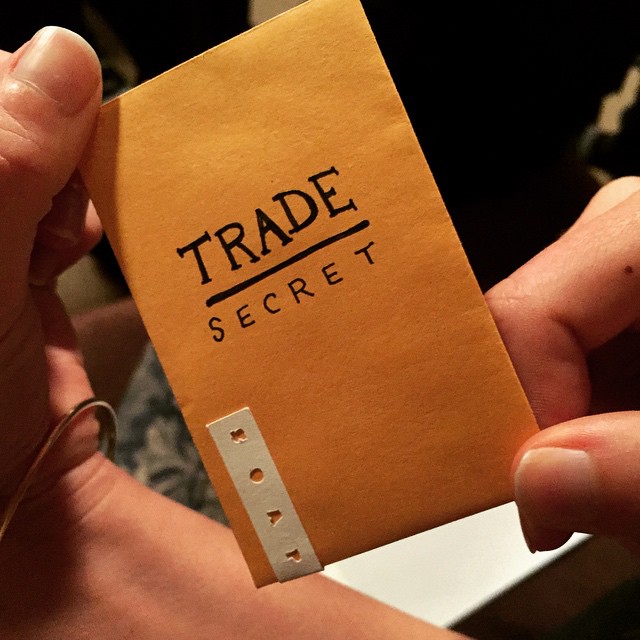
Stealing Industry Secrets: Not as Easy as You Think
Hackers. Spies. Secrets. This is the menacing language of industrial espionage. But how easy is it to plunder a company for its ideas? Not very, says our guest, Douglas O’Reagan, a historian of science and technology. Throughout history, O’Reagan argues, stealing trade secrets has proven more complicated than lifting a blueprint or section of computer code. What makes a company successful is usually much harder to grasp. But first we look at how one company is trying to pass on the skills and secrets responsible for its success. Reporter Susanne Gietl visits the small Bavarian town of Ingolstadt, headquarters of German automaker Audi. There she finds hundreds of Mexican workers learning skills, secrets, and the “German way” to build cars so they can bring that knowledge back to Mexico. Join us for a trip to the murky world of technology transfer. Show Clock: 00:04 Introduction01:40 Feature story: Learning the "German way" 10:20 Interview with Douglas O'Reagan Credits: Hosts: Michal Meyer and Bob KenworthyGuests: Douglas O'ReaganReporter: Susanne GietlProducer: Mariel CarrAssociate Producer: Rigoberto Hernandez Music: Music courtesy of the Audio Network. "Odyssey" by Kevin MacLeod Licensed under Creative Commons: By Attribution 3.0

Genetic Engineering and Organic Farming: An Unexpected Marriage
Celebrities, politicians, and scientists have fiercely debated the safety of using genetically modified organisms, or GMOs, in food. It remains to be seen whether GMO labeling becomes mandatory in the United States, but there’s no doubt that the “GMO-free” sticker is garnering the prestige and premium prices already reaped by the labels “organic” and “gluten-free.” But what’s the big fuss? And how did this great GMO debate begin?To find out Distillations goes to the soy and corn fields of Iowa where reporter Amy Mayer hears the perspectives of a few Midwesterners, including two farmers who have found a lucrative niche for the GMO-free crops they’re growing. Then, we’ll talk with plant geneticist Pamela C. Ronald and organic farmer Raoul Adamchak. Together they wrote Tomorrow’s Table: Organic Farming, Genetics, and the Future of Food. And they’re married—to each other.

Where Have All the FEMA Trailers Gone?
Ten years ago Hurricanes Katrina and Rita tore into the Gulf Coast and displaced more than one million residents. For many of these people, trailers provided by the Federal Emergency Management Agency became their homes. But many of the new occupants soon found it hard to breathe, suffering flulike symptoms, stinging eyes, and nosebleeds. The culprit was formaldehyde, which emanated from the hastily assembled, substandard materials used to make the trailers. A decade after the storms Distillations follows CHF researcher and medical anthropologist Nick Shapiro as he searches for the remaining FEMA trailers. His search takes him to the oil fields of North Dakota, where a different kind of housing crisis is taking place.

Science and the Supernatural in the 17th Century
Most of us are familiar with the achievements of Galileo and Newton, but who were their peers? And what was it like to practice science in the 16th and 17th centuries? Come geek out with us as we travel back in time and explore what the world was like when science and the supernatural were not so far apart. We talk to two historians of science, Deborah Harkness and James Voelkel. Harkness is the author of The Jewel House: Elizabethan London and the Scientific Revolution as well asthe All Soul’s Trilogy, a popular fantasy series filled with witches, vampires, demons, scientists, and historians. Voelkel is the curator of rare books at CHF and an expert on Johannes Kepler, a 17th-century astronomer, mathematician, and astrologer. Though we were unable to time travel for this show (much to our dismay), we did get to visit the Making and Knowing Project’s laboratory at Columbia University, where a group of historians of science are reconstructing a 16th-century workshop and re-creating recipes from an anonymous craftsperson’s manuscript. And we made this video. SHOW CLOCK: 00:05 Introduction 01:10 Interview with Deborah Harkness and James Voelkel CREDITS: Hosts: Michal Meyer and Bob Kenworthy Guests: Deborah Harkness and James Voelkel Producer & Editor: Mariel Carr Music courtesy of the Audio Network.

Distillations Turns 200
This is Distillations’s 200th episode, and we’re celebrating! We pored through hundreds of shows and pieced together some of the funniest, grossest, and most surprising moments in Distillations history. Still chuckling from episode 166, "Alchemy After Dark," where CHF’s rare book curator Jim Voelkel cries from laughter while reading a steamy alchemical passage from yesteryear? Still trying to forget the body-cheese experiment from episode 156, "Hard to Stomach"? Or maybe you’re still perplexed about how a Viagra tablet might wind up in your herbal supplement, as explained in episode 197, "Fads and Faith"? We visit these moments and many more. Thanks for listening, and we hope you’ll join us for the next 200 shows! CREDITS: Hosts: Michal Meyer and Bob Kenworthy Producer & Editor: Mariel Carr Music courtesy of the Audio Network.

Acts of God, Acts of Men: When We Turn Nature into a Weapon
Mother Nature can do a lot of damage. Tornadoes, hurricanes, floods, and droughts destroy landscapes and ruin lives. But what happens when humans are the ones creating these disasters? This episode of Distillations explores the many ways humans have provoked nature’s destructive forces purposefully and inadvertently through history. Our journey begins in Oklahoma, a state that now has more earthquakes than California. Reporter Anna Stitt talks to the people affected by these new quakes and finds out how their lives have changed. Then we talk to historian Jacob Darwin Hamblin about his latest book, Arming Mother Nature: The Birth of Catastrophic Environmentalism. He tells us how Cold War military planners sought to use the environment as a weapon and in the process discovered how vulnerable our planet really is. SHOW CLOCK: 00:03 Introduction 01:20 Oklahoma, the Earthquake State 11:07 Interview with Jacob Darwin Hamblin CREDITS: Hosts: Michal Meyer and Bob Kenworthy Guest: Jacob Darwin Hamblin Reporter: Anna Stitt Producer & Editor: Mariel Carr Music courtesy of the Audio Network. Check out Distillations magazine at distillations.org, where you'll find articles, videos, and our podcast.

Old Brains, New Brains: The Human Mind, Past and Present
The early days of neuroscience relied on tragedy to strike—a rabies infection, a botched lobotomy—before doctors could peek inside the brains of humans. Today advanced technology, such as the functional MRI, helps scientists study brains (and healthy ones at that) far more easily. The revelations they’re making call into question conventional ideas of maturity and our capacity for free will. The story begins at a unique laboratory at Michigan Technological University, called the Mind Music Machine, where reporter Allison Mills talks to a cognitive scientist who’s trying to develop technology that can interpret our emotions. Then we talk about the history of neuroscience with Sam Kean, a regular contributor to Distillations magazine and author of the recent book The Tale of the Dueling Neurosurgeons. Frances Jensen, a neuroscientist and author of The Teenage Brain, brings us into the present and explains the science behind why teenagers drive their parents crazy. SHOW CLOCK: 00:03 Introduction 02:01 The Mind Music Machine 12:38 Sam Kean on the history of neuroscience 28:22 Frances Jensen on the teenage brain CREDITS: Hosts: Michal Meyer and Bob Kenworthy Guests: Sam Kean and Frances Jensen Reporter: Allison Mills Producer & Editor: Mariel Carr Music courtesy of the Audio Network. Check out Distillations magazine at distillations.org, where you'll find articles, videos, and our podcast.

Fads and Faith: Belief vs. Fact in the Struggle for Health
In 2014 the United States had 650 reported cases of measles, a disease made preventable by a vaccine introduced 30 years ago. The majority of these measles victims were children whose parents chose not to vaccinate them. Meanwhile at least 85,000 dietary supplements line the shelves of GNC and other “big box” chains, as well as smaller health food stores. Even though the FDA cannot assure the safety or effectiveness of any of these products before they're sold, they enjoy widespread popularity in the United States. This episode of Distillations explores what connects these two issues. Our journey starts in Shanghai, where reporter Rebecca Kanthor investigates a strange fashion trend among pregnant women—a special apron meant to protect its wearers from the harms of electromagnetic radiation. Then we talk with Paul Offit, an infectious disease pediatrician at Children’s Hospital of Philadelphia and author of Bad Faith: When Religious Belief Undermines Modern Medicine, and Catherine Price, author of Vitamania: Our Obsessive Quest for Nutritional Perfection,about what drives these fads. Our guests suggest that faith, a desire for easy answers, and a lack of trust in medical science all come into play. SHOW CLOCK: 00:03 Introduction 01:40 Pregnancy Aprons in Shanghai 11:33 Interview with Catherine Price and Paul Offit CREDITS: Hosts: Michal Meyer and Bob Kenworthy Guests: Catherine Price and Paul Offit Reporter: Rebecca Kanthor Producer & Editor: Mariel Carr Music courtesy of the Audio Network. Check out Distillations magazine at distillations.org, where you'll find articles, videos, and our podcast.

Innovation and Obsolescence: The Life, Death, and Occasional Rebirth of Technologies
Some technologies flash in the pan so quickly they hardly leave a trace (Google Glass anyone?); while others seem to stick around long past their use by date. And still other creations appear to be gone for good, only to make a comeback within a niche—and likely nostalgic—community. We set out to explore the rhymes and reasons behind these ebbs and flows of technological innovation and obsolescence. First we go to a place where digital nostalgia is alive and well: a vintage video arcade outside of Chicago. Reporter Colleen Pellissier tells the story of one man who dedicates his life to keeping these old and cranky machines running. Then we talk to Ben Gross, a historian of technology and a fellow at CHF. He shares his love of the long-forgotten video disc and explains why nothing is obvious when it comes to the successes and failures of technologies. SHOW CLOCK: 00:03 Introduction01:28 The Galloping Ghost Arcade08:50 Interview with Ben Gross CREDITS: Hosts: Michal Meyer and Bob KenworthyGuest: Ben GrossReporter: Colleen PellissierProducer and Editor: Mariel CarrMusic courtesy of the Audio Network and the Free Music Archive. Check out Distillations magazine at distillations.org, where you'll find articles, videos, and our podcast.

Trash Talk: The Persistence of Waste
In case you hadn’t noticed, during our short time on Earth we humans have created a lot of stuff. Some of it is life-altering, like the device you’re looking at right now, and some of it is pretty silly, like those plastic, banana-shaped containers made for holding bananas. Regardless of their value, these objects all have one thing in common: one day they will become trash. For all the time we spend creating these wonders, we don’t devote much energy to thinking about what happens when their intended life-cycles run out. This episode of Distillations traces the history of trash, consumerism, and municipal garbage collection in the United States, and explores what the future holds. First, reporter Daniel Gross tells us the origin story of kitty litter, an ingenious consumer product that transformed a natural resource straight into trash. Then we talk with Carl Zimring, an American environmental historian and Associate Professor of Sustainability Studies at the Pratt Institute in Brooklyn, New York. He describes the early days of garbage collection and tells us why we need to start designing for sustainability. SHOW CLOCK: 00:03 Introduction 01:30 Kitty Littering: Carbon Paw Prints 10:57 Interview with Carl Zimring CREDITS: Hosts: Michal Meyer and Bob Kenworthy Guest: Carl Zimring Reporter: Daniel Gross Producer & Editor: Mariel Carr MUSIC: Cantina Rag, Jackson F. Smith - Free Music Archive Moondots and Polka Beams, Podington Bear - Free Music Archive La Giraffa di Yael, A Smile for Timbuctu - Free Music Archive Additional songs courtesy of the Audio Network. Check out Distillations magazine at distillations.org, where you'll find articles, videos, and our podcast.

Life with HIV: Success without a Cure?
Thirty years ago an HIV diagnosis was a death sentence. Today, sophisticated drug cocktails known as highly active antiretroviral therapy, or HAART, have dramatically changed the fates of people with the disease. They can now live with a chronic manageable disease instead of dying from a fatal one. Yet in many ways we’re treading water: each year the U.S. sees around 50,000 new HIV cases, and estimates show that 20-25% of these people don’t know they’re infected. And, while the drugs are effective, many people throughout the world can’t afford them. So should we consider our response to HIV a complete success story? This episode of Distillations tries to find the answer. Our journey begins in San Francisco’s Castro District, the epicenter of the city’s HIV epidemic in the 1980s. Reporter Andrew Bowen talks to AIDS activist Tez Anderson, who started an organization to combat AIDS Survivor Syndrome. Then we talk to Dr. Mark W. Kline and Andrew P. Rice, a physician and a virologist who have been working on HIV since the 1980s, and ask them if we can claim victory. SHOW CLOCK: 00:03 Introduction 01:49 Surviving Survival: Tez Anderson's Story 12:06 Interview with Mark W. Kline and Andrew P. Rice CREDITS: Hosts: Michal Meyer and Bob Kenworthy Guests: Dr. Mark W. Kline and Andrew P. Rice Reporter: Andrew Bowen Producer & Editor: Mariel Carr We recorded our conversation with Mark W. Kline and Andrew P. Rice during CHF’s 2014 Chao Symposium, “Can We Meet the Challenge of HIV/AIDS?” Special thanks to Houston Public Media for hosting us in their studio. Music courtesy of Audio Network. Check out Distillations magazine at distillations.org, where you'll find articles, videos, and our podcast.

Babies on Demand: Reproduction in a Technological Age
At the beginning of the 19th century women in the United States had an average of seven or eight children. By 1900 they had only three or four, and today 35% of Americans have exactly two children. How did this happen? This episode of Distillations explores the role technology has played in reproduction, and how it has affected the ethical and moral landscape that surrounds it. First, reporter Allison Quantz talks to her sister to find out what she plans to do with her extra frozen embryos. Along the way Quantz learns that there are more than one million frozen embryos in the United States with similar uncertain futures. Then we talk with Deanna Day, a historian of medicine and technology and a post-doctoral fellow at CHF, and Lara Freidenfelds, a historian who writes about women’s health, sex, and reproduction in America. SHOW CLOCK: 00:03 Introduction 01:46 A tale of unused embryos 11:35 Interview with Deanna Day and Lara Freidenfelds CREDITS: Hosts: Michal Meyer and Bob Kenworthy Guests: Deanna Day and Lara Freidenfelds Reporter: Allison Quantz Producer & Editor: Mariel Carr Music courtesy of Audio Network and the Free Music Archive. Check out Distillations magazine at distillations.org, where you'll find articles, videos, and our podcast.

Fogs of War: The Many Lives of Chemical Weapons
Chemical weapons have played a chilling role in human history, ever since they were first used in World War I. As reports of more recent use continue to cycle through the news, we decided to take a deeper look. We wanted to understand why chemical weapons were created in the first place, the ethical dilemmas inherent in their use, and the complicated process of getting rid of them. The story begins in Belgium, where reporter Helena de Groot visits a farm in Flanders Fields—the frontline during World War I—and discovers that for some people the war isn’t yet over. Then we talk to Jeffrey Johnson, a historian of science and technology at Villanova University with a special interest in the origins of chemical warfare, and Amy E. Smithson, a senior fellow at the James Martin Center for Nonproliferation Studies, who specializes in modern-day chemical and biological weapons and their proliferation. Our guests discuss the past and present of chemical weapons, and share their thoughts about the future of warfare. SHOW CLOCK: 00:03 Introduction 01:10 Cleaning up Flanders Fields 08:56 Interview with Amy E. Smithson and Jeffrey Johnson CREDITS: Hosts: Michal Meyer and Bob Kenworthy Guests: Amy E. Smithson and Jeffrey Johnson Reporter: Helena de Groot Producer & Editor: Mariel Carr Music courtesy of the Audio Network, the Free Music Archive and Mobygratis.com. Check out Distillations magazine at distillations.org, where you'll find articles, videos, and our podcast.

Wake up and Smell the Story: Sniffing out Health and Sickness
If you asked people which of their senses they most feared losing, they'd probably say sight or hearing. But what about the ability to smell? This episode of Distillations examines what is perhaps our most underrated sense, and ponders what life would be like without it. We hit the streets of South Philadelphia to understand how a pervasive odor troubled neighborhood residents in the summer of 2014. Then we hear the story of Mario Rivas, a man who has lived his whole life without a sense of smell, and the great lengths he went to gain one. Then, we'll talk to two smell experts, Pamela Dalton, a psychologist at the Monell Chemical Senses Center in Philadelphia, and David Barnes, a professor of the history of medicine and public health at the University of Pennsylvania. Our guests discuss the connection between smelling, odors, and emotions, as well as the history of odors, germs, and public health crises. SHOW CLOCK: 00:01 Introduction 01:10 South Philadelphia's Great Stink of 2014 05:31 The Man Who Couldn't Smell 15:45 Interview with Pamela Dalton and David Barnes CREDITS: Hosts: Michal Meyer and Bob Kenworthy Guests: Pamela Dalton and David Barnes Reporters: Mariel Carr and Jocelyn Frank Producer & Editor: Mariel Carr Music courtesy of the Audio Network. Check out Distillations magazine at distillations.org, where you'll find articles, videos, and our podcast.

The Teeth Beneath Your Feet: Oddities in Urban Archaeology
Where can you find a teacup, the molar of a goat, and an arrowhead all in one place? At an urban archaeology site, that’s where. This episode of Distillations goes underground, and reveals the fascinating worlds beneath our city shoes. First, we visit an artifact processing lab where volunteers are dusting off thousands of objects from a historic street in Philadelphia. Then we stop in on an excavation site alongside Interstate 95. Then, we'll talk to Doug Mooney, a senior archaeologist at URS corporation and the president of the Philadelphia Archaeological Forum, and Deirdre Kelleher, an archaeologist finishing her doctorate at Temple University. They describe their experiences with public archaeology, debunk a few of the field’s myths (no dinosaurs here, folks) and describe the unique process of digging in cities. SHOW CLOCK: 00:03 Introduction 01:05 After the dig: Artifact processing at Temple University 05:40 During the dig: Uncovering history along I-95 09:41 Interview with Deirdre Kelleher and Doug Mooney CREDITS: Hosts: Michal Meyer and Bob Kenworthy Guests: Deirdre Kelleher and Doug Mooney Reporter, Producer & Editor: Mariel Carr MUSIC: “Quirky Sleuth” Philip Guyler, Audio Network “Actual Reality” Lucky Dragons “Nature Kid” Podington Bear “Hallon” Christian Bjoerklund “What Is Its Vessel?” Dave Merson Hess “Fisherman” Dave Merson Hess “I Like Dogs” Dave Merson Hess “Dream” (instrumental) Chan Wai Fat “The Bear’s Just for Show” Krackatoa “Healing Sleep” Infinite Third “Orange Juice” Podington Bear “Starling” Podington Bear All songs courtesy of the Free Music Archive, freemusicarchive.org Check out Distillations magazine at distillations.org, where you'll find articles, videos, and our podcast.

Intoxication and Civilization: Beer's Ancient Past
This show takes on the frothy subject of beer, and explores the science, culture, and history behind the suds. First, Bob and Michal go back to school--beer school--and they learn a few things about what makes beer so tasy. Then we talk to Patrick E. McGovern, a beer and wine archaeologist, and Roger Barth, a chemist, professor, and home brewer. They discuss the science behind beer, how modern craft breweries can help us understand ancient beers, and how technology has allowed us to drink like an ancient king. They also discuss the spiritual side of beer and the role beer has played in human evolution. SHOW CLOCK 00:07 Introduction 00:57 Bob and Michal go to beer school 07:12 Interview with Patrick E. McGovern and Roger Barth CREDITS Hosts: Michal Meyer and Bob Kenworthy Guests: Patrick E. McGovern and Roger Barth Reporter, Producer & Editor: Mariel Carr MUSIC: "Take Me Higher," Jahzzar "Green Lights," Jahzzar "Bill Pickett," Robodub "Portasound Dub" Robodub "Watch the Road Bub," All Urban Outfield "Seconde Introspection," Horten V3 "Devil with the Devil," Underscore Orkestra "Foods that start with Q," All Urban Outfield "The Plaintive Heating Griddle," Ergo Phizmiz "Elephant," Moana "Sunny Day," The Rabbits "Nia," Dubh Thrian "Sonstiges," Podington Bear All songs courtesy of the Free Music Archive, freemusicarchive.org Check out Distillations magazine at distillations.org, where you'll find articles, videos, and our podcast.

Alchemy's Rainbow: Pigment Science and the Art of Conservation
This episode explores the colorful (and sometimes risk-filled) history of pigments and painters, and the conservators who save paintings from the ravages of time and accidental chemistry. First we take an art field trip around Philadelphia as art historian and CHF fellow Elisabeth Berry Drago tries to paint like it's 1699. We visit a butcher shop, a tile store, and an art supply store to try to get what we need. Then we talk to art conservator Mark F. Bockrath and Elisabeth Berry Drago. They tell us about the messy and occasionally dangerous process of making paints from pigments and talk about the transition to using paint from tubes. They also explain the conservation process and tell us why alchemists were so important to painters in early modern times. CREDITS: Hosts: Michal Meyer and Bob Kenworthy Guests: Mark F. Bockrath and Elisabeth Berry Drago Reporter, Producer & Editor: Mariel Carr MUSIC: "Pensacola Twilight," Lee Rosevere - freemusicarchive.org "Do What You Can," Lee Rosevere - freemusicarchive.org "Backtime," Lee Rosevere - freemusicarchive.org "Stardust," Phonotrash - freemusicarchive.org "Sunny Day," The Rabbits - freemusicarchive.org "Wonder Cycle," Chris Zabriskie - freemusicarchive.org "Nia," Dubh Thrian - freemusicarchive.org "Tragic," Semyon - freemusicarchive.org "Converge to Some Centre," We Are All Alone - freemusicarchive.org "First," Overlake - freemusicarchive.org "The Plaintive Heating Griddle," Ergo Phizmiz - freemusicarchive.org "Stabbings," Moby - mobygratis.com Check out Distillations magazine at distillations.org, where you'll find articles, videos, and our podcast.

Meet Joe Palca: A Radio Story About Making Radio Stories
Joe Palca is one of the best science storytellers out there. In his 20 years as an NPR science correspondent he’s covered all sorts of obscure topics, from soccer-playing robots and oyster glue to turtle paleontology. He finds the humor in the serious and the thoughtful in the funny, usually by focusing on the human elements of stories. “Stories are usually about people, those are the ones we remember. We don’t remember stories about transuranic elements,” Palca says. We took this episode of Distillations on the road and visited Palca at NPR headquarters in Washington, D.C., where we got a behind-the-scenes tour of his program, Joe’s Big Idea. CREDITS: Hosts: Michal Meyer and Bob Kenworthy Reporter, Producer & Editor: Mariel Carr MUSIC: “Converge To Some Centre”- We Are All Alone “Where the Magic Happens”- THERE “Teletransportation” - Coma Stereo “Elsewhere” - Phonotrash “Solutions” - Lee Rosevere “Tragic”- Semyon All songs from the Free Music Archive, freemusicarchive.org Check out Distillations magazine at distillations.org, where you'll find articles, videos, and our podcast.

Drawing History: Telling the Stories of Science through Comics and Graphic Novels
How do you show what the inside of an atom looks like? Or how a scientist feels in the moment of discovery? We decided to approach the human stories of science in a new way: by visualizing them. First we visit author and illustrator Jonathan Fetter-Vorm in his studio. Then we stop in on a college animation class and hear from students creating cartoons about chemistry and fairies. Then we talk to historian Bert Hansen and author and Jonathan Fetter-Vorm. They tell us how the comics of the 1930s, 40s and 50s relayed stories of “real heroes”—including doctors, chemists and physicists, and how new graphic genres are engaging readers and sparking their interest in history and science. They both suggest that surprise, emotion, and showing the impossible all work to engage readers in ways that written words alone cannot. SHOW CLOCK: 00:04 Introduction 01:15 Studio visit #1: Jonathan Fetter-Vorm in Brooklyn 03:54 Studio visit #2: University of the Arts in Philadelphia 07:00 Interview with Bert Hansen and Jonathan Fetter-Vorm 15:06 Reflections from Bob and Michal LINKS TO CONTENT: "Heroism in Medical Science" from Dupont's radio drama, Cavalcade of America "Now I am become Death" Robert Oppenheimer speech RELATED VIDEOS: "Drawing Stories of Science with Jonathan Fetter-Vorm" "How the Public Became Interested in Medical Science" "Science for Artists: University of the Arts Students Reflect on Animating Objects from CHF's Collection" CREDITS: Hosts: Michal Meyer and Robert Kenworthy Guests: Jonathan Fetter-Vorm and Bert Hansen Reporter, Producer & Editor: Mariel Carr MUSIC: “Stabbings”- Moby, mobygratis "Isolate"- Moby, mobygratis “The Plaintive Heating Griddle”- Ergo Phizmiz, Free Music Archive “Awake in the Dream”- Infinite Third, Free Music Archive "Sunny Day"- The Rabbits, Free Music Archive "Do What You Can"- Lee Rosevere, Free Music Archive "My Friends"- Quiet Orchestra, Free Music Archive “Tragic”- Semyon, Free Music Archive Check out Distillations magazine at distillations.org, where you'll find articles, videos, and our podcast.

Why the Chicken Became a Nugget and Other Tales of Processed Food
Have you ever wondered how chicken nuggets are made? Or what propylene glycol monostearate, monocalcium phosphate, or other listed ingredients are doing in your favorite packaged snacks? Distillations hosts Michal Meyer and Robert Kenworthy certainly did, and they went to the corner deli to inspect some processed food themselves. They also spoke with experts Bryant Simon, a historian, and David Schleifer, a sociologist, about how trans fats and chicken nuggets arrived on the food scene as the healthier options, but have since turned into villains. Both Simon and Schleifer suggest that when it comes to deciding what we eat, we might have less choice than we think. Class, geography, and convenience (for both food makers and food eaters) all play a role. SHOW CLOCK: 00:03 Introduction 00:36 Michal Meyer tries her first Tastykake 03:39 Interview with Bryant Simon and David Schleifer LINKS TO CONTENT: "Afternoon Snack" - A video starring Michal Meyer and Bob Kenworthy. CREDITS: Hosts: Michal Meyer and Robert Kenworthy Guests: David Schleifer and Bryant Simon Producer & Editor: Mariel Carr MUSIC: “Run Up”- Moby, mobygratis “Stabbings”- Moby, mobygratis “Christmas All Alone”- Candlegravity, Free Music Archive “Elsewhere”- Phonotrash, Free Music Archive “Tragic”- Semyon, Free Music Archive “Dragon’s Lair”- Thiaz Itch, Free Music Archive “The Spirit”- Waylon Thornton, Free Music Archive “Heroines”- Diablo Swing Orchestra, Free Music Archive Check out Distillations magazine at distillations.org, where you'll find articles, videos, and our podcast.

Digging Up the Bodies: Debunking CSI and Other Forensics Myths
Thanks to modern technology most crimes these days can be neatly solved in under an hour. At least that's what fictional TV shows like CSI seem to suggest. We wanted to address the so-called "CSI Effect," caused by the simplification of forensic science in popular culture. CSI and likeminded TV shows–with their heroic investigators solving crimes in mere minutes–mislead viewers and affect real court cases. The reality of investigation is much slower and more complex, but no less fascinating. Hosts Michal Meyer and Robert Kenworthy speak with experts Anna Dhody, a physical and forensic anthropologist, and Lisa Rosner, a historian. They discuss the early days of solving crime and the on-going chemistry of the human body throughout life and death. SHOW CLOCK: 00:03 Introduction 02:03 Past and present: the "CSI Effect" 05:00 Forensic science: its beginnings 06:40 Burke and Hare: the not-quite body snatchers 09:34 Digging up the bodies: mass murder in Peru 11:11 The chemistry of bodies 12:44 Skulls, phrenology, and race CREDITS: Hosts: Michal Meyer and Robert Kenworthy Guests: Anna Dhody and Lisa Rosner Producer & Editor: Mariel Carr "Stabbings" by Moby, courtesy of Mobygratis.com check out Distillations magazine at distillations.org, where you'll find articles, videos, and our podcast.

Zombies! How We Learned to Stop Worrying and Love the Zombie Apocalypse
What can zombies teach us about our fears of survival? CHF's Michal Meyer and Bob Kenworthy talk to Deanna Day, a CHF fellow, and Robert Hicks, director of the College of Physicians’ Mütter Museum about what zombies can tell us about apocalyptic diseases and medical cures. With the popularity of post-apocalyptic storytelling at an all-time high, CHF decided to look into the science, history, and sociology behind these fears. SHOW CLOCK: 00:20 Introduction 01:55 Interview with Deanna Day and Robert Hicks 28:48 Reflections with Michal Meyer and Bob Kenworthy 34:48 Closing Credits CREDITS: Hosts: Michal Meyer and Bob Kenworthy Guests: Deanna Day and Robert Hicks Editor: Mariel Carr Check out Distillations magazine at distillations.org, where you'll find articles, videos, and our podcast.

Atomic Power and Promise: What's Become of Our Nuclear Golden Age?
Some say we are on the verge of a bright future in which nuclear power will play a major role in responding to climate change. Others say that we should expect more Fukushimas. Whichever way our nuclear future goes, there will be tradeoffs between energy and the environment. Hosts Michal Meyer and Robert Kenworthy speak with nuclear historians Alex Wellerstein and Linda Richards. They discuss how our turbulent nuclear past has shaped, for better and for worse, our current attitudes.
Episode 181: Chemotherapy
Ancient Greek doctors knew about it, but could do nothing about the scourge we know as cancer. Producer Ed Prosser interviews historian Viviane Quirke about the development of chemotherapy drugs in the 20th century, drugs that for the first time offered hope to cancer patients. Next up producer Christine Laskowski goes on a very personal journey. Last year her father was among the more than 1 million Americans diagnosed with cancer. Along with radiation, his treatment included a drug called cisplatin. Cisplatin has nasty side effects, so why is a drug first used to treat cancer in the 1970s still used for many cancers? Show Clock 00:00 Opening Credits 00:33 Introduction 01:08 Interview: Viviane Quirke 06:58 Chemotherapy: Cisplatin 17:00 Closing Credits Credits Our theme music is composed by Andrew Chalfen. Additional credits may be found at http://chemheritage.org/distillations.
Episode 180: Best of Distillations #12
It’s that time of year again where we dive into our archives and bring back some of our favorite segments from the past year. First, meet Ian MacLeod from our show Shipwrecks, a man who spends much of his time with sunken ships and who knows about the chemistry that eats at them. Next, a 19th-century Philadelphia church designed by Frank Furness is crumbling. Can it be saved? Find out in this feature from our show Neighborhood Preservation. Show Clock 00:00 Opening Credits 00:31 Introduction 01:01 Shipwrecks: Wrecked! 09:33 Neighborhood Preservation: The 19th Street Baptist Church 17:51 Closing Credits Credits Our feature producer is Diane Hope. www.dianehope.com Western Australia’s Maritime Museum in Fremantle http://museum.wa.gov.au/museums/shipwrecks Pearl Harbor National Park Service http://www.nps.gov/valr/index.htm Our theme music is composed and performed by Andrew Chalfen. Additional music includes “Ray – A Life Underwater,” by junior85; “Ghost Science,” by Teeth Mountain; “The Mollusk,” by Ween.
Episode 179: Best of Distillations #11
It’s that time of year again where we dive into our archives and bring back some of our favorite segments from the past year. First we travel to Austin’s South by Southwest Festival from the show Hard to Stomach. Producer Lindsay Patterson takes a sniff at a public science experiment in which participants donated a few things they could do without. Say human cheese! Next, Mary Harris discovers that taste cells don’t just live on tongues. What do these cells get up to in the rest of the human body? Find out in this feature from our show, In Good Taste. Show Clock 00:00 Opening Credits 00:32 Introduction 01:03 Hard to Stomach: Armpit Cheese 08:45 In Good Taste: Super-Tasters 15:04 Closing Credits Credits Our theme music is composed and performed by Andrew Chalfen. Additional credits available at chemheritage.org/distillations.
Episode 178: In the Air
It’s hard to make decisions without information, that’s why some researchers in the San Francisco area are collecting carbon dioxide data at the neighborhood level. As producer Andrew Stelzer discovers, the BEACON project does more than gather data; it also brings home the effects of small-scale events, such as rush hour, and allows researchers to track pollution to its source. Then Eileen Fleming discusses DIY monitoring with Shannon Dosemagen from the Public Laboratory for Open Technology and Science. Show Clock 00:00 Opening Credits 00:44 Introduction 01:44 Air Monitoring 09:02 Interview: Shannon Dosemagen 14:41 Closing Credits Credits Link to BEACON project: http://beacon.berkeley.edu/ Public Lab - http://publiclab.org/ Additional credits available at chemheritage.org/distillations.
Episode 177:The Old Show
Join us for the third installment of The Stages of Life, spotlighting the chemistry found in childhood, adulthood, and old age. We start by looking at what happens to the brain as we move into old age, and then we investigate how some tiny technology can help as hearing fades.
Episode 176: The Adult Show
Today’s episode centers on adulthood. First, Pennsylvania State University’s Suzy Scherf tells us what’s going on in the brains of adolescents. Then, Katrina Roi takes a look at a common consumer product, the condom, and those who want to make it better. SHOW CLOCK 00:00 Opening Credits 00:26 Introduction 01:09 Interview: Inside the Brain 05:38 The Chemistry Behind the Condom 14:10 Closing Credits CREDITS Special thanks to Tori Indivero for interviewing the scientists in this series. Additional credits available at chemheritage.org/distillations.
Episode 175: The Kid Show
Today we begin a three-part series, The Stages of Life, spotlighting the chemistry found in childhood, adulthood, and old age. First, a look at the brains of children, followed by the colorful world of the crayon. SHOW CLOCK 00:00 Opening Credits 00:27 Introduction 01:13 Interview: Inside the Brain 06:14 Colorful Chemistry, the World of Crayons 16:15 Closing Credits CREDITS The Three Stages of Life is part of CHF’s Thanks to Chemistry project, sponsored by BASF Corporation, The Camille and Henry Dreyfus Foundation, DuPont, and ExxonMobil. Additional credits available at chemheritage.org/distillations.
Episode 174: Water Webs
On today's show we look at how delicate desert ecosystems are affected by climate change. Then the impact of toxic metals on Rocky Mountain streams. SHOW CLOCK 00:00 Opening Credits 00:33 Introduction 01:10 Feature: Water Webs 09:10 Interview: Johanna Kraus 14:48 Closing Credits CREDITS Special thanks to Diane Hope and Jody Roberts for researching this show. Additional credits available at chemheritage.org/distillations.
Episode 173: Power Up
On today's show we look at the modern power grid, on the brink of a new era. First, why the smart grid matters. Then, the critical mission of Caltech's Solar Army. SHOW CLOCK 00:00 Opening Credits 00:34 Introduction 01:09 A Smarter Grid 10:11 The Solar Army 16:23 Closing Credits CREDITS Special thanks to Charlie Mintz and Jennifer Dionisio for researching this show. Video produced by Josh Kurz. Additional credits available at chemheritage.org/distillations.
Episode 172: On Beauty
On today's show we look at questionable appearance enhancers. First The Beauty Historian shares some shocking beauty rituals of yore. Then a look at how Brazilian Blowouts are making salon workers sick. SHOW CLOCK 00:00 Opening Credits 00:38 Introduction 01:10 Interview: The Beauty Historian 06:22 Brazilian Blowouts 14:48 Closing Credits CREDITS Special thanks to Stephanie Coleman, Audrey Quinn, Mia Lobel, and Jennifer Dionisio for researching this show. Additional credits available at chemheritage.org/distillations.
Episode 171: Underground Worlds
On today's show we investigate the science beneath our streets. First how a team of amateur speleologists is keeping Howe Caverns safe for future generations. Then a look at Philadelphia's historic sewer system. SHOW CLOCK 00:00 Opening Credits 00:39 Introduction 01:24 Howe Caverns' Annual Cleanup 09:30 Interview: Adam Levine 16:02 Closing Credits CREDITS Special thanks to Amy Kraft,Adam Levine, Mia Lobel, and Jennifer Dionisio for researching this show. Additional credits available at chemheritage.org/distillations.