Design Talk (dot IE)
199 episodes — Page 2 of 4
S12 Ep 2290229 - Go To Market Operations with Neil O'Herlihy
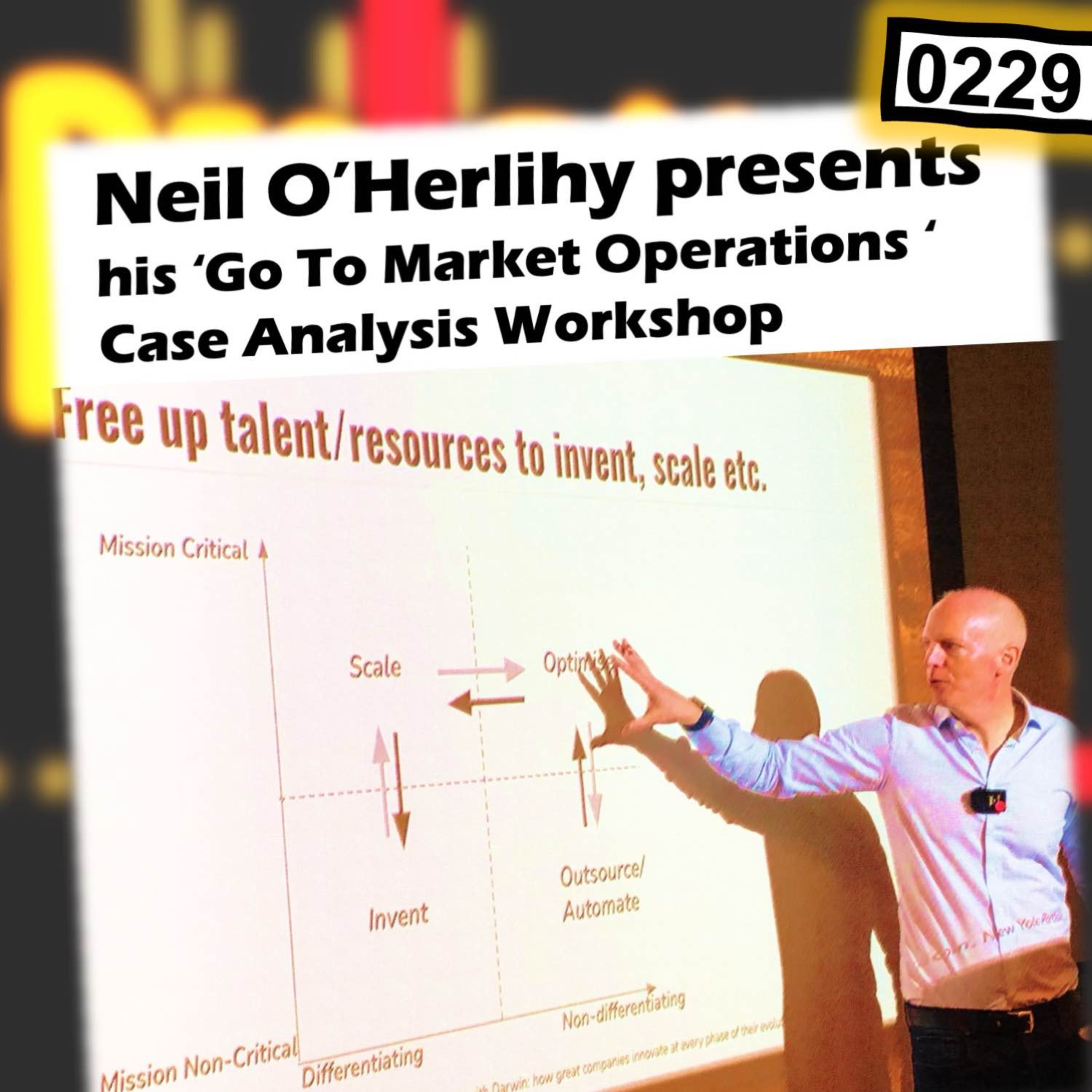
A podcast episode recording of the first session of the Pepperdine/UCD MBA-MSC workshop held on April 17th, 2024.Neil O'Herlihy talks about why your strategic 'gut instinct' is probably going to be wrong in a rapidly changing technology product environment. We are so used to thinking in terms of averages that we find it hard to develop an intuitive understanding of markets where power-law demand/reward curves work. "We don’t know what’s going to happen in the future, we just need to be ready when it does!”Case Study Overview: InceptionExp is a fictitious rapidly growing Silicon Valley company offering unique AI solutions that can improve and optimize themselves through AI. InceptionExp have low costs of sales and very high year-over-year (YoY) revenue growth with huge headroom. They are operating in a context of technology and scale race where there are strong economies of learning and scale. The rapid pace of technological innovation means the environment is highly uncertain. Demand for InceptionExp's product/service in EMEA is skyrocketing, requiring rapid expansion to address this market. InceptionExp's customers and markets exhibit power-law distribution, meaning a small percentage represent the bulk of the opportunity.Given the rapid innovation in the AI-building-AI market we need to decide:1. How should InceptionExp build its EMEA go-to-market team,2. Should it use an EMEA go-to-market hub location3. How it should prioritize resources in a power-law market, and4. How much to focus on sales efficiency?Notes:Competing on the Edge: Strategy as Structured Chaos by Shona L. Brown, Kathleen M. EisenhardtThe Lean Startup by Eric ReisHBR on Strategy podcast (https://hbr.org/podcast/2023/07/defining-a-growth-strategy-in-uncertain-times)episode recounting the different responses by Bill Gates and Steve Jobs on the future of the mobile phone.AcknowledgementsMusic Title: “It was just cold”Artist: Andrew CodemanSource: https://bit.ly/2MsarcjLicense: “CC BY 4.0”Cover Art Title: Eras ITC + photo of Neil presenting + 300% sat, 6,500K, pastels smooth.Artist: Allen HigginsSource: podcast-NeilOHerlihy.pptxLicense: CC BY-NC-SA 4.0Podcast LicenseDesign Talk (dot IE) CC BY-NC-SA 4.0 The license can be viewed at https://creativecommons.org/licenses/by-nc-sa/4.0By taking part you give permission for your voice to be recorded, for the recording to be edited, and for it to be posted and published as a podcast. Hosted on Acast. See acast.com/privacy for more information.
S12 Ep 2320232 - NaviLens for accessible wayfinding with Emily Smith
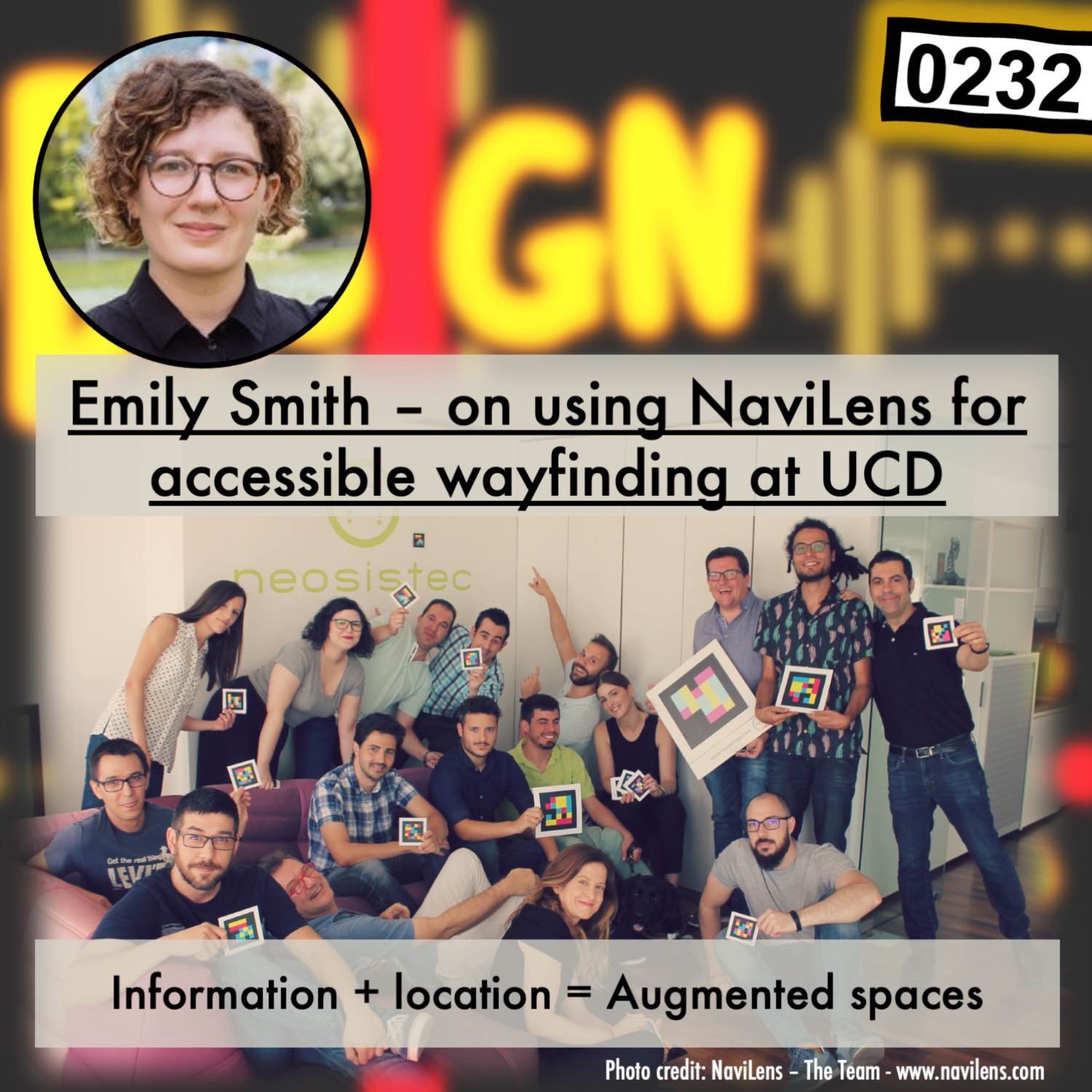
Our hosts are: Sophia, Owen and Tom. Today we are talking with Emily Smith, Assistive Technology Specialist in UCD.Emily, could you say a few words about role and how you came to champion accessibility?· I am always getting lost in buildings. How does anyone find spaces within places? [wayfinding systems, Google Maps, Navilens]· What is NaviLens? How do you use it? [an accessible wayfinding and information app that uses colourful QR codes to help individuals find their way around interior spaces] · Who is the primary target group, and, can anybody use it? · When did you first see a Navilens? [Kellogs pack]· Who makes Navilens? [Spanish company]· Are there any cases where Navilens is being rolled out? [New York MTA - subways and buses]· Can you track the use of a tag? [unique tags give data on number of times they have been scanned]· What do you need to consider when embedding Navilens in a space?· More questions from the audience? That’s probably a good point to wrap it up.Thank you for taking the time to talk with us today.Notes:https://www.navilens.com/en/https://www.ucd.ie/all/aboutus/campusaccessibility/navilens-accessibleinformationandcampusnavigation/https://lighthouseguild.org/how-the-simple-qr-code-became-an-empowering-navigation-tool/AcknowledgementsMusic Title: ImpulseArtist: Ben PruntySource: https://www.benpruntymusic.com/License: Non-transferable license. Permission granted by Ben Prunty (personal letter)Cover Art Title: Futura + The NaviLens Team Photo credit: NaviLens – www.navilens.com. Permission granted “Absolutely! You can use it! Happy to see the result! , don't hesitate to share it with us.”Artist: Allen HigginsSource: podcast-NaviLens.pptxLicense: CC BY-NC-SA 4.0Podcast LicenseDesign Talk (dot IE) CC BY-NC-SA 4.0 The license can be viewed at https://creativecommons.org/licenses/by-nc-sa/4.0By taking part you give permission for your voice to be recorded, for the recording to be edited, and for it to be posted and published as a podcast. Hosted on Acast. See acast.com/privacy for more information.
S12 Ep 2240244 - Policy and European Economic Convergence Seminar
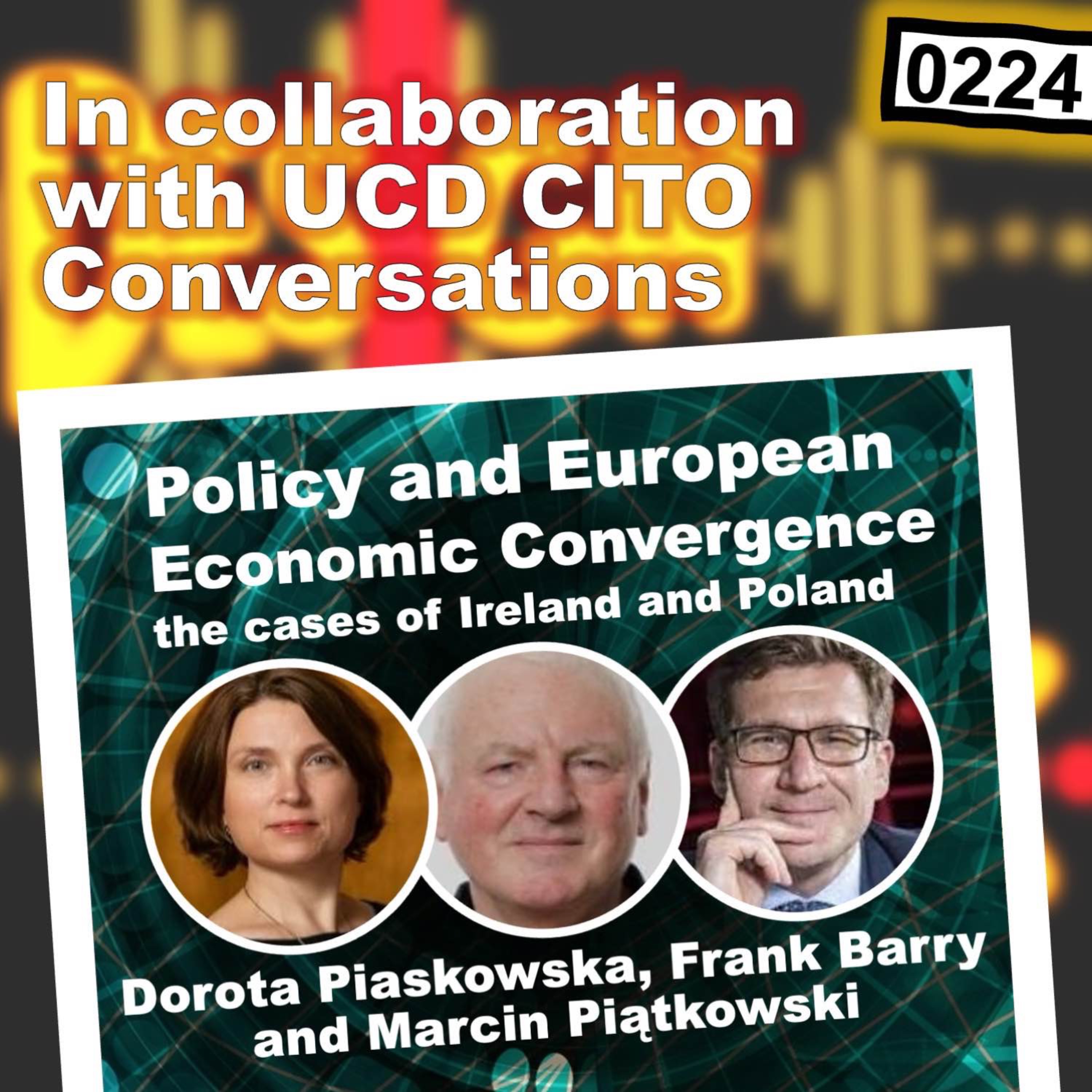
In this seminar, Professors Frank Barry and Marcin Piątkowski contrast Ireland and Poland’s pathways to economic independence and growth, through the lens of industrial and economic policy. This, against the turbulence of world events straddling the 20th and 21st centuries. We look at the growth of these two European nations ex-post being constituent states of colonial empires.The seminar was chaired by Dorota Piaskowska, associate professor in strategy and international business at University College Dublin, Ireland.Frank Barry is Professor of International Business & Economic Development at Trinity Business School and a member of the Royal Irish Academy.And Marcin Piątkowski is Professor of Economics at Kozminski University, Warsaw, and Lead Economist at the World Bank.This talk was recorded in person with a live audience on April 8th, 2024, in the UCD Michael Smurfit Graduate Business School, Dublin, Ireland.The seminar was supported by the Embassy of the Republic of Poland in Dublin and the UCD College of Business.Location - Lecture Theatre N204 (followed by a reception in the Laurence Crowley Boardroom)UCD Michael Smurfit Graduate Business SchoolCarysfort Avenue, Blackrock, County Dublin Thank you for listening, please follow and share if you liked this episode.The musical elements used are from the ‘Adagio in G Minor’ released under a CC-BY 3.0 license.See the show-notes or the description for details.Notes and links:https://www.gov.pl/web/ireland/ambassadorhttps://people.ucd.ie/dorota.piaskowskahttps://marcinpiatkowski.comhttps://www.tcd.ie/research/profiles/?profile=barryfgAcknowledgementsMusic Title: Adagio in G minorArtist: Remo Giazotto attributed to Tomaso AlbinoniSource: https://soundcloud.com/dick-de-ridder/adagio-in-g-minor-albinoniLicensed by Dick de Ridder: CC-BY 3.0Cover Art Title: GraphicsAndTextArtist: Allen HigginsSource: Collage/various (CITO-podcast-FrankMarcin.pptx)License: CC BY-NC-SA 4.0Podcast LicenseDesign Talk (dot IE) CC BY-NC-SA 4.0 The license can be viewed at https://creativecommons.org/licenses/by-nc-sa/4.0By taking part you give permission for your voice to be recorded, for the recording to be edited, and for it to be posted and published as a podcast. Hosted on Acast. See acast.com/privacy for more information.
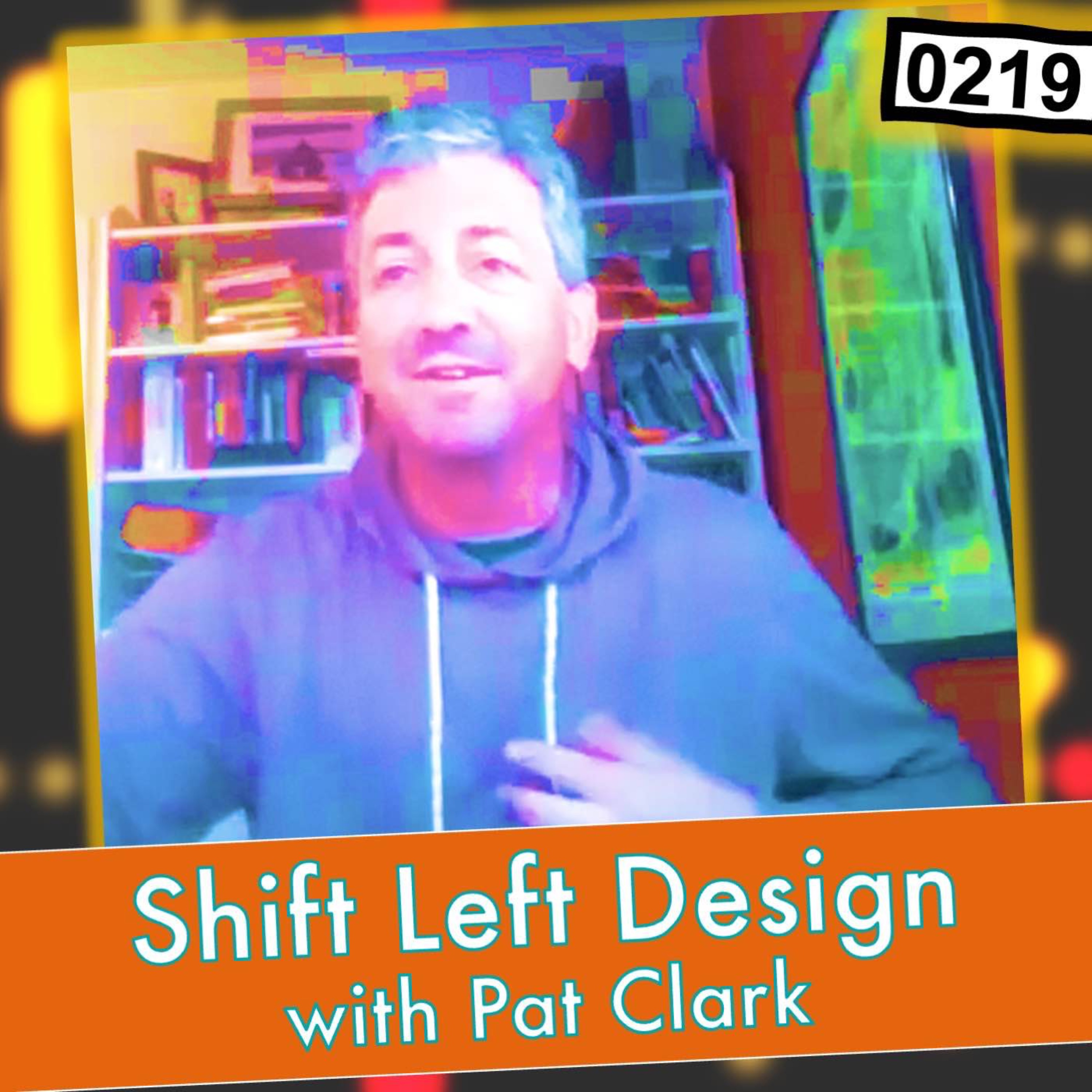
S12 Ep 2190219 - Shift Left Design with Pat Clark
Today I talk with Pat Clark, Senior Staff Engineer at ChargePoint, responsible for the Driver Portal and other web services. Pat is a unique blend of entrepreneur and software engineer with a passion for good design. This will be a provocative conversation about the state of the internet for people with disabilities and diverse needs.So, let’s start with this idea that Accessibility is the Zeroth usability requirement, that we’ve got to consider it in parallel with every other requirement, everywhere, all the time, all at once.Q: Why? Why bake accessibility into everything, why bring it into focus, and how do start the process?Q: What skills do you see as essential? Q: Can you talk about some examples?Q: You called it an ARIA label, so basically, nearly all access problem is an HTML problem.Q: what QA tools do you have in your toolbox. Q: What about installing overlays... Q: What if you break something? Q: You may be putting an awful lot of work into address a small and shrinking portion of the population.Q: Does accessibility affect you personally?Q: Let's finish on an observation that some of the foundational technologies developed for accessibility have gone on to improve everyone's experience of the web. Q: Is there anything else you’d like to add before we wrap-up?.Notes:https://www.chargepoint.com/en-gb/https://driver.chargepoint.com/ (driver portal)https://www.w3.org/WAI/people-use-web/tools-techniques/https://developer.mozilla.org/en-US/docs/Web/Accessibility/ARIA/Attributes/aria-labelAcknowledgementsMusic Title: The WorldArtist: Ben Prunty (2012)Source: https://www.benpruntymusic.com/License: Non-transferable license. Permission granted by Ben PruntyCover Art Title: Screenshot+HighContrast+GlowDiffusedArtist: Allen HigginsSource: podcast-PatAllen.pptxLicense: CC BY-NC-SA 4.0Podcast LicenseDesign Talk (dot IE) CC BY-NC-SA 4.0 The license can be viewed at https://creativecommons.org/licenses/by-nc-sa/4.0By taking part you give permission for your voice to be recorded, for the recording to be edited, and for it to be posted and published as a podcast. Hosted on Acast. See acast.com/privacy for more information.
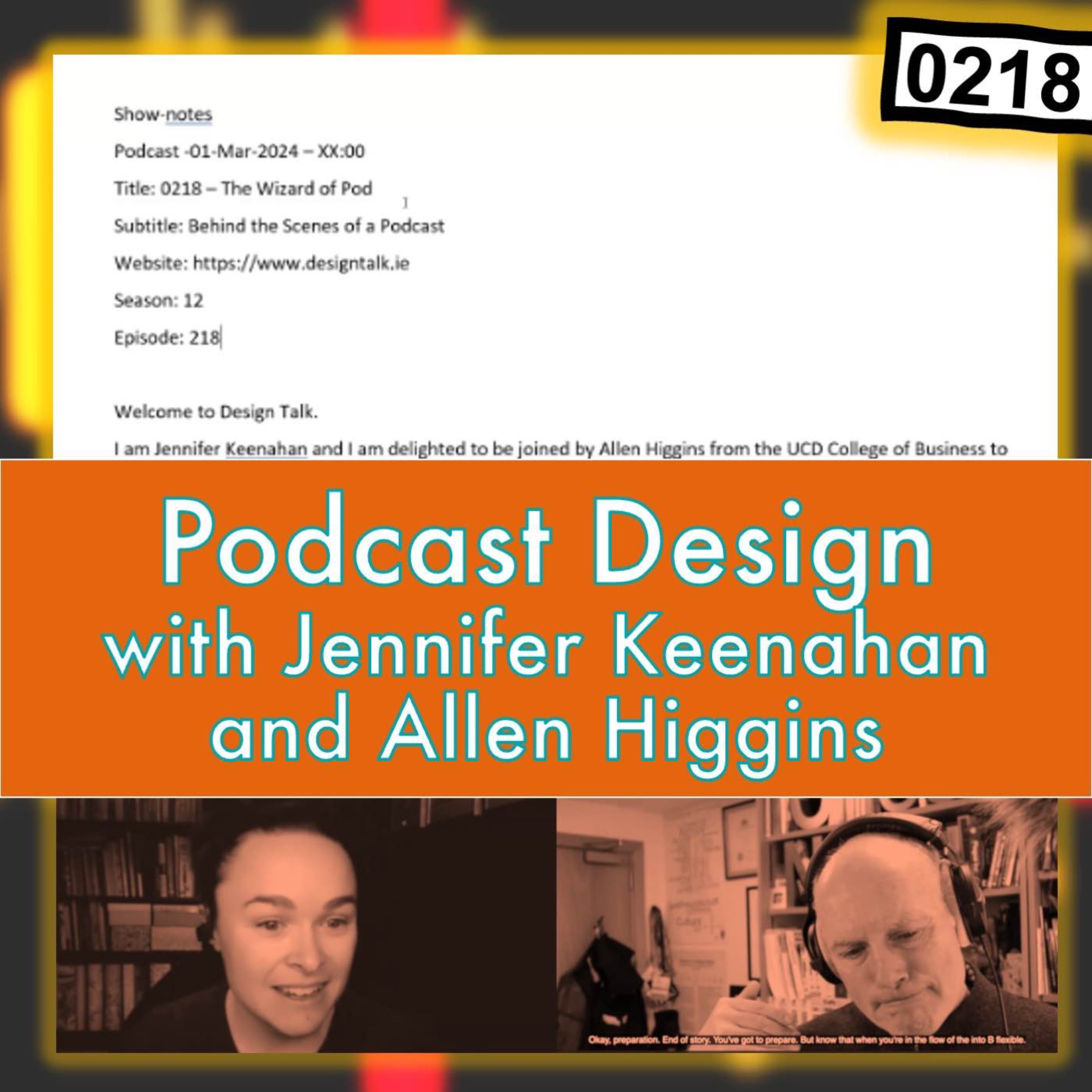
S12 Ep 2180218 - Podcast design with Jennifer Keenahan and Allen Higgins
Welcome to Design Talk.I am Jennifer Keenahan and I am delighted to be joined by Allen Higgins from the UCD College of Business to talk about shaping and delivering a podcast.Today I have turned the tables on Allen. Usually, he’s behind the scenes directing the show. Today I want him to share what goes into planning and producing an episode.To start, Allen could you tell us a little about your background and how you came to bring podcasting into your teaching practice.Q: Let’s start with your teaching pod, Design Talk. You had this idea that you wanted to make a podcast, how did you start? Q: So, let’s say I have an idea that I want to make a podcast. How do I start? Q: What kinds of pods are there; how do you choose one? Q: Let’s talk a bit more about format. Q: How do you organise or structure your own pod? Q: What is the key to a strong interview? Q: So, sticking with interviews, how do you prepare?Q: Questions from the audience?Q: Is there anything you’d like add?Mentions, links and notes:Jennifer Keenahan (link)Mairéad O’Reilly – (link)Allen Higgins (link)Ruth Campion (link). Ruth is a game designer and 3D artistConor Reid (link). Conor hosts and produces his own award-winning arts and culture podcast, Words To That EffectSiobhán McHugh (link). Siobhán is an Irish-Australian author, podcast producer and critic, oral historian, audio documentary-maker and journalism academic.Audacity (link). Audacity is a freely available open-source DAW, a Digital Audio Workstation; a highly regarded and extremely capable software environment for audio engineering.AcknowledgementsMusic Title: Voltaic FluctuationsArtist: Ben PruntySource: https://www.benpruntymusic.com/License: Non-transferable license. Permission granted by Ben PruntyCover Art Title: Complex collageArtist: Allen HigginsSource: vignette_version.pptxLicense: CC BY-NC-SA 4.0Podcast LicenseDesign Talk (dot IE) CC BY-NC-SA 4.0 The license can be viewed at https://creativecommons.org/licenses/by-nc-sa/4.0By taking part you give permission for your voice to be recorded, for the recording to be edited, and for it to be posted and published as a podcast. Hosted on Acast. See acast.com/privacy for more information.
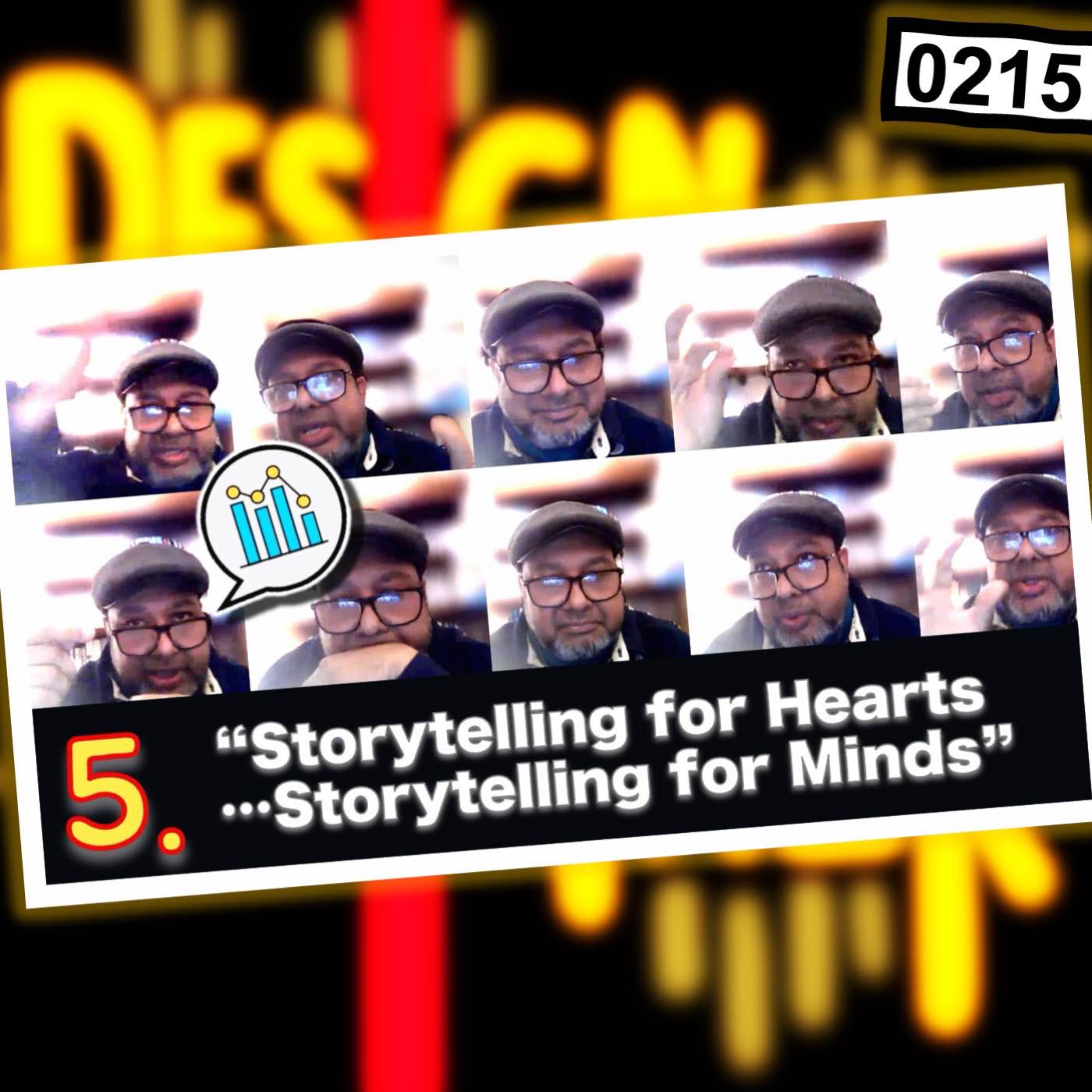
S13 Ep 2150215 - BAEF Seminar - Storytelling with S M A Moin
Hosted by Christina Phillips.We are proud to announce this seminar with Dr S M A Moin, a Senior Lecturer (Associate Professor) in Marketing at Queen Mary University of London, and Director of Teaching Associates at the School of Business. He is an interdisciplinary researcher and a published author in brand storytelling, strategy, leadership and creativity & innovation.Storified and creative teaching can break the clutter and connect with students’ rational brains by tapping into their emotions.Further reading, sources, mentions and acknowledgements.S. M. A. Moin. Creativity in the Imagination Age. Springer Books, (2022). S. M. A. Moin. Brand Storytelling in the Digital Age: Theories, practice and application. London: Palgrave Macmillan, (2020).Kay Peterson and David A. Kolb. How you learn is how you live: Using nine ways of learning to transform your life. Berrett-Koehler Publishers, (2017).HBP editors. Why your students are disengaged and and what you can do to draw them back in. Harvard Business Publishing, (2022)Joseph Campbell. The Hero with a Thousand Faces. Various publishers, (1949-2008)Alighieri Dante. The Divine Comedy. Various publishers, (-2017).Contact details:S M A Moin -- https://www.linkedin.com/in/smamoin/ Christina -- https://www.linkedin.com/in/christinajphillips/A video version of this episode is published on the Business Analytics Educators Forum’s YouTube channel at: AcknowledgementsMusic Title: Guitar HouseArtist: josh pan (2020)Source: https://www.youtube.com/watch?v=JL-LId8ZWBMLicense: License CC BY 3.0Cover Art Title: Complex collaboration for BAEFArtist: Nuno Machado and Allen HigginsSource: vignette_version.pptxLicense: CC BY-NC-SA 4.0Podcast LicenseDesign Talk (dot IE) CC BY-NC-SA 4.0 The license can be viewed at https://creativecommons.org/licenses/by-nc-sa/4.0By taking part you give permission for your voice to be recorded, for the recording to be edited, and for it to be posted and published as a podcast. Hosted on Acast. See acast.com/privacy for more information.
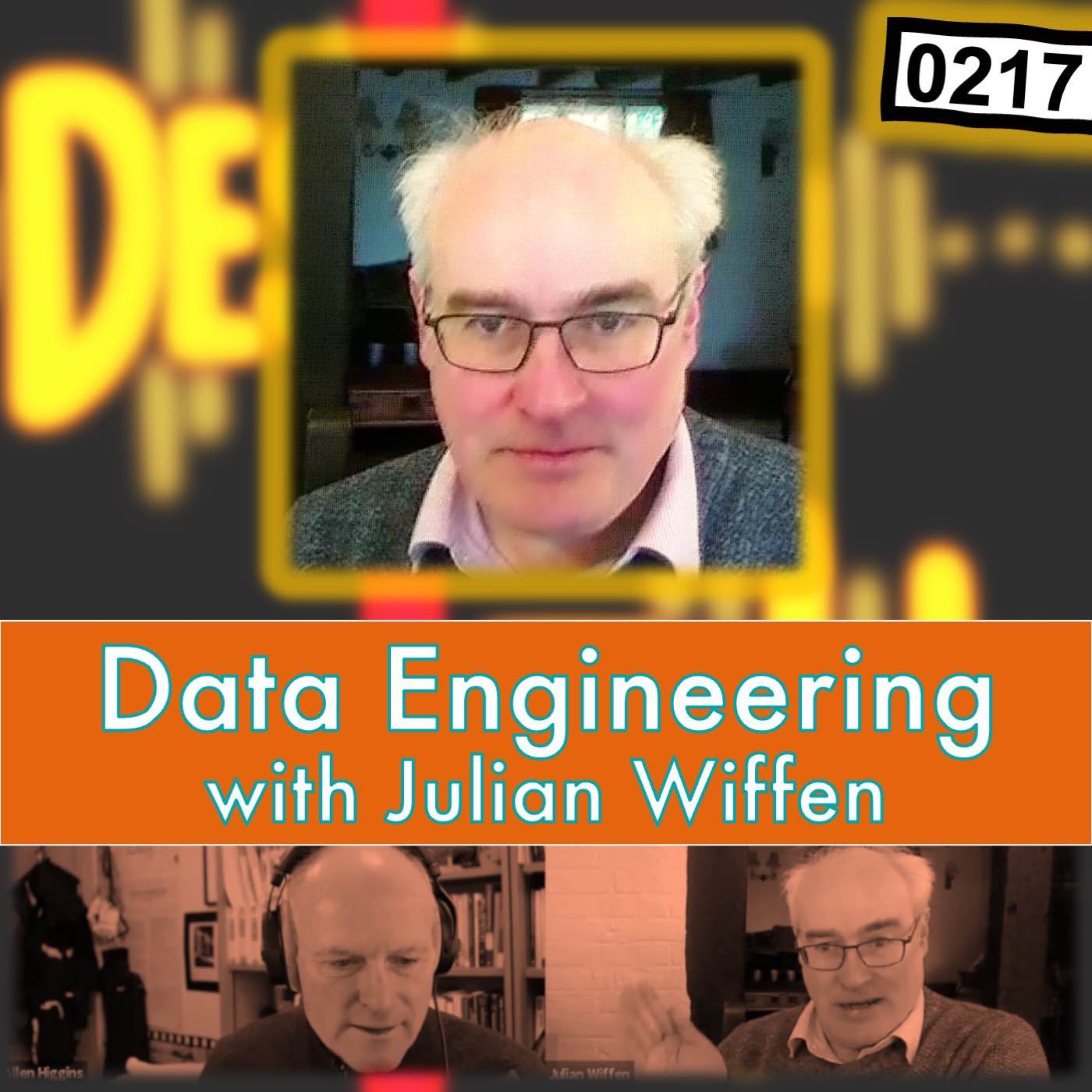
S12 Ep 2170217 - Data Engineering with Julian Wiffen
I am delighted to have Julian Wiffen to talk about some of the latest breakthroughs in generative AI and their application to data engineering.Julian is Director of Data Science for the Product team at Matillion.· To start, Julian could you share a little about your background in Data Science and introduce us to Matillion and its mission?· How does an independent services solutions company leverage while adding value to the models generated by the large LLM developers?· Can you share your some of the learning and discoveries you’ve made by researching and applying Gen AI to data engineering? · Can you share your thoughts on its impact on the way data science is done? [· What do you consider to be the entry-level skillset? · How do you approach teaching and learning skills in the area and what tips would you give a university educator?· On the topic of regulation and ethics for data scientists working with Gen AI. There is talk of mandating the 'human in the loop' approach for safety, that may even become regulation. How you see ‘human in the loop’ working?· Who are the key data science authors and media you refer to? [books, blogs, pods] · Is there anything you’d like add?Notes:Julian’s blogs at Matillion· Matillion: The Data Engineer’s Guide to Prompt Engineering part 1 (link)· Matillion: The Data Engineer’s Guide to Prompt Engineering part 2 (link)· Matillion: The Data Engineer’s Guide to Prompt Engineering part 3 (link)· Matillion: Evaluating the performance of different LLMs (link) Recommended to follow Andrew Ng, researcher-entrepreneur (homepage)AcknowledgementsMusic Title: The WorldArtist: Ben Prunty (2012)Source: https://www.benpruntymusic.com/License: Non-transferable license. Permission granted by Ben PruntyCover Art Title: Complex collaboration for BAEFArtist: Nuno Machado and Allen HigginsSource: vignette_version.pptxLicense: CC BY-NC-SA 4.0Podcast LicenseDesign Talk (dot IE) CC BY-NC-SA 4.0 The license can be viewed at https://creativecommons.org/licenses/by-nc-sa/4.0By taking part you give permission for your voice to be recorded, for the recording to be edited, and for it to be posted and published as a podcast. Hosted on Acast. See acast.com/privacy for more information.
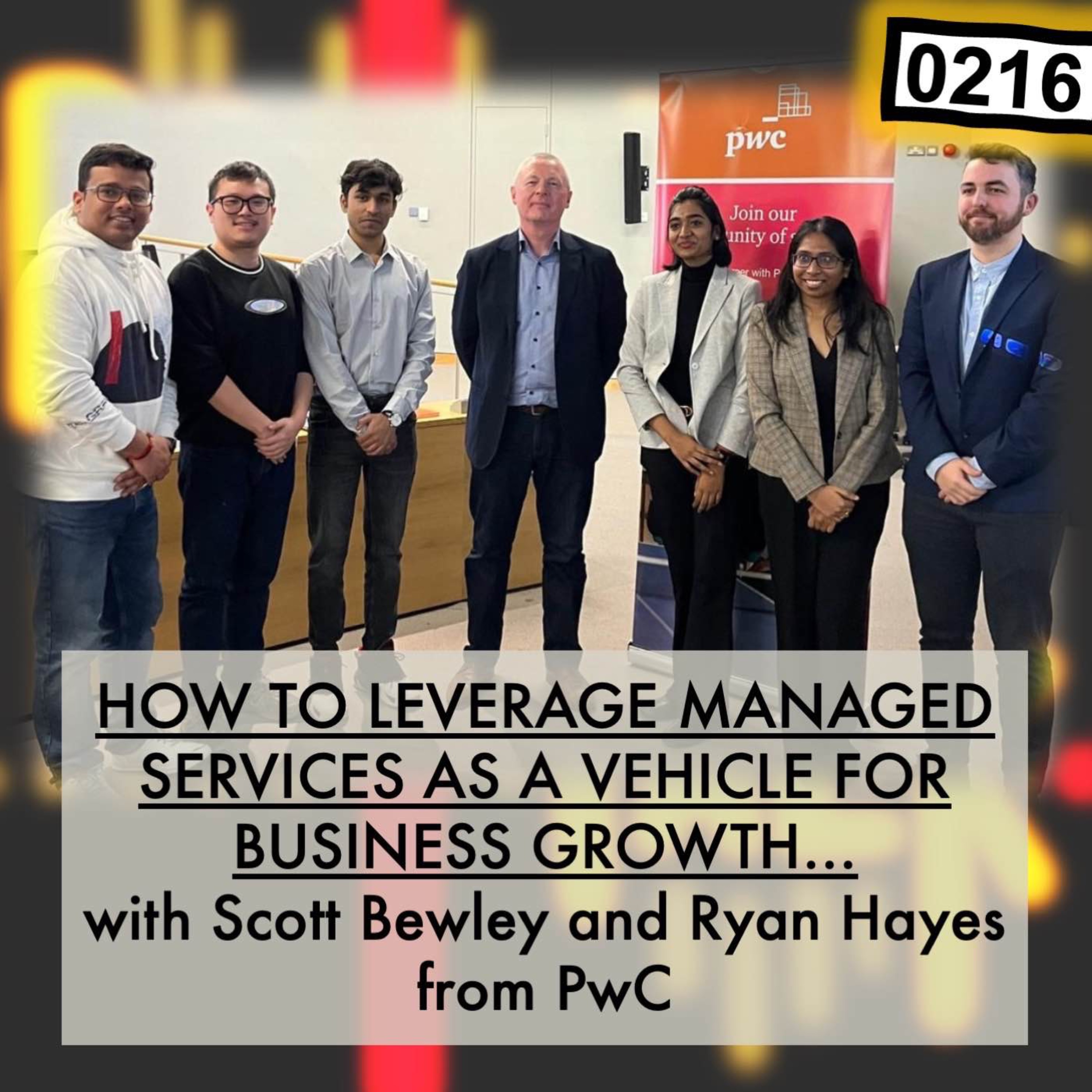
S12 Ep 2160216 - How to leverage managed services as a vehicle for business growth with Scott Bewley and Ryan Hayes from PwC
"How to leverage managed services as a vehicle for business growth" with Scott Bewley and Ryan Hayes from PwC"Hosts: Saisnehha Natraj and Kushagra Mehrotra What experiences do each of you have in the arena of outsourcing?According to you, what are the dimensional considerations for outsourcing?How have things changed since covid in the marketplace, in terms of outsourcing?Do you think the outsourcing practices are different across various sectors and countries?How do you keep your customer satisfied?What do you think about AI’s role in outsourcing?Audience Questions.Thank you for listening.NOTES:AcknowledgementsMusic Title: Voltaic FluctuationsArtist: Ben PruntySource: https://www.benpruntymusic.com/License: Non-transferable license. Permission granted by Ben PruntyCover Art Title: Aspects of OutsourcingArtist: Group W (Junjie, Aman, Kushagra, Snehha and Subhashini)Source: Scott_and_Ryan_Cover_Art.pptxLicense: CC BY-NC-SA 4.0 Podcast LicenseDesign Talk (dot IE) CC BY-NC-SA 4.0 The license can be viewed at https://creativecommons.org/licenses/by-nc-sa/4.0By taking part you give permission for your voice to be recorded, for the recording to be edited, and for it to be posted and published as a podcast. Hosted on Acast. See acast.com/privacy for more information.
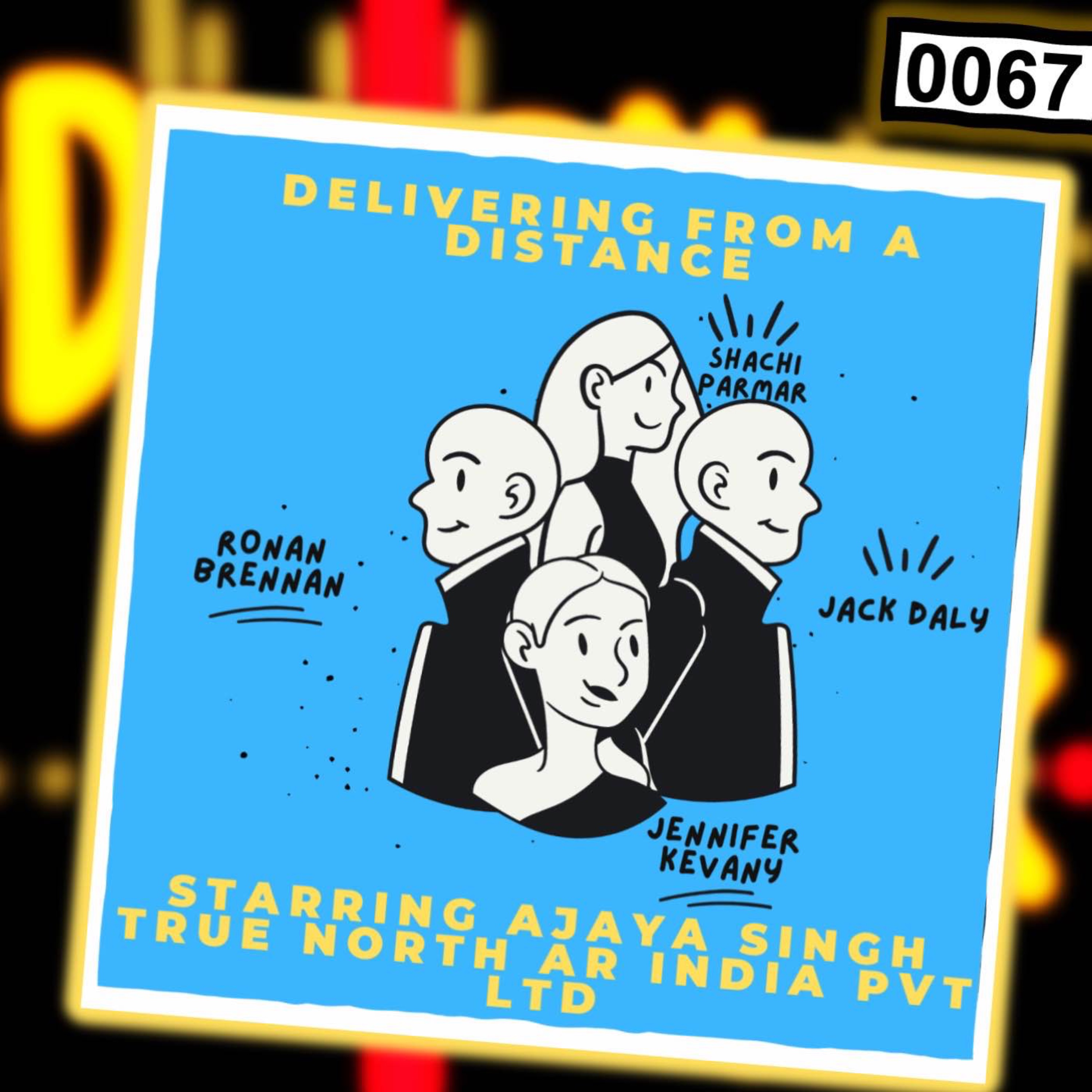
S4 Ep 670067 - Delivering from a Distance with Ajaya Singh
Interview with Ajaya Singh, True North AR India Pvt. Ltd, Gurgaon.Podcast team: Jack Daly, Shachi Parmar, Jennifer Kevany, and Ronan Brennan[Jack] (Intro) Good morning and welcome to the Design Talk podcast.So, today we are talking with Ajaya Singh, from True North AR, a Medical Process Outsourcing (MPO) services provider. To date in our podcasts we have gained some fantastic insight into the opportunities and challenges in outsourcing/Offshoring from the client perspective , this morning we have a great opportunity to understand this process from the service provider's perspective.( Sales) The challenges of getting new contracts, new client development, building a sales pipeline, from a distance?( MPO vs BPO) How is MPO different from ITO or general BPO?( Advantages/challenges) What are the advantages of operating from Gurgaon/India? Challenges?( Recruitment process) How do you bring new hires on board? ( Client Trust) Building trust is a substantial part of an effective relationship for a client's perspective, how would you look to build such trust and how do you maintain it? ( reducing anxiety)(Cultural differences and provider trust)We spoke about the cultural differences between India and the US discussing the societal view on bankruptcy, how do you overcome issues like this and how do you trust clients?- how do you overcome cultural differences and bias?( Disagreements)Like all business , leaders and owners can be passionate but perhaps at time misinformed, now do you manage power dynamics and disagreements without being cold i.e “ out of scope”( Recent LifeCyle) Can you tell us about the life cycle of a recent project - what are the most important factors for a successful project?( Cost efficiencies ) We spoke about cost and ensuring cost efficiencies , using lesser skilled labour when possible, can you talk a bit more on this( Societal impact) A substantial part of this course is reviewing the impact to society of a FDI investment,. how important is this, and how much responsibility do the local regions take to attract such investment.. eg dublin chamber and “ why dublin campaign”( Risks and competition)What are the current risks to your business and industryeg we hear alot about emerging nations competing for investment and contract, also the rise of machine learning and AI, how do you manage competitionCLOSINGSo, on that note…( thank guest, thank audience) We would like to thank you for making time in your busy schedule to talk to us today, from the other side of the planet.And for sharing your knowledge and insights into delivering services from a distance.AcknowledgementsMusic Title: “It was just cold” (2018)Artist: Andrew R CodemanSource: https://bit.ly/2MsarcjLicense: CC BY 4.0Cover Art Title: Cartoon charactersArtist: Student team and Allen HigginsSource: Background image.PNGLicense: CC BY-NC-SA 4.0Podcast LicenseDesign Talk (dot IE) CC BY-NC-SA 4.0 The license can be viewed at https://creativecommons.org/licenses/by-nc-sa/4.0By taking part you give permission for your voice to be recorded, for the recording to be edited, and for it to be posted and published as a podcast. Hosted on Acast. See acast.com/privacy for more information.
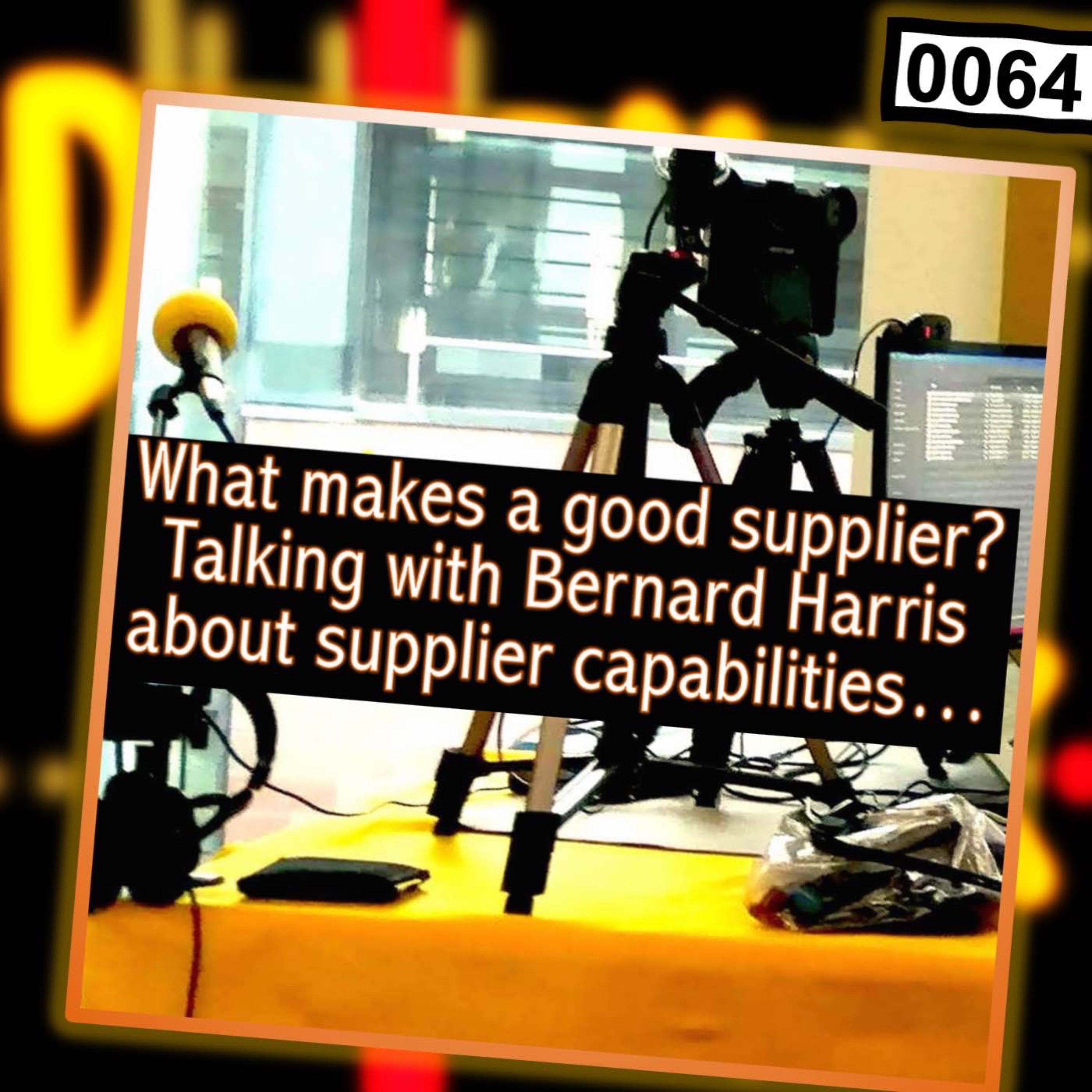
S4 Ep 640064 - Supplier Partnership with Bernard Harris
Welcome to Design Talk.In this episode we speak with Bernard Harris, Head of Trust & Safety for TikTok, EMEA.This pod was recorded on Tuesday 9th February 2021.Podcast title and guest: Talking with Bernard Harris from TikTock.Introduction by Fouz Alsubaie. Interview hosted by Caroline Willis, Cristina Primavera, Emma Ji, Danny Coss Heneghan, and Veronika Pushkina.AcknowledgementsMusic Title: “It was just cold” (2018)Artist: Andrew R CodemanSource: https://bit.ly/2MsarcjLicense: CC BY 4.0Cover Art Title: Think Lab Studio + Abadi MTArtist: Allen HigginsSource: AudioStudio-GeorgeMooreBuilding.pptxLicense: CC BY-NC-SA 4.0Podcast LicenseDesign Talk (dot IE) CC BY-NC-SA 4.0 The license can be viewed at https://creativecommons.org/licenses/by-nc-sa/4.0By taking part you give permission for your voice to be recorded, for the recording to be edited, and for it to be posted and published as a podcast. Hosted on Acast. See acast.com/privacy for more information.
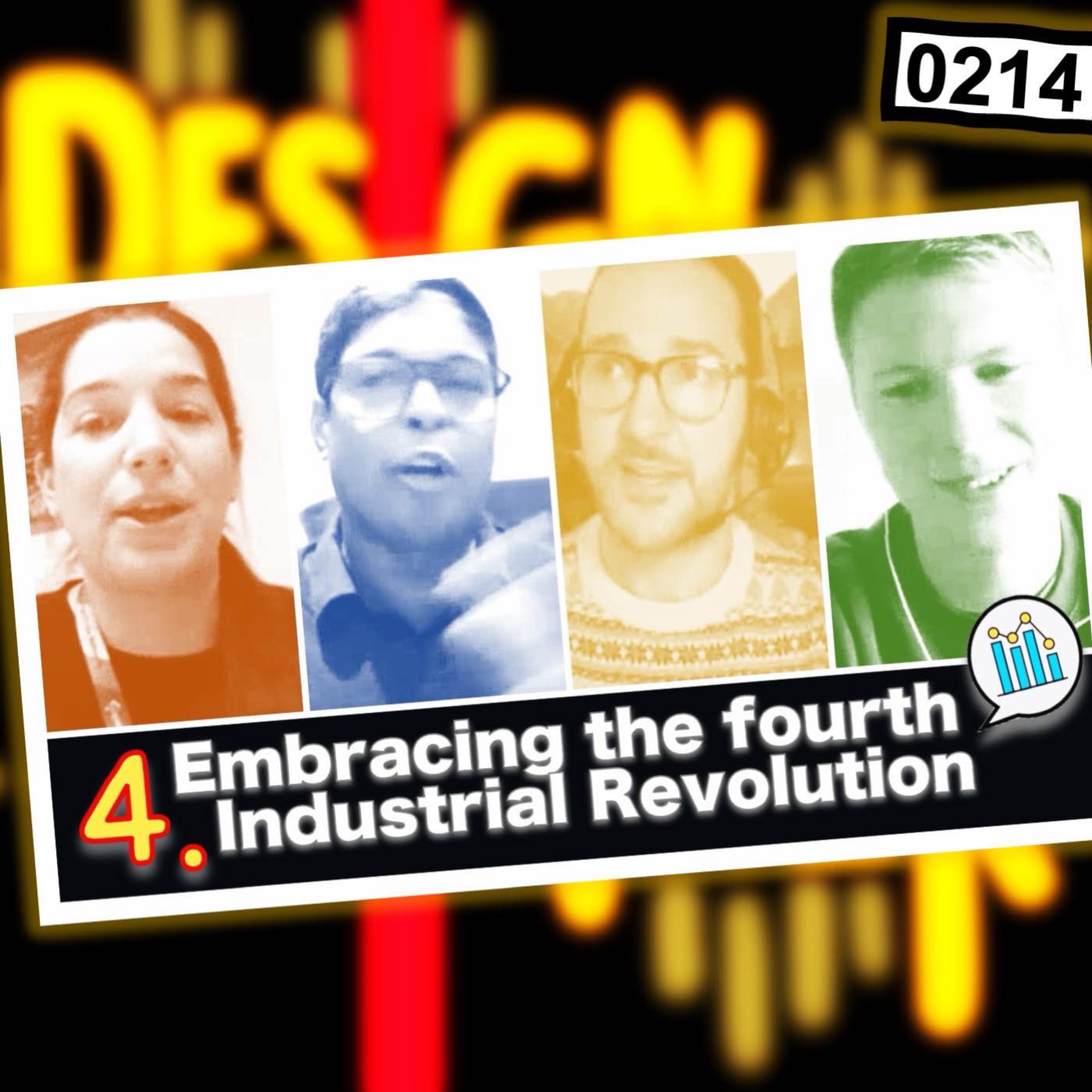
S13 Ep 2140214 - BAEF Future of Work Panel
This BAEF Future of Work Panel titled "Embracing the Fourth Industrial Revolution" took place on December 14, 2023. Our panelists were:* Luke Vilain, Data Ethics and AI Risk Specialist, working in financial services.* Balagopal (Bala) Madhusoodhanan, a intelligent automation architect working on Low Code / No Code platforms and AI risk classification.* James Winters, an AI consultant who develops strategies and governance solutions to help solve business problems.* Marilena Karanika, Data Scientist, working in financial services modelling and analyticsFurther reading and interesting takeaways...* Discovering ethical challenges and future conundrums? Play the moral machines game --- www.moralmachine.net* Recommendations for ‘must watch’ long form media? Watch The Social Dilemma (2020) -- https://www.imdb.com/title/tt11464826* “Generative artificial intelligence (AI) in education” policy paper - GOV.UK (2023) -- https://bit.ly/3RXgCbK* AI for Humanity -- https://mila.quebec/en/ai-for-humanity/* Consequence Scanning, an agile toolkit -- from https://doteveryone.org.uk see https://bit.ly/3Hwv8SNA video version of this episode is published on the Business Analytics Educators Forum’s YouTube channel at: https://www.youtube.com/channel/UCrPQ1nwQVmvGUpKN0pey27gAcknowledgementsMusic Title: Guitar HouseArtist: josh pan (2020)Source: https://www.youtube.com/watch?v=JL-LId8ZWBMLicense: License CC BY 3.0Cover Art Title: Complex collaboration for BAEFArtist: Nuno Machado and Allen HigginsSource: vignette_version.pptxLicense: CC BY-NC-SA 4.0Podcast LicenseDesign Talk (dot IE) CC BY-NC-SA 4.0 The license can be viewed at https://creativecommons.org/licenses/by-nc-sa/4.0By taking part you give permission for your voice to be recorded, for the recording to be edited, and for it to be posted and published as a podcast. Hosted on Acast. See acast.com/privacy for more information.
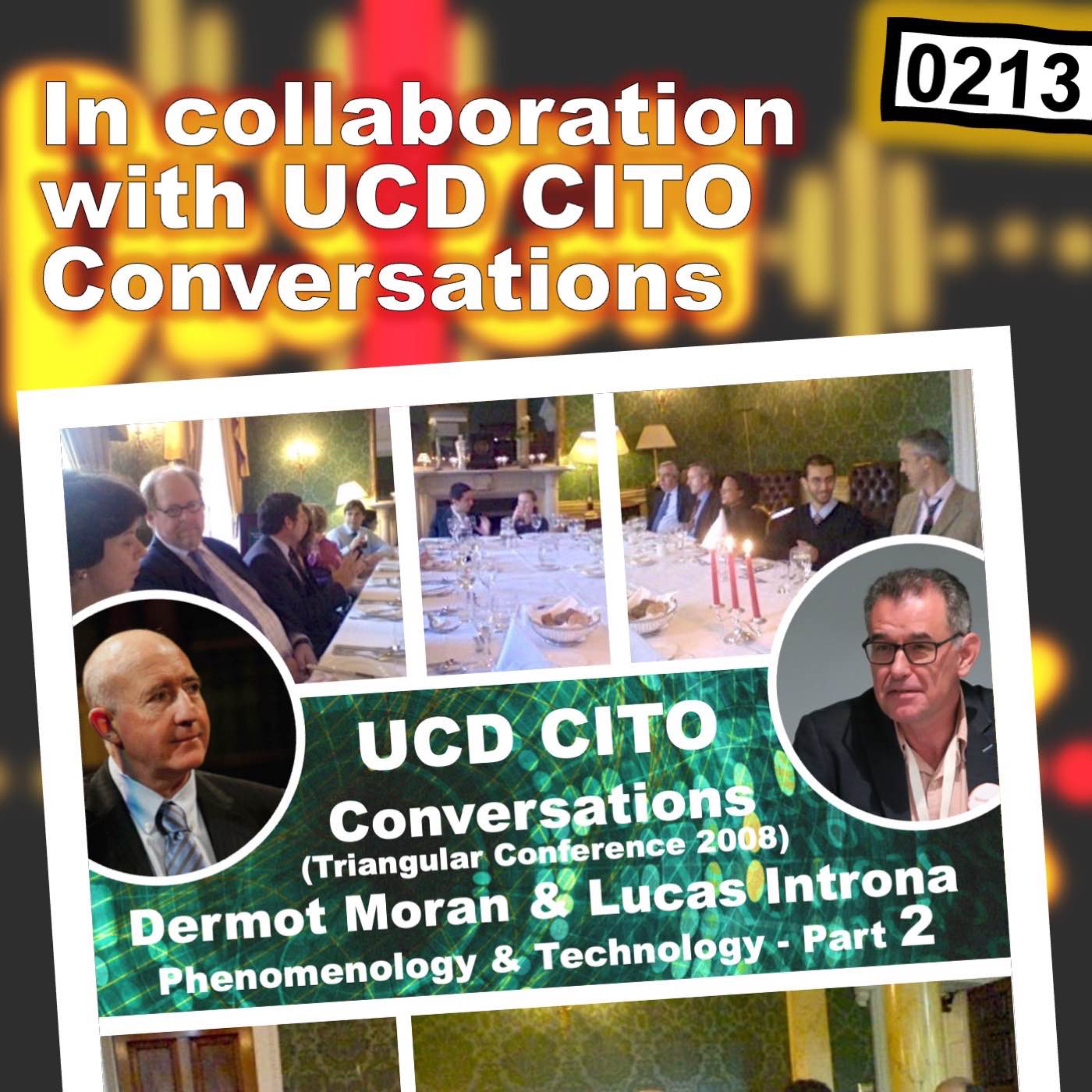
S12 Ep 2130213 - Phenomenology & Technology Part 2 - Lucas Introna
The following episode is a bonus cross-pod publication (pollination?) between “Design Talk” and “CITO Conversations” a research community pod hosted by University College Dublin’s Centre for Innovation, Technology & Organisation.This ‘from the archives’ recording is the second part of the keynote from “ Triangular Conference 2008” in which Dermot Moran and Lucas Introna talk about the value of conducting research in the phenomenological tradition and considerations when carrying out research into organisations, information systems and modern technology.Part 2In part two Lucas argues that Phenomenology offers deep insights into fundamental aspects of the human experience of technology and information systems, with implications for the sociology of Management and Organisation. The talk was recorded in-person with a live audience on Thursday June the 5th 2008 in the UCD Lochlann Quinn Undergraduate School of Business, Belfield, Dublin, Ireland.Acknowledgements Music Title: Adagio in G minorArtist: Remo Giazotto attributed to Tomaso AlbinoniSource: https://soundcloud.com/dick-de-ridder/adagio-in-g-minor-albinoniLicensed by Dick de Ridder: CC-BY 3.0 Cover Art Title: Discussion at the conference dinnerArtist: Allen HigginsSource: Collage/various (podcast-MoranIntrona_01.pptx)License: CC BY-NC-SA 4.0 Podcast LicenseDesign Talk (dot IE) CC BY-NC-SA 4.0 The license can be viewed at https://creativecommons.org/licenses/by-nc-sa/4.0By taking part you give permission for your voice to be recorded, for the recording to be edited, and for it to be posted and published as a podcast. Hosted on Acast. See acast.com/privacy for more information.
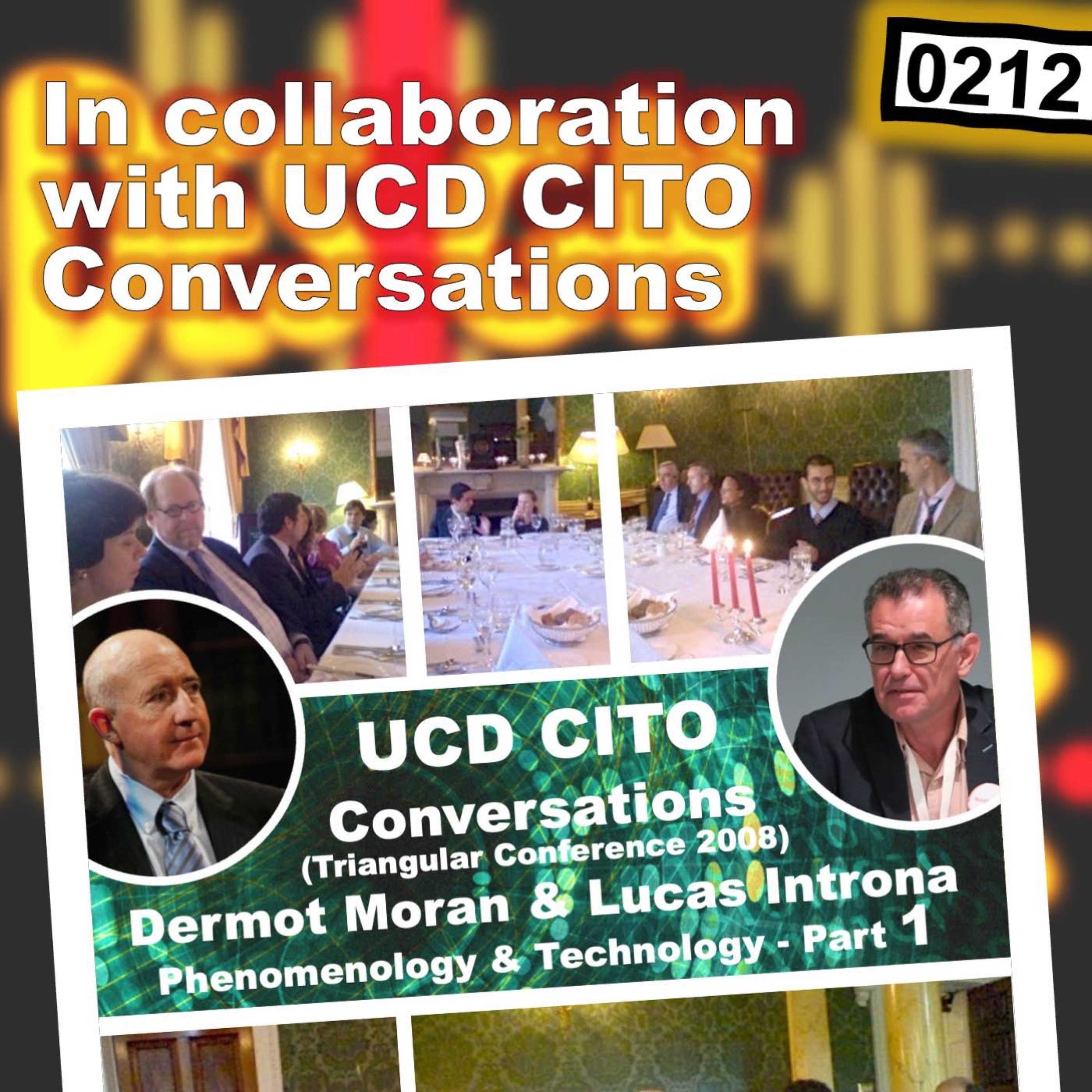
S12 Ep 2120212 - Phenomenology & Technology Part 1 - Dermot Moran
The following episode is a bonus cross-pod publication (pollination?) between “Design Talk” and “CITO Conversations” a research community pod hosted by University College Dublin’s Centre for Innovation, Technology & Organisation.This ‘from the archives’ recording is the first part of the keynote from “ Triangular Conference 2008” in which Dermot Moran and Lucas Introna talk about the value of conducting research in the phenomenological tradition and considerations when carrying out research into organisations, information systems and modern technology. Part 1In part one Dermot introduces Phenomenology and argues for its continuing relevance to Philosophy and Science. The talk was recorded in-person with a live audience on Thursday June the 5th 2008 in the UCD Lochlann Quinn Undergraduate School of Business, Belfield, Dublin, Ireland. Acknowledgements Music Title: Adagio in G minorArtist: Remo Giazotto attributed to Tomaso AlbinoniSource: https://soundcloud.com/dick-de-ridder/adagio-in-g-minor-albinoniLicensed by Dick de Ridder: CC-BY 3.0 Cover Art Title: Discussion at the conference dinnerArtist: Allen HigginsSource: Collage/various (podcast-MoranIntrona_01.pptx)License: CC BY-NC-SA 4.0 Podcast LicenseDesign Talk (dot IE) CC BY-NC-SA 4.0 The license can be viewed at https://creativecommons.org/licenses/by-nc-sa/4.0By taking part you give permission for your voice to be recorded, for the recording to be edited, and for it to be posted and published as a podcast. Hosted on Acast. See acast.com/privacy for more information.
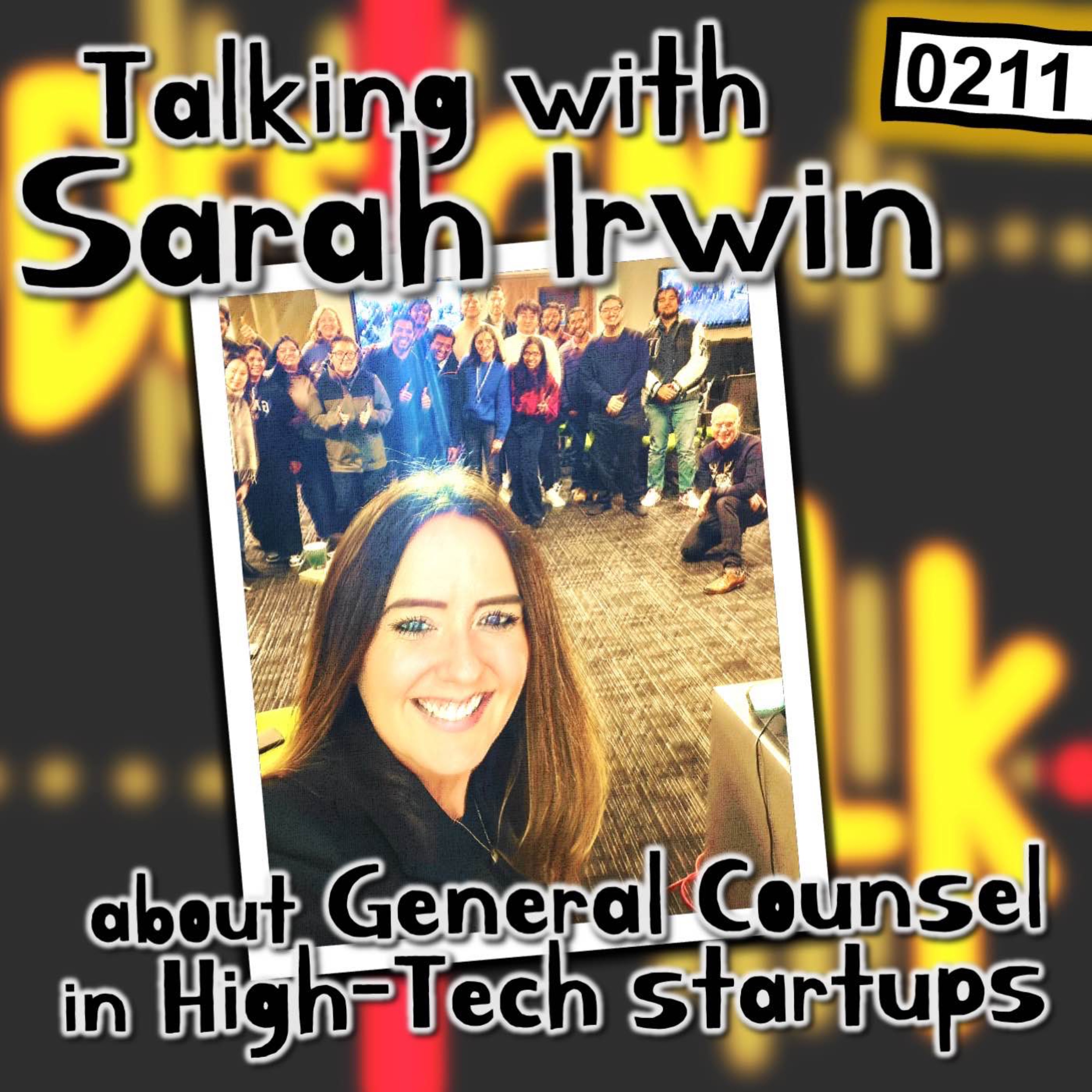
S12 Ep 2110211 - Irish Tech General Counsel - Sarah Irwin
Hosts: Aman Madhwal and Anne-Marie Godfrey We are delighted to have Sarah Irwin to talk with us today. Among her many roles Sarah is founder and community builder for ITGC (the Irish Tech General Counsel community, a forum for In-House Lawyers in Ireland. To start, Sarah can you tell us a little about yourself and why you founded the ITGC? Can you take us through some of the terminology? Lawyer, Counsel, Legal Counsel, General Counsel… What are the basics, that we all need to know about the Legal side of business? At what points in the growth plan does a technology start-up need General Counsel? How can General Counsel become more end-user friendly? Let’s shift to the legal industry itself, how has it been impacted by technology in its own operations? Any questions from the audience? Well, we’ll wrap up there. Thank you for talking with us today and sharing your knowledge and expertise. NOTES:https://www.itgc.ie https://www.linkedin.com/in/sarah-irwin-aa273064/ Acknowledgements Music Title: Voltaic FluctuationsArtist: Ben PruntySource: https://www.benpruntymusic.com/License: Non-transferable license. Permission granted by Ben Prunty Cover Art Title: Complex collageArtist: Allen HigginsSource: vignette_version.pptxLicense: CC BY-NC-SA 4.0 Podcast LicenseDesign Talk (dot IE) CC BY-NC-SA 4.0 The license can be viewed at https://creativecommons.org/licenses/by-nc-sa/4.0By taking part you give permission for your voice to be recorded, for the recording to be edited, and for it to be posted and published as a podcast. Hosted on Acast. See acast.com/privacy for more information.
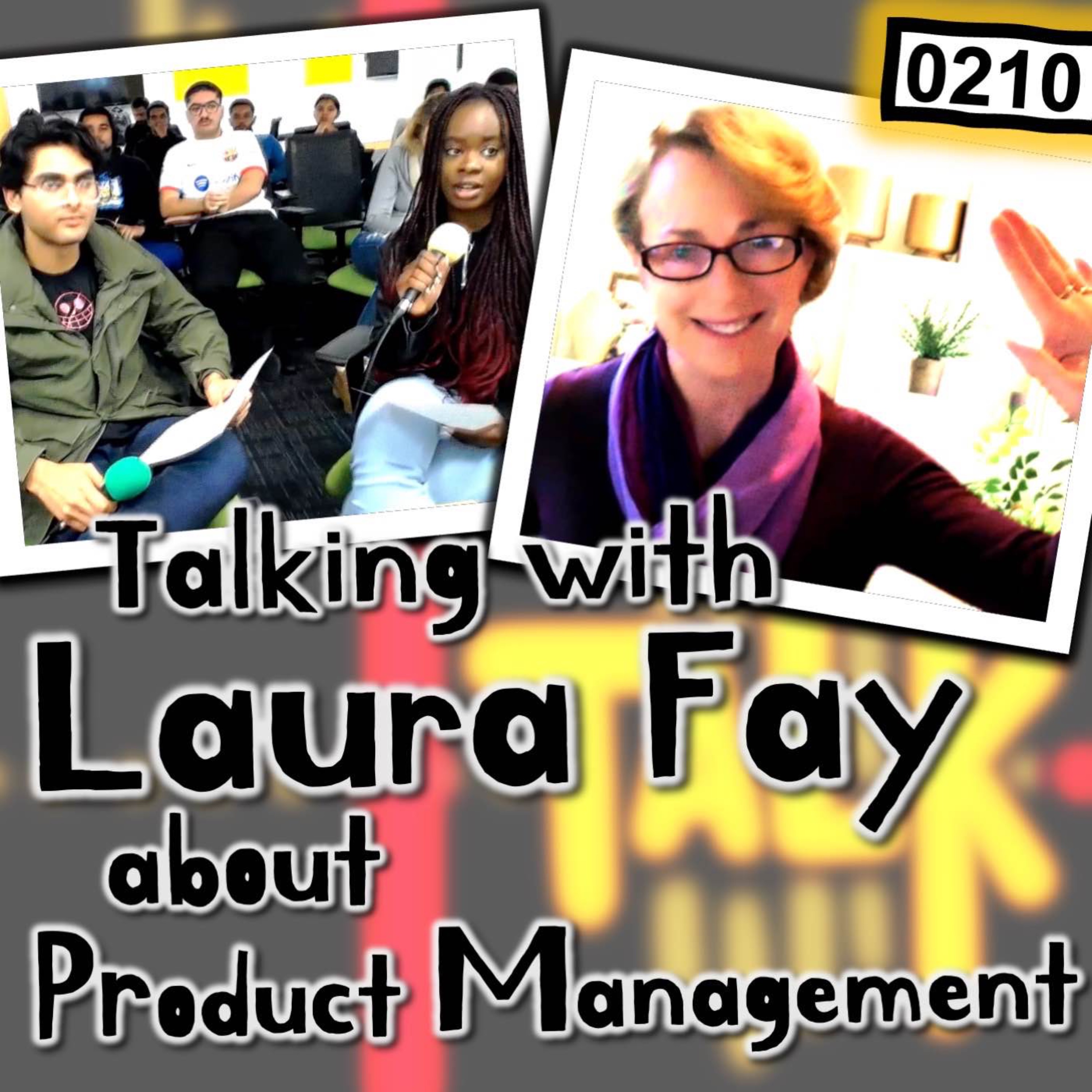
S12 Ep 2100210 - On Product Management with Laura Fay
Hosts: Clare Mustapha and Laksh Sharma - We are delighted to have Laura Fay join us today. Laura studied Computer Science at Trinity College before setting out to the United States and kicking off her long career in the tech sector.· To start, Laura, can you talk about your journey from technologist towards product leadership?· The tech sector has always been ‘about the technology’, but is it ‘product’ or ‘service’? What is the right way to think about it? · Do new tech delivery and payment models change how we design and sell digital?· Can you talk about the gap between engineers and salespeople? · Should we consider the product person a ‘representative from Sales’ to Development or are they Development’s ambassador to the rest of the company?· What would you say to someone who wants to get into product management? What competencies do they need to learn and hone?· Questions from the audience.Well, we’ll wrap up there.Thank you, Laura, for taking the time to talk with us and share your ideas and experience with us today.(thanks, wrap-up, summary). Notes:Laura Fay presenting on XAAS to Product Collective https://www.youtube.com/watch?v=0fcoWq5CgbILaura’s participation in a panel video “RSIA Researcher Hot Takes” https://www.youtube.com/watch?v=FRC_M2tz_o8AcknowledgementsMusic Title: Voltaic FluctuationsArtist: Ben PruntySource: https://www.benpruntymusic.com/License: Non-transferable license. Permission granted by Ben PruntyCover Art Title: Complex collageArtist: Allen HigginsSource: vignette_version.pptxLicense: CC BY-NC-SA 4.0Podcast LicenseDesign Talk (dot IE) CC BY-NC-SA 4.0 The license can be viewed at https://creativecommons.org/licenses/by-nc-sa/4.0By taking part you give permission for your voice to be recorded, for the recording to be edited, and for it to be posted and published as a podcast. Hosted on Acast. See acast.com/privacy for more information.
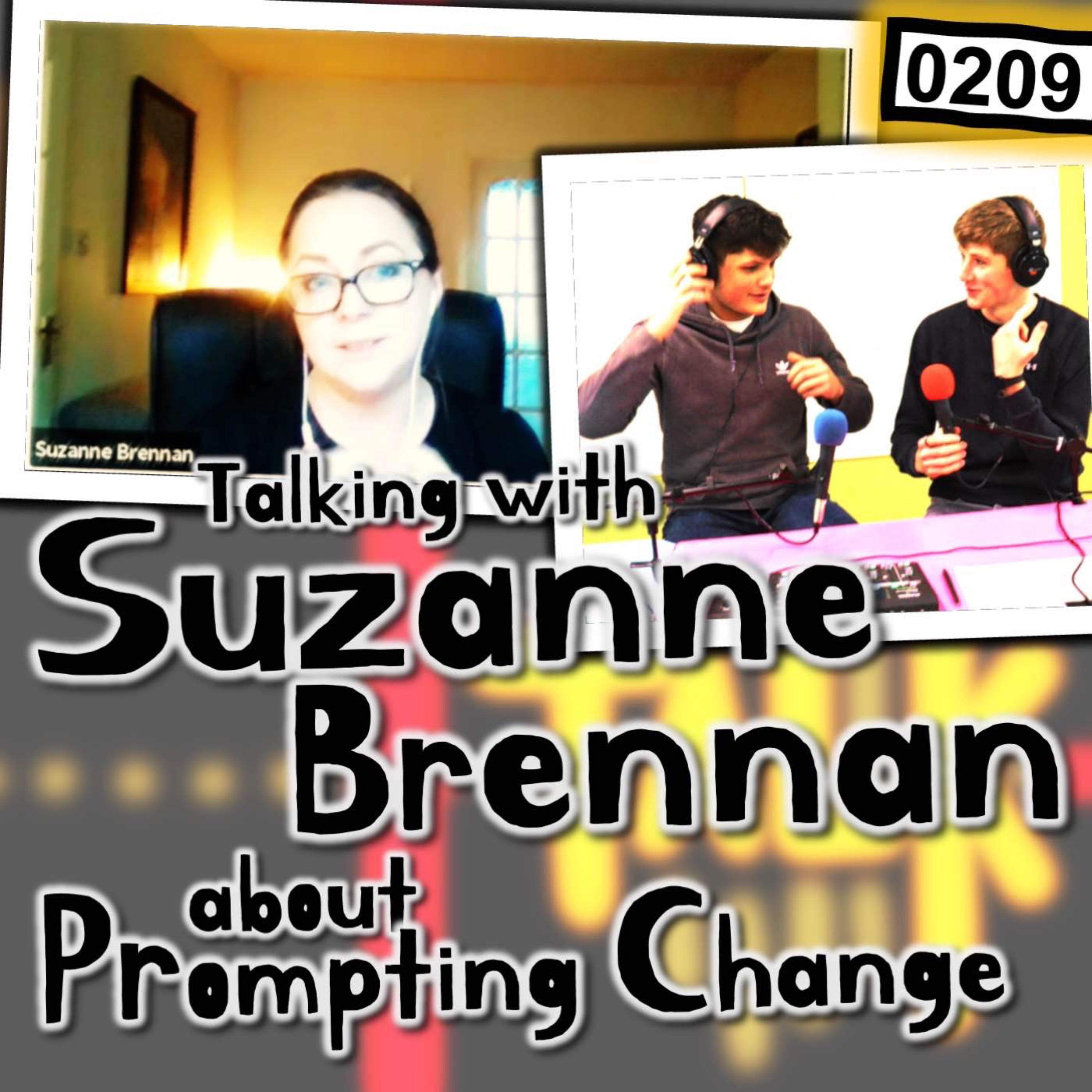
S12 Ep 2090209 - Prompts for Change with Suzanne Brennan
Hosts: Joe and Adam We are delighted to have Suzanne Brennan with us today. Suzanne works as Innovation Lead at InsTech.ie.To start, Suzanne, can you tell us a little about yourself and about InsTech?Can you give us a sketch of the Insurance sector in Ireland (local market, global market, retail/commercial, insurance/reinsurance).Talk about challenges to the insurance industry from an innovation perspective? And how is the industry responding to disruptive technologies? You recently launched a report focusing on the future of insurance in Ireland. What was the motivation behind the project? Can you talk us through the research design, the methodology? Why did you start with insights and interviews rather than the traditional survey and questionnaire? How are useful are surveys and questionnaires? What worked well and what would you change if you had to do it again? So, the report is aimed at capability building in the industry. How do you imagine a member organisation will act on the findings? How can Design Thinking be used to enact and enable organisational change and transformation? How important is diversity in the creative process? Is that something you pay particular attention to? The role of leadership – the old model of leadership is defunct to some extent, in that for the process of innovation it is not necessarily assumed that the leader has all the ideas / answers. However, is there a role for a leader within the team and, if so, what is it?Psychological safety is really important if the creative process is a team effort. It requires the team to listen and withhold immediate judgement so that ideas are aired and properly considered. How do you facilitate this process?Creativity and motivation are somewhat interlinked – the creative ability coupled with the desire and motivation to create something useful, beautiful, or different. How do you identify creative people and how do you support the creative process?Any questions from the audience? Well, we’ll wrap up there. Thank you for talking with us today and sharing your knowledge and expertise. NOTES:InsTech.ie website: https://www.instech.ieInsurance Innovation Capability Report 2023 - https://www.instech.ie/insurance-innovation-capability-report-2023 Acknowledgements Music Title: Voltaic FluctuationsArtist: Ben PruntySource: https://www.benpruntymusic.com/License: Non-transferable license. Permission granted by Ben Prunty Cover Art Title: Complex collageArtist: Allen HigginsSource: vignette_version.pptxLicense: CC BY-NC-SA 4.0 Podcast LicenseDesign Talk (dot IE) CC BY-NC-SA 4.0 The license can be viewed at https://creativecommons.org/licenses/by-nc-sa/4.0By taking part you give permission for your voice to be recorded, for the recording to be edited, and for it to be posted and published as a podcast. Hosted on Acast. See acast.com/privacy for more information.
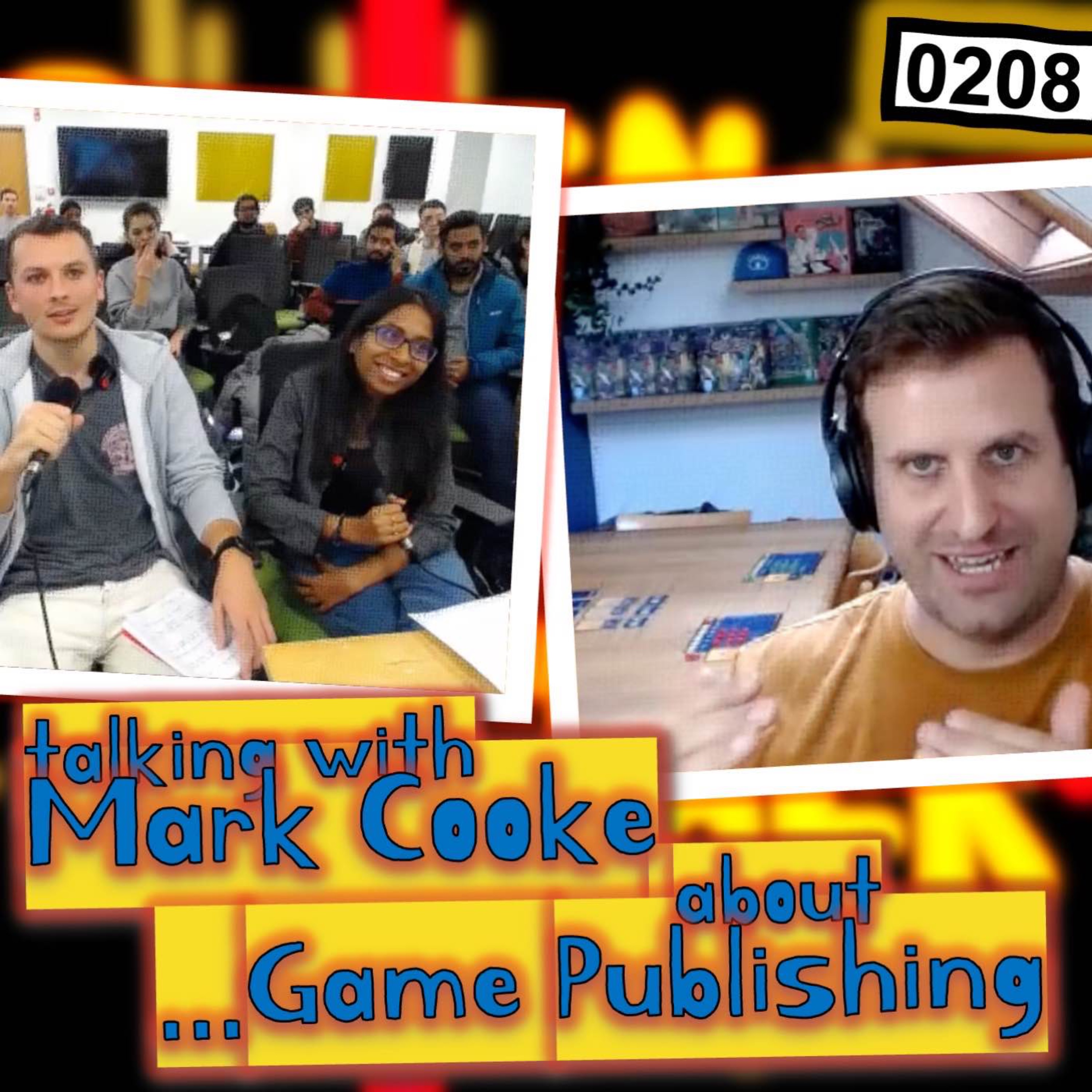
S12 Ep 2080208 - Publishing Board Games with Mark Cooke
Hosts: Subhashini Srinivasan and Calum McCarthyWe are very pleased to have Mark Cooke from Bright Eye Games with us today to talk about the business of publishing boardgames.Brief self-introduction: How you ended up in Games and your motivation for staying in the industry.How did you get into the gaming industry, and what motivates you to stay in it?”What are the practicalities of being a publisher?How did you discover CoraQuest, and what prompted you to publish it?How important is the pitch for a game idea or game in development?Can you talk about the challenges and opportunities of creating sustainable products?How important are conventions and other forums for generating interest and finding your community?What new projects are you working on for Bright Eye Games?Are there any instances of licensing issues in the industry?Do you prefer physical or digital games, and what are your thoughts on video game versions, companion Apps, digital resources? Talk a little about the role of game mechanics in terms of play and genre?As a designer, how do you create atmosphere, mood, or essence of the game?What financial aspects do you consider when deciding to publish a game?How do you do marketing in this business?Thank you for taking the time to talk with us and share your experiences.Notes:Bright Eye Games https://www.brighteyegames.comSome titles published by Bright Eye Games:CoraQuest (2022)Battle Dentale (2023)The Plot Thickens (2023)Termite Towers (2022)Waggle Dance (2022)Interesting information about, and by, the game industry…Green Games Guide: https://www.greengamesguide.com/read-the-guideBoardGameGeek: https://boardgamegeek.com/The Dice Tower: https://www.dicetower.com/Shut Up and Sit Down: https://www.shutupandsitdown.com/AireCon: https://www.airecon.co.uk/AcknowledgementsMusic Title: Voltaic FluctuationsArtist: Ben PruntySource: https://www.benpruntymusic.com/License: Non-transferable license. Permission granted by Ben PruntyCover Art Title: Aharoni 88 + Equalise Character HeightArtist: Allen HigginsSource: AudioStudio-Name.pptxLicense: CC BY-NC-SA 4.0Podcast LicenseDesign Talk (dot IE) CC BY-NC-SA 4.0 The license can be viewed at https://creativecommons.org/licenses/by-nc-sa/4.0By taking part you give permission for your voice to be recorded, for the recording to be edited, and for it to be posted and published as a podcast. Hosted on Acast. See acast.com/privacy for more information.
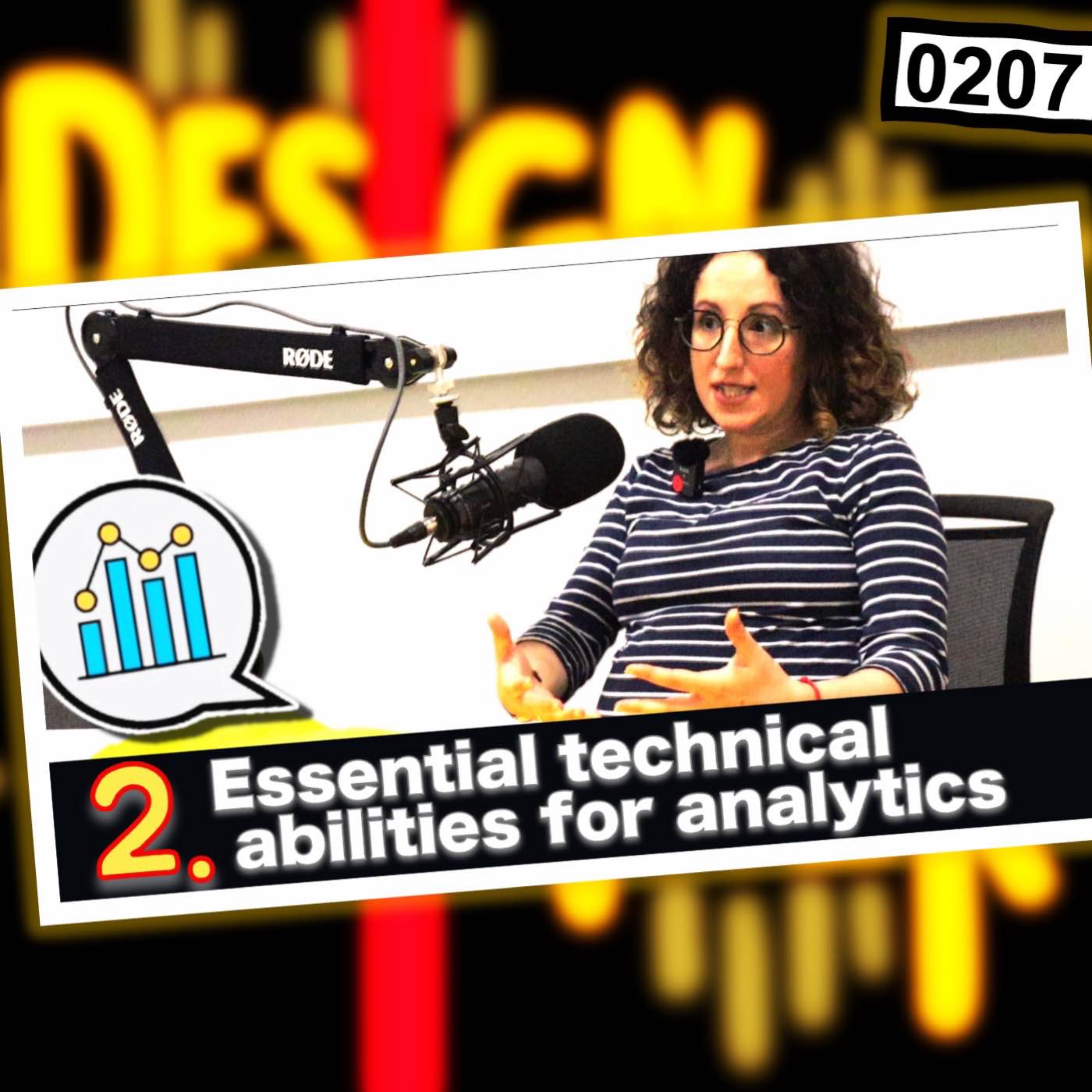
S13 Ep 2070207 - BAEF Educator Interview - Annunziata Esposito Amideo
Annunziata Esposito Amideo in conversation with Allen Higgins Nunzia is an Assistant Professor in Management Information Systems at University College Dublin, she is a member of the UK OR Society and its special interest group WORAN, and the current secretary of the EURO WISDOM Forum.· To start, Analytics educators come from all kinds of professions, how did you find yourself working in this field?· Can you share some lessons learned on becoming an analytics educator? (Three tips for a lecturer starting out?) · Can you tell us a bit about your own research interests?· I know you record a lot of your lectures for students. Do pre-recorded lecturers change the classroom experience?· What for you is the essence of practical analytics? (a process of optimization… The issue is that analytics and Operational Research (optimization is part of OR) are not really the same: · Can you talk about the challenges surrounding the academic/industry interface? (pure mathematics, applied mathematics > practical mathematics).· What technologies are a must-have in your toolbox? Your ‘go to’ tools for analysing data? · To close out the interview... Do you have a favourite science or data podcast or video channel, or geeky secret?· Other questions…Well, we’ll wrap up there.Thank you for sharing your ideas with us today.A video version of this episode is published on the Business Analytics Educators Forum’s YouTube channel at: https://www.youtube.com/channel/UCrPQ1nwQVmvGUpKN0pey27gAcknowledgementsMusic Title: Guitar HouseArtist: josh pan (2020)Source: https://www.youtube.com/watch?v=JL-LId8ZWBMLicense: License CC BY 3.0Cover Art Title: Complex collaboration for BAEFArtist: Nuno Machado and Allen HigginsSource: vignette_version.pptxLicense: CC BY-NC-SA 4.0Podcast LicenseDesign Talk (dot IE) CC BY-NC-SA 4.0 The license can be viewed at https://creativecommons.org/licenses/by-nc-sa/4.0By taking part you give permission for your voice to be recorded, for the recording to be edited, and for it to be posted and published as a podcast. Hosted on Acast. See acast.com/privacy for more information.
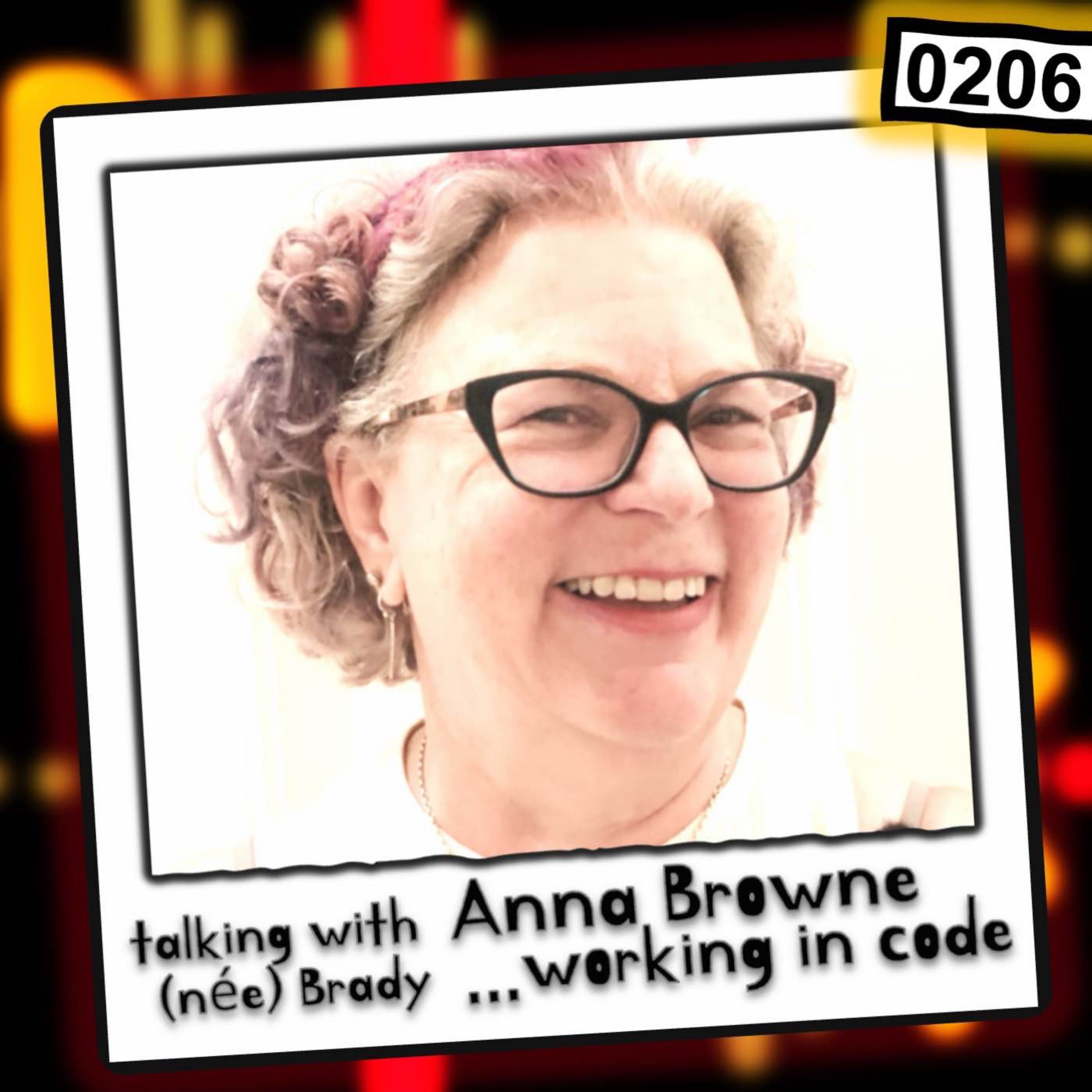
S12 Ep 2060206 - Working in Code with Anna Browne (née Brady)
Hi, I'm Allen Higgins, you're listening to Design Talk.I am delighted to have Anna Browne (née Brady) as my guest today, to talk about and reflect upon her career in code.· To start, Anna, can you share some of the key milestones in your career thus far? (Influenced at UCD by Dr Joe Morris in his Program Construction class; he made us write code, on paper, it made us appreciate the value of simplicity, the value of thinking things through.)· What for you, is the essence of design?o Can you share your reflections on the design process?o Is design ultimately a process of working alone on your own ideas. o Talk about the difference between design as an individual and design in a team...· How, if at all, has the changing technology environment changed the way you perform design?o What do you insist on having in the physical work environment?o How do you get people to share design knowledge? To attain/agree on shared understandings and design vision?· As an educator yourself, what motivates you to advocate for maths and technology skills in students?o What tips can you share from your experience of teaching maths and practical IT for adult learners? Ways of engaging them, making it real, that overcome blocks.· And any final thoughts you'd like to share before we wrap up?Well, we’ll wrap up there.Thank you for sharing your ideas with us today.AcknowledgementsMusic Title: Voltaic FluctuationsArtist: Ben PruntySource: https://www.benpruntymusic.com/License: Non-transferable license. Permission granted by Ben PruntyCover Art Title: Complex collageArtist: Allen HigginsSource: vignette_version.pptxLicense: CC BY-NC-SA 4.0Podcast LicenseDesign Talk (dot IE) CC BY-NC-SA 4.0 The license can be viewed at https://creativecommons.org/licenses/by-nc-sa/4.0By taking part you give permission for your voice to be recorded, for the recording to be edited, and for it to be posted and published as a podcast. Hosted on Acast. See acast.com/privacy for more information.
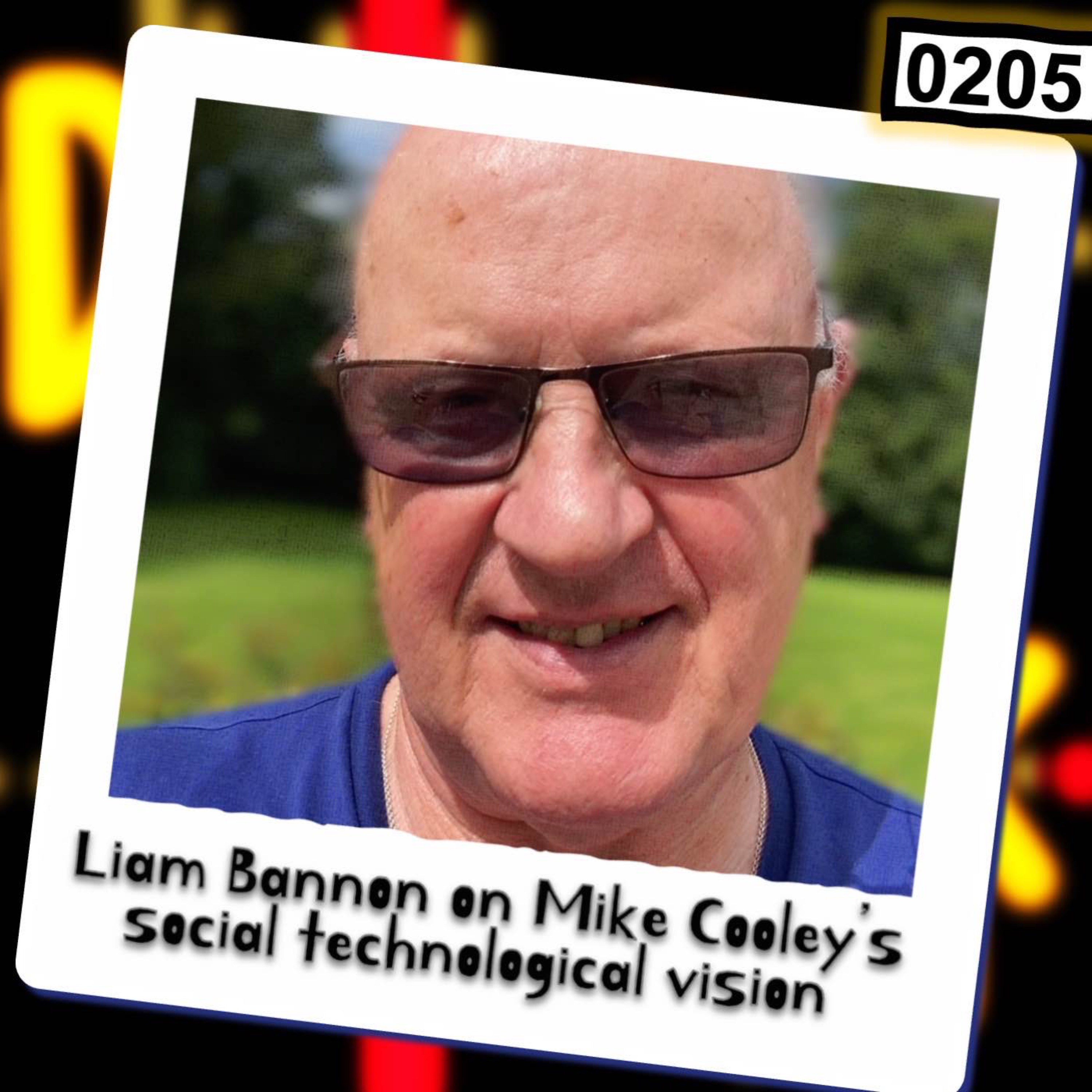
S12 Ep 2050205 - Talking Design with Liam Bannon
In conversation with Liam Bannon, Professor Emeritus, and founder of the Interaction Design Centre at the University of Limerick.In this episode we talk about Mick Cooley and his legacy. Mike Cooley, from Tuam, Co. Galway, an engineer, academic, trade unionist, socialist, an activist and change agent. As a commentator on labour issues Mike was once a familiar voice in the Irish media, sought for his views on contemporary workplace and labour issues. Mike Cooley – author or Architect or Bee, a manifesto for designing for human use, was an engineer at Lucas aerospace. Throughout his career he sought ways to improve the work we do, to empower workers, to work better, to augment human ability and skills. For Cooley, real workplace transformation occurs as a kind of partnership between designer and worker, rather than by instrumental substitution of human roles by software, robots, or technologies. An organisation’s goal instead should be to augment human ability by improving the technologies we employ, and authentic innovation arises as a consequence of human-centered, collaborative and collective design processes.AcknowledgementsMusic Title: ImpulseArtist: Ben PruntySource: https://www.benpruntymusic.com/License: Non-transferable license. Permission granted by Ben Prunty (personal letter)Cover Art Title: Aharoni 88 + Equalise Character HeightArtist: Allen HigginsSource: AudioStudio-Name.pptxLicense: CC BY-NC-SA 4.0Podcast LicenseDesign Talk (dot IE) CC BY-NC-SA 4.0 The license can be viewed at https://creativecommons.org/licenses/by-nc-sa/4.0By taking part you give permission for your voice to be recorded, for the recording to be edited, and for it to be posted and published as a podcast. Hosted on Acast. See acast.com/privacy for more information.
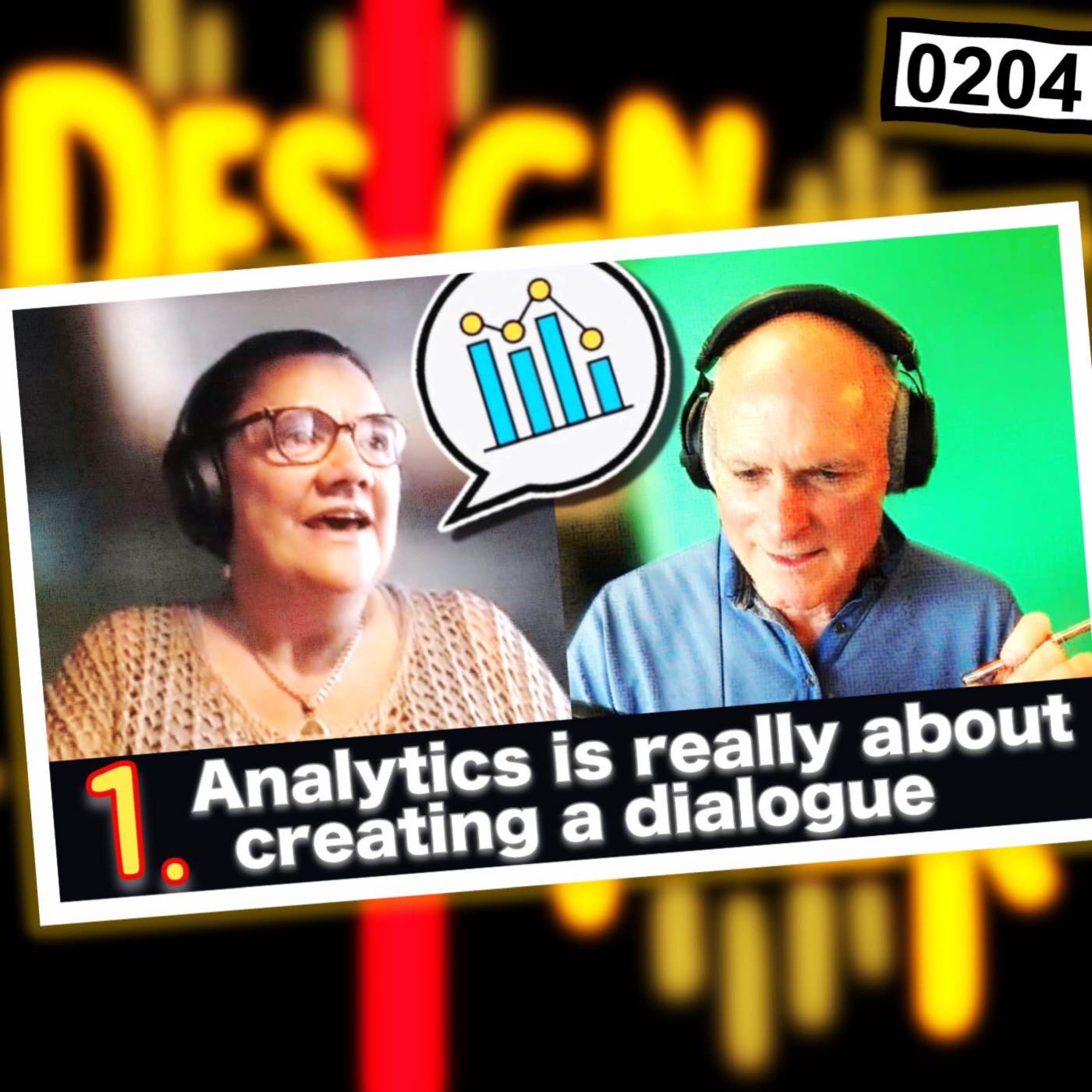
S13 Ep 2040204 - BAEF Educator Interview - Christina Phillips
I am delighted to be joined by Christina Phillips, the founder and force behind the Business Analytics Educators Forum.Christina is a senior lecturer in business analytics at Liverpool John Moores University and has worked in applied scienced research for industry.· To start, can you tell us a little about your own background and your perspective on data analytics?o How is analytics being used in industry?o Is data analytics an intrinsic part of academic research?· What was the motivation behind starting the Business Analytics Educators Forum, the BAEF?· Does it tie into your own research interests?o Are there connections between problem-structuring methods and systems methods like soft systems, design thinking, others?o Can you talk about the idea of ‘human-centric analytics’?o I’ve heard you say, “there’s nothing better than wallowing in data”. · Can you share the kinds of must-have tech in your toolbox? Your ‘go to’ tools for analysing data? · To close out the interview... Do you have a favorite science or data podcast or video channel, or geeky secret? Well, we’ll wrap up there.Thank you for sharing your ideas with us today.A video version of this episode is published on the Business Analytics Educators Forum’s YouTube channel at: https://youtu.be/THth52iN6oQAcknowledgementsMusic Title: Guitar HouseArtist: josh pan (2020)Source: https://www.youtube.com/watch?v=JL-LId8ZWBMLicense: License CC BY 3.0Cover Art Title: Complex collaboration for BAEFArtist: Nuno Machado and Allen HigginsSource: vignette_version.pptxLicense: CC BY-NC-SA 4.0Podcast LicenseDesign Talk (dot IE) CC BY-NC-SA 4.0 The license can be viewed at https://creativecommons.org/licenses/by-nc-sa/4.0By taking part you give permission for your voice to be recorded, for the recording to be edited, and for it to be posted and published as a podcast. Hosted on Acast. See acast.com/privacy for more information.
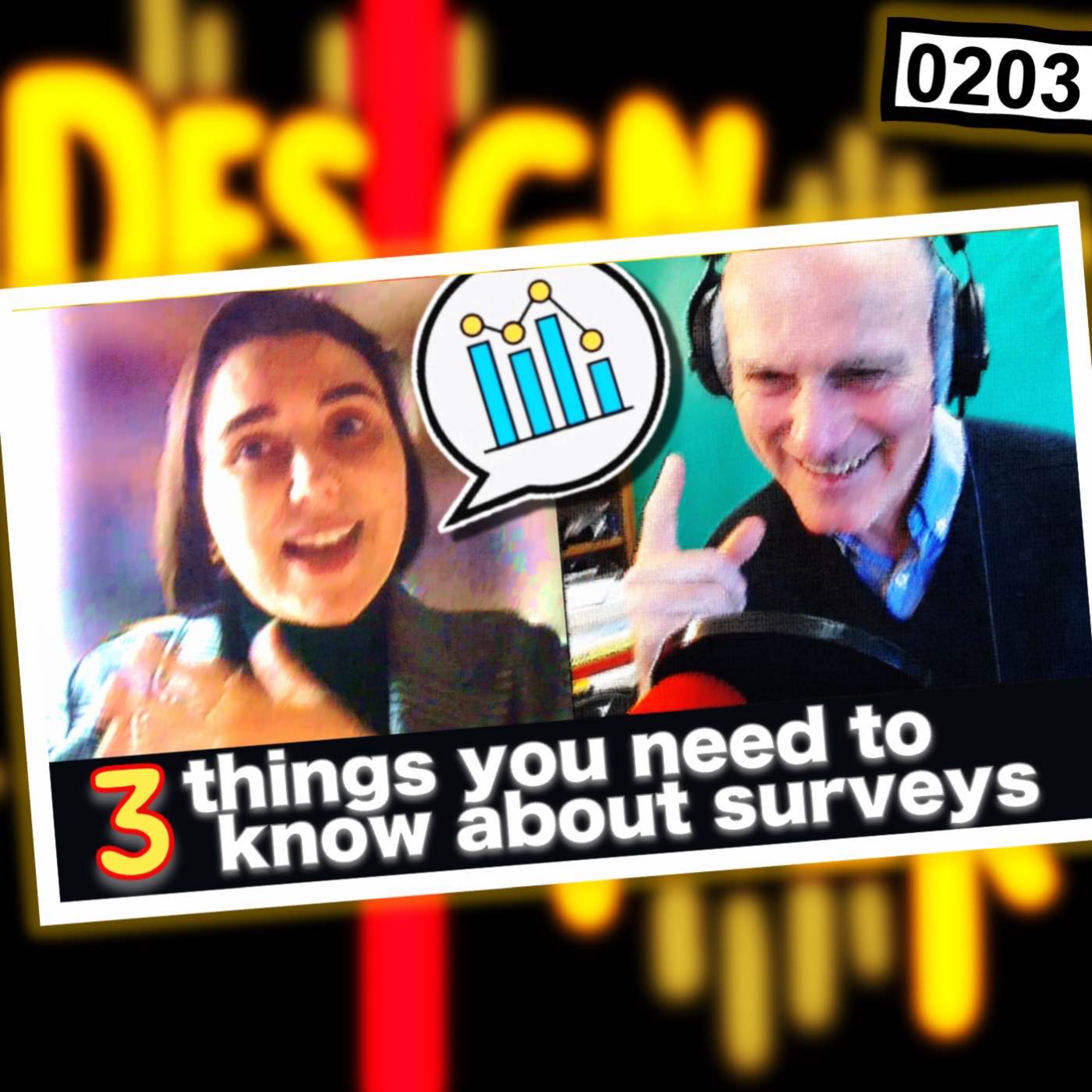
S13 Ep 2030203 - BAEF Educator Interview - Anabela Soares
In conversation: Allen Higgins and Anabela SoaresI am delighted to be joined today by Anabela Da Silva Filipe Soares. Anabela is a Senior Lecturer in Strategy & Operations Management at the University of the West of England and a member of the Business Analytics Educators Forum.· To start, Analytics educators come from all kinds of professions. Can you share a little about your own background and your perspective on data analytics?· How is analytics used in your original profession’s day-to-day work? [e.g. accounting, sociology, psychology, marketing, economics, engineering, computing, medical specialism, etc.]· And how is analytics used in academic research?· Can you talk a little about how academic research differs from industry research?· How does analytics influence research design?· What do people mean by “good quality data”? How do you produce good quality data?· As a self-declared 'questionnaire geek' can you share three tips for someone designing a questionnaire?· To close out the interview... What are your favorite podcasts or video channels? · And, can you share a geeky secret? Well, we’ll wrap up there.Thank you for sharing your ideas with us today.A video version of this episode was first published on the Business Analytics Educators Forum’s YouTube channel at: https://bit.ly/3Xgh2MzAcknowledgementsMusic Title: Guitar HouseArtist: josh pan (2020)Source: https://www.youtube.com/watch?v=JL-LId8ZWBMLicense: License CC BY 3.0Cover Art Title: Complex collaboration for BAEFArtist: Nuno Machado and Allen HigginsSource: vignette_version.pptxLicense: CC BY-NC-SA 4.0Podcast LicenseDesign Talk (dot IE) CC BY-NC-SA 4.0 The license can be viewed at https://creativecommons.org/licenses/by-nc-sa/4.0By taking part you give permission for your voice to be recorded, for the recording to be edited, and for it to be posted and published as a podcast. Hosted on Acast. See acast.com/privacy for more information.
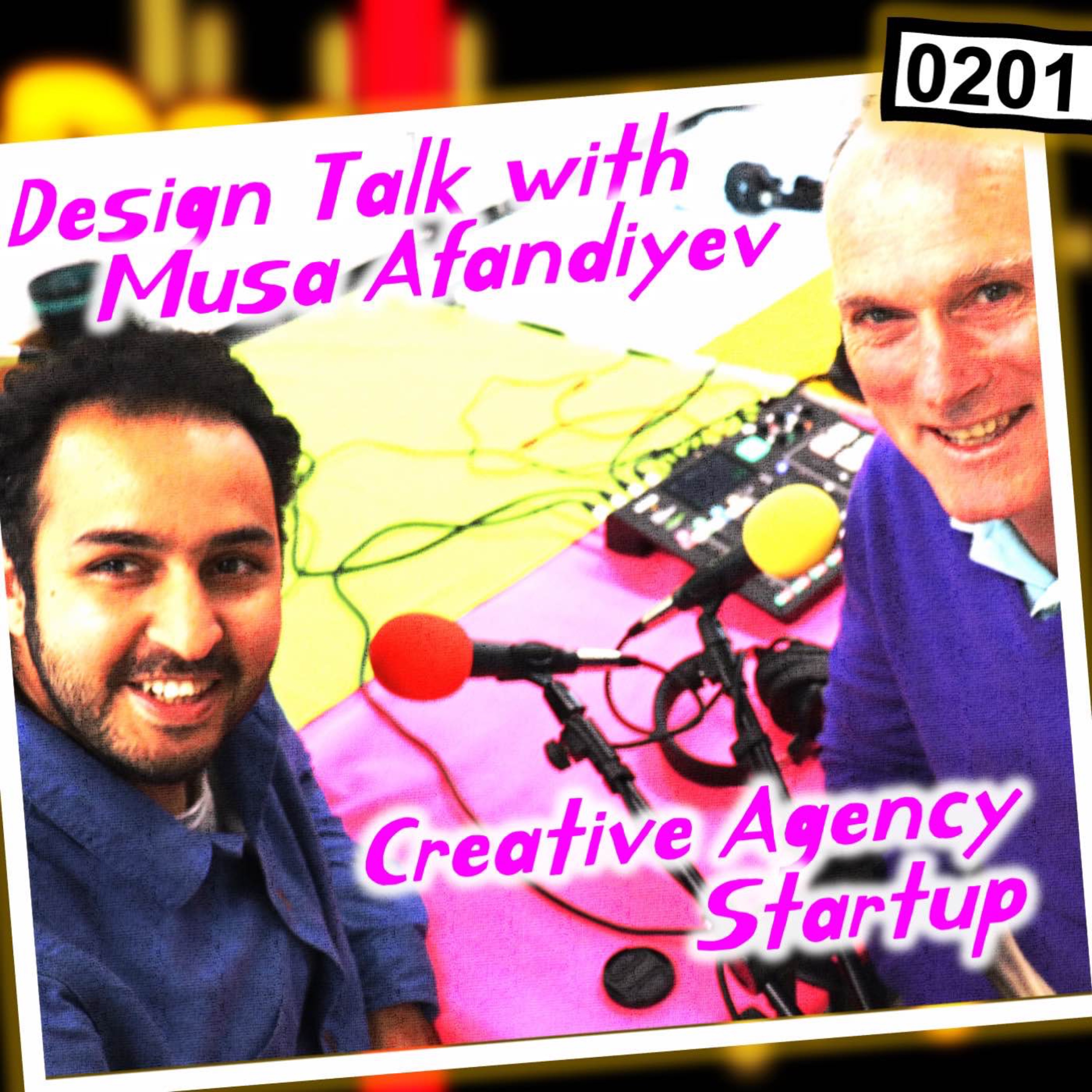
S12 Ep 2010201 - Creative Agencies with Musa Afandiyev
Hosts: Allen HigginsI am very pleased to welcome Musa Afandiyev, former founder/director of Ağıllı Nağıllar, a creative agency based in Baku, Azerbaijan, now studying for a PhD at UCD.· So, Musa, could you say a few words by way of introduction and how you got into the creative agency business?· How does Creative agency business fit with Marketing agencies, PR, Media, and Advertising?· People talk about the need for digital clusters and partner ecosystems for creative industries, do you think digital agencies benefit from being around each other, even if they compete for the same work?· In your opinion, what size organisation best fits the creative agency space?· If smaller is better, how do you scale up when you need to?· As an entrepreneur yourself, what qualities do you look for in others to indicate entrepreneurial potential?Well, we’ll wrap up there.Thank you for talking with us and sharing your experiences.NOTES:https://www.linkedin.com/in/musaeffendi/AcknowledgementsMusic Title: Voltaic FluctuationsArtist: Ben PruntySource: https://www.benpruntymusic.com/License: Non-transferable license. Permission granted by Ben PruntyCover Art Title: Complex collageArtist: Allen HigginsSource: vignette_version.pptxLicense: CC BY-NC-SA 4.0Podcast LicenseDesign Talk (dot IE) CC BY-NC-SA 4.0 The license can be viewed at https://creativecommons.org/licenses/by-nc-sa/4.0By taking part you give permission for your voice to be recorded, for the recording to be edited, and for it to be posted and published as a podcast. Hosted on Acast. See acast.com/privacy for more information.
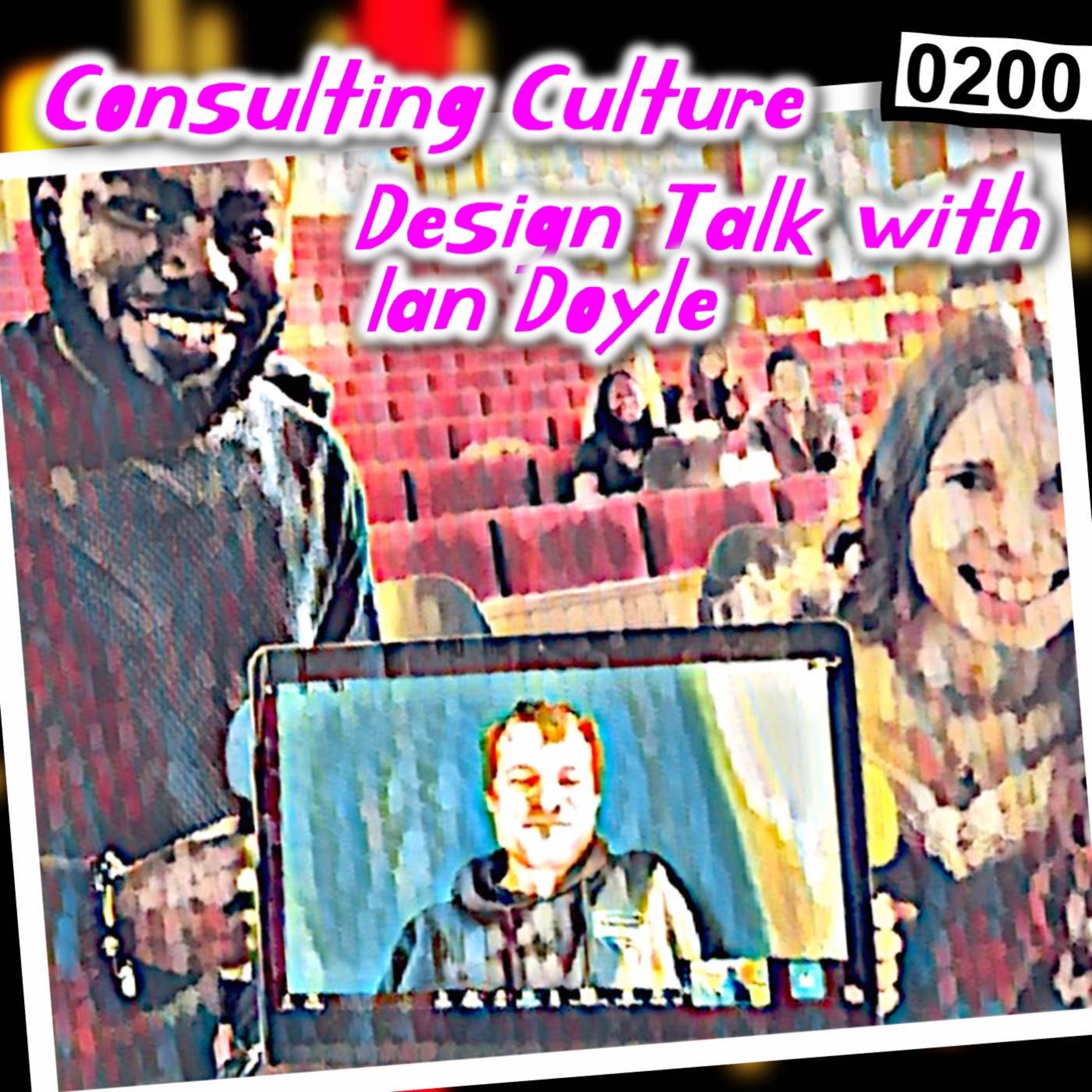
S12 Ep 2000200 - Consulting Culture with Ian Doyle
Hosts: Afolabi Olusola and Carina VölkerlingWe are very pleased to welcome Ian Doyle, Consulting Manager at Guidewire Software, the international insurance software and technology company.· Tell us a little about your background and your current role? · What does a day in the life look like?· How has Guidewire’s methodology evolved over the years? · Is the methodology the same for both product development and client delivery?· What good-working-practices can you highlight for teams? · You’d talked about the concept of value, is it intangible or something you measure? · How does consulting change when a client engagement requires working with other partners? [external services, other consultants etc]· The insurance industry is famously based on data and actuary-centred, is there room for data scientists in the industry (and Guidewire)?· Can you share 3 tips and 3 cautions for a consultant starting out…· <and audience questions?>Well, we’ll wrap up there.Thank you for sharing your ideas with us today.Notes:[retro’s; well-functioning team; regular Slack calls – huddles, Zoom, frequent regular communications; brown-bags; clear role/responsibility; culture of openness; team charter; others][tips and pitfalls: Build a network; don’t be afraid to ask questions; and be prepared to challenge the customer. Have those difficult conversations. Build relationships, know your team, know the people up and below, keep your skills up to date. Look for variety in your roles – don’t get stuck in a niche; Look for places that give a mix of challenge and responsibility – balance between being spoon fed versus struggling; things are changing get over it, change can be an opportunity.]AcknowledgementsMusic Title: Voltaic FluctuationsArtist: Ben PruntySource: https://www.benpruntymusic.com/License: Non-transferable license. Permission granted by Ben PruntyCover Art Title: Complex collageArtist: Allen HigginsSource: vignette_version.pptxLicense: CC BY-NC-SA 4.0Podcast LicenseDesign Talk (dot IE) CC BY-NC-SA 4.0 The license can be viewed at https://creativecommons.org/licenses/by-nc-sa/4.0By taking part you give permission for your voice to be recorded, for the recording to be edited, and for it to be posted and published as a podcast. Hosted on Acast. See acast.com/privacy for more information.
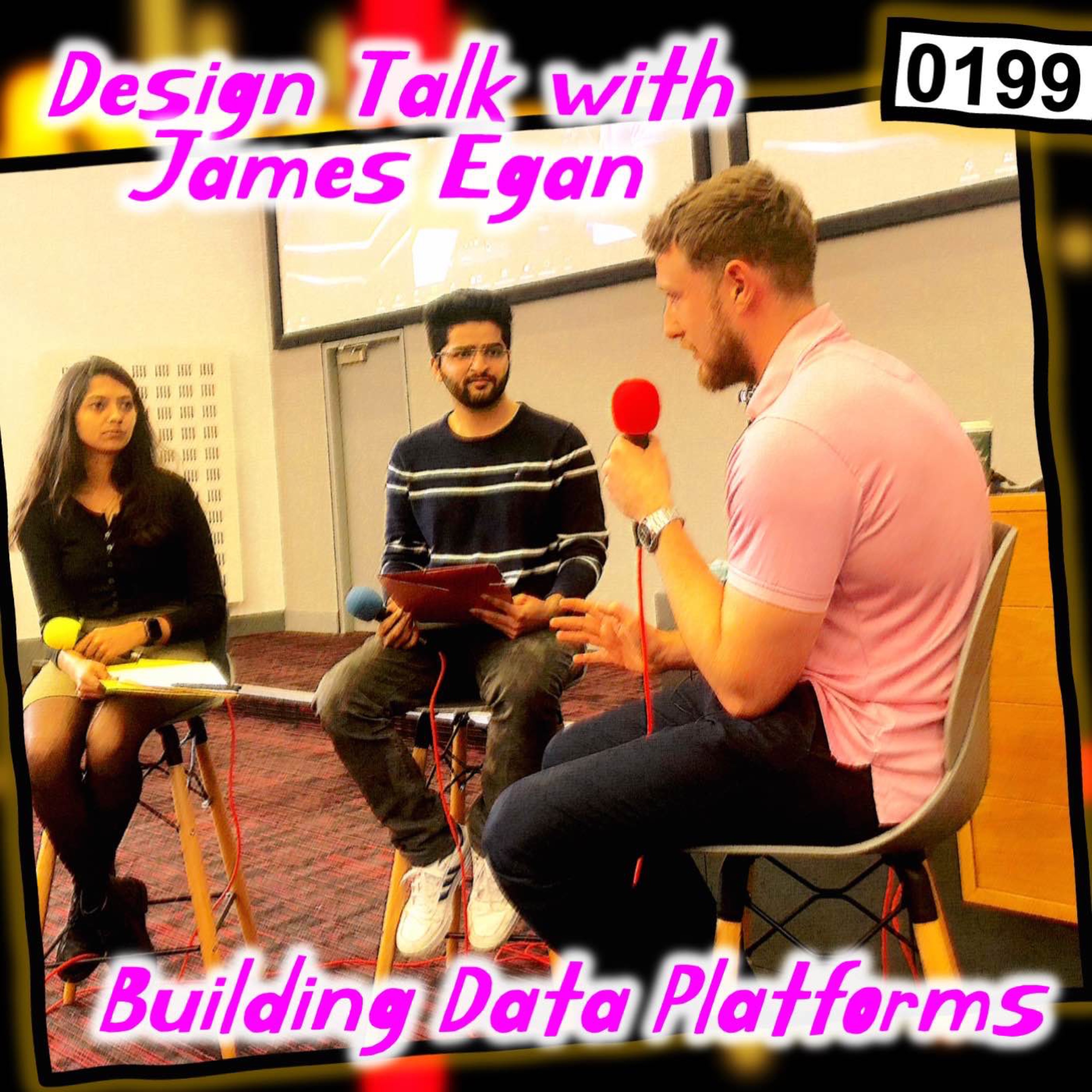
S12 Ep 1990199 - Building Data Platforms with James Egan
Hosts: Harshitha Jayasimha, Abhishek Sabharwal We are very pleased to welcome James Egan, software consultant at Murex.Can you tell us a little about yourself to start?· Talk about the industry space that Murex operates in? · Do developers need Financial Services knowledge to work in this space?· Having trained as an engineer, how did you get into product management?· How does the product development side interact with the customer facing side?· What approaches do you take to gathering and managing requirements? [expand on approach to Agile – SAFE]· What do you look for in new hires? [Fast, willing learners, open minds, problem solvers.]· Go-to tools and techniques for the job?· Where do you see design taking place? What is design? [architecture, interface, lines-of-code; design philosophy?]· <questions from the audience>Well, we’ll wrap up there.Thank you for sharing your ideas with us today.Notes:https://www.murex.com/en/who-we-are/about-usAcknowledgementsMusic Title: Voltaic FluctuationsArtist: Ben PruntySource: https://www.benpruntymusic.com/License: Non-transferable license. Permission granted by Ben PruntyCover Art Title: Complex collageArtist: Allen HigginsSource: vignette_version.pptxLicense: CC BY-NC-SA 4.0Podcast LicenseDesign Talk (dot IE) CC BY-NC-SA 4.0 The license can be viewed at https://creativecommons.org/licenses/by-nc-sa/4.0By taking part you give permission for your voice to be recorded, for the recording to be edited, and for it to be posted and published as a podcast. Hosted on Acast. See acast.com/privacy for more information.
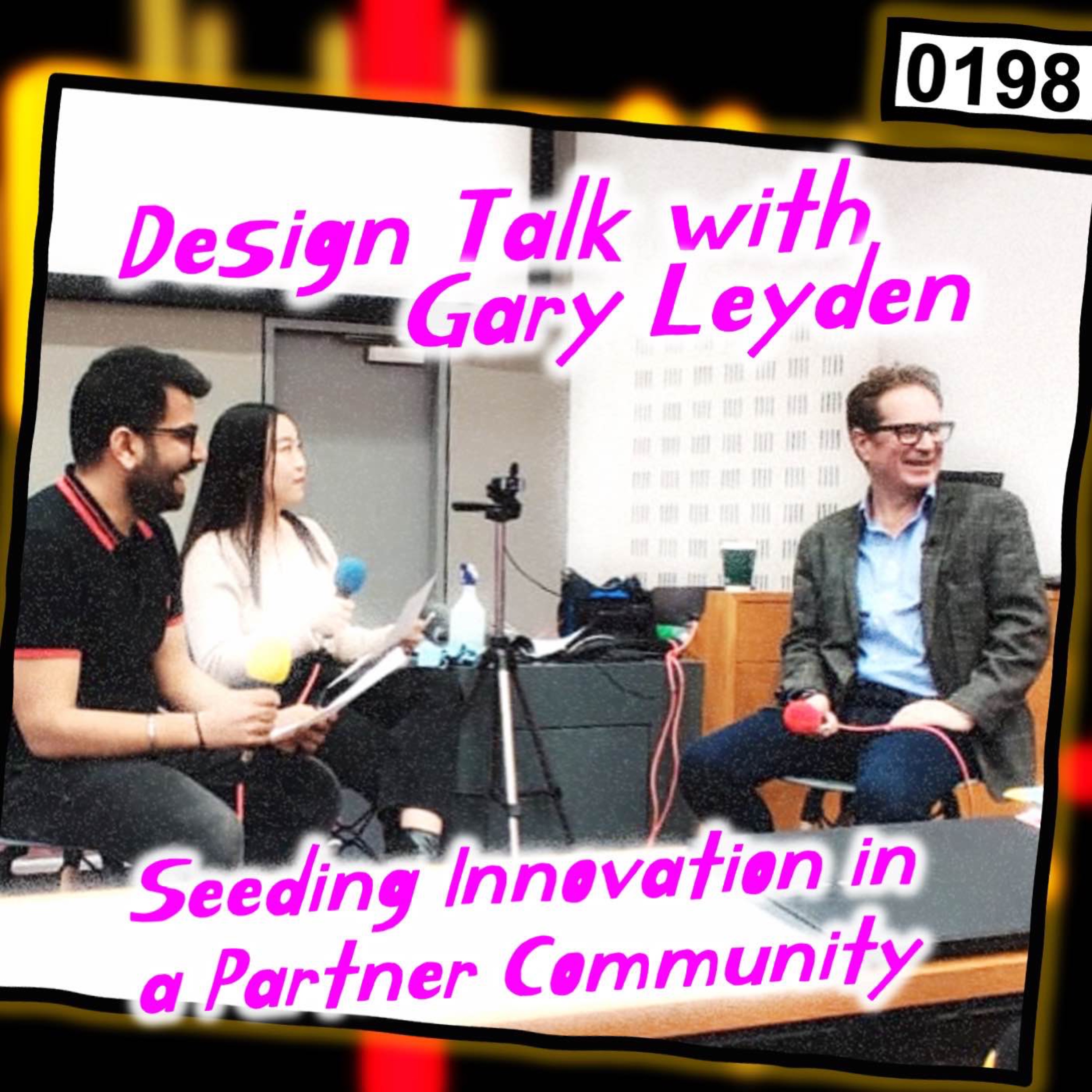
S12 Ep 1980198 - Seeding Innovation with Gary Leyden
Hosts: Zi Wang and Lakshit ChamoliWe are very pleased to have Gary Leyden with us today. Gary’s business career is distinguished by building new lines of business, founding, and investing in new ventures.· Gary, before we start, can you share some of the highlights of your career thus far?· Introduce us to InsTech.ie and the motivation behind it? [founder journey – btw is there a connection to Insurtechireland.org?]· How is InsTech.ie prompting innovation among its members? [benchmarking with Ninety]· Talk us through some of the challenges of creating innovation in a regulated sector? [approaches in different jurisdictions, EU institutions, Central Bank of Ireland, UK FCA, etc.]· How have other locations sparked innovation capability in Insurance and what can Ireland learn from them? [London]· Insurance is all about data and risk information. Is there any unused data left? [yes]· Does the insurance industry have the space for more data literacy roles, in addition to the actuaries? [yes, role for new Insurtech start-ups]· What is the potential for new data-driven services or products in insurance? [examples, regulated entities, sandbox]<and some questions from the audience>Well, we’ll wrap up there.Thank you for sharing your ideas with us today.Notes:https://www.instech.ie - Benchmarking Approachhttps://ninety.comhttps://irishadvantage.com/insuretech/AcknowledgementsMusic Title: Voltaic FluctuationsArtist: Ben PruntySource: https://www.benpruntymusic.com/License: Non-transferable license. Permission granted by Ben PruntyCover Art Title: Complex collageArtist: Allen HigginsSource: vignette_version.pptxLicense: CC BY-NC-SA 4.0Podcast LicenseDesign Talk (dot IE) CC BY-NC-SA 4.0 The license can be viewed at https://creativecommons.org/licenses/by-nc-sa/4.0By taking part you give permission for your voice to be recorded, for the recording to be edited, and for it to be posted and published as a podcast. Hosted on Acast. See acast.com/privacy for more information.
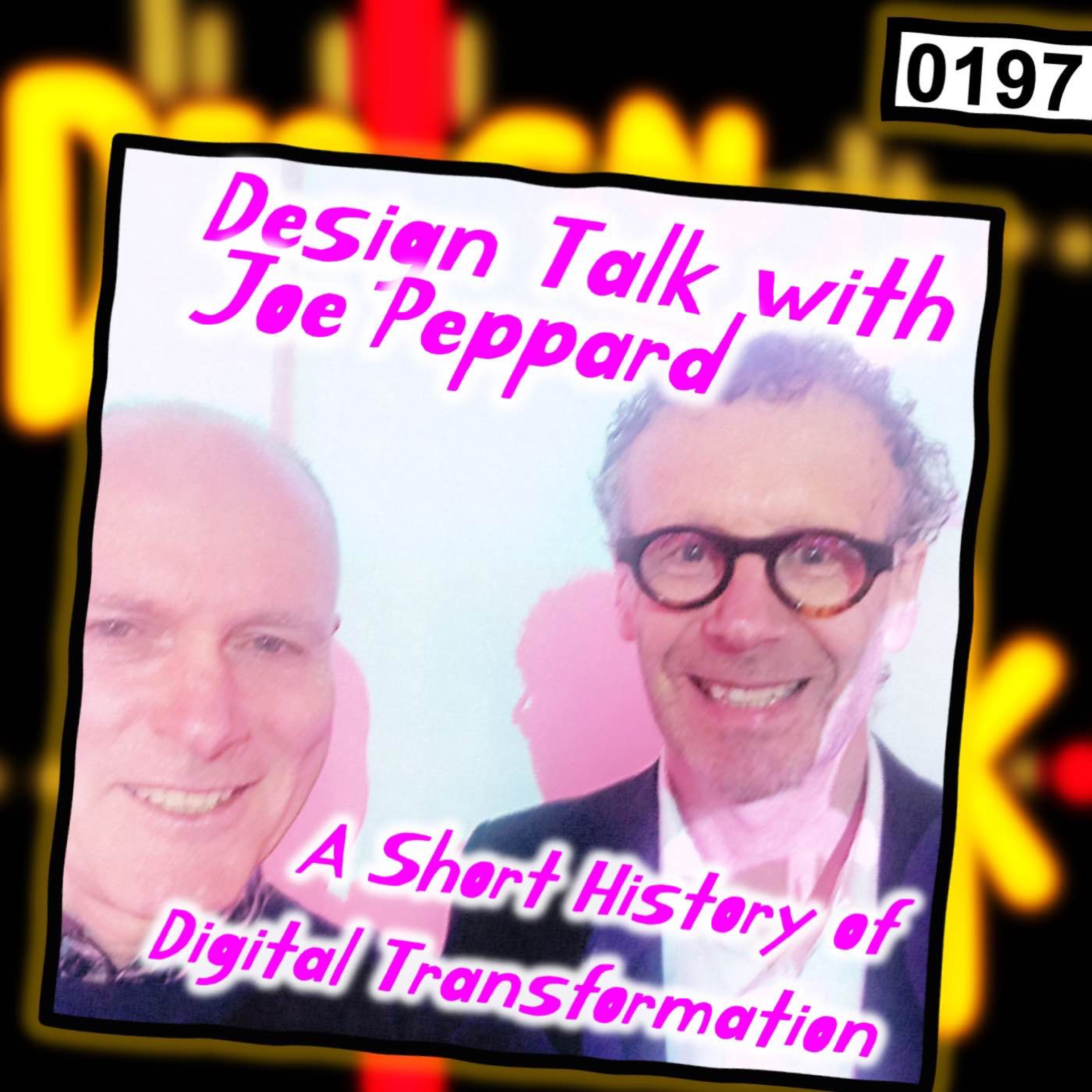
S12 Ep 1970197 - A Short History of Digital Transformation with Joe Peppard
Host: Allen HigginsWe are very pleased to welcome Professor Joe Peppard, educator, consultant, and researcher.First, Joe, could you share a few words about your career to-date and your passion for IT?· <talking points>· Computers, networks, Internet, and platform software as transformative technologies.· Knowledge management for technology.· Automation, strategic transformation, and organisational change.· Implications for the increasing use of AI in the economy.· New ways of working echo old ways of working.· Technology market – temporary monopolies and cycles of competitive domination.· Platform economies – the shift from hardware to operating systems to software as a service.· Transformational moments in computing and technology inflection points.· <any audience questions?>Well, we’ll wrap up now.Thank you for the stimulating discussion with lots of new ideas to reflect upon.Thank you for sharing your thoughts today.NOTES:Joe Peppard - https://www.linkedin.com/in/joe-peppard-5868513/AcknowledgementsMusic Title: Voltaic FluctuationsArtist: Ben PruntySource: https://www.benpruntymusic.com/License: Non-transferable license. Permission granted by Ben PruntyCover Art Title: Complex collageArtist: Allen HigginsSource: vignette_version.pptxLicense: CC BY-NC-SA 4.0Podcast LicenseDesign Talk (dot IE) CC BY-NC-SA 4.0 The license can be viewed at https://creativecommons.org/licenses/by-nc-sa/4.0By taking part you give permission for your voice to be recorded, for the recording to be edited, and for it to be posted and published as a podcast. Hosted on Acast. See acast.com/privacy for more information.
S12 Ep 1960196 - Talking about Process Data with Cormac Garvey
Hosts: Anugrah Gupta and Sindhusuta MohantyWe are very pleased to have Cormac Garvey with us today. Cormac’s career spans factory automation, control systems, systems architecture, software prototyping and information modelling.· Cormac, before we start, can you introduce us to your world. · You’ve described yourself as working at the plumbing end of data analytics. Can you explain what that means?· Who uses the data and what do they use it for? · Having worked with and mastered a wide range of software tools over your career, what go-to approaches are in your consulting toolbox?· Can you give us a sketch of your approach to requirements capture?· How do you approach conceptual design? Both as an individual consultant and as a member of a team?· And translating a conceptual design into the full project?· What for you, is the essence of design?<and some questions from the student audience>Well, we’ll wrap up there.Thank you for sharing your ideas with us today.Notes:Cormac’s profile: https://www.linkedin.com/in/cormac-garvey-9a34503/Cormac’s start-up is HAL Software – a standards-based software design tool for process control and MES environments (manufacturing execution systems). Watch the 2 minute HAL overview video: https://www.youtube.com/watch?v=7A1cEYaqr-kCormac is a member of and/or participates in:· The OPCUA REST subgroup· The Open Process Automation Forum· And the “biophorum”The OPC Foundation (Open Platform Communications), an industry consortium that develops standards for connectivity of industrial automation devices and systems.OPC UA (Unified Architecture) is a cross-platform, open-source standard for data exchange from sensors to cloud applications developed by the OPC Foundation. IEC 62541 is the international standard describing the OPC UA information model.ISA-88, S88, aka ANSI/ISA88, is a standard addressing batch process control.ISA-95 aka Enterprise-Control System Integration. An automation workflow standard.AcknowledgementsMusic Title: Voltaic FluctuationsArtist: Ben PruntySource: https://www.benpruntymusic.com/License: Non-transferable license. Permission granted by Ben PruntyCover Art Title: Complex collageArtist: Allen HigginsSource: vignette_version.pptxLicense: CC BY-NC-SA 4.0Podcast LicenseDesign Talk (dot IE) CC BY-NC-SA 4.0 The license can be viewed at https://creativecommons.org/licenses/by-nc-sa/4.0By taking part you give permission for your voice to be recorded, for the recording to be edited, and for it to be posted and published as a podcast. Hosted on Acast. See acast.com/privacy for more information.
S12 Ep 1950195 - Starting “lets-viz” with Neetu Singla
Hosts: Son Nguyen and Sunil KumarToday we are joined by Neetu Singla, co-founder of Lets Viz, headquartered in Delhi, India.Neetu, can you give us the backstory to starting “Lets Viz” and where are you based?· What does a typical workday look like?· Why is IT outsourcing from India appealing for clients?· Has outsourcing given a social impact benefit to India?· No doubt there is a huge opportunity for data analytics, analysis, visualisation. Where does the appetite for “Lets Viz” services come from and who is your ideal customer?· Tell us a little about the way data analytics is being used and what tools do you use?· How does remote work fit in with your business growth plans?· Is English language the baseline for international communication?· What is your approach to working with international partners? How do you manage timezone gaps and distance related issues?· How do you generate new business? · What are the opportunities and risks, running a business in the global marketplace? · How do you react? Starting with a new client and find out that they don’t have as much knowledge of their own data…· <any additional questions?>Well, we’ll wrap up there.Thank you for sharing your ideas with us today.Notes:https://lets-viz.comAcknowledgementsMusic Title: Voltaic FluctuationsArtist: Ben PruntySource: https://www.benpruntymusic.com/License: Non-transferable license. Permission granted by Ben PruntyCover Art Title: Complex collageArtist: Allen HigginsSource: vignette_version.pptxLicense: CC BY-NC-SA 4.0Podcast LicenseDesign Talk (dot IE) CC BY-NC-SA 4.0 The license can be viewed at https://creativecommons.org/licenses/by-nc-sa/4.0By taking part you give permission for your voice to be recorded, for the recording to be edited, and for it to be posted and published as a podcast. Hosted on Acast. See acast.com/privacy for more information.
S12 Ep 1940194 - Transforming Public Sector with David Horn
Hosts: Cathy Nguyen and Murhaf AbdalqaderWe are very pleased to welcome David Horn, Senior Manager in Artificial Intelligence & Data Consulting at Deloitte.To start David, can you tell us a little more about your journey starting as an Analyst at Deloitte?· What are services does Deloitte Consulting provides? · What makes public sector consulting special? · How do public sector multi-vendor teams work? · What are the qualities that consultants should embody?· Can you talk about the practical challenges you have faced in client organisations?· How do you approach designing and redesigning client systems? · Can you say a little about the application of standards to these systems? Any questions from the audience?Well, we’ll wrap up there.Thank you for sharing your ideas with us today.Notes:AcknowledgementsMusic Title: Voltaic FluctuationsArtist: Ben PruntySource: https://www.benpruntymusic.com/License: Non-transferable license. Permission granted by Ben PruntyCover Art Title: Complex collageArtist: Allen HigginsSource: vignette_version.pptxLicense: CC BY-NC-SA 4.0Podcast LicenseDesign Talk (dot IE) CC BY-NC-SA 4.0 The license can be viewed at https://creativecommons.org/licenses/by-nc-sa/4.0By taking part you give permission for your voice to be recorded, for the recording to be edited, and for it to be posted and published as a podcast. Hosted on Acast. See acast.com/privacy for more information.
S12 Ep 1930193 - Consulting as Listening with Dean Murphy
Hosts: Simon Paul and Soumya RajashekarWe are very pleased to welcome Dean Murphy. Dean is Principal Solution Consultant at ABP, a process automation consultancy and services company. He has been involved in consultancy, business automation, technology, and services delivery for many years.To start, could you give us short sketch of your career to date.· Can you tell us about ABP’s mission and where does the School of Automation fit within that vision?· Can you share your thoughts on “the technologist as a salesperson”.· On trap of thinking it’s all about the technology; How do I force myself to be focused on the customer?· Talk about the differences and challenges that public sector brings vs private sector.· The impact of automation is often cast as a negative, jobs lost, that kind of thing, how valid are the fears and criticisms, how do you deal with introducing automation and AI solutions into client sites?· You’ve talked about Storytelling as a key skill for consultants, for analysts, technologists, do you have an example? [Rubik’s Cube]<extra questions from class>Well, we’ll wrap up there.Thank you for sharing your ideas with us today.Notes:ABP - https://www.abpconsultancy.comSelf-Sufficiency Model for Consulting (ABP approach)ABP School of Automation - https://www.schoolofautomation.tech/partnersAcknowledgementsMusic Title: Voltaic FluctuationsArtist: Ben PruntySource: https://www.benpruntymusic.com/License: Non-transferable license. Permission granted by Ben PruntyCover Art Title: Complex collageArtist: Allen HigginsSource: vignette_version.pptxLicense: CC BY-NC-SA 4.0Podcast LicenseDesign Talk (dot IE) CC BY-NC-SA 4.0 The license can be viewed at https://creativecommons.org/licenses/by-nc-sa/4.0By taking part you give permission for your voice to be recorded, for the recording to be edited, and for it to be posted and published as a podcast. Hosted on Acast. See acast.com/privacy for more information.
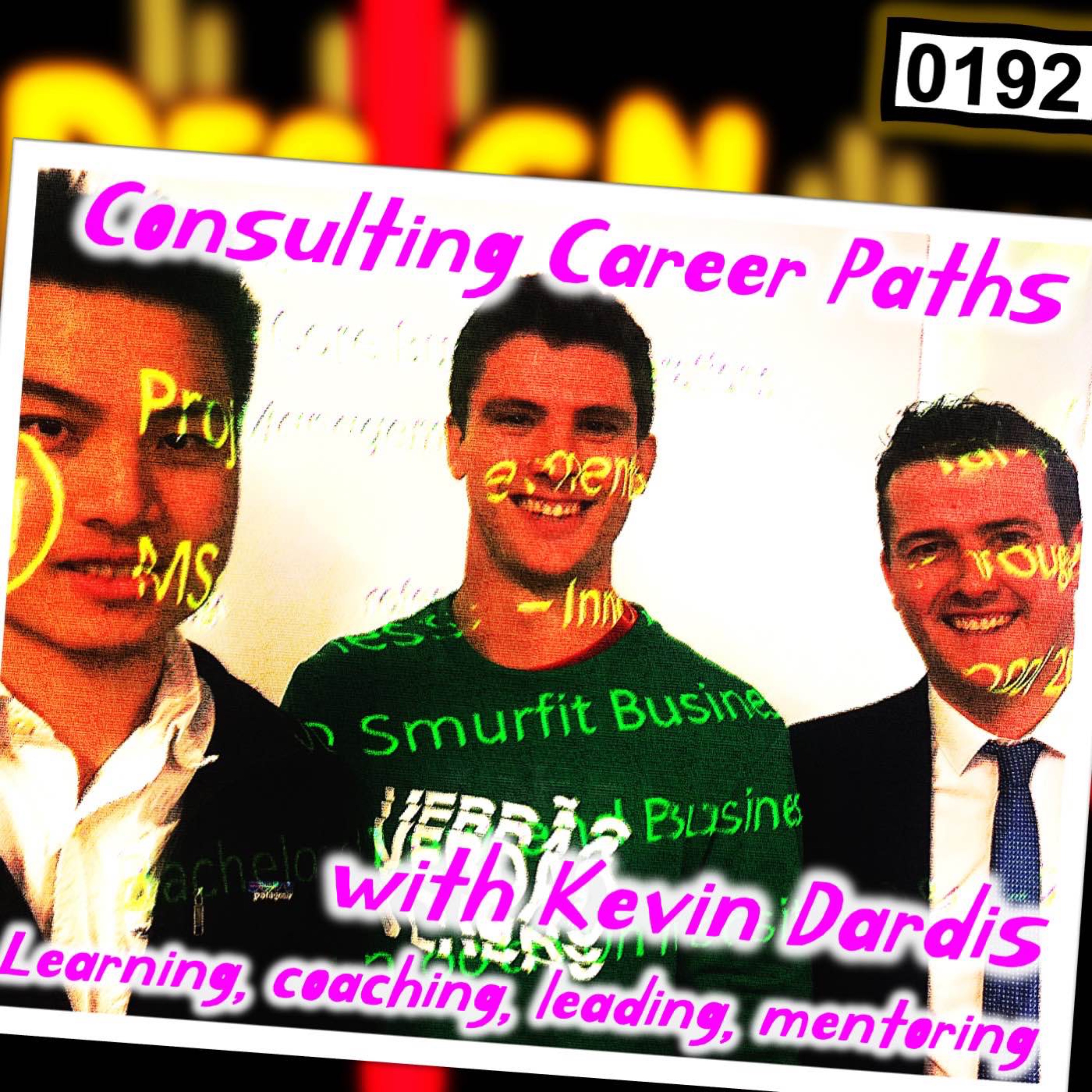
S12 Ep 1920192 - Consulting Career Paths with Kevin Dardis
Hosts: Leo (Wong Tsz Lung) and Luca Spigai. We are very pleased to welcome Kevin Dardis. Kevin is a consultant at Deloitte, starting out as an Analyst working on ERP implementations in the pharmaceutical industry before specialising in technology programme management and project management. He is also an active member of the Irish Chapter of the PMI.So, Kevin, how did you go from being a masters student to working in Deloitte? · Is outsourcing one of the fundamental business strategies?· Should shift the language away from outsourcing and towards 'partnering'?· What does a working week look like in technology consulting?· Does working with a client when multiple consultancies are involved raise special challenges?· A consulting firm has access to a vast store or skills and knowledge. How do you tap into them when needed?· What trends in technology are particularly hot now?· Are there any questions from the audience?Well, we’ll wrap up there.Thank you for talking with us and sharing your thoughts with us today.NOTES:https://www2.deloitte.com/ie/en.htmlhttps://pmi-ireland.orgAcknowledgementsMusic Title: Voltaic FluctuationsArtist: Ben PruntySource: https://www.benpruntymusic.com/License: Non-transferable license. Permission granted by Ben PruntyCover Art Title: Complex collageArtist: Allen HigginsSource: vignette_version.pptxLicense: CC BY-NC-SA 4.0Podcast LicenseDesign Talk (dot IE) CC BY-NC-SA 4.0 The license can be viewed at https://creativecommons.org/licenses/by-nc-sa/4.0By taking part you give permission for your voice to be recorded, for the recording to be edited, and for it to be posted and published as a podcast. Hosted on Acast. See acast.com/privacy for more information.
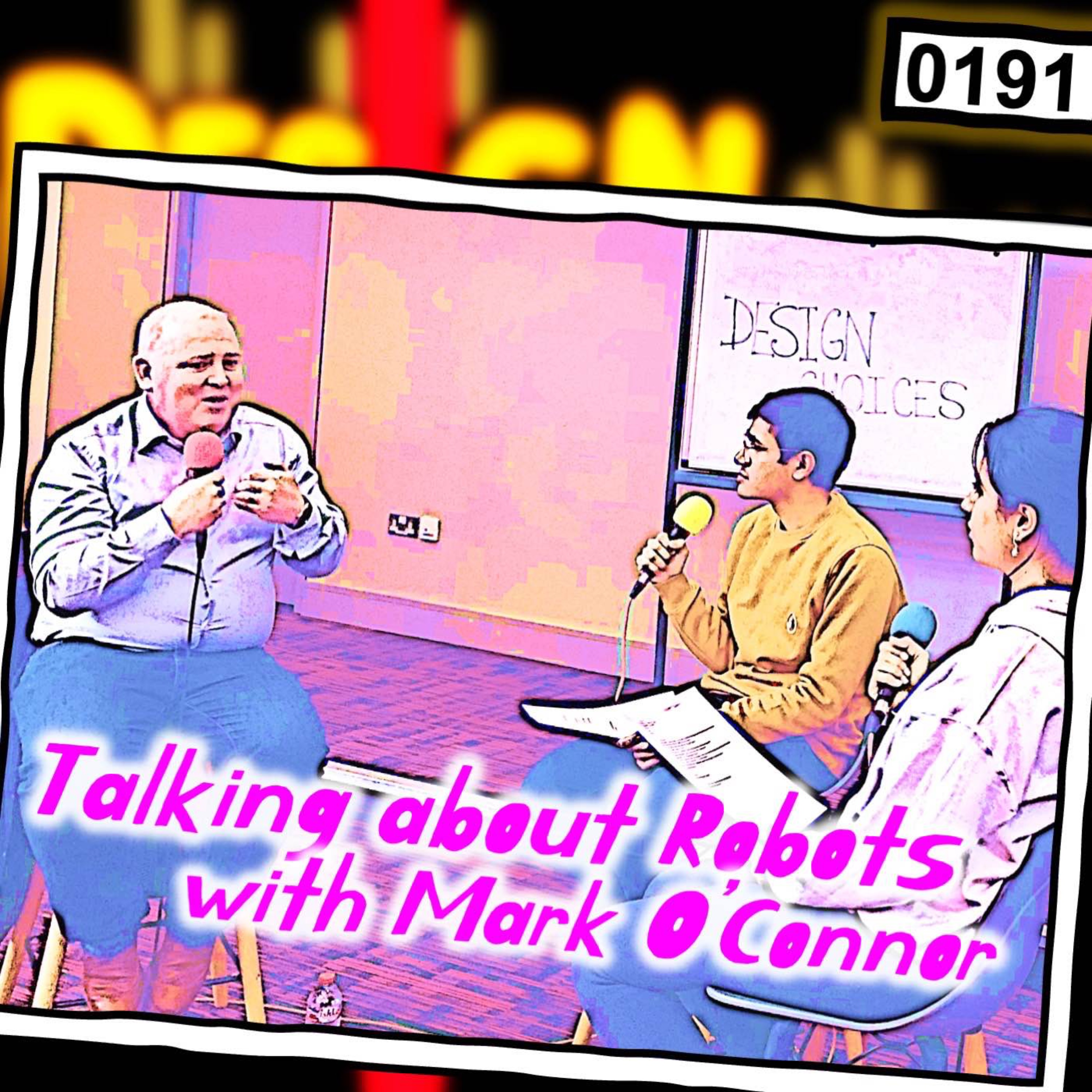
S12 Ep 1910191 - Talking about Robots with Mark O'Connor
Hosts: Manali Dixit and Kushagra Mathur We are very pleased to welcome Mark O’Connor. Mark is Head of Public Sector at ABP and has been involved in technology centred transformation initiatives across his career.· To start, could you give us short sketch of your career to date.· Can you tell us about ABP’s mission?· Where does process automation fit within the technology consulting ecosystem?· What values and mindset do you rely on in your role as a consultant?· Things to keep in mind when working with clients?· The impact of automation is often cast as a negative, jobs lost, that kind of thing, how valid are the fears and criticisms, how do you deal with it as a service provider?· Talk about the differences and challenges that public sector brings vs private sector.· <extra questions from class>Well, we’ll wrap up there.Thank you for sharing your ideas with us today.Notes:ABP Consultancy - https://www.abpconsultancy.com ABP School of Automation - https://www.schoolofautomation.tech/partnersSelf-Sufficiency Model for Consulting (ABP approach)https://www.uipath.com (automation tools provider)AcknowledgementsMusic Title: Voltaic FluctuationsArtist: Ben PruntySource: https://www.benpruntymusic.com/License: Non-transferable license. Permission granted by Ben PruntyCover Art Title: Complex collageArtist: Allen HigginsSource: vignette_version.pptxLicense: CC BY-NC-SA 4.0Podcast LicenseDesign Talk (dot IE) CC BY-NC-SA 4.0 The license can be viewed at https://creativecommons.org/licenses/by-nc-sa/4.0By taking part you give permission for your voice to be recorded, for the recording to be edited, and for it to be posted and published as a podcast. Hosted on Acast. See acast.com/privacy for more information.
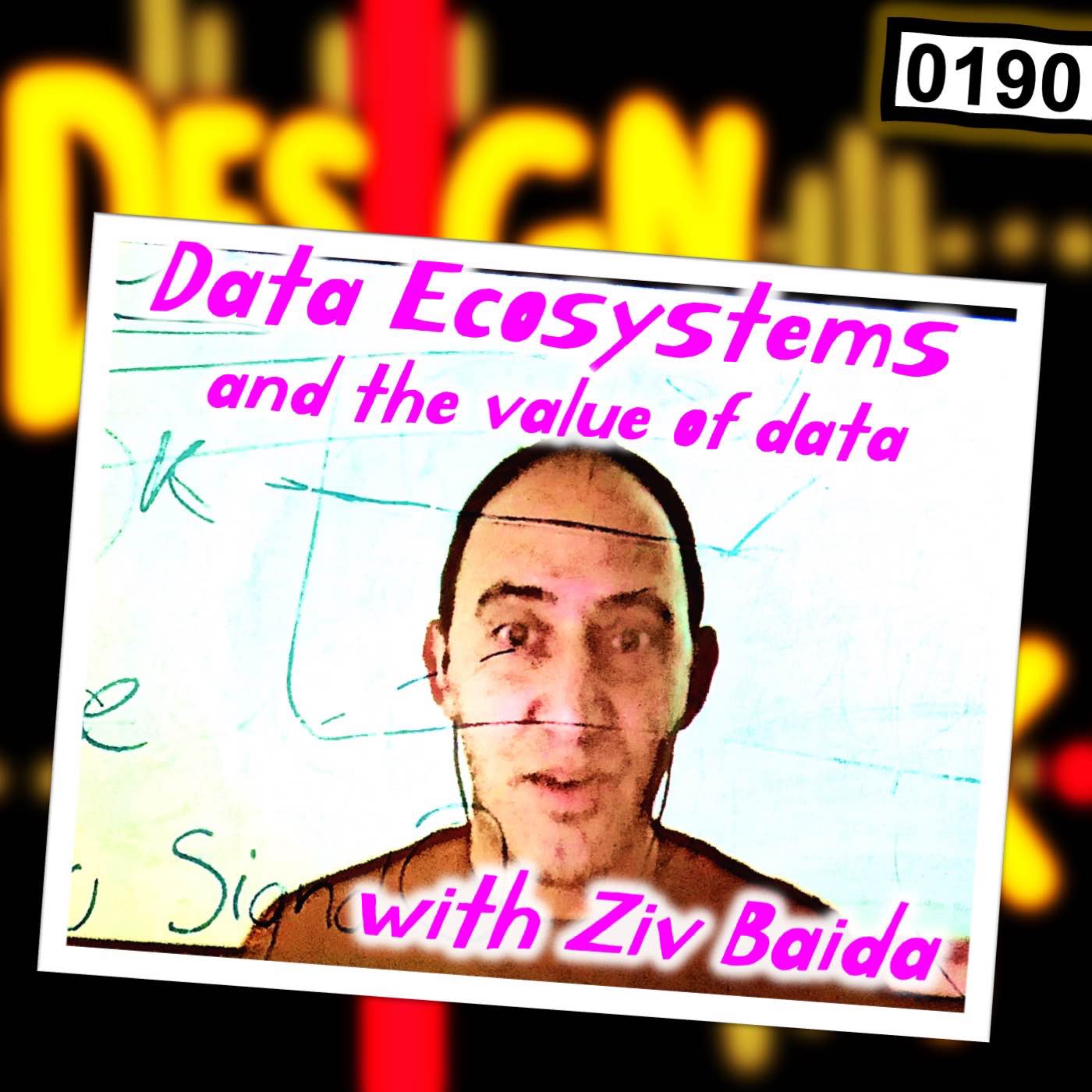
S12 Ep 1900190 - Data Ecosystems with Ziv Baida
We are very pleased to have Ziv Baida, business consultant, coach and educator with a long career in technology-centred innovation initiatives.First, Ziv, begin by telling us a little more about yourself and your career interests...Can you give us an overview of data ecosystems?So how can we create value with unused data?What is the impact on the traditional transactional styles of company-to-company action?Are data ecosystems just for big companies, can small firms benefit too?Is the data, the tools, and the technology available for anyone to benefit?And is there a design angle here? Where do you see design taking place? Or, what is design in the context of data?Talk about the consultancy mindset? Can it work from the inside of a company?How do you approach and manage your engagement with clients?What do I need to be data literate. Do I need to learn to program, to learn statistics?And any last comments?Well, we’ll wrap up there.Thank you for talking with us and sharing your thoughts today.AcknowledgementsMusic Title: Voltaic FluctuationsArtist: Ben PruntySource: https://www.benpruntymusic.com/License: Non-transferable license. Permission granted by Ben PruntyCover Art Title: Complex collageArtist: Allen HigginsSource: vignette_version.pptxLicense: CC BY-NC-SA 4.0Podcast LicenseDesign Talk (dot IE) CC BY-NC-SA 4.0 The license can be viewed at https://creativecommons.org/licenses/by-nc-sa/4.0By taking part you give permission for your voice to be recorded, for the recording to be edited, and for it to be posted and published as a podcast. Hosted on Acast. See acast.com/privacy for more information.
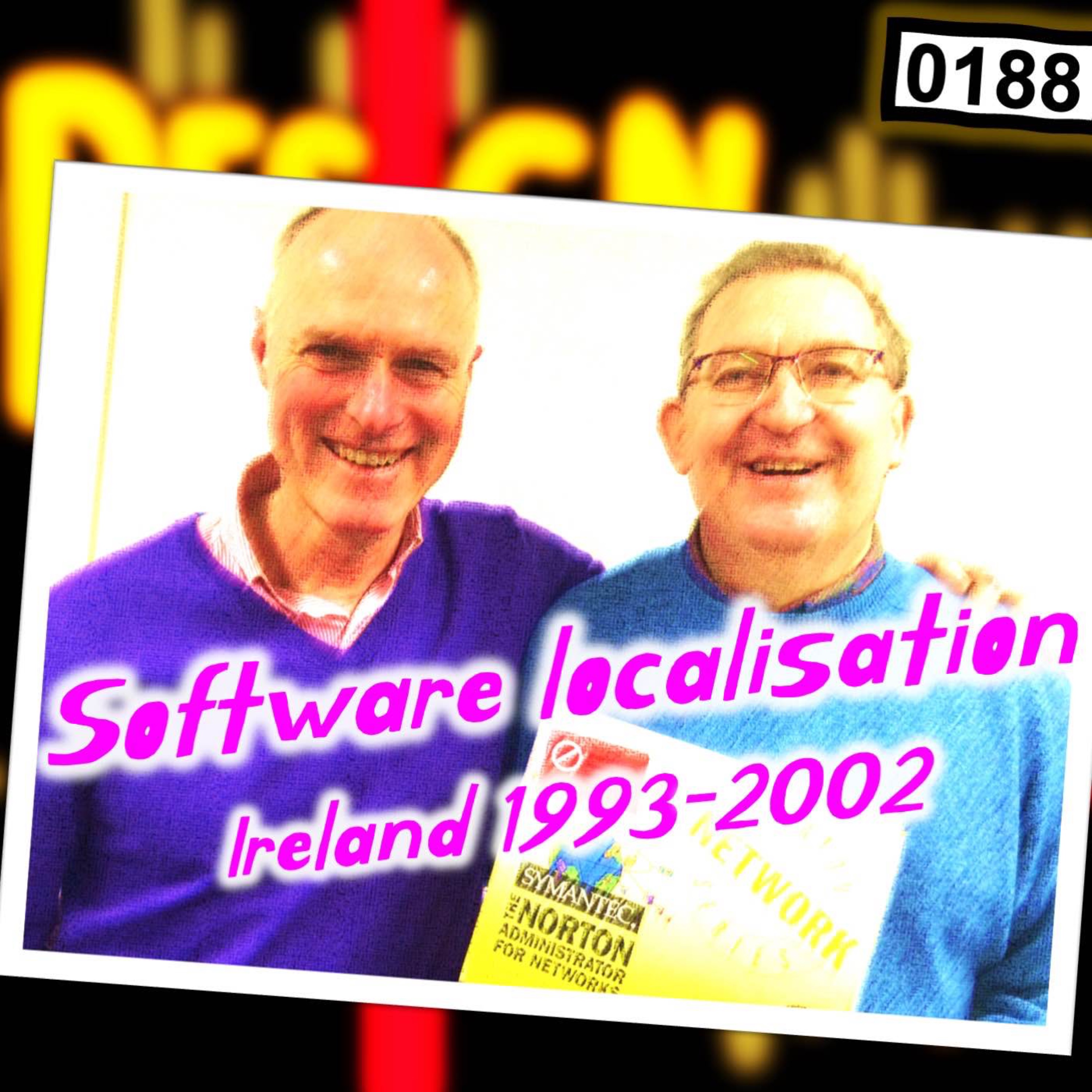
S12 Ep 1880188 - Symantec Software Localisation with Damian Scattergood
John Sterne interview with Damian Scattergood on his career in software localisation (with occasional interjections from Allen Higgins who also worked at Symantec).In part 2 of the interview John Sterne talks with Damian about his move into software localisation at Symantec’s Irish subsidiary in Ballycoolin Business Park, Blanchardstown and ultimately, co-founding STAR Translation with Paul Quigley in 2002. Notes:STAR Translation Services - https://www.star-ts.com/L10n and i18n = Localisation and internationalisation.Symantec Corporation (now dissolved) underwent continuous transformation over its lifetime. Organised as a portfolio company Symantec grew continuously through numerous merger/demerger/acquisitions over its lifetime, culminating the 2000s with its own acquisition/split by Broadcom in 2019. Part of the previous entity is currently styled as Gen Digital Inc.Peter Norton Computing was acquired by Symantec in 1990. Symantec had its own product branding for its dev tools (THINK C, THINK Pascal) and productivity software (Q&A, ACT, PC Anywhere). Symantec continued to use “Norton” and Peter Norton’s image as a brand identity for its trusted utility product lines. These included products acquired through the Peter Norton acquisition: Norton Commander, Norton Utilities, and Norton Backup, but they also employed the Norton brand to AntiVirus and utility/security products that were developed internally or added through licensing, mergers, and acquisitions in later years. The Norton brand also lives on as Norton 360, a privacy and security product and services business. https://ie.norton.comListen to this background article on the history of Symantec on “The History of Computing” Podcast by Charles Edge. https://thehistoryofcomputing.net/the-history-of-symantec#AcknowledgementsThis episode was recorded in conjunction with the Techarchives.Irish project led by John Sterne. The TechArchives project collects and preserves accounts of the social history of technology in Ireland.https://techarchives.irishThe goal is to create a public record of actions and events that might otherwise be forgotten.We want to convey what it was like to work with the technologies of the past – as a computer user, a software developer or a project participant, sharing our memories and recollections of relevant people and organisations, products and services, successes and failures.Music Title: Voltaic FluctuationsArtist: Ben PruntySource: https://www.benpruntymusic.com/License: Non-transferable license. Permission granted by Ben PruntyCover Art Title: Complex collageArtist: Allen HigginsSource: vignette_version.pptxLicense: CC BY-NC-SA 4.0Podcast LicenseDesign Talk (dot IE) CC BY-NC-SA 4.0 The license can be viewed at https://creativecommons.org/licenses/by-nc-sa/4.0By taking part you give permission for your voice to be recorded, for the recording to be edited, and for it to be posted and published as a podcast. Hosted on Acast. See acast.com/privacy for more information.
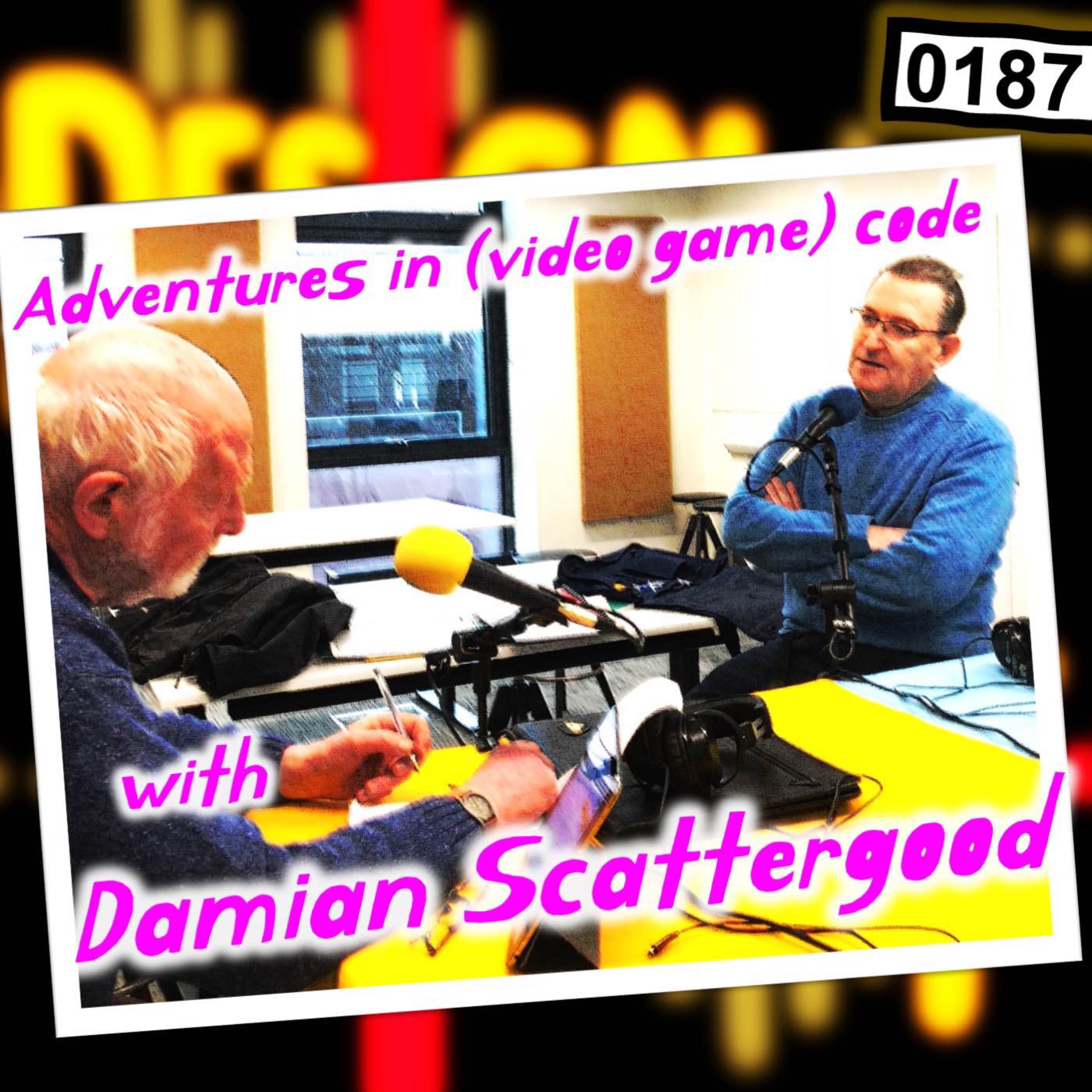
S12 Ep 1870187 - Adventures in Video Game Code with Damian Scattergood
This is the first half of a two-part interview with Damian Scattergood, programmer and co-founder of STAR Translation Dublin, Ireland.Damian recalls how he got into programming as a teenager and his early experiences developing video games before moving into software translation and localisation. Damian has programmed a wide range of computers, starting with the Z80 chip in the ZX80, the TRS-80, ZX81, ZX Spectrum, onwards to the North Star Dimension, Amstrad, Spectrum, MSX, Commodore 64, IBM PC, Amiga, and others.Notes:https://www.star-ts.com/ https://scattergoodstudios.itch.io/AcknowledgementsThis episode was recorded in conjunction with the Techarchives.Irish project led by John Sterne. The TechArchives project collects and preserves accounts of the social history of technology in Ireland.https://techarchives.irishThe goal is to create a public record of actions and events that might otherwise be forgotten.We want to convey what it was like to work with the technologies of the past – as a computer user, a software developer or a project participant, sharing our memories and recollections of relevant people and organisations, products and services, successes and failures.Music Title: Voltaic FluctuationsArtist: Ben PruntySource: https://www.benpruntymusic.com/License: Non-transferable license. Permission granted by Ben PruntyCover Art Title: Complex collageArtist: Allen HigginsSource: vignette_version.pptxLicense: CC BY-NC-SA 4.0Podcast LicenseDesign Talk (dot IE) CC BY-NC-SA 4.0 The license can be viewed at https://creativecommons.org/licenses/by-nc-sa/4.0By taking part you give permission for your voice to be recorded, for the recording to be edited, and for it to be posted and published as a podcast. Hosted on Acast. See acast.com/privacy for more information.
S12 Ep 1850185 - Invention to Innovation with Fergal O'Reilly
Host: Allen Higgins. We are delighted to have Fergal O’Reilly with us today. Fergal is an Adjunct professor and a Research Physics & Innovation Officer in the UCD School of Physics, with a career that spans, experimental physics, innovation, entrepreneurship and new venture formation.Could you tell us a little about yourself and your background to begin?1. SiriusXT offers a great example of the process of bringing scientific discoveries through to market, from primary research and development to commercial offerings, can you share a story of going from a handful of founders to a new enterprise?2. Is the process repeatable? What part do you think is the most difficult?3. Do you think it’s necessary for a science-driven venture to have a singular design concept, even though it is probably complex, complicated and multi-disciplinary?4. Do scientist founders with deep specialised knowledge really need to invest in building their competences in other specialisms? I suppose ‘business expertise’ is the most cited example.5. How relevant is institutional support for these endeavors, from the University, from national agencies, and the EU?6. What kind of supports and surrounding environment do you think research scientists need to make the leap of faith to initiate or join an entrepreneurial venture? 7. What words of advice would you give research team thinking of taking that step, from university laboratory to commercial realities?8. When (if ever) should founders bring in the next generation of leadership?9. <questions from the audience>Well, we’ll wrap up there.Thank you for sharing your experience and learning with us today.AcknowledgementsMusic Title: Voltaic FluctuationsArtist: Ben PruntySource: https://www.benpruntymusic.com/License: Non-transferable license. Permission granted by Ben PruntyCover Art Title: Complex collageArtist: Allen HigginsSource: vignette_version.pptxLicense: CC BY-NC-SA 4.0Podcast LicenseDesign Talk (dot IE) CC BY-NC-SA 4.0 The license can be viewed at https://creativecommons.org/licenses/by-nc-sa/4.0By taking part you give permission for your voice to be recorded, for the recording to be edited, and for it to be posted and published as a podcast. Hosted on Acast. See acast.com/privacy for more information.
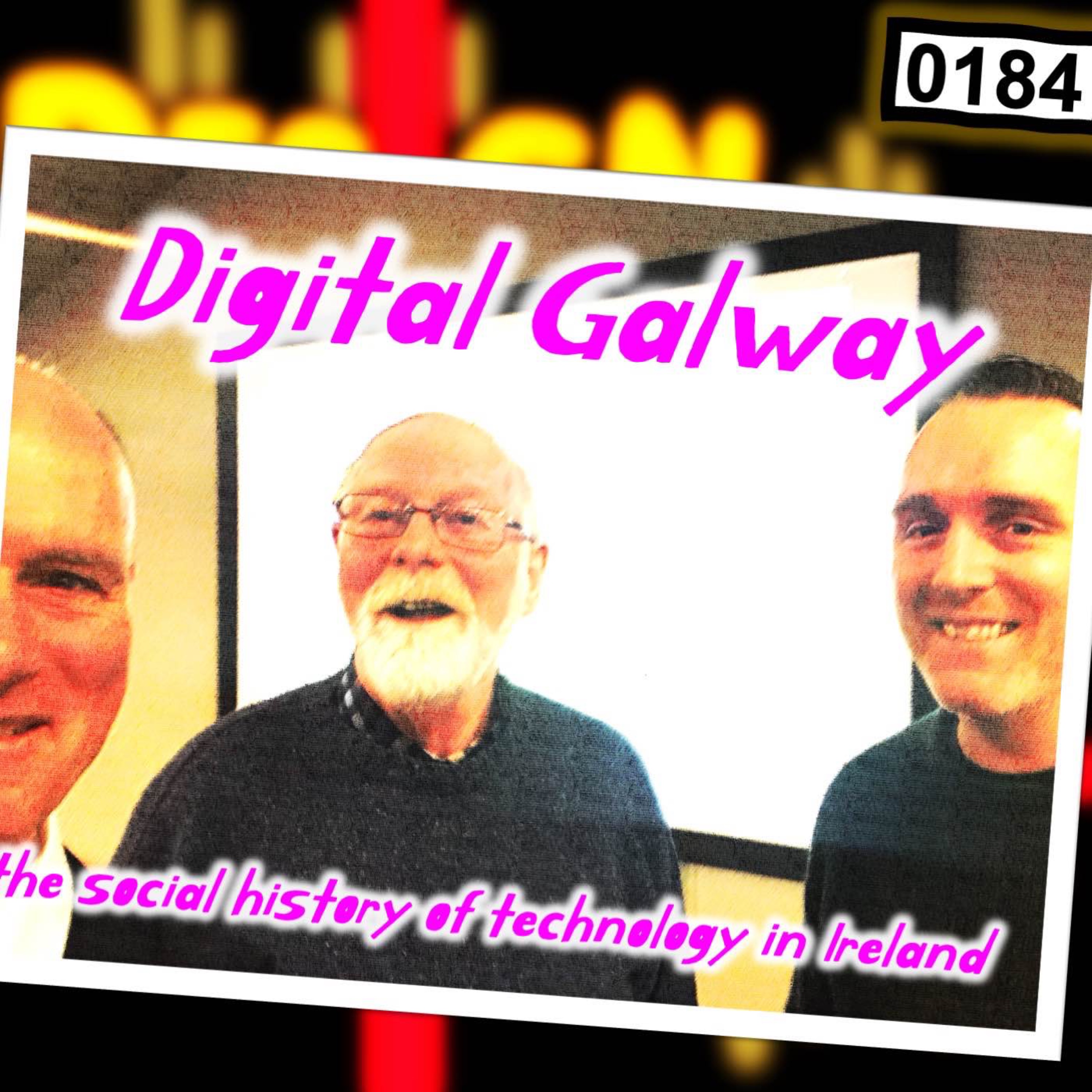
S12 Ep 1840184 - Digital Galway with John Sterne
Hosts: David Heskin and Allen HigginsWe are very pleased to have John Sterne, a technology journalist, historian and digital archivist, long involved in recording the social history of technology in Ireland: writing books, articles, press and online on the website techarchives.irish.John, can we start by telling us a little about yourself and your vision for techarchives.irish?So, today’s conversation, hopefully the first of many, we want to look at multiplier effects and spill-over benefits of having subsidiaries of multinational firms in based in your country.To test these ideas, we are going back 30 years or so to when Digital came to Ireland. By Digital we mean the company, also known as DEC or Digital Equipment Corporation.· Let’s start with the DEC story, who were the main actors at the time?· Was DEC’s corporate culture different to its peers? (The distinctive culture inside a corporation run by 20th century engineers – not by investors or accountants)· And DEC’s products, did they deserve their reputation for innovation? · How did Galway City, the West of Ireland, end up as the home for DEC’s European manufacturing operations centre? · How many sites did DEC end up having in Ireland and what kinds of work were the Irish sites involved in?· How did DEC interact with the corporate and political scene in Ireland and Europe?· Was there a tradition of entrepreneurial talent emerging from DEC during the good years?· And then we arrive at 1993, DEC closes its Irish assembly plants after 22 years of operation. It must have been devastating…· A lot has been written positing the resilience and value of “Industrial Clusters”. What lessons were learnt in the wake of DEC’s closure?· And what did Digital itself think? What was the corporate view on reflection some years after the experience?· <questions from the audience>Well, John, we’ll wrap up there.Thank you for taking the time to talk and for sharing your knowledge. Let’s do this again and continue the conversation…Notes:https://techarchives.irish/AcknowledgementsMusic Title: Voltaic FluctuationsArtist: Ben PruntySource: https://www.benpruntymusic.com/License: Non-transferable license. Permission granted by Ben PruntyCover Art Title: Complex collageArtist: Allen HigginsSource: vignette_version.pptxLicense: CC BY-NC-SA 4.0Podcast LicenseDesign Talk (dot IE) CC BY-NC-SA 4.0 The license can be viewed at https://creativecommons.org/licenses/by-nc-sa/4.0By taking part you give permission for your voice to be recorded, for the recording to be edited, and for it to be posted and published as a podcast. Hosted on Acast. See acast.com/privacy for more information.
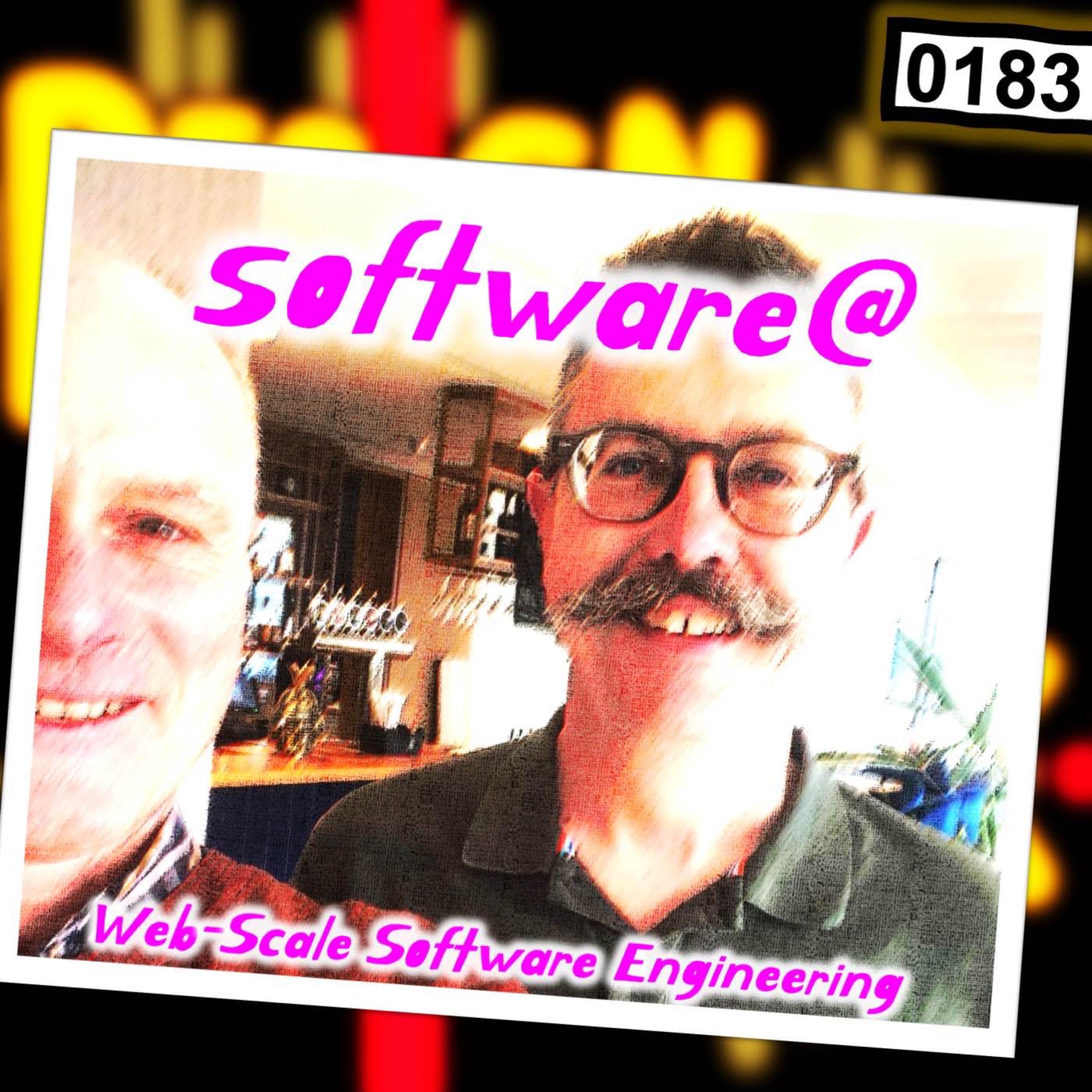
S12 Ep 1830183 - Web-Scale Software Engineering with Karl McCabe
Hi, I’m Allen Higgins.And I’m Déaglán Connolly Bree. We are really excited to have Karl McCabe join us today, to talk about what he has learnt over the years developing web-scale software. Karl is a UCD Computer Science graduate with a career spanning start-ups and the tech giants, Amazon and Meta. I first met Karl in IONA Technologies, you may not have heard about but I’ll call one of Irelands first tech unicorns, before unicorns were a thing.[D] So Karl, tell us a little about that journey before we dive in?[A] We were going to title this talk “Team Patterns behind Web-Scale Software”…· What are some common themes you have seen in how large companies like Amazon and Meta develop software?· Do they change how they develop software over time, and if so how and why?· Do they design their software with quality in mind from the outset?· These companies run production systems used by billions of people, and any outages can be very public. Do outages influence how companies approach building, changing or testing software?· What development methodologies are typically used?· Do engineers have freedom to choose a programming language or platform to build their software? Or are they forced to follow the company standards?· <questions from the audience>Well, Karl, we’ll wrap up there.Thank you for taking the time to talk and for sharing your knowledge and experiences. Let’s do this again some time.Notes:Title: Software Quality in Large Scale-Software DevelopmentVenue: Science 2.16/2.17 (ALE)Date&Time: Friday, Feb 24 @ 16.00Abstract: Developing high quality “web scale” software presents a unique set of challenges. In this talk I will reflect on some patterns I have seen in how software is developed in companies such as Amazon and Meta. What are some of the forces that shape a company’s approach to how they develop software? Do they design for quality? How do large outages influence a company’s approach to building reliable software? What development methodologies are prevalent and why? Why do they use certain programming languages over others? How do they approach CI/CD, testing, code reviews etc. and why? Speaker: Karl McCabe is a UCD Computer Science graduate (1990) with extensive experience in the software industry. For the past 17 years he has occupied a number of senior engineering and management roles in Amazon and Meta.This seminar is organised by the School of Computer Science and the School of Business and will be conducted in host/interviewer style led by Allen Higgins of the School of Business.AcknowledgementsMusic Title: Voltaic FluctuationsArtist: Ben PruntySource: https://www.benpruntymusic.com/License: Non-transferable license. Permission granted by Ben PruntyCover Art Title: Complex collage IIArtist: nightcafe AI Art Generator (https://nightcafe.studio) & Allen Higgins (graphic design)Source: vignette_version-Karl.jpgSource: vignette_version-Karl.pptxLicense: CC BY-NC-SA 4.0Podcast LicenseDesign Talk (dot IE) CC BY-NC-SA 4.0 The license can be viewed at https://creativecommons.org/licenses/by-nc-sa/4.0By taking part you give permission for your voice to be recorded, for the recording to be edited, and for it to be posted and published as a podcast. Hosted on Acast. See acast.com/privacy for more information.
S12 Ep 1820182 - Cloud Transformation with Luke Middleton
Hosts: Adnan Aklouk and Wenhao Liao We are very pleased to welcome Luke Middleton, Head of Technology & Innovation at DataDyne Consulting and Teng Yu from Huawei Cloud. · Can you tell us a little about yourself and the story behind Datadyne?· And what does a day-in-the-life look like for you?· So, would you call yourself an entrepreneur?· And the potential for sports wellness analytics?· What are some of the challenges you encountered providing IT services for the health sector?· Can you talk about the "infrastructure-as-a-service" business model?· What do you say to Allen's claim that services outsourcing is the original business strategy?· How does moving to Cloud impact organisations what are the big concerns?· <more questions as they arise>· And any last comments?Okay, well, we’ll wrap up there.Thank you for talking with us and sharing your thoughts with us today.NOTES:https://datadyne.ie AcknowledgementsMusic Title: Voltaic FluctuationsArtist: Ben PruntySource: https://www.benpruntymusic.com/License: Non-transferable license. Permission granted by Ben PruntyCover Art Title: Complex collageArtist: Allen HigginsSource: vignette_version.pptxLicense: CC BY-NC-SA 4.0Podcast LicenseDesign Talk (dot IE) CC BY-NC-SA 4.0 The license can be viewed at https://creativecommons.org/licenses/by-nc-sa/4.0By taking part you give permission for your voice to be recorded, for the recording to be edited, and for it to be posted and published as a podcast. Hosted on Acast. See acast.com/privacy for more information.
S12 Ep 1810181 - Collaboration Attitude with Jacinta Owens
Hosts: Ines Poncon and Luke HarrisWe are very pleased to welcome Jacinta Owens, Programme Director at the Innovation Academy and Facilitation Specialist. First, Jacinta, can you tell us a little more about yourself and your role in the Innovation Academy...1. Was the Innovation Academy’s workshop method inspired by the Design Thinking approach?2. And we are seeing 'design thinking' increasingly talked about and used by consulting firms, what do you think are the drivers for this change?3. What does an intensive week-long workshop format look like?4. What advice would you give to someone thinking about taking part in Design Thinking for the first time? 5. Do student workshops follow the same model as those for companies? 6. And the differences between online and in-person workshops? 7. You have talked about facilitation as a skill, as a specialism. Who or what have been your key influences in your personal development as a facilitator?8. <more questions as they arise>9. And any last comments?Well, we’ll wrap up there.Thank you for talking with us and sharing your thoughts today.NOTES:https://www.innovationacademy.ie/team/jacinta-owens/AcknowledgementsMusic Title: Voltaic FluctuationsArtist: Ben PruntySource: https://www.benpruntymusic.com/License: Non-transferable license. Permission granted by Ben Prunty (personal letter)Cover Art Title: Complex collageArtist: Allen HigginsSource: vignette_version.pptxLicense: CC BY-NC-SA 4.0Podcast LicenseDesign Talk (dot IE) CC BY-NC-SA 4.0 The license can be viewed at https://creativecommons.org/licenses/by-nc-sa/4.0By taking part you give permission for your voice to be recorded, for the recording to be edited, and for it to be posted and published as a podcast. Hosted on Acast. See acast.com/privacy for more information.
S12 Ep 1800180 - Growing an Innovation Ecosystem with Chris Curran
Hosts: Aditya Devulapalli and Mohamed Danish We are very pleased to welcome Chris Curran.First, Chris, could you give sketch of your career thus far to begin?1. It must be difficult to discover innovations and generate change in an established industry. What lessons have you learnt along the way?2. Let’s talk about the idea of innovation ecosystems…3. What advantages does Ireland offer?4. What do established companies get by mixing with startups?5. How do startups gain by mixing with established companies?6. Have you seen spinouts from internal projects?7. And questions from the audience?Well, we’ll wrap up there.Thank you for sharing your experiences with us today.Notes:Background ideas around our assumptions about places and spaces for innovation.InsTech is an Irish initiative for industry incumbents and start-ups to come together to collaborate and create the next generation of insurance solutions - https://www.instech.ieThe Plug and Play Tech Centre – https://www.plugandplaytechcenter.com/about/ is a global innovation platform / ecosystem for connecting early-stage entrepreneurs with early-stage investors and business clients prepared to experiment with new innovations. Plug and Play was founded by Saeed Amidi (son of Amir Amidi, the patriarch of a family office that owned, among other businesses, a Persian rug business in downtown Palo Alto called the Medallion Rug Gallery. Plug and Play started out in and around Silicon Valley’s Sand Hill Road area. Recognised as a kind of ground zero for the world of technology innovation, and venture capital – a location that links Menlo Park to Palo Alto via Stanford University. AcknowledgementsMusic Title: Voltaic FluctuationsArtist: Ben PruntySource: https://www.benpruntymusic.com/License: Non-transferable license. Permission granted by Ben Prunty (personal letter)Cover Art Title: Complex collageArtist: Allen HigginsSource: vignette_version.pptxLicense: CC BY-NC-SA 4.0Podcast LicenseDesign Talk (dot IE) CC BY-NC-SA 4.0 The license can be viewed at https://creativecommons.org/licenses/by-nc-sa/4.0By taking part you give permission for your voice to be recorded, for the recording to be edited, and for it to be posted and published as a podcast. Hosted on Acast. See acast.com/privacy for more information.
S12 Ep 1790179 - Video Game Industry with Patrick O'Donnell
Hosts: Liam Price and Maximilian SchnipperingWe are very pleased to welcome Patrick O’Donnell.First, Patrick, can you give us an overview of your career and how you ended up covering the game industry for equity investment?· So, how big is the game industry, where does it happen? (size, scale and global locations)· How does the industry breakdown into segments, sectors, genres?· Is game outsourcing different to other kinds of outsourcing?· What kinds of specialisations or core activities for benefit from being outsourced?· What drives AAA studios’ growing reliance on outsourcing?· Who are the key public and private investment players in the game industry?· What is the role for industry member bodies like Irish Game Makers (IMIRT) and Games NI?· The Microsoft-Activision merger continues to be scrutinized by regulators. The logic underpinning M&A activity in other industries is usually put down to scale and efficiency; do the same rules apply for the game industry?· What does the future look like for global game development?Well, we’ll wrap up there.Thank you for sharing your expertise with us today.Notes:https://www.goodbody.ie/for-corporates-and-institutions/investment-banking/equity-research/business-support-and-it-services/patrick-o%27donnellhttp://www.black-shamrock.comhttps://www.virtuosgames.comhttps://www.keywordsstudios.comAcknowledgementsMusic Title: Voltaic FluctuationsArtist: Ben PruntySource: https://www.benpruntymusic.com/License: Non-transferable license. Permission granted by Ben PruntyCover Art Title: Complex collageArtist: Allen HigginsSource: vignette_version.pptxLicense: CC BY-NC-SA 4.0Podcast LicenseDesign Talk (dot IE) CC BY-NC-SA 4.0 The license can be viewed at https://creativecommons.org/licenses/by-nc-sa/4.0By taking part you give permission for your voice to be recorded, for the recording to be edited, and for it to be posted and published as a podcast. Hosted on Acast. See acast.com/privacy for more information.
S11 Ep 1780178 - The real role of a Software Architect with Jeevantika Lingalwar
Hosts: Luca Spigai and Wenhao Liao.We are very pleased to welcome Jeevantika Lingalwar, Cloud Solution Architect at Microsoft.First, could you say a few words about yourself to begin?1. What does the CSA (Cloud Solution Architect) in Microsoft entail?2. Can you talk about what you need to be good at to be a software architecture?3. What does a typical working week look like?4. How do you keep tabs on the various projects and individuals working on software systems?5. How do you like to see architecture represented? Are there different approaches for high/mid/low level or can the same approach work at all levels?6. Sadly, no one enjoys reading technical documentation. Can you share some ideas on helping teams create, share, and maintain design knowledge?7. Do you have any final words or advice for the audience?Well, we’ll wrap up there.Thank you for talking with us and sharing your thoughts today.Notes:Jeevantika on LinkedIn - https://www.linkedin.com/in/jeevantika-lingalwar/Acknowledgements Music Title: ImpulseArtist: Ben PruntySource: https://www.benpruntymusic.com/License: Non-transferable license. Permission granted by Ben Prunty (personal letter) Cover Art Title: Aharoni 88 + Equalise Character HeightArtist: Allen HigginsSource: AudioStudio-Name.pptxLicense: CC BY-NC-SA 4.0 Podcast LicenseDesign Talk (dot IE) CC BY-NC-SA 4.0 The license can be viewed at https://creativecommons.org/licenses/by-nc-sa/4.0By taking part you give permission for your voice to be recorded, for the recording to be edited, and for it to be posted and published as a podcast. Hosted on Acast. See acast.com/privacy for more information.
S11 Ep 1770177 - Software Architecture with Dave Anderson
Hosts: Sunil Kumar and Leo (Wong Tsz Lung).We are very pleased to welcome Dave Anderson; Author, Technical Fellow for the Bazaar Voice, blogger, and one of the hosts of “Serverless Craic” a podcast by The Serverless Edge.First, Dave, could you say a few words about yourself to begin?1. Tell us about your new book"The Value Flywheel Effect" and motivation for writing it?2. What do you think is the value of a good visualisation?3. You're an advocate for Wardley maps... What other visual methods do you use?4. What foundation architectures that people should know about for working in tech... And at what level of detail do they need to know them?5. Do you have a favorite (classic) software architecture?6. Software engineers work from a single line of code to the whole program level (function level and component levels in between). Is software architecture any different?7. No one wants to read technical documentation, can you talk about social behaviour and practices that help teams create, share, and maintain knowledge?8. Do you have any final words or advice for the audience?Well, we’ll wrap up there.Thank you for talking with us and sharing your thoughts today.Notes:Dave is the author of “The Value Flywheel Effect” book - https://theserverlessedge.com/the-value-flywheel-effect/You can also find Dave at: https://www.bazaarvoice.com, blogging on The Serverless Edge https://theserverlessedge.com and on the Serverless Craic” podcast https://spoti.fi/3S52sUiWardley Maps - https://en.wikipedia.org/wiki/Wardley_mapThe principles of XP (aka Extreme Programming) – http://www.extremeprogramming.orgThe Green Software Foundation - https://greensoftware.foundation Acknowledgements Music Title: ImpulseArtist: Ben PruntySource: https://www.benpruntymusic.com/License: Non-transferable license. Permission granted by Ben Prunty (personal letter) Cover Art Title: Aharoni 88 + Equalise Character HeightArtist: Allen HigginsSource: AudioStudio-Name.pptxLicense: CC BY-NC-SA 4.0 Podcast LicenseDesign Talk (dot IE) CC BY-NC-SA 4.0 The license can be viewed at https://creativecommons.org/licenses/by-nc-sa/4.0By taking part you give permission for your voice to be recorded, for the recording to be edited, and for it to be posted and published as a podcast. Hosted on Acast. See acast.com/privacy for more information.
S12 Ep 1760176 - Talking Design with Liam Bannon
Allen Higgins in conversation with Liam Bannon, Professor Emeritus, and founder of the Interaction Design Centre at the University of Limerick.Notes and mentions: The Interaction Design Centre at the University of Limerick - https://www.idc.ul.ieThe Participatory Design page on Wikipedia – https://en.wikipedia.org/wiki/Participatory_designXerox PARC and Rank Xerox Europarc - https://www.parc.comLiam’s publication index on Google Scholar – https://scholar.google.com/citations?user=Un1nBHsAAAAJ&hl=enAcknowledgementsMusic Title: ImpulseArtist: Ben PruntySource: https://www.benpruntymusic.com/License: Non-transferable license. Permission granted by Ben Prunty (personal letter)Cover Art Title: Aharoni 88 + Equalise Character HeightArtist: Allen HigginsSource: AudioStudio-Name.pptxLicense: CC BY-NC-SA 4.0Podcast LicenseDesign Talk (dot IE) CC BY-NC-SA 4.0 The license can be viewed at https://creativecommons.org/licenses/by-nc-sa/4.0By taking part you give permission for your voice to be recorded, for the recording to be edited, and for it to be posted and published as a podcast. Hosted on Acast. See acast.com/privacy for more information.
S11 Ep 1750175 - Creativity is a Process with Patrick Stacey
Hosts: Prince Priyank and Aisleen O'NeillWe are very pleased to have Patrick Stacey with us today.Patrick is Associate Professor of Information Management at Loughborough University and founder of Ankwilitas – The Emotion Analytics Company.First, Patrick, can you share a few words about yourself and career to begin?1. We’d love for you share some thoughts on the design process for game development…2. Is creativity something we can teach? Can we manage or control it?3. What was the spark that prompted you to start “Ankwilitas”?4. Do you involve users or clients in the design process?5. What is your approach to delivering the software (design lifecycle, process)? Has it changed over time?6. We hear about businesses needing to ‘pivot’ the offering – a ‘pivot’ must be incredibly stressful…7. If you were starting a new venture and you had a choice between self-funding or bringing in investors…?8. Much has been made of university-based innovation hubs for delivering joined-up pathways for start-ups and spin-outs. In your experience do they live up to the hype?9. Do you have any last thoughts or advice to share before we finish?Well, we’ll wrap up there.Thank you for talking with us and sharing your thoughts today.Notes and mentions: Ankwilitas – The Emotion Analytics Company - https://ankwilitas.comPatrick Stacey on LinkedIn - https://www.linkedin.com/in/pkstacey/AcknowledgementsMusic Title: ImpulseArtist: Ben PruntySource: https://www.benpruntymusic.com/License: Non-transferable license. Permission granted by Ben Prunty (personal letter)Cover Art Title: Aharoni 88 + Equalise Character HeightArtist: Allen HigginsSource: AudioStudio-Name.pptxLicense: CC BY-NC-SA 4.0Podcast LicenseDesign Talk (dot IE) CC BY-NC-SA 4.0 The license can be viewed at https://creativecommons.org/licenses/by-nc-sa/4.0By taking part you give permission for your voice to be recorded, for the recording to be edited, and for it to be posted and published as a podcast. Hosted on Acast. See acast.com/privacy for more information.
S11 Ep 1740174 - Technical Writing with Lisa Carey
Hello, I am Priyanka WadkarAnd I am Luca MassariWe are very pleased to welcome Lisa Carey, Staff Technical Writer at Google.First, Lisa, can you share a few words about yourself and career to begin?1.What does a day in the life of a technical writer look like? 2.Internal documentation has had bad press over the years. How much documentation is enough?3.Can you tell us about the value of creating effective documentation about internal systems? 4.Do you need to be an expert in the topics you work on? 5.What about your audience... It must be easier writing about technology and technical 'things' for a technical audience? 6....what about for a non-technical internal audience? 7.Do you get illustrators involved too? Diagrams need accompanying descriptions too... 8.What does success look like?Well, we’ll wrap up there.Thank you for talking with us and sharing your thoughts today.Notes and mentions: Docsy - a mature community-driven project for creating great technical documentation - https://www.docsy.dev/blog/2022/hello/Google’s public doc style guide - some find it useful! https://developers.google.com/styleLucidchart - https://www.lucidchart.com/pages/ Hosted on Acast. See acast.com/privacy for more information.
S11 Ep 1730173 - Thoughts on New Ventures with Stephen Keenan
I am pleased to have Stephen Keenan with us to talk about founding a start-up, the early-stage product design and development process, and to share his thoughts about funding new ventures.First, Stephen, could you say a few words about yourself and the motivation behind Filter, the MedTech start-up you are part of?•Why are companies that have a hardware component considered 'Deep Tech'?oDeep tech is where deep innovation comes from. And hardware is nearly always at the heart. But it is high risk over a long timeframe, that's why, ultimately, only governments have pockets deep enough to make that happen.•Are software businesses less capital intensive than hardware?oThe obvious answer is yes! And even more so now with people shifting away from needing so much commercial office space. But for a hardware product, the cost from concept to something concrete - from prototype to small batch production runs - is much less expensive than it was. With CAD models, 3D printing, custom chips and electronics, taking a hardware concept to market has become a lot like the software development process, fast and iterative.•In the Hard vs. Soft debate that Jonathan Goldberg recently commented that "Software may be eating the world, but hardware monetizes better". oYes, and No. "The bar for hardware is so much higher than software. There are many software plays out there that are mere basis points better than existing solutions but their ease of distribution, ability to run free trials, low switching costs means they can win... Hardware doesn't have these characteristics - your solution has to be significantly (10/20/30x) better across some meaningful metric (cost/usability/size/performance) for it to make sense to pursue."•And how supportive is Ireland as a location for starting a new venture?•Ireland is brilliant, but we can do better, particularly for the very early stage.Well, we’ll wrap up there.Thank you for talking with us and sharing your thoughts today.Notes:Filter Health Ltd. https://www.joinfilter.coSee the Jonathan Goldberg article at: https://www.techspot.com/news/95937-hard-vs-soft-software-may-eating-world-but.html AcknowledgementsMusic Title: ImpulseArtist: Ben PruntySource: https://www.benpruntymusic.com/License: Non-transferable license. Permission granted by Ben Prunty (personal letter)Cover Art Title: Aharoni 88 + Equalise Character HeightArtist: Allen HigginsSource: AudioStudio-Name.pptxLicense: CC BY-NC-SA 4.0Podcast LicenseDesign Talk (dot IE) CC BY-NC-SA 4.0 The license can be viewed at https://creativecommons.org/licenses/by-nc-sa/4.0By taking part you give permission for your voice to be recorded, for the recording to be edited, and for it to be posted and published as a podcast. Hosted on Acast. See acast.com/privacy for more information.
S11 Ep 1720172 - Communication is the Core Value with Felix Queitzsch
Ankur Banerjee, Aditya DevulapalliWe are very pleased to welcome Felix Queitzsch, Chief Risk Officer at RiskSystem, an innovative Irish start-up offering risk and regulatory reporting services for asset managers and investment markets.Hello, Felix, could you start by telling us a little about yourself and your background?Questions…1.What does flexibility, agility mean in a product development environment?•[Communication, communication, communication. Constant communication with customers. Clear communication aligning customer’s expectations with our delivery.]2.What does holding your customer’s hand look like?•[Again, communication, never do something without involving them…]3.Do you ever end up “over communicating”? How do you find the balance between too little and too much?•[You have to develop a sense of the customer’s needs, some want a lot of involvement, some less…]4.We hear a lot about Agile and Scrum. Would you call yourselves an Agile organization? •[we don’t like putting ourselves into a specific framework box… 5.What for you are the key behaviours or practices for teams involved in software?•[Yes we apply sprints and daily meetings, a Kanban board, and project management… but our core value is communication, so anything that makes communication happen… ]6.What are the things that work best?•[it really is as simple as having everything organized around a single task list, a list of things that need to be done…]7.What does a typical day look like?8.Can you share your thoughts on teams working virtually, hybrid, in-person? What works best?•…9.How do you balance the team’s need for internal communication - interrupt-driven communication versus having too many interruptions to be productive?•[the day has its own pace, more interactions in the morning with each other, starting with the daily meeting. Then mainly quiet, individual productive time, and then in the afternoon you are more involved communicating with clients…]10.(we may have some questions from the audience…)11.And any last thoughts before we finish?Well, we’ll wrap up there.Thank you for talking with us and sharing your thoughts today.Notes:https://www.risksystem.com/AcknowledgementsMusic Title: ImpulseArtist: Ben PruntySource: https://www.benpruntymusic.com/License: Non-transferable license. Permission granted by Ben Prunty (personal letter)Cover Art Title: Aharoni 88 + Equalise Character HeightArtist: Allen HigginsSource: AudioStudio-Name.pptxLicense: CC BY-NC-SA 4.0Podcast LicenseDesign Talk (dot IE) CC BY-NC-SA 4.0 The license can be viewed at https://creativecommons.org/licenses/by-nc-sa/4.0By taking part you give permission for your voice to be recorded, for the recording to be edited, and for it to be posted and published as a podcast. Hosted on Acast. See acast.com/privacy for more information.