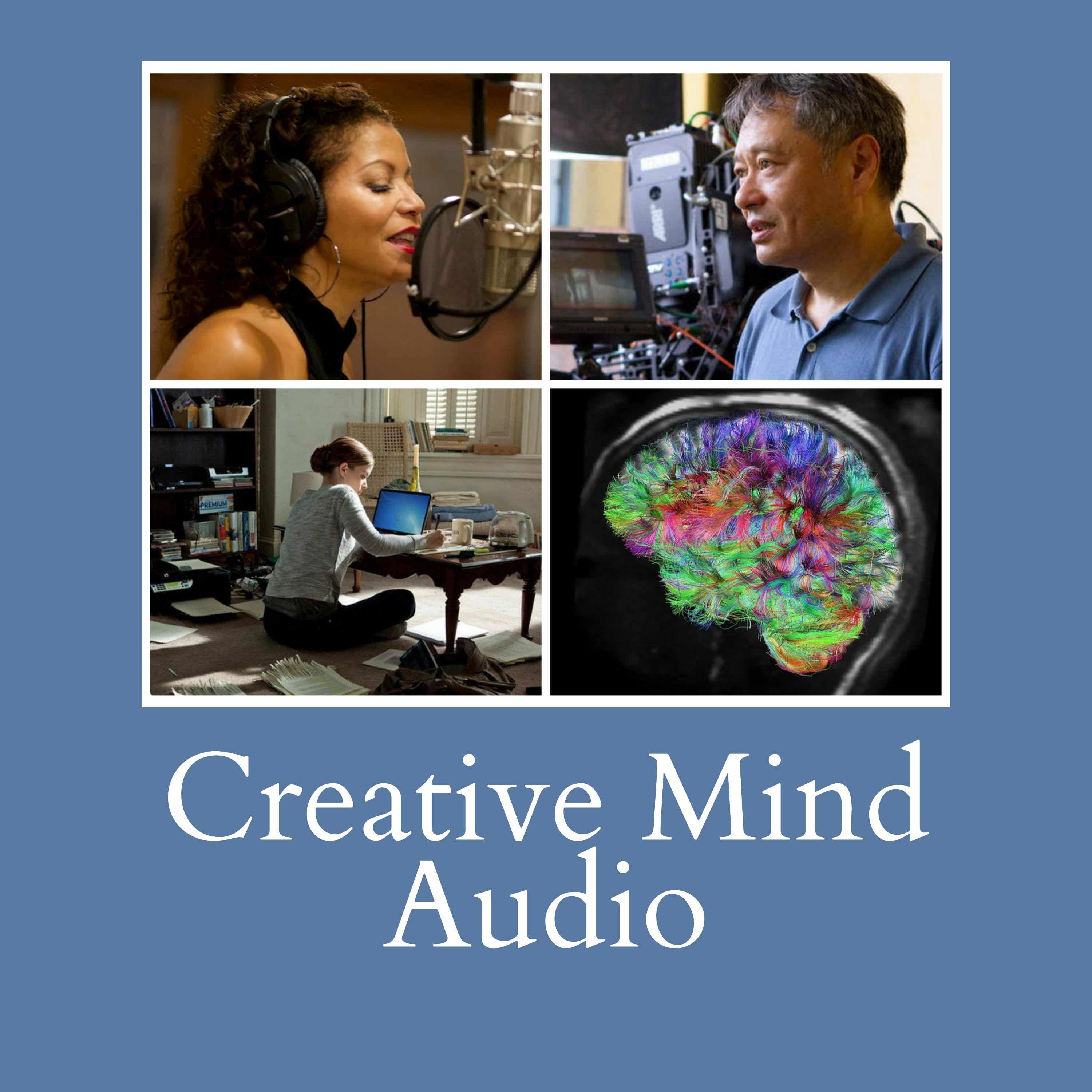
Creative Mind Audio
136 episodes — Page 1 of 3

How we can resist despair and keep creating even in turbulent times
“This is precisely the time when artists go to work. There is no time for despair, no place for self-pity, no need for silence, no room for fear. We speak, we write, we do language. That is how civilizations heal.“ - Toni MorrisonActor and writer Amber Tamblyn reads comments by journalist Rebecca Solnit, followed by Solnit talking about activism for social change and not giving up.Psychologist Melanie Joy talks about how distressing media and events can be for highly sensitive people, and how our intense emotions can turn us away from things we desire to change in the world....In the audio: writer, director, actor Amber Tamblyn reading the words of Rebecca Solnit, from video by Tamblyn. Solnit: "They want you to feel powerless and surrender and let them trample everything and you are not going to let them. You are not giving up, and neither am I. The fact that we cannot save everything does not mean we cannot save anything and everything we can save is worth saving.You may need to grieve or scream or take time off, but you have a role no matter what, and right now good friends and good principles are worth gathering in. Remember what you love. Remember what loves you. Remember in this tide of hate what love is."Read more and see link to video in Substack post of Amber Tamblyn: Time to Make Peace with the Fight - A little love letter from me to your shattering, post election. Nov 06, 2024. Audio of Rebecca Solnit is from Climate One video interview with Ariana Brocious....Audio: Toni Morrison, from Instagram reel by Shonda Rhimes.Toni Morrison wrote “This is precisely the time when artists go to work. There is no time for despair, no place for self-pity, no need for silence, no room for fear. We speak, we write, we do language. That is how civilizations heal.“ - From post No Place for Self-Pity, No Room for Fear: Toni Morrison on the Artist’s Task in Troubled Times By Maria Popova.“This is the only real concern of the artist, to recreate out of the disorder of life that order which is art.” — James Baldwin(From Medium post "Adversity is the Key to Evolution for Writers: James Baldwin’s Wisdom for Surviving Chaos: By Gabriella H.) ...Dr Melanie Joy is "a Harvard-educated psychologist specializing in relationships, communication, and the psychology of social change."Her segment in this Creative Mind Audio is an excerpt from the episode “How to Stay Emotionally and Psychologically Safe in the Midst of Distressing Media with Dr Melanie Joy” of the HSP and Neurodivergent Podcast on the Sensitive Empowerment site of Julie Bjelland, LMFT - where you can find many more of her articles, books, courses, Sensitive Community and other resources.Video excerpt from the podcast:» Learn about Courses for Sensitive and Neurodivergent People by therapist Julie Bjelland, LMFT, including "Brain-Training Techniques to Reduce Anxiety & Overwhelming Emotions."⏩ Free class by therapist Julie Bjelland: High Sensitivity and Anxiety. "Why is anxiety so high in highly sensitive people? We will explore this, learn about the trait of high sensitivity and how it might make us more susceptible, and share tools and resources that will help you reduce anxiety naturally and thrive."~~~~Dr Melanie Joy comments: "And it's also those of us who are most sensitive who are in some ways most likely to turn away because it's so painful for us. We're more easily dysregulated."What is nervous system dysregulation?Dr Cathleen King, DPT, is a "doctor of physical therapy who teaches neuroscience principles, and is a mind-body practitioner." She writes:"Ever feel like your body and mind are constantly on edge, even when there’s no clear reason? “Maybe you find yourself tense, restless, or easily overwhelmed, or perhaps you’re dealing with physical symptoms that seem tied to stress, but you can’t quite figure out the cause. "It could be that your nervous system is sending out signals that it’s out of balance or what experts often call a dysregulated nervous system."A dysregulated nervous system can turn routine experiences into sources of stress. The things you used to handle easily may feel intimidating or exhausting, and tasks that once brought joy might feel overwhelming. "This state can leave you feeling anxious and jumpy like you’re always bracing yourself for something—even if nothing specific is wrong."From her article Understanding A Dysregulated Nervous System: The Symptoms and Signs.» Also see related post wit Dr Cathleen King: How to feel safe in stress and trauma healing, and the Cell Danger Response.📖 Free ebook by Dr. Cathleen King: How Healing Happens - a 127 page guide on "brain retraining and nervous system somatic healing."~~~~Stuck in our comfort zone and insecuritiesTopics above in this Substack article of mine include anxiety, and feeling safe or unsafe - both affect how we engage with the world, with other people, and work to change social issues.Dr Mihaela Ivan Holtz of Creative Minds Psychotherapy helps creative people in TV/Film, p
Highly sensitive and autistic women - Often a hidden world.
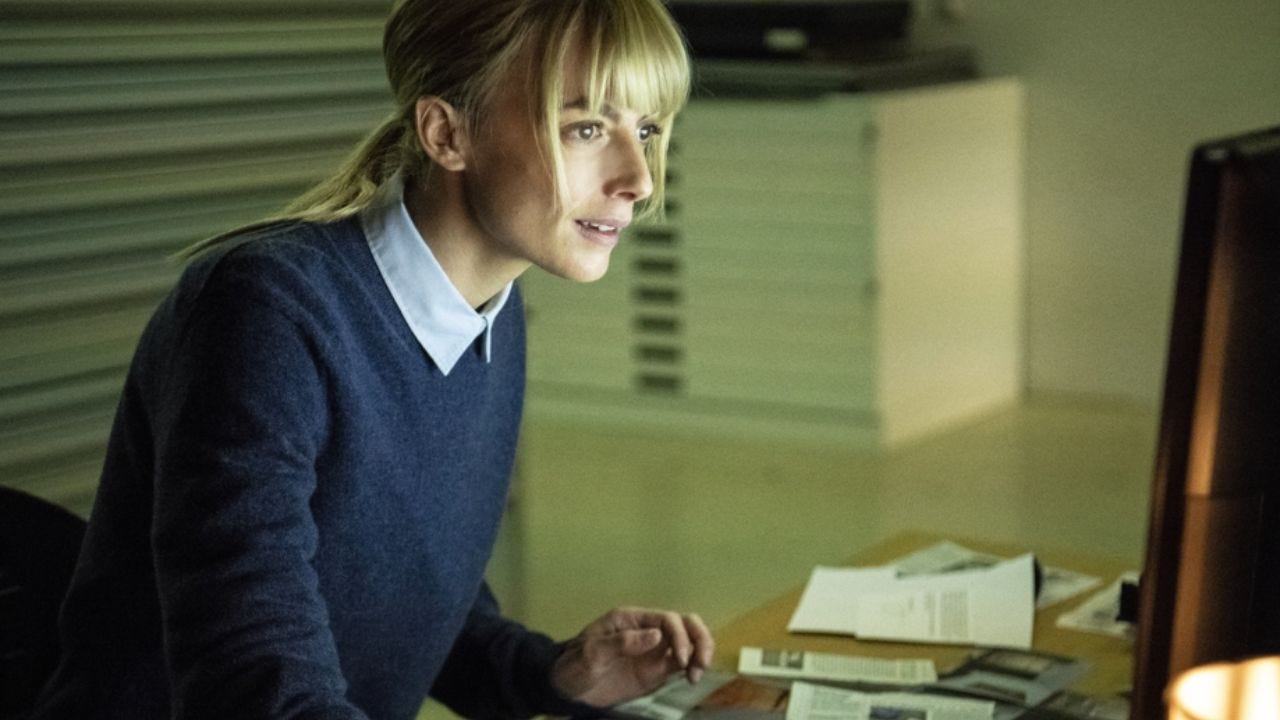
Therapist Julie Bjelland says "the reason we call it hidden is because many of the things that we experience as autistic women are in fact things that are internal, that are not actually seen by other people. "So I want to share some of those things. One of the things is this high intelligence and diverse interests. It's almost like having a supercomputer brain. “We can really process enormous amounts of information quickly and we have an interest in a broad range of topics."This audio is an excerpt from Episode 190-The Hidden World of Autistic Women of the HSP and Neurodivergent Podcast.From the Episode Summary on the podcast page: "In this episode of the HSP and Neurodivergent podcast, psychotherapist Julie Bjelland delves deep into the hidden world of autistic women, aiming to illuminate the unique challenges and strengths that have not been well understood until now. "A significant focus is placed on the reality that many autistic women remain undiagnosed, often due to the subtle and internalized nature of their experiences."Julie shares profound insights from her personal journey and professional assessments, emphasizing how these experiences can profoundly impact personal identity and societal interaction. "The discussion explores the concept of the "supercomputer brain" that many autistic women possess, which allows them to rapidly process enormous amounts of information and maintain an intense focus on subjects of interest. "This capability, however, is often accompanied by a challenging mismatch between their intellectual ambitions and physical energy levels, a disparity that can lead to significant frustration and burnout."~~~~~⏩ See list of Autism Resources - includes: * Understanding Autism in Women: Comprehensive Guide* Autism Education, * Support Group for Autistic Women, * Autism Quiz, * Research: HSPs & Autism Similarities & Differences, and more by Julie Bjelland, LMFT.~~~~See more neurodivergent posts and podcast episodes.~~~~Photo: Astrid Nielsen is a criminal records archivist and consultant to a Paris police department in the Frech tv series. (Learn more at the imdb page.)From my query "is astrid french series a good depiction of autism." on search engine Perplexity :"Yes, the French crime drama series "Astrid et Raphaëlle" (known as "Astrid: Murder in Paris" in English) is widely praised for its authentic and thoughtful depiction of autism through the character of Astrid Nielsen, played by Sara Mortensen.Here are some key points about how the show portrays autism:Astrid is openly identified as being on the autism spectrum from the very beginning. Her autism is treated as an integral part of her character rather than just a quirk or plot device.Mortensen's performance as Astrid is lauded for capturing the nuances of autism, such as stimming behaviors, difficulty with eye contact, need for routine, and challenges with social interactions.The show doesn't sensationalize or mock Astrid's autism. Instead, it highlights her exceptional memory, pattern recognition skills, and different way of perceiving the world as assets for solving crimes.Storylines explore the discrimination and misunderstanding Astrid faces due to neurotypical society not accommodating her needs. For example, she attends an "Autistic Adults Anonymous" support group.Autistic viewers have praised the show for its realistic and compassionate representation, with one commenter stating "I am autistic and I really appreciate how thoughtfully Astrid is portrayed."~~~~~ This is a public episode. If you'd like to discuss this with other subscribers or get access to bonus episodes, visit thecreativemind.substack.com/subscribe
How CBT can help Neurodivergent people and others with emotional health challenges.
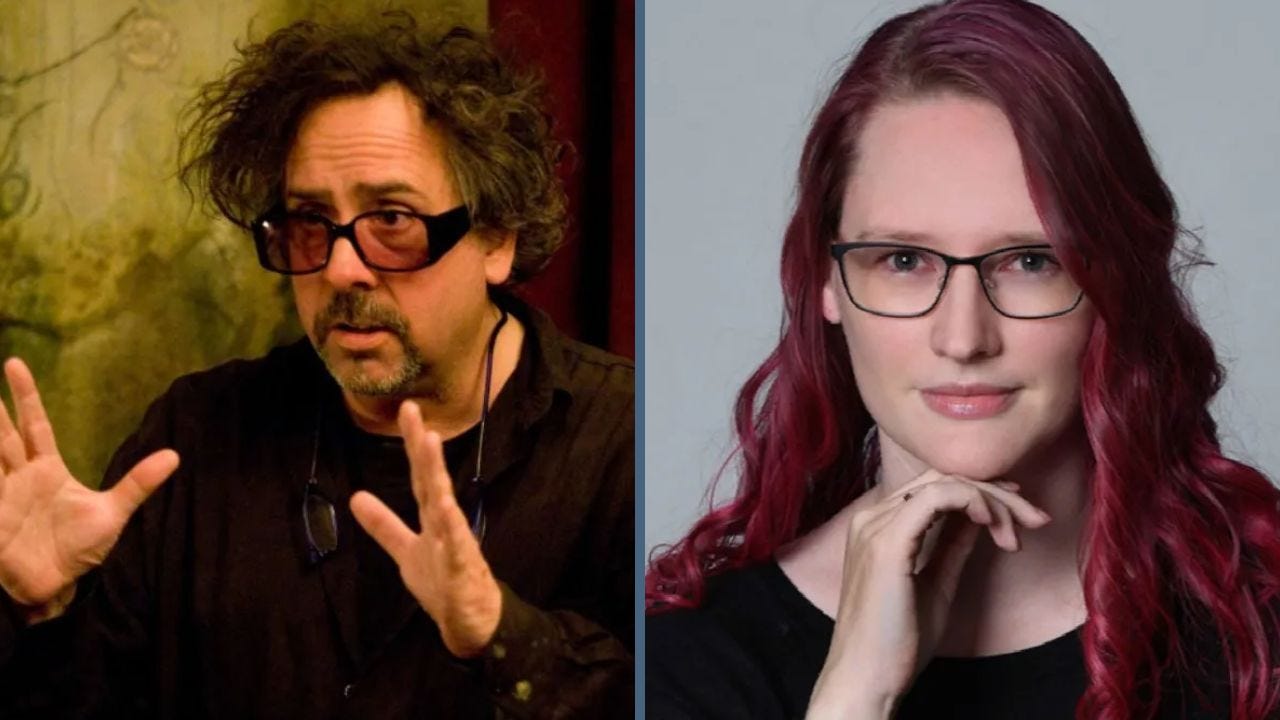
The Autism Research Institute notes “Anxiety disorders are the most common mental disorder in the United States, affecting about 18% of the general population. Research has shown that the incidence of anxiety in people with autism may be significantly higher than in the general population.”(Image: autistic artists Director Tim Burton, Musician Maja Toudal. Burton has openly discussed being autistic, and experiencing depression and anxiety. (See more in references below.)Therapist Tara Geraghty-Ellis, MSW notes “There are a few mental health conditions that often co-occur with autism, including anxiety, depression, and obsessive-compulsive disorder.”She explains much more in her article CBT for Adults with Autism.Here are some excerpts, followed by reference and resources: Anxiety and depression are two of the most common comorbidities. Anxiety and depression are more prevalent in the autistic community, compared to the general population. 40% of autistic people have elevated anxiety levels or an anxiety disorder. The Simons Foundation Powering Autism Research (SPARK) autism research project surveyed adults with autism and found that 47% scored above clinical cut-offs for depression and 83% had been diagnosed with depression. What Causes People with Autism Anxiety?Autistic individuals face certain challenges that may be the cause behind the elevated anxiety levels found in the community. Some things that might cause anxiety in someone with autism include:* Disruptions to their routine, even small ones.* Unfamiliar or unpredictable social situations.* Situations where it’s hard to know what other people are thinking or feeling their own thoughts and feelings, especially unfamiliar or unpleasant ones, or the physical symptoms that can accompany them.Because many autistic individuals struggle with social interaction and communication, stress, and anxiety can be caused by navigating difficult social situations. The autistic brain also can struggle with changes in routine or any type of unexpected change, and identifying, understanding, and managing emotions (a condition known as alexithymia). What Causes People with Autism to Experience Depression» For more, see the transcript.[In case you didn't know already, the voice is AI-generated.]References and ResourcesAutism and Anxiety page, Autism Research Institute. Being Both Highly Sensitive and Autistic: The Sensitive Autistic NeurotypeSee more of my Sensitive & Neurodivergent posts. Image with Director Tim Burton, Musician Maja Toudal is from my post Autism: Imagination, Attention and Other Assets for Creative People.Maja Toudal: “I remember kind of being told as a teenager when I was diagnosed that autistic people aren’t that creative.”Google: “Tim Burton has openly discussed experiencing depression, anxiety, and feeling like an outsider throughout his life, often channeling these emotions into his dark, gothic, and whimsical art. He has described the internet as a source of anxiety that makes him feel “depressed” and “scared,” choosing to avoid it to maintain his mental well-being.”» Also see video listsNeurodivergent & Neurocomplex Anxiety Relief - Managing Stress ~~~Personal note: I have come to learn about how many aspects of autism have affected my life. Many years ago, working as a visual effects camera operator (before the ‘modern’ era of computer graphics), I used cocaine to help keep me going for 12-18 hour shifts, and also found it eased my life-long depression and anxiety. But I developed a 3-year addiction that negatively impacted my life in many ways. Working with a CBT psychotherapist helped get me past the addiction.~~~~ This is a public episode. If you'd like to discuss this with other subscribers or get access to bonus episodes, visit thecreativemind.substack.com/subscribe

How to support stress relief: use links between thoughts, behavior, feelings
This is a free preview of a paid episode. To hear more, visit thecreativemind.substack.comWhat is CBT?The Psych Central mental health site notes “Cognitive behavioral therapy (CBT) “is a type of evidence-based psychotherapy used to help treat a wide range of physical and mental health conditions including: depression, anxiety and chronic pain.”Dr. Caroline Norman, PhD writes about how much anxiety and stress can impact our mental and physical health, and the quality of our life, and provides suggestions based on CBT.Here are some excerpts from her related article Five CBT Stress-Busting Tips For Spring.Symptoms Of Chronic StressThere are a number of symptoms that we can look out for to identify chronic stress. Physical symptoms can include headaches, difficulties in sleeping, muscle and joint pain, and a weakened immune system leading us to catch viruses such as colds or flu.Emotional symptoms are often irritability, lack of focus and concentration, withdrawal from friends and family, anxiety, or low mood.Behaviours related to stress can include excessive alcohol intake, smoking, gambling, shopping more than usual, and dietary changes such as over or under-eating.If you do notice any of these signs or symptoms of stress then it can help to seek professional support from your doctor, alongside using the self-help techniques explored below.Five CBT Stress-Busting Tips For SpringCBT (Cognitive Behaviour Therapy) works by helping us to understand the links between our thoughts, behaviours and feelings.For example, if we think of a meeting with our boss as overwhelming then we’re likely to feel stressed about it and engage in unhelpful behaviours such as not sleeping the night before.However, if we see the meeting as a challenge, we can rise to rather than as overwhelming then we may feel more relaxed, sleep better and perform better.The situation is the same, but our thoughts about it are different and have different outcomes for us.Here are some CBT tips to help you to spring-clean your mind this season and to support you to manage stress differently:

How Dopamine affects the brain can be a key to improving our lives
This is a free preview of a paid episode. To hear more, visit thecreativemind.substack.com“We live in a world that’s designed to hijack your dopamine. We’re scrolling, sending another text, looking at videos. “Understanding what is happening in the brain is the key to changing our lives. “Dopamine itself is a signal. It’s a neurotransmitter that’s essential for the experience of pleasure, reward, and motivation.” Dr. Anna Lembke, Chief of Addiction Medicine at Stanford.In this creative mind audio, Dr. Lembke explains how much this neurotransmitter affects our motivations and attention and quality of experience, including happiness. The first short segment is from the video trailer for her Masterclass, followed by a clip from a Fresh Air interview with Terry Gross, then a short clip from a sample video from her class.Her Masterclass program: Dopamine: Take Your Brain Back. ~~~~~~~Her book: Dopamine Nation: Finding Balance in the Age of Indulgence. ~~~~From article by Dr. Cathleen King: How Long Does it Take to Rewire the Brain After Addiction? “Addiction messes with the way your brain’s reward system works, especially when it comes to dopamine. This chemical is responsible for making you feel happy and accomplished. “Normally, things like spending time with friends, exercising, or doing hobbies release dopamine and make you feel good.” [See a related article of hers below.]Dr. Cathleen King, DPT is “an expert on chronic illness, chronic trauma, relationship/attachment repair, and inner child healing.”~~~~~Trauma recovery physician Aimie Apigian, MD, says in her The Biology of Trauma podcast: “You’ve tried to quit multiple times with genuine commitment and motivation... Is our biology predisposing us to addictive tendencies in measurable ways? Yes, it is. And understanding this gives us leverage points for effective treatment.” [See more below.]More resources below.

How to understand toxic relationships, and gain healthy ones
This is a free preview of a paid episode. To hear more, visit thecreativemind.substack.comTherapist Jessica Baum writes, “You might not use the word safety when talking about your relationships. But you do know the feeling of walking on eggshells, shrinking yourself to avoid conflict, or bracing for the moment they pull away or you explode.“Safety is the presence of steadiness, not just lack of chaos, where you can exhale and be your full self, knowing you’ll still be loved.”This episode starts with therapist Jessica Baum from a short podcast interview reel, followed by an excerpt from a video interview on the Real Love Ready YouTube channel. The final section of this Creative Mind Audio is an excerpt from the video introduction to her online course 7 Stages of Detoxing from Toxic Relationships. Jessica Baum LMHC is a “celebrated author of Anxiously Attached: Becoming More Secure in Life and Love and a licensed expert therapist with over 15 years of professional experience helping individuals heal from trauma bonds, unhealthy relationship dynamics, narcissism, gaslighting, and other relationship challenges.”One of her books: Safe: An Attachment-Informed Guide to Building More Secure Relationships.~~~~~~~~Continued with videos, and links to resources.

Artists and Creators May Often Feel Insecure. How to Gain Confidence
This is a free preview of a paid episode. To hear more, visit thecreativemind.substack.comDo feelings of insecurity and self-doubt impact our creativity? Of course. In this audio and the related article, artists and psychologists express perspectives on our common feelings of insecurity and self-doubt – and how to improve our confidence.Actor Annette Bening thinks we benefit from some insecurity.In a video interview, actor Jessica Chastain commented: “I had a lot of insecurities and like confidence issues when I was younger.”Like a number of artists, Chastain has talked about being a highly sensitive person.Psychotherapist and sensitivity coach Julie Bjelland and her colleague talk about this topic in one of her podcasts titled "Confidence, Where it Comes From and How to Get it."Psychotherapist Mihaela Ivan Holtz writes about how you have to ‘show up’ when you "step onto the stage or when you are about to present your creative ideas to other people."She also notes “If you are a highly creative person – someone with a big drive or determination to achieve your life goals or dreams – an injured self-esteem will show up in your journey over and over again…It will interfere with your ability to invest yourself in creating your life."See article with videos, links to resources and more: How Creative People Feel Insecure, and How to Gain Confidence.Learn about articles, books, podcasts, free and paid courses, a private community and more to help Highly Sensitive People thrive by Julie Bjelland, LMFT at her site Sensitive Empowerment....Support the showView selected episodes and articles with more resources: The Creative Mind Audio Podcast page on the main site.

Stress in Early Life Leads to Adult Trauma and Nervous System Dysregulation
“From a young age, many of us learned to brace for life instead of relax into it. “This constant vigilance trains the nervous system to stay in survival mode: blocking rest, repair, and true healing.”Dr Cathleen King teaches neuroscience principles related to trauma and health recovery. This audio is from one of her videos. She notes in the description, “In this video, we’ll explore how early life experiences shape chronic stress patterns, why the nervous system learns to protect instead of restore, and how you can begin retraining your body to feel safe enough to heal... from autoimmune conditions, trauma, or persistent health issues.”Excerpt from her video:~~~» Visit her Primal Trust site to “Learn to consciously self-regulate your biology and heal.” Includes free ebook: “How Healing Happens”, plus membership community with live classes, plus article, newsletter and more. ~~~ This is a public episode. If you'd like to discuss this with other subscribers or get access to bonus episodes, visit thecreativemind.substack.com/subscribe

What is our Shadow? From a talk by Jungian psychologist James Hollis
Dr. Hollis, a Jungian analyst, is author of multiple classes on the Jung Platform site. This is a brief audio excerpt from his free video talk Introduction to Jungian Shadow Work.The registration page summarizes:“In this introduction you will learn more about Carl Jung’s concept of the Shadow and how it is relevant in your daily lives.“The talk offers guidance and tools to become more conscious of Shadow aspects within ourselves, groups and other individuals. “Becoming conscious of the shadow is the first step in the process of individuation, the process of psychological growth according to Jung.” » Register free to view the full video talk: Introduction to Jungian Shadow Work.~~~» Also see the Jungian Psychology Resources page - Videos, articles and programs about depth psychology teachings of Jung, to enhance our personal growth and creativity. … This is a public episode. If you'd like to discuss this with other subscribers or get access to bonus episodes, visit thecreativemind.substack.com/subscribe
Anxiety is hard enough to deal with. It's more challenging when we blame ourselves.
“It makes us feel very alone, isolated, different, less than.”Jeffrey Rutstein continues, “That’s one of the things that also makes anxiety so hard to bear. So many of us not only struggle with anxiety, but we blame ourselves for being anxious: ‘I know better, I shouldn’t be anxious here. ‘I teach my patients how to relax, I shouldn’t be anxious. ‘I’m a meditator. I shouldn’t be anxious.’He notes, “And lots of people get feedback from other people: ‘You’re too anxious. You worry too much. You’re too sensitive. You think too much.’ Which, by the way, doesn’t help anyone and you can’t stop doing this.”Dr. Jeffrey Rutstein, PsyD is a clinical psychologist and expert in the treatment of trauma. This audio is from a Sounds True video excerpt from his Navigating Anxiety program.He comments about his program:“In this workshop, we’re going to show you ways you can intervene with your anxiety and also free yourself from viewing your anxiety, fear, and worry as your fault.”Navigating Anxiety program - Insights and Practices to Heal Your Nervous System and Restore Emotional Well-Being. ~~~ This is a public episode. If you'd like to discuss this with other subscribers or get access to bonus episodes, visit thecreativemind.substack.com/subscribe
Releasing Emotional Blocks - from an interview with Amy B. Scher
"When we are storing these emotions in our body and they become stuck, they are preventing us from having the clear, clean, energetic flow through our muscles, glands and organs that we should. "I believe that that is essential for physical health. And I also believe that when we hold emotional blocks, it blocks the energy of our spirit. “It blocks who we are from expressing that out into the world."Amy B. Scher is "an energy therapist who helps people break through blocks...the author of the How to Heal Yourself series and other books, and endorsed by notable authors such as Elizabeth Gilbert, author of Eat, Pray Love; Dr. Sanjiv Chopra, Harvard Medical School; and more." (From a Sounds True profile.)▶️ Amy Scher Course: Stop Feeling Like Sh*t - From Depression to Creative Expression: Lifting Depression for Writers and Creatives.~~~This audio is a brief excerpt from “Releasing Emotional Blockages” - an episode of the Insights at the Edge podcast by Sounds True, hosted by Tami Simon.From the longer Sounds True interview:Tami Simon: And then you mentioned the second step when we’re done with that is to install positive emotions. Talk me through that because once again, this is where my critical mind kicked in. It’s like, do I really want, it’s one thing, yes, I want to release things, but do I really want to install things really?Amy Scher: So you do want to install things if they’re positive. And there’s a reason I work a lot with clients with depression and anxiety, and I can’t tell you how many times they start to feel better, meaning less anxiety, less depression, and then they tell me they feel like there’s something missing. Something’s missing, it feels like something could be wrong. It feels like I feel a little empty or I feel a little ungrounded. And it’s because when we release something that we’ve been holding for so long, we can feel a little imbalanced. And installing positive emotions are my way of helping bring something good into the body to almost complete the healing process. The other reason is because all emotions have an energetic vibration. And I feel like in the same way, it lifts us up to be around positive people or friends that help us laugh or have fun.…To hear full episode and others, see the page of Amy B. Scher books and programs, and click "Podcast" at bottom.Book promo with voice of Amy Scher:~~~Related:~~~~~~~ This is a public episode. If you'd like to discuss this with other subscribers or get access to bonus episodes, visit thecreativemind.substack.com/subscribe

How to navigate sensory overload and trauma as a highly sensitive person
Empaths and highly sensitive people "aren't just open to trauma. They're open to everything, and it can feel traumatic when you're young and don't have any guidance." - Dr. Judith Orloff"Our nervous system is picking up more information, receiving information that others don't, feeling things that others don't, which means sometimes having an uncontrollable body response to imperceptible changes in the environment." - Dr Aimie ApigianTherapist Julie Bjelland, LMFT: “While this sensitivity can feel overwhelming, it’s important to recognize it as a natural part of how your brain works—not a flaw.”~~~~This audio is an excerpt from the biology of trauma podcast (episode #102 Strategies for Empaths: How to Navigate Sensory Overload, Shame & Trauma), with trauma recovery physician Aimie Apigian talking with empathic psychiatrist Judith Orloff about some of the many aspects of being exceptionally responsive to emotions and sensory information for those of us who have a highly sensitive nervous system.Dr. Aimie Apigian, MD, MS, MPH, is an author, speaker and founder of Trauma Healing Accelerated.» Trauma recovery program by Dr Apigian: TheFoundational Journey for addressing stored trauma in the body. More of her resources:📖 The Essential Sequence - How to Release Stored Trauma - free guide.📖 Attachment Pain Guide for Healing - free guide. ~~~~Dr Judith Orloff says "I love being an empath. Yes, it has its challenges but so what? Everything has its different challenges."She adds that being highly sensitive, "You get to feel everything. I get to feel the flowers, feel nature, I get to feel deep love and connection with people. “I get to be in touch with the mystery and you know the the gorgeousness of Life on such a deep level."Escaping an angry, bullying, bossy personIn the podcast excerpt above, Dr Orloff recalls she was "in a situation recently with a group and this woman was trying to make a point and she got very authoritarian and loud and bullying and bossy. "It was on a zoom call and I was supposed to be part of this meeting and I'm feeling, This isn't acceptable to me, and so I just told everyone have to leave."[The image at lower right is a reference to a movie character like this: Miranda (Meryl Streep) in The Devil Wears Prada (2006).]Self care and setting boundariesDr Orloff refers to self-care and emotional safety strategies, including setting boundaries. "You want to find the triggers for your trauma and gently and sensitively deal with them, so you can take care of yourself. Self-care is so essential."~~~Dr. Orloff notes: "As a psychiatrist, I've worked with many empaths and sensitive people over the years. “What I've seen is that they are especially vulnerable to becoming burned out from toxic relationships." She adds, "These relationships can make you feel anxious, depressed, tired, and ill.” ⏩ Free webinar Being an Empath Today - Surviving and thriving with the gifts of sensitivity. ⏩ Understanding Narcissism Summit: "A Program to Empower Yourself in Relationships, Heal the Trauma of Narcissistic Abuse, and Shift Our Culture from “Me” to “We”... Dr Orloff's presentation: "The Toxic Attraction Between Empaths and Narcissists."⏩ The Empath’s Survival Guide Online Course: Life Strategies for Sensitive People.Psychiatrist and empath Judith Orloff, MD "shares an overview of the total experience of being an empath, both the blessings and the struggles. She then offers solutions to address the most common challenges so that empaths can become empowered in an often-hostile world."~~~~Therapist Julie Bjelland, LMFT: “While this sensitivity can feel overwhelming, it’s important to recognize it as a natural part of how your brain works—not a flaw.”But she cautions, "Watching news visually can cause a lot more anxiety than reading it for most highly sensitive people. Take breaks from reading or watching the news."Follow link above to post with audio excerpt from one of her free classes: Sensory Overload & Sensitivity.~~~~More related posts/podcastsDr Orloff also refers to a spectrum of abuse and childhood experiences impacting empaths and highly sensitive people. One of my posts on adverse childhood experiences:As Dr Orloff relates, being an adult and having to deal with a bully can be emotionally challenging.Here is a related post:Actor Millie Bobby Brown of Stranger Things: Writer Emily Zemler comments: “Over the years, Millie has struggled to understand why being herself generates so much vitriol.“It’s really hard to be hated on when you don’t know who you are yet,” she says.Psychotherapist Mihaela Ivan Holtz helps creative people in TV/Film, performing and fine arts. She notes in an article of hers: “Many highly creative people have been bullied as kids... Perhaps you loved singing, writing poems, dancing, making fashion, or being innovative in other ways as a child."Though these aspirations brought you joy, they also made you the target of bullies who made fun of, mocked, or ridiculed you."See more in the
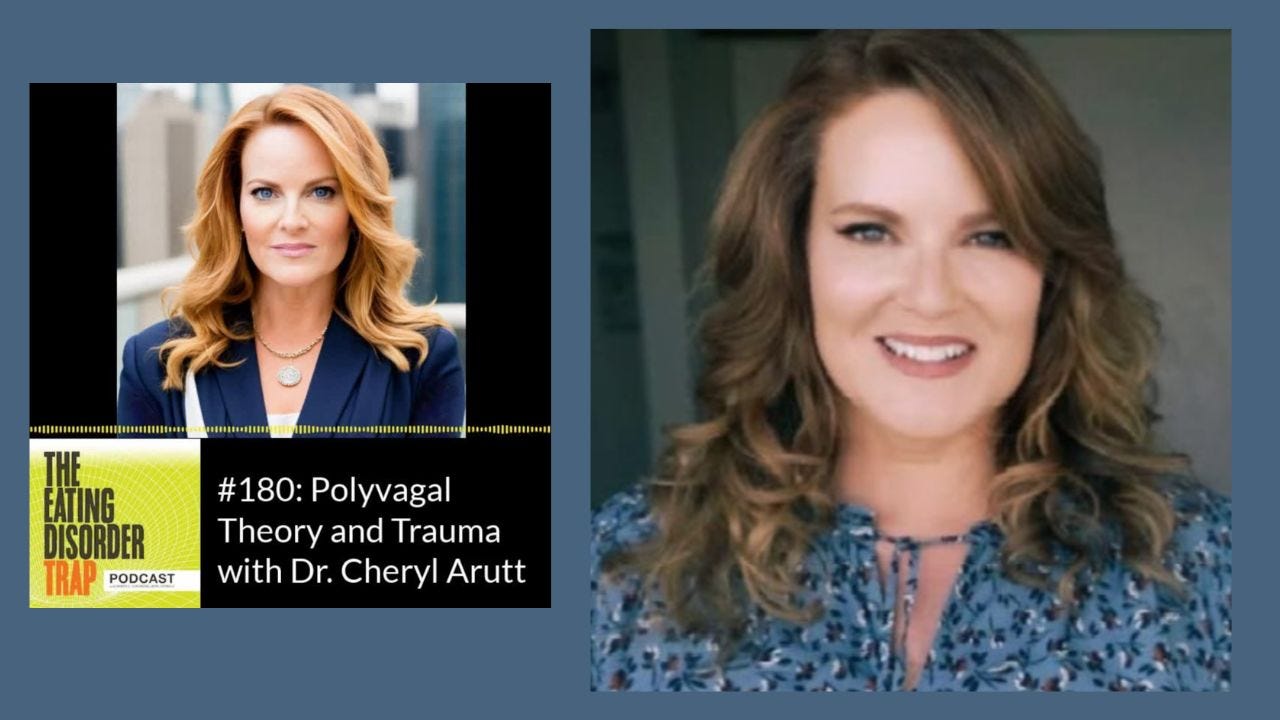
How Polyvagal Theory and Therapy Help Trauma Recovery, with Dr. Cheryl Arutt
Psychologist Cheryl Arutt has found with her therapy clients that "Creative artists, actors and writers and people who do performances, have a different relationship with their trauma than regular people who don't consider themselves creatives."She notes “Polyvagal theory is a new way of thinking about the autonomic nervous system…the part with the things that our body does all on its own without thinking about it, like breathing and heart rate. “We've learned about things like the fight or flight response and the sympathetic and parasympathetic nervous system, where a lot of times people know that when they need to fight or run away from something it's their sympathetic, and when they're relaxed, it's the parasympathetic. “But Polyvagal Theory takes things further.”(See the transcript for more quotes.)Dr Arutt is a licensed clinical and forensic psychologist, certified EMDR therapist, and media consultant, and specializes in trauma recovery and creative artist issues. Some variety and level of trauma affects most people, perhaps especially those of us who are creative and neurodivergent, with intense nervous systems. This Creative Mind audio episode includes edited clips from her interview for The Eating Disorder Trap podcast by Robyn Goldberg, episode 180: Polyvagal Theory and Trauma with Dr. Cheryl Arutt. Sites of Dr Arutt:* drcherylarutt.com* thecreativeresilience.com* Facebook page~~~~Related:▶️ Online course: Finding Safety in Your Nervous System by Deb DanaDeb Dana, LCSW notes "The pathways to safety aren't always visible, especially if your early life didn’t show you the way. When stress, trauma, or chronic overwhelm shape our nervous systems, feeling safe can seem unfamiliar or even unreachable."But our biology is not fixed. It’s fluid, adaptable, and always inviting us back home. With practice, we begin to notice the subtle signs of safety: a breath that softens, a moment of stillness, the gentle presence of connection."And over time, we learn to trust those signals. To return to them more easily. To anchor ourselves, not in avoidance or escape, but in the deep intelligence of the body that knows how to heal." [from her program Finding Safety in Your Nervous System.]...▶️ Deb Dana is speaking at the Trauma Skills Program by Sounds True on "From Activation to Regulation: A Polyvagal Guided Approach "When we feel threatened, our defenses go up and our ability to regulate our nervous system seems to go out the window. As a result, our trauma responses can get stuck in our bodies."Polyvagal Theory helps us understand the ways trauma shapes our nervous system - and how to identify the pathways that lead us back to healing."...⏩ See more books, courses and audio programs in the Deb Dana Collection at Sounds True. ~~~~» Video list: Deb Dana, LCSW - Nervous System Health ~~~~~~~~~~~~~Related posts and podcasts ~~~More related posts and resources:……» Page of Resources on How To Understand And Recover From Trauma - Summits, courses, videos and other material based on neuroscience research, body-based therapies, mindfulness and meditation, and other approaches to help recovery.» Trauma Healing & Recovery videos (on my YouTube channel)~~~~~~~Do you enjoy and benefit from my posts, podcast episodes, videos and more?Help support my work here, and on other Creative Mind Sites, with a donation.As a writer and content entrepreneur, I love creating and publishing material that can help creative people (including myself) learn more and thrive more.But creating and publishing is only free in some ways.One key tool is my desktop computer. (The image is for illustration, it is not mine and that is not me.)Your donation would help pay for a recent upgrade to a newer (still old, from 2017, but refurbished) iMac, which enables my ongoing research, and publishing of posts, videos, podcasts and more.Monthly costs of my 7 personal sites include hosting fees of over $120, and there are costs for a podcast platform, video editor, and some other production apps.Thanks for considering a donation to help. Much appreciated. DouglasGoFundMe ~~~ This is a public episode. If you'd like to discuss this with other subscribers or get access to bonus episodes, visit thecreativemind.substack.com/subscribe

Autistic Women: Perspectives by Hannah Gadsby, Kayla Crome, Daryl Hannah, Sue Ann Pien, Zhara Astra, Julie Bjelland
"Autism informs everything that I do - it's you know my processing unit so it's how the information goes in and out. So it's always informed me. Since being diagnosed, it's helped me understand that I'm not a rubbish person - I just think about things differently." Hannah Gadsby"Autism doesn't define me." Kayla Cromer"In the 60s doctors recommended to my mom to put me on some medications and institutionalize me, and I'm so thankful that she didn't." Daryl Hannah"I was groomed from such a young age, to hide all of the strange peculiarities of even my autism." Sue Ann Pien"Diagnostic criteria are developed using white boys and men, failing to serve many neurodivergent girls and women." Zhara Astra"Past diagnostic criteria were inaccurate, particularly when it came to recognizing Autism in women, and estimates suggest that up to 80% of Autistic women may be undiagnosed..." Julie Bjelland, LMFT ~~~~~~~~See page The Sensitive Autistic Neurotype: Autism Resources Page by Julie Bjelland, LMFT, specializing in Highly Sensitive People, Neurodiversity, and Autism in Women:* Free Guide: Embracing Neurodiversity in the Workplace* Autistic Energy Crash Recovery Guide (Free) * Adult-Discovered Autism Group (inside community)* Course: Discovering You’re Autistic As an Adult* Autism in Women - information and research.* Free Autism Quiz* Autism Podcast Episodes * Research: HSPs & Autism Similarities & Differences … and more ~~~"When somebody tells me to "stop being so sensitive", I feel a little bit like a nose being lectured by a fart. I am not the problem.”- Hannah Gadsby (from her special Nanette, on Netflix, 2018; meme by ifunny)Ten Steps to Nanette: A Memoir Situation by Hannah Gadsby.Her audio in this podcast episode is from this video: Hannah Gadsby Explains How Her Autism Informs Her Comedy | The View Mar 30, 2022.Excerpt video:Image of Hannah Gadsby (top left in collage) is from Vox podcast ep. Hannah Gadsby on comedy, free speech, and living with autism. Kayla Cromer"Autism doesn't define me. I want to be a part of different genres in film and bring light to different characters." From People article Kayla Cromer Opens Up About Breaking Boundaries on TV: 'Autism Doesn't Define Me'. Audio is from video: Actress' leading role is a 1st for people on the autism spectrum, Good Morning America, May 2021.Daryl Hannah Audio is from this video: Autism and Women - Actor Daryl Hannah from interview with Dan RatherSue Ann PienAudio is from podcast: Cast Of "As We See It" Discusses Autism in Adulthood.Image of Sue Ann Pien in collage (lower left) is from her imdb page.Zhara Astraarticle: We Need Better Diagnostic Tests for Autism in Women By Zhara Astra, Scientific American.Her LinkedIn page.My related podcast episode: Julie BjellandTherapist Julie Bjelland, LMFT identifies as autistic, and writes: "In recent years, there has been a significant increase in the number of Highly Sensitive women seeking and receiving Autism diagnoses in adulthood. "Past diagnostic criteria were inaccurate, particularly when it came to recognizing Autism in women, and estimates suggest that up to 80% of Autistic women may be undiagnosed...""Learn more about my research in understanding traits that overlap in high sensitivity and Autism in women, join my Autistic Women’s Support Group, or learn more about getting an Autism Assessment with the updated criteria!"See her posts "Navigating the Challenges of Autism Diagnosis as an Adult Woman" and "Unmasking Autistic Traits in Women: Could You Be Autistic?" in her HSP Blog. Also see her page Resources for Autistic HSPs - includes Autism Education, Support Group for Autistic Women, Autism Quiz, Research: HSPs & Autism Similarities & Differences, and more.~~~Related resource page:~~~~… This is a public episode. If you'd like to discuss this with other subscribers or get access to bonus episodes, visit thecreativemind.substack.com/subscribe

"I need my stress to achieve." - No, "Stress makes you stupid.” Emily Fletcher of Ziva Meditation
Emily Fletcher – founder of Ziva Meditation – notes “Stress is actually keeping you from performing at the top of your game.“I tend to work with a lot of high performers.“My CEO clients will say ‘Emily, my stress is the thing that gives me my cutting edge, that’s the thing that keeps me, you know, competitive and in the game’ – and my actors will say to me, ‘Emily, I need my stress…this is where my art comes from.’“But here’s the news – stress is not helping you in the performance department.“As a matter of fact, stress makes you stupid.”She adds, Meditation is "a tool to help de-excite your nervous system & get rid of stress, which is going to help you perform at the top of your game...I found meditation during my 10-year career on Broadway.” ~~~Learn more in her free class: Secrets to Reduce Stress, Overcome Anxiety, and Improve Sleep.The audio here comes from three of her videos:Stressed on BroadwayWhy We Need to Stop the Glorification of BusyMeditation for Better ProductivitySee the videos and much more in article Learn how to live with less stress and more creative accomplishment - Ziva Meditation....Support the showView selected episodes and articles with more resources: The Creative Mind Audio Podcast page on the main site. This is a public episode. If you'd like to discuss this with other subscribers or get access to bonus episodes, visit thecreativemind.substack.com/subscribe

Embracing Our Emotions with Ziva Meditation founder Emily Fletcher and actor Travis Van Winkle
This audio is from the video version of an episode of the podcast ("Why Isn't Everyone Doing This?") by Emily Fletcher - the episode is titled "Embracing Your Emotions with Travis Van Winkle."Host Emily Fletcher: "I am so delighted to share this conversation with you - today's guest is one of my new favorite people. He and I met at a friend's birthday party and we were stunned with how much we had in common - we both practiced the same style of meditation, we both studied in Rishikesh, India, we both used to be actors."He is still an actor, and happens to be a star of the Netflix series FUBAR with Arnold Schwarzenegger."Today we're gonna go deep into why isn't everyone training their emotions - something Travis Van Winkle has been doing for the past 20 years."Emotional training does not just have to be for actors it's actually something that all of us can do."Fletcher says she is striving to "take these sacred potent ancient tools and make them more attractive and accessible to a mainstream audience."~~~~"Ancient wisdom with modern science to help you get better at life." Founded by Emily Fletcher, The Ziva Technique provides "mindfulness, meditation and manifesting. We believe that practicing these 3 M’s makes us better partners, colleagues, friends and citizens. Our 50,000+ students agree." Emily Fletcher has taught at Apple, Google, Harvard, and more. She says "We meditate to get good at life, not to get good at meditation."Mark Hyman, MD notes "Meditation is widely recognized as providing powerful health benefits... I am addicted to Ziva Meditation. I love how rejuvenated I feel afterwards. My recovery time is faster and I feel more grounded. Anxiousness I didn’t even know was there, is gone.”Dr. Hyman is a New York Times bestselling author, and Director of The Cleveland Clinic for Functional Medicine.~~~~~~ This is a public episode. If you'd like to discuss this with other subscribers or get access to bonus episodes, visit thecreativemind.substack.com/subscribe
How to Recover and Rewire to be More Resilient With Mind Fitness Training
This is a free preview of a paid episode. To hear more, visit thecreativemind.substack.com"Wild animals go through traumatic events all the time but they don't [usually] develop PTSD.Elizabeth Stanley, PhD adds, "Each time through this cycle [trauma and recovery] they add to their toolbox of survival skills and they widen their window. "In humans however, we have a thinking brain that can override this automatic process controlled by the survival brain and nervous system, and we often impede this recovery process."Those comments are from her online program Mindfulness-based Mind Fitness Training (MMFT). » Free video webinar with Dr. Stanley, an excerpt from her MMFT program: "Why You Can’t Just ‘Push Through’ Stress—And What Actually Works Instead".~~~~Directing our attentionDr Stanley: "Where we direct our attention, consciously and unconsciously, has profound ripple effects on our brain, nervous system and body."With MMFT [Mindfulness-based Mind Fitness Training], you can learn to direct your attention with more precision."And by developing attentional control, we can deploy our attention consciously where we want."Attentional control is a foundational skill that supports enhanced situational awareness, better decision making, better self regulation and resilience, and ultimately better performance."From video:~~~~This Creative Mind Audio episode is an excerpt from the Untangle Podcast, hosted by Patricia Karpas, who starts by asking Dr. Stanley about her personal journey leading into her writings and teachings on trauma recovery and resilience.» Hear the full (47min) "Episode 500 Can You Rewire Your Brain and Train Yourself to Be More Resilient? With Dr. Elizabeth Stanley" in Meditation Studio (choosemuse.com/pages/meditationstudio). Meditation Studio is part of the site of the main site of Muse EEG headband.Muse co-founder Ariel Garten explains how the EEG headband works: “Muse tracks your brain activity...the headband is like a heart rate monitor. As it tracks your brain activity, it sends that information to your computer, smartphone or tablet, where you can do exercises that track your brain activity in real time, and give you real time feedback to teach you how to calm and settle your mind.”Learn more at the Muse Amazon page.~~~~~øø This article continued below with video "Wild animals may recover from stress better than humans do. Why?" with Dr Stanley, plus part of the transcript from the Untangle Podcast, plus article excerpt: "You Can Train Your Brain To Thrive During Trauma & Stress — Here's How."“When we're regulated, we're more likely to find agency and access choice in every situation, no matter how challenging, stressful, or traumatic it might be."

Embracing neurodivergent people as positive and valuable in a workplace
"Have you heard the statistic that neurodiverse employees are 90 to 140% more productive than non-neurodiverse? Isn't that amazing?" Therapist Julie Bjelland, LMFT from "Episode 192- Embracing Neurodiversity with Julie and Willow" of her HSP and Neurodivergent Podcast. (Follow link to her site & find her Downloadable Guide for Organizations and Individuals under the autism tab. She is probably referring to a case study by JPMorgan Chase in its Autism at Work initiative; see article below.Short clip from the video version of her podcast episode:The second section of this Creative Mind Audio is an excerpt from the Neurodiversity Podcast by Emily Kircher-Morris, Episode 122: Attorney, Author, Artist, Autistic.From the show notes: "A three-year-old with an autism diagnosis is looking at a completely different future than someone who has masked their neurodivergence for years. "We talk with Haley Moss, an attorney, author, and consultant, who helps companies create a neurodiversity-friendly atmosphere. She was diagnosed at age 3, and now has strong opinions about what it takes to move the world in the right direction..."Haley Moss comments "I think self-diagnosis is extremely valid and a very powerful tool for a lot of people to discover something about themselves especially if they knew that they seemed different but didn't really know why."[Photo at top: Astrid Nielsen, left, is a consultant to a Paris police department in the French tv series "Astrid et Raphaëlle" in which she teams with Raphaëlle Coste, a neurotypical police detective. See more below.]øøøHaley Moss is "a lawyer, neurodiversity expert, and the author of four books that guide neurodivergent individuals through professional and personal challenges. She is a consultant to top corporations and nonprofits that seek her guidance in creating a diverse workplace..." Haley Moss website haleymoss.combook: Great Minds Think Differently: Neurodiversity for Lawyers and Other Professionals by Haley Moss. See more titles in my Amazon book collection Highly Sensitive / Neurodivergent People. ~~~TV Series ‘Astrid’Photo at top of this article: Astrid Nielsen, left, is a criminal records archivist and consultant to a Paris police department in the Frech tv series "Astrid et Raphaëlle" in which she teams with Raphaëlle Coste, a neurotypical (and often impulsive) police detective. They not only work together, but value each other as friends.At the beginning of the series (one of my favorite shows), Raphaëlle - along with her other police officers - are wary, even dismissive, of this 'weird' person, Astrid, but come to respect her encyclopedic knowledge and intuitive insights for solving complex crimes.The show and its characters may be fictional, but also acclaimed for its portrayal and respect for neurodivergent people: Astrid and other characters.My query on on search engine Perplexity for "is astrid french series a good depiction of autism" shows this summary, with links to articles:"Yes, the French crime drama series "Astrid et Raphaëlle" (known as "Astrid: Murder in Paris" in English) is widely praised for its authentic and thoughtful depiction of autism through the character of Astrid Nielsen, played by Sara Mortensen.Astrid is openly identified as being on the autism spectrum from the very beginning. Her autism is treated as an integral part of her character rather than just a quirk or plot device.Mortensen's performance as Astrid is lauded for capturing the nuances of autism, such as stimming behaviors, difficulty with eye contact, need for routine, and challenges with social interactions.The show doesn't sensationalize or mock Astrid's autism. Instead, it highlights her exceptional memory, pattern recognition skills, and different way of perceiving the world as assets for solving crimes."~~~Benefits of neurodiversity in the workplaceFrom article by employee experience platform Culture Amp; see article for links to related articles.“Neurodivergent employees aren’t just positive additions to the workplace but a proven competitive advantage. Neurodivergent individuals have been found to possess some of the most sought skills in today’s world of work, including:Greater than normal ability to process information. Research has found that autistic employees “have a greater than normal capacity for processing information even from rapid presentations and are better able to detect information defined as ‘critical.’”Creative thinking. Many of the symptoms of ADHD – creativity, risk-seeking, high energy, and the desire to multitask – can become key strengths when leveraged the right way, in the right job, and in the right organization. Meanwhile, individuals with dyslexia are “often capable of seeing connections that others cannot and create narrations which can simplify complex tasks or products.”Elevated productivity. A case study by JPMorgan Chase found that professionals in its Autism at Work initiative made fewer errors and were 90% to 140% more productive tha
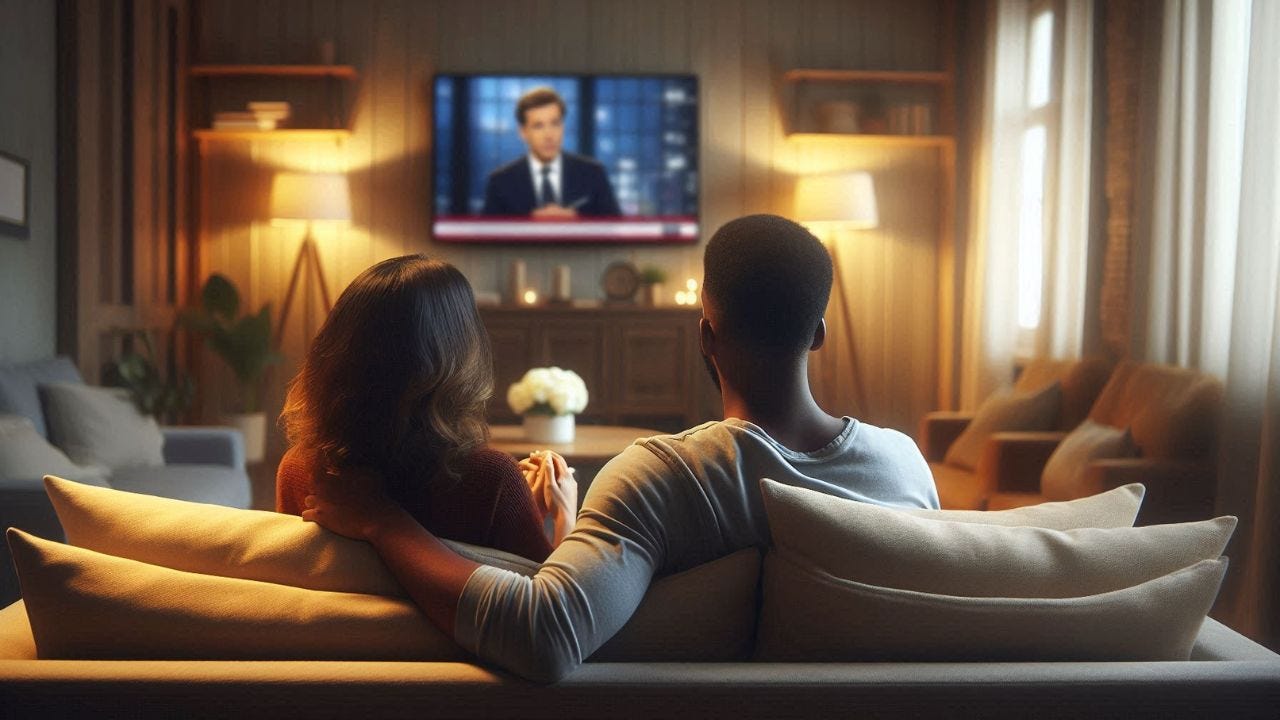
Sensory Overload can lead to anxiety, fatigue. How to renew energy and calm?
As various researchers and therapists note, being a highly sensitive person or another form of neurodivergent, with different "neurological wiring," we can experience many positive qualities, such a greater appreciation of beauty and art, a heightened awareness of subtleties, emotional depth, stronger empathy, and more.All of which can enhance creative expression and performance, as shown by many actors, musicians, writers and other artists. But we can also be more vulnerable to stress and overwhelm. Therapist Julie Bjelland, LMFT talks about sensory overload in multiple posts, videos, podcasts, and the image refers to one of her suggestions to relieve unwanted effects:"Watching news visually can cause a lot more anxiety than reading it for most highly sensitive people. Take breaks from reading or watching the news."This audio is a short excerpt from one of her classes: Register free for Sensory Overload & Sensitivity. ~~~~In one of her articles, "Managing Sensory Overload: A Guide for Sensitive and Neurodivergent Individuals," she explains more. Here is an excerpt:“Sensory sensitivity means experiencing heightened awareness of sensory input such as sounds, lights, textures, smells, and more. For instance:Sounds: Struggling with the background noise in a cafe.Textures: Avoiding certain fabrics or cutting clothing tags.Lights: Feeling overwhelmed by fluorescent lighting.This happens because neurodivergent brains process sensory input differently. In many cases, there’s reduced ‘brain pruning,’ meaning connections aren’t trimmed as much, leading to heightened awareness. While this sensitivity can feel overwhelming, it’s important to recognize it as a natural part of how your brain works—not a flaw.Prolonged exposure to sensory overload can have significant impacts, including:Chronic Stress: Elevated cortisol levels, weakened immunity, and digestive issues.Burnout: Emotional, mental, and physical exhaustion, often mistaken for depression.Mental Health Risks: Increased anxiety and emotional distress.Physical Strain: Migraines, hormonal imbalances, heart disease, and autoimmune disorders.Sensory Joy: The Flip Side of SensitivityWhile sensitivity can be challenging, it also allows you to experience the world’s beauty with incredible depth. Examples of sensory joy include:The warmth of sunlight on your skin.The texture of a soft blanket.Listening to birdsong or the sound of water.Walking barefoot on grass or sand.Intentionally cultivating sensory joy can balance the challenges of sensory overload and help you reframe sensitivity as a strength.”~~~~Julie Bjelland, LMFT 🌈 is a "Highly Sensitive, Autistic, LGBTQ+ Psychotherapist and founder of Sensitive Empowerment with posts, courses, free webinars, podcast episodes, a community program, and more for sensitive & neurodivergent people. Her online courses include:* Guide to Navigating Sensory Overload* Brain Training For the Highly Sensitive & Neurodivergent* The HSP Toolbox* Discovering You’re Autistic as an Adult* Blooming Brilliantly Course* Your Self-Discovery Journey* How to Grow a Heart-Centered Online Business~~~~Thanks for listening and reading. Feel free to comment and share. This is a public episode. If you'd like to discuss this with other subscribers or get access to bonus episodes, visit thecreativemind.substack.com/subscribe
What is being dysregulated, and how can we better process our emotions?
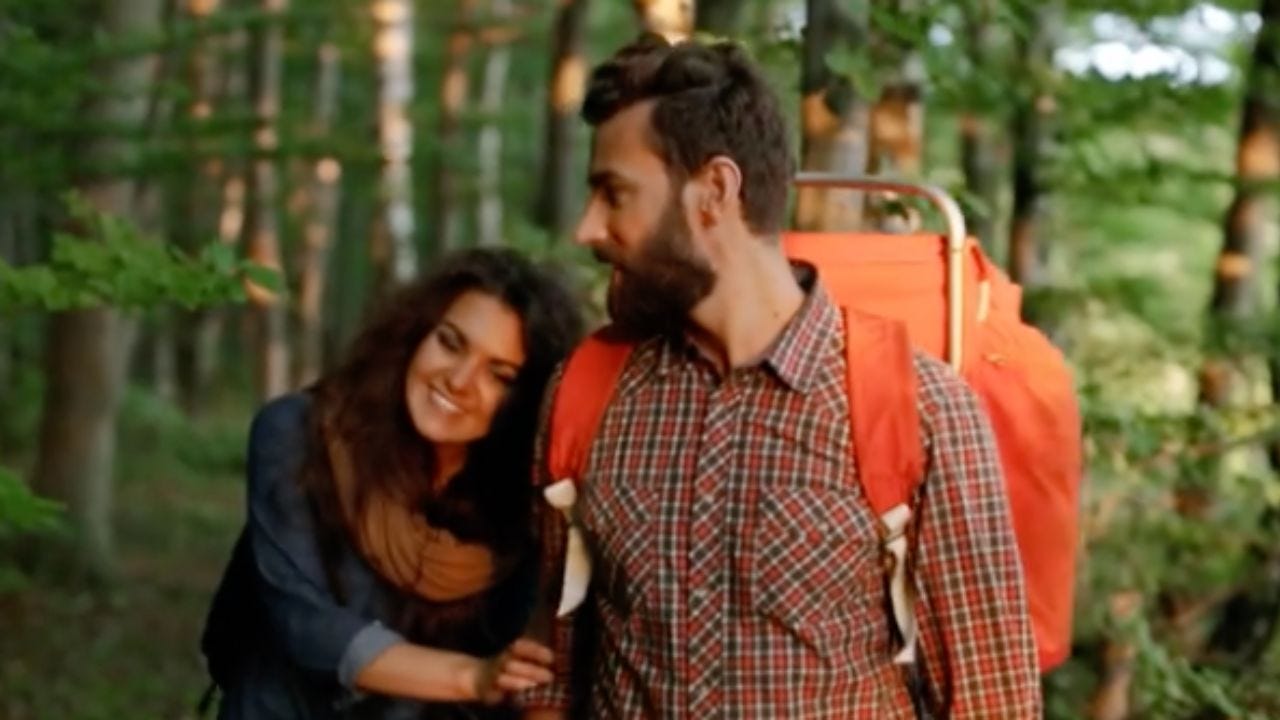
Therapist Emma McAdam: "If emotions are getting in the way of you living your life, you can learn how to slow down, think clearly..."Psychologist Melanie Joy notes "this is an incredibly dysregulating time for everyone, especially those of us who are highly sensitive."Dr Cathleen King: “That is another form of nervous system dysregulation when you can't shut off your idea switch and just be in the present moment." Therapist Julie Bjelland: "The brain has a negativity bias..."~~~~~~~~"When you don't know how to process emotions, you might blow up, shut down, or avoid your emotions through things like food, alcohol, TV, or gaming."Therapist Emma McAdam, LMFT continues about emotional dysregulation:"If emotions are getting in the way of you living your life, you can learn how to slow down, think clearly, and make choices that make your life better. "Instead of getting overwhelmed, blowing up, or trying to control or merely cope with your emotions, learn to actually resolve them."Her comments are from a description for her course How to Process Your Emotions. (The image above of two hikers is from a video for the course, and indicates how our relationships, and access to joy and pleasure in life, can be improved by using tools to regulate our nervous system.)» See her course How to Process Your Emotions, plus other courses, articles, videos and membership, at her Therapy in a Nutshell site.Emma McAdam notes she loves helping people change, and provides many programs to support emotional and mental health. Follow link above to her site.This Creative Mind Audio includes clips from two of her videos about nervous system regulation. Here are related videos:~~~~….McAdams comments: "There are at least three reasons why you’re having a hard time regulating your nervous system, despite your best efforts. So let’s explore them and their antidotes.”"Number Two: You’re not safe. And what I mean by that is that some action needs to be taken. "Our nervous system is super smart and super good at bypassing the logical part of our brain to alert us to dangers. “Sometimes anxiety isn’t a disorder; it’s just a message that something needs to change."She explains, "Emotions aren’t just bad things that happen to us; they’re meant to motivate us to take action. Sometimes they lie and we need to calm ourselves down, just regulate our bodies, but sometimes they’re truthful and we need to take action."~~~~“That is another form of nervous system dysregulation when you can't shut off your idea switch and just be in the present moment." Cathleen King, DPTSee more in post:~~~~This topic of dysregulation has many aspects; here are some additional posts and podcasts with therapists:~~~Psychologist Melanie Joy notes "this is an incredibly dysregulating time for everyone, especially those of us who are highly sensitive. We're especially affected by violence, chaos, and unpredictability."……Dr Cathleen King, DPT: "A dysregulated nervous system can turn routine experiences into sources of stress. If you’re feeling persistently anxious, stressed, or physically unwell, it might be more than just a temporary response to life’s challenges—it could be a sign of a dysregulated nervous system." {See more in the post below, including link to her article "Understanding A Dysregulated Nervous System: The Symptoms and Signs."]Therapist and author Julie Bjelland, LMFT: "The brain has a negativity bias...stress, nervousness, fear...can actually trigger a response in the brain that alerts your system to think that it needs to set off these alarm bells." And, she notes, "that happens even more so in highly sensitive people."~~~~~» See more videos in playlist: Nervous System Regulation ~~~~~ This is a public episode. If you'd like to discuss this with other subscribers or get access to bonus episodes, visit thecreativemind.substack.com/subscribe
Judith Orloff, MD on Transforming Strong Emotions
Judith Orloff MD is a NY Times bestselling author of multiple books, and is "a psychiatrist, an empath and intuitive healer, and is on the UCLA Psychiatric Clinical Faculty. "She synthesizes the pearls of traditional medicine with cutting edge knowledge of intuition, energy, and spirituality and passionately believes in the power of integrating this wisdom for total wellness." (From profile on her site.)Hear rest of interview in Private article Judith Orloff, MD on Emotional Freedom. Note: Private articles with audio interviews are for subscribers to The Creative Mind site at the Supporter Membership level. Learn more in article The Creative Mind Membership.Register for FREE video event with Judith Orloff, MD: "Discover how you can embrace a difficult emotion from an expanded perspective" - Tuesday, January 11, 2022 - Register to tune in or receive the recording.Dr. Judith Orloff’s Keys to Being a Healthy Empath - "In this free ongoing event, you’ll: *Learn about your brain’s mirror neurons; *Learn what intuitive healing means for empaths and sensitive people; *and more."Read more and see videos with Dr. Orloff in (public) articles:Energy Sensitivity How to reduce anxiety – Judith Orloff on Emotional Freedom The Empath’s Survival Guide Course by Judith OrloffSupport the showView selected episodes and articles with more resources: The Creative Mind Audio Podcast page on the main site. This is a public episode. If you'd like to discuss this with other subscribers or get access to bonus episodes, visit thecreativemind.substack.com/subscribe
Dysregulation and How to Improve Emotional Resilience with Psychologist Melanie Joy
Psychologist Melanie Joy notes this is an incredibly dysregulating time for everyone, especially those of us who are highly sensitive. This is an excerpt from her conversation with Andrea Weber for the Sensitive Empowerment Community.Dr Joy comments: "We're especially affected by violence, chaos, and unpredictability. And right now, it's just an incredibly dysregulating time, as you pointed out, for everyone. "So the question really is, how do we find the balance, right? So how do we take in enough information?"I think this is one of the things that does throw people a little bit off because they don't want to just tune out entirely. We need to be informed enough so that we're not a part of the problem by sticking our heads in the sand. "But how do we stay informed enough and not get over informed and then manage when we do get over informed?"She suggests multiple resources, including books, apps and practices, to help emotional regulation and resilience.This is an excerpt from the HSP podcast episode "Is Dysregulation Impacting Your Life? How to Recognize and Manage our Emotional Response with Dr Melanie Joy."➡️ Hear the full episode at The Sensitive and Neurodivergent Podcast on the Sensitive Empowerment site of Julie Bjelland, LMFT - where you can find many more of her articles, books, courses, Sensitive Community and other resources. ~~~~Do You Think Your Nervous System Is Dysregulated?Cathleen King, DPT, is a "doctor of physical therapy who teaches neuroscience principles, and is a mind-body practitioner." She writes:"If you’re feeling persistently anxious, stressed, or physically unwell, it might be more than just a temporary response to life’s challenges—it could be a sign of a dysregulated nervous system.”See much more in her article Understanding A Dysregulated Nervous System: The Symptoms and Signs.Follow the link to her site with more articles, a membership program, and more.~~~Related Creative Mind posts and podcast episodes:…~~~ This is a public episode. If you'd like to discuss this with other subscribers or get access to bonus episodes, visit thecreativemind.substack.com/subscribe
The complex experience of ADHD adults with Linda Roggli
Linda Roggli is one of the speakers at the Let's Talk 2E Conference For Adults, hosted by Julie Skolnick.Her live presentation was titled Free to Be ADHD (and 2e).The site for the Conference summarizes:Linda Roggli is a Professional Certified Coach (PCC), award-winning author and founder of the A-D-Diva Network for ADHD women 40-and-better. She is an internationally-recognized expert in midlife and senior ADHD. She co-founded the annual ADHD Women’s and ADHD Parents’ Palooza, two weeks of online conversation with 30+ ADHD experts. (adhdpalooza.com) She also created the popular ADHD Get Organized program which features live organizing sessions. Linda’s book Confessions of an ADDiva: midlife in the non-linear lane won first prize for women’s issues in the prestigious Next Generation Indy Book Awards competition. She chairs the webinar committee for ADDA. She lives in Durham, NC with her slightly OCD husband, one OCD cat, four adorable ADHD Shelties and 15 cackling hens.Owning an ADHD brain has its challenges — time blindness, trouble with initiation and completion, impatience, impulsivity. And they are magnified with the ‘gift’ of 2e at work and home (“If you’re so smart, why can’t you keep a job?”). With strong heritability, it also impacts parenting (“I’m sorry I forgot to pick you up after school!”). The paradox of high intelligence coupled with high distractibility is difficult to explain, even to ourselves. But many ADHD adults, especially those diagnosed in later life, admit they have managed their lives by out-thinking everyone else in the room. There is a high price for this hyper-vigilance — anxiety, exhaustion and eventual burnout. Understanding the complex interaction between ADHD, executive function and giftedness is the first step toward creating a life that is authentic and richly rewarding. ~~~Learn more about speakers and recordings of the Let's Talk 2E Conference For Adults. ~~~Support the showView selected episodes and articles with more resources: The Creative Mind Audio Podcast page on the main site. This is a public episode. If you'd like to discuss this with other subscribers or get access to bonus episodes, visit thecreativemind.substack.com/subscribe

Negativity Bias can distort and deflate. How can we gain better emotional health?
"We don’t pay attention to all events and our corresponding emotional reactions in the same way. One negative event can taint an overall good day."Anne-Laure Le Cunff, PhD explains more about our brain's Negativity Bias: "It’s the same with interactions: you may have a good relationship with someone who has supported and complimented you many times over, but you will tend to more saliently remember the one time they shared negative feedback." (Image above is an edited version from her article.) [1]This episode of the Creative MInd Audio podcast includes excerpts from podcasts by two therapists talking about how negativity bias operates and how much impact it can have on us, cognitively and emotionally. First is Emma McAdam, LMFT of Therapy in a Nutshell, who comments in her podcast episode [2] and related video:"Your brain is not designed to make you happy; it's made to keep you alive. “And in order to do that, it's got some built-in biases, including a negativity bias that literally filters what you see, what you pay attention to, what you notice in your life. "And this is why you might feel like everything is getting worse all the time. This bias fuels depression and anxiety, and this thinking pattern might make you see the glass as half empty."One of her resources is a free course: » Grounding Skills for Anxiety - *How your stress response works *How to turn on the calming part of your nervous system (the parasympathetic response) *Essential skills for managing stress, anxiety, PTSD, and panic attacks. » Also see list of her Therapy in a Nutshell Courses, Membership, Blog, and more. Topics include *Mental Health Essentials *Depression *Anxiety *OCD *PTSD/Trauma *Relationships. ~~~Therapist and author Julie Bjelland, LMFT helps highly sensitive people understand our trait and thrive more.She notes this brain tendency toward negativity "has to do with the evolution of humans in general because we used to be living out on the land and could be attacked by a lion at any moment. You had to be very conscious of threats. “But the brain can't tell the difference between a real threat and a perceived threat."So what happens is that stress, nervousness, fear or different things like that can actually trigger a response in the brain that alerts your system to think that it needs to set off these alarm bells."And that happens even more so in highly sensitive people."One of the strategies she suggests to counteract negativity bias is to keep a positivity journal, and pay attention to the more uplifting, encouraging, beautiful, satisfying parts of our life.Resources by Julie Bjelland, LMFT:» Free class Tools For A Chaotic World. » Free class High Sensitivity and Anxiety.Her audio comments are from one of her videos. (3]~~~~Do you relate to this information about Negativity Bias? I certainly do. Most of my life I have experienced some degree of depression and generalized anxiety, and find it helpful to consider how my nervous system operates, especially having the temperament trait of high sensitivity (sensory processing sensitivity).~~~Sources[1] Negativity bias: how negative experiences cloud our judgement By Anne-Laure Le Cunff, PhD in neuroscience, founder of Ness Labs, author of Tiny Experiments.[2] Podcast episode: Why Your Brain Defaults to Scarcity: Break the Anxiety Cycle By Emma McAdam, LMFT. [3] video: Julie Bjelland on negativity bias and HSPs.~~~~~ This is a public episode. If you'd like to discuss this with other subscribers or get access to bonus episodes, visit thecreativemind.substack.com/subscribe
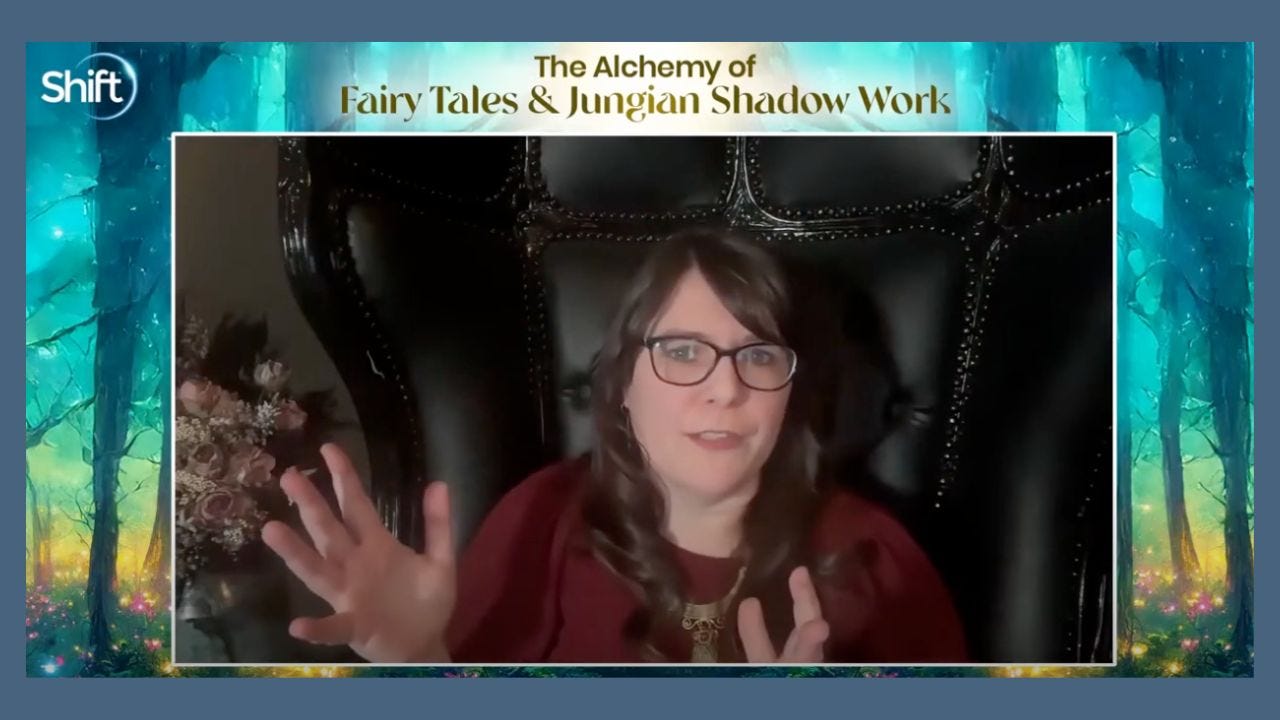
How stories help us explore our Shadow Self and gain emotional health
Fairy Tales & Jungian Shadow Work"Many of us are gifted with the ability to hold the darkness of others but we don't always know how to uncover it within ourselves."This Creative Mind Audio is an excerpt from much longer video interview with Melissa Kim Corter: The Alchemy of Fairy Tales & Jungian Shadow Work. (Register free to learn about her Shift Network course.)Corter comments, "Denzel Washington once said that some people will never like you because your spirit will irritate their demons. "It took me years to understand that this is a gift that my warm and grounded presence can put people at ease to help them feel safe to unburden their hearts - yet others were instantly repelled by my presence."…She notes she was drawn to engage with Fairy Tales as a child: "There was something about these stories that allowed me to recognize patterns in my own life. They gave solutions. They had this magical and enchanting sort of quality where the natural world was alive and that really resonated deeply for me."Corter writes on her Substack site Hauntingly Beautiful Things: "My ideas and words seem to resonate with those who never know their place."My psyche guides me as I write about the exiled parts of the mind, human behavior, and shadow. I collect broken pieces, like breadcrumbs, and try to make some sense of them. Putting them together in mythopoetic forms that speak to the soul."My writing blends psychology with symbolic forms found in film, fairy tales, and forensics. I have found value in the dark, misunderstood, and macabre dimensions of my personality..."Perhaps you can relate. I certainly do.~~~~Related posts/podcasts:……~~~~ This is a public episode. If you'd like to discuss this with other subscribers or get access to bonus episodes, visit thecreativemind.substack.com/subscribe

Trauma, Emotions and Health - from an interview with Dr Cathleen King
"Then I created a roadmap to guide me out of the dense fog of my illness and fear. I learned how to self-regulate my nervous system."Cathleen King, DPT, is a "doctor of physical therapy who teaches neuroscience principles, and is a mind-body practitioner."This audio is an excerpt from her conversation at the 2025 Trauma Super Conference, titled "Trauma, Emotional Processing, and Physical Health." A summary of topics:*Why we should understand the science behind nervous system regulation*How to separate trauma story from identity*Self-regulation techniques to help with trauma therapy~~~~» One of her programs: Primal Trust Membership & Community - "Learn to consciously self-regulate your biology and heal." From this video: "I had a lot of childhood stuff, and I'd heard like go resolve your trauma. “Well, I tried to do that. I went raid into like EMDR and parts work, and honestly, it was re-traumatizing to me to go right into those processes because I had no capacity for self-regulation." ~~~~A long journey into healing📖 How Healing Happens - free guide by Cathleen King, DPT on "brain retraining and nervous system somatic healing...both the science and approach to self-healing for chronic illness and chronic stress." [See link at bottom of page above to learn about her Membership program.]* In her guide, Cathleen King writes:"I’ve personally walked the path of chronic illness (Lyme, mold toxicity, Chronic Fatigue, and more) with many debilitating symptoms, and felt completely overwhelmed with the fear that I might never return to a full and vibrant life. "Like many of you, I went from doctor to doctor, piling up a staggering number of diagnoses and desperately trying treatments, many of which only made me feel worse."She explains her experiences led her to become "obsessed with the drive to fix myself, spending endless hours frantically researching and unable to concentrate on anything else in my life. "I know painfully well the spiral of loneliness, anger, and deep despair that comes with being told there is no chance of fully healing."But, she adds, "then I created a roadmap to guide me out of the dense fog of my illness and fear. "I learned how to self-regulate my nervous system and, astoundingly, to experience true joy and calm even while I was still experiencing difficult symptoms and limitations. "My nervous system started to change. My brain began to rewire. And I began to trust my body could heal."~~~ This is a public episode. If you'd like to discuss this with other subscribers or get access to bonus episodes, visit thecreativemind.substack.com/subscribe

How to understand and work with emotions so they benefit more than disrupt
Probably all of us don't like certain kinds or levels of emotion, and want to get away from them, sometimes in self-destructive ways.Psychologist Cheryl Arutt notes "Creative people do tend to be highly sensitive and an exquisite sensitivity is an asset when it comes to creating art...but that same sensitivity can often make the painful experiences that they have even more so."Neuroscientist Lisa Feldman Barrett says "You might believe that your brain is prewired with emotion circuits, that you're born with emotion circuits, but you're not."Emotions researcher Karla McLaren thinks "It's important for our joints to have a complete range of motion, but it's also important for us to have a complete range of emotion." - Dr. John Demartini explains "if you meet somebody...and you seek them out and want to be with them, that's motion towards something. Energy put into motion towards something. That's an emotion." - Pema Chödrön says "A lot of the process of mindfulness is beginning to relax with the present moment and touch the immediacy of our experience, our thoughts and emotions."~~~~~~~~Sources for this podcast episode:Image at top is from article Artificial Intelligence: Why it Can't Detect the Correlation Between Human Emotion and Facial Expression, Ron Jefferson, The Science Times Aug 24, 2021. Psychologist Cheryl Arutt from my video Artists are highly sensitive and need skills to use their emotions safelyLisa Feldman Barrett from TED Talk video in my post Are emotions hardwired and just triggered? No - our brains build them. Lisa Feldman Barrett, PhD is “a University Distinguished Professor of Psychology at Northeastern University, with positions in psychiatry and radiology at Massachusetts General Hospital and Harvard Medical School.” Prof. Barrett is one of the experts at the free ongoing Brain-A-Thon event.Karla McLaren from her video Do You Have a Full Range of Emotions? in my post How To Gain Better Emotional Health By Working With Feelings.Dr. John Demartini from his video "How to Manage Emotions" - see it in my post How to upgrade your financial health and life success – NeuroGym programs Pema Chödrön from video The Noble Journey From Fear to FearlessnessRelated Creative Mind Videos playlists:Emotional Health - Physicians, authors, psychologists, artists and others on stress relief, anxiety relief, depression, unhealthy self-esteem, low confidence and more. Trauma Healing - Programs and information from physicians, psychologists and others on understanding and healing from traumatic experiences. Related posts:~~~~~ This is a public episode. If you'd like to discuss this with other subscribers or get access to bonus episodes, visit thecreativemind.substack.com/subscribe

How self-acceptance is a foundation for a healthy and creative life
Self-acceptance, self-compassion, self-regard, healthy self-esteem... how do these impact us, including being creative? In this episode, a number of artists and psychologists talk about their perspectives and some of the research.Actor Michelle Rodriguez said, “I don’t think it’s narcissistic at all to love yourself and believe in yourself. I think some people are really scared to do that. “I have to. If I don’t, I would not succeed in what I do.”In an interview for The Self-Acceptance Summit, Sounds True founder Tami Simon asked author Elizabeth Gilbert (Big Magic: Creative Living Beyond Fear; Eat, Pray, Love) why self-acceptance is important to her personally.Gilbert replied: "Well, I mean I’ve kind of been a student of it my whole life because I’ve had to be, because its moments of absence in my life have brought me the darkest pain I’ve ever been in."» The live Self-Acceptance Summit is over. Here are some related resources:⏺ Self-Acceptance books and programs by various authors, from Sounds True.The page notes about the program "Radical Self-Acceptance" that author Dr. Tara Brach "says the most difficult—and pervasive—challenge to Westerners today is the suffering caused by our feelings of unworthiness and self-aversion."Radical Self-Acceptance offers a way to break out of this emotional prison, so you can discover the freedom that comes with kindness and true appreciation of yourself and others."The page also includes The Self-Acceptance Summit recordings, with presenters Caroline Myss, Tara Brach, Matt Kahn, Richard Schwartz, Adyashanti, many more~~~⏺ The Self-Acceptance Summit: Volume 1: How to Overcome Self-Judgment and Live a Life of Bravery, Compassion, and Authenticity (Audible Audiobook) – Elizabeth Gilbert (Author, Narrator), Iyanla Vanzant (Author, Narrator), Parker J. Palmer PhD (Author, Narrator), & 8 more.~~~Julie Bjelland, LMFT is a psychotherapist, author and educator specializing in helping highly sensitive people thrive.One of her courses is "Brain-Training for the Highly Sensitive Person and the Neurodivergent — Techniques to Reduce Anxiety & Overwhelming Emotions."A testimonial: “This course gave me clarity, understanding, and acceptance of myself and what I need to thrive; like having an owner’s manual to myself as an HSP. I started the course feeling depleted and easily knocked down by life’s challenges. I now feel centered, resilient, empowered, energetic, and joyful, and am feeling and bringing my best to my life and to the people in it.” — Michelle, California⏺ Learn about Courses for the Sensitive and Neurodivergent by Julie Bjelland.~~~~~~~Self-Compassion author and researcher Kristin Neff says “We often become our own worst critic because we believe it’s necessary to keep ourselves motivated.“But the research shows that healthy self-compassion increases our inner drive, our resilience, and our ability to excel."Kristin Neff courses and audio programs from Sounds True. Books by Kristin Neff, PhD includeSelf-Compassion: The Proven Power of Being Kind to Yourself Fierce Self-Compassion: How Women Can Harness Kindness to Speak Up, Claim Their Power, and Thrive Self-Compassion Step by Step: The Proven Power of Being Kind to Yourself (Audible Audiobook) Actor and playwright Tracy Letts comments: “It’s hard to give yourself a break, isn’t it? You can’t just decide to do it. It’s not an act of will. “It takes actual work, whether that means getting sober, getting into therapy, writing or acting in plays, or paying attention and really listening to other people.”Therapist and author Julie Bjelland, LMFT helps Highly Sensitive People thrive.She notes "Self-acceptance is one of the greatest foundations of feeling joyful. Conversely, self-rejection can be sneaky and a very painful place to operate from, especially as a deep-feeling, sensitive person."The final part of this Creative Mind Audio episode is an excerpt from her HSP Podcast Episode 184 The Importance of Self-Acceptance with Willow and Julie.~~~Related posts:~~~~See more resources below.video with Kristin NeffKristin Neff thinks "one of the reasons we’re so attached to our self-criticism, even though it’s painful, is because I think it gives us the illusion of control."She notes "First of all, self-compassion is about self- acceptance: 'I fully accept myself as I am, flaws and all, I have compassion, kindness, love, even though I’m not perfect, even though I fail.'"And self-compassion is not about, you know, self-improvement or evaluating yourself (am I good enough or not), trying to do more more more so I can see myself positively. It really is about accepting who you are as you are."Doesn't self-acceptance mean being passive or complacent?...So if you accept things as they are, then how does that help motivate to make a change? And Carl Rogers talked about this very beautifully: 'You know the curious paradox is that when I accept myself as I am, then I can change.'"When we accept ourselves fully, and we embrace who we are, fl

Facing our Shadow for more creativity, authentic power and purpose
This is a free preview of a paid episode. To hear more, visit thecreativemind.substack.com"One of the most challenging parts of the critic in the Shadow is the inner critic. “When your inner critic has completely taken over, and you don't have the clarity to trust yourself, this becomes a significant spiritual crisis." Caroline Myss (from her video on The Critic below).(Photo: Rachel Weisz as twin gynecologists in Dead Ringers. This image reminded of how disparaging and dismissive our inner talk can be.)Caroline Myss comments: "The shadow has many definitions. I think the best one, one of the most effective ones is to think of the shadow as the parts of yourself that you don't know much about that circumstances in life activate so that you can find out a lot about [them] … The shadow is neither good nor bad.”Why bother to learn about our Shadow Self? Caroline Myss explains.~~~This podcast includes excerpts from The Sacred Path of the Shadow video series. Producer Sounds True summarizes:“Join world-renowned spiritual teachers Caroline Myss and Andrew Harvey for a FREE three-video teaching series on the psychological and spiritual implications of investigating those parts of yourself that you have buried, abandoned, or disavowed.“Have you ever had a pattern of falling in love with the same type of person, over and over again, even though the relationships seemed doomed from the start? “Or wondered why certain events were triggering for you, seemingly out of proportion to the events themselves? “Or had a sense that there was some creative endeavor wanting to be born through you that you couldn’t quite name, as if it were hidden on the very edge of your awareness?“All of these experiences are indicators of the Shadow at work. The Shadow is that part of us that is unknown, yet influences every aspect of our lives.~~~~Jungian Psychology ResourcesThis page includes videos, articles and programs by multiple psychologists and teachers about depth psychology teachings of Carl Jung, to enhance our personal growth and creativity.~~~

How to Understand and Recover from Narcissistic and Toxic Family Dynamics
Meg Haworth, PhD recalls, "I grew up with a narcissistic parent in a toxic family system, and I also had all kinds of abuse growing up and spent a lot of time in my childhood being very sick."The image above is from one of her articles. She notes:“As women entrepreneurs, we already face the many challenges of running a business—balancing strategy, execution, sales, marketing, accounting, and leadership. “But for some of us, there’s an additional, often invisible, hurdle: the inner wound of self-worth. “If you’ve been raised in a family with narcissistic or toxic parents or siblings, where criticism, belittlement, and constant invalidation were the norm, this wound can be particularly deep and pervasive."From article Healing the Self-Worth Wound for Women Entrepreneurs with Narcissistic or Toxic Family Dynamics, by Meg Haworth, Jan 30, 2025 on meghaworth.com.This audio is an excerpt from a longer video interview, talking about her adverse childhood experiences that led to her own healing and developing a “mind body process that has helped many people gain clarity, health, and recovery.”Register free to view the ongoing interview by The Shift Network (and learn about her related course): How to Heal Yourself From Toxic & Narcissistic Family Dynamics.....Dr. Haworth notes "Sexual, physical, and emotional violation is debilitating. It can lead to unhealthy choices, poor personal boundaries and self-defeating patterns. "All these things get stored in your body as memories that create pain and difficulties."She adds, "I also drowned and had a near-death experience, and I was highly intuitive. "I was so sensitive and psychic and empathic that I really just took on a lot of the abuse and a lot of the emotions that were coming my way, and really took it on as a part of me. "And that led to illness. But it took me many many years to unwind this..."~~~Video version of interview excerpt:~~~A movie about a narcissistic relationship:Anna Kendrick has commented about starring in the movie ‘Alice, Darling’ (which she helped get made as an executive producer):“I was coming out of a personal experience with emotional abuse and psychological abuse.”Describing her former relationship, Kendrick says, “I was in a situation where I loved and trusted this person more than I trusted myself.“So when that person is telling you that you have a distorted sense of reality and that you are impossible and that all the stuff that you think is going on is not going on, your life gets really confusing really quickly…”See ABC News video with her, plus related material from trauma and relationship experts, in article How attachment styles and trauma impact our lives and relationships.~~~~ This is a public episode. If you'd like to discuss this with other subscribers or get access to bonus episodes, visit thecreativemind.substack.com/subscribe
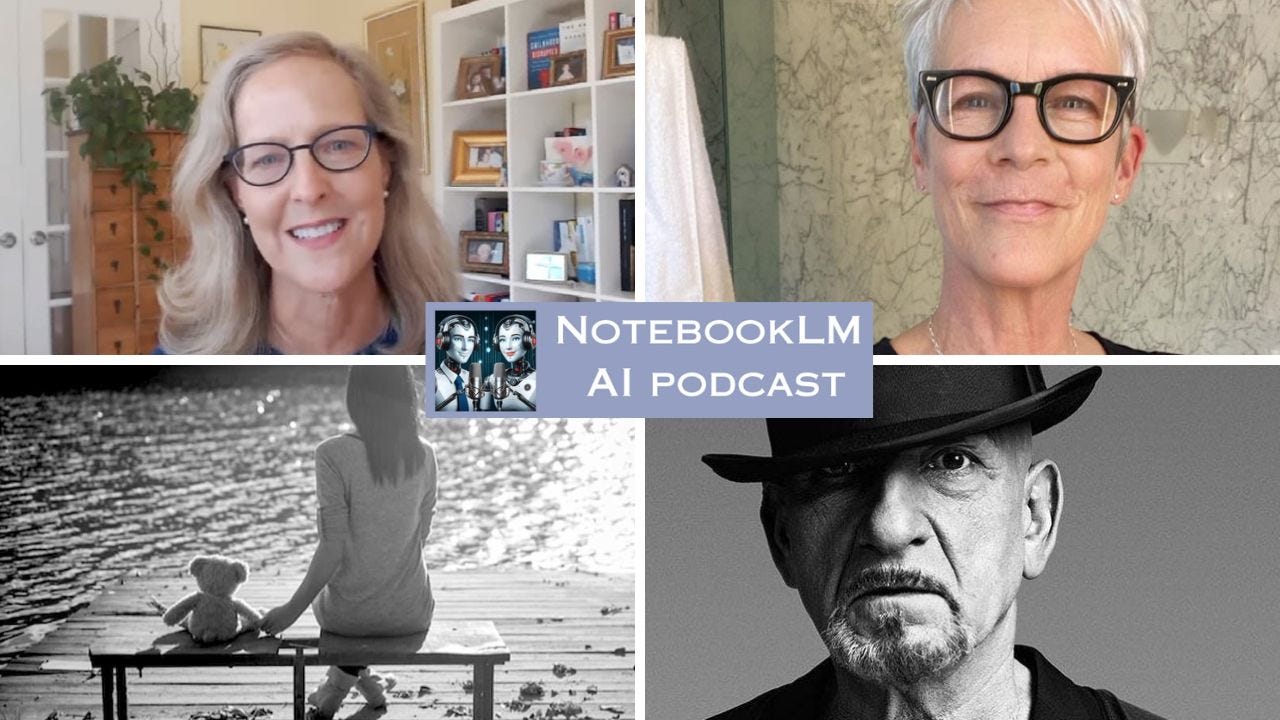
Adverse Childhood Experiences and creativity - A Notebook AI Podcast
Most of us have a wide variety of emotional experiences as a child and teen, and as as adults, of course. These may include relatively minor and temporary hurts, but also abuse, even trauma. And these experiences can endure, especially when not addressed or healed, deeply impacting our lives and access to our creativity.This audio is an AI-generated "podcast" with the "speakers" doing a great job of covering main topics and quotes in my article How Adverse Childhood Experiences and trauma affect our lives and creativity:From article:“During our childhood, we are much closer to our authentic selves. Even if our memories of childhood may be filled with challenge and discomfort.” Sensitivity therapist and author Julie Bjelland, LMFT“It’s an often complicated part of being a young performer…being taken advantage of by someone with ulterior motives and intentions.” Actor Jamie Lee Curtis“If you didn’t feel loved enough as a child, the world becomes the realm of the ‘unloved child’ and you find yourself on a never-ending search for acceptance and approval.” Psychotherapist Mihaela Ivan Holtz"Because of that household dysfunction, our brains do a couple of really significant things: they begin to give us the message that we're not okay." Science Journalist Donna Jackson NakazawaAlso perspectives of Keira Knightley, Aimie Apigian, MD, Halle Berry, Ben Kingsley, and others.Also videos and resources.~~~ This is a public episode. If you'd like to discuss this with other subscribers or get access to bonus episodes, visit thecreativemind.substack.com/subscribe

Getting past feeling flawed to being authentic and connecting better with others
"It is hard to change that feeling flawed piece...it's so seeped into your bones." Julie Bjelland, LMFT“Trauma results in this belief that we are different, that we’re not enough…”Aimie Apigian, MD“We often see that the pain cycle is ultimately cross wired with some type of underlying core belief such as “I’m not okay, I’m not good enough…" Cathleen King, DPT“Your own self doubt can cause the disconnection, especially when your inner voice says things like “I’m afraid I will fail,” “people won’t like me,” or “I can’t do this.” Mihaela Ivan Holtz, Psy.D., LMFT~~~~~~~A belief that we are different“Trauma results in this belief that we are different, that we’re not enough, that there’s something about us that pushes people away or that we’re too much for other people."Trauma healing specialist Aimie Apigian, MD continues: “And so if they were to truly know us – all parts of us – then they would leave us, then they would kick us out, then they would reject us, abandon us. "And those feelings of being abandoned and being different are so painful that our system responds in a self-protective way…”Resources by Aimie Apigian, MD, MS, MPH. include: ▶️ TheFoundational Journey: 21 Day Journey + Intro to All Parts of Me, for addressing stored trauma in the body. ▶️ The Essential Sequence - How to Release Stored Trauma - free guide ▶️ Thumbnail image for this video ("Alone in a crowd") is from Attachment Pain: A Roadmap for Healing - free guidebook. ~~~~~Feeling flawed and the power of self-compassion and self-acceptance.Julie Bjelland, LMFT, a psychotherapist and author specializing in high sensitivity and neurodiverse people, comments in an episode of her podcast:"It is hard to change that feeling flawed piece...it's so seeped into your bones because it's your inner child. It's stuff that you learned with a child's brain."From the original Show Notes: "In this conversation, Julie Bjelland and Willow McIntosh "emphasize the impact of feeling flawed and the power of self-compassion and self-acceptance."⏩ See video: Feeling flawed as a neurodivergent child or adult - What can change that?⏩ Hear Creative Mind Audio podcast version.In an issue of her newsletter, she lists some notions ‘we constantly tell ourselves things such as: I'll be worthy when I lose 20 pounds. I'll be worthy if I get/stay sober. I'll be worthy if everyone thinks I'm a good parent. I'll be worthy if I can hold my marriage together. I'll be worthy when I make more money. I'll be worthy when my parents finally approve.She lists suggestions of "What we should be saying to ourselves. Pick some of these and try repeating them daily to yourselves: I love and accept myself as I am. I know my sensitivity is needed in the world. I allow myself to honor my needs in a loving way and rest when I need it. I give myself the care and downtime I need to help stay at my highest level of wellness. I practice daily self-compassion, knowing it is a part of helping me thrive."She adds that one of her resources to "deepen your journey of self-love and acceptance" is her Blooming Brilliantly course - see list of Courses for The Sensitive & Neurodivergent.(Like perhaps many other people, I don’t generally appreciate or use affirmations such as she suggests - but I think they’re worth thinking about, especially in terms of the quality of messages our inner voices may regularly be spouting.)~~~The psychology of chronic painCathleen King says "in my experience, and in the research of the psychology of chronic pain, we often see that the pain cycle is ultimately cross wired with some type of underlying core belief such as “I’m not okay, I’m not good enough, I’m unworthy, undeserving, imperfect, unloveable, etc” that has been enmeshed with our core identity." Cathleen King, DPT, is a "doctor of physical therapy who teaches neuroscience principles, and is a mind-body practitioner."The ego will submit to your conscious choice to live with or without pain, and the pain signaling will shift, because the inner threat of ‘not-okayness’ has shifted." ⏩ From post (on her site) How to Overcome Pain: Effective Strategies.Follow link to see her programs and free resources.~~~~"Not good enough."Viola Davis said “At thirty-eight, things changed. I didn’t jump out of bed one morning and everything was perfect. I’ve always known I was a strong woman, but I wanted ‘fast-food joy’—quick, easy joy. More tools and tricks. "I also could still fall back into ‘not enough—not pretty enough, not thin enough, not good enough.’ "One day my therapist asked me a pivotal question: ‘What if nothing changes—your looks, your weight, your success—would you be okay?’ “For the first time, I thought, You know what? Yes, I would. I really would.“This is when I realized that the past was not going to define me."Courage and Power From Pain - An Interview With Viola Davis by Brené Brown May 9, 2018. ~~~What takes us out of an emotional authentic space?Mihaela Ivan Holtz, Psy.D., LMFT of Creative Minds Psychotherapy co
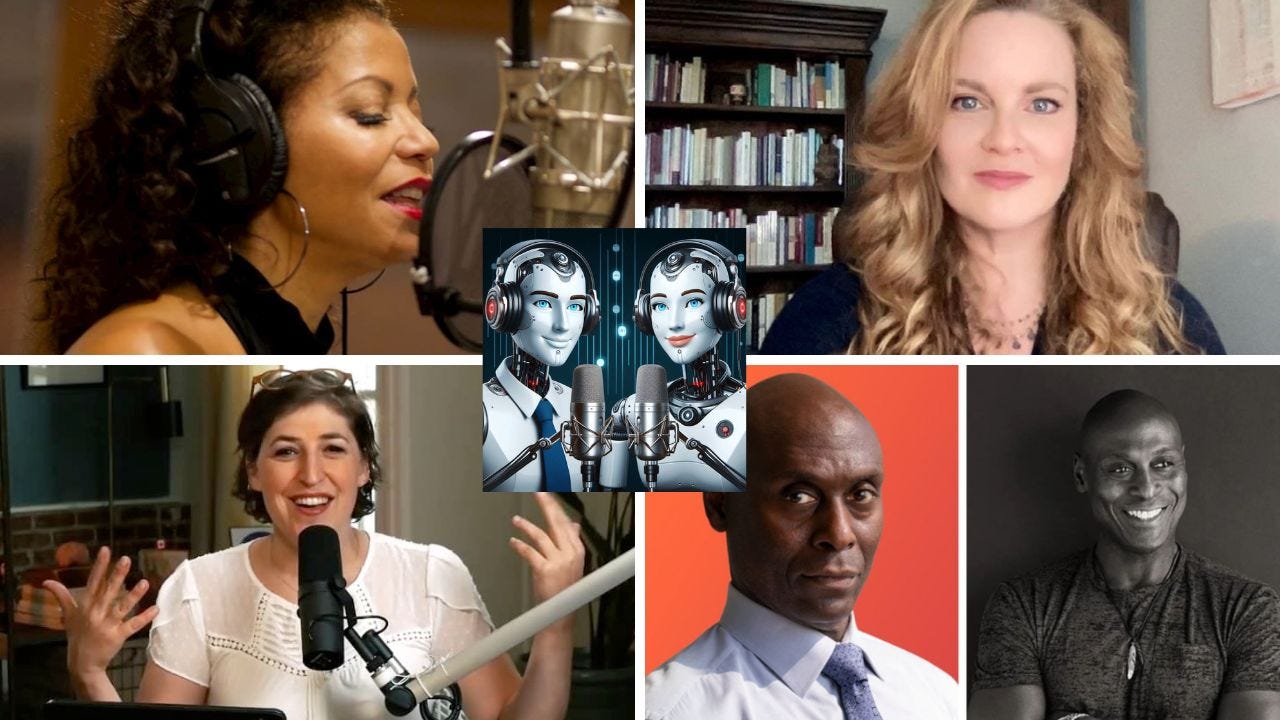
Working With Our Emotions To Be More Creative
This audio is a "podcast conversation" generated by AI program Notebook, based on text in my article How Working With Our Emotions Helps Us Be More Creative.Excerpts of longer comments in the article: "I am the kind of person that feels so much that if I didn’t have acting (and music), I would burst from all of the emotion inside!” Gloria ReubenPsychologist Cheryl Arutt notes “Creating art has always been a way to channel emotional intensity.”Dr Mihaela Ivan Holtz of Creative Minds Psychotherapy finds “It’s not always easy to connect with your emotions and convey them in your art."Therapist Julie Bjelland helps highly sensitive and neurodivergent people. She says "When the emotional brain is activated, the cognitive brain kind of goes to sleep."See the article with much more, including videos and links to resources:~~~~ This is a public episode. If you'd like to discuss this with other subscribers or get access to bonus episodes, visit thecreativemind.substack.com/subscribe

How to Thrive in a Chaotic World as a Highly Sensitive Person
"The modern world is often overwhelming and stressful for those of us with sensitive nervous systems."High Sensitivity therapist Julie Bjelland, LMFT adds, "Many of us have suffered from the challenges of high stress, anxiety, sensory overload, and mental health and physical health issues. "Fortunately, after years of working with and researching Highly Sensitive People (HSPs), I have developed many tools that have not only helped me but thousands of HSPs all over the world move out of survival mode living and into thriving."Register free for her class Tools to Help the Sensitive Thrive in a Chaotic World. Follow link to the registration page to see links to more of her resources.Julie Bjelland, LMFT 🌈 is a "Highly Sensitive, Autistic, LGBTQ+ Psychotherapist and founder of Sensitive Empowerment with posts, courses, free webinars, podcast episodes, a community program, and more for sensitive & neurodivergent people.~~~What is your response to the hammock image? I thought something like, "Yes, that looks relaxing and all, but I'm way too busy to stop and retreat to anywhere." But I have been regularly using the kind of breathing technique Julie (and other people) suggest, and finding it does help reduce stress and overload during busy work days as an entrepreneur. This is a public episode. If you'd like to discuss this with other subscribers or get access to bonus episodes, visit thecreativemind.substack.com/subscribe

Highly Sensitive, Neurodivergent and Misunderstood. How Can We Be Ourselves?
Being a highly sensitive person, or neurodivergent in other ways, we may have grown up feeling misunderstood, and even like we were flawed. The first section of this audio is an excerpt from a related podcast episode with Julie Bjelland and Willow McIntosh, followed by comments by Dr. Aimie Apigian on how trauma relates to these feelings.Hear the full podcast episode "The Pain of Being Misunderstood and the Joy of Belonging with Julie Bjelland, LMFT and Willow McIntosh" - See the HSP and Neurodivergent Podcast page. In this excerpt, therapist Julie Bjelland, LMFT mentions her Autistic Women’s Group - this is free for members of her Sensitive Empowerment Community.A member writes: “Thank you for such loving words and the support!…this community you created has made me feel so welcomed, understood and provides a beautiful garden that I feel comfortable to share my vulnerabilities openly and have a positive space that feeds me with beauty in so many ways!"Willow McIntosh notes in a post on his site: "For those of us born with the trait of high sensitivity and high sensory intelligence we typically experienced the world in a particular and often profound way."It is quite common for us to have been misunderstood and for our emotional sensitivity to be seen as a disadvantage."Yet it is often the challenges we faced and the way we saw the world back then that shape us to specialise in a particular area of life."From post "The importance of reframing our childhood as a highly sensitive person" in the blog section of his site Inluminance. Trauma and feeling misunderstood“Trauma results in this belief that we are different, that we’re not enough, that there’s something about us that pushes people away or that we’re too much for other people."Trauma healing specialist Aimie Apigian, MD continues:“And so if they were to truly know us – all parts of us – then they would leave us, then they would kick us out, then they would reject us, abandon us. "And those feelings of being abandoned and being different are so painful that our system responds in a self-protective way…”Dr. Aimie Apigian, MD, MS, MPH, is an author, speaker and founder of Trauma Healing Accelerated.Hear more in podcast episode How attachment trauma impacts our lives with Aimie Apigian, MD. Visit her site to learn about her ongoing program for trauma recovery: The Foundational Journey: 21 Day Journey and Introduction to All Parts of Me courses. "Together, these courses integrate the somatic and parts work which are essential to effectively address stored trauma in the body."The image at the top of this page (‘woman standing alone in busy crowd’) comes from free guide by Dr. Apigian: ▶️ Attachment Pain: A Roadmap for Healing. "Attachment is not just one’s relationship style, it was one’s survival style for the first few years of life. These experiences influence our attachment styles—secure, anxious, avoidant, or disorganized—and shape our ability to form healthy relationships."~~~Another related podcast post: Getting past feeling flawed to being authentic and connecting better with others - Our feelings like 'too different' or 'unworthy' can be changed. ~~~Fitting in, not fitting in, trying to fit inAs Dr. Apigian notes above, feelings of being different are painful. One way neurodivergent people may try to fit in, or at least seem to be more like neurotypical people, is masking.One definition: “Masking is a strategy used by some autistic people, consciously or unconsciously, to appear non-autistic in order to blend in and be more accepted in society. Masking can happen in formal situations such as at school or work and in informal situations such as at home with family or socialising with friends." From a National Autistic Society post.Willow McIntosh comments in the podcast episode that as Highly Sensitive People "we are challenged a lot by feeling different when we're growing up, and we get the wrong messages, sometimes we can misunderstand what our value is and try to be like others."Actor Daryl Hannah (Splash; Blade Runner; Kill Bill and more) grew up in the late ‘60s and early ‘70s with Asperger’s Syndrome. She recalls, “My shyness was probably made worse because of my condition. I’d come home from school and cry myself to sleep. Right from an early age, I’d rock myself back and forth because it helped calm me down.“Kids bullied me and that just drove me further into myself. Children can be very cruel when they see someone who doesn’t fit in – and unfortunately, that was me. I didn’t fit in anywhere.”[Daryl Hannah: “My battle with autism”, Now to Love May 18, 2015.]Related podcast episode: Autistic Women: Perspectives by Hannah Gadsby, Kayla Crome, Daryl Hannah, Sue Ann Pien, Zhara Astra, Julie Bjelland. In one of my posts, I note she got into acting, like many other talented people, because she was “really shy,” as she said.“I wanted to live in my imagination. I couldn’t decide what I wanted to be and acting gave me the opportunity to do a lot of di

How attachment trauma impacts our lives with Aimie Apigian, MD
Dr Aimie talks about “the effects of trauma on the fear of being seen for who we truly are, the fear of truly being known.“Trauma results in this belief that we are different, that we’re not enough, that there’s something about us that pushes people away or that we’re too much for other people.“And so if they were to truly know us – all parts of us – then they would leave us, then they would kick us out, then they would reject us, abandon us. "And those feelings of being abandoned and being different are so painful that our system responds in a self-protective way…”This audio is from her longer video "How To Be Your Authentic Self & Recover From Attachment Trauma" - See the video in article How attachment styles and trauma impact our lives and relationships.https://thecreativemind.net/8392/~~~~Support the showView selected episodes and articles with more resources: The Creative Mind Audio Podcast page on the main site. This is a public episode. If you'd like to discuss this with other subscribers or get access to bonus episodes, visit thecreativemind.substack.com/subscribe

Artists on supporting their mental health with life choices and therapy
This is a free preview of a paid episode. To hear more, visit thecreativemind.substack.com In the photo:Jameela Jamil: What do I do to manage my mental health? So I've had therapy. I had EMDR therapy. That's eye movement desensitization reprocessing therapy. I also have unfollowed anyone who triggers me on social media.So if that's someone who makes me think too much about food or think too much about my body or anyone who makes me feel like my clothes aren't nice enough or I don't have nice enough things or I don't go into nice enough hotels and sit on nice enough balconies in like weird fancy mountainous regions of France.I just don't follow anyone who makes me feel like my life isn't good enough because why do I have to expose myself to that?Russell Brand: Most of the therapy I've been fortunate enough to have, particularly as an adult, since I've been earning money, although in the early part of my life I was getting some free therapyBut many of us don't address the deep motivations and fears that are secretly governing our lives. I am fond of saying when talking about the 12-step program that I use to which I've been given and taught to help with my own mental health flaws and failings that you don't make a choice between having a program and not having a program.Selena Gomez: You don't want to ever feel like you're doing the wrong thing. I believe that everyone deep down knows what's right and what's wrong. And when you're at your rock bottom, if you will, because I believe that everybody does eventually have one of those moments, hopefully it's just going to get lighter and lighter because you can start to attack it in a way where, How do I approach this and figure out how to get myself out of this state of mind? And I've learned how to do that in the past few years and I'm really grateful for it.~~~Psychotherapist Mihaela Ivan Holtz, Psy.D., LMFT of Creative Minds Psychotherapy helps creative people in TV/Film, performing and fine arts, and writes about the emotional and creative pleasures - and challenges - of their inner life as artists.She notes "Therapy is a powerful transformative journey that can take you from feeling unhappy and stuck to living with emotional freedom as a fulfilled creative or performer."» See more in her article on her site: Are Your Emotional Issues Affecting your Creativity and Artistic Career? Psychotherapy Can Help.See more of her perspectives below.

How neuroscience and psychology help understand creativity with Shelley Carson, PhD
This is a free preview of a paid episode. To hear more, visit thecreativemind.substack.com"The differences between the brains of highly effective creative achievers and the brains of the rest of us are far less important than the commonalities."Shelley Carson continues in her book Your Creative Brain: "There are certainly genetic differences that influence creativity, and of course, there will always be people who are more creative than others. However, through the study of highly creative brains, we’ve found that all of us have creative brains. We are all—barring serious brain injury—equipped with basically the same brain structures."Shelley Carson earned her Ph.D. in psychology from Harvard University, where she continues to teach and conduct research on creativity, psychopathology, and resilience.Topics in our audio interview related to the creative mind include:* the seven brain activation patterns she discusses in her book* the relation of creativity with ADHD* flexibility in thought* mood states like anxiety and fear.Responding to a question of mine about highly sensitive people, she says that usually she emphasizes the value of taking in more ideas and information to fuel creativity – but people who are already taking in too much information may need to cut down on their input, to “allow them to move forward in the creative process.”Her book: Your Creative Brain: Seven Steps to Maximize Imagination, Productivity, and Innovation in Your Life - [Amazon] … [Bookshop]~~~~ADHD and creative thinkingFrom our interview: (me:) You've talked about both creative and ADHD people sharing some cognitive behaviors, such as distractibility, inattentiveness, and novelty-seeking. How can those traits be positive for creative work?
Creativity and Mental Health and Recovery - excerpt from interview with Sarah Fay
This is a free preview of a paid episode. To hear more, visit thecreativemind.substack.comAuthor Sarah Fay recalls: "I received six diagnoses and my first one came when I was was 12 and a lot of [my memoir] Pathological is about that. "I think this is is something we're seeing now with young people on TikTok and Instagram - self-diagnosing but also receiving diagnoses. "My experience taught me to associate emotions like anxiety with pathologies and diagnoses like Generalized Anxiety Disorder." She adds, "And no one explained to me that even with a diagnosis it doesn't go away. “And so much of my life was spent hoping that the next diagnosis was going to be the explanation, was going to be the reason, and that it would make my life easier in some ways..."This audio is an excerpt from her video conversation "Creativity, Mental Health, and Recovery" at the Anxiety Super Conference - free Replay Weekend (50+ expert speakers) Sept 28-30 (2024), and recording packages available. ~~~~Continued below with links to her book Pathological and to her Substack site, an excerpt from her book Cured: The Memoir, video excerpt from her conversation at the Anxiety Super Conference, and more.

How we can overcome trauma and anxiety to gain health with Donna Jackson Nakazawa
“We’re the general contractors of our health, and there’s so many micro-changes we can make towards flourishing.” - Donna Jackson Nakazawa This audio is a brief excerpt of her interview video at the Reset Super Conference titled Trauma and immune responses in the brain.The Conference site summarizes some main points, and gives a profile:* How chronic stress impacts our immune system* The tie between the brain’s immune system responses and mental health* Science-based practices to reprogram the brain“Journalist and author Donna Jackson Nakazawa describes how chronic stressors can activate immune responses in the brain and cause anxiety, depression and even Alzheimer’s.“Nakazawa is an award-winning science journalist, author of six books, and an internationally-recognized speaker whose work explores the intersection of neuroscience, immunology, and human emotion.“Her book "The Angel and the Assassin: The Tiny Brain Cell That Changed the Course of Medicine" was named one of the best books of 2020 by Wired magazine. Her other books include Childhood Disrupted and The Last Best Cure.”Learn about multiple programs by Donna Jackson Nakazawa, including “Your Healing Narrative: Write-to-Heal With Neural Re-Narrating™” and “Breaking Free From Trauma.”~~~"Studies over the past 30 years show there is a greater likelihood of autoimmune disorders, mental health concerns, depression, anxiety, bipolar, cancer, irritable bowel syndrome, and heart disease. "There is almost not an illness, or medical concern, or mental health concern that is not tied to a history of Adverse Childhood Experiences."Video is an excerpt from her interview "Overcoming Adverse Childhood Experiences" at the Anxiety Super Conference Sept 2024.~~~~One of her books is Childhood Disrupted [Bookshop.org] [Amazon] Nakazawa writes:“This book explores how the experiences of childhood shape us into the adults we become. Cutting-edge research tells us that what doesn’t kill you doesn’t necessarily make you stronger. Far more often, the opposite is true: the early chronic unpredictable stressors, losses, and adversities we face as children shape our biology in ways that predetermine our adult health. This early biological blueprint depicts our proclivity to develop life-altering adult illnesses such as heart disease, cancer, autoimmune disease, fibromyalgia, and depression. It also lays the groundwork for how we relate to others, how successful our love relationships will be, and how well we will nurture and raise our own children.My own investigation into the relationship between childhood adversity and adult physical health began after I’d spent more than a dozen years struggling to manage several life-limiting autoimmune illnesses while raising young children and working as a journalist. In my forties, I was paralyzed twice with an autoimmune disease known as Guillain-Barré syndrome, similar to multiple sclerosis, but with a more sudden onset. I had muscle weakness; pervasive numbness; a pacemaker for vasovagal syncope, a fainting and seizing disorder; white and red blood cell counts so low my doctor suspected a problem was brewing in my bone marrow; and thyroid disease.Still I knew: I was fortunate to be alive, and I was determined to live the fullest life possible. If the muscles in my hands didn’t cooperate, I clasped an oversized pencil in my fist to write. If I couldn’t get up the stairs because my legs resisted, I sat down halfway up and rested. I gutted through days battling flulike fatigue—pushing away fears about what might happen to my body next; faking it through work phone calls while lying prone on the floor; reserving what energy I had for moments with my children, husband, and family life; pretending that our “normal” was really okay by me. It had to be—there was no alternative in sight.”…See related article How Trauma and stress impact our immune system and mental health.~~~ This is a public episode. If you'd like to discuss this with other subscribers or get access to bonus episodes, visit thecreativemind.substack.com/subscribe

Overcoming Adverse Childhood Experiences with Donna Jackson Nakazawa
Adverse Childhood Experiences (ACES): "That dysfunction can give us the message that I am not okay."Donna Jackson Nakazawa is an award-winning science journalist and speaker. This audio and video are from her interview for the 2024 Anxiety Super Conference, titled: "Overcoming Adverse Childhood Experiences."She comments about some early experiences so many of us have:"Because of that household dysfunction, our brains do a couple of really significant things: they begin to give us the message that we're not okay."Our little brains are so active and so busy trying to help us, but instead of saying 'My situation is not okay' - our developing brain doesn't have the wherewithal to do that - instead we go, 'I am not okay in who I am, in my body, in my being - I'm wrong, I'm terribly terribly wrong.' "And that begins to shift the action of our nervous system, and our self-beliefs and how we see ourselves, and how we respond to ourselves in adversity for the rest of our lives."Here is a video excerpt from her presentation at the Conference:⏩ Learn about multiple programs by Donna Jackson Nakazawa on her site, including "Your Healing Narrative: Write-to-Heal With Neural Re-Narrating" and "Breaking Free From Trauma." Her book: The Adverse Childhood Experiences Guided Journal by Donna Jackson Nakazawa [Amazon] [Bookshop]~~~[Photo at top - detail from: Girl holding bear by Annie Spratt on unsplash.] ~~~ Related podcast episodesHealthy relationships and attachment styles with Aimie Apigian, MD How attachment styles and trauma impact our relationships - with Dr Diane Poole Heller ~~~~ This is a public episode. If you'd like to discuss this with other subscribers or get access to bonus episodes, visit thecreativemind.substack.com/subscribe
How trauma drives anxiety and how to better regulate our system with psychologist Cheryl Arutt
"Many people in my practice are actors and performers and people who have a platform.”Dr. Cheryl Arutt is a trauma-informed Clinical & Forensic Psychologist, Certified EMDR therapist, and specializes in trauma recovery and creative artist issues. She finds, “A lot of times people will think that when they achieve a certain level of success, they'll feel like, Now I'll feel whole, I'll feel okay, I can relax. And what ends up happening instead is, Why am I still me? …“And what I found in my practice with all these years is that people just keep kind of moving the goalposts and they'll achieve it. “They'll get that great job, or the relationship or, you know, they want to have a baby. Then they have a baby, then they're stressed about the things that have to do with the baby. I refer to them as feeling states driving around looking for a place to park.”Her site: drcherylarutt.com This audio is an excerpt from Ep 103 - How Trauma Drives Anxiety and How to Heal With Dr. Cheryl Arutt from the More Than Anxiety Podcast by Megan Devito. From the Show Notes by Megan Devito:"In this episode, Dr. Cheryl Arutt joins me to discuss the deep connection between anxiety and unresolved trauma. She shares insights into how past experiences can manifest as ongoing anxiety, creating a cycle of stress and avoidance. Dr. Arutt challenges the belief that simply managing anxiety is enough, emphasizing the importance of understanding the body's role in this struggle and sharing hope through EMDR for a life that isn't consumed by constant anxiety and vigilance.A key focus of the episode is on EMDR (Eye Movement Desensitization and Reprocessing) therapy. Dr. Arutt explains how this therapeutic approach can help rewire the brain, allowing individuals to process traumatic memories and break free from the grip of anxiety without the need for traditional methods like exposure therapy or cognitive behavioral therapy (CBT)."~~~The photo is actor Paula Patton, who once commented, “You have to do the things you’re meant to do. Sometimes the thing you’re most afraid of is the thing you’re meant to do. Fear is a liar.”~~~~~~~~~Trauma and anxiety and getting dysregulated Comments by Cheryl Arutt (from the More Than Anxiety Podcast transcript):"Multiple experiences of abuse or neglect or developmental trauma people who were in a lot of situations where they didn't have a lot of power and they couldn't get out of the situation they were in...are more likely to develop these shutdown and dissociative kinds of, I'll check out and just not be in my body and not be present ways of surviving rather than you know I'm going to rev up...And those are really important too, because then there's nobody home to heal in the body, and that becomes a go-to whenever something seems from 50 paces like, oh, this might be really not a good thing, I'm out of here before, I'm not sticking around to find out what it is basically. So you know, even people who have this very high-functioning presentation and can be really go-getters and can be achievers and they may excel at a sport or they may excel, you know, in other things, can also talk about periods where, like, I don't know how I got from a to b, or I'm not in my body or I'm not home...and understanding that as another very common way that the nervous system tries to protect us and keep us going, but then it can grow into a problem in and of itself too. That's part of the, if we look 360 degrees at how we react. So to get back to the question of how do we do that response flexibility and how do we do the choosing the best option... The problem is that if you're out of that window, whether it's above it or below it, it's very hard to generate those kinds of things, because the part of our brains that we need for that is very often offline."~~~Photo of Paula Patton is also used in my Substack post Building A Satisfying Life in the Arts. Related posts, podcast episodes, videos:How to feel safe in stress and trauma healing, and the Cell Danger Response Highly sensitive people can be more prone to stress and trauma Strategies to Reduce Anxiety for Highly Sensitive People How trauma impacts our lives - Understanding the basics with therapist Britt Frank See videos in Playlist: Emotional Health ~~~~ This is a public episode. If you'd like to discuss this with other subscribers or get access to bonus episodes, visit thecreativemind.substack.com/subscribe

Highly sensitive people can be more prone to stress and trauma
"Sensitive people are more prone to stress because we are picking up so much more information from the internal and external environment."Dr. Natasha Fallahi, a mind-body health expert, functional medicine practitioner, known as “The Sensitive Doctor,” says trauma arises from overwhelm in situations when we can’t fully process and integrate our experiences.Publisher The Shift Network writes about a previous course of hers:"Dr. Natasha explains that trauma is essentially an experience of overwhelm that occurs anytime you’re unable to process and integrate something — then, in a maddening twist, this same trauma opens you up to absorbing more energetic information, adding to your overwhelm."When you can’t return to your homeostatic baseline where you feel like your true self, your mind, body, and spirit can get stuck in a liminal state of distress..."Thankfully, there is a way to step off this treadmill and learn how to maintain an energetic balance for your uniquely sensitive system. The principles of psychoneuroimmunology hold the answer, says Dr. Natasha."~~~~Related:~~~Julie Bjelland, LMFT, is a psychotherapist and author specializing in helping highly sensitive and neurodivergent people. » One of her free webinars is Sensory Overload & Sensitivity. The information page notes: "Sensory Overload tends to be one of our biggest challenges. It is when our senses take in more information than our brain can keep up with processing. "You might be surprised that it is often the culprit of symptoms of emotional reactivity, anxiety, irritability, sleep issues, exhaustion, and even loss of productivity, creativity, and focus. “What makes it extra hard is that the world isn’t set up for those of us with high sensitivity."» Also hear related podcast episode:~~~ This is a public episode. If you'd like to discuss this with other subscribers or get access to bonus episodes, visit thecreativemind.substack.com/subscribe

How high sensitivity and autism overlap, plus some key differences
"Both groups of people tend to get overwhelmed by environmental stimuli."Jules De Vitto adds in a post that although both highly sensitive people (HSPs) and those with autism "may have sensory processing challenges, there are some key differences between the two conditions."In this brief excerpt from her related podcast episode, she speaks with Robert Siegers, exploring this topic of High Sensitivity compared with Autism.~~~Transpersonal Coach and Trainer for HSPs Jules De Vitto, MAEd, MSc, comments in her article "Is The Highly Sensitive Person the same as Autism Spectrum Disorder?":"Autism is characterized by a range of symptoms, including difficulties with social interaction, repetitive behaviors, restricted interests, and sensory processing challenges."Some individuals with autism may have heightened sensitivity to certain sensory stimuli, while others may have a diminished sensitivity or a lack of response to certain sensory inputs.""Although there may be some similarities between the sensory processing challenges experienced by highly sensitive individuals [HSPs] and those with autism, there are some key differences between the two conditions."For example, individuals with autism may have difficulty with social communication and interaction, while highly sensitive people do not necessarily have these challenges."Additionally, individuals with autism may display repetitive behaviors and may struggle with changes to routine, which is not a hallmark of sensory processing sensitivity."The confusion between HSP and ASD (Autism Spectrum Disorder), she writes, "lies in the fact that both groups of people tend to get overwhelmed by environmental stimuli. "Those with autism may panic, act out or shut down in response to overwhelming situations, and some highly sensitive children can do the same thing when they get overstimulated."But, she finds, "despite this overlap, ASD and HSP can be distinguished from each other based on the research that highlights their distinct differences. “These differences have been largely supported by a study, led by Dr. Bianca Acevedo of the Neuroscience Research Institute of the University of California which analyzed 27 papers comparing high sensitivity, autism, and other conditions."This Creative Mind Audio is an excerpt from her Highly Sensitive Humans Podcast.She summarizes, "In today's episode, I speak with Robert Siegers exploring the "similarities, differences and overlapping traits with the purpose of opening up a dialogue around this important topic."We also explore the purpose and potential limitations of using labels and diagnosis. We discuss the importance of understanding neurodiversity with the intention and goal of delving into the lived experience of being highly sensitive and how it may overlap or intertwine with other diagnoses - ultimately, respecting and honouring the diversity of our human experience."She notes that Robert is "a highly sensitive person and entrepreneur from Germany. He is the host of the Understandable podcast. On his channel, he talks about mental health topics such as high sensitivity and other neurodivergent conditions."» Hear the full Season 2 Episode3: "Is the Highly Sensitive Person the same as Autism Spectrum" in the Podcast section of the HSH Website - see link to the website at Highly Sensitive Human Academy – "A central hub providing an abundance of resources and accredited courses for Highly Sensitive People all over the world."Also se her full article "Is The Highly Sensitive Person the same as Autism Spectrum Disorder?" in the HSH Website.~~~~» Related Creative Mind Audio podcast episode: Thriving as a highly sensitive person, or autistic, or both - especially as a woman.From my episode Notes:Therapist and author Julie Bjelland, LMFT comments about her podcast Episode 189: Highly Sensitive, Autistic, or both? Understanding the Differences. See page on her site for the HSP and Neurodivergent Podcast."I discuss the differences that set autism apart from high sensitivity, particularly in women. I highlight the outdated diagnostic criteria for autism and the misdiagnosis or lack of diagnosis in many women."We'll explore the unique characteristics of autistic women, such as the challenges of masking, the need for solitude, and the intense sensitivity across multiple senses. I also emphasize the importance of self-compassion and acceptance for autistic individuals and the need for a neurodiverse society."Understanding Autism in Women - An Online Guide - Author Julie Bjelland, LMFT, summarizes: "This guide is important for individuals and practitioners and contains the most recent research and information we know about autism in adult women. Many sensitive women are discovering that they are also autistic because past diagnostic criteria has been inaccurate."~~~~ This is a public episode. If you'd like to discuss this with other subscribers or get access to bonus episodes, visit thecreativemind.substack.com/subscribe

Artists and creative people are likely to be highly sensitive, or introverted, or both
This is a free preview of a paid episode. To hear more, visit thecreativemind.substack.com“I always felt awkward and shy.” Steven Spielberg“I wouldn’t say I have much of an outgoing personality." Idris Elba“I’m very sensitive in real life.” Jessica ChastainThis is an audio version of one of my articles on Medium, with comments by artists, psychologists and others about high sensitivity, as well as introversion and shyness. These are separate experiences that share some qualities, and can overlap and interact for many of us.Actor Idris Elba commented in an interview: "I’m pretty shy. It’s interesting how people describe me because I’m not Mr Life of the Party...people get disappointed when they meet me because they expect me to be really confident and exciting and I’m like, ‘nah I’m going home now.’”And Jessica Chastain has said: “I’m very sensitive in real life. I cannot not cry if someone around me is crying…even if it’s not appropriate.”This tendency to react empathetically and more emotionally, such as more easily crying or being tearful, is among the qualities of highly sensitive people found by psychologist Elaine Aron and other researchers.See more below, including link to the main article with videos, related articles and resources....
Feeling flawed as a neurodivergent child or adult - What can change that?
"It is hard to change that feeling flawed piece...it's so seeped into your bones because it's your inner child. It's stuff that you learned with a child's brain."⏩ From Episode 195 Feeling Flawed of the HSP and Neurodivergent Podcast. From the original Show Notes:"In this conversation, Julie Bjelland and Willow McIntosh discuss the importance of accepting and embracing sensitivity and neurodivergence. “They share personal experiences and highlight the need to normalize and celebrate these traits. "They also emphasize the impact of feeling flawed and the power of self-compassion and self-acceptance. “The conversation explores the connection between nature and well-being and the role of sensitive individuals in bringing balance to the world."» Follow link above to Julie's site to find this episode 195 and page with Resources & Links including:* One-on-one Coaching and Consultations with Julie* Feel safe to be yourself in the world. LGBTQIA+ and BIPOC safe. Join Julie’s private, nurturing community: Sensitive Empowerment Community * Free Autism Quiz Helping to Identify Women* Autism Assessments for Women in California with JulieAlso see⏩ Courses for the Sensitive and Neurodivergent ⏩ Understanding Autism in Women - An Online Guide by Julie Bjelland, LMFT~~~~From the video version of the podcast:~~~» From original transcript:"Think about two children...one of them is getting the message that they're flawed in life and that they need to change who they are. "The other one is celebrated for who they are. They're honored, they're accepted, they're embraced. How do we think they're going to enter into the world, experience the world? "It's going to be completely different because that feeling of being flawed is like a thousand pound weight on top of you, everything that you do. It affects literally everything that you do. It prevents you from your light shining bright. "And then there are some kids who are raised with parents who are very supportive, with caretakers, with people around them. They're very supportive of their uniqueness. And those kids are so remarkable. They don't have that feeling flawed holding them back. "And I just imagine if you had that message, if I had that message that we didn't have to carry that weight. It is hard to change that feeling flawed piece. It's hard. It's like so seeped into your bones because it's your inner child. It's stuff that you learned with a child's brain."~~~~book: The Adventures of Niko the Highly Sensitive Dog: The Magical Portal by Julie Bjelland, LMFT (Author), Carol Huckle (Author), Barbara Dessi (Illustrator).~~~Image at top is from book: Neurodivergent - Embracing Neurodiversity: Socially Acceptable Stimming Techniques for Autistic Individuals by Rick Canady ~~~Related Creative Mind podcast episodes» Elizabeth Gilbert on Self Acceptance» How self-acceptance is a foundation for a healthy and creative life » Self Esteem and Creative People with Marisa Peer ▶️ Enjoy more episodes of The Creative Mind Audio Podcast ▶️ See more videos in Playlist: Neurodivergent & 2E ~~~~Do you enjoy and benefit from my posts, podcast episodes, videos and more?As a writer and content entrepreneur, I love researching, creating and publishing material here, and on other Creative Mind Sites, that can help creative people learn more and thrive more.But creating and publishing is only free in some ways.Consider supporting my work with a donation.One key tool is my desktop computer. (The image is for illustration, it is not mine and that is not me.) Your donation would help pay for a recent upgrade to a newer (still old, from 2017, but refurbished) iMac, which enables my ongoing work.Other costs include hosting fees (over $120/mo) of my 7 personal sites (I don’t like and don’t use ads on the sites), and other expenses including a podcast platform, video editor, and digital production apps.Thanks for considering a donation to help. Much appreciated. Douglas* GoFundMe ~~~~ This is a public episode. If you'd like to discuss this with other subscribers or get access to bonus episodes, visit thecreativemind.substack.com/subscribe
How our greediness for creative ideas can support nervous system dysregulation
» From the podcast:Cathleen King, DPT: “Sometimes those of us who are creatives, we have this greediness with ideas…we're indulging our ideas all the time. That is another form of nervous system dysregulation when you can't shut off your idea switch and just be in the present moment.”Willow McIntosh. "Depth of processing is one of the abilities that we have, and that's something that can serve us and it can also turn against us or we can turn it in on ourselves."» Related quotes:"The thoughts are unstoppable - but so is the music. It comes to me constantly." Lady Gaga“…something in there is running all the time.” Stephen King…Most of this Creative Mind Audio is a brief excerpt from interview with Cathleen King and two functional medicine doctors for their Health Babes Podcast. The last few minutes are comments by Willow McIntosh about working with a busy creative mind as a highly sensitive person.~~~Cathleen King, DPT, a doctor of physical therapy, teaches neuroscience principles, and is a mind-body practitioner.See her resources below.Health Babes Podcast #138 Somatic Healing & Nervous System Recovery with Dr. Cathleen King, hosted by Dr. Becky Campbell and Dr. Krystal Hohn.What is nervous system dysregulation?Cathleen King writes:"Ever feel like your body and mind are constantly on edge, even when there’s no clear reason?“Maybe you find yourself tense, restless, or easily overwhelmed, or perhaps you’re dealing with physical symptoms that seem tied to stress, but you can’t quite figure out the cause."It could be that your nervous system is sending out signals that it’s out of balance or what experts often call a dysregulated nervous system."A dysregulated nervous system can turn routine experiences into sources of stress. The things you used to handle easily may feel intimidating or exhausting, and tasks that once brought joy might feel overwhelming."This state can leave you feeling anxious and jumpy like you’re always bracing yourself for something—even if nothing specific is wrong."From her article Understanding A Dysregulated Nervous System: The Symptoms and Signs.» Also see related posts wit Dr Cathleen King:~~~Resources from Cathleen King:📖 Free ebook: How Healing Happens - a 127 page guide on "brain retraining and nervous system somatic healing."Primal Trust Membership & Community - "Learn to consciously self-regulate your biology and heal."~~~A Racing MindMany of us as creative people have intense physical, sensual, creative, intellectual and emotional energy that can drive our work, but may also lead to intrusive thinking.Lady Gaga once commented about one of the common experiences of many artists: a racing mind.She talked in an interview about using prescription medicine because “I can’t control my thoughts at all. I’m tortured.“But I like that. Lorca says it’s good to be tortured.“The thoughts are unstoppable – but so is the music. It comes to me constantly.”From my post How to Manage Our Energy, Negative Thoughts, and Overprocessing as HSPs.Musician and actor Lady Gaga has been open about her struggles with mental health issues, such as post-traumatic stress disorder (PTSD) following her rape at age 19, depression, anxiety, and more. She has talked about using prescription medicine because “I can’t control my thoughts at all." She has also said “A lot of people are afraid of medicine for their brains to help them. I really want to erase the stigma around this.”In a 2020 interview with Oprah, she said medication "does not affect my creative process. I don't take anything that does." [But she has also talked about smoking, using cocaine, alcohol and other drugs which can and do affect our creative minds.]~~~~~~Depth of processingWillow McIntosh is the founder of Inluminance with programs for people with High Sensory Intelligence.In this Creative Mind Audio, he comments that "Depth of processing is one of the abilities that we have [as a highly sensitive person], and that's something that can serve us and can also turn against us.“We can turn it in on ourselves if we allow our thoughts and our minds to overprocess, and if we fall into self judgement and criticism, especially when our energy gets low...“One of the reasons I'm passionate about this is because I have a really creative mind - my mind is incredibly busy."His audio comments are from Highly Sensitive and Neurodivergent Podcast Episode 150: How To Manage Low Energy, Negative Thoughts, and Overprocessing. Hear longer excerpt in post:~~~~Photo: Stephen King and his dog Marlowe, by Jill Krementz in her book The Writer’s Desk. It is also used for King’s own book On Writing: A Memoir of the Craft. King has said:“I’ve taken off two months, three months at a time, and, by the end, I get really squirrelly.“My night life, my dream life, gets extremely populated and crazed.“It’s as though something in there is running all the time.”Quoted in multiple articles of mine, including Developing Creativity: Excitabilities – Our Teeming Brains.~~~~See more

How to Manage Our Energy, Negative Thoughts, and Overprocessing as a Highly Sensitive Person
Julie Bjelland is a psychotherapist specializing in high sensitivity, and author of many resources to help highly sensitive people (HSPs) worldwide.In this excerpt of one of her podcast episodes, she is joined by Willow McIntosh, the founder of Inluminance and leader of the High Sensory Intelligence movement.In her Show Notes, Julie Bjelland writes:The human mind is wired to look out for us which can often mean thinking worst-case scenarios and a negative view of things. It takes conscious effort to maintain a positive outlook for us all, which of course is not always easy. As HSPs we sometimes have a tendency to turn our powerful cognitive processing ability in on ourselves. When this is coupled with low energy or a pattern of self-doubt and low self-esteem our own minds can quickly become a very difficult place to be. The trouble is, it can be difficult to identify what are just low-frequency thoughts of fear and which are coming from a place of knowing and self-alignment. In this episode, we look at some of the techniques we can use on a daily basis to help maintain a peaceful state of being, including ways in which we can create peace of mind when our energy is low. We will also look at why we end up in conflict with ourselves when we are simply trying to find a sense of belonging and safety.~~~Listen to the full podcast episode in my article How to Manage Our Energy, Negative Thoughts, and Overprocessing as HSPs.The article includes links to resources such as the Sensitive Empowerment Community, Willow’s Coaching Program, the HSP Podcast list, and Julie's main site Sensitive Connection.....Support the showView selected episodes and articles with more resources: The Creative Mind Audio Podcast page on the main site. This is a public episode. If you'd like to discuss this with other subscribers or get access to bonus episodes, visit thecreativemind.substack.com/subscribe

How a vibration wearable device can reduce stress, improve sleep and more
A number of wearable devices can help improve our physical and emotional health. In this audio, several people talk about the Apollo Neuro device, starting with Psychotherapist Julie Bjelland, LMFT.She comments that highly sensitive people have a "unique and deep sensitivity to our surroundings and emotions, which grants us numerous strengths, including heightened empathy and creativity."However, this sensitivity and intense emotional responses to stressors can leave us more vulnerable to anxiety and reduced resilience."She recalls a stressful construction project in her home, and how the Apollo device "reduced my anxiety and helped me feel calmer."Dr Dave Rabin, a psychiatrist, neuroscientist, inventor, and cofounder of Apollo Neuro, comments that "the human body is amazing, adaptive and powerful, but it is not designed for the way we live."Kathryn Fantauzzi, CEO and co-founder of Apollo Neuroscience, explains more about their wearable device: "It sends a signal to your brain that says 'Hey, this email is not going to kill you, the traffic is not actually going to hurt you'."And you have this moment of pause in the same way that you have in a moment of pause when you meditate or when you deep breathe, but in the moment that you need it and without you having to do anything."Her comments (and some other people) in the last section of this Creative Mind Audio podcast episode are from this video:~~~~Ragga Ragnars, an actress and Olympic swimmer (at far right in the image at top), says "I use my Apollo throughout the day to help me relax, focus or get into social situations. "In the evening I use it to prepare myself for sleep...My heart rate variability (HRV) has increased as well as my deep sleep and rem sleep. "How do I know all this? Because I pair my Apollo with my Oura Ring. Tracking my health and sleep with Oura, while using my Apollo has been a game changer." [From an Apollo Instagram reel; quotes not included in this podcast episode.]~~~Therapist Karindy Ong comments about using an Apollo wearable device to help an autistic patient, and her aunt:"Just sharing one use-case for the Apollo Neuro in Speech Therapy sessions. I share how I used this device to help a patient manage the stress of triggering sounds (babies crying) to stay present on the session and not run, his typical response to the sound. "This can be helpful if you have a loved one who is at risk for elopement or aggression when overwhelmed by external stimulation. It helps regulate autonomic function so the body can modulate how inputs affect homeostasis."Taking my aunt to a Neuro appointment and she is wearing it to help her feel supported and calm even though these appointments can feel intimidating."Karindy Ong, M.A., CCC-SLP, is a Myofunctional Speech-Language Pathologist, CFT Practitioner. This is a copy of her Instagram reel, shared to the Apollo Neuro Instagram site.▶️ See video Playlist: Apollo Neuro - A health wearable for stress resilience, and enhancing sleep and energy. ~~~» Learn more at the Apollo Neuro site. » One of several posts by Julie Bjelland, LMFT: "Gentle 'Touch Therapy' Vibration to Activate Calm and Improve Resilience and Sleep From a Wearable Device" - See the HSP and Neurodivergent Blog section of her site. ~~~~Note - Links on this page to free posts and information pages may be affiliate links, which means a company or publisher provides a small commission to me if you end up choosing to purchase a program or product. There is no extra cost to you. These commissions help support my work in creating free content on my various sites, and help pay for costs such as website hosting and software.~~~~~ This is a public episode. If you'd like to discuss this with other subscribers or get access to bonus episodes, visit thecreativemind.substack.com/subscribe
Gifted and Neurodivergent - How does our brainmind work differently?
This is a free preview of a paid episode. To hear more, visit thecreativemind.substack.comThe first part of this episode is an excerpt from a Neurocuriosity Club Podcast episode:Megan Griffith asks her guest Jennifer Harvey Sallin "What do we need to know as gifted adults trying to navigate the world? I know there's not one piece of advice that's going to be a one size fits all."Jennifer Harvey Sallin, Founding Director of InterGifted: "First we have to know we're gifted... And that could sound like so simple... but it is really big because it's not automatic, you're not just going to find it out because that's a normal thing that's taught in the general population. "And if you don't find it out and you struggle a lot with the things that gifted adults struggle with, and that's not even saying anything about twice exceptionality and multi exceptionality having giftedness plus other neurodivergence."The 2nd, much shorter, part of this Creative Mind Audio episode includes comments by Julie Skolnick: "The topic of social-emotional needs and communication for 2e adults is a crucial area that often requires special attention and understanding. Explore strategies and insights that can help support well-being effectively."She points out how valuable it can be to connect with other gifted people. One of her resources for that is The Haystack community for 2e adults.See more on the list of Online communities that support creative, highly sensitive, gifted, neurodivergent people.Is Giftedness a Neurodivergence? By Dr. Patty Gently (Formerly Williams) Bright Insight Support Network, June 23, 2024."So Is Giftedness a Neurodivergence?"The quick answer to this question is a clear and resounding yes. I will explain this further though."In my glossary of terms in different publications and on the Bright Insight TERMS page, you can find a brief definition of giftedness as follows: “A neurodivergence and measure of identity inclusive of qualities such as advanced cognitive abilities (sometimes seen as creativity or creative problem-solving), rapid pattern-finding and meaning-making, seemingly asynchronous development and compensation, and overexcitability/heightened intensity that all lend to a qualitative difference in depth and when compared to neurotypical experience and presentation.”[Follow link to the longer article.]The image at top is actor Kara Hayward in Moonrise Kingdom (2012) - See why I chose it below, plus more comments, articles, videos and other resources including:Videos: * Social Emotional Needs and Communication - A Crucial Area for 2e Adults, with Julie Skolnick* Related video with Skolnick: What does it mean to be a 2e adult?Related podcasts and posts:* Thriving as a highly sensitive person, or autistic, or both - especially as a woman* The complex experience of 2E adults with ADHD with Linda Roggli* Online communities that support creative, highly sensitive, gifted, neurodivergent people***