How trauma drives anxiety and how to better regulate our system with psychologist Cheryl Arutt
Audio is streamed directly from the publisher (api.substack.com) as published in their RSS feed. Play Podcasts does not host this file. Rights-holders can request removal through the copyright & takedown page.
Show Notes
"Many people in my practice are actors and performers and people who have a platform.”
Dr. Cheryl Arutt is a trauma-informed Clinical & Forensic Psychologist, Certified EMDR therapist, and specializes in trauma recovery and creative artist issues.
She finds, “A lot of times people will think that when they achieve a certain level of success, they'll feel like, Now I'll feel whole, I'll feel okay, I can relax. And what ends up happening instead is, Why am I still me? …
“And what I found in my practice with all these years is that people just keep kind of moving the goalposts and they'll achieve it.
“They'll get that great job, or the relationship or, you know, they want to have a baby. Then they have a baby, then they're stressed about the things that have to do with the baby. I refer to them as feeling states driving around looking for a place to park.”
Her site: drcherylarutt.com
This audio is an excerpt from Ep 103 - How Trauma Drives Anxiety and How to Heal With Dr. Cheryl Arutt from the More Than Anxiety Podcast by Megan Devito.
From the Show Notes by Megan Devito:
"In this episode, Dr. Cheryl Arutt joins me to discuss the deep connection between anxiety and unresolved trauma. She shares insights into how past experiences can manifest as ongoing anxiety, creating a cycle of stress and avoidance.
Dr. Arutt challenges the belief that simply managing anxiety is enough, emphasizing the importance of understanding the body's role in this struggle and sharing hope through EMDR for a life that isn't consumed by constant anxiety and vigilance.
A key focus of the episode is on EMDR (Eye Movement Desensitization and Reprocessing) therapy.
Dr. Arutt explains how this therapeutic approach can help rewire the brain, allowing individuals to process traumatic memories and break free from the grip of anxiety without the need for traditional methods like exposure therapy or cognitive behavioral therapy (CBT)."
~~~
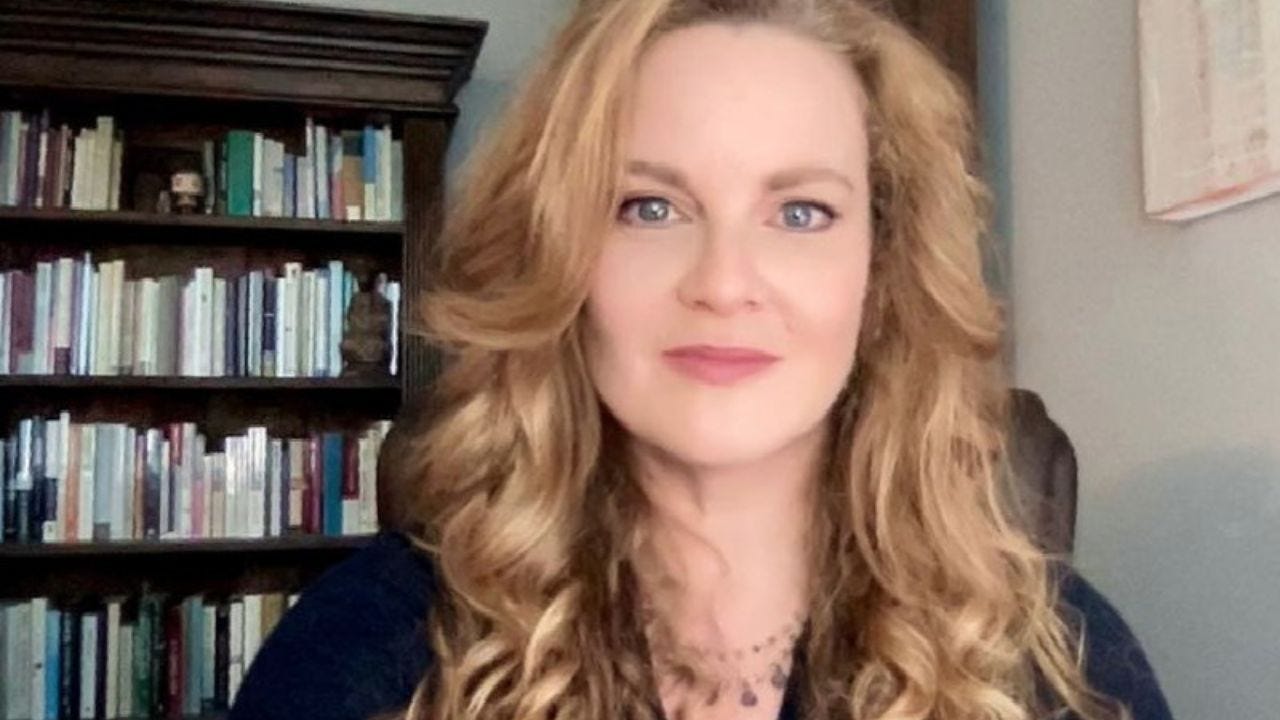
The photo is actor Paula Patton, who once commented, “You have to do the things you’re meant to do. Sometimes the thing you’re most afraid of is the thing you’re meant to do. Fear is a liar.”
~~~~~~~~~
Trauma and anxiety and getting dysregulated
Comments by Cheryl Arutt (from the More Than Anxiety Podcast transcript):
"Multiple experiences of abuse or neglect or developmental trauma people who were in a lot of situations where they didn't have a lot of power and they couldn't get out of the situation they were in...
are more likely to develop these shutdown and dissociative kinds of, I'll check out and just not be in my body and not be present ways of surviving rather than you know I'm going to rev up...
And those are really important too, because then there's nobody home to heal in the body, and that becomes a go-to whenever something seems from 50 paces like, oh, this might be really not a good thing, I'm out of here before, I'm not sticking around to find out what it is basically.
So you know, even people who have this very high-functioning presentation and can be really go-getters and can be achievers and they may excel at a sport or they may excel, you know, in other things, can also talk about periods where, like, I don't know how I got from a to b, or I'm not in my body or I'm not home...
and understanding that as another very common way that the nervous system tries to protect us and keep us going, but then it can grow into a problem in and of itself too.
That's part of the, if we look 360 degrees at how we react. So to get back to the question of how do we do that response flexibility and how do we do the choosing the best option...
The problem is that if you're out of that window, whether it's above it or below it, it's very hard to generate those kinds of things, because the part of our brains that we need for that is very often offline."
~~~
Photo of Paula Patton is also used in my Substack post Building A Satisfying Life in the Arts.
Related posts, podcast episodes, videos:
How to feel safe in stress and trauma healing, and the Cell Danger Response
Highly sensitive people can be more prone to stress and trauma
Strategies to Reduce Anxiety for Highly Sensitive People
How trauma impacts our lives - Understanding the basics with therapist Britt Frank
See videos in Playlist: Emotional Health
~~~~
This is a public episode. If you'd like to discuss this with other subscribers or get access to bonus episodes, visit thecreativemind.substack.com/subscribe