
Climate Water Project
43 episodes
Can water flip the planet’s climate? : paleoclimatologist Christo Buizert
Animals help regulate water, land, and climate : ecologist and wildlife consultant Simon Mustoe
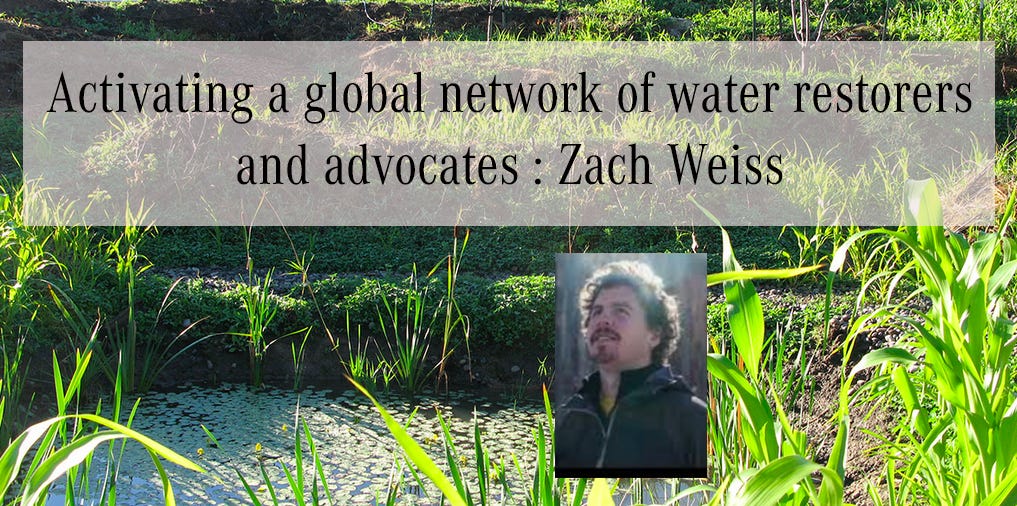
Activating a global network of water restorers and advocates : Zach Weiss
Restoring the world’s water cycles is a craft, one that takes time to learn, and a community to grow within. That community is being built.Water Stories is an education platform, community network, and hands-on career pathway dedicated to restoring the world’s water. It has been quietly growing, building a network of extraordinary people, advocating for landscape-scale change, and educating a new generation of practitioners in the art of working with water.Water Stories is following a similar path. It is a learning, training, and action platform focused entirely on water cycle restoration, offering a community-centered approach to some of the most pressing environmental crises we face: drought, flood, fire, and polluted water. Its award-winning films tell the stories of people who have raised their communities out of extreme environmental crises, and are available free to its online community. That community now numbers over 3,000 people from around the world, concerned about the future of fresh water, learning from one another across different landscapes and contexts, and supporting each other toward a better common future. Founded by Zach Weiss, Water Stories was created with a bold vision: to train a global force of water cycle restoration practitioners, equipped to heal landscapes wherever they are needed.Zach Weiss spent years learning to restore the water cycle from the ground up, studying under mentors including the legendary Austrian farmer Sepp Holzer, who urged him to take what he had learned and teach it to as many people as possible. That call to multiply the work is what drives Water Stories today.The methods Zach developed are focused on helping the land receive rainfall more effectively, slowing water down, guiding it into the ground, and recharging aquifers so they can feed springs and streams throughout the dry season. They are rooted in reading the landscape, observing where water flows, how slopes behave, where it pools or rushes away, and then working with those patterns rather than against them. In practice this means building terraces, planting strategically, putting in check dams, and creating water retention features that follow the land’s natural contours (in title picture above, are terraces leading into a water retention pond, that helps recharge groundwater, that Zach helped create in Montana USA). It is about restoring soil, restoring vegetation, and restoring the slow, generous movement of water through living landscapes.Farmers using these methods have withstood wildfires while neighboring properties burned, because their land was deeply hydrated going into summer. Others have seen vegetation flourish as rising groundwater reaches plant roots. The core idea is simple but profound: get the earth to receive water better, and life follows.Now, rather than doing that work alone, Zach is focused on training others to do it too, spreading these skills as widely and as fast as possible across the world.A groundswell takes hold when networks begin to form, when decentralized centers of activity emerge around the world, when people step into leadership, and when knowledge spreads person to person. Permaculture did exactly this through its Permacultue Design Courses, which perhaps half a million people have now completed, with many millions more practicing its principles worldwide. It spread like an octopus reaching into every nook and cranny of the globe, quietly shifting paradigms and transforming both landscapes and lives.The groundswell that Water Stories is one of the forces helping to build is beginning to feel like that.Yoga offers another useful parallel. It took off in the 1980s when enough teachers had been trained to make a living from their practice, creating a self-sustaining wave of growth. That is exactly what the Water Stories platform makes possible, a genuine career path in watershed restoration. Practitioners already report having more projects than they can handle, more land asking for attention than there are trained hands to tend it.Across the world, a broader awakening around water is underway. Scientists, farmers, indigenous communities, and restoration practitioners are all converging on the same understanding: that healing the water cycle is one of the most powerful things we can do for the planet. Water Stories sits right at the heart of that, with the tools, the community, and the vision to become one of its many central forces carrying that groundswell forward.Here is a lightly edited, abridged version of of our interview:Alpha: Cool, I’m excited to have on here again. You came on two years ago….. Maybe you could just start out by saying a little bit about the larger global water problem, and then how you came upon this path of actually trying to help the whole water situation in the world.Zach: When we look globally, I think the easiest, most succinct way to look at the challenges we’re facing is that right now, we’ve built landscapes that reject the rain,
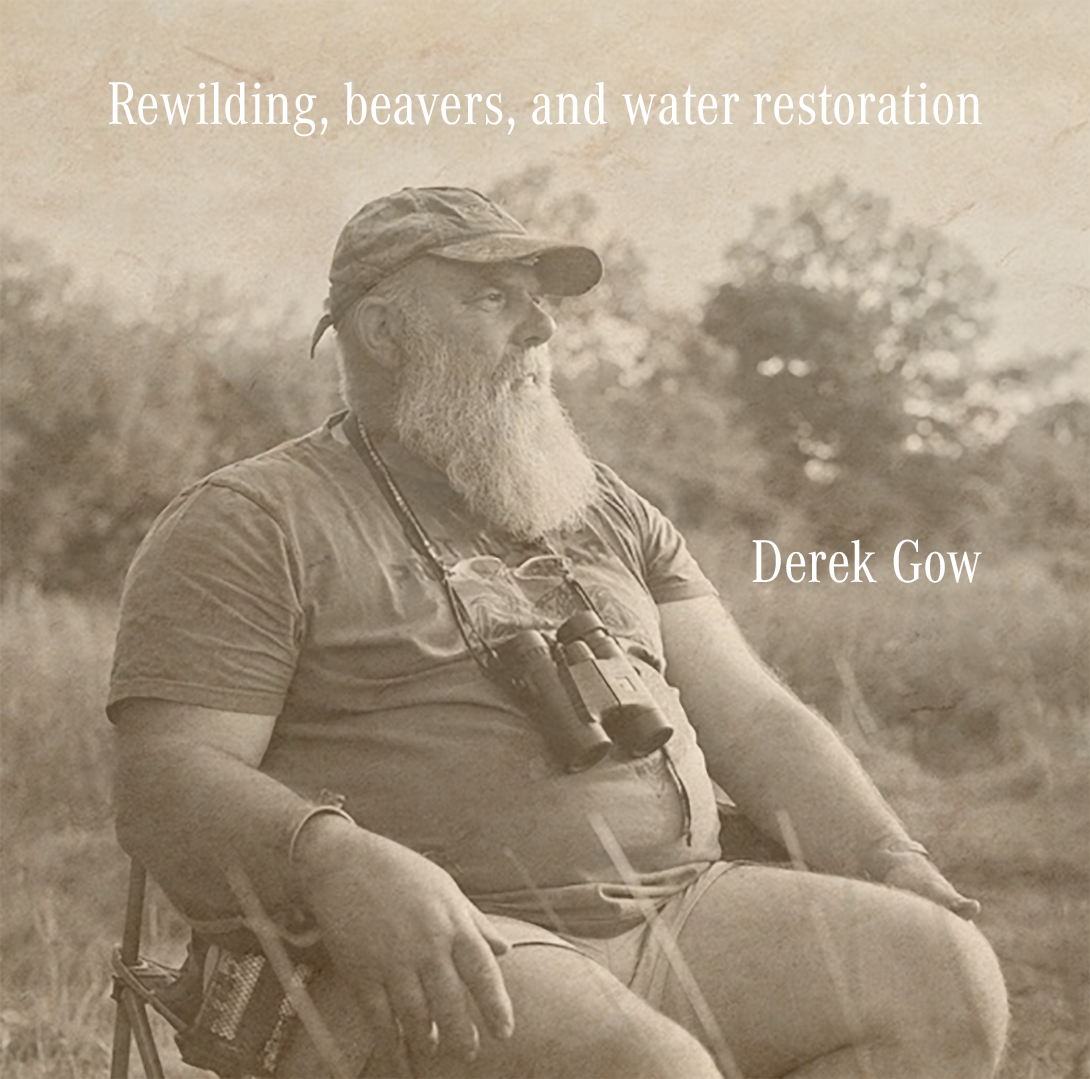
Rewilding, beavers, and water restoration : Derek Gow
The idea of bringing back the beaver to the UK was an idea that was scoffed as too eccentric, even by environmentalists. But Derek Gow, against a lot of opposition, has pioneered bringing the beaver back, so that they are now once again part of the UK landscape, restoring the wetlands and rivers.Born in Dundee in 1965, Gow left school at seventeen and spent his early years in agriculture. He was inspired by the writing of Gerald Durrell, and jumped at the chance to manage a European wildlife park in central Scotland before moving on to develop two nature centres in England. That early immersion in wildlife conservation set him on a path that would eventually make him, in the words of George Monbiot the person who has done more to restore Britain's missing fauna than anyone else in the country (words written in the blurb for Gow’s memoir).Gow was the first to import and quarantine beavers for projects in the UK, sourcing animals from Poland, Bavaria, and Norway. It was the opening salvo in what would become a long and often maddening battle against institutional resistance. Since the early 1990s, in the face of outright opposition from government, landowning elites, and even some conservation professionals, Gow imported, quarantined, and assisted the reestablishment of beavers in waterways across England and Scotland, while responding to the opposition with characteristic bluntness, charm, and what his supporters describe as an almost reckless willingness to keep pushing when anyone else would have given up.Beavers were once common throughout England, Wales, and Scotland but became extinct in the sixteenth century, hunted for their fur, meat, and castoreum - a secretion used in perfumes, food, and medicine. Their disappearance was the removal of a keystone engineer from the landscape. Beaver dams create wetlands, slow water flows, filter pollutants, and provide habitat for an extraordinary range of species. Through gnawing on stems and coppicing trees, beavers stimulate regrowth that provides homes for more insects and birds, while also enabling more constant water flows and better water retention during droughts. In 2015, several families of beavers were reintroduced in Devon, in the UK, as part of the River Otter Beaver Trial - the first legally sanctioned reintroduction of an extinct native mammal in the country. Over the following five years, the two original breeding pairs expanded to at least eight, and researchers found 28 dams built across the catchment, impounding water across nearly two kilometres of watercourse. Findings from the trial showed that beavers reduced flood flows by up to 60%, even during very wet weather, by holding back water in newly created wetlands and allowing it to trickle out slowly rather than surge downstream. In the flood-prone village of East Budleigh, a family of beavers constructed six dams upstream, with the measurable result that peak flood flows through the village were significantly reduced. The animals were also found to clean water supplies, removing large quantities of soil, manure, slurry, and fertilisers from rivers and streams. Beavers have been steadily increasing their numbers over the years. There are now over 2000 in Scotland, and around 500 in England. Wildlife trusts are looking to release more this year.Today, Gow farms a 300-acre property on the Devon-Cornwall border that he is transforming into a rewilding haven, while continuing to be influential in the reintroduction of the Eurasian beaver, the water vole, and the white stork in England. He has written about the whole extraordinary saga in his book Bringing Back the Beaver.Here is an edited, abridged section of our interviewAlpha: This whole field of water restoration and rewilding - how did you get into it? Derek: I started working with water voles which are a very small animal in Britain. Water voles are one of the characters in Kenneth Graham’s book The Wind in the Willows. The character of Ratty, sculling up and down the idyllic English River with his friends, used to represent a very common animal. They were incredibly common in British waterways from the beginning of the twentieth century, and writers at the time referred to their overwhelming presence.Around 100 years ago water voles prospered. But by the 1960s and 70s, canalization of rivers, concrete banks, pollution, and the introduction of North American mink from fur farms caused massive declines. The animals once lived in chains of colonies along waterways. When those chains break and populations fragment, they can’t find unrelated mates and they disappear.Today the species has lost around 97% of its British range. The remarkable thing is that they are extremely robust. If you reintroduce them correctly with the right gene base and numbers, they recover easily. Their decline shows how harshly we’ve treated the Earth.I began working on water vole reintroductions about thirty years ago. We’ve learned a lot, though we haven’t saved them enti
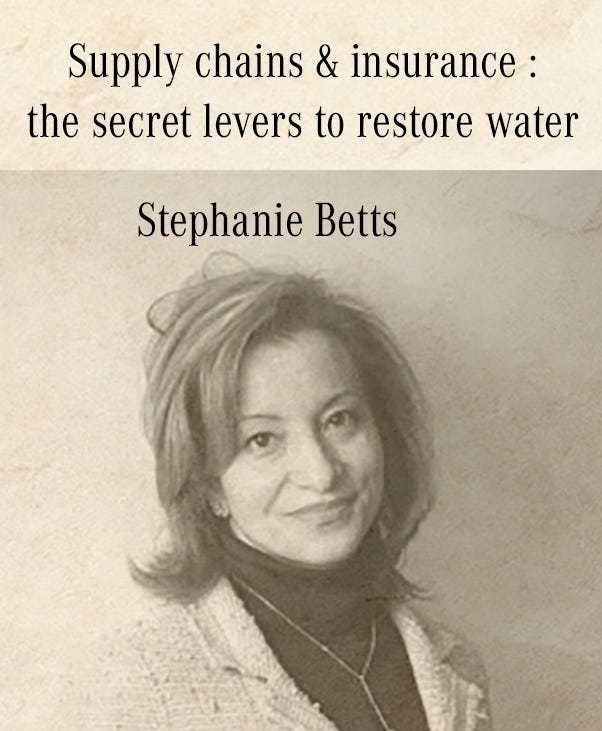
Supply chains & insurance: the secret levers to restore water - Stephanie Betts
I met Stephanie Betts a couple of months ago and was struck by her dynamic and enthusiastic energy. She had launched a pioneering, ambitious, and viable project to restoring the water cycle in a large scale systems way. Last week we sat down and talked about her project and her life.Stephanie Betts had worked in law and investment banking and was leading meetings between M&G (global investment manager) , the Bank of England and NGOs like Client Earth, looking at best practice governance for climate. Then came her first aha moment: the CEO of AXA, a major French multinational insurance company, declared to her that a world at plus four degrees would no longer be insurable. Insurance, she realized, wasn’t just a financial instrument. It was the key to dealing with climate change.She pivoted into insurance, becoming Head of Climate Alliances, Coalitions & Reporting for Aon - an insurance broker, that matches risk with capital, clients with underwriters, and counts major corporations and governments as clients.Insurance, at its core, is about understanding and pricing risk. The industry runs on calculating probabilities and turning them into prices. Stephanie started looking at something more fundamental than individual premiums. She was seeing entire sectors, entire geographic regions, becoming uninsurable. When water systems fail, it’s not just one farm or one business that becomes too risky to cover. It’s everyone who depends on that watershed. The insurance industry had been tracking this for years through their payouts: floods and droughts accounted for a large proportion of their disaster claims. But what Stephanie realized was that this wasn’t just about paying out more claims. It was about approaching a threshold where the risk becomes so high, so unpredictable, that insurance itself breaks down. Whole classes of people, whole industries, would simply have no coverage available at any price. The system only works if risks are manageable and calculable.Even before joining Aon, she had realized that water was important. But now it was getting clearer it was the fundamental risk underlying everything. Water runs through so many industries, from agriculture and technology to manufacturing and energy. It is the foundation of our society and the basis of our food security. As she puts it: “The risk isn’t just to the individual crop; it’s the dependency of our entire society on water. If the watershed fails, the entire economic system becomes uninsurable. We have to treat the water cycle as the ultimate infrastructure.” From within Aon, who initially just saw Stephanie’s interest in water as a hobby, she started to educate and convince the network around her of the importance of water.Then came her next aha moment: she realized farming was key to the whole water issue. Agriculture uses a large percentage of our total water supply, and the water footprint of regenerative agriculture was much smaller than industrial farming. Regenerative agriculture was the way to deal with water. She began to focus intensely on this connection. She saw that insurance could be a way to unlock investments, to get money flowing toward solutions. For the food industry, a switch to regenerative agriculture would make them less risky to insure. As she explains: “Insurance is the seed of resilience. By leveraging risk analytics, we can move from simply paying for a disaster to incentivizing the prevention of one. We are matching risk capital to the transition.”In other words: instead of just writing checks after disasters happen, insurance companies could lower premiums for farmers who prevent disasters from happening in the first place. But more importantly, by fixing the underlying water risk, they could keep entire sectors and regions insurable.The claims data said that regenerative farmers filed far fewer insurance claims than industrial farmers. They were more resilient. Through decades of heavy machinery and chemicals, industrial soil had become compacted and lifeless. When heavy rain hit, the ground acted like concrete. The water ran off, taking the topsoil and crops with it, leading to massive flood claims.Regenerative farmers, using cover crops and avoiding tilling, had rebuilt the organic matter in their soil, creating a sponge effect. High-carbon, aerated soil can hold up to ten times its volume in water. In a flood, the soil sponge absorbs the excess. In a drought, that same sponge slowly releases stored moisture back to the plants. Regenerative crops often stay green for weeks longer than neighboring industrial crops during heatwaves.For an insurer, it was key that a single farming practice lowered the probability of having to pay out claims on both ends of the extreme weather spectrum. Both floods and droughts. As Stephanie explains: “When we restore the soil sponge, we aren’t just fixing a farm; we are protecting the collateral. Healthy soil is an appreciating asset because it builds its own resilience against both floo
Precipitationsheds and the socio-economics of rain: Patrick Keys
In Bolivia, farmers wait anxiously for rains. Meanwhile, Bolivian consumers buy beef and soy from Brazilian suppliers whose operations are clearing the very Amazonian forests that generate Bolivia's rainfall. The atmospheric connection is real but the economic feedback loop is invisible. If Bolivian businesses and policymakers could see this connection as clearly as they see a map of trade routes, would they make different choices about whom to buy from? Would Brazil negotiate differently if it understood that the forests it's clearing don't just affect its own climate, but control a neighboring country's water supply, a country that happens to supply a significant percentage of Brazil's natural gas?These are the questions that the work of Patrick Keys, a professor at Boston University, raises. He is taking the work of moisture recycling (aka the small water cycle, aka precipitation recycling) in exciting and pioneering directions. He is making the geographical sinks and sources of rain clearer, and then transforming moisture recycling from atmospheric physics into something socio-politico-economic: maps that show which upwind regions supply a location's rainfall, and frameworks for understanding how economic decisions in those distant regions create invisible dependencies. He's building the conceptual infrastructure for embedding atmospheric connections into the social and economic systems that actually shape land use.Working with Ruud van der Ent (interviewed here previously), he developed the precipitationshed framework, which maps how much rain falling in a particular location comes from which upwind regions. A city might receive portions of its rainfall from countries A, B, and C, or provinces D, E, and F. By making these connections spatially explicit, the framework transforms vague atmospheric dependencies into actionable geographic information. This required inventing new vocabulary - terms like precipitationshed and evaporationshed had to be coined to discuss atmospheric source regions, linguistic innovations necessary for thinking clearly about phenomena that previous frameworks couldn’t adequately describe. From their paper, precipitationshed is ‘defined as the upwind atmosphere and surface that contributes evaporation to a specific location’s precipitation (e.g. rainfall). We apply the precipitationshed as a tool for better understanding the vulnerability of rainfall dependent regions (e.g. dryland rainfed agriculture).” [Keys 2012]. The precipitationshed gave moisture recycling the same kind of geographical grounding that watersheds gave to rivers.Keys then applied this framework to map mega-cities worldwide, identifying which might be most vulnerable to land-use change in their precipitationsheds. His 2018 paper combined precipitationshed boundaries, rates of land-use change in source regions, reliance on terrestrial versus oceanic moisture, and robustness of municipal water infrastructure to create a vulnerability index. It was the beginnings of a translation exercise of sorts: how to convert land and atmospheric physics into the kind of comparative risk analysis that could sit alongside assessments of aging pipes or aquifer depletion in a city planning document.The mapping of atmospheric vulnerabilities built the platform for his next stage of work. Together with Lan Wang-Erlandsson (also interviewed here previously), Keys pushed the framework into new territory: moisture recycling as an ecosystem service embedded in social and economic systems. Places downwind buy from businesses upwind that affect the land. Economic behavior affects how businesses treat the land, which then affects the rain downwind. It’s a feedback loop where economic behavior is integrated into the hydrometeorological flow. In their 2017 paper “On the social dynamics of moisture recycling,” they propose a new field: socio-meteorology. And they write: “this paper provides insights for resource managers, particularly land and water managers, who are searching for new leverage points within their dynamic social–ecological systems. Understanding where key feedbacks, bottlenecks, and potential cascades are located within a system can provide managers with better information about the consequences of direct or indirect intervention within their systems.”Keys and Wang-Erlandsson analyzed three countries with different social-ecological configurations. Mongolia recycles 13% of its own moisture and receives 29% from Russia. Its precipitationshed is geographically vast but socially isolated - the moisture comes from remote Siberian forests and Kazakh steppes with little economic or political connection to Mongolia. Niger generates only 9% of its own rain, depending on moisture from Nigeria, Chad, Sudan, and across the Sahel. Here, multiple neighboring countries with active trade relationships, migration flows, and shared resources all influence each other’s rainfall through land-use change, creating a regionally interconnected sys
The big groundwater crisis - food, water, pollution, and social unrest : John Cherry interview Part I
I was mesmerized listening to John Cherry talk about groundwater, so absorbed that I didn’t notice that two hours had gone by. With lucid clarity, he laid bare the massive groundwater crisis engulfing us.Cherry speaks from a place of gravitas. He’s won the Stockholm Water Prize, known as the ‘Nobel’ of water, which is awarded in conjunction with the Royal Swedish Academy of Sciences, the same institution behind the Nobel Prize itself. He wrote the seminal Groundwater textbook that shaped our modern understanding of groundwater hydrology. He essentially pioneered the entire field of groundwater contamination.In our conversation, he poignantly pointed out that the water crisis is really a crisis of groundwater. 99% of liquid freshwater is groundwater, and groundwater supplies 40% of our food, and 70% of irrigation, but many major aquifers are already overdrawn. The Ogallala, which grows a sixth of the world’s grain, could be largely unusable within decades. Once natural buffers against drought, aquifers are now drained, leaving regions like California, Spain, São Paulo, and Cape Town vulnerable to even short dry spells.He noted that the Agricultural ‘Green’ Revolution of the mid 20th century wasn’t just about using synthetic chemicals and high-yield seeds to produce more food, it was also withdrawing more groundwater. Cheap pumps fueled massive irrigation, temporarily boosting yields but eroding soils and depleting aquifers. Today, exhausted soils and collapsing aquifers are twin legacies of that mid-century surge.Global “virtual water” trade has been hiding the growing groundwater crisis. Wealthy nations import crops grown with disappearing groundwater, from Peruvian blueberries to Arizona alfalfa for Saudi Arabia. Far from increasing food security, globalization has made local water crises a global problem.There was so much rich material in our interview that I couldn’t squeeze it all into one written article (Substack has length limits), so I’ve split this into two parts. Part II will go further into the crisis, and also explore solutions - regenerative agriculture, rainfall harvesting and managed aquifer recharge. The audio podcast remains one complete episode.Here is a lightly edited, abridged version of the interview : Part IAlpha: Lets give you a little bit of an intro. You’ve written a very widely regarded textbook on groundwater, and you were a pioneer of contaminant groundwater.John: Yeah, I wrote that book Groundwater with a colleague, published in 1979. There weren’t any other modern books on the market, so it became a widely used book for many decades. It’s on the Groundwater Project website and it’s one of our most highly downloaded books, even though it’s very old.Alpha: Yeah, it’s very readable. At some point you began exploring the bigger picture idea of why groundwater is so important to the world.John: Yeah, I started the Groundwater Project as a follow-up to the textbook by Al Freeze and myself. The idea was to just publish a few books on the web and then it grew and grew, and that got me into looking at the bigger picture. Bigger picture lectures are what I’ve been giving for the last four or five years. First I was talking about the bigger picture of the state of groundwater science, and now it’s really about the bigger picture of groundwater in the world and how it’s kind of ignored and unappreciated and mostly pictured incorrectly.Alpha: You’ve won some of water’s biggest prizes. The Lee Kuan Yew Prize and then the Stockholm Water Prize.John: I won the Lee Kuan Yew Prize of Singapore in 2016, and then the Stockholm Water Prize in 2020, rather late in my career. But it kind of caused me then to want to develop responses to broader questions. Really, it was the Lee Kuan Yew Water Prize when the interviewers would ask me, “Why is groundwater important?” The technical things for which I won the prize were entirely irrelevant in terms of the big picture. So I realized I had to develop responses to the question of why groundwater is important.Alpha: I think for a lot of people, when they first hear about groundwater, they don’t really realize they should have any significant thoughts about. It’s just this water deep underground which we don’t see. And yet, I think you’re saying there’s actually this whole groundwater crisis that’s looming that has repercussions for many things—from our food to our water systems. Really key to human society.John: Yeah, and it’s now recognized that there’s a global water crisis. The World Bank and UNESCO and all the global organizations pay lip service to that, that there’s a global water crisis. But they never get to the point of what’s the nature of the crisis. It’s primarily a groundwater crisis because groundwater makes up 99% of all liquid fresh water. The number you see in the textbooks is always less than that because they include ice. But when you take ice out of it, it not being a liquid, groundwater is 99% of all liquid water. And most of the time, a
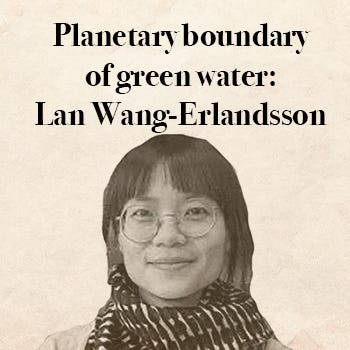
The planetary boundaries of green water : Lan Wang-Erlandsson
Lan Wang-Erlandsson is a researcher studying moisture recycling. She focuses on the large-scale interactions between land, water, and climate, and their implications for social-ecological and Earth system resilience. She has conducted work on the planetary boundaries of green water, where green water is defined as water that vegetation uses, or more formally as ‘freshwater from precipitation that is stored in the soil and used by plants through transpiration’. She helped society understand moisture recycling as an ecosystem service, and collaborated with the FAO (Food and Agriculture Organization of the United Nations) on reports examining how moisture recycling intersects with the future of agriculture.Her work has emerged from two scientific lineages. Science often evolves through such lineages. Hubert Savenije was working in the Sahel region of Africa when he wondered why rainfall did not keep decreasing further inland, as it should if the air rained out water closer to the coast. He concluded that there had to be moisture recycling, where moisture evaporated back into the air and then fell again as rain. (Other lineages have called this moisture recycling phenomenon by the names precipitation recycling, or the small water cycle.)Two decades later, Ruud van der Ent (who appeared here on the Climate Water Project podcast), a graduate student of Savenije’s, built on his work to create a map of global moisture recycling. Lan Wang-Erlandsson would eventually collaborate with van der Ent, as would Patrick Keys, who would work on hydrosocial aspects of moisture recycling (he will appear in a future podcast).Lan Wang-Erlandsson completed her graduate work at the Stockholm Resilience Centre, which brought its own scientific lineage. The Stockholm Resilience Centre (SRC) was founded in 2007 by Johan Rockström and Carl Folke as part of Stockholm University. Its intellectual roots reach back over half a century, drawing on ecological economics, systems thinking, resilience science, Earth system science, and work on sustainability, tipping points, and the interplay between society, economy, and the biosphere.From this foundation, the planetary boundaries framework emerged. In 2009, Johan Rockström, then director of the Stockholm Resilience Centre, led a group of 28 scientists to formulate the concept of planetary boundaries in the paper “A Safe Operating Space for Humanity.” The idea was to identify critical Earth-system processes (such as climate change, biodiversity loss, nutrient cycles, land-use change, and freshwater use) that regulate the stability and resilience of the planet, and to estimate thresholds or “boundaries” for those systems that should not be crossed if humanity is to avoid large-scale, abrupt, or irreversible environmental changes.Here’s an abridged, lightly edited version of our interview:Lan: I’m a researcher and team leader of the Anthropocene Dynamics theme at the Stockholm Resilience Center. Alpha: And when you say Anthropocene, that is the era where people are affecting the Earth. You’re studying how people are affecting the water, and how that then affects the whole Earth. Lan: Yes, exactly. You know, the human impact on the water cycle is really very severe and widespread now. You could say that in the past 12,000 years during the Holocene, it’s the only time in history that we know for sure that has supported modern civilization and agriculture the way as we know it, right? The Earth system has several tipping points. So the transition could be non-linear. And so whether we exit this, what we call the safe operating space, of the Holocene-like conditions, if we depart from these conditions, it could be in an abrupt way, or it could be in a more gradual way. The boundaries are a set of guardrails. So you could imagine that you’re standing at the cliff, you don’t want to stand precisely at the cliff, but a few meters away, right? So the boundaries are the guardrails. So now we are somewhere between the guardrails and the cliff, and it’s an uncomfortable zone we want to get out of. Alpha: And then one of the nine planetary boundaries is the water, right? And so that’s what your working on. Lan: Yes, so the planetary boundaries identify nine Earth system processes or components that are vital for the system resilience to function, for the Holocene-like conditions to continue, to support humanity. Freshwater is one of them. And of course, you could say that some other boundaries also relate very much to water, such as biogeochemical flow that deals with phosphorus and nitrogen pollution, for example. And eutrophication is a big problem. You have the novel entities about chemical pollution, and you know, microplastics in river systems is a big issue. And then the same goes with land system change, biosphere integrity, that also includes life in aquatic systems. We know are much threatened. And then climate change, obviously, that is the main culprit behind the water extremes that we see. So t
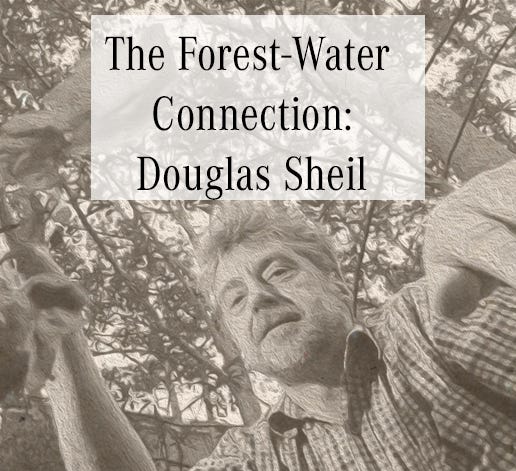
The forest-water connection: ecologist Douglas Sheil
In this podcast, I had the wonderful experience of talking with Douglas Sheil, professor at Wageningen University in the Netherlands, about forests. Douglas's academic adventures took him on a journey from his homeland to places like the rainforests of Indonesia, where he studied how local communities can help protect forests. He has studied forests in many forms of their complexity and wrote a well-regarded textbook on tropical rainforests. He became interested in questions of forest and water and helped clarify a big issue in the ecohydrology field about whether trees were contributing to or depleting the water in ecosystems. His results showed that when tree cover is done right, and not as dense invasive monocultures, then there would be an increase of water in the ecosystem.As he worked on forest water issues, he discovered Victor Gorshkov and Anastasia Makarieva's work on the Biotic Pump, and collaborated with them on explanations of their theory. Here an explanation he wrote about the Biotic Pump: “For centuries we’ve believed that temperature differences generate the pressure gradients that drive winds and carry moisture inland. The sun heats the land, warm air rises, drawing in winds. These winds carry moisture laden air inland, where it eventually warms, rises, and condenses as rain. There are complications, such as Earth's rotation and atmospheric cells, but overall temperature differences underpin our understanding of how wet inland areas of the planet stay wet. But there’s an alternative: the Biotic Pump. An idea developed and championed by colleagues Anastassia Makarieva and Victor Gorshkov. Given common misunderstandings, I thought I would try a simple intuitive summary without equations. Here goes: Imagine two vast areas of atmosphere next to each other: one wet and one dry. Both are at equilibrium with the same surface temperature. Atmospheric pressure follows a roughly similar near exponential decline with altitude in both, but there are small differences. In the wet column, the presence of moisture means that air pressure is slightly lower (compared to the neighbouring dry column) in the lower atmosphere (up to 3-4 km height) and becomes greater above that. These pressure differences mean that if the columns are brought together, and the pressure differences maintained, a circulation is established: At the surface, air moves from the dry to the wet area. At higher altitudes, it flows in the opposite direction. This circulation causes air to rise over wetter regions and descend over drier regions. In the real world, “dry” areas may be just a little less moist. As long as it is sufficiently moist the moister region draws in air from surrounding drier areas. As this incoming air rises, it cools and reaches saturation, producing rainfall. This process maintains the moisture contrast with neighbouring areas, where the now-dry high-altitude air returns and descends. As long as the wet column stays wetter, and has sufficient moisture to maintain the pressure differences, the circulation continues.Forests are key here. Forests generate water vapour more effectively and rapidly than most other land cover types, maintaining a moist atmosphere that is effective at drawing in air from elsewhere and sustaining this circulation deep inside continents. Energy derives from the sun evaporating water vapour. Heat energy still features (because condensation releases latent heat), but in this case overall pressure differences depend on condensation and the removal of water molecules from the air.”For more info here is a link to a paper where is a co-author with Makarieva & Gorshkov. Douglas Sheil and I discussed a variety of topics, like how forests evolve, how to restore forests, and his work on the intermediate disturbance theory for forests. Here’s an abridged edited version of my interview with Douglas Sheil:FOREST ECOLOGY AND WATER SYSTEMSDouglas: My background is very much as a forest ecologist, somebody who's been looking at how we can do conservation, particularly in remote parts of the tropical rainforest. How can we actually work with communities, for example, to actually protect these incredibly rich communities that are often under threat from large-scale industrial transformation, etc? My preoccupation has often been with the biodiversity, the rich species richness of these forests, which of course is famous.But if you're working with communities and stuff, talking about things like water, that's something that really matters to everybody. Everybody needs reliable water, even in wet parts of the world. If there's a big drought, that's a problem. So everybody cares about water. So I guess I've come into the water topic, partly because I see it really matters.Alpha: You grew up in Ireland. Did you then get into forestry immediately, or was it a little bit of a winding route?Douglas: It was winding. When I was young, I thought I was going to be an astronomer or a physicist, because I kind of like th
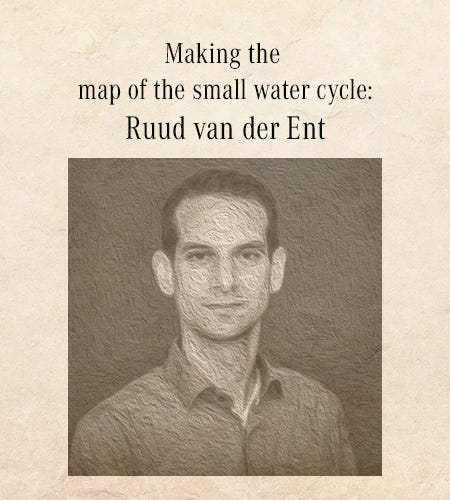
Making the map of the small water cycle : van der Ent
Where does the evapotranspiration that rises from forests and grasslands come back down as rain? This was the question that Ruud van der Ent asked as a hydrology graduate student. He wondered if he could make a map of the world that would show this flow of moisture around the world.Van der Ent worked with his professor, the renowned Hubert Savenije to make this map. They published this in a paper called “Origin and fate of atmospheric moisture over continents”. Their map has been quite influential and attracted quite a lot of attention. One of the most popular articles in this newsletter has been on their work. This is the map they made. It shows where evaporation that goes up, will become rain again on the same continent. Red areas means 60%-80% of the evaporation that rises from that area will come back down as rain on that continent. So you can see that a lot of the evaporation rises from the west coast of North America, will come back down as rain somewhere in North America. A significant amount of the evaporation from Brazil and the Amazon rainforest, will come back down as rain somewhere in South America. Much of the evaporation from Congo and East Coast of Africa will come back down again as rain somewhere in Africa. Much evaporation in northern India and western China will come back down on the continent.This is a map they made showing the origin of rain. It shows the amount of rain in that area that came from evaporation off the land. So in the Rockies in the US, you can see that a lot of that rain there originated as land evaporation. In northern China, you can note that a lot of the rain there came from moisture that evaporated off the Eurasian continent. I was really happy when I managed to track down Professor Ruud van der Ent, and he agreed to do this interview. Below is an edited excerpt from the interview.Alpha: When you were doing your Master's, was that when you first met Hubert Savenije? Ruud: Yeah, he was a professor in hydrology, a very inspiring person, very enthusiastic, full passion for hydrology and how things work. In one of the courses that I took, we had to read papers. I think the majority of the papers we had to read were his own papers. He did some work in the 90s on moisture recycling in the Sahel. He developed his own approach to the question of where does the rain come from and how much of the evaporation comes back to the land surface. Savenije took the perspective of let's follow the trajectory of moisture and then calculate along that trajectory how much is being recycled. His estimates were rather kind of surprising to me, eye-opening. As you go from the coast of West Africa up north into the drier parts, the amount of precipitation in those drier areas that stems from land sources is actually greatest. So they have a region which actually depends on the land for rain. When he did his moisture recycling equations in the 90s, the computational power was much less than we have today. Also open data was also much harder to access. You couldn't access the big climate mobile data sets, reanalysis data sets that we can access now. So he did it all with analytical equations. I said, I want to pick up this research for my Master thesis. Alpha: Savenije was very much his own independent thinker, right? He was positioned in Africa during his early days. And because there was no internet back then, he had to figure out everything himself. He was trying to figure out this whole precipitation recycling thing. Around that time researchers had just discovered that the sea surface temperature seemed to correlate with the droughts in the Sahel in Africa, and so these researchers thought most of the rainfall was due to the oceans. But then Savenije plotted the amount of rain as you move inland, and he found the rain didn't go to zero. It would have dropped off to zero if precipitation was only due to moisture from the oceans. So he figured out that the land moisture was creating precipitation.. [Hubert Savenije]Ruud: I think sometimes, maybe its a blessing, you know, back when we did not have access to all the information on the internet, because you spend more time actually thinking about your own theories and develop your own methods, which is pretty cool. People also find it very difficult to kind of get their head around that there's moisture coming from Europe that could contribute to rainfall in the Sahel because how's it possible that the moisture crosses the Sahara? There is no rainfall there. There's no rainfall there, but there is still there is still moisture in the air, right? It still crosses the desert. And that's really amazing. Alpha: Yeah, it just doesn't reach the dew point to rain out over the desert. Ruud: Exactly. Yeah. Alpha: Savenjie came up with this idea of quantifying the amount of moisture recycling or precipitation recycling by how much it came back down on the same continent. He was saying the amount of water that transpires off the continent, that then comes
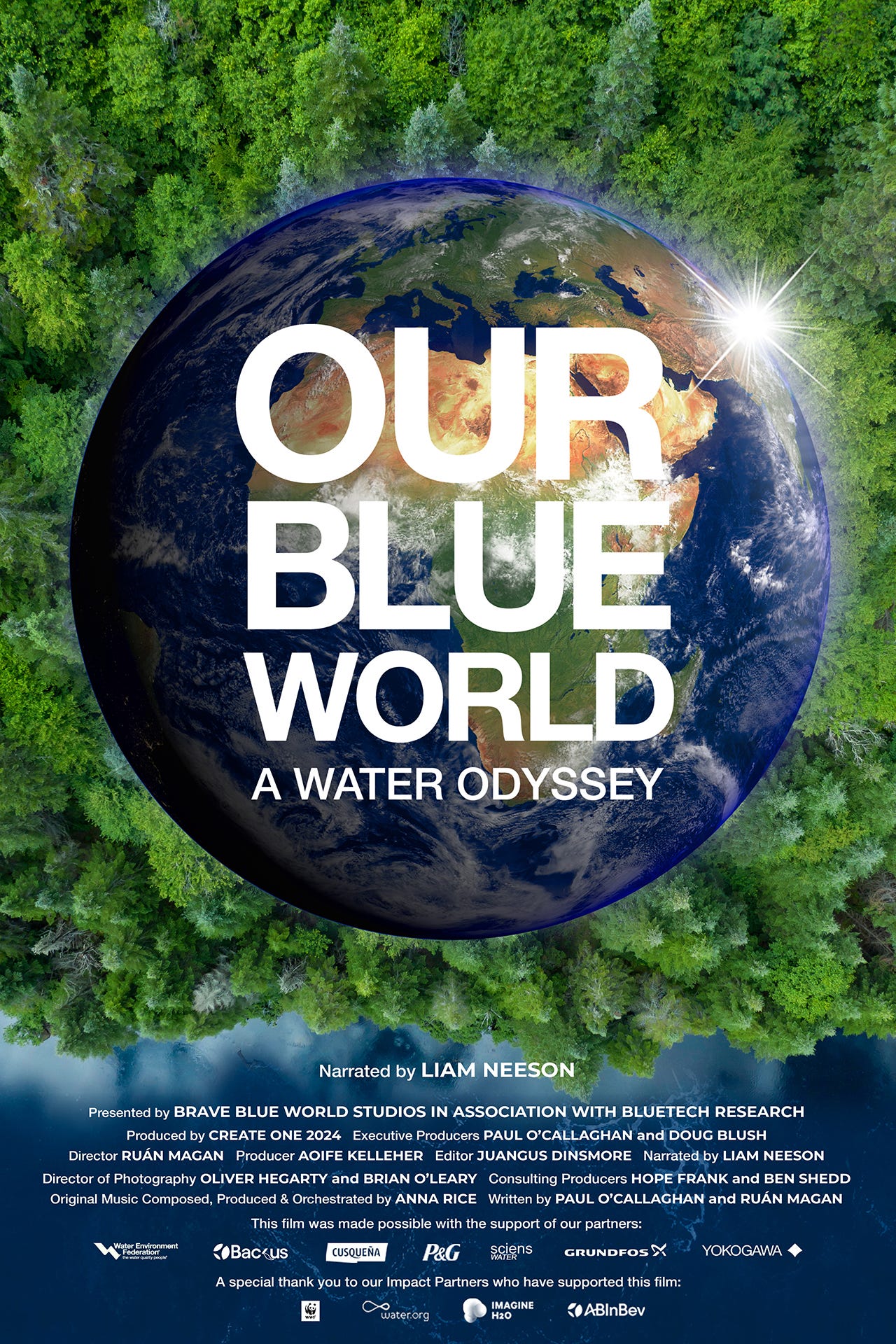
'Our Blue World' documentary : Paul O'Callaghan
A wonderful new documentary, Our Blue World, is out, and it offers a panoramic exploration of how communities across the globe are learning to live in greater harmony with water. The film highlights a wide range of innovative and traditional practices—from China’s sponge city initiative, to New Zealand’s recognition of the Whanganui River as a legal person, to the ancient Peruvian techniques for guiding water into mountains so it reemerges as springs. It also delves into the Biosphere 2 project, where twelve people lived in a sealed dome for two years and had to rely on constructed wetlands to purify their water. The documentary further explores the shift along the Mississippi River from a levee-centered approach to one that embraces wetland restoration, as well as efforts to restore Ireland’s bogs—offering a hopeful vision of how we can reimagine our relationship with water. The film is produced by Paul O’Callaghan, directed by Ruan Magan, and narrated by Liam Neeson (the action movie actor) in his voice that oozes gravitas. The movie has beautiful images, and wonderful music that connects us to the local geography and culture.[Peru: still from movie].I think documentaries are a great way to movie the word out about the water cycle, so I was glad for the chance to chat with producer Paul O’Callaghan about the movie.Trailer: Here are some abridged excerpts from our conversation, which covered topics from the movie:On sponge citiesPaul: The idea of a sponge city was very evocative. It captures your imagination. It's like, what is it? It's these two words that you're familiar with, but not together in that context. So anytime I would have talked about this, people became very curious. I was really lucky that we got introduced to Kong Jin. And I remember the day we had the call. It was chaotic in my house at the time. But we had this really great call with Kong Jin and struck up a very good rapport with him. And he kindly was willing to take part in the film. This was just post COVID-19. So China was locked down pretty much for two plus years. We were at the embassy trying to get our visas and get in, which wasn't easy. Kong Jin is a revolutionary, a visionary, something of a rebel, and a landscaper architect who felt that China was going in the wrong direction. They were following the West blindly. They were pouring concrete at an absolutely incredible race. And when he looked at that, he thought, that's not the right way to go.[Kong Jian : still from movie} He'd grown up in the 1960s in China, where it was a beautiful wonderland. It was a paradise. But nobody listened to him when he said we should embrace traditional ways of managing water like rice paddies, for example, which are stepped and terrest, the nearly room for water to ebb and to flow. That was how people lived for 5000 years along the banks of the Yangtze, the Pearl and the Mekong, where in actual fact, the fitness to govern in China was correlated with your ability to control water or at least live with the ebbs and the flows of those mighty, mighty rivers. So it's always been something fundamental to Chinese philosophy and political systems. He wrote 500 letters to 500 mayors and it landed on deaf ears. He was cast out as a pariah. Until one mayor, who later became a minister for the environment later on reached out back out to him and said - I'd love to try that idea that you had in Hainan. That was where the first sponge city was created. And these things look beautiful. When you think about China, oftentimes we think of concrete high rises, skyscrapers, maybe a lot of road traffic and air pollution. Well, these aren't like that at all. Certain parts of the city have tree lined along the streets. They may have mangroves on the coast. There large areas that are allowing rivers to ebb and flow, with constructed wetlands that look like parks. Alpha: Yeah, it's amazing that he had the persistence to do 500 mayors. It's like sometimes to make these paradigm shifts in work, you really have to push. It reminds me of little Peter Andrews, the Australian guy who did natural sequence farm. He just kept pushing, pushing against and all these people say no. But yeah, it's interesting. Not everyone has that ability to push so hard. And sometimes it takes that to get it out there. Paul: And you never know, it only has to land with that one mayor, 499 would never have listened to him. When you write these letters, when you advocate, when you communicate, none of us can really understand the wrinkles that are going to take effect downstream of this. He engendered a spirit of pride in a harkening back to perhaps a wisdom of a 5,000 year old culture. In doing so, he wasn't alienating people with some theory that they wouldn't understand. He was advocating for traditional wisdom. Alpha: And what is some of that traditional Chinese wisdom? Paul: We've been trying to flatten a variable signal, particularly in monsoon type climates in South Asia, where you get the
Putting rocks in rivers to lessen drought, fire & flood: Laura Norman, physical scientist
Laura Norman works for the USGS (United States Geological Survey), a US science bureau, studying water flow through our rivers and landscapes. There is a slow water movement underway, being spread by permaculture, agroforestry, Natural Sequence Farming and regenerative agriculture, promoted by people like Erica Gies, the author of ‘Water always Wins’, and its essence captured by Brock Dolman’s phrase ‘slow it, sink it, spread it’. Laura Norman has been helping make the impact of slow water more scientific with her hydrological modelling and observational studies, and helping bring these slow water ideas to US governmental agencies. It is perhaps a surprising idea that putting rocks in streams would have an impact on hydration of land around it, but slowing down flowing waters, can give them a chance to seep into soil and aquifers, and then spread sideways. It is also perhaps unexpected that the creek flow can increase by about a quarter as a result of putting rocks into it. A common assumption is to think the rocks are blocking the water from going to downstream people. But it actually increases the water available to downstream folk, because it reduces peak flow during big storms in the winter, and parcels out that water to flow more in the future - the creeks flow four weeks longer and with more volume into the dry season. Whats further intriguing, is this simple idea of putting rocks in streams can actually lessen wildfires. This is because the water now has a chance to seep laterally into the floodplains through the soil and aquifers, allowing the plants to be hydrated into the dry season. Its a similar effect to what beaver dams do to the water flow. There are a number of famous photos floating around the internet, of the vegetation in the floodplains around beaver dams being unscathed by fire, while the area around them is burnt. Norman studies how gabions and check dams, rocky structures that slow the flow of water in our streams, impact how water flows through other parts of the watershed, how they help farmers deal with droughts and floods, and how it provides us with a more nature-based way of water management.Here;s our interview (lightly edited):Alpha: Today I'm excited to have Laura Norman from the USGS, the United States Geological Survey. Welcome.Laura: Thank you.Alpha: Cool. What is it that you do with the USGS?Laura: I am a physical supervisory research physical scientist. I've been working at the USGS Geological Survey since 1998. And I study watershed modeling and all of the components of the water budget related to dryland regions. And so my research has been looking at how people can impact water budget parameters in models and trying to develop scenarios that are beneficial for management. Water budget meaning like the water cycle. So I look at all the components of the water cycle. So everything that comes into a watershed, what happens to the water when it is here and how it leaves.Alpha: How did you get interested in water and land?Laura: Well, I am originally from the swamps of Rhode Island. And so I grew up in a wetland in the coastal region of New England and went to school at Oregon State where I studied forestry. And I was very interested in the big trees in the Pacific Northwest and maintenance of big trees. And I ended up learning about watersheds when I was there. So I took a job with the state parks and some other jobs in between and ended up coming back to school to the University of Arizona, which is a water-limited area here in the desert, the Sonoran Desert. And that started studying watersheds here in the arid lands and trying to figure out how to best manage water.Alpha: Cool. And then did you work for a while before you ended up with the USGS, or you were already there?Laura: Well, I had a couple of seasonal things, internships and such. But when I came to Tucson, I got a job working for the University doing geospatial analysis. So my expertise in my master's degree in watershed management was the advanced resource technology option. I was using GIS. When I did my dissertation, I started employing remotely sensed data. So using satellite imagery within a GIS, within models. I worked for the University of Arizona for a couple of years and then started volunteering at the USGS until I was finally contracted on.Alpha: Do you want to explain to the audience what GIS is?Laura: GIS is geographic information systems. And so it's basically making maps. So I use a lot of different data. I mentioned satellite imagery, but a lot of people these days are most familiar with GPS, so global positioning systems. So using that type of geospatial data within a computer software to develop maps and do analysis in a spatial context.Alpha: Cool. And then the USGS, which is the United States Geological Survey, which is kind of an intriguing name because I don't think most people know what a geological survey is. What does it do exactly and how big is it?Laura: I think the USGS has 6,000 e
Natural Sequence Farming : Stuart Andrews
Peter Andrews, also known as PA, was an Australian racehorse breeder who in the 1970s bought a piece of property, in the state of New South Wales, to raise racehorses. However the land he bought, the Tarwyn Park property, was degraded and the water on it was salinated. After a lot of thought and experimentation he developed his own set of restoration techniques.He looked at the dried up patterns in the floodplains to figure what used to happen on the land. He saw there used to chains of ponds. So he started to work to rehydrate the floodplains. He repaired the degraded flow lines. He used willows and reeds to restore the river banks. But the neighbors keep bringing the authorities to try and stop what he was he was doing. Stubborn, brash, and confident, and because he knew he was onto something important, he continued to work anyways. The plants started bringing back the wet paddocks, and refilling the aquifers. The land turned into a flourishing, vibrant landscape.The work became known as Natural Sequence Farming. Peter Andrews went around around proselytizing the work - badgering governments, media and land owners, to get them interested. This was a process, he said, which could save Australian farming, help them stay hydrated even with the droughts. His work got on the Australian news, and word spread.The focus on getting the message out though meant Peter lost sight of running the farm as well, and the bank foreclosed on his property. But then Stuart Andrews, his son, was able to buy back the Tarwyn Park property back from the bank. Stuart had to teach himself the ways of Natural Sequence Farming to run the farm. He then worked with Duane Norris to build a training program there to teach others the same techniques. ( I had became friends with Duane a little while back, and he was very encouraging of my work during the early stages of writing this newsletter. I recruited Duane in my project three years to develop a set of principles that succinctly encapsulated the important aspects of the hydrological cycle.)Tony Coote, a successful jeweler, who had bought a property on 3 kilometers of Mulloon Creek in the 1960s. He approached Peter Andrews about restoring it. Early on the brought 6 truckloads of blackberries trees and canes to plant, which then started a feedback loop that slowed the water down, which then brought in more vegetation. Fish started coming back. And now there is a Mulloon Institute that teaches and consults on the Natural Sequence Farming work also.……………………………..Here is info about Natural Sequence Farming from the Tarwyn Park Training site :Natural Sequence Farming (NSF) is “a regenerative practice that restores landscape function, soil health, water retention, and biodiversity by working with natural processes. It explores the principles, emphasises the role of plants and water, and provides practical insights for implementing these principles in your own landscapes.The key to NSF is that plants manage water; that's what built all the environments we see. Plants are the engineers that build everything, and water is the carrier of the nutrients that feed them. Our landscapes operate in a continuous feedback loop connecting three main areas: Accumulation - The highest area where fertility is built. Production - The area where production takes place. Filtration - The lowest area where fertility is recycled.Our landscape no longer operates like this; it has become disconnected due to the way humans have managed their land. Natural Sequence Farming is the solution to that. It is about understanding how this system works and implementing works to reconnect the pieces like a puzzle. We need to understand the landscape first. And once we recognise the landscape and how it functions, it is about setting it up to work correctly once again.”[aerial view of Tarwyn park, photo from Tarwyn Park Training]The five principles of Natural Sequence Farming (NSF) are: 1) Slow the Flow: Emphasizing the importance of slowing down water flow to allow infiltration into the soil. 2) Let All Plants Grow: Promoting plant diversity and allowing natural regeneration of the landscape. 3) Careful Where the Animals Go: Integrating livestock management with the natural sequence of the landscape. 4) Filtration is a Must Know: Understanding the role of natural filtration systems in purifying water. 5) Return to the Top to Recycle the Lot: Recycling nutrients and resources by returning waste products to the top of the soil.…..I was really honored to get a chance to interview Stuart Andrews, the son of Peter Andrews. Below is part of our interview (slightly edited):Stuart: PA [Peter Andrews] was running a horse stud farm at the time. He wanted to expand. He wanted to be able to produce the best racehorses. So he was looking for an area where he could potentially produce the best racehorse. So he looked around and he realized that the horse market was better in New South Wales.So he then looked for a property over there. The h
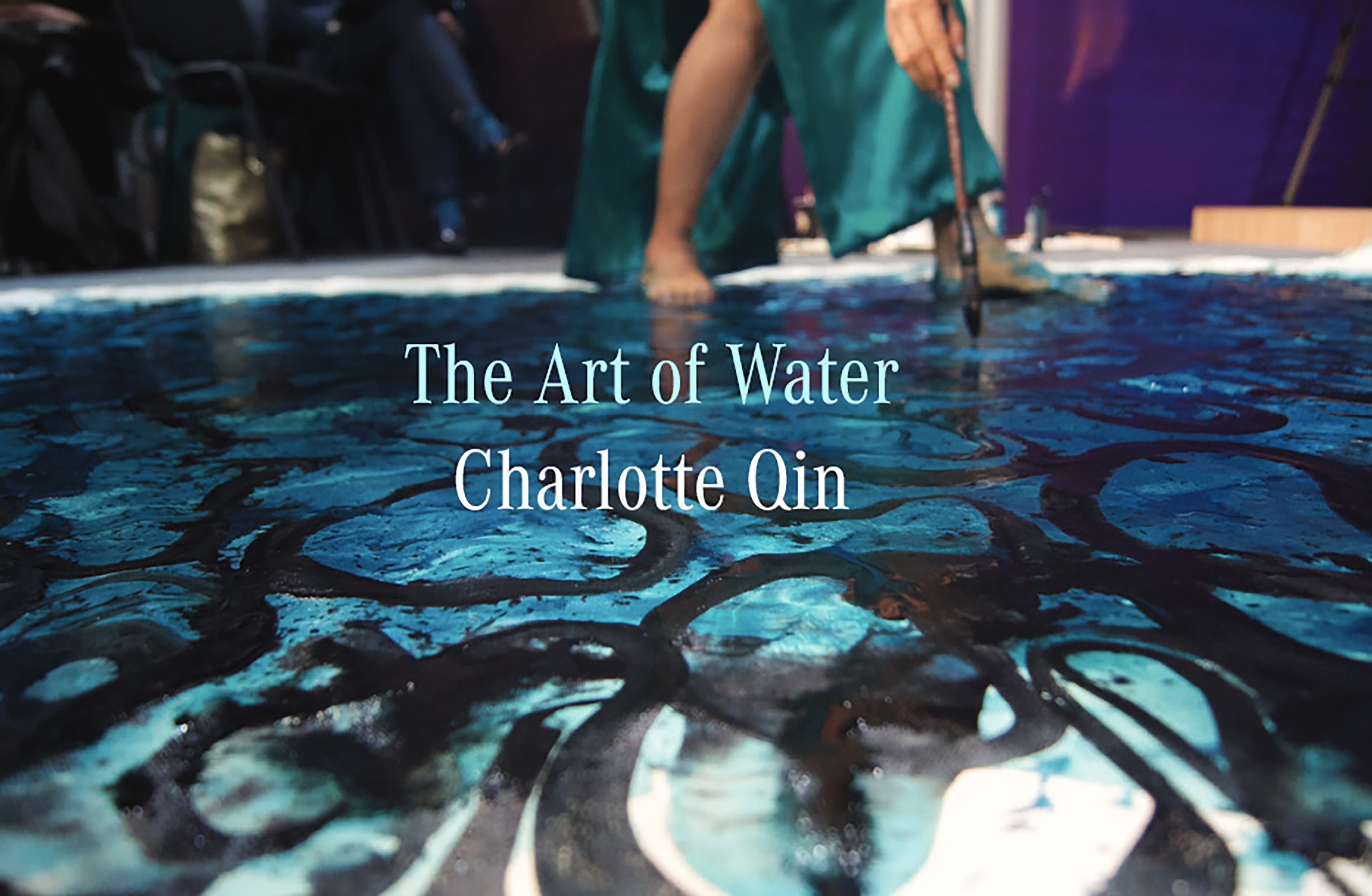
The art of water : Charlotte Qin
I had the joy of interviewing Charlotte Qin who is a water artist working to capture the emotions and spiritual essence of water through her paintings and her reciprocal performances where the audience engages in a connection with water. I was moved when I watched a performance of hers where glacial ice was brought in, and people spoke embodying the glaciers spirit, as the glacial ice melted. She comes from a physics background, and integrates science and policy into her art works, seeking to educate people about the many dimensions of water and watersheds. She writes on her Meeting of Waters project and organization site: “Water is at the heart of life, yet it remains one of the most overlooked crises of our time. Climate change, environmental degradation, and political conflicts have turned water into both a casualty and a weapon. Despite its fundamental role in sustaining ecosystems, communities, and cultures, the urgency of water issues has yet to fully resonate with the public. The complexity of water governance often keeps it siloed—separated across scientific, policy, and artistic spheres. But water is not just a resource; it is deeply woven into our histories, emotions, and faiths…. The name Meeting of Waters originates from La Jonction, where the glacial waters of the Rhône and Arve rivers merge—one clear, one sedimented—visibly illustrating the confluence of forces, ideas, and communities. What began as the artistic practice of an individual has grown into a movement—bringing together scientists, policymakers, artists, and cultural voices to reframe water not just as a crisis to solve, but as a relationship to restore.”……………………………..I was excited to connect with Charlotte, because I’ve been working on a number of water art and dance ideas, and interested in bringing together artists, who work with water, and also dancers who would like to do dance pieces around water and watersheds. I have a still emerging idea of collectives of artists and dancers working together to activate the restoration of watersheds. Drop me a line if this sounds interesting.………………………………Here’s part of the conversation I had with Charlotte, for full conversation check out the podcast.Alpha : So after graduating physics, you went and studied art, is that right, or design? Charlotte: I was doing this joint course between the Royal College of Art and Imperial College London. It was called Innovation Design Engineering. In my impression at the time, it was the marriage of art and science, except that everything is applied. We tend to think science and engineering, art and design, as two pairs, right? But in fact, our artists and scientists think more similarly, whereas designers and engineers were actually, you know, the similar family in terms of how they think. It was a very challenging course for me because I had to think about the users, think about solving problems. Whereas in my natural state, I would just be conceptualizing, trying to understand the system, and then going very deep in my thinking. In that course, I had to prototype. I had to think deeply about sustainability and why the world is messed up the way it is. And that was also when I found water. Not that I wasn't interested in water previously, but it around the same time I had kind of an environmental awakening. I realized I could feel the pain very deeply how water feels. And yeah, so I changed my direction completely. I was doing some cool technological projects involving water in my first year. But then until that awakening came and I was feeling the pain, I realized that water needed help, water needed healing. And it's not something that more technologies can fix. Or it's not something, you know, it's no longer, it shouldn't be used as a commodity again and again, especially by me, to further our egoistic creations, technologies, and crazy stuff we could make. You know, imagine, you know, the, there's so many incredible properties water manifest and we could apply it in so many different ways. But what's the point when the majority of the water bodies are suffering and are broken and needed help? Actually, people don't realize, right? It's the water's voice that needed to be amplified. So that was when I changed my project completely, almost failed my course in the end. Alpha: How did this come about that you felt the pain of water? Charlotte: I was in Spain. I went on a meditation trip in the middle of nowhere in Spain and then so I flew over from England. And then after three days, I think I just shed a tear at the end of the meditation and I just realized that, oh, wow, I was chasing after something shiny. My soul was not quiet enough until then to know my purpose or to hear water. So I really had to quiet down from, you know, all the crazy things going on in London and also my course, you know, imagine this bling-bling technology design course in the middle of London where the Industrial Revolution first started, right? And at that time, I was trying
Plants drink water from the air: hydrologist Sieger Burger interview
I met Sieger Burger a few years back, and we have had quite a few interesting conversations about water over that time. He is a hydrologist and writer. In this conversation we range over many aspects of the water cycle, with a focus on hydraulic redistribution (how plants bring up groundwater), and foliar water upake (the process by which leafs can take in water).During Sieger’s Dutch childhood, he became interested in water - “water was fascinating to me. Water is this weird molecule that is both bringing life and also bringing death. It's really about water—where the sweet spot is, of the right quality. Not too pure, because with water, we can't have distilled water. Also, not too salty or polluted. You need to have the right quantity, if you have not enough, then we dry out, and if it's too much, then we drown. It's this fascination with water as a life-giver.” [quotes in this essay have been slightly edited to remove conversational filler words]Burger went to Delft University to study integrated water resources management. There he took a class from Hubert Savenije, and met Ruud Van der Ent, who was Savenije’s graduate student. Van der Ent and Savenije created a map of the small water cycle (precipitation recycling), showing where the evapotranspiration in one country, comes down as rain in another country. (The article on this map was the most read piece in this newsletter last year). Burger says of their work-“I think that it is fascinating what their work has started. The whole concept of precipitationsheds was, more or less, based on Van der Ent's work [developed formally by Patrick Keys]. It shows where my precipitation comes from, you know, so that you get an understanding of the range of area where your rain has been evaporated. If you talk about having enough water, especially in drier areas, that's really useful to know because that helps you realize: if I am in Kenya, where does my water originate from? If I'm in Kazakhstan, where does my water originate from? If I'm in the Sahel, where does my water come from? I think that that work has really helped to get a much, much better understanding of the whole hydrologic cycle. And I think it also has made it possible to visualize things. One of my first lectures was ‘A picture tells more than a thousand words,’ and those pictures from Van der Ent and all the others have really helped tell that story of the small hydrologic cycle.”As a hydrologist, Burger went to work in Uganda -“Uganda - lots of people call it the paradise. Around Lake Victoria, where we were based, it was between 15 and 30 degrees. It's perfect growing conditions. Lake Victoria rehydrates the air so that you have very high rainfall. So everything grows.But at the same time, more and more forests were cleared for growing large-scale annual crops. Then, if you get your tropical rains, all the soil can erode. I tried to encourage people to go into agroforestry. I was able to implement a few agroforestry projects to really showcase the combination of the design and plant growth. The fascinating thing about the tropics—things grow so quickly. So, with the right design, with a syntropic agroforestry system, you get after a year, the fast-growing pioneering trees at like four or five meters tall, from a seedling that was 15 centimeters. The soil comes alive, and you just create this life-giving ecosystem that is productive. We got cassava growing there, and the roots were massive, bigger than most people had ever seen. It's all about how you design it in order to give life—make growth possible so that water becomes a life-giver."Curious about many aspects of the water cycle and ecosystem, Burger started a blog “A journey of discovery into the world of food, soil, and water”. ( Its in Dutch, but you can click the translate into English button.) On why he began a blog -“I started a bit in Afghanistan. Afghanistan is a sad country because since '79, it's been in war. When I was there in 2011-2013, all the hills were denuded, all the trees were cut, all the grass was gone. And you just see terrible things environmentally happening because it's just a man-made desert. And that made me realize I just need to dive into how this works. When we moved back to the Netherlands, I got more into agriculture. Everyone was saying agriculture is causing lots of issues, like, what does that mean? What is it? You know? That made me first try to understand how this whole agricultural system works. It's a dive into the negatives, but you also need to have an alternative. And that where I started to dive into all the aspects that nature is providing, is giving us, and that we can use. That is where I got into all kinds of aspects of plants, of trees, of the biotic pump concept. It's all these things that just made me realize it's such a complex ecosystem altogether. It's really trying to get a much better rational picture—be able to tell the story much better. That's why I dived into it.”On how plant leaves c
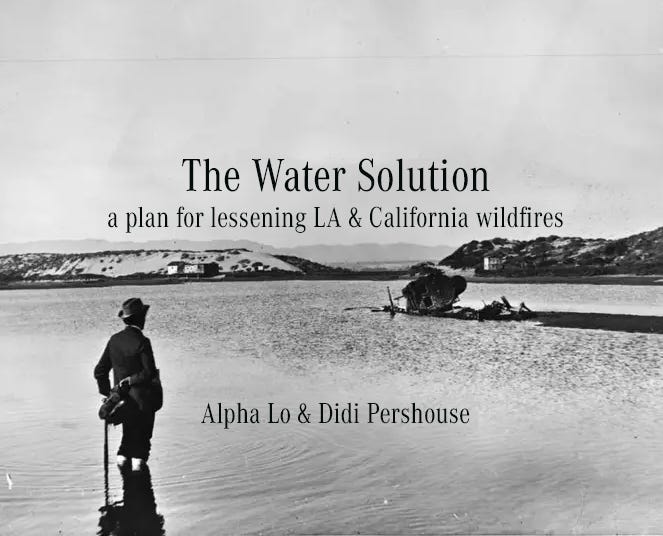
Lessening LA wildfires : The water solution - A dialog with Didi Pershouse
The Los Angeles wildfires hit close to home for me. In the wake of the fires, I started working on an expansion of an article “Rehydrating California to lessen wildfires” I wrote a couple of years back. Then I remembered that Didi Pershouse and Walter Jehne had run a Rehydrate California project awhile back. So, instead, I thought to have a dialog with her, as a way to provide an overview of the subject.Didi has a wonderful, warm personality, and is a leader in spreading the word about regenerative water. She teaches workshops about soil and water, wrote the book The Ecology of Care, and founded the Land and Leadership Initiative. I had her on for a great previous podcast where we talked about metaphors for understanding water and soil - bread, museums, and wicks. Here is a portion of our dialog, edited for clarity and context. You can listen to the audio for the full dialog. (The title picture above is the Ballona lagoon in LA which spanned thousands of acres in 1900.)Alpha Lo: I was around in many of the California wildfires during the 2010s. At one point, I thought, "How come no one's looking at the restoration of the water cycle to deal with the wildfires?" The talk was all about fuel reduction, cutting down brush and trees to stop the wildfires, but very few people looking at how we can rehydrate the land to lessen wildfires. One of the few who was talking about it was Zach Weiss, who was talking about restoring land and the small water cycle. His mentor, Sepp Holz, was talking about how draining the water from the land leads to more wildfires. Another one of the few was Milan Milan who was studying how the degrading of the landscape led to the drying up of the landscape, which lead to the loss of rain and an increase in wildfires in Spain in the 1990s. When he came to California, a US forest service person said to him, "If your ideas are correct, California is going to have a lot of wildfires in the 2010s." And lo and behold, it did. At the start of this year, a number of us who had been promoting water cycle restoration noticed that wow, there's suddenly a lot more interest around this topic and its importance in relationship to climate change. The word was getting out. When the LA wildfires hit last week, it seemed like there was a lot more talk than in the past about how rehydrating the land could be a way to deal with wildfires. Didi Pershouse: One of the phrases that's been going around is that wet wood is a lot harder to burn. So there's the basic principle that when vegetation is hydrated, when the trees and grasses have enough water, it helps with fire prevention. Even just when a lawn has more water in it, it affects the soil sponge. Healthy soil has pore space or void space. The structural integrity holds that together so that water can soak in and stay in this underground reservoir. In places like California, where there's a rainy season if you're lucky, you can have a much longer green season when you have water at the root zone for plants. There's an issue of plant health, particularly tree health. Trees are so long-lived that a tree under drought stress is much more likely to be stressed by viruses, fungal diseases, and insects. So you're much more likely to have damaged trees that are dropping limbs, falling over, etc., in a landscape where there's not enough water being held in the land at the root zone for the trees.Not only is wet wood harder to burn, but fuel on the ground doesn't break down when its dry. Limbs, leaves, dry grasses that have been trampled to the ground by foot traffic in a dry landscape will just oxidize. They're going to slowly dry out, lose their biomass into the air, and become crispy, crumbly, and fire-prone. We see this in the Southwest, where fence posts put up a hundred years ago are still standing because they haven't rotted off. But in a wetter landscape, or in a more biologically active one where you have more fungal activity from saprophytic fungi that biodegrade wood, a fence post will rot off after 10 years. Here in Vermont, you can't leave a fence post forever, or a log on the ground will turn into beautiful soil in just a few years. I can't leave firewood on the ground here for my wood stove; it has to be up off the ground because the fungal hyphae and spores will go right into that and turn it into soil. So that's really different in places with seasonal rainfall that haven’t found ways to preserve the water that was once in the land. In a more Mediterranean climate, you need the beavers, you need the wetlands, you need the soil sponge. You need a way of being in the land that does not disturb its ability to hold water. Those are some of the foundational ideas. There are ideas of biotic pump, cloud formation, precipitation nuclei, and the issue of transpiration and latent heat flux.Alpha Lo: There's some interesting studies about soil moisture correlating with wildfire risk. For example, NASA and other researchers have looked at places with more soil
Absorbing rains to bring landscapes back to life: Neal Spackman
Trees, stout and rugged, once dotted the valleys in the Makkah province in Saudia Arabia. An indigenous system of community land management called Hima allowed nature to flourish for thousands of years. But then in 1950s Hima was abolished, and desertification set in. People cut down trees, so they could have money to import food for their animals.The land became austere. The sun seared desolation into the hills and wabis (the valleys). The earth became dry as a parched throat. Xerophytic plants baked in temperatures that reached 50 degrees Celsius (122 Fahrenheit). Animals were rare, except for the resourceful camels that weave their way through the landscape. [Al Baydha, from the “The story of Al Baydha - A regenerative agriculture in the desert” video]This is the land Neal Spackman came to help restore. One of the keys to restoration was to capture the rare rains, the rains that came once a year, or sometimes even less. These rare rains would turn into angry floods that left deep scars in the landscape. The important step was to turn these watery forces of devastation into a force of regeneration. He worked with the community to pile rocks into gabions and check dams, to slow the flow of the waters, then created initial plant beds to absorb the rain. Over the course of many years the vegetation came back, with the growth of plants like zizyphus, acacia, and sesbania seban. Biodiversity returned.I had the honor of having a dialog with Neal Spackman in this podcast episode. He is coming with us as we return to Iberia, to look at how to restore the water cycles and the rain there.This is the fifth article/podcast in a series that has a connection to restoring the Iberian water cycle and rain : 1. “Restoring Iberian rain” 2. “What implementing agroforestry on farms would do to the rain : a European perspective” 3. “How eco-tourism can help the regenerative water movement : Anna Pollock interview” 4. Regenerating a farm and a semi-arid region: Silvia Quarta.Global warming causes the air to be able to hold more water like a sponge, which means droughts are longer. But then when the sponge wrings out, we are beset with bigger storms. This week the eastern and southern coasts of Spain were pounded by huge rains. In Valencia, which was hit the hardest, rivers of mud devastated the city. Unfortunately many died. A landscape of buildings were destroyed. The road to recovery will be a long one.Preparations can be made for future large rains. We can work to restore the land, so it can absorb more of the rain, so that it can lessen the amount of that water that reaches cities downslope of it. Floods will then be a lot smaller.Just like in Saudia Arabia, the power of devastation can be turned into the power of regeneration. If there is vegetation, soil, and earthworks to slow and spread the stormwaters upslope, then more of the water can then sink into the land to refill the aquifers. That groundwater can then be brought up by trees in the dry season to hydrate the environment, and to evapotranspire to increase the small water cycle, and bring back summer rains. Nature can dampen the wild variability of our climate - lessening the impact of the big rains in the wet season, and increasing the rains in the dry season. Spain’s future food systems are being threatened by the droughts in regions like Valencia and Andalusia. Nature can store and dampen the big wet season rains, to help create summer rains that aid agriculture. ……..Here is part of the podcast dialog between Neal and I, recorded before the floods hit. Neal talks about his ecorestoration work in Saudia Arabia, and proposes some ideas for water related eco-restoration in Andalusia, Spain. (Dialog edited for brevity, grammar and clarity).Alpha: Do you want to share a little bit about how you got into the whole regenerative sphere and your background?Neal: I spent two years in Guatemala in my early 20s, and while I was there, I became very interested in sustainability in food systems and in the built environment. I met a group of corn farmers whose farms had failed. They were forced to leave everything behind and move to the city, hoping to find a better life for their kids. That sparked a question for me: why does a corn farm fail in Central America? What’s really going on?I grew up thinking I'd be a doctor like my dad, who was a cardiac anesthesiologist. But I became deeply interested in sustainability—specifically in food systems, building materials, and all that. At that time, I didn’t think I could make a living out of it, so I majored in Middle East Studies, Arabic, and did some economics work in undergrad. Then, all those interests converged when I was offered a co-founding role at the Al Baydha Project in Saudi Arabia. Back then, we thought of it as building a “green village,” and it evolved in many directions. Al Baydha was funded by Her Royal Highness Princess Haifa Al-Faisal, the youngest daughter of the late King Faisal, and for her, it was a humanitar
Regenerating a farm and a semi-arid region: Silvia Quarta
In the windswept plateau of South Eastern Spain, where the soil had been eroding, where desertification had been threateninghad the area, and where the community had been struggling with the exodus of young people, La Junquera farm, has been pioneering regenerative methods, and spearheading the activation and restoration of the local watershed. Its been hosting educational workshops for neighboring farmers, and its ways have gradually osmosized into the surrounding area. I had the pleasure of interviewing Slyvia Quarta, an articulate and action-oriented academic-turned-farmer, who works at La Junquera farm, running a regenerative educational program there called Camp Altiplano. Her bio reads “I love having calluses on my hands, taking a hot bath, having a beer at the Topares bar, and being alone on the farm when everyone leaves.” La Junquera farm is part of a larger Alvelal multistakeholder network, that brings together hundreds of farmers, local businesses and scientists working together for the prosperity of the region. They came together in 2014, and created a 20 year strategic roadmap that works to build community and shift the extractive sector into the regenerative sector. It has regenerated much over the past decade, and in the future aims to restore an ambitious 100,000 hectares. Alvelal’s success provides a model which other large scale land restoration projects in Iberia (and there are number of these), as well as around the world, can follow. Alvelal writes on its website “We intend to mobilize local society to transmit the vision that a self-sufficient, dignified region, full of life and prosperity, is possible. A young and revitalized territory that knows and values its resources, with a professionalized ecological agricultural sector and with business opportunities and restorative initiatives for society, the economy and the territory. This is why we work on the restoration of agricultural properties with degraded or eroded soils, through regenerative soil and landscape agricultural techniques. We offer training workshops and technical advice, thus guaranteeing an open and supportive transmission of knowledge. We promote marketing plans for indigenous organic products with great quality differentiated by their productive management. Above all, we want to help all those initiatives that defend the recovery of the landscape, culture and economy of our territory. Likewise, we are committed to the restoration of biological corridors to promote the conservation of biodiversity; activating and energizing local networks around landscape restoration.”Here’s a segment of the interview with Sylvia Quarta, (edited for clarity and brevity):Silvia: I'm currently at La Junquera, a large regenerative farm in southern Spain. It's a 1,000-acre farm, and we’re part of a larger landscape restoration project through Alvelal, a regenerative agricultural association that connects a vast landscape of 100,000 acres here in southern Spain, spanning different provinces: Murcia, Almería, and Granada. It started around 10 years ago, and their goal is basically to restore the landscape—not just in terms of land and nature but also through social restoration, creating jobs, improving the economy, and developing a patchwork landscape with natural areas as well as great regenerative farms and inspiring places. We mainly follow the Four Returns framework, which is part of the Commonland work focused on returning natural capital, economic capital, inspiration, and social capital.[from La Junquera’s website]Alpha: Cool, I'm excited to dive in with you to explore more about your farm and the larger network it’s part of and how that all came together to restore 100,000 acres in southeastern Spain. But first, let’s talk about you. How did you get involved in the regenerative field?Silvia: I’m from northern Italy, from a fairly urban area. I grew up half an hour away from Milan, a big city. At some point, I decided to study environmental sciences and went to the Netherlands. That changed a lot for me because I did my internship and my thesis on farming-related issues. I worked with indigenous communities in the Andes, and I experienced the whole world of agroforestry, organic agriculture, and permaculture. It really opened up for me, and I realized I wanted to do much more than just research. I ended up in a project in southern Spain where I worked as a volunteer for over a year on dryland restoration—learning about and restoring native species, maintaining a nursery of native varieties, planting in the desert, and having a forest garden.After that, I worked a bit at Wageningen University and coordinated excursions for the land and water management program in Portugal. We traveled across the country looking at issues related to large irrigation schemes and syndromic systems, giving students and ourselves a feel for the contrasts in land and water management in the desert.Eventually, I ended up here at Campo Altiplano; it’s the fi
How eco-tourism can help the regenerative water movement : Anna Pollock interview
While in Spain, Nick Steiner, the water restorationist, and I were involved in discussions with folks from the Spanish hospitality sector about restoring the water cycles and bringing back the rains there. It began to dawn on us that eco-tourism could play a role in the regenerative water movement. Anna Pollock, who is from the UK, heard of our discussions, and contacted me. She has been a leader in the regenerative tourism movement and in conscious travel. The 2022 Journey Women award was given to her for her work in regenerative tourism. She has been guiding the hospitality sector to help the regenerative farming sector through their purchasing power of food, through their ability to educate guests about regeneration and organic products, and through helping farms develop home-stay programs.Here is an abridged version of my podcast interview with Anna Pollock [edited for clarity and brevity] Alpha : How did you get into the tourism industry?Anna : I've been at it a long time. I started in tourism 50 years ago. I had emigrated to Canada and I happened to arrive in British Columbia at the very moment that the government there was starting to think about whether they could do something with this thing called tourism. Their economy up until that point was entirely resource-based, and they had no chance of doing a lot in manufacturing because of their location at the time. I happened to arrive after having spent a temporary job in England with the research department of Visit England. I had tourism on my resume, and the rest is history. I essentially had an opportunity to start with a very young visitor economy, with very little government involvement at that point, and develop that over a period of about 25 years, before I left Canada to come back to the UK. I’ve been working as a strategist and as a consultant, a bit of a futurist, a bit of a thinker. I’ve always liked to be ahead of the curve, and I’ve been doing that in various places.I do a lot of international speaking, trying to encourage people to think differently, look forward to see what's happening, and adjust what they're doing accordingly. That has kept me busy for that amount of time. So that’s my background.Alpha: How did your interest in sustainability and regenerative ecology begin?Anna: The sustainability journey started probably in the late '80s because I was involved with a consulting firm that was looking at land use planning. It was the time when ecotourism was being considered. A river rafting company in British Columbia came to me and said they were fighting a major mining proposal on one of the most beautiful rivers in British Columbia. They wanted to put tourism on that river to generate jobs and livelihoods without damaging the environment or the river. They asked if I could help them make a case.That was my first foray into trying to construct an argument as to why tourism in the future might be another land use that would bring benefits without necessarily causing the damage that mining was causing. That was a long time ago now, and it did get protected. It got me really interested in ecotourism, and then we did some other sustainable planning-type projects.Like many people, I was really affected by An Inconvenient Truth. That really got me looking very seriously at what was happening in the environment. I started getting serious about it, around 2000. I did a sustainability strategy in 2008 for British Columbia.Alpha: Could you explain the difference between sustainable travel and regenerative tourism?Anna: That's a challenging one. It all depends on how these terms are understood or interpreted because to sustain simply means to carry on, endure, or maintain. If the intent is to sustain a healthy planet with healthy people and biodiversity, then there wouldn't really be any difference between that and the concept of regeneration. However, over the past 20, 30, or even 40 years, the meaning of sustainability has remained very vague. It's not necessarily defined what anyone is trying to sustain. Or what I see happening is that the underlying principle behind it is sustaining the status quo, sustaining the current economic model. It aims to minimize damage, of course, mitigate and reduce emissions, cut back on water use, waste, etc., all of these good things, but it doesn't really challenge the system itself.That’s where I believe regeneration is fundamentally different because it’s based on a completely different understanding of how the world works. The current economic model that we're all caught up in, call it what you want, is based on a set of assumptions about us living in a machine-like world that we can divide into pieces and understand by reducing it to components.The reality is not that case at all. As you would understand, being involved with rivers, we are living systems as human beings. We inhabit a living system, which is the planet. It is constantly adjusting to the forces around it and within it. When you see that
The joy of restoring water cycles : Nick Steiner
Nick Steiner’s delight in restoring the water to our lands emerges as I talk to him. He works in watershed management, his service is called PermaNick , helping landowners grow regenerative landscapes that slow and absorb more of the rain. He is a passionate advocate and speaker about the larger vision of restoring our water cycles. His home is in Canary Islands, where they only have a couple of inches of rain a year, and yet he has found a way to guide the rainfall so he can harvest it for his own use and also to hydrate the land. He’s working with Water Stories to birth the larger educational movement of training the next generation of water practitioners. There are many landowners seeking to have their land hydrated, and their is much more work than there are practitioners now. We thus need to train a lot of people to do this work, and that is what Water Stories does. If you are interested in signing up for the Water Stories educational courses you can choose to use this link here (I became an affiliate because I believe in their work) Nick has a captivating essence about him, which makes one want to become enthusiastic and do the work of digging a hole to get a tree to have more water, to have your driveway guide the water into the land. So I hope some of you reading this get inspired and start looking at how to do the work on a piece of land. There is something that grounds all this water theory - when you start going out in the rain observing how the water flows, and working the land to guide the flow of water. I had been planning on putting on a water workshop by myself before talking to him. After our interview, we got excited about putting on a workshop together. So here it is.In the workshop you will learn about the theory and practice of restoring water cycles. You will also get a chance to get to connect with others who come to the workshop, as we build a community around this work. I debated whether to charge for the workshop, and decided to make it free, with the hope that some of you will sign up for paid subscriptions to this newsletter, so it will be easier for me continue offering more workshops in the future. The workshop will be on Sun Jul 7th noon-2pm EST . At that time you can open this link on Zoom https://us02web.zoom.us/j/87354624137?pwd=5Av53IbHhI9LWVmBAvyE1gQY66u5ka.1….Here is a transcript of part of our interview, edited for brevity, clarity, and understanding:Nick Steiner InterviewAlpha: Today, I'm excited to have Nick Steiner on the podcast. Welcome, Nick. Nick: Yeah, thanks so much for having me. Super excited to be here. Alpha: How did you get into this water work?Nick: So it started also pretty much 10 years ago when I when I first got got into permaculture and then got more into this whole regenerative world where I was just experimenting on really small scale with water. Then on slightly bigger water projects. I did lots of different courses that I could find, read all the books I could find. And at some point, a friend of mine, Oliver Gauthier of the Regenerative Skills podcast, he told me that he had just spoken with Zach Weiss and that he's planning on launching a course about water cycle restoration called Water Stories. I thought that's spot on what I want to be doing. I did this course in its founding round thing around two years ago. That was just completely life changing because before I was working on small projects and working indirectly with others, but I didn't quite feel ready to do this work full time. After doing the Water Stories course, I started saying, OK, now I feel kind of well-prepared to actually take on landscape projects. I started working with landowners, small projects, and bigger ones, some larger farms on the size of a few hundred hectares. That was really the kickoff point to get really serious about working with water.Now I'm also now part of the Water Stories team, the goal is to educate and have hundreds or thousands of people to work in water cycle restoration. The water cycles are so critical, we need to get them right. If its only in theory, we're not going to get far. We need the people on the ground to actually build these landscapes. And that's kind of the mission that we're on at Water StoriesAlpha : Can you say a little bit about how the Water Stories course works? Do you have a bunch of cohorts online or in person? What were some of the things you learned in that course? How long did it take? Nick: It was actually a really interesting approach because so many online courses are just videos and you just watch lots of videos and then you click a button that says, okay, I know how to do this now, but you don't really. Specifically with working with water and landscapes, you need to get your hands dirty. And that's what I loved about the course there, where it was more like you have some theory in a video format with Zach explaining concepts about water cycles, but also about all the different things you need for the kind of work. We h

Investing in water and regenerative agriculture : Koen van Seijen
I asked a friend of mine what her favorite podcast was and she said Investing in Regenerative Agriculture and Food. I suspect it might be quite a lot of people’s favorite podcast. The groundbreaking podcast interviews a lot of the key players in the regenerative food and agriculture space - the investors, the farmers, the growers, the herders, the locals, the educators, the policy makers, the bankers, the conservationists, the food industry people, the restaurant folk, the distributors, the biologists, the ecologists, the atmospheric scientists, the hippies, the filmmakers, the regenerative water-ists, the techies, the economists, the writers, the corporate executives, the tree planters, the foundations, the startup incubators, the cryptogeeks, and the fund managers. It tells the rich tapestry of vibrant stories that intertwine to emerge this innovative space that has important implications for earth’s future.Koen van Seijen, the host of the podcast, reached out to me a year and a half ago because he was planning to explore the water cycle space with a series of podcasts, and wanted to understand more about water. He had been reading my then newer Substack newsletter, was very encouraging of my efforts, and has been very kind and helpful since then. He interviewed me for his podcast, as part of their water cycle series. I am now very happy to get a chance to interview him in return now for the Climate Water Project podcast. We discuss both investing in regenerative water and in regenerative agriculture, so I morphed his podcast name, to get the title of this essay Investing in water and regenerative agriculture.Below is about half our our conversation from the podcast, edited for brevity and clarity, with a little context added where needed.Alpha: Welcome today to Koen, who runs the podcast Investing in Regenerative Agriculture and FoodKoen: Thank you so much. Thank you for switching, having me on the other side of the mic. It's always nice to get to join other podcasts and other platforms. Alpha: Yes, you actually found me and interviewed me first on your podcast. Koen: And it was by far the most listened-to episode of last year. We went sort of viral on LinkedIn, and as much as a podcast can go viral, which is not too much, but you definitely hit a nerve with the water cycle piece, which was part of a much larger water cycle series we did. It was a lot of fun and it was a really nice conversation. Alpha: Did you get started first in investing or the whole regenerative space? Koen: Definitely the investing and entrepreneur side. I was always interested in business, and how business worked. I got very interested in renewable energy. I was definitely worried about the effects of climate change and climate weirding. I was always interested in food, but not necessarily from a solution perspective, more like, if we eat a bit better, and we pick our groceries slightly differently, then we'll be fine. But I never knew of the potential of the food sector to be part of the solution until I stumbled upon holistic grazing and discovered the potential of soil and soil carbon 13 years ago. Until then, I never paid any attention to soil. Alpha: And you started off working at an investment group Toniic, is that right? Koen: Yeah, 10 years ago, I joined Toniic, which is a group of active impact investors. They are all family offices, high net wealth individuals, and a number of foundations. They are making investments according to their values - meaning they would like to sleep at night while knowing how their money is managed. It is surprisingly difficult to invest with values. About 10 years ago I joined them, not as a member but as a staff member, because I definitely don't have the wealth to be a member of Toniic. I saw a lot of interest mostly in the energy transition, not so much in food and agriculture. Food and agriculture is such an important sector in terms of the transition and what is needed. Not only in terms of emissions, but also all the other goals we want to achieve. But back then I saw little activity. And that was surprising because I had started to see fund managers and other people talking about regenerative agriculture and food. But I didn't really see any investor action there, which led to me start recording conversations with people about putting money to work, which led to the birth of my podcast. Alpha: Can you explain what's the difference between investing and impact investing? Koen: Yes, sure. I mean, all investing is impact investing. The issue is that you most likely have a negative impact. Traditional investment world looks at risk and return. You only look at the bottom line, and you try to make an estimate of the risk, which is of course super difficult. People started to realize that a lot of their investments, which happens if you have a bank account or a pension fund etc, at work somewhere, it's probably doing things you're not really happy about. It might be funding an oil pipeline,
Beaverland: interview with author Leila Philip
There is a stone in stone bridges - called a keystone - which if we removed, causes the whole bridge to collapse. Keystone species are species which when removed from ecosystems cause things to fall apart. Sea otters are a keystone species. When they leave an area, kelp forests get decimated. That’s because the sea otters are no longer keeping in check the population of sea urchins, which will multiply to eat the whole kelp forest. Restoration of the kelp forest can transpire by bringing back sea otters. Beavers are a keystone species that have played an outsize role in the development of the landscapes and ecosystems of North America and Europe. The removal of them from our continents led to the Great Drying ( a term coined by the geomorphologist and beaver researcher Ellen Wohl) that extended from 1600 to 1900. When I connected with Leila Philip, author of Beaverland - How one weird rodent made America, she bubbled with enthusiasm talking about the importance of beavers to our ecosystems. She writes in her book “When the glaciers of the last ice age melted.. the modern ancestors of today’s beavers wet at it, felling trees and building dams throughout Asia, Europe, and the Americas. In North America, beaver dams, ponds, and waterworks established hydraulic systems that created much of the rich biodiversity of the continent. That was the primordial Beaverland - North America before European colonizatio, when as many as four hundred million beavers filled the continent….. The great boreal forests that sprang up, threaded with beaver made waterways, would have looked something like what I see now- half water-world- streams spreading out through the forest as great fans of water, overspilling banks, then receding in rhythm with the seasons. Unlike the streams and rivers we know today, mostly degraded so that their currents carve channels through the earth, picking up speed and causing more erosion as they cut deeper into the groun, these messy, slower-moving streams and rivers from the time of Beaverland contracted and expanded like tides, they were arteries and veins of water pulsing life into the land”Paddling in the waters, gnawing trees, placing sticks in the river, this furry creature was unaware that it was altering the living systems on our continents. The beaver did not set out to rewrite our ecosystem, they were just working to create a home for themselves. But local interactions can have large consequences. One of the fundamental insights that have come out of complexity science in recent years is that as you shift of a few rules, make a few tweaks, the whole system can behave in radically different ways. The beaver is that tweak that changes our ecosystems.Leila Philips writes “Scientists call beavers ‘ecosystem engineers’ meaning they create new habitats, new ecosystems when they build their ponds. The dead trees that now ring the marshy edge of the swamp bring nuthatches, woodpeckers, and other species of birds that feed on the insects in the rotten wood. Great blue herons stalk the shadows and red-winged blackbirds heraid in the trees. In the highest points osprey nest. Meanwhile, the life forms in the water itself increase exponentially. Wetlands are a soup of life, each teaspoonful containing millions of organisms. Water from beaver-altered streams and wetlands has been measured to contain fifteen times more plankton and other microbial life than wetlands without beavers. Zooplankton in particular love the nutrients provided by the beaver poop.”The importance of bringing back keystone species has been increasingly utilized by the ecorestoration and rewilding movements. In our time of multiple water crises, we would do well to integrate beavers into our water strategy for North America and Europe. Leila Philip writes “we could use beavers to help again to help our water problems.. if we were smart enough - if we were humble and open enough.” The beavers help rehydrate the land, and they help mitigate floods. In the Chesapeake Bay beavers build, for free, stormwater management ponds that that would otherwise cost one to two million dollars, ponds that help extract the pollutants out of the water. Beavers also help stop wildfire. The researchers Emily Fairfax and Andrew Whittle have shown the land is much less affected by wildfires where beavers make dams compared to beaverless areas. [Fairfax 2020]. Here is some of the conversation between Leila Philip and I, edited for clarity and brevity. (If you want to know about the inner life of beavers, that’s in audio form only - go to 57:36 min mark in the podcast)BEAVERLANDLeila Philip: Writing Beaverland was like many book projects, a kind of fever dream that just wasn't over till it was over. I would spend six years on Beaverland because I just became so fascinated by beavers and all I was learning, and I had so much fun writing it. I teach writing at the College of the Holy Cross in Worcester. I give this writing exercise to my students and say, what
Maladaptations in the time of water crisis
Maladaptation. That is the word Stephen Robert Miller used to frame the essence of the issue - the problem that sometimes besets modern infrastructural approaches to water shortages, drought, floods, tsunamis, and cyclones. I looked up the definition of the word in the Merriam-Webster online dictionary - “a poor or inadequate adaptation”. The dictionary gives current examples of how the word has used been used in the literature, and to my surprise, this was the use -“Experts call this phenomenon maladaptation. — Stephen Robert Miller, Discover Magazine, 16 Dec. 2022”Miller’s usage of the word has achieved a minor fame - the sentence plucked from his article “When Climate Adaptation Backfires” in Discover Magazine.The subtitle of the article is “In the scramble to combat climate change, so-called solutions can cause more harm. An IPCC 2022 report warns of these maladaptations.” The article continues “Around the world, people are building levees, shoring up dams, digging canals and constructing infrastructure to confront the impacts of climate change. Most of these investments will likely save countless lives and protect property, but some will inadvertently add to the problems they are trying to address. Experts call this phenomenon maladaptation. It generally refers to a protection effort against the impacts of climate change that backfires and increases vulnerabilities. For years, maladaptation was given short shrift as research and policy prioritized mitigating climate change by reducing greenhouse-gas emissions….. One of the most insidious aspects of maladaptation is the false sense of security it gives.”Stephen Miller grew up in the desert of Arizona, with its 12 inches of yearly rain, desert scrub, expansive horizons, and searing heat, and there became interested in the question of water. He worked as a freelance journalist, writing about the Arizonan water situation - the high water usage of farms, the draining of the groundwater, the American Indian water response - for magazines like National Geographic and Mother Jones. These articles eventually led to his book Over the Seawall. In the book he also expanded his scope, and looked, in addition, at the water situation in Japan and Bangladesh. He wrote about the history of Arizona: “In settling the Phoenix valley, Anglo farmers set the tone for a century of unbridled growth. They expanded until the local Gila and Salt rivers could no longer sustain them. Then they built dams to power pumps that pulled groundwater from great depths. When that wasn’t enough, they turned their sights to the Colorado River. They hashed out rules for sharing its water, and, finally, they carved a grand canal—the largest public works project of its time—to the heart of the desert. With this final infrastructural triumph, Arizonans celebrated their control over nature, but really, they had kicked the can on facing the precarity of their existence. We now stand where the can landed, and the stakes have never been higher.”For many years it was debated about whether to pursue the crazy plan to divert water from the Colorado River to Phoenix and Tucson three hundred plus miles away, pumping uphill nearly 500 billion gallons of water a year. And then it got built. It ostensibly seemed to solve the water crisis. But the burden had shifted, semi-unconsciously, to the Colorado River. With the center of the crisis not so directly in the state’s face, Arizona continued its population push. Data centers moved there, with their heavy usage of water (with it going to get a lot worse with the advent of AI), lured by cheap tax breaks and cheap land. Multiple state aided businesses drew in more people. Agriculture continued their intensive water use, with its acres and acres of cotton and hay production. Lessening snowpack and global warming has decreased the Colorado river by 10 trillion gallons since 2000. Scientists predict the river could shrink by as much as 31% by 2050. Lake Mead, the reservoir along the river, has a bathtub ring, where its waters have drained. There are seven states overdrawing water. Many call the situation a slow moving disaster. There is a significant risk that the seven states, which are already currently scrambling, could have critically low levels of water before 2030. Huge political water right fights loom ahead. The federal government have been asking states to significantly reduce water consumption to avoid a catastrophic collapse of the river.All the diverted water means the river dwindles significantly on its way to the Gulf of California, so that river banks downstream no longer overflow in wet season - which means the land next to the river is less lush, and initiates less precipitation recycling that blows back inland into the US. The last 100 miles of the river before it reaches the Gulf of California, now just a thin thread of its former self, was once 10 miles wide, with beavers, jaguars, and coyotes wandering the flourishing riparian landscape.The ru
Slowing our waters : Erica Gies interview
Growing up, Erica Gies swam outdoors, and grew to love the wildness of water. As a journalist for the the New York Times, working on the renewable energy beat, she wrote two articles about the nexus of energy issues and water, that pivoted her focus, and got her hooked on writing about the topic of water.She began investigating the perils of the our current infrastructural approaches to water, looking at how ‘grey infrastructures’ often exacerbate the problems, like floods and droughts, that they are trying to solve. She also started exploring the benefits of ‘green infrastructure’, nature-based solutions for water. Levees, a form of grey infrastructure built to stop floods, can also have the unintended consequence of faster rivers, more flooding downstream of the levee, and bigger floods when the levees finally do break. Restoring our floodplains is a nature-based solution that provides better protection against floods, and also has positive ripple effects for the whole water cycle. These nature based solutions are beginning to be implemented in places like Seattle, where the utility company has been buying back land from homeowners properties which have flooded, and turning that land back into floodplains, and in places like just outside of Sacramento, where the Yolo bypass has been turned into a part time farmland, and a part time floodplain, that the rivers can overflow into when big rains hit California.Dams are a form of grey infrastructure that are not necessarily as good at providing water for society as we may think. It also has unintended consequences. Erica Gies cites a research study which shows that while dams provide more water for 20% of the worlds population, they also lead to less water for 24% of the world’s population. She talks about the Reservoir Effect, which is the phenomena where as more water is provided for a location, more people and businesses move there, which then creates more water needs there. That keeps those areas in perpetual worry around water scarcity issues. The transport of water from dams can also be very energy intensive - California spends a fifth of its state’s energy moving and cleansing water. Relocalizing our society is a more natural solution to water scarcity issues. For instance, instead of piping in so much water to Central Valley, California, which currently produces a significant amount of food for the whole USA, we can have places like the Midwest, which naturally has a lot more water, produce more of its own food. We can also work to restore some of the natural hydration that Central Valley originally had.Erica Gies speaks of some of the underlying causes of wildfires not discussed as much by the media. One cause is that logging means less moisture is held in the land, which means less evapotranspiration to cool the land, which means hotter lands and more wildfires. A second cause is that the draining 87% of the world’s wetlands means there is less water to stop fires. It also means less water is funnelled into aquifers, which means less groundwater can be brought up by trees in the dry season to hydrate the landscape. A third cause is that the clearing our forests of undergrowth and dead wood can sometimes conterintuitively lead to more wildfire. This is because the undergrowth, the dead logs, and the rich soil, hold a lot of moisture that protect the forest against fires - this according to a study Erica Gies cites. (I heard recently a leading atmospheric scientist discuss how wildfires are happening at a much higher rate than their climate models would predict. This may be because they are not including some of the above causes into their climate models.) Restoring our wetlands, replenishing our aquifers, lessening logging, regrowing polyculture forests rather than monoculture forests, and bringing back beavers, are some of the nature-based solutions to preventing wildfire.With her talent to cogently elucidate, Erica Gies has been writing about water for magazines and newspapers like Scientific American, National Geographic, Nature, and the Guardian. In 2022 her book “Water always wins” came out, which looks at water problems and solutions in places like Chennai, Mekong, California, Iowa, Kenya, Peru and China. It’s a panoramic book that gives us a sense of the state of water on planet earth, and what we can do to move forward in a healthy way. The book has been garnering many accolades, including the Rachel Carson award from the Sierra Club. Here’s what the Times Literary Supplement wrote about her book : “Our desire to control and insupportably consume water has caused irregular weather patterns, shortages and humanitarian disasters on a global level. How can we change our approach to water before it causes further harm, as with Hurricanes Katrina, Sandy and Ida, or with the devastating Syrian drought, which lasted from 2006 to 2010 and was abetted by agricultural and irrigation projects? This question underpins Gies’s comprehensive research as she
Bread and museums : A dialog with Didi Pershouse
From restoring peoples health to restoring the earth health, Didi Pershouse, brings her sweetness and wisdom to help heal humans and Gaia. She is the author of “Understanding soil health and watershed function”, and teaches ecological knowledge through her Land and Leadership Initiative. In conjunction with Walter Jehne, she has facilitated numerous water projects around the world.Recently, Didi Pershouse and I got together online to have a conversation and to get to know each other. She asked if she could record our conversation for possible use for a future podcast of hers. I said sure, and asked if I could share the recording here too on my Climate Water Project newsletter/podcast. So here it is. This is more of a dialog, rather than the normal interview.We got excited discussing good metaphors that illuminate aspects of water. She is famous for her flour and bread metaphor to understand the soil carbon sponge. Flour is analogous to dirt. Bread is analogous to soil. Flour can turn into bread with the help of yeast microorganisms. Dirt can turn into soil, through the help of microorganisms and fungi. Flour does not hold onto water as well as bread does. Dirt does not retain water as well as bread does.I loved Didi’s soil bread analogy when I heard of it a while back, and decided to try it out. I put outside, on the porch, a dish with flour and a dish with bread. I soaked both with water, and watched as the flour dried up within a few hours, and observed with intrigue, as the bread stayed moist for three more days.When the dirt turns to soil in our landscapes, it helps to retain the rain for longer, hydrating our ecosystems. Water can stay in the soil for weeks or months. Each extra one percent of carbon in our soil, helps to hold 20,000 gallons more water per acre foot. Retaining that water can mean the difference between floods happening or not to towns downslope. Storing the water in the soil can mean the difference between wildfires spreading or not. We also discussed a metaphor I came up with of the museum, which explains how water flows through our landscapes. Imagine a line of people entering into a museum, and then after a period of visiting, exiting the museum. If people stay in the museum for only a few minutes there will not be as many people in the museum as if they stay for a few hours. In both cases though, we still have the same rate of people entering and leaving. If water stays in the landscape for only a short while, the landscape will not be as hydrated as when water is slowed in the landscape.After we talked about a number of other things, Didi Pershouse looped back to this metaphor, and added that we can sometimes have rushes of people into the museum. If people’s stay in the museum is short, then that will lead to a rush of people leaving the museum a short while later. If people stay and enjoy the art for a few hours, the flow of people leaving the museum will be a steadier stream. If water is not slowed in the landscape, big storms will lead to large runoff events. If the water is slowed, then the water will be more distributed over a long period of time in the landscape before it flows out. There can be multiple basement levels in the museum, which allow people to wander around for a long time. When they come up to the ground level of the museum, it helps keep that level be full of people. In a similar way if we can keep our aquifers filled, the landscape can stay hydrated into the dry season. Our current practices of depleting our aquifers, leads to dryer landscapes in dry season; a phenomena which leads to more wildfires.I’m a fan of Didi Pershouse after meeting her, and maybe you will be too after listening to this podcast. Didi’s website is landandleadership.org . On it you can find the various metrics local communities can use to measure how well they are doing ecologically, a metric she discusses in this podcast.……..This is a reader supported publication and podcast Get full access to Climate Water Project at climatewaterproject.substack.com/subscribe

Halting our drought-fire-flood path to desertification : Zach Weiss interview
Awhile back I was pondering what to do about the California wildfires, when I came across a Zach Weiss video showing how we could hydrate the environment and bring back the small water cycle. This video, along with Charles Eisenstein’s water chapter in his book “Climate”, got me into the water field. I am very happy to present here an interview with Zach. ………….Zach Weiss is a sculptor and tender of the land. He reads the landscape like a tracker, understanding how water moves across it; looking at movement of the soils, the cuts in the land and the erosion; noticing where water has pooled and evaporated and the patterns of vegetation growth.He studies the landscape to figure out where to make the interventions. The healthier it is the more it is about tending. The more degraded it is, whether from over-farming, from certain types of development, or from mining, the more it is about sculpting. He studies where to place the terraces that will slow the rain and help it infiltrate downwards. Where to dig the drainage ponds that collect the wet season’s water from the sky and slowly filter it downwards, filling the aquifers and providing drinking water and agricultural water. Where to dig the year round ponds so they can birth an ecosystem. What to grow around the edges of the pond to interact with the wildlife, to filter any inflowing pollution. He studies to understand the interconnectedness of the layers of soil, vegetation, rivers, springs, aquifers, wildlife, and human-made grey infrastructure.He worked a piece of land in Australia for a worm farmer, two weeks of work sculpting the land so it caught the rains when they came in the wet season. Then the worst drought on record hit the region. Vegetation dried up in the farms around him. Farmers in the region went belly up, and many had to sell their cows. But the worm farmer’s land was different. The soil stayed hydrated and cool enough from the previous season’s rains, keeping the lands cool and allowing the worms to flourish.In California, Zach Weiss and his team prepared a property by terracing the land, increasing the greenery, and carving out water bodies. When wildfires hit the region, the property was then hydrated enough to dampen the wildfires that spread to the property. When big storms deluged the area, causing landslides to pummel through the fire-weakened land, the water body earthworks they had built caught the landslides so it didn’t destroy the house.In Mozambique, wells are overused and usually only last 5-20 years., The women often have to stand around waiting to get a little amount of muddy water at the bottom of the well. Zach and his team are improving the situation in one area by creating water bodies that catch the rainfall in the wet season and infiltrate it downward so it can then regularly refill the aquifers and the wells.In areas where there are floods, torrents of water can turn cracks into ravines, rip out vegetation, and cause landslides. Here the key is to slow the water. Zach Weiss recites Rajendra Singh’s maxim “Where water runs, make it walk; where it walks, make it crawl; where it crawls, make it go into ground”. Weiss’s team can create various types of water bodies that not only store water but create small channels that weave the water back and forth. They can use check dams, leaky weirs, and beaver dam analogues to dissipate the force of the downward flowing water and spread it around.……..The problems that face our individual parcels of land are part of a much larger systemic issue. Zach Weiss explains that our society is siphoning off water from our continents. Tile drainage. Urban sewer systems. Channelized rivers. We’ve drained our wetlands, ponds, bogs and marshes. We’ve drained our aquifers. Roads rush rainwaters along rather than infiltrating them into the land. Soil has been degraded by synthetic fertilizers and pesticides so it can no longer retain as much rainwater. “The biggest root cause of the wildfires that we are facing in the west right now is tied to the draining of the waters in the landscape,” he emphasizes.Less water on our land decreases evapotranspirational cooling, which decreases small water cycles and local rainfall, and increases local air and land temperatures. With less water on our land, groundwater levels fall. Trees, unable to reach it, become dehydrated and unable to dampen wildfires. With less water and less healthy soil, the fungi population crashes. With little fungi to help break down dead plant matter and turn it back into soil, dead plants sit as dry, highly inflammable kindling, baking in the heat. Wildfires lead to less vegetation. Intense fires can create a waxy substance on the soil that makes it difficult for rainwater to infiltrate. Fires dry up the soil, causing it to harden, and heat up more easily. The air then heats up, and we get less rain since hotter air is less able to condense the water vapor. Amidst the longer droughts, our ever more chaotic atmospheric conditions can
India's regenerative water movement - Andrew Millison interview
Displaying pictures of plants, soil and earthworks being drawn on a see-through whiteboard, accompanied with clear and articulate explanations, Andrew Millison’s water and permaculture videos have reached millions of viewers on Youtube, making Andrew one of the most well known permaculture teachers in the world today.Beginning in the desert like conditions of Arizona, Andrew learnt the ways of water wizardry with permaculture teachers like water pioneer Brad Lancaster, before heading to the more lush Oregon. There, a student organized to get him on the faculty at Oregon State University, whereby he soon found himself a Senior Instructor, teaching various permaculture courses, including a permaculture MOOC (Massive Open Online Courses) that was taken by many.Andrew’s artfully made permaculture videos were put by the university online. To his surprise, one of his videos, on permaculture principles, got a hundred thousand views (later the video would even reach 700,000 views). He could see this modality was a way to reach a larger scale audience - ‘this was a real leverage, people were commenting from all over the world’. So he pivoted to focusing more on videos.In 2017, he flew out to India for the International Permaculture conference, and afterwards embarked on a two month pilgrimage to look at water systems there. He studied the craft of videography, then flew back out in 2019-2020, to shed light on what he calls the world’s biggest permaculture project, filming a series of videos titled “India’s Water Revolution”. The videos have now gotten millions of hits on Youtube, and inspired people from other countries to replicate the Indian watershed restoration projects. I remember stumbling across these videos awhile back, and being blown away by the scale and success of what was happening in India. …Unlike in the US with its winter rains, the monsoon comes in the summer in India. In the state of Mahrastra, as the month of June approaches, the hot air becomes pregnant with humidity. Wild and powerful winds, blowing in from the oceans southeast, will then, over the course of the next few months, dump its rains on the lands. To Indians the rains mean creativity and a source of new beginnings. They have gods to the rain. They play in the rain. Rain infuses into their politics and their education system.India is a land of 1.4 billion people where two thirds of them live rurally. In Maharastra, heavily dependent on agriculture, the rains are a measure of success for the community and for the economy. When the droughts hit Maharastra, the effects were devastating. Fights broke out at community wells, farmers committed suicide, and villagers, unable to support themselves, moved to the big cities. The Paani Foundation, an organization that included the Bollywood star Aamir Khan, set out to see what they could do about the water crisis. They discovered that one village, Hiware Bazar, had succeeded during these times, continuing to produce bountiful food and vegetation within a thriving watershed. The village, covering an area of about two thousand plus acres, has forested slopes, ponds, and contour trenches which caught the rain during monsoon season to store it for the dry season. There was measurably more rain falling on their village than on neighboring villages.In other parts of Maharashtra, overgrazing of the land, and misguided attempts by villagers to cut down trees - because they thought it robbed the fields of fertilizer - had left the land unable to absorb the monsoon rains. The Paani Foundation decided to spread the ways of Hiware Bazar to other villages in Maharastra. Explaining earthworks, a way of terraforming the land, was key. The villages were taught to dig Continous Contour Trenches, which are similar to the swales of permaculture. They learnt to build check dams with rocks, which would slow and redirect the monsoon rains as it flowed down the landscape. Some of the rainwater would be funneled to ponds with liners that stored the water so that it could be used during dry season. Rainwater would also be funneled to ponds without liners so that it would seep down to fill the aquifers. The water table would rise to give the villagers more well water. Summer monsoon water was transferred across time, aided by villager built earthworks and rising aquifers, to provide for the village in the rain-scarce months.Replanting trees and growing soil in these villages would also be key to slowing, sinking, and spreading the stormwaters so that it could hydrate the landscape.The Paani Foundation organized a Water Cup competition between the villages to see who could improve their watershed the most, and over 8000 villages participated. The results were astonishing. Landscapes were transformed, crops flourished, and the drain of people to the big cities was lessened. In the Pemgiri area in Maharashtra, where there are many villages, each with a size of about 2000 acres each, those areas that had trees and greenery, ha
Cows, chickens, microbes,& fungi: How to turn deserts into grasslands - Rodger Savory interview
Growing up in, and having worked in the Holistic Management ecorestoration movement that his dad Alan Savory began, Rodger Savory, an ecologist, land manager, and ranch owner, was searching for the biggest and most significant problem he could find. The problem he decided to try and solve, was that of halting the exponential spread of deserts by returning the deserts back to grasslands.In Zambia and Zimbabwe, where the shade could be 120 degrees Fahrenheit, and where the wet and dry season intersected with the land in a way that increased the risk of desertification, he began experimenting on his ranch lands. He could see early on that the cow manure had an effect on growth. Why exactly, though was not entirely clear.He had herds of cattle move across the land, ‘like caterpillars crawling across the desert’, laying out a carpet of manure. The experiments would take a week or so, and then he had to frustratingly wait a year to see what the results were. If the cattle moved too slow or too fast the results were not as good. If the density of cattle per area was not optimal, it affected how much growth happened. He did many different experiments, and went down many dead ends. At one point he noticed that when the layer of dung contained sheep and goat pellets were, the grass grew more. Why was that, he wondered, which ingredient in the pellet was responsible? He chased this idea for a couple of years, before a large four inch rain came and washed away all the pellets. He experimented with having sheep and goat in addition to the cattle. After awhile he realized that what was in the sheep or goat or cow manure didn’t matter so much as the role that the layer of manure provided in covering the ground to create the right conditions for growth underneath.Microbes are key to the development of the soil. Reproducing in 10 minutes, they can grow to large numbers exponentially fast. But only in the right conditions. The microbes need to have access to nutritious liquid - something which can be provided by the animal urine. The microbes also need to be shielded from the ultraviolet rays from the sun, otherwise they get fried - a fact that he only figured out many years into the experiments when a woman civil engineer doggedly quizzed him on to explain what was happening. The role of the layer of manure above the microbes is to both protect the urine from drying out, and to guard against the ultraviolet rays.Fungi, it became clearer as the experiments progressed, was also key to the whole equation. Rodger noticed that when the mycelia tapped on the seeds, the seeds would open and start to grow. The mycelia also spread out in a network to build the soil. The layer of dung and urine provided the cool, wet, dark conditions that mycelia thrive in.The cattle were fed forage that contained fungi spores, grass seeds, and tree seeds. Elements that were then pooped out in the dung. In order for the seeds to grow, though, the layer of cow dung could not be too deep. Gardeners know if mulch is too thick, seeds won’t sprout through. Rodger puzzled how to get the layer of cow dung to be more uniform at the right thickness, given that cows don’t poop uniformly. After awhile he figured chickens were the solution. They released chickens into the field after the cattle, and their pecking and wandering spread the cow manure to a more consistent and correct depth.The land was then left to be on its own. The seeds would start sprouting and growing grass, which lead to the building of nutrients and soil. When the sparse deserts rains came, they could then get absorbed into the land to help grow life, rather than become runoff that raced off the land.The use of cows fed forage with fungi, grass seeds and tree seeds laying dung followed by chickens to spread it out was the methodology that they figured out and understood over the course of 25 years. They called this the biological carpet approach.The fastest a piece of land has regenerated is six weeks. In Zimbabwe, they timed the laying of biological carpet just right, with the rains coming right after, so the grass grew quickly.After succeeding with this method in Africa, Rodger and his team reproduced similar results at 9000 feet in the high alpine deserts of Colorado. This was followed by successful experiments in Canada and Australia. In Australia cattle came onto the land for a day and a half, left their poop, and then over the next few months the land regenerated. Here is a before and after picture in Australia:An intriguing phenomena they noticed as grasslands grew back is that in the mornings there would be a mist hanging above the grass. This happened even if it had not been raining for months. The water would be released by the land, add to the water vapor in the air, form a mist, and then go back down to hydrate the vegetation and soil. Its a different way of hydrating than is commonly recognized. Rodger calls this the micro-water cycle - as distinct from the small water cycle whi

Beavers, biology,& slow water: Brock Dolman
When I first got into the water field, I keep hearing about this guy Brock Dolman, and the water work he was doing. So it with great pleasure that I now get the chance to interview him. Brock began with a background in conservation biology, and then began thinking of himself as a conservation hydrologist. He helped found the Occidental Arts and Ecology Center (OAEC) in California, which hosts the Water Institute. He has done great work in bringing back the beaver, transitioning California to use more greywater, helping California with its water plans, and infusing many memorable phrases into the water field. His language use is lapidary, poetic, and creative. (You might want to rewind and relisten to many segments of this podcast because his language use allows for a high density of information.)Here’s some highlights from the podcast that I transcribed below (with some little grammar tweaks) On slow water [beginning 5:40min mark]“Is it true you coined the phrase slow it sink it spread it?”“Its true. I coined that phrase. My riff on it is “Slow it, spread it, sink it, store it, share it”. Its sort of of like Carlo Petrini’s slow food movement. I thought about this idea that I call the slow water movement. Because we’ve been having this fast water movement. We’ve been living in the drain age, where the dominant land use paradigm of North America for hundred of years since settler colonies is - kill the beaver, genocide the native people, drain the wetlands, ditch the land, and dehydrate it for settlement patterns. We have a drain age paradigm, where we have been draining, paving, piping, polluting, plundering, and making it go away as fast as possible and as dirty as possible. We want to slow it, spread it, sink it, store it, and share it, and keep it around as clean and as long as possible…. The idea of the ‘slow it, spread it, sink it’ mantra comes out of my work for decades in storm water management and the clean water act at the Federal level, the Porter-Cologne act in California, the recognition of non-point source pollution being a really big deal. It comes out of low impact development, stormwater management, bioswales, porous pavement, roof water catchment and groundwater recharge, and those retrofitting land use to be a rehydrative sponge rather dehydrate system. Thats where I really synthesized nugget of the idea to slow it, sink it, spread it.When I began working in urban stormwater management and low impact development, I brought the perceptual design method worldview of permaculture. Permaculture is a method of how to create regenerative and socially just systems that are based on natural patterns and processes. So when I was looking at stormwater management, and green infrastructure versus grey infrastructure, we used those tools - the principles of protracted observation, stacking functions, relative location and onsite resources, and planned redundancies. These are permaculture design principles. They apply to everything we do. ‘Slow it spread it sink it’ became a sticky meme that encapsulates an ethos, a deep level of work that the world is doing in the realms of stormwater management and low impact development.”On beavers [20:50min]“In the early 2000s nobody was really talking abut beavers in California, they were considered mostly nonnative and mostly a nuisance, and people just wanted to kill them. In 2012 the Occidental Arts and Ecology Center created the bring back the beaver campaign. We co-published a series of peer reviewed papers on the historic ecology of beaver in California - in the Sierra Nevada, the coastal zone, and in the Bay Area, asserting that they were more widely distributed than was thought, and that they were native to much of the state. We articulated the benefits of the beaver. You’ve got a semi-aquatic mammal with big teeth and just enough smarts to slow it, sink it, spread it, store it, and share it. They are farmers that irrigate the riparian because they are vegetarian. They eat the bark of trees, cattails, willows, sedges and grasses. They are engineers that build dams. They are masons that seal the dams. They are farmers that irrigate food forests of riparian habitat. They recharge groundwater. And they make wetted areas things less flammable. Smoky the beaver is helping save smoky the bear. Their wetlands are famous for sequestering carbon. The biodiversity in the wetlands is a bio filter that produces cleaner water with increased water quantity. The wetlands increase groundwater recharge, help with carbon sequestration, with flood attenuation, with fire resiliency, all the while making habitat for endangered species and increasing biodiversity. So why not bring back the beaver?I am happy to say in California last summer, Governor Newsom put in a budget line to create brand new beaver restoration program. It has funding for five permanent staff. Those five staff and are working on beaver management plan. How can we coexist with beaver instead of killing them….
Biotic Pump : Anastasia Makarieva interview
I’m excited in this edition to present a podcast I recorded with Anastasis Makarieva about her work in developing the biotic pump theory, a theory that has gotten a lot of attention in recent years for articulating how forests can bring the rain. The theory describes how forest-evapotranspired water vapor condenses to create a pressure drop that sucks in moisture winds from the ocean.Anastasia Makarieva was working towards her PhD in atmospheric physics in St Petersburg University, when she met physicist Victor Gorshkov. He was doing ground breaking research into how biology modulated the climate and environment to create conditions that support life better. She chose him to become her mentor, and together over the next two and a half decades they would develop a number of theories that furthered this paradigm.In the West in the 1970s, James Lovelock, had been proposing that the earth has a self-regulating feedback loop that helps life create and maintain its own conditions for life. When Lovelock was asked by NASA to look for life on other planets, he came up with the perceptive observation that you could tell of the existence of life by whether the atmosphere was in equilibrium or or not. On earth, gases like oxygen, carbon dioxide, and nitrogen are in nonequilibrium. Geology alone could not create the concentrations of those gases. Microbes, plants, and animals are required. Lovelock proposed that life created the atmospheric composition percentages that was more favorable for life. Lovelock called his idea of a living, self-regulating earth, Gaia.In the East, Victor Gorshkov, who had not heard of Lovelock’s work, was independently working along similar lines. He was working on a systems view of life and earth where climatology, evolutionary biology and genetics were not separate fields. Life evolved climate, and climate evolved life.As Makarieva joined forces with Gorshkov, one of the questions they focused on was the curious nonequilibrium state of water on earth. On other planets, water reached a stationary equilibrium state. For example, on Venus as the planet got hotter, more water evaporated into the air. More water in the air, meant more heating, because water is a greenhouse gas. More heating meant more water evaporating, and so Venus gave rise to a runaway feedback loop until the planet go so hot, that all the water escaped to space. On Mars, it is so cold, that all the water exists in a steady state of ice, never melting. But on earth the water is nonstationary - water vapor will rise, condense, fall as rain, and then rise again. Makarieva and Gorshkov proposed life was helping keep water in this nonequilibrium state on earth. They wrote “Environmental parameters that are favourable for life on Earth are physically unstable. The liquid state of terrestrial hydrosphere, a major prerequisite for functioning of the contemporary living systems, is unstable with respect to spontaneous transition to either complete glaciation of the planetary surface or complete evaporation of the oceans. Without the stabilising biotic impact the environment and climate of Earth would rapidly degrade to a state prohibiting human existence.”Makarieva and Gorshkov wondered if life was helping to bring rain onto the continents. They asked “if organisms can evolve ways to pump oxygen to their body with lungs, is it not also possible that the ecosystem can evolve ways to pump water to where its needed?” They looked at the precipitation data around the globe. Where there were no forests around, rain drops exponentially as it moves inland. Where forests were around, for example, in the bioregions that contain the Amazon rainforests, the Congo rainforests, and the boreal forests of Russia, the amount of rain does not drop as it moves inland. Makarieva and Gorshkov figured the forests were attracting the rain.The Biotic PumpThe mechanism they proposed for how forests attracted rain involved the high amount of water vapor evapotranspired by the forests. After rising into the atmosphere, water vapor condenses, leaving a partial vacuum (other gases are still present) where it once was. Water vapor takes up 2000 times the room liquid water does. The pressure drop created sucks in water moisture containing wind from the ocean.Pressure drops can be quite powerful. Here’s an experiment you can do at home to demonstrate this. Fill a bottle with boiling water, then pour the water all out. Stick a straw in it with a sealant for the bottle. Hot water vapor is trapped in the bottle. Turn the bottle over, with the straw sticking into a bowl of water. The hot water vapor inside the bottle cools, which lowers the pressure inside the bottle. The water in the bowl then gets sucked up through the straw into the upside down bottle. Here is a Youtube video illustrating this phenomena: Another experiment to demonstrate the power of water vapor pressure dropping was done by BBC show Earth Lab in a TV segment they did on Newcommen steam engines (th
The Water Tale : a rap song
How do we get the word out to a larger audience about regenerative water? I remember many years ago hearing the Dalai Llama telling a popular band, that they have a much wider audience to spread the word about meditation than he did. Music is a vehicle of diffusion.I’ve been intrigued about getting the tale of water into song. A year and a bit ago, I played around singing some water songs with my friend Rachel.This year, my friend Teisho, who had been hearing me talk about recording some water songs for awhile, took the initiative, and said lets record a rap song about water together. So here it is :)……………………………………………………………………………………………………………..Help us spread the word.This is a reader supported publication.You can also find our water rap song on the Climate Water Project channel on Spotify and Apple podcasts.………………………………………………………………………………………………………………….Here are the lyrics:water that's why we arrivedwater that's why we survivedwater that's why we all thrivewater that's why we're aliveChorus - so let's dig a swale, guide the water trailslow it like a snail, prolong tha time scalecharging aquifers, sink it in no failthis is the water tale, this is the water taleyou might think: what do they you want from me,we need to understand how geomorphologylinks biology and climatologycause it's a cycle, break the chronologybreaks the small water cycle, man it's archetypalalmost genocidal, so listen my disciplewhen it rains inland, the water hits the groundis drunk by plants, but doesn't stay aroundthrough a process called evapotranspiration, the wind brings this inland circulationto the next little green patch of vegetation, then precipitation, then wetland filtrationthen soil rehydration, biomass formationmicrobe nation, biome salvation, dead plants on the ground start gestationstart accumulation, dark soil cultivationthat's carbon captivation, that's plant activationwildfire modulation, this needs preservation,stop the degradation, start regenerationthis planet needs savin, so get your educationChorus - so let's dig a swale, guide the water trailslow it like a snail, prolong the time scalecharging aquifers, sink it in no failthis is the water tale, this is the water taleso let's dig a swale, guide the water trailslow it like a snail, prolong the time scalecharging aquifers, sink it in no failthis is the water tale, this is the water taleplants regulate the earth's heat, in a photosynthetic beatturning water from liquid to non-visible vapor, it's neatbalancing the energy balance sheet, you already know, nature never sleepsthermodynamic cycle drives the heat shift drumbeatwater gushin, water hushing, water flushin, rushin rushing (el agua fluyendo)water gushin, water hushing, water flushin, rushin rushingwater gushin, water hushing, water flushin, rushin rushing (el agua fluyendo)water gushin, water hushing, water flushin, rushin rushingChorus - so let's dig a swale, guide the water trailslow it like a snail, prolong tha time scalecharging aquifers, sink it in no failthis is the water tale, this is the water taleso let's dig a swale, guide the water trailslow it like a snail, prolong tha time scalecharging aquifers, sink it in no failthis is the water tale, this is the water talethe more forest we steal, the less water we gotthe more life we kill, the less rain will dropthe more surface we seal, the more seeping is stoppedthis is gettin' real, it's about to feel hotlike this the continental water amount is decreasinglike this the torrential slaugther allowed is unceasinglike this the monumental carbon count we are releasingkeeps on increasing, so keep on this weavingof forests, of wind, of the water ways, bioregional ecosystem power playsfrom tha adria to cascadia, from sahel to saharafrom Great Lakes to the great plains, we'll all do it togetherChorus - so let's dig a swale, guide the water trailslow it like a snail, prolong tha time scalecharging aquifers, sink it in no failthis is the water tale, this is the water taleso let's dig a swale, guide the water trailslow it like a snail, prolong tha time scalecharging aquifers, sink it in no failthis is the water tale, this is the water tale Get full access to Climate Water Project at climatewaterproject.substack.com/subscribe

Charles Eisenstein: Water and the Living Earth
I am excited to have Charles Eisenstein on this podcast. He is an author and eloquent speaker who speaks on how modern society approaches ecology and each other, and what shifts we must make to connect more deeply to the world again. He is the author of “The Ascent of Humanity”, “Sacred Economics”, “The more beautiful world that we know is possible”, and the book “Climate”. In “Climate” he outlines the importance of water to climate.Here are some quotes from his book: “While most of the discourse around climate change focuses on temperature, water is the climatic factor that most directly impacts life. Life flourishes throughout the hot equatorial zone because of the presence of abundant rainfall, while deserts, because they receive little precipitation, are comparatively barren whatever their temperature.”“..the water cycle and the carbon cycle are closely entwined. We cannot speak of one without speaking of the other. The shift of emphasis I am about to offer is nothing as simplistic as “Water is more directly impactful, so we should forget about carbon.” What we will see is that by putting water first, the carbon problem and the warming problem will be solved as well.”“The paradigm shift [is] …… a shift from a geomechanical view to a Gaian view, a living systems view. Whether we are looking through the lens of carbon or water, from the living systems perspective we see that climate health depends on the health of local ecosystems everywhere.”In this podcast, we discuss the paradigm of a living earth, and the roles water plays in this living earth. He speaks about the shifts humanity can make to heal its relationship to the environment and climate at a systems level, and also at a heart-based consciousness level. He discusses the role of trees and water, wetlands in slowing water, biodiversity, systems approach to nature, including other species wants in our deliberations, ceremonial approaches to water, intelligence and information embedded in the ecosystem, shifting our food and agricultural systems, local bioregional approaches to water, and economic shifts we can make to help the environment.His website is https://charleseisenstein.org/ . Here is his chapter about water in the book “Climate”.……………………………………………………………………………………I met Charles many years ago when we were working to grow the gift economy. My efforts to build local gift economy communities are outlined in his book “Sacred Economics”…….. Its awesome to connect with again, this time around water.…………………………………………………………………………………….Help spread the word about this newsletter/podcast if you would like…This is a reader supported publication……………………………………………………………………………………You can also listen to the podcast with Charles Eisenstein on the “Climate Water Project” channel on Spotify and Apple podcasts. Get full access to Climate Water Project at climatewaterproject.substack.com/subscribe
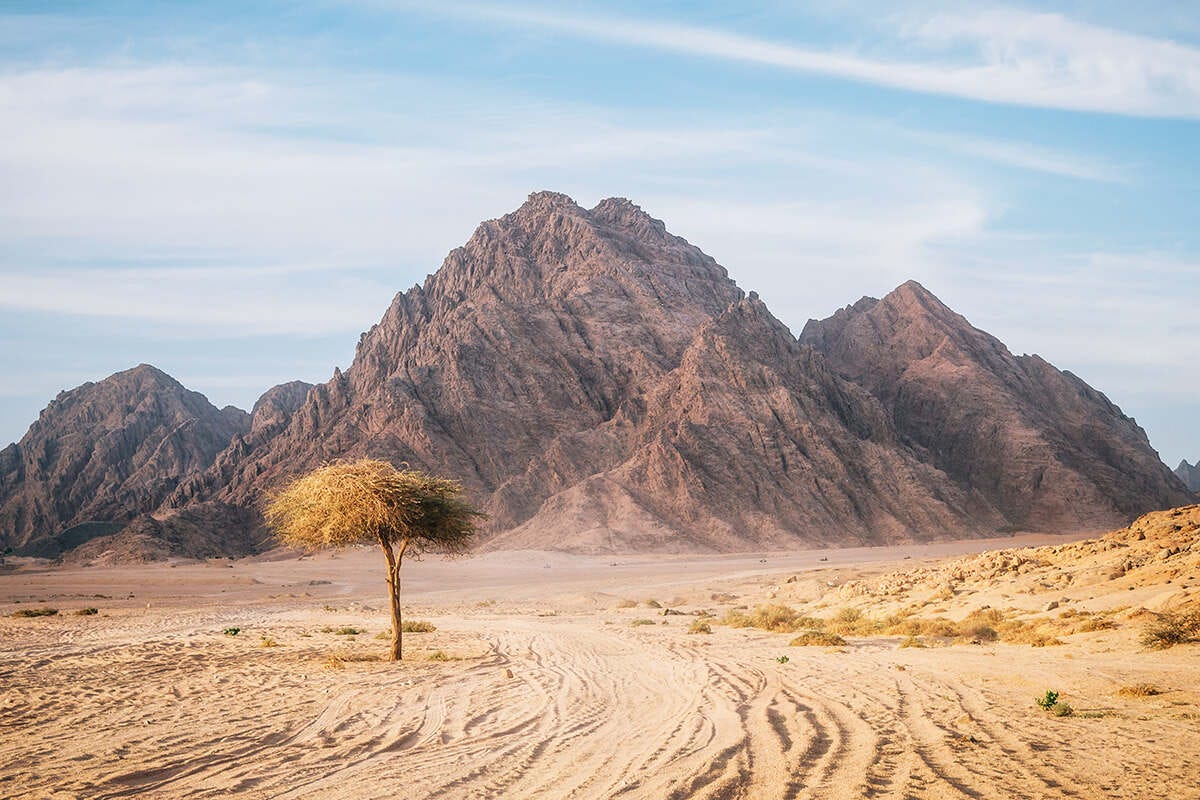
Regreening the Sinai: Interview with Ties Van der Hoeven
Having been admiring their regreening project from afar for awhile, I was honored when I got the chance to interview Ties Van De Hoeven for this podcast, and learn about the whole array of techniques they would use for such a vast restoration undertaking. (The timestamps are available at end of this post). I wrote an essay about the project :Regreening the SinaiThe Sinai is a vast, wedge-shaped, tract of desert in northwest Egypt, sandwiched between the Mediterraen Sea and the Red Sea. A third the size of Florida, it is a land of bleached yellow sand, vast rolling dunes, and ochre cliffs. Vipers and lizards roam. The rugged landscape is made of granite and metamorphic rocks, limestone and sandstone chiseled by the wind. Vegetation is sparse. Scattered sparingly through the landscape are red-berried hawthorn trees, purple flowered thornbushes, fury green mirr higher in the landscape, and the prickly zilla lining the dry, ancient riverbeds that once carried water through the lush landscape. Less than 2 inches of rain fall down from the sky in a year. Half of that usually comes in one convective storm that brings with it mudslides and landslides crashing through the landscape.This is the land that Ties Van der Hoeven and his team is working ambitiously to regreen. It started as a smaller project when Ties was invited to use his dredging skills to help rehabilitate Lake Bardawil, located in the northern Sinai, adjacent to the Mediterranean Sea. The project then morphed into a larger enterprise to regreen the Sinai, and bring rain back to the region. It is a lake-restoration dredging project that became a land-restoration ecology project that became a regional climate restoration project. “Weathermakers”, Ties calls his team.[my interview with Ties van der Hoeven in video form]Early on, Ties Van der Hoeven connected with John Liu, a videographer turned eco-ringleader, who had documented the ecorestoration of the vast Loess Plain desert in China, and founded the network of Ecosystem Restoration Camps. John connected Ties with what he refers to as his team of Jedis, a team which includes people like John Todd, the ecologist who pioneered the use of emergent communities of microbes and plants to heal ecosystems, and Millan Millan, a hydroclimatologist who helped us understand how vegetation creates rain.Working together, the code for how to regenerate the desert began to emerge. It involved jumpstarting things just enough that nature could then take over. It entailed understanding how to get numerous feedback loops going - that between soil and microbes, between fish and plants, between carbon decomposers and carbon composers, between ecology and geomorphology, and between vegetation and climate. It involved setting in motion nutrient pathways and ecosystem self-regulation. Human technology would be used not to further separate man and nature, but instead to catalyse ecorestoration.Lake Bardawil is a 19 mile long saline lagoon, separated by a three meter sand-bar from the Mediterranean, and shaped like a triangle with a fish tail. The lake contains a memory of what happened long ago. Stored in its sediment, preserved by salt, and layered over by sand, were the complex carbon chains of long dead vegetation and animals that once dotted the lush Sinai. The lake, once twenty to forty meters deep, was now just 1.3 meters deep on average.This lake history holds the seeds of regenesis. Ties’s team first step is to reawaken the slumbered sediment. Geomorphology will activate ecology. Opening inlets and creating tidal gullies will allow the water from the Mediterranean, cooler and less salty, to come in to stir up the sediment, so that the sediment can once again enter into the carbon cycle arena. Here microbes, algae, diatoms will feed on it, pooping out nutrient material. Some of the sediment will escape through the inlet and attract fish towards the lake. Tides will bring some of the lake waters onto the mudflats where microbes can break down the sediment into soil. Saltmarshes will enlarge, and attract more birds. Over time food webs will grow in the lake - seagrass, bacterioplankton, zooplankton, miobenthos, mussels, crabs, bass and mullet - more biomass and more material that can become soil. The next stage in the project is to regenerate the land, to figure out how to grow vegetation on the sandy land with little or no rain. “Water begets water, soil is the womb, vegetation is the midwife” is the aphorism that Millan Millan expounds. Soil is the womb that absorbs water and grows the vegetation. Vegetation is the midwife that facilitates in the rain. When there is enough water in a system, it will attract more water. A decent proportion of the two and a half billon cubic meters of lake sediment from Lake Bardawil will be dredged up to use as soil in the Sinai peninsula. The plan is transform the salty sediment into nutrient-rich soil. The sediment will be laid out in shade-covered fields, where a serial progession of
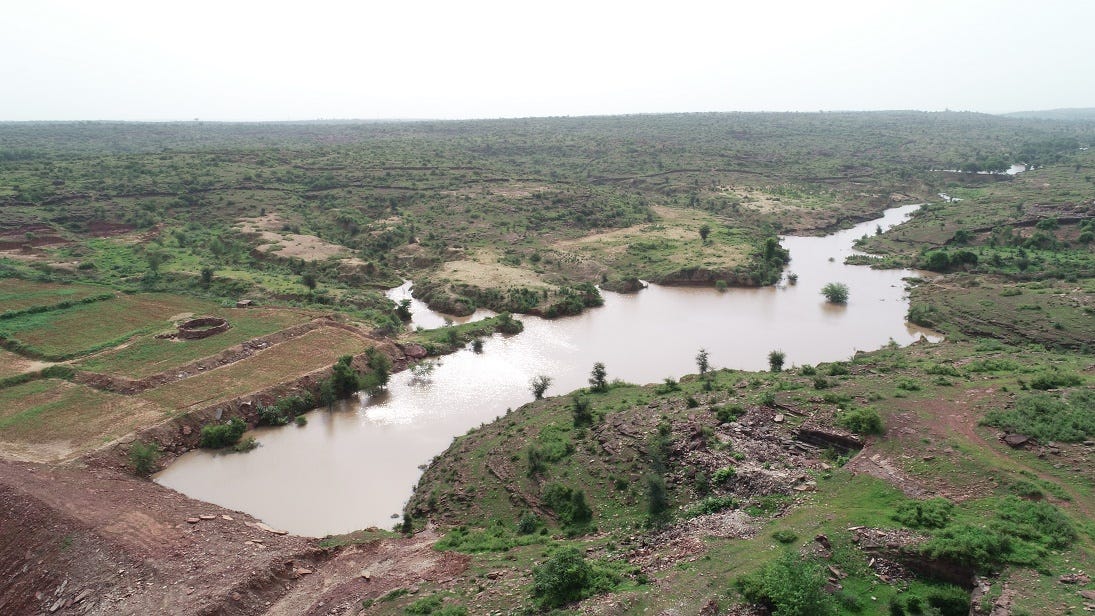
Communities can protect themselves against floods and droughts : Minni Jain interview
Not enough credence is given to a networked, community-based approach to floods and droughts. There is much more our villages, towns, and bioregional groups can do to guide the water cycle back to less extreme behavior using simple, low cost traditional methods.Minni Jain is the operations director of the Flow Partnership, an organization that facilitates communities to self-organize to deal with floods and droughts. In India the organization has helped activate thousands of communities to use water catchment and water slowing methods like johads (check dams and ponds), ditches, swales, leaky weirs, and thickets that significantly slow the rainwater so that it does not gather into housing destroying floods. These methods also help replenish the aquifers. [ a photo of a johad ]In drought prone areas, these same methods are also useful to increase the small water cycle, and to help hydrate the landscape further into the dry seasons. Johads can catch the water from wet season and help irrigate the area in the dry season. In this podcast Minni Jain expounds on her organizations’ work in India, Britain and Slovakia. We also discuss how to build a water movement through community activation, viral social media, and integration of science and people working on the ground. Minni Jain has always struck me as a very wise woman, and it was a pleasure to hear her expound on many subjects.……………………………………………………………………………………………………………We are putting on an roundtable event to clarify what are the central narratives/tales of water, and to coordinate efforts to get these stories out to the public. If you would like to participate, the event is on Nov 3rd Thu 9am-1030am (Pacific Time) Here are some of the possible narratives to think about. What would be your top 5 water narratives/tales?A. Evapotranspiration cools earth B. Small water cycle creates rain C. Hydraulic lift keeps soil wet D. Wetlands cleanse water E. Cities can recycle stormwater F. Organic soil absorbs more rainwater G. Slowing water keeps continents hydrated H. Tile drainage wastes water I. Wetlands humidify winds lessening wildfires J. Wetlands replenish groundwater K. Groundwater is our water bank L. Groundwater increases the small water cycle M. Groundwater quenches wildfires N. Forests attract rain O. Biodiversity increases small water cycle P. Drought-fire-flood cycle , aka Watershed death cycle (from Zach Weiss) Q. Absorb rainfall to lessen droughts, floods, fire, and heat R. Dams block fish, sediment, wetlands, and groundwater S. Plants regulate heat via water T. Animals changes soil which changes water cycle U. Ecological succession tends to increase small water cycle V. Healthy ecosystems creates clouds which can cool earth X. Increasing small water cycle lessens urban heat domes. Y. Increasing land evapotranspiration decreases hurricanes and extreme large rainfall. Z. Regenerative agriculture saves water…………………..This is a reader supported newsletter/podcastIf you want to download and listen to this podcast on your phone, this is on Apple podcasts, or you can look for the Substack app in the app store, and then download it. There is an app for Android and one for Iphone. On the app look for this podcast, then click on the Substack icon button on the bottom right corner to download it onto your phone.………………………………………………………………………………………………………….. Get full access to Climate Water Project at climatewaterproject.substack.com/subscribe
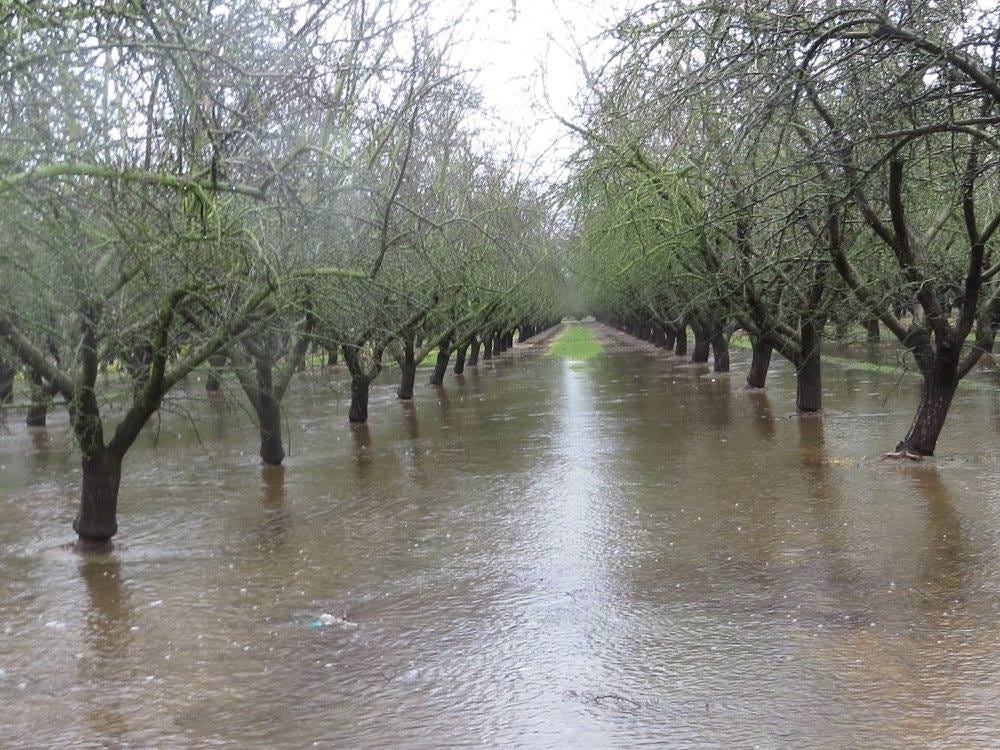
The plan to replenish our groundwater : Helen Dahlke interview
The groundwater beneath our feet, out of sight, hidden under soil and bedrock, is a golden resource, supplying our farms with irrigation water, and providing our cities with drinking water. Its invisibility and infrequent mentions in the mass media, belies its importance in keeping our society running. Perhaps because of this unseen significance, we have, all over the world, been overdrawing aquifers.Forty percent of California’s water comes from the ground. A century of overdrawing the water has led to the water table to drop hundreds of feet. In the Central Valley, breadbasket to the US, so much water has been taken out of the aquifers for farming that the bedrock has collapsed, and the ground sunk. In the photo below you can see where the ground was in 1925, 1955, and 1977.Professor Helen Dahlke, of the University of California of Davis, has been leading the (re)charge to replenish California’s groundwaters. She has teamed up with farmers, to guide the excess water from the winter rains to flood farms, thus creating temporary wetlands. Over days and weeks, that water then sinks down to replenish the aquifers.In this podcast Helen Dahlke shares about her research, the groundwater situation in California, the quest to replenish its aquifers, the droughts and intermittent large rains, the wetlands and floods, and the interdiscplinary efforts to bring back nature-based solutions to our water needs all over the world.…..If you want to download and listen to this podcast on your phone, look for the Substack app in the app store, and then download it. There is an app for Android and one for Iphone. On the app look for this podcast, then click on the Substack icon button on the bottom right corner to download it onto your phone. There is also a Climate Water Project channel on Apple podcasts and Spotify where you can download the podcast. ….You can subscribe to this newsletter for free, or if you would like to support the writing and recording of this newsletter/podcast, and help further various efforts to restore our water cycles that I am working on, you can also get a paid subscription.Readings:“A Farmers Quest to Beat California’s Waves of Drought and Deluge” .Wired magazine article: https://www.wired.com/story/farmers-quest-beat-californias-drought-flood-climate-change/“As Rains Soak California, Farmers Test How To Store Water Underground” . NPR article: https://www.npr.org/sections/thesalt/2017/01/12/509179190/as-rains-soak-california-farmers-test-how-to-store-water-underground Get full access to Climate Water Project at climatewaterproject.substack.com/subscribe
How forests increase rain : Francina Dominguez interview
Francina Dominguez, a hydroclimatologist at the University of Illinois has been figuring out where our rain comes from. She has been tracking water as it moves across our continents. The process of moisture hopping, or moisture recycling (also known as the small water cycle in other circles), is the movement of water from air to land to air to land and so on - rain falls to the land, and then evapotranspires back up to form rain again. She studied the droughts in the US Midwest in 2012, and found that the droughts there were related to the drought in California. Rains hop inland from California to the Midwest. When there is less water vapor in California, there will be a less moisture hopping inland. [1] Francina Dominguez has also been researching the behavior of rain in South America. Having grown up in Colombia, which is home to part of the Amazon rainforest, she was motivated to stop it from being chopped down. When she became a hydroclimatologist, she used climate models to study the effect Amazonian deforestation would have on the water cycle.Her simulations found something quite surprising.Climate modelers do not always know what effects will emerge out of their models. They put in various equations and various parameters into their models, and then they wait for it to emerge a result. When Francina Dominguez modeled deforestration in the Amazon she was expecting to find that moisture recycling (aka the small water cycle) would decrease as forests were chopped down. What she instead found, to her surprise, was that the moisture recycling stayed the same, and it was the wind that increased. When the trees were cut down, the wind blew in faster which made it harder for the water vapor molecules to coalesce to form rain. Deforestation led to wind increase, and the wind increase led to rain reduction. Or to state it another way as a maxim - forests makes less wind, less wind makes more rain. [2,3,4,5,6]Francina Dominguez has also studied the interaction of groundwater and climate. (listen at 51:58). At first glance it might seem that groundwater would not affect drought and rainfall patterns. After all groundwater is underground and not touching the air. But water is a complex systems phenomena, understanding one part often requires understanding how all the parts fit together. What Francina found in her models was that groundwater would have a significant effect on rain, because it was being brought up by the root systems of the vegetation, and then would evapotranspire into the air to increase the moisture content in the air. Groundwater levels thus affect drought and rainfall patterns. [7,8] Water all around the world forms a large, interconnected system, and Francina Dominguez has been helping clarify some of these interconnections.……………………………………………………………………………….Some excerpts from interview (with slight edits where there was some unclarity)Francina: All the wind patterns and the circulation is affected when you deforest, so you are actually shifting the rain downwind. In order to have rain you need convergence of this moisture in a certain region. When you deforest you are creating divergence, you are taking this moisture from the region, and having it rain downwind.The Amazonian deforestration has big local impacts, and in terms of the affect downwind of it , I don’t have enough evidence to link any kind of drought in Argentina to Amazonian deforestration. I do get asked this question a lot. When I started this research I thought for sure this is the case, but now I don’t know, none of my studies have conclusively shown this. The difference is that you have more water coming in from the ocean, so that even if you have less local water, you do not see a huge change in the precipitation in Argentina.Alpha: Why is there more water coming in from the ocean when you deforest?Francina: Because of circulation, this is the crazy thing about this problem, our hypothesis right now is that when you deforest you are creating a surface that is less rough, so the wind accelerates, so you have stronger winds over deforested regions, When you cut down all these tall trees, then you have an acceleration of the wind that then brings in more water from the ocean.Me: Doesn’t water vapor flow at heights as high as 1000m, the trees are only about 20m tall, how can something like a tree that is 20m tall affect something as high as a 1000m?Francina: Because surface roughness is super important up until the entire boundary level, which can be 2000 meter in height. So the surface roughness is a super important characteristic of the low level winds.Alpha: So by analogy you can imagine a smooth pipe and a rough pipe, where the rough pipe would create a lot of turbulent flow as water flows through it.Francina : Yes. If you deforest the Amazon, it will be warmer at the surface, you will have more convection, but on the other hand you also have less roughness. You have two types of turbulence, one type of turbulence is convection
Animals are helping our water cycle: Judith Schwartz Interview
When I was first beginning to awaken to the power of water to help restore our landscapes and climate, I stumbled upon Judith Schwartz’s turqouise book “Water in plain sight” in a bookstore, and thought, wow, there are so many wonderful ways we can help restore our water cycles. Little did I know at that point, that, to my delight, I would actually get a chance to get to know Judith, as I got immersed in the world of regenerative water and started in engaging in a variety of different water projects. It was great to be around the warmth with which she talked about water, and to see the twinkle in her eye about the subject.Judith pursued her interest in water and our ecology as a journalist, and has documented various ways we can restore our water and ecosystems in her books : “Cows save the planet”, “The Reindeer Chronicles”, and “Water in Plain Sight”, and has published articles in Scientific American, The Guardian, and Yes Magazine. In this podcast we talk about how animals can profoundly affect the water cycle, and in so doing also help restore our climate. Its an effect thats not often talked about, and that deserves more attention. Feel free to put in comment section your favorite animals that influence the water cycle. Here’s an excerpt from her book “The Reindeer Chronicles” on how reindeer affect the water, when its in the form of snow, and can thus affect the temperature of the landscape as a second order effect.“Reindeer can also help maintain permafrost by crushing the snowpack with their hooves, according to Sergey and Nikita Zimov, father-and-son research scientists in Russia. The Zimovs developed a project in the late 1980s, in which they brought herbivores that thrive in arctic conditions—reindeer, moose, Yakutian horse, bison, musk ox, yak, Kalmykian cow, and sheep—to their North Siberia reserve. The goal of Pleistocene Park, as they call it, is to re-create the productive Mammoth Steppe ecosystem that predated human expansion into far northern latitudes. The blanket of snow that cloaks the tundra for much of the year acts as an insulator, and this protects the soil surface from the cold, Nikita Zimov explains in a 2017 interview with PRI’s Living on Earth. “When animals trample down the snow, they actually thin that layer of snow, making it dense, and this allows much deeper freezing during the winter.” This sustained chill can extend snow cover to the spring months, which means maintaining higher surface albedo longer into the year. It also keeps the permafrost frosty, so that the microbial life in frozen soil doesn’t activate and consume organic matter, a process that releases greenhouse gases. In an experiment that compared areas with and without herbivores, the Zimovs found that soil temperature in places where animals grazed was lower by at least 15°C (27°F).”Judith Scwartz’s website is www.judithdschwartz.comAwhile back we were making a list of the top 100 ways to restore the water cycle. Some of the items on the list were animals. https://climatewaterproject.substack.com/p/top-100-methods-to-restore-the-water………………………………………….This Climate Water Project newsletter/podcast covers many aspects of regenerative water. And some of the ideas build on each other, so you can browse over archives at https://climatewaterproject.substack.comYou can subscribe for free, or you can help restore our water cycles by supporting my work in writing and putting out these newsletters/podcasts, as well as my work on various regenerative water projects, with $5 a month by subscribing. Or you can also help out by supporting me on patreon at https://www.patreon.com/watercology.Thanks! Get full access to Climate Water Project at climatewaterproject.substack.com/subscribe
Stories of our watersheds: Elizabeth Dougherty interview
In this podcast I interview Dr. Elizabeth Dougherty, executive director of WhollyH20. She was instrumental in helping get California to pass its greywater laws. She did this by bring different demographics together - the hippies who knew about what to do with water, with the Stanford engineers who were happy to learn about these methods, and the government officials who could implement the new water laws that allowed these new ways of working with water. She talks about getting Brock Dolman, now a water legend who runs the Water Institute at the Occidental Arts and Ecology Center, who back then was a long haired bare-foot hippie (edit: Brock Dolman wrote me to say he actually wasn’t bare foot back then ) to put on suits in order to be heard properly by formal administrators and public utilities workers. Elizabeth got her PhD in anthropology, and is interested in peoples relationship with the water cycles. Her organization has more recently worked with getting communities to connect with their watersheds, and talk about the stories of water in their neighborhoods, with one common, usually largely unknown, story being that neighborhoods have paved over their creeks. Telling these stories can help get a process called “daylighting” to bring these creeks back to the surface. In getting communities interested about their watershed, they learn about the various aspects of the water cycle, and are more willing to get water projects activated.Elizabeth also talks about the intersection of the diversity and BIPOC (Black, Indigenous and People of Color) movements, with the restoring-our-water-systems movement.We also talk about techniques you can use to get your local government to help restore the water cycle in your local neighborhood. Get full access to Climate Water Project at climatewaterproject.substack.com/subscribe
Pee, Poo, Wastewater as Nutrient Water: Nik Bertulis Interview
Nik Bertulis is a permaculture water educator, a designer of integrated water systems, implementing greywater, rainwater, stormwater and wetland systems. He cofounded Dig.coop a water conservation systems cooperative. He has designed many innovative water solutions for our environment.We talk about the importance of closing the nutrient cycles in our environment. What our society considers waste, our pee, our poo, our sewage, can be useful nutrients for the vegetation and soil. The distribution of pee and poo of animals moving around support the functioning of our ecosystems. Nik discusses how we can clean our sewage with nature’s natural biology and wetlands rather than with synthetic chemicals. Nik Bertulis and I will be teaching a “Climate Permaculture” class on Sept 17th 11am-1pm, 2022 . Permaculture is an approach to land management by harmonizing with nature’s ecosystem. Climate permaculture is an approach to climate by harmonizing with nature’s natural connections and cycles between land and atmosphere. For more info : https://www.eventbrite.com/e/413136320857 …………You can see the archives and past podcasts of this newsletter at https://climatewaterproject.substack.comYou can subscribe for free, or help support this newsletter and my regenerative water projects with a $5 a month subscription Get full access to Climate Water Project at climatewaterproject.substack.com/subscribe
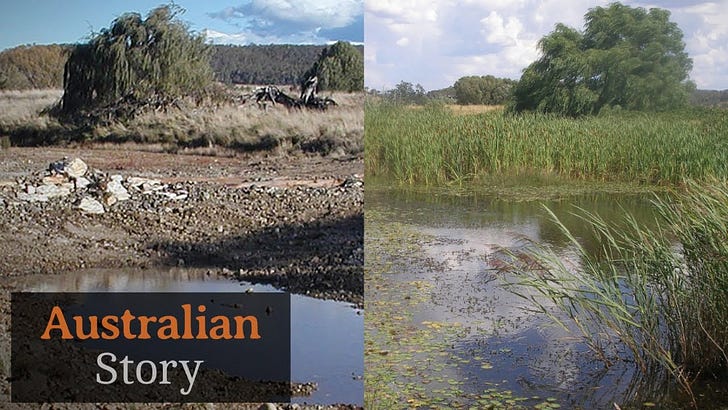
Natural Sequence Farming, Climate Change & Water : David Maher interview
In this podcast I had the honor of talking with David Maher about his work with Natural Sequence Farming, which is a landscape system to restore natural water cycles. We talk about how the water cycles impact drought, heat waves, rain, storms, and extreme weather. He advocates for urgent reversal in the global paradigm of drainage in the face of ecological and climate collapse, and is a firm believer that humanity either rehydrate the drained earth or face eventual desertification. I believe his voice needs to be heard a lot more in the regenerative water movement.David Maher is a master of rehydrating landscapes and replenishing groundwater, with two decades of experience in the field. He studied and worked with Peter Andrews (of Natural Sequence Farming). He learnt with aborigines who understood how the water moved in Australian landscapes. He has studied sustainable agriculture, terraced aquaculture, Fukuoka’s work, and learnt from Hakai Tane, and Tex Skewthorpe. Hakai Tane’s influence opened him up to systems science and complexity theory in understanding the water cycle. Michael Kravcik, Jan Pokorny, and Wilhelm Ripl visited them Peter Andrews and their work in Australia, which further helped him integrate the various aspects of the water cycle into his understanding.I find his way of framing Natural Sequence Farming quite intriguing, and also the way he looks thermodynamically at what is happening in the atmosphere and land in regards to water. He talks about how the land will heat up because we are not transferring away as much of that heat through evapotranspiration (we are not turning the heat of the land into latent heat), this means that we upset various heat balances on the planet, changing the temperature gradients, which leads to more extreme weather.Time stamps:1:30 Natural Sequence Farming16:35 Wetlands42 thermodynamics and water50 evapotranspiration and droughts, heat waves1:02:40 dissipative structures, hurricanes, extreme rain, atmospheric rivers, water cycles, nonequilibrium thermodynamics. He discusses the interesting the idea that as we dissipate less energy in the landscape as wetlands disappear, then we will dissipate more energy in the atmosphere, and have more extreme weather events.There are some more slightly advanced topics in this podcast so looking at some of the previous articles in this newsletter htts://climatewaterproject.substack.com can be useful .You can download this podcast on the Subtack app. It is on Apple podcast and Spotify as the Climate Water Project podcast.Also here is a glossary of terms used in this podcastr strategist - organisms that reproduce quickly in unstable environmentsk strategist - organisms that are living in stable environments. As an example you can have weeds and grasses as an r strategist that comes in first into environment. They then pave the way for k strategists which are the trees.leaky weir - a structure in the river to slow down the water like eg. check dam, bed control structure, and beaver dam analoguesbiotic pump - This hypothesis states that when water vapor, evapotranspired from forests, condenses to form clouds it creates a low pressure system that attracts ocean winds to it, that carry more water vapor to the forests. So forests create their own rain.second law of thermodynamics - entropy always increasessensible heat - the heat you can feel in the atmospherelatent heat - when liquid water turns into water vapor, some of the heat is stored as latent heat. When water vapor condenses back into clouds it releases that latent heat.short water cycle/ small water cycle - water that evapotranspires from the land, then falls back to land as rain, and so on.nonequilibrium thermodynamics - the study of systems and how they transport heat and matter when a system is out of equlibrium. The earth is in state of nonequilibrium as the sun is constantly hitting it with energy.dissipative structure - a stable state of a system in a nonequilibrium thermodynamic system. So for instance a hurricane is a stable structure that happens when there is a large flow of water vapor flowing upwards through the eye of the hurricane. It might be argued that the small water cycle is a dissipative structure.Further readingNatural Sequence Farming https://www.nsfarming.com/Peter Andrews “Back from the brink” https://www.goodreads.com/book/show/3747340-back-from-the-brinkABC news show about Natural Sequence Farming Wilhelm Ripl “Water the bloodstream of the atmosphere” https://pubmed.ncbi.nlm.nih.gov/14728789/ for a thermodynamic perspective on water. Go to sci-hub.st/ and type in the doi number of the paper to get the whole paper to read for free (sci-hub allows you to read any scientific paper for free)Kravick, Pokorny, Kohutiar, Kovac, Toth “Water for the recovery of the climate: a new water paradigm” https://bio4climate.org/2017/05/13/water-for-the-recovery-of-the-climate-a-new-water-paradigm/…This is a reader supported publication. Please consider subscribing
Rehydrating California to prevent wildfires
In this podcast episode I discuss a plan to rehydrate California in order to help lessen the wildfires that have been hitting the state in the past few years. Elements of the strategy are also applicable to elsewhere around the world.Share in the comments section your thoughts on this plan, and other ideas for rehydrating CaliforniaStrategy:* Bring back the fog. California has lost a third of its fog over the last few decades [ref 1,2]. Vegetation uses the fog to keep hydrated. [ref 3-5] This can be done by lessening the urban heat dome effect in coastal California cities. Regreening our towns will decrease the heat emitted from them, which lessens fog. [ref 6]* Bring back wetlands in Central, Eastern and Southern California. Wetlands were once prevalent in Central California [ref 7] .Wetlands help create more humid air. As the winds, the Santa Anas and the Diablos, blow past these areas, they become less dry and hot. When the winds hit the mountains, they are less likely to fan wildfires. One way to bring back wetlands to the Central Valley is to have aquaponic wetland farms there. [ref 8] One way to bring back wetlands in Eastern california is to stop piping water from there to Southern California. Rivers will naturally create more wetlands if not dammed. Re-introducing beavers also helps rivers flow into floodplains and create wetlands.* Stop damming and piping so much of the water to Southern California cities and Central California farms. This leaves more water to hydrate the wilderness, lessening fires there. Places like Owens valley which got desertified for LA’s sake, can get regreened. Owen’s lake can come back naturally. Also undoing the dams will allow the sediment to create soil to grow more vegetation. Allowing rivers to overflow into floodplains hydrates the floodplains, and helps grow more vegetation there. Allowing rivers to run and overflow again will naturally lead to more wetlands in Central California again.* Stop using tile drainage systems in Central California farms which pipe out water from the soil to the ocean, so that the water is not used as efficiently in the landscape. Increasing the soil organic matter in farms will allow them to absorb more water and create less runoff. They then need a lot less water, and do not need to take so much water from dams. Currently 40% of Californias water is used for farms. This percentage can be much less while keeping the input the same.* Replenish aquifers in Central California by allowing rivers to overflow onto farmland during wet season. [ref 9] This creates a temporary wetlands on the farms, and allows the water to drain into aquifers below. As aquifers refill, farms can use more water from below rather than have it piped from dams elsewhere.* Guide rainfall back into the landscape in urban areas, farm areas, and in the wilderness. Swales, terraces, berms, wetlands, raingardens are various ways to do this. Guide our storm drainage to refill aquifers and rehydrate the environment rather than runoff to ocean. As more rainfall is in landscape there will also be more evapotranspiration, which can then add to the humidity in the air to create more rainfall downwind and inland.* Use the aquifers below Los Angeles and San Diego to store rainwater. And guide the stormwater into wetlands which clean the water, and then pass it to aquifers below. Billion dollar stormwater wetland projects are currently underway in LA. This will allow southern california to pipe less of its water from dams elsewhere. Those dams will then not dry up so much of the wilderness. * Rewild California. As more soil builds and vegetation grows, the rainwater gets slowed down. It seeps underground, and then can come out months later to keep rivers flowing year round into dry and fire season. This year round flow keeps the landscape hydrated. Also the vegetation evapotranspires water to create more rainfall. There is an effect called moisture hopping where water vapor is transpired into the air to create rainfall downwind. Water from the ocean is brought inland that way [ref 10,11] Ocean water is brought inland on a conveyor belt which is activated by a continual chain of vegetation growing from shore to inland. This then creates rain inland which can help lessen wildfires. The small water cycle, which is where water moves from land to sky and back to land again, can be restored to its full capacity. [ref 12,13] You can subscribe to this newsletter for free or from $5 a month. Money goes to supporting the regenerative water movement.References* "Clearing and present danger: Fog that nourishes California redwoods is declining" Tennesen Sci.American(2010) https://www.scientificamerican.com/article/fog-that-nourishes-california-redwoods-declining/ * "Climate context and ecological implications of summer fog decline in coast redwood region" Johnstone, Dawson PNAS March 9, 2010 107 (10) 4533-4538; https://doi.org/10.1073/pnas.0915062107* Berry ZC, Emery NC, Gotsch SG, Goldsmith GR.
Green & Gray Infrastructure for water : with Angelina Cook
In this podcast I interview Angelina Cook, who has been working tirelessly for many years protecting the waters in Mt Shasta and McCloud area, where she is on the Water Council.We have a discussion around grey and green infrastructure of water. Gray infrastructure is human built structures to manage our water system. Green infrastructure, also called nature based solutions, is nature managing our water systems. Gray parts of the infrastructure use dams to store water. Green parts of the infrastructure use wetlands and aquifers to store water. Gray infrastructure uses chemical sewage plants to clean the water, green infrastructure uses wetlands, microbes, fungi, mussels etc to clean the water. Gray infrastructure uses electricity and aqueducts to move water. Green infrastructure uses the sun to evaporate the water and the wind to move it around. Gray infrastructure uses levees, deeper channelized rivers, and dams to do flood control. Green infrastructure uses floodplains, wetlands, rich soil, and vegetation for flood control.Here is a list of resources and references on green infrastructure and nature based solutions.Conservation International on green-gray infrastructure https://www.conservation.org/projects/green-gray-infrastructureEnvironmental Protection Agency (EPA) in the US on “Why you should consider green infrastructure for your community” https://www.epa.gov/G3/why-you-should-consider-green-stormwater-infrastructure-your-communityEPA list of green infrastructure funding opportunities https://www.epa.gov/green-infrastructure/green-infrastructure-funding-opportunitiesAAAS (American Association for the Advancement of Science) on “Barriers to equitable implementation of green and nature based solutions” https://www.aaas.org/events/community-and-organization-panel-discussion-green-infrastructureFrantzeskaki, Niki. "Seven lessons for planning nature-based solutions in cities." Environmental science & policy 93 (2019): 101-111 https://www.sciencedirect.com/science/article/pii/S1462901118310888“A review of nature-based solutions for urban water management in European circular cities : a critical assessment based on case studies and literature” by Hasan Volkan Oral et al https://iwaponline.com/bgs/article/2/1/112/71868/A-review-of-nature-based-solutions-for-urban-water…If you would like to support this work please consider being a paid subscriber of this newsletter or joining my patreon at www.patreon.com/watercology Get full access to Climate Water Project at climatewaterproject.substack.com/subscribe
Land use and climate change : an interview with Millan Millan
Meteorologist Millan Millan’s research work discovered that rain was disappearing because land use was affecting evapotranspiration rates. In this episode he talks about what we need to do to restore rains and ecosystems.In the podcast excerpt below he talks about when he was working for the European commision, and was asked why the rain was lessening.Millan Millan : “The information came in that there was a perceived loss of Mediterranean storms, and I was assigned to look into it. Most of the Mediterranean used to be covered with marshes as far as 2000 as years ago, and at that time it rained quite a bit, equivalent to 2000 liters per square meter per year. Recently, as people filled in the coastal marshes and lagoons, as power plants, oil refineries, and housing were built, the amount of water being driven in by the sea breeze went down, as did the frequency of the storms.As sea breezes blows inland from the sea, the air has a water content of 14 grams per kilogram of air. It heats up by 16 degrees by the time it reaches 80 kilometers inland, which then requires a water content of 21 grams per kilogram of air to condense into rain.The sea breezes develop because there is differential heating between land and coast. That differential heat drives the sea breeze, and at the same time it contributes to heating up the air mass that comes in from the sea, and that added heat, what it makes, is that the cloud condensation level starts going up. And if you overheat the ground because you get rid of vegetation or you build up concrete surfaces, they add heat but they don’t add moisture. In the old times you have a certain amount of heating, and a certain amount of moisture added from vegetation. The land cools itself by evapotranspiring the water. Eventually the air humidity reaches a condensation point and you have a summer storm developing some time in the afternoon. And that cycle would go on for almost every day. And the following day the moist soil would contribute to the vegetation transpiring and put the moisture into the atmosphere again, and you would see the same amount of water going around and around for many days during the summer. If you change the land use cover you change that cycle. Our calculations show that as soon as you change an area 6 miles by 6 miles the precipitation downwind is already affected.That is also true in the Amazon. They find that as soon as they cut down about 36 square miles, precipitation stopped over that area. In the tropics 65% of the water that comes down during the rainy season in the summer, is water that precipitated during the three previous days. So 65% of the 2000 liters per square meter per year of rain, which is about 1300 liters per square meter per year, is the amount of water the forest requires to keep recirculating so that your net gain is the difference. The water that ends up in the river is the other 35%, capturing 700 liters.Land use alters hydrological cycle immediately. When you cut a forest, or when you build a road, there is immediate change of a little bit. People say its too little, but its not too little, when you add a little, and a little bit more, eventually you hit a threshold, a critical point, and after you cross that point, your regional precipitation disappears.Our results was first presented in San Diego, California in 1997, and the head of US forest service at the time, a fellow called Miller, said “if you what you said applies in California we will have serious problems with forest fires in about 25 years”Reference:Millan Millan’s research paper “Extreme hydrometeorological events and climate change predictions in Europe” ( https://traffic.libsyn.com/secure/museecology/2014_con_PORTADA_J.Hydrol.pdf Get full access to Climate Water Project at climatewaterproject.substack.com/subscribe