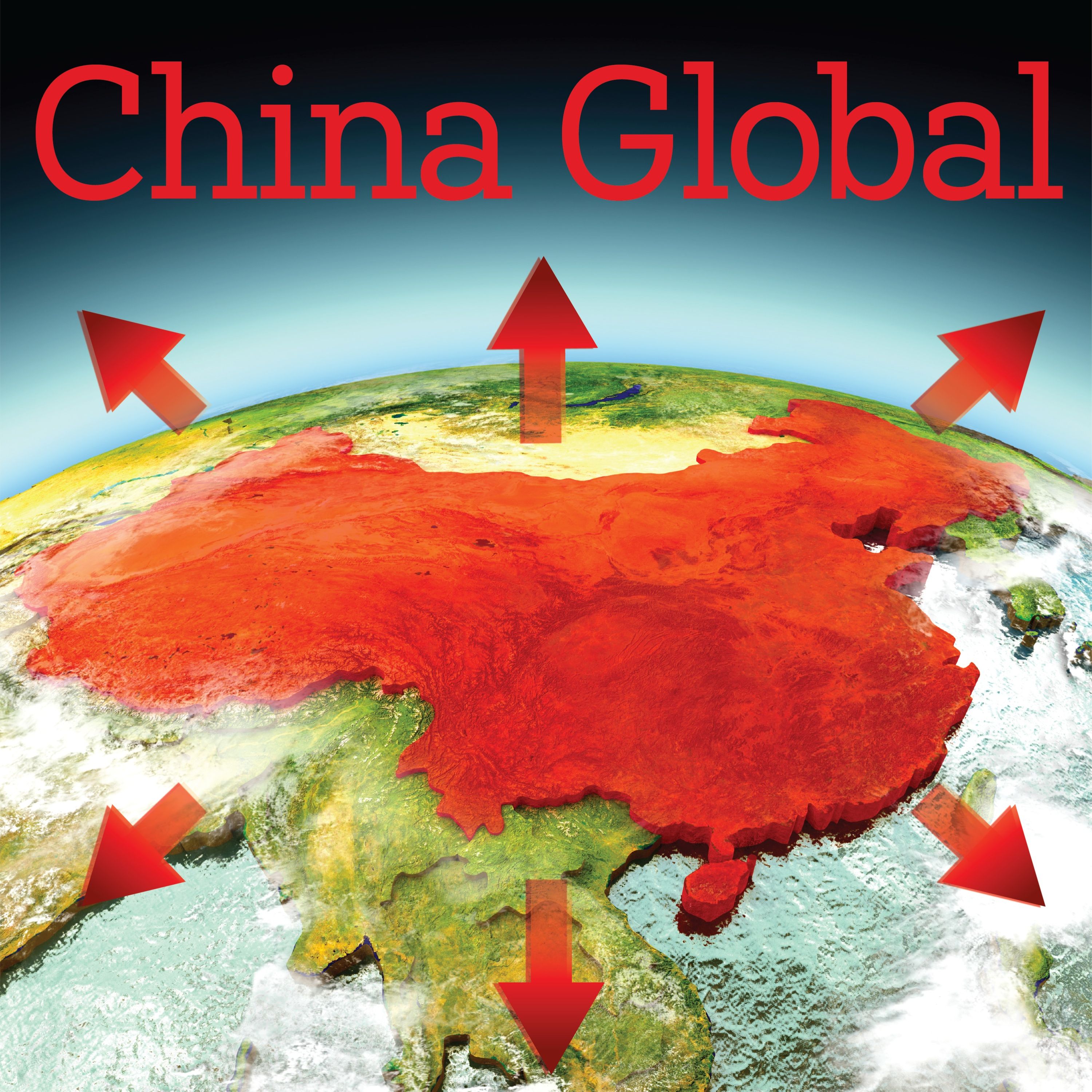
China Global
134 episodes — Page 3 of 3
Ep 33China’s Global Security Initiative
[1:51] Beijing’s Objectives[5:43] China’s Vision for the International Order[8:49] GSI’s Relation to US-China Competition[10:45] "Meat and Bones" over Time[14:47] “Indivisible Security”[16:37] India and Others' Perspectives on GSI[21:27] Sino-Russian Alignment: Implications for China’s Global Security Governance Ambitions?
Ep 32China’s Relations with the Philippines under Ferdinand “Bongbong” Marcos, Jr.
Episode Highlights:[1:30] Duterte’s China Policy[4:36] Change under the New Marcos Government?[6:53] Philippines’ Relations with the United States[8:45] Public Opinion in the Philippines toward China[14:10] Joint China-Philippines Energy Exploration Talks[17:15] Railway Projects Loan Agreements with China[19:14] Future Developments
Ep 31Banking on Beijing: The Aims and Impacts of China’s Overseas Development Program
Though China’s overseas development program has a long history, it greatly expanded after the launch of the Belt and Road Initiative in 2013. Since then, debates have emerged among policymakers, scholars, and journalists about the objectives and impacts of China’s lending and grant-giving activities. Various charges levied against Beijing include that its development programs seek to prop up corrupt and authoritarian regimes and saddle countries with unsustainable debts. Some observers also claim that Chinese projects are not substantially contributing to economic development in recipient countries. Uncovering the facts is challenging because China’s overseas financing is shrouded in secrecy. Gathering data is possible, but enormously time-consuming. In this episode, Bonnie Glaser speaks with Dr. Bradley Parks, executive director of AidData, where he leads a team of 35 program evaluators, policy analysts, and media and communication professionals who work with governments and international organizations to improve the ways in which overseas investments are targeted, monitored, and evaluated. Parks collaborated with a large team of experts to evaluate China’s development programs through rigorous evidence and presented the research results in a book titled, “Banking on Beijing: The Aims and Impacts of China’s Overseas Development Program. [2:02]: Methodology and Data Set [7:05]: Differences between China's and OECD Countries' International Development Finance [11:39]: Changes in Chinese Overseas Lending [15:11]: Impact on Recipient Countries' Economic Growth [21:33]: Objectives [29:11]: Reevaluating and Looking Ahead
Ep 30China's Global Development Initiative
China’s Global Development Initiative (GDI) was launched by President Xi Jinping on September 21, 2021. In a speech at the General Debate of the 76th Session of the UN General Assembly, Xi stated that, in the face of the severe shocks of the coronavirus pandemic, the world needed to work together to steer global development toward a new stage of balanced, coordinated, and inclusive growth. The GDI was meant to achieve those objectives as well as the United Nations' 2030 Agenda for Sustainable Development. A Group of Friends of the GDI was launched at the UN in January, and more than 55 countries have joined it to date.In today’s episode of China Global, Bonnie Glaser speaks with Dr. Yu Jie to discuss the GDI, which like most PRC initiatives, began as a bumper sticker and was described using vague and abstract language. Dr. Yu is a senior research fellow on China in the Asia-Pacific Program at Chatham House in London.[1:26] Beijing’s Objectives[5:54] GDI's Relation to the BRI[7:34] China's Resources into GDI[10:31] UN 2030 Agenda for Sustainable Development[14:06] Group of Friends of the GDI and Interested Countries[20:04] Origin of the GDI
Ep 29Lithuania: How Beijing Deals with Small States via Economic Pressure
Lithuania-China relations is an interesting case study for how Beijing deals with small states and how it applies economic pressure on target countries to change policies that it views as damaging to Chinese interests. Tensions in Lithuania-China relations arise from numerous sources, including the decision by Vilnius to withdraw from the 17+1 mechanism between China and Central and Eastern European countries and its agreement to allow Taiwan to establish a representative office in Vilnius under the name Taiwanese Representative Office. In today’s episode of China Global, Bonnie Glaser speaks with Ambassador Diana Mickevičienė to discuss the drivers of the Lithuania-China friction as well as the circumstances surrounding her departure from China. Ambassador Mickevičienė currently serves as the Lithuanian ambassador to China, operating in exile from Vilnius.
Ep 28US Strategy toward China under the Biden Administration
On May 26, US Secretary of State Tony Blinken delivered a long-awaited speech on the Biden Administration’s approach to the People’s Republic of China. Separate from the speech itself, there is a China strategy document that remains classified. Blinken’s speech, which did not contain any surprises, introduced a new catchphrase for the Biden administration’s strategy toward China, the only country “with both the intent to reshape the international order and, increasingly, the economic, diplomatic, military, and technological power to do it.” This catchphrase, “invest, align, and compete,” has three key features: invest in American strength at home, align with our network of allies and partners, and rely on these two key assets to compete with China to defend our interests and build our vision for the future. In today’s episode of China Global, Dr. Evan Medeiros joins Bonnie Glaser to discuss the Biden Administration’s strategy toward China. Dr. Medeiros is the Penner Family Chair in Asia Studies in the School of Foreign Service and the Cling Family Distinguished Fellow in U.S.-China Studies at Georgetown University. He previously served in the Obama administration, where he served on the staff of the National Security Council as Director for China, Taiwan, and Mongolia, and then as Special Assistant to the President and Senior Director for Asia. [1:45] Objectives of the US-China Strategy under the Biden Administration[5:58] Differences between the Biden and the Trump Approach toward China[9:55] Beijing’s Response to Blinken’s May 26 Address and China’s Perception of the US[13:18] Potential Opportunities for Cooperation between the US and China[17:24] Critiques of the Biden Administration’s US-China Strategy[26:21] China’s Strategy toward the United States
Ep 27China’s Relations with the Two Koreas
South Korea’s President Yoon Suk-yeol formally began his five-year term on May 10, 2022. His predecessor, former president Moon Jae-in, attempted to strike a balance between ties with China and the United States during his term, but whether he was able to successfully advance South Korean interests is unclear. Concurrently, public attitude in South Korea toward China has continued to harden, as Yoon pledged to prioritize the country’s alliance with the United States. China’s relationship with North Korea also seemed to become more distant due in part to the pandemic, but despite this, Beijing has not criticized North Korea’s missile tests—it has only generally urged all parties to exercise restraint.To discuss China’s policy toward and relations with both North and South Korea, Bonnie Glaser speaks with Dr. Seong-hyon Lee, a visiting scholar at Harvard University’s Fairbank Center for Chinese Studies and a fellow at the George H.W. Bush Foundation for US-China Relations.Marker NotesChina's Relations with South Korea 1:51.442China's Response to Missile Tests 10:08.780China's Relationship with North Korea 14:02.939Looking Ahead 26:16.467
Ep 26China-Solomon Islands Deal and PRC Interests in the Pacific Islands
On April 19, the PRC signed an agreement with the Solomon Islands that has prompted concerns in the United States, New Zealand, and Australia about growing Chinese influence that some worry could lead to a Chinese military presence in the Solomons. The Pacific Islands countries are scattered over a broad expanse of ocean and are widely seen as strategically significant. Yet, the region only receives episodic attention from the United States and other leading countries. Beijing has stepped up its engagement in the region, and there is a pressing need to understand the nature of that engagement and its implications.In this episode, Bonnie Glaser speaks with Professor Anne-Marie Brady, professor at the University of Canterbury in New Zealand on China’s interests, activities, and role in the Pacific Islands as well as the recent deal between China and the Solomon Islands. Among other issues, Professor Brady is a specialist in Chinese politics and China-Pacific relations, and her groundbreaking work on Chinese interference in New Zealand and other countries is globally renowned.Marker Notes[1:44] China's Interests and Activities in the Pacific Islands[9:00] Recent Deal between China and the Solomon Islands[13:56] China-Pacific Relations[21:30] Attention from the United States
Ep 25Implications of Ukraine War, US-China Competition, and Southeast Asia’s Role
In this episode, Bonnie Glaser hosts Singapore’s Ambassador Bilahari Kausikan to discuss several international trends and their strategic significances. They discuss the implications of the war in Ukraine for the global order, particularly the Indo-Pacific, the consequences of growing strategic alignment between China and Russia, the possible endgame of the US-China strategic competition, and Southeast Asia’s future. Ambassador Kausikan is a former Ambassador-at-Large in Singapore’s Ministry of Foreign Affairs. Prior to this role, he served as the Second Permanent Secretary and then Permanent Secretary of the Foreign Ministry. He has held a variety of appointments during his career, including as Singapore's Permanent Representative to the United Nations in New York and as Ambassador to the Russian Federation. Currently, Ambassador Kausikan serves as Chairman of the Middle East Institute, an institute affiliated with the National University of Singapore.
Ep 24EU-China Relations: The Summit and What Comes Next
Europe’s relations with China have been on a downward trajectory the past few years. The list for this decline is long: Europe’s concerns about human rights violations in Xinjiang, Chinese sanctions on EU parliamentarians, European uneasiness about PRC plans to dominate key strategic technologies, Chinese rebuff to international law in the South China Sea and its military pressure on Taiwan. Russia’s unprovoked invasion of Ukraine and the resulting civilian causalities further strained relations between China and the EU as Beijing abstained in the UN Security Council and the UN General Assembly and blamed the conflict on the five waves of NATO expansion. On April 1, the 23rd EU-China summit took place via video conference. President of the European Council, Charles Michel, and President of the European Commission, Ursula von der Leyen, accompanied by High Representative Josep Borrell, met with Chinese Prime Minister Li Keqiang in the morning and Chinese President Xi Jinping in the afternoon. Borell later described the meeting as a dialogue of the deaf—the Chinese side had little interest in talking about the war in Ukraine, preferring to discuss shared EU and Chinese interests. In an effort to drive a wedge between the US and the EU, Xi also called on the EU to form its own perception of China and adopt an independent China policy. In this episode, Bonnie Glaser speaks with Janka Oertel, Director of the Asia Program at the European Council on Foreign Relations to further discuss the April 1 EU-China summit and analyze the overall EU-China relationship.
Ep 23China-India Ties: Wang Yi’s Visit Highlights Strains
On March 25, China’s Foreign Minister Wang Yi visited India and met with India’s Foreign Minister Subrahmanyam Jaishankar and National Security Adviser Ajit Doval, marking the first high-level visit by a Chinese official to India since the 2020 Galwan Valley incident in which both Chinese and Indian soldiers were killed. Since the 2020 incident, both militaries have ramped up troops, weapons deployments, and infrastructure in the disputed region. Arranged at the initiative of Beijing, Wang Yi’s visit took place against the background of the ongoing war in Ukraine, in which both China and India have adopted stances on Russia’s invasion that are at odds with those of the United States, Europe, and some countries in Asia. To discuss Wang Yi’s meetings in India and the trajectory of the bilateral China-India relationship, Bonnie Glaser will speak with Dr. Tanvi Madan, senior fellow in the Project on International Order and Strategy and director of The India Project at Brookings Institution. She is author of the book “Fateful Triangle: How China Shaped US-India Relations during the Cold War.”
Ep 22China’s Ukraine Balancing Act
On the orders of Russia’s President Vladimir Putin, the Russians invaded Ukraine just after the close of the 2022 Winter Olympics in Beijing and a few weeks after Putin and Xi Jinping inked a sweeping joint statement that challenged the United States as a global power, opposed NATO enlargement, and condemned liberal democracy as a model for the world. To investigate China’s stance on the conflict and to better understand the interests that Beijing is trying to protect and advance in the Ukraine crisis, Bonnie Glaser will speak with Dr. Evan Feigenbaum, vice president for studies at the Carnegie Endowment for International Peace, where he oversees research in Washington, Beijing, and New Delhi. Dr Feigenbaum previously held several roles in the State Department in the George W. Bush administration.
Ep 21China in the Arctic: Ambitions and Strategy
Link to the Arctic development white paper: 中国的北极政策-新华网 (xinhuanet.com)
Ep 20A Discussion with Emily Feng, NPR's Beijing Correspondent
Foreign press correspondents reporting in China experience a host of challenges—and not just because of the Covid-19 pandemic and China’s rigorous “zero COVID” policy. As the Foreign Correspondents’ Club of China’s recently released annual report on media freedom details, foreign journalists in China are encountering increasingly stringent visa restrictions, harassment, surveillance, and risk of expulsion or even arrest. Emily Feng joins Bonnie Glaser on China Global to discuss the challenges facing reporters in China today, as well as trends in Chinese society and Xi Jinping’s first ten years in power. Emily is NPR’s Beijing Correspondent after having previously worked for the Financial Times. She covers everything from semiconductors to girl bands and Chinese coal mines and has earned many awards, including a Human Rights Press Award and a Gracie Award for her coverage of the Covid-19 pandemic.
Ep 19China's Vision for the International System
The post-World War II international system was created primarily by liberal democracies committed to the rule of law, free markets, and universal human rights. They launched multilateral institutions to advance their shared values and norms. China has long said that it views the international system as unjust and unfair, but for a long time, it had little ability to change it. Today, China not only has the means, but its leader Xi Jinping—who is likely to get a third five-year term in power this fall at the 20th National Party Congress—may also have a vision for a radically altered international system. A new book called The World According to China makes the case for this proposition. Bonnie Glaser speaks with the book’s author, Dr. Elizabeth Economy, on China’s approach to the international system. Dr. Economy is a senior fellow at the Hoover Institution at Stanford University. She is currently on leave and is serving as senior advisor for China to the Secretary of Commerce. Views expressed are her own.
Ep 18China in 2022: Domestic and Foreign Policy
The Beijing Olympics will be held next month, and China faces both the challenge of Covid-19 spreading to several Chinese cities and growing criticism of its policy in Xinjiang, which has led some countries—including the United States—to declare diplomatic boycotts. Taking place in March, the National People’s Congress will have important implications for China’s economic policy, among other issues. Personnel rotations around the country are already beginning to take place and will continue throughout the year, as the Chinese Communist Party prepares for the all-important National Party Congress slated for the fall. Apart from bestowing a third five-year term in power to Xi Jinping, what else should we expect from the upcoming Party Congress? Jude Blanchette speaks with Bonnie Glaser on the key developments of 2022. He holds the Freeman Chair in China Studies at the Center for Strategic and International Studies. His first book is China’s New Red Guards: The Return of Radicalism and the Rebirth of Mao Zedong.
Ep 17China in Latin America and the Caribbean
China’s engagement with countries in Latin America and the Caribbean has grown significantly in the past decade. The Chinese government describes its cooperation with the region as focused on numerous areas: trade and investment, agriculture, energy, infrastructure, manufacturing, and technological innovation. Nineteen governments across Latin America and the Caribbean have joined Xi Jinping’s signature Belt and Road Initiative. Competition between China and Taiwan in the region remains fierce, with eight countries maintaining diplomatic relations with Taipei and the remaining 25 recognizing Beijing. Nicaragua was the latest to switch recognition to the PRC on December 9, 2021. US concerns about Chinese activities and objectives in the region are on the rise. In the final year of the Trump administration, the United States issued a strategic framework for the Western hemisphere, which included among its priorities countering economic aggression and malign political influence from external actors such as China. The 2021 Posture Statement of the US Southern Command warns that China is “seeking to establish global logistics and basing infrastructure in our hemisphere.” Dr. Evan Ellis joins Bonnie Glaser to discuss Chinese intentions, influence, and impact in Latin America and the Caribbean. He is a research professor of Latin American Studies at the US Army War College Strategic Studies Institute and previously served in the State Department on the Policy Planning Staff.
Ep 16The 2022 Winter Olympics, Calls for Boycotts, and the Role of Sports in China
Next February, the 2022 Winter Olympics are scheduled to be held in Beijing, the venue of the 2008 Summer Olympics. Preparation for the Games is well underway and China has said that it looks forward to welcoming the athletes; but due to the coronavirus pandemic, Beijing has banned foreign spectators, as did Japan when it hosted the 2020 Summer Olympics. As the 2022 Olympics near, several countries, including the United States, Australia, the United Kingdom, New Zealand, Canada, and Lithuania, have announced a diplomatic boycott of the competition, and others may do so as well. So far, all countries will allow their athletes to compete. The diplomatic boycotts are a response to concerns about China’s human rights practices, especially in Xinjiang, where at least one million Uyghurs and other ethnic minorities have been subject to involuntary detention in what China labels “reeducation camps.” Countries have very limited leverage over Chinese domestic human rights practices, and some argue that the Olympics provides a rare opportunity to voice the international community’s concerns in a way that could shine a spotlight on China’s human rights violations. In an August 2021 survey, just under half of Americans stated that they believe China’s human rights record should prevent it from hosting the 2022 Winter Olympics, while 33 percent were uncertain. Please note that this podcast was recorded just prior to the Biden administration’s announcement that it would not send officials to the Olympic Games. Bonnie Glaser talks with Susan Brownell about the upcoming Olympics and, more broadly, about the role of sports in China and what the Olympics means to the Chinese people and to the Chinese Communist Party. Dr. Susan Brownell is a professor of anthropology at the University of Missouri-St. Louis. She was a Fulbright Senior Researcher at Beijing Sport University and competed on the Chinese track and field team at the Chinese National College Games in 1986. She is also the author of Training the Body for China: Sports in the Moral Order of the People’s Republic.
Ep 15The U.S.-China Leaders Meeting on November 16: A Perspective from China
The U.S.-China relationship is in unchartered waters. The bilateral frameworks and mechanisms that existed in the past are now widely seen as inadequate to address the current complex and contentious relationship. The Biden administration put forth a three-pronged approach to the bilateral relationship: being competitive when it should be, collaborative when it can be, and adversarial when it must be. The Chinese side emphasizes principles to guide the relationship, including mutual respect, peaceful coexistence, and win-win cooperation. Against this background, the two countries’ leaders, Joe Biden and Xi Jinping, held their first virtual meeting on November 16. They had previously held two phone calls since Biden’s inauguration. This meeting was intended to enable a comprehensive strategic discussion about how to manage the differences between the United States and China and how to proceed with cooperation where the interests of the two countries align. Presidents Biden and Xi talked for 3.5 hours. To discuss this meeting and its implications for the U.S.-China relationship, Dr. Da Wei joins Bonnie Glaser. Da Wei is a professor of international relations at Tsinghua University and a senior research fellow at Tsinghua’s Center for International Security and Strategy. He has worked in China’s think tank and university communities for more than two decades and is among China’s top experts on the United States and U.S.-China relations.
Ep 14China’s Nuclear Strategy, Capabilities, and Build-up
Nearly six decades ago, China became the world’s fifth nuclear weapons state, joining the United States, France, the U.K., and the Soviet Union. China’s nuclear warheads stockpile was estimated last year to be in the low 200s. By comparison, the U.S. stockpile of nuclear warheads was at 3,750 as of September 2020. But recent developments suggest that Beijing is now engaged in a significant expansion of its nuclear arsenal, and maybe modifying its nuclear strategy as well. In the past few months, there have been reports of the construction of new missile silo fields and tests of a nuclear-capable hypersonic missile that could potentially evade U.S. missile defense systems. The Pentagon now predicts that China could quadruple its stockpile of nuclear warheads by 2030. What is motivating China’s nuclear force expansion? And what should the United States do to respond to China’s nuclear build-up? Dr. Fiona Cunningham joins Bonnie Glaser to discuss China’s evolving nuclear forces, its strategy, and how the United States might engage with China to mitigate the risk of conflict. Dr. Cunningham is an assistant professor of political science at the University of Pennsylvania and has published research on China’s nuclear strategy, U.S.-China strategic stability, and escalation dynamics in the nuclear domain.
Ep 13China’s Prospects for Joining CPTPP
After the Trump administration pulled out of the Trans-Pacific Partnership in 2017, the trade agreement’s future was uncertain. Fortunately, Japan grabbed the baton and took it across the finish line in a slightly revised form and renamed the Comprehensive and Progressive Trans-Pacific Partnership (CPTPP). The agreement was signed in 2018 by the remaining 11 countries in the Indo-Pacific and the Americas, accounting for 13 percent of world GDP. The CPTPP’s high degree of market access—alongside other digital, labor, and environmental provisions—has earned it the reputation as “one of the broadest and most state-of-the-art trade agreements ever signed.” On September 16, 2021, China formally applied to join the CPTPP after nearly a year of hinting at its interest in membership. Observers still have many questions about its eligibility to meet the CPTPP’s high standards and there is an ongoing debate about whether and under what terms it should be included. Many also wonder when—or even if—the United States will consider rejoining the agreement. Bonnie Glaser speaks with Wendy Cutler about China’s bid to join the CPTPP. Wendy Cutler is vice president and managing director of the Washington D.C. office at the Asia Society Policy Institute. Wendy previously worked at the Office of the U.S. Trade Representative for nearly three decades, most recently serving as the acting deputy U.S. trade representative.
Ep 12COP26 and China’s Global Climate Agenda
In 1990, China’s greenhouse gas emissions were less than a quarter of developing country emissions. In 2019, almost 3 decades later, China’s annual emissions exceeded those of all developed countries combined. In per capita terms, however, China’s carbon emissions are considerably less than the US and other developed countries. China is under growing global pressure to take steps to reduce its emissions. Last year at the UN General Assembly, Xi Jinping pledged “to peak [China’s] carbon dioxide emissions before 2030 and achieve carbon neutrality before 2060.” At this year’s UNGA meeting, Xi said China would “not build new coal-fired power projects abroad.” On October 31st the 26th UN Climate Change Conference of the Parties, or COP26, will be held in Glasgow, Scotland. Will Xi Jinping make additional pledges? How should we evaluate China’s commitments so far, and why does Beijing seek to be a global leader on climate change? Bonnie Glaser speaks with Dr. Joanna Lewis about China’s prospects at COP26 and the country’s broader climate agenda. Dr. Joanna Lewis is an Associate Professor and Director of the Science, Technology, and International Affairs Program at Georgetown University’s Walsh School of Foreign Service.
Ep 11Think Globally, Act Locally: China’s Local Diplomacy Strategy
In a decades-long effort to expand its international “circle of friends,” the PRC has persisted in supplementing its national-level diplomacy with local exchanges. Over the past four decades, the PRC has forged more than 2000 sister-city relationships worldwide, including over 200 in the United States and over 350 in the EU. China forms these ties across the world through the Chinese People’s Association for Friendship with Foreign Countries, a United Front organization that specializes in developing relationships with local business, political, and media figures abroad. But sister cities are only one of many avenues for Beijing to engage with local actors in order to realize its global aspirations. Bonnie Glaser talks with Dr. Mareike Ohlberg about China’s strategy of local diplomacy and its importance in an environment of increasingly tense national-level relations. Dr. Mareike Ohlberg is a senior fellow with GMF’s Asia Program. Her research interests include China’s media and digital policies as well as the Chinese Communist Party’s influence campaigns in Europe. Mareike is co-author of the book Hidden Hand: Exposing How the Chinese Communist Party is Reshaping the World.
Ep 10China’s Economic Statecraft in the Developing World with Dr. Matt Ferchen
Eight years since the introduction of the Belt and Road Initiative, President Xi Jinping’s hallmark foreign policy has gone global, making significant inroads into the developing world. Of the 140 bilateral BRI MoU’s signed between the People’s Republic of China and its partners, 85 of them have been with countries in Latin America, the Caribbean, Sub-Saharan Africa, South and Southeast Asia, and the Pacific. In some ways, the BRI formalizes the PRC’s pre-existing trade and investment practices in these regions. However, the initiative also reflects a more ambitious phase in Beijing's economic strategy in the developing world. And to date, the United States and its allies are still in search of an effective multilateral response. Can alternative economic initiatives like the Blue Dot Initiative and the G7’s recently introduced Build Back Better World (B3W) compete with the BRI in developing nations? Bonnie Glaser talks with Matt Ferchen about China’s economic strategy in the developing world. Dr. Matt Ferchen is the Head of Global China Research at the Mercator Institute for China Studies in Berlin. His research interests include Chinese economic statecraft, the Belt and Road Initiative in developing nations, and U.S.-China relations.
Ep 9The Significance of Evolving Sino-Russian Relations with Alexander Gabuev
Ties between Moscow and Beijing continue their upward trajectory, with their bilateral cooperation expanding across a broad range of areas. In the wake of the withdrawal of US and NATO forces from Afghanistan, Russia and China are coordinating their policies. This past June, NATO expressed concern about Chinese-Russian military cooperation and their joint exercises in the Euro-Atlantic area. While the United States and virtually all its allies are criticizing numerous Chinese policies, Russian President Vladimir Putin told Xi Jinping in a phone call a few weeks ago that he supports China’s legitimate actions to safeguard its interests on issues related to Taiwan, Hong Kong, Xinjiang and the South China Sea, and said he opposes any external interference in China’s domestic affairs. Bonnie Glaser talks with Alexander Gabuev about Sino-Russian relations and the reactions of and the implications for the United States and Europe. Alexander Gabuev is a senior fellow and the chair of the Russia in the Asia-Pacific Program at the Carnegie Moscow Center. His research is focused on Russia’s policy toward East and Southeast Asia, political and ideological trends in China, and China’s relations with its neighbors—especially those in Central Asia.
Ep 8China’s Concept of National Security under Xi Jinping with Dr. Sheena Chestnut Greitens
In 2014, Xi Jinping established the China National Security Commission (CNSC) and was appointed its head by the Chinese Communist Party (CCP) Politburo. A year later, Xi stated that China “should attach equal importance to internal and external security.” Under his direction, the CCP has created a unified national security system based on Xi’s concept of comprehensive national security. That concept has evolved to include at least 16 forms of security, including military, territorial, technological, ecological, societal, polar, cyber, space, cultural, political, economic, bio, deep sea, resource, nuclear, and overseas interests. It is no exaggeration to say that national security tops Xi Jinping’s agenda. Bonnie Glaser talks with Dr. Sheena Chestnut Greitens about China’s concept of national security under Xi Jinping and the linkages between domestic security trends and Chinese foreign policy. Dr. Greitens is an Associate Professor of Political Science at the Lyndon B. Johnson School of Public Affairs at the University of Texas, Austin. Her research interests include East Asia, American national security, and authoritarian politics and foreign policy.
Ep 7Lithuania's ties with China Sour, and Warm with Taiwan
On August 10th, the People’s Republic of China recalled its ambassador to Lithuania and demanded Vilnius recall its representative to Beijing. The reason? Lithuania’s decision to allow Taipei to open a representative office in Vilnius under the name "Taiwanese Representative Office." Sino-Lithuanian relations started deteriorating in 2019. That year, Vilnius identified Chinese espionage as a threat to its national security. Since then, Lithuania has opposed the Hong Kong National Security Law at the UN Human Rights Council, withdrawn from the China-led 17+1 grouping, and criticized PRC policies in Xinjiang. In the meantime, Vilnius’ ties with Taiwan are warming. The new coalition government in Vilnius announced in November 2020 that it would follow a values-based foreign policy. Leaders pledged to “oppose any violation of human rights and democratic freedoms…from Belarus to Taiwan.” In addition to Taiwan’s plans to open a diplomatic mission in Vilnius, Lithuania will open its own trade office in Taipei this fall. Bonnie Glaser talks with Dr. Konstantinas Andrijauskas about the drivers of Lithuania’s recent policy shifts, Chinese interests in the region, and the potential for future Lithuania-Taiwan cooperation. Dr. Andrijauskas is an Associate Professor of International Relations at Vilnius University’s Institute of International Relations and Political Science. His research focuses on China’s domestic and foreign policies and the political systems and international relations of Asia.
Ep 6China’s Interests and Role in Afghanistan Amid U.S. Withdrawal with Andrew Small
After two decades of military involvement in Afghanistan, the United States and NATO are withdrawing their forces, with potential implications for regional security and thus for Chinese interests. Some observers have suggested the U.S. withdrawal will create opportunities for China to fill the void, but in fact, Beijing is worried about the potential negative security and economic impact of the U.S. pull-out. China has several major investments in Afghanistan, including in the Aynak Copper Mine and in the Amu Darya Basin Oil Fields. The Taliban has said it would welcome Chinese investments and reconstruction, but the Taliban’s rapidly growing influence has alarmed the Chinese government. An explosion that killed nine Chinese workers in Pakistan in mid-July, which Beijing has said was a terrorist attack, has further heightened Chinese fears of regional instability. Bonnie Glaser talks with Andrew Small about China’s interests, strategy, and future role in Afghanistan on this episode of China Global. Andrew is a senior transatlantic fellow with GMF’s Asia Program and author of The China-Pakistan Axis: Asia’s New Geopolitics. His research focuses on U.S.-China relations, Europe-China relations, Chinese policy in South Asia, and broader developments in China's foreign and economic policy.
Ep 5Chinese Investment in Global Ports and PRC Strategy with Dr. Isaac Kardon
Chinese companies are investing in ports that are strategically located along sea lanes of communication, connecting China to resources and markets that are vital for China’s economy. These ports, called “strategic strongpoints” by Chinese military writers, can be found all over the world—in Europe, the Americas, and countries situated adjacent to the South China Sea, the Indian Ocean, the Persian Gulf, and the Horn of Africa. A growing number of observers believe that these commercial ventures will eventually become dual-use facilities or even military bases that will enable the Chinese navy to project power further from its shores. In this episode of China Global, Bonnie speaks with Dr. Isaac Kardon to discuss China’s growing role in port construction and operation and its potential strategic implications. Dr. Kardon is an assistant professor in the Strategic and Operational Research Department in the China Maritime Studies Institute at the US Naval War College. He specializes in China’s maritime disputes, Indo-Pacific maritime security and commerce, and Chinese firms’ overseas port projects.
Ep 4China's Outer Space Ambitions with Dr. Namrata Goswami
A few months ago, China became the second country to successfully land on Mars. Since then, its Zhurong rover has sent back captivating panoramic images of the red planet. Meanwhile, China is building its own space station, which will rival the International Space Station (which Beijing was barred from in 2011) once completed next year. Last month, three Chinese astronauts arrived at the Tiangong station for a three-month stint; and just this weekend, the astronauts performed the country’s first tandem spacewalk. China’s ambitions don’t just reach beyond its borders – they reach far beyond this planet. In this episode of China Global, Bonnie sits down with Dr. Namrata Goswami to explore Beijing’s activities and ambitions in outer space, its cooperation in this domain with Russia and Europe, and the absence of collaboration with the U.S. Dr. Goswami is an author, strategic analyst, and consultant who focuses on great power competition and security in space. She is currently working on two book projects on space power and China’s grand strategy.
Ep 3The Past, Present, and Future of China-Iran Relations with Dr. William Figueroa
Earlier this year, China and Iran signed a 25-year strategic cooperation agreement outlining plans for economic, political, and security cooperation. On paper, the agreement appears ambitious. Some experts warn that it signals closer ties between Beijing and Tehran at the expense of the United States and its partners. But others caution that this should not be read as a major shift in China’s overall approach to Iran or the Middle East--noting that obtaining technology from Israel and oil from Saudi Arabia is too important for Beijing. As the two countries mark fifty years of relations, Bonnie is joined by Dr. William Figueroa to dive deeper into the history of Sino-Iranian ties, what each side wants out of their bilateral relationship, and what this quarter-century agreement really means for the balance of power in the Middle East and the rest of the world. Dr. Figueroa is an expert on the China in the Middle East, and holds a Ph.D. in history from the University of Pennsylvania where he wrote his dissertation on the history of Sino-Iranian relations from the early 1900s to the foundation of the Islamic Republic.
Ep 2China’s Vaccine Diplomacy with Ivana Karásková
As the pandemic spread last year, the provision of life-saving supplies – PPE, ventilators, medicines, and eventually, vaccines -- quickly became intensely political. Pandemic response became not only a matter of life and death, but also of global reputation and influence. For China and Russia in particular, the distribution of supplies became a new front for flexing soft power. As early as April 2020, Xi Jinping made his plans known to treat China’s vaccines as global goods. And observers speculate that Beijing is using good will to mask a bigger geopolitical play: to press its interests on controversial issues like Taiwan and Huawei in exchange for desperately needed relief. What are China’s tactics and goals, and how have they evolved over the course of the pandemic? Will vaccine efficacy affect China’s ability to maneuver? Has Beijing had much luck in providing vaccines in exchange for political favors? Today on China Global, Bonnie Glaser digs deep into Beijing’s approach to vaccine diplomacy with Ivana Karásková, founder of MapInfluenCE and the organization China Observers in Central and Eastern Europe
Ep 1How China Sees Europe with Professor Lanxin Xiang
Europe Signals Harder Line on Beijing with Frozen EU-China Trade Deal (RFE/RL; May 21, 2021)EU-China Comprehensive Agreement on Investment: Milestones and Documents + China - International Partnerships (European Commission) China, Seeking a Friend in Europe Finds Rising Anger and Frustration (The New York Times, September 17, 2020)EU-China Cooperation on Climate Change (Euractiv, November 2020) EU Restricts Exports to Hong Kong over China Security Law (Deutsche Welle, July 28, 2020)
Introducing "China Global" from the German Marshall Fund
China’s rise has captivated and vexed the international community. From defense, technology, and the environment, to trade, academia, and human rights, much of what Beijing does now reverberates across the map. China Global is a new podcast from the German Marshall Fund that decodes Beijing’s global ambitions as they unfold. Every other week, host Bonnie Glaser will be joined by a different international expert for an illuminating discussion on a different aspect of China’s foreign policy, the worldview that drives its actions, the tactics it’s using to achieve its goals—and what that means for the rest of the world.