
Business Daily
2,128 episodes — Page 24 of 43
The business of seed banks
Increasingly scientists are using genetic material from wild plants to make agricultural crops more resilient to climate change. To find out how, Rebecca Kesby heads to the Millennium Seed Bank for the Royal Botanic Gardens Kew, in the south of England. There she meets Dr Chris Cockel, one of their project coordinators. We also hear from Asmund Asdal of the Global Seed Vault, which is located in a mountain on the archipelago of Svalbaard, between mainland Norway and the North Pole. We speak to Dr Shivali Sharma, who is developing climate resistant varieties of pigeon pea, a staple crop in many parts of rural India. And Mohamed Lassad Ben Saleh, farmer in Tunisia, tells us how breeding crops that combine properties of indigenous wild varieties has improved the quality and yield of his crops. This is a repeat of an episode first broadcast on 17 September 2021.Producers: Clare Williamson and Benjie Guy(Picture: a hand holding seeds. Credit: Getty Images)
Fighting homelessness in Sacramento
California's state capital suffers from a serious shortage of housing, like much of the Golden State. Small informal encampments along riverbanks or the side of the road are a common sight.We hear from Laura Nussbaum, a woman living in one of these camps in Sacramento. She's trying to get back into permanent housing but doesn't think she'll get any help from the city. Meanwhile, the mayor of Sacramento thinks his city should pass a law which gives everyone the legal right to housing. Darrell Steinberg tells presenter Sarah Hawkins how it would work, and why a law is needed to cut through red tape. But not everyone is convinced; Faye Wilson Kennedy of the Sacramento Poor People's Campaign worries that the law could force people to choose from the city's very limited list of housing options without necessarily building new options. And local reporter Chris Nichols gives us the perspective of local builders, NIMBY groups, and even some YIMBY groups who positively want new developments to take shape.(Picture: Woman living in an encampment in Sacramento; Credit: Andrew Nixon)
Business Weekly
In Business Weekly, we look at the implications of the European Court of Justice clearing the way for the European Union to cut billions of euros in funding to Poland and Hungary. Judges dismissed a challenge by the two nations, with the court ruling that the EU can suspend funding to member states that violate the bloc’s democratic values. Sophie Pornschlegel at the Brussels-based European Policy Centre explains how the cut in funding will hit both countries’ economies. Also, we hear why India has banned more than fifty Chinese mobile apps, claiming they pose a threat to national security. Amit Bhandari, a senior fellow for energy investment and connectivity at Gateway House, tells us about the power dynamics between the Asian giants. After years of delays, the green light for what will be the largest heated oil pipeline in the world has been given. Running from Uganda to the cost of Tanzania, the pipeline is being heralded as an economic boon for both countries, but has been fiercely opposed by activists who question its environmental impact. The BBC’s Joshua Thorpe takes a closer look at whether the region will truly benefit. Plus, a new study has revealed that a quarter of the world's rivers contain potentially toxic levels of pharmaceutical drugs. We hear more on the findings with Dr John Wilkinson from the University of York who co-led the project. And did you know that one in seven of us – that’s one billion people - lives with a disability? However, they can be twice as likely to be unemployed than non-disabled people. The BBC’s Tamasin Ford has been speaking to those fighting to end the exclusion of people with disabilities in the workplace. Business Weekly is presented by Ijeoma Ndukwe and produced by Matthew Davies.
Debt relief: Who should foot the bill?
There’s a credit crunch facing dozens of the world's poorest countries: billions of dollars are now owed and some countries simply won't manage the repayments. So who should foot the bill? We speak with Sri Lankan businessman, Indika Merenchige, who imports vehicles in to Sri Lanka – but it’s not business as usual when your government has defaulted with one of the world’s most influential creditors: China. Meanwhile, the percentage some African countries are now paying just to service loan repayments has become alarmingly high. Jan Friederich is an African specialist at the Ratings Agency Fitch and speaks with us from Hong Kong. Plus, saying there’s no crisis on the horizon is Sonja Gibbs, the managing director and head of global policy initiatives at the Institute of International Finance, a trade group for the global financial industry. And it is when middle income countries like Turkey default on debt that really worries banks, says Harvard economist Ken Rogoff. Finally, Tim Jones represents the Jubilee Campaign, a non-profit organisation campaigning for global debt relief, thinks there might be a plan for widespread debt relief: (Photo: A man holds banknotes of the Turkish lira. Credit: Berkcan Zengi/Getty Images)
Japan’s closed borders
Two years on from the start of the pandemic and most visitors are still banned from Japan. We take a look at why the world’s third largest economy has one of the strictest border controls in the world. How is it affecting people? And how is it affecting the economy? Tamasin Ford goes on a virtual tour of Tokyo’s foodie hotspots with Yukari Sakamoto, writer, chef and the author of a book called Food Sake Tokyo. Yukari explains how a lack of tourists has impacted her business, and how travel bans have stopped her from seeing family and friends. We also hear from a student stuck in the UK, and from Seijiro Takeshita. Professor of Management and Information at the University of Shizuoka Japan about the concerns from some big business over continued isolation. (Image: Women cross a street at night, in Tokyo on November 3, 2021. Credit: Charly Triballeaue / AFP/ Getty Images)
Sickening in America
Have US pharmaceutical companies created a web of disinformation to boost their profits?That's the accusation of John Abramson, an academic at Harvard Medical School. In an extended interview with the BBC's Ed Butler, he discusses the thesis of his new book, Sickening: How Big Pharma Broke American Health Care and How We Can Repair It.According to Abramson, scandals such as the opioid addiction epidemic caused by drugs like Oxycontin, or the shockingly high cost of insulin in America, have a common cause - the ability of big pharma companies to gull American doctors into overprescribing their premium products.(Picture: Pills spilling out of a prescription bottle; Credit: Getty Images)
Romance scamming: A global industry
Many of us will have noticed 'friend' or 'follow' requests on our social media from strangers with profiles which don’t quite ring true. They mainly use cloned pictures, often taken from accounts of those in the US military. Zoe Kleinman investigates the global industry of romance scamming, which can have tragic consequences. Zoe hears from Lisa Forte, a cyber security expert from Red Goat Security, Professor Alan Woodward from Surrey University, and she goes into the tragic story of Renee Holland, as investigated by Jack Nicas of the New York Times. With thanks to the New York Times for their material. This is a repeat of a programme first broadcast on 26 August 2020Producer: Sarah Treanor.(Photo: Mobile phone display. Credit: Getty Images)
Ending disability exclusion
The UN describes people living with disabilities as the world’s largest minority group. A billion of us live with some sort of disability and are up to twice as likely to be unemployed than non-disabled people. For Caroline Casey, the founder and creator of the Valuable 500, this was a challenge. She calls herself a troublemaker and as such she has persuaded the CEO's of more than 500 of the world's biggest companies to personally sign a declaration to end disability exclusion in the workplace. Tamasin Ford meets Caroline and hears her story and what motivates her. We also hear from disabled Ugandan worker Naome Akwee, Sam Latif from London and executives from some of the Valuable 500 including Santen, a Japanese pharmaceutical company and Ernst and Young. Produced by Tom Kavanagh and Clare Williamson. (Image: Caroline Casey; Credit:The Valuable 500)
Business Weekly
On this edition of Business Weekly, we’re looking at BP’s latest results. The energy giant made a profit of $12.8bn last year - thanks mainly to surging oil and gas prices. This comes after a loss in 2020. We hear why some are calling for a ‘windfall tax’ - a one-off charge that would then be channelled to help struggling consumers battling price rises. We hear the response from BP, and comments from Connor Schwartz at Friends of the Earth and Tom Wilson from the Financial Times. Staying with rising bills, the BBC’s Tamasin Ford investigates the cost of living in different parts of the world. She hears how it is calculated and how increases in everyday essentials impact people in different ways. Also on the programme, we enter the world of fashion, and hear how some apps are trying to increase the sustainability of the industry by encouraging us to buy or rent second-hand. We get a tour of the technology from the BBC’s Justin Rowlatt and his daughter, Zola. Turkey is a country with soaring inflation. The currency has lost some 50% of its value in a year. Although this means day-to-day life in the country is hard, it does make it an attractive destination for tourists, who will find their money goes further. The BBC’s Victoria Craig talks to visitors in Istanbul about how they’re getting more value for money, and visits traders in the Grand Bazaar. Finally, Sasha Twining meets ‘Buddy’, a robot pet dog designed for those living with dementia. She speaks to the Chief Executive of Ageless Innovation, Ted Fischer, and hears how the interactive dogs and cats can respond to their human owners and could help those who feel lonely or isolated. Business Weekly is presented by Sasha Twining and produced by Matthew Davies.
Argentina’s latest IMF crisis
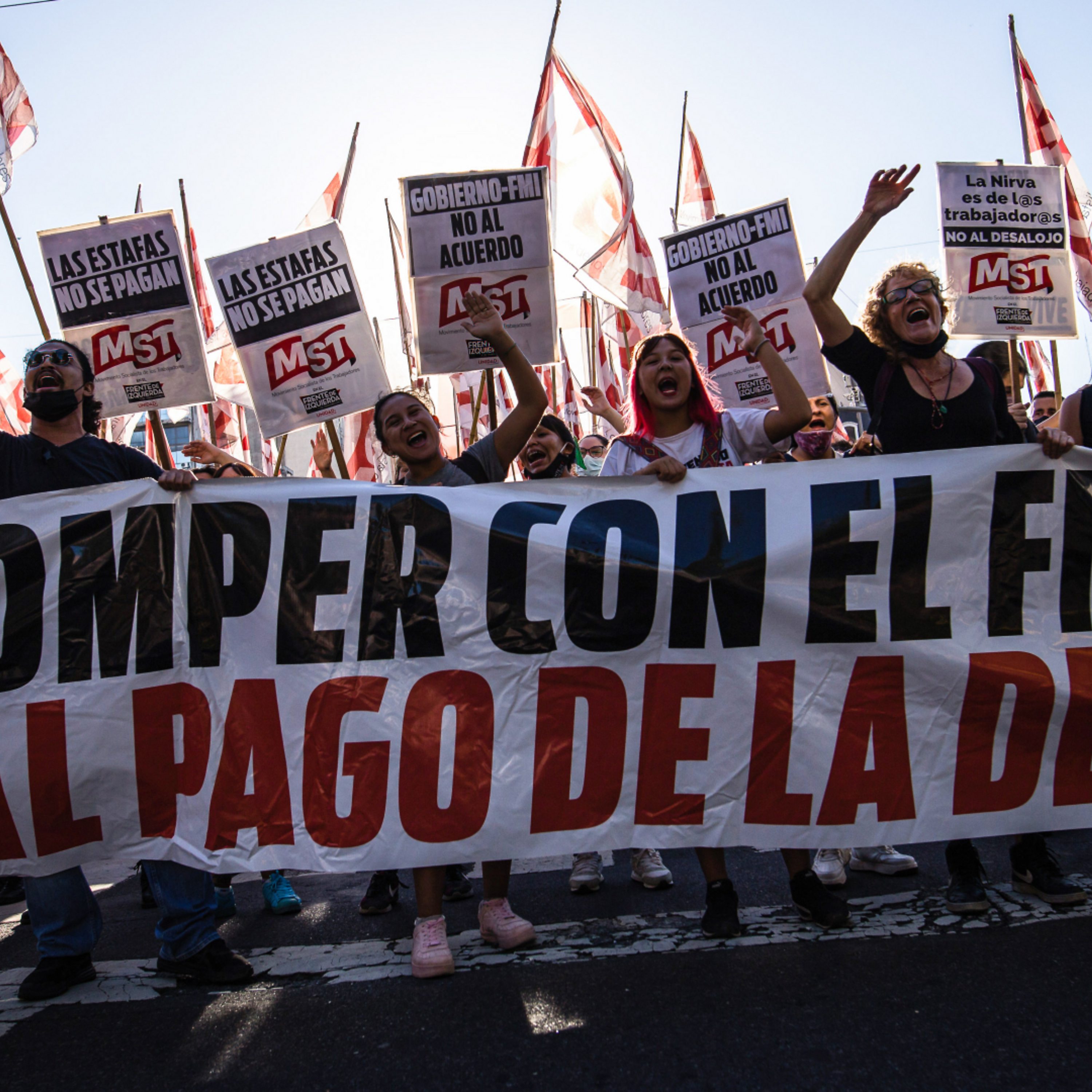
Argentina’s government and the International Monetary Fund have been renegotiating the terms of a 2018 loan issued to the country – the largest in IMF history. The Fund’s own internal analysis of that deal was scathing. The 2018 package had been vaunted for its commitment to protecting the most vulnerable in society. Yet people in Argentina, and particularly those on the lowest incomes, are currently enduring a cost of living crisis, with inflation running at above 50% in 2021, and wages struggling to keep pace with increased housing, food and energy costs. Amy Booth is a journalist in Argentina, and says many people have lost hope in the midst of the country’s seemingly interminable economic crisis. Daniel Munevar, who works on debt justice at the European Network on Debt and Development, says the IMF broke its own rules in order to issue the 2018 loan. Carolina Millán is Bloomberg’s bureau chief in Buenos Aires, and tells us that the Fund’s decades-long association with austerity and misery in Argentina loom large over any potential new deal between the two parties. Former IMF executive director and Argentine diplomat Héctor Torres says he’s sceptical that a prospective 22nd loan from the lender to the country will end differently to previous failures. Argentina isn’t the only country struggling with debt, either. Former IMF chief economist Ken Rogoff says that more than half of the world’s poorest nations are currently in debt distress or default.Presented by Ed Butler, produced by Tom Kavanagh. (Photo: Left-wing protesters in Buenos Aires carry a banner reading, “break with the IMF, don’t pay the debt”; Credit: Getty Images)
Rent-a-Robot
The use of robots in North American workplaces has increased by 40% since the start of the pandemic and the small to medium sized businesses, which never automated before, are getting in on the act. The robotics industry has responded to the global increased demand by creating more and more customisable robots, which can be leased or hired. Ivana Davidovic explores what effect this has had - and could have in the future - on the labour markets, innovation, but also on social inequality. Ivana hears from a small restaurant owner from California who wouldn't be without her server robot Rosie any more, after months of being unable to fill vacancies. Joe Campbell from the Danish company Universal Robots and Tim Warrington from the British company Bots explain how they are taking advantage of the post-pandemic "great resignation" and which industries are next in line for a robotics boom. Karen Eggleston from Stanford University explains her research into the consequences of the use of robots in over 800 nursing homes in Japan and Daron Acemoglu from MIT discusses whether robots in workplaces will liberate their human colleagues or simply entrench inequality.Presented and produced by Ivana Davidovic(Photo: Robot waitress serving dessert and coffee on a tray in a cafe. Credit: Getty Images)

Is greed good?
Greed is considered one of the seven deadly sins; but is the accumulation - and retention - of wealth always a bad thing? With economic inequality growing, Elizabeth Hotson asks John Paul Rollert, from the Chicago Booth school of management, why greed has historically invited criticism. We also hear from Paul Piff, Associate Professor of Psychological Science at the University of California, Irvine, who tells us about an experiment in acquisitiveness, played out during a game of Monopoly. Plus serial entrepreneur and self-made multi millionaire, Richard Skellett, tells us why he supports a wealth tax. Presented by Elizabeth Hotson Produced by Sarah Treanor(Picture of dollar bills, picture via Getty Images).
Making second-hand sexy
Can apps like Depop and By Rotation, which are giving new life to old clothes, help reduce the fashion industry's enormous environmental footprint?Justin Rowlatt heads to the London offices of both these online platforms. Depop's Justine Porterie explains how their clothing resale app helped Gen Z take back control of their wardrobes and fall in love with second-hand clothes. Meanwhile Eshita Kabra-Davies, founder of By Rotation, retells how she came up with the concept of a high fashion rental app after seeing all the discarded garments piling up in her hometown in Rajasthan.These apps have grown enormously during the last two years of lockdowns, attracting millions of users, particularly teenagers. But Sarah Kent, editor at the Business of Fashion website, questions whether they can really make a dent in the sheer volume of clothes produced and disposed of every year.Producer: Laurence Knight(Picture: Someone photographing a sweater for sale online; Credit: Getty Images)
Cost of living crisis
Prices around the world are rising at their fastest level for years. Rising energy prices and a surge in demand after the pandemic lockdown have pushed up the prices of many of the goods that we rely on and our wages are not keeping pace. Tamasin Ford looks at the factors behind the rises and hears why it is often the poorest in our society who are impacted the most. Tamasin talks to Davide Angeletti who owns Ovenbird Coffee in Glasgow; he's looking at how he can cut his costs whilst he struggles to pay his bills; Tehiya Ben Zur is a mother living in one of the world's most expensive cities, Tel Aviv and Claudia Keller, the CEO of Second Harvest Food Bank in Orange County in California. And to explain how inflation is measured and why price rises are felt differently across society, economist Xavier Jaravel of the London School of Economics breaks down the data. (Image: A shopper at a supermarket in London, Credit: European Pressphoto Agency)
Business Weekly
On this edition of Business Weekly, we’re looking at Spotify’s latest results, and hearing how it has had to react to controversy surrounding its star podcaster, Joe Rogan. We hear from music industry writer Eamonn Ford, who tells us how the service is expanding more into the spoken word, and how it will now have to editorially manage the content it acquires. The Winter Olympics has now officially started, and we hear how some people would like sponsors to be more politically active, when choosing where to place their money. The mining giant Rio Tinto has pledged to take on board all the recommendations from a damning report that said racism, sexual harassment and bullying were rife at its sites. We hear from ABC’s Peter Ryan how this could be the ‘Me Too’ moment for the mining industry. Also on the programme, we hear how Wordle’s creator has decided to sell his five-letter game to the New York Times, and if the puzzle’s fans will be happy to turn to the newspaper’s website instead. The BBC’s Mike Johnson delves into the world of up-and-coming African music and hears how major record labels are opening their wallets and taking notice of the genre. And a billion year old rock is up for sale at a London auction house. Known as the Enigma, the rare black diamond is thought to be the largest cut diamond on earth and could have extra terrestrial origins. We hear from Nikita Benani, a jewellery specialist at Sotheby’s. Business Weekly is presented by Sasha Twining and produced by Matthew Davies.
Why gin is still fizzing
From its early reputation as mothers’ ruin to its prime spot in upscale cocktail bars, we tell the story of the juniper-infused spirit. And as the gin craze in the US and the UK shows no sign of slowing, we ask where the next global hotspots will be. Dr Angela McShane of Warwick University tells Elizabeth Hotson how and why gin drinking became popular in the UK and Sandie Van Doorne, from Lucas Bols - which claims to be the oldest distillery brand in the world - explains how the Dutch spirit, genever, fits into the story. Sean Harrison of Plymouth Gin explains how the company is taking on the new contenders in the market and we hear from up-and-coming brands; Toby Whittaker from Whittakers Gin and Temi Shogelola of Black Crowned Gin. Plus, we hear from Emily Neill, Chief Operating Officer at the IWSR which provides data and analysis on the beverage alcohol market. And a programme about gin wouldn’t be complete without a cocktail; William Campbell-Rowntree, bar supervisor at Artesian in London’s Langham Hotel, gives his tips for the perfect tipple. Presenter: Elizabeth Hotson Producer: Sarah Treanor *This programme was originally broadcast on July 13, 2021(Picture of a gin and tonic with garnish; Picture via Getty Images)
Can tourists help boost Turkey's economy?
Drawn by the favourable exchange rate, tourists are flocking to Turkey, but can they compensate for the country's wider economic woes? In 2020, Turkey was hit hard by the pandemic lockdown, soaring inflation, a weakening currency and a current account deficit. Last year, the number of visitors jumped 85.5%. Victoria Craig talks to tourists in Istanbul about how they're getting more value for money and visits traders in the Grand Bazaar. Tour guide Sebnem Altin at tour company Grand Circle Travel has mixed feelings about the future and economist Roger Kelly at the European Bank for Reconstruction and Development puts the latest tourism figures in context. Produced by Stephen Ryan and Gulsah Karadag. (Image: Istanbul's Grand Bazaar, Credit: Victoria Craig)
The economic cost of conflict in Ukraine
Sanctions, energy supplies, cyber-attacks - how bad could the economic fallout be if the situation in Ukraine spirals out of control?How likely would Russia be to simply cut the gas supply off to Europe in the middle of winter for example? Ed Butler asks Jane Collin, editor of the UK-based publication, Energy Intelligence. Meanwhile Matthew Olney, director of threat intelligence at Cisco, discusses another possibility - the disabling of key energy and other infrastructure in America by Russian hackers.Meanwhile the West has plenty of threats it can make against Moscow, in the form of further economic and financial sanctions - including the option of kicking Russia off the SWIFT international financial payments messaging system. But Maria Shagina, a visiting fellow at the Finnish Institute of International Affairs, says the West will need to look beyond sanctions if it wishes to influence President Putin's thinking(Picture: Ukrainian soldier with rifle; Credit: Wolfgang Schwan/Anadolu Agency via Getty Images)
Pressure mounts on Olympic sponsors
Allegations of human rights' abuses have led to an official boycott by a number of Western governments of the Winter Olympics in Beijing this month. China has responded angrily, accusing them of politicising a sporting bonanza. The International Olympic Committee insists that sport should be above politics. So where does this leave the sponsors on whom the Olympics depend for funding? International marketing expert Allyson Stewart Allen tells us that sponsors are stuck between a rock and hard space, whilst former Olympic skiier Noah Hoffman calls on sponsors to do more to protect athletes, and British politician Rob Hayward is calling for a boycott of Coca Cola products for not taking a stand. Ed Butler presents and the programme producer is Clare Williamson.(This podcast is an edited version of the original broadcast programme for reasons of accuracy)(Image: Short Track Speed Skating official training session ahead of the Winter Olympics, Beijing, China, Credit: Getty Images)
African music goes global
This is a big moment for African music on the global stage. African artists are winning international awards and embarking on tours to the US and Europe. And major record companies want a piece of the action. They’ve been busy doing deals to sign African stars with Warner Music buying a controlling stake in a Johannesburg business which bills itself as “the home of African music”. So what’s going on, and what does it all mean for a new generation of African artists? Mike Johnson talks to singers Nomcebo Zikode from South Africa and Mildred Ashong, aka Eazzy, from Ghana, Phiona Okumu, head of African music at the streaming service Spotify, Yoel Kenan, chief executive of music distribution company Africori and Temi Adeniji, MD of Warner Music South Africa. (Image: Nomcebo Zikode at the Nomcebo Zikode Foundation Launch at the Houghton Hotel on June 09, 2021 in Johannesburg, South Africa, Credit:Getty)
Business Weekly
On Business Weekly this week, we look at the efforts being made to reduce the carbon footprints of mining companies. One of the largest iron ore producers, Fortescue Metals, is looking to reduce its carbon emissions and has snapped up the technology research arm of the Williams Formula One team to help them do it. Plus, we examine the continuing war on drugs and how the Mexican cartels have been taking advantage of the pandemic restrictions in the United States. Also, we ask if having one or two wealthy owners is the best route to a winning strategy for football clubs. We review the deal that the Australian government struck to buy the licence for the Aboriginal flag – now that the image is free to use, is that the end of the matter? And Bob Dylan is, once again, selling off his assets – this time, his back catalogue is going to Sony Music for an estimated $200m. Business Weekly is presented by Matthew Davies and produced by Philippa Goodrich.
The cooling conundrum
Global warming means the world will need a lot more air conditioning - but will the AC just make global warming even worse?The Middle East already experiences peak temperatures over 50C, as the Kuwaiti social media influencer Ascia Alshammiri testifies. And things are only set to get worse. Ed Butler speaks to climatologist George Zittis, who says urban temperatures could hit 60C later this century, which combined with rising humidity could render some places uninhabitable.In any case, it means a boom for the air conditioning industry. But AC itself is a major source of greenhouse gases, as Radhika Lalit of clean energy think tank RMI explains. So are there tech solutions available to break this vicious circle? We hear from two entrepreneurs - Kevin O'Toole of Exergyn, and Aaswath Raman of SkyCool Systems.(Picture: Congested air conditioning units on a building in Mumbai, India; Credit: Kuni Takahashi/Getty Images)
Funding public service broadcasting
The British Government says the BBC license fee, paid by millions of households, to finance its global broadcasting service, will be frozen for two years and wants a debate about future funding. So what are the options for the Corporation? Rob Young explores the way public service broadcasters are funded around the world and talks to Ismo Silvo, the Deputy Chief Executive of the Finnish public broadcaster YLE and Chris Turpin, NPR's Chief of Staff. We get some analysis of the advantages and limitations of each model and discuss the impact on other broadcasters with Steve Barnett, Professor of Communications at the University of Westminster and Gill Hind from Enders Analysis. (Image: BBC Studio, Credit: BBC)
Who should own a football club?
It’s no surprise to anyone that money talks in English football but lately it seems louder than ever. Hollywood stars Ryan Reynolds and Rob McElhenney recently bought a club in the English lower leagues, while the Saudi Arabian Public Investment Fund completed a controversial takeover of Newcastle United. Meanwhile, a founding club of the Premier League, Oldham Athletic, faces relegation into the non-league game after years of mismanagement. Vivienne Nunis asks, is private ownership the best way to run football clubs or is it time for a rethink? Wrexham fan Gareth Davies, Tom Hocking of When Saturday Comes magazine and Maggie Murphy, CEO of Lewes Football Club, join in the discussion. (Image: Wrexham FC owner, the actor Ryan Reynolds, attends a red carpet premiere in LA. Credit: Getty)
Who's winning the war on drugs?
Mexico's cartels are thriving, and finding innovative ways to smuggle drugs across the border into the US, despite law enforcement and the pandemic.Ed Butler speaks to Dr Irene Mia of the International Institute for Strategic Studies, who says the closing of borders due to Covid has provided the cartels with a surprising shot in the arm, as they have proved far more adept at keeping their product flowing than many other legitimate international export businesses. Speedboats, tunnels, even catapults have been deployed to get methamphetamine and fentanyl into the US.And that's not all. The cartels have diversified, into people smuggling, wildcat mining and crude oil theft among other things, according to the Mexico-based author and journalist Ioan Grillo. And they aren't the only ones. In Brazil, a narcotics gang called First Capital Command has become so powerful that they have effectively replaced the government in some parts of the country, according to Marcos Alan Ferreira of the Federal University of Paraiba.(Picture: Mexican Federal Police officers patrol Iguala, Guerrero state, Mexico; Credit: Yuri Cortez/AFP via Getty Images)
The beauty tweakments industry
Demand for beauty tweakments - small changes to your appearance – as opposed to full on face changing plastic surgery, is soaring. Hours spent on video conferencing has forced people to constantly scrutinise their appearance, so what exactly are people having done and how much does it all cost? Elizabeth Hotson speaks to tweakments fan, Eddie Wunderlich, a personal trainer and stylist at the Dop Dop salon in New York and we hear about the importance of appearance at work from Dr Stefanie K. Johnson, an associate professor at the University of Colorado Boulder’s Leeds School of Business. Dr Hazel Mycroft, a senior lecturer in social psychology at the University of Exeter talks through the thought processes of having tweakments done and Elizabeth visits skincare guru Sarah Chapman, in her Skinesis Clinic in London to see what exactly customers want.. (Photo: LED light treatment,. Credit: Elizabeth Hotson).Presenter: Elizabeth Hotson Producer: Sarah Treanor
Business Weekly
On this edition of Business Weekly, we look at the gaming industry’s biggest deal so far, as Microsoft stumps up nearly $69bn to buy Activision Blizzard, the company behind mega-games including Call of Duty and World of Warcraft. We hear how Microsoft wants to increase its slice of the gaming sector. Mobile stock trading apps have been booming in popularity during the pandemic, opening the door to millions of new, often young, or first-time investors. For many in the finance sector it is great news, but there have been questions raised about whether people always know the amount of financial risk they are taking on. Also, we focus on China’s economy, and hear what impact the ‘zero Covid’ policy and approach has made. Plus, we stop and smell the roses of the global flower industry - and follow one supply line from Kenya to Amsterdam to find out how green the sector really is. And as the original Winnie the Pooh book falls out of US copyright, we hear what potential new adventures might be in store for the “bear of very little brain”. Business Weekly is presented by Sasha Twining and produced by Matthew Davies.
Why hair matters
To some it may sound absurd to consider hairstyles a workplace issue, but for millions of men and women with African and Afro-Caribbean hair, it is just that. For decades, some hairstyles have been discouraged at work. But things are finally starting to change. In 2021 the US Airforce changed its hair code to be more inclusive. We explore the historic racism behind hair-based discrimination and hear from the women who have united to change attitudes and laws. We speak to businesswomen, historians and those in the arts – from the UK, the US and East Africa – to find out what hair has to do with it all anyway.Presenter: Vivienne Nunis Producer: Sarah TreanorThis is a repeat of a programme first broadcast on 19 Feb 2021(Image credit: Getty)
The fight for pocket parity
How deep are your pockets? Are they big enough to carry all the things you need? Your money, keys and mobile phone? If you’re a woman, the answer is most likely a no. This little pouch has a lot to say about gender roles and a woman’s right to financial independence. We hear about the great divide in pocket designs that has existed for hundreds of years with Ariane Fennetaux, author of The Pocket: A Hidden History of Women's Lives, 1660–1900. We take a trip to London’s V&A Museum to see how pockets – or a lack of them – led to the billion-dollar handbag industry, and we hear from Indian fashion designer and founder of the Meri Pocket campaign group, Taarini Saraf on the fight for pocket justice. Presented by Vivienne Nunis. Produced by Sarah Treanor. Music used with the kind permission of: @HebontheWeb Image: A women's small jean pocket. Credit: Getty images.
Why are some Chinese embracing 'lying flat'?
“Lying flat” - or tang ping - is a trend among mainly young Chinese to opt out of the rat race and it represents the antithesis of a development model that has delivered extraordinary growth for the country over four decades. The sentiment has been widespread enough to warrant a public condemnation from the President. Xi Jinping.Ed Butler hears from "Jeff," a computer developer from Hangzhou, but working in Beijing, who explains why he decided to give up on the Chinese dream in pursuit of a better quality of life. The BBC's China specialist Kerry Allen describes how the trend has developed online and how it has been accelerated by the forced slowdown during the pandemic. And Dr Lauren Johnston, a scholar of Chinese economics with a focus on the demographic shifts, says that both the privileged and the poorer 20 and 30-somethings feel exhausted by the Chinese ultra-competitive world of work and family pressures.Producer: Ivana Davidovic(Photo: Illustration of the lying flat movement. Credit: Sina Weibo)
Has stock trading become 'gamified'?
Mobile trading apps have been booming in popularity, opening the door to millions of new, often young or first time investors. For many in the finance sector it is great news, but questions remain about whether people always know the amount of financial risk they are taking on. One criticism in particular is that some of these new platforms look, act and react more like a video game than an investment platform. Is that the essential appeal that attracts new users, or does it just obscure the risks?Rob Young speaks to the boss of one of the biggest platforms in this sector, Yoni Assia, the boss of eToro. He hears too from Vicky Bogan, professor at Cornell University’s business school, who studies the "gamification" of finance as well as Professor Erik Gordon, at the University of Michigan's Business School. And Sarah Pritchard from the UK's regulator the Financial Conduct Authority tells Rob about efforts to encourage young users to invest safely, and how protecting them is their priority.
The future of flying
The pandemic has been very hard on commercial aviation, but most experts believe the sector will soon be growing again – fast. The BBC's Theo Leggett takes a look at what new technologies are out there. Sandra Bour Schaeffer, Chief Executive of Airbus Upnext, tells him what the aviation giant is planning for the future. Neil Cloughley, from the much smaller Faradair Aerospace, makes the case for why their hybrid-electric technology is the way forward for flying. On the other hand, Blake Scholl of Boom Supersonic says that, two decades after the end of supersonic jet Concorde, it's time for airliners to break the sound barrier once again. But if we want to protect the environment, should we be flying at all? Matt Finch, UK policy director of the Brussels-based lobby group Transport and Environment, says yes - but not quite so often. (Image: the ZEROe blended wing body concept, Credit: Airbus)
Business Weekly
On this edition of Business Weekly, we’re looking at the US inflation rate. It has hit 7% year on year, the largest rise since 1982. Used car prices and food costs are shooting up. We hear from Wells Fargo Economist Sarah Watt House and Gerald Daniels, an Associate Professor of Economics at Howard University who specialises in the economics of inequality. The BBC’s Ed Butler looks at the recent protests in Kazakhstan and we have a look inside the UK trials into psychedelic drugs for patients suffering with depression. Plus, we browse the shelves of ultra rare whisky, and hear why, and how, some parts of the Scottish industry are booming. The BBC’s Elizabeth Hotson talks to both keen collectors, and dedicated producers. Business Weekly is presented by Sasha Twining and produced by Clare Williamson.
Brexit and my small business
It’s just over a year since the UK’s trading relationship with the EU fundamentally changed. So how are small businesses in Britain finding life outside the single market and customs union? The BBC's Vivienne Nunis speaks with chocolate-maker Jacques Cop of Coco Caravan and Kathleen May from the London-based independent publisher, Hurst, as well as Sally Jones, trade strategist at EY. Image: Hand drawing a red line between the UK and the rest of the European Union. Credit: Getty
Kenya's fries crisis
Why can't multinationals like KFC source their ingredients locally? A shortage of fries at KFC restaurants in Kenya has led many to call for a boycott of the chain after it transpired that the company imported all of its potatoes, despite them being abundantly grown in the country. Potatoes are Kenya's second-most consumed crop after maize, and are cultivated mostly by small-scale farmers. As Covid hits global supply chains and words like sustainability and climate gain greater importance, is it time for multinationals to start looking closer to home for their goods? Kathambi Kaaria is a climate change and sustainability advisor in Nairobi and comes from Meru, a potato growing region of Kenya. She told Tamasin Ford that when KFC arrived in the country eleven years ago she tried to supply them potatoes. Leonard Mudachi, the CEO of a Kenyan restaurant management company Branded Restaurants Africa Ltd, said he wasn’t surprised to learn that KFC imports its chips but does think that multinational companies should start scrutinizing how and where they get their produce from. John Quelch is the Dean of the Miami University Herbert Business School in the United States. He told Tamasin that the issue for a major international brand is the quality and consistency of locally sourced produce and that one mistake by one supplier can lead to a massive fallout for the companies. (A boy looks at potatoes for sale in a market in the Kibera slum in Nairobi, Kenya; Credit: Spencer Platt/Getty Images)
What's at stake in Kazakhstan?
How might the protests shake up the economy, trade and business in the Central Asian nation?Ed Butler speaks to Diana Kudaibergenova, a sociology professor at Cambridge University and herself Kazakh, about what motivated the protests, and whether the apparent ouster of former President Nursultan Nazarbayev plus a host of new economic reforms will be enough to appease the protesters.But what does all this mean for foreign business interests in the country? Kate Mallinson of Chatham House says many Western oil executives will be having sleepless nights, while Russia's President Vladimir Putin may require an economic dividend for his military help in stabilising the situation. And what of Kazakhstan's other giant neighbour, China? Raffaello Pantucci of the Royal United Services Institute says the upheaval has come at a time when many Kazakhs were questioning the seeming one-sidedness of their increasingly close economic ties.(Picture: Kazakh security officials stand guard in the aftermath of protests in Almaty; Credit: Pavel Pavlov/Anadolu Agency via Getty Images)
White privilege
Does the global economy need to start dismantling 'global white privilege'? The Black Lives matter protest movement has focussed lots of attention on racial attitudes in rich western countries. How easy is it for instance, for people of black or Asian heritage to get on the ladder to business success in those countries? But is the economics of what's now called 'white privilege' a global problem too? Ed Butler speaks to Chandran Nair, the founder and Chief Executive Officer of The Global Institute for Tomorrow, an independent think-tank in Hong Kong and the author of ‘Dismantling Global White Privilege: Equity for a Post-Western World’. And also to Lucinda Platt, from the London School of Economics, who has recently written a report for the IFS on the degree of social and economic mobility being achieved among the UK's minority racial and ethnic groups.
Healing the mind
Psychedelic therapy could provide a major breakthrough in the treatment of mental health disorders like depression, and now it's caught the attention of start-ups and venture capitalists.Laurence Knight hears from one man whose life was transformed by a single dose of the drug psilocybin - the psychoactive ingredient in magic mushrooms - after he volunteered for a research project exploring whether it could cure depression. He also visits the research team at King's College London, who have just wrapped up the latest trials of the drug. The trials are being sponsored by the healthcare start-up Compass Pathways, and its founder and chief executive George Goldsmith explains why he hopes to use them to bring this therapy to the general public. Plus Amanda Eilian of venture capitalists Able Partners describes how quickly attitudes in the investor community are changing.(Picture credit: Getty Images)
Business Weekly
On this edition of Business Weekly, we’re looking at the tech giant Apple. Its value tipped over the $3 trillion mark on the New York stock Exchange at the start of the year. We hear from Dan Ives of Wedbush Securities on possible further avenues of growth for the company. We’ll take you to the United States to hear from different communities all hoping to benefit from President Biden’s $1.2 trillion infrastructure plan. We focus on projects designed to improve the quality of drinking water, and public transport. The BBC’s Will Bain covers examples from Alaska, Michigan and California. Plus, we remember the work of the world renowned Kenyan paleoanthropologist Richard Leakey, who died at the start of the year. We hear from Dr Paula Kahumbu who knew him from childhood, and now runs one of the organisations he founded. Business Weekly is presented by Sasha Twining and produced by Clare Williamson.
Starting a company to fight rare disease
Mapping the human genome led to big advances in diagnosing rare disease. But diagnosis is only the first step in dealing with an illness. So what do you do if your child is found to have a condition that has no treatment? We hear from Michelle Teng, a mother who co-founded a biotech firm called SynaptixBio, that is looking to find the world’s first treatment for a rare neurodegenerative disease. Also in the programme, the Chief Medical Officer at Genomics England, Dr Richard Scott, tells us his hopes for the future of genomics medicine. And Dr Segun Fatumo of the London School of Hygiene and Tropical Medicine, explains why Africa is so important when it comes to genetic research. Presented by Vivienne Nunis and produced by Sarah Treanor. Image: Scientists look at a DNA model. Credit: Getty Images.
The death of the petrol station
The rise of electric vehicles could see traditional service stations closing across the planet over the next two decades, and replacing pumps with fast chargers is unlikely to save them. Justin Rowlatt speaks to one entrepreneur hoping to profit from the rollout of EV chargers in every home and parking space, Erik Fairbairn of Pod Point. Meanwhile Isabelle Haigh, head of national control at the UK's National Grid, explains why she is confident they can meet the electricity demand from all these new vehicles.Across the Atlantic, another entrepreneur - Sanjiv Patel of National Petroleum - says the writing is clearly on the wall for his chain of 25 gas stations in California - but maybe not for a while yet. But could he turn them into restaurants or use them to hold séances? That's the fate of one petrol station in Leeds that is now an arts centre. We hear from its owner, Jack Simpson.This is a repeat of an episode first broadcast on 2 June 2021.Producer: Laurence Knight(Picture: Abandoned gas station along old Route 66 in the California desert; Credit: Lynne Rostochil/Getty Images)
The many careers of Richard Leakey
Richard Leakey died at his home outside Nairobi, Kenya, earlier this week. World-famous for his fossil discoveries, the 77-year-old had many careers - paleoanthropologist, wildlife defender, politician and anti-corruption campaigner. Business Daily's Vivienne Nunis met Richard Leakey late last year and recorded this interview with him. He looks back on his life and shares his as yet unrealised plans for a 'cathedral of life with no God', a museum dedicated to evolution on the edge of Rift Valley. Image: Richard Leakey with a pile of elephant ivory, confiscated by the Kenyan government and due to be burnt in 1989. Credit: Getty Images.
Lessons from the forest for climate change
Jane Goodall, the famous primatologist, has set us a challenge: Is it possible to tackle climate change whilst also lifting people out of extreme poverty?Her question - posed to the BBC's Climate Editor Justin Rowlatt - is inspired by her own experience of tackling deforestation in Tanzania. As her colleague Emmanuel Mtiti explains, they convinced local villagers to stop felling trees, and to restore the natural habitat of chimpanzees, by offering them an alternative path to prosperity.So could an equivalent path be available that avoids increasing carbon emissions? If so then it would break with the pattern seen in Europe, America and China, where economic development was almost entirely fuelled by burning coal, oil and gas, according to Hannah Ritchie, head of research at Oxford University's Our World in Data team. But the micro-finance pioneer Muhamad Yunus says that solar power does now offer a carbon-free way forwards.The programme contains audio from the 1965 National Geographic documentary film Miss Goodall and the Wild Chimpanzees, as well as audio recorded at Gombe National Park and the surrounding area by Ruth Happel and Bernie Krause.Producer: Laurence Knight
How green is the global flower industry?
Most flowers sold in the florists and supermarkets of Europe are grown in East Africa, where the warm climate supports roses and other plants to grow year round. But is it sustainable? Vivienne Nunis follows the international supply chain from a Kenyan flower farm to the hub of the global flower trade near Amsterdam, where every morning stems are sold at auction before being transported in cold storage trucks to buyers across Europe. The Dutch have been trading flowers since medieval times, when speculators paid enormous prices for tulip bulbs. We pay a visit to Amsterdam's Tulip Museum to find out why. The worldwide flower market is worth $40bn a year, but as growing numbers of consumers start to question the true environmental cost of what they buy, some growers are advocating for a return to seasonal, local blooms. We visit English grower Tess Wardman of Iris and Wilf flowers. Producer: Sarah Treanor. Image: Bouquets of roses for sale. Credit: BBC
Business Weekly
On Business Weekly, we look at the problems faced by companies affected by the spread of the Omicron variant of Covid-19. Are staff shortages just a blip or could they be more long term? Professor Joshua Hausman at the University of Michigan gives us his view. Plus, we look at efforts being made in the textile industry to move away from “fast fashion" using traditional, slow and more sustainable methods. Also, it’s 20 years since the schoolboy wizard Harry Potter first appeared on movie screens; which businesses are still feeling the marketing magic? And we shake and stir with some of the world’s top mixologists to find out about the trends in cocktails for 2022. Business Weekly is presented by Matthew Davies and produced by Clare Williamson.
Cocktail trends 2022
Our love for cocktails has surged during the pandemic. Nisha Patel speaks to mixologists and bar owners from all over the world to find out what's inspiring them and what concoctions we may see across global bar menus. Hanky Panky bar in Mexico says lockdown sent everyone back to their books and emerging are pairings inspired by cook books. Two Schmucks in Barcelona say the diversity of their staff has led to a range of cocktails you'd usually see in your main meal and cocktail aficionado Lynette Marrero shares how she's seen her cocktail masterclasses filled with customers who have a thirst for premium alcohol. Phil Tate from CGA strategy analyses cocktail trends worldwide and explains how the pandemic has influenced and changed the global cocktail trend, and how this will continue into 2022.This programme is produced and presented by Nisha Patel(PIC: Vodka with cranberry and grapefruit CREDIT: Getty)
Taking on fast fashion in rural China
In the remote mountain villages of Guizhou, China, indigenous people have been handmaking clothes for centuries. But with so many young people leaving rural areas for jobs in China's manufacturing centres, those ancient skills are disappearing. Angel Chang tells us how she quit her job in the designer fashion houses of New York to start her own clothing line, employing indigenous craftspeople to grow organic cotton, use natural dyes and sew her collection by hand. It’s part of a wider shift away from the highly-polluting fast fashion industry. We also hear from Nicole Rycroft, founder of the NGO Canopy, which is changing the way popular brands source the world's third most popular fabric: viscose, which is traditionally made from the wood-pulp of trees. Vivienne Nunis asks if this more environmental approach can be adopted by the wider fashion industry. Producer: Sarah Treanor. Image: A woman dressed in handmade clothing typical of the Dong indigenous community in Dimen, Guizhou, China, holds some handwoven cotton fabric that has been dyed with locally-grown indigo. Credit: Angel Chang/Boe Marion/2DM Management
Men and cosmetic surgery
More men have considered cosmetic treatments during the pandemic. Has spending more time at home staring at ourselves in video conferencing made us more worried about our appearance, and have the pressures of ageism in the workplace also had an impact. Ed Butler speaks to psychologist Helena Lewis Smith, and Past President of the American Association of Plastic Surgeons Dr Alan Matarasso about just what’s motivating men to make more changes. Plus, he tries a treatment for himself. (Picture of man having cosmetic surgery. Picture via Getty Images).
Moon missions and space junk
2021 was another year of firsts in the ever-expanding industry around space, as we moved towards space tourism as a reality. But what about NASA, and its plans to return to the moon? We hear all about it, and the space agency’s ambitious plans for not just the moon, but mars; from NASA’s Carlos Garcia-Galan. We also hear about the increasingly urgent issue of space junk, which is causing serious safety issues in orbit. University of Texas at Austin professor, and chief scientific officer at Privateer, Moriba Jah explains. Plus Katie Miller from Skyrora tells us about the company’s space tug; a nifty idea to clean up unwanted objects in space.Presenter Jane Wakefield Producer Sarah Treanor(Picture: Earth from space, Credit: Getty Images).
Harry Potter and the phenomenally profitable franchise
It's 20 years since the first Harry Potter film was released and the movies and books have spawned a world of wizard-related retail opportunities. Elizabeth Hotson asks Chris Columbus, director of the first two Harry Potter films, how he dealt with the pressure of bringing the boy wizard to life. And we travel to Edinburgh for The Potter Trail tour which starts with a spell and ends in a graveyard. We step inside the magical Museum Context shop, and hear form owner, Andrew McRae. Plus, Scott Mendelson, a film critic and box office pundit at Forbes, tells us why he thinks the franchise has been so successful. And we end with a look at the most hallowed of magic artefacts, the philosopher's stone itself.Presenter: Elizabeth Hotson Producers: Elizabeth Hotson and Sarah Treanor(Picture of a boy dressed as Harry Potter, Picture by Stephen Chernin for Getty Images)