
Business Daily
2,128 episodes — Page 21 of 43
Can festivals bounce back?
The global events industry was valued at more than $1.1 billion in 2019, before the start of the covid-19 pandemic. Live music and concert events alone lost $30 billion in 2020 and most outdoor festivals were cancelled. This year, in 2022, with more people vaccinated around the world, many festivals have managed to return but are having to cope with rising prices and staff shortages, as well as people with less cash to spend. Monica Newton, the CEO of the National Arts Festival in Grahamstown, South Africa, tells us about the challenges she's faced in holding this year's event. The director of the Great British Food Festival in the UK, Daniel Maycock, says they've managed to avoid putting up ticket prices so far and are trying to support smaller businesses. Lisa Louis travels to the Rock en Seine festival, to the west of the French capital Paris to speak to the director, Matthieu Ducos, about how he's had to adapt. She speaks to food and drinks vendors about how they're coping with rising prices and festival goers about how they're dealing with having less money in their pockets. Presenter: Emb Hashmi Reporter: Lisa Louis Producer: Jo Critcher(Image: Matthieu Ducos, director of the Rock en Seine festival, Parc de Saint-Cloud; Credit: BBC)
Why everyone wants a ‘blue tick’ on social media
For online influencers getting verification - a blue tick next to their social media account name - is the ultimate prize. It brings credibility and elevates their status online.Presenter David Harper investigates how accounts can become 'verified', what it means, and if you make your money through online platform, how much is it actually worth? David speaks to Matt Navarra, a social media consultant and industry analyst. Matt has worked for Meta and Google amongst others and says he asked how to get a blue tick dozens of times each week. He explains why verification is useful to brands and users.Entrepreneur Jacques Bastien lives in New York, he works with different brands and companies, and explains why verification is so important for his clients, making them seem more trustworthy. He says the blue tick has a financial benefit which is hard to quantify, but is there.And the BBC’s China media analyst Kerry Allen explains the different approach by Sina Weibo, where accounts are checked and ‘verified’ to a certain degree when an account is created. She explains the different ‘V’ system that accounts have depending on who owns the account.Presented and produced by David Harper.(Image: Social media influencer. Credit: Getty)
Business Daily meets: Paul and Mike Rabil
The sport of lacrosse has a long history, being one of the oldest sports in North America. But, for a long time, many players couldn't earn a living in the same way athletes could who were playing in established leagues like Major League Soccer or the National Football League. After a time as one of the best lacrosse players in the world, Paul Rabil, along with his brother Mike, an established businessman and investor, decided to start their own league that could give players a livelihood.We speak to the brothers to find out the challenges of starting a league from the ground up, and how they had to convince players to join them, and from there, we also find out how it could be going global, and why the story has been turned into a major documentary that has aired on ESPN. Presenter: Rahul Tandon, Producer: Ed Butler (Image: Paul and Mike Rabil at an event; Credit: Craig Barritt/Getty Images for Premier Lacrosse League)
Who benefits most from remote working?
The coronavirus pandemic allowed many people worldwide to work in new and radical ways. It brought some of the biggest changes for computer-based office workers, many finding themselves working from home for the first time. Research from McKinsey Global Institute, the international management consultancy firm, suggests remote work in some form, is likely to remain for this group of employees. We discuss what the continued shift towards remote work means for both businesses and employees around the world. We hear from Roseleen Kagiri, a remote worker in Nairobi, Kenya, and Hailey Walker who works from home in Chicago in the US. Matt Wilson, co-founder and co-chief executive of Omnipresent, a tech start-up, reveals why his business employs all of its workers remotely. Nick Bloom, professor of economics at Stanford University in California tells us about studies he’s done on working from home and how remote work affects productivity, and Harriet Molyneaux, managing director at HSM Advisory, a global advisory group focussed on the future of work based in London, explains why employers are now looking more closely at remote hybrid work to attract and retain the best talent. Presenter/producer: Tara Holmes (Image: Woman sitting at desk with cup of coffee; Credit: Getty)
The condiments (and sauces) that never change
Tabasco sauce has been around since 1868, Lea and Perrins’ Worcestershire Sauce since 1837. So how have these brands managed to survive for so long? David Reid explores why some brands outlive their founders by more than a century.David speaks to Harold Osborn, CEO of McIlhenny Company which makes Tabasco. Patrick Barwise, emeritus professor of management and marketing at London Business School explains what happened when Coca Cola tried to 'tweak' their recipe.Samir Nanji, spokesperson at KraftHeinz who now own Lea and Perrins, explains the history of the sauce - and how an early batch didn't go too well.And Jake Burger, cocktail expert from Portabello Road Gin and The Ginstitute explains how Angostura Bitters outlasted prohibition to become a bar staple.(Image: Tabasco sauce bottle. Credit: Getty)
The women kicking off their high heels at work
For years women working in certain jobs, such as banking or retail, have had to wear high heels as part of the company’s dress code. But now women around the world are fighting for the right to choose their own shoes at work. Elizabeth Semmelhack, the director and senior curator of the Bata Shoe Museum in the Canadian city of Toronto tells us the history of the high heel and its journey from the battlefield to the boardroom.Ally Murphy, a former flight attendant, describes the pain caused to cabin crew who are made to wear high heels at work.Nicola Thorp, who led a campaign in the UK to make it illegal for companies to force workers to wear high heels, says many companies are now changing their shoe policies because they don’t want the bad publicity. Change is slower in Japan, however, where supporters of the #KuToo movement continue to campaign against mandatory high heels at work. The BBC’s Singapore correspondent, Mariko Oi, who is from Japan, tells us how corporate dress and expectations are still firmly embedded into Japanese culture.Then we travel to the Indian capital, Delhi, to find out if the pandemic has changed companies’ attitudes to workwear there.Presenter/producer: Jo CritcherMusic courtesy of Dorian Electra: "The Dark History of High Heels" (Image: woman suffering from foot pain; Credit: Getty Images)
The real state of the Russian economy
As Ukraine seemingly makes dramatic advances on the battlefield, we look at what this may say about the situation inside Russia itself. Military analysts are describing what seems to be a depleted Russian military machine, lacking in morale, but also possibly lacking in the kinds of military equipment it needs to sustain its war effort. One estimate in August put the loss of hardware (not including missiles) at $16 billion. That's hard to replace, given the supply problems and falling growth brought about by wide-ranging western economic sanctions. We look inside the country at the way the economy is progressing, with the thoughts of one Russian business-owner, Dmitry Nechaev, and from western-based economists, Sergei Guriev at Sciences Po University in Paris, and Elina Ribakova, deputy chief economist at the International Institute of Finance. The US-based political scientist Stephen Crowley, of Oberlin College, then considers how much a weakened economy is likely to create the type of political pressure to make President Putin reassess his war strategy.Presenter/producer: Ed Butler(Image: Russian President Vladimir Putin at the desk in his office; Credit: BBC)
Nigeria's push to grow its own coconuts
Most of Nigeria has the perfect climate for growing coconuts and yet it imports 70% of the fruit, which is widely used to make snacks, drinks and to make everything from oil to cosmetics. With demand for coconuts increasing both domestically and around the world, plans are now afoot to make Nigeria self-sufficient in coconut production.Ijeoma Ndukwe travels to a farm two-hours from the Nigerian capital Abuja to see how Ray Davies and her husband, retired army Major General John Davies, have branched out into coconut farming.We also hear from Nma Okoroji, president of the National Coconut Producers, Processors and Marketers Association of Nigeria (Nacoppman) - they support farmers and are encouraging more people to go into coconut production.Farmers are struggling to access the best seeds for production - Abiodun Oyelekan, who runs a two-and-a-half-hectare farm in Badagry, explains the importance of 'hybrid' seeds.Lagos state government's Coconut Development Authority (Lascoda) general manager Dapo Olakulehin talks about the challenge of helping the coconut sector to boost productivity and to become more commercial.And Ebun Feludu - the founder of JAM The Coconut Food Company, which makes premium products from the fruit explains why she believes basic infrastructure must be improved.Presenter/producer: Ijeoma Ndukwe(Image: Ebun Feludu. Credit: BBC)
Should we be more open about salaries?
Salaries are often kept secret in most workplaces - but times are changing.The BBC’s Deborah Weitzmann discusses implications for pay transparency policies and the gender wage gap.Deborah visits Flash Pack, a travel firm in London where staff members are open about their salaries. She travels to New York City where employers are preparing for a new law requiring them to post clear salary bands in job listings later this year - following the US state of Colorado. She speaks to Scott Goldshine, general manager of Manhattan-based deli Zabars.Deborah also hears from salary expert David Turetsky about why some people find conversations around pay difficult, and Dr Grace Lordan from the London School of Economics explains how openness about pay might benefit women and address the gender pay gap.Presented and produced by Deborah Weitzmann.(Image: An office meeting. Credit: Getty)
Business Daily meets: Russ Glass
Can an app, founded by a former monk, become one of the biggest tech companies in the world?Russ Glass, the chief executive of Headspace Health, takes Leanna Byrne behind the scenes in one of the biggest mergers in mental health technology.We get an insight into Headspace Health’s global expansion plans both online and offline; how people turned to mental health technology with the uncertainty of Covid; and how employers could soon be using its staff’s mental health data to make company wide policies.Presenter/producer: Leanna Byrne(Image: woman listening to headphones whilst meditating. Credit: Getty)
Why Europe’s inland shipping network is drying up
As Europe’s historically dry summer continues, Matthew Kenyon takes a trip on the barge Mezzoforte, and talks to skipper Dirk Pols about the challenges of navigating as river depths fall. We hear from Cornelis van Dorsser of the Dutch Inland Shipping Association about how the industry is preparing for the continued impacts of climate change. Economist Saskia Meuchelböck tells us about the economic effects of the last major dry period, just four years ago, when a month of low water on the Rhine knocked 0.4% off Germany’s GDP, and hydrologist Saskia Werners explains how barge captains, industry, importers and the public have to expect more of the same.Presenter / producer: Matthew Kenyon Image: The Mezzoforte; Credit; Matthew Kenyon / BBC
Venice’s tourist problem: Are day trippers welcome?
Italy’s famous floating city has a problem - too many tourists are visiting Venice during the high season. The city authorities recently announced a plan to charge day-visitors a €10 tax during the busiest periods. But many are sceptical about the plan, saying it doesn’t go far enough to address over-tourism. The BBC’s Vivienne Nunis joins the crowds in St Mark’s Square to assess what can be done when a holiday destination becomes a victim of its own success. And she explores how other popular destinations such as Hawaii and the Isle of Skye in Scotland are addressing the problem.Producer: Vera Mantengoli(Image: A gondola in Venice. Credit: BBC)
Business Daily meets: Bruce Daisley
Do people who use social media need to be more resilient? Thats the question Sam Fenwick asks former Twitter executive, Bruce Daisley. For eight years he ran Twitter's business in Europe, the Middle East and Africa. He then became a writer and consultant on better working practices. In his latest book, Fortitude: Unlocking the Secrets of Inner Strength, he examines what makes people resilient. i Bruce Daisley was staying with relatives in Beirut the day of the chemical explosion in 2020. In the aftermath he heard much talk of the ‘resilience’ of the Lebanese people. But when he heard someone say, ‘We don’t want to be resilient. We just want to live!’, it got him thinking about what resilience really is and how individuals can achieve it.Presenter: Sam Fenwick (Photo: Bruce Daisley with kind permission)
Using less gas in our homes
The Netherlands has long been almost totally reliant on gas to heat people's homes. But as Europe tries to wean itself off domestic gas, something made more urgent by the Russian invasion of Ukraine and by soaring energy prices, the country is trying to lead the way in tackling the necessary energy transition. Matthew Kenyon hears from Michaela Holl of think-tank Agora Energiewende on the Netherlands’ political strategy and from Energiesprong’s Sanne de Wit about their innovative approach to renovation.The Hague City Council’s Astrid Kennis talks about what we can all do in our homes to improve insulation and pay for the work that’s necessary. And Ruben Buna Heslinga, of Dutch housing corporation Mitros, talks about a current renovation project in Utrecht. We also hear from Lesley, a tenant in one of the newly refashioned buildings, on what she expects of her energy bills now.Presenter / producer: Matthew Kenyon Image: an apartment block in Utrecht being renovated to meet new environmental standards; Credit: Matthew Kenyon
Getting ready for Paris 2024
Ashish Sharma reports from Paris as the city prepares to host the Olympic games in the summer of 2024. President of the Paris Organising Committee of the 2024 Olympic and Paralympic Games, Tony Estanguet, tells Ashish how they hope to make the games the most sustainable ever held. We also hear from Sodexo, the company charged with catering the games. Local business owners tell us how they feel about the Olympics coming to their city so soon after the pandemic and in the midst of an energy crisis.Presenter / producer: Ashish Sharma Image: Tony Estanguet; Credit: Getty
The unusual world of dark tourism
Instead of choosing a traditional sunny holiday, some tourists choose to visit places that many consider sites of tragedy, death or disaster. On Business Daily we explore the benefits, and controversies, around this unusual type of tourism. We speak to tour guides in two different areas to find out why tourists visit, and what benefits they bring. We hear from Dominik Orfanus and Lara Graldina from ChernobylX, which provides specialist tours, and also from Mee Tsuyama, from the Hiroshima Interpreters and Guides Association, on how the travel industry has helped the city recover from the devastation of the atomic bomb.Presenter/Producer: Rory Claydon(Picture: Radiation sign in Chernobyl Credit: BBC)
How to dispose of nuclear waste
One of the biggest challenges facing the nuclear industry today is how to deal with the lethal radioactive waste which has accumulated over decades. Governments across the world are trying to find a permanent solution to keep the waste safe and secure. Presenter Theo Leggett visits Sweden, where progress is being made with deep geological storage. Maria Fornander from Sweden’s nuclear operator SKB, explains how the waste is initially placed under water, and will then be buried in cast iron 500m underground. Theo visits the Äspö Hard Rock laboratory, where SKB project director Ylva Stenqvist is testing the techniques and equipment. Rolf Persson of the Oskarshamn Municipality, says other countries planning similar ventures could learn from Sweden’s approach. Neil Hiatt, the chief scientific adviser to the UK’s waste management group Nuclear Waste Services, speaks to Theo in Sweden - how might it work in practice? In the UK, similar proposals have faced local opposition, Marianne Birkby runs a pressure group, Radiation Free Lakeland, opposing a possible waste facility in the North of England. And Dr Paul Dorfman, from the University of Sussex, explains why he believes plans for geological disposal are at best premature – and potentially impossible to deliver safely. Producer and presenter: Theo Leggett (Image: Radioactive containers. Copyright: Getty)
The refugee entrepreneurs starting again
It's been six months since the Russian invasion of Ukraine. According to the UN Refugee Agency UNHCR, the war in Ukraine has pushed the number of refugees across the world to more than 100 million. In this programme we hear from refugees about starting a new life - and a new business. Yuliia is from Ukraine but is now living in England. On the day she fled her home country, she threw some belongings in a bag, took her two children and drove across Europe. She was a wedding dress designer in Ukraine and is now hoping to restart her business in the UK. Razia works for Silai Wali - a social enterprise led by Afghan-women refugees in New Delhi. It up-cycles waste fabric to create handcrafted decorations. Plus, Bish Wadeep Mortia who set up the company, tells us more about how it works. And Waseem is from Jumpstart Refugee Talent in Canada - it is a refugee-led non-profit organisation whose sole purpose is to help people find work or start new businesses. Presented and produced by Jess Quayle (Photograph courtesy of Yuliia)
War in Ukraine: Farmers and workers struggle on
Six months into the war in Ukraine, the impact continues to be felt around the world. Frey Lindsay explores how disruptive the war has been for agriculture across Europe. Researcher Roxana Barbalescu explains just how vital Ukrainian workers are to the farmers and producers of Western Europe, and the problems their absence is creating this season. We hear from farmers in Poland and the UK on the economic, and emotional, impact of their former colleagues taking up arms to defend their country. At the same time, the war has had a major impact on Ukraine’s own agricultural production and exports. Markiyan Dmytrasevych, Ukraine’s deputy agriculture minister, tells Frey what the government are doing to try and keep Ukrainian farmers afloat. And we hear from Lubomyr, a former seasonal worker who is back in Ukraine and has his own unique plan for helping to sustain agriculture in his country. Presenter & producer Frey Lindsay Additional production by Magdalena Jaroszewicz in Poland (Picture: A grain harvester in the Kyiv region of Ukraine. Picture credit: Getty images)
Fighting Ukraine fundraising fatigue
It's been six months since Russia invaded its neighbour Ukraine. In the early days, in late February, March and April, charities were overwhelmed by donations and offers from people who wanted to help. But they're now having to work much harder to get much needed donations. Ukrainian chef and author Olia Hercules is finding new ways to fundraise for families left behind in her home town. When war broke out Olia told the BBC's Victoria Craig about getting money and vital equipment to her brother on the front line. We catch up with Olia in her London home. Ronny Krieger, general manager of Patreon Europe, explains how people looking to raise money are using the fundraising platform.We also hear from Ukraine-based charity Aid Legion. Its co-founder Anna Goncharova tells us how she and her colleagues worked to come up with a campaign to rally people to the cause in an uplifting, impassioned way.Presenter: Victoria Craig Producer: Stephen Ryan Photo: Olia Hercules; Credit: Victoria Craig/BBC
Tunnelling under the Atlantic
With a population of just over 50,000 people the Faroe Islands are spending vast sums of money digging sub-sea tunnels to keep remote communities alive. Combined with a government subsidised helicopter service, it allows islands with a handful of permanent inhabitants to thrive and has helped reverse the trend for young Faroe Islanders to emigrate in search of a more modern lifestyle. Join Tim Ecott, author of The Land of Maybe: a Faroe Islands Year, as he flies over this remote North Atlantic archipelago and ventures deep beneath the ocean to investigate why big spending on infrastructure brings huge social benefits to the islands.Presenter / producer: Tim Ecott Image: Faroe Islands; Credit: Tim Ecott / BBC
Can Japan become Asia's Silicon Valley?
We look at Japan’s bid to compete with Silicon Valley. Japan is well known for innovations such as the walkman, bullet trains and Nintendo games, but the country hasn’t produced a killer product to really wow the world for decades. The government wants to change that by increasing the number of start-ups by ten-fold over the next five years. In this episode Mariko Oi travels across her home country to meet with the next generation of entrepreneurs hoping to make Japan Asia’s Silicon Valley. She hears from Chikahiro Terada, the boss of Tokyo-based start-up Sansan, which specialises in the digitalisation of business cards. Chikahiro is opening a special new school for tech-savvy young entrepreneurs in Tokushima on the southern island of Shikoku. Mariko also meets the founder of a mobile supermarket business and speaks to the country's former digital minister, Karen Makishima, who says there will be fewer rules for digital start up companies and that the government will be encouraging more diverse entrepreneurs to set up businesses in rural as well as urban areas. Presenter: Mariko Oi Producer: Jagdip Cheema Image: Mariko Oi in Tokushima; Credit: BBC
Business Daily meets: La June Montgomery Tabron
Vivienne Nunis sits down with La June Montgomery Tabron, President and CEO of one of the world's biggest charities, the Kellogg Foundation. Last year the foundation distributed nearly half a billion dollars in grants. La June is the first woman and the first African American to lead the foundation in it's 90 year history. In this episode she tells about growing up in a large family in Detroit and how she has transformed the Kellogg Foundation from a very male, very white organisation to one where half the staff are now people of colour.Presenter: Vivienne Nunis Production: Vivienne Nunis and Jo Critcher Image: La June Tabron; Credit: Kellogg Foundation
Rainbow washing
It might seem like a step forward when advertisers want to appeal to a historically marginalised community, but the use of the LGBT rainbow flag by companies and organisations has become a bone of contention. If an investment company changes its logo to a rainbow background is that a genuine attempt to support LGBT rights, or a cynical marketing ploy? In short, is it rainbow washing? Jamie Love, marketing director of Edinburgh Pride tells us how potential event sponsors are vetted, plus Leticia King James who’s the vice president of diversity inclusion and belonging at logistics giant GXO explains why her company is sponsoring small, regional Pride events. We also hear from Kathy Caton, founder of Brighton Gin who explains why a 365 day commitment to diversity is vital for companies marketing to the LGBT community. Julia Smith-Eppsteiner, a senior strategist at branding company Future Brand explains how accusations of rainbow washing can be avoided and Paul Thompson, co-owner of LGBT Capital explains just how lucrative the LGBT market is.Presenter: Elizabeth Hotson Producer: Elizabeth HotsonPicture Description: Pride in London 2022, Picture Credit: Getty Images
Tackling over-tourism in Greece
Victoria Craig whisks us off to the Greek island of Tinos to find out about a Greek government strategy to prevent over-tourism. On this virtual vacation, you'll meet an artisan cheesemaker, some travellers, and a restaurant owner to find out whether the government strategy to promote travel to less well known destinations is working, or even welcomed. There are concerns the strategy could erode traditional ways of life on the Greek islands and in the Greek villages tourists don't often reach.Presenter: Victoria Craig Production: Stephen Ryan and Dimitris Zivopoulos Image: Cheese making in Tinos; Credit: BBC
The electric transport revolution
New forms of electric transport are revolutionising the way we travel for both work and leisure. Soaring gas prices around the world are encouraging people to look for alternatives such as electric bikes, kick scooters and mopeds.Tara Holmes visits a new bike shop in the Peak District in England, and speaks to husband and wife team, Richard and Madeline Bowker, owners of Criterium Cycles, and gets the chance to try out one of their best-selling e-bikes. The global market for e-bikes today is worth $35billion.From there, Tara travels to Nottingham to try out an electric kick scooter for the first time on a public road. She also speaks to Kfir Ben Shooshan, founder of Inokim, an e-scooter company based in Tel Aviv in Israel.We also hear from people who believe the shift to electrification is happening too fast with safety concerns being ignored. Nikhil Inamdar reports from Delhi in India where two people from the same family died following a scooter battery explosion. Professor David Greenwood, an electrification expert at Warwick University in the UK, offers some tips on how to avoid buying unsafe vehicles. And, Augustin Friedel, an independent analyst and mobility expert from Germany reveals which countries are most encouraging new forms of electric transport and how this is being done safely.Presenter/producer: Tara Holmes (Image: A person riding an electric bike; Credit: Getty)
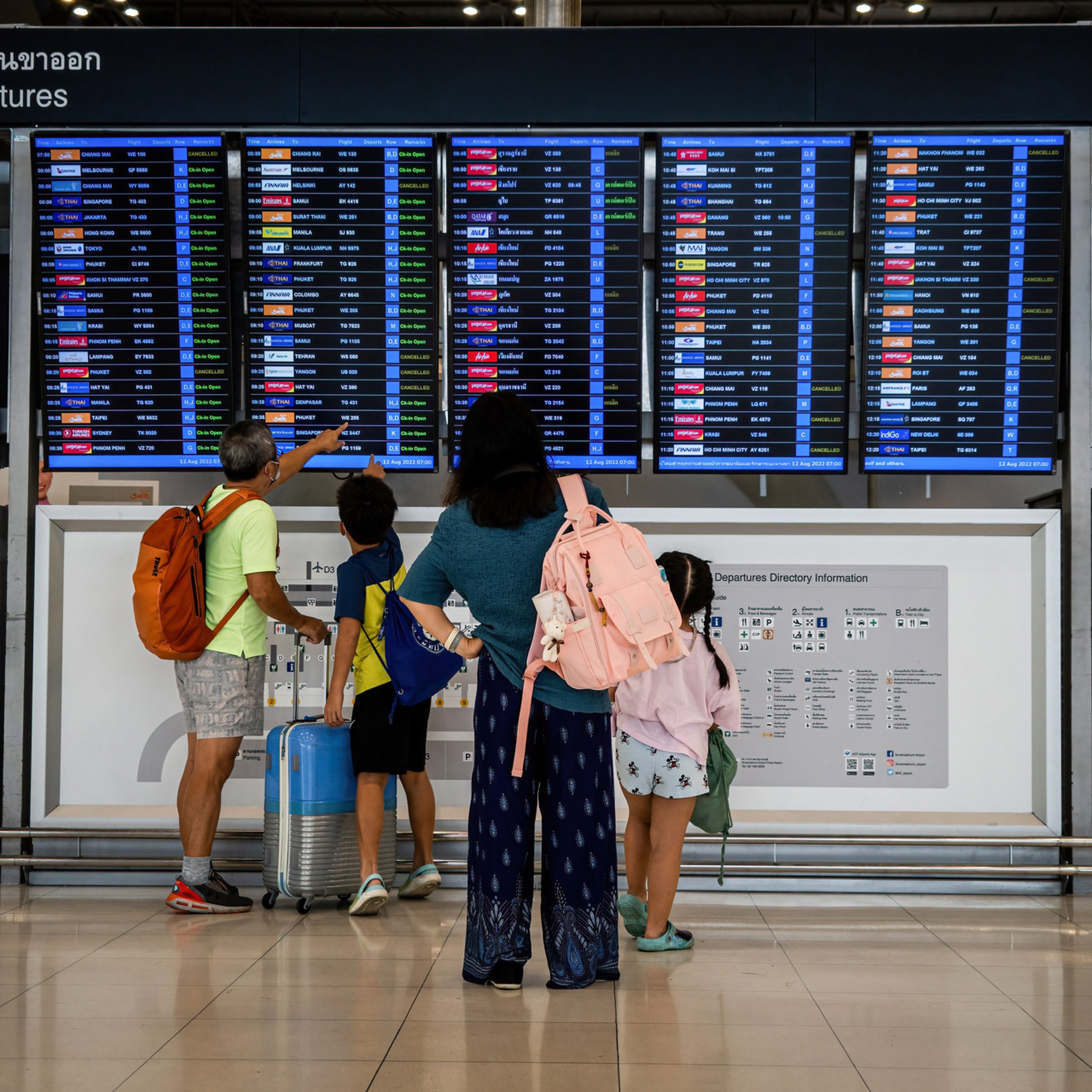
Subscribe and fly: the travel industry’s latest trend
Travel isn't easy anymore. Between the cancelled flights, lost baggage and just the cost of it all, it's almost enough to turn people off altogether. But we'll hear how travel companies are using subscription services to keep those travellers travelling.Leanna Byrne speaks to airline bosses Neil Thwaites, regional vice-president for California at Alaska Airlines and Kirby Gordon from FlySafair about how their subscription services are boosting business. We also hear from Iñaki Uriz, the chief executive of Caravelo, a subscription platform for the airline industry on travel trends. And finally, as some the biggest users of subscriptions services are millennials and gen Z, we speak to someone who calls themselves a "digital nomad".Presenter / producer: Leanna Byrne. Image: travellers at an airport in Thailand; Credit: Getty images
Business Daily Meets: Pernilla Nyresten
Pernilla Nyrensten made history when she became the first female founding CEO to float a company on the Stockholm stock exchange since the its inception 160 years ago. She started her retail business, RevolutionRace in 2013 just less than $30,000 today the firm was recently valued at around 1 billion dollars. Pernilla's journey has not been without challenges - she's been told, by men, that women should only run hobby businesses and that running a public company is too hard and stressful for women. Pernilla tells Sam Fenwick that the sexist comments motivated her to pursue her dream of running a successful retail business, and how she hopes to be a role model for other aspiring female entrepreneurs.Presenter / producer: Sam Fenwick Image: Pernilla and Niclas; Credit: Pernilla Nyrensten
Sweden’s light time economy
What’s it like to live in permanent daylight for part of the year? Elizabeth Hotson travels around Swedish Lapland to see how one of the most modern economies in the world takes advantage of the twenty four hour summer sun. Elizabeth finds out how a hotel made of ice is kept frozen with solar power, and why the midnight sun is vital to the ancient tradition of reindeer herding in northern Sweden. We also hear how Sweden’s mountain and nature tourism industry developed and why modern businesses like bars and restaurants can capitalise on the never-ending daylight. Plus, we hear from visitors experiencing the midnight sun for the first time.Producer: Elizabeth Hotson Presenter: Elizabeth HotsonPicture Credit: the midnight sun in Sweden via Getty Images
The fight for digital privacy
A new breed of tech firms is aiming to revolutionise consumer rights online – making us invisible to advertisers unless they pay us for our data.Presenter Ed Butler visits London-based start up Gener8 and speaks to founder Sam Jones. Sam explains how digital marketing works – and what individuals can do to prevent information being collected – or make money from it.We also hear from Brendan Eich, co-founder and CEO of US firm Brave, it’s promoting a similar “earn while you browse” model. And it has 25 million active monthly users. And, Ed asks, if everyone increases their privacy, what will that do to the modern digital economy?Presenter/producer: Ed ButlerImage: Women in Tokyo looking at phone. Credit: Getty
Managing our National Parks
Approximately 6% of the Earth’s land surface is covered in National Parks – but what does it take to look after these rare and special landscapes? We go beyond the tourist trails to hear about the challenges and opportunities facing the people managing the parks.Presenter Laura Heighton-Ginns meets the president of Gorongosa in Mozambique, a park that’s powering the local economy. Gorongosa has become the region’s largest employer and operates a number of side businesses to help with its funding.Laura also visits Dartmoor in the South West of England, which has seen government financial support cut by nearly half over the last 10 years.And she finds out about the oldest protected area in the world – and why its future is uncertain.Presenter/producer Laura Heighton-Ginns.Image: Gorongosa National Park. Credit: Gabriela Curtiz / Gorongosa National Park
War in Ukraine: Venezuela's oil opportunity?
Russian aggression in Ukraine and the world's quest to end the dependence on Russian oil and gas has created an opportunity for Venezuela to negotiate an easing of the US-imposed oil sanctions. But, as Ivana Davidovic discovers, there are also many pitfalls on that journey.Venezuela may have the world's largest oil reserves, but years of underinvestment have severely impacted output, as professor Terry Karl explains.Former chairwoman of the refiner Citgo, Luisa Palacios, outlines where Venezuela still manages to sell its oil and the role played by Iran in that trade. She also thinks that a sanctions deal could be made if the Maduro administration is willing to relinquish some control over production.But Venezuela expert David Smilde is worried that political, rather than practical, considerations - in the US and Venezuela - might muddy the waters.Caracas-based journalist Francis Pena goes on a lengthy journey to buy petrol in her home city, illustrating how economic mismanagement and sanctions are affecting day-to-day lives.Presenter/producer: Ivana Davidovic Image: A motorcycle passes in front of an oil-themed mural in Caracas, Venezuela. Credit: Javier Campos/NurPhoto via Getty Images.
The power of fungi
Tim Hayward takes a journey into the world of fungi. There’s a global wave of interest in the potential uses of fungi right now - and businesses are catching on and playing their part.Tim starts at the Fungarium in Kew Gardens, the world’s biggest collection of dried fungal specimens, guided by collections curator Lee Davies. He then heads to a forest in Finland, where chief executive Eric Puro and lab manager Joette Crosier walk him through the setup at Kääpä Biotech - one of a new breed of fungally-focussed companies with big ambitions rooted in a passion for mushrooms and mycelium. Then he talks with Albert Garcia-Romeu, an assistant professor of psychiatry and behavioural sciences at the Johns Hopkins University School of Medicine. Albert is part of a research team looking at the fungally-derived compound psilocybin - about which there’s a huge amount of interest relating to its therapeutic potential.Presenter: Tim Hayward Producer : Richard Ward. Image: Shiitake (Lentinula edodes) mushrooms being cultivated at Kääpä Mushrooms, Karjalohja, Finland. Used with permission.Tim’s three-part series about fungi, ‘Fungi: The New Frontier’, is available now on BBC Sounds.
China's economic challenge
China, the so-called engine of global growth, seems to be stalling badly right now. The country is facing rising unemployment, falling factory output and a collapsing property market. Plus, a growing number of regular Chinese citizens are complaining that the country's tough anti-Covid strategy isn't working. China has faced choppy economic waters before. But with record high-levels of domestic debt, does it now have the resources to shore up the holes when firms, banks and even local governments start to run out of money? And what are the implications for the rest of us?Presenter/producer: Ed Butler Image: Children play basketball in front of a housing complex built by debt-laden Chinese property developer Evergrande in Beijing. Credit: Noel Celis/Getty Images.
Women, sport and business: Betting
Gambling has a long and complex relationship with sport. But betting is no longer a man's game. As women's sport grows, many companies are putting big money on its success.In the last edition of our series looking at women, sport and business, we find out how one football side came back from the brink via a deal with Sweden's main gambling operator, Svenska Spel. We hear how England's victory in the Women's Euros could be a big win for the British betting sector. But as other sports eye up sponsorship deals, some are calling for tighter controls on how - and to whom - bookmakers can advertise.Presenter/Producer: Alex Bell (Image: Kristianstads DFF face their rivals Djurgardens IF DFF in Stockholm, Sweden. Credit: Linnea Rheborg/Getty Images.)
The Hongkongers leaving for the UK
In 2020, after months of civil unrest, China introduced a new security law in Hong Kong. The UK authorities said it 'violated' the one country, two systems principle established after the former colony was handed back to China in 1997. In response the UK has expanded the British National Overseas visa scheme which now offers the right to live and work in the UK for five years, as well as a path to citizenship. In the first 15 months about 125,000 people applied. We catch up with those starting new lives in the UK and find out how they're establishing careers.We hear from a journalist who's now working as a traffic warden, and a politician who has found a new role working for a High Street bank. Others explain how they organise regular litter picks to show their gratitude to the UK. Former Chinese diplomat Victor Gao gives the view from Beijing.Producer/presenter: James Graham Additional production: Danny Vincent Image: A woman in Hong Kong at night. Credit: Getty Images
A crisis in US rural healthcare
America’s rural hospitals face an uncertain future. One in three are now at risk of closure as doctors and nurses quit, patients struggle to pay their medical bills and government covid subsidies stop. We hear from the front line of one rural hospital in Luray, Virginia. Travis Clark, the hospital's president, and Dr David Lee explain the everyday challenges facing patients and staff. Alan Morgan from the National Rural Health Association tells us why rural hospitals are struggling. Michael Cannon of the Cato Institute in Washington DC argues that rural hospitals should stop relying on subsidies and close their doors if they can’t become more efficient.Presenter and producer: Szu Ping Chan.Image: Dr David Lee in the emergency room of Page Memorial Hospital in Luray, Virginia; Credit: BBC
G'day and g'bye: it's the end for Neighbours
After 37 years, the longest-running drama in Australian TV history is coming to an end.We ask why the Neighbours funding model ultimately failed. We speak to Rob Mills, who played the notorious villain Finn Kelly, about his efforts for the show to be rescued. We also look at how the series launched so many careers both on and off the screen.And we go behind the scenes of the Neighbours set and speak to super-fans taking one last trip down their favourite fictional street.Presenter: Vivienne Nunis Producer: Izzy Greenfield(Photo: Ramsey St, the fictional street where the progarmme is set. Credit: Fairfax Media/Getty Images)
The women breaking into skateboarding in South Africa
Skateboarding is one of the fastest growing sports in the world; it was included for the first time in the 2020 Tokyo Olympic Games in Japan. It's becoming increasingly popular among women and girls, but it does come with a price tag. Hannah Mullane speaks to Boipelo Awuah, one of only two female African athletes to qualify to compete in skateboarding at the Tokyo Olympics. Wendy Gila, the head of the South African Roller Sports Association, gives us her insight into how much it costs to make a sport like skateboarding accessible to everyone. Mark Sedgwick meets Thato Moet, Founder of IslandGals, a girls only skate group in Johannesburg. She gives her perspective on what it’s like to be a female skater in South Africa. We’ll also hear from Pieter Retief, who helps to build skateparks all over the world and explains how they help to bring together communities. Presenter and producer: Hannah Mullane Reporter and producer: Mark Sedgwick Image: Girls skating in Soweto; Credit: BBC
Women, sport and business: Making NBA history
As part of our mini-series on women, sport and business we meet Cynt Marshall. She's the chief executive officer of the Dallas Mavericks and the first black female CEO in the history of the National Basketball Association, a professional basketball league in North America. Cynt tells us about her background, where she found the drive to forge an enormously successful career and how she’s changed the toxic and very male workplace culture she found when she arrived at the Mavericks.Presenter: Rahul Tandon Production: Helen Thomas and Carmel O’Grady Image: Cynt Marshall; Credit: Getty
Commonwealth Games 2022: the most sustainable ever?
The Commonwealth Games 2022 is coming to England's second biggest city, Birmingham, which is home to almost six million people and more than 450,000 businesses. It's expected to create 35,000 new jobs and skills opportunities and generate an extra £1.2bn ($1.4bn) for the city's economy. Organisers are promising that it will be the most sustainable Commonwealth Games ever and will leave a carbon neutral legacy. That means any CO2 released into the atmosphere from the event will be balanced by an equivalent amount being removed. Nisha Patel travels to Birmingham to speak to some of the people behind the games to get an insight into how they plan to achieve this and to find out how important the event is to the city.Produced and presented by Nisha Patel.Image: Alexander Stadium, Birmingham, Credit: Birmingham City Council
How Kenyan farmers are adapting to climate change
Climate change - which the United Nations defines as long-term shifts in temperatures and weather patterns - is a growing global problem, particularly for farmers. A recent UN report found agricultural productivity growth in Africa has decreased by 34 percent since 1961. That's more than any other region in the world.Michael Kaloki takes a road trip around Kenya, speaking to farmers about their struggles to grow crops with the increasingly unpredictable weather. He asks Rachel Bezner Kerr, a professor at the Department of Global Development at Cornell University in the United States why climate change is happening and what the future holds.He visits the organisations that are trying to help farmers adapt to climate change. Dr Ivan Rwomushana, from the non-profit inter-governmental organisation CABI, and Oliver Furechi from the charity Practical Action tell him what strategies and solutions they're teaching farmers.Presenter: Michael Kaloki Producer: Jo CritcherImage: Nancy, a farmer in the county of Nakuru in Kenya; Credit: BBC
Business Daily meets: Kiran Mazumdar-Shaw
Kiran Mazumdar-Shaw trained as a master brewer, but in late-1970s India she was rejected by the beer industry – it wasn’t seen as a job for a woman. Undeterred, she put her scientific mind and entrepreneurial prowess to setting up what would become one of India’s largest pharmaceutical companies, Biocon. She tells Rahul Tandon about her humble beginnings in business, overcoming challenges and inspiring other female entrepreneurs.Presenter: Rahul Tandon Producers: Rahul Tandon, Sam Clack, Rory Claydon Image: Kiran Mazumdar-Shaw; Credit: Biocon
Fertility problems and pesticides in Panama
Grace Livingstone investigates the ongoing case a group of men in Panama have brought against banana firms. We hear from two of the men who claim they were made sterile after handling a pesticide in their jobs on banana plantations. United States companies used a pesticide called DBCP on banana plantations in Latin America in the late 1970s, even though the United States restricted and then banned its use in mainland America because of the health risks. We ask why – even today - pesticides that are outlawed in one country can still be exported and used abroad. Presenter / producer: Grace Livingstone Image: Mr Coba at the banana plantation where he used to work; Credit: Grace Livingstone
Women, sport and business: Media deals
In this episode of Business Daily, the latest in our series on women, sport and business, we’re looking at the media. With women’s sport accounting for only around 5% of the total sports coverage globally, we’ll be finding out how some clubs and organisations are moving away from traditional media, and looking at digital and streaming to reach fans instead. Reporter Sam Fenwick visits Burnley FC Women in the north of England. Last year they signed a ground breaking deal with TikTok to show every home game. And we hear from TikTok themselves – Rich Waterworth, General Manager for the UK and Europe explains what’s in it for them. Sue Anstiss is the author of Game On: The unstoppable rise of women’s sport. She tells us fans of all sports are consuming content differently now, and if women’s sport gets it right, there could be a big opportunity in the digital market. And Haley Rosen, founder and CEO of digital media company Just Women’s Sports explains her frustration at trying to set up a business in a growing marketplace which is lacking in investment and infrastructure. Presenter: Sam Fenwick Producer: Helen Thomas Image: (Burnley FC Women in December 2021. Credit: George Wood/Getty Images)
How virtual reality is changing healthcare
By 2024, virtual reality is expected to reach a value of $1.2bn in the healthcare sector alone – and it’s already seeing adoption in major public healthcare bodies like the UK’s National Health Service. But many private businesses are the ones leading the change and working closely with hospitals, universities and pharmaceutical giants.We speak three businesses in three different parts of the world to find out what they’re doing to change healthcare. We hear from Matthew Wordley, CEO of the Wales-based company Rescape Innovation, Vini Gusmao, who leads the Brazillian company Medroom, and also speak to Kensuke Joji, CEO of Jolly Good VR, based in Japan.Producer / presenter: Rory Claydon Image: A woman wearing a VR headset and face mask; Credit: BBC
Military contracts in India
Lots of people want to work in the military in India – the jobs offered security, prospects and a gold-plated pension. But a new Government plan to change military employment contracts has drawn criticism and led to protests. The Government say the changes will tackle the increasing cost of military pensions and stubbornly high unemployment across India. Rahul Tandon and reporter Archana Shukla will explain why so many young people feel cheated by the plan to shorten military contracts and remove the right for many recruits to a pension. We hear from those attempting to get into the military, former officers, the Government and economists on the new contracts and ask what impact they could have on India's long standing youth unemployment problem. Presenter: Rahul Tandon Reporter: Archana Shukla Producer: Carmel O'Grady Image
Lollywood or Bollywood?
We take a look at the fortunes of Bollywood and Lollywood post pandemic. We’ll ask what the future holds for the film industries of India and Pakistan and explore whose creative ideas and business innovations in cinema are proving to be a hit with audiences. Emb Hashmi speaks to the stars of the new Lollywood film 'London Nahi Jaunga' and Nikhil Inamdar visits a Bollywood film set. We also hear from critics, directors and analysts who tell us what they think both film industries need to do to increase profits and box office numbers.Presenter: Emb Hashmi Reporting: Nikhil Inamdar Producer: Carmel O'GradyImage:Humayun Saeed and Kubra Khan; Credit: BBC
What's going on with weightlifting?
Ashish Sharma explores the problems facing one of the world’s oldest sports.A governance crisis has engulfed the sport of weightlifting and it faces an uncertain future, and as it stands weightlifting won´t feature in the Los Angeles Olympics in 2028. We explore the financial implications for this iconic Olympic sport if it loses the funding it gets for being on the Olympic agenda. We speak to young weightlifters about their future in the sport, attend a weightlifting contest in Mexico and report from the election for the new head of the International Weightlifting Federation. Producer / presenter: Ashish Sharma Image: Turkey's Daniyar Ismayilov competes at Rio 2016; Credit: Salih Zeki Fazlolu / Anadolu Agency / Getty Images
Women, sport and business: Merchandise
In this episode of Business Daily, the latest in our series on women, sport and business, it's all about the merch.We'll explore how important replica tops and kits actually are for women’s sport in terms of fandom, participation and of course money. We ask what female sports fans and participants actually want to wear and whether they're being adequately catered for. Dr Katie Lebel is Professor at the University of Guelph in Canada and researches gender equity in sports branding and consumer behaviour. She tells us there is a distinct lack of data in this area and as a result sports wear firms are definitely missing out on revenue. Dana Brookman is founder of the Canadian girl's baseball league and tells us her biggest challenge has been sourcing suitable uniform for her teams, and Sam Fenwick visits sport wear manufacturer Kukri to see what they have available for women and how they're working to improve their offer. Presenter: Sam Fenwick Producer: Carmel O'Grady Image: Canadian girls baseball; Credit: Dana Brookman We’re going to explore what’s available and whether half the population is being properly catered for in terms of sports gear...