Brewing Theology With Teer Hardy
309 episodes — Page 3 of 7

The Hope of Inclusion
May 5, 2024 Galatians 3:23- 29 It is sinful to say that someone is "incompatible" because of who God made them to be. To those who have been told they and their families are “incompatible,” you have never been incompatible. It is sinful to put barriers in place to prevent or discourage those called by God from responding to their call. It is sinful to cherry-pick scripture to fit an agenda that is outside of God's grand plan for making all things new to push a political agenda within Christ's body. Because of our proclivity to sin, the truth of the matter is that all of us are incompatible, which is why the cross and resurrection are not just moments in history but rather God’s cosmic reversal. Get full access to Brewing Theology with Teer Hardy at teerhardy.substack.com/subscribe

Enjoy Your Forgiveness
April 28, 2024 John 21:2-18 Easter 5 The light of the resurrection pulls us out of shame and guilt and invites us into a new life in Christ. Jesus did not repeat his line of question to Peter to shame the Rock upon which the Church would be built but rather to be crystal clear that not only has Peter been absolved of his sin but also that shame and guilt are no longer necessary. In the face of Peter’s public denial, Jesus gives Peter a great responsibility – “Feed my sheep.” A moment for which many of us would prescribe guilt or shame, Jesus prescribed grace. The resurrection of Christ is not just a historical event; it is a living reality, the living hope that continues to transform lives today. Through the faithfulness of our resurrected Lord, the burden of shame and guilt has been lifted from our shoulders. No longer do we need to wallow in self-condemnation, for in Christ Jesus, we find forgiveness, restoration, and a fresh start. When we return to our fishing nets after the Easter celebration, we can hold fast to the truth that our worthiness of love and belonging is not determined by our past mistakes or present imperfections. Instead, it is rooted in the unconditional love of God, demonstrated through Jesus Christ's life, death, and resurrection. The burdens of shame and guilt are lifted, knowing that our gracious Savior truly loves, forgives, and accepts us. And we now live in the light of resurrection hope, let us respond to Christ's call with joy and gratitude, eagerly proclaiming his love to a world in desperate need of redemption. Get full access to Brewing Theology with Teer Hardy at teerhardy.substack.com/subscribe

Resurrecting Psalm 23
Brewing Theology is a reader-supported publication. To receive new posts and support my work, consider becoming a free or paid subscriber.Psalm 23When I saw that the Revised Common Lectionary assigned Psalm 23 this week, I thought, “Challenge accepted!” For many of us, Psalm 23 is reserved for funerals and memorial services. Every funeral and memorial service I have officiated has included Psalm 23. The other readings might vary, and the preacher may not even include the psalm in their sermon, but Psalm 23 stands as a bulwark in our times of grief. The psalmist assures us that our dearly departed family or friend “shall dwell in the house of the Lord”[i] while we dwell in grief.But does the psalm more familiar to mid-week and Saturday memorial and funeral services provide us with a glimpse into the good news of the resurrection? Does Psalm 23 have anything to say to us today when we do not find ourselves gathering to grieve but instead are gathered to proclaim Christ resurrected?“The Lord is my shepherd, I shall not want. The Lord makes me lie down in green pastures; The Lord leads me beside still waters, The Lord restores my soul.”[ii]Our physical bodies require more attention and resources than we realize. I was shocked to learn this week that in 2022, in The United States, we spent $4.5 trillion, or $13,493 per person, on healthcare.[iii] This money was spent on keeping us healthy and alive: flu shots, appendectomies, in-grown toenail removals, and heart bypasses. When it comes to cosmetic procedures, we spent over $26 billion on being nipped and tucked.[iv] Add on gym memberships, visits to the barbershop, cosmetic products, and other odds and ends; we spend a fortune on ourselves.The physical nature of your body is just one way you were created in God's image. God cares about the image you were made in more than the amount of money we spend maintaining or attempting to “perfect” what God deemed “good” long before we discovered Botox, facelifts, and hair dye. After hearing myself preach for nearly seven years, I can hear where it might be easy for some to say that I would argue that God has little interest in our physical wholeness. After all, I can sound like a broken record preaching the same old song of God’s grace. Yes, God loves you just as you are right now, but God loves you too much to leave you just as you are. The beauty of God’s grace is that God is unwilling to leave us as we are. God is interested in everything, whether our soul or physical body. Your whole self is what God loves, not this piece or that piece of you.John Wesley, the founder of Methodism, emphasized the importance of holistic well-being, advocating for a balanced approach to spiritual and physical health. He believed that the pursuit of holiness encompassed spiritual disciplines and stewardship of our physical bodies. It is easy to think of the Church as only concerned with the eternal care of our community, but the reality is that because we proclaim that the Kingdom of God is already here, our physical bodies matter as much as our souls. Wesley’s words echo through the ages, urging us to embrace a lifestyle that nurtures both body and soul.Nadia Bolz-Webber, a contemporary theologian, beautifully articulates the intrinsic worth of every human being in the eyes of the Divine. She reminds us, “What God claims to love, do not deem unworthy of that love. What God has called good, do not call anything other than good. What God has animated with God’s breath and endowed with a soul and God’s image, do not treat with anything less than dignity.”It is easy to think that we are the only ones worried about the physical nature of this life. We spend so much time and effort on ourselves that we can forget that the Lord indeed cares for us.Psalm 23 makes clear – through green pastures, still waters, and overflowing cups – that God is not only interested in making sure our physical bodies are raised when we claim the promised resurrection but that our bodies matter today.You’ll remember from Sunday school and our communion liturgy that God provided for Israel when they wandered in the desert, wondering if the Lord had abandoned them. When the bread of heaven fell to the ground, the Israelites asked Moses, “‘What is it?’ For they did not know what it was. Moses said to them, ‘It is the bread that the Lord has given you to eat.’”[v] the Lord did not abandon the physical needs of Israel.The signs and miracles performed by Jesus addressed the spiritual needs of the people and, at the same time, addressed physical ailments that had been neglected or deemed not treatable.The Gospel of Mark tells us, “And a woman was there who had been subject to bleeding for twelve years. She had suffered a great deal under the care of many doctors and had spent all she had, yet instead of getting better, she grew worse. When she heard about Jesus, she came up behind him in the crowd and touched his cloak, because she thought, ‘If I just touch his clothes, I

Transformed by Grace
April 14, 2024Romans 12:1-10 Look, I get it; change is difficult. Renewal is even harder. But I am thankful that God has not left me with the faith or theology I had when I was younger. I give thanks every day that God is renewing my faith. God makes me see people in my midst, truly see them in ways that my prejudices would otherwise prevent. Because Christ’s Grace and faith are reckoned to me, my understanding of others is transformed. This is a transformation of the church as a body. Through the renewing of our minds, God is inviting us to a spiritual transformation. Spirituality is not a some product that can be marketed or consumed. Not a yoga retreat and not by the church. Not even ours. Instead, spirituality is a new life, a transformed life. It is a human response to seeing “the glory of the Lord as though reflected in a mirror.”Practices like prayer, worship, the study of the scriptures, and other spiritual disciplines are all ways God nurtures us as an act of spiritual transformation. Being conformed and transformed by God, is part the spirit of our Methodist DNA. John Wesley was engaged in spiritual renewal within the Church of England. Wesley upset many in the church, but he always viewed his work as being part of the established church, being part of Christ’s body, not apart from it. To be “metamorphosized into God’s image,” as Paul writes, is not something we do. There are no intellectual accomplishments by which you can make this happen. The transformation we experience is something God is doing to us. It is the byproduct of being encountered by the living God. How good is the news that you are transformed, redeemed, and saved by the Risen Christ? Why would you want your mind to be conformed to this world when you could experience Christ’s transforming grace? Get full access to Brewing Theology with Teer Hardy at teerhardy.substack.com/subscribe

It Is Well | Living in the Light of the Resurrection
April 7, 2024Genesis 1:26-31Psalm 139:13-16Easter 2The resurrection of Jesus Christ has implications for our whole selves – our bodies, minds, and souls.Who we are - every part of our being - is wrapped up in being created in the image of God and is tied up in Christ's life, death, and resurrection.From the beginning of humanity, we have been declared “good” by God. Do we always act “good?” Certainly not, but God called what God created, you, “good,” so you are good regardless of what you or others may say about you.You are “good” regardless of your actual or perceived flaws.You are “good” regardless of what others may say about you.You are “good” regardless of what you say about yourself.In a world that often demands that we filter ourselves through the lens of what popular culture demands, God says you are good to go. This is because we know that God loves you just as you are and that God loves you too much to leave you just as you are. When I say, “God loves you too much, leave you just as you are,” I am saying that God is making you more and more like Christ.Is God making us into the Saviors of the world? No. We already have one of those and live our life, died our death, and in his resurrection, we find hope for not just eternity with God but for the fullness of physical life.The promise of bodily resurrection is the continuation, a divine “Amen!” from the One who created us and declared us to be “good.” Get full access to Brewing Theology with Teer Hardy at teerhardy.substack.com/subscribe

Who Are You Looking For
March 31, 2024 John 20:1-18 Whatever the reason you came here this morning, our risen Lord is calling you by name, calling you to you in the midst of your grief or doubt. Calling you in the middle of joyous laughter and fun with onlookers says your behavior is inappropriate for the location. Calling you, just as he called the disciples away from their nets, calling you to a new life of following him, a life that promises new life. The grace of God, the love of God, is all around, especially on days like today. We all arrived here this morning in our Easter, best looking for one thing or another, and like Mary, we find that our risen Lord has plans for us that do not match what we had planned for ourselves. And that’s the good news of this day, is it not? No matter how we found ourselves here or for what reason, Christ still calls out to us by name. Calling us by name, like Mary, Jesus is inviting us to new life is only possible through God‘s grace. “Whom are you looking for?” Alleluia! Christ is Risen! He is risen indeed! Alleluia! Get full access to Brewing Theology with Teer Hardy at teerhardy.substack.com/subscribe
More to the Story
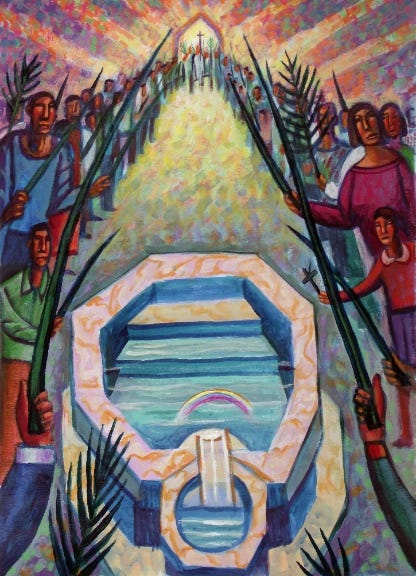
March 24, 2024John 12:12-29In our procession of fools, we miss that there is so much more to this story.In each stop between the Mount of Olives (Palm Sunday) and The Skull (the cross), Jesus is gathering all of humanity into him, the very best and the very worst we have to offer. No prayer or ritual must first be spoken or performed on our part. And that is grace.If Jesus calling Lazarus from his tomb last Sunday was the prelude to Holy Week, then Palm Sunday is Act One of a larger story. A story that we all have been baptized into, Soraya included. Fleming said it best, “the testimony of the four evangelists (gospel writers Matthew, Mark, Luke, and John), the testimony of the Christian church, is that in this event, in this godforsaken death, the cosmic scale has been conclusively tipped in the opposite direction, so that sin and evil and death are not the last word and never will be again.”There is so much more to this story. Get full access to Brewing Theology with Teer Hardy at teerhardy.substack.com/subscribe
Come Out!
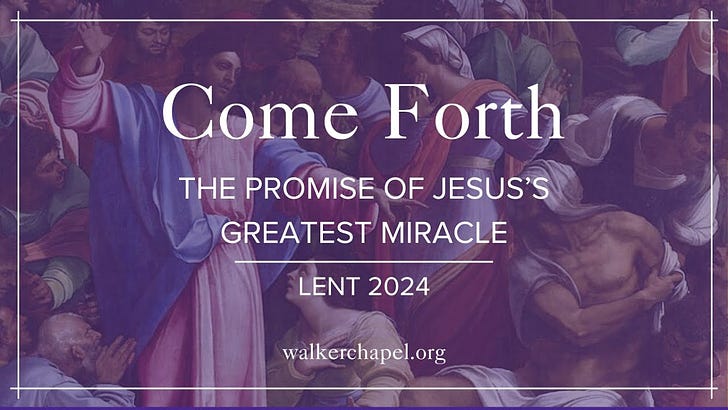
March 17, 2024John 11:1-44Jesus is calling each of us to “come out!” Now, I know what you are thinking. If God speaks to you or someone tells you, “God spoke to me,” the temptation to take a step back or to think the person chased their drinks from happy hour with a shot of NightQuil. But (and you know how I feel like big buts), the truth is that God is speaking to us today – in subtle and not so subtle ways – just as God has been speaking to the saints before us.To step out of the shadow of death – the shadow of things that attempt to create a separation between God and us – and into new life through the grace of God. We are invited, through this story, to, like those who first witnessed what they could have believed was a dead man walking, to faith in Christ and faith to leave behind the things that cause us to believe that death is the only thing that waits ahead of us. Get full access to Brewing Theology with Teer Hardy at teerhardy.substack.com/subscribe
Othering
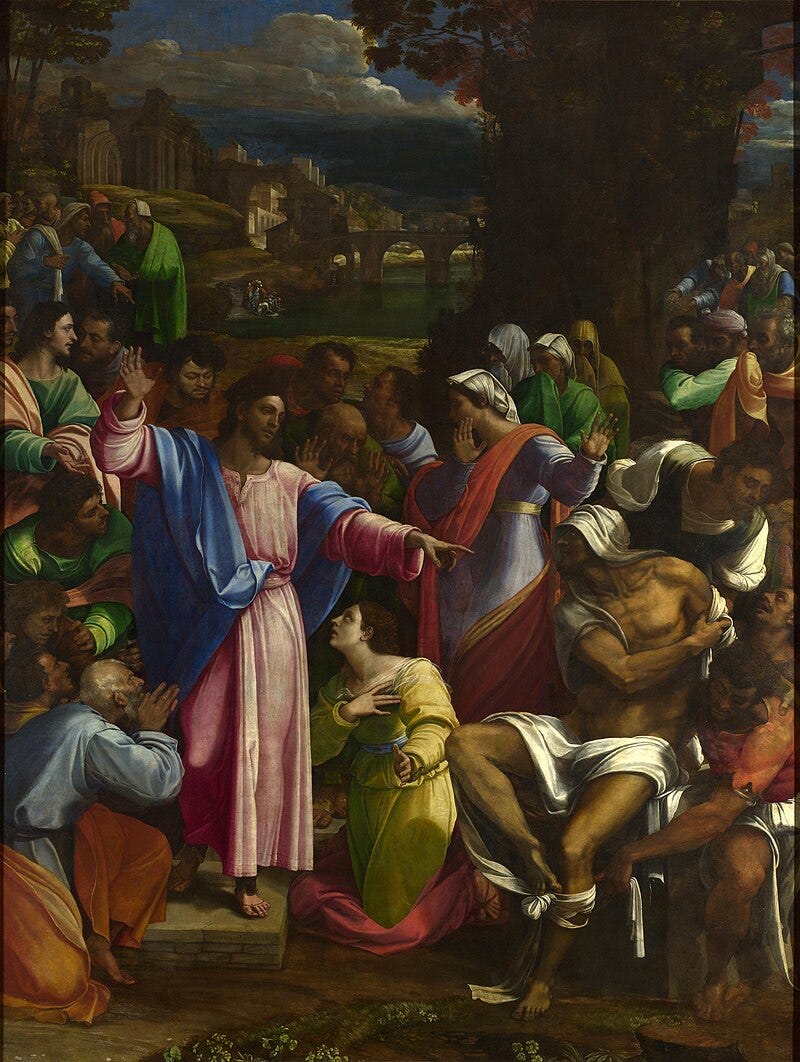
February 24, 2024John 11:7-15Lent 2When we lump a group of people in a category like “the Jews,” “the Muslims,” “the Russians,” “the Ukrainians,” “the Americans,” “the Mexicans,” “the Palestinians,” or the “Israelis,” we risk an attempt at reducing the imago dei[ix] – the made in the image of God-ness – of those people into a caricature that fits our prejudices and ignores the rich diversity of the group of people. If we learned anything from the Holocaust, if we are learning anything from what is happening in Gaza today, it is that once a group of peoples’ identity has been reduced to the “other,” the group responsible for the ills of another group, the removal of those people is much easier.Murder and genocide are much easier to sell when the humanity of “the other” has been removed. In recent years Christians in the United States have been coming to grips with the church’s role in the dehumanization of Indigenous populations of North America along with those forcibly moved to North America throughout the Trans-Atlantic slave trade. Which led to what James Cone describes as “the lynching era” when “white Christians lynched nearly five thousand black men and women in a manner with obvious echoes of the Roman crucifixion of Jesus.”Why do you think misconceptions about Jewish people exist within the church? Take this question a step further and consider why misconceptions about Muslims, Jews, other religions, and even “other” Christians exist within the church. Share that with the people worshiping around you this morning.In his letter to the church in Galatia, Saint Paul put an end to the us vs. them “othering” that was occurring in the church. He wrote, “There is no longer Jew or Greek, there is no longer slave or free, there is no longer male and female; for all of you are one in Christ Jesus.”The labels and prejudices we use to “other” one another were torn down on the cross. Christ, in taking the sins of the world upon himself, put an end to us versus them. This is where we find the Good News of this portion of the story of Lazarus: even while John uses problematic language, the grace of God remains. Lazarus, a Jew, was raised. Jesus, a Jew, will be raised. And the promise holds true for you and those we deem anything other than God’s beloved. Get full access to Brewing Theology with Teer Hardy at teerhardy.substack.com/subscribe
What’s in a Name?
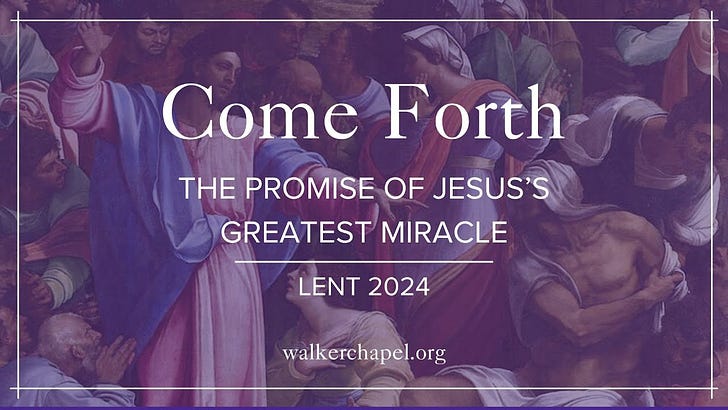
Lent 1John 1:1-6The following sermon is the first in a five-part congregational study of the raising of Lazarus. In addition to the Gospel of John, we will be using James Martin’s book Come Forth: The Promise of Jesus’s Greatest Miracle as a guide for our study.Set aside the good and bad of what the world has to say about you and know that You are God’s beloved.Consider for a moment what it means to be God’s beloved. Looking back on your life, what enables you to believe this?James Martin writes that we know Lazarus’s name because the early church knew it.[ix] Before the Gospel of John was written, Lazarus was raised, and thus, Lazarus’s name was known. And here’s the thing: he did nothing to earn fame. Lazarus, “God has helped,”[x] “he whom you love,”[xi] is known and celebrated as the recipient of Jesus’s greatest miracle, and his only act was to walk when called upon. “Lazarus come out.”The world may not know who you are. You may feel invisible throughout the day, or the world's attention is always on you. None of that matters to God when it comes to your belovedness. Your belovedness, you being one whom the Lord Jesus loves, like Lazarus, has nothing to do with your accolades and everything to do with the One calls us to “come out,” to come and see the goodness of God’s grace. Get full access to Brewing Theology with Teer Hardy at teerhardy.substack.com/subscribe

Repented by Grace
Ash Wednesday 2024Matthew 6Isaiah 56:1-12The fancy theological term for Ash Wednesday is “repent.” You will be impressed to know that the Greek word metanoia means to turn away or reorient. Today is when we, as Christ’s body, repent, with the help of spiritual disciplines, God’s grace, and the power of the Holy Spirit to turn away from our sin and back toward God. And it is in repenting that we find the Good News of this day.It is not that we repent on our own. If it were entirely up to us, we would not need to repent because we would be unable to see that we are indeed caught in the snares of sin. We would be unable to see how we have sinned against God and one another. We would not be caught off guard when Ash Wednesday and Lent appear on the calendar.The grace of God repents us. God’s prevenient grace – grace that goes before us – helps us to begin to see where and how our sin is at odds with God’s cosmic plans for creation. God’s grace is at work in your life even when days like Ash Wednesday sneak up on you. The season of Lent – through the adoption of a Lenten practice and heeding the words of Christ – is one of the ways God is repenting us, pulling us from the snares of sin, and sanctifying us, making us more and more like Christ. Get full access to Brewing Theology with Teer Hardy at teerhardy.substack.com/subscribe
Kaleidoscope of Eternity
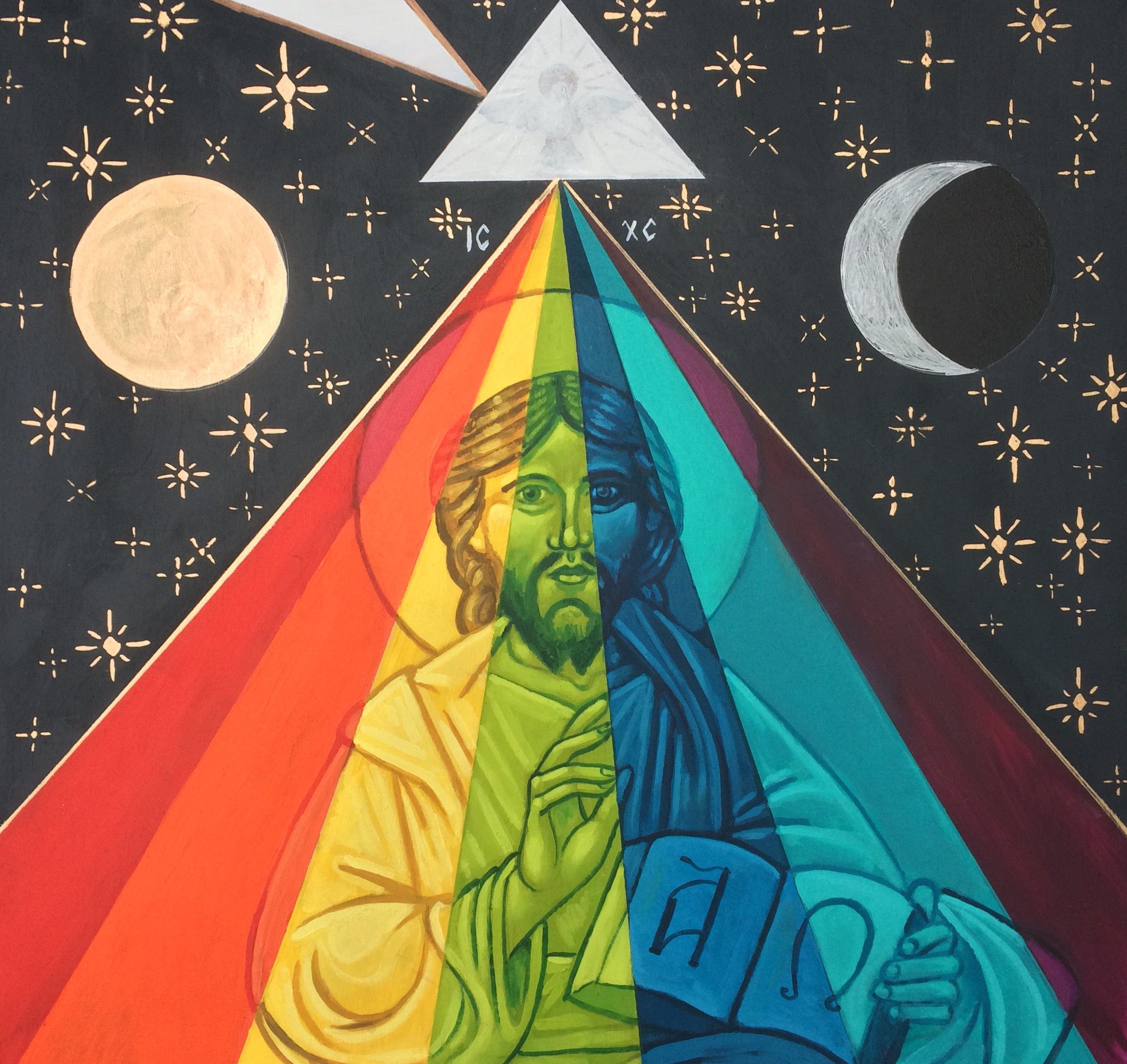
February 11, 2024Mark 9:2-9Peter had a glimpse into the mystery of our faith: that God became fully human so that humanity might become righteous. The Good News, the hope contained in the Transfiguration of Jesus, is not the message to come down the mountain and serve the poor – a message many would affirm without ever knowing Jesus. The Good News is that God became like us, like you and me.The light that beamed from the transfigured Christ is the same light that said, “Let there be…” The same Light that the creation waits for with sighs too deep for words. The same Light that will one day make all of creation a blaze like a bush with God’s glory, but not consumed.The light that beamed was a glimpse into the eternity that is the fullness of the Kingdom of God.The disciples received a kaleidoscopic preview of what we proclaim at the end of the Nicene Creed: “We look for the resurrection of the dead, and the life of the world to come.”[viii]There is no way we can jump from the proclamations of Jesus as Lord – Peter declaring Jesus to be the “Messiah of God” or the people of Jerusalem shooting sweet hosannas as Jesus entered the city on Palm Sunday to the excitement of the resurrection (Easter) without going through the Holy Week. It is not that the wrath of God had to be paid by Jesus to reveal God’s love for humanity. Instead, through Jesus taking on the violence and despair humanity threw at him, the goodness and mercy of God’s love would reveal the lengths to which God would go to save us.Glimpses into the eternity of God come and go for all of us as we continue to grow in our faith and have our own encounters with the resurrected Messiah. And each glimpse is like a kaleidoscope, revealing something new to us about the fullness of who Jesus is. Get full access to Brewing Theology with Teer Hardy at teerhardy.substack.com/subscribe

When God Interrupts
January 21, 2024 Mark 1:21-28 The story of Jesus Christ is a story of interruptions. The announcement of his birth by the angel Gabriels interrupts Mary's life and her plans to be married to Joseph. The silence of Christmas night was interrupted when angels announced the birth of the Messiah to shepherds who watched their flocks by night. John the baptizer was interrupted when Jesus stepped into the Jordan River to be baptized. The lives of the first twelve disciples were interrupted when Jesus called them away from their nets and families. Jesus's sermon is interrupted by a man with an evil spirit. We can jump ahead in the gospels and see that the victory Sin and Death thought they had grasped was interrupted on Easter morning when the crucified Messiah left his burial clothes behind, and walked out of his tomb. God’s interruptions reveal to us not only God’s grace but also the authority God holds over our lives. So, we gather, and we worship praying that God will interrupt the status quo. To become a follower of Jesus means that we can welcome these interruptions, viewing them not as inconveniences but rather as moments of grace breaking into our lives. Get full access to Brewing Theology with Teer Hardy at teerhardy.substack.com/subscribe
Preexisting Messiah
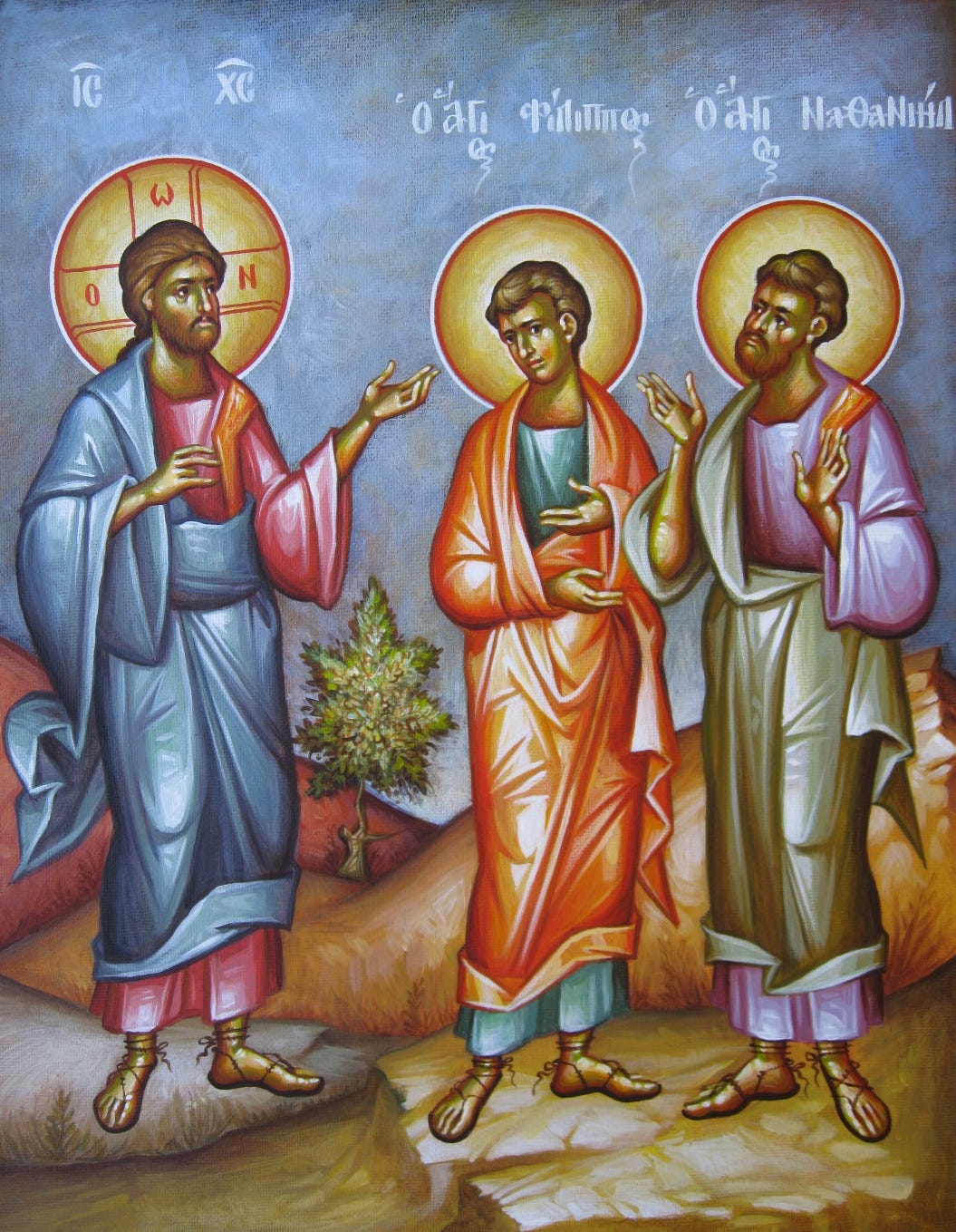
January 14. 2024John 1:43-51The calling of the disciples, the calling of anyone by God, to “Come and see,” is about more than saying “yes” so that the Lord can send us out. Philip, Nathaniel, Andrew, and Peter were not called and immediately sent. Their sending will happen three years after their calling. After three years of seeing what Jesus was doing, they would be sent to make more disciples, to baptize them, and to teach them to follow what Jesus had taught the first 12.Before Jesus called his followers “disciples,” they were called “beloved” because of who created them. We are only who God says we are: no more and no less. So, no matter what number we might be in the Enneagram, no matter what four-letter Myers Briggs designation we receive, we are who God says we are: beloved. You are beloved before you are anything else. You are beloved before you are sent out to do anything in the name of the Lord who saw you sitting under a fig tree, on a barstool when you were at your wit's end, or in the car because you could not face the people inside the house with the news you had to deliver.For Samuel, the first 12 disciples, and us, the Good News is that Jesus’s preexisting messiahship (where all of the best qualities are of God and the result of who God is) is not dependent on us saying “yes” to God. Instead, it is a sign of God saying “yes” to us, “yes” to creation, and “yes” to seeing to it that the kingdom of God is fully realized. Get full access to Brewing Theology with Teer Hardy at teerhardy.substack.com/subscribe

For All People
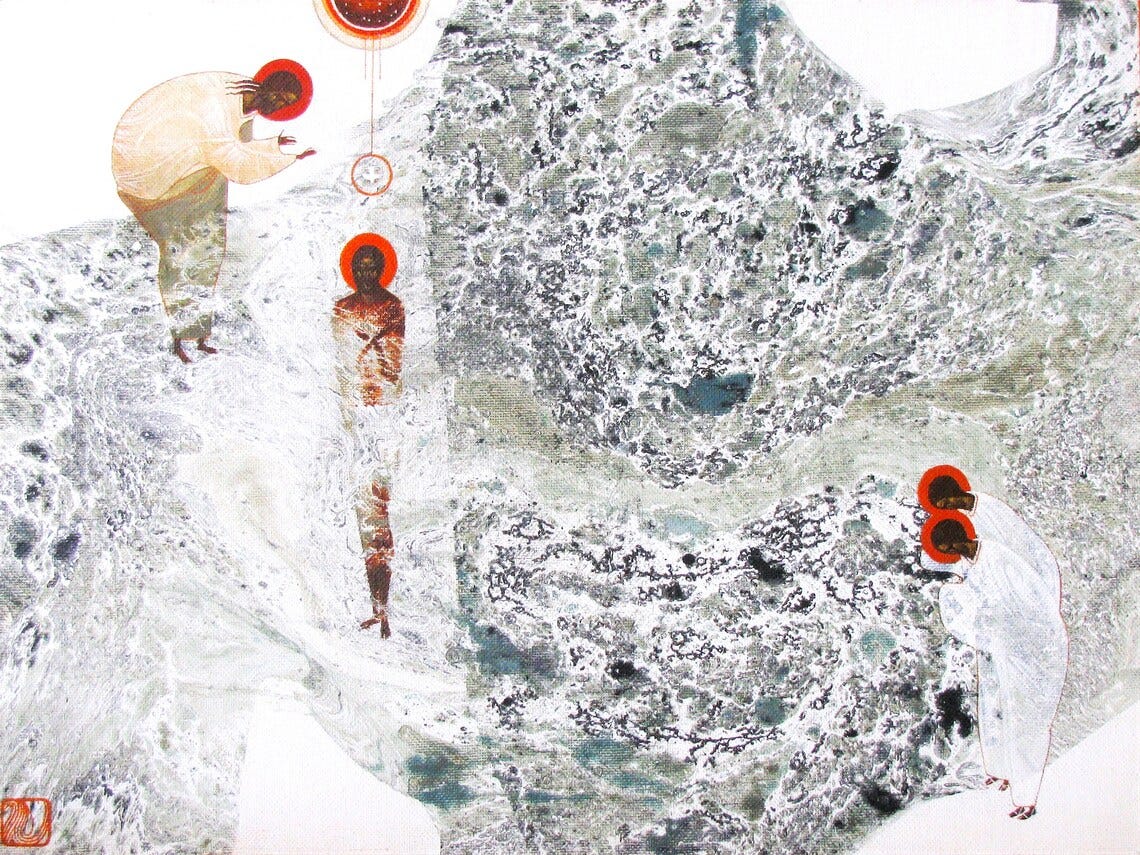
January 7, 2024Baptism of the LordMark 1:4-11Jesus enters the water of the Jordan River, and as his head breaks through the surface of the water, the heavens open up, and a voice calls out, “You are my Son, the Beloved; with you, I am well pleased,” and the Holy Spirit descends like a dove. Emmanuel, God with us, entered the same water where many had left their sins behind so they could turn back toward God. The Son of God entered the murky waters of creation, taking upon himself the sins of the world so that what we have mucked up is made clean. The unclean becoming clean. The unrighteous made righteous. The mucked up unmucked.Jesus did not need to repent.Jesus did not need to be baptized.But Jesus, in his first act of ministry, getting into the waters of John’s baptism, is just one example of how God is not reigning from a golden chair high above creation. Through what happened in Bethlehem, through the Wise Men traveling from outside the covenant God made with Israel, and through Jesus getting down and dirty in the Jordan River, God is showing us time and time again how God is not willing to allow us to be in the muddiness of life on our own.When we are baptized, because Jesus entered John’s baptism, we are buried with Christ, exiting the waters clothed in new life in Christ. Baptism is not limited to our yes or parents’ yes on behalf of their child to Jesus. Our baptism is God’s yes to us. Your baptism is God’s yes to you.With Jesus’s baptism located on the coattails of Christmas on the church calendar, it is easy to take for granted what happened in the murky waters of the Jordan River. What Jesus did in the Jordan River was an invitation to all people.When Jesus invites us to the waters of our baptism, it is an invitation to all people.The invitation of baptism is to be made new in the light of God’s grace.All are invited to the waters of baptism because, as we will see in the weeks ahead, Jesus is unwilling to allow anything to stand between you and the love of God. Get full access to Brewing Theology with Teer Hardy at teerhardy.substack.com/subscribe
The Season of the Great Resumption
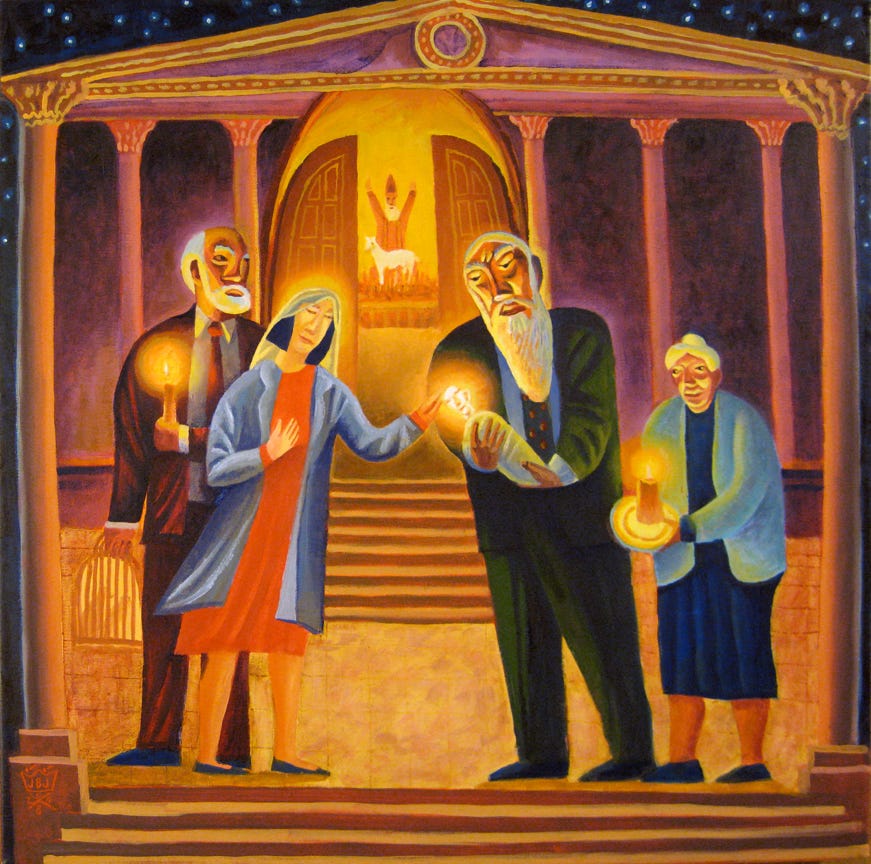
“The Season of the Great Resumption"Luke 2:22-38December 31, 2023 - First Sunday After ChristmasSimeon and Anna were both filled with expectations. For both, their expectations rested not in the cycle of the Temple but rather in the promise made by God to Israel – to raise up the messiah through the line of David. So, Simeon and Anna waited. Anna waited in the Temple for the coming of the Lord. Imagine spending day and night here in the Chapel, waiting for the Lord to be presented, not knowing what to be on the lookout for. Simeon relied on the Holy Spirit to tell him when he might go to the Temple to find what. A mighty warrior? A well-skilled politician? A baby enters the Temple for the first time so the child’s parents can offer “a sacrifice according to what is stated in the law of the Lord.”We read that the child’s parents offered “a pair of turtledoves or two young pigeons,” signaling to us that the family presenting Jesus was not of extravagant means. Get full access to Brewing Theology with Teer Hardy at teerhardy.substack.com/subscribe
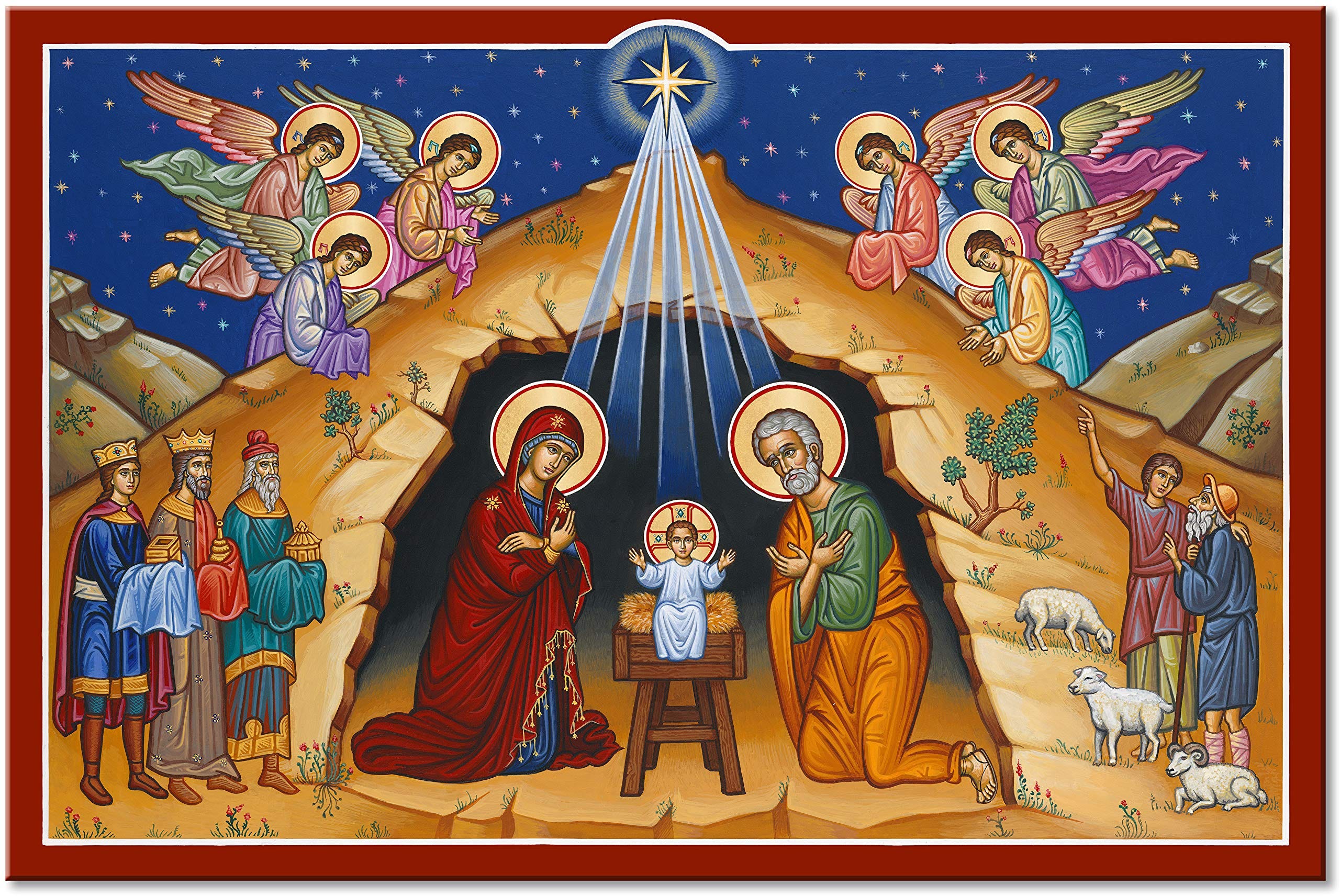
For All People
Christmas Eve Luke 2:1-14 We want joy in our lives. When the world jerks us around, we look for ways to push back and fight back. That’s our story. But (and it’s a big but so you know it does not lie) the story that drew you in tonight is not a story of our initiative against the world's problems. We might find temporary relief in our story, but it rarely leads to the joy we feel tonight, the joy that was laid in a manger. Deep, abiding joy is the result of what God does. Mary sang. The shepherds danced their way back to the fields. We are joyful. We can sing this evening because God has moved and is on the move. God is active in the world, confronting the ways of the world that are not the ways of God. Get full access to Brewing Theology with Teer Hardy at teerhardy.substack.com/subscribe

Gabriel Wasn’t Lost
December 24, 2023 - Advent 4Luke 1:26-38At a particular time and place, in a manner and through people that supersedes what we think to be the normal course of historical human events, God acted, begetting a Son who comes as the fulfillment of God’s promise for the salvation of humanity.Was the angel Gabriel lost? At each intersection between Heaven and Nazareth did Gabriel ask, “Where do I want to go?”Left? Right? Straight?“Can anything good come out of Nazareth?”From the world’s point of view? Perhaps no. But for God? You bet your donkey it can! Get full access to Brewing Theology with Teer Hardy at teerhardy.substack.com/subscribe

Broadcasting Light
December 10, 2023 | Mark 1:1-8Like the Professor in All the Light We Cannot See, John the Baptist is broadcasting gospel good news in the middle of the night.We all want hope which is why we left our Christmas decorations up well into the new year during Christmas of 2020 when the darkness of death and despair was a kind of cloud around us.We all want hope which is why we put our Christmas decorations up earlier and earlier, year after year.We all want hope which is why we will gather on Christmas Eve, light our candles, hold them up, and sing “Glories stream from heaven afar… With the dawn of redeeming grace.”For as much as we love the lives we have curated for ourselves, our Advent and Christmas declarations shout, as voices calling out from the wilderness, that despite our best efforts to stop God, God is putting an end to the evil age. We are living in the beginning of the end right now – a time between two advents.John the Baptist is an often-forgotten character from our gospels. We read about John’s ministry a few times, and then he is forgotten. By the time the bright lights of Christmas overtake our living rooms, John will be a character we reluctantly remember. But (and it’s a big but so you know it does not lie), maybe that is good. John disappears, proclaiming that the Light of the world has come so that the spotlight John held now falls on Christ.As we wait and anticipate the return of Christ, may the attention we draw to ourselves begin to fade and give way to the Light that shines into the darkness. God is not finished. God has not gone silent. Get full access to Brewing Theology with Teer Hardy at teerhardy.substack.com/subscribe

Sustained for the Longrun
December 3, 2023Mark 13: 24-37We have the time to wait. Waiting is one of the ways the Church Universal remains faithful to Christ.The work of the Church is to show and tell that Jesus Christ indeed has come and will come again.We shout that God is not done with us. The Church – yesterday, today, and tomorrow – has been commissioned to bear the light of the Light of the world. So then, the life of the Church is a life of waiting between two Advents. We proclaim that Christ was born of Mary and laid in a manger. We proclaim that John baptized him in the River Jordan. We proclaim that Jesus performed miracles and signs pointing to God's glory and grace. We proclaim that Jesus was killed on the cross but that death did not defeat the grace of God. We proclaim that on the third day, Jesus rose from the grave. We proclaim that Jesus ascended to the Father's right hand, and promises to come again, in the Second Advent, and judge the living and dead.As the Church waits, we watch for signs of Christ’s presence in the most unlikely people and places. But (and it’s a big but you know it does not lie) as we wait, there is a place where Jesus will always meet us. The parable about the man going on a journey is not a parable about an absentee master. Jesus sustains those who wait in bread and wine in what Rev. Fleming Rutledge describes as “refreshment for the next watch.”[v]We are an Advent people, saved by grace, sustained by sacrament, and sent out to declare Emmanuel has come and Emmanuel shall come again. Get full access to Brewing Theology with Teer Hardy at teerhardy.substack.com/subscribe

The Truth We Can't Handle
November 26, 2023Matthew 25:31-46 | Christ the King SundayThe truth we cannot handle is that this final parable is not about the list of do-gooder achievements each of us counts. Before any of our good, bad, or indifferent works, God has been preparing a place for you for every last one of us.The sheep were invited to a place that was prepared for them, prepared for you.The place of punishment was not prepared for the goats. The goats do not have to go where they are going. They get to where they are going because they bought the lie they have earned, that which can only be inherited.Heaven is full of nothing but forgiven sinners, who, through grace, become saints.The truth is that whether you think of yourself as a sheep or a goat, we all find refuge in Christ Jesus abiding with us. Jesus is for you and always will be. Jesus’s promise to be with us is not because of your list of good things. No, Jesus is yours, mine, because of our inadequacy.Here’s a truth I hope you can handle: Jesus is present in your hunger and thirst. Jesus is present when no one welcomes you. If you are sick or naked, remember you are clothed in the grace of God. And when you feel as though you are a prisoner to the demands of the goats, know that the Good Shepherd invites you to an inheritance greater than any nation or lesser lord can offer. Get full access to Brewing Theology with Teer Hardy at teerhardy.substack.com/subscribe

Dear Sweet Baby Jesus
November 19, 2023Matthew 25:14-30Whether we imagine God as a baby wearing golden fleece diapers, in a tuxedo t-shirt, as a sandal-wearing hippie, a tough and harsh dictator, or full of wrath and seeking revenge, that is the God we get. If we expect God to return, righting creation, making everything new as an eight-pound six-ounce baby, then we are missing the story and thus will miss Christ’s return and the fullness of the kingdom of heaven. Likewise, if we expect the wrath of God to come and be poured out on those we disagree with, we will be sorely disappointed when the pouring of wrath begins on us.We spend countless hours “creating God in the image of our own fears throughout our lives,” writes Capon. “All the while,” God “is beating us over the head with the balloon of grace and styrofoam baseball bat of a vindictive judgment.”God, who wants nothing more than to change you from the inside out, is not out to hurt anyone. There are no lengths to which God will not go to prove that the only boundaries between God and us are the fear-filled and golden fleece restrictions we place on the joy of the Lord.The Good News is this – even when we think we want a wicked and vindictive God – for ourselves and others – we still have Christ Jesus. The One who took the wickedness and vindictive wrath of the world upon himself, and instead of revenge, invites us to experience the joy of God’s grace. Get full access to Brewing Theology with Teer Hardy at teerhardy.substack.com/subscribe
The Beatitudes Personified
November 5, 2023Matthew 5:1-12Jesus is the personification of the Beatitudes.The rich who became poor.He mourned over our Sin and rejection.He is the one who truly thirsts and hungers for righteousness so that we would be reconciled with God.He is the only person who is merciful to his enemies, the peacemaker willing to lay down his life for the sake of all Creation.Jesus is not offering his disciples moralistic if/then propositions. Jesus does the Beatitudes to the point of his death. And through your baptism and willingness to follow Christ, the Beatitudes become yours, and they become a description of the great cloud of saints so that no matter the ordeal, you and the saints are blessed. Get full access to Brewing Theology with Teer Hardy at teerhardy.substack.com/subscribe

Got a Quarter?
October 22, 2023Matthew 22:15-22Jesus knew their hypocrisy. Jesus knows our hypocrisy. The Pharisees and Herodians reached into their pockets, but Jesus did not. The idolatrous coin that condemns was not in Jesus’s pocket. Christ’s pocket was empty because, alone, he is fully faithful to the prayer he taught us, the prayer we will pray in just a few minutes.In taking our sin into His hand, you have been gifted his righteousness, no matter what you render to Caesar or how many times you have prayed, “Thy kingdom come,” only to forget that the kingdom that is here and is to come will topple all of the Caesars that demands their coins. Get full access to Brewing Theology with Teer Hardy at teerhardy.substack.com/subscribe
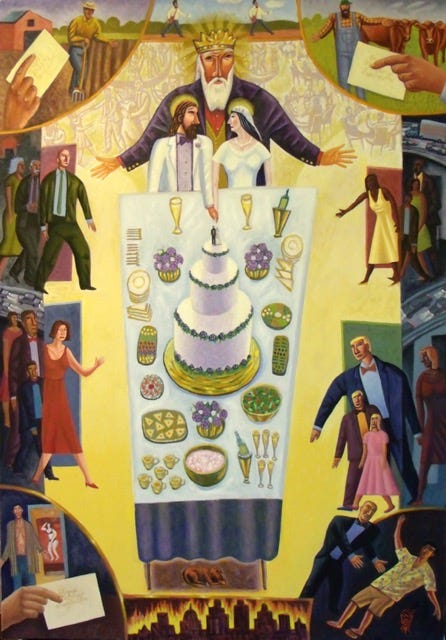
Let No One Tear Asunder
October 15, 2023Matthew 22:1-14The Kingdom of Heaven is like a king giving his son a wedding banquet. The Kingdom of Heaven is like God, who throws a party for the Son.We, the baptized, Christ’s body, Christ’s bride, the church are not mentioned by name in this parable. We are so convinced that we need to work out our salvation that we turn grace into law and place ourselves in the parable when we are not yet there.The Priests and the Elders wanted to know who Jesus was. They wanted to know what his relationship was with God. Jesus is telling them about himself, not us.So where are we? We are not yet in this parable. We are waiting in the Barnett Room. We are in the parlor We are with our overbearing soon-to-be mother-in-law, friends from college, and family preparing for the wedding.In reality, this parable of judgment is a parable of grace because it is not a story about getting your things together and sitting down at the banquet table wearing your best. Instead, this is a parable about the lengths to which God will have every last detail of the wedding banquet perfect, nothing out of place – the silver is polished, and every guest is in their place – to celebrate the marriage of the Son.To you. To us. Get full access to Brewing Theology with Teer Hardy at teerhardy.substack.com/subscribe
The Rent is Paid
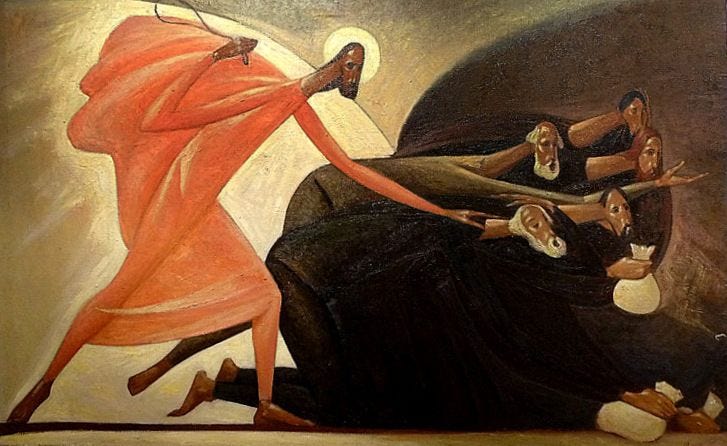
October 8, 2023 Matthew 21:33-46 None of us can keep this church going. I cannot do it, nor can you. Walker Chapel, like every other church, is God’s. This is God’s church and God’s service. We are God’s people. This is where financial stewardship becomes important, as we are not only a part of the mission of Walker Chapel. What we do here in worship, discipleship, and mission is part of God’s larger work in making all of creation new, which places us in ministry alongside the saints that sustain the church today while also laying the groundwork for the saints that God will work through in the years to come. Still, we cannot sidestep judgment. We cannot escape that Jesus says he will return. The Priests and Elders say a “miserable death is coming” which can leave us fearful of what is to come. But (and it’s a big but so you know it does not lie) a few chapters later God raises the Son, the second person of the Trinity, buried outside the walls of Jerusalem. God's amazing grace is a stumbling block to those who insist that their best behavior and good works are more important than trusting God’s forgiveness. God offers grace and forgiveness, and we insist we want law. What scares me the most about this parable of judgment is that we are, that I am, slow to learn and believe that all God has ever wanted was for us to believe. What happened on the cross and in Christ’s tomb is the cornerstone upon which God’s new creation began. All that is left to do now to escape the judgment of the vineyard owner is to trust that through Jesus Christ, through the Son who gave himself up for all of creation, you, we have already escaped it. The Good News is that the rent has been paid, in total, on our behalf by the Son. Get full access to Brewing Theology with Teer Hardy at teerhardy.substack.com/subscribe
The Authority of Grace
October 1, 2023Matthew 21:23-32Jesus, it turns out, is a third kind of son, the one who both agrees to and does the will of the Father. In John’s gospel that last-yet-first son tells us exactly what the will of the Father is, that we believe in him.The King and the Kingdom are one and the same; but also, we are the Body of that King and so we are deputized to make promises with the authority of God, “All your sins are forgiven.”Faith in this Jesus tends to open things including our hearts, our minds, our doors, and our wallets. Opening possibilities, we did not know were possible and leading us into lives we would not otherwise have. Lives devoted, heart, mind, wallet, and strength, to living under the authority of Christ.[vi]God’s plan for you, for me, is for us to have faith, to place our trust in Christ’s authority; nothing more and nothing less. And so, we worship, proclaiming Jesus’s authority over creation, accepting his invitation to the table, and expecting that our lives are and will continue to be transformed, all for the sake of the Kingdom of Heaven. Get full access to Brewing Theology with Teer Hardy at teerhardy.substack.com/subscribe

Jesus's Bad Math
September 17, 2023Matthew 18:21-35This is a parable about the Kingdom of God, and it is a parable about us. We are the unmerciful servant, wanting pity and mercy for ourselves while we will not, we cannot extend the same to others.So what’s to be done with us? Forgiveness – for us and others – is not easy. At times we do not want to forgive and at others, we want more than anything to be forgiven.Saint Paul is right. All have sinned and fallen short of the glory of God. Yet, Saint Paul would remind us that we have to remember who told this parable.Jesus was asked about forgiveness. “Lord, if another member of the church sins against me, how often should I forgive? As many as seven times?” Jesus says to forgive 70 times, not 7. And who has obeyed? Who has forgiven that person or themselves for that one thing we cannot forgive? “All have sinned and fall short of the glory of God.”[iii] But (and it’s a big but so you know it does not lie) the glory of God is just that, God’s glory; Christ’s glory. And God has forgiven us 70 times and then some.In accepting the forgiveness extended to us by God, we die to our desires and live in the light of God’s glory. God’s grace and glory raises the dead, and none of our debts, none of our sins are an obstacle, none are significant enough to stop that kind of power, that kind of mercy.Follow Me on All of the Things Get full access to Brewing Theology with Teer Hardy at teerhardy.substack.com/subscribe
Extreme Makeover: Church Edition
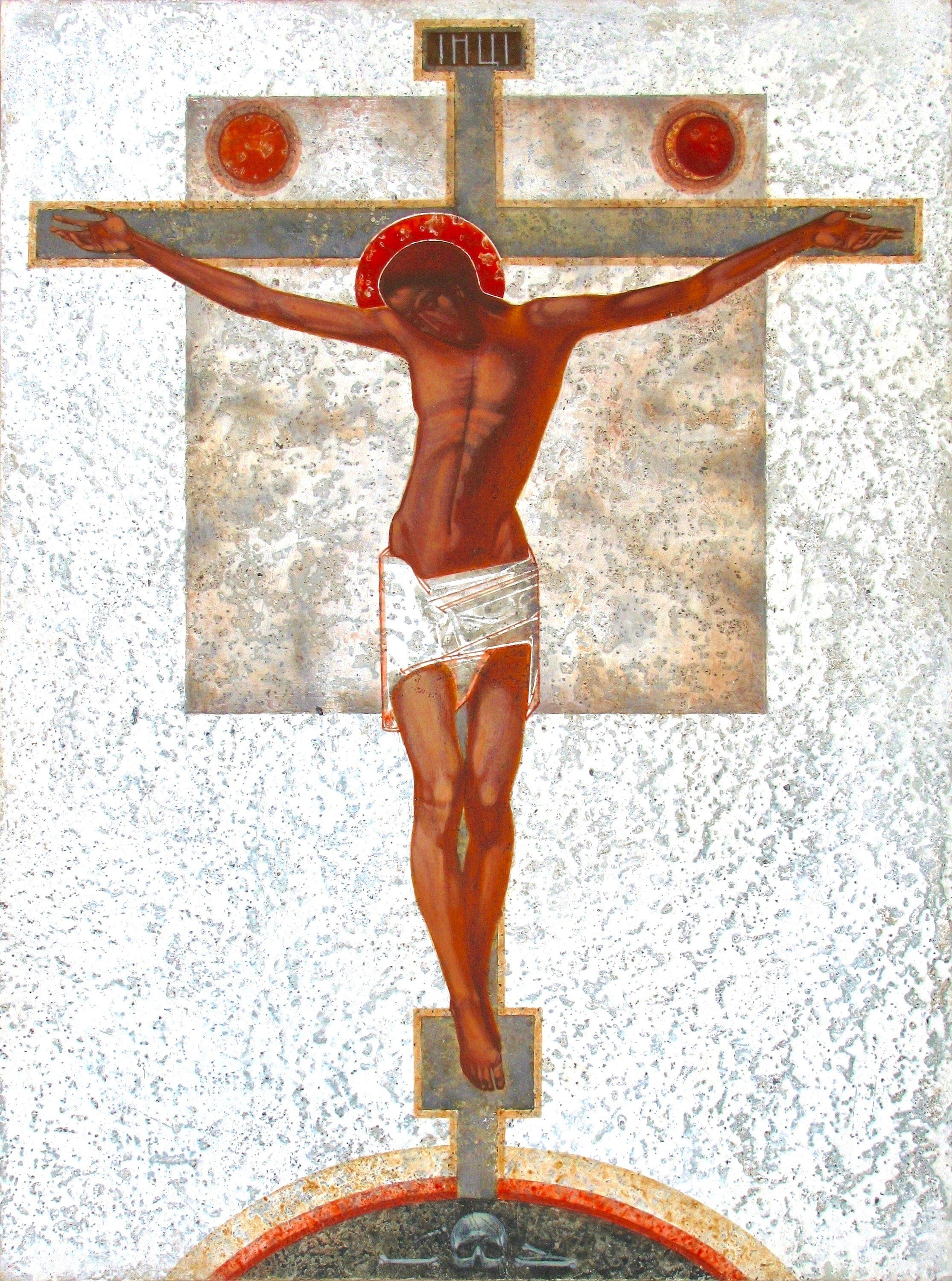
August 27, 2023Romans 12:1-8If we miss or do not understand what Paul’s “therefore” is there for, we can turn the task of transformation from gospel good news into another burdensome task. Without Paul’s “therefore,” without the previous 11 chapters of Paul detailing what the grace of God is and that we are the recipients of this grand gift, to live a transformed life as described by Paul is burdensome, if not down-right impossible. Without the “therefore” we do not hear the gospel; we do not hear that through Christ we are transformed.The “therefore” makes the cruciform-life possible.Transforming lives, transforming the Church, is more extreme than making over a home in seven days. But (and it’s a big but so you know it does not lie) this transformation, unlike the television show, is happening not because of who you or we are within our community. The grace of God does not care about your club membership, the promotion you just received at work, or our stock portfolios. Transformation is happening not because of who you are but rather because of whose you are. And through grace, you are God’s beloved. Get full access to Brewing Theology with Teer Hardy at teerhardy.substack.com/subscribe
Who Tells The Story: From Stereotypes to Sanctification
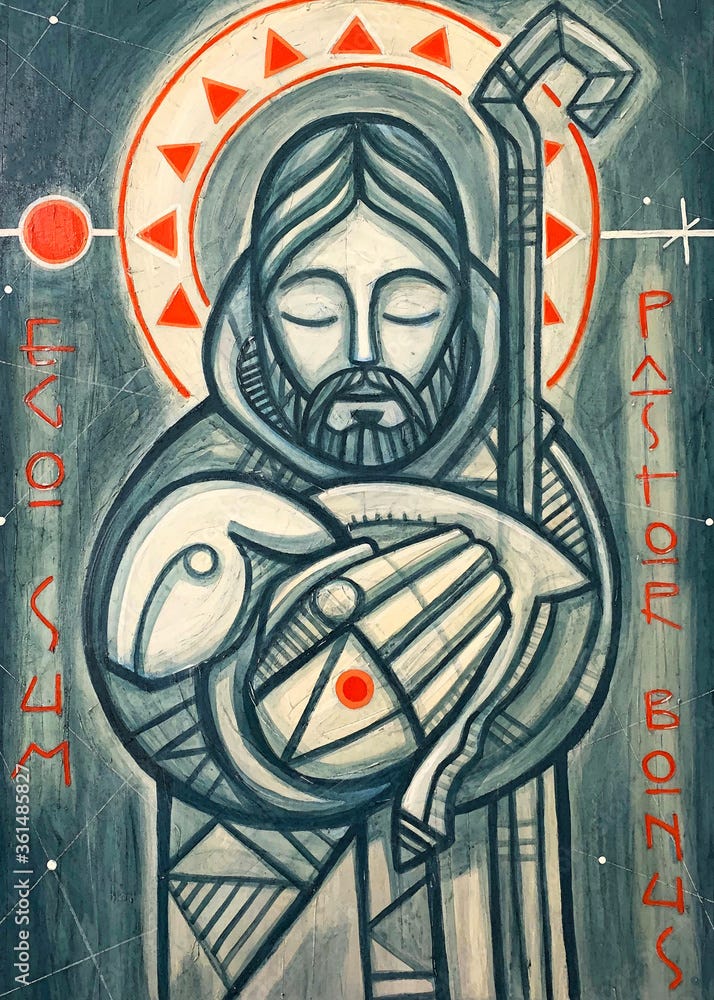
A few years ago, my friend Tony came to the church I was working to be our “Scholar in Residence.” While Tony was in town, he taught a few seminars and preached on Sunday morning. He traveled with his wife and children. When Tony did not have responsibilities at the church, he took his family sightseeing. They visited all the sites we who live close to the DC avoid during the summer months.The Washington Monument.The Lincoln Memorial.A few of the Smithsonian museums.Mount Vernon.After seeing the sights and eating at all places you are supposed to eat at when you visit DC, Tony preached on Sunday morning. He mentioned how each sight he visited painted its subject in the most flattering light, more positive than history books may portray the subject. Tony’s visit to DC was in 2011, well before sights like Mount Vernon began to address the harm done at the hands of the celebrated saints of our nation.In the stories told at each historical site, Tony said it seemed that only part of the story was being told. And the part being told was not an entirely accurate portrayal.For ten chapters, Paul has been going on and on about the grace, judgment, and salvation of God. Ten chapters about humanity’s deserving of divine judgment. Ten chapters of humanity receiving the grace of God instead of what we deserve, all because of who God is and not because of who we are in the stories we tell ourselves.“What about our family, our fellow Jews,” someone asks Paul.“What about the Gentiles!? They are not part of our covenant with the Lord,” asked another.What about them?Paul asks, “has God rejected God's people?”[i] “No,” says Paul. God did not reject Paul after Paul persecuted the Church. On the Road to Damascus Paul received grace, not judgment.The grace of God is more amazing than we can imagine. Paul writes that God's grace finds room for even the Gentiles, for those who are outside of the Covenant established between God and Israel (which is good news for us). There is even room for those who have turned away from God. If God can save us, Paul writes, God can save anybody. Even when faced with disobedience, there is the occasion for grace through God.Like Paul falling off his horse, when we realize the grandness of the grace of God, our theological socks can be knocked off. This does not have to be a mountaintop experience. Perhaps it was during a sermon, or while the choir was singing your favorite hymn, or maybe while you were praying before the sun rose. Paul realizes that the grandness of the grace of God is grander than he realized. God’s grace goes a step further.To realize that God loves Jews and Gentiles, and is kind to the selfish and ungrateful can move us to shout for joy, which is how Paul concludes this chapter.“O the depth of the riches and wisdom and knowledge of God! How unsearchable are his judgments and how inscrutable his ways!”[ii]The grace of God is a constant throughout our holy scriptures and Christ’s ministry. Still, though, we sometimes attempt to paint Christ or even the grace of God in our image. We try to use grace as a prop in our stories rather than allowing God’s grace to stand at the center of who we are and everything we do.Jesus asked his disciples, “Who do people say that the Son of Man is?”[iii] “Who do the people hearing me teach and watching my ministry say I am?” The disciples replied, “Some say John the Baptist, but others Elijah, and still others Jeremiah or one of the prophets.”[iv]“Some say you are this or that, projecting their expectations upon God’s grace and, in turn, attempting to rewrite the story of grace through what they thought they knew. Christ must be this or that. A prophet. A teacher. A miracle worker.”“So that you may not claim to be wiser than you are, brothers and sisters, I want you to understand this mystery,”[v] writes Paul.God is bigger than the boundaries we build. The grace of God is more expansive and inclusive than the stories we tell ourselves. If left to us, we will define God based on what we know, or worse, on the story we are trying to tell rather than as God. God chooses love above all else.Love for Israel.Love for Gentiles.Love for sinners.Love for saints.Half of my family is from Appalachia, specifically Greenbriar County, West Virginia. When the book-turned-movie Hillbilly Elegy painted the entire region of Appalachia with stereotypes and generalizations, I was frustrated, to say the least. The story told by author-turned-politician JD Vance blurred the line between personal memoir and sociological analysis. While fascinating and entertaining, the story told by Vance lacked reliability in its conclusions because only one part of the story was being told. And yet, that story was used to paint an entire region with a broad brush.In response to Vance’s book Elizabeth Catte wrote What You’re Getting Wrong About Appalachia. Catte makes the point that any region or group of people is not monolithic and that, in the case of Appalachia, it is not a backwa
Held By Grace
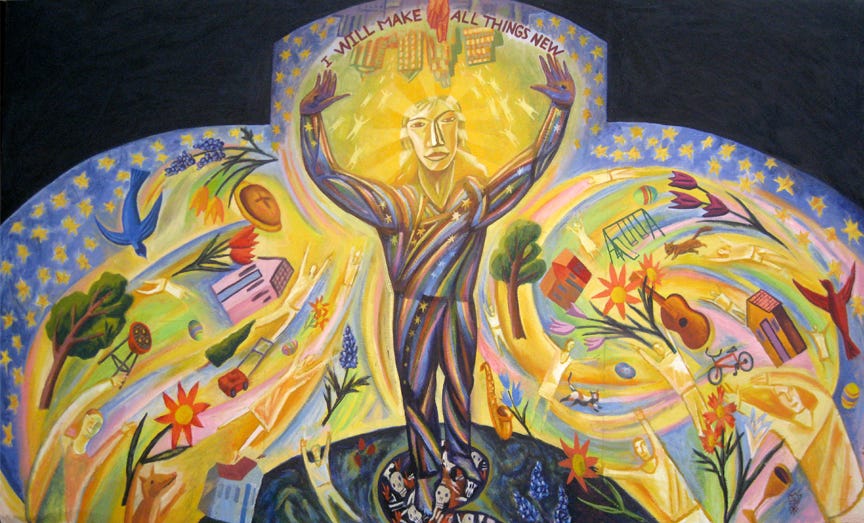
August 6, 2023Romans 9:1-5There are people we want to “save.” We wish they would heed the Good News, the same old song we proclaim week after week. “If only we could convince them of the truth we cling to,” we think, “then they will be OK.”But (and it is a big but so you know it does not lie), we remember that the story of blessing, redemption, and salvation is not ours to fulfill. God is at work. In Moses. In Christ. In Paul. In Israel. In you. In me.We cannot save anyone any more than we can save ourselves.The Good News is that we stand by grace and not by the superiority of anyone – Gentile or Jew, Black or White, Godly or Ungodly. We, along with everyone else, are not held by our merits or demerits; instead, we are held by God’s mercy, held by grace. Get full access to Brewing Theology with Teer Hardy at teerhardy.substack.com/subscribe
Grace Never Abandons
July 30, 2023Romans 8:26-29While we may have a thing or two to teach Saint Paul about separation, Paul reminds the Church that when we feel alone or abandoned, the grace of God is ours. Whether we know it or not, God's grace is preveniently ours, meaning God's grace goes before us.Our best selves do not prevent a separation. There is no number of good deeds that can be done to make the grace of God more yours. Likewise, our worst selves do not "separate us from the love of God in Christ Jesus," in whom we find rest.Through Jesus Christ, not only comes the forgiveness of sins but also the rectification of all things that separate us from one another and make us feel as though we are separated from God.God is stronger than our Sin.God is stronger than our Death. Get full access to Brewing Theology with Teer Hardy at teerhardy.substack.com/subscribe

Hope > Optimism
July 23, 2023Romans 8:12-25Grace is not about finishing. It is about beginning.Grace is not about excuses. It is about newness.Grace is not about what we do. It is about what God is doing and has done. Grace produces hope because God is at work. Our hope is in the faithful work of God.The hope of God is bringing about a new thing by restoring all of creation. By God’s grace, our hope does not rest in what we do or leave undone. Instead, our hope is found in what God has done and is doing. Our hope rests in God’s faithfulness.We have reason to cast our optimism and pessimism aside and to hold onto hope.Whenever we feel we have reason to doubt, God offers us an invitation to touch, taste, and see. Through water, bread, and wine, and in the inbreaking of the Kingdom of God, the hope of the world reveals to us that God is not done with us.Our hope rests in God’s unchanging, unwavering grace. Get full access to Brewing Theology with Teer Hardy at teerhardy.substack.com/subscribe
The Grand Therefore
July 16, 2023Romans 8:1-11If it were up to me, I would cast pastors like Driscoll as the Nazi in the next Indiana Jones flick. It is preachers of false gospels like Driscoll whose face I would like God to melt. But as soon as I have done that, as soon as I have painted him the guilty one, I have fallen under that same condemning judgment. The scandal of Grace is that there is, therefore, now NO condemnation. Not for Mark, or me, or you. In Christ, we have not only been permitted to touch the ark of God's commands but we have also been welcomed to behold the face of God, to partake of his body, his blood. He has come to reveal to us the good news of our un-condemnation. This is the scandal of Grace – God’s love for scoundrels and sinners alike.The Good News is that when we reach the end of the crescendo of God’s Grace, we do not find condemnation; rather, we step into new life. Get full access to Brewing Theology with Teer Hardy at teerhardy.substack.com/subscribe

I'm the Problem, and That's OK
July 9, 2023Romans 7:15-25The key to our salvation, the thing that makes us right before God is not ignoring our Sin – out of sight, out of mind – or ignoring our need for a divine intervention. The key to our salvation is that in spite of our inability to follow God’s top-ten, which Jesus distilled into two things – love God and love one another – God's grace is ours. God’s grace frees us from the necessity of finding our identity in our good deeds. God’s grace frees us from our sins defining who we are. Because in God’s grace we find a new identity: beloved, transformed, sanctified.In verse 24 Paul asks “who will deliver me” from my Sin?The short answer? Jesus.The long answer? Jesus. The One who took the weight of the Sin of the world upon himself, to the point of death. But who then, three days after being placed in a borrowed grave, left his burial clothes behind, neatly folded in the tomb, and walked out.God’s grace delivers us just as we are, sin and all. Then when we say, “I’m not OK. You’re not OK,” God replies, “And that’s OK.”Because we are forgiven and free from our Sin, the Church is the Herold of this Good News. Week after week, the urgency of our proclamation replaces judgment and condemnation with Good News. “For God so loved the world,” that we are free. God has done for us that which we cannot do for ourselves, and that is to love you and me just as we are – sin and all. Get full access to Brewing Theology with Teer Hardy at teerhardy.substack.com/subscribe

So That No One Misses Out
July 2, 2023 Hebrews 12:12-15 As recipients of God’s amazing Grace and as bearers of that Grace, we can expect that God will not leave us as we are or have been. God loves you just as you are, but God’s love is such that God will not leave you just as you are. When Jesus met the Samaritan woman at the well, she was sent back to her village with worth and value she did not have before encountering Jesus. Jesus called Zaccheaus down from a sycamore tree, and Zaccheaus was loved enough to host a meal for Jesus, but then Zaccheaus returned everything and more he had stolen from his neighbors. God’s love makes welcoming a new pastor and their family a means of grace in the same way each of us is a means of God’s Grace to one another and our community. So yes, God loves you, just as you are, whether you like it or not. But (and it is a big but so you know it does not lie) as Ashley tells her husband Johnny in the film Junebug, “God loves you too much to let you stay that way.” God’s love changes us. We can expect then to encounter God’s Grace every day of our lives and at the same time, we can expect that same Grace to change us, so that no one misses out on the Grace of God. Get full access to Brewing Theology with Teer Hardy at teerhardy.substack.com/subscribe
Stop Shoulding on Jesus
June 11, 2023 Galatians 2:15-21 In adding to the Gospel, Peter was annulling the Good News of what God had gone ahead and done for us in Jesus Christ. Each of us is attracted to false gospels; Paul even says that the law is written on our hearts— we WANT to be told what to do, if only so we can judge our neighbor’s shortcomings. All of us have fallen short of righteousness, scripture says, but that doesn’t stop us from measuring distances. Each of us, like Peter, adds lists of shoulds to what others must do to be justified, made righteous, before God. And more often than not, the shoulds and musts prescribed to others and ourselves directly contradict Jesus’ words. Or worse, the shoulds and musts we prescribe to others run contrary to the lives we live. Shoulds and musts are dangerous to the Church. Over the past few months, in three docuseries, we have seen what happens when shoulds and musts are added to the gospel. Whether it was at Hillsong Church, an international megachurch that covered up years of sexual abuse by multiple pastors, across multiple continents, or the Duggars on TLC who used the shoulds and musts of purity culture to control the women and girls in their family, law was required to earn righteousness all the while those doing the prescribing were abusing people in the pews and home. Shoulds and must are dangerous because, inevitably they are the way we create God in our image. Paul makes the point that shoulds and musts, the law prescribed to Gentile Christians by their Jewish Christian counterparts, was an attempt to rebuild barriers that Jesus had already broken down. Paul argues that what we do, the lovely church person things we do, do not make us any better in the eyes of God. And because these acts do not make us more right before God, those shoulds and musts serve only as distractions from the good of the Good News of Jesus Christ. Get full access to Brewing Theology with Teer Hardy at teerhardy.substack.com/subscribe
Empires Strike Back
May 21, 20231 Peter 4:12-14; 5:6-11To say “No,” to the demands and needs of the empires of the world is no easy task because the empires of our world desperately depend on your “yes” and allegiance. And they, like the Devil tempting Jesus in the Wilderness, will offer us power and influence in exchange for our allegiance.If Jesus is Lord of all Creation, then Dr. Stanley Hauerwas is correct in his assertion that everything else is...Everything is the empires of the world.Everything is religiosity, the should and musts we attempt to attach to the good of the Good News of Christ’s redemption of all Creation; once for all.Everything is anything that distracts us from God's salvific and amazing grace in Jesus Christ. Get full access to Brewing Theology with Teer Hardy at teerhardy.substack.com/subscribe

The Urgency of Grace
May 14, 20231 Peter 3:13-22The busyness of life that we are so attracted to is one of the ways that we bury our heads in the sand or attempt to at the very least so that we don’t have to come face-to-face with the suffering of the world, or the fact that there are those whose identity is not honored by the church.But because Christ has died, because Christ has risen, and because Christ promises to come again, we are free from our sins, and from the busyness that we use as a distraction.Or, as Paul puts it, “For while we were still weak, at the right time Christ died for the ungodly… God proves God’s love for us in that while we were still sinners, Christ died for us.”Or, as 1 Peter put it, “For Christ also suffered sins once for all, the righteous for the unrighteous, in order to bring you to God.” Get full access to Brewing Theology with Teer Hardy at teerhardy.substack.com/subscribe

The Gospel According to Love Actually
April 23, 2023 1 Peter 1:17-23 Love in the way famed fictional-recording artist Billy Mac instructs us to in the hit movie Love Actually – from your fingers to your toes. Love the person in the pew next to you. Love the person who has not responded to the text message you sent days ago. Love your spouse, partner, children, best friend, mail person, Uber driver, stranger on the street, and the pastor who grinds your gears. Love the person you tell yourself you will never be able to love. Love the person others tell you is not worthy of your time, let alone your love. Love the person you hate. Remember Christ’s command to love your neighbor as yourself and love yourself. Love; plain and simple, yet a seemingly impossible task. Get full access to Brewing Theology with Teer Hardy at teerhardy.substack.com/subscribe

Easter Hangover
The stone was rolled away, the body gone, and we are unsure of what we are to do now.The unexpected happened. Mary Magdalen and the other Mary went to the tomb expecting to anoint Jesus’ lifeless body, but when they arrived, an angel told them, “Do not be afraid; I know that you are looking for Jesus who was crucified. He is not here; for he has been raised, as he said. Come, see the place where he lay.”[1]The dead man you are looking for is gone.Don’t believe me? Come see where his body is not lying.Rev. Fleming Rutledge reminds us no one goes to a cemetery expecting to find the dead raised.So, today we find ourselves a week removed from the pomp and circumstance of God’s grand defeat of death, and if we are honest, it sort of feels like we do not know what we are supposed to be doing. Christmas comes with a week of Winter Break at the end of the calendar year so we can find our bearings and reorient ourselves to the discovery that God dwells among us. But Easter, for many of us, comes at the end of Spring Break. Many of you went back to work before all of the Easter decorations were carefully packed away.After the lilies are gone, and the crumbs of communion bread are cleaned up, it is expected that we will return to life as it was before Mary and Mary’s grand announcement.Everything is different now, yet everything feels the same, and this tension can leave us with a post-Easter celebration hangover.Everything is different now, and as 1 Peter reminds us, by God’s great mercy, we have been given “a new birth into a living hope through the resurrection of Jesus Christ from the dead.”[2]New birth into a living hope.Over the coming weeks, we will explore how the resurrection of Jesus Christ gives us hope and how we can come to know this hope well enough to recognize it when we see it in our community so that we can celebrate with the same vigor as we did last Sunday.This week, we begin with joy.Eastertide, the fifty days after Easter, is a time for the Church to marvel at the miracle of the resurrection of Jesus. Before Easter, to seek the living among the dead would be a ridiculous suggestion. But when Mary and Mary went to the tomb, new life shined out of the darkness of the grave. The resurrection of Christ is God’s grand reversal.What came before Easter Sunday – the violence and death of Good Friday and the fear and despair experienced by the disciples as they scattered and hid – is no more. And we, living as resurrection people, living with the knowledge that the trials and suffering we and others experience are no more because of the faithfulness of God.The words written in 1 Peter were dispatched to a community under scrutiny. The recipients were Gentile Christians who would whisper a benediction after worship for fear of neighbors and even family, never dreaming of a wireless headset or Bose speakers.They were fearful, afraid that they might be discovered as followers of a minority religion, a suspect faith.The recipients of this letter were looked upon with suspicion as they moved about their community. They did not feel safe in their places of work or their homes.In a world where they questioned going into hiding, contemplating taking their faith and Easter celebration underground, they were told to “rejoice,”[3] “rejoice with an indescribable and glorious joy.”[4]Rejoice because, by the grand mercy of God, we have received “a new birth into a living hope.”[5]This is the Easter gift.A promise sweeter than anything the Easter Bunny left in Pastor Sara’s Easter basket.A gift grander than Dr. Bryan playing the organ or the guitar riffs Pastor Jeff practiced for weeks.New life not based on our merits.New life not earned through the trials we suffer or the good deeds we accomplish.New life that is a gift through the power of Christ’s resurrection.Our response to this gift is joy. Joy that extends beyond Easter Sunday because the Grace of God extends beyond the Table and church, permeating every nook and cranny of our lives.Robert Farrar Capon wrote, “While we were yet sinners, Christ died for us. He has taken the cleanup entirely into his own hands. He has just gone and done it without waiting for us; and he invites us simply to trust that he has it all accomplished for us in Jesus—and to proclaim that trust by acting as if we really believed it.”[6]Christian ethicist Stanley Hauerwas writes, “"The joy of Easter is not just personal, but social. It is a joy that we share with others."[7]To act as though we believe in the resurrection of Christ, that we believe the creed we recited last Sunday, to live as resurrection people pulls the Church out of hiding and thrusts us into a state of joy that causes others to stop and wonder, “What’s in the water at that church?” What’s in the water at Mount Olivet?What’s in the water?Grace. Healing. Forgiveness. New life. Joy.Joy of God’s Grace, healing, and forgiveness that moves us so worship is not confined to these four walls but extends to every corner of Arlingt
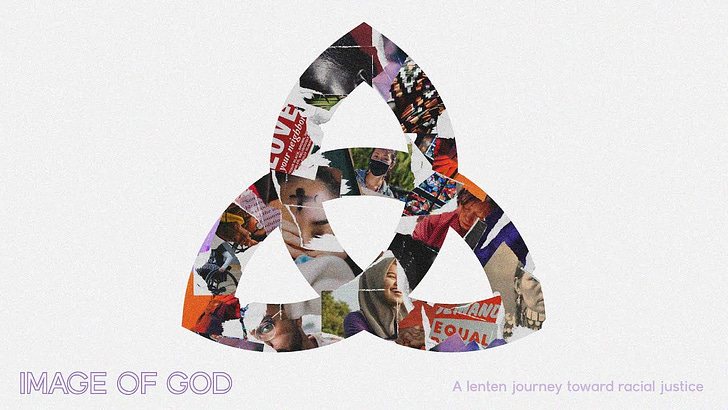
Reconciled Into a New Creation
Lent 4 2 Corinthians 5:16-21 The difficulties we carry from our past – the things we wish we had not said even if it was OK to say those things back then, the doors we locked while at traffic lights, the streets we crossed to avoid walking past someone, or the people we misidentified because of the nothing more than the color of their skin – were taken to the cross with Christ and buried. The result of this is God reconciling creation to God so that we can become instruments of God's reconciling work. We have been entrusted with the message of reconciliation. A message of love. A message of hope. So, what are we to do? Trust in the promises of God. Trust that we have not been left alone to figure this out. Trust that through "self–examination and repentance; prayer, fasting, and self–denial; and reading and meditating on God's Holy Word," God has reconciled us, and God is reconciling us. To one another – to those, we hold dear in our memories, those we have unknowingly harmed, those we have knowingly harmed, and those who continue to live with their backs against the wall.Subscribe to Brewing TheologyFollow on Instagram Get full access to Brewing Theology with Teer Hardy at teerhardy.substack.com/subscribe

How Long, Lord?
The help we expect, the help we so desperately need, does not come from ourselves. The track record of human history tells this to be true, and yet time and time again, we turn to ourselves to make right that which we continue to taint with our sin. Cries of lament are our turning toward God, acknowledging our humanness, and opening ourselves to being transformed. It is in being transformed that we can act first by setting aside empty platitudes like “racism is too much, we have to give it to God,” and second, by actively working to correct generations of harm that was done in Christ’s name through acts of supposed mercy and compassion. The very things the Church has been called to do since the disciples were first called away from their fishing nets.The transformation that comes, the coming reality of Dr. King’s dream, the fulfillment of the Kingdom of God, the Kin-dom[xi] of God, is a gift to us by the One to whom we pray, the One who is actively working to transform his body, and the One who assures us we are never beyond the reach of God’s grace. Get full access to Brewing Theology with Teer Hardy at teerhardy.substack.com/subscribe
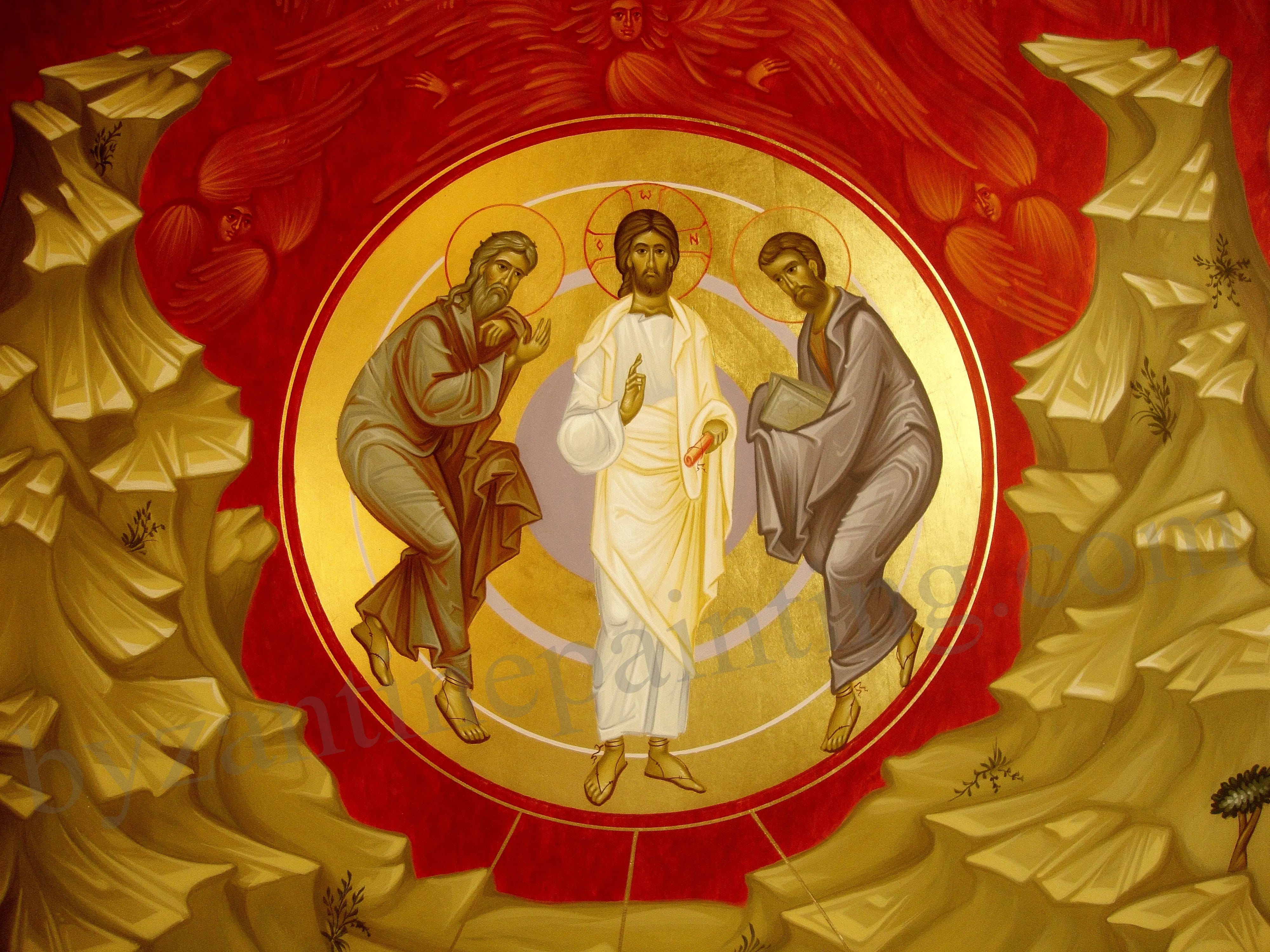
Transfigured by Grace
Thanks for reading Brewing Theology! Subscribe for free to receive new posts and support my work.Six days after a dramatic journey through Caesarea Philippi – where Peter declared Jesus to be the Son of God, and Jesus foretold of his pending suffering, death, and resurrection – Jesus took three disciples with him up a high mountain. Mountaintop experiences within Israel were known to be where a person would encounter God. Remember, after leading Israel to freedom through the Red Sea, Moses ascended Mount Sinai and descended back to his people with God’s Top-Ten after encountering God in a burning bush.While on the mountain, Moses and the prophet Elijah appear, and Jesus is transfigured.His face shines.His clothing is dazzling white.A voice calls out from the clouds, “This is my Son, the Beloved; with him, I am well pleased; listen to him!”[i]You may not have realized it this morning when you decided to attend church, but today is a significant turning point in the church’s year. The Christmas decorations are neatly packed and put away. Epiphany is over. If the season of Epiphany was a crescendo, gradually and more grandly exposing the glory of Jesus of Nazareth, then the Transfiguration of Jesus is the climax, the fortissimo.As we prepare for the transition into the season of Lent, trading the bright lights of Epiphany for the shadows of Lent, the Transfiguration of Jesus is the grand revelation of who Jesus is – then, now, and forever.Peter, the rock upon which the church was built, with his front-row seat to this event, was so moved that he wanted to commemorate the occasion by building memorials or tents. Peter wanted to make dwelling places for Jesus, Moses, and Elijah.Three structures to commemorate the event.After all, Peter may have thought this could not, would not get more grand or divine than Jesus, Moses, and Elijah, and a voice from the clouds declaring Jesus to be the begotten son of God, the creator of the cosmos.As they descended the mountain, Jesus told the three – Peter, James, and John – to keep the story to themselves, telling “no one about the vision until after the Son of Man has been raised from the dead.”[ii]“Do not tell anyone about this until the thing I told you about 16 verses ago happens,” Jesus says to Peter, James, and John.According to the synoptic gospels – Mark, Matthew, and Luke – aside from the Resurrection of Christ, the Transfiguration is the grandest event in Jesus’ ministry. On the Transfiguration, Rev. Fleming Rutledge writes that the Transfiguration “is the most unambiguous revelation of Jesus as Messiah prior to the Resurrection.”On the seventh day after their journey through Caesarea Philippi, the disciples, well three of them, see the glory of the Son of Man, the One who was with the Father on the first, second, third, fourth, fifth, and sixth days of creation, and who rested on day seven.There were witnesses to the Transfiguration just as there were witnesses to Jesus calming the seas, feeding the ten thousand, and healing a demon-possessed boy. In his second letter, Peter wrote, “For we did not follow cleverly devised myths when we made known to you the power and coming of our Lord Jesus Christ, but we had been eyewitnesses of his majesty. For he received honor and glory from God the Father when that voice was conveyed to him by the Majestic Glory, saying, ‘This is my Son, my Beloved, with whom I am well pleased.’”[iii]What, then, is the task of the preacher? What, then, is the task of the church with knowledge of the full majesty of the Son of God revealed to creation?We could take the approach that even after the mountaintop experience, Jesus came down the mountain to continue his work, and we should do likewise. I have preached that sermon, and many of you graciously sat through that sermon that fell short because it failed to keep the glory of Jesus as the sermon's focus.We could try to make sense of the Transfiguration by bogging ourselves down in the event's details, searching for nuance or explanations in the text.But maybe there is another way forward that helps hold the tension of the transfiguration as we prepare to enter the season of Lent.American theologian Robert Jenson wrote, “The transfiguration is a promise and a foretaste of what it means to be made over in Christ’s image.” As Jesus was transfigured before his disciples, the church (yesterday, today, and tomorrow) is transformed, transfigured by God’s grace, being made new in Christ Jesus.Most of us move through our day reacting to the distractions that endlessly swirl around us. These distractions – tech, media, politics, the economy – attempt to transform us from the outside in, in the hope of conforming us into their image of who they want us to be: a user within an algorithm, a new customer, or a disciple to spread their agenda that is often contrary to the good news of Christ.The transfiguration of Jesus Christ is an invitation to the church to live a transfigured life.The transfiguration

The Crescendo of Light
One of the things I love most about the church’s liturgical cycle is the crescendo that builds during the season after Epiphany. If you did not know, today is the fifth Sunday after Epiphany, the fifth Sunday after the glory of the incarnation was revealed to the magi. Lost between Christmas Eve and the New Year, we miss the wise men traversing afar, bringing their gifts of gold, frankincense, and myrrh to the newborn Messiah. In the magi the revelation of the incarnation of God in human flesh leapt beyond the borders of Israel.We find ourselves in the middle of a great crescendo of the continuation of the revelation made to the magi. And because God is making this revelation, we can take a moment to be still and know that one who was laid in a manger, the one who called the disciples from their nets, and the one who declared that the kingdom of God is present here and now is the one who continues to cast light into the dark corners of the world.There is a light in the sky, a star that draws the magi to the manger.The Gospel of John opens with the light that casts out darkness.“The light shines in the darkness, and the darkness did not overcome it.”[i]The continuing crescendo reveals that what happened in a manger in Bethlehem was not a one-off event. Instead, through Mary’s womb, God’s grand entrance is the light that has forever changed the world. And this revelation is being revealed step-by-step by Matthew as we move toward the height of the crescendo, the transfiguration of Christ when the fullness of Christ’s glory is revealed to the disciples.Jesus tells his disciples they “are the light of the world.”[ii] “No one after lighting a lamp puts it under the bushel basket, but on the lampstand, and it gives light to all in the house.”He tells them that they bear something inside themselves, something they may have been unaware was present, that will transform the world.Because Jesus is the light of the nations[iii] and the disciples are following Jesus, the light he bears is also theirs. And the world will know this light because of what the disciples do.This light will make its way into the darkest corners of the world through the ways the disciples respond to Jesus’ call to follow him, setting aside the ego of personal expectations and desires.The light of Jesus Christ will make its way into the darkest corners of the world through the ways the disciples respond to Jesus’ grand reversal of the ways we view blessings, knowing that the Kingdom of God is present in and through him, and not an event that will happen one day, one day when his followers finally figure out how to follow.Martin Luther, the great reformer of the church, wrote, “The purpose of the Christian life is to let our light shine, to let our good works be seen, so that others may give glory to God. This means that our actions and deeds should reflect the love and truth of Jesus Christ and bring glory to God through their positive impact on others.”The purpose of the light we bear is the illuminate the world, casting light into what Rev. Fleming Rutledge describes as the shadow side of creation. And this occurs through the works of mission, compassion, and mercy done by the church in Christ’s name.When a meal is served, a prayer is offered, or an act of compassion is done in the name of Christ, the light placed in each of us as followers of Christ grows brighter because not only are we heeding Christ’s call to bear this light but also because we are acknowledging the light present in the person we are serving. Because truth be told, in those instances, we are acknowledging the presence of Christ in another. And that is another opportunity for us to be still and know that God is God, is present with us, and is guiding every action of those who faithfully answer the call to drop their nets and follow Christ.Friends, we live in a world in desperate need of the light of Christ. Sometimes, the shadow side of creation seems more like a shadow continent, and the darkness is more than any person or group of people can overcome.This past week the darkness of the world felt darker in our community. Two incidents, days apart at Wakefield High School, brought the darkness present in our community to the forefront. The prevalence of drugs and violence in our community is not limited to one high school campus. Still, within a few days, the darkness that we often care not to admit is present made its way to the front page of our newspapers and became the topic of conversation at dining room tables.The darkness of our world pushes those who feel isolated, alone, or forgotten further into the shadows, where it can seemingly feel impossible to see or experience and source of hope – a source of light.Rev. Fleming Rutledge wrote, “Jesus is calling us to let our light shine in a world often shrouded in darkness. Our good works, acts of kindness and compassion, can bring light into the lives of those around us.”The things we do in the church – the hymns we sing
Belovedness
Thanks for reading Brewing Theology! Subscribe for free to receive new posts and support my work.In the fall of 2022, before the fire, before I knew more about in, I would walk through the Sanctuary with my daughter every day after school. Each day we would hold hands as we walked through the hallway of the preschool, and as we made our way into the Sanctuary, Nora’s grip on my hand would get looser and looser. By the time we stepped into the Sanctuary, Nora would let go of my hand and make a b-line for the baptismal font.On the top of her tippy toes, Nora would reach up with her hands, grabbing hold of the inside of the bowl, trying to lift herself higher than her four-year-old frame would allow.“Pick me up, up, up!” she would shout. Her voice echoed through the Sanctuary as parents and caregivers hurried their children home for a snack and afternoon nap.Every day I would walk over to Nora, place her unicorn backpack and lunchbox on one of the pews, and pick her up. As I lifted her, her hands would plunge into the water. At first, her hands would be gentle, but as her curiosity grew, the movement of her hands became stronger and faster. Then, usually without notice, water would splash on me as though I was seated in the Splash Zone during a Shamu show at Sea World.Eventually, her hands would slow down, returning to a curious swirling of the water, and we would depart for our afternoon snacks and naps.Each day after school, Nora asking her dad to show her where Pastor Ed and Bishop Will “got her all wet.” Each day a curious swirl turned into a joy-filled splash.One afternoon, as Nora was poking her fingers into the water, I heard a voice from the door of the Sanctuary. Nora’s giggles echoed too much for me to hear what the person was saying.“Excuse me,” I said as I set Nora down.“I said, ‘what do you think you are doing?’”“Oh,” I replied, “we were just playing in the water.”“You’re playing?! In the baptismal water?! This is the church’s Sanctuary. I don’t think the church, or the pastors would appreciate you using their baptism water as your personal water table.”“If I were you,” she continued, “I would stop before one of the pastors catches you and ask you to leave.”I took a breath, looked at Nora, and said, “I don’t think the pastors would mind.”But before I could introduce myself as Rev. Jeff Goodman, I was interrupted. The concerned preschool parent or caregiver, whom I had never met, said I should be ashamed for not teaching my daughter how to behave in a holy space. She said I should consider actually attending church so that I could learn what the water in the bowl meant.“Yeah,” I reluctantly said, “I’ll consider that.”John the Baptizer was a wild character. He lived in the wilderness and proclaimed a baptism of repentance for the forgiveness of sins. John was extending an invitation to all who would hear to prepare for the coming of the Messiah. Wearing clothing made of camel hair and sustained by a diet of locusts and wild honey, John’s invitation and baptism was a ritual act of turning away from a sin-filled life and reorienting one’s life on the righteousness of God found in the Law.John’s baptism was a reminder of Israel’s baptism in Exodus when Moses parted the Red Sea as they escaped to freedom. Dr. Stanley Hauerwas writes, “Israel had to face death as it walked across the dry land between the walls of water. John’s baptism calls Israel again to face death so that it might live again. Repentance is about the life and death of the people of Israel.”[i]The late Joseph Ratzinger, Pope Benedict XVI, wrote for John’s baptism, “the goal is truly to leave behind the sinful life one has led (until now) and to start out on the path to a new, changed life.”Jesus arrives in the wilderness at the Jordan River, and John rebukes Jesus.“I need to be baptized by you, and do you come to me?” John said.Speaking for the first time in the Gospel of Matthew, Jesus tells John that he, Jesus, must be baptized by John so that all righteousness is fulfilled. Jesus, the fulfillment of the Law, submits himself so that we might see the righteousness of God fulfilled. Jesus is placing himself under the Law, becoming like us.Then, as Jesus resurfaces and the water breaks across his head and torso, the heavens break open, and the Holy Spirit descends like a dove. A voice called out, “This is my Son, the Beloved, with whom I am well pleased.”And with that, the ministry of Jesus was unleashed on the world.Submitting to John’s baptism, just as he will submit to his crucifixion, Jesus acts with the singular goal that we might know the goodness, the grace of God, and God’s rule over creation.Just as Jesus became like us in every way, in our baptism – as an infant, child, teen, or adult – we are buried in a death like Christ’s. Dying to ourselves so that we can begin to live like Christ in every way, justified and innocent before God.Just as the heavens opened and God declared, “This is my Son, the Beloved, with whom I am well pl
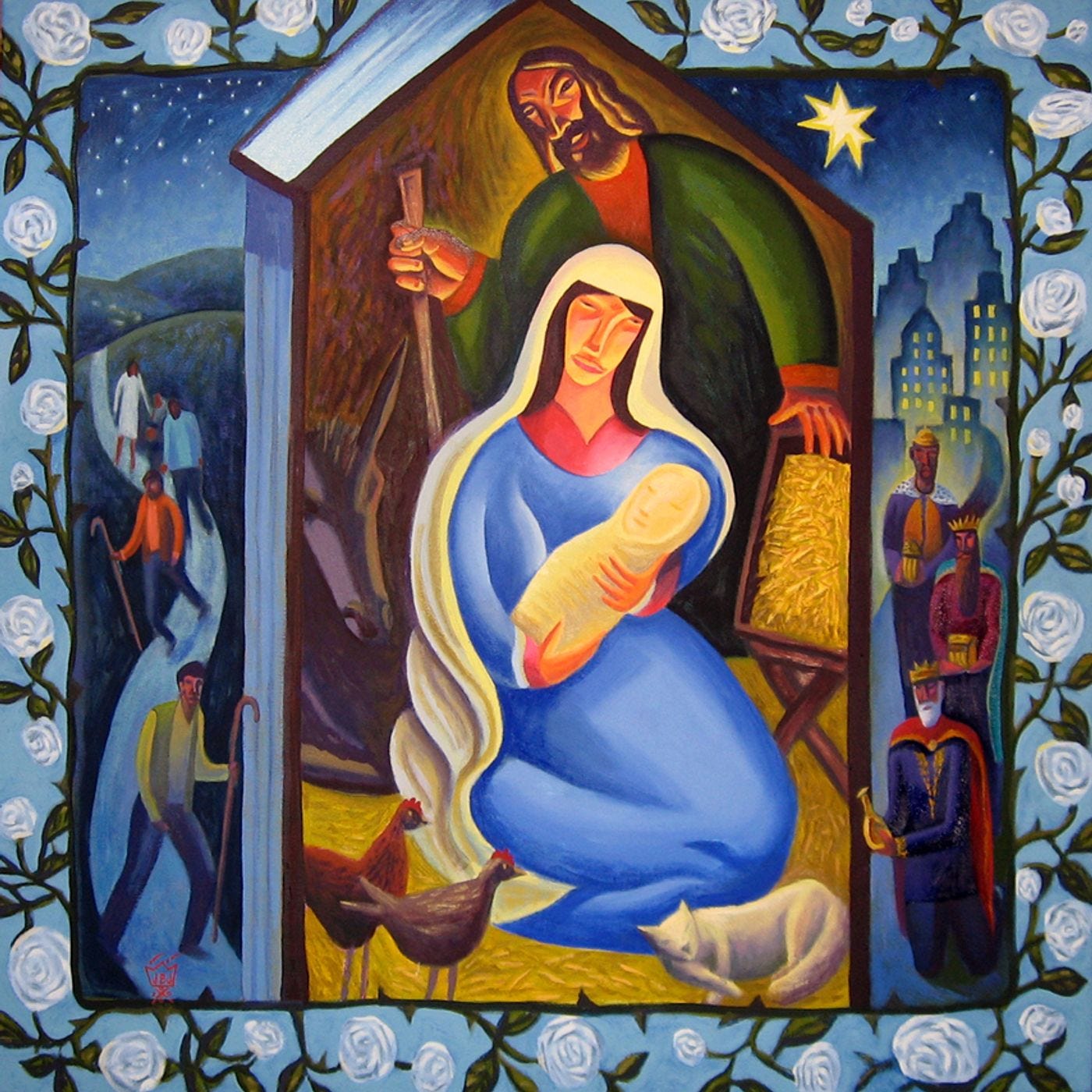
Storyteller | It’s All in the Details - December 24, 2022
As far back as I remember, the Christmas story has not changed. A mash-up of Luke and Matthew’s accounts is etched into my mind: Mary and Joseph are both greeted by the angel Gabriel, wise men traversing a far, shepherds keeping their flocks by night, no room in the inn, and the manger. Oh yeah, and sweet baby Jesus. I could tell you the story and leave out one or two parts, and you wouldn’t miss a beat. Everyone knows this story.Every year, regardless of national or global events – during war and peacetime; before a pandemic and during; as a child, adult, or slightly older adult – the story is read, “pageanted” and preached around the world. We did this last year and the year before, albeit online, we are doing it tonight, and if I did the math correctly, we will do this again in 365 days.So, what is it about the story of the birth of the Messiah that brings us back year after year?Brewing Theology on Spotifywww.teerhardy.com https://instagram.com/teerhardy https://twitter.com/teerhardy https://teerhardy.substack.com/ Get full access to Brewing Theology with Teer Hardy at teerhardy.substack.com/subscribe

Storyteller | A Griswold Family Advent - December 11, 2022
The turkey will be dry.Your end-of-the-year bonus may come in the form of a jelly subscription you did not want.The relatives you dread seeing will overstay their welcome.And, that powder room appliance might be full.No matter how much we try to avoid the broken and messiness of the world and our lives, the birth of Joseph’s boy tells creation that we are not separated from God. Our story is not Jesus’ story; instead, Jesus takes the world's story, our Sin – our the messy side of ourselves that we try to hide during the holidays – upon himself.The peace we want on earth, the peace we will attempt to create for ourselves is here, through the grace of God, through a child, through a family as messed up as mine or yours. Get full access to Brewing Theology with Teer Hardy at teerhardy.substack.com/subscribe

December 4, 2022 - That's What She Said, Luke 1 26-38
December 4, 2022Luke 1:26-38“Let it be with me according to” the will of God, according to the grand plans of God’s earth-shaking in-breaking. “Let it be with me according to” the Creator of Heaven and Earth. That’s what she said. With three words, “Let it be,” Mary reveals to the world that the way things are is not how things will be when the will of God is followed when the Kingdom of God is fully realized. Let it be.________________________________Join me on Substack - https://teerhardy.substack.com/Follow me on Instagram - https://instagram.com/teerhardyFollow me on Twitter - https://twitter.com/teerhardy Get full access to Brewing Theology with Teer Hardy at teerhardy.substack.com/subscribe

Storyteller | Standing on the Promises - November 13, 2022
Luke 21:5-19The Church has a word to speak in the face of rising Christian Nationalism and all the bigotry that comes with it. The One through whom all creation has been saved has a word for us.Paul wrote to the church in Rome, facing down persecution themselves, “faith comes from what is heard, and what is heard comes through the word of Christ.”The church tells the story that evil does not get the last word.The light of Jesus Christ shines brighter than any of the shiny distractions in Herod’s temple – 2000 years ago and today – because all creation is God's dwelling place.Live with the knowledge that we have a word to speak today in the race of rising Christian Nationalism, and that word is that death, destruction, and evil do not hold the last word.Jesus promises to set the world right.Jesus promises that work has begun through his church, no matter how flawed or lost we become.Christ is Lord. We are not.He has come. And he will come again.________________________________Join me on Substack - https://teerhardy.substack.com/Follow me on Instagram - https://instagram.com/teerhardyFollow me on Twitter - https://twitter.com/teerhardy Get full access to Brewing Theology with Teer Hardy at teerhardy.substack.com/subscribe