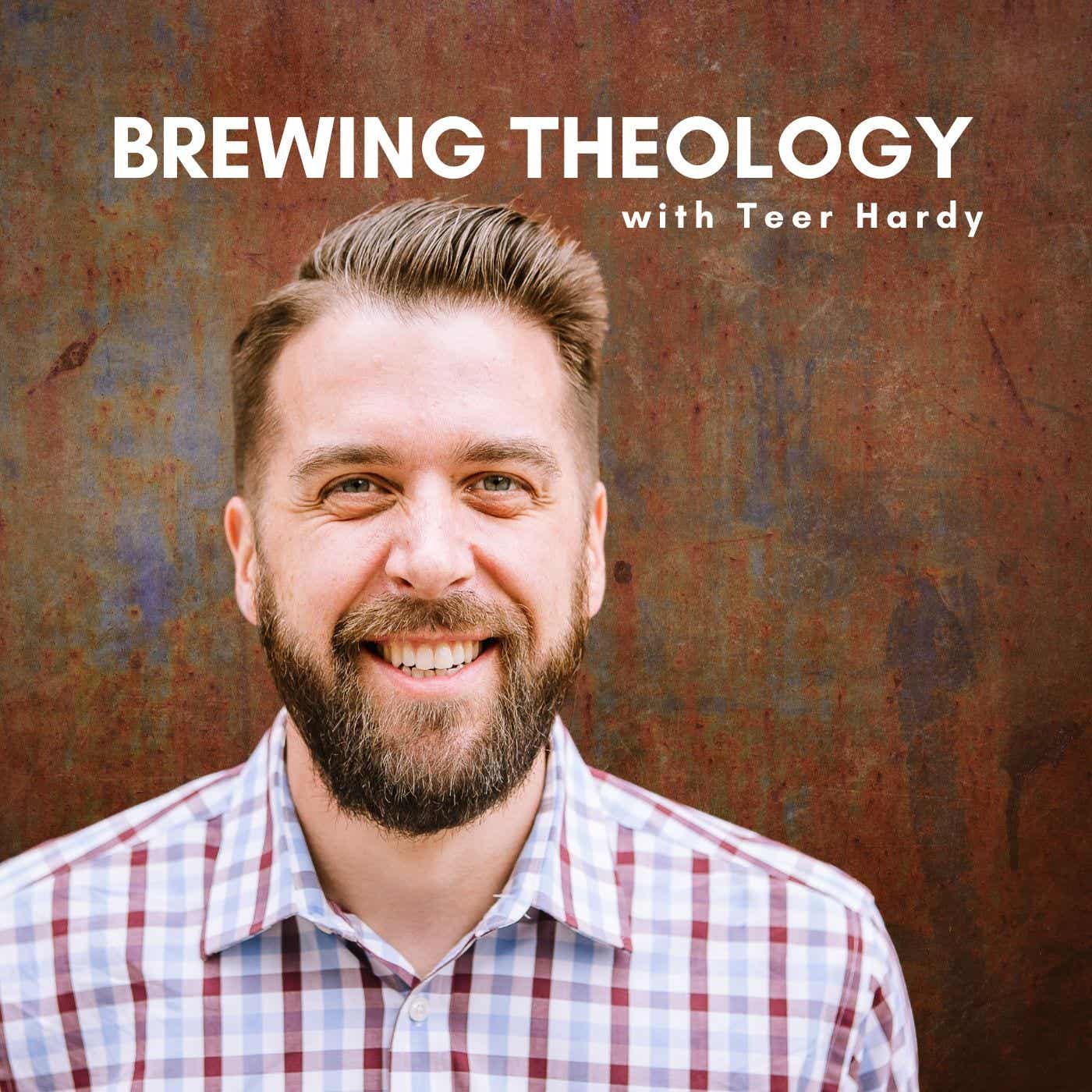
Brewing Theology With Teer Hardy
Sermons from and by Teer Hardy
Teer Hardy
Show overview
Brewing Theology With Teer Hardy has been publishing since 2013, and across the 13 years since has built a catalogue of 292 episodes. That works out to roughly 65 hours of audio in total. Releases follow a fortnightly cadence.
Episodes typically run ten to twenty minutes — most land between 12 min and 15 min — and the run-time is fairly consistent across the catalogue. None of the episodes are flagged explicit by the publisher. It is catalogued as a EN-language Religion & Spirituality show.
The show is actively publishing — the most recent episode landed 4 days ago, with 20 episodes already out so far this year. The busiest year was 2025, with 39 episodes published. Published by Teer Hardy.
From the publisher
Sermons from and by Teer Hardy teerhardy.substack.com
Latest Episodes
View all 292 episodesChange Does Not Mean We Are Abandoned
The Way Has a Name
Stupid Questions: Just War and Pacifism
Because of the Resurrection… There’s One Voice That Matters
Your But is Not as Big as You Think
Because of the Resurrection… We Do Not Have to Pretend We Are Brave
From Mud to Morning

What We Still Cannot See
What We Still Cannot SeeJohn 12:12-19Palm SundayMarch 29, 2026Rev. Teer HardyJesus is the only one entering Jerusalem who knows what is going on. He knows the kind of king they want. He knows where the parade leads. He knows the voices shouting “Hosanna!” will not make it to Friday. And he rides anyway, not on a warhorse like the governor entering on the opposite side of the city, but on a symbol of peace. Not to assume a throne but to take up a cross. Not to meet the crowd’s expectations but to undo them.Jesus does not wait for us to see clearly before becoming our king, which is good news because if He did, we would still be waiting on the side of the road arguing about the kind of king we prefer. Get full access to Brewing Theology with Teer Hardy at teerhardy.substack.com/subscribe

Seen by Jesus
Through Blind Eyes | Seen by JesusJohn 9:35-41Lent 5March 22, 2026Rev. Teer HardyHere’s the gospel: the man does not find Jesus. Jesus finds him. After rejection, after loss, and after the cost, Jesus finds him.And the same is true for you. You do not have to have your vision right before Christ comes near. You do not have to solve the mystery before you can believe. You do not have to see everything with 20/20 vision, because the One who sees you has already come looking. Get full access to Brewing Theology with Teer Hardy at teerhardy.substack.com/subscribe

Power Confronted
Through Blind Eyes | Power ConfrontedJohn 9:24-34Lent 4March 15, 2026Rev. Teer HardyThe healed man tells the truth, and he is cast out. Christ tells the truth, and he is nailed to a tree. But here is the strange and dangerous thing about the gospel. The powers never seem to realize what they have done. Because the cross reveals something the powers of the world will never understand, the grace of God does not stop when it is rejected, and Truth does not die when it is crucified.God raises the Crucified One from the dead. Which means the powers are not nearly as powerful as they think they are. And it means the Word Made Flesh continues to walk through the world. In the lives he has changed. In the witness of those who now see clearly. In the church that refuses to pretend that blindness is sight.Church, as Christ’s body, we cannot spend our lives protecting institutions while ignoring mercy. We cannot flatter the powers of this world while the vulnerable are crushed. We cannot pretend not to see. Healed people cannot pretend not to see.The powers nailed Jesus to a tree to keep the world the way it was. God raised him from the dead to make the world the way it will be.Grace loves to travel please share this sermon with someone who needs to hear the good news of God’s love for them. Get full access to Brewing Theology with Teer Hardy at teerhardy.substack.com/subscribe

When Fear Keeps Us Silent
If this sermon moved you to consider the urgency of God‘s grace, consider becoming a free or paid subscriber.Anyone who has ever been called to testify in a courtroom knows the moment. Your name is called. You stand and walk forward. You raise your right hand and swear to tell the truth. And when you sit down in the witness box, something changes. You are no longer an observer. You are a witness. Your testimony carries weight. What you say can clarify the truth or cloud it. Every eye in the room is on you.That is the atmosphere of the Gospel of John, chapter 9.During Lent, we are working through this chapter, which tells the story of the man born blind whom Jesus heals. It is one of the most fascinating stories in the Gospel because once the miracle happens, the story does not end. Instead, it turns into something like a trial.The miracle is not the final act.The neighbors question the man. The religious authorities question him again. And now, the man’s parents are summoned. The last two weeks of this chapter sound read like a courtroom drama where everyone is trying to figure out what to do with the inconvenient fact standing right in front of them.A man who used to be blind can now see.The religious leaders want an argument. What they have instead is evidence.Yesterday, the man was blind. Today he sees.That is not a theological theory. That is a problem.And that is what makes the story so uncomfortable. The religious authorities are not debating an abstract doctrine about Jesus. They are staring at the results of his work.The theologian Dietrich Bonhoeffer once argued that the sermon does not come from universal truths or emotional experiences. The sermon comes from the incarnation of Jesus Christ himself. As Bonhoeffer puts it, “The sermon derives from the incarnation of Jesus Christ and is determined by the incarnation of Jesus Christ. The word of the sermon is the incarnate Christ. Hence the sermon is actually Christ. Christ as the Word. As the Word, Christ walks through the church-community.”That is a staggering claim.Preaching is not merely talking about Jesus. In some mysterious way, Christ himself moves through the community when the Word is proclaimed.And something like that is happening in John 9.By the time the questioning begins, Jesus has already slipped away from the scene. But his work has not. The man who was healed is standing there in the middle of the community as living evidence of what the Word made flesh can do.The religious leaders want a debate about theology.Instead, they are staring at it.John’s Gospel calls miracles “signs.” A sign does not exist for its own sake. A sign points to something deeper. The healing reveals who Jesus is.And the uncomfortable truth about revelation is that once it appears, people have to decide what to do with it.You can celebrate it. You can deny it. Or you can interrogate it until the evidence becomes inconvenient enough to ignore.That last option is often the preferred strategy of religious institutions.Which brings us to the parents.The authorities call them in to testify.“Is this your son?”Yes.“Was he born blind?”Yes.“So how does he now see?”And suddenly, the witness stand becomes a dangerous place to sit.Because the parents know the answers. They know their son was born blind. They know he can now see. And they know exactly who did it.Jesus.But the Gospel tells us something important about this moment. The authorities had already decided that anyone who confessed Jesus as the Messiah would be expelled from the synagogue.That might sound minor to us, but in the first century, it meant far more than simply losing a place to worship. The synagogue was the center of Jewish life. It was where your family prayed, where your children learned the Scriptures, where your reputation was known, and where your relationships were formed. To be cast out of the synagogue meant losing your community, your social standing, and often your economic life as well.It meant exile.Which means the parents are not simply answering religious questions. They are weighing the cost of telling the truth.They know their son was blind. They know he now sees. And they know exactly who did it. But they also know what will happen if they say his name.So they do something very careful. They tell the truth, but not the whole truth.“We know this is our son.”“We know he was born blind.”“How he now sees? We do not know. Ask him.”It is not exactly a lie.It is quieter than that.It is fear trimming the truth down to a safer size.And before we judge the parents too quickly, we should admit how familiar that feels.Because the truth about Jesus has always carried consequences.For most of us, confessing Christ will not get us expelled from a synagogue. But it can still cost us something. It can cost us approval in rooms where faith is expected to remain private. It can cost us credibility in professional spaces where belief is treated as something quaint or embarrassing. It can cost us comfort

Disruptive Faith
Through Blind Eyes | Disruptive FaithJohn 9:8-18Lent 2March 1, 2026Rev. Teer HardyLent exposes the places where we resist the gospel, not because we hate Jesus but because we fear what his healing will rearrange.And here is the quiet mercy: Jesus is not threatened by the Pharisees’ suspicion or undone by their division. He keeps healing. He keeps revealing.All of that to say, if Lent unsettles you, if it disrupts patterns or pride, that may not be failure. It may be sight.And better to be a little destabilized by grace than perfectly stable in the dark. Get full access to Brewing Theology with Teer Hardy at teerhardy.substack.com/subscribe

Lent Begins in the Dark
Through Blind Eyes | Lent Begins in the DarkJohn 9:1-7Lent 1February 22, 2026Rev. Teer HardyLent does not begin in the dark because God delights in confusion, but because trust is formed there. The blind man is seen before he sees. Grace precedes understanding. The call precedes clarity. That means the same is true for you. You might feel half-seeing or spiritually muddy. You may feel uncertain about what the season will bring. But you have seen, and you have been told to go. Get full access to Brewing Theology with Teer Hardy at teerhardy.substack.com/subscribe

You Don't Have to Wash Your Ash
You Don’t Have to Wash Your AshMatthew 6:1–6, 16–21Ash WednesdayFebruary 18, 2026Rev. Teer HardyAsh Wednesday is about telling the truth in front of God.And here is the truth:We do not need to be cleaned up before we are loved.We do not need to be impressive before we are forgiven.We do not need to scrub away our failures before we are welcomed.We are already washed.Not with water alone, but with grace.Not with our discipline, but with Christ’s mercy.Not with our righteousness, but with Christ’s.The ash on your forehead is not a badge of spiritual achievement. It is a confession. It says, “I am not who I pretend to be.And God answers, “I know. And I love you anyway.”Amen. Get full access to Brewing Theology with Teer Hardy at teerhardy.substack.com/subscribe

The Glory
The Glory Does what happens on the mountain stay on the mountain?Matthew 17:1-9Transfiguration SundayFebruary 15, 2026Rev. Teer HardyThe season of Epiphany does not conclude with instruction. The Now What? of the season is not “come down the mountain.” It ends with revelation. Get full access to Brewing Theology with Teer Hardy at teerhardy.substack.com/subscribe

Spirit Over Spectacle
Now What? | Spirit Over Spectacle1 Corinthians 2:1-16February 8, 2026Rev. Teer HardyThe Spirit does not wait until we get this right.The Spirit does not arrive once we are finally wise enough, faithful enough, or qualified enough.The Spirit is already given.Which means your worth is not pending. Your belonging is not conditional. Your place in God’s life is not something you achieve.“We have received the Spirit,” Paul says. “We have the mind of Christ.”Not because we earned it. Not because we mastered anything. But because God, in sheer grace, has chosen to dwell with us.That is real power. And that is very good news. Amen. Get full access to Brewing Theology with Teer Hardy at teerhardy.substack.com/subscribe

Jesus is Not Your Mascot
Jesus is Not Your Mascot“When being right becomes more important than being faithful.”1 Corinthians 1:10-18Third Sunday after the EpiphanyJanuary 25, 2026Rev. Teer HardyUnity is not the prize we earn for good behavior. It is a gift Christ gives to people who keep trying to live as if they belong to someone else.That’s what makes Paul’s question so sharp: “Has Christ been divided?”Because what Paul is really exposing is this: Christ has already made us one, and we keep trying to unmake it. We keep taking the body Christ has joined together and pulling it apart with our allegiances, ideologies, and egos. Get full access to Brewing Theology with Teer Hardy at teerhardy.substack.com/subscribe

Grace Has Already Been Given
Now What? | Grace Has Already Been Given“Once grace is a fact, delay becomes a problem.”1 Corinthians 1:1-9Second Sunday after the EpiphanyJanuary 18, 2026Rev. Teer HardyRemember the tense:God has already claimed them.God has already gifted them.God has already bound them to Christ.God has already claimed you.God has already gifted you.God has already bound them to you.Which means their lives must catch up to what God has already said is true. Delay does not stop the Kingdom of God from being fully realized, but it does distort how we participate in it. Get full access to Brewing Theology with Teer Hardy at teerhardy.substack.com/subscribe

Exposed and Beloved
“Exposed and Beloved”January 11, 2026Matthew 3:13-17Baptism of the LordRev. Teer HardyThe Gospel is not that we are less violent than we feared. It is that God does not abandon us when the truth about us is revealed. God meets us there. Claims us there. Names us there.For those who have been baptized, remembering your baptism is not sentimentality. It is identity when exposure comes. When the headlines shatter our illusions. When fear tempts us to harden our hearts. When we realize how fragile love really is.Your baptism says there is a deeper word spoken over you. One you did not earn. One you cannot undo.And if you have not been baptized, hear this clearly. This is not a demand. God has already stepped into the water. Baptism is not the moment God begins to love you. It is the moment your life is publicly named as already belonging to God.Baptism does not protect us from the world.It prepares us for it. Get full access to Brewing Theology with Teer Hardy at teerhardy.substack.com/subscribe

Foolishness Found in the Mess
Foolishness Found in the MessJanuary 4, 2026Matthew 2:1-12EpiphanyRev. Teer HardySo the question Epiphany leaves us with is not, “Are we insiders or outsiders?”The question is far more tender than that.When God speaks, will we explain it or follow it?Because the good news is this.God is not finished.Not with the church.Not with the world.God is not finished revealing the fullness of God’s grace—often in places we do not expect, through people and ways we do not anticipate, in forms that look foolish until they save us.The Magi find Christ in the mess, not because the mess disappears, but because God chooses to be found there.And by grace, so can we. Get full access to Brewing Theology with Teer Hardy at teerhardy.substack.com/subscribe