
Bookey Summary
930 episodes — Page 19 of 19

Why Nations Fail Full Free Audio Book Summary
Why Nations Fail Full Free Audio Book SummaryCome to Bookey Book Summary to unlock more content. Why are some nations wealthy and others poor? Why is it that vastly different institutions can emerge in two nations of similar backgrounds and origins, with a huge disparity in the respective quality of life of their citizens? Just what exactly determines a country’s future? This book combs through the developmental history of human civilization and analyses the case studies of over twenty countries in great detail to show us why different countries have different institutions, and how good and bad institutions can influence a nation’s destiny. Overview | Chapter 1Hi, welcome to Bookey. Today we will unlock the book Why Nations Fail: The Origins of Power, Prosperity and Poverty. What is the greatest challenge facing mankind today? Every person has a different answer to this question. Jared Diamond, the Pulitzer Prize-winning author of the bestselling sociology classic Guns, Germs and Steel, which we have unlocked for you in a previous bookey, believes that the problem of income disparity among various countries around the world can be considered the greatest challenge facing humanity today. The per capita income of Egypt is only 12% that of the United States – this is a shocking figure, and it is arguably one of the key factors for Egypt’s political instability. However, this example is not even the largest disparity known to exist between countries. The gap between the per capita income of the United States and that of the poorest countries in the world is much larger – in those countries, even a full meal might be considered a luxury. What exactly causes this disparity? Why are some nations prosperous with a flourishing population, while others are impoverished with their people in deep suffering? Can poor countries ever change their destiny, or are they doomed to fail? Since the dawn of time, countless experts have tried to answer this question. The book Why Nations Fail provides us with a short answer: institutions. While this answer appears to be deceptively simple, it is full of complexities. It took the authors of this book fifteen years of dedicated research to arrive at this answer. Both authors are leading economists: Daron Acemoglu is a professor at the Massachusetts Institute of Technology and recipient of the prestigious John Bates Clark Award, and James Robinson is a professor at Harvard University and world-renowned expert in Latin American and African studies.Over the course of fifteen years, these two experts pored over thousands of years of human history, and compared the developmental processes of over twenty countries. They came to the conclusion that differences in institutions are responsible for the different fates of various countries around the world. In this book, Acemoglu and Robinson analyze volumes of historical case studies to show us why different countries developed different institutions in the first place, how the earliest institutions came about, and how good and bad institutions can influence a nation’s destiny.

When Breath Becomes Air Full Free Audio Book Summary
When Breath Becomes Air Full Free Audio Book SummaryCome to Bookey Book Summary to unlock more content. After many years of hard study and medical practice, Paul finally caught a glimpse of his own Promised Land. He was poised to receive a tenure-track professorship and a chance to start his own neuroscience lab from the Stanford University School of Medicine. At that moment, he joined the 0.12 unlucky people out of every ten thousand who contracts lung cancer before the age of 36. From then on, he began to explore the truth behind death as a doctor and a patient. While we listen in to this bookey, Paul, its author, has already passed away. His breath has turned into air, yet the courage he possessed in the face of death lives on. Overview | Chapter 1Hi, welcome to Bookey. Today we will unlock the book When Breath Becomes Air. For every ten thousand people in the modern world, of those under the age of 36, only 0.12 will contract lung cancer. The book’s author Paul Kalanithi happened to be one of this tiny unfortunate minority. At Stanford University, Kalanithi attained dual honors in his Bachelor’s degree in English literature and human biology. He went on to earn a Master of Philosophy in History and Philosophy of Science and Medicine at the University of Cambridge. Finally, at the Yale School of Medicine, his stellar research was acknowledged with a PhD. During his six to seven years of residency, he worked a hundred hours a week. For his efforts in this period of intensive research, the American Academy of Neurological Surgery acknowledged him with their highest award. In short, at Stanford University, he was hailed as one of the most gifted doctors. However, in his final year of residency, as he was poised to receive a tenure-track professorship as well as an opportunity to head his own neuroscience lab at Stanford University School of Medicine, Kalanithi was denied the time to savor the fruits of his years of hard labor. He was diagnosed with stage four lung cancer and forced to confront his mortality.Death itself is not shocking but having life snatched away prematurely often leaves people with a tragic sense of regret. From the moment when a person is diagnosed with cancer, they will inevitably yearn to set the clock back and live their life again. Yet, a fact is a fact. Going back to the old life, as well as the future that one imagined, is now seen to be nothing more than extravagant dreams. What should one do in this predicament? Merely wait for death to come? No. Paul Kalanithi decided to continue living as he would have lived had he not been given his tumultuous cancer diagnosis. The Paul of the past had wanted a child. After much deliberation, a post-cancer Paul made the same decision to extend his family, even if this might make saying goodbye even more excruciating. Paul had always regarded medicine to be his life-long mission. After his diagnosis, Paul went back to the operating theatre whenever his physical condition allowed. Paul had always wanted to write. So, despite suffering intense physical pain from his condition, he propped himself up and forced his weakened frame to write ceaselessly. And finally, he completed When Breath Becomes Air. Although cancer had the effect of accelerating Paul’s life to its end, he remained faithful to his heart’s desires. He kept asking himself what was meaningful, what was truly important. Then, he channeled all his remaining strength and spirit into those enterprises. When he finally came to the brink and faced death, he smiled. Paul said, ‘I am ready.’ He passed away with tranquility. His attitude was constant. He ended his life in the same spirit that he set out on his final arduous journey; calm, accepting, and positive in the face of the unimaginable. He never thought to ask, “Why me?” but rather would think, “Why not me?” What happened to Paul was heartbreaking, but he never painted it as a tragedy.

The Silk Roads Full Free Audio Book Summary
The Silk Roads Full Free Audio Book SummaryCome to Bookey Book Summary to unlock more content. Were you under the impression that the Silk Road was just a trade route? Or a ‘belt’ around the world? The history of the Silk Road is a condensed version of world history. The historical journeys of countries don't happen in isolation – but are instead all inextricably linked to the Silk ‘Roads’. The book’s author redefines world history from the perspective of the Silk Road. By reading this book, you will discover that the Silk Road not only encompasses the history of humans, but also determines the future of the world. Overview | Chapter 1Hi, welcome to Bookey. Today we'll unlock the book The Silk Roads: A New History of the World.When discussing the Silk Road, most people view it as an ancient trade route that connects the East with the West. History bestowed it with a great deal of mystery and legend: camels and goods travelled on the trade route; merchants of different races, different countries, and diverse cultural backgrounds interacted and traded with each other; Chinese silk and porcelain flowed along this trade route to various countries in the west. Silver from western countries also moved to the east on the same path…This account of The Silk Roads that we will uncover today uses multiple threads to tell the stories that took place on the Silk Road, starting more than 2,000 years ago. The book begins its story with the creation of the Silk Road. Using a broad time frame, it recounts the stories of countries from their peak to their decline, and from humble beginnings to becoming entities that wield absolute power. It has shaped world history into a brand-new system. It reveals to people that for much of history, the world's axis revolved around the Silk Road. Each countries history doesn't evolve in isolation and is more or less associated with the Silk Road. From the Silk Road, we can see that the world is smaller and more accessible than we've previously imagined. World history has been redefined.Once the book The Silk Roads was published, it quickly became a best-selling book around the world, and was even listed as No.1 in World History on Amazon UK! It was also no.1 in the genre of Historical Geography on Amazon US and no.1 on the list of non-fiction best sellers in India. It was also recommended by various organizations and figures. The People's Daily in China recommended it twice in 19 days, which was an unprecedented move by the most influential Chinese publication. The Times commented on the book saying: “Many books have been written which claim to be ‘A New History of the World.’ This rare one fully deserves the title.” The Economist stated: Frankopan uses exquisite and intelligent language to interpret a world history revolving around the East. The famous British historian William Dalrymple lavishly praised the book by saying: “ambition that is rare … a remarkable book on many levels, a proper historical epic of dazzling range and achievement.”Peter Frankopan is the author of this book and a famous British historian. He has received considerable attention from mainstream academic historians around the world because he's shown a talent for examining the anatomy of the contemporary world from a perspective that differs from European history. For this book, The Silk Roads, in particular, he consulted all the literary and historical resources that he could find in libraries around the world. Finally, he wrote this well sourced book which included nearly a hundred citations for each chapter on average, as can be seen from its numerous endnotes.

The Millionaire Next Door Full Free Audio Book Summary
The Millionaire Next Door Full Free Audio Book SummaryCome to Bookey Book Summary to unlock more content. This book is a comprehensive first-hand research conducted on America’s millionaires. The authors explain simple spending and saving habits to attain financial independence. They debunk the myths about the millionaire lifestyle, showing us that most times we are misinformed about what actually means to be rich. The key to this book shows that the millionaire next door is usually frugal, saves regularly and invests wisely. Overview | Chapter 1Hi, welcome to Bookey. Today we will unlock the book The Millionaire Next Door: The Surprising Secrets of America’s Wealthy.After years of research, in this book Stanley and Danko share strategies or secrets of ordinary American people that have accumulated wealth to the point of becoming millionaires.Its main premise is that people who look rich may not actually be rich, they overspend often on symbols of wealth, but actually have modest portfolios and, sometimes, big debts. On the other hand, actual millionaires tend to live in middle-income neighborhoods, drive economical cars, wear simple watches and buy suits off the rack. Let me ask you a question, what is your impression of millionaires? Do they go to high-end venues; wear luxury watches; drive exotic cars; buy yachts; live in mansions; build wine cellars; and enjoy luxury brands?If your answer is yes, chances are you’ve been duped by the carefully created image of the rich in the media. Real millionaires don’t look like this. They don’t splurge. They’re frugal and low-key. They may even be living next door.Those who wear gold and silver are the “typical rich”; illusion created by the consumer market, which poses two problems. First, it makes us feel that the kind of life wealthy people have is unattainable to us, which means is far away from us and no matter what we do we wouldn’t be able to keep up with that. Second, it induces us to imitate the “typical rich” model deliberately, and embark on the road of high consumption as the “pseudo rich”. Once falling into the consumption trap carefully arranged by the consumption age, a person can hardly rely on their own consciousness to get out.The Millionaire Next Door also reveals the truth about the pseudo rich. What is a pseudo rich? It’s someone who has high income but also high consumption of their made-up needs making it difficult or nearly impossible to save and accumulate wealth regardless of what he or she does. They cater to the “typical rich” illusion of the age of consumption. As a result, they may seem to have a high standard of living but will never achieve financial freedom. In contrast, true millionaires do not get caught up in the lifestyle of appearances. The book is a highly statistical exploration of America’s millionaires, which consists of households who have a net worth of 1-10 million dollars. The authors, both of them being scholars, were studying and researching the profiles of the wealthy and accidentally found a very interesting pattern of consumption, investment and savings within them, what they like to call ‘the hidden secrets of the wealthy’. As a result, Stanley turned these observations into a series of best-sellers of wealthy people, the most influential of which was The Millionaire Next Door. After it was published in 1996, it stayed on the New York Times best-seller list for 88 weeks and sold for more than a million copies.He explains that the public’s view of wealth is wrong. Income and wealth are not the same. Both the rich and the pseudo rich have high incomes, but the rich accumulate much more wealth than the pseudo rich. Second, one can hardly become a millionaire through luck, inheritance, high social status, or even high intelligence. Still, one can accumulate wealth through self-restraint, frugality, and hard work, eventually becoming a real millionaire.

The Courage to be Disliked Full Free Audio Book Summary
The Courage to be Disliked Full Free Audio Book SummaryCome to Bookey Book Summary to unlock more content. Can people change themselves? Who do we actually compete against? How can we be free? What does happiness mean? Should we pursue being the best or embrace being ordinary? It is not difficult to find answers to these questions over the course of these five nights of conversation between a youth and a philosopher. In this dialogue, the youth represents you and me; the philosopher is an incarnation of the psychologist Alfred Adler. Together these two personas explore some of life’s fundamental truths. If you seek enlightenment and want to understand how you can live in a less complex and confusing way, with a freer and more joyous mindset, this book will be of great help. Overview | Chapter 1Hi, welcome to Bookey. Today we will unlock the book The Courage to be Disliked. The book starts with a question. Is the world simple or complicated?A young person holds the view that the child’s world is almost certainly a simple one, but, with age, the world gradually reveals its complexity. The romantic ideals of childhood soon vanish. With age and experience, in the blink of an eye, brutal realism sets in. As people mature, they are beset with complicated interpersonal relationships. They become tangled up in all sorts of responsibilities. Despite this perception, a philosopher continues to advocate, and with great earnestness, that the world is, in fact, extremely simple. This philosopher claims that everyone can achieve happiness at any time. The youth, who cannot accept such a perspective, visits this philosopher, seeks a debate and wants to shatter the philosopher’s Utopian fantasies. This youth introduces some examples of various types of suffering in the real world. Yet, the philosopher is steadfast. His answer remains the same, believing that the world is not complicated. Instead, it is the youth who perceives the world to be complicated. The philosopher believes that we do not live in an objective world but, rather, a subjective world built on an individual’s experience of it. Hence everyone perceives the world differently from the next person. Such a subjective perspective can be understood by considering the different feelings people will have in different seasons when they touch the water taken from a well. Underground water almost always holds a stable temperature of 18 degrees all year round, summer and winter. However, people tend to perceive this water to be cool and refreshing in the summer and mild and warm in the winter. On the surface, this appears to be just an illusion brought about by changes in the environment, and yet, it is not fully an illusion. To every person who drinks the water, the coolness or warmth of the well water is an undeniable fact. Such an undeniable reality is what the philosopher is referring to when he says that each person’s world is subjective. Nobody can escape the reality of their own perceptions and the subjectivity of their lived experiences. The philosopher highlights that the youth’s belief that the world is complex, chaotic, and incomprehensible has nothing to do with the world itself. It is something inside and has to do with the youth’s worldview. If this young person wishes the world to be simple, He needs first to take off his tinted glasses and make some other adjustments. Following the philosopher’s mind, not only will the world become simple, but anyone, without exception, can enjoy that simplicity and, through it, achieve happiness at any time.

Tess of the D'Urbervilles Full Book Review
Tess of the D'Urbervilles Full Book ReviewMore Content On Bookey Best App For Book Summary. Written in the British critical realist style of the 19th century, the tragic story of Tess of the d’Urbervilles is probably Thomas Hardy’s most famous work. Tess, the novel’s heroine, is a peasant girl, pure in heart and attractive. The hardships she experiences in the story eventually destroy her. Tess’s life is quite impoverished. She must work to support her poor relatives. Previously, Tess’s family were of aristocratic descent, but at the start of the book, they have fallen from favor and lost their fortune. Alec d’Urberville, the lascivious heir to a significant inheritance, takes advantage of Tess’s naivety. His seduction leads to her being disgraced. Tess’s true beloved, learning of her lost virginity, abandons her. Afterwards, Tess’s life spirals down, in cruel steps, to ruin. Overview | Chapter 1Hi, welcome to Bookey. Today we will unlock Tess of the D'Urbervilles by the British realist author Thomas Hardy.Hardy was born in 1840. His father was a stonemason in Dorset, England. Hardy didn’t move away and settled to live in this part of the British countryside for most of his life. He loved nature and derived a great deal of inspiration for his books from the landscape and the outdoors. Most of his novels are set in the countryside, presenting a strong local flavor. The ancient name of his home region was Wessex. He often referrers to Wessex in his novels to define the local character. With Hardy Wessex Novels became a whole genre of English literature, but Hardy always held the title of the genre’s preeminent writer. Tess of the D'Urbervilles is an exemplar of this phenomenon. The novel is regarded as the peak of Hardy's creative career.The story of Tess relates the tragic life of a pure woman beset by hardships, suffering, and abuse. The book’s heroine, Tess, is born into a poor peasant family, victims of the economic recession that hit Europe in the 1870s, known as the Long Depression. Tess's father stumbles upon the knowledge that he may be a descendant of the noble d'Urberville family. He sends Tess to these wealthy relatives in order to stake a claim that they are of the same family thereby overcome their current economic misfortune. Tess gains employment on the d'Urberville estate, but the lascivious d’Urberville son, Alec, forces himself on her and rapes her. From this point, the real tragedy begins.This novel was written at the end of the 19th century in England’s Victorian era. When it was first published, it caused a great stir for several reasons. Firstly, Hardy created an impressive female figure who rebelled against many forms of social oppression. Hardy lambasted the traditional moral standards of Victorian social classes and added a controversial subtitle to his piece - “A Pure Woman Faithfully Presented”. Hardy was severely criticized by the public for this subtitle as his heroine is a woman who, in their view, was impure because she lost her virginity. Hardy responded to this criticism in the preface to his book’s first edition. He quoted the words of St. Jerome, the Latin translator of the Bible, “If an offence come out of the truth, better it is that the offence come than that the truth be concealed.” The way he stood up for his narrative shows Hardy's courage and his rebellious spirit against the rotten religious morality of the time.

Getting to Yes Full Book Review
Getting to Yes Full Book ReviewMore Content On Bookey Best App For Book Summary. Negotiation is closely related to our lives. Buyers and sellers bargain over the price of a product. Employees strive for a promotion or a pay raise from the boss. Children debate their parents over what time to go to bed at night. These are all familiar negotiation scenes in our daily lives. Everyone is a negotiator, and those who are better at negotiation meet their needs more efficiently. Getting to Yes: Negotiating Agreement Without Giving In presents the research results of the Harvard Negotiation Project. This book will teach you how to negotiate more efficiently and help you achieve win-win outcomes! Overview | Chapter 1Hi, welcome to Bookey. Today, we will unlock the book Getting to Yes: Negotiating Agreement Without Giving In. Negotiation is closely related to our lives. Every one of us is a negotiator in the sense that we all face various negotiation scenarios every day. Thus, negotiation is an essential skill that we should master. However, negotiation is not simple, and it is often hard to achieve good results. You may have encountered awkward situations like the following: Neither you nor the seller is willing to budge an inch while bargaining. Your boss rejects your request for a promotion or a pay raise. You argue with your colleague over differing proposals. So, is there any negotiation method that defends our interests while also satisfying the other party? Of course, there is! The book Getting to Yes: Negotiating Agreement Without Giving In proposes the “principled negotiation,” a general strategy that applies to various negotiation situations. This so-called "principle" refers to the inner appeal of interests. The key is to treat your negotiating partner as a collaborator and focus on basic interests. Then, search for solutions that satisfy both parties’ common interests based on objective standards to achieve win-win outcomes. This book was published in 2009 and has been a bestseller ever since. It has also been recommended by John Kenneth Galbraith, the advisor to three U.S. presidents, Cyrus Roberts Vance, a former U.S. Secretary of State, and Ayn Rand, a famous writer from the U.S. Getting to Yes: Negotiating Agreement Without Giving In was written by Roger Fisher, William Ury, and Bruce Patton. They are three senior experts from the Harvard Negotiation Project. They are not only researchers but also practitioners in the field of negotiation. They provide professional negotiation consulting services for many individuals, companies, and even government agencies.

Eat That Frog! Full Book Review
Eat That Frog! Full Book ReviewMore Content On Bookey Best App For Book Summary. In our workplace, each day we meet with various tasks of different complexities and deadlines. How do we allocate time for these tasks? Time management guru, Brian Tracy, shares the idea of eating the ugliest frog first, which is to tackle the toughest, most important task first. Overview | Chapter 1Hi, welcome to Bookey. Today we will unlock the book Eat That Frog!: 21 Great Ways to Stop Procrastinating and Get More Done in Less Time. Here’s a common challenge we all face at work: There are two very urgent and difficult tasks in front of you, how should you choose? A newcomer in the workplace would usually get themselves in a knot while working on two tasks at the same time. But this is not very efficient. When doing one task, you worry about the progress of the other one. As a result, you can do neither tasks well. So, what is the correct approach? It is very simple. To complete both tasks quickly, you have to deal with the more difficult and arduous task first, complete it and then do the other.But there aren’t always just two urgent tasks at your work each day. You may arrive at work in the morning and have multiple tasks to be done, each with different urgency. Then how do you choose? Time management guru Brian Tracy offers us a tip: eat the ugliest frog first. What does it mean? Here, the frog is the most difficult and important task for you. "Eating this frog" is to complete the most important and difficult task. As American writer Mark Twain once said, “Eat a live frog first thing in the morning and nothing worse will happen to you the rest of the day.” If there are two, eat the uglier one first. This rule of eating the ugly frog first doesn’t match the daily work habits of many people. Think back to when you arrived at your office in the morning, would you choose to complete the simple tasks first? Then, when you are ready to solve difficult tasks, psychological fear and resistance may lead you to play with your phone and relax. If some trivial tasks are temporarily added, such as sending emails and reimbursing expenses, then "eating this frog" will become a drag. Most people find it difficult to resist the temptation of doing first the easy then the difficult. After all, you can get obvious results by completing simple tasks first. But doing so will neither improve work efficiency, nor performance, because you can easily drag important and difficult tasks to the last minute and end up having to hastily complete them. In the bookey of Deep Work, we also analyzed other disadvantage of such a choice. Feel free to listen to it. As a result, if you want to use time more efficiently, improve work efficiency and performance, you must learn to eat that frog.

Crucial Conversations Full Book Review
Crucial Conversations Full Book ReviewMore Content On Bookey Best App For Book Summary. Inevitably, there will be “crucial moments” in our lives that are difficult to solve but will have a significant impact on the overall course of our life. However, most people handle these moments poorly, and even choose to avoid them. This book teaches us practical skills to handle crucial conversations, avoid unnecessary arguments, and achieve effective communication. This book is based on over 20 years of empirical research and data gathered from more than 100,000 people around the world. The skills described here have been adopted by more than 300 of the Fortune 500 companies, and the book has sold 3 million copies in the United States. Overview | Chapter 1Hi, welcome to Bookey. Today we’ll unlock the book Crucial Conversations: Tools for Talking When Stakes are High.When people first hear the term “crucial conversation,” it may conjure up images of Apple and Google’s lawyers fighting a patent dispute in court, or politicians from various countries gathered at a round table in Geneva to hold an international conference. Although discussions like these indeed have a wide-sweeping impact, they’re not the subject of this book. The crucial conversations we’re referring to are interactions that everyone experiences. They’re the day-to-day conversations that affect your life, such as the following scenarios: Imagine that you are facing harassment from your boss, and if you choose to tolerate it, he will continue; if you fight back, the next day, he may fire you for walking into the office with your left foot first. Or at home, imagine that your spouse intentionally or unintentionally alienates himself or herself from you. If you choose to let the situation escalate to a cold war, then your marriage will be on the rocks. But if you fight back, it may just make your spouse withdraw even more. These situations are actually crucial moments in our lives, and the result of these conversations will have lasting positive or negative effects, leaving a huge impact on the quality of our lives. Unfortunately, most people do not handle crucial conversations in the right way. In this case, the book Crucial Conversations: Tools for Talking When Stakes are High proposes two principles: clarify what you really want and create a safe atmosphere that helps us seize every crucial moment in our lives.This book is co-authored by a team of four authors. Kerry Patterson did doctoral work in organizational behavior at Stanford University. He is a recipient of the 2004 William G. Dyer Distinguished Alumni Award from Brigham Young University’s Marriott School of Management. Joseph Grenny has been a senior consultant in the field of corporate change research for more than 30 years. He is also a co-founder of a non-profit organization, which works to eradicate poverty around the world. Ron McMillan, an acclaimed speaker and senior consultant, is the co-founder of the Covey Leadership Center, where he serves as Vice President of Research and Development. Al Switzler is on the faculty of the Executive Development Center at the University of Michigan and has helped dozens of Fortune 500 companies. After 20 years of research involving more than 100,000 people around the world, the team selected a group of great conversationalists, analyzed their common characteristics and behaviors in crucial conversations, and narrowed down a set of effective methods, which are the basis of this book.

Can't Hurt Me Full Book Review
Can't Hurt Me Full Book ReviewMore Content On Bookey Best App For Book Summary. Each time we encounter what appears to be an insurmountable challenge, our first instinct is usually to give up. Not the author of this book, David Goggins, who has an insatiable appetite for pain – not only does he deliberately seek out challenges that stretch his endurance to breaking point, he would attempt them again and again till he not only conquers them, but does so better than everyone else. He believes everyone should callous their minds, give up victim’s mentality and eventually realize their maximum capacity. In this book, Goggins provides us with a candid account of all the hardships that he has conquered, from his abusive childhood to his brutal military training, in order to live life on his own terms. Overview | Chapter 1Hi, welcome to Bookey. Today we will unlock the book Can’t Hurt Me: Master Your Mind and Defy the Odds by David Goggins. In this book, Goggins shares with us how he turned his life around and overcame one obstacle after another by mastering his mind. Growing up, Goggins did not enjoy the typical carefree childhood that many of his peers did. Instead, he and his mother and brother lived under the tyranny of his abusive father, who exposed them to a world of violence and pain from a young age. This affected him for a long time. Young Goggins was unmotivated and aimless, with a rage within him which continued to eat him from the inside. Although he tried out for the Air Force at one point, he lacked the tenacity to complete his training and eventually dropped out on medical grounds. Struck by his own failure, he abandoned his health by binge-eating, and resigned himself to a mediocre life of working in pest control.All this started to change when he happened to watch a television programme about Navy SEALs, which captured on camera the most notorious part of SEAL training – Hell Week. Instantly, Goggins was reminded of all the aspirations he once had, and decided it was time to pull himself together. From that point onwards, he never looked back, enduring three Hell Weeks to finally graduate top of his class as a Navy SEAL, and thereafter going on to set new records in long-distance running and endurance sports. Goggins turned his life around through what he calls “mastering the mind”. At any point when he felt like giving up, he would confront his own weaknesses, give himself a good scolding, and push himself to embrace his pain. In this book, he candidly shares the hardships he has endured throughout his life as well as the strategies he used to gain mastery over his own mind and successfully conquer the odds, thereby inspiring us to do the same.

Born a Crime Full Book Summary
Born a Crime Full Book SummaryMore Content On Bookey Book Summary Website. Trevor Noah was born in South Africa before the elimination of apartheid, a system of institutionalized racial segregation. Because his father is white and his mother is Black, he was born a “crime.” Though he was classified as colored and suffered from all kinds of inequality, he grew up under the protection of his mother, who was brave, pious, rebellious, and optimistic. Thanks to that, Noah grew up like a normal teenager without being negatively influenced by his social environment. Moreover, he inherited his mother’s nature and took control of his life. Overview | Chapter 1Hi, welcome to Bookey. Today we’ll unlock the book Born a Crime: Stories from a South African Childhood.How could someone be born a crime? The protagonist and author of this book, Trevor Noah, is one such person. He was born a crime simply because his father is white and his mother is Black—such a combination was illegal under the Immorality Act. It was a crime no less than treason. The Immorality Act enacted by the apartheid regime in South Africa aimed at denying Black South Africans the same right to marry as whites. According to the Immorality Act, having sexual relations with a person of another race was a crime. The parents would be sentenced, and children born to such a relationship would be sent to an orphanage. In this book, Noah uses the first person point of view to explain how he grew up in South Africa, depicting what life was like under apartheid. We can see from this book that Noah, who was “born a crime,” had a difficult childhood. He spent little time with his father, and when he did, they mostly stayed indoors. If they went outside together, his father could only walk on the other side of the road, pretending not to know Noah and his mother. Otherwise, they would all be taken away by the police for investigation. Trevor has darker skin than his father, and he was classified as “colored.” In South Africa, mixed people were classified as their own separate group, neither black nor white, but “colored.” The government forced people to register their race – Black people, white people, Indian people, and colored people. As a mixed person, Noah has lighter skin than his mother, so he couldn’t walk with his mother in public either. Every time they went out for a walk, his mother would invite a colored neighbor to join them, so she could pose as a maid to avoid the police’s investigation. Noah grew up with his mother and has been deeply influenced by her. As a matter of fact, this memoir of Noah’s is more like an epic for his mother. A strong and independent woman, his mother never succumbed to her fate because of her race. She would give her every effort to do what she wanted and eventually make it happen. Including Noah, she gave birth to him not because she wanted to be part of a man’s life but to have a baby of her own. After Noah’s birth, she raised him alone, keeping a reasonable and safe distance from his father, and managed to give Noah a normal life in a racially discriminative environment. Though life was hard, Noah learned to confront it with optimism under his mother’s protection and eventually became a world-famous talk show host. Michiko Kakutani, the former chief book critic for The New York Times and a Pulitzer Prize winner, praised this book as “a love letter to the author’s remarkable mother.” And it indeed deserves such praise.

Think and Grow Rich Full Book Summary
Think and Grow Rich Full Book SummaryMore Content On Bookey Book Summary Website. Think and Grow Rich teaches us that for millions of people, desire can be the driver of success. Anyone interested in following this path to success must take a few straightforward steps. To start, of course, we must have a strong desire. With this yearning, we can affect the subconscious mind through autosuggestion . The subconscious mind reinforces our faith and confidence. It plants a seed. In time, it germinates, and a plan arises. What follows is action without a doubt. The method fully exploits the subconscious mind. It becomes a "middleman" that transforms desires into tangible effects. Through this process, you will realize that just thinking in the right way can make you rich. Overview | Chapter 1Hi, welcome to Bookey. Today we will unlock the book Think and Grow Rich. One day, in the early years of the 20th century, in Orange, New Jersey, United States, a visitor came into Thomas A. Edison's office. The guest looked a bit like a homeless person being worn out after a long and arduous journey. He introduced himself as Edwin C. Barnes. He expressed his long-standing wish to be Edison's business partner. Edison later recalled that something on Barnes' face conveyed determination. He was someone who would not give up until he achieved his goal. From his previous experience of dealing with people, Edison had learned that when someone's desire was so forceful that they would stake their entire future on their success—they were bound to succeed. Edison allowed Barnes to stay, but only as a peon and not as a business partner. Nevertheless, Barnes didn't reckon that his work was unskilled; instead, he held himself to lofty standards. And a few years later, he finally got his wish. He became Edison's true business partner and found himself working in the same room he had blundered into when he first met Edison. This is the story at the start of Think and Grow Rich. The anecdote tells us that a person's success is a function of their desire. The more intense their desire, the surer their success. How strong was Barnes' passion for success? When he was determined to become Edison's business partner, he didn't know this famous scientist, nor did he have the money to travel to the city where he was working. Facing these two difficulties, most people might have already given up their plans. But not Barnes. His desire was so strong that he climbed on a freight train to reach the destination and finally stood before Edison. When you build up determination, you can overcome any seemingly insurmountable obstacles. Think and Grow Rich is a book about effective thinking. It could be described as a book about the passion for success. In the title, the word "rich" has multiple connotations. Beyond wealth and financial success, these riches also include spiritual, mental, and bodily estates. Since it was first published in 1937, the book has sold more than 70 million copies worldwide and has influenced the paths of countless lives. The book's author, Napoleon Hill, was a pioneering motivational expert seeking to identify the principles of success. As the work's first edition has now become dated, it was edited and revised in 2004 by Arthur R. Pell, who has a Ph.D. in Philosophy. He replaced some outdated stories and anecdotes with more contemporary examples. The book, in its updated version, is now widely available and remains enduringly popular. As Hill tells it, the 'Steel King,' Andrew Carnegie, was formative in the book's genesis. Carnegie had asked Hill, a journalist at the time, to identify and interview 500 successful people with the aim of discovering their common traits and, ultimately, to share this precious secret of success with the world. Hill was delighted to accept the task, and, in the end, he interviewed more than 500 people, including important figures such as Edison, Ford, and Roosevelt. Additionally, he studied and analyzed the life stories of 25,000 successful people to eventually isolate the recipe for success that Carnegie believed must exist. With it in mind, he wrote this book, inviting you to Think and Grow Rich.

The Little Prince Full Book Summary
The Little Prince Full Book SummaryMore Content On Bookey Book Summary Website. The Little Prince is a children’s story that touches even the adults’ hearts, as the author said, “All grown-ups were once children.” From the point of view of a pilot, the book recounts the journey of a young prince who travels to Earth from an alien planet. The irony, fantasy, truth, and philosophy embedded in the story have made it one of the most famous children’s books in France and later across the world. It is hailed as one of the most read books after the Bible. Overview | Chapter 1Hi, welcome to Bookey. Today we will unlock the book The Little Prince.In the 1940s, World War II swept the world. It brought not only chaos, but also spiritual decline. German philosopher Martin Heidegger described the era as “the destitute time” and “the time of world’s night”. When the darkness descended upon the people in the turbulent age, how should they free themselves from the difficult circumstances? Famous French writer and aviator Antoine de Saint-Exupéry gave his answer in The Little Prince.Both a writer and a pilot, Saint-Exupéry was not the first who wrote about aviation, but he was the first author to explore life and civilization through aviation. In his works, Saint-Exupéry was committed to re-explore spiritual life, which he believed was above intelligence and in line with human needs; it would guide people in their journey of self-discovery and lead to their true essence. In the wake of the war, people, devastated, craved warmth and wisdom to comfort the anguish and vulnerability of their souls. It was where The Little Prince came in. To this day, this book still serves the purpose as the author wished: to nourish people’s souls. It is a timeless story that remains a solace to us all.The Little Prince is a children’s story that touches even the adults’ hearts, as the author said, “All grown-ups were once children.” From the point of view of a pilot, the book recounts the journey of a young prince who travels to Earth from an alien planet. The irony, fantasy, truth, and philosophy embedded in the story have made it one of the most famous children’s books in France and later across the world. It is hailed as one of the most read books after the Bible. The young blond prince with melancholy eyes and a long scarf that flutters in the wind crosses the vast desert and into our hearts, bringing generations of readers a beautiful tale and the wisdom it contains.
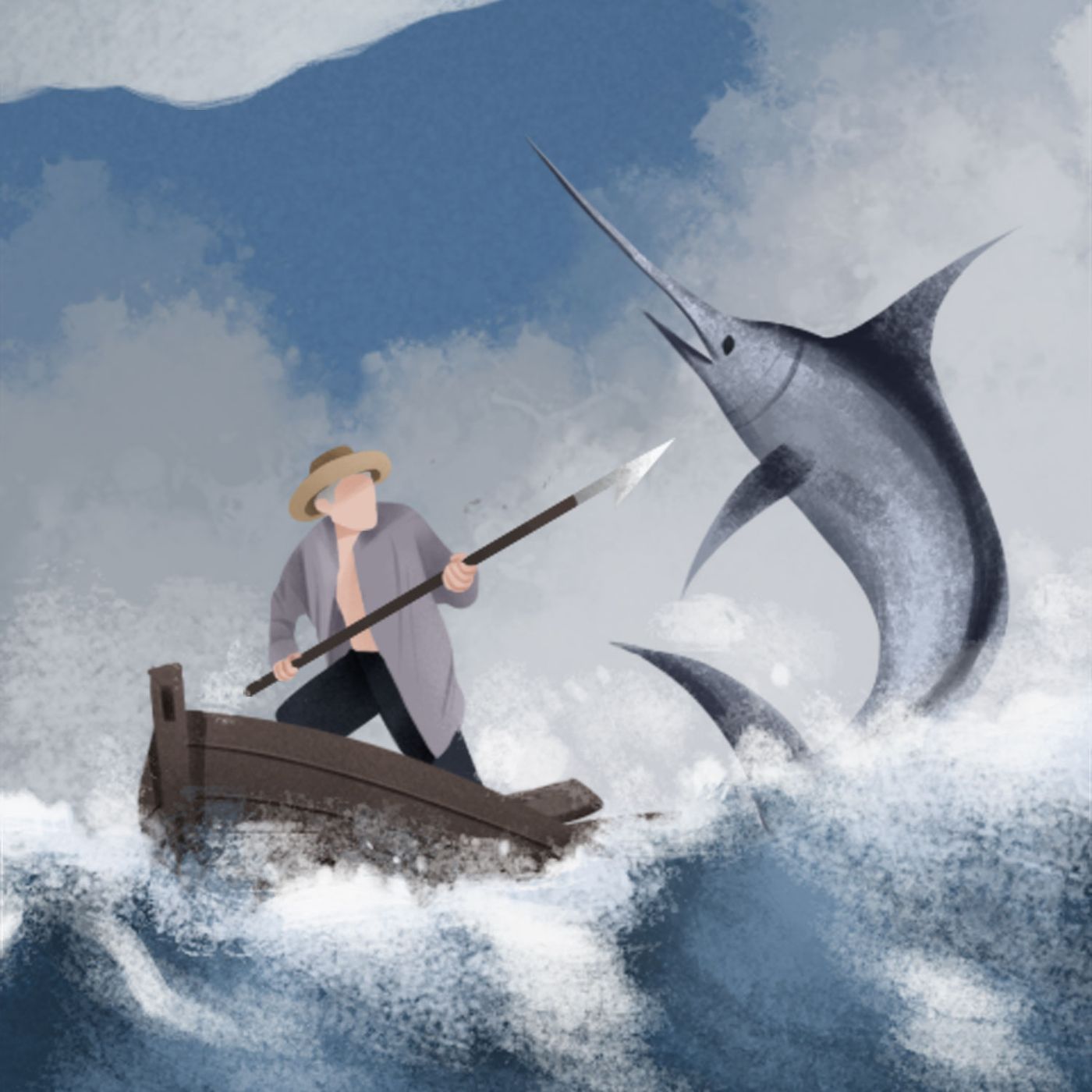
The Old Man and the Sea Full Book Summary
The Old Man and the Sea Full Book SummaryMore Content On Bookey Book Summary Website. The old fisherman Santiago ventures to the deep seas to fish. A marlin that is two feet longer than his boat gets caught on his fishing hook. After a stalemate spanning two days and two nights, the old man finally captures the fish. However, on his return trip, he encounters countless attacks from schools of sharks. Although he fights them with all his might, he is still unable to protect the marlin that he caught. The sharks devour it until only the skeleton remains, and in the end, the old man returns home empty-handed. Overview | Chapter 1Hi, welcome to Bookey. Today we will unlock The Old Man and the Sea for you. This is one of the best-known works by acclaimed 20th-century American writer Ernest Hemingway. Hemingway was born in 1899, in Oak Park, Chicago. During his life, he fought in both World Wars as well as the Spanish Civil War, which inflicted tremendous damage on him both physically and psychologically. The wars opened his eyes to a world filled with violence and bloodshed, giving him a bleak and pessimistic world view. Following the First World War, the works of several American writers depicted characters who are empty, confused, and unable to find their sense of purpose or direction in life, and thus become profoundly dissatisfied with society. These writers have been collectively referred to as the “Lost Generation,” among whom Hemingway was a key representative. Published in 1952, The Old Man and the Sea tells the story of an old fisherman in Cuba who, after heading out to fish in the deep sea for three days and three nights, returns home empty-handed. The novel is based on real people and events – the protagonist Santiago is modeled after Hemingway’s friend, a fisherman named Gregorio Fuentes. They met in 1928, when Fuentes was fishing at sea; he rescued Hemingway, who had been trapped in a storm. From then on, the pair became close friends. Hemingway lived in Cuba for many years, and during this time, he often went on fishing trips with Fluentes. Their encounter provided Hemingway with plenty of material for his writing, and the plot of this novel was, in fact, inspired by Fuentes’s adventures at sea. Once, Fluentes caught a large fish, but he was attacked by sharks while returning to shore, and only managed to bring back the skeletal remains. Fuentes’s experience moved Hemingway greatly, and in 1936, the latter published an article in a magazine detailing it. After the Christmas of 1950, Hemingway began to write The Old Man and the Sea while still living in Cuba. It only took him eight weeks to finish the first draft. The novel met with great success after its publication, and Hemingway received the Pulitzer Prize in 1953 and the Nobel Prize in 1954. Although the story is relatively short and the plot is simple, it is very rich in meaning and arguably the best work from his later years, the culmination of a lifetime of contemplation and artistic exploration. Hemingway once said, “This is the prose that I have been working for all my life that should read easily and simply and seem short and yet have all the dimensions of the visible world and the world of a man’s spirit. It is as good prose as I can write as of now.” Fellow American author William Faulkner once said, “The Old Man and the Sea is his best. Time may show it to be the best single piece of any of us, I mean his and my contemporaries.”
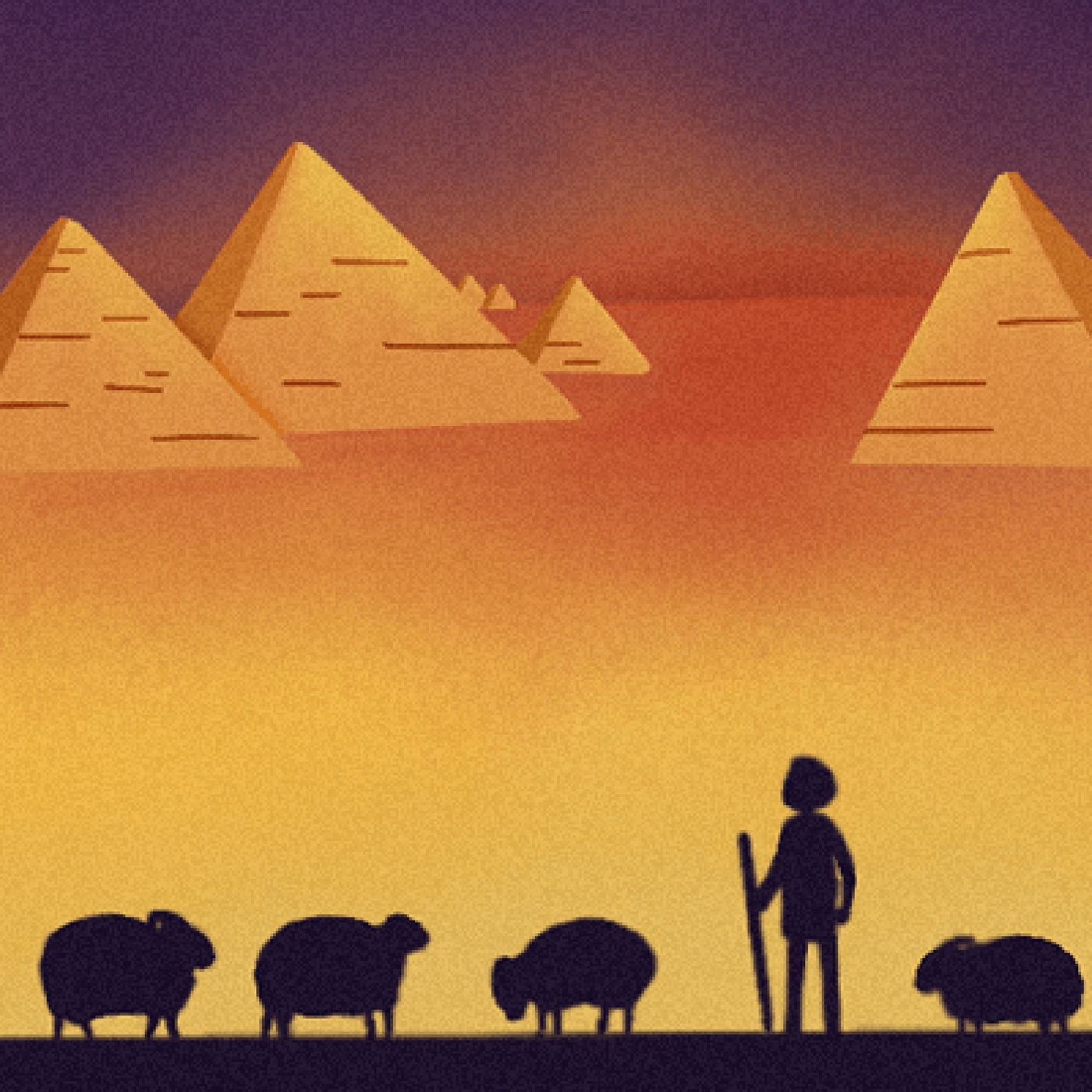
The Alchemist Full Book Summary
The Alchemist Full Book SummaryMore Content On Bookey Book Summary Website. A young shepherd named Santiago has a recurring dream, in which he sees a treasure hidden at the Egyptian pyramids. To seek the treasure, the boy sells his sheep and embarks on a strenuous journey, crossing the Sahara Desert. Throughout his trip, he experiences a series of strange encounters. Under the guidance of an alchemist, he reached the pyramids, only to discover where the treasure really was. In the end, he has managed to gain wealth and find his true love, turning the dream he sought all along into reality. Overview | Chapter 1Hi, welcome to Bookey. Today we will unlock the book The Alchemist.The story begins when a young shepherd named Santiago has a recurring dream, in which he sees a treasure hidden at the Egyptian pyramids. To seek the treasure, the boy sells his sheep and embarks on a strenuous journey, crossing the Sahara Desert. Throughout his trip, he experiences a series of strange encounters. Under the guidance of an alchemist, he reached the pyramids, only to discover where the treasure really was. In the end, he has managed to gain wealth and find his true love, turning the dream he sought all along into reality.Known as one of the few internationally acclaimed literary works, this book has been translated into 68 languages and holds a Guinness World Record as the most translated book by a living author. Being sold over 35 million copies in 160 countries, it is one of the best-selling books of all time. With a broad, compassionate, and unique perspective as well as crystal-clear writing, Coelho combines philosophical ideas, religious miracles, and fables. His novel has moved not only the common people across the world, but also powerful politicians, famous celebrities, and entrepreneurs, garnering hundreds of millions of readers. Even those who are illiterate are drawn to the wondrous world he depicted. In 2007, due to the influence of his works, Coelho became a UN Messenger of Peace.

The 48 Laws of Power Book Notes
The 48 Laws of Power Book NotesMore Content On Bookey Book Summary App Looking back on human history, you will find that there has been no time in which people did not play games of power. The real world is complicated and we often have wonderful aspirations which are out of our reach. Rather than passively respond to complex situations, we should proactively study the laws of power. This book analyses a large number of case studies of successes and failures, and summarizes 48 laws of success to help us take the initiative and develop our abilities for when we find ourselves in complicated situations. Overview | Chapter 1Hi, welcome to Bookey. Today we will unlock the book The 48 Laws of Power.Many people see power as a subject that refers to political tactics, which has nothing to do with them. As long as we are honest with others and stay away from political games, then surely we can avoid power struggles. But in fact, this is just a naïve and fanciful way of thinking. Niccolò Machiavelli, the Italian political thinker and author of The Prince, once said: “Any man who tries to be good all the time is bound to come to ruin among the great number who are not good.”In human society the game of power is always being played, from grand political schemes to various struggles in our personal lives. Everybody lives in a game of power, playing either an active role or a passive role, and none of us can avoid it.Some people believe that playing power games is insidious and immoral, and yet power has nothing to do with morality. Power is a concept that goes beyond ethics; it is the skill and ability to perceive changes in the situation and to make decisions based on objective reality and desired results rather than on the moral intentions of the opponent.Human nature is complex. People have a civilized and noble side, but they have a cunning and dark side, too. In order to reach their goals, people often use all kinds of ways to camouflage and conceal. How should we protect ourselves from being confused or used by others? How can we clearly see the real motivations behind their actions through so many layers of fog? How can we make correct decisions? This book shows us how we can have our own strength in the struggle for power.The authors of this book are American author Robert Greene and publisher Joost Elffers. Robert is a freelance writer as well as an editor and script writer. To write The 48 Laws of Power, he quit his job and plunged into a sea of literature, reading over 200 books and collecting a huge amount of historical material spanning more than 3000 years. He analyzed a great number of historical cases of failures and successes, and from this, he concluded the 48 laws of power and set forth his idea of the principles and rules of power. The power described in this book doesn’t just refer to political tactics but to more general concepts too, and can be understood as a kind of control and manipulation. Of course, here we also need to remind you that the values and morality of “obtaining power is the ultimate goal” described in the book are a little skewed, so we should look at them with a critical eye. However, the laws of power unlocked in this book contain insights which are profound and thought-provoking.

Rich Dad Poor Dad Book Notes
Rich Dad Poor Dad Book NotesMore Content On Bookey Book Summary App You probably have a stable and decent job, but you do not dare to rest for a second, because you are afraid that, should there be an unexpected accident, you will lose everything you have. How can you become a truly rich person, who does not have to worry about livelihood and can make financial freedom a reality? This book will tell you this: being hardworking is not enough; you also need a bit of financial intelligence. This book is just about to help you develop your financial intelligence and understand the secrets behind the mindset of the rich. Overview | Chapter 1Hi, welcome to bookey. Today, we will unlock the book Rich Dad Poor Dad, a groundbreaking book in the field of money management.You probably already have a stable and decent job, but you do not dare to rest for a second, because you are afraid that, should there be an unexpected accident, you will lose everything you have. How can you become a truly rich person, who does not have to worry about making ends meet and can make financial freedom a reality? This book will tell you this: being hardworking is not enough; you also need a bit of financial intelligence. This book is about to change the way you think about wealth and teach you how to think like the rich, paving the way to your financial freedom.The author of this book, Robert T. Kiyosaki, is known as 'The Godfather of Millionaires' and 'The Money Coach'. He is a popular financial expert. Through fun stories featuring him and 'two dads', he shows us the collision between two contrasting mindsets about money. The 'poor dad' (in the story) is Robert's biological father. He is a well-educated man with a Ph.D. degree as well as a stable job and a decent income. However, he is often caught in debt. The poor dad represents the mindset of most people who do not know how to deal with money. The rich dad is his friend Mike's dad. He is an entrepreneur who did not graduate from high school. Although 'rich dad' does not have deep expertise, he has excellent skills in managing money. The rich dad is the teacher of the author, Robert, in money management. He represents the mindset behind accumulating wealth successfully and becoming rich. He will teach you the concept of wealth that you must have to become a wealthy person.

Of Mice and Men Book Notes
Of Mice and Men Book NotesMore Content On Bookey Book Summary App This is a story about promises, loneliness, hope, and loss. The protagonists, George and Lennie, have a dream. They hope to, one day, own a small plot of land so they can grow their own vegetables, raise rabbits, and finally become self-sufficient enough to build a stable home. However, their attempts to save money by working as ranchers are thwarted time and again because of Lennie’s unintentional mistakes, causing them to hop from ranch to ranch.Just as they are about to realize their goal, their dream is completely shattered. Overview | Chapter 1Hi, welcome to Bookey. Today we will unlock the book Of Mice and Men.Of Mice and Men is one of Steinbeck’s masterpieces that reflect his ability to accurately transform social perceptions into narratives. It tells the story of how the protagonists George and Lennie attempt to pursue their “dream of land” only for it to end in failure. This widely acclaimed book is one of the ten most-read classics in American education. In the beginning of the century, British readers have nominated Of Mice and Men as one of the top 100 best-loved novels in the United Kingdom. The title, Of Mice and Men, was inspired by the poem “To a Mouse” by the Scottish poet Robert Burns. A famous line in the poem reads: “The best-laid plans of mice and men often go awry.” This line can be used to describe the fate of the novel’s main characters - George and Lennie’s fate in the novel: no matter how hard they work and how carefully they act, their hope of saving up always falls through because of Lennie’s innocent mistakes. They are forced to be constantly on the run, drifting from place to place until an irreparable mistake, causing their dream to be completely shattered.Of Mice and Men was written in the United States in the 1930s. Today’s society is very different and the contextual background of that time have changed a lot. Some of the problems described in the book have disappeared on account of worldwide economic development and critical societal changes. So, why is this novel still acclaimed by people all over the world? Although some specific social issues may be different nowadays, the living conditions of the lower-class characters reflected in the plot of the book still resonate with many people. Steinbeck’s Nobel Prize motivation states that he won the accolade “for his realistic and imaginative writings, combining as they do sympathetic humor and keen social perception.”After all, what is this story all about? How did the two protagonists’ “dream of land” fall into ruins? What kind of living conditions are reflected in this narrative? And why has it received so well from different audiences?

Jane Eyre Book Notes
Jane Eyre Book NotesMore Content On Bookey Book Summary App This novel is a masterpiece of 19th-Century British author Charlotte Bronte. The book tells the story of how Jane Eyre, an orphan girl born of humble origins and ordinary appearance, grew into a strong, independent and self-possessed woman after going through much hardship and fighting against oppression and injustice, thus finally achieving happiness for herself. The novel is an homage to feminist ideals which affirm individual human rights, and successfully created one of the most classic feminist characters in the history of British literature – Jane Eyre. Overview | Chapter 1Hi, welcome to Bookey. Today we will unlock the book Jane Eyre–the masterpiece of renowned British author Charlotte Bronte.Charlotte Bronte was born into the family of a village pastor in England in 1816. She was the third child of six, having two elder sisters, two younger sisters and a younger brother. Charlotte’s two younger sisters, Emily Bronte and Anne Bronte, were as passionate about writing as she was, and all three of them made their lasting contributions to British literature. Under the pseudonym Currer Bell, Charlotte published Jane Eyre in 1847, which made waves throughout literary circles and secured her worldwide recognition.The book tells the story of how Jane Eyre, an orphan girl born of humble origins and an ordinary appearance, grew into a strong, independent and self-possessed woman after going through much hardship and fighting against oppression and injustice, thus finally achieving happiness for herself. Orphaned after the death of her parents at a young age, Jane lived for a time under her aunt’s roof, where she endured much bullying and oppression, before spending eight tumultuous years in an orphanage. That notwithstanding, Jane Eyre did not give up on herself, even after leading a lonely life without anyone to rely on – she continuously resisted oppression and fought tenaciously against her fate in order to pursue an independent and autonomous life, a life of freedom and equality, and finally succeeded in achieving an ideal love and living the life of her dreams. The novel was written in mid-19th Century during the Victorian era in England. At the time, it was a patriarchal society, and women faced oppression on many fronts. Once, when Charlotte was 20 years old, she sent several short poems that she wrote to Robert Southey, a great English poet at the time, in hopes of receiving his commendation and encouragement. Yet in his letter Southey merely gave her a brusque reply, stating that "Literature is not the business of a woman and it cannot be.” Southey’s letter dealt Charlotte a huge blow, but she did not abandon her literary ambitions there and then. In order to ensure the successful publication of Jane Eyre, Charlotte used the male pseudonym Currer Bell – this went to prove how difficult the path to a career in the literary arts was for women at the time. Against such a societal backdrop, the feminist themes of courageous resistance, pursuit of equality and defence of women’s rights as conveyed in the book were extremely rare and valuable and played a significant role in promoting the contemporaneous liberation of women.

The Richest Man in Babylon Book Notes
The Richest Man in Babylon Book NotesMore Content On Bookey Book Summary AppBabylon, one of the four ancient civilizations, was a wealthy nation with countless gold and jewels but with limited natural resources. Its brilliance was entirely the result of human wisdom. The Richest Man in Babylon introduces ancient wisdom from 5,000 years ago and reveals how Babylon got rich. You will become enlightened about wealth and understand its most fundamental laws. These oldest and most effective laws of wealth can guide you from being penniless to success and happiness. Overview | Chapter 1Hi, welcome to Bookey. The book we are unlocking today is The Richest Man in Babylon.In the annals of history, Babylon was no doubt a shining star. It had gold and jewels in abundance, and rich people could be found everywhere. You may think the wealth was due to its natural advantages, just as the wealth of the United Arab Emirates is related to its oil abundance today. On the contrary, Babylon was situated in a barren, arid valley near the Euphrates. The natural environment was extremely harsh. There was nothing of value, and it was not along any of the main trade route. Many wealthy Babylonians were not born rich, and Babylon's success was not a gift from heaven. The success was the result of the hard work based on the wisdom of the Babylonians through generations.As Babylonians, their priority was to learn how to become wealthy. The king of Babylon once ordered the establishment of a lecture hall that could hold 100 people, so that the richest man in Babylon, Arkad, could teach people the secrets of getting rich. Arkad shared all the lessons learned over the years and asked those in the lecture hall to pass those lessons on to others.Good things never go out of style, and these self-made ways of making money still work in today’s world. In 1934, a couple of archaeology professors at the University of Nottingham translated the cuneiform script on five unearthed Babylonian clay tablets. By doing so, they learned the astonishing secret of how an ancient Babylonian slave paid off his debts. They tried out the method written on these tablets, and they not only paid off old debts, but also accumulated a considerable amount of savings. This ancient wisdom we just mentioned came from The Richest Man in Babylon. The book uses fables to narrate the path to success from some of Babylon’s super-rich.The author of this book, George S. Clason, was a famous American businessman and writer in the 20th century. He once published the first road atlas of the United States and Canada, and had quite deep experience in the publishing industry. He was also a master of wealth management, known as the pioneer of modern wealth management education. Starting in 1926, Clason published a series of wealth management pamphlets, using ancient Babylonian fables to illustrate his views. The pamphlets caused a stir in the banking industry and the insurance industry. They soon became familiar to millions of people, and were later published together in the book, The Richest Man in Babylon. The book has been translated into many languages and still sells well today.

Think and grow rich Summary and Review
Think and Grow Rich Full Summary and Review by Napoleon Hill Think and Grow Rich teaches us that for millions of people, desire can be the driver of success. Anyone interested in following this path to success must take a few straightforward steps. To start, of course, we must have a strong desire. With this yearning, we can affect the subconscious mind through autosuggestion . The subconscious mind reinforces our faith and confidence. It plants a seed. In time, it germinates, and a plan arises. What follows is action without a doubt. The method fully exploits the subconscious mind. It becomes a "middleman" that transforms desires into tangible effects. Through this process, you will realize that just thinking in the right way can make you rich. Overview | Chapter 1Hi, welcome to Bookey. Today we will unlock the book Think and Grow Rich. One day, in the early years of the 20th century, in Orange, New Jersey, United States, a visitor came into Thomas A. Edison's office. The guest looked a bit like a homeless person being worn out after a long and arduous journey. He introduced himself as Edwin C. Barnes. He expressed his long-standing wish to be Edison's business partner. Edison later recalled that something on Barnes' face conveyed determination. He was someone who would not give up until he achieved his goal. From his previous experience of dealing with people, Edison had learned that when someone's desire was so forceful that they would stake their entire future on their success—they were bound to succeed. Edison allowed Barnes to stay, but only as a peon and not as a business partner. Nevertheless, Barnes didn't reckon that his work was unskilled; instead, he held himself to lofty standards. And a few years later, he finally got his wish. He became Edison's true business partner and found himself working in the same room he had blundered into when he first met Edison. This is the story at the start of Think and Grow Rich. The anecdote tells us that a person's success is a function of their desire. The more intense their desire, the surer their success. How strong was Barnes' passion for success? When he was determined to become Edison's business partner, he didn't know this famous scientist, nor did he have the money to travel to the city where he was working. Facing these two difficulties, most people might have already given up their plans. But not Barnes. His desire was so strong that he climbed on a freight train to reach the destination and finally stood before Edison. When you build up determination, you can overcome any seemingly insurmountable obstacles. Think and Grow Rich is a book about effective thinking. It could be described as a book about the passion for success. In the title, the word "rich" has multiple connotations. Beyond wealth and financial success, these riches also include spiritual, mental, and bodily estates. Since it was first published in 1937, the book has sold more than 70 million copies worldwide and has influenced the paths of countless lives. The book's author, Napoleon Hill, was a pioneering motivational expert seeking to identify the principles of success. As the work's first edition has now become dated, it was edited and revised in 2004 by Arthur R. Pell, who has a Ph.D. in Philosophy. He replaced some outdated stories and anecdotes with more contemporary examples. The book, in its updated version, is now widely available and remains enduringly popular. As Hill tells it, the 'Steel King,' Andrew Carnegie, was formative in the book's genesis. Carnegie had asked Hill, a journalist at the time, to identify and interview 500 successful people with the aim of discovering their common traits and, ultimately, to share this precious secret of success with the world. Hill was delighted to accept the task, and, in the end, he interviewed more than 500 people, including important figures such as Edison, Ford, and Roosevelt. Additionally, he studied and analyzed the life stories of 25,000 successful people to eventually isolate the recipe for success that Carnegie believed must exist. With it in mind, he wrote this book, inviting you to Think and Grow Rich. Next, we will reveal to you the best parts of the book. We have split it into two sections: Part One, the desire-driven path to success; Part Two, Protecting the desire-driven path to success.

The Picture of Dorian Gray Summary and Review
The Picture of Dorian Gray Full Summary and Review by Oscar Wilde This novel recounts the story of a handsome, aristocratic youth by the name of Dorian Gray. He wished a spell on his portrait that he would retain eternal youth – a wish that ultimately came true. Thereafter, he indulged without restraint in his sensual desires. Time passed, and Dorian’s beautiful looks were unchanged by time. Meanwhile, his portrait grew more hideous day by day. Finally, aiming to destroy the traces of his life of sin contained in the portrait, Dorian stabs the canvas with a knife, resulting in his own mysterious death. In death, Dorian’s corpse transforms, becoming hideous and old. His painted portrait has its beauty restored. Overview | Chapter 1Hi, welcome to Bookey. Today for you, we will unlock the book The Picture of Dorian Gray. The book was the only full-length novel written by Oscar Wilde, the Irish dramatist and writer who settled in Britain. Oscar Wilde was born in Dublin, Ireland, into a prestigious family. His father was a surgeon, and his mother a poet and writer. Wilde was renowned for his flamboyant dressing style and his words of wit. He lived by his own rules and adopted a fearless lifestyle, restlessly moving between scandalous homosexual lovers and his respected family. Finally, due to his refusal to disavow his homosexuality, he ended up in jail. A pioneering voice in the field of Aestheticism, at the close of the 19th century ,Wilde was England’s most maverick genius. Oscar Wilde flourished in a British society that was governed by strict proprieties, moral and ethical codes. Everything that anyone said and did was subject to harsh restrictions. Art and literature were subject to even greater scrutiny. Slight deviations from the norms were deemed perverse, unorthodox and unacceptable. At the time, society’s prevailing view was that the value of literature and the arts lay entirely in their ability to affect people’s values through their thoughts and emotions. Consequently, art would influence people’s behavior. Fundamentally, literature and the arts were a tool for moral instruction. As such, the arts were deemed to command great educational utility. Wilde felt deep resentment towards this artistic ethos. He felt that this type of artwork crushed the artist’s imagination and destroyed the pure beauty of art; it violated art’s essence. The Picture of Dorian Gray is precisely a retaliation against such a utilitarian view of art. The novel tells the story of an aristocratic youth Dorian Gray, who is handsome in his appearance and pure at heart. But, under the seduction of a hedonist, Lord Henry Wotton, he makes a pact, trading his portrait image for his soul in exchange for eternal youth. Blessed with youth without consequence, Dorian Gray descends into an abyss of sin and evil. On account of its evocation of moral issues, the novel’s publication stirred much controversy in Britain. Wilde himself was ambivalent. He never explicitly stated his own position. However, the British literary establishment dubbed the novel “a tale spawned from the leprous literature of the French decadents—a poisonous book, the atmosphere of which is heavy with the mephitic odors of moral and spiritual putrefaction—a gloating study of the mental and physical corruption of a fresh, fair and golden youth”. Thereafter, Wilde’s novel was forever regarded as proof of his desire to attack and damage social mores. In the novel’s preface, Wilde offered a retort to public censure. He wrote: “There is no such thing as a moral or immoral book. Books are well-written, or badly written. That is all.” So, what sort of story lies within the pages of this book? Why did it provoke such fiery debate? We will now interpret this book for you in the following three parts: In Part One, we will summarize the novel’s plot; In Part Two, we will provide an in-depth analysis of the novel’s key characters; In Part Three, we will interpret Wilde’s perspectives on art as it is embodied in the novel.
The Little Prince Summary and Review
The Little Prince Full Summary and Review by Antoine de Saint-ExupéryThe Little Prince is a children’s story that touches even the adults’ hearts, as the author said, “All grown-ups were once children.” From the point of view of a pilot, the book recounts the journey of a young prince who travels to Earth from an alien planet. The irony, fantasy, truth, and philosophy embedded in the story have made it one of the most famous children’s books in France and later across the world. It is hailed as one of the most read books after the Bible. Overview | Chapter 1Hi, welcome to Bookey. Today we will unlock the book The Little Prince. In the 1940s, World War II swept the world. It brought not only chaos, but also spiritual decline. German philosopher Martin Heidegger described the era as “the destitute time” and “the time of world’s night”. When the darkness descended upon the people in the turbulent age, how should they free themselves from the difficult circumstances? Famous French writer and aviator Antoine de Saint-Exupéry gave his answer in The Little Prince. Both a writer and a pilot, Saint-Exupéry was not the first who wrote about aviation, but he was the first author to explore life and civilization through aviation. In his works, Saint-Exupéry was committed to re-explore spiritual life, which he believed was above intelligence and in line with human needs; it would guide people in their journey of self-discovery and lead to their true essence. In the wake of the war, people, devastated, craved warmth and wisdom to comfort the anguish and vulnerability of their souls. It was where The Little Prince came in. To this day, this book still serves the purpose as the author wished: to nourish people’s souls. It is a timeless story that remains a solace to us all. The Little Prince is a children’s story that touches even the adults’ hearts, as the author said, “All grown-ups were once children.” From the point of view of a pilot, the book recounts the journey of a young prince who travels to Earth from an alien planet. The irony, fantasy, truth, and philosophy embedded in the story have made it one of the most famous children’s books in France and later across the world. It is hailed as one of the most read books after the Bible. The young blond prince with melancholy eyes and a long scarf that flutters in the wind crosses the vast desert and into our hearts, bringing generations of readers a beautiful tale and the wisdom it contains.

The Five Love Languages Summary and Review
The Five Love Languages Full Summary and Review by Gary Chapman Many people think that marriage is the grave of love, and a lot of couples fight with each other or have marriage crises because of trivial things. But they are always close to each other when they are in love. So what turns these intimate relationships into ones ripe with conflict? This book will tell us why as well as discuss the primary reason why communication is so important, and how we can express love in proper ways. It also provides effective ways that will point us in the direction of how to resolve marriage crises. Overview | Chapter 1Hi, welcome to Bookey. Today, we will unlock the book by Gary Chapman called “The Five Love Languages.” It is common that relationships change after marriage, even though many couples were happy when they were in love before that. They may fight with each other more frequently after marriage. More seriously, these conflicts can lead to emotional crises or even divorce. What’s going on? The problem is that we all have different love languages, which means we all have different ways of expressing love. When getting along with our partner, we express our love based on our own ideas. These different ideas mean people will eventually end up with different love languages. This is the point: Does your partner understand your way of expressing love? Will he or she feel that you love him? This happens because we ignore the fact that everyone has different love languages. Your partner might not feel your love when you express love in your own ways. Why are love languages important? In the book, the author says that giving and receiving love is at the center of every single adult’s sense of wellbeing. Marriage is designed to satisfy our needs for an intimate relationship and love. Feeling loved is the most important emotional need for us. In his book, the author uses a good metaphor: in every child’s heart, there is an “emotional love tank” waiting to be filled with love. It’s only when a child feels truly loved that he can grow up healthy and happy. However, when the love tank is empty, the child will exhibit problematic behaviors. Adults are the same. If our love tank is empty and we cannot feel loved, our marriage will have problems. So how can we fill our love tank and reap good results in a marriage? The love language teaches us how to fill our love tank in the proper ways, and this book will tell us how to do it in detail. Gary Chapman is a prominent relationship coach who has met lots of couples who were faced with marriage issues. Through deep communication, he found that the reason for the marriage crisis was that both partners used the wrong love languages to get along with each other. Therefore, he wrote this book to help people discover their love languages and have a better marriage. His other book, “Things I Wish I'd Known Before We Got Married” discusses common traps that can be found in a marriage. If you are interested in it, please listen to our bookey of that book. Next, we will cover the essence of “The Five Love Languages” in six parts. We will learn how to discover our partner’s love language as well as our own to have a happy and healthy marriage. Part One: Love Language #1: Words of Affirmation; Part Two: Love Language #2: Quality Time; Part Three: Love Language #3: Gifts; Part Four: Love Language #4: Acts of Service; Part Five: Love Language #5: Physical Touch; Part Six: Discover Your Primary Love Language.
The Alchemist Summary and Review
The Alchemist Full Summary and Review by Paulo Coelho A young shepherd named Santiago has a recurring dream, in which he sees a treasure hidden at the Egyptian pyramids. To seek the treasure, the boy sells his sheep and embarks on a strenuous journey, crossing the Sahara Desert. Throughout his trip, he experiences a series of strange encounters. Under the guidance of an alchemist, he reached the pyramids, only to discover where the treasure really was. In the end, he has managed to gain wealth and find his true love, turning the dream he sought all along into reality. Overview | Chapter 1Hi, welcome to Bookey. Today we will unlock the book The Alchemist. The story begins when a young shepherd named Santiago has a recurring dream, in which he sees a treasure hidden at the Egyptian pyramids. To seek the treasure, the boy sells his sheep and embarks on a strenuous journey, crossing the Sahara Desert. Throughout his trip, he experiences a series of strange encounters. Under the guidance of an alchemist, he reached the pyramids, only to discover where the treasure really was. In the end, he has managed to gain wealth and find his true love, turning the dream he sought all along into reality. Known as one of the few internationally acclaimed literary works, this book has been translated into 68 languages and holds a Guinness World Record as the most translated book by a living author. Being sold over 35 million copies in 160 countries, it is one of the best-selling books of all time. With a broad, compassionate, and unique perspective as well as crystal-clear writing, Coelho combines philosophical ideas, religious miracles, and fables. His novel has moved not only the common people across the world, but also powerful politicians, famous celebrities, and entrepreneurs, garnering hundreds of millions of readers. Even those who are illiterate are drawn to the wondrous world he depicted. In 2007, due to the influence of his works, Coelho became a UN Messenger of Peace. Next, let us explore Santiago’s adventure from four different angles: Part One, a shepherd’s treasure hunt; Part Two, Santiago’s secrets to success; Part Three, symbolism; Part Four, love is the essence.
The 48 Laws of Power Summary and Review
The 48 Laws of Power Full Summary and Review by Robert Greene Looking back on human history, you will find that there has been no time in which people did not play games of power. The real world is complicated and we often have wonderful aspirations which are out of our reach. Rather than passively respond to complex situations, we should proactively study the laws of power. This book analyses a large number of case studies of successes and failures, and summarizes 48 laws of success to help us take the initiative and develop our abilities for when we find ourselves in complicated situations. Overview | Chapter 1Hi, welcome to Bookey. Today we will unlock the book The 48 Laws of Power. Many people see power as a subject that refers to political tactics, which has nothing to do with them. As long as we are honest with others and stay away from political games, then surely we can avoid power struggles. But in fact, this is just a naïve and fanciful way of thinking. Niccolò Machiavelli, the Italian political thinker and author of The Prince, once said: “Any man who tries to be good all the time is bound to come to ruin among the great number who are not good.” In human society the game of power is always being played, from grand political schemes to various struggles in our personal lives. Everybody lives in a game of power, playing either an active role or a passive role, and none of us can avoid it. Some people believe that playing power games is insidious and immoral, and yet power has nothing to do with morality. Power is a concept that goes beyond ethics; it is the skill and ability to perceive changes in the situation and to make decisions based on objective reality and desired results rather than on the moral intentions of the opponent. Human nature is complex. People have a civilized and noble side, but they have a cunning and dark side, too. In order to reach their goals, people often use all kinds of ways to camouflage and conceal. How should we protect ourselves from being confused or used by others? How can we clearly see the real motivations behind their actions through so many layers of fog? How can we make correct decisions? This book shows us how we can have our own strength in the struggle for power. The authors of this book are American author Robert Greene and publisher Joost Elffers. Robert is a freelance writer as well as an editor and script writer. To write The 48 Laws of Power, he quit his job and plunged into a sea of literature, reading over 200 books and collecting a huge amount of historical material spanning more than 3000 years. He analyzed a great number of historical cases of failures and successes, and from this, he concluded the 48 laws of power and set forth his idea of the principles and rules of power. The power described in this book doesn’t just refer to political tactics but to more general concepts too, and can be understood as a kind of control and manipulation. Of course, here we also need to remind you that the values and morality of “obtaining power is the ultimate goal” described in the book are a little skewed, so we should look at them with a critical eye. However, the laws of power unlocked in this book contain insights which are profound and thought-provoking. Due to restrictions on time and length, we can only choose a few of the 48 laws summarized in this book. We have divided them into three sections which we will describe in more detail: Part One,: Handling your relationships carefully to maximize your power. Part Two: How powerful people stay powerful. Part Three: Choosing an appropriate strategy according to the specific situation.

The 7 Habits of Highly Effective People Summary and Review
The 7 Habits of Highly Effective People Full Summary and Review by Stephen Covey This book, as the title says, is about the seven habits of highly effective people. It teaches us how to achieve victory from the private to the public spheres, thereby making a tremendous change in life and career, and attaining both success and happiness. Known as the “Bible” of the American business community and government management department, the book is included in the training course of the Fortune Global 500 corporations, and is ranked by Forbes as one of the ten most influential management books in history. Overview | Chapter 1Hi, welcome to Bookey. Today we will unlock the book The 7 Habits of Highly Effective People: Powerful Lessons in Personal Change. It’s mainly about how to become a highly effective person, and attain both success and happiness. Many of us have shared an experience of having so many things to do every day, and feeling that time is not enough. Despite working all day long and feeling exhausted at the end of the day, we can’t seem to get all the work done. However, there are some people around us who barely work overtime, but still do a great job. They can even enjoy some leisure time. Why is that? Are they born with a higher IQ? The truth? This is because some of them have developed good habits of high effectiveness, which leads to a comfortable yet highly effective life. Perhaps you are wondering: what is high effectiveness? High effectiveness refers to the balance between production and production capacity, which is referred as the P/PC balance in this book. P stands for production, and PC stands for production capacity. Have you heard of the fable about the goose and the golden egg? A farmer has a goose that can lay golden eggs, and he soon becomes fabulously rich. However, the greedy farmer becomes unsatisfied with only one golden egg per day, so he kills the goose, hoping to take out all of the golden eggs from it. To his surprise, there are no golden eggs inside the goose. The goose is dead, so there’s no way he can get another golden egg. The farmer has ruined everything for himself. In the above fable, what is produced is the golden eggs, and production capacity, namely, the producing asset or capacity to produce, is the goose that lays golden eggs. If we “focus on golden eggs and neglect the goose,” we will lose both the goose and the eggs. Conversely, if we “only take care of the goose with no aim toward the golden eggs,” we can feed neither ourselves nor the goose. Therefore, only when you take good care of the goose can you get golden eggs. And only when you control your desire to ask too much from the goose can you keep it alive. Likewise, only when you strike a balance between work performance and well-being, can you attain real effectiveness and make greater achievements. This book tells us exactly the specific ways that can help you easily achieve high effectiveness. The author of this book, Stephen Covey, was a world-renowned management guru and a well-respected leadership authority. He has a high and long-standing reputation in leadership theories, family and interpersonal relationships, and personal management. Recognized as “a master of thoughts” of the American academic community, Covey was named “one of the twenty-five most influential people in American history” and “a mentor of human potential” by Time magazine. The 7 Habits of Highly Effective People: Powerful Lessons in Personal Change, is also known as the “Bible” of the American business community and government management department. It’s ranked as one of the ten most influential management books in history by Forbes. It will teach you seven good habits. These habits will help you become successful and highly effective with little struggles, achieve personal and interpersonal effectiveness, and make a tremendous change in your life and career.
Rich Dad Poor Dad Summary and Review
Rich Dad Poor Dad Full Summary and Review by Robert T. Kiyosaki You probably have a stable and decent job, but you do not dare to rest for a second, because you are afraid that, should there be an unexpected accident, you will lose everything you have. How can you become a truly rich person, who does not have to worry about livelihood and can make financial freedom a reality? This book will tell you this: being hardworking is not enough; you also need a bit of financial intelligence. This book is just about to help you develop your financial intelligence and understand the secrets behind the mindset of the rich. Overview | Chapter 1 Hi, welcome to Bookey. Today, we will unlock the book Rich Dad Poor Dad, a groundbreaking book in the field of money management. You probably already have a stable and decent job, but you do not dare to rest for a second, because you are afraid that, should there be an unexpected accident, you will lose everything you have. How can you become a truly rich person, who does not have to worry about making ends meet and can make financial freedom a reality? This book will tell you this: being hardworking is not enough; you also need a bit of financial intelligence. This book is about to change the way you think about wealth and teach you how to think like the rich, paving the way to your financial freedom.The author of this book, Robert T. Kiyosaki, is known as ‘The Godfather of Millionaires’ and ‘The Money Coach’. He is a popular financial expert. Through fun stories featuring him and ‘two dads’, he shows us the collision between two contrasting mindsets about money. The ‘poor dad’ (in the story) is Robert’s biological father. He is a well-educated man with a Ph.D. degree as well as a stable job and a decent income. However, he is often caught in debt. The poor dad represents the mindset of most people who do not know how to deal with money. The rich dad is his friend Mike’s dad. He is an entrepreneur who did not graduate from high school.Although ‘rich dad’ does not have deep expertise, he has excellent skills in managing money. The rich dad is the teacher of the author, Robert, in money management. He represents the mindset behind accumulating wealth successfully and becoming rich. He will teach you the concept of wealth that you must have to become a wealthy person. In this bookey, we will walk through the following three aspects with you. Firstly, think like the rich. Secondly, learn how to tell the difference between an asset and a liability. Thirdly, invest like the rich.

How to Win Friends and Influence People Book Summary
How to Win Friends and Influence People Full Summary and Review by Dale Carnegie A practical work on interpersonal relations, this book takes an in-depth look at human nature and taps into the hidden weaknesses of humanity. Through reading this book, one can get to know more about themselves and make further self-improvements. This book became a worldwide bestseller immediately after its debut. It has been translated into almost every major language in the world within decades of its release. It’s hailed as the bible of social skills. In 2011, it was number 19 on Time Magazine's list of the 100 most influential books. Overview | Chapter 1 Hi, welcome to Bookey. Today we’ll unlock the book How to Win Friends and Influence People. Many of us are familiar with or have even read this book. It has continued to gain popularity and receive acclaim from readers around the world. It has also been published in many editions. Data shows that this book has sold tens of millions of copies worldwide, a truly remarkable number in the history of publication. It provides people with guidelines for dealing with others, in addition to sharing many ideas about how to live a happy life. Numerous people have benefited from it. Ever since Carnegie revealed the secret to harmonious relationships to many people around the world, other books on the subject of interpersonal relationships have emerged. Due to his enormous influence, Carnegie has been praised as one of the greatest experts in self-help and interpersonal relationships. It may be hard to imagine that, while Carnegie is now a revered mentor in the self-help industry, he used to suffer a lot from his inability to effectively deal with people. Carnegie was not born a genius of social skills. He learned from his own personal experiences and turned them into assets. Carnegie was born in the 1880s in a small town in Missouri. His family was poor, so he was always hungry and cold. Due to malnutrition, little Carnegie was rather skinny and short, making his ears, which were disproportionately big compared to his head, seemed even larger. Because of his big ears, little Carnegie was often teased by his classmates. One day, he got into a fight with a boy in his class. He said something very mean to the boy, who became so furious that he threatened to cut off Carnegie’s ears. Carnegie was terrified. In the next few days, he kept worrying about his ears being cut off. He was even too scared to fall asleep, fearing that his ears would be cut off in his dreams. But this was not his only concern. When he was a kid, Carnegie would dwell on anxieties to the point of tears. He worried about so many absurd things, for example, being buried alive like a seed, getting killed by a lightning strike, or going to hell after dying. He also worried that no girl would ever want to marry him, or that he would be kidnapped by aliens. Later on, Carnegie realized that most people’s worries were not necessary, because there was a 99% chance that they wouldn’t happen. After a long period of anxiety and lack of confidence when growing up, he attended the State Teachers’ College in Warrensburgh, Missouri. Here, he took an interest in debating, and became very fond of it. So, he attended debates and public speaking competitions frequently, painstakingly honing his speaking skills. He won the majority of contests in which he participated, and gained great confidence from giving speeches. Gradually, he realized that this could be his life-long career. Afterward, Carnegie started to give inspirational speeches around the world. He wrote many self-help books, like How to Win Friends and Influence People, How to Stop Worrying and Start Living, and How to Enjoy Your Life and Your Job. His courses teaching interpersonal skills started to be held around the world. A worried little boy with low self-esteem finally became the great mentor of self-help we know today. The book we’re going to unlock today, How to Win Friends and Influence People, is Carnegie’s most influential work. Next, we’ll unlock it in three sections: Part 1: Techniques for dealing with people Part 2: Applying the techniques in social interactions Part 3: From society to family.

Atomic Habits Book Summary and Review
James Clear's Atomic Habits Book Review and NotesWhy do so many of us fail to lose weight? Why can't we go to bed early and wake up early? Is it because of a lack of determination? Not at all. The thing is, we are doing it the wrong way. More specifically, it's because we haven't built an effective behavioral system. James Clear finds that it takes four steps to form a habit. Cue, craving, response, and reward are the pillars of every habit. This book summarizes the four laws that correspond to the four steps to help you quickly build good habits or, counterintuitively, break bad ones.Overview | Chapter 1Hi, welcome to Bookey. Today we'll unlock the book Atomic Habits: An Easy & Proven Way to Build Good Habits & Break Bad Ones.Imagine you're sitting in a plane, flying from Los Angeles to New York City. Due to a mysterious and undetectable turbulence, your aircraft's nose shifts more than 7 feet, 3.5 degrees to the south. After five hours of flying, before you know it, the plane is landing. However, it’s not landing in New York City, but in Washington Dulles International Airport, which is 225 miles from your destination!A minimal change over time can make a significant difference, and the direction of an airplane is a straightforward example. In the same way, a slight change in your daily habits can steer your path to a completely different destination. That's the incredible power of habits.Everyone wants to control their lives and not be led by the nose by bad habits. We'll make New Year's plans, vow to lose weight or quit smoking, keep reading or running, but these resolutions will often come to naught. Is it because of a lack of determination? No, we are doing it the wrong way. More specifically, it's because we haven't built an effective behavioral system. James Clear finds that it takes four steps to form a habit. Cue, craving, response, and reward are the pillars of every habit. This book summarizes the four laws that correspond to the four steps to help you quickly build good habits or break bad ones. There isn't just one way to develop good habits, but this book presents an ideal path the author knows. It's suitable for everyone who is seeking a step-by-step approach.The author of this book is James Clear, a habit researcher and author of the New York Times bestseller. Over 500,000 people subscribe to his email newsletter, and his website receives millions of visitors each month. Clear is the founder of the famous The Habits Academy, which is the leading platform for individuals and organizations that are interested in developing better habits in life and work. More than 10,000 leaders, managers, teachers, and coaches have graduated from The Habits Academy.