
BirdNote Daily
1,282 episodes — Page 6 of 26
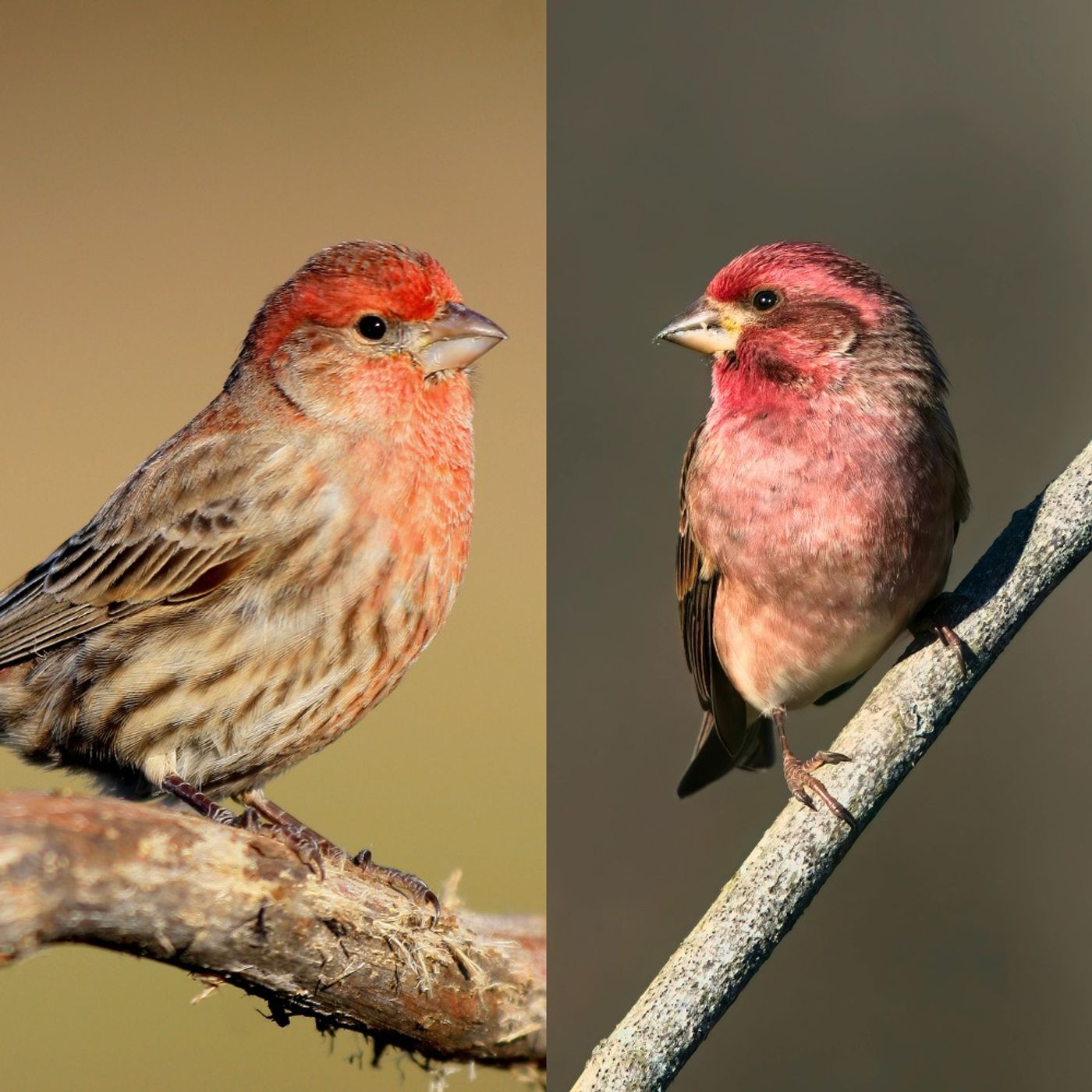
Voices and Vocabularies: House Finch or Purple Finch
In parts of the United States, House Finches overlap with similar-looking Purple Finches. Their distinct songs help us sort them out. House Finch songs are jumbled and have a sharp, buzzy note — especially during the breeding season. Purple Finches’ songs, on the other hand, are smoother and lack the buzzy note.This episode is brought to you by Wild Delight Bird Food, which aims to support wild bird populations with clean, nutritious ingredients in every blend. Available at Chewy. More info and transcript at BirdNote.org.Want more BirdNote? Subscribe to our weekly newsletter. Sign up for BirdNote+ to get ad-free listening and other perks. BirdNote is a nonprofit. Your tax-deductible gift makes these shows possible. Hosted by Simplecast, an AdsWizz company. See pcm.adswizz.com for information about our collection and use of personal data for advertising.

Ornithographies
Photographer Xavi Bou creates incredible images of birds and their movements by combining his love of photography and technology with his love for birds and nature — as seen in his book, Ornithographies. He’s especially drawn to European Starlings and their movements as a flock, called a murmuration. The starlings fly in a tight, synchronized group, sometimes to avoid a predator.¡Este episodio esta disponible en BirdNote en Español!More info and transcript at BirdNote.org.Want more BirdNote? Subscribe to our weekly newsletter. Sign up for BirdNote+ to get ad-free listening and other perks. BirdNote is a nonprofit. Your tax-deductible gift makes these shows possible. Hosted by Simplecast, an AdsWizz company. See pcm.adswizz.com for information about our collection and use of personal data for advertising.
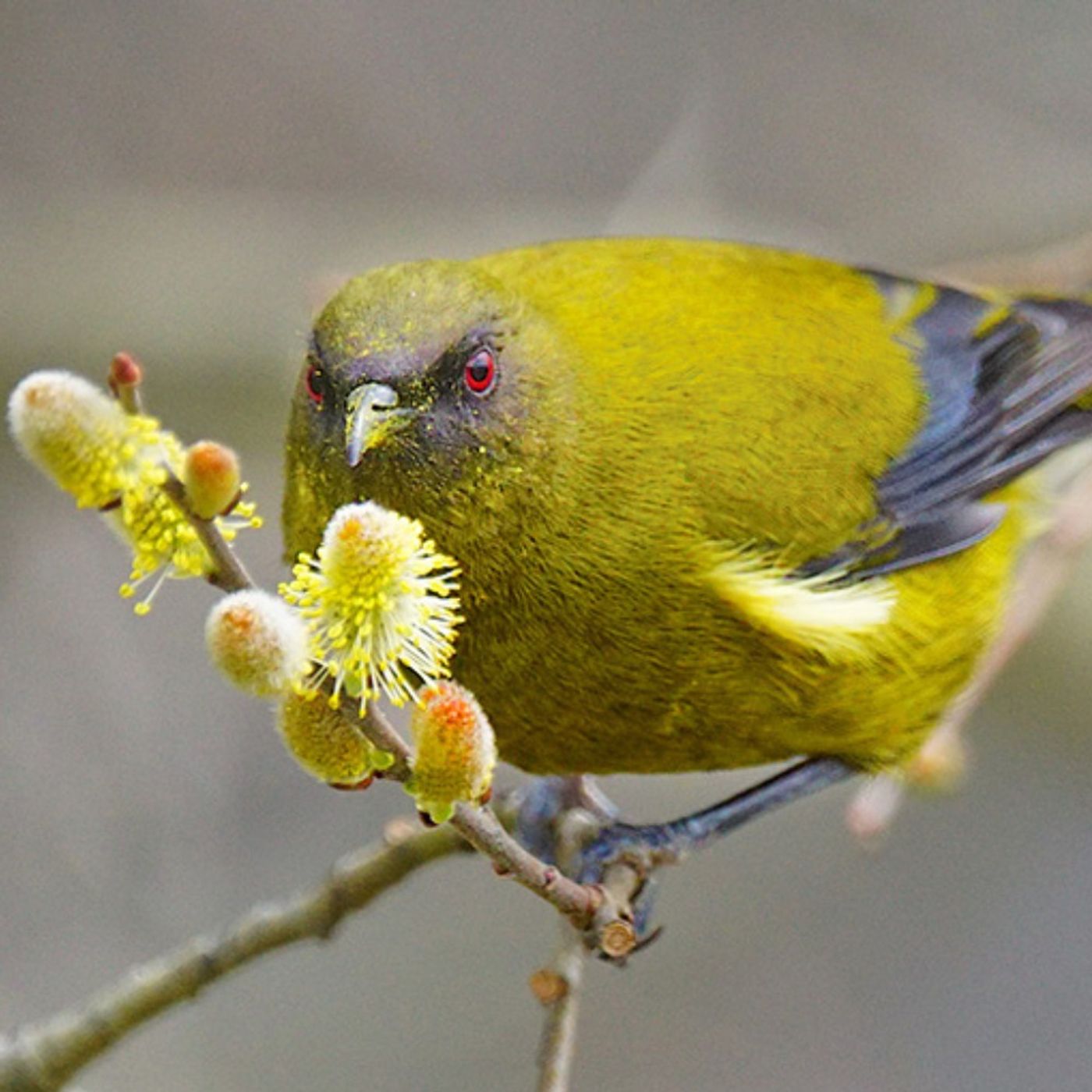
New Zealand Bellbird
A forest in New Zealand rings with the sound of bellbirds, also known as Korimako or Makomako. Many bellbirds sing together, especially in the morning. Pairs sing duets. And a pair may counter-sing with its neighbors, perhaps letting them know that this patch of land is taken. It all builds to a brilliant, ringing dawn chorus.More info and transcript at BirdNote.org.Want more BirdNote? Subscribe to our weekly newsletter. Sign up for BirdNote+ to get ad-free listening and other perks. BirdNote is a nonprofit. Your tax-deductible gift makes these shows possible. Hosted by Simplecast, an AdsWizz company. See pcm.adswizz.com for information about our collection and use of personal data for advertising.
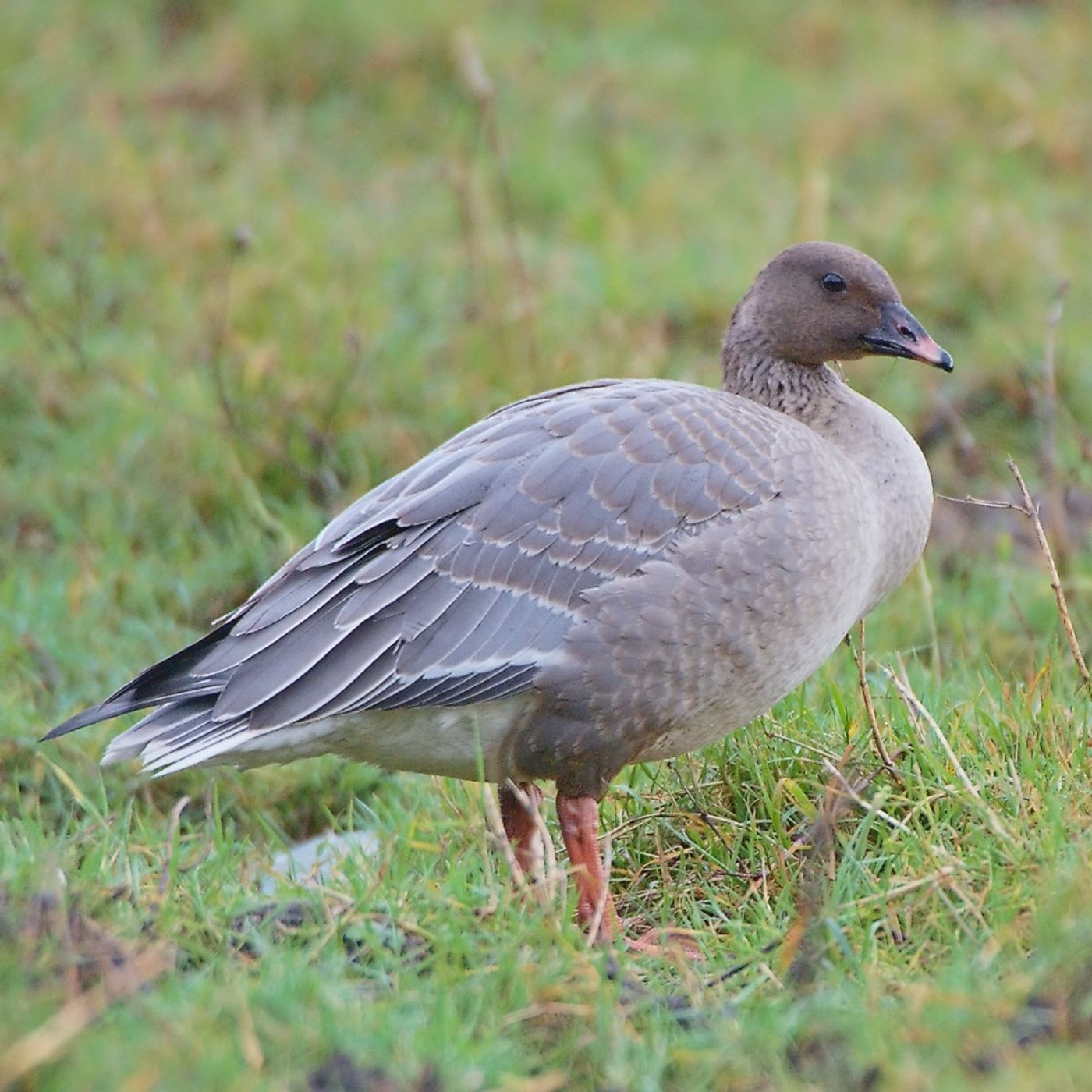
Wild Goose Dacha
No human dreams of relaxing on the shores of Novaya Zemlya, an archipelago in the Arctic Ocean that’s best known as a Soviet testing site for nuclear weapons. Yet, a growing flock of Pink-footed Geese have begun to make this militarized zone their summer home. Though this region was once too cold for the geese to raise young, climate change — and increased competition for food — may have made Novaya Zemlya a compelling alternative to their traditional territory in Svalbard. It’s also possible that the Pink-footed Geese found the archipelago by following other migratory waterfowl, which could prove to be a rare example of cultural knowledge being transmitted between species.More info and transcript at BirdNote.org.Want more BirdNote? Subscribe to our weekly newsletter. Sign up for BirdNote+ to get ad-free listening and other perks. BirdNote is a nonprofit. Your tax-deductible gift makes these shows possible. Hosted by Simplecast, an AdsWizz company. See pcm.adswizz.com for information about our collection and use of personal data for advertising.
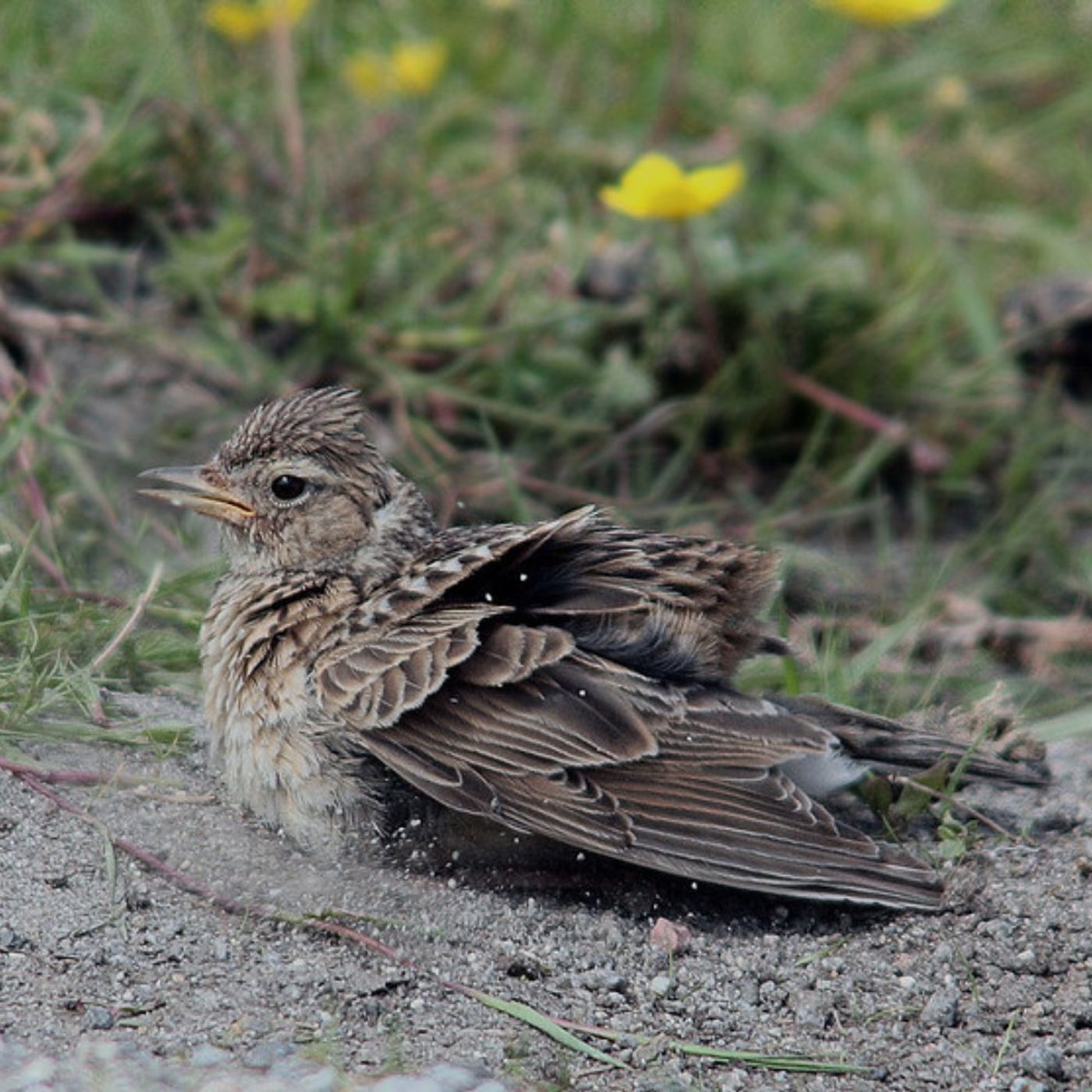
The Value of a Dust Bath
It might sound strange, but dirt helps birds scrub themselves clean. Birds of all sizes, like the Eurasian Skylark, often scrape a depression in the ground and flick dirt onto their bodies, shimmying to shake it off. Experiments showed that birds use dust to prevent oils from building up on their feathers and to remove dandruff — much like humans using shampoo in the shower!More info and transcript at BirdNote.org.Want more BirdNote? Subscribe to our weekly newsletter. Sign up for BirdNote+ to get ad-free listening and other perks. BirdNote is a nonprofit. Your tax-deductible gift makes these shows possible. Hosted by Simplecast, an AdsWizz company. See pcm.adswizz.com for information about our collection and use of personal data for advertising.
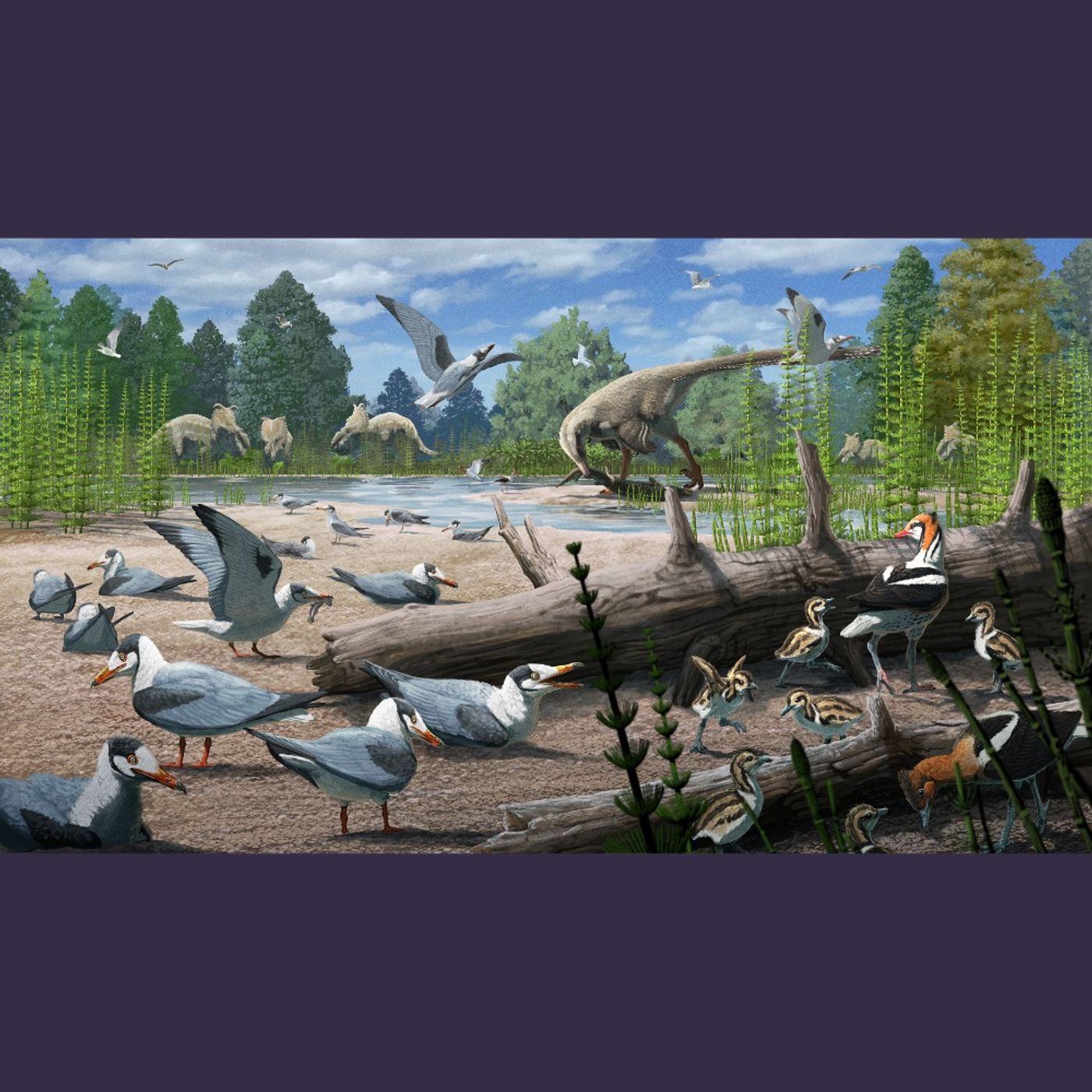
Ancient Birds Nested in the Arctic, Too
Every summer, millions of birds flock to the Arctic Circle to find mates and raise their young. In a study published in 2025, paleontologists found evidence of the earliest known Arctic breeding colony from fossils uncovered in northern Alaska. The site dates back nearly 73 million years when many prehistoric predecessors to modern birds still had teeth; including the gull-like ichthyornitheans and the flightless, loon-like hesperornitheans. These were among several types of ancient avians preserved as both adults and hatchlings, which suggests the site was used for nesting. Just like today, these birds were likely taking advantage of the abundant food provided by the 24-hours of summer daylight.More info and transcript at BirdNote.org.Want more BirdNote? Subscribe to our weekly newsletter. Sign up for BirdNote+ to get ad-free listening and other perks. BirdNote is a nonprofit. Your tax-deductible gift makes these shows possible. Hosted by Simplecast, an AdsWizz company. See pcm.adswizz.com for information about our collection and use of personal data for advertising.
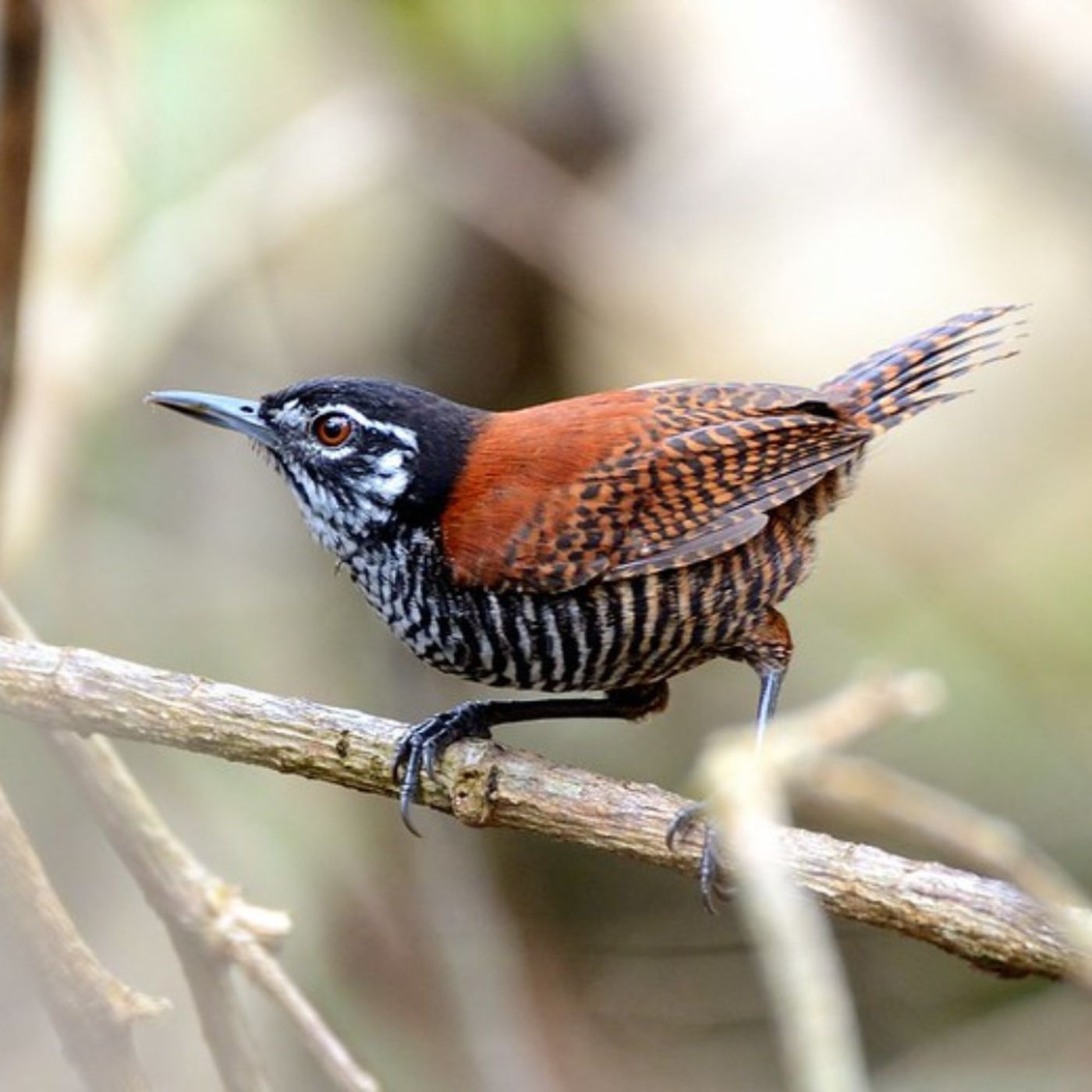
Female Birds Sing in the Tropics
In temperate climates like North America, it’s often male songbirds that sing the most. Typically the males migrate north before females and establish territories for the short breeding season, using their songs as a way to claim a spot. But many female birds do sing, even in colder climates (like this Bay Wren). And in warm tropic zones, female birds often have a big role in defending a territory, and many of them sing just as loudly and artfully as the males.¡Escuche este episodio en BirdNote en Español!More info and transcript at BirdNote.org.Want more BirdNote? Subscribe to our weekly newsletter. Sign up for BirdNote+ to get ad-free listening and other perks. BirdNote is a nonprofit. Your tax-deductible gift makes these shows possible. Hosted by Simplecast, an AdsWizz company. See pcm.adswizz.com for information about our collection and use of personal data for advertising.
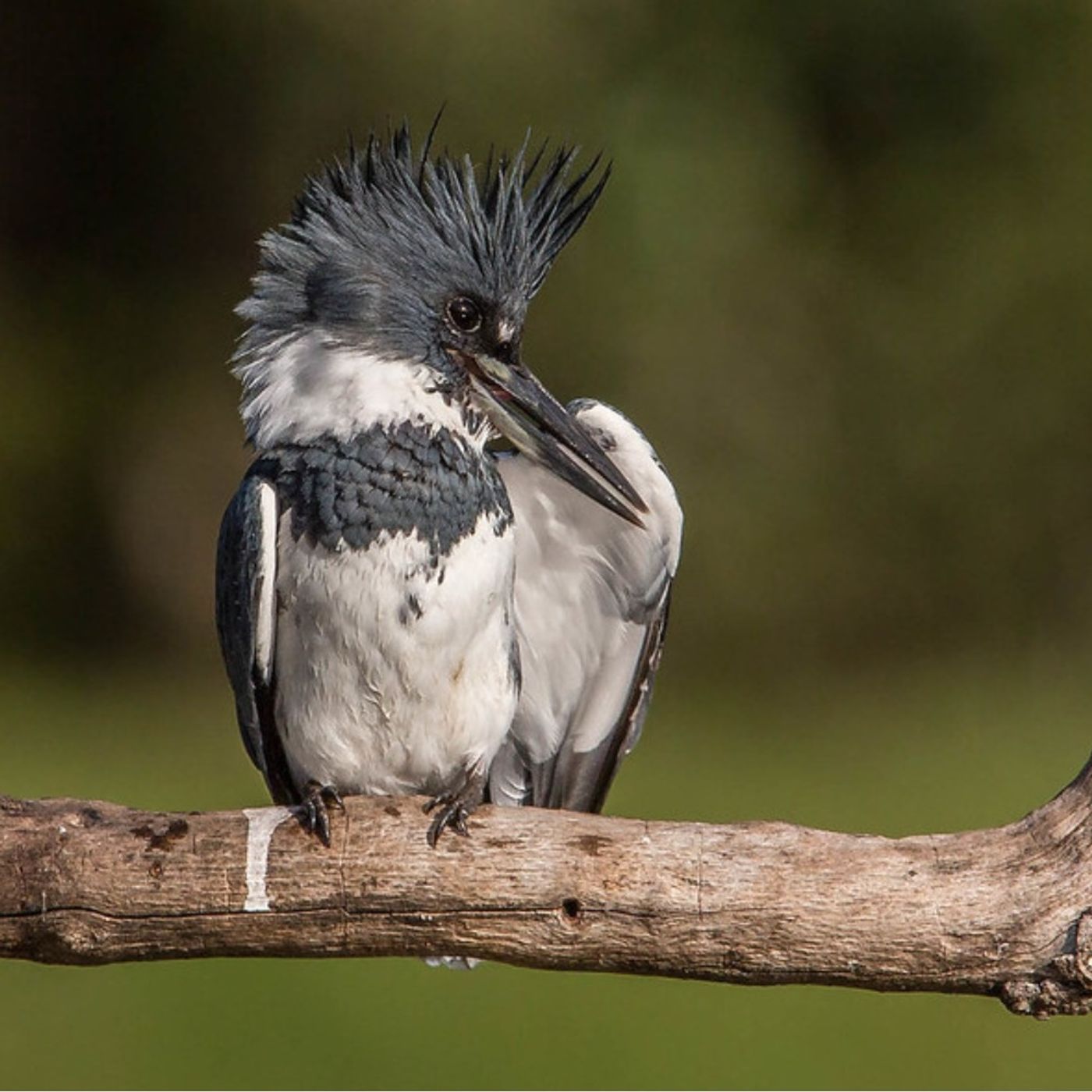
Preening 101
If a bird’s feathers get too dried out, they become brittle. To prevent that from happening, most birds have a gland located above the base of the tail that produces oil. They use their beaks to massage oil from the gland into their feathers to keep them supple. A bird first grips a feather in its beak near the feather’s base. Then it slides its beak along the length of the feather toward the tip. This action smoothes together the tiny structures — called barbules — that make up the feather, while also removing dirt and small parasites.¡Escuche este episodio en español aquí!More info and transcript at BirdNote.org.Want more BirdNote? Subscribe to our weekly newsletter. Sign up for BirdNote+ to get ad-free listening and other perks. BirdNote is a nonprofit. Your tax-deductible gift makes these shows possible. Hosted by Simplecast, an AdsWizz company. See pcm.adswizz.com for information about our collection and use of personal data for advertising.
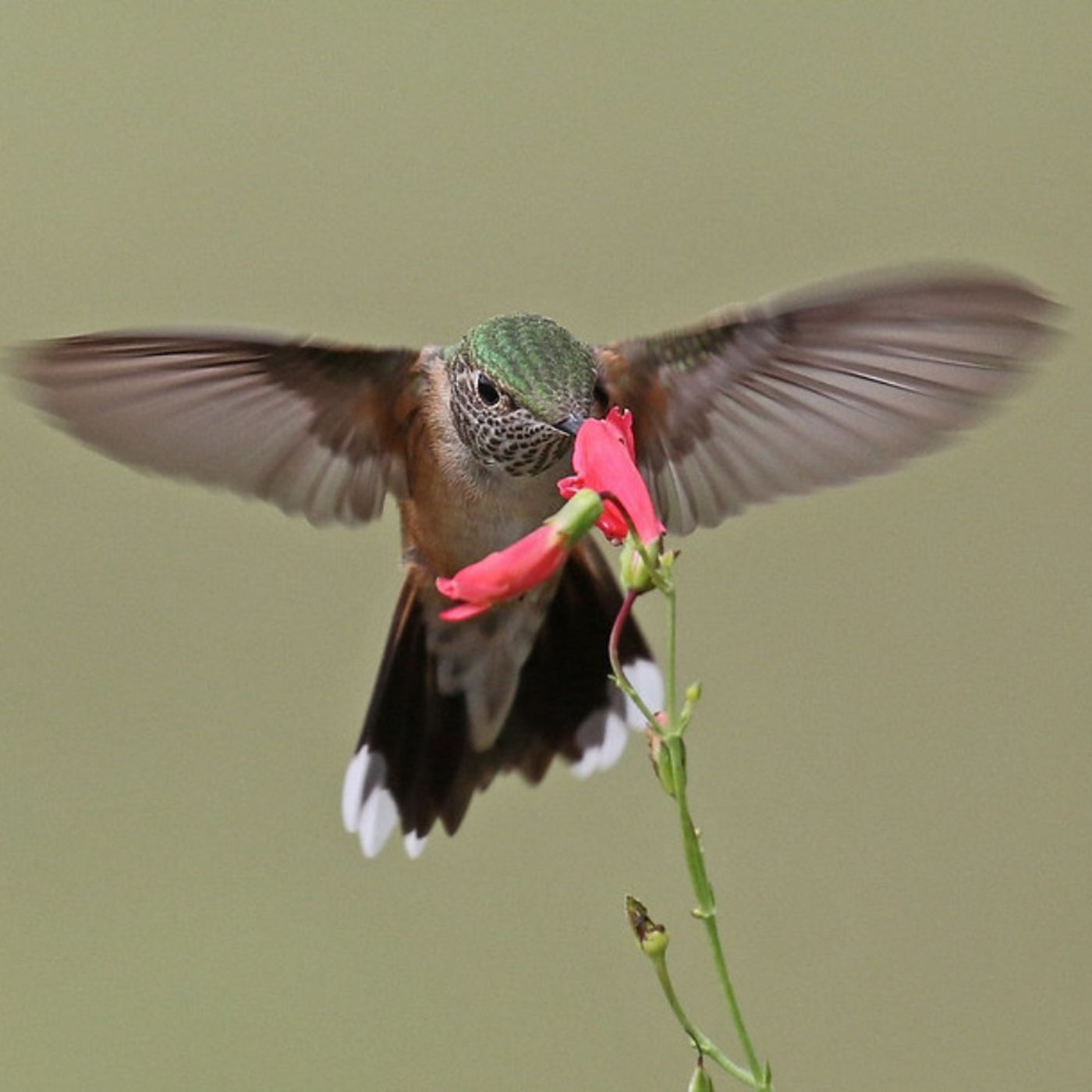
The Heart of a Bird
Birds’ four-chambered hearts run larger than those of mammals, relative to body size, and they are coupled with extremely efficient cardiovascular systems. The energy demands of flight require these adaptations. An exercising human has a heart rate around 150 beats per minute. In contrast, an active hummingbird’s heart pumps at 1,200 beats per minute; a flying pigeon’s heart beats at 600.More info and transcript at BirdNote.org.Want more BirdNote? Subscribe to our weekly newsletter. Sign up for BirdNote+ to get ad-free listening and other perks. BirdNote is a nonprofit. Your tax-deductible gift makes these shows possible. Hosted by Simplecast, an AdsWizz company. See pcm.adswizz.com for information about our collection and use of personal data for advertising.
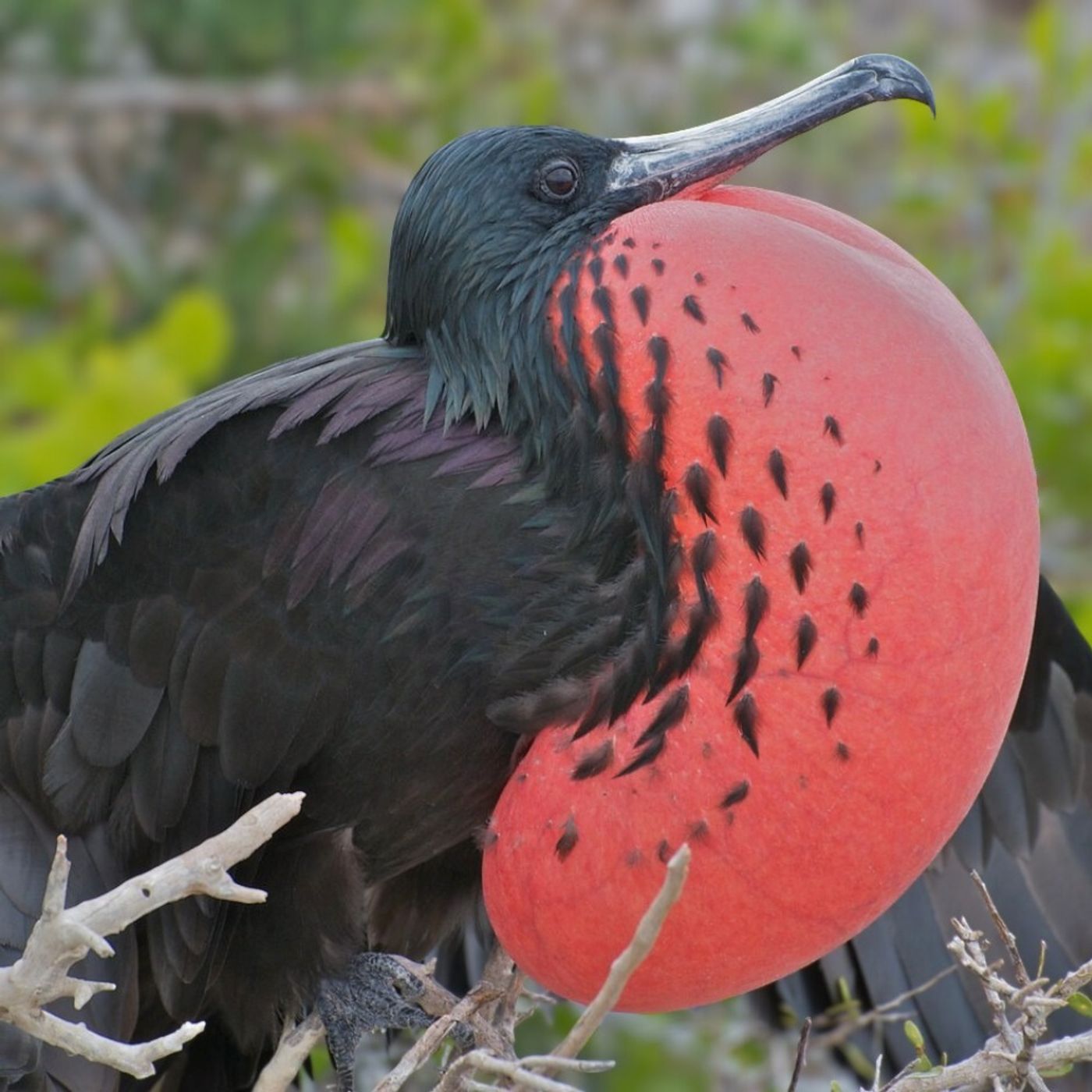
Magnificent Frigatebird Drum Roll
Magnificent Frigatebirds are huge, gangly seabirds found around the warm waters of the Western Hemisphere. When it comes time to mate, males inflate giant red throat sacs, then rattle and drum their bills against them to create jazzy percussive sounds.More info and transcript at BirdNote.org.Want more BirdNote? Subscribe to our weekly newsletter. Sign up for BirdNote+ to get ad-free listening and other perks. BirdNote is a nonprofit. Your tax-deductible gift makes these shows possible. Hosted by Simplecast, an AdsWizz company. See pcm.adswizz.com for information about our collection and use of personal data for advertising.
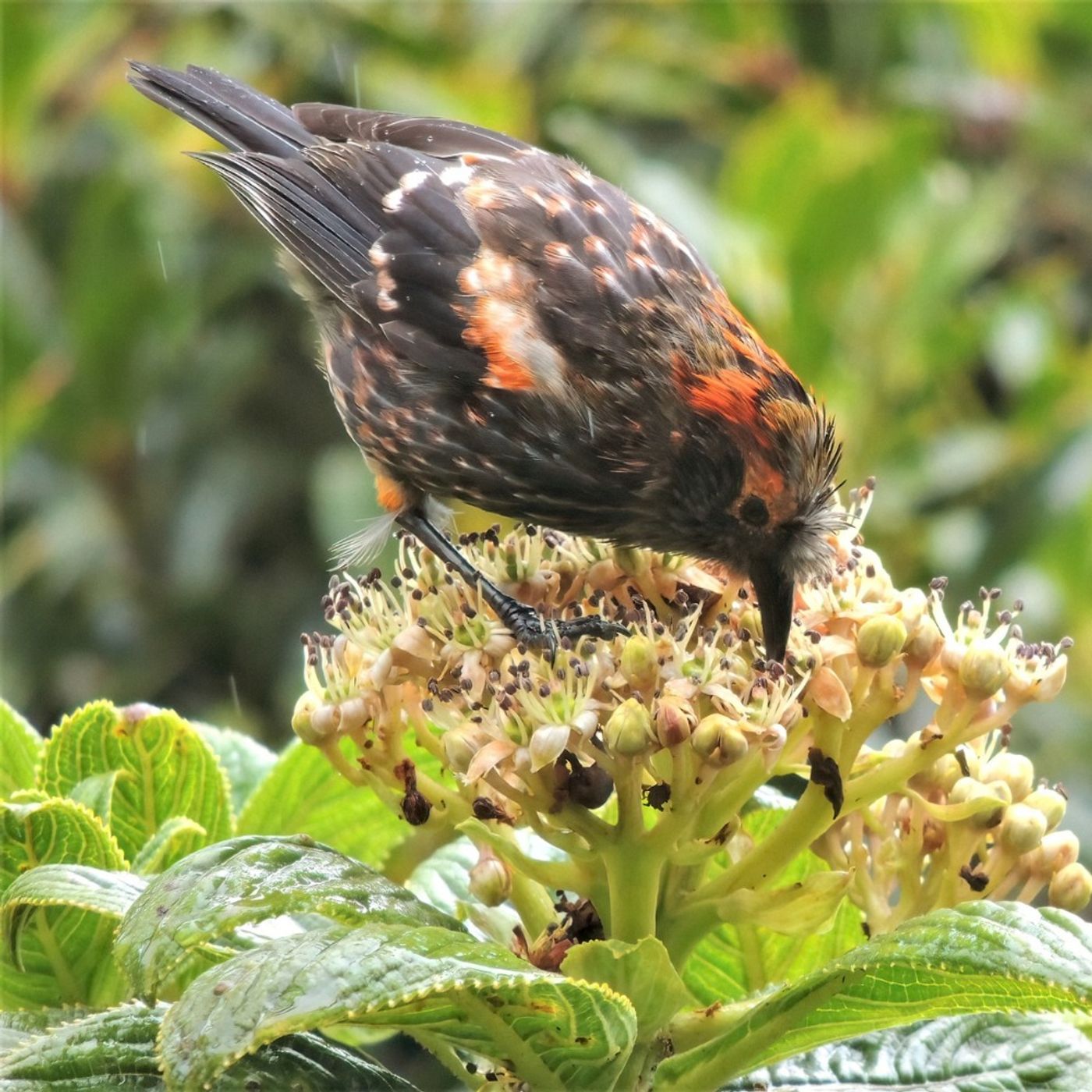
‘Ākohekohe
Sporting a fancy tuft of feathers on its forehead and a bright orange nape, Maui island’s ‘ākohekohe is one Hawaiʻi’s strikingly beautiful native forest birds. ‘ākohekohe are also critically endangered. Habitat loss and disease from invasive mosquitoes are major threats to their survival.More info and transcript at BirdNote.org.Want more BirdNote? Subscribe to our weekly newsletter. Sign up for BirdNote+ to get ad-free listening and other perks. BirdNote is a nonprofit. Your tax-deductible gift makes these shows possible. Hosted by Simplecast, an AdsWizz company. See pcm.adswizz.com for information about our collection and use of personal data for advertising.
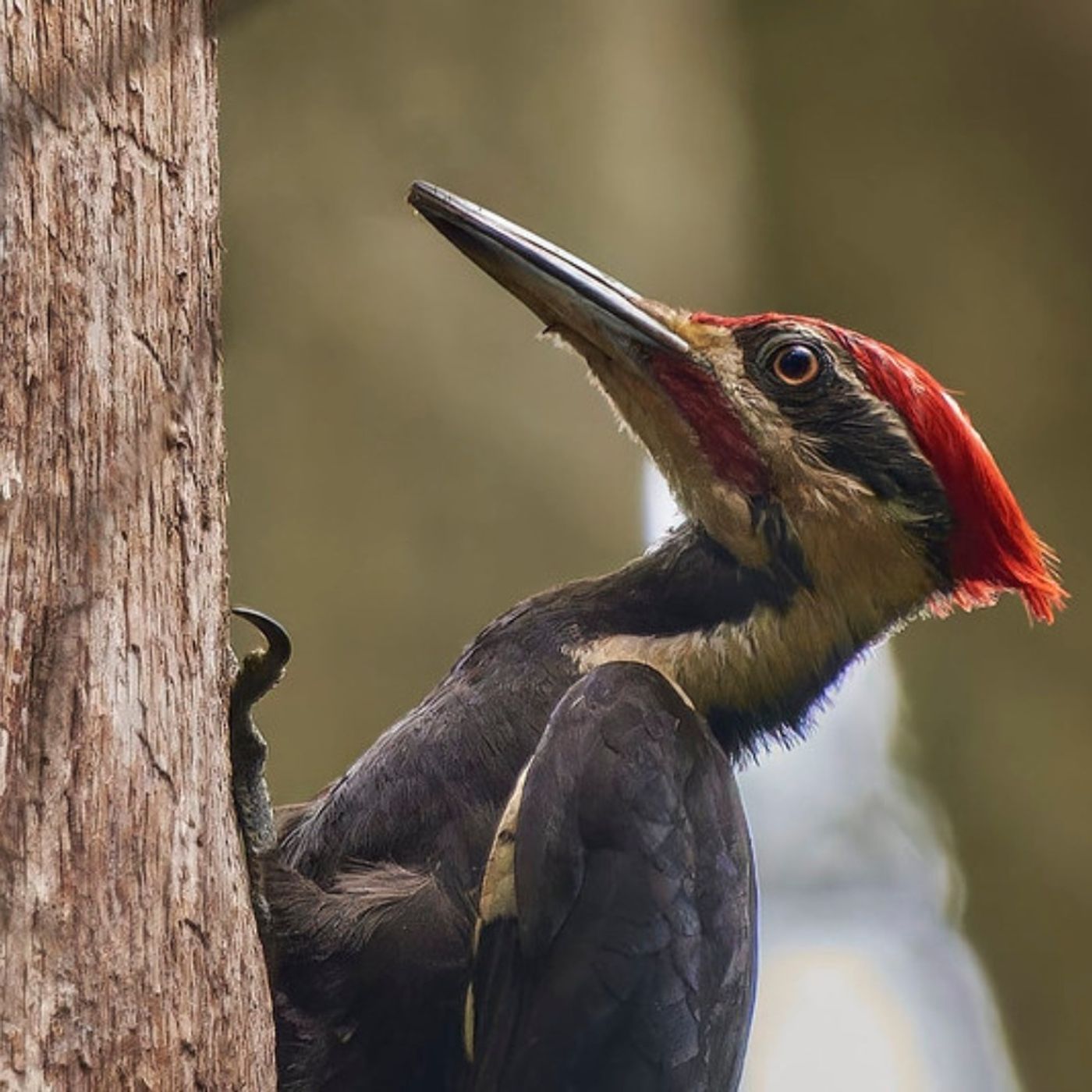
Letter to a Pileated Woodpecker
In this episode, ornithologist J. Drew Lanham reads a letter he has written to a Pileated Woodpecker, a large species of woodpecker that is sometimes mistaken for the Ivory-billed Woodpecker.More info and transcript at BirdNote.org.Want more BirdNote? Subscribe to our weekly newsletter. Sign up for BirdNote+ to get ad-free listening and other perks. BirdNote is a nonprofit. Your tax-deductible gift makes these shows possible. Hosted by Simplecast, an AdsWizz company. See pcm.adswizz.com for information about our collection and use of personal data for advertising.
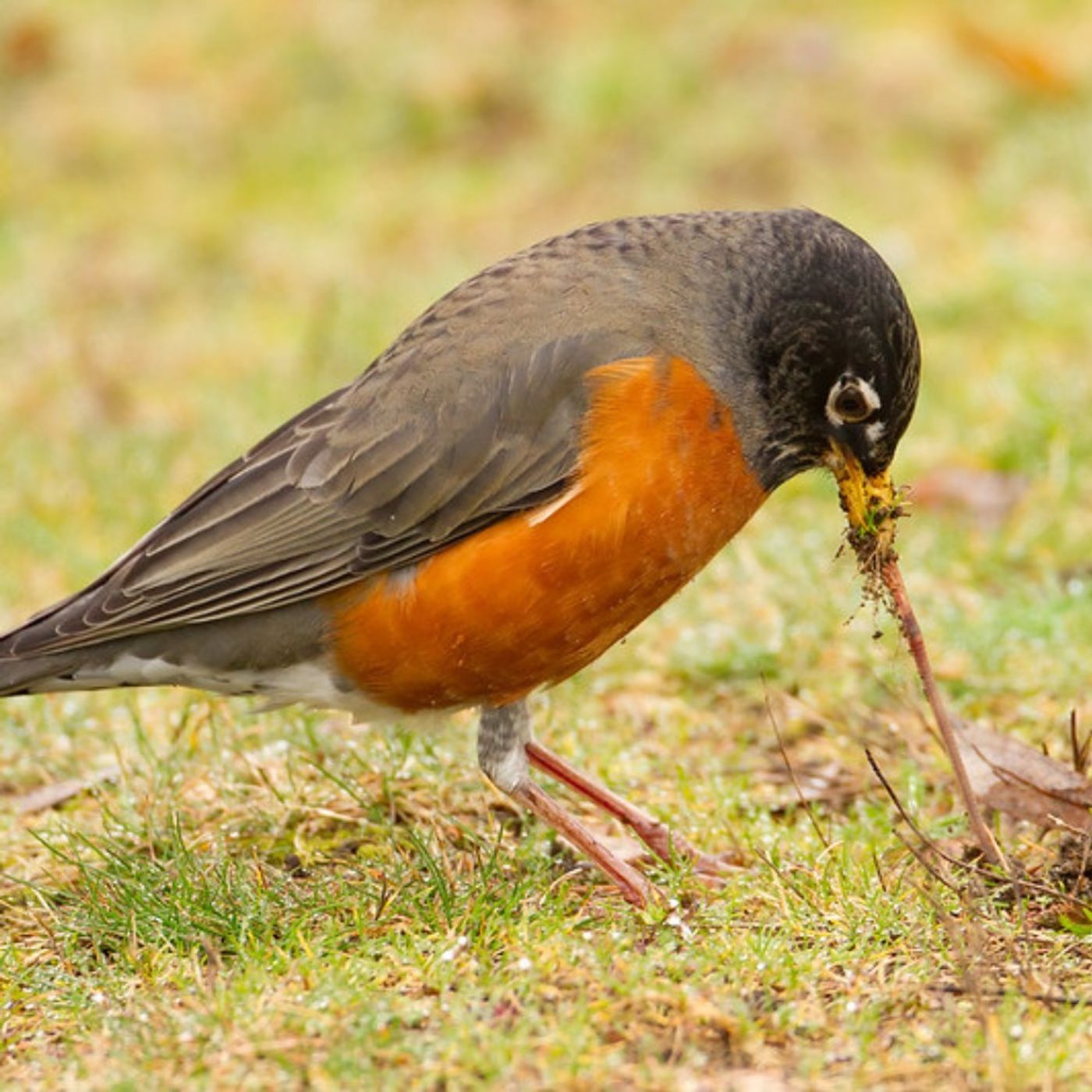
The Early Bird
We've all heard that the early bird gets the worm. But research shows that birds dining early and heavily may lower their life expectancy. Socially dominant birds stay lean (and agile at avoiding predators) during the day, and then stoke up later, before a cold night. Subordinate birds have to look for food whenever and wherever they can find it, and carry fat on their bodies to hedge against unpredictable rations.More info and transcript at BirdNote.org.Want more BirdNote? Subscribe to our weekly newsletter. Sign up for BirdNote+ to get ad-free listening and other perks. BirdNote is a nonprofit. Your tax-deductible gift makes these shows possible. Hosted by Simplecast, an AdsWizz company. See pcm.adswizz.com for information about our collection and use of personal data for advertising.
Spark Bird: Murry Burgess and the Painted Bunting
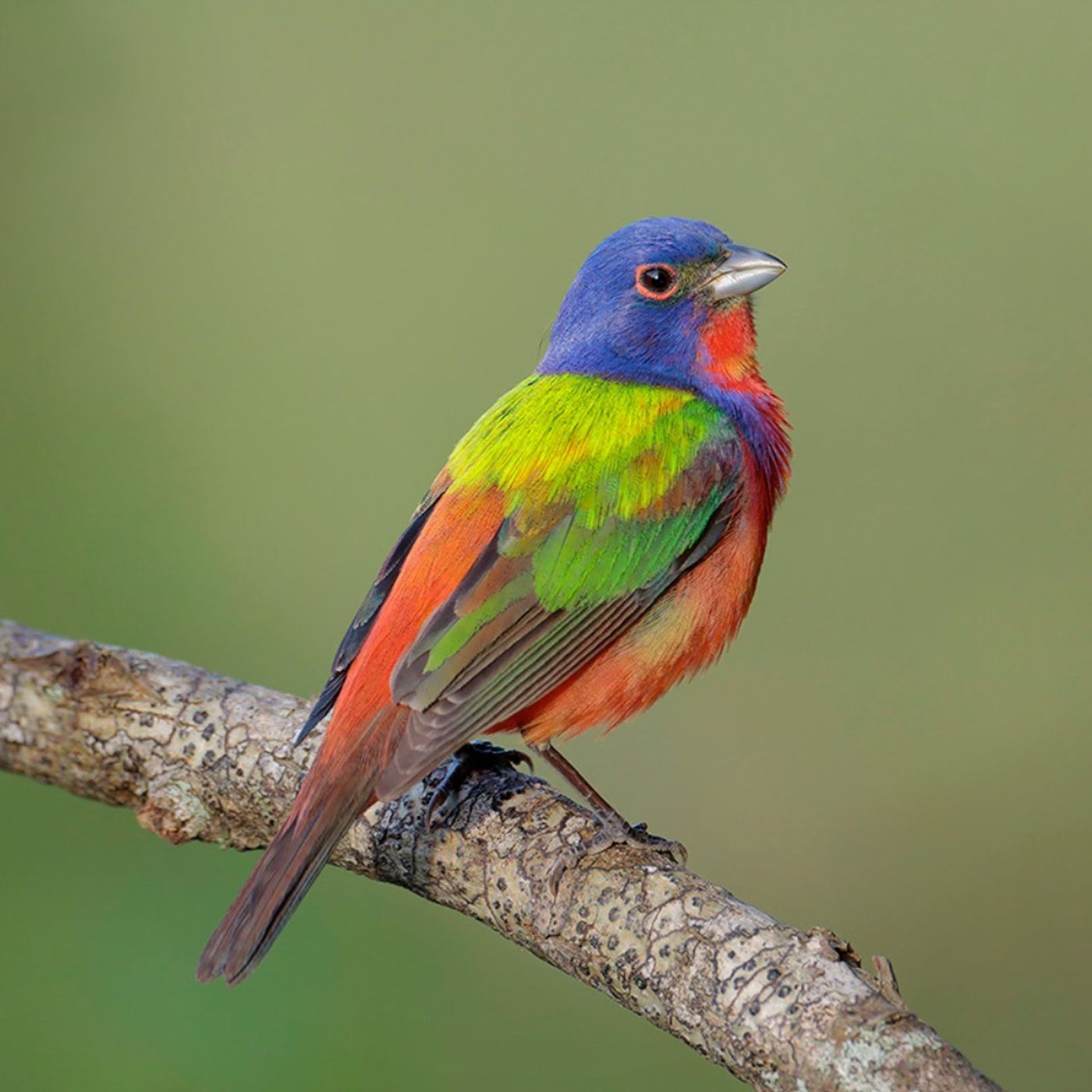
Urban ornithologist and children’s author Murry Burgess has always been interested in wildlife. But she first felt a spark for birds on a college field trip to Dauphin Island, a beach town on the Gulf Coast of Alabama that’s a famous stop-over site for migratory birds. There, she saw a dazzling male Painted Bunting that amazed her both with his colorful plumage and incredible migration journey. Now Murry is a professor researching how urban environments impact birds, a children’s book author, and co-founder of the nonprofit Field Inclusive, which advocates for safety and diversity in the outdoors.This is Field Inclusive Week, an annual week of connection, learning, and empowerment for all field biologists and outdoor enthusiasts! This year’s virtual events build on a legacy of diversity, inclusion, and field safety. Learn how you can participate at fieldinclusive.org.More info and transcript at BirdNote.org.Want more BirdNote? Subscribe to our weekly newsletter. Sign up for BirdNote+ to get ad-free listening and other perks. BirdNote is a nonprofit. Your tax-deductible gift makes these shows possible. Hosted by Simplecast, an AdsWizz company. See pcm.adswizz.com for information about our collection and use of personal data for advertising.
Western Tanagers Are Flashes of Bright Color
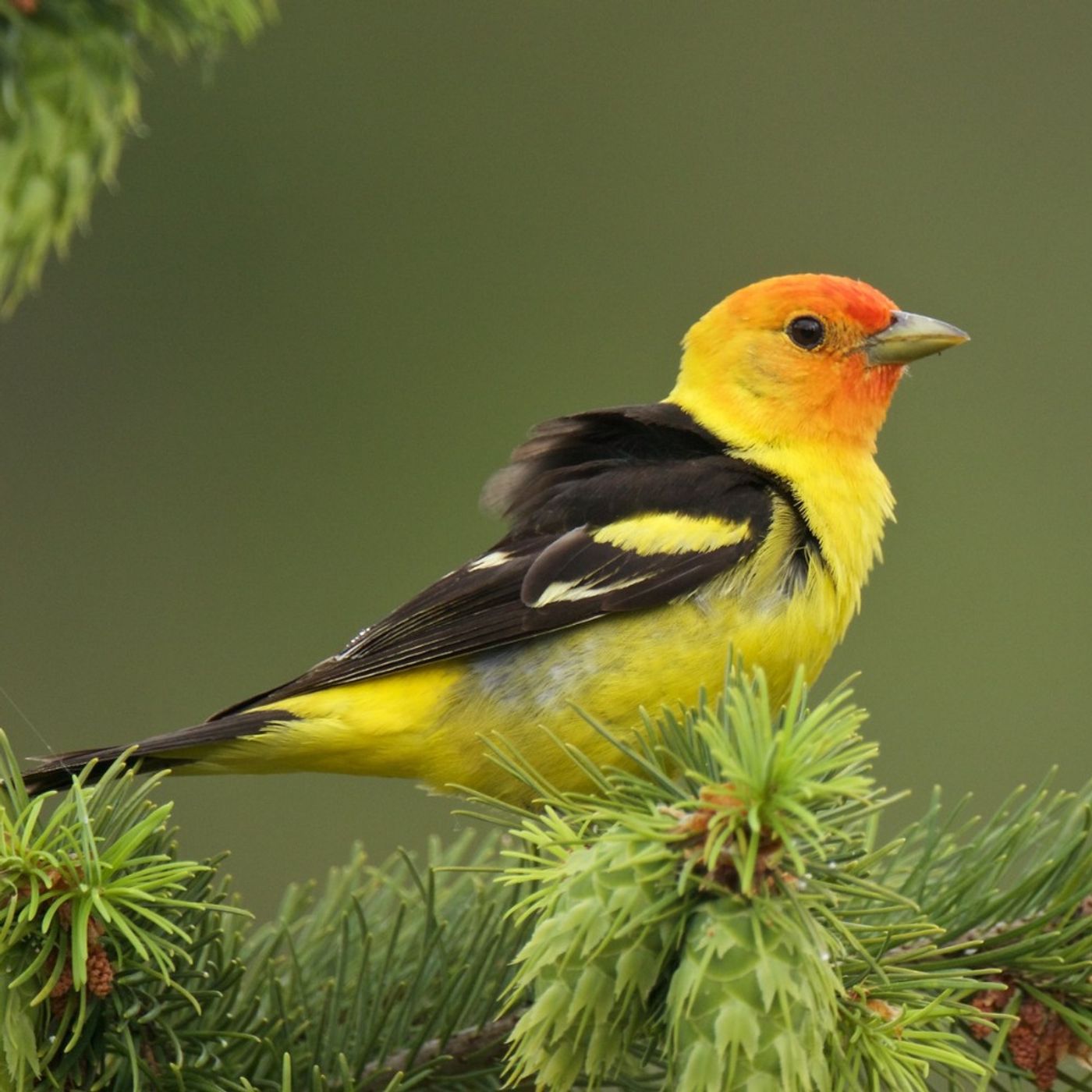
Western Tanagers dart from tree to tree, on the lookout for delicious bugs. They’ll find them by scanning the tree bark — or maybe snatching them from mid-air during flight — a tactic called hawking. Come winter, these lovely songbirds head south, where they fit right in with the other brightly colored tropical birds they’ll spend the winter with in Mexico and Central America.More info and transcript at BirdNote.org.Want more BirdNote? Subscribe to our weekly newsletter. Sign up for BirdNote+ to get ad-free listening and other perks. BirdNote is a nonprofit. Your tax-deductible gift makes these shows possible. Hosted by Simplecast, an AdsWizz company. See pcm.adswizz.com for information about our collection and use of personal data for advertising.

Ornate Hawk-Eagle: The Elegant Eagle
Ornate Hawk-Eagles stand out from other raptors with their impressive crest that looks like an elegant crown in adults, and a punk hairdo over the white-headed and black-bodied juveniles. These birds are excellent hunters, but they’re also devoted parents.¡Escuche este episodio en BirdNote en Español!More info and transcript at BirdNote.org.Want more BirdNote? Subscribe to our weekly newsletter. Sign up for BirdNote+ to get ad-free listening and other perks. BirdNote is a nonprofit. Your tax-deductible gift makes these shows possible. Hosted by Simplecast, an AdsWizz company. See pcm.adswizz.com for information about our collection and use of personal data for advertising.
Diving Birds Are Dense
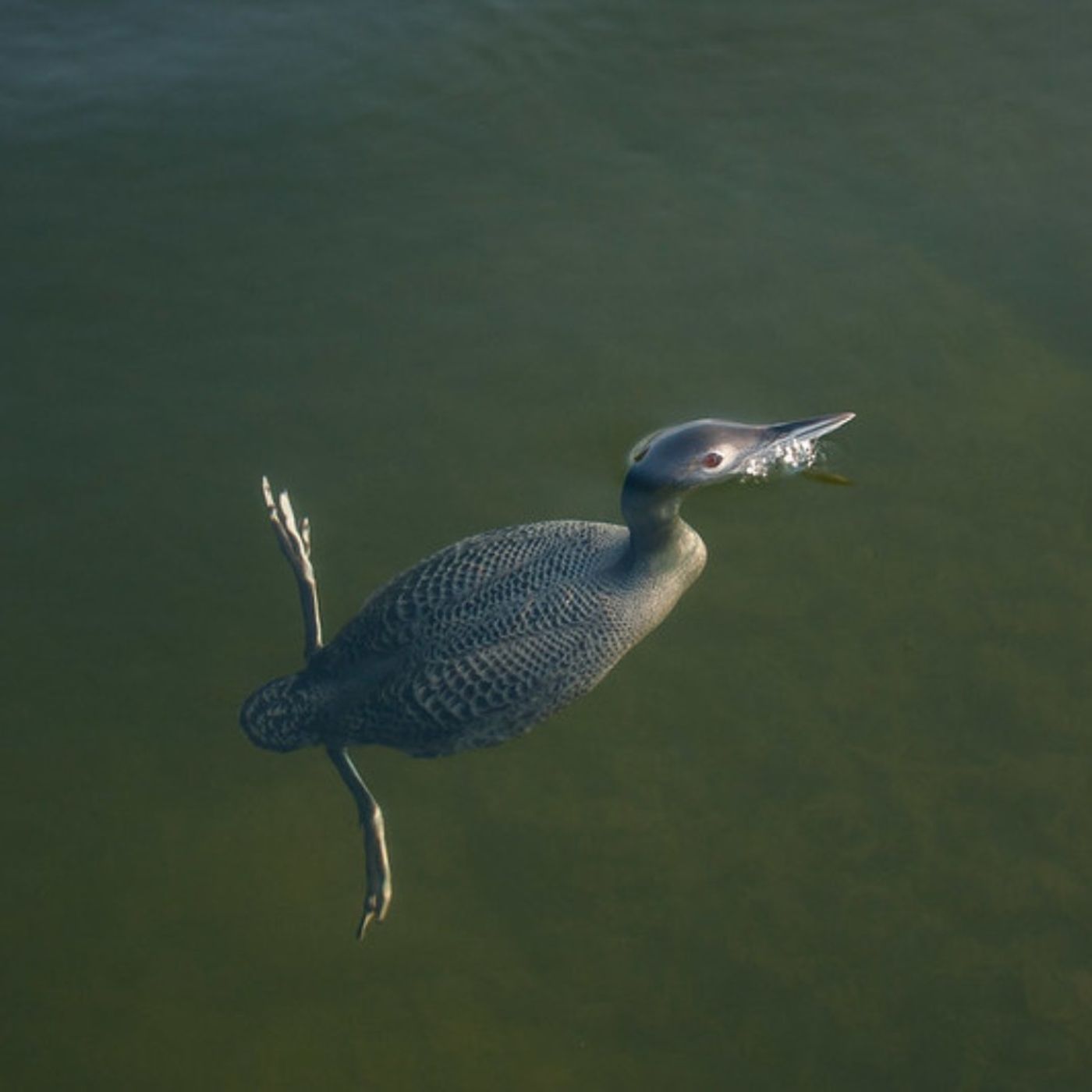
While many birds have hollow bones that make flying a breeze, diving birds are built differently. The bones of divers such as Common Loons are denser than those of songbirds and other expert fliers. With a lightweight skeleton, they’d be too buoyant to dive and chase fish. Instead, loons can kick their powerful legs and webbed feet to swim 200 feet or more underwater!More info and transcript at BirdNote.org.Want more BirdNote? Subscribe to our weekly newsletter. Sign up for BirdNote+ to get ad-free listening and other perks. BirdNote is a nonprofit. Your tax-deductible gift makes these shows possible. Hosted by Simplecast, an AdsWizz company. See pcm.adswizz.com for information about our collection and use of personal data for advertising.
Razorbills Swim in Synchrony
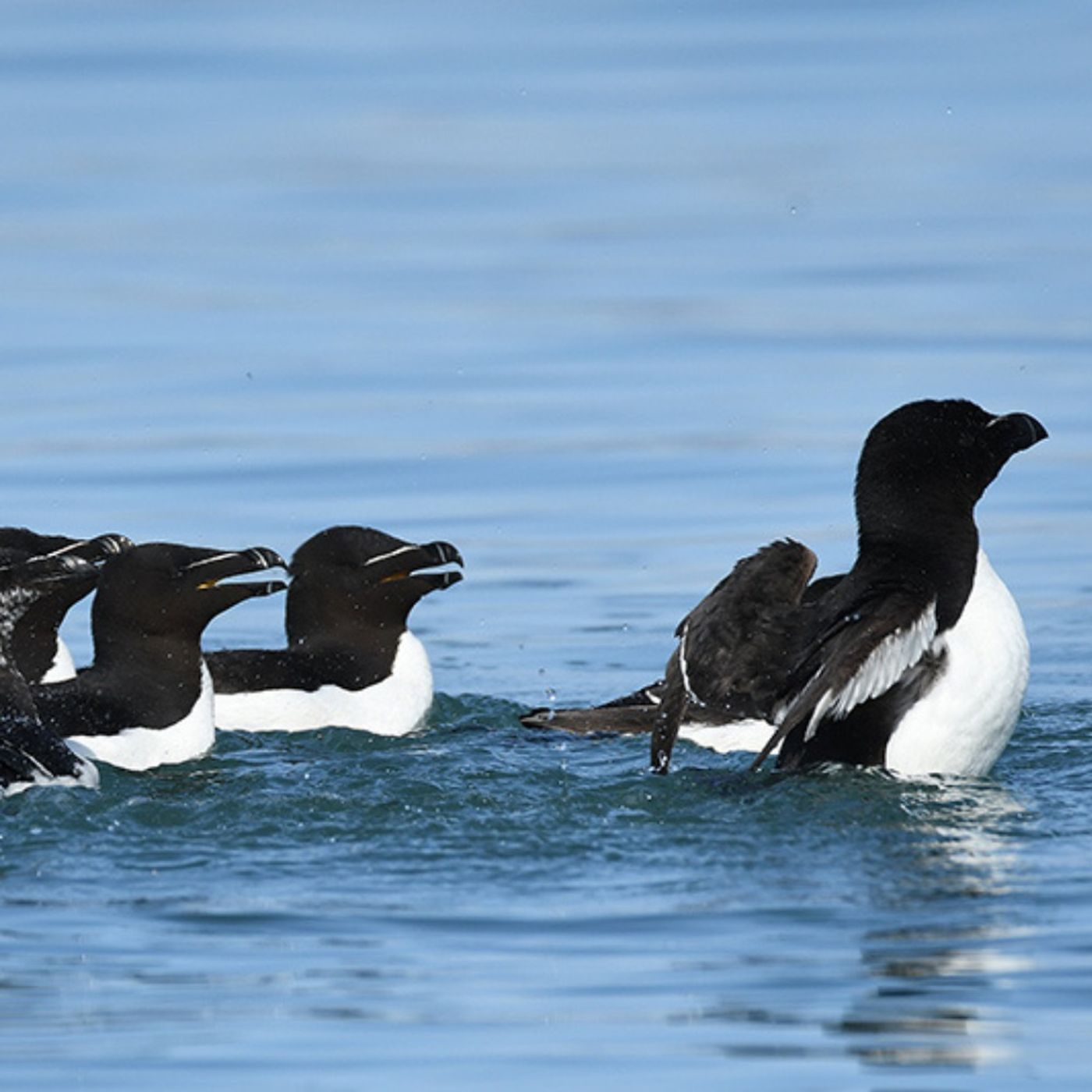
Razorbills, a cousin to the puffin, nest in colonies on cliffs. Before they lay eggs, Razorbills take part in two unique social behaviors. In one, the Razorbills swim round and round in a tight mass, then dive as one. Next, they surface with heads aligned and bills held open. In another behavior, dozens of birds swim in a line, then zig-zag in a synchronized pattern across the ocean’s surface.More info and transcript at BirdNote.org.Want more BirdNote? Subscribe to our weekly newsletter. Sign up for BirdNote+ to get ad-free listening and other perks. BirdNote is a nonprofit. Your tax-deductible gift makes these shows possible. Hosted by Simplecast, an AdsWizz company. See pcm.adswizz.com for information about our collection and use of personal data for advertising.
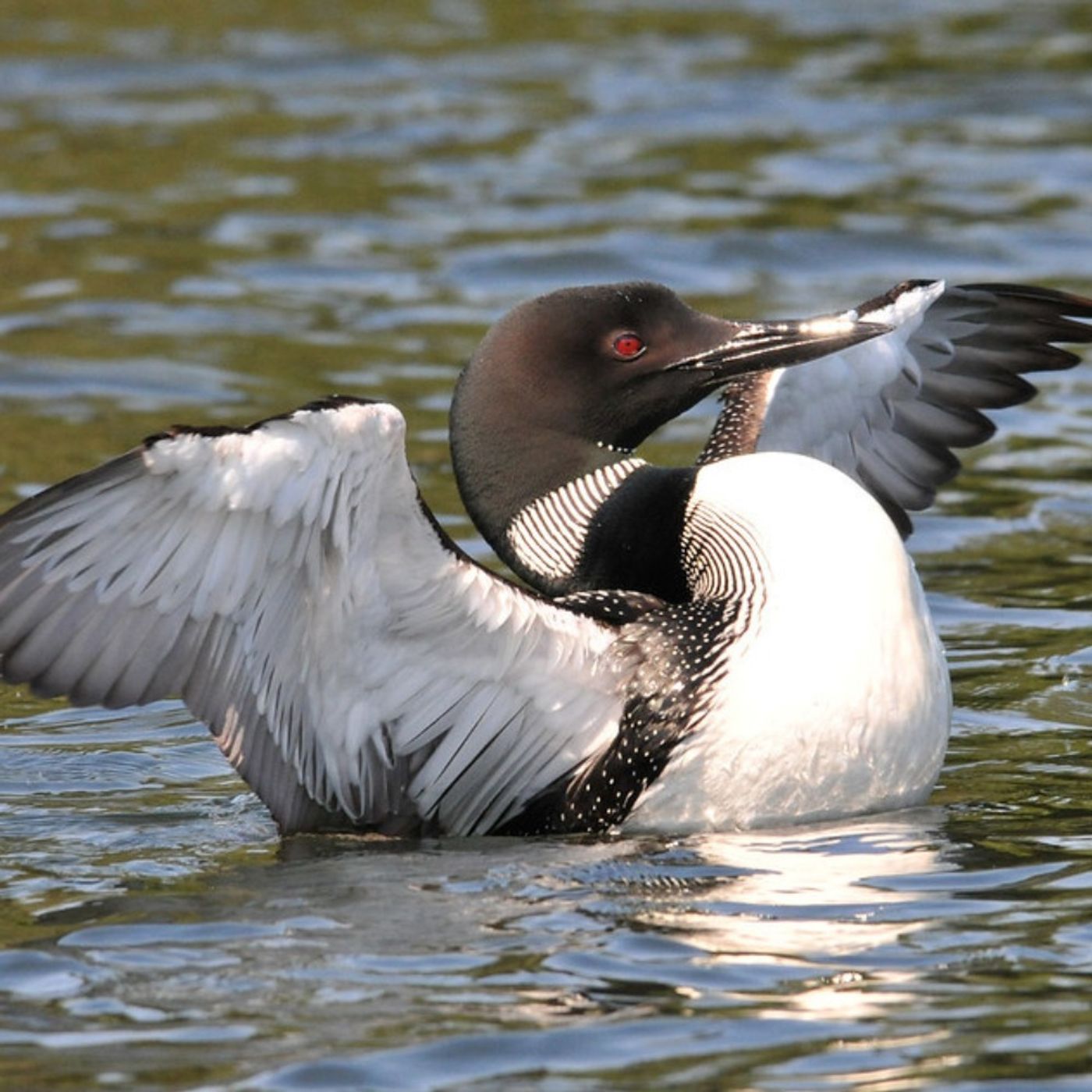
Welcoming Back Common Loons
The call of the Common Loon is a symbol of the far north. But the species once nested as far south as southern New England, Ohio, Iowa, and California. Human activity and changes to the landscape in these more populated areas has made it harder for loons to persist. There have been encouraging signs in recent years that Common Loons could make a comeback in the southern parts of their range — with our help.This episode is in memory of Miriam Williams of Seattle, whose sense of humor, love of birds, and support of BirdNote made the world brighter.More info and transcript at BirdNote.org.Want more BirdNote? Subscribe to our weekly newsletter. Sign up for BirdNote+ to get ad-free listening and other perks. BirdNote is a nonprofit. Your tax-deductible gift makes these shows possible. Hosted by Simplecast, an AdsWizz company. See pcm.adswizz.com for information about our collection and use of personal data for advertising.

How Terns Read the Water
Like an expert angler, a tern can read the surface of the water to find where to catch its next fish. Scientists piloted a drone to track the flight paths of terns on the hunt. The terns sought out turbulent water. A vortex formed by colliding currents traps fish near the surface, where terns can snap them up. Terns fly toward bubbly upwellings to see if the rising water brings prey animals along with it.More info and transcript at BirdNote.org.Want more BirdNote? Subscribe to our weekly newsletter. Sign up for BirdNote+ to get ad-free listening and other perks. BirdNote is a nonprofit. Your tax-deductible gift makes these shows possible. Hosted by Simplecast, an AdsWizz company. See pcm.adswizz.com for information about our collection and use of personal data for advertising.
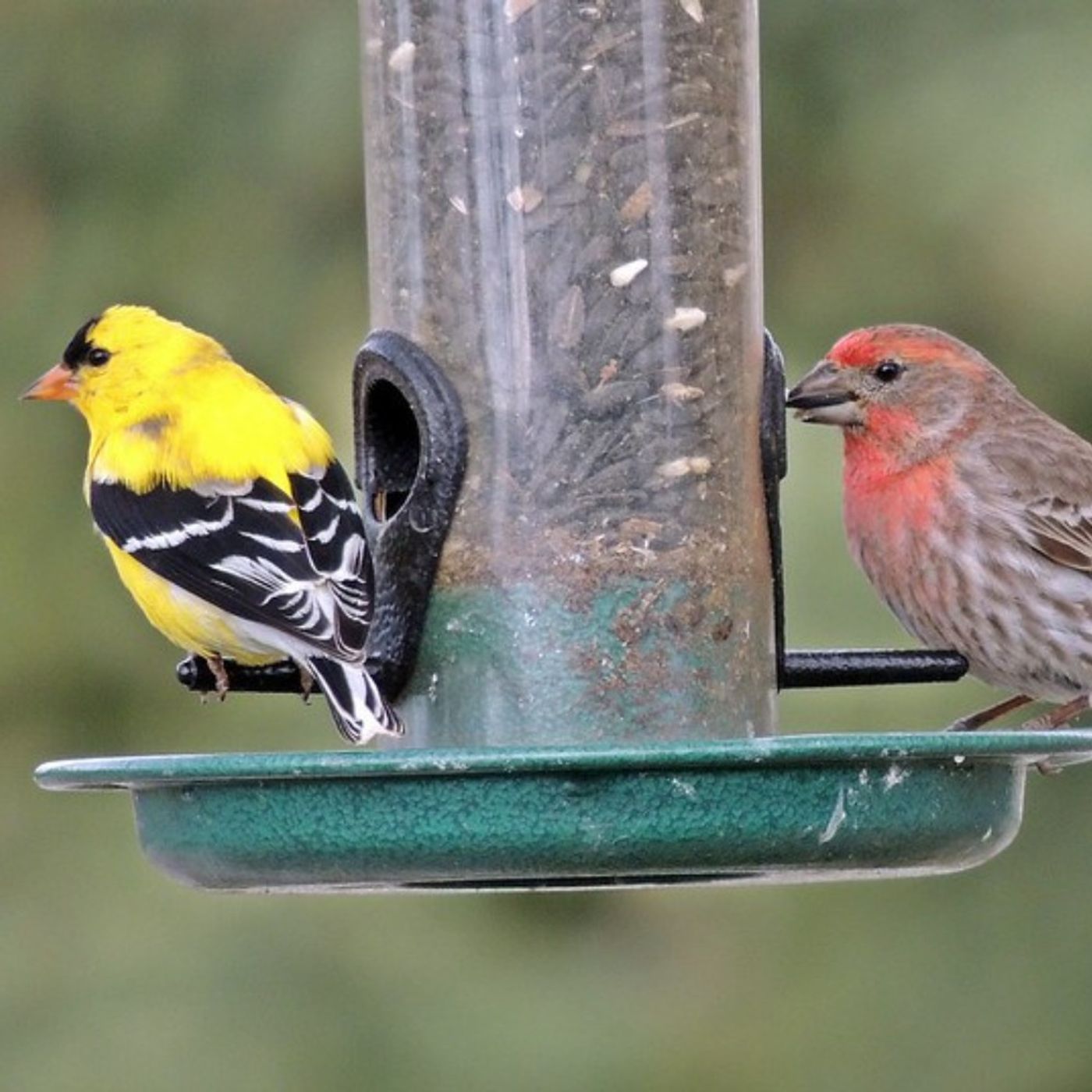
Finches Singing Over the Sidewalk
The songs of two common finches provide a steady soundtrack in cities across North America: the House Finch and the American Goldfinch. While they can sound similar, a couple of key features help set them apart. House Finches sing sweetly but often have a sharp, buzzy note near the end. Goldfinches sing rapidly, often repeating a note several times. They also often make their distinctive call, which sounds like someone quickly saying “potato chip!”Support for BirdNote is provided by Mary Pigott of Seattle, Washington — and generous listeners around the world. More info and transcript at BirdNote.org.Want more BirdNote? Subscribe to our weekly newsletter. Sign up for BirdNote+ to get ad-free listening and other perks. BirdNote is a nonprofit. Your tax-deductible gift makes these shows possible. Hosted by Simplecast, an AdsWizz company. See pcm.adswizz.com for information about our collection and use of personal data for advertising.
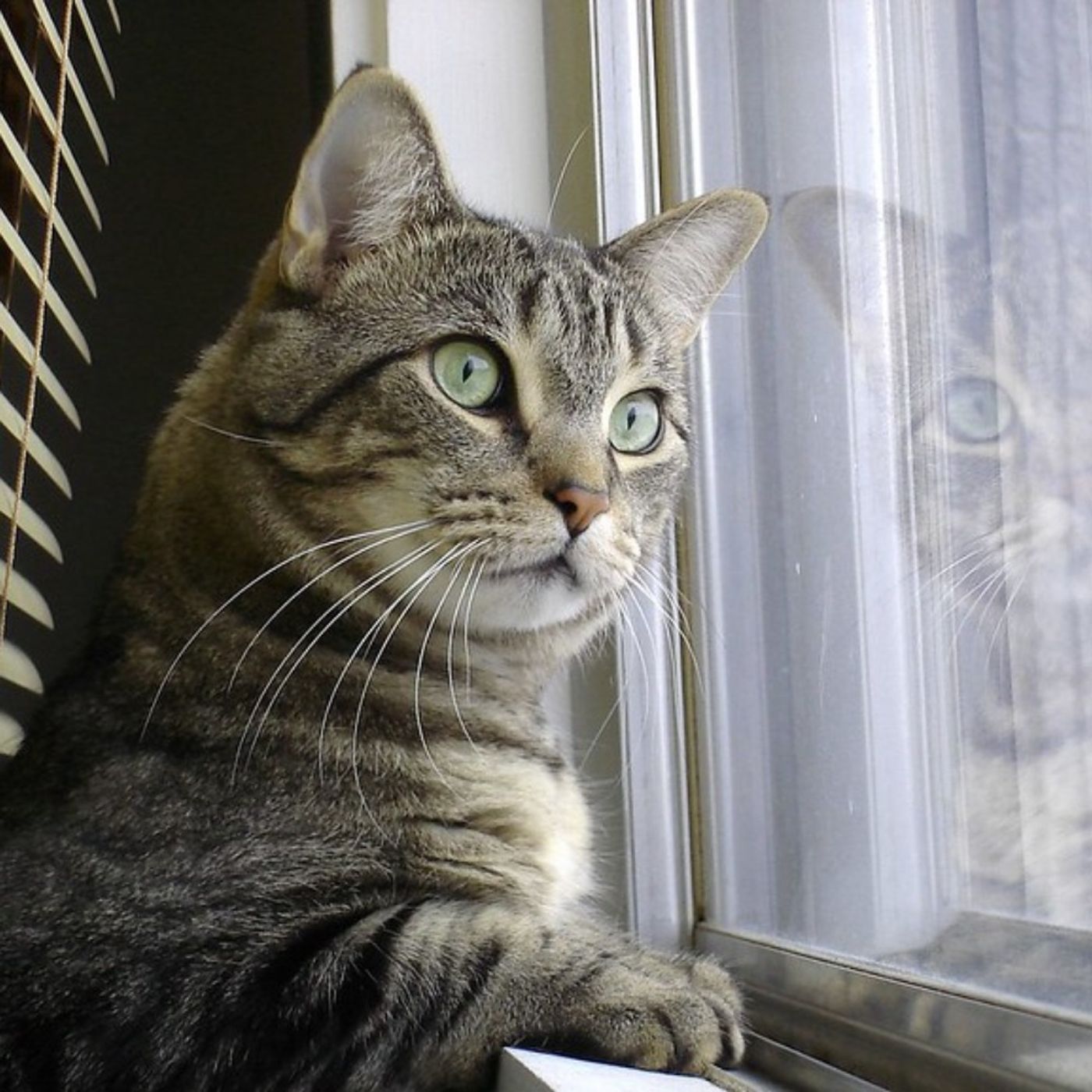
Giving Your Cat a Great Life Indoors
Outdoor cats kill billions of birds each year in North America — and they live much shorter lives than indoor cats. But life as an indoor cat doesn’t have to be boring. On Bring Birds Back, cat behaviorist Jackson Galaxy discusses how just 15 minutes of creative play with your cat can make a huge difference. Plus, letting cats watch birds through the window can act as “Cat TV.”Listen to the full episode in Bring Birds Back season 1!More info and transcript at BirdNote.org.Want more BirdNote? Subscribe to our weekly newsletter. Sign up for BirdNote+ to get ad-free listening and other perks. BirdNote is a nonprofit. Your tax-deductible gift makes these shows possible. Hosted by Simplecast, an AdsWizz company. See pcm.adswizz.com for information about our collection and use of personal data for advertising.
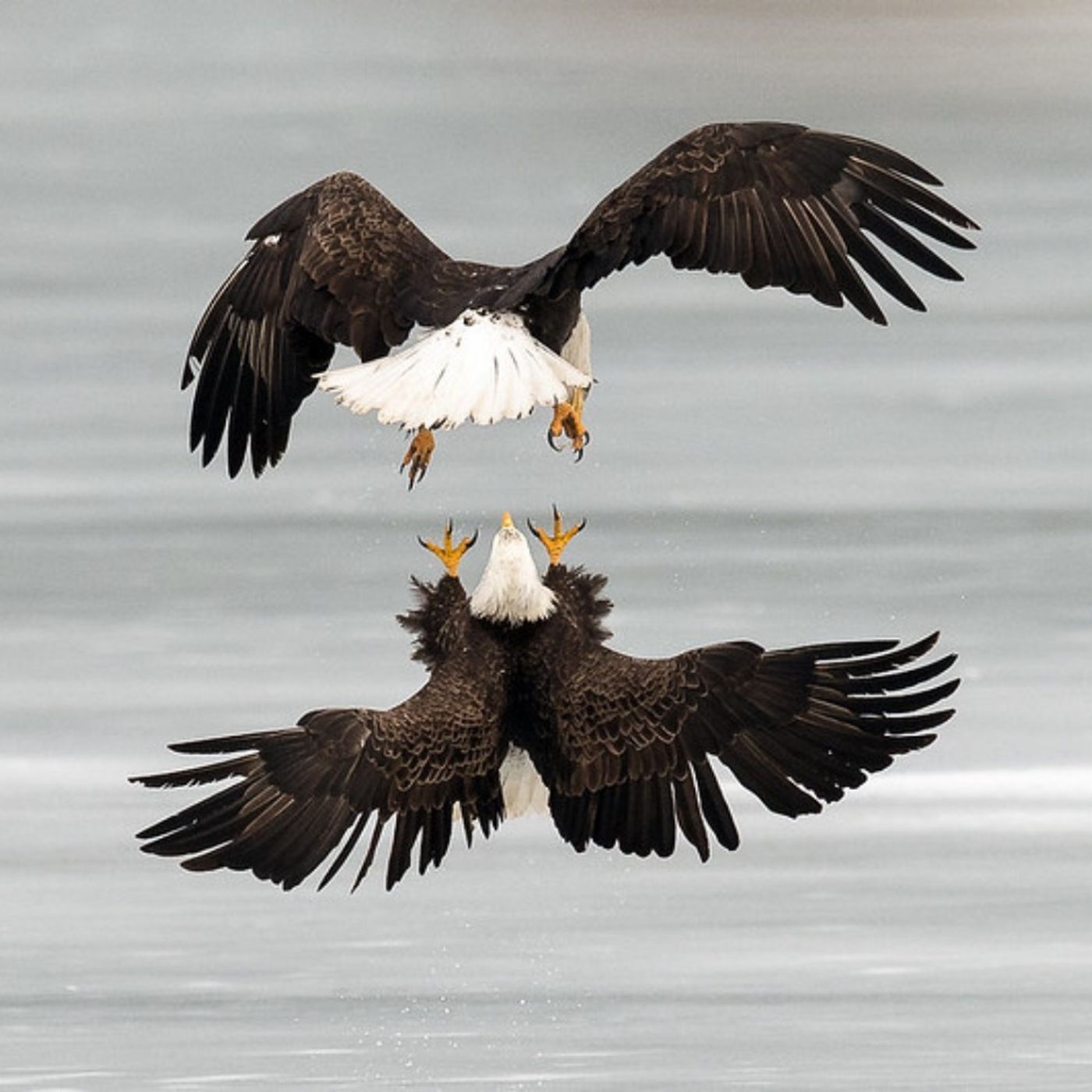
Bald Eagles' Daredevil Cartwheel Flight
Two eagles locking talons high above the ground might look like they’re risking injury, but it’s a normal courtship behavior called the “cartwheel display.” Fully entangled, the two birds begin spinning to the earth, disengaging just before they smack the ground. Their clasp could last for hours. At last, the eagles unlock talons and fly off. Rival adults sometimes perform the same flight.More info and transcript at BirdNote.org.Want more BirdNote? Subscribe to our weekly newsletter. Sign up for BirdNote+ to get ad-free listening and other perks. BirdNote is a nonprofit. Your tax-deductible gift makes these shows possible. Hosted by Simplecast, an AdsWizz company. See pcm.adswizz.com for information about our collection and use of personal data for advertising.
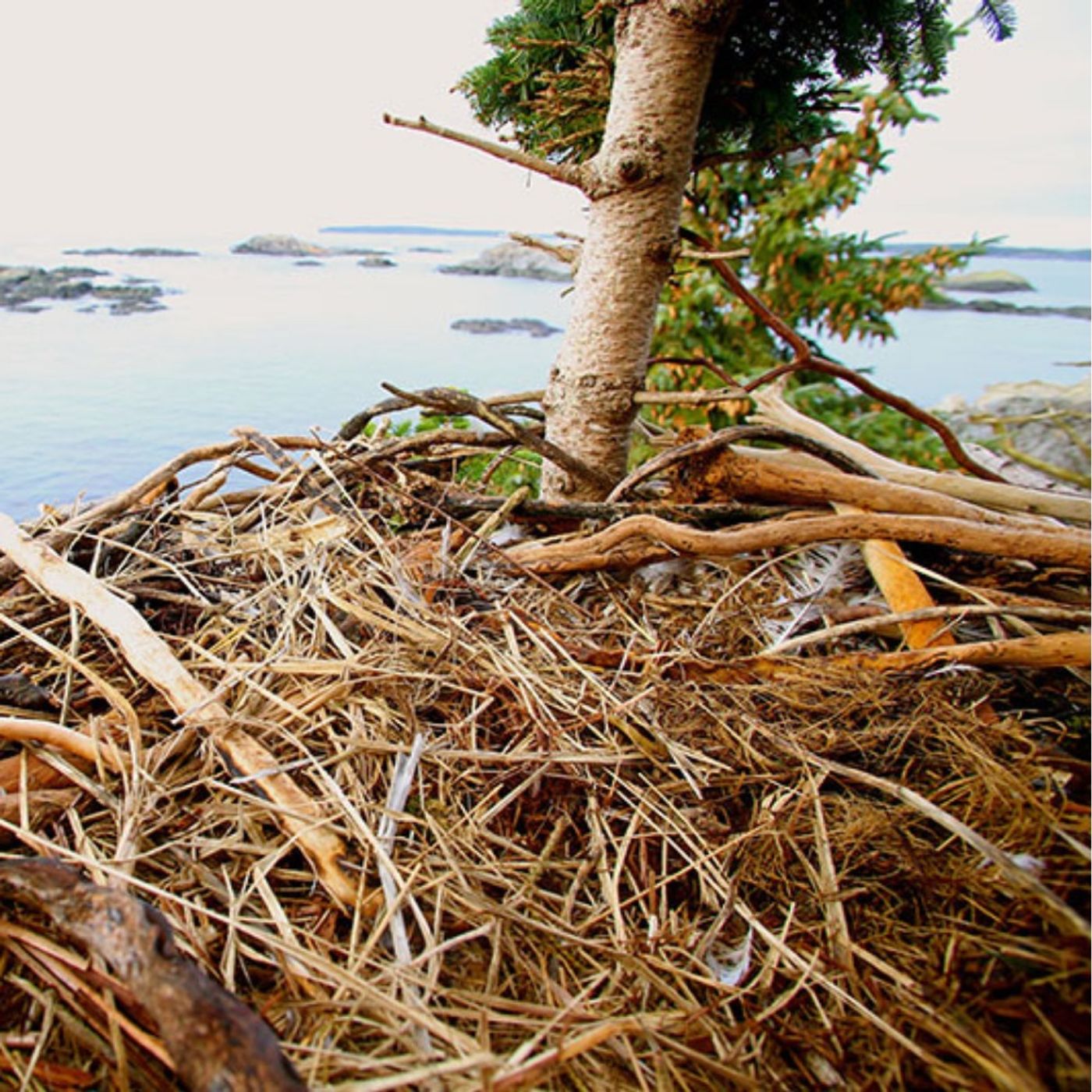
Kelp in the Eagles’ Nest
A pair of Bald Eagles will reuse their nest each year and repair it with new tree branches. But recently in British Columbia, scientists came across an eagle nest made largely out of dried kelp. Back in the ‘90s, that very nest had been made out of tree branches. What changed? Sea Otters were reintroduced to the landscape, which helped kelp forests flourish — and occasionally wind up in an eagle’s nest.More info and transcript at BirdNote.org.Want more BirdNote? Subscribe to our weekly newsletter. Sign up for BirdNote+ to get ad-free listening and other perks. BirdNote is a nonprofit. Your tax-deductible gift makes these shows possible. Hosted by Simplecast, an AdsWizz company. See pcm.adswizz.com for information about our collection and use of personal data for advertising.
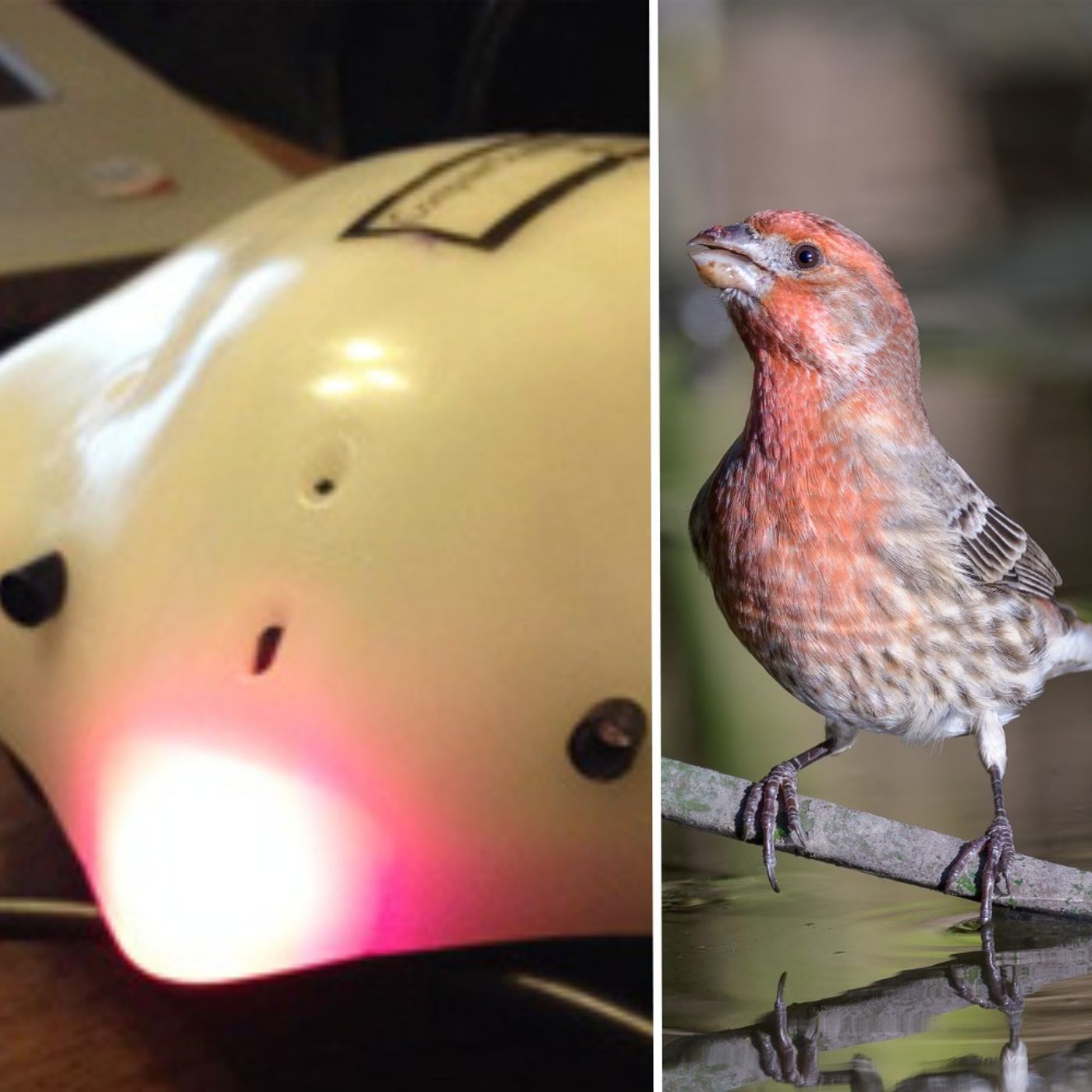
Spark Bird: J’orge Garcia and the Finch Robot
J’orge Garcia loves making things. For several years at the Chicago Public Library, he helped people to design and build their own creations with educational tools like the Finch Robot. With basic coding skills, J’orge and his students could program the little, bird-shaped bot to sing, light up, or drive along a path. The experience inspired him to look for finches in his own neighborhood. On Bring Birds Back, J’orge shares how his passion for technology and nature led him to found the Windy City Bird Lab, a community-science group that’s inventing new tools to study urban birds.Listen to the full episode in season 8 of Bring Birds Back!More info and transcript at BirdNote.org.Want more BirdNote? Subscribe to our weekly newsletter. Sign up for BirdNote+ to get ad-free listening and other perks. BirdNote is a nonprofit. Your tax-deductible gift makes these shows possible. Hosted by Simplecast, an AdsWizz company. See pcm.adswizz.com for information about our collection and use of personal data for advertising.
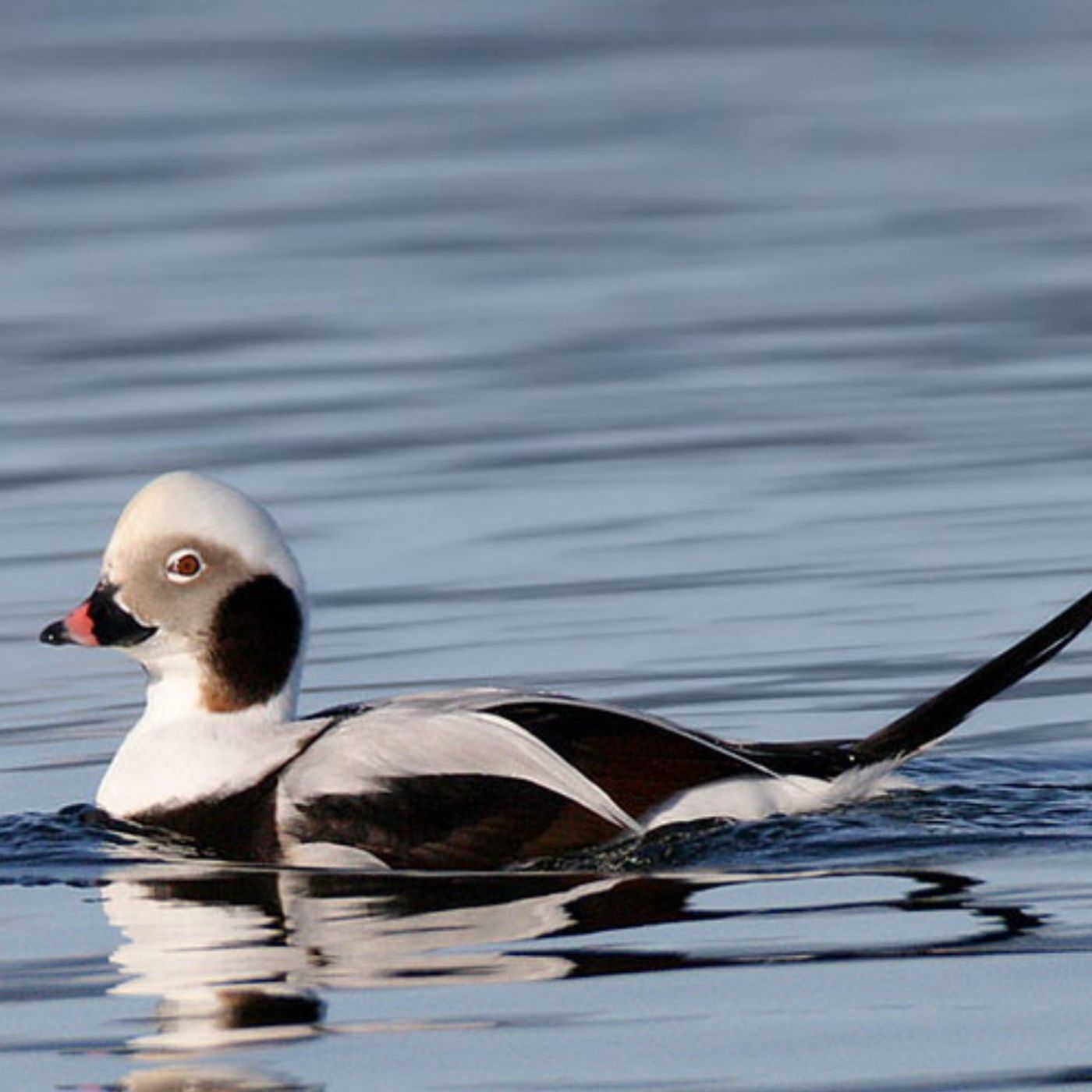
The Music of Long-tailed Ducks
Long-tailed Ducks are back for the winter from the north, where they nested on tundra ponds and marshes. These diving ducks spend the winter in deep salt water, often in sheltered bays. Long-tailed Ducks are far more vocal than most ducks, a feature that has earned them a host of charming nicknames, including "John Connally," "My Aunt Huldy," and, from the Cree language, "Ha-hah-way."This episode is dedicated to Dan Moore for his many years of board service and generous support of BirdNote. More info and transcript at BirdNote.org.Want more BirdNote? Subscribe to our weekly newsletter. Sign up for BirdNote+ to get ad-free listening and other perks. BirdNote is a nonprofit. Your tax-deductible gift makes these shows possible. Hosted by Simplecast, an AdsWizz company. See pcm.adswizz.com for information about our collection and use of personal data for advertising.
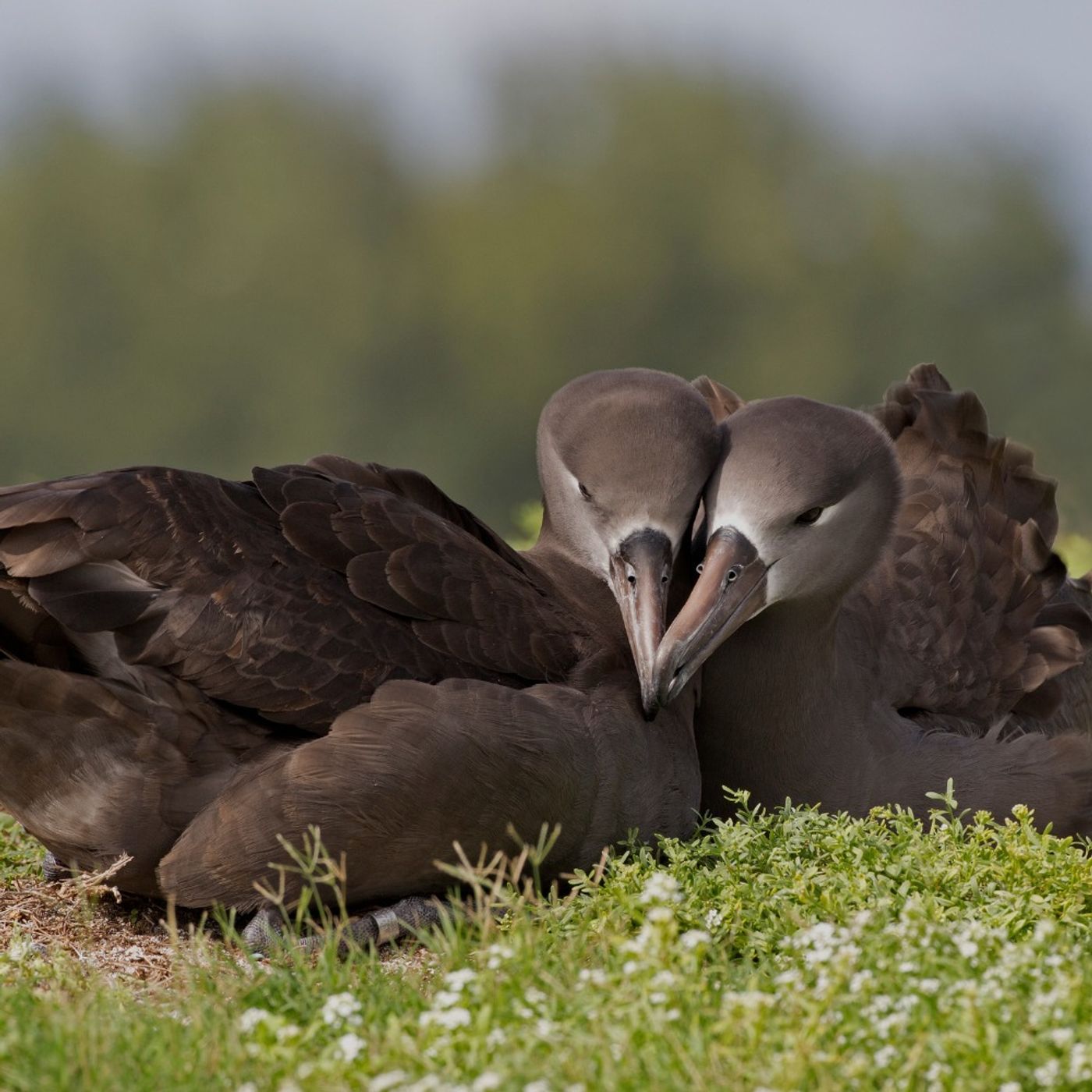
Bruno & La Güera: An Albatross Love Story
Isla Guadalupe off the Western coast of Mexico is famous for its massive colonies of petrels, shearwaters, and Laysan Albatrosses. Now, conservationists hope it can become a safe haven for Black-footed Albatrosses too – like Bruno and La Güera. In 2021, the pair were among a dozen Black-footed Albatross chicks flown from Hawai‘i’s Midway Atoll to Mexico by researchers with the non-profit Grupo de Ecología y Conservación de Islas. It’s part of a larger effort to establish a new Black-footed Albatross colony in Mexico as rising seas threaten their native breeding grounds. The budding romance between Bruno and La Güera has the team hopeful that they’ll be just the first of many Black-footed Albatross couples helping their species settle into a new home in Mexico.¡Este episodio está disponible en BirdNote en Español!More info and transcript at BirdNote.org.Want more BirdNote? Subscribe to our weekly newsletter. Sign up for BirdNote+ to get ad-free listening and other perks. BirdNote is a nonprofit. Your tax-deductible gift makes these shows possible. Hosted by Simplecast, an AdsWizz company. See pcm.adswizz.com for information about our collection and use of personal data for advertising.
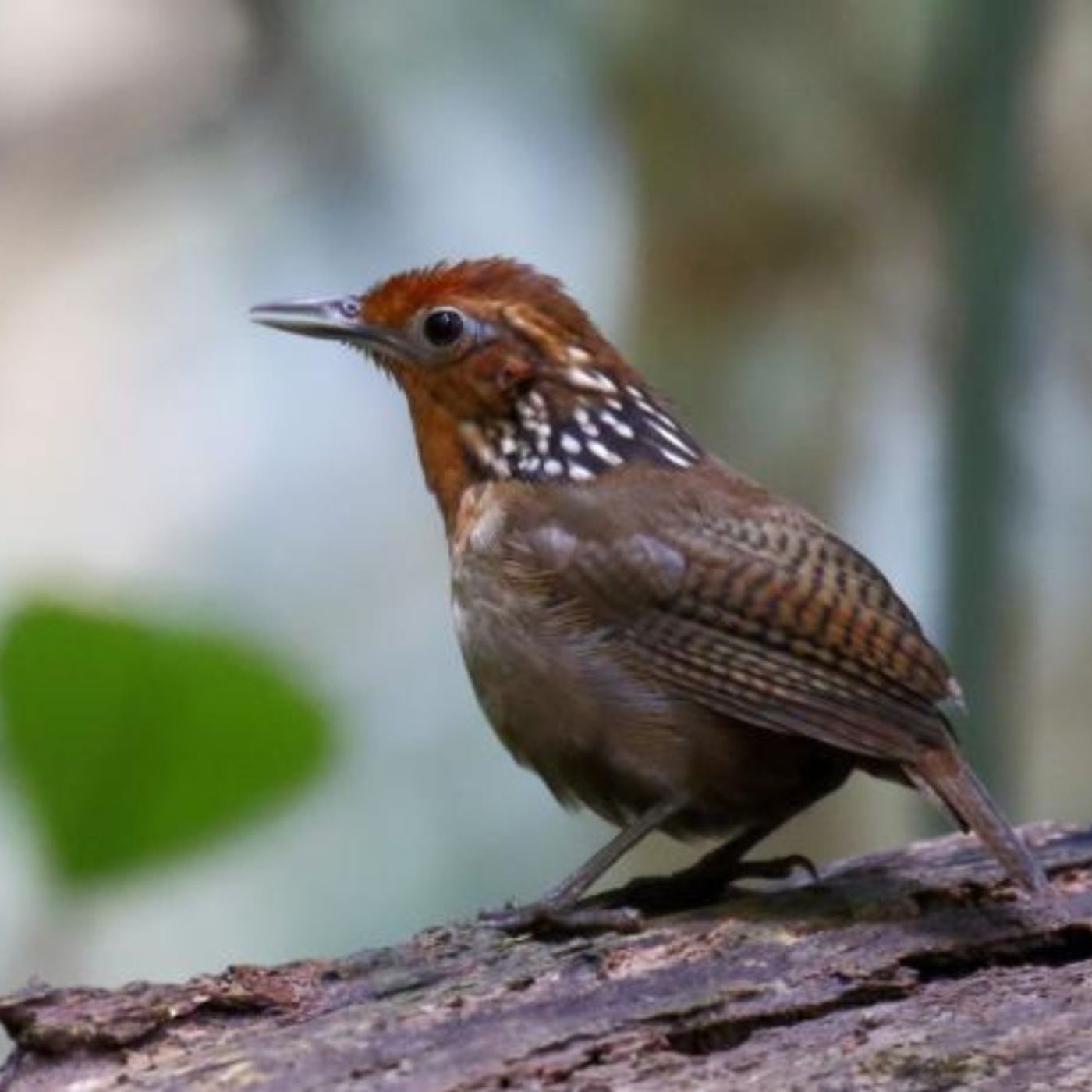
Wrens from North to South
There are nearly ninety species of wrens in the world, and quite a few are exceptional singers. Nearly all of them reside in the Western Hemisphere, with the majority living in Central and South America. The White-bellied Wren ranks among the tiniest, at just under four inches, while the Giant Wren is nearly nine inches long — as big as a Red-winged Blackbird. And the most legendary singer? It’s a tough decision, but many would choose this Musician Wren from South America.¡Escuche este episodio en BirdNote en Español!More info and transcript at BirdNote.org.Want more BirdNote? Subscribe to our weekly newsletter. Sign up for BirdNote+ to get ad-free listening and other perks. BirdNote is a nonprofit. Your tax-deductible gift makes these shows possible. Hosted by Simplecast, an AdsWizz company. See pcm.adswizz.com for information about our collection and use of personal data for advertising.
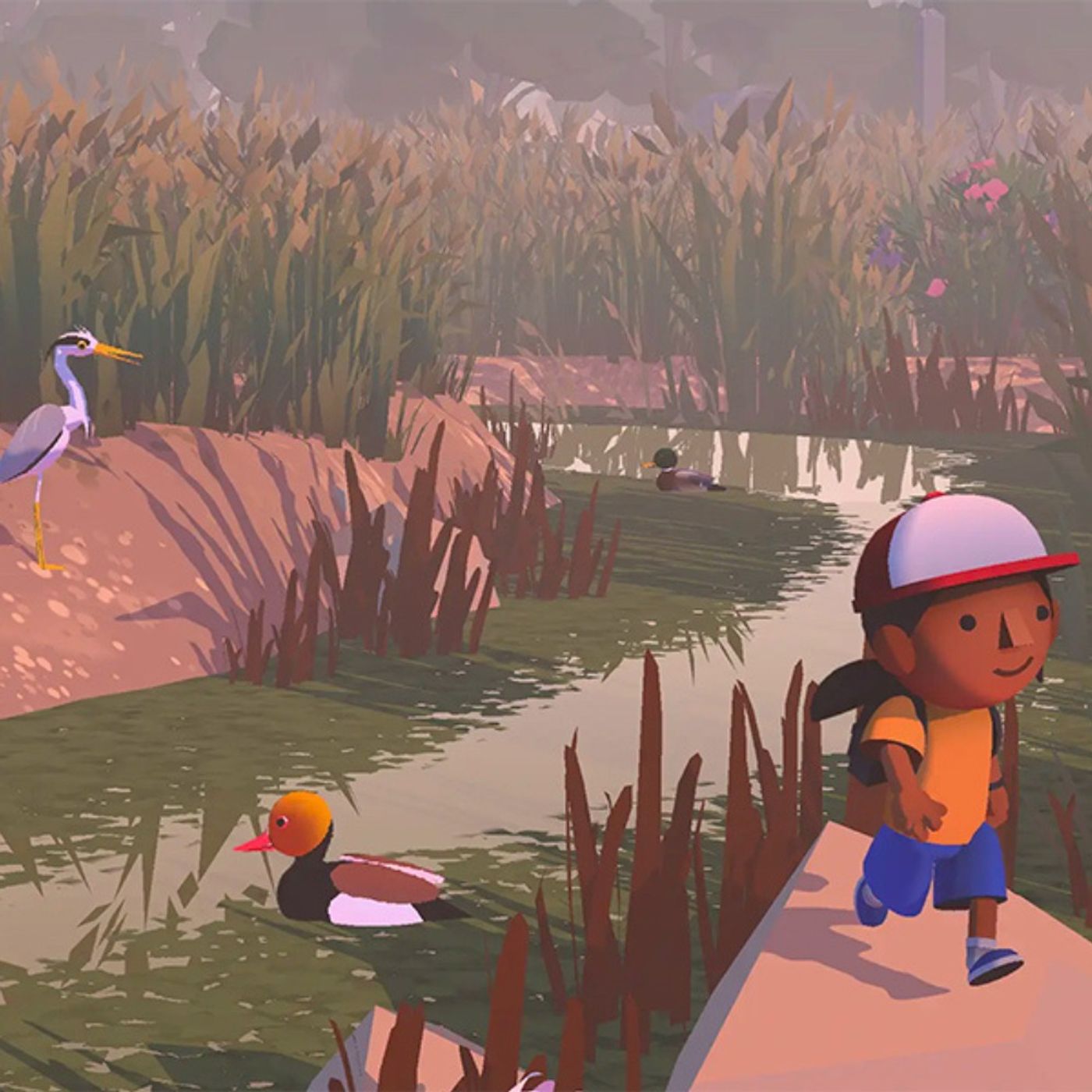
An Indoor Wildlife Adventure
The video game Alba: A Wildlife Adventure lets you have adventures in a stunning virtual landscape while curled up at home with a cup of hot cocoa. The game puts you in the shoes of a birdwatcher and conservationist on a Mediterranean island. As you traverse the animated ecosystems, listen for the calls of over 50 birds, like the Eurasian Sparrowhawk, Northern Shoveler, and Great Cormorant. The game is available on phones, consoles, or your computer.More info and transcript at BirdNote.org.Want more BirdNote? Subscribe to our weekly newsletter. Sign up for BirdNote+ to get ad-free listening and other perks. BirdNote is a nonprofit. Your tax-deductible gift makes these shows possible. Hosted by Simplecast, an AdsWizz company. See pcm.adswizz.com for information about our collection and use of personal data for advertising.

Peace in Wild Places
Wendell Berry wrote: "When despair for the world grows in me and I wake in the night at the least sound in fear of what my life and my children's lives may be, I go and lie down where the wood drake rests." Where do you go to rest and renew yourself in nature? Where do you come into the peace of wild things?More info and transcript at BirdNote.org.Want more BirdNote? Subscribe to our weekly newsletter. Sign up for BirdNote+ to get ad-free listening and other perks. BirdNote is a nonprofit. Your tax-deductible gift makes these shows possible. Hosted by Simplecast, an AdsWizz company. See pcm.adswizz.com for information about our collection and use of personal data for advertising.
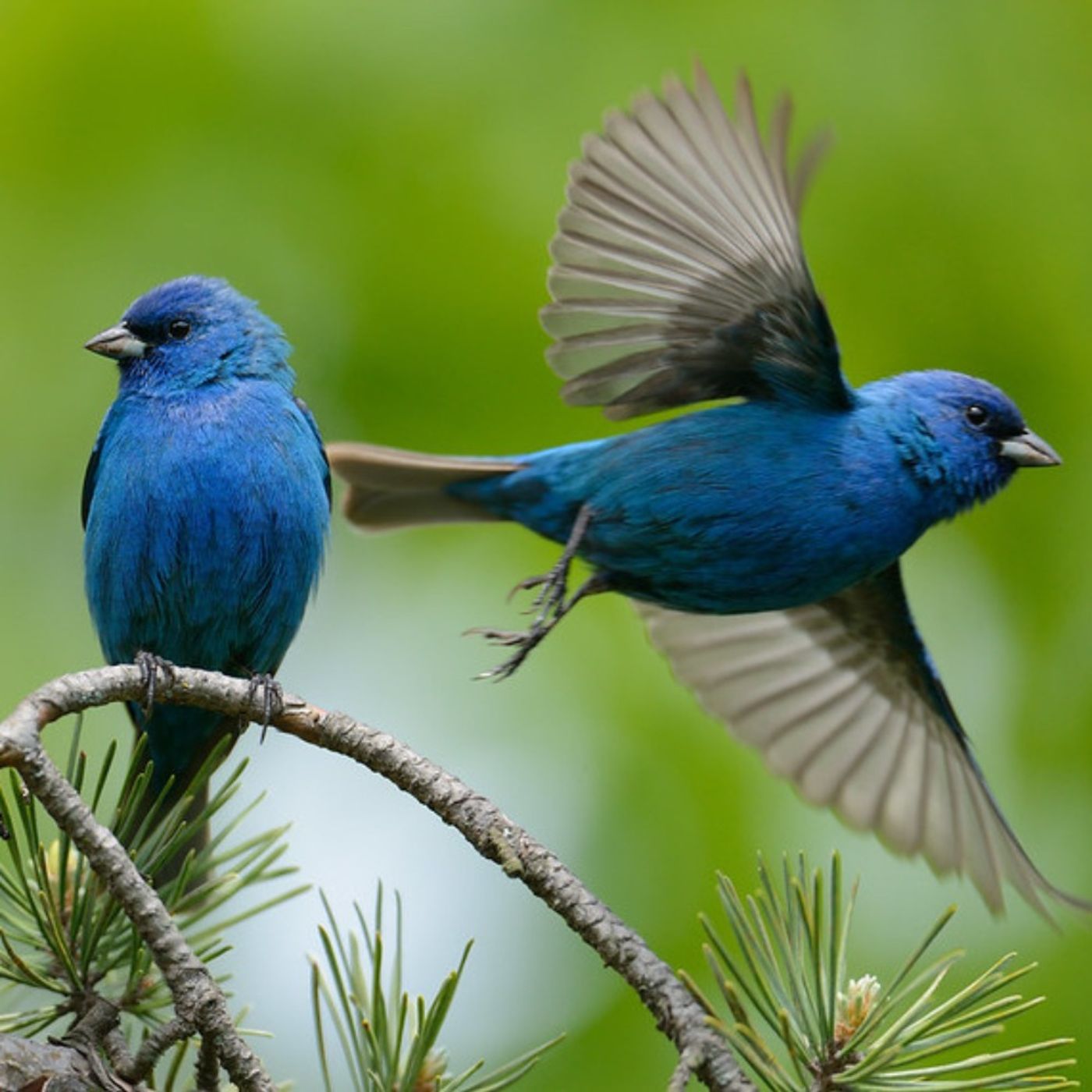
Birding 101: The Fear of Getting Started
For folks looking to try birding for the first time, getting started can be daunting. Should you learn every species’ call, every subtle feather pattern before you head out to look for birds? While it’s good to prepare, there’s a risk of scaring yourself out of starting, and preventing the kind of hands-on experiential learning that’s one of the best parts of birding. So when you have the time and energy, just go for it! Learning about birds is the work of a lifetime — that’s why it’s so rewarding.¡Escuche este episodio en BirdNote en Español!More info and transcript at BirdNote.org.Want more BirdNote? Subscribe to our weekly newsletter. Sign up for BirdNote+ to get ad-free listening and other perks. BirdNote is a nonprofit. Your tax-deductible gift makes these shows possible. Hosted by Simplecast, an AdsWizz company. See pcm.adswizz.com for information about our collection and use of personal data for advertising.

Rickie Lee Jones Helps Birds at Home
At her home in New Orleans, Grammy-winning musical artist Rickie Lee Jones has transformed her yard into a safe haven for birds. By putting out water and feeders, she’s become popular with the local cardinals, doves, and even a crow with a distinctive white wing. The experience has encouraged Rickie to find more ways to take actions to protect birds, like turning off outdoor lights at night and treating windows to prevent fatal collisions.BirdNote is supported by Road Scholar, creating educational travel adventures for adults around the world.More info and transcript at BirdNote.org.Want more BirdNote? Subscribe to our weekly newsletter. Sign up for BirdNote+ to get ad-free listening and other perks. BirdNote is a nonprofit. Your tax-deductible gift makes these shows possible. Hosted by Simplecast, an AdsWizz company. See pcm.adswizz.com for information about our collection and use of personal data for advertising.
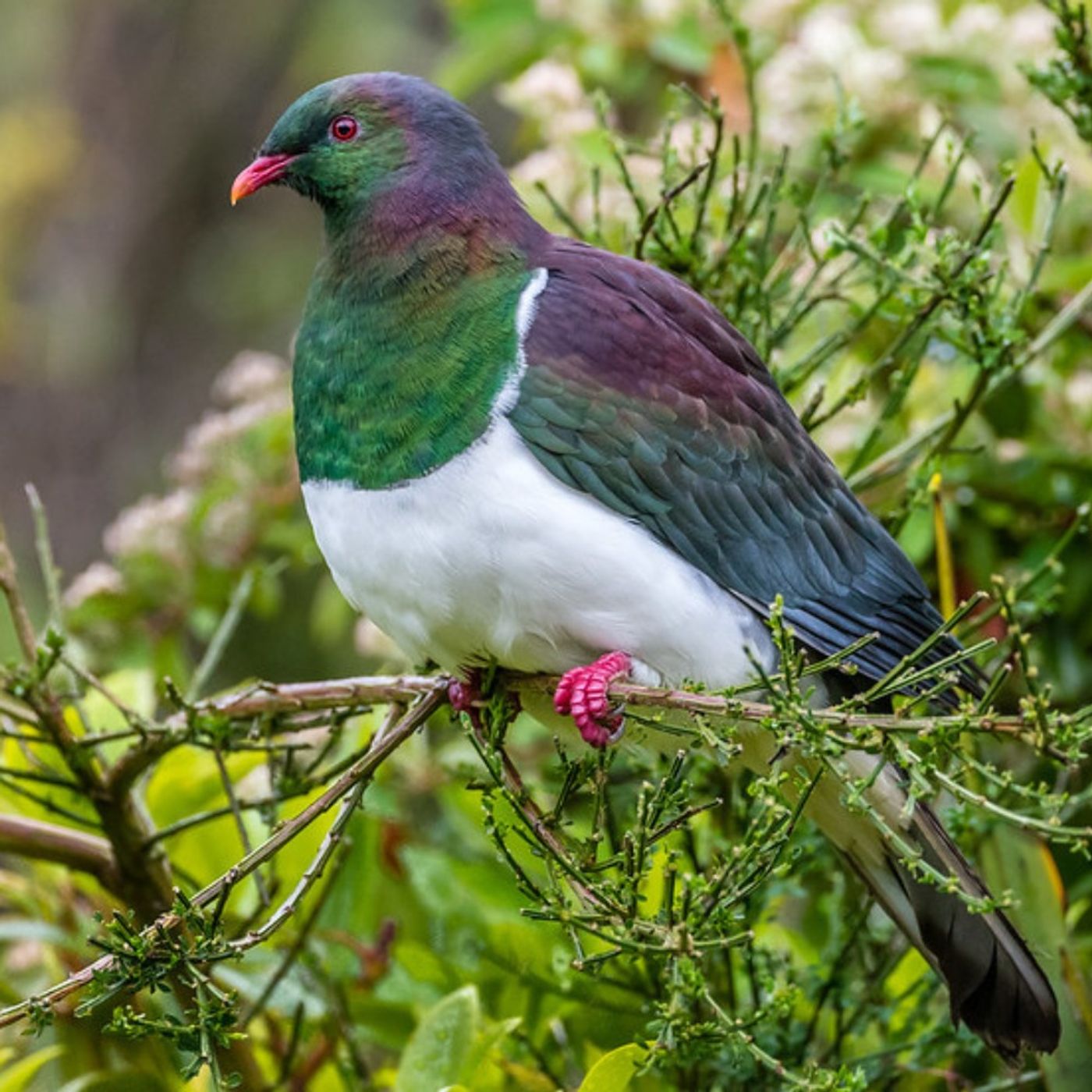
Kererū: Pigeons That Get Tipsy
Kererū, green-blue pigeons native to New Zealand, like to sun themselves after dining on fruit. But in warm summer months, the bird’s sunbathing has a surprising side-effect. A part of their digestive system called the crop stores their latest snack – where it begins to ferment, eventually making the pigeons drunk! The rotund creatures often get so tipsy that they fall out of trees, prompting compassionate people to deliver them to local bird rescues and let them sober up.More info and transcript at BirdNote.org.Want more BirdNote? Subscribe to our weekly newsletter. Sign up for BirdNote+ to get ad-free listening and other perks. BirdNote is a nonprofit. Your tax-deductible gift makes these shows possible. Hosted by Simplecast, an AdsWizz company. See pcm.adswizz.com for information about our collection and use of personal data for advertising.
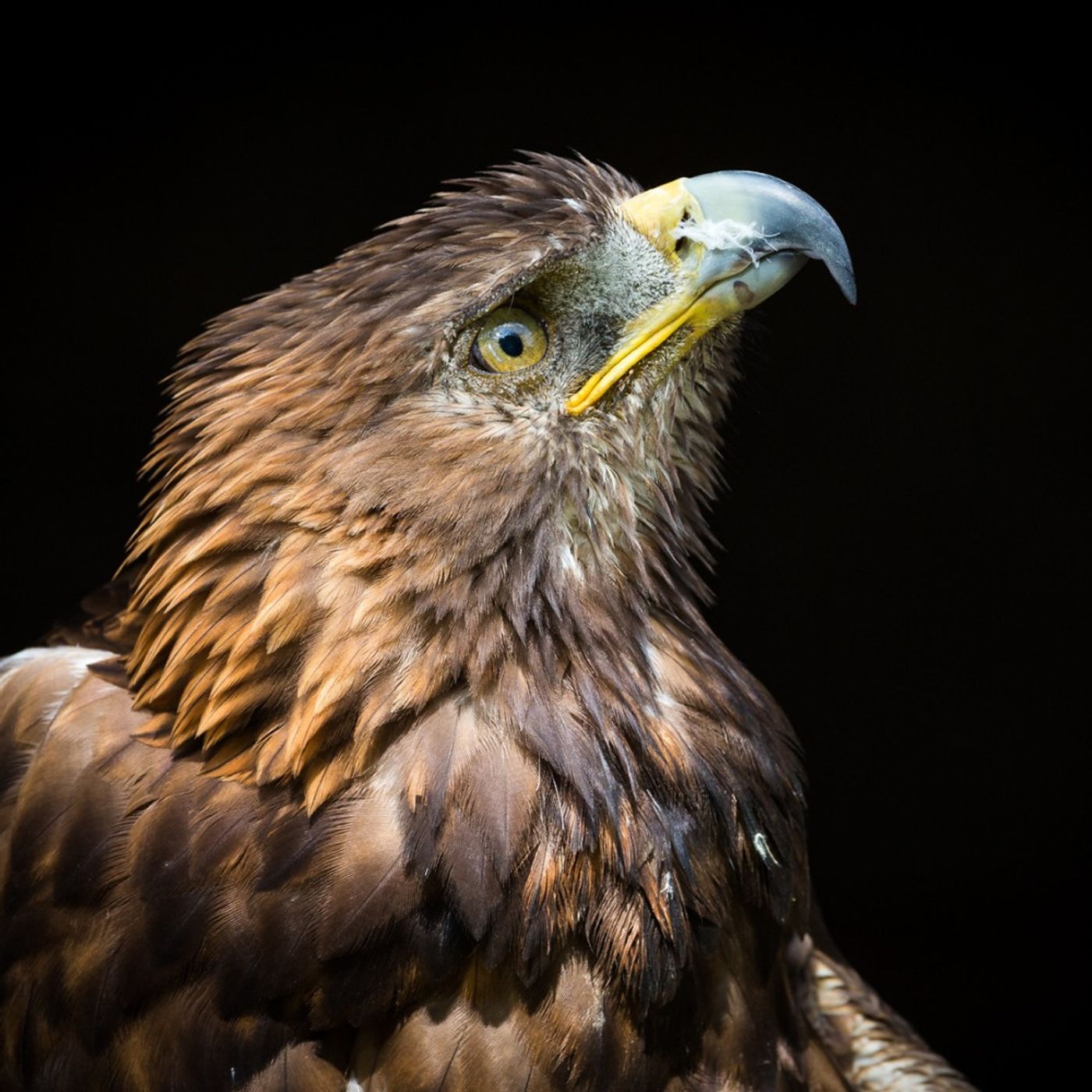
Golden Eagle: From Aztec Legend to the Steppes of Kazakhstan
The Golden Eagle is a bird of epic proportions not only for their impressive size but also for the many legends they’ve inspired across human history. They are one of the largest eagles in the world with a wingspan of more than seven feet. When the Aztecs saw a Golden Eagle devouring a serpent atop a cactus, they knew they had found their promised land. Today, that powerful raptor graces Mexico’s national shield. In fact, the Golden Eagle appears on the flags and emblems of several countries including Kazakhstan, where nomadic hunters have practiced an ancient form of falconry with Golden Eagles for thousands of years.More info and transcript at BirdNote.org.Want more BirdNote? Subscribe to our weekly newsletter. Sign up for BirdNote+ to get ad-free listening and other perks. BirdNote is a nonprofit. Your tax-deductible gift makes these shows possible. Hosted by Simplecast, an AdsWizz company. See pcm.adswizz.com for information about our collection and use of personal data for advertising.
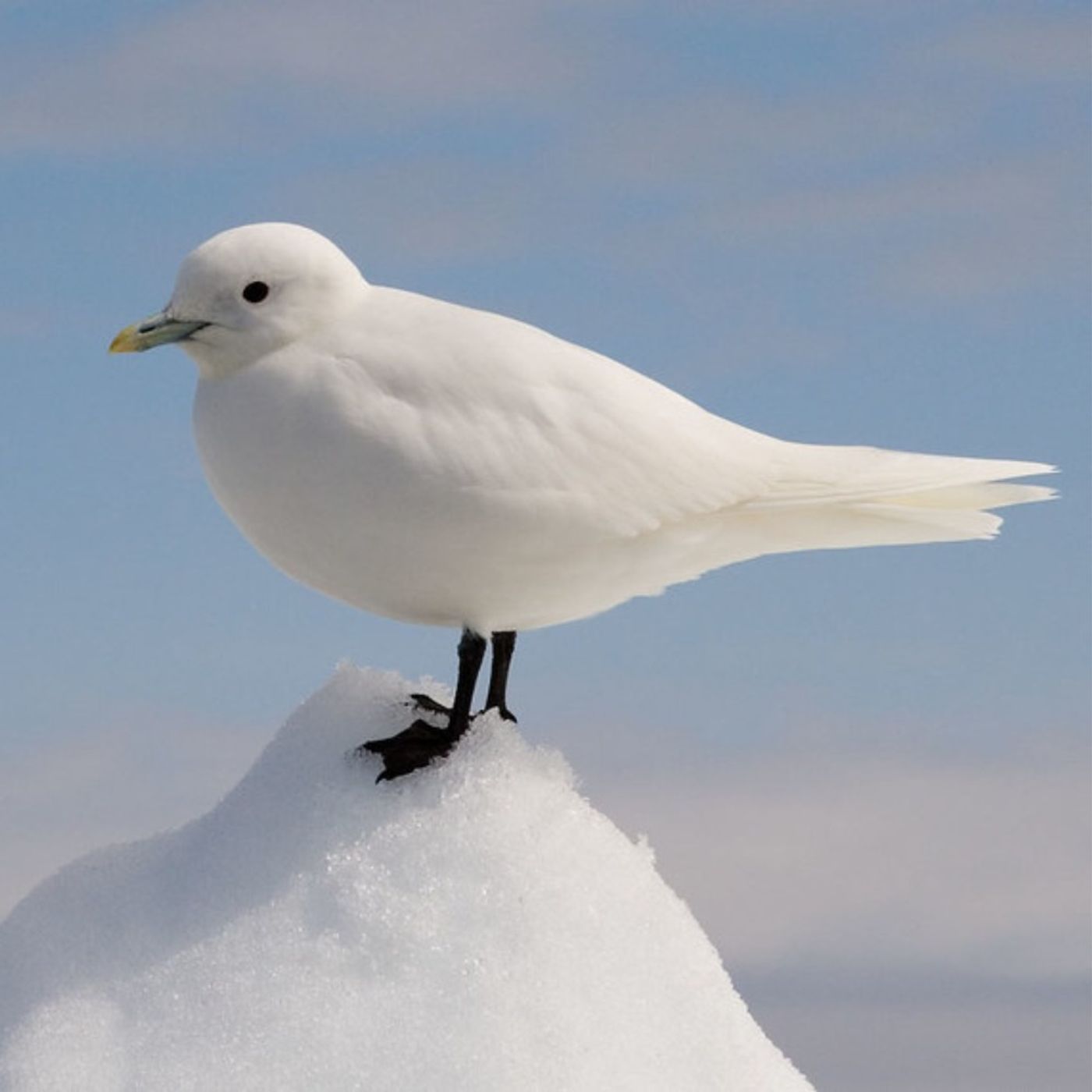
Ivory Gull and Conservation
Polar Bears symbolize the icy landscapes of the far north like no other animal. The bear's way of life — its very survival — is inseparable from the Arctic pack-ice. Less familiar is a remarkable bird that shares with the Polar Bear this vital link to ice: this Ivory Gull. The gulls feed on small fish and other marine life, but also scavenge carcasses, including those left by Polar Bears. Global warming has brought increasing change to the world of ice-dependent species such as the Ivory Gull and Polar Bear.More info and transcript at BirdNote.org.Want more BirdNote? Subscribe to our weekly newsletter. Sign up for BirdNote+ to get ad-free listening and other perks. BirdNote is a nonprofit. Your tax-deductible gift makes these shows possible. Hosted by Simplecast, an AdsWizz company. See pcm.adswizz.com for information about our collection and use of personal data for advertising.

From the Start, Daffy Duck Has Been a Cartoon Original
From his start in 1937, the gangly, black-feathered Daffy Duck was a cartoon original: wildly outspoken, volatile, and confrontational — a truly daft duck. Daffy was one of the most memorable characters from the golden age of cartoons, paving the way for other screwball cartoon personalities to come.More info and transcript at BirdNote.org.Want more BirdNote? Subscribe to our weekly newsletter. Sign up for BirdNote+ to get ad-free listening and other perks. BirdNote is a nonprofit. Your tax-deductible gift makes these shows possible. Hosted by Simplecast, an AdsWizz company. See pcm.adswizz.com for information about our collection and use of personal data for advertising.

Lewis's Woodpeckers and Pine Forests
A century of logging and fire control has taken its toll on the mature pine forests of the West, the preferred nest site for this Lewis's Woodpecker. But there is hope. Lewis's Woodpeckers also nest along rivers in large cottonwoods, trees of little value for timber. Also, many remaining tracts of old-growth ponderosas are protected on public lands, and the trees are growing larger day by day.More info and transcript at BirdNote.org.Want more BirdNote? Subscribe to our weekly newsletter. Sign up for BirdNote+ to get ad-free listening and other perks. BirdNote is a nonprofit. Your tax-deductible gift makes these shows possible. Hosted by Simplecast, an AdsWizz company. See pcm.adswizz.com for information about our collection and use of personal data for advertising.
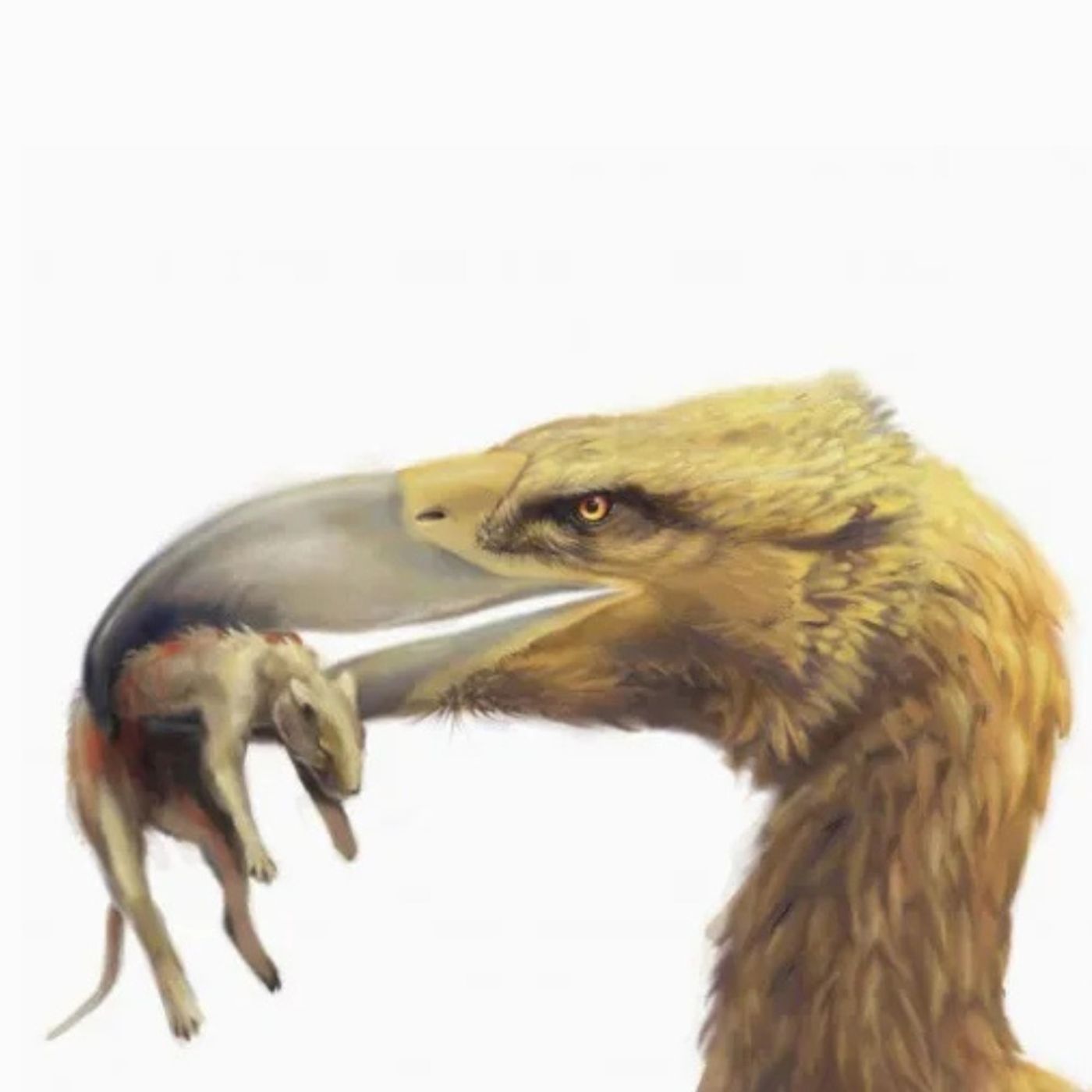
When ‘Terror Birds’ Ruled the Earth
A bird known as Titanis walleri made its home in Florida just a few million years ago. Titanis, as its name suggests, was titanic indeed — a flightless predator, 5 feet tall, with a massive hooked bill. Titanis and other birds related to it belong to a group some paleontologists call the "terror birds." They were dominant land predators in South America for tens of millions of years. Paleontologists still aren’t clear about why Titanis and its kin went extinct. But whatever factors ended the era of the terror birds also made it a lot less risky to go out and fill your bird feeder.More info and transcript at BirdNote.org.Want more BirdNote? Subscribe to our weekly newsletter. Sign up for BirdNote+ to get ad-free listening and other perks. BirdNote is a nonprofit. Your tax-deductible gift makes these shows possible. Hosted by Simplecast, an AdsWizz company. See pcm.adswizz.com for information about our collection and use of personal data for advertising.
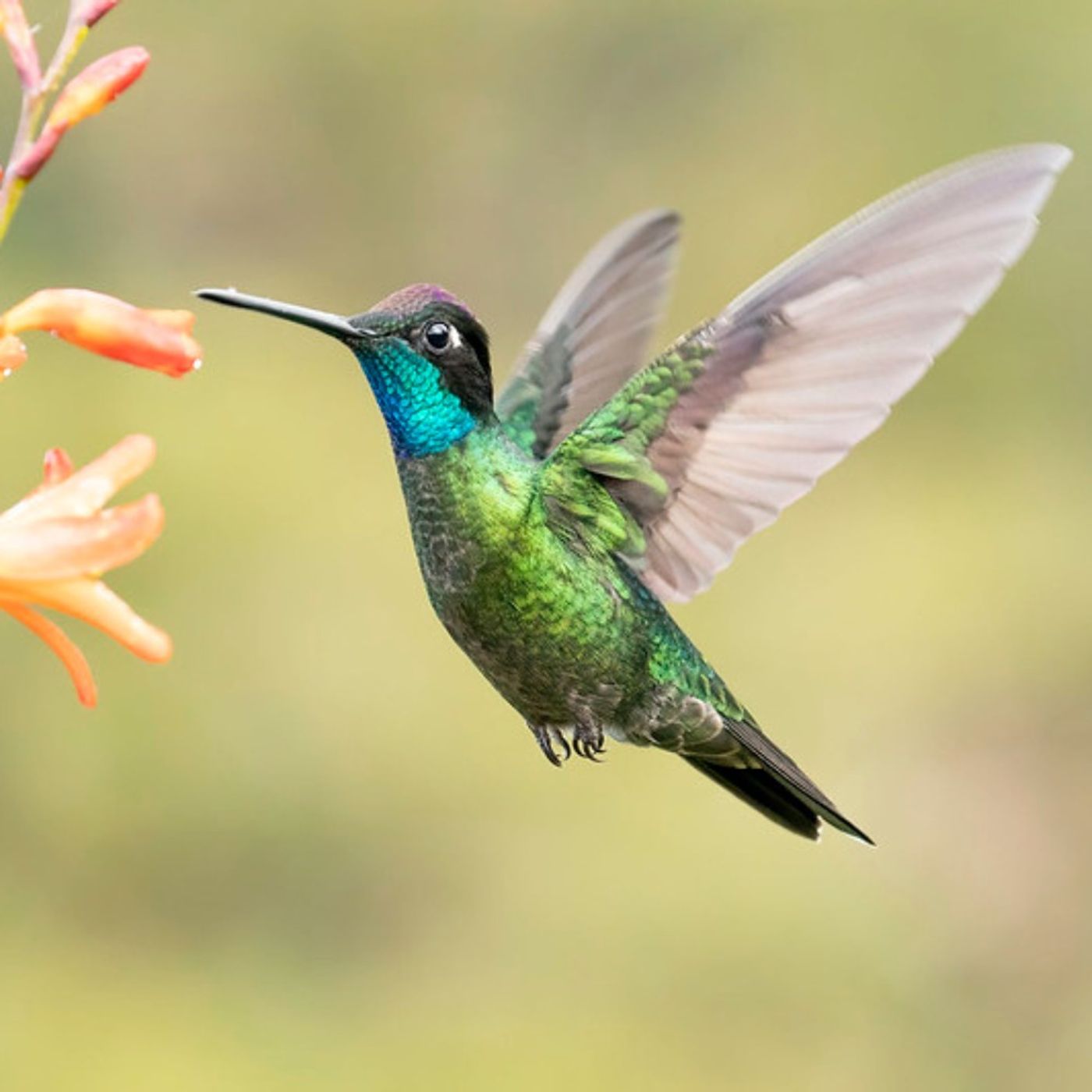
What Makes an Efficient Flying Bird?
Every bird species uses its wings a little differently, and some are specialized for highly efficient flight. But that means going without other abilities. Swallows and hummingbirds, like a Talamanca Hummingbird, capture their food on the wing, but they can’t walk. Swifts, which are acrobatic in the air, can’t even perch. Yet they dazzle with the maneuverability made possible by their aerodynamic bodies.More info and transcript at BirdNote.org.Want more BirdNote? Subscribe to our weekly newsletter. Sign up for BirdNote+ to get ad-free listening and other perks. BirdNote is a nonprofit. Your tax-deductible gift makes these shows possible. Hosted by Simplecast, an AdsWizz company. See pcm.adswizz.com for information about our collection and use of personal data for advertising.
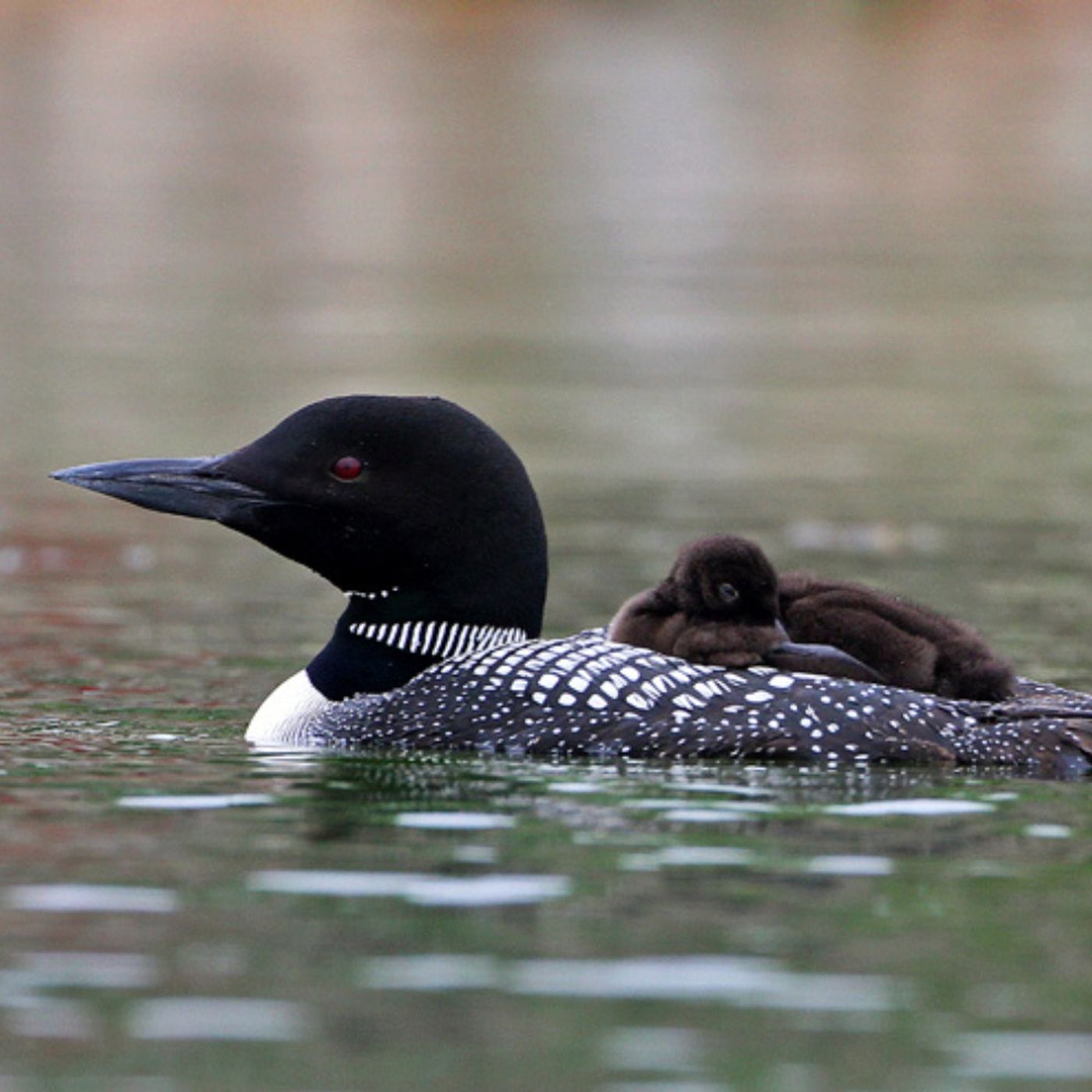
Birds Move from Fresh to Salt Water
To hear a Common Loon in the wild during summer, you’ll need to find a northern, freshwater lake where a pair is nesting. But to find that same Common Loon in winter, you’ll likely need to look on a saltwater bay. This shift from fresh to salt water would kill most animals. But loons — along with many ducks and other water birds — have evolved to make that move. It’s possible that breeding adults nest on fresh water in order to save their energy for raising chicks.More info and transcript at BirdNote.org.Want more BirdNote? Subscribe to our weekly newsletter. Sign up for BirdNote+ to get ad-free listening and other perks. BirdNote is a nonprofit. Your tax-deductible gift makes these shows possible. Hosted by Simplecast, an AdsWizz company. See pcm.adswizz.com for information about our collection and use of personal data for advertising.
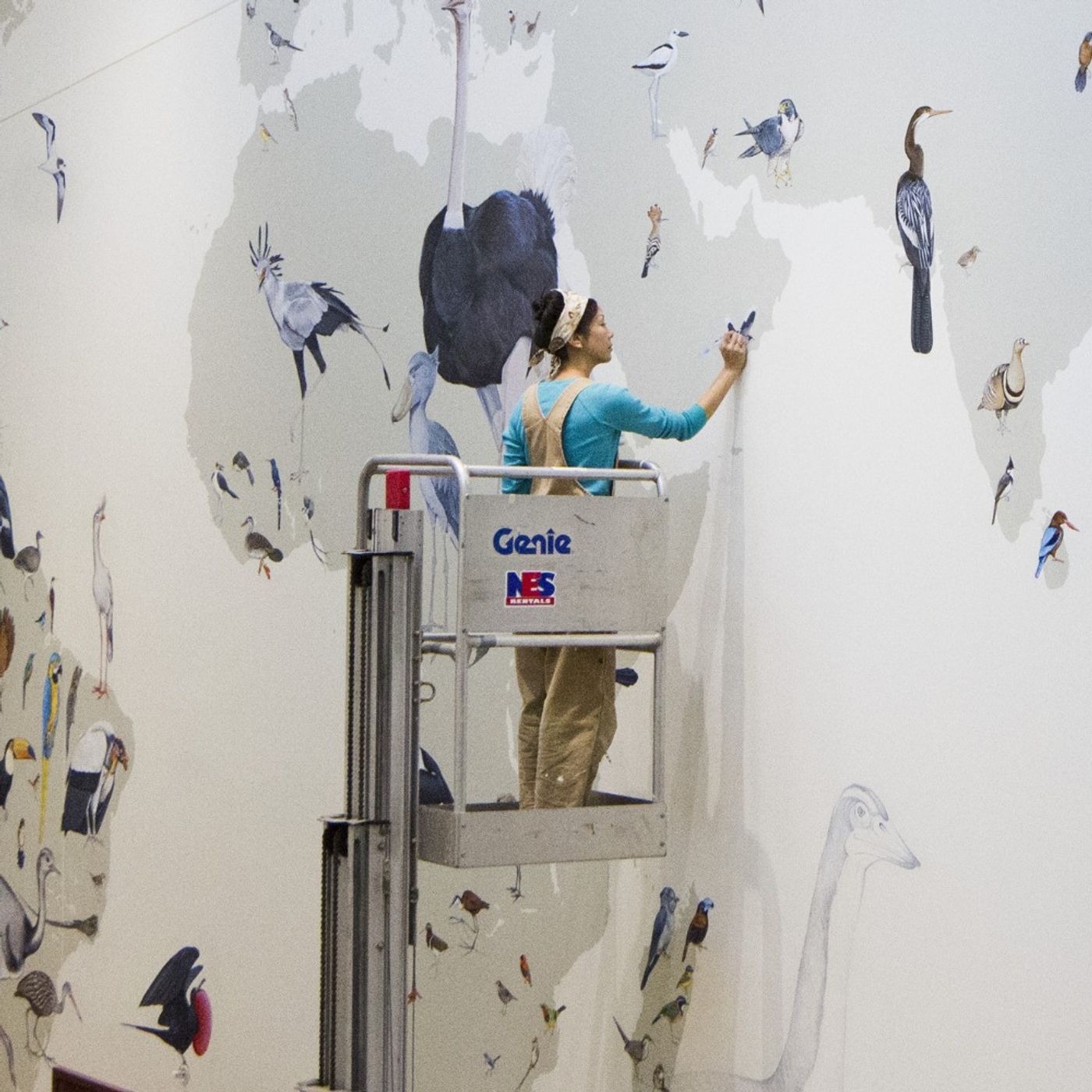
Birdsong and Solitude
The Wall of Birds at the Cornell Lab of Ornithology is a towering mural showing nearly 250 life-sized birds across a map of the world. To complete the impressive artwork, artist and scientific illustrator Jane Kim spent 17 months painting day in and day out. Though the experience was often solitary, Jane stayed connected to the outside world through the sounds of wildlife in the nature preserve that surround Cornell Lab.Read more about Jane Kim and the Wall of Birds in Field Notes!More info and transcript at BirdNote.org.Want more BirdNote? Subscribe to our weekly newsletter. Sign up for BirdNote+ to get ad-free listening and other perks. BirdNote is a nonprofit. Your tax-deductible gift makes these shows possible. Hosted by Simplecast, an AdsWizz company. See pcm.adswizz.com for information about our collection and use of personal data for advertising.
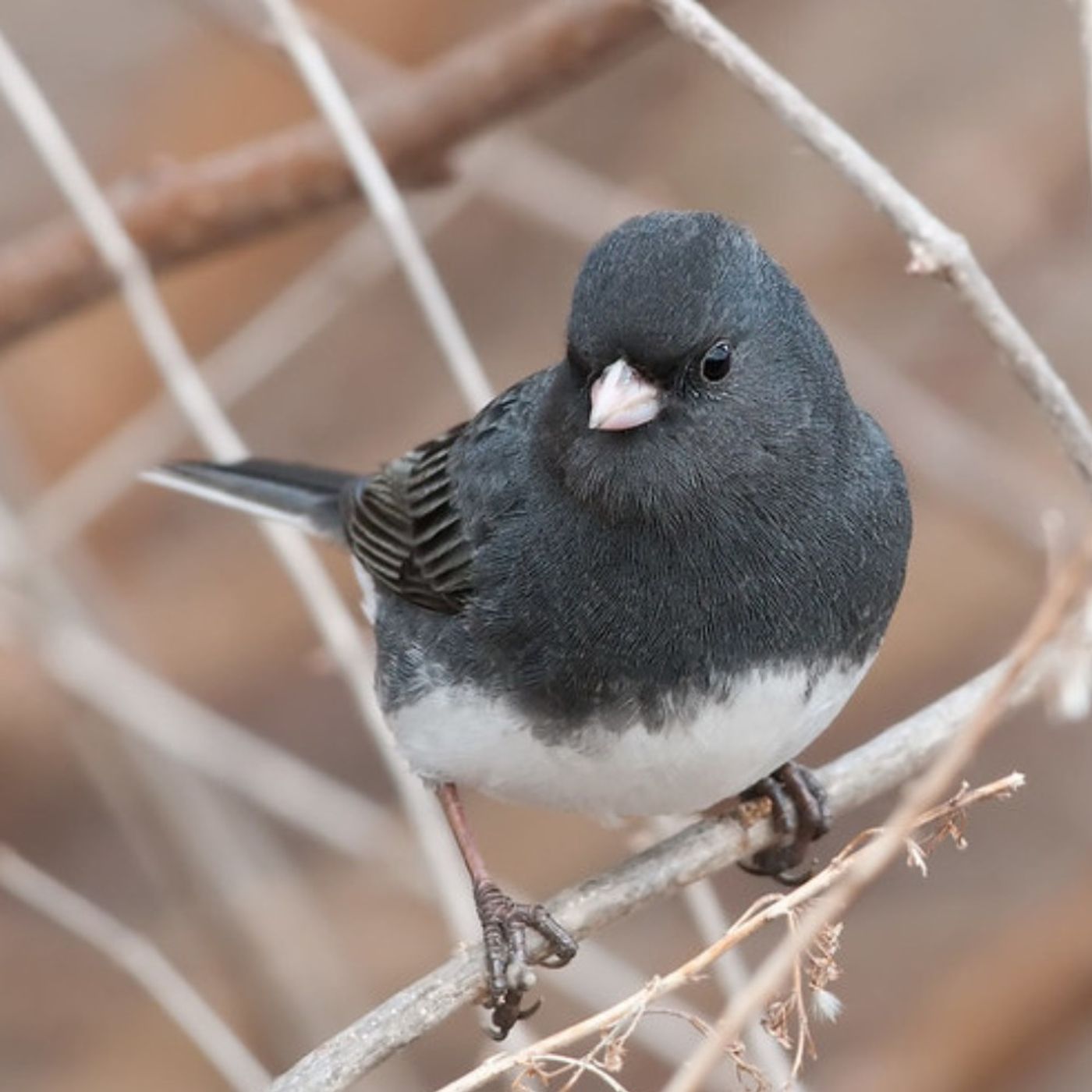
Letter to a Dark-eyed Junco
Writer and ornithologist J. Drew Lanham shares a note he has written to a Dark-eyed Junco, which he fondly nicknames “snowbird.”More info and transcript at BirdNote.org.Want more BirdNote? Subscribe to our weekly newsletter. Sign up for BirdNote+ to get ad-free listening and other perks. BirdNote is a nonprofit. Your tax-deductible gift makes these shows possible. Hosted by Simplecast, an AdsWizz company. See pcm.adswizz.com for information about our collection and use of personal data for advertising.
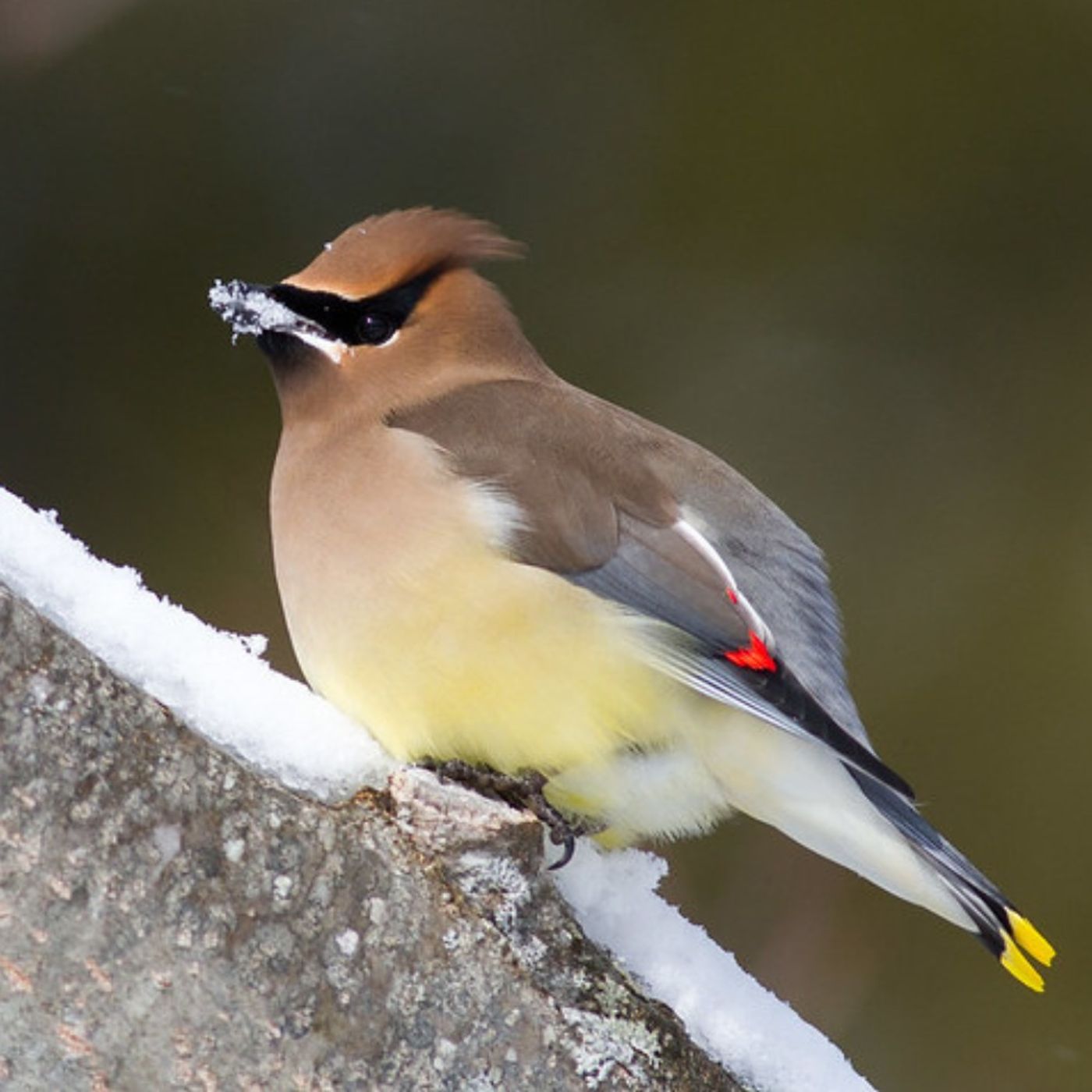
Why Birds Eat Snow
In the depths of winter, when open water is frozen over, it can be challenging for birds to stay hydrated. Some birds eat the frozen water all around them. Cedar Waxwings catch snowflakes in mid-air. Black-capped Chickadees drink from dripping icicles. Plenty of other birds scoop up fresh, powdery snow and eat it. It could be worth the calories to melt the snow when searching for liquid water could expose them to predators.More info and transcript at BirdNote.org.Want more BirdNote? Subscribe to our weekly newsletter. Sign up for BirdNote+ to get ad-free listening and other perks. BirdNote is a nonprofit. Your tax-deductible gift makes these shows possible. Hosted by Simplecast, an AdsWizz company. See pcm.adswizz.com for information about our collection and use of personal data for advertising.
Building Birds with LEGO
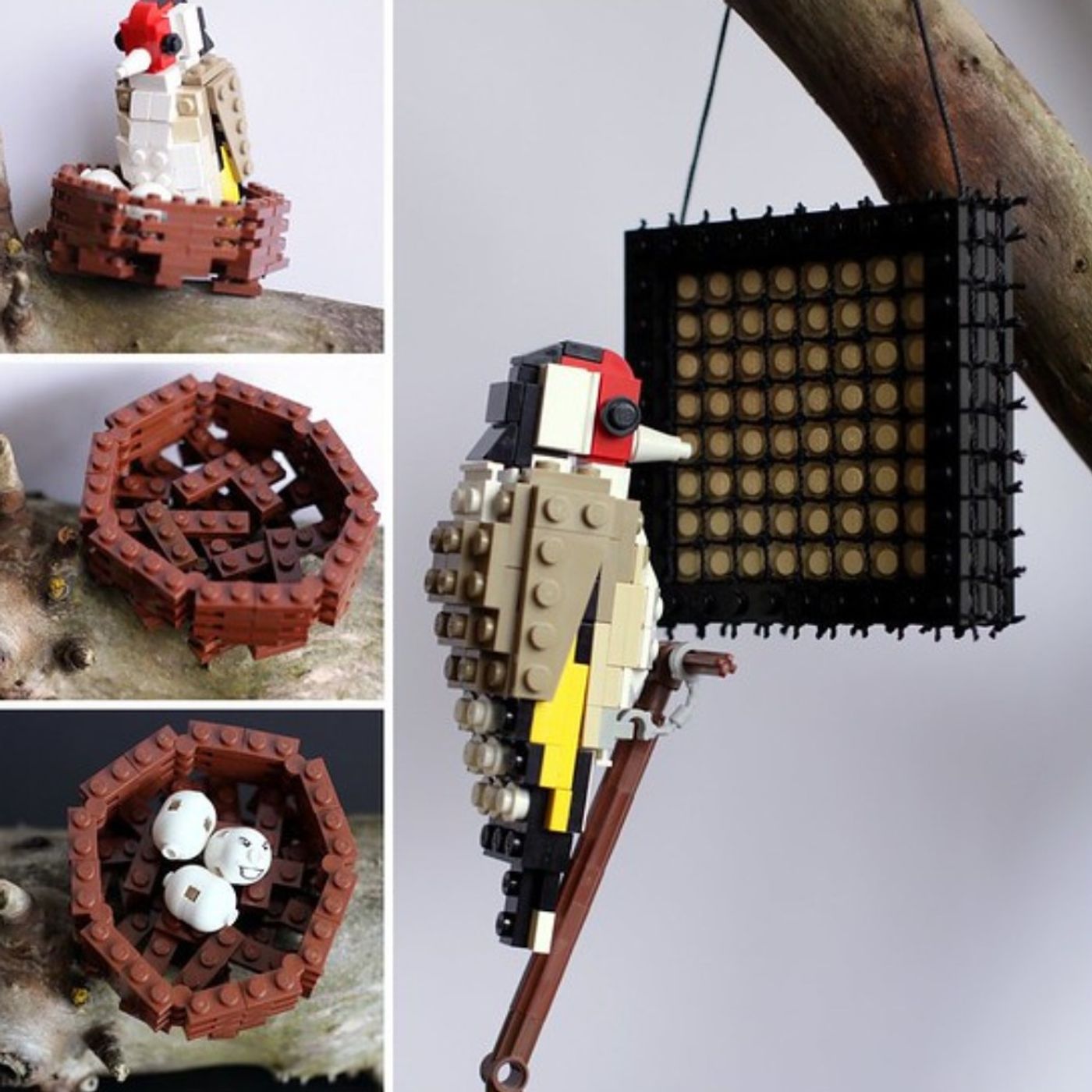
Thomas Poulsom is a hobbyist LEGO builder best known for his models of birds. But making birds out of bricks isn't easy. That’s why he uses special pieces to sculpt something entirely different — like when minifigure carrots became a puffin’s legs. A unique piece called a “snot brick” allows him to build in any direction, making it possible to make a round object out of square LEGO bricks.More info and transcript at BirdNote.org.Want more BirdNote? Subscribe to our weekly newsletter. Sign up for BirdNote+ to get ad-free listening and other perks. BirdNote is a nonprofit. Your tax-deductible gift makes these shows possible. Hosted by Simplecast, an AdsWizz company. See pcm.adswizz.com for information about our collection and use of personal data for advertising.
Painting Birdsong with Jane Kim
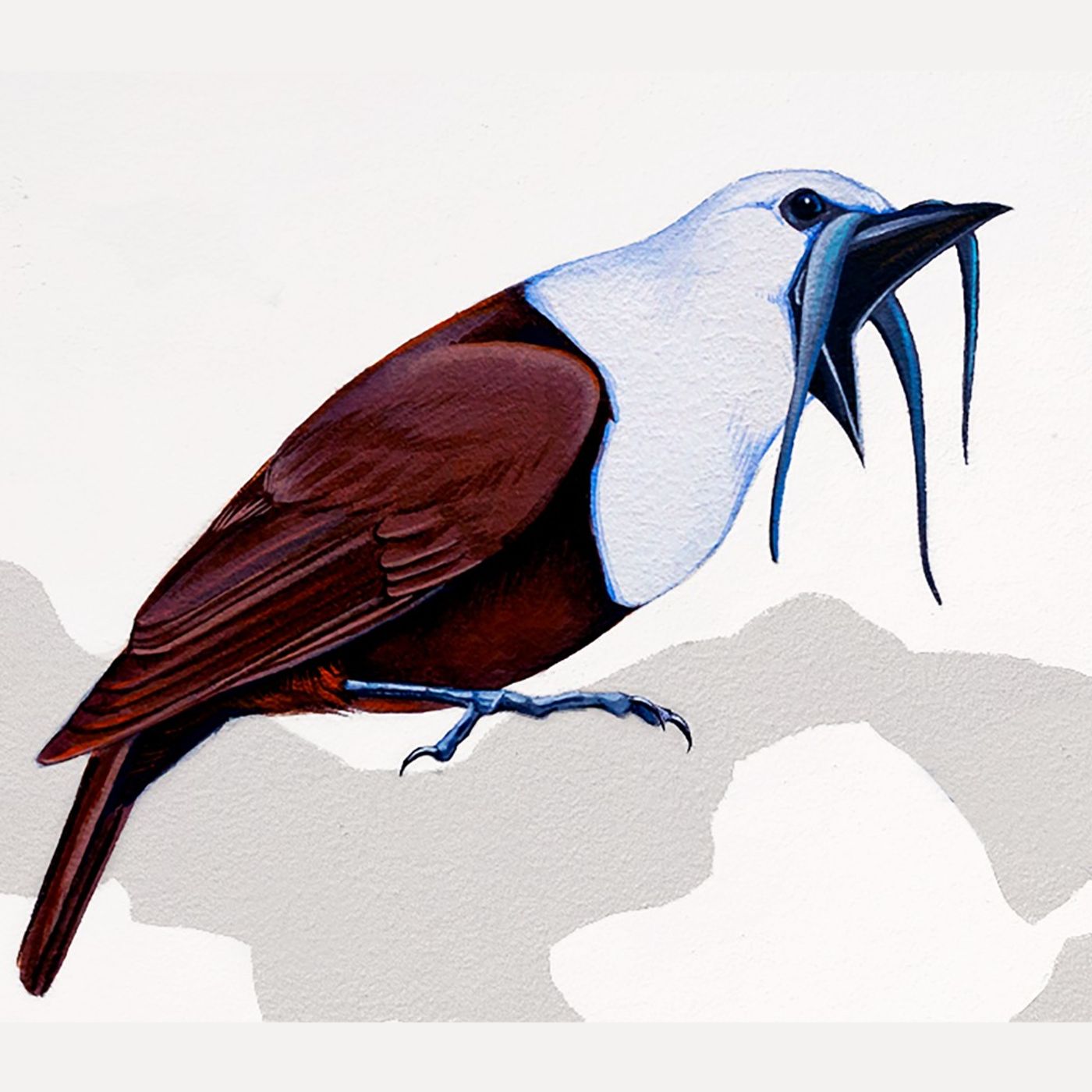
At the visitor center of the Cornell Lab of Ornithology, artist and scientific illustrator Jane Kim painted the Wall of Birds to celebrate the evolution and diversity of birds. Completed in December 2015, the massive mural depicts nearly 250 birds — and several of their ancient predecessors — on a map of the world where each lives. Jane worked closely with scientific advisors to ensure that each portrait accurately represents the bird's features and behaviors, including many species — like the Three-wattled Bellbird — that appear to sing from their place on the wall.Read more about Jane Kim in Field Notes!More info and transcript at BirdNote.org.Want more BirdNote? Subscribe to our weekly newsletter. Sign up for BirdNote+ to get ad-free listening and other perks. BirdNote is a nonprofit. Your tax-deductible gift makes these shows possible. Hosted by Simplecast, an AdsWizz company. See pcm.adswizz.com for information about our collection and use of personal data for advertising.
Dining with Sanderlings
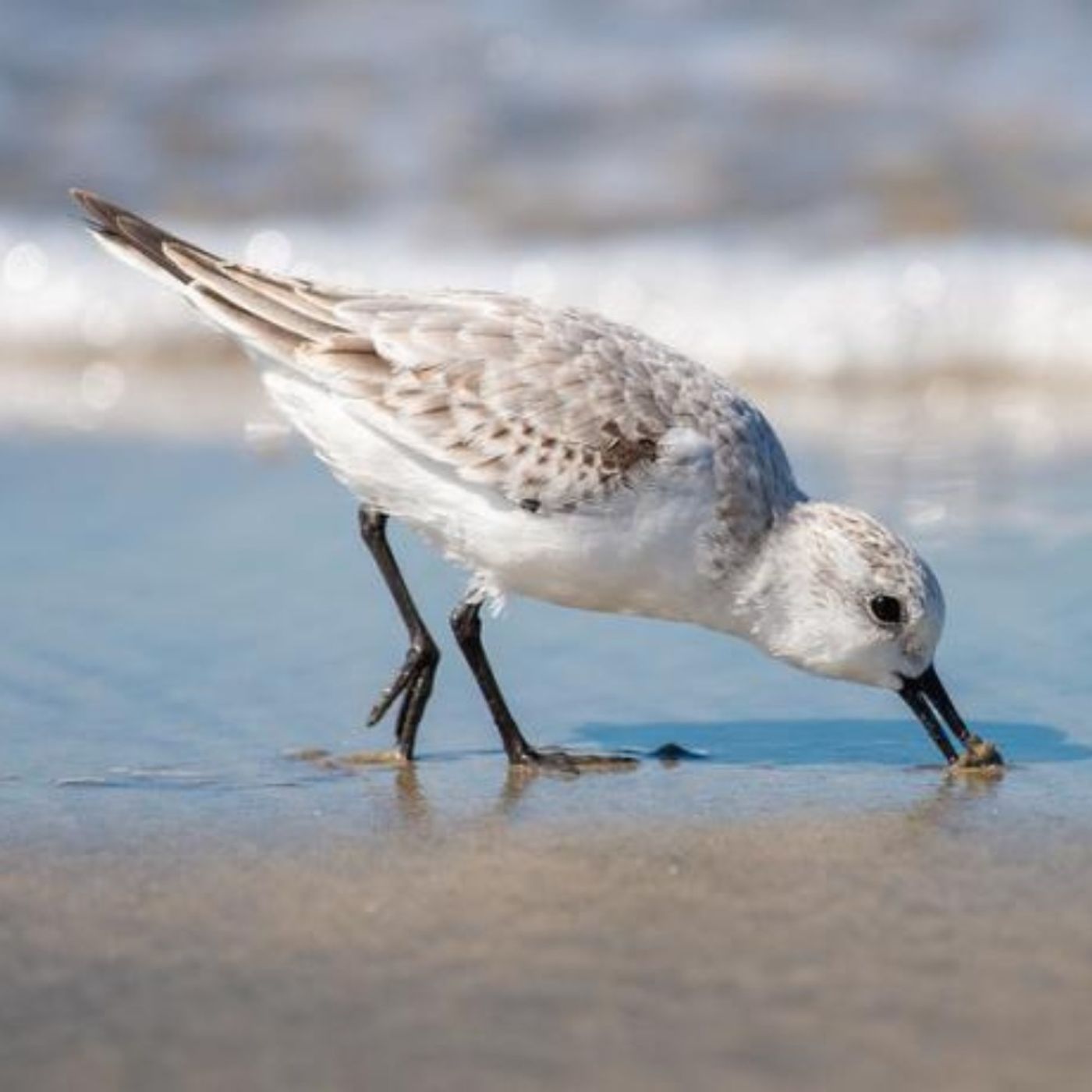
While many shorebirds have gone south, tiny sandpipers called Sanderlings are easy to find on winter shores. They follow the waves as they lap in and out, probing the swirling sand for prey. They often eat various small crustaceans such as mole crabs, isopods, and amphipods. But they also enjoy miniature clams, polychaete worms, and horseshoe crab eggs. They’ll even catch flying insects or eat plant matter.This episode is dedicated to Deb Rivel, for her many years of board service and generous support of BirdNote.More info and transcript at BirdNote.org.Want more BirdNote? Subscribe to our weekly newsletter. Sign up for BirdNote+ to get ad-free listening and other perks. BirdNote is a nonprofit. Your tax-deductible gift makes these shows possible. Hosted by Simplecast, an AdsWizz company. See pcm.adswizz.com for information about our collection and use of personal data for advertising.
Kittiwake, Kittiwake
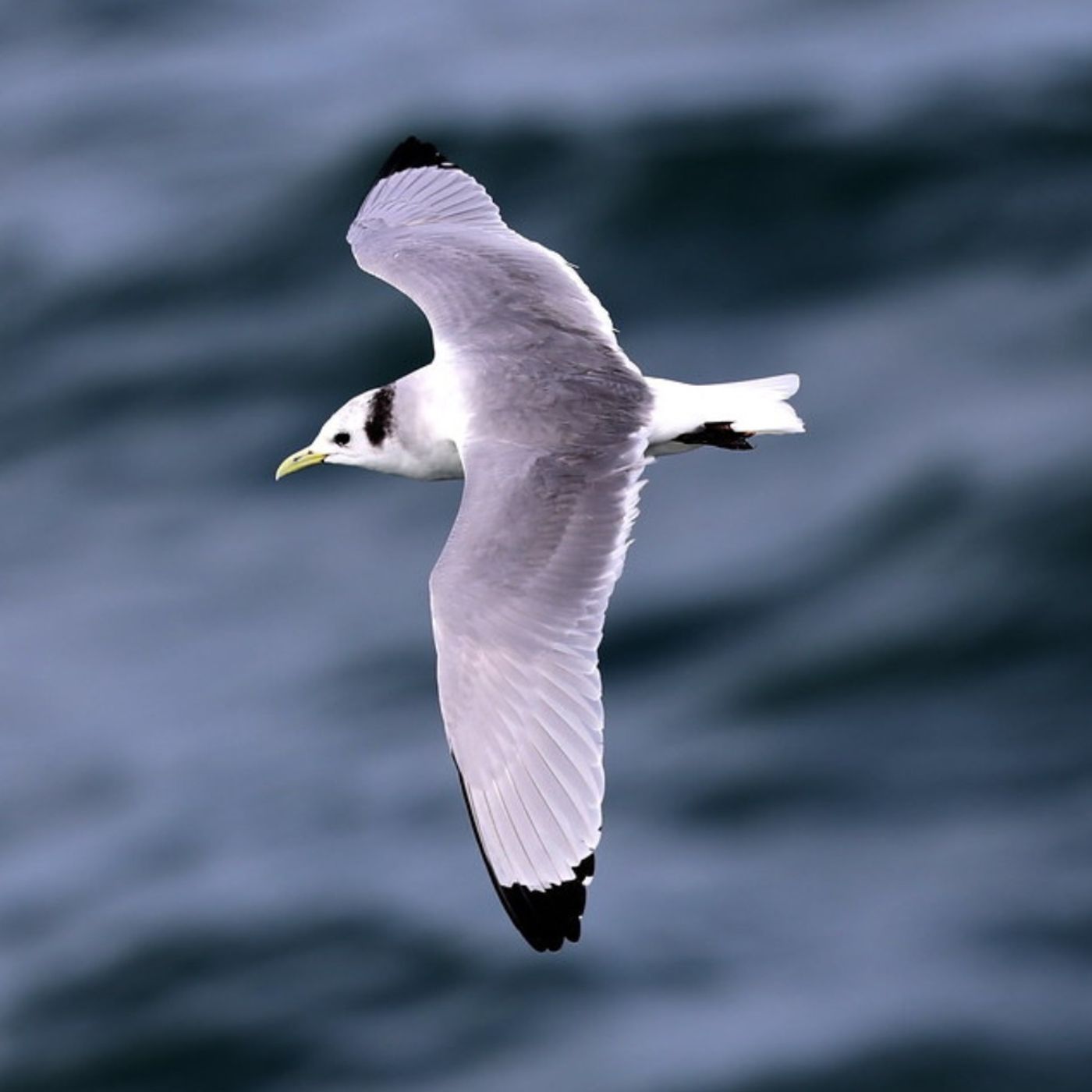
Named for its rhythmic calls, the Black-legged Kittiwake is a dapper, oceanic gull. As described by Roger Tory Peterson, the tips of its pale gray wings "are cut straight across, as if they had been dipped in ink." Unlike many gulls, kittiwakes spend most of the year at sea and are seldom seen inland.More info and transcript at BirdNote.org.Want more BirdNote? Subscribe to our weekly newsletter. Sign up for BirdNote+ to get ad-free listening and other perks. BirdNote is a nonprofit. Your tax-deductible gift makes these shows possible. Hosted by Simplecast, an AdsWizz company. See pcm.adswizz.com for information about our collection and use of personal data for advertising.
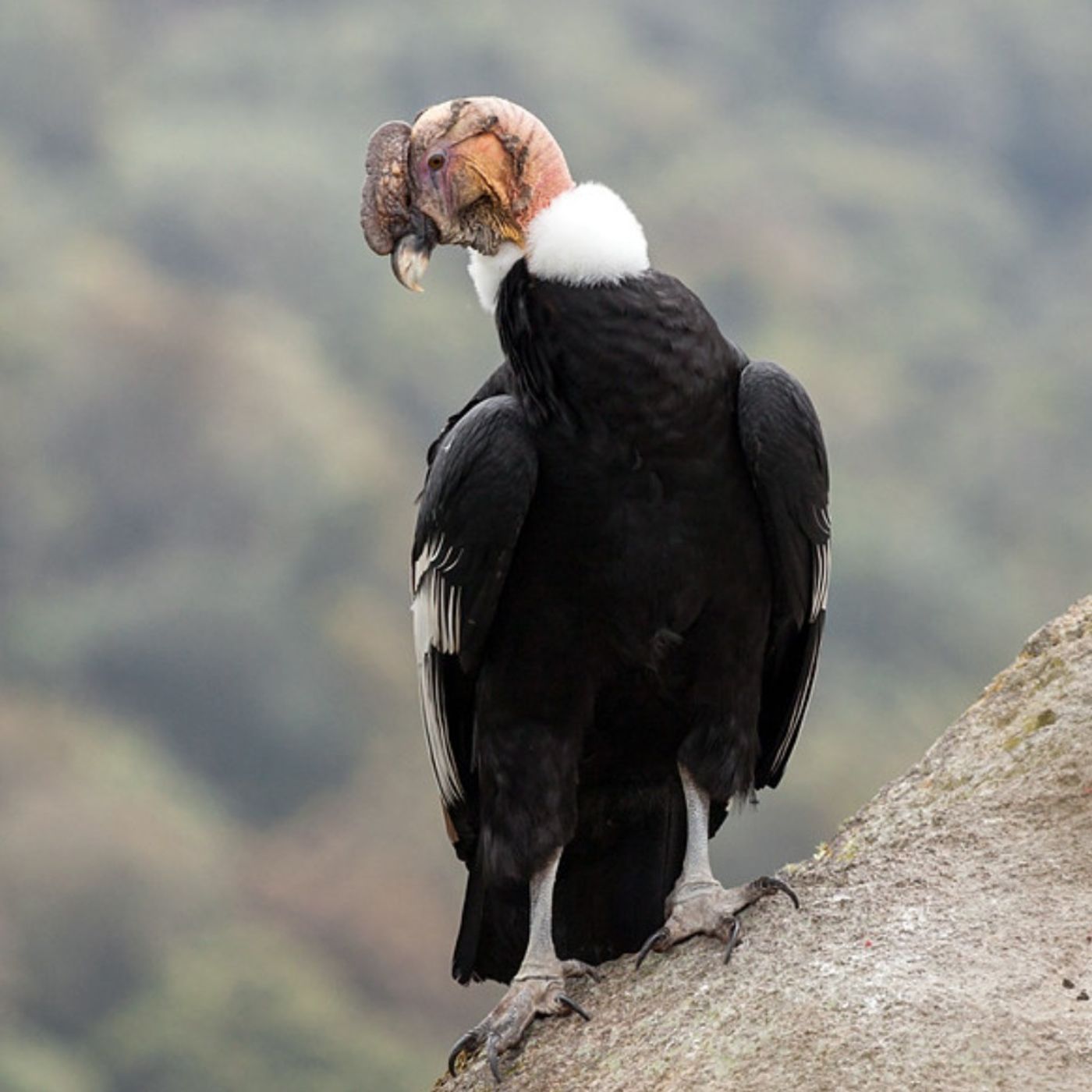
Andean Condors Sail the Wind
The Andean Condor is one of the largest flying birds in the world. With a wingspan that can stretch over 10 feet across, the condor doesn’t flap so much as sail, using rising thermals to glide across the Andes for hours. Once revered in Inca mythology as a messenger of the gods, the Andean Condor now graces the coat of arms of Bolivia, Chile, Colombia, and Ecuador. But like many scavengers, condor populations are declining due to threats like lead poisoning and habitat loss.More info and transcript at BirdNote.org.Want more BirdNote? Subscribe to our weekly newsletter. Sign up for BirdNote+ to get ad-free listening and other perks. BirdNote is a nonprofit. Your tax-deductible gift makes these shows possible. Hosted by Simplecast, an AdsWizz company. See pcm.adswizz.com for information about our collection and use of personal data for advertising.
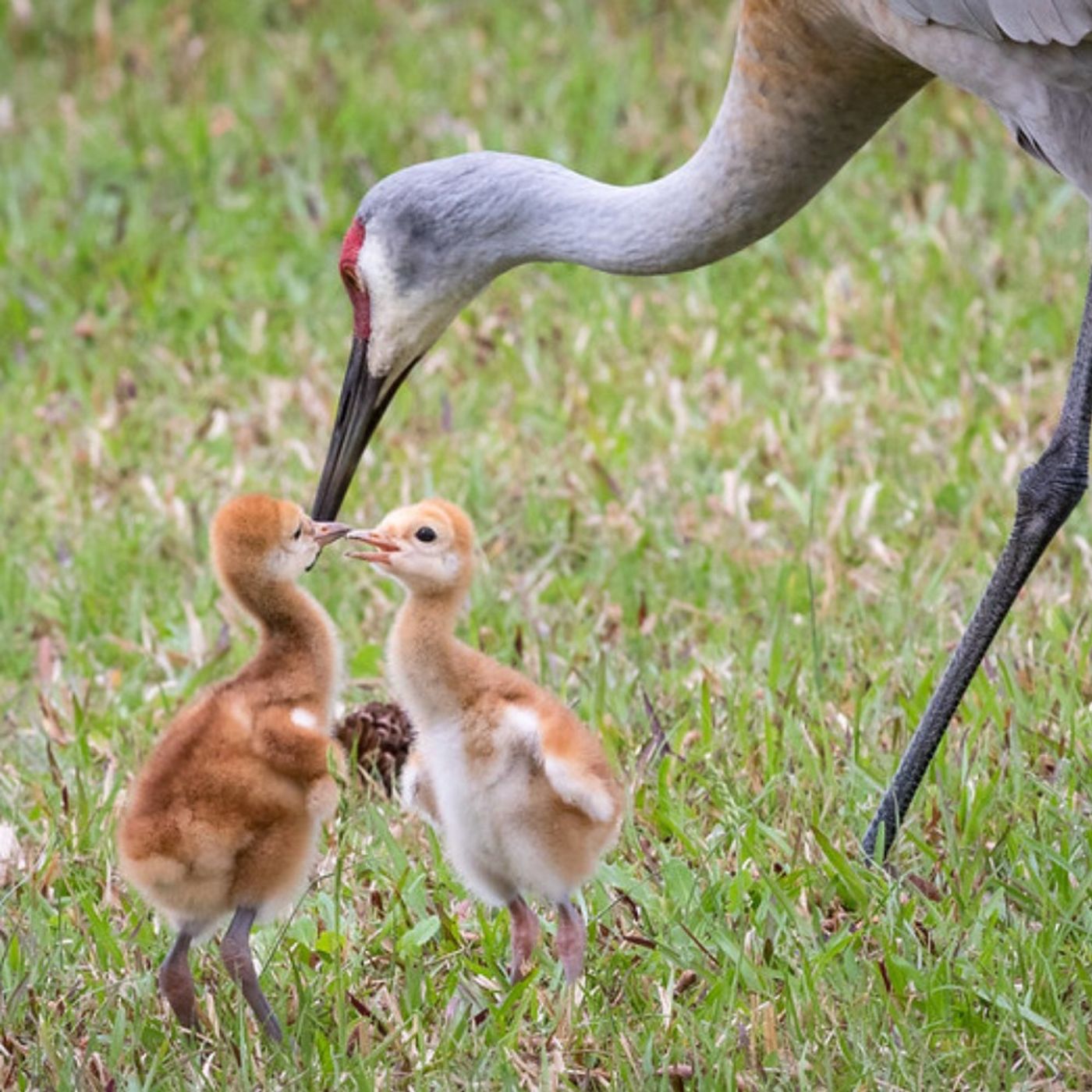
Sandhill Crane Families Stick Together
Sandhill Crane families form a close bond. A pair of adults might travel north with their young from the previous summer, along with grown-up offspring from several years ago. After the breeding season, families will stick together for the journey south and the winter, even in large flocks. The parents often remain together for the rest of their lives.More info and transcript at BirdNote.org.Want more BirdNote? Subscribe to our weekly newsletter. Sign up for BirdNote+ to get ad-free listening and other perks. BirdNote is a nonprofit. Your tax-deductible gift makes these shows possible. Hosted by Simplecast, an AdsWizz company. See pcm.adswizz.com for information about our collection and use of personal data for advertising.
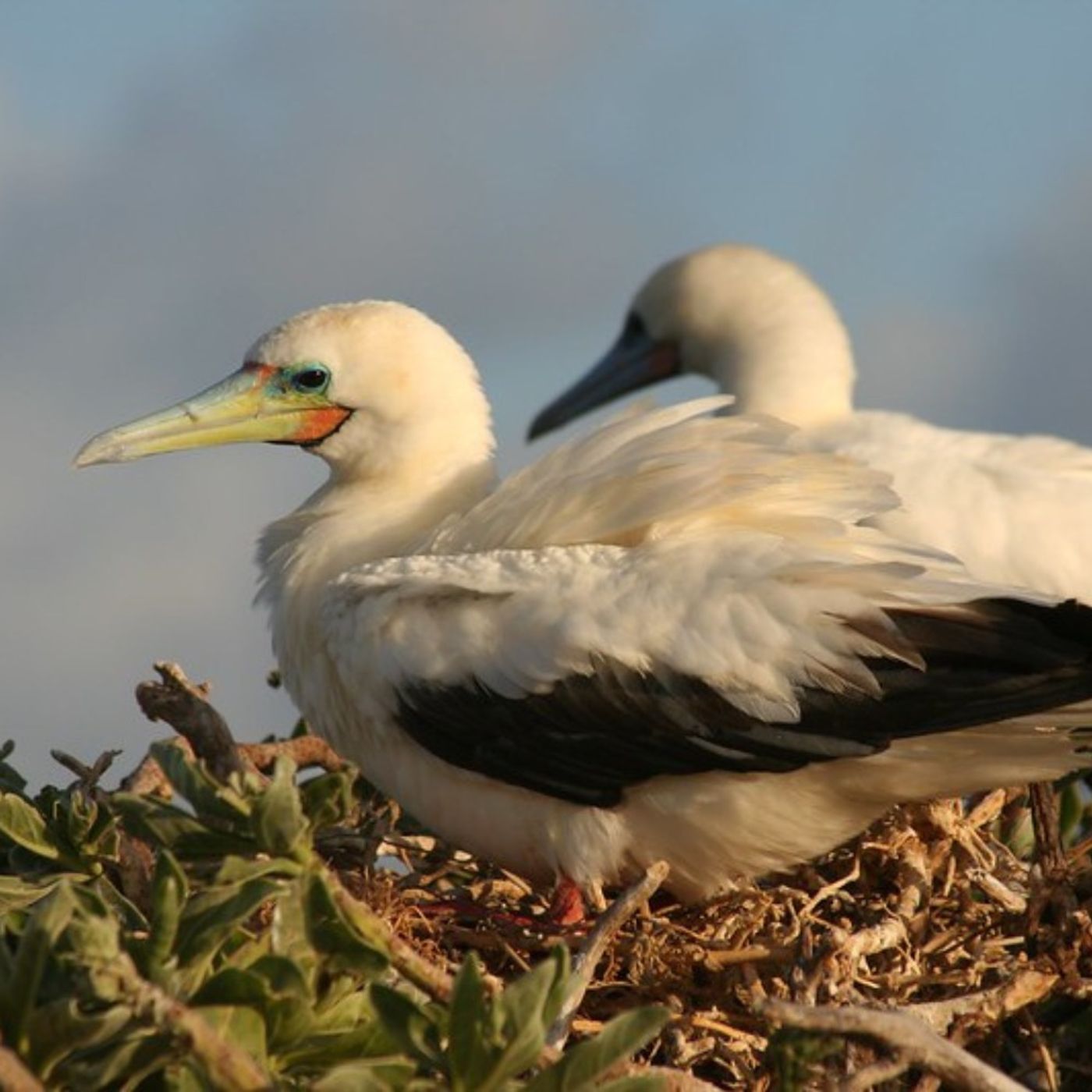
Seabirds, Trees and Coral
Palmyra Atoll is a ring-shaped island encircling a lagoon in the South Pacific. The atoll lost many native trees due to U.S. military activity during World War II. Conservationists have worked to restore the ecosystem. Seabirds such as Black Noddies and Red-footed Boobies nest in the island’s rainforest. Their guano enriches the soil, and the soil’s nutrients help support the coral ecosystem that provides fish for the birds.More info and transcript at BirdNote.org.Want more BirdNote? Subscribe to our weekly newsletter. Sign up for BirdNote+ to get ad-free listening and other perks. BirdNote is a nonprofit. Your tax-deductible gift makes these shows possible. Hosted by Simplecast, an AdsWizz company. See pcm.adswizz.com for information about our collection and use of personal data for advertising.