Beyond the Thesis With Papa PhD
371 episodes — Page 8 of 8

S1 Ep 22Cindy Hovington – Bringing Science-Based Advice to the Public Arena
In your life as a student or as a researcher, you may hear discouraging voices telling you you’re not good enough, not intelligent enough, or even not man enough for the task or project at hand. In today’s episode, we’re talking with Cindy Hovington, founder of CuriousNeuron.com, about why it is important to distance yourself from these opinions, to listen to your own inner voice and your own will, but also to take in account input coming from people who have more than a unidimensional impression of your personality and your abilities. Cindy did her Ph.D. in neuroscience at McGill University, in Montreal, where she focused on the cognitive and emotional difficulties experienced in people with psychosis. She volunteered with a program called BrainReach at McGill and this how she came to love knowledge translation. She then decided to pursue a postdoc in education and studied the impact of knowledge translation in the community. In parallel, she launched her company – Curious Neuron – a resource for parents and caregivers that provides science-backed info about child development and education where she has been able to merge both of her fields of study. Join the Papa PhD Postgraduate Career Exploration Group! What you’ll learn about in this episode: How teaching and popularizing science to a lay audience can help you get a better grasp and tell a better story of your research subject How a PhD or a postdoc allows you to develop the skills you need for your life projects, even if they fall outside of the academic realm The important role volunteering can play opening different professional vistas for you during grad school Transferrable skills you develop during a PhD The part perseverance and resilience play in obtaining a doctoral degree and the reality of a multifaceted intelligence Why it is crucial to encourage girls to go into STEM domains, if that’s where their interests lay This episode’s pearls of wisdom: “As grad students, we have a lot of presentations, but they are presentations that we give to other grad students, and researchers. But it was so different to be in the classroom and communicate what a neuron is to a child who is in grade 3. So when I was doing that as a volunteer, that's when it hits you: if I don't know what I'm talking about, if I don't know what a neuron is or how it communicates with other neurons, I can't talk about it to an 8 year-old or a 9 year-old. So, if you can explain something to a 9 year-old, you really understand what you're doing.” “Don’t be afraid to merge different fields.” “After finishing, I really changed in terms of my internal talk, you know – that negative internal self-talk became 'I can do anything I want'. Anything you want is at your grasp – you could just get it as long as you work for it.” Cindy’s links: LinkedIn – Linkedin.com/in/cindyhovington; Twitter – Twitter.com/curious_neuron; Instagram – Instagram.com/curious_neuron; Facebook – Facebook.com/curiousneuron; Website – CuriousNeuron.com; Podcast – Anchor.fm/cindy632 Leave a review on Podchaser ! Support the show on Patreon ! You might also like the following episodes: Fiona Robinson – Patient education: PapaPhD.com/6 James Bowers – Communication consulting: PapaPhD.com/39 Kelly Bullock – Science illustration: PapaPhD.com/9 Kirsten Sanford – Science communication: PapaPhD.com/13 Launching your podcast? If you're preparing to launch your podcast, you may be asking yourself what hosting platform to use. I launched Papa PhD on Bluebrry because I wanted a professional service that would interface with my WordPress website, that would robustly broadcast Papa PhD to all platforms, and that would allow me to grow my podcast in years to come. And these are the reasons why I'm recommending the Blubrry podcast hosting and syndication platform. Click on the button below or use the promo code PapaPhDBlue on the Blubrry website to unlock a one month free trial:

S1 Ep 21Margaret Magdesian – Finding Balance in the Eye of the Storm
How easy is it to be a female scientist? How easy is it to be a female founder and CEO? How easy is it to find work/life balance when you wear both of these hats and are building a family, too? In this episode, you will be hearing from Margaret Magdesian, founder and CEO of Ananda Devices, about her academic path, about how she transitioned to the biotech startup space, and about her answers to these important questions. Margaret Magdesian is a scientist-entrepreneur with over 15 years of experience in biopharmaceutical research. In collaboration with researchers from McGill University, she has developed a great technology to rapidly grow human nervous-system-on-a-chip. Seeing the potential of this technology to accelerate drug development, in 2015 she raised funds with investors and launched the company Ananda Devices. The company has since won over 25 grants and awards in science and innovation including the 2016 Top 10 Quebec Discovery of the Year, the 2018 Top 7 SheEO in Canada, 2018 Canadian Export Challenge and 2019 Cartier Women’s Initiative Awards. Join the Papa PhD Postgraduate Career Exploration Group! What you’ll learn about in this episode: The differences between research in academia and in the startup context The importance of understanding your risks when embarking on a project, be it academic or entrepreneurial How university-based awards and programs can boost you in your startup project stemming from academic research The culture differences between academia and industry The value and social impact women can bring to the entrepreneurial arena The importance of being able to articulate your research in lay terms and adapt your communications to each different audience This episode’s pearls of wisdom: “When we finish a PhD, we know how to get information. When someone talks to you about a new genetic approach, you know how to go to PubMed and go deep down. So what we really learn from a PhD is how to get information. I’m very disciplined – I looked for books about financial budgets, scaling up, how to hire people, I read one about introverts and leadership, so several books that really relate to me.” “What drives me every morning to go to work is the big goal, a sense of mission – why am I doing this? Sometimes it seems overwhelming because there’s so much to do… But it’s ok, I have a mission. Just grab some paper and step by step – what I ‘m going to do first, second, third. And this is how you organize things and then move along, you know? And it’s so nice everyday that you tick a box. You see the mission coming, and it’s so much more exciting than depressing.” Margaret’s links: LinkedIn – Linkedin.com/in/margaret-magdesian-89954036; Website – Anandadevices.com; SheEO – SheEO.world; TEDx talk – Youtu.be/xNYq6PwMV0U; McGill Dobson Cup – McGill.ca/dobson/entrepreneurship-programs/mcgill-dobson-cup Leave a review on Podchaser ! Support the show on Patreon ! You might also like the following episodes: Chris Kent – Biotech Startup CEO: PapaPhD.com/11 James Bowers – Communication consulting: PapaPhD.com/39 Kirsten Sanford – Science communication: PapaPhD.com/13 Margaret Magdesian – Biotech Startup CEO: PapaPhD.com/21 Launching your podcast? If you're preparing to launch your podcast, you may be asking yourself what hosting platform to use. I launched Papa PhD on Bluebrry because I wanted a professional service that would interface with my WordPress website, that would robustly broadcast Papa PhD to all platforms, and that would allow me to grow my podcast in years to come. And these are the reasons why I'm recommending the Blubrry podcast hosting and syndication platform. Click on the button below or use the promo code PapaPhDBlue on the Blubrry website to unlock a one month free trial: Try one free month with Blubrry ! If you are starting a serious podcast project, do consider one of the first podcasting hosts out there, offering state of the art services,
S1 Ep 20Drew Slack – Powering Through Change with Drive and Positivity
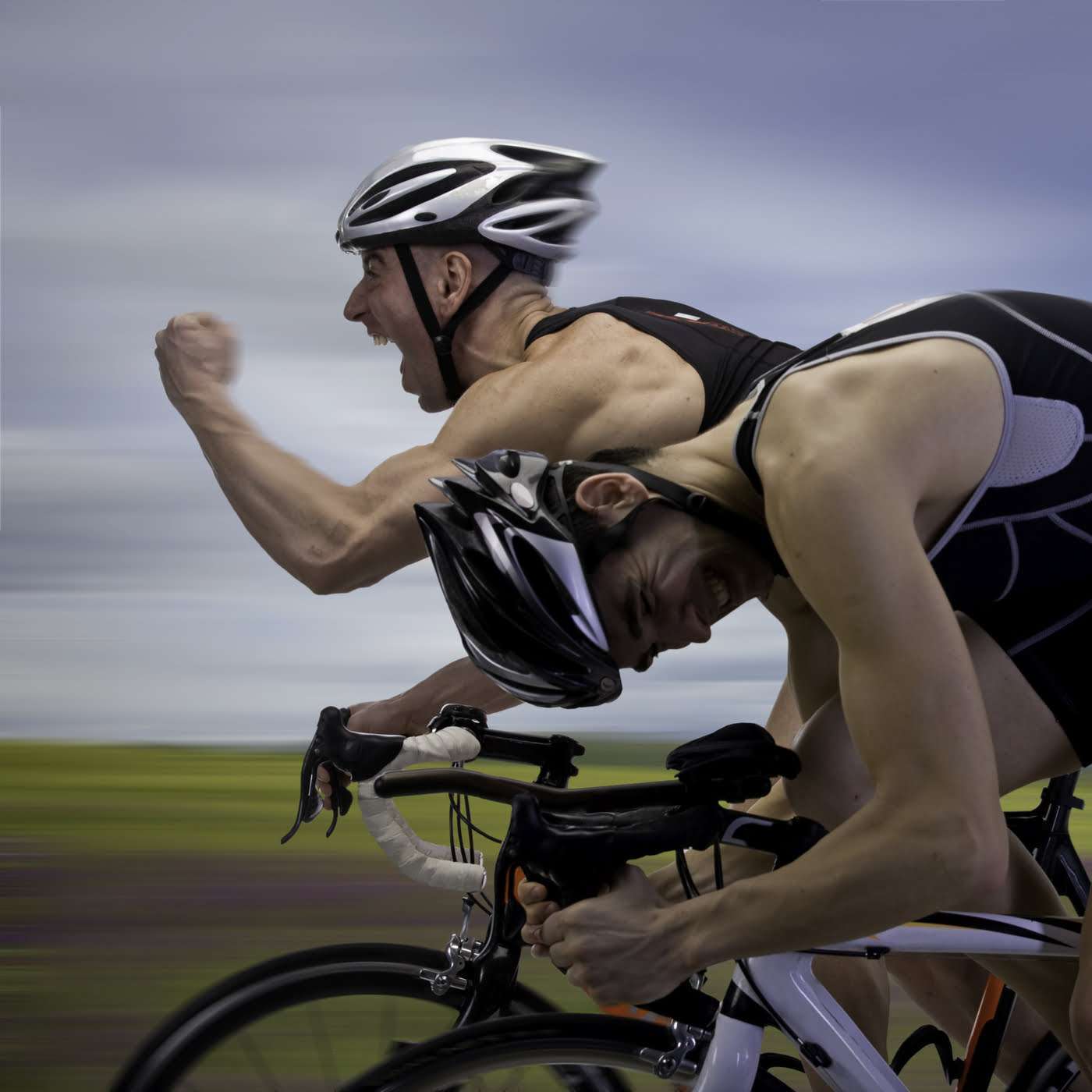
What happens when you have all your ducks lined up and the universe throws you a curveball? That’s the moment when you have to regroup, reflect deeply on what you want the new path that is opening up to you to look like and trace a game plan that will allow you to come out winning. Drew Slack was well on his way towards a life in the professoriate when his curveball arrived. In today’s episode, we’ll learn about the principles, the resources and the values that were key in building the career he has carved out for himself today. Drew Slack is an experienced Medical Affairs Director with accomplished career history in the biotechnology and health regulatory sectors. Skilled in Oncology, Molecular Biology, Biotechnology, Management, and Clinical Research. Scientific professional with Postdoctoral experience in Translational & Clinical Oncology Research, with Ph.D. focused in Molecular Pharmacology and Oncology from McGill University. Join the Papa PhD Postgraduate Career Exploration Group! What you’ll learn about in this episode: Everyone is subject to sudden changes coming from external factors, such as the abrupt cancellation of a grant program The importance of physical activity and community outside your research as a graduate student and as a postdoc The regulatory domain as a career outlet for PhDs in the life sciences How to rebrand yourself when interviewing for a non-academic position How informational interviews can help you navigate the hiring process for jobs in governmental organizations Moving laterally inside an organization to reach a position that fits you best How your hobby or your side-gig can shape your professional future and have a tangible impact on your career opportunities The importance of committing a portion of your time to you and your own personal and professional development This episode’s pearls of wisdom: “That confidence going in is so important, right? If you don’t possess that, you’re not going to be fluid, you’re not going to smile, you’re not going to present yourself in a way that is natural and authentic. So, I think this is important to secure the position. You have to present yourself professionally well, but you have to present yourself well personally, as well. And I think all of those things are tied together by having that confidence that you know the organization’s mission and values, you’ve read every document that is publicly available, you’ve really taken every step to educate yourself about the position… If you haven’t done that, if you haven’t completed your due diligence in that regard, then you’re not ready.” “Postdoctoral work is the most physically and emotionally challenging environment, I think. I think that’s where people find themselves most explicitly tested. It’s a real walk of faith to do that. So, I say that’s one thing – is that you really learn to trust and rely on yourself and without question, that’s where you develop your strongest work ethic and determination.” “That capacity to calculate and to actually take risks is a skill tat every good academic researcher develops almost to the point of intuition. And I do think that that’s amongst many of the skills that you develop in a research setting – that self-reliance, that confidence that you inevitably have to develop in your own hypothesis, in the quality of your own work. You’re really the captain of your own ship and I don’t think we give ourselves enough credit for it. When you go into professional environments, you see that you, in some of those regards – autonomy, self-sufficiency, professional engagement – all of these things, I think, help PhDs stand above their competitors.” Drew’s links: www.Exactis.ca; LinkedIn: LinkedIn.com/in/drew-slack-a89974111/ Leave a review on Podchaser ! Support the show on Patreon ! You might also like the following episodes: Chris Kent – Biotech Startup CEO: PapaPhD.com/11 Sathy Rajasekharan – Global Health: PapaPhD.com/16

S1 Ep 19Abel Polese – Building a Career – Failure by Failure
Can life be made exclusively of successes? Can you find fulfillment in a job that pays well but is not aligned with your values? Does every postdoc get to be a professor? In this episode of Papa PhD, we address all these important questions and much more, as we talk with Abel Polese about his academic career, about all the other things he has going on and about how he glues everything together to achieve balance. Abel Polese is a researcher, trainer, writer, manager and fundraiser dealing with development and capacity building in Europe and Asia. He is also interested in Science Excellence, Open Science and alternatives indicators to measure science performance and is the author of “The SCOPUS Diaries and the (il)logics of Academic Survival: A Short Guide to Design Your Own Strategy and Survive Bibliometrics, Conferences, and Unreal Expectations in Academia”, a reflection on academic life, research careers and the choices and obstacles young scholars face at the beginning of their career. Join the Papa PhD Postgraduate Career Exploration Group! What you’ll learn about in this episode: How to build a career based on diversification, with a part-time academic position The day-to-day in the domain of area studies in social sciences Dealing with anxiety in academia and in life Why it may be worth it to trade a secure career for a fulfilling one The importance of giving priority to your mental health when you need to, to allow you to bounce back and pick up where you left off This episode’s pearls of wisdom: “Don’t kind of postpone what you want to do simply because you think ‘Ah… I’m going to get tenure and then I’m going to have fun’. If you don’t learn to have fun every single day of your life, you’ll just forget about it. And then, your going to moan the rest of your life.” “It’s good to be stressed – it brings adrenalin and then it brings you desire to go further. But don’t overstress and think that your life will be over if you don’t get professorship, because this is absolutely not true. And all the greatest successes, they start with a failure or several failures. I mean, success is the by-product of failure.” “Not getting one thing is just… let yourself open to other things.” “Train yourself to live in uncertainty because there is nothing certain, even if you have tenure track. I mean, your head of department might change, or you might hate them so much that you want to change jobs. Or if you are in the business sector, your company might go bankrupt at any time.” Abel's links: Twitter – @Abiquitous and @Scopusdiaries; LinkedIn – Linkedin.com/in/abel-polese-4b2470130/; Blog post on the SCOPUS diaries – ThesisWhisperer.com/2019/09/11/fail-again-fail-better-and-then-write-a-book-about-it/; The 7-year postdoc – Blogs.ScientificAmerican.com/guest-blog/the-awesomest-7-year-postdoc-or-how-i-learned-to-stop-worrying-and-love-the-tenure-track-faculty-life/ Leave a review on Podchaser ! Support the show on Patreon ! You might also like the following episodes: David (Viva Frei) Freiheit – Youtube content creator: PapaPhD.com/15 Tamarah Luk – Entertainment Law: PapaPhD.com/10 Kirsten Sanford – Science communication: PapaPhD.com/13 Inês Thomas Almeida – Musicology: PapaPhD.com/27 Launching your podcast? If you're preparing to launch your podcast, you may be asking yourself what hosting platform to use. I launched Papa PhD on Bluebrry because I wanted a professional service that would interface with my WordPress website, that would robustly broadcast Papa PhD to all platforms, and that would allow me to grow my podcast in years to come. And these are the reasons why I'm recommending the Blubrry podcast hosting and syndication platform. Click on the button below or use the promo code PapaPhDBlue on the Blubrry website to unlock a one month free trial: Try one free month with Blubrry ! If you are starting a serious podcast project, do consider one of the first podcasting hosts out there,

S1 Ep 18Simon Moore – From Academia to Industry
In today’s life, your ability to pivot and to embrace new projects is key. You are actually expected to change employment on a 3 to 5-year cycle in the current job market. These pivots can happen between academic positions, between academia and industry, and between non-academic jobs. This week, we’ll be hearing from Simon Moore, whose stellar academic career has led him into a successful and fulfilling position in the pharmaceutical industry, where the scientific acumen he accrued throughout his academic carreer is put to use and challenged to its full extent. During both graduate studies at McGill University (Montreal, Canada) and postdoctoral studies at Columbia University (NYC), Simon examined fundamental topics of neural regeneration with the sole focus of securing a tenure-track academic research position. However, despite a very respectable publication record that included a first authorship in Science, a sought-after NIH transition grant (K99) and interviewing at over a dozen outstanding departments, nothing materialized. He then shifted his focus to industry and made the leap to a small biotech called InVivo Therapeutics in Cambridge, MA. They were developing treatments for spinal cord injury. It ended up being an outstanding experience where Simon learned about industry R&D practices, FDA communications and the diverse professionals required to develop complex therapies. Unfortunately, after about 4 years the lead clinical program ran into trouble and the entire R&D department was let go. He then joined Novellus (also in Cambridge, MA) to learn about and develop in vivo gene editing therapies. After about 8 months, he was approached by Rocket Pharmaceuticals (NYC) with an outstanding opportunity to help them bring gene therapies programs to the clinic. There, he contributed to the successful clinical entry (IND clearance) of two gene therapies to treat serious genetic diseases affecting young children. Simon recently joined Takeda’s Global Gene Therapy Research department in Cambridge, MA, where he now benefits of an outstanding and well-supported group, several gene therapy programs at various stages of development and the vast resources of a large pharmaceutical company. Join the Papa PhD Postgraduate Career Exploration Group! What you’ll learn about in this episode: How a coop undergrad can help you gain industry experience early on The importance of a social network and of extracurricular activities during grad school Leveraging your experience in research when preparing for an interview in industry Defining criteria that are the most important for you when choosing a PI for your graduate studies Transitioning from postdoc to industry for foreign researchers (immigration hurdles) How to approach someone for an informational interview The day to day of an industry position for a PhD Simon’s pearls of wisdom: “Being a PhD, you forget how few PhDs there are in the world. I think I saw a statistic that 2% of the population of the US has a PhD. You’re very unique, and you can forget about that when you’re surrounded by PhDs.” “The other thing you have to learn is to just drop projects. In industry, if something’s not working, or a project’s not going, the quicker you can figure that out and drop it… And it’s hard, because you’ve invested two or three years, and you’re like “ no – we’ve got to pivot, we’ve got to move on from this, and now.” "Although I entered industry reluctantly, I am very happy how it turned out. The best career advice I can give is to treat everyone with respect, put in the work to do your job properly and keep re-evaluating where you want your career to go – it will never stop changing." Simon's links: LinkedIn: Linkedin.com/in/SimonWayneMoore; Kennedy Lab: KennedyLabMcGill.com; Langer lab: LangerLab.mit.edu; Takeda.com; Leave a review on Podchaser ! Support the show on Patreon ! You might also like the following episodes:

S1 Ep 17Virginie Levasseur – La passion pour le développement international
Les cheminements que vous suivrez après vos études graduées peuvent prendre des tournants très variés. Il se peut que vous suiviez un parcours purement académique, une carrière en industrie ou que vous vous lanciez en entrepreneuriat. Quel que soit votre choix ou la passion qui vous motive, les habiletés et l’endurance que vous aurez acquises tout au long de votre maîtrise ou de votre doctorat seront de précieux atouts qui vous serviront au quotidien. Aujourd’hui, Virginie Levasseur partagera avec vous son trajet ainsi que les stratégies et les initiatives qui l’ont aidée à tirer le meilleur parti de son temps à l’université et à trouver sa place dans le domaine du développement international. Virginie Levasseur, Ph.D. en Agronomie Tropicale, évolue dans le domaine de la recherche et du développement international depuis 20 ans. Ses activités professionnelles, menées principalement en Afrique de l’Ouest, en Amérique latine et en Haïti, lui ont permis de développer une connaissance approfondie des systèmes de production agricole et agroforestière, des logiques paysannes qui sous-tendent le maintien de ces systèmes, la répartition des tâches, des responsabilités et des revenus entre les femmes et les hommes, ainsi que des organisations de productrices et de producteurs qui appuient leur développement. Parmi ses réalisations, on compte la mise sur pied d’un centre de recherche et de développement pour les cultures maraîchères en Afrique de l’Ouest. Au cœur de ses actions, le souci d’agir sur l’ensemble de la filière : promotion de technologies agricoles durables, vulgarisation de paquets techniques pouvant renforcer la résilience des écosystèmes et des moyens d’existence ruraux face aux impacts des changements climatiques, amélioration de la productivité et des revenus des productrices et des producteurs, soutien aux organisations paysannes pour l’accès aux intrants, la transformation et la commercialisation des produits maraîchers. Elle est présentement directrice du programme Afrique chez Socodevi, où elle travaille depuis 9 ans. Joignez-vous au groupe d'exploration de carrières Papa PhD ! Ce que vous apprendrez dans cet épisode : L’importance de participer aux associations étudianteLes différentes retombées du fait de s’impliquer dans les conseils d’administration de votre universitéQuand commencer à envoyer des CV et comment s'y prendreLe profil d'un chercheur en développement internationalL'intérêt d'un doctorat en co-tutelle entre deux universités pour faire un doctorat « sur mesure » pour vousLes perles de sagesse de Virginie :« On est ce qu’on est et il faut s’accepter, à un moment donné. Et c’est pour ça, aussi, qu’on prend des chemins différents. »« Wow! Tu as un PhD, tu dois être intelligente… Je ne suis pas intelligente, je suis déterminée – il y a une grosse différence! »« On essayait de me dire tout au long de mon entrevue que je n'avais pas les connaissances de ci, je n'avais pas les connaissances de ça, et je n'arrêtais pas de dire "oui, mais j'ai un doctorat – je suis capable d'apprendre vite sur n'importe quel sujet, c'est ça ma caractéristique de base, je peux approfondir n'importe quel sujet, je peux lire n'importe quoi. Je ne vais pas devenir une spécialiste dans tout, mais je vais devenir une très bonne généraliste – faites-moi confiance là-dessus. »Les liens de Virginie: LinkedIn: LinkedIn.com/in/Virginie-Levasseur-3b9b1946; Socodevi.org; Facebook: Facebook.com/Socodevi; Twitter: @Socodevi; Effet A: Effet-A.com Laissez une évaluation sur Podchaser ! Soutenez Papa PhD sur Patreon ! Vous aimerez aussi ces épisodes : David (Viva Frei) Freiheit – Youtube content creator: PapaPhD.com/15Tamarah Luk – Entertainment Law: PapaPhD.com/10Kirsten Sanford – Science communication: PapaPhD.com/13Inês Thomas Almeida – Musicology: PapaPhD.com/27

S1 Ep 16Sathy Rajasekharan – Landing Your Dream Job Through Exploration and Networking
Your dream job is out there somewhere. The one you were made for, the one you deserve. It may be one handshake away, one conversation away, one introduction away. So, make sure you give yourself the chance to attend events, to go to seminars in domains that interest you but are outside of your area of research. This will give you the opportunity to learn about career spaces adjacent to yours and to incrementally move towards that conversation and that position that will bring you meaning and fulfilment. In this episode, we’ll be hearing from Sathy Rajasekharan about the different stages that brought him from the bench to the global health arena. Sathy Rajasekharan is Chief Innovation Officer at Jacaranda Health, and overseas development of innovative tools, research projects, and public sector and academic partnerships, with the aim of leveraging Jacarandas expertise and insight to influence maternal healthcare in East Africa. Prior to joining Jacaranda Health, Sathy was a Senior Program Manager for the Drug Access and Health Financing teams of the Clinton Health Access Initiative (CHAI), and led CHAIs work providing technical assistance to the Swaziland Ministry of Health. He has held previous positions as the Associate Director of the McGill University Centre for Biomedical Innovation (MCBI), where he helped develop a commercialization plan for health technologies. He was also the Associate Director of a translational research program at the Montreal Neurological Institute. Sathy holds a PhD in Neurology and Neurosurgery. Join the Papa PhD Postgraduate Career Exploration Group! What you’ll learn about in this episode: The importance of setting up your expectations and your objectives for your graduate research How learning new skills can open your career horizons and home in on your deep values and interests How a job or an internship in a small team or in a small company can be an opportunity to rapidly level up by taking on challenging responsibilities How to look for alternative academic careers, if you want to work in close connection with university and with research, but do not want to work in research yourself Why you should attend events and network around your department/institute/university The importance of preparing your interview with each potential employer and of practicing it, to the point where your pitch comes out naturally and you can focus on the points the employer is looking for in particular This episode's pearls of wisdom: “I think it’s just great to be a student of as much as possible. Even if your career path is academia, exposing yourself to a broad range of thoughts and thinking, and skills is so important. It’s so enriching for a human to do that.” “I think that is a fundamental skill that most people sell short in graduate school – the ability to process information very quickly and apply it.” “The more you talk, the more you pitch, right? So you learn how to refine the story about yourself. The question everyone is going to ask is “so why do you want to do this?” and why they should hire you. And you just come up with your unique selling proposition as much as possible as a candidate.” “No one ever asks you in an interview how many hours a day you work, right? They don’t care. What they really want to know is ‘what have you done?’ And maybe that’s your scientific output, but maybe it’s your hobby or your side-gig. So if you can do it, try and do it, try and find that balance where you’re able to learn different things and do different things.” Sathy's links: LinkedIn: LinkedIn.com/in/SathyRajan; Website: JacarandaHealth.org Leave a review on Podchaser ! Support the show on Patreon ! You might also like the following episodes: David (Viva Frei) Freiheit – Youtube content creator: PapaPhD.com/15 Tamarah Luk – Entertainment Law: PapaPhD.com/10 Kirsten Sanford – Science communication: PapaPhD.com/13 Inês Thomas Almeida – Musicology: PapaPhD.com/27

S1 Ep 15David Freiheit – Merging Law, Popularization, and Content Creation
Life is not in black and white. Your life, who you are, is a patchwork stemming from your upbringing, your experiences, who you've met, the choices you've made. What you studied is also a piece of this patchwork, but it's not the whole thing. And the more you go into your adult life, the more you end up painting that mosaic to your iage and to your tastes. In this week's interview, you'll be hearing from David Freiheit about getting a law degree and becoming a litigator, and about how he has been able to marry his knowledge of law to his love of photography and film. David (Viva Frei) Freiheit began his career in law in 2005 at one of Canada's largest law firms. After the birth of his first daughter, he left the big-firm life to start his own practice, which he built into a boutique litigation firm of 4-5 lawyers and over 250 clients. He ultimately expanded his professional and creative horizons by delving into YouTube videography. 26 million views later, with over 51 million watch minutes, it's become something bigger than a pastime, and has led to him vlogging almost daily. Join the Papa PhD Postgraduate Career Exploration Group! What you’ll learn about in this episode: Tips to help you integrate and make the most of your studies as an out-of town student How participating in student life can enrich your time at university and how it is perceived by employers later on The importance of establishing a rapport with your professors throughout your studies Key skills you can expect to develop in law school This episode’s pearls of wisdom: “What skills were very important for you that you learned in law school that then served you a lot in your work as a lawyer? It's the one skill, and I don't think it's unique to law – and it's not so much a skill, it is a question of appreciating what you don't know and and being aware of what you don't know before thinking you know something.” "Life moves quickly. Don't stick to something for ten years if you know you hate it after five." "As far as study goes, be diligent, make friends with the students, and make friends with the professors. Not friends like in 'buddy-buddy'... just let the professors know that you're interested in what you're studying, what's going on, because when a professor knows that you're serious, and that you exist, and that you're responsible, and that you'te taking thing seriously, on the one hand, it's good to know the professors personally, but, on the other hand, if it comes to asking for a revision of an exam, and the professor knows that you've been working hard all semester, versus they've never seen you except when it comes time to complain about the exam, it changes things a little bit." "Get out there, meet people, get to know the city – just don't get stuck in the habit of going to school, going home and not meeting people and not getting out there... Sun and exercise, also!" David's links: Youtube: Youtube.com/VivaFrei; Facebook: Facebook.com/VivaFrei; Twitter: Twitter.com/theVivaFrei Leave a review on Podchaser ! Support the show on Patreon ! You might also like the following episodes: David (Viva Frei) Freiheit – Youtube content creator: PapaPhD.com/15 Tamarah Luk – Entertainment Law: PapaPhD.com/10 Kirsten Sanford – Science communication: PapaPhD.com/13 Inês Thomas Almeida – Musicology: PapaPhD.com/27 Launching your podcast? If you're preparing to launch your podcast, you may be asking yourself what hosting platform to use. I launched Papa PhD on Bluebrry because I wanted a professional service that would interface with my WordPress website, that would robustly broadcast Papa PhD to all platforms, and that would allow me to grow my podcast in years to come. And these are the reasons why I'm recommending the Blubrry podcast hosting and syndication platform. Click on the button below or use the promo code PapaPhDBlue on the Blubrry website to unlock a one month free trial:

S1 Ep 14Simon Landry – Un trajet en recherche et en communication en français
Pourquoi faire une maîtrise ? Pourquoi faire un doctorat ? Tout ça peut paraître bien compliqué et bien difficile quand on termine notre baccalauréat. Une conversation avec un professeur sur un sujet qui vous intéresse peut changer votre perspective et vous projeter dans une aventure où votre détermination et votre persévérance seront mis à l’épreuve et d’où vous sortirez armés d’un ensemble d’habiletés bien particulières. Dans cet épisode, Simon Landry partage avec nous son expérience et son trajet au doctorat et les leçons qu’il en a retiré pour sa vie professionnelle. Simon Landry est un Acadien. Il a fait son doctorat à l'Université de Montréal en audiologie. Simon a lancé une application, travaillé pour une compagnie de réalité virtuelle, fait des vidéos YouTube neuroscientifiques et un balado. Il travaille maintenant en transfert des connaissances à Toronto et essaie de créer une compagnie en ligne (aventure qui est partagée sur son balado qui s’apelle Fait comme ça). Joignez-vous au groupe d'exploration de carrières Papa PhD ! Ce que vous apprendrez dans cet épisode : Le syndrome de l’imposteur et comment y faire face quand on démarre nos études graduées L’importance de se raconter son sujet de recherche et de savoir le raconter à un public non scientifique Quel impact a-t-on comme chercheur sur la société, dans la vraie vie, et quel impact cela peut avoir dans notre satisfaction par rapport à notre sujet d’étude Le rôle qu’un blogue, un portfolio en ligne peuvent jouer dans la promotion de vos habiletés et de vos connaissances et dans votre recherche d’emploi à venir Le questionnement identitaire qui peut survenir quand on quitte le milieu académique Les pépites d'or de l'épisode : « J’ai toujours vu mon doctorat comme un projet que mon superviseur m’a dit ‘vas-y, c'est à toi, je m’attend à quelque chose dans 5 ans.' Donc je sais que je suis capable de créer des connaissances – ce qui est quand-même incroyable, quand tu y penses. Je suis capable de créer quelque chose de rien et prendre 5 ans pour le faire – je suis capable d’entreprendre des projets de très, très grande envergure. » « Je suis capable de voir les liens entre les différents systèmes parce que je sais que je peux aller très pointu dans quelque chose, mais que si je regarde d’une autre perspective, eh bien, cette affaire-là a mille autres liens qui interagissent avec mon sujet de mille différentes manières. » « L’intelligence, c’est juste la persévérance. Ce qu’on considère comme de l’intelligence, c’est juste être capable de persévérer et de lire des articles, et juste continuer et de ne pas arrêter quand on frappe un mur. » Les liens de Simon : Twitter – @DrSimonLandry ; LinkedIn – www.linkedin.com/in/simonlandry Laissez une évaluation sur Podchaser ! Soutenez Papa PhD sur Patreon ! Vous aimerez aussi ces épisodes : David (Viva Frei) Freiheit – Youtube content creator: PapaPhD.com/15 Tamarah Luk – Entertainment Law: PapaPhD.com/10 Kirsten Sanford – Science communication: PapaPhD.com/13 Inês Thomas Almeida – Musicology: PapaPhD.com/27 Envie de lancer un podcast? Mon ami et collègue podcasteur Marco Bernard et son Académie du Podcast ont ce qu'il vous faut si vous avez une idée, mais qu'il vous manque les connaissances pour mettre en place votre podcast. Dans la formation Podcasting 101, Marco a préparé plus de 20 vidéos et des tutoriels où il explique quel équipement se procurer, comment faire le montage et comment le mettre en ondes sur les principales plateformes. Cliquez maintenant pour vous inscrire et avoir accès à la communauté ! Formation Podcasting 101 de l'Académie du Podcast Dans la formation Podcaster Pro, il a pensé aux professionnels et créateurs qui non seulement veulent lancer leur podcast, mais ont des objectifs précis à atteindre avec celui-ci. C'est en pensant à eux qu'il a préparé plus de 80 vidéos et des tutoriels où il explique non seulement comment lancer son podcast,

S1 Ep 13Kirsten (Dr. Kiki) Sanford – Following the Passion of Science Communication
Download "Tools for Your PhD Journey" Now ! If you decide to embark on the graduate studies journey, you may find yourself telling stories. Stories about ideas, stories about science, stories about stories. You will focus and research until late hours of the night to find that piece of information, to fill that gap in the narrative. You will crumple a whole chapter that isn’t working and restart from scratch. And one day, you’ll have in your hand the final version, and you will share it with the world, placing one more tile in the ever-growing mural that is scientific knowledge. This week, we’ll be hearing from Kirsten Sanford, whose central passion in life is to take this constantly evolving patchwork of questions, results and publications and make it understandable to an audience as vast as possible. Kirsten (Dr. Kiki) Sanford is a science communicator with over 15 years of experience in media, science journalism, and informal science education. She received a BS degree in Wildlife, Fisheries, and Conservation Biology, and a PhD in Neurophysiology from UC Davis before transitioning into a career focused on translating scientific research to various audiences and helping scientists in their communications efforts. In 2015, Dr. Kiki founded Broader Impacts Productions, a boutique production agency dedicated to science storytelling. Additionally, she founded, produces, and hosts the This Week in Science (TWIS) podcast, a weekly live show that covers a multitude of science topics in a talk-show format, and is also the VP of Public Relations for Science Talk, a non-profit science communication organization. Join the Papa PhD Postgraduate Career Exploration Group! What you’ll learn about in this episode: The value of investing time on your broader interests while staying focused on your research subject How internships can jump-start your career transition through networking and opportunities, but also as a platform to learn new, specialized skills organically The importance of observing, listening, and asking questions when you have the chance, when surrounded by people who work in your domain of interest How your graduate research project management and learning skills translate into your post-MSc or Post-PhD career How starting a student club or group can set you up for your professional future This episode's pearls of wisdom: “I was able to pick things up and still try to pick new things up even though technology keeps moving forward – “Oh, I have to learn this new skill, I have to do this new thing…” – that is grad school! Every time you want to add a new technique to your studies to be able to ask a certain question, you learn something new. This mindset, you learn as a student – that you can always learn something.” “Impostor syndrome is something that we are hearing about a lot these days. Just know that if you are in graduate school, you have gotten there for a very good reason, and you are a capable, intelligent human being.” “Find other people that you can connect with. I think that number 1 – humans are social beings, and if we keep all these things to ourselves, it’s damaging, in the end, and we need to be able to connect with other people about these thoughts of this thing we’re attempting, you know? Graduate school is a long and arduous adventure and you’re not always going to feel like you’re winning. It’s not always winning – there’s a lot of losing, there’s a lot of failure, and it makes you feel really bad, and it makes you doubt yourself. So find other people. If you don’t have a great relationship with your PI, find other grad students, find other advisors – you need to search for those people. Sometimes they come to you, but you need to be willing to open your eyes and see them as a possible connection.” “Pay attention to opportunities, pay attention to the world around you so you see the opportunities and are able to act on them if it’s something that you want.”
S1 Ep 12Adriana Bankston – From PhD to Science Policy
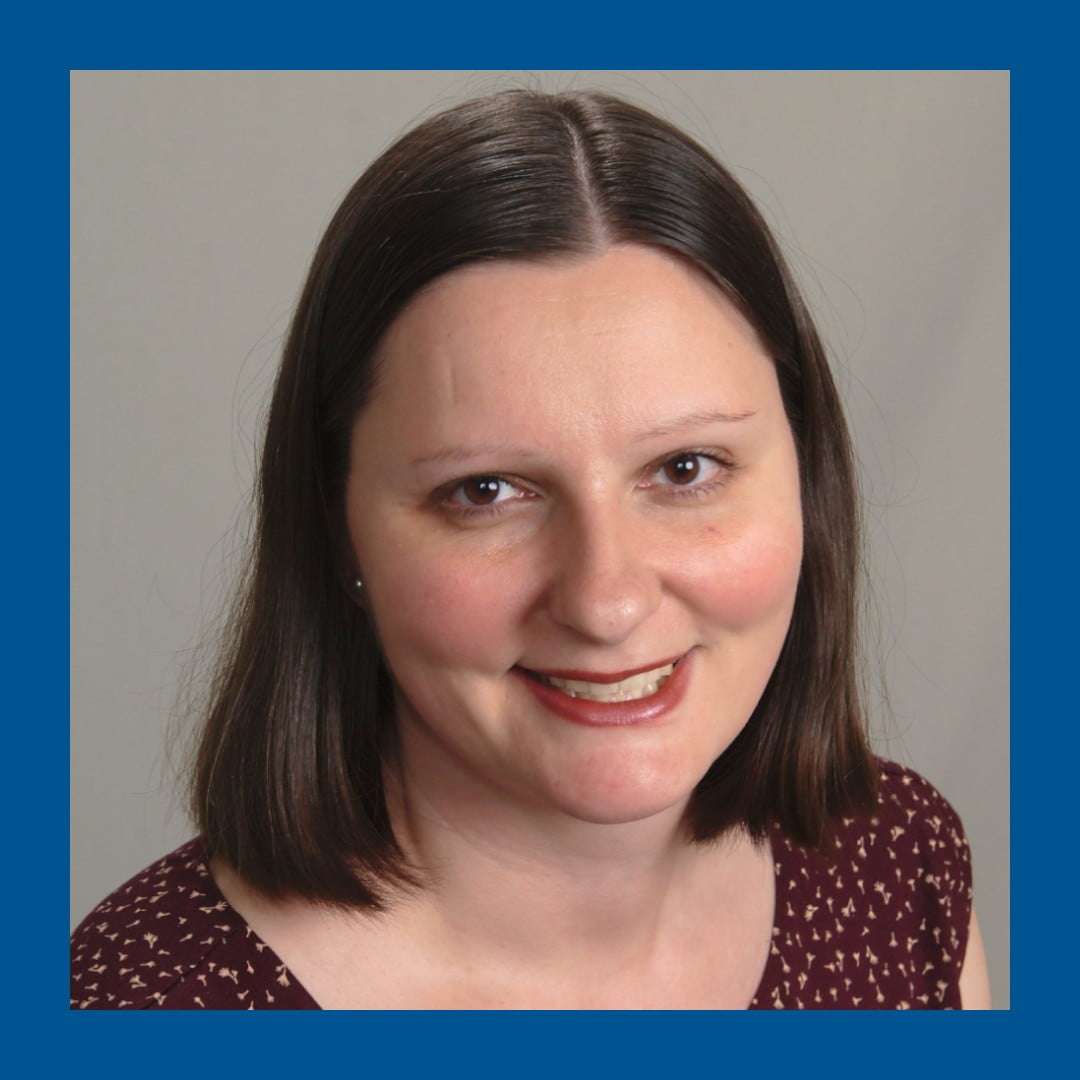
Leaving the bench doesn’t necessarily mean leaving science and the scientific community altogether. A rich universe of activities exists that are closely related to academia, be it within universities or in external organizations or governing bodies. Having gone through grad school and lived research from within, you are well placed to fulfill roles that bridge these two universes, be it in administration, knowledge transfer, or the policy domain. This week, we’ll hear about how Adriana Bankston navigated her transition from a PhD in biochemistry, cell and developmental biology into a policy job in DC. Adriana Bankston is a Principal Legislative Analyst at the University of California Office of Federal Governmental Relations in Washington, DC. Prior to this position, she was a Policy & Advocacy Fellow at The Society for Neuroscience (SfN), where she provided staff support for special and on-going projects, including SfNs annual lobby event and the society’s annual meeting. In addition to working at UC, Adriana also serves as the Director of Communications and Outreach for the Journal of Science Policy and Governance (JSPG) and is an Associate Member of the Public Policy Committee with the American Society for Cell Biology (ASCB). For the past several years, Adriana has also been an active member in the non-profit organization Future of Research (FoR), where she is currently the Vice-President and has previously served as the Associate Director of Fundraising and Strategic Initiatives. Adriana received her B.S. in Biological Sciences from Clemson University and her Ph.D. in Biochemistry, Cell and Developmental Biology from Emory University. Join the Papa PhD Postgraduate Career Exploration Group! What you’ll learn about in this episode: How creating a club or a seminar series can inform your career research and jumpstart your networking towards transitioning into it Why you should get involved in the activities of national organizations in your domains of interest, or even volunteer in them The importance of making choices that fit your personality, be it in grad school or in your professional life How setting up informational interviews allows you to garner precious information about your domain of interest Why you should practice talking about your science. Hone your storytelling skills around your subject and your research to be able to have engaging conversations about what you do Project management as a skill you grow during grad school that will serve you in your professional life and that will be valued by employers out there The importance of having a research background when working in policy Where you can find different types of mentorship during your grad studies The importance of women in STEM as role models and mentors for young researchers This episode’s pearls of Wisdom: “When you’re in academia, everyone is a PhD, and everyone is like you, but when you’re here, it’s not, because most people in the office have totally different backgrounds, which is really interesting – you get to work with people who are from different worlds and all work together in this space. And having that research background is useful.” “Take advantage of university resources that exist or create them, if you can. Get involved with things that you’re interested in nationally, if there is an organization, which there probably is. Or talk to people who have jobs that you want to do.” “I think you have to just have that mindset that your career is as important as your bench work, and that’s something you have to cultivate over time. It’s going to take a while to build your CV for whatever you want to do, if it’s not academic, so start early during your PhD.” “A lot of jobs work through networking, so if you can get your name out there and people know that you are interested, and you’ve started building your CV, then once you apply for the job, you’re a little more ahead than other people.

S1 Ep 11Chris Kent – Leveling Up Into Entrepreneurship
It's never too late to follow your calling. Depending on where you are in life, there are many ways you can reorient and choose a new path for yourself, be it getting a second degree, growing your minor or a hobby into your main focus or getting a certification in your domain of interest. This week, we'll hear about how our guest went from a bachelor's in theater to a PhD in neuroscience, and eventually to a fulfilling career as a startup CEO. Chris Kent has served as the CEO of ODS Medical since its’ founding in 2015. ODS Medical is a medical device company commercializing an exclusive Raman spectroscopy system for real-time, intra-operative tumor margin detection during surgical oncology procedures. Prior to ODS Medical, he worked with Dr. Kevin Petrecca, building a translational research program at the Montreal Neurological Institute focused on working with industry partners to accelerate the discovery and pre-clinical development of a wide variety of small molecules and biologics for treatment of brain cancers. Prior to his work at the MNI, Chris was involved with a start-up that specialized in the application of stimuli-responsive polymer materials to a wide range of industries. Join the Papa PhD Postgraduate Career Exploration Group! What you’ll learn about in this episode: How meeting and talking with people of your domain of interest is central to gathering data during your job search Starting a club or an activity to bring together likeminded people with whom do discuss and exchange about common interest subjects outside your research The importance of making grad school or a PhD a conscious choice, rather than just the next logical step in your studies How fear of the unknown is part of career growth, and a sign that you are on the right path in terms of tracing a fulfilling and productive career path for yourself Transferable skills that are prized in the entrepreneurial/startup domain The importance of being able to tell your story and to get people excited about it in your post-MSc/post-PhD professional life Finding mentors outside academia through your academic network What key skills serve you best as the CEO of a startup This episode's pearls of wisdom: “The great thing about being a grad student is that although you’ve got way more work than time, you can set your own schedule. So, you can be available to go and have lunch or have coffee with whoever around their schedule, and then make up for the time later. And that way, you can be there to have those conversations.” “The first biggest principle is to know yourself and to listen to yourself. You have to be really honest about things to yourself, in terms of what motivates you – why are you doing this, you know? I think grad school is a perfect example for that, because there is a huge temptation to undertake a PhD or to enroll in that program because it’s the next logical step.” Chris's links: www.odsmed.com | www.mcgill.ca/dobson/entrepreneurship-programs/mcgill-dobson-cup | www.mcgill.ca/dobson/entrepreneurship-programs/x1accelerator | centech.co | ctssante.com | d3center.ca | rebelbio.co Leave a review on Podchaser ! Support the show on Patreon ! You might also like the following episodes: David (Viva Frei) Freiheit – Youtube content creator: PapaPhD.com/15 Tamarah Luk – Entertainment Law: PapaPhD.com/10 Kirsten Sanford – Science communication: PapaPhD.com/13 Inês Thomas Almeida – Musicology: PapaPhD.com/27 Launching your podcast? If you're preparing to launch your podcast, you may be asking yourself what hosting platform to use. I launched Papa PhD on Bluebrry because I wanted a professional service that would interface with my WordPress website, that would robustly broadcast Papa PhD to all platforms, and that would allow me to grow my podcast in years to come. And these are the reasons why I'm recommending the Blubrry podcast hosting and syndication platform. Click on the button below or use the promo code Pap...

S1 Ep 10Tamarah Luk – Taking on Further Studies After Grad School – Law
Sometimes, when you finish your studies you get a job, or you start a business. Sometimes, you go back to school. Be it because you want to go to law school or med school, or because you want to access a domain that requires you to have a related degree, you may be headed back to the classroom after grad school. You’ll probably be a much better student than you were before, and your motivation for studying and for completing your new degree will be much greater at this juncture. In today’s episode, we’ll be talking with Tamarah Luk, and hearing about how she decided to study law after her master’s degree and how she navigated her way to the position she occupies today. Tamarah is a former scientist, who left the lab bench for the law. After a master's degree in neuroscience, she went to law school to become a patent lawyer, but on her way there, she took unique and exciting opportunities that lead her down a completely different path. She is now Director of Legal Affairs at an entertainment production company in Toronto. Join the Papa PhD Postgraduate Career Exploration Group! What you’ll learn about in this episode: The importance of self-care in having a healthy work-life balance How fighting inertia and stepping outside your comfort zone can bring you significant payoffs professionally How “drinking your own Kool-Aid” is part of the job hunt and of the interview process Why doing informational interviews with people in domains that interest you is key to you finding your dream career What skills translate from grad school to law school and what new skills you’ll need to develop Why self-care is key to keeping a healthy routine This episode’s pearls of Wisdom: “Whatever your interests are, maybe just pick up one or two things that interest you outside of your research or your professional life, and take some time, one hour every other day, just to invest in that.” “You guys are all marketable individuals. You’re all highly qualified and bring a lot to the table, so even if an opportunity doesn’t pan out, and eventually, you will find something that works for you. It might be a gradual process, but you won’t know unless you embrace that uncertainty and take a plunge.” Leave a review on Podchaser ! Support the show on Patreon ! You might also like the following episodes: David (Viva Frei) Freiheit – Youtube content creator: PapaPhD.com/15 Tamarah Luk – Entertainment Law: PapaPhD.com/10 Kirsten Sanford – Science communication: PapaPhD.com/13 Inês Thomas Almeida – Musicology: PapaPhD.com/27 Launching your podcast? If you're preparing to launch your podcast, you may be asking yourself what hosting platform to use. I launched Papa PhD on Bluebrry because I wanted a professional service that would interface with my WordPress website, that would robustly broadcast Papa PhD to all platforms, and that would allow me to grow my podcast in years to come. And these are the reasons why I'm recommending the Blubrry podcast hosting and syndication platform. Click on the button below or use the promo code PapaPhDBlue on the Blubrry website to unlock a one month free trial: Try one free month with Blubrry ! If you are starting a serious podcast project, do consider one of the first podcasting hosts out there, offering state of the art services, including IAB certified statistics, based on years of experience in the podcasting space. Happy podcasting!

S1 Ep 9Kelly Bullock – Pivoting From the Bench to a Creative or an Artistic Career
There is always one day when reality hits. Your well devised trip, that you’d been planning for months, or for years, falls short of your expectations, of what you had imagined. The disappointment you feel may bring you thoughts of packing up and heading back home… Or you can pick up your map and look for what other treasures your surroundings hold for you to discover. And you trace a new route and embark on a new and exciting voyage. In this episode, Kelly Bullock shares her experience switching from a PhD to a master’s program, and how she then made use of what she learned in grad school to forge a path for herself where her two loves – neuroscience and art – intersect. Originally from Texas, Kelly Bullock moved to Canada where she earned her MSc in cognitive neurophysiology from McGill University in conjunction with Western University. During her research, Kelly noticed a gap between the technical experts and the diverse audiences they served and developed a passion for more effective science visualization and communication. From an early age, she had an enthusiasm for creating realistic illustrations. After her graduate studies, she combined her love for science and her enthusiasm for art to build a scientific illustration studio -- Kelly Bullock Art -- inspired to address the communication gap in science. Join the Papa PhD Postgraduate Career Exploration Group! What you’ll learn about in this episode: Dealing with the guilt/disillusionment when choosing to switch from PhD to MSc How grad school may not be a good fit for you now, but it can become one at a later stage in your life The importance of your community, be it your peers or your family and friends, as a support system to help you discuss and deal with choices and with difficulties that you may be facing Why you have the skills to become a specialist in anything that may interest you Why employers will want you in their organization, after grad school How grad school culture often leads to students devaluating their worth when going onto the job market The role professional associations can play in helping you access your new career This episode’s pearls of wisdom: “Sometimes, you’ll be surprised when you reach out to people in your network who have moved on to non-academic careers. Sometimes, they’re willing to put you in contact with someone who’s willing to hire you or have an interview with you, so that can really even open up doors beyond just the research part of it.” “Do your research, find a vocation that is profitable, fulfilling, but also can provide value to your audience and make you feel like you’re making a valuable contribution. And that’s not always the easiest thing to do, but if you do that research and you have a decent idea that something is actually going to earn you money and be fulfilling, that’s 90% of the battle.” “Invest in yourself, understand that the skills that you learned during graduate school will be valuable, they will come into play in your next move and be willing to go to school again or take some classes, and make the move towards something that you will find more fulfilling.” Kelly’s links: Kelly Bullock Art: kellybullockart.com | Instagram: @kelly.bullock.art Leave a review on Podchaser ! Support the show on Patreon ! You might also like the following episodes: David (Viva Frei) Freiheit – Youtube content creator: PapaPhD.com/15 Tamarah Luk – Entertainment Law: PapaPhD.com/10 Kirsten Sanford – Science communication: PapaPhD.com/13 Inês Thomas Almeida – Musicology: PapaPhD.com/27 Launching your podcast? If you're preparing to launch your podcast, you may be asking yourself what hosting platform to use. I launched Papa PhD on Bluebrry because I wanted a professional service that would interface with my WordPress website, that would robustly broadcast Papa PhD to all platforms, and that would allow me to grow my podcast in years to come. And these are the reasons why I'm recommending the ...

S1 Ep 8Emily Roberts – The Power of the Side-Hustle or How to Set Yourself Up for a Healthy Financial Life
When talking about grad school, we often talk about the challenges of academic life, about mental health, and about physical health, but what about financial health? Academic accomplishments are paramount at this juncture in your life, but in the end, you want to be set up not only as a specialist in your domain, but you also want to come out of the process with a clean financial bill of health and ready to find your ideal place on the job market. In this week’s episode, we’ll be talking with Emily Roberts who will share with us how she became financially savvy during her PhD and how the financial know-how she acquired and shared with her community as a side-hustle ended up setting the foundations of her current career. What was a hobby for Emily during grad school became her business! She earned a PhD in biomedical engineering from Duke University in 2014, and shortly after launched Personal Finance for PhDs. Her business is focused on helping graduate students, postdocs, and PhDs in their first (or so) Real Jobs make the most of their money. Emily provides financial education for universities and associations, coaches individuals, and creates digital products for individuals, on top of creating the free content available her website (podcast episodes, articles, and videos). Join the Papa PhD Postgraduate Career Exploration Group! What you’ll learn about in this episode: How doing a postbaccalaureate (postbac) program can help you decide whether to embark into grad school How a side-hustle such as blogging, editing, or volunteering can enrich your graduate student life from year 1 and expand your community and your network Building a financial transition fund to relieve some of the stress and anxiety that naturally come with transitioning to the job market Why you should look for career centers and professional development resources at your university during grad school and use them as much as possible, even if they are not specifically intended or advertised for graduate students. The value a PhD can bring to your professional life, in terms of translatable skills and of career opportunities Overcoming the negative money mindset you are cultured into in grad school that leads you to devaluate your worth How your graduate degree can allow you to create a rapport with a specific audience and eventually build a privileged business relationship with them How going beyond your comfort zone and setting up informational interviews with professionals in your domains of interest can pay off when researching about jobs This episode’s pearls of wisdom: “It is possible for you to do what you would like to do and what’s going to make you super happy, even if it does disappoint people around you. You’re not really beholden to other people’s expectations, aside from, maybe, supporting your own family, your own responsibilities. Aside from that, it’s your life – do what you want with it.” “I have interviewed many people who have had these kinds of side-hustles or side experiences during graduate school or during their postdocs that have directly set them up for what they're doing after their PhD, not only exploring the careers, but then continuing to develop the networks and the skill sets that will help you find the actual position that you want after the PhD.” Emily’s links: Personal Finance for PhDs: pfforphds.com; Twitter – @pfforphds; Beyond the Professoriate – BeyondProf.com; GradBlogger – GradBlogger.com Leave a review on Podchaser ! Support the show on Patreon ! You might also like the following episodes: Adriana Bankston – Science Policy: PapaPhD.com/12 Chris Kent – Biotech Startup CEO: PapaPhD.com/11 Fábio Rosa (PhD student), Gil Costa (scientific illustrator), Patrícia Monteiro (principal investigator): PapaPhD.com/24 Margaret Magdesian – Biotech Startup CEO: PapaPhD.com/21 Launching your podcast? If you're preparing to launch your podcast, you may be asking yourself what hosting platform to ...

S1 Ep 7Filipa Carreira Barbosa – Navigating the International Student Experience
Many of us leave home for grad school, to another city or even to another country. Some end up staying after graduation, some end up coming back home. Being an international student can be an experience in freedom and independence, but the fact that you are far from family and friends may be challenging, especially if you're having problems or difficulties adjusting to a new place, to a new culture. In this episode, Filipa Carreira Barbosa will tell us about how she went abroad for her PhD how she coped with the shift and found balance in grad school, and about how she moved back home and transitioned into science communication and science outreach while staying in close contact with scientists in her domain. Join the Papa PhD Postgraduate Career Exploration Group! What you’ll learn about in this episode: The importance of having a social safety net and of keeping in touch with family when studying abroad How extracurricular activities and disciplines such as mindfulness are important for your mental health Defining your personal academic goals and staying true to them The importance of networking when transitioning and when coming back to your country of origin The value of trying different jobs that interest you when identifying your career path options This episode's pearl of wisdom:"Work/life is really stressful nowadays, in every field. But if you are doing it (your master's, your PhD, or your current career), it's because you deserve it. And love yourself." Filipa's links: www.facebook.com/pg/WonderScience-717698168356113; www.linkedin.com/in/filipa-carreira-barbosa-0b032b/ Leave a review on Podchaser ! Support the show on Patreon ! You might also like the following episodes: Fiona Robinson – Patient education: PapaPhD.com/6 James Bowers – Communication consulting: PapaPhD.com/39 Kelly Bullock – Science illustration: PapaPhD.com/9 Kirsten Sanford – Science communication: PapaPhD.com/13 Launching your podcast? If you're preparing to launch your podcast, you may be asking yourself what hosting platform to use. I launched Papa PhD on Bluebrry because I wanted a professional service that would interface with my WordPress website, that would robustly broadcast Papa PhD to all platforms, and that would allow me to grow my podcast in years to come. And these are the reasons why I'm recommending the Blubrry podcast hosting and syndication platform. Click on the button below or use the promo code PapaPhDBlue on the Blubrry website to unlock a one month free trial: Try one free month with Blubrry ! If you are starting a serious podcast project, do consider one of the first podcasting hosts out there, offering state of the art services, including IAB certified statistics, based on years of experience in the podcasting space. Happy podcasting!

S1 Ep 6Fiona Robinson – Listening to Your Inner Voice
Imagine swimming 1.9 kilometers, then biking 90 kilometers through the hills of Mont-Tremblant, and then running a half-marathon. It may sound impossible or a task for super-humans... But people like you and me set out to do it, diligently train for months and months, and they do it - they complete an IronMan, or in this case a Half Ironman. And when they do, they push through physical pain, through mental blocks, and trough thoughts of giving up. And crossing that finish line is their prize, bringing them feelings of exhilaration, accomplishment, and empowerment. When you embark on a master's or a PhD, you owe it to yourself to finish and to be empowered by what you learned and by what you accomplished, and to come out stronger for whichever life project you choose to embrace. In this Episode, Fiona Robinson will share her insights on pushing through and on finding a fulfilling professional life outside of academia. Following a PhD in RNA Biochemistry at Cambridge University and a post-doc in developmental neurobiology/oncology at the Toronto Hospital for Sick Children, Fiona moved to Montréal and shifted careers into science communication/medical education. Currently she is the Educational Materials Manager in a mid-size international medical not-for-profit, a lead volunteer in the local women's hockey community, and half an IronMan! As Educational Materials Manager, Fiona is responsible for the creation, editing, production, and publication of all of the educational materials of the World Federation of Hemophilia (WFH), an international not-for-profit that serves the global bleeding disorders community. She conducts needs assessments to understand what resources are most needed and then works with volunteer subject matter experts from around the world and local freelancers to create the content, which she then edits and sees through production in up to 6 languages. Equal parts project manager and medical editor, she is continually challenged to ensure that the complex medical content is presented in language that clearly communicates the key messages to the intended audience, which can range from hematologists to dentists to parents of newly diagnosed children. Managing budgets and timelines, volunteers and contractors, and diverse cultural and socioeconomic contexts requires many of the "soft skills" that she developed working in research and, just as importantly, exploring non-research interests during her time in academia. Join the Papa PhD Postgraduate Career Exploration Group! What you’ll learn about in this episode: The value of finding your passion to instruct your career search How nurturing a rich life outside research can open doors for you later on Dealing with the uncertainty of the non-academic job market Defusing the socially awkward/standoffish academic stereotype The importance of tailoring your CV and of tailor-writing your cover letters to each potential employer and position Looking around and keeping a job posting scrap-book as a way of identifying potentially fulfilling careers This episode's pearls of wisdom: "You don't have to know exactly what your job looks like, or what it is, or what its title is. You have to kind of know what your passion is, what you'd like to be able to do, what you feel like you can do, and then you start looking around for it." "If you are happy when you're in the lab and you're seeing a result for the first time, and that's making you super happy, that's telling you something. But if you're happy when you're out playing hockey, or when you're editing a paper for a friend, or when you're in the schools purifying DNA from banana for the six-hundredth time, that's telling you something, too, and you have to listen to yourself on that." Fiona's link: eLearning.wfh.org Leave a review on Podchaser ! Support the show on Patreon ! You might also like the following episodes: James Bowers – Communication consulting: PapaPhD.com/39

S1 Ep 4Rob Hutcheson – Playing to Your Strong Suits
During grad school, your personal interests and strengths can serve as a blueprint for what comes after graduation and inform the career choices you will make once you’re on the job market. Your personal interests are also key for keeping a healthy balance between work and your personal life, during your studies. In this episode, we will be talking with Rob Hutcheson, who will share his insights and experience achieving balance during grad school and charting his path in his current non-academic career. Rob Hutcheson is Senior Manager at Certara Evidence and Access, a leading global consultancy specializing in the demonstration of product value for pharmaceutical clients seeking to optimize market access and reimbursement for their products. Before joining Certara, Rob was Senior Medical Editor at IC Axon, an industry leader in the development of pharmaceutical sales force training programs and materials. Rob also holds a master’s degree in neurobiology from MgGill University, and is a Project Management Professional (PMP)certified project manager. Join the Papa PhD Postgraduate Career Exploration Group! What you’ll learn about in this episode: Doing a master’s versus following through to a PhD Choosing a research subject you love How staying open to new career opportunities that play to your strong suits can propel you to ever more fulfilling positions Training and certifications as ways of helping you boost your CV and appeal to potential employers The importance of going to career fairs and of exploring the job market in your areas of interest How your university’s career center can help you get a head start for your transition process Transferable skills – analytical, organizational, and leadership skills – you will carry on with you from grad school The role of mentors in helping you take career decisions and in learning the skills of a new job Nurturing a good mentor/mentee relationship through an attitude of openness to learning and to improving on yourself This episode's pearl of wisdom: “In the end, it really comes down to what you can convincingly demonstrate you can do to help an organization reach their goals.” Rob's links: www.Certara.com Leave a review on Podchaser ! Support the show on Patreon ! You might also like the following episodes: Clarissa Wright – Publishing: PapaPhD.com/34 Fiona Robinson – Patient education: PapaPhD.com/6 Liliana Vitorino – Industry: PapaPhD.com/31 Tamarah Luk – Entertainment Law: PapaPhD.com/10 Launching your podcast? If you're preparing to launch your podcast, you may be asking yourself what hosting platform to use. I launched Papa PhD on Bluebrry because I wanted a professional service that would interface with my WordPress website, that would robustly broadcast Papa PhD to all platforms, and that would allow me to grow my podcast in years to come. And these are the reasons why I'm recommending the Blubrry podcast hosting and syndication platform. Click on the button below or use the promo code PapaPhDBlue on the Blubrry website to unlock a one month free trial: Try one free month with Blubrry ! If you are starting a serious podcast project, do consider one of the first podcasting hosts out there, offering state of the art services, including IAB certified statistics, based on years of experience in the podcasting space. Happy podcasting!

S1 Ep 3Mark Roberts – Transferable Skills and Industry Jobs
You don’t embark in a master’s or a PhD without confidence. A trust, a confidence that you can delve into the unknown of a master’s or a PhD project and come out with answers to questions no one has asked before. This confidence is what fueled you so far. And during this time, it has grown with you. It may have suffered some blows, and weakened, now and then, but it has become one of your greatest strengths. Today, we’ll be talking with Mark Roberts about how candidates with master’s and doctoral degrees are valued in the job market, and about how the pressure and challenges of grad school help develop traits that are prized by employers in certain industries. Mark made the move from academia to industry after completing his PhD in Ecology & Evolutionary Biology at Princeton and teaching appointments at Yale and McGill. Since 2003 he has held different employee and freelance positions as a medical writer and editor. This year Mark partnered with former colleagues to found Stratenym, a specialty medical communications firm comprising a network of expert consultants. Join the Papa PhD Postgraduate Career Exploration Group! What you’ll learn about in this episode: Technical writing as a career avenue The importance of being resilient and pushing through to finish TA-ing as a way of transitioning from grad school to a job in industry The number one strength employers see in candidates with a graduate degree – problem solving ability How listing the skills you exercise for your research and finding jobs where they are vital can help you chart your career path Dealing with the impostor syndrome Preparing for job interviews: dos and don’ts This episode's pearl of wisdom: “Honestly… Although it may seem a bit scary to leave the university environment that I’ve been in for so many years, when you think about it, when you are in your graduate degree, you have to find a question that nobody in the world knows the answer to, and then you set out to answer that question yourself… Now, that’s pretty brave. So compared to grad school, what I do now is pretty much failure-proof.” Mark's links: www.stratenym.com; @Stratenym Leave a review on Podchaser ! Support the show on Patreon ! You might also like the following episodes: Clarissa Wright – Publishing: PapaPhD.com/34 Fiona Robinson – Patient education: PapaPhD.com/6 James Bowers – Communication consulting: PapaPhD.com/39 Liliana Vitorino – Industry: PapaPhD.com/31 Launching your podcast? If you're preparing to launch your podcast, you may be asking yourself what hosting platform to use. I launched Papa PhD on Bluebrry because I wanted a professional service that would interface with my WordPress website, that would robustly broadcast Papa PhD to all platforms, and that would allow me to grow my podcast in years to come. And these are the reasons why I'm recommending the Blubrry podcast hosting and syndication platform. Click on the button below or use the promo code PapaPhDBlue on the Blubrry website to unlock a one month free trial: Try one free month with Blubrry ! If you are starting a serious podcast project, do consider one of the first podcasting hosts out there, offering state of the art services, including IAB certified statistics, based on years of experience in the podcasting space. Happy podcasting!

S1 Ep 2Joe Makkerh – Pushing Through Obstacles and Difficulties
You’re finishing grad school, or you’ve just finished. Your project has brought you here and now – it had challenges, victories, failures, obstacles, successes. It has brought you excitement, frustration, exhilaration, anxiety, satisfaction. In it, you have asked questions, tested hypotheses, studied, discussed. But one question may still be unanswered – what comes after? In this episode, you will be meeting a guest that has deep insights to share about going through your graduate studies and about what comes after. Joe Makkerh is a former scientist, now an entrepreneur working in high-end audio. Since finishing his PhD in cellular and molecular zoology, Joe transitioned from researcher to academic administrator to MBA student to business owner. His academic career has taken him from London to Heidelberg, to Montreal, where he now develops his business. Join the Papa PhD Postgraduate Career Exploration Group! What you’ll learn about in this episode: The highs and lows of going through grad school, post-docs, and industry The importance of acceptance and resilience in completing a graduate program Tips on how to keep mentally and physically healthy throughout The importance of asking for help when feeling lost or discouraged The value of the transferable skills you keep from grad school and my not be aware of How the relationships you establish with people around you are the number one asset later in life This episode's pearl of wisdom: “Just keep learning, no matter what it is.” Joe's links: baetisaudio.com Leave a review on Podchaser ! Support the show on Patreon ! You might also like the following episodes: Chris Kent – Biotech Startup CEO: PapaPhD.com/11 Élodie Chabrol – Science communication (French): PapaPhD.com/33 Fábio Rosa (PhD student), Gil Costa (scientific illustrator), Patrícia Monteiro (principal investigator): PapaPhD.com/24 Margaret Magdesian – Biotech Startup CEO: PapaPhD.com/21 Launching your podcast? If you're preparing to launch your podcast, you may be asking yourself what hosting platform to use. I launched Papa PhD on Bluebrry because I wanted a professional service that would interface with my WordPress website, that would robustly broadcast Papa PhD to all platforms, and that would allow me to grow my podcast in years to come. And these are the reasons why I'm recommending the Blubrry podcast hosting and syndication platform. Click on the button below or use the promo code PapaPhDBlue on the Blubrry website to unlock a one month free trial: Try one free month with Blubrry ! If you are starting a serious podcast project, do consider one of the first podcasting hosts out there, offering state of the art services, including IAB certified statistics, based on years of experience in the podcasting space. Happy podcasting!

S1 Ep 1Dana Murchison – Checkpoints in Your Graduate Education
In a space mission, there is one countdown, one launch, one destination, and no place for error or doubt. Grad studies are less like a rocket launch, and more like an expedition into uncharted territory. As such, they are a forgiving endeavour, where you have ample opportunity to reassess and reorient along the way. This week, we will be hearing from Dana Murchison, whose passion for writing and teaching has brought her from experimental science to a vibrant career in science outreach, and who is going to share with us how she steered her way from science at the bench to her current career. After studies that brought her from creative writing to neuroscience, seasoned with a healthy dose of science outreach, she chose to write up her grad school work as a master’s thesis and relocated to Northern Ontario to join the team at Science North, Canada's second-largest science centre. There, she developed hands-on exhibits and interactive science programming about the human body and initiated and led Science North's series of Science Cafe events, bringing experts and the public together for engaging discussion on a range of current science issues. In 2014-15, she was selected to participate in the Northern Leadership Program, a yearlong intensive leadership development course that accelerated her interest in leading people and developing vision and strategy for science communication. Since 2017, she has worked as Head of Programs at the Canadian Museum of Nature, where she is responsible for the strategy, vision and implementation of live interactive natural history programming designed to educate and inspire the museum's school, public and adult audiences. Dana lives in Ottawa with her husband, a fellow science museum geek; anticipating their first child's arrival any day, they've built up a serious collection of science-y board books. Join the Papa PhD Postgraduate Career Exploration Group! What you’ll learn about in this episode: The end of the master’s degree as a reassessment checkpoint The importance of taking a step back and ask yourself whether the PhD/postdoc route is a good fit for you Dealing with self-doubt and feelings of failure when you decide to write up your master’s thesis The academic research lifestyle Volunteering as a way to cultivate your extracurricular interests How to approach potential mentors and the impact they can have at different steps of your journey How your degree can open doors in the job market Transferable soft skills you can leverage coming out of grad school The importance of work/life balance This episode's pearls of wisdom: “There were a couple of things like that, that were really surprising to me – like, literally, nobody has ever asked me one time about my publication record since I finished my degree.” “Don’t be scared to be a little bit audacious about what kind of direction you might be able to go into and to think about what is going to work for you, what is going to resonate for you.” Dana's links: www.nature.ca; @MuseumofNature; facebook.com/CanadianMuseumofNature Leave a review on Podchaser ! Support the show on Patreon ! You might also like the following episodes: Clarissa Wright – Publishing: PapaPhD.com/34 Fiona Robinson – Patient education: PapaPhD.com/6 James Bowers – Communication consulting: PapaPhD.com/39 Kirsten Sanford – Science communication: PapaPhD.com/13 Launching your podcast? If you're preparing to launch your podcast, you may be asking yourself what hosting platform to use. I launched Papa PhD on Bluebrry because I wanted a professional service that would interface with my WordPress website, that would robustly broadcast Papa PhD to all platforms, and that would allow me to grow my podcast in years to come. And these are the reasons why I'm recommending the Blubrry podcast hosting and syndication platform.