Beyond the Garden Basics Podcast
196 episodes — Page 2 of 4
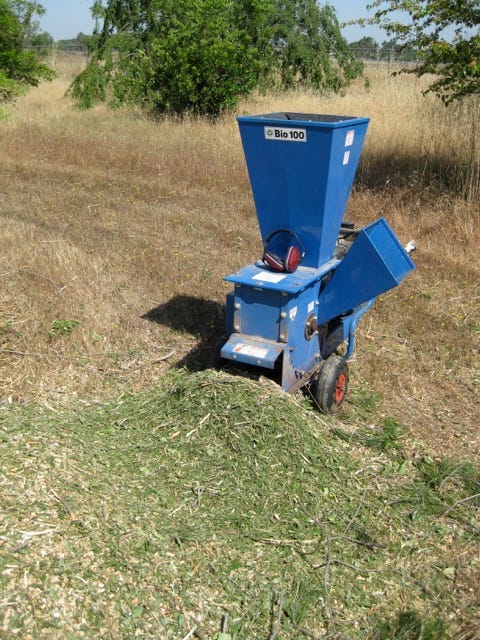
Why There Should be a Chipper Shredder in your Garden
This is a free preview of a paid episode. To hear more, visit gardenbasics.substack.comAre you thinking about buying a rototiller? How about instead purchasing a chipper/shredder? Now, that’s a machine that’s going to make easy work of chopping up your garden clippings including tree limbs. it’s going to make it into the greatest mulch you could possibly own. The latest research shows that rototilling your soil actually damages soil structure and doesn’t do anything good for the soil biology. On the other hand, the end result of using a chipper/shredder is going to provide you with a quality of mulch that we like to call, “gardeners’ gold”.Northern California Organic Gardening Consultant Steve Zien has some rather strong thoughts on this subject. Go back and listen to his comments back in Episode 89 of the Garden Basics podcast, from 2021.Thinking that perhaps his opinions may have mellowed on the chipper-shredder vs rototiller choice over the last four years, I recently asked for his thoughts. Nope. No change. Here’s what he had to say (in bullets):Chipper shredderPros:• Eliminates or dramatically reduces green waste• Helps eliminate the need for a rototiller• Provides material for mulch or compost• When shreddings are applied to soil surface:• Feeds soil biology – resulting in improvements in:• Soil structure (pore space diversity)• Improve movement in soil by water, air, roots, soil biology• Soil water holding capacity (drought resistance)• Nutrient holding capacity• Biological diversity of soil microbes• Greater variety of nutrients, vitamins etc. available to plants• Improves pest resistance• Plant health improves (drought resistance, pest resistance)• Nutrient availability to plants improve• Availability of natural growth hormones, vitamins improves• Nutrient content of vegetables improves• Sequesters carbon – contributes to the reversal of climate change• Weed management benefits• Mulch created by chipper/shredder moderates soil temperatures• Erosion protection (mulch slows the force of falling rain)• Mulch created by chipper/shredder repels some pestsCons:• Expensive• Hard work. And, when done, you then have to apply the mulch to soil surface• Don’t chip diseased materialRototiller:Pros:• Get to smell actinomycetes• Mental connection to past horticultural practices (although no longer recommended)• Creates fine seedbed – but soil quickly becomes compacted making it difficult for sprouts to developCons:• It’s hard work• Expensive• Destroys soil structure• Compacts soil (reducing aeration, drainage, limit root development)• Fine clays quickly fill in pore spaces• Increases runoff – transporting soil, nutrients and pesticides into our waterways• Kills beneficial soil biology• Makes it harder for your plants to grow• Harder to obtain water, nutrients, growth hormones, vitamins• Increases pest susceptibility due in part to:• Reduced crop health• Pest management provided by soil biology• Reduces nutrient content of food crops• Results in the need for additional irrigation, fertilization, pesticides• Mother Nature’s natural rototillers (earthworms) are killed by the blades.• Creates biological imbalance - abundance of bacteria vs. fungi (raises pH)• Loss in biological diversity in the soil• Reduction of soil health (results in reduction of plant health)• Reduces ability of soil to function• Releases greenhouse gasses (CO2) to atmosphere – contributing to global climate change• Reduces organic matter content• Reduces soils water holding capacity – need to irrigate more/more runoff….• Makes plants more susceptible to drought• Reduces food for soil biology• Reduces soil productivity• Reduces soil cover• People feel they need to till every spring because previous tillage created a compacted, dead soil below• Brings up weed seeds so they can germinateObviously, Steve has a bleak future as a salesman at Troy-Bilt.What About Electric Chipper/Shredders?For that, we turn to Debbie Flower, who owns an electric chipper-shredder, the 15 amp Sun Joe. Her review:My chipper is a Sun Joe 15 amp Electric Wood Chipper/Shredder plug-in, model #CJ602E. I have had the pleasure of using it a few times. It is a compact, easy to store machine. The 6” wheels and light weight make it easy to move around the yard.Debbie has a lot more thoughts about her electric chipper shredder, including the downsides of electric. Listen to today’s newsletter podcast to find out more.My thoughts about electric-chipper shredders are closely aligned with Brad Gay’s opinion (paid subscribers will hear his comments in the podcast). Reviewers of this electric chipper shredder say they have issues including the shredding problems mentioned by Debbie, and the overheating problem she mentioned. As Brad said, it’s cheaper to replace a belt on a gas chipper/shredder when the machine gets overwhelmed to the point of freezing up with material jammed in the hopper, than it is to replace a burned out electric motor. And make sure you plug the unit into a 20 amp
Ants!
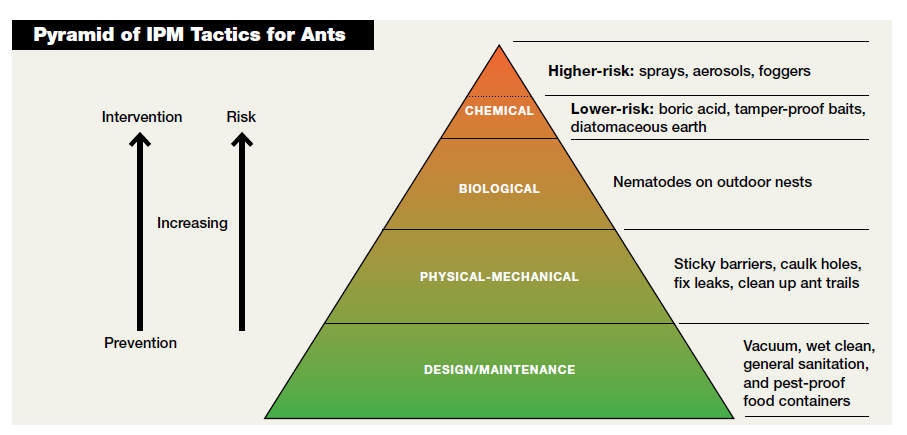
This is a free preview of a paid episode. To hear more, visit gardenbasics.substack.comWhen it gets hot, the ants start marching indoors. When it rains, in come the ants. Too cold? The ants know where its nice and cozy: your kitchen, bathroom and pet food bowls. Outdoors, pet food and garbage cans are also ant attractants. Argentine ants, those busy little black ants, are in march formation year round.In years past, we would reach for the spray can and douse those little scavengers. But not anymore. Many of those spray pesticides are only effective with direct contact on the ants. And the stronger sprays, with residual action to thwart the next wave of ants, is potentially harmful to you, your kids, your pets.So, here is what we are doing now: following the recommendations of the UC Davis Integrated Pest Management Project for Ant Control.That includes:• Determine what the ants are attracted to and remove the food source• Vacuum trails, wipe them with soapy water, or spray with window cleaner• Locate entry points and caulk openings or plug with petroleum jelly• Put out bait stations with liquid ant bait or apply gel bait at entry points• Baits take time to work so continue to clean up trails• Indoor sprays are not usually necessary.• Avoid products packaged as granules that contain the active ingredients cyfluthrin or permethrin. Although these products may be mistaken for baits, they are actually contact insecticides that rapidly kill foragers and do not control the colony.Before wiping up (or wiping out) the little critters, follow their trail. Note their entry point into the house. Seal it up. We have found ants entering the house in a variety of small avenues: beneath moulding, cracks in the window frame, behind electrical outlet plates...and one of the ants’ favorite entries: that large holes beneath the sink where the pipes enter the house.According to the UC IPM page on ant control, “If ants can be thoroughly washed away and excluded from an area, an insecticide is probably not necessary. Vacuuming up ant trails or sponging or mopping them with soapy water may be as effective as an insecticide spray in temporarily removing foraging ants in a building because it removes the ant’s scent trail, especially if thorough cleaning is done at the entry points. Some soap products such as window cleaners can kill ants on contact but leave no residual toxicity. Certain plant-based oils are also applied for this purpose, but their odor can be offensive.”Coming Up After the Paywall• Highly effective liquid boric acid products for ant control.• How to control ants in a raised garden bed.• Debbie Flower’s home recipe for ant control• How outdoor ants are ecologically beneficial.
"How Am I Going to Feed My Family?"
One of my frequent bicycling routes takes me by a local food bank. Over the years as I pedal by in the morning, I’ve seen the line of cars increase while waiting for the 10 am food bank opening. Lines of a half block or more were common during the age of Covid (2021-2022).Lately, the line of cars has not only increased in length, it’s now 2 lanes of traffic stretching down the road waiting for a bag or two of food. Fortunately, the road widens out as it approaches the food bank, and the employees there have adopted the Dutch Brothers Coffee / In-and-Out Hamburger traffic facilitating tactic of walking the lines of cars, and getting the information they need (I’m still trying to figure out what Dutch Brothers is putting in their $6+ coffee drinks that brings in such a large crowd. Is it the sugar?).The number of households living paycheck to paycheck has risen dramatically - up to two-thirds of all households in the U.S. living on the edge - according to one report. There’s more hurt on the way because of recent job losses due to AI, governmental shutdown of services, increased food costs due to tariffs, housing costs, and all the other reasons that you don’t want to be reading about in a gardening column.GARDENERS CAN HELPStill, gardeners can help out their neighbors by donating their excess backyard produce - vegetables and fruit - to a nearby food bank or food pantry. For example, right now in late October, here in USDA Zone 9 (and I know I am not alone in this bounty), there’s a lot of sweet peppers waiting to be harvested - definitely more than we can eat or process into relish. And what are those bright orange orbs staring at me from that tree outside my window? Oh yeah, Fuyu persimmons, also more than we can eat or dehydrate, that will be ready to harvest in a week or two. Definitely, these are the prime mid-Autumn candidates for transporting to the local food bank. Coming up in winter, it will be the cornucopia of citrus - oranges, mandarins, lemons - that will be heading to the food bank, along with fresh greens.Don’t know where you’re nearest food bank is located? Go to AmpleHarvest.org, and find the food banks in your area. It’s quick, easy, and as far as I can tell in my own area, accurate. Your local food bank would probably welcome your donation of healthy, homegrown food (always check first).In this week’s newsletter podcast (above), Gary Oppenheimer, the founder of AmpleHarvest.org, talks about the need for more, fresh, wholesome foods getting into the hands (and mouths) of those who can’t afford to eat healthy, but want to. Give it a listen, or read the transcript, below. Thanks.There’s no paywall on today’s newsletter/podcast episode, because that would be counterproductive to helping get your excess garden harvest to the hungry. Still, thank you for your paid subscription to Beyond the Garden Basics!TRANSCRIPT Interview with Gary Oppenheimer of AmpleHarvest.org (recorded in 2020)Farmer Fred:[0:00] Every day in every corner of the United States, children and adults are worrying about finding enough food to put on the dinner table while thousands of pounds of food are being thrown away from backyard gardens, from small farms. Millions of Americans are unable to get enough fresh food to maintain proper health. The United States has a malnourished population that needs more than processed foods in order to thrive. So many incredible food banks, pantries, and other hunger organizations are working tirelessly to alleviate hunger in our communities, but they consistently lack in donations of fresh produce. Luckily, you can help. By making regular donations of unused fresh produce to your local food pantry, you can be a part of the solution to increase the health of people in your neighborhood. And you can donate food that you grow or food that you buy. It’s easy.Farmer Fred:[0:55] The trick is finding the food pantry nearest you, and you can do that through an incredible site called AmpleHarvest.org. We’re talking with Gary Oppenheimer. He’s with AmpleHarvest.org. He’s the founder. It’s a unique nationwide resource that is eliminating the waste of food, the outcome being a reduction in hunger and malnutrition, along with an improved environment. There’s something like 42 million Americans who grow food in home gardens, community gardens, and their small farmers as well, who could easily donate their excess harvest to one of over 8,600 registered local food pantries spread across all 50 states. And Gary, I want to tell you, first of all, about my experience with your website, ampleharvest.org. There is a page there where you can go and find the food pantry nearest you. And I set a search of 15-mile radius around my house. And up popped, I’m counting, 14 food pantries I never knew existed, including one that is within walking distance. And it’s amazing how easy it could be for people who have an excess of tomatoes or squash or peppers or melons or fruit, where to take it to and how convenient that

2025 Plant of the Year - Calendulas
This is a free preview of a paid episode. To hear more, visit gardenbasics.substack.comIn the warm winter areas of the country, the calendula is the go-to source of bright garden color on those cold, cloudy, foggy days. In cooler growing zones, the calendula is a blooming staple during the summer. In the podcast (above), we explore the enchanting world of calendulas with Diane Blazek, the executive director of the National Garden Bureau, as we celebrate 2025 as the Year of the Calendula. We discuss their historical significance, medicinal properties, and culinary uses, while clarifying the confusion surrounding their classification as pot marigolds. Diane shares practical gardening tips for successfully growing calendulas, including seed sowing strategies for different climates and the benefits of dense planting for attracting pollinators. We emphasize the ease of growing these flowers, making them ideal for novice gardeners and families. The episode also highlights the best sources for high-quality calendula seeds.According to the National Garden Bureau:* Calendulas need at least 6 hours of daily sunshine to witness its radiant blooms unfurl.* Finding the Perfect Soil: Well-draining soil is key. While Calendula isn’t fussy about soil type, it prefers a slightly acidic to neutral pH. (6 to 7 pH)* Planting for Success: In colder areas of the country (USDA Zones 3-7) sow seeds directly outdoors, in spring, about an inch deep, after the last frost. In the warmer zones (7-10), plant them in early autumn. Space them 12-18 inches apart for ample room to flourish.* The Secret to Continuous Blooms: Regularly remove spent flowers (deadheading) to encourage new growth. This keeps your plant looking tidy and stimulates more blooms.* Natural Pest Control: Calendula is naturally resistant to pests, but keep an eye out for occasional visitors like aphids or caterpillars.* Garden Harmony: Calendulas act as a natural pest deterrent, attracting beneficial insects to your garden because of their easy to reach flower parts.* Harvesting Your Bounty: Pick Calendula flowers when fully open, preferably in the morning for the most concentrated oils. Dry them for later use in teas, salves, or potpourri.* Edible Delight: Surprise your palate! Calendula flowers are edible with a subtle peppery flavor, adding a vibrant touch to salads, soups, and stews.* DIY Potpourri: Dried Calendula blossoms infuse your space with a beautiful fragrance.* Soothing Salves: Calendula’s calming properties make it a popular ingredient in homemade salves.Calendula’s easy to reach flower parts attract pollinators like bees and butterflies, and pest predators such as ladybugs, lacewings, and hoverflies. These insects help control pests like aphids, whiteflies, and caterpillars.By attracting ladybugs, lacewings, and hoverflies, calendula helps control pest populations naturally. Acting like a trap crop, calendulas can attract pests like aphids, which then attract the beneficial predators.Beyond The Garden Basics is a reader-supported publication. To receive complete new posts and podcasts, and have access to the entire catalog of over 200 Beyond the Garden Basics newsletters, consider becoming a paid subscriber.Coming up after the paywall:Calendulas undergo “nyctinasty” every day, a visible change in the plant. We explain what that is in the newsletter and why it is so important for the calendula’s survival.Despite winning competitions internationally, why have there been no calendula winners in All-America Selections trials in its 90+ year history?The popular calendula varieties in California and USDA Zone 9.The popular calendula varieties in the midwest and east.And, the complete transcript of the Calendula podcast, which includes links and videos for more information!
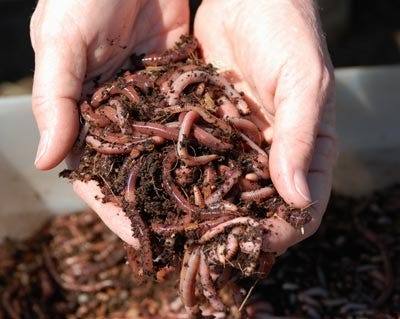
Grow Better Soil (and Plants) with Worm Castings
This is a free preview of a paid episode. To hear more, visit gardenbasics.substack.comIf you have a worm bin, and are harvesting the worm castings (yes, it’s worm poop), and you’re spreading those castings around your outdoor and indoor plants, you are helping to create some powerful soil, teeming with microbiology, that will supercharge your plants. According to Cal Recycle, the process of vermicomposting, which uses worms to break down organic material such as food scraps, will turn them into a nutrient-rich soil amendment that can nourish your house plants or garden.Some wormy facts:* Worms break food waste into compost faster, over 8-12 weeks. Traditional composting, on the other hand takes 6-9 months.* You can worm compost in your apartment or house, even under your kitchen sink. You can also vermicompost at school or the office.* Worms like to feed on food waste.* Worms break down food scraps efficiently.* Worms eat over half their body weight a day.* Worm manure contains beneficial microbes and nutrients for plants.What will worms eat?Worms eat a variety of organics, such as:* Paper.* Manure.* Fruit.* Vegetable.* Grains.* Coffee Grounds.* Ground Yard Wastes.Do not feed worms:* Meat.* Dairy.* Oily food.* Citrus scraps (toxic to worms).What Do Poop-Happy Worms Need?* Moist, organic bedding as damp as a wrung-out sponge, in a location that has a temperature range of 55-77 degrees F.* Darkness – they are sensitive to light.* Because they have no teeth, add 1 Tbs of grit, such as clean soil, sand, rock dust or oyster flour in bedding to help the worms grind the food.* Clean soil, sand, rock dust, or oyster flour with no foreign organisms.From the Fresno County Master Gardener publication, “About Worm Castings”:Castings contain rich microbiological colonies that help fight soil-borne plant diseases and repel insects.Worm castings are water-soluble allowing plants to quickly and easily absorb essential nutrients and trace minerals. When the manure passes through the worms digestive tract, it forms a coating around the grain which allows for the nutrients to “time release” into the soil. Nutrients are readily available to plant material over a greater length of time and will not burn even the most delicate plants.Analysis of earthworm castings reveals that they are rich in iron, sulfur, calcium, nitrogen, phosphorus and potassium (NPK rating: 5.5.3). They are much richer in nutrients than bulk compost, therefore application rates are much lower. Improved Growth: Extensive University testing has been performed by Ohio State, Cornell University, UC Davis and the Australian SIRO to prove the worth of worm castings. The tests have shown improved flower size, bloom quantity, quality and color. Fruit and vegetable tests have resulted in yield improvements from 57% to over 200% as well as improvement in taste and appearance.Worm Castings Are Great For Your Garden!Nutrient-rich soil: Worm castings, or vermicast, are rich in water-soluble nutrients like nitrogen, phosphorus, and potassium, as well as micronutrients like iron, zinc, and magnesium. These nutrients are in a highly bioavailable form that plants can readily absorb, boosting their growth.* Improved soil structure: Worm castings improve the physical structure of the soil, increasing its ability to retain moisture and improving aeration, which is crucial for root development.* Beneficial microorganisms: The castings contain beneficial bacteria and enzymes that help develop a strong immune system in plants, making them more resistant to pests and diseases.For a deeper dive into the benefits of worm castings, check out this excerpt about vermicomposting in the publication, “Microbes at Work”.After the paywall break:Are commercially bagged earthworm castings as good as homegrown or worm farm-purchased castings? In the podcast (above), America’s Favorite Retired Horticulture Professor, Debbie Flower, and Sacramento-based organic soils expert, Steve Zien, tackle that question (that portion only available to paid subscribers of the Beyond the Garden Basics) .Plus, after the paywall break, a complete transcript of today’s podcast!
Garlic Planting Time is Here!
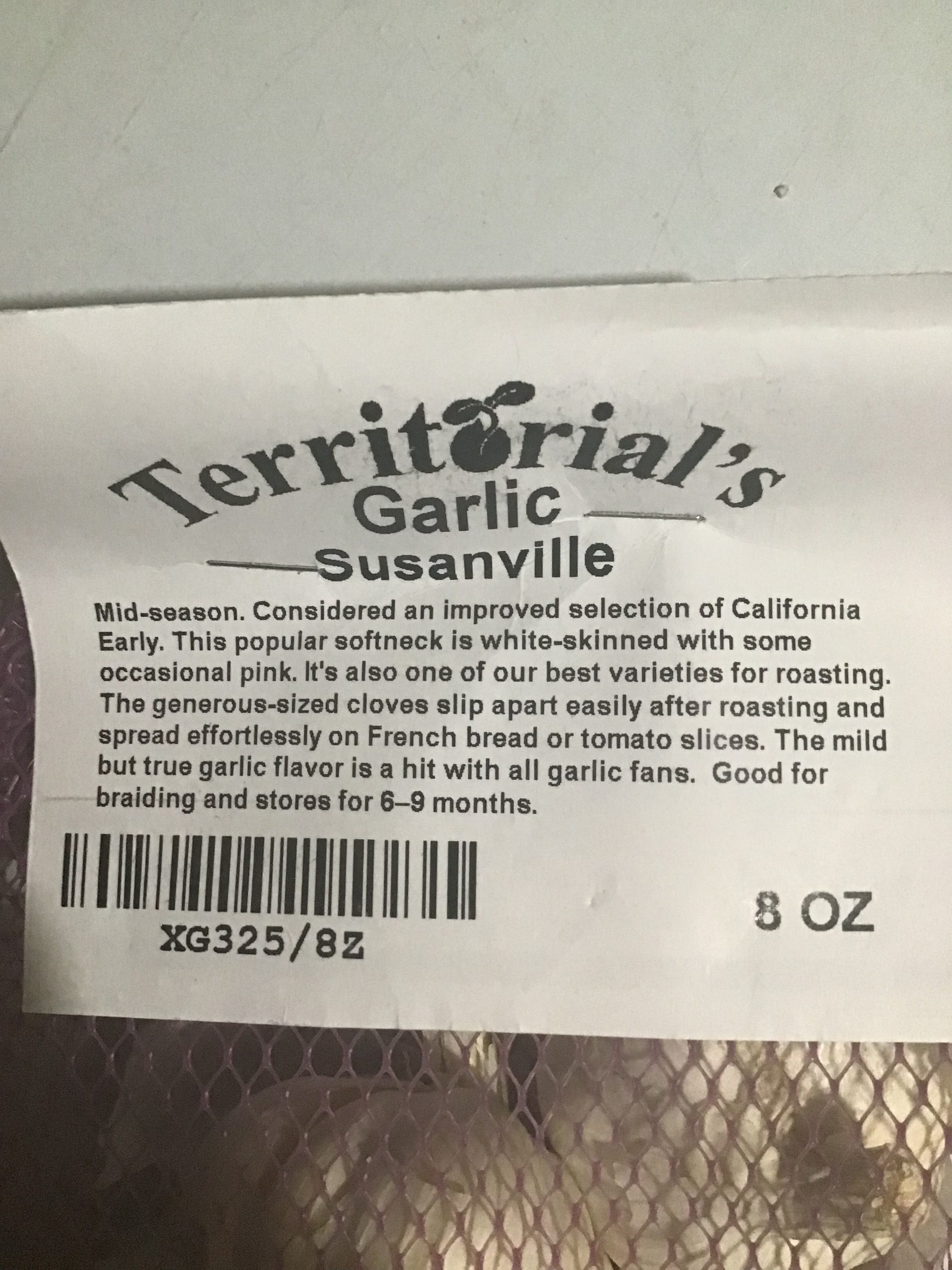
This is a free preview of a paid episode. To hear more, visit gardenbasics.substack.comI spent the weekend in a garlic frame of mind. I’ve been working one 4x8’ garden bed, harvesting the pumpkins, removing the vines, reworking the soil with worm castings and compost, and planting the garlic that just arrived last Friday from Territorial Seed Company.By the way, kudos to Territorial for all the information contained about the garlic varieties they sent that’s included on the label, which also has planting instructions. It is a handy label you can save to remind you of what varieties you planted come harvest time next spring, or take pictures of it for your garden diary. (By the way, they didn’t pay me to say that or plug them. I’m just happy with the service and the quality of the garlic that arrived.)I chose this year to plant Susanville and Silver White for their long storage capabilities. In the podcast, you’ll hear me and Debbie Flower discussing our garlic planting tips from October of 2023, mentioning several other varieties. In the newsletter below, even more varieties are mentioned. There’s a lot to choose from! The beauty of being a gardener…growing what you truly enjoy.Beyond The Garden Basics is a reader-supported publication. To receive complete posts, with access to the newsletter archives, and support my work promoting research-based gardening, please consider becoming a paid subscriber.Want to grow garlic?In milder climates (where the ground doesn’t freeze), now is the time to visit your favorite nursery, garden center or garden catalog company to choose the garlic varieties you want. Note I said, “varieties.” Grocery store garlic is primarily one or two varieties. Around here, it is usually California Early or California Late. And these two softneck, Artichoke varieties of garlic do grow well in USDA Zone 9. They take our late spring heat, are very productive, and can be stored (in a cool, dark room, in netted bags) for up to ten months. However, if you want a variety that has a deeper, full-bodied flavor, choose a hardneck variety, such as one of the Rocambole varieties, many of which do well in colder climates, where garlic is best planted two to four weeks before the ground freezes. In the past, I have had good luck with Killarney Red and German Red. Purple Stripe varieties are also quite flavorful, especially when used in baked dishes. Chesnok Red and FerganskiJ are two Purple Stripes that have done well here. Storage life for these varieties is much shorter, usually four to six months. The longest storing varieties – up to a year – are the Silverskins and Creoles, which include two of my favorites: Nootka Rose and Burgundy. Increasing in popularity because of their large size and tangy flavors are the Porcelain garlics, especially “Music”, with cloves as large as a Brazil nut.A well-stocked garden center or independent nursery may have a better supply right now than many garlic catalogs, which sell out of their stock quickly. For more information about garlic – including longer definitions than what is supplied here – check out online garlic company Filaree Farm in Washington State (filareefarm.com). Their site can answer many of your garlic questions. A very good book on the subject is “Growing Great Garlic” by Ron Engeland. A harder to find, out-of-print book, “The Complete Book of Garlic” by Ted Jordan, is a prized ($$$) reference for garlic aficionados (I think, if you shop around, you can find the book a lot cheaper than what it’s selling for on Amazon).University of California Cooperative Extension Master Gardener Advisor Emeritus Michelle Le Strange offers these garlic growing tips:* Below the paywall: A complete transcription of the newsletter podcast, plus:* How to choose and plant a clove a garlic.* How to tell when (and how) to harvest garlic.* Plus: A tasty, slow cooker recipe that uses a lot of garlic!

Understanding a Soil Report
This is a free preview of a paid episode. To hear more, visit gardenbasics.substack.comFirst of all, if you manage to get through this rather brain-taxing, soil-based, newsletter edition, you deserve a little love. How about 20% off a new paid subscription?Before diving into the deep end of how to read a soil report, check out this Overview on Soil Tests from the Alameda Co. (CA) Master Gardeners. It might help make the rest of this more comprehensible.Getting a soil test done is a great idea for your gardenAccording to the Alameda County (CA) Master Gardeners, a soil test:* Provides detailed information about the nutrient content of the soil, enabling gardeners to apply the correct type and amount of fertilizer.* Knowing the soil’s pH level, which affects nutrient availability, allows gardeners to adjust it to the optimal range for their plants.* Tests can reveal the presence of harmful contaminants like lead or other heavy metals, ensuring the safety of your garden produce.* By applying only the necessary fertilizers and amendments, gardeners can save money and prevent environmental pollution.* Understanding soil health helps in making informed decisions, leading to better plant growth and yield.* If you’ve exhausted your attempts to amend soil with compost, a soil test can provide more detailed information to remedy the problem.However, if you listen to today’s newsletter podcast, you’ll find out that understanding that detailed information can be a problem on its own. Here is a soil test from a commercial, Ag-based soil analysis company, that was submitted by a harried backyard gardener, who wants to know what it all means:Commercial Soil Test Results for a Homeowner’s Garden (2 pages)Even University-conducted homeowner soil tests have a degree of difficulty (but at least they provide links at the end for more information).Soil Test Results for a Backyard Landscape from UMass/Amherst (Pgs 1 & 2)Have your eyes glazed over yet? Listen to today’s podcast at the top of this newsletter with America’s Favorite Retired College Horticulture Professor, Debbie Flower, to help wash the glaze out of your eyes.Coming up after the paywall break:A transcript of today’s podcast, including helpful charts, graphs, and links for more information to help relieve your brain fog regarding soil tests. Plus, a partial list of universities that offer home garden soil testing at reasonable prices.Paid subscribers get access to the entire library of previous Beyond the Garden Basics newsletters and podcasts, of which there are now over 200 editions/And, you’ll get to hear today’s complete podcast!
What Causes Odd-Looking Vegetables?
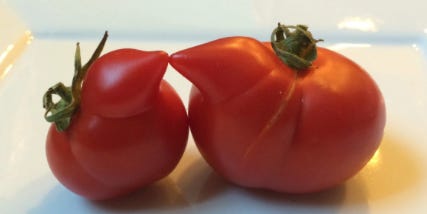
This is a free preview of a paid episode. To hear more, visit gardenbasics.substack.comThis journey into the odd and slightly obscene world of misshapen vegetables was inspired by Sacramento County Master Gardener Peter Horton, who wrote this article for the October 2025 Sacramento Co. Master Gardener newsletter.The article made me harken back to the days of the popularity of Richard Nixon lookalike vegetables, odd-shaped tomatoes, peppers, eggplants, and squash that had appendages - that to some - resembled the former President in profile. Eggplants, in particular, seem to favor this aberration, according to Facebook and Google AI:“Commenters who see Nixon in eggplants often cite specific aspects of his facial features that irregularly shaped eggplants can evoke:* Prominent nose: Nixon was known for his prominent, sometimes described as “ski slope,” nose. Certain eggplants can have a rounded, bulbous end that people interpret as a large nose.* Distinctive jowls: Nixon had sagging jowls, particularly later in his career. The shape of some eggplants, with a wider base and some lumps or folds, can be reminiscent of this feature.* Overall shape: A purplish, somewhat lumpy or distorted eggplant can vaguely suggest a human face, and for some, the specific characteristics align with the common caricature of Richard Nixon.This phenomenon is an example of pareidolia, where the human brain perceives familiar patterns, such as faces, in random or ambiguous stimuli.”At the very least, today’s newsletter has introduced you to a new word, “pareidolia”. The term, according to the National Institute of Health, originally implied the observer may be a bit touched in the head:“The term was coined by German psychiatrist Klaus Conrad in 1958 and comes from the Greek words “para” (beside or beyond) and “eidos” (form or shape). He used it to describe the initial stages of schizophrenia, though it is now understood as a normal cognitive function.”Are gardeners a bit touched in the head?If you see two baby chicks kissing in this photo, the only thing that will save you from a life of depravity and isolation is a paid subscription to the Beyond the Garden Basics Newsletter!After the paywall:More deformed vegetables!A transcript of our chat with Gail Pothour, who explains more about locules, and why they happen (hint: IT’S ALL YOUR FAULT). And, she answers the question: are those appendages edible?
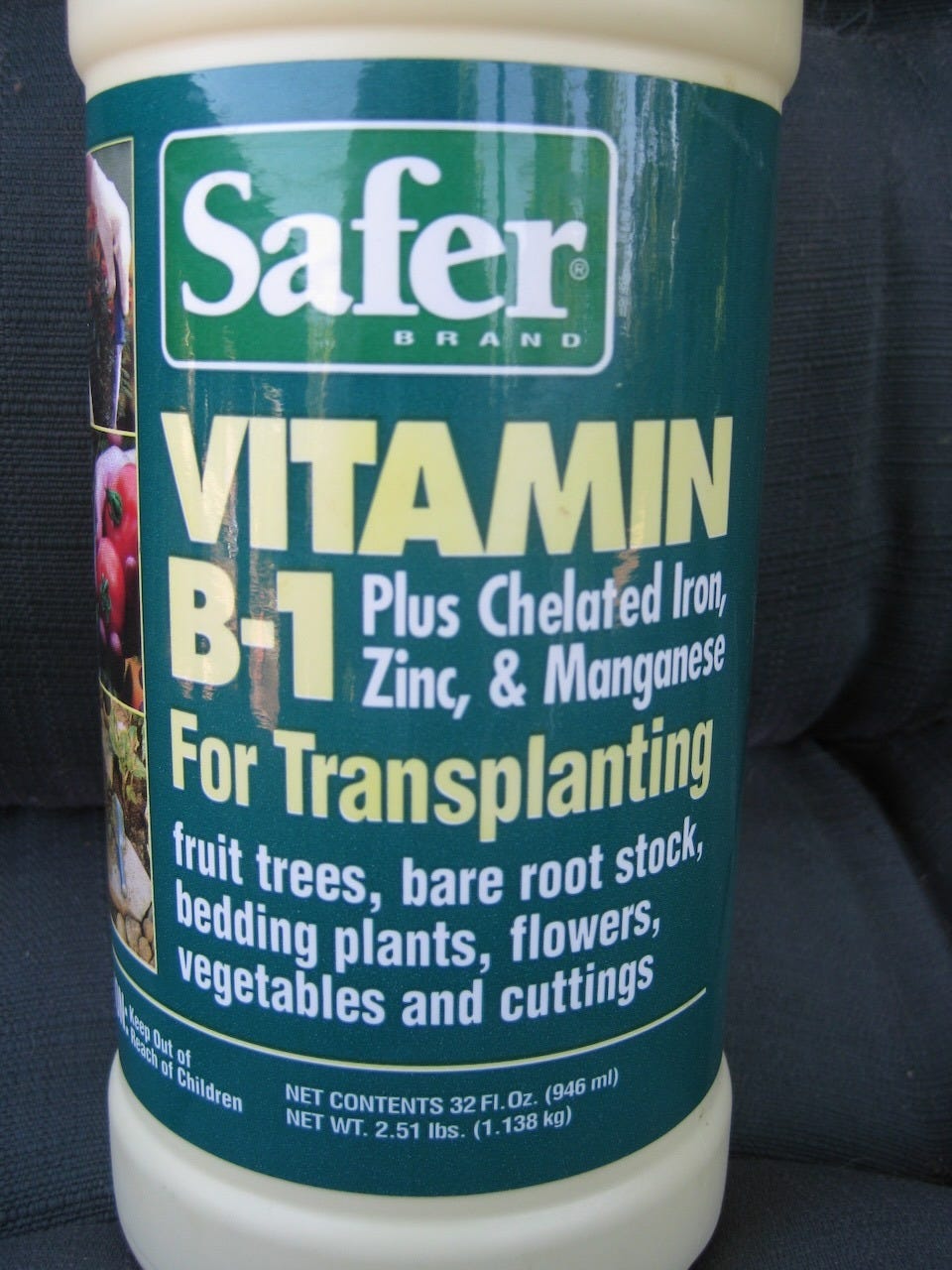
Can Vitamin B1 Help New Garden Transplants?
Beyond The Garden Basics with Farmer Fred is a reader-supported publication. To receive the complete posts, have access to over 200 previous editions, and help keep the good gardening information coming your way, please become a paid subscriber.Early fall is for planting, as we are fond of saying. The days are cooler, and the soil is still warm. Those are ideal conditions for a healthy start of new cool season annuals, perennials, trees, and shrubs.If you’re at the nursery this weekend checking out the latest in plants for your yard, you might just take a stroll down the garden chemical aisle. You may notice, on the shelf, a product of dubious value: Vitamin B-1. A typical label on such a bottle will tout its benefits for transplanting fruit trees, bare rootstock, flowers, vegetables and cuttings.Gardeners, their parents and their grandparents have heard this refrain at nurseries for decades: “Get a bottle of B-1, it will help reduce transplant shock for that new plant you are buying.”The truth, though, is the same as it has been for nearly 90 years: it isn’t the Vitamin B-1 (thiamine hydrochloride) in the bottle that reduces transplant shock.First a definition of “transplant shock” from Purdue University: “Transplant shock is a term that refers to a number of stresses occurring in recently transplanted trees and shrubs. It involves failure of the plant to root well, consequently the plant becomes poorly established in the landscape. New transplants do not have extensive root systems, and they are frequently stressed by lack of sufficient water. Plants suffering from water stress may be more susceptible to injury from other causes such as the weather, insects, or disease. When several stresses are being experienced, the plant may no longer be able to function properly.”And right there you have the answer to effectively reduce transplant shock: water correctly.Thiamine exists in nature, produced for plants via leaves and sunlight. Plants, as well as soil microbes, create their own Vitamin B1. Thiamine is a cofactor (molecule that binds to an enzyme to help/allow it to function) important in the construction and break down of carbohydrates for growth or energy storage/release.In the 1930’s, thiamine was shown to increase root development in plant tissue cultures - in the lab - especially in the dark. But those results couldn’t be replicated consistently in the field.Research at the University of California has shown that the addition of Vitamin B-1 to a plant doesn’t make any difference at all.Garden author Robert Kourik reported on his website: “The sun set on this persistent myth many years ago. Sunset Magazine reported in 1984 of studies which disproved the value of a vitamin B1 drench at transplant. Yet this horticultural “snake oil” still clutters many retail nursery shelves.What does work in that bottle prominently labeled “B-1”: the other ingredients - usually micronutrients or auxins - might make a difference in roots and growth of new plants.Back in the 1940’s, naturally occurring plant growth regulators, known as auxins, were isolated and tested. Auxins were found to stimulate cell elongation in roots and stem tissue. Bingo!Around that time, a commercial product, Transplantone, was developed that contained auxins and thiamine. Later research showed that it was certain auxins, not the thiamine, that encouraged roots.But the die was cast: gardeners got into the habit of getting vitamins for their plants.What does stimulate root growth? A rooting hormone containing auxins such as Indole Butyric Acid, Naphthylacetic acid or Paclobutryzol.Below the paywall: What’s inside a bottle of Superthrive? More information, including a transcript of today’s newsletter podcast, including more myth busting information about pot shards, landscape fabric, wood chips, and why you don’t want to pull out big weeds! Remember: subscribers also have access to the entire back catalog of Beyond the Garden Basics newsletters and podcasts. $5 a month or $50 a year. If you learned something, tip me! Thanks.One surprise that popped up in my research: the much-ridiculed Superthrive contains auxins...as well as, of course, Vitamin B-1. Anyone who has tried to pore through the densely hyperbolic endorsements on a Superthrive label looking for the ingredients, well...good luck.However, I did find the ingredients on a 20 year-old, unused bottle of Superthrive sitting in my greenhouse. Is it the same formulation today? I don’t know. But seeing how they haven’t apparently changed the outside of the bottle much over the years, I have a feeling the insides are still the same.The debate about the benefits of adding thiamine or other additives (including Superthrive) to plants still rage, with proponents citing research supporting their viewpoint.Bottom line: The benefits of root formation contained in a bottle of Vitamin B-1 or any other additive product are the auxins, if any, that are included. Small amounts of nitrogen can also encourage
The Disease Triangle
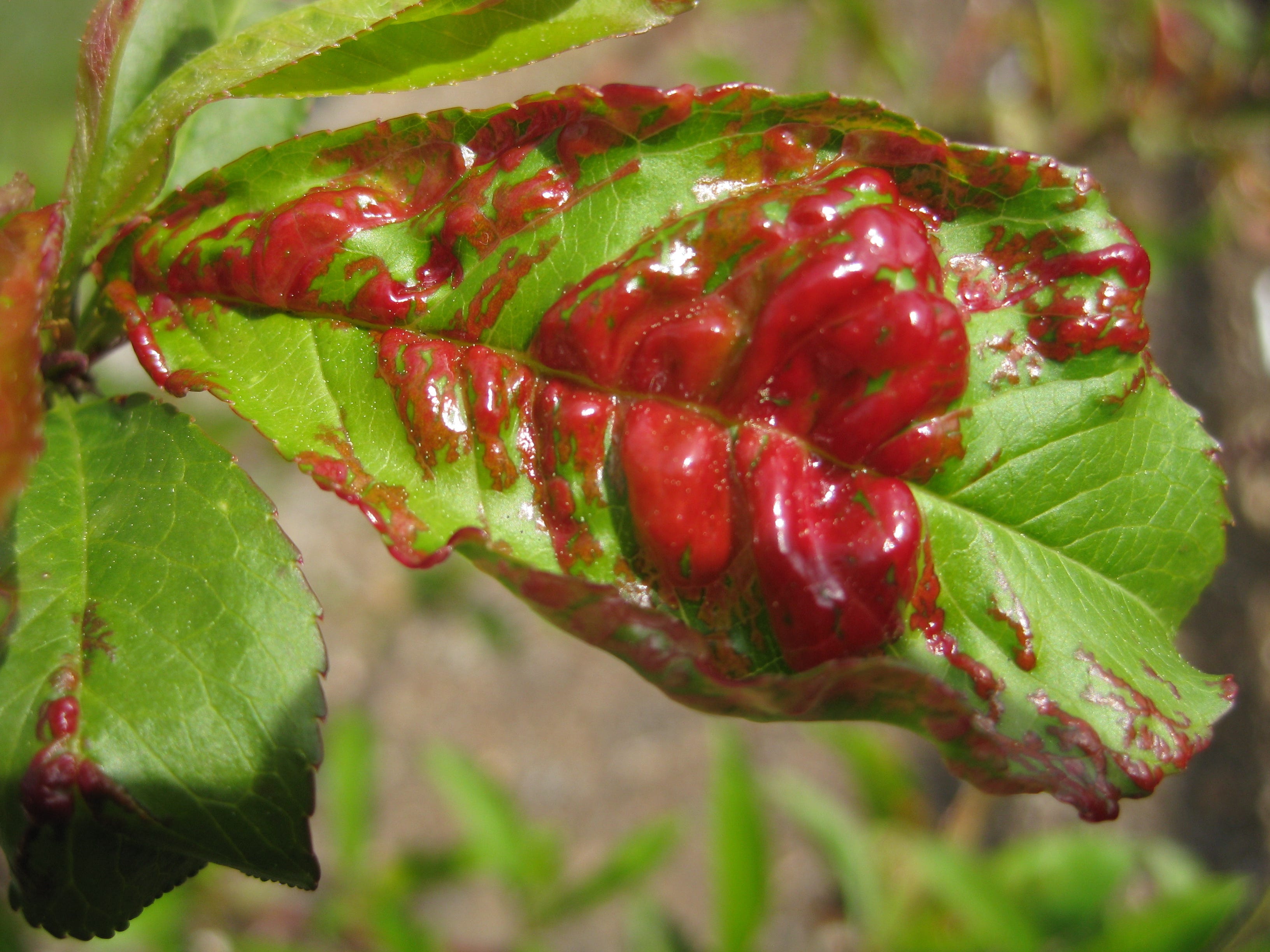
This is a free preview of a paid episode. To hear more, visit gardenbasics.substack.comBack in elementary school in Southern California, there once was a visit from a local firefighter who had Smokey the Bear in tow with him (I felt sorry for whoever was in that outfit. It was a hot day). Because, as Smokey would remind us daily on TV public service announcements, “Remember, Only You Can Prevent Forest Fires.” The purpose was to explain to us fifth graders the fire triangle: that you need three elements to start a fire: fuel, oxygen, and heat. So, douse that campfire with water (to take away the oxygen), and separate the remains (the fuel) from each other (to lessen the heat), and don’t play with matches, kids.Turns out, the same sort of triangle can help you figure out how to control plant diseases in the garden. Debbie Flower, America’s Favorite Retired College Horticulture Professor, calls it “The Disease Triangle”. Debbie says, “If you know this, you can control diseases without chemicals.”She explains that intriguing statement in today’s newsletter podcast, above. For those of you who prefer to use your eyes, here’s the transcript, which includes links to more information about certain statements, and maybe a country song, too:With the closing of the Garden Basics with Farmer Fred podcast, the Beyond The Garden Basics newsletter/podcast is the new flagship publication for good gardening information. To receive new posts and support my work, consider becoming a paid subscriber. And for those who already paid, thank you!

Grow A Yardful of Phytonutrients
Today’s newsletter and podcast originally appeared here back in September of 2022, and it was one of the most popular posts here in the Beyond the Garden Basics newsletter. Eating healthy food - and the healthiest food you can eat is the food you grow yourself - is a perennial concern. So, for those of you who didn’t hear or read this three years ago - or would like a refresher course - here it is again. Remember, paid subscribers have access to all the previous Beyond the Garden Basics newsletter editions… a very good reason to pony up a few dollars a month for a subscription!Beyond The Garden Basics with Farmer Fred is a reader-supported publication. To receive new posts and support my work, consider becoming paid subscriber.In today’s newsletter podcast, we continue our chat with Dr. Laura Varich, from FreshPhysician.com , a conversation that we began on Episode 228 of the Garden Basics with Farmer Fred podcast. Dr. Varich is a former pediatric radiologist who is now focused on what’s really the cause of so many of the diseases in our society: poor eating habits. Specifically, we are missing a critical element in our diet: phytonutrients. We’re eating too much of colorfully-packaged, highly-processed factory food and not enough fresh from-the-garden (or farmer’s market) colorful food.The result: rampant increases, across all ages, of heart disease, diabetes, high blood pressure, cancer, and other ailments.In both podcasts, she encourages getting out into the yard and growing fresh fruits and vegetables, which is also great exercise. The healthiest food you can eat is the food you grow yourself…and then consume it, fresh. Or, at least, make regular runs to the farmer’s market in your area.What are phytonutrients?Dr. Varich explains that in the podcasts. And, here’s the word from Harvard University:Phytonutrients: Paint your plate with the colors of the rainbowDid you know that adding color to your meals will help you live a longer, healthier life? Colorful fruits and vegetables can paint a beautiful picture of health because they contain phytonutrients, compounds that give plants their rich colors as well as their distinctive tastes and aromas. Phytonutrients also strengthen a plant’s immune system. They protect the plant from threats in their natural environment such as disease and excessive sun.When humans eat plant foods, phytonutrients protect us from chronic diseases. Phytonutrients have potent anti-cancer and anti-heart disease effects. And epidemiological research suggests that food patterns that include fruits and vegetables are associated with a reduced risk of many chronic diseases, including cardiovascular disease, and may be protective against certain types of cancers.The American Cancer Society recommends 2 1/2 cups per day of fruits and vegetables. The most recent US Dietary Guidelines recommend consuming even more: 2 1/2 cups of vegetables and 2 cups of fruit, based on a 2,000-calorie diet.To get started, try to include as many plant-based colors in your meals and snacks as possible. Each color provides various health benefits and no one color is superior to another, which is why a balance of all colors is most important. Getting the most phytonutrients also means eating the colorful skins, the richest sources of the phytonutrients, along with the paler flesh. Try to avoid peeling foods like apples, peaches and eggplant, lest you lose their most concentrated source of beneficial chemicals.Following is a rundown of fruits and vegetables sorted by color, along with the phytonutrients they contain, and which foods you’ll find them in.Red: Rich in the carotenoid lycopene, a potent scavenger of gene-damaging free radicals that seems to protect against prostate cancer as well as heart and lung disease.Found in: strawberries, cranberries, raspberries, tomatoes, cherries, apples, beets, watermelon, red grapes, red peppers, red onions.Orange and yellow: Provide beta cryptothanxin, which supports intracellular communication and may help prevent heart disease.Found in: carrots, sweet potatoes, yellow peppers, oranges, bananas, pineapple, tangerines, mango, pumpkin, apricots, winter squash (butternut, acorn), peaches, cantaloupe, cornGreen: These foods are rich in cancer-blocking chemicals like sulforaphane, isocyanate, and indoles, which inhibit the action of carcinogens (cancer-causing compounds).Found in: spinach, avocados, asparagus, artichokes, broccoli, alfalfa sprouts, kale, cabbage, Brussels sprouts, kiwi fruit, collard greens, green tea, green herbs (mint, rosemary, sage, thyme, and basil)Blue and purple: Have powerful antioxidants called anthocyanins believed to delay cellular aging and help the heart by blocking the formation of blood clots.Found in: blueberries, blackberries, elderberries, Concord grapes, raisins, eggplant, plums, figs, prunes, lavender, purple cabbageWhite and brown: The onion family contains allicin, which has anti-tumor properties. Other foods in this group contain antio
Feed Your Soil, Cool Season Edition
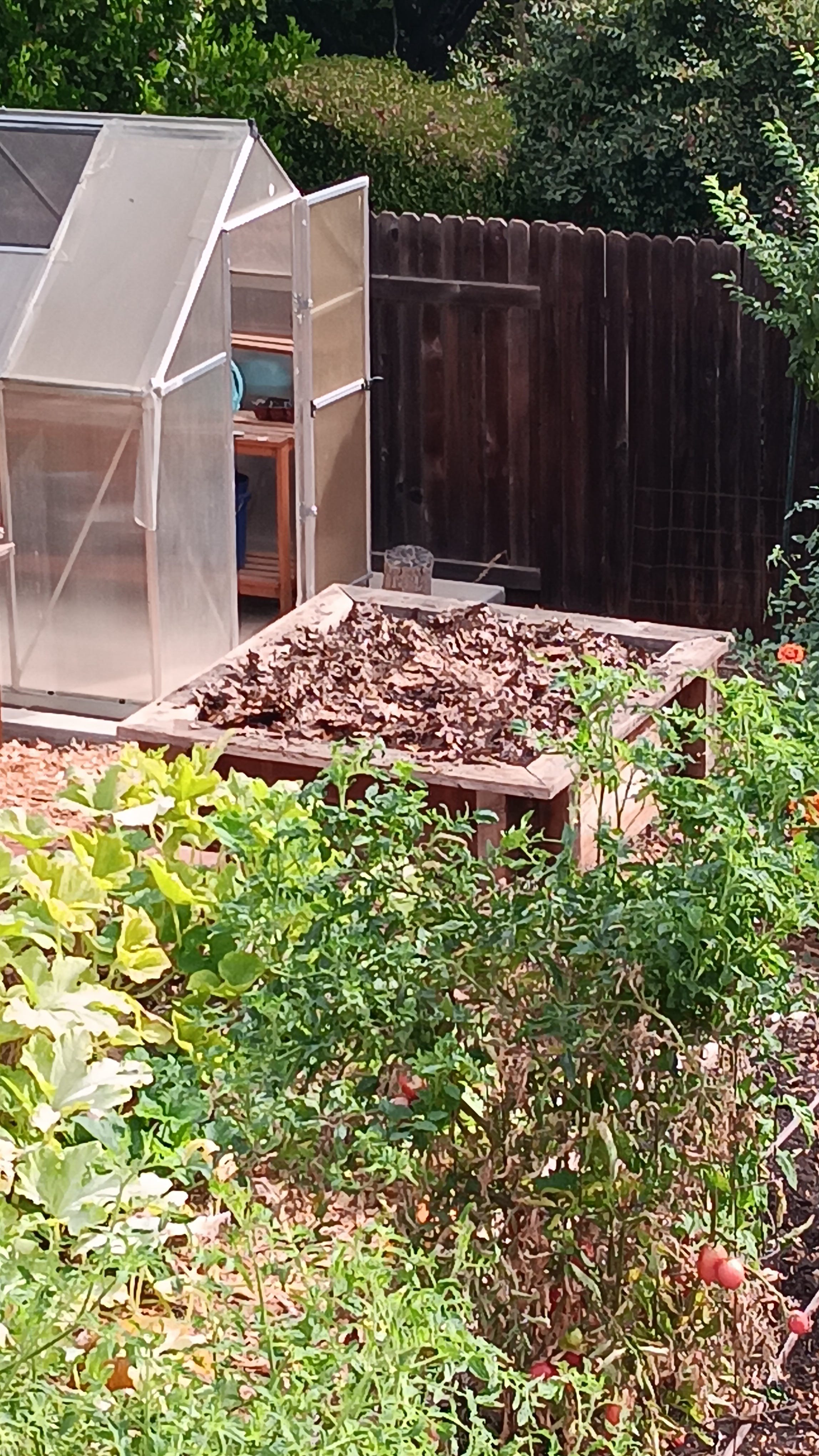
We are transitioning from the summer gardening season to cool season vegetables and flowers. However, maybe you don’t want to put in cool season crops. A word to the wise: don’t leave your fading summer garden lingering (or drooping) in the garden; doing that invites insect and disease pests to overwinter in that standing debris. In its place, there are some inexpensive and easy things you can do that will not only minimize pest problems for the following year, but also feed your soil and make it even better for next year.In today’s newsletter podcast, soils expert Steve Zien explores how cultivating an environment that nurtures soil biology lays the groundwork for vibrant plants.Among the topics in the podcast:0:05 Goodbye, tomatoes, squash and peppers0:53 Feeding the Living Soil3:56 What’s Missing from the Soil?4:58 Understanding N-P-K6:52 The Importance of pH8:33 Adjusting Soil pH9:25 Benefits of Mulching10:23 Managing Soil Moisture14:01 Fall Planting and Soil CareTips for a Healthier SoilThe University of Minnesota Extension has six tips for a healthier soil:• Get a soil test done to find out what nutrients your garden soil is missing. Some universities offer low-cost soil tests, including U. Mass/Amherst, Colorado State, Texas A&M, and Utah State.• Mix in organic matter. This could include fallen leaves, roots, and general plant litter.• Incorporate compost and worm castings to compacted soil to increase air, water holding capacity, and nutrients for plants.• Protect topsoil with mulch, leaves, or cover crops.• Don’t use chemicals unless there’s no alternative.• If possible, rotate crops.Soil pedologist Steve Zien concurs, saying if people want inexpensive, easy ways to improve their soil during the winter, and they don’t want to grow cool season cover crops, two easy tasks can greatly improve your soiI: cut off your summer crops at the soil level, but leave the root system in place. Then, cover that soil with several inches (six to ten inches) of mowed-over or chopped-up leaves that are beginning to fall from the trees.“Doing that is absolutely wonderful for your garden soil,” says Zien, who is based in Sacramento County. “It regulates the soil temperature, keeping it warmer. The fact that the leaves are ground up makes it easier for the worms that are in your soil to come up and feed, aerating your soil and taking that organic matter down into the soil. So, you will get nutrients moving down into the soil, increasing the nutrient value, and you will get more soil biology. And the more soil biology you have, the more diversity, the more numbers of beneficial microorganisms, the healthier your soil will be and the healthier your crops will be. That increase of beneficial soil biology will naturally combat pest problems.”Zien goes on to say that the root mass remaining in the garden will improve the soil, as well. “The roots will decompose quickly,” says Zien. “The biology will basically reduce them to nothing. And there will be large pore spaces where those roots were. When you irrigate, the water will go down very nicely, which is important, especially if you have a clay soil.”This breaking down process of the roots will happen quicker if you already have healthy soil, teeming with microbes. What can gardeners do to begin that process?“Leaving crop residue and leaf mulch on the soil surface will still be worthwhile,” explains Zien. “The mulch and the underground crop residue protect the soil from nature’s forces of wind and water, reducing erosion and the impact of raindrops on bare soil. When a raindrop hits bare soil it loosens the sand, silt and clay particles. That moves them around in a way that results in the creation of a hard crust that seals off the soil. Topping the soil with crop residue and mulch instead will conserve moisture, reduce the need for irrigation, prevent weed growth and will insulate the root zone from heat and cold, creating a more favorable environment for the development of beneficial soil biology.”Zien warns that part of building healthy soil may require a change in some of your gardening habits.“One must also realize that the good soil organisms are destroyed by synthetic fertilizers and pesticides, therefore their use must be eliminated or at least minimized,” says Zien.“The sooner you adopt these practices, the faster you will create a healthy soil food web with good soil structure and an abundance of organic matter capable of producing the garden and landscape of your dreams.”Beyond The Garden Basics with Farmer Fred is a reader-supported publication. To receive complete posts and support my work, consider becoming a paid subscriber.Here’s the complete transcript of the conversation with soil pedologist Steve Zien in today’s podcast (above):Farmer Fred:[0:00] Well, it’s the change of seasons, kind of, and you might be ripping out your summer vegetable garden. Goodbye, tomatoes, squash and peppers. Hello, broccoli, cauliflower, peas and whatever. But before you add your

Who's Eating the Tomatoes?
Don from Indiana has a late summer visitor to his tomato plants. He is not pleased:“I flicked 10 of these “bad boys” off one of my tomato plants last night. Ten!I look at this plant every day. I water it every day. I pick and eat tomatoes off it every day. Every day!How did so many appear seemingly overnight?I believe it is a Tobacco Hornworm caterpillar (Manduca sexta).There were actually 11 of them on the plant, but I left the one that had been parasitized. That’s the one with what looks to be little pieces of rice sticking out of its back.I’ve heard you and Debbie Flower talk about this for years, but never witnessed it myself until yesterday.Thanks for the heads up!!”Doug from Sacramento chimes in:"As a first time tomato grower, I have two plants in pots (Patio & Bush Better Boy), and four in the ground (Roma, Sun Gold, Lemon Boy, & Black Krim). Something was eating the young tomatoes in the pots. Upon closer inspection I found three juicy, green caterpillars around the plants. I did some research and they seem to be tomato hornworm (Manduca quinquemaculata) - a common pest and best controlled by hand picking and dumping in soapy water, or allowing the beneficial wasps to do the job.Any other suggestions controlling these tomato eaters?"Doug, one option might be to stick that critter in the envelope that he’s resting on, and mail it to someone you don’t like. However, the envelope may require extra postage. Beyond The Garden Basics with Farmer Fred is a reader-supported publication. To receive new posts and support my work, consider becoming a free or paid subscriber.Either Tobacco or Tomato Hornworms will enjoy your September tomatoes. According to North Carolina St. University:Tomato and tobacco hornworms are closely related species that cause similar damage to the same host plants. Both are equivalent in size and appearance. Tomato hornworms are the larval stage of the fivespotted hawkmoth (Manduca quinquemaculata) and tobacco hornworms are the larval stage of the Carolina sphinx moth (Manduca sexta). Tomato and tobacco hornworms can both be found attacking host plants.Host plants of both species include members of the Solanaceae family such as tomato, pepper, potato, eggplant, along with various nightshade flowering plants. Additionally, tobacco is also targeted by tobacco hornworm.This time of year, many backyard gardeners, in addition to Don and Doug, are glaring at their partially eaten tomato plants, and muttering under their breath, "Just where do these blankety-blank tomato worms come from?" Contrary to a popular urban legend, the larvae of the tomato hornworm do not lurk inside tomato seeds, a diabolical plot between seed growers and chemical manufacturers to increase profits. Nor are the worms drawn by the scent of your tomato plants from deep within your garden soil, emerging forth to wreak havoc.The tomato and tobacco hornworm begin their life cycle as a small, singular, light green egg, about the size of a thick pinhead, laid in late spring and early summer on the underside of a tomato leaf. That egg got there courtesy of a flying culprit, the sphinx moth. Both the tomato hornworm sphinx moth and the tobacco hornworm sphinx moth have similar features: about a four-inch-wide wingspan, gray body, brown wing streaks as well as yellow and white body markings.The egg laid by the sphinx moth hatches within a week, and the emerging hornworm (technically, a caterpillar) begins eating. And eating. And growing. A full-grown hornworm, satiated by its tomato plant diet (supplemented with whatever else is handy, including potatoes, eggplants and peppers) can get up to four inches long.If you miss catching the tomato hornworms, these critters will descend into the soil at the end of the season, wrapping themselves into a cocoon: Disking or rototilling after harvest destroys their pupae in the soil and prevents the adult moths from developing and emerging from the soil the following spring. Again. Hand snipping the tomato worms with scissors or pruners can be a satisfying evening chore. The trick, as seasoned gardeners know, is trying to find the hornworms in the first place. Tracing their black, pellet-shaped excrement from the ground back up the plant usually yields successful results. The best time to find them is in the cool of the morning or evening. Another popular tomato worm hangout: the tender, new growth at the top and sides of tomato plants. If you prefer to douse tomato hornworms in chemicals, use one registered for use on this pest. Soaps and oils might slow them down but won’t kill them. What does work are stomach poisons that contain a bacterial insecticide, such as Bacillus thuringiensis (Bt) or spinosad. They can be applied directly to the offending hornworms. However, this works best while the worms are still small. The bigger ones are more problematic, but there may be help already at work in your yard.Encouraging birds to hang around your property is a good strategy. They enjoy these
More Tips for a Successful Garden
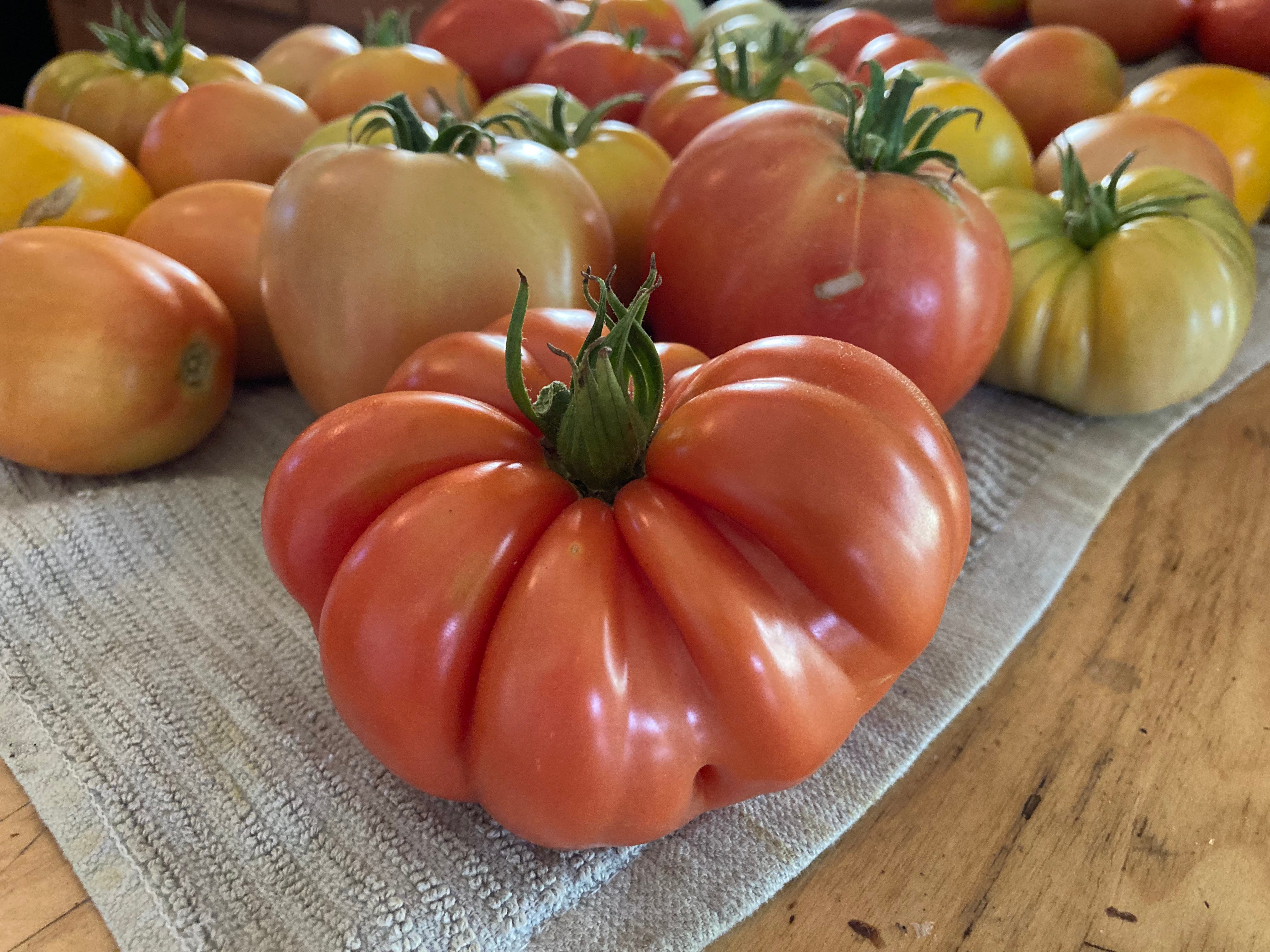
While editing Episode 406 of the Garden Basics with Farmer Fred podcast (out now), I was taking copious notes, about all the great garden tips Don Shor and I discussed in an episode that was ostensibly a chat about growing tomatoes this summer (we both like Cupid, despite its propensity to sprawl). In fact, it was the most notes I have ever taken for any episode. Were you taking notes, too, while listening? If so, I hope you weren’t driving. But I’ll make it easier for you: check out the transcript of today’s episode, especially the more accurate transcripts that you’ll find at our website, gardenbasics.net, or at our podcast uploader, Buzzsprout, and discover your own “Aha!” garden moments.TIP #1: START WITH EVENLY MOIST SOILWe have discussed this several times on the podcast. First, with America’s Favorite Retired College Horticulture Professor, Debbie Flower, when talking about reusing old potting soil for container planting, in Episode 172 in the Garden Basics podcast. Debbie stressed the importance of getting the soil thoroughly moistened before planting:Farmer FredDebbie, it's that time of year or and people are going to go out to get plants, or they're going to get seed. And they may be buying soil. But before they buy soil, they may take a look around their yard and they see all these pots with no plants in them, but they're full of soil. There might be nurseries that might say, "Oh, you don't want to use that. You need to buy our new soil." But that old soil that you have, I guess it really depends what's in it and what it is, and what it needs. Right? And can it be reused?Debbie FlowerYes, I reuse potting soil all the time, I have many instances where I look around and there are pots with dead things in them. As I said to my cousin, I still kill plants, I just know how to do the autopsy. I typically know or have an idea of what killed them as well. I take out the what is left of the plant, there's often a decent root system, I'll bang it around on my potting bench and get off as much of the container media as I can from those roots. And notice I say container media. This is not field soil. I use kitty litter boxes that I bought specifically for the purpose of mixing media. And I dump it in there, mix it up with whatever else I have and reuse it. I very often add a rock component to that reusable media and some new bagged container media. Container media is not soil, it is organic matter. Plus some typically rock components. Peat Moss, coir or compost are usually the organic matter. And then the rock components are perlite, vermiculite, pumice, sand, something like that. And it's often one part of the organic matter to two parts of the sand component. And the reason for that is that over time the organic component breaks down. And as it breaks down, the particles get smaller. And the space between the particles where the air and water hang out in a container gets smaller and the plant starts to suffer. So a plant has died in the container media. It's been in there some period of time and a container, the organic component of that container media has broken down. So the pore spaces, the open spaces between the components of container media have gotten too small, or they've definitely gotten smaller, they may have gotten too small for roots to actively live in there. So I want to fix that. That's one thing I want to fix, is particle size. So I do that by adding some new media from a bag and usually more rock components. Mix them together, get the texture I do very much by feel and I don't have recipes, and then I'll reuse them. I will never reuse media to start seeds in. To start seeds, you want things sterile. You want the pots to be absolutely clean and you want the media to be unused. So I'm not using it for that. But I will move my houseplants up to a bigger size or my seedlings that I started in six packs all the way up to four inch pots, something like that, using this reused media. The other thing that I need to worry about with the media is the salt component. Salt is fertilizer. Fertilizer has to be in the salt form for the plant to be able to take it up. It has to be able to dissolve in water and move to the plants roots and enter the plants roots. And so that's the salt form. And if there's too much of that in there, the pH of the soil will go up, so the soil will be too alkaline. When that happens, then nutrients that are in the soil become unavailable to the plant. The easiest way to do that is just flush the the media with freshwater for several minutes and allow it to come out through the drain holes of the pot. But yes, I absolutely reuse media frequently.Farmer Fred To your last point there. One thing I do is, I get myself a five gallon bucket. And I will take that old container mix and put it in the bucket because usually peat moss is part of that. It is hard to rewet. So I put it in a bucket with no drain holes, I will put that soil mix and then fill the bucket with water and then

This Newsletter is for the Birds
In the podcast (above) retired UC Farm Advisor Rachel Long has tips for attracting songbirds to your property.They're nice to look at, sing wonderfully and eat insects.No, we're not talking about the Dixie Chicks on a fad diet.It's the gardener's best friends, a backyard filled with birds.We're talking about the family inhabited by warm-blooded egg-laying vertebrates, characterized by feathers and forelimbs modified as wings.Yes, real birds will nibble on your cherries and grapes (that's why there's bird netting), but birds can help control the bad bug population in your garden, especially tomato hornworms, cabbage loopers and redhumped caterpillars. Birds also control the spread of weeds by eating the seeds of unwanted plants; bigger birds, such as owls and hawks, will swoop down and devour rodents.Birds require little in return from you for their labors: trees and shrubs for shelter, perhaps some berry-filled plants (cotoneaster, pyracantha, toyon and more) and fresh water.Bird Baths Attract Birds (especially with gently moving water)Birds aren't too particular about their watering sites. All they are looking for is a shallow pan, about two to three feet wide and no more than three inches deep, with sloping sides so they can ease their way in, placed in an area away from fence tops and foliage where they can keep an eye out for their main predator, Mr. Kitty.A birdbath can be as elegant as a thousand dollar, terracotta fountain with a waterfall; or, as simple as an old metal garbage can lid placed on the ground.Here are some tips for keeping the thirsty birds happy:• Keep the birdbath water fresh and filled during hot weather. On freezing mornings, adding hot water can help break up the thin sheet of ice.• Clean out birdbaths with a powerful jet of water from the hose; or, use a plastic scouring pad.• Do not add chemicals, such as bleach, to control algae. Do not add antifreeze to keep ice from forming. If you must use bleach to clean an algae-filled birdbath, cover it with screening for a few hours to keep the birds away. Empty and rinse the birdbath after that and refill with fresh water.• Birds are attracted by the sound of gently moving water. A simple drip irrigation mini-sprinkler installed adjacent to the birdbath will be a popular addition. Hanging a dripping bucket in a tree above a bird bath can attract birds, too.• An exposed rock placed in the middle of birdbaths with straight edges give birds a place to land and check things out.• If the only area you can place a birdbath is near dense shrubbery, it is important to put the bath on a pedestal for their protection.• Situate birdbaths in areas where you can enjoy them, near a faucet for easy cleaning and filling.• Then, sit back and enjoy the show!Beyond The Garden Basics with Farmer Fred is a reader-supported publication. To receive new posts and support my work, consider becoming a free or paid subscriber.Farmer Fred’s Ride for the Kids!I'm fundraising on behalf of the 2025 Sacramento Century Challenge on Saturday, October 4 to raise money for the Sacramento Children's Home Crisis Nursery, and I could use your support. Here’s the link.On that date, I’ll probably be riding my new (and probably last) bike, the FRED OTL (a custom Haley titanium bike, NOT an e-bike). “OTL” - in bike race parlance - stands for “Outside Time Limit”…participants who were sent home for being “dead ass last”. I never said I was fast. But I do try to persevere to the end.The journey of 100 miles along the Sacramento River is to help out the Sacramento Children’s Home Crisis Nursery.I’ve ridden 100 miles in one day plenty of times…when I was younger. But at 74, and with a few health setbacks in 2025, I could use some moral support, and the Sacramento Children’s Home Crisis Nursery can use your pledge money.So, how about it? Maybe pledge 10 cents a mile (that’s $10) along with a hearty, “You go, Fred!” Or a more generous one dollar a mile ($100), to give me the mental endurance for the entire ride, to dodge the pothole-filled levee roads and pedal harder in the ferocious headwinds that makes this ride a real challenge!The Sacramento Children's Home Crisis Nursery is the only program of its kind in Sacramento County and directly prevents child abuse and neglect by supporting families with small children at times of crisis. The nursery allows parents to bring their children ages newborn to five for emergency hourly or overnight care during difficult times, with the goal of keeping families together and reducing the number of children entering foster care. To care for our community's most vulnerable children, we rely on support from community members like you. By donating, you empower us to provide a safe haven for children throughout the Sacramento area, offering respite to parents during times of crisis, and building a strong support system for the future. Your support helps provide a safe place to stay local kids in need.Again, here’s the link to make a donation to the Sa
Garden Tips from the Experts
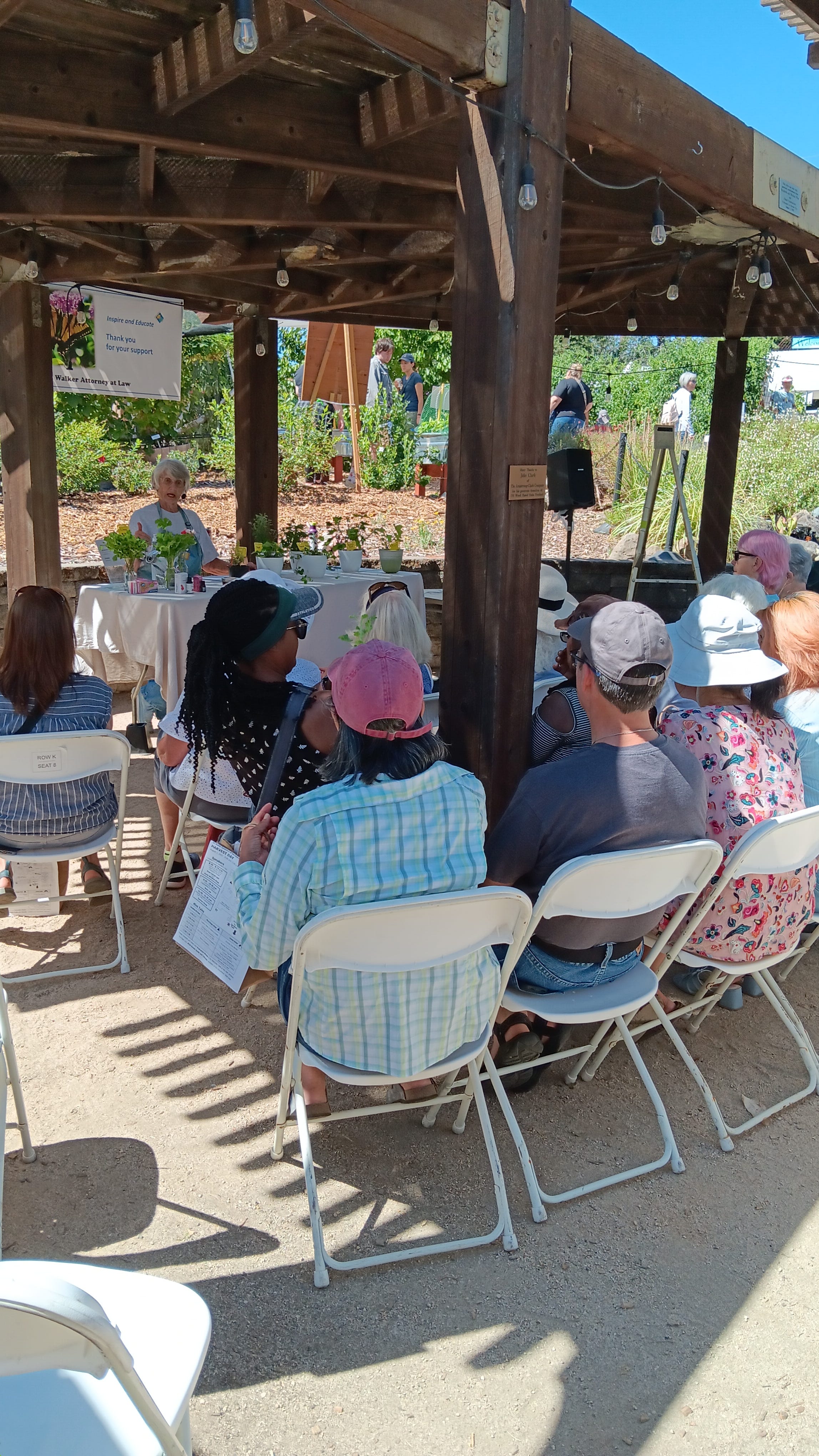
One of the best places to get your garden questions answered (or pick up the 2026 Sac Co Master Gardener Gardening Guide and Calendar) is at the annual gathering of Master Gardeners, gardening professionals, and horticultural consultants at Harvest Day, held the first Saturday of August each year at the Fair Oaks Horticulture Center in Sacramento County. And last Saturday was no exception. A question I posed to several dozen of the pros there was this: “What is the one garden tip you would like people to know?” Here’s a sampling of their answers. You can listen to all the tips in the podcast, above, which is a copy of the entire Episode 404 of the Garden Basics podcast.• Dave Roberts, of the Sacramento Cactus and Succulent Society: “You got to have excellent drainage for cactus and succulents. They thrive on soils that will drain right through, with low amounts of organic material. And if you have that formula, you're going to be successful. Cactus and succulents are not heavy feeders. I feed my potted cactus and succulents two to three times at most during the growing season. Very lightly, not a heavy dose. It’s different from the way we treat our vegetables and flowering plants. Those rules do not apply to succulents. So, if you have heavy clay soil, you may want to consider growing cactus and succulents in containers.”• Charlotte Owendyk, Master Rosarian – Sierra Foothills Rose Society: “One of the things I like to suggest to anyone who has potted plants is to use a fish emulsion fertilizer periodically. Perhaps once a week or so. Fertilizing with fish emulsion really makes your potted roses or any potted plant do well.”• Chris Aycock, El Dorado Nursery and Garden, Shingle Springs: “If you really want to keep the deer out, you do need to build a fence. You can spray all the repellents all you want, and it will deter them, temporarily. You need to switch off repellents so that they don't get used to one thing. But fencing is your best friend for keeping the deer out. Enjoy the view of those deer, from the other side of the fence. Trap crops on the outer perimeter of your yard – which are plants the deer will enjoy, will not keep them from coming in any further. Anytime you put a food source out there for them, you're just inviting them in saying, ‘hey, look this dining room's open for grazing!’ They can sustain themselves. You don't need to feed them.”• Anita Clevenger, Master Gardener, perennial plant expert: “Cutting plants back in the summer will help them bloom again. We have plants here in the perennial garden like the catmint and the Santa Barbara daisy. And they just love a refresher light pruning earlier in the summer after their first bloom. You cut them back hard generally in the winter, along with many other perennials. But for these plants, after they've done their spring bloom, if you cut them back, they will get a whole new fresh breath and a fresh flush of flowers and leaves.”• Garry Chin, Sierra Foothills Rose Society: “If you are interested in growing roses, one of my recommendations is to join a local rose society wherever you live. And then join the national organizations, such as the American Rose Society. Do that and you'll find out about the latest things that are going on with roses at the national level.”• Grace Amico, Miridae Mobile Nursery, which specializes in California Native plants: “With native plants, you must be careful with watering. In their first two or three years, you will need to add more water than you might think. And then after that first few years, you can kind of taper off and let them become more drought tolerant. And with California native plants, you must be patient with them. It could take three years before you see a large spurt of growth.”Beyond The Garden Basics with Farmer Fred is a reader-supported publication. To receive new posts and support my work, consider becoming a free or paid subscriber.Farmer Fred’s Ride for the Kids!I'm fundraising on behalf of the 2025 Sacramento Century Challenge on Saturday, October 4 to raise money for the Sacramento Children's Home Crisis Nursery, and I could use your support. Here’s the link.On that date, I’ll probably be riding my new (and probably last) bike, the FRED OTL (a custom Haley titanium bike, NOT an e-bike). “OTL” - in bike race parlance - stands for “Outside Time Limit”…participants who were sent home for being “dead ass last”. I never said I was fast. But I do try to persevere to the end.The journey of 100 miles along the Sacramento River is to help out the Sacramento Children’s Home Crisis Nursery. I’ve ridden 100 miles in one day plenty of times…when I was younger. But at 74, and with a few health setbacks in 2025, I could use some moral support, and the Sacramento Children’s Home Crisis Nursery can use your pledge money.So, how about it? Maybe pledge 10 cents a mile (that’s $10) along with a hearty, “You go, Fred!” Or a more generous one dollar a mile ($100), to give me the mental endurance for the enti

Drip Irrigation: How Long Do I Water?
90% of all plant problems are water related, either too much or too little. Compounding the problem: gardeners who are operating a drip irrigation system but using a sprinkler mentality.The Beyond The Garden Basics with Farmer Fred newsletter is a reader-supported publication. Both free and paid subscribers are welcome here!Talking to gardeners, after describing a plant problem, they will be asked: "How are you watering that plant?" More often than not, if the answer is, "drip irrigation", they will follow that with, "And I run it for five minutes a day, everyday."And therein lies the problem. A drip irrigation system puts out water much slower than a sprinkler system, usually a gallon or two an hour versus a sprinkler system's output of a gallon or two A MINUTE. In five minutes, a 1 gallon per hour (gph) drip emitter will put out about 10 ounces of water...slightly more than a cupful. Not only will that pittance of water not saturate the width of the plant's root zone (which can extend beyond the canopy of the plant), it won't penetrate more than an inch or two. And then not stay there very long. What happens to a plant with a shallow watering program? The roots stay very near the surface, where they are more subject to drying out quickly. This boom and bust cycle stresses the plant, opening up the possibility of disease and insect invasions. With a drip irrigation system, don't think "minutes". Think: "hours". And water deeply, but infrequently (once or twice a week). However, that instruction can be and should be modified based on the type of soil you have. If you’re doing in-ground planting and have heavy clay soil, you may be able to get away with that formula.Irrigating a raised bed, where the imported soil amendments may be lighter and fluffier, with a greater sand content, more frequent irrigations with drip will be necessary. More horizontal tubing will be necessary as well, perhaps 8-10 inches separating the lines of half-inch tubing. In sandier soil, the water footprint is much more narrow than in clay soil.Listen to Robert Kourik, author of the book, Drip Irrigation for Every Landscape and All Climates. In the podcast at the top of this edition of the Beyond the Garden Basics newsletter, he talks about watering with a drip system, a little bit, every day. HOWEVER…he also mentions that his preseason watering regimen includes saturating the entire soil mass in his raised bed, and then only adding enough water each day to make up for any loss. You can try this at home, but…don’t try this at home unless you are dedicated to the craft of measuring your soil moisture in the root zone on a regular basis in your raised beds.Your goal is to apply enough water to penetrate the soil to a depth of at least 6 inches, preferably more. The day after you water, either dig down 8 inches by hand or with a soil sampling tube; or, stick a moisture meter down to that depth to determine if the soil is moist (not dry, and not soggy). Battery-operated soil moisture meters tend to have a longer life.In our raised bed vegetable garden, the summer watering regimen is with an inline drip irrigation system (1 gph emitters along the line, with emitters spaced 12" apart) which is run twice a week, about an hour and a half at a time, per circuit. Your weather, soil type, slope and crops may need a slightly different watering schedule. In our 4'x8' raised beds, five inline emitter lines run the length of each bed. The lines are spaced about 9" apart. The big reason why I can get away with a once or twice a week application of water via drip irrigation: the soil is amended each growing season, covered with a half inch of worm castings, a couple of inches of fine compost, and finally three to four inches of shredded oak leaves as the top mulch.No digging is necessary (digging and tilling destroys soil structure and the necessary air pockets). The end result of doing this after a few years: soil that retains moisture better, longer. And, more beneficial microbial activity, as well as more worms (worms are good).Consider using microsprinklers or sprayers to thoroughly wet the root area for trees and shrubs. These put out more water, usually between 8 and 20 gallons per hour. We have these on our shrubs and fruit trees, and during the summer will run them for about an hour, once or twice a week, depending on how hot it is.The other part of the drip irrigation equation that a lot of gardeners miss: not enough emitters for the plant. Placing one emitter next to a new tree or shrub is not enough. Remember, plant roots tend to grow out horizontally. Emitters should be spaced evenly around the tree or shrub, in a spiraled circle, halfway between the trunk and the outer canopy of the newly installed plant. The spacing between the emitters will depend on your soil type: for sandy soils, use a 12" spacing; for heavy clay, 18-24" spacing. Add emitters towards the outer canopy of the plant as the plant grows.• Soaker hoses need maintenance, t

Aromatic Plants, and Roses Too!
This edition of the newsletter is a deeper dive into this week’s Garden Basics with Farmer Fred podcast, Episode 398, “Aromatic Plants, Plus Roses!” Here, we’ll see what these “shows for the nose” look like, along with more details about these aromatic plants, as selected by a group of Sacramento County (CA) Master Gardeners. Plus we take a look at some of the most fragrant roses, as selected by Master Rosarian Charlotte Owendyk.Beyond The Garden Basics with Farmer Fred is a reader-supported publication. To receive new posts and support my work, consider becoming a free or paid subscriber.In the portion of the Garden Basics podcast with Charlotte, I mentioned that in an earlier episode, another Master Rosarian, Debbie Arrington, has told us about the tastiest roses, which she said tended to be the most fragrant old red roses. So, as an added bonus, the interview at the top of this newsletter is Debbie Arrington talking about edible rose petals and rose hips, including which ones to choose and how to serve them. Debbie Arrington and Master Gardener Kathy Hellensen (who told us about her favorite fragrant plant in this week’s podcast, Lemon Verbena), also put out a daily newsletter for gardeners entitled “Sacramento Digs Gardening”, which includes tips and recipes that anyone anywhere might enjoy. Check it out.Master Gardeners and Their Choices for Aromatic PlantsMaster Gardener Collete Armao - Scented Geraniums, including the Rose Geranium, the Skeleton Geranium, and the Mosquito Shocker, which may - or may not - repel mosquitoes. Collete says: “The reason I like them is they are delicious smelling and they're pretty plants, they're easy care and you can use so many things with them. The flowers are edible, you can dry the leaves, you can make beautiful sachets and potpourris. In the summertime when it's hot, make a tea of the different leaves and flowers together. And they make a wonderful foot soak!”According to the UC Marin Master Gardeners:Scented geraniums are tender perennials loved by hummingbirds and butterflies. Popular scents include rose, lemon, chocolate, orange, apple, apricot, coconut, ginger, and nutmeg. Foliage is textured, sometimes variegated and bursts with fragrance and colorful blooms. Deer avoid them.============================Master Gardener Dan Vierria - the Tuberose . Dan says: “I have it planted right next to my patio sliding door. So every time I go out when it's in bloom, it has an amazing fragrance.”According to the Missouri Botanical Garden:Polianthes tuberosa, commonly called tuberose, is probably native to Mexico although it is not known to exist naturally in the wild today. It is considered to be a cultigen and has a long history of cultivation dating back to pre-Columbian times. Growing from a tuberous rooted rhizome, it is perhaps best known for the extremely intense fragrance emitted by its waxy white funnel-shaped flowers that appear in elongated spikes atop scapes rising to 30” tall in late summer. Grass-like basal green leaves to 18” long form a grassy foliage clump. Tuberose is a very popular commercially grown cut flower.===================================Master Gardener Kathy Hellesen - Lemon Verbena. Kathy says: “It is just lovely. And you cannot walk up to this thing and stick your nose in it and not be surprised and happy and joyful. It is so lovely. The lemon smell is just wonderful. And it makes wonderful tea or cookies or whatever you want to do with it. It's great.”More about Lemon Verbena, according to the Marin County (CA) Master Gardeners:Scientific NameAloysia triphylla (Lippia citriodora)General InformationLemon verbena is a popular shrub that grows 15 feet tall in the tropics, usually shorter in northern California. Evergreen in frost-free areas. Foliage is cherished for sweet, fresh, lemony scent. Leaves and flowers are used for culinary purposes, perfumes, cosmetics, potpourris, and herbal medicines. Native to Chile and Argentina.=================================================Master Gardener Greta Lacin - Sage (Salvia), especially sages for cooking (such as the Salvia officinalis). Greta says: “I'd have to say the cooking variety (Salvia officianalis) is my favorite because I cook a lot. But, any of the salvias are just beautiful!”More about Salvia officinalis from North Carolina State Cooperative Extension:Common sage is an aromatic, edible, short-lived, bushy, spreading, semi-woody perennial shrub. It is a member of the mint family (Lamiaceae). The plant is native to the Mediterranean region, where it grows in shrublands or grasslands on hillsides and mountains. The species epithet, officinalis, references the plant's medicinal use and was sold in herb stores or pharmacies.Common sage prefers full sun and well-drained, medium to dry soils that mimic those of its Mediterranean homeland. It is intolerant of wet or poorly drained soils. It will tolerate drought and poor soils. The species can grow up to 2 feet tall and 2 to 3 feet wide. Many cultivar

Grow a Gratitude Garden
The above audio track is from a long time ago, when things were - at the very least -tense. It was during the initial panic as COVID-19 struck the United States, back in May of 2020. The confusion around COVID-19 was my impetus for starting the Garden Basics with Farmer Fred podcast. At that time, there were a lot of people developing a sudden interest in gardening, thinking they might be stuck at home for who knows how long? And, people were stressed. That was my reason for recording the segment (above) for Episode 9 of the Garden Basics podcast. It was all about calming down, and embracing gardening and gratitude.Maybe we are in another era of high stress now? If you have 5 million people gathering for protests against the government across America in towns and cities large and small - like what happened last week - that answer is fairly obvious.Participating in last week’s protests did help calm a lot of people across the country. And that’s no outlier. The isolation and stress of the COVID pandemic in 2020 inspired a lot of university research into ways to reduce that stress. One of those studies, recently released, was mentioned in Mike McPhate’s excellent California Sun newsletter recently:11.Admiring a flower does a surprising amount of good. (Timothy L Brock)“A new UC San Francisco study found that so-called micro-acts of joy can have an outsize effect on people’s moods. Researchers had study participants practice seven tasks over seven days, then answer questions about their emotional and physical health. They included: doing a nice thing for a friend, sharing a moment of celebration with someone else, and making a gratitude list. The results were surprisingly robust, said Elissa Epel, a study author. “We were quite taken aback by the size of the improvements to people’s emotional well-being.” S.F. Chronicle”That study released by the National Institute of Health, has the wonky title: “Scaling a Brief Digital Well-Being Intervention (the Big Joy Project) and Sociodemographic Moderators: Single-Group Pre-Post Study”We’ll call it the “Big Joy Project” for short. From that study:Background: Emotional well-being interventions lead to better mental and physical health. However, most of these interventions have been tested on relatively homogeneous samples, with few interventions large enough to examine whether key sociodemographic factors impact outcomes. In addition, barriers to engagement include access and high participant burden. We developed a brief web-based intervention to address these barriers and tested the effects across sociodemographic groups.Objective: The study aims to examine the effectiveness of a brief, low-burden digital well-being intervention in improving emotional well-being and health-related outcomes across a diverse global sample.Results: …participants who engaged in more daily practices showed greater improvements. There was a strong pattern of social disadvantage moderating these effects, with groups experiencing greater social disadvantage showing larger benefits across most outcomes. For example, those with lower education, greater financial strain, or lower subjective social status and those identifying as individuals from racial or ethnic minority groups (Black or Hispanic) all showed larger improvements across well-being outcomes. Furthermore, younger people had greater increases in emotional well-being and greater decreases in perceived stress compared to older people.Conclusions: A brief, low-intensity intervention showed meaningful improvements in well-being and stress, comparable to those seen in longer, more intensive digital well-being interventions.To quote my long gone Mother: “What does that have to do with the price of tea in China?” Thanks, Mom, for the reminder (I am the king of the scenic bypass, after all). I’ll circle back to gardening…and gratitude.The Garden Basics podcast began at the same time the ramifications of the Coronavirus epidemic started to hit home. April of 2020. Back then, we were coming to grips with phrases such as “Quarantine in Place” or “Shelter at Home”.What could you do around the house to keep from going stir crazy? Many of you began gardening for the first time. And that was a good thing for many reasons. You were getting outside. You were moving your body. You were creating beauty. And, you were cultivating gratitude for your new, living creations. You were planting flowers, shrubs, trees, and growing food. You liked it.Brown Eyes, the feral cat, guards the garden burial location of Argus, the Wonder DogGrow Some GratitudeSince that pandemic five years ago, many of you are continuing to garden. Good for you, you’re cultivating gratitude!Psychiatrists across the country now are dealing with a lot of disappointment, fear, and burnout. There are steps you can take to help your own mental health.By working in your garden, you’re cultivating gratitude. And gratitude is good for you. The Harvard Medical School newsletter wrote in 2021: “

Prune Off Tomato Flowers?
One question I have been getting a lot of lately: Should I prune off (snip off, pinch out) the first tomato flowers that appear, in order to get more tomatoes later?Those early tomato flowers, especially if the weather doesn’t cooperate, will fall all by themselves, thank you. Your assistance is not needed.In today’s newsletter podcast (above), Sacramento County Master Gardener and vegetable expert Gail Pothour explains the myths behind pruning off tomato flowers.Flower drop and tomato fruit set failure can happen in May and June for a number of reasons, including night temperatures below 55; daytime temperatures above 90; excess nitrogen fertilizer, too much shade, too much smog, plants set out too early in spring, or planting the wrong variety for your area (a Beefsteak tomato attempting to grow in cool, damp San Francisco is not a match made in heaven).However, by removing those flowers once they are in a situation where they can be pollinated successfully, what is accomplished by removing those flowers? FEWER TOMATOES! And, unless you are trying to stop production, it would be counterproductive to your ultimate goal: shoving that beautiful red orb into the face of your non-gardening neighbor on the Fourth of July, singing, “Nyah, nyah, nyah!”Wow, where did this tomato flower pruning fallacy begin? One questioner offered a clue when he prefaced that question with, “Last night, the local TV Weatherman said…”Bad move, taking gardening advice from a person who guesses for a living.Still, that piece of poor advice must have some historic legs to it. And sure enough, there are many people at social media garden pages who are passing on this wrong-headed notion. And as far as I can tell, it’s the result of one gardener reading a piece of research on tomato pruning, and mangling the retelling of that research.For example, wholesale tomato plant grower Bonnie Plants offers this online piece of advice at their website page, “How to Prune Tomatoes for a Big Harvest.”As the growing season draws to a close, tomato plants are often still loaded with fruit. To speed ripening late in the season, remove the growing tip of each main stem about four weeks before the first expected fall frost. Called "topping," this type of pruning causes the plant to stop flowering and setting new fruit, and instead directs all sugars to the remaining fruit. This way, the fruit will ripen faster, plus it becomes more likely that the green tomatoes you pick before frost will actually ripen when you bring them indoors. It may be hard to bring yourself to do this, but it will be worth it if you wish for ripe tomatoes! Of course, if you prefer your tomatoes to remain green for use in frying and jelly, you can certainly skip this step.Gardener A reads this, and then retells the story to Gardener B, omitting the fact that this advice applies to late season, indeterminate tomatoes only. Gardener B then tells Gardener C: “Pruning tomato flower buds is recommended by Bonnie Plants.” Gardener C then goes online and writes: “Remove flower buds on tomato plants to increase the number of tomatoes.”Or something like that. And another digital gardening virus is born.Please become a paid subscriber to the “Beyond the Garden Basics” newsletter. I would like my own chair. Thank you.When and how should you prune tomatoes?Very little, only when necessary, to keep the plants within bounds. If you grow your tomatoes in cages (recommended), you would only need to remove those branches that escape and are threatening to wrap itself around a nearby pepper plant…or your head.If you grow your tomatoes using stakes for support, you may need to do some pruning, according to the University of California Sonoma County Master Gardeners:“The Traditional One Stake Method features a stake 6–8 foot tall, which is used to tie tomato stems to. Requires pruning out all but about three main stems.”And, it should be pointed out, that if you follow those pruning guidelines for staked tomatoes, you are sacrificing about 25% of your eventual tomato crop. An that’s yet another good argument to cage, not stake your tomatoes. Cages can be made from sheets or rolls of concrete reinforcement wire with a six inch mesh (the six inch opening makes it easier to reach those tomatoes). The sheets are usually 42” by 84”. Bend it into a circle, secure the ends with zip ties, and you have a tomato cage that’s 42” tall and about 27” in diameter. And it will last for decades. Some retail nurseries have gotten wise to this and offer huge tapered cylinders, some of them eight feet tall, constructed of heavy duty livestock panels, that you could afford to buy if you give up your daily Starbucks habit for a month…or longer.Cornell University says hacking back your tomato plants is not necessary:You can grow great tomatoes without pruning, but if you want to prune, here are a few guidelines.For determinate types, don’t bother pruning. It will only reduce your harvest.For indeterminate types, allow one,

Growing Microgreens
Today’s Beyond the Garden Basics Newsletter expands upon a topic we were briefly discussing in Episode 395 of the Garden Basics Podcast, “Survival Garden Basics”. In this case, the short chat was about the value of microgreens, and how they are easy to grow, and because of their small size, super-packed with nutrients. In today’s “Beyond the Garden Basics” newsletter podcast (above), Sacramento County (CA) Master Gardener Gail Pothour discusses how to grow and harvest microgreens, and how they can be used in various dishes. This conversation originally aired on a Garden Basics podcast back in 2020.Beyond The Garden Basics with Farmer Fred is a reader-supported publication. To receive new posts and support my work, consider becoming a paid subscriber. It will also help feed these two hungry rescues…and this (formerly) stray cat.The ABCs of MicrogreensOne great resource for gardeners about microgreens comes from Penn State Extension, entitled, “The ABCs of Microgreens”. Among the highlights of that article:Many edible plant species can be used to produce microgreens. Among the standard vegetable species, the most popular ones are those belonging to the broccoli family (Brassicaceae), such as broccoli, radish, cauliflower, arugula, cabbage, kale, kohlrabi, mustard, mizuna, cress, broccoli raab, etc., which are characterized by a very short growth cycle (7–8 days maximum) and by the typical pungent taste of cole crops which is primarily due to their content of glucosinolates, natural compounds considered anti-cancer per excellence.Other vegetable species commonly grown as microgreens include beet, Swiss chard, spinach, amaranth, lettuce, chicory, endive, carrot, celery, fennel, leek, onion, and cucumber. Microgreens are produced by also sprouting cereals such as barley, oat, wheat, corn, and pseudo-cereals like quinoa, legumes such as pea, alfalfa, bean, fava bean, lentil, clover, chickpea, and fenugreek, and even oleaginous and fiber species like sunflower and flax, respectively.Interesting microgreens are also produced using the seeds of aromatic herbs such as basil, cilantro, dill, chives, and cumin, or using the seeds of some wild edible species such as borage (Borago officinalis L.), wild chicory (Cichorium intybus L.), common dandelion (Taraxacum officinale Weber), sea asparagus (Salicornia patulaDuval-Jouve), etc.In some cases, mixes of different species are used to obtain specific color or taste combinations. When mixes are used it is very important to balance the seed density as well as to make sure that seeds of different species or cultivars will germinate and grow at the same time.Some common vegetable crops like tomato, pepper, eggplant, and potato are not edible at the seedling stage and are not suitable to produce microgreens because they contain alkaloids, which at high levels, are toxic for humans. If using wild species, it is very important to recognize the plants from which seeds are collected because many spontaneous species contain toxic compounds while they may look like edible plants. Therefore, if you are not a plant expert, refrain from using wild plants to produce microgreens. Also, you should exclude any species for which you may have an allergic reaction.That Penn State Extension article did point out one very important fact about growing microgreens at home: remember, different seed varieties grow at differing rates, so be cautious if using a mix of microgreens. Probably better to purchase each variety separately and grow each in its own container. And, a good portion of the article dealt with the microgreen mathematics involved: because you should sow the seeds thickly, how many seeds should you sow in a single container? No worries. There’s a link to an Excel file that does the calculation for you.How Nutritious are Microgreens?I’ve often heard from dietitians and health food aficionados that consuming microgreens and baby greens provide more nutrition than their full grown counterparts. Is that true? In a 2021 published study of two greens - spinach and roselle - researchers discovered that these plants - when harvested within 20 days of sowing - have some critical nutritional benefits greater than the full grown plant, according to the National Library of Medicine:“Compared to field grown mature foliage, greenhouse-grown micro/baby-greens were lower in digestible carbohydrates and CA (calcium) but higher in digestible protein, P (phosphorus), K (potassium), Mg (magnesium), Fe (iron), Mn (manganese), and Zn (zinc).”From the National Library of Medicine (Nov. 2021): Nutrient Content of Micro/Baby-Green and Field-Grown Mature Foliage of Tropical Spinach (Amaranthus sp.) and Roselle (Hibiscus sabdariffa L.)Note: “DAS” - Days After SowingSo, for certain nutritive boosts, nature’s “fast food” (greens harvested at microgreen or baby green stage) is the way to go. Better yet, it’s quick from the garden to the plate, reaching cutting stage in 10 to 20 days after sowing in optimum conditi

What Exactly is a Grocery Store "Vine-Ripened" Tomato?
If you’re reading this as May turns into June, and you live in the West, you know you’re going through a heat wave, including triple digit temperatures in parts of California. A more widespread - and longer - heat wave is expected in mid-June. And, long range forecasts are calling for a much hotter summer (July through September) than usual throughout most of North America. This is not good news for your south and west facing backyard tomatoes, especially.Give a listen to today’s newsletter podcast clip (a short one) from Episode 383 of last March, the 2025 Tomato Preview Show. Don Shor of Redwood Barn Nursery in Davis offers tips on protecting your young, west-facing tomatoes (as well as bell peppers) from developing sunscald or sunburn during an extended heatwave.It’s a technique that allows commercial tomatoes to be picked early in their life, stored, possibly treated with ethylene gas, and then shipped to grocery stores after they’ve reddened up and gotten a bit soft…with parts of their stem still attached. These tomatoes receive a premium price, because they are labeled as “vine-ripened”.Processors and grocery stores insist this fits the definition of “vine-ripened”. Actually, there is no legal definition of “vine-ripened”, according to the USDA. The closest they come is in their “standards” for a mature tomato, which might come as a shock to you who grow backyard tomatoes. Thank you for becoming a paid subscriber. It helps me feed the animals that reside here. And the people who are building me a new bike.From the USDA’s “United States Standards for Grades of Tomatoes on the Vine”:§51.2172 Mature.''Mature'' means that the contents of two or more seed cavities have developed a jellylike consistency and the seeds are well developed. External color shows at least a definite break from green to tannish-yellow, pink or red color on not less than 10 percent of the surface.You may have assumed that those grocery store “vine-ripened” tomatoes were picked red and shipped immediately. You may have noticed that the tomatoes had a “tomato aroma”. Actually, if they still have a piece of the vine attached to them, that is the part that is emitting the aroma, according to “America’s Test Kitchen”. They also quickly point out, however, that “…in blind side-by-side tastings, my colleagues and I have never been able to consistently find a difference in flavor” between on-the-vine and ethylene-ripened tomatoes.They quote a study that reaffirms their findings. That study was published in “The Journal of Food Science - a Publication of the Institute of Food Technologists”. It was conducted primarily by the staff of Rutgers University Food Science and Plant Science Departments, with support from the New Jersey-NASA Specialized Center of Research and Training. Do any of these firms have ties to the commercial tomato industry? I’ll let a newspaper or magazine with a team of researchers try to track down that answer.The title of the study was: “Quality Comparison of Hydroponic Tomatoes (Lycopersicon esculentum) Ripened On and Off Vine”. Before moving on, a clarification for you real tomato heads from NeetPrep.com (which bills itself as “India’s #1 Classroom Test Series”) regarding the question of the correct biological name for the tomato:“In 1753, Linnaeus placed the tomato in the genus Solanum (alongside the potato) as Solanum lycopersicum. In 1768, Philip Miller moved it to its own genus, naming it Lycopersicon esculentum. Genetic evidence has now shown that Linnaeus was correct to put the tomato in the genus Solanum, making Solanum lycopersicum the correct name. Both names, however, will probably be found in the literature for some time.”OK, lets ask the first obvious, basic question about this tomato taste test: What is the difference between the taste of a hydroponically-grown indoor tomato and an in-ground outdoor grown tomato? Although I was entertained by the variety of answers I read at crowd-aggregation site Quora, primarily from hydroponic enthusiasts, permaculturists, and way too many people not clear on the concept, I will rely on Google’s AI summary of the difference, which may have problems of its own:* Hydroponic Tomatoes:* Controlled Environment: Hydroponic systems allow for precise control over nutrient levels, light, temperature, and humidity, which can lead to larger, juicier fruits but sometimes with a less complex flavor.* Less Soil Interactions: Soil-grown tomatoes benefit from interactions with beneficial bacteria and fungi, which can contribute to unique flavors and compounds.* Potential for Bland Taste: Hydroponically grown tomatoes may have a lower concentration of certain flavor compounds, leading to a more muted taste.* Sweeter Taste: Some studies have shown that hydroponic tomatoes can be sweeter due to increased water and sugar content.* Soil-Grown Tomatoes:* Complex Flavors: Soil provides a diverse environment with organic matter, beneficial microbes, and minerals that can contribute to a more

More Effective Raised Bed Drip Irrigation Techniques
Both free and paid subscribers have full access to the Friday edition of the Beyond the Garden Basics newsletter. Because cutting off free subscribers in the middle of a newsletter isn’t a nice thing to do.At the top of the page: an excerpt of a conversation with Don Shor of Redwood Barn Nursery about growing tomatoes with drip irrigation in raised beds from Episode 288 of the Garden Basics with Farmer Fred podcast.Another podcast episode that really delves into drip irrigation was Episode 227, Understanding Drip Irrigation”. That featured an in-depth chat with author Robert Kourik, who literally wrote the book about good drip irrigation techniques and equipment. Give that a listen.Drip Irrigation Lessons Learned the Hard WayAfter working with drip irritation systems in the garden for more than 40 years, consider this my “Lessons learned the Hard Way.”Example One: my original raised beds, from the early ‘90’s featured three parallel drip lines with inline emitters running the length of a four foot wide bed. Also lacking: no individual on-off valves for each bed. All the beds were, in effect, running on a single circuit simultaneously. The irrigation was running for two to three hours a day, four or five days a week, to achieve plant growing success.The problem was the lack of water during a single irrigation flowing from the one-gallon inline emitters spaced 12 inches apart, on lines that were 18 inches apart in the raised beds. Complicating the matter: no attention was given to the cross-spacing of the emitters between lines. If all the emitters were lined up like little soldiers on those three lines, there were large areas of soil that had a hard time getting water.The biggest lesson I’ve learned about raised bed gardening is something that Don Shor of Redwood Barn Nursery has pounded into our heads for decades: you have to consider a raised bed as just a large plant container, with all the limitations involved of dealing with potted plants:• It dries out quicker.• Drainage could be problematic.• Tall plants, such as corn, tend to fall down and go boom much more readily in a raised bed than in an in-ground planting during a summer windstorm. A couple of reasons for that: the raised bed soil is not very good at anchoring roots. The water pattern in a raised bed does not encourage a wider plant root system. Roots will follow the water, not vice-versa.Water tends to go straight down in a raised bed instead of spreading out, due to a higher content of loose, friable, potting mix-like sandy soil. In the backyard garden, there is probably a higher content of clay, which allows water to spread out. For example, in a freshly filled new raised bed with a premium potting mix, the water released from a drip emitter may only have a diameter of 8 inches across, as it descends through this mix. In your backyard soil, that probably has a lot more clay? That water diameter may spread out 18 inches as it trickles downward.Did you know that the paid subscribers to the Beyond the Garden Basics newsletter are helping to keep the neighborhood abandoned cats happy by distracting them from the garden?Cut Your Drip Irrigation Woes with These TipsThe solution? Add more parallel lines. Add mulch.Solution number two: Stagger the lines so that emitters were not side by side.But there was one more trick to employ to help preserve soil moisture: grind up fallen leaves from neighborhood oak trees, and use it as a mulch, several inches thick, year round.Mulch, as I have reminded you for decades: • Retains moisture. • Keeps soil temperature constant, reducing plant stress. • Suppresses weeds. • Gradually increases soil organic matter, feeding the soil. • Attracts beneficial organisms that improve soil fertility and porosity. • Encourages healthier plants, reducing the needs for pesticides and fertilizers. • Protects roots and plants from mechanical injury. • On hillsides and around rural homes, certain mulches can suppress the spread of brush fires.One solution occurred to be early on in my adventures in drip irrigation of raised beds. Using 4’x5’ sheets of concrete reinforcement screening, with six inch mesh spacing, to keep the dogs and cats out of the raised beds.Note as well that even though you can bury the in-line emitter drip tubing beneath the mulch, I like to keep the end caps visible. That’s a reminder to occasionally undo them and flush any debris or impurities out of the lines.Paid subscribers to the Beyond the Garden Basics newsletter can read the archives of over 200 editions of this newsletter! And they get a special Monday edition, as well. And besides, I need a new bike. Thank you.Thank you for also listening to the Garden Basics with Farmer Fred podcast! It’s available wherever you get your podcasts. Please share it with your garden friends. And your subscription to this newsletter helps keep the Garden Basics podcast alive, as well. Thank you for your support.Fred Hoffman is also a University of California Cooperative

Peppers Worth a Try
In Episode 390 of the Garden Basics podcast, Master Gardener Gail Pothour offered some great tips for growing peppers this spring and summer. We also discussed sweet, warm and hot pepper varieties that might be worth a try in your own garden. That portion of our discussion is also in the newsletter podcast at the top of the page.Also in today’s newsletter podcast, Diane Blazek, the Executive Director of the All America Selections plant winners, talks about her favorite award-winning, not-so-hot peppers.Gail Pothour did share a little gardening secret of hers: if she is in doubt about the quality of the bargain potting soil she’s using, she will toss in her “fertility mix”: a concoction of organic materials to give a boost to that potting soil. Gail explains:“The organic fertility mix recipe is from John Greenler of Zephyr Community Farm in Stoughton, Wisconsin (who I believe may be, or previously was, a professor at the University of Wisconsin at Madison with a PhD focused on plant biology). I found it in a book, “Great Garden Formulas - The Ultimate Book of Mix-It-Yourself Concoctions for Your Garden” (Rodale Press). The recipe for Zephyr Farms Original Organic Fertility Mix is as follows:2 cups rock phosphate2 cups greensand2 cups blood meal1/2 cup bone meal1/4 cup kelp mealMix all ingredients together. Makes 6 1/4 cups of fertility mix. Sprinkle mix over 15 gallons of commercial potting soil. (Note: a 2 cubic foot bag of potting soil = **Rock phosphate provides phosphorus**Greensand and kelp meal provide potassium and trace minerals**Blood meal provides nitrogen**Bone meal provides phosphorus and calciumI generally am not a proponent of DIY concoctions, but this fertility mix seems to provide a good blend of nutrients to potting soil that is sometimes lacking in nutrition. In my opinion, you get what you pay for when it comes to potting soil. But I am also always looking for a bargain, so if what I have purchased does not have a long list of good quality organic ingredients, then I add this fertility mix.”Peppers Worth a TryPeppers worth a try, from the conversation between myself and Gail. Most of these are sweet to mildly hot. Sweet peppers generally come in at 0 Scoville Units. The exceptionally hot ones are noted, as well.Pot-a-Peno (mildly hot. 5000 Scoville Units)“Plentiful small, green jalapeño fruits have a traditional spicy zip that is great in any dish where you want a little punch of spice. Simply leave the fruit on the vine a few extra weeks and they will ripen to red for a sweet, spicy flavor. This variety is earlier to mature than other jalapenos giving you a head start on your garden’s harvest. A unique trait of Pot-a-peno is how the fruit hangs down beneath the plant making it very easy to harvest without damaging the appearance or productivity of the plant. A dense foliage canopy makes for an attractive addition to your patio or balcony garden.”Tricked You“90 Days. An improved version of the very popular Fooled You that is sure to become a favorite in its own right. Easy-to-grow, 4" fruits have excellent jalapeno flavor without the heat. Great for combining with hot jalapenos to customize the level of heat in homemade salsa and hot sauce. An X3R® variety.”Red Impact“Lamuyo-type peppers are notoriously difficult to grow, but the new Red Impact variety is here to change that. This AAS Winning pepper is easy to grow and produces thick, sweet walls, even when green. It is also much sweeter than other varieties and loaded with fruits for a high yielding gem. Red Impact plants are upright and tidy, with a strong disease package that protects your investment. The fruit is dark red, highly uniform in shape and size.”Sheepnose Pimento“80 Days. A tried-and-true heirloom. Pimento-shaped, 3 by 4" fruits are very sweet and meaty, making them ideal for canning, freezing and eating fresh. Plants are very productive, and fruits keep for weeks in the refrigerator.”FlamingoFrom Harris Seeds: “The vigorous hybrid pepper plant is resistant to TMV and prolific. Its smooth, tapered fruit are a good size (3-1/2 x 3-1/2" ) They have a waxy finish and turn from ivory-yellow to orange-red. Flamingo is a beautiful, sweet salad pepper with a bright color. If you are using Gypsy in your program, you should grow Flamingo for its improved yields and much larger size.”Gypsy“The early and heavy production of the yellow sweet pepper Gypsy provides color and flavor variety to your salads and dips. The 3-4 inch wedge-shaped fruits are very tender, crunchy and sweet. The plants average 18-20 inches in height with a 14-18 inch spread and are resistant to tobacco mosaic virus disease.”Mariachi mildly hot. 500-2000 Scoville Units“Mariachi sets fruits and produces an abundant crop of high quality, mild chile peppers. The chile peppers are pendant meaning they will hang below the stem. It is a fleshy pepper that ripens from creamy white to rose, then red. Some people may wait for the mature red pepper, but because its flavor is

Indoor/Outdoor Ant Control Tips
A bout of colder, wetter weather means ants will have begun their march towards the warmth and comfort of your house, greenhouse or outbuildings. In today’s newsletter podcast, America’s Favorite Retired College Horticulture Professor, Debbie Flower, lists many ways to control ant populations, both indoors and outdoors. She includes her home recipe for a lethal (but only lethal for ants) outdoor ant bait:1 part boric acid (1 teaspoon, e.g.) - available at most garden centers9 or 10 parts sugar (9 or 10 teaspoons sugar)Add enough water to make a slurry.Put slurry in a small container, tuna can size.Add 2 or 3 cotton balls and rotate them until they are completely covered in the slurry.Put a lid on the container. Lid must have holes big enough for ants to crawl through (about 1/8”).Bury in soil so lid is at soil level.Leave it alone. You won't see dead ants. They visit, take the bait back to the colony, and kill the entire colony.Commercial boric-acid ant baits are available, as well, for placing near outdoor plants where you see ants climbing up and down, herding aphids or gathering nectar.A word of praise for ants.Ants are a beneficial part of any successful garden. According to “Ants Are Ecologically Beneficial”, a publication of Iowa State University:“It is hard to imagine any other insect or animal that has a more important and positive impact on the terrestrial environment that sustains us. Ants are among the leading predators of other insects, helping to keep pest populations low. Ants move approximately the same amount of soil as earthworms, loosening the soil in the process and increasing air and water movement into the ground. They keep the ecosystem clean of dead insect carcasses and aid in the destruction and decomposition of plant and animal matter. By carrying bits of plants and animal remains into their nests, the soil is fertilized, and nutrients recycled through the world’s ecosystems. They carry seeds and help plants disperse into new areas.”However, as any gardener will swear, there are a couple of double-edged swords in that statement. Ant tunnels beneath the surface of a garden bed could move water too quickly to lower levels, making it unavailable to plant roots, especially in sandier soils. The solution for that: mix in compost on a regular basis. And those plant seeds that ants can disperse into new areas? There might be weed seeds in that mix. Yet another reason to own a long-handled hoe.It’s when ants start invading your house that homeowners need to act.Homeowners might reach for the spray can to douse those little scavengers. Many of those spray pesticides are only effective with direct contact on the ants. In addition, the stronger sprays, with residual action to thwart the next wave of ants, are potentially harmful to you, your children, and your pets.Here are some more modern, family-friendly indoor ant control methods from the University of California Ag and Natural Resources’ “Home, Garden, Turf, and Landscape Pests” publication, “Ants”:• Find where the ants are entering the house, then caulk any cracks and crevices both indoors and out.• Wipe up ant trails with soapy water when you see them.• Store food that is attractive to ants in closed containers.• Ant-proof kitchen garbage pails with sticky barriers like petroleum jelly.• Clean up grease and spills, pet food, and other possible food sources for ants.• Place pet food dishes in a moat of water with a drop of dishwashing liquid. The soap will keep the ants from floating.• If you decide to use a pesticide, choose prepackaged or refillable bait stations instead of sprays. Place them near ant trails and nest openings. Ant bait stations take time to work. It can take five to 10 days before you start seeing fewer ants. In the meantime, keep washing away the ant trails.In my experience, weak liquid boric acid combined with water in specially designed, refillable ant bait stations have proven effective, if given time. Boric acid powders and outdoor refillable ant bait stations are also available for outdoor ant control, especially if they have taken up residence in a long-neglected mulch pile of chipped/shredded tree parts. You’ll discover them in your first shovel full when you finally get around to using that mulch. Put down the shovel and pick up the powdered boric acid. Sprinkle it on the mulch pile and turn it into the middle of the pile. The ants will find it. But give them a couple of weeks before you return to that mulching task.Around the outer foundation of the house, the UC Integrated Pest Management team reports that several refillable bait stations are recommended, including the Ant Café, Antopia, Ant-No-More, and KM AntPro.A slow, but effective way to control Argentine ant populations is with a diluted, liquid boric acid product in a reusable ant bait station. Place the station outdoors near foundations where you see ants on the march.(A version of this appeared in the Dec. 30, 2022 edition of Beyond the Garden Basic

Backyard Chickens - How to Choose Them, How to Protect Them
In Ep. 381 of the Garden Basics with Farmer Fred podcast, Urban Chicken Consultant Cherie Sintes-Glover offered tips on how to protect your backyard chicken flock against the spread of the current version of avian influenza, the deadly H5N1, also known as the Bird Flu.The discussion on the Garden Basics podcast about protecting your flock from the bird flu took up about a half hour. At the top of this newsletter is our full conversation, which is over an hour in length, and touches on many aspects of being a backyard chicken flock owner.In this newsletter podcast, Urban Chicken Consultant and poultry health inspector Cherie Sintes-Glover of ChickensForEggs.com delves into the numerous variables that come into play for first-time chicken owners, including decisions around housing, feeding, and the necessary care and attention required. A significant point we cover is the myth that raising chickens is easy and low-cost; rather, it requires a solid understanding of animal husbandry and commitment to regular care. Cherie warns against believing everything we read online regarding chicken raising, stressing the necessity of consulting reliable sources.In addition, we tackle various questions, including how to differentiate between laying hens and roosters when purchasing chicks, and the importance of understanding the risks associated with chicken health, especially in the context of recent avian flu outbreaks. The discussion also outlines best practices for maintaining biosecurity, including the steps to take when introducing new birds to an existing flock and how to monitor them for signs of illness.Furthermore, we take a closer look at the environmental factors affecting chicken health, from extreme weather conditions to predator threats that can jeopardize backyard flocks. Cherie emphasizes constructing a predator-proof chicken coop while providing ample outdoor space for the birds to thrive.Alongside practical advice, Cherie shares insights into handling sick birds—detailing symptoms to look for, quarantine measures, and where to find local veterinary resources for poultry diagnostics. We address the societal ramifications of the bird flu crisis, particularly on the future of poultry show circuits with youth programs like 4-H and FFA, which are vital in cultivating a new generation of knowledgeable poultry enthusiasts.Bird Flu Infographics from the Center for Disease ControlCherie Sintes-Glover has appeared several times on the Garden Basics podcast over the years. Among the topics of interest to backyard chicken owners:Ep. 315 Choosing Backyard ChickensEp. 310 Homegrown Chicken Food?Ep. 220 Chickens vs. Summer HeatEp. 204 Backyard Chicken CareEp. 006 Backyard Chickens! (Beginner’s basic info)Thanks for reading Beyond Basics: The Garden Basics with Farmer Fred Newsletter! Subscribe to receive new posts and support my work.Thank you for also listening to the Garden Basics with Farmer Fred podcast! It’s available wherever you get your podcasts. Please share it with your garden friends.Fred Hoffman is also a University of California Cooperative Extension Master Gardener in Sacramento County. And he likes to ride his bike(s). This is a public episode. If you'd like to discuss this with other subscribers or get access to bonus episodes, visit gardenbasics.substack.com/subscribe

Valentine's Day Garden Gifts
If you’re reading this today, Friday morning, a gentle reminder: did you forget today is Valentine’s Day? Oops. If you are about to scurry out the door for a "run to the supermarket" or "the trip to the hardware store" to find something romantic for your gardening sweetheart, take your phone with you, especially if you’re headed to the flower shop. You may need to call 9-1-1 for an ambulance when you see the cost of a florist’s bouquet. A dozen long-stemmed roses, in a nice vase, can easily cost you over $100.A more reasonably priced alternative: living plants, currently in bloom. Widely available at nurseries, home centers and florists, these plants will not only save you money, but look nice in the home or office for a lot longer:• One colorful Valentine’s Day present: orchids. Reasonably priced and easy to grow, choose the Phalaenopsis orchid, also known as the moth orchid. It’s not fussy about light or temperature and comes in a wide variety of flower colors, which tend to bloom primarily in winter and spring. Include a tray and small gravel. Set the plant on a tray of gravel, partially filled with water. Be sure the pot is slightly elevated on the gravel so that it isn’t sitting in water. Add a high-phosphorus, water-soluble orchid fertilizer to your gift package.• African violets. Not as temperamental as you might believe, African violets can bloom several times a year, given the right environment: bright, indirect light (such as a south window protected by a sheer curtain), regular water and high humidity, which can be provided by placing the pot on a watery bed of gravel. If in doubt about your sweetheart's gardening luck, choose the easier-to-grow varieties of African violets with solid green leaves, instead of the more difficult kinds that have variegated leaves.• Azaleas. Both evergreen and deciduous varieties come in a wide array of flower colors, from white to deep purple, and just about every shade in between. Transfer these to a permanent home in the garden after the blooms drop, in an area that is protected from our hot, afternoon sun, in well-drained soil that gets regular water. No garden? No problem. Small evergreen varieties make suitable houseplants. Just be sure to give them curtain-filtered sunlight at least four hours a day, out of the direct path of heaters and air conditioners.• Begonias. Rex begonias are noted for their striking, multi-colored leaves, and are sure to look spectacular on the dining room table during a candlelight dinner. Just be sure to place it in an area that gets bright, indirect light afterwards. Since the begonia thrives in high humidity, rest the pot in a tray that contains a layer of gravel and water. Keep the pot just above the surface of the water, though.• Cyclamen. The heart-shaped variegated green leaves are topped with white, pink and red blooms that resemble butterfly wings. When the plant dies back, transplant the tuber outdoors to a raised bed or pot on the shady, north side of the house. The plant will regenerate next winter, producing more blooms.• Nursery shopping for other colorful plants for Valentine’s Day? Don’t overlook the containers of mixed succulents. Combinations of sedums, sempervivums, and echeverias have shallow roots and stay in bounds for quite a while.• Among the colorful shrubs available now are camellias and azaleas.• Although this may not sound romantic, the hard-core gardener in your life will hug you tightly if you return from your morning dash to the nursery with bags of high quality potting soil, compost, mulch, seed starting mix, or… worm castings.• You’ll get bonus points if you convince a tree company to drop off several yards of a mulch consisting of chipped/shredded tree trimmings onto your driveway today. Top it with a heart-shaped, red balloon. And you can earn a gold star if you help shovel it into the raised beds, garden areas, and walkways tomorrow.Thanks for reading Beyond Basics: The Garden Basics with Farmer Fred Newsletter! Subscribe to receive new posts and pledge a subscription to help support my work.Thank you for also listening to the Garden Basics with Farmer Fred podcast! It’s available wherever you get your podcasts. Please share it with your garden friends.Fred Hoffman is also a University of California Cooperative Extension Master Gardener in Sacramento County. And he likes to ride his bike(s). This is a public episode. If you'd like to discuss this with other subscribers or get access to bonus episodes, visit gardenbasics.substack.com/subscribe

Persimmon Tips from the Pros
Recently, a listener’s question did not get fully answered on Episode 378 of the Garden Basics podcast. Katie was asking about how to thwart the squirrels and raccoons that attacked her persimmon tree fruit. But she included this little scenic bypass: “So when the persimmon tree we’ve waited on for NINE years to fruit (it did get fruit in years 6, 7, and 8, but they all dropped. Overwatering? Underwatering?) — when said persimmon developed abundant fruit this year and it began to ripen, I decided to try to ward off the squirrels with stainless steel fruit sleeves.”Debbie Flower and I immediately delved into pest control techniques, but totally overlooked her question about the fallen fruit and watering. Thus the purpose of this edition of the Beyond the Garden Basics newsletter.You can find a good explanation of correct persimmon watering techniques below, answered by the California Rare Fruit Growers. Before that, though, here’s more about persimmons:California's Central Valley was ablaze in October and early November with the other “orange” fruit tree: the brightly colored persimmon. And it's not just the fruit.Persimmon tree leaves can turn a brilliant hue of red before the first big wind and rain storm of late November washes them off their branches. What's left behind is the unpicked fruit, dangling like holiday ornaments during December. That's a feast for our eyes...as well as a banquet for hungry birds and squirrels.Persimmons have adapted well to our California climate: warm, dry summers and mild winters. At least 500 different Japanese persimmon (Diospyros kaki) varieties were brought to California during a major planting spree from 1870 to 1920. In 1877 alone, more than 5,000 plants in 19 varieties were imported from Japan. As a result, 99% of the U.S. commercial persimmon crop is grown here in California.Persimmons are quite nutritious, as well, loaded with Vitamin A, Vitamin C, Fiber, and antioxidants such as Beta-Carotene and Lycopene. If you live in the Central Valley, Southern California, Bay Area or low foothills as well as throughout USDA Zones 8 and 9 ... you can grow that! Japanese persimmon trees will be available at local nurseries throughout late winter. Give them full sun and regular irrigation in the dry months for best production. Persimmon trees can tolerate partial shade.As Warren Roberts explained in the newsletter podcast, persimmons are usually classified as either astringent or non-astringent. For fresh eating straight from the tree, choose a non-astringent, self-pollinating variety such as Fuyu, Giant Fuyu, Yemon or Izu. Astrigent varieties, which need to soften thoroughly before they sweeten, include Hachiya, Chocolate or Tamopan. Those varieties are self-fruitful, as well.Persimmon growing advice (including irrigation info) from the California Rare Fruit Growers (CRFG):Location: Full sun with some air movement is recommended for persimmon trees in inland areas, although they will tolerate some partial shade. Persimmons grown in cooler areas should have full sun with protection from cooling breezes. As an attractive ornamental the tree fits well in the landscape. It does not compete well with eucalyptus.Soil: Persimmons can withstand a wide rage of conditions as long as the soil is not overly salty, but does best in deep, well drained loam. A pH range of 6.5 to 7.5 is preferred. The tree has a strong tap root which may mean digging a deeper hole than usual when planting (when on D. kaki stock).Irrigation: Persimmon trees will withstand short periods of drought, but the fruit will be larger and of higher quality with regular watering. Extreme drought will cause the leaves and fruit to drop prematurely. Any fruit left on the tree will probably sunburn. Some 36 to 48 inches of water are needed annually, applied gradually in spring and tapering off in the fall. Hot inland areas may require 2 or 3 applications weekly, while coastal areas may need watering only once every 6 weeks, depending on the soil. If a drip system is is used, the emitters should be moved away from the trunk as the tree matures.Fertilization: Most trees do well with a minimum of fertilizing. Excess nitrogen can cause fruit drop. If mature leaves are not deep green and shoot growth is less than a foot per year, apply a balanced fertilizer such as a 10-10-10 at a rate of 1 pound per inch of trunk diameter at ground level. Spread the fertilizer evenly under the canopy in late winter or early spring.Pruning: Prune persimmon trees to develop a strong framework of main branches while the tree is young. Otherwise the fruit, which is borne at the tips of the branches, may be too heavy and cause breakage. A regular program of removal of some new growth and heading others each year will improve structure and reduce alternate bearing. An open vase system is probably best. Even though the trees grow well on their own, persimmons can be pruned heavily as a hedge, as a screen, or to control size. They even make a nice esp

The Best Roses for America? One Master Rosarian's List.
Podcast Bonus: High Scoring Roses for Most of the United StatesWe like to check in with Master Rosarian Charlotte Owendyk of the Sierra Foothills Rose Society, to find out which roses have captured her fancy in the last year or two. And beyond that, which roses she recommends because they can be easy to grow in a variety of climates. The Sierra Foothill Rose Society, after all, has California members from near sea level in Sacramento and Roseville all the way up to Lake Tahoe, more than a mile up in the Sierra Nevada mountains. Is there a rose that can be grown in such varied climates? Sure enough, Owendyk has a list that she likes to call, “Bulletproof Roses”. Owendyk didn’t hesitate to respond about her favorite, widely adaptable rose. “One rose that can really take the heat and the cold is ‘Distant Drums’, which has a very distinct coloration,” she says. “The petals are apricot-colored in the center, surrounded by lavender on the outer petals. It’s hardy down to USDA Zone 4, and has a wonderful strong scent with great disease resistance.” We here are considered to be in USDA Zone 9, where winter lows seldom drop below the upper 20’s. USDA Zone 4, on the other hand, has seen lows dip down to 31 below zero in the winter. Yet, ‘Distant Drums’ can do well for your aunt and uncle in North Dakota. Lake Tahoe (USDA Zone 6) is relatively balmy in comparison, where January overnight lows average about 26 degrees above zero.Another top performing rose for most of the United States, according to Owendyk is the floribunda rose, ‘Iceberg”, and its close relative ‘Burgundy Iceberg’. Floribunda roses are noted for their massive, long-lasting, colorful displays of large clusters of white flowers.However, when it comes to a quick turnaround for getting new blossoms, nothing beats “Secret”, says Owendyk. “Normally, hybrid tea roses take five or six weeks to rebloom after deadheading,” says Owendyk. “For ‘Secret’, it’s only four to five weeks. That’s why it’s one of my favorite roses. Plus, it’s very fragrant.”Other rose varieties that Owendyk is fond of in 2022, the ones she recommends for rose growers across the country, include:• “Belinda’s Dream”, a shrub rose (“A tough, soft pink rose, with great disease and heat resistance” says Owendyk.)• “Cinco De Mayo” (“Wonderful ruffled, smoky lavender flowers”).• “Lyda Rose” (“The flowers look like apple blossoms, absolutely stunning”).• ”Gemini” (“This All-America hybrid tea rose winner is very vigorous, with coral-and-cream colored petals”). • “Memorial Day” (“Extremely fragrant rose that blooms all summer, plus the canes don’t have many prickles or thorns”).• “Sally Holmes” (“A shrub rose that can get seven feet tall and is tolerant of some shade”).Other honorable mentions in Owendyk’s list of roses for everyone include “Betty Boop”, “Dick Clark”, Cherry Parfait“, “Julia Child”, “Marilyn Monroe”, “Playgirl”, “Rock N Roll”, and “Quietness”.“Floribunda? What’s That?” A Modern Rose GlossaryMaster Rosarian Charlotte Owendyk and I talked rose pruning in both Episode 162 and was repeated in Episode 377 of the “Garden Basics with Farmer Fred” podcast. The episode may have had you wishing for The American Rose Society’s “Handbook for Selecting Roses” , a great, pocket-sized encyclopedia of roses, and rose information, perfect for anyone shopping for good rose varieties. Plus, it has a lot of handy definitions when trying to decipher head-scratching questions such as, “What’s the difference between a floribunda and a grandiflora rose?” Here then, is a brief glossary of rose varieties, courtesy of the ARS:GRANDIFLORA ROSEIn 1954, the introduction of a rose crossing between the ‘Charlotte Armstrong’ (a hybrid tea rose) and the floribunda rose, ‘Floradora’, resulted in a flower with carmine rose and dawn pink coloration. The cross had the characteristics of a hybrid tea rose, but also the ability to bear clusters or trusses and grow to a commanding height of six to eight feet or more. Thus, the class of Grandiflora was born. The first Grandiflora was named “Queen Elizabeth” in honor of the (at the time) very young queen of England.FLORIBUNDA ROSEThe floribunda class of roses is characterized by its profuse ability to bear flowers in large clusters or trusses with more than one bloom in flower at any one time. Floribundas provide massive, colorful, long-lasting garden displays. Floribundas have the edge on hybrid tea roses. Hybrid teas bloom in cycles every six or seven weeks. Floribundas, on the other hand, can bloom continuously. One standout floribunda, with an ARS rating of 8.6, is ‘Lavaglut’.HYBRID TEA ROSESProbably the most recognizable class of roses, due to the large, shapely blooms, with each flower containing 30 to 50 petals. Flowers are borne on long stems either singly or with several sidebuds. One highly rated hybrid tea rose that is widely available at nurseries is ‘Mr. Lincoln’.MINIATURE ROSESThe height of the average miniature rose is about 15 to 30 inches, making them id

Protecting Your Home with a Fire Resistant Landscape
In today’s “Beyond the Garden Basics” podcast, we talk with Douglas Kent, author of “Firescaping: Protecting Your Home with A Fire-Resistant Landscape”. He has a slightly different view of thwarting home and yard damage for residents of the urban-wildland interface, who are increasingly keeping a wary eye - and nose - in the air for smoke and flames. This is a public episode. If you'd like to discuss this with other subscribers or get access to bonus episodes, visit gardenbasics.substack.com/subscribe

2024 Tomato Winners (and losers)
Previous episodes of the podcast, show notes, links, product information, and transcripts at the home site for Garden Basics with Farmer Fred, GardenBasics.net. Transcripts and episode chapters also available at Buzzsprout. This is a public episode. If you'd like to discuss this with other subscribers or get access to bonus episodes, visit gardenbasics.substack.com/subscribe

Home Grown Tomatoes with Thanksgiving Dinner?
I read an intriguing garden column (many years ago) in the Redding, CA newspaper that suggested one way to get tomatoes to ripen outdoors in Autumn. It said: "A rule of thumb is, in the fall, take off all leaves and stems and all fruit that will not have time to develop before frost. You'll end up with skeletal vines and bare fruit, which is exactly what you want, since now all the plant's energy will go into ripening that fruit."That might work in the mild climate areas of southern California or south Florida, but here in Northern California (and Redding is in far Northern California), you're asking for a quicker end to tomato season if you do that. November temperatures will typically dip down into the 40's here; in late November, nighttime lows in the 30's are quite likely here. When nighttime temperatures are in the 40's and below, fruit development slows to a crawl and causes other problematic issues. Even here in the milder USDA Zone 9 Sacramento region, harvesting red tomatoes in mid-November is an iffy proposition, at best. The typical Sacramento gardener Thanksgiving trick: harvest the remaining tomatoes the day before. Immediately cut off the damaged, ugly portions. Serve the miniscule, pretty remains to Thursday's dinner guests, chopped and mixed into a salad. "Why yes, we can harvest tomatoes on Thanksgiving!" Please don't ask to see the whole tomatoes, though. You might lose your appetite.As the fall weather finally begins to turn cooler, gardeners are faced with this annual dilemma: will those green tomatoes in the garden ripen before temperatures start plummeting into the low 30’s? Depending upon where you are located, that question might start occurring to you in September, in the colder regions of the U.S. In many areas of California and other USDA Zone 9 climates, and perhaps parts of Zone 8, fresh garden tomatoes remain edible until late October or early November. They may not be pretty...but they are still a heckuva lot tastier than any tomato you'll find in a grocery store. By mid-November, remaining tomatoes are subject to harsher, colder, wetter weather leading to more outbreaks of blight diseases, insect infestations and bird pecking.Are you tempted to harvest those green tomatoes, now, hoping they'll ripen up indoors? Here are a few tips.From the horticulture department at Texas A and M:How do you tell when a green tomato, harvested early to prevent freeze damage, will ever turn red and ripen? This can simply be done with a sharp kitchen knife. Harvest a tomato typical of the majority of green tomatoes on your plants. Look at size but pay particular attention to fruit color. Slice through the center of the tomato. Closely examine the seed within the fruit. If the seeds are covered with a clear gel which cause them to move away from the knife, then that fruit will eventually turn red and ripen. If the seeds are cut by the knife then those fruit will never properly ripen. Compare the color and size of the tested fruit when harvesting tomatoes on your plants. Most similar fruit will eventually ripen and turn red.From Colorado State University:Cooler September temperatures help fruit to ripen because the red tomato pigments, lycopene and carotene, are not produced above 85 degrees F; nor is lycopene below 50 degrees F.As late September approaches, gardeners often try to extend the life of their plants by covering with cloth or plastic. Covering plants works well for nearly red tomatoes, but not as well for mature green ones. Though foliage may sometimes be saved, research shows that chilling injury on green fruit occurs at temperatures of 50 degrees and decay losses rise markedly on fruit exposed to 40 degrees F. Red ones well on their way to ripening tolerate colder temperatures.Before frost hits and plants go down, pick and bring fruit indoors to ripen. Clip fruit with a very short stem piece left on but one that’s not long enough to punch holes in other tomatoes. Stems ripped out of fruit will open them to decay. Eliminate (immature) green fruit, as research shows it’s more likely to spoil than ripen and never develops the flavor consumers want anyway. Mature green fruit will develop good flavor. Mature green tomatoes are well sized and have turned light green to white. If cut open, seeds are encased in gel and no empty cavity space is present.In addition to mature green, sort and store fruit by these groups as they will ripen at similar speeds. Fruit may be "turning" with a tinge of pink color showing, "pink" with 30 to 60 percent color showing, "light red" with 60 to 90 percent color present, and others "fully red" but not soft.Store mature green tomatoes at 55 to 70 degrees F. Once fruit is fully ripe, it can be stored at 45 to 50 degrees F with a relative humidity of 90 – 95%. Recommended refrigerator operating temperatures of 40 degrees are certainly too cool to ripen mature green tomatoes and are colder than desired for ripe ones. Ripening enzymes are destroyed by cold temperat

Who's Eating My Persimmons and Popcorn?
Mid-October is usually the time here in Northern California to harvest two of my favorite backyard crops: popcorn and persimmons. But what if the roof rats beat you to the harvest? Today - roof rat control tips! This is a public episode. If you'd like to discuss this with other subscribers or get access to bonus episodes, visit gardenbasics.substack.com/subscribe

What Are The Best Tasting Avocados?
If you listened to the full interview with avocado grower/Master Gardener Greg Alder in Ep. 360 of the Garden Basics podcast, you got a good fundamental education on growing backyard avocados. We covered such topics as: * Growing Conditions for Avocados* Fertilization Tips* The importance of watering avocado trees* The Role of Mulch* Soil Testing for Success* Cold Tolerant Avocado Varieties* The Flavor Profile of Avocado varieties* Top Avocado Varieties to Grow* Understanding Avocado Pollination* The “Single Tree” productivity of avocado trees* Growing Avocados in Different USDA Zones* Avocado Growing across the U.S.* Managing Greenhouse Conditions for Avocado TreesAgain, go back and listen to the original interview in the Garden Basics podcast, Episode 360. The part of our chat with Greg Alder that intrigued me the most, though, was our brief discussion of the flavors of various avocado varieties. It is that part that is excerpted above, at the top of the newsletter. After all, why plant something you wouldn’t be thrilled to eat? His choices for the best tasting avocados included the Hass, Gwen, Sharwil, Reed, GEM, and Fuerte.The newsletter podcast includes the ravings of another fruit-oriented lunatic, Ed Laivo, who has spent most of his adult life talking about, growing, and selling fruit trees. His latest venture is a fruit-based You Tube page “Ed Able Solutions”. The excerpt above includes the audio of one of his You Tube postings, praising the Reed avocado.Another fruit fanatic whose opinion I respect is Tom Spellman, formerly the Southern California representative for Dave Wilson Nursery. When posed with the question, “What are your favorite tasting avocados?”, Tom replied:“Fred, I agree with all of Greg’s picks. Some other favorites of mine are Pinkerton, Jan Boyce, and Stewart. Best recommendations for California home growers is to plant a small collection of varieties including both A and B flowering types that will give you fruit year round. For example, If you had the Fuerte, Hass, Reed, and Stewart, you would have four overlapping varieties so you can almost always be able to harvest from two. Right now I still have Hass and am starting on the Reeds. Hass will finish about the time Stewart comes on. However, in Northern California, you also have to consider adaptability.”Oh yeah, adaptability to other areas. As Greg Alder pointed out in our Garden Basics interview, avocados have a narrow sweet spot for growing conditions: not too hot, not too cold, the correct humidity, minimal drying winds, the right amount of water. Parts of the San Francisco Bay Area come the closest to providing that avocado ideal climate. Here in the Central Valley of California, where temperatures have a wider swing, a successful backyard avocado tree usually has these conditions in common: afternoon shade, protection from heavy winds, lots of mulch, reflective surfaces for winter heat, such as a nearby concrete patio, or a nearby west or south-facing fence. And of course, plenty of water to maintain evenness of the soil moisture. Oh, and that soil - preferably not too much clay - should drain fairly quickly. Years ago, as the area’s chief Avocado Skeptic, I pointed out in a Farmer Fred Rant! Blog Post entitled: “Avocados in Sacramento? Good Luck!” that the varieties that seem to have the best success here are Bacon, Zutano, Mexicola, Fuerte, Pinkerton, Jim, Sir Prize, and Stewart. However, “success” does not necessarily equate “outstanding taste”.But trying to choose avocado varieties based on the information regarding their heat and cold tolerances is not an easy task, nor the complete criteria.From Greg Alder:“There is very little info out there on cold and heat tolerance of avocado varieties because the assessment of this is more complicated than it would seem.One, varieties tolerate cold and heat in different ways. For example, sometimes one variety's leaves get burned in heat while they hold on to their fruit (Pinkerton) whereas another variety's leaves do not get burned but they drop their fruit (Reed). So which is more heat tolerant?Two, many factors beyond the scion variety affect an individual tree's performance in cold or heat: rootstock, timing of the cold/heat, underlying (invisible) health of tree, crop load, and more. So you can see a row of trees all of the same variety with variable damage after a hot or cold spell.But here is what I can say: My place (in Ramona, east of San Diego) is both slightly too hot and too cold for avocados every year. My trees get some cold damage and some heat damage every single year. In this kind of environment, I have learned two main lessons:* Protect trees until they are about six feet tall, and then they can recover well from cold or heat damage. Avocado trees are wimps when young, but they get surprisingly resilient after that size.* All the best varieties are worth trying. There is not a large difference in heat or cold tolerance among the varieties that have the best fr

Why is It That Fall is For Planting?
In this insightful conversation (above), Farmer Fred speaks with Diane Blazek, executive director of All-America Selections and the National Garden Bureau, about the seasonal transition from summer to fall and how it presents an opportunity for gardeners to refresh their landscapes with vibrant fall colors and cool season blooming plants. Diane's extensive experience in the horticultural industry positions her uniquely to share knowledge on regional and national plant varieties, particularly those achieving popularity across the United States.Diane highlights the significance of fall planting, emphasizing it as an ideal time for gardeners. With the energy from the summer season still lingering and the ground remaining warm, fall allows for planting before the onset of hard freezes in the colder USDA Zones. This period often fits well within planting guidelines since it enables various plants, especially perennials and bulbs, to establish robust root systems before going dormant. Diane insists that successful fall planting leads not just to immediate gratification but also ensures future blooms and growth come spring. She suggests that novice gardeners pay attention to hardiness zones and engage with local gardening experts to choose suitable plants for their specific climate.The discussion navigates through practical tips for gardeners, such as understanding the appropriate timelines for planting in areas with cold winters, where the ground may freeze. Diane advises that planting six weeks prior to the ground freezing is optimal for perennials and shrubs, whereas bulbs may have a bit more leeway. The seasoned gardener might experiment with plants that extend beyond their hardiness zone, but careful consideration of a plant's specific requirements is important for beginners seeking reliable results.Farmer Fred and Diane share insights into the benefits of local nurseries and local cooperative extension offices as critical resources for regionally appropriate plant selections. To further aid gardeners, Diane explains the biological aspects of fall planting—specifically, that initial growth is often underground, with plants focusing on root establishment rather than leaf growth in cooler temperatures. This foundational growth is vital for ensuring a plant's health and successful blooming in future seasons.They also address winter protection strategies for hardy perennials in colder USDA zones, emphasizing that mulching can be an effective way to insulate plants during freezing periods. The conversation highlights several flowering plants that are particularly well-suited for fall planting, with Diane showcasing some recent standouts like the ‘Yellow, My Darling’ Echinacea and various cultivars of Buddleja, which bear aesthetic appeal but come with regional considerations due to their invasive potential in certain areas.Diane also outlines several other standout plants, including hardy hibiscus, highlighted by its vibrant blooms and the exciting new hybrid, ‘Holy Grail,’ which features stunning scarlet flowers. The distinctive and visually appealing ‘Backdraft’ Kniphofia, reminiscent of Halloween candy corn, adds further enthusiasm to the list of recommended plants. Ornamental grasses are mentioned for their diverse utility; they add seasonal color, elegance, and even provide habitats for beneficial insects like ladybugs during the winter months.Diane concludes by reinforcing the importance of fall planting, particularly focusing on perennials, as they set the stage for vibrant gardens come spring. She encourages listeners to explore more about these plants through the National Garden Bureau’s resources for further inspiration and guidance. The synergy between seasonal gardening, plant selection, and ecological benefits forms a compelling narrative aimed at empowering new and experienced gardeners alike to embrace the opportunities that fall planting presents.Written by Fred, with a little AI help from Auphonic.==============================================With your help, we raised over $2,000 for the Sacramento Children’s Home Crisis Nursery during the “Farmer Fred’s Ride for the Kids” on Saturday, Sept. 28. 100-mile bike ride was a success. Mission accomplished!=============================================================Thanks for reading Beyond Basics: The Garden Basics with Farmer Fred Newsletter! Subscribe for free to receive new posts and support my work.Thank you for also listening to the Garden Basics with Farmer Fred podcast! It’s available wherever you get your podcasts. Please share it with your garden friends.Fred Hoffman is also a University of California Cooperative Extension Master Gardener in Sacramento County. And he likes to ride his bike(s). This is a public episode. If you'd like to discuss this with other subscribers or get access to bonus episodes, visit gardenbasics.substack.com/subscribe

Weed Killers Just Got More Confusing
In this episode of the Beyond the Garden Basics newsletter/podcast, we engage in an in-depth discussion about weed killers with Debbie Flower, America’s favorite retired college horticultural professor. We delve right into the complexities of weed management, addressing the various options available while navigating the maze of products at our local big box stores. As we stand before a daunting wall of weed killers, the conversation brings clarity to the overwhelming choices, shedding light on the distinctions between the products and their formulations.We start by tackling the widespread confusion surrounding Roundup, a brand historically synonymous with glyphosate. As glyphosate is being phased out, we explore the newer formulations that have replaced it. Many consumers may assume that Roundup still contains glyphosate, but Debbie explains that consumers must be vigilant in understanding the fine prints of these products. According to the University of Tennessee publication, “Update on Roundup-Branded Herbicides for Consumers”, Roundup weed-killing products now encompass a range of active ingredients that may vary significantly in toxicity and efficacy. We emphasize the importance of reading labels thoroughly, highlighting the legal implications of using herbicides incorrectly.Debbie expands on the shift in chemical composition within Roundup by introducing us to several active ingredients like Diquat, Fluazipop, and Triclopyr. We discuss the implications of using these chemicals, including their varying half-lives and their potential effects on soil and nearby desirable plants. Notably, Debbie reminds us that some products can render soil inhospitable for new planting for extended periods, which is crucial information for gardeners planning their next steps after weed control.Throughout our discussion, we touch on the critical aspect of safety. Both Debbie and I stress the significance of protecting oneself when applying any chemical herbicide. We explain how understanding the signal words such as “caution,” “warning,” and “danger” on product labels can help consumers navigate the toxicity levels of different herbicides. The conversation leads us to the point that, while chemical weed control can be effective, many gardeners often overlook traditional methods, like manual weeding and mulching, which can be safer and more environmentally friendly.We tackle alternative options popular on some Internet gardening sites, including vinegar as a natural weed killer but quickly highlight the hazards of using 30% vinegar, which is often found in the cleaning aisle rather than the gardening section. This topic was also covered in depth in the September 3, 2024 edition of the “Beyond the Garden Basics” newsletter. We caution gardeners about the need to treat such products with care, as they can be more harmful than conventional herbicides. This well-rounded dialogue between us brings to light both the benefits and the risks associated with various gardening techniques and products.As we progress, we dig into the technical side of weed killers—discussing how different chemicals are absorbed by plants, persistence in soil, and the necessary wait times before replanting. Debbie provides valuable insights into the environmental impact of chemicals leaching into the soil and waterways and how this can affect crops and landscaping efforts. Our conversation is not merely about identifying the right products but also understanding their broader implications on health and the environment.Finally, we encourage listeners to be proactive and informed gardeners by seeking out educational resources on reading and understanding product labels, as well as considering effective non-chemical alternatives to weed management. With all these insights shared, the overarching message is clear: informed decision-making is paramount in effective and safe gardening practices. We leave you equipped to tackle weed problems while fostering a safe and flourishing garden.And, one more excellent weed suppressant:(authors: Fred and his pal, AI)Farmer Fred's Ride For the Kids!I'm fundraising on behalf of the 2024 Sac Century Challenge on September 28th to raise money for the Sacramento Children's Home Crisis Nursery and I could use your support. Here’s the link for making a donation.On that date, I’ll be riding my bike, a Surly Midnight Special (NOT an e-bike) 100 miles along the Sacramento River to help out the Sacramento Children’s Home Crisis Nursery. I’ve ridden 100 miles in one day plenty of times…when I was younger. But at 73, I could use some moral support, and the Sacramento Children’s Home Crisis Nursery can use your pledge money. So, how about it? Maybe pledge 10 cents a mile (that’s $10) along with a hearty, “You go, Fred!” Or a more generous one dollar a mile ($100), to give me the mental endurance for the entire ride, to dodge the pothole-filled levee roads and pedal harder in the ferocious headwinds that makes this ride a real challen

The Catalina Cherry Tree. The Fruit is for the Birds.
Autumn officially begins on Sunday. Fall planting season, however, is already here. The cooler air temperatures, combined with the still-warm soil, are the perfect growing conditions for a new plant. Increasing in popularity, thanks to increased production by wholesale nurseries and the plants’ needs for less water once established, are an increasing number of California native plants.From the garden e-mail, Evan of San Jose, California wants to know about an evergreen tree or shrub that is native to coastal Southern California but does well in most mild coastal areas of the West Coast that stay above 20 degrees in the winter:“I just ordered a Catalina cherry for my backyard,” writes Evan. “And I remembered that cherry trees need a pollinizing partner to produce fruit. Unfortunately, I can't find any information about which other cherry varieties are compatible with Catalina cherry. I was wondering if you could help me find a second tree to put in my backyard to pollinize the Catalina cherry. And I was hoping for more of an eating cherry other than the Catalina cherry. So, if there's a variety that my kids might like a little more that I can plant next to this one, I would appreciate it. This will be the first cherry in my backyard.”The Catalina cherry (Prunus illicifolia subsp. ‘Lyonii’) is a California native shrub or tree, and it does quite well in coastal zones up and down the Pacific coast from San Diego to Seattle (Sunset Zone 5). And perhaps even a wider range. The “Sunset Western Garden Book” says the Catalina cherry’s progenitor, the Prunus illcifolia (the Hollyleaf Cherry), has a range from Sunset Zones 5-9 and 12-24, which would include areas ranging from the hot valleys of California into the Sierra foothills. The tree can survive cold temperatures down to about 20 degrees. I know that some of you like to experiment with growing species that are outside of your area’s normal plant palette. This might be one of them. But, as always, gardener beware. I hope you have more success with this than I had, attempting to get rhubarb seed to germinate.Some specimens of the Catalina cherry on the coastal Southern California mainland tend to grow on slopes, and that might be a tip for where to plant it, in an area that gets good drainage. And cherry trees are notorious for needing good drainage. The Catalina cherry can be a tree or a shrub, because it only gets 15 to 20 feet tall, in gardens; but it can get twice that size in the wild. And, it is a true cherry, even though the dark red-to-black cherries themselves are not very tasty. Calscape.org, which is a plant finder service of the California Native Plant Society, says that “the fruit on the tree is best left for the birds” and parts may be poisonous. From Wikipedia:The pulp of the (hollyleaf) cherry is edible.[4] However, the seeds of the hollyleaf cherry are considered to be toxic, and the plant must undergo certain leaching processes to make it safe for consumption.[24]Native Americans fermented the fruit into an intoxicating drink.[4] Some also cracked the dried cherries and made meal from the seeds after grinding and leaching them.[25] It has also been made into jam.[26]The method of preparation for the cherry was to first extract and crush the kernel in a mortar, and the resulting powder would then be leached in order to eliminate remaining bad chemicals. The final step was to boil the leached powder into an atole.[24] Once this process was completed, Native Californians would then make soup base, tortillas, or tamale-like foods using the resulting ground meal. Other times, the kernel would be kept whole, leached to remove its hydrocyanic acid content, roasted for a couple hours, and then used to make cakes or balls.[27]Aside from food, the hollyleaf cherry was also used for medicinal purposes by some Native Californian tribes, including the Diegueño and the Cahuilla. Specifically, infusions made from the bark and roots of hollyleaf cherry plants would be used as treatment for common colds and coughs.[27]However, the Catalina cherry tree is quite showy, with spikes of five inch-long white to cream-colored flowers in spring, followed by the cherries.As far as getting more of that fruit that the birds will enjoy, be aware of this: the fruit can stain many hard surfaces. So, plant it well away from the patio or driveway.What would be a good cherry variety to use as a pollenizer? As you are probably aware as a parental gardener, you never want your children to utter the phrase, “the cherries we bought at the grocery store are better than the cherries we're getting in our backyard”. So, get them a sweet, tasty cherry tree that is self-fertile, but also serves well as a pollenizer for other cherry varieties. And one of the best for doing that is the Stella cherry. The Stella cherry is a popular tree that does quite well throughout most cherry growing regions, such as ours. It's good for canning, preserves, cooking, and fresh eating. The Stella takes abo
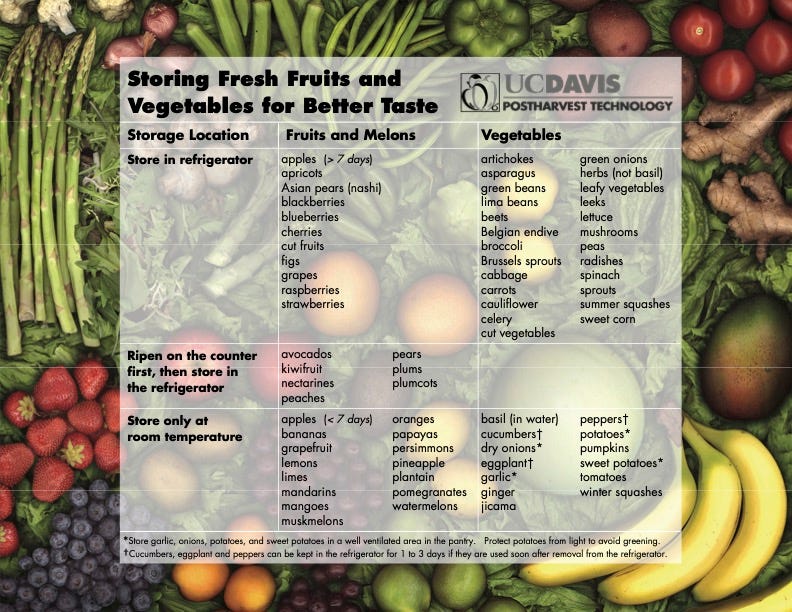
What is a Crisis Nursery?
Today’s newsletter podcast talks about a Crisis Nursery. No, it’s not an emergency room for sickly looking houseplants; although, the gardening entrepreneurs among you may be thinking…”hmm, that may not be a bad idea!”The Crisis Nursery we are talking about today deals with the safety of children, and the role the Sacramento Children’s Home has in its survival.Oh, listen! I hear my dead mother saying, “And what exactly does that have to do with the price of tea in China?” That would be her way of saying, “stay in your lane, Freddie Joe.” Adding, “stick to gardening.”Sharp-eyed readers of this digital scenic bypass-laden newsletter, ostensibly dealing with horticulture, may know that I include a picture of a bicycle in just about every issue. Because, if I am not in the garden, I’m on my bike.And sharper-eyed, highly caffeinated readers will recall that I have been plugging “Farmer Fred’s Ride for the Kids” for a few weeks now. At least, that’s what I’m calling it. The Sacramento Rotary Club would prefer to call it by its actual name, the Sacramento Century Challenge, a fundraising 100-mile bike ride (plus shorter rides) on September 28 to raise funds to support the Sacramento Children’s Home Crisis Nursery program.Now, I know you came for the gardening here. But thanks for letting me talk about the Crisis Nursery in today’s newsletter podcast with the Sacramento Children’s Home Director of Philanthropy, Todd Koolakian. And if you are adverse to listening to podcasts, a transcript of our conversation is below. The internet links mentioned in the podcast are underlined in the above paragraphs.And below the transcript, is my garden gift to you for sticking with me all these years: a chart from the UC Davis Post Harvest Technology Department, “Storing Fresh Fruits and Vegetables for Better Taste”, which answers the question: where do all the tomatoes and zucchini (and other backyard garden favorites) go when you bring them into the house? The counter, the refrigerator, or a combination of the two? You’ll want to print this chart out and hang it inside a kitchen cabinet door, for easy reference.At this point, the sharpest-eyed, super-caffeinated, hyper-critical readers of this newsletter might remark, “Didn’t you publish this in a newsletter two years ago?” Hey, quit waving your trowel at me, Columbo. That time around, it was only the first page of a two page document. Today, it’s both pages of information on storing fresh fruits and vegetables.But no matter your caffeine intake, thanks for listening and reading all these years.What is a Crisis Nursery? The TranscriptFarmer FredComing up Saturday, September 28th, I'm gonna be riding my bike. That is not so unusual. If I'm not in the garden, I'm usually on my bike. Well, on September 28th, that happens to be the date for the Sacramento Century Challenge. It's a 100-mile bike ride along the Sacramento River. It starts in downtown Sacramento (on Capitol Mall), heads south through the Delta Farmland region, and then back to downtown Sacramento.And yes, 100 miles is part of the challenge, as is the bike I'll be riding on. I'm not cheating you. I'll be on an analog bike, not an e -bike. It's my good, trusty, steel-framed Surly Midnight Special. And adding to the challenge, of course, is the route. It's not a very hilly route, the 100 mile route, but it goes along the river on the levee roads, which are full of potholes. And usually in past events in doing this ride, there are some ferocious headwinds, usually on the way back. And making it more of a challenge, and this is where you come in, folks, is helping out the Sacramento Rotary Club raise money for the Sacramento Children's Home Crisis Nursery by spurring me on with a donation for the Crisis Nursery. The Sacramento Children's Home Crisis Nursery is the only program of its kind in Sacramento County. Exactly what do they do? You probably saw the little headline in the newsletter or the podcast that asked the question, “what is a crisis nursery?” And you might be thinking, “some plants are in danger!” It's better than that. We're talking with Todd Koolakian. He is with the Sacramento Children's Home and the Crisis Nursery. And Todd, tell us a little bit about the Sacramento Children's Home and the Crisis Nursery. The Children's Home has been around since what, the 1800’s? Todd KoolakianThat is true. Yes, we've been around since 1867. We originated as an orphanage at that time. During the gold rush days, we were started by a group of volunteer women and we've been continuously operating for 157 years. First, thanks Fred, for having me on to share a little bit more about our events and the beneficiary, the Sacramento Children’s Home Crisis Nursery. I'm also a member of the Rotary Club of Sacramento and I am the immediate past president. So I had the pleasure of leading the organization last year and now in my retirement of being the president of the club, but still a proud member of the Rotary Club of Sacramento. And
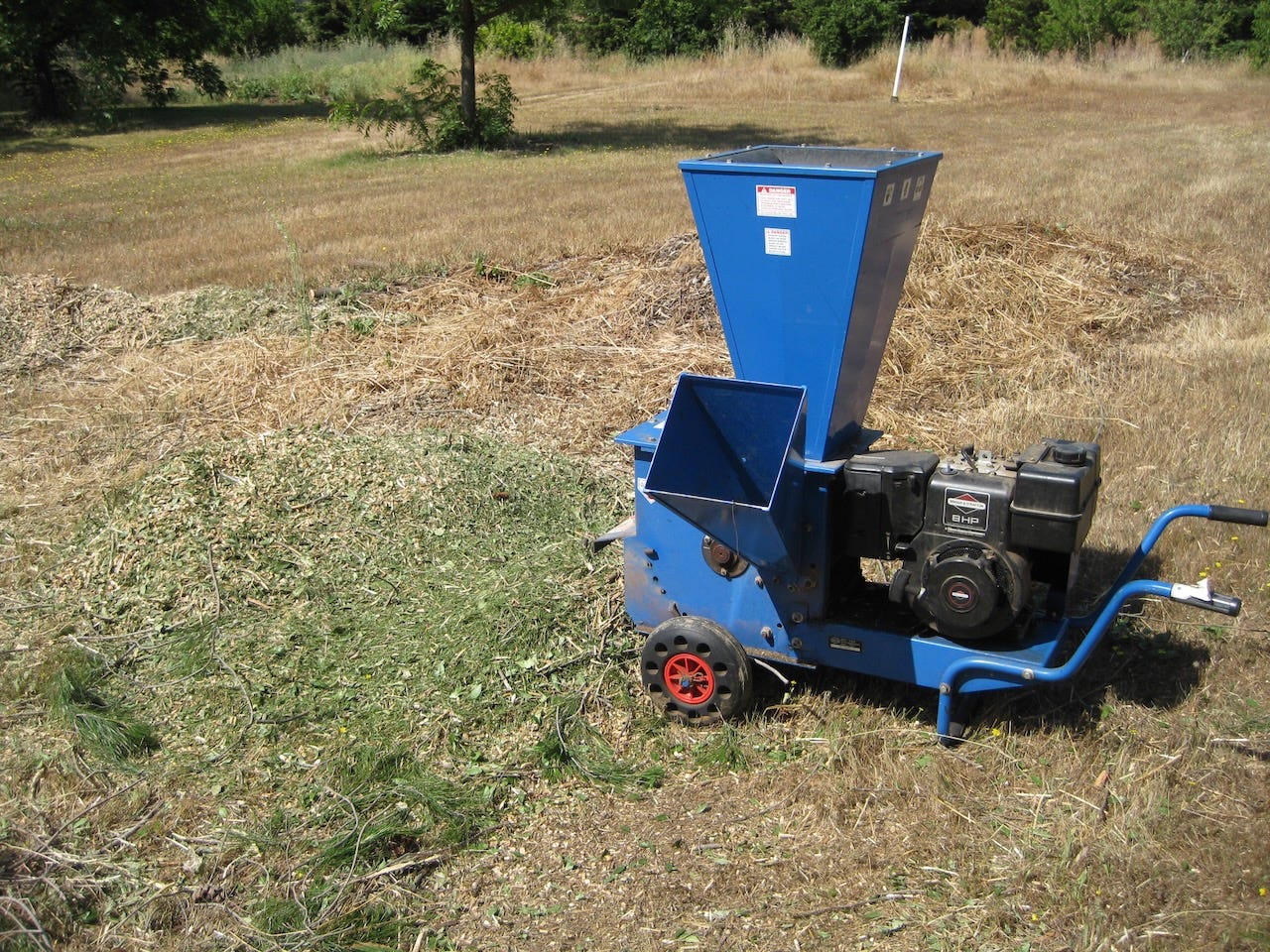
Why You Want a Chipper/Shredder, and not a Rototiller.
With fall approaching, now might be a good time to invest in some equipment to ease autumn and winter chores as well as improve your soil: making mulch from tree branches with a chipper/shredder, or easing raking chores by gathering the fallen leaves with a device that blows them into a pile, sucks them into a 30-gallon bag, and chops them up into little pieces as they head to the bag, where you can then spread those chopped-up leaves as mulch. In today’s podcast (above) we talk with Brad Gay of JB’s Power Equipment in Davis, California about what to look for when shopping for a chipper/shredder as well as the niftiness of owning a piece of equipment such as a Shred n Vac that can reduce those piles of leaves into gardener’s gold: mulch! These segments were recorded during the first wave of Covid, so there may be mask references. However, I bet we all still have a box of masks somewhere handy.What You May Have Missed on This Week’s Garden Basics PodcastBut first, a not-so-subtle plug for the latest episode (#354) of the Garden Basics with Farmer Fred podcast, Lawn Substitutes.Ripping out or reducing a lawn come fall? In this episode, Fred and America’s Favorite Retired College Horticulture Professor, Debbie Flower, discuss lawn elimination and alternative landscape options. They address the challenges of transitioning from lawns to alternative landscapes, including weed management and aesthetics. They explore lawn alternatives that require less maintenance and water, such as no-mow lawns, fescue varieties, and ground cover like dymondia and clover. They caution against over-reliance on artificial turf and emphasize the importance of localized advice and education about plants that thrive in unique ecosystems. They also discuss the need for proper maintenance in all types of landscapes.Chipper-Shredder vs Rototiller Are you thinking about buying a rototiller? How about instead purchasing a chipper/shredder? Now, that's a machine that's going to make easy work of chopping up your garden clippings including tree limbs. it's going to make it into the greatest mulch you could possibly own. The latest research shows that rototilling your soil actually damages soil structure and doesn't do anything good for the soil biology. On the other hand, the end result of using a chipper/shredder is going to provide you with a quality of mulch that we like to call, "gardeners' gold". Northern California Organic Gardening Consultant Steve Zien has some rather strong thoughts on this subject. Go back and listen to his comments back in Episode 89 of the Garden Basics podcast, from 2021.Thinking that perhaps his opinions may have mellowed on the chipper-shredder vs rototiller choice over the last three and a half years, I recently asked for his thoughts. Nope. No change. Here’s what he had to say (in bullets):Chipper shredderPros:• Eliminates or dramatically reduces green waste• Helps eliminate the need for a rototiller• Provides material for mulch or compost• When shreddings are applied to soil surface: • Feeds soil biology – resulting in improvements in: • Soil structure (pore space diversity) • Improve movement in soil by water, air, roots, soil biology • Soil water holding capacity (drought resistance) • Nutrient holding capacity • Biological diversity of soil microbes• Greater variety of nutrients, vitamins etc. available to plants• Improves pest resistance• Plant health improves (drought resistance, pest resistance)• Nutrient availability to plants improve• Availability of natural growth hormones, vitamins improves• Nutrient content of vegetables improves• Sequesters carbon – contributes to the reversal of climate change• Weed management benefits• Mulch created by chipper/shredder moderates soil temperatures• Erosion protection (mulch slows the force of falling rain)• Mulch created by chipper/shredder repels some pestsCons:• Expensive• Hard work. And, when done, you then have to apply the mulch to soil surface• Don’t chip diseased materialRototiller:Pros:• Get to smell actinomycetes• Mental connection to past horticultural practices (although no longer recommended)• Creates fine seedbed – but soil quickly becomes compacted making it difficult for sprouts to developCons:• It’s hard work• Expensive• Destroys soil structure• Compacts soil (reducing aeration, drainage, limit root development)• Fine clays quickly fill in pore spaces• Increases runoff – transporting soil, nutrients and pesticides into our waterways• Kills beneficial soil biology• Makes it harder for your plants to grow• Harder to obtain water, nutrients, growth hormones, vitamins• Increases pest susceptibility due in part to: • Reduced crop health • Pest management provided by soil biology • Reduces nutrient content of food crops • Results in the need for additional irrigation, fertilization, pesticides• Mother Nature’s natural rototillers (earthworms) are killed by the blades.• Creates biological imbalance - abundance of bacteria vs. fungi (raises pH)• Loss in
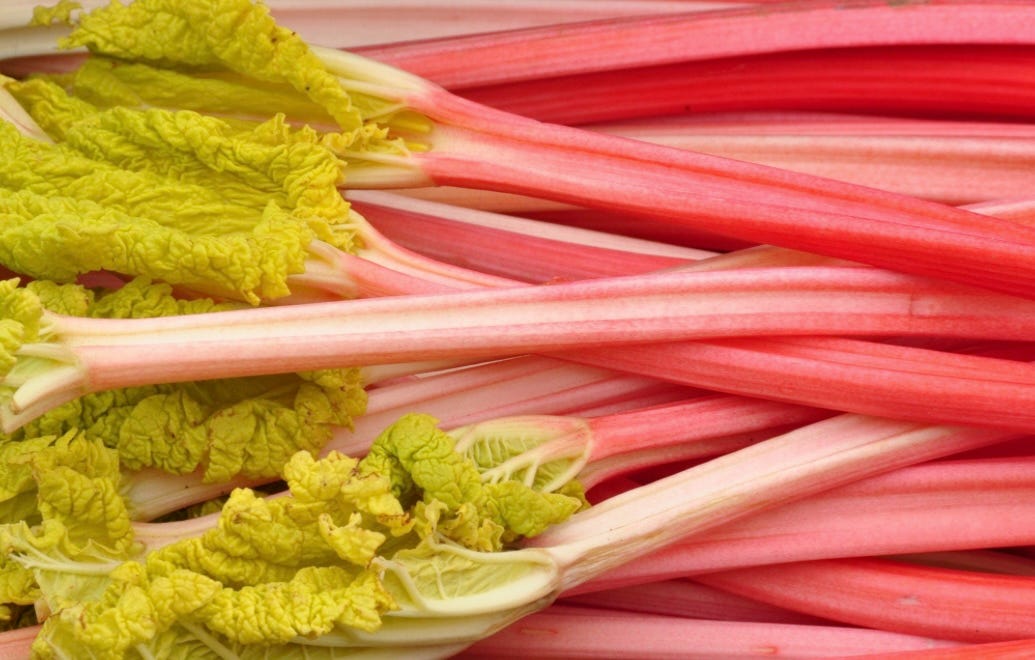
Can You Grow Rhubarb in a Warm to Hot Climate? Yes!
If you’re a transplant from a colder USDA Zone to a warmer zone, you may have fond memories of rhubarb pie, strawberry-rhubarb jam, rhubarb crisp, or something more exotic, such as Rhubarb-Blueberry Upside Down Cake. But if you now live in USDA Zones 9 or 10, you may be wondering, is it too hot here in the summer to grow rhubarb? Is it too warm in the winter here to grow rhubarb? Yes you can! But leave your rhubarb growing techniques back in Wisconsin. The trick to growing rhubarb here is: start from seed, not roots; use varieties that are developed for milder climates; and grow them in the shade.In the podcast above, we talk with Ronni Kern of the West Los Angeles chapter of the California Rare Fruit Growers Association. She has all the details for growing it successfully here in California and in other milder climates.But before we dive into the pit of endless rhubarb, a bit of business:“It’s All About the Soil (for a Successful Garden!)”Did you listen to Episode 353 of the Garden Basics with Farmer Fred podcast? It’s entitled, “It’s All About the Soil (for a successful garden!)”. We chat with Kevin Marini, a community education specialist with UC Cooperative Extension in Placer and Nevada Counties, about the topic of soil and gardening. We discuss the pros and cons of using native soil versus commercial soil, the importance of improving native soil, the use of bagged mixes and raised beds, and the role of organic matter and fertilizers in gardening. We also touch on the benefits of mulch and the importance of proper watering techniques. Overall, the conversation emphasizes the importance of understanding and improving soil for successful gardening.You’ll want to listen to it twice, as well as reading the transcript, for all the handy gardening tips and tricks we mention to achieve an outstanding garden.The podcast (along with a transcript) is available now wherever you get your podcasts. But if you want an accurate, corrected transcript along with the podcast, go to GardenBasics.net . Thank you for listening (and/or reading!)Farmer Fred’s Ride for the Kids!I'm fundraising on behalf of the Sacramento Rotary Club’s 2024 Sac Century Challenge bike ride on September 28th to raise money for the Sacramento Children's Home Crisis Nursery and I could use your support. Here’s the link.On that date, I’ll be riding my bike, a Surly Midnight Special (NOT an e-bike) 100 miles along the Sacramento River to help out the Sacramento Children’s Home Crisis Nursery. I’ve ridden 100 miles in one day plenty of times…when I was younger. But at 73, I could use some moral support, and the Sacramento Children’s Home Crisis Nursery can use your pledge money. So, how about it? Maybe pledge 10 cents a mile (that’s $10) along with a hearty, “You go, Fred!” Or a more generous one dollar a mile ($100), to give me the mental endurance for the entire ride, to dodge the pothole-filled levee roads and pedal harder in the ferocious headwinds that makes this ride a real challenge!The Sacramento Children's Home Crisis Nursery is the only program of its kind in Sacramento County and directly prevents child abuse and neglect by supporting families with small children at times of crisis. The nursery allows parents to bring their children ages newborn to five for emergency hourly or overnight care during difficult times, with the goal of keeping families together and reducing the number of children entering foster care. To care for our community's most vulnerable children, we rely on support from community members like you. By donating, you empower us to provide a safe haven for children throughout the Sacramento area, offering respite to parents during times of crisis, and building a strong support system for the future. Your support helps provide a safe place to stay local kids in need. Again, here’s the link to make a donation to the Sacramento Children’s Home Crisis Nursery. Or do it because this newsletter is still free (for now).Thank you for your support, and say "Hi!" if you see me pedaling like crazy out there along the Sacramento River on Saturday, September 28th!Can You Grow Rhubarb? Yes!Here’s the transcript of the podcast (above) chat with Ronni Kern of the West L.A. California Rare Fruit Growers. There are lots and lots of hot links in the transcript to get you to more information about rhubarb and more!TRANSCRIPT - How To Grow Rhubarb in USDA Zones 9 and 10.Farmer Fred: As you are probably very aware, I've been answering garden questions here in Northern California for, well over 40 years, actually. And nobody ever asked me about rhubarb until I visited the eye doctor a few months ago. And besides her questions, which are usually, “Which is clearer, the first one or the second one?” “One or two?” Her other question was, “Can you grow rhubarb here?” And nobody in all those years has ever asked me about growing rhubarb before. And I mentioned that to her and I said, well, I'll look into it and see what it is. Now, this was back abou
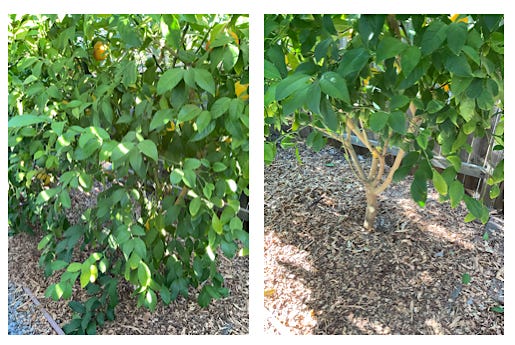
Dealing with Fruit Tree Varmints
In today’s newsletter podcast, fruit tree expert Ed Laivo of Ed Able Solutions gives us tips for dealing with varmints that get to your tree fruit before you’ve had a chance to sample it. And, he has tips for growing fruit trees in containers. I mentioned in the podcast that we would have a video link to Ed’s Harvest Day 2024 presentation at the Fair Oaks Horticulture Center on August 3, which was about growing fruit trees in containers. That video is not yet available; but here, enjoy Ed talking about that topic on his YouTube page.In the typed remarks below, we get into another way to thwart the crawling, walking, hopping, flying pests that get into your fruit trees, and that is to skirt prune those trees that have low hanging branches, that reach the ground.For those of you who were hoping for stories of the high school girls at U.S. Grant High School in Van Nuys who would surreptitiously raise the hem of their mandatory skirts above the knee near the end of lunch period because the vice principal would leave the premises after one lap through the cafeteria area, sorry. And yes, it was a public school. And yes, skirts were mandatory for the female students. Except for one school day a year (Senior Day) in June, when the senior girls got to wear slacks (but not blue jeans!). How long ago was that? An up and coming band was the entertainment in the high school auditorium that Senior day, Three Dog Night.When to Prune, When Not to Prune, Citrus TreesIf your citrus trees – the oranges, lemons, limes, mandarins, grapefruit, and more – are looking a bit overgrown and bushy, pruning can help reinvigorate them to produce more fruit. But don’t prune them now.Cindy Fake is the Horticulture and Small Farms Advisor for the University of California Ag and Natural Resources in Placer County, who wrote their “Pruning Citrus” webpage. She agrees there are benefits to pruning citrus trees, but the timing is important.“Citrus trees are evergreen trees, generally requiring less pruning than deciduous trees. However, they do need to be pruned regularly for optimal fruit quality and productivity. Pruning can improve fruit quality through increasing light in the canopy. In some cases, pruning out water sprouts (vertical shoots) may improve yields. Reducing tree height facilitates harvesting as well as risk of injury from ladders.”However, Fake adds: “Pruning citrus trees is best accomplished in spring and early summer, after it sets flowers and then again when the small fruit appears.”Retired citrus grower Lance Walheim, author of the book “Citrus”, seconds that motion. “Late summer and early fall citrus pruning is discouraged. Late pruning often stimulates vigorous tender growth, which doesn't have enough time to harden off before cold weather, increasing chances of frost damage. Pruning in late summer, especially here, where triple digit temperatures are common, can cause citrus bark and fruit to become exposed to too much intense sunlight. Citrus bark is highly sensitive to sunburn. The bark can be killed, which can girdle the tree, especially if the tree is in a south or west exposure. Whenever bark is newly exposed to intense sunlight, paint the exposed area with a whitewash, made of 50% water and 50% interior white latex paint.”However, there are a few minor citrus pruning chores that can be done anytime of the year: removing the suckers that begin below the bud union just above ground level; and skirt pruning the citrus tree. “Skirt pruning” is exactly what it sounds like, removing any branches that reach the ground.“Skirt pruning facilitates weeding, mulch laying, and other cultural practices, as well as reducing risk of soil borne pathogens affecting the fruit,” explains Fake. “The pruning may also reduce insect and disease pest problems.”And, as Laivo points out in the podcast, netting the tree can be a somewhat effective pest deterrent, especially if you drape the netting completely over the tree to the ground, and tie it around the trunk of the tree. Try doing that with a non-skirted tree!Fake says to keep an eye out for low-lying branches on mandarin trees, especially. “Satsuma mandarins tend to have pendulous branches that hang to the ground. These are called skirt branches, and they can impede weeding, fertilizer, and compost application, as well as provide pathways for ant populations to use the trees. With heavy fruit loads, these branches can bend, and fruit may touch the ground. Fruit may then be contaminated by soil borne pathogens. These pathogens may be plant disease-causing such as Brown rot, or potential food safety risks.”The Department of Agriculture and Food in Western Australia (actually, it’s the Department of Primary Industries and Regional Development) offers these reasons for commercial growers of citrus to skirt prune their citrus trees (warning: their dates are for the Southern Hemisphere, where summer there is winter here and winter there is summer here):Skirting (skirt pruning)Skirting is t

Fruit Tree Pruning Steps
Today’s Newsletter Podcast features Ann Ralph, author of the book, “Grow a Little Fruit Tree”.Fruit Tree Pruning, Step by StepLast Friday’s Garden Basics with Farmer Fred podcast, Episode 351 - “Honey I Shrunk the Fruit Trees” also dealt with the benefits of keeping the height of fruit trees to no taller than you can reach to the top of the tree to pick fruit. Because, who wants to fall off a ladder?UC Cooperative Extension Communications Specialist - and Consulting Arborist - Kevin Marini walked us through the steps of keeping your fruit trees healthy, and at a reasonable height (listen to the episode for his tree reduction tips).Among our topics:• Maintaining the height of fruit trees at a manageable level allows for easier fruit harvesting and reduces the risk of broken branches.• Thinning fruit trees is necessary to remove crowded fruit and allow the tree to breathe, resulting in bigger and juicier fruit.• Bringing down the height of a fruit tree can be done gradually over a few years to avoid stressing the tree.• Using the right pruning cuts, such as reduction cuts and thinning cuts, helps maintain the structure of the tree and promotes better fruit production.• Cutting newly planted fruit trees at the knees stimulates the growth of lower branches and makes fruit more accessible.• Rootstock selection is important for controlling the height and spread of fruit trees.• Thinning cuts are essential for improving air circulation within the tree and ensuring fruit production in lower areas of the branches. Pruning suckers and water sprouts is essential to maintain the structure of fruit trees.• Removing branches that grow towards the center of the tree helps prevent overcrowding and disease.• Cutting dead, dying, and diseased branches is important to maintain the overall health of the tree.• Proper pruning cuts, including the three-cut method for larger branches, help prevent damage and decay.• Using sharp pruning tools and cleaning them regularly improves the efficiency and effectiveness of pruning.You can listen to our complete conversation here.And one more pruning term, according to the U. Of Florida: Reduction CutA reduction cut (also referred to as a drop-crotch cut) shortens a branch by removing a stem back to a lateral branch that is large enough to resist extensive disfunction and decay behind the cut. This is generally interpreted as cutting back to a lateral branch that is at least one-third the diameter of the cut stem. Sprouts commonly follow a reduction cut. In most cases these should not be removed because they help the retained portion of the branch retard decay. When the branch that remains is less than about one-third the diameter of the cut stem, the cut is considered a heading cut. Heading cuts are not considered appropriate in most instances in the landscape. Heading cuts are sometimes necessary when attempting to restore trees following storm damage.Kevin Marini’s Steps for Pruning Your Fruit Trees For Better HealthFrom the Ep. 351 podcast transcript:Farmer Fred Kevin, you mentioned there are some steps, like four or five steps, when it comes to reducing the height of a fruit tree?Kevin Marini 35:28Yeah, well, let's start with one that maybe doesn't reduce the height, but it's the easiest step. And everyone could do this any time of year. And they don't even have to be very careful about where they make the cut. And that is the suckers. Because fruit trees are grafted on to a root stock, you get suckers that grow up from the ground from the root stock. Believe it or not, this can be a big problem. Because if you let those suckers continue to grow, they can eventually convince you that they're part of your fruit tree until you actually see this weird looking fruit on them. And you realize, Wait, what's that all about? Prune out those suckers. Step number one, go out to your fruit tree anytime during the year. If they're shooting from the ground, obviously, from the root stock below the graft union, cut them out, do not let them take over your tree. So that's easy. Step number one.Farmer Fred 36:21Yeah, let's define that. First. For people who are trying to find the bud union, if a tree was planted properly, that's going to be like a little lump or a little bump that should be just a few inches above the surface of the soil. And so anything that is emanating from below that point, can be removed completely and safely.Kevin Marini 36:39Yes, I'm actually glad you drilled down on that a little bit, because one thing that I have encountered quite a bit is that people bury the graft union. So they buy their fruit tree in a container. And the graft union is above the soil line when they bring it home. But when they pop it out of the container and put it into the ground, many times they'd bury it too deep. And if that graft union is subsurface, if it's underneath the ground, it can absolutely quickly rot. And then you can lose your fruit tree in a nice stiff wind down the road. That's super impo
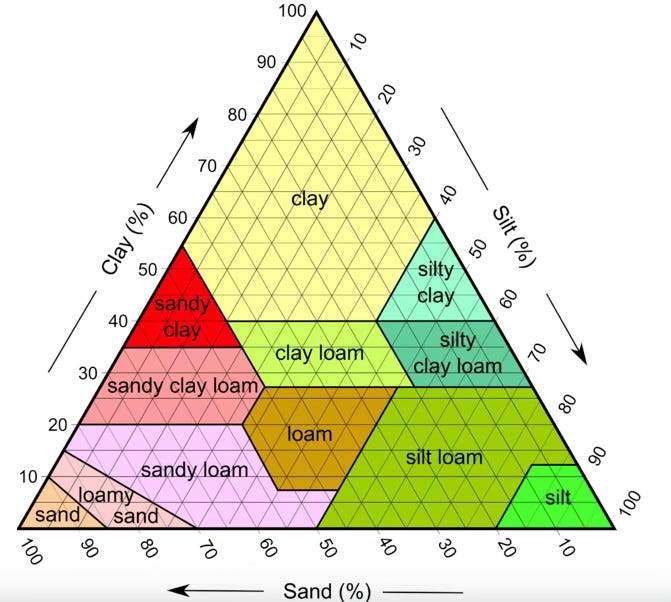
The Soil Texture Triangle
The newsletter podcast (above) is an excerpt from last Friday’s Garden Basics with Farmer Fred podcast, #350, “New Home? First Garden Tips”. America’s Favorite Retired College Horticulture Professor(℠), Debbie Flower and myself, help out a very rhythmic listener figure out how to prep a garden space at her new home. And one of the first steps to take is to do a home analysis of the soil, referred to as the “Soil Texture Triangle Test”.Although it might look like something designed by a Freemason on Acid, the Soil Texture Triangle is quite ingenious in its design, as well as the ability to give you an insight into many of the qualities of the soil you are attempting to garden in. But before we get into the “why” and the “how” of the Soil Texture Triangle, here’s what you may have missed if you didn't listen to Episode 350 of the podcast in its entirety:• Get a soil test done to determine the texture of your soil and its nutrient levels.• Plan your garden carefully, considering the spacing of plants and the eventual growth of trees.• Hydro-zone your vegetables in raised beds to meet their specific watering needs.• Limiting factors if using raised beds on concrete for gardening in partial sun spaces.The Soil Texture Triangle Test: Why do it?Ahhh, the things you will learn about your soil when you figure out if you have sandy loam, silty loam, clay loam, sandy clay (great name for a Top 40 DJ), something in between, or - Heaven forfend - all sand or all clay.Christine Anne Clark is a soil health specialist with the Crops and Soils Division of the Extension Service of the University of Wisconsin-Madison. She works with farmers, researchers and agricultural industry experts, to help the farmers in Northeast Wisconsin better understand their soils. In this University of Wisconsin publication - “The important role of soil texture on water” - she points out the obviously most important part of understanding the Soil Texture Triangle right there in the title. Know your soil, and you’ll know where the water is going (or not going) in your crops:“It is not nitrogen, but water, that is the most limiting factor in crop production. Soil texture, structure, percent organic matter (OM) and management practices also influence the amount water and nutrients a soil can retain for crop use. You can better understand your farmland’s strengths and weaknesses by digging deeper into the physical characteristics of your soil and where different soil types are located on your farm.Soil texture refers to the feel of soil. Soils are made up of different amounts of sand, silt, and clay. There are 12 soil textural classes according to the USDA classification system. Each soil texture has varying responses to water, affecting major crops like corn, soybeans, wheat, and alfalfa differently. Here’s a general overview:1. Sand: Sandy soils have the largest particle size, which allows water to drain quickly. As a result, sandy soils tend to dry out faster. Sandy soils have low water and nutrient-holding capacity and struggle to retain sufficient amounts for crops. Shallow-rooted crops are more susceptible to drought stress in sandy soils, as they may experience water deficits that hinder their growth and yield.2. Silt: Silty soils have medium-sized particles, providing better water retention than sandy soils. They have moderate water-holding capacity and drainage characteristics. During drought, silty soils can retain moisture for longer periods compared to sandy soils. Silty soils have more plant-available water capacity than clayey soils. 3. Clay: Clay soils have lots of small fine particles with many inner layers creating lots of surface areas that hold water and nutrients tightly. They have higher water and nutrient holding capacity but lower drainage, resulting in slower water movement and potential waterlogging. Also, they have lower plant available water capacity than silty soils because clays hold water tightly as they dry. During drought, clay soils can retain moisture relatively well, which benefits crops like corn, soybeans, and wheat. However, excessive water retention in clay soils can also lead to root oxygen deprivation and negatively impact crop growth in wet years. Any crop with a deeper root system may perform better in clay soils during drought as it can access the stored water.Water infiltration speed and plant water availability are dependent on soil texture. In coarse sandy soils the bigger pore spaces increase the rate of water movement and have higher infiltration rates than fine textured soils. Coarse soils can “soak” up a drenching rain or recharge quickly but is unable to hold as much water as finer textured soils. A coarse sand infiltrates very fast, up to 10 inches per hour, while a clay is the slowest can be less than 0.05 inches per hour. However, sandy soils have a low water holding capacity compared to loamy or clayey soils. On the opposite end, soils with very high clay contents hold water tightly and provide
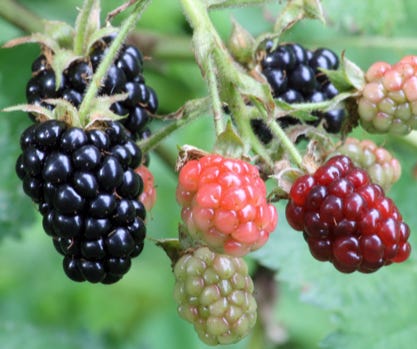
Why Are the Blackberries Turning White?
If you’re wondering about blackberry discoloration this summer, you won’t find that information in the podcast (above). What you will find for your ears: great information about superior blackberry varieties to grow, along with tips for pruning and trellising blackberries.As to why you might start seeing some discoloration in your blackberry patch right now might be due to the weather. But before we shine a light on that, here’s what you may have missed in last Friday’s Garden Basics with Farmer Fred podcast, Ep. 349: “Stressed? Your Garden Can Help.” And haven’t we all seen an increase in the stress levels this past couple of weeks. One easy way to soothe the worried mind: single malt Scotch Take a whiff of the garden. Really! America’s Favorite Retired College Horticulture Professor, Debbie Flower, and myself sniff out the answers that may be in your own yard.• Gardening and spending time in nature can help reduce stress and anxiety.• Forest bathing, or enjoying a slow walk or sit in a natural environment, can have calming effects.• Having a garden or indoor plants can provide stress relief and improve mental well-being.• Aromatic plants, such as jasmine, lavender, and mint, can have a soothing effect on the mind and body.Why Are the Blackberries Turning White?From the garden e-mail bag, Teri asks: "What is wrong with my blackberries?"Dewey & Ann write: "What is causing this problem with my Chester blackberries? This is on the majority of them. I had it last year too. I checked with the local Hmong community farmers, and they also had it and said it was the 111 degrees we had in Oroville. We are at 2500 feet and 10 degrees cooler, but it wasn’t this hot last year. My Black Satin Blackberries were forming and doing well and I thought the problem was only with the Chester. Well, pretty soon I see it on them also. Am I missing something in our soil? It’s not on every one of them. It’s a dried seed eventually, but goes from a pink to beige and then worse if you don’t pick them. I would like to get to bottom of this. Can you help me?"Your local Hmong are wise horticulturists. The recent week of very sunny 100+ temperatures, along with several of triple digit scorchers in the first week of July, could very well be the culprit.Usually when we think of heat stressed plants, the cool season ones that tend to croak when it gets hot come to mind, such as lettuce plants in early summer or snow pea vines by Memorial Day weekend.Even warm season vegetables that like sunlight, especially tomatoes, can be adversely effected by too much high intensity sun. Abiotic disorders such as cracking, solar yellowing or green shoulders are common this time of year on young tomato crops. One remedy for those tomatoes: don't prune off any of the leaf canopy of tomato plants; or, cover with a lightweight row cover to provide some more shade.And now, you can add blackberries to the list of crops that develop problems when it gets too sunny, too hot, dry and windy, especially because of extended heatwaves. The problem is known as White Drupelet Disorder (WDD).According to the UC Integrated Pest Management Guidelines for Caneberries:"White drupelet is a tan-to-white discoloration of one to many drupelets on the fruit. Most often, white drupelets will appear when there has been an abrupt increase in temperature accompanied by a drop in humidity; it is especially pronounced when there is wind. In the Monterey Bay area, white drupelet typically occurs when temperatures that are fairly steady around 70 degrees suddenly go above 90 degrees, and there is an absence of fog.While white drupelets may seem to be directly caused by weather, they are actually caused by ultra-violet (UV) radiation. Weather conditions modulate this by the effect they have on penetration of UV radiation into the fruit. Cool, humid air scatters and absorbs UV radiation, while hot dry air has the opposite effect and allows more direct UV rays to reach the fruit. The movement of humidity away from the canopy by wind only heightens the effect of hot dry air. Additionally, as humidity is moved away from the plant canopy, more UV rays penetrate the canopy and damage fruit that may not even have been exposed to the sun. Fruit inside of the canopy is not acclimatized to UV radiation and is subsequently more susceptible when it reaches them.Some growers of caneberries in the Willamette Valley of Oregon, where rapid changes from a normally mild climate to temperatures up to and above 100 degrees occur through the summer, use overhead irrigation to minimize fruit loss to white drupelet. This is not merely to mist the fruit; instead, large amounts of water are applied to thoroughly wet the canopy and maintain cool temperatures and high canopy humidity for as long as possible. Sprinkling is not done too late in the evening to allow fruit to dry before nightfall.While some varieties, such as Apache blackberry, Kiowa blackberry, and Caroline red raspberry tend to get white drupelets

How to Grow Cilantro in the Summer in Hot Climates
Are you trying to grow a salsa garden? It's great that most of the ingredients for salsa ripen at about the same time in the backyard garden. The main salsa ingredients - tomatoes, peppers, onions, and garlic - are ready this time of year. And if you wait until September or October to make the salsa, there might be some limes ready from a backyard lime tree in citrus growing regions. But there is one ingredient that throws off that salsa recipe timing: cilantro. Cilantro is easy to grow in hot climates in fall, winter, and early spring. But in hot summers? You can forget about it being ready when the rest of your salsa ingredients are all growing fine. Because of the rising frequency of extended, triple digit summer temperatures (“heat dome” seems to be the 2024 phrase that pays), cilantro is going to turn bitter and send up flower stalks (which, by the way, the beneficial insects love).You could buy cilantro at the store or farmer’s market. But the aroma and tangy taste of fresh, homegrown, just-picked cilantro can’t be beat.Before we delve into the solution for getting fresh homegrown cilantro in the summer, here’s what you may have missed in last Friday’s Garden Basics with Farmer Fred Podcast, #348:Right now - mid-summer - is peach and plum harvest time for most of us. Phil Pursel of Dave Wilson Nursery talks about choosing the tastiest peach and plum tree varieties, along with care tips, including watering and fertilization. Phil points out the difference between freestone and cling peaches, the importance of chill hours for peach trees, and the major insect pests of peach trees. Phil’s favorite peach: the Red Baron. Fred’s favorite: a dwarf variety, the Garden Gold peach. Phil’s favorite plum: the Emerald Beaut. Fred’s tastiest favorite plum: The weeping Santa Rosa plum.We’ve talked in the past about ways to improve clay soil; but what about sandy soil? Maser Gardener Gail Pothour offers tips for a listener in Michigan on what to add to that sandy soil to help it retain nutrients and water. And it turns out, Gail is also knowledgeable about how parts of Michigan got its sandy soil to begin with!The episode concludes with our America’s Favorite Retired College Horticulture Professor, Debbie Flower, dissecting a listener’s plan for adding sticks to the bottom of a new raised bed. Even though it’s counterintuitive, that can actually slow down the flow of water through the bed, leading to possible wet soil problems for the plant roots. Unlike what water does above ground (fall through the air, downward). Underground, water must travel along soil particles, not air particles - to head downward. Thus, the importance of using a uniform soil type throughout the container or raised bed. Find out more when you listen to Ep. 348, The Tastiest Peaches and Plums. Improving Sandy Soil. Raised Bed Drainage Tips.How To Grow Cilantro in a Hot Summer ClimateThere is a solution for cilantro lovers who garden in a hot climate, according to Renee Shepherd, owner of Renee’s Garden seed catalog: Grow cilantro as a microgreen. “Pick it when it's very young, just a few inches tall,” advises Shepherd, based in Santa Cruz County, CA. “The hotter the weather, the younger you pick it. I have seen it growing that way in the Napa Valley. I work with a grower there who besides growing the cilantro seed for us, grows very fancy greens for upscale restaurants in San Francisco. And it's very hot in Napa, just as hot as where you are. He's successful growing cilantro as a microgreen. He uses row covers for protection and grows it in an area that gets afternoon shade through the summer.”Shepherd says it is a quick, easy crop to grow as a microgreen in just a couple of weeks. The seeds will sprout in five to ten days. But even though you're harvesting the cilantro at a very young age after just a few weeks of growing, you increase your chances of success by planting it where it gets afternoon shade.That’s just one of the crops Renee discusses in today’s newsletter podcast (above). At Renee’s Garden seed catalog, the Cut & Come Again Salad Garden is prominently featured.Here is a sampler of carefully chosen varieties for growing in the Cut & Come Again Salad Garden from Renee’s Garden, especially when gardening in containers or small space gardens:There are replacements for cilantro that may complement your homemade salsa. Some common substitutes mentioned online include mint, basil, parsley and chives, all of which grow well here this time of year. However, there are herbs that ripen in the summer that contain a more cilantro-like flavor. Most of these herbs originate in Southeast Asia, usually Vietnam, and they're available at better nurseries that have a wider range of herbs. According to Rose Loveall-Sale of Morningsun Herb Farm in Vacaville, CA: “One of the best cilantro substitutes is Vietnamese coriander (Polygonum odoratum), which is also called Rau Ram. The flavor is very similar to cilantro, with a hint of lemon and without the s

In search of a Heat-Tolerant Leafy Green Vegetable
Today’s podcast deals with any hot climate vegetable gardener’s dilemma: what greens can I grow in the summer that are bolt resistant and won’t end up tasting bitter? We talk with Sacramento County Master Gardener and avid vegetable grower Gail Pothour, who talks about the finalists in the heat-resistant greens growing trial held at the Fair Oaks Horticulture Center. And the Fresh Physician (and avid gardener), Florida-based Dr. Laura Varich, who extols the virtues of a diet loaded with green, leafy vegetables. And she has a favorite leafy green vegetable that (in her own yard) can withstand the Florida summer heat.But before we delve into the delicious, nutritious, easy to grow world of leafy green vegetables, here’s what you may have missed in last Friday’s Garden Basics with Farmer Fred podcast, Episode 347: The Garden Basics travel playlist -“Top 5 All Time Episodes” (which was also featured in last week’s newsletter), “Growing Raspberries and Boysenberries”, and “Getting Rid of Slugs in a Compost Pile”.The Take-aways:• Proper spacing, irrigation, and pruning are important for growing berries successfully.• Slugs can be managed in compost bins by ensuring proper moisture levels and using barriers like iron phosphate or copper.Why, thank you, AI, for that succinct, bland recap of a 40 minute-plus podcast! Please, take a WD-40 break and I’ll add the flowers.The ever-ebullient and knowledgeable Master Gardener Pam Bone loves to grow raspberries and boysenberries. And with 40 years of backyard growing experience of those vining sweet treats, she’s got the keys to success down pat. Originally aired in April of 2022.Susan Muckey, Master Gardener and worm whisperer, volunteers at the Fair Oaks Horticulture Center’s Composting/Vermicomposting Demonstration area. And she was surprised, amused and befuddled that a question from a listener asked: “There are slugs in my compost! How do I get rid of them?” We both wondered, how did those slugs get in there? We went through our litany of slug and snail control suggestions, although Susan has one unique take: “Turn the pile at night, so you won’t see them.”Again, all that, plus that Garden Basics playlist of 5 episodes for long car trips, is in last Friday’s episode 347 of the Garden Basics with Farmer Fred podcast.In Search of a Heat Resistant Green (Today’s Podcast Transcript)Originally aired on Garden Basics Ep. 264, “Top 10 Homegrown Vegetables, Part 2”Farmer Fred I have been on a lifelong garden search for a lettuce variety, a loose leaf lettuce variety, that can take the heat. Some are better than others as far as getting through July, perhaps. But it seems like when July turns into August, they all start bolting.Gail Pothour Right. And actually, several years ago, we did an experiment two years in a row at the Fair Oaks Horticulture Center. Because we get this question a lot, “Why can't I grow lettuce in the summer?”. So we thought okay, let's find some varieties, and grow them through the heat of summer and see how they do. First off, you need to start with some varieties that are heat resistant, like Jericho that was bred in Israel, so it's a little more heat resistant. And we tried half dozen or so different varieties we monitored when we planted them, how many weeks it was before they started bolting. Some did better than others. Some did pretty well. But what we found is you need to mulch heavily to keep the moisture in, to keep them well watered, provide shade during their entire lifespan in the summer, and then be prepared as soon as one starts to bolt, take it out and then replant with another transplant. So kind of a succession planting. It is possible but it's a lot of work. It takes a lot of water and shading and monitoring. Not sure if it's worth it or not. Grow it in the shade if you have a shady location but often it's not just the sunlight, it is the heat and that’s true even in the shade in Sacramento. We can be fairly warm in the summertime. So it's a tough thing to do.Farmer Fred The closest green I found that can be grown year round and especially if you do it in the shade it does okay here, and that’s swiss chard.Gail Pothour right yeah, that can be grown year round. I have done it in an area of my yard where it got some afternoon shade in the summertime. And it was able to survive over summer. But yeah, any of the other leafy greens are going to be a little tough. One of my favorites or absolute favorite lettuce is called Pomegranate Crunch. It's a red romaine. And it is very good. I get it as pelleted seeds, which makes it a little bit easier to germinate. Lettuce can have a difficult time germinating. Lettuce does need light in order to germinate. So don't plant the seed too deeply. Pelleted seeds don't have that problem. But I think sometimes if people have difficulty getting lettuce to germinate, it’s because maybe they buried it too deep. It needs light. It's one of the few vegetables that needs light to germinate.Farmer Fred And I bel
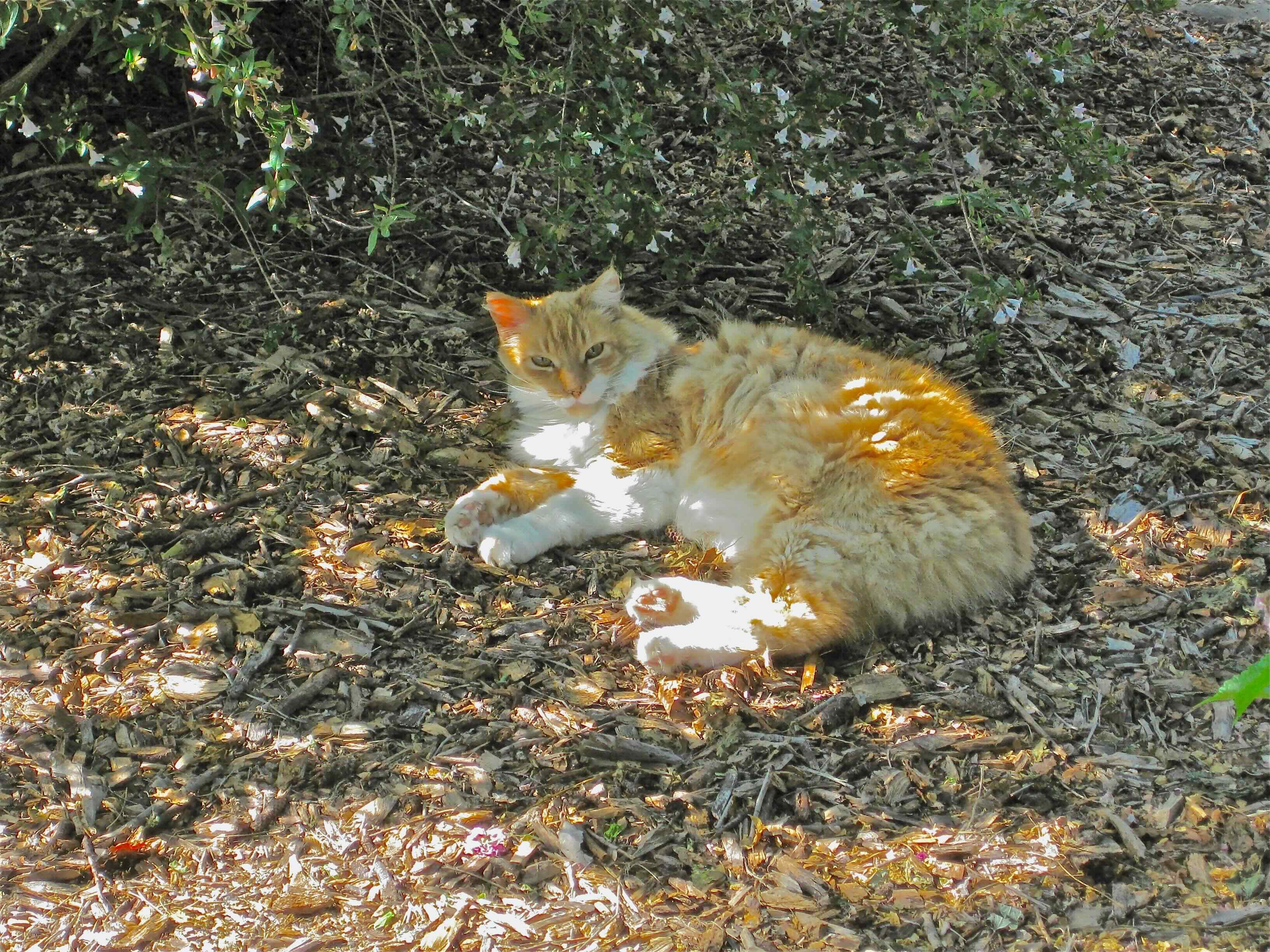
Can Termites Live in Mulch?
Before we start digging through the mulch looking for termites, here is what you may have missed in last Friday’s (June 28) Garden Basics with Farmer Fred Podcast, Ep. 346: All About Soil Thermometers, Soil pH, and Cardboard Mulch.• Soil thermometers are precise measuring devices that need to be taken care of properly. They should not be left sitting in the soil or exposed to direct sunlight.• The depth at which you measure soil temperature depends on what you are planting. For seeds, measure at a shallow depth, while for transplants, measure at a deeper depth.• Some soil thermometers have a calibration nut that allows you to calibrate the temperature reading. This can be done by placing the thermometer in a glass of ice water and adjusting the arrow to read 32 degrees.• Soil pH can vary at different depths, especially when using layered mulching techniques. It is important to wait for the layers to break down and mix together before relying on pH readings.• Professional soil tests from reputable labs can provide accurate information about soil pH and nutrient levels. It is recommended to follow the specific instructions provided by the lab when taking soil samples.• Cardboard can be used to smother grass and weeds when starting a new garden bed. It should be plain and unadulterated, and watered before being placed on the soil. It takes time for the cardboard to break down and create a suitable planting environment.=========After nearly five years of podcasts, here are the five most listened-to episodes of the Garden Basics with Farmer Fred podcast:#5. Ep. 263 The Top Homegrown Vegetables, Pt 1 Farmer Fred and Master Gardener/vegetable expert Gail Pothour discuss the top 5 homegrown vegetables. They cover topics such as growing tomatoes, cucumbers, sweet peppers, beans, and carrots. They provide tips for beginners, including starting with easy-to-grow varieties and using supports for indeterminate tomatoes. They also discuss favorite tomato and pepper varieties and share tips for growing cilantro in the summer.#4 Ep. 258 10 More Garden Quick TipsFred presents 10 more garden quick tips. The topics covered include creating a container garden, making a cheaper seed starting mix, storing and washing chicken eggs, taking better pictures of garden insects, growing small apples, and growing the Suncrest peach tree. The episode also features interviews with experts in the gardening field who provide valuable insights and advice. In this conversation, Fred discusses various gardening topics, including growing fruit trees in small spaces, warding off pests, propagating strawberry runners, improving drainage, and growing popcorn. He provides tips and advice on each topic, sharing insights from experts and personal experiences. The conversation covers a range of gardening techniques and practices that can be helpful for both beginners and experienced gardeners.#3 Ep. 256 Container Gardening BasicsFred interviews Pam Farley, author of the book 'The First Time Gardener, Container Food Gardening.' They discuss container gardening for beginners, including tips on choosing the right containers, ensuring proper drainage, and selecting the right plants. They also cover troubleshooting common issues in container gardening and provide a quick planting guide for vegetables, fruits, and herbs.#2 Ep. 266 Cucumber Growing BasicsThis conversation with America’s Favorite Retired College Horticulture Professor (and cucumber aficionado), Debbie Flower, covers topics such as cucumber varieties, growing techniques, harvesting tips, and how to prevent bitterness in cucumbers. The episode also touches on the importance of bees in pollinating cucumber flowers and discusses common pests and diseases that can affect cucumber plants. They provide recommendations for trellising cucumbers and share favorite cucumber varieties. In this conversation, Fred also provides recommendations for further reading and resources.#1 Ep. 319 How to Plant and Care for a Shade TreeConsulting arborist Gordon Mann joins Fred and shares his expertise on planting and caring for shade trees. They discuss the importance of choosing the right spot with good soil, proper planting techniques, and the long-term care required for tree health. They also emphasize the role of soil in tree growth and the need for organic matter and mulch. The conversation covers topics such as tree watering, root pruning, and the correct way to plant a tree. Overall, the episode provides valuable information for homeowners looking to plant and care for shade trees. They also delve into the topic of tree pruning, emphasizing the need for proper pruning techniques and debunking common misconceptions. The conversation concludes with a discussion on the importance of tree diversity and the role of water management in tree care.Mulch vs TermitesFrom the garden e-mail bag, Carol wants to know: “We mulch all over the place, but all those wood chips got me thinking about termites! Has anyone mentione
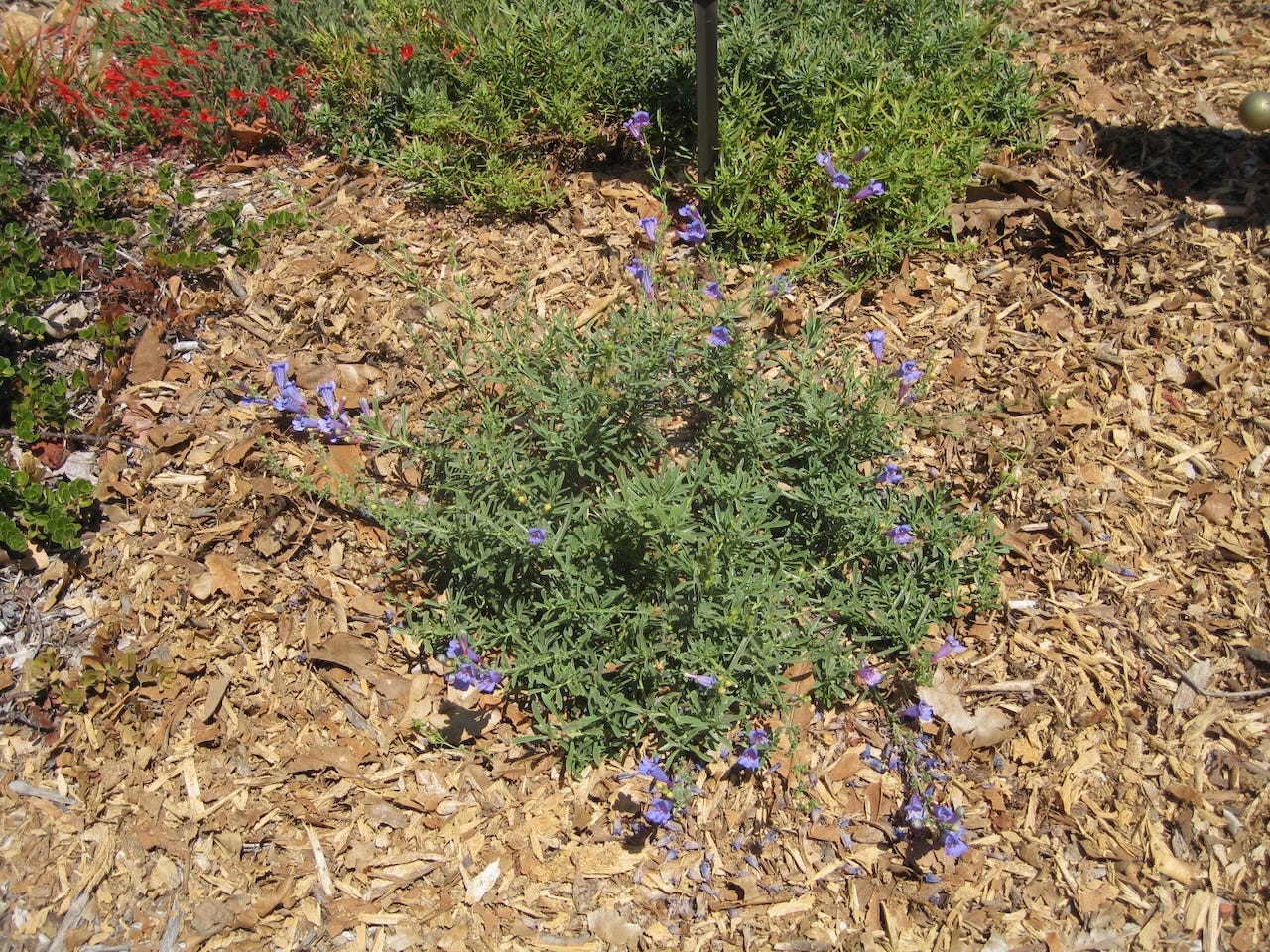
Helping Your Garden Cope with the Heat
Before we delve into the sweaty details of getting your garden through the summer, here’s what you may have missed in last Friday’s Garden Basics with Farmer Fred podcast, the Heart Healthy Garden, recorded live at the Sacramento Rose Society in February of 2024:• Eating a heart-healthy diet and exercising regularly can help improve heart health and reduce the need for medications.• Fiber is an important component of a heart-healthy diet and can be found in a variety of fruits, vegetables, and whole grains.• Growing your own fruits and vegetables allows you to have a constant supply of fresh, fiber-rich produce.• Choosing heirloom varieties of vegetables can provide higher nutritional content compared to hybrid varieties.• Seeking information from reliable sources, such as university websites, can help ensure accurate and trustworthy gardening advice.What’s in Today’s Podcast at the top of this page?The perfect companion piece to the information below, Debbie Flower and myself discussed more container planting tips, recorded last summer at Harvest Day at the Fair Oaks Horticulture Center, a free community event held the first Saturday of August every year, including this August, on Saturday, August 3. Details here about Harvest Day. This segment originally aired in Episode 278 of the Garden Basics Podcast. Among its highlights:• Why you don’t want to use garden soil in containers. • The best potting mix to use for a container plant. • What’s happening to the roots of plants in containers on a 100-degree day.• How to better protect your outdoor potted plants in a heatwave.• The differences in shade cloth, and how to use it. • How to reuse old potting soil. • Are you watering your container plants effectively? Probably not.• What do you put in the bottom of a plant container to aid drainage? Nothing! We tell you why. • How to save garden seeds to last for years. • And, how to get pepper seeds to germinate in half the time. Helping Plants Cope with the HeatMuch like most of the country, our area here in Northern California just went through the first real heat wave of the season, with temperatures hovering around the century mark for several days this past week. The “Excessive Heat Warning” issued by the National Weather Service for Tuesday through Thursday predicted, “Dangerously hot conditions with temperatures 95 to 108 possible and widespread major heat risk.” As if that was not enough, try getting a good night’s rest with “limited overnight relief with temperatures in the 60s to mid 70s.” My apologies to those of you who normally try to sleep at night when summer nighttime temperatures are above 70.Several meteorologists are calling for more intense heatwaves for the United States this summer. What’s a gardener to do to make their lawn and garden more heat-tolerable? Here are some tips for having a thriving garden during the summer’s upcoming heat waves, as well as save water:• Mulch like mad. Create a one to three-inch layer of organic material such as bark, shredded leaves, or chipped/shredded tree branches, laid on top of the soil. This will reduce moisture loss from soil, moderate soil temperatures, control weeds which compete for water, and will return nutrients to the soil as it breaks down. Be sure to keep mulch a few inches away from the stems or trunks of plants.• Count on compost. Mix compost into the soil to increase the soil’s ability to absorb and hold water, and to slowly release nutrients to plants. This reduces stress, making them less susceptible to pests.• Plant early ripening varieties of vegetables that are mostly harvestable after only 60-65 days of growth. Plant in blocks instead of rows to create shade for roots and reduce evaporation.• Choose vegetable varieties that will produce a lot of food from one plant, such as tomatoes, squash, and peppers. Corn, on the other hand, is a thirsty crop that may only give you one or two ears per stalk, depending on the variety.• Hot afternoons can kill a container plant in a single day. Consider grouping potted plants together in an area that gets some afternoon shade. Or slip that pot into a larger pot so the sun isn’t beating down on the sides of the pot containing the soil.• If you feed plants, use a slow release, organic fertilizer to discourage excessive plant growth that attracts pests and increases water needs. • Hold off on major planting chores. When working on a large planting project, remember that the best time to plant is in the fall when the weather starts to cool. Winter rains will help these plants establish deep, healthy root systems before they are exposed to the summer heat.• The less lawn, the better. Lawns need more water than most other landscaping, so consider reducing or replacing your lawn with water-wise groundcovers, low maintenance perennials or a porous hardscape. If you plant a lawn, chose drought resistant varieties.• Mow lawns less often and raise the height of your mower blade to 3 inches. The longer grass will s

A Tour of Debbie Flower's Garden
Last week, we did a little podcast tour of my garden, with Debbie Flower asking the questions. Turnabout is fair play, so this episode features Debbie’s unique, water-saving landscape and her collections of plants and garden tools that have some very interesting stories.But again, an audio tour is missing the picture. Pictures, to be more exact. So, while you’re listening to this repurposing of Episode 343 of the Garden Basics with Farmer Fred podcast, scroll down to enjoy the visuals that go along with the stories of Debbie Flower’s landscape. But first, here’s a link to what you might have missed on Tuesday’s Garden Basics podcast (Ep. 342) - our weekly Q&A session, this time tackling the challenges of planting carrots in hot climates; and, the pros and cons of using landscape fabric/weed cloth in your garden (the “pros” list will be quite short).Word of Warning: Latin Used Here TodayA word of warning: a lot of Latin-based botanical names are tossed around here. Some people think we’re just bein’ highfalutin’ elitists, jabbering in a dead language. Actually, the botanical names can be very accurate in pinpointing the exact plant. For example, according to the Sunset Western Garden Book, the plant known commonly as “Dusty Miller” could refer to any of five distinct plants with differing growth habits: Artemisia stelleriana, Centaurea cineraria, Lychnis coronaria, Senecio cineraria/Jacobaea maritima (old name/new name), and Tanacetum ptarmiciflorum. The “Dusty Miller” Debbie refers to as a plant she remembers from her youth in New Jersey was the Lychnis; and to avoid any confusion, she only used the term, “Lychnis”. Here in California, I grew up with Senecio cineraria in the front yard, which was always referred to as, “Dusty Miller.”“What Does That Have to Do with the Price of Tea in China?”That was a favorite saying of my mother, to prod me to get to the point of whatever I was talking about. OK, here’s the point: After listening to this, you may be intrigued by one or more of the plants in Debbie’s garden, perhaps the California native plant, Eriogonum grande rubescens that she mentions towards the end of our chat. But, just hearing her say, “Eriogonum grande rubescens” may have you wondering…“What the hell? How do you spell that?” At least, that is what I was thinking when she said it. But I’m too polite to interrupt. Besides, if I had asked the question, “What is the common name for that plant?” There’s a darn good chance the answer would be a variation of, “I don’t keep common names in my brain,” bringing the chat to a standstill, while we ponder the answer. In the interest of keeping the conversational ball rolling, I move forward, knowing I can solve this issue easily enough: CHECK THE OFFICIAL TRANSCRIPT!Don’t check the Substack transcript. Don’t check the Apple or Spotify transcripts. Unless you want a good laugh. And it’s why I include my own edited transcript for each episode of the Garden Basics podcast available at either GardenBasics.net or via my podcast uploader, Buzzsprout. Not only will you get the correct plant spelling (usually), but you will also get the common name, usually (but not always) in parenthesis. For example, here is the portion of the Eriogonum plant chat from the transcript provided at GardenBasics.net:Farmer Fred But this is quite the view, sitting here on your front porch, especially this time of year with the Palo Verde in bloom, and just the understory of all the plants and the flowers of the sage peeking up over the the wall.Debbie Flower And the Eriogonum grande rubescens (red or rosy buckwheat) that's flowering red right now, with the lavenders in front of it. And then the yellow calendulas. I like that combination too. And the pink Pelargonium behind.Now, here is the same portion, generated by AI and used by many podcast transcription services:Farmer Fred this is quite the view sitting here on your front porch, especially this time of year with the Palo Verde in bloom, and just the understory of all the plants and the flowers on the stage peeking up over the the wallDebbie Flower and the Areoginum grandrubescens. That's an flowering read right now with the lavenders in front of it. And then the yellow color Angelus. I like that combination too. And the pink Pelargonium behind, seeAnd this is why we are safe from world domination by Artificial Intelligence. It’s just a robot that has never pulled a weed or smelled a rose in its mechanical life. Nor, even after five years of manually correcting their transcripts to make them more gardener friendly, have they figured out the difference between “root” (as in, a tree root) and “route” (as in, “Get Your Kicks on Route 66”). Even though Oklahoma City is “oh, so pretty,” you’d think they could figure out after all these years, I am probably referring to that bulge in your lawn, not offering melodious praise to Amarillo, TX or Gallup, NM. Or Flagstaff, AZ. (P.S. “Angelus” is not a plant. It’s daily church bells at noon and

A Tour of Fred's Garden, with Debbie Flower
If this newsletter podcast sounds familiar, it should. It is also the current (Ep. 341) Garden Basics podcast where myself and America’s Favorite Retired College Horticulture Professor, Debbie Flower, take a late May stroll through my garden, discussing the plants, as well as gardening techniques. But wouldn’t it be nice to see those plants and garden accoutrements? Well, here you go.But first, a recap of what you may have missed on this week’s two Garden Basics podcasts:Tuesday, June 4:Ep. 340 -Q&A Cross Pollination Concerns. What is the Best City or State for Gardening?• Understanding cross-pollination and its implications for seed saving and plant breeding.• The importance of local conditions and location-specific knowledge in gardening.• The impact of climate and weather on gardening success.• Different perspectives on the best US cities for gardening, highlighting the influence of location on gardening success.Thank you, AI, for your dry summary. Debbie Flower and I are more warm and endearing than that.Friday, June 7: Ep. 341 - Fred’s Yard Tour with Debbie. Or, listen above and scroll below. But we are definitely more entertaining and informative than AI would have you believe:Takeaways• The importance of selecting heat-resistant greens for summer gardening• Strategies for dealing with garden pests like tomato hornworms and cabbage worms• Tips for growing determinate tomatoes and managing peach trees• Insights on using raised beds and root cellars for gardening• The benefits of using vermiculite for seed planting and the use of worm bins for fertilizer• The significance of providing shade for certain plants and the value of using row covers for protection. SmartPot compost sacks are a convenient and effective way to create rich compost for gardening (golly, AI, thanks for plugging the sponsor!)• Clover is resistant to dog urine and can be used as a ground cover in areas frequented by pets.• Fruit trees can be grown in containers, and it's important to control the width and height of the tree to manage root growth.• Different soil types, such as raised bed soil planter mix and pumice, can be used for gardening in containers.• Citrus, blueberries, and potatoes can be successfully grown in containers, providing a versatile option for home gardeners.Again, just punch play above, and begin scrolling here:Thanks for reading Beyond Basics: The Garden Basics with Farmer Fred Newsletter! Subscribe for free to receive new posts and support my work.Thank you for also listening to the Garden Basics with Farmer Fred podcast! It’s available wherever you get your podcasts. Please share it with your garden friends.Fred Hoffman is also a University of California Cooperative Extension Master Gardener in Sacramento County. And he likes to ride his bike(s). This is a public episode. If you'd like to discuss this with other subscribers or get access to bonus episodes, visit gardenbasics.substack.com/subscribe