
Show overview
Bear老師的中英雙語故事/Bilingual Story in Chinese & English has been publishing since 2022, and across the 4 years since has built a catalogue of 126 episodes. That works out to roughly 20 hours of audio in total. Releases follow a fortnightly cadence.
Episodes typically run under ten minutes — most land between 7 min and 12 min — though episode length varies meaningfully from one episode to the next. None of the episodes are flagged explicit by the publisher. It is catalogued as a ZH-HANT-language Education show.
The show is actively publishing — the most recent episode landed 4 weeks ago, with 20 episodes already out so far this year. The busiest year was 2023, with 36 episodes published. Published by Bear Weir.
From the publisher
Bear老師有20年的語文教學經歷。希望小朋友能跟Bear老師一起聽故事學語言,了解不同文化,發展良好品格。有什麼想法,都歡迎留言給Bear老師,也歡迎社會各界洽談合作項目。請訂閱Bear老師的播客,每個月中、月底上架(一個月2集),讓我們一起學習成長。如果需要「各集逐字稿PDF」或進一步了解英語小知識,請追蹤Bear老師的ⒻⒷ或🅘🅖。 📧:[email protected] 🅘🅖:bear.bilingual ⒻⒷ:Bear老師的中英雙語故事 (https://www.facebook.com/profile.php?id=100085483186691) 💝贊助連結:https://pay.soundon.fm/podcasts/f2cb33e1-02d1-4fce-9e8e-68b636579fd0 -- Hosting provided by SoundOn
Latest Episodes
View all 126 episodesEP.126 「青天白日滿地紅」國旗/ "The Blue Sky, White Sun, and Red Earth" National Flag
EP.125 An English Picture Book “Our Moon Festival ” Part III / 英文繪本《我們的中秋節》第三部分
EP.124 An English Picture Book “Our Moon Festival ” Part II / 英文繪本《我們的中秋節》第二部分
EP.123 An English Picture Book “Our Moon Festival ” Part I/英文繪本《我們的中秋節》第一部分
EP.122 An English Picture Book “Teeny Tiny Ghost”/英文繪本《小小的鬼》
EP.121 鬼門開了/ The Gate of the Spirit World Opened
EP.120 木馬屠城記/The Story of the Trojan Horse
EP.119 夏天的歌手/ The Singers of Summer
EP.118 精衛填海/ Jingwei Tries to Fill the Sea
EP.117 端午節的習俗/Dragon Boat Festival Traditions
EP.116 大便是怎麼產生的?/How Is Poop Made?
EP.115 露娜想大便/Luna Needs to Poo
EP.114 母親節的由來/The Origin of Mother's Day
EP.113 就在那看不見的地方/ Right There in the Unseen Place

EP.112 農曆的起源/ The Origin of the Chinese Lunar Calendar
Full本集的YouTube影片有動畫和字幕喔。 This episode’s YouTube video includes animation and subtitles. https://youtu.be/ysoe2ajM688 💝感謝贊助Bear老師喝杯咖啡,支持永續經營: https://pay.soundon.fm/podcasts/f2cb33e1-02d1-4fce-9e8e-68b636579fd0 Bear老師的故事每個月月中、月底各上架一集。一個月兩集。 📃如果需要PDF文字檔或想知道更多關於每集的英語小知識,請追蹤: 🅸🅶:bear.bilingual 𝓕𝓑:Bear老師的中英雙語故事 本集背景音樂:https://www.youtube.com/watch?v=gYJEFCFdAaw&list=PL_VIeKkuBzg3AcFMbrexZcdgxBvByfmkL&index=2 農曆的起源/ The Origin of the Chinese Lunar Calendar 大家好,我是平平,今天想給你們介紹農曆的起源。 Hello everyone, I’m Pingping. Today I would like to introduce the origin of the Chinese Lunar Calendar to you. 農曆起源於三千多年前中國的商、周時期,當時主要依據月亮的圓缺來計算月份。 The Chinese Lunar Calendar originated during the Shang and Zhou dynasties in China more than three thousand years ago. At that time, months were mainly calculated according to the phases of the moon. 可是慢慢地,大家發現春天好像跑錯了月份,算算日子,明明應該是春天了,卻還很寒冷,農民伯伯不知什麼時候該播種,大家都很困惑。 However, people gradually discovered that spring seemed to arrive in the wrong month. When they counted the days, it should have been spring, yet the weather was still cold. Farmers did not know when to sow their seeds, and everyone felt confused. 後來才發現應該要配合太陽來確認季節,因此,開始有了簡單的陰陽合曆。 Later, people realized that they needed to follow the sun to determine the seasons. As a result, a simple lunisolar calendar was created. 雖然已經有了簡單的陰陽合曆,可是常出現錯誤,讓農民很困擾。 Although there was already a simple lunisolar calendar, errors often occurred, which caused great trouble for farmers. 到了漢朝,漢武帝看到大家的困擾,就告訴天文學家董仲舒說:「我們要制定一個新的曆法,讓月亮和太陽一起合作,讓季節不再錯亂!」 During the Han Dynasty, Emperor Wu of Han saw the people’s difficulties and told the astronomer Dong Zhongshu, “We must create a new calendar so that the moon and the sun can work together and the seasons will no longer be confusing!” 最後董仲舒果然制定了一套曆法,這個新的曆法就叫作「太初曆」,也就是農曆的前身。 Eventually, Dong Zhongshu did establish a new calendar. This new system was called the “Taichu Calendar,” which became the predecessor of the Chinese Lunar Calendar. 太初曆不但制定了二十四節氣,把季節分得更細,還確定了閏月的規則,使農業活動與季節同步。 The Taichu Calendar not only established the Twenty-Four Solar Terms – which were like micro-seasons – but also set rules for leap months. This allowed agricultural activities to stay in harmony with the seasons. 農民依據節氣播種、收割,提高農作物生產效率。 Farmers could sow and harvest according to the solar terms, improving crop productivity. 此外,政府也確定並統一了重要節日和祭祀的日期,把天文、農業、政治、民俗整合起來,形成完整的社會制度。 In addition, the government standardized the dates of important festivals and rituals. Astronomy, agriculture, politics, and folk customs were integrated into a complete social system. 到了清朝,經過了西方傳教士的幫助,更提高了農曆的精確性。 During the Qing Dynasty, with the help of Western missionaries, the accuracy of the Chinese lunar calendar was further improved. 現在,大家對農曆有更清楚的瞭解了嗎? Now, do you have a clearer understanding of the Chinese Lunar Calendar? 補充一下喔,目前唯一在現代生活中普遍應用的純陰曆是「伊斯蘭曆」。 By the way, today, the only purely lunar calendar that is still widely used on a large scale is the Islamic calendar. 如果想對陽曆、陰曆和農曆有更清楚的了解,請聽聽第108集喔! If you would like to understand the Gregorian calendar, the lunar calendar, and the Chinese Lunar Calendar more clearly, please listen to Episode 108! 我們下次見喔! See you next time! ----以下為 SoundOn 動態廣告---- 挺你所想!與你一起生活的銀行 2026/6/30 前使用中信銀行 ATM 完成指定交易就有機會抽中 10,000 點 OPENPOINT。 了解更多>https://sofm.pse.is/8yh5zw 現在把「中信行動銀行 APP」設為桌面小工具 Widget, 出入帳金額不同會顯示不同的插畫圖示,超萌動作或搞怪迷因等你來蒐集! -- Hosting provided by SoundOn

EP.111 春分與清明/ Chunfen and Qingming
Full💝感謝贊助Bear老師喝杯咖啡,支持永續經營: https://pay.soundon.fm/podcasts/f2cb33e1-02d1-4fce-9e8e-68b636579fd0 本集Youtube有字幕喔!(This episode has subtitles on YouTube.) https://youtu.be/Gc9daG-iWqM Bear老師的故事每個月月中、月底各上架一集。一個月兩集。 📃如果需要PDF文字檔或想知道更多關於每集的英語小知識,請追蹤: 🅸🅶:bear.bilingual 𝓕𝓑:Bear老師的中英雙語故事 本集背景音樂:https://www.youtube.com/watch?v=J0NbRyWMoGI&list=RDJ0NbRyWMoGI&start_radio=1 春分與清明/ Chunfen and Qingming Hello, this is Teacher Bear, 我是Bear老師。 小朋友,今年的國曆3月20號是「24節氣」當中的「春分」,4月5號是「清明」。 Kids, March 20 on the Gregorian calendar this year is “Chunfen” among the 24 Solar Terms, and April 5 is “Qingming.” 「24節氣」就像是24個小季節。 The “24 Solar Terms” are like micro-seasons. 那到底什麼「春分」和「清明」呢?讓我們來聽聽吧! So what exactly are Chunfen and Qingming? Let’s listen and find out! *************************************************************************************** Amy:我媽媽說今天國曆3月20號是春分。 My mom said that today, March 20 on the Gregorian calendar, is Chunfen. Emma:春分是什麼呀?聽起來好像跟春天有關? What is Chunfen? It sounds like it has something to do with spring in Chinese. Jasper:春分是二十四節氣之一,代表春天已經過了一半了喔! Chunfen is one of the Twenty-Four Solar Terms. It means that spring is already halfway over! Amy:那為什麼叫「春分」呢?是「把春天分開」的意思嗎? Then why is it called “Chunfen” ? Does “Chunfen” mean “to separate spring” in Chinese? Robin:不是「分開」,是「平分」的意思!春分這一天,白天和黑夜一樣長,大約各12小時。 It doesn’t mean to separate; it means “to divide equally” in Chinese! On Chunfen, day and night are the same length, about 12 hours each. Emma:真的嗎?為什麼會一樣長? Really? Why are they the same length? Jasper:因為這一天太陽直射在地球的赤道附近,所以全世界大部分地方白天和晚上差不多長。 Because on this day, the sun shines directly on the Earth’s equator, so in most parts of the world, day and night are almost the same length. Amy:那春分之後呢? What happens after Chunfen? Robin:春分之後,白天會慢慢變長,天氣也會越來越暖和! After Chunfen, the days gradually become longer, and the weather gets warmer and warmer! Emma:那古代的人怎麼知道春分到了? How did people in ancient times know when Chunfen arrived? Jasper:古代的人觀察太陽的位置,發現太陽運行到特定位置時,就是春分。 People in ancient times observed the position of the sun. When it reached a specific point in the sky, they knew it was Chunfen. Emma:啊!我記得季節要看太陽。 Oh! I remember that seasons are determined by the sun. Amy:那~~在春分這一天,農夫會做什麼呢? So on Chunfen , what do farmers do? Robin:春分前後是播種的好時機,所以農夫會開始忙著種農作物喔! Around Chunfen is a great time for sowing seeds, so farmers begin to get busy planting crops! Amy:我媽媽也說,過了春分,就是清明。 My mom also said that after Chunfen comes Qingming. Emma:喔,是清明掃墓節。 Oh, do you mean the “Qingming Festival” ? Which is also known as “Tomb-Sweeping Day”. Jasper:嗯,清明也是二十四節氣之一,在每年國曆的4月4日或5日左右。 Yes, Qingming is also one of the Twenty-Four Solar Terms. It falls around April 4 or 5 on the Gregorian calendar each year. Robin:這個時候天氣變得溫暖、天空清澈明亮,所以叫做「清明」。 At this time, the weather becomes warmer and the sky is clear and bright, so it is called “Qingming” in Chinese, which means clear and bright. Jasper:清明也是春天的重要時期喔。因為天氣變暖、雨水增加,植物快速生長。 Qingming is also an important time in spring. Because the weather gets warmer, rainfall increases, and plants grow quickly. Emma:難怪清明節的時候常下雨。 No wonder it often rains during the Qingming Festival. Jasper:對,還記得「清明」那首詩的第一句嗎?「清明時節雨紛紛」。 Right. Do you remember the first line of the Qingming poem? “During the days around Qingming, it rains non-stop.” Emma:嗯,我記得,清明節我們也要去掃墓,祭拜祖先。 Yes, I remember. During the Qingming Festival, we also visit graves and honor our ancestors. Robin:我覺得古人這樣做,好浪漫喔。 I think it's so romantic that the ancients did this. Emma:我懂你說的,在這個充滿生機,植物快速生長的時候,也不能忘記那些逝去的親人,那些凋零的萬物。 I understand what you mean. At a time when everything is full of life and plants are growing quickly, we should not forget our loved ones who have passed away or the things in nature that have withered. Jasper:嗯~~沒錯! Hmm, that’s right! ************************************************************************************************************ 小朋友,在這個世界上,萬物的生長和凋零都有意義,希望你對春分和清明有更深的了解喔。 Kids, in this world, both the growth and the fading of all things have meaning. I hope you now have a deeper understanding of Chunfen and Qingming. 補充一下喔,「春分」的「春」是「春天」的意思。「分」是「平分」的意思。英文可以翻譯成 “Spring Equinox”。 As a supplement, in Chinese Chunfen's chun means “Spring”, fen means “to divide equally”. So The term “Chunfen” can be translated into English as “Spring Equinox.” 「清明」的「清」是「清澈」或「純潔」的意思,「明」是「明亮」的意思。英文可以翻譯成 “Pure and Bright”。 So in Chinese the qing's meaning in Qingming is clear or pure while ming's meaning is bright. The term “Qingming” can be translated into English as “Pure and Bright.” “In spring, every thing comes to life.” 意思是「春天時萬物甦醒」,請跟Bear老師再說一次: “In spring, every thing comes to life.” 小朋友,也希望你在春天充滿活力。 Kids, hope you are full of life this spring. 我們下次見嘍! See you next time! -- Hosting provided by SoundOn

EP.110 月全食/ Total lunar eclipse
Full💝感謝贊助Bear老師喝杯咖啡,支持永續經營: https://pay.soundon.fm/podcasts/f2cb33e1-02d1-4fce-9e8e-68b636579fd0 本集Youtube有字幕喔!(This episode has subtitles on YouTube.) https://youtu.be/qv4h5Zl0GxI Bear老師的故事每個月月中、月底各上架一集。一個月兩集。 📃如果需要PDF文字檔或想知道更多關於每集的英語小知識,請追蹤: 🅸🅶:bear.bilingual 𝓕𝓑:Bear老師的中英雙語故事 背景音樂:https://www.youtube.com/watch?v=_Zrp7dDU-ew&list=RD_Zrp7dDU-ew&start_radio=1 月全食/ Total lunar eclipse Hello, this is Teacher Bear, 我是Bear老師。 小朋友,再過幾天就是元宵節了,你打算去欣賞花燈嗎? Kids, Lantern Festival is almost here! Are you planning to go to admire the lanterns? 今年的元宵節除了能欣賞花燈,還能看見月全食和血月喔。 This year, besides lanterns, we can also see a total lunar eclipse and a blood moon! 那到底是什麼呢?讓我們來聽聽吧! What are they? Let's find out! ********************************************************************* Amy:我聽說今年的元宵節會有月全食,而且還能看到血月。I heard there will be a total lunar eclipse this year, and we can also see a blood moon. 媽媽說月亮會慢慢變紅,而且好像被吃掉一樣!Mom said the moon will slowly turn red, and it will look like it's being eaten! Emma:月全食?血月?那是什麼呀?聽起來好可怕! A total lunar eclipse? A blood moon? What are those? It sounds scary! Jasper:月全食就是地球跑到太陽和月亮中間,把太陽光擋住了! A total lunar eclipse is when the Earth moves between the sun and the moon, blocking the sunlight! Amy:那血月是什麼?是月亮流血了嗎? What's a blood moon? Does the moon bleed? Robin:不是流血啦!那是因為太陽光穿過地球的大氣層,折射出紅色的光線,照到月亮上,所以它變得紅紅的。 It doesn't bleed! It's because sunlight passes through the Earth's atmosphere, refracting red light onto the moon, making it look red. Jasper:簡單來說,月全食和血月就是月亮進入地球的影子裡,變成紅紅的,再慢慢出來! Basically, a total lunar eclipse and a blood moon happen when the moon enters the Earth's shadow, turns red, and then slowly reappears! Emma:古代也有嗎? Did this happen in ancient times? Robin:當然有啊! Of course! Emma:那古代的人不懂科學,會怎麼想呢? What did people in ancient times think, not knowing about science? Jasper:他們說有條大黑龍要吃掉月亮!大家敲鼓、放鞭炮,把月亮救回來! They said a giant black dragon was going to eat the moon! Everyone beat drums and set off firecrackers to save the moon! Robin:古埃及人也覺得那是因為月亮被神偷走了,北歐人說狼吞掉了月亮! Ancient Egyptians thought it was because the moon had been stolen by the gods, and the Norsemen said a wolf had swallowed the moon! Jasper:所以古人看到月食很害怕,但現在我們知道是安全的科學現象,可以慢慢欣賞! So ancient people were very afraid of a lunar eclipse, but now we know it's an ordinary natural phenomenon that we can enjoy! Amy:聽說元宵節那天除了東亞部份地區,還有澳洲、紐西蘭、北美西部,也可以看見血月。 I heard that besides parts of East Asia, a blood moon can also be seen in Australia, New Zealand, and western North America on the Lantern Festival. Emma:今年的元宵節是什麼時候啊? When is the Lantern Festival this year? Robin:國曆3月3號,農曆1月15號。 March 3rd on the Gregorian calendar, January 15th on the Chinese Lunar calendar. Amy:那到時候我們一起看喔! Let's watch it together! Jasper, Robin, Emma:嗯,一起看! Okay, let's watch it together! ******************************************************************** 小朋友,今年全台灣都可以看到血月喔! Kids, this year the whole of Taiwan will be able to see a blood moon! 如果今年你也在其他看得到血月的國家,希望你有機會開開眼界。 If this year you are also in a country where it’s visible, hope you get a chance to witness it. 如果有人告訴你月全食是因為「月亮被大黑龍吃掉了」,你可以告訴他「這只是迷信!」 If someone tells you that a total lunar eclipse is because "the moon was eaten by a giant black dragon," you can tell them, "That's just superstition!" 請跟Bear老師再說一次: “That's just superstition.” 想知道更多元宵節的故事,請聽聽第29和63集喔! If you want to know more about the Lantern Festival, you can listen to episodes 29, and 63! 元宵節快樂! Happy Lantern Festival! 我們下次見嘍! See you next time! -- Hosting provided by SoundOn

EP.109 春節的五個習俗/ Five Customs of the Spring Festival
Full💝感謝贊助Bear老師喝杯咖啡,支持永續經營: https://pay.soundon.fm/podcasts/f2cb33e1-02d1-4fce-9e8e-68b636579fd0 本集Youtube有字幕喔!(This episode has subtitles on YouTube.) https://youtu.be/1LWoqWoUmQw Bear老師的故事每個月月中、月底各上架一集。一個月兩集。 📃如果需要PDF文字檔或想知道更多關於每集的英語小知識,請追蹤: 🅸🅶:bear.bilingual 𝓕𝓑:Bear老師的中英雙語故事 春節的五個習俗/ Five Customs of the Spring Festival 大家好,我是小松鼠平平,是Bear老師的小助理。 Hello everyone, I'm Pingping the Squirrel, Mrs. Bear's little assistant. Bear老師忙著為春節大掃除、採買,沒有空,因此她派我來給你們簡短地介紹五個重要的春節習俗喔! Mrs. Bear is busy with the Spring Festival cleaning and shopping, and doesn't have time, so she sent me to briefly introduce five important Spring Festival customs to you! ************************************************************************** 第一個:放鞭炮 First: Setting off Firecrackers 過年的時候會放鞭炮和煙火,「劈哩啪啦」的聲音代表把年獸嚇跑,迎接新的好運氣! During the Chinese New Year, people set off firecrackers and fireworks. The crackling noise is to scare away the Nian monster and to welcome good luck in the new year! 第二個:發紅包 Second: Giving Red Envelopes 家中長輩會把錢放在紅色的信封裡,送給小朋友。紅色代表吉祥,祝福孩子平安、健康地長大! Older relatives put money in red envelopes and give them to children. Red represents good fortune and their wish for children to grow up safe and healthy! 第三個:貼春聯 Third: Pasting Chunlian 大家會把祝福的話寫在紅色的紙上,然後貼在門口,這就是春聯。貼春聯的目的是希望新的一年平安順利。 People write their blessings on red paper and paste them on their doors; these are called Chunlian. The purpose of posting Chunlian is to express hope that all will be safe and well in the new year. 第四個:吃團圓飯 Fourth: Eating a Reunion Dinner 除夕夜全家人一起吃飯,叫做團圓飯。代表家人團團圓圓、開開心心在一起。 On New Year's Eve, the whole family eats together, called a reunion dinner. It represents the family coming together to share happiness. 第五個:穿新衣 Fifth: Wearing New Clothes 過年會穿新衣服,很多人喜歡穿紅色,表示新開始,也希望一整年都有好運氣! People wear new clothes during the Chinese New Year, and many people like to wear red. It represents a new beginning and the hope for good luck throughout the year! *************************************************************************** 小朋友,你最喜歡哪一個習俗呢? Kids, which tradition do you like best? 一定是發紅包,對吧? It must be giving red envelopes, right? 如果想知道更多關於春節的故事,也可以聽聽第27、 85以及 86集喔! If you want to know more about the Spring Festival, you can listen to episodes 27, 85, and 86! 今年是馬年,祝福大家馬年行大運! This year is the Year of the Horse. Wishing everyone a prosperous Year of the Horse! 想知道十二生肖的知識,也可以去聽聽第28和第62集喔。 If you want to learn more about the 12 Chinese zodiac animals, you can also listen to episodes 28 and 62. 我好開心,等不及要過年了! I'm so happy, I can't wait for the Chinese New Year! See you next time! 我們下次見喔! -- Hosting provided by SoundOn
EP.108 陽曆、陰曆和農曆/ Gregorian calendar, Lunar calendar and Chinese lunar calendar(#Bear老師原創故事)
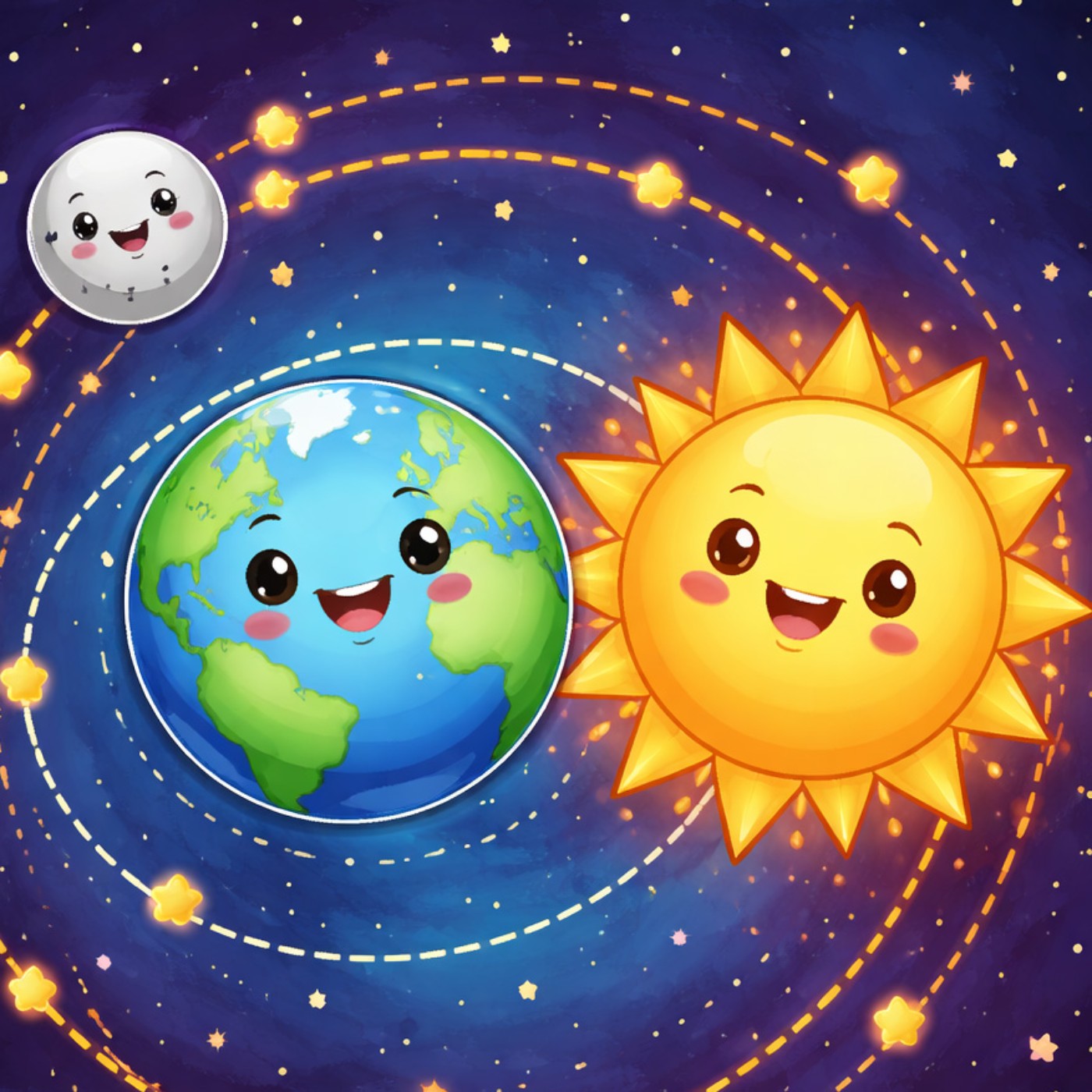
Full💝感謝贊助Bear老師喝杯咖啡,支持永續經營: https://pay.soundon.fm/podcasts/f2cb33e1-02d1-4fce-9e8e-68b636579fd0 本集Youtube有字幕喔!(This episode has subtitles on YouTube.) https://youtu.be/8kTECW2XLWI Bear老師的故事每個月月中、月底各上架一集。一個月兩集。 📃如果需要PDF文字檔或想知道更多關於每集的英語小知識,請追蹤: 🅸🅶:bear.bilingual 𝓕𝓑:Bear老師的中英雙語故事 陽曆、陰曆和農曆/ Gregorian calendar, Lunar calendar and Chinese lunar calendar Hello, this is teacher Bear,我是Bear老師。 小朋友,今年的2月17號就是中國新年,也就是華人的春節。 Kids, this year February 17th is Chinese New Year, also known as the Spring Festival. 你想過嗎?為什麼中國新年的第一天不但不是在1月1號,而且每年的日期都不一樣呢? Have you ever wondered why the first day of Chinese New Year isn't January 1st, and why the date changes every year? 讓我們來聽聽Amy跟朋友們的討論吧! Let's hear what Amy and her friends have to say! Amy:春節快到了,好興奮喔! Chinese New Year is almost here! I'm so excited! Emma:我也是。不過你們發現了嗎?今年的春節晚了一點,是2月17號。 Me too. But have you noticed? This year, Chinese New Year is a little later, on February 17th. Jasper:我記得去年的春節在1月。真奇怪。 I remember last year's Chinese New Year was in January. That's strange. Robin:你們知道這是為什麼嗎? Do you know why? Amy:我知道,這是因為春節是根據農曆來看的。我們有三種不同的日曆,陽曆、陰曆和農曆。 I know – it's because Chinese New Year is based on the Chinese lunar calendar. We have three different calendars: the Gregorian calendar, the Lunar calendar, and the Chinese lunar calendar. Emma:好複雜喔。春節是根據農曆來看的。那麼~~哪一個是平常用的啊? That's complicated! Chinese New Year is based on the Chinese lunar calendar. So, which one do we usually use? Robin:平常用的是陽曆!是根據太陽來看的。 We usually use the Gregorian calendar! It's based on the sun. Jasper:根據太陽? Based on the sun? Robin:是啊!地球繞太陽轉一圈,就是一年,所以陽曆一年差不多有 365 天。 Yes! The Earth revolves around the sun once a year, so a Gregorian year is about 365 days. Jasper:所以平常我們用的日期都是根據陽曆? So the dates we usually use are based on the Gregorian calendar? Amy:對,像政府、學校的行事曆都是。 Yes, like government and school calendars. Robin:根據陽曆的話,每個季節對應的月份也差不多喔。 If we use the Gregorian calendar, the months corresponding to each season are roughly the same. Emma:那陰曆是什麼? What about the lunar calendar? Robin:陰曆是根據月亮來看日曆。 The lunar calendar is based on the moon. Jasper:月亮不是每天長得不一樣嗎? Doesn't the moon look different every day? Robin:對呀!月亮從圓圓的,變成彎彎的,再變成圓圓的,就算一個月。 Yes! The moon goes from full to crescent and back to full, and that's how a month is counted. Emma:哇~月亮在幫我們數日子! Wow~ The moon is counting the days for us! Robin:沒錯,但是陰曆一年只有 354 天左右。所以陰曆的季節會一直往前面的月份移動,有可能夏天會在1月、2月的時候。 That's right, but a lunar year only has about 354 days. So the lunar seasons keep shifting to earlier months; summer might fall in January or February. Emma:那真怪。 還是用陽曆就好了。 That's awkward. It's better to use the Gregorian calendar. Robin:可是用陽曆的話,每個月的15號就不一定看得到圓圓的月亮了。 But with the Gregorian calendar, we might not see a full moon on the 15th of every month. Jasper:那怎麼辦呢? What do we do then? Amy:沒問題,看農曆。農曆很聰明喔,不但根據太陽,也根據月亮。 No problem, we can use the Chinese lunar calendar. The Chinese lunar calendar is very clever; it's based on both the sun and the moon. Emma:喔~~所以中秋節每年都在差不多一樣的季節,而且中秋節那一天,月亮也一定是圓的。 Oh~~ So the Mid-Autumn Festival falls around the same time of year every year, and the moon is always full on that day. Robin:沒錯!這就是農曆的優點。春節、端午節也是根據農曆來看的節日。 Exactly! That's the advantage of the Chinese lunar calendar. The Spring Festival and Dragon Boat Festival are also based on the Chinese lunar calendar. Jasper:咦?可是陽曆和陰曆每年有差不多11天的時間差,怎麼辦? Jasper: Huh? But there's about an 11-day difference between the Gregorian and lunar calendars each year, so what do we do? Amy:所以農曆每2到3年就會加一個 「閏月」,也就是某一個月會再重複一次。 That's why the lunar calendar adds a leap month every 2 to 3 years, meaning a certain month repeats itself. Jasper:難怪去年2025年的農曆有閏6月,也就是有兩個6月。我還聽說2028年會有閏5月。 No wonder last year, 2025, had a leap June in the Chinese lunar calendar, meaning there were two Junes. I also heard that 2028 will have a leap May. Amy:對,就是這樣。 Yes, that's right. Emma:古人真是太聰明了! The ancients were so clever! Jasper:謝謝你們,我終於懂了。 Thank you, I finally understand! 小朋友,陽曆、陰曆、農曆,你都懂了嗎? Kids, do you understand the Gregorian calendar, the lunar calendar, and the Chinese lunar calendar? 古人是不是很聰明呢? Weren't the ancients very clever? “They are so smart!” 意思是「他們真聰明!」 請跟Bear老師再說一次: “They are so smart!” 小朋友,我們下次見嘍! See you next time! "They are so clever!" 意思是「他們真聰明!」 請跟Bear老師再說一次: "They are so clever!" 小朋友,農曆新年快樂,我們下次見嘍! Kids, Happy Chinese New Year and See you next time! -- Hosting provided by SoundOn

EP.107 湯米的新年新計畫/ Tommy's New Year's Resolutions(#Bear老師原創故事)
Full💝感謝贊助Bear老師喝杯咖啡,支持永續經營: https://pay.soundon.fm/podcasts/f2cb33e1-02d1-4fce-9e8e-68b636579fd0 本集Youtube有字幕喔!(This episode has subtitles on YouTube.) https://youtu.be/eZnGqjWpsBs Bear老師的故事每個月月中、月底各上架一集。一個月兩集。 📃如果需要PDF文字檔或想知道更多關於每集的英語小知識,請追蹤: 🅸🅶:bear.bilingual 𝓕𝓑:Bear老師的中英雙語故事 湯米的新年新計畫/ Tommy's New Year's Resolutions Hello, this is teacher Bear, 我是Bear老師。 小朋友,新的一年到了,小熊湯米制定了新年新計畫。 Kids, the new year is here! Little Bear Tommy has made some resolutions for the new year. 你覺得他能做到對自己的承諾嗎? Do you think he can keep the promises he has made to himself? ********************************************************************* 那是新年的第一個早晨。 It was the first morning of the new year. 柔和的陽光透過窗戶照了進來。 Soft sunlight came through the window. 湯米坐在床上微笑著。 Tommy sat on the bed and smiled. 今年,我一定要每天早起不賴床。 This year, I will definitely get up early every day and not stay in bed too long. 我一定要多做運動。 I will definitely exercise more. 我一定要多幫媽媽做家事。 I will definitely help my mom with the housework more often. 我一定會把房間整理好。 I will definitely tidy up my room. 我也一定會每天學習。 I will also definitely study every day. 總而言之,我一定會盡力。 Anyway, I will definitely do my best. 那一天,湯米遵守了承諾。 That day, Tommy kept his promise. 他早早起了床。 He got up early. 做了運動。 He exercised. 幫媽媽打掃了客廳。 He helped his mom clean the living room. 他把玩具放回原位。 He put his toys back. 還複習了功課。 And he reviewed his lessons. 不過,第二天開始,卻有一點不同了喔。 However, things were a little different the next day. 躺在床上好溫暖好舒服喔,真不想起床。 It's so warm and cozy lying in bed that I don't want to get up. 外面好冷喔,我不想去運動。 It's so cold outside, I don't want to exercise. 今天就這樣躺著也沒關係吧? I guess it's okay to just stay in bed today? 就一天,明天再早起吧! Just one day, I'll get up early tomorrow! 就在這個時候,湯米想起了對自己的承諾。 Just then Tommy remembered the promise he had made to himself. 我一定會盡力。 I will definitely do my best. 他發現做出承諾很容易。 He found that making promises was easy. 可是遵守承諾很困難。 However, keeping promises was difficult. 他覺得心裡好像有一個天使和惡魔。 He felt as if an angel and a devil were inside him. 天使提醒他遵守承諾。 The angel reminded him to keep his promises. 惡魔告訴他偷懶也沒關係喔。 The devil told him it was okay to slack off. 湯米在心裡掙扎了一會兒。 Tommy struggled with this internally for a moment. 然後他深呼吸對自己說: Then he took a deep breath and said: 雖然我想偷懶,可是我已經向自己承諾了。 Although I want to slack off, I had already made a promise to myself. 我一定會盡力。 I will definitely do my best. 我覺得我應該試試看遵守對自己的承諾。 I feel that I should try to keep my promise. 湯米試著從床上爬起來,整理一下床鋪,然後做一點運動,還問媽媽有什麼需要幫忙的。 Tommy tried to get out of bed, tidied up his bed, exercised a bit, and asked his mother if she needed any help. 每天,湯米都會在床上掙扎一下,然後想起對自己的承諾:我一定會盡力。接著就有勇氣起床了。 Every day, Tommy would struggle in bed for a moment, then remembered the promise he had made to himself: I will definitely do my best. And finally found the courage to get up. 就這樣,每天一點點,一點點,湯米發現,一切都越來越容易了。 And so, little by little, day by day, Tommy found that everything was getting easier and easier. 而當每次他做到對自己的承諾時,就感覺到自己越來越堅強了。 Each time he kept his promise, he felt himself growing stronger and stronger. ************************************************************************** 小朋友,訂立計畫很容易,可是都要做到卻很困難,對不對? Kids, making resolutions is easy, but keeping your promises is difficult, right? 別擔心,這是有辦法的。 Don't worry, there's a way. 只要每天做一點,然後堅持下去,就會發現沒那麼困難喔。 Just do a little bit every day and stick with it, you'll find it's not so hard. “Stick with it!”意思是「堅持下去」。請跟Bear老師再說一次: “Stick with it!” 小朋友,堅持下去,不要輕易放棄自己的新年新計畫喔! Kids, stick with it and don't give up on your New Year's resolutions so easily! 我們下次見嘍! See you next time! -- Hosting provided by SoundOn