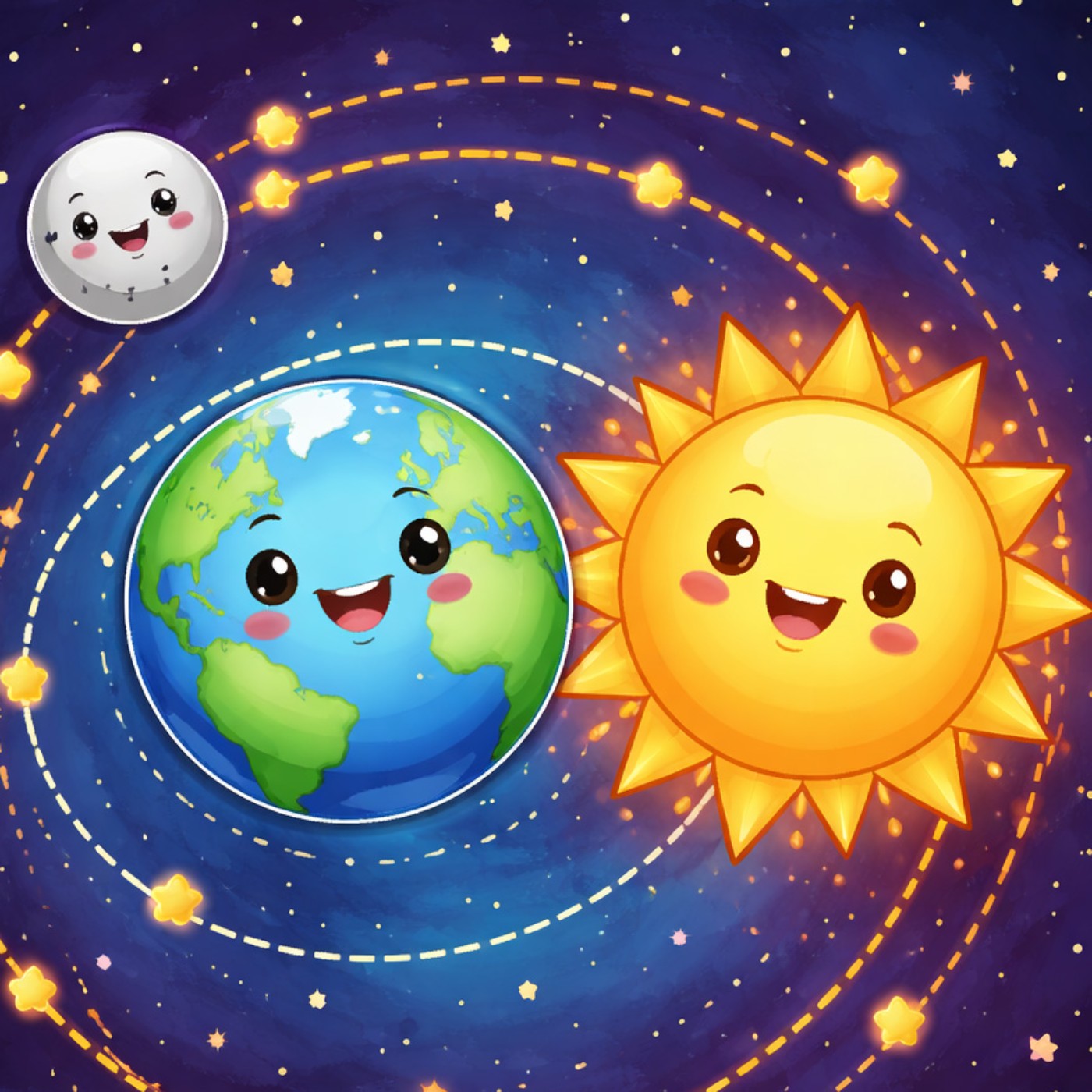
EP.108 陽曆、陰曆和農曆/ Gregorian calendar, Lunar calendar and Chinese lunar calendar(#Bear老師原創故事)
Bear老師的中英雙語故事/Bilingual Story in Chinese & English
Audio is streamed directly from the publisher (rss.soundon.fm) as published in their RSS feed. Play Podcasts does not host this file. Rights-holders can request removal through the copyright & takedown page.
Show Notes
💝感謝贊助Bear老師喝杯咖啡,支持永續經營:
https://pay.soundon.fm/podcasts/f2cb33e1-02d1-4fce-9e8e-68b636579fd0
本集Youtube有字幕喔!(This episode has subtitles on YouTube.)
https://youtu.be/8kTECW2XLWI
Bear老師的故事每個月月中、月底各上架一集。一個月兩集。
📃如果需要PDF文字檔或想知道更多關於每集的英語小知識,請追蹤:
🅸🅶:bear.bilingual
𝓕𝓑:Bear老師的中英雙語故事
陽曆、陰曆和農曆/ Gregorian calendar, Lunar calendar and Chinese lunar calendar
Hello, this is teacher Bear,我是Bear老師。
小朋友,今年的2月17號就是中國新年,也就是華人的春節。
Kids, this year February 17th is Chinese New Year, also known as the Spring Festival.
你想過嗎?為什麼中國新年的第一天不但不是在1月1號,而且每年的日期都不一樣呢?
Have you ever wondered why the first day of Chinese New Year isn't January 1st, and why the date changes every year?
讓我們來聽聽Amy跟朋友們的討論吧!
Let's hear what Amy and her friends have to say!
Amy:春節快到了,好興奮喔!
Chinese New Year is almost here! I'm so excited!
Emma:我也是。不過你們發現了嗎?今年的春節晚了一點,是2月17號。
Me too. But have you noticed? This year, Chinese New Year is a little later, on February 17th.
Jasper:我記得去年的春節在1月。真奇怪。
I remember last year's Chinese New Year was in January. That's strange.
Robin:你們知道這是為什麼嗎?
Do you know why?
Amy:我知道,這是因為春節是根據農曆來看的。我們有三種不同的日曆,陽曆、陰曆和農曆。
I know – it's because Chinese New Year is based on the Chinese lunar calendar. We have three different calendars: the Gregorian calendar, the Lunar calendar, and the Chinese lunar calendar.
Emma:好複雜喔。春節是根據農曆來看的。那麼~~哪一個是平常用的啊?
That's complicated! Chinese New Year is based on the Chinese lunar calendar. So, which one do we usually use?
Robin:平常用的是陽曆!是根據太陽來看的。
We usually use the Gregorian calendar! It's based on the sun.
Jasper:根據太陽?
Based on the sun?
Robin:是啊!地球繞太陽轉一圈,就是一年,所以陽曆一年差不多有 365 天。
Yes! The Earth revolves around the sun once a year, so a Gregorian year is about 365 days.
Jasper:所以平常我們用的日期都是根據陽曆?
So the dates we usually use are based on the Gregorian calendar?
Amy:對,像政府、學校的行事曆都是。
Yes, like government and school calendars.
Robin:根據陽曆的話,每個季節對應的月份也差不多喔。
If we use the Gregorian calendar, the months corresponding to each season are roughly the same.
Emma:那陰曆是什麼?
What about the lunar calendar?
Robin:陰曆是根據月亮來看日曆。
The lunar calendar is based on the moon.
Jasper:月亮不是每天長得不一樣嗎?
Doesn't the moon look different every day?
Robin:對呀!月亮從圓圓的,變成彎彎的,再變成圓圓的,就算一個月。
Yes! The moon goes from full to crescent and back to full, and that's how a month is counted.
Emma:哇~月亮在幫我們數日子!
Wow~ The moon is counting the days for us!
Robin:沒錯,但是陰曆一年只有 354 天左右。所以陰曆的季節會一直往前面的月份移動,有可能夏天會在1月、2月的時候。
That's right, but a lunar year only has about 354 days. So the lunar seasons keep shifting to earlier months; summer might fall in January or February.
Emma:那真怪。 還是用陽曆就好了。
That's awkward. It's better to use the Gregorian calendar.
Robin:可是用陽曆的話,每個月的15號就不一定看得到圓圓的月亮了。
But with the Gregorian calendar, we might not see a full moon on the 15th of every month.
Jasper:那怎麼辦呢?
What do we do then?
Amy:沒問題,看農曆。農曆很聰明喔,不但根據太陽,也根據月亮。
No problem, we can use the Chinese lunar calendar. The Chinese lunar calendar is very clever; it's based on both the sun and the moon.
Emma:喔~~所以中秋節每年都在差不多一樣的季節,而且中秋節那一天,月亮也一定是圓的。
Oh~~ So the Mid-Autumn Festival falls around the same time of year every year, and the moon is always full on that day.
Robin:沒錯!這就是農曆的優點。春節、端午節也是根據農曆來看的節日。
Exactly! That's the advantage of the Chinese lunar calendar. The Spring Festival and Dragon Boat Festival are also based on the Chinese lunar calendar.
Jasper:咦?可是陽曆和陰曆每年有差不多11天的時間差,怎麼辦?
Jasper: Huh? But there's about an 11-day difference between the Gregorian and lunar calendars each year, so what do we do?
Amy:所以農曆每2到3年就會加一個 「閏月」,也就是某一個月會再重複一次。
That's why the lunar calendar adds a leap month every 2 to 3 years, meaning a certain month repeats itself.
Jasper:難怪去年2025年的農曆有閏6月,也就是有兩個6月。我還聽說2028年會有閏5月。
No wonder last year, 2025, had a leap June in the Chinese lunar calendar, meaning there were two Junes. I also heard that 2028 will have a leap May.
Amy:對,就是這樣。
Yes, that's right.
Emma:古人真是太聰明了!
The ancients were so clever!
Jasper:謝謝你們,我終於懂了。
Thank you, I finally understand!
小朋友,陽曆、陰曆、農曆,你都懂了嗎?
Kids, do you understand the Gregorian calendar, the lunar calendar, and the Chinese lunar calendar?
古人是不是很聰明呢?
Weren't the ancients very clever?
“They are so smart!” 意思是「他們真聰明!」
請跟Bear老師再說一次:
“They are so smart!”
小朋友,我們下次見嘍!
See you next time!
"They are so clever!" 意思是「他們真聰明!」
請跟Bear老師再說一次:
"They are so clever!"
小朋友,農曆新年快樂,我們下次見嘍!
Kids, Happy Chinese New Year and See you next time!
--
Hosting provided by SoundOn