
BeachCast.TV: Bible Exploration, Apologetics and Church History with Dr. Chase A. Thompson:
775 episodes — Page 13 of 16

S2 Ep 162Does God Favor the Rich, Powerful and Established Or The Poor and Powerless? A Meditation on Isaiah 40. #162
God owns the 'cattle on a thousand hills.' He is above comprehension in power and majesty. Does He - as high and lofty as He is - favor the elite and powerful, or the poor, lowly and oppressed? Over and over again that Scripture answers that question in a very surprising way.

S2 Ep 161Who is The Angel of The Abyss (Apollyon/Abaddon)? + If I Have it, Should I Flaunt it? #161
Two parter today. In part one, we discuss the enigmatic and terrifying angel of the abyss/king of the locusts/Abaddon/Apollyon of Revelation 9. Who is he, and what sort of creatures does he command? Does he serve God, or the enemy? Also - the world say, "If you've got it, flaunt it!" Is this biblical wisdom? We'll see today King Hezekiah show us the dangers of such thinking.

S2 Ep 160What Does it Mean to Circumcise Your Heart, and HOW Can It Be done? #160
Circumcision is a physical (and painful!) sign of the covenant that God gave to Abraham. All males in Israel were to be circumcised. Later, however, Moses (and then Paul) begin to talk about the 'circumcision of the heart.' Today's episode is all about what the circumcision of the heart is, and how it can happen to non-Jewish people.
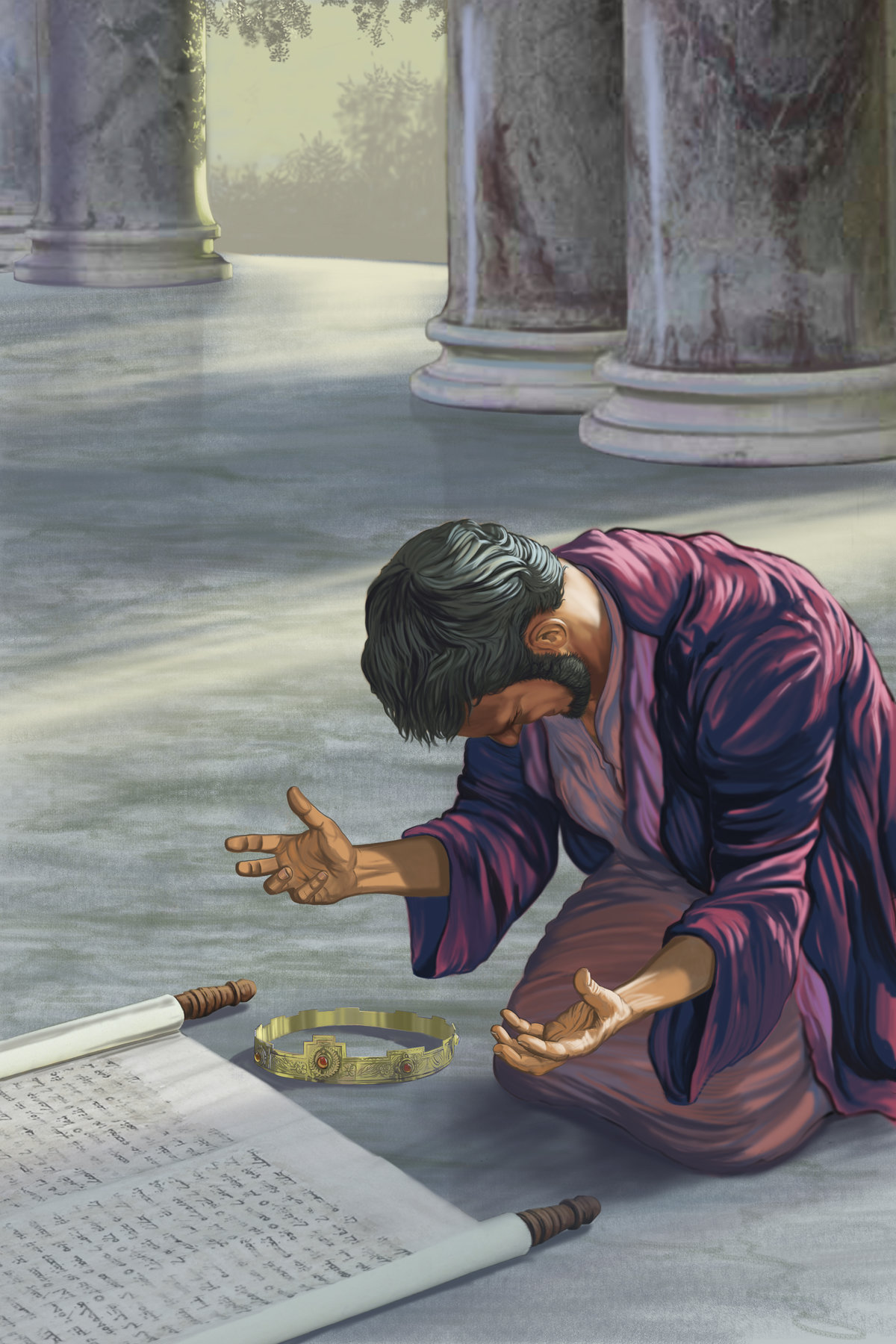
S2 Ep 159How Do The People of God Respond When Faced With Overwhelming Odds Against Them? #159
In Isaiah 37, we are presented with a fascinating and frightful scenario: The mighty King of Assyria is threatening to wipe Israel off the map and utterly destroy them. This is not an empty boast, as it turns out, because Assyria has done this to many other countries, and they are the world's major power at the time. How does righteous King Hezekiah respond to this insurmountable threat?

S2 Ep 158Who Are the Four Horsemen of the Apocalypse? #158 #Revelation
Revelation 6 shows 4 horsemen released by Heaven to bring various judgments and manifestations on the earth. There is a white horse, a red horse, a black horse and a pale/greenish horse. Who are the four Horsemen of the apocalypse, what do they represent, and why is the fourth horse green? (With an assist from Sherlock Holmes and George Eldon Ladd)

S2 Ep 157Why Do People Believe the Bible is Against Interracial Marriage? #157 #Redux
Many people have taught for years (or assumed!) that the Bible forbids interracial marriage, despite the fact that many of the Bible's best known figures - like Moses! - enjoyed interracial marriage. Does the Bible forbid interracial marriages? Not at all! Why then do some people believe that the Bible does so?

S2 Ep 156What is Heaven Like Now AND What is the GREATEST Commandment? #156
Today's pod covers two important topics. #1 - What is the Greatest commandment, according to Jesus, and where is it found? Is it one of the Ten Commandments? #2 - What is Heaven like now? What sort of beings surround the throne of God, and what colors would we see if we were there? The Bible tells us!
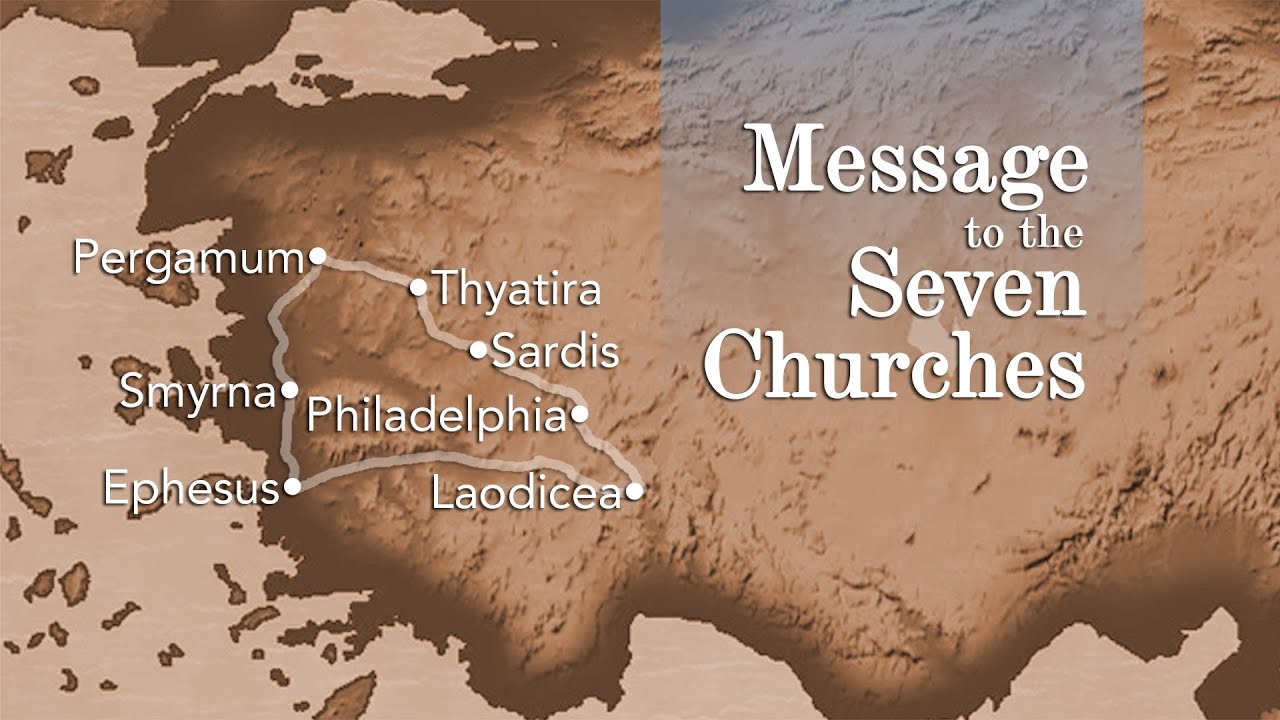
S2 Ep 155What is So Bad About Being Lukewarm? #155 #Revelation #LettersFromJesus
Revelation contains 7 letters from Jesus to various churches in Asia Minor. To one of those churches, the church of Laodicea, Jesus threatens to vomit them out of His mouth. What a colorful - and terrifying! - threat. The reason Jesus does this is because of the church's lukewarmness - today's podcast asks: What does it mean to be lukewarm, and why does Jesus take it so very seriously??
S2 Ep 154As the Church, What is Our FIRST Love? #154 #Revelation
In the book of Revelation, Jesus writes a letter to seven different churches. In His first letter, to the church at Ephesus, He tells them that - even though they have been faithful in many ways - they have left their FIRST love...and because of this, they are on the verge of ceasing to be a church. What is the first love that Jesus is referring to here, and why is abandoning it so serious?

S2 Ep 153What Does Jesus Look Like NOW + What Did He Look Like As a Human? (Does He Look The Same?) #153
The Bible gives very little as to the physical description of Jesus when He was on the earth with His disciples. Interestingly, however, the Bible is much more detailed in its description of Jesus in His glorified/Heavenly/Resurrected form, and the description of the Heavenly Jesus by John in Revelation 1 is equal parts beautiful and terrifying. What does Jesus look like now, in Heaven?

S2 Ep 152What is an Archangel? How many Archangels are in the Bible? #152
Angels are very powerful and somewhat mysterious heavenly beings that are not described with a high amount of detail in the Bible. Archangels, of which Michael is one, are even less covered by biblical texts. Given how little the Bible says, what can we know about these powerful beings? How many of them are there? What are there names? How much power do they have? Today's episode covers archangels!

S2 Ep 151Does God Preside over an Assembly of Lesser Deities According to the Bible? #151
Most Christians believe that the Bible teaches that there is only ONE God. And that is true, the way that most Christians mean it. However, there are many passages in the Bible (like our focus passage: Psalms 82) that seem to indicate that there are many other Heavenly beings/deities/gods (little 'g') that are under God's rule. Psalms 82 even seems to indicate that God presides over these heavenly beings in a sort of divine council. What's that all about?
S2 Ep 150How Should Christians Handle False Teachers? #150
False teachers have, in many cases, become more aggressive in proselytizing and door to door 'evangelism' than genuine teachers. How should Christians respond to false teachers? With debate? Discussion? Hospitality? Hostility? Burning oil? The second letter of John gives good and practical advice here.

S2 Ep 149Who is the Avenger of Blood? Is Eye for an Eye and Tooth for a Tooth Still Valid? #149 #maliceaforethought
Numbers 35 introduces us to a very mysterious figure in the Bible: The Avenger of Blood. It is the job of this avenger to kill (yes, kill!) those who commit intentional murder. How did this Old Testament process of justice and judgment work, and are we still in an 'eye for an eye and tooth for a tooth age?" Also: Cities of Refuge.

S2 Ep 148What Must Be the Defining Characteristic of Christians? #148
Consider for a moment: What kind of people are Christians known to be by those outside of the faith? Do we have a good reputation? If you stopped a non-believer, and asked them what their one word adjective to describe Christians would be - what do you think their answer would be? If we went to God's Word to see what kind of people we should be, and also sought a one-word answer, what would that word be? What kind of people MUST Christians be, above all else?
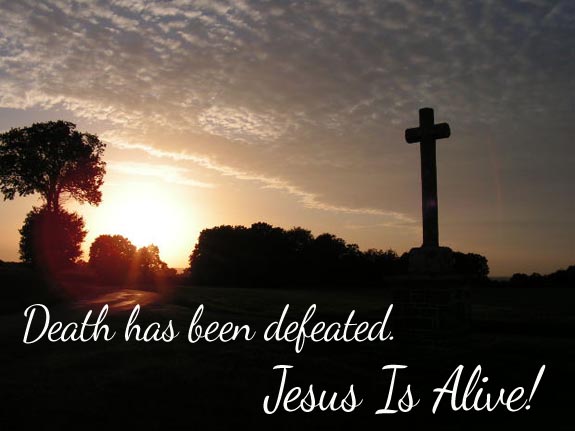
S2 Ep 147What Will Become of Death When Jesus Returns? #147
The Bible describes death as an enemy, and indicates that this is the last enemy that will be defeated by God. Isaiah 25 gives us a big hint as to what is going to happen to death when Jesus returns, and Revelation 21 finishes spelling it out with some incredibly encouraging news.

S2 Ep 146How Do We Conquer the Evil One? #146
1 John 2 talks about a certain group of people who have overcome the 'evil one.' Given that the evil one is far smarter, stronger and more powerful than any human, this sounds like a pretty amazing claim. How can Christians resist and even conquer the evil one?

S2 Ep 145Does God Get Angry? #145
Most people believe - rightly so - that God is kind, merciful and loving. In their minds, a kind and merciful God could never be angry...but the Bible is quite clear that God is angry with sin. As we explore this aspect of His character, we will see how good, just, moral and right it is that God is angry with grievous sin.

S2 Ep 144Does the Bible Teach That The Return of Jesus Would Be Soon After His Ascension, or Much Later? + Sea Dragons and Leviathans in the Bible?!
Some critics of the Bible have charged that it seems to indicate the second coming will be quite swift, and the fact that Jesus hasn't returned for almost 2000 years seems - to them - to undermine the credibility of the Bible. Is this charge true - does the Bible really indicate the return of Jesus will be swift? 2nd Peter 3 will show us that this is not at all the case. We're also talking about sea dragons and leviathans in this episode!
S2 Ep 143Why Did God Have Angels Put in Chains and Cast Into Darkness? + Light of the Gospel: A Tribute To Ravi Zacharias #143
The church lost a great servant of the Gospel today in Ravi Zacharias, and we have a brief tribute to him on today's pod, along with an excellent short devotion he wrote on sharing the gospel with neither animosity, nor compromise. Our Big Bible question is all about the angels in prison of 2nd Peter - why did God have angels bound up in darkness and chains, and sent to prison - what did they do?!

S2 Ep 142How Do We Know We Are Saved? How do we Confirm Our Calling and Election? #142
Jesus says that the narrow road to salvation is a road that not many will follow - giving us the idea that most people won't become Christians. Jesus also warns, in Matthew 7, that many people will come to Him on the judgment day claiming to be Christians, but He will tell them, "I never knew you!" How then can a Christian know that they are saved - how can we have assurance of salvation? The Bible gives us an answer to this question, and Dr. R.C. Sproul is going to help us see it in today's episode.

S2 Ep 141What Kind of Person Does God Exalt?? #141
To exalt somebody means to lift them up, promote them, or to think very highly of them. Surprisingly, the Bible indicates - many times over - that there is a certain kind of person that God delights to exalt and raise up. What kind of person is this? What character trait attracts the attention and promotion of the Lord?

S2 Ep 140What is the MOST Important Thing as the End of Time Draws Near? #140
Most people focus on times and dates when discussing the last days and the return of Christ. The Bible, however, does not. In fact, 1 Peter 4 tells Christians that there is something they should be focusing on - above all - as the end times gets nearer and nearer. What is it?

S2 Ep 139What is Apologetics? Why Should Christians Apologize?? #139 HOW Do You Defend the Faith?
Today we discuss apologetics - is it all about saying we are sorry for being a Christian? Of course not! 1 Peter 3:15 calls Christians to be able to give an answer/defense as to why they have hope. Today we talk about the two areas that Christians should be experts on (The resurrection and the reliability of the Bible) and also HOW Christians should approach discussing faith with skeptics, critics, and the curious.

S2 Ep 138Who are YOU? Are You Royalty? Are you a Member of the Clergy? (If You are in Christ, then YES, You are!) #138
1 Peter 2 declares that Christians are a NEW race - does this nullify our existing ethnicities, or enhance them? This chapter also teaches that followers of Jesus are a ROYAL PRIESTHOOD. Can it be that you are royalty? That you are a priest of God Most High? YES!

S2 Ep 137Why Are Trials Necessary? Why Does God MAKE Us Go Through Troubles? #137
The Bible makes it quite clear that Christians will endure discipline, affliction, suffering, trials and other unpleasantness. Why are such things necessary? Why doesn't God just protect us from ALL harm and trouble?
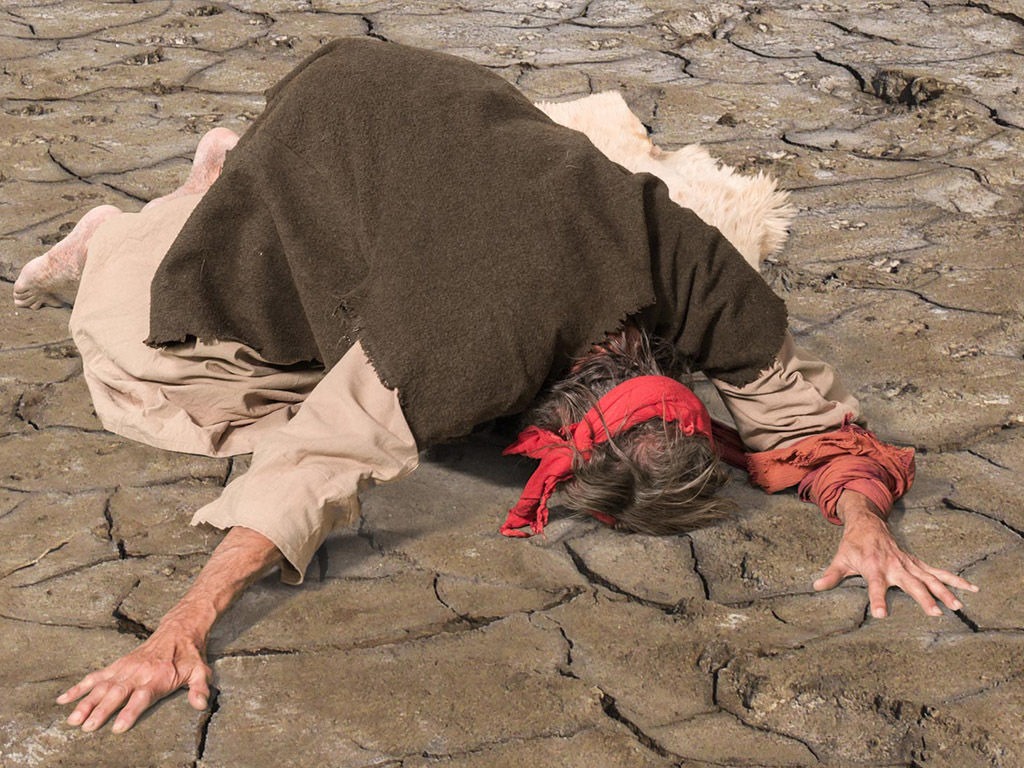
S2 Ep 136How Can Our Prayers Be More Effective? #136 #PrayLikeElijah
Elijah was a human being just like us. Weak, scared, anxious, even sometimes suicidal...and yet he prayed prayers that shook the earth and changed history. James 5 tells us to pray like Elijah - how can we do this? How can our prayers be more effective?

S2 Ep 135How is Jesus Like A Bronze Serpent on a Pole? #135
Hello everybody, and Happy Tuesday to you! Welcome into the most ridiculous, and yet profoundly titled episode of the Bible Reading Podcast. If the end of the world happens today, or a cure for coronavirus is announced, or World War 3 begins between the Bulgarians and the elite warriors of Burkina Faso, and you're wondering why in the world I'm not commenting on that in the intro...it's because I'm recording this episode early on Monday morning - I think it is the first time I've recorded two episodes in one day, but after 135 episodes, they all sort of run together in my mind. Today's Bible readings consist of Numbers 21 (our SECOND straight day with Numbers as the focus passage!), plus: Psalms 60-61, Isaiah 10:5-34, and James 4. Our focus question of the day is not quite as outrageous as it sounds because Jesus HIMSELF makes the comparison between Him and the Bronze snake on a pole of Numbers 21 - so, let's go read that passage (warning if you are scared of snakes) and also Jesus' reference to that story in John 3, and then discuss what it all means. 14 And as Moses lifted up the serpent in the wilderness, so must the Son of Man be lifted up, 15 that whoever believes in him may have eternal life. John 3:14-15 Because I'm about to head out for a short road trip to Colorado, I'm going to be leaning into my preacher friends a little more over these next couple of episodes, and today that is great news for you, because our old friend Tim Keller is going to help us understand why Jesus is comparing Himself to the bronze snake, and this is an incredible message. On every truck, plaque, uniform, building that has anything to do with medicine (hospitals, doctors, the medical) you will see an insignia with a serpent, usually coiled around a pole. It's called the caduceus. It is the symbol of healing. It's one of the very oldest symbols of healing we know. You've seen it thousands of times in your life. Do you know what it points to? Do you know what all of the medical facilities of this entire country are referring to? They're referring to the incident which we've just read that is one of the most bizarre incidents anywhere in the Bible. It's a story, as we read, about an episode in the life of the children of Israel in which they began to really complain against God, to impute evil motives to God, to be very unhappy with the way in which God was treating them. God responds by sending into their midst a plague of poisonous serpents, snakes, that bite the Israelites. They begin to die. They pray. God hears the prayer, and he says to Moses, "Here's how I'm going to cure them. Put a bronze serpent on a pole." (The poles in all of the symbols are really a cross without a little top piece. It's a "T." A cross without a top piece and one or two snakes entangled, intertwined, coiled around it.) "Put it up so anyone who looks at it will be healed of their disease." If you look at that, if we didn't have any other interpretation of that, it would really be a very confusing story. First of all, God looks vindictive. The people are bellyaching. They're complaining. They're unhappy with the manna he gave them. They're unhappy with the desert situation. God sends these poisonous serpents, so he looks vindictive. Secondly, he looks impulsive and indecisive, because he seems to change his mind. They pray, and then he says, "Okay. I'll heal you." Thirdly, he seems petty and idiosyncratic. This is God! Can't he say, "You're healed"? What's with the bronze serpent? How weird to make them look on the very thing that was killing them in order to save them. If you read the whole thing, you say, "It seems to mean nothing. It doesn't make much sense." Except that Jesus Christ points back, and because Jesus Christ said this and showed the meaning of it, that's the reason why this symbol is emblazoned on all the medical technology and places of medicine and healing in the world. He said, "Just as Moses lifted up the snake in the desert, so the Son of Man must be lifted up, that everyone who believes in him may have eternal life." Then he says the famous verse, "For God so loved the world …" Whenever you see a hospital, whenever you see an EMS truck or something and you see the snake around the pole, do you think right away, "For God so loved the world, that he gave his only begotten Son, that whosoever believeth in him should not perish, but have everlasting life"? You should, because that's what it means. You say, "Well, okay. How does it mean it?" What Jesus is saying, what Numbers is saying, what God is saying in the incident and, therefore, indirectly, of course, what every single one of those insignias is saying is there is only one disease that can really kill you. There is only one disease that really can kill you and that disease has one and only one remedy. Let's look at the disease, which, of course, is sin, and let's look at the remedy, which, of course, is the Son of Man lifted up. God has to show them there is a provision. Go

S2 Ep 134Why did God NOT Allow Moses to Enter the Promised Land, and what can leaders learn from Moses' failure? #134
Hello friends, and happy Monday to you all! As you might recall, I'm preparing for a short road trip this week, and trying to record a few extra episodes before I head out on the road, so the next few episodes might be a little shorter than normal. Have no fear, I should be back to my normal long-winded self by next weekend. Today's Bible readings are sort of complicated - thank you Robert Murray M'Cheyne - but they are still awesome. I actually had to debate between three different passages for our focus question, so that's a good sign. We're reading Numbers 20, Psalms 58 and 59, Isaiah 9-10:4 and James 3. Our focus question comes from the Numbers passage, and it concerns the episode at Meribah that caused God to say that Moses would not be able to go into the promised land. In this episode, we see the truth of James 3:1 (on our reading today) played out: "Not many should become teachers, my brothers, because you know that we will receive a stricter judgment." Let's read Numbers 20, and see how Moses gets disqualified, and also read about the death of Aaron. Heartbreaking passage in many ways. The fact that Moses is barred from entering into the earthly promised land is quite stunning, since this is God's testimony about Moses: 5 Then the Lord descended in a pillar of cloud, stood at the entrance to the tent, and summoned Aaron and Miriam. When the two of them came forward, 6 he said: "Listen to what I say: If there is a prophet among you from the Lord, I make myself known to him in a vision; I speak with him in a dream. 7 Not so with my servant Moses; he is faithful in all my household. 8 I speak with him directly, openly, and not in riddles; he sees the form of the Lord. So why were you not afraid to speak against my servant Moses?" Numbers 12:5-8 So - why was God so...so what with Moses? Numbers actually does not say God's reaction, but we do later learn in Deuteronomy that God was indeed angry with Moses. But why? I think that this was a bigger deal than what we see at first. I see two big things that Moses did. First, He disobeyed the direct command of God. Moses was told to speak to rock, but He struck the rock instead. Of this incident, Spurgeon cleverly said: Certainly Moses erred in smiting the rock, for he was bidden to speak to it. The best of men are men at the best. C. H. Spurgeon, The Interpreter: Spurgeon's Devotional Bible (Grand Rapids, MI: Baker Book House, 1964), 128. Disobedience is serious, but I wonder if the second thing Moses did was even worse. In vs. 11, this happens: Moses and Aaron summoned the assembly in front of the rock, and Moses said to them, "Listen, you rebels! Must we bring water out of this rock for you?" Numbers 20:11 Is this Moses attempting to take credit for a miracle that originated with God? It is certainly possible, and that would be an egregious sin - and one that is often alive and well in church leaders today. I think that this is the reason that God says this later in Deuteronomy: 51 For both of you broke faith with me among the Israelites at the Waters of Meribath-kadesh in the Wilderness of Zin by failing to treat me as holy in their presence. Deuteronomy 32:51 Of this second failure, Spurgeon writes: Angry he certainly was; and when, reverting to a former miracle, the Most High directed him to take the wonder-staff—his rod of many miracles—and at the head of the congregation "speak to the rock," and it would "give forth its water," in the heat and agitation of his spirit he failed to implement implicitly the Divine command. Instead of speaking to the rock be spoke to the people, and his harangue was no longer in the language calm and dignified of the lawgiver, but had a certain tone of petulance and egotism. "Hear now, ye rebels; must we—must I and Aaron, not must Jehovah—fetch you water out of this rock?" And instead of simply speaking to it, he raised the rod and dealt it two successive strokes, just as if the rock were sharing the general perversity, and would no more than the people obey its Creator's bidding. He was angry, and he sinned. He sinned and was severely punished C. H. Spurgeon, The Treasury of David: Psalms 88-110, vol. 4 (London; Edinburgh; New York: Marshall Brothers, n.d.), 392. I think that the major issue here was the petulance and egotism of Moses. This is a temptation to those who would lead God's people and a deadly danger to give into. Shepherds and leaders of God's people must constantly point them to Jesus and to the abundant blessings at the right hand of the Father. When leaders/pastors/elders/deacons begin to read their own press clippings - so to speak - when they begin to feel as if they are the one feeding/protecting/taking care of the people, then the eyes of the people can turn from God to the human leaders...and this is dreadful. Hebrews 12 instructs us to keep/fix/focus our eyes on Jesus - the author and finisher of our faith. When that focus shifts from Jesus to a human leader - even an incredibly gifted one - than ou

S2 Ep 133How Do We Pray Through The Psalms? #133
Hello friends, and happy Lord's Day to you all! Some of us have the privilege of worshipping together in person today, and some - like us - are still in quarantine. Wherever you fall along that spectrum, I pray that the Lord would bless you and keep you safe - that He would preserve your life and give you a wonderful gathering today. I am excited about our own church gathering, even though it is livestream. At our church - Valley Baptist Church in Salinas - we have had some wonderful times 'meeting' together over the internet - primarily because so many church members have been able to participate. We have great times of interactive prayer and so many encouraging testimonies and words have been sent in - we've even had multiple worship leaders lead us via video. It's not as great as being together in person, but I still look forward to our gathering every week. We'd love to have you join us at 11am Pacific on Facebook live - just go to VBC Salinas on Facebook, like our page, and you will be alerted when we go live...or just check out the recording. Today, Robert Murray M'Cheyne - the original author of the Bible reading plan we are following this year - decided to get a little bit creative. Creative, or crazy...I'm not sure. Our readings are Numbers 19, Psalms 56-57, Isaiah 8 and 9:1-7, and James 2. Tomorrow the readings are even more, uhm, interesting. Do remember that the next few episodes might be a little shorter than normal, as I am preparing for a brief road trip this week and recording some episodes ahead of time. Yesterday was a fake shorter episode that ended up being average - this episode will likely be shorter. That said - NEVER, EVER trust a preacher's estimate of time, and mine in particular. I'm not very good at estimating how long something will last. I have found that the Psalms have been particularly comforting to me as we have gone through this pandemic/quarantine time. I don't live and fight daily battles with anxiety and fear, but these past eight weeks have definitely increased the levels of those horrible things in my life, and maybe yours too. As things have progressed, I have found great comfort and assurance in reading through the Psalms and praying through them. I learned from Ben Patterson, via Kevin DeYoung, an excellent way to pray through the Psalms that I'd like to share with us now: Sometimes it's the simplest things that make the biggest difference. For many years I've used the 3 R's I learned from Ben Patterson to pray through Scripture. This simple tool has helped me pray the Bible more than any other single strategy. I've used in my devotional times and have employed it often in leading others in prayer. 1. Rejoice 2. Repent 3. Request With every verse in the Bible we can do one (or more likely, all three) of these things. We can rejoice and thank God for his character and blessings. We can repent of our mistakes and sins. We can request new mercies and help. Source: https://www.thegospelcoalition.org/blogs/kevin-deyoung/how-to-pray-using-scripture/ Let's take that and apply it to Psalms 57: Be gracious to me, God, be gracious to me, for I take refuge in you. I will seek refuge in the shadow of your wings until danger passes. 2 I call to God Most High, to God who fulfills his purpose for me. 3 He reaches down from heaven and saves me, challenging the one who tramples me.Selah God sends his faithful love and truth. 4 I am surrounded by lions; I lie down among devouring lions— people whose teeth are spears and arrows, whose tongues are sharp swords. 5 God, be exalted above the heavens; let your glory be over the whole earth. 6 They prepared a net for my steps; I was despondent. They dug a pit ahead of me, but they fell into it!Selah7 My heart is confident, God, my heart is confident. I will sing; I will sing praises. 8 Wake up, my soul! Wake up, harp and lyre! I will wake up the dawn. 9 I will praise you, Lord, among the peoples; I will sing praises to you among the nations. 10 For your faithful love is as high as the heavens; your faithfulness reaches the clouds. 11 God, be exalted above the heavens; let your glory be over the whole earth. Psalms 57: 1-11

S2 Ep 132Is There A Religion That God Calls Pure and Faultless? #132
Hello friends and welcome to the weekend! As a heads up, the next few podcasts might be a little on the shorter than normal side, as I am preparing for a small road trip with my daughter, and will have to record a few episodes to upload while gone. So - the plan is - Lord willing! - for there to be an uninterrupted stream of episodes all next week, but to do that, I'll need to record a few in advance. Rejoice ye podcast saints who like the shorter episodes, but mourn all ye who yearn and hearken with joy unto the longer episodes. This should all return back to normal by next Saturday. Today's Bible readings include Numbers 17 and 18, Psalms 55, Isaiah 7 and James chapter 1, which is our focus passage for today, based on the final verse: 26 If anyone thinks he is religious without controlling his tongue, his religion is useless and he deceives himself. Pure and undefiled religion before God the Father is this: to look after orphans and widows in their distress and to keep oneself unstained from the world. James 1:27 So - is there a religion that God calls pure and faultless? Yes! And it is James 1:27ism. Thanks for listening to today's show - Godspeed! Okay, I'm kidding. Shorter, but not quite that short...we haven't even read Numbers yet! One thing to address before we get to the big question. The word 'religion' here in James 1:26-27 is the Greek word 'θρησκεία thrēskeía.' In one sense, 'religion' is a pretty good translation of the word, but to a modern reader, I believe that the word 'religion' means something quite a bit different than what James is communicating here. When most here the word 'religion' they think about all of the various different religions of the world - all of the different practices of faith and beliefs about salvation, etc. That doesn't appear to be - at all - what James is talking about here. I think a better translation of the word is 'God-fearing,' for at least two reasons. #1 Threskia is derived from a Greek word 'θρησκός thrēskós' which means fearful or trembling, and is sometimes used in the context of worshipping God. #2 James isn't talking about all of the religions of the world and how to please their various deities; He is telling Christians how to please God - how to walk in a God-fearing, God-pleasing way. That said, I can't find a SINGLE modern translation that agrees with me, so you should trust the translators and not me. Regardless, I believe that every modern Bible translator would agree that James 1:26-27 is indeed teaching us what God finds pure and faultless, and there are three elements to it: #1 To please God, we MUST control our tongues - our words, our speech. The good news is that we don't have to speculate what James was talking about in terms of using our words in a God-pleasing way, because he tells us a few paragraphs later: 9 With the tongue we bless our Lord and Father, and with it we curse people who are made in God's likeness. 10 Blessing and cursing come out of the same mouth. My brothers and sisters, these things should not be this way. James 3:9-10 #2 To please God, we must look after orphans and widows - those who are fatherless, motherless or parentless and those who have lost their husbands. How big of a deal is this to God? I'm glad you asked: 16 Circumcise your hearts, therefore, and do not be stiff-necked any longer. 17 For the Lord your God is God of gods and Lord of lords, the great God, mighty and awesome, who shows no partiality and accepts no bribes. 18 He defends the cause of the fatherless and the widow, and loves the foreigner residing among you, giving them food and clothing. Deuteronomy 10:16-18 The Lord watches over the foreigner and sustains the fatherless and the widow, but he frustrates the ways of the wicked. Psalms 146:9 "Do not mistreat or oppress a foreigner, for you were foreigners in Egypt.22 "Do not take advantage of the widow or the fatherless. 23 If you do and they cry out to me, I will certainly hear their cry. Exodus 22:22-23 19 When you are harvesting in your field and you overlook a sheaf, do not go back to get it. Leave it for the foreigner, the fatherless and the widow, so that the Lord your God may bless you in all the work of your hands. 20 When you beat the olives from your trees, do not go over the branches a second time. Leave what remains for the foreigner, the fatherless and the widow. Deuteronomy 24:18-20 28 At the end of every three years, bring all the tithes of that year's produce and store it in your towns, 29 so that the Levites (who have no allotment or inheritance of their own) and the foreigners, the fatherless and the widows who live in your towns may come and eat and be satisfied, and so that the Lord your God may bless you in all the work of your hands. Deuteronomy 14:28-29 Sing to God, sing in praise of his name, extol him who rides on the clouds; rejoice before him—his name is the Lord. 5 A father to the fatherless, a defender of widows, is God in his holy dwelling. 6 God sets the lonely in

S2 Ep 131What are the Seraphim of Isaiah 6 - Burning Angels or Serpentine Guardians?? #131
Hello everybody and happy Friday to you. After a long and rambly Coronavirus intro yesterday, today's intro is short. I would say short and sweet, but it's actually just short. Comment: Jesse: I don't see the video Set your eyes that you mention. I will go look for it on youtube. FIXED! Today's Bible readings include Numbers 16, Psalms 52-54, Isaiah 6 and Hebrews 13. Our focus passage is the famous throne room passage of Isaiah 6, in which Isaiah (in the year King Uzziah dies) sees God high and elevated on His throne, attended and accompanied by these mysterious creatures called 'seraphim' that only appear in one chapter in the entire Bible! Let's go read Isaiah 6, and then discuss what these beings might be. In the year that King Uzziah died, I saw the Lord seated on a high and lofty throne, and the hem of his robe filled the temple. 2 Seraphim were standing above him; they each had six wings: with two they covered their faces, with two they covered their feet, and with two they flew. 3 And one called to another: Holy, holy, holy is the Lord of Armies; his glory fills the whole earth. 4 The foundations of the doorways shook at the sound of their voices, and the temple was filled with smoke. 5 Then I said: Woe is me for I am ruined because I am a man of unclean lips and live among a people of unclean lips, and because my eyes have seen the King, the Lord of Armies. 6 Then one of the seraphim flew to me, and in his hand was a glowing coal that he had taken from the altar with tongs. Isaiah 6:1-6 What a fascinating passage! For one, we get some insight into the physical appearance of God, which was covered in depth in episode 69 of the podcast. He is often depicted in the midst of smoke and fire and accompanied by shaking and other marvels. And often there are various and sundry heavenly beings surrounding the throne, including the seraphim we see here. Fascinating creatures, these seraphim. They can fly, they can talk, and they have six wings - a pair that covers their face, a pair that covers their feet, and a pair for flying. I have been familiar with Isaiah 6 for a very long time, at least since I was a teenager. I suspect - but don't remember - that the pastor of the church I grew up in referred often to this text, because I was very familiar with it in my youth, and it was amongst the more interesting Bible passages out there. What do you picture when you picture the seraphim in this passage - what do these beings look like in your mind's eye? I can tell you that for almost my entire life I just thought of them as six-winged angel looking beings - human looking creatures, probably dressed in white and having two big feathered wings on their back, and a small set of feathered wings covering their faces and feet. Is that an accurate picture? I have no idea - I've never seen a seraph! However, when you begin to study angels and demons from what the Bible teaches, and not just what is depicted in pop-culture, a different picture of these beings emerges. For one, angels don't have wings. Cherubim and seraphim do indeed have wings, but we nowhere see cherubim and seraphim described as angels, so I believe it is wise to conclude that these are a different class of heavenly beings entirely. Likely related to angels, but different somehow. We are given much information about cherubim, including the intriguing possibility in Ezekiel that Satan himself was possibly a cherubim. You were the seal of perfection, full of wisdom and perfect in beauty. 13 You were in Eden, the garden of God. Every kind of precious stone covered you: carnelian, topaz, and diamond, beryl, onyx, and jasper, lapis lazuli, turquoise and emerald. Your mountings and settings were crafted in gold; they were prepared on the day you were created. 14 You were an anointed guardian cherub, for I had appointed you. You were on the holy mountain of God; you walked among the fiery stones. 15 From the day you were created you were blameless in your ways until wickedness was found in you. Ezekiel 28: 12-15 This is a fascinating passage, but it tells us next to nothing about seraphim. What are they? Well - other than the brief Isaiah 6 description of these beings, literally the only other thing we can know from the Bible about seraphim comes from the etymology of their name. Unfortunately, that is where our mystery deepens, because - based on the name - many scholars believe that seraphim are either burning/smoking/fiery heavenly beings with wings OR they are cobra-like snake beings. And no, I'm not joking about that. The trouble is that the name seraphim can either come from the verb saraph, which in Hebrew means burning, or from the noun saraph, which in Hebrew indicates a venomous snake like creature. (Presumably because their venom 'burns,' when it is injected.) So - which is it? Unfortunately, we don't know from the Bible text alone, so we will turn to an expert on angels in the Bible, Logos scholar in residence, Dr. Michael Heiser, and he writes: A

S2 Ep 130How do We Keep Our Eyes on Jesus? #130
Hello everybody, and happy Thursday to you! Today is the beginning of week 8 of quarantine for us in central California/The Bay Area. That seems like a long time. If you had told me at the beginning of the year that my whole city would spend 8 weeks in quarantine this year, and you somehow convinced me it was absolutely true, then after I got over my stunned silence, I guess I would begin to prepare for the end of the world...anything that could keep a whole city/state/country in quarantine for weeks at a time must be horrifying. And yet the reality of what we've experienced has been somewhat less than most Outbreak style movies would depict. It is unnerving, and i don't really think people are exaggerating the coronavirus by and large, at least I don't think the experts are. Some experts seem to consider it slightly worse than the flu and some experts seem to consider it slightly less worse then Captain Trips or XDR Tuberculosis, but when taken in total, the experts seem to paint a pretty accurate picture: Coronavirus is quite serious - more so than flu, but it is not a death sentence to most people. i'd love to know what we will think in a couple of years. Did we overreact or underreact to this threat? Honestly, I think it might be too soon to tell, but my guess is that - in the moment at least - we properly reacted. Two years from now when we are likely to have effective Covid treatments, I suspect that we will will look back and think that we overreacted, but we don't have effective treatments now - at least not in large scale. My money's on Remdesivir, and has been since March. I am not literally investing in it, however, though I would if I could! Well... you didn't come here for the coronavirus musings of a non-expert, so let's get to the meat of the podcast: Today's Bible readings include Numbers 15, Psalms 51, Isaiah 5 and Hebrews 12. Back to Hebrews for our focus passage, and to Hebrews 12:1-3 for the origin of that question. Honestly, since the pandemic has hit, this has been probably my most comforting Bible passage - Hebrews 12:1-3 or Psalms 34. Therefore, since we also have such a large cloud of witnesses surrounding us, let us lay aside every hindrance and the sin that so easily ensnares us. Let us run with endurance the race that lies before us, 2 keeping our eyes on Jesus, the pioneer and perfecter of our faith. For the joy that lay before him, he endured the cross, despising the shame, and sat down at the right hand of the throne of God.3 For consider him who endured such hostility from sinners against himself, so that you won't grow weary and give up. Hebrews 12:1-4 As I said, Hebrews 12:1-4 has become a most precious passage to me over these past 8 or so weeks of uncertainty and fear. 7 weeks of quarantine with a family of 7 - all of us eager to be anywhere but home - can be trying and wearying. This passage gives us great counsel on how to get through times of weariness, times of hindrance and times when we just want to give up. What is that counsel? We are to Keep our eyes on Jesus, or FIX our eyes on Jesus. When we consider Him, we will - somehow, someway - have the strength to keep going. It's a great passage, and very spiritual sounding...but the big question is this: HOW (practically speaking) do we keep our eyes on Jesus since He is no longer here on earth, and is invisible to us? Here's the thing: The Bible is not just giving us spiritual counsel that is impossible to follow in a practical way. I believe there are at least TWO big ways, as we have discussed in part before, that we can keep/fix/focus on Jesus and consider Him. #1 - We consider Jesus and fix our eyes on Him through His Word - by reading His teachings, His message, and reading the Gospel's description of His life, death and resurrection. This is using what many call our 'mind's eye,' but with the Word of God, I believe it goes beyond mere imagination. We are told earlier in Hebrews 4:12 that God's Word is "living and active," and I'm not sure that most of us have fully apprehended just exactly what that passage means. I am quite certain that it means that the Words of the Bible are far different from the words of other books. When we read Tom Sawyer, we don't encounter Mark Twain, but only his imagination. Likewise reading anything by Shakespeare, Milton, Dante, Lu Xun, Steinbeck, Hemingway or Aleksandr Solzhenitsyn. All of these are brilliant writers and minds, but we don't actually interact with THEM when we read their books, because they are all dead. When we read the Word of God, however, we DO encounter God and His living and active presence. I don't know exactly how this works, but John 1 tells us that Jesus IS the Word of God. Revelation 19 tells us that Jesus' name is 'the Word of God.' What does this mean? I don't know for certain, but I believe these passages mean that we actually - somehow, someway - encounter Jesus in His Word. Not merely His teachings, but HIMSELF. We see this a little bit in John 15. I

S2 Ep 129What is Faith? #129 - The Hebrews 11 Faith Hall of Fame.
Hello friends and happy Wednesday to you! Today we are covering a Bible passage that many might be familiar with, as this is a favorite for preachers to preach through - and with good reason! Hebrews 11 is rich with meaning and lots depth and encouragement. This passage gives us not only a definition of faith, but a plethora of illustrations that demonstrate to us what faith is, and how it might look in our lives. In addition to Hebrews 11, we will also be reading Numbers 14, Psalms 50 and Isaiah 3 and 4. Let's go read Hebrews 11 and then return and discuss our major question: What is faith? Did you catch the Hebrews definition? Now faith is the reality of what is hoped for, the proof of what is not seen. 2 For by this our ancestors were approved. 3 By faith we understand that the universe was created by the word of God, so that what is seen was made from things that are not visible. Hebrews 11:1-3 That is a very interesting definition of faith, isn't it? Hebrews 11:1 in the ESV says this, "Now faith is the assurance of things hoped for, the conviction of things not seen." and in the NIV, "Now faith is confidence in what we hope for and assurance about what we do not see." and the NLT, "Faith shows the reality of what we hope for; it is the evidence of things we cannot see." In the KJV: "Now faith is the substance of things hoped for, the evidence of things not seen" In the Lexham, "Now faith is the realization of what is hoped for, the proof of things not seen,"and the Young's Literal, "And faith is of things hoped for a confidence, of matters not seen a conviction" All of these translations are expressing the same Greek words in a slightly different way of explanation, but the meaning is clear: faith is not mere hopeful belief that something might happen - "I hope this quarantine will be over soon," "I hope Alabama wins the 2020 national championship," "I hope my doctor visit goes well." It is good to hope, but faith is something different - it is not hopefulness in an uncertain outcome in a wishful sense, but it is assurance, confidence, reality, realization and substance. Faith is a concrete belief in a reality - that is the point of what Hebrews is telling us, and that reality/substance/confidence/assurance/conviction produces actions....and not actions like merely going to church, or going through religious motions. Actions like Noah building an Ark for years in the middle of dry land. Actions like Abraham heading out on a life-changing move of himself and his whole family to a land he didn't know and had never seen. Actions like Rahab welcoming the Israelite spies and risking her life to protect them. Actions like Joshua leading a musical/prayer march around the walls of a well-fortified city that led to its capture. And actions like Moses refusing to live as fake royalty in the house of Pharoah. Hebrews is telling us that faith is a bedrock reality that causes people to make life-changing, life-altering decisions that are risky and stupid if our faith is somehow misplaced. Faith is concrete substance/reality/confidence/assured says Hebrews 11 and faith leads to action and life-change. Here are a few other definitions: "Faith is a living, daring confidence in God's grace, so sure and certain that a man could stake his life on it a thousand times." Martin Luther "True faith, not head knowledge, is a firm conviction that brings personal surrender to God and His Word." Kay Arthur "Faith means being sure of what we hope for now. It means knowing something is real, this moment, all around you, even when you don't see it." Joni Eareckson Tada "TRUE faith is reliance. Look at any Greek lexicon you like, and you will find that the word πιστευειν does not merely mean to believe, but to trust, to confide in, to commit to, entrust with, and so forth; and the marrow of the meaning of faith is confidence in, reliance upon. Let me ask, then, every professor here who professes to have faith, is your faith the faith of reliance? You give credit to certain statements, do you also place trust in the one glorious person who alone can redeem? Have you confidence as well as credence? A creed will not save you, but reliance upon the anointed Saviour is the way of salvation." - C. H. Spurgeon, Flashes of Thought (London: Passmore & Alabaster, 1874), 146. "Faith is the evidence of things not seen"; that is, it is their being evident. This verse is as much as if he had said, "Faith is the being present of things that are to come, and the being clearly seen of things that are not seen." Jonathan Edwards, Notes on Scripture, ed. Harry S. Stout and Stephen J. Stein, vol. 15, The Works of Jonathan Edwards (London; New Haven: Yale University Press, 1998), 81. "Faith is a grounded, justifiable knowledge, and not a fancy, or ineffectual opinion; having for its object the infallible revelation and certain truth of God; and not a falsehood, nor a mere probability, or 'verisimile.'" Richard Baxter, William Orme, The Practical Works of

S2 Ep 128Is Once Saved, Always Saved a True and Biblical Teaching? #128 Perseverance of the Saints, Part 3.
Hello friends, and Happy Tuesday to you. I realize with some chagrin that I missed wishing you a happy Star Wars day yesterday, but I can wish you a happy Cinco De Mayo today. Today's Bible readings include Numbers 11 and 12, Psalms 49, Isaiah 2 and Hebrews 10, which is our focus passage. Today we finish up our discussion of The Perseverance of the Saints, or Once Saved Always Saved, which basically deals with the question: Can a Christian lose their salvation? Part One of the series was episode 121 Part Two was Episode 124 And today is the finale, The Return of the Jedi of our discussion of the Perseverance of the Saints. This is an important theological discussion, but it is a very, very important practical pastoring and real life spirituality question to consider, especially in the West. The fact is that there are many in the U.S. and other Western countries that proclaim Jesus with their lips, but deny Him with their lifestyle, as the old quote goes. In other Words, they are Christian in name only. Perhaps this is because they made a one time decision eons ago in their childhood, or perhaps it is because they grew up in church, or grew up with a very religious mom, or in a very religious area, or what have you. In the same way that almost everybody that grows up in Alabama is either an Alabama fan or an Auburn fan - whether you like/know anything about football at all - many people born into religious families or churchy areas consider themselves Christians. However, it needs to be understood that Jesus Himself did not consider being a follower of His to be something you are born into, something you naturally inherit from your parents, or a decision you make in the heat of the moment when the choir is on the third verse of "Just as I Am," and the preacher is pleading for sinners to come, and you walk the aisle simply because you got caught up in the moment. Generally, when Jesus called people - He told them to FOLLOW HIM, and He meant that quite literally. Matthew left his money and his tax collecting business and began to literally FOLLOW Jesus all around the country. Peter, James, John and Andrew abandoned their fishing business and followed Jesus. Mary Magdalene and the other ladies that took care of Jesus and the disciples left their lives behind, and literally travelled around the country with Him - hanging on His every Word, and serving Him actively. The Jesus way, however, is not how usually how churches have treated following Jesus over the past few decades. Instead, many churches, pastors and evangelists have preached for 'decisions,' which is when you give a message and an invitation at the end of it, and invite people - usually with a strong emotional appeal - to give their lives to Jesus - usually by praying and 'asking Him into your heart." I think there are many good things about proclaiming the good news in a way where somebody should be led to make a decision, but the fact is that most Western churches don't follow the pattern of Jesus and the disciples when proclaiming the Gospel, and that has led to many more people making decisions for Christ than actually becoming genuine followers of Christ. As we discussed in episode 124 - this is not a terribly big surprise, because Jesus shows in in Mark 4 - the Parable of the Sower - that many of the people who receive the Word of God - even some who receive it joyfully - do not ultimately go on to be saved. They believe for a moment in time - maybe an extended moment in time - but their belief is not actually a saving belief in Jesus, because 'they have no root,' and they don't persevere in following Him. Hebrews 2, 3, 6 and 10 all contain strong warnings to followers of Jesus - urging them to not quit, but to persevere and continue on in the faith. Hebrews 10 contains a particularly sober warning for any who would backslide (a fancy old-school religious term that basically means moving away from Jesus and His teachings.): 26 For if we deliberately go on sinning after receiving the knowledge of the truth, there no longer remains a sacrifice for sins, 27 but a terrifying expectation of judgment and the fury of a fire about to consume the adversaries. 28 Anyone who disregarded the law of Moses died without mercy, based on the testimony of two or three witnesses. 29 How much worse punishment do you think one will deserve who has trampled on the Son of God, who has regarded as profane the blood of the covenant by which he was sanctified, and who has insulted the Spirit of grace? 30 For we know the one who has said, Vengeance belongs to me; I will repay, and again, The Lord will judge his people. 31 It is a terrifying thing to fall into the hands of the living God.... 35 So don't throw away your confidence, which has a great reward. 36 For you need endurance, so that after you have done God's will, you may receive what was promised. 37 For yet in a very little while, the Coming One will come and not delay. 38 But my righteous one will live by faith;

S2 Ep 127Does Religion Please God? #127 God's Heart for the Poor, Needy and Oppressed.
Hello friends, and happy Monday. Another week begins. A week of uncertainty in the U.S. as many are still in lockdown - such as us in California, and others are beginning to come out of lockdown, and wondering if it is safe to do so. Regardless of your situation, I want to encourage us all to remember that God is our ever-present refuge. Whether you are locked down and antsy, or being released back into work and other situations, the safest place we have in all of the earth is in the refuge of God Almighty. Go back to Psalms 46 again and again this week if your heart tries to stray into fear, frustration, anxiety and other tough emotions. Today's Bible readings are Numbers 11, Psalms 48, Isaiah 1, and Hebrews 9. Tomorrow we will continue our series on the Perseverance of the Saints, but today our topic is a more basic and central topic: Is God pleased by our religious activities. Most people would probably answer 'yes,' to that question, but the answer isn't quite as cut and dried as that, as Isaiah 1 is about to show us. Dictionary.com gives a definition of religion as, "the practice of religious beliefs; ritual observance of faith." And Merriam Webster's second definition of religion is, "a personal set or institutionalized system of religious attitudes, beliefs, and practices." So in the eyes of many, religion is a ritual observation of faith in one's beliefs, attitudes and practices. The basic question of religion in almost all of its forms is this, "What can I do to please God?" Or, if one's faith is polytheistic, "what can I do to please the gods?" Most of those who are not Bible-believing Christians would assume that Christianity is much the same as that - basically a set of dos and don'ts (as typified in the Ten Commandments), mixed with the call of Jesus to love people, mixed with going to church regularly enough to keep God and the pastor/priest/rector/bishop/whatever happy. Is that what God requires? Let's read Isaiah 1 and find out! Here's the pertinent part for us to review again: "What are all your sacrifices to me?" asks the Lord. "I have had enough of burnt offerings and rams and the fat of well-fed cattle; I have no desire for the blood of bulls, lambs, or male goats. 12 When you come to appear before me, who requires this from you— this trampling of my courts? 13 Stop bringing useless offerings. Your incense is detestable to me. New Moons and Sabbaths, and the calling of solemn assemblies— I cannot stand iniquity with a festival. 14 I hate your New Moons and prescribed festivals. They have become a burden to me; I am tired of putting up with them. 15 When you spread out your hands in prayer, I will refuse to look at you; even if you offer countless prayers, I will not listen. Your hands are covered with blood. Isaiah 1:11-15 What's the deal here? A good observant Jewish person, upon hearing the words of the prophet Isaiah, would probably be thunderstruck, thinking, "I thought God liked us to pray, and go to times of worship, and make offerings and celebrate the festivals of the Bible and sacrifice animals?!" And the issue here is that God is NOT pleased with outward and external works of religion that are not accompanied by inward heart change, repentance, the no-compromise embrace of the truth of God's Word, the practice of biblical justice/love and compassion and relationship with Him. Put it another way, God does not want us to merely go to church and then live however else we want to live otherwise. God is not pleased by our church attendance, our offerings, our outward religious practices, our sacrifices or our worship if we are not transformed followers of His bringing His Kingdom and His ways to the world. You don't just have to take my word for it, or Isaiah's either, because this theme permeates Scripture: I hate, I despise, your feasts! I can't stand the stench of your solemn assemblies. 22 Even if you offer me your burnt offerings and grain offerings, I will not accept them; I will have no regard for your fellowship offerings of fattened cattle. 23 Take away from me the noise of your songs! I will not listen to the music of your harps. 24 But let justice flow like water, and righteousness, like an unfailing stream. Amos 5:21-24 Wow - God can HATE church assemblies?! That's fairly mind-blowing. What is the problem here - we see it a little bit in vs 24, and more clearly a few verses earlier: Therefore, because you trample on the poor and exact a grain tax from him, you will never live in the houses of cut stone you have built; you will never drink the wine from the lush vineyards you have planted. 12 For I know your crimes are many and your sins innumerable. They oppress the righteous, take a bribe, and deprive the poor of justice at the city gates. Amos 5:11-12 God cares deeply about the poor and the oppressed - He cares deeply about justice, and He calls His people to care deeply about the same things He cares about! More evidence: 10 "I wish one of you would shut the temple do

S2 Ep 126Are Christians Still Under Old Testament Commands? #126
Happy Lord's Day, Brethren and Sistren. Today is a wonderful day to celebrate the goodness of the Lord in the land of the living! If you don't have a digital church home - what a strange thing to say! - please consider joining our digital church home - just go to Facebook and search VBC Salinas, and join us for our service at 11am Pacific. We would love to have you! Today's Bible readings include Numbers 10, Psalms 46 and 47, Song of Songs 8, and Hebrews 8. Our focus question comes from Hebrews 8. Don't ask me to explain what's going on in Song of Songs 8. That's a very unusual passage, and I need to spend some more time researching the meaning of Song of Songs. Some believe it to be a book with a dual meaning - on the surface about the marriage and intimacy of Solomon and his bride, but deeper below that a commentary on the relationship between God and His people. I lean pretty strongly in that direction, but there are some scholars, pastors and teachers who are pretty adamant that Song of Songs is ONLY about Solomon and his bride. Either way, Song of Songs 8 is pretty perplexing to me. Today's big Bible question comes from a small part of Hebrews 8: By saying a new covenant, he has declared that the first is obsolete. And what is obsolete and growing old is about to pass away. Hebrews 8:13 That's interesting language, to be sure - is Hebrews 8 (and many other Hebrews passages) teaching that the Old Testament is obsolete - no longer binding on New Covenant Christians? It's a great question that is actually somewhat divisive - there are good and Godly men and women on both sides of the debate. Some believe that the Old Testament is no longer binding/authoritative on Christians, some believe that both the Old and the New Testament are BOTH equally binding on Christians, and some believe that the Old Testament ceremonial laws and commands are no longer binding, but the moral commands are still binding. My view, as discussed in a previous episode, is that non-Jewish New Covenant believers in Jesus are NOT under the commands of the Old Testament, but the New Testament, and I believe that this is what Hebrews 8 is referring to. Jesus fulfilled the Old Testament, and, though it is still Scripture and useful and the Word of God, we are not under the authority of the Law and Old Covenant, because it has been fulfilled - we are under the New Covenant. I like how Michael Houdman of GotQuestions.org phrases it: "Do not think that I have come to abolish the Law or the Prophets; I have not come to abolish them but to fulfill them. I tell you the truth, until heaven and earth disappear, not the smallest letter, not the least stroke of a pen, will by any means disappear from the Law until everything is accomplished." (Matthew 5:17-18) It could not be any more clear. Absolutely nothing in the Law will disappear until everything is accomplished. In order to demonstrate that "everything is accomplished," all we need to do is demonstrate that something from the Law has disappeared. Is there something that has disappeared? Yes! What? The sacrificial system! The Old Covenant sacrificial system is no longer in effect, and it was a major aspect of the Old Covenant Law. Not even the most ardent defender of the Hebrew Roots Movement will argue that God still wants us to be offering animal sacrifices today. So, if the Old Covenant sacrificial system has "disappeared," what does that mean? It means, according to Matthew 5:17-18, that "everything is accomplished." If "everything is accomplished," what does that mean? It means that the Old Covenant Law has been fulfilled. How was it fulfilled? It was fulfilled by Jesus Christ. Jesus Christ lived a life of perfect obedience to both the letter and the spirit of the Old Covenant Law. Jesus Christ died to fulfill the Old Covenant sacrificial system. Jesus fulfilled/completed the entirety of the Old Covenant Law. Therefore, followers of Jesus Christ, those who have accepted by grace through faith His death and resurrection as the atoning sacrifice for their sins, are not under the authority of the Old Covenant Law. "For Christ is the end of the law for righteousness to everyone who believes." (Romans 10:4) "So then, the law was our guardian until Christ came, in order that we might be justified by faith. But now that faith has come, we are no longer under a guardian." (Galatians 3:24-25) "…by abolishing the law of commandments expressed in ordinances…" (Ephesians 2:15) It is not complicated. Jesus fulfilled all of the Law. The Old Covenant has been fulfilled. Observance of the Old Covenant Law is not a requirement, or even a recommendation, for New Covenant believers. Now, if you want to observe the Old Covenant feasts and festivals in remembrance of the fact that Christ perfectly fulfilled them, wonderful! If you even want to attempt to live under the Old Covenant Law, there is nothing in the New Covenant that would prevent you from doing so. It would be part of your freedom in Christ. But

S2 Ep 125Is the Bible Anti-Sex? Warning: Rated NFY. #125
Happy Saturday, Friends, and welcome into the first ever NFY episode Bible Reading podcast. This particular episode, if I was recording it from my home state of Alabama, deep in the hollers of L.A. - lower Alabama, of course, I would rate this NFY - Not For Young'uns. Don't worry -we're not going to get too saucy, but it is a bit of a mature topic. Short episode today, because I have a massive plumbing job to go finish up on, so that's good news for some of you, and maybe not so good for others. For those that prefer the longer shows, know that I'd much rather be podcasting than plumbing! Today's Bible readings include Numbers 9, Psalms 45, Song of Songs 7 and Hebrews 7. I don't know if you've noticed it, but Song of Songs, AKA Song of Solomon has a lot of sexual language in it, and some of it is fairly explicit. I'm not going to quote anything, but chapter 5 in particular is very, very....colorful in its language, and today's chapter is too. Some of the language is quite strange to us - some very funny and odd euphemisms and metaphors were used thousands of years ago: Song of Songs 1:9 "I compare you, my darling, to a mare among Pharaoh's chariots." 2:9 "My love is like a gazelle or a young stag. See, he is standing behind our wall, gazing through the windows, peering through the lattice." 4:1 "Your hair is like a flock of goats streaming down Mount Gilead." 4:2 "Your teeth are like a flock of newly shorn sheep coming up from washing, each one bearing twins, and none has lost its young." 4:4 "Your neck is like the tower of David, constructed in layers. A thousand shields are hung on it— all of them shields of warriors." 5:12 "His eyes are like doves beside flowing streams, washed in milk" But don't laugh too hard, because some of our metaphors and euphemisms are kind of odd too. Most people think Christians are prudes, and that the Bible is anti-sex, but is that true? In fact, there is a word in our culture, puritanical, that is named after a particular group of Christians and means, "having standards of moral behavior that forbid many pleasures." The only thing is - the Bible itself is not at all anti-sex (within certain bounds) and the Puritans weren't puritanical either. Consider a few of these quotes from our Puritan friends: Puritan William Gouge, writing in the 1600s says, ""One of the best remedies that can be prescribed to married persons (next to an awfull feare of God, and a continuall setting of him before them, wheresoever they are) is, that husband and wife mutually delight each in other, and maintaine a pure and fervent love betwixt themselves, yielding that due benevolence one to another which is warranted and sanctified by God's word, and ordained of God for this particular end. This due benevolence (as the Apostle stileth it) is one of the most proper and essentiall acts of marriage: and necessary for the maine and principall ends thereof: as for preservation of chastity in such as have not the gift of continency, for increasing the world with a legitimate brood, and for linking the affections of the married couple more firmly together. These ends of marriage, at least the two former, are made void without this duty be performed. As it is called benevolence because it must be performed with good will and delight, willingly, readily and cheerefully; so it is said to be due because it is a debt which the wife oweth to her husband, and he to her (1 Corinthians 7:4). Source: (Gouge, Of Domesticall Duties, 215-216; cf. 234-235) Richard Steele at around the same time wrote: 1 Corinthians 7:3-5 . . . plainly shows that even the sober use of the marriagebed is such a mutual debt, that it may not be intermitted long without necessity and consent. . . . Neither desire of gain, nor fear of trouble, nor occasional distastes, nor pretence of religion, should separate those from conjugal converse and cohabitation, (unless with consent, and that but for a time,) whom God hath joined together. (Steele, "Duties of Husband and Wife," 275) It is also worth knowing that one man, James Mattock, was excommunicated from the his Boston Puritan church for denying his wife her conjugal/sexual rights for two years. As well, there are several sex-positive passages in the Bible - all written in the context of marriage: each man should have sexual relations with his own wife, and each woman should have sexual relations with her own husband. 3 A husband should fulfill his marital duty to his wife, and likewise a wife to her husband. 4 A wife does not have the right over her own body, but her husband does. In the same way, a husband does not have the right over his own body, but his wife does. 5 Do not deprive one another—except when you agree for a time, to devote yourselves to prayer. Then come together again; otherwise, Satan may tempt you because of your lack of self-control. 1 Corinthians 7:2-5 How beautiful you are and how pleasant, my love, with such delights! 7 Your stature is like a palm tree; your breasts are c

S2 Ep 124Does Hebrews 6 Teach That Christians Can Lose Their Salvation? #124 Perseverance of the Saints #2 #124
Hello friends, and a happy May to you! Today's Bible readings include Numbers 8, quite a bit shorter than chapter 7, and also Psalms 44, Song of Songs 6 and Hebrews 6. Today is part two of our continuing discussion on the Perseverance of the Saints, and our big question is, does Hebrews 6 indicate that a saved person can become unsaved? Here's the pertinent section: 4 For it is impossible to renew to repentance those who were once enlightened, who tasted the heavenly gift, who shared in the Holy Spirit, 5 who tasted God's good word and the powers of the coming age, 6 and who have fallen away. This is because, to their own harm, they are recrucifying the Son of God and holding him up to contempt. 7 For the ground that drinks the rain that often falls on it and that produces vegetation useful to those for whom it is cultivated receives a blessing from God. 8 But if it produces thorns and thistles, it is worthless and about to be cursed, and at the end will be burned. Hebrews 6:4-8 That's a pretty sobering passage, and its not the only one in Hebrews - there are several. In fact, it is one of many 'warning' passages in the Bible, where people are warned to not fall away from God. Consider these others: Now I want to make clear for you, brothers and sisters, the gospel I preached to you, which you received, on which you have taken your stand 2 and by which you are being saved, if you hold to the message I preached to you—unless you believed in vain. - 1 Corinthians 15:1-2 21 Once you were alienated from God and were enemies in your minds because of your evil behavior. 22 But now he has reconciled you by Christ's physical body through death to present you holy in his sight, without blemish and free from accusation— 23 if you continue in your faith, established and firm, and do not move from the hope held out in the gospel. This is the gospel that you heard and that has been proclaimed to every creature under heaven, and of which I, Paul, have become a servant. - Colossians 1:21-23 12 See to it, brothers and sisters, that none of you has a sinful, unbelieving heart that turns away from the living God. - Hebrews 3:12 The saying is trustworthy, for: If we have died with him, we will also live with him; if we endure, we will also reign with him; if we deny him, he also will deny us; - 2nd Timothy 2:11-12 My brothers, if anyone among you wanders from the truth and someone brings him back, let him know that whoever brings back a sinner from his wandering will save his soul from death and will cover a multitude of sins. - James 5:19-20 These are some sobering passages, to be sure. Hebrews 6 as a whole is also sobering, so let's go read it, and come back and discuss our big Bible question. Again - we see and hear a strong warning in Hebrews 6. May nothing I say today take away from that warning in the least. Our main question is this: Does Hebrews 6 demonstrate that a saved person might lose their salvation? I believe the answer to that question is a firm "no," BUT, I do believe that Hebrews 6 demonstrates that one who appears in every way to be a believer might indeed lose that appearance. I know that is as clear as mud, but I believe we can explain things as we go forward. Can somebody who is saved by Jesus, somehow or someway become unsaved? I believe the answer to that question is a firm and clear 'no!' as demonstrated by these Scriptures: My sheep hear my voice, and I know them, and they follow me. I give them eternal life, and they will never perish, and no one will snatch them out of my hand. My Father, who has given them to me, is greater than all, and no one is able to snatch them out of the Father's hand. - John 10:27-29 Truly, truly, I say to you, whoever hears my word and believes him who sent me has eternal life. He does not come into judgment, but has passed from death to life. - john 5:24 For I am sure that neither death nor life, nor angels nor rulers, nor things present nor things to come, nor powers, nor height nor depth, nor anything else in all creation, will be able to separate us from the love of God in Christ Jesus our Lord. - Romans 8:38-39 All that the Father gives me will come to me, and whoever comes to me I will never cast out. - John 6:37 And I am sure of this, that he who began a good work in you will bring it to completion at the day of Jesus Christ. - Philippians 1:6 For by grace you have been saved through faith. And this is not your own doing; it is the gift of God, - Ephesians 2:8 In him you also, when you heard the word of truth, the gospel of your salvation, and believed in him, were sealed with the promised Holy Spirit, - Ephesians 1:13 For this is the will of my Father, that everyone who looks on the Son and believes in him should have eternal life, and I will raise him up on the last day." - John 6:40 And we know that for those who love God all things work together for good, for those who are called according to his purpose. For those whom he foreknew he also predestined to be con

S2 Ep 123Can a Christian Be Depressed? #123
Hello friends, and happy Thursday to you. A bit of a heavy topic today - depression - but there us much hope in the Word when we go beyond the surface. This will be a continuing series for us also, and like our discussion of the Perseverance of the Saints, it will be spread out, rather than consecutive. Today's Scripture readings include Numbers 7 (the longest chapter we've read thus far, and the fourth longest chapter overall in the entire English Bible.), Psalms 42-43, Song of Solomon 5 and Hebrews 5. Can a Christian be depressed is our big question of the day. Medical doctor and Christian author John Lockley writes: "Being depressed is bad enough in itself, but being a depressed Christian is worse. And being a depressed Christian in a church full of people who do not understand depression is like a little taste of hell." Psalms 42 is our focus passage, and it is a wonderful Psalm full of soaring emotion that goes up and down. I am finding a greater and greater appreciation of the Psalms as we are reading them through during quarantine. I generally do the podcast late at night, once the kids and my wife are in bed. I finish quite late, take a walk, wind down, and go to bed. I find that the Psalms have been occupying my thoughts in the morning, and that it has been very fruitful to reread the Psalms from the previous night's reading first thing as I am waking up. The Psalms are such a wonderful expression of thoughts, prayers and praises to God - I find they are teaching me to pray and worship utilizing the Words of Scripture more and more. Consider the powerful emotions found in the words of Psalms 42: My tears have been my food day and night, while all day long people say to me, "Where is your God?" 4 I remember this as I pour out my heart: how I walked with many, leading the festive procession to the house of God, with joyful and thankful shouts.5 Why, my soul, are you so dejected? Why are you in such turmoil? Put your hope in God, for I will still praise him, my Savior and my God. 6 I am deeply depressed; Psalms 42:3-6 You can see where we get our focus question for the day - right here in the Holy-Spirit inspired words of Scripture, the Psalmist notes that he is depressed, and that tears have been his food. I note here, as I've noted many times, that reading the Bible dispels one of any notions that the Word of God is full of the kind of sunshine pumping, pollyannish, your best life now kind of faith that is so often proclaimed by televangelists on various 'Christian' tv channels. The Word of God is genuine, authentic, deep and often reflects the real anguish and pain of being an actual living and breathing human. This is one of the most honest and genuine passages in the Bible, and there are dozens. Most of us are unfamiliar with the depth and genuineness of the Bible. I honestly blame preachers for that. They/we tend to avoid passages like Psalms 42, and negative things. NOTE the switch between vs 8 and 9 - the flip flop. That is so characteristic of us - especially when in the throes of depression. The Lord will send his faithful love by day; his song will be with me in the night— a prayer to the God of my life. 9 I will say to God, my rock, "Why have you forgotten me? Why must I go about in sorrow because of the enemy's oppression?" Psalms 42:8-9 If you've ever had this kind of jarring flip-flop from faith to fear and back again - YOU ARE NOT ALONE! It happened to many of the spiritual giants in the Bible. Let's go read Psalms 42-43, and then come back and briefly discuss the possibilities of a Christian being depressed. If you define depression in a very general and sort of vague way - maybe that depression is an extended and persistently depressed mood - keeping in mind that I'm neither a doctor, nor psychologist, I think you'll find that several giants in the Bible qualify as depressed. The Sons of Korah, authors of our Psalm today, and others count. As does Elijah and Moses, both mighty men of God that were so downcast that they told God they were ready to die. Jeremiah also fits that bill, wishing he hadn't been born, and worse. Hannah in 1st Samuel declares that she is a woman with a broken heart, and King David (Psalms 69) also went through several periods of seeming depression. Other giants of the faith have too, such as Charles Spurgeon: "I am the subject of depressions of spirit so fearful that I hope none of you ever get to such extremes of wretchedness as I go to.'" Charles Spurgeon. "It is all very well for those who are in robust health and full of spirits to blame those whose lives are sicklied or covered with the pale cast of melancholy, but the [malady] is as real as a gaping wound, and all the more hard to bear because it lies so much in the region of the soul that to the inexperienced it appears to be a mere matter of fancy and diseased imagination. Reader, never ridicule the nervous and hypochondrichal, their pain is real; though much of the [malady] lies in the imagination [th

S2 Ep 122How is the Word of God Living and Active? How Can Words Be Alive?! #122
Happy Wednesday, friends! Today we in California are celebrating an astounding SIX weeks of sheltering in place, and it looks like a few more weeks are on tap. I guess celebrating is the wrong word there. We are LAMENTING six weeks of sheltering in place. Lord deliver us from this pandemic! Today's Bible readings don't have anything to do with coronavirus, but do equip us to live and thrive in times of pandemic, trials and troubles. We are reading Numbers 6, Psalms 40 and 41, Song of Songs 4, and Hebrews 4. Our Big Bible question comes from the famous and well-known verse in Hebrews 4:12: For the word of God is living and effective and sharper than any double-edged sword, penetrating as far as the separation of soul and spirit, joints and marrow. It is able to judge the thoughts and intentions of the heart. Many Christians grew up hearing that passage fairly regularly, but when you actually think about what it means, you realize what a strange statement it is. How in the world is the Word of God a living thing? A sharp thing? A penetrating thing, or a judging thing? Let's go read Hebrews 4, and then see if we can find out more. And we're back, and we haven't had our question answered yet, at least in Hebrews 4. We do remember, however, that Hebrews began in chapter 1 by discussing the power of God's Word: 3 The Son is the radiance of God's glory and the exact expression of his nature, sustaining all things by his powerful word. After making purification for sins, he sat down at the right hand of the Majesty on high. Hebrews 1:3 All things are SUSTAINED by the powerful Word of Jesus. Further, as we keep reading Hebrews, we discover: 3 By faith we understand that the universe was created by the word of God, so that what is seen was made from things that are not visible. Hebrews 11:3 This, beyond a shadow of a doubt, demonstrates the awesome POWER of the Word of God, but it doesn't answer our question - How is God's Word living and active, or living and effective? For that answer, we need to turn to the parable of Jesus that is effectively the key to understanding every parable of Jesus - the Parable of the Sower: 13 Then he said to them, "Don't you understand this parable? How then will you understand all of the parables?14 The sower sows the word.15 Some are like the word sown on the path. When they hear, immediately Satan comes and takes away the word sown in them.16 And others are like seed sown on rocky ground. When they hear the word, immediately they receive it with joy.17 But they have no root; they are short-lived. When distress or persecution comes because of the word, they immediately fall away.18 Others are like seed sown among thorns; these are the ones who hear the word,19 but the worries of this age, the deceitfulness of wealth, and the desires for other things enter in and choke the word, and it becomes unfruitful.20 And those like seed sown on good ground hear the word, welcome it, and produce fruit thirty, sixty, and a hundred times what was sown." Mark 4:13-20 So, we see here exactly how God's Word is living and active, because Jesus tells us that the Word of God is like a SEED. It has life, and it gives life. It blooms and grows, just like a seed, but instead of being sown or buried in the ground,the Word of God is sown into people who listen to it, and bear fruit depending on how they respond to the seed/Word of God. And, from that same chapter: 24 And he said to them, "Pay attention to what you hear. By the measure you use, it will be measured to you—and more will be added to you.25 For whoever has, more will be given to him, and whoever does not have, even what he has will be taken away from him." Mark 4:24-25 Here we see that the Word of God/Living seed comes into a person by virtue of that person HEARING (reading) God's Word. The more you hear - and the more you WANT TO HEAR - the more fruit you will bear and Godly transformation you will see in your life. Jesus here compares eager listeners to those coming to get something good with either a small measure - think a teaspoon, or something like that vs. the person who comes with a great big old bucket. The one who DESIRES more of the Word - a greater measure - will see more fruit in their lives than those who just want a drop or two. Finally, in verses 26-29, we see: 26 "The kingdom of God is like this," he said. "A man scatters seed on the ground.27 He sleeps and rises night and day; the seed sprouts and grows, although he doesn't know how.28 The soil produces a crop by itself—first the blade, then the head, and then the full grain on the head.29 As soon as the crop is ready, he sends for the sickle, because the harvest has come." Mark 4:26-29 We see here that Word of God is the thing that brings transformation and change in people. They aren't changed by their own wills, or by the work of the pastor or a teacher, they are changed because the Word of God is LIVING - like a seed - and when it gets into the soil of our lives/minds/hearts

S2 Ep 121What are Christians Called to Do For Each other DAILY? + Perseverance of the Saints, Part 1. #121
Happy Tuesday, friends! Today we are celebrating the birthday of the most famous writer in the history of the state of Alabama, Harper "To Kill a Mockingbird" Lee. Fun fact: No mockingbirds die during that book. Jay Leno and Jessica Alba also have birthdays today. Happy birthday, Jessica! Today's Bible readings include Numbers 5, Psalms 39, Song of Songs 3, and Hebrews 3. Our focus question comes from the middle of Hebrews 3: "12 Watch out, brothers and sisters, so that there won't be in any of you an evil, unbelieving heart that turns away from the living God. 13 But encourage each other daily, while it is still called today, so that none of you is hardened by sin's deception. 14 For we have become participants in Christ if we hold firmly until the end the reality that we had at the start." Hebrews 3:12-14 Hebrews 3:13 has long struck me as an incredibly important command in Scripture, but one that the church honestly doesn't practice regularly enough. We must hear this command - and follow it - now, more than ever. In a world where the plague hides around every corner, and people are prisoners in their homes cowering in fear, anger, or both...we need to be daily ENCOURAGING each other. By phone, by text, by Facetime, by Zoom, by smoke-signal, by any and all means necessary. This is a crucial command, and it's not just simply about lifting somebody's spirits...it is actually life or death, if I am understanding the context of the passage properly. Let's read Hebrews 3, and then discuss. Key word for the day is 'Encourage,' but the Greek word used there is not exactly the same as our word for encourage. It's the word: "παρακαλέω parakaléō," and it means to be called to one's side. It is a very active verb - and it implies drawing near to somebody. It is also the word used by Jesus in Matthew 5:4 - blessed are those who mourn, for they will be comforted/parakaleo'd. So the word has an aspect of comforting to it, but also an aspect of encouraging somebody AND an aspect of asking/beseeching somebody. I think the context of the overall passage helps to illuminate what the Word of God is calling us to, and why it is so important. Hebrews, similar to 1 and 2 Thessalonians, is written to a group of believers who are being tempted (by trials/tribulations/persecution) to turn away from Jesus. One of the Bible antidotes that is prescribed for us when we are weary and ready to quit is this ministry of daily encouragement/beseeching/comforting. WE ALL NEED IT. It is not a weakness to require daily encouragement/beseeching/comforting any more than it is a weakness to require daily vitamins, minerals, water and air - we were designed by our Creator to NOT function well without this daily ministry of encouragement/beseeching/comforting. Where does the beseeching part come in? Great question. Are you a wrestling fan? I'm not talking about entertainment wrestling, though I grew up a big fan of the WWF/WWE - I'm talking about real wrestling. I believe the beseeching part of parakaleo can be compared to a fan or a family member of a particular wrestler that is just about to get pinned by his opponent shouting encouragements to him to not give up. We all need to GIVE that ministry of daily encouragement/parakaleo to each other and we all need to RECEIVE that ministry of daily encouragement/parakaleo FROM each other. The fact is, you never know when somebody feels like they are about to be pinned - daily encouragement/parakaleo ministry is a necessity in the Body of Christ to keep us going forward and overcoming. You might be wondering why I called this a life or death issue earlier. I can assure you, that I am not engaging in hyperbole. One of the very thorny issues that is raised by the book of Hebrews, beginning in this chapter, and expanded on in several other chapters, is the issue of apostasy, or falling away. Can a Christian lose their salvation? That is a question that we are going to explore in depth over the next two weeks, or so. I believe that the Bible teaches something that many call the Perseverance of the Saints, the view that a truly saved Christian will NOT ever lose salvation, but that view is a difficult one to hold in light of all of the sobering warnings in the book of Hebrews about falling away. I have seen some people hold so tightly to 'once saved, always saved,' that they practically nullify any impact that the warning passages of Hebrews 3, 6, 10 (and others!) might have, and I think that is a danger. Hebrews 3, 6, and 10 are written to be sober and scary warnings about turning away from Jesus, and I believe fidelity to God's Word requires us to treat those warnings in a sober and serious way. On the other hand, I have seen people so over-emphasize the warning passages in Hebrews, that they way-underemphasize the saving and preserving power of God and, in turn, inflate the role of man in His own salvation by saying something like, "The only way you'll be saved is if you hold tight to the rope in your

Does the Bible Condone Slavery, Part 3. What is a doulos/slave in Bible terms, and does that match the type of slavery prevalent in the American South #120
Happy Monday, friends - and God bless all of you essential workers, first responders, medical professionals and others that are headed into work today to keep our country going, to serve the needs of the people, and to heal and help the sick. We are more grateful for you than we have ever been before, and that gratitude and appreciation is long overdue. Today's Bible readings include Numbers 4, Song of Songs 2, Psalms 38 and Hebrews 2. Our focus question remains on the issue of slavery and the Bible. Specifically, we will compare what the Bible calls doulos/bond-servants/slaves with what most westerners think when they hear the term 'slave.' I'm reading some excerpts from my book The Bible and Racism, which is available on Amazon, and has never been featured as a Oprah Winfrey's book of the month for reasons I can't begin to fathom. It should be remembered, that the Israelites themselves started out as slaves, aliens and strangers in a strange land. They were under the yoke of slavery for over 400 years, a fact prophesied by God to Abraham in Genesis 15. The Israelites knew first hand the horrors of slavery for centuries. In Matthew 6:24 Jesus teaches, "No one can be a slave of two masters, since either he will hate one and love the other, or be devoted to one and despise the other. You cannot be slaves of God and of money." This is Jesus' first mention of slavery, and it is interesting on two different counts. First, Jesus demonstrates here that one can be a slave and love one's master. Second, it introduces us to the New Testament use of the word "slave." In this particular instance, the word Jesus uses is the verb "douleuō" which means either to be a slave OR to be a servant. The same verb is used in Luke 15:29, "but he answered his father, 'Look, these many years I have served you, and I never disobeyed your command, yet you never gave me a young goat, that I might celebrate with my friends." In this case, the verb is used by the elder brother in Jesus' famous parable of the prodigal son. The elder brother was obviously not a slave in his father's household, but he did work and serve his father. The fact is that the Greek verb "douleuō" and the Greek noun "doulos" from which it is derived can be used to indicate either slavery or service, and the meaning of the word is probably more in line with our English word servant, than our connotations of the word "slave." Matthew 20:26-28 "It shall not be so among you. But whoever would be great among you must be your servant, 27 and whoever would be first among you must be your slave, 28 even as the Son of Man came not to be served but to serve, and to give his life as a ransom for many." In vs 26, the word used by Jesus that the ESV translates as "servant," is the Greek word "diakonos" and the word that Jesus uses in vs 27, translated as "slave," is "doulos" Diakonos is the Greek word that was used for somebody who waited on tables in the first century - a server. It was co-opted by the church to mean "deacon," in Acts 6, and ultimately came to also mean "minister." Jesus' teaching here is revolutionary - He is saying that the key to greatness, and the key to becoming first, or chief, is to be a servant or slave. In context, it appears that the words servant and slave are used very similarly here by Jesus, and they are used glowingly. In the upside-down Kingdom of Jesus, being a servant is being great, and being a slave is opening the door to being chief. This proclamation goes right along with Jesus' teaching in Mark 10:31, "Many who are first will be last," in the Kingdom of Heaven and eternity. It should be said here that being a master - especially the master of a slave - would be the opposite of servanthood, and in many ways, the opposite of being great. Romans 6: 15-23 15 "What then? Are we to sin because we are not under law but under grace? By no means! 16 Do you not know that if you present yourselves to anyone as obedient slaves, you are slaves of the one whom you obey, either of sin, which leads to death, or of obedience, which leads to righteousness? 17 But thanks be to God, that you who were once slaves of sin have become obedient from the heart to the standard of teaching to which you were committed, 18 and, having been set free from sin, have become slaves of righteousness. 19 I am speaking in human terms, because of your natural limitations. For just as you once presented your members as slaves to impurity and to lawlessness leading to more lawlessness, so now present your members as slaves to righteousness leading to sanctification. 20 For when you were slaves of sin, you were free in regard to righteousness. 21 But what fruit were you getting at that time from the things of which you are now ashamed? For the end of those things is death. 22 But now that you have been set free from sin and have become slaves of God, the fruit you get leads to sanctification and its end, eternal life. 23 For the wages of sin is death, but the free gift of God i

S2 Ep 119Does The Bible Condone Slavery? Part 2. #119
Happy Lord's Day to you, friends and family! As I write this greeting, I've just finished uploading a series of testimonies and words of encouragement from members of our church family to be shown in today's livestream. I'd love to invite you to join us - just go to Facebook and search for VBC Salinas, and you can jump on and worship and pray with us, and hear a message on standing firm in the midst of trials and tribulations from 2nd Thessalonians. Today's Bible readings include Numbers 3, Song of Solomon 1, Psalms 37 and Hebrews 1. I'm excited about our two new books and look forward to reading them together with you! Today we are continuing our discussion from yesterday on slavery in the Bible, and will likely conclude it tomorrow. Our big Bible question is: Does the Bible condone slavery? Ultimately, I believe that we will demonstrate that the New Testament strongly discourages slavery and strongly promotes equality in a very cutting edge and modern way. There have definitely been church people throughout the years that have taught that the Bible blesses slavery, but that was usually not the majority in the church, and such teaching was absolutely the opposite of what the Bible taught. Today we will begin by looking at some voices from throughout church history that strongly opposed slavery and stood for righteousness, and we will also consider some Bible passages that are quite illuminating. Paul's letter to Philemon has sparked us on this discussion, as it is basically a very nicely worded command from Paul to Philemon to let his bond-servant Onesimus go. I treat this entire subject at length in my book The Bible and Racism that is available on Amazon for less than the cost of 7 luxury yachts. What a deal! More than that, the gospel has a consuming power... Once fairly set alight, it will burn, and blaze, and spread till others shall cast away their evil habits, and turn unto the living God. I cannot help noticing in history the consuming power of the gospel of Christ. There have been old systems of iniquity that have been hoary with age, but when, at last, they have been attacked by the Church of God with the sword of the Spirit, and the gospel of Christ, they have been utterly destroyed. There was, for instance, that abominable institution of slavery, and there was a part of the Church of Christ which tried to palliate it, and spoke of it as "a divine institution, a peculiar institution," and I know not what; but when the Church of God denounced slavery as a thing utterly inconsistent with Christianity, the thing was burnt up right speedily, and passed away. There are many more social and political wrongs that will have to perish through the burning power of the gospel; and there is much in our hearts, and much in our lives, and much all round about us that will have to go as the gospel fire burns more and more vigorously. But remember that it must be God's Word that will burn out the evil. We cannot do much with our poor thinkings and tinkerings; it is the eternal truth, the everlasting verities, brought to bear upon the sons of men, that shall soon separate between the dross and the gold, consuming the one and leaving the other pure. (Source: C. H. Spurgeon, "God's Fire and Hammer," in The Metropolitan Tabernacle Pulpit Sermons, vol. 42 (London: Passmore & Alabaster, 1896), 172. Note: This message was preached by Spurgeon in 1886) Do you not mark how God hath followed you with plagues, and may not conscience tell you, that it is for your inhumanity to the souls and bodies of men - To go as pirates and catch up poor Negroes, or people of another land that never forfeited life or liberty, and to make them slaves, and fell them, is one of the worst kind of thievery in the world, and such persons are to be taken for the common enemies of mankind; and they that buy them as beasts, for their mere commodity, and betray or destroy or neglect their souls, are fitter to be called devils than Christians. It is an heinous sin to buy them...because by right the man is his own; therefore no man else can have a just title to him. Richard Baxter, a Puritan preacher and writer from the 1600s. (Source: The Practical Works of Richard Baxter) Consider with yourselves, if you were in the same condition as the blacks are, who came strangers to you, and were sold to you as slaves. I say, if this should be the condition of your or yours, you would think it hard to measure. Yea, and a very great bondage and cruelty. And therefore, consider seriously of this, and do you for and to them, or any other, to do unto you, were you in like slavish condition; and bring them to know the Lord Christ. George Fox, Quaker preacher, 1671. (Source: Source: A caution and warning to Great-Britain and her colonies, in a Short representation of the calamitous state of the Enslaved Negroes in the British Dominions : Collected from various Authors, and submitted to the Serious consideration of all, more especially of those in power. By Anthony

S2 Ep 118Does the Bible Condone Slavery? #118 Part 1.
Hello friends, and happy weekend to you. Yes, if you're like me - the weekend doesn't mean as much as it used to, because all the days bleed together. Sundays are still special, however, because our church gathers together online, we worship and pray together live - online - and we listen to the Word together live. It's not the same, but it's not bad either. I find myself looking forward to it, and to the small group meetings with leaders and other people that also happen on Sunday. When you are starved for contact with other people, I guess you take it how you can get it! Tonight's Bible readings include: Numbers 2, Ecclesiastes 12, Psalms 36 and Philemon 1. Philemon is our focus passage tonight, and it brings up an important, but very controversial topic. Does the Bible condone slavery? The answer is a bit, shall we say, complicated. I had an interesting conversation by text this week with friend and pod listener Lamar who was commenting that some of the slavery spoken of in the Leviticus passages did indeed sound a like lot chattal slavery, as practiced by the U.S. and England, and other countries in the 1800s and prior. Lamar's speculation was that perhaps God allowed such things - as He allowed husbands to write their wives a certificate of divorce in Old Testament times - because of the hardness of the Israelites' hearts. I believe that is a good and sound explanation of what was going on. I will say that much of the American/England system of slavery was built on kidnapping, and was race-based - white people oppressing and kidnapping and enslaving black people. This was not at all what servitude in New Testament times was like, and it wasn't even what the kind of slavery/bond-servanthood spoken of in the Old Testament was like either. In 2017 I wrote a book called "The Bible and Racism," that addresses how the Bible handles issues of race. Only a fool uses the Bible to justify racism, and yes, I'm aware that there were many foolish preachers that attempted to do just that in prior centuries. Today's question will be answered, in part, by chapter 6 of The Bible and Racism. If you'd want to buy that book, it is available on Amazon, and when you buy a copy, I get enough money to buy a small box of Raisin Bran, which is important at my age. ;) Well, let's read Philemon and then come back and discuss whether or not the Bible condones slavery: Does the Bible Condone Slavery From: The Bible and Racism, by Chase A. Thompson "And the same law commands "not to muzzle the ox which treadeth out the corn: for the labourer must be reckoned worthy of his food." And it prohibits an ox and ass to be yoked in the plow together pointing perhaps to the want of agreement in the case of the animals; and at the same time teaching not to wrong any one belonging to another race, and bring him under the yoke, when there is no other cause to allege than difference of race, which is no cause at all, being neither wickedness nor the effect of wickedness." Clement of Alexandria, Christian theologian who lived from 150 AD - 215 AD The AnteNicene Fathers (Buffalo, NY: Christian Literature Company, 1885), 368. "God, who produces and gives breath to men, willed that all should be equal, that is, equally matched. He has imposed the same condition of living on all. He has opened wisdom to all. He has promised immortality to all. No one is cut off from His heavenly benefits.… In His sight, no one is a slave; no one is a master. For if all have the same Father, by an equal right we are all children. No one is poor in the sight of God but he who is without justice. No one is rich, but he who is full of virtues.… For this reason, neither the Romans nor the Greeks could possess justice. For they had men differing from one another by many degrees: the poor and the rich, the humble and the powerful, private persons and the highest authorities of kings. However, where all persons are not equally matched, there is no justice. And, by its nature, inequality excludes justice.… However, someone will say, "Are there not among you some who are poor and others who are rich? Are not some servants and others masters? Is there not some difference between individuals?" There is none. Nor is there any other cause why we mutually bestow upon each other the name of brothers, except that we believe ourselves to be equal. We measure all human things by the spirit, not by the body. Although the condition of our bodies is different, yet we have no servants. For we both regard and speak of them as brothers in spirit and as fellow-servants in religion.… Therefore, in lowliness of mind, we are on an equality: the free with the slaves and the rich with the poor. Nevertheless, in the sight of God we are distinguished only by virtue.… The person who has conducted himself not only as an equal, but even as an inferior, he will plainly obtain a much higher rank of dignity in the judgment of God. Lactantius, circa 305 AD, quoted in: A Dictionary of Early Christian Belief

S2 Ep 117What Does Peacemaking Look Like, and Why Should Christians Be Peacemakers? #117
Happy Friday, Faithful Friends. Today's Big Bible Word is Alliteration. Oh wait, it is actually peace-making. Everybody knows that Jesus said that the peacemakers are blessed (for they will be called children of God), but many may not know what it actually means or looks like to be a peacemaker. Today we read Numbers chapter 1, Psalms 35, Ecclesiastes 11 and Titus 3, which is one of the best and most practical chapters on peacemaking in the entire Bible - even if it doesn't use the actual word peace-maker. Follow the commands in the chapter, and you will be a bringer of peace to almost any situation. I love how Spurgeon closed a sermon on the Beatitudes many years ago, commending the life of peacemaking to his congregation: Are any suffering? Let us weep with them. Do we know one who has less love than others? then let us have more, so as to make up the deficiency. Do we perceive faults in a brother? let us admonish him in love and affection. I pray you be peacemakers, everyone. Let the Church go on as it has done for the last eleven years, in holy concord and blessed unity. Let us remember that we cannot keep the unity of the Spirit unless we all believe the truth of God. Let us search our Bibles, therefore, and conform our views and sentiments to the teaching of God's Word. I have already told you that unity in error is unity in ruin. We want unity in the truth of God through the Spirit of God. This let us seek after; let us live near to Christ, for this is the best way of promoting unity. Divisions in Churches never begin with those full of love to the Saviour. Cold hearts, unholy lives, inconsistent actions, neglected [prayer] closets; these are the seeds which sow schisms in the body; but he who lives near to Jesus, wears his likeness and copies his example, will be, wherever he goes, a sacred bond, a holy link to bind the Church more closely than ever together. May God give us this, and henceforth let us endeavour to keep the unity of the Spirit in the bond of peace. C. H. Spurgeon, "True Unity Promoted," in The Metropolitan Tabernacle Pulpit Sermons, vol. 11 (London: Passmore & Alabaster, 1865), 11. Spurgeon is absolutely right - disunity and peace-breaking almost never begin with those who are full of love for Jesus. If you love the body of Christ - the people of God - you will be unwilling to do anything that could harm them. Christians should do everything possible to maintain unity in the church! That said, we need to see that this passage in Titus concerns our conduct and treatment of people in the church AND outside of the church. Sometimes I have seen Christians that are overeager to fight, quarrel, argue and otherwise stir up trouble online, and with non-believers. I believe Titus 3 - and many other Bible chapters - steer us away from such behavior. Is your social media a sounding board for complaints or disagreements? Do you regularly ignite arguments with your strong opinions? Are you prone to getting into quarrels with people who just don't get it, and need to be set straight? Well, I think Titus 3 might have something to say to us - let's read it! Remember that Titus is part of the pastoral epistles - letters written by Paul to Timothy and Titus to help them know how to pastor/shepherd and teach Christians in these young churches. It is very clear that the Holy Spirit, speaking through Paul, is urging peace and unity to be critically important facets of any church. Remember these passages back in Timothy: 23 But reject foolish and ignorant disputes, because you know that they breed quarrels. 24 The Lord's servant must not quarrel, but must be gentle to everyone, able to teach, and patient, 25 instructing his opponents with gentleness. 2 Timothy 2:23-25 The Lord's servant - you and I! is not allowed to quarrel with people. Instead, we must be gentle and patient. Consider all of the peace-making passages we've just read in Titus - it is very clear that Paul is ending this letter with a hope that the church would abound in peace and avoid fighting and controversy and division: Titus 3:2-3 "to slander no one, to avoid fighting, and to be kind, always showing gentleness to all people 3 For we too were once foolish, disobedient, deceived, enslaved by various passions and pleasures, living in malice and envy, hateful, detesting one another." Titus 3:9, "But avoid foolish debates, genealogies, quarrels, and disputes about the law, because they are unprofitable and worthless." Titus 3:10-11 " 10 Reject a divisive person after a first and second warning. 11 For you know that such a person has gone astray and is sinning; he is self-condemned." The advice is crystal clear: No fighting. No slander. Avoid debates, quarrels, and disputes. Reject divisive people. Be kind. Show gentleness to everybody. As a reminder, this applies to our behavior in church and out of church - with Christians and with everybody. Christians are the last people that should be looking to argue or quarrel online (or anywhere!)

S2 Ep 116HOW Do We Fear The Lord? What Does it Look Like to Fear the Lord? #116
Happy Thursday to you, friends! Today was a beautiful and warm day in central California, and I think that has many people - including my kids - antsy for a return to regular life. I am rooting for that to be sooner, rather than later, but fully expect it to be later rather than sooner. Alas. On a walk today with my wife, she asked me how much longer I thought the quarantine and shut down would last. I obviously have no idea, but the answer I gave her kind of came out of nowhere, and went something like this, "Until the people of God begin to walk in the fear of the Lord again." I didn't really intend for that kind of Bible-juke to come out, but there you go. I do believe there is some truth to the statement, especially after reading Leviticus 26 yesterday. I don't know about you, but that passage rattled me. Today's Bible readings are from Leviticus 27, Psalms 34, Ecclesiastes 10 and Titus 2. A few episodes ago, we talked about the fear of the Lord. Perhaps the main thing we saw in that episode is that the Bible discusses the fear of the Lord frequently, and points to walking in the fear of the Lord as absolutely crucial to prospering, protection, and persevering in the faith. It will be a theme we return to fairly regularly, much like the resurrection, the Gospel, spiritual gifts, repentance, and others. Today we are going to get some practical advice from the Psalms that gives us directions on HOW to fear the Lord - what it looks like when we fear the Lord. Let's go read Psalms 34 and then come back and discuss it. First, we see the beautiful promise of God to be free from fear: I sought the Lord, and he answered me and rescued me from all my fears. 5 Those who look to him are radiant with joy; their faces will never be ashamed. 6 This poor man cried, and the Lord heard him and saved him from all his troubles. 7 The angel of the Lord encamps around those who fear him, and rescues them. Psalm 34:4-7 And then we see the how-to of God-fearing: Come, children, listen to me; I will teach you the fear of the Lord. 12 Who is someone who desires life, loving a long life to enjoy what is good? 13 Keep your tongue from evil and your lips from deceitful speech. 14 Turn away from evil and do what is good; seek peace and pursue it. 15 The eyes of the Lord are on the righteous, and his ears are open to their cry for help. 16 The face of the Lord is set against those who do what is evil, to remove all memory of them from the earth. 17 The righteous cry out, and the Lord hears, and rescues them from all their troubles. 18 The Lord is near the brokenhearted; he saves those crushed in spirit. Psalms 34:11-18 How do you walk in the fear of the Lord? It's pretty simple: Keep your tongue from evil. The word for 'evil' in Hebrew is 'רַע raʻ, rah' it means the opposite of good - hurtful, malicious, wicked - against the ways of God. This is a fairly blanket term and would include pretty much anything that God's Word forbids - swearing, complaining, attacking, grumbling, tearing down, course and crude joking, hate speech, etc. 2. Keep your lips from deceitful speech. This doesn't merely include lying, but also deceit, guile and deception. In other words, to walk in the fear of God, you should be straightforward and honest in your words. 3. Turn away from evil. This is another way of saying repent - turn away from evil deeds and actions and walk in God's ways. 4. Seek AND pursue peace. This double command seems to indicate an impassioned pursuit of peace, not just a half-hearted attempt at it. A person of God will not only desire to be peaceful, but will seek and PURSUE IT. What are the promises of walking in this way? Myriad. Long life and blessing. The protection of God. The Angel of the Lord camping around you. Rescue from adversaries and the refuge of the Lord. This is the way, walk in it! Let's close with a brief word from brother Spurgeon: He who can manage his tongue can manage his whole body; for the tongue is the rudder of the ship, and if that be properly held, the vessel will be rightly steered. If thou wouldst escape the quicksands and the rocks, look well to thy tongue; keep it from evil, that it speak neither blasphemy against God nor slander against thy fellow-men; and keep thy lips from guile, that is, from deceit, from double meanings, from saying one thing and meaning another, or making other people think that you mean another,—an art all too well understood in these days. God make us plain-speaking men, who say what we mean, and mean what we say! When, by the grace of God, we are taught to do this, we have learned a good lesson. C. H. Spurgeon, "The Great Change," in The Metropolitan Tabernacle Pulpit Sermons, vol. 42 (London: Passmore & Alabaster, 1896), 347.

S2 Ep 115Is Life Fair? No! Wisdom from Ecclesiastes (and Jesus...) #115
Happy Wednesday, friends. I have refused for many years to call Wednesday 'hump-day' as a matter of principle, and I still refuse, so don't hold your breath hoping for me to wish you a happy hump-day at some point. It won't happen, unless I have been kidnapped and forced to do the podcast against my will, at which point, I will signal my need for rescue by uttering that greeting. Hopefully, we won't have to cross that bridge at any point in the future, but this podcast has many enemies, so you never know. Today's Bible readings include Leviticus 26, Ecclesiastes 9, Psalms 33 and Titus 1. As we have mentioned before, Ecclesiastes is not the happiest of Bible books. I'm not sure that I'd go to this book if my soul was downcast, and I was desperate for an encouraging pick-me up. That said, there is indeed wisdom to be found here, and the whole thrust of the book is found in its finale, so let's hold off on being too harsh until we get there. One of the profound observations that Solomon is going to share with us today is that life simply isn't fair, and he is going to share that truth with us in a bunch of different and soul-crushing ways. You might be saying - I don't think I'm up for much of a soul-crushing episode of the podcast right now - what with a virus stalking the lands like an invisible and scary stalky thing, and you'd be right, and that is why this is NOT going to be a soul-crushing episode, but a soul-LIFTING episode. So - just hang on. Let's read Ecclesiastes and come back and discuss. Wow. That was a bummer. Hang on for a few more minutes, because good news is coming. First, let's discuss the bad news we've just read. Solomon has just told us in several different ways that life is not fair at all. Consider: vs 2. Solomon says that DEATH awaits all - the virtuous and the sinner, the fool and the wise. UNFAIR! "2 Everything is the same for everyone: There is one fate for the righteous and the wicked, for the good and the bad, for the clean and the unclean, for the one who sacrifices and the one who does not sacrifice. As it is for the good, so also it is for the sinner; as it is for the one who takes an oath, so also for the one who fears an oath." vs. 11 - the best don't always win, though it would be fair for them to do so. "Again I saw under the sun that the race is not to the swift, or the battle to the strong, or bread to the wise, or riches to the discerning, or favor to the skillful; rather, time and chance happen to all of them." vs 15. Poor heroes who are wise are completely forgotten because they are poor, "15 Now a poor wise man was found in the city, and he delivered the city by his wisdom. Yet no one remembered that poor man." That's just in chapter 9. If you've been paying attention, Solomon has already told us numerous unfair things as well. How about Ecclesiastes 8:14, "There is a futility that is done on the earth: there are righteous people who get what the actions of the wicked deserve, and there are wicked people who get what the actions of the righteous deserve. I say that this too is futile." Ouch! This is the height of unfairness! How about 7:15, "In my futile life I have seen everything: someone righteous perishes in spite of his righteousness, and someone wicked lives long in spite of his evil." Or 6:2, "God gives a person riches, wealth, and honor so that he lacks nothing of all he desires for himself, but God does not allow him to enjoy them. Instead, a stranger will enjoy them. This is futile and a sickening tragedy." And finally, 3:19-22 "For the fate of the children of Adam and the fate of animals is the same. As one dies, so dies the other; they all have the same breath. People have no advantage over animals since everything is futile. 20 All are going to the same place; all come from dust, and all return to dust. 21 Who knows if the spirits of the children of Adam go upward and the spirits of animals go downward to the earth? 22 I have seen that there is nothing better than for a person to enjoy his activities because that is his reward. For who can enable him to see what will happen after he dies?" Are you depressed yet? Wow - that's some heavy stuff. People often think Christians are pollyannas or sunshine-pumpers - people given to irrational and excessive optimism. I'm honestly not sure you can read the Bible - Old or New Testament - and come away thinking the Bible is anything but genuine, authentic, truthful and gritty. The Word of God does not whitewash things. I'll admit - many preachers do. Many televangelists do. Some moms and dads do. Some Sunday School teachers also....but the Bible doesn't. Solomon shows us today that life is NOT fair. Those who try hardest don't always win. Some wonderful people die young and some horrible people live a long and materially blessed life. Sometimes the wicked prosper and the righteous suffer. Who can understand such things? But the real thing is what Solomon keeps coming back to: death. In his understanding - death comes

S2 Ep 114What Act of God Brings Incredible Joy? + Who Was Mary Magdalene, and Why Was She the FIRST Witness of the Resurrection?? #114
Hello everybody, and happy Tuesday to you! I am at day 32 or 33 of my partial Nazarite vow - no beer and no wine is going okay, and I have the haircut part is down pat - I have an unruly mop on my head that will begin to look cavemanesque in about 3 days. Unfortunately, I'm not doing so well on the rest of the fruit of the vine part, as I eat a bowl of Raisin Bran with banana slices nearly every day, and raisins are verboten for a Nazarite. I suppose I'll just remain an Alabama/California hybrid with shaggy hair. Anyway...today's Bible readings include Leviticus 25, Ecclesiastes 8, Psalms 32 and 2nd Timothy 4. A shout out to my wonderful sun John Caedmon who told me earlier today that he agreed with my decision to stop ending the podcast readings with Ecclesiastes, because, and I quote, "Ecclesiastes is kind of depressing." Yes, my son - yes it is. The good news is that it gets better at the end, and that is sort of the point of the book, and sometimes it is the point of our lives as well. For those who are in Christ - no matter how bad things are now - it gets better at the end. I know that is not an original or insightful sentiment, but what it lacks in freshness it makes up for in hope and bedrock truth. Our focus passage today is in Psalms 32, though I admit that there were several things in 2nd Timothy 4 that drew my attention - maybe we will catch them on the second read through. Our Big Bible question of the day is all about forgiveness. How is forgiveness joyful? Let's read Psalms 32, and then return and discuss the joy of forgiveness: How joyful is the one whose transgression is forgiven, whose sin is covered! 2 How joyful is a person whom the Lord does not charge with iniquity and in whose spirit is no deceit! 3 When I kept silent, my bones became brittle from my groaning all day long. 4 For day and night your hand was heavy on me; my strength was drained as in the summer's heat.Selah 5 Then I acknowledged my sin to you and did not conceal my iniquity. I said, "I will confess my transgressions to the Lord," and you forgave the guilt of my sin.Selah Psalms 32:1-5 There is a very simple but profound couplet of truths in the first part of Psalms 31. First: There is GREAT joy from the Lord for that person who realizes their sin, knows the danger and damage of that sin, knows the holiness of the Lord, and yet finds that God has - in mercy - forgiven their sin. Twice the Psalmist here acknowledges the utter joy of forgiveness. That is truth #1, and it is an important truth for us in pandemic times. The call of the Father is echoing all across the world right now - repent and follow Jesus! For those that hear the call and do repent and follow Jesus, HOW JOYFUL for them that their sins will be forgiven and not held against them! How joyful that they are NOT disqualified from eternal Heaven - made only for the perfect - because their sin no longer counts against them! There is amazing joy in forgiveness. But don' t miss the second great truth here: There is GROANING and HEAVINESS and WEAKNESS and ILL HEALTH for those who HIDE their sins. Brothers and sisters - if you are hiding your sin right now - whatever it might be - pornography, alcoholism, abuse, outbursts of anger, gossip, slander, criticism, complaining and grumbling, cheating, lying, stealing - whatever....HOW HEAVY that is on your soul! It makes your bones brittle, and your heart weary, and your whole body and soul are impacted. What is the answer - CONFESS TO GOD - and FIND JOY FROM HIS FORGIVENESS! There is a major choice facing all those who are concealing sin: Keep hiding it and nurturing it until it eats away every drop of strength and joy you have, or kill it by confessing it to God and walk in the joy that comes from forgiveness. Easy choice, right?! I say this as a man who struggled with pornography for over a decade in my youth. Sin may be delightful for a moment, but concealed sin weakens you and eats at you and kills you slowly. Confessed sin brings forgiveness and joy and depth of relationship with God the Father! Mary Magdalene is one of the most interesting people in the Bible. She was a devoted follower of Jesus, and her love for Him is so pronounced and so obvious in the Bible that it has produced lots of speculation - even speculation that she loved Him in a romantic way. I believe the truth is much more profound and deep than a simple crush, however. Though the Bible does not explicitly say it, there has been a tradition in the church for almost 2000 years that Mary Magdalene was a saved and redeemed prostitute. That tradition is so old that there might well be some truth to it, but we just can't know. We do know, however, that Mary was delivered of SEVEN demons by Jesus - which must have meant that she spent a significant portion of her life tortured by those same demons, and her reputation undoubtedly suffered from that trauma as well. We also know that Mary was the first person that Jesus revealed Himself to after the resurre

S2 Ep 113What is Persecution? Will ALL Christians Be Persecuted? How Common is Persecution in the West? #113
Happy Monday, friends. I tried to come up with a better intro situation than that, but my creative brain failed me miserably. My apologies for such a vanilla greeting. You honestly deserve better than that, and I've let you down. It is important to note, however - that I haven't persecuted you by letting you down. Persecution is a different thing entirely, and a discussion about persecution is what today's podcast is about. As far as segues and intros go, I give that one a 3.5 out of 10. Today's Bible readings include Leviticus 24, Ecclesiastes 7, Psalms 31, and 2nd Timothy 3. At some point soon, we are going to do a Big Bible Question from Leviticus - probably all about animal sacrifice, and why that is a thing anyway - but today is not that day. Instead, we are focused on a promise that Paul makes in 2nd Timothy 3 that is quite interesting, and not the kind of promise that you write down on your fridge or bathroom mirror to encourage yourself every morning. 12 In fact, all who want to live a godly life in Christ Jesus will be persecuted. 2nd Timothy 3:12 How many who want to live a godly life in Christ Jesus will be persecuted? 100? 1/4? 1/3rd? 74%? NO - ALL First, let's identify what persecution actually is: The biblical word used here is kind of interesting, and it means in its root forms to make somebody flee, or run away. Persecution used in a biblical context (biblical persecution) does not necessarily have to be physical only. You can most certainly persecute somebody with words or be persecuted with words, as Jesus notes in Matthew 5:11-13 (quoted below.) So persecution can have a physical impact or a verbal impact, and can probably include things like shunning, denying privilege or promotion, etc. Basically biblical persecution is making somebody suffer - in pretty much any significant way - because of their Christian beliefs. I hear Christians throw the word 'persecution' around pretty regularly. Some argue that they are victims of persecution, when it is likely that they are actually suffering for their own bull-headedness, or bad-temper, or misbehavior. Others say that what Christians experience in American and other wealthy nations is nothing at all like persecution. I think the truth of the matter is somewhere between those to polar opposite positions. Here are FIVE things that AREN'T biblical persecution: When you post or say something that is overtly political in nature (defending your favorite politician, saying how they are God's man, or God's choice, or more Godly than the other person, etc.) and you catch flack for such statements - this is not biblical persecution. It may be obnoxious, it may hurt you feelings, it may be uncalled for, but you aren't being persecuted in a biblical sense when you are making some sort of political stance. (Note: standing up for biblical truth is a different story entirely, but standing up for a political party or person is likely going to draw debate and disagreement, maybe even name-calling. This is unpleasant, perhaps unfair, but not biblical persecution) 2. When you express your Christian faith and beliefs in an overly harsh, or angry, or defensive, or attacking way, and people clap-back on your attitude, then you are not being persecuted for your godliness, you are being rebuffed because of your attitude. Consider 1 Peter 2:19-20, "20 For what credit is there if when you do wrong and are beaten, you endure it? But when you do what is good and suffer, if you endure it, this brings favor with God." It is worth noting that attitude and tone matter immensely in the Bible. Sharing truth with a haughty and arrogant tone is not at all Godly, and when people call you out for it, it is likely the haughtiness they are reacting to, not your belief. In sum: If you are being a jerk - even a TRUTHFUL jerk, and you suffer for it - you aren't being persecuted...you're reaping what you sow. Speak the truth in LOVE. 3. If somebody disagrees with you on a doctrinal position (baptism by immersion or by sprinkling, spiritual gifts continue, or have ceased, freewill vs. sovereignty, etc.) as long as it is just a disagreement - this does not constitute persecution. Now, if you are a group of Reformed people who believe in infant baptism and not believer's baptism, and take one who believes in that form of baptism and tie his hands and feet behind his back to a pole, and then drown him in a river for his beliefs, then, yes, absolutely that is persecution, and it is also cold-blooded murder. And it is what Zwingli and the Swiss Reformed did to the Anabaptist Felix Manz during the Protestant Reformation. 4. When the Starbucks barista or greeter at Walmart says 'Happy Holidays' to you, instead of 'Merry Christmas,' this does not constitute persecution. 5. Finally, and I think this might be controversial, but I think in MOST instances, the government not allowing church gatherings during the coronavirus pandemic is NOT persecution. Now - there are some areas where I think it is