Anticipating the Unintended
152 episodes — Page 1 of 4

#240 Peering Into the Future
Prediction Time—RSJIn a year when countries as diverse as India, the United States, the United Kingdom, Russia, Taiwan, Pakistan and Palau go for their elections, it is tempting to go for an overarching theme for the year while looking ahead. Unfortunately, like these aforementioned elections and the many others that will see about 50 per cent of the human population exercise their democratic choice, there seems to be only a messy mix of political signals emerging from them. Illiberal forces are rising in some places, and autocrats are rubber-stamping their authority in others. Democracy is blooming afresh in a few, while the trends of deglobalisation and closed borders are resonating among others. Of course, there are the wars old and new and, maybe, a few more round the corner to complicate any attempt at a broad narrative for the world. To add to the woes of anyone trying to write a piece like this, the economic macros globally look volatile and inchoate. There is increasing talk of a soft landing of the US economy while the EU and the UK stare at another lost year. Depending on who you speak to, China has either put its economic issues behind it and is ready to charge back with its investment in future technologies like AI, EVs and hi-tech manufacturing, or it is at the “Japan moment” of the late 80s. Japan, on the other hand, is itself having a brief moment of revival, and no one knows if it will have legs or if it is yet another false dawn.It is foolhardy to purvey macro forecasts in this environment. But then this newsletter won’t write itself. No? So, I guess the best course then is to make more specific predictions instead of taking big swings and hoping those come true while the macros swing wildly. This will also satisfy Pranay’s pet peeve about generic predictions that I mentioned in the last newsletter. So, let me get going with 10 somewhat specific predictions for next year.* President Biden will decide sometime in early February that he cannot lead the Democratic Party to power in the 2024 elections. He will opt out of the race and give possibly the most well-backed Democrat, financially and otherwise, a really short window of four months to clinch the nomination. In a way, this will be the best option for his party. If he continued to run for the 2024 elections, it would have been apparent to many in the electorate that they are risking a President who won’t last the full term. If he had opted out earlier, the long-drawn primary process would have led to intense infighting among the many factions of the party, eventually leading to fratricide or a Trump-like populist to emerge perhaps. A narrow window will allow the Party to back an establishment figure and reduce the fraternal bloodletting. Who will emerge from this is anyone’s guess. But whoever it might be, if (and it is a big if) they have to come up against Trump, they will lose. To me, the only way Trump doesn’t become the next President is if he isn’t on the ballot. And the only way that looks possible is if he loses his legal battles. Otherwise, you will see a second Trump term which will be worse than the first one. * There’s way too much confidence about the Fed having piloted a ‘safe landing’ for the US economy despite the many odds that were stacked against it. I think this is fundamentally misplaced. The fiscal deficit is unsustainable, and much of the soft landing is thanks to it. The GDP growth has been supported by an almost doubling of the federal fiscal deficit. This won’t last. The higher rates that haven’t yet led to any real string of bankruptcies or asset bubble collapses will begin to make an impact. The geopolitical risks that have only been aggravated in the last 12 months and the increasing protectionism worldwide will make it difficult to sustain growth at 2023 levels. My view is that the real landing will be in 2024, and it won’t be soft.* China will get more adventurous geopolitically as it weakens economically. Look, the property market crisis is real in China and given the influence it wields on its economy, it is difficult to see any return to the ‘normal’ 8 per cent growth anytime soon. The local government finances will worsen, and there is a real possibility of a few of them defaulting. There will be more fiscal support to prop up the numbers and more packages for sectors in stress. Foreign inflow will continue to be anaemic, though it won’t be negative, as it turned out late last year. The Chinese customers' long-awaited consumption spree isn’t coming in 2024. All in all, China will stutter while still wowing the world with its progress in tech.* BJP will come back to power, but it will fall a bit short of 300 seats. This will surprise many, considering the continued electoral success of its machinery and all the Ram Mandir ballast it plans for itself from this month onwards. There are a couple of reasons for it, largely driven by electoral arithmetic across the states where it did very well in 2019 and wh

#239 Of Screws and Racquets
Happy New Year— RSJHappy 2024, dear readers! We hope 2023 was good for all of you. If it wasn’t, we are glad that it’s behind you. We didn’t have too bad a 2023 ourselves. This newsletter went along swimmingly (or so we think) and we had our book ‘Missing in Action: Why You Should Care About Public Policy’ published on 23 January 2023. Why haven’t you bought it yet? Anyway, it seems to be doing well based on the modest expectations we had of it. I’m yet to see the pirated versions of it peddled at traffic signals. Heh, that will be the day. But then I see it on shelves of all decent bookstores and that’s quite reassuring. That apart, Pranay had another book (one productive chap, I tell you), When The Chips Are Down on semiconductor geopolitics which is an area that’s going to get more interesting and contentious in this decade. All in all, we ended up writing 44 editions during the year totaling up to over a hundred thousand words. A good year, I guess.On to 2024 then. Like in the past, we will indulge ourselves a bit in the first edition of the year. First, looking back at our predictions for 2023 and seeing how badly off we were and then next week, I will be doing a bit of crystal ball gazing for 2024.Before I bore you with that, let me share with you this wonderful excerpt from a paper I read recently. Titled ‘Enlightenment Ideals and Belief in Progress in the Run-up to the Industrial Revolution: A Textual Analysis’, it covers an area of eternal fascination for me - Enlightenment and its impact on Western Europe. Interesting conclusions and a must-read:“The role of cultural attitudes—specifically, of Enlightenment ideals that had a progress oriented view of scientific and industrial pursuits—in Britain’s economic takeoff and industrialization has been emphasized by leading economic historians. Foremost amongst them is Joel Mokyr (2016), who states that the progress-oriented view of science promoted by great Enlightenment thinkers, such as Francis Bacon and Isaac Newton, among many others, was central to what would become the “Industrial Enlightenment,” and ultimately Britain’s Industrial Revolution. In this paper, we test these claims using quantitative data from 173,031 works printed in England in English between 1500 and 1900. A textual analysis resulted in three salient findings. First, there is little overlap in scientific and religious works in the period under study. This indicates that the “secularization” of science was entrenched from the beginning of the Enlightenment. Second, while scientific works did become more progress-oriented during the Enlightenment, this sentiment was mainly concentrated in the nexus of science and political economy. We interpret this to mean that it was the more pragmatic works of science—those that spoke to a broader political and economic audience, especially those literate artisans and craftsmen at the heart of Britain’s industrialization—that contained the cultural values cited as important for Britain’s economic rise. Third, while volumes at the science-political economy nexus were progress-oriented for the entire time period, this was especially true of volumes related to industrialization. Thus, we have unearthed some inaugural quantitative support for the idea that a cultural evolution in the attitudes towards the potential of science accounts in some part for the British Industrial Revolution and its economic takeoff.”2023 Predictions ScorecardI had 8 predictions across the global economy, Indian economy and Indian social and political order. So, this is how does the 2023 report card looks like.Global EconomyThis is what I had written:#1 The trend of securing your supply chain for critical products will get stronger.….but it is clear to most large economies that on issues that concern national security, it will be foolhardy to not plan for worst-case scenarios any longer. And national security could mean anything, really, but I can see on energy and key technology, nations will opt for more secure supply chains with watertight bilateral partnerships than be at the mercy of distributed, multilateral chains. I won’t go as far as calling it ‘de-globalisation’ yet, but this ‘gated globalisation’ is a trend that’s here to stay.This is playing out but a bit slower than what I expected. Disentangling and building domestic capabilities isn’t easy. And it is costly. But through the year we had increasing curbs on what hi-tech (GPU chips, AI research) and defence companies domiciled in the West could export to China. At home, we continued the push on PLI on electronics and tech equipment with debates on how much value-added manufacturing is really coming through in these schemes. Also, interestingly, we are continuing down the path of decoupling from global ‘default platforms’ especially in financial services. The Rupay platform is continuing to get bigger with a specific push from the government to derisk payment infrastructure from global networks like Visa and Maste

#238 Everything's Connected
India Policy Watch #1: Like a Kid in a Candy StoreInsights on current policy issues in India— Pranay KotasthaneIn the previous edition, I asked you to name your favourite sports policy to date. I don’t have a great answer myself. Nevertheless, my candidate would be liberalising FDI in retail.When posed with such questions, we often get anchored to the way governments are organised. The best sports policy can only be made by the sports ministry; the best education policy can only be made by the education ministry, and so on. These answers assume that the public policy system is a linear, deterministic system with a small number of variables and negligible overlap across ministries.But as we discussed in edition #213, it is useful to characterise public policy as a complex system. Such a system is greater than the sum of its parts and these parts interact and share information with each other. Complex systems display non-linear behaviour as small actions can have large effects while large actions can have small effects. As a result, decomposing the system into its constituent parts, and analysing them separately often results in inaccurate analysis.Deploying the complexity lens makes us think beyond narrow sectoral policies. In the case of sports, it means we can think beyond the obvious candidates such as Target Olympic Podium Scheme (TOPS), Fit India, or Khelo India. As an amateur sports enthusiast, I contend that liberalising FDI in retail had a disproportionately positive impact on sports in India because that policy led to the world’s largest sporting retailer setting up shop in India.Until fifteen years ago, buying sports equipment was not very different from purchasing soap at a kirana store. The options were limited and the buying experience was consistently disappointing. Moreover, equipment of only the most popular sports found space in the retail storefront.All that changed with the entry of the French sports retailer, Decathlon; first in the cash-and-carry segment starting in 2009 and as a single-brand retailer in 2013 after the FDI policy allowed 100% FDI in single-brand retail. Decathlon has given the Indian sports enthusiast a choice and a range of sporting equipment that my 20-year-old self would find unimaginable. Allowing FDI in e-commerce was the next step jump, making these sports equipment accessible to people outside Tier-I cities.I wish we had a real study of the consumer surplus generated by FDI liberalisation. Nevertheless, this example shows how sector-agnostic liberalisation can have a major impact. Ten years after the entry of Decathlon, further liberalisation of multi-brand retail is needed to bring more competitors into the sector, benefiting Indians at large.Of course, no one policy can solve all problems. All success is multi-causal, especially in a complex system like public policy. But my aim here was to make you think beyond ministry turfs when approaching questions of this nature.India Policy Watch #2: Holiday ReadingInsights on current policy issues in India— Pranay KotasthaneThe year-end holidays are approaching. So what’s the best way to spend the holidays? Reading, of course. This time around, I want to recommend some classic reports that tried to diagnose India’s condition. Initial conditions matter a lot in a complex system, hence I’ve picked out reports that give a fair account of the problems that India inherited in various domains around the time of independence.* Economy: Milton Friedman visited India twice in the 1950s and wrote two stunning articles on “Indian Economic Planning” and “A Memorandum to the Government of India 1955”. His diagnosis rings true even today. Centre for Civil Society has compiled the essays into a book.* Public Policy and Administration: Paul Appleby’s Public Administration in India-Report of a Survey was an important report where the American consultant tries to diagnose problems with India’s public administration. The report is available on the Internet Archive.* Science Policy: AV Hill was called by the British government in 1943 to advise on the organisation of scientific and industrial research in India. Some of our over-centralised scientific establishment cut off from the university ecosystem can be traced back to this influential report.* Politics: It’s amazing how Ambedkar’s diagnosis is accurate in so many areas simultaneously. In Thoughts on Linguistic States, he identifies “one language, one state” and “one state, one language” as the two different approaches for state creation. His election manifesto for the Scheduled Castes Federation from 1951 identifies problems with India’s economy, foreign policy, and society. On the emotional issue of partition, he displays an amazing clarity of thought and analysis. With the benefit of hindsight, we can say that his analysis foresaw events and phenomena other leaders of his generation couldn’t.Enjoy reading! And share your thoughts on these reports with us.HomeWorkReading and listening

#237 Looking Under the Hood
Course Advertisement: Admission to Takshashila’s Graduate Certificate in Public Policy (GCPP) programme is now open. Start your 2024 with a course that will equip you with the tools to understand the world of public policy. Check all details here. India Policy Watch: In Search Of GrowthCurrent policy issues in India— RSJA quick macro update. The RBI’s Monetary Policy Committee (MPC) met this week and, as was widely expected, kept the repo rate unchanged at 6.5 per cent for the fifth consecutive time. The Governor gave the usual explanation of global political risk, higher volatility in global financial markets, and continued inflationary expectations as the reason for keeping the policy stance unchanged as ‘withdrawal of accommodation’. And the Governor was quite clear that there is no ‘inadvertent’ signalling to the market that it has actually moved to a ‘neutral’ stance with its prolonged pause on rate hikes:“Reaching 4 per cent (inflation target) should not just be a one-off event. It has to be durably 4 per cent and the MPC should have confidence that 4 per cent has now become durable.We are very careful in our communication. There is no inadvertence in any of our communication. So, if somebody is assuming that it is a signal to move towards a neutral stance, I think it would be incorrect.”Well, that takes care of any possibility of a rate cut before next year's elections. And what’s the need, really? Between now and the elections, there’s always an inflation risk on vegetable and food prices. Also, while crude oil price has been on a downward trend during this year which has helped on the inflation front, there’s no guarantee how that will trend given the global geopolitical situation remains uncertain. Most importantly, what’s the need to signal any rate cut when the GDP growth numbers are coming in significantly above even RBI’s somewhat optimistic forecasts at the start of the year? Q2 GDP grew at 7.6 percent, almost a full percentage point above estimates, leading the central bank to up its full-year forecast to 7 per cent. All good news so far. Further, the RBI note had this optimistic comment for the near term:“The healthy twin balance sheets of banks and corporates, high capacity utilisation, continuing business optimism and the government’s thrust on infrastructure spending should propel private sector capex.” Well, you can go back to the past six quarters, and you will find similar sentiments about an impending private sector capex boom from both the government and the private sector. But it is turning out to be a bit of a mirage. While both the corporate and bank balance sheets are the healthiest they have been in the past two decades, there is a continued ‘wait and watch’ approach on capex, which has mystified most observers. While the consumption growth remains robust, there are early signs that this lag in private capex is beginning to slow down corporate revenue growth. From the Business Standard:“.... the slowdown in corporate revenue growth over the last one year has begun to reflect in India Inc’s capital expenditure as there is a close correlation between growth in net sales and investment in fixed assets. The net sales of 725 companies, excluding BFSI and state-run oil & gas firms, were up 4.2 per cent year-on-year (Y-o-Y) in H1FY24 – the lowest half-yearly increase in the last three years and down sharply from 12.2 per cent growth in the second half of FY23 and 31.3 per cent growth in the first half of FY23.”As if on cue, the Chief Economic Advisor (CEA), picked the issue of sluggish private capex at a CII event this week. Instead of the expected anodyne address at events of this nature, he made some very insightful points. First, he correctly pointed out that to expect consumption to continue to drive GDP growth while private capex sits out for as long as it has defies logic. Consumption, as we have pointed out more than a few times here, is the residual factor. And that’s exactly the point the CEA made (again quoting the Business Standard):“Waiting for demand to arise before they start investing will actually delay the onset of such demand conditions happening, because usually consumption has to be the residual. Investment leads to employment, which leads to income generation and which in turn creates consumption and then the savings are recycled back into the investment. So the more the corporate sector delays its investment, this virtuous cycle will not materialise.”Then he mused on what might be holding the private sector back despite strong balance sheets, robust GDP growth and a general sense of global optimism about India’s prospects:“So what is holding it (corporates) back? It is easy to say that there is general demand uncertainty. Post Covid, recovery has started. But one thing we have to remember is that this decade is going to be the decade of uncertainty, whether we like it or not. So for us to wait for the uncertainties to abate or recede, [its] like waiting for the w
#235 Right Diagnosis, Wrong Prescription
Read the full text here. This is a public episode. If you would like to discuss this with other subscribers or get access to bonus episodes, visit publicpolicy.substack.com

#221 The Good, the Bad and the Ugly
This is a public episode. If you would like to discuss this with other subscribers or get access to bonus episodes, visit publicpolicy.substack.com
#220 (China+1) Or (1-China)?
This is a public episode. If you would like to discuss this with other subscribers or get access to bonus episodes, visit publicpolicy.substack.com

#219 Of Sins, Bets, and Bluffs
Full text here. This is a public episode. If you would like to discuss this with other subscribers or get access to bonus episodes, visit publicpolicy.substack.com

#218 TechTalk
The full text is here. This is a public episode. If you would like to discuss this with other subscribers or get access to bonus episodes, visit publicpolicy.substack.com

#217 False Hopes and Weak Promises
The full text is here. This is a public episode. If you would like to discuss this with other subscribers or get access to bonus episodes, visit publicpolicy.substack.com

#216 Thick and Fast
Read the edition here. This is a public episode. If you would like to discuss this with other subscribers or get access to bonus episodes, visit publicpolicy.substack.com

#215 Of Openings and Possibilities
Read the edition here. This is a public episode. If you would like to discuss this with other subscribers or get access to bonus episodes, visit publicpolicy.substack.com
#214 The Stakes are High
Financial Regulation of Private Firms + Emigration of Indian Talent This is a public episode. If you would like to discuss this with other subscribers or get access to bonus episodes, visit publicpolicy.substack.com
#213 The Mind Plays Tricks
India Watch #1: Of Protests and Perfect TricksInsights on issues relevant to India— RSJFor nearly a month now, some of India's top wrestlers, who between them have earned over 25 medals in various global competitions, have been protesting against the conduct of the Wrestling Federation of India (WFI) chief and BJP MP Brij Bhushan Singh. This is not an ordinary protest. The allegations in the FIR against Singh are quite serious, including a couple of instances of demanding sexual favours as a quid pro quo for professional assistance, about 15 incidents of sexual harassment and stories of inappropriate touching, and molestation of minor girls. You would imagine this would be some kind of an open-and-shut case. I mean, here are a few women wrestlers who have everything to lose here by taking a stand against their own federation and the government. They aren’t superstar cricketers with financial security and access to media. They don’t have multi-million and multi-year sponsorship deals or lucrative post-retirement commentary gigs waiting for them. Their sport is everything to them, and they are willing to risk that one thing they have loved doing all their lives. These are girls who have come up the hard way in a society that doesn’t prize either women or sports and especially women in sports. They have persevered despite the odds against them because that’s what athletes do. So, the least you would have thought is that while the police investigations and the judicial process is going on, or, as we like to say in India, as the law takes its own course, the government should ask the WFI chief to step down temporarily. Surprisingly though, this doesn't seem to be a priority for the government. Instead, it appears they would rather suppress these voices than address their concerns. So, last week while you had saturation coverage on various channels about the inauguration of the new parliament building, these athletes were being roughed up and assaulted at the site of protest. There was barely any TV media there. As they say, there are always two Indias at work. It is tempting to zoom out a bit and say that this story, in many ways, reflects the current state of Indian politics and society. It is not there yet. But there is a pattern in how we are dealing with protests and dissent that merits a deeper look. Before I go there, let me count the number of ways we have got this thing wrong. Firstly, for decades, we have managed sports and their governing bodies in India in the most unprofessional way possible. These positions have often been given to politicians as small consolation prizes to run their minor fiefdoms. Corruption, nepotism and high-handedness of officials have come along with this. Read any autobiography of an athlete in India and you will be struck by the remarkable apathy and neglect they had to overcome from their own sporting federation to succeed. As major sports events like the Olympics or Asian Games approach, there's often a question of why our sporting performance doesn't reflect our population size and recent prosperity. This story never gets old. While we have seen some improvement in the last decade, we remain an underperforming nation in sports. One fundamental issue to address is improving sports administration by involving experts with experience in either playing the sport, managing large organizations, or possessing a proven visionary track record. Indian tennis is a prime example where one family has presided over its administration for over half a century. We have only gotten worse in tennis, with almost no one ranked anywhere in the top 1000 in the world. Similar fiefdoms exist in other sports like boxing, shooting and even cricket. Despite the efforts of some public-spirited lawyers and a few interventions by the Supreme Court to set things right, things have remained the same. There was some hope when this government came to power that there would be much-needed reforms in sports administration, especially in those early days. However, once you have the keys to the power of the state, it is difficult to resist its benefits. The result is a disheartening situation where politicians with limited understanding or passion for sports lead the federations. We are back to the bad old days now. Secondly, we seem to be undoing all the progress we have made in addressing sexual harassment allegations in the workplace. There are POSH committees that are legally mandated in organisations and a framework that allows for a safe and secure environment for women at work. In India, the foundation for this framework was based on the Vishaka guidelines set nearly 25 years ago. In cases like this, the employer (in this case, the sports ministry) should form a committee with an independent chair who investigate these allegations and arrive at their conclusions. And it is usual that during such an investigation, it would be appropriate for the accused to step aside for a free and fair process. However,

#212 Myths & Misconceptions
Being Pragmatic about ESG Norms, Lessons for India's Semiconductor Strategy, and Challenging Common Wisdom about India's Constitution-making. This is a public episode. If you would like to discuss this with other subscribers or get access to bonus episodes, visit publicpolicy.substack.com
#211 Of Motives and Presumptions
India Policy Watch #1: Silly Season Is Upon UsInsights on issues relevant to India— RSJLate on Friday this week, the RBI issued a circular withdrawing the circulation of ₹2000 denomination banknotes. The RBI clarified that these notes would continue to serve as legal tender, so this isn’t another demonetisation. Here’s the Indian Express reporting:THE RESERVE Bank of India (RBI) Friday announced the withdrawal of its highest value currency note, Rs 2,000, from circulation, adding that the notes will continue to be legal tender. It said the existing Rs 2,000 notes can be deposited or exchanged in banks until September 30, but set a limit of “Rs 20,000 at a time”.“In order to ensure operational convenience and to avoid disruption of regular activities of bank branches, exchange of Rs 2,000 banknotes can be made up to a limit of Rs 20,000 at a time, at any bank starting from May 23,” it said.“To complete the exercise in a time-bound manner and to provide adequate time to the members of the public, all banks shall provide deposit and/ or exchange facility for Rs 2,000 banknotes until September 30, 2023,” the RBI said.The RBI circular and the press note also attempt to make a convincing, logical case for this decision. There appear to be three reasons for doing this.Thanks for reading Anticipating the Unintended! Subscribe for free to receive new posts and support my work.One, the ₹2000 denomination notes seem to have served their useful purpose. They were introduced in November 2016 when the legal tender status of existing ₹500 and ₹1000 banknotes in circulation were withdrawn. Looking back, it appears these were introduced to help re-monetise the economy really quickly, which was under the stress of not having adequate new legal tender banknotes. According to the RBI, after this task of re-monetising was completed, the printing of new ₹2000 banknotes was stopped in 2018-19. Therefore, after 5 years of not printing any new notes, this looks like the right time to take them out of circulation completely.Two, since most of the ₹2000 denomination notes were issued prior to 2017, they have apparently completed the typical lifespan of a banknote which is between 4-5 years. In an ideal system, most of these old notes should have come back to the RBI by now. Further, these notes are not seen to be used for transactions anymore. They seem to be just sitting somewhere out there. So, in pursuance of the ‘clean note policy’, the best course of action is to withdraw them from circulation. Lastly, there was also an allusion to the ₹2000 notes being often found by various investigative agencies in their haul of black money or frauds. So, somewhere there is a view that withdrawing these notes would smoke these fraudsters out, who are sitting on piles of this unaccounted-for cash.Now, as students of public policy, we must assess this measure based on its intended objectives, the likely costs of doing it and the unintended consequences that are likely to arise. The first reason—that the ₹2000 banknotes have served their purpose, so it is time we take them out—can be scrutinised further. I don’t think it was made clear when they were introduced back in November 2016 that the only reason for doing it was to re-monetise the economy quickly. There’s a bit of retrofitting of logic here. Also, the decision to stop printing new ₹2000 notes in 2018-19 has meant the total circulation of these notes has been on a decline. In the last four years, the total value of the ₹2000 notes in circulation has gone down from ₹6.5 trillion (over 30 per cent of notes in circulation by value) to about ₹3.6 trillion (about 10 per cent of total circulation by value). I guess, left to itself, we might have had this number slide to a smaller number, say below, ₹1 trillion in the next 3 years. The same point is relevant for the ‘clean note policy’ since these notes would have eventually come back if they were not being used for transactions and were already at the end of their lifetime. So, the question is, did we need to accelerate something that would have followed a natural path to the policy objective that’s desired? Would another three years of these notes in circulation have been detrimental to some policy objective? It is not clear. What’s clear is there will be another season of ordinary citizens queuing up in front of bank branches that will begin on Monday. It might be argued that there won’t be any panic because the regulator has made it clear that these notes will continue to be legal tender. But who will receive these notes for any transactions starting today? These notes are as good as useless, and for anyone who uses them for transactions or has stored them for any legal purpose, the only way is to get them exchanged for those notes that are both legal and usable. There’s always a sense of schadenfreude among the middle class that it is the rich who will suffer. As was seen during the demonetisation exercise, the poor suffer equally, if not m
#210 Metastability
Global Policy Watch: Much Ado About De-dollarisationReflections on global policy issues— RSJThis week, Donald Trump urged Republican lawmakers to let the U.S. default on its debt if the Democrats don’t agree on massive budget cuts. Trump likened the people running the U.S. treasury to ‘drunken sailors’, an epithet I can get behind. Default is not something Janet Yellen, the U.S. Treasury Secretary, can even begin to imagine. As CNBC reported, Yellen chose strong words to express her views if the debt ceiling was not raised by the House:“The notion of defaulting on our debt is something that would so badly undermine the U.S. and global economy that I think it should be regarded by everyone as unthinkable,” she told reporters. “America should never default.”When asked about steps the Biden administration could take in the wake of a default, Yellen emphasized that lawmakers must raise the debt ceiling.“There is no good alternative that will save us from catastrophe. I don’t want to get into ranking which bad alternative is better than others, but the only reasonable thing is to raise the debt ceiling and to avoid the dreadful consequences that will come,” she told reporters, noting that defaulting on debt can be prevented.There is more than a grain of truth there in some of her apparent hyperbole. The U.S. hegemony in the global financial system runs on trust that they won’t default on their debt. Take that trust out of the equation, and what have you got left? This is somewhat more salient in these times when there’s a talk of de-dollarisation going around. Russia and China have been keen to trade in their own currencies between themselves and other partners who are amenable to this idea. And they have found some traction in this idea from other countries who aren’t exactly bit players in the global economy. In March this year, the yuan overtook the dollar in being the predominant currency used for cross-border transactions in China. Here’s a quick run-through of what different countries have been doing to reduce their dollar dependence. Russia and Saudi Arabia are using yuan to settle payments for gas and oil trade. Russia offloaded a lot of US dollars in its foreign reserves before the start of the war and replaced it with gold and yuan. It will possibly continue building yuan reserves in future. Brazil is already doing trade settlements in yuan and is also using the CIPS (China’s response to US-dominated SWIFT) for international financial messaging services. Argentina and Thailand seem to be also doing more of their trade with China in yuan. And I’m not including the likes of Pakistan, Bangladesh and other smaller economies that have politically or economically tied themselves up with China and are following suit. And a few weeks back, the French President, Emmanuel Macron, also raised the issue of strategic autonomy of the EU after his visit to Beijing. As Politico reported:Macron also argued that Europe had increased its dependency on the U.S. for weapons and energy and must now focus on boosting European defense industries. He also suggested Europe should reduce its dependence on the “extraterritoriality of the U.S. dollar,” a key policy objective of both Moscow and Beijing. “If the tensions between the two superpowers heat up … we won’t have the time nor the resources to finance our strategic autonomy and we will become vassals,” he said.You get the picture. This idea of de-dollarisation seems to be gaining traction. How real is this possibility? There are possibly three lenses to look at this issue, and we will cover them in this edition.Why the recent hate for the dollar?A useful area to start with is to understand where this desire to find alternatives to the dollar is emerging. I mean, it is obvious why Russia and China are doing it and the way the U.S. used its dominance over the financial system to shut out Russia. Companies were barred from trading with Russia, Russian banks couldn’t access SWIFT and networks like Visa and Mastercard stopped their operations. Russia got the message but so did other large economies that didn’t think of themselves firmly in the U.S. camp. ‘What if’ questions began circulating among policymakers there. What if, in future, a somewhat unpredictable U.S. president decides to do this to us? And once you start building these scenarios, you soon realise the extent of dependence the global financial system has on not just the dollar but, beyond it, to the infrastructure and rules of the game developed by the U.S. corporations. There’s been a measured retreat ever since. In India, a visible example of this has been the push toward Rupay by the regulator and the government in lieu of Visa and Mastercard. But merely looking at the U.S. response to Russia as the reason would be missing the longer-term trend. In his book ‘Bucking the Buck’, Daniel McDowell shows data on the annual number of executive orders that instruct the US Treasury to enforce financial sanctions against s

#209 Of New Beginnings and Old Grouses
Global Policy Watch: Chronicle Of A Crisis Foretold Reflections on global policy issues — RSJA major state election (Karnataka) is coming up this week. But there’s hardly anything worth analysing. The Congress seemed to have a slight edge in the early opinion polls, but that’s wearing thin. The BJP, always with its ears to the ground, has cranked up its poll machinery in the last couple of weeks drawing upon the star power of the PM in the urban areas of the state. The friendly media houses have been mobilised to pick up ‘emotive’ issues that would tilt the scale in favour of the party in power. It is not too difficult to figure out what the average voter wants if you go by the opinion polls and surveys. But those substantive issues just don’t feature in the public discourse. If you read the papers or media reports on what’s being debated among parties in Karnataka, it is about who is a Hindu hater, who prostrates more often before deities and how going back to the OPS (old pension scheme) is such a wonderful idea. In the classical model of how representative democracy ought to work, the voters would have a limited view of how the world works, and it is the representative who owes the voters not only his labour but also his judgment on issues (to riff on Burke). That seems to be inverted here. One set of representatives has, over the last few years, instituted all kinds of targeted laws - hijaab ban, anti-conversion laws, scrapping minority quotas and cow slaughter ban - in the hope that they will yield electoral gains. The other set is talking of another set of bans convenient to them and some really bad economic policies. We often say that this newsletter attempts to change the demand side of the political equation by making people more aware of public policies and demanding better from their representatives. What we have here is the public demanding the right kind of things (if opinion polls are to go by), but their representatives are keen on dragging them back to divisive emotive issues. The Karnataka election will be a good test of what prevails eventually. I can almost see the straight line from these polls to the general elections due almost exactly 12 months from now. We will all be debating similar trivial issues than what really should matter to India. For some reason, that doesn’t make for a good topic of debate. It makes any election analysis a waste of time, really. Switching gears, as I finished writing my last week’s edition on what the US Fed refuses to learn from the SVB collapse, another mid-sized US bank, the First Republic Bank (FRB), went down and was sold to J.P. Morgan, the ultimate backstop in the US financial system. No amount of assurance from FDIC to the depositors of the bank nor the combined infusion of capital about a month back from a consortium of big banks into FRB was enough to stanch the outflow of deposits. Soon the bank was insolvent, the shareholders and bondholders lost everything, and J.P. Morgan was given enough of a sweet deal to pick up the pieces. I’m sure the Fed will come out with another report on the FRB collapse where it will blame the management for not hedging its treasury risks and being lax in its risk practices. There will be a light rap to the supervisors and staff from Fed who monitored FRB, and that will be that. I hope there’s some more introspection by the Fed than that. Because as the shares of PacWest and Western Alliance have sunk over the last two days, it is clear that a number of mid-sized banks are going to collapse in slow-motion and end up in the lap of J.P. Morgan or FDIC very soon. The feeble Fed response was a 25 bps hike in rates last week with a strong indication that it will hit the pause button on hikes now. The question is if that’s enough to structurally save many of these banks.I have argued for the past couple of months (just after the SVB collapse) that there are three problems for the Fed to contend with, and there are no real answers for them. It is Hail Mary time. Choose the best among the worst options and brace for the impact. I will lay out the three problems it faces before suggesting what looks like the best of the worst option that the Fed has chosen. First, the Fed continued raising interest rates to fight inflation without thinking through its impact on the banking system. This much is clear now. The surprises that have come up in the shape of SVB, Signature and FRB weren’t anticipated at all. As the interest rates rose, the value of the long-term assets held by banks has fallen while their liabilities, in the form of deposits, which tend to be shorter in term, haven’t fallen as much. The slowdown in the economy has meant there’s not enough demand for credit at elevated rates, which means banks continue to invest in long-term US treasury bills. Every time the rates go up, these held-to-maturity (HTM) assets take a notional mark-to-market loss. A recent report by the Hoover Institution suggests that at this moment, th

#208 Go Shape the Molten Metal Now*
India Policy Watch #1: How Not to Let the Opportunity Slip AwayInsights on issues relevant to India — RSJA strange thing happens when you are away on a break. One week you are sitting and wondering how many different things you can write about because of the flurry of events around you. US banks getting into trouble, Rahul Gandhi being denied bail, more curbs on US companies doing business in China, frenetic moves in semiconductor politics - you get the picture. And then you take a break. And everything slows down. First Republic Bank doesn’t implode in a matter of hours like SVB. Instead, it drags its feet in a slow-motion death spiral. RBI pauses on its rate increases. Janet Yellen pulls back on US hostility towards China while cooing about how the two economies need one another. Things go to a standstill when you stop looking at the world with a weekly columnist’s gaze. It is like the vibe of a still summer day in India takes over everything. Nothing moves. Once back, what does one write about? Well, thematically, there isn’t any one thing that will do right now. So, I guess I will cover a few areas that could be of interest.The big story out of India last week was that we might have overtaken China in the population sweepstakes. This was kind of inevitable, and a million people here or there doesn’t make a difference in the larger scheme of things. Yet, it is as good a moment as any to reflect on that elusive thing called the India opportunity. Now, we have devoted multiple editions to why having more people is a good thing. Somewhat to my relief, a lot of commentary in the last week has echoed this sentiment. There’s the usual comparison of the relatively younger demographics in India with that of China and the advantage of being more aligned geopolitically with the West. And, of course, the governments in India don’t do terribly arbitrary things like China did in the past couple of years to the tech sector. On this last point, I have my views, but we are using a really broad brush here, so I will let it pass. The general tone of these articles is that this is India’s opportunity to lose—a far cry from my school days when the population was seen as a problem. I have three points to make in this context which are a bit different from the usual view of what India should do not to let this opportunity slip.First, there’s the usual prescription that India should industrialise faster to take advantage of this dividend and avoid the middle-income trap. My usual take on this is how well do we know why India couldn’t industrialise faster in the last 20 years when China took off. It is not like this is a fresh insight that wasn’t known to policymakers then. So, what gets in the way of India to industrialise? My short answer will always be the state. Despite all the hype around Make in India and the rising ease of doing business rankings, it is still quite difficult to start and run a business in India. The state is deeply entrenched in controlling capital in India, and it enjoys the arbitrary power that it has over them that it is impossible to change this with just better optics of ‘single window’, tax holidays or investment roadshows. In the last two decades, the state has retreated a bit in some areas, but paradoxically, with greater digitisation, it has more information and, therefore, greater power over industry. My general contention is that the state can continue with its welfarism (or whatever else you may call it) on the social and political front, but for India to industrialise, the state has to retreat on the economic control it wields. This looks very difficult today because the state’s first goal is to perpetuate itself. It will require the PM to go back to some of his campaign promises of pre-2014 with real conviction. All Indian politicians of a certain vintage are instinctively socialist. And as the farm reforms saga showed, even a small vocal minority can derail a progressive reform. The other challenge has been the availability of capital for MSMEs to build their business and compete for global orders. For the most part, since 2009, we have had a twin balance sheet problem, and that has meant banks have been very choosy about whom to lend. Add to that the shallowness of the corporate bond market, and we end up having a manufacturing sector low on its ambitions. On this, we might be on a better footing now. Bank and corporate balance sheets are at their robust best, and the public digital infrastructure and GST network make it possible for better underwriting decisions using informational collateral. This is evident in the robust credit offtake reported in the MSME segment across the banking sector in the past year. My view is we will industrialise a bit faster than in the past, but we are going to fall short of the expectations of the kind of industrialisation that’s expected for us to increase our per capita income from $2000 to $10,000 in the next 15 years. China traversed that exact journey
#207 The Rise and Rise of Conglomerates
India Policy Watch #1: Don’t Concentrate Insights on issues relevant to India— RSJIn one of the recent editions on the Hindenburg short-selling saga, I had written about how easily the Adani group had spread itself into a diverse range of sectors. The group was highly leveraged because it was so keen on getting into newer sectors and then winning bids in them with metronomic efficiency. Generally speaking, it is difficult to run a conglomerate of different businesses. You might argue that each business can be handled by a competent management team who will use the brand name and deep pockets of the parent group to build a solid business. But it is easier said than done. Capital allocation decisions, which lie at the heart of executing a business strategy, are difficult within a single line of business. They become hugely complicated within a conglomerate of businesses. Misallocation of capital, lack of focus and inability to stay competitive against smaller, nimbler players eventually follow. Soon, the businesses need to be hived off, and you find companies convincing would-be investors on how they are doing fewer things and doing them well instead of spreading themselves too thin. This is the usual cycle. Yet, you see conglomerates appearing on the business landscape across countries. In some cases, these are businesses integrating vertically or finding interesting adjacencies in their business. This kind of makes sense in the Coase-ian “Nature of Firm” way. I mean, if the transaction costs of finding someone to do a particular work are higher than you doing it yourself, sure, go ahead and do it yourself. But beyond that, there should be no economic reason for having conglomerates. Unless you have one of these conditions in the economy: a) Cost of capital is high, and access to it is difficult. Newer players find it difficult to access capital to start new businesses while older, established players with free cash flow can muscle their way into unrelated but lucrative new sectors only because they have access to capital at a lower rate. b) The playing field isn’t level for newer players to make a dent. Through a mix of friendly regulations, ‘working’ the networks and M&A activities, the bigger players continue to have an advantage going into a new sector over smaller players who might have expertise in cracking those sectors open.c) There’s relatively little ease of doing business in those sectors or in the evening overall. The established conglomerates with an army of people, lawyers and consultants can get started relatively faster and capture the market than new entrants. You don’t have to be a genius to see where the Indian policy-making framework is on the above conditions. There’s common and easy access to capital through a large number of PEs and VC funds but only for a particular kind of ‘flavour of the season’ variety. This also is getting difficult to access. The market for other forms of capital isn’t deep enough. In the same vein, long-term capital for greenfield projects where the credit risk has to be borne by the issuer isn’t available. There is always a whiff of regulatory capture especially in sectors where the government is closely involved bin decision making. Lastly, we might have moved up in the ‘ease of doing business’ rankings, but it isn’t clear yet how this has changed things on the ground. New businesses still find going tough for them. All of the above means that in the past five years, we are reversing a trend seen since the ‘91 reforms. That of increasing salience of conglomerates in India. You don’t have to research too hard. Just take a look at any sector - already big or one that is emerging - you will have the same spectacle of a few large corporate groups getting themselves into all sorts of businesses, from defence to semiconductors or from airlines to carbonated soft drinks only because they believe they can take advantage of market distortions.As if to illustrate this point further, here's news that’s only a day old. Here’s Moneycontrol reporting:“The shares of Mukesh Ambani-led Reliance Industries Ltd (RIL) rallied 3.5 percent in the morning trade on March 31 after the company said secured creditors, unsecured creditors and shareholders would meet on May 2 to approve the proposed demerger of Reliance Strategic Ventures.After the approval, the unit, which is the financial services subsidiary of the oil-to-telecom conglomerate, would be renamed Jio Financial Services.Benefits that shall accrue on the demerger of the financial services business will be the creation of an independent company focusing exclusively on financial services and exploring opportunities in the sector, the independent company can attract different sets of investors, strategic partners, lenders and other stakeholders having a specific interest in the financial services business, a financial services company can have a higher leverage (as compared to the Demerged Company) for its growth and, unlocking

#206 Those Immutable Laws
India Policy Watch: Those Mind GamesInsights on issues relevant to India— RSJRegular readers might have noticed the absence of posts analysing the political economy and politics in general in our editions of late. This isn’t intentional. There’s not much to write about. There is a strange sense of stasis all around. Every move, every act is a chronicle of a future foretold. This inertness stems from a complete absence of ferment in the political landscape. The external factors that could impact politics, like the economy or national security, appear stable. And those directly in the fray have to contend with a political juggernaut backed by a fawning media that takes no prisoners. It is a complete mismatch. So, what can one write about except rallies, speeches and opinion pollsInto this state of ennui, this week walked the Court of chief judicial magistrate HH Verma, Surat. Here’s the Mint reporting on this:“The Surat District Court sentenced Congress MP Rahul Gandhi to two years of imprisonment in the criminal defamation case filed against him over his alleged 'Modi surname' remark. The Congress leader was later granted bail by the court.The court of Chief Judicial Magistrate HH Varma, which held Gandhi guilty under Indian Penal Code sections 499 and 500, also granted him bail and suspended the sentence for 30 days to allow him to appeal in a higher court, the Congress leader's lawyer Babu Mangukiya said.The case was filed against Rahul Gandhi for his alleged “how come all the thieves have Modi as the common surname?" remarks on a complaint lodged by BJP MLA and former Gujarat minister Purnesh Modi. The Lok Sabha MP from Wayanad made the alleged remarks while addressing a rally at Kolar in Karnataka ahead of the 2019 Lok Sabha elections.”In a remarkable feat of speed and agility, the Lok Sabha Secretariat disqualified Rahul Gandhi as a member of Lok Sabha the next day. As the Hindustan Times reported:“Congress leader Rahul Gandhi has been disqualified as a member of Lok Sabha a day after the Surat court convicted him for two years in a defamation case. However, he was granted a 30-day bail in the case to allow him appeal in a higher court. The Lok Sabha secretariat said in a notification that he has been disqualified from the day of the conviction under the Constitution’s Article 102(1)(e) read with Section 8 of the Representation of the People Act.As a next step, the Wayanad MP will have to appeal to the higher court seeking a stay on the conviction, in order to prevent the disqualification and the Congress said it will follow the procedure to move to a higher court.”Look, there’s a tired old way of looking at all of this. And that’s what the discourse has been about this over the past few days. The opposition reminds us how there’s an undeclared emergency at this moment in India. Dissent is being suppressed, the slightest criticism of the PM or his party is seen as an affront to the nation, and the state machinery is fairly quick in settling scores on those not falling in line. There is also the eternal optimism of a certain section of the commentariat that suggests that Rahul Gandhi has rattled the BJP with his Bharat Jodo yatra. And this is the response to keep him in check. I’m sure there is an alternate universe where this is all true. But none among us is turning into Michelle Yeoh anytime soon to enter that multiverse. As I have mentioned earlier, there’s still space for the opposition, as the response to the yatra shows. But Rahul Gandhi neither has the enterprise nor the ideas to turn that into electoral success. On the other hand, the BJP and its supporters initially argued that a sitting MP cannot make disrespectful remarks about the PM. Apparently, it is not done, especially when the PM is feted the world over for his leadership. Soon old videos popped up that showed we have a hoary tradition of calling our past PMs names. I’m old enough to remember the memorable rhyming metre of ‘gali gali mein shor hai, Rajiv Gandhi chor hai’ that rented the air in 1989 when I first followed a general election in my life. The tack changed. So, now you have the charge that Rahul Gandhi was denigrating an entire OBC community with that statement and triggering possible social unrest. This is a failure to understand syllogism 101. Even if one were to accept the dubious statement that ‘all thieves have Modi surnames’, it doesn’t follow that ‘all with Modi surnames are thieves’. The more nuanced lot is taking the line that it is the courts that are letting the law take its own course, and we shouldn’t read anything more into this. It is possible this is true, but we might again be talking of the multiverse here. Leaving that aside, we now have WhatsApp experts who look for a masterstroke in every decision of the ruling party now suggesting that this is a convoluted plan to give Rahul Gandhi a convenient leg up to be the face of the opposition in 2024 and then decimate him in the elections. If only there were a No

#205 Doodh Ka Doodh, Paani Ka Paani
Global Policy Watch: Bailout Pe Bailout Pe BailoutInsights on global policy issues relevant to India— RSJWhere do I start this week? Maybe with a spot of self-promotion. Pranay and I were guests on the popular Hindi podcast Puliyaabazi. I have been a long-time fan, so it was nice to be a guest there. Pranay usually co-hosts this with Saurabh and Khyati, but this time, he was on the other side. I felt a bit like Uday Chopra, who is only in the film because he is the producer’s brother. Anyway, I think a good time was had by all as we covered a wide variety of topics - Enlightenment and why it didn’t happen in India (short answer: there wasn’t any need, really), why we write this newsletter (majboori) and the usual quota of Bastiat, Smith and Rorty (showing off). Do listen if you have time (of course, you do).Moving on. Here is a quick run-through of what’s gone on since my last post. Another US regional bank, Signature Bank, stared into the abyss with depositors making a run to withdraw their money as analysts looked around for large unrealised losses sitting on banks’ balance sheets. Fed officials spent their weekend hawking the other failed bank, Silicon Valley Bank (SVB), to potential buyers. But who in their right mind will buy out a troubled bank in these times? More so after all the trouble that the likes of JP Morgan Chase had buying out such banks during the financial crisis of 2009. Running out of options, the Fed, the Treasury and the Federal Deposit Insurance Corporation (FDIC) announced an unprecedented bailout of all depositors of SVB and any other bank that will be in a similar hole in future. Simply put, FDIC will guarantee all deposits and not just those below $250,000 for which there’s insurance. To be sure, the equity shareholders and those holding unsecured corporate bonds won’t be bailed out. They will lose their shirts. So, this isn’t a repeat of the 2009 bailouts. The Fed then went a step further to address the root cause of the problem. Banks are sitting on huge held-to-maturity (HTM) losses on the securities they hold because the interest rates have moved too far up too quickly. And they have a liquidity issue if there are continued withdrawals from the depositors. If they sell their securities today to meet their commitments to give depositors their money when they ask for it, they will have to sell them at a loss. This substantial loss will mean they will need to raise capital from shareholders to keep themselves solvent as per Fed requirements. But who will give them money in this market? Uninsured depositors who play out this game-theory scenario in their minds will therefore withdraw more of their money. Ideally, if they play the scenario right as a collective, they shouldn’t. But as individuals, they will make a run on the bank. Soon, the bank will be in a death spiral, and this is what happened at SVB and Signature Banks. The last-minute solution devised by Fed was the creation of what’s termed the Bank Term Funding Program (BTFP). Here’s how Fed sees BTFP:“The additional funding will be made available through the creation of a new Bank Term Funding Program (BTFP), offering loans of up to one year in length to banks, savings associations, credit unions, and other eligible depository institutions pledging U.S. Treasuries, agency debt and mortgage-backed securities, and other qualifying assets as collateral. These assets will be valued at par. The BTFP will be an additional source of liquidity against high-quality securities, eliminating an institution's need to quickly sell those securities in times of stress.With approval of the Treasury Secretary, the Department of the Treasury will make available up to $25 billion from the Exchange Stabilization Fund as a backstop for the BTFP. The Federal Reserve does not anticipate that it will be necessary to draw on these backstop funds.”If you didn’t have any background to this situation and just read the above note from the Fed, you’d be forgiven if you thought here was a central bank of a developing world economy figuring out a short-term jugaad to solve a crisis at hand. But the Fed didn’t just stop here. After all, like the Queen in Through The Looking Glass, it can believe in six impossible things before breakfast. Leaving their struggles to find a buyer for Signature Bank behind, they put together a unique Barjatya style “hum saath saath hain” deal and nudged a number of banks to do their bit to shore up confidence in the banking system: (as CNBC reports)“A group of financial institutions has agreed to deposit $30 billion in First Republic in what’s meant to be a sign of confidence in the banking system, the banks announced Thursday afternoon.Bank of America, Wells Fargo, Citigroup and JPMorgan Chase will contribute about $5 billion apiece, while Goldman Sachs and Morgan Stanley will deposit around $2.5 billion, the banks said in a news release. Truist, PNC, U.S. Bancorp, State Street and Bank of New York Mellon will deposit about
#204 The Distant Roll Of Thunder
Global Policy Watch: Accident Ho GayaInsights on global policy issues relevant to India— RSJI must admit there are times when I have made a big deal about writing this newsletter. Not about the content, mind you. I’m not that vain yet. But the regularity of it all. Getting about 4000 words out between the two of us every week isn’t trivial stuff. But then there are weeks I ask myself if it is really a big deal. I mean, there are weeks when there’s so much happening in policy, politics and macro spheres that things just write themselves. I have been in what could be called writing self-help groups where people bemoan their writer’s blocks and the soul-crushing experience of staring at a blank word document with the cursor blinking. To them, I have two pieces of advice. Switch to writing on public policy. And don’t bother much about quality (speaking for me here, not what Pranay produces). Voila! You get something like 50% of this newsletter.Anyway, coming back to this week. Sometime midweek, I thought it might be a good idea to write about the state of opposition in India in the light of Rahul Gandhi’s Bharat Jodo Yatra and his media engagements in Oxford. There’s always space for the opposition in India despite the brutal electoral majority of the party in power, as we have seen in the past. This was evident during the yatra. What is also evident now is that there’s a complete lack of understanding on the part of Rahul Gandhi on issues that can animate the electorate. So, he can only hope for the party in power to hit self-destruct mode to score an electoral victory. What’s worse is he has terrible ideas of his own and a tin ear for good advice. His acolytes defend him saying he’s sincere. I can only say when you combine sincerity with bad ideas, you get demonetisation and instant lockdowns. Back to the point. As I was thinking of writing about this, news came in of Manish Sisodia, the deputy CM of Delhi, being taken into custody by ED for what’s being called the liquor scam. Liquor policy in various Indian states is a gift that keeps giving. We love talking about it. What I also thought was admirable is the agile way the ED functions these days. Like some start-up in Koramangala. It is always hustling. These were the ideas I was toying with till a bank with a balance sheet size of US$ 200 billion (a tad smaller than HDFC Bank) collapsed in the US. And, so, served on a platter was another possible post on what could go wrong in the global economy. I’m afraid Rahul Gandhi, Sisodia, and liquor will have to wait for another day. I would like to discuss the aptly named Silicon Valley Bank (SVB) that has gone from boom to bust in less than two years.Here’s what has happened since Thursday. WSJ reports:“On Wednesday SVB said it had sold a large chunk of its securities, worth $21 billion at the time of sale, at a loss of about $1.8 billion after tax. The bank’s aim was to help it reset its interest earnings at today’s higher yields, and provide it with the balance-sheet flexibility to meet potential outflows and still fund new lending. It also set out to raise about $2.25 billion in capital.Following that announcement on Wednesday evening, things seemed to get even worse for the bank. The share-sale announcement led the stock to crater in price, making it harder to raise capital and leading the bank to scuttle its share-sale plans, The Wall Street Journal has reported. And venture-capital firms reportedly began advising their portfolio companies to withdraw deposits from SVB.On Thursday, customers tried to withdraw $42 billion of deposits—about a quarter of the bank’s total—according to a filing by California regulators. It ran out of cash.”Looks like a good old run on the bank. The regulators had to step in. Again from WSJ:“The Federal Deposit Insurance Corp. said it has taken control of the bank via a new entity it created called the Deposit Insurance National Bank of Santa Clara. All of the bank’s deposits have been transferred to the new bank, the regulator said.Insured depositors will have access to their funds by Monday morning, the FDIC said. Depositors with funds exceeding insurance caps will get receivership certificates for their uninsured balances, meaning businesses with big deposits stuck at the bank are unlikely to get their money out soon.”If you’ve been reading me over the past month, I have made three points. One, it is foolish to assume that the Fed will pause on rate hikes anytime soon. Inflation isn’t transitory in the US. And this was made clear this week when the Fed Chair, in his response to the questions from the Senate Committee on Banking, said that interest rate hikes are “likely to be higher than previously anticipated” and that because of it, the labour market is also likely to weaken in the near term. Like I have said before, it is best that markets, banks and companies plan for scenarios where the rate goes up to 7 per cent to stress test their models. This holds for India too. Two,
#203 Economic Growth and Voter Preferences
India Policy Watch #1: Why We Don’t Care About GrowthInsights on burning policy issues in India— RSJEarlier this week, Pranay and I recorded an episode with Shruti Rajagopalan for her podcast Ideas of India. I have been following Shruti’s columns and the podcast for a while now, and I will recommend you subscribe to both her podcast and her newsletter. She’s always insightful, curious and uses first principles to probe issues. This means you cannot get away with the usual stock answers. One of the questions we discussed at length was why does the Indian electorate not prioritise growth while making their choices at polls. It is an interesting contention whose premise itself can be questioned. How can we conclude that they don’t? And then, if we assume for a moment they don’t, why do they not? I won’t spoil your experience of listening to the episode by going into the details of what we discussed. But I will cover some ground in today’s edition on why it seems that people in India don’t care about economic growth. And as it often happens in life, this discussion happened in the same week when India published its GDP estimates for the quarter Oct-Dec, 2022. So what I will do today is cover the data released by the National Statistical Office (NSO), take a wider view of what’s happening with the economy and round it off with that question that Shruti asked.Here’s the headline news on growth: From the ET:“India’s gross domestic product (GDP) for the October-December quarter moderated to 4.4 per cent from 6.3 per cent in the previous quarter, data shared by the Ministry of Statistics and Programme Implementation showed on Tuesday. The GDP has now moderated from 13.5 per cent in the first quarter of FY23 largely due to pandemic-related statistical distortions.Lower GDP growth can also be attributed to aggressive rate hikes by the Reserve Bank of India in order to tame the high inflation. In addition to these factors, the slowdown in exports and consumer demand has also contributed in bringing down the numbers. The dent in consumer demand can be linked with the bullish rate hikes by the central bank to bring down inflation in the past few months. Meanwhile, slowdown in external demand could be a consequence of the rate hikes by major central banks around the world.”Apart from this, the NSO made revisions to the GDP numbers for FY 22, FY 21, FY 20 and to the first two quarters of this FY. Heh! I’m reminded of that famous quip by a former RBI Governor, ‘In other countries the future is uncertain, but in India even the past is uncertain’. The growth numbers came in as a negative surprise. What’s worse, manufacturing showed a contraction for the second quarter in a row. Not a great sign when the government has been pushing for companies to set up a base in India and eyeing that ‘China+1’ pie. The WSJ had a summary of the key signs of worry in the Indian economy:“Weakness in private consumption stood out the most. India’s private consumer spending, which comprises about 60% of India’s gross domestic product, rose just 2.1% year over year, compared with an 8.8% increase in the September quarter. It was mainly hurt by higher interest rates and elevated inflation. Slower growth in rural spending after some pandemic-era subsidies were cut could have also played a role.A closer look at other numbers in the GDP data also paints a worrisome picture. Import growth fell more sharply than export growth, again signalling weak domestic demand. And while fixed investment growth was a relative bright spot, it still slowed for the second quarter in a row.Nomura economists Sonal Varma and Aurodeep Nandi think markets are still significantly underappreciating the risks to India’s growth. They say the country’s growth cycle has peaked, and a combination of weaker global growth and tight domestic and global financial conditions could spell further trouble for exports, investment and discretionary consumption.”So, what should one make of this data? There’s clearly a moderation of growth. Some of it is expected because of the base effect of the pandemic years and the upward revision to growth done for the previous years. It is also true that global demand is weak, so exports will be sluggish for a while. On the other hand, manufacturing growth remaining weak despite all the PLI and ‘Make in India’ efforts should worry policymakers. Domestic consumption is starting to feel the impact of rate hikes, and the liquidity situation remains tight. Of course, the data can be spun the other way too. The NSO has maintained its 7 per cent growth forecast for the full year, which implies a 5.1 per cent growth in Q4. Inflation is subsiding, and it is likely that after the potential April rate hike, we will have a pause unless global factors come into play. Also, an expected good monsoon and China opening up post its Zero Covid madness will mean domestic and global demand will be back. So, it is all a mixed bag if you just go by quarterly numbers.I thoug
#201 Blocking out the Sun
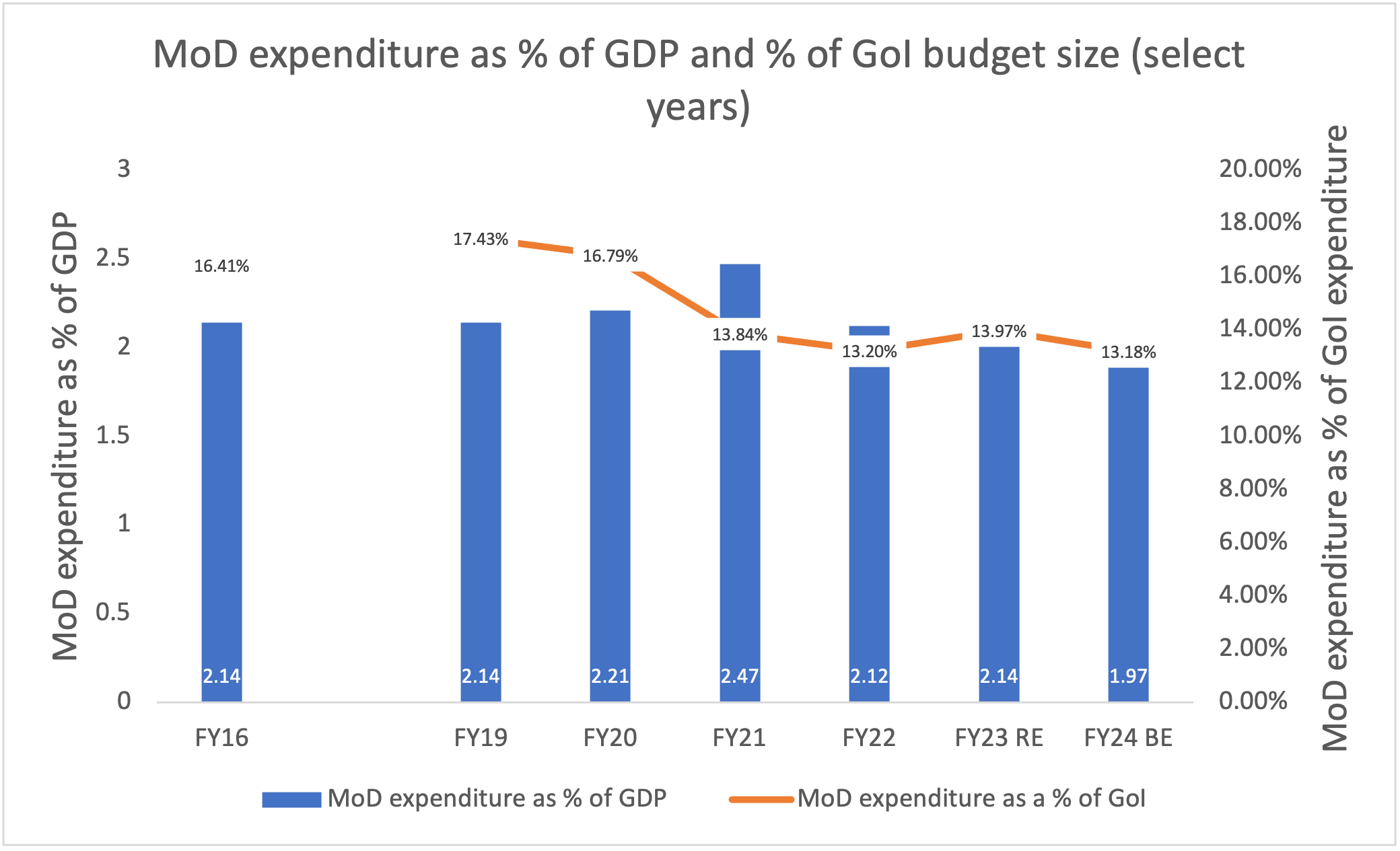
India Policy Watch #1: What Do Successive Defence Budgets Reveal?Insights on burning policy issues in India— Pranay Kotasthane(An edited version of this article was published in Hindustan Times on 13th Feb)Another defence budget zoomed past us on Feb 1. Since then, analyses have focused on how the defence spending for the coming year departs from the last year. Some have waved a red flag as defence spending has fallen below 2 per cent of GDP for the first time in many years. On the other hand, the defence ministry’s post-budget press release emphasised a 44 per cent increase in operational spending, which is expected to “close critical gaps in the combat capabilities and equip the Forces in terms of ammunition, sustenance of weapons & assets, military reserves etc.” The ministry also highlighted that the capital outlay for modernisation and infrastructure development has risen by a seemingly handsome 57 per cent over the last five years. How, then, do we make sense of these conflicting narratives?Comparing allocations with those in the previous year gives us a confusing picture. Every interest group can pull up a number from the budget to suit their pre-formed narrative. Taking a step back from these narratives, this article will show that this was another run-of-the-mill defence budget, just like the previous one was. Nothing in it indicates any significant change in the defence posture. Unlike Japan, which has announced a doubling of its military spending in the next five years, India’s approach is about gradually improving the operational efficiency of the armed forces.Looking under the hoodThis article looks at the defence expenditure over the last six budgets to make sense of the numbers. To put numbers into context, let’s use an earlier year (FY16). FY16 is a useful reference point as it predates two major developments: China’s visibly aggressive posture on the border and the budgetary commitments arising from the One Rank One Pension (OROP) scheme. Three observations follow from such an analysis.One, not only has defence spending fallen as a proportion of GDP, but it has also fallen as a percentage of government expenditure. In other words, defence has slipped in priority relative to non-defence functions (Figure 1). Two, the China challenge hasn’t led to any spectacular change in the composition of defence expenditure. Defence spending can be divided into four major components: salaries, pensions, capital outlay, and others. As Figure 2 shows, capital outlay was being squeezed by rising pension expenditure over the last few years. For two consecutive years (FY19 and FY20), more money was spent on pensions than on capital acquisition and modernisation. The balance has now been marginally restored since FY21, after the Galwan crisis flared up.Crucially, the rises in pension and capital expenditures have come at the cost of operational and maintenance expenditures, including ammunition stores (under the Others category). It is hence not surprising that the latest budget is trying to arrest this decline in combat capabilities.Three, this period has been relatively better for the Indian Navy in terms of capital expenditure. Since the procurement of new platforms happens over multiple years, a temporal view is useful in analysing how capital outlay is split between the three armed forces. Figure 3 suggests that the big change in the last four years is in the capital outlay for the Indian Navy, with the FY24 figure having doubled in absolute terms since FY20.The Big PictureBy connecting these dots over the last five years, the picture that emerges is this: the government seems confident that China can be handled without a substantial rise in defence expenditure. The latest budget serves as a bellwether indicator for this claim. It was the first budget of the post-pandemic period, at a time when the economic prospects for India had improved considerably. The government achieved better-than-expected buoyancy in income taxes and GST in the current financial year, while the cooling of global fertilizer prices has led to a decline in the projected subsidy bill. Consequently, the government, for the first time in many years, had some fiscal room to play with. It has used that space to increase the overall capital outlay to Rs 10 lakh crore, almost three times the outlay in 2019-20. Despite this increase in the overall capital outlay, the defence budget resembles the middle overs of a one-day cricket match.From a financial savings perspective, there have been just two important changes over this period in the defence domain. The first was the announcement of the Agnipath scheme. It might reduce the pension burden, but these savings will reflect only after a decade-and-a-half. Other proposals, such as theatre commands, haven’t come to fruition yet. The proposal to create a non-lapsable fund for modernisation — a proposal the union government gave an in-principle agreement way back in Feb 2021, still hasn’t found a
#202 The Debt of the Future
India Policy Watch: Passing the BurdenInsights on burning policy issues in India— Pranay KotasthaneAs Wilson’s Matrix tells us, concentrated benefits (costs) trump diffused costs (benefits) on most occasions. Organising people around diffuse interests is difficult. As a political articulation of these voices is difficult, they are consigned to being a background hum in the cacophony of politics. One such diffused interest group is the future generation. Apart from the common difficulty that all diffuse interest groups face, they face a small, little additional problem — they aren’t even in this world to be able to speak for themselves.Hence, it shouldn’t come as a surprise that governments and societies shortchange future generations by borrowing more than their means for current consumption and passing this burden to the future generation. India is no exception. Even today, the biggest expenditure item in the union budget is neither defence nor home affairs, but the interest paid by the union government to borrowers on past loans. We are paying for the profligacy of past and current governments. The chart below from this year’s budget tells us that roughly a fifth of the government’s total expenditure is being spent on interest payments.As we keep living beyond our means, the portion of the future generation’s spending on interest payments keeps growing. This is what a real debt trap looks like. Most governments run deficits, and so does India. But the quality of deficits matters. If governments borrow to finance physical and social infrastructure, the burden on future generations is mitigated to the extent that the outputs continue to be available to them. But that’s not the case in India. The union government still runs a sizable revenue deficit, meaning that a portion of the borrowing is being used merely to keep the government running today. In other words, we snatch money from future generations to meet the demands of the current generation’s citizens. In Studies in Indian Public Finance, Govinda Rao points out that while children in the age group of 0-14 constitute over 35 per cent of the population, investment in the two items that matter most for their capabilities—health and education—continues to be low. This idea of sharing resources across generations is known as intergenerational equity. I prefer to call it intergenerational balance. A $2500 per capita income country with 20 per cent poverty must accord higher priority to improving the life chances of today’s citizens. Nevertheless, we must push governments to seek a balance between today’s consumption and tomorrow’s choices.It is for this reason that state governments reshifting to the Old Pension Scheme is a wilful crime against future Indians. At a time when government employees already have better payscales than the median Indian, committing to an ever-growing pension liability is to rob money from the future for the benefit of a select few. But then, matters of fiscal prudence are not politically savvy. No one ever voted for a government for its fiscal marksmanship. No politician ventures there unless specifically asked. For this reason, it was encouraging that the Prime Minister—at least rhetorically—made a case for intergenerational balance in the Parliament:“You should not put burden on your children. Borrowing for present day needs leaving the debt burden on future generations is a matter of serious concern...For the economic well being of the nation, states also have to take the path of discipline... Only then states will be able to benefit from development.”There’s a lot more the union government could’ve done and can still do. Criticising state governments on the floor of the parliament won’t make the problem disappear. It’s important for the union government to explain to state governments the fiscal impact of such profligacy. Aligning their cognitive maps is important. Back in 2003, a coalition government was able to get states to commit to fiscal consolidation. There’s no reason why it can’t be done now. But it would require collaboration rather than confrontation between the union and the states. There’s another area of public policy where thinking about intergenerational balance is crucial: governing the use of natural resources. What rules should govern the rate of extraction or utilisation of a limited natural resource is a question that all governments and societies must resolve. Many States, including the Indian Republic, own forests, rivers, beaches, oceans, and minerals as a trustee, i.e. on behalf of current and future generations. This idea, known as the Public Trust Doctrine (PTD), requires that extraction of the natural resource should go hand in hand with investment in productive assets that can be used by future generations (Hartwick’s Rule). Norway’s Oil Fund is an oft-cited example of the Public Trust Doctrine in action. Factoring in the opportunity cost incurred by future generations into the current price is a
#200 The Stories We Choose to Believe
We turn 200 editions old today. It has been fun. Thank you for giving us your time. You can do without another self-congratulatory mail in your inbox. So, let’s get moving on with a nod to this classic line of Majrooh. मैं अकेला ही चला था जानिब-ए-मंज़िल मगर लोग साथ आते गए और कारवाँ बनता गयाI had set out on this journey all by myselfOthers joined, and it turned into a caravan India Policy Watch #1: Decoding Our MaladiesInsights on burning policy issues in India— RSJTell me the conspiracy theories a society is willing to believe in, and I will tell you about its maladies. Truth is a contested notion in today’s world. Maybe it has always been. But there’s something clarifying about a conspiracy theory that no truth can match. It is not the conspiracy itself. That often crumbles under the lightest of burden of logic applied to it. The real deal is what prompts the need for the conspiracy. It stems from the irreconcilability of an often irrational belief that many hold with the reality of the world around them. The greater the chasm between the two, the weirder the conspiracy theory. And it is this chasm, this flight from reality, that a conspiracy theory is born to serve. By denying the facts that are around you and leaning on your own right to have an opinion, conspiracy theorists make it easier for you to dismiss inconvenient facts as mere opinions. Once you have painted facts as fabrications of another mind, you get the permission to have your own facts. That’s how conspiracy theory works.So, why am I going on about conspiracy theories now? Well, here’s Mint:In an article quoted by Hindi Daily, Amar Ujala, the RSS mouthpiece said that a group of Indians has created a negative narrative against Adani. The article pinned blame on an ‘Indian lobby which includes the country’s famous propaganda websites associated with leftist ideology'. Harping on an ideological and political warfare, the article further stated that this attack is very similar to how ‘anti-India’ George Soros ruined the Bank of England and the Bank of Thailand.He claimed that this controversy did not start on January 25 after the Hinderburg report, but it already began in 2016-17 in Australia. According to the RSS mouthpiece, an Australian NGO called Bob Brown Foundation (BBF) manages an exclusive website only to defame Indian Industrialist Gautam Adani. Marking out NGOs and websites in India, the Amar Ujala article singled out an alleged contribution of Azim Premji's NGO to the Independent and Public-Spirited Media Foundation. The article alleged that left-minded media houses and NGOs were behind the sudden turmoil of the Adani Group.”So there you have it. I suspect this thing isn’t going to die away soon. This is a useful pot to keep stirring. A few leaks about CBI or ED investigations every few months will give enough ammunition for future reports or allegations about the Adani group. Once you have brought in left-minded NGOs into the picture, there’s open season for all sorts of conspiracy theories to pop up in future. The speed of response to any future report will improve from here on. Soros is at it again with our leftists will be the first cry. I often wonder what a busy life that man must be leading.Let us first get the theory out of the way. The short-seller interest in the Adani group of companies wasn’t because a five-member research group could dig out already existing information about it that could raise questions about stock manipulation and governance. No. It was because, and mark my words carefully now, a leftist cabal of anti-India forces led by a foundation run by India’s greatest philanthropist who happens to be Muslim. Their intention was to stop the apparently unstoppable rise of India by knocking the Adani group off their perch because, after all, the two are now inseparable. When the stocks went up all these years, there was no conspiracy to suggest why they went up. It was all market. But not when they crashed. Also, what a convoluted and low-probability way to go about such an agenda. All these conspirators, after putting their minds together to find the best way to spread chaos in the financial system, came up with the bright idea that we must get Hindenburg to write a report. What are the odds that someone could predict the sequence of events after the report? That all of this was intended. Pretty low if you use your judgment.This brings me to the earliest, and still the most cogent, criticism of conspiracy theories by my favourite thinker, Karl Popper. He coined a term to collectively describe this phenomenon: “The Conspiracy Theory of Society”. His point was simple. It comforts many people to believe that history is a product of intended actions by individuals or groups driven by certain beliefs or ideologies (or conspiracy theories). In my words, people believe in conspiracy theories because they aren’t Bayesian.Anyway, he wrote:“The conspiracy theory of society is just a version of… theism, of a belief in gods w
#199 A New Deal?
India Policy Watch: Our Week With AdaniInsights on current policy issues in India- RSJThat was an eventful week in India. In the last edition I had written these lines on the ongoing Adani saga that have now come back to bite me:“The FPO might struggle a bit to sail through. But that amount is a chump change for the group. A week or so of volatility, some questions from regulators, a few lawsuits, some strategically timed PR events and the group will be done with this kerfuffle by February. This is nothing more than a minor speed bump in its fortunes.”Ooh. It didn’t turn out to be a minor kerfuffle. After the Adani Group came out with their 400+ page response to the Hindenburg report who then retorted with their characteristic bite, we witnessed a free fall in Adani stocks in the first few days of the week. The FPO barely saw any retail participation. A few anchor investors including an Abu Dhabi sovereign fund participated. And then at the eleventh hour we had family offices of prominent Indian industrial houses and few domestic institutional investors subscribe to it and the FPO just about sailed through. Social media was abuzz with either ‘see, this is the spirit of new India’ or ‘upar se call aaya hoga’ (they must have got a call from the top) kind of messages. But even this news didn’t mean much. The free fall continued that day. Eventually, the Group canceled the FPO and positioned itself as a martyr to the cause of investors who have stood by them over the years. Well, you live long and you get to see everything. There was further negative news for the group as the Dow Jones decided to remove Adani Enterprises, the flagship company of the group, from their sustainability index. A few global banks reported they wouldn’t accept Adani bonds as collaterals from their clients for margin trading. Only late on Friday, was there some good news coming in from the Group. They confirmed they kept their bond payout commitments and that all interest payments have been made till date. A couple of credit agencies, that prescient lot who you will remember didn’t have a clue till a day before the Lehman crisis that something was wrong, confirmed there’s no debt maturing among the group companies till 2025. Only then did the stocks find some respite.So, you see not exactly what I had predicted. And so I’m somewhat less certain now if this will only just be a minor bump in the road for the group.The other big event during the week was the Union budget that was presented on Feb 1. This was the last full budget to be presented before the 2024 general elections and there was an expectation that the government would tilt towards being more populist. Even here, I had made a prediction at the start of the year:“..this government has always been careful about fiscal deficit, and it is particular about the risk of the fiscal space. The government has committed to a 4.5 per cent target for the union government deficit in the next 3 years from the current levels, that’s expected to be 6.4 per cent. I see a tightening in the fiscal stance during the year with a gradual reduction in some of the pandemic-related subsidies and better targeting of the benefits improving distribution efficiency."Phew. On this I was right. The government cared more for its fiscal deficit trajectory than being populist. The surprising part, and the one I got wrong, was the significant capex push that is budgeted to grow 33 percent to Rs. 10 trillion in the coming year. Despite this, the government expects the deficit to be down to 5.9 percent in line with its three-year plan. How did it manage that? Well, forget populism, this government plans to cut down on subsidies and expenditures during a pre-election year. The subsidies budget is down 27 percent from Rs. 5.2 trillion to Rs. 3.7 trillion. At a macro level, this is an important message about its fiscal management philosophy. The infra push follows three themes that are all good in my opinion: a) internal connectivity through investments in railways, roads, airports and last mile connectivity; b)rural and low cost housing and c) decarbonisation to reduce dependence on fossil fuel and stay within range to the Paris commitment.There wasn’t anything more to write home about. The market borrowing figure is big but in line with expectations. The numbers make sense and broadly stack up. It is good to see this happening and the legacy of being clever with them is now well past. There was the usual tinkering of the personal tax rates - the old switch and bait of give few visible breaks and take some concessions away in footnotes - and some tweaks on custom duties on dozens of items which we love doing all the time. The rest of the speech was spent on announcing the outlays for various sectors with some old and new scheme names. In a way, it was good to have a boring budget with capex focus. Anyway, the Adani story and the capex push in the budget sets up this piece nicely. I mean in normal times all the anno

#198 How To Build In India?
We have a book out. Already bought it? Good.It makes for a great gift too. Ship it to your friends. Here’s the helpful link.Now curl up for a long Sunday edition.India Policy Watch #1: The State and Capital This is a public episode. If you would like to discuss this with other subscribers or get access to bonus episodes, visit publicpolicy.substack.com

#197 Everything for Everyone All At Once
India Policy Watch #1: Fertility 2.0Insights on current policy issues in India— RSJFirst, the good news. “India may have already surpassed China as the world’s most-populous nation in a milestone that adds urgency for Prime Minister Narendra Modi to create more jobs and ensure the country sustains its world-beating growth.The South Asian nation’s population stood at 1.417 billion as of end 2022, according to estimates from the World Population Review, an independent organization focused on census and demographics.That’s a little over 5 million more than the 1.412 billion reported by China Tuesday when authorities there announced the first decline since the 1960s.” (from Business Standard, 18 Jan)We have argued for long on these pages that people are resources. They aren’t a problem. We have a governance problem if our default view of people is that they are a burden. We have a chapter in our book (HAVE YOU ORDERED YOUR COPY YET?) explaining why ‘aabadi isn’t barbaadi”. There’s an extract from that chapter in the next section of this edition. Here’s another news item that caught my attention this week:“State-run Rashtriya Chemicals and Fertilizers Ltd (RCF) and National Fertilizers Ltd (NFL) plan to build five new factories to manufacture super-efficient nano-urea under a licence from IFFCO Ltd, a development that promises to ease India’s mounting fertilizer subsidy burden.The two companies have signed arrangements with IFFCO, a producer in the cooperative sector which holds the patent for nano-urea, a person aware of the matter said on condition of anonymity. They will pay royalties to IFFCO for producing nano-urea, a nanotechnology-based product 100 times more efficient than conventional urea, which will shrink the quantity of fertilizer usage and thereby lower the subsidy burden. It also boosts nutrient availability, enhances productivity, helps soil health and reduces the carbon footprint in fertilizer production.”(from Mint, 19 Jan)It is useful to appreciate why policymakers and well-meaning thinkers over the ages have worried about population increase. One mental model we have is about the finiteness of resources available on earth to support human life (or life in general). There’s a biological load that the planet can support, and after this limit has been reached, we will face scarcity. Malthus, who was among the first to articulate this, put it simply - the growth of human population is exponential, while food and other resources needed to support life grow linearly. And unless wars, famines or other events correct this, we will hurtle towards a ‘Malthusian catastrophe’. He wrote about in the late 18th century with a warning that unless preventive checks on population are done at a policy level, the catastrophe might be upon us by the mid-19th century. Of course, we know it didn’t turn out that way. What happened then? It is difficult to prove this conclusively, but it is likely that spontaneous order worked. As demand increased, producers searched for additional resources like new arable land (maybe more colonialism), worked harder (two crop cycles instead of one) or became more productive through technology (early mechanisation of agriculture using tools of the industrial revolution). Yet, there was a lurking feeling through the late 19th and early 20th century that we might reach the limit of sustenance. Till Haber and Bosch did their thing.Plants need nutrients, specifically N (Nitrogen), P (Phosphorus) and K (Potassium). NPK plus water and the sunlight is the only way to convert solar energy into food. Plants get these nutrients from the soil. When they die, they give them back to the soil. This is how life sustains itself. But this wasn’t enough to sustain a civilisation. We needed more plants, and soon we realised we had natural limits of these nutrients. Among them, Nitrogen was the most elusive. It is the most abundant element in the atmosphere, but it is available in an inert form. And it was almost impossible to isolate it. There were workarounds to this. Certain plants (like legumes) could ‘fix’ Nitrogen from the atmosphere. That is, their rhizomes could support bacteria that could convert the inert Nitrogen into ammonia that could then enrich the soil. Or, we found large guano deposits in Chile and Peru, which were rich in Nitrates, and we exported them worldwide. But these weren’t enough to sustain the ever-growing demand for food. Synthesising ammonia became one of the great scientific problems of the time. In 1909, a German scientist, Fritz Haber, achieved this breakthrough in his lab. Soon, he and a BASF engineer, Bosch, translated this lab experiment into a commercial process. Ammonia could now be mass-produced. It was not the most efficient process because it required a lot of fuel. But, it revolutionised agriculture production around the world. It was possibly the single most important innovation of the 20th century that had no shortage of great ideas. Agriculture productivity g

#196 Roving Bandits
Predictions: 2023—RSJAs promised last week, let’s get going with some predictions for 2023. Pranay likes to keep them very specific (for a good reason), while I get away with broad bets.Global EconomyThe problem with predicting anything on how things will unfold globally is the random big event that upends all forecasts. This has happened in the last three years. The impact of the pandemic waves and the Ukraine war is yet to play out fully. By themselves, it makes for difficult terrain for forecasts. I’m hoping we don’t have another such event during the year. #1 The trend of securing your supply chain for critical products will get stronger.Look, it is difficult to disentangle from the globally integrated supply chains that have been a feature of the economic model since the end of the Cold War. But it is clear to most large economies that on issues that concern national security, it will be foolhardy to not plan for worst-case scenarios any longer. And national security could mean anything, really, but I can see on energy and key technology, nations will opt for more secure supply chains with watertight bilateral partnerships than be at the mercy of distributed, multilateral chains. I won’t go as far as calling it ‘de-globalisation’ yet, but this ‘gated globalisation’ is a trend that’s here to stay. What this will mean in concrete terms is there will be a gathering of pace on bilateral treaties among larger economies on these issues that reduces dependence on China or Russia. For India, there are a couple of issues here. How to continue to balance the purchase of oil from Russia for its energy security without inviting sanctions from the west? It has managed this well in the last year. The other issue is to find alternatives to Russian hardware for its defence machinery without rubbing it the wrong way. We have batted for free trades on these pages for a long time. So, it is concerning to see this retreat, but history has shown over time, geopolitics trumps geoeconomics. #2 The fears of elevated inflation and a recession in the US in 2023 are overblown. The recession is due, but it will come a bit laterI have made the point here earlier too. The Fed has gone overboard on inflation targeting with more rate cuts than necessary and not waiting for their impact to come through. The moderation of inflation in the past few months (though at 3.6 per cent, it is still higher than the target) suggests that the Fed has been partly successful and it should continue to remain hawkish. I am not so sure. It takes time for rate hikes to start impacting demand, and my suspicion is that the current moderation in inflation was due in any case. The impact on rate hikes on subduing demand and growth is yet to play out. My view is that as supply chain issues ease up with China opening up, energy demand going up and the US continuing to be at almost full employment, we might have a 2023 where for the most part, the US inflation will be higher than target, Fed will continue to remain hawkish, and the growth will hold up. This will mean the real risk of recession will be more toward the end of the year than now. #3 Big Tech will continue to be under the cosh Three problems look to exacerbate in the tech space in 2023. First, the valuation of ad-driven economic models and the insane optimism about the distributed ledger, crypto, DAO or independent sovereigns (yeah, remember that) will abate. A lot of value has been destroyed in the last year (esp in public markets), and I still think there’s more to go in the private market valuations. This correction will weigh on markets, fund raises and investments into startups. Second, global markets will shrink for Big Tech as more countries will place restrictions on how deep they will allow them to own commerce or payment infrastructure. I half expect India to gradually move all payment and eCommerce arms of Big Tech into a structure that’s domestically controlled and owned in 2023. Third, FTC, with Hina Khan at the helm, will accelerate antitrust and competition law changes to reduce the dominance of Big Tech. Some of these measures will be significant overreach in my opinion, but I see more executive orders in this space. Conversely, I see significant hype building up on AI platforms during the year. Like every hype cycle we will have people going overboard on AI, but I think this is one trend where in the classic sense, we might be overestimating the impact in the near term and underestimating it in the long term. AI will eventually get us a driverless car, but it will get to the mediocre creator economy faster. The jobs under immediate threat aren’t that of cab drivers and factory workers. The average copywriter, reporter and illustrator are in greater peril. It will be interesting to see how these groups who have a greater share of voice in the media will tackle the threat of AI in 2023. Indian Economy#1 Greater optimismI am a bit more optimistic about the broader numbers than most,
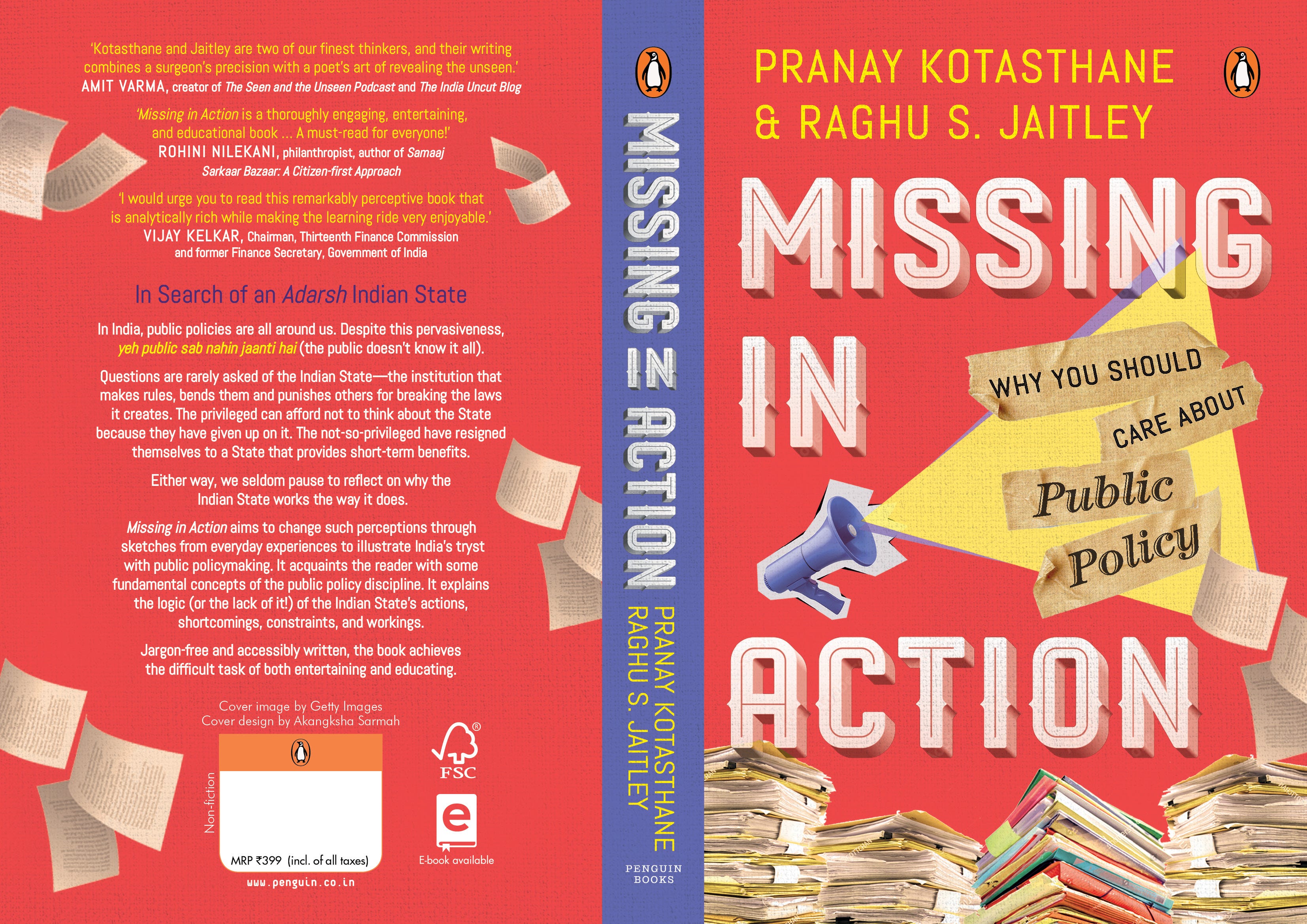
#195 Missing In Action Is Here
Wishing You a Great 2023Others might begin the new year with resolutions, but we prefer excuses. Last year, we wrote only 42 editions. There was much to do in the remaining ten weeks. There was the Football World Cup, a few time-offs, a couple of vacations, and of course, a lapdog ate our laptops. If these honourable reasons weren’t enough, we add another: we wrote a book!Our book Missing in Action: Why You Should Care About Public Policy will be published on 23 January 2023. Like this newsletter, it is a 'pop' public policy book in which we explain concepts through stories rooted in the Indian context. We couldn’t have asked for a more helpful and encouraging team than our friends at Penguin India, who got us over the line and in time for a Republic Day release. The book is ready for pre-order now. You will have to excuse us for a bit of promotion that we will do over the next month or so on these pages. So what’s the book about? At the heart of the book is our belief in the core objective of public policy. It should increase the welfare of the citizens. Like the verse from Bhagavad Gita goes:अनन्याश्चिन्तयन्तो मां ये जनाः पर्युपासते।तेषां नित्याभियुक्तानां योगक्षेमं वहाम्यहम्।।9.22।।That word - Yogakshema - to preserve the prosperity and welfare of citizens is what public policy should be about. We write this newsletter with the hope that it will, in its small way, move the needle on discourse. The book is a logical extension of this hope. Hope, as Andy Dufresne taught us, ‘is a good thing; maybe the best of things’. We are hopeful about the future of India, but not in a misguided nationalistic way. We believe we can make an impact, however small, on the demand side of the policy equation. That making people aware of policy choices and helping them anticipate the unintended will lead to a change in the supply side of politics. There are two preconditions for this to happen, which we assume hold true. One, people have time and mental space available for discussions that matter to their lives. Two, a belief we can arrive at what’s good for us through those debates and discussions.In the book, we have taken the citizens as the point of reference and elaborated on their interactions with the state, the market and the society. Think of the book as a primer to understanding the fundamentals that underpin these interactions. We cover why we need a state or the markets, what is the role of society and how the three interplay among them. We go back to the foundational texts on political philosophy and economy in the book to explain the core concepts of public policy but in what we hope is an accessible fashion. We have tried to avoid jargon and approached all topics using first principles. Like the 16th century Bhakti poet, Nabha Dasa, who compiled the life of every saint from time immemorial in Bhaktamala, wrote:"Jaat na puchhie saadhu ki, poochh leejie gyan, mol karo kirpan ka, padi rahne do mian" ("Do not ask for the antecedents of a learned saint. Only seek their wisdom. The true worth is what’s within us and not what you see from outside.")We have been ecumenical in our approach in this book.The other thing you might find interesting in the book is our focus on finding examples in the Indian context to illuminate a point or to make a case for our arguments. This will contextualise a lot of the discussions in the book to our immediate environment, and we hope it will make our reasoning clearer to our readers. Further, we have tried to keep ourselves free of dogma in the book. We have strong faith in markets, but we understand their limitations and the critical role of the state and society. We have been open to knowledge from all sources and have challenged our premises and priors before stating our point of view. Lastly, the tone of the book is conversational, and it is filled with some of our usual groan-inducing Bollywood references. Special thanks to all of you for reading us and engaging with us. Without your encouragement, we wouldn’t have attempted a book. And now that we have said such good things go buy the book! Truth be told, we are a tad nervous about how the book will be received. We hope you will enjoy reading it and recommending it to others. Show it some love, friends and order it now. ThanksPranay & RSJIndia Policy Watch: How Did I Do On My Predictions For 2022?— RSJ Each year I start with a prediction post. But before I get down to my predictions for 2023 (which I will in the next edition), there’s the unfinished business of how I fared on the predictions that I made in 2022. So, here’s a look back at the year through the lens of my predictions at the start of the year.Economy - Prediction #1 This is what I wrote:“we will be in the 5-5.5 per cent growth range (if you take the base of FY 21). Inflation (CPI) will be around 5 per cent with an occasional jump to 6 per cent during the year despite threatening to go out of control. Maybe three interest rate hikes (a total of 75 bps) during the yea
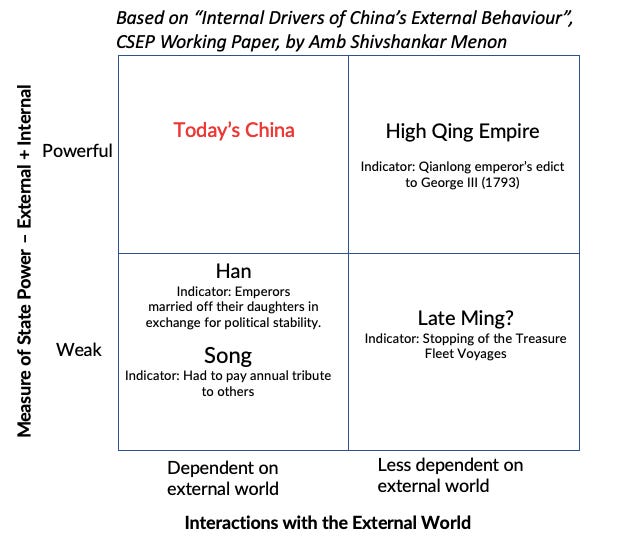
#194 The e₹ is in Town
Programming Note: A lighter edition this weekend because life happened of late-night football, missed flights, and several other things. Also, we will be away for a short year-end break. Normal service will resume on Jan 8, 2023. Happy holiday season, everyone! India Policy Watch: Digital Rupee (e₹-R) Is In TownInsights on current policy issues in India — RSJThe RBI launched the first pilot for the retail digital Rupee this week. It is now among the select list of central banks that’s got a CBDC pilot going. The RBI press release covers the plan for the pilot:* The pilot would cover select locations in closed user group (CUG) comprising participating customers and merchants. The e₹-R would be in the form of a digital token that represents legal tender. It would be issued in the same denominations that paper currency and coins are currently issued. It would be distributed through intermediaries, i.e., banks. Users will be able to transact with e₹-R through a digital wallet offered by the participating banks and stored on mobile phones / devices. Transactions can be both Person to Person (P2P) and Person to Merchant (P2M). Payments to merchants can be made using QR codes displayed at merchant locations. The e₹-R would offer features of physical cash like trust, safety and settlement finality. As in the case of cash, it will not earn any interest and can be converted to other forms of money, like deposits with banks.* The pilot will test the robustness of the entire process of digital rupee creation, distribution and retail usage in real time. Different features and applications of the e₹-R token and architecture will be tested in future pilots, based on the learnings from this pilot.The obvious question that comes up is how’s a digital currency different from a transaction on UPI. The RBI Governor got into the explanation mode on this at the press meet.Separately, in an earlier concept note, the RBI had outlined the two different types of CBDC it would pilot as part of this process:Based on the usage and the functions performed by the CBDC and considering the different levels of accessibility, CBDC can be demarcated into two broad types viz. general purpose (retail) (CBDC-R) and wholesale (CBDC-W).CBDC-R is potentially available for use by all private sector, non-financial consumers and businesses. In contrast, wholesale CBDCs are designed for restricted access by financial institutions. CBDC-W could be used for improving the efficiency of interbank payments or securities settlement, as seen in Project Jasper (Canada) and Ubin (Singapore). Central banks interested in addressing financial inclusion are expected to consider issuing CBDC-R.Further, CBDC–W has the potential to transform the settlement systems for financial transactions undertaken by banks in the G-Sec Segment, Inter-bank market and capital market more efficient and secure in terms of operational costs, use of collateral and liquiditymanagement. Further, this would also provide coincident benefits such as avoidance of settlement guarantee infrastructure or the need for collateral to mitigate settlement risk.About 18 months back, in edition #122, I wrote a fairly detailed piece about CBDC in the context of China running a pilot for digital Yuan. It will be useful to bring that piece up to contextualise the RBI CBDC pilot.What’s Money?As we have written in an earlier post, money performs three roles for us: it is a store of value, it is a medium of exchange, and it is a unit of measure. Through it, we save for the future, pay for goods and services and measure the value of very different things using a common unit. These roles mean anything that aspires to be a currency (the usable form of money) should have a relatively stable value over time and should be widely acknowledged as a store of value and unit of account among people. If it does so, the network effect takes over after a while, and it becomes a widely used currency.Throughout history, a key feature of a sovereign state was its control over the supply and circulation of money that’s used within its boundaries. The royal mints, after all, have been around for more than two thousand years. As modern nation-states emerged through the 19th and 20th centuries and as global trade increased, central banks emerged to manage the monetary system and provide financial stability.There are three forms of money in any modern economy:* Banknotes: These are physical paper currency notes issued by the central bank that we all use in our everyday lives. This is a direct promise by the central bank to pay the note holder a specified sum of money. This promise is printed on all currency notes.* Bank Deposits: Ordinary people and businesses don’t hoard banknotes to conduct their business. They deposit their money in commercial banks. These deposits are stored in electronic form by these banks. The banks offer two services to their customers. They convert these deposits to central bank money in the form of bank

#193 No Country For Young Men?
India Policy Watch #1: Winning The Long GameInsights on current policy issues in India — RSJMany moons ago I sat down for lunch with someone who is often referred to in the media as a ‘doyen of the industry’. Among other things, I asked him the single most important advice he would give to anyone who is at the start of their career. I didn’t have any burning desire to succeed in the corporate rat race. So, I wasn’t looking for a life-changing insight. I asked it because custom demanded you ask such questions of doyens like him over a meal. Also, even back then I was aware that I should fill my pitaara with such stories because sometime in future I could use them to make myself appear interesting. Anyway, he squinted at me and with something that appeared close to conviction told me, “always defer gratification”. I nodded and pronged a moody forkful of Aglio e Olio. Instant gratification.Over the years I have come to appreciate that piece of advice. Running a successful business over the long term is all about how well you trade off short-term gains with doing what’s right for long-term sustainability. The odds are stacked against you because most of your shareholders, the analysts and the media are measuring you on quarterly performance. You can put out a convincing long-term story that will deliver a big, deferred outcome but how can anyone be sure you’re headed that way? Any short-term wobble can have people question you. It is tough to live a life of deferred gratification. I haven’t followed it to any meaningful extent in my life. Nor do I think even the doyen has done so since that meeting. But having understood how difficult deferring gratification could be, I appreciate how important it is for long-term success in any field of human endeavour. And, of course, that includes public policy in case you are wondering why am I channelling my inner Deepak Chopra and inflicting random truisms on you. OPS versus NPSThis problem of grasping short-term gains while jeopardising the long-term has been running on my mind for the past few months as I see the spectre of the Old Pension Scheme (OPS) returning as a key election promise in the manifestos of Congress and AAP in state elections. There are two issues that I have been thinking about. First, what drives a political party to make a bonfire of the future for a questionable short-term electoral gain? And I’m picking on the OPS issue and these two parties only to illustrate this point. Every party in India has done this in the past. The abandoning of the farm laws was an instance of this. So, the question is what prompts a political party to do this and, importantly, why does the average voter get seduced by this? The other question is what can be done to change the incentives of the parties to do this? In other words, how can we make sure political parties learn to defer gratification? But before I get into them, let me give you a short overview of what’s happening with the demand for OPS and the problem with states returning to it while abandoning the New pension Scheme (NPS). The Congress governments in Rajasthan and Chhattisgarh have already gone back to OPS and it has promised the same in its manifesto in Himachal and Gujarat. Not to be outdone, AAP plans to return to OPS in Punjab and might make it a plank in Gujarat. Nothing catches the imagination of our politicians like a bad economic idea, so we now have the Bharatiya Mazdoor Sangh, the RSS-affiliated trade union wing of the ruling BJP, demanding the same from the FM. As Business Standard reports:“National General Secretary of BMS, Ravindra Himte told IANS that during the meeting with Sitharaman, the organisation has urged the Finance Minister to restore the old pension system, increase the amount of minimum pension from Rs 1,000 to Rs 5,000 and to provide better health facilities to retired people under the Ayushman Bharat scheme.The BMS has also urged the Finance Minister to strengthen the social security scheme for workers and to take various other steps to protect the interests of the weaker section of the society.”For context, there are nine state elections scheduled for 2023. Pension of state government workers is a state subject. They can claim they have the mandate of the people to change this if they win using this as one of their key poll planks. Pension is a way to provide social security to workers following their retirement. A simple way to design a pension scheme is for an organisation to promise workers: upon retirement, we will continue paying, say 50 per cent, of your last drawn salary till you die. This is simple and intuitive. The worker has served the organisation for long and you reciprocate that loyalty by taking care of them after retirement. A few years of this scheme and you will soon have a reasonable request from the retired workers. The pension provided isn’t keeping up with the inflation. The last drawn wage about a decade back is hardly worth anything now and a pension in
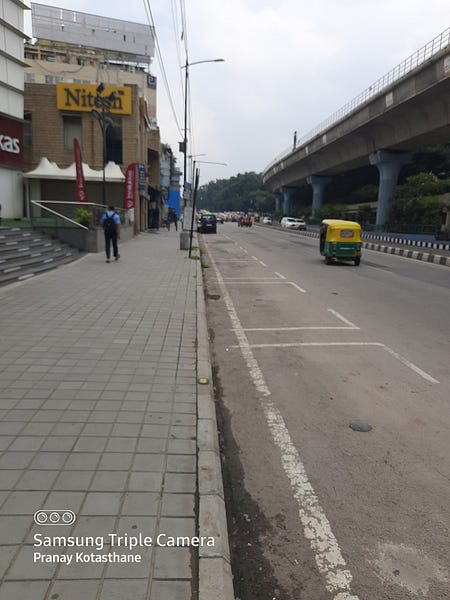
#192 From Local to Global
India Policy Watch: State Capacity, the Smart Parking EditionInsights on domestic policy issues— Pranay KotasthanePublic policy is all around us; observing the same public space over time can reveal much about public policy, implementation, and state capacity. So, I’ll try something different today. I will narrate the story of a parking policy reform, which I’ve observed closely over the last couple of years. In it are lessons for government contracting, deployment of technology, and public choice. Drop a reply if this story resonates with you or if you have other such anecdata in mind. The Pre-reform SituationMG Road is a busy thoroughfare in Bengaluru’s Central Business District. Well-known shops, pubs, restaurants, and offices line the road. As you can imagine, many office-goers and business owners commute to MG Road and park their vehicles next to the curb. On weekdays, finding a vacant parking space after 9 am is a sure-shot sign of divine intervention. Even though curbside parking is not chargeable nominally, scarcity causes Coasian transfers to originate. An informal cohort of unauthorised Parking Marshalls emerges. These marshalls help vehicle users negotiate parking in return for a fee. After multiple complaints about this “rent-seeking”, the city government puts up free parking boards and demarcates parking bays for two-wheelers and four-wheelers.A reduction in the real price of parking leads to increased demand. Office-goers rush towards the city centre earlier than usual. The threshold beyond which parking became an ordeal moves up to 8.30 am, after which people have to park about half a kilometre away in a designated paid parking. And since the Traffic Police have no capacity to enforce parking rules except once in a moon, you would usually encounter double-parked vehicles on MG Road, usually cabs. Some shops even employ valets to double-park customers’ cars, which are slid into vacant parking slots as soon as they become available. The motorable road width decreases because of these double-parked vehicles. It is quite a chaos. The Smart Parking ReformThe paid parking reform had been mooted on several occasions but wasn’t politically palatable. Finally, the city government bit the bullet after the first COVID-19 wave. BBMP —the city municipal corporation—realised that its tax revenue sources had thinned. And with an ongoing hoarding ban and a newly launched GST, revenue generation options had narrowed further. That’s when the Overton Window for paid parking opened up. Given the lack of state capacity, BBMP doesn’t usually do parking enforcement itself. So it enters into a public-private partnership in which one company Central Parking Services (CPS), is granted a contract for parking on ten major roads in the city’s Central Business District for ten years. Reports suggest that BBMP expected Rs 31.56 crore annually through this arrangement. To prevent corruption, BBMP employs technology. Curbside parking spots are clearly marked and numbered. Sensors are installed on each slot to identify the presence or absence of a vehicle. Customers can book a parking slot on arrival via an app and pay seamlessly through UPI/card/or wallet. Parking kiosks are also installed on footpaths for people who don’t have the phone app. To encourage digital payments, cash payments are made costlier by 16.6%, i.e., Rs 30 in cash grants parking permission for 50 minutes, while the same amount paid digitally allows you to book a parking slot for 60 minutes. For a detailed account, see this Deccan Herald report. To help people transition, parking charges are waived for the first week of operations. Thereafter, cars have to pay Rs 30 per hour.Now, guess what would have happened? Can you anticipate the unintended consequences?Post-reform observationsPricing a resource according to its scarcity leads to a more efficient resource allocation. We saw that scarcity principle play out here. Soon enough, you could find a parking slot at any time of the day. The contractor employed several uniformed parking marshalls to prevent double-parking and unauthorised use. The same road you saw above now started looking as below:The story doesn’t end here, though. It’s not as if parking requirements are this elastic in the central business district, and it’s not as if the city has reliable public transport options. What really happened was the displacement of parked vehicles from MG Road to a nearby residential road and a parallel thoroughfare. To avoid paying the parking fee, people started parking vehicles on other roads, sometimes right under “No Parking” signs. These infractions were uncommon earlier as these roads were patrolled by traffic police vehicles. But with the enforcement contracted out to a company in the surrounding area, perhaps the incentive for the Traffic Police to patrol the area decreased, as public choice theory would predict. And so, while the parking situation on MG Road improved, other neighbouring roads became free

#191 #TwitterMustDie?
Global Policy Watch: Tu Cheez Badi Hai Musk, Musk (umm, sorry)Insights on global policy issues — RSJOne of the great problems of policy, or even philosophy, is who should own things that are or that behave like public utilities. For instance, who should own news broadcasting services? Suppose you prepare a case study explaining what’s news broadcasting, the perils that someone abuses such a service to spread fake news and propaganda, and the damage they do to society. Now hand over this case to a bunch of well-meaning people and ask them: how would they frame a policy on ownership of such a service? What do you think the answer will be? I don’t have any empirical evidence to back this, but I think in most scenarios, you will find a group of well-meaning people supporting some kind of ownership by the state or a distributed set of individuals. They might suggest a set of tightly regulated norms on what should be broadcast, and they could also throw in a stringent penalty regime for violations. It is unlikely that any group will come up with the answer that it should be owned by a megalomaniac rich man who believes in free speech, flips the bird to regulators on most occasions and has a penchant for poop emojis. A public utility cannot be left to such unstable people regardless of their genius, is what most would say. Twitter is the equivalent of a global public square where news stories are broken, and opinions and trends are generated. Should it be owned widely by the public with a governing board that regulates the platform, its content and its algorithm? Or should it be owned by the state, which can run it like a public utility without a profit motive? Or should Elon Musk own it? What do you think?Twitter Is DifferentBefore I venture to write about the options, it will be useful to lay out the unique character of Twitter as a platform. During the week, I reached out to Amit Varma (doesn’t need an introduction to readers here), who always has a clear-eyed view of things, to understand what he makes of the happenings at Twitter. His views helped me articulate my thoughts better. Read his insightful piece on Twitter here. First, unlike broadcasting services of the past, Twitter is exceptionally quick because it is a hyperconnected network of people. Events unfold in real-time on it, and trends catch on fast. Mobilisation on Twitter is faster than the speed of response of any state. It plays an outsized role in shaping the discourse because speed is a feature in today’s age. Two, the incentive architecture of Twitter is designed to reward extreme positions. The ‘retweet’ or ‘quote’ button, the notion of having ‘followers’ and the constraint of the 280 characters all mean there’s more purchase for broad generalisations, provocative positions and performative behaviour to pander to your own tribe. Three, Twitter is a monopoly in a very unique sense. Granted, there are other platforms that take a share of our attention, but there’s only one platform that richly rewards us for our attention with the dopamine hit in the manner Twitter does. Social media platforms tend to be ‘winner takes all’ plays because, as a user, once you build a certain kind of network and reach that’s unique to that platform, there’s little incentive to start building it all over again for the same benefits in another. The switching costs are just too high. #OwningTwitterThink of these features of a broadcasting service together - hyperconnected and quick, rewarding fringe behaviour and a natural monopoly. How should we think about its ownership? Now look at the three options of its ownership - a) the state (or a group of states), b) a widely-held listed public company or c) a Musk-like figure. One way to think through this is to understand the natural incentives of these respective owners, how they will use the platform to achieve those and what will be the net societal outcomes of those actions. Take the state first. All good intentions aside, as we have demonstrated over and over again on these pages, the primary incentive of the state is to perpetuate itself. Or, the party that runs the state to continue being in power forever. While to many in India who are brought up to think of the state as the mai-baap, it seems like a fair arbiter of how a public utility should be managed, the evidence all around us should go against that intuition. A public utility like Twitter controlled by a state that’s benign and fair can be a tremendous aid for the welfare of the community. But in public policy, you must consider the ‘corner cases’. You must ask, what if a utility like Twitter is in the hands of the politician you dislike the most? Will they be fair and benign? And then think about ownership and governance of such a utility and its consequences. So, the argument that a global public square like Twitter should be owned by a state or a group of states and managed like a global public good appears pious and workable on paper but is fraught with
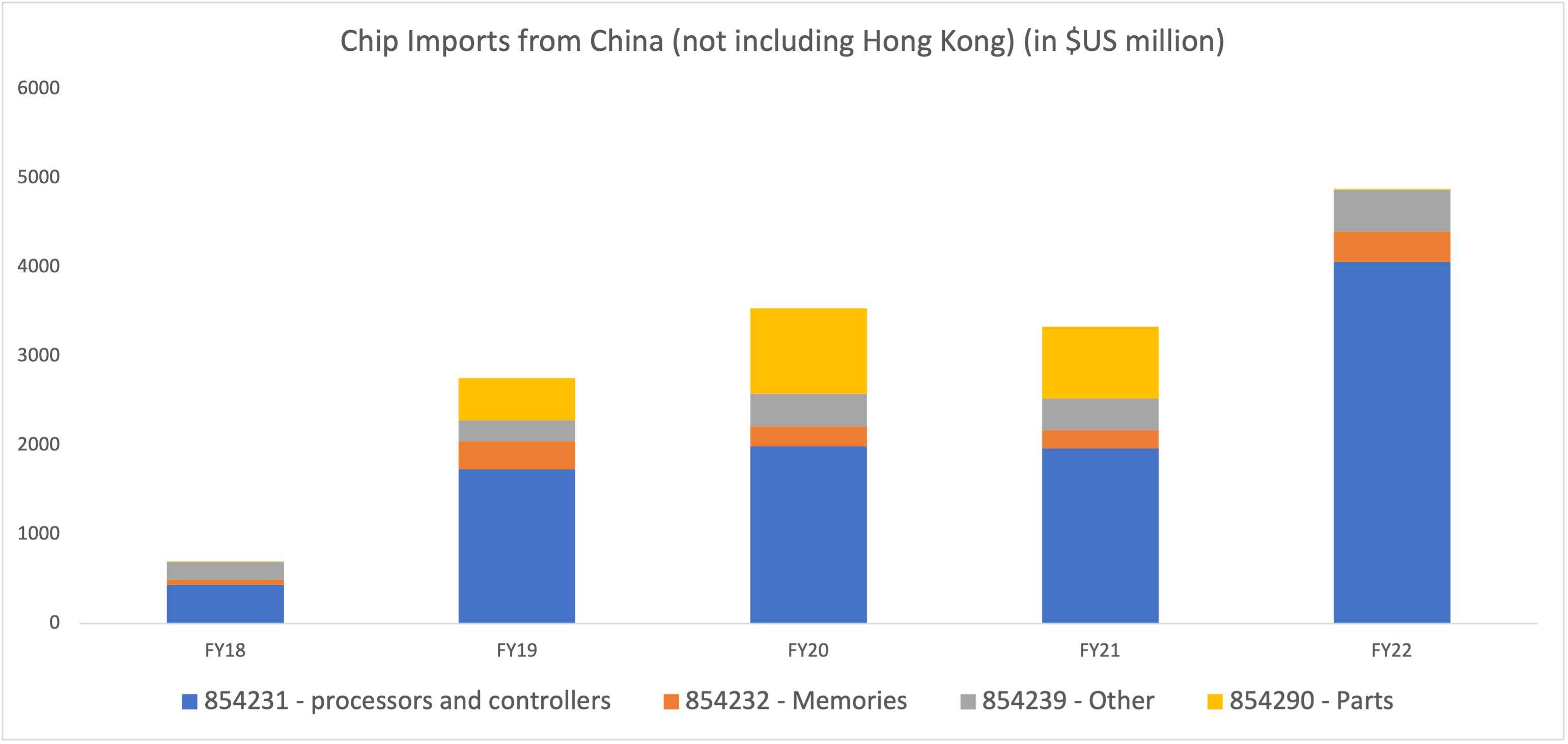
#190 Hubris Leads to Downfall
Global Policy Watch #1: FinTech ManoeuvresInsights on global issues relevant to India— RSJOne of our favourite topics to talk about around here is regulations. We aren’t dogmatic about things. But the one principle that comes close to being a dogma for us is our belief in spontaneous order. The world is a complex interplay of many economic and social networks. Don’t try to force an order on it. Let the spontaneous, uncoordinated actions of the millions run their course. Some order will emerge from it. There might be occasional ‘disorder’ but inbuilt into such systems is an autocorrecting mechanism which will kick in. This is better than some powerful entity (like the State) trying to force order because it thinks it knows best. No one really can be a Laplace’s demon. The top-down forcing of an order will make things worse. That said, we aren’t libertarians by any stretch. The State must intervene when there’s a market failure. And more than any other sector, I believe financial services need regulation because of two obvious market failures endemic to them. One, there’s a serious information asymmetry between the supplier of these products and services, and their customers. The products get more complex over time as suppliers look for additional arbitrage to make higher income, and customers can only understand so much of what’s often non-intuitive. I mean, compounding as a concept is a leap for most people; figuring out more complex instruments ain’t going to be easy. Two, the market power and dominance gets built up really fast in this sector. With it comes the risk of a contagion or the spectre of ‘too big to fail’. All of these leads to misallocating of capital that’s worse than most state interventions. So, I tend to look at financial regulations somewhat more benignly than, say, regulating cattle transportation. Having got that preamble out of the way, here’s a news item that many of you might have seen last week:“The founder of the world’s second-largest cryptocurrency exchange, FTX, has apologised for his company’s near-collapse this week, saying he “fucked up” in his calculations and in his communications during the crisis.Due to “poor internal labelling of bank-related accounts”, he said he “was substantially off” in his calculations of the sums that the exchange had lent out to users to let them make leveraged bets – borrowing money to trade with, magnifying potential gains and losses…The sudden collapse in value was prompted by leaked documents which implied that Alameda Research, a hedge fund tightly intertwined with FTX through its common owner, Bankman-Fried, was, in effect, insolvent….The leaks about Alameda turned into a crisis for FTX when Binance, the largest cryptocurrency exchange, announced it would sell its own major stake in FTX. The fire sale that followed crashed the token's value far below the $22 floor that FTX had committed to support and prompted the equivalent of a bank run at FTX itself as customers raced to withdraw their deposits faster than the exchange could process them.”It wouldn’t be out of place to say there’s a lot to unpack there. But is there really? I have held a general theory about fintechs for a while. There are three sources of value in fintechs as I have seen them. One, they build slick, frictionless journeys that make buying financial products easier and more intuitive. Traditional players either don’t think this way or their legacy systems just don’t allow them to create such convenience. This focus on customer journey is good and somewhat sustainable in sectors where customers value speed and efficiency over risk management. Now ‘friction’ isn’t great in most cases but it has a few benefits. It slows things for you to pause and reconsider. In financial services, some friction is necessary to protect the customer. Not all of them have the ability to manage speed and the attendant risks that come with such lack of fiction. Anyway, frictionless works in sectors that have savvy customers. The best examples of such disruption have been new-age retail brokers like Robinhood, or closer home, Zerodha. There isn’t a lot more there in terms of product innovation or better management of risk that are traditional sources of value. It is all about convenience. Of course, such simplification and gamification - like, animated confetti floating all around when you make an options trade - runs the risk of drawing customers who don’t have the financial nous or the appetite for such risky products. And those accidents happen. But you could still argue there’s some tangible value fintechs have created in forcing everyone to rethink customer journeys in the industry. Is that sustainable, and does it warrant a huge valuation? Not quite. But at least you’ve got a real reason for customers coming to you. The second source of value - risk arbitrage - is of a more dubious kind. Traditional finance is built like it wants to reject customers. You must know your customers well, assess
#189 Strange Are The Ways Of Democracy
India Policy Watch #1: Ganesh Ji & Lakshmi Ji To The Rescue Insights on domestic policy issues — RSJSometime last week, this newsletter marked three years of its existence. A blink of an eye in the larger scheme of things. Yet, it feels nice to have reached this milestone. Consistency might be the virtue of an ass, but it is a virtue nevertheless. In these three years, we have stayed somewhat true to our purpose in every edition we have sent out. We have analysed policies intending to anticipate their unintended consequences. We have debated about what’s good in the long term for India since we care for it. And we have tried to influence or perhaps shape the demand side of the political equation by increasing awareness about public policy among our readers. This is a marathon, and we are in it for the long run. No effort is too small. We cannot thank you enough for the generosity of your time in reading us. Anyway, returning to one of the things we care for deeply. India’s future prospects. No amount of thinking about it could have brought us to the conclusion that Arvind Kejriwal reached last week about this vexing issue. The leader of AAP addressed a press conference where he asked the PM for a critical policy intervention:"I appeal to PM Modi that the Indian currency has the picture of Gandhi ji on one side, it should remain like that. But on the other side, there should be a picture of Ganesh ji and Laxmi ji. We need efforts to make the Indian economy stronger, but we also need the blessings of gods and goddesses," he said.While Laxmi is the goddess of prosperity, Lord Ganesh is believed to solve all our 'vighnas' (problems), Kejriwal said."We are not asking for printing fresh currency, but all the new currency that gets printed, this should be implemented. Eventually, the circulation of these notes will increase," he said.As the yesteryear villain Ajit (“the loin”) would say: smart boy.Soon another AAP leader, Atishi, took the battle to the BJP camp:“BJP leaders can hate Mr. Kejriwal but why hate Hindu deities Lakshmi and Ganesh? Do you not want the blessings of our gods to be with the people of the country? I humbly request leaders of the BJP not to oppose this noble proposal. It is not just a proposal from Arvind Kejriwal, but is the proposal of 130-crore citizens of this country.”I don’t remember when I (among them aforementioned 130-crore citizenry) signed up for this proposal, as Atishi suggested. There’s something to be said about how times change people. A person whose last name ‘Marlena’ was derived from her family’s belief in the Marxist-Leninist strand of godless communism is now asking for deities to be put on currency notes as a policy measure. I guess this is how things roll in politics. Keeping an open mind, I looked around for evidence correlating having Lakshmi Ji and Ganesh Ji on currency notes with economic growth anywhere in the world. I didn’t make much headway. No developed nation has ever had them on its notes. Indonesia did issue 20,000 Rupiah notes from 1998-2005 with Ganesh Ji on them, but it was discontinued in 2008. The Indonesian economic growth during those intervening years was nothing to write about. I also came across a few Devdutt Pattnaik videos on Lakshmi Ji and yajman and how the yajman must make sure she doesn’t leave them. Very compelling stuff. Considering he was with the Future group during those days and it has since gone into bankruptcy, I’m not sure it helped much there too. The bottom line, there isn’t a lot of academic literature out there to help with the Kejriwal thesis.The AAP move has spawned numerous opinion pieces, of course. Some have accused them of soft Hindutva (a unique Indian term like ‘mild lathicharge’) and being a ‘B team’ of the BJP. Others have lamented the loss of idealism in politics. And then some think it is the pragmatic way for Kejriwal to turn the tables on the BJP and nothing more should be read into it. Well, who knows? I think it is helpful to examine this in the context of public choice theory. There are three conclusions one can draw from this, which I will elaborate here.Firstly, we must acknowledge that any political system, particularly a democracy, rewards a politician who appears to be doing the right things. Now, what’s the ‘right thing’ is defined by the moral standards prevailing at a particular time in that society. Most politicians will try to do what is considered good by the people. But moral standards aren’t constant. They change with time. An astute politician, therefore, needs to be morally flexible to change according to what’s considered good at a point in time in society. Moral rigidity might be good for philosophers and idealists but not for politicians. There’s no incentive for a politician to question the prevailing moral standards. A rare politician who does that is playing a high stake game. They often lose. And a politician who loses is worthless. The conventional moral standard prevailing now in India all
#187 Seek Not To Alter Me
Programming Note: We will be on a short ‘writing’ break. Normal service will resume from Oct 29.Global Policy Watch: When Traditional Institutions Work Insights on topical policy issues in India — RSJKing Charles III was coronated last week. I saw the pictures of the event, and if you did not know the history of the British monarchy, the whole thing looked like a Monty Python sketch on a Nolan-esque budget. The King wore a costume that might have appeared outdated even in the 12th century when the Westminster Hall was built. The political class in their finery bowed, the aristocracy in splendid robes kept a stiff upper lip, the media continually upped the circus quotient for public consumption, and the Yeomen of the Guard marched in precise steps while some grand music (Handel?) played on. It was all pomp and circumstance (Elgar would have approved).I watched this with mild bemusement. I mean, here’s King Charles III, a man who is reputed to speak to his plants, iron his shoelaces, show strange interest in red squirrels and, who often, rails against scientific revolution and the modern economy. What a strange man to ascend the throne of a nation vastly different from him. He must have found the quaintness of the pageantry to his taste. On the other hand, I’m sure he would have some time during the ceremony contemplated the history of the other Charles (Charlies?), who might have ascended the throne with similar accompanying pageantry.Charles I was beheaded for treason by the parliament led by Oliver Cromwell at Whitehall, not too far away from where Charles III was seated. The second King Charles led a charmed life with childhood exile, a triumphant return to the restoration of monarchy, and finally, a long suspension of parliament in the last years of his rule marking his legacy. Uneasy may not lie the head that wears the crown these days (there’s really no day job here), but Charles III cannot be too careful about the institution that he represents. The institution is in a perilous state, and he’s seen by many as an oddity unfit for the role. The commonwealth states don’t have any time for the monarchy. The link to the colonial past is no longer about nostalgia. That’s been erased and replaced with an indifference bordering on disdain for monarchy and its role during the excesses of colonialism. Among the young in Britain, the support for the monarchy is on the wane. Only 33 per cent in the age group of 18-24 support monarchy today compared to the 59 per cent who did a decade back. Some feel with the passing of Queen Elizabeth II, the institution of the monarchy will struggle to remain relevant or to serve its vital role of being the ceremonial head of the state. An elected president could do it better. I mean, what’s the point of monarchy barring providing grist to the paparazzi mill, occasional photo shoots with visiting heads of state and announcing a few royal honours every year? Why spend enormous money and effort propping up an archaic and undemocratic institution? Why have a democratic constitution and then have a hereditary basis for choosing the head of the state? Isn’t that a traditional and conservative imposition on the people?I have more than one reason to support such traditionalism in a democratic polity.Firstly, people need symbols and customs that represent continuity with their past. This assurance that you are part of an unbroken chain that holds all that’s good and great about your culture gives meaning to many people's lives. That it extends beyond the personal (faith and family) to the political in how you organise your community and run your nation makes it both an anchor to hold a society steady and an escape valve that lets off any built-up steam of anger. Old institutions build up their influence over the ages. This is how they become easier to follow at any given time. This is a vital capability to preserve in any democracy.Writing in the mid-1860s, Walter Bagehot, the editor of the Economist then, made an insightful observation of how to create and nurture a good Constitution that will clarify this capability further:In ..constitutions there are two parts (not indeed separable with microscopic accuracy, for the genius of great affairs abhors nicety of division) first, those which excite and preserve the reverence of the population — the dignified parts, if I may so call them; and next, the efficient parts — those by which it, in fact, works and rules. There are two great objects which every constitution must attain to be successful, which every old and celebrated one must have wonderfully achieved every constitution must first gain authority, and then use authority, it must first win the loyalty and confidence of mankind, and there employ that homage in the work of government.There are indeed practical men who reject the dignified parts of government. They say, we want only to attain results, to do business: a constitution is a collection of political means for political ends,
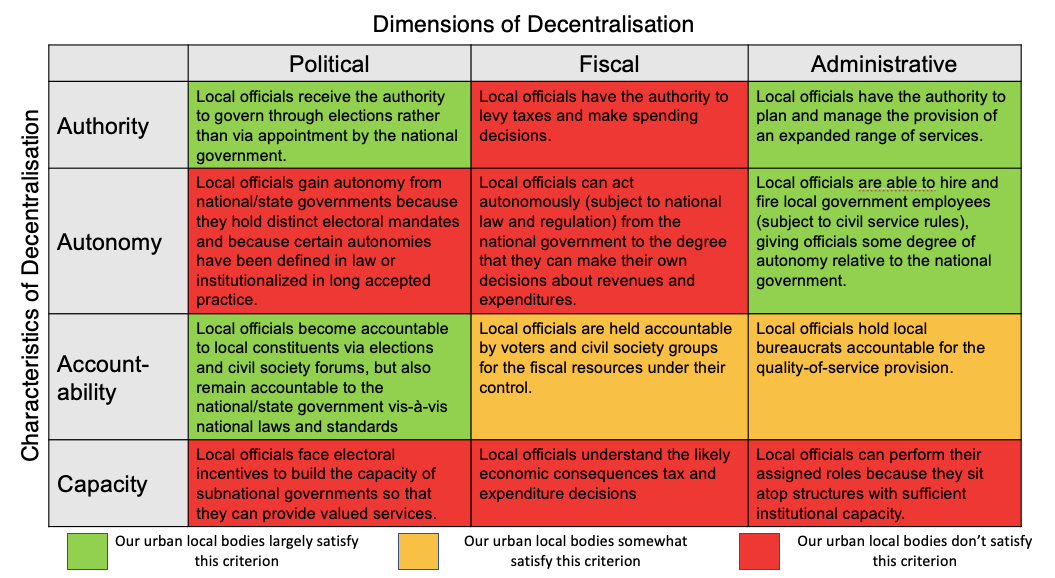
#186 Of Magnitude and Littleness*
India Policy Watch #1: The Anatomy of DecentralisationInsights on topical policy issues in India— Pranay KotasthaneThe human-made floods in some parts of Bengaluru generated much furore. Writing about it in our previous edition, RSJ remarked:The way the political economy is structured right now, it is difficult to see how there will be enough devolution of power and finances to a city. A big city most often is a bankrupt political orphan in India. It doesn’t look like changing any time soon.I share his anguish. However, I remain hopeful because there are many global examples of cities first committing themselves to and then rescuing themselves from the tyranny of half-hearted decentralisation. Decentralisation: Take 1The term decentralisation is a catch-all term in public policy. There was a time when it was touted as the solution to all ills. But many PhD dissertations, journal papers, and World Bank projects later, we understand it better now. Throwing some light on this concept can help us put a finger on what’s exactly wrong with Indian cities. Let’s begin by understanding the three forms of decentralisation — deconcentration, delegation, and devolution. Deconcentration is the simplest form of decentralisation. As the name suggests, it means decentralising functions and responsibilities. For example, if you can submit a passport application in Mysuru instead of having to come to the state capital, this function can be said to have been deconcentrated. The various government branch offices and grievance centre kiosks are examples of deconcentration. Delegation means that specific functions are carried out by another organisation or the government nearest to the citizen on behalf of the more distant government. In the Indian case, the plethora of state public sector enterprises (SPSEs) for public transport, power distribution, and water distribution are examples of delegation. For example, BESCOM is a Government of Karnataka company tasked with the responsibility of supplying electricity to the state capital.Devolution is the most comprehensive form of decentralisation. Devolved units hold defined spheres of autonomous action. Policy implementation and authority shift to the government nearer to the citizen. This typically means having elections at the subnational level. For example, Indian states are devolved units with clearly defined responsibilities, and tax revenue handles in the Constitution.With these definitions at hand, we have one way to diagnose the dismal performance of our city governments: the Union-State government relationship is characterised by devolution, while the State-local government relation is characterised by delegation and deconcentration. Elections do take place at local government levels. After the 74th Amendment in 1992, some more functions were devolved to urban local bodies. And yet, they hardly enjoy autonomy and authority in any defined sphere. State governments tightly control resources, personnel and plans, treating local governments as deconcentrated implementing agencies. Decentralisation: Take 2There’s another way to see the Indian experience in light of decentralisation theories. Decentralisation can happen along three dimensions — political, administrative, and fiscal. These dimensions are further characterised by four factors: authority, autonomy, accountability, and capacity. The USAID Democratic Decentralisation Programming Handbook has a helpful framework that combines these three dimensions and four characteristics. In the chart below, here’s how I think India’s urban governments fare on the twelve parameters at their intersection. My crude classification into three categories is subjective and based on my understanding of local government public finances. Even so, this framework can offer valuable insights into India’s urban governments. First, they are characterised by poor capacity across all three dimensions of decentralisation. Hardly surprising. But here’s something more interesting: urban governments in India do pretty okay on administrative decentralisation, not so well along the political dimension, but score a big zero on the fiscal dimension. Devesh Kapur writes, “At the heart of state-building is a fiscal story”. And so, it’s not unexpected that the sorry state of fiscal decentralisation is a powerful reason behind the abject failure of our urban governments. The Way AheadAnd so, to fix our cities, we need energy and focus on improving along the fiscal decentralisation dimension. And how exactly do we get there? In this talk below, organised by the Bengaluru Navanirmana Party, I propose a few ideas for the Bengaluru government:* “Wherever possible, charge”: underpricing leads to overconsumption. Cities ought to get better at generating non-tax revenues.* Strengthen the State Finance Commissions. It’s amazing how bad they are, despite the example of the stellar performance of Union Finance Commissions. Untied grants through the state finance commiss
#185 Nature Will Take Its Course
Global Policy Watch: Europe’s WarGlobal policy issues and their implication for India— RSJThere is an energy crisis in Europe. Russia announced this week that it won’t resume supplying gas to Europe via the Nord Stream 1 pipeline until the west lifts the sanctions over its invasion of Ukraine. Till last year, Russia accounted for about 45 percent of the EU's total gas imports. About a third of it flowed through Nord Stream 1. A few months back Russia halted supply via Nord Stream citing maintenance concerns. At least there was a pretense. Now the gloves are off. The weaponising of energy is complete. That apart you may have heard of this being the hottest summer in Europe in living memory. The rivers have run dry and hydel power generation is at an all-time low. The crisis is real. How bad is it? Well, if you go by estimates an average European household might end up spending over €500/month by March next year on their energy bill. This number was around €160-170 /month a year back. This will mean an aggregated annual increase in energy spends in EU of about €2 tn. To put this in perspective, the total GDP of the member states is around €14 tn. No economy can take such a price surge in its stride, more so, when the inflation is already running at a multi-decadal high. Typically, they could do a few things to manage this. One option is to cap the prices of imported gas from Russia. The other is for the governments to absorb these price increases and lighten the burden for the people. The last option is to reduce demand by imposing rationing measures on people. The long term option is to move to renewables but that’s not going to help anyone during this winter. The idea of capping imported gas prices seems the easiest. Of course, price caps distort markets and will lead to other unintended consequences but you have to choose the lesser devil in scenarios like these. Except any price cap on Russian gas will mean you will have to deal with the wrath of Putin. On Wednesday, he gave EU leaders a peek into how he sees any attempt by the EU to impose a price cap. As CNBC reported:Responding to EU proposals to implement price caps on Russian energy imports, Putin told business leaders in Vladivostok that Russia could yet decide to rip up existing supply contracts.“Will there be any political decisions that contradict the contracts? Yes, we just won’t fulfill them. We will not supply anything at all if it contradicts our interests,” Putin said at the Eastern Economic Forum in Russia’s far east.“We will not supply gas, oil, coal, heating oil — we will not supply anything.”“We would only have one thing left to do: as in the famous Russian fairy tale, we would let the wolf’s tail freeze. Freeze, freeze, the wolf's tail,” he said.Hmm. So, what’s this famous Russian fairy tale about a tail? The good, ol’ Pravda came to the rescue here:In the tale, the cunning fox made the stupid wolf catch fish in the frozen river by putting his tail into an ice hole. The fox would hop around the desperate and hungry wolf saying "freeze, freeze, the wolf's tail" until the ice hole froze trapping the wolf in the ice. Men from the village then came and beat the wolf for all the bad things that he had done to them in summer. The wolf struggled and escaped, but his tail was left in the frozen ice hole.I read that a few times to get my head around the fairy tale. It didn’t make any sense given the context. I guess Putin wanted to give some folksy spin to his threat of freezing Europe this winter. Maybe Russians enjoyed that. Anyway, the upshot of this threat was visible in the meeting of the EU ministers on Friday that was convened to discuss the energy crisis. The ministers deferred the proposal to cap price agreeing that it needed more work and deliberation. Also, there was no real proposal to force a reduction in demand among the member countries. There is a voluntary pledge of cutting it by 15 percent but that might neither be enforced nor be adequate. I guess the price surge, if allowed, will eventually bring down the demand but which politician will want that scenario to be played out? That leaves the option of a combination of rationing for industries (less politically sensitive) and government subsidies to manage the pain for people. That’s what different governments have been doing. France, as NYT reports, has asked businesses to appoint an ‘ambassador of energy sobriety’ while spending over €26 billion since the Ukraine war to keep gas prices in check. Further:Germany, Europe’s biggest user of Russian gas, reversed plans on Monday to shut down two of its three remaining nuclear power plants by the end of the year, and on Sunday announced a $65 billion aid package to ease the burden of high energy costs on citizens. Italy is looking to Algeria as a potential new supplier of natural gas to replace Russian fuel. In Spain, the government has begun a huge effort to improve energy efficiency in buildings and in industry.Also, it is not as
#184 The Persistence Of Failure
India Policy Watch: Why Do We Not Get It Right, Ever?Insights on topical policy issues in India — RSJPolicies fail more often than they succeed. This is a universal truth. We love to pontificate in this newsletter on why policies fail. It is the easiest of things to do. Crafting a policy that factors in the many variables that could impact its outcome and thinking through its implementation is one of the toughest skills to master. Things change, assumptions get invalidated, implementation gets botched up, politicians lose nerve. Before you know it, you have a failed policy on the debit side of your ledger. And on the credit side? Maybe only an Akshay Kumar biopic anthropomorphising your policy. It is a tough life being a policymaker. Even if you manage a smooth implementation, the bar for calling a policy successful in the long term is quite high. As Allan McConnell once argued, for a policy to be deemed a success, it will have to check the boxes in all the three realms of ‘program, process and political’ outcomes. You will have to be skilled and rigorous in your policy-making discipline, remarkably prescient on how a policy will be received by its stakeholders and, importantly, plain lucky to have a policy succeed in all these three realms. Policy failures, on the other hand, are understandably more common. All it takes is to fail in one realm to be considered one. We laze on the cushion of hindsight here every week and easily pick holes in policies around us because there are so many things that can go wrong. And they do. Occasionally though, we also predict the failure of a policy. This is somewhat more difficult. We have some standard tools to do this. More often than not, we anticipate the unintended consequences of a policy which often derails the expected outcomes. Policymakers often miss this because they get so taken in by their own solution that they develop a blind spot to its risks. Or, there are political or ideological compulsions that determine the choice of a policy option. As somewhat objective analysts, we don’t have these blinkers. So, we have a fair share of successful predictions about what could go wrong with a policy prescription. Being Wrong For LongBut here’s a point. All of the above talk of policy failures makes sense when you take a shorter time horizon. Say, a decade. You could try out a policy and get it wrong because assumptions change or you didn’t think through its consequences. At the end of ten years or thereabouts, you can go back to the drawing board and rework the solution. If we go in with the assumption that most people involved in policy making - politicians, bureaucrats, experts, enlightened citizens - are sincere in trying to solve a problem and that they are equipped with the tools and knowledge to find the right answer, then they should be able to correct the course after one round of failure. In their second iteration, they should be able to arrive at a policy that has a significantly higher probability of success than the past attempt. At least, that’s what the theory says. But do they? This is a public episode. If you would like to discuss this with other subscribers or get access to bonus episodes, visit publicpolicy.substack.com
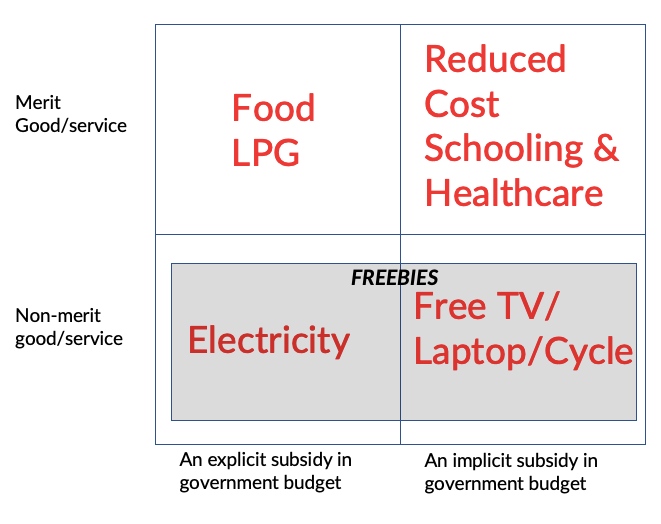
#183 Free Lunches Forever
PolicyWTF: Revdi Fertiliser CultureThis section looks at egregious public policies. Policies that make you go: WTF, Did that really happen? - Pranay KotasthaneIn the past, we have discussed many government plans of the “One Nation, One X” kind. Still, I must confess. Of all things that can substitute the letter X, “fertiliser” was beyond my thinking horizon. Limited thinking wasn’t a problem for the government, which has:“decided to implement One Nation One Fertiliser by introducing single brand name and the logo under fertiliser subsidy scheme namely Pradhan Mantri Bhartiya Janurvarak Pariyojana (PMBJP).”While you decipher what this order means, a short detour about the abbreviation PMBJP is in order. Its usage suggests something profound — the government is finally running out of acronyms! I claim so because there’s an existing scheme with the same abbreviation in the very same ministry — the older Pradhan Mantri Bhartiya Janaushadhi Pariyojana (PMBJP), run by the Department of Pharmaceuticals since 2008. Perhaps the reason for repeating this abbreviation is apparent — it comprises both the ruling party and the party leader. To make matters more confusing, this scheme has been hailed as “the call of #NewIndia which will take our nation to greater heights” by a politician whose name also abbreviates to BJP.The new PMBJP seems utterly bizarre at first. Why would the government want all companies—government-run or private—to sell their products under a single brand name of ‘Bharat’? Why would a government order go to such lengths to specify that “Two-thirds of the area on the top half of a fertiliser bag will be used for the official branding and logo of the PMBJP while a fertiliser firm can use the rest one-third area for its own logo and branding as well as printing other information relating to the product”?If you dig deeper, the bizarreness gets replaced by a sense of rejection. The diktat to dissolve the value of all fertiliser brands only takes the veneer off the sham called a market for fertilisers. Here’s how.The fertiliser sector is insanely regulated even by Indian standards. It all began with good intentions. One of the components of the Green Revolution was to subsidise agricultural inputs. And so, a fertiliser subsidy was introduced. The government fixed the retail price of urea fertiliser considerably below the market price to encourage its usage. This difference between the market and administered prices was called “fertiliser subsidy”. The government paid off the difference to fertiliser companies with taxpayers’ money. Simultaneously, the government started running fertiliser plants to increase supply. Combined with the Minimum Support Price (MSP) mechanism guaranteeing procurement of certain grains, these measures worked to the extent that Punjab, Haryana, and a handful of other states were able to increase grain production rapidly. The fears of India’s dangerous “population bomb” subsided. But as you might anticipate, interfering with prices had unintended consequences. An overuse of subsidised fertilisers led to a decline in soil quality. An artificially low price also led to the diversion of urea for non-agricultural uses. Urea is a versatile material used in textiles, paint, explosives, and medicinal sectors. Naturally, people purchased cheap fertilisers from retail shops and diverted them to these industries. The government then introduced the Fertiliser (Movement Control) Order, 1973. Fertiliser couldn’t be sold across states within India without the ministry's permission. Instead, state-level fertiliser requirements were aggregated at the union ministry level, and each state had its quota “allocated” from in-state and select out-of-state fertiliser manufacturing facilities. And, of course, there were the usual export restrictions until recently. Essentially, there’s no such thing as a market for fertilisers. Just as MSP effectively turned farmers into government employees, the fertiliser subsidy turned manufacturers into satellite government agencies meant for supplying fertilisers. Meanwhile, the fertiliser subsidy bill kept rising. It is now the union government’s second-largest explicit subsidy, behind only food. For reference, India spent more on fertiliser subsidy last year than it did on defence capital expenditure. This year, higher international prices due to the Ukraine war mean that the government’s fertiliser subsidy bill will shoot up further. And so, the government decided: if we’re going to pay Rs 2 lakh crore to our fertiliser contractors (companies) annually, why not claim the full credit for it? And that’s how we got the One Nation, One Fertiliser scheme. While the name might seem bizarre, it is just the high point of continued government interference in this sector.We can anticipate the unintended consequences. Fertiliser companies—now unable to differentiate their products—will be further disincentivised from improving or innovating. With the PMBJP branding at the
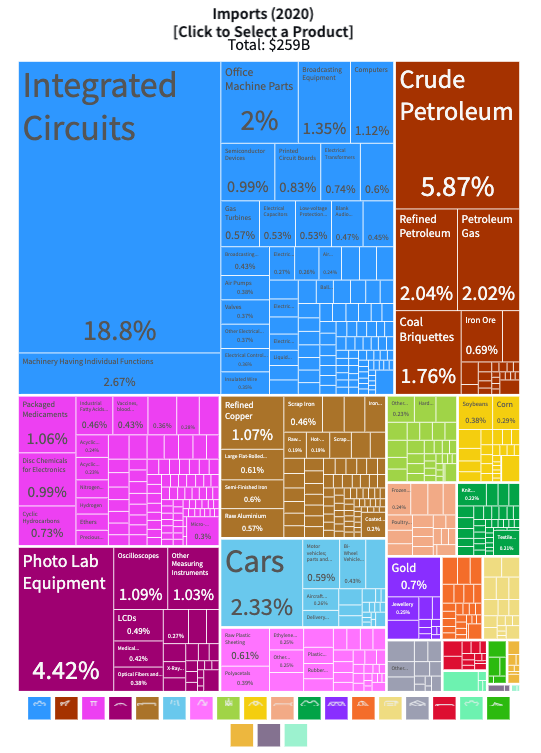
#182 Aisa Mauka Phir Kahan Milega?
Global Policy Watch #1: The Many Transitions In China Global issues and their implications for India— RSJIn a few editions in the past, we have alluded to structural challenges in the Chinese economy and the window of opportunity that it presents India. I thought it would be useful to take a more comprehensive view of this. China reported a GDP growth of 0.4 per cent in the quarter that ended in June 2022. China's National Bureau of Statistics (NBS) isn’t known for its allegiance to truth. It is safe to assume the real GDP would have shrunk in the quarter. The daft ‘zero Covid’ policy led to total lockdowns in major cities during the quarter. The government crackdown on the real estate sector has meant that investment in the sector fell sharply. These contributed to the slowdown. Two other data points are interesting to note. The unemployment rate among the youth aged between 16-24 was at an all-time high of about 20 per cent. Also, retail sales continued to be weak at about 2.7 per cent, much below the 5 per cent forecast. Domestic consumption, the great desire of Chinese policymakers, remained sluggish. The spokesperson for the NBS put up a brave face while spinning these numbers as short-term bumps on the road. He raised the possibility of global stagflation and its negative impact on China to possibly justify weak numbers in the future. But is this slowdown just a blip in the impressive rise of China in the past three decades? I’m not sure. There are three transitions underway in China right now. It is difficult for nations to pull off any one of these in normal times. To attempt three simultaneously is ambitious. It is most likely to fail. Anyway, back to these transitions.* The first transition started a few years back. This was forced on it because economics doesn’t bow to the party's diktats. China is finding it difficult to transition from a manufacturing-heavy, investment-led economic model to a consumption-driven one. This couldn’t be avoided. There would always be a limit to the world’s capacity to absorb China’s imports. Also, as China grew richer, it knew its low-cost edge in manufacturing would wither away. So after a few years of structural overinvestment in building capacity - the bridges to nowhere, the ghost cities, empty airports and other excesses - it had to pivot to a consumption-driven economy. It did try to delay the inevitable transition by aiming to export this overcapacity through its belt and road initiative. But after the initial hoopla, most countries have come to see it as what it is. A debt trap. So, this transition was necessary to move away from growth predicated on size and scale of investment to a more sustainable model of higher quality. But this is proving to be difficult. The history of unproductive investments has led to a debt build-up in the system (the debt to GDP ratio in China is over 300 per cent) and a drag on productivity that will continue for a long time. The state-owned enterprises (SOEs) that led this investment-driven growth are in a debt trap, and many continue to stay afloat by evergreening their loans. New productive investments have suffered because of this. People aren’t sure of their future, so instead of consumption, there’s an increase in domestic savings. Also, the pandemic and the recent lockdowns haven’t helped consumption growth. This is going to be a long, painful road.* The second transition has been brought upon it because of its confidence in creating a ‘patterned’ society based on a premeditated design of the society. The prime example of ignoring spontaneous order was its plan to control the population through a one-child policy. China is now past the peak of its demographic dividend. The Labour force in China peaked in 2015 at around 800 million. It has now shrunk to 783 million, almost what it was in 2010. In the next 15 years, this is projected to go down to about 650 million. The stupid notion of the population as a liability has meant a rapidly shrinking and ageing workforce. The government has now reversed the one-child policy with a two-child policy without learning that such top-down interventions worsen things. Other similar ideas like patterned migration from villages to specific cities, controlling information flow for its citizens and taking some lofty top-down emission targets that have contributed to a serious energy crisis right now will also turn out the same way. The fault isn’t in their stars but in their ideology. * The final transition is the more perplexing one. This was articulated in a speech by Xi Jinping on August 17, 2021, where he introduced the notion of ‘common prosperity.’ This marked the most cogent articulation of Xi’s shift towards greater ideological rigidity. The days of economic growth based on ideological compromises were coming to an end. As Xi mentioned, ‘common prosperity is the essential requirement of socialism and an important feature of Chinese-style modernization’ and China ‘must resolutely p

#181 We Shall Overcome
Happy Independence Day!- Pranay Kotasthane and RSJThis newsletter can often seem pessimistic about India. That isn’t true, though. Every year, on Independence Day, we remind ourselves and our readers why we write this newsletter. This is how we ended the Independence Day edition of 2020:“What we have achieved so far is precious. That’s worth reminding ourselves today. We will go back to writing future editions lamenting our state of affairs.We will do so because we know it’s worth it.” This year we thought it would be fun (?) to run through every year since 1947 and ask ourselves what happened in the year that had long-term repercussions for our nation. This kind of thing runs a serious risk. It can get tedious and all too familiar. Most of us know the landmark events of recent history and what they meant for the nation. Maybe. Maybe not. We’ve given an honest try (of over 8000 words) to see if there’s a different way of looking at these familiar events and their impact on us. Here we go.1947 - 1960: Sense Of A Beginning 1947Perhaps the most significant “What, if?” question for independent India surfaced on 17th August 1947 when the Radcliffe Line was announced. The partition of the Indian subcontinent has cast a long shadow. What if it had never happened? What if Nehru-Jinnah-Gandhi were able to strike a modus vivendi within a one-federation framework? These questions surface every year around independence.The indelible human tragedy of the partition aside, would an Akhand Bharat have served its citizens better? We don’t think so. We agree with Ambedkar’s assessment of this question. In Pakistan or the Partition of India, he approaches the question with detachment and realism, concluding that the forces of “communal malaise” had progressed to such an extent that resisting a political division would have led to a civil war, making everyone worse off. The partition must have been handled better without the accompanying humanitarian disaster. But on the whole, the partition was inevitable by 1947.“That the Muslim case for Pakistan is founded on sentiment is far from being a matter of weakness; it is really its strong point. It does not need deep understanding of politics to know that the workability of a constitution is not a matter of theory. It is a matter of sentiment. A constitution, like clothes, must suit as well as please. If a constitution does not please, then however perfect it may be, it will not work. To have a constitution which runs counter to the strong sentiments of a determined section is to court disaster if not to invite rebellion.” [Read the entire book here]1948What if Mahatma Gandhi wasn’t killed that year? How would the course of our history change? Gandhi spoke like an idealist and worked like a realist. He was possibly the most aware of the gap between the lofty ideals of our constitution and the reality of the Indian minds then. He knew the adoption of the constitution was only half the work done. He’d likely have devoted the rest of his life to building a liberal India at the grassroots level. His death pushed a particular stream of right-wing Hindu consciousness underground. We still carry the burden of that unfinished work.1949The Constituent Assembly met for the first time in December 1946. By November 26th 1949, this assembly adopted a constitution for India. Even a half-constructed flyover in Koramangala has taken us five years. For more context, Pakistan’s Constituent Assembly began work on 10th August 1947, and their first constitution came into force in March 1956, only to be abrogated two years later. India’s founding fathers and mothers were acutely aware that they were elite, unelected, and unrepresentative of the median Indian. They dared to imagine a new nation-state while grappling with that period's harsh economic, social, and political realities. Their work should inspire us to strengthen, improve, and rebuild—but never to give up on—the Republic of India.For more, check out the miracle that is India’s Constitution in our Republic Day 2021 special edition.1950We have written about our Constitution a number of times. It is an inspiring and audacious document in its ambition to shape a modern nation. It has its flaws. Some consider it too liberal; others think it makes the State overbearing. Some find it too long; others feel it comes up short. This may all be true. However, there is no doubt our constitution has strengthened our democracy, protected the weak and continues to act as a tool for social change. It is our North Star. And a damn good one at that. 1951Few post-independence institutions have stood the test of time as the Finance Commission (FC), first established in 1951. In federal systems, horizontal and vertical imbalances in revenue generation and expenditure functions are commonplace. Closing the gap requires an impartial institution that is well-regarded by various levels of government and the people. The Finance Commission is that institution.It’s not

#180 This World Is Given To Lying
India Policy Watch #1: Futility Of Fighting Lies Insights on burning policy issues in India— RSJI have been following the case of Mohammed Zubair, the co-founder of the fact-checking site Alt News with interest. He was granted interim bail by the Supreme Court a couple of weeks back. You can read more about the story here. I border on free speech absolutism, so my opinion on this case, as with many other similar cases in India, is simple. No one should be jailed for any speech unless they are violating Mill’s harm principle. In his essay On Liberty, Mill wrote:“That principle is, that the sole end for which mankind is warranted, individually or collectively, in interfering with the liberty of action of any of their number, is self-protection. That the only purpose for which power can be rightfully exercised over any member of a civilized community, against his will, is to prevent harm to others. His own good, either physical or moral, is not a sufficient warrant.”But free speech is not the only reason I have brought up the case of Mohammed Zubair here. The case illustrates a point I have made before in this newsletter: while countering lies with fact checks is a noble, worthwhile endeavour, it means nothing in an environment where people are intoxicated with half-truths and grand illusions about a ‘real’ past or an ‘imagined’ future.A few years back, I came across this wonderful essay ‘Monopolize the Pretty Lies’ by Bryan Caplan. While I understood it back then, reading it again now is insightful. Caplan writes:What then is the primary purpose of censorship? It’s not to suppress the truth – which has little mass appeal anyway. The primary purpose of censorship is to monopolize the pretty lies. Only the powers-that-be can freely make absurdly self-aggrandizing claims. Human beings like to say – and think – whatever superficially sounds good. Strict censorship allows rulers to exploit this deep mental flaw. If no one else can make absurd lies, a trite slogan like, “Let’s unite to fight for a fantastic future!” carries great force. Truthful critics would have to make crowd-displeasing objections like, “Maybe competition will bring us a brighter future than unity,” “Who exactly are we fighting?,” or “Precisely how fantastic of a future are we talking about?” A rather flaccid bid for power! Existing rulers tremble far more when rebels bellow, “Join us to fight for a fantastic future!”This is why I think this case won’t go anywhere. It will fizzle out here because fact-checkers don’t really matter. What will matter is if there is a counter-narrative based on dubious claims of an equally fantastic future. It explains why AAP is seen as a credible threat by the BJP.Caplan ends his essay with a rather pessimistic view of free speech:Doesn’t this imply that free speech is overrated? Yes; I’ve said so before. While I’d like to believe that free speech leads naturally to the triumph of truth, I see little sign of this. Instead, politics looks to me like a Great Liars’ War. Viable politicians defy literal truth in virtually every sentence. They defy it with hyperbole. They defy it with overconfidence. They defy it with wishful thinking. Dictators try to make One Big Political Lie mandatory. Free speech lets a Thousand Political Lies Bloom.Yes, freedom of speech lets me make these dour observations without fear. I’m grateful for that. Yet outside my Bubble, dour observations fall on deaf ears. Psychologically normal humans crave pretty lies, so the Great Liars’ War never ends.I guess once you’ve gotten into the chakravyuha of the Mahabharata of lies, there’s no way of getting out. You will only find an avalanche of prettier lies from all sides engulfing you in future. India Policy Watch #2: Nature Of Representation Insights on burning policy issues in India— RSJDroupadi Murmu, the NDA presidential nominee, was elected as the 15th President of India a couple of weeks back. Murmu, a tribal leader from Mayurbhanj, Odisha, had earlier served as the governor of Jharkhand. That a woman from a historically marginalised section of the society now occupies the highest constitutional post is a moment to celebrate in the 75th year of Indian independence. It shows a kind of deepening of democracy. This is because we associate democracy with representation. It was no surprise therefore that a lot of opinion pieces reflected this sentiment while talking about her. Here’s Aditi Narayani Paswan writing for the Indian Express:“Droupadi Murmu is not just a source of inspiration for us; her life and struggle, determination and success in the face of great odds represent the hope and promise of New India.Under the leadership of Prime Minister Narendra Modi, Indian democracy has become more representative and inclusive. The BJP represents the New India of prosperity, equality and socio-economic mobility, reflecting the true embodiment of samajik samarasta (social harmony). A tribal woman succeeding a Dalit to the highest constitutional post

#179 The Flesh is Willing but the Mind is Weak
Global Policy Watch: Energy Is Flagging Insights on burning policy issues from an Indian lens— RSJWho do you think has a better long-term view of the world? An administration struggling to control inflation and rising oil prices, one that’s facing midterm elections with the lowest approval ratings, or large institutional investors projected to own about 20 per cent of all US listed companies by 2028? I don’t know. I mean, it is conventional wisdom that all that the likes of Blackrock, Vanguard and State Street care about is making profits on their investments. On the other hand, the government is expected to take long-term decisions in the interest of society. But when you own 20 per cent of everything, I would suspect you will conclude there’s no other way to maximise profits except trying to do good for everyone. I mean, there won’t be a lot of arbitrage left anymore in choosing specific industries or sectors. You will have to do ‘sabka saath, sabka vikaas’. No wonder ESG (Environment, Social and Governance) investing has been important for these large institutional investors. That ESG is now a critical agenda tracked by the board of every company because of these investors' efforts. All good. Now, let’s look at the incentives of political parties. It is to win elections. Everything else follows only after you have the keys to power. And elections in democracies are a permanent affair. There’s a key election of some kind happening every other year. Will a political party craft a policy that’s painful in the short run but good in the long run? They do, but it requires a combination of inspiring leadership or ideology, a looming crisis and a powerful communication strategy to walk on this difficult path. That’s rare. Instead, what you have is parties taking the easy, opportunistic way out while hoping it will somehow make sense in the long run. Two Roads DivergedHere are two news items from last week for you.#1: Democrats may be on the verge of passing historic climate legislation after all.The $369 billion of climate spending in the Inflation Reduction Act that Sen. Joe Manchin (D-WV) announced on Wednesday includes funding for clean energy and electric vehicle tax breaks, domestic manufacturing of batteries and solar panels, and pollution reduction.If the bill’s policies work as intended, it would push American consumers and industry away from reliance on fossil fuels, penalize fossil fuel companies for excess emissions of methane, and inject needed funds into pollution cleanup.The bill would use tax credits to incentivize consumers to buy electric cars, electric HVAC systems, and other forms of cleaner technology that would lead to less emissions from cars and electricity generation, and includes incentives for companies to manufacture that technology in the United States. It also includes money for a host of other climate priorities, like investing in forest and coastal restoration and in resilient agriculture.#2: Blackrock warns it will vote against more climate change resolutionsBlackRock (BLK.N) said on Tuesday it expected to support fewer shareholder resolutions on issues such as climate change in the current season of annual general meetings, as many proposals were too prescriptive.While BlackRock said its view on the importance of managing climate risk remained unchanged and it continued to engage with companies over their efforts, a number of resolutions put forward at recent AGMs were too constraining on boards.Among such resolutions that it said it could oppose were those requiring management to stop providing finance to traditional energy companies, or those requiring alignment of bank business models to a specific climate scenario.Among votes that BlackRock has already opposed was an April 13 call for Canadian lender Bank of Montreal to adopt a policy to link financing with the International Energy Agency's Net Zero Emissions by 2050 Scenario.While the US administration is going down the path of spending more on tackling climate change, Blackrock seems to be signalling a u-turn. What Led Them HereSo, back to the question with which we started. Who do you trust is taking a long-term view here?Some context here will help. These moves have come on the back of an energy crisis facing the world today. Most of the commentary on this has attributed this to the Ukraine war and the sanction on Russia that followed. The general view is that this crisis will disappear once the war ends. How true is this? Not very if you look closely. Over the past many years, the energy inventory has been declining because the supply has held flat or gone down while the demand continues to be robust (except for the pandemic blip). The green sources of energy haven’t been able to fill the gap on the supply side. As we have come out of the pandemic, the global demand has gone up (though still below 2019 levels) while the supply isn’t keeping pace. This was even before the Russian invasion. The reasons for this aren’t hard
#178 How Do I Raid Thee? Let Me Count The Ways
India Policy Watch #1: To Catch A Falling Rupee Insights on burning policy issues in India— RSJThe Indian rupee this week declined to an all-time low as it went beyond 80 per dollar. For reasons that aren’t always clear to me, this kind of thing makes a lot of news in India. I mean, it was 79.9 the week before. There isn’t a yawning gap between that and 80. Yet opinion pieces are written, cartoons sketched, and old tweets of macroeconomic theorists like Akshay Kumar, Juhi Chawla and Sri Sri (Sri?) Ravishankar are dug out to contrast their current reactions to this phenomenon with their past asides. The WhatsApp factory also rolls out their new models that suggest how a strong dollar is bad for the US economy and how this is some kind of a switch and bait move that we are making on them. Somewhere in many of our heads, the strength of the Indian rupee is no longer subject to the dynamics of the currency market. Like many things these days, it too is anchored to our self-respect. And since our national clarion call is desh nahin jhukne doonga (won’t let the country down), we then start working on the narrative that shows all of this in a warm, positive glow. All in a day in the life of India.Anyway, I thought it would be useful to take this moment to appreciate the winds that are buffeting it, the long-term view of what will actually strengthen the rupee and then zoom out a bit to appreciate what’s happening to the US economy and what it could mean for India. The Safety Of Dollar We will start with why has the rupee gone to 80 a dollar? The simple answer is the US dollar has been more in demand since the start of the Ukraine war than before. This is true for all currencies, not just the rupee, as the chart below shows.There are reasons for this. The 40-year high inflation print that the US is witnessing month over month has turned the Fed hawkish. It is likely to raise rates by another 75 bps in its meeting next week, and the consensus suggests the benchmark rates will be around 3.4 per cent by the end of the year. These rate hikes make storing money in dollars more attractive. This potent cocktail of uncertainty around the Ukraine war, the high oil and commodity prices that make emerging markets more vulnerable and the prospect of a global recession is starting to give global fund managers a massive hangover. Their most obvious response: flight to the safety of the US dollar. The dollar demand has gone up as foreign portfolio investors have checked out of domestic equities across the world. In India, we have had over ₹2.3 trillion of outflow from the equity market so far this year. Things would have been worse had it not been for the domestic investors (mutual funds and insurers) who invested about ₹1.4 trillion during this period. The price of oil—averaging over US$ 120 or so during this year—has made things worse because we import over 90 per cent of our requirements. The across-the-board rise in commodity prices has further increased our import bill. Almost simultaneously, the high rate of inflation, the rise in interest rates and a prospect of a recession have meant our exports are beginning to soften. The commentary from our software services giants suggests the demand pipeline isn’t what it used to be. This might also show up in other export-dominated sectors as the steep rise in interest rates starts to kill off growth in developed markets. This has meant the consensus forecast among analysts for the current account deficit has inched up to 3 per cent for the year-end. We will need more dollars to support that kind of deficit. That apart, our own inflation numbers have remained high, and we are running a negative real interest rate (the difference between interest rate and rate of inflation). This will continue to support riskier assets and reward consumption that will feed back into inflation. So, expect further interest rate hikes, and that will impact growth. All of this indicates the dollar strengthening against the rupee is here to stay.Propping Up The RupeeWhat can be done to address this? This is market dynamics at play. There are too many interlinked factors here. Beyond a point, there are only tweaks that you can do in the short term to support the currency. The RBI has tried to ensure that the depreciation is orderly and gradual, which is the best it can do now. It has increased dollar inflows by loosening norms in multiple areas, helping curb volatility. The raft of measures taken here shows how many short term levers are available with a central bank to manage currency volatility. These included removing the interest rate restrictions on banks for foreign currency and non-resident deposits. Such deposits have also been exempted from the statutory liquidity requirements that Banks need to carry for their deposits. This has allowed banks to hike their savings rates for such deposits by almost 75 bps. This will attract dollar deposits from non-resident Indians. The RBI has also relaxed foreig
#177 We See What We Want to See
Global Policy Watch #1: How the Sri Lankan Economy UnraveledInsights on policy issues making news around the world— RSJWhat people do when they storm palaces is broadly instructive about what comes next.In 1792, the French insurgents determined to end whatever remained of the ancien regime stormed the palace of Tuileries and confronted the Swiss Guards who were defending the palace on the orders of Louis XVI. Blood, gore and massacre followed, at the end of which about eleven hundred combatants were killed. These included, as J.M. Thomson wrote in his history of the French Revolution:..common citizens from every branch of the trading and working classes of Paris, including hair-dressers, harness-makers, carpenters, joiners, house-painters, tailors, hatters, boot-makers, locksmiths, laundry-men, and domestic servants.The Bolsheviks were not to be outdone on the night of October 25, 1917, when they assaulted the Winter Palace at St. Petersburg on the orders of Lenin. The insurrectionists barely met with any resistance from the yunkers, the Cossacks and the women’s battalion guarding the palace. To quote John Reed from Ten Days That Shook The World (1935):On both sides of the main gateway the doors stood wide open, light streamed out and from the huge pile came not the slightest sound. Carried along by the eager wave of men, we were swept into the right hand entrance, opening into a great bare vaulted room, the cellar of the East wing, from which issued a maze of corridors and stair-cases. ...One man went strutting around with a bronze clock perched on his shoulder; another found a plume of ostrich feathers, which he stuck in his hat. The looting was just beginning when somebody cried, ‘Comrades! Don't touch anything! Don't take anything! This is the property of the People!’ Immediately twenty voices were crying, ‘Stop! Put everything back! Don't take anything! Property of the People!’ Many hands dragged the spoilers down. Damask and tapestry were snatched from the arms of those who had them; two men took away the bronze clock. Roughly and hastily the things were crammed back in their cases, and self-appointed sentinels stood guard. It was all utterly spontaneous. Through corridors and up stair-cases the cry could be heard growing fainter and fainter in the distance, ‘Revolutionary discipline! Property of the People.’The Filipinos did things a bit differently on Feb 24, 1986. As this news report suggests:It started with a rock fight, then the gate was opened for a few photographers and the crowd pushed through into the palace the Marcos family occupied for 20 years, shouting and grabbing anything they could carry. They snatched clothes, shoes, perfume, monogrammed towels. Some wolfed food from the table at which Ferdinand E. Marcos and his family had dined before leaving in American helicopters for Clark Air Base and flight from the country.Thousands of people were outside Malacanang Palace when the photographers arrived Tuesday night. Supporters of Corazon Aquino, who became president when Marcos fled, and Marcos loyalists started throwing rocks at each other.They rushed through the gate, turning left to the administration building or right to the living quarters. Marcos loyalists followed them. The fights and looting started. Cheering, the rioters climbed on top of three tanks. One grabbed an ammunition belt. Others took guns.Cut to present-day Sri Lanka. It has a foreign debt of over US$ 50 billion. Its foreign exchange reserves are about US$ 50 million. Inflation is running at over 50 per cent. The Sri Lankan Rupee has fallen by 80 per cent since the start of the year. What’s worse is that no one knows who is keeping score.Former President Gotabaya Rajapaksa fled the country this week. Right now, he is in Singapore negotiating his asylum with friendly countries in the middle-east (why not China?). His brothers couldn’t get out of Sri Lanka in time. Gotabaya’s military plane didn’t possibly have space for two more passengers. Blood is thinner than aviation fuel. The other forty-odd members of the clan who hold various constitutional and government posts have gone into hiding. The time was ripe for an attack on the Presidential palace. And it happened, as they say, duly. But this is how the Lankans did the storming (Photos: Arun Sankar/AFP)To misquote Tolstoy: happy citizens are all alike. Unhappy citizens are unhappy in different ways.Though unhappy, Sri Lankans look suspiciously upbeat here. So, one thing can be said for sure. There won’t be a revolution in Sri Lanka. The Lankans are a resilient, patient and easygoing lot. They have endured tough times in the past four decades. Now that the Rajapaksas are out of the frame, a national government is likely to be formed; a deal might get worked out with the multilateral agencies involving restructuring of debt, fresh borrowings from friendly countries, and prolonged pain of austerity for the rest of the decade. They will probably muddle through as they have
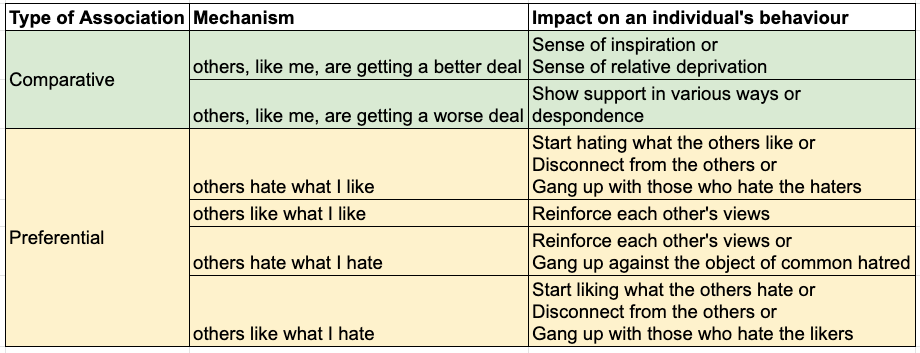
#176 Of East Asian Transformations
Global Policy Watch #1: The Road Not Taken Insights on policy issues making news around the world— Pranay KotasthaneEast Asian economic success is one of India’s favourite public policy discussion themes. Regardless of the facts, we have strengthened our own beliefs based on that transformation. For instance, many Indians are convinced that South Korea, Taiwan, and Japan became powerhouses through well-executed industrial policies in which governments threw their full weight behind specific domestic sectors and companies. East Asian examples are often used to justify India’s protectionist trade measures, a business environment that places higher compliance requirements on foreign companies, and generous pro-business subsidies. In this debate, we forget the role of two other crucial factors. One, the role of geopolitics. As Arthur Kroeber’s notes in China’s Economy, Japan, South Korea, and Taiwan were part of the US alliance structure and benefited immensely from programs of technical assistance, educational exchanges, and access to the American market.Two, what’s more significant is that South Korea’s transformation as an export powerhouse predates industrial policy measures. Like India, South Korea too had a scarce foreign exchange reserves problem. Like India, it too opted initially for trade and monetary policies ostensibly aimed at preserving these reserves. But starting 1964-65, South Korean leaders—nudged by the US—were able to reimagine a future in which their foreign exchange problem was to be ameliorated not by import controls but by increasing exports.To explain the freakish similarities and differences between the paths India and South Korea chose, read these excerpts from an excellent NBER paper From Hermit Kingdom to Miracle on the Han: Policy Decisions that Transformed South Korea into an Export Powerhouse by Douglas A. Irwin. The economic problems of the 1950s South Korea were uncannily similar to India:Korea’s economic policy in the 1950s was built around “the three lows”—low grain prices, low interest rates, and a low price of foreign exchange—and the controls needed to maintain them. Although the controls led to perpetual shortages of grain, capital, and foreign currency, each had a rationale. The government sought low grain prices to keep the cost of living down, relying on grain imports from the United States made available through PL 480 (food assistance) grants. The government maintained interest rate ceilings, ostensibly to help borrowers and promote investment, but negative real interest rates meant there was little incentive to save, diminishing investment and financial development. The government kept the price of foreign exchange artificially low to make imported goods, particularly capital goods, cheaper than they otherwise would have been.The shortage of foreign exchange led the government to introduce import controls to conserve foreign exchange reserves. Import licensing was introduced in 1946 to impede the purchase of nonessential foreign goods. In 1949, the Ministry of Finance began preparing a quarterly foreign exchange budget to determine how export earnings and aid inflows should be allocated in purchasing imports.The overvalued currency had a devastating effect on the country’s merchandise exports, which declined from $40 million in 1953 to just $16 million in 1958, a year in which imports were $370 million.South Korea too had an aborted devaluation attempt in the 1960s. The government devalued the won in two steps… The February 1961 devaluation was made in conjunction with a major reform of the foreign exchange system. The government rationalized the complicated multiple exchange rate system and began to relax import controls, paving the way for a fully unified exchange rate in June of that year.The devaluation increased exports significantly, but caused pain in the short term.In the first two months of 1961, prices rose 15 percent, and industrial production, which depended on cheap imported intermediate goods, fell.21 The devaluation hurt the political fortunes of the deeply divided government, which went through several major cabinet reshuffles during its short period in power and never enjoyed strong public support. The government was widely seen as inept, and public dissatisfaction with the country’s situation led to protests. After renewed political unrest and street demonstrations by students, a military coup overthrew the nine-month-old government on May 16, 1961.Changing tack, the incoming military rulers opted for atmanirbharta:The government envisioned state investment to build up heavy and chemical industries to increase national security and end the country’s dependence on US aid and foreign sources of supply. Given Korea’s enormous trade deficit and tiny export base, the government thought it easier to replace imports by expanding domestic production of those goods rather than to try to make up the gap by exporting more. The plan was to make the country sel