Anticipating the Unintended
152 episodes — Page 3 of 4
#122 Naya Paisa, Purana Qissa 🎧
While excellent newsletters on specific themes within public policy already exist, this thought letter is about frameworks, mental models, and key ideas that will hopefully help you think about any public policy problem in imaginative ways. Audio narration by Ad-Auris.Global Policy Watch: A Mint With a Role- RSJThe People’s Bank of China (PBOC) has been trialling a form of digital Yuan for the past year. Last week the trials entered their second phase. (Umm, they seem to have more phases for this than for developing their Covid vaccines).The Wall Street Journal woke up to the digital Yuan (paywalled) last week with this article that starts off like a Marquez novel:“A thousand years ago, when money meant coins, China invented paper currency. Now the Chinese government is minting cash digitally, in a re-imagination of money that could shake a pillar of American power.” What’s not to like an article that begins with hyperbole? But there’s some grain of truth there. Before we go further we need to make sense of sovereign digital currencies or what’s now being called Central Bank Digital Currencies (CBDC). What’s Money?Like we have written in an earlier post, money performs three roles for us: it is a store of value, it is a medium of exchange, and it is a unit of measure. Through it we save for the future, pay for goods and services and measure the value of very different things using a common unit. These roles mean anything that aspires to be a currency (the usable form of money) should have a relatively stable value over time and should be widely acknowledged as a store of value and unit of account among people. If it does so, the network effect takes over after a while and it becomes a widely used currency. Throughout history, a key feature of a sovereign state was its control over the supply and circulation of money that’s used within its boundaries. The royal mints, after all, have been around for more than two thousand years. As modern nation-states emerged through the 19th and 20th centuries and as global trade increased, central banks emerged to manage the monetary system and provide financial stability. There are three forms of money in any modern economy: * Banknotes: These are physical paper currency notes issued by the central bank that we all use in our everyday lives. This is a direct promise by the central bank to pay the holder of the note a specified sum of money. This promise is printed on all currency notes.* Bank Deposits: Ordinary people and businesses don’t hoard banknotes to conduct their business. They deposit their money in commercial banks. These deposits are stored in electronic form by these banks. The banks offer two services to their customers. They convert these deposits to central bank money in the form of banknotes when you demand it at an ATM and they offer to transfer your money to someone else through a payment system that exists between banks. Unlike banknotes, your deposits aren’t risk-free. They aren’t backed by any sovereign guarantee. A bank will be able to convert your money into banknotes only if it is solvent and it is able to honour its commitments. We have seen instances of a bank failing to do so in India (Yes Bank, PMC etc).* Central Bank Reserves (“reserves”): Commercial banks have their own accounts with the central bank where they deposit their funds. These deposits are used by banks to pay each other to settle transactions between them. The reserves are the other form of central bank money apart from banknotes. These are risk-free and therefore used for settlements among commercial banks. Where does CBDC then fit in?Simply put, a CBDC is a digital form of a banknote issued by the central bank. Now you might think we already use a lot of digital money these days. Yes, there’s money we move electronically or digitally between banks, wallets or while using credit/debit cards in today’s world. But that’s only the digital transfer of money within the financial system. There’s no real money moving. The underlying asset is still the central bank money in the form of reserves that’s available in the accounts that commercial banks have with the central bank. This is what gets settled between the commercial banks after the transaction. This is an important distinction. We don’t move central bank money electronically. But CBDC would actually allow ordinary citizens to directly deal with central bank money. It will be an alternative to banknotes. And it will be digital. CBDC: The Time Is NowSo, why are central banks interested in CBDC now? There are multiple reasons. One, cryptocurrency that’s backed by some kind of a stable asset (also called ‘stablecoin’) can be a real threat as an alternative to a sovereign currency. Stablecoins are private money instruments that can be used for transactions like payments with greater efficiency and with better functionality. For instance, the current payment and settlement system for credit cards in most parts of the world has the mer
#121 Mundell's Trilemma; Sumption's Dilemma 🎧
This newsletter is really a public policy thought-letter. While excellent newsletters on specific themes within public policy already exist, this thought-letter is about frameworks, mental models, and key ideas that will hopefully help you think about any public policy problem in imaginative ways. It seeks to answer just one question: how do I think about a particular public policy problem/solution?PS: If you enjoy listening instead of reading, we have this edition available as an audio narration on all podcasting platforms courtesy the good folks at Ad-Auris. If you have any feedback, please send it to us.📣📣📣 Announcement: Admissions are now open for the summer cohort of Takshashila Institution’s 12-week Graduate Certificate Programme in Public Policy. Visit takshashila.org.in/courses to find out more. - RSJA couple of short takes for the mid-week edition.An ObituaryRobert Mundell, the Noble Prize winning Canadian economist, died at his Italian home on Sunday. He was 88. His obit in the New York Times read: Robert A. Mundell, a Father of the Euro and Reaganomics, Dies at 88. I had mixed feelings when I read that line. Sure, you could argue Mundell’s works provided the intellectual foundation for the Euro and Reaganomics. But there are many other economists who might be ahead in the queue for claiming credit for those two phenomena. And then these aren’t exactly the greatest of times for either Reaganomics or the Euro.Mundell’s greatest contribution to me was to set up a branch of economics singlehandedly. He theorised about international monetary policy when the idea itself was inconceivable. It might appear a bit odd today but notions of free cross-border movement of capital and a floating exchange rate weren’t anywhere near mainstream in the early 60s. Mundell almost presaged the future interconnected global economy and the monetary theory that would underpin it.And to top it all, he summed it all up in a way that has set the bar for brevity for all future economists and policymakers. He proposed a trilemma, an intuitive interpretation of his theory, which made it the touchstone of the neo-Keynesian macroeconomic paradigm. The trilemma, also called the impossible trinity, is a beautiful representation of economic reasoning.The policy trilemma says a country must choose between free capital mobility, exchange-rate management and monetary autonomy. Only two of the three are possible. A country that wants to fix the value of its currency and have an interest-rate policy that is free from outside influence cannot allow capital to flow freely across its borders. Think India during the 70s. If a country chooses free capital mobility and monetary autonomy, it has to allow its currency to float. This is India now. And if the exchange rate is fixed but the country is open to cross-border capital flows, it cannot have an independent monetary policy. Think countries now in the European Union. Robert Mundell helped policymakers and central bankers think of the fiscal and monetary policies as two separate instruments to achieve varying objectives. His was a beautiful mind. RIP. An InterviewI also came across this interview of Jonathan Sumption over the weekend. Lord Sumption is a retired Justice of the Supreme Court of the United Kingdom and earned his reputation with his brilliant 4-volume history of the Hundred Years War. The preface to the interview sets the stage for his responses thereafter:“Over the past year, his unabashed criticism of lockdown policies has turned him into something of a renegade. It is a development that mystifies him; as he sees it, his views have always been mainstream liberal, and it is the world around that has changed.In the course of our conversation, the retired judge doesn’t hold back. He asserts that it is becoming morally acceptable to ignore Covid regulations, and even warns that a campaign of “civil disobedience” has already begun.” I will reproduce three of his answers below from the Unherd site that deeply resonated with me:On the ethics of law-breaking:“I feel sad that we have the kind of laws which public-spirited people may need to break. I have always taken a line on this, which is probably different from that of most of my former colleagues. I do not believe that there is a moral obligation to obey the law… You have to have a high degree of respect, both for the object that the law is trying to achieve, and for the way that it’s been achieved. Some laws invite breach. I think this is one of them.”On the dangers of public fear:“John Stuart Mill regarded public sentiment and public fear as the principal threat to a liberal democracy. The tendency would be for it to influence policies in a way that whittles away the island within which we are entitled to control our lives to next to nothing. That’s what he regarded as the big danger. It didn’t happen in his own lifetime; it has happened in many countries in the 20th century, and it’s happening in Britain now.” On the fragil
#120 Narrative Dominance
While excellent newsletters on specific themes within public policy already exist, this thought letter is about frameworks, mental models, and key ideas that will hopefully help you think about any public policy problem in imaginative ways. PS: If you enjoy listening instead of reading, we have this edition available as an audio narration on all podcasting platforms courtesy the good folks at Ad-Auris. If you have any feedback, please send it to us.📣📣📣 Announcement: Admissions are now open for the summer cohort of Takshashila Institution’s 12-week Graduate Certificate Programme in Public Policy. Visit takshashila.org.in/courses to find out more. Global Policy Watch: A Short History Of The Breitbart DoctrineBringing an Indian perspective to burning global issues- RSJIn edition #117 where we covered the resignation of Pratap Bhanu Mehta, we had a polemic by Edward Skidelsky as suggested reading in our homework section. We specifically quoted this line:“The ‘woke’ left is currently pursuing this goal by way of a Gramscian “long march through the institutions” — a progressive co-option of the schools, universities, state bureaucracies and big corporations.” What’s this ‘Gramscian long march’ that’s mentioned here? That’s the first question for this post.Separately, I was drawn to a U.S. national survey done by Cato Institute last year on freedom of expression. The results weren’t surprising to me (including the stupid graph that I have copied below from their site):“Strong liberals stand out, however, as the only political group who feel they can express themselves. Nearly 6 in 10 (58%) of staunch liberals feel they can say what they believe. However, centrist liberals feel differently. A slim majority (52%) of liberals feel they have to self‐censor, as do 64% of moderates, and 77% of conservatives. This demonstrates that political expression is an issue that divides the Democratic coalition between centrist Democrats and their left flank.”I take the ‘strong liberal’ in the US to be the progressive wing of the Democratic party. They are the ‘woke’ Skidelsky was referring to in his article. There’s no equivalent survey of this kind in India. But I would venture to suggest the “strong liberals” in India might not poll as well on speaking their minds nor would the Indian conservatives be as reticent as their American counterparts in today’s times. Based on incidents like P.B. Mehta’s resignation that seem to have become more frequent in recent years and the ‘chilling effect’ that follows, I would guess these percentages might just flip in India. Anyway, the percentages aren’t of interest to me. My interest is in the phenomenon. This dominance of one side that makes the other side self-censor themselves. What explains this? That’s the second question for this post.That Old Chestnut: The Breitbart DoctrineBoth these questions - on Gramscian long march and on self-censorship - bring me to the oft-repeated Breitbart doctrine:“Politics is downstream of culture.”That is, change the culture and sooner, politics will change. Now you’d think this was an insight that galvanised the American conservative right following the Obama takeover of the establishment. It was what got Trump into the White House with Steve Bannon in tow. That this was part of the right-wing toolkit. Nothing could be further from the truth. The left was likely the originator of the idea that culture influences politics. To understand this better, we will go through a short history of ‘manufacture of consent’ and ‘cultural hegemony’. Knowing it will help address the two questions raised at the start of this post as well. Manufacture Of ConsentThe term ‘manufacture of consent’ first appeared in Walter Lippman’s book ‘Public Opinion’ (1922). For Lippman, the world was too complex for an ordinary individual to comprehend. In order to make sense of it, people carried a mental image of the world inside their heads. These pictures were what drove groups or individuals to act in society in the name of Public Opinion. A strong democracy, therefore, needs institutions and media that help in creating the most accurate interpretations of the world in the minds of the people. But this isn’t easy. Lippman was worried democracy relied on something so irrational as a public opinion that takes shape in the minds of poorly informed and easily manipulated people. For Lippman, policymakers and experts should use narratives for ‘manufacture of consent’ among people which enables public opinion to be channelled in a manner that’s consistent with what’s good for society. Lippman believed persuasion and the knowledge of how to create consent through ‘propaganda’ will change politics in the age of mass media. As he wrote:“A revolution is taking place, infinitely more significant than any shifting of economic power. Within the life of the generation now in control of affairs, persuasion has become a self-conscious art and a regular organ of popular government. None of us be
#119 That 2008-like Feeling
This newsletter is really a public policy thought-letter. While excellent newsletters on specific themes within public policy already exist, this thought-letter is about frameworks, mental models, and key ideas that will hopefully help you think about any public policy problem in imaginative ways. It seeks to answer just one question: how do I think about a particular public policy problem/solution?PS: If you enjoy listening instead of reading, we have this edition available as an audio narration on all podcasting platforms courtesy the good folks at Ad-Auris. If you have any feedback, please send it to us.- RSJWe have been trying to make sense of the three key trends dominating the global financial markets over the past 12 months - the excess liquidity in the system driven by loose monetary policies and stimulus announced by central banks the world over, the persistence of the central banks to keep interest rates at historic lows without worrying about potential inflation, and the booming equity markets that seem to be completely divorced from the ground economic realities during the pandemic. You can read some of our previous posts on these here and here.How long can these trends sustain? Who knows? The perpetual optimism on which the wheels of finance move shows no signs of abating. Now, history has shown these are trends that are neither sustainable nor safe for ordinary investors. But optimism is the opium of the masses. “This time it is different” is what you usually hear as a record new stimulus is passed or markets touch new highs. But like Scott Sagan wrote in his book, The Limits of Safety: “Things that have never happened before happen all the time.” Three Strikes And…The world is full of surprises and three events in the past quarter should give regulators and investors a pause. First, Melvin Capital lost half of its $13bn fund during the GameStop saga in January this year. Melvin had taken massive leveraged short positions against the GameStop stock convinced its business model has no future. Well, the Redditors on WallStreetBets organised themselves to do the world’s first RNS (radically networked society) driven short squeeze. Melvin couldn’t reverse out of the trade soon enough. Only an emergency line of $2.75bn from other hedge funds kept it afloat. We have covered the GameStop shenanigans here.Second, the collapse of Greensill Capital, a ‘supply chain finance’ company doing Enron-like things in a decidedly dull corner of finance. The full impact of its fallout is yet to be ascertained. The collateral damage so far has been impressive: London-based steelmaker GFG alliance (run by India-born Sanjeev Gupta) is facing an existential crisis; a German retail bank that Greensill had bought has gone down; Credit Suisse that funded Greensill through securitisation of its invoice finance arrangement had to write down huge losses; Bluestone Resources, a US-based coal mining company that’s left high and dry without Greensill’s funding pipeline; and Tokio Marine Insurance that underwrote the risks Greensill’s clients and investors in Credit Suisse funds were taking is still counting its losses. The Greensill story is a good example of how it is not different this time. Supply chain financing has been around for a long time. Company A buys goods from a smaller Supplier B and promises to pay it (say) in 90 days. Ideally, B would like to be paid immediately but it usually lacks the bargaining power. Company A would prefer to pay as late as possible since it improves its cash flow and use it to further its business. Enter C, the Supply Chain Financier. C promises to pay B faster but at a small discount as the cost of getting its money quickly. It then collects the full amount from A. In a way, C pays on behalf of A and then collects the money from A over a period of time. It is like a traditional short-term loan that’s backed by the security of the invoice. And how does C get the money to pay to the suppliers faster? Usually, C would issue commercial papers (unsecured promissory notes) to obtain funds from market participants looking to park their excess funds for a short-term to back their invoice arrangements. The spread it makes between the two is C’s business.But in a world where the liquidity is high, interest rates low and stock markets at their peaks, there’s always money looking for avenues to make some ‘extra’ return. Greensill had a perfect plan for them. Instead of issuing commercial papers, it securitised the supplier invoices into short-term assets and offered them to the likes of Credit Suisse and other asset management firms. In other words, these invoices were turned into a different financial instrument which could now be positioned differently to investors. With this, the stage was set to get into riskier bets and shuffle the risk around in a way that made investors believe they were still investing in a safe supply chain financing instrument than something more complex. These investment

#117 A Resignation
This newsletter is really a public policy thought-letter. While excellent newsletters on specific themes within public policy already exist, this thought-letter is about frameworks, mental models, and key ideas that will hopefully help you think about any public policy problem in imaginative ways. It seeks to answer just one question: how do I think about a particular public policy problem/solution?PS: If you enjoy listening instead of reading, we have this edition available as an audio narration on all podcasting platforms courtesy the good folks at Ad-Auris. If you have any feedback, please send it to us.- RSJA short mid-week note on some points that have emerged from the Pratap Bhanu Mehta resignation issue. Let’s take the issue of ‘shrinking liberal space’ in the public discourse and how this is another example of it. All politics is a contestation of narratives. The primary motive is to have your narrative dominate while diminishing the rest. So, from a realist lens, this is what every political party aspires to while few achieve. Therefore to expect any different from any dominant political grouping is to live under a delusion. You might desire a secure and self-assured dispensation that lets a thousand different and often dissenting ideas bloom. But that ideal state of affairs is rare anywhere in the world and in history. India is no stranger to a narrative dominating its body politic for decades. Good or bad is beside the point here. There’s another narrative in town now and, naturally, it wants to dominate forever. QuestionsThat brings us to a couple of questions. Isn’t good or bad that was conveniently brushed aside above, an important point in this context? If this narrative dominance is what is to be expected, should this be a worry for India?Well, narrative dominance of any kind is an unstable equilibrium. For three reasons. One, we aim for dominance but once we achieve it, boredom sets in. No one likes to watch games where their team is so dominant that there is no contest. Over time we lose interest or we create two versions of our team to play against each other. Soon it is “us” versus “them” again. Either way, the narrative dominance is broken. This is also the reason there can never be a successful conservative-only or liberal-only social media platform in the long term. People crave to argue. To go one up on others. They will invent enemies if they have to. We have written about Schmitt’s friend-enemy construct in politics before here. Two, narrative dominance of any kind doesn’t emerge out of a vacuum. It is built on the vestige of a previously dominant narrative. Those who were dominated by the previous narrative, remember those times. The humiliation and the rage of being under it is the fuel that sustains the current narrative. Unfortunately, humans are mortal. They die and a whole new generation arrives who have no first-hand experience of the previous narrative. They only learn about it from the surviving members who tell them about the horrors of the past. Or, from books. That’s one of the reasons why changing history textbooks is always on the agenda of every dispensation in the world. You control the past, you control the future. But time wears down everything eventually. In the pre-internet era, this could take multiple generations to come to a pass. That has shrunk now. Alternative narratives sustain themselves online and the information velocity facilitates their spread. Three, there’s always a tendency to overreach among those who are driving their narrative dominance. Nothing remains sacrosanct in their desire to dominate - university, media, courts, law enforcement agencies, regulators or independent bodies. In a democracy, with strong independent institutions, the checks and balances in-built in the system come into play to counter this. This is a battle of attrition between institutions and political formations. The institutions usually win because they are designed to be permanent. They are necessary for democracy to survive. If they are subverted, democracy withers away.The Indian ProblemBetween the three, the institutional response tends to be the fastest way to counter-narrative dominance. The other two could take time and a lot could be undone during that period. The challenge in India is the institutional mechanism has been systematically weakened over many decades. To begin with, we inherited colonial institutional and legal structures that weren’t exactly suited for liberal democracy. Whatever gains we made in building new institutions and strengthening them were lost starting from the 70s. The Emergency being a high watermark of that era. Since then it has been one step forward and two backward on this. The reasons why a state or the union government in India can make citizens or private entities (like a private university) fall in line are two-fold. One, there are just too many outdated laws often working at cross purposes that are impossible for anyone to manag
#116 India's rajamandala
This newsletter is really a public policy thought-letter. While excellent newsletters on specific themes within public policy already exist, this thought-letter is about frameworks, mental models, and key ideas that will hopefully help you think about any public policy problem in imaginative ways. It seeks to answer just one question: how do I think about a particular public policy problem/solution?PS: If you enjoy listening instead of reading, we have this edition available as an audio narration on all podcasting platforms courtesy the good folks at Ad-Auris. If you have any feedback, please send it to us.India Policy Watch #1: Choose Your Nationalism WiselyInsights on burning policy issues in India- RSJA short note on nationalism to think about for this edition.There was the usual brouhaha in media last week over a few international agencies downgrading India on some kind of global ‘freedom index’. The usual reactions have followed. For some, it is a validation of all they see happening around them. Our freedoms are being eroded and we watch silently, they claim. As Majrooh wrote (in that Guru Dutt romcom ‘Mr & Mrs 55’): “मेरी दुनिया लुट रही थी, और मैं खामोश था” On the other hand, the establishment and its supporters view this as another ‘left-liberal-woke’ attempt to malign a new, confident India. To them, there is freedom in India to freely express your dissent and criticise anyone. The old order of the privileged elite who feel left out in the present order is keen to paint India in poor light. They have been discredited and rejected by the masses, yet they persist. This is the argument made by the ‘nationalists’ (or atleast that’s what their Twitter handles claim).The CounterThis was following the usual script on social media. We took interest, however, when the Minister of External Affairs (MEA) was asked about these ‘freedom’ reports. He dismissed the basis for their conclusions and questioned their intentions. More importantly, he gave two interesting counters to the usual ‘Hindu nationalist’ branding of the current dispensation in large sections of global media and among thinktanks. The first was factual - they call us nationalists but we are leading the efforts in donating vaccines to countries around the world. We have already shipped over 40-50 million vaccine doses taking a humanitarian view instead of keeping them for ourselves. Tell us which western democracy is doing so? Then the second point - in these countries almost every elected official takes the oath of office with their hand on a holy religious book (America and the Bible were possibly what he meant). Do we do so in India?Social media was abuzz with this clip. This is the ‘new, confident India’ was the usual comment among the partisans. Well, maybe it is. Who knows? To me, this incident is another useful lens to view nationalism. There are two things to parse here. One, is ‘vaccine diplomacy’ the antithesis of nationalism? Two, is the taking of an oath of office on a holy book blurring the lines between the church and the state?A Masterstroke Let’s tackle 'vaccine diplomacy’. We go on in these pages about international relations being guided by matsyanyaaya - big fish eating small fish. This is realism at play. All morality stops at the boundary of a nation-state. Beyond that is Hobbesian chaos. Going by this, donating millions of vaccines to other nations while you haven’t vaccinated your own would seem insane. But that would be taking a narrow view of matsyanyaya. International relations is a long game with a clear understanding of your adversaries and their strengths. Vaccine diplomacy for India is a perfect counter to China in the post-pandemic world. China’s conduct in suppressing information during the initial phase of the pandemic and its bullying behaviour around the region later are open flanks for India to exploit. Donating vaccines at an early stage of their mass production checks all the boxes of being a reliable friend in international relations - it is relevant and timely, and it involves sacrificing self-interest to help others. That it provides a counter to the view in global media about this being a nationalistic dispensation is an added bonus. This act isn’t one of those false masterstrokes. This is the real thing. What Kind Of Nationalism?Now on to the oath and the holy book business. What’s the core issue here? If you peel the layers, there are two questions to be tackled. * How important is the role of ethnocultural nationalism in the building of a modern nation-state?* If it is important then what kind of ethnocultural nationalism should a state strive for to achieve its objectives of peace and prosperity for its citizens?On the first question, it is hard to argue against the advantages of solidarity and a communitarian outlook that ethnonationalism engenders among the members of a nation. Universal brotherhood is great in the abstract but all kinship is real and very specific. The idea of a free individual owi

#115 Anti-State, Anti-Government Or Anti-Nation? 🎧
This newsletter is really a public policy thought-letter. While excellent newsletters on specific themes within public policy already exist, this thought-letter is about frameworks, mental models, and key ideas that will hopefully help you think about any public policy problem in imaginative ways. It seeks to answer just one question: how do I think about a particular public policy problem/solution?PS: If you enjoy listening instead of reading, we have this edition available as an audio narration on all podcasting platforms courtesy the good folks at Ad-Auris. If you have any feedback, please send it to us.India Policy Watch #1: Sedition, Blasphemy, DefamationInsights on burning policy issues in India- Pranay KotasthaneA Delhi Court Session Judge’s admirable order granting bail to activist Disha Ravi in the #ToolKit case made me reflect on sedition as a concept. Here are a few initial thoughts emanating from that exercise. Fair warning: this is a conceptual discussion and not a legal one. If detailed legal critique interests you, head over to these two articles by Gautam Bhatia (1 & 2). The “crimes” of sedition, blasphemy, and defamation lie along a continuum. They are categorically similar in that they punish the written or spoken word directed at some other entity. Where they differ is the targeted object. Defamation laws punish verbal or written attacks against a person or a group of people. Blasphemy laws punish utterances against something considered sacred by a group of people whereas sedition laws punish utterances that can threaten the State. A Few DefinitionsBefore wading in any further, understanding three political science terms — nation, state, and government — is important. State is a political construct, an abstract political institution. Max Weber’s instrumental definition of the State as “a human community that (successfully) claims the monopoly of the legitimate use of physical force within a given territory” is especially relevant here. To ensure that all its individuals’ liberties are protected, a State is invested with the powers to use violence or force to prevent other belligerent groups from terrorising individuals. It is for this reason that a State maintains armed institutions like the police and the army. Going by this definition, an anti-State act would be the one that challenges the State's monopoly over the legitimate use of physical force. In other words, an act of violence or the use of force by anyone other than the State becomes anti-State. Government is a temporary governing body of the State. If the State is like a corporation, the government is like its management. State is semi-permanent. It will live on until it is overthrown or replaced and a new social contract is established. Unlike the State, the government is composed of a set of people organised into a hierarchy. When the electorate vote, they choose their government and not the State. By this definition, an anti-government act would be the one that criticises the policies, strategies, and directives of the governing body in power.Nation, on the other hand, is a mental construct. Ernest Gellner defines this concept precisely yet comprehensively thus:“Two men are of the same nation if and only if they recognize each other as belonging to the same nation. In other words, nations maketh man; nations are the artefacts of men's convictions and loyalties and solidarities. A mere category of persons (say, occupants of a given territory, or speakers of a given language, for example) becomes a nation if and when the members of the category firmly recognize certain mutual rights and duties to each other in virtue of their shared membership of it. It is their recognition of each other as fellows of this kind which turns them into a nation, and not the other shared attributes, whatever they might be, which separate that category from non-members.”In other words, nations are imagined. People belong to the same nation only if they consider themselves to be so. An anti-national act thus could be of two types. One that denies the existence of such an imagined community. For example, libertarians could argue that only individuals matter and not the groups these individuals are a part of. And the other view imagining a nation along lines different from the dominant belief. For example, communism sees workers across the world as one “nation”.What is Sedition then?With these key differences out of the way, we are now in a position to understand sedition and blasphemy laws. Sedition laws can lie on a continuum. In dictatorships and party-states, sedition laws are applied wantonly to criticisms of the government. That is, being anti-government itself is being seditious. In most modern democracies, however, sedition laws punish only those anti-State actions which have the capability to directly challenge the State’s authority. Thus, criticism of the Republic of India would not count as sedition but inciting violence against the police w
#114 A Self-Help Text For Andolan-jeevis 🎧
- RSJTwo somewhat random thoughts triggered this edition. One, we have been talking about Radically Networked Societies (RNS) a fair bit here. These are non-hierarchical networks of individuals who share a common identity and take up a cause they are passionate about through adroit use of social media platforms and cellphones. In an RNS, there are no clear roles, the decision making is amorphous and the leadership is diffused. But things move really fast. The state which has to contend with RNS is hierarchical, slow and regimented. It can’t keep up. We have seen this with the many protests world over that have been triggered by RNS. Forget the state, even nimble hedge fund managers have found it difficult to stay in step with an RNS-like Reddit forum, r/wallstreetbets. We have made the case RNS are here to stay and the state will have to find a solution to control them. But over the weekend I was struck with a thought. What have these RNS movements truly achieved? Have they turned themselves into mass movements and brought dramatic change anywhere? The answer is no. Over the last decade (starting from Arab Spring), there have been innumerable RNS movements driven by Twitter, WhatsApp and other platforms that have created a stir and captured media imagination. But they have been transient. Their long-term impact is yet to be seen. Does anyone really believe that the most long-lasting among RNS instances like Black Lives Matter or Occupy Wall Street will ever morph into something like the Civil Rights movement of the 60s or, more impossibly, the Russian revolution? No. So, the question: why?Two, the majoritarian problem that’s facing many democracies the world over today. This is the ‘tyranny of the majority’ that Burke and Tocqueville had warned about almost two centuries ago. So, the question is how do you trump majoritarian-ism in a democracy which is designed for it? Granted, it is not where a democracy should have reached, but having reached there how does it get out from it? A solution I have written about in previous editions is to do nothing. My argument has been it is impossible for a large agglomeration to remain stable over a period of time. It will splinter because the concept of political is about the existential distinction between friend and enemy like Schmitt wrote. So, you just wait for nature to take its own course. But that doesn’t seem a proactive solution to many. There must be a way to counter-mobilise the masses, they argue. So, the question: is there a way?Enter The Longshoreman Philosopher Both these questions - why the many RNS movements haven’t turned into real mass movements and why is it difficult to counter-mobilise against majoritarian tendencies - bring me to the works of Eric Hoffer. More specifically, his first book - The True Believer: Thoughts on the Nature of Mass Movements (1951).Eric Hoffer was an intellectual like no other. Consider this: he never finished even grammar school, he was blind between the age of 7 to 15, and he worked every day of his life as a longshoreman in the docks of San Francisco doing hard physical labour. Yet, or maybe because of these, Hoffer was a peerless social and moral philosopher with dazzling aphorisms and insights. At the age of 53, he wrote The True Believer, a slim book that packs in, to my mind, the most number of insights per page than any book I have read. It will be impossible to sum up the book in a few lines but let me try with a few helpful extracts from the book. Just to be clear, these do no justice to the richness of the text when read in full.First, Hoffer establishes all mass movements, religious, political or social, are interchangeable. When the situation is right for a mass movement, it is right for any movement regardless of belief or dogma. So, for Hoffer, every mass movement from Christianity to Communism to Fascism have the same underlying features. As he wrote:“Since all mass movements draw their adherents from the same types of humanity and appeal to the same types of mind, it follows: (a) all mass movements are competitive, and the gain of one in adherents is the loss of all the others; (b) all mass movements are interchangeable. One mass movement readily transforms itself into another. A religious movement may develop into a social revolution or a nationalist movement; a social revolution, into militant nationalism or a religious movement; a nationalist movement into a social revolution or a religious movement.”Second, the movements get off the ground by what Hoffer called ‘Men of Words’. Most people don’t like change, no matter how dissatisfied they are with their present. They will seek change at the margins. They look upon a rabble-rousing change agent with suspicion. Men of Words, on the other hand, are different. Their core skill is their ability to articulate the need for change in a benign yet persistent manner. They find an audience with the restive masses with their farsighted prescriptions for change with

#113 Opioids, Domar Rule And Who Moved My Chips 🎧
This newsletter is really a public policy thought-letter. While excellent newsletters on specific themes within public policy already exist, this thought-letter is about frameworks, mental models, and key ideas that will hopefully help you think about any public policy problem in imaginative ways. It seeks to answer just one question: how do I think about a particular public policy problem/solution?PS: If you enjoy listening instead of reading, we have this edition available as an audio narration on all podcasting platforms courtesy the good folks at Ad-Auris. If you have any feedback, please send it to us.Global Policy Watch #1: Deadly AdviceBringing an Indian perspective to burning global issues- RSJThere are consultants and investment bankers who floor you with their presentations. And then there is Mckinsey & Co. When the ‘smartest guys in the room’ speak, you watch them transfixed. To use Coleridge’s immortal words: “He holds him with his glittering eye—The Wedding-Guest stood still,And listens like a three years' child:The Mariner hath his will.”You are often the wedding-guest and you listen to them like a three-year-old.I guess it didn’t exactly work out that way over the past few months when Mckinsey was answering questions about its role in abetting the opioid crisis. Not Caring About the ConsequencesOn Feb. 4, McKinsey & Co., the management consulting firm, announced a $573 million settlement with 49 State Attorneys General for its past work for opioid manufacturers. In Nov. 2020, Purdue Pharma pleaded guilty to criminal charges of not doing enough to combat the opioid epidemic that has ravaged the American heartland largely on the back of aggressive marketing of its flagship product, OxyContin. Purdue acknowledged it looked the other way when the prescription drug was diverted to the black market, it misled regulators to boost its manufacturing quotas and it paid doctors for random speaking gigs that were a way to reward them for writing more prescriptions for OxyContin. The costs to society were dramatic - over two million addicts and about half a million opioid-related deaths in the past two decades. There’s no other way to put it; Purdue Pharma was an evil enterprise that deliberately sold products that killed people while profiting enormously from it. And Mckinsey advised Purdue from 2004-19 on how to do this well.On Feb. 4, Kevin Sneader, global managing partner of Mckinsey, wrote a memo to all his colleagues on the settlement. It contained the oldest excuse in the book - we weren’t doing anything unlawful. That’s consulting-speak admitting we were unethical:“Indeed, while our past work with opioid manufacturers was lawful and never intended to do harm, we have always held ourselves to a higher bar. We fell short of that bar. We did not adequately acknowledge the epidemic unfolding in our communities or the terrible impact of opioid misuse and addiction, and for that I am deeply sorry.” And it contained this gem:“It is also a key reason why we chose the course of action announced today since it allows funds to be deployed quickly and directly to victims of the opioid crisis while avoiding a long and protracted legal process.” I’m not sure there is a consulting equivalent to that old Hindi proverb - “nau sau choohe maar, billi chali haj karne”. But Mckinsey could use it next time.The saga has followed a predictable course since. On Feb 24, the 650 global partners of Mckinsey voted to replace Kevin Sneader as its global managing partner. As far as Mckinsey goes, I guess, they have done all they could to put this behind them. The Slippery Slope In BusinessWhat makes a pharma company that set up its business to save lives go down the path of taking lives? Greed? There’s always the usual punching bag brought up when something like this happens - the Friedman doctrine. The purpose of a business and its sole social responsibility are to maximise shareholders value. That, according to its critics, gives businesses a free run to do anything. It makes greed legitimate. But does it? We put up a passionate defence of the Friedman doctrine on the 50th anniversary of that paper in edition #70. Friedman, as we have argued before, wasn’t making a case of untrammelled capitalism. In fact, he makes following the rules of the game fundamental to how a business must operate. As he concludes in that paper:But the doctrine of “social responsibility” taken seriously would extend the scope of the political mechanism to every human activity. It does not differ in philosophy from the most explicitly collectivist doctrine. It differs only by professing to believe that collectivist ends can be attained without collectivist means. That is why, in my book “Capitalism and Freedom,” I have called it a “fundamentally subversive doctrine” in a free society, and have said that in such a society, “there is one and only one social responsibility of business—to use its resources and engage in activities designed to increase its

#112 Courting Trouble
- RSJChaitanya Tamhane’s debut feature Court (2014) convinced me about two things. One, here was a global talent whose cinema will make us proud in future. He did that and more with his next feature - The Disciple (2020). I knew of the precocious Tamhane back from 2007-08 when his knowledge and analysis of global cinema of all stripes used to leave us awestruck. We were no mugs about cinema ourselves. But he was different. Next level as they say. That aside, it is the second point that I was left with at the end of Court that has stayed with me for long.Ruka Hua FaislaBut to back up a bit, here’s what Court is about. It begins with a day in the life of an elderly Dalit activist, Narayan: a writer of protest songs and a teacher for poor kids living in the slums. A simple man of deep conviction he has devoted his life to causes that are dear to him. Soon, he is arrested because a manhole worker died by suicide after listening to one of his angst-ridden songs that seemingly abetted it. The trial is a Kafkaesque nightmare. It is clear that the manhole worker died because of inhaling the poisonous sewage gases. This isn’t anything new. The plight of these workers who go into the manholes without any safety equipment has been documented many times over. Yet, the public prosecutor and the state produce fake witnesses who testify against Narayan and bring up bizarre new charges like possession of illegal books (there’s one on Yoga) to make it watertight case against him. The state can’t accept the man died because of the abominable work conditions. Instead it must have been that old mass murderer over the ages - poetry. The autopsy report and the testimony of the wife nail the lie. This was no suicide. Meanwhile Narayan’s health continues to deteriorate while he is in custody. The judge grants him a bail for a surety amount of Rs. 1 Lac. Good news? Wait. The next day Narayan is arrested again on another trumped up charge. This time it is about sedition and for waging a war against the state. The case is back to the same judge who tells them to appeal to the High Court. The film ends with what appears like a complete non sequitur. We see Narayan on bail going back to teaching the poor kids in the slums. And then there’s a surreal bit to end the film. The judge and his family go out for a day long picnic. They travel in a minibus singing songs and playing antakshari. We see members of the family seek the judge’s counsel on different issues. The judge is like that old uncle we all know. He dispenses vacuous, outdated advice. The last scene has the judge dozing off on a bench mid-afternoon while the children play cricket nearby. A ball hits the judge mildly. He wakes up and promptly slaps the boy who has come to pick it up. The film ends.A Reflection Of Our SocietyThere are multiple themes apparent in the Court: the vengeful state, an indifferent judicial system, the drudgery of bureaucratic work, the idealism of an aging activist and the tenacity of a young advocate who is representing him. However, I was struck by that last scene. What was that about? Over the last few years, I have thought about that scene often. Why? Well, let me offer you three recent newspaper pieces.First, here’s Shekhar Gupta in The Print on “how our judiciary is murdering the principle of ‘bail, not jail’ routinely”:“It is a challenge to decide which institution has declined over the recent decades, the police or the judiciary. But today, if you are someone the powers that be don’t like, they can easily find police officers to file a case with serious sections from the IPC, never mind if they don’t have a shred (or iota, which our judges prefer in their orders) of evidence.You might still think, certainly, they still have to produce me before a magistrate who would easily see through the police case that’s thinner on evidence than Coronil, if even that. And once the magistrate sees that, the order will be determined by that immortal line from the legendary late Justice V.R. Krishna Iyer: Rule is bail, not jail.Contrary to our belief, that Krishna Iyer line wasn’t immortal. If anything, it’s been murdered and cremated routinely, and at least three times in recent days. Check the cases of Munawar Faruqui, Nodeep Kaur and Disha Ravi. Our choice of three very young and vocal people is a conscious one.”Or, read this from The Economic Times:“Chief Justice of India triggered a controversy on Monday with his remarks in two cases. In one case, he asked a man accused of rape in a relationship with a 16-year-old, whether he was willing to marry the complainant. The man faces accusations of rape, cheating and criminal intimidation, besides charges under the stringent Pocso Act designed to prevent exploitation of children.The CJI’s remark was panned on social media.In another case, the CJI asked if a man’s sexual conduct, however brutal, could attract rape charges if it was made by his partner.”Or, how about this:“Justice Pushpa Ganediwala recently acquitt

#111 'Tu Tu Main Main' In the Information Age
This newsletter is really a public policy thought-letter. While excellent newsletters on specific themes within public policy already exist, this thought-letter is about frameworks, mental models, and key ideas that will hopefully help you think about any public policy problem in imaginative ways. It seeks to answer just one question: how do I think about a particular public policy problem/solution?PS: If you enjoy listening instead of reading, we have this edition available as an audio narration on all podcasting platforms courtesy of the good folks at Ad-Auris. If you have any feedback, please send it to us.Global Policy Watch #1: A Bit About BitcoinBringing an Indian perspective to burning global issues— RSJWhat should we make of bitcoin? Should we think of it as the best performing asset class in the last decade? After all, it was priced at $1 in April 2011 and its current price is about $45,000. But was it designed to be an asset? Surely, no. Satoshi Nakamoto, who invented bitcoin, was driven more by angst than greed while writing the 31,000 lines of code that he put out to the world on Jan 3, 2009. Satoshi (a pseudonym) wrote a 500-word essay - Bitcoin: A Peer to Peer Electronic Cash System - to explain the working of the system he had created. The logic was simple - a software system that would spew out some 21 million bitcoins over two decades with people interested in the coins ‘mining’ for them using their computing prowess. Satoshi was clear about his aim. He had seen the global financial crisis and he could no longer trust the conventional currency (also called fiat currency) issued by the governments. All he could see around him was central bankers printing money mindlessly to prop up a system where the ordinary individual had no say. And the banks were willing to design more creative and more toxic products that only benefitted them. As he wrote:“The root problem with conventional currency is all the trust that’s required to make it work. The central bank must be trusted not to debase the currency, but the history of fiat currencies is full of breaches of that trust. Banks must be trusted to hold our money and transfer it electronically, but they lend it out in waves of credit bubbles with barely a fraction in reserve. We have to trust them with our privacy, trust them not to let identity thieves drain our accounts.”So he decided to take the governments and the banks out of the equation by his design of bitcoin. People could now transact with a currency that was purely digital, encrypted and anonymous with a distributed public ledger that kept track of the movement of the coin to ensure it isn’t used twice by the same owner to dupe someone. It was quite neat. More importantly, there was no bank or intermediary to get in the way of the transaction nor was there any central banker that could decide arbitrarily how many coins should be in circulation. This was a libertarian utopia. The last bastion of the state could fall now. Fiat currency, an imagined and a coercive construct of the state could now be challenged.As the last decade has shown, bitcoin hasn’t exactly replaced fiat currency as a medium of exchange in any meaningful way. But that doesn’t mean it has slunk away into anonymity. It has seen a remarkable rise in the last six months with some of the smartest people in the world betting big on it. Bitcoin or cryptocurrency has never been a more mainstream part of discourse ever. There are multiple ways of looking at cryptocurrency and make sense of what’s happening here. I will take the most traditional one for this edition. And, maybe, over the next few months go a bit deeper into this area. Today, I will take the economic theory lens to evaluate cryptocurrency and its most valuable manifestation, bitcoin.Let’s understand fiat currency a bit better. Why do all of us believe a Rs. 500 note has any value? Well, Econ 101 class would tell you that’s because the sovereign has decided it is a legal tender that’s worth Rs. 500. There’s a promise right there on the currency note signed by the RBI governor. That’s very reassuring. But does that explain why we don’t use any other commonly agreed medium of exchange? Back in the days when I stayed at a hostel, we used cigarettes or Old Monk as a medium of exchange. There were always more cigarettes and Old Monks in the hostels than currency notes (this was the pre-ATM era) and these had a stable range within which its value moved. If someone needed my help with an assignment, 2-3 cigarettes did the trick. Now the question is what if this was replicated at a larger scale? The demand for Rupee notes would fall and its value would fall notwithstanding the Governor‘s promise. So, why does this not happen more often? The answer is that old reason for most things in our society. Network effect. Since most people use Rupee as a medium of exchange, it is easier for the next person getting into a transaction to use it as well. Network effects create an exit
#110 Will There be a Yangon Spring? 🎧
This newsletter is really a public policy thought-letter. While excellent newsletters on specific themes within public policy already exist, this thought-letter is about frameworks, mental models, and key ideas that will hopefully help you think about any public policy problem in imaginative ways. It seeks to answer just one question: how do I think about a particular public policy problem/solution?PS: If you enjoy listening instead of reading, we have this edition available as an audio narration on all podcasting platforms courtesy the good folks at Ad-Auris. If you have any feedback, please send it to us.Global Policy Watch: No Telefoon in Rangoon - RSJMere Piya Gaye Rangoon Wahan Se Kiya Hai Telefoon is how C. Ramchandra immortalised Rangoon (Yangon) in our collective memories all those years ago. Unfortunately, ‘wahan se kiya hai telefoon’ is a tad difficult these days for the people of Yangon. Myanmar should be aware of the idea of eternal recurrence by now. That all events in the world recur in the same pattern over an eternal series of cycles. The coup earlier this month by the Tatmadaw (the armed forces) was a case of history repeating itself three times over in its short post-war history. The reason served by the military had a familiar ring to it. It alleged widespread voter fraud in the November 2020 elections that led to a landslide victory for Aung San Suu Kyi helmed National League For Democracy (NLD). The quasi-democracy that was in place in Myanmar since 2015 didn’t mean any loosening of the iron-fist of the Tatmadaw. It retained its control on the key levers of power. For it to allege voter fraud in elections is comical. It must follow then it is admitting its incompetence in being dictatorial. Anyway, leave that aside. History has shown logic isn’t a particular strength of military junta anywhere in the world. But irony is The senior-most military leader Gen. Min Aung Hlaing had this to say:“I would seriously urge the entire nation to join hands with the Tatmadaw (Army) for the successful realisation of democracy.” Then the junta went digital with its defence. In a country where Facebook is the internet, it posted this on its official site:After many requests, this way was inevitable for the country and that's why we had to choose it. And soon it blocked Facebook and disabled the internet for the sake of ‘stability’ in the country. The tanks were on the street and midnight knocks on the doors of NLD leaders began. Suu Kyi was taken into custody and the crackdown started. It was 1988 once again for Myanmar. The eternal cycle had recurred.As Nietzsche wrote:"Everything has returned. Sirius, and the spider, and thy thoughts at this moment, and this last thought of thine that all things will return". Myanmar has been living through a transition to a fledgling democracy over the last decade. A new constitution that allowed for representative democracy and elections took shape in 2008. In 2015, NLD won the general elections and Suu Kyi became the State Counsellor (the equivalent of PM) of Myanmar. She is constitutionally barred from becoming the President because she was married to a foreigner and her children aren’t citizens of Myanmar. There was an uneasy truce between her and the military over the last term as Myanmar saw an unprecedented period of opening up to the world, growth and freedom for its people. Anyone who visited it in the last five years would vouch for how ‘normal’ it felt. So, why the coup now? There’s never an easy answer to this. For all you know it could be General Hlaing having a bad hair day. But let’s look at it through the frames of political and social philosophy to arrive at few likely reasons.Firstly, the old Weberian power and legitimacy lens. Power is the ability to impose your will over others despite their resistance. Legitimacy is when this power is considered fair, even appropriate, by those over whom it is exercised. As Weber wrote:“The basis of every system of authority, and correspondingly of every kind of willingness to obey, is a belief, a belief by virtue of which persons exercising authority are lent prestige” Power needs prestige to be legitimate. Else, it is coercion. In Myanmar, the junta always had power but rarely legitimacy. In the quasi-democracy era, the junta ceded a thin sliver of power to the NLD. But legitimacy is a strange meal. It can feed that feeble power and bestow it with enormous strength. A second term for NLD would have done exactly that. Power is a zero-sum game. The army generals know it. People sense the winds of change fast. The military couldn’t take any further chances with this version of democracy. Self-preservation kicked in on Feb 1, 2021.Secondly, a recurring self-delusion that most authoritarians suffer from is how popular they are among the masses. The Constitution of Myanmar was drafted in a manner that favours large, majoritarian parties. You get a disproportionate number of seats regardless of the margin of victory on
#109 Google Isn't Feeling Lucky🎧
This newsletter is really a public policy thought-letter. While excellent newsletters on specific themes within public policy already exist, this thought-letter is about frameworks, mental models, and key ideas that will hopefully help you think about any public policy problem in imaginative ways. It seeks to answer just one question: how do I think about a particular public policy problem/solution?PS: If you enjoy listening instead of reading, we have this edition available as an audio narration on all podcasting platforms courtesy the good folks at Ad-Auris. If you have any feedback, please send it to us.- RSJGoogle and the Australian government are on a warpath. There is a proposed new law - the News Media Bargaining Code - that forces Google and Facebook to pay media publishers for links to the news on their sites. While other countries have tried to regulate and make Google and Facebook pay for the content they freely use from news sites, this law is a global first.The CodeHere’s a brief summary of the Code from the Australian government press release:The Code will support a diverse and sustainable Australian news media sector, including Australia’s public broadcasters, by:* encouraging the parties to undertake commercial negotiations outside the Code;* enabling digital platforms to publish standard offers, which provides smaller news media businesses with an efficient pathway to finalising agreements with digital platforms;* establishing a negotiation framework under the Code that allows both parties to bargain in good faith and reach binding agreements;* ensuring that an independent arbiter is able to determine the level of remuneration that should be paid under a fair and balanced final offer arbitration model should the parties be unable to reach agreement; and* setting clear and workable minimum standards for digital platforms including requiring 14 days advance notice of deliberate algorithm changes that impact news media businesses.The Code will initially apply to Facebook NewsFeed and Google Search. Other digital platform services can be added to the Code in future if there is sufficient evidence to establish that they give rise to a bargaining power imbalance. 404 ErrorGoogle’s reaction was swift. It went for broke in its open letter addressed to Australians:The ability to link freely between websites is fundamental to Search. This code creates an unreasonable and unmanageable financial and operational risk to our business. If the Code were to become law in its current form, we would have no real choice but to stop making Google Search available in Australia. For Google, search is free and neutral. Its proprietary algorithm takes your search term, trawls the net, ranks the relevant sites and presents to you a million search results in order of what it thinks will be most useful to you. This is free because that’s Google’s mission - to organize the world's information and make it universally accessible and useful. Along with your search results, it throws up a few relevant ads that might be of interest to you based on your search. These are clearly identified and highlighted as ads. It makes money through them. Search and ads are different silos for it. There’s a separation (or so Google would have us believe) between the church and the state For Google, paying news publishers to link people to their websites is a slippery slope. Other businesses will soon demand for the same. The search algorithm will no longer be pristine. Soon there will be bidding wars to appear higher on the search ranks. The whole principle of open internet will be vitiated. The Australian government responded to Google’s open letter with PM Morrison indulging in some plain speaking:“We don't respond to threats. Australia makes our rules for things you can do in Australia. That's done in our parliament. It's done by our government. And that's how things work here in Australia." Meanwhile, Facebook decided yesterday it will block its users and news publishers from posting links to news sites because of the Code. Best Of Both Worlds?So, how should we think about this?Well, first let’s get all the good that Google has done for the world out of the way. Google has been the among the most transformational tools ever made available to humankind. It deserves its extraordinary profits and market cap. But there have been unintended effects of its dominance especially for news media. News publishers have lost customers as print has fallen out of favour. Their digital properties don’t draw in as much ad revenues and most traffic to them is routed through Google or Facebook. Classifieds which were the other source of their revenues have also gone online. The subscription model might be the way forward but no one has really seen it scale. It still looks like a niche game. There’s hardly a viable business model to run a mainstream newspaper with extensive ground reporting, investigative pieces and deeply researched stories. What has re
#108 We Need To Talk About State 🎧
This newsletter is really a public policy thought-letter. While excellent newsletters on specific themes within public policy already exist, this thought-letter is about frameworks, mental models, and key ideas that will hopefully help you think about any public policy problem in imaginative ways. It seeks to answer just one question: how do I think about a particular public policy problem/solution?PS: If you enjoy listening instead of reading, we have this edition available as an audio narration on all podcasting platforms courtesy the good folks at Ad-Auris.Not(PolicyWTF): Acknowledging State FailuresThis section looks at egregious public policies. Policies that make you go: WTF, Did that really happen?- RSJWe rarely miss an opportunity when the political or the administrative class make an announcement or draft a policy that goes against our ideology of common sense. So, it is only fair we write about the rare occasion when someone gets things right. Even if it is only in a speech. Something New This was that week. Here’s our PM speaking in the Rajya Sabha about the state spreading itself too thin and the unfortunate demonisation of the private sector in our polity. The Print reports:While doffing his hat to the private sector Wednesday for its contribution to the growth and development of the country, Modi questioned the “power centre we have created in the country by handing over everything to babus”. “Sab kuch babu hi karenge. IAS ban gaye matlab woh fertiliser ka kaarkhana bhi chalayega, chemical ka kaarkhana bhi chalayega, IAS ho gaya toh woh hawai jahaz bhi chalayega. Yeh kaunsi badi taakat bana kar rakh di hai humne? Babuon ke haath mein desh de karke hum kya karne waale hain? Humare babu bhi toh desh ke hain, toh desh ka naujawan bhi toh desh ka hai,” Modi said.(Babus will do everything. By dint of becoming IAS officers, they’ll operate fertiliser warehouses and also chemical warehouses, even fly aeroplanes. What is this big power we have created? What are we going to achieve by handing the reins of the nation to babus. Our babus are also citizens, and so are the youth of India.) I don’t know when words of this nature were last spoken in the Parliament. Maybe Minoo Masani made a few speeches of this kind during the heyday of the Swatantra Party. But to have a hugely popular PM, one with the rare ability to make the public do his bidding, speak these words suggests a shift in direction that was long-awaited. Anyway, that speech came on the back of weeks of protests against farm laws that had morphed into Ambani-Adani bashing. The names don’t matter. A few decades back it was Tata-Birla. We have also had the usual reports about how the pandemic has exacerbated inequality purely on the basis of notional wealth created by a rising stock market. And there have been bizarre articles devoid of any economic logic as well. These are familiar grounds. We have framed it as growth or redistribution trade-off in a few of our past editions. Like many others, we have argued India needs growth before worrying about redistribution. We have also done our best to dispel a notion deep within our psyche. That we are in some kind of a giant zero-sum game and someone winning must mean someone is losing. Is that it? Or is there more that can be brought into this debate?The state must aim to foster conditions in a society that advance the well being and prosperity of its members. No one argues with this goal. The fundamental question of public policy then is what are the means it must adopt to create this environment? Should the state aim for equality among its member through redistribution of its resources? That there can be no harmony or stability in a society unless there’s fairness and equality among its members.Or, should the state guarantee the fundamental rights of the citizens, provide for law and order that safeguards them against anarchy and then get out of their way. People don’t want the state to legislate for some notion of equality that’s in its mind. They want freedom and security. That would do. Thank you very much. The old Rawls versus Nozick debate Rawls’ seminal A Theory of Justice argued for justice as fairness (the title of a later book of his) with two key principles. First, the greatest equal liberty principle which proposed people’s equal basic liberties should be maximised. Rawls conceived of an artificial construct called the original position - a state where each one of us has to decide on the principles of justice behind a veil of ignorance. That is we are blind to any fact about ourselves; we are ignorant of our social position, wealth, class or any natural attribute. Behind this veil, Rawls asked how would we choose the principles of justice for the society? For Rawls, the logical choice for all of us would be what he called the maximin strategy that would maximise the conditions of those with the minimum. This gave him his second principle - the social and economic inequalities should be ar
#107 An Enemy A Day....🎧
This newsletter is really a public policy thought-letter. While excellent newsletters on specific themes within public policy already exist, this thought-letter is about frameworks, mental models, and key ideas that will hopefully help you think about any public policy problem in imaginative ways. It seeks to answer just one question: how do I think about a particular public policy problem/solution?PS: If you enjoy listening instead of reading, we have this edition available as an audio narration on all podcasting platforms courtesy the good folks at Ad-Auris. If you have any feedback, please send it to us.- RSJWe have been writing about Radically Networked Societies (RNS) for the past couple of editions. Maybe you have had enough of it. But not the world around us. After the Rihanna/Greta tweet episode that led to the government mobilising its own RNS with film stars and cricketers in the van, we now have moved to the next stage of the battle of RNS. New FrontThe government this week asked Twitter to remove over 1000 accounts and posts which it believes spread misinformation about the new farm laws. Twitter responded by reducing the visibility of the hashtags that contain harmful content and suspending more than 500 accounts, some permanently, that violated its rules. But the government isn’t satisfied with the response. It has upped the ante now with not so subtle threats of arrests of Twitter officials if the company didn’t comply with the government orders under Section 69A of IT Act.Into this mix jumped in Koo - Twitter’s Indian knockoff with the added feature of sending messages using eight Indian languages. The usual atmanirbhar noise was made by its founders and investors and soon we had ministers, MPs and ‘nationalist’ Twitter users advertising their migration to Koo. Of course, as the shift to Koo gathered momentum, the other camp started mock celebrating the ‘cleaning up’ of Twitter. It is apparent there’s a level of government support to scale up Koo. The reasons are obvious. The government views the global social media giants with suspicion based on their broader liberal inclinations around the world. These companies follow their own free speech code and won’t always toe the government line on key issues. The impact of RNS in mobilising an opinion against a government plan was clear from the recent events. Why would the state want to be held to ransom by non-state actors with low stakes and a disproportionate voice? The solution to this for the state is either to curb the freedom of social media sites or to promote a homegrown site that can be controlled. My guess is we will try both. Will it succeed? Probably not. Why?Well, let’s first get the most obvious reason out of the way. Network effect. Social media sites are addictive because of it. Koo might get a few users in the early days who are swept in with the momentum. But like we have seen in the past with Whatsapp users moving to Signal or left-wing Twitter users moving to Mastodon (remember), these things don’t really take off. People find the user interface clunky, miss features familiar to them or find a truncated version of their network that force them back to the old platforms. Network effect is a very strong moat. I will be surprised if Koo bucks this trend.But network effect is not the lens that interests me here. If you were to apply a political philosophy lens to this migration to a like-minded social network, there are a few interesting points to consider here.Firstly, your politics is defined more by what you specifically oppose rather than what you support. Your opposition is what defines you in specific terms; in fact, politics comes about because some people group together in opposition to others. This is a bit of a rehash of the Schmittian claim that the specific political distinction in society hinges on the friend-enemy distinction. Schmitt believed any difference that marks out a group from the other will take a political hue if it has the strength to align them into opposing and warring camps ready to inflict real damage onto others. Now I have no sympathy or time for Schmitt in general. The man was a fascist. But on this, he makes a compelling argument. You take away the friend-enemy distinction and the political engagement fades away. Leo Strauss writing to Schmitt in 1932 had summarised Schmitt’s view on political distinction: "because man is by nature evil, he, therefore, needs dominion. But dominion can be established, that is, men can be unified only in a unity against—against other men.” So, the right or the left-wing aiming for a social network that only has people like them and no enemies to unite against is a recipe for long-term disengagement with politics for its members. Confronting the enemy and beating them on any platform is necessary for the political existence of a group. Secondly, a homogenous identity within a group invariably splinters the agglomeration. There is a simplistic assumption that once the
#106 Exit, Voice, Loyalty, And Mia Khalifa
This newsletter is really a public policy thought-letter. While excellent newsletters on specific themes within public policy already exist, this thought-letter is about frameworks, mental models, and key ideas that will hopefully help you think about any public policy problem in imaginative ways. It seeks to answer just one question: how do I think about a particular public policy problem/solution?PS: If you enjoy listening instead of reading, we have this edition available as an audio narration on all podcasting platforms courtesy the good folks at Ad-Auris. If you have any feedback, please send it to us.India Policy Watch #1: Rahne Do, RihannaInsights on burning policy issues in India- RSJIn one of the recent editions on GameStop, I wrote about the Gamma squeeze and I was particularly pleased with myself. After all, there might not be many newsletters who over the last year could have shoehorned Dr Shreeram Lagoo, Louise Glück and Gamma squeeze into their editions. Maybe there’s someone up there who is keeping an eye out for me. Because this edition has Rihanna and Mia Khalifa (careful now) in it!What a time to be alive and, importantly, to be writing on public policy!The Farm Laws BackstoryWe have written quite a bit on the new farm laws in the past few months. I believe the laws are critical to transforming agriculture in India. Pranay agreed on the potential of the laws but questioned the timing and the lack of a narrative by the government to make them acceptable to all stakeholders. He felt this could get sticky.Turns out he was prescient. A simple stakeholder mapping exercise would have revealed the key farmer groups in Punjab and Haryana would be the most impacted by these laws. They needed specific attention. Further, the years of paranoia built by the Indian state itself about corporates, profits and other capitalist bogeys in farming would not just go away by a stroke of the pen. It should have been expected that it will be used by those in opposition to create a counter-narrative. A government that encourages opinions and arguments within its cabinet and among its coalition partners would have figured a way to anticipate and resolve these issues. But the usual shock and awe playbook that this dispensation favours came into play. An announcement about the new farm laws was made at the peak of the pandemic as part of the COVID relief package. Then came the ordinance, and finally the farm bills went to parliament where they were passed with a voice vote in Rajya Sabha. That, remember, was the only place where there was a half-decent chance of a debate. It was not to be.Now you can argue that almost every party has in the past had similar laws as part of their manifesto. Or there have been umpteen committees who have recommended opening up of agriculture and dismantling of MSP. But only a political novice would believe these would mean everyone opposed to the government today would lay out the red carpet for these laws. Nothing this sensitive and transformative will be accepted in our fractured polity without building a narrative for it. But there wasn’t any strong ‘sell your story’ efforts for a set of reforms that if pitched right might have actually been supported by Greta Thunberg. After all, the groundwater depletion and other ecological imbalances in many states are because of incentives and distortions the MSP provides to grow crops alien to the land. In A No-Win SituationSo here we are. The farmer protests have gathered strength. The government has offered an eighteen-month delay in implementing them. The commitment to continue with MSP has been made. In short, the reforms are dead in water. But it has made zero difference to protests. Because while making these conciliatory moves on one hand, the government has gone into an overdrive painting the farmers as anti-nationals and terrorists. The protests now have morphed into a Shivji ki Baraat - all kinds of assorted species are in it. Then we have the unedifying spectacle of spikes being nailed and battlefield-like fortifications on roads leading up to national capital. This is to prevent the farmers from entering it. This has now gone beyond farm laws. Into this mix walked in Rihanna. On Tuesday, she tweeted out “Why aren’t we talking about this?’ with a link to a CNN article about headlined, ‘India cuts internet around New Delhi as protesting farmers clash with police’ to her 101 million followers. Soon Greta Thunberg and Mia Khalifa tweeted their support to the farmers. That’s it. The radically networked societies (RNS) of their supporters coalesced with the network of Indians who were protesting the laws. So in the red corner, we had the Radically Networked Society -1 (RNS1). The government got into the act. Soon we had Indian film stars and cricketers supporting the laws (and more). And in the blue corner, we had the RNS2. To top it, the Ministry of External Affairs (MEA) also came out with an officious sounding formal statement asking
#105 The 2021 Union Budget 🎧
This newsletter is really a public policy thought-letter. While excellent newsletters on specific themes within public policy already exist, this thought-letter is about frameworks, mental models, and key ideas that will hopefully help you think about any public policy problem in imaginative ways. It seeks to answer just one question: how do I think about a particular public policy problem/solution?PS: If you enjoy listening instead of reading, we have this edition available as an audio narration on all podcasting platforms courtesy the good folks at Ad-Auris. If you have any feedback, please send it to us.- RSJThe once in a century budget is now behind us. The reaction to it has been positive even among those who tend to be sceptical about the economic management of this government. What we are interested now is to understand if the budget portends a more fundamental shift in the economic policy or the outlook of this government.Quick TakeAs a newsletter, we like to avoid quick takes on events. But this time around a quick take is unavoidable. Here’s our take:First, after a long time, we have had a budget that is transparent about the finances of the government. The expectations following a year like we have just had were low. The government has used it to present a tough but true picture of its finances. The fiscal deficit for FY21 (the current year) is pegged at 9.5 per cent of GDP. The deficit for FY22 is estimated to be 6.8 per cent and the glide path to a 4.5 per cent target in FY 26 has been laid out. This will mean a deviation from the FRBM Act. The government plans to submit a fiscal deviation statement and introduce an amendment to the Act. Off-budget chicanery like the FCI borrowings from National Small Savings Funds (NSSF) that were done to keep the fiscal deficit optically low is being junked. There were no new (questionable) welfare schemes introduced and the tax regime was left untouched. These are good signs. Also, the long-drawn glide path suggests the government is being realistic about the recovery while shedding some of its fiscal conservatism. The broad message is it is willing to spend to support the recovery and initiate a capital investment cycle.Second, the lack of private investment growth was a key problem in the economy over the last decade. There are multiple structural and governance reasons for the same - we have not had real reforms on resolution or liquidation of stressed assets, many key industries have turned oligopolies aided by arbitrary regulatory regimes and there’s an absence of a long-term economic plan that gives entrepreneurs the confidence to make long-term bets. The budget shows some intent in tackling these issues. There is a significant government investment planned to develop infrastructure. The details of the plan will have to be seen because on the surface the contribution of infrastructure spending to the fiscal deficit (in percentage) doesn’t seem to be moving. But I think we should give the budget the benefit of doubt here. And this spend is required because, given the state of the economy, the government will have to be at the forefront of cranking the investment cycle. The private sector can come in later to buy these projects with good gains for the government and run them efficiently. There are multiplier benefits of investing in infrastructure and the private investor confidence will follow. The announcement about privatisation of two PSU banks and one general insurer is also welcome. It might not mean much in real terms but it signals a bolder approach to reforms. Private investments are the subject matter of confidence.Third, like many budgets that have come and gone, this one promises divestments and privatisation of public sector units across industries. But there are a few points of difference. There’s no way the fiscal deficit math will work out over the next many years in normal course of events. Not even when you consider the gradual path suggested in the speech. Unless, of course, the government raises capital through strategic stake sale in PSUs. Other ideas like monetisation of government land are attractive but trickier. So, its hands are forced this time and there’s a sense that the Overton Window has shifted on divestment. Also, the speech was more specific in its intent. It named names. This will get done. Fourth, there are a few areas where the government is either out of ideas or continues to peddle bad ideas. The atmanirbhar and nation-first ideology is now well and truly established as it marks its entry into the budget document. Random custom duty increases make no sense. We should focus on making ourselves competitive and we have written multiple editions of this newsletter arguing why this reversion to the economic thought of the 70s will be counterproductive. But what’s a bad idea worth if it doesn’t grow roots? The other rehash is the proposals to set up an Asset Reconstruction Company (ARC) to house the bad loans (“bad bank”
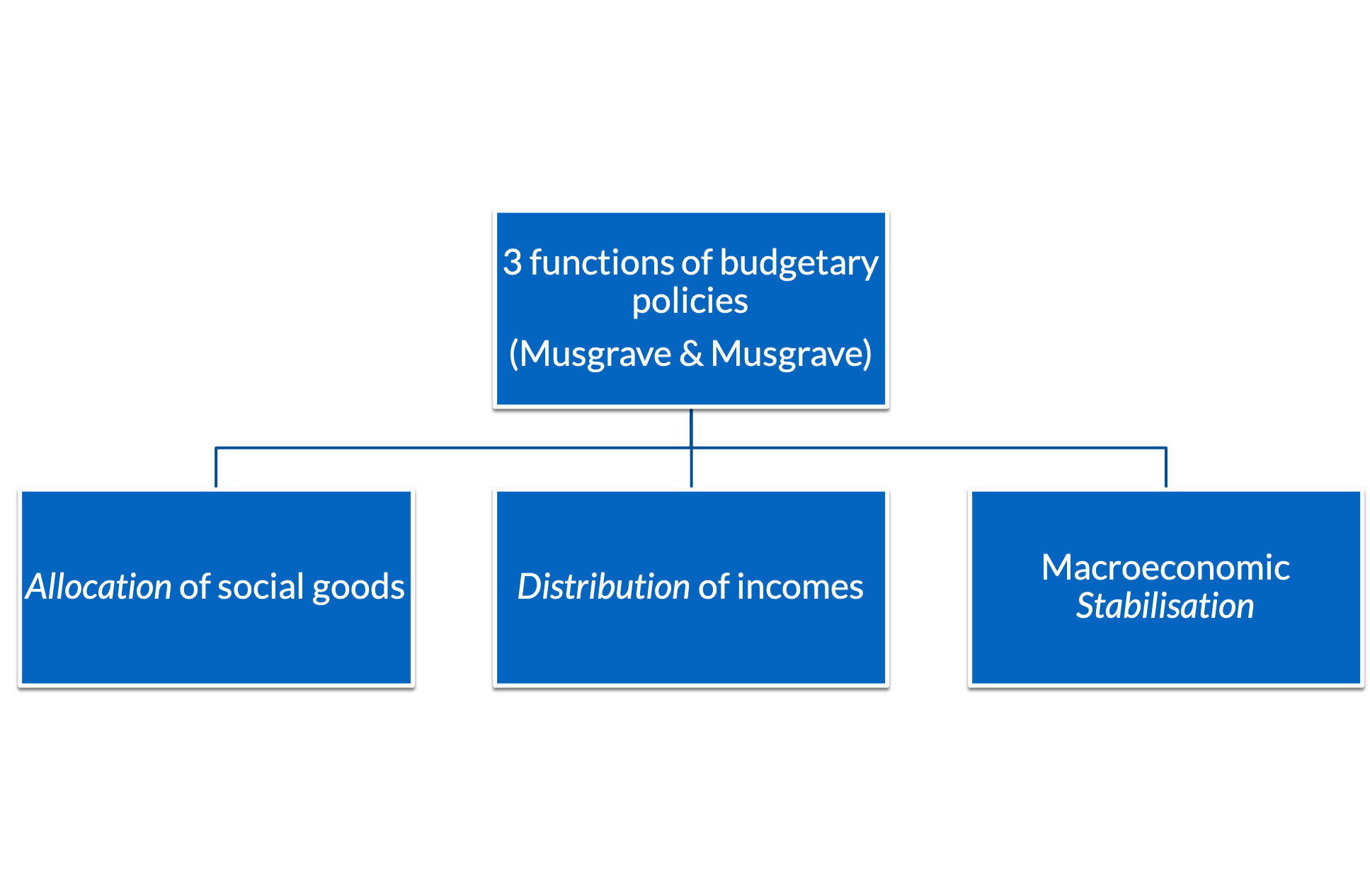
#104 No More GameStop Puns
This newsletter is really a public policy thought-letter. While excellent newsletters on specific themes within public policy already exist, this thought-letter is about frameworks, mental models, and key ideas that will hopefully help you think about any public policy problem in imaginative ways. It seeks to answer just one question: how do I think about a particular public policy problem/solution?PS: If you enjoy listening instead of reading, we have this edition available as an audio narration on all podcasting platforms courtesy the good folks at Ad-Auris. If you have any feedback, please send it to us.Global Policy Watch: Capital Markets (Enter, Stage Right) - Radically Networked Societies - RSJIt is difficult to write a newsletter this weekend and not talk about GameStop. Even for a public policy newsletter. But I like to believe if you hold your gaze long enough at any news going around, you will find a public policy problem. This becomes especially true if you run a twice-a-week public policy newsletter. Everything starts looking like a public policy issue soon enough.Anyway, a lot of what’s happened with the GameStop stock over the last couple of weeks is part of the broader gusts of change that’s buffeting society and culture since the global financial crisis (GFC). In that sense, it is useful to try and look beyond the story to understand the GameStop phenomenon. But let’s not get ahead of ourselves. Let’s do a quick recap of the story.GameStop is a brick-and-mortar video game seller. A fairly routine presence across large malls across America, GameStop was meandering its way into irrelevance over the last many years. After all, who goes to the mall to buy video games anymore? And then the pandemic arrived to compound its woes. Its days seem numbered. Soon it would join the likes of Blockbuster, JC Penney and scores of other businesses that couldn’t reinvent themselves for the digital age. That was the consensus on Wall Street. The Short SqueezeBut the Street is a strange place. A business with no prospects is also an opportunity to make money. By shorting its stock. You borrow a few shares of the company from someone (usually a broker) and you sell them in the market. Since you are borrowing the shares you pay a small charge for it. Plus the broker wants a bit of insurance in case things go bad. So you keep some money in an account that the lender can access in case things go south. Since you believe the stock price will go down, you wait for it to happen. When it does, you buy the same number of shares at the lower price and return them back to the broker. You pocket the difference. This is how it goes for any ordinary investor. If you happen to be a star fund manager of a hedge fund, you make it known to the world you are shorting the stock. You have a platform to voice your views and you send out a signal the stock will tank. Often this turns out to be a self-fulfilling prophesy. The stock does go down on your word and momentum does the rest. You make a tidy profit for your clients and a fat commission for yourself. Of course, plans go awry too. The stock goes up contrary to your bet. You think this is temporary so you wait. But the broker is nervous and wants some assurance. So you top up the account where you had put some money in case things went bad. If the stock keeps rising, you have to keep topping this up. Since your loss can be unlimited (the stock can keep rising), you feel hemmed in as the stock rises. You feel squeezed. So you decide you want to call this bet off. The only way to do this is to buy the stock at an elevated price. You do that. But remember you are not the only one who had shorted this stock. As the likes of you buy the stock at the elevated price, the price goes up further. And other short sellers feel the squeeze. This is called short squeeze. It can wipe you out. That’s that. Life is too short to know any more about short selling.And The Gamma SqueezeOn the other hand, there are people who bet the stock price will go up. That’s usual. The riskier bet is buying a call option on a stock. Here you don’t buy the stock. Instead, you buy an option that the stock will go above a certain price. This is a small bet. You lose all money if the stock doesn’t reach there. But if it does, you make a lot of money on a small bet. Since this is a bet, there’s always the other party (market maker) that’s sold you the bet. They sell many such bets. And to hedge their bets they go out and buy a small number of the underlying stock. In case the stock price does go above the bet price, they will atleast recover some of their losses if they own that stock. For simplicity let’s call the rate of buying the stock to hedge the bet as ‘delta’. You can see where this is heading. If the stock keeps going up and more people buy call options, you will have the market makers buy more of that stock. This in turn drives the price further up. That is the delta keeps becoming faster. This rate of cha
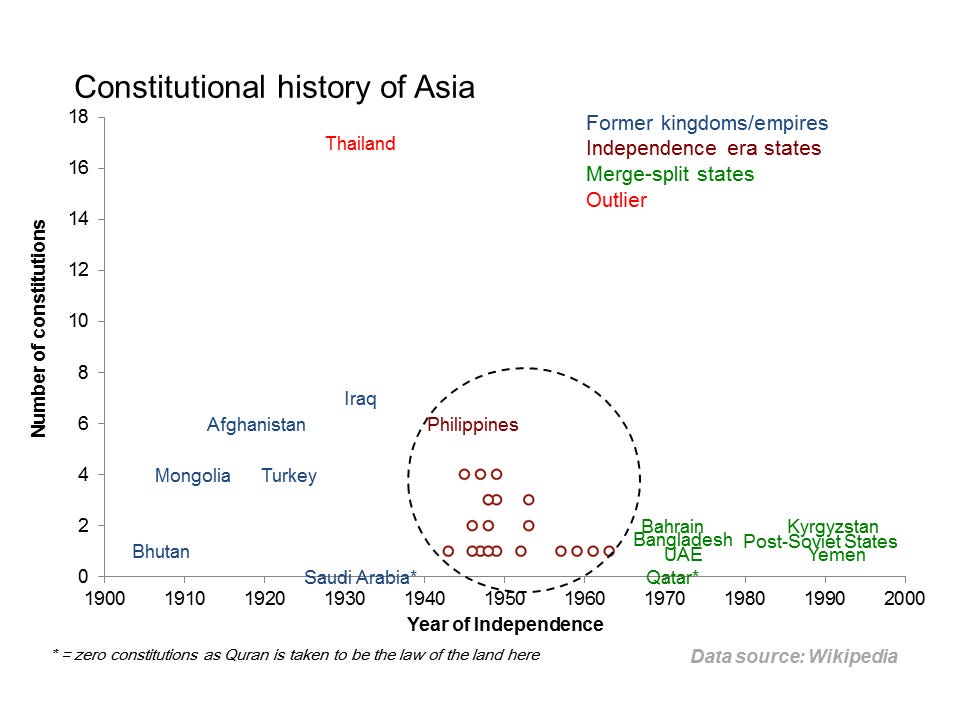
#103 Constitution Chronicles: 4 Books & 2 Speeches 🎧
This newsletter is really a public policy thought-letter. While excellent newsletters on specific themes within public policy already exist, this thought-letter is about frameworks, mental models, and key ideas that will hopefully help you think about any public policy problem in imaginative ways. It seeks to answer just one question: how do I think about a particular public policy problem/solution?PS: If you enjoy listening instead of reading, we have this edition available as an audio narration on all podcasting platforms courtesy the good folks at Ad-Auris. If you have any feedback, please send it to us.- Pranay Kotasthane & RSJIt’s the 72nd Republic Day today (as we write this). The Constitution of India is a revolutionary document. The past few years have seen some wonderful works of scholarship about our constitution. We’d like to call out a few here. The Constitution will remain a distant and daunting document as long as we don’t develop a habit of referencing it directly. Thankfully, EBC has been publishing a coat pocketbook version since 2009. It works great as a reference book. And it doesn’t hurt that it looks elegant and makes for a wonderful gift. As an aside, a dream project of mine is to convert the constitution into a knowledge graph that visually connects the cross-referencing articles in the Constitution. If any AtU reader has the technical chops to make this happen, please ping us. Madhav Khosla’s India’s Founding Moment: The Constitution of a Most Surprising Democracyis a brilliant and erudite work that is essential to understand the radical nature of our Constitution and the interplay of ideas and debates among people who cared deeply for this nation that led to its creation.Rohit De’s A People’s Constitution: The Everyday Life of Law in the Indian Republic challenges the idea that our Constitution was the product of an elitist imagination whose impact in the lives of ordinary Indians was minimal. De uses four examples to make his case about the Constitution empowering the people of India to take on the state. Tripurdaman Singh’s Sixteen Stormy Days: The Story of the First Amendment of Constitution of India shows how the idealism of the Constitution became a difficult burden to bear while running a government. No constitution can be eternally infallible. But we set a precedent of changing the architecture of our Constitution really early in the life of our Republic. We might never recover from that ‘original sin’.Gautam Bhatia’s The Transformative Constitution: A Radical Biography in Nine Actsexplains in detail why the Constitution at its core aims to bring about a social revolution. Many a constitution aim to transform the polity and economy but few aim to change society itself. This is what sets the Indian Constitution apart. The classic work on this line of reasoning is Granville Austin’s The Indian Constitution: Cornerstone of a Nation. This passage from Rohit De’s A People’s Constitution helps make sense of the remarkable achievement that the Indian Constitution is.“The Indian Constitution was written over a period of four years by the Constituent Assembly. Dominated by the Congress Party, India’s leading nationalist political organization, the assembly sought to include a wide range of political opinions and represented diversity by sex, religion, caste, and tribe. This achievement is striking compared to other states that were decolonized. Indians wrote the Indian Constitution, unlike the people of most former British colonies, like Kenya, Malaysia, Ghana, and Sri Lanka, whose constitutions were written by British officials at Whitehall. Indian leaders were also able to agree upon a constitution, unlike Israeli and Pakistani leaders, both of whom elected constituent assemblies at a similar time but were unable to reach agreement on a document. The Indian Constitution is the longest surviving constitution in the post-colonial world, and it continues to dominate public life in India. Despite this, its endurance has received little attention from scholars. [Rohit De, A People’s Constitution, pg 2]To explain the last point visually here’s a comparative chart plotting the number of constitutions against the year of independence for Asian states. India, of course, falls in the heavily clustered zone labelled “independence era states” - political communities that overthrew European colonialism to establish new nation-states. Zooming in this era, we find that a handful of constitutions in Asia have survived. Only three amongst them had a constituent assembly that brought together people to make their own constitutions. And even amongst the ones where one constitution has survived this far, most have been beset by politically active militaries and dictatorships. The Indian constitution is without a doubt an exception to be proud of. Among the many flaws that are often pointed out about our Constitution, the one we disagree most with is about how unmoored it was from India’s past. The accu
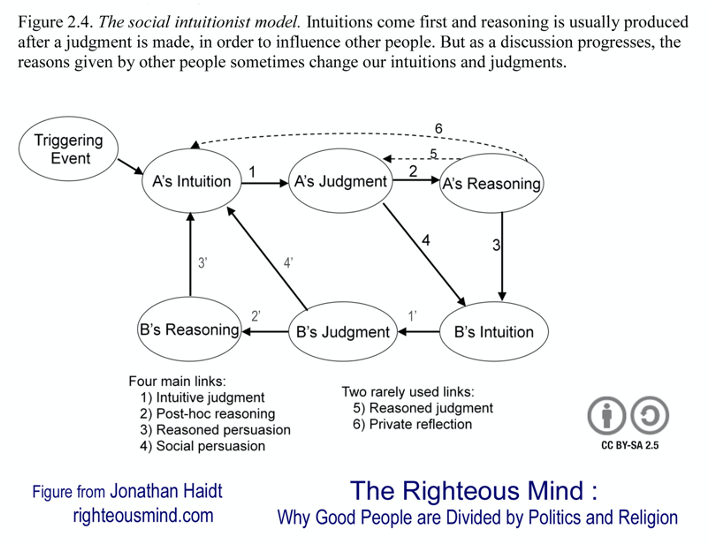
#102 How To Tame Your Elephant?
This newsletter is really a public policy thought-letter. While excellent newsletters on specific themes within public policy already exist, this thought-letter is about frameworks, mental models, and key ideas that will hopefully help you think about any public policy problem in imaginative ways. It seeks to answer just one question: how do I think about a particular public policy problem/solution?PS: If you enjoy listening instead of reading, we have this edition available as an audio narration on all podcasting platforms courtesy the good folks at Ad-Auris. If you have any feedback, please send it to us.A Framework a Week: The Basis of MoralityTools for thinking public policy- RSJThe other day at a dinner with a few friends (in our ‘bubble’) the topic of farm laws came up. The usual argument followed. Farmers need to be freed from the overbearing power of the state that has kept them poor for so long versus Ambani/Adani will take over and control food prices in future leaving nothing for the farmers or the consumers. Things were going according to the script till the issue of morality came up. Both sides were convinced they had the stronger moral argument to support them. Luckily, the dinner was served and good food quietened things down. This set me thinking about how we think about morality. Regardless of how we define political axes in India (left vs right, liberal vs conservative, statist vs free marketer), each side arrives at their ideology based on what they believe is morally right for the society. What’s the basis for our inherent self-righteousness and why does it differ among people?About MoralityJonathan Haidt in his superb book The Righteous Mind: Why Good People are Divided by Politics and Religiongoes deep into this question. When he was at graduate school, Haidt learnt about Kohlberg’s six stages of moral reasoning. This model (Kohlberg’s) developed in the early 60s held that moral reasoning which forms the basis for ethical behaviour evolves over six developmental stages. These six stages were broken into three levels: pre-conventional, conventional and post-conventional. Each stage was more evolved and better at responding to moral dilemmas than the last. Kohlberg’s six stages were:Level 1 (Pre-Conventional)* Obedience and punishment orientation* Self-interest orientation( What's in it for me?)Level 2 (Conventional)* Interpersonal accord and conformity( The good boy/good girl attitude)* Authority and social-order maintaining orientation( Law and order morality)Level 3 (Post-Conventional)* Social contract orientation* Universal ethical principles (Principled conscience) Haidt found something amiss in this model. It seemed too cerebral with the rational mind driving moral decisions. In 2001, he wrote The emotional dog and its rational tail where he presented the social intuitionist model as an alternative to the rationalist model. Haidt’s point was simple: moral judgment was widely believed to be caused by moral reasoning. Instead, he argued, we reach a moral judgment based on our intuitions that are shaped by moral and cultural factors (link 1 in the model below). We construct a scaffolding of moral reasoning after that to support our judgment (link 2). Judgments based on reason (link 5) and change in intuitions after private reflection (link 6) are quite rare. Theory Of Moral IntuitionIt is a far-reaching paper that helps explain a lot of things around us. What did Jefferson mean when he held certain truths as ‘self-evident’? Or, why do we now believe politics is downstream of culture? You can’t change politics unless you change culture. Why is this true? Or, why do you often end up in a political argument feeling frustrated that the other side doesn’t see your point of view which is moral or right?To Haidt, this is because of our moral intuition. We don’t know why something is wrong but we just know it’s wrong. Haidt defined moral intuition as:“..the sudden appearance in consciousness of a moral judgment, including an affective valence (good-bad, like-dislike), without any conscious awareness of having gone through steps of search, weighing evidence, or inferring a conclusion. Moral intuition is therefore the psychological process that the Scottish philosophers talked about, a process akin to aesthetic judgment: one sees or hears about a social event and one instantly feels approval or disapproval.” Haidt gave the elephant-rider metaphor to explain this. This is a metaphor to explain how our unconscious mind guides our conscious rational faculty. The elephant is the total of our intuitions and our unconscious influences. It is large and chooses its own path. The rational conscious mind is like the rider on the elephant. She thinks she is controlling the elephant but that isn’t true. “the mind is divided into parts that sometimes conflict. Like a rider on the back of an elephant, the conscious, reasoning part of the mind has only limited control of what the elephant does.” Only a very s

#101 The Vaccine Question 🎧
This newsletter is really a public policy thought-letter. While excellent newsletters on specific themes within public policy already exist, this thought-letter is about frameworks, mental models, and key ideas that will hopefully help you think about any public policy problem in imaginative ways. It seeks to answer just one question: how do I think about a particular public policy problem/solution?PS: If you enjoy listening instead of reading, we have this edition available as an audio narration on all podcasting platforms courtesy the good folks at Ad-Auris. If you have any feedback, please send it to us.- RSJNews reports suggest the vaccination drive among frontline workers is going slower than expected. The issue isn’t the supply. It’s demand. Frontline workers seem to have apprehensions about the safety of the vaccines.An Old StoryI was reading up on the history of vaccines last week after I heard a good BBC history podcast on Edward Jenner who did pioneering work on smallpox vaccine. Four points stood out:* The scourge that was smallpox. It was super infectious, and the fatality rates were over 30 per cent. It wiped out civilizations as European powers spread it through South America and Africa. There was no real cure except something called variolation where a small amount of material from smallpox scabs were given directly to healthy people. These healthy people then developed symptoms of smallpox but these were milder. Fewer of them died through this than the normal method of getting the pox.* Jenner discovered vaccination somewhat serendipitously. He came across a milkmaid who told him she won’t get smallpox because she had already got cow pox (a milder disease). Jenner tested this theory by giving his gardener’s son a small dose of cow pox material. After a few months, he exposed the boy to the smallpox virus on multiple occasions. The boy never developed smallpox. Soon, Jenner wrote his treatise ‘On the Origin of the Vaccine Inoculation’. It wasn’t accepted by any reputed journal because it lacked adequate scientific rigour (even for those days). Jenner self-published the treatise.* The vaccination method became hugely popular. There was no state drive to spread it. People tried it out and it spread through word of mouth. So widespread was Jenner’s fame that when France jailed a few doctors from England on some specious charge of espionage, he wrote to Napoleon to free them. Napoleon agreed because it was Jenner.* The anti-vaxxer movement started right away. Since Jenner published his methodology for anyone to adopt, the doctors who earned their living through variolation and its side effects didn’t take to it. They did their bit by spreading misinformation. Also, injecting cow pox material meant other infections could get into a health person. This meant there were always cases of people contracting, or even dying, of other diseases after taking the vaccine. The vaccine scepticism took roots. And it hasn’t gone away since then. Why The Scepticism?This got me thinking on why is it difficult for people to believe in the effectiveness of vaccines? Or, on climate change? Or, why do good policy proposals often lack popular support?Three reasons seem likely:* Our brains aren’t wired to believe non-intuitive concepts. These concepts aren’t often self-evident. Even if we understand them in theory, we end up doing the more intuitive wrong thing in practice. Behavioral economists have demonstrated this with multiple experiments. Vaccination is a non-intuitive concept. To inject oneself with a mild variant of a disease willingly in the hope that it will create long-term immunity goes against the intuitive idea of self-preservation. The notion of price in economics is similar for lay people. That price is a signal that adjusts itself to demand and supply instead of being centrally controlled is difficult to comprehend even if you are taught the theory. The first instance of surge pricing by Uber and the theory collapses. You believe it must be controlled. Pretty much the same way we react when people hear the news of deaths after vaccination. * People don’t get probabilities. That more people will likely die without a vaccine than because of an unproven side effect of taking the vaccine can be proven with data. But the notion that we invite the side effects because we take a vaccine on our own while contracting a disease is outside of our control is quite strong. This obfuscates our understanding of probability. Even during the current pandemic, the probabilities weren’t clearly thought through by the policymakers. The Covid-19 vaccine was clinically ready almost a year back when we had the virus genome mapped. From then on it was about doing a sound cost-benefit analysis of what level of vaccine testing is acceptable given the costs of loss of human lives and the impact of lockdown on the economy. We might have been ready to use a vaccine much earlier had we done this right. In any case, that the vaccine
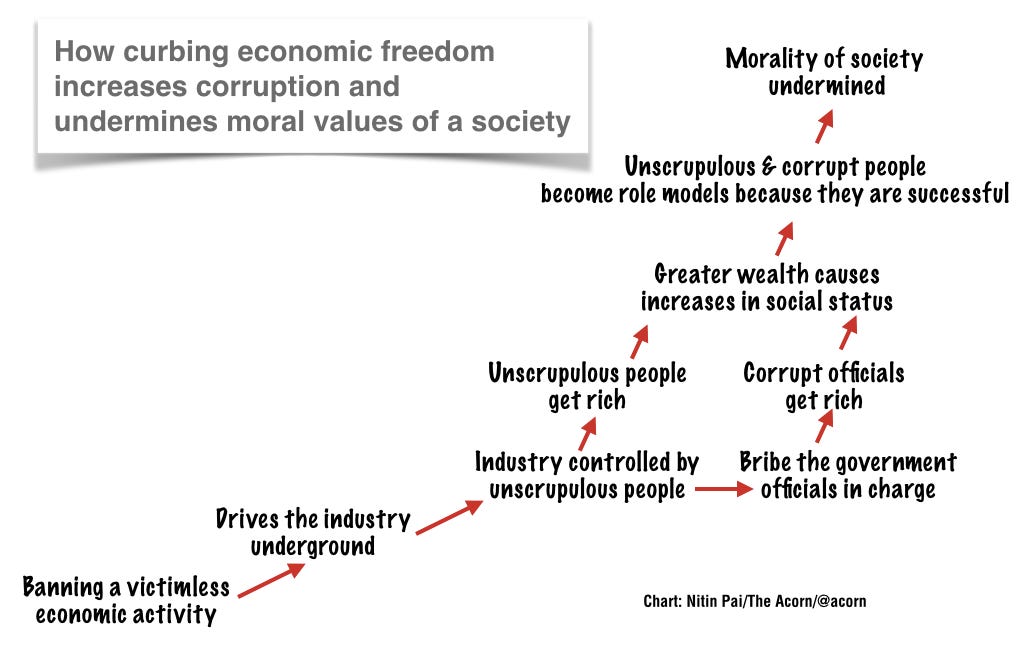
#100 Intoxicating Eardrops 🎧
We have hit a century! Thank you for reading us.This newsletter is really a public policy thought-letter. While excellent newsletters on specific themes within public policy already exist, this thought-letter is about frameworks, mental models, and key ideas that will hopefully help you think about any public policy problem in imaginative ways. It seeks to answer just one question: how do I think about a particular public policy problem/solution?PS: If you enjoy listening instead of reading, we have this edition available as an audio narration on all podcasting platforms courtesy the good folks at Ad-Auris. PolicyWTF: Prohibition and MoralityThis section looks at egregious public policies. Policies that make you go: WTF, Did that really happen?— Pranay KotasthaneIf one were to write a book chronicling bans on victimless crimes in India, the index entry for Morarji Desai would be a long one. After all, he holds the dubious distinction of turning lakhs of ordinary citizens into criminals by prohibiting two independent victimless crimes. The first ban, on alcohol, is rather well-known. The notorious Bombay Prohibition Act of 1949 was passed when Desai was the state’s Home Minister. To enforce the ban, the government created elaborate compliance machinery, misdirecting the limited policing capacity towards apprehending tipplers instead of protecting victims of other crimes. By the time this act was watered down in 1964, more than four lakh people had been convicted under Prohibition! The draconian law is well-documented in Rohit De’s excellent book The People’s Constitution. Read this, for instance:“The BPA granted vast powers to the police and Prohibition officers. It empowered Prohibition officers and all police officers to “enter at any time, by day or by night, any warehouse, shop, house, building, vessel, vehicle, or enclosed place in which [they have] reason to believe [that] intoxicants or utensils, apparatus or implements used for manufacturing intoxicants are kept.” They could also open packages and confiscate goods that they suspected of containing illicit liquor. Warrants were not required for arrests for any of these offenses or for searching premises. The BPA provided that people believed to have committed an offense under the act could be detained without trial and have their movements restricted. The Prohibition policy thus created a system that operated outside the penal code and the criminal procedure code that applied to most offenses.” [The People’s Constitution, Rohit De, page 45]The direct consequences of this PolicyWTF aren’t hard to anticipate. People either switched to alternatives that bypassed the law or started consuming a far worse quality of alcohol in the black market. For instance, De writes:By 1963 the Planning Commission was protesting the number of tinctures available in India. It pointed out that the British Pharmacopeia had reduced the number of tinctures from thirty-four in 1932 to fourteen in 1963, but the Indian Pharmacopeia of 1955 listed forty-two different tinctures. After interviewing leading medical representatives, the Planning Commission came to the conclusion that there was hardly any medical use of tinctures, which were outmoded and being replaced by modern drugs that were not alcohol-based. Spot checks revealed that several tinctures on the market were actually spurious, consisting solely of alcohol and a suitable coloring agent. Other manufacturers were producing eardrops and eyedrops with a large percentage of alcohol. The frustrated Planning Commission suggested that tinctures be abandoned for more modern medicine and that industrially produced eyedrops and eardrops be replaced by prescriptions that could be made by pharmacists. [The People’s Constitution, Rohit De, page 61]Says a lot about central planning. When there’s demand, supply finds a way out in imaginative ways that governments can’t clamp down easily. Desai’s second prohibition was on the sale and holding of gold, even in small quantities. It was this policyWTF that made smuggling of gold a lucrative profession. Here’s what the Directorate of Revenue Intelligence — a union government agency — observed in its Smuggling in India Report 2019-20: The economic reforms of 1990s witnessed the repeal of the Gold (Control) Act, 1968 that had prohibited the import of gold except for jewellery. The erstwhile statute had led to the emergence of a notorious network of gold smugglers during 1970s and 1980s. The economic reforms and liberalisation led to the imposition of a modest specific duty of Rs 300 on 10 grams in 2011-12 (increased from Rs 200 in 2010-11) on the imported yellow metal, bringing gold smuggling almost to a grinding halt. While both these policies had immediate adverse consequences, the general equilibrium effect was far worse: the successful and respected people in the society were the ones whose only competence was breaking the law.PS: Nitin Pai, on his blog, succinctly captures the general eq
#99 Rage Against The Dying Of The Light 🎧
This newsletter is really a public policy thought-letter. While excellent newsletters on specific themes within public policy already exist, this thought-letter is about frameworks, mental models, and key ideas that will hopefully help you think about any public policy problem in imaginative ways. It seeks to answer just one question: how do I think about a particular public policy problem/solution?PS: If you enjoy listening instead of reading, we have this edition available as an audio narration on all podcasting platforms courtesy the good folks at Ad-Auris. If you have any feedback, please send it to us.- RSJThe West German band Scorpions released their anthemic number Wind of Change sometime in early 1991. It is hard to find a better popular culture artefact that captures the mood in Europe during those times. The Berlin Wall had come down, democratic revolutions were sweeping across the countries of eastern Europe and it was clear the liberal democratic order running their economies on the ‘Washington consensus’ had won the Cold War.The lyrics had both that triumph and a hope for future contained within:“The world is closing inDid you ever thinkThat we could be so close, like brothersThe future’s in the airCan feel it everywhereBlowing with the wind of change..The wind of changeBlows straight into the face of timeLike a storm wind that will ring the freedom bellFor peace of mind”To broaden things a bit beyond Europe, the 90s were also the time when China was entering the global economy and India was ‘reforming’. Things seemed to be all converging towards the same end. The ‘end of history’ as Fukuyama put it was nigh. Liberal democracy was the ultimate political system. Nothing could better it. We just needed to wait for every nation-state to realise this truth.Not Quite The Expected FutureExactly 30 years later, the obvious question is staring at our face. There’s the rise of populist, xenophobic and authoritarian leaders all across eastern and central Europe over the last decade. Russia is a kleptocratic oligarchy that bullies it neighbours who don’t toe its line. On various counts, India has regressed on liberal values and has slowed considerably on reforms. China, contrary to expectations, didn’t become more liberal or democratic as it integrated itself with the world. Instead, it now mocks the liberal western order for its weakness while exporting its brand of illiberal governance as it continues it inevitable rise to the top. Leave these aside for a moment. What’s worse, even the western democracies that were flagbearers of liberalism are caught in the pincer-like grip of populist political urges on both the right and the left.So, what happened? How did the spirit of liberalism that pervaded the world in the 90s dissipate so easily? Well, there’s a whole small-scale industry that’s developed over the years to answer this question. And I must add I’m a platinum-card carrying customer of this industry. Over the last year or so I have been reading up every book that elaborates either on the failure of the market economy or the shortcomings of liberalism.The Light That FailedA recent entrant to this list is the magnificent ‘The Light That Failed: Why The West Is Losing The Fight For Democracy’ by Ivan Krastev and Stephen Holmes. Krastev, a Bulgarian by birth, serves at the Institute for Human Science in Vienna while Holmes teaches at NYU School of Law. They bring a wide east-west perspective to their arguments on why liberalism failed. Among the books I have read in this genre (including Fukuyama’s Political Order And Political Decay), this is the most analytical in understanding the underlying psychosis of illiberal, populist movements sweeping the world.At the start of the book, the authors talk about John Feffer, a young American, who in 1990 spends most of the year traversing across post-Communist Europe with an intent to record the transition of these countries into free, open and liberal societies. There’s something Naipaul-ian about this. Naipaul wrote Among The Believers based on his travels across non-Arabic Muslim world with a long pre-Islamic history (Iran, Pakistan, Malaysia and Indonesia) immediately after the Iranian Revolution. Naipaul wandered around without a definite plan, talked to a cross-section of people and ended up with deep insights about these societies. In a similar vein, Feffer spends most of his time speaking to local people to document their hopes and apprehensions in times of tumultuous change in their lives. And quite like Naipaul went back to the same countries two decades later and wrote Beyond Belief, Feffer goes back in 2015 to speak to the same people on how their lives have panned out in the intervening period. What he found was a warped kind of capitalism had taken root that had accentuated inequalities in the society. There was widespread resentment of western values that were transplanted there and a feeling of betrayal about the failed promise of 1990s. Feffer
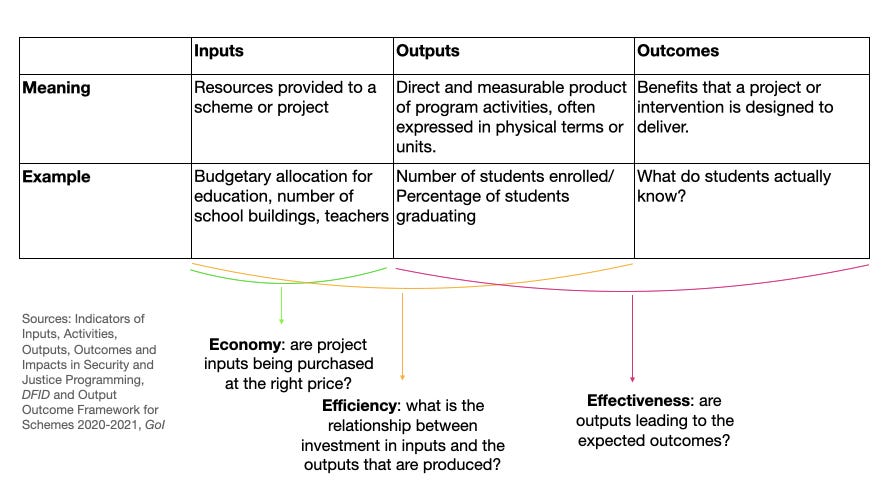
#98 Parliamentary Overslide 🎧
This newsletter is really a public policy thought-letter. While excellent newsletters on specific themes within public policy already exist, this thought-letter is about frameworks, mental models, and key ideas that will hopefully help you think about any public policy problem in imaginative ways. It seeks to answer just one question: how do I think about a particular public policy problem/solution?PS: If you enjoy listening instead of reading, we have this edition available as an audio narration on all podcasting platforms courtesy the good folks at Ad-Auris. Global Policy Watch — Storming Se Storming Tak: From 1642 To 2021- RSJHere’s a short quiz to begin things. What’s common to these dates (not an exhaustive list)?4 January 1642: EnglandFeb 27, 1933: Germany Feb 23, 1981: SpainApril 27, 2017: MacedoniaDifficult? Here’s a clue. The latest entrant to this listJan 6, 2021: USA‘Workout-able’ now? These are select instances of attacks on parliament buildings in democracies over the years. Of course, this is different from attacks that happen within the parliament building where lawmakers have a go at each other using microphone stands, paper-weights and files as projectiles. That’s a rich and glorious tradition where Taiwan, South Korea and India are global leaders.The attacks on parliament from the outside is a different phenomenon. It points to a fracture in the common belief among citizens about the power or legitimacy of the sovereign. This is not mere symbolism. Often the attacks are real attempts to disrupt or change the outcomes of a parliamentary process to elect the head of the government. That’s what happened, say, in Spain on Feb 23, 1981 when Lt. Col Tejero and his small band of army men burst into the lower house of the Spanish legislature during the vote to elect a new Prime Minister. The attempt to overthrow the democratic regime came unstuck when King Juan Carlos denounced it in a televised address. The storming of the Macedonian parliament in 2017 was done in somewhat similar circumstances though without any section of army backing it. That brings us to Germany. The fire at Reichstag in 1933 right after the Hitler had been sworn in as the Chancellor was blamed on a communist conspiracy. It is almost certain now that this was engineered by the Nazis to demonise their opponents. This incident of arson was then used by the Nazis to issue a nationwide emergency and pursue the communists with a vengeance. The Communists MPs were arrested and the Nazis won the elections to those vacant seats as was expected. Within a year the Nazis had complete control over the German state. You know how that story ends.The Original StormingMy interest, however, is in the first instance of the storming of a Parliament: Jan 4, 1642. This was no ordinary rebel laying siege over the lawmakers in Westminster. It was Charles I, the king of England. He entered the Parliament with armed soldiers to arrest five MPs who he accused of treason. What had they done? Well, to the king and his loyalists, they were anti-nationals. Sounds familiar. They were accused of encouraging Scotland to invade England and a conspiracy to defame the king. Charles went into the parliament and called out the name of the five MPs seeking their arrest. He asked the House speaker, William Lenthall, about their whereabouts. Lenthall responded:“May it please your majesty, I have neither eyes to see nor tongue to speak in this place but as this House is pleased to direct me whose servant I am here; and I humbly beg your majesty's pardon that I cannot give any other answer than this to what your majesty is pleased to demand of me.” In a historic first of sorts, the speaker had sided with the parliament over the divine will of the king.“All my birds have flown,” Charles I said as he scanned the member benches for the five MPs.The storming of the parliament by Charles I was a seminal moment in the history of democracy. The tussle for sovereignty between the parliament and monarchy that had been simmering for over three decades had reached its flashpoint. The English parliament in those days was a collection of landed gentry who controlled the exchequer through their power of collecting taxes. The king needed its approval to raise taxes. By the time Charles I ascended the throne in 1625, the Crown was deep in debt no thanks to the expensive wars of the Tudor and Stuart periods and the lavish lifestyles of the royalty. This apart Charles had other problems too. There was a deep suspicion among the aristocrats about the strength of his Protestant affiliation after he married the Catholic Bourbon princess Maria of France. His subsequent religious acts did nothing to dispel this impression. The desire of Charles I to go to war with Scotland meant he wanted the parliament to increase taxes and do his bidding. The parliament continued to resist and Charles dissolved it in 1629. The next 11 years when he ruled without a sitting parliament is termed his ‘persona

#97 What To make Of Protests? 🎧
This newsletter is really a public policy thought-letter. While excellent newsletters on specific themes within public policy already exist, this thought-letter is about frameworks, mental models, and key ideas that will hopefully help you think about any public policy problem in imaginative ways. It seeks to answer just one question: how do I think about a particular public policy problem/solution?Welcome to the mid-week edition in which we write essays on a public policy theme. The usual public policy review comes out on weekends.PS: If you enjoy listening instead of reading, we have this edition available as an audio narration on all podcasting platforms courtesy the good folks at Ad-Auris. If you have any feedback, please send it to us.- RSJThe farmers protesting against the three new farm laws (“Farm Laws 2020”) have entered into the seventh round of negotiations with the Union government. We have discussed these laws a few times here, here and here. For a moment, leave the laws aside and focus on the protests. Not the conspiracy theories about who is funding them and what their ‘real’ agenda is. But on how protests work. I had a few questions as I thought about them.Why do some issues generate protest over others?Take the last couple of months in India. We have the new farm laws that seek to open up the markets for farmers to freely sell their produce. The economic conditions of our farmers under the APMC mandis and MSP regime need no retelling. The new laws are new only for India. In most parts of the world, this is normal. Yet we have protests that have built up quite a steam. Now contrast this with the Prohibition of Unlawful Conversion of Religion Ordinance that the UP Assembly passed in November. This so-called love jihad law is being sought to be replicated in other states like Himachal Pradesh, MP, Haryana and Karnataka. The provisions under these laws (which are quite similar across the states) fly in the face of the fair, liberal and democratic order that India has enshrined in its constitution. There is a subversion of the individual right to freedom of religion, free will and of the fundamental legal principle on who bears the burden of proof. And it isn’t as if there weren’t existing laws to curb forced mass conversions in these states. These laws have only one purpose – to strengthen the strawman about a global Islamic conspiracy to turn India into a Muslim majority state. Demographics, arithmetic, or logic militate against this strawman. But the strawman has been created and now it is about demolishing it to prove the effectiveness of the regime. So, what explains the absence of any mass protests against questionable love jihad laws while there are protests against farm laws that most political parties had in their manifestos in the past?There are two possible reasons for this. First, for any protest to start there is a need for a core group that feels aggrieved by an issue and questions the fairness of the actions of the state or the society. Both the points are critical – a sense of hurt and a moral basis to question the action that has created it. Second, the core group has to have a long-held common identity that’s clearly defined. It isn’t an identity that has been formed only because of the issue on hand. Now let’s use this to look at love jihad laws. Is there a core group that’s aggrieved by this? Muslim youth? Not really. The idea that there’s an organised group of Muslims being trained to woo Hindu girls in some kind of love academy and then sent out to marry them and Islamise India is in the realm of fantasy. As a strategy, it’s plain stupid with high investment and low returns. There’s no ‘superhit formula’ for wooing girls and Hindu girls aren’t waiting to be picked while having no agency of their own. So, there won’t be any Muslim or Hindu protest against these laws. As an aside, this was different in case of the Citizenship Amendment Act. There you had a core group (of Muslims citizens) who had a reason to be aggrieved and a moral basis to protest. On love jihad laws, the only group aggrieved would be those who believe in liberal values of freedom and justice. They will question the fairness of it. But does this group of ‘liberals’ have a long-held common identity? Not exactly. Most liberals can’t agree on the definition of liberals itself, forget about forging a common identity. So, don’t expect mass protests against a genuinely bad law anytime soon. Also, expect more of such laws in future that play the dog-whistle to the base without any protests from any group. Things are a bit different with farm laws. There’s a core group of farmers in Punjab and Haryana (and possibly in western U.P.) that benefit from the MSP regime who are agitated by these laws. That they – farmers whose toil ensures food on our table – are being given short shrift gives them a moral basis to protest. Finally, as farmers, they have a common identity around which they have organised, politically or

#96 A Lazy Start To 2021🎧
This newsletter is really a weekly public policy thought-letter. While excellent newsletters on specific themes within public policy already exist, this thought-letter is about frameworks, mental models, and key ideas that will hopefully help you think about any public policy problem in imaginative ways. It seeks to answer just one question: how do I think about a particular public policy problem/solution?PS: If you enjoy listening instead of reading, we have this edition available as an audio narration courtesy the good folks at Ad-Auris. If you have any feedback, please send it to us.— RSJHappy 2021 everyone!There’s no logical reason to believe that turning over to a new year will make a difference in the fortunes of humankind. But we are an optimistic lot. So, we hope the spectre of 2020 is behind us. It was what it was. If you are a believer, you’d think there was a cosmic message to us through the year. Like Alexander Pope wrote in that great defence of the ways of God to men – An Essay On Man:“Hope humbly then; with trembling pinions soar;Wait the great teacher Death; and God adore!What future bliss, he gives not thee to know,But gives that hope to be thy blessing now.Hope springs eternal in the human breast:Man never is, but always to be blest:The soul, uneasy and confin'd from home,Rests and expatiates in a life to come.”Pope concludes with:“All nature is but art, unknown to thee;All chance, direction, which thou canst not see;All discord, harmony, not understood;All partial evil, universal good:And, spite of pride, in erring reason's spite,One truth is clear, Whatever is, is right.”We must accept whatever is, is rightWe will continue to write to help us make sense of the world around in 2021. But a year like 2020 helps put things in perspective. The world works in mysterious ways. You can’t control it. Spontaneous order is ordained. Ten (or Fifteen) Predictions For 2021The laziest way to start a new year edition is to post predictions. Admittedly, I’m basking in my garden with the late winter morning Bangalore Sun warming my toes. So, let’s do the lazy thing here.#1By the end of 2021, we will all realise we overrated the long-term impact of the pandemic on everything. There won’t be any ‘new normal’ to write home about. Things will be more of the same. There will be a plethora of books on the post-pandemic world (hey, Pranay has edited one too😊) and the lessons to be drawn from the pandemic. But my guess is barring the strange experience of the lockdown that will linger in our memories, the world at the end of 2021 will be quite similar to how it was at the end of 2019. There will be fewer business travels and more people will work from home, but this will be a mere acceleration of the long-term trend than a radical departure from the past. That apart there won’t be any great reset. #2Global financial markets will be one area where the impact of the pandemic will be felt in the (really) long term. Don’t worry we will all be dead by then. The size of the stimulus in most developed economies and the amount of liquidity pumped into the system will mean two things – eventual inflation and a repeat of the taper tantrum in future. In some ways, we have subscribed to the modern monetary theory (MMT) without admitting to it. Deficits have come to mean nothing and any future slowdown in the economy or fall in markets will mean more stimulus. Someone in future will be left holding the can. We can’t see them nor can we feel deeply empathetic about them. ‘Deficit is all a myth’ line of argument will gather momentum.#3The stock markets are in bubble territory now. But there won’t be any reckoning in 2021. The stocks doing well during the pandemic will continue to do well. Others who were impacted by the lockdown will limp back to normalcy. With interest rates at historic lows and excess liquidity all around, the top 2-3 per cent who invest in equity will have no other options but to park surplus funds in the market. The millennials (who believe the markets only go up?) will enter the markets in large numbers on the back of zero-fee platforms like Robinhood and Zerodha. The divergence between the real economy and the street will continue to confound all of us. #4We spent a lot of time in 2020 thinking about economic recovery. What policy actions will aid it, what will be the shape of it and how quickly will we get back to the pre-pandemic levels on a sustained basis? The early signs are of a K-shaped recovery around the world. This will be strengthened in 2021. A small set of companies and people will see a rising graph of growth and prosperity. The long-term impact of the pandemic will be to worsen inequality. The early but definite signs of this will show up in 2021. In India, this K-shaped recovery will have a second-order impact. We will measure recovery on the rising part of the ‘K’ since the data there is available at a greater frequency. Expect terms like ‘roars back’, ‘strikes back’ to be in vogue in th
#95 Lippman-Dewey Debates: Janata Is Janardhan? 🎧
Note: Anticipating The Unintended will be on its annual break over the next two weeks. Normal service will resume from Jan 3, 2021 This newsletter is really a public policy thought-letter. While excellent newsletters on specific themes within public policy already exist, this thought-letter is about frameworks, mental models, and key ideas that will hopefully help you think about any public policy problem in imaginative ways. It seeks to answer just one question: how do I think about a particular public policy problem/solution?Welcome to the mid-week edition in which we write essays on a public policy theme. The usual public policy review comes out on weekends.PS: If you enjoy listening instead of reading, we have this edition available as an audio narration on all podcasting platforms courtesy the good folks at Ad-Auris. If you have any feedback, please send it to us.- RSJThe focus of this newsletter is to make public policy accessible to the public. That’s a claim we often make around here. There are thinktanks and public policy specialists to advise those who are in power. We are at the other end of the pipe. Trying to influence the demand side of the market of democracy. The hope is that an aware and an enlightened public will demand better from their representatives. Once the pattern of demand changes, supply will adjust itself. The reassuring bit about working at this end of the democratic pipe is the freedom to engage with and critique policies on their merits without tiptoeing our way around giant political or bureaucratic egos. Also, simplifying the language used in policy discourse is fun and enriching. Of course, the difficult part is getting people to listen to you. Not because it is difficult to reach them. Instead as we often realise, the public isn’t interested to know more. They interpret the world around them with limited information available to them and construct an imagined world in their heads. This constructed imagination is the lens through which they view all information they receive. This is what spurs them into political or social actions. There’s no good answer on who should a public policy newsletter try and influence? The powers that be or the general public? I realised last week while reading about the Lippman-Dewey debates, this is a century-old question. In the 1920s, the two were engaged in a fascinating duel of ideas and philosophy. While both believed in democracy, one saw it half-empty, the other half-full. Lippman’s Scepticism About The Ordinary CitizenDemocracy is founded on the belief that public opinion matters. But as the society becomes more advanced, knowledge more specialised and a wider range of issues impact lives, citizens find it difficult to inform themselves about all the issues impacting their lives. The ordinary public can’t be ‘omnicompetent’. This is the problem of knowledge that Lippman probed in his two seminal books – Public Opinion (1922) and The Phantom Public (1925). As Lippman wrote:"The real environment is altogether too big, too complex, and too fleeting for direct acquaintance.”The ordinary citizen “lives in a world he cannot see, does not understand and is unable to direct.” This leads to an inevitable discrepancy between “the world outside and the picture in our heads.” This “pseudo environment” in our heads is what we use to form political and public opinions. This is what political parties and media work on to create narratives. For Lippman this was the flaw with the democratic ideal of public participation in decision making. They are coming at it with the “most inadequate picture”.Lippman though is empathetic to the ordinary citizen’s plight:“My sympathies are with [the citizen], for I believe that he has been saddled with an impossible task and that he is asked to practice an unattainable ideal. I find it so myself for, although public business is my main interest and I give most of my time to watching it, I cannot find time to do what is expected of me in the theory of democracy.”Democracy needs competent citizens. If the majority of voters aren’t able to make sense of the real world around them to make clear-headed judgments, what’s the point of it all?Lippman’s response to this problem was in the role of experts. Representative politics “cannot be worked successfully…..unless there is an independent, expert organization for making the unseen facts intelligible”. An enlightened oligarchy of experts is the answer. In Lippman’s prescription, the expert is a disinterested participant with deep mastery of an area who advises those in power within the government or administration. As Lippman writes:“The power of the expert depends upon separating himself from those who make the decisions, upon not caring, in his expert self, what decision is made.”For Lippman this separation of responsibilities is critical for the functioning of the democracy. The role of the ordinary public is restricted in mobilising themselves to elect their representati

#94 Reforms: Caught Consensus, Bowled Hubris
This newsletter is really a weekly public policy thought-letter. While excellent newsletters on specific themes within public policy already exist, this thought-letter is about frameworks, mental models, and key ideas that will hopefully help you think about any public policy problem in imaginative ways. It seeks to answer just one question: how do I think about a particular public policy problem/solution?PS: If you enjoy listening instead of reading, we have this edition available as an audio narration courtesy the good folks at Ad-Auris. If you have any feedback, please send it to us.PolicyWTF: What Broke the Constitution’s Seventh Schedule?This section looks at egregious public policies. Policies that make you go: WTF, Did that really happen?— Pranay KotasthaneThe Seventh Schedule of the Consitution has three lists scoping out the responsibilities of the parliament and the state legislatures. List I contains the subject-matters over which the parliament has exclusive power to make laws (defence, foreign affairs, banking etc.). List II does the same for state legislatures (health, public order, water, land, agriculture). List III contains subject-matters on which both the parliament and state legislatures can legislate (education, forests etc.). Looks neat. Except that this assignment of powers hasn’t stopped union governments from designing and funding hundreds of schemes that squarely fall under List II — National Health Mission, Swachch Bharat Mission, Pradhan Mantri Awas Yojana, to name a few. You would imagine that these schemes, known as Centrally Sponsored Schemes (CSS), would be opposed tooth and nail by state governments, right? Wrong. We’ve reached a low-level equilibrium where the state governments have grudgingly reconciled to the reality of CSS. They oppose it on paper or complain to Finance Commissions but are also happy to receive funds as part of these union government-sponsored schemes. And so, successive union governments have continued to misuse Article 282 of the Constitution — which permits union and states to make grants for any ‘public purpose’ regardless of where that purpose lies in the seventh schedule — to interfere with state subject-matters. With no clear effective assignment of responsibilities, it is not surprising that people expect prime ministers to provide them with water supplies, public order, and clean streets, none of which are union government subjects. Without a clear assignment, there is no way to fix accountability. Without accountability, citizen preferences don’t matter. The State does what it can and citizens endure because they must. In short, the Seventh Schedule is broken. As NK Singh, Chairman of the 15th Finance Commission argues: there’s a need to change the Seventh Schedule and Article 282, both. Absent that, we will keep CSS proliferating depending on how populist a union government wants to be. At present, there are approximately 211 schemes and sub-schemes under the 29 umbrella CSS!For more, read:* Ten Little Schemes, my article for Pragati* Chapter 5, Review of Inter-Governmental Transfers and Consolidated Public Finance, Report of the Fourteenth Finance Commission, Volume 1.* Rationalising Central Schemes, The Financial Express, M Govinda RaoIndia Policy Watch #1: Missing Artists in Our PolityInsights on burning policy issues in India— RSJThe farmers’ protests are now into their third week. The Union government seems to be in the mood for talks with farmer leaders now; after trying out the other alternatives, namely, barricading road, lathi-charging and using water cannons in cold Delhi winter. We aren’t sure about the kind of compromise that will be worked out. The track record of the government in arriving at a common ground isn’t great. That we have fluffed our lines on reforms in a sector that needs them direly is quite incredible. It is starker when you consider the numerous expert committees in the past that have recommended exactly what the new agriculture laws aim to achieve. These recommendations have had broad-based support from most political parties and even made their way into their election manifestos. With such support and history, you’d expect we would have got these much-needed reforms off the ground. Yet we are struggling with it. It’s an object lesson in public policy implementation.A Reform Whose Time Has ComeWe have made our arguments in support of farm reforms before. No one can claim with conviction our agriculture policies have been a success since independence. The entire agriculture value chain – from pricing, storage, distribution and purchase – has been in a regulatory chokehold that was designed during the early 60s. Faced with successive failures of monsoon and with the memory of famines (Bengal, particularly) still fresh, we had to seek US support to import food grains under the PL 480 scheme. The scars of that event led to the Green Revolution that saw a dramatic increase in agriculture productivity. Agriculture in I
#93 Democracy, Aap Too Much Ho!🎧
Note: Sorry for the delay in the mid-week edition. Life intervenedThis newsletter is really a public policy thought-letter. While excellent newsletters on specific themes within public policy already exist, this thought-letter is about frameworks, mental models, and key ideas that will hopefully help you think about any public policy problem in imaginative ways. It seeks to answer just one question: how do I think about a particular public policy problem/solution?Welcome to the mid-week edition in which we write essays on a public policy theme. The usual public policy review comes out on weekends.PS: If you enjoy listening instead of reading, we have this edition available as an audio narration on all podcasting platforms courtesy the good folks at Ad-Auris. If you have any feedback, please send it to us.- RSJReaders are sending in all sorts of questions. So, our parampujya guru of economic and political reasoning, Prof. Arthananda Ilyich Smith-Hayek (AISH), is back. Prof AISH is a home-grown economist without a single videshi bone or cartilage in him. He is a veritable sangam of three key economic streams – Neoclassical, Marxist and Austrian – whose advice can be safely consumed in these low trust times. Over to the burning question.Dear Prof,The CEO of Niti Aayog yesterday complained we have too much democracy in India. He later claimed he was misquoted. That, of course, dispelled any remaining doubt among us that he had indeed made that statement. All hell broke loose. Memes appeared, Immanuel Kant was quoted, and Twitter had a field day with the usual leftist malcontents suggesting fascism is nigh. I don’t understand this. All my life living in India I have felt we have too much democracy. Nothing moves in India because everyone has a say. You can’t get anything worthwhile done because no one is willing to pay any price. We elect goons and criminals because every fool has a vote. Anything that’s good for the majority can be hijacked by a minority that’s vocal and organised. We have all seen this. How can we outrage over the ‘too much democracy’ comment when we know it is true? What do you have to say? I hope you are wise enough to know what’s good for us.Yours etc,Prajatantra MallikProf AISH:Dear Prajatantra,Thank you for writing in. There’s always a complaint of too much democracy when you are thwarted by the people. Never when you win elections by the slenderest of margins but earn the right to govern with full powers of the executive. That’s how things roll.Anyway, there are three parts to my answer. The first part will clarify a few things about democracy and the state. The second part will be on the critique of democracy over the years. And at the end, I will talk about how despite everything blaming too much of democracy in the Indian context is meaningless.Democracy, Republic, and The StateTo start with democracy is a form of government - nothing more. There is an element of religious passion towards it by its adherents. This is particularly true in America and, possibly, stems from Walt Whitman, the poet of Democracy. Whitman elevated democracy to a mystical phenomenon. His poem For You O Democracy (from Leaves of Grass, 1892) is a hymn to it:“I will plant companionship thick as trees along all the rivers of America, and along the shores of the great lakes, and all over the prairies,I will make inseparable cities with their arms about each other’s necks, By the love of comrades, By the manly love of comrades.For you these from me, O Democracy, to serve you ma femme!For you, for you I am trilling these songs.”It is difficult to top that. Democracy is an end to itself and it must be valued with passion. Whitman’s spirit pervades the US polity till date. The American exceptionalism over the last century has made democracy more than a mere form of government. It has come to be seen as an ideal for society. India too adopted not just a form of government following independence, but this belief about the virtues of democracy beyond it. This is one part of the problem.But let’s start with its definition itself. Democracy may not even be an ideal form to choose who will govern the state. But like Churchill (never) said it is the worst form of government except for all the others. Broadly, it means everyone has a share of the government and the majority view prevails. This is understood to recognise every citizen has an equal opportunity in creating the legislature that will govern them. The state that has the monopoly of legitimate violence over its citizens has multiple arms to conduct its affairs. Not every arm of it is democratic in nature like the legislature. We don’t elect our judges or our bureaucrats through popular mandate. In most cases, the process is designed to find the most qualified or the most appropriate person for the role instead of the most popular. Through an elaborate mechanism of checks and balances, these non-democratic institutions are subject to the will of the people. There ar
#92 India's Marathon 🎧
This newsletter is really a weekly public policy thought-letter. While excellent newsletters on specific themes within public policy already exist, this thought-letter is about frameworks, mental models, and key ideas that will hopefully help you think about any public policy problem in imaginative ways. It seeks to answer just one question: how do I think about a particular public policy problem/solution?PS: If you enjoy listening instead of reading, we have this edition available as an audio narration courtesy the good folks at Ad-Auris. If you have any feedback, please send it to us.New Book Out! — India’s Marathon: Reshaping the Post-Pandemic World Order— Pranay KotasthaneI’ve co-edited India’s Marathon — a collaborative effort that brings together bold ideas on India’s place in the changing world order from some of India’s finest young thinkers. (India’s Marathon, book cover by Anirudh Kanisetti)Don’t take my word for it. This is what Ambassador Shivshankar Menon writes in his foreword:“This volume poses questions which everyone wants answered but few dare to reply: how will the world order evolve and how can India deal with it? The Takshashila Institution has brought together some of the best minds to answer this question, and to give an Indian perspective on world order issues. Just for this the book deserves to be welcomed. This volume consists of coherent contributions from these scholars covering how India should manage its external relationships and the reforms that India needs to undertake domestically.… No reader would or should agree with everything in this book. I, for one, am not sure that India’s choice is between alignment and non-alignment any more, or that strategic autonomy is an unattainable goal for India. After all, strategic autonomy by one name or another is what all powers, even superpowers, seek. But this book would have served its purpose if it provokes thought and rational discussion about India’s place in the emerging world, whether it is ‘orderly’ or not. Despite the daunting world that seems likely, and the scale and scope of the necessary domestic reforms outlined in this book, I found it reassuring that so many contributors found it possible to rationally conceptualise these issues from an Indian perspective, and to map out a path through the dimly sensed future that awaits us.”Pranay Kotasthane, Anirudh Kanisetti, Nitin Pai (editors). India's Marathon (Kindle Locations 144-150). The Takshashila Institution. Kindle Edition.This Twitter thread lists all chapter ideas and contributors. It’s a stellar list, I tell you.Get your copy from Amazon India. Do give it a read!Global Policy Watch: Fukuyama (et al) And The ‘Middleware’ Solution To Social Media Monopolies — RSJTwitter India did a first last week. It labelled a tweet by BJP IT cell head as ‘manipulated media’. It claimed the label was based on its Synthetic and Manipulated Media policy. This was a policy launched by it in February this year. The rule for its user states:“You may not deceptively share synthetic or manipulated media that are likely to cause harm. In addition, we may label Tweets containing synthetic and manipulated media to help people understand their authenticity and to provide context.”Curbing Digital ColonialismIt is unclear if Twitter found no such tweets in India since February that satisfied the criteria for manipulate media. Surely, this wasn’t the first instance of false information shared by a blue-tick user in India. In any case, a beginning has been made and it will be interesting to see where and how far it will go with this. These steps are part of similar efforts by other social medial platforms to self-regulate themselves as they come under increasing government and regulatory scrutiny. There is a greater urgency among regulators around the world to curb the abuse of the dominant positions of the big tech platforms. EU pursued antitrust charges against Google for over a decade. In 2018, it fined it nearly $10 billion. But not much has come out of it. Google was left to devise its own measures to offer a level playing field to its rivals. Google continues to dominate the search-engine market in Europe with over 90 per cent market share. The U.S. Justice Department last month sued Google for violating federal antitrust laws in running its search and advertising business. Also, the US Congressional investigation into the power of Big Tech (Amazon, Apple, Facebook and Google) concluded in September this year with a voluminous 450-page report. The report indicts them in no uncertain terms:"These firms have too much power, and that power must be reined in and subject to appropriate oversight and enforcement. Our economy and democracy are at stake.”India hasn’t yet taken a concrete view about the dominance of Big Tech but there are rumblings. Last month, India’s antitrust regulator (CCI) opened an investigation against Google based on complaints from the start-up ecosystem. The practices of ‘forci
#91 Hope And Despair In India🎧
This newsletter is really a public policy thought-letter. While excellent newsletters on specific themes within public policy already exist, this thought-letter is about frameworks, mental models, and key ideas that will hopefully help you think about any public policy problem in imaginative ways. It seeks to answer just one question: how do I think about a particular public policy problem/solution?Welcome to the mid-week edition in which we write essays on a public policy theme. The usual public policy review comes out on weekends.PS: If you enjoy listening instead of reading, we have this edition available as an audio narration on all podcasting platforms courtesy the good folks at Ad-Auris. If you have any feedback, please send it to us.- RSJIf you haven’t been living under a rock, you would have come across this Andy Mukherjee column in Bloomberg over the last weekend. Titled ‘Why I’m Losing Hope In India’, it is a searing and despairing piece on how India is losing its window of opportunity for growth and prosperity. By Mukherjee’s own high standards of writing op-eds, it is a tour de force. Predictably, the reactions to it have swung between extremes. There are those for whom Mukherjee has voiced, in limpid prose, their anxieties and disappointments with how things are turning out in India. For others, this is another elite, wringing his hands and pandering to his own discredited lot, as a new and different India takes shape. The few belonging to neither camps have praised the piece for raising pertinent issues but have taken exception to the deep pessimism pervading it. Now, there are occasions when we too receive mails berating us for our pessimism about India. It is a criticism we fail to comprehend. You can contest the interpretation of facts or the logic underlying an argument. That’s understandable. It is difficult to argue on why someone shouldn’t feel a certain way. Also, like we have mentioned it a few times, the reason we write this newsletter is because of our optimism about the people of India. That by putting out our point of view regularly, we will have a public that will demand better policies from its representatives. We like to think Mukherjee feels the same way. There is no reason to question his pessimism so long as his arguments support it. So, do his arguments merit his pessimism? Or is he projecting his biases and adding to the constant drumbeat of gloom that’s the par for the course among analysts living abroad who cover India? Anantha Nageswaran in his blog – Why it may be the wrong time to give up hope on India? – has a factual riposte to many points that Mukherjee makes. He goes overboard a bit in defending the indefensible like demonetisation, handling of migrant issues during lockdown (quoting Bibek Debroy on some 1979 statute to absolve the Union government) and some unconvincing GDP comparisons with China by scaling them to non-financial sector debt. But these aside, he makes a good case for remaining hopeful about India. If you keep an open mind about these things, it is an interesting perspective on how many within this government might be looking at our economy in these times.I have three problems with Mukherjee’s columns where his love for rhetorical flourish or a lack of economic understanding comes in the way of a reasoned argument.* Mukherjee believes there’s a structural demand deficiency in India and the consumption led boom that sustained our economy has plateaued. For some reasons he believes all the recent reforms in farm or labour sector or the work that he praises this government for in areas like affordable health, formalisation of finances, providing for cooking gas, sanitation, and clean water, will only debottleneck the supply side. Not much will turn on the demand side. I don’t understand why he thinks so. It is true this government’s economic response to the pandemic has been largely supply-side focused. But that’s different from the demand generation potential of many of these ideas. You could argue with the economic merits of PLI (production linked incentives) or the atmanirbhar policies but in the short run it will boost employment and demand. The investment in public infrastructure in pre-covid era like on building national highway network or the work done under PM Grameen Sadak Yojana is good for solving structural demand issues. Like we have argued in the last edition, it is early days, but the speed at which demand has bounced back in many sectors after lockdown was lifted has surprised all of us. This isn’t a sign of structural demand deficiency.* There have been many other columns of Mukherjee where he points to the problem of India’s stressed financial systems. This is widely understood as a problem. He mentions this here too. But what’s the solution? Is it a stringent bankruptcy code like that was put in place in February 2018? We have argued here that the IBC is a good reform that needs some runway before it can be made more stringent. Tryi

#90 "Politics is the Art of the Possible"
This newsletter is really a weekly public policy thought-letter. While excellent newsletters on specific themes within public policy already exist, this thought-letter is about frameworks, mental models, and key ideas that will hopefully help you think about any public policy problem in imaginative ways. It seeks to answer just one question: how do I think about a particular public policy problem/solution?PS: If you enjoy listening instead of reading, we have this edition available as an audio narration courtesy the good folks at Ad-Auris. If you have any feedback, please send it to us.PolicyWTF: One Nation, One ElectionThis section looks at egregious public policies. Policies that make you go: WTF, Did that really happen?— Pranay KotasthaneThe series “One Nation, One X”, like another sitcom Tarak Mehta Ka Ooltah Chashmah, doesn’t seem to end. The latest season of the series is titled One nation, One election (ONOE). PM Narendra Modi has batted for this idea on many occasions before. In his latest pitch, he said:Elections are held at different places every few months, the impact it has on development works is known to all. Therefore, it is a must to have deep study and deliberation on ‘One Nation, One Election’.This speech apart, the most robust defence of ONOE comes from a NITI Aayog discussion paper by Bibek Debroy and Kishore Desai. They cite four reasons. Let us investigate the top two.Reason #1: Imposition of Model Code of Conduct by the Election Commission derails development programs and governanceAccording to this view, political parties, once in power, are brimming with development ideas but are not able to do so, that too for considerable periods, because of repeated elections. This view is shared by many people outside the government as well.The discussion paper tries to estimate the development time lost because of elections. Based on a projection that at least two states go to elections in India every year the authors conclude:“Assuming the average period of operation of Model Code of Conduct as 2 months during election to a State Assembly, development projects and programs (that of State Governments going to polls and of Union Government in those states) may potentially get hit every year and that too for about one-third (four months) of the entire time available for implementing such projects and programs. Such a situation is completely undesirable and needs serious deliberations and appropriate corrective measures.”Sounds quite serious. But hang on. There are several problems with this assessment.One, if the Model Code of Conduct is the problem, it can be changed either by shortening the length of the moratorium or by relaxing the kinds of developmental activities permitted during the election season. Even in its current form, the government can consult the Election Commission about the developmental works it plans to undertake and if they are deemed to not have electoral implications, they are allowed to continue. I’m in favour of removing these restrictions altogether. If a government wants to use developmental activities to lure its voters, it’s more than welcome to do so. If the government is promising freebies to distort voter choices, it can do so even today, just before the Model Code of Conduct comes into place. Two, the claim that developmental activities get stalled for four months a year is misleading. That’s because the code of conduct applies only to the state where elections are to be held. There’s no reason why developmental activities need to stall in all other states. Moreover, it’s useful to see the development period lost over a five year period. Assuming that one Lok Sabha election gets held between two state assembly elections over five years, the total “developmental time lost” in the state is six months. That’s an average one-tenth of a year, not one-third.Three, this “developmental time lost” argument sounds a lot like the dog ate my homework excuse. For one, governments know when the next elections are due and can reasonably plan their developmental works taking this ex-ante information into consideration. Secondly, and this is the bigger issue, this view relegates elections to a begrudgingly necessary event; a mere obstacle blocking the grand developmental vision of the party or the leader in power. Reason #2: Frequent elections lead to massive expenditures by governments and other stakeholdersThe NITI Aayog paper claims:Elections lead to huge expenditures by various stakeholders. Every year, the Government of India and/or respective State Governments bear expenditures on account of conduct, control and supervision of elections. Besides the Government, candidates contesting elections and political parties also incur huge expenditures. The candidates normally incur expenditures on account of various necessary aspects such as travel to constituencies, general publicity, organizing outreach events for electorates etc. while the political parties incur expenditures to r

#89 Uncovering The Recovery🎧
This newsletter is really a public policy thought-letter. While excellent newsletters on specific themes within public policy already exist, this thought-letter is about frameworks, mental models, and key ideas that will hopefully help you think about any public policy problem in imaginative ways. It seeks to answer just one question: how do I think about a particular public policy problem/solution?Welcome to the mid-week edition in which we write essays on a public policy theme. The usual public policy review comes out on weekends.PS: If you enjoy listening instead of reading, we have this edition available as an audio narration on all podcasting platforms courtesy the good folks at Ad-Auris. If you have any feedback, please send it to us.- RSJAre we done with the pandemic in India? While the case counts have seen a renewed surged in a few states and there’s been partial lockdowns and travel restrictions imposed, the markets are crowded, traffic is back on the roads and industry leaders are claiming everything is back to pre-Covid levels. Like most things in India, we follow rules while simultaneously not following them. So, we have found a way to pay our respect to the virus (wearing a mask) while getting on with life (pulling the mask over our chin while dealing with others). This is the kind of contradiction we revel in. Unsurprisingly, our economy is following suit. Newspaper headlines would indicate we are seeing a robust recovery. Hardly a day passes when you don’t come across an interview of a business leader who announces their business volumes are back to pre-Covid levels. The message from the economic advisors to the government and from the officials of the Finance Ministry is upbeat. Apparently, the worst is behind us and the reforms initiated during the pandemic have set the stage for growth in future. How real and sustainable is this? Our everyday experiences don’t sit well with this narrative. A lot of us still aren’t out and about to shop or to work. Our spends on discretionary items have been low because salary cuts are still operational. Services is still on the ropes as a sector as we aren’t travelling, eating out, watching films, or going to the salons as we did in the past.So, how’s the economic recovery really going? It’s best to look at macroeconomic indicators instead of cherry-picking data to make sense of things. There are three perspectives that emerge reading through the macro data.#1 Data Is Good; But Who Is It Good For?There are multiple areas where we are doing good:* Stock markets are at an all-time high. Since the pandemic lows in late March, the market has rallied more than 50 per cent. Over 5 million demat accounts have opened since April ‘21. For comparison, 4.9 million accounts were opened in the whole of FY 20. Mutual Funds inflows in H1 has grown by 6 per cent over last year. If the index is a consensus estimate of future prospects of listed entities, we are at peak levels of optimism. * Listed entities made record profits in H1 of FY21 which coincided with the pandemic and large-scale demand destruction. Net profits of listed entities grew in this period by 24 per cent. To put this in context, the median profit growth in the last 60 quarters was 9 per cent. The pandemic also accelerated the oligopolistic characteristics in most sectors of the economy. The top 3 players in most sectors accounted for more than 60 per cent of profits. The rich are getting richer. * NPCI retail transactions have grown by over 30 per cent in volumes in H1 FY21 over the previous year while they are down 15 per cent by value. Value of UPI transactions in H1 has grown by over 50 per cent. Clearly, there’s more business transacted in the formal economy during the pandemic. More importantly, low value transactions have moved to formal economy as well going by the increase in volumes. Also, Bank deposits have grown by 10 per cent during the same time while household savings are at their peak. Who is it good for? Two conclusions are easy to draw from the data above. One, the top 4-5 per cent of the populace that participates in capital markets seem to be doing well for themselves. This segment also accounts for a significant share of consumption of high-value goods. They haven’t held themselves back during the festive season. This is seen in the September data of various sectors. Two, the growth in retail transaction volume that’s captured by NPCI and UPI suggests a significant shift from informal to formal economy. The data about the informal economy or on those outside the 4-5 per cent isn’t exactly visible at this moment. #2 Data Is Good; But Is It?Then there are areas where the data suggests we are back to pre-Covid levels. All’s well now. This is tricky territory and needs to be understood better. Let’s look at a few high-frequency data indicators:* In Sep 20, passenger vehicles volumes grew by 13 per cent while 2 wheelers volumes went up by 11 per cent over the same month last year. To put

#88 Economics Matters, Capitalism Works
This newsletter is really a weekly public policy thought-letter. While excellent newsletters on specific themes within public policy already exist, this thought-letter is about frameworks, mental models, and key ideas that will hopefully help you think about any public policy problem in imaginative ways. It seeks to answer just one question: how do I think about a particular public policy problem/solution?PS: If you enjoy listening instead of reading, we have this edition available as an audio narration courtesy the good folks at Ad-Auris. If you have any feedback, please send it to us.India Policy Watch: Pro-market Vs Pro-businessInsights on burning policy issues in India— Pranay KotasthaneIndian governments have a rule-making obsession. These myriad rules, regulations, and laws are particularly onerous for running businesses. One anticipated unintended consequence is self-evident: over-regulation incentivises businesses away from the regulated activity into an activity that is far more harmful. But that’s not all. The other unintended consequence is that overregulation increases rent-seeking opportunities i.e. some businesses cut side-deals with regulatory agents and thrive. Hallward-Driemeier and Pritchett explain this succinctly in their 2015 paper:“when strict de jure regulations meet weak governmental capabilities for implementation and enforcement … researchers and policy makers should stop thinking about regulations as creating “rules” to be followed, but rather as creating a space in which “deals” of various kinds are possible”.Kar, Pritchett et al in a 2019 paper find further evidence of the way these deals play out. They reach an interesting conclusion that as regulatory stringency increases, the proportion of firms obtaining clearances, permits, and licenses quicker also increases. In their words:“..quick deals are often the result of weak implementation via regulatory capture and/or influence or evasion, rather than the result of better regulation or the more speedy completion of regulatory processes. In other words, firms are able to get permits and licences much faster, without due diligence being undertaken for their business activities, by influencing the regulatory bureaucracy and/or their political bosses. As a country’s state capability increases, there is greater ability to counter the pressure for regulatory capture and hence the proportion of such quick deals falls.”This results in a low-level equilibrium where regulatory capture becomes the de facto norm. Such deal-making reality is relevant in India today as sector after sector, market concentration is on the rise i.e. a few select firms are able to get clearances, permits, and licenses by cutting side-deals with governments. Unsurprisingly, a lot of media attention is on exposing these special high-level political connections or direct influencing mechanisms. What’s lost in the din is that while such exposés can shed light on particular instances of government-business dealings, they don’t help reduce levels of corruption. One business tycoon gets replaced by another and the story repeats. As long as higher regulatory burden continues to coexist with low enforcement capacity, side-deals flourish.The solution then is to decrease the regulatory burden in the short-term and increase enforcement capacity in the long-term. Simplifying rules are pro-market not just pro-business. They negate the advantage that some companies enjoy on account of their special connections with regulatory agents. That’s precisely why simpler tax, policy, and legal environments are pre-conditions for making India’s market more competitive. Global PolicyWTF: Turkey For ThanksgivingThis section looks at egregious public policies. Policies that make you go: WTF, Did that really happen?— RSJBad policy ideas never go out of fashion. They spruce themselves a bit, don new clothes and return to wreak havoc all over again. They are remarkably resilient because the public falls for them every time they show up in a new garb. This is why strong institutions matter. Failing which an enlightened populace that appreciates economic reasoning can stand as the last line of defence. We talk a lot about PolicyWTFs here because our modest aim is to evangelise economic reasoning. The root causes of most PolicyWTFs that we target can be traced to two fundamental human failings – good intentions and hubris. In the past few months, we have seen this play out in Turkey in all its glory. Killing The MessengerOn September 15, Moody’s Investor Service cut Turkey’s sovereign credit rating to B2, about five levels below investment grade. This put Turkey on par with countries like Rwanda and Jamaica.“Turkey’s external vulnerabilities are increasingly likely to crystallize in a balance-of-payments crisis,” Moody’s wrote in their report."Turkey has been muddling through for some time now, but muddling through is not a strategy that can be used forever. At some point they will run out of road
#87 A Not-So-Peaceful Transfer Of Power🎧
This newsletter is really a public policy thought-letter. While excellent newsletters on specific themes within public policy already exist, this thought-letter is about frameworks, mental models, and key ideas that will hopefully help you think about any public policy problem in imaginative ways. It seeks to answer just one question: how do I think about a particular public policy problem/solution?Welcome to the mid-week edition in which we write essays on a public policy theme. The usual public policy review comes out on weekends.PS: If you enjoy listening instead of reading, we have this edition available as an audio narration on all podcasting platforms courtesy the good folks at Ad-Auris. If you have any feedback, please send it to us.- RSJDemocracies have periodic elections to ascertain the will of its people on who should govern them. Often the incumbents lose. This leads to a nebulous, yet perhaps the most precious of features of a democracy – the peaceful transfer of power between the vanquished and the winner. In most democracies, there isn’t a written down law on how this should happen. Instead there are norms of conduct and fair play that guide this. The idea that someone voluntarily steps aside and lets an opponent take over the reins of power is fraught with risk. There’s no guarantee if this gesture will be reciprocated or perpetuated in future. The ability to transcend this fear is what makes democracies tick around the world. Cannot Be Taken For GrantedHow precious this feature is can be gauged from this study done by Adam Przeworski of New York University that was cited by the Economist a few weeks back.“Mr Przeworski’s database, which analyses elections in more than 200 countries between 1919 and 2015, shows that only a little more than half have had even one orderly electoral transfer of power—defined as government handovers free of coups, civil wars or constitutional crises after a vote.Eleven such handovers from one party to another have occurred in America since the end of the first world war. This makes the country an exceptional success on this measure.”Norms follow a logic unique to them. Once set it isn’t easy to dislodge them. Conversely, once challenged and then flouted, it’s difficult to restore them. The norm of peaceful transfer of power for the world was set in the US in the early 19th century. The elections of 1800 were fractious and fiercely contested between the Federalists led by the incumbent President John Adams and the Democratic-Republican Party led by Thomas Jefferson. This was a bitter battle. To quote www.history.com: “During Adams’s presidency, Democratic-Republicans and Federalists clashed over everything from taxes to religion, but especially over the main policy dilemma facing the nation: how to deal with the ongoing French Revolution. These bitter differences were front and center during the 1800 presidential campaign, which played out in the highly partisan press. Federalist newspapers and propaganda materials branded French sympathizers as dangerous radicals, while Democratic-Republicans accused the Federalists of wanting to re-establish a monarchy.When the votes were counted, confusion reigned. Though Jefferson and his running mate, Aaron Burr, had defeated Adams and Pinckney, both had received the same number of electoral votes. The tie sent the decision to the House of Representatives, where Jefferson finally won the presidency on the 36th ballot.In the early morning hours of March 4, 1801, John Adams, the second president of the United States, quietly left Washington, D.C. under cover of darkness. On the heels of his humiliating defeat in the previous year’s election, Adams was setting an important precedent. His departure from office marked the first peaceful transfer of power between political opponents in the United States, now viewed as a hallmark of the nation’s democracy. Since then, the loser of every presidential election in U.S. history has willingly and peacefully surrendered power to the winner, despite whatever personal animosity or political divisions might exist.”In his inaugural address, Jefferson made his famous unifying declaration:“But every difference of opinion is not a difference of principle. We have called by different names brethren of the same principle. We are all republicans. We are all federalists.”Banking On The Usual American Exceptionalism?Over the years, there have been laws drafted and passed to establish a mechanism for peaceful transfer of power. The Presidential Transition Act of 1963 and its numerous subsequent amendments have attempted to create more defined guidelines to achieve this. Yet a few features remain unique to the transfer of power in the US electoral system:* There’s an inordinately long 10-week transition period between the elections and the inauguration of the new President.* During this period, the incumbent President continues to hold full executive powers till the President-elect is sworn-in.* There
#86 Production-Linked Subsidies & Decoding Charisma
This newsletter is really a weekly public policy thought-letter. While excellent newsletters on specific themes within public policy already exist, this thought-letter is about frameworks, mental models, and key ideas that will hopefully help you think about any public policy problem in imaginative ways. It seeks to answer just one question: how do I think about a particular public policy problem/solution?PS: If you enjoy listening instead of reading, we have this edition available as an audio narration courtesy the good folks at Ad-Auris. If you have any feedback, please send it to us.India Policy Watch #1: Production-Linked Incentives Insights on burning policy issues in India— Pranay KotasthaneProduction-Linked Incentives (PLI) — that’s the name the government’s recent, most-favourite industrial policy instrument goes by. It seems elegant on paper: the government will reward companies for incremental sales of manufactured goods with a subsidy. More the sales (either domestic or exports), more the subsidy amount. The intent seems sound too: encourage companies to up their manufacturing game. First introduced for the electronics sector earlier in the year, PLIs worth ₹2 lakh crore for ten disparate sectors over the next five years were announced by the Union Cabinet earlier this month. These sectors are automobiles and auto components, pharmaceutical drugs, advanced chemistry cells (ACC), capital goods, technology products, textile products, white goods, food products, telecom and specialty steel.Let’s assume that the size of the incentive is big enough to change companies’ investment decisions at the margin (that’s a big if). What are the consequences likely to be in that case? Can we anticipate some unintended consequences beforehand? Let’s parse this policy through the framework discussed in edition #48. Three unintended effects are possible:* “Reasonable regulation drifts toward overregulation, especially if the costs of overregulation are not perceptible to those who bear them.” The PLI scheme for the electronics sector has specific eligibility criteria both on incremental investment and incremental sales a company needs to commit over the next five years. This is supposed to be cross-checked by a Project Management Agency (PMA), a government-body formed under the Ministry of Electronics and Information Technology (MeitY). The PMA will further submit its recommendations to an Empowered Committee (EC) composed of CEO NITI Aayog, Secretary Economic Affairs, Secretary Expenditure, Secretary MeitY, Secretary Revenue, Secretary DPIIT and DGFT which will make the final decision. The EC is also empowered to revise anything — subsidy rate, eligibility criteria, and target segments. In short, more bureaucracy and predictably unpredictable delays. The speed of incremental investments might get decided by the speed of government decision-making. EC’s powers to make any changes to this policy in the future is also filled with possibilities of regulation becoming overregulation. There’s one more gap. In order to increase innovation, the PLI scheme will not consider incremental investments towards land and buildings towards the eligibility criteria. Only investment towards plant, machinery, equipment, research, and development is allowed. This might incentivise companies to fudge their land dealings and for government officers verifying the real quantum of incremental investments to cut deals for themselves.* “Moral hazard increases.” The ten sectors chosen by the government might see a crowding-in of investment at the cost of all other sectors. Are these ten industries strategic for India while others aren’t? I don’t quite know the basis of this selection.Next, every policy move has an associated opportunity cost. It’s a bane of Indian policymaking that policy decisions are rationalised solely by looking at projected benefits; by ignoring opportunity costs. In the context of PLIs, the government needs to pay up ₹2 lakh crore over the next five years to a few companies in these ten sectors. The government will most likely rake in this revenue in the form of taxes. Using the Kelkar/Shah Marginal Cost of Public Funds (MCPF) estimate for India of 3, the total cost to India from this subsidy would be of the order of ₹6 lakh crore. The scheme would make sense if the benefits are projected to be higher than this number. Whether an analysis of these costs has been taken into account, we don’t know.* “Rent-seekers distort the program to serve their own interests”. Companies that benefit will seek to modify the eligibility criteria to suppress competition thus leading to more market concentration. They might even try to extend the sunset clause of this scheme in order to keep benefiting from the discount. These unintended consequences might substantially diminish the benefits that the PLI schemes are aiming at.What are the alternatives?Read this statement by the chairman of the India Cellular and Electronics Association (IC

#85 Legitimacy Of Unelected Powers🎧
This newsletter is really a public policy thought-letter. While excellent newsletters on specific themes within public policy already exist, this thought-letter is about frameworks, mental models, and key ideas that will hopefully help you think about any public policy problem in imaginative ways. It seeks to answer just one question: how do I think about a particular public policy problem/solution?Welcome to the mid-week edition in which we write essays on a public policy theme. The usual public policy review comes out on weekends.PS: If you enjoy listening instead of reading, we have this edition available as an audio narration on all podcasting platforms courtesy the good folks at Ad-Auris. If you have any feedback, please send it to us.- RSJA topic we often like discussing in this newsletter is the role of unelected institutions like regulators in framing public policy. The usual defence of having a regulator is that not all laws can be legislated by elected members. There is not enough expertise available among them in the many areas of lawmaking nor do they have time to do so. The delegation of this role to regulators solves for this. Perils Of Arbitrary PowerThis delegation comes with its own risks. Both legislative and executive responsibilities are vested in these unelected regulators. In India, often, they have judicial powers too with limited freedom to appeal against their decisions. The benign view of a regulator is that of an enlightened referee who sets the rules of game and ensures an even playing field for all. But with almost unlimited powers at their disposal and with weak or absent feedback loops on their performance, it is no surprise the actions of regulators border on arbitrary in India. Is there a better way to create regulators? Or, like many other features of democracy (indeed, democracy itself), is this the best among the worst options?Two Examples First, National Payments Corporation of India (NPCI), promoted by the Banking regulator, decided last week it will cap transaction volumes by a single third-party app (TPA) player to 30 per cent on its UPI platform. The reasons cited were to address the systemic risk of a single player dominating the payment ecosystem and to reduce likelihood of frauds. At the same time, NPCI approved WhatsApp to launch its payment service increasing the intensity of competition in this space. In parallel, the government at the start of the year had banned Merchant Discount Rate (MDR) for transactions on UPI which was the primary source of revenue for payment service providers. Put together, we have a scenario where there’s a business with no revenue model because it is priced at zero for both the merchants and the customers. And there’s a market share cap beyond which players can’t grow. The unintended consequences of these aren’t difficult to anticipate. First, it will be a nightmare to implement because how do you cap someone at 30 per cent in a business where volumes and speed of transactions are key features. Will a payment service provider reject new service requests after they have reached the cap or will they temporarily deactivate their service to stay within the threshold? That will be a nightmare for customers. Second, with this, why will any player innovate on the UPI platform beyond a point? They will instead go back to the entrenched global payment networks and launch innovative products on them to gain market share or create revenues streams. Lastly, the players will be forced to use ‘sharp’ practices to monetise customer data that could be detrimental to the customers’ interests. Predictably, the two largest players have been up in arms against this ruling. But the die is already cast. The second example is the that of CCI initiating a probe against Google for abusing its dominant position in the mobile operating system with Android and app store markets to force app makers to use its billing system and to include its payments app in every Android phone sold in the country. As the Mint reports:The two issues, which the CCI is investigating, relate to “exclusivity regarding the mode of payment for the purchase of apps and in-app purchases" and “pre-installation and prominence of Google Pay on Android smartphones".While the complaints centre around Google Pay, its outcome could have a broader impact on how the company enforces its Play Store rules in India.If CCI concludes Google has indeed violated rules, it would be a shot in the arm for Indian startups, which have been protesting against Play Store’s decision to charge a 30% commission for in-app sales.We have written about this in our editions #75 and #76. In summary, it is very difficult to prove platforms like Google are monopolies in the traditional definition of the term. Banning them from bundling their services or building an India or government app store are worse ideas. There’s more thought needed on how to regulate these entities. It is to be seen how the regulator will view t

#84 Factions Are Natural
This newsletter is really a weekly public policy thought-letter. While excellent newsletters on specific themes within public policy already exist, this thought-letter is about frameworks, mental models, and key ideas that will hopefully help you think about any public policy problem in imaginative ways. It seeks to answer just one question: how do I think about a particular public policy problem/solution?PS: If you enjoy listening instead of reading, we have this edition available as an audio narration courtesy the good folks at Ad-Auris. If you have any feedback, please send it to us.India Policy Watch: The Indian State — Too Big or Too Small?Insights on burning policy issues in India— Pranay KotasthaneIn edition #23, we tried to answer this question: how to think about the Indian state? Closely related is another question: is the Indian State too big or too small? And as it holds true for many other phenomena in India, the answer is both. I’m sure most readers of this newsletter feel that the Indian state is bloated, overbearing, and huge. Is that really the case? Let’s look at four important parameters.Size Measured by Government Expenditure: Relatively SmallA government has three instruments at its disposal in any policy issue-area: produce, finance, and regulate. All three instruments require government expenditure. So, one way to judge government size is to measure public expenditure as a proportion of overall economic activity. The higher this parameter, the bigger the government.In 2018, India’s overall public expenditure as a proportion of its GDP stood at 27%. The US was at ~38%; Russia was at ~36% GDP; Sweden was at ~49%, and Pakistan was at ~21%. Clearly, the Indian state is no outlier on this measure. Have a look at how some selected countries at disparate levels of economic strength stack up.Essentially, this parameter has been steadily rising for most countries across the world, ever since the welfare state became mainstream. Moreover, there is a strong correlation between government spending and income levels — the richer a country, the higher the government’s expenditure as can be seen in the chart below. This is known as Wagner’s Law in public finance literature. Note the US government expenditure. The common perception is that because it is a capitalist country, the government would have a smaller role to play in the economy. That’s clearly not the case when measured on this parameter. As the country got richer, there were even higher demands to fulfil on health, education, defence, and infrastructure. Coming back to India, as a low-middle income country, its public spending is relatively small as well. Clearly, the Indian state isn’t at the commanding heights of our economy. Size Measured by Government Employees: SmallAnother caricature of the Indian state is a bloated, overstaffed organisation with a large number of employees. But the Indian state is relatively small on this parameter too. Here are some stats making this point from Devesh Kapur’s must-read paper Why Does the Indian State Both Fail and Succeed?:“In the early 1990s, the global average of government employment as a percent of population was 4.7 percent. In countries of Asia, it was 2.6 percent. In India, it was 2 percent .. Core elements of the Indian state—police, judges, and tax bureaucracy—are among the smallest of the G-20 countries. Indeed, while the absolute size of government employment peaked in the mid-1990s, in relative terms, the decline in size of central and local governments began much earlier.”“A comparison between the size of the civilian workforce of the federal govern- ment in India with that of the United States is instructive. Remember, India has a large number of public enterprises and public sector banks that are under the central government. Even so, the size of the Indian federal government is half the size of its US counterpart when normalized by population: specifically, the US federal government had 8.07 civilian employees per 1,000 US population in 2014, down from 10.4 in 1995, while India’s central government had 4.51 civilian employees per 1,000 population, down from 8.47 in 1995.”Even on this parameter, the Indian state is a relatively small one. Size Measured by Competence: Too SmallNothing counterintuitive here. The Indian state lacks competence in fixing the most basic market failures, from law and order to public health and education. The competence gap has only widened over the years as many bright Indians now have the option of taking up a job outside the government, even outside India, with changing times.Size Measured by Ambition: Too BigThis is really where the Indian state is overbearing. The aspiration of the Indian state has no bounds. Right from the outset in 1947, the Indian state sought to transform colonial India economically, politically, and socially. This revolutionary DNA meant that the Indian state set itself ambitious goals regardless of the capacity to achieve them. Ov
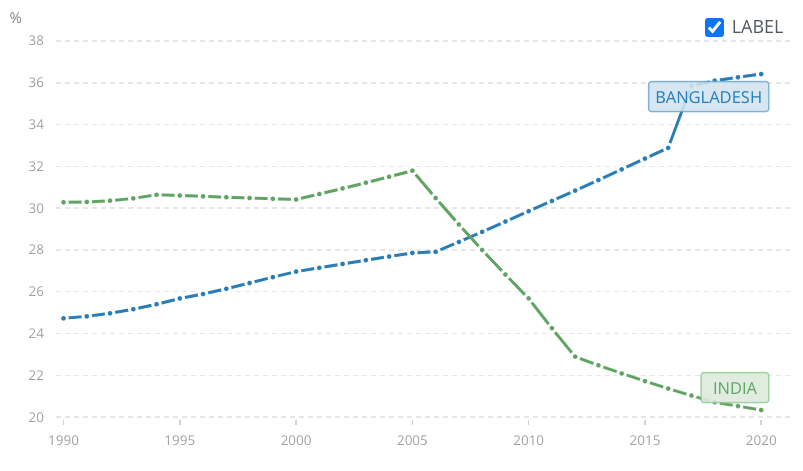
#82 What Does it Mean to be Free?
This newsletter is really a weekly public policy thought-letter. While excellent newsletters on specific themes within public policy already exist, this thought-letter is about frameworks, mental models, and key ideas that will hopefully help you think about any public policy problem in imaginative ways. It seeks to answer just one question: how do I think about a particular public policy problem/solution?PS: If you enjoy listening instead of reading, we have this edition available as an audio narration courtesy the good folks at Ad-Auris. If you have any feedback, please send it to us.India Policy Watch: Disinvestment — Aakhir Kyun?Insights on burning policy issues in India— Pranay KotasthaneOn October 30th came the news that the government has modified bidding parameters to make the Air India disinvestment lucrative for buyers. Essentially, the government first made the sale difficult by inserting way too many conditions. Unsurprisingly, it found no buyers. Then hit COVID-19 and now the government is so desperate to raise resources that it is willing to finally remove the self-placed hurdles. This got me thinking: what are the different narratives regarding the purpose of disinvestment? What stories do they tell and what policy actions do they imply? I could think of three such narratives.Narrative #1: Governments Should Sell Businesses it Can’t Run WellThe underlying story is simple: some PSUs incur consistent losses. Losses indicate that the government cannot run them well. Hence, these PSUs must be sold. The focus in this narrative is on numbers such as falling market caps to decide on companies to be sold. For example, the argument that Air India Makes a Loss of Over ₹ 20 Crore Per Day has repeatedly (and successfully) been used to rationalise Air India’s sale. The policy position implied (and unsaid) in this narrative is that it is okay for governments to run businesses as long as they are profitable. What’s also implicitly implied is that the sale of a government-run company first requires running it down into an incorrigible loss-making entity.Narrative #2: Governments Can Raise Revenue by Selling Some AssetsThe underlying story is one of urgency. Governments need money. One way they can make money is by selling the assets they own. Hence, divestment. Governments find this narrative quite useful. Every budget, the government sets a disinvestment target for itself with the aim of reducing its fiscal deficit. The focus on a revenue target from disinvestment can lead to perverse incentives: when it can’t find genuine buyers, government coaxes government-run companies like LIC to purchase government-run companies on sale. This ‘sale’ shows up as revenue in the government accounts even though the government’s stake has not reduced in reality.Narrative #3: Governments Should Sell What’s not-StrategicIn some sectors, markets might underproduce even though that sector is non-substitutable and vitally important to the nation-state. In such sectors, the government should continue to run businesses, regardless of the revenue a sale can generate or the losses made in running that business. Examples could be oil, rare-earth exploration or extremely critical defence equipment. Outside this reduced set, the government should sell all businesses. The focus in this narrative is on the reduction of overall government equity in non-strategic sectors, and not as much on the revenues raised by the sale of government assets.A Battle of Narratives Narratives 1 and 2 have enjoyed dominance in Indian policy discourse at various times. When the economy was chugging along, narrative #1 dominated: many PSUs were to be first put in a state of coma to enable an eventual sale in the distant future. Now, with almost a decade of poor economic growth, the revenue maximisation narrative has become more salient. The third narrative is still on a weak footing. What's strategic and what’s not? What’s the marginal cost of public funds used for running a PSU? These questions rarely feature prominently in disinvestment discussions. India Policy Watch: Growth, Liberty And Freedom— RSJWe have often argued for economic growth as a moral imperative for India. This opinion divides people. And we understand that. We get the usual questions thrown back to us. Should the pursuit of material wealth be such priority for any society? More so for one like ours where issues of equity, liberty and political rights aren’t yet settled; where there’s a chasm of everyday despair between the promise of our constitution and the reality that confronts us. The pat response to this kind of argument is twofold. One, we (and others like us) make a point that growth is a precondition to solve these issues. Redistribution requires something tangible than mere lofty ideals to share with others. Putting it ahead of growth is putting the proverbial cart before the horse. Second, we can’t escape the trade-offs between growth and other social welfare objectives for our
#81 Aap Party Hain, Ya Broker?🎧
This newsletter is really a public policy thought-letter. While excellent newsletters on specific themes within public policy already exist, this thought-letter is about frameworks, mental models, and key ideas that will hopefully help you think about any public policy problem in imaginative ways. It seeks to answer just one question: how do I think about a particular public policy problem/solution?Welcome to the mid-week edition in which we write essays on a public policy theme. The usual public policy review comes out on weekends.PS: If you enjoy listening instead of reading, we have this edition available as an audio narration on all podcasting platforms courtesy the good folks at Ad-Auris. If you have any feedback, please send it to us. - RSJAap party hain, ya broker?That line from Dibakar Banerjee’s sleeper hit Khosla Ka Ghosla (2006) sums up our attitude to middlemen. Indians have an instinctive distrust of business or ‘corporate’. But that’s small chhutta compared to our almost visceral antipathy to broker. We use dalal as a pejorative in polite conversations — it is someone who gets in the way of an honest transaction between two willing parties and takes a ‘cut’. From the trader at the APMC mandis to the life insurance agent selling you a policy that you don’t need, the middleman is the easy policy target whose elimination is seen as necessary. Nobody can see what they produce or the labour they put in, yet they seem to corner most of the profits. India might be an extreme case but elsewhere in the world too, the intermediary isn’t the most welcome of sights. For every business that has middlemen bringing the buyers and sellers together, there are scores of entrepreneurs building platforms to make them irrelevant. The billion-dollar start-up idea to disrupt any industry is to take out the intermediaries, drive the costs down, reduce ‘friction’ and offer customers a wider array of choices for free. There are two questions that interest us here:* Why did we have intermediaries in the first place if they add to friction, make a cut by buying low and selling high and, in general, viewed unfavourably by everyone?* Is real disintermediation possible in any marketplace?The Economic Case For Brokers The usual arguments made for an intermediary are quite intuitive. There is the market-making role, to begin with. Take flowers for example. There are customers looking to buy flowers but who don’t know flower-growing farmers. Even if they knew a few, those farmers might not be growing the variety of flowers the buyers need. In the same vein, the farmers won’t know their likely buyers beyond their immediate vicinity. The transaction costs of finding out each other for every individual farmer or buyer is just too high. The brokers step in to create a market. They understand the demand of the customers located in a specific area, search for farmers who grow those types of flowers, take the risk of buying them, then transport them to a market close to the buyers and provide an assortment of flowers as choices to the customers. There are various costs the broker incurs in this process – search, transportation, storage and risk capital. The broker makes the market ‘liquid’ – the transactions follow from there. Without these costs, there’s no market. Without a market, there’s no trade between the farmers and customers. No trade satisfying needs of two parties is a net negative for the society.There’s more to this though. Once the broker repeats the transaction over time and attracts other brokers who compete for the same buyers and sellers, we have two additional benefits for the ecosystem. One, every broker looking to increase his business works to optimise the transaction costs which then translates to lower price for the customer. This dynamism of price discovery ensures there is a continuing relevance of the broker. Two, over a period of time, the broker is able to differentiate between the output of various farmers, rate them on quality and provide additional service of ‘certifying’ the product. This deepens the market with customers willing to choose their desired quality of product and paying a price for it. However, even this example doesn’t quite capture the fundamental role of a broker in a society. Why? Because the above example is a win-win kind. Everyone benefits at the end of it. But what about instances where the size of the pie is fixed? That brings me to R.A. Radford’s seminal paper, The Economic Organisation of a P.O.W. Camp written in 1945. This 11-page paper is a deep sociological study of life in a prison camp and from it emerges a truth that’s simple and profound. The camp had over 2000 prisoners who received food parcels from the Red Cross. The parcels were exactly the same for everyone containing tinned milk, jam, butter, biscuits, beef, chocolate, sugar, etc., and cigarettes. The POWs in the camp were from various ethnicities and religions. It isn’t difficult to see what happened next. The pri
#79 What Do Voter Preferences Reveal?
This newsletter is really a public policy thought-letter. While excellent newsletters on specific themes within public policy already exist, this thought-letter is about frameworks, mental models, and key ideas that will hopefully help you think about any public policy problem in imaginative ways. It seeks to answer just one question: how do I think about a particular public policy problem/solution?Welcome to the mid-week edition in which we write essays on a public policy theme. The usual public policy review comes out on weekends.PS: If you enjoy listening instead of reading, we have this edition available as an audio narration on all podcasting platforms courtesy the good folks at Ad-Auris. If you have any feedback, please send it to us. - RSJThe Carnegie Endowment for International Peace in partnership with the research and analytics firm YouGov conducted the Indian American Attitudes Survey (IAAS) between September 1 and September 20, 2020. Sumitra Badrinathan, Devesh Kapur and Milan Vaishnav now have a paper titled ‘How Will Indian Americans Vote’ based on this survey that has a few interesting conclusions. The study is useful to test a few hypotheses that have emerged in India in the past few years. These include:* Indian Americans have nudged closer to the Republicans on the back of Trump-Modi chemistry. The enthusiasm for PM Modi among NRIs and among BJP supporters in India for Trump has created a positive self-reinforcing cycle for both. * Most Indian Americans have turned conservative over time going by their stand on domestic issues in India. This is drawn from the views of many vocal Indian Americans on social media platforms and the anecdotal evidence of friends and family on WhatsApp groups supporting the conservative or majoritarian stance of this regime. This has led many to assume a large defection of Indian Americans from the Democratic camp that leans liberal. * There have been multiple instances of the Democratic leadership (Biden, Harris, Warren, Jaypal et al) being critical of India’s position on various core issues like revocation of Article 370, the clampdown in Kashmir and the handling of CAA protests. There’s been a feeling the Democrats will lose support among Indian Americans because of this. * Lastly, Indian Americans are seen as a model minority that’s highly educated, law-abiding with twice the national average household income. Will the typical minority issues like immigration, race and identity politics animate them like they do for other minorities?The key conclusions from the study are summarised below. It is quite an eye-opener when you consider the hypotheses outlined above. * Indian Americans remain solidly with the Democratic Party. Recent anecdotal narratives notwithstanding, there is scant evidence that Democratic voters are defecting toward Trump and the Republican Party. Seventy-two percent of registered Indian American voters plan to vote for Biden and 22 percent intend to vote for Trump in the 2020 November election.* Indian Americans do not consider U.S.-India relations to be one of the principal determinants of their vote choice in this election. The economy and healthcare are the two most important issues influencing the vote choice of Indian Americans, although supporters of the two parties differ on key priorities. “Kitchen table” issues dominate over foreign policy concerns. * Indian Americans exhibit signs of significant political polarization. Just like the wider voting public, Republican and Democratic Indian American voters are politically polarized and hold markedly negative views of the opposing party and divergent positions on several contentious policy issues—from immigration to law enforcement.* U.S.-born Indian American citizens tilt left compared to foreign-born citizens. While both U.S.-born and naturalized Indian Americans favor the Democratic Party, this tilt is more pronounced for U.S.-born Indian Americans. Political participation by naturalized citizens is more muted, however, manifesting in lower rates of voter turnout and weaker partisan identification.* Harris has mobilized Indian Americans, especially Democrats. Harris’s vice presidential candidacy has galvanized a large section of the Indian American community to turn out to vote. On balance, while the Harris pick might not change large numbers of votes (given the community’s historic Democratic orientation), her candidacy is linked to greater enthusiasm for the Democratic ticket.* A large section of Indian Americans view the Republican Party as unwelcoming. Indian Americans refrain from identifying with the Republican Party due, in part, to a perception that the party is intolerant of minorities and overly influenced by Christian evangelicalism. Those who identify as Republicans are primarily moved to do so because of economic policy differences with the Democrats—with particularly marked differences regarding healthcare.* Political beliefs seep into perceptions of U.S.-India bilater

#78 Radically Nefarious Outrage
This newsletter is really a weekly public policy thought-letter. While excellent newsletters on specific themes within public policy already exist, this thought-letter is about frameworks, mental models, and key ideas that will hopefully help you think about any public policy problem in imaginative ways. It seeks to answer just one question: how do I think about a particular public policy problem/solution?PS: If you enjoy listening instead of reading, we have this edition available as an audio narration courtesy the good folks at Ad-Auris. If you have any feedback, please send it to us.Matsyanyaaya: Constraining the Pakistani Military-Jihadi ComplexBig fish eating small fish = Foreign Policy in action— Pranay KotasthaneAfter a long time, India-Pakistan talks were back making the headlines last week. Moeed Yusuf, Special Assistant on National Security and Strategic Policy Planning to the Pakistani PM, hinted in an interview to The Wire that backchannel discussions about a political dialogue are in the works. We don’t think political dialogues between India and Pakistan at the highest levels are useful. To the contrary, talks, especially at higher levels of the political spectrum, have a close correlation with terrorist attacks engineered by the Pakistani military-jihadi complex (MJC). MJC is a framework we use to describe Pakistan’s seemingly duplicitous behaviour. That’s because Pakistan is not one geopolitical entity, but two. The first is a putative state which has all the paraphernalia that gives it a veneer of a normal state. However, this putative state competes with a multi-dimensional entity comprised of military, militant, radical Islamist and political-economic structures that pursues a set of domestic and foreign policies to ensure its own survival and relative dominance: something we refer to as the military-jihadi complex (MJC).The status of the talks aside, I wrote a paper analysing the impact of some major recent political developments on the MJC and its India policy. I take stock of four developments, and analyse the risks and opportunities arising out of these developments for the MJC, and hence to India.Development #1: The MJC’s External Benefactors Have ChangedEarlier, the MJC’s adventures were bankrolled indirectly by the US and directly by Saudi Arabia. Those days are long gone. The most important financier for the MJC now is China. Risks and opportunities for IndiaThe most prominent risk is that because the MJC is dependent on PRC like never before, and both are adversarial to India, it will continue to hurt Indian interests in order to prove its relevance to PRC. The opportunity for India is that as PRC and MJC come closer, it will be easier to expose the structural flaws in their unequal relationship. As PRC increases its influence in Pakistan’s economy, nationalist forces (and even sections of the MJC) are likely to create fault lines between the two countries. Countermeasures and Preparedness India should prepare to face a diplomatic offensive of the MJC-PRC combine at various multilateral fora over Kashmir. Closer ties with the US, Japan, Australia and France are important to tackle this offensive. India also needs to be prepared for a rise in infiltration attempts and terrorist activity in Kashmir. As a countermeasure, India’s messaging should aim to accentuate the underlying cultural, social, and economic differences between China and Pakistan in order to reduce the flow of capital from PRC to the MJC. The weaker the MJC’s external benefactor, the more constrained it will be. Development #2: The US-Taliban Peace AgreementThe MJC has played a major role in steering and pressuring the Afghan Taliban to sign this agreement. In the process, it managed to partially repair flailing ties with the US. More importantly, it made major headway in its long-cherished aim of installing a pliant government in Kabul. Risks and opportunities for IndiaThe acceptance of the Taliban as a legitimate political force by the US is a moral and material victory for the MJC. The US-Taliban peace agreement is a tangible result for its policy of sustained terrorism in Afghanistan. Even a partial withdrawal of the US on the Taliban’s—and by extension, the MJC’s—terms will reaffirm the MJC’s faith in using terrorism as state policy. It might then apply this lesson to double down on terrorism against India as well. India’s economic and diplomatic footprint will reduce in the short term. A case in point is the MJC’s attempt to designate four Indian nationals in Afghanistan under the UN 1267 Sanctions List accusing them of spreading terrorism in Pakistan.Another risk is the MJC relocating its terror networks to Loya Paktika in eastern Afghanistan, a hotbed of anti-India activities in the past. This would allow the MJC to use terrorism against India while claiming that it has driven terrorists out of Pakistan. The long-term opportunity for India is that as the US reduces its presence, Pakistan will be left with th

#77 The Inflation Conundrum 🎧
This newsletter is really a public policy thought-letter. While excellent newsletters on specific themes within public policy already exist, this thought-letter is about frameworks, mental models, and key ideas that will hopefully help you think about any public policy problem in imaginative ways. It seeks to answer just one question: how do I think about a particular public policy problem/solution?Welcome to the mid-week edition in which we write essays on a public policy theme. The usual public policy review comes out on weekends.PS: If you enjoy listening instead of reading, we have this edition available as an audio narration courtesy the good folks at Ad-Auris. If you have any feedback, please send it to us. Listen in podcast app- RSJThe Trump administration is negotiating another stimulus package with Democrats that could be upwards of US$ 1.8 trillion. The Federal Reserve’s balance sheet continues to expand since the beginning of the pandemic. There’s a possibility it could touch US$ 10 trillion by the end of the year as it buys up treasuries, corporate bonds, mortgage-backed securities and muni bonds. With all this liquidity in the system and money in the hands of the average American, the macroeconomic puzzle is: where is the promised inflation? And if there’s no rise in inflation after such a dramatic increase in the deficit, why should the US bother about financial prudence? Why not just print money and spend your way to growth and prosperity?The Indian CaseThis has some resonance for India too. The loose monetary and fiscal policy regime we ran for longer than necessary after the global financial crisis (GFC) leading to high inflation in 2012-14 still casts a long shadow. That experience led to the flexible inflation target (FIT) that was set by the government for the Monetary Policy Committee (MPC) of the RBI. The results of the FIT regime have been mixed. It had become clear a couple of quarters before the pandemic began that this policy needed a relook. Growth had slowed down to a 4-5 per cent range while inflation remained at 4 per cent in the second half of last FY. But members of MPC-1 (whose term ended in September 2020) paused on rate cuts for the fear of inflation going beyond 6 per cent bound. Even at the peak of demand destruction in August, the MPC-1 had taken a hawkish stance on inflation that had the bond market worried. The slew of measures announced by the RBI last week to keep the liquidity high in the system and to improve transmission from banks to borrowers to spur growth coupled with the commentary from the newly formed MPC-2, suggested it is willing to look past inflation running above 6 per cent. This came as a relief to the bond market as yields fell and spreads narrowed. The inflation question for India is relevant too. Will the quantitative easing done so far by RBI and its promise to continue to do more lead to higher inflation? What To Make Of Inflation?At the heart of these questions is whether the Friedman doctrine on inflation that has guided the actions of central banks for the better part of the last four decades still valid. He wrote:“Inflation is always and everywhere a monetary phenomenon in the sense that it is and can be produced only by a more rapid increase in the quantity of money than in output.”The experience in the decade since the global financial crisis (GFC) doesn’t seem to bear Friedman out. Inflation has remained persistently low despite multiple rounds of quantitative easing by the Fed. There are structural reasons including a change in demographic composition, technological progress and innovation, productivity increases and global trade that account for this. This low inflation period in the developed world has meant there is a significant change in inflation expectations because of quantitative easing measures this time around. How do we know this? Let’s look at the US 10-year yield movements over the past decade. In the aftermath of the GFC between 2009-13, on all occasions when the Fed pulled the QE lever (QE1, 2 and 3), the yields rose sharply on its announcement and fell when it ended. This showed there was a strong expectation of future inflation which led to people switching to short-term bonds from the longer ones. The pandemic related QE hasn’t seen this though. So far in 2020, the QE announcements by the Fed have hardly moved the needle on bond yields. People no longer believe a loose monetary policy will lead to future inflation.Central Banks’ Actions During The PandemicHowever, there is one significant difference in stimulus this time around. During the GFC, there was no significant fiscal stimulus provided by the US Treasury. It was a financial crisis, not a broader economic one. And it was solved by pumping more liquidity into the system. This time the quantum of fiscal stimulus to prevent destruction of demand has been enormous. Once the economy recovers and demand comes back organically, this extra money supply in the system wil
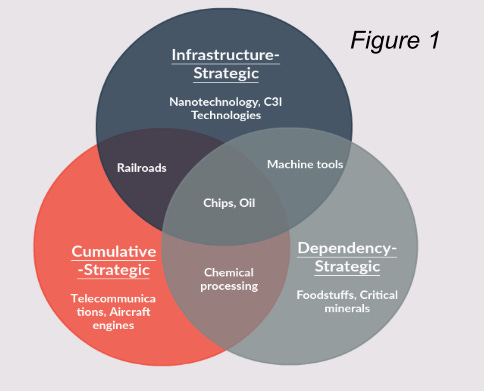
#76 Yeh Strategic, Strategic Kya Hai?🎧
This newsletter is really a weekly public policy thought-letter. While excellent newsletters on specific themes within public policy already exist, this thought-letter is about frameworks, mental models, and key ideas that will hopefully help you think about any public policy problem in imaginative ways. It seeks to answer just one question: how do I think about a particular public policy problem/solution?PS: If you enjoy listening instead of reading, we have this edition available as an audio narration courtesy the good folks at Ad-Auris. If you have any feedback, please send it to us.India Policy Watch: Thinking About Digital ColonialismInsights on burning policy issues in India— RSJThe unbridled power of large digital platforms is back in focus. Last week Google India announced all apps within Play Store must use its billing system that charges a 30 per cent commission on all transactions. The Indian start-up community that has been angling for raising barriers for global platforms to access domestic market lost no time in pushing back against the ‘Google Tax’. That seems to have worked. Google has postponed this move to April 2022. Google (and Apple) claim this commission is the compensation for their efforts at keeping their stores safe and secure.Meanwhile, the US Congressional investigation into the power of Big Tech (Amazon, Apple, Facebook and Google) concluded last week with a voluminous 450-page report. The report indicts them in no uncertain terms:"These firms have too much power, and that power must be reined in and subject to appropriate oversight and enforcement. Our economy and democracy are at stake.”The recommendations (pg 378 onward) to rein in these companies and restore competition in the digital economy however cover familiar grounds – structural separation of lines of business, curbs on acquisitions, allowing interoperability and open access, checking abuse of bargaining powers and strengthening antitrust laws and enforcement. You could almost use the same recommendations a century ago when looking to control railroad or oil monopolies. Surely, these will be useful (if they eventually translate into laws) to bring a semblance of control over Big Tech. But will they be enough?I don’t think so.The traditional way of looking at monopolies is to understand the factors that lead to their creation and the abuse they inflict or the harm they do to the customers and the society. The sources of monopoly power usually are technology, control of natural resources, access to capital or lack of alternatives in the market. This power is then abused by the monopolist. The most common abuse is that of being a price maker that maximises profits. The usual antitrust laws attack both the source and the abuse of monopoly power.But there’s a problem in regulating Big Tech with these antitrust laws: the source of their monopoly power and the harm they do to societies is orthogonal to how the traditional monopolies operated.Given this, how should we think about regulating them? We can begin by analysing the dominance of these players in the digital economy using the traditional monopoly framework and then going beyond it.I will elaborate on this next.* Digital monopolies are unavoidable: There’s no single source of monopoly power for them. Its an alchemy of network effect, bundling of services, a bottomless pit of capital and high exit barriers that create a lock-in for customers. This makes it a winner-takes-all market. Infusing competitive intensity by breaking up these firms on lines of business or creating a ‘local’ alternative won’t work because these Big Tech ‘babies’ will soon turn into a monopoly.* Two-sided platforms: Most big tech firms have been successful in creating two-sided platforms of buyers and sellers. Sometimes this is apparent to the end customer (for instance, Uber) but often this isn’t (Google or Facebook). In these two-sided platforms, the tech firms tend to be monopolies (dominant seller) on one side and monopsonies (dominant buyer) on the other. So, Google has a near-monopoly on search that it provides for free. On the other hand, for any company wanting to advertise on digital platforms, Google is the dominant buyer. It actually auctions keywords. This two-sided dominance is different from the monopolies of the past.* There’s no ‘one’ business: In the earlier era, the dominance of a monopoly could be easily understood because of the distinct nature of their business. A railroad company was just in that business. So was a telecom company. But it’s difficult to categorise the big tech players into a single type of business. Amazon can position itself as a tech company to investors, an e-commerce platform to sellers and a retailer to regulators. Facebook is a social media platform whose business isn’t easy to define. Maybe it is a publisher or a media company, but it isn’t structured like one. Maybe it’s a community that brings the world closer (ha!). What’s worse the companies thems
#75 "Out-atmanirbharing" The Competition
This newsletter is really a public policy thought-letter. While excellent newsletters on specific themes within public policy already exist, this thought-letter is about frameworks, mental models, and key ideas that will hopefully help you think about any public policy problem in imaginative ways. It seeks to answer just one question: how do I think about a particular public policy problem/solution?Welcome to the mid-week edition in which we write essays on a public policy theme. The usual public policy review comes out on weekends.PS: If you enjoy listening instead of reading, we have this edition available as an audio narration courtesy the good folks at Ad-Auris. If you have any feedback, please send it to us. Listen in podcast app- RSJThere’s that old joke about outrunning the bear: Two campers are walking through a forest when they see a bear about a hundred feet away. The first camper digs into his backpack, pulls his running shoes out and starts changing into them. The other camper is puzzled – “Let’s run. Why are you wasting time changing shoes? You can’t outrun the bear.” “I don’t need to, the first camper replies. “I just need to outrun you.” Atmanirbhar Is Everywhere In corporate India these days, you don’t even need to outrun the competition. You just need to out-atmanirbhar them. It is difficult to find a single interview of any business leader these days without a reference to Atmanirbhar Bharat. Every company is working to be atmanirbhar including those whose business model is founded on free international trade (Exhibit A: Xiaomi ‘more Indian’ smartphone brand than any other). Opportunism is an addiction. You can’t resist it even when you know it will harm you. Of course, going against the grain of atmanirbhar has its own challenges. Ask Toyota. Yet, it is one thing to contort yourself and position all your initiatives as atmanirbhar; it is quite another to use it to settle corporate scores or block competitors from entering your market. We have seen this film before. The traditional business houses pre-1991 weren’t agitating for open markets, low tariff regime and fewer government restrictions in business. Instead most used these to their advantage, kept upstarts out and extend their market dominance. The price in the form of low-quality products, shortages and black markets were borne by the ordinary customers. This mad race for aatmanirbharta again illustrates why we argue for pro-market policies, not pro-business ones. Pandering to the aatmanirbharta slogan is a way for some businesses to get an unfair advantage over others. Pro-market policies, by contrast, are concerned with government actions to increase competition and to plug market failures. Therefore, it is no surprise the entrenched firms of today are batting for an atmanirbhar regime. There’s a strange race on to ‘out-atmannirbhar’ the competition. So, a Chinese phone company claims its more local than Indian companies (65 per cent of components sourced locally) and starts putting a ‘made in India’ logo on its phone. Its business head for India takes a swipe at competition saying “non-Chinese foreign rivals including one US company imports all of their phones from China and local Indian brands only relabel and sell in India.” The problem with not standing up to a principle (like free trade) while aligning yourself with the flavour of the season isn’t too hard to comprehend. There will soon be another brand that will claim 100 per cent local sourcing to claim greater ‘Indian-ness’ regardless of what it means to cost and quality for the customers. Or, the opportunism will come back and bite you in the back like this Chinese company found out when the government banned two of its popular apps that were provided as value-added services with their phones. You also have the bizarre case where the founder of a payment app company with significant Chinese investment in it claiming – “It’s Google-nirbhar bharat not Atmanirbhar Bharat” – when Google temporarily suspended the app owing to violations of its gambling policy. Not to be left behind a competitor payment app ran an advertising campaign positioning itself as a truly Indian app in contrast to the foreign apps. Like that should make a difference to the customers. And now you have the Indian start-up founders coming together to create a BharatApp store to achieve Google-mukt India. It Is What You Make Of ItThree points to consider here. First, it is good to create an alternative when you aren’t happy with the incumbent. That’s the right way to go about this so long as the competition is on the basis of product features like price and quality and not on the provenance of the product. Second, the complaint about Google Play Store using its dominant position to dictate terms with app makers is as valid as many of these start-ups doing the same with their suppliers or ‘partners’. Lastly, any idea that such an app store should be partly governed by the government or a regulator is terrib

#74 (Internet+Politics) & India's Transition To An Industrial Society 🎧
This newsletter is really a weekly public policy thought-letter. While excellent newsletters on specific themes within public policy already exist, this thought-letter is about frameworks, mental models, and key ideas that will hopefully help you think about any public policy problem in imaginative ways. It seeks to answer just one question: how do I think about a particular public policy problem/solution?PS: If you enjoy listening instead of reading, we have this edition available as an audio narration courtesy the good folks at Ad-Auris. If you have any feedback, please send it to us.A Framework a Week: Internet + PoliticsTools for thinking public policy— Pranay KotasthaneMany predictions about the internet transforming politics have fallen flat. So, how about a framework that can help us understand the many facets of this interaction? I came across one such framework from 2013 — Six Models for the Internet + Politics by Archon Fung et al. The paper first presents a stylised political model:(Source: Six Models for the Internet + Politics by Archon Fung et al.) The authors describe this model as follows:“The model is a simple conveyor belt image of politics. The belt begins with citizens who have interests and views about politics, policies, and politicians. Citizens form into interest groups and social movement organizations—sometimes called pressure groups—that advocate for specific interests and policies. Once born, these groups reciprocally recruit and mobilize citizens to advocate more powerfully. At the same time, citizens form and express their views in the public sphere in which they discuss public concerns with one another in coffee shops, op-ed pages, water coolers, and town squares (and of course increasingly on the Internet). These traditional organizations and the public sphere are located outside of government. In a democratic society, however, they determine the personnel and content of government. Through the mechanisms of elections, lobbying, and communicative pressure (of which the pressure of public opinion is one kind), they exert pressures that determine which politicians hold office. Between elections, traditional organizations, and public opinion also exert pressures on the public agencies that compose government. Government action is at the end of this conveyor belt. Government acts in one of two ways: by passing laws and policies, and by acting directly in the world through agency actions.”Now by introducing the internet in six different points in this model, the authors develop six pathways in which the internet changes politics.Pathway 1: The Muscular Public Sphere(Six Models for the Internet + Politics by Archon Fung et al.)In this model, the internet strengthens the link between citizens and the public sphere, and between the public sphere and the politicians. Twitter outrage campaigns demanding attention and action from the government are examples of this pathway. Pathway 2: Here Comes Everybody(Six Models for the Internet + Politics by Archon Fung et al.)This pathway is focused on direct action. Here the citizens are able to mobilise public action bypassing pressure groups, politicians, and the state. Internet-mobilised drives to fix street potholes or to clear up garbage spots are examples of this pathway.Pathway 3: Direct Digital Democracy(Six Models for the Internet + Politics by Archon Fung et al.)In this pathway, citizens are able to reach the policymaking elite directly. Expat Indians reaching out to India’s former External Affairs Minister on Twitter for getting their visa/passport issues resolved is an example of this pathway.Pathway 4: Truth-based Advocacy(Six Models for the Internet + Politics by Archon Fung et al.)Quite inaccurately named, in this model, the authors propose that the internet can become a platform “by which organised advocacy groups bring salient, often surprising, facts to light in credible ways that tilt public opinion.” The Panama Papers is an example of this pathway. What gets missed is that this pathway can also be used for malicious purposes by traditional pressure groups to malign individuals and groups, which is the more common use case today. Pathway 5: Constituent Mobilisation(Six Models for the Internet + Politics by Archon Fung et al.)In this pathway, the role of the internet is to:“thicken the connection between political organizations and their members. Lowering the costs of communications allows political organizations to communicate more information to more members at a fixed cost. Conversely, digitalization lowers search costs and allows individuals to find the organizations that advance their interests and perspectives. Finally, digitalization dramatically lowers the transaction costs of some kinds of political action such as donating money to organizations and signing letters and petitions.”This is the pathway that has been used by political parties (some have been more successful than others) to form strong bonds with their const
#73 Thinking About Retrospective Taxation - Will India Appeal? 🎧
This newsletter is really a public policy thought-letter. While excellent newsletters on specific themes within public policy already exist, this thought-letter is about frameworks, mental models, and key ideas that will hopefully help you think about any public policy problem in imaginative ways. It seeks to answer just one question: how do I think about a particular public policy problem/solution?Welcome to the mid-week edition in which we write essays on a public policy theme. The usual public policy review comes out on weekends.PS: If you enjoy listening instead of reading, we have this edition available as an audio narration courtesy the good folks at Ad-Auris. If you have any feedback, please send it to us. Listen in podcast app- RSJThe Permanent Court of Arbitration at The Hague last week ruled against India’s retrospective tax demand of Rs. 22,100 crores on the Vodafone Group. India has the option to appeal the decision at the appellate court in Singapore. Vodafone International Holdings, a Dutch entity, that had bought the Indian business operations of Hutchison Telecom International had invoked Clause 9 of the Bilateral Investment Treaty (BIT) signed between India and Netherlands in 1995 to contest the retrospective amendment of taxation law by India.A quick background of the case will help set the context here. In 2007, Vodafone Plc bought a 67 per cent stake in Hutchison Whampao that included the rising star of the group – its India business assets. The tax department raised a demand for about Rs. 8000 crores that year in capital gains and withholding tax from Vodafone. Their argument was simple – the underlying place of business was India and the value that was being paid for by Vodafone was created in India. It should therefore withhold the taxable amount from what it pays to Hutchison. It didn’t matter if the transaction was done by two overseas entities and executed in the tax haven of Cayman Islands. Vodafone contested this in the Bombay High Court which ruled in favour of the Tax Department. It then challenged this judgment in the Supreme Court which ruled in its favour in 2012. The UPA-2 government and the FM then didn’t take this lying down. Later that year the government passed an amendment to the 1961 Income Tax act that allowed tax authorities to retrospectively tax such transactions. In 2014, Vodafone went to the Parliament Court of Arbitration against this legislative change. Last week it won at The Hague.Move On, India?The reactions to the verdict from The Hague last week have been on expected lines. Most have suggested the Indian government to take the verdict in its stride and get on with life. Andy Mukherjee writing for the Business Standard echoed the prevailing views across media outlets:“This ends a decade-old saga that tarnished India’s reputation among foreign investors. Rather than appealing the decision, Prime Minister Narendra Modi’s administration should accept defeat, honor the award, and move on. While much of the blame for this mess belongs to the previous Congress Party-led coalition, Team Modi had six years to end the dispute. Ending “tax terror” was also his party’s promise in the 2014 election that brought Modi to power.If anything, reckless expansion of the state’s power — both in the economy and broader society — has become the norm since then. One hopes that this becomes a moment when Indian politicians of all hues will come together to say – Yes, we bungled. We should never have amended the tax law retrospectively to go after Vodafone. It cost us more in prestige than we could hope to win.”We have three questions we will discuss in this edition:* Is retrospective taxation always a bad idea?* What’s a fair way to do retrospective taxation (if there’s one)?* What will India do now (as opposed to what should India do which seems to be the focus of most op-eds)? The Problem With Retrospective TaxationYou might argue taxation itself is a form of violence of the state on its subjects. Legitimate, yes. But violence, nonetheless. Doing it retrospectively makes it worse because you weren’t even aware you were doing something that will invite this violence. Adam Smith set out four canons of taxation in The Wealth of Nations:* The subjects of every state ought to contribute towards the support of the government, as nearly as possible, in proportion to their respective abilities (Canon of Equity).* The tax which the individual is bound to pay ought to be certain and not arbitrary (Canon of Certainty).* Every tax ought to be levied at the time, or in the manner, in which it is most likely to be convenient for the contributor to pay it (Canon of Convenience). * Every tax ought to be so contrived as to take out of the pockets as little as possible, over and above that which it brings into the public treasury of the state (Canon of Economy).The Canon of Certainty further states:“The time of payment, the manner of payment, the quantity to be paid, ought all to be clear and pl
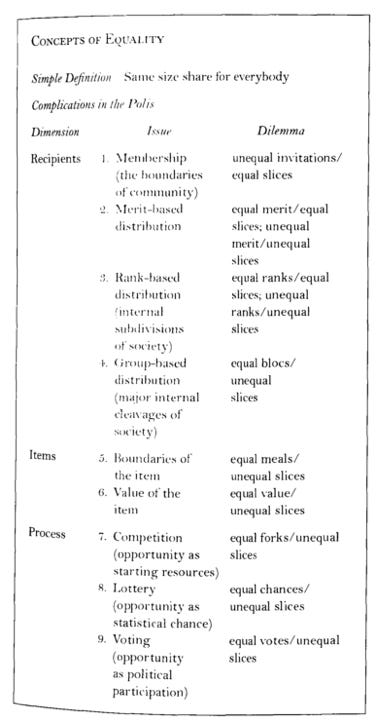
#72 Should Courts Make Social Policies?🎧
This newsletter is really a weekly public policy thought-letter. While excellent newsletters on specific themes within public policy already exist, this thought-letter is about frameworks, mental models, and key ideas that will hopefully help you think about any public policy problem in imaginative ways. It seeks to answer just one question: how do I think about a particular public policy problem/solution?PS: If you enjoy listening instead of reading, we have this edition available as an audio narration courtesy the good folks at Ad-Auris. If you have any feedback, please send it to us.India Policy Watch: Rajan-Acharya on PSB ReformsInsights on burning policy issues in India— RSJRaghuram Rajan and Viral Acharya have a new paper titled, Indian Banks: A Time To Reform?, that looks at a comprehensive set of reforms that will enable public sector banks to drive the Indian economic growth engine instead of being a drag they currently are. Rajan and Acharya have held leadership roles at the RBI and know a thing or two about issues relating to the banking sector. Here’s a nice summary of the recommendations by the BloombergQuint.So, what to make of them? There are 4 points we’d like to raise:* Is this the time? Rajan and Acharya argue maintaining status quo is untenable. The huge strain on government finances now shifts the Overton window for much-needed reforms of the public sector banking system. This is their hope. In my view, shifting the status quo at this time carries the risk of falling off the brink. There’s a fog of uncertainty about the duration of the pandemic, the state of our public finances and the nature and length of recovery. More than any immediate reform we need some stability, however precarious, at this moment.* What about the empire? The paper reiterates the need for a systemic solution to the bad loan problem. The idea for a nationalised and a private “bad bank” is revived along with a strict time-bound process for bankruptcy procedure. The recent books by Urjit Patel (who succeeded Rajan) and Acharya have outlined in great detail how there’s no incentive for anyone in the political economy or in the banking sector to implement the IBC process. Everyone is happy kicking the can down the road. Any attempt at enforcing strict insolvency guidelines is met with resistance. Patel named the relevant chapter in his book ‘The Empire Strikes Back’. And this resistance to change was the state of affairs before the pandemic. So, to expect a serious reckoning by the government now is out of question. In fact, we seem to be going the other direction. The suspension of IBC is to be extended by another quarter and the restructuring proposal by Kamath committee leaves the discretion with the bank on triggering default procedure. We will have to learn to live with elevated levels of NPAs and banking system stress especially in public sector banks (PSBs).* Who will implement them? There are proposals to improve the performance of PSBs through greater operational freedom, performance-linked bank financing plans and winding down the Department of Financial Services (hah!). While these are good intentions, operationalising them in a system that has bloated cost structure, unionisation and relatively lax performance management culture won’t be easy. There are suggestions that are akin to the Kamath committee on giving loans based on cash flow and liquidity position of the companies instead of their assets. More aggressive norms for provisioning for bad loans and making sure the promoters have skin in the game in long-term infrastructure projects are also suggested. There are other suggestions to manage banking system risks better that have been around for some time. But implementing them will mean standing up to the ‘empire’. * Is stake sale the panacea? Finally, we have the issue of the ownership structure of banks. The paper proposes bringing the stake of the government below 50 per cent (state-linked banks) and gradual privatisation of select PSBs. While this step to create a distance between it and the everyday operations of the bank is necessary, this alone won’t address the governance issues of the PSBs. There’s an entire superstructure (the ‘empire’) that manages and lives off the PSBs that includes unions, bureaucrats, various oversight committees and temporal political interests. This influences everything from recruitment, performance management, promotions, disbursement guidelines to risk management practices. This won’t change overnight merely because the government stake is below 50 per cent.The paper brings together all the extant issues relating to banking reforms in India. In that sense it is a valuable compendium of ideas – most old, some new. The key question remains: what’s the political will to take up these reforms now? The authors are aware of this too:“While we have put together a variety of suggestions, many of these have been discussed in the past. Many concern public sector banks and the
#71 Liberalism And Central Banking
This newsletter is really a public policy thought-letter. While excellent newsletters on specific themes within public policy already exist, this thought-letter is about frameworks, mental models, and key ideas that will hopefully help you think about any public policy problem in imaginative ways. It seeks to answer just one question: how do I think about a particular public policy problem/solution?Welcome to the mid-week edition in which we write essays on a public policy theme. The usual public policy review comes out on weekends.PS: If you enjoy listening instead of reading, we have this edition available as an audio narration courtesy the good folks at Ad-Auris. If you have any feedback, please send it to us. Listen in podcast app- RSJThe Chairman of US Federal Reserve, Jerome Powell, in his speech at the annual Jackson Hole symposium signalled a significant shift in its approach to tackling inflation. He had his reasons:“The persistent undershoot of inflation from our 2 percent longer-run objective is a cause for concern. Many find it counterintuitive that the Fed would want to push up inflation. After all, low and stable inflation is essential for a well-functioning economy…. However, inflation that is persistently too low can pose serious risks to the economy. Inflation that runs below its desired level can lead to an unwelcome fall in longer-term inflation expectations, which, in turn, can pull actual inflation even lower, resulting in an adverse cycle of ever-lower inflation and inflation expectations.”Fed’s Average Inflation Targeting RegimeThis isn’t a surprise. An ‘ever-lower’ inflation expectation would lead to a lower interest rate. The perennial undershooting of inflation target in the US over the last quarter century has meant short-term interest rates approaching zero. Once you reach that there’s limited room for any rate cuts to boost investments, increase employment and stabilise the economy during a downturn. The experience of Japan and many EU countries that have negative interest rates is instructive here. Clearly, there is no appetite for negative rates among US lawmakers and public. This led Powell and its policymaking body FOMC (Federal Open Market Committee) to draft the revised statement on Longer-Run Goals and Monetary Policy Strategy. The Fed will now follow the policy of ‘average inflation targeting’ with the goal set at 2 per cent. In an average targeting regime the Fed will allow inflation to run above 2 per cent for some time in order to ‘make up’ a period of inflation below 2 per cent. Powell explained:“We have also made important changes with regard to the price-stability side of our mandate. Our longer-run goal continues to be an inflation rate of 2 percent. Our statement emphasizes that our actions to achieve both sides of our dual mandate will be most effective if longer-term inflation expectations remain well anchored at 2 percent.”“…our new statement indicates that we will seek to achieve inflation that averages 2 percent over time. Therefore, following periods when inflation has been running below 2 percent, appropriate monetary policy will likely aim to achieve inflation moderately above 2 percent for some time.”Powers And Goals Of Central BanksI was struck by a couple of different thoughts when I read his speech. First is a political philosophy question. What is the basis for the absolute power that a central bank like the Federal Reserve has to set goals for the economy in a democracy? What are the checks and balances to this power? For instance, apart from the FOMC who else was involved in questioning or validating the change in regime? Or was it just an arbitrary consensus of some experts (elites?) who aren’t answerable to anyone? Second, is a technical question. Isn’t the way the central banks set the inflation rate targets good old central planning at work? Instead of letting markets determine the price based on supply, demand, and labour (or factor) productivity, the central bank interferes to keep prices ‘stable’. Isn’t this a distortion of market mechanism? There are more specific questions. Where did it get the 2 per cent target from? Also, consider the scenario when actual inflation is different from 2 per cent. What’s the duration for which the Fed will wait till it acts? And how quickly will it want the average to be restored? At a theoretical level, what’s the basis for the Fed arriving at an average inflation targeting goal? What should be the goal of a central bank?Is Central Banking A Liberal Concept?These are compelling arguments and I thought it would be useful to use them to discuss two quite different concepts in a single edition of this newsletter. These are:* The notion of separation of powers (or checks and balances) in a state that’s necessary to protect liberty of its citizens* What goals should central banks pursue in a free market economy?The separation or control of powers between various arms of the state first appeared in the works of
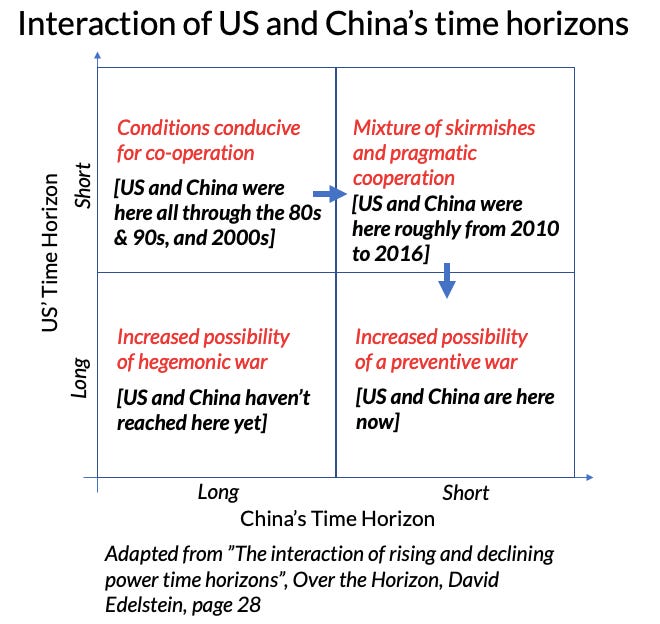
#70 Concentrated Costs, Diffused Benefits 🎧
This newsletter is really a weekly public policy thought-letter. While excellent newsletters on specific themes within public policy already exist, this thought-letter is about frameworks, mental models, and key ideas that will hopefully help you think about any public policy problem in imaginative ways. It seeks to answer just one question: how do I think about a particular public policy problem/solution?PS: If you enjoy listening instead of reading, we have this edition available as an audio narration courtesy the good folks at Ad-Auris. If you have any feedback, please send it to us.India Policy Watch #1: 50 Years Of That Friedman NYT ArticleInsights on burning policy issues in India— RSJOn September 13, 1970, Milton Friedman wrote his famous piece on the social responsibility of business in The New York Times. The clarity of Friedman’s thinking and his powerful articulation of the doctrine of shareholder value maximisation has made it, arguably, the most influential business article of all time. Friedman scoffs at businesses talking of ‘social responsibility’ suggesting any attempt to do so will turn political that will force the individual to conform to the more general social interest. Who determines this social interest? In the hands of a dictator or a demagogue, this decision can be detrimental to society. It is a compelling article. I would suggest you read it before you dismiss it as free-market fundamentalism. Friedman concludes:“But the doctrine of “social responsibility” taken seriously would extend the scope of the political mechanism to every human activity. It does not differ in philosophy from the most explicitly collectivist doctrine. It differs only by professing to believe that collectivist ends can be attained without collectivist means. That is why, in my book “Capitalism and Freedom,” I have called it a “fundamentally subversive doctrine” in a free society, and have said that in such a society, there is one and only one social responsibility of business—to use its resources and engage in activities designed to increase its profits so long as it stays within the rules of the game, which is to say, engages in open and free competition without deception fraud.” Enduring AppealOver the years it has been attacked and its central message discredited in the light of the global financial crisis. Even businesses are reluctant these days to invoke shareholder value maximisation as their goal. There have been calls for societal value maximisation, stakeholder wealth creation and conscious capitalism to replace the Friedman doctrine. All good intentions aside, nothing has truly replaced it in how businesses operate. What explains its enduring appeal? Three reasons:* A simple and measurable metric: The shareholder value maximisation goal is easy to set and monitor. It helps that there is a common understanding of the metric. The alternatives are amorphous. It is difficult to understand what does maximising societal value entail, for instance. Who will define what society wants? Are societal objectives of India and the US similar?* Rewarding the risk takers: The shareholders invest risk capital in an enterprise. This willingness to take risk is what leads entrepreneurs to build new products, satisfy the consumers and create new jobs. The shareholders deserve the pursuit of maximum return by the firms for this risk they undertake. It is up to them what they do with these returns. They can invest it in newer enterprises or use it to improve the society as they deem fit. The management or anyone else should have no claim on how to invest the returns that belong to the shareholders.* Shareholders are the residual claimants: Everyone who contributes to the value creation of an enterprise – the employees, the management team and the customers – get their fixed claim on the value through compensation for their efforts, stock options and the value derived from the products or services offered by the enterprise. Only when these fixed claimants are served well, the value for the residual claimant (the shareholder) is maximised. So, the pursuit of shareholder value will by itself serve the other stakeholders well.Rajan’s ReassessmentPromarket, a publication of the Stigler Centre at Chicago Booth School of Business, is marking the 50-year anniversary of the Friedman article with a debate on the social responsibility of business on its pages. Eminent academists like Oliver Hart, Luigi Zingales and Lucian Bebchuk have written with depth and intellect on the relevance of the Friedman doctrine in today’s times. This week Raghuram Rajan weighed in on the debate with an article titled “50 Years Later, It’s Time to Reassess”. Rajan takes a clear-eyed view on what has worked for the Friedman doctrine and where it is fraying. He repeats the usual points that we have listed above in favour of the doctrine. Additionally, he emphasises the political argument of Friedman for shareholder value maximisation that seems releva