Anticipating the Unintended
152 episodes — Page 2 of 4
#174 Society is a partnership of the dead, the living and the unborn*
Global Policy Watch: Woe Vs RaidInsights on policy issues making news around the World - RSJOn Friday, Justice Samuel Alito along with the conservative bloc of the US Supreme Court (SCOTUS) overturned the landmark Roe v Wade judgment that had granted women a federal right to terminate a pregnancy about half a century ago. The conservative raid into the SCOTUS that started with the efforts of Bush Jr and concluded with Trump appointing three judges during his term has delivered to the great woe of the progressives. The learned judges searched for the word abortion in the Constitution. And to their surprise, they figured it just wasn't there. To quote:We hold that Roe and Casey must be overruled. The Constitution makes no reference to abortion, and no such right is implicitly protected by any constitutional provision, including the one on which the defenders of Roe and Casey now chiefly rely—the Due Process Clause of the Fourteenth Amendment. That provision has been held to guarantee some rights that are not mentioned in the Constitution, but any such right must be “deeply rooted in this Nation’s history and tradition” and “implicit in the concept of ordered liberty.” The right to abortion does not fall within this category. Until the latter part of the 20th century, such a right was entirely unknown in American law. Indeed, when the Fourteenth Amendment was adopted, three quarters of the States made abortion a crime at all stages of pregnancy. The abortion right is also critically different from any other right that this Court has held to fall within the Fourteenth Amendment’s protection of “liberty.” Roe’s defenders characterize the abortion right as similar to the rights recognized in past decisions involving matters such as intimate sexual relations, contraception, and marriage, but abortion is fundamentally different, as both Roe and Casey acknowledged, because it destroys what those decisions called “fetal life” and what the law now before us describes as an “unborn human being.”Roe was egregiously wrong from the start. Its reasoning was exceptionally weak, and the decision has had damaging consequences. And far from bringing about a national settlement of the abortion issue, Roe and Casey have enflamed debate and deepened division.Strong stuff. But with a minor problem. I’m not sure SCOTUS has always stayed away from subjects that don’t have a reference to them in the Constitution like the learned judges have claimed. I mean I have gone through the US Constitution and the Declaration of Independence document a few times. I could have also told them they won’t find a reference to abortion there. But I didn’t find the word woman in them either. No idea how that section of the human species got all sorts of rights in the US then. Also, missing from the Constitution are references to wild house parties involving strippers, or to tomatoes, home video recording, or swats to your bottom with a paddle to name just a few of my favourite things. But these are all things on whom the Court has delivered verdicts. Read them if your life is as boring as mine: Wild house parties involving strippers. Is the tomato a fruit or vegetable? The Betamax case of using a home recording device. And the case of the Principal who delivered 20 swats with a paddle to his pupil James. The SCOTUS has opined on them all. So, you see the judges aren’t exactly being consistent with precedence here. And they are setting new dubious benchmarks. There have been numerous instances of the Court striking down past judgments to grant more rights. Not to take them away. This is a repudiation of a lot of truths that progressives take for granted. That the arc of history in the long term bends towards moral justice. Or, that gains on individual liberty that survive more than a generation become irreversible. Apparently not. So, we have the US now joining El Salvador, Poland and Nicaragua in the list of countries that have rolled back abortion rights in the last three decades. About 26 states will make abortion illegal or restrict it on the back of this judgment with immediate effect. It is all quite remarkable. Some days you try and make sense of the pitched battles on the US cultural landscape: on how to use pronouns - he, she, they, it, them, their; or the definition of woman; or cancelling J.K. Rowling because she is a TERF. The terms of such debates are so rarefied that you need a primer first to understand the language being used before you can come to the substantive issues. And while they busy themselves in an ever-splintering contest of being ‘purer’ than the other, the rug gets pulled from under their feet with a judgment that rolls back years of hard-fought wins on women’s autonomy on their bodies, individual liberty and female reproductive health and safety. Now more than half the states are readying themselves to implement it tomorrow. It reinforces my view that any ideology or “-ism” isn’t threatened by its rival but by the absolute
#173 Lathpath, Lathpath, Lathpath, Agnipath*
India Policy Watch: The Road Of FireInsights on burning policy issues in India- RSJThe Union Defence Minister along with the chiefs of the three armed services on Tuesday announced the ‘Agnipath’ scheme for recruitment into the Indian military. You can read more about the scheme here. I have summarised the key features below:* The soldiers under this scheme (referred to as ‘Agniveers’) will be enrolled for a duration of four years in a conscription or tour of duty (ToD) like model that’s prevalent in other countries. They will be paid between INR 30,000 - 40,000 per month during their tenure apart from risk or hardship allowance as applicable. 30 per cent of their salary will be deducted as a voluntary contribution into a corpus called ‘SevaNidhi’ with a matching contribution from the government. Roughly put, the soldiers will get this SevaNidhi package of about INR 11.7 Lacs plus the interest accumulated on this amount at the end of their four years of service. Few other post-retirement benefits are thrown in, including a life insurance cover and access to a bank loan of INR 18.2 Lacs against the SevaNidhi package.* About 25 per cent of Agniveers will be absorbed into the regular cadre after four years. The rest will receive an Agniveer Skill certificate, the SevaNidhi corpus and some preferential treatment in getting into the Central Armed Police Force (CAPF) and maybe even state police forces. * The Agniveers who leave at the end of four years, however, will not get the usual entitlements of gratuity and pension. This is huge. Over a period of couple of decades, this could mean only about 25 per cent of the forces will have the pension benefits that are available to all today. * The enrollment under this scheme will be on an all-India and an all-class basis. This will be, by itself, a distinct rank in the armed forces with its own insignia. The likely implications of this are quite significant. The recruitment of soldiers today, especially in the army, is based on state-wise quotas and on the retirement of soldiers from various regiments that are class based. Class here should be read as an euphemism for caste or community. Drawing Agniveers on an all-class basis will mean withering away from the traditional structure of regiments. It could also mean a larger representation of states where unemployment rates are high because there might not be state-wise quotas anymore. This could further alter the composition mix of the armed forces.The government also positioned this as a move that will infuse youth and vitality (or ‘josh’ and ‘jazba’ as mentioned in various media reports) into the armed forces. The whole thing including the names Agnipath and Agniveer sounds like a campaign for an early 1990s Nana Patekar film. You could soon shoehorn Agni Pariksha (for the recruitment tests), Krantiveer (best Agniveer cadet), Yugpurush (lifetime achievement award for Agniveers), Angaar, Tiranga, Prahaar and so on. You get the picture. We are in this territory now. Anyway, the average age of the armed forces which is 32 now will come down by about five years. The younger workforce will be more technology-savvy that will be more attuned to the changing nature of modern warfare. Also, the 75 per cent of Agniveers who will go back into civil society will serve as a disciplined and nationalistic labour pool to draw from for organisations. There will be Agniveers in every village and taluk who will improve the moral fibre of our society. We will have no riots, no littering, no traffic violations and no crime. The retired Agniveers will change us. Because they will put the nation first. Always. Like Arnab. Well, that’s the official line anyway. BacklashUnfortunately, the response to the scheme hasn’t been what the government was expecting. There have been protests, arson and general lawlessness by unemployed youth that seems to be spreading across the country at the moment. A large section of retired armed forces officials too have questioned both the scale and speed of a change like this. The issues agitating them have some basis:* There have been very few recruitment rallies during the two years of the pandemic. About 60,000 soldiers retire every year and this gap is filled up during the regular recruitment drives. It is safe to assume there's a 1.5 Lac gap that’s opened up since 2020. The expectation among aspirants was this will get filled up in the next year or so. That apart, there are those in the middle of their recruitment process who are unclear about their status now. Roughly put, there could be more than a crore of youngsters under the age of 21 who were waiting for these recruitment drives to restart. What they have now instead is about 46,000 open positions for the current year with a 25 per cent probability of a long-term career in armed services with full benefits. If you work the numbers, it also suggests a reduction in armed forces count by about 1.5 - 2 Lacs (about 10-15 per cent of the workforce) over th

#172 State Of Play
PolicyWTF: See No Evil, Read No Evil, Hear No EvilThis section looks at egregious public policies. Policies that make you go: WTF, Did that really happen?— Pranay KotasthaneEarlier this week, I stumbled on this headline in the Business Standard: "Remove price cap and channel bundling restrictions: Broadcasters tell TRAI”. For someone writing a weekly newsletter on Indian public policy, price controls are a gift that keeps on giving. Naturally, I went down this rabbit hole.For context, read this consultation paper. Under the New Regulatory Framework 2017, there are price caps on channel bundles, individual channels that are part of bundles, and the overall package of standard-definition channels. Once this 2017 order came into force, broadcasters smartly kept the popular sports channels out of the channel bundles. The aim was to price them high, thereby cross-subsidising other channels. Further, some providers included these sports channels in bundles at a discounted rate so that they could be packaged with other trashy channels. Not surprising. And now, TRAI wants to reduce the price cap on individual channels that can be part of a bundle to ₹12 from ₹19 per month. Mind-boggling, no?The consultation paper is quite well-written, to be honest. It makes me wonder the extent to which state capacity is applied to come up with price controls. This instance got me thinking about how government restrictions have shaped today’s media environment in India. Let’s have a look at the three major types: video, radio, and written media. How OTT (Over-the-top) became TOT (The-Only-Thing)The same TRAI consultation paper highlights that OTT platforms (SonyLiv, HotStar, etc.) are displacing traditional TV. Anecdotally too, this shift is quite obvious. So why is it that there’s good Indian content on OTT platforms, while the old news channels seem to be stuck in a rut? Government regulations are one big reason. There are no price caps on OTT platforms, allowing them to make investments, create niche content, and recover the investments at an appropriate price. In contrast, TV channel prices are controlled by the government since 2004. News channels, in particular, have degraded the most. Writing in Hindustan Times in 2017, Ashok Malik traced the cause to (surprise! surprise!) price caps again:“As per the TRAI tariff order of 2016, the price ceiling for a news channel is Rs 5 per month. In contrast the price ceiling for a general entertainment channel is Rs 12 per month.Consider what this means. In theory, the general entertainment channel could be re-running old soaps (cost of content: zero). The news channel would be required to constantly generate fresh content. Even so, the former is allowed to charge more than double what the latter is able to. Besides a general entertainment channel is always likely to get more subscribers. So it is a double hit for anybody seeking to build a serious news channel.Over time news channel owners have simply given up, and decided to take the route of reality TV. Today, with the sheer volume of free – occasionally dubious and sometimes outright fake – content available online, one wonders if the news business can ever be rescued in India.”Not that general entertainment channels have fared much better. Broadband internet has now made subscription easier, and the people have voted with their feet, remotes, and phones. At present, TRAI no longer caps the prices of individual channels, on the condition that they are not included in any bundle. But that’s hardly a respite when enough damage has already been done.Radio SilenceThe case of another broadcast medium, the FM radio, is also instructive. The kiss of death here is a ban on FM channels broadcasting news or current affairs. Observe how the government justified pre-censorship in the Supreme Court in 2017:“Broadcasting of news by these stations/channel may pose a possible security risk as there is no mechanism to monitor the contents of news bulletin of every such stations. As these stations/channels are run mainly by NGO/other small organisation and private operators, several anti-national/radical elements within the country can misuse it for propagating their own agenda.”Need I say more? This is the reason why all our FM radio channels play mind-numbing songs, spoofs, and call pranks on loop. While some niche content has moved to podcasts, a lot of current affairs content is now sought after on non-English YouTube channels. As for “radical elements within the country can misuse it for propagating their own agenda”, that has been turbocharged by one-to-many communication on Twitter, WhatsApp, Facebook, etc. The Pen is Mightier than its SubscribersNow let’s come to the curious case of print and online media. There are no price caps on newspaper and magazine prices. Not that it wasn’t attempted. But in a 1961 Sakal Papers vs Union of India judgment, the Supreme Court, citing Article 19(1), declared unconstitutional a law that tried to connect pr
#171 The House That Jack Built And Other Stories
Global Policy Watch #1: The Man Who Broke Capitalism?Global policy issues relevant for India- RSJOver the last couple of years, I have run through a list of books in what I call the ‘crisis in liberalism’ genre. There is a template that most of these books follow – begin with the fall of the Berlin wall, remind readers about Fukuyama’s ‘The End of History’ paper, run through the mistakes that a triumphal liberal order made through the next two decades, talk about capitalism running amok leading to the global financial crisis and then build a grand theory for the populist backlash we saw in the last few years.I wrote about these books on these pages. The list is long – The Globalisation Paradox, Radical Uncertainty, Radical Markets, The Light That Failed, The Code of Capital and maybe you could add the various Piketty books in here too. There’s a cottage industry that’s built up here and you can say I’m a huge patron of their artisanal products. Well, the good news is there’s a new addition to this genre this week. “The Man Who Broke Capitalism: How Jack Welch Gutted the Heartland and Crushed the Soul of Corporate America--And How to Undo His Legacy” by David Gelles. The title is a mouthful, but it is also convenient. It says everything it has to say in its unwieldy length. There’s not a lot more in the book except trying to retrofit all kinds of ills of capitalism seen today by the author back to Jack Welch. Gelles is all over the media this week (here, here) talking up the book and making the same points over and over again. And it got me thinking on two counts. One, why business management research and literature is almost always garbage? And two, why do we get public policy on managing business and capital wrong so often?On the book itself, I will try and summarise (in deliberate broad strokes) the three key arguments Gelles makes:* There was some kind of a ‘golden age of capitalism’ in the thirty years after WW2. Companies took care of their people, distributed wealth equally, happily paid the taxes and employed people for life. Businesses saw themselves as more than profit maximising engines. There was a feeling of loyalty to the country, a fraternal sense of belonging to a community and a wider obligation to the supporting the government. All quite nice.* Then in the early 70s, Friedman wrote that shareholder value maximisation paper (“The Social Responsibility Of Business Is to Increase Its Profits”) and the world was never the same again. Businesses focused more on their profits and soon lobbied for lower taxes and greater freedom in conducting their affairs. Reagan and the conservative revolution of small government followed. Into this mix came in Jack Welch as the CEO of GE, the iconic American institution. Welch singlehandedly destroyed capitalism as we knew it. He laid off people, shut factories, offshored jobs, built a shadow bank called GE Capital that reaped the benefits of financialisation, obsessed over meeting quarterly EPS numbers, stack ranked the employees in a bell curve, created the cult of CEO worship and initiated everything that you find wrong today in business. Quite an extraordinary feat in doing bad things at work. In Gelles’ words: “He's on the Mount Rushmore of men who screwed up this country.” The book then goes onto show how Welch’s long shadow still haunts corporate America despite obvious evidence that he got it all wrong. GE is among the worst-performing stock in the last two decades. It announced last year it plans to split itself into three different businesses to unlock shareholder value. GE Capital, the engine that Welch built, is defunct. Yet, business leaders worship at the altar of quarterly earnings, force ranking employees, financial engineering, building personal brands and negotiating ever increase compensation packages for themselves. * So, what’s the solution? I’m not sure if I understood it from the book. Gelles isn’t advocating for socialism surely. But he does throw around words like stakeholder capitalism and praises the current CEO of Unilever and the founder of WEF that holds an annual event at Davos for their efforts to build compassionate capitalism. Some kind of a future where we don’t measure companies on shareholder value but another set of metrics involving all stakeholders that rein in the single-minded pursuit of profits is his solution. All quite fuzzy because he seems to run out of steam by the end of the book. All that Welch bashing is tiring.Let me digress a bit here.When I started my career, the ‘GE way’ was a rage in corporate India. I remember picking up a pirated version of Welch’s autobiography from a streetside vendor at Kala Ghoda. Everyone I knew was reading it. Except for the parts about his growing up that were written with some honesty, the book was terrible. All the stories followed the same pattern. Welch gets a call and goes down to a factory floor or to a customer site. There he hears or notices something small that gets him t
#170 A Universal Solution & The Rocket Man
India Policy Watch: Why is UBI Back Again?Insights on burning policy issues in India- Pranay KotasthaneThe Universal Basic Income (UBI) proposal made it to last week's policy headlines. The occasion was the release of a report commissioned by the Economic Advisory Council to the Prime Minister. Written by the Institute for Competitiveness, the State of Inequality in India Report bats for “raising minimum income and introducing universal basic income” to reduce “the income gap and equal distribution of earnings in the labour market”. There is no cost-benefit analysis or implementation details of the UBI in the report. Nevertheless, since this report has been commissioned by a government advisory body just a couple of years ahead of the next national election, the report has rekindled the conversation on UBI.What Do We Know About the UBI in India?UBI has been extensively discussed ever since the Economic Survey 2016-17. It is one of those rare ideas for which you will find liberal and progressive arguments both for and against it. So I’ll skip the usual arguments and get to the crux of the UBI in India. What we know is that a “Universal. Basic. Income.” is an impossible trinity in the Indian context. The government can at best meet two but not all three of its elements—a basic income that won’t be universal; a universal income that will be way below what qualifies as “basic”; or something that is universal and basic but not in the form of an income. This trilemma arises due to two reasons. One, India is just not rich enough for the government to fund a full UBI by taxing citizens at reasonable rates. The Economic Survey estimated that even a non-universal basic income for 75% of Indians would cost nearly 5% of the GDP. For context, the total expenditure incurred by the union government including all its portfolios was approximately 13% of GDP before the pandemic. Two, some proponents of UBI argue that the government can stop existing implicit and explicit subsidies, and use the savings to fund a UBI. The UBI would eliminate leakages, obviate the need for complex delivery machinery, and reduce incentives for corruption, they explain. But in a democratic setup where every political party finds it imperative to give individual handouts before elections, this is a leap of faith. It’s more likely that taxpayers will foot the bill for all current subsidies in addition to the UBI.Realising this trilemma, political proposals after the Economic Survey report have tended towards the first option— a targeted basic income scheme, which is non-universal by definition. One such formulation, the Minimum Income Guarantee Scheme for the Poor (MIGS), made it to the Indian National Congress’ 2019 manifesto. What Explains the UBI’s Return to the Headlines?This conversation on variants of UBI has picked up the pace again. Like any major crisis, the pandemic has impacted the poor more than the rich. And hence, various income support schemes are back in favour. The Overton Window seems to be shifting. Interestingly, this trajectory towards increased monetary transfers after a major crisis was anticipated in a book nearly 60 years ago. In a 1961 book titled The Growth of Public Expenditure in the United Kingdom, economists Alan Peacock and Jack Wiseman observed the patterns of government spending in the UK between 1890-1955. The dominant view at that time was that government spending as a proportion of the overall economy keeps rising organically as citizen demands grow with rising incomes. In a poor country, most citizens make do with the State providing them with the bare basic public services. But as incomes and government revenues rise, citizens demand that the State also provide them with quality education, low-cost healthcare, and affordable housing, and so on.Peacock and Wiseman challenged this view of the organic growth of government spending. They saw that government spending rise in the UK happened in the form of step-jumps due to major crises (and there were many in their study period). Their explanation of this phenomenon was as follows. In normal times, the level of public spending is capped by the acceptable level of taxation. Even if citizens might find a higher level of government spending desirable, they won’t accept a higher rate of taxation in return. This equilibrium is shattered by a crisis such as a war, where government spending and rates of taxes increase to manage the immediate difficult situation at hand. However, once the crisis recedes, new ideas of tolerable taxation levels emerge, and government spending does not go back to its original position. This conjecture came to be known as the Peacock-Wiseman Hypothesis (PWH).Are we seeing PWH in action in India, because of COVID-19? If one were to look at costly expenditure policies such as UBI, speculations about a GST rate of 8% replacing the 5% rate, and the high fuel taxes, it does seem that we are moving towards a new normal in government spending. Anothe
#168 The (W)heat Is On
India Policy Watch #1: Silver Linings PlaybookInsights on burning policy issues in India- RSJHello Readers! We are back after a nice, little break. Things have changed a bit in the past four weeks; haven’t they? Stock markets around the world are down by 10 per cent. Central banks have hiked interest rates by 40-50 bps. Inflation in the US is running at a 40-year high of over eight per cent. Retail inflation in India at 7.79 per cent is beyond the zone of comfort for RBI. The Rupee hit an all-time low last week. Technology stocks are down all over the world and the deal pipeline in the digital startup space has all but dried up. Musk is buying Twitter or maybe he isn’t. NFTs are dead and buried and crypto valuations are in a funk (or in a death spiral as Matt Levine puts it). And no one really knows anything about the Ukraine war. It drags on like a Putin-shaped monster waddling its way through the spring rasputitsa with no hope of getting anywhere. Such then are the vagaries of the world. Thankfully, the Indian news channels were debating more important issues during these times. Like loudspeaker bans in religious institutions. Like a videographic survey of a Varanasi mosque by a 52-member team. Or if the Taj Mahal was indeed a Shiva temple called Tejo Mahalaya before Shah Jahan, that undisputed emperor of large tracts of Hindustan in the 17th century, figured he had run out of land to build a mausoleum in memory of his late wife. Or if Sri Lanka was more in the dumps than us in these times. These things matter. So they must be investigated by the intrepid reporters sitting in the studios. We must be forever thankful for the oasis of assurance that Indian news channels offer to us in this volatile and uncertain world.Anyway, coming back to the point, things have turned for the worse since we last wrote on these pages. Yet, amidst all the talks of a recession or stagflation, I believe there’s some kind of silver lining for India if it plays this situation well. Sweet Are the Uses Of InflationFirst, let’s look at the inflation and the rising interest rate scenario. India didn’t go down the path of expanding the fisc by doling out cash incentives at the peak of Covid induced distress in the economy. Much of the “20-lakh crores package” that was announced in May 2020 was either repurposing of the existing schemes or putting a monetary value on loans, subsidies or free food that was offered to the people. So, while the RBI cut rates and increased liquidity, the supply of money in the system and the government balance sheet didn’t bloat like those in the US and other western economies. The upside of the US model was that the economy rebounded faster, it began running at almost full employment and people who got Covid relief checks started spending as the economy opened up. The downside is an overheated economy that now needs to be cooled down but that comes with its consequences. The war in Ukraine and the resultant rise in oil and commodity prices have queered the pitch. So, for the first time in a long, long time the Fed has had to raise rates while the markets are falling. In 2022, the global rich have lost over a trillion dollars already as markets have fallen while the poor have had their wage increases outpace inflation. There’s less K-shaped recovery discussions in the US happening today. Anyway, these are new scenarios for an entire generation raised on rising stocks, low inflation and low-interest rates. This will be a hard landing for them. In the model that India followed, on the other hand, there was real distress in the rural and informal economy because of the absence of a direct cash transfer scheme during the pandemic. As the economy opened up, there were supply chain disruptions that hurt multiple sectors. The rise in oil prices because of the war added to the inflation. But there is an important difference between our inflation and that of the West. It is more a supply-side issue for us. A few rate hikes, some stability in oil and commodity prices and our continued diplomatic balancing act that will help us with cheap oil from Russia should stabilise things. We could be looking at a transitory elevated inflation for a few quarters rather than something more structural. Also, we have a much greater headroom to control inflation by raising rates. The repo is at 4.4 per cent after the out-of-turn increase by RBI last week. It is useful to remember as late as mid-2018, the repo was at 6.5 per cent and that didn’t look like a very high rate at that time. So, the RBI has another 150-200 bps of flex to tame inflation without seriously hurting growth, unlike the West. And that is only if the inflation prints get into the teens. That looks unlikely. So, what’s in store for us? We will continue with the trends we have seen so far: a K-shaped recovery that will hurt the poor more, the formalisation of the economy will mean the published numbers of GST collections or income tax mop-up will be buoyant, the
#167 Sare Jahan Se Achha..
Programming Note: Anticipating The Unintended will be on a 3 week break. We will send you select pieces from our archives during this period. Normal service will resume from May 15. India Policy Watch #1: Hindi Hain Hum...Insights on burning policy issues in India- RSJThere’s that oft-quoted line of sociolinguist Max Weinreich that goes ‘a language is a dialect with an army and navy’. Like many facetious remarks, it isn’t scientific, but it sounds great. Also, there’s a kernel of truth in it. The only reason a particular dialect races ahead of others and transcends a threshold to turn into a language is when it is backed by political patronage and the power of the state. Examples abound.The version of Hindi that’s official in India today, for instance, wasn’t the kind that was spoken by anyone even two hundred years ago. Many in India find this hard to believe. But it isn’t too difficult to prove. Read any text or literature that was popular in north India before the 19th century, and you will find the language bears no similarity to the official Hindi of today. The great texts of 16th century India will help you with this. Ramacharitmanas by Tulsidas was written in Awadhi, Surdas used Brij bhasha and Guru Granth Sahib is an eclectic mix of languages ranging from Sindhi, Lahnda, Persian and Brij bhasha. The first works that bear a strong resemblance to the Hindi of today appeared in 1870-80s when Bharatendu sought to popularise a combination of Awadhi and Brij with a generous sprinkling of tatsam words from Sanskrit while stripping away the Urdu words. This project gained political support in the late 19th century when there was Hindu revivalism in the air. The decimation of the Mughal empire was complete and with it went the state patronage of Farsi and Urdu. There was desire then to find a purified version of the Hindustani language that preceded the Delhi Sultanate. Bharatendu filled this gap and his efforts were ably supported by the Raja of Benaras and the Kashi Dharma Sabha. Post-independence, this version of Hindi got its ‘army and navy’ with the might of the state behind it. And it turned into a language.Quite appropriately, it was called the ‘rajbhasha’; the language of administration or the language of power. What’s the point of this bit of historicising? Well, here’s the press release from the 37th meeting of the Parliamentary Official Language Committee held last week that was presided over by the Union Home Minister (HM):“Hindi should be accepted as an alternative to English and not to local languages.Time has come to make the Official Language an important part of the unity of the country, when persons from States which speak other languages communicate with each other, it should be in the language of India.”The usual furore followed. This isn’t the first time the HM has made this sort of an appeal. Every year on the occasion of Hindi Diwas there’s a similar pitch about Hindi. The usual benefits are stated. That we need a ‘link’ language for India and Hindi is best suited for it. Not English. That’s a foreign tongue and the language of our colonial humiliation. We will be somehow more united if we all speak in Hindi. It will foster a feeling of togetherness among Indians. Or that’s what I have understood as the benefits of this push. I’m sceptical of the unity argument because it makes limited sense. There are better ways of fostering unity than asking people to privilege a specific language in a country that has as many languages with long histories as India. In fact, it will likely lead to more divisions and strife. On the other hand, the ‘link’ language argument has some merit. What common language should people use to converse with each other when they are native speakers of languages as diverse as Punjabi, Bangla and Tamizh? It is a good question. But there’s no need to find a planned answer to this question. This is a question that was possibly as relevant during the times of Ashoka, Chandragupta, Akbar and Lord Canning, as it is today. The courts of those times used Pali, Persian or English as the official language of the state. But that didn’t mean these became the languages of the masses. People developed their own dialects and languages that worked for them to communicate with one another. A language can have its army and navy but those won’t make it the ‘link’ language. Because the adoption of a language and its usage in a society is the best example of spontaneous order at play. Spontaneous orders aren’t planned by anyone. There is no intentional coordination of actions by any external agent. Every participant acts in their individual best interest for their own objectives. However, these individual actions aggregate into a pattern of their own. It is the ‘unintended order of intentional action’ that emerges on its own and it adapts to the ongoing changes. Language is a classic example of this. No one individual could have designed it. There’s no central design of associating a sou
#166 Putin' Vodka In Bihar
India Policy Watch #1: Love For PutinInsights on burning policy issues in India- RSJYou must have noticed a distinct anti-west, pro-Putin tone in the media outlets that toe the government’s line in India. The intellectual right has been busy with columns equivocating on who has to shoulder the blame for the war. What could be the reasons for this? There’s of course the strategic autonomy argument. We are dependent on Russia for our defence and oil requirements. It has been a reliable friend of ours in the past. And we cannot trust the US anyway. There’s also the added hypocrisy of western Europe which continues to trade gas with Russia while lecturing us on our purchase of oil. Everyone is looking out for their interests and so should we. It is best to keep equidistant from any particular formation and act as a ‘swing power’. Pranay has written in the past few editions on why strategic autonomy as a policy isn’t suited for the likely emerging world order. But that aside, you can somewhat understand the anti-west stance if its origins lie in the traditional suspicion of the west and reflexive desire to be non-aligned in the policy circle in India. But there’s more here. The anti-west stance is also about fighting the favourite imaginary global nexus of liberals and wokes. So, you will notice almost every television debate on Ukraine will devolve into some kind of liberal and Biden bashing. If you are so concerned about Ukraine, why don’t you put your troops on the ground instead of hectoring India - is the usual line taken by anchors. Implicit in it is some kind of ‘Putin envy’ that I have noticed among the right-wing intellectuals in India. The idea that a strong man like Putin has revived national pride among Russians and brought it back into the superpower league from where it was languishing in the aftermath of the Soviet meltdown. This is obviously rubbish if you bother to look at the data. Russia is a small power whose economy has gone from bad to worse under Putin. It has a huge nuclear stockpile from its past that gives the rest of the world the only reason to pause before dismissing it as a nobody. But there’s a fascination among the right intellectuals to make the case for a Putin-like revival of India. I remember just before the 2014 elections, Swapan Dasgupta made this argument in the Sunday Times of India (Mar 9, 2014):“However, to a people exasperated with prolonged uncertainty and decline, Putin is the antidote to the unending sadness and deprivation that defined 20th century Russia. He has created the conditions for the average Russian to feel good, get rich and, for a change, indulge. This exuberance is unlikely to last indefinitely but, for the moment, the Russian context favours a Putin-like robustness......To the west, Putin’s reclamation of Crimea (and, earlier, a slice of Georgia) and his assertion of Russia’s stakes in Ukraine may seem ominous. For Russia, it is, however, symbolic of the bid to reverse the historic defeat in the Cold War. But Putin’s bid to reclaim Russia’s status as a Great Power was only possible because the economic and political foundations for an enhanced role have been firmed up over the past decade. In India, on the other hand, the fierce desire of the past 25 years to transcend mediocrity, shoddiness and look the world powers in the eye has floundered. It is not that the UPA government has no achievements to its credit. India has progressed but it has seriously under-performed in terms of its potential... Whether faith in Modi encapsulates the anger at a dismal present and a brighter future will be tested in a free election. If Modi prevails on May 16, we shouldn’t be surprised if his detractors paint him to the world as India’s Putin. If he lives up to the liberal demonology, those with a stake in India’s future should be elated. Just as Russia is with Putin.”I remember this column distinctly for two reasons. It was already so wrong back then in thinking that Russia was becoming a Great Power under Putin. But, importantly, it gave me an early indicator of what kind of aspiration the right has from its political dominance in India. Some kind of muddled civilisational nationalism with akhand Bharat fantasies whose best example for them was an expansionist Russia of 2014. Putin was their best answer to western liberalism and the wokeism that accompanied it. It worried me then and it has only gotten worse.The right intellectual ecosystem has continued in the same vein in the last two months. Here’s R. Jagannathan writing in the Swarajya on how NATO is past its sell-by date:“The reality is that Europe is the most fractious of continents, and just as France and Germany decided after the two world wars that enemies must be part of the same economic union to avoid future wars, Russia needs to become a part of both the mutual defence pact and the European Union. This way Europe’s security needs will be buttressed with a mutual economic zone where Russia’s energy can po
#165 Vishwaguru Max?
Not(PolicyWTF): Trade Deals Are GoodThis section looks at policies that are surprisingly sane.- RSJWe signed a trade deal with Australia yesterday. For over a decade now, we have been trying to get this going. The deal falls just short of a free trade agreement (FTA) but that’s a minor quibble that should get sorted in future. Australia’s desire to reduce its dependence on China as the primary trading partner and India’s willingness to have a stronger link with the Quad on economic matters seem to have brought the deal to fruition. There is a small matter of upcoming national elections in Australia too where the economy will play a key role in setting the agenda. The deal is significant in what it signals about the Indian government’s view on global trade. For the past few years, we have gone on and on about atmanirbhar Bharat whose primary manifestation was an increase in import duties across a range of goods taking us back to the pre-liberalisation era. We have lamented about this wrong turn. As Pranay argues we must focus on atmashakti instead of atmanirbharta. So, reading the key terms of the deal warms my heart. As Reuters reports:“The deal with India removes tariffs on more than 85% of Australian goods exports to India, worth A$12.6 billion, rising to almost 91% over 10 years. Tariffs will be scrapped on sheep meat, wool, copper, coal, alumina, fresh Australian rock lobster, and some critical minerals and non-ferrous metals to India.It will see 96% of Indian goods imports enter Australia duty-free.”That’s good. What’s better was the Comprehensive Economic Partnership Agreement (CEPA) that India signed last month with the UAE. There were the usual agreements on tariffs and duties which is in line with the agreement with Australia. From Mint:“The CEPA between India and the UAE covers almost all the tariff lines dealt in by India (11,908 tariff lines) and the UAE (7581 tariff lines) respectively. India will benefit from preferential market access provided by the UAE on over 97% of its tariff lines which account for 99% of Indian exports to the UAE in value terms, especially for all labour-intensive sectors such as Gems and Jewellery, Textiles, leather, footwear, sports goods, plastics, furniture, agricultural and wood products, engineering products, medical devices, and Automobiles. India will also be offering preferential access to the UAE on over 90% of its tariff lines, including lines of export interest to the UAE.As regards trade in services, India has offered market access to the UAE in around 100 sub-sectors, while Indian service providers will have access to around 111 sub-sectors from the 11 broad service sectors.”But the eye-popping section in this agreement was on government procurement where the UAE based companies will be treated on par with domestic companies. This is a first and quite remarkable when you consider India hasn’t even signed the Government Procurement Agreement (GPA) as a member of WTO. UAE companies will now have the ability to bid for government contracts of value greater than Rs. 200 Crs while being seen as an equivalent to a domestic company. The unwillingness to agree on government procurement has stalled other FTAs between India and the EU, UK, and Japan. So, the UAE agreement appears like a watershed moment.There has been the usual noise in some quarters about how this will impact the domestic producers, but that swadeshi lobby has been having it good for the last few years. So, maybe they will have to lump it this time. Having sat out of the RCEP much to my disappointment and raising the protectionist rhetoric in the past few years, these two agreements signal a shift in the government’s thinking. This is for the good. Indian manufacturers must see the world as their market. They must learn to compete with the best in domestic markets, improve the quality of their products and use the existing factor cost advantage to win in global markets. Also, opening up government procurement to suppliers from other countries will help improve the quality of government projects. The shoddiness we have come to associate with such projects owes its origins to colonial-era L1 (lowest cost) guidelines that are being dismantled, and to the jugaad mindset that’s prevalent among the suppliers to the government. Things can only get better if there is a global competition for such projects with best-in-class project management and governance practices. And like we have often argued here, voluntary trade doesn’t happen between countries. People transact with one another. And all voluntary trade is a win-win as has been demonstrated over and over again. The Indian consumer will eventually benefit.There is also a geostrategic element to these trade deals. Closer integration with Australia on the eastern Quad and stronger relations with Israel and UAE on the so-called ‘western’ QUAD are good measures to build a counter to China on trade. They also provide these countries with access to India an

#164 Two Perspectives
India Policy Watch: The Indispensability of Economic GrowthInsights on burning policy issues in India— Pranay KotasthaneShruti Rajagopalan and Lant Pritchett's of India conversation is full of insights for all public policy students. From that conversation, there was one particular claim that I want to discuss this week: economic growth is not just necessary, but also a sufficient condition for reasonably high levels of human wellbeing.Over the last few years, many people have grown sceptical about the very idea of economic growth. There is a whole cottage industry of experts and non-experts ready to diss economic growth in pursuit of other ‘worthier’ goals such as sustainability or inequality. This thinking is morally problematic given that economic growth is the only mechanism to reduce large-scale poverty in India. Anecdotally, it is tougher to convince Indians born after 1991 in economically well-off families—and connected to the global conversation on development—about the centrality of economic growth.Sometimes, the pushback against growth is not along the lines of "but, this is not the right way to achieve economic growth". Such pushback would've been desirable. Instead, some people firmly believe that India doesn't need economic growth anymore; it's had that enough. They argue that governments should now focus on redistribution to reduce inequality and directly tackle social progress indicators, moving beyond income progress indicators.Even though we keep highlighting how every percentage of growth brings roughly two million Indians out of poverty, this policy narrative seems to have become stale. Instead, the counter-argument often is: if Bhutan is focusing on ‘providing’ happiness, why shouldn't we?The confusion about the importance of economic growth is not just a non-academic one. Economists themselves have pushed this line that programmatic changes to specific schemes can bring significant changes to human wellbeing. Even those who advocate growth feel it necessary to qualify it as "inclusive" or "sustainable".It is in this context that the paper National development delivers: And how! And how? by Lant Pritchett is an absolute must-read. Here's the abstract:National development is empirically necessary and sufficient for high levels of human wellbeing. Measures of three elements of national development: productive economy, capable administration, and responsive state, explain (essentially) all of the cross-national variation in the Social Progress Index (SPI), an omnibus indicator built from 58 non-economic indicators of human wellbeing. How national development delivers on human wellbeing varies, in three ways. One, economic growth is much more important for achieving wellbeing at low versus high levels of income. Two, economic growth matters more for “basic needs” than for other dimensions of wellbeing (like social inclusiveness or environmental quality). Three, state capability matters more for wellbeing outcomes dependent on public production. These findings highlight the key role of national development—and particularly economic growth—as instrumental to increased human wellbeing, which is increasingly challenged in favor of “small” programmatic and project design which is, at best, of third order of importance.Let's discuss these important meta-claims, which have a bearing on any field of public policy.Claim #1: Redistribution isn't the answer; economic growth is.Most of the world's inequality is between countries, not within countries. So inequality reduction is overwhelmingly a national task. And you cannot do redistribution if your income levels are low as the size of the economic pie is too small to create a difference meaningfully. Rich country governments spend up to 40% of GDP precisely because it is possible to collect higher revenues from a more affluent population, even at low tax rates.Claim #2: Wellbeing is the outcome; national development is the outputThe three indicators of National development —GDP per capita, state capability, and democracy- explain all the Social Progress Index (SPI) variations, a non-economic index comprising 58 indicators. There are no countries with high levels of national development and low levels of social progress. Similarly, no countries have managed high levels of social progress at low levels of national development. In other words, wellbeing is the outcome, and national development is the output.Here’s the striking chart in the paper which explains this relationship.Claim #3: Economic growth is much more important at low levels of incomeThere can be no one global pathway to social progress. Priorities of richer countries will be different from the priorities of the developing countries. The 58 indicators of SPI can be clubbed into three main categories —Basic Human Needs (e.g. water and sanitation, safety, nourishment), Foundations of Wellbeing (environmental quality), and Opportunity (personal freedom and choice). The paper empirically shows
#163 The Past Is A Foreign Country*
PolicyWTF: Learning Everyday From GST This section looks at egregious public policies. Policies that make you go: WTF, Did that really happen?- RSJMany years ago, I went out for dinner with a client in Paris. It was a nice restaurant. Soon, the wines started flowing, escargots were polished off and I was educated on the mother sauces of French cuisine. The lark was on the wing, the snail was on the thorn plate, the client was footing the bill, God was in his heaven, and all was right with the world etc. You get the picture. Then late (very late) into the evening, desserts were served. And I was served pain perdu. It looked like French toast. It tasted like French toast. But here it sat staring at me as a dessert. For a moment I thought we had dined for so long that we had crossed over to breakfast. But no. This was still dinner time. And here was pain perdu. It was then I added French toast to my list of food items that are difficult to categorise. The Bombay falooda tops the list. For good reasons. After all, what is a falooda? Sevai ki kheer? Icecream? Basil seeds or sago pudding? Jelly with milk and syrup? There’s no answer. There cannot be any. Except, maybe it is 42.However, things have changed in the past few years. I have gotten the answer to such existential food queries of mine from an unlikely source.GST.The GST appellate authority for advance ruling (AAR) of various states has been a steady source of insights on this topic. I have learnt the difference between barfi and chocolate barfi – one is a sweet, the other a chocolate; what’s the essence of falooda – it is icecream, everything else is incidental; is paratha different from parotta – yes, big time; is 100% wheat paratha different from roti and khakra – of course, it is; are basundi and badam milk sweets or are they beverages – they are beverages; is a biscuit with chocolate coating a biscuit; is a chocolate with wafer coating a chocolate – well, the jury is still out on this one. I could go on. AAAR has always come to the rescue. See here and here (section 2).Adding to this long list of nuggets of wisdom was the Haryana AAAR last week. Here’s the ET reporting on pizza and pizza toppings:“A pizza topping is not a pizza and hence should be classified differently and levied a higher 18% goods and services tax (GST), the Haryana appellate authority for advance ruling (AAAR) has ruled. This could complicate taxation for several pizza brands, especially when the pizzas are sold within a hotel or restaurant, said tax experts.GST rates on pizzas differ on the basis of how they are prepared and sold. A pizza sold and eaten within a restaurant attracts 5% GST, the pizza base bought separately attracts 12% while a pizza delivered at home attracts 18% GST.The AAAR ruled on March 10 that pizza topping should face 18% GST as its preparation method is different from that of a pizza. It considered all the ingredients used in a topping and concluded that while a pizza topping is sold as a "cheese topping" it's not really cheese and hence should attract higher taxes.The authority ruled that pizza topping contains "vegetable fat" as a substantial portion, being 22% of the ingredients, and hence, it does not qualify to be categorised as 'processed cheese' or a type of cheese. Pizza topping would merit classification as 'food preparation', it said.Tax experts said GST rates could depend on three tests - common parlance test, end use test or ingredients test - and that often tax rates could differ how a product is categorised. Cheese, for example, is taxed at a lower rate if it is called "fat" or processed food preparation.”This is the kind of clarity I always wanted in life.The unintended benefits of GST through the AAAR clarifications on food items have been tremendous. Those who ask ‘show me an example of a good public policy’, should take note of this.PS: Check out how the inverted duty structure of GST creates professional refund cheaters in edition #50.India Policy Watch: The Kashmir FilesInsights on burning policy issues in India- RSJThere’s a new film in town. The Kashmir Files (TKF). It is so good that even the super busy PM has recommended it. Ministers have tweeted about it in glowing terms. State governments have given their staff a holiday to watch it. I have seen news anchors comparing it favourably with Schindler’s List. I guess a new wave of cinema is upon us. What a time to be alive. Let me admit I haven’t watched it yet, the philistine that I am. So, I cannot say much about the merits of the film. Not that it has made much of a difference to the prospects of the film. The film is a huge commercial success without my patronage. And that merits a discussion.From what I have read about the film, it is a semi-fictional account of the exodus of the Kashmiri Pandits (KPs) from the valley in the early 90s. It traces the events leading to the exodus, the hardship faced by the community during those days and the tragedy of being uprooted from your homela

#162 The Closing Of The Indian Mind
India Policy Watch #1: What UP Tells UsInsights on burning policy issues in India — RSJIf there was more proof needed that Indian politics has changed forever, it came this week with the results of five state assembly elections. BJP won the big prize, UP, with a comfortable margin while AAP swept Punjab marking its presence beyond Delhi in a spectacular fashion. The question is what is this thing that has changed? Is this the usual hyperbolic overreading of events that we have come to associate with the media these days? Or have things changed in a more fundamental manner in Indian democracy? I read through much of the analysis that appeared in the print media to understand this. Something Has EndedThree themes emerged. One that focused on some kind of an end of the ‘old republic’. Shekhar Gupta writes of this in the Business Standard:“For 60 years since we became a republic in 1950, our politics was all structured around the Congress and its conception of a socialist, secular state. That epoch has faded fully. Now we are wading neck deep through a new, BJP/RSS/Hindu nationalism epoch. The preference of Hindu nationalism over Hindutva is consciously made. Religion has its oomph, but the pull of religiously defined new nationalism is enormously greater.Today, if all of BJP’s rivals in Uttar Pradesh made a spectacle of walking to the Kashi Vishwanath temple across the new corridor—which I quite like—the secular republic has been redefined. Everybody has fallen in line. Today, we have a new nationalism, a new secularism and increasingly a new socialism redefined as efficient, non-leaky welfarism.”The other theme was about some kind of an end to politics of identity, based on caste and other social formulations. As Pratap Bhanu Mehta writes in the Indian Express:“The BJP has transformed the nature of politics in ways to which the Opposition has no answer. The first is a commitment to a generative conception of politics. The sense that the BJP has a deep social base, especially amongst women and lower castes, and a spectacular geographic reach as Manipur has demonstrated, completely belies the identity determinism that has for so long characterised Indian politics. The project of now opposing any national party on the basis of a coalition of fragmented identities is dead.”Finally, there was the question of does economic performance matter in the face of ideology? Quoting Pratap Bhanu Mehta again:“There will be another time to discuss how much of Yogi’s triumph in UP has to do with governance and delivery. This is empirically a complicated matter. This is in no small part because what a regime gets credit for is as much a matter of prior trust as it is of facts. Certainly Yogi’s new welfarism, or crackdown on certain kinds of corrupt intermediaries may contribute to the BJP’s popularity. But the idea that all of that was enough to wipe out the effects of the Covid-19 devastation, unprecedented inflation, a dip in consumer spending and a real jobs crisis requires more explanation. Perhaps the angriest and the most devastated no longer feel politics is the conduit for solving their problems. Your protest will be expressed more as social pathology, not as political revolt.”At a macro level, these seem to be the conclusions to be drawn from BJP’s big win in UP - an epoch has ended with the dominance of a new nationalism as defined by the BJP; identity politics that emerged from the Mandal movement is dead; and, people care more for ideology plus welfarism than economic performance. Are these valid conclusions or is this the usual overanalysis of a single election outcome? Is there a simpler explanation for the win in UP? Let me take you back to one of the predictions I made at the start of the year about UP elections:“The BJP election machine will continue its winning run barring the odd defeats in Punjab and Goa. The big prize, UP, will be fought hard but BJP will win a safe majority. The bahujan vote of the depleted BSP will shift to it more than to SP and that will make all the difference.”The vote share numbers that are emerging seem to suggest that’s what has happened. We didn’t have the usual triangular contests this time around. That worked for the BJP because the bahujan viewed it with less suspicion than in the past and the alternative of going to the Yadav-dominated SP wasn’t too alluring for them. Maybe, it is mere electoral arithmetic at play than some grand narrative. It is difficult to conclude. However, I won’t deny there are fundamental issues about our republic we must contend with as we look at the politics around us now. Electoral arithmetic doesn’t come out of a social or political vacuum. So, I will pick up three faultlines that deserve attention for where our polity stands today.Representation And NationalismI will pick up the idea of representation in a democracy first. The democratic idea of sovereignty of people means there has to be a definition of what constitutes the ‘people’. And once you
#161 No man is an island entire of itself; every man is a piece of the continent*
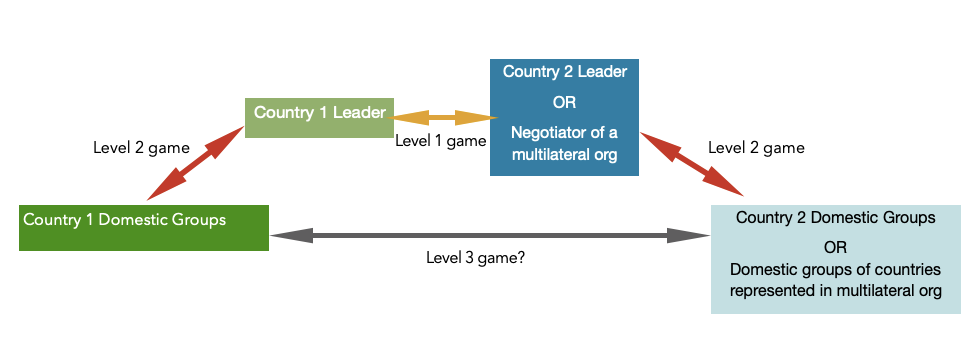
Global Policy Watch: Possible End Game In Ukraine?Indian perspectives on global events — RSJThings have escalated a bit since I wrote last week about the economic sanctions on Russia by the West. Apart from cutting loose a few Russian banks from the SWIFT messaging system, we also had the unprecedented move to freeze the access of the Russian central bank to its forex reserves that are held with other banks in the West. Russia has been salting away about $640 billion worth of forex reserves over the past decade in anticipation of an event like this. They had reduced their exposure to the US dollar to about 15 per cent. But if it cannot now access about half of this, or maybe more, because of the freeze, it is a crippling blow. The central bank needs the forex to prevent the slide of the ruble by buying them and propping up its value. If it cannot, the ruble will continue to plunge and currency short-sellers will get into their game to drive it to dust. That apart, the Russian oligarchs and their assets are being targeted. This core group of Putin backers are being made to pay for his blunders. The idea is to drive a wedge between them and Putin. Russian exports have been frozen because, without access to SWIFT, you only have barter as a trading mechanism. Russia is tightly coupled with the global economy unlike its predecessor USSR or other regimes that have faced big sanctions like North Korea, Syria or Cuba. Its economic model in the Putin era has been to focus on its comparative advantage in commodities while importing almost everything else. The sanctions will hurt ordinary Russians. Expect long queues at stores in Moscow. And long queues and Russia have an even longer history. It doesn’t end well for a regime when that happens. I could go on and on but you get the picture. This economic war unleashed by the west has turned more serious than Russia ever anticipated.Review Of The PositionsBut what I am interested in is what are the likely end-game scenarios here. For thinking through that let’s look at the two players, their objectives, likely actions and payoffs. Over the past decade, Putin had been building up to this moment. Testing the waters on the western response by annexing Crimea, sponsoring cyberattacks, meddling in elections of other countries and biting away chunks from its near neighbourhood. The western response to these has been tough words or economic sanctions of some kind. Based on these ‘games’ and their results, his expected scenario of what would unfold after Russia invaded Ukraine was clear. The West would never put boots on the ground in Ukraine to fight Russia. The Russian tanks would roll into Kyiv in a few days. Putin would engineer a regime change, install a puppet and then wait for the West to react. That reaction, as he had seen in the past, would be another round of economic sanctions in familiar shape and form. He counted on western Europe’s dependence on Russian gas to manoeuvre through the sanctions. And he had built the forex war chest to navigate through a rough year or two after which things would be normal. On balance, he would have had Ukraine, a win to reconfirm his strong man status among his people, a warning like no other to his neighbours to accept Russia as their sovereign and to demolish whatever little credibility the US and NATO have as trustworthy allies who would come to your rescue. He also had China on his side who saw this as a test case for their ambitions on Taiwan and the One-China policy. When he weighed the pros and cons of the move, this was a no-brainer for him. Let’s turn to the West now although there wasn’t much evidence prior to the invasion that it was a single bloc that coordinated its decisions. It lived in the hope that Putin would not invade Ukraine despite the clear signals emerging from Russia. It had already shown its hand by not sending troops and arms to Ukraine in anticipation of a war. It felt that it would be used by Putin to aggravate the situation and justify the war to his people. So, all it did was warn Russia of consequences without specifying them and left it at that. Putin saw through this. So, the invasion was inevitable.Putin’s Wrong Choice We move on to the next question now. What were the options Putin had on what form the invasion would take? Back in January, Jones and Wasielewski of CSIS had laid out the six military options that Putin had on Ukraine:“Kremlin has at least six possible military options:1. Redeploy some of its ground forces away from the Ukrainian border—at least temporarily—if negotiations are successful but continue to aid pro-Russian rebels in Eastern Ukraine.2. Send conventional Russian troops into the breakaway regions of Donetsk and Luhansk as unilateral “peacekeepers” and refuse to withdraw them until peace talks end successfully and Kiev agrees to implement the Minsk Accords.3. Seize Ukrainian territory as far west as the Dnepr River to use as a bargaining chip or incorporate this new territory
#160 Through The Looking Glass
Global Policy Watch: What Ukraine Tells UsIndian perspectives on global events — RSJAmong the rare joys of writing a weekly newsletter is the ability to pretend you’re an expert on everything under the sun. That way the last 2 years has been a gift that has kept on giving. Science of epidemiology, methods of lockdown, the efficacy of vaccines, how fiscal stimulus should be structured, what to do about China, the transitory nature of inflation or the long-term impact of working from home - there’s a wide swathe of subjects that I have claimed expertise on. The only thing missing was war. This week God, Putin heard me. And there was war.Now we do talk about matsyanyaaya a lot around here. That is all international relations can be reduced to the maxim of ‘big fish eating small fish’. To many, it seems like a simplistic formulation. Surely it cannot be just about power, they say. What about things like global order, liberal values and democracy that we hear nations claim that govern their outlook? Didn’t we do just that during the cold war? Fought on principles and brought down an evil empire? I can sympathize with them. There’s so much talk about higher-order morals in international relations that you can easily be taken in by it. Well, my view is that most of that stuff is garbage. The naked truth about international relations is grotesque. It needs the garb of pious intentions. And this becomes clear as daylight when you have a war. As much as it is a humanitarian crisis that saddens you, war is also a moment when all pretenses fall away. And you see the truth.So, what are the truths that emerge from the Russian invasion of Ukraine? The usual response to that question is about Putin, his ego and his frailties, his hegemonic ambitions and his desire for leaving behind a legacy that might appear dubious to us but important to him. Here’s a cross-section of views from experts in Brookings. Just to pick one of them (Pavel Baev, non-resident senior fellow):“Now we know that Putin’s obsession with Ukraine — which constitutes a threat to his regime not because of hypothetical NATO missiles, but because of its choice for democracy and closer ties with Europe — prevailed over common political sense and strategic risk assessments. Wars rarely go according to plans, and this one is set to turn bad for Russia because it is based on serious miscalculations about Ukraine’s capacity to defend its statehood, the strength of NATO resolve, and quite possibly the readiness of Russians to partake in this aggression. Every setback will prompt Putin to raise the stakes yet further.”In summary, Putin doesn’t like democracy in his neighbourhood, especially in countries with large Russian speaking populations. He fears any success there will have a risk of such ideas being transplanted and taking roots in Russia. So, he has to act. He will win the initial rounds but lose eventually though no one knows when. There are other views too but mostly in the same vein. I don’t have much to quarrel with these but I think there are other truths to consider in this clear moment of war. Firstly, there was a view gaining strength in the past decade that the interconnected nature of global trade and funds flow allows those who orchestrate them to wield tremendous power. An example of this was the way Iran was brought to the negotiating table by the US by freezing them out of SWIFT, a global financial messaging system that’s the spine that supports the money flow across the world. The term that’s often used to explain this ‘weaponized interdependence’. As Daniel Drezner of Tufts University in his introduction to the anthology, The Uses and Abuses of Weaponized Interdependence, puts it:“Weaponized interdependence (WI) is defined as a condition under which an actor can exploit its position in an embedded network to gain a bargaining advantage over others in a contained system…WI challenges long-standing ways that international relations experts think about globalization. States with political authority over central economic nodes can weaponize the networks to gather information or choke off economic and information flows, discover and exploit vulnerabilities, compel policy change, and deter unwanted actions.”In the abstract of their original paper, Weaponized Interdependence: How Global Economic Networks Shape State Coercion, Farell and Newman, also explain this:“Liberals claim that globalization has led to fragmentation and decentralized networks of power relations. This does not explain how states increasingly “weaponize interdependence” by leveraging global networks of informational and financial exchange for strategic advantage. The theoretical literature on network topography shows how standard models predict that many networks grow asymmetrically so that some nodes are far more connected than others. This model nicely describes several key global economic networks, centering on the United States and a few other states. Highly asymmetric netwo
#159 Three Conundrums
PolicyWTF: Band-aids for Bullet WoundsThis section looks at egregious public policies. Policies that make you go: WTF, Did that really happen? - Pranay KotasthaneThe ongoing political crisis in Ukraine has a small sub-plot that links to India’s education policy self-goals. Before the current crisis unfolded, I had heard that Russia and Ukraine were popular destinations for aspiring medical students from India. What I didn’t know was how big this cohort is in Ukraine. Multiple news reports claim that there are nearly 18,000 of them in Ukraine alone. Apparently, Indian medical students are also opting to study in Bangladesh, the Philippines, and Kyrgyzstan besides Russia and Ukraine. Of course, these students are merely responding to incentives. Commonly understood reasons for students taking up courses outside India are the limited number of seats in government medical colleges, and higher costs in private medical colleges. Ask anyone about MBBS education in India, and they will launch into a tirade about how the “commercialisation” of medical education has turned it unaffordable.But as readers of this newsletter would know, price is just a signal of the underlying market conditions. And so, fixing prices cannot be done by price-fixing. In this particular case, higher prices are due to the low supply of undergraduate medical seats. Apparently, 88,120 seats are on offer every year. For reference, there were 2,86,000 undergraduate seats in China. A good 40 per cent of these seats are in government colleges where the fee is subsidised by the taxes Indian citizens pay, while the remaining 60 per cent are in private colleges where the fee can range from ₹18 lakhs to ₹30 lakhs a year. The demand outstrips the supply by quite a margin and hence the high prices. Had the market for seats been liquid, many more colleges should have sprung up and brought the prices down. Since there are nearly 600 colleges in India now, collusion by all of them can be ruled out. But clearly, this hasn’t happened, for two reasons.One, unreasonable restrictions for setting up medical colleges. Until 2019, the regulatory authority for this sector was the Medical Council of India (MCI), an organisation that regulated both medical education and practice. Run by doctors, increasing the supply of doctors wasn’t their highest priority. After all, which beneficiary wants to reduce the “elite-quality” of their professions? Setting up a college meant pleading with this regulator and complying with their conditions like owning 20 acres of land and running an attached hospital. Colleges had to justify their student intake and were evaluated on the basis of things like the size of the “auditorium-cum-examination” hall, classroom sizes, and of course the student fees. In short, all the perverse incentives dutifully put together to create a rent-seeking apparatus par excellence. Corruption rose. Only politicians who could stare down the regulator risked starting new colleges, and the rest stayed away. Two, the existing medical colleges are dwarfs. In recent times, the number of medical colleges per se has increased handsomely, albeit from a low base. In a Lok Sabha reply, the union health ministry said that 132 medical colleges in the government sector and 77 medical colleges in the private sector have been approved by the NMC/MCI since 2014, an increase of 72 per cent since 2013. However, the intakes of these colleges continue to remain low. While the number of undergraduate medical seats in China are nearly 3.5 times those in India, the former has far fewer medical colleges — 420 (2018 figure) as against India’s 596 (2021 figure). So, India now has the largest number of medical colleges in the world and yet isn’t producing nearly enough doctors. The private colleges that pick up the gauntlet prefer to stay small rather than grow. The reason: regulations disincentivise scale. If you were to visit the webpage for starting a new college, you will find five different compliance categories. Depending on whether you admit 50, 100, 150, 200, or 250 students, the regulatory requirements keep scaling up. All the rules mentioned in the previous point — such as hospital seats, number of examination halls — need to increase correspondingly for the student intake to increase. Those who can, set up another college instead. Those who don’t, are conservative with the student intake. And of course, what is regulation without a price cap! Fees for 50 per cent of the seats in private colleges are capped. There are only so many people in the other 50 per cent who will cross-subsidise the rest. Even 10 per cent of seats going vacant dents profits significantly. So, colleges prefer doing laghu-udyog.And so, we continue to regret that India falls way below the WHO-recommended target for doctor density. Despite the miserable status quo, the policy community in this sector is unable to confront the trade-offs. Most people think the solution is simple — the union government
#158 Avoiding The Usual Distractions
India Policy Watch #1: On Hijab And FreedomInsights on burning policy issues in India— RSJThe hijab row roiling colleges in the Udupi district of Karnataka reached the courts this week. A full bench of the Karnataka High Court ruled on Thursday that all students are restrained from wearing clothes with religious symbolism within classrooms in institutions that have a prescribed dress code or uniform. The bench adjourned the hearing to Monday while requesting the state government to reopen the educational institutions. The government meanwhile declared holidays till Feb 16 to avoid the burden of opening up the colleges in the interim. The order has some interesting passages including this:“It hardly needs to be mentioned that ours is a country of plural cultures, religions, and languages. Being a secular State, it does not identify itself with any religion as its own. Every citizen has the right to profess and practice any faith of choice is true. However, such a right not being absolute is susceptible to reasonable restrictions as provided by the Constitution of India. Whether wearing of hijab in the classroom is part of the essential religious practice of Islam in the light of constitutional guarantees, needs a deeper examination.”This is an old conflict from the time of enlightenment when reason, empiricism and individual liberty were placed on the pedestal by the leading thinkers of the time. Industrialisation, the weakening of traditional social structures because of population shifts to urban centres, and the loosening of the grip of religion in everyday lives meant the questions about the place of religion in civil society and the relation between church and state animated the political and social discourse. Over time though doubts emerged about the benefits of such progressivism. The anxiety over losing a sense of community, the guilt of turning away from one’s religion and a kind of longing for a past that was precious but now lost sowed the roots of cultural conservatism as we know it today. In less diverse societies than India, this battle is framed as that between individual freedom and choice versus the inner order and stability that a society draws from its legacy and culture collectively. This itself has been fraught as we have seen in the backlash against liberalism over the last decade. Things get more complicated in India. There’s the individual freedom to choose and the society that has to contend with that freedom and its impact on it way of life. And then there’s also the community, often in minority, to which the individual belongs which might privilege its desire to conserve its values over both the individual and the society. This is a three-way problem. Should we see the girls wanting to wear hijab in educational institutions as exercising their freedom? Before we even get to whether this freedom has to be circumscribed in certain scenarios like the High Court has opined, should we ask whether we are convinced this choice of hijab is an individual choice? Some of you may ask does that matter. The girl students are themselves saying it is what they want to wear. Who are we to object? But is that choice so obviously individual? Or, is it the choice of another collective, the religious community, that’s imposing it covertly through its own code that’s coercive? Then, in the name of supporting the individual choice of wearing hijab, are we subjugating the choices of many other girls in future who might be coerced into wearing hijab were this battle won by these girls? Is the individual freedom a moral absolute in all circumstances? Or, does this kind of freedom that might mean absence of choice for other girls in choosing not to wear hijab in future that liberals should get behind in force? Our founders in their debates at the constituent assembly contended with these three forces - the primacy of the individual on the back of which the liberal constitution was being written, the communal identity of people that gave their lives meaning and structure over centuries and couldn’t be wished away, and the need for a centripetal force of legal and social system that drew the society closer together. Some kind of a balance was attempted and written into the constitution as fundamental rights. But a lot was left to the leaders and the people to find for themselves through practice, customs and traditions which would differ across regions and communities. It was acknowledged that people will have to be trusted to follow what’s acceptable and what has to be changed in their social realms without imposing a strict rule of law over it. This is why it is futile to argue over cultural issues through the lens of liberty enshrined in the constitution. There are enough exceptions all around us for every stripe of argument to be made for and against it. This is what we see in the hijab row. There are arguments about the individual choice of young Muslim girls and their rights over their bodies. There is

#157 Money Matters
Programming Note: It’s just me this time. RSJ will be back next week. - PranayIndia Policy Watch #1: The Indefensibility of India’s Defence FinancingInsights on burning policy issues in India— Pranay KotasthaneGovernment budgets should be seen in the context of on-ground realities and future targets. The immediate context of the latest defence budget is the continuing stand-off between Indian and Chinese troops in eastern Ladakh. Since it began in May 2020, this stand-off has underlined the need to urgently equip India's defence forces to manage the strategic challenge posed by China. More firepower than Pakistan can no longer be the end goal of defence planning. Instead, India needs a decadal plan to effectively block and deter China's salami-slicing strategy. The other important element underlying the defence budget is the COVID-19 pandemic. Last year's economic downturn further reduced the fiscal space and precluded a substantial rise in defence expenditure. Given that the government expects the economy to cross the pre-pandemic level in the upcoming financial year, it is worth comparing this year's defence budget with the pre-pandemic and pre-Ladakh stand-off year FY20. The traditional approach of comparing expenditures with the last year's budget is not as helpful because the previous year was an anomaly on many counts.First, the overall trend in defence spending is not encouraging. One way to measure the importance of a sector is to analyse the percentage of overall government expenditure it occupies. The Ministry of Defence's (MoD) relative importance has declined on this count. MoD expenditure now comprises 2.02 % of GDP (down from 2.22% in FY20) and 13.3% of central government expenditure (down from 16.7% in FY20). The more worrying part is that this decline is not recent. Since FY10, the MoD's expenditure has been steadily falling as a proportion of government expenditure. The Parliamentary Standing Committee on Defence's 2017-18 exhortation that defence spending of 3% GDP is 'optimal and necessary for ensuring the operational preparedness of the Forces' hasn't had the desired effect.Next, the change in the composition of MoD expenditure reveals a lot about government priorities. There are some positive signs on this count. The spending on defence pensions has relatively declined. It now comprises 22% of the MoD expenditure, down from 26% in FY20. One reason for this decline is that previous years' pension payments included some arrears. While this is welcome news, the respite is temporary. The five-yearly revision of One Rank One Pension (OROP) is due, and when it gets approved, pension expenditure will swell once again. Effective lateral entry mechanisms and a customised national pension scheme for the armed forces are the only long-term solutions for controlling pension spending.Another vital component of the defence budget is the pay and allowances for the armed forces personnel and defence civilians. Expenditure on this component has increased relative to other items. While salaries made up 29.9% of MoD's allocation in FY20, they are budgeted to be at 31.1% of MoD expense in FY23.The relative decline in pension expenditure has allowed some fiscal space for more capital expenditure on arms, ammunition, and platforms. Capital outlay now makes up 29% of MoD expenditure compared to 24.5% in FY20. For the third straight year, the capital expenditure exceeds the expenditure on pensions, reversing a worrying trend that continued until FY20. However, this compositional improvement doesn’t translate much in absolute terms, despite the government congratulating itself for increasing the capital outlay. As defence analyst Ajai Shukla observes:“the MoD announced that military modernisation and border infrastructure development was at the centre stage of the national security and defence planning process. To support this, the MoD pointed to the steady rise in the defence capital outlay from Rs 86,740 crore in 2013-14 to 1.52 lakh crore in 2022-23 – an enhancement of 76 per cent over a period of nine years. While that sounds like a healthy growth rate, it actually amounts to less than 5 per cent, compounded annually – barely enough to cater for inflation and foreign exchange rate variation.”The Indian Navy's share of this capital expenditure has increased to 35%, up from the 27% range between FY16 and FY20. This increase is significant as the response to China's build-up in the mountains might well lie in building deterrence in the oceans. Budgetary allocations indicate that the government is trying to build up India's naval strength but at a slow pace. Ajai Shukla points out how the Navy plans to utilise this allocation:This increment will be needed to support the acquisition of new platforms, such as six air-independent propulsion (AIP) submarines being acquired under Project 75-I, a second indigenous aircraft carrier (IAC-2), 57 twin-engine deck-based fighters (TEDBFs) and four more P-8I Poseidon long-r
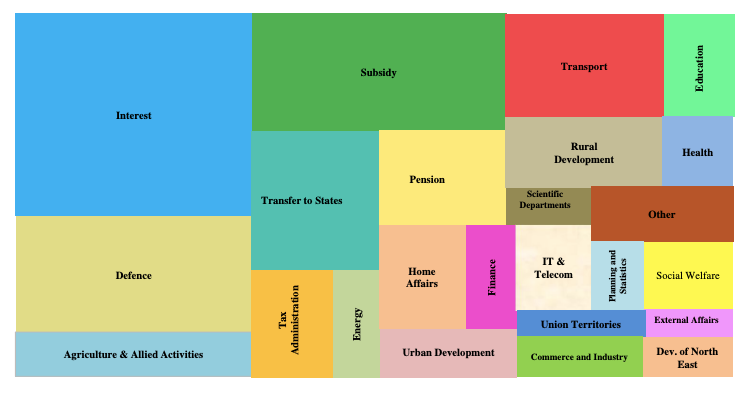
#156 The Republic Of Our Future
A long edition for your leisurely Sunday. Thanks for your patienceIndia Policy Watch #1: Call Of Duty Insights on burning policy issues in India- RSJMany among you of a particular age might remember a familiar trope from old Hindi films. A key protagonist, grievously injured or sick, is wheeled into the operation theatre. There’s a small red bulb on top of the door that turns on. Grim music plays in the background. After a while, the surgeon steps out, take off his gloves and looks at the assorted mix of anxious relatives with resignation. Then he says, “ab inhe dawa ki nahin dua ki zaroorat hai” (he needs prayers now; not umm… paracetamol). That’s how I feel when I hear public discourse in any democracy get tangled up between rights and duties. Not a lot of good has come out of exhorting people to do their duty in the history of this world. So pardon my anxiety when I find constitutional functionaries conflate rights and duties, or worse, seem to privilege duties over rights. But that’s exactly what I have been coming across in the past two months. Two examples will suffice. Last week the PM made these remarks in an event organised by Brahma Kumaris Sanstha:At the same time, we also have to admit that in the 75 years after Independence, a malaise has afflicted our society, our nation and all of us. It is that we turned away from our duties and did not give them primacy. In the last 75 years, we only kept talking about rights, fighting for rights and wasting our time. The issue of rights may be right to some extent in certain circumstances, but neglecting one's duties completely has played a huge role in keeping India vulnerable.India lost considerable time because duties were not accorded priority. We can make up for the gap which has been created due to primacy about rights while keeping duties at bay in these 75 years by discharging duties in the next 25 years.A few days later, the President had this to say in his address to the nation on the eve of the Republic Day:Rights and duties are two sides of the same coin. The observance of the Fundamental Duties mentioned in the Constitution by the citizens creates the proper environment for enjoyment of Fundamental Rights.….Patriotism strengthens the sense of duty among citizens. Whether you are a doctor or a lawyer, a shopkeeper or office-worker, a sanitation employee or a labourer, doing one’s duty well and efficiently is the first and foremost contribution you make to the nation.There are many, and their numbers are probably rising in India, who might wonder what’s remotely problematic with this kind of framing of rights and duties? Isn’t it true that we, Indians, don’t do enough for our country? Or, is this not what JFK meant when uttered those famous lines - “Ask not what your country can do for you – ask what you can do for your country.” Isn’t a call for public service and invoking a spirit of self-sacrifice for nation-building important? This is what leaders are supposed to do, they might say. I won’t disagree so long as there’s clarity on the nature of rights and duties and where they are placed in relation to one another. This is often misunderstood in India where duty or its nearest equivalent Sanskrit term, dharma, has great civilisational and cultural significance. Rights are often seen as some kind of a western enlightenment imposition on our society which otherwise knew its dharma and its karma. Unfortunately, this as we will see, reflects both a shallow understanding of rights and of dharma.Rights Aren’t EarnedThe first notion to appreciate is that regardless of social, ethnic or temporal differences, an individual is born with certain rights. You could call them fundamental or inalienable. That she is endowed with these rights is prior to any other knowledge about her. This privilege of rights is what creates a corresponding set of duties among others. For instance, the right to life places the onus on others to not kill her. This can be of a legal nature which is enforceable by laws of the society. Or, in case of other rights, the onus on others could be a moral one which is then protected by a code of living together that’s understood by all. This onus then is the duty that an individual has towards rest of the community. It stems from accepting that others have rights. In other words, rights are ontologically prior to duties. This is the basis for the creation of any community. You respect individual rights, you create codes to protect them and living by that code becomes the duty of the members of the community. This is how societies are built. Ronald Dworkin, the American philosopher, in his book Taking Rights Seriously, calls rights as ‘trumps’ that can be used to overturn any justification of collective imposition on an individual:“Individual rights are political trumps held by individuals. Individuals have rights when, for some reason, a collective goal is not a sufficient justification for denying them what they wish, as individuals,
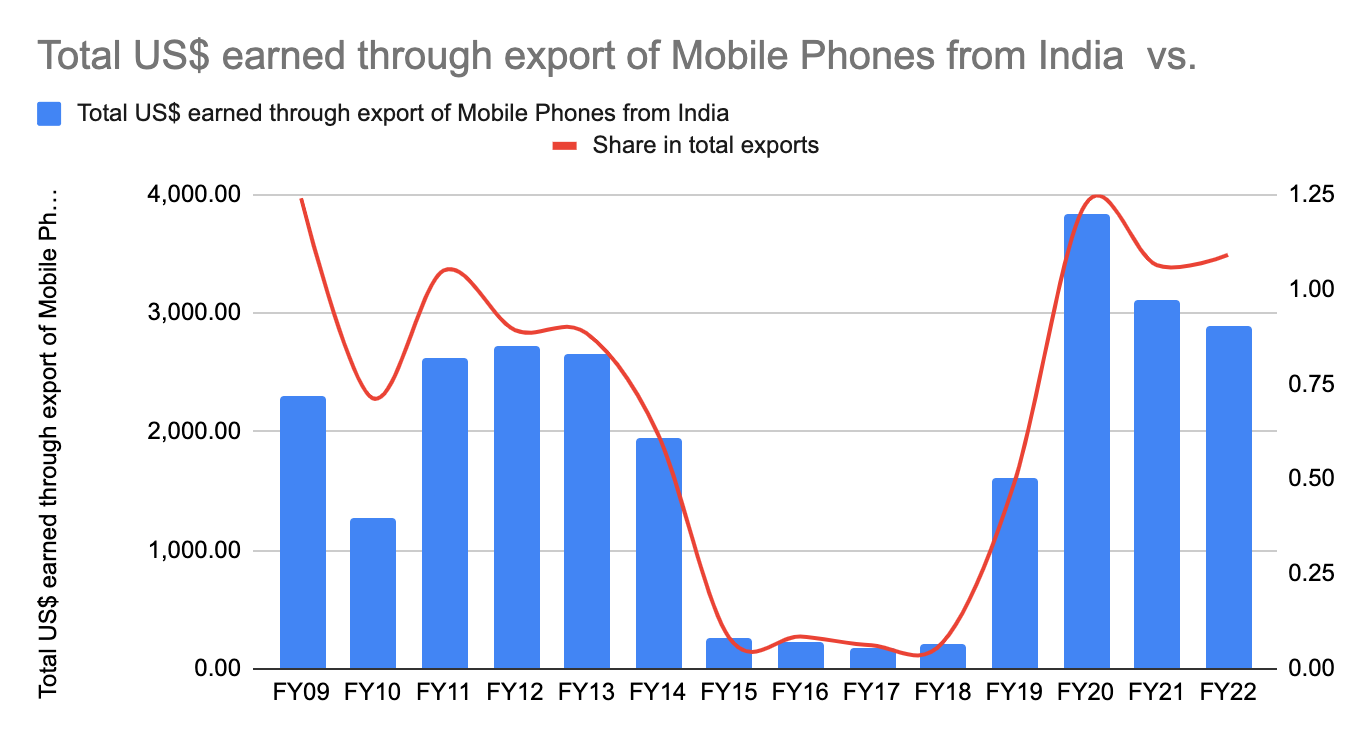
#155 The Persistence Of Memory (of bad ideas)
Global Policy Watch: Who’s Afraid Of Stakeholder Capitalism?Insights on global issues of the day- RSJSometime in late 2019, Alan Jope, chief executive of Unilever, the global food and cosmetics giant, declared that brands without an evangelical purpose of contributing to society will soon face extinction. As the Guardian reported then:Alan Jope, Unilever’s chief executive, said it was no longer enough for consumer goods companies to sell washing powders that make shirts whiter or shampoos that make hair shinier because consumers wanted to buy brands that have a “purpose” too.“Can these brands figure out how to make society or the planet better in a way that lasts for decades?” said Jope, outlining the company’s thinking. Unilever is not working to a set timetable but Jope, who took over from Paul Polman in January, said it was possible that a brand or even whole product category “is not going to be able to find its purpose”.His comments raised the possibility of the company selling off profitable brands, potentially hurting the bottom line, but Jope said: “Principles are only principles if they cost you something.”This looked good. I mean we all want businesses to have more social responsibility. Here was a CEO willing to take a long view of what’s good for society and let go of short-term gains. How are things going for Alan Jope now? Well, here’s Nils Prately writing in the Guardian last week:Unilever is frustrating its shareholders. Last year’s stock market “rally in everything” bypassed the consumer goods giant entirely. The shares fell by a tenth and, at £39.42, stand roughly at their level of five years ago, soon after the group adopted a supposedly energising cost-cutting and deal-making overhaul in response to its close encounter with Kraft Heinz’s financial engineers. Perhaps, the most entertaining rebuke came from fund manager Terry Smith:“Unilever seems to be labouring under the weight of a management which is obsessed with publicly displaying sustainability credentials at the expense of focusing on the fundamentals of the business.A company which feels it has to define the purpose of Hellmann’s mayonnaise has in our view clearly lost the plot. The Hellmann’s brand has existed since 1913 so we would guess that by now consumers have figured out its purpose (spoiler alert – salads and sandwiches).”Heh!But this isn’t an isolated instance of a corporation grandstanding on contribution to society as its purpose. And a lot of it is driven by other shareholders who value it more than, say, Terry Smith above. For instance, Blackrock, the world’s biggest investment manager, that owns like seven percent of every public company out there, has made ESG (environmental, social and governance) metrics a priority for their investment decisions. Over the last few years, Larry Fink, the chief executive of Blackrock, has emerged as the most influential voice on the role of business in driving the sustainability agenda. This has meant Blackrock cutting back its investments in enterprises that are seen to be bad for environment and sustainability. But this has not been without a backlash. The Republicans and their supporters see this another sign of ‘wokeism’ dominating business agenda. The more left leaning wing of Democratic party feel this is all lip service and Blackrock is not doing enough to push sustainability. There’s also the usual chorus about should it be elected lawmakers who must drive this or an unelected powerful businessman regardless of their good intentions? Plus, there’s been the usual unintended consequences. The throttling of investments into thousands of firms that have business models that still leech off environment while being hugely profitable has increased the spreads on their bonds giving an opportunity to other investors to profit. Also, with so much investments going into ESG, some sort of a ‘green asset bubble’ has been formed with businesses of all stripes positioning themselves as green and sustainable to free ride into billion-dollar valuations. These things usually end up badly for everyone. So, in his latest annual letter to CEOs titled ‘The Power of Capitalism’, Larry Fink seems to suggest he’s moderating things a bit. He starts off in the usual fashion defending the focus on stakeholder capitalism (i.e., thinking beyond shareholder profits):Stakeholder capitalism is not about politics. It is not a social or ideological agenda. It is not “woke.” It is capitalism, driven by mutually beneficial relationships between you and the employees, customers, suppliers, and communities your company relies on to prosper. This is the power of capitalism. He continues with his call for net-zero goals and finding a purpose beyond profits but there’s a subtle shift in tone:In today’s globally interconnected world, a company must create value for and be valued by its full range of stakeholders in order to deliver long-term value for its shareholders. It is through effective stakeholder capitalism t

#154 We’ve Seen This Movie Before
Global Policy Watch: Joan Didion On MoralityInsights on global issues of the day- RSJI want to write about the Andhra Pradesh cinema ticket price cap kerfuffle this week (read here for context). A regular reader, Prem Sagar, wrote to us last week giving us a picture of what was happening in Tollywood. All the great ingredients of a timeless PolicyWTF have come together there - good intentions, political games, conspiracy theories, a government order on price controls that Indira Gandhi would have been proud of and the inevitable unintended consequences. I wept with joy going through them all. But before that Joan Didion. The great chronicler of American life passed away a couple of weeks back. Why Joan Didion in a public policy newsletter, you may ask? Public policy is an interdisciplinary science. At the heart of it is understanding the public - the basis for its motives, its fears and insecurities and its wants. There was no one better than Joan Didion to show a mirror to a society in prose that was unsparing, sparse and crystalline. Didion didn’t go looking for grand narratives. There was no conscious painting of a big picture. She was intimate in her approach and got busy with the minutiae. But from that appeared something that made you rethink your priors. She wrote as she saw it. And she saw a lot. From the underlying vacuity of the unrest in colleges in the late 60s, the hollowness of the counterculture movement in California, the depravity hiding under Kennedy’s Camelot, the absence of any ideological truth bar nihilism among Black Panthers, the mendacity of Nixon and the arriviste pretensions of the Reagans. She covered them all with insight and acuity. Not many realise today that Didion grew up as a Goldwater conservative who wrote quite often in that conservative bible, the National Review during the late 50s and 60s where she reviewed films, eviscerated other authors and their books (her takedown of Salinger’s Catcher In The Rye is one for the ages), championed individual liberty and cautioned against the inevitable disorder that stems from collective self-righteous passions. No one was spared. Later in her life, she would turn that flint-edged gaze onto herself in her collection of essays ‘Where I Was From’ where she reflects on the myths and beliefs of the old California way that shaped her person. And on how wrong she could have been. Didion On MoralityAmong her essays, a particular favourite of mine is On Morality (in the anthology Slouching Towards Bethlehem) where she holds the word morality in her finger and turns it over and over again against the cold light of the day to make sense of it. I often think of it as a short cultural companion piece to Adam Smith’s The Theory of Moral Sentiments in its dissection of morality. She writes:“What does it (morality) mean? It means nothing manageable. There is some sinister hysteria in the air out here tonight, some hint of the monstrous perversion to which any human idea can come. “I followed my own conscience.” “I did what I thought was right.” How many madmen have said it and meant it? How many murderers? Klaus Fuchs said it, and the men who committed the Mountain Meadows Massacre said it, and Alfred Rosenberg said it. And, as we are rotely and rather presumptuously reminded by those who would say it now, Jesus said it. Maybe we have all said it, and maybe we have been wrong. Except on that most primitive level—our loyalties to those we love—what could be more arrogant than to claim the primacy of personal conscience?At least some of the time, the world appears to me as a painting by Hieronymous Bosch; were I to follow my conscience then, it would lead me out onto the desert with Marion Faye, out to where he stood in The Deer Park looking east to Los Alamos and praying, as if for rain, that it would happen: “...let it come and clear the rot and the stench and the stink, let it come for all of everywhere, just so it comes and the world stands clear in the white dead dawn.”She then agonises over the frequency of the word ‘morality’ appearing in politics, media and everyday lives. Like most timeless pieces, there’s both prescience and a definite universality in her analysis of morality. She puts her finger on the performative nature of those sermonising others in society:“You see, I want to be quite obstinate about insisting that we have no way of knowing—beyond that fundamental loyalty to the social code—what is “right” and what is “wrong,” what is “good” and what is “evil.” I dwell so upon this because the most disturbing aspect of “morality” seems to me to be the frequency with which the word now appears; in the press, on television, in the most perfunctory kinds of conversation. Questions of straightforward power (or survival) politics, questions of quite indifferent public policy, questions of almost anything: they are all assigned these factitious moral burdens. There is something facile going on, some self-indulgence at work. Of course we wo
#153 Hope Is A Thing With Feathers*
India Policy Watch: Prediction TimeInsights on burning policy issues in India— RSJHappy New Year! This is a time of hope, optimism and new beginnings. But 2022 has signalled it has no time for such niceties. It is already hitting high notes on all kinds of wrong metrics - peak COVID-19 positivity rates, deeper social polarisation and dangerous levels of toxicity on social media. And it is only the first week. Maybe 2022 intends to get all the bad news out early and then coast on calm waters. That’s the hope. Hope, like Andy Dufresne taught us, is a good thing; maybe the best of things. We write this newsletter because we are hopeful about the future. We believe we can make an impact, however small, on the demand side of the policy equation. That making people aware of policy choices and helping them anticipate the unintended will lead to a change in the supply side of politics. There are two preconditions for this to happen which we have assumed to hold true. One, people have time and mental space available for discussions that matter to their lives. Two, a belief we can arrive at what’s good for us through those debates and discussions. But there are days when you wonder if these hold. The cacophonous noise on issues of identity, validity and nationalism drowns all other conversations. There’s no conceding of ground regardless of the merits of an issue. Any factoid that questions your existing hypothesis isn’t seen as worthy of contemplation. The more perceptive might register a mild dissonance. Instead, you wait for your side to dig out a counter that reconfirms your bias and negates the dissonance. Politics is often considered to be performative for the audience that’s the electorate. Now, the audience has donned the makeup and is declaiming on stage. The possibility of consensus on what’s good is increasingly remote. And once you are in this territory, the public part of public policy goes out of the window. Whatever remains then is no different from a fiat. But then hope is a good thing. And so we begin the new year with hope. Like those last lines from The Great Gatsby:“...tomorrow we will run faster, stretch out our arms farther…And one fine morning- So we beat on, boats against the current, borne back ceaselessly into the past.”Like last year, we start with that timeless lazy way to fill pages during this time of the year. Here is my random list of predictions for 2022.Economy#1: It will be more of the same for India on growth, inflation and fiscal deficit. Factoring in the Covid base effect, we will be in the 5-5.5 per cent growth range (if you take the base of FY 21). Inflation (CPI) will be around 5 per cent with an occasional jump to 6 per cent during the year despite threatening to go out of control. Maybe three interest rate hikes (a total of 75 bps) during the year will keep a lid on it. Public markets will moderate a bit (around 10 percent upside). Private market valuations will continue to be in bubble territory. There’s a lot of liquidity that’s already raised and ready to be deployed for start-ups. China won’t attract it as it will continue to go down the path of self-reliance and its notion of an equal society. So, expect even more than the $36 billion that flowed into startups in 2021. There will be more gushing commentary on the Indian entrepreneurial energy. That will be appropriated to show how well the economy is doing. The money flowing for Indian startups is good news, of course. But it cannot be the only metric to determine the health of the economy. The divergence between the formal and informal economy and the K-shaped recovery that we have written about (“Two Indias”) will continue.#2: There won’t be much to write about reforms. Some attempts at piecemeal MSP reforms will be attempted to make up for the repealed farm laws. The National Monetisation Pipeline will get going but the progress will be modest. A couple of more disinvestment proposals of PSUs (including banks) will be taken up. But this will be for raising revenues rather than a planned strategy to make PSUs market competitive. The LIC IPO will just go over the line and that will be the big event to showcase reforms. All of this doesn't mean we will be short of big announcements about reforms or intention to reform.Politics#1: BJP election machine will continue its winning run barring the odd defeats in Punjab and Goa. The big prize, UP, will be fought hard but BJP will win a safe majority. The bahujan vote of the depleted BSP will shift to it more than to SP and that will make all the difference. By the end of the year, there will be a more formal coming together of regional parties as opposition. Some sort of a “front” will be formalised.#2: There will be a split in the Congress. The party in its current form is untenable and beyond a point, there will be nothing to lose for those who split it. The key question is who will lead it - those who have a political base and think Congress leadership is a liability that c
#152 2021 Ends
Programming Note: Anticipating The Unintended will be on its annual year-end break for the next two weeks. Normal services will resume from Jan 9, 2022. Happy Holidays.This is the last edition for 2021. There’s always a temptation to look back at the year gone and arrive at some kind of things-we-learnt-this-year list. As much as we’d like to do that, we really have nothing insightful to offer. It wasn’t a great year for most part because of the pandemic and it is ending on a foreboding note. Anyway, so what do we have in this year-end edition? We start with talking about the one overriding emotion that the two of us had through the year. What’s that one constant feeling that summed up our view of most events during the year? We then move on to the predictions we had made at the start of 2021 and see how each of us fared. And we close out with books, newsletters, podcasts or videos that we enjoyed greatly. That’s what is on the menu today.The 2021 State Of MindRSJ: Through the year my mind went back to the lines from one of my favourite poems, The Second Coming by W.B. Yeats. It is somewhat apposite too. Yeats wrote the poem just after WW-1 had ended and during the Spanish flu pandemic. His pregnant wife contracted the flu and survived after a harrowing time. Yeats paints a bleak landscape of disorder and anarchy with warring factions and a divided world order. The voices of reason lack moral strength because the false convictions of the passionate have taken over. To quote Yeats:“The best lack all conviction, while the worstAre full of passionate intensity.”That’s how I felt most of 2021. Funnily enough, I started noticing many variations of these lines over the past months. I guess I lived through the Baader-Meinhof phenomenon on this one. I have collated them here. Back in 1871, in the introduction to his book, Descent of Man, Charles Darwin wrote:“Ignorance more frequently begets confidence than does knowledge: it is those who know little, and not those who know much, who so positively assert that this or that problem will never be solved by science.”In his 1931 essay, The Triumph of Stupidity, Bertrand Russell wrote:“The fundamental cause of the trouble is that in the modern world the stupid are cocksure while the intelligent are full of doubt. Even those of the intelligent who believe that they have a nostrum are too individualistic to combine with other intelligent men from whom they differ on minor points. This was not always the case. A hundred years ago the philosophical radicals formed a school of intelligent men who were just as sure of themselves as the Hitlerites are; the result was that they dominated politics and that the world advanced rapidly both in intelligence and in material well-being.It is quite true that the intelligence of the philosophical radicals was very limited. It is, I think, undeniable that the best men of the present day have a wider and truer outlook, but the best men of that day had influence, while the best men of this are impotent spectators. Perhaps we shall have to realise that scepticism and intellectual individualism are luxuries which in our tragic age must be forgone, and if intelligence is to be effective, it will have to be combined with a moral fervour which it usually possessed in the past but now usually lacks.”In his essay, A Cult of Ignorance, published in the Newsweek (1980), Isaac Asimov wrote:“Anti- intellectualism has been a constant thread winding its way through our political and cultural life, nurtured by the false notion that democracy means that my ignorance is just as good as your knowledge.Now we have slogans on the part of obscurantists: "Don't trust the experts!"... We have a new buzzword too, for anyone who admires competence, knowledge, learning and skill, and who wishes to spread it around. People like that are called 'elitists'....What shall we do about it? We might begin by asking ourselves whether ignorance is so wonderful after all, and whether it makes sense to denounce 'elitism'. I believe that every human being with a physically normal brain can learn a great deal and can be surprisingly intellectual. I believe what we badly need is social approval of learning and social rewards for learning.”Of course, all of this culminated into a wonderful paper by David Dunning and Justin Kruger titled, “Unskilled and unaware of it: How difficulties in recognizing one’s own incompetence lead to inflated self-assessments”. Published in the Journal of Personality and Social Psychology, Dec 1999, the abstract of the paper asserted:“People tend to hold overly favorable views of their abilities in many social and intellectual domains. The authors suggest that this overestimation occurs, in part, because people who are unskilled in these domains suffer a dual burden: Not only do these people reach erroneous conclusions and make unfortunate choices, but their incompetence robs them of the metacognitive ability to realize it.”Thus was born the Dunning-Kr

#151 The Wrong Kind Of Convergence
India Policy Watch #1: Imitating The EnemyInsights on burning policy issues in India— RSJPranay made an interesting point in the last edition on how India should avoid mimicking China if it were to position itself as a counter to them. The core idea was we often fall into the trap of behaving like our ‘enemy’ when we compete with them. This hurts our long term interests. I was thinking about it in the context of Indian politics and how often this has turned out to be true. A classic instance of this is West Bengal where the TMC ousted the Left, then picked up their playbook of party capture of the state and did one better on them. Even the BJP that never missed an opportunity to talk about ‘high command’ culture and lack of cooperative federalism when the Congress was in power, now runs a highly centralised government of two, with a powerful PMO. On the other hand, Congress and AAP have gone down the path of what’s called soft Hindutva as they try to keep pace with the BJP. The interesting, and somewhat, ominous thing to note here is none of these parties tries to emulate features that could further liberal democracy. The incentives for winning power and retaining it supports only imitating the bad ideas in the short run.The ‘Party State’This is what worries me as I see the coalescing of the opposition forces in the run-up to 2024. It is not the differences between the BJP and the opposition, in the shape of TMC and others, that's important. Those differences on secularism or the definition of nationalism will be used for narrative wars that will continue to deepen the schism in the society. But I don’t see them changing how India will be governed. It is the similarity, where the ‘enemies’ emulate each other that has me worried. And what’s the similarity? To put it simply, it is their belief in running a ‘party state’ model of governance. What the Left built in West Bengal and the TMC inherited has now been finessed and taken at the national level by the BJP. The party or its affiliates have their imprint everywhere. The law of the party trumps rule of law. Examples abound. The cancellation of stand-up comic shows by the state because it cannot guarantee law and order when the party protests is but one example. You might argue this was always the case in India. Maybe it was. But this time it’s different because the party and its membership aren’t as diverse ideologically as it was during the time when the Congress was a hegemon. More importantly, the party this time is much more disciplined than the others in the past. So, where’s the problem? Well, anyone competing with the BJP will mimic its model in the unlikely event of unseating them from power. The Indian polity has converged to this model now. To clarify, by party state, I don’t mean a single-party rule. That will be difficult to pull off even in India when there's a brute electoral majority as we have seen in the past. The Party-state is a bit different. In his book The Cultural Contradictions of Capitalism (1976), Daniel Bell defined ‘three realms’ - economic, polity and culture - that constitute modern society. These realms run on contrary principles. As Bell wrote:“The argument elaborated in this book is that the three realms— the economy, the polity, and the culture—are ruled by contrary axial principles: for the economy, efficiency; for the polity, equality; and for the culture, self-realization (or self-gratification).”He elaborated it further:“Now, the technical-economic realm, which became central in the beginning of capitalism, is, like all industrial societies today, based on the axial principle of economizing: the effort to achieve efficiency through the breakdown of all activities into the smallest components of unit cost, as defined by the systems of financial accounting. The axial structure, based on specialization and hierarchy, is one of bureaucratic coordination. Necessarily, individuals are treated not as persons but as ‘things’ (in sociological jargon their behavior is regulated by the role requirements), as instruments to maximize profit. In short, individuals are dissolved into their function.The political realm, which regulates conflict, is governed by the axial principle of equality: equality before the law, equal civil rights, and, most recently, the claims of equal social and economic rights. Because these claims become translated into entitlements, the political order increasingly intervenes in the economic and social realms (in the affairs of corporations, universities, and hospitals), in order to redress the positions and rewards generated in the society by the economic system. The axial structure of the polity is representation, and, more recently, participation. And the demands for participation, as a principle, now are carried over into all other realms of the society. The tensions between bureaucracy and equality frame the social conflicts of the day.Finally, the cultural realm is one of self-expression and self grati
#150 One Country, Infinite Variety
Hey all, our little newsletter hits a 150 with this edition! That’s about 600,000+ words. We also completed two years of bringing you Anticipating The Unintended last month. The process has been rewarding for us (heh, what else can we say about a free newsletter, really?). We hope it’s been of use to you. Thank you for your attention and time. We will be grateful to hear from you.India Policy Watch #1: Two Indias Insights on burning policy issues in India— RSJIn the old debate between growth versus equality, we have consistently batted for growth in the Indian context. Like we have written earlier (“What Drives Rapid Economic Growth”), economic growth is a moral imperative for policymaking in India. Other things, like equality, climate impact or anything else, are important but if you have to make the trade-offs like it is inevitable in policymaking, you should accord a higher priority to growth over them. This doesn’t endear us to many. How can you not think of carbon emissions, sustainability or the planet for future generations, they ask? Our point remains simple. You need to prioritise when you have limited resources and a thin state capacity. There are millions of great causes to serve in this world but the state cannot be expected to solve all of them. Falling for such demands that are more appropriate for an economy more advanced than India will distract us from our core objective - lifting millions of Indians out of poverty. And trust us, if you don’t do this, you won’t achieve any of the other exalted goals too. In the three decades since the reforms of 1991, we have achieved more on this objective than the previous four. Maybe in the process, we have got a few more billionaires in India. It shouldn’t matter so long as competition is free and individual liberty is sacrosanct. Those should be the only limiting conditions for acting on growth. DoubtBut there are weeks when I question this. This is one of those weeks. You see, the underlying assumption in our argument is that there should be growth. Not just any growth. But one that’s sustainable with expectations of trickle-down benefits. So, when the latest GDP print for the quarter ended September 2021 came out last week, it made me pause. The GDP grew at 8.4 per cent over the same period last year and it is likely (unless a third wave hits us) if this trend continues, we might see double-digit full-year growth. The usual chest-thumping about being the world's fastest-growing economy followed soon after. However, parsing the GDP data a bit more and also taking a broader view of the macroeconomy might be useful in appreciating what kind of growth we are seeing here.The real GDP at ₹35.7 lakh crores is about 0.33 per cent higher than the period ended September 2019. That is we have lost two years of growth in the pandemic. And remember, we were already slowing down considerably at this time two years ago. So, it wasn’t a great base, to begin with. But this isn’t all. A significant part of this growth has been contributed by government spending in public administration and defence which grew by over 17 per cent. The capital spending by the union government this year is up almost 25 per cent over the last year. Private consumption which has been a significant driver of the Indian economy over the last two decades is still below pandemic levels. So are other sectors like construction, travel, hospitality and logistics that employ the bulk of semi and low skilled labour. There are a few bright spots but with caveats. Agriculture grew at a healthy rate of 4.5 per cent but it is likely the rural spending power is getting negated by the rise in inflation. The recovery has been good so far but it isn’t as robust as in the US and China who recovered to pre-pandemic levels earlier than India by a few quarters. The US is expected to grow at 6 per cent while China will likely end up with 8 per cent growth this year on their kind of GDP base. On the other hand, the GST collections continue to be at over Rs 1.2 lakh crores and growing at a steady clip of over 25 per cent. The direct collections are expected to beat the annual target of Rs. 11 lakh crores. That apart, the companies belonging to the Nifty 50 index have seen record profits in H1 of this fiscal. How does one reconcile the almost no growth scenario of the last two years and the lower than pre-pandemic levels of consumption with the record tax collections and profits? The Voiceless Informal EconomyOne reason is possibly better tax compliance because of digitisation and surveillance tools now available that make evasion difficult. The other and more compelling reason is the formalisation of the economy. The pandemic has had a disproportionate impact on the informal economy who struggled to cope with frequent lockdowns, lack of migrant labour to run their establishments and health risks of the pandemic. You perhaps bought your vegetables and fruits from a stall in the local market earlier. The lockdown me
#149 Turning And Turning In The Widening Gyre
India Policy Watch: Crypto And Samvidhaan Insights on burning policy issues in India— RSJWhen you write a weekly newsletter you view every news item as possible content for the next edition. You shoehorn some framework or stretch things to draw a historical parallel with that event. Trust me, it can be tiring - speaking for me, not for Pranay who has frameworks for his breakfast with poha. But as I sometimes like to say, there are weeks when content presents itself on a platter with a side of masala papad. This is one of those weeks.First, there was news that the government plans to table the Cryptocurrency and Regulation of Official Digital Currency Bill, 2021, in the winter session of the Parliament. It is likely the government will impose strict regulations that might fall short of an outright ban on them. Separately, there are indications that the bill will have a framework for creating a digital Rupee to be issued by RBI, the equivalent of a central bank digital currency (CBDC). We have written about crypto and CBDC in previous editions (here and here) through the lens of public policy and economics. As Satoshi wrote in his essay:“The root problem with conventional currency is all the trust that’s required to make it work. The central bank must be trusted not to debase the currency, but the history of fiat currencies is full of breaches of that trust. Banks must be trusted to hold our money and transfer it electronically, but they lend it out in waves of credit bubbles with barely a fraction in reserve. We have to trust them with our privacy, trust them not to let identity thieves drain our accounts.” That digital currencies will reduce transaction costs, be more efficient as a payment method, and can have all kinds of interesting decentralisation use cases, is all good. But as the past year in India has shown, nobody thinks of cryptocurrency as a medium of exchange. It has turned into a speculative asset with customers being promised outrageous returns in ads that are everywhere. This has meant hordes of unsuspecting investors flocking to crypto exchanges with estimates of crypto owners in India ranging from 10 to 100 million. The number of cryptocurrencies globally has shot up too and it’s a bit difficult to make out what’s a meme and what’s real anymore in this world. Consumer protection is a real issue now. The decentralised and anonymous nature of transactions is a further worry for the RBI and government. There are concerns around the use of crypto to fund criminal activities or for money laundering. But most importantly, for central banks and governments, letting private cryptocurrencies go unchecked and unregulated will gradually take away their power to influence monetary policy. This is a difficult thing to let go because a fundamental principle on which the modern economy rests is that the governments (or central banks) know what to do about the supply of money in general interest. Of course, the votaries of crypto and decentralisation believe this isn’t true. They would go back to the argument Hayek had made in his book Denationalization of Money:“A single monopolistic governmental agency can neither possess the information that should govern the supply of money nor would it, if it knew what it ought to do in the general interest, usually be in a position to act in that manner. Indeed, if, as I am convinced, the main advantage of the market order is that prices will convey to the acting individuals the relevant information, only the constant observation of the course of current prices of particular commodities can provide information on the direction in which more or less money ought to be spent. Money is not a tool of policy that can achieve particular foreseeable results by control of its quantity. But it should be part of the self-steering mechanism by which individuals are constantly induced to adjust their activities to circumstances on which they have information only through the abstract signals of prices. It should be a serviceable link in the process that communicates the effects of events never wholly known to anybody and that is required to maintain an order in which the plans of participating persons match.”This battle between the centralisation instincts on which the edifice of the state rests and the promise of decentralisation and individual control that Web3 or Metaverse, or whatever else they are calling it now, offers, is going to define this century.Second, I noticed there were some enthusiastic celebrations for Constitution Day on Nov 26 across India. Except at the Central Hall of the parliament. About 15 parties boycotted the function organized by the Lok Sabha Speaker because they felt the government was disrespecting the Constitution and undermining democracy. Not sure how staying away from an event that celebrates the Constitution helps. Anyway, the PM responded to the boycott by claiming dynastic parties are the biggest threat to the health of Indian democracy. Inde
#148 All The Wrong Reasons
India Policy Watch #1: Nayi Umar Ki Purani Fasal Insights on burning policy issues in India— RSJPM Modi, in an address to the nation at 9 AM on Friday, repealed the three farm laws that had been pushed through in the parliament without any debate more than a year ago. Choosing the occasion of Guru Nanak Jayanti, the PM said his government was unable to convince the farmers about the benefits of the laws. We have written a few times earlier about our view on farm reforms and these three laws in particular (we have linked them at various places in this edition). This repeal might well mean farm sector reforms are dead and buried for a decade, if not more. This is going to be terrible for Indian agriculture in the long term. That apart, as public policy watchers, there are few important lessons to take away from the entire episode. Before we get onto what we learnt, a short summary of where we stand on the farm laws. Firstly, on any measure of outcomes, Indian agriculture is in a terrible state. Things are so bad that you can safely say there's no change that can make it any worse. In edition #70 (Section: No Looking Back on Agricultural Reforms), we wrote:The dismal state of Indian agriculture bears no repetition. The farm income growth has been stagnant for the last 6 years. The small and marginal farmers who constitute 86 per cent of India’s peasantry barely make a living out of farming with average per capita annual income below Rs. 100,000. About 45 farmers die by suicide on an average every day. The Food Corporation of India (FCI) buys the produce at the minimum support prices (MSP) from the mandis and distributes it at a subsidised rate through the public distribution system (PDS). This subsidy bill has grown to an unmanageable level.The FCI borrows from National Small Savings Funds (NSSF) to keep its operations going. It is estimated this loan will rise to Rs. 3.5 lakh crores in FY ‘21 from Rs. 2.5 lakh crores in FY ’20. Millions of ordinary Indians trust NSSF with their lifelong savings. It is anybody’s guess when FCI will be able to pay back NSSF. If this appears like a giant Ponzi scheme, that’s what it is. The food grains stocked at FCI are at an all-time high but there’s no market mechanism for its distribution when people needed it the most during the pandemic. They had to wait for the largesse of the state for the stored grains to reach them. This is a broken system. Even if you set out to create a dysfunctional system, you’d have struggled to reach here.Who in their right minds would want this structure to continue? Who has it helped except entrenched cartels and a few dynasties of ‘farmer leaders’ who have built a system of patronage? Agriculture contributes to about 17 per cent of India’s GDP and supports almost half of its 1.4 billion people. With that kind of skew, it is no surprise then that they live in poverty that’s comparable to sub-Saharan Africa. It will be useful to frame a simple model of agriculture productivity to appreciate the issues here. In modern states, land is a finite resource for most owners. Land cannot be annexed from others nor can you squat on a piece of land, mix your labour with the soil and then claim ownership of it. This means landholdings continue to get divided and smaller as they get passed onto the next generation. Smaller holdings are less productive and this sets in a cycle of impoverishment. Almost every nation that transitioned from a low-income economy to a middle income or beyond learnt this truth the hard way. At The Root Of ItThere are two simultaneous moves that an economy must make to solve this. First, enable the creation of a huge number of low or medium-skilled jobs that can attract labour to move out of agriculture. And second, increase productivity for those remaining in the farm sector to increase their incomes. To put it charitably, we have had moderate success doing the first. The three decades since 1991 have created more non-farm sector jobs than the four before. We could have done more. Much more. But at least we tried. On the second, we haven’t even done that. Despite the many committees that have diagnosed the problem and recommended specific measures, we have baulked at carrying out any serious agriculture reforms. Things continued to get worse while urban Indians read articles that romanticised the Indian farmer and his sacred relationship with the land. Ironically, while being driven by someone who might have quit farming, preferring to live in urban squalor than dying on his land. The simple model of farm productivity then focuses on three drivers:* Optimal decision making: Farming is about getting a few key decisions right - when to sow, what seeds to sow, the likely pests, blight or negative weather events that can be predicted and how to insure the downside of things going wrong? Farming is a high-risk venture and getting the many small decisions right is critical. There’s science behind making these decisions and with greater a
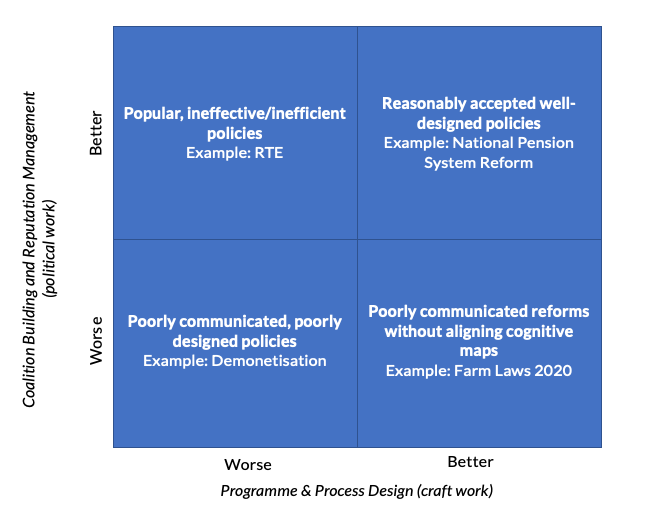
#147 Bole Choodiyan, Bole Kangana?
Not(PolicyWTF): Reforming Procurement (Sanjeev Kumar Must Be Smiling) Pleasant surprises in policymaking in India— RSJSince we take great pleasure in highlighting policy screw-ups around here, it is only fair we appreciate measures that aren’t PolicyWTFs when they make an occasional appearance on our landscape like rare migratory birds. Last week we had one such sighting. (Deep breath). The Procurement Policy Division (PPD) in the Department of Expenditure (DoE) under the Ministry of Finance (MoF), Government of India (GoI) released the ‘General Instructions on Procurement and Project Management’. The press release reads:“These guidelines attempt to incorporate into the realm of Public Procurement in India, innovative rules for faster, efficient and transparent execution of projects and to empower executing agencies to take quicker and more efficient decisions in public interest. Some of the improvements include prescribing strict timelines for payments when due. Timely release of ad hoc payments (70% or more of bills raised) is expected to improve liquidity with the contractors especially Micro, Small and Medium Enterprises (MSMEs).”Importantly, it has this line too:“Alternative methods for selection of contractors have been permitted, which can improve speed and efficiency in execution of projects. In appropriate cases, quality parameters can be given weightage during evaluation of the proposal in a transparent and fair manner, through a Quality cum Cost Based Selection (QCBS), as an alternative to the traditional L1 system.” This is critical. In ‘appropriate cases’, from now on, quality of service will also be given weightage during evaluation of projects. It sounds absurd but it’s true. Quality wasn’t an explicit parameter for choosing suppliers in government contracts so far. So, yes, this is a reform. Bravo!Puraane Paap I have written about the tyranny of the L1 system and its pernicious effects before. From our edition #22 (Trishul: Ek ‘Tender’ Prem Katha):“The procurement of goods and services by the Government of India is still largely governed by the Contract Act 1872 and Sale of Goods Act, 1930 and General Financial Rules (GFR) that are amended periodically. The most prevalent mechanism of awarding a contract in government departments and PSUs over the last century has been the L1 system, also called the Least Cost Selection Method. There is a bit of history to this. The colonial government wasn’t too keen on spending a lot on projects in India. A minimal threshold of quality was all that was needed at the lowest cost. Though alternatives like the Quality and Cost Based System (QCBS) and Quality Based System (QBS) are being gradually adopted, the L1 system still holds sway after seven decades. Yes, we love our colonial past a lot that way. So, you could lie your way through the technical bid claiming excellent capabilities. Once you crossed that threshold, all you needed was some friendly insider who helped you price your bid lower than your rivals only marginally. Voila, you’re in business.Three problems arose out of this. First, since technical bids didn’t have a weightage, the projects were often won by less competent firms who ended up either not completing the project or did a shoddy job. Examples of this are visible all around us in government infrastructure projects. Second, it encouraged rent-seeking behaviour among public servants who had the information about rival bids. In that cult classic, Jaane Bhi Do Yaaro, municipal commissioner D’mello was playing two builders (Ahuja and Tarneja) to maximise his benefits till one of them bumps him off. Third, it led to crowding out of honest, competent players from the government tender market because they wouldn’t play ball.” What’s Changed?Anyway, I went through this 22-page document released by the department and a few things stand out. First, there are concrete measures identified to make it easy for suppliers dealing with the government. The guidelines suggest 75 per cent of payment due must be paid within 10 working days of the submission of the bill and the remaining within 28 working days. Beyond this, penal interest would apply. There’s also guidance on how government entities should operate when they get into legal disputes with their suppliers. The entities should not appeal against judgments of lower courts in routine matters and decision to appeal should be reviewed by a special committee that should consider both legal merits and the practical chances of success after doing a cost-benefit analysis. This will encourage those suppliers who have stayed away from government contracts because of the jhanjhat they entail. Second, a few other common bugbears of the government procurement process have been eliminated. For instance, the single bidder scenario in an open tender. Earlier the tender would be scrapped and a new one floated if there was only one bidder. This is no longer a necessary requirement and if the single bidder checks all
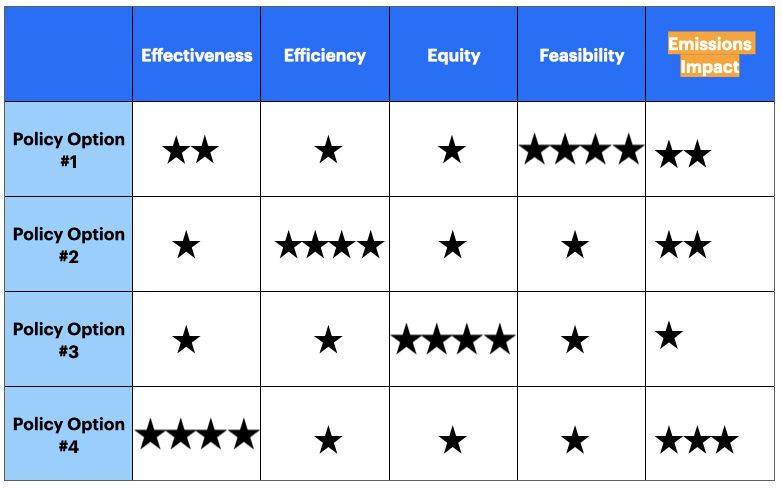
#146 Woke Up On The 'Right' Side
India Policy Watch: Countering Wokeism Insights on burning policy issues in India— RSJYou know a term has entered the zeitgeist when it reaches your family WhatsApp group that’s kept alive by aunts and uncles forwarding every dubious message that confirms their biases. So, when I received a message on the group that urged us to celebrate this Diwali with firecrackers to show the ‘wokes’ their place, I realised the word has crossed some kind of a threshold. And then I noticed social media was full of similar assertion of Sanatan Dharma against wokes (and Christians too). Some kind of international conspiracy of the wokes had to be thwarted, our religion and tradition had to be reclaimed and, apparently, lighting a firecracker was the place to start. Another day, another assault on our dharma and another lightening response by us because we are ever vigilant now. And that set me thinking about wokeism. Is it a nihilistic, virtue signaling, leftist movement that imagines victimhood, rejects tradition and reduces everything to identity? Or, is it an easy catch-all pejorative that serves as a convenient fig leaf for bigots of every shade to run down any progressive, liberal idea without engaging with their merit? Are all anti-woke responses the same? Or, is there a right and a wrong cause to protest wokeism? Blooming Of The Conservative MindI thought it will be useful to go back to the original text that questioned ‘openness’ and relativism to search for answers. Allan Bloom’s Closing of the American Mind (1987) was the earliest and remains perhaps the most intellectually stimulating challenge to the dogma of liberalism that had take over the academic and media bastions in America. Bloom, a professor of Philosophy at University of Chicago, wrote the book based on the ‘sample’ of students he taught over a couple of decades starting from the 60s. Bloom took a counterintuitive view to the liberal consensus that keeping an open mind that’s free of prejudice is the way for a society to progress. He countered:“Prejudices, strong prejudices, are visions about the way things are. They are divinations of the order of the whole of things, and hence the road to a knowledge of that whole is by way of erroneous opinions about it. Error is indeed our enemy, but it alone points to the truth and therefore deserves our respectful treatment. The mind that has no prejudices at the outset is empty. It can only have been constituted by a method that is unaware of how difficult it is to recognize that a prejudice is a prejudice.”While woke as a term and cultural phenomenon was still a few decades away, Bloom had anticipated its origin and its pathologies quite accurately. For Bloom, the moral goal of every education system and, therefore, of the society, was to produce a human being who is in accord with its fundamental principle. As he wrote:“Aristocracies want gentlemen, oligarchies men who respect and pursue money, and democracies lovers of equality. Democratic education, whether it admits it or not, wants and needs to produce men and women who have the tastes, knowledge, and character supportive of a democratic regime.”So, what did this mean for the US? For Bloom, the moral imperative of a US citizen was quite clear:“Above all he was to know the rights doctrine; the Constitution, which embodied it; and American history, which presented and celebrated the founding of a nation conceived in liberty and dedicated to the proposition that all men are created equal."“A powerful attachment to the letter and the spirit of the Declaration of Independence gently conveyed, appealing to each man's reason, was the goal of the education of democratic man.”This starting position is important to appreciate when anyone is looking to imitate or transplant anti-woke rhetoric into their societies. If you live in a democracy and value its moral principles, your argument against the liberal project will have to be founded on this truth. The Three MovesFrom this starting position, Bloom makes three key moves in his dissection of where liberalism or wokeism, as we might call it today, loses its way.First, he argues that allegiance to the natural rights of man should supersede all other allegiances or identities. The folksy way of saying this is you should do no favour to your first cousin that you will deny a fellow citizen. In his scepticism of what is called progressive thought, Bloom didn’t hark back to an ancient way of life or a religious code. Instead, he stuck to the first principles of liberty:“This called for something very different from the kinds of attachment required for traditional communities where myth and passion as well as severe discipline, authority, and the extended family produced an instinctive, unqualified, even fanatic patriotism, unlike the reflected, rational, calm, even self-interested loyalty—not so much to the country but to the form of government and its rational principles—required in the United States.”“The palpable diffe
#145 The Escalation Ladder of Outrage
India Policy Watch #1: What Outrage Means Insights on burning policy issues in India— RSJLast week while writing about the Fabindia Diwali ad and the accompanying outrage, I wrote that this ‘arms race of purity’ might become a familiar feature in our cultural landscape. This week we got this:“Homegrown FMCG player Dabur has withdrawn its advertisement on Karva Chauth showing a lesbian couple celebrating the festival in the ad campaign of its Fem Creme bleach and has issued unconditionally apology.After facing backlash on social media platforms and also from a politician from the ruling BJP, the company has withdrawn the ad campaign.In the same week, Bajrang Dal activists vandalised the set and assaulted the director and crew members of the web series Aashram because it ‘defamed the Hindu religion’. There are a few larger questions I have about this phenomenon. Before I come to them, let’s look at this Dabur ad issue a bit more. The ad uses the classic “traditional plot with a twist” approach to make it stand out amidst the clutter. A karwa chauth ad with a lesbian couple must have checked all the boxes in the minds of the marketers at Dabur. It was topical and it celebrated diversity. The recent Cadbury’s Dairy Milk campaign that went viral where it switched the gender roles of its classic ads of the 90s is a good example of this approach. The new ad had the girl hitting a last-ball six while her boyfriend danced onto the pitch. So, here’s a thought experiment: what if Cadbury’s had made the same ad with a same-sex couple? Would that have created the same outrage as the Dabur karwa chauth ad? I suspect there would have been some but nothing of the kind we saw with the Dabur ad. There are more than a few ads and TV shows right now featuring same-sex couples. In fact, the statement of the BJP leader who threatened legal action against the ad is useful to quote here:"In future they will show two men taking 'feras' (marrying each other according to Hindu rituals)." I suspect the issue becomes fraught when Hindu rituals are involved. I have argued in previous editions that the way ideologies are understood in India are different from their original conception. A liberal is used for a left-leaning activist kind instead of someone believing in individual rights and consent. People call themselves conservative that is, those who value order, custom and self-directed change in society, while they champion bigoted views and radical changes that will usher in an ‘ideal society’. They do so without any sense of irony. An absence of ideological clarity is a feature of our democracy. Ideological ConfusionNow, if I were an Indian conservative, how would I look at the Dabur ad? Sure, I would wince a bit at the lesbian angle. After all, to me, marriage is a social institution and it is solemnised between a woman and a man. But then I would also reluctantly acknowledge that same-sex relationship is now accepted in many societies. It has a legal sanction in India. Maybe then as a true conservative, I will look at the ad again. Sure it shows lesbians but they are also following a tradition that I hold dear. The ad upholds my belief that individualism has to be grounded by custom and tradition. That social cohesion will be preserved only if we adhere to our cultural mores. So, I would welcome an ad that co-opts a new generation into this tradition. But that’s not how the so-called conservatives behaved. What explains this? The simple answer is that it’s about outrage, not so much about the tradition. It is about using another incident to strengthen the narrative that there are insidious forces who will destroy sanatan dharma if we aren’t forever vigilant. And you can only trust us to protect you from these forces. Today it is a lesbian couple following the karwa chauth ritual that’s seen as a threat to the faith. Tomorrow it could be a straight woman in the ad but without a bindi. The reason for outrage doesn’t really matter. The narrative that religion is under threat is what is important. So, the far-fetched notion that marketing teams and ad agencies working for Fabindia or Dabur are either anti-Hindu or part of some global conspiracy. Not the obvious reality that almost every lever of power is now controlled by those of your ideological slant. That’s not enough. There are still some mythical powerful people who are brainwashing our young. Not the obvious reality that the young in these companies and their customers are slowly changing and accepting of diversity on their own like a conservative would have preferred. There is no real respect for tradition or for how society is changing itself. It is just another opportunity to play an imaginary victim card and keep the narrative of Hinduism in danger for future electoral gains. Thinking About CultureBeyond these specific instances, there are a few questions that come to my mind as I look at the cultural landscape in India. First, we often use the Breitbart doctrine - politics

#144 Yeh Democracy Hai Aur Yahan Hamari Pawri Ho Rahi Hai
Back with a new edition of this newsletter. We spent the past 5 weeks trying to work on a few long pending items that needed our attention. Unsurprisingly, the earth went on spinning and nobody missed us. Not much work got done either.Anyway, things happened in these intervening weeks. We reached a billion vaccine jabs last week. Quite an achievement. We often lament about the ineffective state and the poor health infrastructure in India. But there’s no denying there are times when the state can will its agencies to reach an ambitious target. The vaccination number was a measurable target, its benefits to people were clear and there was a vaccine administering infrastructure available that’s been built over the years. So, the state moved with speed and purpose because the incentives to get this right were aligned to the government’s desire to strengthen its self-image of being effective and driven. These occasional instances of the state doing its work often lead people to momentarily forget the overreach and the many subsequent failures of the state that are apparent all around us. There’s a common sentiment expressed in such situations - if only we could tackle all our problems the same way we did this. Unfortunately, the other problems that we must solve as a nation aren’t so unambiguous, their solutions aren’t easy top-down diktats that need to be followed, nor are the interests of everyone so clearly aligned to those solutions. The state will continue to flounder there. That apart it was business as usual in India. A megastar is being hounded because of what appears like a minor infraction of his son. The underlying motives are open for speculations because the remarkable focus the NCB has shown in this case belies their previous track record in controlling drug use in India. The news channels have picked it up with the same fervour like they did with the suicide of an actor last year. We wrote about that episode here (“A Star Is Dead”). There was also much brouhaha over how an ethnic retail fashion brand tried to ‘de-Hinduise’ Diwali in their ads. This is now routine during any of the big Hindu festivals. In the arms race of purity, there’s always a marketer who will trip up. The outraged will then take over. #NoBindiNoBusiness is trending as we write. What a time to be alive! Last year there was the Titan ad and we wrote about it here (“That Tanishq Ad”). Lastly, the largest opposition party in the country took its self-destruction model to yet another state where it is in power. Its ineptitude would have been funny were it not so sad. Democratic accountability rests on the risk of a party losing its mandate in the next elections. A functioning opposition makes that risk real. Congress is dysfunctional now. India Policy Watch: A Good Representative Insights on burning policy issues in India— RSJTalking about politics brings me to a conversation Pranay and I were having last week. It was about the concept of representation and the notion of belonging to a political party. Does a politician represent her people anymore? Does membership of a political party trump all other identities and roles in a democracy? The way things are, maybe M.P. should stand for Member of Party, Pranay half-jokingly said. The party line trumps the individual position, the likely interests of the constituents and the opinions of the experts. The other point he made was how the state governments fight among themselves over trifling issues while missing the big picture. Their interests would be served better were they to unite and demand a better share from the union in a way the federal structure of the Indian state was meant to encourage. This isn’t a new phenomenon. The anti-defection bill introduced in the 80s made it difficult for an individual member to go against the party ‘whip’. The centralisation of power in political parties and the high command culture that every party defaults to have rendered the members of legislatures powerless. So, the question is what happened here? How did we get here?Origins of LegitimacyLet’s hark back to the early phase of modern democracy. The core ideas that emerged from the enlightenment thinkers and political philosophers that powered both the American and French revolutions were about individual liberty and the formation of a state that reflected the ‘will’ of the people. These built the foundation of the liberal democratic order as we know it today. This sounds simple but conceptually there was more happening. The Hobbesian model was that of human multitudes coming together to hand over power and authority to a sovereign through a political structure in abstract called the ‘commonwealth’. Hobbes defined commonwealth as “One person of whose acts a great multitude, by covenants with another, have made themselves everyone the author to the end he may use the strength and means of them all as he shall think expedient for their peace and common defense.” For Hobbes, the people willingly tr
#143 This Day, That Year, Their Civilisation 🎧
Programming Note: We are brewing another writing project. Since it demands some undivided attention (haha, so naïve!) we will not be posting for the next five weeks. We will republish a few of our older posts, maybe a few links and brief notes every week till then. Regular programming resumes on 23rd October 2021. Global Policy Watch #1: 9/11, Toynbee and Civilisations Bringing an Indian perspective to global issues— RSJI write this on the 20th anniversary of 9/11. Like most adults, I have a clear memory of that day. I was in Bombay then. Just about getting my bearings straight in my first job. I left work early that evening (those were the days). Nariman Point, where I worked, to Warden Road, where I lived, was a half an hour commute then. I got into a ‘kaali-peeli’ and went past Marine Drive smoking a B&H. Quite posh. Especially, for someone who grew up in a small industrial township in eastern India and smoked unfiltered Charminar in college. I usually got off at the intersection of Napean Sea Road and Warden Road. The Shemaroo (‘circulating’) library was located right opposite the Jogger’s Park. It was a dingy little place, packed with books, kids borrowing Harry Potters and a familiar musty smell of libraries that mixed with the salty Arabian Sea breeze blowing in from across. The proprietor spoke in a lazy Sindhi drawl (‘helloo, Shemaaarooo’) while keeping his eye all the time on a small TV that was mounted high on the wall on one end. On the other side of the street, further up the Napean Sea Road, was the famous Shemaroo video library. Another landmark of those times in south Bombay. Between these two establishments, my life in Bombay was a pleasant whirl of books and world cinema. And there was the paani-puri waala at the start of the Sophia College lane. Sorry, I digress.Back to that evening. I had picked up a John Updike and was checking out from the library when the man at the counter with his eyes on the TV drawled - “yeh(hh) dekho(oo)”! So, I turned right, looked up and saw the second plane crashing into the South Tower (2 WTC). Things weren’t the same again. A couple of weeks back I saw the forlorn image of the last US soldier leaving Afghanistan. A grainy night picture enveloped in a ghostly, greenish hue. And I couldn’t help thinking of the contrast to that clear, blue fall day when the planes crashed into the Twin Towers. Those two images - one clean but ominous and the other blurry and defeated - bookend perhaps the most significant period of post-Cold War history whose echo will play out through this century. 2001 was a different time though. My life was good. India was shining. The western liberal democratic order had won the battle of superpowers. Nations, long suffering under communist dictatorships, were embracing democracy all around. Free market was in vogue. China was about to enter WTO. Borders were becoming meaningless. The end of history was nigh. We could feel it in our bones.And here we are in 2021. After many meaningless campaigns in Middle East and Afghanistan, the US is on a retreat with no interest in playing the global policeman. The global financial crisis (GFC) and the Covid-19 pandemic have dealt a body blow to globalisation. Borders have become more meaningful than ever as Brexit and the backlash against immigration have shown. The anger against the elite has seen the rise of right-wing nationalism and a retreat into authoritarian setups across the many fledgling democracies in Eastern Europe, Asia and Africa. China turned prosperous but it didn’t turn into a liberal, open society as many had expected. Instead, it is mounting its own threat to the liberal order offering its model of a one-party regime that draws upon its civilisational memory as an alternative. India is not exactly shining now. And for me? Well, I’m writing this newsletter. Who could have imagined this in 2001? There have been epochal events in history that changed its course. But none that lasted fewer than 20 minutes with a mere two buildings collapsing. We didn’t know it then. But they may have brought down a civilisation. In the past few years, I have found greater meaning in the essays of the great 20th-century historian, Arnold Toynbee (1889-1975), while trying to make sense of the change around us. This might seem surprising. Toynbee is hardly read any more in colleges. His last years where he made a distinct turn to the spiritual, his academic style that bypassed the factual for the ‘total human experience’, his rejection of Eurocentrism and his championing of Asian civilisational values made him an academic pariah by the end of his life. Yet, about half a century after his death, I see in his works a useful framework to appreciate the events that have unfolded in the past 20 years. I will take up two elements of this frame in this edition.Cultural Homogenisation versus Plurality of CivilisationThe idea that a dominant culture will impose its hegemony of ideas and beliefs through political wi
#142 The Games We Play 🎧
Matsyanyaaya: Not So Great Game Theory in AfghanistanBig fish eating small fish = Foreign Policy in action— Guest Post by Ameya NaikUS intelligence agencies considered it likely that the Taliban would retake control of all or most of Afghanistan following US withdrawal. Their estimate, however, was that this would take weeks or even months; the idea that Kabul would fall in a matter of days was considered a worst-case scenario. Now that the worst case has played out, analysts are scrambling to explain why. One narrative thus has it that ANA was so poorly-trained - and its leadership so corrupt - that once U.S. military contractors left the field, Afghan forces had neither the motivation nor the acumen to resist the Taliban advance. As President Biden himself put it "...we could not provide them... the will to fight."To test that claim, we can turn to Game Theory.Game Theory stylises any decision involving two or more players as a "game". * Each player can receive some "payoff" (or outcome) from the game. * Payoffs are "contingent", i.e. the payoff a player receives depends partly on their own decisions, partly on the decisions of the other player or players. * One assumes players will act rationally, making choices that maximise their payoffs. * Thus, if we know the payoffs each player can receive, we can predict their choices, and thereby also the outcome of the game.The most famous example of this is the Prisoner’s Dilemma: a game in which two people suspected of committing a crime are being questioned independently. If both deny committing any crime, the authorities will only be able to convict them of a minor offence (slightly bad outcome). However, if one of them bears witness against the other, the authority will let the snitch go free (best outcome) while convicting the other of a major offence (worst outcome). The textbook prediction is that both suspects will crack, and wind up with the worst combination of outcomes. However, the classical Prisoner's Dilemma is limited in one important way: it is a single-turn game. The players only make a choice once, at the same time, without knowledge of each others' choices - and then the game ends. A more realistic scenario is what is known as a repeated game. A repeated game has multiple turns: the same players interact, under the same rules, with knowledge of the choice made by the other players in the previous turn. Imagine that the suspects are schoolchildren and the authority is the Principal of the school. No one is going to jail; even if neither child knows what the other is saying to the Principal, they do know they will both interact on multiple occasions thereafter, both in class and outside it. Even with the same payoff structure, the outcome starts to look different: knowing that we have to meet the other person every day makes us far less likely to crack - or "defect", in game theory jargon - because they could punish our defection on the next turn. In a repeated game, players make decisions "in the shadow of the future".The political scientist Robert Axelrod modelled a repeated game in The Evolution of Cooperation. He demonstrates that the optimal strategy for such games is what he calls "Nice Tit-for-Tat".* Start by complying (being nice to the other player)* If they comply, continue complying (happily ever after)* If they defect, punish them by defecting on your next turn.* If they respond to your defection by complying, they have accepted the punishment, so go back to complying again.* If they defect again, you should also defect again (Tit-for-Tat) - a downward spiral until and unless they switch to complying.A key insight from Axelrod's work is that this strategy only works if the total number of turns is unknown. Why? * If the number of turns is known, we can try to pull a fast one - complying until the penultimate turn, but then defecting on the very last one (turn N), when there is no possibility of punishment thereafter.* The other player is not a fool. They know we are likely to defect on the final turn, so they will take precautions: they will defect preemptively, on the penultimate turn (N-1). * Since we know they will do this, we will defect on the turn before that (N-2). * They know we will do this, so they will defect on the turn before that one (N-3) - and so on till the whole chain unravels.The deterrence of future punishment only works if the number of turns is unknown. We can think of this as an infinite game or at least an indefinite one.What does all this have to do with Afghanistan? When President Trump committed to pulling out U.S. troops by a specific date, and then when President Biden made clear he would uphold that commitment (even with a different date), they converted an infinite game into a finite one. An open-ended U.S. presence was a signal of potentially unending US involvement, complete with punishment for behaviour the US considered unacceptable - for instance, overthrowing the US-supported government in Kabul.A

#141 Pakistan, Afghanistan....Hindustan: The Akhanda Bharat Edition 🎧
Matsyanyaaya #1: What Does Pakistan’s Cadmean Victory in Afghanistan Mean for IndiaBig fish eating small fish = Foreign Policy in action— Pranay Kotasthane(This is a draft of my article which appeared first in Times of India’s Tuesday, August 23rd edition.)Taliban's takeover of Kabul is forcing India to reassess its aims and objectives concerning Afghanistan. Of primary interest is the impact of this development on Pakistan. On this question, two views have come to light over the last few days.The first view cautions against the increase in terrorism from Pakistan. The recommendation arising from this view is that India needs to coalesce anti-Pakistan factions in Afghanistan. The counter-view focuses on the inevitability of a split between the Taliban and Pakistan. The assumption being that once the Taliban assumes political control over Afghanistan, it is bound to take some stances that will go against the interests of its sponsor. The recommendation arising from this view is that India should sit back. It should let things unfold because Pakistan's victory is a Cadmean one — it comes with massive costs for Pakistan's economy, society, and politics.Which of these two divergent views is likely to play out? To understand what the Taliban's victory means for Pakistan — and hence India — it is useful to model Pakistan as two geopolitical entities, not one. The first entity is a seemingly normal Pakistani state, presumably concerned first and foremost with the peace and prosperity of its citizens. The second entity is what my colleague Nitin Pai has named the Pakistani military-jihadi complex (MJC). Comprising the military, militant, radical Islamist and political-economic nodes, the MJC pursues domestic and foreign policies to ensure its survival and dominance. For the MJC, positioning and defeating the existential enemy — India — is key to ensure its hold over the other Pakistan.Taliban's takeover of Afghanistan will be perceived differently by these two Pakistani entities. The non-MJC Pakistan would be worried about the Taliban's march to power. It would fear the spillover of terrorism inside its borders, orchestrated by groups such as the Tehrik-e-Taliban Pakistan. Politically, a powerful Taliban would pose the threat of breathing new life in the Durand Line question. On the economic front, the prospect of a dependent Taliban government further draining Pakistan's dwindling resources would be another cause of concern. In short, if this entity were in charge of Pakistan's foreign policy, it wouldn't have doggedly invested in the Taliban.That's quite clearly not the case. Taliban's takeover, on the other hand, is a strategic victory for the MJC. Over the last two decades, it has played a risky game sheltering and guiding the Taliban's actions while also supporting the US in its Afghanistan campaign. When things went wrong, the MJC was able to pass the blame to the other, weaker Pakistan. Recently, it played a role in steering the Afghan Taliban to sign the Doha agreement. It worked over the last two decades to reduce the Indian economic and political footprint in Afghanistan. Given the efforts it has put in, the MJC is sure to perceive the Taliban's comeback as an indisputable victory. This success would bolster the MJC's strategy of long-term commitment to terrorist groups. More importantly, it consolidates its relative dominance over the other Pakistan. How does this affect India?As the MJC's domestic position strengthens, its anti-India aims will grow stronger. There is a possibility of the MJC moving its terror outfits to Loya Paktika in eastern Afghanistan, a hotbed of anti-India activities in the past. This scenario would allow the MJC to use terrorism against India while claiming it has no control over these elements.Many commentators have argued that the world in 2021 will not let off perpetrators of terrorism easily. But they seem to forget that the return of the Taliban illustrates that the opposite is true. As long as terrorism is portrayed as an instrument of a domestic insurgency, the world will continue to look away. For instance, the Taliban continued terrorist attacks inside Afghanistan even as it was negotiating with the US at Doha. And yet, the US, UK, Russia, and China chose to bring the group back in power. Second, to see the MJC threat from the issue of terrorism alone is to miss the bigger picture. By demonstrating the success of its policies in Afghanistan, the MJC would be energised to use other methods of asymmetric warfare against India. More than the means, the Taliban's victory is the reaffirmation of its objectives. What should India do?First and foremost, India must prepare for a reduced economic and diplomatic footprint in Afghanistan. Given the positive role India has played there over the last two decades, a sunk cost fallacy might drive India to make overtures to the Taliban. Such a policy is unlikely to pay dividends. The MJC will ensure that India's presence is severely res

#140 We Do Need Education 🎧
India Policy Watch: Chinese CheckersInsights on burning policy issues in India- RSJWe often write about China here. And we make three points:* China is a model of authoritarian state-driven capitalism. There should be no illusion anymore it will turn into a liberal democracy as its citizens gain greater economic freedom. The Party will find new market demons to slay to send out a convincing message to the people that only it can usher in a stable and prosperous society. It will continue to undermine liberal democracy and it is ready to mount an ideological and economic challenge to G7. (Edition #132) * Most analysts often overestimate China’s long-term thinking or strategic acumen. Pranay has written about this in a few editions. People tend to get taken in by civilisational mumbo-jumbo and Confucianism that China spouts about their national objectives. This has given rise to a cottage industry of experts who scour through Chinese history to (over)interpret the words and actions of its current regime. We believe this is unnecessary. China makes its usual quota of strategic errors in geopolitics. There is too much made about it being a rational actor of the highest order. (Edition #136)* China is a very different kind of threat to the western liberal order. It is deeply enmeshed in global trade and economy. Decoupling from it is easier said than done. It has grown at the expense of Europe in the past three decades and now Europe cannot imagine its economy without the Chinese supply base or its markets. It is open to learning from the West (it sends the most students to western universities) while it selectively blocks global information platforms at home to ‘manage’ its society. This asymmetry lets it have the best of both worlds. It has the Soviet-style disdain for liberal democracy without the shortage of resources or paranoia about the West. In short, as I have written in the past, if this were to be seen as a new cold war then China is USSR on steroids. (Edition #47) and (Edition #44)Chinese Books Are Flooding The MarketI’m no expert on China. So I like to read books on China to update my priors. Surprisingly (in a good way), the last nine months have seen a never before supply of books on China by Indian authors. These include books by China scholars and academics - India Versus China: Why They Are Not Friends by Kanti Bajpai, Smokeless War: China's Quest for Geopolitical Dominance by Manoj Kewalramani and India's China Challenge: A Journey through China's Rise and What It Means for India by Ananth Krishnan. These apart, the past few months have seen two of our former Foreign Secretaries come out with their books on China or the broader Asian geopolitics - India and Asian Geopolitics: The Past, Present by Shivshankar Menon and The Long Game: How the Chinese Negotiate with India by Vijay Gokhale. I ended up reading three of these books in the past couple of months. They are slim and very readable. Among them, I will pick Vijay Gokhale’s book in this edition to discuss his perspectives on how China negotiates. Gokhale’s focus is on understanding the strategy and tools China deploys in its negotiations with India and what India can learn from the 70 years of dealing with them. He takes six key negotiations between India and China to draw his conclusions. These include recognition of the PRC in 1950, the negotiations on the status of Tibet in 1954, Pokhran and India’s nuclear status, the question of Sikkim, the US-India 123 nuclear agreement in 2007 and the listing of Masood Azhar as a terrorist by the UN in 2019 after a decade-long effort. Gokhale’s credentials on the topic are second to none. He has served as our top diplomat for over three decades in China, Taiwan and Hong Kong. His personal involvement in four of these negotiations offers a ringside view to us on diplomatic jabs that were exchanged over the years on these issues. Even in the two negotiations that predate him (recognition of PRC and Tibet), Gokhale is meticulous in his research of available official documents, notes, letters and press reports of the time to offer us a concurrent view of how the two sides were thinking about the issues and planning their negotiations. The book is a tremendous addition to the literature on China and I hope it spurs more former diplomats to write about their experiences. The Original SinI have picked up a few excerpts from the first diplomatic negotiation between the two over the recognition of PRC to give you a sense of how differently the two newly independent nations thought about geopolitical issues. I will run through the context briefly before doing so. India, in 1949, was a free country in the process of establishing itself as a Republic. The horrors of partition were fresh and its leadership was still finding its feet after the assassination of Mahatma Gandhi. Yet, it was seen globally as the voice of the ‘third world’ largely on account of the Constitution it had drafted, its leadership that had in
#139 A Question Of Sports
Programming Note: We will be taking off next week. We will return on Aug 22.Not(PolicyWTF): Retrospective Admission Of A MistakeThis section looks at egregious public policies. Policies that make you go: WTF, Did that really happen?- RSJOn Thursday, the Finance Minister tabled the Taxation Laws (Amendment) Bill, 2021 which sought to scrap the tax claims raised on the back of an amendment to the Income Tax Act brought about by the UPA-2 government in May 2012. The 2012 amendment was meant to prevent business entities incorporated in offshore locations but deriving most of their value from the Indian market to merge or acquire control in one another without paying capital gains taxes. This was seen as a loophole in the tax laws and the amendment was meant to plug it. All good with that. Except there was a small clause in there. The amendment was to be applied to past transactions too. The tax was to be retrospective in nature.Why Retrospective Taxes Are BadWe have written about the problem with retrospective taxation in a previous edition. We made three key points then.One, retrospective taxation is unfair and goes against what Adam Smith called the ‘canon of uncertainty’. I wrote earlier:The Canon of Certainty as set out by Smith states:“The time of payment, the manner of payment, the quantity to be paid, ought all to be clear and plain to the contributor and to every other person.”Retrospective taxation goes against this principle of fairness. It taxes a transaction that’s happened prior to law being framed. In the bigger picture, it is a human right violation since the state cannot remove a right without a transitional period. Two, there’s a legitimate reason to tax retrospectively. It is to avoid what’s called ‘forestalling’ – the practice of taxpayers acting to avoid the impact of a change in tax laws before it can take effect. Now, it is possible to nip this practice by making the tax changes applicable almost immediately upon their announcement. But this isn’t practical all the time. There are laws that need Parliamentary approval or change in systems and processes that could take time. Therefore, in most cases, there is always a lag between a tax change announcement and its effective date of implementation. This is what gives rise to forestalling. And that’s the reason lawmakers opt for retrospective tax laws.But there’s a fair way to do this. In the UK, the ‘Rees Rules’ are a set of four conditions that must be satisfied for any retrospective tax legislation to be considered fair:* “A warning in the House of Commons by some recognised method – either by an answer to a Parliamentary Question or by some statement with plans to legislate in the subsequent Finance Bill back to the date of that warning. The warning must be precise in form. A mere suggestion that there are vague schemes of tax avoidance that must be counted should not suffice.”* Secondly, the problem at which the warning has been directed should immediately be referred to a committee to devise the precise legislative measures which should then be introduced in the parliament.* Thirdly, if the committee can hit on appropriate legislative provision, the draft clause ... should immediately be published in advance of the Finance Bill so that those who are likely to be in the field of fire will have a second clear intimation of what to expect.* Fourthly, such a clause must, without fail, be introduced in the following Finance Bill to formalise it into lawIn the Vodafone case, it is clear there wasn’t a semblance of Rees Rules that was followed. This is what made it perverse. That the law had a loophole that allowed Vodafone and Hutchison to avoid taxes wasn’t their fault. They can’t be blamed for it. Had they known of the tax, the contours of the deal or the deal itself could come into question? Three, I had predicted in that edition that the Indian government will continue to battle these cases till it starts getting adverse judgments. The rationale was simple. It had come this far with a terrible piece of legislation. What’s there more to lose? Why not see how far it goes and then decide?Well, things went from bad to worse since then. Cairn Energy, which was also sent a retrospective tax demand of over Rs. 10,000 crores in March 2015 went to an international arbitration tribunal over the issue. In December last year, the tribunal overturned the retrospective tax and asked India to refund Rs. 8800 crores that the government had expropriated from Cairn’s entity in India plus interest and legal costs to Cairn Energy. The company since then has been busy. It got the tribunal award registered in multiple jurisdictions and threatened the seizure of Indian assets overseas. This had gone being beyond embarrassing.Don’t Hold Your Breath On ChangeChurchill had once said: “You can always count on the Americans to do the right thing after they have tried everything else.” He might have been speaking about India too. We have finally scrapped an amendment
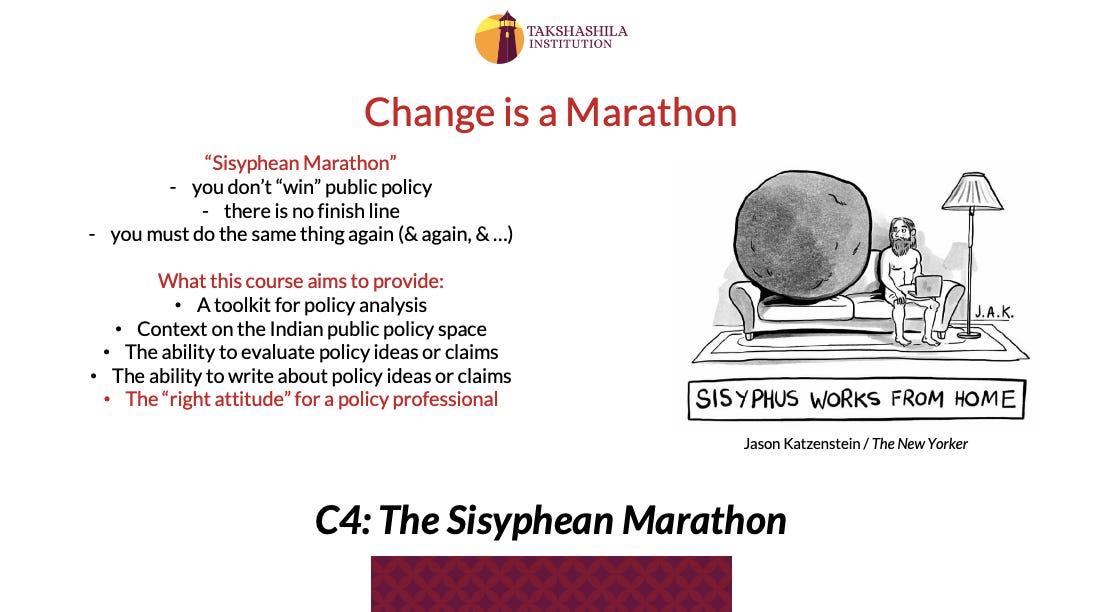
#138 Empire Of The Clouds (And Beyond) 🎧
Global Policy Watch: Ud Jayega Bezos Akela*Bringing an Indian perspective to burning global issues- RSJHomo sapiens first went to space in 1961. 60 years later, a new species, decidedly less superior than Homo sapiens, has succeeded in going to space.Billionaires. Remarkable. So, what should we make of it?A Race To NowhereThere are three arguments against the space race among billionaires. And these arguments play into the wider debate about capitalism and inequality that’s roiling the developed world. I will take a stab at rearticulating them.To start with we have the old charge against capitalism of being self-obsessed, indifferent and out of touch with the reality of the world around them. In a time when a global pandemic has destroyed lives and livelihoods and the poor still don’t have access to vaccines, the spectacle of billionaires spending hundreds of millions on their toys isn’t appetising. Our moral intuition says it is wrong. Surely, it is their wealth and they have the freedom to pursue whatever they fancy. But that wealth could have more productive uses that make the world better. And it isn’t just a prayer to the goodness within the hearts of the billionaires that we need. There’s a right that the society has over some of that wealth they have accrued through dodging taxes (or at least not paying their fair share), keeping employee wages low and using sharp elbow tactics to monopolise the markets. Taking off into space during these times is like showing a giant middle finger to the rest of humanity. The second argument offered against the space fantasies of billionaires is that it will amount to nothing. The science of sending a shuttle to orbit the earth and come back is more than 60 years old. So, no new ground in science is being broken here. Also, any talk of space travel or living on Mars underestimates the difficulty of a person being in space for any amount of time. Sim Kern has a good piece on this in the Salon: “Around half a dozen astronauts live up there (International Space Station) at any given time, bouncing around a narrow tube with roommates they didn't choose and who can't properly bathe for months on end. The wifi is slow. The food is not Michelin starred, to say the least. Their sleeping situation is akin to a floating coffin. And pooping involves a complicated procedure in a port-o-potty where the door is a plastic curtain and everything floats.Astronauts' time is micromanaged by a team of experts on the ground. Unlike future space-tourists' imagined itineraries, much of their time is spent working on actual science, but a great deal is dedicated to mere survival as well. Space-dwellers must exercise at least two hours a day to keep their bones from turning to goo. They spend a ton of time studying systems and conducting repairs on equipment that frequently breaks because space wants to kill you.”That’s just orbiting the Earth. She also dashes any pipe dreams about colonising Mars:“And what about Musk's dream of a colony on Mars, or at least the Moon? Those are astronomically less feasible. The farther away from Earth you're trying to sustain life in space, the harder it gets. And while they have the benefit of gravity, the surface of the Moon and Mars are covered with a powdery regolith that gums up mechanisms. ….So despite Musk's lofty claims of making humanity "a multi-planetary species," that's way, way beyond the realm of current technical possibility. And his claim is especially absurd, considering that in order to generate the wealth that sustains billionaires like Musk, we're rapidly destroying the one planet we can live on — Earth.” No matter how tough things get at Earth, it will still be infinitely more livable than Mars for a long, long time. It might be better to spend money to continue keeping Earth viable than to plan a human settlement on Mars.The whole thing does sound like a billionaire pissing contest.The third argument made is about how all great scientific and technological advancement is funded by the government using public money and then exploited for private benefits by venture funds, family offices and shrewd entrepreneurs. All in the name of enterprise and capitalism. This is another case where the heavy lifting is done by the state taxing everyone while the benefits are concentrated among the very few. Anand Giridharadas in his newsletter The Ink has a sarcastic take on this:“I have an idea for a reality show. It’s called “Billionaires Solve Problems the Government Solved a Long Time Ago and Then Explain How Much More Efficient They Are Than Government.” I may ask Richard Branson to produce. In the pilot episode, Elon Musk will “invent” something he calls the Digital Method of Verification. He will pioneer a whole system whereby people can take a driving test and receive a plastic card that I’m told Musk will refer to as a “license” and thus gain permission to drive on public roads.In the second episode, Jeff Bezos will “innovate” a new kind of b
#137 Opening Up And Closing Down 🎧
India Policy Watch #1: A Winged Horse And A Prison Insights on burning policy issues in India- RSJHeh! Let’s start in the most unoriginal way possible:Behind Winston’s back the voice from the telescreen was still babbling away…..The telescreen received and transmitted simultaneously. Any sound that Winston made, above the level of a very low whisper, would be picked up by it, moreover, so long as he remained within the field of vision which the metal plaque commanded, he could be seen as well as heard. There was of course no way of knowing whether you were being watched at any given moment. How often, or on what system, the Thought Police plugged in on any individual wire was guesswork. It was even conceivable that they watched everybody all the time…..You had to live—did live, from habit that became instinct—in the assumption that every sound you made was overheard, and, except in darkness, every movement scrutinized. —- 1`984, George OrwellThe Pegasus spyware story broke this week. Coordinated investigations by 17 media organisations revealed governments, mostly authoritarian, used Pegasus, a product sold by Israeli surveillance company NSO, and hacked into over 50,000 phones to read messages, access mails and photos, record calls, activate microphones or even plant incriminating data into them. The NSO continues to maintain it sells Pegasus exclusively to governments for the sole intention of tracking criminals and terrorists. The analysis of the phone numbers so far suggests governments of Saudi Arabia, Hungary, Mexico, Rwanda, Azerbaijan, Bahrain, Kazakhstan, Morocco, UAE and India have been users of Pegasus. The list has over 300 Indian names and counting. NSO has denied the story in its own way. It claimed it “does not operate the systems that it sells to vetted government customers, and does not have access to the data of its customers’ targets”. Further it “does not operate its technology, does not collect, nor possesses, nor has any access to any kind of data of its customers. Due to contractual and national security considerations, NSO cannot confirm or deny the identity of our government customers, as well as identity of customers of which we have shut down systems.” There’s a nice boilerplate ring to that response. The government of India’s response has been a mixed bag. The IT minister took shelter in the official statement of NSO to rubbish the claims. He told the Parliament there’s been no unauthorised surveillance because India has time-tested processes for lawful interception of electronic communication. There wasn’t a clear, unambiguous statement made about not being a customer of NSO and Pegasus. Or, if there indeed was any authorised surveillance on any of these numbers. We soon moved into the familiar narrative terrain of anti-national forces destabilising India and stopping its inevitable rise as a global superpower. This is a fairly routine manoeuvre by now. There was also the bizarre defence mounted by the former Union IT minister who suggested this to be some kind of a global conspiracy to cut India to size after its spectacular success in managing Covid second wave. This was one of those logical sentence puzzles. You couldn’t decide which factually inaccurate part should you challenge without making it appear you are accepting the other. The Genie Is OutI think there are a few truths that one can take away so far from this episode:* There’s a spyware (cyberweapon) like Pegasus that can enter undetected into any phone, stay there and relay back information to a central monitoring unit. This is true for iPhones too. Apple confirmed it (don’t believe those ads). If you remember following the San Bernardino attack in 2015, the US security agencies had recovered the iPhone of one of the terrorists. They couldn’t unlock it and Apple claimed there was no way they could create a ‘backdoor’ into the iPhone. The matter went to court before FBI (or NSA) withdrew from the case because they had unlocked the phone. The rumour then was an Israeli company had helped them. It shouldn’t take a lot of imagination to put two and two together. Also, so far nobody has denied that there’s a tool called Pegasus and it has these capabilities. And that NSO sells them to governments.* One only has NSO’s word that it sells exclusively to national governments. There’s no guarantee the software hasn’t fallen into private hands. Also, who decides which kinds of governments will be eligible to buy from NSO? There are rogue regimes around the world. There are regimes that are at war with one another. A security threat of one client country could be an asset for another client and vice versa. What control does NSO have on the end use for their software? My guess is very little. Like we have mentioned in an earlier edition, we mix up anti-government, anti-state and anti-nation in India (and elsewhere) quite often. So, the potential targets for authorised surveillance can be a wide, open field in any country.* Lastl

#136 Xi Is Unfriending Big Tech
Matsyanyaaya: The Rational Actor TrapBig fish eating small fish = Foreign Policy in action— Pranay KotasthaneNothing succeeds like success. Once you are perceived as being successful, new narratives emerge that trace a neat path explaining how success was attained through grit, foresight, and determination. The role of chance fades in the background. All stories show how the hero withstood the odds, took the right decisions, and defeated a world that was stacked against it. Sometimes, nation-states craft stories with such narrative arcs. The State as the all-knowing decision-maker is imagined as a consistent, value-maximising agent, which chooses each policy as a calculated solution to a strategic problem. This model is what Graham Allison and Philip Zellikow call the rational actor model of decision-making in their classic Essence of Decision: Explaining the Cuban Missile Crisis.The book goes on to show the inadequacy of the rational actor model in explaining foreign policy decisions. It proposes two other decision-making models that take into account bureaucratic resistance, individual initiative, turf battles, and a struggle for power, to better explain government decisions. The key takeaway is that when we don’t understand the internal politics of a nation-state, we instinctively assume it as a black box that churns out decisions based on well-defined goals, well-understood alternatives, and well-projected calculations of costs and benefits of all the available alternatives. Precisely this is how the thinking about China is today on the streets and WhatsApp groups of New York, Delhi, or Lagos. Every act by China is imagined as a calculated move made with a larger long-term goal in mind; a juggernaut that makes no mistakes; an Arjuna that never misses the fish’s eye.A common way in which this narrative commonly plays out is as follows: someone will quote a Chinese leader in the past to show how prudent and far-sighted he was. Virtually, no discussion on China goes by without quotes such as “Cross the river by feeling the stones” or “The supreme art of war is to subdue the enemy without fighting” being used to conjure the image of China as a successful rational actor. So much so that some of these quotes weren’t even said by Chinese leaders and yet continue to circulate in opinion pieces, textbooks, and seminars. Take this quote attributed to Zhou Enlai for example. The story goes that he was asked by French visitors in 1972 about the impact of the French Revolution of 1789, and he sagely replied “It’s too early to say”. This is often cited to prove how the Chinese political system produces master strategists who take the long view. Turns out, he was only talking about the French student protests of 1968 which continued for many years thereafter. And yet, this story has endured.Another quote ninja is Deng Xiaoping, of course. His famous words “to get rich is glorious” is cited in support of how quickly the Chinese leadership was able to adroitly put behind the socialist excesses of the Mao era. The only problem is that it’s not known whether Deng ever said so. In fact, this phrase comes from Oliver Schell’s 1984 book by the same title on Deng era reforms. Then on, this quote has assumed a life of its own.These misattributed quotes are not mere trivia but symptomatic of a larger problem — our inability to deeply understand China. Because we don’t know what’s inside the box, we assume the Chinese system as a rational actor that succeeds because of the foresight of its leaders alone. This view, of course, is incorrect. In edition #44, I discussed four myths emanating from this line of thinking that the party-state is always efficient, always meritocratic, always a military aggressor, and always a sound strategist. To counter the China challenge, a superficial rational-actor model understanding of China is not just insufficient but harmful. It makes the adversary seem far more powerful than it is in reality. We need better models to understand our adversary. If the content in this newsletter interests you, consider taking up the Takshashila GCPP. The certificate course is customised for working professionals. Intake for the 30th cohort ends on 22nd August. Global Policy Watch: China’s Big Tech Crackdown Bringing an Indian perspective to burning global issues- RSJWe often write here about how regulating big tech will need a different framework from the typical antitrust lens that's been used in the past to protect consumers from predatory business practices. The big tech companies pose risk to consumers not through predatory pricing or restriction of choices because of their marketshare. Instead, they abuse their market power in new and different ways. They track usage data without consent in deeply intrusive ways that should spook the average consumer. Their platforms often enable spread of disinformation and creation of echo chambers by directing consumers to content based on algorithms that optimise for eng

#135 The Nehruvian Ideal 🎧
While excellent newsletters on specific themes within public policy already exist, this thought letter is about frameworks, mental models, and key ideas that will hopefully help you think about any public policy problem in imaginative ways.Audio narration by Ad-Auris. Pranay was on this week’s The Seen and the Unseen discussing all things public policy with ace podcaster, writer and thinker, Amit Varma. India Policy Watch: Dilip Kumar And India Insights on burning policy issues in India- RSJDilip Kumar passed away this week. You might wonder why should that matter to a public policy newsletter. Well, there are reasons. For one, he has featured more than once in our past editions where we have used his films to clumsily make broader points about the choices we have made as a nation. The other reason is great artists shape our collective identity and contribute to national consciousness. It is no surprise a lot of what has been written about Dilip Kumar this week has touched on this part of his legacy. I guess it will be in fitness of things for me to write one last piece on his legacy and how intertwined it is with our post-independent history. I’m not going to tread new ground here. If you go past the usual hyperbole about his ‘method acting’ ways and how he had to seek medical support to get over his ‘tragedy king’ persona, you will find the more serious commentators usually hold forth on three aspects of his career. First, how he was the embodiment of the Nehruvian ideal of India. Some went all the way to call him Nehru’s hero. Second, how his film ‘Naya Daur’ marked the high noon of India’s tryst with Nehruvian socialism. And third, how in his death we have lost the last link with an era that was marked by idealism and innocence. I think these are all relevant themes that should be brought up while discussing his legacy. But my reasons are a tad different from the popular narrative.Nehruvian IdealWhat did it mean to be the Nehruvian ideal of India in the years after independence? Nehru, Ambedkar and other members of the Constituent Assembly drafted the Indian constitution as a project of radical forgetting of our past. This, to them, was necessary to build a new India. But a radical forgetting of the past for a land as old as ours isn’t really an option. So, it was paired with the notion ‘reawakening from slumber’ which Nehru used in his tryst with destiny address. Nehru set the template for the reimagining of a new nation-state. Benedict Anderson reached a similar conclusion in his book Imagined Communities. Like we wrote in edition #62:Benedict Anderson defined the nation as a social community that’s imagined by people who believe they belong to it while being different from other such communities. Every newly formed nation has to define this imagination. And at that stage, it faces a choice. Or, as Anderson puts it, a paradox:“The objective modernity of nations to the historians' eyes vs. their subjective antiquity in the eyes of nationalists.”This is a tough ask especially for nations that are formed after a period of struggle. There’s a strong desire to start from a clean constitutional slate while paying homage to ‘subjective antiquity’ in areas outside the bounds of law and statecraft. We concluded the following about the reimagination project of a newly formed nation:* Newly independent nations like to make a new start that represents a break from the continuum of their history.* Nations or communities that have a long history which can’t be wished away so easily use the trope of slumber and reawakening to represent the departure from the past.* Historians are pressed into service to reframe history that shows the past events to be serving the nation-building or myth-making objectives of the present. To me Dilip Kumar was a Nehruvian ideal because he contributed significantly in mainstreaming this project of reimagination through cinema. His ‘natural’ style of acting, specifically his enunciation and dialogue delivery, were a marked departure from the theatrical or the singing style that was popular till then. Though Ashok Kumar and Motilal before him had started the trend, Dilip Kumar was a class apart. His style marked a break from how we watched and assessed a performance. Secondly, as much as he represented a new beginning, he also fitted the trope of reawakening. He was well read, he spoke on a wide-range of issues with acuity and he could quote from Indian, Persian or English literature with equal felicity. Lastly, as an artist, he contributed to the reframing of history and serving the myth-making objectives. His film persona of a sacrificing lover or son, his popularity among the masses who could see past his religion in the years right after partition violence and his social contributions (charities, supporting the troops etc) - they all contributed to the strengthening of the syncretic culture or the Ganga-Jamuni tehzeeb which was part of the reimagination project of Nehru. He was indee
#134 "Phir Bhi Dil Hai Hindustani" Or "तथापि हृदय भारतीय अस्ति"? 🎧
While excellent newsletters on specific themes within public policy already exist, this thought letter is about frameworks, mental models, and key ideas that will hopefully help you think about any public policy problem in imaginative ways.Audio narration by Ad-Auris. India Policy Watch: प Se Pew. प Se Pluralism Insights on burning policy issues in India- RSJI’m sure by now most of you would have seen the findings of the new Pew survey on religion in India. The report is here and the methodology is outlined here. The size of the sample chosen, the extensive field work done, the questionnaire used and the index devised to measure religious segregation are rigorous and thorough. This is a solid survey that should be basis for further academic work. It will be useful for Pew to publish the raw data soon for further research. What The Survey Says About UsMy first reaction reading the findings was here’s a giant Rorschach test for all political commentators in India. What you might conclude from the report will reveal more about you than about India. But I’m getting ahead of myself. Here’s a short summary of the findings if you found the report TL;DR:* Indians believe they have religious freedom. Respecting all religions to them is an important marker to being truly Indian. It is also core to their own religious identity. Further they don’t see widespread religious discrimination around them.* Indians value religious diversity. However, Indians of a religion see themselves as very different from others of a different religion. A few things therefore follow from here: * Stopping religious intermarriages is a high priority for everyone.* Substantial proportion of Indians (upwards of 30 percent) won’t like to have followers of other religions as neighbours.* A majority of Indians have almost all their close friends from within their religious groups * A majority of Hindus conflate their religious identity with their national identity. They believe it is important to be a Hindu to be a true Indian (64 percent).* Caste is still an important factor for cultural reasons. People don’t prefer caste intermarriages as much as religious intermarriages. But a surprisingly low proportion of Indians (below 20 percent) feel there is a lot of discrimination against SCs, STs and other backward classes. Even those in the ‘lower’ castes don’t feel so. Yet, most Indians don’t make close friends outside of their caste.* There’s almost a universal belief in God. Religion is central to the lives of Indians. There’s limited evidence of ‘secularisation’ of the society with economic progress in the last 30 years.* South is quite different from the rest of the country especially Central (UP, Uttarakhand, MP) and North in almost every parameter. Interestingly, more people from South feel there is caste based discrimination in society than Indians from any other region. The 16-page report is rich on insights. Yet at its heart is that old feature about India that confounds those who study it. A paradox. Indians are tolerant of other religions but will have nothing to do with people belonging to them. Our affairs are our affairs. Your affairs are yours. Never the twain shall meet and we all live happily ever after. That’s pretty much it. Predictably people have used this paradox in the findings to push what they believe is their truth. To some the report is a vindication of their belief that India continues to be an open, tolerant society. To others the report is a proof Indians are intolerant in practice while preaching otherwise. And it is getting worse.Confirming My PriorsSo, why should I be left behind? Why shouldn’t I use the survey to reinforce my priors? Let me do that before I write about the political frame to use to interpret the survey. Here’s my list of truths that will from here on be served by the findings of this survey* The central paradox the survey reports has been true for the Indian society for centuries. I don’t want to lapse into romanticism but this is why people of diverse ethnic and religious groups settled here over time while retaining their identities. And this is why large parts of India could be under non-Hindu rulers (Buddhist, Jain or Muslim) for long periods in history while still remaining a Hindu majority land. This idea of ‘our religious affairs are ours, yours are yours” became the credo of the rulers too. This is not to say there wasn’t any religious persecution or proselytising in India. There was. But it never lasted long or spread wide to change the composition of its society. As they say, this paradox is a feature, not a bug. We might have a Ganga-Jamuni tehzeeb but the two rivers don’t end up merging into one. We live together, separately. This is the secret of our longevity. Allama Iqbal, once wrote“Yunan-o-Misr-o-Roma sab mit gaye jahan se ab tak magarHai baki naam-o-nishan hamara,Kuchh baat hai ke hasti mit’ti nahin hamariSadiyon raha hai dushman daur-e-zaman hamara”Translation: The cultures of anc
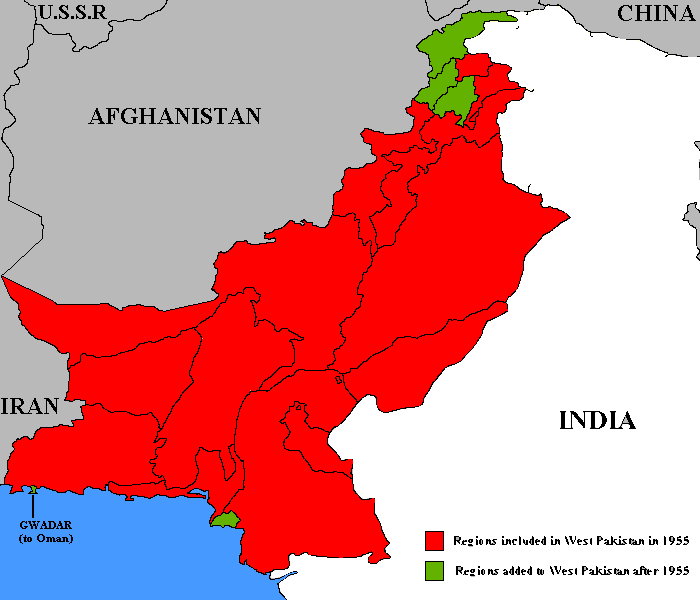
#133 The Centre Cannot Hold 🎧
While excellent newsletters on specific themes within public policy already exist, this thought letter is about frameworks, mental models, and key ideas that will hopefully help you think about any public policy problem in imaginative ways.Audio narration by Ad-Auris. India Policy Watch #1: Satyam Eva Jayate? Insights on burning policy issues in India- RSJWe often talk about truth, disinformation and radically networked societies in this newsletter. Our interest in these issues is often on account of news stories around us. But that’s not all. We find there’s a more fundamental shift on the understanding of truth that’s underway in societies around the world. That is what fascinates us about truth. Now, truth or its nature is the basis of all philosophy from the time Socrates started asking questions of fellow Athenians at the public square many centuries ago. Yet we come back to the question of truth and certainty again and again over the course of our history. Not because attaining the truth is an epistemological necessity for our race. That it might be. Instead understanding the nature of truth is important to control it. And those who control the truth control power. Not only for the present but far into the future. So what’s the point of this random discourse on truth at the start? Truth Is The First CasualtyThere were a few news stories over the past couple of weeks that made me wonder about where we are on truth in India today. First, the kerfuffle between Twitter and the Indian government. A lot of commentary on this topic conflate two issues - one, Twitter not complying (yet) to certain parts of the new IT intermediary guidelines and two, Twitter tagging certain tweets by BJP spokespersons on the Congress ‘toolkit’ case as manipulated media. The first point is of limited interest to me. There are new guidelines and they must be followed if you want to be treated as an intermediary in India. Others have complied and Twitter has been lax. The second point is interesting. Twitter claims it has a global policy on tagging certain tweets as manipulated media and that’s what it followed in the Congress ‘toolkit’ case too. This claim has been attacked by many. Some have questioned Twitter’s commitment to free speech and alleged it suppresses right wing handles more than others. I haven’t seen any credible data to support this so I don’t know. But, more importantly, invoking freedom of speech argument here betrays a poor understanding of the concept. Free speech is a right of the citizens that has to be protected from the state which holds a legitimate monopoly on violence (Weber). Suppression of free speech is an issue only when the state is involved. Private entities don’t have that monopoly on violence. If they suppress free speech on their platform, well, there are other platforms. The other attack on Twitter is more credible. Who is Twitter to arbitrate on truth? How does Twitter know what’s the truth? These questions are closely linked to the other news story about a viral video involving an attack on a Muslim man in Ghaziabad. The UP police filed an FIR against Twitter and Mohammed Zubair among others for creating communal divide and intending to disrupt public peace. Zubair is the co-founder of AltNews, a fake news busting media outlet. Zubair and AltNews had done the forensic work debunking the Congress toolkit document on Twitter. It is possible that work could have been the reason for Twitter to have tagged certain tweets as manipulated. Now AltNews was being accused by the state for spreading fake news. Life has came full circle in two weeks for Zubair. Why has the question of truth become so fraught in our lives? Why are we inundated with versions of truth on social media each with its compelling argument and logic? Have we lost objectivity while looking for balance while reporting on truth? These are tough questions. I have no answers. Easy or otherwise. But since we have come so far with piece, like Crime Master Gogo, we need to go back with some takeaways. Truth And TruthfulnessWe live in times where we are suspicious of every claim of truth. We look for who is making the claim, we investigate it, we check on their politics and we debunk the claim if there’s even a whiff of their allegiance to the other side of the political divide from us. This is now the norm.Of course this has always been the case in politics. Political parties are formed on the basis of the belief among the members that theirs is the right path. That the party knows the truth that will lead the society or the nation to the lofty goals set out in the constitution. Politics has always been about '“our truth” versus “their truth”. It is a contestation on versions of truth.This we lived with. But the problem of our times is how deeply politics has pervaded every sphere. There’s not even a sliver of convergence on truths in any subject these days because politics cannot countenance it. No inch can be yielded to “their truth”
#132 A (Non) Manchurian Candidate 🎧
While excellent newsletters on specific themes within public policy already exist, this thought letter is about frameworks, mental models, and key ideas that will hopefully help you think about any public policy problem in imaginative ways.Audio narration by Ad-Auris. Global Policy Watch: G7@Cornwall: Return Of A Rules-Based International Order? Bringing an Indian perspective to burning global issues- RSJA key geopolitical question to ask as most of the world gets back to normalcy following the pandemic is - what kind of a world will we be living in?I was expecting the G7 meeting held in Cornwall last week to help with an answer. It didn’t entirely. But it did help in framing the key questions that will engage commentators discussing about the world order this decade. The rhetoric at the end of the summit was summed by Boris Johnson: “the West is back”. Johnson and Biden repeatedly made the point about the summit representing the coming together of the great democracies of the world. Others parroted the same line. Even PM Modi speaking on the final day as part of the outreach programme positioned India as a natural ally of G7 in its resolve to fight the challenges arising out of authoritarianism, terrorism and disinformation. Democracies V Autocracies Now?The need to counter the ideological and economic challenge of China has bipartisan support now in Washington. Naturally, Canada, UK and Japan are in the same boat. The summit succeeded in making the somewhat reluctant Germany, France and Italy come around to the same view. This looks like an attempt to roll back the Cold War years. But like we have written in the past, China is a very different threat from the erstwhile USSR. In fact, it is USSR on steroids. So making the threat of China into the familiar construct of Cold War that you are comfortable dealing with is like searching for your lost keys under a lamppost because there’s light under it. It will be easy to search but you won’t necessarily find the keys. The other problem for G7 is how to treat Russia. With China the two strands of a superpower contest and the mortal combat with an illiberal regime that won’t reform as was expected, come together. So it offers ideological clarity. Russia isn’t an economic superpower and its political strength is restricted to its backyard. But it ticks all the boxes of a rogue, authoritarian regime - stifling dissent, encouraging crony capitalism, launching cyber attacks against other nations and meddling in their elections. Does the G7 slot Russia into the same ideological enemy category as China and push it further into its arms? Then we have a very different Cold War on our hands. Or, does it give Russian illiberal tendencies a free pass to keep it neutral and counter the threat of China? The Putin-Biden summit that followed the G7 meet seems to suggest that’s the likely course of action. But if you do that, where is the ideological glue of ‘great liberal democracies’ coming together? What stops other democracies (Brazil, Turkey, India and many more) to go down authoritarian route knowing the ideology is a sham? Marshalling A New Plan?The other question is how committed are the G7 to back their return to relevance with financial support, commitment to free trade and moral leadership during the next crisis? The evidence during the pandemic wasn’t flattering. It was everyone to themselves. The easy thing is to blame it on Trump but the hesitancy of Biden administration during early days to share its vaccine stockpile suggests ‘America First’ won’t just disappear after Trump. The summit threw up two responses to allay concerns on this. One, the promise by G7 to provide for more than one billion vaccine doses to the developing world. This was a late but welcome step to regain a semblance of moral authority. But one billion isn’t enough to inoculate the poorest in the world. It didn’t go far enough. Two, the G7 decided to counter China’s Belt-and-Road initiative (BRI) with its own plan to lend billions of dollars in financing infrastructure in developing nations. As the New York Times reported:The plan described by the White House appeared to stitch together existing projects in the United States, Europe and Japan, along with an encouragement of private financing. A fact sheet distributed to reporters gave it a name, “Build Back Better for the World,” with roots in Mr. Biden’s campaign theme — shortened to B3W, a play on China’s BRI.It emphasizes the environment, anti-corruption efforts, the free flow of information and financing terms that would allow developing countries to avoid taking on excessive debt. One of the criticisms of Belt and Road is that it leaves the nations that sign on dependent on China, giving Beijing too much leverage over them.There are a few problems with this plan. One, it is not clear how much of a success BRI has been for China. The programme has been beset with inflated costs and accusations of debt trap by countries borrowing from it. C
#131 Learn From Others. It's Free 🎧
While excellent newsletters on specific themes within public policy already exist, this thought letter is about frameworks, mental models, and key ideas that will hopefully help you think about any public policy problem in imaginative ways.Audio narration by Ad-Auris. India Policy Watch: Road Ahead Insights on burning policy issues in India- RSJWhat’s next for the Indian economy? Here’s a quick 8-point view on where things are at today.* Clearly, the speed of vaccination will be the single biggest driver of how quickly the economy recovers this year. The daily vaccine rate has inched up to over 3 million a day after a poor May. While this isn’t adequate, there’s greater intent in procuring and debottlenecking the vaccine delivery process that’s evident. India has only vaccinated about 50 million with both the doses as we write this. It will need tremendous effort to get this number to over 600 million before December but it looks in the realm of possibility. That number will get us close to herd immunity. There’s a skew in vaccinations rates with the top 20 cities getting disproportionate supply of them. Considering these are economic hubs and drivers of consumption, this is acceptable for some time. But this skew has to reduce and the vaccines must reach the rest of India soon to reduce the probability of a third wave. There’s a danger of lapsing into complacency on speed of vaccination seeing the reduction in cases and resumption of economic activities in the big cities. We cannot afford it. * The rural economy has taken a hit in the second wave going by the case count and deaths. The rural demand had held up during Wave 1 last year but it was already tapering before the start of Wave 2. The high auto-debit bounce rate data emerging from NPCI suggest greater stress in the SME sector in this wave than the previous one. The consumer sentiment surveys show the perception about current state of the economy and about the future are worse today than during the first wave. Considering the sentiment will remain muted till September when most of urban consumers would be vaccinated, this suggests we will need a magical H2 for the overall consumption to be better than FY 21. That’s unlikely to happen. IMD has predicted a normal monsoon in 2021 which is a positive though the correlation between monsoon, agriculture production and inflation has grown weaker over the years. * On the balance, the real GDP for FY 22 will struggle to be at the pre-pandemic levels of FY 20. I think we will come below it. That’s two years lost because of the virus. The human impact of this loss is not widely understood or appreciated yet. On the other hand, the headline inflation might grow (CAGR) at about 6 per cent during the same two year period. This is stagflation territory. The usual problems that have plagued the economy over the last “lost decade” will continue if there isn’t serious problem solving skills brought to the table by the economic team of this government. The banking (esp PSU banks) and the financial services ecosystem will remain in stress following the pandemic. The unwillingness to lend despite huge liquidity in the system will persist. And the sectors that have been under chronic stress like infrastructure, power, telecom and SMEs will continue the same way. Barring few announcements and repackaging of old ideas, there’s no real plan that’s emerged for these issues. Instead there’s hope and optimism of some kind of magical robust recovery of the economy that’s served as a solution. Hope cannot be the strategy. * The big difference in FY 22 will be the robust recovery and growth that will be seen in OECD economies. This bodes well for Indian exports. The Wuhan Lab virus origination theory and the more direct approach of Biden administration in competing with China on technology and science (US Innovation and Competition Act that was brought in this week) will make the ‘China plus 1’ model more mainstream for many companies who use it as their manufacturing base. India will have to double down on PLI schemes, ease of doing investment initiatives and woo these companies with intent. This will require bringing policy reforms, reducing state control, deft diplomacy and avoiding dysfunctional political moves that seems to have become the calling card of this government in its second term. * The biggest issue that should worry the government on both economic and political fronts is jobs. Youth (15-24 age group) unemployment has gone from about 17 per cent in FY17 to over 40 per cent in FY 21 according to CMIE. The trolls can shoot the messenger (CMIE) calling it a private company. But CMIE has a track record for providing unbiased data over the years. It is easy to call it names now when the data looks inconvenient. But it won’t help India. It is important to look at the trends and think of policy actions rather than burying our collective heads in sand and listening only to the vacuous paeans of friendly trolls. The real p

#130 Everybody Loves A Good Conspiracy Theory 🎧
While excellent newsletters on specific themes within public policy already exist, this thought letter is about frameworks, mental models, and key ideas that will hopefully help you think about any public policy problem in imaginative ways.Audio narration by Ad-Auris. India Policy Watch: The Demarcation Between Science And Ramdev Insights on burning policy issues in India- RSJEvent 1: May 23, 2021. Yoga guru Ramdev:"Everyone should progress through self-evaluation. Some allopathic doctors too consider Indian medical science, Ayurveda, yoga as pseudo-science, (emphasis ours) which hurts crores of people.” Event 2: May 29, 1919. New York Times (reporting on the event on Nov 7, 1919):I will connect the two events (hopefully) in a bit.Take Event 1. This was Ramdev in his response to the letter he received from Dr Harsh Vardhan, the Union Minister for Health. The minister had written to Ramdev about his recent statements about allopathy and doctors. You can read more about it here. Dr. Vardhan was forced to write to Ramdev because of the campaign by the IMA (Indian Medical Association) against the damaging statements made Ramdev about modern medicine. Over the past year, Patanjali Ayurved, a company promoted by Ramdev, has made several claims of curing Covid-19 in seven days through its product, Coronil. He has also, at different times, called Allopathy a ‘stupid science’, falsely claimed over 10,000 allopathic doctors died after taking both doses of vaccines and blamed the global drug ‘mafia’ for conspiring against him, Ayurveda and India in that order. Now you might dismiss the whole thing as a sideshow of which there are plenty at anytime in India. But this isn’t one. Ramdev is a hugely influential figure who has a daily show on the national TV channel watched by millions. He singlehandedly created a packaged goods behemoth in the last five years riding on a deeply held belief among Indians about the ‘purity’ of Ayurveda. There have been many questions on those claims. But that’s another story. Anyway, there are a few real issues to contend with here. First, we are in the middle of a pandemic and our fastest way out of it is to vaccinate people at lightening speed. Any statement or action that stops us from doing this is bad and must be stopped. Second, India has made real progress on key health parameters like infant and maternal mortality rates, malnutrition, life expectancy and disease burden in the past two decades. But the harsh reality is it is still placed in the bottom quartile among nations on these metrics. We have had some hard fought wins in making modern medical treatments acceptable among people. We shouldn’t be frittering away these gains by raising suspicions about it among the masses. Lastly, the frontline workers and doctors have put their lives on line during the pandemic to serve the patients. We were showering flower petals on them a year back. Since everything is political now in India and nationalism can be used to defend the indefensible, the troll armies have turned this episode into a dystopian farce where pharma ‘mafia’ and Christian lobbies are the villains and Ramdev is the one exposing their nefarious plans. Now any doctor speaking against Ramdev risks being labelled a pawn hurting India’s interests and its inevitable rise that these lobbies are hard at work to stop. That we want to alienate doctors, hospitals and pharma companies in middle of a pandemic is beyond my comprehension. This is a self goal like no other. The Demarcation ProblemAnyway, the point about pseudoscience made by Ramdev is of interest to me. Who defines it? If crores of people follow something, does that mean it shouldn’t be called pseudoscience? Palmistry, astrology, homoeopathy, Ayurveda - where do they stand on the spectrum of science and pseudoscience? Since some kind of revivalism is on within the Indian society, it will be useful to explore this further. That brings me to Event 2. Why was the eclipse on May 29, 1919 such an event? Here’s why:A hundred years ago, Albert Einstein wasn’t a household name. He was a professor in Berlin, known to scientists, intellectuals, his divorced wife and the first cousin who would soon become his second wife — but not to the world.His rise to superstardom began on May 29, 1919, when the moon and sun lined up just right for a solar eclipse. Photos of the astronomical event showed something strange: A few of the stars visible during the blackout were in the wrong place.Einstein had foreseen this. Using his theory of general relativity, he made the seemingly crazy bet that the stars’ positions in the sky would shift during an eclipse, and even calculated by how much.As the data came in and the results were confirmed, the general theory of relativity was proven. Newtonian physics was no longer the truth. “Revolution in Science,” the front page of The Times of London proclaimed. “New Theory of the Universe: Newtonian Ideas Overthrown.” The New York Times followed suit with

#129 To Kill A Mocking Mosquito 🎧
While excellent newsletters on specific themes within public policy already exist, this thought letter is about frameworks, mental models, and key ideas that will hopefully help you think about any public policy problem in imaginative ways.Audio narration by Ad-Auris. Global Policy Watch: Global Order - Where Will It Come From? Bringing an Indian perspective to burning global issues- RSJA couple of recent events made me wonder about the state of global affairs these days and an excuse to write about Hedley Bull and his famous book, The Anarchical Society – A Study of Order in World Politics (1977). Take the incredible story of Belarus forcing down a Ryanair flight while it was in its airspace to arrest Roman Protasevich, a dissident who runs a popular Telegram channel widely used to protest against the regime of the dictator Alexander Lukashenko. A MiG 29 fighter jet was used to force the flight carrying 170 passengers to make a u-turn and land at the Minsk airport. This was a state sponsored hijacking with overt support from President Putin of Russia. The EU condemned the incident and banned any carriers from flying over the Belarusian airspace. But barring strong press statements and warnings there wasn’t much teeth in the response from the West. Meanwhile, Russia and Belarus upped the ante. On Thursday, Russia refused to let planes land in Moscow that were planning to bypass Belarus. The EU plans to apply sanctions on Belarus who is a signatory to the 1944 Chicago convention that established common rules of aviation safety. But Belarus could hardly be bothered. It was their airspace, their perception of threat to their sovereignty and they are going to apply their laws. And they have Russia backing them. Who are you to ask questions? That’s their dare to the NATO and EU. The other story that broke in the middle of last week is of Whatsapp suing the government of India over the Information Technology (Guidelines for Intermediaries and Digital Media Ethics Code) Rules, 2021 which came into effect in May 26. Now there are reasons why the Government wants to regulate social media platforms. We have often spoken about radically networked societies (RNS) here and how difficult it is for a hierarchical setup to counter the speed with which RNS mobilise themselves. This speed or the virality of the social media platform can pose real danger to society when used to spread rumours, hate speech and abusive content. So, regulations are welcome if they address this problem. There are two points of contention in the Intermediary rules though for Whatsaspp. The first is the demand for the traceability as written in Rule 4(2) of the guidelines. It requires a messaging platform to enable the identification of the first originator of information when demanded through a judicial order or an order passed by a competent authority as per IT Rules, 2009. This is a problem for Whatsapp (or any end-to-end encryption messaging service). They can only know the first originator if they start tagging each message with a unique identifier and create a metadata for tracking and marking every message on its platform. This is non-trivial technical problem to solve but more pertinently this will mean the ability of the platform to trace every message and know its details. This violation of privacy of every user of the platform to know the details of a select few doesn’t pass the test of proportionality. So, this should be unacceptable to any end-to-end encrypted messaging platform.The second issue here is the very broad nature of what can constitute grounds for seeking this information. Like most laws this involves messages that are specifically criminal in nature like child pornography, sexual abuse etc. But like the definition of free speech in the Indian Constitution, they also include subjective grounds like threatening sovereignty and security of India or creating law and order problems. These subjective interpretation could be abused to seek information about anyone. Any rule should be drafted with a view on how it could be used for wrong ends by anyone in the future. The current reassurance given in the law that there will be no requirement of disclosure of the message or the sender has no meaning when the demand for the originator is made based on the message itself. There are three arguments being made against Whatsapp on this case that merits discussion. One, Facebook (that owns Whatsapp) has built a business model by collating all kinds of data about its users (with or without consent). So, irony kills itself when Facebook claims to be a champion of privacy. This is true except for one important point. Facebook isn’t a state. It abuses data for its commercials gains. You can call it an exemplar of the surveillance economy. But a state having access to that kind of data is different. The state has the monopoly of violence over its subjects. No company has that. A surveillance state is a completely different ball game than a sur
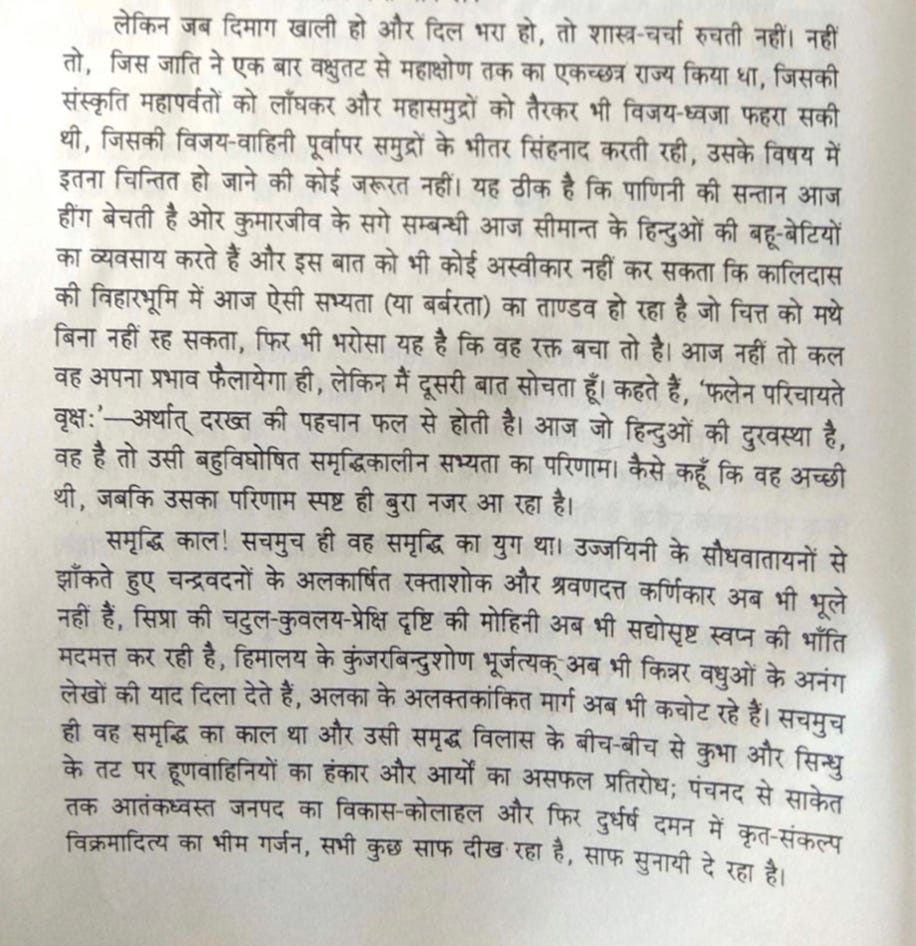
#128 Where The Clear Stream Of Reason.. 🎧
While excellent newsletters on specific themes within public policy already exist, this thought letter is about frameworks, mental models, and key ideas that will hopefully help you think about any public policy problem in imaginative ways.Audio narration by Ad-Auris. India Policy Watch #1: Jabki Dimaag Khaali Hai (While The Mind Is Empty) Insights on burning policy issues in India- RSJThe sound and the fury surrounding all that’s happening in India now is quite maddening. Any kind of meaningful analysis risks drowning in it. In any case, there’s no analysis possible any more in India. There are only positions. We have fallen in love with the culture of intellectual nihilism. All arguments start with a bad faith assumption. And before you end it, you are tagged with toxic monikers and a litany of half-truths in the garb of whatboutery. And they bookend any discussion between two ‘argumentative’ Indians these days. We cannot say we didn’t see it coming. It is easy to cast democracy into a vessel that channels the passions of the majority. You can ride those passions to the levers of power. But it is another thing to govern and meet the aspirations of the demos. The easy way then to cover for failures is to continue fighting some mythical ancient regime or entrenched enemies who are undermining your efforts. This is imagined victimhood. When this becomes a political, social and cultural defence to any challenge, intellectual nihilism follows. Facts don’t matter then. Only faith does.We are in a tight spot today. To come out of it requires leadership, farsighted policymaking capabilities and a consensus on the path to nation building almost at par with the task we had on hands right after independence. This isn’t easy even with the best of intentions and capabilities at your disposal. Instead, I fear we have real constraints in thinking our way clearly through this. Acknowledging The ProblemThe economy wasn’t in a great shape going into the pandemic in April 2020. The twin balance sheet problem and the shock of demonetisation meant a modest 4-5 percent growth was beginning to look the best we could do. The national lockdown and the impact of the first wave has meant we will end up with about an eight percent decline in GDP in FY20-21. The general consensus within the government early this year was India had seen off the pandemic and a V-shaped recovery is well on its way. This second wave has set us back again. So, where does that leave us on the economy? There are a few factors to consider here:* Unlike wave 1, this time the impact has been felt more directly by the consuming class. This is evident from conversations with friends and colleagues, social media posts and the case counts. People have been scarred and sentiments have taken a hit. More importantly, people will wait to get vaccinated before lowering their guards. The lessons of complacency seem to have been learnt. The talk of wave 3 and its likely impact on kids have only queered the pitch. Vaccination to about 50 percent of people looks unlikely before the end of 2021. This would mean when the wave 2 subsides, there won’t be a quick bounce back in terms of increased mobility and consumption spends. There will only be a gradual return to any kind of normalcy. * Unlike last wave, this wave has impacted the hinterland. The extent of the impact is difficult to ascertain but the ground reporting from rural UP and Bihar has been heartbreaking. Rural supply chains have been disrupted and the expectation that rural economy will hold out like last year are misplaced.* Much of the heavy lifting last year to support the economy was done by the RBI through monetary policy. There’s a limit to that and it seems we have reached the end of it. The fiscal room available to the government is quite limited. It is worse than last year. The fiscal deficit is the highest it has been in a long time. Yet, the government will have to come out with some kind of a stimulus soon. People are hurting. But where will the money for stimulus come from? Expect more headline management like the Rs. 20 lac crores Aatmanirbhar Bharat package announced last year.* Exports could be a silver lining considering most of the developed world will be back on growth path by next quarter. The challenge is how well are our businesses (especially SMEs) positioned right now to take advantage of it. It is difficult to be an export powerhouse while simultaneously dealing with an unprecedented health crisis impacting the workforce. * The consensus growth projections for FY21-22 have already been lowered from 11.5 percent to 9-9.5 percent. My fear is this will slide down to 7-7.5 percent range by the time we have seen through wave 2. Since this wave is unique to India in terms of spread and impact, our economic performance, deficit and the future prospects will be an outlier compared to most of the world in FY22. We will have to keep an eye on the sovereign rating given our circumstances. There’s a d
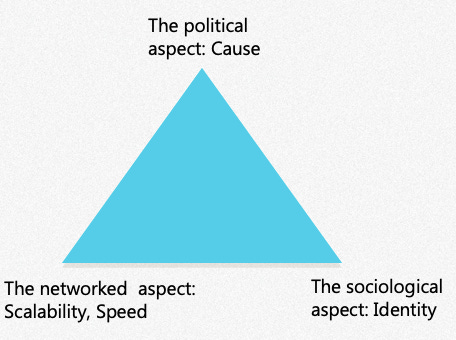
#127 What Makes an Ideology? 🎧
While excellent newsletters on specific themes within public policy already exist, this thought letter is about frameworks, mental models, and key ideas that will hopefully help you think about any public policy problem in imaginative ways.Audio narration by Ad-Auris. India Policy Watch: Radically Networked SuccourInsights on burning policy issues in India— Pranay KotasthaneWhen the going gets tough, we become desperate for signs of hope. Unfortunately, the union government has inspired no such thing. It has instead opted for image management over accepting responsibility, complacency over taking charge, and whataboutery over offering succour. Hope, then, springs from the stories of ordinary people pitching in to plug government failures in their own unique ways. A big portion of this effort is invisible to us from our immobile locked-in existences. The part that’s visible is what is happening over digital media. Over the past few weeks, all of us have seen relief efforts of various types, sizes, and success rates unfolding over the internet. Arranging for oxygen cylinders and hospital beds, verifying these requirements, administering advice, and contributing money — all this and more are happening at high speeds in a society densely connected with each other. In other words, radically networked succour. Often, the term radically networked societies (RNS) conjures up the image of a mob. Admittedly, most examples we’ve cited earlier have depicted the darker side of RNS. However, the term itself is value-neutral and applies to any group meeting these three conditions:a web of densely connected individuals, possessing an identity (imagined or real) and motivated by a common immediate cause.Visualising the online relief efforts through a RNS framework, we see that:* The complete inadequacy of the Indian State became the immediate cause that mobilised community action. As the second wave started hitting near-and-dear ones while our governments continued to be in a parallel reality, people felt that the government’s effectively saying “Apna Apna dekh lo (Fend for yourselves)”. Then came the realisation that the problem has grown too big for our governments to solve. * The speed and scale was provided by the internet, specifically digital media platforms. The hierarchical nature of the State is an impediment in emergencies. That’s where flattened networks excel, spreading information to various nodes at a speed States cannot match. Our social media feeds transformed into emergency response management systems. * The identity dimension is not so clear in the sense that people providing radically networked succour do not define themselves as being a part of any one imagined identity. In some cases, pre-existing identities such as religion have inspired a community response. In others, the sinking feeling that we are all in this together has produced new bridging social capital. One identity that’s been conspicuous by its absence is the electoral and social media apparatus of the governing political party. Being one of the largest political organisations in the world that understands how to harness the power of digital media like few others do, it’s surprising to see it missing in action. One can only guess what came in the way —the arrogance of power, a refusal to acknowledge the problem, or a pre-programmed plan to focus on attacking the opposition?The ImpactThe past few weeks have also made clear the strengths and limits of relying on civil society action alone. The most encouraging lesson is to see that in difficult times, people have contributed in their own little, unique ways that governments can’t. Whether it’s by delivering food to a patient in the neighbourhood, by helping those in need of financial assistance, or by delivering critical medical supplies, the RNS has saved many lives. At the same time, it has also exposed the limits of what a civil society can do. People actively involved in such efforts themselves couldn’t shake off the feeling that they were boiling the ocean — regardless of the growing monetary contributions or the number of hands on deck, the problem seemed to be growing at a much faster rate. The scarcity of life-saving equipment meant that for every one person you could help, another equally — or perhaps more — needy patient was dying.The tragedy has also made it clear that a civil society cannot, by itself, summon newer hospital beds, healthcare staff, and life-saving medical supplies. For increasing capacity on these counts, the role of the State and markets is indispensable. We need the State to do what it should and get out of the way where it must for markets to play their magic. Whichever political ideology we may hold dear, the pandemic should make us realise the need of all three — State, Society, and Markets. Of which, it’s the omniabsent State that should worry us most. The Indian State is small where it really matters and simultaneously, overbearing in areas where it shouldn’
#126 A Little Boat Adrift 🎧
While excellent newsletters on specific themes within public policy already exist, this thought letter is about frameworks, mental models, and key ideas that will hopefully help you think about any public policy problem in imaginative ways.Audio narration by Ad-Auris. PolicyWTF: Our Democracy In Wave 2 This section looks at egregious public policies. Policies that make you go: WTF, Did that really happen?- RSJIt is difficult to write anything with clarity when almost every second message you read is a cry for Oxygen, ICU beds, Remdesivir or plasma. This isn’t an exaggeration. This is the reality of every urban Indian today. Yet they are lucky. The ability to amplify is itself a privilege. There are many others going silently into the night; mourned by their voiceless kin but unnoticed, uncounted and unmourned by the state. Because it is inconvenient to even acknowledge them. This is a difficult moment for India. It is not easy to write with perspective and acuity about our criminal neglect of lives while retaining empathy for those on the frontlines of this battle. So, excuse me if I ramble a bit in this edition. No Information, No DemocracyThere’s a lot made about democracy in India. If we were to believe our own hype that is. We have a rambunctious multi-party system. Our elections are festivals celebrating people’s choices. The janata is the janardhan, apparently. For years, the more cynical among us have seen through this charade. Today, the despairing shallowness of these claims are laid bare for all us to see. At its heart, democracy is about availability of information. As information became more accessible and moved with greater speed in the industrial age, societies had to adopt democratic norms. Other choices could only be coercive. Because information is power. It helps you compare, to make informed choices and to hold those in power accountable. It is no surprise then among the first thing any authoritarian regime does is to control information. Information makes democracy tick. Without it, democracy is just a periodic voting exercise.The remarkable thing about India’s pandemic response is the sheer absence of information available to the public. Even the Supreme Court cannot get direct answers out of the government. The number of vaccines we have purchased in advance, the current stockpile we have, the monthly rollout plan we have in mind or the price of the vaccines. Nothing is known. The anticipated number of infections we might have for every district in the country, the future need for Oxygen, ventilators, doctors, healthcare workers or technicians in each district, the real mortality rates, the data on genome testing, the amount of foreign aid or where it is going - the list is endless. There are no past datasets, there’s barely any data being collated now and there’s no forecast for us to plan a better response future even as we see the pandemic spreading to rural areas in India. We don’t have a daily dashboard or targets against which we monitor our response to a virus that’s knocked us over. Administrative incompetence and deliberate official suppression have brought us to this parched information landscape. This lack of information in the midst of a catastrophe renders democracy void. Only a chimera remains. Every living moment is filled with anxiety because you are a step away from being drawn into the Covid apocalypse. You cannot plan even for the week ahead. You cannot judge the actions of the government because there’s hardly any information. You read a news report about foreign aid gathering dust at the airports and the next day the partisans of the government point to another report on how things are moving quickly. In this see-saw battle between information and disinformation, in the midst of this epistemological fog, we have to find the right direction. Democracy is about choice in the hands of people. Choices are made by weighing the arguments put up by either side. Arguments need information. Cut the information supply and democracy gasps for breath. It is not just patients that are running out of Oxygen in today’s India. There Won’t Be Any ReckoningThis also makes the next point that I want to discuss almost irrelevant. Is the handling of the second wave a moment of reckoning for PM Modi and his government? In any normal, functional democracy with rational voters and a modicum of opposition, it should have been. But I’m not sure about it happening in India. First, the lack of transparency or information makes it easy for the government to spin narratives that take away the heat from it. We have already seen some remarkable feats of narrative building in the past month. Merely listing them down inspires awe within me in for the narrative entrepreneurs building them. But it also boggles my mind on how these logically weak or inconsistent narratives aren’t countered with vigour. I have made a simple table below to reflect this. Any reasonable person with an open mind will come
#124 Flailing Again 🎧
Programming Note: We are taking a short break. Back on May 2. Stay safe.While excellent newsletters on specific themes within public policy already exist, this thought letter is about frameworks, mental models, and key ideas that will hopefully help you think about any public policy problem in imaginative ways.Audio narration by Ad-Auris. PolicyWTF: Winging the PandemicThis section looks at egregious public policies. Policies that make you go: WTF, Did that really happen?- RSJOne of the things we often say around here is how difficult it is to craft public policy. The process requires diligence in collating evidence, intellectual integrity in comparing the options and trade-offs, anticipating the unintended, planning for implementation, mapping the stakeholders and communicating to all of them. You know the drill. Importantly, a lot of these decisions have to be taken when the future is unknown and there’s uncertainty all around. Your assumptions could be off the mark or unforeseen events could derail your plans. You cannot do much when you are dealing with ‘unknown-unknowns’. You have to opt for the best policy course while dealing with the ‘epistemological fog’.This is one of the reasons why we don’t do a post-mortem of a policy decision with the benefit of hindsight. We call out a policyWTF the moment we think we have spotted one. And then go back to it as the future unfolds in line with what we had anticipated or differently. But if I do have to analyse a policy response of the past, I follow what I refer to as the ‘retrospective case study’ method. It is a simple tool dealing with only the ‘knowns’ and I will use it to analyse India’s Covid-19 response. As India deals with a second wave with its healthcare infrastructure struggling to keep pace, the question that everyone is asking is how did we get here? Maybe this tool will help us with few plausible answers.Here’s the case studyImagine you are in mid-March 2020. There are a handful of Covid-19 cases in the country. You have to put an emergency response plan. Like I mentioned before we will only deal with the ‘knowns’ at the time of response (March 2020) to avoid hindsight bias. So what are the knowns?About the virus. You know the virus is infective (R0 is high) and the cases rise exponentially as already seen in Italy, Spain, USA, UK etc. The healthcare systems in these countries weren’t prepared for it. They buckled under the load. The ultimate cure is prevention. And the best tool for prevention is a vaccine. You know there are research efforts on in USA, UK and China. It is clear any vaccine will take atleast a year to be available for commercial use. This is a wildly optimistic scenario. You also know there’s a drug (Remdesivir) that has moved to phase 3 trials as a cure for Covid-19 infection. Lastly, almost every expert warns there could be more than one wave of infections as has happened with Coronavirus pandemics in the past. The virus mutates and not always to a less virulent version. So, it is likely this pandemic will see a few waves with mutants before vaccines or herd immunity brings it under control. About India. You also know the challenges unique to India. The healthcare infrastructure is woefully inadequate. It ranks in the bottom quartile globally on hospital beds, doctors or paramedical staff on a per capita basis. The population is much larger with dense, cloistered urban clusters that are ideal for the spread of the virus. You also know its relative strengths. People comply with government orders. It is the vaccine factory of the world. And the elected government is strong and stable with an extremely popular PM. For a moment keep the economic impact of decisions or the fiscal position of the government aside. Just focus on the health and well-being of the citizens. Based on the knowns that are available with you at that moment, what will you do?I guess the simple policy response would have been: * A lockdown to slow down the spread and to prepare the healthcare infrastructure to manage the eventual waves. This would mean creating additional capacity for hospitalisation, procuring testing kits, ventilators, oxygen cylinders and training people on paramedical activities during the lockdown.* An ongoing effort at stockpiling the above once lockdown is lifted to manage the peak caseloads. A measurable set of metrics to assure the state and union governments about the inventory of these items on an ongoing basis. Continuing to be in this semi-permanent state of readiness till most Indians are vaccinated and herd immunity is achieved. Remember there are always subsequent waves as the past has shown.* Advance Purchase Commitments for various vaccines candidates that are going to be in play. Maybe a similar arrangement for stocking up Remdesivir. This is critical given India’s population. Securing the supply of vaccines is the key. And then an initial plan for inoculating about a billion Indians in less than a year whenever the vaccine
#123 Lost In The Kumbh 🎧
While excellent newsletters on specific themes within public policy already exist, this thought letter is about frameworks, mental models, and key ideas that will hopefully help you think about any public policy problem in imaginative ways.Audio narration by Ad-Auris. - RSJBy now many of you must have seen the pictures from the Kumbh at Haridwar. Till last evening, almost 3 million devotees had congregated at the Har ki Pauri for the shahi snaan (how long before we change the word ‘shahi’ there?). A lot has been made about the Covid protocols that were put in place for the Kumbh. It is safe to say it is almost impossible to maintain those protocols for such a crowd. Like always this has drawn predictable responses. The ‘liberals’ have compared the way media and many from the current dispensation demonised a markaz that was organised by the Tablighi Jamaat last March and how differently they are covering the Kumbh today. A lot of commentary in the early days of the pandemic last year was about the irresponsible members of the Jamaat who congregated at the time of a pandemic and then blamed them for the spread of the virus in the country. The ‘liberals’ contrast that with the cautious, almost benign, coverage of the Kumbh that has millions risking their lives in a likely ‘superspreader’ event. The defenders of the Kumbh (right-wing, conservatives or any other label you might apply to them) have their arguments ready. The parallels with the Jamaat event are false. This is a planned event with the administration taking all precautions. Also, the devotees are out in the open which is safer than the enclosed markaz event. I will leave you to see the pictures and draw your own conclusions. Also, there’s the classic conservative defence that’s put up. This is a matter of an individual and their faith. Nobody is coercing them to go to the Kumbh. Our traditions and our culture are our inheritance. These are important for our well-being and they keep us going as a society. As Burke would have put it, some illusions and prejudices are socially necessary. I’m not interested in the arguments of either side. These are mostly transient and change depending on the context. For instance, I’m almost certain there will be instances of Covid violations during the month of Ramzan which is upon us and during Eid. Then these arguments will flip. And yada yada yada. What Explains Irrational Behaviour?The question that interests me is what is the underlying impulse that prompts devotees, adherents of a cult or fanatics of any kind to put the interests or customs of that group over their personal safety and evolutionary instinct for survival? Why do we do stupid things in groups? For a moment leave aside the the sagacity of the government that allows for an event like Kumbh during a pandemic. Ask why have over three million people supposedly taken leave of their senses and gone there? And that brings me to a topic that sets off evolutionary biologists, sociologists and philosophers on the warpath. The question of Group Selection or what’s has been updated to be called Multilevel Selection Theory. The overwhelming consensus till the 90s was that natural selection acts on genes. Each gene, or ‘selfish gene’ as Richard Dawkins would put it, tries to perpetuate itself. An individual is the result of the selection of many such selfish genes. Natural selection, therefore, acts in the domain of an individual. Nature selects those genes that are adaptable and individuals with those genes carry them forward for future generations. Others fall by the wayside.But there was always a separate strand of thinking that stayed in the shadows of evolutionary biology - Group Selection. Darwin himself had hinted at it in The Descent Of Man: “Now, if some one man in a tribe, more sagacious than the others, invented a new snare or weapon, or other means of attack or defence, the plainest self-interest, without the assistance of much reasoning power, would prompt the other members to imitate him; and all would thus profit. The habitual practice of each new art must likewise in some slight degree strengthen the intellect. If the new invention were an important one, the tribe would increase in number, spread, and supplant other tribes (emphasis ours). In a tribe thus rendered more numerous there would always be a rather greater chance of the birth of other superior and inventive members. If such men left children to inherit their mental superiority, the chance of the birth of still more ingenious members would be somewhat better, and in a very small tribe decidedly better.” The Wilsons And Their Russian DollsAnyway, as I said, group selection was not considered seriously by biologists for most of the last century. In the last two decades, however, there’s been a renewed interest no thanks to the works of E.O. Wilson (Harvard U.) and David Wilson (Binghampton U.). For them, evolution is as much a team sport as it is a battle for survival among individuals. An