America: The Story of the USA
191 episodes — Page 1 of 4
Ep 136Study Notes: The Rules of American Football
America: Study Notes are quickfire explainers for all the things you want to know about the USA, but don't want to ask.This week, The Rules of American Football - a brief history of the game, and everything you need to know, to understand what the heck is going on!.Contact us: [email protected] the community: https://www.patreon.com/cw/americathestoryoftheusa - use code USA26 for 50% off your first monthGet the newsletter: https://america-the-story-of-the-usa.beehiiv.com/Brand & advertising enquiries: [email protected]
Ep 152In the Making: The Return of the Epstein Files
This week, we're talking about the DOJ's release of three million documents relating to Jeffrey Epstein, and Trump's suggestion of nationalising elections.Plus Sanam Naraghi Anderlini MBE discusses growing tension in the middle east, as the US and Iran inch ever closer to conflict.All of this and more on another edition of America: A History in the Making..Special Guests:Clodagh Harrington from University College Cork. She is also host of the wonderful podcast A Chicken in Every Pot alongside Alex WaddanSanam Naraghi Anderlini MBE, founder of the International Civil Society Action Network, and host of the excellent podcast If You Were in Charge..Mentioned in this Episode:A Chicken in Every Pot: https://podcasts.apple.com/gb/podcast/a-chicken-in-every-pot/id1780348590ICAN: https://icanpeacework.org/If You Were in Charge :https://podcasts.apple.com/gb/podcast/if-you-were-in-charge/id1770618616Clintons agree to testify: https://www.msn.com/en-us/politics/general/bill-and-hillary-clinton-agree-to-testify-in-house-about-jeffrey-epstein/ar-AA1VwJQU?ocid=BingNewsSerpDOJ releases epstein files: https://www.justice.gov/opa/pr/department-justice-publishes-35-million-responsive-pages-compliance-epstein-filesMet Police to investigate Peter Mandelson: https://www.bbc.co.uk/news/live/clynp40ekrdt?page=4Josh D’Amaro to Become Disney CEO: https://thewaltdisneycompany.com/news/disney-ceo-announcement/Trump wants to nationalise elections: https://www.bbc.co.uk/news/articles/c0mke841zj0oFBI raid Fulton Country election office: <a...
Ep 134What is The Last of the Mohicans?
Set in the forests of upstate New York during the French and Indian War, James Fenimore Cooper’s 1826 novel has become one of the most enduring works of early American literature. It helped define the frontier myth, shaped American ideas about Native peoples, and influenced generations of writers, filmmakers, and cultural storytellers.Today, as we mark its 200th anniversary, we explore its themes, its historical context, and its complicated legacy.So in this episode, I’m asking… what is The Last of the Mohicans?...Special guest for this episode:Professor Thomas Ruys Smith, a scholar of American literature and culture at the University of East Anglia. His work spans the 19th century, with particular expertise in the intersections of literature, history, and national identity. He has written extensively on American storytelling traditions, frontier mythology, and the cultural imagination of the early United States....Highlights from this episode:02:09 - Standing the test of time06:21 - America's newfound sense of self10:36 - The story of The Last of the Mohicans15:40 - Romanticising colonisation21:23 - What the frontier means for America27:09 - White male heroes31:29 - Native American representations35:57 - National identity isn't just black and white40:32 - A more colourful America47:05 - I'm freakin' Hawkeye...Additional Resources:The Last of the Mohicans — Free eBook https://www.gutenberg.org/ebooks/940LitCharts: Themes and Analysis https://www.litcharts.com/lit/the-last-of-the-mohicans (litcharts.com in Bing)SparkNotes: Summary and Themes https://www.sparknotes.com/lit/mohicans/Novelguide: Theme Analysis https://novelguide.com/the-last-of-the-mohicans/theme-analysis (novelguide.com in Bing)Montclair State University: Theme PDF https://cyber.montclair.edu/Resources/B2F9F/501012/ThemeOfLastOfTheMohicans.pdf (cyber.montclair.edu in Bing)Encyclopedia Britannica: Cooper Biography https://www.britannica.com/biography/James-Fenimore-Cooper (britannica.com in Bing)Library of Congress: Cooper Collection https://www.loc.gov/collections/james-fenimore-cooper/about-this-collection/ (loc.gov in Bing)American Literature: Cooper Overview<span
Ep 133Study Notes: A Brief History of the 50 States
America: Study Notes are quickfire explainers for all the things you want to know about the USA, but don't want to ask.This week, A Brief History of the 50 States. I’ll explain how the United States grew from the 13 original states into the 50 states we have today, explaining the legal process of admission, major land acquisitions, political forces that shaped statehood, and the final additions of Alaska and Hawaii..Contact us: [email protected] the community: https://www.patreon.com/cw/americathestoryoftheusa - use code USA26 for 50% off your first monthGet the newsletter: https://america-the-story-of-the-usa.beehiiv.com/Brand & advertising enquiries: [email protected]
Ep 132In the Making: Is America About to Strike Iran?
This week, we're talking about Trump showing signs of cooling on ICE in Minnesota, social media giants feel the pressure, plus Mr. Potato Head finds himself at the center of a legal dispute.Plus, the US are lining up for a possible strike on Iran, but when will they make their move, and what will this mean for Iran, America, and the world?All of this and more on another edition of America: A History in the Making..Special Guest:This week, we are delighted to be joined by Theo Zenou, Visiting Fellow at the Australian National University. He earned his PhD in American history from Cambridge University and writes for The Washington Post, The Wall Street Journal UnHerd and others..Links to Stories in this Episode:Donald Trump describes 'very good call' with Tim WalzWho Was Alex Pretti?Judge orders ICE chief to appear in court or risk contempt | AP NewsGreg Bovino, architect of Trump's immigration sweeps, departs Minneapolis | AP NewsWhy Rhode Island might ditch its Mr. Potato Head license plates | AP NewsTikTok settles just before social media addiction trial to begin - BBC NewsSeahawks, Patriots set to meet in Super Bowl rematch - CBS NewsComposer Philip Glass drops Kennedy Center world premiere over Trump takeover | Reuters.Want to advertise with us and support the American Studies community?Email [email protected] and let's talk.Contact us: [email protected] the community: https://www.patreon.com/cw/americathestoryoftheusa - use code USA26 for 50% off your first monthGet the newsletter: https://america-the-story-of-the-usa.beehiiv.com/Brand & advertising enquiries: [email protected]
Ep 131What Was the American Revolutionary War?
This week, we explore what is arguably the most consequential event in the creation of the United States, reshaping the Western world by enshrining new concepts of liberty, equality, and self-governance. So I want to know what really caused it, why people risked their lives for it, and how are modern day debates about power, justice and identity still shaped by it, as I ask… what is the American Revolutionary War?...Special guest for this episode:Liz Covart, the award-winning creator and host of Ben Franklin’s World. Her work, both academic and public, shines in exploring how early Americans navigated 18th-century complexity: loyalty and revolution, community and conflict, the realities of freedom and the challenges of pluralism. She is also the founder of Scholar.DIY, a public benefit company that empowers scholars to transform their expertise into compelling digital stories....Highlights from this episode:02:56 - A world of empires08:51 - Taxation without representation17:21 - The revolution for social mobility25:48 - Shaping American identity29:27 - Key battles34:12 - A mutual enemy39:22 - The defining moments in America's victory45:06 - Impact of independence on marginalised groups49:29 - Liberty and equality for some...Additional Resources:Encyclopedia Britannica: Timeline of the American Revolution — Detailed chronology and major themesAmerican Battlefield Trust: Revolution Timeline — Comprehensive timeline, maps, major battlesLibrary of Congress: Revolution Primary Sources — Original documents and teaching resourcesHave Fun With History: 10 Most Important People in the American Revolution — In-depth profiles and legacy discussionsMount Vernon: 10 Facts About the Revolutionary War — Focus on George Washington’s leadership and decision-makingAmerican Revolution.org: Best Primary Sources — Diaries, letters, maps, memoirs, political cartoonsKhan Academy: Philosophical
Ep 130Study Notes: US Time Zones Explained
America: Study Notes are quickfire explainers for all the things you want to know about the USA, but don't want to ask.This week, US time zones: what they are, why they exist, and a few quick tips so you don’t miss a lecture (or a podcast recording) ever again..Contact us: [email protected] the community: https://www.patreon.com/cw/americathestoryoftheusa - use code USA26 for 50% off your first monthGet the newsletter: https://america-the-story-of-the-usa.beehiiv.com/Brand & advertising enquiries: [email protected]
Ep 129In the Making: The End of the Special Relationship
This week, on America: In the Making…Will Greenland be the death of the UK-US special relationship?AI-generated confusion after Monkeys escape a zoo in Missouri, andOne small step for Congress, one giant leap for mankind. I speak to Casey Dreier, Chief of Space Policy at The Planetary Society, about Trump’s failed efforts to decimate the NASA budget..Special Guest:This week, we are delighted to be joined by Emma Long, an Associate Professor in American History and Politics at the University of East Anglia..Useful Links:Trump has threatened Europe with higher tariffs. What happens now? | The IndependentThe exchange of messages between Norway's prime minister and President Trump | Reuters Keir Starmer about to hold emergency press conferenceTrump Shares Map of US Including Greenland, Canada, Venezuela - NewsweekCongress passes $24.4 billion NASA budget, rejecting Trump's deep cutsAs Musk works to slash federal spending, his own firms have received billions in government contracts - ABC NewsThe Planetary SocietyArmy has put 1,500 soldiers on standby for possible Minnesota deployment | AP NewsMultiple monkeys on the loose in St. Louis | AP NewsSupreme Court weighs Trump's firing of the Fed's Lisa Cook by social media | Reuters<li...
Ep 128Who is JFK?
Today, we turn our focus to a figure who remains as enigmatic as he is iconic. Ascending to the presidency at one of the tensest moments in American and world history, he energized a nation with his call for a “New Frontier,” navigated the shoals of the Cold War, and inspired Americans with his vision for space and civil rights. Yet behind his polished image lay personal struggles, political obstacles, and a legacy marked as much by tragedy as by promise.So in this episode, on the anniversary of his inauguration, I’m asking… who is President John F. Kennedy?..Special guest for this episode:Barbara Perry, a distinguished scholar from the University of Virginia’s Miller Center and one of the preeminent experts on the Kennedy family and presidency. She has authored and edited numerous books, including Jacqueline Kennedy: First Lady of the New Frontier and Rose Kennedy: The Life and Times of a Political Matriarch....Highlights from this episode:John F. Kennedy's presidency, despite its brevity, was marked by significant achievements in civil rights and the space race.Kennedy's early life and family background played a crucial role in shaping his political ambitions and character.The complexities of JFK's personal life, including his infidelities, contrast sharply with his public persona as a devoted leader.The impact of JFK's assassination continues to resonate in American culture and politics, symbolizing a profound national tragedy....Additional Resources:Jacqueline Kennedy: First Lady of the New Frontier by Barbara PerryRose Kennedy: The Life and Times of a Political Matriarch by Barbara PerryMiller Center: JFK Life Before the PresidencyMiller Center: Domestic AffairsMiller Center: Impact and LegacyJFK Library: Life of John F. KennedyJFK Library: PT-109JFK Library:...
America: The Story of the USA Returns Soon
bonusIn July 2023, I launched a bit of a passion project, with my old lecturers at the University of East Anglia.America: A History was born.But a lot has changed in two and half years.And we thought it was about time we did too...Introducing, America: The Story of the USA, in partnership with the British Association for American Studies.Returns 19th January....Contact us: [email protected] the community: https://www.patreon.com/cw/americathestoryoftheusa - use code USA26 for 50% off your first monthGet the newsletter: https://america-the-story-of-the-usa.beehiiv.com/Brand & advertising enquiries: [email protected] to advertise with us and support the American Studies community?Email [email protected] and let's talk.
Ep 127Is Capitalism Killing Christmas?
The tree is up, the lights are on, and the presents are (probably) wrapped. Only two more sleeps until the day when sacred, family-oriented togetherness merges with ruthless consumer culture… or, as it’s more commonly known, Christmas. So in this episode we’re going to dive into the murky, tinsel-covered contradiction of the holiday season, as I ask… is Capitalism killing Christmas?...Special guest for this episode:Thomas Ruys Smith, Professor of American Literature and Culture and Deputy Director of Area Studies at the University of East Anglia. His new book, Searching for Santa Claus: An Anthology of the Poems, Stories and Illustrations That Shaped an American Icon, is available to buy now.Brian Earl the creator and host of the excellent podcast Christmas Past… a very merry welcome back to Brian Earl…...Highlights from this episode:Christmas has evolved significantly from its religious roots into a commercially driven holiday, with advertising and consumerism deeply intertwined.The Puritans' resistance to Christmas in early America reflects a long-standing conflict between celebration and moral values within American culture.Consumerism and Christmas are inextricably linked; it's hard to separate the two without losing the holiday's modern meaning.Historical variations in Christmas celebrations across America reveal regional differences in traditions, influenced by factors like local culture and economy.The rise of industrialism in the 19th century played a crucial role in shaping the consumer habits associated with the Christmas season.Charitable giving during Christmas often serves to highlight socioeconomic divides while simultaneously fostering a sense of community and shared goodwill....Additional Resources:Searching for Santa Claus: An Anthology of the Poems, Stories and Illustrations That Shaped an American Icon by Thomas Ruys SmithChristmas Past by Brian EarlThe Modern Christmas in America: A Cultural History of Gift Giving by Williams Waits<a href="https://www.jstor.org/stable/2078795"...
BONUS: Disney, Christmas, and 2026
bonusIn our last bonus episode of the year, I wanted to share some episodes that can get you through the holiday season, linked below, and give you a little tease of what's to come in 2026.Spoiler alert: we are going bigger, better and bolder than ever before, so follow the podcast right now and be part of something mega!...And if you like this episode, you might also love:Is Disneyland the Happiest Place on Earth?What is Disney's America?Why is Santa So American?I Am... Jody Williams...Contact us: [email protected] the community: https://www.patreon.com/cw/americathestoryoftheusa - use code USA26 for 50% off your first monthGet the newsletter: https://america-the-story-of-the-usa.beehiiv.com/Brand & advertising enquiries: [email protected] to advertise with us and support the American Studies community?Email [email protected] and let's talk.
Ep 126Why is Santa So American?
Last year, I asked ‘Who is Santa Claus?’ We discussed the origins and early incarnations of the figure we now understand to be Santa through a more global lens. So this year, I want to continue this conversation, but look specifically at how he became America’s poster boy for Christmas, and why this could be challenged in future, as I ask… why is Santa so American?...Special guest for this episode:Thomas Ruys Smith, a Professor of American Literature and Culture and Deputy Director of the New Area Studies Research Centre. In 2023, he published The Last Gift: The Christmas Stories of Mary E. Wilkins Freeman, and his new book, Searching for Santa Claus: An Anthology of the Poems, Stories and Illustrations That Shaped an American Icon, is available to buy now.Vaughn Joy, whose doctoral research, Selling Out Santa, focuses specifically on Hollywood Christmas Films in the age of McCarthy....Highlights from this episode:The discussion revolved around the transformation of Santa Claus into an American cultural icon over the years.We explored how Santa's early depictions varied regionally across America, reflecting different cultural influences and customs.The podcast highlighted the role of commercialism in shaping Santa’s image, especially during the rise of department stores in the late 19th century.Santa Claus has evolved through various literary and film interpretations, reflecting societal values and changes in American culture.The conversation touched on the implications of Santa's myth on children's expectations around Christmas and societal values of generosity and goodwill.We examined how modern iterations of Santa are influenced by current events and cultural shifts, showcasing his adaptability in American folklore....Additional Resources:Amazon.com: The Last Gift: The Christmas Stories of Mary E. Wilkins Freeman edited by Thomas Ruys SmithSearching for Santa Claus: An Anthology of the Poems, Stories and Illustrations That Shaped an American Icon by Thomas Ruys SmithSelling Out Santa: Hollywood Christmas Films in the Age of McCarthy by Vaughn Joy<a...
BONUS REPLAY: The Christmas Goose & Our Favourite On Screen Santa
bonusIn this special festive bonus episode, Liam & guests discuss their own personal Christmas traditions, their favourite screen Santa Claus and what, if anything, we would change or add to the myth of Santa.Happy holidays everyone!...Special guest for this episode:Thomas Ruys Smith, Professor of American Literature and Culture and Deputy Director of Area Studies at the University of East Anglia, and author of The Last Gift: The Christmas Stories of Mary E. Wilkins Freeman.Brian Earl, creator and host of Christmas Past...Highlights from this episode: The importance of traditions like Santa Claus in family celebrations. Brian explains the Christmas Goose. Tom reflects on the evolution of Santa Claus in modern holiday culture and media. How children's understanding of Santa changes as they grow older. The fleeting nature of childhood magic during Christmas celebrations. The portrayal of Mrs. Claus and her evolving role. ...And if you like this episode, you might also love:What is the War on Christmas?How to Make a Hollywood Christmas MovieWhat's the History of Christmas in America?...Contact us: [email protected] the community: https://www.patreon.com/cw/americathestoryoftheusa - use code USA26 for 50% off your first monthGet the newsletter: https://america-the-story-of-the-usa.beehiiv.com/Brand & advertising enquiries: [email protected] to advertise with us and support the American Studies community?Email [email protected] and let's talk.
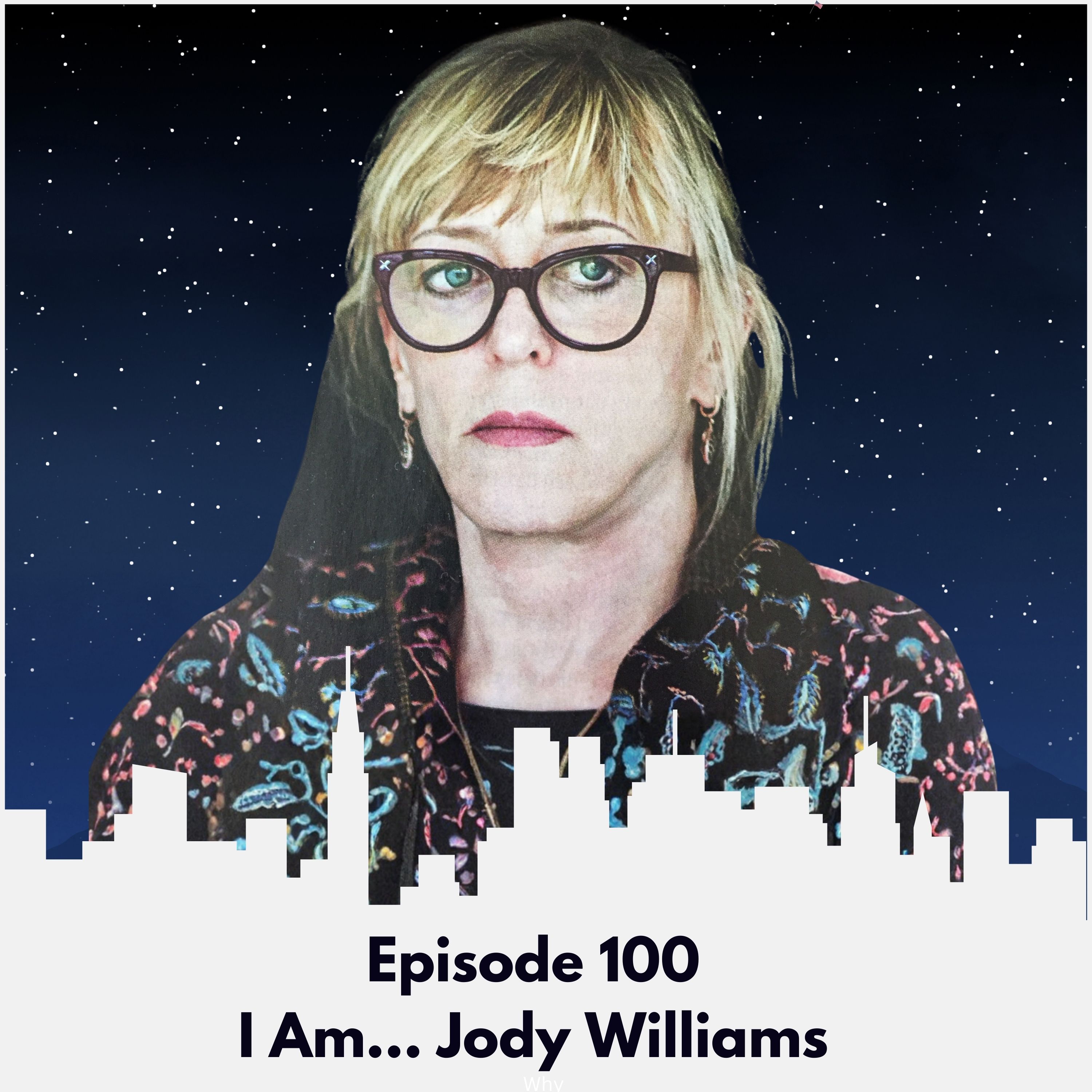
Ep 125I Am... Jody Williams
This edition of the podcast is a very special one. Firstly, it’s our 100th main episode, which is astonishing, so I want to thank everyone who has played any part in making this podcast - from everyone at UEA and behind the scenes to every guest who has donated their time and expertise. This genuinely would not have been possible without all of you.On which note, today also marks the first of our ‘I Am…’ series, where we are joined by someone who has made an indelible mark on America, if not the world, to tell their story in their own words....Special guest for this episode:Jody Williams, a Nobel Peace Laureate, who changed international law by founding the International Campaign to Ban Landmines (ICBL). She is now a founding member of the Nobel Women’s Initiative, and her tireless determination to make the world a better, safer, and more equitable place has had an unfathomable impact on millions....Additional Resources:My Name Is Jody Williams: A Vermont Girl's Winding Path to the Nobel Peace Prize by Jody WilliamsJody Williams – Biographical - NobelPrize.orgJody Williams | Peace JamJody Williams: A realistic vision for world peace | TED TalkHomepage - ICBLCMCNobelPrize.org...And if you like this episode, you might also love:What Was the Constitutional Convention?Why Does the President Only Serve Two Terms?Is the President Above the Law?How Are Presidents Elected?What is the US Constitution?...Contact us: [email protected] the community: https://www.patreon.com/cw/americathestoryoftheusa - use code USA26 for 50% off your first monthGet the newsletter: https://america-the-story-of-the-usa.beehiiv.com/Brand & advertising enquiries: [email protected] to advertise with us and support the American Studies community?Email [email protected] and let's talk.
BONUS: The Industry of Comic Book Collectibles
bonusIn this bonus episode, comic book expert Julian Chambliss sticks around to discuss his own childhood comic book collection, and reveals the one rare comic book he wishes he could find......Special guest for this episode:Julian Chambliss, a Professor of English at Michigan State University, whose research focuses on race, culture, and power in real and imagined spaces, with a particular interest in comic book history/...Highlights from this episode:Comic books have played a significant role in fostering a love for reading among children.The accessibility of comic books in the United States was much greater during the speaker's childhood.Collecting comics can lead to acquiring valuable editions, but many childhood collections were discarded.The comic book market is complex and often confusing, especially regarding the value of certain issues.The speaker expresses a desire to own a rare comic called Lobo, known for its historical significance.Comic book conventions are places where collectors can search for rare finds and engage with others in the community....Additional Resources:Origins and HistoryHistory of American comics - WikipediaHistory Of American Comics: From Victorian Roots To The Modern Multimedia Era (Toons Mag)American comic book - WikipediaHistoire de Mr. Vieux Bois – Wikipedia + Guinness World Records, Guinness World Records: First ComicA History of the Comic Book - Random HistoryGolden, Silver, Bronze, and Modern AgesComic Book Ages Explained - BiowarsSilver Age Comics - Comic Buying CenterThe Flash: The Silver Age - Slings & ArrowsModern Age of Comic Books - Wikipedia20 Major Comic Events That Shaped Us – GoCollectFandom, Endurance, and CollectingWhy Comic Books Remain Popular Among Collectors - Big News NetworkU.S. Comic Books Market Size, Share | Grand View ResearchCross-Media AdaptationsThe Impact of Comic Books on Popular Culture -
Ep 124Why Does America Love Comic Books?
Comic books are woven into the fabric of American pop culture, evolving from humble newspaper strips to a multi billion dollar industry. Their stories have inspired hope during wars, reflected societal anxieties during culture shifts, and consistently adapted to embrace new technologies and audiences.Today, comic book heroes and genres remain vibrant symbols of American imagination and reinvention, their influence reaching well beyond the printed page to movies, fashion, digital art, and fandom communities nationwide.So in this episode, we will explore its origins, cultural impact, and enduring popularity, as I ask… why does America love comic books?...Special guest for this episode:Julian Chambliss, a Professor of English at Michigan State University, whose research focuses on race, culture, and power in real and imagined spaces, with a particular interest in comic book history/...Highlights from this episode:Comic books have transformed from simple newspaper strips into a significant component of American pop culture, highlighting their incredible evolution and widespread appeal.The connection between comic book narratives and societal anxieties reflects the historical context of American culture during significant events, like wars and societal shifts.Comic book characters, especially superheroes, serve as symbols of American values, often embodying the ideals of hope, justice, and the fight against tyranny, as seen in figures like Captain America.The enduring popularity of comic books can be attributed to their diverse storytelling capabilities, allowing them to transcend genres and reach audiences of all ages and backgrounds....Additional Resources:Origins and HistoryHistory of American comics - WikipediaHistory Of American Comics: From Victorian Roots To The Modern Multimedia Era (Toons Mag)American comic book - WikipediaHistoire de Mr. Vieux Bois – Wikipedia + Guinness World Records, Guinness World Records: First ComicA History of the Comic Book - Random HistoryGolden, Silver, Bronze, and Modern AgesComic Book Ages Explained - BiowarsSilver Age Comics - Comic Buying CenterThe Flash: The Silver Age - Slings & ArrowsModern Age of Comic Books - Wikipedia20 Major Comic Events That Shaped Us – GoCollectFandom, Endurance, and Collecting<a...
BONUS: Can a Woman Ever Be Pope?
bonusIn this bonus episode, we dive deeper into the intriguing question of whether a woman could ever become pope. Plus, we discuss the current hierarchical structure of the Catholic Church and the significant barriers women face in being ordained.We also come back to the goodness that Pope Leo XIV seems to embody, suggesting that regardless of religious titles, it's the inherent kindness that truly matters....Special guest for this episode:Kathleen Cummings, a professor of history and American studies at the University of Notre Dame, with a focus on the history of women, Catholicism and American religion. Her books include A Saint of Our Own: How the Quest for a Holy Hero Helped Catholics Become American.John Doughney, a childhood friend of Pope Leo. They attended Catholic school together in Chicago, and he now lives in Texas, running a beautiful stained glass business with his wife....Highlights from this episode:The Catholic Church's hierarchical structure makes it highly unlikely for women to become priests in the near future, let alone a pope.The slow pace of change within the Catholic Church means that any significant reforms will take generations to implement, if they happen at all.Pope Leo XIV's past education under female theologians suggests potential for progressive change, but resistance remains strong regarding women's ordination.The idea of faith as a justification for values is discussed, emphasizing that goodness is not inherently linked to religious beliefs.John's reflections on growing up in a blue-collar family highlight how community and tradition shape individual values and beliefs.The conversation touches on the intersection of faith, politics, and morality, urging listeners to reflect on the true essence of serving one's fellow man....Additional Resources:A Saint of Our Own: How the Quest for a Holy Hero Helped Catholics Become American by Kathleen Cummings'We knew there was something special about him,' says childhood friend of Pope LeoHow a humble Chicago schoolboy Robert Prevost with a veteran father rose to become America's first Pope by the Daily MailPope Leo XIV: Robert Prévost arrived in Chulucanas, Peru in 1985 by the Peru News AgencyStained Glass by John & Nancy Doughney...And if you like this episode, you might also love:What Was the Constitutional Convention?Why Does the President Only Serve Two Terms?Is the President Above the...
Ep 123Who is Pope Leo XIV?
From the heart of Chicago’s South Side to the highest office in the Catholic Church, the journey of Robert Provost is as improbable as it is inspiring.So in today’s episode, we’re exploring the life, legacy, and cultural significance of the first American Pope. From his early years in Illinois, via his transformative missionary work in Peru, all the way to the papacy, this is a story that both reflects and reshapes the American Catholic experience. So… who is Pope Leo XIV?...Special guest for this episode:Kathleen Cummings, a professor of history and American studies at the University of Notre Dame, with a focus on the history of women, Catholicism and American religion. Her books include A Saint of Our Own: How the Quest for a Holy Hero Helped Catholics Become American.John Doughney, a childhood friend of Pope Leo. They attended Catholic school together in Chicago, and he now lives in Texas, running a beautiful stained glass business with his wife....Highlights from this episode:Robert Provost's journey from Chicago's south side to the papacy is truly remarkable.This episode highlights the cultural significance of Pope Leo XIV as the first American Pope.We delve into how Pope Leo's early life influenced his commitment to servant leadership.Pope Leo XIV's missionary work in Peru profoundly shaped his understanding of social justice and community.The podcast explores the unique dynamics of being an American Pope in a diverse global church.We discuss how Pope Leo XIV's choice of name signifies hope and a commitment to social teaching....Additional Resources:A Saint of Our Own: How the Quest for a Holy Hero Helped Catholics Become American by Kathleen Cummings'We knew there was something special about him,' says childhood friend of Pope LeoHow a humble Chicago schoolboy Robert Prevost with a veteran father rose to become America's first Pope by the Daily MailPope Leo XIV: Robert Prévost arrived in Chulucanas, Peru in 1985 by the Peru News AgencyStained Glass by John & Nancy Doughney...And if you like this episode, you might also love:What Was the Constitutional Convention?Why Does the President Only Serve Two Terms?Is the President Above the Law?How Are Presidents Elected?What is the US...
BONUS: Fannie Lou Hamer - An Unsung Hero of the Civil Rights Movement
bonusIn this special bonus episode, we learn about Fannie Lou Hamer, an activist and one of the lesser known heroes of the civil rights movement, who championed for voter equality in the US, and risked her own safety for justice....Special guest for this episode:Nicholas Grant, an Associate Professor of International History at the University of East Anglia. He is an expert on twentieth century United States, researching race, internationalism and transnational activism....Highlights from this episode:In this bonus episode, we further unpack the significance of the Voting Rights Act and its historical context, which is crucial for understanding today's political landscape.Fannie Lou Hamer emerged as a central figure in the civil rights movement, emphasizing the power of grassroots activism to effect real change in voting rights.We encourage listeners to explore Fannie Lou Hamer's life, as her story exemplifies the struggles faced by ordinary individuals fighting for their right to vote.The Mississippi Freedom Democratic Party was co-founded by Hamer in 1964, challenging the all-white Democratic Party and advocating for Black political participation.Hamer's famous quote, 'I'm sick and tired of being sick and tired,' reflects the frustration and resilience of those fighting against voter suppression.As we continue to discuss voting rights, we invite everyone to engage in informed discussions and explore the resources linked in our show notes....Additional Resources:National Archives Voting Rights Act (1965) Milestone Documents: https://www.archives.gov/milestone-documents/voting-rights-actCivil Rights History Project – Library of Congress: https://www.loc.gov/classroom-materials/civil-rights-movement/The Smithsonian National Museum of African American History & Culture – Fannie Lou Hamer and Voting Rights: https://womenshistory.si.edu/blog/fannie-lou-hamer-and-fight-voting-rightsPrimary Source Spotlight: Voting Rights Act of 1965: https://primarysourcenexus.org/2019/02/primary-source-spotlight-voting-rights-act-1965/Supreme Court of the United States: Brnovich v. Democratic National Committee (2021) – Full Opinions: https://www.supremecourt.gov/opinions/20pdf/19-1257_g204.pdfShelby County v. Holder (2013) Decision – Wikipedia Guide and Analysis: https://en.wikipedia.org/wiki/Shelby_County_v._HolderBrennan Center for Justice – Effects of Shelby County v. Holder on the Voting Rights Act: https://www.brennancenter.org/our-work/research-reports/effects-shelby-county-v-holder-voting-rights-actSmithsonian Magazine – Fannie Lou Hamer’s Dauntless Fight for Black Americans’ Right to Vote: <a href="https://www.smithsonianmag.com/history/fannie-lou-hamers-dauntless-fight-for-black-americans-right-vote-180975610/" rel="noopener noreferrer"...
Ep 122IN THE MAKING: Will the Epstein Scandal Actually Change Anything?
This week, we're talking about Jeffrey Epstein files, why both sides of the political aisle are uniting and, as the house is set to approve a bill forcing the release of the files in full, could this finally be the beginning of the end for President Trump and the MAGA era?All of this and more on another edition of America: A History in the Making..Special Guest:This week, we are delighted to be joined by friend of the show Alyssa Royse, a business owner from Seattle, who talks to us about her own experience of sexual assault when she was a teenager (not related to Epstein)..Want to advertise with us and support the American Studies community?Email [email protected] and let's talk.Contact us: [email protected] the community: https://www.patreon.com/cw/americathestoryoftheusa - use code USA26 for 50% off your first monthGet the newsletter: https://america-the-story-of-the-usa.beehiiv.com/Brand & advertising enquiries: [email protected]
Ep 121What is the Voting Rights Act?
This week I am discussing one of the most consequential pieces of legislation in US history. Signed during the fervor of the Civil Rights Movement, it stands as a monument to the unfinished struggle for democracy.So I want to go beyond the legal text, and peel back the layers of history, injustice, activism, and resilience that not just made it possible, but continue to define its relevance, as I ask… what is the Voting Rights Act?...Special guest for this episode:Nicholas Grant, an Associate Professor of International History at the University of East Anglia. He is an expert on twentieth century United States, researching race, internationalism and transnational activism....Highlights from this episode:The Voting Rights Act emerged from a long struggle for democracy, deeply rooted in the Civil Rights Movement and its ongoing relevance today.Grassroots activism and mass protests were essential in the fight for voting rights, culminating in significant legislative changes like the Voting Rights Act of 1965.The historical context of Reconstruction highlights the ongoing fight against systemic racism and the need for continued vigilance in protecting voting rights.The preclearance provision in the Voting Rights Act effectively prevented thousands of discriminatory voting changes until it was weakened by the Supreme Court in 2013....Additional Resources:National Archives Voting Rights Act (1965) Milestone Documents: https://www.archives.gov/milestone-documents/voting-rights-actCivil Rights History Project – Library of Congress: https://www.loc.gov/classroom-materials/civil-rights-movement/The Smithsonian National Museum of African American History & Culture – Fannie Lou Hamer and Voting Rights: https://womenshistory.si.edu/blog/fannie-lou-hamer-and-fight-voting-rightsPrimary Source Spotlight: Voting Rights Act of 1965: https://primarysourcenexus.org/2019/02/primary-source-spotlight-voting-rights-act-1965/Supreme Court of the United States: Brnovich v. Democratic National Committee (2021) – Full Opinions: https://www.supremecourt.gov/opinions/20pdf/19-1257_g204.pdfShelby County v. Holder (2013) Decision – Wikipedia Guide and Analysis: https://en.wikipedia.org/wiki/Shelby_County_v._HolderBrennan Center for Justice – Effects of Shelby County v. Holder on the Voting Rights Act: https://www.brennancenter.org/our-work/research-reports/effects-shelby-county-v-holder-voting-rights-actSmithsonian Magazine – Fannie Lou Hamer’s Dauntless Fight for Black Americans’ Right to Vote: <a href="https://www.smithsonianmag.com/history/fannie-lou-hamers-dauntless-fight-for-black-americans-right-vote-180975610/" rel="noopener noreferrer"...
BONUS: Chief Seattle, Cultural Appropriation, and Native Legacies
bonusIn this bonus episode, we shed light on the historical significance of Chief Seattle while confronting the challenges of finding credible sources about Native American history. We explore how his voice has been filtered through settler perspectives, creating a shadowy figure in the archives, and discuss the cultural appropriation that often distorts Indigenous narratives.As we navigate through the noise that surrounds Chief Seattle, we aim to uncover the real stories of Indigenous history, particularly in urban settings like Seattle, where the past continually resurfaces. Join us as we delve into the intertwined histories of Indigenous and settler communities and reflect on how those relationships evolve over time....Special guest for this episode:Coll Thrush, a professor of history at the University of British Columbia, with a teaching focus on Indigenous and settler colonial histories. His books include the acclaimed Native Seattle....Highlights from this episode:Chief Seattle remains a somewhat elusive figure, with historical records often filtered through settler perspectives.Urban and Indigenous histories are not mutually exclusive; they are intertwined and shape each other significantly.Cultural appropriation and the use of Native imagery in cities raise important questions about respect and representation.Indigenous communities in Washington have experienced a resurgence in culture and political presence over the last fifty years.Historical injustices, such as the treatment of Indigenous peoples in boarding schools, continue to impact present-day relations.Apologies for past wrongs, like those issued by political leaders, must be accompanied by meaningful actions to foster true reconciliation....Additional Resources:Native Seattle: Histories from the Crossing-Over Place by Coll ThrushChief Seattle and the Town That Took His Name: The Change of Worlds for the Native People and Settlers on Puget by David BuergeChief Seattle Speech | The Suquamish TribeWhat happened at the great battle at Maple Bay? – The DiscourseTreaty of Point Elliott, 1855 | GOIA...And if you like this episode, you might also love:Who Are Native Americans?How Did Slavery Impact Cherokee...
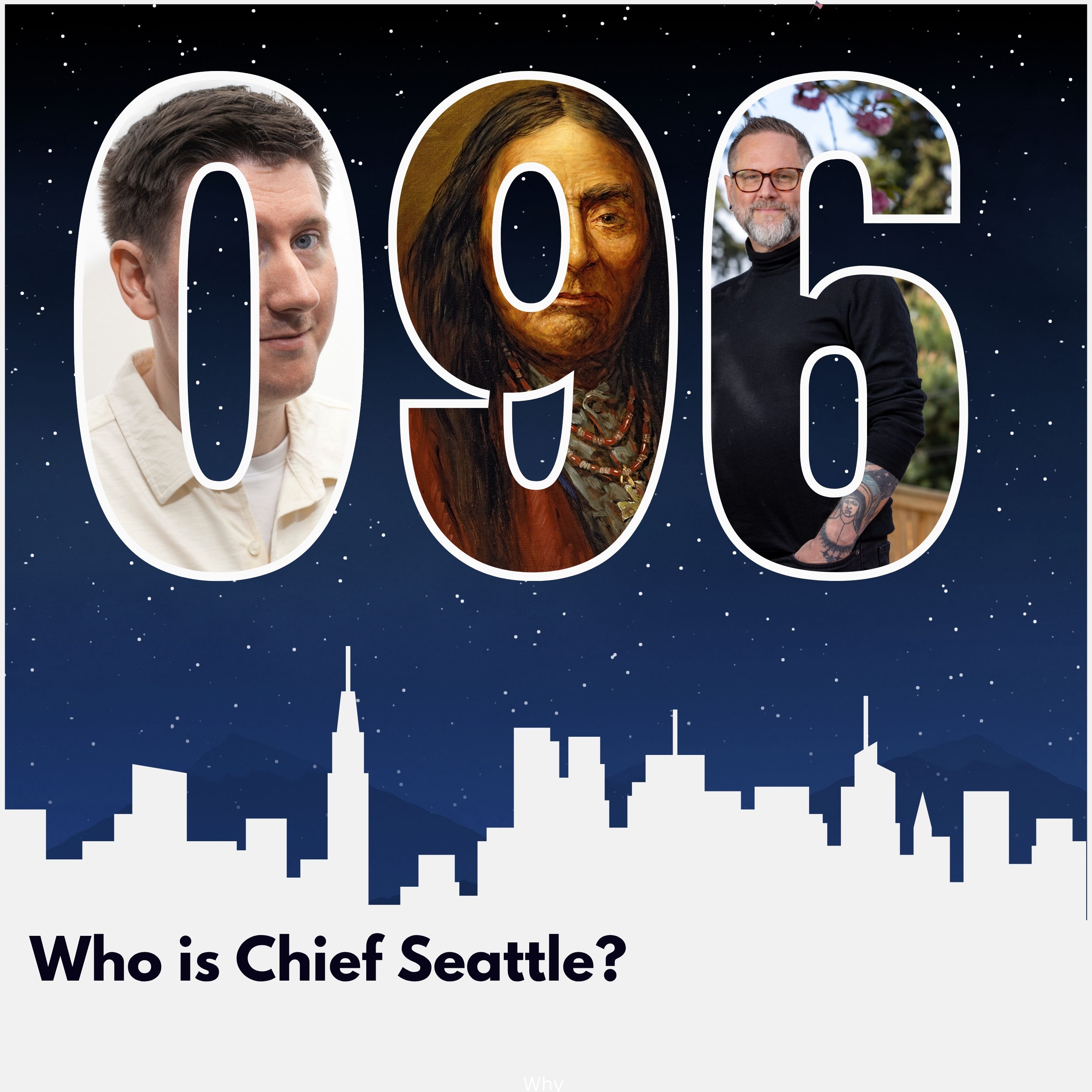
Ep 120Who is Chief Seattle?
This week, we are talking about Seattle. Not the place, specifically, but the formidable indigenous leader of the early 19th century. A warrior, a diplomat, a peacemaker, and an eloquent orator, his defence of Native American rights culminated in a speech that would go down in history, and ultimately lead to his legacy as the namesake for what is now one of the most famous cities in the world. So in this episode, I want to know… who is Chief Seattle?...Special guest for this episode:Coll Thrush, a professor of history at the University of British Columbia, with a teaching focus on Indigenous and settler colonial histories. His books include the acclaimed Native Seattle....Highlights from this episode:Chief Seattle, a prominent indigenous leader, played a crucial role in the early 19th century as both a warrior and a diplomat.His legacy is tied to a historic speech advocating for Native American rights, emphasizing the sacred connection to the earth.The complexities of Chief Seattle's life illustrate the challenges faced by Indigenous peoples during the rise of settler colonialism in the Pacific Northwest.Despite his significant contributions, Chief Seattle's own tribe, the Duwamish, still fights for federal recognition and rights today....Additional Resources:Native Seattle: Histories from the Crossing-Over Place by Coll ThrushChief Seattle and the Town That Took His Name: The Change of Worlds for the Native People and Settlers on Puget by David BuergeChief Seattle Speech | The Suquamish TribeWhat happened at the great battle at Maple Bay? – The DiscourseTreaty of Point Elliott, 1855 | GOIA...And if you like this episode, you might also love:Who Are Native Americans?How Did Slavery Impact Cherokee Nation?What is Thanksgiving?...Contact us: [email protected] the community: https://www.patreon.com/cw/americathestoryoftheusa - use code USA26 for 50% off your first monthGet the newsletter:...
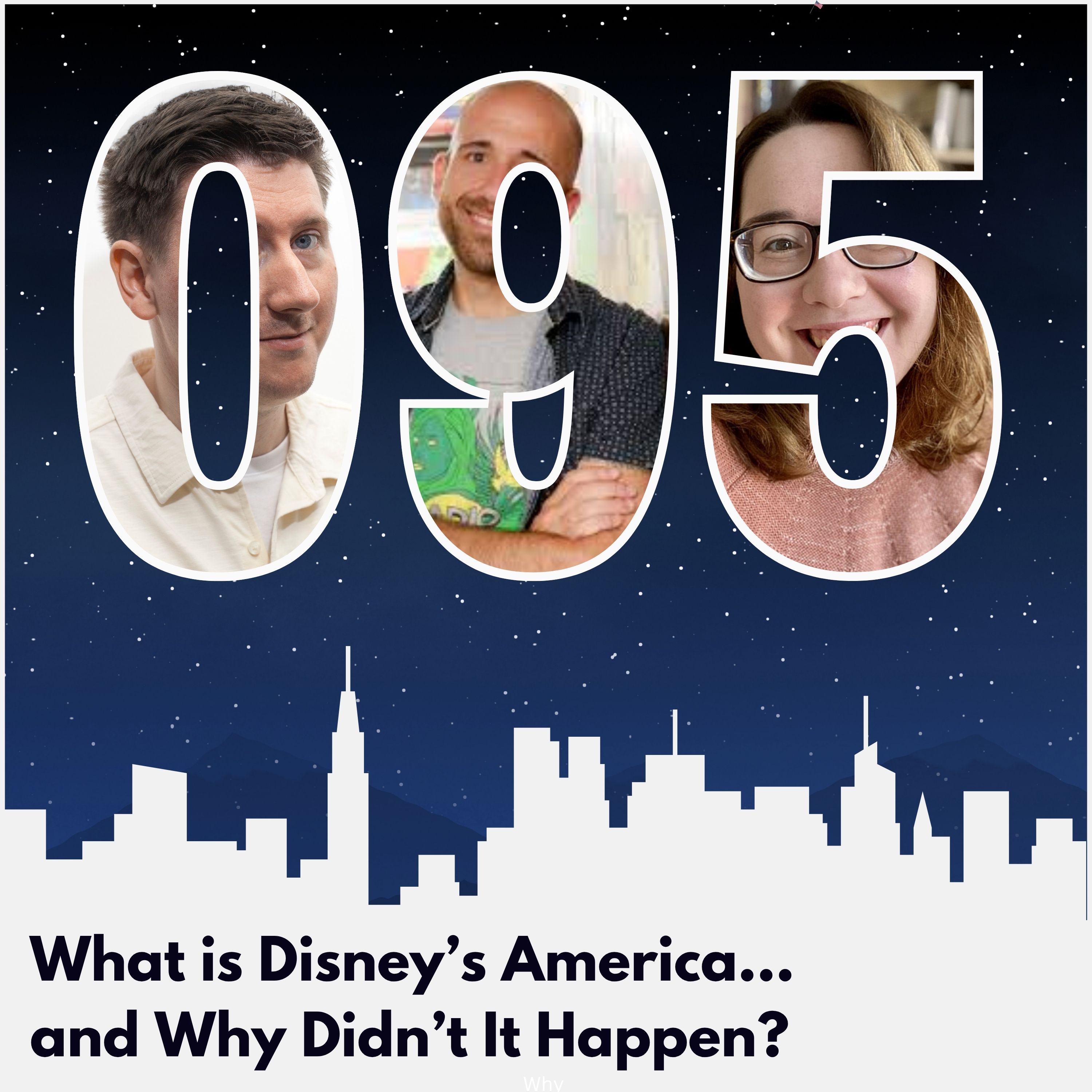
Ep 119What is Disney's America... and Why Didn't It Happen?
Last week, I asked if Disneyland was the happiest place on Earth.Well, this week, we’re looking at the Disney theme park that never was. The concept for a historical theme park was initially earmarked for Virginia, but less than a year after being announced, it was scrapped. But why?What was so different about this park compared to others? What was the public reaction? And when Disney was able to launch other parks, even cruise ships, and anything else it wanted, what went so spectacularly wrong with this?So this week, I want to know… what was Disney’s America… and why didn’t it happen?...Special guest for this episode:Jared Bahir Browsh, an Assistant Teaching Professor, cultural historian, and author at the University of Colorado, Boulder, with an interest in the relationship between culture, money, power, and identity in the United States and globally. His piece on The Conversation about the collapse of Disney’s America.Sabrina Mittermeier, a research associate at the University of Kassel with a focus on theme parks. Her books include A Cultural History of the Disneyland Theme Parks: Middle Class Kingdoms, and she also wrote a paper specifically on Disney’s America....Highlights from this episode:Disney's America was an ambitious project aimed at creating an immersive historical theme park, but ultimately it faced significant backlash and was cancelled due to various cultural and financial factors.The early 90s were a transformative time for Disney, with a strong emphasis on capitalism and expansion, and Disney's America was seen as a reflection of that cultural landscape.Critics pointed out that Disney's America struggled to balance entertainment with the complexities of American history, leading to concerns about how history would be portrayed in a theme park setting.The failure of Disney's America highlighted the challenges of creating a theme park that deals with serious historical themes, especially in a location close to significant Civil War battlefields and historical sites....Additional Resources:Inside the collapse of Disney’s America, the US history-themed park that almost was by Jared Bahir Browsh“Windows to the Past”: Disney’s America, the Culture Wars, and the Question of Edutainment by Sabrina MittermeierStaging a Comeback: Broadway, Hollywood, and the Disney Renaissance by Peter Kunze...And if you like this episode, you might also love:What Makes Country Music so American?Are the Oscars Still Relevant?Why Does Everyone Love Disney?Could Friends BE Any Bigger?How Accurate is Forrest Gump?...Contact us: [email protected] the community: https://www.patreon.com/cw/americathestoryoftheusa -

BONUS: The Wild World of Disney Adults
bonusIn this bonus episode, we continue our foray into Disney theme parks, discussing the culture of Disney Adults and our favourite parks and rides.What are yours?Email [email protected] with your opinions, or leave a comment on Spotify and you might be featured on the show next week....Special guest for this episode:Sabrina Mittermeier, a research associate at the University of Kassel following a PhD in American Cultural History, with a focus on theme parks. Her books include A Cultural History of the Disneyland Theme Parks: Middle Class Kingdoms, and she is one of the foremost academics on all things Disneyland....Highlights from this episode:The concept of 'Disney adults' has exploded on social media, especially TikTok, showcasing a unique subculture.Sabrina's deep dive into Disney fandom reveals both the joys and absurdities of adult fans.Disney parks have become a global phenomenon, shaping pop culture and immersive entertainment experiences.There's a strong argument that Disney has fundamentally influenced animation and entertainment worldwide.Many fans of Disney have formed lasting friendships through their shared passion for the parks.Controversies surrounding Disney weddings highlight the divide between casual visitors and dedicated fans....Additional Resources:A Cultural History of the Disneyland Theme Parks: Middle Class Kingdoms by Sabrina MittermeierFan Phenomena: Disney edited by Sabrina MittermeierUnderstanding Disney: The Manufacture of Fantasy by Janet WaskoIn Front of Ira by Sabrina Mittermeier and Torsten Kathke...And if you like this episode, you might also love:What Makes Country Music so American?Are the Oscars Still Relevant?Why Does Everyone Love Disney?Could Friends BE Any Bigger?How Accurate is Forrest...

Ep 118Is Disneyland the Happiest Place on Earth?
When Disneyland opened its gates in Anaheim in 1955, it immediately captivated generations of visitors. With seventy years under its belt, its evolution into a sprawling empire of twelve theme parks and six resorts has raked in hundreds of billions of dollars. But have you ever stopped to wonder what fuels this enduring love affair with Disney?In this episode, we explore the cultural significance of Disneyland: its roots, its innovative beginnings, and how it has shaped family entertainment. And ultimately, we unpack why Disneyland is famously dubbed “the happiest place on Earth” and whether that claim can really hold true....Special guest for this episode:Sabrina Mittermeier. a research associate at the University of Kassel following a PhD in American Cultural History, with a focus on theme parks. Her books include A Cultural History of the Disneyland Theme Parks: Middle Class Kingdoms, and she is one of the foremost academics on all things Disneyland....Highlights from this episode:Disneyland opened in 1955, marking the beginning of an iconic theme park legacy that continues to thrive.The emotional connection people have with Disneyland stems from its immersive experiences and nostalgic ties to childhood.Understanding Disneyland's cultural impact requires recognizing its evolution into a global brand with diverse interpretations.Walt Disney's vision of Disneyland was not just about entertainment; it was about creating a community-centered experience for families.The financial strategies behind Disneyland's success involved innovative partnerships and risk-taking that changed the entertainment landscape.Disneyland's branding and marketing have created a perception of it as 'the happiest place on Earth', but this is influenced by various socio-economic factors....Additional Resources:A Cultural History of the Disneyland Theme Parks: Middle Class Kingdoms by Sabrina MittermeierFan Phenomena: Disney edited by Sabrina MittermeierUnderstanding Disney: The Manufacture of Fantasy by Janet WaskoIn Front of Ira by Sabrina Mittermeier and Torsten Kathke...And if you like this episode, you might also love:What
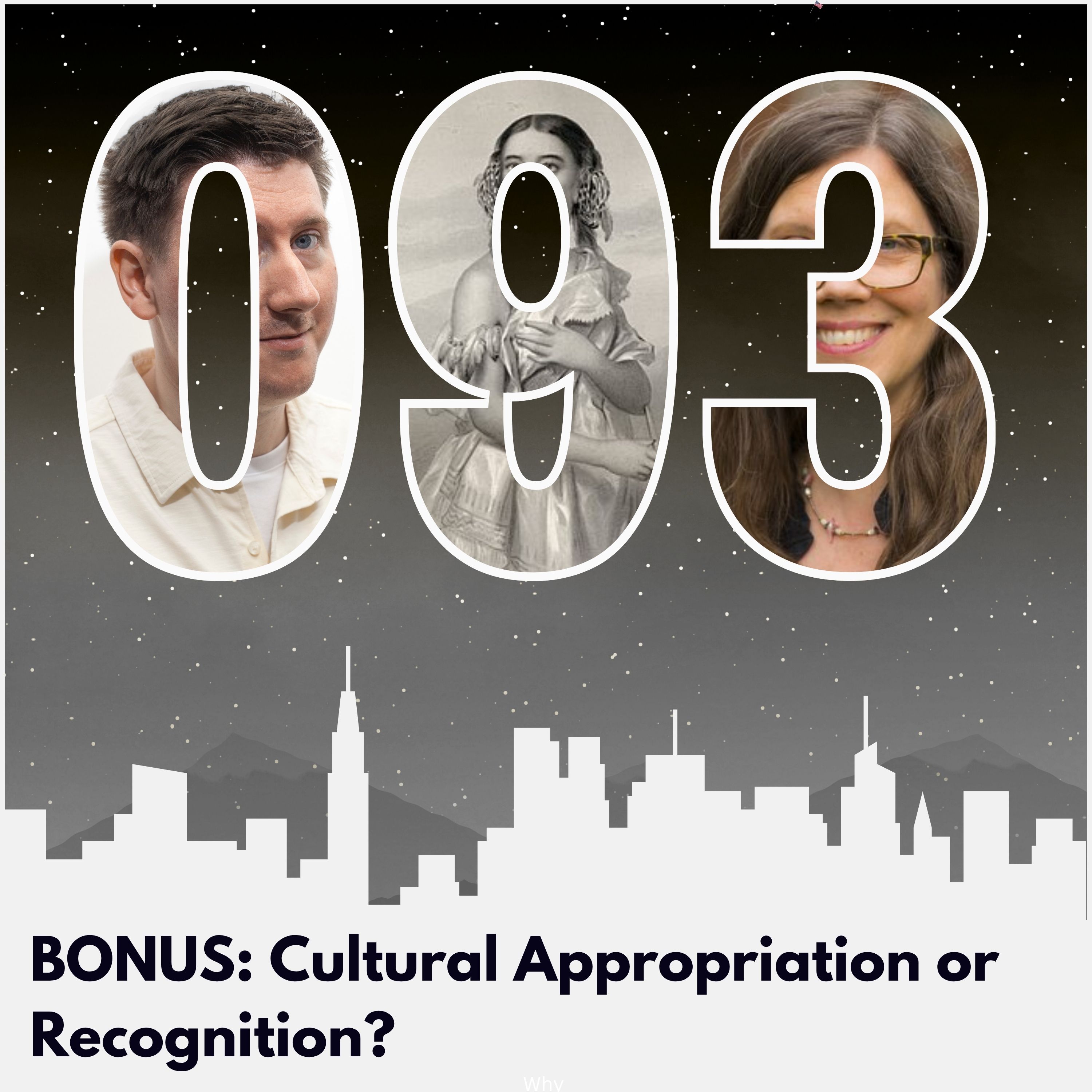
BONUS: Cultural Appropriation or Recognition?
bonusIn this bonus episode, Native American historian Camilla Townsend explores the grey area between appropriation and recognition, and how it's better to be symbolised imperfectly versus being completely forgotten.This follows on from our previous episode, Who is Pocahontas? as we continue our discussions on Native American culture and history....Special guest for this episode:Camilla Townsend, the author of Pocahontas and the Powhatan Dilemma. She is also a Distinguished Professor of History at Rutgers University, and is one of the world’s foremost scholars on Native American history. Her work has vastly improved our understanding of Native people....Highlights from this episode:This episode dives deeper into the complexities of Pocahontas's representation in popular culture and history.Camilla Townsend emphasizes the importance of Native American voices in museums and cultural discussions.We explored the dual-edged nature of stereotypes, providing both visibility and perpetuating harm to Native Americans.The conversation highlights the urgent need for accountability regarding historical treatment and representation of Native Americans.Listeners are encouraged to seek out various resources to gain a fuller understanding of Pocahontas's life and legacy.We discussed the significance of acknowledging the historical realities over simplified symbols in American consciousness....Additional Resources:Pocahontas and the Powhatan Dilemma: The American Portraits Series by Camilla TownsendPocahontas, Powhatan, Opechancanough: Three Indian Lives Changed by Helen RountreePocahontas and the English Boys: Caught between Cultures in Early Virginia by Karen Kupperman...And if you like this episode, you might also love:Who Are Native Americans?How Did Slavery Impact Cherokee Nation?What is Thanksgiving?...Contact us:...
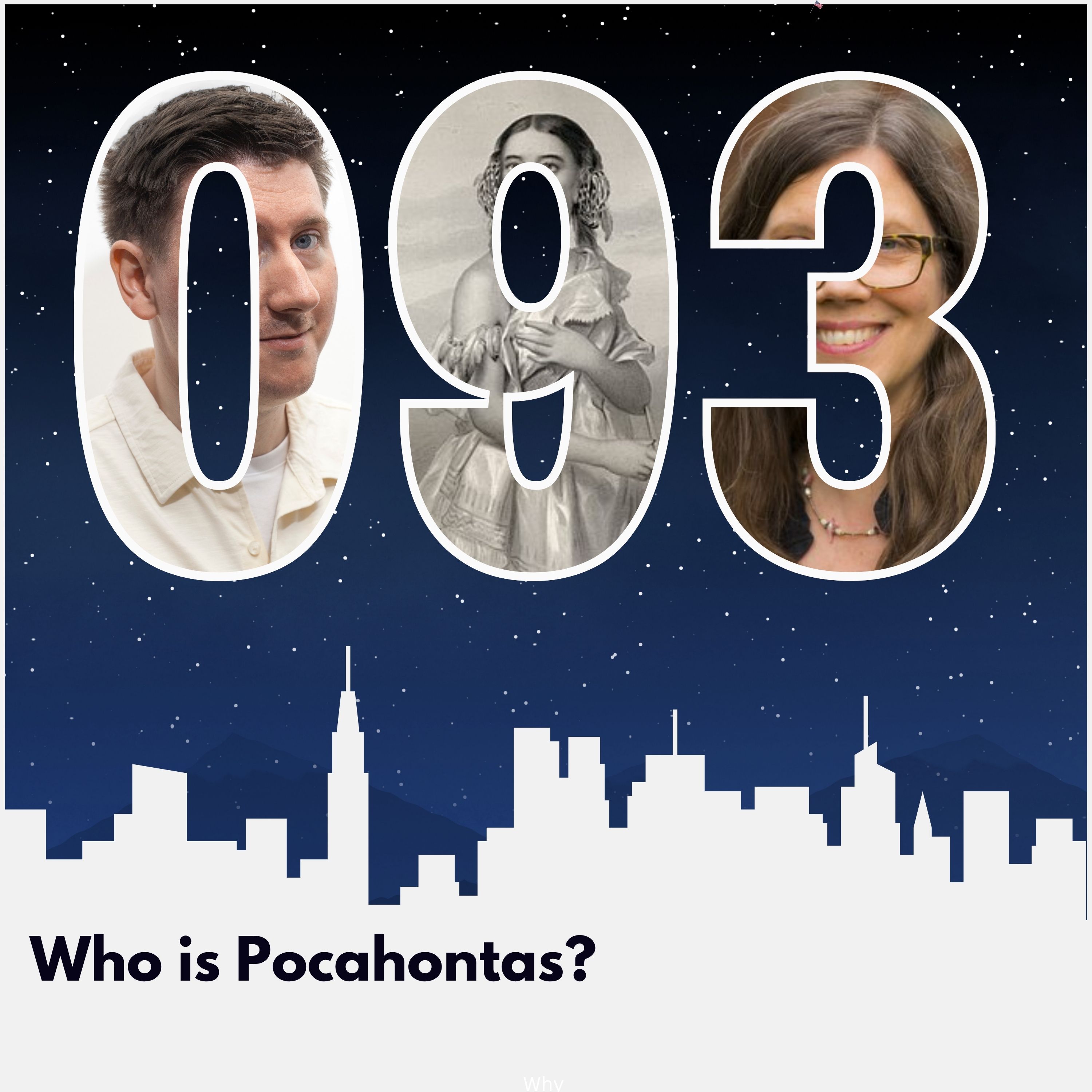
Ep 117Who is Pocahontas?
The narrative of Pocahontas is often overshadowed by the simplistic and romanticized version depicted in films. In this episode, we untangle the truth from the many myths surrounding her life, led by historian Camilla Townsend of Rutgers University.We begin by examining Pocahontas's early life, born in the late 1590s to Powhatan, the chief of a confederacy of tribes in Virginia. While Pocahontas was indeed the daughter of a powerful leader, she was not a princess in the conventional sense. Her upbringing was steeped in the realities of tribal warfare.We take a critical look at the impact of European colonization on Native American tribes, illustrating how Pocahontas' story is intertwined with broader themes of conflict and survival. As the English settlers arrived, the Powhatan Confederacy faced numerous challenges, and Pocahontas, initially a child during these turbulent times, became a key figure in the complex interactions that followed.We discuss her first encounter with John Smith and the misunderstandings that arose from their relationship, debunking the myth of a romantic liaison. Instead, this is a young girl trying to navigate her world amidst cultural upheaval and violence.And we look at Pocahontas' capture by the English, her eventual marriage to John Rolfe, and the implications of her forced conversion to Christianity. Townsend’s insights into Pocahontas's life in England reveal a young woman grappling with her identity and the expectations of her new reality....Special guest for this episode:Camilla Townsend, the author of Pocahontas and the Powhatan Dilemma. She is also a Distinguished Professor of History at Rutgers University, and is one of the world’s foremost scholars on Native American history. Her work has vastly improved our understanding of Native people....Highlights from this episode:Pocahontas is often misunderstood due to the Disney movie, which simplifies her complex story significantly.She was born in the late 1590s as the daughter of Powhatan, a paramount chief over numerous tribes.Her upbringing was shaped by the societal expectations of her tribe, where women played essential roles but were not viewed as equals to men.Despite being a lower-ranking daughter, Pocahontas showed remarkable intelligence and adaptability, learning languages quickly and engaging with the English explorers.Pocahontas's relationship with the British was complicated, marked by both skirmishes and attempts at diplomacy, which was often overlooked in popular narratives.Her eventual marriage to John Rolfe was seen as a strategic alliance, reflecting the broader conflicts and power dynamics between Native Americans and settlers....Additional Resources:Pocahontas and the Powhatan Dilemma: The American Portraits Series by Camilla Townsend...And if you like this episode, you might also love:Who Are Native Americans?How Did Slavery Impact Cherokee Nation?What is Thanksgiving?...Contact us:...
BONUS: Why Did the Amish Leave Europe?
bonusThis week, we journey into a world of horse-drawn buggies, plain dress, and profound faith. But beyond the stereotypes lies a rich and evolving story of migration, community, and quiet resistance to modernity.So in this episode I want to explore the history, culture, and customs of this often misunderstood community, as I ask… who are the Amish?...Special guest for this episode:Steven Nolt, a professor of history and Anabaptist studies and director of the Young Center for Anabaptist and Pietist Studies at Elizabethtown College. He’s also authored or coauthored no less than sixteen books on Amish, Mennonite, and Pennsylvania German history and contemporary life, including The Amish: A Concise Introduction....Highlights from this episode:The Amish migration to America began with around 500 individuals in the 18th century, indicating their small initial population.By the early 20th century, the Amish population in Europe dwindled due to out-migration and changes in civic responsibilities.After World War I, many German Mennonites assimilated, leading to tensions with Dutch Mennonites after World War II.The last technically recognized Amish congregation in Europe merged into the Mennonite Conference around 1936, marking a significant cultural shift.The Beachy Amish movement has led to the establishment of new churches in Europe since the 1950s, reflecting a modern adaptation of traditions.Today, while traditional Amish lifestyles are largely absent in Europe, some Mennonite groups maintain a connection to Amish ancestry....Additional Resources:The Amish – A Concise Introduction by Steven NoltYoung Center for Anabaptist and Pietist Studies | Elizabethtown CollegeBeachy Amish Mennonite Fellowship - GAMEOWhat the Amish Teach Us: Plain Living in a Busy World by Donald KraybillAmish History: 10 Common Questions Answered - Amish AmericaHow Are Amish Communities Organized? (Church District vs. Settlement vs. Affiliation) - Amish AmericaRumspringa: An Amish Tradition - Easy Sociology...And if you like this episode, you might also love:What Makes Country Music so American?Are the Oscars Still...
Ep 116Who Are the Amish?
This week, we journey into a world of horse-drawn buggies, plain dress, and profound faith. But beyond the stereotypes lies a rich and evolving story of migration, community, and quiet resistance to modernity.So in this episode I want to explore the history, culture, and customs of this often misunderstood community, as I ask… who are the Amish?...Special guest for this episode:Steven Nolt, a professor of history and Anabaptist studies and director of the Young Center for Anabaptist and Pietist Studies at Elizabethtown College. He’s also authored or coauthored no less than sixteen books on Amish, Mennonite, and Pennsylvania German history and contemporary life, including The Amish: A Concise Introduction....Highlights from this episode:This episode dives into the Amish community, highlighting their rich history and culture that often challenges common stereotypes.We learn that the Amish, rooted in the Anabaptist movement, emphasize personal choice in faith and community involvement.The discussion reveals that while many Amish are born into the faith, a significant percentage choose not to join as adults.Stephen Knoll points out that the Amish approach technology with caution, focusing on how it impacts their community values.The podcast emphasizes the importance of humility and submission as core values in Amish life, significantly influencing their daily practices.Contrasting Amish life with modern society, the episode raises questions about social isolation and community dynamics in both contexts....Additional Resources:The Amish – A Concise Introduction by Steven NoltYoung Center for Anabaptist and Pietist Studies | Elizabethtown CollegeWhat the Amish Teach Us: Plain Living in a Busy World by Donald KraybillAmish History: 10 Common Questions Answered - Amish AmericaHow Are Amish Communities Organized? (Church District vs. Settlement vs. Affiliation) - Amish AmericaRumspringa: An Amish Tradition - Easy Sociology...And if you like this episode, you might also love:What Makes Country Music so American?Are the Oscars Still Relevant?Why Does Everyone Love Disney?<a href="https://pod.fo/e/20199b" rel="noopener...
Ep 115IN THE MAKING: Trump Deploys the National Guard in Chicago and Dolly Parton is NOT Dead
This week, we're talking about Donald Trump expanding his deployment of the National Guard to Chicago, the Federal shutdown enters its second week with little optimism over a resolution, and a Mississippi golf course gets an unexpected visitor.All of this and more on another edition of America: A History in the Making..Special Guest:Alyssa Royse, the owner of Rocket Community Fitness in Seattle, who is deeply passionate about fighting to preserve a fair and equal democracy in the US..Featured in this episode:Treasury Department Considers Minting a $1 Trump Coin: https://www.politico.com/news/2025/10/03/treasury-department-trump-dollar-coin-00593368 The shutdown continues: https://apnews.com/article/trump-shutdown-federal-workers-pay-health-care-415768faa14b4e54525d5e6d18ac97b4 Shutdown affects US airports: https://www.bbc.co.uk/news/articles/cx27z97ryr0o Dolly Parton is not dying: https://www.dailymail.co.uk/tvshowbiz/article-15172709/Dolly-Parton-sets-record-straight-health-issues-sister-concern-prayers.html The National Guard Rollout: https://apnews.com/article/immigration-chicago-portland-memphis-trump-arrests-b36199b00e0511e687c10fa83fd838b5 Alligator on the Golf Course: https://apnews.com/article/vince-whaley-alligator-sanderson-farms-pga-tour-950794673062998659bc76ecd7c92f72 .Want to advertise with us and support the American Studies community?Email [email protected] and let's talk.Contact us: [email protected] the community: https://www.patreon.com/cw/americathestoryoftheusa - use code USA26 for 50% off your first monthGet the newsletter: https://america-the-story-of-the-usa.beehiiv.com/Brand & advertising enquiries: [email protected]
Ep 114What Were the Latino Urban Riots?
This week, I am issuing an apology on behalf of myself and the podcast. In the previous 90 episodes of this show, we have discussed slavery, the African American experience, immigration, Asian American and Native American history numerous times. And yet, we have not directly addressed the problematic experiences of Mexican, Latino and Hispanic people in the US… until now.So this week, we are visiting 1960s Chicago, a city that poured fuel on the already explosive issue of Civil Rights, during a period of extraordinary national transformation, as I ask… what were the Latino Urban Riots?...Special guest for this episode:Lilia Fernández, a Professor and Director of Graduate Studies History at the University of Illinois, Chicago, specialising in the history of Latinos in the mid-to-late 20th century United States. Her books include Brown in the Windy City: Mexicans and Puerto Ricans in Postwar ChicagoLorrin Thomas, an Associate Professor in the Department of History at Rutgers University. Her research explores ideas about rights and equality in the twentieth century Americas, with a focus on Latin American history, and her books include Puerto Rican Citizen: History and Political Identity in Twentieth-Century New York City....Highlights from this episode:The long and complex history of Latino migration to U.S. cities, especially Chicago and New YorkHow urban renewal and housing discrimination intensified racial segregationThe role of police brutality and surveillance in triggering community uprisingsThe 1966 Puerto Rican riot in Chicago and the 1967 riot in New York — what really happenedThe impact of the Civil Rights Act and rising expectations for racial equalityHow media narratives distorted the nature of Latino protest and resistance...Additional Resources:Rethinking the Struggle for Puerto Rican Rights – The Rutgers Latino Studies Research Initiative by Lorrin R Thomas and Aldo A Lauria SantiagoBrown in the Windy City: Mexicans and Puerto Ricans in Postwar Chicago by Lilia FernandezAmazon.com: Puerto Rican Citizen: History and Political Identity in Twentieth-Century New York City by Lorrin ThomasHome | Latino Americans | PBSHumboldt Park Riots: Chicago Puerto Ricans Stand Up Against...
BONUS: Writing the Life of Dr. Drew
bonusDr. Charles Drew, a groundbreaking figure in the field of blood transfusion and a pioneer in medical history, deserves far more recognition than he typically receives.In this bonus episode, we dive deeper into his incredible life and legacy with Dr. Craig Miller, who recently authored a book on Dr. Drew, collaborating closely with his daughter Charlene.We explore how Drew's impact reverberated through the African American community and discuss the surprising lack of extensive literature about his contributions. Craig shares fascinating insights from his research journey, including some enlightening moments with Charlene as they navigated the delicate balance of memory and history.We uncover the profound influence Drew had on medicine and society, and why his story is one that should be told and celebrated....Special guest for this episode:Dr. Craig Miller, an attending vascular surgeon with the United States Veterans Administration, based in Dublin, Ohio. He is also the author of Genius Unbroken: The Life and Legacy of Dr. Charles R. Drew....Highlights from this episode:Dr. Charles Drew was a pioneering figure in blood transfusion and storage, significantly impacting medical practices today.Craig Miller's collaboration with Dr. Drew's daughter, Charlene, was crucial for the accuracy and depth of the biography.The podcast episode highlights the surprising lack of resources available about Dr. Drew, despite his monumental contributions to medicine.The discussion speculates on the historical influence Dr. Drew could have had if he had lived past 1950, intertwining with major civil rights movements.Charlene Drew Jarvis's career as a neuroscientist and political figure shows the lasting legacy of her father's impact on her life.The episode underscores the importance of remembering lesser-known historical figures like Dr. Drew, who greatly shaped modern medical practices....Additional Resources:Genius Unbroken: The Life and Legacy of Dr. Charles R. Drew by Craig A. MillerCraig A. Miller, M.D. | Author & Medical HistorianThe life and legacy of Charles Drew, the African American doctor who pioneered blood banks...And if you like this episode, you might also love:Was the Moon Landing a Hoax?Why Do Americans Love Aliens?...Contact us: [email protected] the community: https://www.patreon.com/cw/americathestoryoftheusa - use code USA26 for 50% off your first monthGet the newsletter: https://america-the-story-of-the-usa.beehiiv.com/Brand & advertising enquiries: [email protected] to advertise with us and support the American...
Ep 113IN THE MAKING: Do the Right Thing and End the US Government Shutdown
This week, I'm going solo for an ad hoc episode discussing the US government shutdown, as the federal budget stalls in congress.Non-essential services are now frozen, as many Americans find themselves out of work until this situation is resolved.So what is it, why does it keep happening, and why is it continuing?All of this and more on another edition of America: A History in the Making..Useful Links:Four ways the US government shutdown could end - BBC NewsUS government shutdown: What does it mean and who will it impact? | US News | Sky News.Want to advertise with us and support the American Studies community?Email [email protected] and let's talk.Contact us: [email protected] the community: https://www.patreon.com/cw/americathestoryoftheusa - use code USA26 for 50% off your first monthGet the newsletter: https://america-the-story-of-the-usa.beehiiv.com/Brand & advertising enquiries: [email protected]
Ep 112Who is Dr. Charles Drew?
This week, we are shining a light on someone who is often overlooked, and yet his contributions to medical science revolutionised patient care, not just in America but around the world.Yet, his life also highlights issues of race, resilience, and the pursuit of excellence amidst major systemic barriers. So on this episode, I want to know.. who is Dr. Charles Drew?...Special guest for this episode:Dr. Craig Miller, an attending vascular surgeon with the United States Veterans Administration, based in Dublin, Ohio. He is also the author of Genius Unbroken: The Life and Legacy of Dr. Charles R. Drew....Highlights from this episode:Dr. Charles Drew's life exemplifies the intersection of race, resilience, and excellence in medicine.His pioneering work in blood banking revolutionized medical practice and saved countless lives during wartime.Despite his monumental contributions, Drew remains an overlooked figure in American medical history.Drew's early life in an integrated neighborhood shaped his ambition and work ethic in medicine.The challenges Drew faced in academia highlight the systemic barriers for black Americans in education.His legacy continues to inspire and educate future generations of physicians and surgeons....Additional Resources:Genius Unbroken: The Life and Legacy of Dr. Charles R. Drew by Craig A. MillerCraig A. Miller, M.D. | Author & Medical HistorianThe life and legacy of Charles Drew, the African American doctor who pioneered blood banks...And if you like this episode, you might also love:Was the Moon Landing a Hoax?Why Do Americans Love Aliens?...Contact us: [email protected] the community: https://www.patreon.com/cw/americathestoryoftheusa - use code USA26 for 50% off your first monthGet the newsletter: https://america-the-story-of-the-usa.beehiiv.com/Brand & advertising enquiries: [email protected] to advertise with us and support the American Studies community?Email [email protected] and let's talk.
BONUS: The Underwhelming Reality of Plymouth Rock
bonusIn this bonus episode, we dive deeper into the aftermath of the Mayflower's journey and the complex relationships that unfolded upon its arrival. Joining me is Peter Mancall, who sheds light on the often-overlooked impact of the English colonists on Native American communities.We explore how the devastation from diseases brought by Europeans led to significant displacement of indigenous peoples, setting the stage for the tumultuous history that followed. Peter offers a stark reminder of how history can sometimes be simplified, as we discuss the significance of Plymouth Rock—more of a metaphorical landmark than a grand historical monument.We also touch on the broader narrative of colonial voyages and what they reveal about our collective memory of American history....Special guest for this episode:Peter Mancall, a Professor of History, Anthropology, and Economics at the University of Southern California. His research interests include Colonial North America and Native American history, and he has published numerous influential articles on the pilgrim’s voyage to Plymouth....Highlights from this episode:The devastating epidemic from 1616 to 1619 wiped out a significant portion of Native American populations, which had profound implications for early colonial encounters.Initially, the settlement at Plymouth involved minimal violence, but the relationship deteriorated significantly leading to events like the Pequot War, showcasing the shift in dynamics.Plymouth Rock, while symbolically important, is actually quite underwhelming in reality, serving as a metaphor more than a historic landmark.The focus on the Mayflower overshadows many other significant voyages and events in early American history that deserve equal attention and recognition.The Mayflower's fame has led to a cultural fixation that often clouds our understanding of the broader historical narrative and other critical figures in colonial history.Understanding that while the Mayflower tells a compelling human story, it is just one small piece of the much larger and complex tapestry of American history....Additional Resources:The complicated legacy of the Pilgrims is finally coming to light 400 years after they landed in Plymouth by Peter MancallThe Evolving American Meaning of the Pilgrims and Plymouth | TIME by Peter MancallGeneral Society of Mayflower DescendantsMayflower 400: were the Pilgrims asylum seekers or subversives? by Polly Ha...And if you like this episode, you might also love:When Did the 50 States Become the 50 StatesIs America an Empire?...Contact us: [email protected] the community: https://www.patreon.com/cw/americathestoryoftheusa - use code USA26 for 50% off your first monthGet the newsletter: <a...
Ep 111IN THE MAKING: The Death of America's Late Night TV
On this week's edition of In the Making:● Is the Supreme Court set to overturn a 90 year old precedent?● The Jimmy Kimmell saga divides America,● Trump’s unhinged speech… even by his standards, and● Hide your acorns, because San Francisco is under attack!All of this and more on another edition of America: A History in the Making..Special Guest:This week, we are delighted to be joined by show regular and our resident politics expert, from the University of East Anglia, Dr. Emma Long.Want to advertise with us and support the American Studies community?Email [email protected] and let's talk.Contact us: [email protected] the community: https://www.patreon.com/cw/americathestoryoftheusa - use code USA26 for 50% off your first monthGet the newsletter: https://america-the-story-of-the-usa.beehiiv.com/Brand & advertising enquiries: [email protected]

Ep 110What Would You Put in a US Time Capsule?
On this day in 1938, the World’s Fair came to Flushing Meadows Park in New York City. It is here that the Westinghouse Time Capsules were buried underground, to be opened in 5,000 years time. Its contents include a copy of Life magazine, a pack of Camel cigarettes, a dictionary, and a variety of seeds.So this week, we are going to curate our own time capsule, to reflect the 21st century United States as accurately as possible, for anybody finding this podcast in 5,000 years.What would you put in a US capsule?Email us your suggestions at [email protected] ORSend us a voicenote here: https://www.speakpipe.com/AmericaAHistory ...Special guest for this episode:Dr Emma LongProfessor Rebecca FraserDr Nicholas Grant...Highlights from this episode:We need to consider what a time capsule would look like today, especially with the political climate and significant events like January 6th, 2021.The Handmaid's Tale serves as a chilling reminder of the risks associated with the rise of authoritarianism and the importance of women's voices in society.Taylor Swift's career exemplifies the struggle for control and representation in a male-dominated music industry, making her an essential figure for our time capsule.Our time capsule must reflect not only the current state of America but also the fears and hopes for the future, considering how history may view our actions today.The inclusion of pop culture artifacts, such as The Office, helps illustrate the everyday American experience and provides insight into social dynamics during the 21st century.We have to acknowledge that the rapid changes brought on by social media and political events will shape how future generations understand our society....Additional Resources:The Westinghouse Time Capsule - Heinz History CenterMaking of Biblical Womanhood: How the Subjugation of Women Became Gospel Truth by Beth Allison BarrThe history of the Twitter logo (and the X logo) | Creative BloqThe Official Website of Taylor SwiftAmazon.com: The Office: The Complete Series [DVD]Michelle Obama: 'When they go low, we go high'<a...
BONUS: Why You Should Watch Netflix's Katrina Docuseries
bonusKatrina: Hell and High Water is the new three part docuseries, available to stream now on Netflix. In this special bonus episode, I explain why this series is really worth your time, and I hope you take a few hours to watch it this weekend.Racial tension and social division is not American history. It's a present issue that needs our attention, because if we continue to ignore it, especially under the current administration, the consequences could be exceptionally tragic....Contact us: [email protected] the community: https://www.patreon.com/cw/americathestoryoftheusa - use code USA26 for 50% off your first monthGet the newsletter: https://america-the-story-of-the-usa.beehiiv.com/Brand & advertising enquiries: [email protected] to advertise with us and support the American Studies community?Email [email protected] and let's talk.
Ep 109IN THE MAKING: Charlie Kirk, Donald Trump's UK Visit, Robert Redford, and the TikTok Deal
This week, we're talking about:the assassination of Charlie Kirk and what this tells us about America's gun control problem,Donald Trump's state visit to the UK, plusHow the death of a celebrity can bring people together.All of this and more on another edition of America: A History in the Making..Special Guest:This week, we are delighted to be joined by Ira Chaleff, the Chair Emeritus of the non-partisan Congressional Management Foundation, and his newest book, To Stop a Tyrant: The Power of Political Followers, has won several awards and received high praise from both sides of the political spectrum.By the book: https://a.co/d/9XOxBFt .Want to advertise with us and support the American Studies community?Email [email protected] and let's talk.Contact us: [email protected] the community: https://www.patreon.com/cw/americathestoryoftheusa - use code USA26 for 50% off your first monthGet the newsletter: https://america-the-story-of-the-usa.beehiiv.com/Brand & advertising enquiries: [email protected]
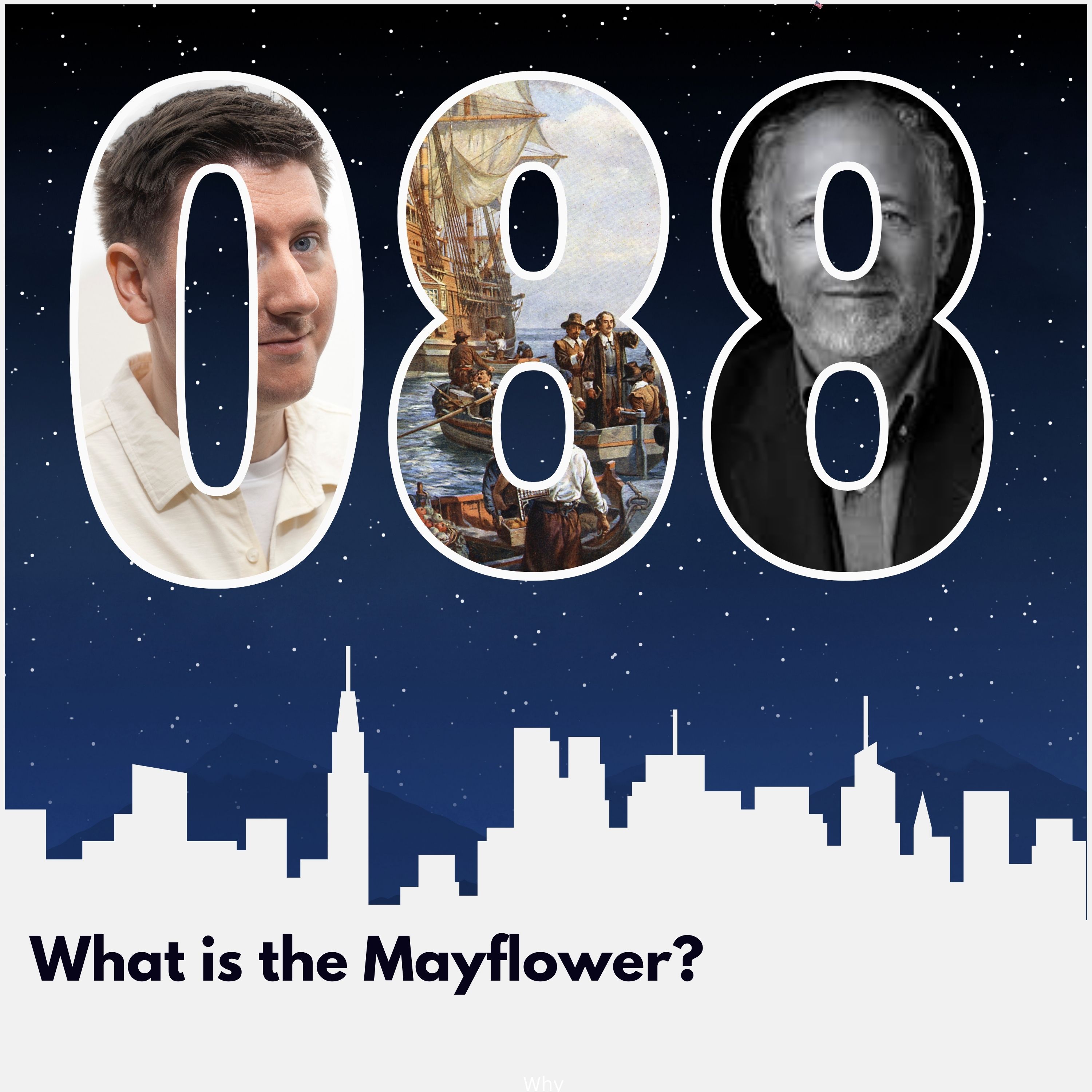
Ep 108What is the Mayflower?
On this day in 1620, a boat carrying over pilgrims from Plymouth, England, set sail. It’s destination? The New World. The events that followed have been retold, mythicised, and immortalised as one of the defining moments in the colonisation of the United States of America.So in this episode I want to know more about the voyage, the people, and the reality of what really happened, as I ask… what is the Mayflower?...Special guest for this episode:Peter Mancall, a Professor of History, Anthropology, and Economics at the University of Southern California. His research interests include Colonial North America and Native American history, and he has published numerous influential articles on the pilgrim’s voyage to Plymouth....Highlights from this episode:The Mayflower's voyage in 1620 marked a pivotal moment in American history, symbolizing the Pilgrims' search for religious freedom and a new life.While the Pilgrims are often romanticized, their actual journey was fraught with challenges and hardships that are frequently overlooked in popular narratives.The Mayflower Compact established a foundational principle of self-governance among the early settlers, showcasing their commitment to communal responsibility.Despite being seen as pioneers, the Pilgrims arrived in a land already inhabited by diverse Native American tribes, complicating the narrative of discovery.The harsh realities faced by the Pilgrims upon arrival contributed to their mythologized status in American folklore, especially during Thanksgiving celebrations.Historians argue that the lasting legacy of the Pilgrims is intertwined with broader themes of religious freedom and community resilience in early American society....Additional Resources:The complicated legacy of the Pilgrims is finally coming to light 400 years after they landed in Plymouth by Peter MancallThe Evolving American Meaning of the Pilgrims and Plymouth | TIME by Peter MancallGeneral Society of Mayflower DescendantsMayflower 400: were the Pilgrims asylum seekers or subversives? by Polly Ha...And if you like this episode, you might also love:When Did the 50 States Become the 50 StatesIs America an Empire?...Contact us: [email protected] the community: https://www.patreon.com/cw/americathestoryoftheusa - use code USA26 for 50% off your first monthGet the newsletter: https://america-the-story-of-the-usa.beehiiv.com/Brand & advertising enquiries: [email protected] to advertise with us and support the American Studies community?Email [email protected] and let's talk.
BONUS: Should the US Treasury Be Independent from the President?
bonusIn this bonus episode, we explore the intricate relationship between the U.S. Treasury and the broader financial system, the complexities of government finance, and its impact on our daily lives. We also discuss the separation of powers within the government, particularly how the Treasury's functions are influenced by the executive branch....Special guest for this episode:Sean Vanatta, a Senior Lecturer in Financial History and Policy at the University of Glasgow, with an interest in US history and the political economy of finance. His books include Plastic Capitalism: Banks, Credit Cards, and the End of Financial Control and Private Finance, Public Power: A History of Bank Supervision in America...Highlights from this episode:The U.S. Treasury plays a crucial role in the daily workings of the American economy, influencing everything from taxes to spending decisions.Understanding the relationship between the Treasury, the White House, and Congress is essential for grasping U.S. financial governance.The ongoing debate about the independence of the Treasury from political influence highlights the complexities of U.S. governance and financial policy.The historical significance of figures like Alexander Hamilton is debated, yet his impact on the financial system is undeniable and multifaceted....Additional Resources:Plastic Capitalism by Sean VanattaPrivate Finance, Public Power by Sean VanattaConsumer borrowing was heavily restricted in 1940s to curb inflation – it’s time we did it again by Sean VanattaThe First Bank of the United States | Federal Reserve HistoryThe Independent Treasury: Origins, Rationale, and Record, 1846-1861...And if you like this episode, you might also love:What Was the Constitutional Convention?Why Does the President Only Serve Two Terms?Is the President Above the Law?How Are Presidents Elected?What is the US Constitution?...Contact us: [email protected] the community: https://www.patreon.com/cw/americathestoryoftheusa - use code USA26 for 50% off your first monthGet the newsletter: https://america-the-story-of-the-usa.beehiiv.com/Brand & advertising enquiries: [email protected] to advertise with us and support the American Studies community?Email...
Ep 107What is the History of California?
On this day in 1850, the thirty-first state of the Union is admitted. So today, on its 175th birthday, I want to find out a little more about its history before statehood, the reasons why it became an important piece of land for the US, and how it grew to become not just one of the largest states, but one of the largest economies in the world, as I ask… what is the history of California?...Special guest for this episode:Patricia Nelson Limerick, a Professor of History of the American West at University of Colorado Boulder, formerly President of the Organization of American Historians, American Studies Association, the Western History Association, and the Society of American Historians, and Vice President of the Teaching Division of the American Historical Association, and co-founded the Center of the American West. And in 2015 she was appointed, by nomination from President Obama, to the National Council on the Humanities....Highlights from this episode:California's admission as the 31st state in 1850 marked a significant turning point in American history.The diversity of California's native populations and their rich cultural practices shaped the land long before statehood.The Gold Rush of 1849 spurred a massive influx of settlers, fundamentally altering California's demographic landscape.California's environment is incredibly varied, offering everything from deserts to stunning coastlines that attracted settlers.The state's history is a complex tapestry of colonization, indigenous displacement, and the evolving narrative of American expansionism.California's legacy includes ongoing issues of racial inequality and the enduring presence of its indigenous and Hispanic populations....Additional Resources:Malki MuseumDorothy Ramon Learning Center – We save & share Native American culturesHistory of Native CaliforniaCalifornia Geography Essentials | Visit CaliforniaWho is Junipero Serra? | SerraThe Dominguez and Escalante Expedition - Dinosaur National Monument (U.S. National Park Service)Treaty of Guadalupe Hidalgo (1848) | National ArchivesFreedom's Frontier: California and the Struggle over Unfree Labor, Emancipation, and Reconstruction by Stacey L. Smith<a...

BONUS: Houdini, London and the Unpickable Lock
bonusThis bonus episode delves deeper into the life and performances of the legendary magician Harry Houdini, with a focus on one of his most remarkable feats, at the London Hippodrome, where he was challenges to unpick the world's most unpickable lock.We explore the buildup to this defining moment, including the public's anticipation and the media's portrayal of Houdini as he faced this daunting challenge....Special guest for this episode:John Cox, a lifelong Houdini fan and founder of Wild About Harry, who has written extensively about him, and is currently working on a definitive chronology of Houdini's life and career....Highlights from this episode:...Additional Resources:WILD ABOUT HARRYEscaping Obscurity - The Travel Diary of Harry Houdini, 1897-1899 by John CoxHoudini!!!: The Career of Ehrich Weiss by Ken Silverman...And if you like this episode, you might also love:What Makes Country Music so American?Are the Oscars Still Relevant?Why Does Everyone Love Disney?Could Friends BE Any Bigger?How Accurate is Forrest Gump?...Contact us: [email protected] the community: https://www.patreon.com/cw/americathestoryoftheusa - use code USA26 for 50% off your first monthGet the newsletter: https://america-the-story-of-the-usa.beehiiv.com/Brand & advertising enquiries: [email protected] to advertise with us and support the American Studies community?Email [email protected] and let's talk.
Ep 106IN THE MAKING: Is America Heading Towards a Trump Dictatorship?
In this special solo edition of In The Making, I explore the troubling signs that suggest America might be inching towards a dictatorship under Donald Trump, and lay out the evidence indicating how he’s strategically surrounding himself with loyalists, silencing critics, and altering voter laws to skew the electorate in his favor.It’s alarming how these actions, which might seem trivial at first glance, collectively paint a picture of a dangerous political landscape where dissent is stifled and loyalty is enforced. I discuss how these tactics echo historical precedents of authoritarian regimes and why it’s critical for us, as citizens, to pay attention.This episode serves as a wake-up call to recognize the mounting threats to democracy and the importance of speaking up before it’s too late.DISCLAIMER: All views in this episode belong to Liam Heffernan, and are not directly endorsed by any individual, company, institution or advertiser affiliated with the podcast....Highlights from this episode:The current political climate is alarming, as it reflects a slow progression towards authoritarianism.Trump's administration is marked by the appointment of loyalists, raising red flags about potential dictatorship.Efforts to silence dissenting voices are evident, showcasing a deliberate strategy to control the narrative.The introduction of strict voter ID laws could disproportionately affect minority voters, skewing electoral outcomes.There's a concerning pattern of eliminating critics and minorities, reminiscent of historical dictatorships.If unchecked, the gradual erosion of democratic norms may lead to a troubling future for America....And if you like this episode, you might also love:What Was the Constitutional Convention?Why Does the President Only Serve Two Terms?Is the President Above the Law?How Are Presidents Elected?What is the US Constitution?...Contact us: [email protected] the community: https://www.patreon.com/cw/americathestoryoftheusa - use code USA26 for 50% off your first monthGet the newsletter: https://america-the-story-of-the-usa.beehiiv.com/Brand & advertising enquiries: [email protected] to advertise with us and support the American Studies community?Email [email protected] and let's talk.
Ep 105What is the US Treasury?
This week, we're diving deep into the world of money and the pivotal role the U.S. Treasury plays in shaping the American economy.Behind every success and failure in American history lies a story deeply intertwined with greed, power, and the all-important question of how money is spent. We explore who really decides how America manages its finances and what that means for everyday Americans, as I ask... what is the US Treasury?...Special guest for this episode:Sean Vanatta, a Senior Lecturer in Financial History and Policy at the University of Glasgow, with an interest in US history and the political economy of finance. His books include Plastic Capitalism: Banks, Credit Cards, and the End of Financial Control and Private Finance, Public Power: A History of Bank Supervision in America...Highlights from this episode:In this episode, we dive deep into the role of the U.S. Treasury and its impact on the American economy and society, which extends beyond mere financial management.Understanding the history of the U.S. Treasury reveals its foundational importance in shaping the financial stability of the nation since its inception.We discuss how decisions made by the U.S. Treasury influence the everyday lives of Americans, from tax policies to social services and the overall economy.The complexities of money management and economic policy illustrate the balance the Treasury must strike between public welfare and fiscal responsibility, especially during crises.Throughout history, the U.S. Treasury has played a critical role in financial crises, stepping in as a stabilizing force to protect the economy and American citizens.The interplay between federal authority and state interests continues to shape the operations of the Treasury, reflecting ongoing tensions in American governance and finance....Additional Resources:Plastic Capitalism by Sean VanattaPrivate Finance, Public Power by Sean VanattaConsumer borrowing was heavily restricted in 1940s to curb inflation – it’s time we did it again by Sean VanattaThe First Bank of the United States | Federal Reserve HistoryThe Independent Treasury: Origins, Rationale, and Record, 1846-1861...And if you like this episode, you might also love:What Was the Constitutional Convention?Why Does the President Only Serve Two Terms?Is the President Above the Law?How Are Presidents Elected?What is the US Constitution?...Contact us: [email protected] the community: <a href="https://www.patreon.com/cw/americathestoryoftheusa" rel="noopener noreferrer"...
BONUS: What Would You Do in a Gold Rush?
bonusIn this bonus episode, we unravel the age-old question of who decided gold was worth something in the first place. Spoiler alert: it’s not just about its shiny allure; there’s a whole lot of history and economics at play.We also reflect on the risks and rewards of that era, pondering what we might have done if we were chasing gold back in 1848. From the fleeting nature of mining towns to the bizarre modern-day gold rushes, we discuss how the legacy of the Gold Rush still resonates in today's society, shaping our perceptions of wealth and value....Special guest for this episode:Stephen Tuffnell, a historian of the global and imperial history of the 19th century United States from the University of Oxford, whose research interests include American emigration and the history of commodities such as gold and ice. He’s also the co-editor of A Global History of Gold Rushes....Highlights from this episode:The California Gold Rush was a massive event that transformed the American economy and society in profound ways.Gold's value has evolved over centuries, heavily influenced by cultural perceptions and historical events like the Gold Standard.Investors often turn to gold during economic uncertainty, emphasizing its perceived stability and enduring allure.The Gold Rush led to a boom in ghost towns across California, remnants of the fleeting mining frenzy during the late 19th century.The discussion highlights how the legacy of the Gold Rush continues to shape modern American culture and economic practices.The podcast reveals the risks and realities of the Gold Rush, particularly for those who supplied miners rather than mined for gold themselves....Additional Resources:A Global History of Gold Rushes (Volume 25) by Benjamin Mountford and Stephen Tuffnellhttps://dayhist.com/events/california-gold-rush-1848 https://www.mininghalloffame.org/hall-of-fame/james-wilson-marshall https://americanhistory.si.edu/explore/stories/striking-it-rich-american-gold-rushes-early-19th-century An American Genocide: The United States and the California Indian Catastrophe, 1846-1873 by Benjamin MadleyCalisphere: The deeper you look, the more you discover....And if you like this episode, you might also love:When Did the 50 States Become the 50 StatesIs America an...
Ep 104Who is Harry Houdini?
Would you throw yourself over Niagara Falls in a barrel? Well, this week, we’re talking about the man who, allegedly, did just that. His performances have become the stuff of legend, including the one he did on this very day in 1907, escaping from chains underwater in San Francisco. So I want to know more about the life, career, and legacy of one of the greatest showmen in American history, as I ask… who is Harry Houdini?...Special guest for this episode:John Cox, a lifelong Houdini fan and founder of Wild About Harry, who has written extensively about him, and is currently working on a definitive chronology of Houdini's life and career....Highlights from this episode:Harry Houdini, born as Eric Weiss, transformed his life from modest beginnings in Hungary to becoming one of America's most legendary entertainers.His innovative approach to escapology combined athleticism with theatricality, creating a unique style that captivated audiences everywhere.Houdini's understanding of media and publicity was exceptional, making him a master of self-promotion and audience engagement.The relationship with his wife, Bess, played a significant role in his life and career, providing him with both personal and professional support throughout their time together.Despite his fame, Houdini struggled with the loss of his mother, which deeply affected his motivations and sense of purpose in life.Houdini's legacy endures today, as his name has become synonymous with magic and impossible feats, reflecting his lasting impact on performance art....Additional Resources:WILD ABOUT HARRYEscaping Obscurity - The Travel Diary of Harry Houdini, 1897-1899 by John CoxHoudini!!!: The Career of Ehrich Weiss by Ken Silverman...And if you like this episode, you might also love:What Makes Country Music so American?Are the Oscars Still Relevant?Why Does Everyone Love Disney?Could Friends BE Any Bigger?How Accurate is Forrest Gump?...Contact us: [email protected] the community: https://www.patreon.com/cw/americathestoryoftheusa - use code USA26 for 50% off your first monthGet the newsletter: https://america-the-story-of-the-usa.beehiiv.com/Brand & advertising enquiries: [email protected] to advertise with us and support the American Studies community?Email [email protected] and let's talk.
BONUS: The Legacy of Emperor Norton
bonusThis bonus episode delves deeper into the intriguing subject of Emperor Norton, a figure who declared himself the Emperor of the United States, and the cultural implications of such a declaration.We touch on the unique nature of America’s relationship with monarchy and whether such a concept could ever take root in the country, and discuss how Emperor Norton's self-appointment was not one of narcissism but rather a call for unity and order during a time of tumult.We reflect on Norton’s legacy and his genuine desire to serve the public, which resonates through stories of his life and the impact he had on those around him....Special guest for this episode:John Lumea, the founder of The Emperor Norton Trust, who describes himself as a ‘champion of beautiful losers’. He studied philosophy and religion at St. Andrews in Scotland, and now resides in Boston. Today he is a writer and activist and his work has been covered in major publications including the Wall Street Journal, New York Times, and the LA Times...Highlights from this episode:This bonus episode deepens the discussion on Emperor Norton, a unique figure in American history.Emperor Norton declared himself ruler to address perceived chaos, not to establish a monarchy.The public's affection for Emperor Norton is evident, as thousands attended his funeral in 1880.We explored the notion of leadership and authority in the context of American democracy.Emperor Norton aimed to unite people and bring order during turbulent times in the nation.Despite his self-declaration, Emperor Norton was not a typical monarch, but rather a visionary for change....Additional Resources:The Emperor Norton Trust | Research, Education, AdvocacyEmperor Norton: San Francisco's Beloved Eccentric Ruler of the Gold Rush Era - Sick HistoryWho is Joshua Norton, a South African immigrant who once declared himself emperor of the United States? - The Economic Times...And if you like this episode, you might also love:What Makes Country Music so American?Are the Oscars Still Relevant?Why Does Everyone Love Disney?Could Friends BE Any Bigger?How Accurate is Forrest Gump?...Contact us: [email protected] the community: https://www.patreon.com/cw/americathestoryoftheusa - use code USA26 for 50% off your first monthGet the newsletter: https://america-the-story-of-the-usa.beehiiv.com/Brand & advertising enquiries: [email protected] to advertise with us and support the American Studies community?Email...